












2













Contents 3 Introduction Jim Baird Shirely Trainer Jennifer Gardiner The Monday Men Workshop Norma Tyler Lawrence Lindsay Fiona Wilson Reflection Resources Acknowledgements 4 8 18 22 26 28 32 40 44 48 51

ne in two of us will be affected by dementia in our lifetime.
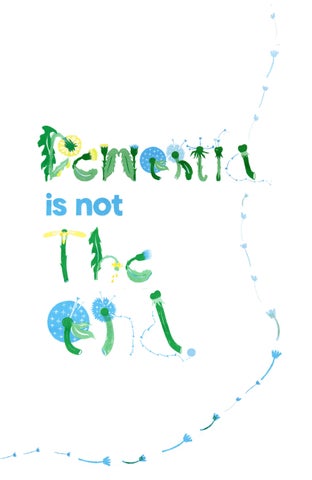
“Dementia is not the End” is a project that explores how creativity can assist the ability to retain memories, build connections and enable someone to live well with dementia.
This book contains interviews from carers, spouses and my own personal reflections in order to explore how we can offer more support to our loved ones and people in the community.
Alongside these interviews is a dementia art workshop that I led as an extension of this project. I was able to observe how art can facilitate cognitive stimulation and boost self confidence. It was an incredibly powerful and moving experience.

4
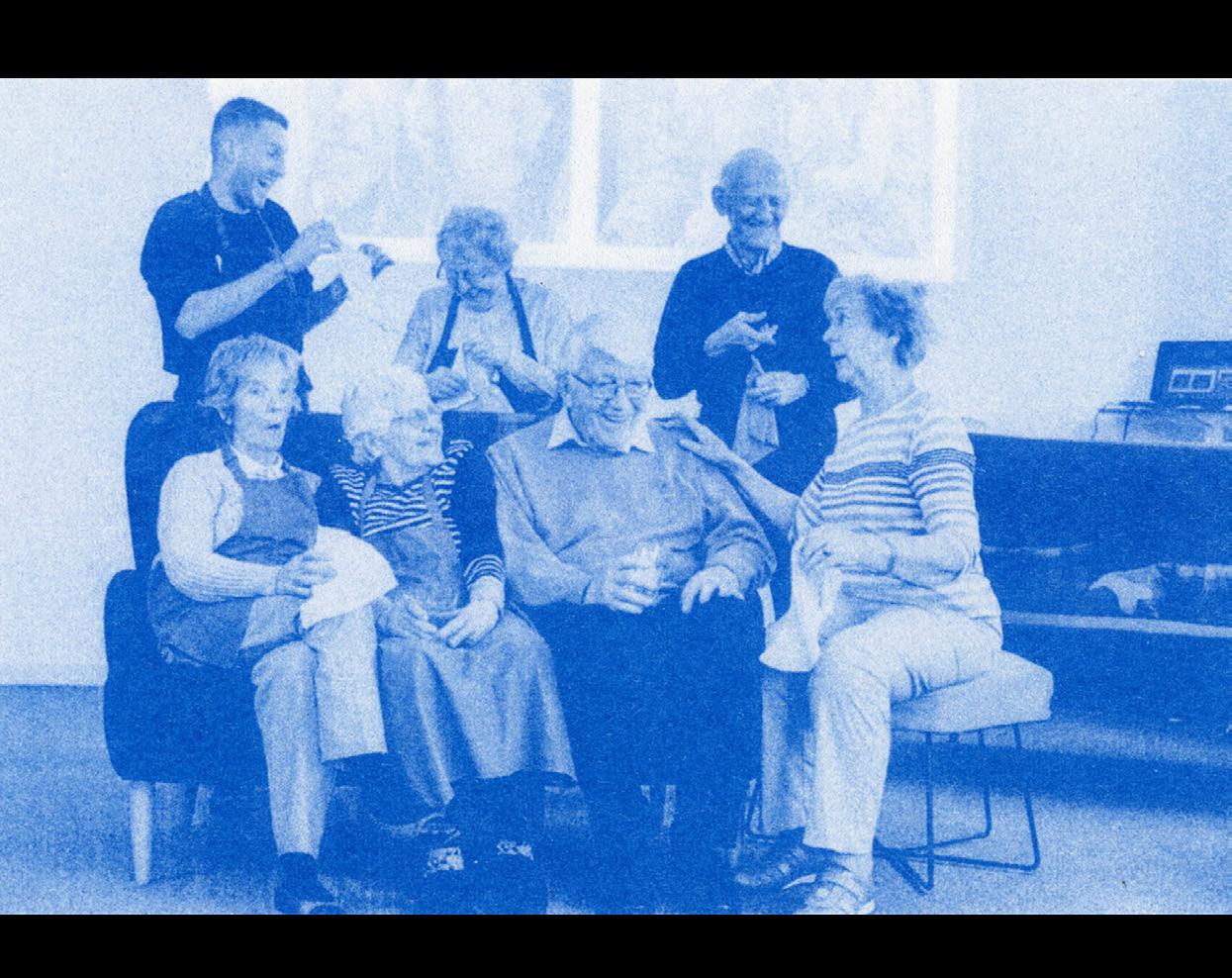

In Loving Memory of Patricia Byrne


5


with



6












7
Jim Baird
Jim is a carer who works extensively with people living with dementia at all stages. He is the organiser of a Dementia mens group called ‘The Monday Men’.
What groups and activities that you attend with your clients stand out as being the most beneficial?

he Monday Men follow a fixed programme. We start with light physical exercise with simple and repetitive actions.
This is followed by either art workshops, drumming lessons or acting classes. The art workshops are great because Dementia Arts Trust go that extra step to mount and present their outcomes. Having a tangibile finished product serves as a reminder of what they can do.
The collective gives them the strength to not worry about failing. The familiarity combats the fear of being exposed for not remembering something or getting things wrong. This allows them to extend themselves in different ways.

8
Describe the change you observe in their behaviour as the group progresses.
If they are agitated as they arrive, the vague familiarity of the group takes care of that quickly. What's interesting is that without being directed they all end up sitting in the same seats, every single time. There is an innate magnetism as they gravitate towards people they feel familiar with.
9

Discuss the mental and physical changes that take
Conversations begin to flow more easily, with our assistance gently guiding them towards answers or suggesting topics.
The drumming is where the most physical changes can be observed. They are used to sitting back in recliners at home or in a care facility but this activity forces them to sit forward and upright. The seating position makes them focus.
It is important that these groups are not passive. They shouldn't be slouched or waiting to be entertained. They need to actively participate and contribute to get the most of these activities. Following attending a group, is there a lasting impact on their abilities for the rest of their day?
Sadly due to the nature of the later stages of the disease, the impact is short term. They’re picked up from an environment buzzing with excitement and chattiness. This engagement follows them as they’re walking out, but for some it can disappear at the end of the driveway.
At the end of the day, they are given 3 hours of participation, this is a hundred times better than if they were sitting passively at home.

10

Can you highlight what you think is the most important step to take in order to help someone cope with dementia?
It is so easy to fall into a depression when they focus on the abilities they've lost. I think it is important to lean into what they can do so they feel like the balance of power in a conversation lies with them. Make them feel special, react enthusiastically to their stories. Be interested, not


11

They live their lives to


12
What do you think it means and looks like to live well with dementia?
A strong and well informed support network.
They live their lives moment to moment. It is our job to make these moments as positive as possible, through the groups we strive to give them 3 hours of happy moments.
Before life with dementia, they had a fabulous skill set, whether it was specialised knowledge or socialisation skills, and they’ve lost this. As their world is getting smaller, you need to make the world available as big as possible.
Just showing them a glimpse of light can have a huge impact on how well they live in their new world.
13

A glimpse of


14




15


16

17


Shirely Trainer
y husband, Robert, attends the Dementia Mens Club on a Monday as well as a Walking Group on a Wednesday.
He enjoys the camaraderie even though he doesn't always speak. His speech isn't good as his Alzheimer’s has progressed to an advanced stage and he feels more comfortable communicating on a one-to-one basis.
He seems to enjoy the musical activities. I've found at home he enjoys watching programmes like the Andre Rieu Orchestra.
Following his time with the Monday Men, Robert is looking for more activities. He doesn't want to stay in the house and can't settle. We will often go for a walk or drive to park and walk our dog. This seems to calm him down for a while.
18
It is important to keep someone with dementia occupied and in touch with as many people as possible.

The best we can do is keep them happy,
comfortable and loved.

19

20



21

Jennifer Gardiner
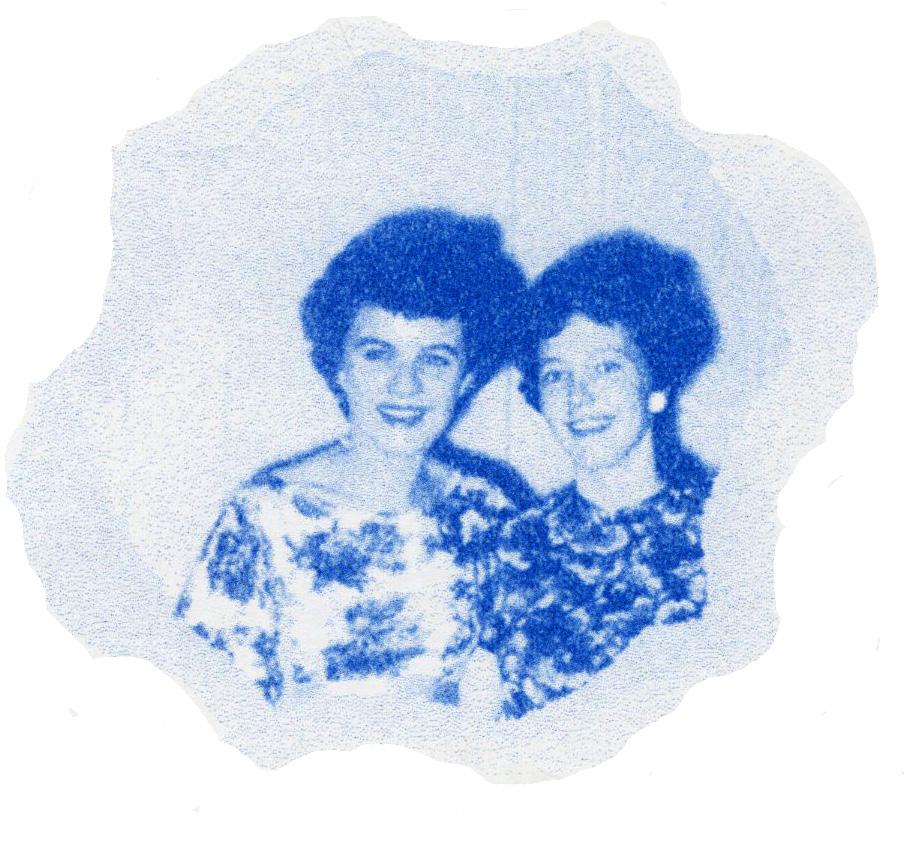
fter his diagnosis in 2020, my husband, Tom, joined the Monday Men Group because we felt that he would benefit from more social activities.




Tom has always been good at art and earned the nickname of Pablo within the group! He enjoys the music activities, particularly the drumming instructor who comes to the Monday Club and always gets the old guys smiling, and in one case, dancing! We also enjoy our monthly visits to the ukulele band sessions at Cumnock Community Hospital, when I have my Tom back, singing the songs of our youth. Like other carers, I find this very emotional.
I can see why music and art can be the most positive emotional stimulus to those whose world is slipping away from them.
22
From my limited observation and hopefully growing understanding of Alzheimer’s, familiarity and routine appears to be essential to a mind where, to quote Tom, “everything is confusing”.

Encouraging social activities can build on existing creative and physical skills and awaken memories of their younger selves. Although these activities may not be remembered shortly afterwards, they must bring most welcome pleasure and reassurance to the increasingly confusing and empty world inhabited by those with dementia.




24













26







27


Norma Tyler


y husband, John, is always a little reluctant to go to the Monday group. I’m not sure if this is because he's been home all
weekend but often he is adamant that he’s not going. This being said John’s mood is always much brighter on his return from the group or sessions with Jim and Lawrence. By the next day this is sadly forgotten. I find that singing and music always lifts his mood too.
For me, having time to myself during these groups makes a huge impact on how well I cope with caring for John.
I try my best to keep John motivated about attending his groups in order to stick to a routine and regular activity. However, this is proving to be harder as his mobility is decreasing, but as a family we try our best.
I think it’s important to keep as active as possible, eat healthy and keep in touch with family and friends. Keep life as familiar as possible.

28


29





30





31


person cared for as a result of the music.

Other reminiscing works. Sporting memories groups are often strong and a good bond for conversation. These activities in a group scenario means there is a sharing of memories that leads to conversation and confidence.

32

How do they feel about attending a group?

Dementia can destroy confidence and make a person resist joining a group, even if it is a group that relates strongly to their interests. Sometimes by attending a group it makes the attendee remember what memories or skills they have forgotten or lost.

If the attendee can enter the spirit of the group then you can see the confidence to participate return. I’ve seen attendees transform within the environment of a group, it is as though they are not affected by dementia at all.
Some start dancing on their feet to music as if returning to their dance hall days, but have forgotten that they need a walking aid for day to day life.

33
What do you think is the most important step to take in order to support someone with dementia?
The ability to relate to the person's condition.
You have to know the person's history, their likes and dislikes, so you can talk with normality. I don’t tend to talk about dementia to the person although there are a few people with dementia who realise they are affected and are quite open to talk about their condition.
You need to learn patience to be with someone with dementia and you have to be prepared for repetitiveness that can be draining.
If a person asks the same question repeatedly, you have to answer it for the first time every time.
34
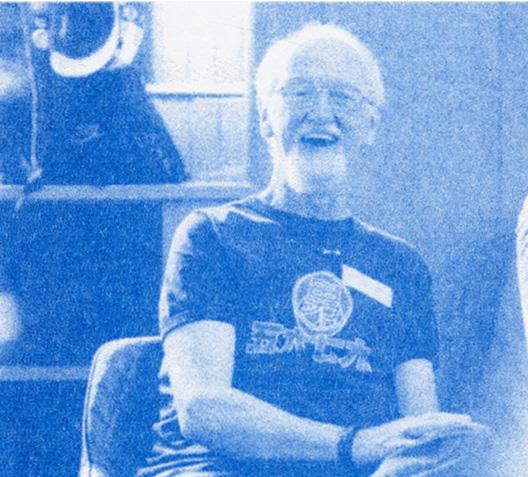

If a person asks the same question repeatedly you have to answer it for the first time, every time.

35
What impact does the group have on their abilities for the rest of the day?
The happiness from attending a group creates a feel good factor that can last the rest of the day.
One client becomes quite talkative after attending a group and comments how he feels sorry for the other attendees not realising that he is affected by dementia.
It is like their condition and ability to communicate has improved.



36
What do you think it means to live well with dementia?

ementia is an ongoing condition that continually removes a person's skills and memories.
You have to move with the time to allow the person to be able to complete tasks and attend groups that meet their abilities.
Reinforce memories as best you can. Be patient. Healthy eating, regular exercise, good routine.
Make sure the carer is also looked after as it is important that the carer remains strong to be able to cope with this ever changing condition.

37
Reinforce


38






39


Fiona Wilson
iving well with dementia means continuing to have a normal life for as long as possible.
Socialisation with family and friends is really important.
My husband, Andrew, is always happy and content to attend groups during the week. He enjoys the Monday group with a variety of activities and more opportunities to socialise. He also likes going on a one-to-one walk with Jim as this is what he was most used to doing prior to his dementia diagnosis.
40
I believe the most important aspects of caring for someone with dementia is routine and patience.


41



42


43
Reflection

his project started as a homage to my grandmother, Patrica Byrne, who died in 2022.
I was young when my gran was diagnosed with dementia and I grew up caring for her. Despite the debilitating effects of Alzheimer’s, she embraced life. Her energetic and sociable personality always lit up a room. When I remember my gran now; I remember how she lived well; singing, dancing and laughing.
44



45
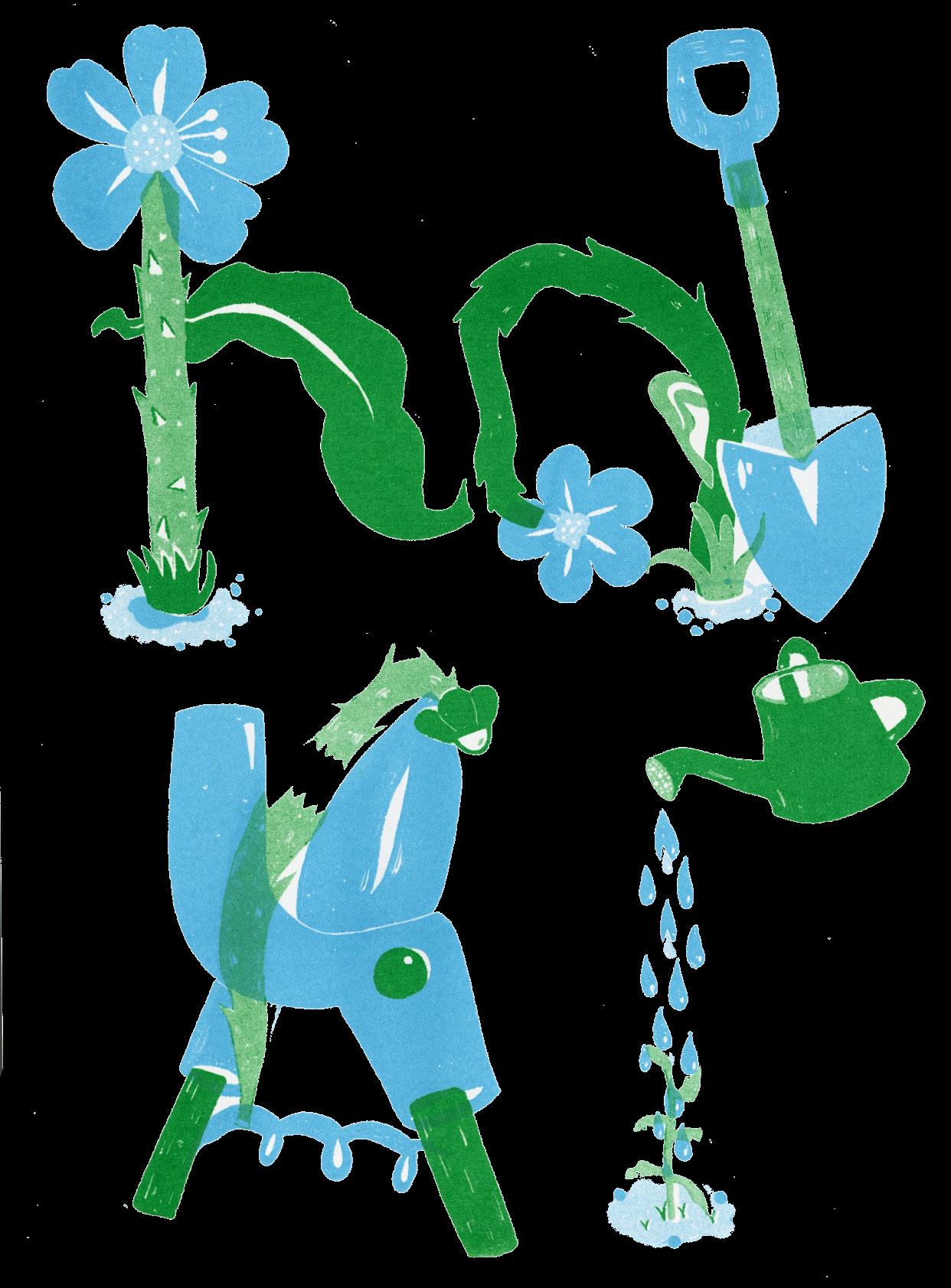
I found that design for people with dementia is often infantilising and lacking in optimism. The emphasis on functionality is bleak and discouraging. Following this realisation, I created a series of thoughtful and emotive illustrated typefaces. I wanted to demonstrate how to live well with dementia, with a specific focus on the benefits of creative expression.


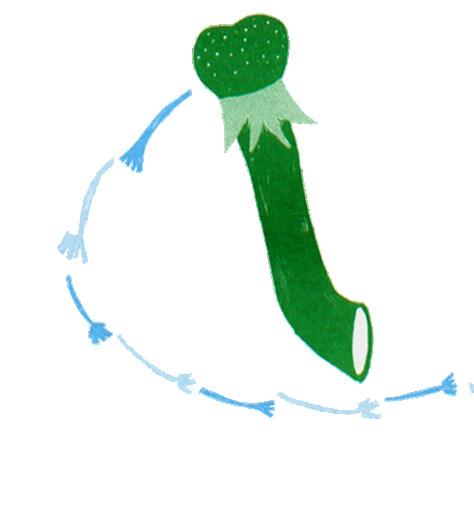
The life cycle of a dandelion symbolises hope and resilience, they can endure any living condition. I subverted the image of a common weed into a powerful visual metaphor. The dandelion embodies both how dementia affects the ability to hold onto memories as well as representing how to live well with the disease.

46


This project has been an influential learning experience and has contributed to the growth of my practice and personal ambitions.
I aspire to use my practice as a vehicle to engage and connect with the community and to support those who are struggling through the cathartic experience of art therapy.
47
No one needs to face dementia alone.
If you or a loved one is in need of dementia support there is help available.

hone: Alzheimer’s Society, Dementia Contact Support Line 0333 150 3456
Alzheimer’s Scotland, 24 Hour Dementia Helpline 0808 808 3000
Admiral Nurse Dementia Helpline 0800 888 6678

isit: www.alzheimers.org.uk/get-support or www.alzscot.org/findsupport to find your local dementia support groups and activities.
Resources
48
If you are a carer, you don’t have to care alone.

ontact: Carers UK 0808 7777 advice@carersuk.org
NHS Carers Direct Helpline 0300 123 1053
The Carers Trust www.carers.org

rganisations that run creative workshops: Arts for Dementia info@artsfordementia.org
Dementia Arts Trust, dementiaartsenquiries@gmail.com
The Photobook Project, info@the-photobook-project.com
49







 Designed by Evie Baird