PROCESS BOOK INSPIRATION APP
DIGITAL PRODUCT CREATION
2016
01 18 02 36 04 38 77 DESIGN GUIDELINES COMPETITIVE ANALYSIS ABOUT AFFINITY DIAGRAM THE INTERFACE RESEARCH INSIGHTS
CONTENTS
ACKNOWLEDGMENTS
AFFINITY DIAGRAM INTERFACE
10 42 14 66 MOVING FORWARDS STORYBOARDS RESEARCH METHODOLOGY FIRST PROTOTYPE
The insight Designers are finding and documenting independently on different applications potentially insecure, lacking desires and irreflective of Nike
documenting their inspiration applications that are lacking in functionalities Nike Nike culture.
The concept LEAD NIKE’S DIGITAL TRANSFORMATION TO BECOME THE EDITORS IN their their
storytelling capabilities, product creation process so designers be inspired.
TRANSFORMATION By ALLOWING designers
their CREATIVE
PROCESS, ELEVATing
capabilities, and optimizing the designers can go outside and
GUIDELINES
The guidelines are drawn from the insights gathered in the research as a reference point & criteria for successful to use when evaluating
Save designers time & integrate into designers’ workflow as seamlessly as possible (User interviews, W&W User Interviews)
Enable designers to become editors in the creative process (Wolf & Wilhelmine User Interviews)
Enables designers to find information as input into a design (Wolf & Wilhelmine Survey & Interviews, Ken Black Interview)
Be a platform for both tangible and digital inspiration (User Surveys, Fly-on-the-wall Observations, Competitive Analysis)
Promote a ‘systems’ design thinking* (Mark Parker, Ken Black Interview, John Hoke)
Expand and remove the ‘box’ designers find/sort/simply inspiration from (Ken Black Interview)
*Designing a product with another product in mind
research process and acted evaluating storyboards.
Leverage analog tools and processes (Fly-on-the-wall, User Interviews, Wolf & Wilhelmine User Interviews)
Allow designers to communicate their design intent (Sergio Lozano interview, Wolf & Wilhelmine User Interviews, Ken Black Interview)
Enable designers to build off of each other’s ideas (Mark Parker)
Extract the essence of the inspiration (Mark Parker, Ken Black Interview, John Hoke)
Leverage the creative exploration that goes into the CL, but... (Ken Black Interview, John Hoke, User Interviews)
Leave room for interpretation & experimentation within categories (Ken Black Interview, John Hoke)
Elevate design thinking to 3D and 4D (John Hoke)
1
ABOUT

The Inspiration App is a multi-dimensional tool that allows designers to become the editors in the creative process while elevating their storytelling capabilities. It is driven by data and provides the foundation for good design thinking. The Inspiration app is broken into three different capabilities that complement each other.
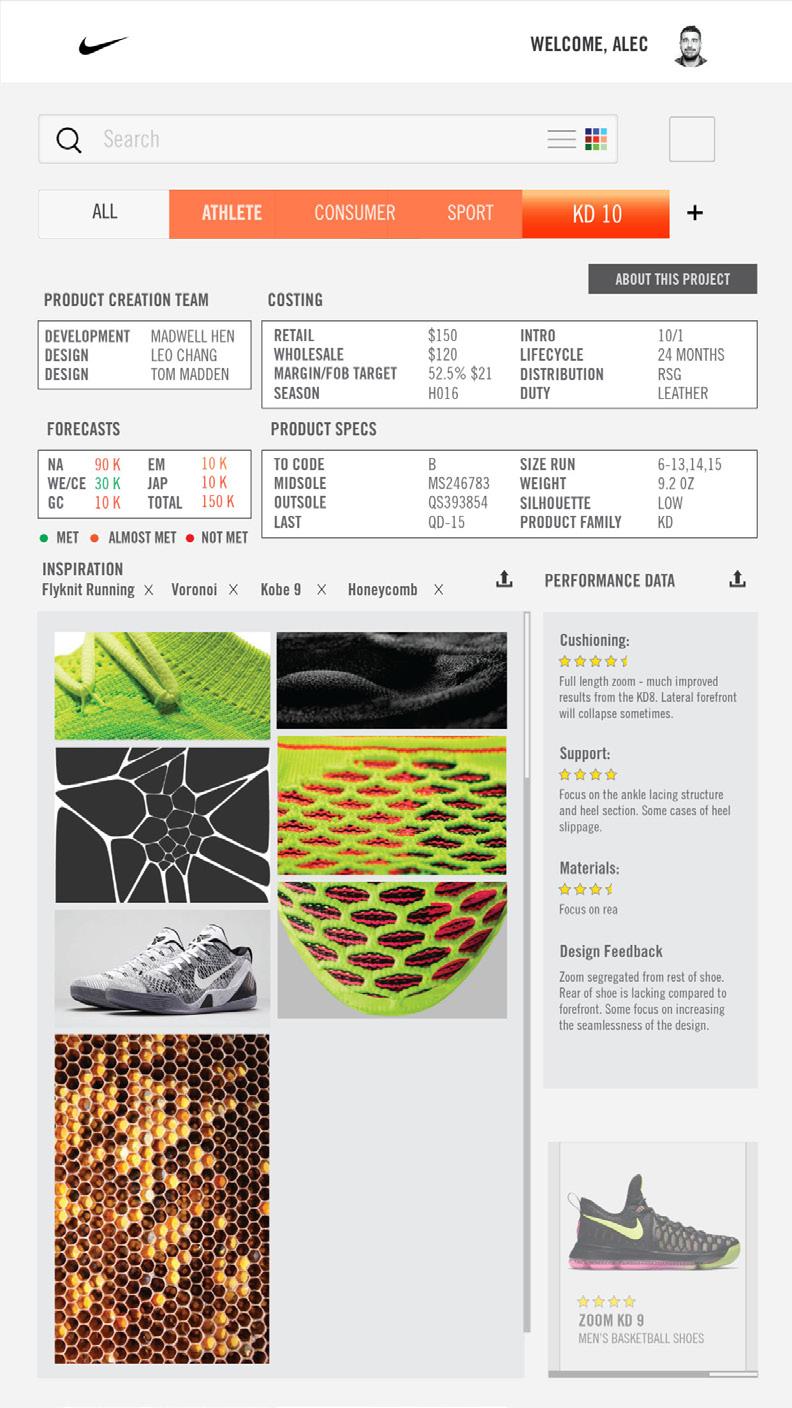
The application is foremost borne from the NIMA system. Information about the designers’ projects is pulled as a starting point. From there, designers can find and curate their inspirational feeds.
nima inspirational feed
The NIMA inspirational feed is driven by any performance (breathability, cushioning, comfort, traction etc.), artistic, fashion, nature or other outside stimulation. Complementing inspiration from the outside world, the design brief is reinterpreted into the application for easy viewing and access. The design brief is further built upon by allowing designers to access data collected for previous products in the product line. Designers should be encouraged to carry a design forwards informed by feedback from consumers, driven by data, and infused with the spark of personal inspiration and experiences.

nima generative experimentation
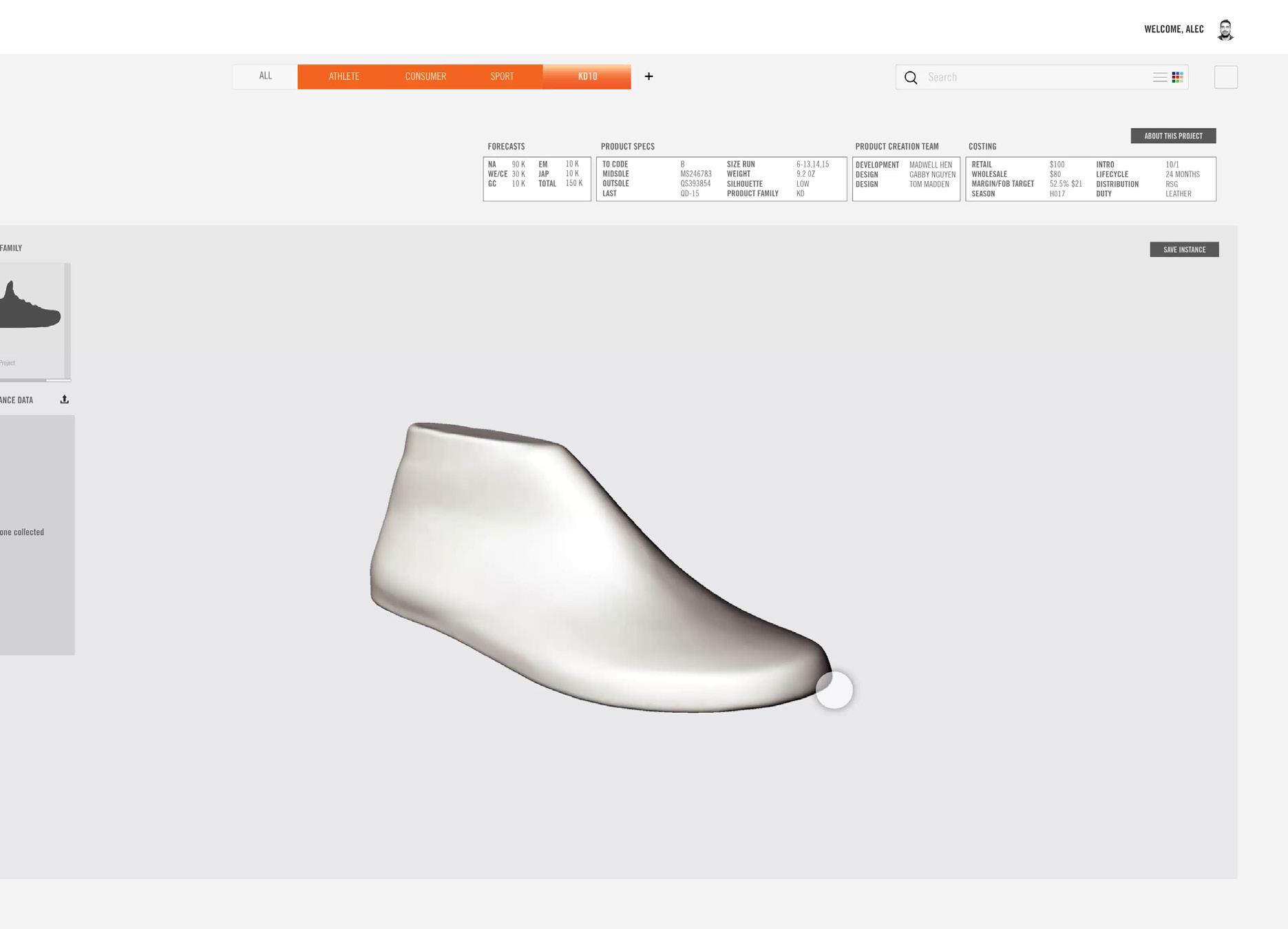
Designers overwhelmingly expressed the desire to become the editors in the creative process. Tools unlock the potential of design and there is currently none that allows designers to quickly iterate upon earlier design through generative means. Designers are designing for multiple seasons at once and the crucial window for experimentation is limited and shrinking. The NIMA generative experimentation tool is envisioned to transform the designer ’s sketches or images into 3D models, whilst allowing for quick iterations by manipulating parameters. We allow designers to truly become editors in the creative process from the beginning.
nima seamless presentation
Last but not least, to elevate designers’ storytelling capabilities, there should be a seamless transition from the collection of inspirational items, sketches, etc. to the organization and presentation to leadership and stakeholders. Current tools such as Pinterest and moodboards lack the transition from aggregation to presentation. Furthermore, the choice of media when presenting is also limited. We need to broaden and expand the ways designers can tell their stories. The NIMA presentation tool works seamless from the NIMA Design Feed and generative experimentation tool by aggregating these items to create a presentation that leadership can specify beforehand to save designers’ time.
Overall, each of these capabilities are linked back to the design guidelines specified earlier. The capabilities should not be thought of as disjoint entities, but rather pieces that build upon and transform the entire NIMA ecosystem.
3
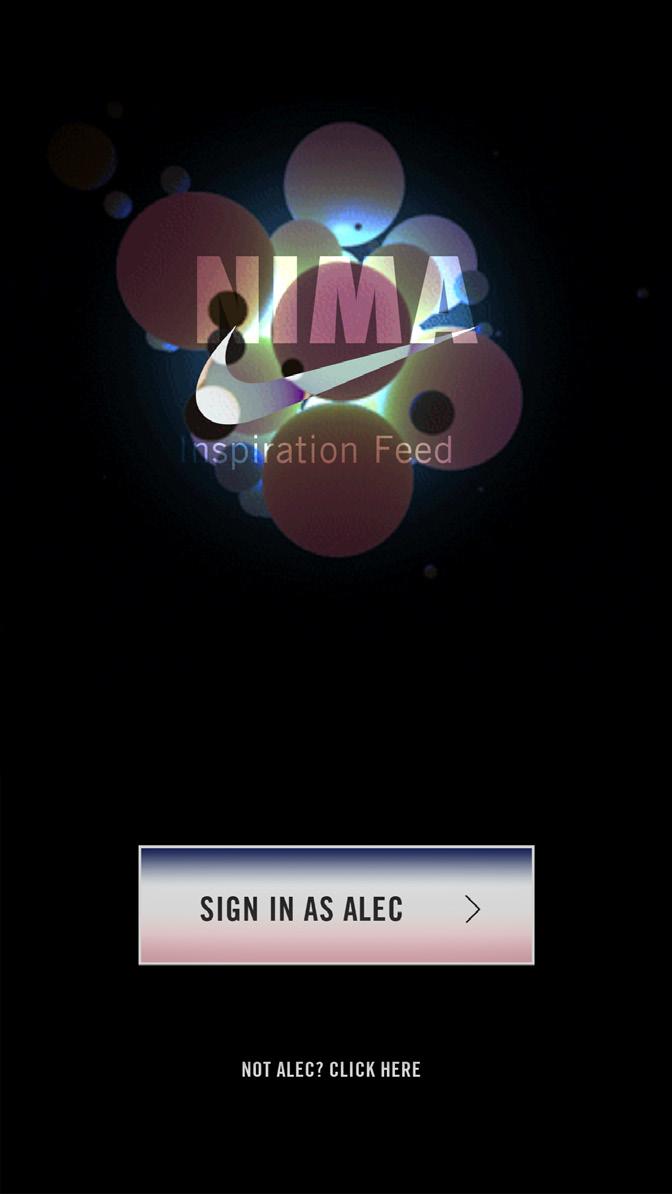
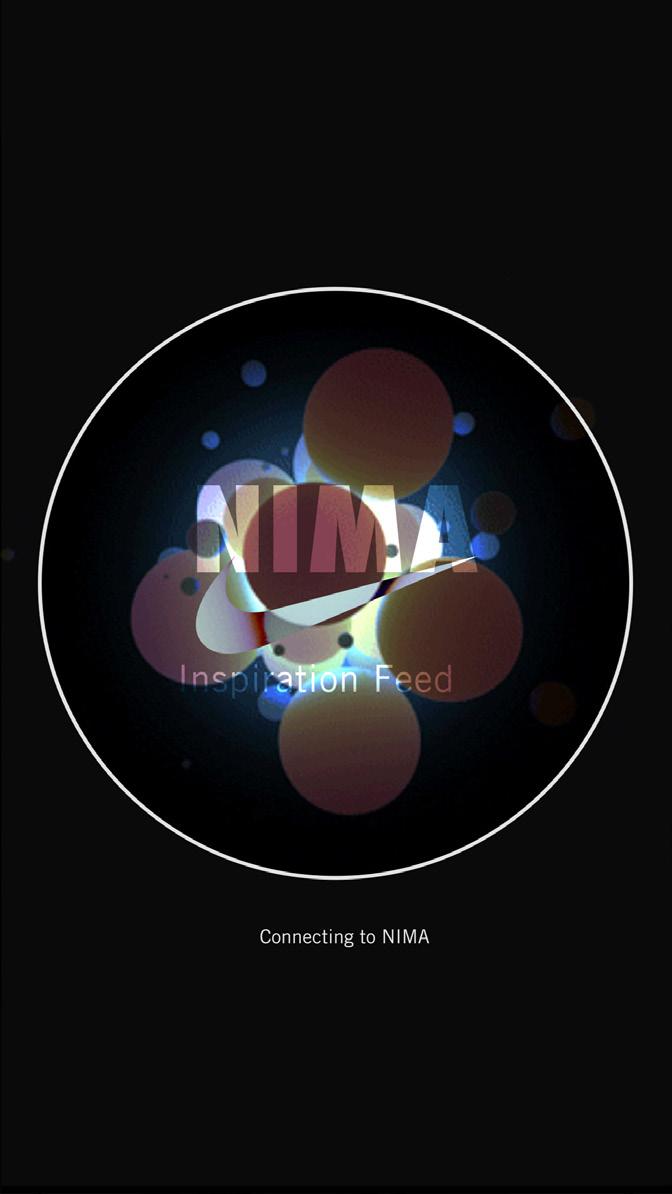
NIMA LOGIN PROCESS
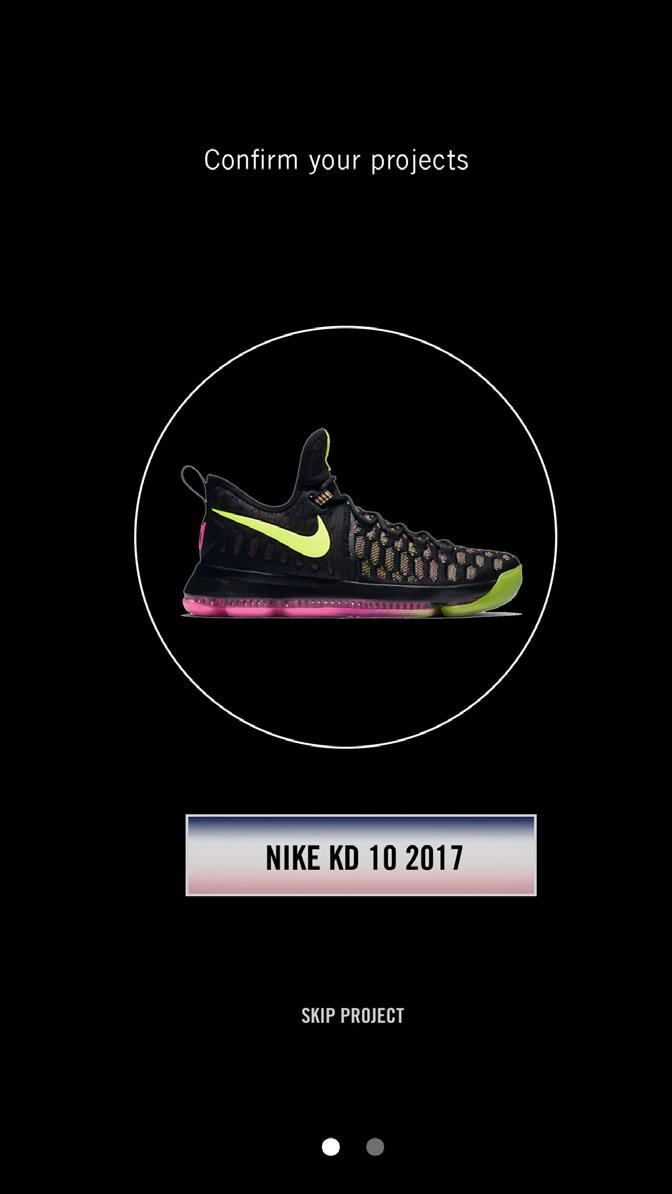
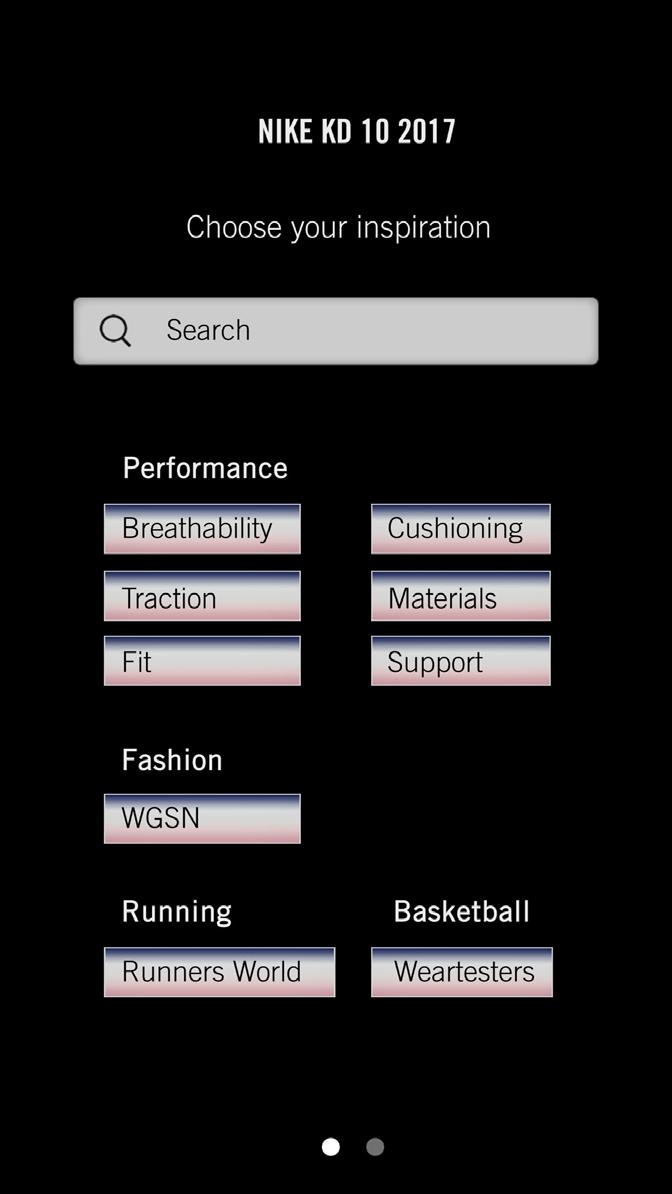
5
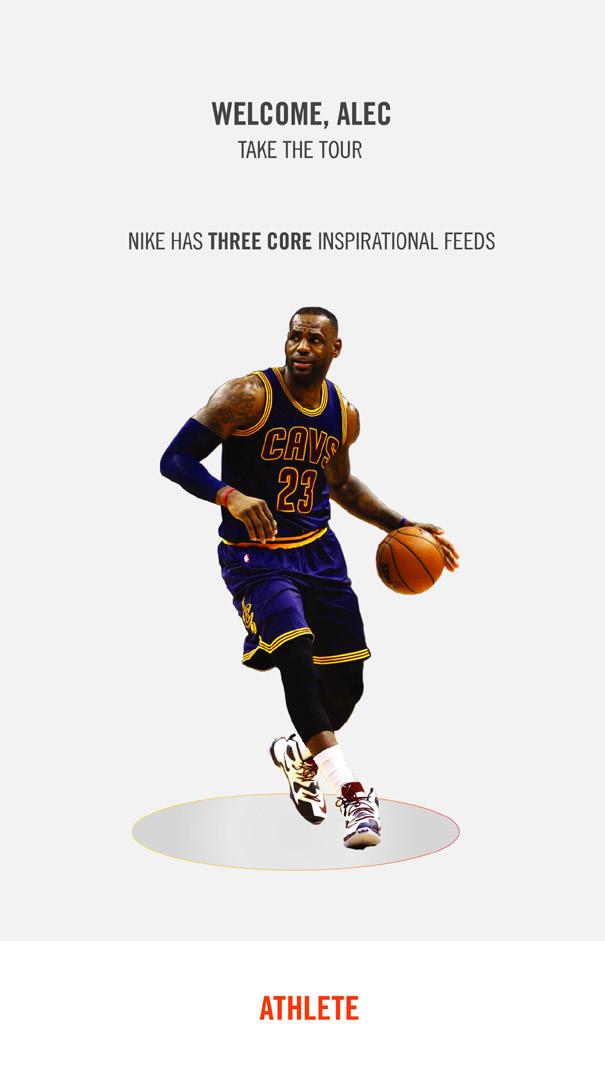
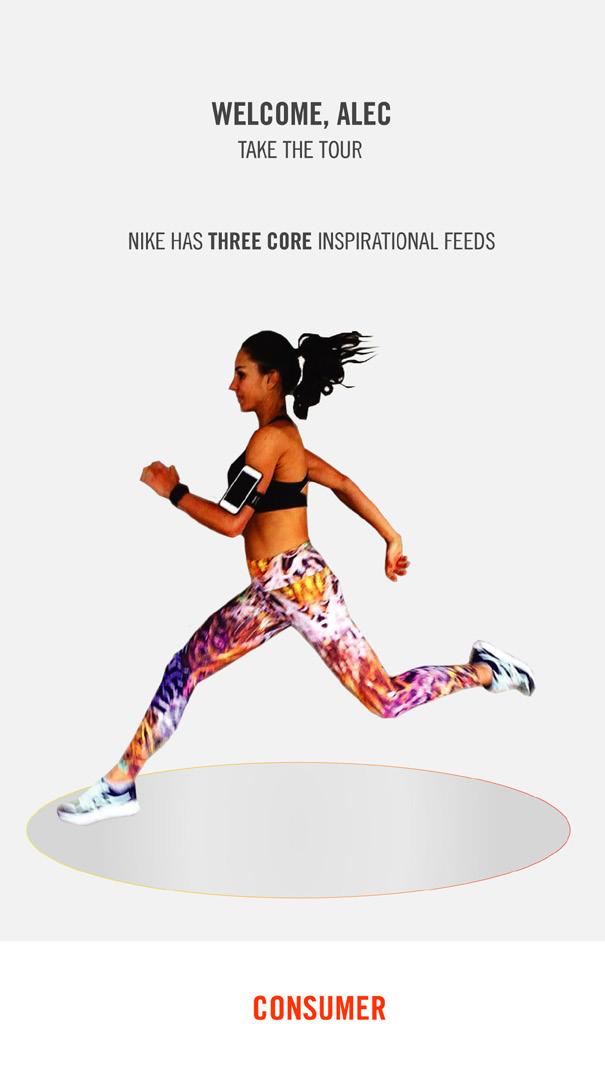
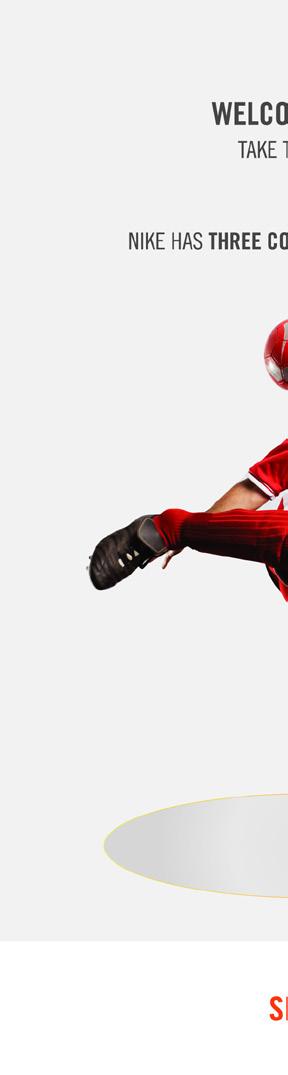
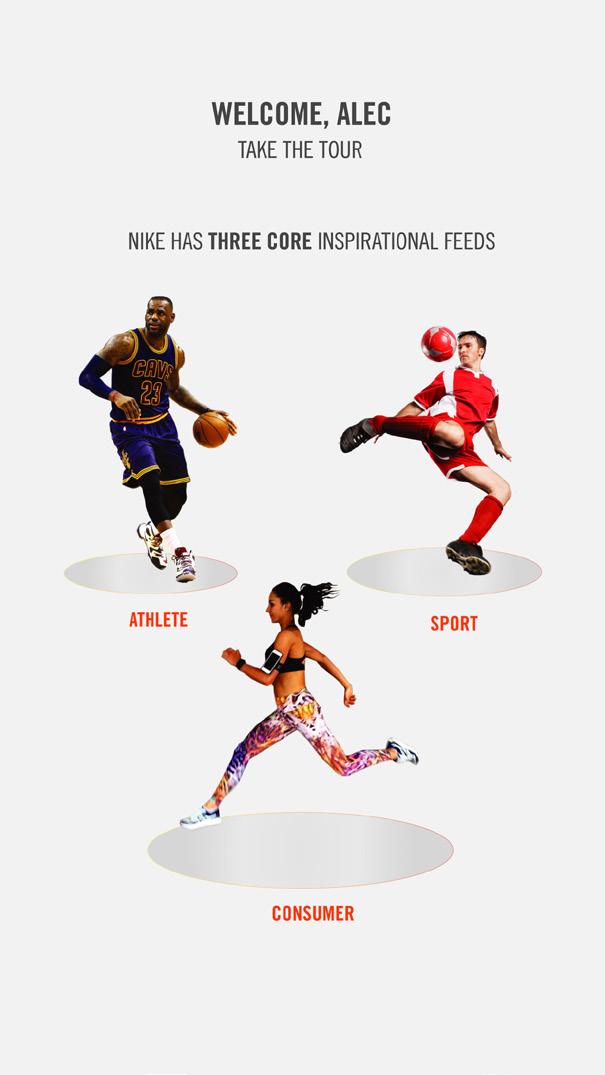
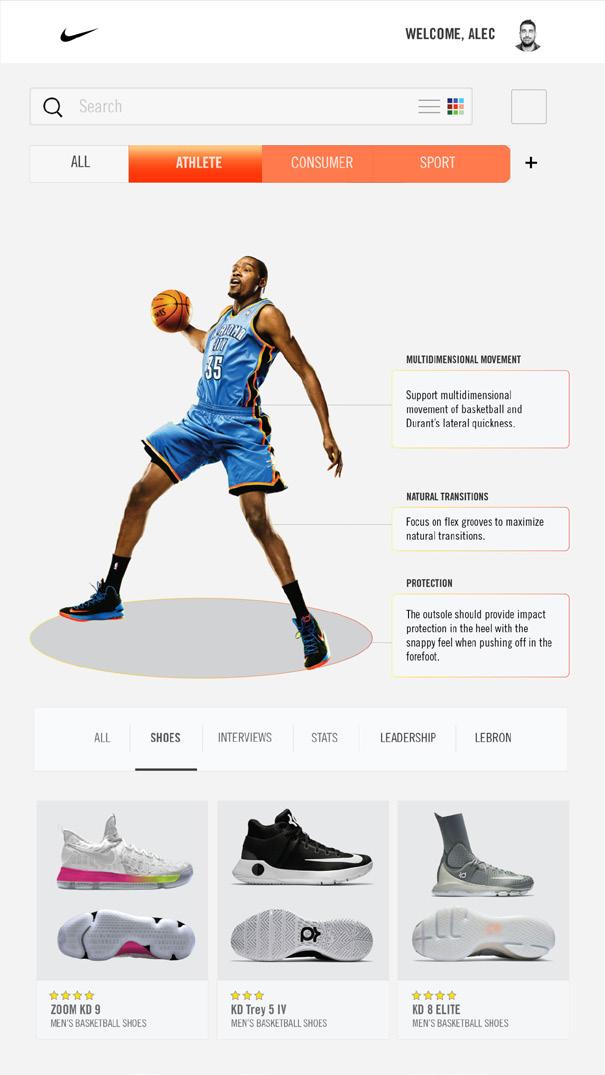
NIMA CORE INSPIRATIONAL FEEDS
7
NIMA
APP
DESKTOP & MOBILE
9
MOVING FORWARDS
The NIMA Inpirational feed is the only idea that came out of the storyboarding process and tested with designers. There needs ot be further design and experimentation with the generative modeling and presentional capabilities.
Prototyping was also limited by the time frame. A constrained workable prototype was used to do preliminary testing and gain rudimentary feedback. In the next phase, I would extend the capabilities of the current prototype to gain deeper insight and feedback from more designers.
With regards to how to begin incorporating some of the ideas in this process book into current ongoing projects - I would first begin with a thorough analysis of the capabilities that NIMA currently or will offer, followed by another storyboarding session with ideas of how to to extend them. There should always be some envisioning and storyboarding that is ongoining in parallel with the development of current tools. Although a large part of the summer was spent researching, talking to designers, and envisioning, there are still so many areas that I felt could have been explored.
No matter how the Inspiration App evolves in the future - I feel that it should always adhere to the design guidelines and push the envelope of what the NIMA ecosystem is. The relationship between data and design should be futher explored and modeled.
The following sections start at the beginning of my process. There are rich insights and ideas that will help in the future development of the project. I hope you enjoy reading about the project as much as I enjoyed working on it.
11
RESEARCH METHODOLOGY

This section is a compilation of the insights and design guidelines drawn from the raw data collected over the first two weeks of the project. The stakeholders I’ve collected data from include:
product designers
material designers
color designers
product graphic designers
+ leadership
The at-a-glance techniques and methods used to gather data were:
leadership interviews
february process diagram
february design survey (will & willhemine)
ARCHIVES (design.nike, dna etc.)
FLY-ON-THE-WALL ethnography studies
designer SURVEY
COMPETITIVE ANALYSIS
INTERVIEWS
Ultimately, the data is meant to support and stimulate design thinking. We want to gather requirements based off real data from users for transformative design.

13
user survey (20 responses)
A targeted user survey was conducted to 1) Validate the need for an inspiration app tool
2) Find out what tools designers currently use and understand their advantages/limitations
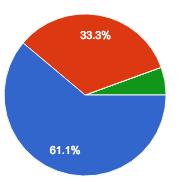
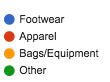
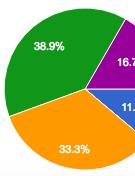
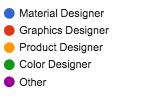
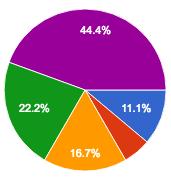
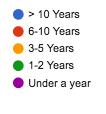
3) How designers incorporate inspiration into their design process. Afterward a cursory understanding of which tools designers use, we performed a competitive analysis. The majority of designers worked in foot wear. One third of the representatives worked in apparel. Interns and product designers made up about half of the survey audience.
METHODOLOGY

15
competitive analysis (8 platforms)
We conducted a competitive analysis of several leading online and offline platforms designers currently use to document their inspiration. The analysis combined with the user survey results helps us gain deeper knowledge of the reasons why designers prefer to use some tools over others. Ultimately, we want to learn which areas these tools are succeeding and failing in supporting designers. The tools we looked at include: mood boards, Pinterest, Dropbox, sketchbooks, blogs, Instagram, personal computers/hard drive, and shared drives. The dimensions we look at include recent reviews, desirable (missing) features, main interactions, media, sharing, privacy features, uploading capabilities, and whether there is offline, syncing and mobile/desktop accessibility.
design leadership interviews (sergio lozano, ken black)
The leadership interviews helped us gain a big picture understanding of the digital transformation project. We also gained deep insight into how designers are encouraged to work at Nike. What are the guiding design principles? Sergio Lozano has been with Nike a couple for decades as a product designer. He currently leads a team of about 15 other creatives. They work across 4 different categories (running, basketball, men’s/women’s training). They work on anything that’s about $100 dollars and down. Because it’s constrained by cost, Sergio always tell his team they have to be more creative, to do more with little. Ken Black graduated from ArtCenter in graphic design. He most recently lead the creative direction for the Rio Olympics. He talked extensively about the process of finding a unique and distinct voice in the visioning for the Olympics. He discussed the need for 3D tools for sketching and ideating for transformative design.
user interviews (5 1:1)
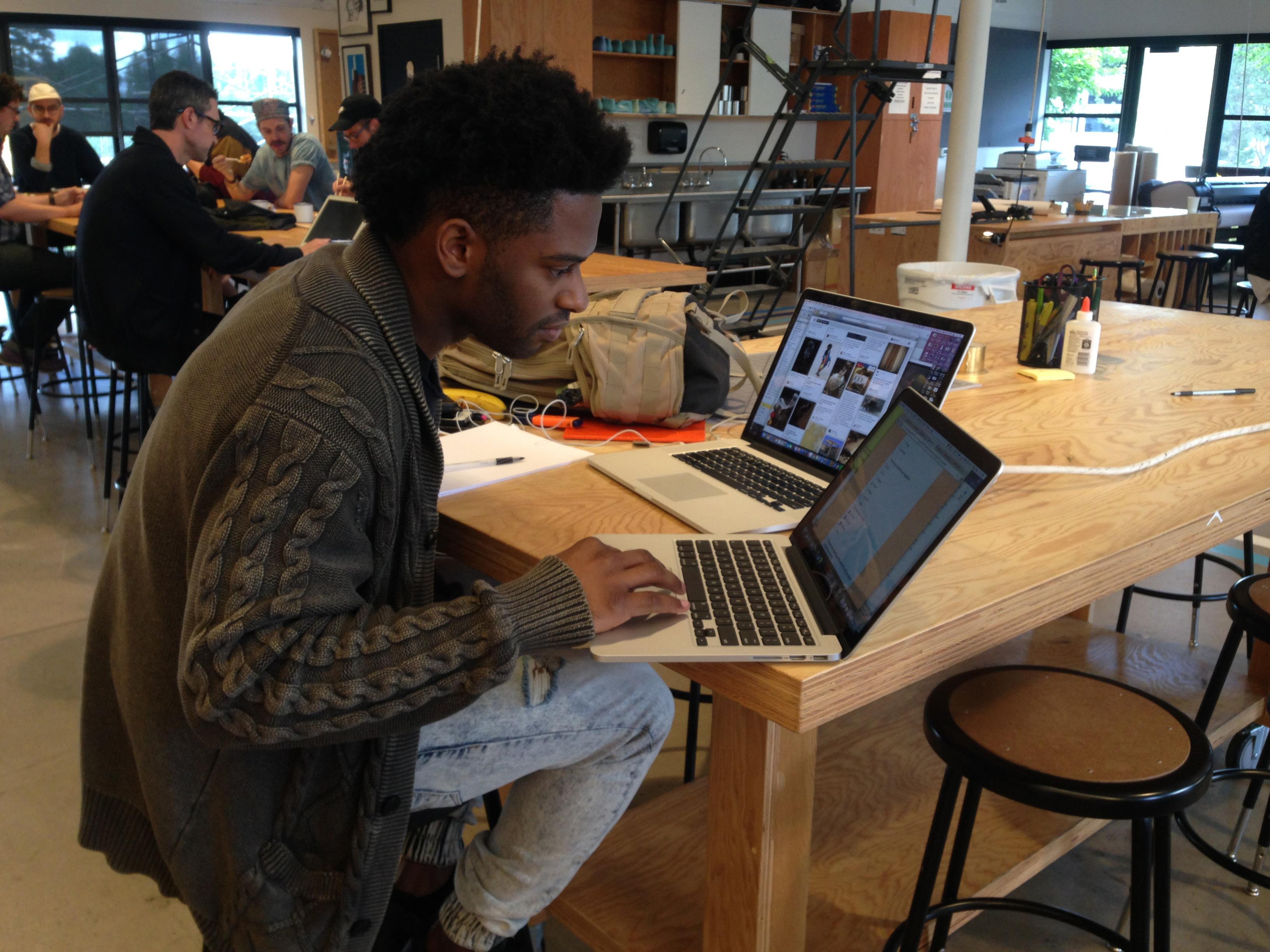
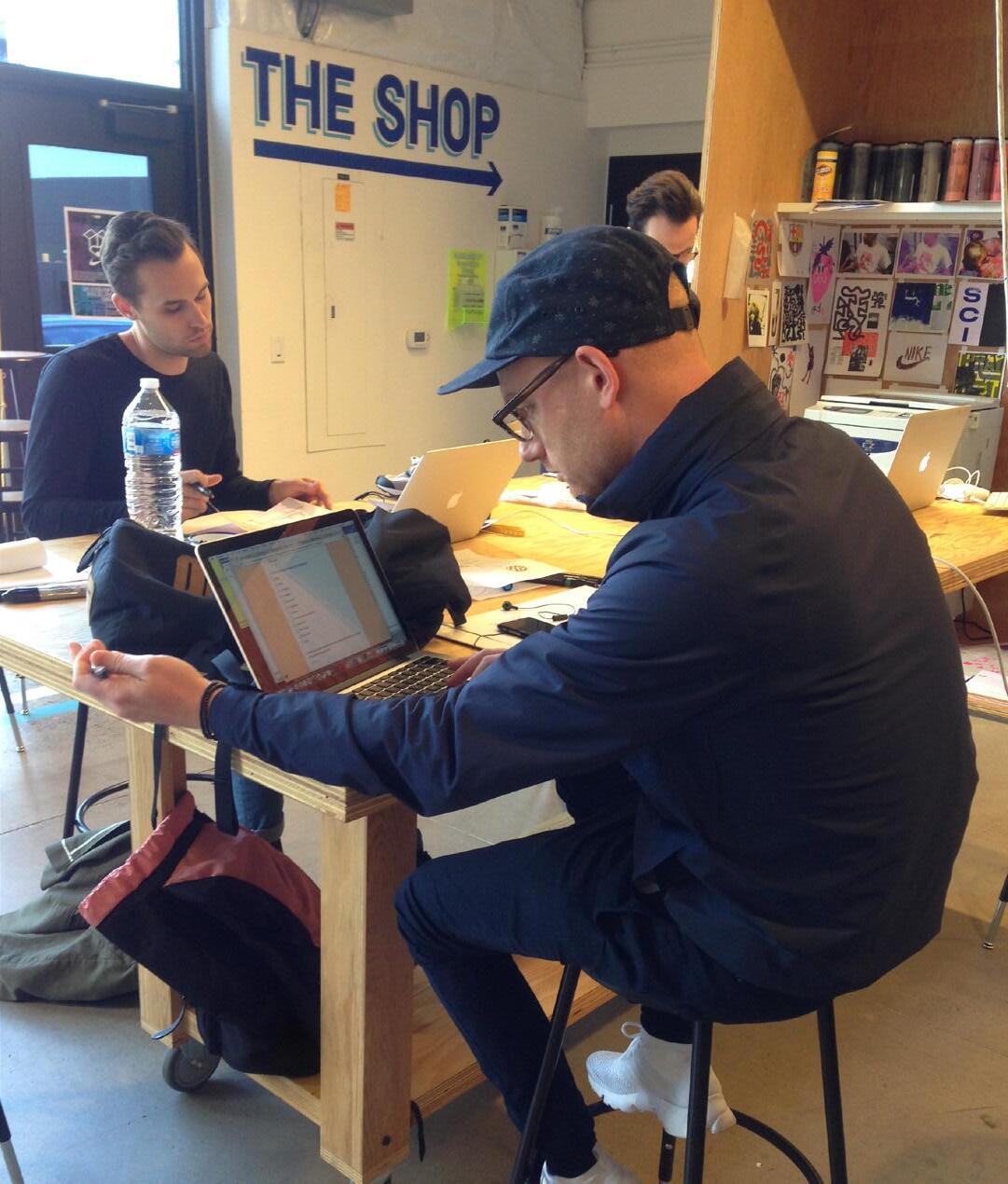
The user interviews dig deep to understand the more subjective attitudes toward the inspirational process that can’t be answered in a survey. We gain a more human and personal understanding of the type of tools that designers need and want.
METHODOLOGY
17
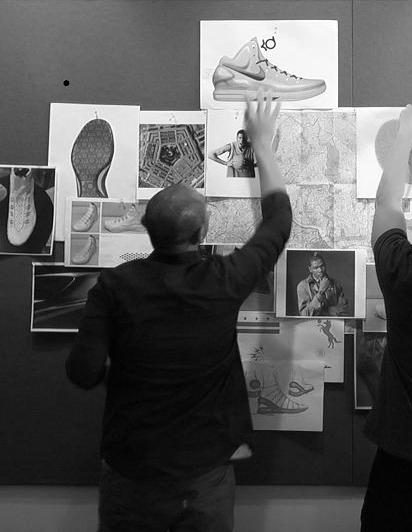
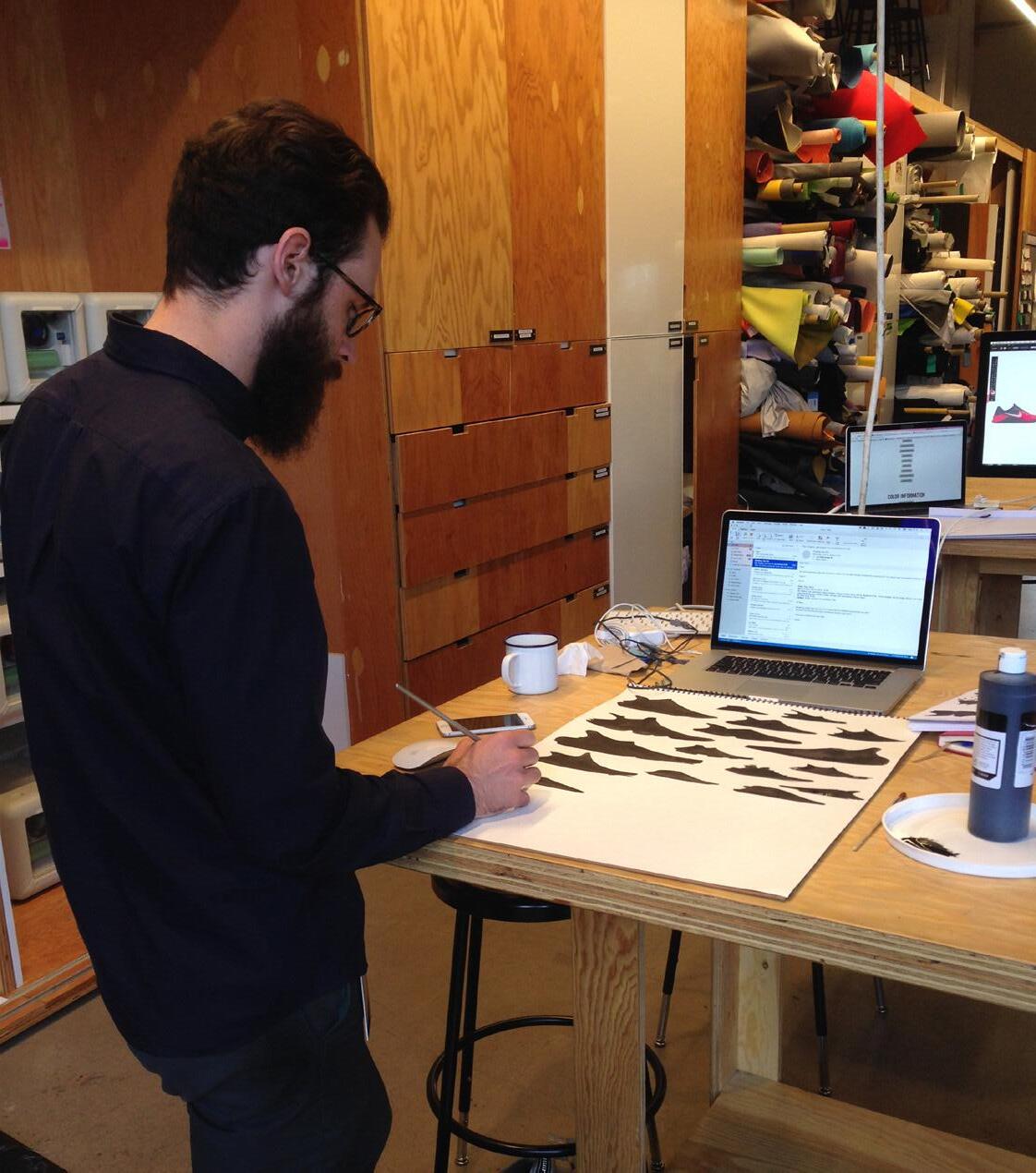
Designers use analog tools to communicate their concepts
DPC February User Interviews
“I never design in illustrator. Only when I need to go straight to the factory. It doesn’t look as pretty and it takes more time. It’s faster to show a curve on a piece of paper.”
Contextual Inquiries
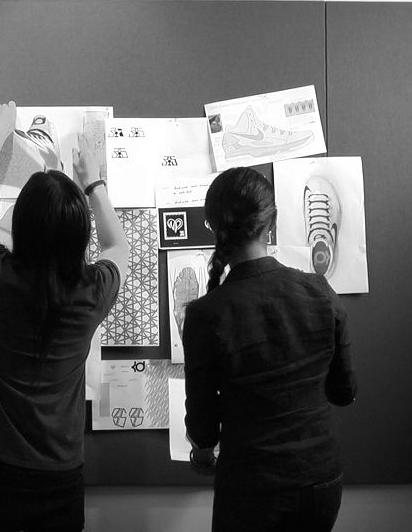
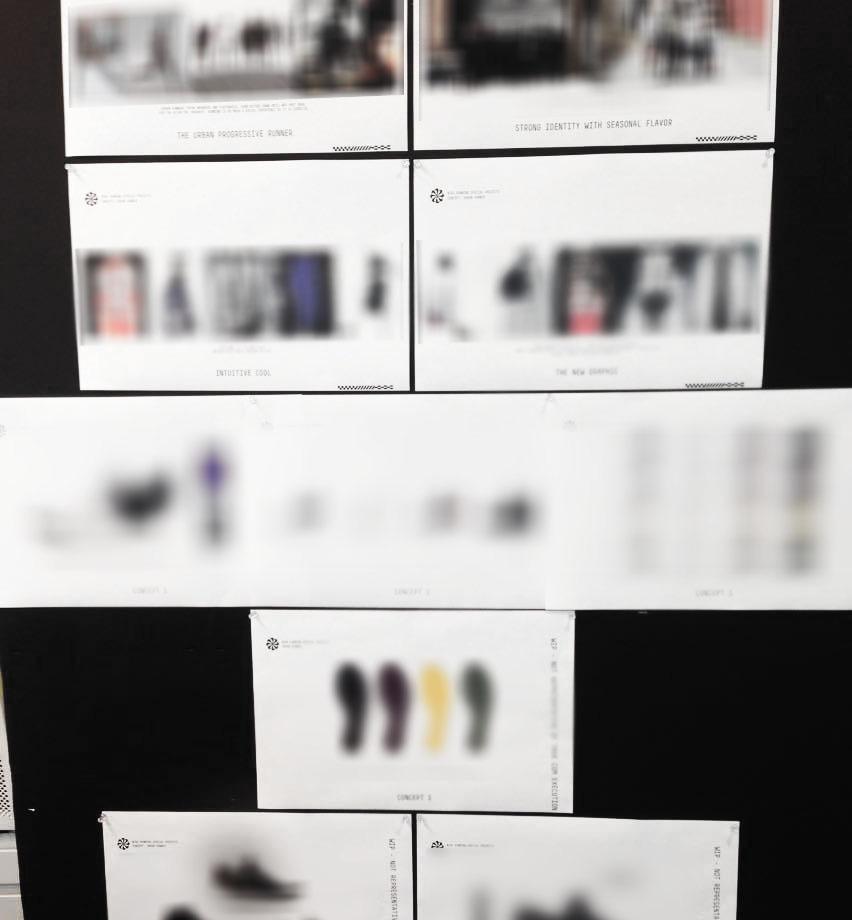
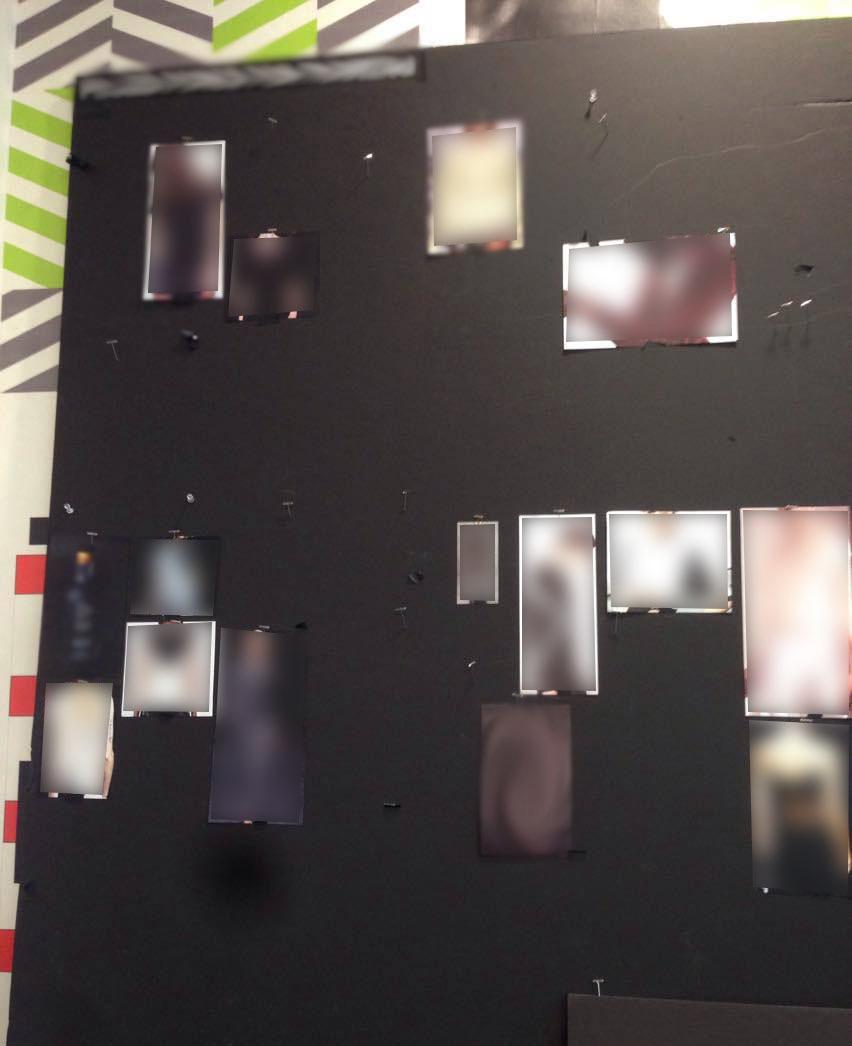
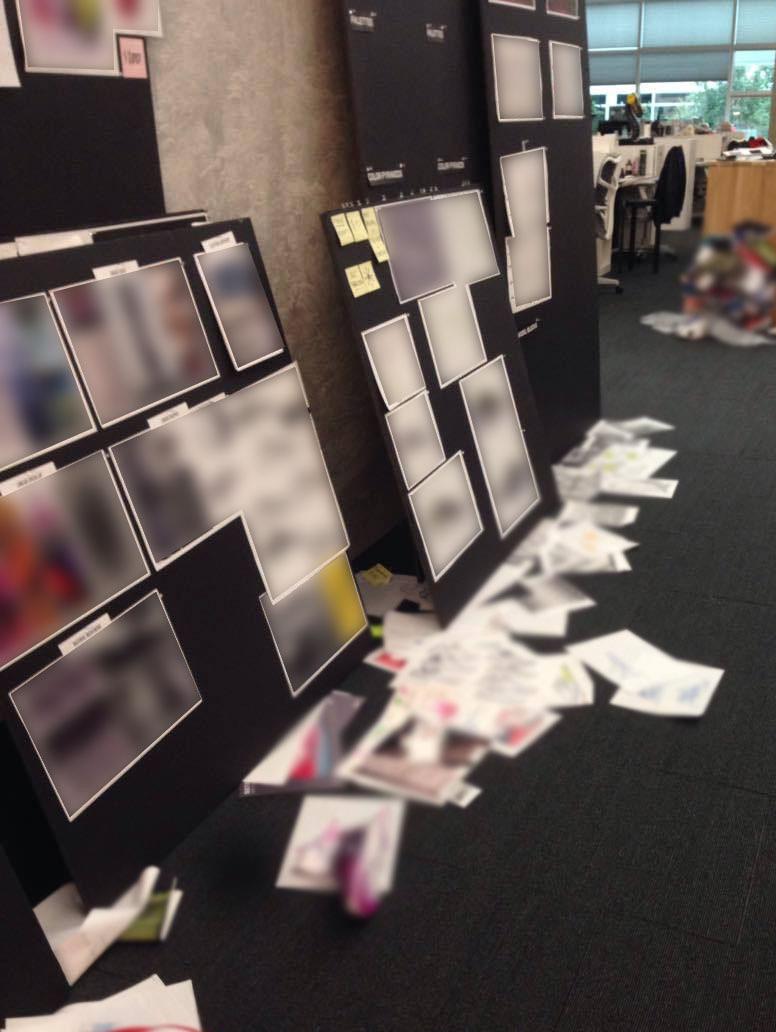
Designers were documenting their work alongside their inspiration on mood boards. These boards were versatile by accommodating sketches, photos, and physical artifacts. Much of the past work gathers at the bottom of the mood board.
User Interviews
A material designer expressed that while fellow designers might be able to grasp the concept and understand its potentialpresenting real physical 3D objects to nondesigners is key to helping them grasp the concept.
INSIGHTS
19
Time is a challenge
DPC February User Interviews
Designers repeatedly talked about the challenges of reconciling the fast-paced culture at Nike and the inquisitive and reflective nature of the design & creative process.
Ranking of how designers are being inspired: 1 Getting Outside 2 Athletes 3 Searching the Web 4 Talking with Others 5 Consumers 6 Alone in Thought 7 Drawing/Doodling 8 Learning New Skill 9 Other INSIGHTS
Designers want more data as input
DPC February User Surveys
Designers expressed their desire for different types of data as input.
Ranking of types of information desired for input:
1 Athlete Insights
2 Performance Data
3 Consumer Insights
4 Market Trends
5 Manufacturing Insights
6 Versioning & Comments
7 Deadlines & Gates
8 Retail Insights
9 Competitor Products
Ranking of information used to start a project:
1 Athlete Insights
2 Market Trends
3 Consumer Insight
4 Performance data
5 Manufacturing Insight
6 Retail Insights
7 Other
8 Daily use of design tools
9 Digital 2D
10 Pen and paper
11 Tablet
12 Physical Materials
13 Digital 3D
21
“Without the context of data, it’s very difficult back to things you know. As a company that’s you revert back to what you know, which forward.”
difficult to know what to do, so you revert that’s innovation led, without the data, goes against the mindset of pushing
23
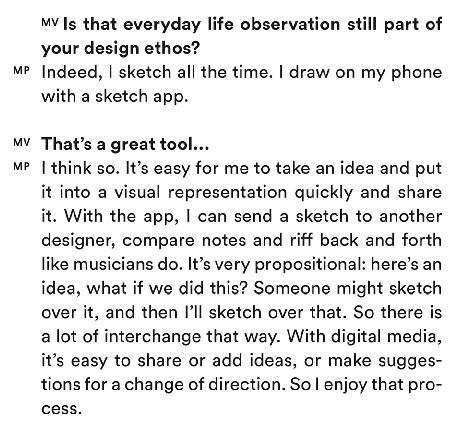
Designers BUILD OFF OF EACH OTHERS IDEAS
Mark Parker’s interview with ICON-DESIGN
User Surveys
The majority of users share their inspiration with fellow designers.
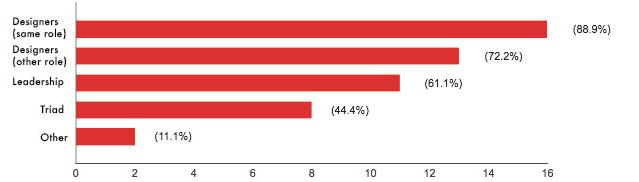
Q: Who do you share your inspiration with?
INSIGHTS
Designers seek out premium content
User Surveys & Hierarchical Clustering
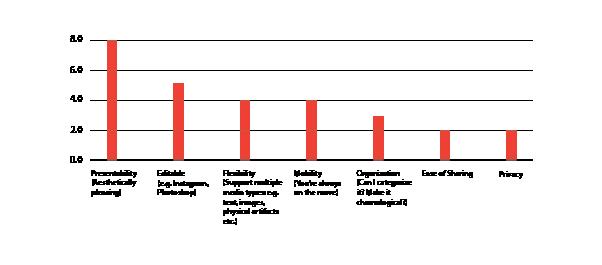
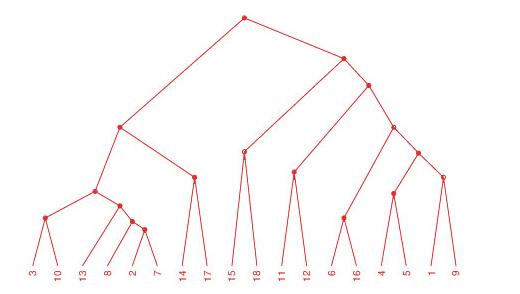
Designers felt very strongly about how important the presentability of their inspirational finds were. Half of the designers felt that presentability was the important factor when choosing an application. The other half felt that it was not very important at all. A complete clustering technique was used to group users based off of similarities across their perceived ranking for different categories. There was not enough data to create many definitive clusters, but there is strong evidence of a singly defined group of designers that prioritize presentability and editability.
There is a strong correlation between users that prioritized presentability and those that prioritized customization (editable).
NUMBER OF USERS THAT CONSIDER EACH FACTOR AS THE MOST IMPORTANT
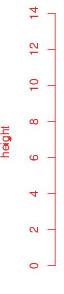
CLUSTERING OF DESIGNERS BASED OFF FACTORS
25
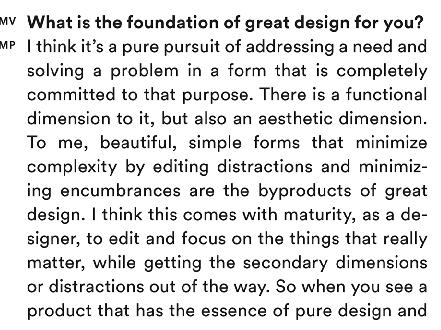
Designers minimize complexity editing out distractions
Mark Parker’s interview with ICON-DESIGN

Designers tangible inspiration
Contextual User Interviews
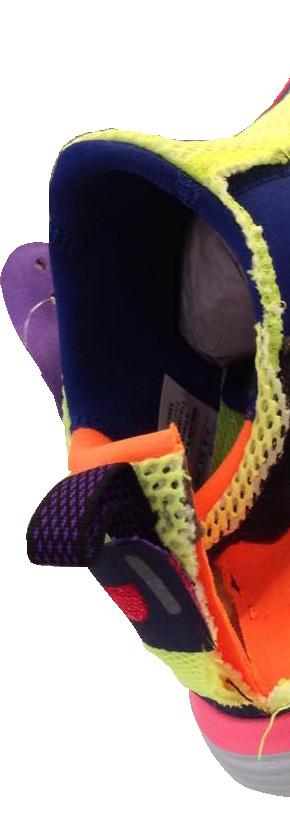
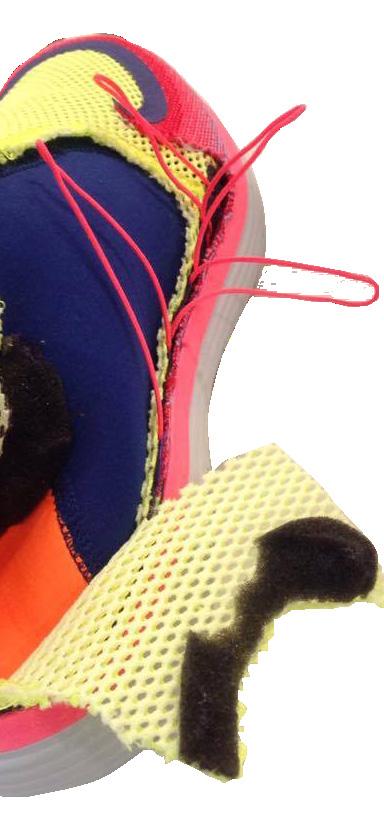
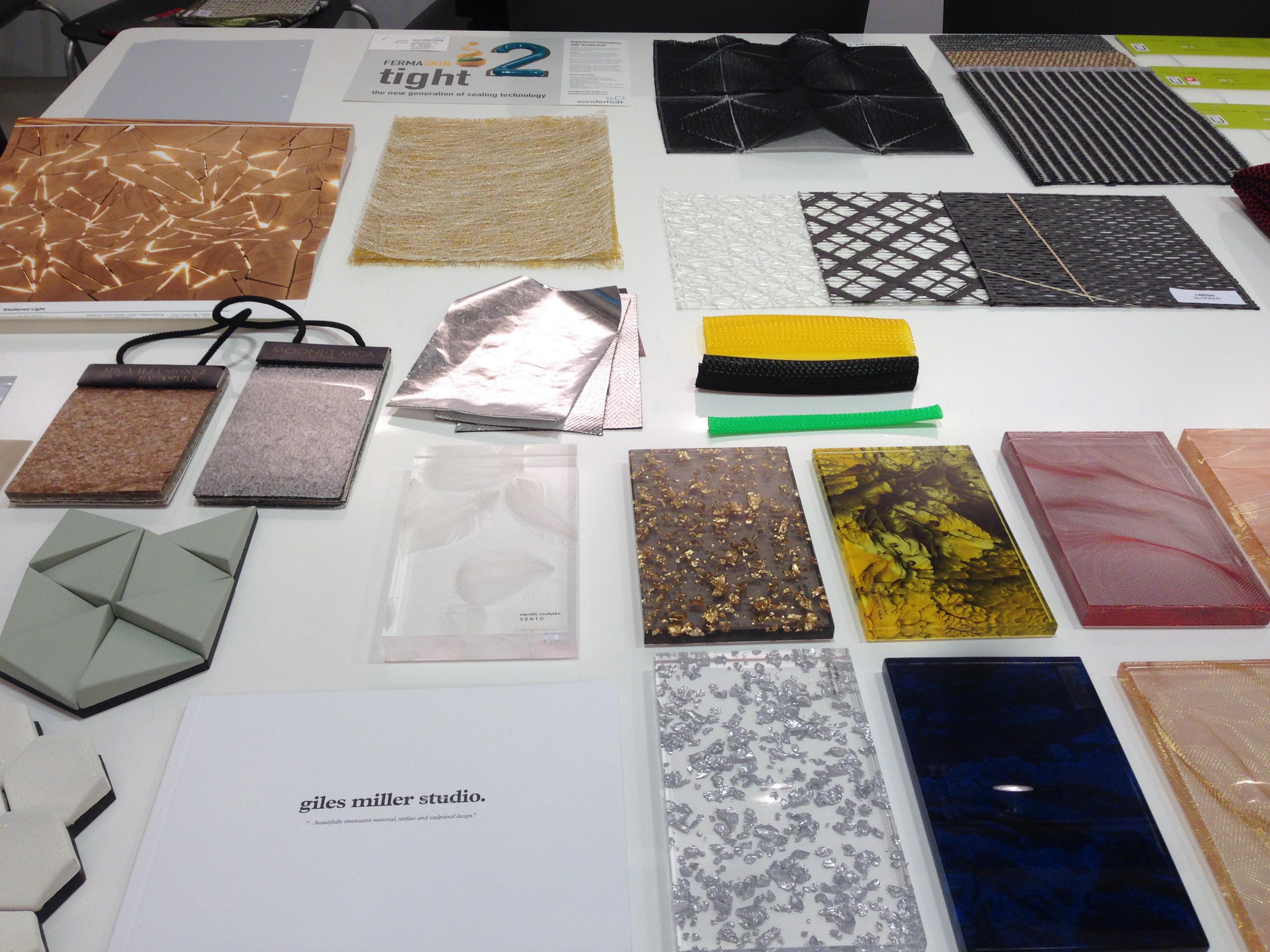
Designers were products. There of shoes everywhere. designers stated tangible samples their concepts to
INSIGHTS
Designers
find tangible & digital inspiration
Inquiries & Interviews were cutting into past There were cross sections everywhere. Material stated they must bring samples to communicate to non-designers.
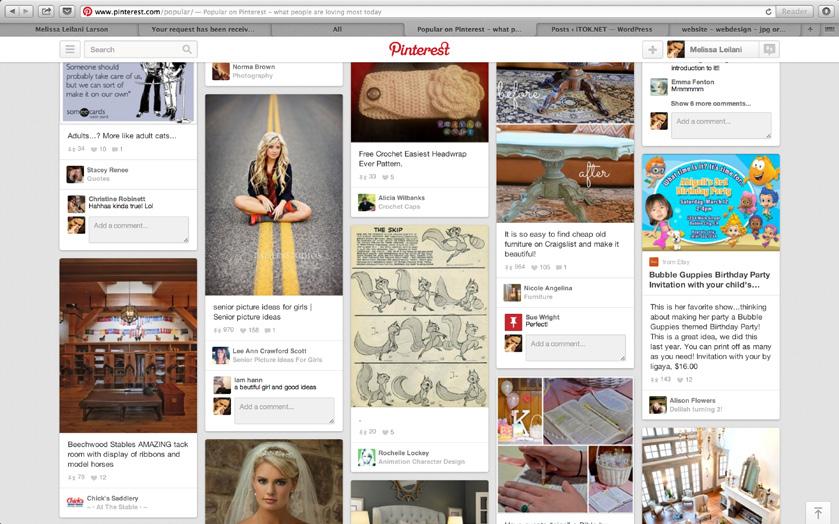
Designers curate their digital content
User Surveys
Designers repeatedly discussed appreciating Pinterest for its ability to curate and display content in the home page. They feel it can be improved as there is still some noise that exists.
27
29
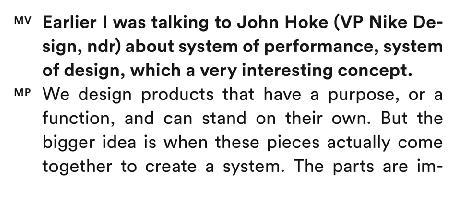
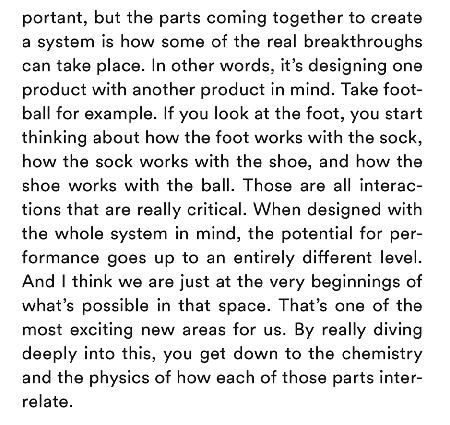
Designers create products with the whole system in mind
Mark
Parker interview with ICON-DESIGN
INSIGHTS
John Hoke (Speaking of Design: Episode 16)
“I’ll start by saying one of the key burning platforms for design going forward is owning the system of performance. And what we mean by that is taking all the individual great items that we make and building those items together so that the system works more symbiotically, more in harmony with the athlete’s body and I think that’s a competitive advantage because we’re going to build an entire head to toe look. That look is a unique advantage for us, that look is something that we get to own, that is a continuous opportunity for us to tell and show the public where we’re taking athletics. So when you talk about designing a system, you can’t think individual things, the system is built from great items which are made up of great details and they all come together to create this unique statement, unique performance system. So I was asking the teams at the design review to think about a couple things, systems for me really focus on where things intersect and where things interface and those intersections and interfacing of product ideas is where we’re going to go deep on. So how the sock and the shoe work symbiotically. How the tight and the uniform work symbiotically. How the system works together is something I want to absolutely focus on. The advantage for athletes is Nike gets to put it all together. Every detail, every material, every little nuance of a product comes together in harmony to help the athlete be great.”
31
Designers interpret the material into their own categories
Ken Black Interview
“This would go toward design reviews. So Flo Motion would have been within the CSL, John Hoke’s team would have built up that whole room with their thoughts on what Flo Motion looks like and feels like. And then it’s up to every category to interpret, to take their version of that, and interpret that into their category’s expression. So in other words if I was in Training, I would have gone through CSL, and begun to understand, “oh okay, body in motion, physical state, it’s not the absence of sensation, it’s the amplification of sensation.” There’s some point of view on color, and there’s some aesthetic direction, but I don’t want to look exactly like Running or Soccer or Football, so I need to find my own version. They’ll start looking for their own variations of inspiration, which leads to their palette, which they’ll then use and put up as their lead in to their story and design review.”
User Interviews
Designer discussed how the CL is a great, but sometimes overwhelming experience that acts as the starting point for creative exploration. Category and design leads challenge designers to go out and find inspiration that follow the theme.
INSIGHTS
...though the lens of the creative direction
John Hoke (Speaking of Design: Episode 3)
“We just came off IDR. The IDR is a process of being inspired with set directions that we offer called Flo Motion, and then we go through sketch sessions, and choosing materials, and preparing ourselves for the IDR. I’m really happy to report I thought we did a great job at IDR. I just love the way designers show up. We showed up very confident this time around. You’re never quite sure what’s going to be grabbed from the creative strategy and what I thought was great is that this time around, everybody grabbed everything that we had intended. They were inspired by the body in motion, they were inspired by studying the athletes and specific moves and needs of athletes and they were also inspired by this vision, direction we set forwards. So what I saw back was you all taking that work and intepreting it through your specific category or your specific design and function. But many have said, hey, the design group is absolutely killing it because they are delivering the tour de force of sport performance based on the athlete need, combined with an elevated style and taste level, and you put those two things together, problem solver and taste maker and all of a sudden you got something pretty rad. The Flo Motion vision is alive and well.”
33
Design in 3D progressing to 4D
Ken Black Interview
“Sketching for centuries has been…I mean it started with rock on wall, charcoal on wall, sheepskin with charcoal, ink with stylus, then parchment, then paper, then sharpie, then technical stylus to a tablet. But it’s still the same flat dimension, but it’s just starting to going into a machine in that dimension. The question I’m really intrigued is with this project is- sketching existing in 3 or 4 dimensional volume that allows you to interact with it in ways that change how you see and shape the world. I may want to start with something that I cobble, make, chisel. Can it be scanned and then immediately be a wireframe that I can start moving points to? I hit print and it goes to a 3D printer. Normally, I’d take sharpie and carve it. Our piece comes back and can I sketch the line I want it on it and it’s evidently on the wireframe back on the machine?”
INSIGHTS
John Hoke (Speaking of Design: Episode 3)
“One thing have continues to spike for me personally is the involvement and investment in digital tools to help designers design. To allow the design work they do to become more specific, more effective, and give them the ability to iterate very quickly. Designers are going to be challenged to keep pace with technologies that unlock their full creative potential. What’s amazing about that for us is that we’ve been on a journey to go from two dimensions to three dimensions for some time. But I think we’re now going from 3D to what I call 4D. And 4D is a big part of our Flo Motion campaign effort which is thinking of designing in dimension but having that dimension be in space and moving. And thinking about ways to design for the body in motion. Studying the body as it is moving and being able to design and iterate as it is moving and how that is going to change and shape the way we design in the future. Unblocking studying the body in motion, and designing specifically for the body in motion is going to change who we are. That elevates our performance vow to the athlete consumer and it changes our aesthetic to be distinctively unique based on sports, activity and movement. That to me is incredibly exciting.”
35
COMPETITIVE ANALYSIS
A competitive analysis is conducted to review the current platforms that designers are using to create or find, document and share their inspirations. We learn where these applications are succeeding or failing in supporting the design community. After a comparison of the major features these platforms offer, we can use the results from the follow up survey to find design opportunities.
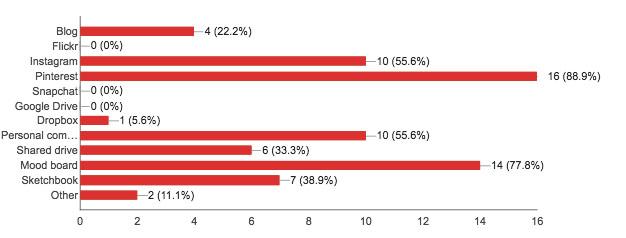
At-a-glance
of how designers are currently documenting their inspiration...
ANALYSIS
Mood boards and Pinterest are by far, the most utilized applications in the design community for documenting inspiration. In some ways, users consider Pinterest the ‘digital’ mood board. Designers appreciate that both platforms allow them to view their inspiration at-a-glance reliably. Still, the digital and physical counterparts also serve different needs and accommodate different interactions.
Mood boards for versatility & sharing
Mood boards live beyond the computer screen. Everything from printouts to material samples to hand-sketches to ad hoc feedback lives on this organic platform. Designers use mood boards for laying out the story when presenting design concepts. Although designers consider mood boards effective at sharing tangible inspiration, they find it hard to store and organize.
Pinterest for documenting & finding premium content
Almost all the Nike designers use Pinterest - it also has the most positive user feedback. A big takeaway from Pinterest is its visual documentation which is highly intuitive and easy to reference. Nike designers favor Pinterest because the applications keeps their inspiration all in one place reliably and capable of finding similar content. Designers are actively creating private boards to curate their ‘mood boards’. Nike designers feel that while Pinterest has premium content, it also isn’t very good at filtering out sub-par material. Furthermore, Nike designers always focus on physically realizing their ideas. Whether it’s the product or some form of inspiration, they want to be able to easily go between realms. Unfortunately, there is no conduit to go from the tangible to the digital and vice versa.
Instagram for trends
Users not only want premium content, they also care about what’s trending. Instagram is highly valued for its filters which are often updated and switched out. Users love the simple interface, and often curate their uploads. According to Business Insider, instagram users value quality not quantity. Instagram accounts for 7% of daily photo uploads among the top four photo-sharing platforms (544 million daily uploads total). Therefore, Nike designers love Instagram for its trendy uploads and consumer insight.
Opportunity to bridge the digital and physical
A glaring opportunity is to focus on addressing the gap between the digital and physical realms earlier in the product creation pipeline. The inspirational phase should be for creative exploration and we need tools to better aid designers in the storytelling process.
37
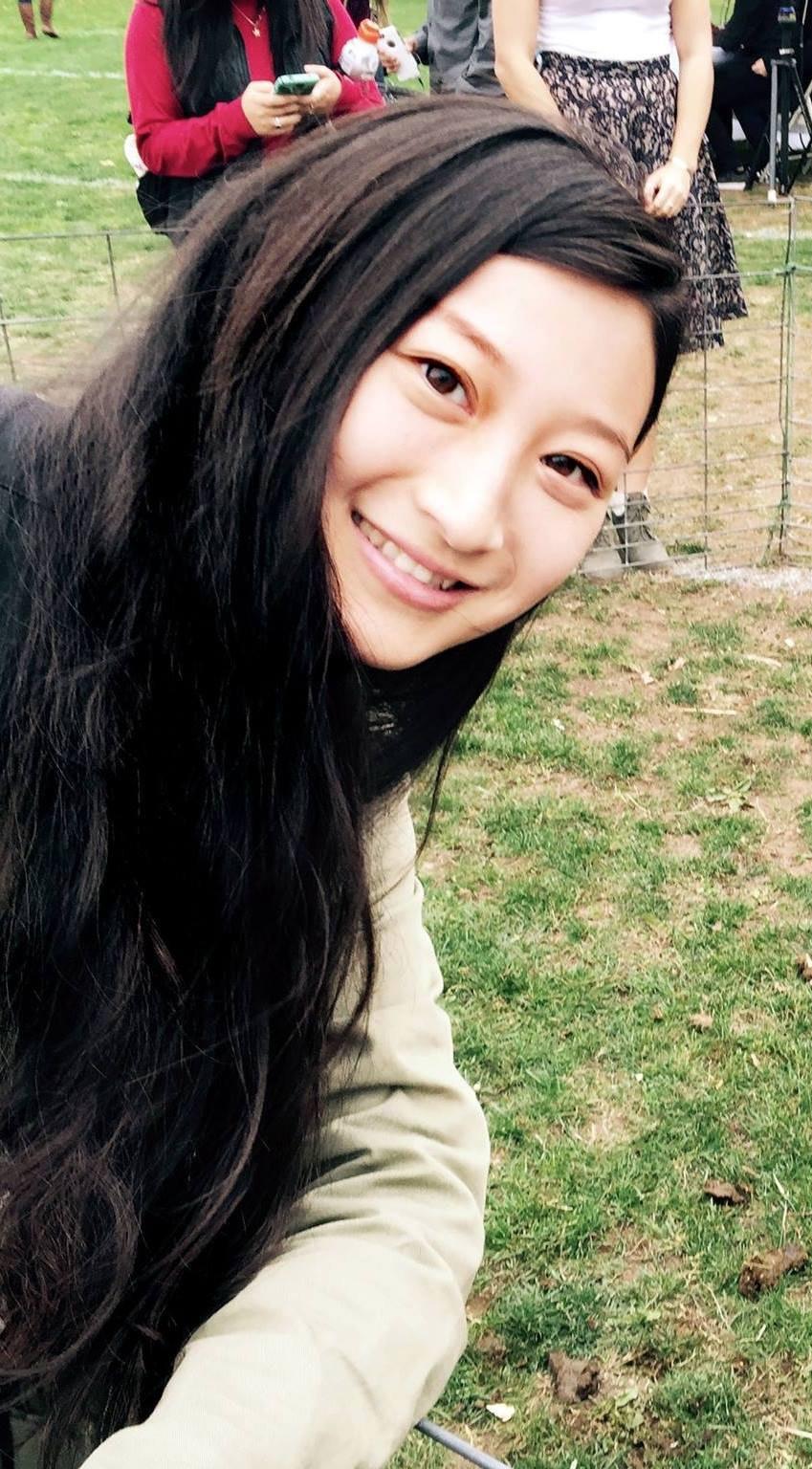
Eva Peng is an architecture graduate that double majored in Human-Computer Interaction at Carnegie Mellon University. In fall 2015 she began her accelerated Master’s in Management Information Systems. She is passionate about integrating design and technology and enjoys 3D design for rapid prototyping and serving as teaching assistant for the IDeATe (integrative design, arts, & technology network)
course Generative Modeling where she teaches students parametric modeling and scripting tools.
ABOUT
ACKNOWLEDGMENTS
Sue-Ostermann-Lenz
Karen Lawson
Bryston Ulrich
Emily Miller
Ken Black Charlie Nyara
Sergio Lozano
Designers
John Foreman
Edmund Holmes leadership leadership interviews advisors
Chad Knight
Deisiane Bresolin
surveys, interviews, testing design direction equipment
Nate Dolce
surveys, interviews, testing, actor
77