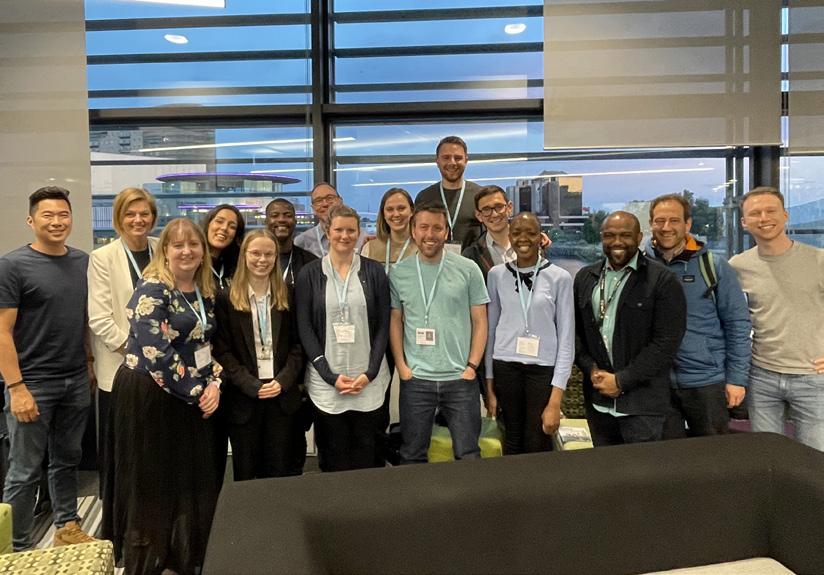
Gavin Calver, CEO; Peter Lynas, UK director; Jo Frost, director of communications and engagement; John Gibson, director of finance and operations; Rev Dr Israel Oluwole Olofinjana, director of One People Commission; Hil Sewell, director of people and culture; Danny Webster, director of advocacy; Alicia Edmund, head of public policy; David Smyth, head of Evangelical Alliance in Northern Ireland; Tim Rowlands, head of Evangelical Alliance in Wales; Lynne Paterson, head of Evangelical Alliance in Scotland
Evangelical Alliance offices
Head office 176 Copenhagen Street London N1 0ST tel 020 7520 3830 info@eauk.org
Northern England
1a The Mailbox 1 Exchange Street, Stockport Gt Manchester SK3 0GA
Northern Ireland
First Floor, Ravenhill House 105 Ravenhill Road
Belfast BT6 8DR tel 028 9073 9079 nireland@eauk.org
Wales wales@eauk.org
Scotland Challenge House 29 Canal Street
Glasgow G4 0AD tel 0141 353 0150
scotland@eauk.org
The Evangelical Alliance. A company limited by guarantee. Registered in England and Wales No. 123448. Registered Charity No. England and Wales: 212325, Scotland: SC040576.
idea is published in accordance with the Evangelical Alliance’s Basis of Faith, although it is impossible in every article to articulate each detail and nuance of belief held by Evangelical Alliance members. Articles in idea may therefore express views on which there is a divergence of opinion or understanding among evangelicals. idea accepts advertisements and inserts to offset printing costs. Advertising in idea does not imply editorial endorsement. The Evangelical Alliance reserves the right to accept or refuse advertisements at its discretion. Articles may be reproduced only with permission from the editor.
In a time of shifting values and competing worldviews, the concept of truth has become increasingly fluid. Before joining the Evangelical Alliance, I worked for a mainstream media organisation for almost 12 years. During my time there I worked in many varying roles, including as a disinformation investigative journalist, covering a wide range of stories including Covid vaccines, the Ukraine invasion and political propaganda in the Middle East. Even for a trained eye, it was often a real challenge to sift through the daily tsunami of open source content and determine what was genuine.
Yet within the pages of scripture, we have total assurance in not only an absolute but also an eternal truth.
From Genesis to Revelation, the Bible affirms that truth is rooted in God Himself. Jesus declares in John 14:6, “I am The Way, The Truth, and
Welcome Highlights
02 Living faithfully in a shifting world
Paul Woolley reflects on how we can hold onto biblical truth in a world filled with noise and competing voices.
04 Spotlight!
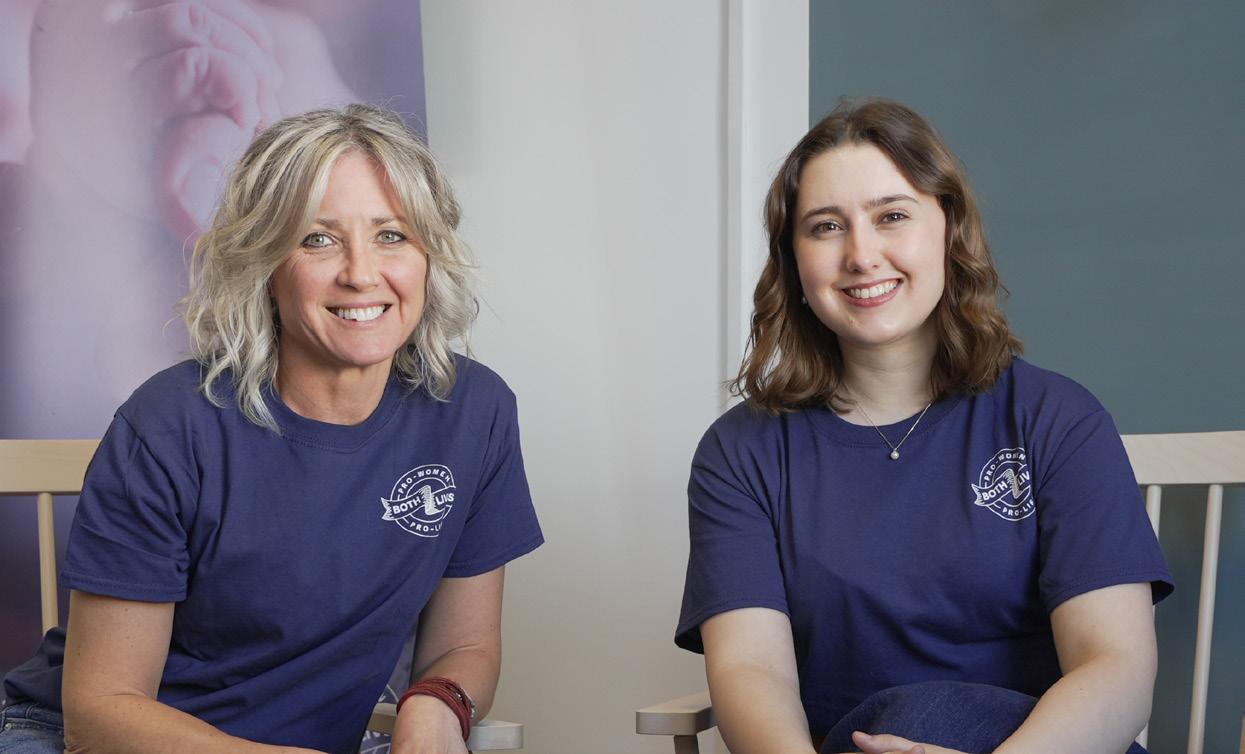
Catch up with the Both Lives team as they share recent projects, what’s coming next, and exciting news about their new podcast.
The Life.” This statement is more than a claim to knowledge; it is a declaration of identity. Truth, in the biblical sense, is not merely something we understand – it is someone we follow.
Biblical truth offers clarity where the world offers confusion, conviction where culture promotes compromise and a counter-cultural security in someone else in a society where we are encouraged to rely on self.
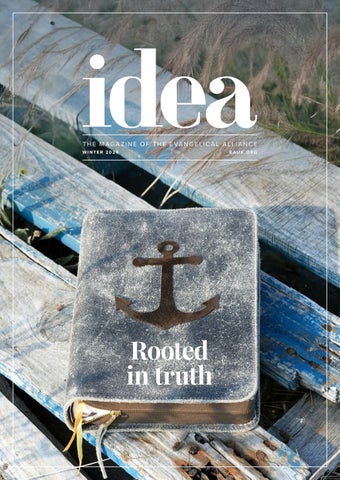
This edition, entitled ‘Rooted in truth’, invites us to reflect deeply on what it means to stand on God’s word in a world of shifting sand. As we explore themes of faith, obedience, wisdom and grace, we do so with the conviction that God’s truth not only endures but transforms. Be blessed.
Nicola Morrison Editor
12
5 Top Tips for seeking truth in media
Feeling overwhelmed trying to decipher what is real and what is fake in the media? Journalist Duncan Williams offers five helpful tips to decipher fact from fiction.
16
Uprooting hopelessness
Bryn Abbott explores the importance of open conversations about mental health – and why the church must play a vital role.
24
My story
In this instalment of My Story, Katherine Brown shares her personal journey of wrestling with truth and discovering hope through faith.
Living faithfully in a shifting world
With so many conflicting ideological theories floating around in today’s society, Paul Woolley highlights five ways we can ensure biblical truth pierces through the noise and remains our firm foundation.
Iwas at college when I first encountered the idea of postmodernism. It was presented as the cultural mood of the late 20th century, challenging modernism’s claim to certainty. Postmodernism suggested that objective truth (once assumed) was giving way to relativism, where morality, knowledge and meaning are seen as contingent on culture, history or context.
At the time, we were told this was the direction society was inevitably moving in. On the one hand, postmodernism usefully exposed the arrogance of modernism’s claim to total certainty. But it also created profound challenges. If ‘your truth’ and ‘my truth’ both carried equal weight, then the shared foundation of reality itself seemed to erode.
I remember writing many essays on the topic. That was 30 years ago. Looking back, it’s striking how cultural predictions rarely unfold in straight lines. Relativism has indeed flourished across society, but alongside it we
now see the emergence of new moral absolutes – absolutes rooted not in God but in secular frameworks. Consider proponents of gender identity or abortion: these subjects are rarely treated as ‘open’ questions, but rather as non-negotiable truths, defended with a certainty that rejects as morally indefensible any alternative view. And yet, amidst this flux, something surprising is happening...
Quietly, sometimes unnoticed, there’s a revival. Those coming into the church today are not simply looking for community, though belonging still matters deeply. Increasingly, they are looking for truth. They want a moral compass to navigate complexity. They long for clarity in a world of shifting narratives. They want scripture to shape everyday life – in work, in family, in relationships and in society.
Of course, this is not easy. The Bible was written in times and places vastly different from our own. Our world is diverse, complex and rapidly changing. How, then, can we faithfully apply God’s word to the realities of daily life?
Quietly, sometimes unnoticed, there’s a revival. Those coming into the church today are not simply looking for community, though belonging still matters deeply. Increasingly, they are looking for truth.
Here are five vital recognitions:
1. Recognising what the Bible is
The Bible is not a single thing but many things at once. It is ancient literature, composed in particular cultural and historical contexts. It is the unfolding story of God’s relationship with His world. It is divine revelation – a gift through which God makes Himself known. Holding these dimensions together guards us against reductionism (oversimplification). The Bible is not merely a rulebook, nor simply an ancient relic. It is the living word through which God continues to speak.
2. Recognising the genres of scripture
The Bible is more like a library than a single book. Within it are law codes, poetry, history, wisdom, prophetic oracles, letters and more. We don’t read Leviticus the way we read the Psalms, nor the Gospels the way we read Paul’s letters. Just as we approach a novel differently from a reference book, so too we must respect the genre of each biblical text if we are to hear its message rightly.
3. Recognising the need for interpretation
God’s truth is absolute, but our grasp of it is not. Because we are sinful and limited, our understanding is always partial. As a friend once said: “God’s truth is absolute, but in human hands it becomes provisional.” That should cultivate humility, dependence on the Spirit, and attentiveness to the wisdom of the global and historic church. We never approach scripture alone; we stand in a great company of readers across time and space.
4. Recognising that truth is personal
Ultimately, truth is not just a set of propositions but a person. Jesus declared, “I am The Way, The Truth, and The Life.” (John 14:6) The Bible points us to Jesus, the living Word, the fullest revelation of God. That means truth is both propositional and relational. We affirm what scripture teaches, but we also follow a living Lord. In Jesus we discover who God truly is and what it means to be fully human.
5. Recognising the living translation
The most powerful translation of scripture is not the NIV, RSV, or GNB, but the translation of our lives. For many, the only Bible they will ever read is the way Christians embody God’s word in their everyday work and relationships. That’s why applying scripture to all of life is not optional but essential. Our lives are meant to be living commentaries on God’s truth. This conviction is the heartbeat of the new Everyday Faith Bible, launching in January in partnership with Bible Society. This edition is designed not only for study but for transformation. It helps people connect scripture with real life – head, heart and hands – not just on Sundays, but every day of the week, in every part of life.
The world will continue to shift. Philosophies and cultural trends will rise and fall. But God’s truth remains. Our calling is to be rooted in Him. As we walk with Jesus and grow in His likeness, we will not only withstand the turbulence of changing times but also bear living witness to the hope and truth found in Him.
For more information about the Everyday Faith Bible, visit: licc.org. uk/everydayfaithbible
Paul Woolley has led LICC as CEO since 2021. Formerly Bible Society’s deputy chief executive and Theos founder, he’s on a mission to see disciple-making embedded in the culture of the church.
SPOTLIGHT!
Hear the latest news from our Both Lives team, including the launch of a brand-new podcast.
By Lisa Barr
What is Both Lives?
In 2017, a new conversation on abortion began to take shape in Northern Ireland. What started as a campaign co-founded by the Evangelical Alliance has since grown into a UK-wide initiative with a clear and hopeful message: both lives matter. Today, Both Lives is a collaborative movement bringing together individuals and organisations from diverse social, political and religious backgrounds to champion a vision of progress that honours both women and their unborn children.
A
snapshot
of what we’ve been up to in 2025
2025 has been a full and purposeful year. Across the UK, we met with local representatives at multiple levels of government (including submitting evidence to the Scottish Government’s ongoing abortion law review). We shared what a society that values both lives looks like and how legislation and policy can shape this vision to become a reality.
This advocacy is not abstract. It flows from the truth that every human life, pre and post birth, carries God-given dignity and inherent worth.
In talks, seminars and sermons in churches and gatherings across the UK, we have explored this truth through God’s own unborn story: Jesus entering humanity as a microscopic embryo in His mother’s womb.
From doctors and lawyers to parents and politicians, on podcasts, at marches such as the March for Life and across the media, we’ve had significant conversations about what it means to truly value both lives. We have had the privilege of being entrusted with telling deeply personal stories of loss, life and hope. These testimonies shape how we engage on this issue, reminding us that
behind every statistic, there are real people in real circumstances.
Both Lives UK lead, Dawn McAvoy has continued to chair the CPCR (Churches and Pregnancy Crisis Roundtable) steering group, meeting twice a year in London, with a satellite event in Belfast. The CPCR events have expanded to become a space for dozens of church leaders and service providers to share practical ideas and resources, equipping leaders to respond with compassion to those impacted by pregnancy crisis and abortion.
We also took on the leadership of the National Day of Prayer for Life on 27 October. Churches and individuals across the UK stood together in truth, compassion and hope, bringing this issue before God in prayer.
This advocacy is not abstract. It flows from the truth that every human life, pre and post birth, carries God-given dignity and inherent worth.
What’s new?
In September, we launched our Both Lives Podcast. This podcast shifts the conversation from the binary of pro-life versus pro-choice to a collaborative, positive conversation, seeking the wellbeing of both women and their unborn children.
Our expert guests come from the worlds of medicine, law, frontline services and theology to explore the big questions around motherhood, pregnancy and the cultural narrative around abortion. As host of the podcast, Dawn McAvoy explains: “At the heart of the Both Lives Podcast is a belief in the God-given dignity of every human life. We want to tell a more loving, hopeful story – one where the lives of both women and their unborn children are valued during and after pregnancy.”
Advocating for both lives in today’s cultural landscape comes with significant challenges. Abortion raises complex questions about women’s rights, bodily autonomy, care for the vulnerable, freedom and equality, justice and compassion. We are not indifferent or blind to tragedy and we recognise the distressing situations some women find themselves in and the difficult decisions they make.
We know that there is a better story for both lives in pregnancy and so we will continue to imagine and work towards building a society that values the life and health of women and unborn children and pursues the wellbeing of both.
Looking ahead
As 2025 draws to a close and we enter into 2026, we are so thankful for the opportunities that we’ve had to present a better way of engaging on this vital topic – one that is marked by clarity and compassion, conviction and kindness. January marks two years since our relaunch as Both Lives (formerly known as Both Lives Matter). For us, Both Lives has always been more than a campaign; it is an invitation to imagine and work toward a future where women and children are not pitted against each other, but are celebrated, supported and given the chance to thrive together.
Get involved:
• Pray: Ask God for wisdom, courage and creativity as we try to build a culture that recognises the inherent value of life, pre and post birth.
• Be equipped: Our podcast and resources are designed to help you to have meaningful conversations on this complex and sensitive issue.
• Connect: Invite us to speak at your church or gathering, sign up for our monthly newsletter, and engage with us on social media.
The Both Lives Podcast is available on Apple Podcasts, Spotify and at: bothlives.co.uk along with a wide range of our resources including our God Unborn series and more.
Lisa Barr has a dual role as the Northern Ireland administrator and Both Lives research and communications assistant. She has a degree in law and holds a master’s in children’s rights. During her studies she discovered a love for justice and advocacy and began to explore what it means to pursue this wholeheartedly. Lisa is married to Jordan and lives in Newtownabbey.
Moving your church from maintenance mode and into mission
Over 2,000 FREE Toolkits already helping churches focus on fruitful ministry.
Understand your context Find your next steps in mission
Help Children Explore Your Church With Confidence
A simple, fun booklet for school visits, baptisms, weddings, and first-time visitors.
Interactive activities Designed for ages 5-11
Order Your FREE Toolkit & Visiting Church booklets Today: ruralmissions.org.uk/shop
Helping churches think & be more missional UK Charity No. 802305 “Trusted by churches across the UK” www.ruralmissions.org.uk
An ecumenical christian charity serving rural churches at no cost Registered Charity: 802305
Whether you’re running children’s ministries, a homeless shelter, maintaining historic buildings, safeguarding your trustees, or looking for protection against cyber and terrorism risks - we understand the unique challenges churches and charities face. Our brokers arrange bespoke insurance, so you only pay for cover you need
Church life: PETER LYNAS
Peter Lynas, our UK director, shares how God is on the move across the UK, and the unexpected and unusual ways people are coming to faith.
Just recently, I met a man who turned up at church after listening to Jordan Peterson’s podcasts. He was eager to chat afterwards because I had referenced Peterson in my talk. That same morning, another man was watching the service online because his nephew was leading worship and playing his old guitar. When I mentioned a Joe Rogan podcast featuring apologist Wes Huff, he texted his brother-in-law mid-service, amazed as he had listened to the episode, and now wanted to discuss faith further.
The Quiet Reviva l report has provided statistics confirming what we’re seeing on the ground. As we travel, we hear story after story.
Some are disillusioned with the “woke agenda” and have begun exploring faith after following online influencers. Others arrive at festivals having dabbled in crystals, manifesting, or WitchTok, but soon realise they’re hungry for something more.
One pastor told me several young men started attending his church after becoming Christians while watching Kirk’s funeral online. Yet others in the congregation were unsettled by the mix of politics and religion at the funeral.
The recent Unite the Kingdom march highlighted similar complexities. Some Christians attended, and other people encountered Jesus at the event. But others were troubled by crusader costumes and the rhetoric that made them feel unwelcome in their own country.
Our prayer is simple: “More, Lord.”
One young woman showed up at a colleague’s church saying she had heard a voice tell her: “Stop calling me the universe. I am your God.”
Of course, this move of God comes with challenges. Some simply add Jesus to other practices: Jesus plus crystals. Others find church life very different from the online spirituality that first drew them in.
Wherever I go, the same question arises: How do we disciple people who have met Jesus outside of church walls? Our recent Finding Jesus survey found that 42% of new Christians say they came to faith on their own. How do we disciple those shaped by consuming 20+ hours of online content each week?
There are also political tensions. I spoke with many who were shaken by the murder of Charlie Kirk. Some church leaders were criticised for mentioning his death, others for remaining silent.
We celebrate that more people – especially young men – are finding faith. But the research also shows many of them lean strongly to the political right. Often, the figures who introduced them to Christianity combine faith and politics. With the rise of Christian nationalism, church leaders are wrestling with how to disciple faithfully in this context.
The moment we are living in calls for humility. We must be aware of our own biases, willing to listen to those we disagree with, and yet unafraid to speak truth in love. God is clearly on the move, sometimes in ways we do not fully understand. Our prayer is simple: “More, Lord.”
Peter Lynas oversees the advocacy team and the work of the Evangelical Alliance across the four UK nations. He is passionate about faith in the public square and leads the Being Human project with Jo Frost. He previously worked as a barrister in Belfast before studying theology at Regent College in Vancouver, where he serves on the board. Peter is a regular media commentator, is married to Rose, has two daughters, and loves running.
An inspiring personal account of brokenness and restoration by Andi Russell
How God’s word anchored me
People often say, “We need more stories and fewer statistics.” Statistics can inform, even inspire, but stories help us feel seen, bring hope and change lives.
For years I told other people’s stories, first in the media, then the global NGO sector, and later as co-founder of the communications agency Jersey Road. Gradually I sensed God nudging me to share my own: to show that even the broken pieces of a life can be shaped into something beautiful and encouraging.
That calling and a deep passion for social justice – especially for mothers in the justice system –birthed my work now, as founder of Alabaster Coaching and BREATHE, a bespoke, traumainformed seven-step life coaching service.
Sharing my story, however, has required vulnerability and honesty. It is never about showcasing me; it is about revealing who God is and what He has done. As my favourite Psalm declares,
“The Lord is my light and my salvation, whom shall I fear?” (Psalm 27:1). Even in the darkest of times, God’s word has been my anchor when everything else felt unsteady.
A mask of perfection
Childhood taught me to project a flawless image, to hide feelings and quiet my voice for the sake of others. That habit followed me into adulthood. Outwardly life looked good: happy moments, career successes – but deep inside lay an unhealed, hurt and fractured identity.
Then came the season that exposed every crack: eleven long years of unexplained infertility. Heartbroken and confused, I felt I had to cope alone. Afraid of judgement, I buried my sadness and began using alcohol to numb emotions and create a false sense of control and confidence.
Yet God never abandoned me. I sensed His gentle call to come home to freedom. But I resisted. Church, especially as a leader, didn’t always feel like a safe place to admit struggle or weakness.
“When I finally surrendered myself, I discovered that my worth was never based on perfection or performance. I am God’s beloved daughter. That reality changed everything; my faith, my relationships, my purpose, even my voice.”
The power of authenticity
Many Christians, myself included, feel pressure to present a “shiny, happy, successful” image, but true faith is most compelling when it’s authentic. Vulnerability invites vulnerability. People longing for transformation need to see leaders and fellow believers who are real and relatable.
If they cannot see themselves represented in the pulpit or the pews, how will they know they too can be accepted and begin their own journey toward wholeness as children of God?
I understood this in theory. I had grown up in a Christian home and community. Yet it was not until I knelt in desperation just like the woman with the alabaster jar in Luke 7, carrying sin and shame and longing for my Saviour’s love, that I fully grasped Jesus’ words of mercy, the depth of His love and forgiveness, and how this should be extended to others.
Scripture repeatedly shows that God uses ordinary, flawed men and women. He never rejects us because of our past or even our present failures. Instead, He sees who we are and who we can become and that our stories point to His glory.
Isaiah 61:3 promises that God will bestow “a crown of beauty instead of ashes, the oil of joy instead of mourning, and a garment of praise instead of a spirit of despair. They will be called oaks of righteousness, a planting of the Lord for the display of His splendour.”
I often wonder if the woman with the alabaster jar, the inspiration for my company name Alabaster Coaching, imagined that centuries later people would still draw hope from her act of humble devotion. Yet God chose her brokenness to reveal His extravagant grace, just as He calls us to create safe spaces of grace for others.
A new identity
Galatians 3:26 declares, “So in Christ Jesus you are all children of God through faith.” Our faith in Jesus confirms our identity. Every time we renew our trust in Him, that identity is reaffirmed. When I finally surrendered myself, I discovered that my worth was never based on perfection or performance. I am God’s beloved daughter. That reality changed everything; my faith, my relationships, my purpose, even my voice. As I began to share openly about the freedom and healing I had found, with those both in and outside of the church, others found courage to share their stories too.
Your story matters
We live in a fractured world where people are searching for truth and meaning. We hold the answer in the person of Jesus and the power of His word. So, what’s your story and who needs to hear it? Like mine, it may be the very thing God uses to enable you to say, “Look what the Lord has done. If He can do this for me, He can do it for you too.”
Andi Russell is mum to Georgia and wife to Gareth, and lives in the stunning city of roundabouts, Milton Keynes! She holds a master’s in coaching and mentoring from Oxford Brookes and is a trauma-informed coach, founder of Alabaster Coaching and creator of BREATHE, a bespoke coaching service for justice-involved mothers. She is also a trustee for the Evangelical Alliance and member of the IllumiNations Europe team. Andi also offers spiritual direction and coaching for Christian women in leadership.
His truth, my guiding light
In this prayer, Ada Prisco gives thanks for the unshakable truth found in the light of Christ
W
e have seen a great Light, The true Light that gives life to everyone. The Light spoke the truth, and the truth has set us free.
Blessed are you, our God. Our Lord Almighty, we praise your name. You alone offer eternal life. You alone are The Way, The Truth and The Life.
When we walk through the valley of the shadow of death, May your truth guide us to safety, and may your promises light our path. The lies of this world have built up walls to imprison and divide us, But they crumble at the sound of our declaration of your truth.
Your truth sustains us and gives us hope and offers peace to our souls. In your promises, our spirits rejoice. Who is above you? No one. Who is worthy of glory and praise? No one but you, Jesus.
As we seek you, Jesus, give us eyes to see things like you do. Holy Spirit, guide us through the narrow path, And teach us the Father’s ways. Help us to love others like you love us, And to be one.
May your favour be upon us, God. Grant us your wisdom. Holy Spirit, search our hearts each day, And help us to remove anything that keeps us from the truth.
Heaven and earth will pass away, but your word will never pass away.
Jesus, in your name we ask, Amen.
Ada Prisco is the finance assistant at the Evangelical Alliance. She is passionate about embracing her new calling to share Jesus, and spends her time balancing life between her family, sharing the good news, working and supporting her husband in their Italian bakery in Stockport.
5 TOP TIPS
for seeking truth in the media
Journalist Duncan Williams shares some helpful advice on how to navigate the media we consume; discerning truth from fake news, and both personally and collectively modelling a Christ-like approach to the content we put out there.
1. Guard your heart and mind
Philippians 4:8 says, “…whatever is true, whatever is noble, whatever is right, whatever is pure, whatever is lovely, whatever is admirable – if anything is excellent or praiseworthy – think about such things.” Don’t let media consume your peace or distort your perspective. Stay grounded in what is good and true. Be mindful of what and how much content you consume online.
3. Embrace digital spaces
Instead of retreating from social media, step into the conversation with care and good judgement. Just as the Gutenberg press opened up scripture to the masses, today’s digital tools can open up gospel stories to new audiences. Technology is not the enemy – it’s an opportunity. Use platforms not to compete with noise but to offer clarity, compassion and hope.
4. Steward trust wisely and offer hope
2. Model discernment and demonstrate wisdom
Pray before consuming news. Christians are not immune to misinformation. Ask for wisdom to distinguish truth from manipulation, fearmongering or deceit – James 1:5 “If any of you lacks wisdom, let him ask God…” Try to resist reactive outrage and echo chambers. This can be done by being sensitive to the emotions the content you are consuming is stirring up in you and not relying on just one outlet or platform. Compare coverage of the same event from different perspectives. Look for facts over opinions. And always remember to check and verify sources before publishing, forwarding or resharing content. Proverbs 18:13 reminds us, “If one gives an answer before he hears, it is his folly and shame.”
While trust in news organisations is in decline, many communities still value their local churches. This credibility is a gift – but also a responsibility. Now more than ever, Christian voices are needed in the media space, not to shout louder, but to speak wisely and faithfully. In a culture often defined by cynicism, hope itself is a radical message. Speak truth with humility and integrity. You can do this by ensuring that you engage with current events in light of scripture, not just opinions. If we want to be credible, we must contribute to clarity rather than confusion.
5. Share authentic stories
Polished branding is less powerful than honesty. Real testimonies of life, loss, forgiveness and faith can cut through scepticism. Focus on human experience, while pointing gently to deeper truths. To do this well, churches must invest in media skills and encourage and train young Christians to think critically about media. We should all strive to support those called into journalism or creative content-making. Every church needs a media mindset, even if it doesn’t have a media department.
Final thought
Silence is not neutrality. If the church withdraws from media, other voices will fill the space. By stepping forward with authenticity, discernment and courage, Christians can help shape a more honest and hopeful public conversation.
Duncan Williams is a journalist, editor and life coach minister, passionate about using media to share inspiring, kingdom-centred stories and encourage spiritual growth. In addition, he has authored several transformative self-help materials and supported dozens of men and families in their recovery from trauma and addiction.
•
•
•
•
TRANSFORMATIVE TRUTH!
By Clare Doughty
Elzbieta’s two years at college were the most difficult she had experienced. Through Lifewords’ tools and resources, lives like hers are being turned around.
“Growing up in Poland, I was surrounded by faith, and was sure that I was known and loved by God,” Elzbieta shares, “but when I encountered difficulties during my childhood, experienced loss, and struggled to make sense of suffering and evil, God’s presence began to feel increasingly out of reach. When I moved to the UK, the challenges continued, and slowly I abandoned my faith altogether.”
One day, after picking up a copy of Lifewords’ Little Book of Chaos in a classroom at college, Elzbieta’s chemistry teacher encouraged her to keep it, explaining that it was about faith and mental health and that he thought it might help her.
“A few days after leaving college, I was in my room when I suddenly felt a strong urge to open the Little Book of
Chaos,” she says. “I tried to ignore it, but I couldn’t. I opened the booklet at a random page and saw a quote from Isaiah 43. I looked up the full passage, and my eyes landed on these words: “I have summoned you by name; you are mine.”
“After years of searching for identity and meaning, those words silenced the noise. Through the chills and emotion, I finally felt clarity. I knew that God was real, and He was with me. I didn’t understand why God would want anything to do with me, but I knew, without a doubt, that I believed in Christ and wanted to know more. I started to pray, and days later began to read my very first Bible.”
Elzbieta reflects: “God speaks through His word, meets us in our chaos, and gently reminds us that we are His. Resources like Little Book of Chaos carry truth in a simple, honest way that meets people right where they are.”
Stories like Elzbieta’s emphasise what Lifewords is all about. Through scripture-rich, context-aware resources like Little Book of Chaos, alongside innovative global projects and programmes, Lifewords (formerly Scripture Gift Mission) is supporting the church in sharing the Bible in ways that change lives.
Rev Tim, interim associate priest in the parish of Sprowston, uses Lifewords’ Living with Loss in his ministry: “It’s a gentle and sensitive way to share hope and comfort with those in grief – it
feels like a pastoral gift that respects people’s pain without rushing to resolve it. The language is accessible without being patronising, and its thoughtful design invites reflection, rather than demanding answers.”
In the very different context of HMP Humber, a UK prison, Rev Matt has also seen the profound impact of Lifewords materials.
“The transformation I’ve seen after people have read Lifewords resources is phenomenal,” he says. “One lad in particular received a Christmas resource and, because of what he discovered in the booklet, he not only decided to ‘sort his life out’ but realised that he had received the gift of Jesus for Christmas. After leaving prison, he went to rehab, is now part of an active church, and is doing really, really well. These resources have literally saved lives.”
Whether you’re a chaplain, youth worker, church leader or just someone seeking to live out your faith day to day, Lifewords offers tools and resources that are rooted in God’s word and grounded in love, helping you to bring life where it’s needed most.
Find out more at: lifewords.global
Clare Doughty is communications executive at Lifewords, a charity that helps people from all walks of life experience the life-giving message of the Bible.
Uprooting hopelessness
Bryn Abbott of Mercy UK shares why it is so important to talk about mental health in our churches, and the transformative power it can bring.
On my nineteenth birthday, my uncle died by suicide. I have seen, first-hand, the uniqueness of this as a cause of death, and how impossibly hard it is for people to make sense of. But despite how close I was to the epicentre of this devastating tragedy, the thing that is most stark when I reflect on it, perhaps, is how hushed and hidden so many of the conversations surrounding it were.
Over the last decade, there have been some great strides made in church life, and society, to destigmatise mental health – strides that deserve celebration, as they have been hard fought. We are much more comfortable talking about anxiety and depression. But let’s be honest, when was the last time we had an open conversation about suicide? For even the most compassionate and pastoral amongst us, it can remain an unspoken issue, a word we fear, and a topic too fraught with emotional complexity.
But the stats are clear. We cannot afford to stay quiet. Suicide is the leading cause of death for men and women under the age of 35, but the highest rates overall are men between the age of 40 and 49. Let that sink in for a moment.
There are huge parts of our population that are more likely to die by suicide than anything else. So how do we begin to tackle this issue that feels
Along the way, therapy, medication and being part of a loving church community all had their part to play.
so weighty, and which most of us are illequipped to deal with? Can we turn the tide on these statistics?
Rob Waller, a psychiatrist and Mercy UK trustee, believes that “prevention needs to start at the level of the population and not the individual. You don’t reduce lung cancer by shouting “Stop smoking!” at the person on chemotherapy who has smoked for 60 years.”
So what can we do as a society to reduce suicide rates?
Suicide prevention is not reserved for mental health professionals or those on the front lines of care provision, as wonderful as they are at supporting those in crisis. Suicide prevention is something we can all play a part in.
Over the last 20 years, Mercy UK have worked with lots of people who have, at some time or another, struggled with suicidal ideation or been impacted by it.
One of those individuals was a young woman named Gwyn*. She said: “I became a Christian at 23, just after my mum died. At the time of her death, I was still struggling with suicidal depression. No one had been able to explain why I developed a propensity towards depression, but the more I learn about childhood trauma, the more I see the direct correlation between the death of my brother at the age of four (my first childhood memory) and suicidal depression.”
At Mercy UK, we were privileged to journey alongside Gwyn as she addressed some of these root causes, helping her to discover the person that God had intended her to be. But we weren’t the only ones that were part of her healing. Along the way, therapy, medication and being part of a loving church community all had their part to play. They all contributed to where she is now: “I am now free to live my life to the fullest, just like Jesus promised,” says Gwyn.
Prevention doesn’t start by dealing with people already in crisis. It starts by being intentional about creating
a culture of emotional, spiritual and physical wellbeing. And that is something we can all help establish. And indeed, so many churches do holistic care so brilliantly and sacrificially. They feed the homeless, support those in poverty, provide safe spaces for our youth and run ministries for those struggling with addictions.
But it also important to note that hopelessness for so many people is not always apparent. They exist outside of the scope of the obvious; people with well-paying jobs, those who are able to care for others with great compassion, or seemingly have a great life, full of connections, friends and family.
It’s here that the church has the opportunity to be a place where people are seen, heard and understood. Where we can all play a part in looking out for the spiritual, emotional and practical wellbeing of the people around us. It’s where we can spot when hopelessness has taken root, and guide them to the people, places and professions that can help uncover it, explain it and treat it.
Our Keys to Freedom workbook is a great way to invest in your spiritual and emotional wellbeing (and is used
by churches across the country). But for those of you that recognise that you need more support than a workbook can provide, we’d love to invite you to apply to the Freedom Journey. This 16-week faith-based programme helps people struggling with their mental health and wellbeing through oneto-one mentoring, counselling and access to other specialist support. Participants have over ten hours of therapeutic engagement each week in a flexible format to fit around other life commitments. And the best bit? Thanks to our supporters, we provide this service completely free of charge. Apply today at mercyuk .org/f reedom-journey.
*name changed for privacy
Bryn Abbott is one of the directors at Mercy UK, a Christian mental health charity. He has 20 years’ experience working alongside charities as they impact the communities around them and brings personal experience to his current role, helping to navigate the unique dynamics between faith and mental health.
OFFERING HOPE IN A WORLD OF DIVISION
Danny Webster, director of advocacy at the Evangelical Alliance, explores how, in a world of polarisation and division, Christians can provide a clear and confident voice of hope.
What is the legacy of the Evangelical Alliance’s advocacy work?
The primary task of the advocacy team at the Evangelical Alliance is to provide a representative voice for our members. That means speaking up on key policy issues, representing concerns to government
ministers, and engaging with the media. Personally, I’ve been doing this for quite some time. I joined the staff team in 2008, and some of the issues have remained constant throughout those years. In 2009, I worked on plans to advocate against the introduction of assisted suicide – which we are still battling today. Issues around freedom of speech and conscience have never gone away; I was reminded recently of how the Evangelical Alliance played a
critical role in significantly amending laws on religious hatred in 2006. This too is relevant today as the government consider adopting a definition for Islamophobia. What has also been constant throughout these years is the need to speak with confidence and clarity into public life. This feels particularly necessary at a time when division and polarisation threaten to spill into more parts of society and more aspects of life.
Navigating faith and politics
Difference is not something to be afraid of and it’s not the same as division, but difference can easily be exploited to create division and lead to a domino effect of polarisation. How this often happens is through a basketing of issues and identity, so that if people support one thing the assumption is they support other things as well, or if a particular group are associated with something, that is assumed true for other aspects of life. The latter part is what’s often called ‘identity politics’ and it is deeply corrosive for healthy, integrated communities.
None of this means difference should be overlooked – as evangelical Christians we believe things that are at
Our society thrives when principles rooted in Christian teaching inform and influence our laws, institutions and culture.
odds with other religious groups, but the way to deal with difference is to neither overlook it nor maximise it, but to engage with clarity and confidence.
We are confident in the transforming good news of Jesus Christ, how He transforms our lives, and through that transforms the world around us. Our society thrives when principles rooted in Christian teaching inform and influence our laws, institutions and culture.
This means we have to speak clearly about what we believe and why it is good news for all.
One of the areas that has come to the fore in recent months is the increased profile of Christianity in certain public contexts, most notably September’s Unite the Kingdom march. On one hand this was further evidence of increased openness to Christianity across the UK, and yet it was also being used in a context that stoked division and polarisation.
The issue of immigration is one that divides communities and is also seen as a visible indicator of division among communities. Successive governments have made more noise about tackling illegal immigration than actual progress, and this has further increased frustration with political promises. It is a very visible example of how refusing to engage with an issue, even a deeply contentious one, with confidence and clarity pushes it to the margins. To be blunt, a major reason so many people rally behind a far-right activist is because mainstream politics has failed to address their concerns.
Being truth tellers and offering hope
While rallies and protests draw attention to the problem, they risk exacerbating polarisation rather than healing divides. We know that
evangelicals take a wide variety of views on immigration. In our recent survey, Politics and Policy, we found over 57% wanted the UK government to take action to significantly reduce immigration to the UK, but only 19% thought the current system treated people with dignity. There is an urgent need for a better approach, one that tackles the problems faced but does so while remembering that everyone is created in the image of God.
Hope is needed in politics like never before. Hope doesn’t look like policy pledges with nothing but a dream of how they might work in practice. It looks like the tangible presence of followers of Jesus committed to living out their faith, sharing the gospel, and praying for the kingdom to come.
“Christ is King” is not a placard we march behind but a way of orienting our life; saying “Jesus is Lord” is not a political slogan, but it revolutionises our approach to politics. The Lordship of Christ changes everything, and we have the hope it can change our politics.
Danny Webster joined the Evangelical Alliance in 2008 and has held a range of roles in the advocacy team. He currently leads the advocacy team’s work across the UK, including public policy work and engagement with the parliaments and assemblies, and respective governments. He is passionate about encouraging Christians to integrate their faith with all areas of their life, especially when it comes to helping them take on leadership roles outside the church. He frequently provides comment on current political issues, both in Evangelical Alliance publications and to the press.
How can the church reclaim its voice with young people?
Laura Hancock, director of ministry and research at Youth for Christ, takes us through some of the key takeaways from their latest research and offers some helpful insights into how the church can be better equipped to reach young people.
Something exciting is happening in our nation. At Youth for Christ this is something that we believe the church cannot afford to miss. As a national charity with over 60 local centres around Britain, we are seeing and hearing amazing stories of young people encountering Jesus for the first time, and we want to share them to help and equip the local church.
In May 2025, we revisited a question that has become even more urgent in a rapidly changing world: what does it mean to share good news in a way that truly resonates with young people today?
Nearly a decade since our original research in 2016, the cultural landscape has continued to evolve, shaped by global uncertainty, digital acceleration and a deepening hunger for meaning. Gen Z has grown up, and with them has come a new wave: Gen Z–A, today’s 11–18s. Their world is different, and so are their questions, hopes and spiritual instincts.
So we launched the research project Z–A: Growing Spirituality, part one This study isn’t about young people already attending church. We set out to understand the broader spiritual atmosphere: where young people are spending time, who and what is shaping their beliefs, and how they see the church.
We then took the conversation further with part two. This research explored how churches are engaging with young people, what’s working in youth ministry, and what might need to change for the church to meet this moment. Church leaders were asked questions alongside young people,
giving us a side-by-side view of youth, faith and the local church from an array of perspectives.
Our goal is to give churches, ministries and communicators a clear picture of this conversation and how
BELIEVE IN GOD AND/OR BELIEVE IN SPIRITUAL OR FORCES IN 2025...
67% OF YOUNG PEOPLE
One of the church’s highest priorities is seeing young people with no church background come to know Jesus for the first time.
Key findings:
There’s a desire for more
In both the short- and medium-term, one of the church’s highest priorities is seeing young people with no church background come to know Jesus for the first time.
When it comes to youth work, out of the 15% of churches that do not have youth ministry, 97% would like to have it, with over two thirds wanting to work with unchurched young people in their local communities. Equally, whilst 42% of churches only engage in youth evangelism occasionally, there is a real discontent with this; 69% want to do more.
More youth evangelism
needs to be taking place outside of church spaces
Whilst youth ministry, including youth groups, Sunday service groups, youth and Bible studies and life groups are spaces which lean most naturally towards discipleship, when we look at most common methods of evangelism, socials, peer evangelism and schools work all heavily feature in the survey. By contrast, 51% of churches with youth ministries have not seen an unchurched young person make a decision to follow Jesus in the last year.
There is a deficit of volunteers in youth ministry
Whether a church has youth work or not, often the greatest challenge to a
youth ministry is not having enough volunteers. Of the churches asked, only 25% have a full-time youth worker, and 20% of young people state that they have had contact with a church/ youth worker. These outward-facing youth workers are key. Equally, we see a pattern of volunteers lacking confidence when it comes to sharing Jesus with young people who don’t yet know Him. Our hearts want this but our hands are not yet equipped.
Young people are more open to the church than you might think
Our research revealed that 65% of young people view the church positively and 70% believe that if they visited church to find out more about God and spirituality, they would feel welcome.
Yet the church believed that only 44% of young people in their community would view their church positively. The
church hugely underestimates how well thought of they are, with 53% of young people saying that they would attend church if they were invited by someone they trust. We as the church must embrace this moment that we find ourselves in and look at how we can come alongside these young people who are journeying towards Jesus and are open to finding a spiritual home in our churches.
At Youth for Christ we are passionate about seeing young people make a decision to follow Jesus, both ourselves and through the local church. If you would like to support us in this vital mission or just want to find out more about the research, visit: yfc.co.uk or scan the QR code. And in your circles of influence, begin to ask the question, what might we, as a local church, need to do to not miss the spiritual moment that we are in?
Laura Hancock is the director of ministry and research at Youth for Christ and based in the Midlands.
“The Way, The Truth, and The Life”
In a moving reflection, Gavin Calver brings us a powerful message from a loved one –one that still rings true today.
Ever since I was a little boy, I always knew the importance of telling the truth. My family put a huge emphasis on the need to be honest. You were always in far more trouble if you were economical with the truth than if you owned up to what had taken place. If, as a small boy, I ever tried to lie, I would go bright red, revealing my dishonesty in an instant. It became clear to me, early on in life, that the easiest and right thing was to tell the truth.
Looking back, I am so grateful that I learnt the importance of honesty, and it has always been clear to me that no matter how costly, we should tell the truth. Deception is never the right option. We, the people of God, must be rooted in truth as we seek to make Jesus known. It is so important that we know what the truth is and that, as John 8:32 tells us, this truth truly does set us free. We have been known from time to time to overcomplicate things in our
lives and take our eyes off the main thing. I will never forget the last time I saw my grandma before she passed away. She was an incredible woman who lived in and around Christian ministry her whole life. When I sat down with her, she softly grabbed my hand and said: “Remember the main thing: Jesus saves.”
This seemed so obvious to me at the time, and so in a rush to beat the traffic home, I politely acknowledged her comment and prepared to leave when she grabbed my hand more firmly and more forcefully said again, “Jesus saves. Remember that. Jesus saves.” By now I thought I had got the message, but she clearly did not think so. She stared at me intently and one last time held my hand firmly and repeated, “Jesus saves. Everything beyond that is secondary.” I will never forget that moment. She was frail, but her spirit was strong, and in this last chapter of her earthly life she had not lost out on the reality of the truth of our very existence.
That moment with my grandma left a lasting impression on my life. There are many new things to learn, lots of fresh areas of development, and yet the truth does remain the same: Jesus saves. I am so excited to see many other people coming to know the saving grace of Jesus for themselves in these exciting days that we are living in. It is a season of real spiritual openness, with so many looking for hope in the middle of a chaotic cultural landscape. In the midst of this openness, let us make sure that we are rooted in truth and are sharing it with those around us. Let us also not forget the biblical mandate that when we do share this truth we do so in love (Ephesians 4:15). I pray for us all what I pray for myself, that we might love those around us enough to share the truth with them. Let us be kind, but let us also be truth tellers, bringing hope to the hopeless. After all, my late grandma was right. It is Jesus who saves. That is the ultimate truth. Let us live in the light of this truth and do all we can to share it with others.
Church life: WENDY PAWSEY
Wendy Pawsey shares the different ways God is moving in her church and why, despite the UK navigating difficult political and economic times, there is much to be excited and expectant for.
Ihave been a Christian for almost half of my life and a church leader for 15 years, and never have I seen as fruitful a season as the one we are in now.
The church I co-lead with my husband is not a big church. It sits in the middle of a quaint country town surrounded by four other churches that sit comfortably next to each other – literally next to each other.
However, despite our modest geographical scope and the abundance of churches within a small radius, we are seeing new visitors on a weekly basis.
This is not ‘normal’ for us. Our normal is an occasional visitor, maybe invited by a friend. What we are experiencing now is individuals, couples and families of all ages seeking a church to call home.
Recently, I was contacted by a lovely lady who, in her own words, had an encounter with Jesus and wanted to know more.
Prior to this there was a man in his thirties, who had a dream about Jesus where He was urging him to rediscover his faith and go back to church, and he did! God is good!
Within our church family we have also witnessed a release of individual giftings and a willingness to step up, step out and try new areas of ministry. One of those instances involved a small group of around five to six people who felt led to start sharing the good news and praying for others once a month on the grounds outside our church building. They undertook the relevant training, secured prayer support, nervously clutched their leaflets and boldly walked into the unknown, leaving their comfort zones and inhibitions behind.
Three ventures in and we have heard of many of the people they have encountered
asking for prayer, a few healings and eight new commitments to Jesus, with some of these individuals visiting the church on a Sunday morning. Praise God!
This is fantastic, but it is not where it ends. Over the last few months, we have had others step into joining the welcome, refreshment, Sunday school and youth teams. We have even had someone volunteer to be the church treasurer, proving miracles do still occur.
Many of my friends who lead or attend churches of all denominations throughout the UK are sharing similar stories.
Against a backdrop of rising inflation, political division and uncertainty, I’m witnessing God’s people standing up, shaking off any feelings of lethargy, reflecting His glory and living out the prophetic call of Isaiah 60:1:
“Arise, shine, for your light has come, and the glory of the Lord rises upon you.”
As I stand back and reflect, there appears to be a supernatural openness and renewed hunger that our Almighty God, our Jehovah Jirah, is stirring up in our nations. What an exciting time to be alive!
Wendy Pawsey is head of giving at the Evangelical Alliance and co-pastor of a church. She has a deep love for the UK church, a passion for unity and a desire for God’s people to follow in His footsteps and live abundantly generous lives. Alongside serving as a trustee for Regents Theological College, she continues to provide ample opportunity to see the blessing, kingdom growth and changed lives that generosity facilitates, as articulated in her book, Generous with a capital G
My STORY
Katherine Brown shares her journey to faith, and why she feels called to speak about sexuality and relationships.
By Bryony Lines
When Katherine returned to drama school after studying abroad for a term, her lecturer knew at once that something had changed.
“You’ve clearly fallen in love,” he said. “Tell me all about them.”
“OK,” Katherine replied. “I’ve actually fallen in love with Jesus.”
He laughed out loud, and she laughs too as she remembers it, “because that’s obviously a ridiculous thing to say”. But when she explained she was being serious, and that she had become a Christian, his face fell.
“Your last year of drama school is going to be really hard for you,” he told her.
Jesus changes everything
When she got into drama school, Katherine was thrilled: “It felt like the pinnacle of my life.” But her first year had left her feeling lost. “It hadn’t fulfilled me. It wasn’t that fun. Actually it was really hard. I thought, Is this really the life I want?”
During her second year she had an opportunity to study in Philadelphia in the USA. But one evening she got a call from back home to let her know that one of her friends had died. “I knew that he had been ill. They’d found a brain tumour, but it had progressed incredibly quickly. Within the space of a few months, he’d gone from being a well man to having died.”
Katherine was shaken. “It was the first time I’d had to look death in the eyes,” she says. “I had to consider: if I was 22 and on my deathbed, how would I feel? I realised I would feel absolutely terrified.”
Although he hadn’t spoken much about his faith, Katherine learned that her friend had been a Christian. And his mum said later, “He was completely at peace before he died because he knew where he was going.”
Katherine had always believed Christianity was just a list of rules. “But in his death, he showed it isn’t. It changes even your worst moment.”
She started to investigate online. “I thought, If I’m exploring faith, I should probably do what Christians do. And so I prayed for the first time. I asked God for the thing that I wanted most, which was joy – a break in my grieving.”
In that moment she felt “a rush of joy”. She tried to convince herself she was imagining it, “But I’d tried to make myself happy for a really long time and it hadn’t worked.”
That week a classmate invited her to church. “I loved it. They loved me well, they helped me to learn what it means to follow Jesus, and I grew up very quickly in faith.”
When she returned to the UK, lots of her classmates had changed, but Katherine’s transformation was probably the most dramatic. In some ways her lecturer was right, she says –her last year of drama school was hard. “People pushed back on my faith, and
lecturers would really grill me. But I also saw people become Christians, and I saw loads of my friends try church and do Alpha courses. It was the best year of drama school ever!”
The scandal of grace
There were lots of areas where God was inviting Katherine to change her perspective: “How I viewed other people, how I spoke about other people, how I was at drama school…” But there was one area she was wrestling with that she didn’t feel she could talk to anyone at church about.
Katherine’s first relationship had been with another girl, and it had lasted for several years. In fact, her girlfriend’s family were Christians. “She knew the church taught about marriage being between a man and a woman,” Katherine explains, “but she didn’t feel like she could ask why, so she ran a mile from church.”
Before getting to know Jesus for herself, Katherine believed church to be “a homophobic, unsafe place for people that are gay”. But when she started to read the Bible for herself, she gradually became convinced that God’s plan for marriage was between one man and one woman: “I was asking these questions to God. As I was reading the Bible, as I was starting to pray, the weight and the anger that I had towards that issue just lifted,” she says. “I was just enamoured by Jesus.”
Article continues overleaf
“The scandal isn’t anything you’ve done. The scandal is what God has done.”
“A few years ago I couldn’t even imagine telling friends my story and now I speak on sexuality regularly.”
After graduating from drama school, she began working in student ministry, and during that time she discovered some videos by the organisation Living Out. There are faithful followers of Jesus who have similar experiences to me, she thought. Katherine began to share her story with trusted friends.
One person she told was Jon, a friend at church.
“My story’s actually quite scandalous,” she began.
But when she told Jon her story, he replied, “The scandal isn’t anything you’ve done. The scandal is what God has done.”
Speaking up is worth the cost
As their friendship developed, Katherine and Jon started to talk about dating. “It wasn’t that God made me straight. I just realised that my sexuality wasn’t as black and white as
I thought when I was a teenager.”
Katherine and Jon have been married for four years now. “He’s been my greatest encourager in speaking into the area of sexuality,” Katherine says.
Working for the Evangelical Alliance has been great as I’ve had the opportunity to speak into the area of sexuality and create resources like Relationships Matter. A few years ago I couldn’t even imagine telling friends my story and now I speak on sexuality regularly. There is a personal cost to it. It’s deeply vulnerable, but it’s worth it because I’ve seen the impact it’s had on others as they encounter Christ and commit to following Him with their whole lives.”
To hear more of Katherine’s story, visit eauk.org/relationshipsmatter
Katherine with colleagues Damilola Makinde (left) and Peter Lynas (right) as featured in the Relationships Matter study guide.
Katherine with husband Jon
MISSIONAL TRENDS
Phil Knox, our missiology senior specialist, shares some of his predictions for missional trends in 2026
In the last 100 years, the number of people attending church in the UK has been in steady decline. But in 2025, several pieces of research indicate that the tide has turned. Churches are growing, along with increased levels of spiritual openness.
Drawing on the latest research, listening to our members and observing the landscape, in 2026 here is what to expect:
1. It will be the most spiritually open year in living memory.
Atheism will continue its decline. The evangelical church will grow. But the rising tide will cause seekers to turn not only to all forms of Christianity, but to other religions, paganism and the occult. WitchTok may be as popular as Alpha.
Spiritual experiences, dreams and unexplained events will draw thousands to church. In the last year we have heard countless examples of this, previously rarely cited as a pathway to faith. 28% of new adult Christians say a spiritual experience prompted them to explore the Christian faith. Expect people to turn up to your church who are asking, ‘What was that!’
2. Millions needing help with life will encounter Christians, but whether they become disciples or not will depend on gospel intentionality.
In 2026, foodbank use will increase. Many foodbanks in the UK are connected to a church. Despite this, just a fraction of beneficiaries will be invited to take the next step on the journey of faith. For those who are, many will become Christians. 74% of all parents with children under the age of five have attended a church activity in the past 12 months. Churches that join the dots between these ministries and faith sharing will grow rapidly.
3. Bible sales will continue to soar, with seekers turning up to church having done their theological research. Bible sales have increased by 87% in recent years and the UK’s bestseller will grow in popularity. In a ‘fake news’, ‘post-truth’ world, younger generations are particularly drawn to good news that is true, profound and beautiful. Churches that keep the substance the same but relate relevantly to culture will flourish. Expect new Christians to cite reading the Bible as pivotal in their journey of exploration and decision moment.
The influx of new converts will force churches to ask difficult questions about discipleship and evaluate current models and cultures. When people come to faith, research tells us their greatest needs are in establishing spiritual disciplines and finding new community. Many new believers will leave church because they have not been nurtured or built meaningful relationships. In 2026, newcomers to church will cause leaders to invest time in early spiritual formation and in empowering spiritual fathers and mothers.
To find out more about the missional landscape in the UK and how the church can respond visit: eauk.it/ missional-trends
Phil Knox is an evangelist and missiologist at the Evangelical Alliance. He is passionate about making Jesus known and the power of friendship. His work in the UK is studying how people come to faith in Jesus and helping the church maximise those pathways. His book with Gavin Calver, Good News People, was published in September.
ANNUAL REPORT SNAPSHOT 2024–25
“I have given them the glory that you gave me, that they may be one as we are one – I in them and you in me – so that they may be brought to complete unity. Then the world will know that you sent me and have loved them even as you have loved me.”
John 17:22–23
The Lord has shown us such grace and favour this year. Firstly, I want to say a huge welcome to the more than 5,500 personal members who joined the Evangelical Alliance this year. To all our members, almost 27,000 of you, thank you! We are profoundly grateful that you stand with us.
As the UK prepared for a general election, we published our Thinking faithfully about politics research, designed to help Christians put their faith at the heart of how they engage with politics, and to help policymakers and the media to better understand evangelicals. Following the election, we continued to be a voice speaking up in government. Our members have united on important issues, spanning from the beginning to the end of life, in prayer and in action.
This year we released several new resources to equip our members to lead with confidence and compassion in challenging times, including the
Relationships Matter course on the Bible, sexuality and same-sex relationships; In Crisis videos for church and organisation leaders; and Visions of Justice and Hope, a small group resource designed to facilitate conversations on racial justice. It has been a privilege to meet with hundreds of church leaders individually to support and encourage them too.
As we look ahead, I am reminded of the words Jesus prayed for His followers in John 17, which have always been foundational to the work of the Evangelical Alliance throughout our history, “that they may be one as we are one – I in them and you in me – so that they may be brought to complete unity. Then the world will know that you sent me.” Be assured I’m praying for you all as we seek to make Jesus known together.
Every blessing,
Gavin Calver CEO
A year of making Jesus known together
May
Published Thinking faithfully about politics and other resources to help Christians live out their faith ahead of the general election.
June
Hosted an online gathering to unite in prayer for the UK before the general election.
August
Accepted 45 emerging leaders onto our Public Leader programme.
October
Held gatherings for church leaders in Crawley, Eastbourne, Brighton, Portsmouth, Southampton and Bournemouth.
September
Held South Asian Forum leaders gathering, exploring how we can better understand other cultures and South Asian religions.
Hosted or co-hosted 92 in-person and 59 online events this year
October
Published Three ways to pray for church leaders on our website, which has been visited over 2,000 times.
December
Launched Visions of Justice and Hope, a new small group study guide offering an insightful journey into racial justice.
Around 400 speaking engagements this year
Around 1,000 one-to-one meetings with church and organisation leaders
November
Co-hosted the livestreamed gathering for the International Day of Prayer for the Persecuted Church.
Supported a letter signed by more than 1,200 church and Christian leaders opposing the assisted suicide bill.
January
Released the third instalment in our God Unborn series, Joseph said yes
March
Partnered with Hope Together to explore how we can share the Easter story with toddlers at our online Talking Toddlers event and to discuss evangelism in our online Perspective conversation on pioneering for everyone.
SouthAsianForum
Visions of Justice and Hope
Financial review
“Rejoice always, pray continually, give thanks in all circumstances; for this is God’s will for you in Christ Jesus.”
1 Thessalonians 5:16–18
INCOME
£3,004,210* up from £2,900,520 last year*
We are so thankful to God for a good year in terms of overall income growth. This is largely thanks to our rising membership numbers, particularly among individuals. We are also grateful for the 12% increase in income from the various charitable trusts who partnered with us during the year.
*Includes gains on investment of £790 (2024: £926)
EXPENDITURE
£3,271,252 up from £2,931,152 last year
Expenditure during the year has increased across our charitable activities and in line with our strategic objectives. The continuing increase in membership numbers has inevitably generated increased costs to support that membership, although the overall percentage of costs for this department has not increased.