PORTFOLIO.
EVA BULLEN
MSc ARCHITECTURE
MSc SPACE SYNTAX: ARCHITECTURE & CITIES
EVA BULLEN
MSc ARCHITECTURE
MSc SPACE SYNTAX: ARCHITECTURE & CITIES
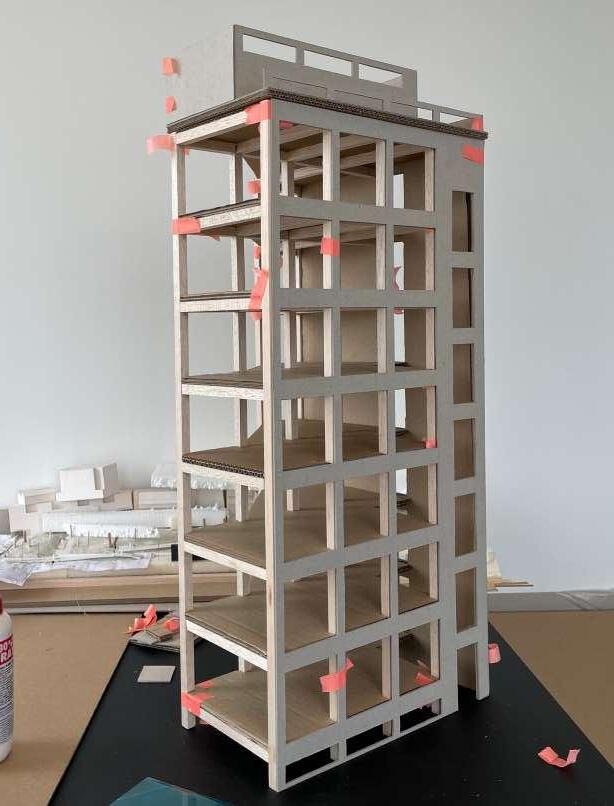
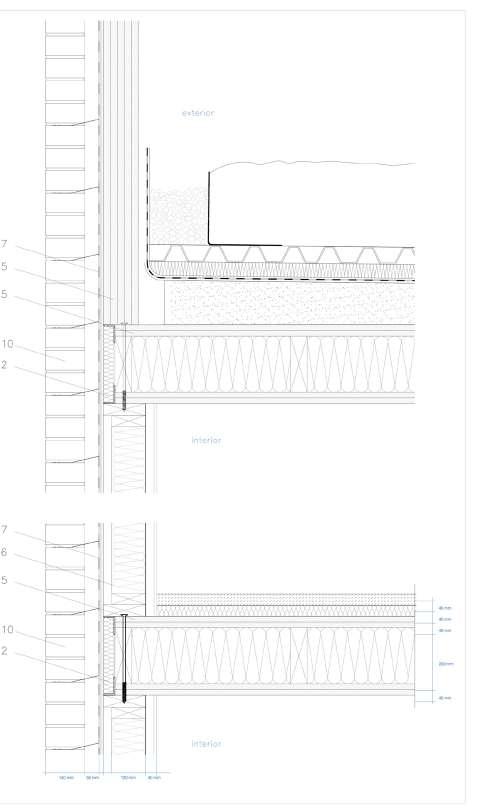
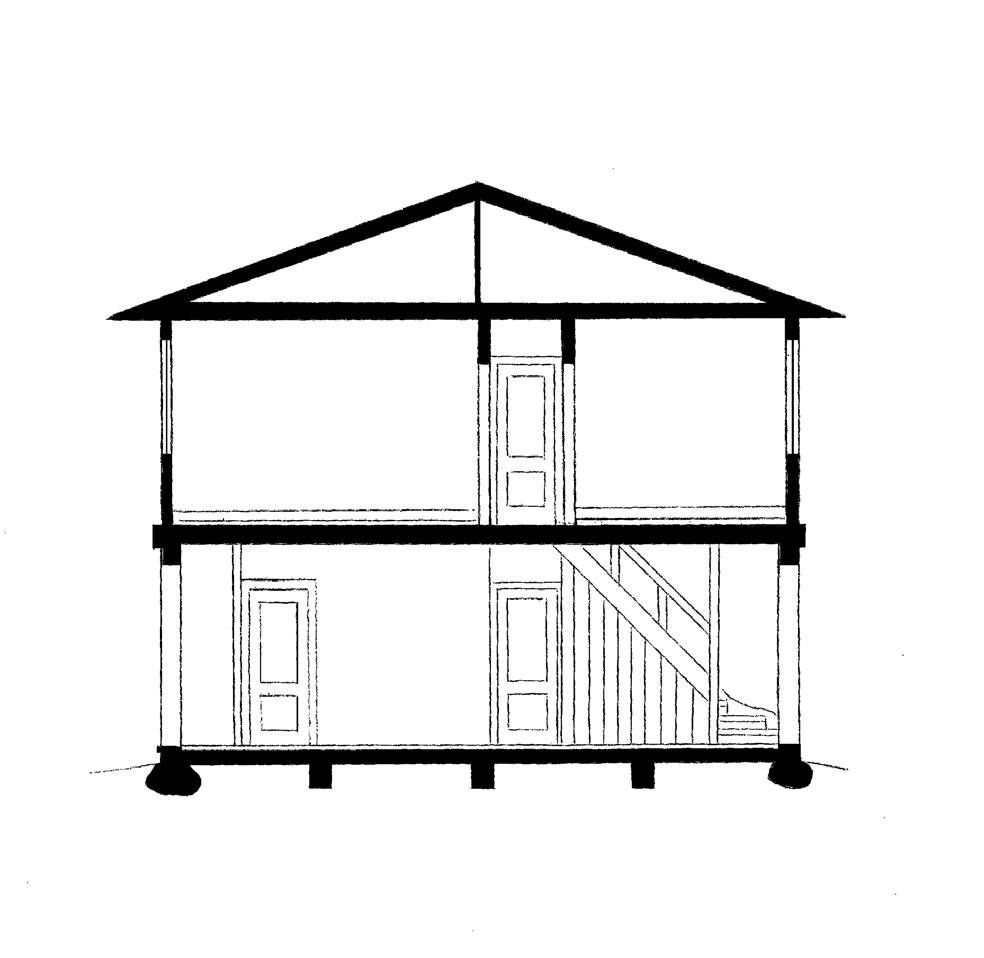
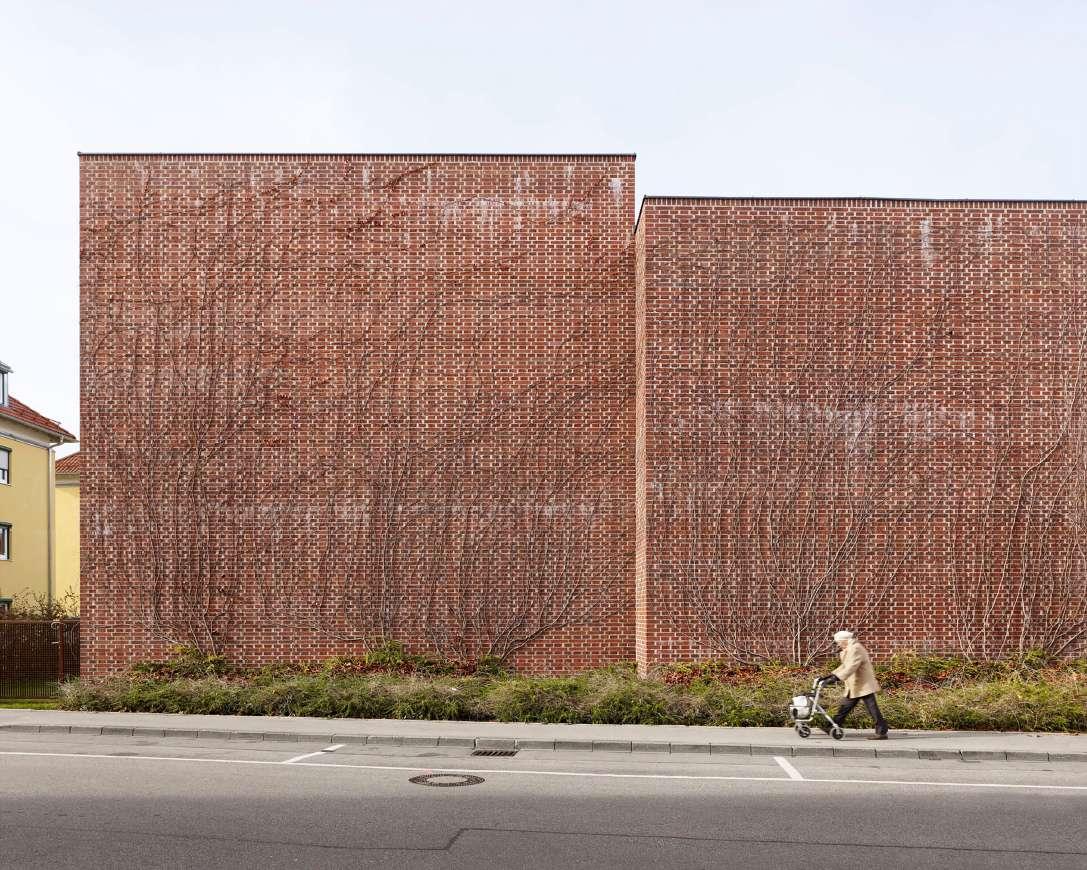
The assignment started with a case study: an analysis of the construction and structural elements of the Künstlerhaus designed by Bearth & Deplazes in Marktoberdorf, Germany.
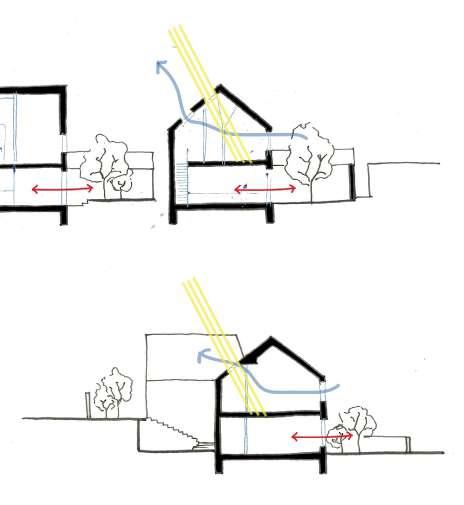
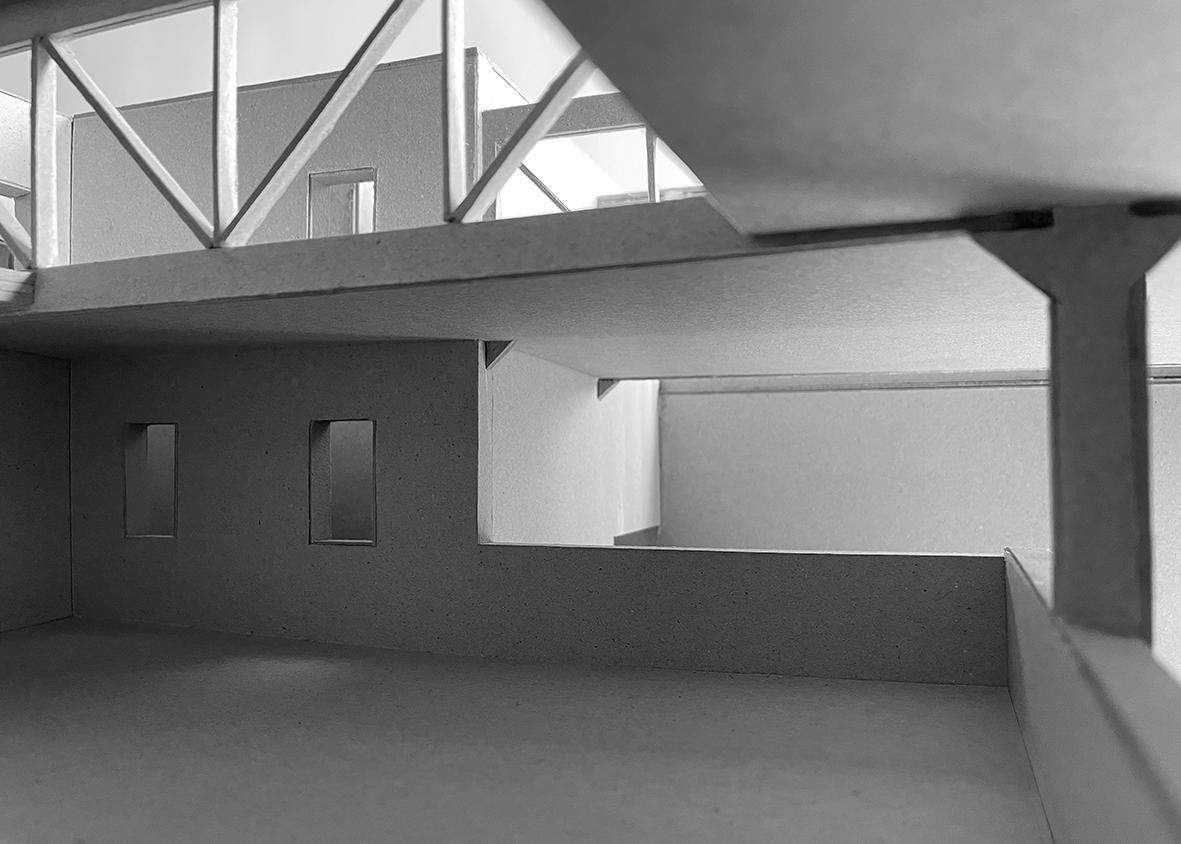
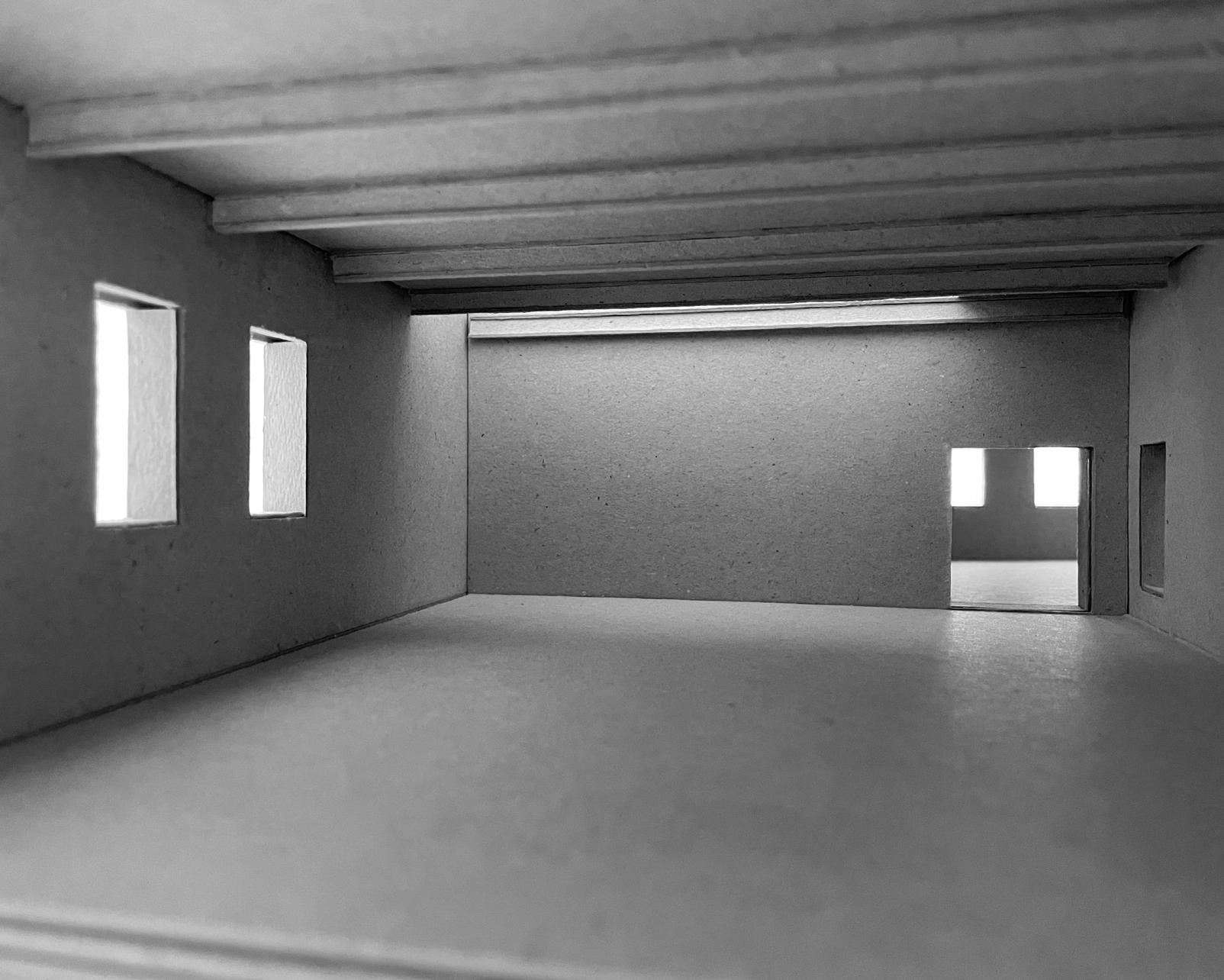
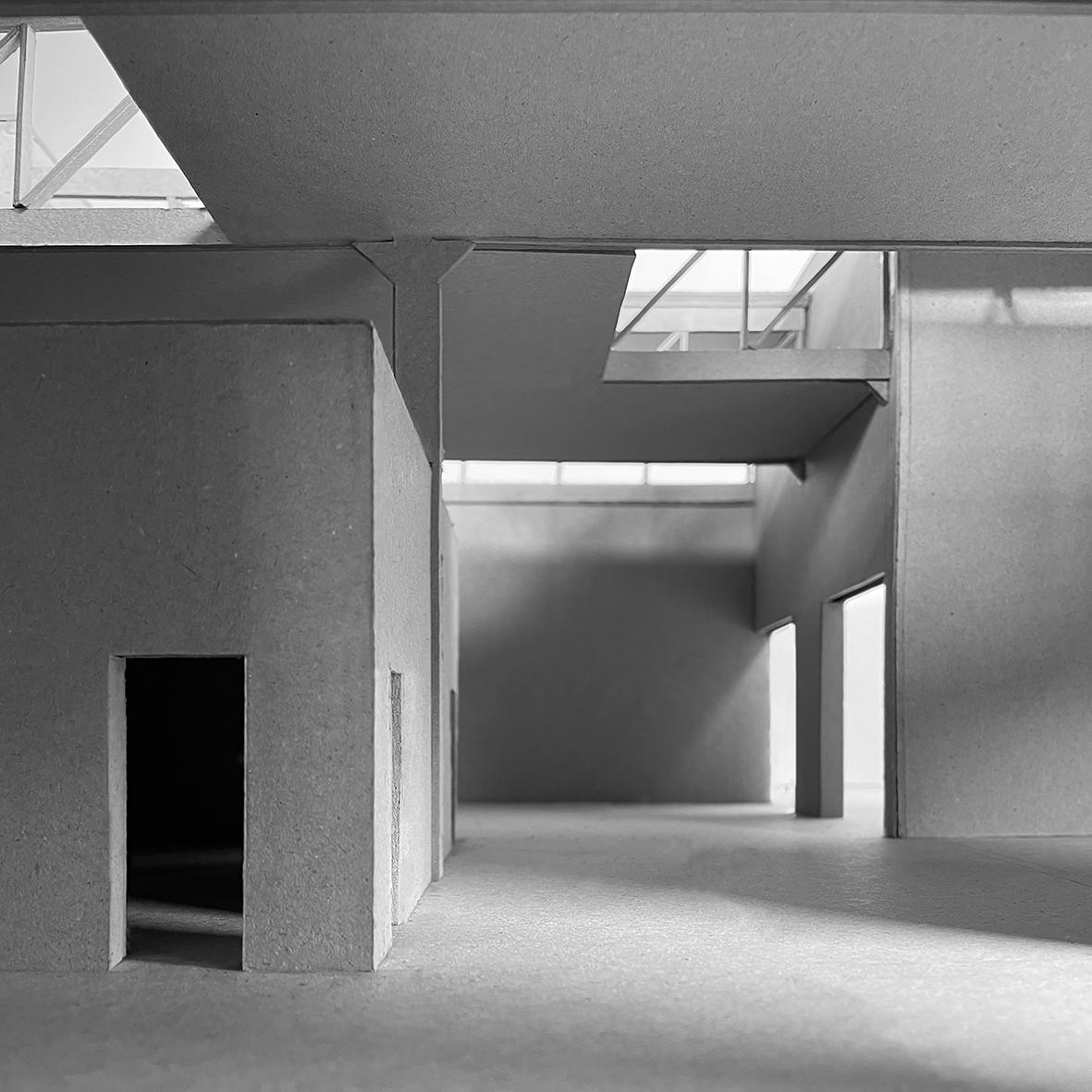
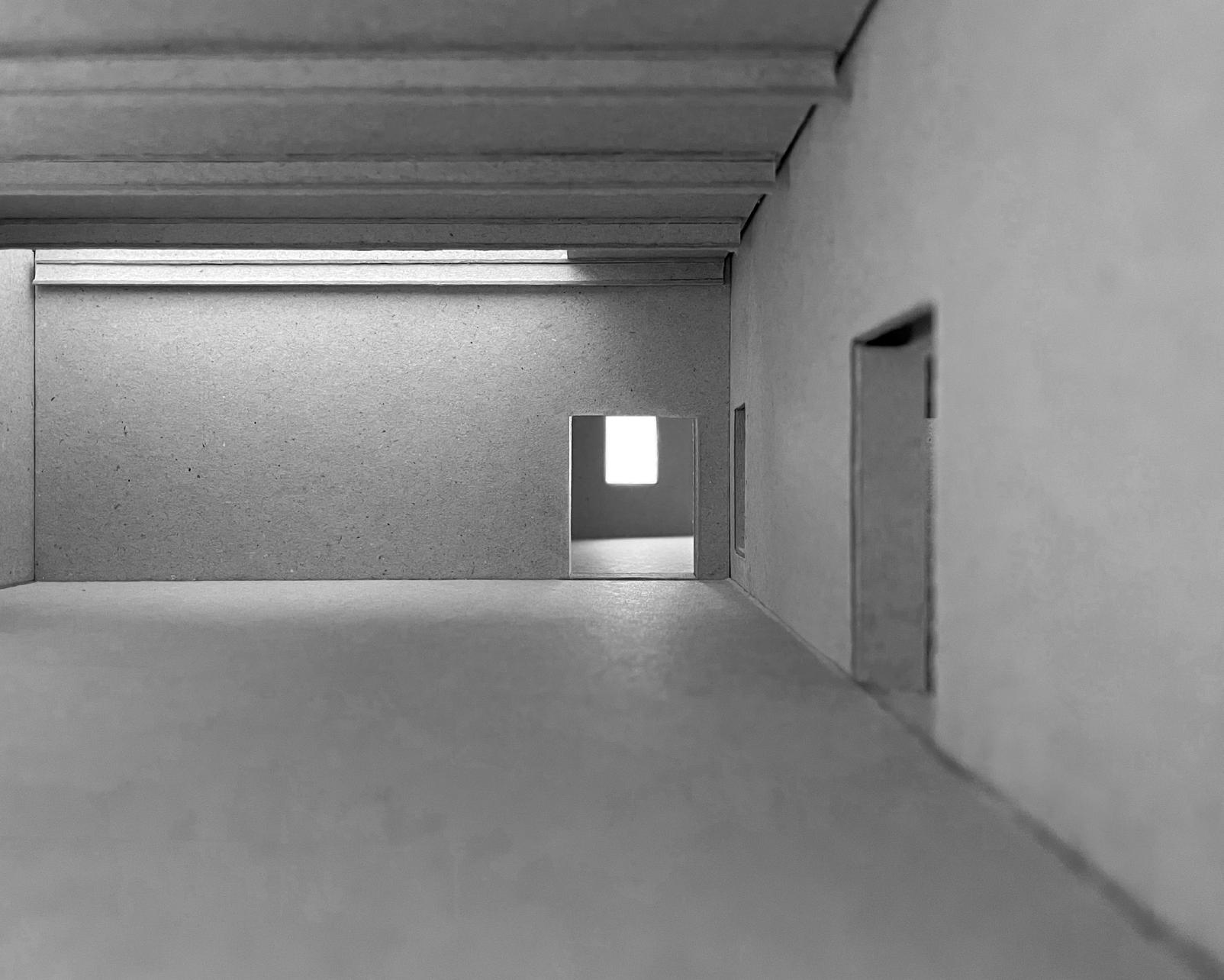
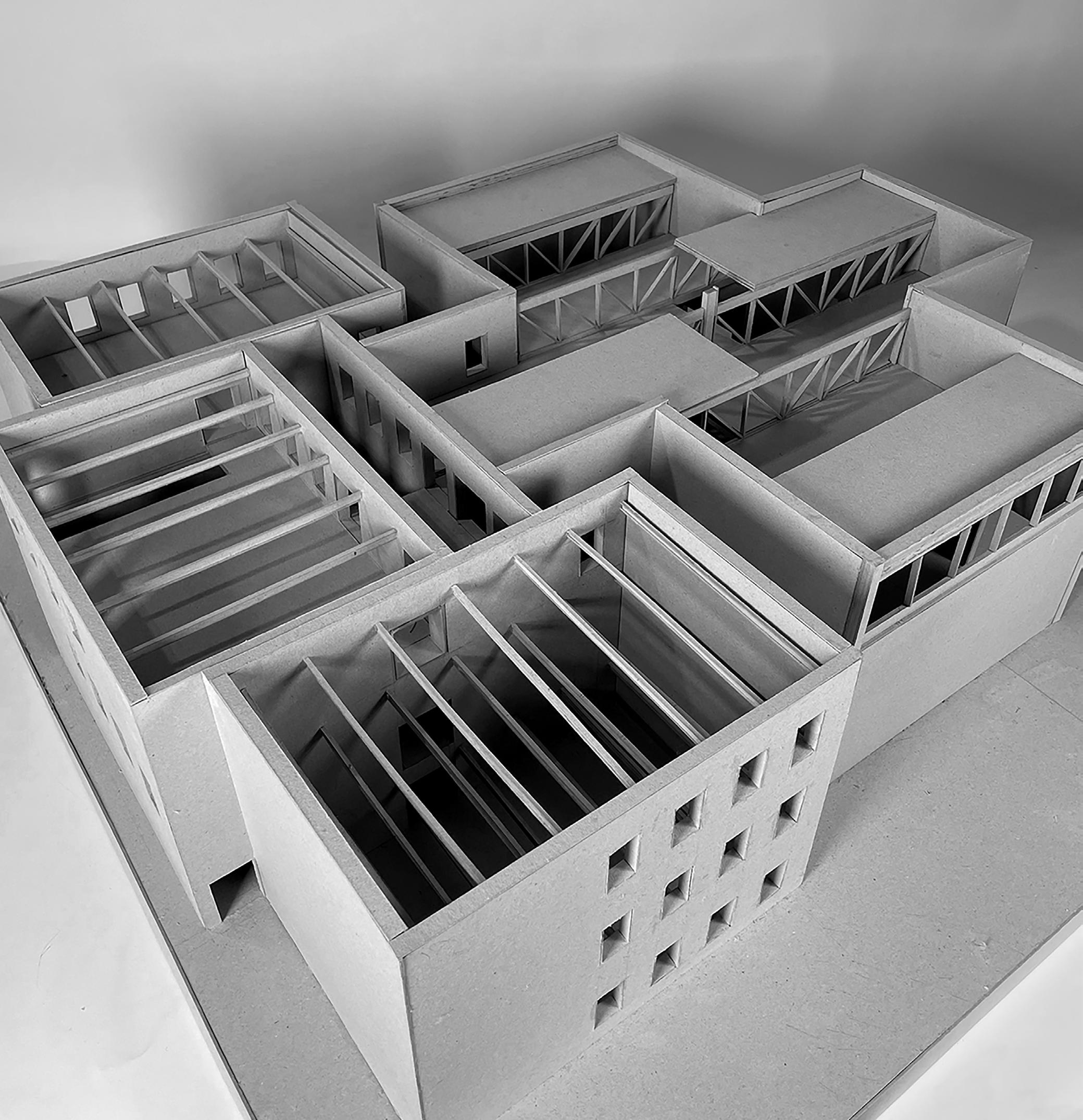
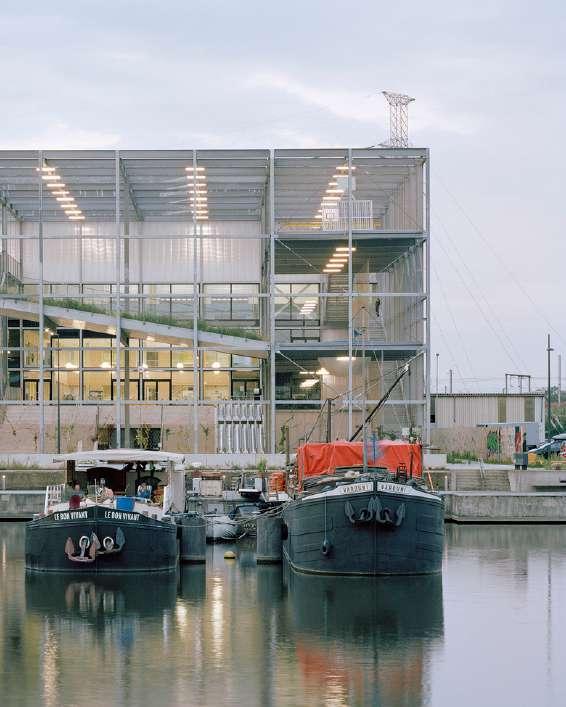
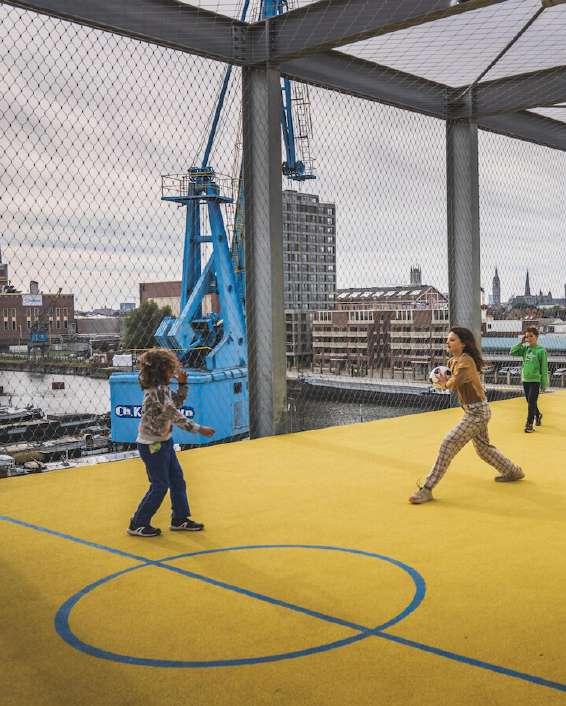
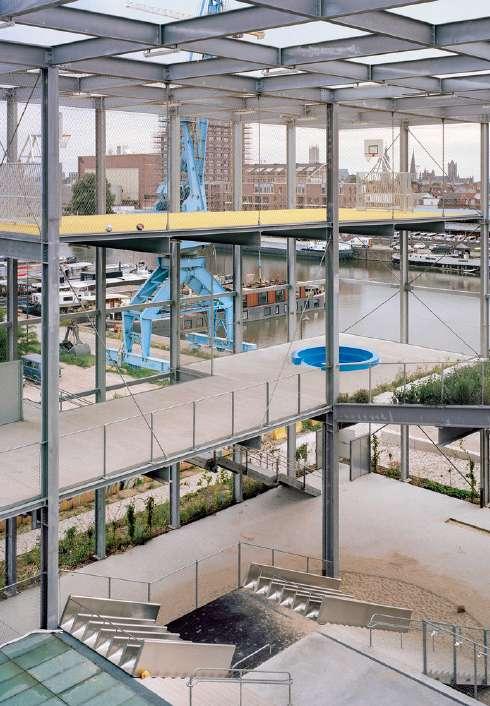
The conclusions from this study were then used for the design of a new fire station in the city of Lillo in Antwerp, Belgium.
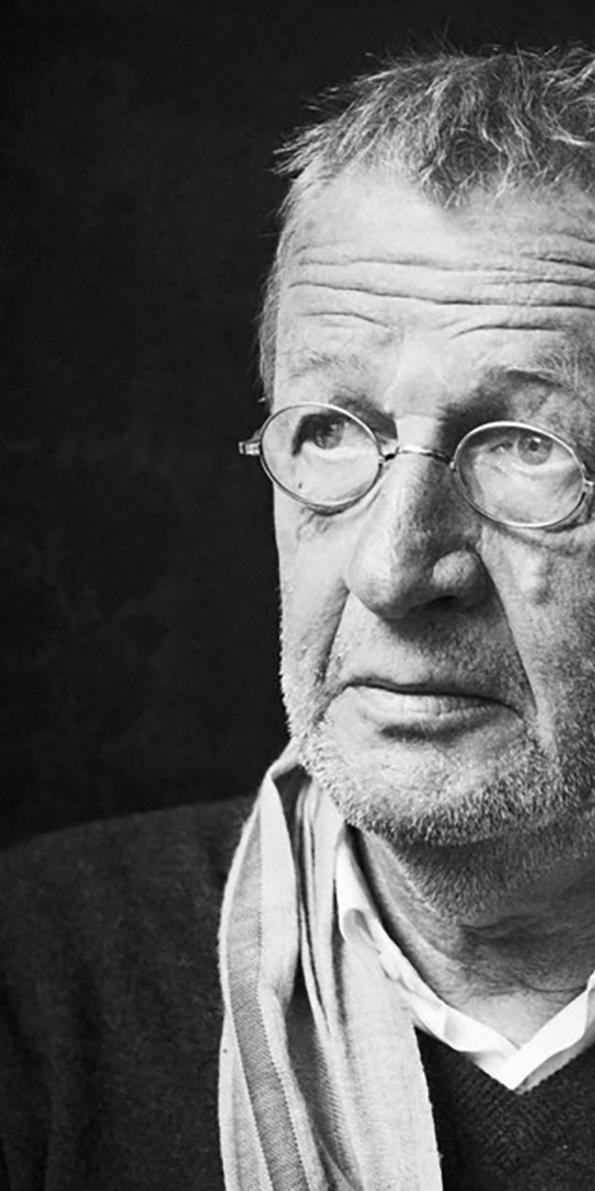
At the introduction of the assignment, fell on the term “the intelligent ruin” that Reeth introduced as former - and first Government Architect.
In his publication, “Architecture is not in collaboration with philosopher Willem he explains his vision on qualitative architecture. We noticed similarities with the intentions Valentin Bearth and Andrea Deplazes Künstlerhaus.
For bOb van Reeth, it is a quality that a building not let its function be read on the outside; hides its daily use. He calls this being without purpose”.
Expediency asks for the right scale, precision that leaves everything open be predicted.
“Bad poetry is often very instructive to find out why good poetry is so scarce.”
To answer his famous question, “What is good architecture?”, bOb van Reeth makes an analogy with the poetry of Herman de Coninck.
A building needs to be silent, willing. need to call out for attention. It rather liberate space than to occupy it.
Simplicity and a limitation of form is an prerequisite for durability. It gives the a flexible use.
For bOb van Reeth, the purpose is to search theme, for the character, for the will to brief, for the necessity, which does not necessary requirements.
Necessity is the basis, it is the ground beneath existence of architecture, it is beyond the inner necessity of the brief: it is inevita inescapable.
After all, the search for architecture interesting when it is not merely focused

assignment, our eyes that bOb van first - Flemish interesting”, Willem Koerse, architecture. intentions of Deplazes for the building does outside; that it being “purposive an utmost that cannot
It does not rather has to an important freedom for search for the to live of the not equal the
beneath the usefulness, inevitable and architecture is only focused on itself.
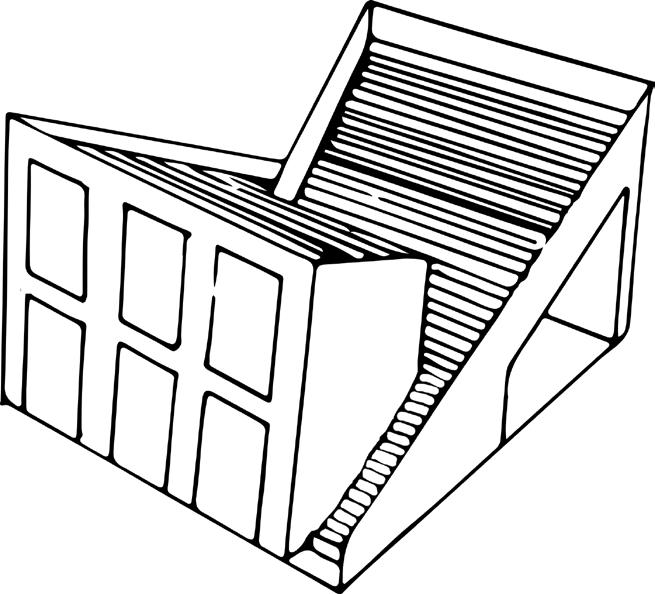
Isometric drawings of the Künstlerhaus
1 L-profile
2 XPS
3 concrete slab 150mm
4 slope
5 vapor barrier foil
6 rockwool
1 2 3 4 5 6 L-profiel XPS betonnen plaat 150mm hellingslaag dampremmende folie rotswol
7 roof waterproofing
8 stone roof edge
9 Kelesto brick 290x140x65mm
10 steel fixing plate
7 8 9 10 11 dakdichting natuurstenen dakrand Kelesto 290x140x65mm stalen bevestigingsplaat betonnen kolom
11 concrete column
The Bachelor’s dissertation started by analysing a selection of projects by Neave Brown from the 1960s in Camden Town, London.
With his housing projects, Fleet Road, Maiden Lane, Branche Hill and Alexandra Road, Brown sought to form an answer on modernist mixed-developments.
After a thorough analysis, we used these low-rise high-density projects as an inspiration to create a contemporary, present-day implementation in the center of Antwerp, Belgium.

SCHOLEN EN JEUGDVOORZIENINGEN
PUBLIEKE RUIMTE
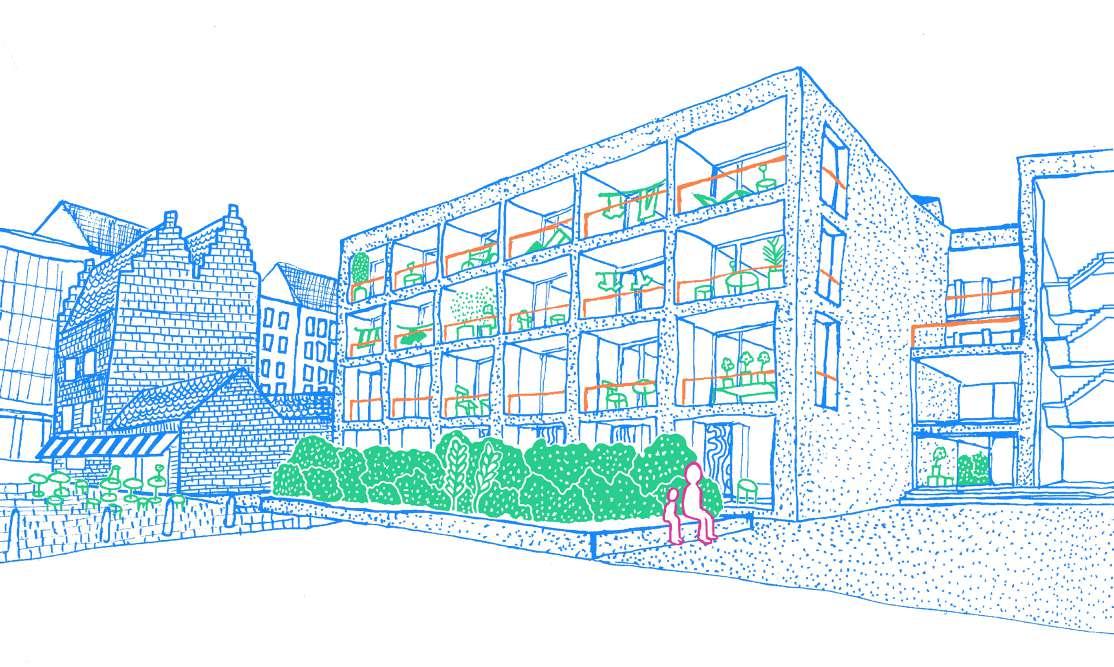
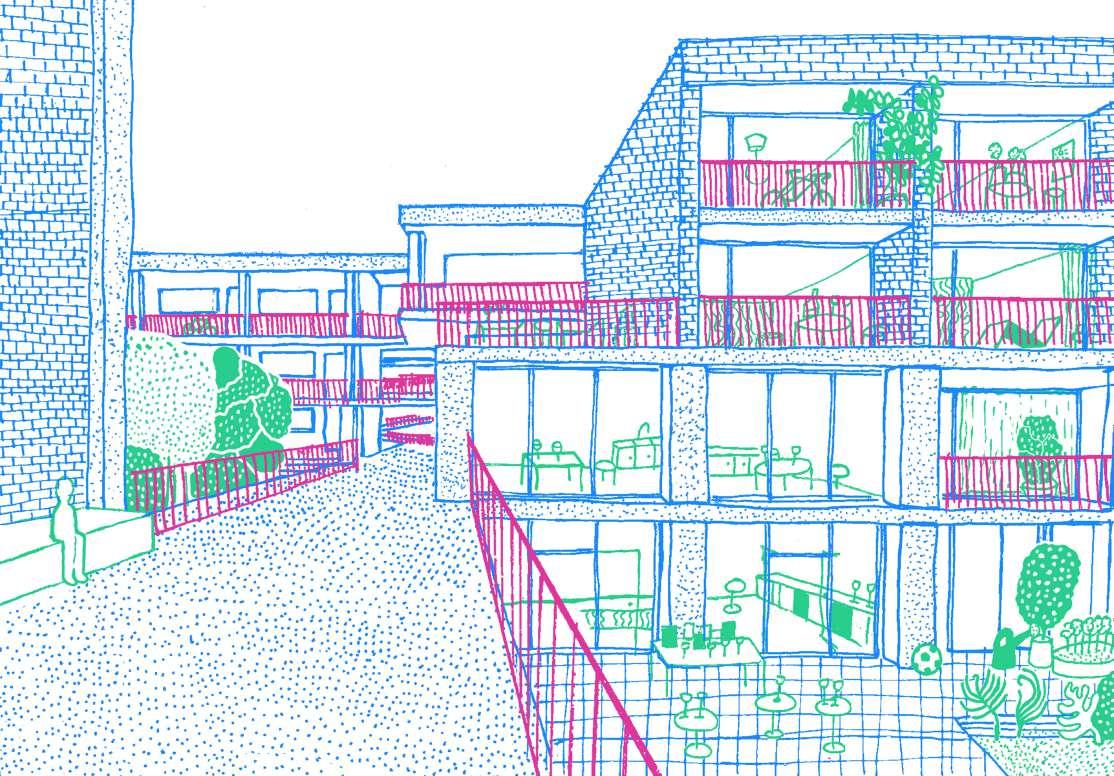
The area is lacking in open space: public space, green space and meeting space. How can we create this for the future inhabitants? How can we make the site attractive for them and for the neighbourhood? How can we give some quality back to the city?
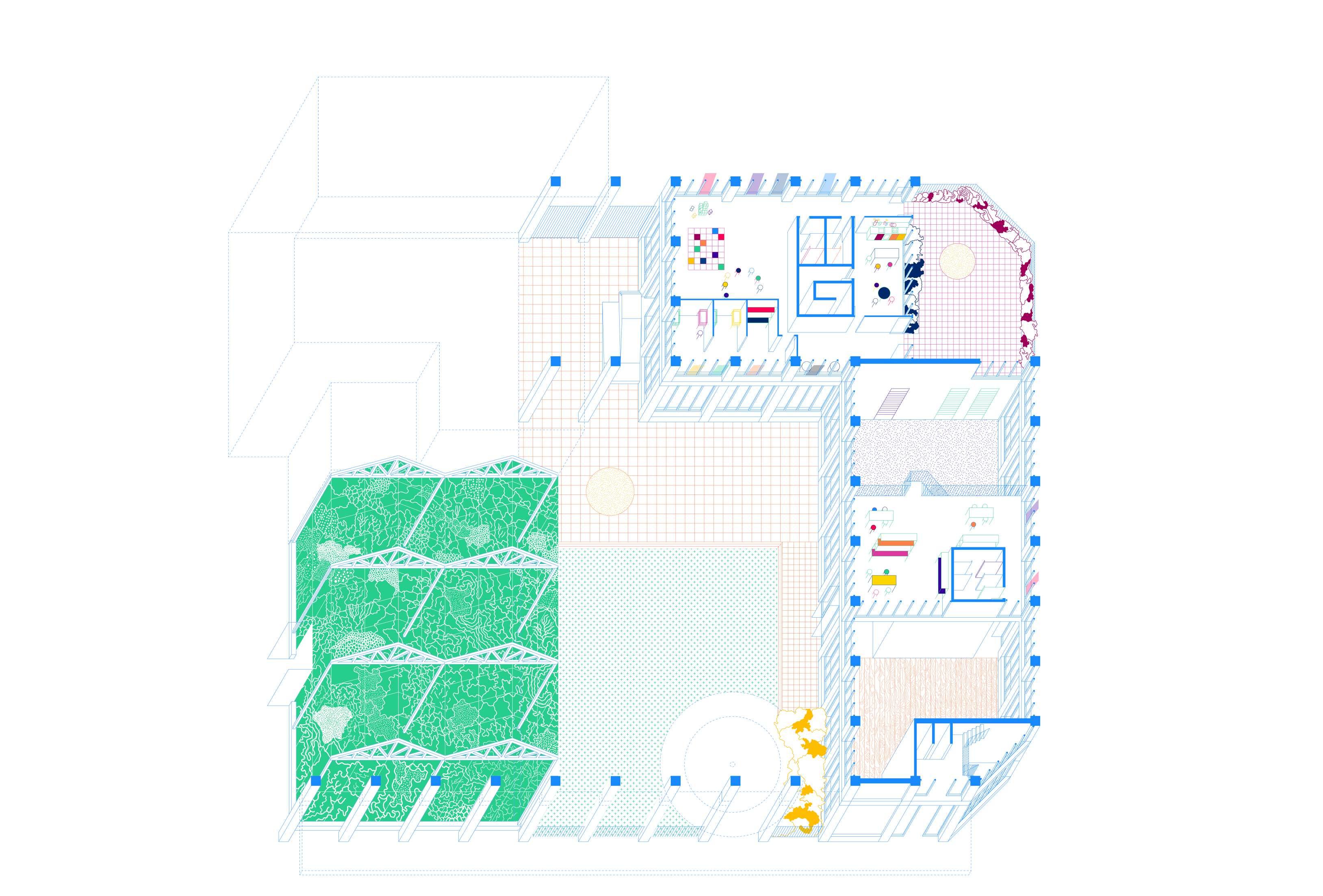
Creating and defining existing, open space is essential for the context, as well as giving future inhabitants plenty of green, collective space. Our process started with a simple typology; a building block surrounding open space.
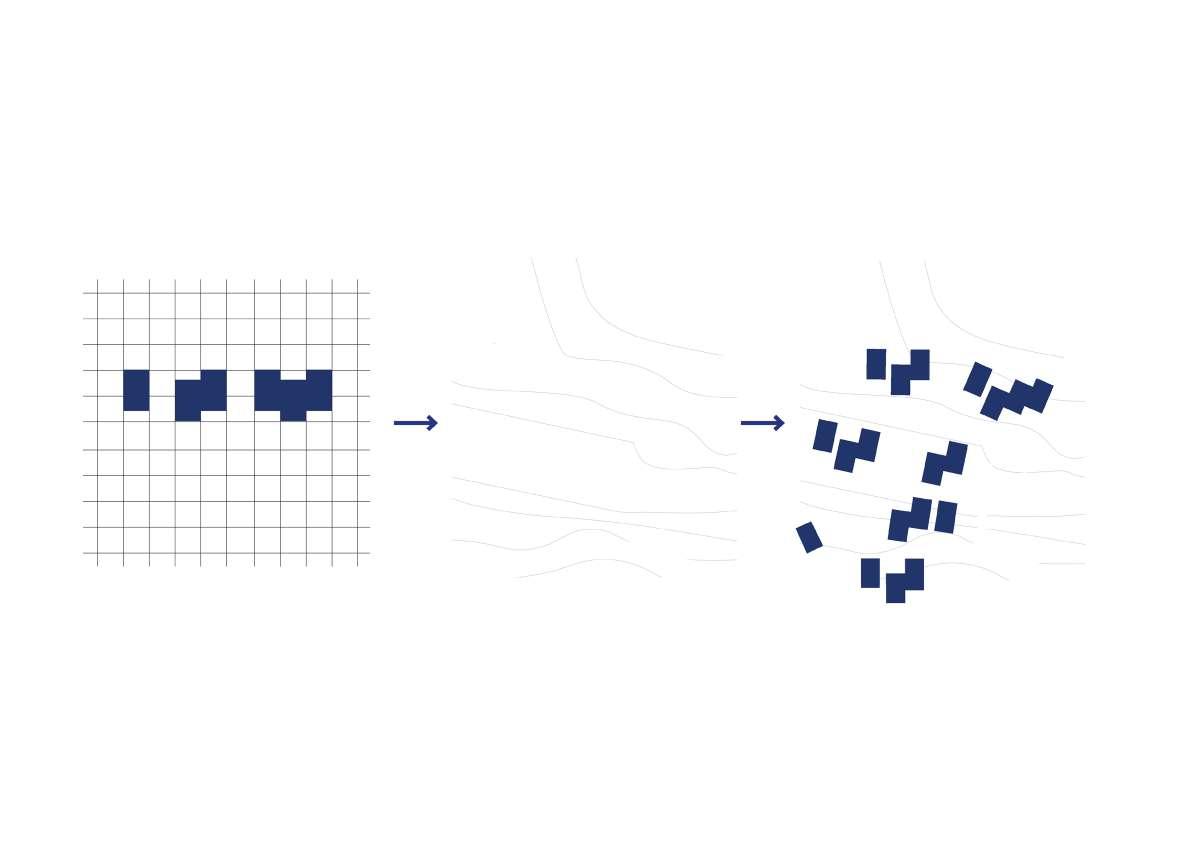
Because of the large scale of the open space, it would be difficult for inhabitants to appropriate it as their own garden. We try to make the scale more manageable - more human-centered - by dividing the open space into multiple smaller ones, while keeping a continuous connection by a central axis.
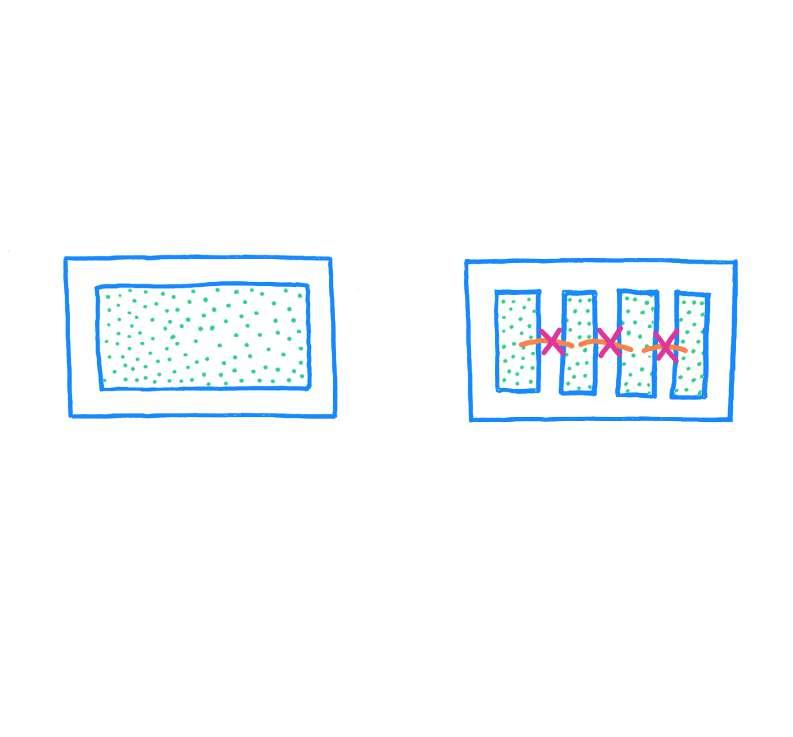
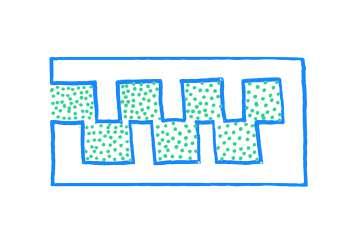
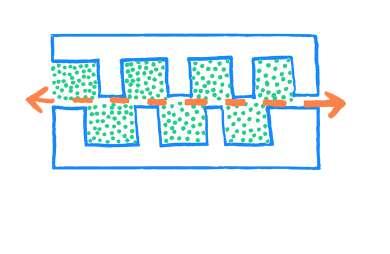
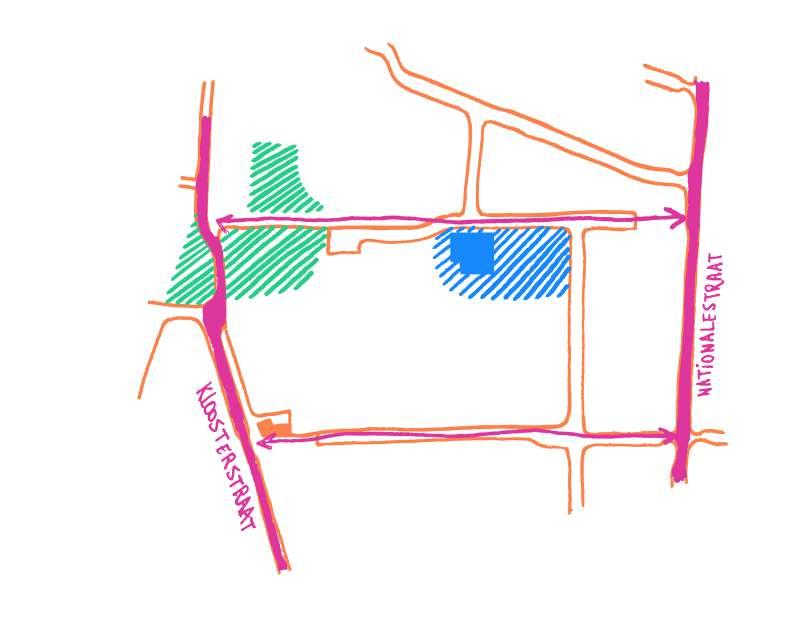
“One building is architecture, but two buildings is townscape.” - Gordon Cullen
Architecture is part, the town is whole. The whole is visible in the void. Urbanity is shaped void. Like building in the city, building in the village is reverse architecture. It is thinking about what is not there, about what you leave open. The void, the outside, the open space, the public space is the actual inside of the village.
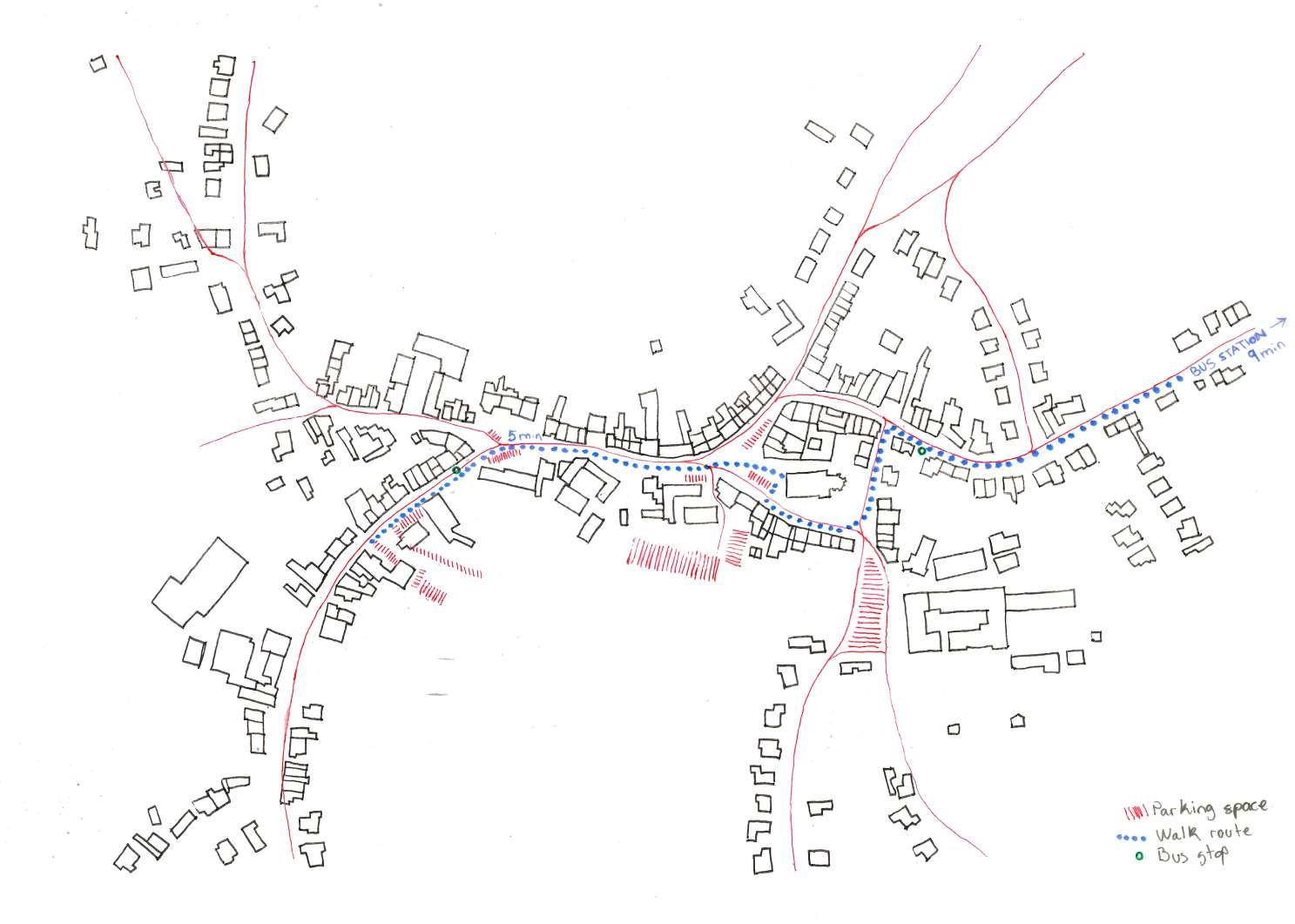
The main purpose of the assignment was redefining and improving the relationship between the town of Gooik and the surrounding landscape, as a counter reaction to the increase in ribbon development in Belgian towns.
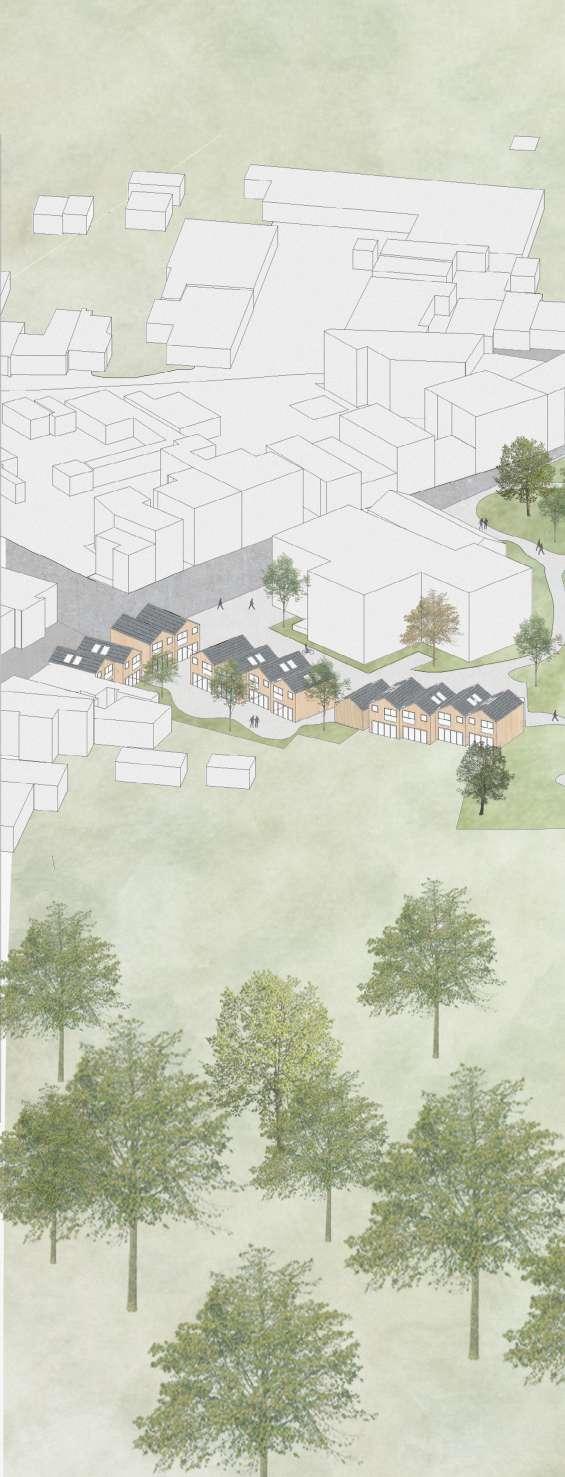
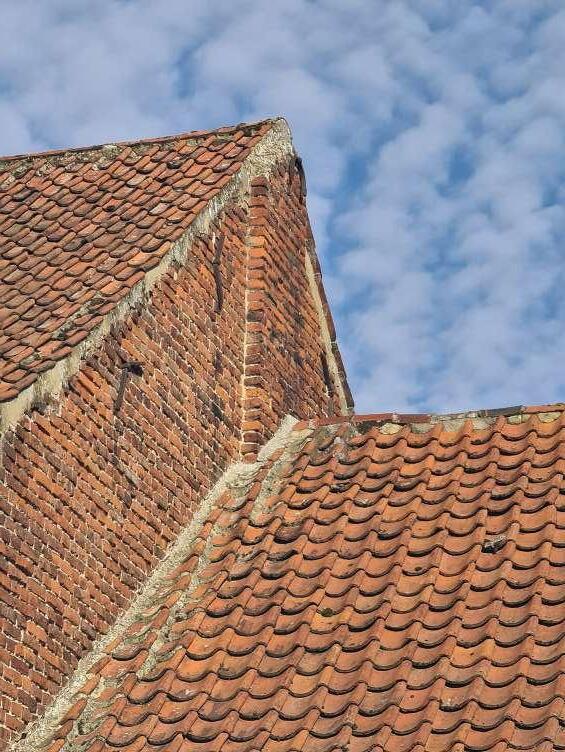
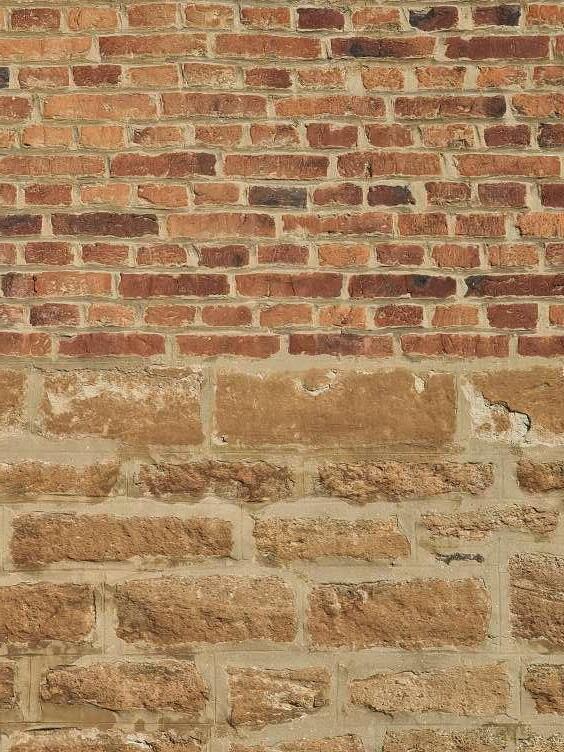
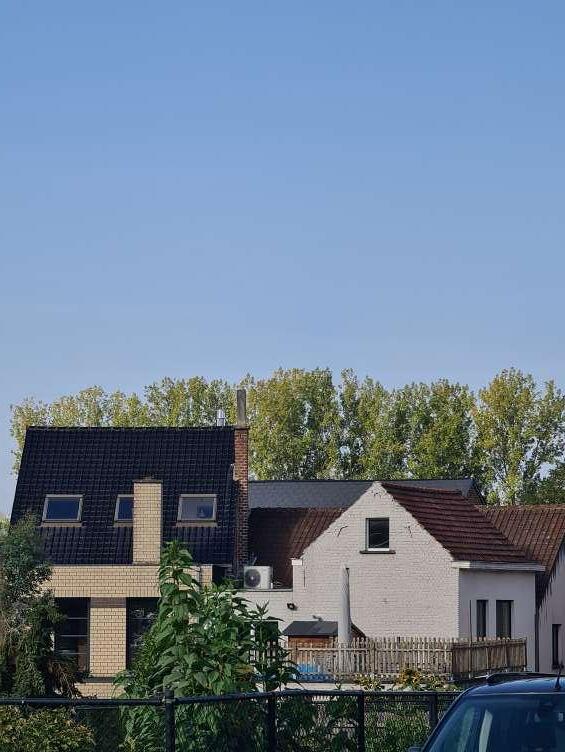
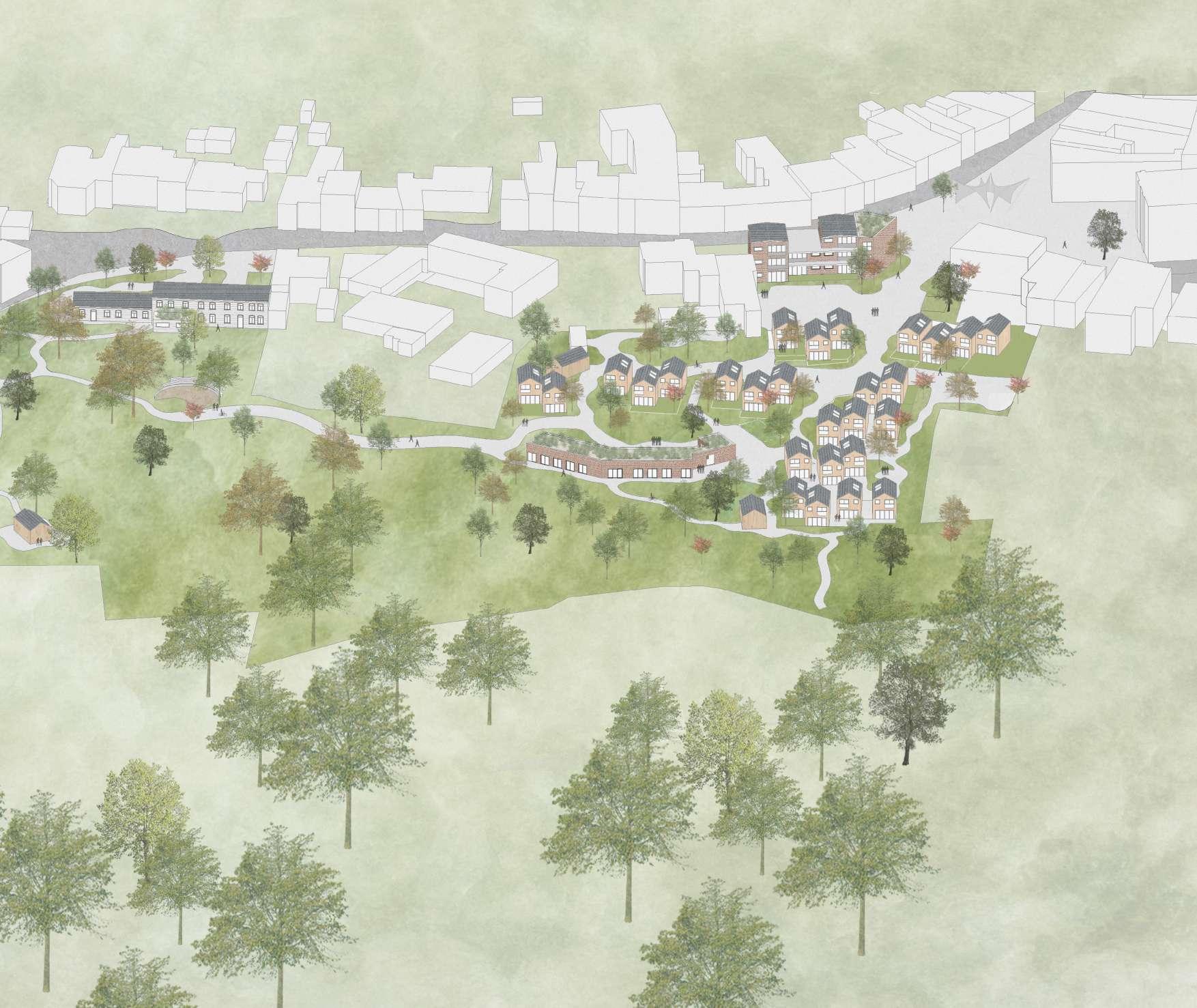
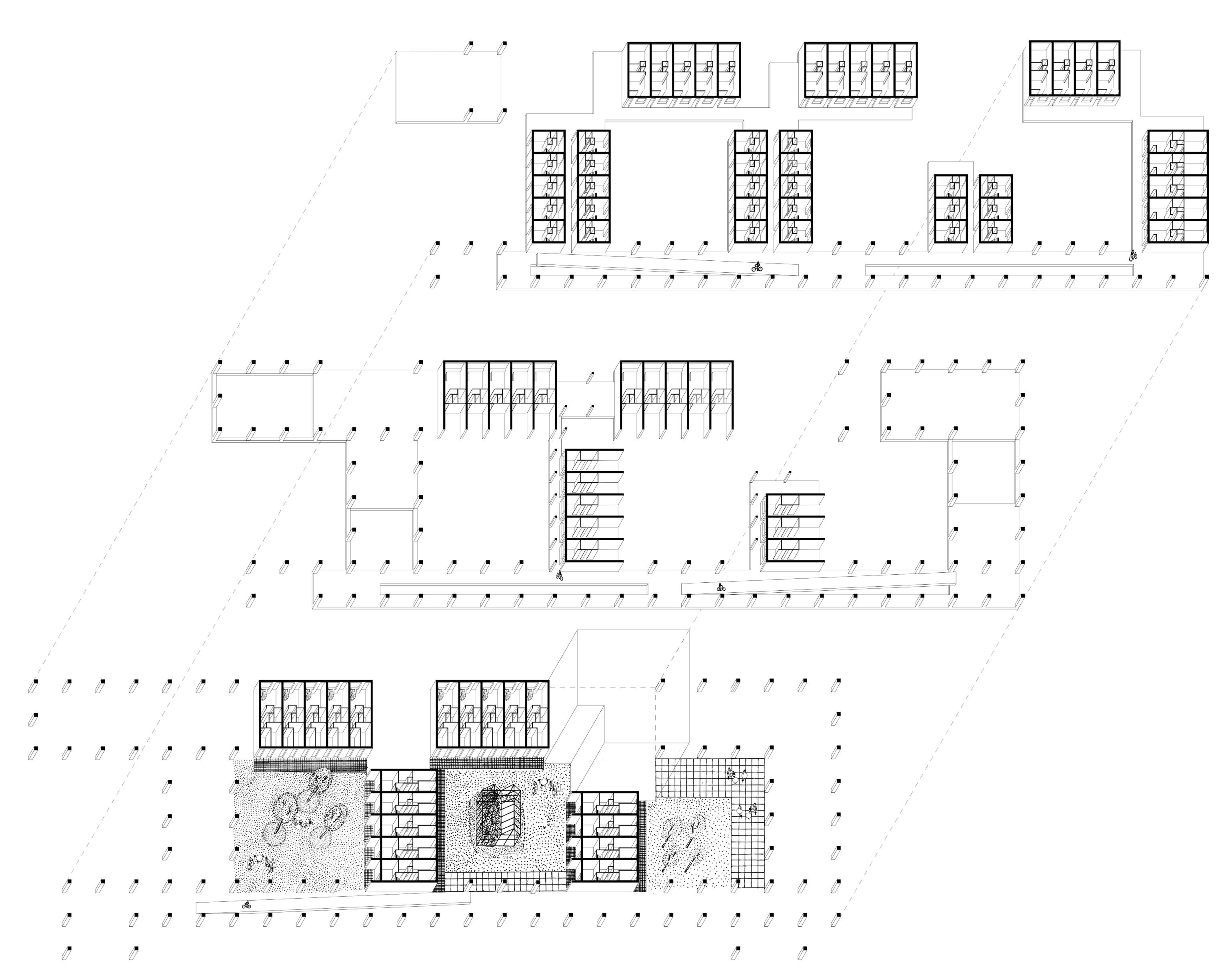
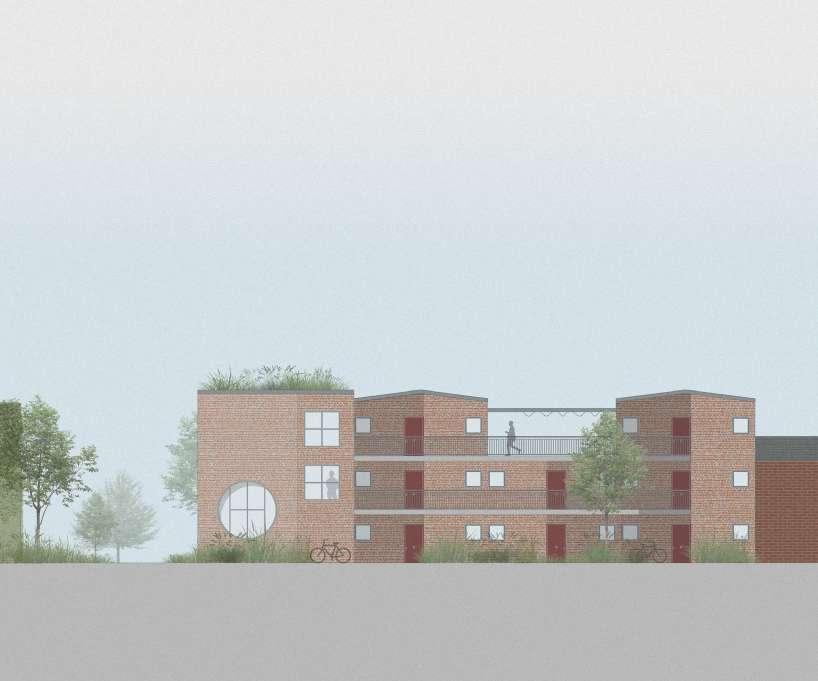
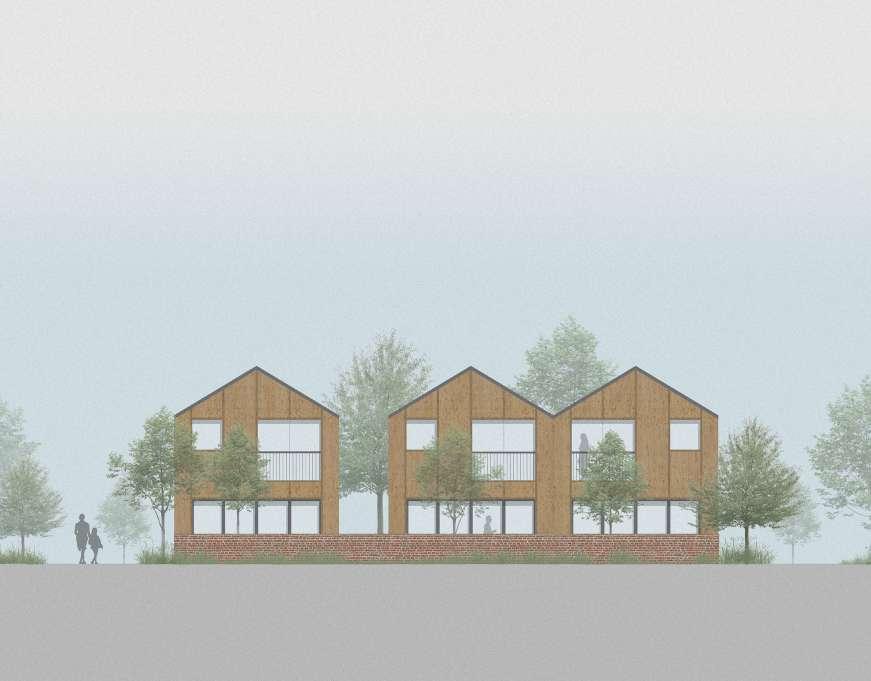
Along the town’s main street, we created qualitative meeting spaces as invitations into the landscape. A co-living, a residential care home and pavilions for social gatherings were added to the site. They serve as primary elements that attract people and give a new identity to the changing face of Gooik.
We developed a compact housing prototype, which can be adjusted to fit the specific needs of the inhabitants.




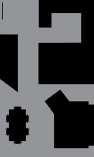




















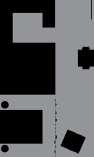
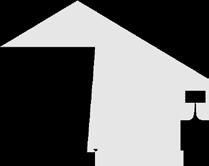






The renewal of the historic city is a broad European theme in architecture. Yet, in each country attitudes differ. Specific fields of intervention vary.
Practice in Belgium and the Netherlands discriminates itself by a casual appreciation of historical values and an enormous task in the renewal of its post-war housing stock: the tendency is to demolish the post-war city, to rebuild it in contemporary fashion and to offer minimum cultural motivation for this modus operandi.
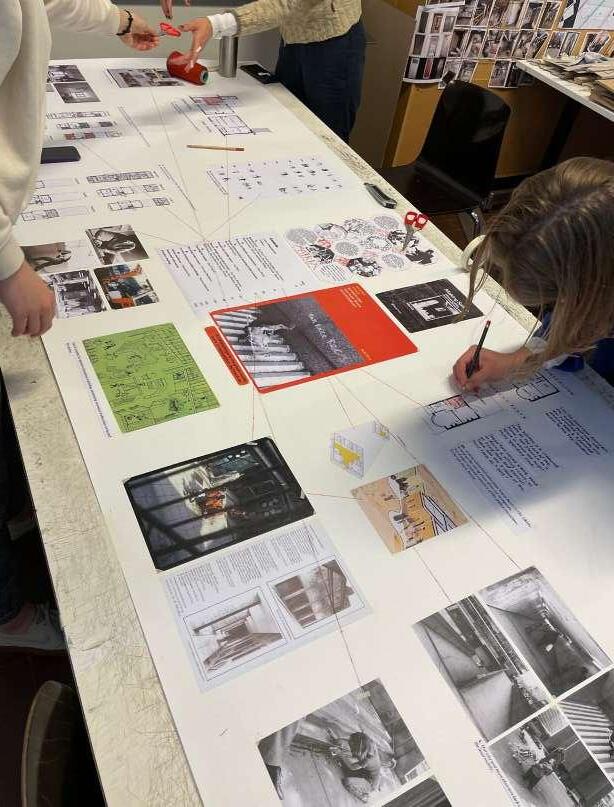
Let us better understand the post-war city. How can we (re-)use our existing buildings to invest in a more sustainable future?
The focal point of the assignment was the Cité Modèle in Brussels, Belgium; a site designed by modernist architect Renaat Braem for the World Expo of 1958.
The assignment was divided into four themes: facades, construction, housing units and the landscape. The latter became the center of my focus.
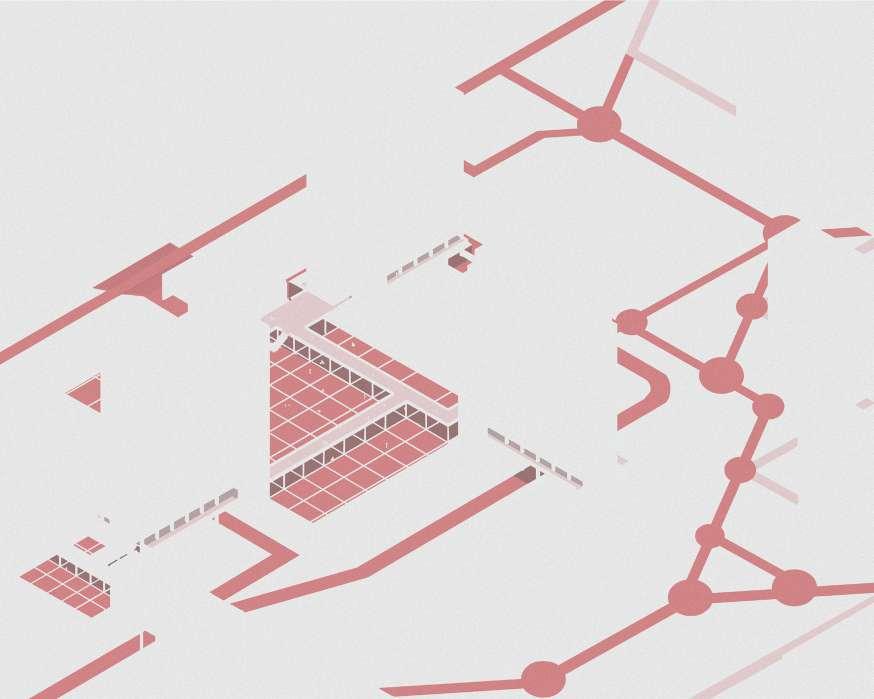
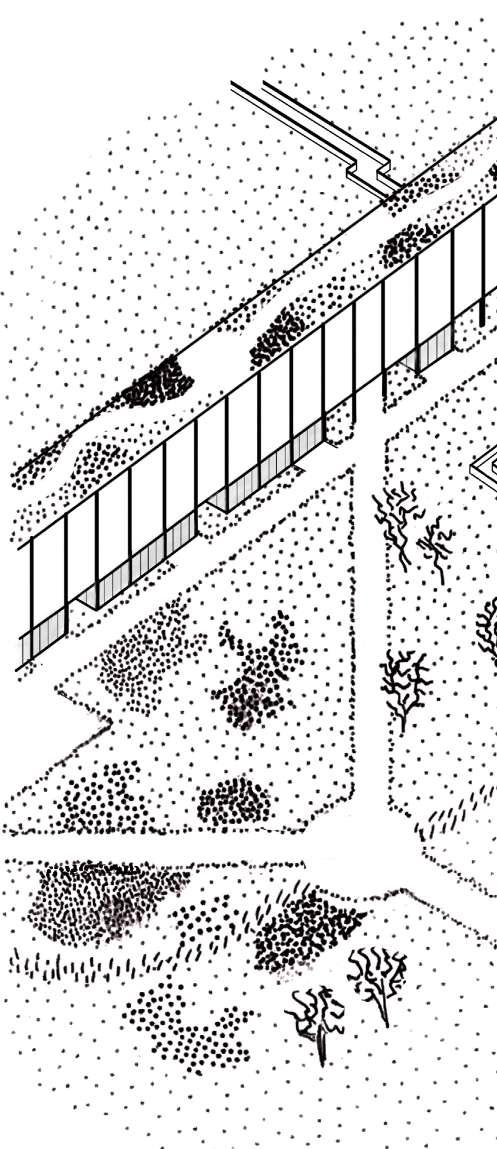
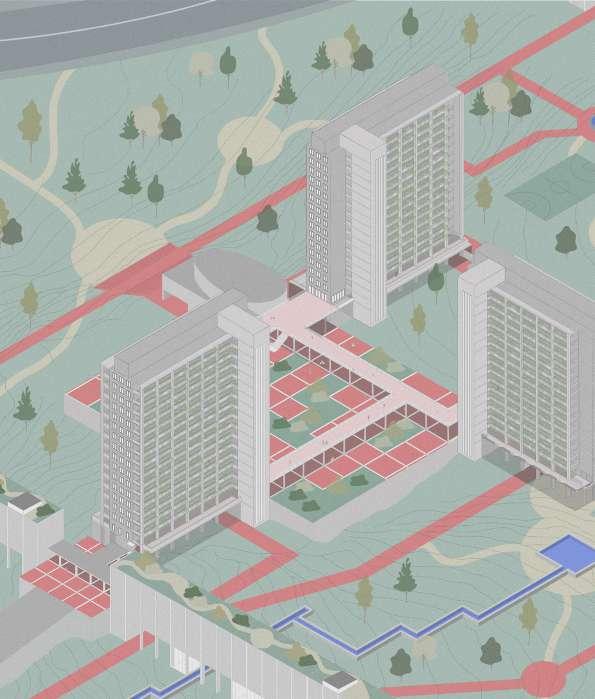
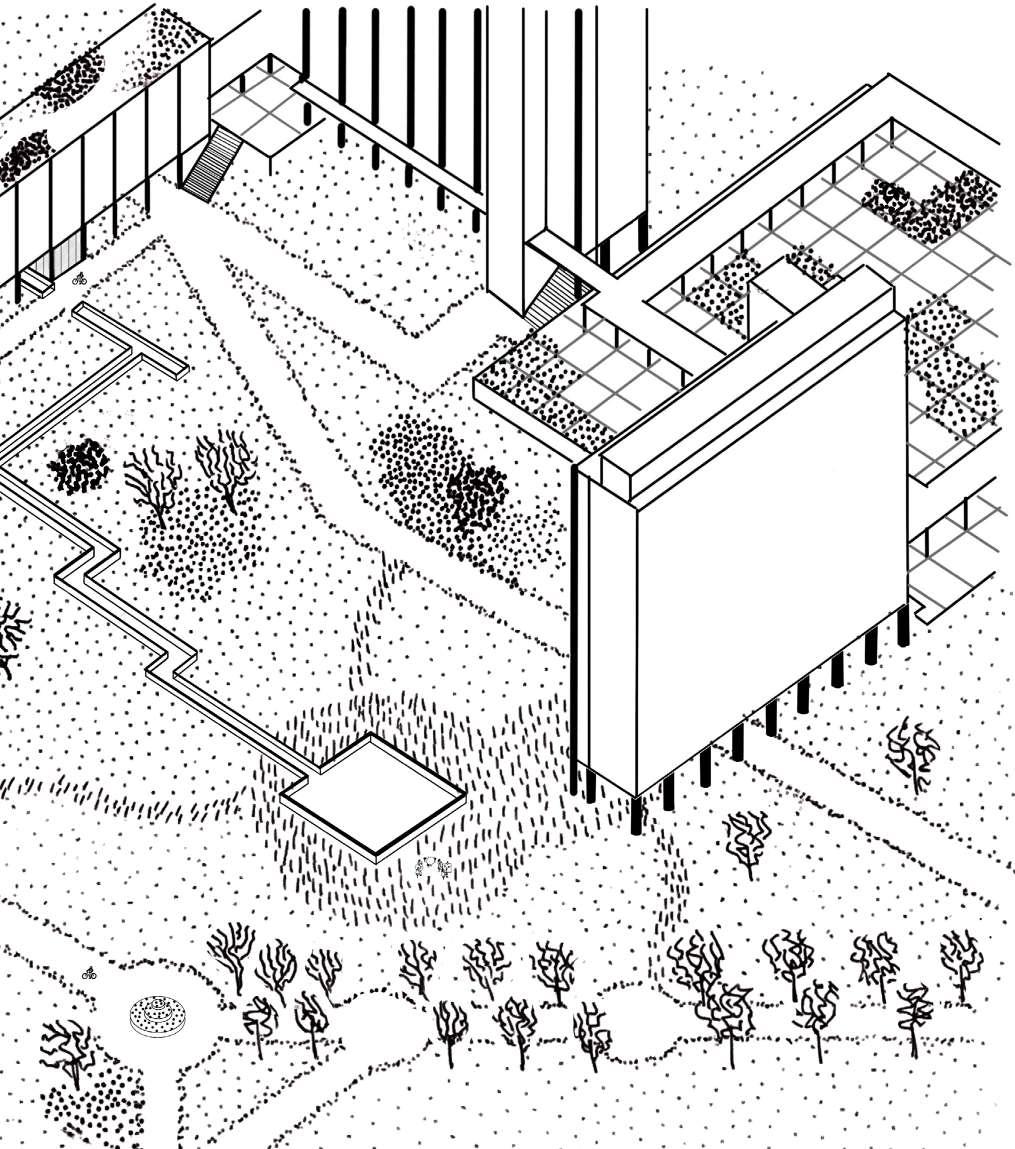
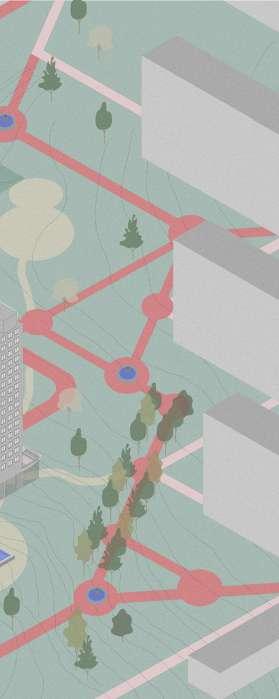

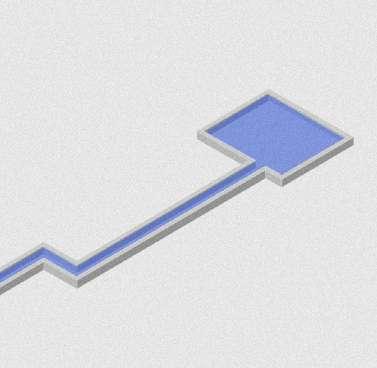

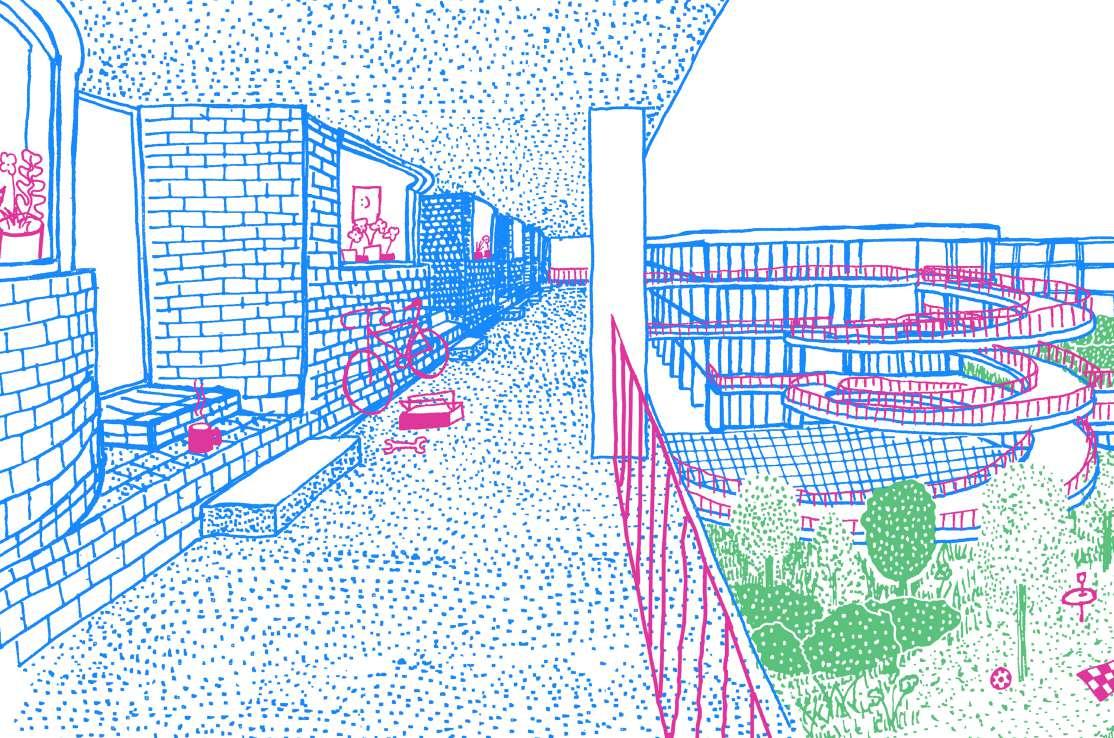
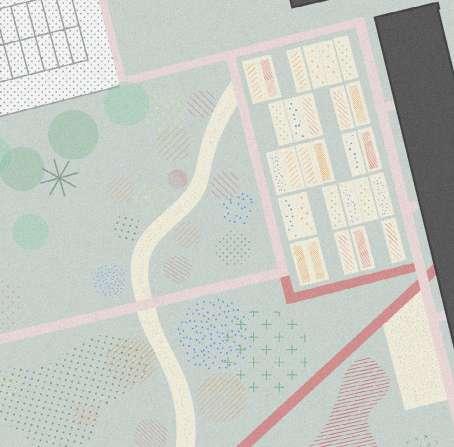
Using the system of red paths as a tool, we stimulate social cohesion by upgrading the landscape, with the redevelopment of the public domain and the shared facilities. A current problem is that residents, especially youth, feel restless because they lack places to go that are truly intended for them.
The masterplan reintroduces a human scale on the site and helps to define zones and public spaces, like safe places for children to play and for people to gather, to gain a feeling of community.
It is all about offering opportunity, instead of forcing residents into a certain activity or use of the landscape. There is a fine line between suggesting zones and opportunities versus implying too much top-down planning. This has the effect of making residents feel estranged from their habitat, which is a common issue in large modernist estates and something we wanted to avoid.

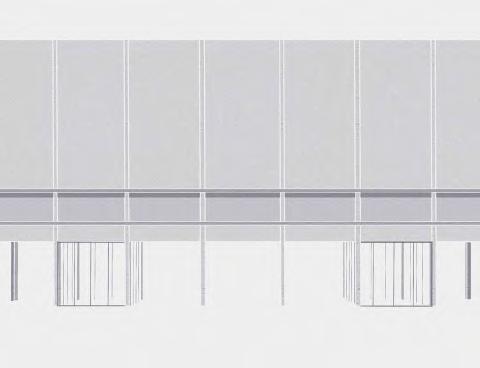
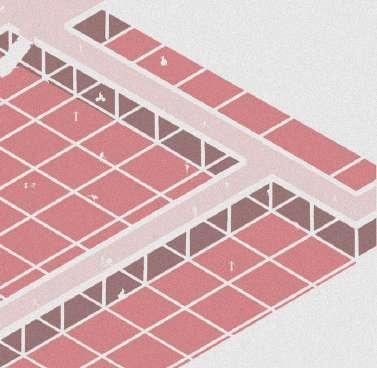
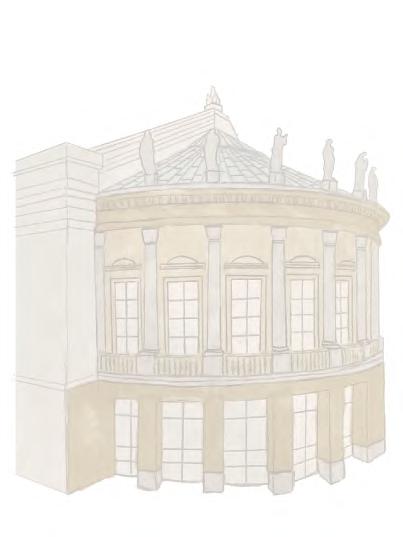
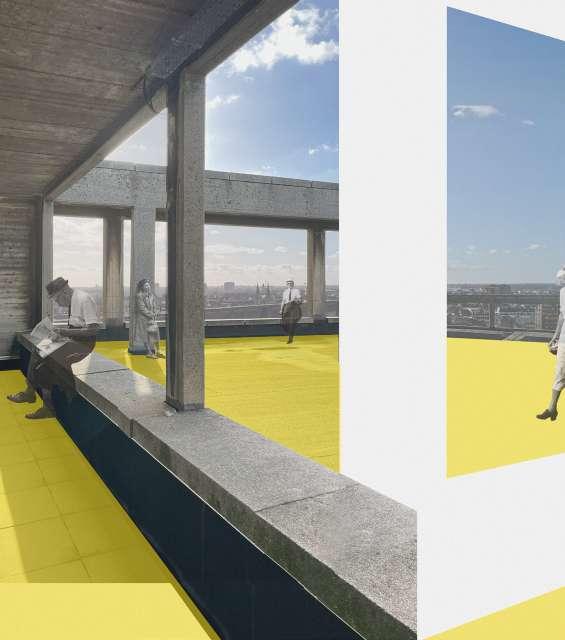
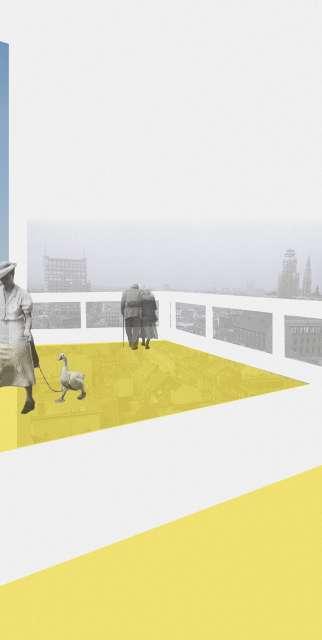
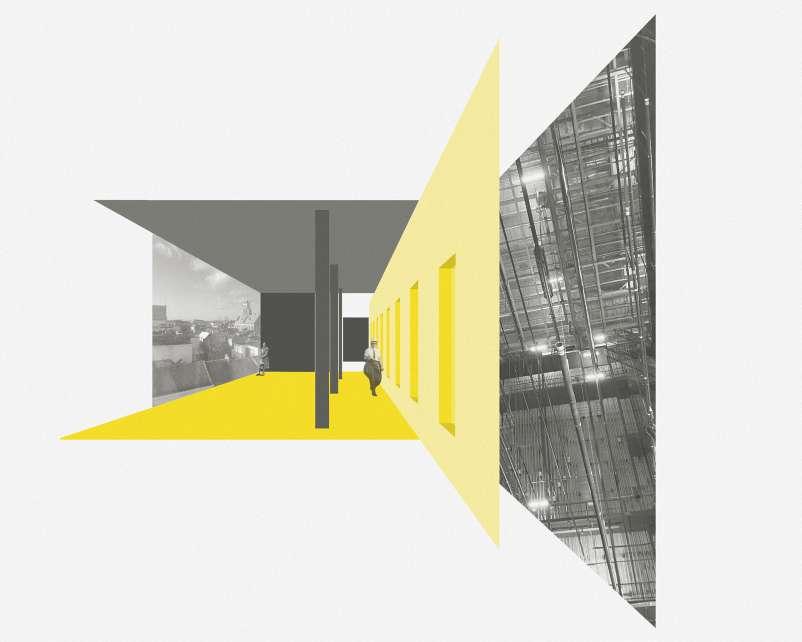
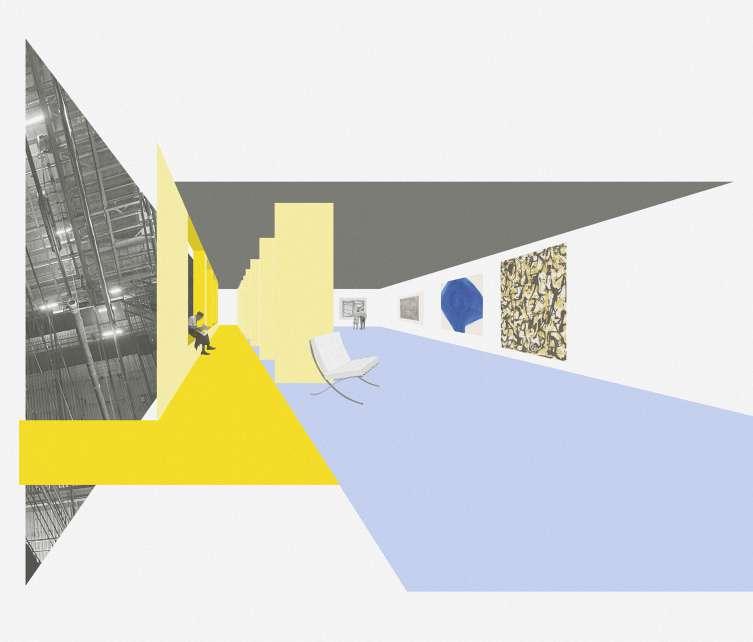
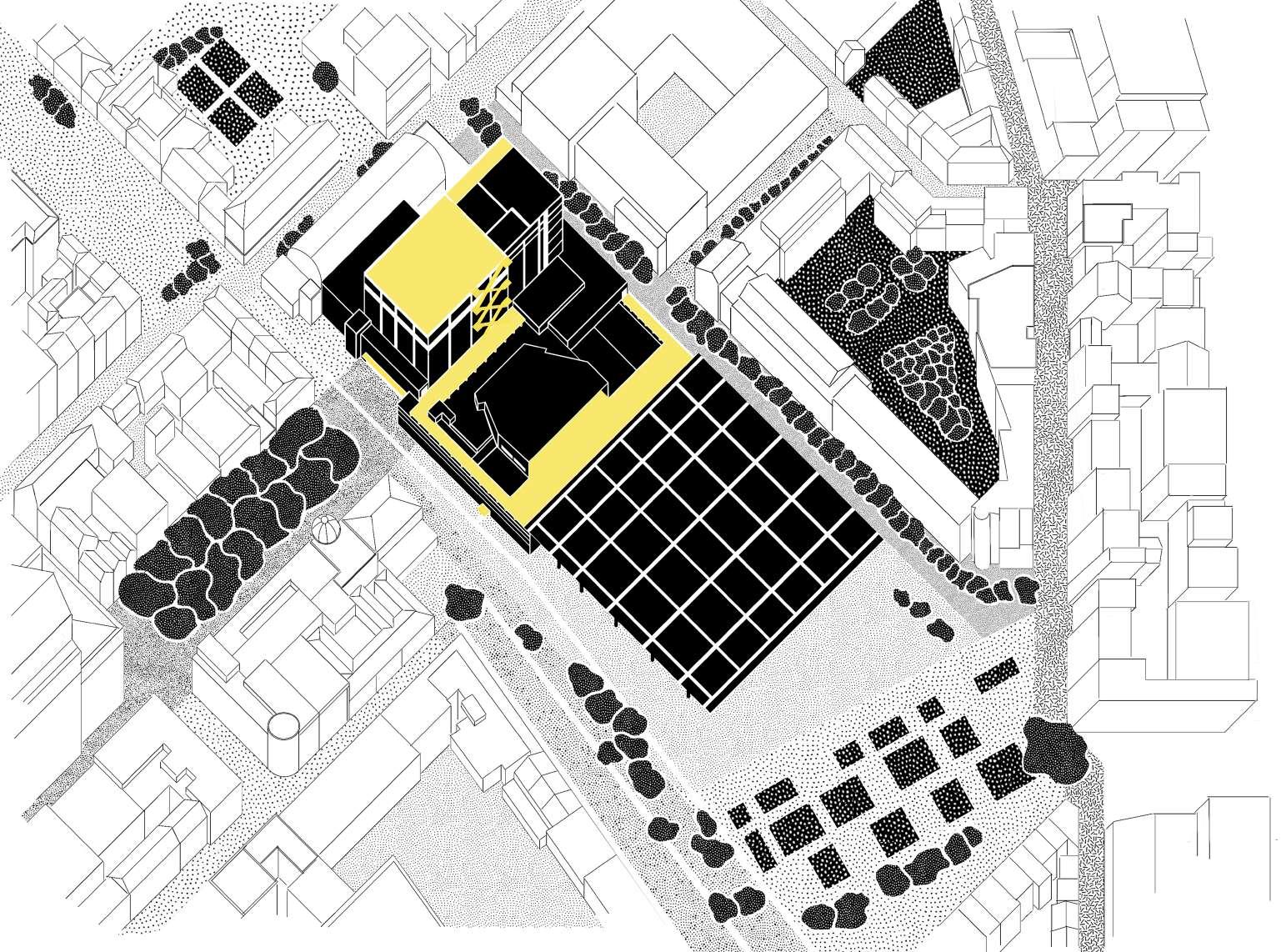
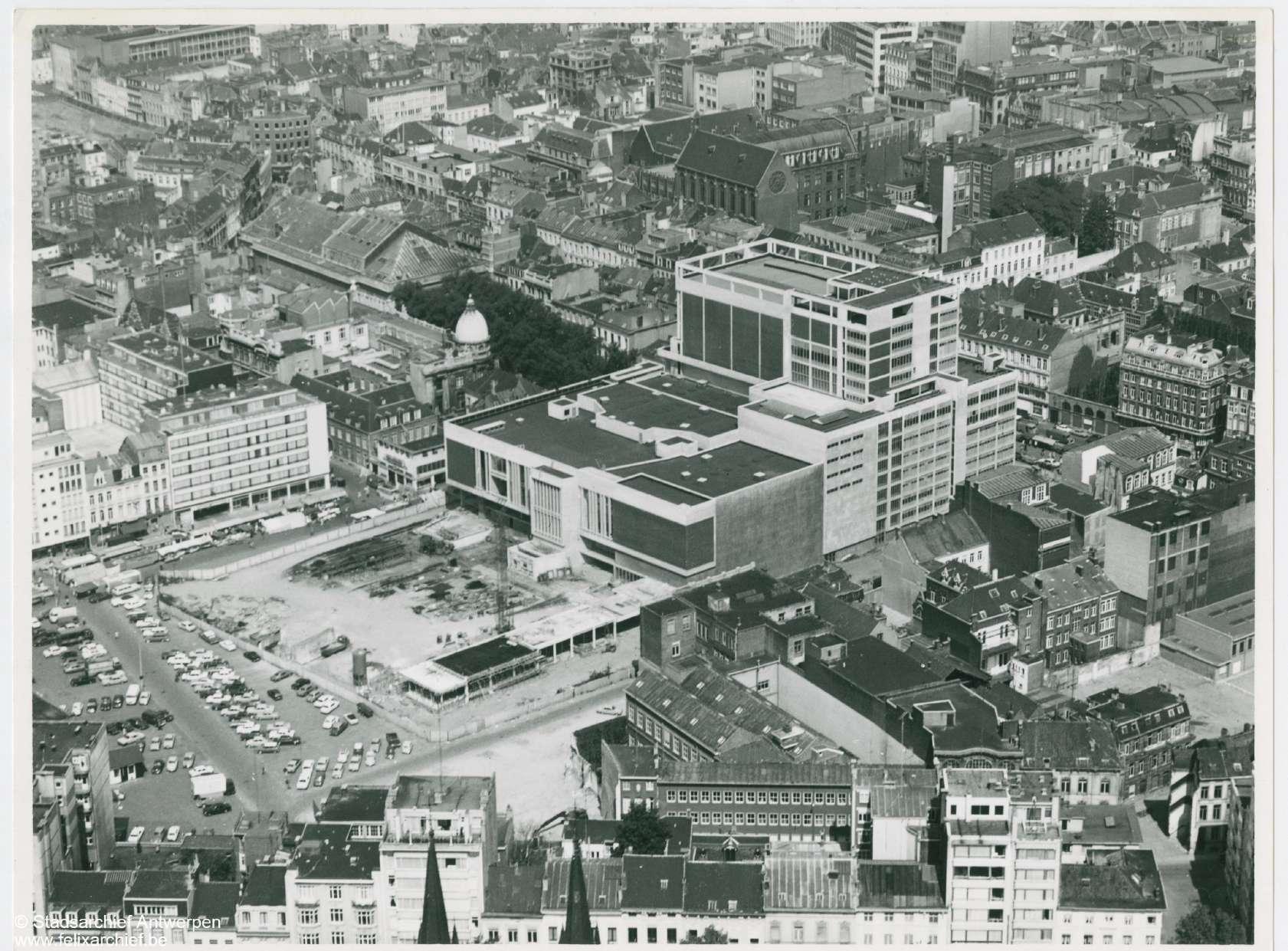
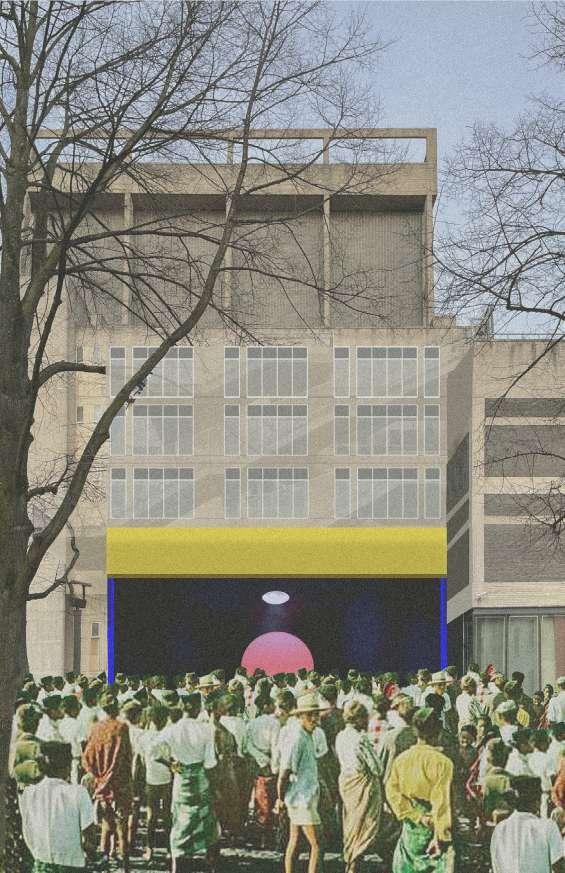
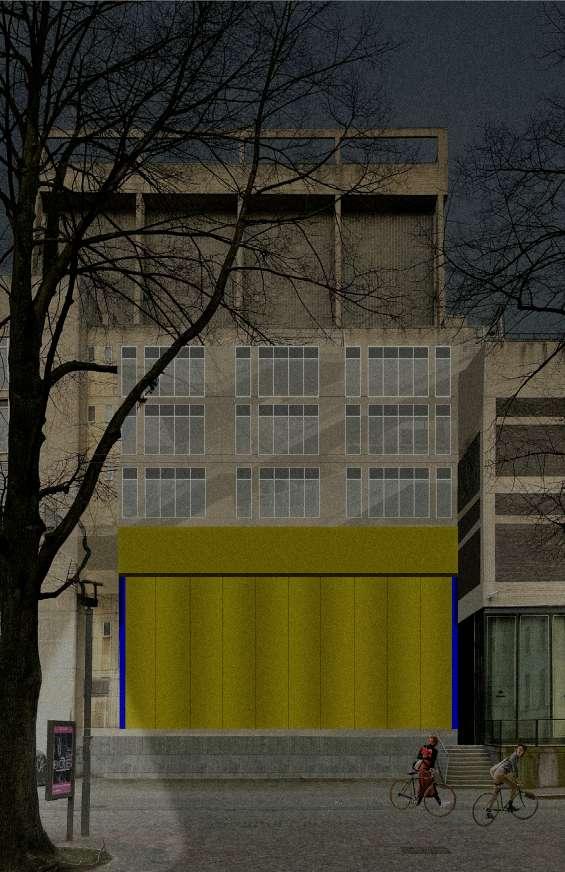
The subject of the Master’s disseration is a well-known and controversial entity in the center of Antwerp, Belgium: De Stadsschouwburg, our city theatre.
We analyse the history of the area, the context in which the building arose and the reason why the media is currently speaking about tearing down this building, which has only existed for 44 years.
By using methods from the theme and publication As Found, we want to prove that De Stadsschouwburg still has the potential to be the centre piece of the Theatre scene in Antwerp, both today and in the far future. The building has a great value for its context and our culture.
The as found-attitude starts from an observation and anaysis of the extsiting, and stands firm against the Modernist principle of tabula rasa.
Although, it is more than a merely reflective method. It demands a new way of thinking about found architecture, about the existing, where all elements in a place evoke memories. They need to be thoroughly analysed, so we can truly understand how our urban fabric came to be.
De Caigny, S., Ertas, H., & Plevoets, B. (2023). As Found: Experiments in Preservation.
Space Syntax is a set of methods and techniques to analyse spatial configurations, on a building and urban scale. It aims to develop insights into the mutually constructive relation between space and society.
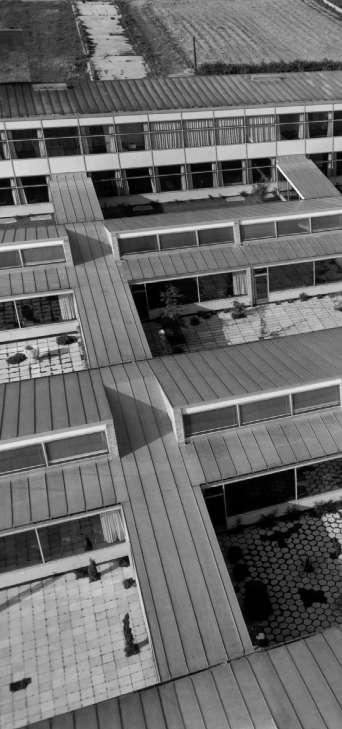
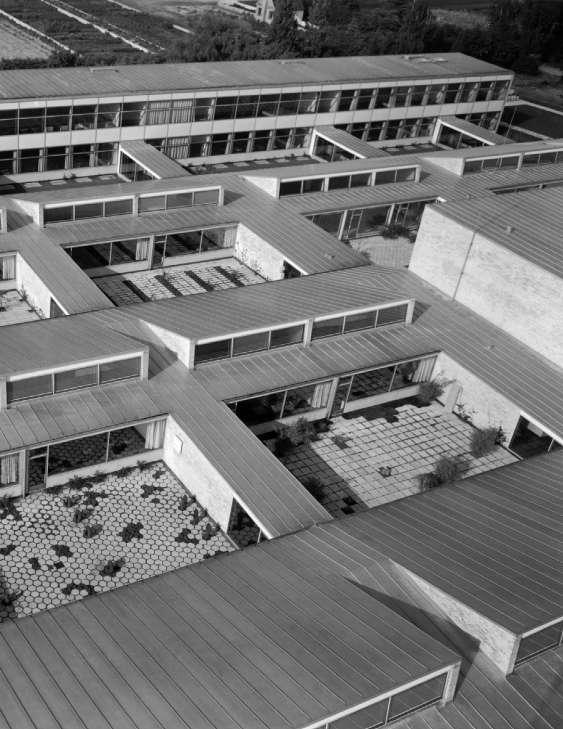
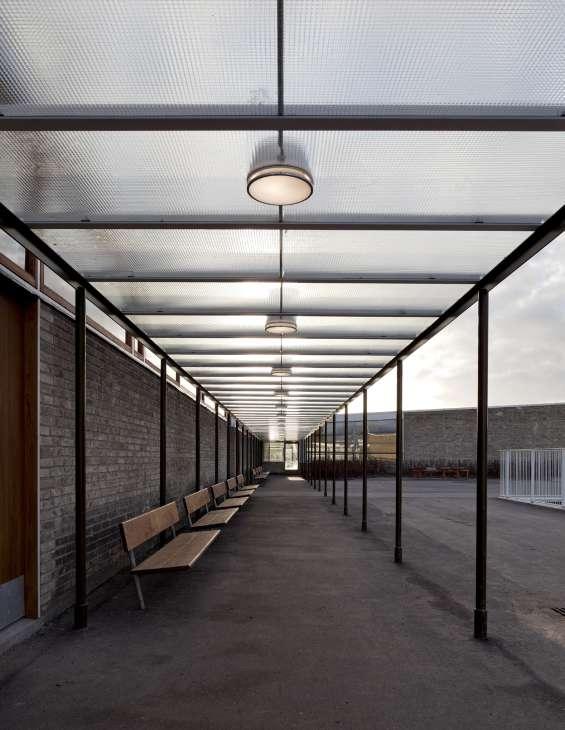
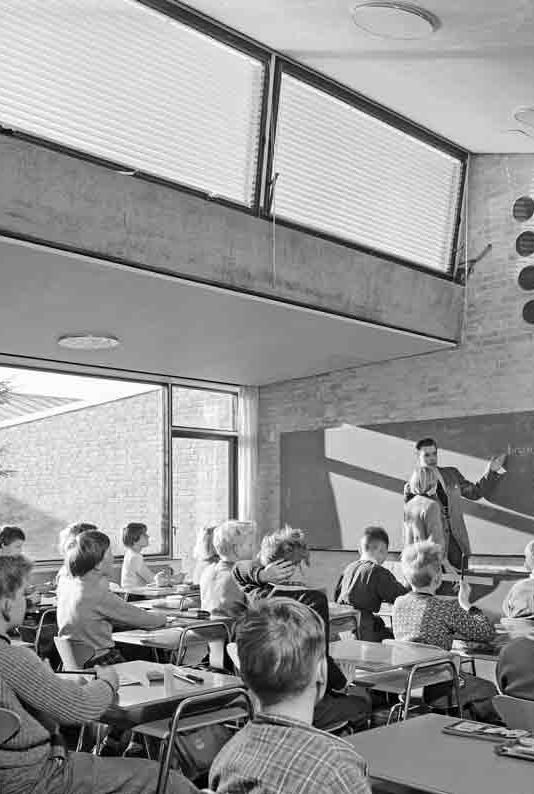
This research project dives into the topic of primary school buildings, focusing on two examples which are unique both in their design and pedagocigal approach, to uncover the relationship between their spatial properties and succesful reputations, more specifically:
How do the spatial arrangements in the Melopee and the Munkegård school support or constrain children’s movement and social interactions, and what does this reveal about their relationship between spatial design and the pedagogical goals of its time?
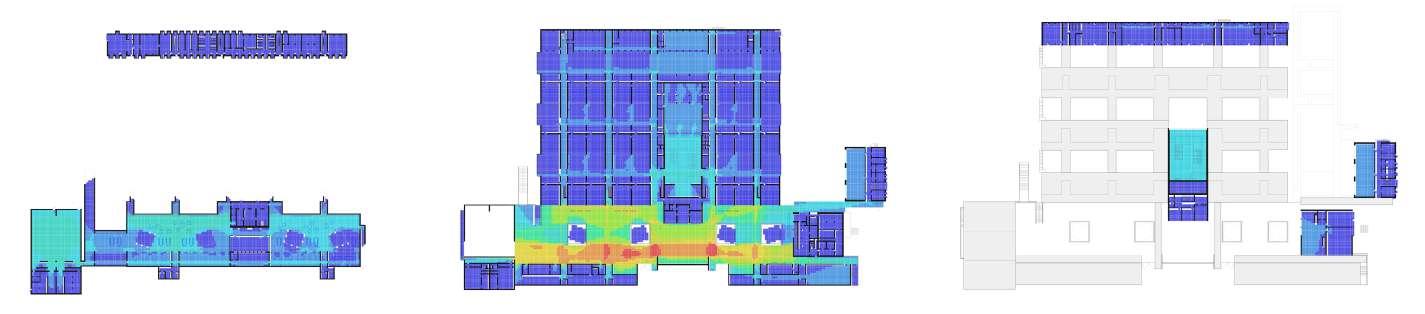
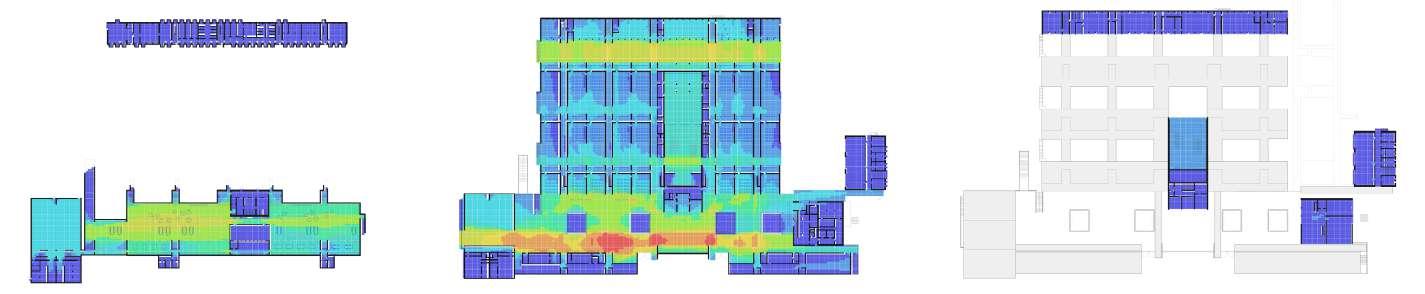
An isovist is a set of all points visible from a given vantage point in space and with respect to an environment. A permeability isovist shows how people can move from a certain point in space, what is directly accessible, while a visibilty isovist shows what they are able to see.
How do the different user groups interact? Where do they meet? How does the spatial organisation influence student behaviour, movement, and interaction?
CHILDREN FROM DAYCARE - KINDERGARDEN - PRIMARY SCHOOL
A visibility graph analysis (VGA) investigates the properties of a visibility graph derived from a spatial environment. It can be applied to two levels, eye level for what people can see (visibility), and knee level for how people can move (permeability) which is critical to understand spatial layouts.
PERMEABILITY

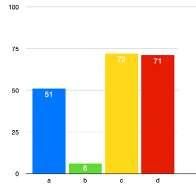
An unjustified graph shows the different types of spaces within a building and how they are connected, from which we can understand the degree of control or choice there is for someone within a space. For example, an a-type space is a space with a single link. It is the dead-end space, with a high degree of control, through which no movement is possible to other spaces. A d-type space on the other hand is part of a system with multiple links, where someone has a high degree of choice in routes.
House
Sharjah, UAE
Conference
Weil
Louvre
Abu
San Michele Cemetery
Isola di San Michele, Italy
Museo delle Culture
Milan, Italy
Fondazione Prada
Milan, Italy
BIG HQ
Copenhagen, Denmark
Chichu Art Museum
Naoshima, Japan
Palazzo del Lavoro
Turin, Italy
Copenhill
Copenhagen, Denmark
Nordic
Venice, Italy
St.
Le

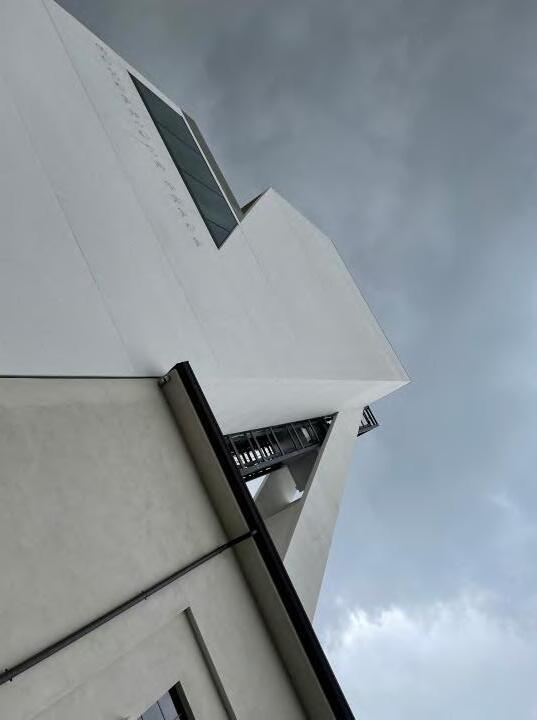
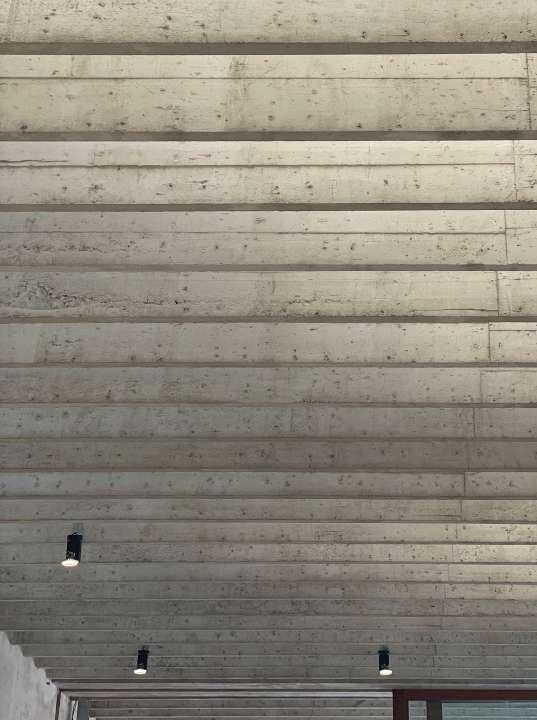
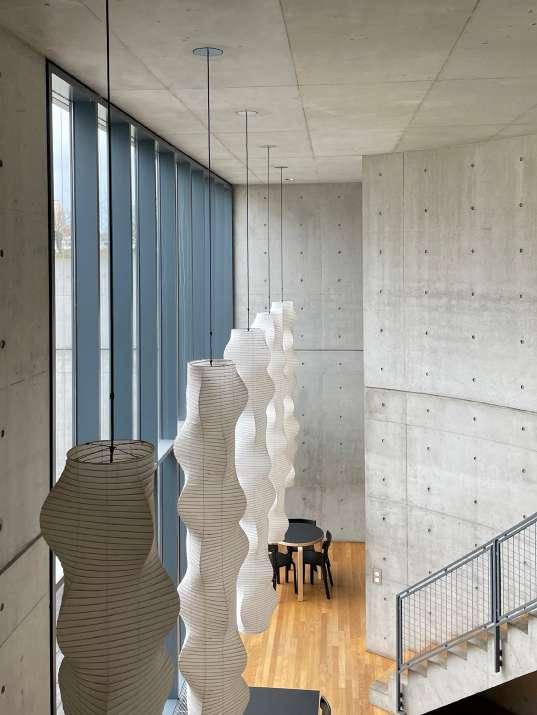
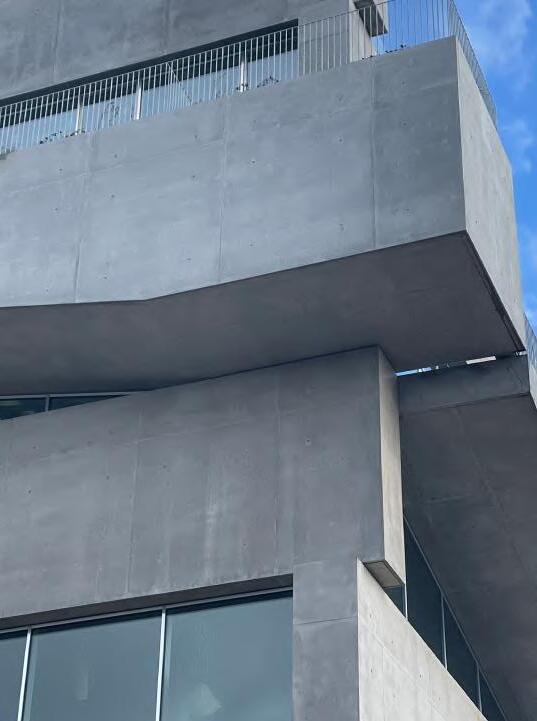
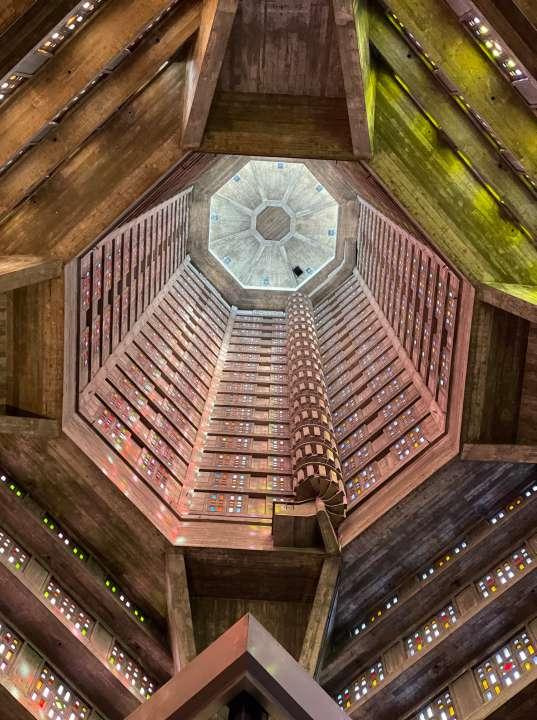
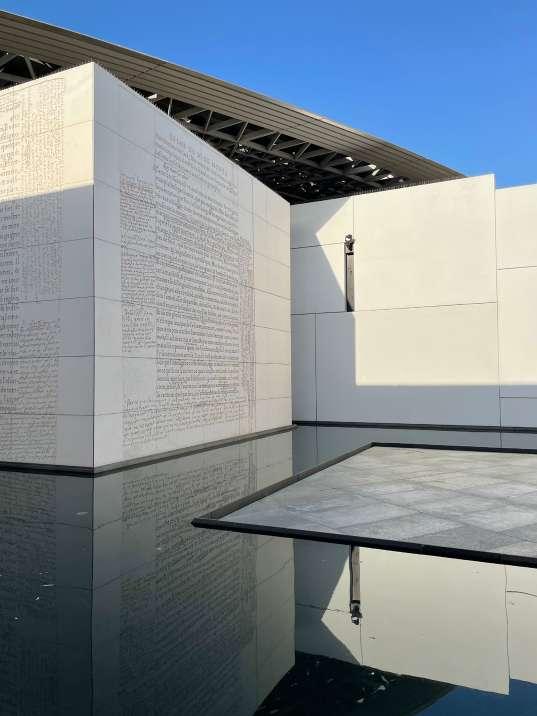
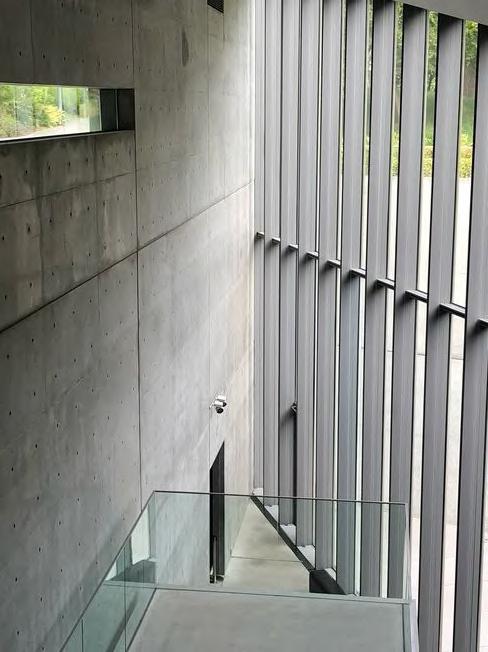
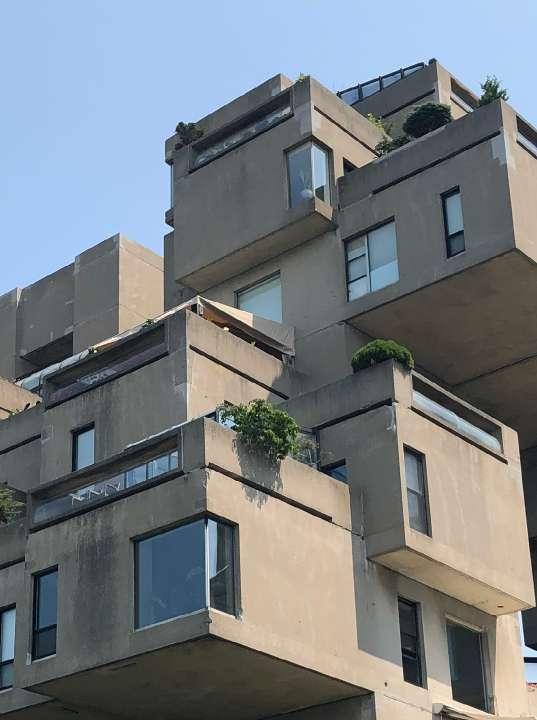
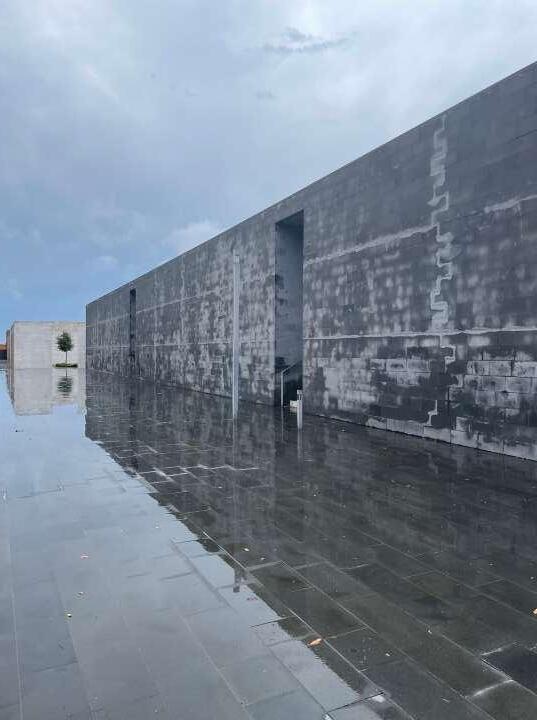
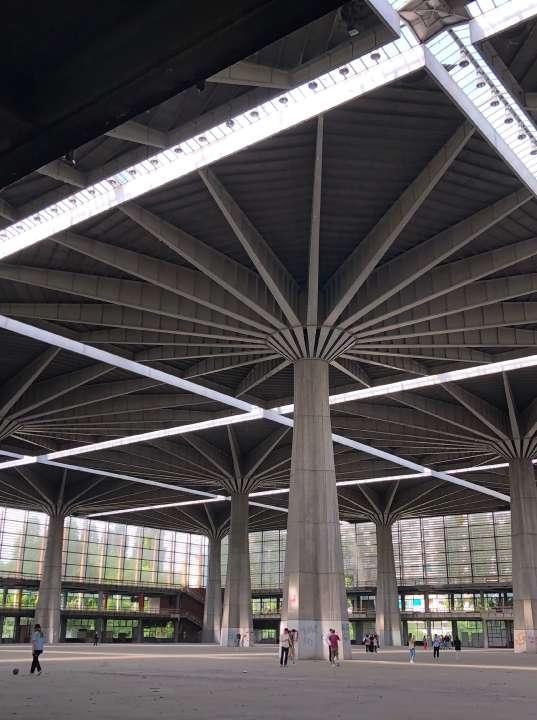
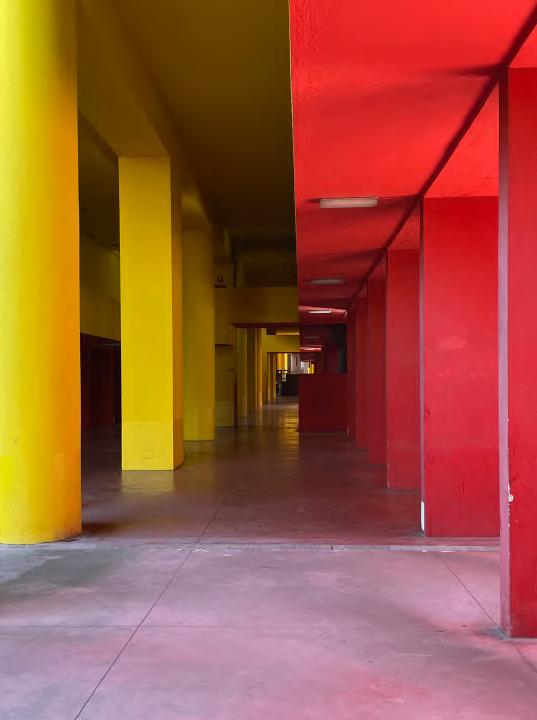
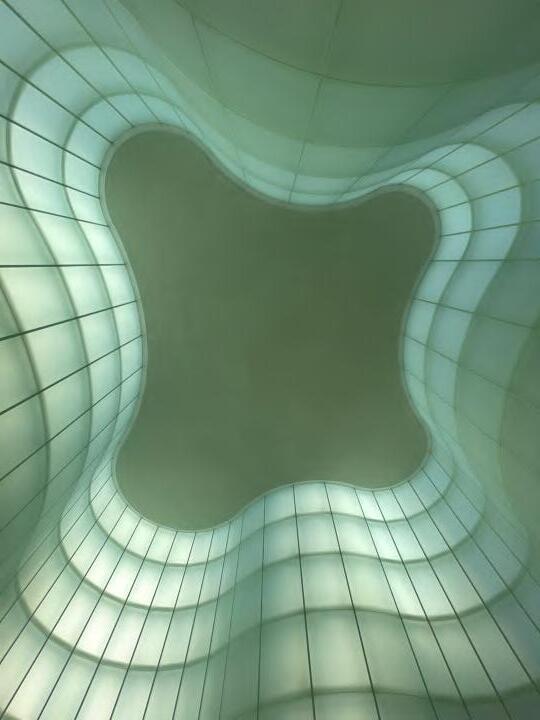
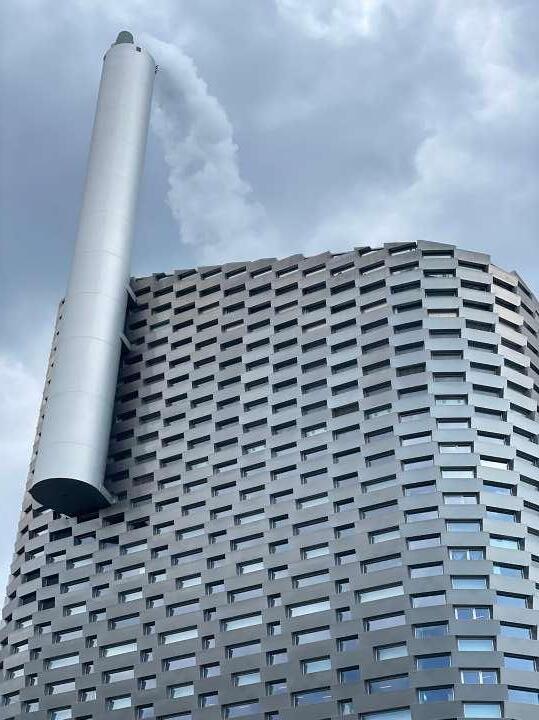
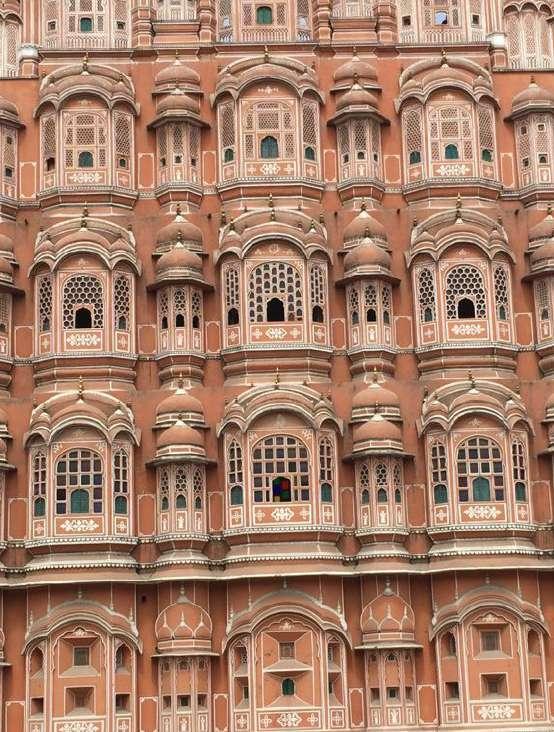
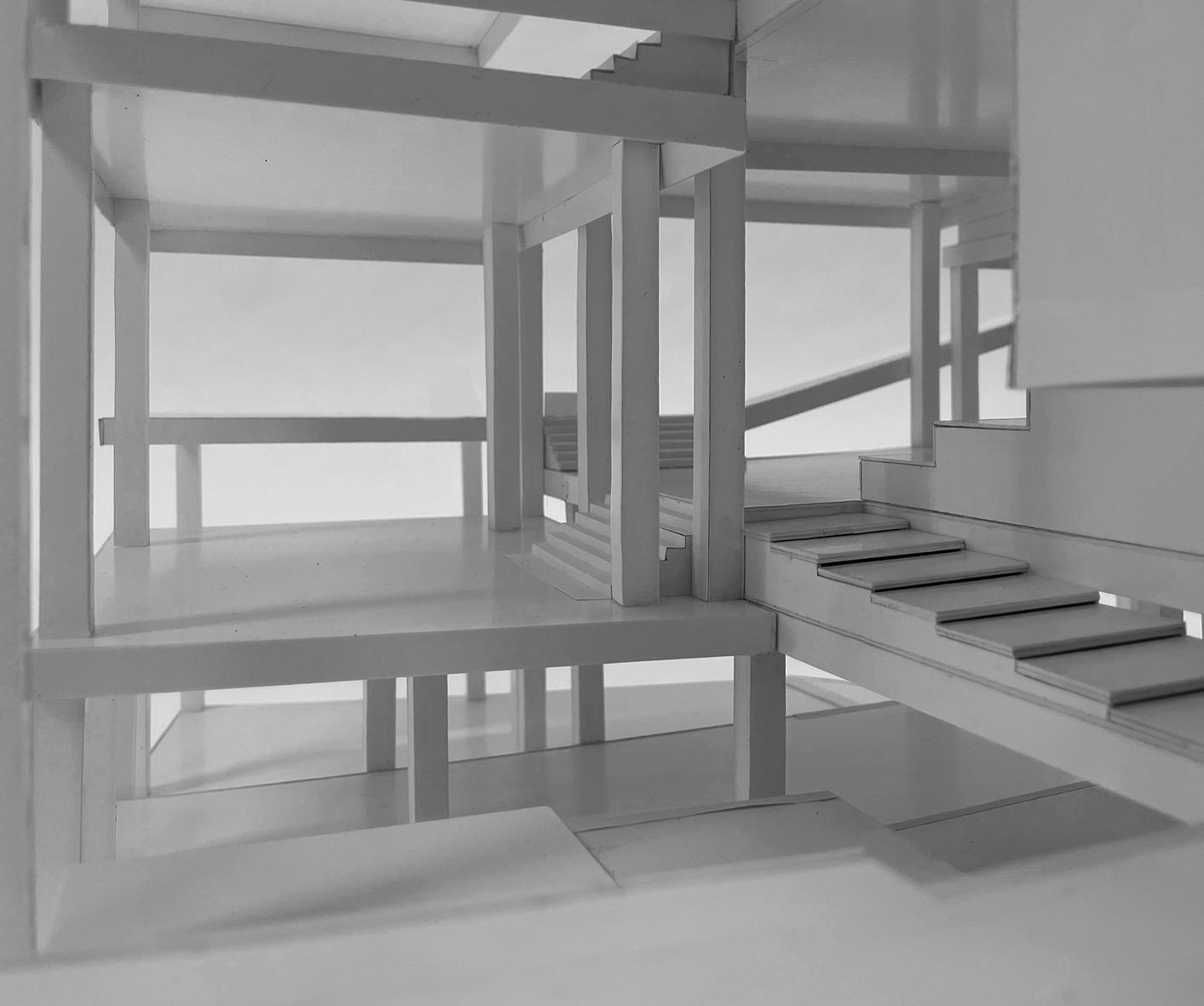
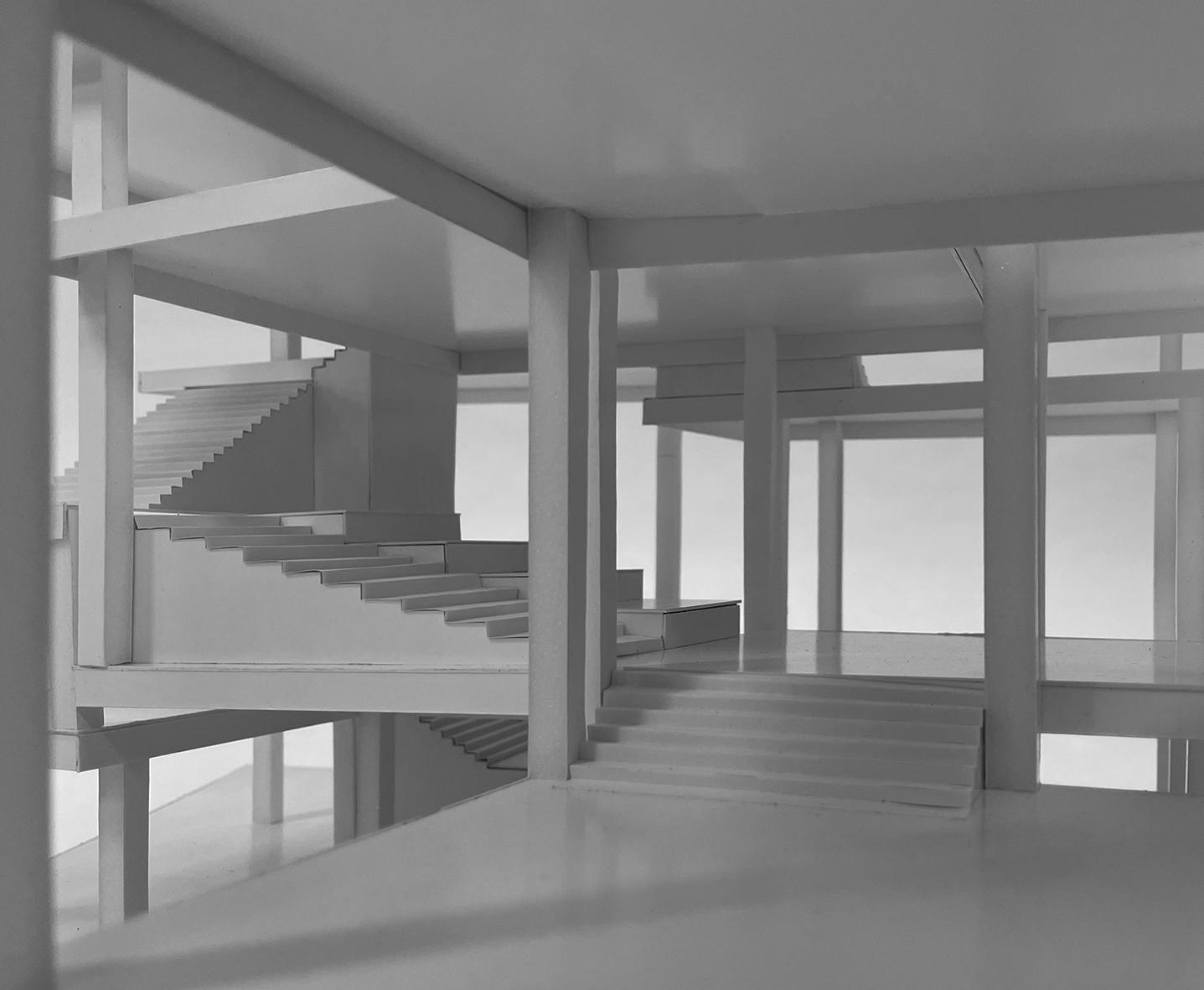
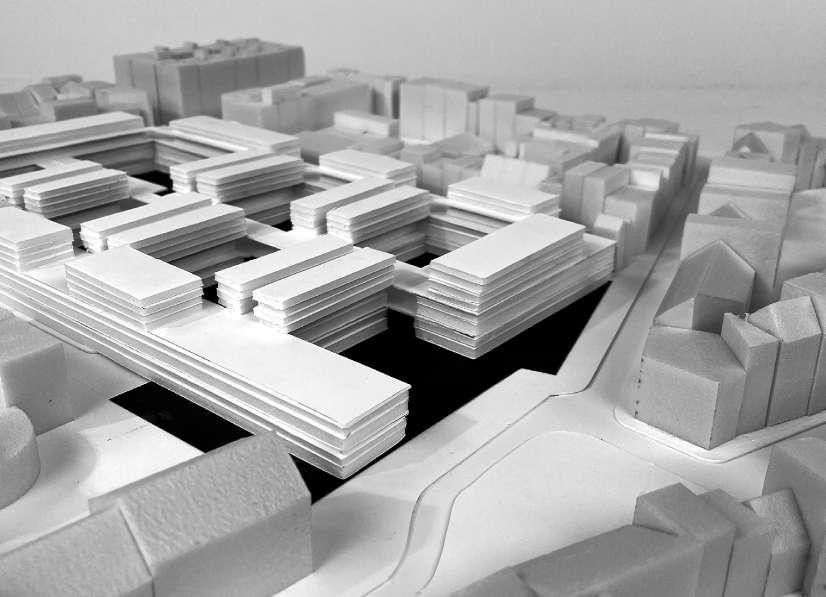
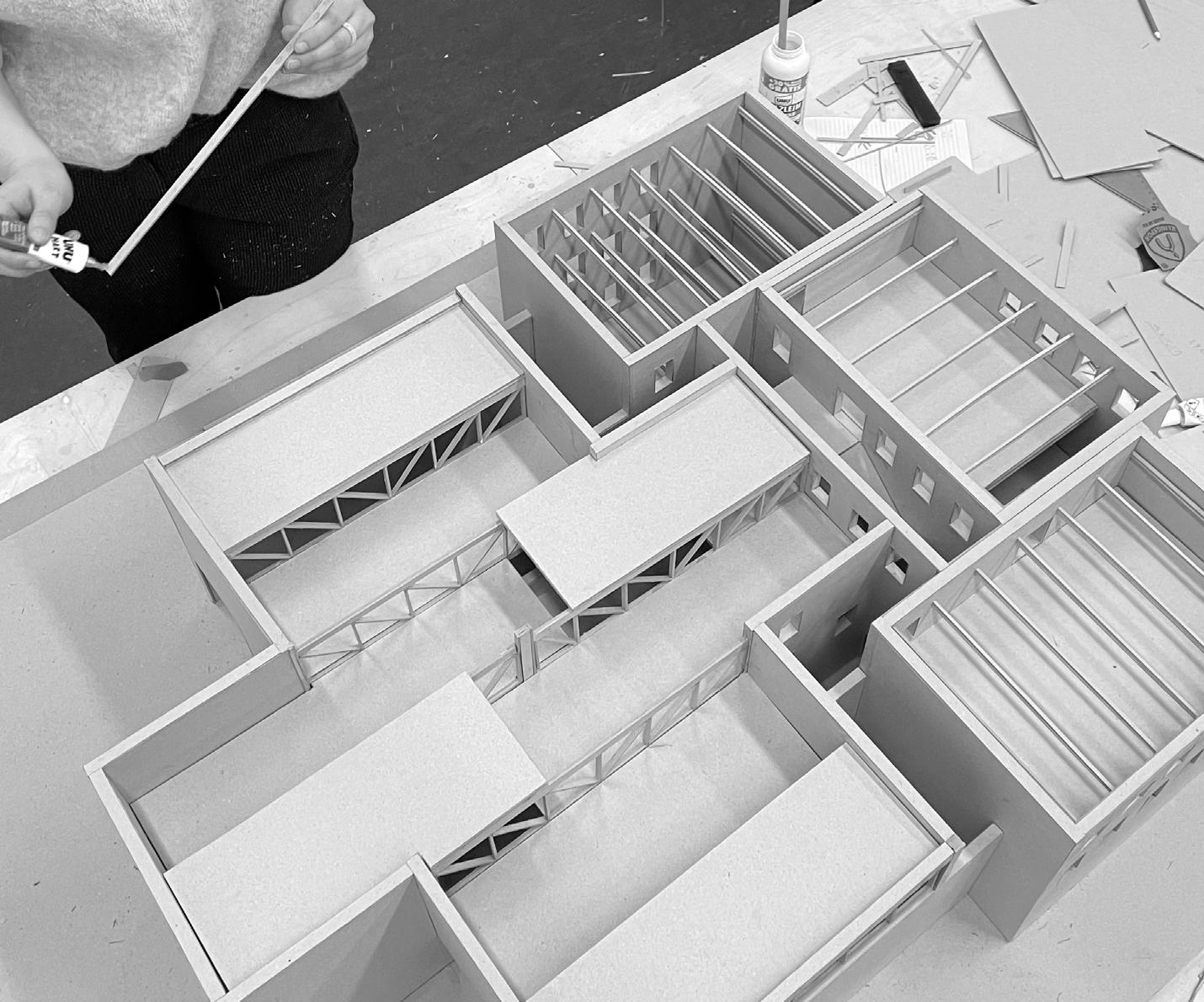
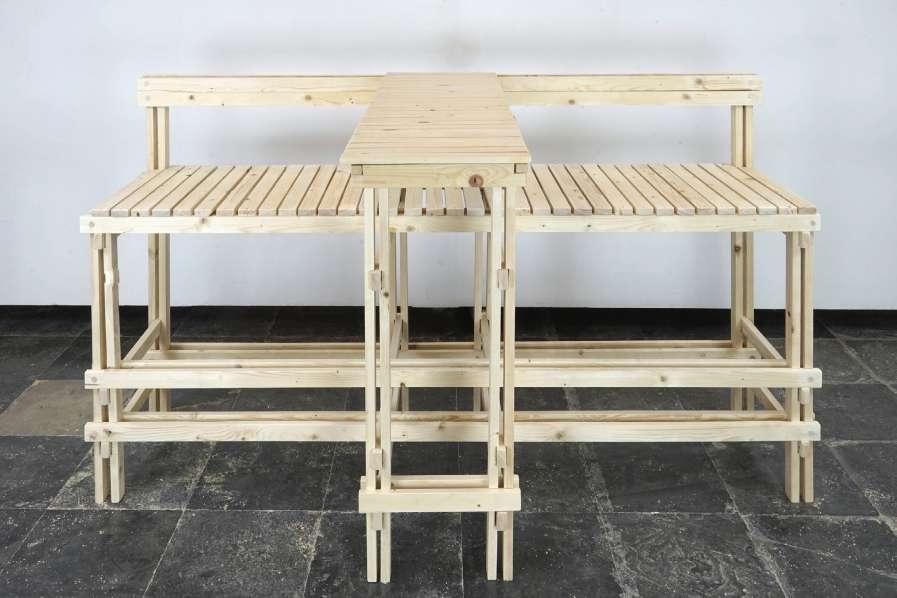
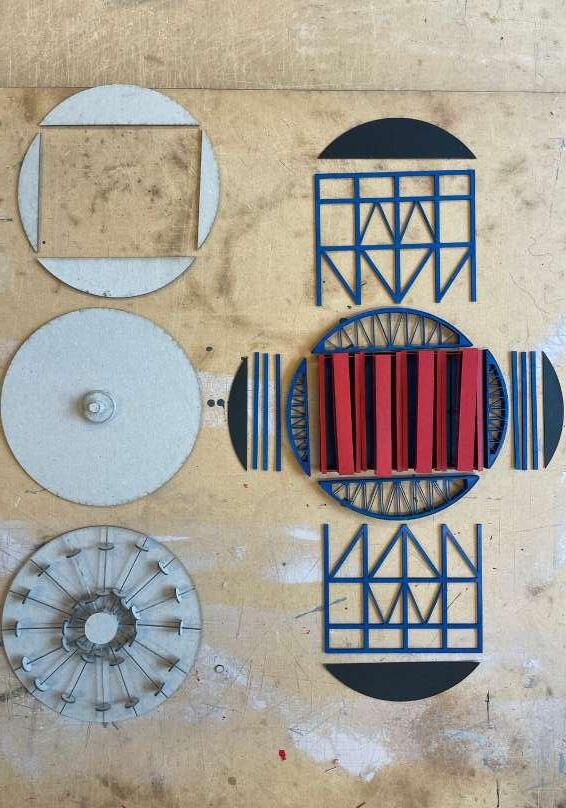
A look into some of the projects, sketches, models and memories that were made during my architecture studies at the University of Antwerp.
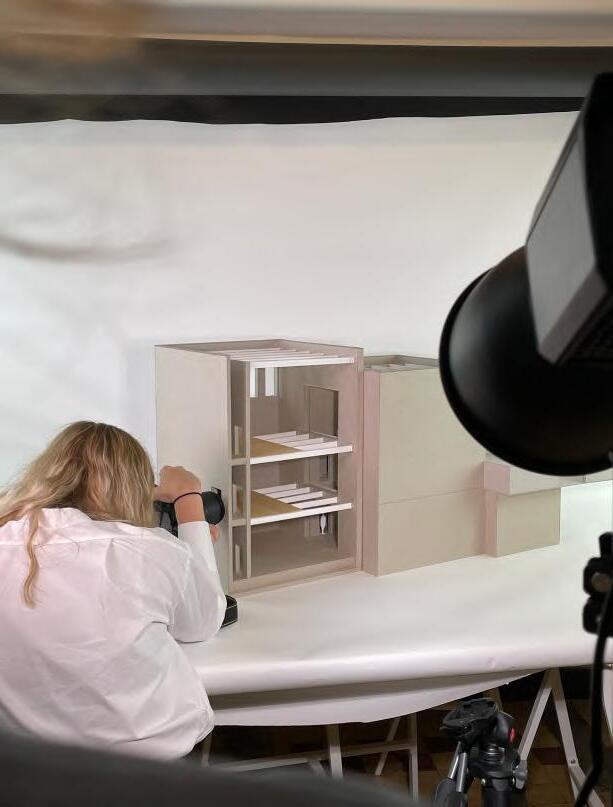
Model of a school
Model of project site in Antwerp
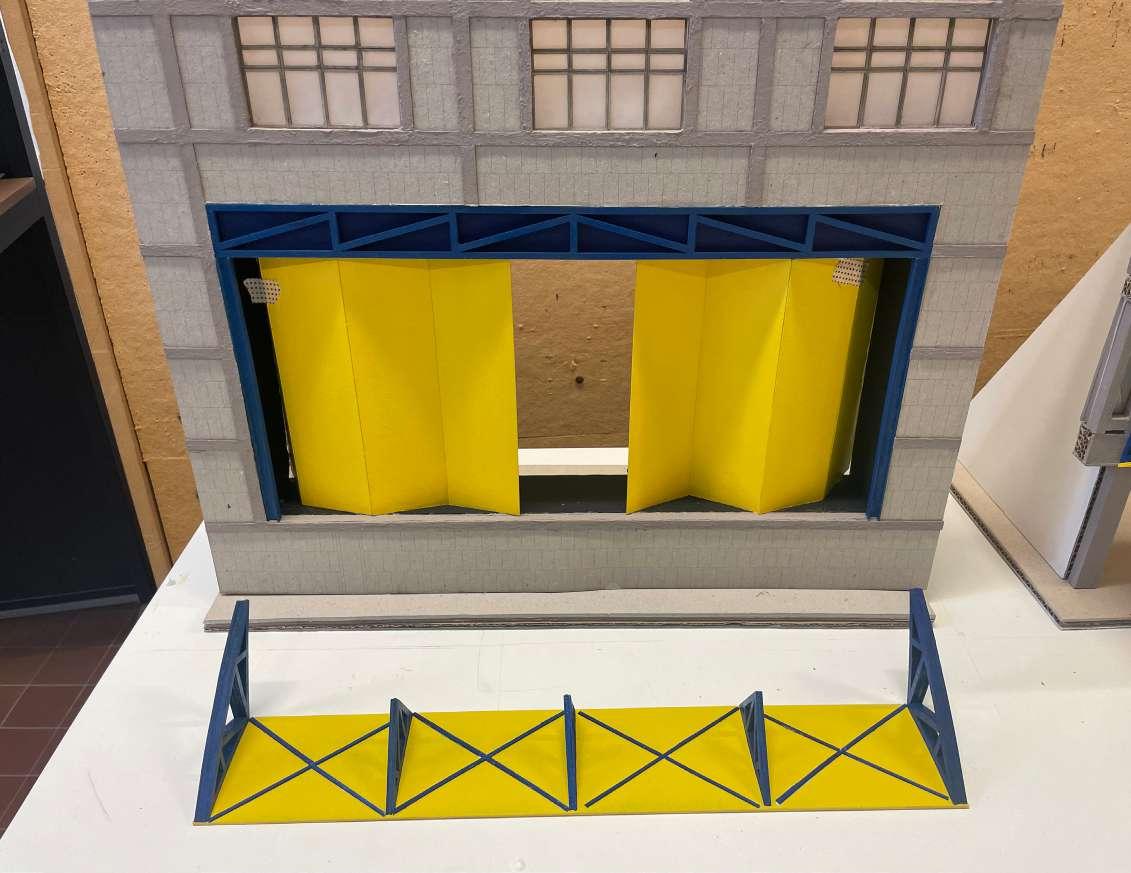
Model of the fire station
Analysis of the book Making Space by Matrix
the