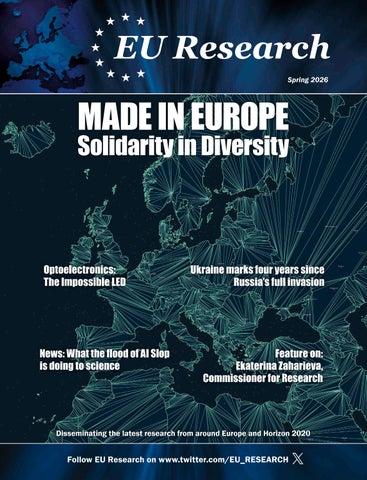
Ukraine marks four years since Russia’s full invasion
News: What the flood of AI Slop is doing to science Feature on: Ekaterina Zaharieva, Commissioner for Research
Disseminating the latest research from around Europe and Horizon 2020
Editor’s Note Editor’s Note
Richard Forsyth has been in publishing, writing for the scientific and business press for over 25 years –interviewing hundreds of scientists, politicians and business leaders around the world.
He also works to support major corporations, helping them to meet their compliance and sustainability goals.
In July 1969, 57 years ago, the world held its collective breath. Something unprecedented was about to happen. Neil Armstrong and Buzz Aldrin had landed inside a fragile metal craft on the surface of another celestial body. They were preparing to step onto the Moon, more than 200,000 miles from the safety and familiarity of Earth.
The moment would profoundly alter the astronauts themselves as they stood on the powdery, grey surface and looked back at a small, luminous blue planet suspended in darkness. But it also transformed humanity. While Apollo 11 was undeniably a product of Cold War rivalry, it transcended competition. For a brief, extraordinary moment, it was widely understood as a shared milestone for our species. Science had become the foundation of our greatest collective adventure, and that mattered.
Today, that foundation feels less secure. Scientific evidence is routinely challenged by influencer opinion, bent by political expediency, or dismissed entirely. Public trust in expertise has eroded to the point where a significant number of people openly question whether the Moon landings happened at all. Science is no longer universally regarded as a guiding light for progress, values, or wonder.
And yet, as I write this, we stand on the cusp of another lunar chapter. At the time of writing, NASA’s Artemis II mission is expected to launch soon, sending four astronauts on a ten-day journey around the Moon. It is a crucial precursor to returning humans to the lunar surface and a powerful reminder of what disciplined scientific endeavour can achieve. This time, the story will not unfold in grainy black-and-white images, but in vivid colour, close-up and immersive, revealing the complexity, risk, and human drama behind exploration.
At a moment defined by war, political dysfunction, and an unrelenting cycle of bad news, Artemis II offers the possibility of something rare: shared awe. The hope is not nostalgia, but renewal – that science can once again ignite imaginations, command attention, and unite people around possibility, rather than fear.
Science remains our most reliable means of shaping the future. Reclaiming it as an adventure, as rigorous, daring, and collective, may be one of the most important journeys we can take.
Richard Forsyth Editor
Contents
4 Research News
EU Research takes a look at the latest news in scientific research, highlighting new discoveries, major breakthroughs and new areas of investigation
10 THE ROLE OF SIALIC ACIDS IN EARLY BRAIN DEVELOPMENT
We spoke to Professor Martin Røssel Larsen about how he is using organoids to investigate the role of sialic acids in early brain development, and the long-term consequences of any malformations.
12 PRIMAZINC
Most primate species have folds in the brain but there are some exceptions, now Dr Michael Heide aims to shed new light on the underlying reasons why in the Primazinc project.
15 PLASTICIAN
The team behind the PLASTICAN project aim to characterise the cellular composition of the microenvironment around a tumour, part of the goal of improving treatment of colorectal cancer, as Professor Florian Greten explains.
18 UnderPressure
There is a universal decay in cell proliferation rates as pressure increases. Dr Morgan Delarue is studying the common physical or biological response that leads to this decrease.
20 Forest4Youth
The Forest4Youth project is exploring how real forests and immersive virtual nature can support young people during and after psychiatric care. Project leader Vinciane de Moffarts tells us about their work.
22 Karst Firewall 5.0
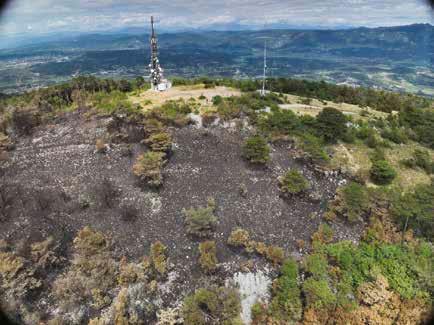
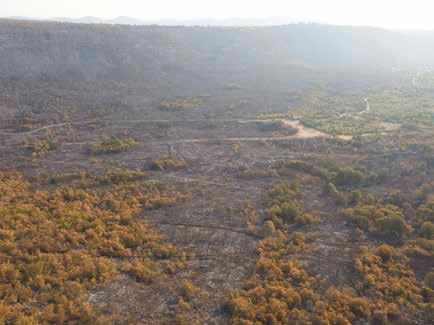
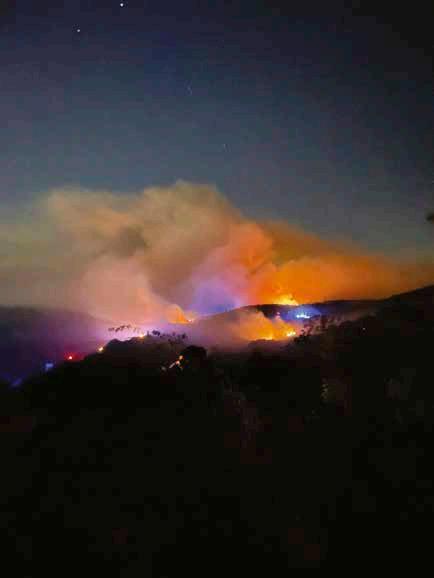
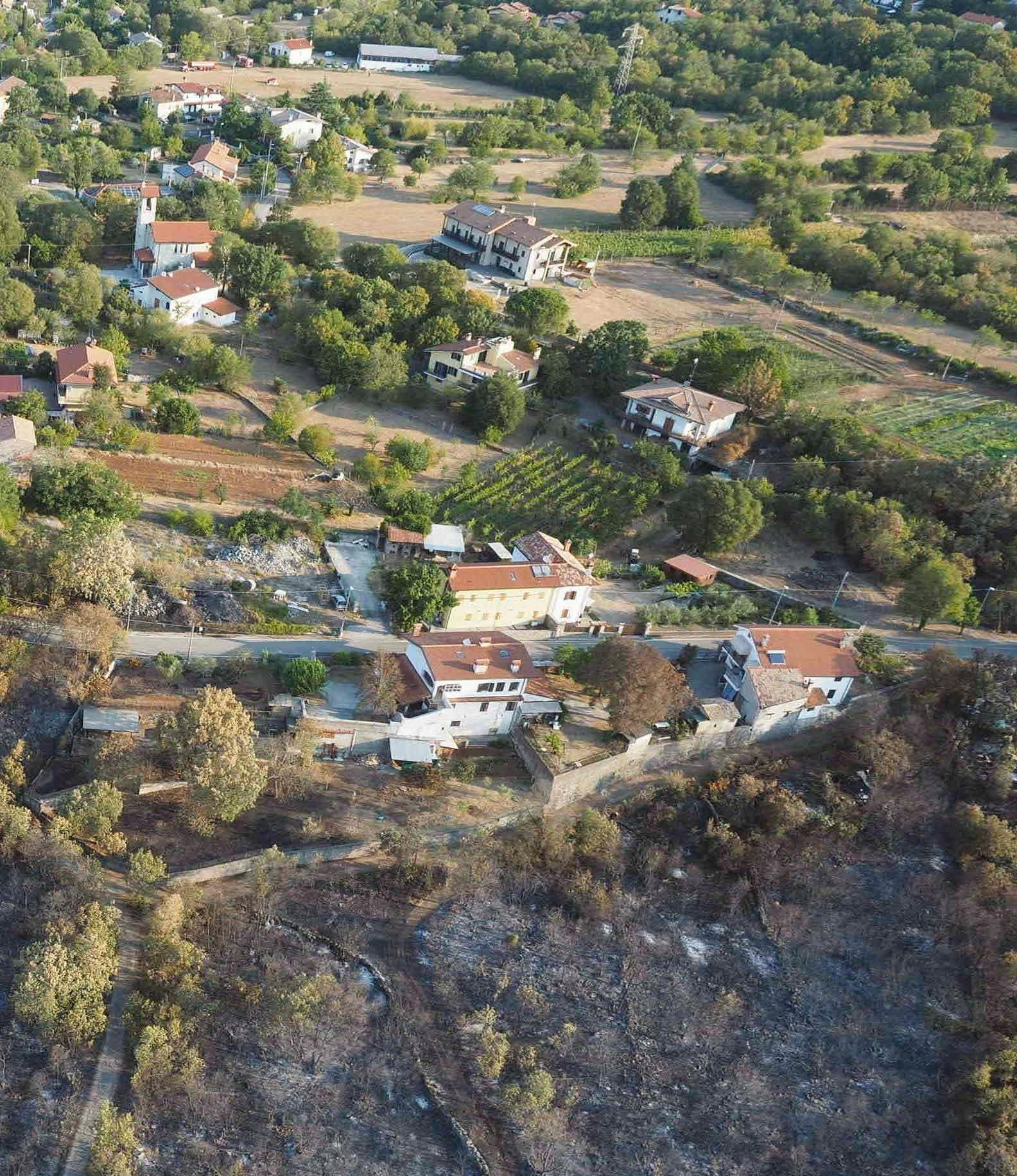
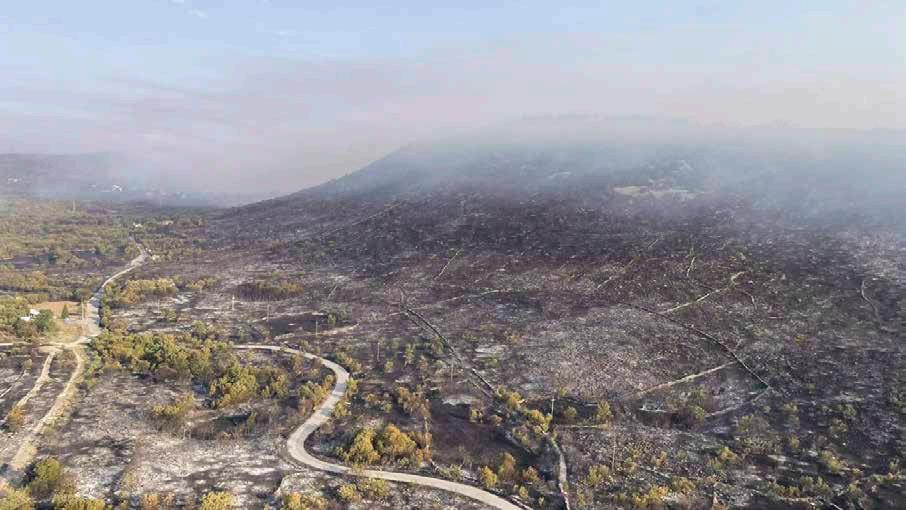
The team behind the Karst Firewall 5.0 project are producing knowledge and co-developing plans to prevent and manage wildfires in the Karst region, as Dr Massimiliano Granceri Bradaschia explains.
26 AMIS
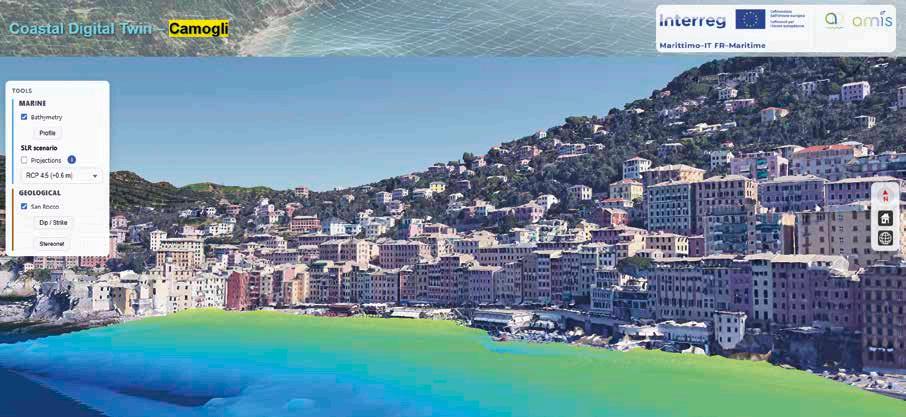
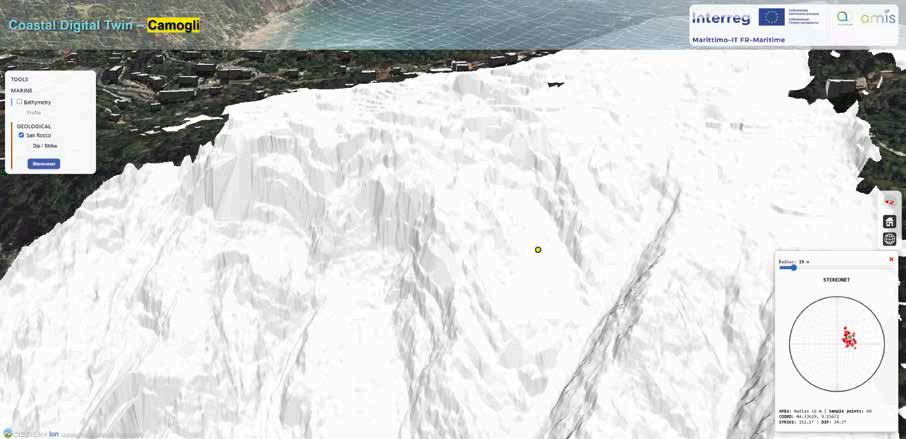
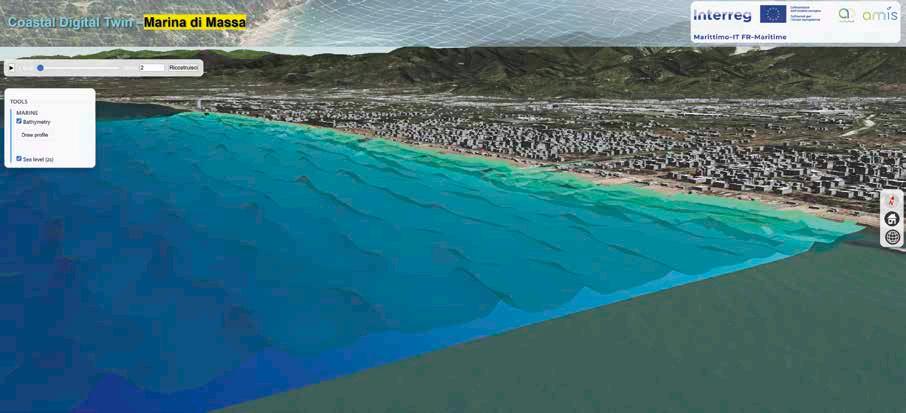
The AMIS project team are developing digital twins to manage risk of adverse effects from climate change and enhance the resilience of coastal areas, as Dr Carlo Brandini and Dr Manuela Corongiu explain.
30 SUSTAQUA, GEMS and GOV4WATER
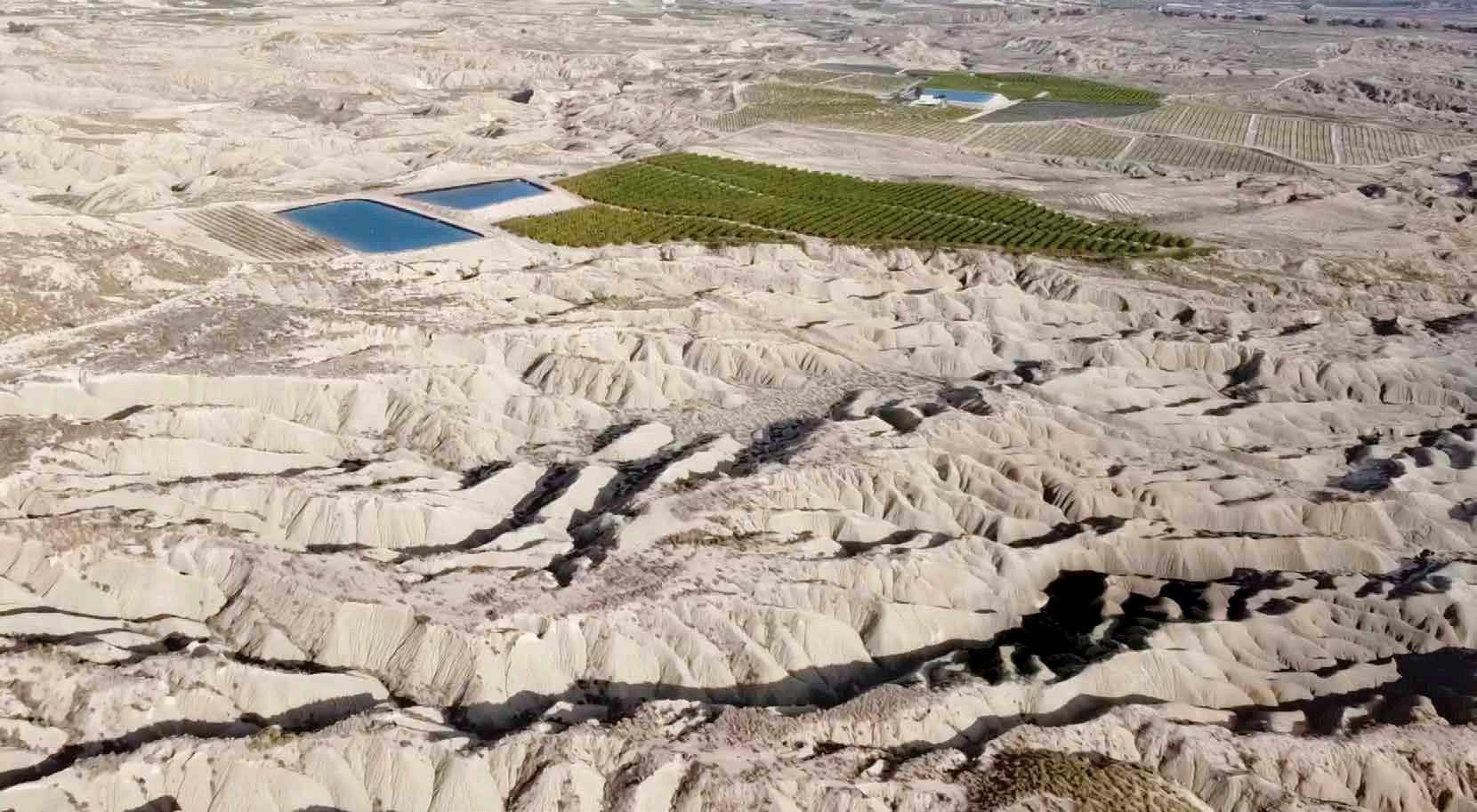
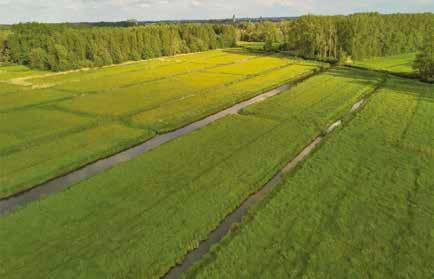
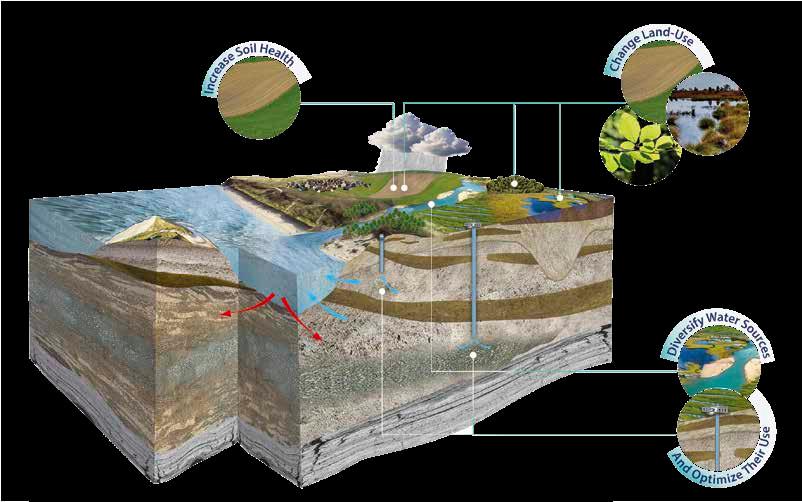
The Spanish region of Murcia is frequently short of water. Improving water resilience in Murcia is the common theme of the General Directorate of Water’s work in the SUSTAQUA , GEMS and GOV4WATER projects.
32 BLUE TRANSITION
We spoke with BLUE TRANSITION project lead Mike Müller- Petke and project manager Ilke BorowskiMaaser about their work in rebalancing water systems and how Europe is redefining water resilience.
34 TRACE-it
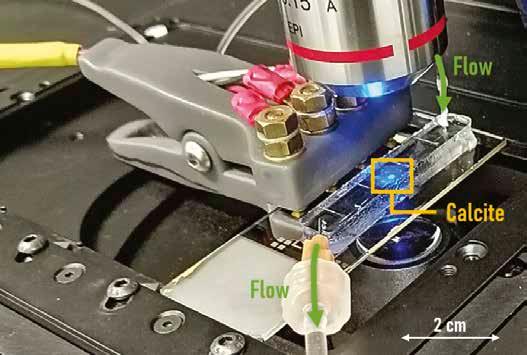
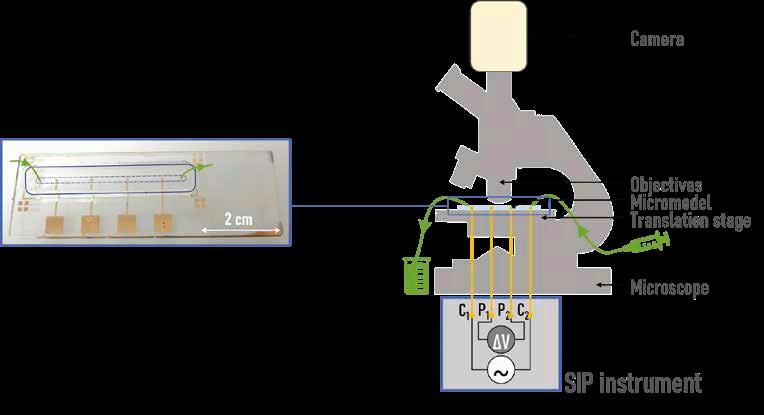
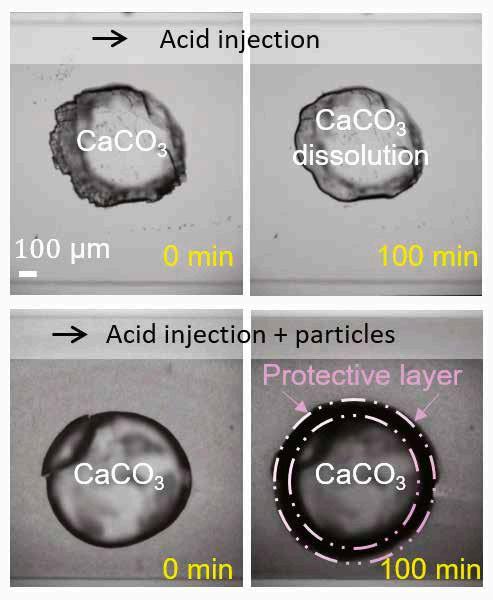
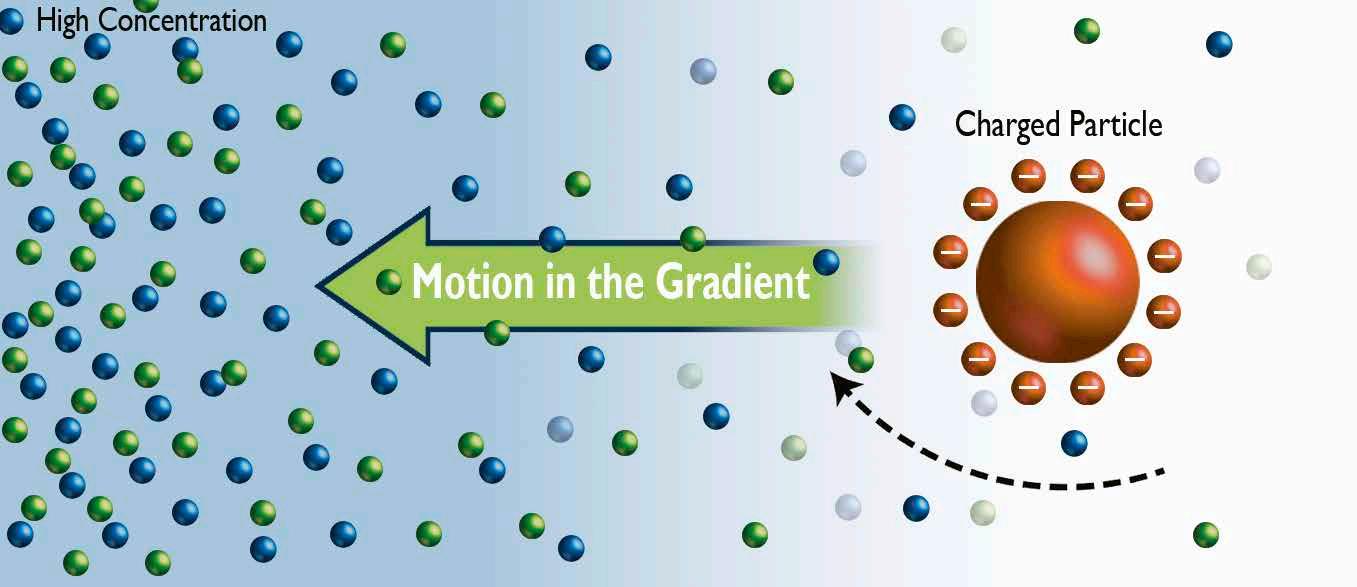
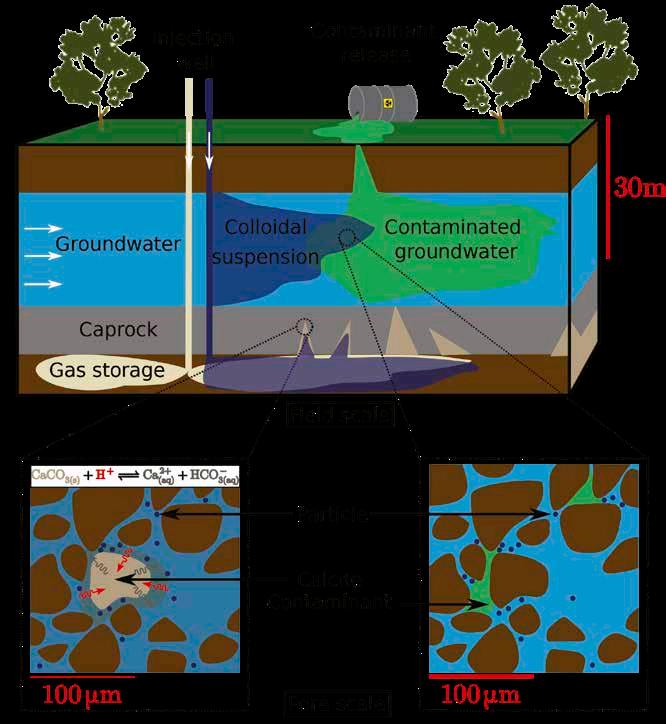
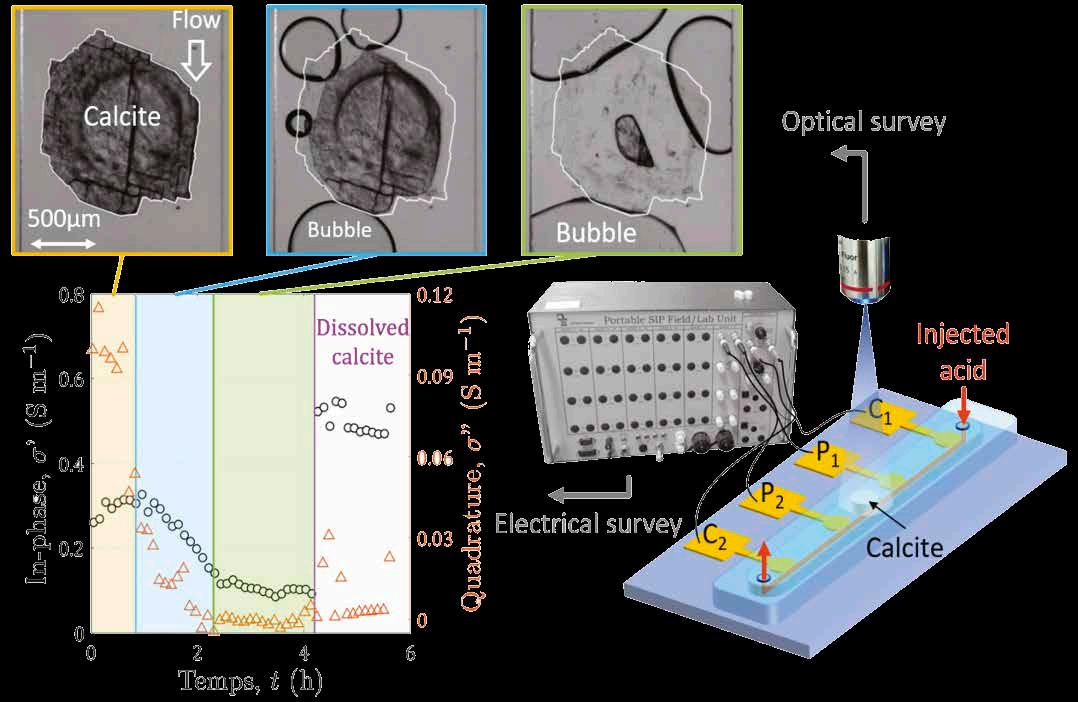
In the TRACE-it project Dr. Sophie Roman is investigating how colloidal particles flow through geological environments, which could in future lead to methods of driving them to a particular region of interest.
37 TETHYS4ADRION
We spoke to Andrej Krzan , Thomais Vlachogianni and Tomaso Fortibuoni about their research into how rivers contribute to marine plastic pollution, which is an important step towards mitigating the problem.
40
Independent
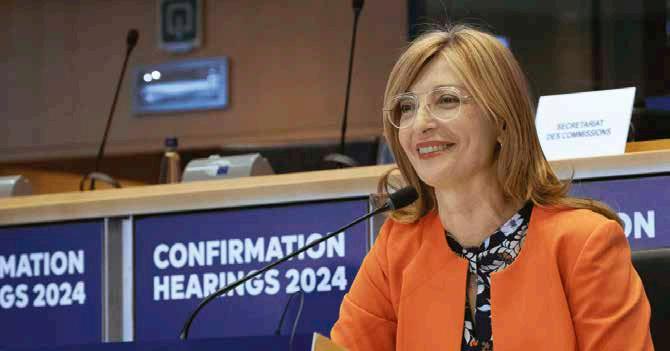
European Commissioner for Startups, Research and Innovation, Ekaterina Zaharieva’s role has become essential to ensuring that the European Union not only fosters cutting-edge research but also supports the translation of breakthrough ideas into economic and societal impact. By Maria Vlastara
44 OMELETTE
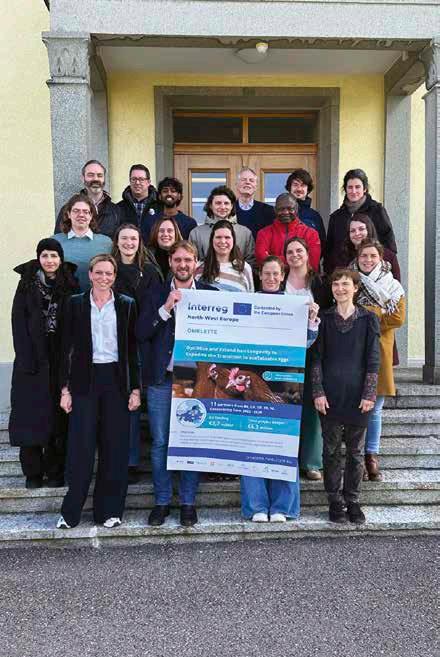
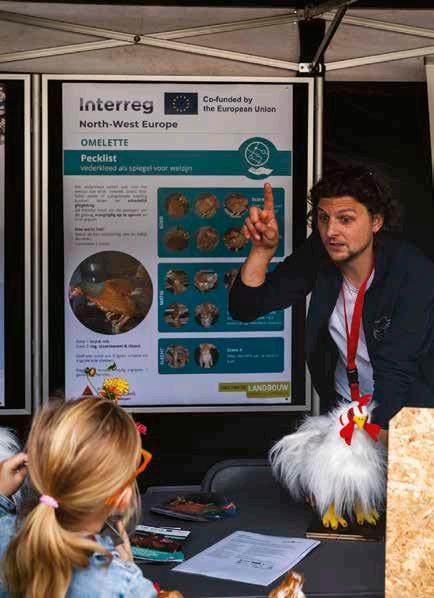
It is increasingly difficult for farmers in North West Europe to produce eggs cost-effectively. The OMELETTE project aims to increase hen longevity and build a more sustainable egg-producing sector, as Nathalie Sleeckx explains.
46 EE4HORECA
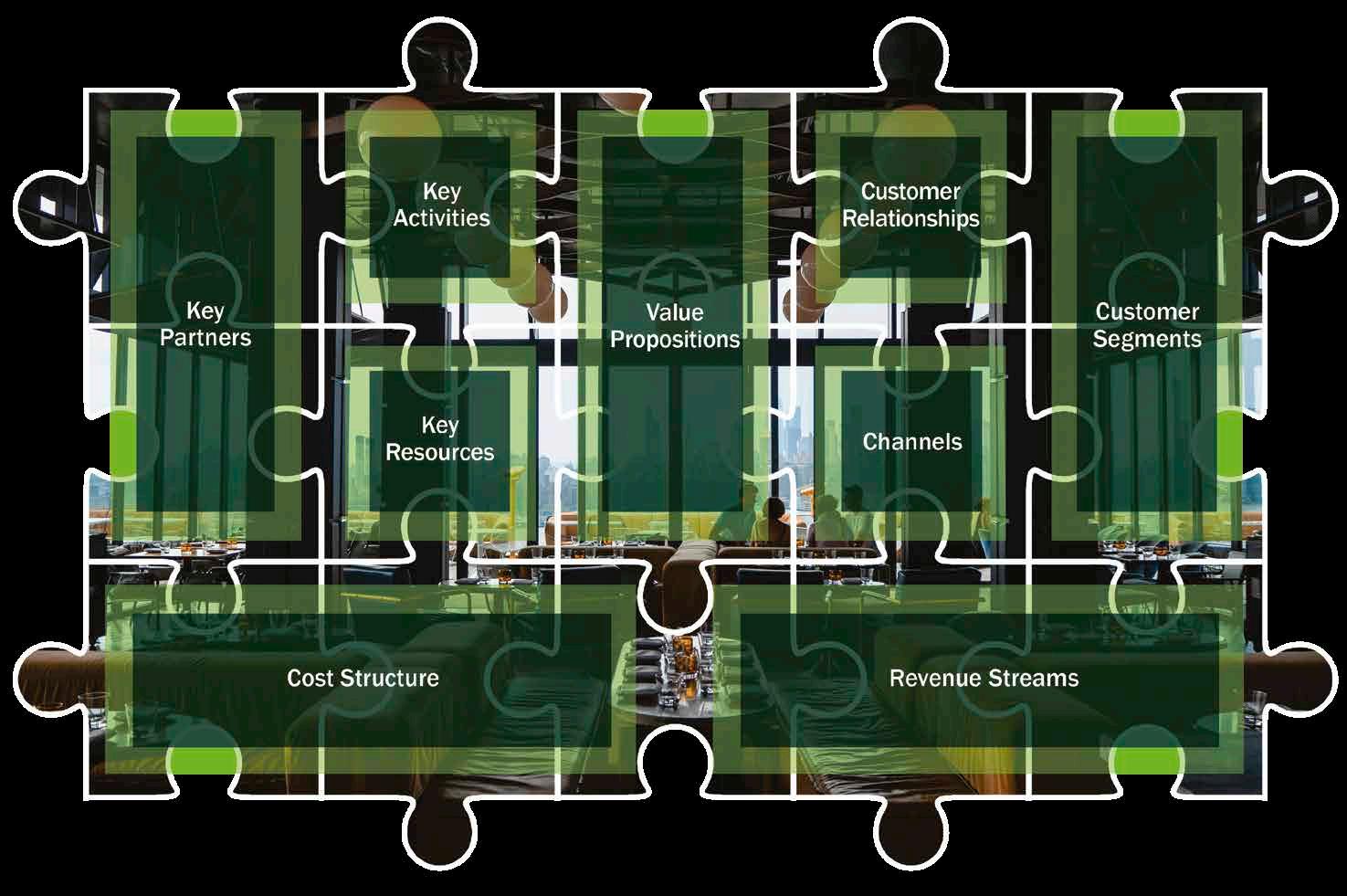
Beatrice Marchi and Ivana Rae Almora explain how a valuechain approach, practical tools, and targeted training can help SMEs in the hospitality sector turn energy efficiency from theory into workable action.
48 PilotInnCities
We spoke to Miroslav Scheiner about how the PilotInnCities project team are using the agile piloting method to accelerate the uptake and upscaling of innovative smart city solutions.
50 SKILLSAFE-EU
With demand for heat pumps set to rise, there is a corresponding need for detailed guidelines on how they should be handled, as Nishant Karve and Francesca Tamburrini of the SKILLSAFE-EU project explain.
52 MILEPORT
Alberto Cozzi and the team behind the MILEPORT project aim to help trucks and lorries get in and out of ports as efficiently as possible, which will bring wider environmental and economic benefits.
55 Heteroplates
The Heteroplates project team precisely control the size and structure of nanocrystals, which can then act as the building blocks of new materials with exciting properties, as Professor Yehonadav Bekenstein explains.
58 ALPI
Researchers in the ALPI project aim to introduce an optical device to mitigate signal degradation in the optical domain, improving transparency, capacity and energyefficiency, as Professor Lorenzo Pavesi explains.
60 CF SEDSS IV
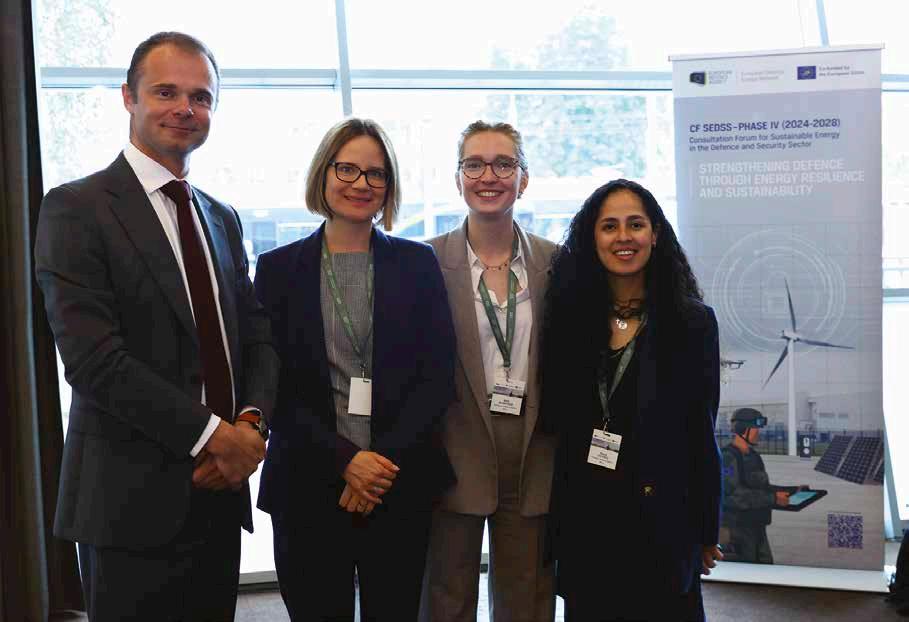
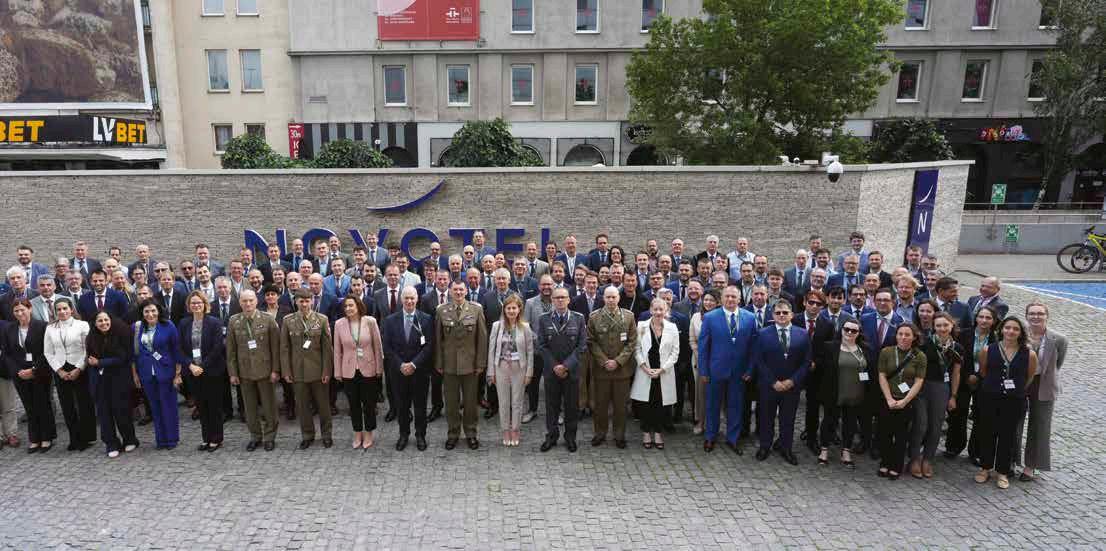
Maja Kuzel and Shana Leclercq tell us how phase 4 of the CF SEDSS will accelerate the transition towards a more sustainable, energy-efficient and resilient defence sector.
62 MASTERING NET ZERO
Significant investment is required if Europe is to meet emissions reduction goals. Anke Brems is investigating the impact of local context on decarbonisation initiatives in the Mastering Net Zero project.
64 EU PEERS
As Europe struggles to accelerate home energy renovation, the EU Peers project is strengthening the systems that help citizens act. We spoke with Jenny-Claire Keilmann and Marcus Andreas about the project’s work.
66 MAS4TE
The MAS4TE project is exploring how artificial intelligence, blockchain and digital twins can reshape the way citizens produce, store and trade energy. Co-Principal Investigator Dr Clara Maathuis tells us about the project’s work.
68 SmartPowerConversion
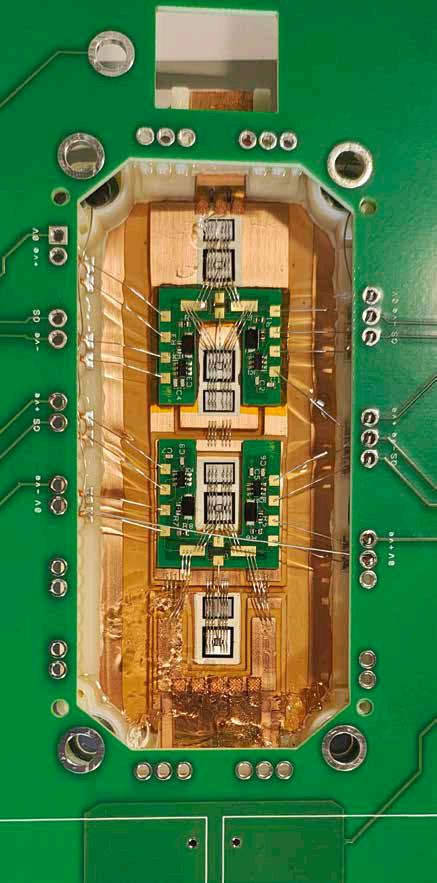
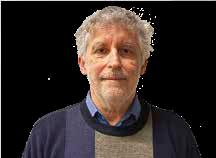
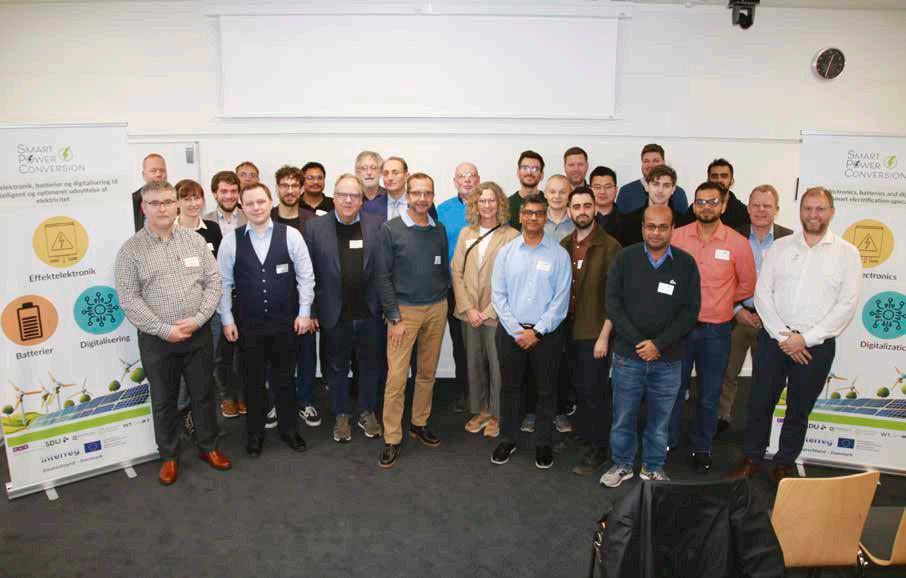
Associate professor Kasper Mayntz Paasch and his colleagues in the EU-backed SmartPowerConversion project are developing and testing new power electronics technologies which will support the green energy transition.
71 MUSAI
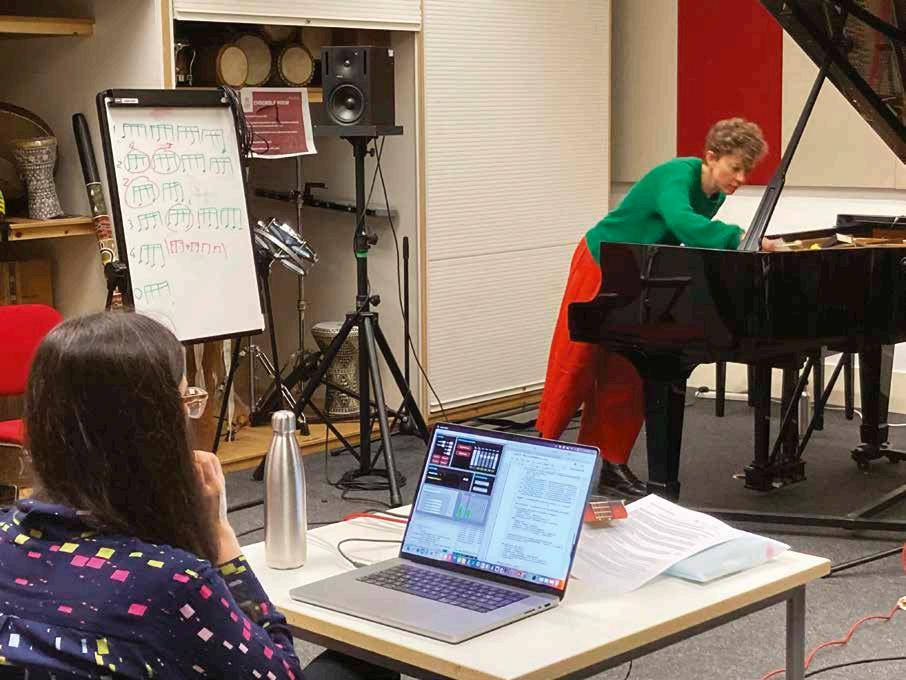
The MusAI research programme brings together researchers to look critically, through the lens of music, at the cultural implications of AI, which have been neglected in recent years, as Professor Georgina Born explains.
74 MEMRINESS
Prof Erika Covi is investigating the properties of memristive devices and looking at how they can be exploited to improve computing efficiency in the MEMRINESS project.
EDITORIAL
Managing Editor Richard Forsyth info@euresearcher.com
Deputy Editor Patrick Truss patrick@euresearcher.com
The EU Research team take a look at current events in the scientific news
The ERC expands its network of Ambassadors
Through lectures, lobbying, and more, European Research Council (ERC) ambassadors convey the importance of fundamental research.
The Association of ERC Grantees (AERG) has appointed five new Ambassadors for the ERC, bringing the network to 37 researchers across Europe.The new Ambassadors come from Bulgaria, Estonia, Hungary, Latvia and Lithuania and were selected following a call for expressions of interest launched in early February.
The Ambassadors for the ERC initiative was created by the AERG and the European Research Council (ERC) in April 2025 to connect ERC grantees with national research and policy communities, and to raise awareness of ERC funding opportunities. Now entering its second year, the network brings together researchers who promote the value of frontier research at national level and engage with policymakers, media, local research communities and the wider public.
Furthermore, as the network evolves, two founding Ambassadors from Portugal and the Netherlands have concluded their mandates at the end of the initiative’s inaugural year. They are succeeded by newly appointed Ambassadors from the same countries, who will continue to promote the value of frontier research and engage with national research and policy communities across Europe.
Maria Leptin, President of the ERC, said ‘I am delighted to see the Ambassadors for the ERC network grow, bringing in new voices to advocate for frontier research across Europe. I look forward to engaging with them. We welcome this support from the Association of ERC grantees reinforcing the message that sustained investment in curiosity-driven research is a must for Europe’s future.’
Axel Cleeremans, President of the AERG, added ‘The second year of the Ambassadors for the ERC initiative confirms the enthusiasm and responsibility felt by ERC grantees to act as Ambassadors for science. We are particularly pleased to see the network grow geographically and to welcome new colleagues who will bring fresh perspectives and energy to the initiative.’
The newly appointed Ambassadors are:
• Ivan Minev for Bulgaria;
• Ülo Niinemets for Estonia;
• Judit Gervain for Hungary;
• Inta Mieriņa for Latvia;
• Urtė Neniškytė for Lithuania;
• Stefania Milan for the Netherlands;
• Joana Gonçalves-Sá for Portugal.
The mandate of the Ambassadors is for one year, with the possibility of renewal based on continued interest and availability of the ERC grantee.
To reinforce their activities, the Ambassadors work in collaboration with the ERC National Contact Points (NCPs), key national intermediaries who provide researchers with guidance and practical information on all aspects of the EU Horizon Europe framework programme. The ERC and the AERG plan to continue developing the network in the coming years.
https://aerg.eu/
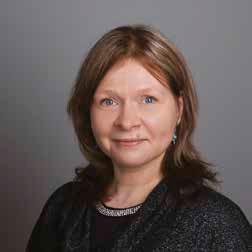
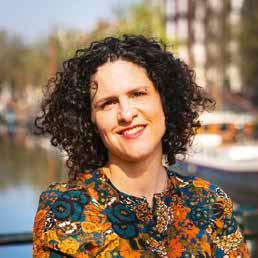
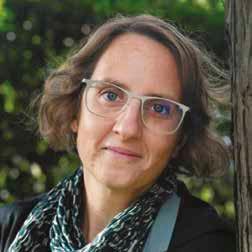
Ivan Minev for Bulgaria Ülo Niinemets for Estonia Judit Gervain for Hungary
Inta Mieriņa for Latvia
Urtė Neniškytė for Lithuania
Stefania Milan for the Netherlands Joana Gonçalves-Sá for Portugal
Ukraine commemorates four years of war
European leaders express unwavering support for Ukraine as Trump’s US dithers.
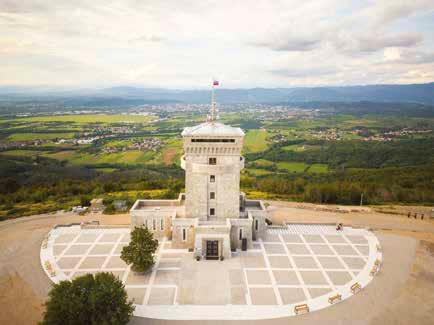
European leaders gathered in Kyiv on Tuesday February 24th to mark four years since Russia’s full-scale invasion, but the Trump administration sent no senior officials, reflecting the more equidistant US stance as its efforts to bring the war to an end have faltered. The presidents of the European Council and the European Commission, António Costa and Ursula von der Leyen, arrived by train early on Tuesday accompanied by eight EU prime ministers and presidents and several other senior officials to mark the day and pay respect to the tens of thousands of people killed in the war.
In a video address, President Volodymyr Zelenskyy reflected on the anniversary with a mix of sadness and pride. “We have defended our independence, we have not lost our statehood,” he said from inside the wartime bunker set up in February 2022 as Russian forces rolled into Ukraine. “Ukraine exists not just on the map. Our capital stands. “Putin has not achieved his goals,” he added. “He has not broken Ukrainians. He has not won this war.” Dmitry Peskov, spokesperson for Russian President Vladimir Putin, told reporters the war had “turned into a much largerscale confrontation between Russia and western countries that still aim to destroy our country,” according to Interfax. Peskov admitted that Russia had not yet achieved all of its goals in the war and said the fighting would continue. Peskov said Russia was willing to end the war peacefully but would only do so if Ukraine gave in to Putin’s maximalist demands. Zelenskyy and his wife Olena Zelenska, as well as other top Ukrainian officials, were set to meet European leaders to further co-ordinate efforts to bring Russia’s invasion to an end.
The Ukrainian president’s office said the visiting leaders would also tour an energy facility destroyed by the Russian missile and drone strikes in recent weeks that have brought Kyiv to the brink of catastrophe during the harshest winter in more than a decade. EU leaders arrived in Kyiv mostly empty-handed after Hungary vetoed a €90bn loan as well as fresh sanctions against Russia in a deepening conflict with Ukraine, which it accused of blocking Russian pipeline oil shipments. Hungarian Prime Minister Viktor Orbán posted a video message on Tuesday saying: “Do not count on us — we will not give money, we will not give soldiers, we will not go to war.” Orbán, who is facing contested elections in April, has made Ukraine the central element of his campaign. Orbán “previously refused to allow weapons to transit through his country,” Zelenskyy stated. “You were playing along with Putin, we set that aside. Now you are blocking €90bn, money we need for weapons, for survival. We need this money to survive, and you block it. How are we supposed to treat you?”
Several rounds of peace negotiations including three rounds of trilateral talks between American, Ukrainian and Russian officials have so far failed to achieve any significant breakthrough. Putin has stuck to his maximalist position, demanding more territory than its troops have been able to capture by force, while Zelenskyy has insisted that no land can simply be surrendered. Zelenskyy said that, to his frustration, the US was pursuing a strategy of pressuring “both sides” and positioning itself “in the middle” in an effort to broker a settlement. “I place my hope in President Trump — in him and in his country — that they will put pressure on Russia and stop Putin,” he added. “Ukraine needs a ceasefire — yesterday, today, tomorrow. “We don’t need a pause,” he said. “We need the end of the
war.” The Ukrainian president has said Washington is pressing to bring the war to an end by summer so that the White House and Republicans can focus on midterm elections. The US embassy in Kyiv declined to comment about the absence of any senior Trump administration officials on Tuesday.
Russia’s invasion has now lasted longer than the Soviet Union’s involvement in the second world war against Nazi Germany — and it has come at tremendous human cost. A report last month from the Centre for Strategic and International Studies estimated that total casualties on both sides could reach 2mn by spring, with Russia suffering the highest troop losses of any major power in a conflict since the second world war.
Speaking from Brussels, Mark Rutte, the secretary-general of Nato, said that “it is imperative that Ukraine continues to get the military, financial and humanitarian aid it needs to enable Ukraine to defend itself against Russian terror from the skies and to hold the front lines”. “A promise of help does not end a war,” he said, calling on Kyiv’s western partners to pledge more support for the war-torn nation.
“Ukraine needs ammunition today and every day until the bloodshed stops.” As part of the ongoing effort to force the Russian leader to end his war, the British government on Tuesday announced its biggest sanctions package against Russia since the start of the war. It targeted Russian energy revenues, including oil exports and key suppliers of military equipment fuelling war efforts. Russian oil revenues are currently at their lowest since 2020, after the UK and its international partners ratcheted up sanctions pressure on Moscow.
French researchers call on Europe to unite around competitiveness
A united European front: The Paris-Saclay Call appeals for better alignment between national and European strategies.
Prominent voices in France’s research community have urged European policymakers to stop thinking about fair national returns on EU investments, and to focus instead on building the critical mass needed to compete with the US and China in strategic fields.
The Paris-Saclay Call “for a sovereign, free and competitive Europe through research and innovation” was launched at the Paris-Saclay Summit on February 19, and urges decision-makers to “make research a fullyfledged European political project.” The call has been signed by universities and alliances in France and across Europe, including France Universités, Denmark’s Aarhus University, and Wageningen University and Research in the Netherlands. It also has the support of companies and a long list of research organisations such as France’s CNRS, Inria, Institut Pasteur, and the European Institute for Energy Research in Germany. “Major scientific and technological advances are first of all the result of cooperation, of the circulation of talent, on shared infrastructures, and in this regard the right level is the European level,” said Sylvie Retailleau, former French research minister, as she presented the text at the summit.
Research and innovation “can no longer be thought of simply as a sum of national efforts,” Retailleau said. “It must be conceived of as a collective investment based on the sharing of risks, expertise and infrastructures, and on a strong link between public financing and private investment at European level.” The initiators of the appeal, addressed to national decision-makers and EU institutions, hope to contribute to ongoing discussions on the next iteration of Horizon Europe, which will run from 2028. The EU’s flagship research fund plays a “central role” in national and European research systems, Retailleau said.
The text is structured around five priorities. The first is to focus on European scale, which it says is “the precondition for effective research and innovation.” The second recommendation is to preserve and promote academic freedom. The third priority is to strengthen the continuum from fundamental research to innovation and industrialisation, including through public-private partnerships and greater alignment between the different pillars in Horizon Europe. The fourth area is related to mastering critical
technologies in energy, health, agriculture and food, digital technologies, AI, biotechnologies, quantum, advanced materials, space and defence. The signatories call for shared research and computing infrastructures, multiannual technology roadmaps and better links between research, regulation and industrialisation.
The final priority is to align national and European strategies, including by better supporting university alliances and cooperation between national research organisations. The idea is to publish a follow-up text at a later stage with more practical propositions on each of the key themes, Retailleau said.
France’s current research minister, Philippe Baptiste, welcomed the initiative. European sovereignty relies on key technologies such as energy, AI and quantum, but no European country is able to master all of them on its own, he said in a recorded message to the summit. “European scale is essential to reach critical mass and to be at the level of the two other great powers.” EU countries must go further by strengthening European collaboration, and by “deepening the European research and training area,” Baptiste added.
The call has been signed companies including EDF, Danone, Sanofi and STMicroelectronics, which say they recognise the value of European funding. By pooling resources at European level, it’s possible to take risks on very innovative technologies, said Yves Desbazeille, international director at EDF. With the proposed €409 billion for the new European Competitiveness Fund and €175 billion for the next iteration of Horizon Europe, “we can work, try new technologies, get things wrong,” he said. “The funding is sufficiently large to do that. At the level of a country like France, we wouldn’t be able to.”
For Valérie Pécresse, president of the Île-de-France region, which includes Paris-Saclay, this is a unique opportunity. “Donald Trump is our best ambassador,” she said. “We have lots of researchers who are American or work in the US who want to leave, either because their research budget was cut, or there is another scenario, those who don’t want their research to benefit the United States of Donald Trump.”
New branch of oncology offers hope for hard-to-treat brain tumours
Neuro-oncologist Michelle Monje is pursuing a cure for a deadly paediatric brain cancer –and reshaping our understanding of how cancer and brain development intersect.
Cancer cells hijack normal biological processes, allowing them to multiply. For example, tumours spur construction of new blood vessels, building themselves “highways” to supply nutrients. Researchers have known about cancer’s blood vessel infiltration for decades, but it was only in the past few years that Stanford Medicine scientists and their colleagues discovered that tumours don’t just tap the body’s highway system; they can also infiltrate and exploit its “telecommunications.”
To put it in physiologic terms, tumours don’t just grow blood vessels; they also wire themselves into the nervous system. Certain brain cancers form working electrical connections with nearby nerves, then use the nerves’ electrical signals for their own purposes, the research has shown. The latest findings, published Nov. 1 in Nature, demonstrate that these tumours can even hijack the biological machinery of brain plasticity -which enables learning -- to drive their own growth.
The discoveries have opened a novel field of medicine called cancer neuroscience. It offers new opportunities to target some of the deadliest forms of cancer, including brain tumours that are almost always lethal. Scientists are especially intrigued by the cancer treatment potential of FDA-approved drugs developed for other neurological disorders, such as epilepsy. It turns out that several such medications interrupt neural signals now understood to fuel certain cancers. “Since 2015, when we first published that neuronal activity actually drives the growth of cancer in multiple brain tumour types, there has been a very exciting explosion of studies on these interactions,” said Michelle Monje, MD, PhD, a professor of neurology and neurological sciences and senior author of the new Nature study, whose team’s discoveries form the foundation of cancer neuroscience. “This is clearly a major set of interactions crucial to tumour biology that we had missed.”
Understanding these unsettling interactions between tumours and the healthy nervous system presents new options for cancer treatment. In the Nature study, Taylor, Monje and their team showed that medications aimed at the BDNF receptor, which were developed for other forms of cancer that have mutations affecting the receptor, work surprisingly well at slowing the growth of Diffuse Intrinsic Pontine Glioma (DIPG) and other gliomas that do not typically have genetic alterations in that receptor.
Other drugs, including certain painkillers, anti-seizure medications and blood pressure medications also have potential as cancer fighters. A detailed understanding of how the tumours tap nerve signals to grow provides a huge leg up in cancer treatment research, as scientists can match what’s in the “medicine cabinet” of FDA-approved neuroactive drugs with their new knowledge of how cancers operate.
Stopping the worst gliomas, including DIPG, will require a mixture of tactics, from cancer neuroscience and from other oncology specialties, Monje said. Perhaps doctors can start treatment with neurological medications that slow the tumours’ growth, then give immunotherapies -- such as specially engineered immune cells called CAR-T cells, which her team is also studying as a treatment for DIPG -- as a second line of attack. Such a strategy might give immunotherapy treatments enough of a head start to enable them to outpace the rapidly growing tumours. Monje’s team also plans to learn more about how electrical currents prompt tumour growth. “As we uncover specific details of those voltage-sensitive mechanisms, that will open up a whole additional realm of potential therapeutic targets,” she said.
For Monje, who was inspired to study DIPG more than 20 years ago, at a time when the biology of the disease was completely unknown, the new options are heartening. The old way of trying to treat the deadly tumour -- a sort of throw-the-spaghetti-at-the-wall approach, using drugs not fitted to how the tumour grows -- are over, she said. “This is a connected tumour; it’s connecting to the entire nervous system. We have to disconnect it,” she said. “We understand enough about this disease now to have lots of really rational ways to try to fight it.”
The “Impossible” LED discovery
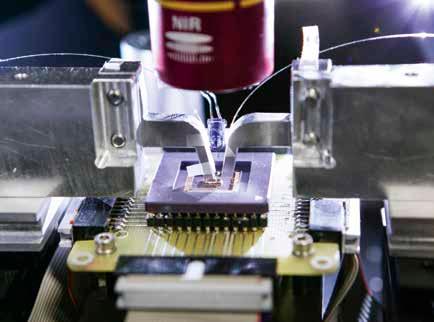
Cambridge team develop a technique to electrically power previously insulating nanoparticles called lanthanide-doped nanoparticles (LnNPs).
LEDs are everything, from some of the largest TV screens you can buy, to the types of bulbs that you use in your home. But not all LED materials are the same. Some are OLEDs or QLEDs, while others are a bit more nuanced. Some don’t even allow you to move electricity through them. It’s this later group that has attracted some intriguing attention from scientists in recent years, and now, a group of researchers working with the Cavendish Laboratory at the University of Cambridge have made an intriguing discovery that could change how we think about LEDs altogether. According to the study, which was published in the journal Nature, scientists have managed to move electricity through tiny insulating particles that aren’t typically capable of conducting electricity. These particles are made up of various elements, including some rare-earth elements such as neodymium and ytterbium, and the breakthrough here could potentially open new doors for LED technology as a whole.
Researchers note that the particles in question, called insulating lanthanide nanoparticles (LnNPs) have been known to shine very brightly when they are placed under light. However, scientists have always struggled to get the particles to actually conduct electricity. Previous attempts to do just that have shown that charges often can’t reach the lanthanide ions inside without extreme heat or voltage.
To bypass this issue, those involved in this new study began looking for a way to hybridize the particles instead. They used 9-ACA organic dye
molecules with the LnNPs, letting them replace the surface insulators on the particles, thus allowing them to be charged using a technique known as triplet energy transfer.
According to the study, the biggest issue that held the LnNPs from being electrically excited is their energy gap. In the past, this limited these particles to only being used in deep-tissue imaging that didn’t rely on electric energy. By replacing the surface insulators, though, the researchers managed to bypass this core problem, thus opening the door to use these particles in more expanded LED operations.
And when the changes were made, the scientists were then able to inject electrons into the organic layer, thus forming what they call “excitons.” From here, the energy is transferred to the lanthanide ions, which allows them to emit an almost completely pure near-infrared (NIR) light, even going so far as to out perform most other organic NIR LEDs in both narrowness and efficiency.
The researchers say that these new LnLEDs open a lot of possibilities for hybrid optoelectronics in biomedical tools. This could allow for better non-bleaching deep imaging applications. Whether this advancement is as huge as previous research that aimed to make X-rays safer or not still remains to be seen, but it does open a lot of new possibilities. The researchers say they still want to improve on the brightness offered by the new hybrid LEDs, but the current method should be easily scalable to other insulators, allowing for even more experimentation.
Tsunami of AI Slop is flooding Artificial intelligence research
Experts warn that artificial intelligence models are making up research papers, journals and archives.
Artificial intelligence researchers are grappling with a problem core to their field: how to stop so-called “AI slop” from damaging confidence in the industry’s scientific work. AI conferences have rushed to restrict the use of large language models for writing and reviewing papers in recent months after being flooded with a wave of poor AI-written content.
Scientists have warned that the surge of low-quality AI-generated material risks eroding trust and the integrity of the sector’s research by introducing false claims and made-up content. “There is a little bit of irony to the fact that there’s so much enthusiasm for AI shaping other fields when, in reality, our field has gone through this chaotic experience because of the widespread use of AI,” said Inioluwa Deborah Raji, an AI researcher at the University of California, Berkeley. Recent studies have highlighted the prevalence of the technology in AI research. In August, a study by Stanford University found that up to 22 per cent of computer science papers contained LLM usage.
AI models not only point some users to false sources but also cause problems for researchers and librarians, who end up wasting their time looking for requested non-existent records, says Library of Virginia chief of researcher engagement Sarah Falls. Her library estimates that 15 percent of emailed reference questions it receives are now ChatGPTgenerated, and some include hallucinated citations for both published
works and unique primary source documents. “For our staff, it is much harder to prove that a unique record doesn’t exist,” she says.
This is not the first time AI has been caught making up false citations. The ICRC recommends that people consult online catalogues or references in existing published scholarly works to find references to real studies instead of assuming anything cited by an AI is real, no matter how authoritative it might sound. The Library of Virginia will be asking researchers to vet their sources for these requests, Falls says, and to disclose if a source originated from AI. “We’ll likely also be letting our users know that we must limit how much time we spend verifying information.”
Most importantly for science, AI is challenging the use of complex highquality language as the indicator of scholarly merit. Quick screening and evaluation of articles based on language quality is increasingly unreliable and better methods are urgently needed. As complex language is increasingly used to cover up weak scholarly contributions, critical and in-depth evaluations of study methodologies and contributions during peer review are essential.
One approach is to “fight fire with fire” and use AI review tools, such as the one recently published by Andrew Ng at Stanford. Given the evergrowing number of manuscript submissions and already high workload of academic journal editors, such approaches might be the only viable option.
Reinventing green hydrogen — cleaner, cheaper, and free of “forever chemicals”
European researchers are developing a Polyfluoroalkyl substances (PFAS) - free electrolysis system that slashes the use of rare metals like iridium and dramatically cuts costs.
Green hydrogen is considered an indispensable component of the global energy transition, but its production still faces massive economic and environmental hurdles. For example, the promising PEM (proton exchange membrane) electrolysis process, which is particularly suitable for producing green hydrogen when the supply of electricity from wind power and photovoltaic systems fluctuates, is still very expensive compared to production using fossil fuels.
Sustainability also needs to be scrutinised here. This is because it relies on environmentally hazardous substances such as forever chemicals (PFAS), which the EU wants to ban soon. These disadvantages are to be eliminated in the EU project SUPREME. Over the next three years, an international team led by the University of Southern Denmark with the participation of Graz University of Technology (TU Graz) will be conducting research on a PFAS-free and highly efficient electrolysis technology that also requires far fewer critical raw materials such as iridium and is therefore much more cost-effective.
“Hydrogen is used as a raw material in very large quantities, and this will continue to increase in the future. These include the production of ammonia, methanol production and the steel industry,” says Merit Bodner from the Institute of Chemical Engineering and Environmental Technology at TU Graz. “If we succeed in avoiding the use of harmful substances in the production of green hydrogen and we can also bring it to a similar price level as fossil hydrogen in economic terms, we will have taken an important step towards the green transition. This also makes it more attractive for other applications, such as storing surplus energy from renewables.”
The role of TU Graz is of central importance in this project. Merit Bodner’s team is evaluating which PFAS-free alternative materials are commercially available and is analysing how they compare to the current industry standards. Particular attention is paid to whether the more sustainable materials are similarly durable and efficient in continuous industrial operation to serve as a fully-fledged replacement. The use of these alternatives for the synthesis of membranes is being researched by the Turkish Science and Technology Council TÜBITAK, which is developing the next generation of microporous PFAS-free membranes.
The University of Southern Denmark and the British metal and catalyst company Ceimig are conducting research on how the use of the expensive platinum-group metal iridium can be reduced by up to 75 per cent. In addition, this team would like to develop processes with which around 90 per cent of the iridium still required can be recycled. The German research institute Fraunhofer ISE is producing the membrane electrode units, while the Norwegian hydrogen company Element One Energy AS (EoneE) is developing a new type of rotating electrolyser.
This research was funded by CETPartnership, the Clean Energy Transition Partnership under the 2024 joint call for research proposals, co-funded by the European Commission (GA N°101069750).
Using brain organoids to uncover the role of sialic acids
Brain organoids provide a means for researchers to study different mechanisms in the developing brain, and to investigate how they function at the molecular level. We spoke to Professor Martin Røssel Larsen about how he is using organoids to investigate the role of sialic acids in early brain development, and the long-term consequences of any malformations.
A type of negatively charged monosaccharide, sialic acids play an important role in intermolecular and intercellular interactions, and in the development of neurons. For example, the presence of a post-translational modification (PTM) called polysialic acid (PSA) on neural cell adhesion molecules (NCAM) prevents neurons from interacting with each other. “These cells are therefore effectively pushed away from each other by the negative charge of PSA, and then free to migrate. This is very important in early brain development, where cells migrate to organise and generate axons, dendrites, and other cell types,” explains Martin Røssel Larsen, Professor of Molecular Biology at the University of Southern Denmark (SDU), where he leads a research group. As Principal Investigator of several research projects based at SDU, Professor Røssel Larsen aims to build a deeper picture of the role of sialic acids in early brain development, work in which he is also considering the brains of other species.
“The biggest difference between humans and chimpanzees is sialic acid,” he continues. “There is an enzyme that takes human sialic acid and puts on an OH group, then you get the sialic acid we find in monkeys.”
Brain organoids
As humans we all have the gene that leads to the addition of an OH group, although it doesn’t function due to a mutation. The project team is working to correct that specific gene in stem cells, then the plan is to investigate whether the introduction of monkey-type sialic acid leads to changes in the human brain, using brain organoids grown from induced pluripotent stem cells. “These organoids can be thought of as minibrains reflecting early brain development. They represent just one part of the brain, the cortical layer,” outlines Professor Røssel Larsen. Researchers are using sophisticated imaging techniques in this work. “If we change the sialic acid, do we get a different morphology of our mini-brains? Can we correlate that to the size of the cortical layers? It is believed that the size of the cortex is related to the learning and memory differences that we see between monkeys
and humans,” continues Professor Røssel Larsen. “To study this specific molecular change between human and chimpanzees we aim at introducing the mutation of this gene in chimpanzee stem cells, so it doesn’t function. Then we make organoids and look at whether that mutation leads to changes in the size of the cortex and further change in proteins and their PTMs, especially sialylation.”
Professor Røssel Larsen. A method has now been developed to isolate nerve terminals from brain organoids, meaning they can now be taken into a human system, which opens up new avenues of investigation, says Professor Røssel Larsen. “We can manipulate stem cells, make brain organoids from these, and then see if there is a change in the nerve terminals,” he outlines. “We’re
“If we change the sialic acid, do we get a different morphology of our mini-brains? Can we correlate that to the size of cortex? Many people believe that the size of cortex is related to the learning and memory differences that we see between monkeys and humans.”
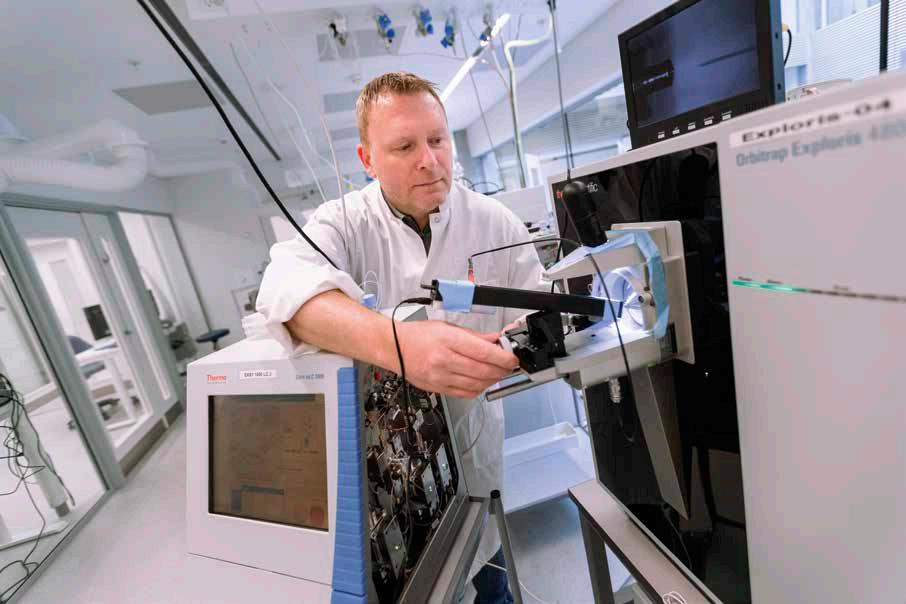
Researchers in the project are using imaging techniques as well as mass spectrometry to look at changes in sialic acid in the cortical layers, then relate it back to the function of specific proteins.
A further strand of research involves working with nerve terminals – these are small, active compartments which are sometimes called synaptosomes. “We can stimulate these nerve terminals, and they will release neurotransmitter, then they will take up a vesicle again and perform synaptic transmission repeatedly,” explains
looking at whether we can see changes if we manipulate enzymes that add sialic acidssialyltransferases. How is sialic acid used in this very sophisticated brain system? Is it a way of fine-tuning interactions? It is likely that protein-protein interaction is heavily regulated by sialic acid on cell surfaces.”
The hope is that this research will uncover morphological changes in the brain that can be related to changes in sialic acid, while Professor Røssel Larsen also hopes to identify the targets of sialic transferases in the brain. By knocking down for example the 2,6 sialyltransferases
- another distinct difference in the sialic acid biology between human and chimpanzeesProfessor Røssel Larsen and his team hope to see exactly what sites and what proteins it changes. “We can then find substrates for these sialyltransferases, and correlate this with any morphological changes in the brain,” he explains. Sialic acids are also thought to play a major role in immunity and in the progression of certain conditions, including certain forms of cancer and schizophrenia, another topic that Professor Røssel Larsen is addressing in his research. “We think that if we want to look at diseases like schizophrenia, we need to move away from only focusing on the genes to look at what is present in the brain at the time with respect to the building blocks that do the work in the cell, the proteins,” he outlines. “In our interdisciplinary DEVELOPNOID project we have taken plasma from patients with schizophrenia and controls. We then re-programmed the blood cells from patients to stem cells, and we are now growing brain organoids to investigate underlying molecular mechanisms leading to schizophrenia using ‘Omics technologies and imaging.”
Role of sialic acids
This research could lead to new insights into the underlying mechanisms behind schizophrenia and other diseases, and ultimately the development of new, more effective treatments. The project’s research at this stage is largely fundamental in nature however, with the team focused primarily on uncovering the role of sialic acids in the brain. “If we can identify the role of sialic
acids in the brain it would be a very big achievement, it would be really exciting,” says Professor Røssel Larsen. This is still a relatively neglected area of research, and Professor Røssel Larsen hopes that the project’s work will stimulate further interest and development. “We hope there will be a renewed focus on PTMs like glycosylation, which have been overlooked for a long time. Not many people work on glycosylation in Denmark, and not a lot is known about its true function, partly because the technology is not there yet,” he explains. “We want to contribute to continued development, and to use brain organoids to investigate other diseases beyond schizophrenia. Brain organoids are a very effective model system, they cover more ground than 2-d systems.”
The brain is comprised a lot of different paths that communicate with each other, yet how this communication occurs is not well understood. More sophisticated brain organoid models could help researchers gain a fuller picture. “It is possible now to make different brain organoids from several parts of the brain, then put them together and let them grow together. Then you will see that the neurons start migrating in and out of the different organoids,” says Professor Røssel Larsen. A lot of attention in the research group will be focused in future on developing methods to characterise PTMs, in particular glycosylation, which is a topic of deep interest to Professor Røssel Larsen. “It’s very difficult to measure and analyse changes in the glycostructure, but it’s also very fascinating,” he stresses.
THE ROLE OF SIALIC ACIDS IN EARLY BRAIN DEVELOPMENT
Interdisciplinary project DEVELOPNOID
Project Objectives
Protein glycosylation is important for communication between cells and cell migration, mechanisms essential for development of the brain. A big difference between us and chimpanzees is the sugar molecule, sialic acids (SA), on cell surface proteins. SA is involved in neural development, and in the present project we will investigate the role of SAs in early brain development using brain organoids, multi-omics and imaging.
Project Funding
The role of sialic acids in early brain development project is funded by The Independent Research Fund Denmark.
Project Partners
• Prof. Kristine Freude, Department for Veterinary and Animal Science, University of Copenhagen, DK.
• Dr. Madeline A. Lancaster, MRC Laboratory of Molecular Biology, Cambridge Biomedical Campus, Cambridge, UK.
• Prof. Jonathan Brewer, Department of Biochemistry and Molecular Biology, University of Southern Denmark, DK.
Contact Details
Project Coordinator,
Professor Martin Røssel Larsen
Department of Biochemistry and Molecular Biology
University of Southern Denmark (SDU) Campusvej 55; Odense M - DK-5230
Martin Røssel Larsen is Professor of Molecular Biology at the University of Southern Denmark, where he leads a research group. He is internationally recognized for his work in developing methods for characterising post-translational modifications (PTMs) of proteins and in bridging biological mass spectrometry and biomedical research.
Prof. Martin Røssel Larsen
A peek inside the primate brain
There are typically several folds on the surface of the human brain, which increases its surface area and supports higher cognitive abilities. While most primate species have some degree of folding in the brain there are some exceptions, now Dr Michael Heide and his colleagues in the Primazinc project aim to shed new light on the underlying reasons why.
The human brain typically has many folds on its surface, which increases its surface area and means there is more space for neurons, supporting higher cognitive abilities. Most primate species have some degree of folding in the brain, but there are some exceptions. “The marmoset for example has a fairly smooth brain, it’s less complex than other primates,” explains Dr Michael Heide, a Junior Research Group Leader at the German Primate Center in Gőttingen. As part of his role in the ERCbacked Primazinc project, Dr Heide is investigating the underlying factors behind this variability. “We use brain tissue samples – from marmosets and from rhesus macaques – to essentially find out which genes are active in the neural progenitor cells (NPCs) of the brain,” he outlines. “We basically look for genes that control the behaviour of these cells, for example the rate at which they divide, and whether they produce different kinds of cells. We aim to effectively trace their lineage.”
Zinc finger transcription factors
This research is focused on a group of proteins called zinc finger transcription factors (ZF-TFs), which are strongly expressed in the primate lineage. The ZFTFs are believed to have formed part of a defence system against certain viruses, before they later on became involved in regulating gene expression. “There are for
example some viruses that exist within our genome, that basically lead to instability of the genome. The zinc finger transcription factors originally inhibited the activity of these internal viruses,” says Dr Heide. Over time however the ZF-TFs developed new features and started to play a wider role, now Dr Heide aims to dig deeper. “We think they could play an important role in brain development by regulating different genes and generating a network,” he continues. “We are now looking to functionally test these ZF-TFs, building on earlier research, which led to a list of primate-specific genes that are known to be enriched in the progenitor cells.”
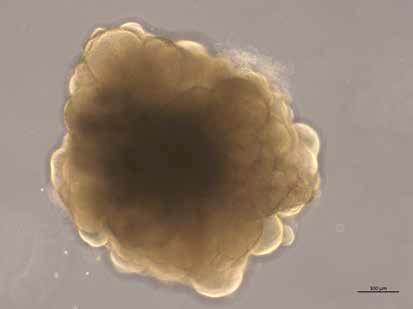
The brain tissue samples are first used to identify candidate genes, then Dr Heide and his team test these genes in brain organoids, 3-D tissue structures artificially grown in the laboratory. These organoids provide an effective model of the developing brain, allowing Dr Heide to then monitor how genes influence neural progenitor cells and
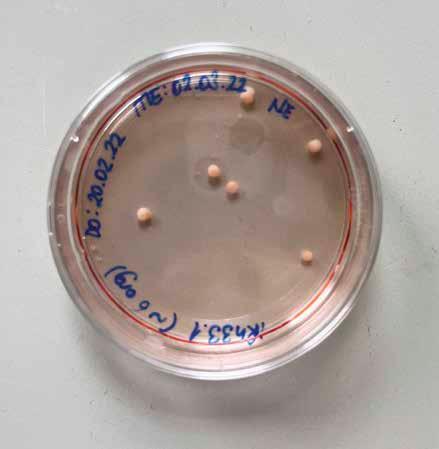
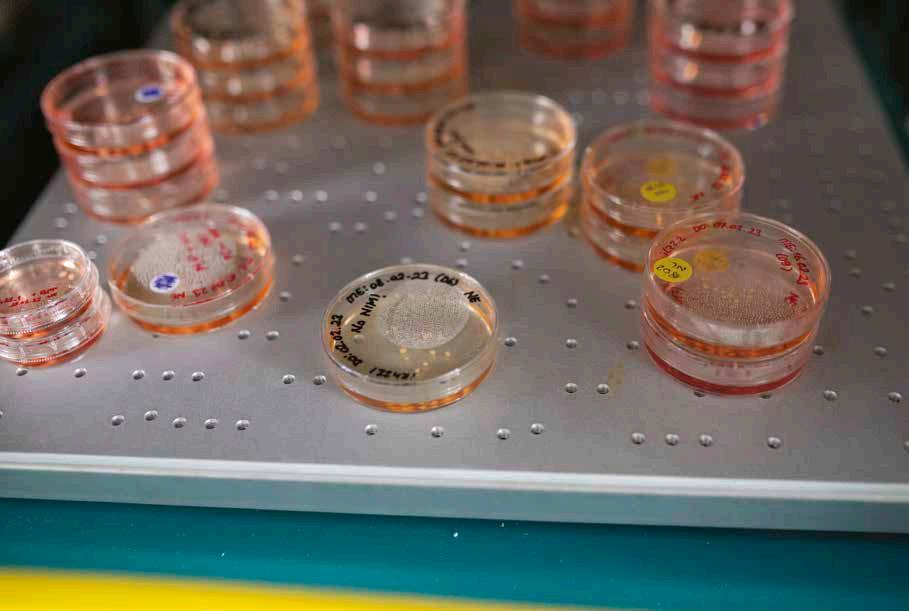
Rhesus macaque brain organoids in culture medium in a cell culture dish. Photo: Nesil Esiyok
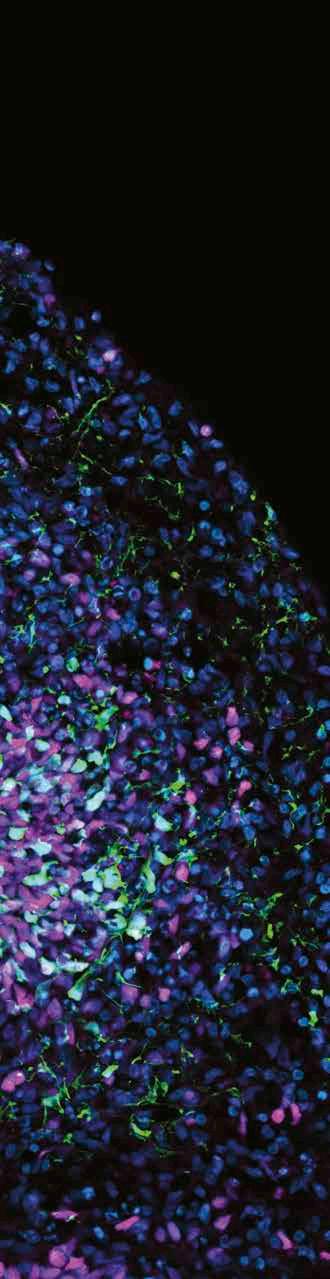
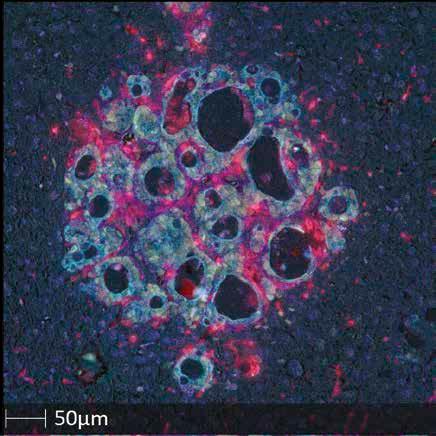
Section through part of an electroporated chimpanzee brain organoid. Green: electroporated cells; magenta: neural progenitor cells; blue: cell nuclei. Photo: Nesil Esiyok
neural
the development of the brain. “We look to see what the candidate genes do in these organoids,” he says. Researchers are using an unguided organoid protocol in this work, which differs from guided protocols. “With unguided organoids, we essentially don’t have any signalling molecules or small molecules to direct brain organoids in a particular direction. We want to draw comparisons between different primate species, so we want them to use their own, endogenous programme, instead of directing them using external factors,” explains Dr Heide. “The organoids that we are using mainly form a cortical identity.”
says the project’s research could shed new light in this area. “Our research can maybe help in identifying new risk factors, or new candidates for genetic screenings,” he says. It may be possible in future to screen
Researchers are now using these organoids to gain deeper insights into the role of the C2 H 2 family of ZF-TFs in the development and evolution of the neocortex in different species. A key first step was to modify the existing unguided protocol, so that it could be used across different primate species, enabling easier cross-comparisons. “Our unguided protocol was initially just for humans, but now we can use it for different primate species. We have a unified protocol which we can use not only for humans, but also for chimpanzees, rhesus macaques and marmosets,” outlines Dr Heide. A method called electroporation, which involves applying an electrical pulse to a cell and then monitoring the response, is being used to study the influence of specific genes. “In the Primazinc project we electroporated chimpanzee organoids and introduced the ARHGAP11B gene, then we checked if this affected the activity of the progenitor cells and neuronal output,” says Dr Heide.
This particular gene plays an important role in neocortex folding in humans, and it is thought that defects in ARHGAP11B may also affect brain development. This may lead to a smaller brain or a less folded brain, characteristics which are associated with conditions called microcephaly and lissencephaly respectively, and Dr Heide
marmoset could be useful for other researchers,” continues Dr Heide. “The marmoset brain has just a single fold, it’s much less complex than the human brain, which is a major topic of interest for us.”
“We use brain tissue samples – from marmosets and from rhesus macaques – to essentially find out which genes are active in the progenitor cells of the brain. We basically look for genes that control the behaviour of these cells.”
people for genetic mutations related to cortical malformations, for example, while the transcriptome datasets gathered in the project also hold wider importance. “Transcriptome datasets on the common
Brain and tissue organoids
Researchers are currently working to get access to new brain and tissue organoids, which would be highly valuable in this respect, and potentially help the project team gain
Cell culture dishes containing medium with brain organoids on an orbital shaker in the incubator. Photo: Karin Tilch
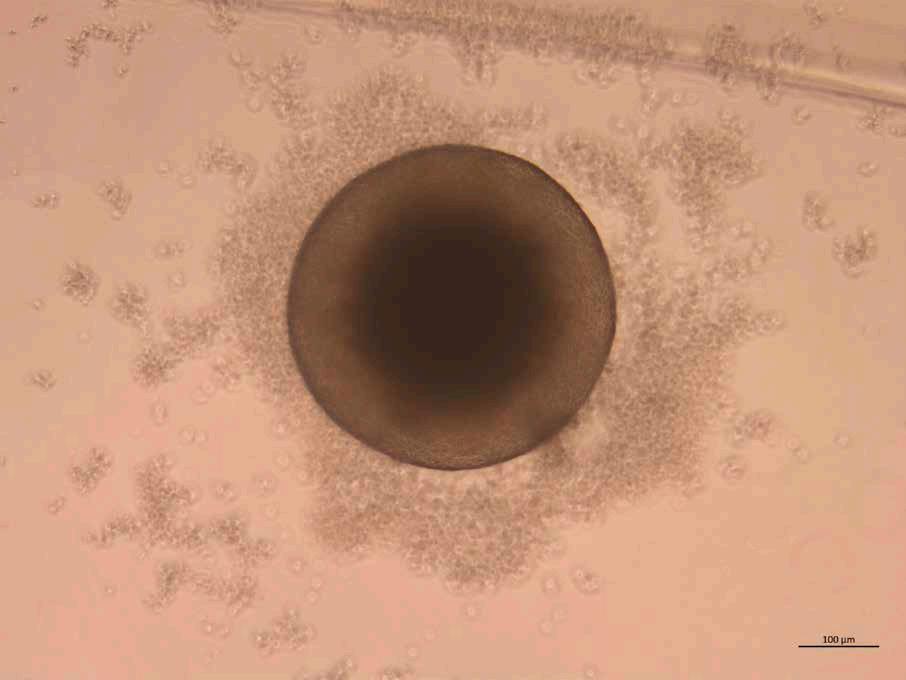
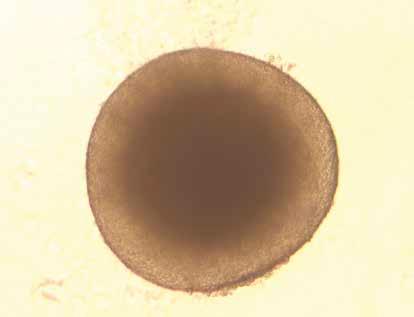
“Early/Young” human brain organoid, 7 days in culture. Photo: Lidiia Tynianskaia
Microinjected
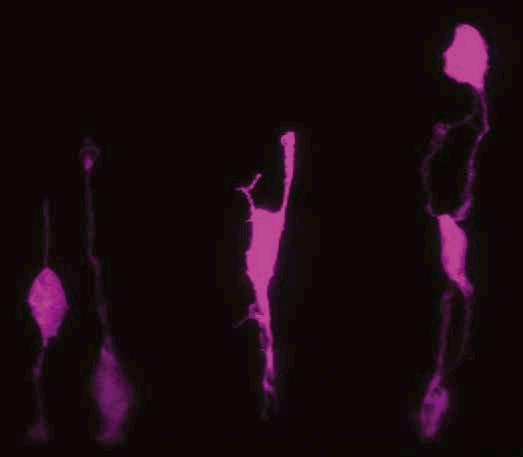
progenitor cells. Note the differences in morphology and position. Photo: Michael Heide
PRIMAZINC
Deciphering the role of C2H2 zinc finger transcription factors during primate neocortex development and evolution
Project Objectives
PRIMAZINC aims to identify genes preferentially expressed in neural progenitor cells and differentially regulated across human, rhesus macaque, and marmoset brains. The project will test how these genes influence progenitor activity and behavior, uncovering molecular mechanisms that shape developmental differences among primate species.
Project Funding
This project has received funding from the European Union’s Horizon Europe research and innovation programme under grant agreement No 101039421.
Contact Details
Project Coordinator,
Dr. Michael Heide
Junior Research Group Leader
Brain Development & Evolution
German Primate Center
Leibniz Institute for Primate Research Kellnerweg 4 37077 Göttingen
deeper insights. The aim is to identify which adaptations, on the progenitor level, lead to smaller brain sizes and reduced folding; Dr Heide says the overall picture in this area is highly complex. “There are several adaptations present that basically lead to lower neuronal output,” he outlines. The project team are working to unravel this puzzle and build a fuller picture of how C2 H2 ZF-TFs contribute to neocortex development. “We essentially hope to identify which of these transcription factors are key regulators of brain development and evolution, we want to understand how they influence brain morphology,” says Dr Heide. “We also now have these transcriptome datasets available, showing many differences between species, which opens up directions which we could study.”
The transcriptome datasets are very rich, and could provide a valuable resource to researchers in several other fields, so Dr Heide is keen to make them more widely available. At the same time Dr Heide plans to dig deeper into the transcriptome data, and gain fresh insights into the behaviour of progenitor cells. “We’ve seen that certain populations of progenitor cells divide more, and are more active, but we believe there might also be some other mechanisms acting on them,” he outlines.
“These mechanisms may for example control how well these cells divide, there might be a sort of error mechanism active. For example a single neural progenitor cell produces many neurons in human – so there must be factors that control them.”
Brain Development & Evolution
The team at the German Primate Center are pursuing many different avenues of investigation, with the aim of gaining deeper insights into primate biology, work which holds wider relevance to our understanding of disease.
“Early/Young” rhesus macaque brain organoid, 5 days in culture.
Heide
Dr. Michael Heide leads a research group at the German Primate Center studying primate brain development and evolution. He earned his PhD at the University of Heidelberg. His team develops brain organoids from multiple primate species to investigate the roles of species-specific genes in neural development and their contribution to primate brain evolution.
Alongside his work in the Primazinc project, Dr Heide is also involved in several other strands of research, including the use of brain organoids to investigate the root causes of microcephaly, a developmental disorder that leads to a smaller brain.
An international research team have found that mutations in actin genes are a key factor in this respect. Actins, cytoskeletal proteins found in virtually every eukaryotic cell, play a crucial role in a wide variety of cellular processes.
These mutations in actin genes change the way that early progenitor cells divide, which then leads to a reduced number of those cells, and ultimately to a smaller brain. These processes occur at an early stage in development, yet researchers have been able to build a fuller picture.
The team used 3-dimensional brain organoids in this research, which provide an effective model of early brain development. Induced pluripotent stem cells were first generated from the skin cells of patients with Baraitser-Winter syndrome, many of whom have brain abnormalities.
This provided the basis for the 3-dimensional brain organoids with mutations in actin genes, which researchers were able to compare with normal controls. This led to some clear results, with researchers finding that the organoids with the mutation were about 25 percent smaller.
The team’s research contributes to a fuller understanding of how rare genetic disorders lead to complex brain malformations, and highlight the wider potential of brain organoids in biomedical research.
Dr. Michael
Photo: Nesil Esiyok
Human brain organoid, culture day 15.
Photo: Lidiia Tynianskaia
Probing the protection mechanisms of colorectal cancer
The microenvironment around a tumour acts as a protective layer and helps prevent immune cells from entering. The team behind the PLASTICAN project aim to characterise the cellular composition of the microenvironment around a tumour, and are looking at whether interfering with it could lead to improved treatment of colorectal cancer, as Professor Florian Greten explains.
Colorectal cancer is one of the most common forms of cancer amongst both men and women, particularly in developed countries. Late stage tumours continue to have a very poor prognosis due to the lack of convincing therapeutic options, while the growing number of people below the age of 50 that are being diagnosed with colorectal cancer is causing widespread concern. “It’s a worrying development,” says Professor Florian Greten, director of the GeorgSpeyer Haus Institute for Tumour Biology and Experimental Therapy in Frankfurt, where he leads a research group. As Principal Investigator of the ERC-backed PLASTICAN project, Professor Greten is investigating how colorectal cancer depends on the surrounding microenvironment. “The microenvironment is the host tissue, the non-mutated cells,” he explains. “A tumour cell is a malignant cell with mutations in the DNA profile, while the
Credit: Andreas Reeg, Georg-Speyer-Haus.
stroma around a tumour is just host tissue that is not mutated.”
Tumour microenvironment
The microenvironment around a tumour effectively protects it and supports its growth. Stromal cells or fibroblasts shield the tumour for example and prevent immune cells from entering, which then has significant wider effects. “When immune cells are unable to enter tumour cells, they cannot really eliminate them,” says Professor Greten. In the PLASTICAN project, Professor Greten and his colleagues are working to characterise the cellular composition of the tumour microenvironment, which could in future open up new possibilities in the treatment of late-stage colorectal cancer. “We’re looking at the role of different fibroblasts in the miroenvironment. It’s now known that a tumour can induce polarisation of various
forms of fibroblasts that have distinct features. We aim to characterise these fibroblasts in greater detail and to investigate whether interfering with them could then allow for better therapies,” he continues.
This research involves using organoids, tumour cells grown in 3-D cultures in a matrix composition, which then allows for 3-D growth of those cells. Those organoids are then re-transplanted into mice, where they form single tumours in the colon, an approach which has some significant advantages over other genetic models. “With other models you get mutation or activation of oncogenes in the entire intestine, and then there are many tumours, especially in the small intestine. We are really trying to look at individual, single tumours, just like in a patient, and this is a very effective, neat model to mimic this,” outlines Professor Greten. Researchers are also able to manipulate the organoids, insert distinct mutations using gene-editing tools like
CRISPR-Cas9, then monitor the progression of a tumour. “We can put the organoids back into an immune-competent mouse, with an intact immune system, then monitor the spontaneous growth,” continues Professor Greten.
The organoids typically spontaneously metastasise in the space of just a couple of weeks, with cancer cells spreading out beyond the site of the primary tumour. The project team are investigating the cells around this metastatic growth, focusing particularly on the liver, as Professor Greten explains. “We are trying to compare the composition of the microenvironment in the liver to the primary tumour, as we believe there are some slight differences,” he says. Comparing cells from the areas of metastatic growth to those from the primary tumour may lead to fresh insights in this respect, which could in future lead to improved treatment of colorectal cancer. “We want to see whether the same signalling pathways are in place or not, or if the tumour cells behave differently. If we can then identify structures and signalling pathways that we can interfere with, that could allow improved immune cell infiltration,” says Professor Greten.
A biobank has been established to bring together this information, while the project team have also established ex vivo coculture systems of these organoids, together with fibroblasts from the same patients. Researchers have been able to study the interaction between them, and Professor
Greten says this has led to some fresh insights. “There were certain differences in therapy response – depending on the molecular subtype of tumour – and that was markedly altered by the presence of the fibroblasts,” he outlines. Tumour cells respond differently to treatment with a particular compound if cancer associated fibroblasts (CAFs) are present, now with this co-culture system researchers can dig deeper. “Sometimes it’s not enough just to look at the tumour cells, you really have to study them in context. With this ex vivo co-culture system we can now specifically do this,” says Professor Greten. “We have also been able to do highthroughput drug screening.”
Therapeutic potential
This work holds wider importance in terms of the treatment of colorectal cancer and the goal of making tumours more sensitive to immunotherapy. The advent of immunotherapies like checkpoint inhibitors and CAR T-cell therapies over the last 10-15 years has greatly improved the treatment of many forms of cancer, yet these approaches are largely ineffective on colorectal cancer. “There’s only a sub-set of tumours that do respond to checkpoint inhibition, depending on the genetic profile. While a group of patients respond very positively, around 90 percent do not have this genetic profile, and therefore don’t really respond to checkpoint inhibitors,” explains Professor Greten. “We are trying to
Credit: Andreas Reeg, Georg-Speyer-Haus.
Credit: Andreas Reeg, Georg-Speyer-Haus.
find ways to increase the sensitivity of tumours to checkpoint inhibitors. We believe that interfering with the stromal compartments, or with other cells in the microenvironment, can lead to combinatorial treatments that in the end would allow checkpoint inhibitors to be more effective.”
The team have conducted two clinical trials so far, while further trials are planned in future to assess the effectiveness of different drugs, with the long-term aim of improving the treatment of colorectal cancer. While a lot of energy is devoted to developing entirely new drugs, Professor Greten and his colleagues are also looking into whether already available pharmacological compounds can be used to treat colorectal cancer. “We were able to use a compound that’s already been approved to treat patients with rheumatoid arthritis. This compound blocks IL-1 signalling and it’s been approved, so large numbers of patients have already received this and tolerated it very well,” he outlines. A re-purposing study has now been
findings have already been validated in an initial clinical trial, now Professor Greten is looking to take the next steps. “We are going for a phase-2 trial to validate these findings in a larger cohort,” he continues. If the results of this trial are again positive, and the findings are validated, then the drug could be applied in colorectal cancer treatment
“We want to see whether the same signalling pathways are in place or not, or if the tumour cells behave differently. If we can then identify structures and signalling pathways that we can interfere with, that could allow improved immune cell infiltration.”
conducted on this compound, looking at its potential in treating colorectal cancer, and the initial results are positive. “We’ve found that blocking IL-1 signalling would have a positive impact on the polarisation of the surrounding fibroblasts,” says Professor Greten.
This would weaken the surrounding microenvironment and leave tumours more sensitive to radiation therapy, enhancing the prospects of a successful outcome. These
Credit: Andreas Reeg, Georg-Speyer-Haus.
relatively quickly, as it is already available. The PLASTICAN team are currently working to initiate this phase-2 trial, while plans are in train to pursue further research following on from the conclusion of the project, building on the progress that has been achieved so far. “We’re thinking about how we can build on these results in a future project on the same topic, but more refined, with a narrower focus,” says Professor Greten.
PLASTICAN
Cell Plasticity in Metastatic Colorectal Cancer
Project Objectives
Colorectal cancer (CRC) is common and lethal at the metastatic stage, with under 10% five-year survival. Tumour and stromal cell plasticity, particularly of heterogeneous mesenchymal subsets, crucially influences progression. PLASTICAN investigates cancer–stroma interactions using hypothesis-driven studies and in vivo models to identify mechanisms driving metastasis and novel therapeutic targets.
Project Funding
Work in the laboratory of FRG is funded by institutional funds from the GeorgSpeyer-Haus, the LOEWE Center Frankfurt Cancer Institute (FCI) funded by the Hessen State Ministry for Higher Education, Research and the Arts, grants from the Deutsche Forschungsgemeinschaft, and Advanced Grant PLASTICAN-101021078.
Contact Details
Project Coordinator, Prof. Dr. Florian R. Greten
Georg-Speyer-Haus
Institute for Tumor Biology and Experimental Therapy
Florian Greten is Scientific Director of the Georg-Speyer Haus Institute for Tumour Biology and Experimental Therapy in Frankfurt. He is also Speaker of the LOEWE centre “Frankfurt Cancer Institute” and Speaker of the DFG-funded Transregio 417 “Cellular Communication in the Stroma of Colorectal Cancer From Pathophysiology to Clinical Translation”.
Credit: Kilian Kennel, Georg-Speyer-Haus.
Studying cells under pressure
Cell multiplication is typically constrained by physical boundaries leading to growth pressure increase, and there is a universal decay in proliferation rates as pressure increases. Dr Morgan Delarue is studying the common physical or biological response that leads to this decrease in cell proliferation, work which holds wider relevance to our understanding of cancer.
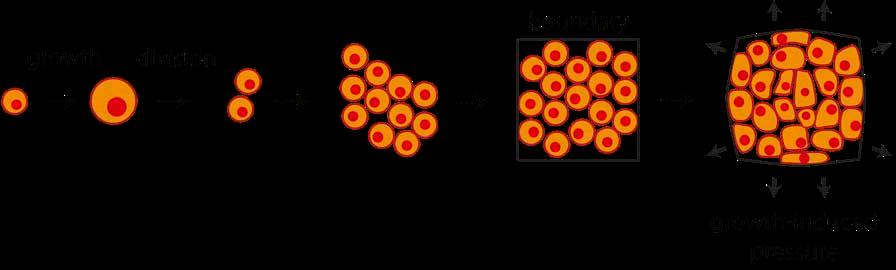
The process of cell multiplication does not typically occur in free space, as a physical boundary usually limits the amount of space available, effectively confining cells. When cells have filled up all of the space available, further growth occurs at the expense of the surrounding cells, leading to the emergence of growthinduced pressure. “There are compressive forces on cells and their surroundings, in order that they can keep on increasing their volume and continue dividing,” explains Dr Morgan Delarue, a CNRS researcher based at the LAAS-CNRS laboratory in Toulouse. This growth in pressure occurs in both physiological and pathological conditions, in plants, cancer cells, fungi, and other organisms. “For example, think of the roots of a tree growing underground, at some point there will not be enough space for them to grow. So the roots will build up force, which can even break concrete,” outlines Dr Delarue. “With cancer cells, solid tumours grow at the expense of the surrounding tissue, and by doing so they develop this mechanical stress.”
Cells Under Pressure
The growth pressure emerges from the confined space
surroundings, they are not able to expand their volume as much as they should. This is not due to external pressure, but pressure that they themselves build.”
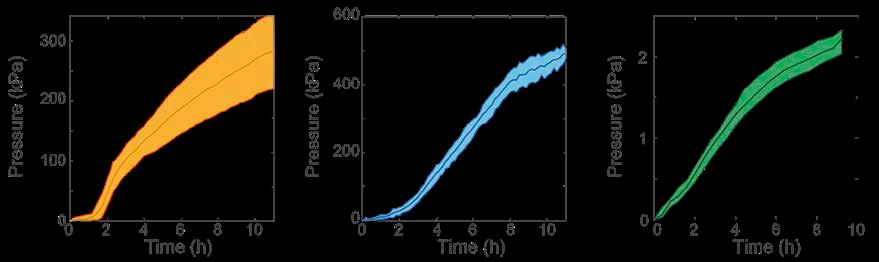
As Principal Investigator of an ERCbacked project based at the LAAS-CNRS lab, Dr Delarue is studying the effects of this mechanical stress on cell behaviour and rates of division and growth. While mechanical force is a necessary condition for growth, growth rates under confinement slow down over time, a topic that Dr Delarue and his colleagues are investigating in the project. “There’s essentially a universal decay in cell proliferation as pressure increases. We are studying the phenotypic convergence, the common physical or biological response that leads to this decrease in cell proliferation. Why does proliferation decrease? What are the underlying physical or biological reasons?” he says. The project team are looking at cells from a variety of different organisms in this work. “We have done a lot of work on the yeast Saccharomyces cerevisiae , and have looked at other fungi, bacteria and mammalian cells. We can study regimes that are physiological, and investigate what happens at very high pressures,” continues Dr Delarue.
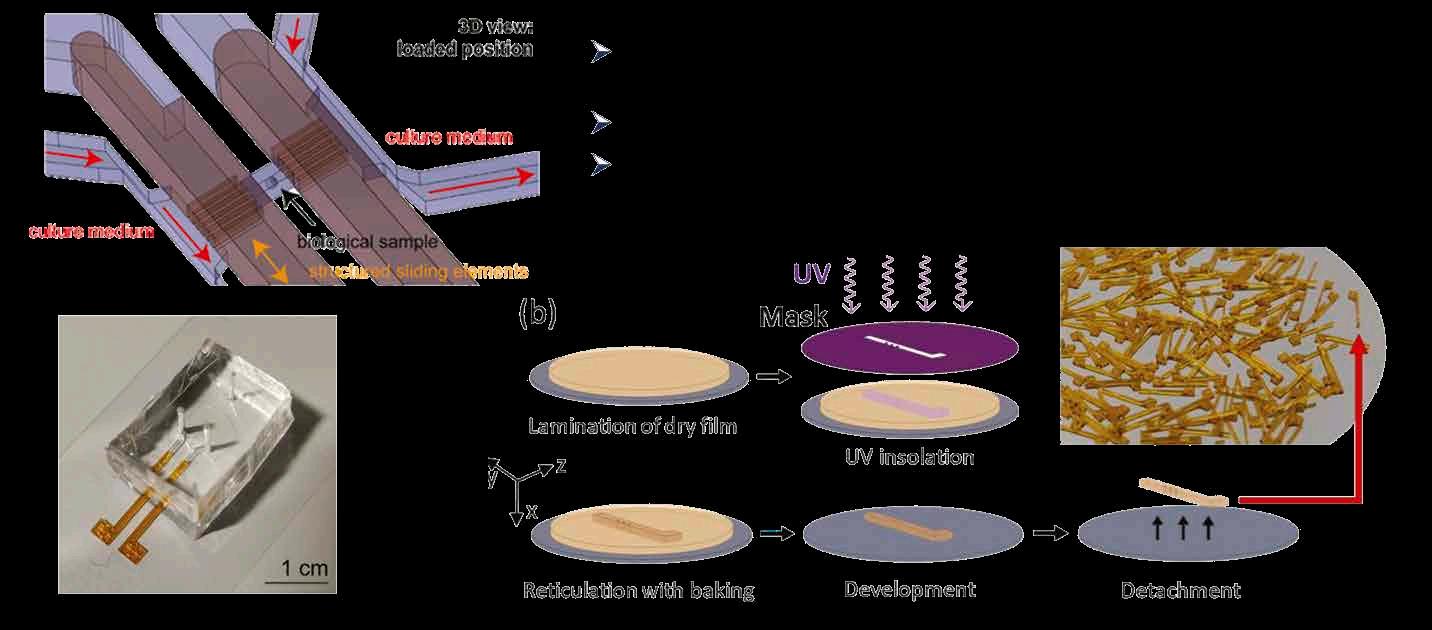
This involves building tools to confine cells, then subjecting them to increasing levels of pressure and monitoring their response. The idea is to build cages to confine cells, with micro or nano channels on the side for feeding, which allows researchers to maintain as consistent a chemical environment as possible. “We keep the cells in the cage, they are constantly fed, then they proliferate and pressure builds up,” explains Dr Delarue. Confinement in the cage leads to deformation of these cells, an indicator of the pressure that they are under. “Saccharomyces cerevisiae cells are ovalshaped, but they morph into a polyagonal shape under pressure. Then E. coli cells, which are supposed to be spherocylinders, deform into quite an unusual shape,” says Dr Delarue. “While cells deform, their volume doesn’t necessarily change. They build up biomass internally, but because they’re limited by their
The volume of cells may not change, but their shape does, and compression of the cell wall triggers biological reactions and affects their internal properties. One major topic of interest for Dr Delarue is a property called macromolecular crowding. “This relates to the fact that the interior of the cell is highly crowded with macromolecules, such as sugars, proteins and protein complexes. There are a lot of objects on different size scales inside the cell, and that cramps the cytoplasm, limits the space available,” he outlines. The idea is that the proliferation of cells in a confined area leads not only to changes on the surface, but also to increased crowding internally, and findings from the
Innovation to confine animal cells: towards reconfigurable microfluidics
Idea : sticks that can be inserted into microfluidic chips (inspired by Venzac et al.)
Made by photolithography or by selective laser etching Can be structured at will
for tissues and organisms
that confined growth is
2023 Oct 10;23(20):4445-4455. doi: 10.1039/d3lc00313b. PMID:
enabling quantitative multiplexed characterization of vesicle mechanics and cell aggregates rheology. APL Bioengineering
Ben Meriem Z, Mateo T, Faccini J, Denais C, Dusfour-Castan R, Guynet C, Merle T, Suzanne M, Di-Luoffo M, Guillermet-Guibert J, Alric B, Landiech S, Malaquin L, Mesnilgrente F, Laborde A, Mazenq L, Courson R, Delarue M. A microfluidic mechano-chemostat
reveals
accompanied with increased macromolecular crowding. Lab Chip.
37740366. Sylvain Landiech, Marianne Elias, Pierre Lapèze, Hajar Ajiyel, Marine Plancke, Blanca González-Bermúdez, Adrian Laborde, Fabien Mesnilgrente, David Bourrier, Debora Berti, Costanza Montis, Laurent Mazenq, Jérémy Baldo, Clément Roux, Morgan Delarue, Pierre Joseph. Parallel on-chip micropipettes
(2024).
Growth
project seem to back this up. “We have been using GEMs, nanoparticles that are genetically encoded inside the cytoplasm. These are essentially multimers that can self-assemble to form a bright nanoparticle inside the cell, which we can then track,” explains Dr Delarue. “We can then infer what’s called a diffusion coefficient, a measurement of how fast a particle can move inside a cell.”
Macromolecular crowding
Evidence shows that this diffusion coefficient decreases in cells over time as a result of confinement, as these conditions lead to an accumulation of biomass in the
of investigation. At the moment, Dr Delarue and his colleagues are working intensively on Saccharomyces cerevisiae and cancer cells, and this research has led to some fresh insights. “We have found that when crowding increases there’s increased crowding inside the cell nucleus. This seems to be compacting the chromatin and decreasing RNA production, which could lead to decreased macromolecule biogenesis,” he outlines. In the case of cancer cells, they have varying levels of crowding to begin with, and different genotypes will have different physical properties, that will affect their sensitivity to mechanical stress. “All these cells feel the same mechanism, but they may feel it to a greater or lesser
“There’s essentially a universal decay in cell proliferation as pressure increases. We are studying the common physical or biological response that leads to this decrease. Why does proliferation decrease? What are the underlying physical or biological reasons?”
extent,” continues Dr Delarue. “We want to understand how different genotypes, in terms of the evolution of cancer, could be more or less sensitive to pressure.”
cytoplasm, that constrains it. A number of other tools are being used in the project, including microfluidic chambers and ‘omics techniques, which together is helping researchers build a fuller picture. “As pressure increases, growth goes down. We have measured biosynthesis rate, as a function of pressure, and we see that it goes down in every organism over time,” says Dr Delarue. The project team are now looking to understand this response from a biophysical point of view, and Dr Delarue says they are making good progress. “As you have more macromolecules inside the cell you basically crowd it. At the same time, this growth in the number of macromolecules is related to an increase in osmolytes, which are required for cell growth,” he explains. “When cells grow they dilute the cytoplasm, which reduces crowding, but if they don’t grow enough then they crowd.”
Researchers have shown that crowding can lead to decreased macromolecular biogenesis, the question now is how, which is an active area
This will form an important part of Dr Delarue’s agenda over the coming years, with researchers looking to build a fuller picture of how cells deal with mechanical stress and react to it. In future, Dr Delarue plans to look in detail at the different parameters that affect cell proliferation under pressure. “Why is a crowding so essential for the cell? We will continue working with cells under pressure, while we will also compare changes in the mechanical properties of cells through different routes,” he says. This will involve lots of work with yeast, which Dr Delarue says is a highly valuable tool in fundamental biology research. “It’s highly robust and easily tractable; there’s a lot that we can do easily in yeast that we can’t elsewhere,” he explains. “Work on yeast often leads to new ideas and targets to study with respect to cancer cells.”
UnderPressure
Elucidating the phenotypic convergence of proliferation reduction under growth induced pressure
Project Objectives
Thanks to the development of devices and methodologies, I found that proliferation always decreased when organisms were confined. Among other studies on the pathogen C. albicans or mechanical feedback through the ECM in pancreatic cancer, I study this universal decay as part of the ERC Starting Grant UnderPressure, and find that intracellular crowding is the key to this understanding: crowding increases in both the cytoplasm and in the nucleus of confined cells, impacting in particular chromatin motility and biosynthesis.
Project Funding
Inserm Plan Cancer for cancer projects (project names: PressDiagTherapy, MechaEvo and MechanoStem). This project has received funding from the European Union’s research and innovation programme under grant agreement No 101039998.
Project Partners
• Robert Arkowitz, iBV, Nice • Daria Bonazzi, IJM, Paris • Julie Guillermet-Guibert, CRCT, Toulouse • Pierre Joseph, LAAS-CNRS, Toulouse • Olivier Liot-Petit, IMFT, Toulouse
Dr Morgan Delarue is a CNRS researcher based at the LAAS-CNRS laboratory in Toulouse. He is a physicist by training, with a masters degree in biology, then a PhD at the interface between physics and biology in the understanding of compressive forces on cancer spheroid growth.
Dr Morgan Delarue
Growth pressure curves for bacteria, fungi and cancer cells display a similar concave shape, indicative of a reduced growth rate with pressure.
Forests and virtual nature in adolescent mental health care
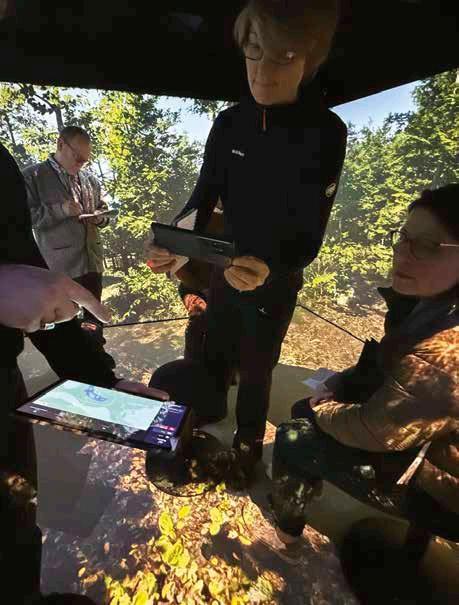
As adolescent mental health services across Europe face growing pressure, the Interreg NorthWest Europe project Forest4Youth is exploring how real forests and immersive virtual nature can support young people during and after psychiatric care. We spoke with project leader Vinciane de Moffarts and members of the research team about evidence, access and policy impact.
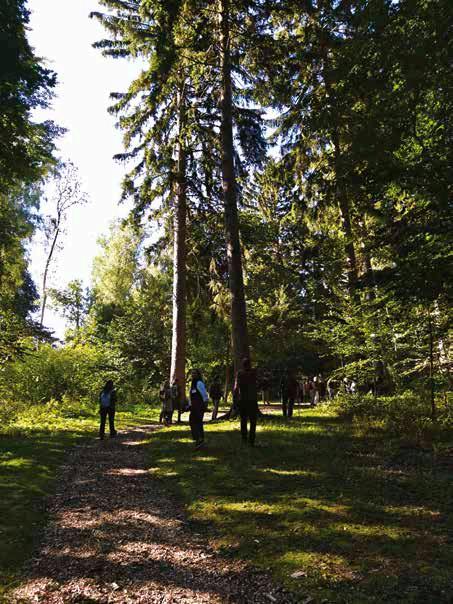
Across Europe, adolescent mental health services are under unprecedented pressure. While contact with nature is widely recognised as beneficial for mental wellbeing, existing research does not consider adolescents who are already on a psychiatric path. Forest4Youth responds to this overlooked gap, investigating how real forests - and, where access is limited, immersive virtual nature - can be integrated into evidence-based mental health pathways for young people during and after hospitalisation.
Led by the Centre Neuropsychiatrique SaintMartin (CNP) in Belgium and funded through Interreg North-West Europe, Forest4Youth brings together psychiatric hospitals, universities, forest managers, and technology experts. The project focuses on adolescents aged 12 to 18 who are hospitalised or recently discharged following a mental health crisis - a group that remains largely absent from existing nature-based health research. Within the consortium, The Royal College of Surgeons In Ireland (RCSI) and Free University of Brussels (ULB) are leading the research activities, ensuring a strong scientific and clinical foundation for the project’s approach.
Adolescents, crisis, and a missing research population
“Much of the research on nature and mental health focuses either on adults or on healthy populations,” explains Kate Brassington,
PhD researcher at RCSI University of Medicine and Health Sciences, a member of the Forest4Youth consortium. “There is surprisingly little evidence when it comes to adolescents who are already in psychiatric care - particularly those transitioning back to everyday life after hospitalisation”.
This gap is critical. Adolescence is increasingly recognised as a distinct developmental stage, marked by heightened vulnerability but also significant potential for recovery. Yet mental health research often struggles to capture this complexity. Diagnostic categories can take months or years to establish, and young people are frequently admitted to hospital based on acute symptoms rather than formal diagnoses.
At CNP Saint-Martin, where Forest4Youth is coordinated, adolescents are hospitalised
during moments of crisis, when outpatient care is no longer sufficient. “They arrive because something in their life has become a danger, either for themselves or for their family environment,” explains Vinciane de Moffarts, the project manager. “Hospitalisation enables a comprehensive assessment of the patient’s condition but the immediate focus is on stabilisation. Many arrive without a diagnosis, but with severe anxiety, suicidal thoughts, or a sense of complete emptiness”.
Clinicians involved in the project have observed a marked shift since the COVID-19 pandemic. “Before, adolescents in crisis were often seen as troublemakers,” de Moffarts notes. “Now, many are not making trouble at all. They are withdrawn, disconnected, and struggling to find purpose or perspective.”
Why forests?
The idea that nature can support mental wellbeing is not new. Studies from Japan, South Korea and China have long explored shinrin-yoku or “forest bathing”, while European research has shown associations between green space exposure and reduced stress. What remains unclear is how these benefits translate into structured therapeutic interventions - particularly for vulnerable adolescents.
“What we know is that being in a forest is generally good for you,” Brassington says. “What we don’t yet understand is why, for whom, and under what conditions it works best.”
Existing studies vary widely. Some interventions last just 12 minutes, others involve multi-day stays in woodland settings. Outcomes are typically measured immediately before and after a single visit, with very few longitudinal follow-ups. “Short-term benefits are clear,” Brassington explains. “But we lack evidence on whether these effects last weeks or months after the intervention.”
Forest4Youth aims to move beyond the question of whether forests are beneficial, and instead investigate how forests can be meaningfully integrated into care pathways. This includes examining the role of group versus individual activities, guided versus unstructured experiences, and the importance of sensory engagement, autonomy and perceived safety.
“There’s something powerful about forests as spaces where adolescents can regain a sense of agency,” Brassington notes. “They can make decisions, take small risks, engage their senses - things that are often limited in clinical environments.”
Designing forest-based care
Rather than imposing a one-size-fits-all model, Forest4Youth is developing a flexible forestbased care protocol that can adapt to different clinical settings, forest types and cultural contexts. This protocol is being co-created through a participatory research process involving adolescents, families, mental health professionals and forest managers.
When access to forests is limited
Despite the potential benefits of real forests, access remains uneven. Many adolescents - particularly those in hospital or urban settings - cannot easily reach woodland environments. Transport, mobility issues, safety concerns and staffing constraints all create barriers.
This is where Forest4Youth introduces a second, innovative strand: immersive virtual reality (VR).
virtual nature can support emotional regulation, stress reduction and preparation for real-world forest experiences. In some cases, VR may be used before forest visits to familiarise adolescents with the environment; in others, it may support reflection and reintegration afterwards.
Importantly, the project does not frame VR and real forests as competing interventions. “The goal is not comparison,” Brassington stresses. “The goal is accessibility. Many young people simply don’t have the option to go into a forest regularly. VR can help bridge that gap.”
One of the project’s central challenges is evaluation. Psychological questionnaires remain the most common tools, alongside physiological indicators such as heart rate variability or cortisol levels. Yet no single biomarker reliably captures mental wellbeing, particularly in adolescents.
“There is no textbook that tells you the right measure for forest-based mental health,” Klass notes. “That uncertainty is part of the field and part of what makes this research necessary.”
Forest4Youth plans to use a mixedmethods approach, combining quantitative measures with interviews and longer-term
“There is surprisingly little evidence when it comes to adolescents who are already in psychiatric care - particularly those transitioning back to everyday life after hospitalisation”.
“We are not trying to replace real forests,” emphasises Malgorzata Klass, Professor at Université Libre de Bruxelles- member of the Forest4Youth consortium- and lead for the VR research. “VR is a complementary tool, designed for situations where access to nature is limited or temporarily impossible”
Unlike headset-based VR commonly used in research, Forest4Youth employs an immersive VR room, where forest environments are projected onto all four walls. Participants can see their own bodies, interact with others, and move freely - creating a shared, embodied experience rather than an isolated one.
“This setup allows group interaction and collaboration,” Klass explains. “It also avoids some of the discomfort and disorientation associated with head-mounted displays, which is especially important for adolescents with mental health vulnerabilities.”
Research on virtual nature is even more limited than studies on real forests. “Most existing VR studies involve healthy university students,” says Mostafa El Madani, PhD researcher at ULB. “Clinical populations and adolescents are largely absent.”
Forest4Youth will explore how immersive
follow-ups. By tracking outcomes beyond the immediate intervention, the project hopes to contribute robust evidence to a field currently dominated by short-term studies.
From research to policy
In the project’s later stages, partners plan to engage directly with public authorities to advocate for the recognition of green care within mental health systems.
“Research often takes 10 to 15 years to influence practice,” de Moffarts says. “Here, we are involving policymakers, clinicians and service users from the start. That shortens the distance between evidence and implementation.”
If successful, Forest4Youth could help reframe forests not only as recreational or environmental assets, but as integral components of public health infrastructuresupporting some of Europe’s most vulnerable young people at a critical stage in their lives.
As Brassington puts it: “Yes, we’re doing careful, complex research, but at the same time, there’s a simple message. Nature matters: and for many adolescents, it may be one of the most powerful places to begin healing.”
Forest4Youth
Forest-Based
Therapies
for Adolescent Mental Health Recovery in NorthWest Europe
Project Objectives
The project will deliver a joint synthesis of forest-based initiatives and research on adolescent mental health and co-design a shared care protocol through a consultative process involving relevant stakeholders, combining real and VR forest experiences. It will pilot eight therapeutic forests and immersive VR activities across NWE, implement targeted actions for teenagers, and develop guidelines and tailored training for practitioners from the forestry and mental health sectors, while establishing five reference centres to support long-term sustainability.
Project Funding
The Forest4Youth project is funded under INTERREG North West Europe NWE0400643.
Project Partners
Forest4Youth is implemented by a transnational consortium of nine partners: the lead partner Oeuvres des Frères de la Charité – St Martin Neuropsychiatric Centre (Belgium); Brussels Environment – Forest and Nature (Belgium); Association Elan Argonnais (France); Forest Service and Energy GmbH (Germany); Free University of Brussels (ULB) (Belgium); Public Mental Health Establishment of Marne (France); Royal Forestry Society of Belgium (Belgium); The Royal College of Surgeons in Ireland –Centre for Positive Health Sciences (Ireland); and UNature (Luxembourg).
Contact Details
Project Coordinator, Vinciane de Moffarts
International Projects Manager Centre Neuro Psychiatrique St-Martin T: +32 471 706 543
Jocelyn Deloyer is a social and occupational psychologist with over 15 years’ experience leading European projects in the psychiatric sector. As European project lead at CNP St-Martin, he has built strong transnational networks advancing mental health innovation, non-pharmaceutical interventions, professional training, and social inclusion across EU programmes.
Jocelyn Deloyer
Enhancing wildfire resilience in the Karst
The Karst region is vulnerable to wildfires, and with the effects of climate change set to heighten the risk still further, it is important to prepare effectively and enhance resilience. The team behind the Karst Firewall 5.0 project are producing knowledge and co-developing plans to prevent and manage wildfires in the region, as Dr Massimiliano Granceri Bradaschia explains.
The Karst region, a limestone plateau extending across the Italian-Slovenian border, is vulnerable to wildfires. The geology is bare rock and where there is soil, it is typically fairly shallow. “The soil typically reaches down to a depth of just 50 centimetres or so, this means there is a higher probability of vegetation remaining dry, and so being more susceptible to wildfires,” explains Massimiliano Granceri Bradaschia, a postdoctoral researcher at the University of Venice in Italy. Other factors also heighten the susceptibility of the region to wildfires, says Dr Granceri Bradaschia. “Some highly flammable species have been planted in the Karst, such as black pine (Pinus Nigra), which is not indigenous to the region. It was first planted around 200 years ago during the period when the Austrian empire dominated the region,” he continues. “There are also some marked differences between the two sides of the border. The Italian side is on the coast, while the Slovenian side is towards the interior, so they have different characteristics in terms of wetness and temperature.”
This picture is changing as the local climate evolves, with warmer summers and sustained periods of hot weather increasing the amount of dry wood biomass available, which heightens both the ignition of wildfires and the flammability of forests. In terms of the climate, the Italian side is more vulnerable to wildfires, as it’s hotter and drier than the Slovenian side, yet wildfires of course do not respect borders and can spread rapidly. “A wildfire which starts in the Slovenian Karst can easily cross over into Italy, and viceversa,” points out Dr Granceri Bradaschia. This means close and sustained cross-
border cooperation is essential if wildfires are to be managed effectively, an issue at the heart of Dr Granceri Bradaschia’s work in the Interreg-backed Karst Firewall 5.0 project, in which six partners are working together to develop innovative, eco-system based plans to enhance the resilience of the region. “There are several layers to this work, including issues around the nature of the land, as well as administrative and governance considerations,” he outlines.
Wildfires
The vulnerability of the Karst was highlighted by the severe wildfires which swept across the region in 2022, burning around 4,100 hectares of forested land. While both sides of the border were affected, the fires had a more severe impact in Slovenia than in Italy for several reasons, including both natural factors like wind strength and direction, as well as mismanagement by local emergency agencies. As part of his role in the project, Dr Granceri Bradaschia is now working to reduce the risk of wildfires in future, which
View from Cerje - Miren Kostanjevica. (Source: Municipality of Miren Kostanjevica)
Cerje burnt area. (Source: ZRC SAZU Anton Melik Geographical Institute)
Burnt area in the Trieste/Gorizia provinces. (Source: Corpo Forestale Regionale FVG)
would limit the need to call out civil protection agencies. “The belief is that if we work more effectively in the ordinary spatial planning stage, if we can reduce the vulnerability of forest land and grasslands, then there will be less need to activate civil protection agencies and firefighters,” he says.
Researchers from University of Venice (IUAV) and the Research Centre of the Slovenian Academy of Sciences and Arts (ZRC-SAZU) are working to co-produce vulnerability maps, together with both Italian and Slovenian forest rangers, which will prove highly valuable in these terms. The project team is following the risk concept framework, which can be sub-divided into three main elements; vulnerability, hazard, and exposure. “Vulnerability concerns the innate characteristics of the land, primarily forests and grassland, including the presence of vulnerable – flammable – species. We have also added data on other variables, such as the climate, and produced both hazard probability and vulnerability maps. We look to identify highly susceptible, flammable areas, considering things like the density of woodland, the presence of certain flammable species (e.g. Pinus nigra and Cotinus coggygria), and the steepness of the slope,” says Dr Granceri Bradaschia. The idea is to plan ahead and put measures in place, so that local agencies can then respond effectively to wildfires. “We are working with forest rangers, and aim to avoid activating civil protection agencies, as they can be very
expensive in financial and water resources terms, without mentioning the potential for fatalities among the workforce,” continues Dr Granceri Bradaschia.
A greater focus on prevention and effective spatial planning will also help protect assets in the region, such as critical infrastructure and houses, which can be very exposed when wildfires spread. It may not always be possible to prevent wildfires though, so alongside mapping vulnerability, Dr Granceri Bradaschia and his colleagues are also working to ensure they are detected rapidly where they do occur, and to assess how they are likely to develop over time.
“Together with ZRC-SAZU and Infordata
we work with predictive algorithms and information and communication technologies (ICT). We are implementing thermal cameras and electric nodes in order to detect, in real time, potential smoke and wildfires,” he outlines. The project team have produced maps on both hazard probability and vulnerability, considering both the characteristics of the land and the potential for a wildfire to spread, which have been shared with Italian and Slovenian forest rangers. “This is a participatory project, and there are different priorities either side of the border,” stresses Dr Granceri Bradaschia. The team at IUAV has been supported by the Slovenian NGO PiNA for public and civic engagement activities.
This is part of efforts to establish more lines of dialogue between the two sides and overcome decades of mutual suspicion, as well as linguistic and cultural differences. Italy and Slovenia may be relatively close neighbours, yet they were on opposite sides of the iron curtain during the Cold War and there is a long history of tense relations, while Dr Granceri Bradaschia says the physical characteristics of the Karst region also differ either side of the border. “The Italian Karst is a relatively small strip of land near the Adriatic coast, much of which has been abandoned. The woods are used a bit for log production, while the rest is in the hands of private owners, some of whom have mismanaged it. In Slovenia they have a more economically-focused approach,
Night fire in Italy. (Source: Corpo Forestale Regionale FVG)
From the Slovenian/Italian border to Iamiano village. (Source: Corpo Forestale Regionale FVG)
Background Image: Burnt area close to scattered urban fabric. (Source: Corpo Forestale Regionale FVG)
where silviculture is an important industry” he explains. The black pine is perceived as holding a lot of value in this respect, so in some cases there is a degree of reluctance to cut it down. “In Slovenia some people argue for the retention of black pine, they still don’t tend to view it as a problematic species,” says Dr Granceri Bradaschia.
Physical interventions
The project is playing a critical role in this respect, with information-sharing and cross-border cooperation providing the foundations of a more common approach that will boost the resilience of the region as a whole to wildfires. The project team are exploring two types of physical intervention; one is cutting down the more flammable trees, while a second is improving the grassland. “The idea is to do as much preventative work as possible before the wildfires spread,” explains Dr Granceri Bradaschia. This work also holds wider relevance; wildfire risk is a critical consideration in the development of infrastructure and housing plans for example, another topic that is being addressed in the project. “We are proposing specific
measures for spatial planning approaches. We would argue that it’s important to avoid a scattered approach to developing the urban fabric, where single houses are built within a wood, or in close proximity to it,” says Dr Granceri Bradaschia.
This is an inherently risky approach, believes Dr Granceri Bradaschia, as single
houses in this type of situation are essentially surrounded by fuel (i.e. wood) for fires, so would be highly exposed in the event of a wildfire. Compact villages, an idea dating back centuries, are a significantly safer and more resilient option, says Dr Granceri Bradaschia. “Grassland and agricultural land surrounding compact villages can act as a kind of buffer between the urban tissue and a forested area. We are working with a masterplan with a zoning scheme, each of which has its own characteristics. The idea is to essentially create a buffer zone, either agricultural or grassland, between urban areas and the forest,” he outlines. This is one illustration of how the project’s work is heightening awareness of fire risk and associated problems, encouraging regional and national authorities to think about the issue in more holistic rather than sectoral terms. “We want to encourage a more multi-sector, multi-level approach to fire risk prevention and management, instead of approaching it with a silo mentality,” says Dr Granceri Bradaschia.
The hazard and vulnerability maps will be highly valuable in this respect, enabling the authorities to look further ahead,
Landa Carsica and drywalls in Miren Kostanjevica.
(Source: Municipality of Miren Kostanjevica)
Landa carsica Monte Stena. (Source: Roberto Valenti)
consider specific scenarios, and develop plans. This represents a significant step forward, as there has historically been very little research on the risk of wildfires in the Karst, a knowledge gap that Dr Granceri Bradaschia and his colleagues are working to fill. “We produce knowledge and we also provide practical solutions, acknowledged by key local stakeholders,” he says. These different measures will also be tested and assessed in four pilots, in the municipalities of Duino-Aurisina (ITA) and MirenKostenjevica (SLO) which can then guide the ongoing development of fire prevention
and forest rangers. The wider potential of the predictive algorithm model will also be highlighted, with Dr Granceri Bradaschia keen to turn the project’s applied research into practical applications in the Karst region. “We want these tools to be acknowledged, legitimised, and used at the regional level,” he says. Many bureaucratic hurdles need to be negotiated first, however. “We are really at quite an early stage in the goal of creating a trans-boundary scheme and establishing protocols,” acknowledges Dr Granceri Bradaschia. “We have faced certain bureaucratic challenges, so we will
“The belief is that if we work more effectively in the ordinary spatial planning stage, if we can reduce the vulnerability of forest land and grasslands to wildfires, then there will be less need to activate civil protection agencies and firefighters.”
and management plans for the Karst region. “We will be able to show the pros and cons of our approach to the local authorities, and provide them with further, more detailed information about our work,” continues Dr Granceri Bradaschia. “It’s very important that our online platform (https://karst.way. to.it/) is used and understood here in the Karst, and over the next few months we will engage with some of the key stakeholders.”
This includes national, regional, and local authorities on the Slovenian side, to demonstrate the importance of the physical interventions, while participatory activities are also planned on the Italian side, where the online data repository will be presented to civil protection agencies, firefighters
extend the project slightly and finish later than originally planned. We aim to have finished all of the project activities by the end of August 2026.”
A final conference is planned for May 2026, at which most of the project’s work and tools will be presented, which could then open up wider possibilities beyond the Karst region. While the project has focused specifically on the Karst, many other regions across Europe are vulnerable to wildfires and climate change is likely to heighten the risk further, so Dr Granceri Bradaschia is keen to explore whether the tools and platform could be applied more widely. “The idea is to capitalise on the project’s research and scale-up this approach,” he says.
Karst Firewall 5.0
Innovative ecosystem-based plan to adapt to climate change in the Karst. Promoting Fire-resilient forestry supported by Industry 5.0
Project Objectives
The Karst Firewall 5.0 project addresses the issue of forest wildfires in the Karst area, exacerbated by the phenomenon of climate change, with a focus on the area burned in the summer of 2022 in the Municipalities of DuinoAurisina (IT) and Miren Kostanjevica (SL). On the basis of the research work done to improve the wildfire-related knowledge, the project draws up a series of climate change adaptation measures and implements a selection of these measures through pilot actions.
Project Funding
The project Karst Firewall 5.0 is co-funded by the European Union as part of the Interreg VI-A Italy-Slovenia Programme (ref. ITA-SI0600146)
Project Partners
• Università IUAV di Venezia
• ZRC SAZU - Znanstvenoraziskovalni center Slovenske akademije znanosti in umetnosti
• Infordata Sistemi Srl
• Comune di Duino Aurisina – Občina Devin Nabrežina
• Občina Miren-Kostanjevica
• Kulturno izobraževalno društvoAssociazione Culturale ed Educativa - PiNA
Dr. Massimiliano Granceri Bradaschia is a post-doctoral researcher at the University Iuav of Venice with more than 10 years of work experience in Urban and Environmental Planning, Climate Change Adaptation, Monitoring and Evaluation, and Public policy analysis.
Prof. Francesco Musco, Ph.D is Full Professor in Urban and Environmental Planning at the University Iuav of Venice’s Department of Architecture and Arts. He served as Director of Research at Iuav from 2021-2024 and is Director of the MS in Urban Planning for Transition.
Dr. Massimiliano Granceri Bradaschia Prof. Francesco Musco, Ph.D
High-resolution digital terrain model of a rocky coastal site (Cala del Leone, Livorno, Italy) used for detailed geomorphological and hazard analysis within the AMIS project.
Coastal areas are highly vulnerable to the impact of climate change, and so public authorities need to carefully consider likely future weather patterns when reaching planning and development decisions. The team behind the AMIS project are developing digital twins to help manage risk and enhance the resilience of coastal areas, as Dr Carlo Brandini and Dr Manuela Corongiu explain.
The effects of climate change are likely to have a significant impact on Europe’s coastlines in future, including not just lowlying areas, but also higher ground, cliffs and regions further inland. While cliffs are generally less directly affected by sea-level rise than low-lying coasts, changes in wave climate and in the frequency and intensity of storms can significantly influence their stability. “Storms at sea may have some important effects on the stability of cliffs,” says Dr Carlo Brandini, senior researcher at CNR and scientific coordinator of the AMIS project, who collaborates closely with the LaMMA Consortium, an Environmental Monitoring and Modelling Laboratory in Tuscany. As part of his role in the AMIS project, funded under the EU Interreg programme, Dr Brandini is looking to build a deeper picture of the likely effects of climate change on coastal areas, with the wider aim of enhancing resilience. “We are interested in the effects of coastal erosion and the impact of changing storm patterns and wind regimes on coastal areas,” he outlines.
AMIS project
This work covers large sections of the French and Italian coastlines, from Marseille in France right round to the Tuscan and Ligurian coast in Italy, as well as the islands of Sardinia and Corsica. Many of these areas are vibrant hubs of economic activity that also attract
a lot of tourists, so there is often intense pressure to develop the land, which can then heighten vulnerability and leave people exposed to the impact of extreme weather events. “In Tuscany for example residential neighbourhoods and hotels have been built in close proximity to the coast, in areas
where there were previously dunes,” says Dr Brandini. Dunes act as a natural buffer against the sea and limit the risk of coastal inundation, but over-development threatens this protection and heightens flood risk, an issue that Dr Brandini and his colleagues in the project are working to address. “We are working to develop what we call a coastal risk atlas, where we link the vulnerability of coastal areas to their economic value,” he explains.
The project team are using both observations and models to identify risks, assess the vulnerability of different coastal areas and forecast the likely impact of climate change. Researchers are using data from major European climate services in this work, such as the Copernicus Climate Change Service (C3S), in combination with specifically implemented models, to essentially map the entire coastline covered by the project and build a thorough, detailed picture of hazards and vulnerabilities.
“We will include in the Atlas data about the risks facing coastal areas. This is driven by both observed data, but mainly by models,” outlines Dr Brandini. A further important strand of the project’s work involves developing digital twins, essentially digital models or replicas of coastal areas, to provide more detailed insights at the local level. This will allow researchers and public authorities to assess climate-change impacts under realistic local conditions, rather than relying only on generic projections of future sea-level rise. These models are based on two key elements. “One is an increased observation capacity in these coastal areas, for which we are implementing advanced monitoring technologies, including robotic and autonomous platforms,” continues Dr Brandini.
A number of these robots are dedicated to marine monitoring, including even otherwise inaccessible parts of cliffs and rocky coastal areas, which will help researchers learn more about the underlying processes which influence their stability. Several other
technologies are also being used in the project to gather more information about coastal areas, which all adds up to a powerful set of tools. “We are using aerial drones, while video cameras play a very important role. Some of these aerial platforms are equipped with LiDAR sensors for geomorphological monitoring,” says Dr Brandini. Data from all these sources will be brought together in the development of the digital twins, which is a complex, technically demanding task. “We’ve
combine this information in an interoperable way within the digital twins. “We aim to integrate these different types of information in a specific, designed and interoperable way. This is about both modelling the coastlines of France and Italy as they are today, while at the same time simulating the various different environmental parameters that may affect them in future,” says Dr Corongiu. The digital twins are now able to model the impact of storms on coastal areas at a very
“With climate change we are likely to experience more intense storms in future, which could cause serious economic damage This is something public administrative bodies will need to think carefully about in planning the development of coastal areas.”
paid a lot of attention to multi-resolution and interoperability aspects, in combining the information coming from these different sources,” explains Dr Manuela Corongiu, a researcher and GIS (Geographic Information System) expert at the LaMMA consortium.
The first key step in this respect is modelling the environment and data parameters relevant to a particular area, together with morphological aspects and information about the built environment.
The project team have been working to
high level of detail. “We are using so called phase-resolving coastal models to describe how waves interact with the coast during storms” explains Dr Brandini. “This allows us to simulate storm impacts in great detail, capturing the key processes that control coastal damage under extreme conditions”
This provides a highly striking picture for users of these models, and the results can be
validated using the established observation framework, for instance the video cameras. The team at the LaMMA consortium, based in Florence, have access to more data, which Dr Brandini says is also valuable in validating these models. “At the consortium we are responsible for managing a programme of coastal monitoring for the Tuscany regional administration, so we have access to a lot of data,” he says. The Tuscan city of Livorno has experienced some severe floods in recent years, underlining the urgency of the project’s work. “In the coming decades, the impacts of coastal flooding in some Tuscan cities such as Massa and Livorno are expected to become comparable in magnitude to those of river flooding today, and in some cases may even exceed them (* Bendoni et al., 2026). In Livorno in particular, the increasing frequency of coastal inundation is already becoming evident,” stresses Dr Brandini.
Needs of end-users
The aim in the project is to help mitigate these risks by developing practical, useable digital twins, and the likely profile and needs of potential users have been a key consideration. The digital twins are intended primarily for public administrations, including municipalities, regional governments and agencies, who may not necessarily hold deep technical expertise, so accessibility is essential. “We want to develop technology for public administrations to use,” stresses Dr Brandini. These digital twins are cost-planning tools, giving authorities a deeper picture of coastal hazards, while at the same time Dr Brandini says they will also heighten awareness of the impact of climate change among the general public. “They will effectively highlight the possible effects of climate change on specific stretches of coastline,” he says. “This will
encourage the general public to take action themselves, maybe in monitoring their local area and reporting data.”
This data will also be highly valuable in the ongoing development of the digital twins, in improving their ability to model changes over both the short- and long-term at the local scale. “We will be able to see which areas will be most affected by the impact of climate change and which areas are most vulnerable to coastal inundation for example. With climate change we are likely to experience more intense storms in future, which could cause serious economic damage. This is something that public administrative bodies
will need to think carefully about in planning the development of coastal areas,” stresses Dr Brandini. “We have mainly worked on developing digital twins for coastal cities in the project, but it will also be important to look at some less urbanised areas.”
A key scientific challenge is understanding compound coastal risks. Coastal erosion, sea-level rise and changes in storm patterns interact, yet they are often analysed separately in traditional models. The digital twins developed in AMIS aim to bring these processes together within a shared data environment, allowing users to explore how coastal risks may evolve under different scenarios and to support more realistic, locally tailored adaptation strategies.
There are a number of biodiversity hotspots along the French and Italian coastlines, home to a wide variety of plants and animals, that conservation bodies are keen to protect. Digital twins could play an important role here in helping authorities identify areas which are at particular risk of biodiversity depletion. At the same time, the AMIS team is interested in applying the digital twins approach beyond
France and Italy. “Economically important areas that attract a lot of tourists, for example the resort of Benidorm in Spain, represent particularly interesting test cases,” outlines Dr Brandini. Initial work in this direction was carried out within the European H2020 project SCORE, and the team is now continuing this line of research in collaboration with colleagues at the University of Alicante. “We would like to explore possible future scenarios and understand how climate change may affect these coastal systems at local scale,” says Dr Brandini.
The wider challenge here is to protect coastal areas from the impact of climate change, while developing effective, reliable and locally tailored risk management strategies. In Venice, for example, the MOSE system of mobile barriers is operated with the support of sophisticated monitoring and modelling tools that help manage storm-surge risk in the lagoon. Although such large-scale engineering works cannot
be implemented everywhere, the digital technologies behind them are far more transferable. Digital twins can support local authorities in exploring alternative adaptation pathways, including naturebased and ecosystem-based solutions better suited to different coastal contexts.
This is something Dr Brandini and his colleagues plan to explore further, building a more detailed understanding of local coastal vulnerabilities and how they evolve over time. While coastal areas and cities of course differ in terms of their specific characteristics, the underlying approach to developing a digital twin is always the same, says Dr Corongiu. “We need to consider the circumstances and surrounding environment in different places when developing digital twins, whether it’s Venice, Benidorm or Livorno, but we always follow the same basic approach. A lot of time and effort is needed to develop a digital twin, and they need to be updated as the situation evolves,” she says.
AMIS
Advanced Monitoring systems and Digital Twins for coastal Safety and resilience
Project Objectives
AMIS (Advanced Monitoring systems and Digital Twins for coastal Safety and resilience) aims to support public authorities in assessing and managing climate-driven coastal risks. The project integrates advanced monitoring technologies, including robotic platforms, modelling tools and digital twins to analyse hazards affecting both low-lying and rocky coasts, improving risk awareness, planning and decision-making at local and regional scales.
Project Funding
This AMIS project is co-funded by the Interreg Italy-France Maritime Programme 2021-2027, with funding of €1,581,720.66 (FESR).
(AMIS – Advanced Monitoring systems and Digital Twins for coastal Safety and resilience)
Project Partners
https://interreg-marittimo.eu/it/web/amis/partner
Contact Details
Project Coordinator, Carlo Brandini
Consiglio Nazionale delle RicercheIstituto di Scienze Marine
Consorzio LaMMA - Divisione di Oceanografia
Via Madonna del Piano 10 50019 Sesto Fiorentino (FI)
* Bendoni, M., Caparrini, F., Cucco, A.,Taddei, S., Anton, I., Paranunzio, R., Mocali, R., Perna, M., Sacco, M.,Vitale, G., Corongiu, M., Ortolani, A., Gharbia, S., Brandini, C. (2026). Multiscale modeling for coastal cities: addressing climate change impacts on flood events at urbanscale. Natural Hazards and Earth System Sciences, 26, 709–731. https://doi.org/10.5194/nhess-26-709-2026
Dr Carlo Brandini, PhD, is a senior researcher at CNR and head of the CNR–ISMAR Florence site, with a long-standing collaboration with the LaMMA Consortium as the main scientific contact for marine activities. His research focuses on coastal and marine processes, operational oceanography and climate-driven coastal risks. He is the scientific coordinator of the AMIS project.
Manuela Corongiu, PhD, is a senior researcher at LaMMA Consortium (a public consortium between the Tuscany Regional Government and the Italian National Council Research) with main tasks on geospatial database design, data infrastructure management, geomatic aspects and standards. Involved in AMIS project as Project Management support and Geomatic expert.
Water scarcity has long been a prominent issue in the Spanish region of Murcia and the problem is growing ever more acute, with the hot, dry Mediterranean climate and low levels of rainfall leading to increasingly frequent shortages. Improving water resilience in Murcia is the common theme of the General Directorate of Water’s work in the SUSTAQUA, GEMS and GOV4WATER projects.
The Spanish region of Murcia has long had to deal with issues around water scarcity, dating right back to the Roman age, and the problem is growing ever more pressing as the effects of climate change take hold. A reliable, sustainable supply of water is essential for both households and businesses, so the local authorities are taking steps to enhance resilience and maintain supplies. “We are doing a lot of work on water resilience, such as developing new, non-conventional water supplies,” outlines José Sandoval, General Director of Water in Murcia. The root cause of water scarcity is the over-exploitation of existing water resources, for example underground aquifers, a topic central to the SUSTAQUA project. “If you over-exploit an aquifer, the water quality tends to deteriorate over time,” explains Sandoval. “Aquifers are a very important water source, and salinisation is a major problem in Murcia, as well as in many other parts of Europe.”
SUSTAQUA project
As part of his role in the SUSTAQUA project, Sandoval is concerned about the
sustainability of different water sources, and is looking at how they can be used more efficiently. Over-using groundwater can endanger future supplies, along with other damaging effects, so Sandoval’s team is looking to re-use water where possible, which improves overall efficiency. “In Murcia we re-use a lot of water in the agricultural sector for example,” he outlines. The wider aim here is to ensure
There are other crops which don’t require such high quality water, and so potentially other sources can be used, improving efficiency in the process. The project team aim to share this kind of knowledge between local authorities across Europe, which will encourage consumers, farmers and businesses to use water in a more sustainable way and help conserve valuable resources. “We need to look at alternative water sources in
“The first step towards mitigating the impact of climate change on water availability is to persistently save it where we can, through collecting rainwater and reusing it for example.”
that water quality matches the need of the specific application, so that scarce resources are not wasted. “For example, drinking water has to be of very high quality, while water for industrial use is pretty close in terms of standards,” says Sandoval. “The quality of water required in the agricultural sector tends to vary according to the crop. If you are growing lettuces for example, you need very high quality water, as it is going to be in contact with the product.”
order to guarantee supply,” says Sandoval. Desalination is one part of this, and a number of plants have been established in Murcia, yet the process is both expensive and energyintensive. “A pressure level of 75 bars is required to reach the necessary water quality levels, and the process has a huge carbon footprint,” explains Sandoval. “The first step towards mitigating the impact of climate change on water availability is to persistently save it where we can, through collecting rainwater and reusing it for example.”
Murcia Region: An example of survival of water scarcity.
GEMS project
The team at the Murcia Water Directorate are also participating in the GEMS project, an EU-backed initiative bringing together partners from across Europe to look at the environmental impact of the agriculture sector. The project is focused specifically on the leakage of nitrates into water bodies, which can leave them unsuitable for human consumption. “The key problem with nitrate pollution is basically the formation of leachates,” outlines Sandoval. The EU nitrates directive aims to protect water quality, yet high levels of pollution are still being reported across Europe, an issue which Sandoval and his colleagues in the project aim to address. “The project is fairly theoretical in nature. We are monitoring and mapping vulnerable areas, with the aim of preventing nitrate pollution,” he continues. “We are looking at different monitoring networks, at governance measures, and are trying to identify best practice and share knowledge amongst the project partners.”
A large amount of water quality data may be gathered by monitoring networks, which can be valuable in building resilience and maintaining sustainable water supplies over the long term. In the Gov4Water project, Sandoval is looking to harness the power of data in the management of water resources.
“This project is about taking water quality data, with the aim of processing it and gaining fresh insights, which can then inform the effective management of water resources in future,” he outlines. The Murcia region has taken a lead in this regard, implementing a sort of accounting system to minimise waste and promote efficiency, and this kind of governance system can help reduce consumption and protect resources. “GOV4WATER is also a fairly theoretical project. We are looking at the governance system in different regions, and looking to assess their effectiveness in reducing consumption and protecting resources,” continues Sandoval.
Water resilience
The unifying theme of these three projects is the pressing need to enhance water resilience, with climate change and the increasing frequency of extreme weather events like floods likely to intensify pressure on resources in future. This is an issue which affects many European regions, so Sandoval is keen to share the project’s findings more widely, and use insights gained from Murcia to help improve resilience in other areas. “We are also working with other regions of Europe where they are starting to have problems with their water supply,” he says. There are several different strands to the wider goal of improving water resilience, including minimising waste and reducing pollution and consumption, while Sandoval says technological development also has an important role to play in mitigating the impact of floods. “Water overflow causes significant damage. More effective predictive models and facilities are the best way to deal with this,” he says.
This will be the focus of a lot of attention in research in future, reflecting a widespread commitment to improving water management, a highly visible topic that affects all of us. While investing in resilience of course costs money, it brings dividends over both the medium and long term, and Sandoval says he and his colleagues in Murcia are ready to share their knowledge. “Regions that have learned to live with scarcity, where restraint and efficiency are part of their management philosophy, provide an invaluable roadmap for the future of sustainable water governance in Europe,” he stresses. “Many European regions are starting to face water restrictions as the initial effects of climate change take hold, so now is the time to learn from those regions that have been living with water scarcity for centuries. Murcia holds valuable lessons in this respect and can provide a window to the future.”
GEMS - Groundwater management in nitrate vulnerable zones with agriculture activities
SUSTAQUA - Improve policies to reduce energy consumption & make water resources more accessible, efficient & sustainable
Gov4Water - Smart, Efficient and Adaptive Water resource management
Project Objectives
Our goal is to show our experience to other regions on how to build water resilience in conditions of scarcity, reducing our consumption through improved efficiency and paying attention to the sustainability of the water resources used, especially alternative ones.
Project Funding
SUSTAQUA: Total Budget €341,765 with a ERDF Contribution of €273,412.00
GEMS: Total Budget €323,400 with a ERDF Contribution of €258,720
GOV4WATER: Total Budget €244,520 with a ERDF Contribution of €195,616
RESWATER: Total Budget €308.200 with a ERDF Contribution of €274.298
Project Partners
Please see project links below.
Contact Details
Manuel Boluda Fernández
Project Coordinator
Autonomous Community of Region of Murcia E: manoloboluda@gmail.com : https://youtube/5WV3v0lNBO0?si=xLEoiC_ YYMkAqmzp
Jose Sandoval Moreno is General Director of Water of the Regional Government of Murcia. Previously he worked in the private sector, developing numerous hydraulic works. Miguel Ángel del Amor Saavedra is a Coordinator/Technician at the General Directorate of Water of the Regional Government of Murcia. He has wide experience in water management.
Manuel Boluda is an Agricultural Engineer at the Directorate General of Water of the Regional Government of Murcia. He has coordinated several projects within the Interreg Europe Program, such as AQUARES.
Jose Sandoval Moreno, Miguel Ángel del Amor Saavedra, and Manuel Boluda Fernández (left to right).
Protecting Europe’s Water Future
Across the North Sea region, climate change is putting groundwater and soil under unprecedented strain. The EU-funded BLUE TRANSITION project brings together scientists, authorities, farmers and communities to rebalance water systems for the long term. We spoke with project lead Mike MüllerPetke and project manager Ilke Borowski-Maaser about how Europe is redefining water resilience.
From drought-stricken fields to creeping saltwater in coastal aquifers, Europe’s groundwater systems are under pressure. Groundwater is the water stored beneath the Earth’s surface in soil and rock layers, supplying Europe’s drinking water and a large share of its irrigation. Climate change is accelerating long-standing environmental stresses, while agriculture, tourism, industry and urban growth continue to compete for the same finite resource: clean groundwater.
At the heart of this challenge lies a simple but urgent question - how can Europe protect both the quality and quantity of its groundwater in a warming world? The BLUE TRANSITION project was created to help answer precisely that question.
Running under the Interreg North Sea Region Programme and spanning six countries - Sweden, Denmark, Germany, Belgium, the Netherlands and France - BLUE TRANSITION brings together 23 partners.
“BLUE TRANSITION is really about how to manage groundwater and soil resources in times of climate change,” explains Mike MüllerPetke, lead partner of the project and Professor at the LIAG Institute for Applied Geophysics jointly with the Leibniz University Hannover. “We look at urban, agricultural and natural landscapes together, and at how human land use changes the water balance within them.”
The project emerged from a growing recognition across the North Sea region that groundwater systems were becoming increasingly fragile - affected by droughts, flooding, salinisation, pollution and overextraction.
“Most of our drinking water and much of our irrigation water comes from groundwater,” adds project manager Ilke Borowski-Maaser. “Ensuring that it remains clean and abundant is absolutely fundamental to our societies.”
From system understanding to local action
The pressures on groundwater across the North Sea region are diverse but tightly interconnected. In coastal zones, excessive pumping threatens to draw seawater into aquifers. In agricultural areas, irrigation demand is rising as summers become hotter and drier. In northern lakes, changing land use and peatland drainage contribute to brownification, where organic material discolours surface waters and complicates water treatment.
What unites these challenges is the need to restore balance between extraction, recharge, land use and ecosystem health.
As the project evolved, the consortium identified three recurring directions of action that link all 16 pilot areas. Across regions, partners are diversifying water sources, reducing dependency on a single supply and balancing groundwater with surface water where possible. Many pilots also adjust land use to protect aquifers - through wetland restoration, peatland rewetting and protected recharge zones. Improving soil health has emerged as a parallel strategy, strengthening moisture retention and long-term resilience.
“These three directions appear again and again across very different landscapes,” says Mike Müller-Petke. “They give us a shared framework, even though every local system is unique.”
One of the clearest lessons so far, however, is that there is no one-size-fits-all solution. Each pilot requires deep understanding of its own geology, hydrology, land use and social context before any meaningful intervention can take place.
Pilots, people and place-based solutions
The 16 pilots are deliberately at different stages of development - from early data collection to full-scale implementation. In Sweden, researchers are investigating increasing brownification in lakes that supply drinking water. Monitoring stations are being installed to trace the flow of organic material from former peatlands into surface waters. “They know the problem is increasing, but they are still working to understand exactly where it comes from,” Mike Müller-Petke explains.
In northern Germany, one focus is on
Rewetting wetlands at the Belgium pilot.
The Blue Transition consortium.
Key directions of action for a Blue Transition.
irrigation management near protected natural areas. Here, the hydrological system is already well understood. The task now is to optimise pumping from multiple wells so that farmers have sufficient water without damaging sensitive ecosystems nearby.
On a tourist-heavy Danish island, authorities have completed a full groundwater mapping campaign. They are now identifying land parcels to purchase for protection zones, preventing future contamination as visitor numbers continue to grow.
“These pilots show the full range, from understanding the system, to testing measures, to actually implementing changes on the ground,” highlights Mike Müller-Petke.
Some of the most compelling impacts of BLUE TRANSITION come from pilots that actively involve local communities. In
is developing augmented reality applications that allow users to visualise underground water flows and geological layers through their smartphones. By scanning a QR code in the field, users can explore the hidden subsurface in real time.
While technical solutions are vital, the partners agree that the greatest challenge lies in governance and long-term political commitment. Short-term measures are often easier to implement, while systemic change - such as altering land use or redesigning groundwater protection zones - demands stability, funding and public support.
“In times of political uncertainty, it becomes harder to commit to climate adaptation strategies that only show their full benefits in ten or twenty years,” says Ilke Borowski-Maaser.
“BLUE TRANSITION is really about how to manage groundwater and soil resources in times of climate change ”
Belgium, an environmental organisation integrated the project into a large wetland restoration programme. What began as a conservation effort expanded rapidly, attracting private investment and enabling restoration at a scale several times larger than originally planned. Rewetting wetlands now helps store water naturally, reduce flood risk and protect peat soils that would otherwise release carbon.
In the Netherlands, prolonged droughts since 2018 have led farmers, who once rarely worried about water scarcity, to test practical soil-moisture measures directly in their fields. “We hold kitchen-table conversations with farmers,” says Ilke Borowski-Maaser. “They test measures themselves, they see what works, and then others follow.”
France contributes another dimension through citizen science. Volunteers use simple test strips and smartphone apps to measure nitrate levels in local surface waters, uploading data to central servers. This not only expands monitoring capacity, but also builds public awareness of invisible water quality risks.
“In the end, everyone wants clean drinking water and a healthy landscape. BLUE TRANSITION shows that farmers, scientists and authorities can work towards the same goal - even if they take different paths”, says Ilke Borowski-Maaser.
From Science to Strategy
Alongside data collection and modelling, BLUE TRANSITION is using innovative communication tools to make groundwater systems visible to the public. One partner
Each pilot is therefore developing a local, stakeholder-driven strategy, which will feed into a joint policy recommendations document presented at European level in 2026. Policy dialogue is also embedded in every transnational partner meeting to ensure that scientific results reach decision-makers.
The project’s strength, however, lies as much in how it works as in what it delivers. “Having scientists working closely with water authorities and farmers is not common,” Mike Müller-Petke admits. “What makes this project special is that everyone realises they benefit from listening to each other.”
Beyond 2026: a blueprint for Europe
Although BLUE TRANSITION focuses on the North Sea region, its lessons extend far beyond northern Europe. Many southern regions already face severe drought and water stress - challenges the North Sea is now beginning to experience. “Even if other regions may not face salinisation like we do near the coast, they absolutely face waterbalance challenges,” says Mike Müller-Petke. “Understanding the system, diversifying water sources, rethink land-use, improving soil health - these principles apply everywhere.”
With the project concluding in 2026, continuity is a key concern. Many themesfrom crop resilience to groundwater recharge - demand long-term monitoring. Several partners are now seeking follow-up funding, while regional authorities embed results into future strategies. Ultimately, BLUE TRANSITION shows that climate adaptation is a practical, local effort, unfolding quietly beneath Europe’s landscapes.
BLUE TRANSITION
Balancing water and land use to minimize the effects of climate change
Project Objectives
Blue transition targets a balanced water and land use to mitigate the effects of climate change and human activities on groundwater and soil to ensure enough good quality water at any time.
Project Funding
The Blue transition project is co-funded by the Interreg North-Sea Program 2021-2027.
Project Partners
Sweden:
• Lunds universitet • Sydvatten • Sveriges Geologiska Undersökning (SGU)
• Dachverband Feldberegnung Uelzen • Landwirtschaftskammer Niedersachsen • Landesamt für Bergbau, Energie und Geologie (LBEG) • Universität Bremen • Bundesanstalt für Geowissenschaften und Rohstoffe
The Netherlands:
• Provincie Drenthe • Waterschap Noorderzijlvest • Waterschap Hunze en Aa’s
Mike Müller-Petke is Professor at the LIAG Institute for Applied Geophysics jointly with the Leibniz University Hannover. His interests are in developing geophysical techniques for groundwater and soil investigation and to transfer these novel techniques into practical applications.
Tracing the flow of colloidal particles in the subsurface
Colloidal particles could be used to remove contaminants from underground aquifers, but getting them to the affected area is a complex task. Dr. Sophie Roman and her team in the TRACE-it project are investigating how colloidal particles flow through geological environments, which could in future lead to methods of effectively driving them to a particular region of interest.
The aquifers beneath our feet hold large quantities of groundwater, which are often a primary source of drinking water, yet they are not insulated from the environment above ground, and contaminants can seep into the soil and filter downwards. In these circumstances colloidal particles, essentially a suspension of particles within a fluid, can be used to remediate groundwater supplies and maintain water quality. “Colloidal particles can be used in subsurface environments to remove contaminants,” explains Dr Sophie Roman, Associate Professor at the University of Orléans, working in the Porous Media Research Group of the Institut des Sciences de la Terre d’Orléans. This first requires a deep understanding of the flow of colloidal particles however, a topic at the heart of Dr. Roman’s work as Principal Investigator of the ERC-backed TRACE-it project. “We want to see how we can actually drive these particles, these colloids - between tens of nanometres and a micrometre in size - towards a particular region of interest. This might be contaminants in an aquifer, or a dissolving fracture in rock,” she outlines. Depending on the remediation strategy, these particles may be engineered metal nanoparticles, naturally occurring mineral grains, or even living bacteria. “Geological environments are made of grains, voids, and fractures, forming what are called porous media. In such complex structures, they are many different paths and directing particles to a specific region is not easy.”
Diffusiophoresis
A mechanism called diffusiophoresis can be used to essentially drive particles to a
(like sand or rock) whose connected voids store and transmit water underground. Image credit
region of interest, now as part of her role in the project Dr. Roman is investigating how it works in geological porous media. With diffusiophoresis, particles move due to differences in concentration gradients of dissolved species. “If colloids are in a straight channel for example, with a high salt concentration on one side and a low salt concentration on the other, the colloids will then move to the side with a higher or lower concentration, depending on the properties of the salts and the properties of the particles,” explains Dr. Roman. The idea is to use concentration gradients of different species to essentially drive colloids in a particular
direction. “Diffusiophoresis is a specific mechanism to displace colloids,” continues Dr. Roman. “In the project we are conducting microfluidics experiments, considering models of spherical particles, of a fairly regular size. We aim to replicate - on a microfluidic chipthe geometry of porous media, the network of channels that can be found in aquifers and reservoirs, which typically have a diameter around the size of a human hair. So we’re doing this research at a very small scale.”
Microfluidics
Developments for Geosciences
This network of channels is etched onto
Left: A microfluidic chip with integrated electrodes used to monitor, through geo-electrical measurements and direct visualisation, the dissolution of a calcite grain inside a microchannel.
The microfluidic chip is observed under a microscope to watch the chemical reaction in real time, while a Spectral Induced Polarization device measures the accompanying electrical signals.
Noura Eddaoui
Geo-electrical monitoring under the microscope.
Images credit: Flore Rembert
a substrate and covered by a transparent material, then when the chips are placed under a microscope, researchers can directly visualise the flow processes within porous media. Dr. Roman and her colleagues are looking to gain deep insights into the nature of the flow and the behaviour of colloidal particles from these experiments. “We are developing techniques to measure flow velocities in these experiments, and to get access to certain types of chemical information. We are continuously developing new methods in our team, we want to probe the properties of chemical gradients,” she says. Image processing and spectroscopy techniques are also being used in the project to build a deeper picture. “The way light interacts with our materials gives us information about its chemical composition. This is quite effective in detecting certain minerals with different chemistries,” explains Dr. Roman. “We also want to adapt this technique to detect species in solution, that are dissolved in the fluid, thus probing chemical gradients in situ and in real time. When water is in contact with minerals some of them may dissolve in the solution. This gives you water that is particularly rich in calcium, magnesium or other components.”
The project team has also developed the first geo-electrical monitoring method on microfluidic chips. Geophysicists relate electrical signals to physico-chemical processes in the soil and subsurface, now in the TRACE-it project Dr Roman plans to use them to probe concentration gradients at the pore-scale. “We’re working to improve different microfluidic methods, which can then be adapted for a variety of applications,” she continues.
The Wider Aim
The wider aim in the project is to include diffusiophoresis in models to describe the transport of particles in porous media, which is typically neglected in current models. The importance of the mechanism is likely to
colloids, sometimes the velocity of water may be more important, there are still unanswered questions in this area,” says Dr. Roman. “There will also be some cases where we cannot ignore diffusiophoresis, where it will actually lead to the deviation of particles from a particular path.”
“We want to see how we can actually drive these particles, these colloids, towards a particular region of interest. This might be contaminants in an aquifer, or a dissolving fracture in rock.”
vary in different situations. “We can see that diffusiophoresis will not have a big influence on particle transport in some types of system, as generally, the velocity of particles due to diffusiophoresis is quite slow. Water velocity in the subsurface is also quite slow, but greater in most cases than the velocity due to diffusiophoresis. In some cases diffusiophoresis might be an important mechanism to displace
Applications of colloids
This research supports the longer-term goal of using colloidal particles for specific engineering applications, such as remediating groundwater, or limiting the dissolution of minerals. As part of the TRACE-it project researchers have published a paper on mineral dissolution, which Dr. Roman says holds important implications. “When a
Diffusiophoresis is the motion of charged particles (10 nm–10 µm in diameter) induced by solute concentration gradients. Depending on the properties of the solute (e.g., salts, organic compounds) and of the particle surface, the motion can occur toward either higher or lower concentrations.
Diffusiophoresis: chemical gradients generated by dissolution drive colloids for CO2 storage integrity and groundwater remediation.” Image credit: Florian Cajot.
When acid is injected into a microchannel containing a calcite grain, the grain gradually dissolves. If particles are injected as well, they may form a passivation layer around the grain, slowing or inhibiting its dissolution.
TRACE-it
Controlling particle flow driven by local concentration gradients in geological porous media
Project Objectives
TRACE-it aims to control colloidal particle transport in geological porous media using in situ solute concentration gradients (diffusiophoresis). Using combined microfluidic experiments and multi-scale modelling, the project quantifies these gradients and integrates diffusiophoresis into porous-media transport models to guide particles toward targeted subsurface regions.
Project Funding
This project has received funding from the European Research Council (ERC) under the European Union’s Horizon Europe research and innovation programme (grant agreement No 101039854)
TRACE-it Research Team https://erc-trace-it.cnrs.fr/home/people/
Contact Details
Project Coordinator, Dr. Sophie Roman Associate Professor Campus geosciences 1A rue de la Férollerie 45100 Orléans
Rembert F., Stolz A., Soulaine C., Roman S., A microfluidic chip for geoelectrical monitoring of critical zone processes. Lab on a Chip, 23, pp.3433, 2023.
Roman S., Rembert F., Kovscek A.R., Poonoosamy J., Microfluidics for geosciences: metrological developments and future challenges. Lab on a Chip, 25 (17), pp.4273-4289, 2025.
Roman S., Rembert F., Inhibition of mineral dissolution by aggregation of colloidal particles driven by diffusiophoresis. Physical Review Fluids, 10, 2025.
Dr. Sophie Roman
Dr. Sophie Roman is an Associate Professor at the University of Orléans (France) and a member of the Institut des Sciences de la Terre d’Orléans (ISTO). She leads the Nanoµlab, a state-of-the-art micronanofluidic facility dedicated to exploring coupled processes in porous media.
The team developed the first geo-electrical monitoring system on a chip, coupling calcite dissolution imaging with electrical signals recording. The electrical signal reflects the three phases during dissolution —saturated conditions, CO2 bubble formation, and CO2 bubble detachment.” Image credit: Flore Rembert
mineral dissolves, a concentration gradient is created, because species are released into the surrounding water during the dissolution,” she outlines. When colloids are injected during the dissolution they can aggregate around the dissolving mineral, and they may then have wider effects, depending on their specific properties. “Some colloids are attracted to the dissolving mineral, and they can either slow down or completely stop the dissolution,” continues Dr. Roman. “We have been able to show that this is driven by diffusiophoresis - that it is the concentration gradient generated by the dissolution of minerals that makes the colloidal particles move towards the dissolving minerals. This concentration gradient is generated locally.”
“Some
agenda in future; over the course of the project some unexpected physical-chemical processes have been identified, which she plans to investigate further in future. “We want to look at the feedback between mineral reactions, colloidal transport and also certain chemical reactions between the colloids and the minerals,” she says. There is also a lot of interest in working with colloids which more closely resemble those found in nature. At the moment most researchers generally work with uniformlysized, spherical colloids, but in future they could work with different types, such as clay particles or bacteria, as well as different sizes, while the effects of pore-clogging could also be included in further projects. “When
colloids are attracted to the dissolving mineral, and they can either slow down or completely stop the dissolution.”
The project team are also looking at the effects of concentration gradients from other sources, such as hydrocarbons or chlorinated solvents, and investigating the trajectories of particles in different circumstances. This research is largely fundamental in nature, yet Dr. Roman says it also holds wider relevance to the potential application of small particles in groundwater remediation. “Through our research we aim to identify what kinds of particles will be suitable for what kinds of contaminants. We know that some particles will be attracted to the source of dissolved species, and some particles will not, depending on their properties,” she explains. There is still much to learn about particles flow in porous media however, and fundamental research will remain an important part of Dr Roman’s
you inject colloids in a porous medium some of the particles may get stuck in the pores, depending on the properties of the particles and the nature of the flow. These particles that get stuck clog the pore and this changes the properties of the porous medium. The flow cannot go through, so it has to go in another direction, which completely changes the flow path and the properties of the flow,” explains Dr. Roman. The effects of pore-clogging and diffusiophoresis have previously been considered separately, but Dr. Roman hopes to bring these topics together in future, and build a fuller picture of particle flow in porous media. “We are looking into combining our results with those from other projects, in particular the ERC-backed COCONUT project, and including the effects of both poreclogging and diffusiophoresis,” she says.
Rivers as major pathways of marine plastic pollution
Much of the plastic in the world’s oceans finds its way there from rivers, so addressing the issue of riverine litter is crucial to limiting marine pollution. We spoke to Andrej Krzan, Thomais Vlachogianni and Tomaso Fortibuoni about their research into how rivers contribute to marine plastic pollution, which is an important step towards mitigating the problem.
There is intense global concern over the volume of plastic in the world’s oceans, which is polluting marine environments, harming aquatic species and affecting biodiversity. Much of this plastic finds its way into the oceans from rivers which flow out into the sea, says Andrej Krzan, a Senior Scientific Associate at Slovenia’s National Institute of Chemistry. “Rivers are a major contributor of the plastics that we then find in the world’s oceans,” he acknowledges. As part of the team behind the TETHYS4ADRION project, an EUbacked initiative funded under the Interreg IPA Adrion programme, Krzan is working to build a deeper picture of how plastics enter rivers, a key step towards addressing the wider issue of marine plastic pollution. “We want to go to different rivers to see where these plastics actually come from, how they travel down rivers, and how we could then prevent or limit plastic pollution,” he outlines. “The project brings together partners from the countries around the Adriatic and Ionian seas, so we can cover a lot of territory.”
TETHYS4ADRION project
This work is focused on five rivers across the Adriatic-Ionian region, each with very different characteristics. The river Soča for example flows fairly quickly through a mountainous area of Slovenia into Italy, while the river Reno is much longer and slower. “The Reno is particularly slow in the lower sections where it flows through a fairly flat area around Bologna,” says Krzan. The project’s agenda also includes
investigating plastic pollution in the Neretva, a large flow river which goes through relatively mountainous areas in Bosnia and Herzegovina, and neighbouring Croatia.
“The Neretva has a very large watershed, and is known to bring relatively large amounts of waste in its flow,” continues Krzan. “We are also looking at the river Buna/Bojana, which flows through Albania and Montenegro. Then we’re investigating plastics in the Alfeios in the Peloponnese in Greece, which is a completely different type of river. It’s less dependent on snow melt and its flow regime is largely driven by rainfall and karstic/groundwater input.”
There are also marked variations in the flow of these rivers across the seasons, with more rain and snow-melt during the Spring and Autumn influencing flow rates for example, which will then affect the way
that plastics are transported. Rivers are turbulent, unpredictable bodies of water, and in the project researchers are looking to understand how plastics move within them. “We’re studying how plastic waste is transported in aquatic systems, and where it tends to accumulate,” says Thomais Vlachogianni, head of Science Policy and Research at MIO-ECSDE, a network of 136 environmental NGOs from around the Mediterranean. Because plastic items come in a range of sizes and further break down over time in the environment, the project team is considering different size classes of plastics. “By assessing macro-, meso- and micro-plastics we aim to develop a comprehensive understanding of the diversity of plastic types, their sources, and their associated effects,” continues Vlachogianni. “To support this work, the
Plastic pollution in the Alfeios River. Photograph taken by Thomais Vlachogianni
The Alfeios River. Photograph taken by Thomais Vlachogianni
The TETHYS4ADRION team
project entails capacity-building activities designed to equip all participating parties with the skills needed to monitor litter along river basins.”
The main priority at the moment is to investigate what kinds of litter tend to end up in rivers, which can then inform the development of preventative measures in future. A number of robust sampling and monitoring methodologies have been identified, and Krzan says they will be tested by the project team. “These methodologies range from deploying a manta net from a bridge, to conducting visual surveys of floating litter, carrying out riverbank surveys and collecting riverbank sediments, to using drones. We can gain a comprehensive overview of the river system, and we can follow how a polluting item moves down the river,” he outlines. Data will also be gathered from GPS trackers inside plastic bottles; taken together, these different data sources will help researchers build a deeper picture of how plastics enter and move along rivers. “We aim to develop a harmonised approach for monitoring plastics in these rivers, to be applied consistently by all project partners,” continues Krzan. “We can then compare the situation on the same basis and move forward together on defining potential solutions, which we can then promote with policy-makers.”
Preventing pollution
Since the project emphasizes prevention, its primary focus is on preventing plastic pollution rather than removing it from riverine environments. Plastics may enter a river from a variety of sources, and the plan is to identify the human activities that are contributing to the problem; poor municipal waste management practices, tourism and agriculture are among the most prominent culprits. “In the case of Alfeios, early findings suggest that a significant proportion of the litter comes from the agricultural sector,
“Further challenges exist: Greece, like many Mediterranean countries, lacks a comprehensive, fully operational strategy for managing agricultural plastic waste.”
A geodatabase is being developed in the project, bringing together information about the areas in which plastics have accumulated and where they have been illegally dumped, which will provide a valuable resource in this respect. “We have found that there are illegal dumping sites in some countries close to rivers, which are a major source of pollution,” says Tomaso Fortibuoni,
“We want to go to rivers to see where these plastics actually come from, how they travel down rivers, and how we could then prevent or limit plastic pollution. The project brings together partners from the countries around the Adriatic and Ionian seas.”
mainly consisting of pesticide containers, including those for products such as Roundup, raising concerns about potential ecological risks for aquatic ecosystems and biodiversity,” says Vlachogianni. A key step is to enhance awareness of the issue, as many farmers don’t realise they are contributing to river pollution or assume it’s someone else’s responsibility. “Some point to local municipalities for poor waste management practices, while discarding very harmful types of litter near rivers themselves,” continues Vlachogianni.
a researcher at the Italian Institute for Environmental Protection and Research (ISPRA), a member of the project team. The general public have an important role to play in identifying these kind of sites and the plan is to implement a comprehensive participatory science campaign that provides relevant, fitfor purpose data in the battle against plastic pollution. “We want to have data that can be used in decision-making, in identifying the problem, and that helps us come up with tailor-made solutions,” outlines Fortibuoni.
The Neretva river. Photograph taken by Thomais Vlachogianni
The Soca River. Photograph taken by Thomais Vlachogianni
Sampling microplastics. Photograph taken by Thomais Vlachogianni
“While there are regulations in place to address plastic pollution—particularly at the EU level—they need to be implemented in a targeted, rigorous way to be truly effective.”
With the project nearing the halfway point of its three-year funding term, researchers are building a deeper picture of where plastic pollution originates, which Krzan hopes will inform the direction of future policy. “We hope that our findings will provide a sound foundation for measures to reduce the level of plastic pollution,” he says. The hope is to provide solid data about the situation in these five very different rivers throughout the course of the year, taking into account seasonal variations. “We want to provide fresh insights into the waste that’s being channelled towards the seas by rivers, and the dynamics behind their movement. The flow of pollution is thought to be connected
to seasonal conditions,” continues Krzan. “We hope to formulate recommendations on how the issue should be addressed, which we plan to provide to policy-makers and decision-makers.”
This is a core objective in the project, with Krzan and his colleagues aiming to inform policy-makers at both the national, regional and European levels, giving them a sound basis on which to make their decisions. An expert group will also be established in the Adriatic-Ionian region, with the knowledge and capacity to provide support to local teams on the ground, and help achieve lasting, long-term reductions in plastic pollution. “It’s really important to be part of a wider network of support,” stresses Krzan.
TETHYS4ADRION
Enhancing Cross-Border Cooperation for Riverine Plastic Litter Reduction in the Adriatic and Ionian Region
Project Objectives
Plastic pollution is a major environmental challenge in the Adriatic-Ionian region, with rivers as key pathways from land to sea. The TETHYS4ADRION project aims to investigate the role of rivers in contributing to marine plastic pollution and develop cross-border mitigation strategies to reduce riverine litter and protect the aquatic environment.
Project Funding
The TETHYS4ADRION project is cofunded by the European Union through the Interreg IPA ADRION Programme
Project Partners
Lead partner - National Institute of Chemistry – Slovenia • Institute of Oceanography and Fisheries • University of Tirana • Italian Institute for Environmental Protection and Research (ISPRA) • Mediterranean Information Office for Environment, Culture and Sustainable Development (MIO-ECSDE) • Hellenic Center for Marine Research (HCMR) • Institute of Marine Biology, University of Montenegro • Water Institute of the Republic of Slovenia –Slovenia • City of Metković • City of Čapljina
Contact Details
Project Coordinator, Prof. Andrey Kržan National Institute of Chemistry Hajdrihova ulica 19 1000 - Osrednjeslovenska, Slovenija (SI) E: andrej.krzan@ki.si
Prof. Andrej Kržan , is a polymer chemist with the National institute of Chemistry in Ljubljana Slovenia. He acts as coordinator of the TETHYS4ADRION project.
Dr. Thomais Vlachogianni , is an environmental chemist and ecotoxicologist, and Head of Science, Policy & Research at MIO-ECSDE.
Dr. Tomaso Fortibuoni is an environmental scientist and researcher at the ISPRA in Italy. His research focuses on the assessment and management of anthropogenic pressures on the marine environment.
Prof. Andrej Kržan, Dr. Thomais Vlachogianni, and Dr. Tomaso Fortibuoni (left to right)
The Reno River. Photograph taken by Tomaso Fortibuoni
The Buna/Bojana River. Photograph taken by Thomais Vlachogianni
The Reno River. Photograph taken by Roberto Crosti
Driving European Research, Innovation into the Future
Since beginning her mandate on 1 December 2024 as European Commissioner for Startups, Research and Innovation, Ekaterina Zaharieva has rapidly positioned herself at the centre of Europe’s strategy to harness scientific excellence, drive innovation and strengthen competitiveness. Her role has become essential to ensuring that the European Union not only fosters cutting-edge research but also supports the translation of breakthrough ideas into economic and societal impact.
By Maria Vlastara
Born in Pazardzhik, Bulgaria, in 1975, Zaharieva trained as a lawyer before embarking on a political career that would see her serve as Deputy Prime Minister, Minister of Justice and Minister of Foreign Affairs in Bulgaria. Her background in governance, diplomacy and institutional reform now informs her approach at European level. Rather than treating research as an isolated policy area, she views it as deeply intertwined with Europe’s competitiveness, democratic values and global standing.
This broader institutional experience gives her a systems-level perspective on policy coordination, regulatory design and strategic negotiation within complex political environments. It also shapes her understanding that innovation policy cannot succeed in isolation from economic, industrial and foreign policy objectives. In an era marked by geopolitical tensions, technological rivalry and rapid environmental change, she approaches research and innovation not merely as funding programmes, but as instruments of longterm stability, strategic autonomy and sustainable growth. Within this framework, her core priorities emerge clearly: strengthening research excellence, simplifying and reforming the European Research Area, empowering startups and scaleups, mobilising investment in deep-tech innovation, enhancing European competitiveness, and accelerating the green and digital transitions.
Strengthening Europe’s Research Foundations
Her confirmation hearing before the European Parliament’s Industry, Research and Energy Committee signalled the tone she intends to set. Members of Parliament pressed her on Europe’s lagging research investment compared with global competitors and on the persistent fragmentation of the European innovation landscape. Zaharieva responded with a clear message: Europe must become faster, simpler and more ambitious. She emphasised that excessive administrative burdens have too often discouraged researchers and startups from engaging with EU funding programmes. One of her
early commitments has therefore been to simplify procedures under Horizon Europe and future framework programmes, exploring approaches that shift from heavy ex ante controls towards a model based more on trust and effective evaluation.
In the first phase of her mandate, she has prioritised internal reviews of administrative procedures under Horizon Europe, signalling that simplification will be one of the defining reforms of the current Commission cycle. She has also initiated consultations with Member States and research stakeholders to identify bottlenecks that delay funding decisions and project implementation.
At the heart of her mandate lies the strengthening of Europe’s research excellence. Zaharieva has reaffirmed strong support for the European Research Council and the European Innovation Council, two institutions that represent the twin engines of fundamental discovery and high-risk innovation. In her view, Europe’s global influence depends on nurturing both blue-sky research and breakthrough technologies capable of transforming markets. Maintaining the independence and scientific integrity of these bodies, while ensuring they are adequately funded, is central to her strategy.
Since taking office, she has publicly reaffirmed the autonomy of the European Research Council and defended the importance of frontier research in discussions on future EU budget allocations. Her early interventions have consistently positioned excellence-based funding as non-negotiable within Europe’s competitiveness agenda.
However, the portfolio extends beyond funding individual projects. She has spoken repeatedly about the need to deepen the European Research Area, ensuring that knowledge, researchers and technology can circulate freely across borders. A proposed European Research Area Act is intended to reinforce this ambition, addressing disparities in research capacity between member states and encouraging greater alignment of national and European priorities. Reducing fragmentation is not merely a bureaucratic exercise; it is a precondition for Europe to compete globally in fields such as artificial intelligence, biotechnology, clean energy and advanced materials.
From Lab to Market: Empowering European Startups
Startups form the second pillar of her mission. Zaharieva is the first European Commissioner to hold an explicit startups brief, reflecting the growing recognition that innovation ecosystems must bridge the gap between laboratory breakthroughs and market deployment. Europe has long been praised for its scientific excellence but criticised for its difficulty in scaling young companies into global champions. While European universities and research institutes consistently produce high-impact discoveries and world-class talent, too few of these breakthroughs translate into globally dominant firms. Compared to the United States and parts of Asia, Europe has historically struggled to provide startups with sufficient latestage financing, rapid regulatory pathways and a fully integrated home market. Promising ventures often face fragmented national rules, limited venture capital depth and slower commercial uptake of emerging technologies. As a result, some of Europe’s most innovative companies relocate or seek expansion opportunities elsewhere, reinforcing the perception that the continent excels at invention but lags in commercialisation. Addressing this imbalance has therefore become central to the EU’s broader competitiveness agenda. Zaharieva has indicated that this “scale-up gap” is a structural weakness the Union can no longer afford if it wants to remain competitive in an era defined by rapid technological acceleration. For decades, European researchers have produced worldclass discoveries in fields ranging from artificial intelligence and biotechnology to clean energy and advanced materials. Yet too often, promising companies emerging from universities and research institutes struggle to secure late-stage financing, navigate regulatory complexity or expand beyond national borders. As a result, many relocate to ecosystems where capital is deeper and rules are simpler. Zaharieva has framed this as not merely an economic issue but a strategic one: when innovation leaves Europe, so too do jobs, intellectual property and long-term industrial leadership.
At the heart of her mandate lies the strengthening of Europe’s research excellence. Zaharieva has reaffirmed strong support for the European Research Council and the European Innovation Council, two institutions that represent the twin engines of fundamental discovery and high-risk innovation.
Part of her approach involves exploring the creation of a harmonised legal framework that would allow startups to operate seamlessly across the single market, reducing regulatory fragmentation and facilitating cross-border investment. By simplifying company formation rules, streamlining insolvency procedures and improving the portability of employee stock options, the Commission aims to create conditions under which entrepreneurs can scale as easily across Europe as they can within a single Member State. The ambition is to make the European Single Market function as a true home market for startups.
Ultimately, her startup agenda is about reinforcing Europe’s technological sovereignty while remaining open and competitive globally. By connecting research excellence with entrepreneurial ambition, and by reducing structural obstacles to scaling, Zaharieva is attempting to recalibrate Europe’s innovation model. The goal is not simply to produce more startups, but to enable them to grow into resilient, globally competitive companies rooted firmly within the European ecosystem.
Innovation for Sustainability and Strategic Resilience
Work has also begun on aligning innovation financing instruments with private capital flows, with a particular focus on strengthening the role of the European Innovation Council as a bridge between public funding and venture investment.
Access to finance is another critical component of her agenda. Zaharieva has emphasised the importance of strengthening venture capital networks and mobilising private investment alongside public funding instruments such as the European Innovation Council. Deep-tech startups, in particular, require patient capital and long development timelines. By encouraging closer collaboration between institutional investors, research institutions and industry, she is seeking to build a more mature investment ecosystem capable of supporting companies from seed stage through to global expansion.
Her focus on startups also intersects with efforts to simplify European funding mechanisms. Administrative complexity has long been cited as a deterrent for young companies considering EU programmes. Zaharieva has signalled that procedures must become faster and more predictable, allowing founders to concentrate on innovation rather than paperwork. This cultural shift towards agility and responsiveness is intended to align European institutions more closely with the pace of technological entrepreneurship.
Engagement with the startup community forms an essential part of this strategy. Her scheduled participation at the EU-Startups Summit 2025 reflects a broader effort to maintain direct dialogue with founders, investors and ecosystem builders. Rather than designing policy in isolation, Zaharieva has indicated that regulatory reforms and funding tools must respond to real-world barriers identified by entrepreneurs themselves.
Environmental sustainability runs as a strong undercurrent through Zaharieva’s research agenda. Achieving climate neutrality requires advances in renewable energy systems, carbon capture technologies, sustainable agriculture, circular manufacturing processes and biodiversity monitoring. Zaharieva has framed research funding as a crucial enabler of the green transition, positioning Horizon Europe and its successor programmes as drivers of technological solutions that align economic growth with environmental stewardship.
Since December 2024, she has consistently framed research funding as a central lever for delivering the Green Deal objectives, reinforcing the message in high-level policy discussions that climate neutrality depends on accelerated innovation.
This alignment is particularly visible in the push towards deep-tech innovation. Clean technologies, advanced battery storage, hydrogen solutions and nature-based innovations require long-term investment and scientific risk-taking. By strengthening the European Innovation Council’s capacity to back high-risk ventures, Zaharieva is seeking to give Europe the tools to lead rather than follow in the global race towards sustainable technologies. Her emphasis on simplifying funding processes is especially relevant for climate startups, which often struggle to navigate complex application procedures while operating under tight financial timelines.
Another dimension of Zaharieva’s agenda concerns resilience and preparedness. The COVID-19 pandemic exposed vulnerabilities in Europe’s research coordination and industrial capacity. Under her watch, partnerships aimed at strengthening health research infrastructure and crisis readiness have gained renewed attention. Building networks that connect laboratories, public health authorities
and industrial actors is seen not only as a scientific priority but also as a strategic safeguard against future emergencies.
Inclusivity also features prominently in her early initiatives. The Commissioner has supported efforts to develop a European action plan aimed at improving the participation and advancement of women in research, innovation and startups. The rationale extends beyond equity; diverse research teams and leadership structures are consistently associated with stronger performance and broader societal relevance. Encouraging greater gender balance in scientific careers and entrepreneurial leadership is therefore framed as both a moral and economic imperative.
International cooperation remains another cornerstone of her vision. In an increasingly multipolar world, Europe’s research ecosystem cannot operate in isolation. Zaharieva has expressed support for maintaining open scientific collaboration with global partners while safeguarding strategic technologies and intellectual property. Balancing openness with security will be a delicate task in areas such as quantum computing, artificial intelligence and advanced semiconductors, where geopolitical considerations are intensifying. Her diplomatic background may prove particularly valuable in navigating these complexities.
Looking ahead, one of the most consequential responsibilities she will shoulder is shaping the next multiannual research and innovation framework programme beyond Horizon Europe. Debates are already underway about funding levels, thematic priorities and the balance between excellence-driven and mission-oriented research.
Zaharieva has indicated that investment must increase if Europe is to meet its ambitions, especially in light of global competition and the need to support the twin green and digital transitions. Securing agreement among member states on budgetary expansion will not be easy, yet without it the Union risks falling short of its objectives.
Her broader narrative positions research and innovation not as isolated sectors but as the connective tissue of Europe’s future. From strengthening industrial competitiveness to accelerating environmental transformation, from safeguarding health systems to empowering entrepreneurs, science and innovation are presented
as foundational drivers. Zaharieva’s emphasis on simplification, integration and ambition reflects an understanding that Europe’s challenge is not a lack of talent or ideas, but the systemic obstacles that prevent them from scaling.
In her public statements, she has described Europe as a potential global home of scientific freedom and innovation. This vision carries symbolic weight. At a time when academic freedom faces pressures in various parts of the world, reinforcing Europe’s commitment to open inquiry and evidence-based policymaking can enhance its attractiveness to researchers and investors alike. The ability to draw global talent into European laboratories and startup ecosystems may prove as important as internal reforms.
Ekaterina Zaharieva’s tenure is still in its early stages, yet the contours of her approach are already visible. She is seeking to align research excellence with entrepreneurial dynamism, to connect environmental sustainability with industrial competitiveness, and to reduce the bureaucratic friction that has long frustrated Europe’s innovators.
What is clear is that the portfolio she holds sits at the centre of Europe’s strategic future. In an era defined by technological acceleration and environmental urgency, the direction of European research and innovation policy will shape not only economic outcomes but the continent’s role in the world. Zaharieva’s task is therefore not merely administrative; it is transformational.
If these conditions can be secured, Europe will not merely respond to global transformations but help define them. The coming years will determine whether the Union consolidates its position as a home for scientific freedom, technological leadership and sustainable growth — or continues to see its breakthroughs scaled elsewhere. The stakes are therefore structural and long-term, touching the very foundations of Europe’s economic resilience and global influence. Ultimately, Europe’s future will depend on whether it can create an environment where talent chooses to stay, investors choose to commit and innovators choose to build. If the right frameworks are established - combining excellence, simplification, investment depth and strategic clarity - Europe can emerge not only as a participant in global technological change, but as one of its architects.
A helping hand for egg farmers
It is increasingly difficult for farmers in North West Europe to produce eggs cost-effectively, as they seek to balance concerns around sustainability, environmental impact and animal health and welfare. The OMELETTE project team aim to address the challenge by increasing hen longevity and building a more sustainable egg-producing sector in the region, as Nathalie Sleeckx explains.
A wide variety of factors need to be taken into account in the production of eggs. Not only do farmers need to meet strict hen welfare standards, but they must also minimise the use of antibiotics, while environmental issues are also a prominent consideration. “Many countries have strict regulations around ammonia emissions for example,” points out Nathalie Sleeckx, an expert at the Experimental Poultry Centre in Antwerp. It can be difficult for farmers to balance these different demands, to meet animal health and welfare standards and minimise their environmental impact, while at the same time producing costeffective eggs for the commercial market, says Sleeckx. “This is a problem across all egg production systems in terms of getting certificates and a licence to produce,” she explains. “This combination of factors makes it very difficult to operate in the hen and egg-producing sector in North Western Europe.”
OMELETTE project
This is an issue Sleeckx is working to address in the OMELETTE project, an initiative funded under the Interreg North West Europe programme. The project brings together partners from five countries across North Western Europe to share knowledge and technical insights, looking to increase the resilience and sustainability of egg production in the region. “We are looking at how we can assist farmers. Extending hen longevity is the main goal, and is the focus of our activities in the project, so that hens can then produce eggs for longer, while at the same time meeting health and welfare standards,” says Sleeckx. The project team are gathering production and health and welfare-related data from pilot farms across the region, which Sleeckx hopes can then be used to increase hen longevity. “Can we go from curative hen management to more proactive hen management?” she outlines. “Can this support farmers, maintain hen health and welfare, and reduce the need for veterinary medicine?” This does not mean less veterinary support however, as farm vets play a crucial role in proactive hen
management, helping guide farmers towards the optimal management approach.”
The project is currently in a data gathering phase, with researchers bringing together information on the different factors that can improve hen management. These include variables like feed and water intake, production, housing, and light schedules, while researchers are also looking at using automatic monitoring techniques for animal health and welfare to build a deeper picture. “Can we use cameras to detect levels of feather cover in hens for example? We are also interested in using cameras to monitor hen behaviour,
both individually and in the flock as a whole,” says Sleeckx. Many farmers have lots of this type of data on their hens, now Sleeckx and her colleagues in the project are looking to put them together to analyse it and gain fresh insights, which can then inform more effective management strategies . “Can we have a checklist to help farm vets and advisors evaluate health and welfare indicators? Then any issues can be identified at an earlier stage,” she continues. “We are looking to use this data for preventative management of hen health. The Plan Do Check Act (PDCA)
approach, based on the available data, is important here.”
This data will inform the development of a longevity action plan, designed to extend the lifespan of hens and ultimately improve the sustainability of egg production. This is not intended as a rigid guide, but rather a flexible, custom-made plan built around a common core, from which farmers can choose the elements that are relevant to their circumstances. “The basic preventative hen management stays the same, but certain aspects may only be relevant to specific farms. Some may not have dynamic lights for example,” says Sleeckx. The longevity action plan will be applied at farms across the five countries, each of which has different types of hen populations, as well as varying consumer preferences. “In the Netherlands they mainly have white hens, which tend to lay eggs up to around 95100 weeks,” continues Sleeckx. “In France, there is more consumer demand for brown eggs, which are typically laid between the ages of 70-75 weeks, so there is a lot of scope to make gains.”
There is also room for improvement in Belgium, where hens are gradually laying eggs for longer, while there is wider interest in extending the egg production cycle in all production systems, including the organic sector. While agriculture is often thought of as a very traditional industry, Sleeckx says farmers across North West Europe are open to using innovative methods to increase hen longevity. “Farmers from all countries are interested, but the end goal for each may be different. In the Netherlands for example they are already quite advanced when it comes to hen longevity, but they are open to tools that could improve it further. In France, going from 70 to 80-85 weeks would already be a significant gain,” she outlines. The next step will be to look at the impact of the project’s work in these terms, and the longevity action plan is being tested at ten pilot farms. “How can we guide farmers, together with other advisors, towards achieving this increased longevity? How can we pick up early signals of diseases or welfare issues?” says Sleeckx.
Partners collaborating across North Western Europe to strengthen sustainable egg production.
Wider impact
A more pro-active approach could also be applied in the management of other animals, and the project team are interested in exploring the wider relevance of their research. For example breeder farms, which raise the male and female chickens that produce fertilised eggs, face similar issues to those confronting the egg production sector. “They also have a lot of similar challenges. People from these farms have been in contact with us about different aspects of our research that have been presented, for example on the light strategy used,” says Sleeckx.
The project’s work will also contribute to the goal of producing more food locally and maintaining an egg production capacity in North West Europe, rather than needing to transport it over large distances. At the same time, Sleeckx and her colleagues aim to heighten awareness of the way food is produced and the challenges involved. “Many consumers do not have a full picture of how eggs are produced, and hear only about the downsides,” explains Sleeckx. “We want to raise awareness and be very transparent about how eggs are produced. We are organising events to inform consumers and local authorities, such as open days for example.”
concerns of modern consumers. The hope is that this will lead to greater trust between farmers and consumers, and help the sector build towards a more sustainable future. “We
“Can we go from curative hen management to more proactive hen management? Can this support farmers, maintain hen health and welfare, and reduce the need for veterinary medicine?”
OMELETTE
OptiMise and Extend hen Longevity to Expedite the Transition to susTainable Eggs
Project Objectives
Poultry farmers and sector in the NWE region take on board solutions to actively contribute to an improved hen longevity with ensured animal health and welfare, egg quality and economic viability as major premises for a future-proof resilient sector.
Project Funding
The OMELETTE project is co-funded by the European Union through the Interreg NWE programme. NWE 0200174 OMELETTE.
Project Partners
11 partners from 5 different countries are working closely on the OMELETTE project https://omelette.nweurope.eu/partners
This will highlight the strength of the local egg-producing sector in terms of hen welfare, environmental impact and food safety, all key
aim to help keep a large egg production sector in North West Europe,” says Sleeckx. A greater focus on hen longevity is an important part of this, and while the initial focus is on the ten pilot farms, Sleeckx hopes the project’s research will bring benefits to farmers across North West Europe. “We have a very large expert panel in the project and are working with a wide variety of stakeholders in countries across the region, who could help to spread this approach out more widely,” she outlines. “The information we have gathered will also be compiled in a training scheme for farmers, advisors, and people interested in working in the sector in future. The knowledge we have gained will last beyond the project and have a long-term impact.”
Nathalie Sleeckx has been actively involved in applied research at the Experimental Poultry Centre in Geel since 2013. She graduated as a veterinarian from Ghent University in 2007 and obtained her PhD in 2013. Her research focuses on animal welfare and animal health. Nathalie is a project manager for national and European research project.
Engaging consumers and local authorities through outreach and educational events.
Connecting energy efficiency across the hospitality value chain
Energy use in hospitality is shaped as much by daily routines and external partners as by buildings themselves. In EE4HORECA, Beatrice Marchi and Ivana Rae Almora explain how a value-chain approach, practical tools, and targeted training can help hospitality small and medium-sized enterprises (SMEs) turn energy efficiency from theory into workable action.
Energy is at the heart of every hospitality service, even when it remains largely invisible. From the moment a guest checks in or a kitchen opens its doors, electricity, heat, and hot water are constantly at work, keeping spaces comfortable, food safe, and operations running smoothly. In hotels, restaurants, and catering businesses, these processes rarely slow down, and neither does the energy demand behind them. This makes it a challenge for many small and medium-sized enterprises (SMEs) in the sector to know where to start with energy efficiency and how to make changes that last. Hospitality businesses operate under tight margins and constant operational pressure, often relying on external partners for essential services such as laundry, food supply and transport. Responsibility for energy use is therefore distributed across interconnected processes and facilities, rather than concentrated in a single process or building. Approaches that focus only on on-site upgrades can miss this reality, leaving businesses with recommendations that are technically sound but lacking in reducing energy consumption on a larger scale.
The European project EE4HORECA aims to address this gap. It emerged from a recognition that, across Europe, hospitality SMEs face recurring energy challenges that are rarely addressed by conventional, building-centred approaches. Previous projects and market experience showed that isolated technical advice was rarely enough, particularly in a sector shaped by tight margins, fragmented responsibilities and strong dependence on external services. EE4HORECA therefore approaches the hotel, restaurant and catering sector as a connected value chain, where collaboration plays a central role in reducing consumption and supporting the clean energy transition. By combining research, practical tools and targeted training, the project aims to help hospitality SMEs implement coordinated action in ways that reflect the realities of dayto-day operations.
To build this understanding, the project mapped energy demand across key hospitality services by analysing how interconnected activities and value-chain relationships contribute to a stay or a meal, rather than
focusing on individual technologies or linear process flows. This approach enabled the identification of where energy use is influenced by everyday routines, external services, and shared decisions throughout the value chain. By identifying recurring patterns, EE4HORECA laid the groundwork for prioritising actions that are both technically feasible and realistic for small businesses to implement.
From mapping energy use to practical priorities
At the centre of this approach sits the Sustainable Business Model Canvas. Developed specifically for hospitality SMEs, it sets out, in a single framework, how economic value, environmental impact, and social considerations are intertwined across the value chain:, from key partners, activities, and resources to customer groups and the basic financial logic of cost structures and revenue streams. In practical terms, it turns a complex discussion into a structured conversation: it helps businesses see what depends on whom, where decisions are made, and what would
The jigsaw image presented showcases the main elements within the sustainable business model.
The complete version of the source figure is available on the project’s website (see far right panel).
need to change for an energy improvement to work in real operations.
What distinguishes the canvas in EE4HORECA is that it integrates sustainability into the same planning exercise. Environmental and social considerations sit alongside commercial ones, and externalities are treated as part of the picture. As Beatrice Marchi, researcher at the University of Brescia and scientific partner in EE4HORECA, explained, the canvas was designed to support “a wider perspective, not only energy efficiency but a broader sustainability view”. It offers a shared basis for deciding what needs to change in practice, who needs to be involved, and how collaboration can be organised. In this way, roles, responsibilities and incentives become clearer for everyone involved.
provides reference values that make it easier to see what is typical for the sector and what falls outside the normal range.
EE4HORECA
EnergyEfficiency4HORECA Increasing the uptake of energy efficiency measures within the HORECA value chain
Project Objectives
The EE4HORECA project aims to support hospitality SMEs in improving energy efficiency by addressing energy use across the full value chain. By combining research, practical tools, and targeted training, the project helps businesses identify priority actions, foster collaboration with key partners, and implement energyefficient practices that reflect real operational conditions rather than isolated technical fixes.
Project Funding
Co-funded by the European Union LIFE programme under Grant agreement n° 101120572 LIFE22-CET *
Project Partners
Another key feature of the canvas is that it looks beyond short-term savings. “Feasibility is often assessed by calculating the amount of energy saved and translating this into costs,” Marchi added, “However, many other benefits should be considered to make a measure strategic”. These include improved comfort for guests, more efficient workflows for staff, reduced maintenance needs, higher reliability and a stronger sustainability profile for the business. By integrating these factors into planning, the Sustainable Business Model Canvas helps businesses move from intention to implementation. It creates space to discuss practical barriers, including financing, and to explore collaborative arrangements that translate resources into sustainable operations across the value chain. As Ivana Rae Almora, project officer at Eurochambres and EE4HORECA coordinator, explained, the intention is to support businesses in “changing their processes towards more energyefficient practices”, using collaboration across the value chain as a practical enabler.
As Beatrice notes, the project’s decisionsupport tools were designed to be practical and accessible, built as downloadable Excel files. Users enter aggregated data for different actors in the value chain, including hospitality businesses, suppliers and transport providers, and receive outputs on specific energy consumption and the energy carriers involved. The tool then supports a two-step reading: identifying the stages with the highest consumption, and checking those figures against benchmarking ranges to locate the greatest improvement potential, before moving towards feasibility assessment using additional tools such as life-cycle costing and non-energy benefit tool.
Turning insight into action
Alongside this analytical layer, EE4HORECA has put strong emphasis on training as the bridge between insight and implementation. The project includes training modules that are currently being delivered to SMEs. As Ivana explained: “We started from the research and organised working groups in each country, where partners, together
“The intention is to support businesses in changing their processes towards more energy-efficient practices.”
with their stakeholders reviewed the full list of best practices and discussed those most relevant for their context. These were then translated into training materials, organised into several modules that are currently being delivered to SMEs and companies in the sector. The idea is to leave time after the training for businesses to apply what they have learned across their value chains, before assessing the impact of the programme, both in terms of energy savings and non-energy benefits.”
• Eurochambres, (Coordinator) • Energieinstitut der Wirtschaft, Austria • European Cold Storage and Logistics Association, Belgium • Chambre de Commerce et d’Industrie France, France • Chambre de Commerce et d’Industrie Nice Côte d’Azur, France • SEnerCon, Germany • Unione Regionale delle Camere di Commercio, Industria, Artgianato e Agricoltura del Veneto, Italy • Fondazione Fenice ONLUS, Italy • Universita degli Studi di Brescia, Italy • Latvijas Tirdzniecibas un Rupniecibas Kamera, Latvia • Cámara de Comercio de España, Spain • Cámara de Comercio, Industria y Servicios de Terrassa, Spain
* Views and opinions expressed are however those of the author(s) only and do not necessarily reflect those of the European Union or CINEA. Neither the European Union nor the granting authority can be held responsible for them.
Dr. Beatrice Marchi
To support these plans with evidence and guidance, EE4HORECA complements the canvas with benchmarking and decisionsupport tools that place performance in context. Rather than relying on absolute figures alone, the project uses specific energy consumption indicators that relate energy use to output. These results are then translated into hospitality-relevant activity units, such as guest nights or food covers. This approach is particularly important for SMEs, as it helps distinguish between genuine inefficiency and high consumption that simply reflects service intensity, and it
This training is complemented by the IMPAWATT e-learning and monitoring platform, which brings together training modules and practical resources, from energy management guidance and best-practice examples to monitoring tools that help businesses track consumption and identify where savings are emerging over time.
At this stage, the focus remains on engagement, training delivery, and uptake, with implementation and impact assessment following, as participating businesses begin to test changes across their value chains. Lessons from this work will be shared as EE4HORECA moves towards its final phase, including a closing event planned in Brussels in June 2026.
Dr. Beatrice Marchi is a researcher in the Department of Mechanical and Industrial Engineering at the University of Brescia. Her research focuses on the design, management, and simulation of production systems, industrial plants, and supply chains, energy and maintenance management, and sustainable and circular solutions, including industrial symbiosis and renewable energy.
Ivana Rae Almora is a project manager at Eurochambres, with expertise in coordinating international sustainability and energy-efficiency initiatives, and extensive experience in regional development and multi-stakeholder European projects.
Ivana Rae Almora
Piloting urban innovations in the Danube region
Many companies across Central and Eastern Europe are developing new solutions that could improve urban centres, yet they face significant hurdles in bringing them to the marketplace. We spoke to Miroslav Scheiner about how the PilotInnCities project team are using the agile piloting method to accelerate the uptake and upscaling of innovative smart city solutions.
There is a high degree of political fragmentation across Central and Eastern Europe, with large numbers of local municipalities within individual countries, often accountable to relatively small populations. This fragmentation limits the ability of local authorities and public bodies to adapt to emerging technological trends and prepare for the future, says Miroslav Scheiner, coordinator of the PilotInnCities project. “If you think of a municipality with 1,000 inhabitants, there might be only a few people involved in running it. They may not have the capacity to absorb new trends in mobility or AI and to develop plans for the area, as their time is often taken up by everyday maintenance issues, like fixing pavements and solving local disputes, or they simply lack the necessary skills,” he points out. This issue – which also affects larger settlements – lies at the heart of the PilotInnCities project, an initiative dedicated to supporting the adoption of smart city solutions, innovations that can help transform urban centres and improve everyday lives of citizens. “In the Czech Republic and most other countries of the Danube Region, we have a significant potential in start-ups and innovative entrepreneurs developing solutions that could make cities more sustainable, liveable and efficient,” he outlines.
PilotInnCities project
The market for these solutions is however not fully mature, with many public authorities lacking the capacity and skills to look ahead and develop plans to adopt new solutions, an issue that Scheiner and his colleagues in PilotInnCities are
addressing. The project brings together 11 partners from six countries across the socalled Danube Region – including Czechia, Slovakia, Germany, Hungary, Romania and Serbia – looking to stimulate partnerships between local authorities and the business sector, which will help bring new innovations to the market faster. “There needs to be a well-functioning ecosystem to bring technological innovations to market, with people able to recognise their potential and leverage their value, while de-risking the first steps for main protagonists,” says Scheiner. The innovation ecosystem brings together stakeholders from four sectors - academia, industry, government and civil society - in a quadruple helix, and effective collaboration
between them fosters innovation. “There are different stakeholders across these four sectors, and the question is, do they cooperate effectively? Do they work together at all? Do they use all the potential and the synergy that is available in that territory? Or are they isolated from each other?” outlines Scheiner.
There are typically very active relations between these stakeholders in countries with a strong culture of innovation, like the Netherlands and Finland, now the project team are looking to take lessons from these examples and apply them in Central and Eastern Europe. One key aspect of this is the agile piloting method first developed in Finland, where the emphasis is not on writing strategies or debating the value of a solution, but rather on trialling it in a ‘living laboratory’ and assessing its impact. “Generally speaking, the idea with agile piloting is to test new solutions quicker and with the power of co-creation. When we have a solution that has potential and can be implemented, let’s go and let’s test it,” explains Scheiner. This approach is now being applied in 27 pilot projects across the six countries, with researchers looking at a variety of different smart city solutions and learning from the process. “Many different fields are contributing to the development of smart cities, so these projects are not just about digital technology, they can also be about social innovation, the circular economy or greenery,” continues Scheiner. “ Very often, the smartest innovation lies in applying an existing technology or solution in scenarios where it hasn’t previously been used.”
A number of projects make a significant contribution to sustainability, ranging from
Glassiteca pilot tests porous boards made of circular glass material as platforms for greenery in public space in Liberec, Czechia.
bike-sharing models to tools for designing energy communities, to green elements with cooling effects for public spaces, to solutions preventing water leakages. Scheiner says AI is also a major topic of interest in the project overall. “We have a pilot on an AI chatbot for municipalities, and we are also looking at a new communication platform that translates and summarises the barely digestible content of public documents through a user-friendly voice-based interface inspired by Instagram principles,” he outlines. However, the central idea of the project is not to support specific solutions but to adapt the agile piloting method per se to the local Danubian context – to set up a universal and lasting channel to accelerate the uptake and upscaling of a high number of
that this could become a regular steering mechanism for innovation ecosystems with dedicated funding and stakeholder roles,” he outlines. There are already plans for a followup project beyond PilotInnCities, which Scheiner says shall focus on governance. “In PilotInnCities we have conducted real agile pilots to test the process with all its practical nuances, and we’ve seen how this mechanism works in our cultural, administrative and political environment, and how stakeholders react to it,” he continues. “We have taken some practical lessons from this, and in a follow-up project we will look at how this mechanism can be integrated into the governance structure of several model regions.”
“Our methodology is about providing very practical guidelines on how to use agile piloting as a tool to stimulate innovation flows in the ecosystem and increase real innovation output of territories.”
innovative smart city solutions over time. “We aim to design a system that resolves the main bottlenecks in the innovation process, using the power of the whole ecosystem of stakeholders,” explains Scheiner. “Our methodology is about providing very practical guidelines on how to use agile piloting as a tool to stimulate innovation flows in the ecosystem. There is a series of practical steps that can be taken by any national or regional government to increase the real innovation output of their territory.”
This could in the long run become a more established feature of the public-private landscape, supporting the development of new smart city solutions tailored to emerging needs, although of course the circumstances are different in each country. While the current priority is to refine the methodology, Scheiner is also thinking about these policy-making steps. “The project is not only about providing practical guidance on the implementation of agile piloting, we will also add the layer of how to actually integrate it into the governance system, so
Boosting competitiveness
The wider backdrop to this research is the challenge of boosting European competitiveness in the development and adoption of innovative solutions, with an active role for territorial actors. While Europe is home to many talented entrepreneurs and deep technical expertise, the continent is still often perceived as lagging behind its global rivals in terms of its capacity to develop innovative new solutions and bring them to the market. “Europe is not keeping pace with the US and Asia for example,” says Scheiner. The project will make an important contribution in this respect by stimulating collaboration between various stakeholder groups and removing major barriers. “We believe that encouraging cooperation between stakeholders will enhance competitiveness,” stresses Scheiner. “Combining the strengths of these stakeholder groups – from business, public administration, academia and civil society – will provide a significant boost to European companies through co-creation.”
PilotInnCities
Pilot-based Innovation Ecosystems for Smart Cities
Project Objectives
The PilotInnCities project accelerates urban transformation in the Danube Region by applying agile piloting as a practical method for testing new Smart City solutions in real urban environments, strengthening quadruple-helix co-creation, derisking uptake for municipalities, and enabling SMEs to bring innovations to market faster with the perspective of scaling and internationalisation.
Project Funding
80% co-funded by Interreg Danube Region Programme. DRP0200367 PilotInnCities, EUR 2,477,340 budget.
Project Partners
• Ministry of Industry and Trade of the Czech Republic (LP1) • CzechInvest (PP2) • Ministry of Investments, Regional Development and Informatisation of the Slovak Republic (PP3) • Association of Towns and Communities of Slovakia (PP4)
• Neumann János Nonprofit Ltd. (PP5)
• HROD.net Community Development Nonprofit Ltd. (PP6) • Digital Serbia Initiative (PP7) • Danube Engineering Hub Association (PP8) • Technical University of Civil Engineering Bucharest (PP9) • EurA AG (PP10) • ZDE - Zentrum für Digitale Entwicklung GmbH (PP11)
Contact Details
Miroslav Scheiner
Minister’s Envoy for Smart Cities Lead Coordinator - PilotInnCities
Miroslav Scheiner, with 13 years at the Ministry of Industry and Trade of the Czech Republic, drives strategic projects in innovation, Smart Cities, and international trade. He acts as lead coordinator in PilotInnCities.
Miroslav Scheiner
Florescence pilot offers community and public bicycle storage by employing unused urban infrastructure in Kecskemét, Hungary
Clear guidelines for handling heat pumps
There is a shift towards using natural refrigerants in heat pumps, part of efforts to reduce the environmental impact of domestic heating and cooling. With demand for heat pumps set to rise, there is a corresponding need for detailed guidelines on how they should be handled, as Nishant Karve and Francesca Tamburrini of the SKILLSAFE-EU project explain.
The domestic heating and cooling sector is a major source of carbon emissions, and many countries are looking to reduce its environmental impact by encouraging a shift towards heat pumps, which is leading to high levels of demand. The refrigerants used in heat pumps are also changing, with a general shift away from fluorinated refrigerantsin particular hydrofluorocarbons (HFCs) - towards more environmentally friendly alternatives. “HFCs are being phased down, because of their environmental impact. There is a move away from HFCs to what are called the natural refrigerants, which have a very low global warming potential in comparison to HFCs,” explains Nishant Karve, an Environment Application Research Engineer at Daikin Europe. Propane (R290) for example is considered to be a natural refrigerant and represents a more environmentally friendly option than HFCs, yet it is also highly flammable, raising safety concerns. “It has the highest flammability rating when compared to some of the existing, more common refrigerants,” acknowledges Karve.
SKILLSAFE-EU project
This issue lies at the heart of Karve’s work as coordinator of the SKILLSAFE-EU project, which brings together four partners from across Europe to develop guidelines on how to handle R290-based monobloc air-to-water heat pumps. With demand for these heat pumps set to intensify, there is a corresponding need for qualified workers to install them, yet there is currently a marked shortage in this respect. “There is a shortage of people with the skills needed to install this kind of technology, that’s a huge hole that needs to be filled. In the project we’re looking at upskilling and reskilling installers, plumbers and technical professionals in the heat pump sector,” says Francesca Tamburrini, EU Projects Manager at the European Heat Pump Association (EHPA), one of the project partners. The team are looking at how heat pumps should be handled throughout the product lifecycle, from the factory, to operational use, to their eventual disposal.“We are looking at issues around the transportation, installation and servicing of heat pumps for example,” says Karve.
The project is focused specifically on R290-based air-to-water monobloc heat pumps, essentially self-contained systems which are relatively easy to setup and install in comparison to split systems. With split systems there may be an outdoor unit and a connected indoor unit, both containing refrigerant, whereas with monobloc units everything is contained within a single package. “All the refrigerant is within the
industry, and ensure that they reach the right people, including policy-makers.”
A set of guidelines initially developed in Germany by the German Heat Pump Association (Bundesverband Wärmepumpe - BWP) have been adapted with a general European context in consultation with experts, manufacturers and sector representatives, which will then be applied and tested in the project in 10 pilots across at least five different
“Hydrofluorocarbons are being phased down, because of their environmental impact. There is a move away from HFCs to what are called the natural refrigerants, which have a very low global warming potential in comparison.”
outdoor unit,” explains Karve. The key task in installing monobloc heat pumps is to establish the water connections, and with demand set to increase, Karve says more people are looking to join the market. “We expect that in future a lot of plumbers will come in and join the market for installing these monobloc units as well, and that more and more people will be looking to gain the skills to install them,” he continues. “We aim to develop a unified set of guidelines for the installation of heat pumps, with the participation of
European countries. A lot of emphasis is also placed on communicating these guidelines, with Tamburrini and her colleagues looking to share knowledge with professionals, helping them work safely and effectively. “We organise joint webinars and online events together with several other EU projects, focusing on the heat pump sector. We also send out newsletters, maintain an active presence on social media, and organise and participate in different events, such as the Sigillo Sicuro event in Italy, which brought together a large network of installers,”
SKILLSAFE EU training session.
she outlines. This is part of the wider goal of promoting heat pumps, ensuring they are safe and reliable, and in the process encouraging their wider adoption. “We want to heighten awareness amongst installers of how to handle these heat pumps,” continues Karve.
The first point of contact for a householder interested in purchasing a heat pump is typically an installer, so it’s clearly important that they should have a full picture of the steps they should follow, which will then boost consumer confidence and help accelerate the shift away from gas boilers. While subsidies are in place to encourage people to buy heat pumps, it’s also essential that they are both safe and perceived to be safe, and Karve says installers have an important part to play in this respect. “There is a lot of misinformation around on the topic of heat pumps, and it can sway some people. Installers need to be able to communicate effectively with consumers and counter any misconceptions,” he outlines. Effective training and clear guidelines are central here, and the project team are committed to providing up-to-date information to installers. “We have been translating, updating and adapting the initial German guidelines in line with the opinions and suggestions of experts. We want to develop a new set of guidelines for use across Europe,” says Tamburrini.
Reducing emissions
This will provide a common framework for the handling of heat pumps using R290, helping to boost confidence in the market. Significant progress has been made over the course of SKILLSAFE-EU, with the team working in consultation with industry and other partners to develop the guidelines, and this wide participation is a strength. “A wide range of partners, manufacturers and representatives from the sector have participated in developing the guidelines. We’ve had a lot of input from people with practical experience out in the field,” stresses Tamburrini. A detailed set of guidelines on handling heat pumps has been produced in the project, which it is hoped will encourage more people to consider R290-based heat pumps, and in the long run help meet emissions reduction targets. “The market is moving in a clear direction, and providing clear information on how heat pumps should be handled will encourage its ongoing development,” says Karve.
SKILLSAFE-EU
Skills Enhancement for Safe Handling of Highly Flammable Refrigerants in the EU
Project Objectives
The overall objective of the SKILLSAFE EU project is to adopt a holistic approach at the European level in the fragmented area of guidelines and instructions on the handling of heat pump deployment. This will be done by meeting the needs of higher safety and knowledge and skills for the propane (R290) heat pump installers through development of unified installation Guidelines and integrated approach to training and certification of the installers.
Project Funding
This project is financed by the EU- LIFE Climate Action Programme under Grant Agreement number LIFE23-CETSKILLSAFE-EU/101167753.
Project Partners
• Daikin Europe N.V. (Project Coordinator) https://www.daikin.eu
• European Heat Pump Association https://ehpa.org
• Csim Srl https://www.csimservizi.it
• Nederlandse Vereniging Van Ondernemingen Op Het Gebied Van Koudetechniek En Luchtbehandeling https://www.nvkl.nl
Contact Details
Francesca Tamburrini
EU Projects Manager European Heat Pump Association AISBL Avenue de Cortenbergh 120, 1000 Brussels, Belgium
Nishant Karve is an environmental research engineer at Daikin Europe, where he has worked for the past five years. His work focuses on the technical feasibility of innovative, climate friendly systems solutions in HVAC.
Francesca Tamburrini is EU Projects Manager in EHPA, where she joined in February 2023. She is currently managing different EU-funded projects, under Horizon Europe and LIFE programmes.
SKILLSAFE EU project meeting.
Nishant Karve Francesca Tamburrini
SKILLSAFE EU presentation at the BUILD UP Skills meeting.
Improving the efficiency of last mile logistics
Large volumes of goods arrive at ports along the Adriatic coastline every day, which are then transported further inland in the ‘last mile’ of the logistics chain. The team behind the EU-backed MILEPORT project aim to help trucks and lorries get in and out of ports as efficiently as possible, which will bring wider environmental and economic benefits, as Alberto Cozzi explains.
The ports around the Adriatic Sea play an important part in the regional economy, the point where large quantities of goods are sent out and received from all over the world, many of which then need to be transported further inland. This final step in the supply chain is referred to as the ‘last mile’ in logistics, where a product is transported from a port closer to the eventual consumer, which despite the name could be over relatively large distances. “The last mile could be a journey of 200300 kilometres, all the way into Austria from some Adriatic ports for example,” says Alberto Cozzi, Project Manager of the Port Network Authority of the Eastern Adriatic Sea. While the EU is keen to shift goods from road to rail, not everything can be put on trains, so trucks and lorries will continue to play a major role in last mile logistics. “Over relatively short distances up to 300 kilometres road is the most costeffective way of transporting goods to and from ports,” stresses Cozzi.
MILEPORT project
As part of his role in the MILEPORT project, co-funded by the Interreg ItalyCroatian programme, Cozzi is now working to improve the efficiency of the last mile in the logistics chain, which would then have positive environmental and economic effects. The project is focusing specifically on the accessibility to freight traffic of eight different ports, located along Italy and Croatia’s Adriatic coastlines. “We’re looking at how trucks
and lorries enter and exit these ports. This is currently a major bottleneck in terms of efficiency ” he says. In the case of the Italian city of Trieste for example, the port is surrounded by urban development and there is little space to expand, so lorries often have to form a queue when entering or leaving. “This creates congestion and leads to increased CO 2 emissions. The point at which trucks enter or leave a port is the least efficient part of the whole supply chain, from a road traffic or logistics perspective,” explains Cozzi.
The project team are testing a variety of ICT solutions at these eight ports with the aim of improving logistical efficiency, which will in turn contribute to the wider goal of reducing traffic congestion and bringing down CO 2 emissions. One major priority in the project is to speed up the entry and exit process, drawing on insights from other transport nodes. “A port in a way is like an airport, where you first go through
Photo credit: Fabrizio Giraldi
the physical controls, then you enter the duty-free area. The same applies to trucks and lorries when they enter a port and go through a gate, it’s where they leave national territory,” outlines Cozzi. “In some airports passengers no longer have to take out their laptop, iPad or liquids when they go through security, they can simply leave everything inside and they’re checked automatically.”
This has resulted in a more efficient flow of passengers through airports, now Cozzi and his colleagues in the project hope to achieve something similar with trucks and lorries. Replacing paper with digital documents will mean checks can be done before a truck arrives at the gate, or much quicker, with positive effects further down the line. “This speeds everything up and actually increases the capacity of the port, without major changes to the infrastructure,” says Cozzi. The project team are also testing a variety of other technical solutions. “Automatic gates were installed in the port of Genoa a few years ago, and it will be interesting for us to see how they work,” continues Cozzi. “Our partners in the port of Zadar will install video analysis systems to monitor
queue management and for licence plate recognition, while in Trieste we will install cameras and laser scanners to record the numbers of lorries and the time they need to enter the gates.”
A number of pilot actions are also being conducted with physical components.
For example, the team at the Croatian port of Ploče have installed cameras to monitor and manage trucks carrying hazardous materials, which Cozzi says is a very sensitive issue, requiring strict,
efficiency. “All the ports involved in the project face the same challenges, but we are tackling it in different ways and at varying speeds,” continues Cozzi. “We are learning from each other, and looking at the impact of these technologies at different ports.”
Mutual learning
The project team are committed to sharing insights and spreading knowledge, taking into account the local circumstances and
“Lorries may have to form queues at some ports, which creates congestion and leads to increased CO2 emissions. This is the least efficient part of the whole supply chain, from a road traffic or logistics perspective.”
rigorous controls. “There are relatively few lorries carrying these goods, yet they need to be very carefully managed. These cameras will be interoperable with the port community system and the Croatian national maritime information system,” he outlines. The focus in the project is on testing these technologies at the different ports, then sharing knowledge and insights in pursuit of the common goal of improving
the differences between ports. The eight ports participating in the project attract varying types of traffic, which provides lots of opportunities to assess the impact of ICT solutions in different contexts. “There is a lot of container traffic in the port of Ravenna for example, while there is more seasonal traffic in Zadar, with lots of ferries carrying tourists in Summer,” says Cozzi. The wider aim in the project
MILEPORT
Improving the last MILE accessibility of Adriatic
PORTs
Project Objectives
MILEPORT aims to smoothen the integration of Adriatic ports in their cities and with their hinterlands by improving their last mile accessibility, strengthening territorial cohesion, through innovative IT solutions, delivering policy makers, maritime ports, port and logistics operators new planning tools, tested through joint pilot actions and ensuring solutions in two key topics: 1) transport flow management and vehicle booking systems; 2) gates & entry/exit tools.
Project Funding
MILEPORT is co-financed by the Interreg Italy-Croatia Cross-Border Cooperation Program 2021-2027.
Project Partners
• Port Network Authority of the Eastern Adriatic Sea (LP)
• North Adriatic Sea Port Authority - Ports of Venice and Chioggia
• Port of Ravenna Authority
• Central Adriatic Ports Authority
• Southern Adriatic Sea Port Authority
• Port of Rijeka Authority
• Port of Zadar Authority
• Port of Ploče Authority
Contact Details
Project Coordinator, dott. Alberto Cozzi
Strategic Development and Innovation Department
Funded Projects Development and Management Unit
Via Karl Ludwig Von Bruck n. 3
34143 Trieste (Italy)
T: +39 040 673.26.17
E: alberto.cozzi@porto.trieste.it
: https://x.com/MILEPORT2024
: https://www.linkedin.com/company/ mileport/
W: www.adspmao.it
Alberto Cozzi works at the Port Network Authority of the Eastern Adriatic Sea (Ports of Trieste and Monfalcone) as a Project Manager for EUfunded initiatives. He graduated from the University of Trieste in 2002 and holds a Master of Arts degree in Transport and Sustainable Mobility.
is to bring down the time it takes for trucks and lorries to get through ports, and Cozzi says even seemingly small reductions can have a significant impact in this respect. “If we can reduce the time needed for trucks to get through a port from 3 minutes down to 1 minute, it means three trucks can stay instead of just one,” he points out. “These improvements can also help to reduce CO 2 emissions by a significant degree.”
A lot of progress is being made towards these goals, and the MILEPORT team
MILEPORT project will not mark the conclusion of this line of research. Our partners have a common strategy, and this project is just one piece of the puzzle,” says Cozzi. “In the long-term our hope is to minimise queues at the gates as much as possible, both through this project and also other initiatives.”
There are also a variety of other challenges facing ports, not least that of maintaining cyber-security to guard against hackers and other cybercriminals, an issue which is particularly
“If we can reduce the time needed for trucks to get through a port from 3 minutes down to 1 minute, it means three trucks can stay instead of just one. These improvements can also help to reduce CO2 emissions by a significant degree.”
are working to complete all the tasks, investments and pilots by the conclusion of the project in the Summer of 2026. While some of the partners are ahead of others, Cozzi says they are on track to achieve the project’s goals. “Our partners are implementing different solutions in each of the ports,” he outlines. This will not mark the end of work to improve efficiency at Adriatic ports however, and the MILEPORT partners plan to continue to cooperate together in future on both speeding up port operations and other emerging challenges. “The end of the
pressing given our growing reliance on digital technologies. With the pace of digitisation accelerating, Cozzi believes it is becoming increasingly important for ports to put in place and maintain a sophisticated and effective cyber-security infrastructure. “We need to think about possible IT intruders and hackers and how we can defend ports against them. We are working on another project on this topic, and recently submitted a project proposal on increasing security and cyber-security at a lot of our ports,” he outlines.
Tailored building blocks for tomorrow’s materials
The team behind the ERC-backed Heteroplates project are able to precisely control the size and structure of nanocrystals, which can then act as the building blocks of new materials with exciting properties. We spoke to Principal Investigator Professor Yehonadav Bekenstein about the project’s work and its wider implications.
Materials today can be built from the bottom up, with researchers able to precisely tune the size and structure of individual parts down to the atomic scale, which opens up new horizons in terms of controlling their electronic structure. The team at Professor Yehonadav Bekenstein’s lab at the Israel Institute of Technology hold deep expertise in growing nanocrystals, which can act as the building blocks of new materials. “We have been very successful in making these nanocrystals and controlling their size, which we have designed to be as similar as possible. As they’re so similar to each other, these nanocrystals stack into very ordered superlattices when they are assembled together,” he outlines.
It has been discovered that placing these superlattices sufficiently close to each other leads to a collective emission of light, a phenomenon called superfluorescence; this is a topic of great interest to Professor Bekenstein. “Nanocrystals in the superlattice are able to synchronize and collectively emit pulses of intense light. We can control the wavelength of this collective
emission, it can be either red-shifted or blue-shifted, which allows us to generate ‘quantum light’ from a material that we can tune and control,” he explains. “This light is coherent, which is an important property for quantum applications.”
This is also a much easier way of producing quantum light than the more established methods, which typically
Heteroplates project
This is one of the topics that Professor Bekenstein is exploring in the ERCbacked Heteroplates project, in which he and his colleagues are working on new ways of developing halide perovskites, a class of semiconductor materials with exciting optoelectronic properties. This work is primarily focused on the caesium-
“Nanocrystals in the superlattice are able to synchronize and collectively emit pulses of intense light. We can control the wavelength of this collective emission, it can be either red-shifted or blue-shifted, which allows us to generate ‘quantum light’ from a material that we can tune and control.”
require very low temperatures and extreme conditions. “With our colloidal samples we can now produce quantum light at more relaxed physical conditions, maybe even at room temperature. This method of producing quantum light could be very useful in future applications like quantum communication and computation,” says Professor Bekenstein.
lead bromide (CsPbBr 3) perovskite structure, for quantum light applications, with researchers modifying the overall composition of individual nanocrystals and investigating the wider effects. “We are looking at replacing parts of the bromidethe halide - with either chloride or iodides. This allows us to shift the emitted photon wavelength towards either the red or the
Schematics of a superlattice of perovskite nanocrystals emitting green (left) and blue (right) correlated emission superfluorescent light.
blue,” says Professor Bekenstein. This changes the interactions between excitons in these materials, and they interact in either a repulsing or attracting way, which will then influence superfluorescence.
“This is something that we discovered in my lab. We found that this red-shift is not an inherent property of the superfluorescent light, but rather something that is influenced by the interaction between excitons and can be controlled,” continues Professor Bekenstein.
A second pillar of the Heteroplates project is the team’s work in synthesising the actual building blocks themselves, the nanocrystals. While researchers are able to make halide perovskites with a very consistent size and structure, Professor Bekenstein says there is still more to learn in terms of tuning the halide part. “Mixing the two extremes, the iodide and the chloride, is not allowed by nature. The iodide anion is large, and the chloride is small, so the sizes do not match inside the unit cell. If you do not balance the sizes carefully a crystal will become thermodynamically unstable and fall apart,” he explains. A robot is being used to conduct high-throughput experiments, which will help researchers identify which particle compositions are stable and which are not. “We’ve been able to run 3,000 experiments with this robot, looking at halides with different proportions of chloride, bromide and iodide,” continues Professor Bekenstein.
“We’ve been able to learn a lot about the quality of the different particles that we’ve created, about their stability.”
The established Hume-Rothery rules state that halides of different sizes cannot be mixed together, that the end result will not be stable, but Professor Bekenstein has found that these rules actually break down at the nanoscale. The large dataset generated with the robot experiments played a crucial role in this respect. “We’ve been able to repeatedly run large numbers of experiments, each time with smaller and smaller nanocrystals,” outlines Professor Bekenstein. Established theory did not explain all the observations from these experiments, as some compositions which it was predicted would not be stable were shown to in fact be forming stable crystals. “We suspected this was due to a nanosize effect, meaning that the nanocrystals have much more surface area in relation to their volume than bulk material, which enhances stability,” continues Professor Bekenstein.
Researchers used the robot to experimentally test this hypothesis, which showed that the Hume-Rothery rules do not hold when it comes to very small nanocrystals, and Professor Bekenstein has developed an accompanying theory to explain why. “As you go from 20 nanometre crystals down to a few nanometres, the surface-to-volume ratio changes significantly. With smaller particles, there’s more surface in relation to volume,” he
explains. “The resulting higher surface energy holds the nanocrystal intact, and prevents it from falling apart. The volume of these particles is very small and the surface energy extremely large, which serves to essentially stabilise these crystals.”
Heterostructures
This opens up new possibilities in terms of engineering these very small building blocks and tuning their properties, which is an active area of research in Professor Bekenstein’s lab. Alongside, researchers are also working to create heterostructures, which are formed of combinations of different materials. “We’re looking to essentially take a nanocrystal and grow another material on it,” says Professor Bekenstein. One avenue of investigation involves taking perovskite nanocrystals and growing chalcohalides on top, which Professor Bekenstein says leads to some highly interesting effects. “By growing an additional material, this heterostructure actually changes its optoelectronic properties. Growing this material changes the physical properties of the whole structure,” he outlines. “The original material, the perovskite, may have been very emissive. However, if you grow this additional material on it, the absorption and the emission characteristics will change. It
Details: (a) A scanning transmission electron microscope (STEM) micrograph of a halide perovskite nanocrystal exhibiting a uniform distribution of halides within the lattice. We have discovered the synthetic conditions necessary to stabilize a uniform alloy of ternary halides. This is a significant finding, as typical alloys are often thermodynamically unstable and prone to phase separation.Such instability is demonstrated in the lower row, where the halide perovskite nanocrystals present clear stacking fault defects separating two different ternary phases.
will not emit in the blue any longer, it will emit in the yellow or in the red.”
These materials also have the ability to self-heal, another interesting property that Professor Bekenstein is keen to highlight. Perovskite nanocrystals are sensitive to radiation, and if they are exposed to sufficiently high levels of radiation they will essentially break down over time and holes will develop; Professor Bekenstein and his team discovered that holes in some crystals behave in unexpected ways. “We
continues Professor Bekenstein. “They don’t have exactly the same composition as before, but they retain a very similar crystal structure.”
This work is primarily motivated by scientific and intellectual curiosity, with the project team taking these nanocrystals then self-assembling them into larger structures and relating their overall composition to their properties. At the same time, Professor Bekenstein is also considering the potential applications of these materials; one
“We have been very successful in making perovskite nanocrystals and controlling their size, which we have designed to be as similar as possible. As they’re so similar to one another, these nanocrystals stack into very ordered superlattices.”
took hundreds of videos, enhanced them for contrast, and then did some analysis. We found that these holes actually move in the crystal, which is not conventionally supposed to happen,” he explains. They move in a very specific way, which is related to the chemical properties on the surface of these crystals. “If we tune the surfaces in a certain way, we’re able to get crystals that will self-heal. They will re-crystallise to a perfect crystal, without the hole. However, they will be a little bit smaller, because some atoms will have been lost,”
prominent possibility is in the green energy sector, for example in energy storage devices, or in photovoltaic panels. “There is a lot of interest in using these halide perovskites in solar cells,” he stresses. There are a wide range of other potential applications of halide perovskites beyond the energy sector, from neuromorphic computing to healthcare, reinforcing the wider importance of the project’s work. “Caesium-lead bromide crystals have been shown to improve the performance of x-ray detectors for example,” says Professor Bekenstein.
Heteroplates
Halide perovskite heterostructures based on 2D nanoplates building blocks for next generation optoelectronics
Project Objectives
This research aims to engineer and understand collective quantum phenomena in halide perovskite nanocrystal assemblies by combining controlled superlattice design, quantum confinement tuning, and compositional engineering. Leveraging AI-driven self-driving laboratories and robotic high-throughput anion exchange, the work explores emergent excitonic interactions, tunable superfluorescence, accelerated radioluminescence, and novel nanoscale-stabilized compositions beyond conventional materials rules.
Project Funding
This project has received funding from the European Union’s Horizon 2020 research and innovation program under grant agreement No 949682- ERC- HeteroPlates.
Project Collaborators
• Ido Kaminer kaminer@technion.ac.il
• Nini Pryds nipr@dtu.dk
• James Utterback james.utterback@sorbonne-universite.fr
Contact Details
Project Coordinator, Professor Yehonadav Bekenstein Department of Materials Science & Engineering, Technion, Israel
Dr. Yehonadav Bekenstein is an Associate Professor at the Technion, where he serves as the lead investigator of Heterplates and heads a research group focused on advancing optoelectronic materials. His notable scientific achievements include: The discovery of perovskite nanoplatelets. The development of superfluorescence in confined nanocrystal superlattices. Advancements in high-energy detection. In addition to founding the Ultrafast Quantum Microscopy Lab, Dr. Bekenstein is promoting an AI-driven, self-driving laboratory dedicated to materials discovery. He is also the co-founder and CTO of Cheel, a startup focused on thermal management solutions for next-generation energy storage systems.
Dr. Yehonadav Bekenstein
Schematics of an experimental validation that superfluorescent emission from perovskite superlattices can be triggered via a burst of focused electron beam.
Adaptable networks for tomorrow’s applications
The transmission capacity of an optical link can be increased in different ways, but the presence of dispersion and non-linearities degrades the signal. Researchers in the ALPI project aim to introduce an optical device to mitigate these effects in the optical domain, improving transparency, capacity and energy-efficiency, as Professor Lorenzo Pavesi explains.
The transmission capacity of an optical link can be boosted by increasing either the number of channels or the power. Both of those options affect the non-linearities in the fibres however, leading to the degradation or distortion of the optical signal, so the signal then needs to be recovered. “Many people use digital signal processing (DSP) to clean a signal, to remove non-linearities or other sorts of noise,” says Lorenzo Pavesi, a Professor of Physics at the University of Trento in Italy. This approach is known to be fairly effective, yet Professor Pavesi says there are two main problems with it. “The first is that it is not transparent – meaning that you need to convert the data from the optical domain to the electrical domain,” he explains. “The other problem is that the DSP process is expensive and power-hungry – you consume a lot of electrical power.”
ALPI project
As the Principal Investigator of the ERCbacked ALPI project, Professor Pavesi and his team are now further developing the patented technology for an alternative approach to mitigate these non-linearities in the optical domain. The idea is to introduce an optical device, a photonic neural network, which will then be integrated into a transceiver module or along an optical link. “We aim to greatly improve transparency in terms of data outputs. We also aim to speed up mitigation effects, as well as to reduce power consumption,” outlines Professor Pavesi. This research builds on concepts from artificial intelligence, with Professor Pavesi and his colleagues integrating neuromorphic photonic circuits in an optical link. “We are trying to essentially reconfigure a network
based on the learning process. In a way we can say that this is neuromorphic, because it is based on how our brains work,” he continues.
As optical fibres have been around since the ‘70s and are very well characterised, the various different kinds of non-linearity which affect optical links are fairly wellknown, such as self- and cross-phase modulation, four-wave mixing or raman, chromatic dispersion. However, the relative importance of the different non-linearity effects depends on the data that is being transmitted. “The more power you transmit, the larger one effect is with respect to another. This is something that has to be controlled,” explains Professor Pavesi. This means that the type of learning an integrated neural network has to do depends on the nature of the conflicts caused by the actual
traffic along that particular channel. “If you change the pathway - let’s say that you activate one or the other non-linearitiesthen the neural network has to compensate for that,” says Professor Pavesi. “Our idea is to effectively teach the network so that it can adapt to different circumstances.”
A proper and known sequence (a header) is used to train the network and teach it to adapt to the non-linearities that may be present, then the network can subsequently adapt on demand to the kind of transmission that is being used. Current approaches to error correction are based on similar concepts integrated in electronics, whereas Professor Pavesi and his colleagues in the project are working on an all-optical device, which he believes will bring significant benefits. “The main benefit is that everything
is very transparent. As we are in the optical domain, we can change the data rate or format more easily for example,” he outlines. “The second important point is that it will be much more energy-efficient, because it’s essentially a passive network. Of course photonic components consume power during the training, but this is still much more efficient than an electronic network.”
Research is still at a relatively early stage, yet Professor Pavesi is also looking into its wider commercial potential, with plans to eventually bring the improved transceiver to the commercial market. Potential application areas include metro networks and data centres, where demand is high for efficient, effective and reliable solutions.
“Electrical data arrives at a transponder,
The project itself is a proof-of-concept grant, with researchers working to demonstrate that the device is viable, which could then provide the foundations for continued improvements and eventually commercial exploitation. The longer-term aim is to scale up the circuit, both in terms of their Technology Readiness Level (TRL), as well in terms of industrialisation, and bring it to the market. “We have laid solid foundations, together with our partners in the region, looking towards the continued development of these optical circuits,” continues Professor Pavesi. “The idea here is that we are using artificial intelligence concepts, and implementing neural methods implemented in a photonic circuit to increase transmission capacity.”
“We aim to greatly improve capacity and transparency in terms of data outputs. We also aim to speed up mitigation effects, as well as to reduce power consumption.”
and is sent into the optical network, or viceversa. We aim to place our device either at the transponder side, or on the node of the optical network, and that can be used for example in large-scale data centres,” says Professor Pavesi. The partners in the project are looking to collaborate with system operators or semiconductor companies in the development phase, then in future these optical circuits could be offered to the commercial market. “One possibility is that we could establish a start-up company to industrialise our research,” continues Professor Pavesi. ALPI project partner Hub Innovazione Trentino (HIT) supports the technology transfer and the value creation process by drafting a business plan including the commercialization strategy for the ALPI innovative technology.
Photonic integrated circuit
There is still more work to do before the wider potential of these optical circuits can be realised however, with researchers still working to evaluate their performance and assess their effectiveness. Researchers have performed a number of simulations and tests on different passive networks. These will soon be conducted on the all-optical device itself, the photonic integrated circuit. “The chip has been designed by a company called VLC photonics, who are based in Valencia,” explains Professor Pavesi. The hope is to have validated the chip in terms of performance by the conclusion of the project, with Professor Pavesi aiming to achieve a competitive 100 Gbps bit rate. “If we can use coherent modulation format on multiplespan network then that will demonstrate the viability of this approach,” he says.
ALPI
ALl optical signal recovery by Photonic neural network Integrated in a transceiver module
Project Objectives
The ALPI project aims at the integration of a photonic neural network within an optical transceiver to increase the transmission capacity of the optical link. Based on a deep learning approach, the new compact device provides real time compensation of fiber nonlinearities, which degrade optical signals.
Project Funding
The ALPI project received a total of €150,000 funding from the European Commission.
Project Partners
• HIT Hub Innovazione Trentino
https://www.trentinoinnovation.eu/en/home/
Contact Details
Chiara Rindone
Laboratorio di Nanoscienze
Assistente del Laboratorio di Nanoscienze
Dipartimento di Fisica
Università di Trento via Sommarive, 14 - 38123 Trento (Italy) T: +39 0461 283172
Lorenzo Pavesi is Professor of Experimental Physics at the University of Trento, where he leads the Nanoscience Laboratory. He founded the research activity in semiconductor optoelectronics at the University and started several photonics laboratories, looking at the growth and advanced treatment of materials. He is interested in integrated classical and quantum photonics. He is fellow of IEEE, SPIE and SIF.
The energy behind sustainable defence
The Consultation Forum for Sustainable Energy in the Defence and Security Sector (CF SEDSS) was established in 2015 to encourage a shift to a more sustainable defence sector. Maja Kuzel and Shana Leclercq tell us how phase 4 of CF SEDSS will accelerate the transition towards a more sustainable, energy-efficient and resilient defence sector.
The Consultation Forum for Sustainable Energy in the Defence and Security Sector (CF SEDSS) was established in 2015, bringing together Ministries of Defence (MoDs) across Europe to foster research, promote best practices and share knowledge and insights on how they can shift towards a more sustainable and resilient energy model. The fourth phase of the Forum began in 2024 and two plenary conferences have been held so far, with the next one to be held in Cyprus in May 2026, back-to-back with the first Energy Technology Solutions Conference and exhibition.
These kinds of events are typically attended by delegates from across the continent, which reflects a wider commitment to decarbonising the defence sector. “There are typically attendees from 30 countries, including the EU 27, plus Norway, Switzerland and Serbia,” says Maja Kuzel of the European Defence Agency (EDA), Project Manager of CF SEDSS IV. The audience at these events is drawn primarily from MoDs, yet Kuzel says they also regularly invite representatives from industry and academia. “They bring new ideas to the Forum and enrich the discussion with the ministry delegates,” she outlines.
Sustainable energy
There are four working groups within the Forum, aiming to shine a light on the issues around the shift towards more sustainable forms of energy, and also identify possible solutions to any challenges. These groups are led by experienced experts, discussing topics that are set in advance. “Moderators decide what topics are on the agenda at our conferences, based on feedback from national MoDs, whose interests are paramount,” says Shana Leclercq of the EDA. Each Member State can send several representatives to conferences organised by the Forum, and Kuzel aims to maintain a degree of continuity in the audience, while always remaining open to new interest. “We are quite open to interest from industry, academia and research stakeholders,” she outlines. “Typically, our conferences are held over two days, with 150 attendees, but
we also hold three day editions that include an exhibition showcasing innovative and sustainable energy technologies.”
These conferences provide an opportunity for stakeholders to come together and identify areas in which they could collaborate and establish mutually beneficial relationships. The idea is that matching defence needs with sustainable energy innovations will lead to improved energy resilience in the defence sector.
“The Energy Technology Solutions (ETS) Conference aims to ensure that the European defence sector will be better prepared for the transformative 2030 energy landscape in what is a challenging geo-political environment,” says Kuzel. “Participants at the ETS conference will explore how renewable energy sources, energy efficiency, and emerging technologies can support more resilient and sustainable defence capabilities.”
The discussions at the conferences are focused on the energy domain, a reliable supply of which is clearly critical to defence. One working group in the Forum is dedicated to the energy efficiency of defence sector buildings, many of which are quite old and energy-inefficient, and so require refurbishment. “What are the
problems around this? How can we solve these issues?” says Kuzel. A second working group is focused on how the uptake of renewable energy in the defence sector can be increased, while a third is looking at the protection of critical energy infrastructure. The fourth working group is transversal in nature, bringing these different strands together in two subgroups: Policy and Management Observatory, as well as the Research, Technology and Innovation Hub.
“The wider aim is to put the defence sector on a path towards self-sufficiency, to reduce dependence on fossil fuels from external actors and to diversify energy sources, including by using more renewable energy and increasing energy efficiency,” continues Kuzel. “This will ultimately lead to a more resilient defence sector.”
The intermittent nature of supply from renewable energy sources is an important consideration here, as buildings and infrastructure still require energy when the sun doesn’t shine or there is no wind. There is a lot of discussion within the Forum on innovative energy storage solutions, which Kuzel believes have an important to play in boosting resilience. “Without storage, renewable energy can’t deliver power when it’s needed most. These solutions
From left to right: Michał Wierciński (Head of Unit), Maja Kuzel (Project Manager), Aline Blanchard (Project Assistant), and Shana Leclercq (Deputy Project Manager)
help balance supply and demand, ensuring reliable power even during periods of low generation or grid disruption,” she says. The Forum delegates attend first and foremost as national representatives; the European continent has widely varying climates and different local challenges, and this diversity is a strength. “We discuss heating and cooling challenges for example, and we discuss appropriate technology solutions across various climatic conditions,” says Kuzel. The main results from the Forum are captured in research studies, exciting
The SYMBIOSIS - Offshore Renewable Energy for Defence project was formed to address this issue, following on from discussions at the Forum. The project (also implemented by the EDA) both identified barriers to offshore renewable energy projects and also proposed solutions; following its conclusion last year Kuzel says the Forum’s working groups are now looking at how the results can be exploited. “The project looked at how the defence sector and industry stakeholders could co-exist in this domain, a topic which is of great interest to us at the CF SEDSS,” she says.
“The wider aim is put the defence sector on a path towards selfsufficiency, to reduce dependence on fossil fuels from external actors and to diversify energy sources, including by using more renewable energy and increasing energy efficiency.”
project ideas addressing energy-related challenges in the defence sector, and the roadmap on advancing sustainable energy in defence. “A lot of this work is made publicly available,” says Kuzel. “The Forum also provides a lot of opportunities for networking. It is Europe’s largest defence energy network where the right partners can connect to accelerate the uptake of sustainable energy solutions.”
This new knowledge is intended not just for Member States, but rather to be spread more widely, including through cooperation and collaborations with industry. One idea which emerged from the working groups in the Forum was to look into how the desire to develop offshore renewable energy could be balanced with the defence sector’s need to use large areas of maritime space. “Potentially exploitable areas of European sea basins are often reserved for the exclusive use of the military,” explains Kuzel.
Promoting collaboration
The Forum promotes collaboration and knowledge-sharing – participation is voluntary but the meetings are well attended which shows Member States’ dedication to addressing the energy aspects. EU Member States and partner countries share many common interests when it comes to energy, and by cooperating they can achieve more than if they worked alone, believes Kuzel. “When countries work together, specifically on a research project, or on identifying gaps and proposing solutions, they really profit from this international environment,” she stresses. The Forum has now been running for over ten years, providing a means to share information and common concerns, and Kuzel and her colleagues are keen for it to continue beyond the current phase. “We’ve built a powerful community, which we very much want to keep going,” she says. “A follow-up phase or a successor initiative would turn this momentum into lasting impact.”
CF SEDSS IV
Fourth phase of the Consultation Forum for Sustainable Energy in the Defence and Security Sector
Project Objectives
CF SEDSS IV aims at assisting the EU ministries of defence to move towards green, resilient, and efficient energy models. The Forum promotes energy efficiency and energy performance of buildings, the use of renewable energy, and strengthening the protection of critical energy infrastructure by fostering collaboration and research, supporting the implementation of the EU energy legislation and policy in defence, and integrating and promoting innovative energy technology solutions within the European defence sector.
Deliverables
• 30 defence energy-related project ideas
• 4 studies
• Guidance on advancing sustainable energy in defence
Events
• Six plenary conferences
• Two energy technology solutions conferences and exhibitions
• A table-top exercise on strengthening energy resilience of the defence sector
• Experts and moderators meetings
Project Funding
CF SEDSS Phase IV (Oct 2024-Sept 2028) is co-funded by the European Union’s LIFE Programme (Clean Energy Transition) under the Grant Agreement No. 101191127 and the EDA.
Maja Kuzel holds the position of Project Officer Energy and the Project Manager of the fourth phase of the Consultation Forum for Sustainable Energy in the Defence and Security Sector (CF SEDSS IV) at the European Defence Agency.
1st CF SEDSS IV conference, June 2025, Warsaw.
Setting out the path towards Net Zero
Significant investment is required if Europe is to meet the environmental goals set out in the REPower EU plan. Anke Brems is investigating the impact of local context on decarbonisation projects, and how new financial structures can support the transition towards a more sustainable energy model, as part of her work in the LIFE22-CET-Mastering Net Zero project.
The REPowerEU plan sets the goal of Europe achieving climate neutrality by 2050, which is prompting many organisations to look at how they can make the transition to clean energy. The malting company Boortmalt aims to reduce its scope 1 and 2 greenhouse gas emissions by 42 per cent by 2030, which will require significant changes in energy provision. “In our production process we use a lot of heat, the majority of which currently comes from the burning of natural gas on site, which is our scope 1 emissions. We also have a Heat as a Service (HaaS) setup, where we essentially buy heat from another party, which is our scope 2 emissions,” outlines Anke Brems, Group Energy Transition Manager at Boortmalt, based at the company’s Antwerp headquarters. The company is committed to bringing down these emissions, but there is no one-size fits all solution across its 27 malting plants, and Brems says it’s important to take local circumstances into account. “There is general agreement that electrification is the best solution to decarbonise our process, but in the Netherlands, for example, we cannot get a higher grid connection, so we need to look for alternatives,” she explains.
Mastering Net Zero project
This issue lies at the heart of Brems’ work in the Mastering Net Zero project, an initiative funded under the EU LIFE programme, which aims to both accelerate Boortmalt’s transition towards clean energy and unlock the finance required to support it. One key aim in the project is to identify the best possible decarbonisation solutions in the local context, while also looking at the financial support available in different countries. “Is there a big biomass source available locally that could be
sustainably sourced? Are subsidies available?” outlines Brems. Decarbonisation projects often come at a cost, and Brems says that financial support from external sources is therefore essential.
“In Argentina, gas is extremely cheap, there’s no carbon tax and there are no subsidies available to support sustainable energy. Investing in decarbonisation projects is therefore not that straightforward. In Europe, even though gas prices remain relatively high, it’s often still cheaper in Europe to use gas than to rely on more sustainable sources of energy. So if there are no external subsidies available, the business case will very often simply not be viable,” she stresses.
A subsidy may come with certain conditions which may not be immediately apparent. Now the project team aim to share their knowledge and insights in this area, with the aim of finding the best possible financing solutions to suit local circumstances. To illustrate, when a CAPEX subsidy is secured and the money is invested in an asset, that asset can then not be sold within the next five years. “We’re trying to bring together these types of insights, link them to accounting rules, and provide a kind of guide so that we can learn from past experience,” says Brems. These subsidies may then be used to support different types of energy projects,
with Brems and her colleagues looking at a variety of options. “We’re looking at investing in balancing services, to reduce our dependence on the grid,” she continues. “We’re also investigating whether we can put in wind turbines at some of our sites. This is a relatively easy option here in Antwerp, where we are located in the harbour, but it’s more difficult to get permits in other more urban locations.”
As a global company, Boortmalt has malting plants on five different continents, and the locations vary in terms of their surroundings and the renewable energy options that can realistically be used there.
The company’s Antwerp headquarters, is the largest malting plant in the world, an import/export hub with a production capacity of 470,000 tonnes annually, while others are much smaller. “Some of our malting plants are in more remote, rural
Boortmalt malting process.
pump in Athy, Ireland.
Antwerp North heat network, Belgium.
locations,” says Brems. The project team aim to both identify the right technology for every site, and to build an investment plan for its implementation, with the wider aim of decarbonising malt production. “We want to really understand the local context at each site, to identify all the relevant parameters, and then decide on which technology is best suited. Then we will develop an initial business plan,” outlines Brems. “We will also
“We
quickly,” she acknowledges. The idea is not necessarily to establish a rigid, fixed plan for each site, but rather to establish a process, a roadmap towards realising decarbonisation ambitions. In future, this may involve higher levels of investment from shareholders. “We will try to look for external finance to fund the transition towards clean energy. This could be an equity fund, it could also be from our shareholders,” says Brems.
It is not only the malting industry that is looking to decarbonise of course, and companies from many different sectors are looking at how they can reduce their carbon footprint, and at the different financing options available. While the project is primarily focused on the malting industry, Brems says that companies in comparable industries could also benefit from this work, which could help them identify a path
want to really understand the local context at each site, to identify all the relevant parameters, and then decide on which technology is best suited. Then we will develop an initial business plan and set-up the best-suited financial structure.”
consider how the clean energy transition can be financed. Our ambition is to finance around a third of the budget for renewable energy programmes through subsidies, from national or European funds, with the remainder from a combination of on- and off-balance sheet financing.”
Decarbonisation plans
The right solution today may not necessarily be the ideal one in a few years’ time, however, as the overall picture can change fairly rapidly. New technologies may emerge that offer a better solution, or a subsidy scheme may be withdrawn or a new one introduced, so Brems says she always considers alternative options. “We always try to have a plan A and a plan B for each site, while we also closely monitor the political situation, as subsidy schemes can appear and disappear relatively
towards a cleaner, more sustainable energy model. “The guide that we are developing in the project could also help comparable industries, away from malting. This means industries with a heat demand under 100 degrees, for example agri-food processing, chemical manufacturing and other energyintensive industries.”
MASTERING NET ZERO
Development of a dedicated Funding & Organisational Ecosystem to accelerate industrial net-zero transformations
Project Objectives
The Mastering Net Zero project is part of Boortmalt’s global decarbonisation strategy, which aims to strengthen the company’s long-term sustainability.
A key part of the project is developing standardised decarbonisation roadmaps for multiple industrial sites, integrating energy efficiency, electrification or other decarbonisation solutions, and renewable energy sourcing.
This work is expected to significantly reduce energy consumption and emissions across Boortmalt’s European sites, contributing to the EU’s climate goals.
Project Funding
The MASTERING NET ZERO project has received funding from the European Union’s LIFE Programme under Grant Agreement No 101120993.
Views and opinions expressed are however those of the author(s) only and do not necessarily reflect those of the European Union or CINEA. Neither the European Union nor the granting authority can be held responsible for them.
Contact Details
Project Coordinator, Anke Brems
Group Energy Transition Manager
Boortmalt Headquarters
Zandvoort 2 - Haven 350 - Bus 1
B-2030 Antwerp
Belgium
T: + 32 3 545 04 11
E: anke.brems@boortmalt.com
W: https://mastering-net-zero.webflow.io/
Anke Brems is Group Energy Transition Manager at Boortmalt, where she works to accelerate the company’s transition towards clean energy. She previously worked at EY as a Senior Manager in Climate Change and Sustainability Services. She holds a Masters degree in Environmental Engineering and a PhD in Chemical Engineering.
Anke Brems
Solar Thermal Plant, Issoudun, France.
Boortmalt Plant and Headquarters, Port of Antwerp, Belgium.
Barley field, harvesting malting resources.
One-stop shops: making home energy renovation simple
As Europe struggles to accelerate home energy renovation, the EU Peers project is strengthening the systems that help citizens act. We spoke with Jenny-Claire Keilmann and Marcus Andreas, senior project managers at Climate Alliance, the organisation coordinating EU Peers, about onestop shops, trust, and why simplifying renovation is key to Europe’s climate and housing goals.
Across Europe, buildings sit at the heart of two urgent and interconnected challenges: climate action and affordable housing. Buildings account for around 40% of the EU’s final energy consumption, while approximately 75% of the building stock remains energy inefficient, according to the European Commission. Despite ambitious targets under the Renovation Wave and the European Green Deal, renovation rates hover stubbornly around 1% per year – far below what is needed to meet climate neutrality by 2050. To address this gap, many one-stop shops (OSS) for home energy renovation are emerging across EU Member States, often established by local authorities, energy agencies, or private actors to provide homeowners with a single entry point for advice and support throughout the renovation process. The problem is not a lack of technology. Solutions for insulation, heating, ventilation and renewable energy are widely available. Instead, the real bottleneck lies elsewhere: for most homeowners, renovating a home remains a complex, fragmented and intimidating process.
This is where EU Peers, a LIFE-funded project coordinated by Climate Alliance and implemented by a consortium of eleven partner organisations across Europe, is stepping in – not by reinventing renovation technologies, but by strengthening the systems that help people actually use them.
From “mission impossible” to one trusted entry point
For homeowners, especially those attempting a deep energy renovation – combining several energy-efficiency measures across the building rather than a single upgrade – the journey can quickly feel overwhelming. The renovation market is fragmented across auditors, architects, installers, banks and public authorities. Coordinating contractors, navigating subsidies, securing financing and supervising works often falls on individuals with limited time, technical knowledge or financial capacity.
“Renovation is not something people do every day,” explains Jenny-Claire Keilmann, senior project manager at Climate Alliance. “It’s more like organising a wedding – something that happens once in a lifetime, with high stakes and a lot of stress if you’re left alone.” In this sense, one-stop shops have been compared to wedding planners, guiding homeowners step by step
through a complex process and coordinating the many actors involved.
To reduce this burden, numerous one-stop shops across Europe have been developed – also known as Integrated Home Renovation Services (IHRS). In simple terms, a one-stop shop is a place homeowners can go to get help with renovating their home, without having to contact multiple experts themselves. These services bring together technical advice, financial guidance, administrative support and project coordination under one roof, offering homeowners a single, trusted entry point.
One-stop shops can take different forms. Some focus mainly on advice and orientation, while others accompany homeowners throughout the entire renovation journey, from the first energy assessment to contractor selection, quality control and post-renovation follow-up. They can be run by municipalities, regional energy agencies, non-profits or private actors, depending on national and local contexts. What they share is a common goal: making ambitious home renovation simple, accessible and trustworthy.
A concept gaining momentum
While one-stop shops in this field are not new – some have existed for more than 15 years –their role is now being formally recognised at EU level. Recent revisions of the Energy Performance of Buildings Directive (EPBD) and the Energy Efficiency Directive (EED) explicitly call on Member States to ensure wide territorial coverage of one-stop shops as technical
assistance facilities for residential renovation, including, under the EPBD, the establishment of one one-stop shop per 80,000 inhabitants or at least per region, with particular attention to vulnerable and energy-poor households.
“This creates a unique moment,” says Marcus Andreas, senior project manager at Climate Alliance. “For the first time, bottom-up initiatives on the ground are being matched by a strong topdown policy push.”
Yet translating EU directives into effective national and local systems is far from straightforward. One-stop shops differ widely across countries, face similar operational challenges, and often work in isolation, with limited visibility or long-term funding.
Rather than creating new one-stop shops itself, EU Peers acts as a meta-community: a European community of practice designed to connect, strengthen and scale existing and emerging services.
The project brings together a rapidly growing community of around 550 members – including one-stop shop operators and supporters from local authorities, energy agencies, service providers and other organisations from across Europe – a number that continues to increase as the network expands. Through national and transnational platforms, members exchange experiences, share mistakes and learn what works in different contexts.
“When we started establishing the community of practice, we often found one-stop shops isolated with their challenges,” Jenny-Claire
Keilmann explains. “They were all facing similar questions – about business models, citizen outreach, financing and energy poverty – but without a space to talk to each other.”
EU Peers provides that space through regular peer-learning meetings, an online collaboration platform, annual summits in Brussels and a structured capacity-building programme known as Learning Labs, alongside mentoring schemes and a growing multilingual knowledge repository.
Community exchanges are practical on many levels. Many OSS have benefited directly from participation in the EU Peers network. Oktave, a third-party financing company in France’s Grand Est region, is one example. Offering complete renovation support including zero-interest loans, Oktave has shared its experience on business model sustainability and vulnerable household engagement across the network, helping newer OSS in other Member States learn from a decade of French practice.
In addition to practitioners, the community offers a platform for exchange at other relevant levels, including the policy level. For example, EU Peers has facilitated direct dialogue between French and Spanish policymakers, including a joint event in Barcelona where public discussions were followed by closed, in-depth policy meetings. This allowed the two countries to compare how their renovation markets work in practice and learn from each other’s strengths – particularly on issues such as summer heat, energy poverty and differing levels of market maturity.
From practice to policy
There is a shared understanding within the community that the social and psychological dimensions are very important in what is supposedly a rather technical renovation process. “One-stop shops only work if people trust them,” says Jenny-Claire Keilmann. “That means being local, human and independent, not just technically competent.”
One-stop shops can be private, public or
hybrid. EU Peers developed a dedicated campaign to raise awareness among local and regional authorities to support the development of onestop shops. The campaign translates practical experience into policy-relevant arguments and materials that help public authorities build political commitment and institutional support for implementation.
EU Peers also plays a growing role in the policy interface. Drawing on surveys, case studies and dialogues in pilot countries including France, Spain, Ireland, Italy and Hungary, the consortium has developed European policy recommendations to support the effective scaling of one-stop shops. These address issues such as stable funding, institutional recognition, workforce skills, consumer protection and access to affordable finance.
“Policy needs to reflect reality on the ground,” Marcus Andreas notes. “One-stop shops are expected to deliver a lot, but many still operate in fragile conditions. Without long-term incentives for residential renovation and clear roles for onestop shops, they cannot reach their full potential.”
As the project is looking beyond 2026, the focus is shifting from building the community to consolidating its impact. With expanding geographical scope, and stronger practical guidance, EU Peers is designed to continue its activities beyond the current project phase.
The stakes are high. Renovation is not only about emissions reductions, but about healthier homes, lower energy bills and social resilience.
“If we want millions of Europeans to renovate their homes,” Jenny-Claire Keilmann concludes, “we need to stop asking them to navigate complexity alone. One-stop shops – and the communities that support them – are about rebuilding trust in the renovation process itself.”, a process supported through the EU Peers community of one-stop shop operators including energy agencies, local authorities and other service providers-with further information available at www.eu-peers.eu.
EU PEERS
European Practitioners for Integrated Home Renovation Services
Project Objectives
EU Peers establishes Europe’s first Community of Practice for One-Stop Shops (OSS) supporting residential energy renovation. Through capacity building, peerto-peer exchange, and policy advocacy, the project strengthens and scales integrated home renovation services across the EU targeting 615 members including 175 active OSS providers by the end of the project to accelerate Europe’s transition to a zeroemission building stock by 2050.
Project Funding
This project has received funding from the European Union’s LIFE Programme under Grant Agreement No. 101120790.
Project Participants
Coordinator / • Climate Alliance (Germany)
Project Partners / • Energy Cities – European Association of Cities in Energy Transition • FEDARENE – European Federation of Agencies and Regions for Energy and the Environment • ENEA – Italian National Agency for New Technologies, Energy and Sustainable Economic Development (Italy) • Regione Piemonte (Italy) • Filao Labs (France) • Green Building Council España (Spain) • Ēku Saglabāšanas un Energotaupības Birojs (EKUBIROJS) (Latvia) • Energiaklub Climate Policy Institute (Hungary) • South East Energy Agency (SEEA) (Ireland) • GNE Finance (Global New Energy Finance) (Spain)
Contact Details
Jenny-Claire Keilmann
Project Manager, EU Peers
Climate Alliance
T: +49 69 717 139 -0
E: j-c.keilmann@climatealliance.org
W: https://www.eu-peers.eu/
Views and opinions expressed are those of the authors only and do not necessarily reflect those of the European Union or CINEA. Neither the European Union nor CINEA can be held responsible for them.
Jenny-Claire Keilmann holds a master degree in empirical social and political sciences (FR/ DE) and a BA in European Studies. She has more than 15 years of professional work experience in supporting local climate actions at the European Secretariat of Climate Alliance. She works with public authorities from several European countries, mainly around topics of energy efficiency in buildings, stakeholder engagement in the field energy renovation, transnational learning between public authorities and regional energy transition. She coordinates the EU Peers project, leading efforts to strengthen and scale One-Stop Shops for residential energy renovation across Europe.
As Europe accelerates its green transition, EU-funded project MAS4TE is exploring how artificial intelligence, blockchain and digital twins can reshape the way citizens produce, store and trade energy. We spoke with Dr Clara Maathuis, Co-Principal Investigator of the project, about trust, security and the future of cross-border energy communities.
Europe’s energy landscape is changing rapidly. Rooftop solar panels, local battery systems and small-scale renewables are turning citizens into energy producers. Yet while production is becoming decentralised, the way energy is traded remains largely centralised. Across borders, regulations, infrastructures and market rules often prevent households from directly benefiting from the surplus power they generate.
The MAS4TE project - short for MultiAgent Systems for Trading Energy - is tackling this challenge head-on. Funded through the Interreg Meuse-Rhine programme, as well as the Province of LImburg, MAS4TE is developing an intelligent, secure and cross-border energy trading platform that brings together AI agents, blockchain, battery storage and digital twins to allow communities in Wallonia, Limburg and North Rhine–Westphalia – who are also cofounding this project - to share renewable energy in smarter ways.
For Maathuis, Assistant Professor of Artificial Intelligence and Cyber Security at the Open University and Co-Principal Investigator of the project, MAS4TE is first and foremost about empowerment. “Our main goal is to empower citizens and smaller organisations,” she explains. “People already produce green energy, for example with solar panels on their roofs. But in many cases, they are not able to actively use or trade their surplus in a way that truly benefits them.”
In countries like Germany, local energy trading is already partially possible, under restrictions. In the Netherlands, however, surplus energy produced by households is still largely fed back into the grid without allowing individuals to directly trade it. MAS4TE aims to demonstrate and show a near-future perspective on how communities could pool their surplus, store it, and redistribute it intelligently - even across national borders.
Instead of relying solely on national energy markets, the project introduces a community-based trading model. Energy generated in one household can be stored in shared batteries and later used by another household, depending on daily needs, working schedules or even holiday plans.
AI meets blockchain
The engine behind MAS4TE is a sophisticated combination of artificial intelligence, blockchain technology and digital twins. AI plays a dual role in the system. On one level, it acts as a technical intermediary, framework that connects batteries, storage systems and energy flows. On another level, it serves as the user interface and communication, translating human preferences into system actions.
“Users can simply tell the system what they want - to buy, sell, store, or reduce energy use,” says Maathuis. “The AI agent takes these requests and turns them into technical instructions.”
Once a trading decision is made, blockchain ensures that the transaction is executed securely and transparently. Instead of traditional payments, MAS4TE uses tokenisation and smart contracts to manage financial settlements.
“In simple terms, blockchain is a decentralised network,” Maathuis explains. “Transactions are not controlled by a single authority but shared across multiple connected systems. Smart contracts are small pieces of software that implement the rules - they make sure every transaction follows agreed conditions automatically.”
This combination of AI decision-making and blockchain enforcement allows the platform to operate efficiently without central control, while remaining fully transparent to users.
As an expert in responsible and trustworthy AI, Maathuis insists that MAS4TE is not just about efficiency - it is also about trust, safety and ethics.
“From the very beginning, we designed the system with security and privacy by design using only the information that is strictly necessary.”, she says.
Security is addressed across all layers of the system. At the physical level, safety controls are applied to batteries to prevent failures. At the digital level, the AI agents are tested against security threats such as prompt injection attacks, where malicious inputs could manipulate system behaviour.
The blockchain layer is built on Ethereum, chosen for its robustness and transparency, while open-source language models such as Mistral are used to ensure auditability. On top of this, digital twins replicate physical batteries and energy infrastructures in virtual form, allowing the team to simulate storage behaviour, efficiency and system responses safely before real-world deployment.
“All communication between physical devices, digital twins, AI agents and blockchain must be secure,” Maathuis explains.
“Otherwise, trust would collapse immediately. In other words, you cannot add security at the end. Responsible design must be built into the system from the very beginning, otherwise you lose the advantage entirely.”
Testing in real life
MAS4TE is already moving from theory to practice through a series of collaborative pilot activities developed jointly by research, industry and regional partners. The first step took the form of a workshop in Germany, focusing on the co-design and system integration of solutions at battery level, alongside early digital simulations that laid the foundations for the project’s digital twins. The second major workshop will take place in Belgium in March, bringing together municipalities, community representatives and energy stakeholders. This collaborative setting will support the project’s first large-scale assessment, shared learning and knowledge exchange, placing citizens at the centre of the development process.
“We are inviting municipalities, energy organisations and sustainability actors,” says Maathuis. “The goal is not only to demonstrate the technology, but to learn
when it doesn’t, and how individual choices affect the wider community.”
The long-term vision includes integration with smart cities, electric vehicles, IoT infrastructures, and eventually Europe-wide energy networks. By analysing different regional behaviours, climate conditions and consumption patterns, the platform could evolve into a highly adaptive energy ecosystem.
“In Limburg, energy behaviour is different from the Randstad. Housing, climate, lifestyle - everything plays a role,” Maathuis notes. “Understanding these differences helps us design better systems.”
Shaping future policy
As a cross-border initiative, MAS4TE is well positioned to inform future European energy policy, particularly where regulations lag behind technological possibilities in peerto-peer trading and decentralised markets.
“We hope to show policymakers that combining multiple digital technologies responsibly can lead to more effective energy systems,” Maathuis says. “AI alone is not enough - it needs infrastructure, hardware, governance and societal acceptance.”
“Our main goal is to empower citizens and smaller organisations. People already produce green energy, for example with solar panels on their roofs. But in many cases, they are not able to actively use or trade their surplus in a way that truly benefits them.”
directly from stakeholders what they need, what concerns them and how we can adapt.”
Further pilots will focus on digital twins in Heerlen and Liège, where virtual models of 40 households in total will simulate energy flows, storage behaviour and trading dynamics.
Special attention is also given to training and accessibility. Many of the target users include elderly residents and households with limited digital experience.
“We don’t assume that everyone is digitally confident,” Maathuis explains. “That’s why we combine direct engagement, workshops, educational material and handson support.”
The project also explores how behavioural change can support the energy transition. “It’s not only about giving people tools,” says Maathuis. “It’s also about raising awareness - when it makes sense to trade,
MAS4TE
The Multi-Agent Systems for Trading Energy
Project Objectives
The MAS4TE project aims to develop a multi-agent energy trading platform that integrates Agentic AI, blockchain, digital twins, and battery storage technologies to support peer-to-peer energy sharing, reduce energy costs for social houses, enhance grid stability, and strengthen cooperation between Wallonia, Limburg, and North Rhine-Westphalia within the European energy transition.
Project Funding
The Interreg MR project Multi Agent Systems For Trading Energy on the Blockchain (MAS4TE) is co-financed by the Interreg Euregio Meuse-Rhine program and has a total budget of €2,220,119.68 with additional co-funding from the region of Wallonia (BE), the province of Limburg (NL) and the state of North Rhie-Westphalia (DE).
Co-creation is central to this approach. The project actively engages municipalities, citizens, industry and sustainability organisations, while scientific results from the pilots feed back into the research community.
Alongside public engagement, the consortium is also actively publishing scientific results, ensuring that insights from the pilots feed back into the wider research community.
“We can only build these systems together,” Maathuis reflects. “Energy transition is not only a technological challenge - it is a societal one.”
As MAS4TE continues to unfold, it offers a compelling glimpse into a future where neighbourhoods, cities and even countries may one day trade energy as easily as information - securely, transparently and for the benefit of all.
Clara Maathuis is Assistant Professor in Artificial Intelligence and Cyber Security at OU since 2019. She conducts research on building responsible, secure, and trustworthy AI systems in critical societal domains. In the MAS4TE Interreg project, she is Co-PI working on the AI and security components while supporting the group in research and governance terms.
Clara Maathuis
The power behind the green transition
Power electronics solutions have an important role to play in efficiently converting energy from renewable sources for wider use. Associate professor Kasper Mayntz Paasch and his colleagues in the EU-backed SmartPowerConversion project are developing and testing new technologies which will support the green energy transition.
The team at the University of Southern Denmark’s Centre for Industrial Electronics, (CIE, managed by Professor Thomas Ebel) maintains close links with industry, sharing ideas, knowledge and technical expertise. Many companies have also established a presence in Southern Denmark, and they benefit greatly from their proximity to CIE, with a wide variety of collaborative research projects spurring technical innovations in power electronics. “We have been collaborating on more than 360 projects together with industrial partners,” says Kasper Mayntz Paasch, Associate Professor at CIE. One is the SmartPowerConversion project, an initiative funded under the EU-backed Interreg programme, which brings together partners from both sides of the Danish-German border. “At SDU we are very close to the border, and we collaborate closely with both Danish and German companies and institutions,” says Professor Paasch.
SmartPowerConversion project
As leader of the SmartPowerConversion project Professor Paasch is now working to develop new technologies in the field of power electronics, which concerns the conversion of energy from one state into another. While a large amount of power may be generated at a solar plant for example, it then needs to be converted for the power grid before it can be used by people and businesses, a task which is performed by solar inverters. “Typical inverters have an efficiency of around 95 percent, meaning that around 5 percent of the power that has been generated is lost,” outlines Professor Paasch. This represents quite a high rate of losses, so Professor Paasch and his colleagues are testing new technologies that could achieve higher efficiencies. “We are looking into the potential of a semiconductor material called silicon carbide (SiC), together with our partners,” he continues.
This material is very well-suited to power applications, as it can withstand high voltages and so reach higher levels of efficiency, yet it is more expensive and complex to use than silicon which
has been used in transistors for around the last 50 years or so. However, using SiC in transistors also reduces the need for cooling, which Professor Paasch says is an important consideration in power electronics. “You need a whole cooling system around the electronics, with heat sinks and fans. If you can improve the efficiency and reduce losses, then there is less need for cooling,” he explains. Some silicon carbide-based products are already available on the market, but they are yet not being adopted as quickly as had been hoped, now the project team aim to bring them to wider attention. “We aim to heighten awareness of the effectiveness of
“Typical
to-x technologies, which are designed to convert excess renewable energy, so that it can then be stored and used in other areas. “Power-to-x technologies need power electronics to first convert the energy, then it can be stored,” explains Professor Paasch. A lot of power is required to perform a process called electrolysis, which is key to power-to-x technologies, an issue the project team is addressing. “In electrolysis you generate hydrogen and oxygen by splitting water,” continues Professor Paasch. “We are helping to design power converters, aiming to achieve the highest possible efficiency.” The power electronics team at the Christian Albrecht University zu
solar inverters might have an efficiency of 95 percent , meaning that around 5 percent of the power generated at a plant is lost heat. We’re testing new technologies that could have an efficiency of up to 99 percent.”
these technologies,” says Professor Paasch.
A conversion rate of around 95 percent with current inverters still leads to significant losses, so there is a lot of scope for improvement. The project team are testing new technologies that could reach a conversion efficiency of 98-99 percent, which would bring wider benefits. “This would lead to improved efficiency in the conversion of DC from solar plants to AC for the power grid, while it would also have an impact in other areas, for example in the conversion of electrical energy to motion energy,” says Professor Paasch. The project’s primary focus is on developing power electronics for motor control, and Professor Paasch says this kind of technology could help improve the performance of electric cars. “If we can convert energy from the battery into movement of the motor, the car can then be driven for longer,” he explains.
An inverter for a motor drive has been developed as part of SmartPowerConversion, which researchers hope will have a significant impact in this respect, while the project’s work also holds wider relevance. For example, inverters are central to power-
Kiel, chaired by Professor Marco Lissere, are experts in power electronics control and motor technologies and is a partner in the project as well.
A second demonstrator is centered around the re-use of batteries and optimization with AI, further highlighting the potential of this work in supporting the green transition and enabling efficient use of resources. The world’s longest-running electric ferry Ellen has been carrying passengers between the Danish islands of Als and Ærø for over five years, yet over time its batteries have lost capacity to a point where they can’t function on the vessel; they still have life left in them however, and researchers are looking to harness this potential. “They’re still excellent batteries,” stresses Kun Qian, a researcher at the University of Southern Denmark. Researchers are now looking to reuse these batteries in solar and wind power storage systems, which will help spur further technical progress. “Instead of throwing away something that still works, we can create a chain reaction of green innovation,” says Henrik Andersen, Associate Professor at the University of Southern Denmark.
Collaborative relationships
This work combines the expertise of different partners in the project, each of which contribute their own skills and technical knowledge. For example, the team of Professor Aylin Behrend-Bicakci at the University of Applied Sciences (HAW) in Kiel, Germany, are experts in mounting transistor chips inside power modules.
“There’s a lot of issues to consider there, especially thermal handling. You need to get the heat out, and our partners at Kiel are experts in that area,” says Paasch. Sophisticated test facilities are also available at SDU to assess these technologies, which Paasch says is important to local industry.
“When the centre was established, local companies told us they wanted to have really good test facilities to assess the lifetime and reliability of new power electronics technologies,” he outlines. “Companies in the local area can come and use these facilities at SDU, which they may not have been able to afford independently.”
The opportunity to use these facilities helps strengthen relationships between researchers at SDU and local companies, an important issue to Professor Paasch and his colleagues,
Power module with integrated interface/driver circuit.
Samples of used battery packs from the Danish E-ferry Ellen, for testing at SDU.
SmartPowerConversion
Power electronics, batteries and digitalization for smart electrification upscaling
Project Objectives
The region around the German-Danish border is home to major industries and deep technical expertise. The SmartPowerConversion project aims to create further synergies by building new smart power conversion knowledge and innovation capacity in support of electrification upscaling. The focus is on new intelligent solutions that add smart energy functionality in support of electrification and energy efficiency scaling within established as well as emerging value chains of electric drives for motor control, electro mobility, Power-to-X (PtX), and energy storage.
Project Funding
The project is supported by Interreg Deutschland-Danmark via the SmartPowerConversion project (ref. 16-2.122 1). Find further information on Interreg Deutschland-Danmark on www.interreg5a.eu
Project Partners
• University of Southern Denmark, Centre for Industrial Electronics, DK (lead)
• Christian-Albrechts University of Kiel, DE
• Hochschule für Angewandte Wissenschaften (HAW), Kiel, DE(previously FH-Kiel)
• Business and Technology Transfer Center Schleswig-Holstein (WTSH), DE
• Sonderborg Growth counsel (SV), DE
Contact Details
Project Coordinator, Kasper Mayntz Paasch Faculty of Engineering Department of Mechanics and Electronics
Kasper Paasch has had a long career in the field of electronics, optics and power systems. His journey started in the Danish Airforce and he later completed a MSc. degree in electronics and optics. In 2009 he joined, after 19 years in industry, the university as project manager and in 2016 completed a PhD in the field of photovoltaic systems. He is now associate professor and vice-head of the Centre for Industrial Electronics (CIE) at the university.
many of whom have themselves worked in the commercial sector. The project builds on previous initiatives and it is hoped the relationships that have been forged will help foster long-term industrial collaboration, so Professor Paasch is looking to bring the project’s work to a wider audience. “We aim to raise awareness of the research and commercial possibilities in Southern Denmark and are conducting a lot of dissemination activities such as technical workshops, to which we invite members of the public and also other companies,” he says. “We collaborate with our partners in Denmark and Germany to develop technologies for the benefit of industry. We also rely heavily on the support from the local business organisation project partners, Sønderborg Vækstråd (DK) and WTSH (DE), who have good contacts to the local industries.”
This will not end with the conclusion of SmartPowerConversion in May 2026, and Professor Paasch is currently planning a further project, this time with a greater emphasis on education. New technologies and converter types will require new forms of care and maintenance, so Professor Paasch is looking to provide effective training. “We are establishing projects with technical schools in certain regions of Germany and Denmark to educate the next generation of repair staff and engineers in the repair and maintenance of new technologies,” he says. All these
power converters are modular-based, yet it’s still important that technicians have a good understanding of the technology, especially when they are working in the field. “That will be a focus point in the new project,” continues Professor Paasch.
The current priority however is more to develop the different technologies, and by the end of the project Professor Paasch hopes to have some working demonstrators ready, that can then be tested in different environments. This will highlight the wider benefits of close collaboration between academia and industry, and encourage further development in Southern Denmark in future, as researchers work to develop cleaner, more efficient solutions for smart power conversion. “We want to raise awareness about the possibilities in the region here,” says Professor Paasch. The wider aim here is to contribute to the energy transition and help encourage the shift towards a more sustainable energy model. “The more efficiently we can convert energy from one form to another the better, both for the environment and also for local industry,” stresses Professor Paasch.
The project is supported by Interreg Deutschland-Danmark via the SmartPowerConversion project (ref. 16-2.1-22 1). Find further information on Interreg Deutschland-Danmark on www.interreg5a.eu
Kasper Paasch
Project group photo at the 2. Fachtagung für Leistungselektronik, HAW-Kiel, December 2025.
Examining the influence of AI on music
Artificial intelligence technology is playing an increasingly prominent role in the music industry, from curating personalised playlists to producing tracks. The MusAI research programme brings together researchers from across a wide range of disciplines to look critically, through the lens of music, at the cultural implications of AI, which tend to have been ignored in recent years, as Professor Georgina Born explains.
The way that we experience music is changing, with more and more people using AI-based systems that recommend new tracks based on their previous listening habits, rather than listening to the radio or going to concerts or gigs to encounter new sounds. At the same time, generative AI technology is also being widely used to produce music without the direct input of a composer or artist. “There’s a specialist AI music start-up sector focused on socalled production music, which generates music for TV, films, games and advertising,” explains Georgina Born, Professor of Anthropology and Music at University College London (UCL). Technologies like AIdriven recommendations—either through traditional recommender systems or new conversational agents—increasingly mediate our relationship with music and threaten to undermine the principle of universality, which public service media organisations like the BBC and others are committed to upholding. “Universality is the idea that it is really important for social cohesion as well as for the toleration of difference that people have shared experiences of information and culture, including music, because it generates a sense of shared community and shared cultural knowledge, of pluralistic cultural belonging,” explains Professor Born.
MusAI project
Highly personalised playlists, by contrast, encourage fragmentation rather than shared cultural experiences, one of the issues that Professor Born is addressing as the director of the ERC-backed MusAI research programme, which researches the relationship between AI and music. The MusAI programme encompasses ten research projects, several of which are interdisciplinary in nature, bringing together researchers from very different backgrounds. “In some of our projects, researchers from the humanities and social sciences have been working closely together with computer scientists and data scientists over long periods,” Professor Born adds.
Overlaid Diagram: A directed acyclic graph of temporal interrelations at work in a musical genre, from the MusAI project “Sonic-Social Genre: Towards Multimodal Computational Music Genre Modelling”/ Credit and copyright: Owen Green.
This interdisciplinarity is a feature, for example, of a project centred on investigating the nature of musical genre and how it can be computationally modelled. “Genre is a very well-developed term in the humanities, also in relation to music. We talk often about musical genres and sub-genres; it’s one of the ways in which people describe the history and the experience of music,” says Professor Born. The way that computer scientists have modelled genre has historically been weak. However, through close interdisciplinary collaborations, the project is developing methods that better bridge computer science and the humanities, cultivating mutual understanding and improved forms of modelling of cultural processes. In doing so, the project innovates, identifying new ways for quantitative and qualitative methods to interrelate. It thereby creates new computational approaches to both music and culture, with broader implications for the digital humanities in general.
MusAI researchers are also working across disciplinary boundaries in a project focused on developing alternatives to
the commercial big tech platforms’ recommender systems, a project in which Professor Born has collaborated for several years, sharing knowledge, ideas and insights, with an American computer scientist, Professor Fernando Diaz, an expert on recommender systems based at Carnegie Mellon University. “We’ve been training Fernando in social science ideas, like universality, while he’s been training us in how recommender systems work technically,” she continues. “This radical interdisciplinarity has resulted in an innovative new recommender paradigm based on a new metric, which is designed to encourage more common experiences.”
The MusAI alternative recommender system represents a significant shift from the way conventional, personalised recommender systems work, which is typically based on maximizing a measure of an individual’s satisfaction, based on their previous listening history. This personalised recommender paradigm tends to narrow people’s tastes and limit their musical horizons. “There’s quite a large body of research now showing that
Dr. Artemi-Maria Gioti and Dr. Xenia Pestova Bennett in rehearsal for Gioti’s work Bias II, composed for MusAI’s artistic research strand “Permeable Interdisciplinarity: Algorithmic Composition, Subverted”/ Credit and copyright: Georgina Born.
recommender systems have a similar effect in the cultural domain to social media, in terms of producing echo chambers when it comes to cultural and musical tastes. This contrasts with the serendipity and plurality that used to guide how people would encounter music,” says Professor Born. MusAI’s new measure of recommender system quality is designed to encourage a more shared experience – and it has the potential to do this not only for the consumption of music, but for cultural and news content more generally. The results are promising: “We’ve been working with the BBC for the past year, trialling the new recommender system metric on their historical audience data, and the evidence is that it works,” explains Professor Born. Considerable interest in the MusAI ‘commonality’ recommender paradigm has been shown not only by the BBC but also by the Canadian and Australian public service media organisations.
The MusAI recommender system evaluation metric has been trialled on two kinds of BBC content, one of which is the ‘Americast’ current affairs radio show, which covers the highly divisive American political scene. Conventional algorithms tend to direct different audience groups towards different kinds of content, fragmenting the audience’s listening experience; but the ‘Americast’ research shows that the new MusAI metric helps measure the common experience among different audience groups. “We found that editorially pinning specific types of content could achieve a greater degree of universality than happens with personalisation. Instead of only certain demographic groups going to the ‘Americast’ content, all six of the key demographic groups identified by the BBC as making up its core audience converged on this content,” Professor Born explains. The commonality metric has also been tested on content from the BBC Proms, its six-week classical music festival, which has historically
been of interest primarily to older people and those from higher socio-economic groups. However, the BBC collaboration demonstrated that MusAI’s alternative recommender paradigm helps to bring new audiences to the Proms: “With editorial pinning, more young people and lower socioeconomic groups would come together on this Proms content, mitigating audience fragmentation,” she says.
This research holds important implications for public service media organisations, which
– such as social media and distribution platforms – which are currently dominated by the profit-driven global tech industry.
“Our conviction, particularly in this divisive period in history, is that public service media organisations play a vital role and need themselves to create platforms that resist the fragmentation of news, information and culture by bringing different audiences together around the same content, thereby strengthening an informed public sphere,” says Professor Born.
“Universality is the idea that it is really important that people have common experiences of information, knowledge and culture, including music, because it helps to generate shared understanding , social cohesion, and community.”
are under pressure from the rise of streaming services and other online platforms – the main means by which many young people get their music, news, information and other cultural content today. Public service media organisations need to consider emerging trends and how they will reach audiences in the future, and Professor Born believes the new MusAI recommender paradigm can play an important role. “With new algorithms that optimize for commonality, we can bring all the demographics together and interest them in particular kinds of editorially-important content. In principle, we can focus this shared experience on content that’s been editorially curated to progressive ends, such as boosting cultural or informational diversity. We are now in dialogue with a number of public service media organisations, all of which need to reach contemporary audiences and enable them to share common experiences,” she continues. Because of its success and its potential, this research has extended into a wider initiative centred on promoting public service paradigms in other digital sectors
Generative AI
A further strand of research in the MusAI programme centres on the application of generative AI in the music industry, which is increasingly being used to produce short tracks with minimal human input through textual prompts, which are then uploaded onto various platforms. This AI-generated music production raises several acute concerns, one of which is the replacement of human labour. “In future it may no longer be possible to make a living as a musician, composer or producer,” says Professor Born. A second major concern is around the way that generative AI algorithms are trained, which involves using vast datasets.
“There’s a lot of discussion in particular around attribution. The idea is that if you could take an AI-generated track and break down what went into the training set that produced the model, then money could flow back to the artists whose work the model was trained on,” she explains. “However, attribution is a complex task, and many people think it’s not going to be possible to identify the sources of what went into
training the model, which underlies the AI production of a particular track.”
This is the subject of intense debate, and Professor Born and her team have written a paper in which they argue that copyright is unlikely to be viable as a mechanism for protecting musicians’ rights and their ability to profit from their work. The training materials for generative AI are also drawn largely from the popular mainstream, and more marginal artists and works may be neglected, another issue that Professor Born and her team are addressing. “Minority music, lesser-known historical music, is often not included in training sets,” she says. Moreover, AIgenerated music may itself become part of the training materials in future, leading to concerns about a flood of slop, or low-quality music, that becomes selfperpetuating. “Once you get millions of tracks being generated automatically, or by people using generative AI, then the quality of what’s circulating as training data, feeding the large models, is reduced,” explains Professor Born. “This is a big concern in the music domain and, by implication, for the future of culture in general.”
Regulation
The wider picture is the increasing pervasiveness of AI technology in everyday life, alongside a growing concern over its potential impact, which feeds into the debate
about how the AI industry can be regulated. The globalisation of big tech means this a difficult issue for any national government, and here Professor Born draws a distinction between positive and negative regulation. “Positive regulation is not about moderating or banning things, as is often discussed in relation to social media, but rather about generating large-scale market interventions that will have socially desirable and productive effects on the wider market. This positive regulation model lies behind growing ideas, led by MusAI, about international collaboration on public service or public interest versions of AI systems to meet our online needs. “We’re in contact with public service media organisations around the world to push this agenda forward,” she says, with conferences upcoming in Australia and London in 2026. In parallel, the team are working to create a new, critical interdisciplinary pedagogy about AI and music based on the programme’s research, and it is being trialled in several universities and research centres with graduate students, post docs and early career researchers. “Our aim is to build a pedagogy that necessarily crosses between the social sciences, humanities, and computational sciences,” continues Professor Born. “We intend to leave this pedagogy as a legacy, an online resource, that will stimulate further critical research and interdisciplinary professional trainings, building on the work of MusAI.”
Expression for the ‘commonality’ metric for recommender systems, one outcome of the MusAI project “Interdisciplinary Interventions in the Design of Music Recommender Systems”/ Credit and copyright: Andres Ferraro, Gustavo Ferreira, Fernando Diaz and Georgina Born. (From “Measuring Commonality in Recommendation of Cultural Content to Strengthen Cultural Citizenship”, ACM Trans. Recomm. Syst.,Vol. 2, No. 1, Article 10, 2024 Article is CC-Attribution 4.0 International, copyright remains with authors)
MUSAI
Music & Artificial Intelligence (MusAI)
Project Objectives
The MusAI programme is formed of 10 complementary projects, with an international team of researchers covering a variety of different topics around the relationship between AI and music. The team brings computer scientists together with scholars in the humanities and social sciences, and this interdisciplinarity enables researchers to examine the cultural influence of AI from different angles and build a fuller picture of its long-term implications.
Project Funding
This project has received funding from the European Research Council (ERC) under the European Union’s Horizon 2020 research and innovation programme Grant agreement No. 101019164. It has received additional funding from the MPIEA and McGill University/Mila, Montreal.
Project Partners
• Max Planck Institute for Empirical Aesthetics, Frankfurt, Germany.
• Department of Music, King’s College London, London, United Kingdom.
Contact Details
Principal Investigator,
Georgina Born OBE FBA Professor of Anthropology and Music Department of Anthropology & Institute of Advanced Studies University College London E: g.born@ucl.ac.uk
W: https://musicairesearch.wordpress.com/
Georgina Born is Professor of Anthropology and Music at University College London. Previously she held Professorships at the Universities of Oxford (2010-21) and Cambridge (200610). Her work combines ethnographic and theoretical writings on music, sound, television and digital media.
Georgina Born OBE FBA
Ferraro, Gustavo Ferreira, Fernando Diaz and Georgina Born.
Exploiting the learning ability of memristors
Memristors have the ability to change their resistance so that they can either facilitate or inhibit communication between two neurons, and so are an important component in neuromorphic computing. Prof Erika Covi is investigating the properties of memristive devices and looking at how they can be exploited to improve computing efficiency in the MEMRINESS project.
A type of two-terminal device that can change its resistance upon the application of an electrical stimuli, the memristor is an important component of neuromorphic computing, an approach inspired by the structure of the human brain. Memristors adapt to the voltages or currents that they’ve been exposed to, broadly comparable to the way that synapses work in the human brain, giving them the ability to effectively learn from past experience. “Memristors essentially are able to change their resistance so that they can facilitate or inhibit the communication between two neurons,” explains Professor Erika Covi, Assistant Professor at the Technical University of Munich (TUM), Germany. Different kinds of memristive technologies are currently available for various applications, all with the common feature of a memristor with a middle layer which is typically an oxide, with metal either side. “The oxide can change its physical, atomic configuration, based on the field that has been applied to this 2-terminal device,” outlines Prof. Covi.
MEMRINESS project
As Principal Investigator of the ERCbacked MEMRINESS project, Prof. Covi is now looking to exploit this behaviour of memristors, with the aim of making computing more efficient. This is not about replacing current technology, which works very effectively, the aim is more to investigate the physical properties behind memristive
periodically few , also because as the patient ages, so their physiology may change,” she points out. “At the same time CIEDs also have to be able to intervene promptly when a patient needs stimulation. So they have to be able to adapt over short timescales, to save lives, and also over longer timescales, to adapt to pathologic or age-related changes.”
A second important property of certain
“Memristive devices do not behave like standard technologies, they all have different properties, and these properties are useful for learning.”
devices. “These devices do not behave like standard technologies, they all have different properties, and these properties are useful for learning,” says Prof. Covi. One example is Cardiac Implantable Electronic Devices (CIEDs), which Prof. Covi says needs to adapt to changes in individual patients over fairly long timescales, while at the same time providing rapid stimulation when needed. “Current CIEDs need to be checked
memristive devices is stochasticity, a property related to randomness which while undesirable in classical electronics, can be helpful in terms of reflecting the nature of the human brain. “Stochasticity can be beneficial in neuromorphic computing,” says Prof. Covi. In seeking to understand how memristors learn and the basis of these properties, Prof. Covi is using neuron models based on the operational
principles of the brain that are useful for computation, and at the same time are also feasible in hardware. “For example, we use the leaky-integrate and fire neuron model in the project, which is among the least biologically plausible of the models that are available in the literature. However, it works well and it’s computationally efficient, so we selected this in the project rather than more complicated models,” she outlines.
Researchers in Prof. Covi’s team are also looking to use the developed neural networks with the federated learning paradigm, a machine learning method which dates back around a decade or so. This paradigm was conceived to enhance individual privacy and data protection, says Prof. Covi. “The federated learning concept is that we don’t send our data, rather we send certain parameters that describe the network, so data is protected. These parameters coming from different networks are then collected, and used to update the model with the new learnt experiences,” she explains. The overall agenda in the project also includes developing new electronic circuit designs, building on the insights that have been gained during the course of research. “We’re exploring multiple circuit designs, and aim to find out which is the most efficient for different applications, which we will then look to target,” continues Prof. Covi. “These circuits, together with memristive devices, are important elements in the development of neural networks and the federated learning paradigm.”
Circuit designs
The project is now approaching its latter stages, and the circuit designs are currently with several of Prof. Covi’s collaborators around the world, who will fabricate the memristor devices on top and then return them to Groningen. In parallel, Prof. Covi’s team is working on a Field Programmable Gate Array (FPGA), which will be used to simulate part of the network. “We need to simulate part of the network on FPGA; our hardware is necessarily small and complex tasks would require a bigger hardware. We use the FPGA to simulate part of the network so that we can also demonstrate
Close-up of a neural network test circuit contacted by 100 probes on a silicon wafer. This on-wafer probing allows the automated analysis of hundreds of fabricated circuits for statistical analysis.
more complex tasks,” she says. “We will connect it with our circuits. We want to prove that the network works, that it is effective, and that it brings advantages in comparison to what is already available in the literature and on the market.”
Current brain-inspired architectures are typically based on standard memory technologies, which are both fast and durable, yet they do have some limitations.
“The drawback is that as soon as the power supply is off they lose memory. If we want to save memory we need to put it in an external non-volatile flash memory, which
is the same as those found in SSD drives or USB sticks,” explains Prof. Covi. “This flash memory works, but it’s slower than the memristor, and it requires higher voltages, which you need a specific circuit to achieve.”
This is one of the areas where memristive devices bring significant benefits over conventional technologies. They have a small size and a high speed, while they also provide non-volatile memory, meaning that once information is stored it stays there; these attributes may be important in some areas, but not in others, says Prof. Covi. “It’s not the case that memristors are invariably superior
Device Technology Co-Optimisation (DTCO) approach used in MEMRINESS.
Close-up of a test circuit contacted by 25 probes on a silicon wafer. This allows for the testing of smaller test structures.
MEMRINESS
Memristive Neurons and Synapses for Neuromorphic Edge Computing
Project Objectives
MEMRINESS aims to develop neuromorphic electronic systems for efficient information processing in edge computing tasks by leveraging physical properties of memristive devices and functional circuits based on CMOS technology.
Project Funding
This project has received funding from the European Research Council (ERC) under the European Union’s Horizon Europe research and innovation programme (Grant agreement ID: 101042585).
Project Partners
• Dr. David Kappel, University of Bielefeld (Germany)
• Dr. Francesco Malandrino, National Research Council (Italy)
• Dr. Ole Richter, Denmark University of Technology (Denmark)
• Prof. Dr. Christian Tetzlaff, University of Göttingen (Germany)
Contact Details
Project Coordinator, Professor Erika Covi Assistant Professor Nanoelectronics Circuits and Systems (NCAS) Technical University of Munich (TUM) Friedrich-Ludwig-Bauer-Straße 3, 85748 Garching bei München, Germany
E: erika.covi@tum.de
W: https://www.professoren.tum.de/en/ covi-erika
• Fehlings, Luca et al., “Heracles: A HfO2 Ferroelectric Capacitor Compact Model for Efficient Circuit Simulations,” in IEEE Transactions on Electron Devices, vol. 72, no. 11, pp. 6009-6014, Nov. 2025, doi: 10.1109/TED.2025.3615577.
• Fehlings, Luca, et al. “Millisecond-scale Volatile Memory in HZO Ferroelectric Capacitors for Bio-inspired Temporal Computing.” arXiv preprint arXiv:2508.08973 (2025).
• Gibertini, Paolo, et al. “A ferroelectric tunnel junctionbased integrate-and-fire neuron.” 2022 29th IEEE International Conference on Electronics, Circuits and Systems (ICECS). IEEE, 2022.
The MEMRINESS team: Meysam Akbari, Paolo Gibertini, Erika Covi and Luca Fehlings (left to right)
Erika Covi is an Assistant Professor at the Technical University of Munich, leading the Nanoelectronic Circuits and Systems group. Her research focuses on brain-inspired computing using emerging memory technologies like resistive switching and ferroelectric devices. She took up this position on 1st March 2026. Before she was Assistant Professor at the University of Groningen (the Netherlands).
Micrograph of the fabricated 32 neuron array (left) and of the test structures that are used to evaluate subcomponents of the system, such as amplifiers or programming circuits (right).
to current standards in all applications, it depends on what you are looking to use them for. The aim is to use them in areas where it makes sense, where they provide an advantage and extend the functionality of current technology,” she stresses. There are a wide range of potential applications for memristors beyond neuromorphic computing, including in the Internet of Things (IoT) and the healthcare sector, although many hurdles need to be negotiated first. “The standards for the healthcare sector are very stringent, so that’s more of a long-term prospect,” acknowledges Prof. Covi. “Other applications such as robotics or preventive maintenance might be closer, more achievable.”
The project team is still pursuing basic, fundamental research into memristive devices, while at the same time considering potential commercial applications. Prof. Covi has recently been awarded a proof-ofconcept grant for the FELICE project by the ERC, which will allow her to build on the progress achieved in MEMRINESS and develop a new neuromorphic architecture. “We will look to produce a prototype architecture closer to what the market needs,” she says. A 180 nanometre technology is being used in MEMRINESS, which represents a cost-
effective prototyping option, and the proof-ofconcept is on smaller technology, while Prof. Covi is also exploring wider possibilities. “In 180 nanometres, we can buy the whole wafer, and then send it to our partners for postprocessing. However, this is not feasible for smaller scale technologies, for cost reasons,” she outlines. “Alongside the proof-of-concept project, we are also working in partnership with another institute to investigate smaller scale technologies. In the future we would like to explore different models, and potentially move towards machine learning.”
A further feature Prof. Covi aims to unlock in future is continuous, online learning, so that devices are able to learn from their experience, rather than needing a continuous connection with the cloud. These kinds of objectives can only be achieved if different technological components work together effectively, so Prof. Covi is committed to following the system technology co-optimisation methodology. “We don’t develop devices, circuits and algorithms in isolation, they are developed together, in order to remove any kind of bottleneck. This makes the overall system more efficient and improves the probability of success,” she stresses.
Micrograph of on-chip test structures, the logo of the chip (left), the logo of the team (centre), and the markers used for the fabrication of memristive devices (crosses, bottom).