EUGENIO MIGUEL RIVERA]
BIOGRAPHY
I was born in Singapore, but was raised in America. I have lived in Wheaton, IL for the past twenty years. My grandfather was a carpenter and my father an architect, both instilled a sense of hard work and determination in me as I grew up in a land foreign to them. I have always found comfort in challenging myself to do better, for myself and for others. It is for this reason that I chose to pursue architecture as a career path exiting high school and I have never regretted it. I appreciate the combination of logic and a firm understanding in mechanics and moving parts in conjunction with the arts and creativity that architecture brings. I often draw inspiration from film and other works that use a compilation of media such as video, narrative and unique graphic qualities to move and compel audiences. This correlation I believe exists in architecture by way of creating spaces that do more than serve a functional purpose, but create experience by evoking a unique emotional response.
DESIGN VISION
I often draw inspiration from film and other works that use a compilation of media such as video, narrative and unique graphic qualities to move and compel audiences. This correlation I believe exists in architecture by way of creating spaces that do more than serve a functional purpose, but create experience by evoking a unique emotional response.
EDUCATION
Masters of Architecture
// Estimated May 2023
Bachelor of Science in Architectural Studies
// Graduated May 2021
CONTACT
217.200.2584
eugeniomiguelrivera@gmail.com
Resume / https://www.linkedin.com/in/michaelrivera98/
INTRODUCTION | | | 4
[
01 - Flow
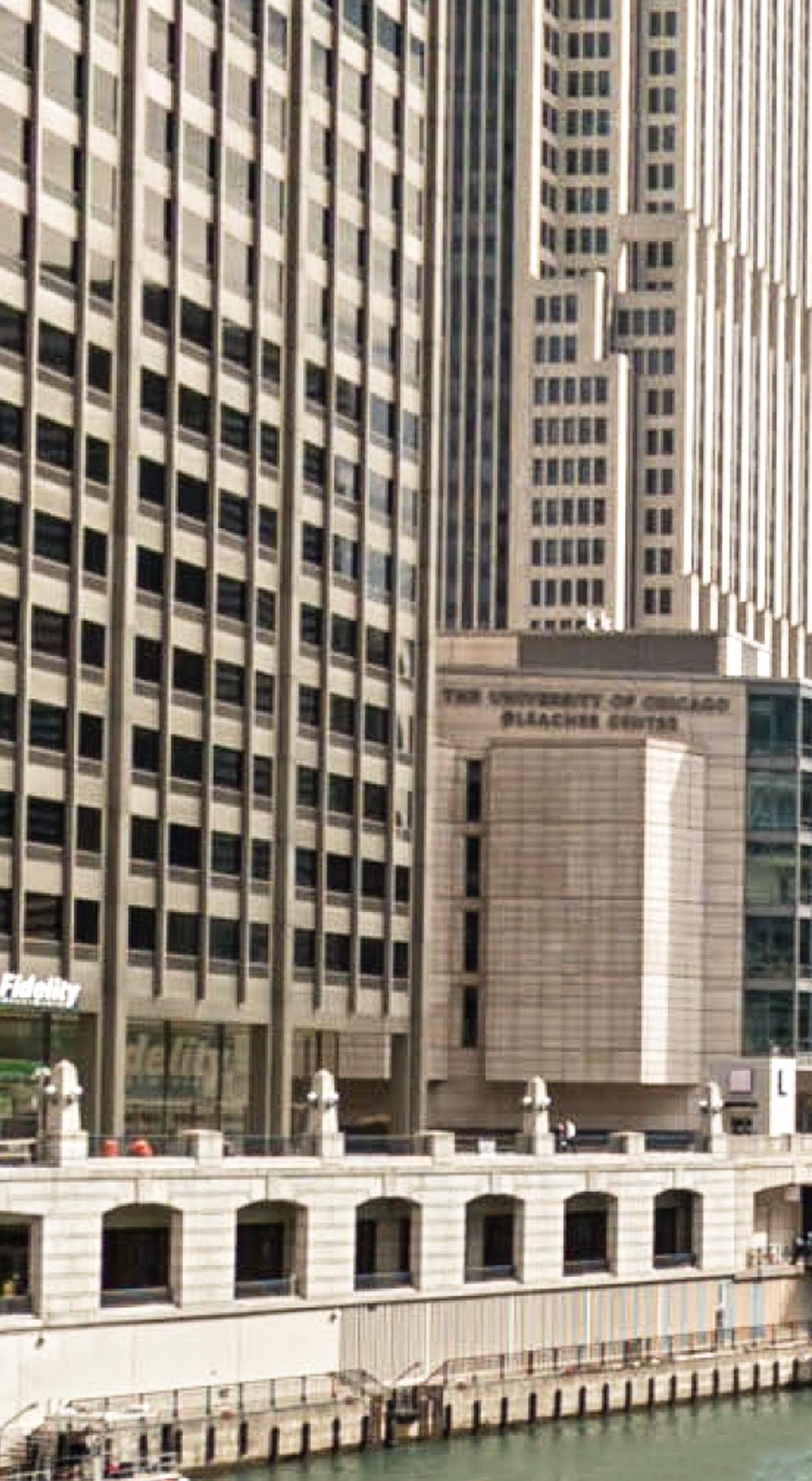
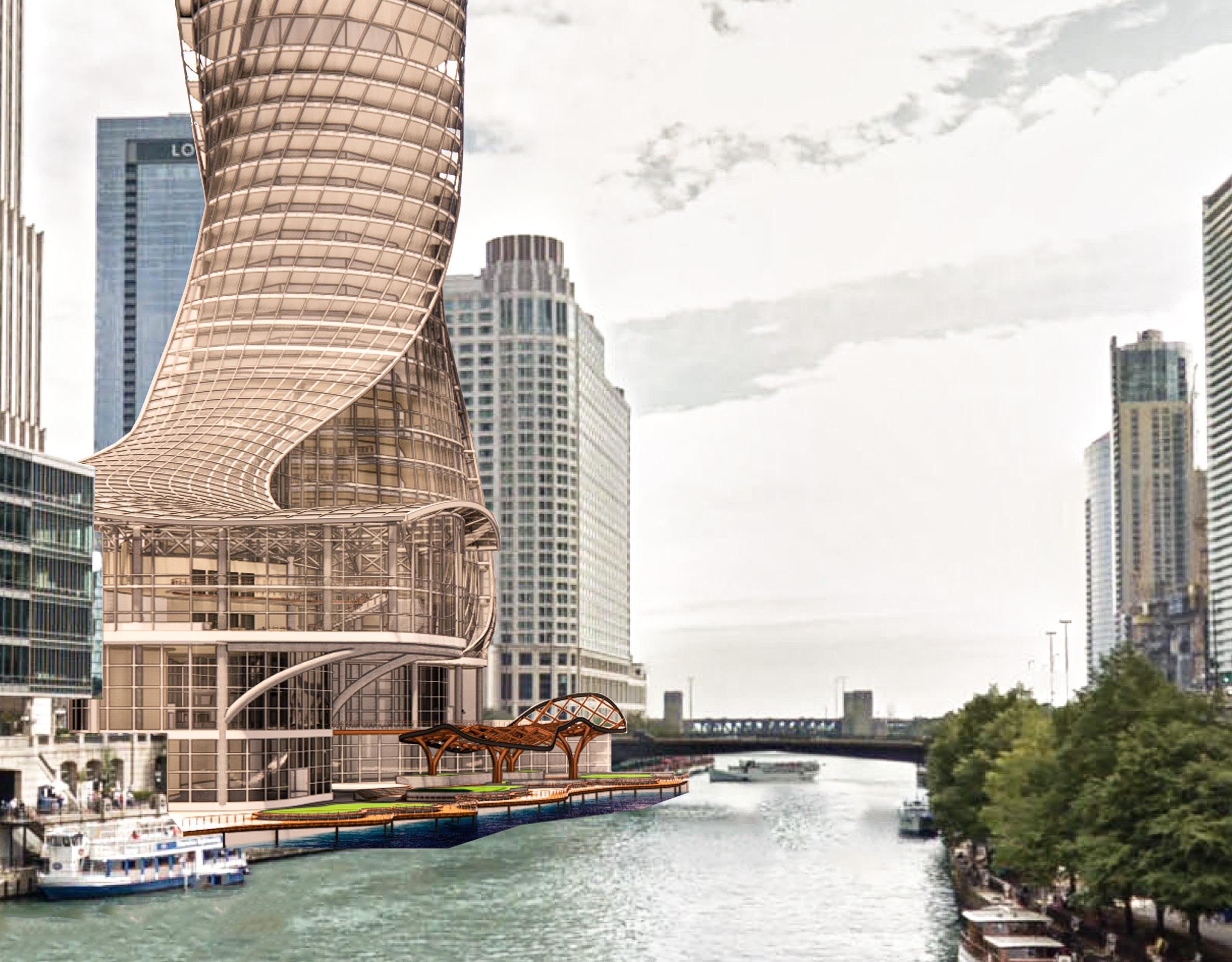
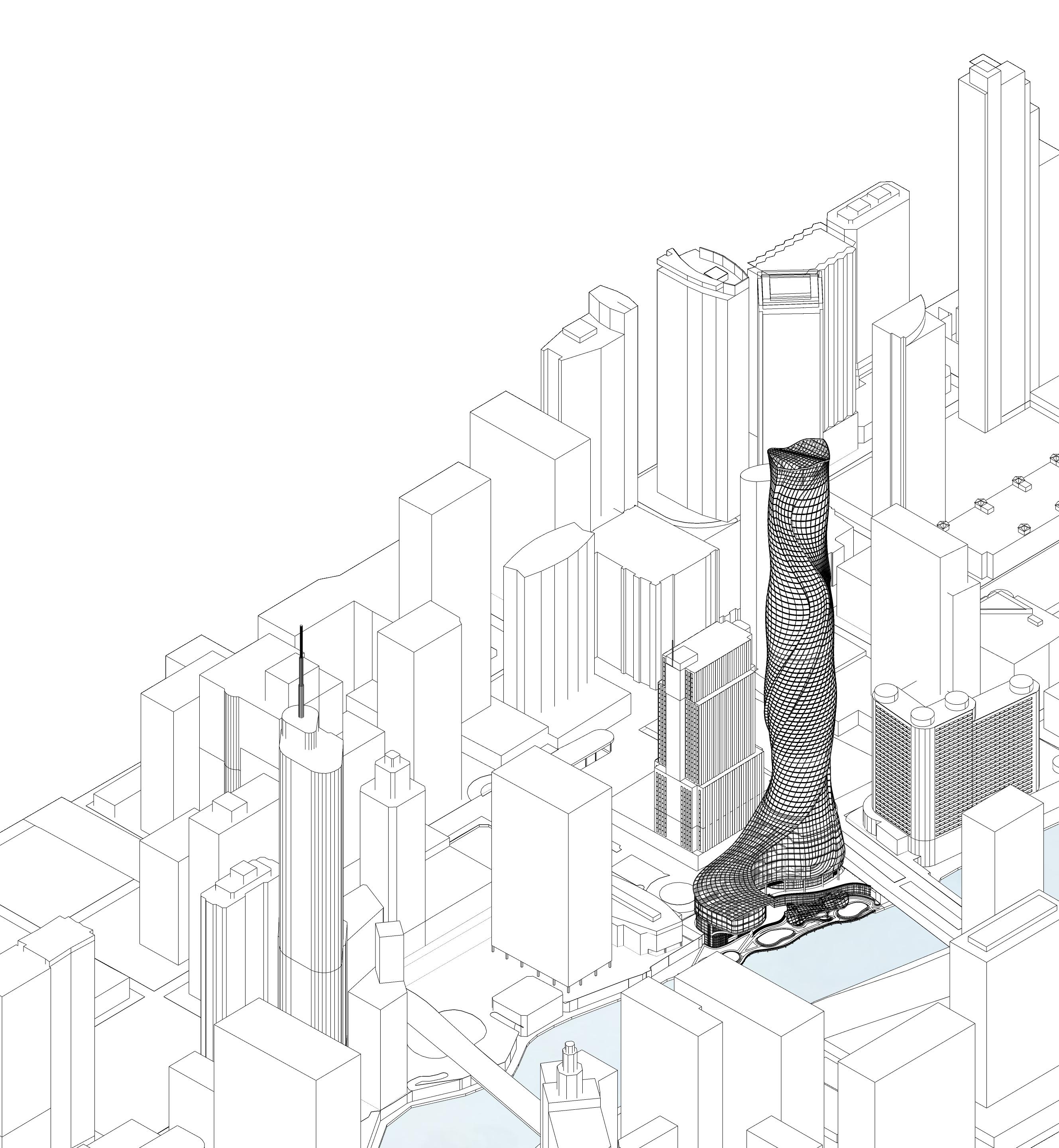
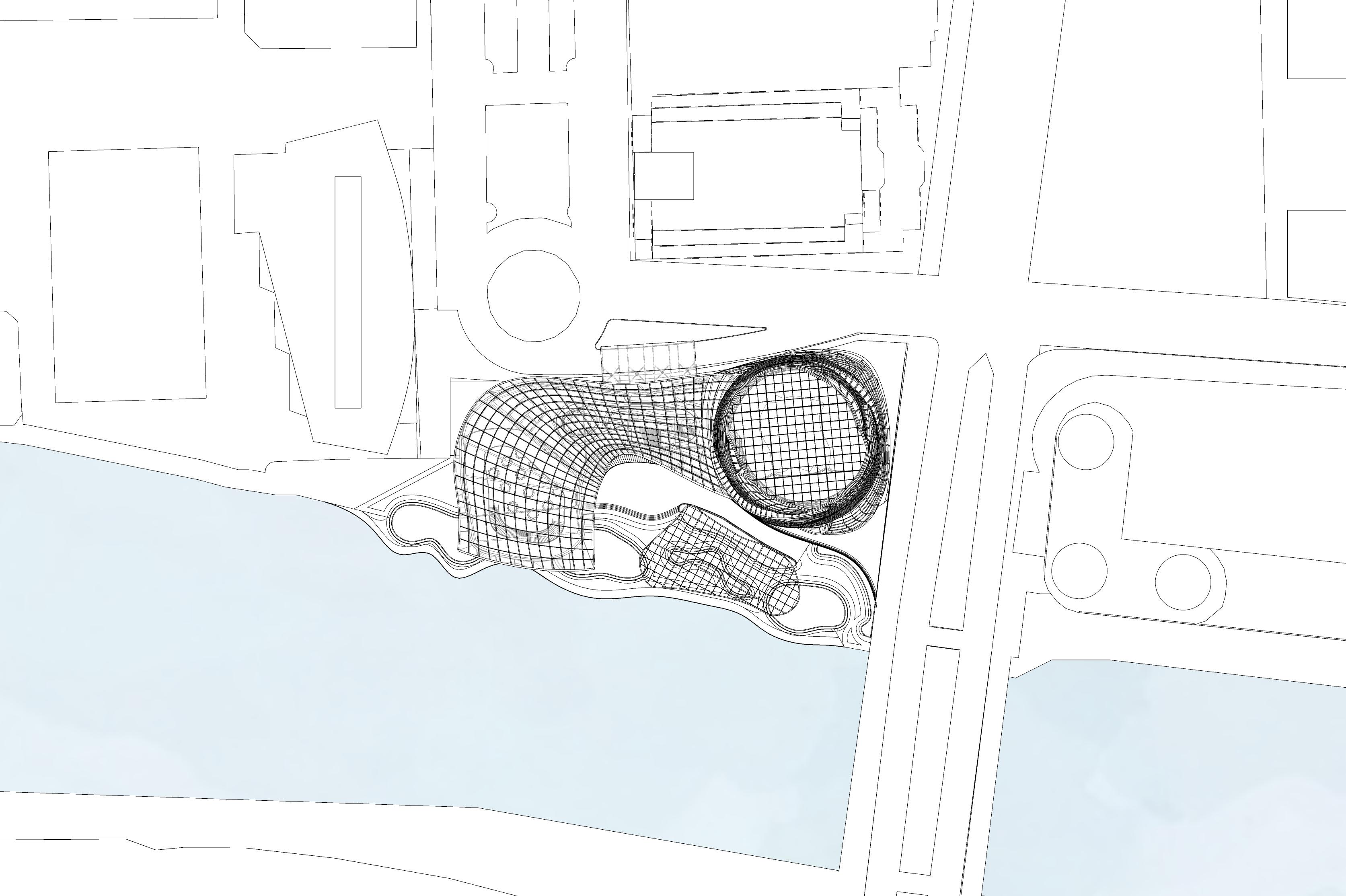
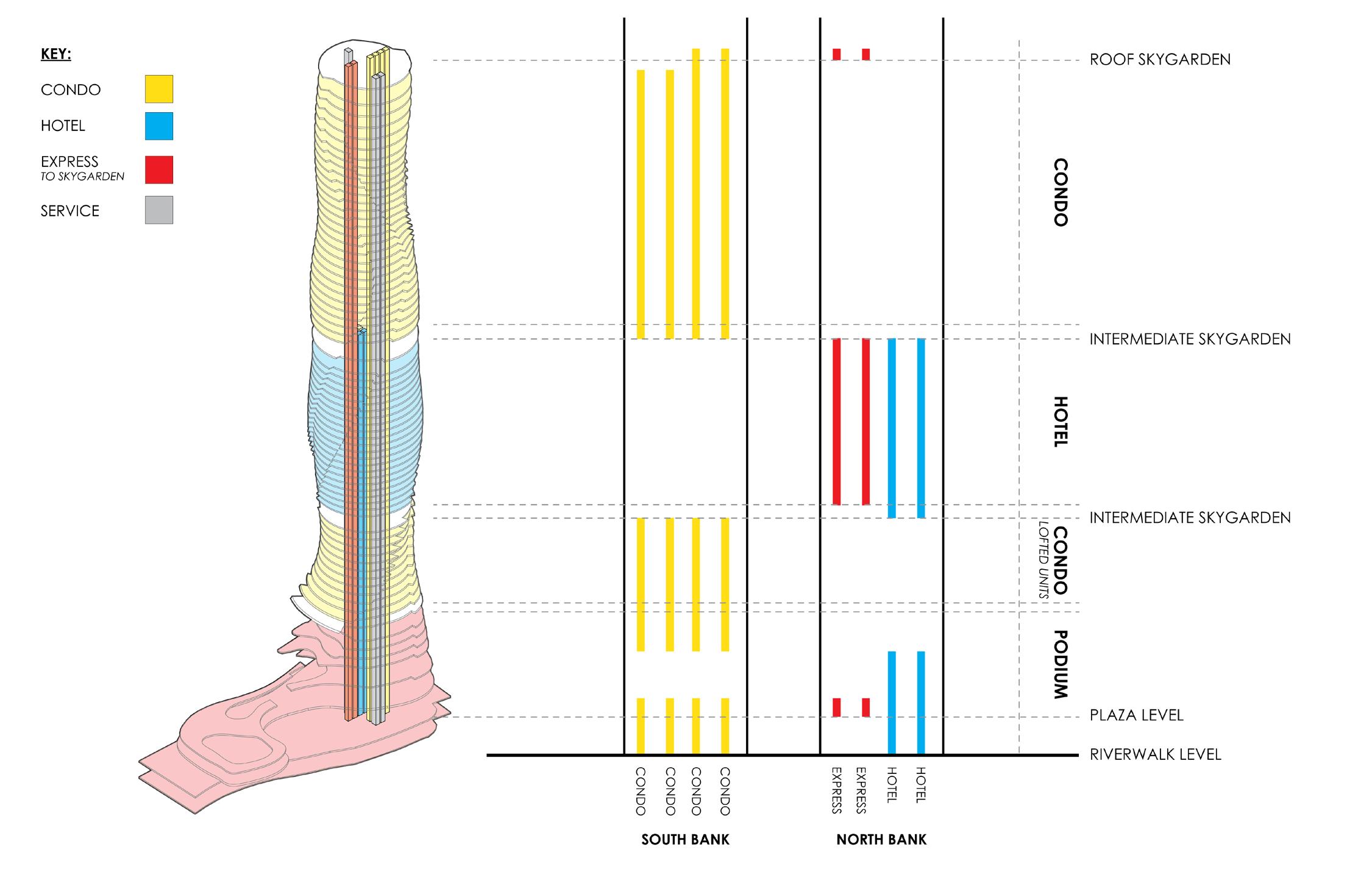
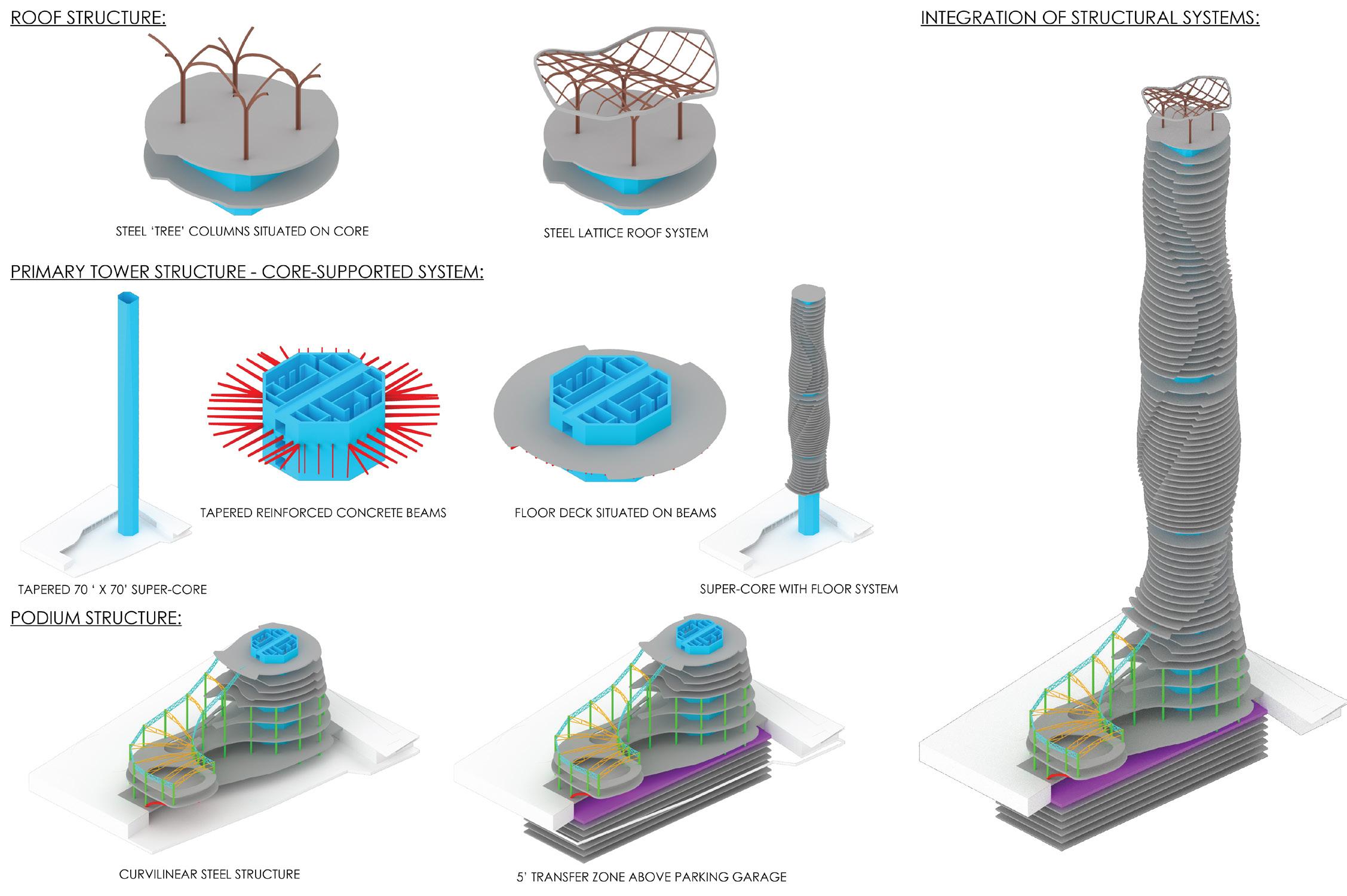
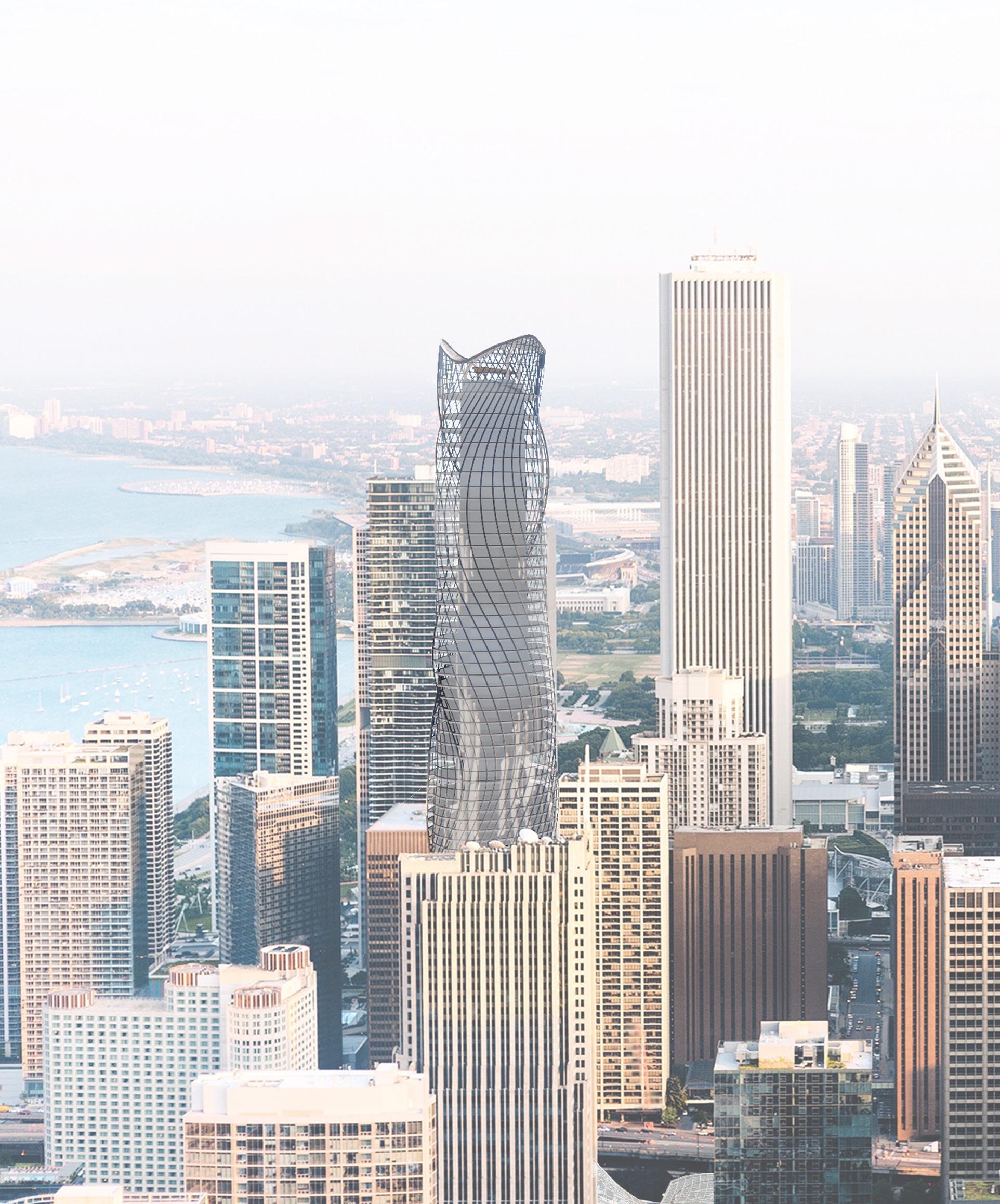
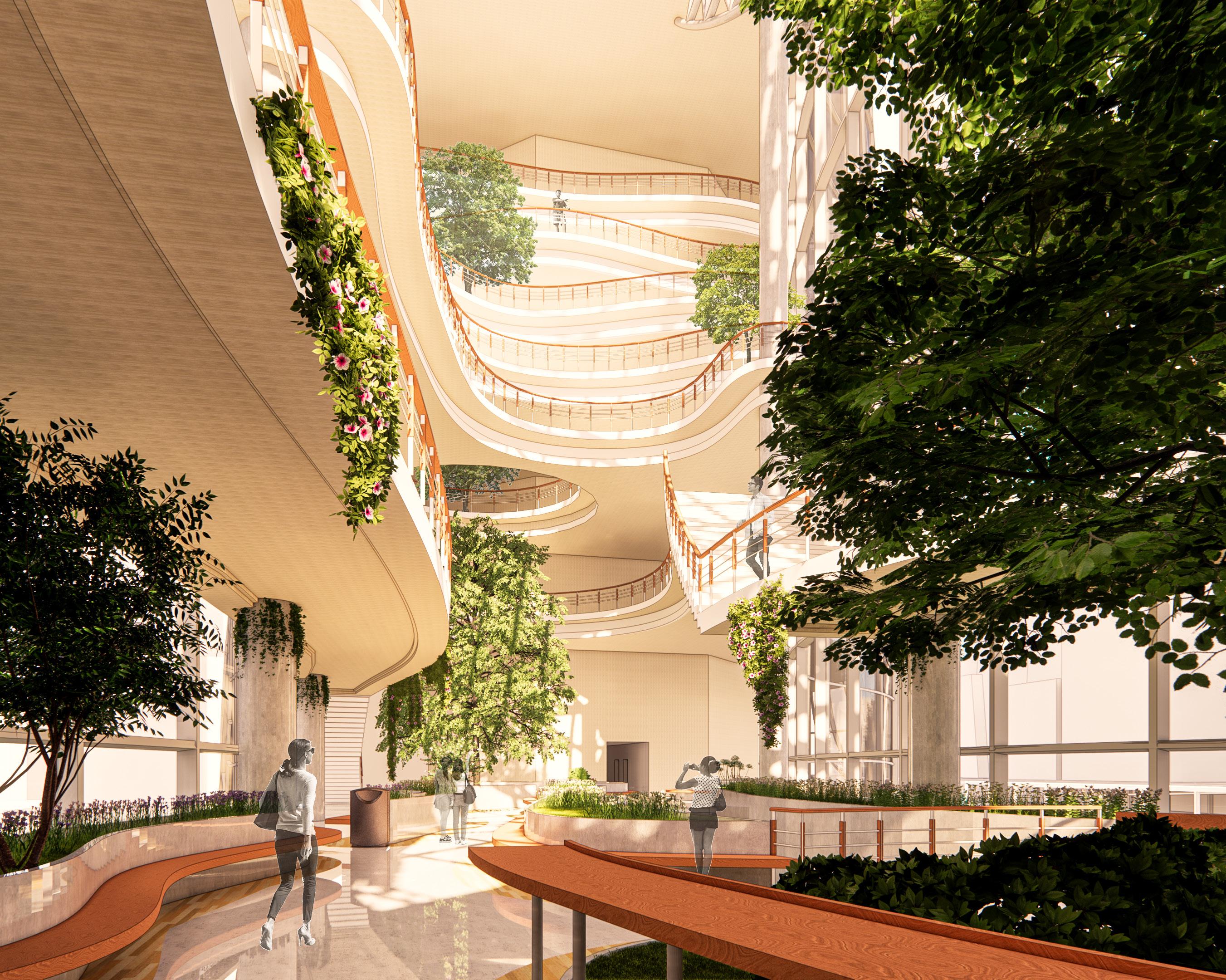
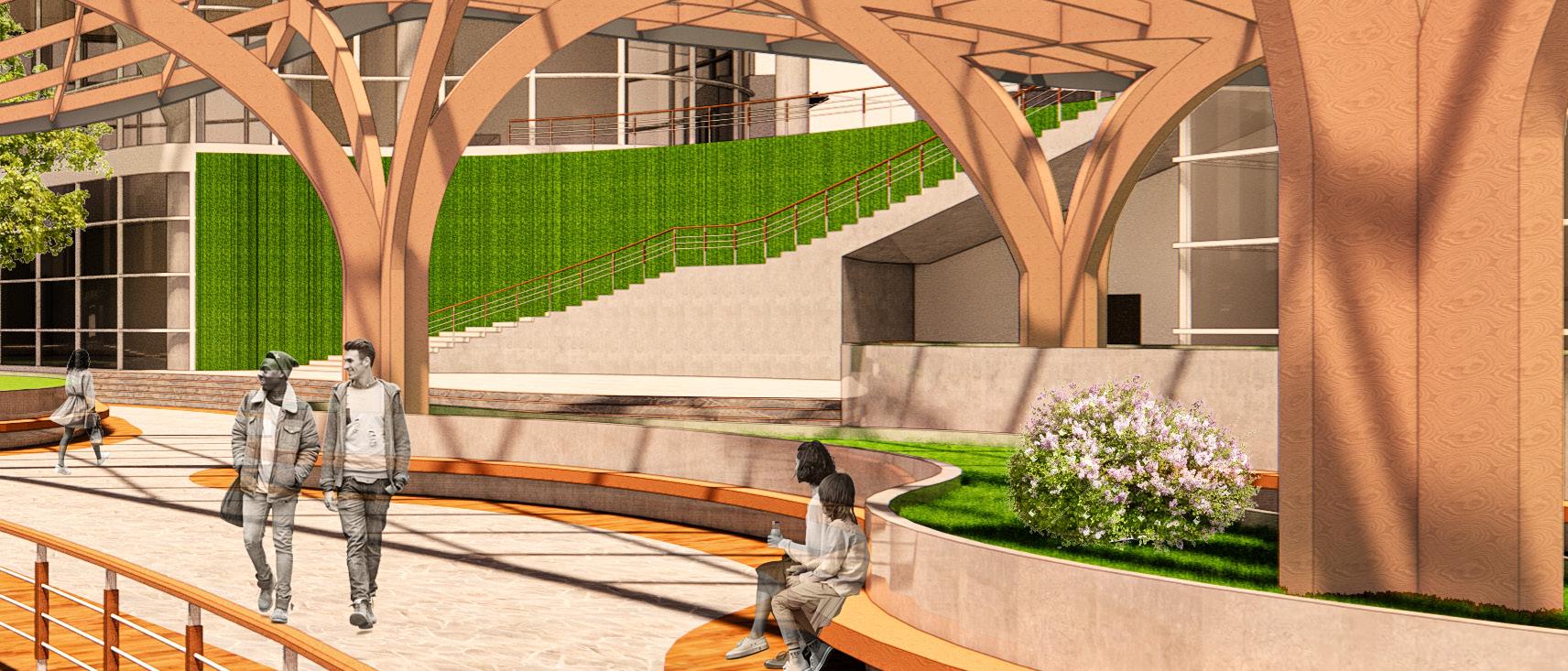
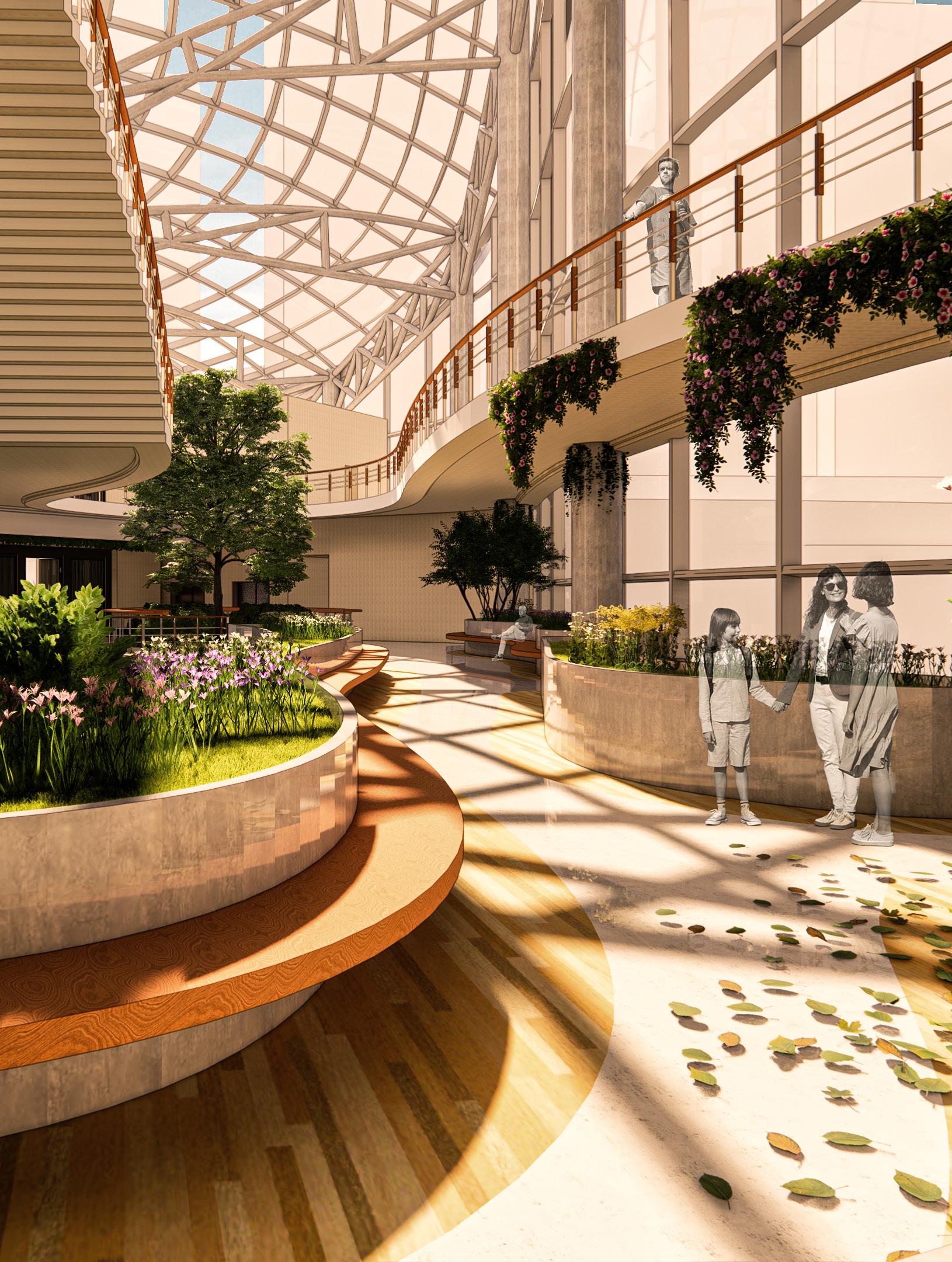
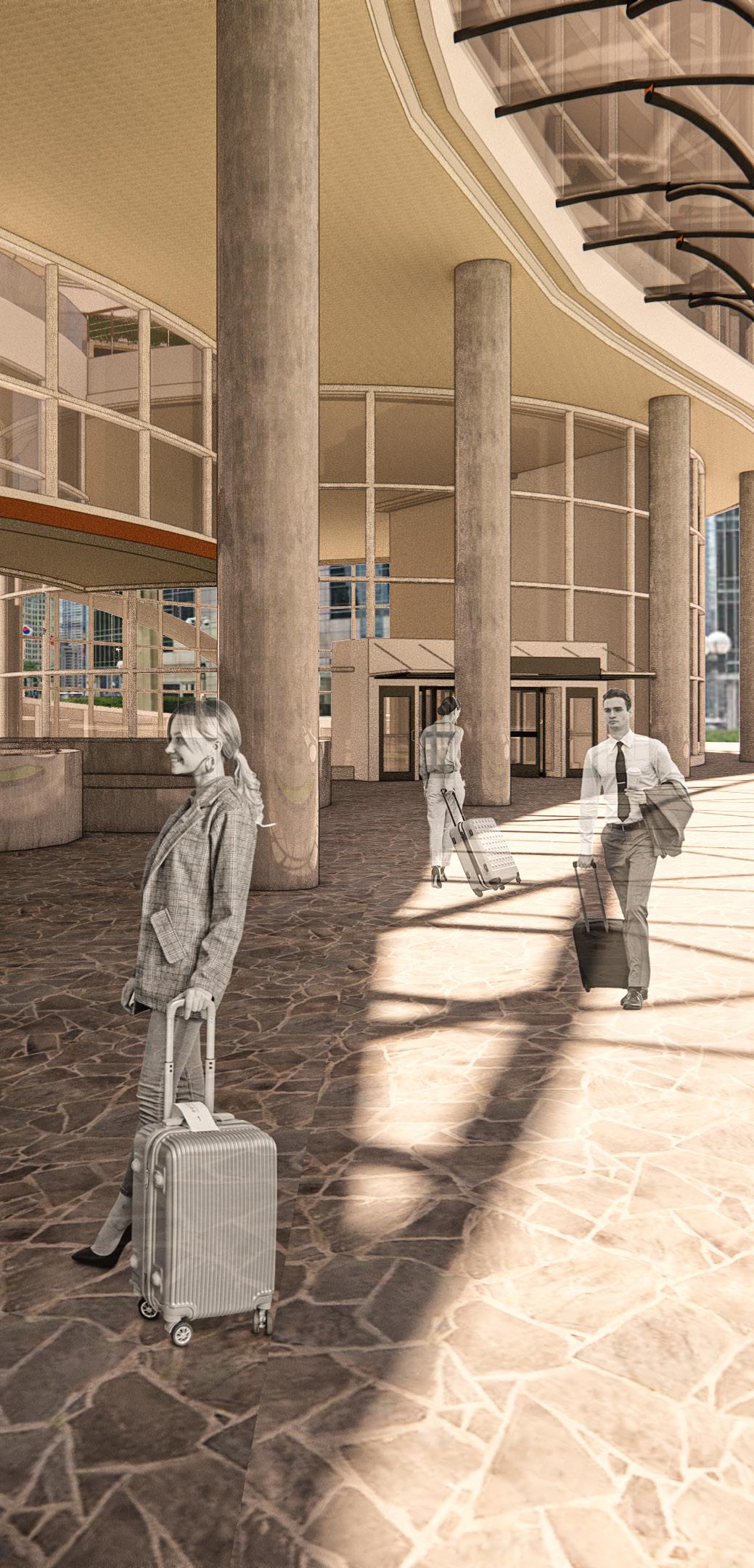
This project is to design a high-rise hotel/ condominium tower for a site that is a prime location for additional hotel and housing units given its proximity to the Loop, Navy Pier, and The Magnificent Mile along North Michigan Avenue. The site is located in Chicago’s Streeterville District, on the north bank of the Chicago River immediately to the south of the NBC Tower.
The site consists of a one-half-block parcel of land located on the Chicago River. Located directly to the north is the NBC Tower and to the east is the Sheraton Hotel. It is currently used for parking. Because this program calls for a boutique hotel, it will not compete directly with the Sheraton forclientele.
Sixth Year Studio University of Illinois
Instructor
Paul Armstrong, Associate Professor Emeritus
In Collaboration With
Patrick Dillon
Ray
Wysocki
6
HIGH RISE HOTEL AND CONDO | | |
SECOND YEAR GRADUATE | | | 7
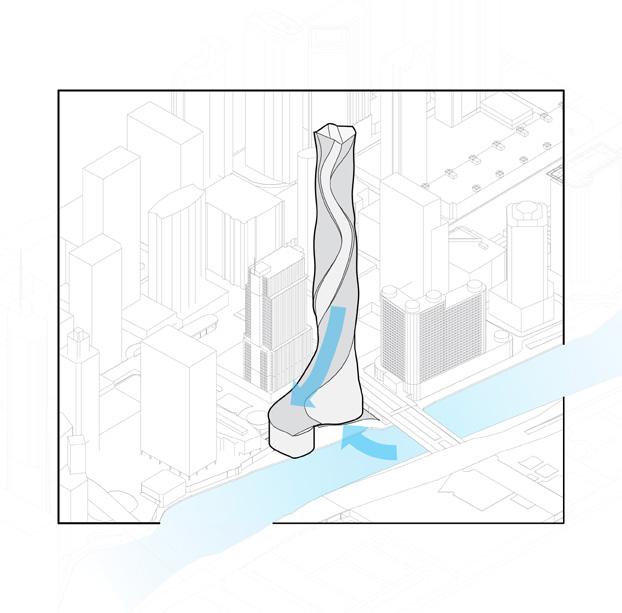
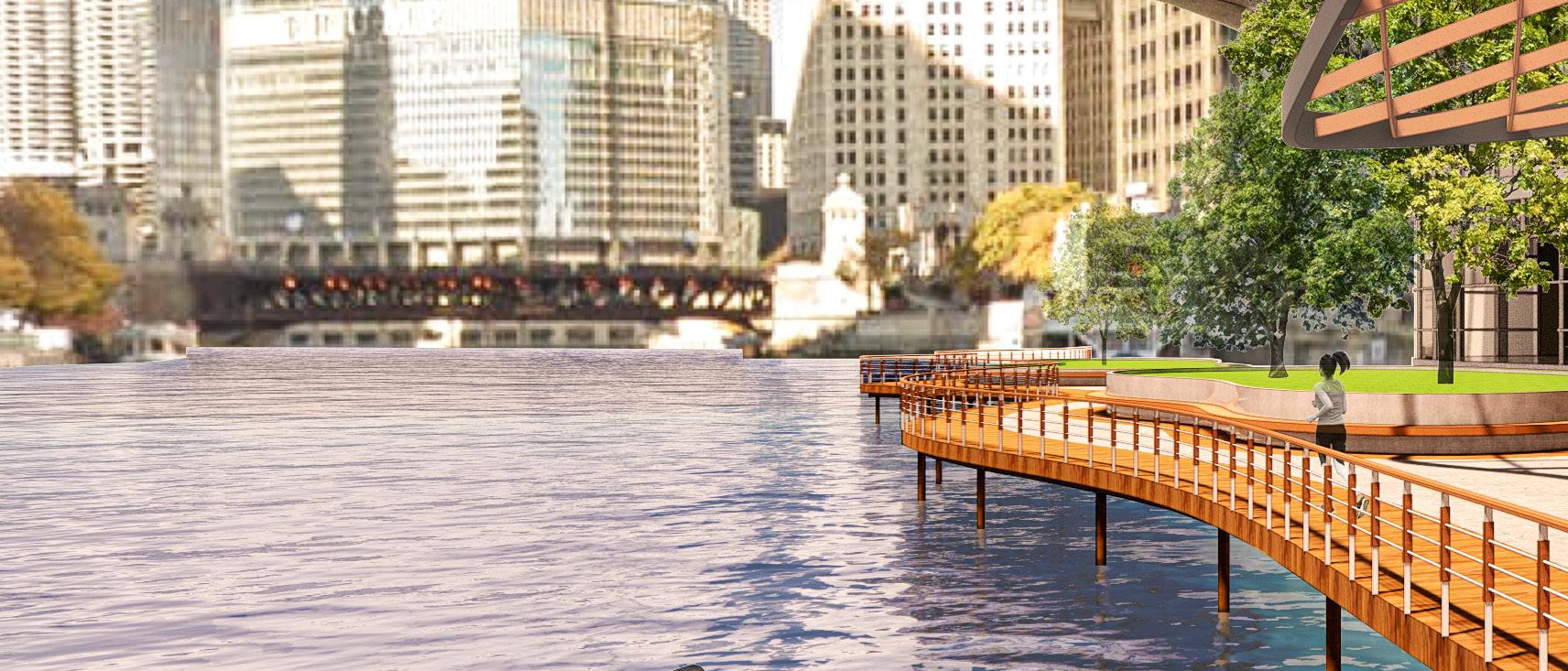
Chicago’s loop and streeterville neighborhood exemplify all the different “flows” a city experiences: people, vehicles, and nature. In our site’s immediate area, the flows can be seen and experienced as separate. This project seeks to create a physical and metaphorical node between these flows.
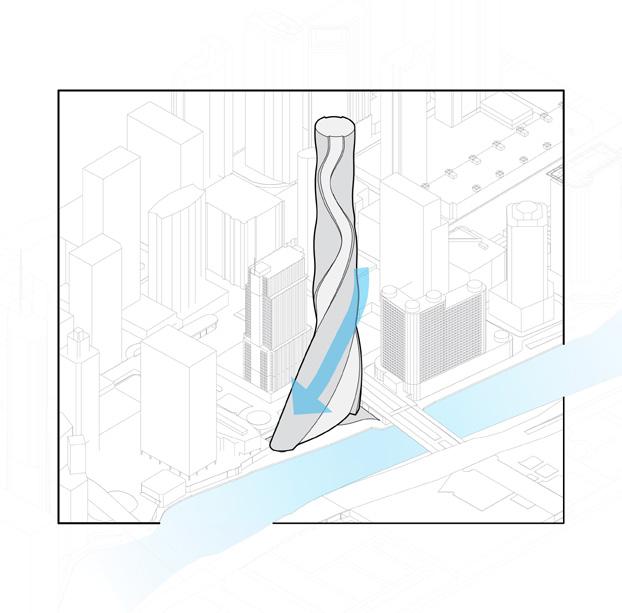
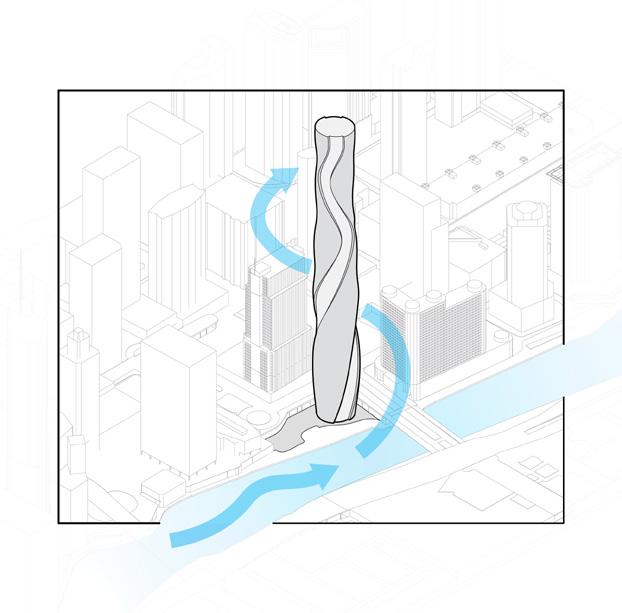
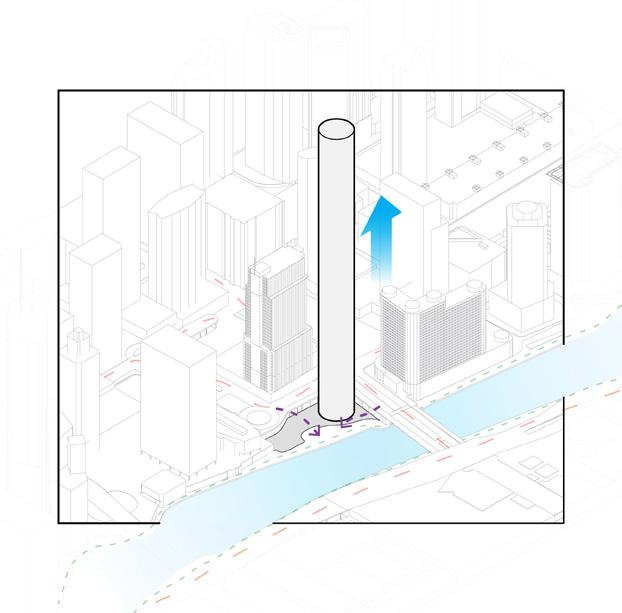
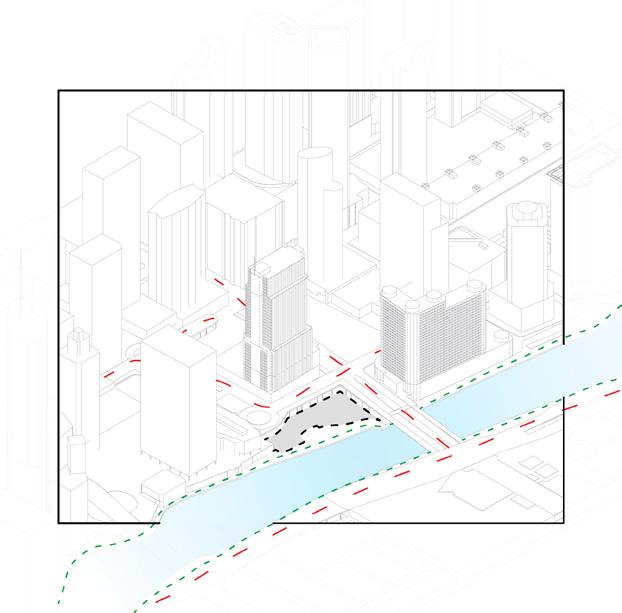
8 HIGH RISE HOTEL AND CONDO | | |
01 MOVEMENT 02 PLACE 03 CARVE 04 CONVERGE 05 BRIDGE
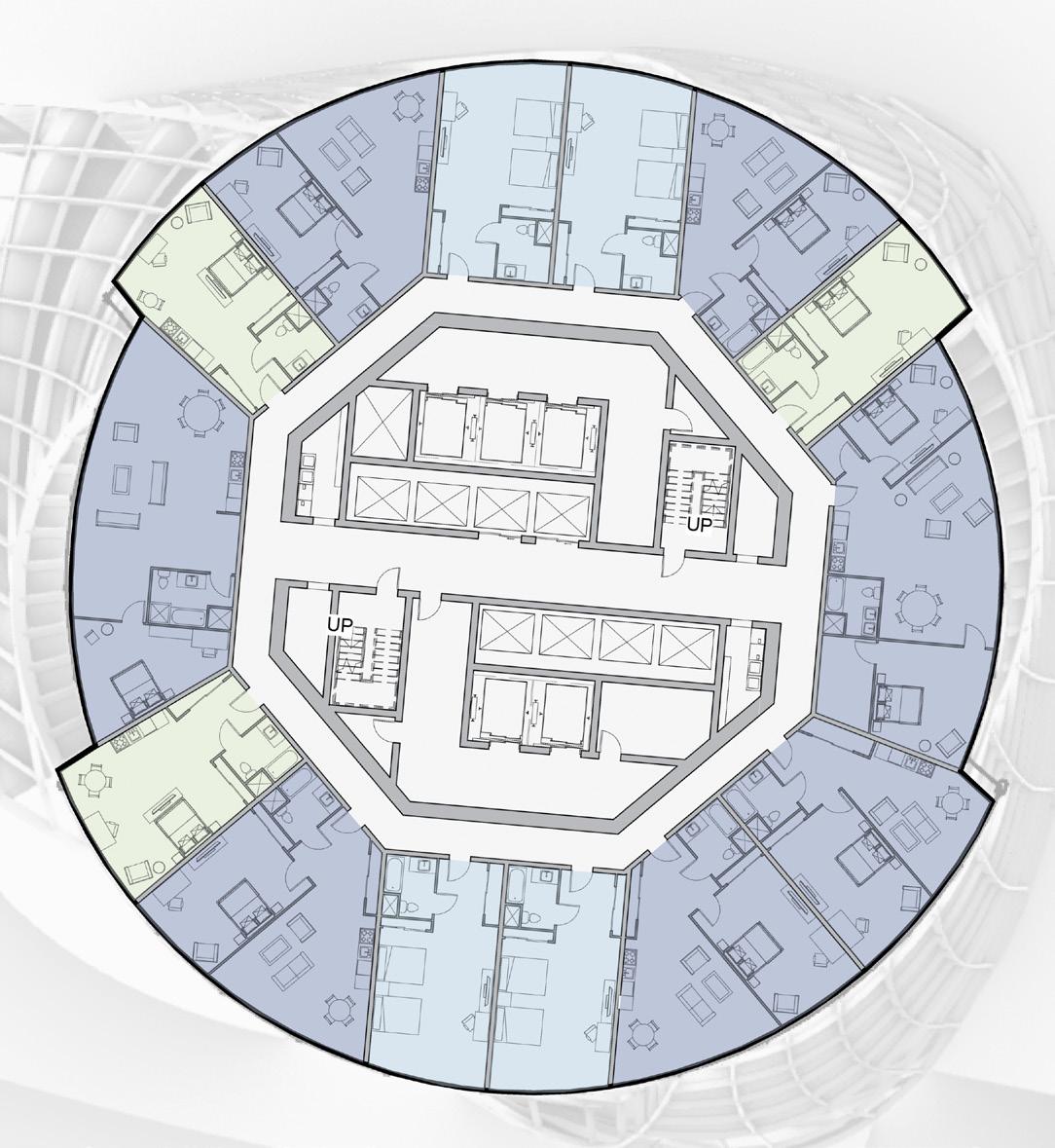
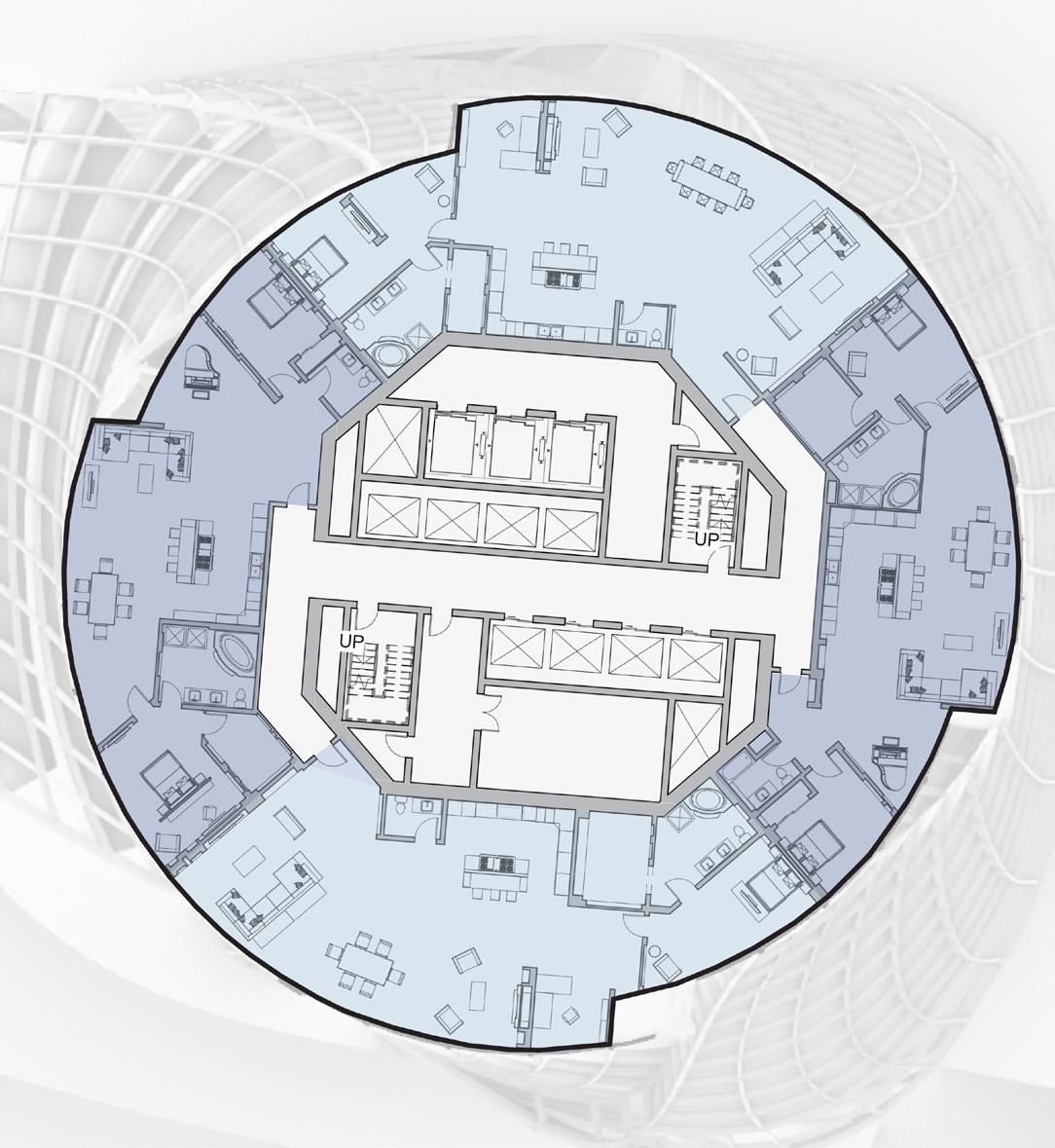
SECOND YEAR GRADUATE | | | 9 TYPICAL LOWER HOTEL FLOOR PLAN SITE PLAN TYPICAL LOWER
PLAN
CONDO FLOOR
10 HIGH RISE HOTEL AND CONDO | | |
SECOND YEAR GRADUATE | | | 11 FLOW IN CONTEXT
12 HIGH RISE HOTEL AND CONDO | | |
SECOND YEAR GRADUATE | | | 13
02 - Woodlawn Corridor Development
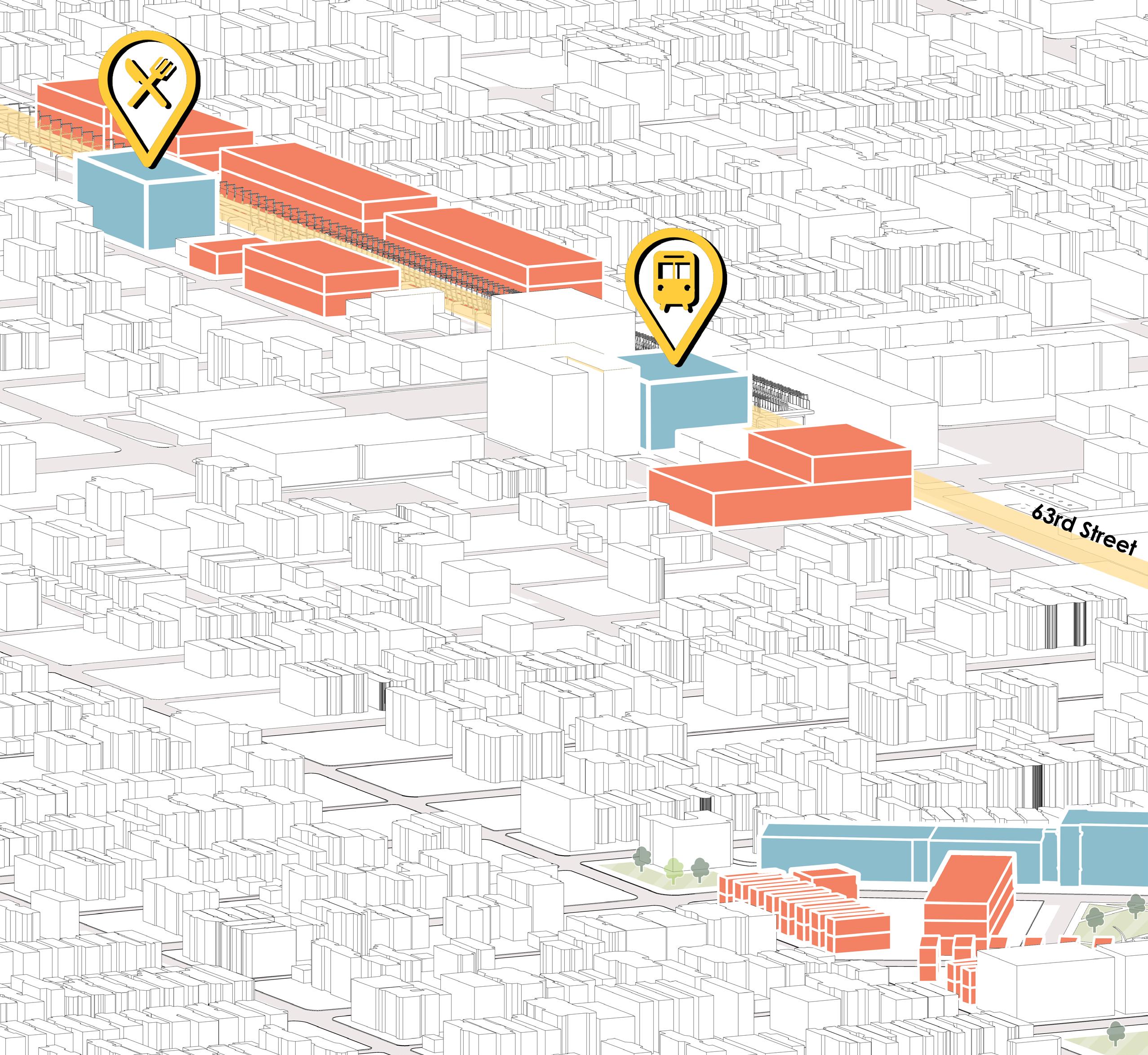
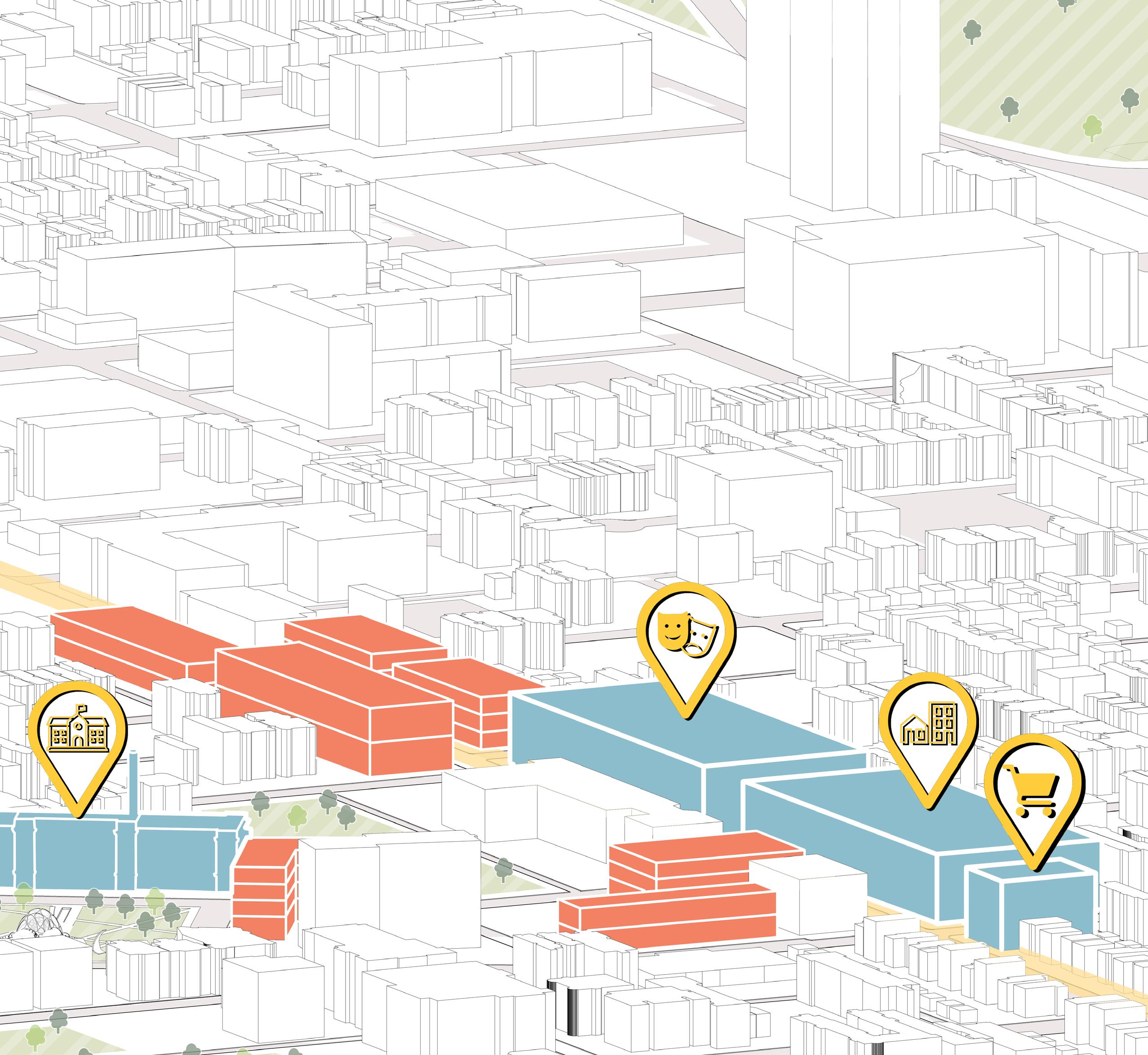
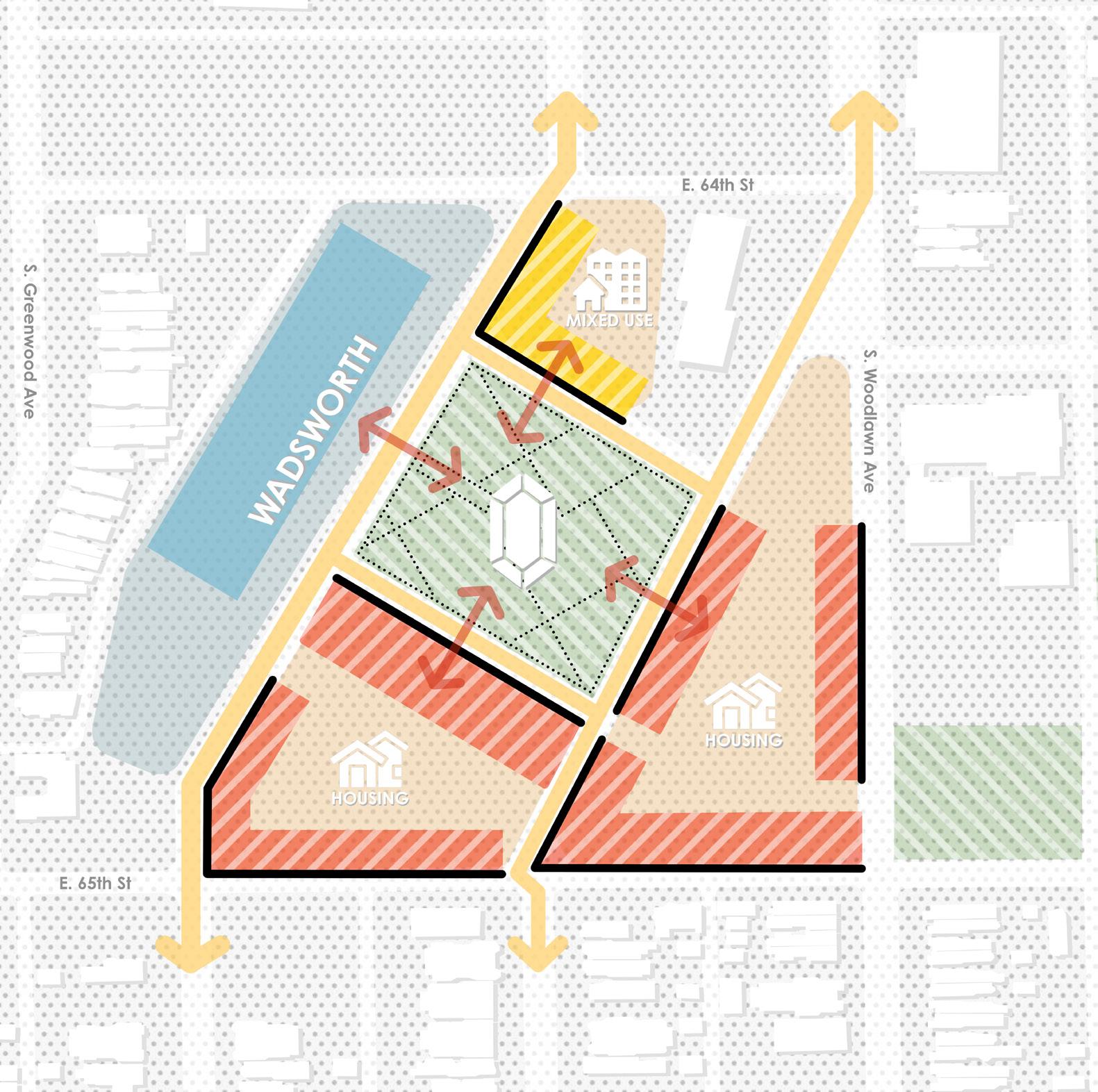
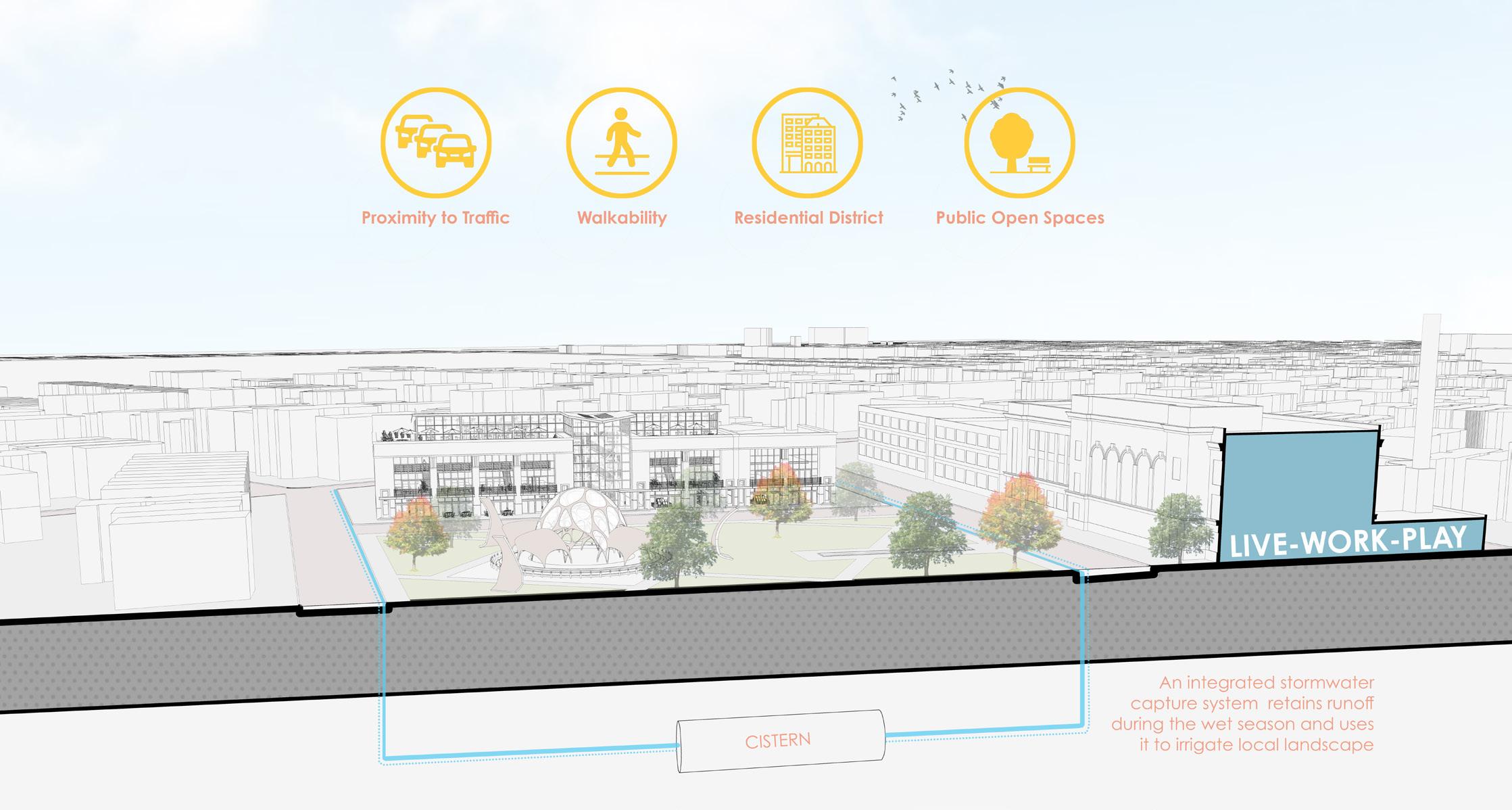
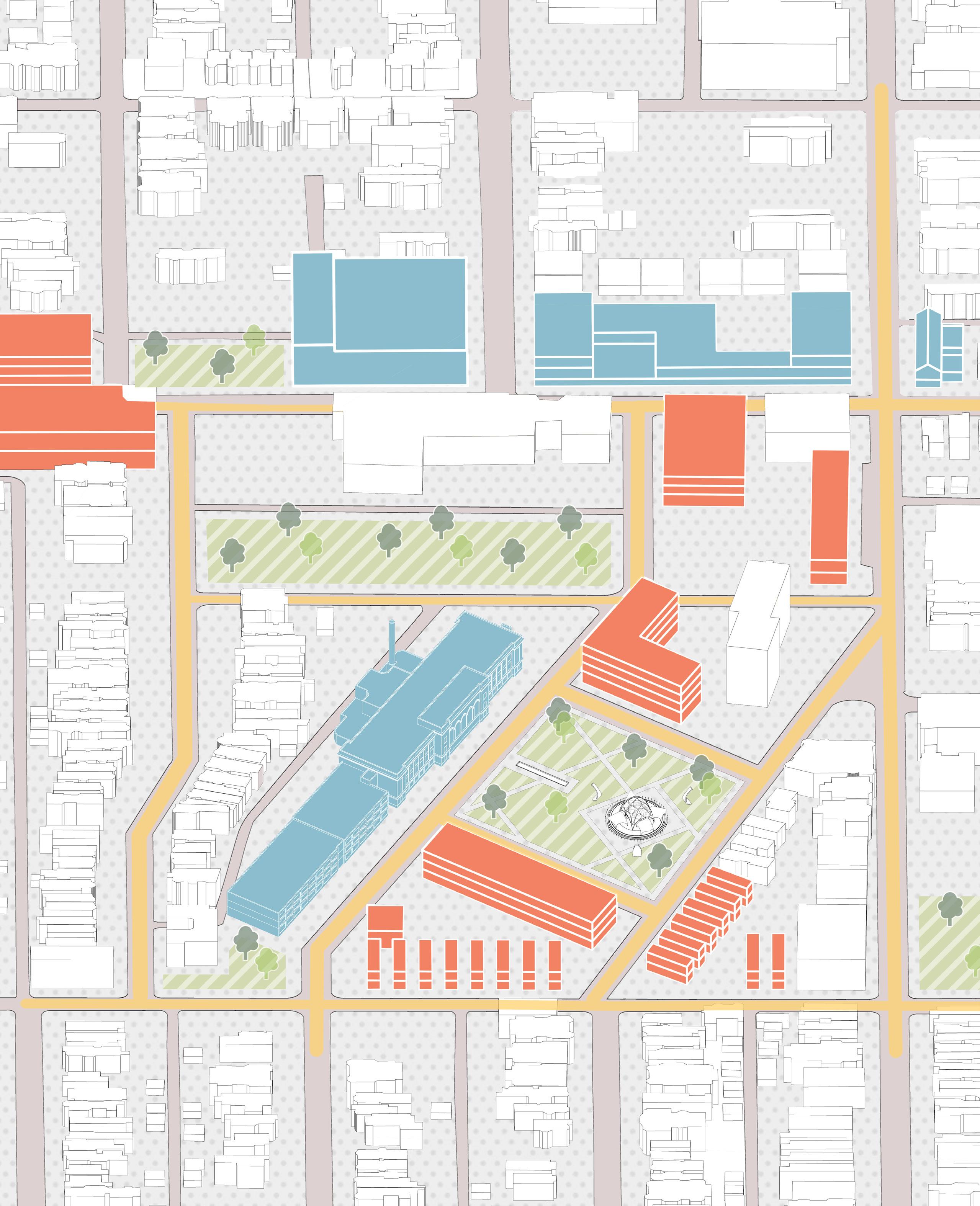
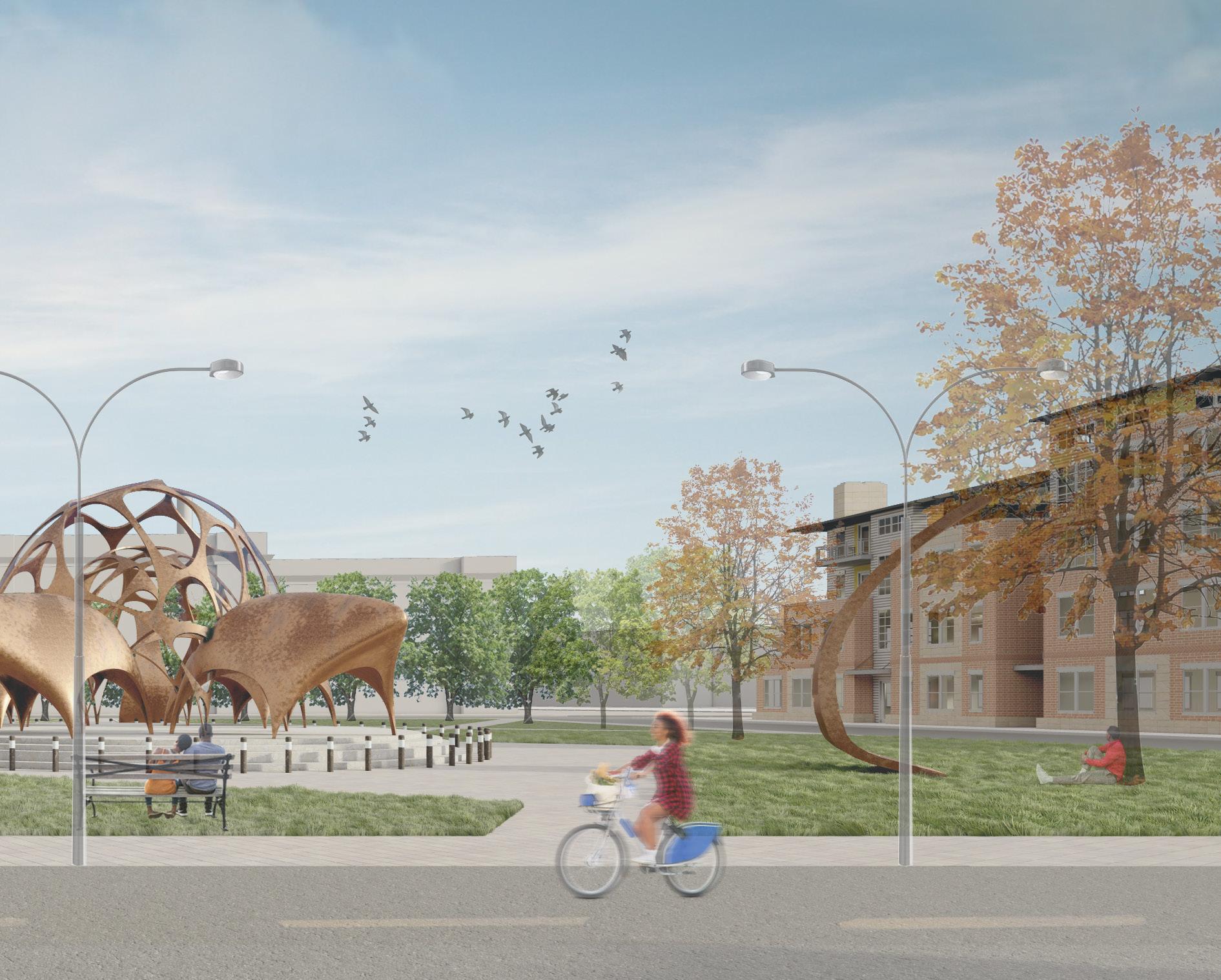
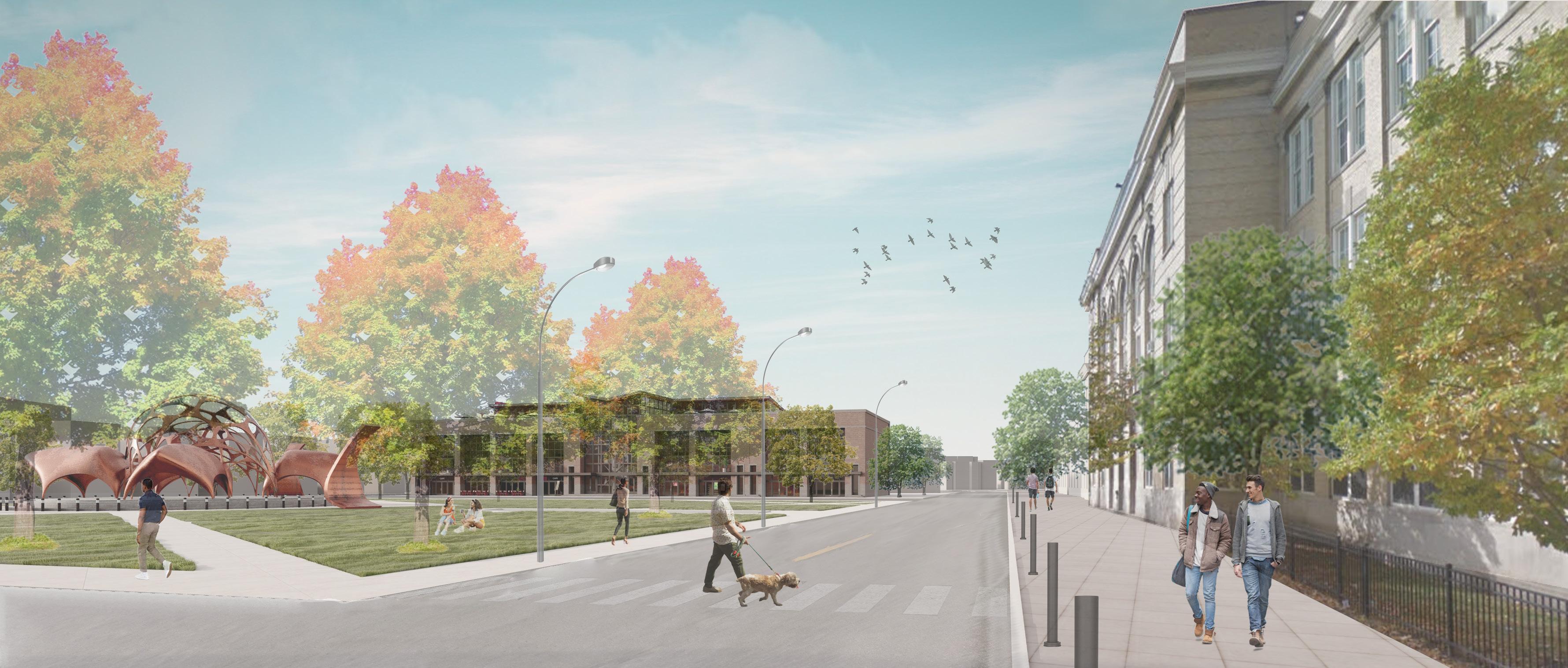
In the Chicago Studio we explored an urban design project located in Woodlawn, Chicago. The project was to create an urban design proposal based upon the 2020 Consolidated Plan produced by the Chicago Department of Planning
Chicago Studio University of Illinois
Instructor Kevin Hinders
14 WOODLAWN CORRIDOR DEVELOPMENT | | |
SENIOR YEAR | | | 15
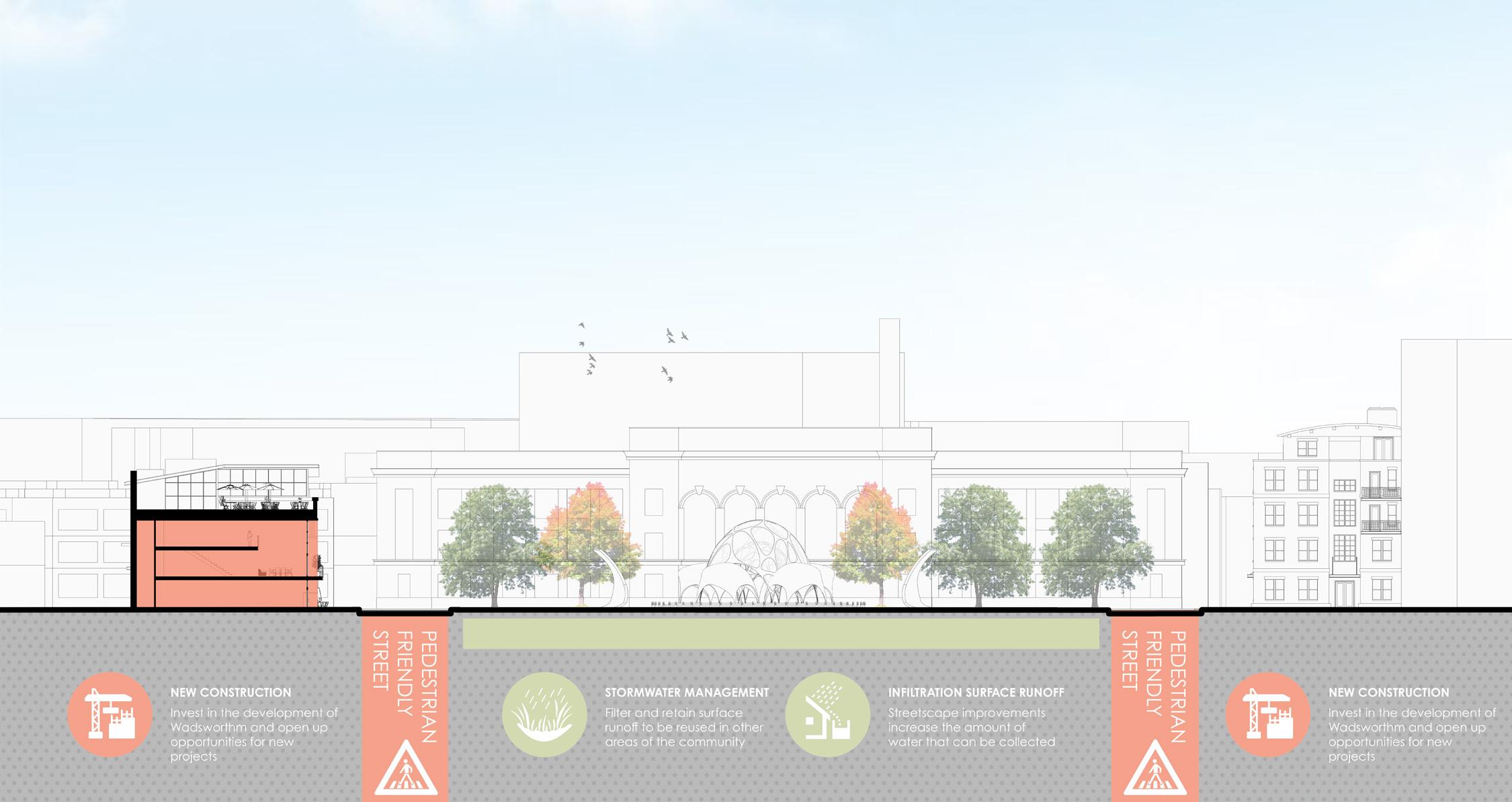
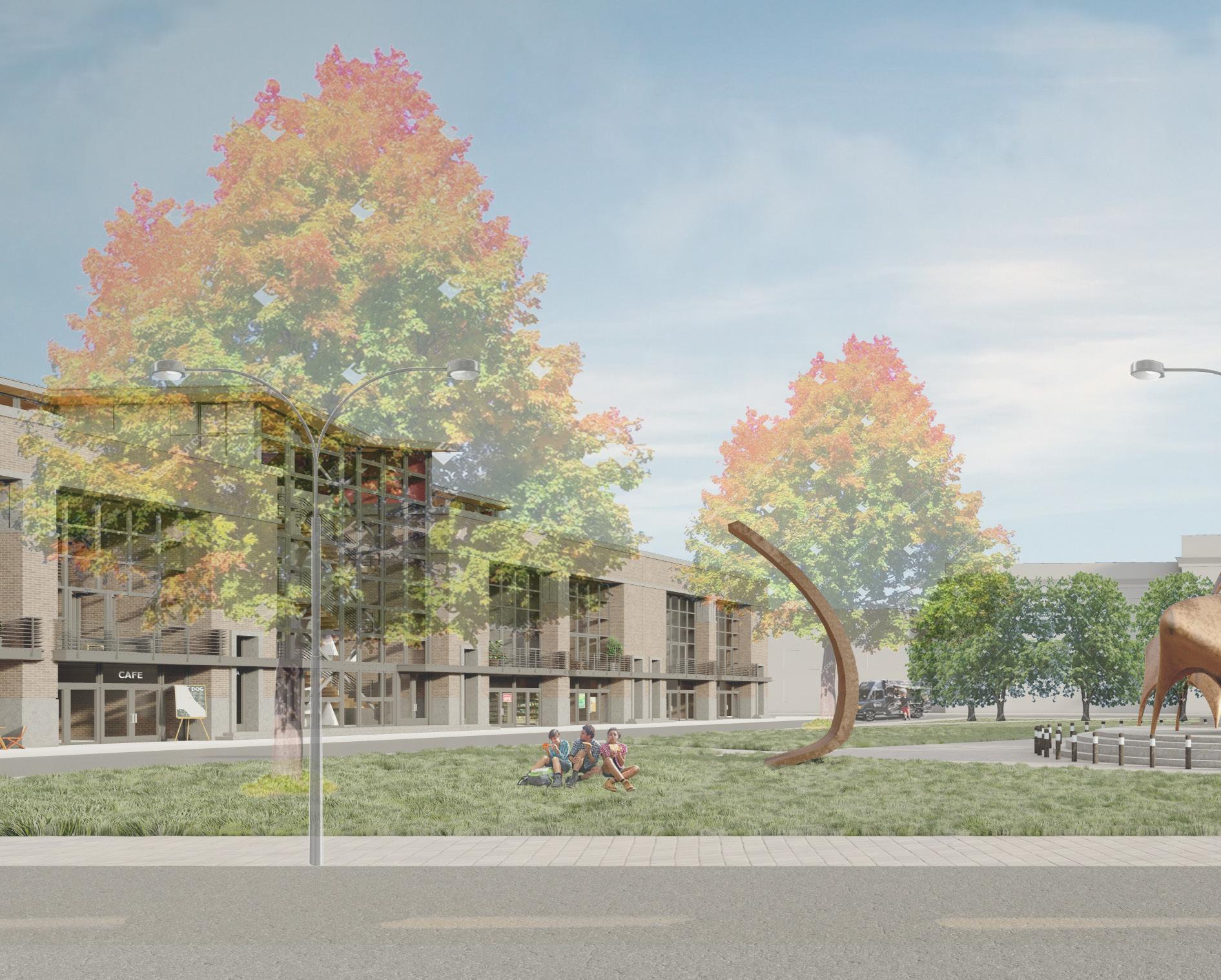
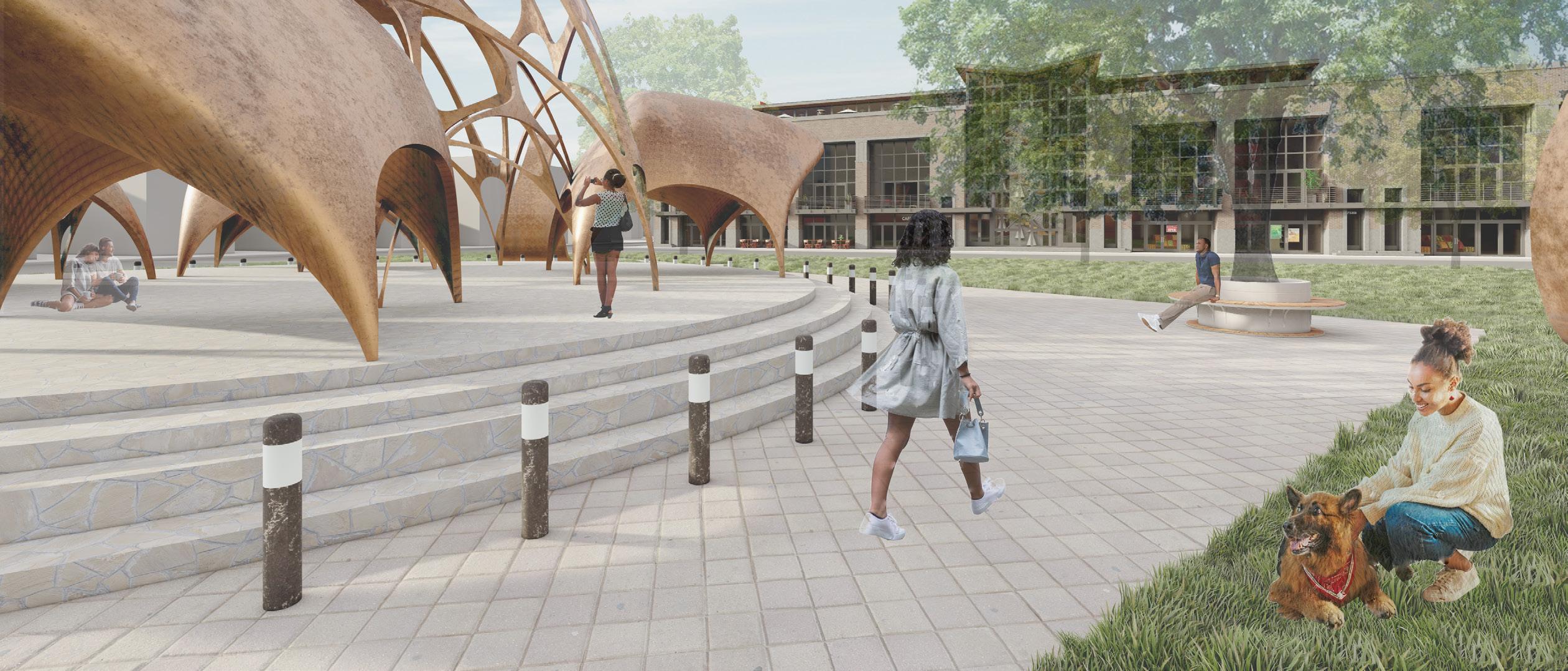
Wadsworth has the potential to be the gem of Woodlawn. By allowing the energy from the 63rd corridor to draw down into the Wadsworth campus, it can reinvigorate the abandoned school and allow for future development in the area.
16 WOODLAWN CORRIDOR DEVELOPMENT | | |
SENIOR YEAR | | | 17
18 18 | | |
19 | | | 19
03 - Mixed Use, Multi-Family Housing
Third Year Studio
University of Illinois
Instructor
AnnaMarie Bliss, PhD, AAIA
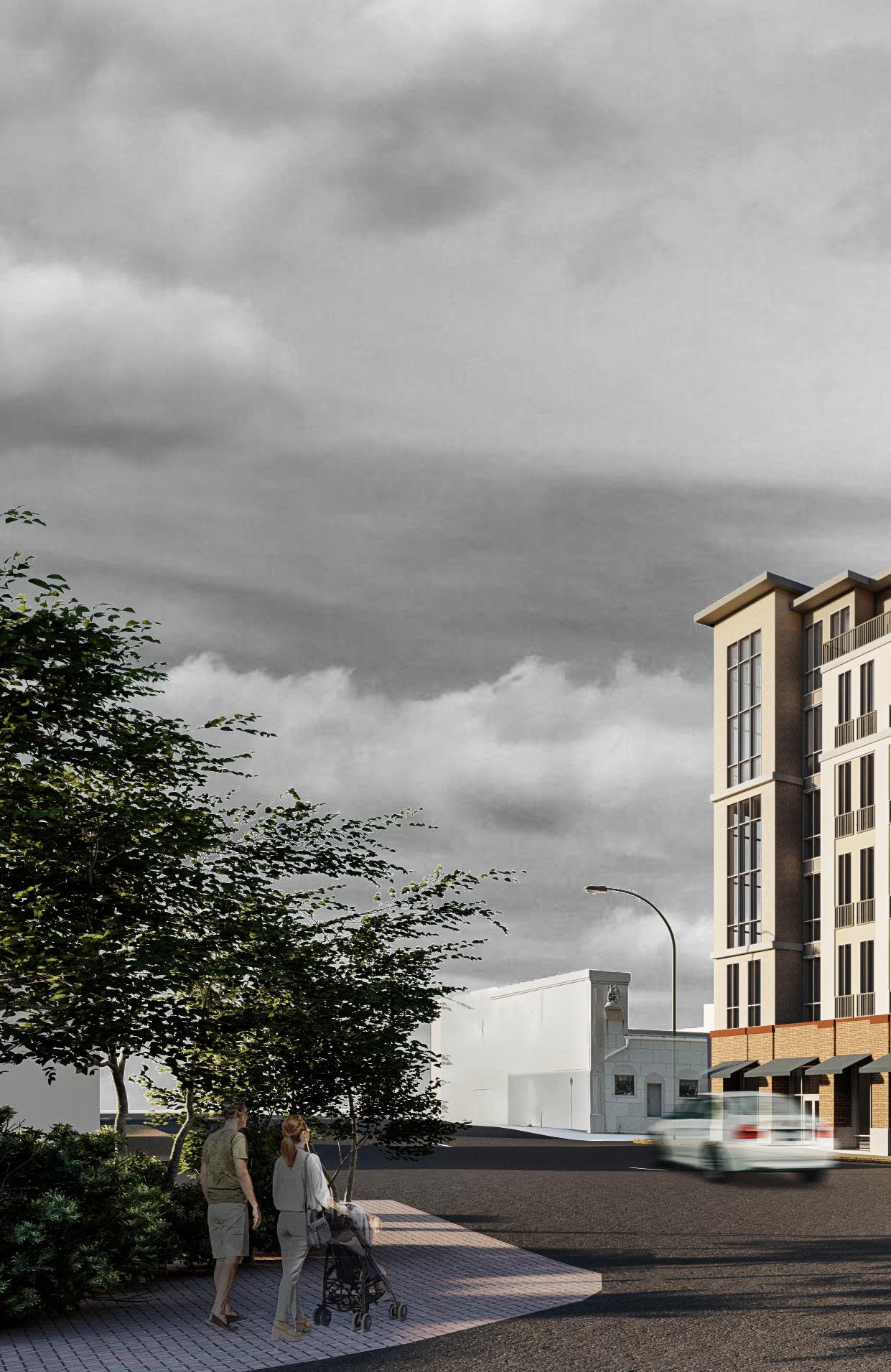
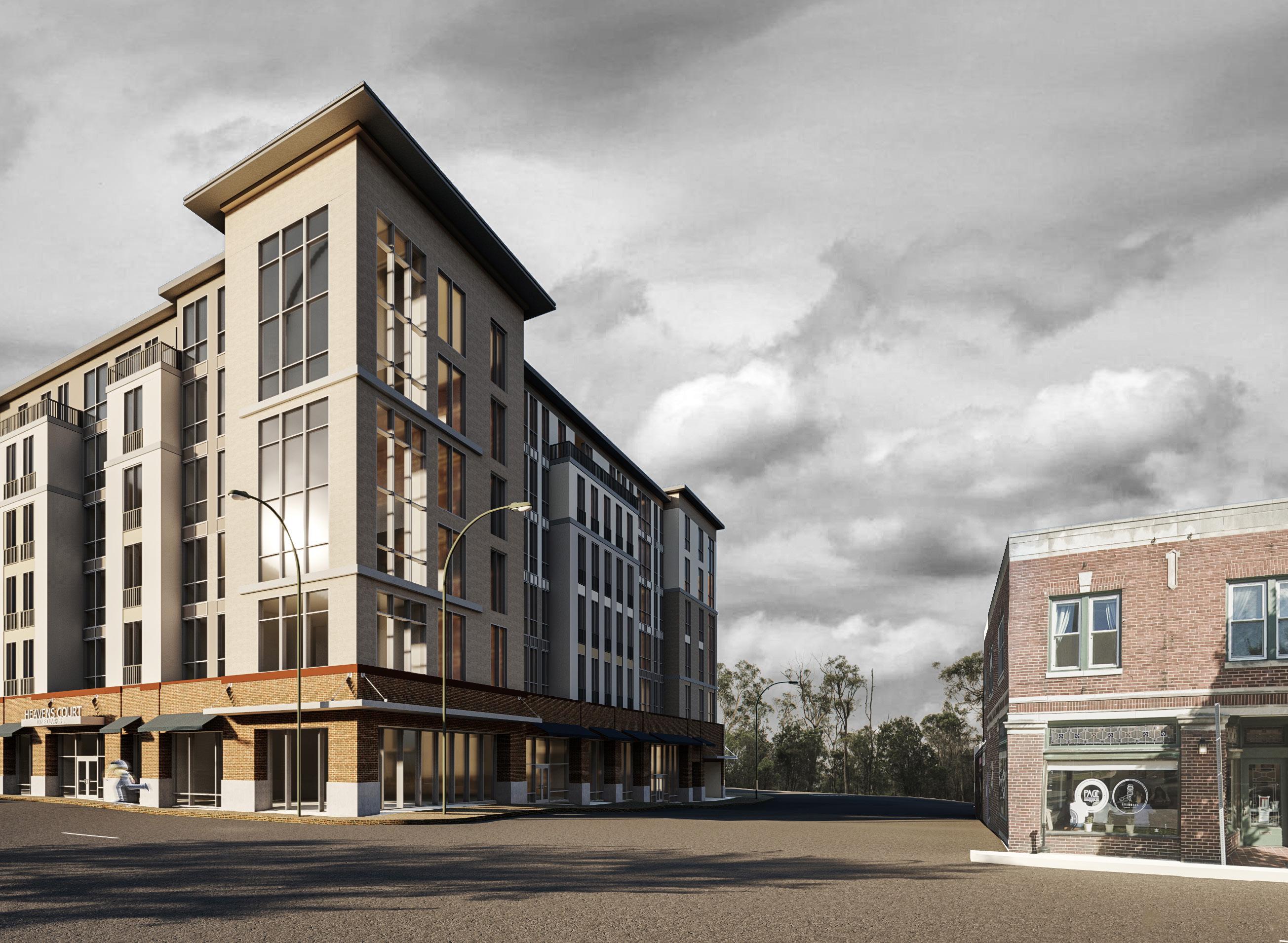
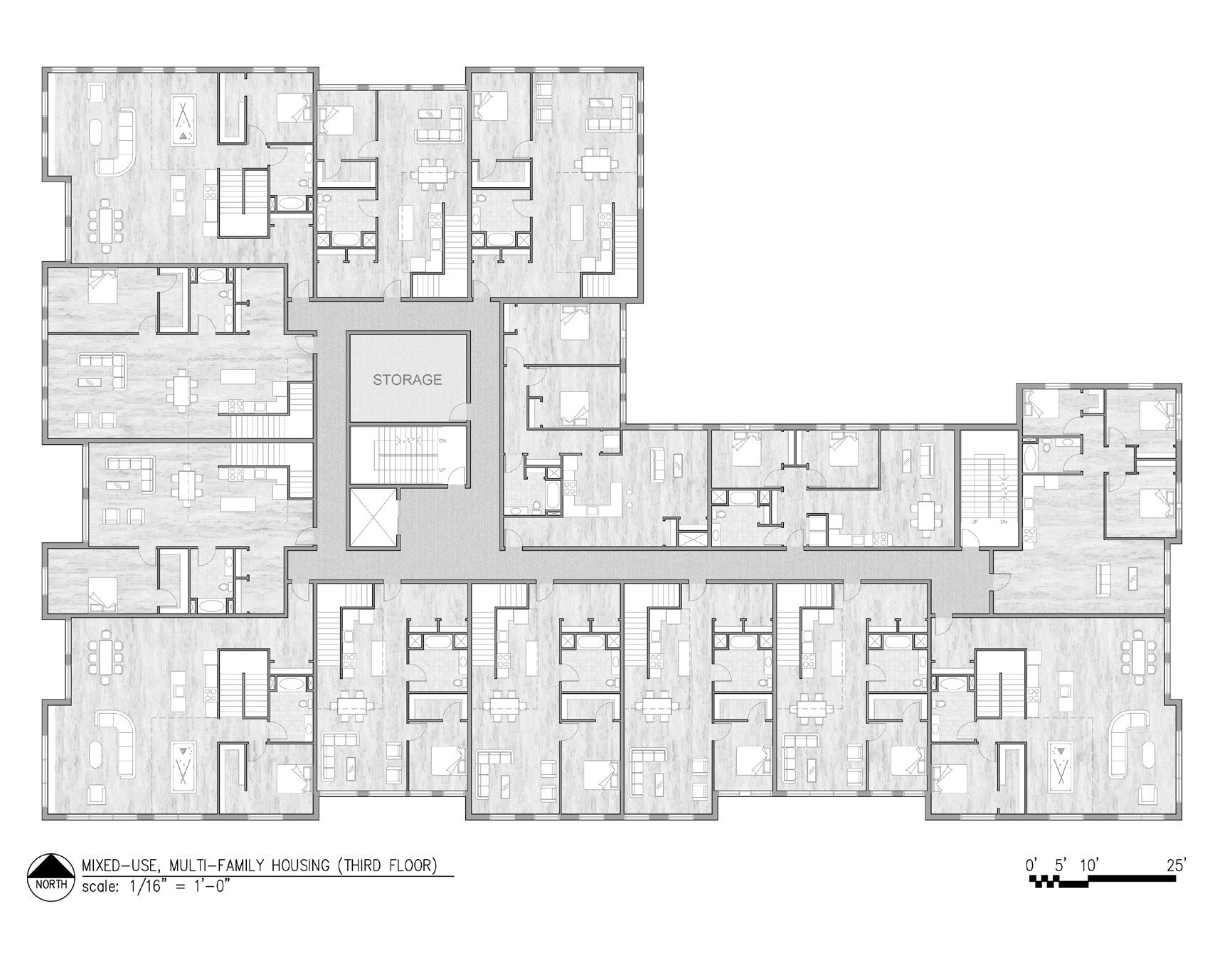
Designing housing appropriate to the needs of future occupants is one of the most important responsibilities an architect can undertake. This project was focused on the careful consideration of the design of a multi-unit housing project as a part of a mixed-use development infilling an urban site in Champaign’s Midtown district.
Through the use of plans, sections, elevations and diagrams a clear and concise concept was developed that defined the organization of spaces and functions (both horizontal and vertical), including the relationship of different uses and individual housing units to the whole.
29 MIXED USE, MULTI-FAMILY HOUSING | | |
JUNIOR YEAR | | | 30
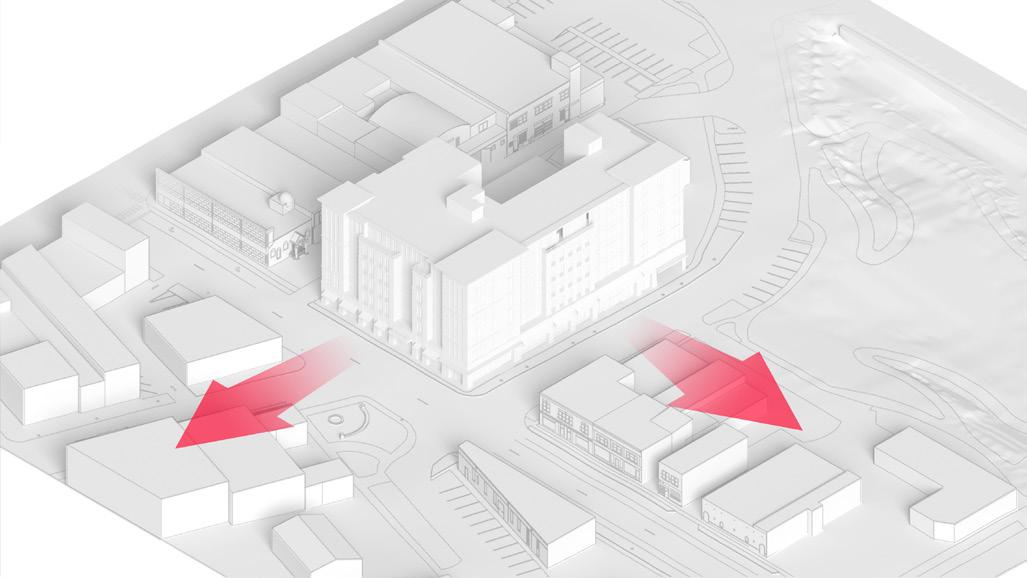
Height
In order to take advatage of light and the surrounding views, emphasis was placed on the building’s verticality
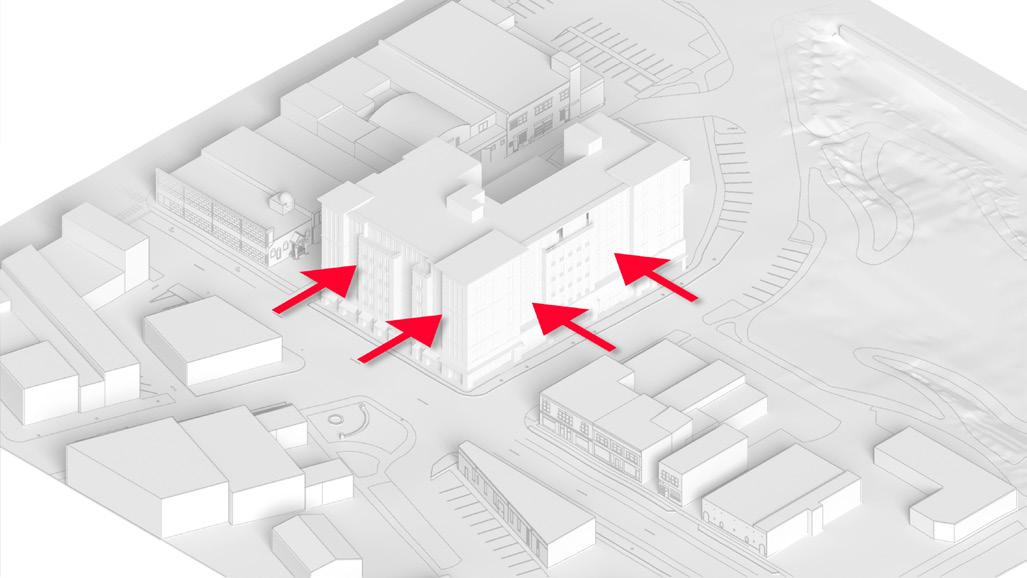
Massing
As the design finalized, an L-shape was prioritized with divets cut into it to allow for “pockets of breathing”
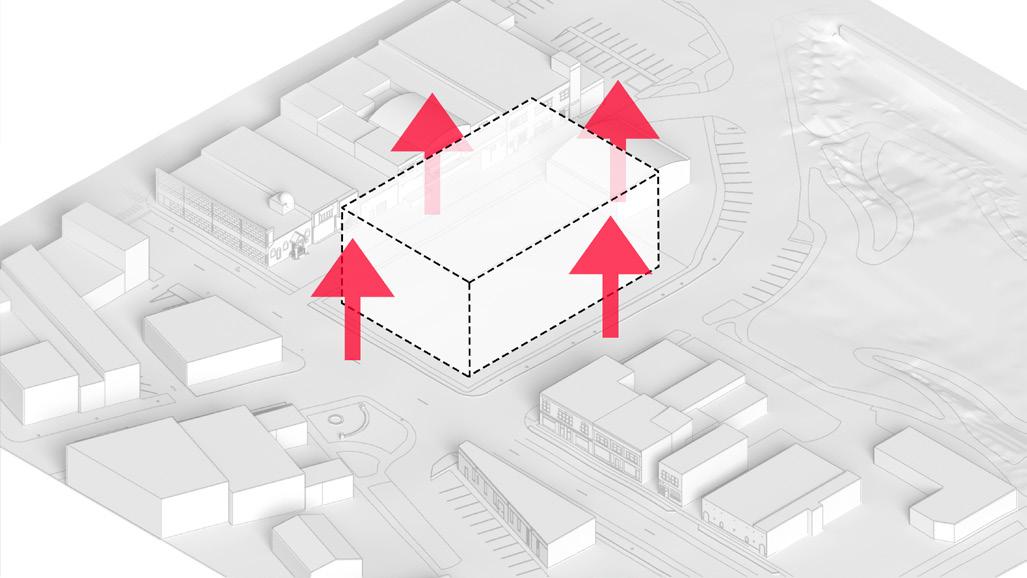
Lines of sight
The inclusion of mezzanine levels allowed for doubleheight windows that maximized both light and views
31 MIXED USE, MULTI-FAMILY HOUSING | | |
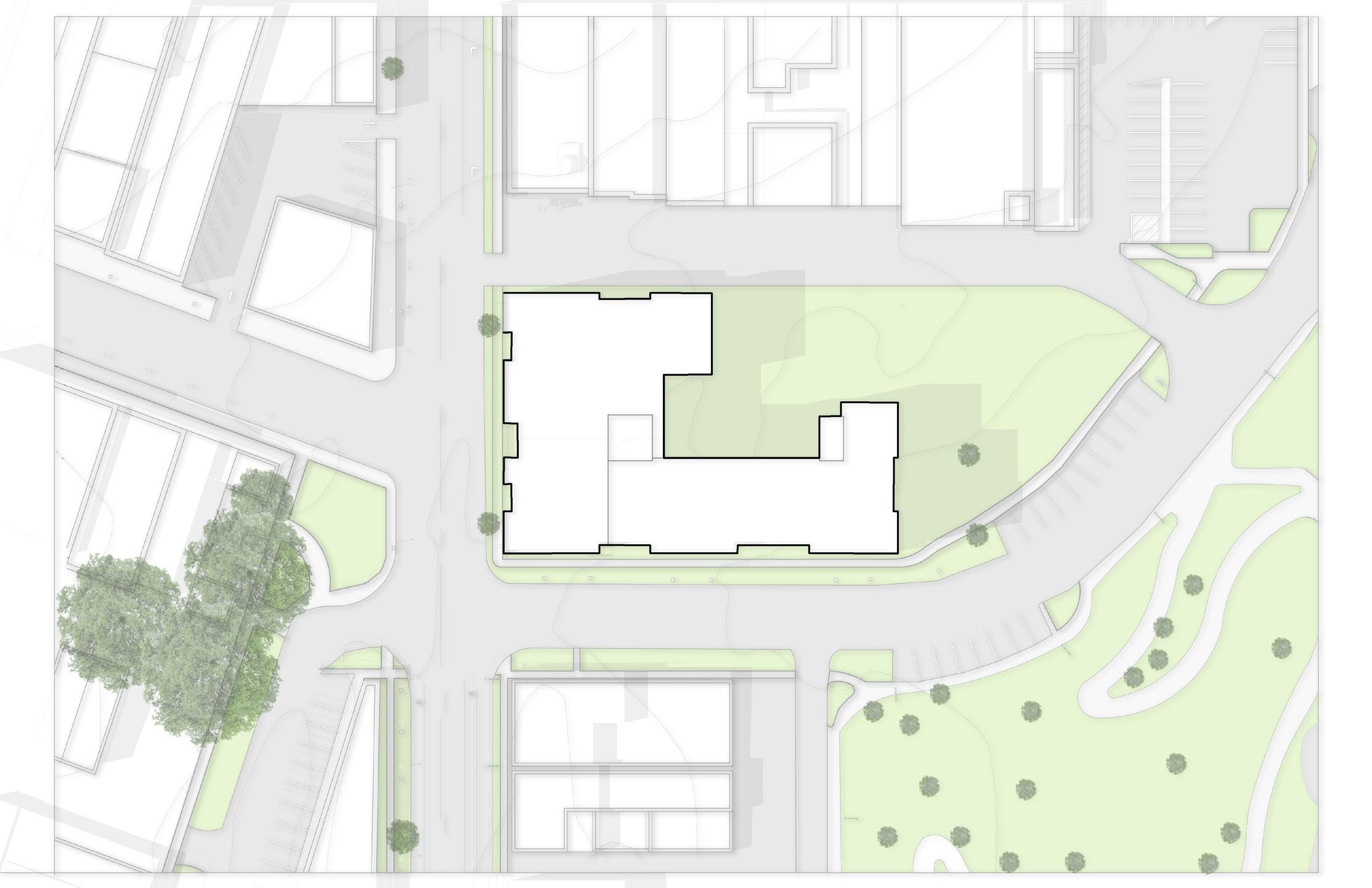
Site Analysis
This project presented a unique problem in the form of an uneven site, with an 11’ drop from corner to corner diagonally. Such a problem has not been introduced before so it was an interesting challenge to work around the level changes across the first floor in compliance with the City of Champaign’s Building Code.
JUNIOR YEAR | | | 32

33 MIXED USE, MULTI-FAMILY HOUSING | | |
Design Process
The design proposed was intended as an exploration of vertical urbanism and offers a new solution for this deadzone within the heart of midtown Champaign. The goal was to create a living space for residents that fostered this idea of community and suggested a dependent relationship between neighbors.
In order to encourage spatial encounters in connection with the natural environment of the neighboring Boneyard Creek, the design introduces elements of “breathing pockets” between spaces and within each level through various elements, one being a courtyard in the North East section, as well as balconies lining the Southern and Western portions of the building.
Externally, instead of a continous facade treatment, the facade recedes inward at the position of internal shear walls in order to construct a visual gap between units, while retaining spatial possibilities for chance encounters between neighboring properties.
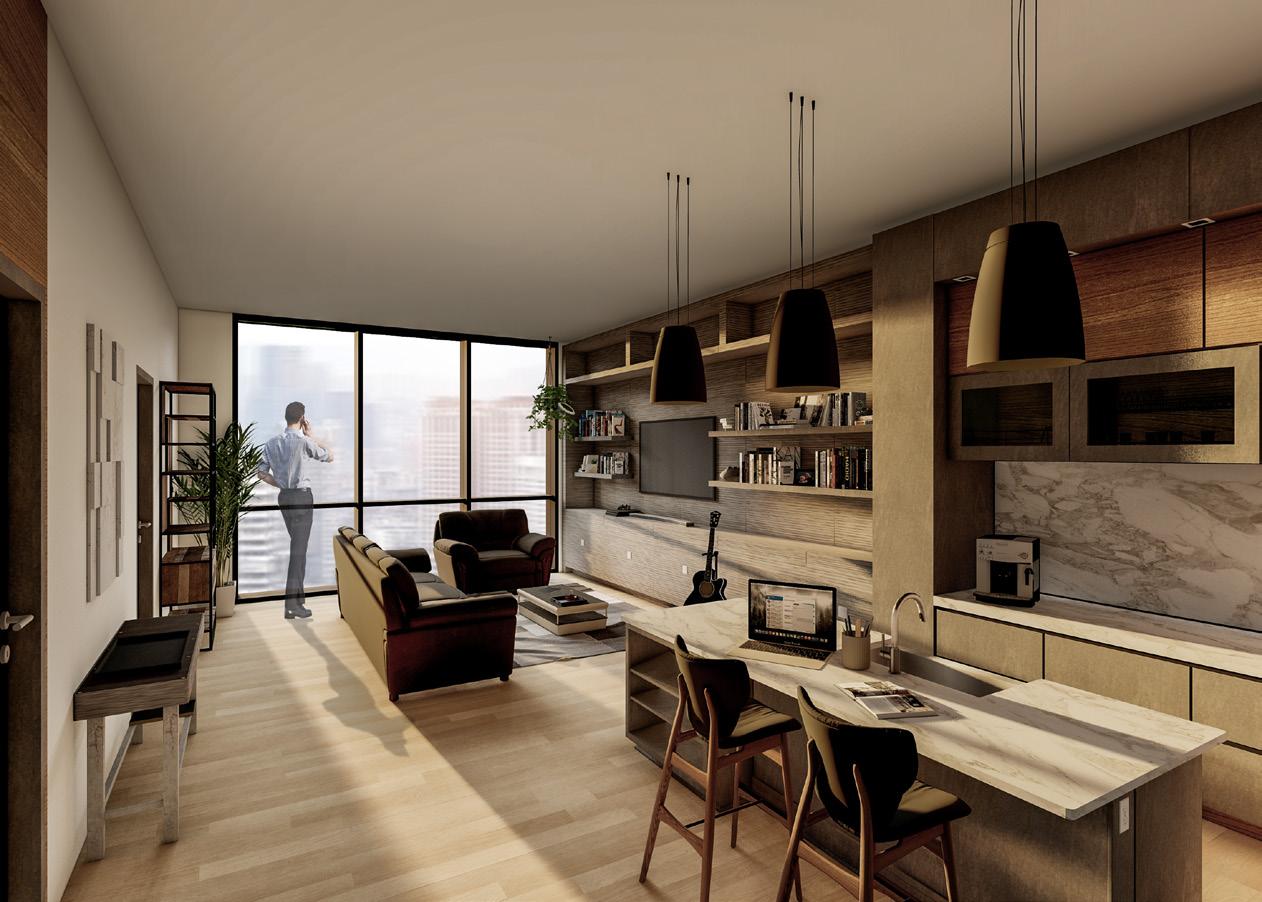
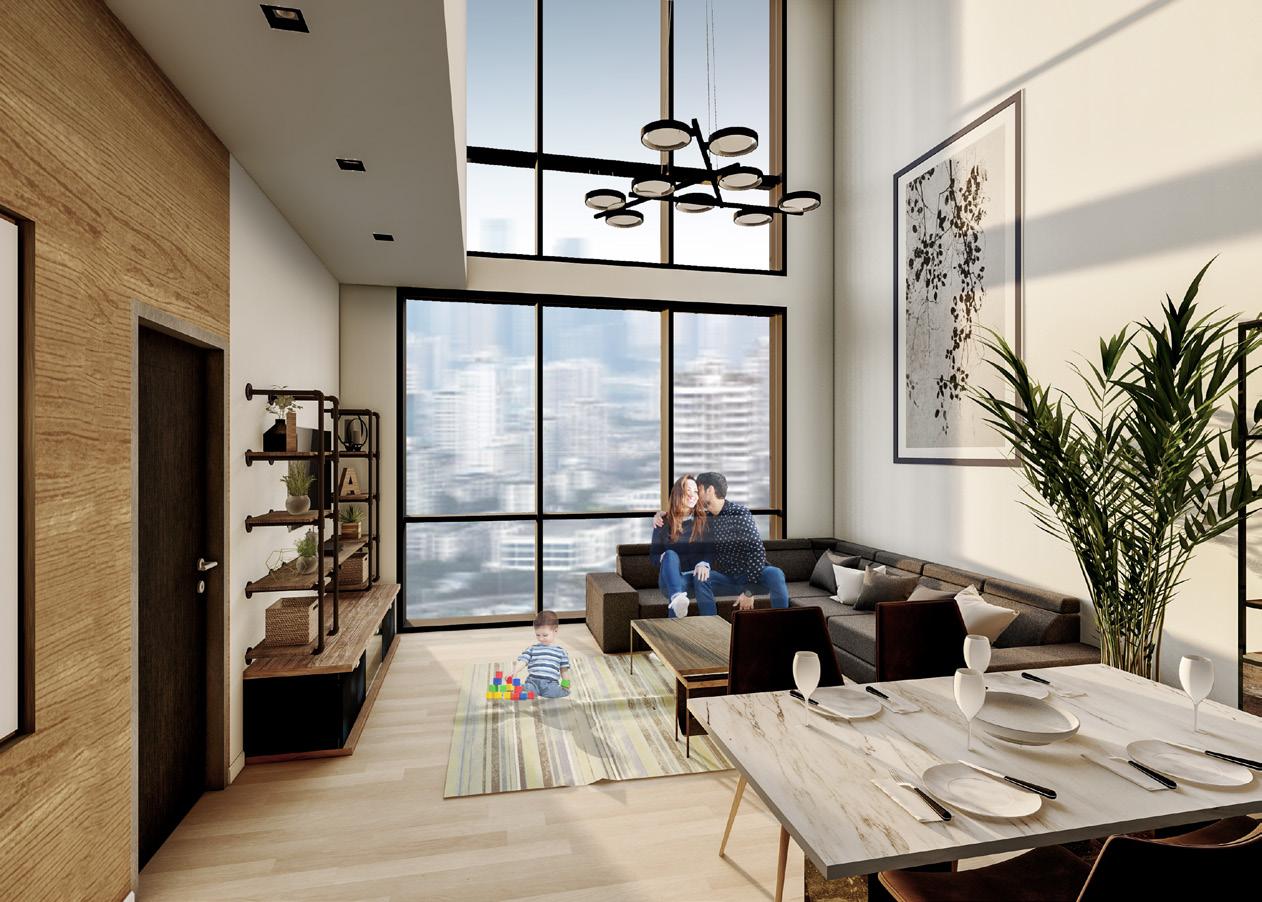
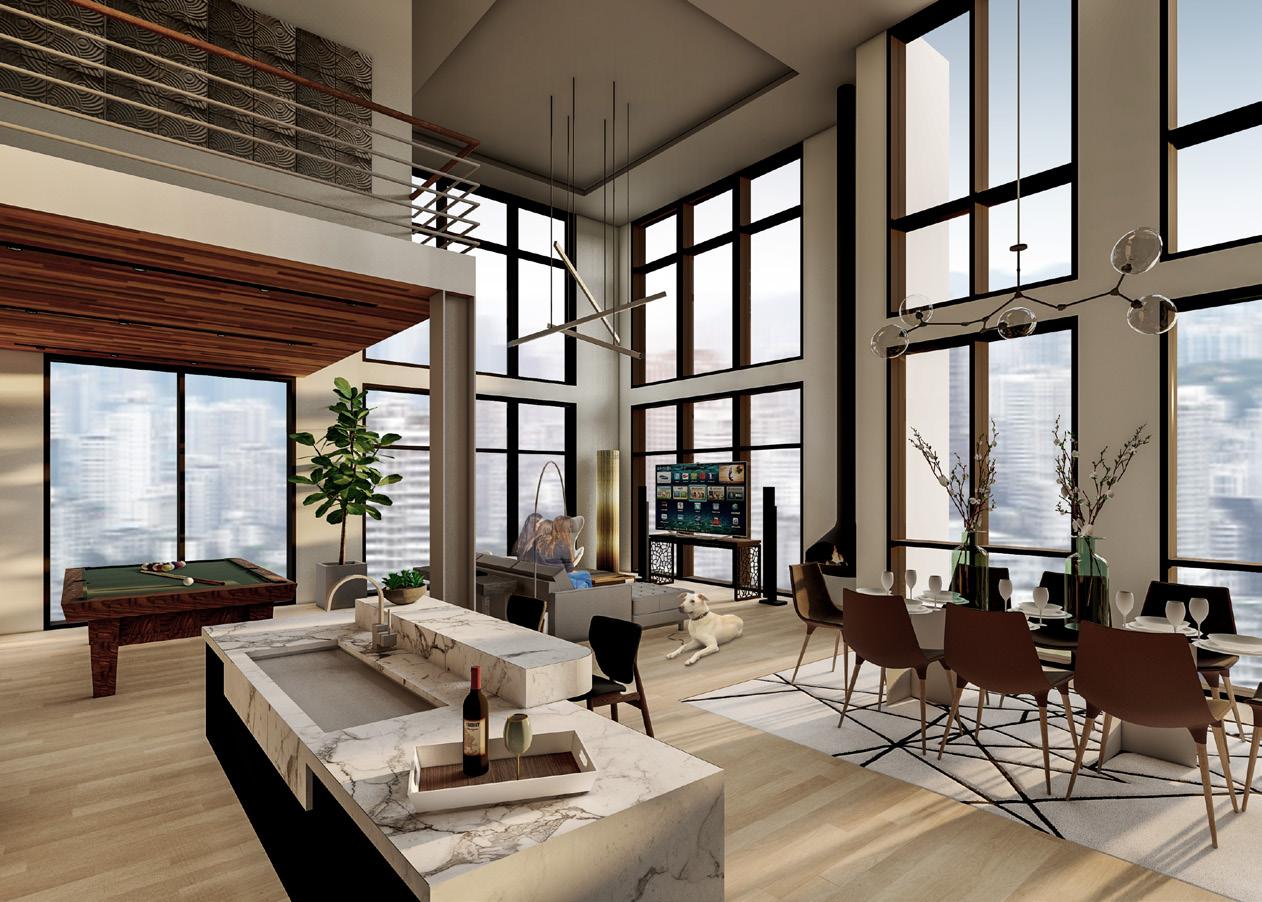
Within the two and three bedroom units, tall interior spaces are created via mezzanines that are accessed internally through a private staircase. This allows for light to flood into each unit. Also, this approach towards the interior design is meant to mirror museum-like volumes within the living spaces and contrasts the heavy exterior brickwork with delicate lighting and colorful spaces.
Special care was taken to design with the Enterprise Green Community Checklist in mind. Emphasis was placed on the inclusion of energy star appliances, special light conserving bulbs, the creation of a green roof, the concept of connectivity within a community, the promotion of physical activity and of course the concept of universal design.
JUNIOR YEAR | | | 34
35 MIXED USE, MULTI-FAMILY HOUSING | | |
| | | 36
Interior Renders
JUNIOR YEAR
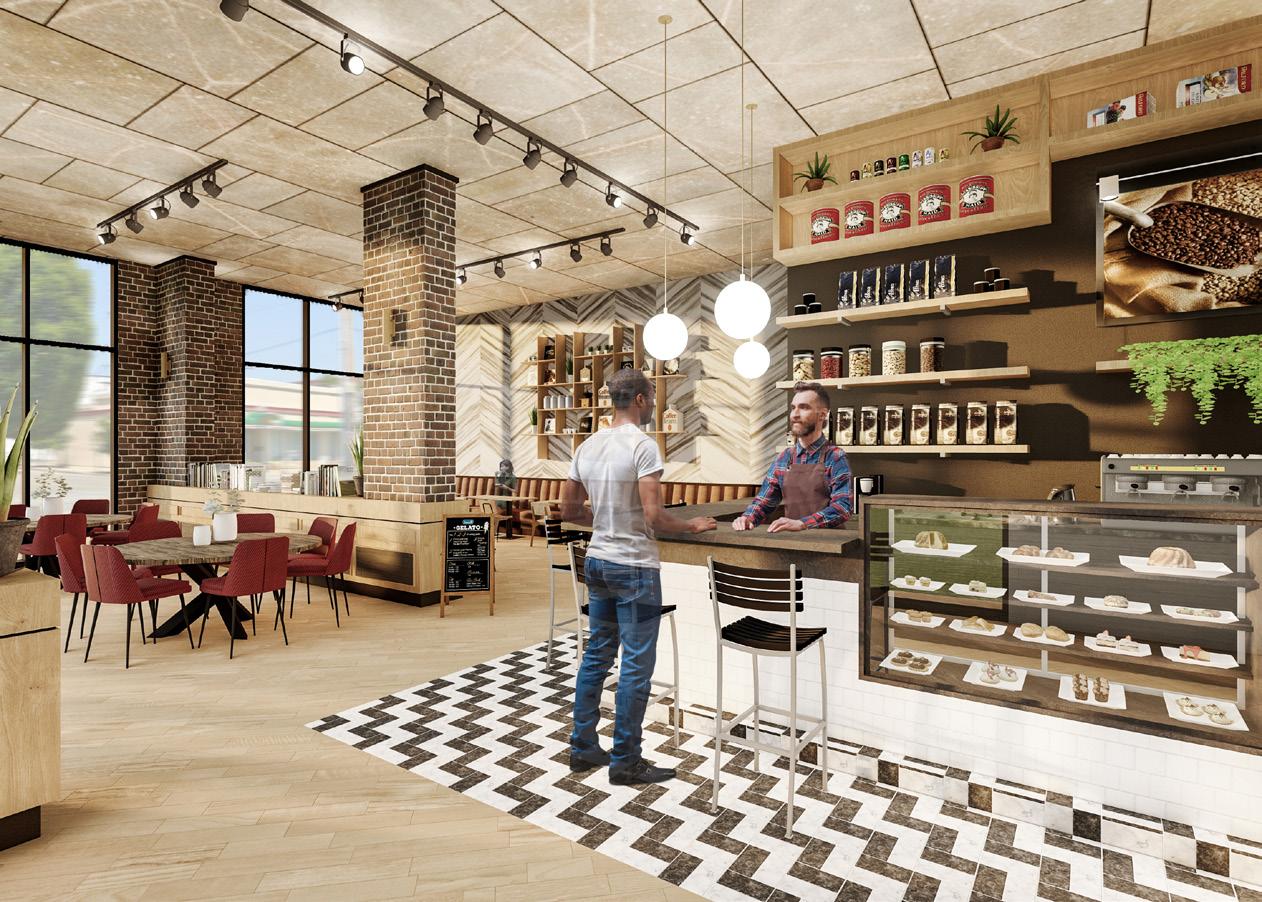
From left to right, One Bedroom, Two-story two bedroom, Corner Unit, Retail Proof of Concept: Cafe

21 SOUTH LOOP URBAN AGRICULTURAL CENTER | | |
04 - South Loop Urban Agricultural Center
Urban Agriculture is an important and growing component of Chicago’s push toward urban sustainability and a more locally sourced food economy.
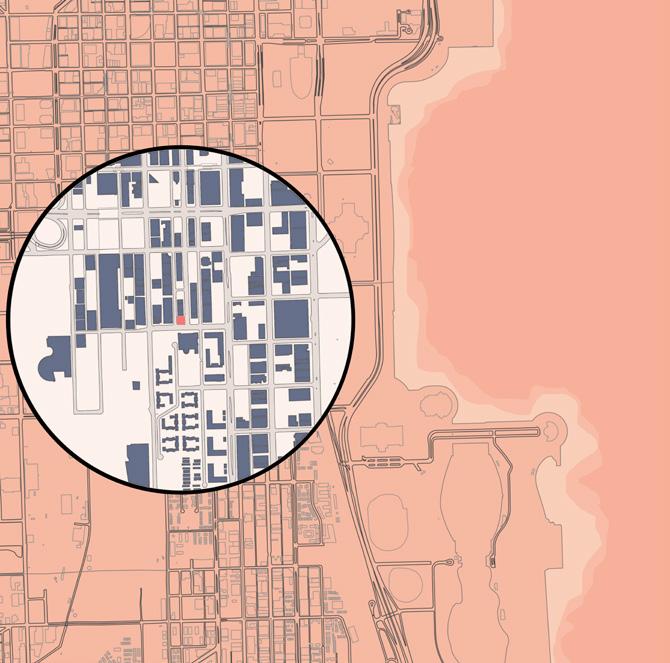
To support the growth of this movement, the South Loop Urban Agricultural Center is proposed for a site located within Printer’s Row. The building will be an important node in the urban food production network of Chicago.
To facilitate this goal, the building will represent both the goals and aspirations of its community of users for whom urban sustainability is of paramount importance, while at the same time embodying the best practices of sustainable design.
Third Year Studio
University of Illinois Instructor
Hugh Swiatek
JUNIOR YEAR | | | 22
23 SOUTH LOOP URBAN AGRICULTURAL CENTER | | |
Concept
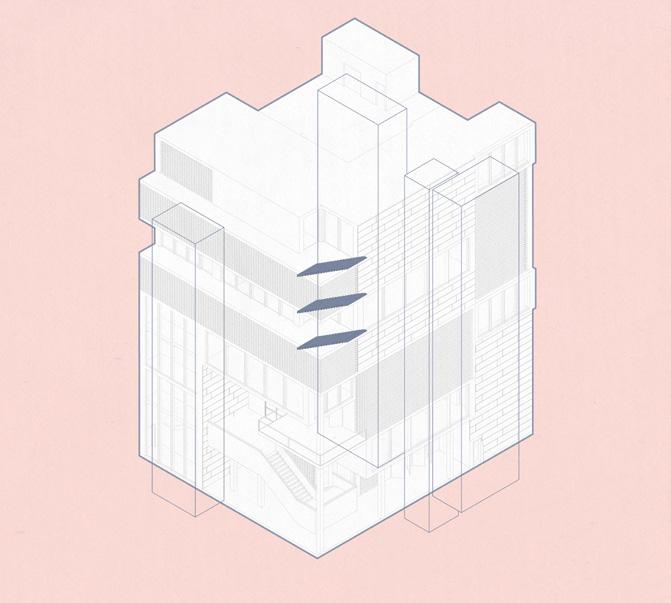
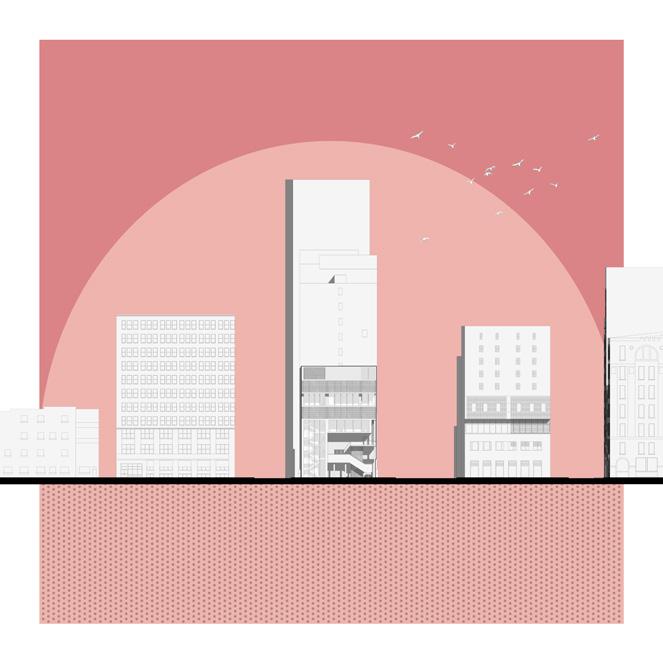
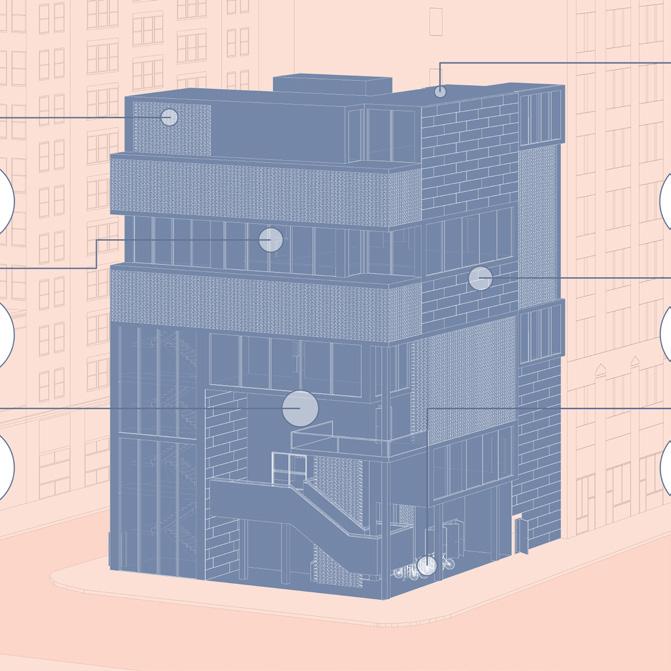
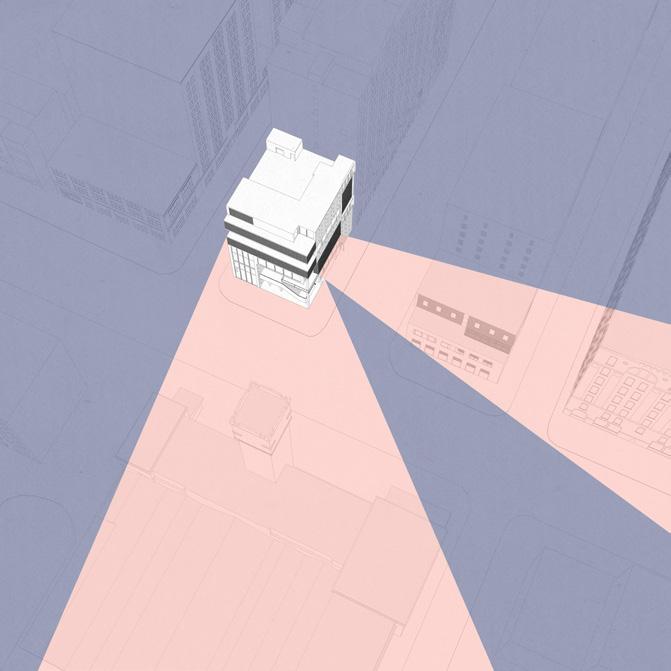
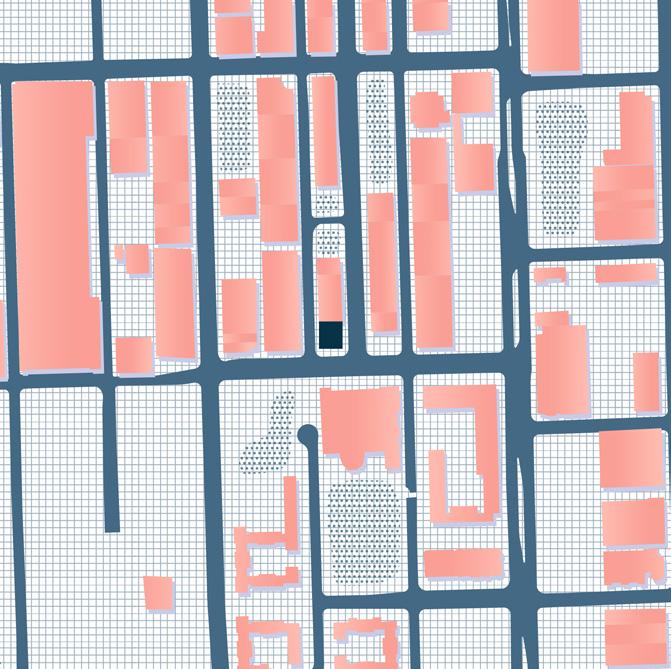
As stated previously, Urban Architecture is an important and growing component of Chicago’s push towards urban sustainability and a more locally sourced food economy. Given this, one idea was promoted above all else when trying to create a design for the Argicultural Center; Community. Unity and a sense of belonging and interconnectedness was the primary goal of this design. All schemes explored throughout the design process were in pursuit of Community by creating spaces that facilitated connections through education, public awareness and outreach.
JUNIOR YEAR | | | 24
Design Process
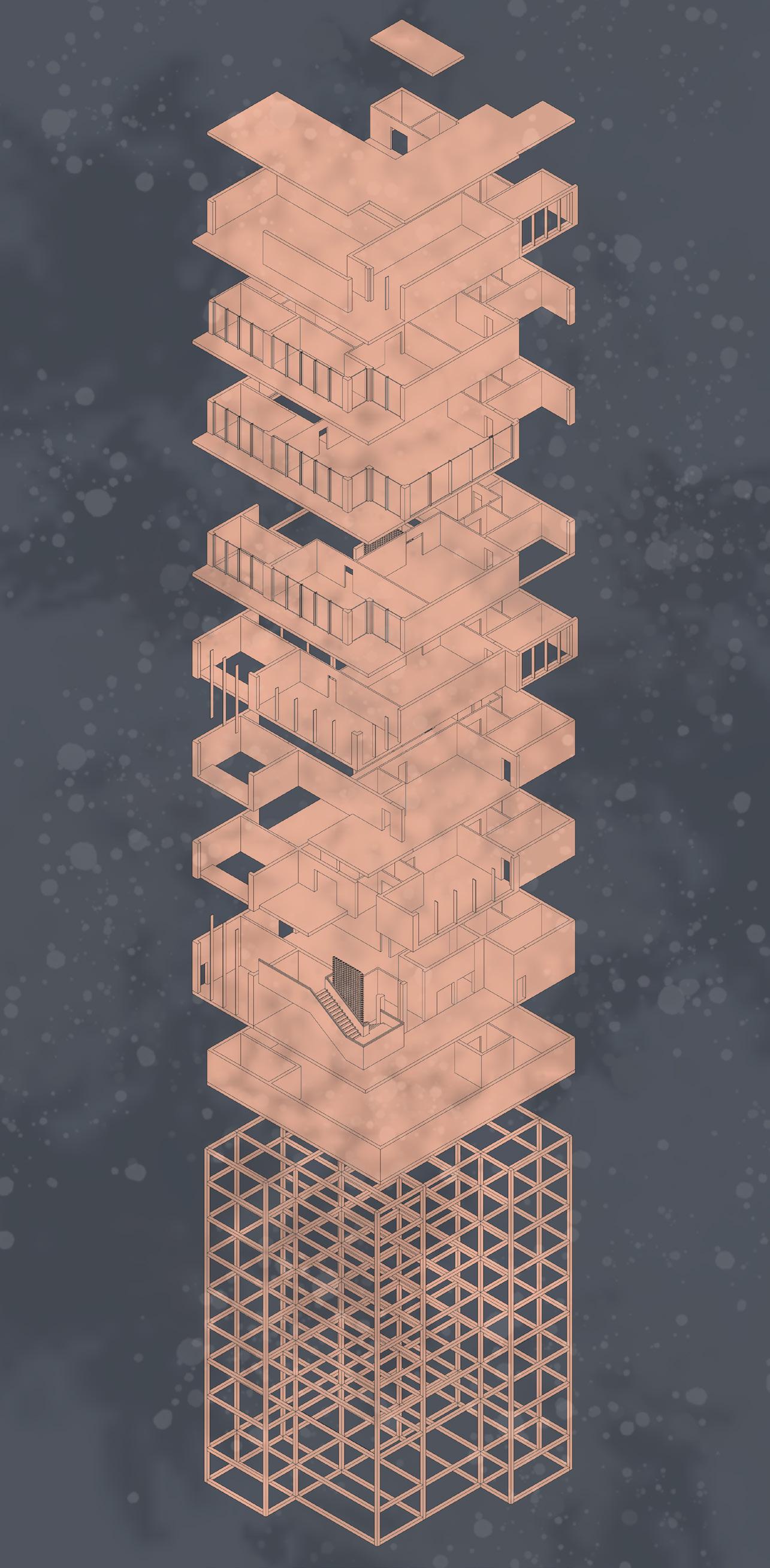
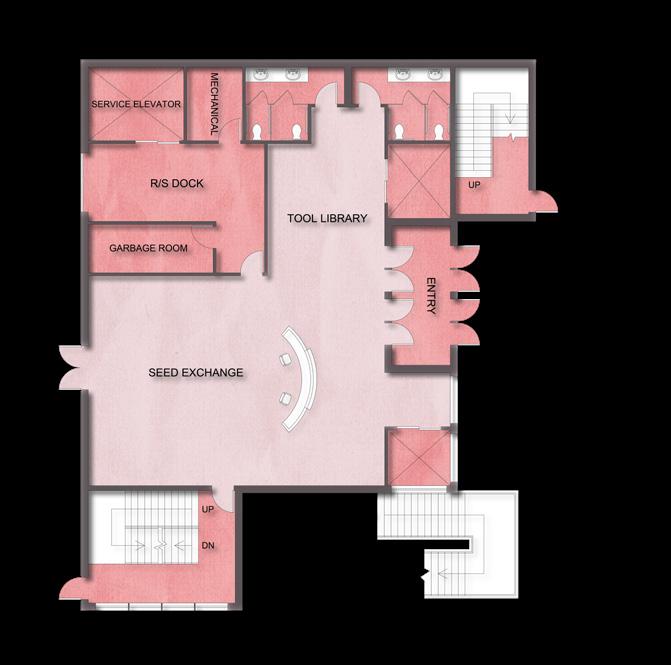
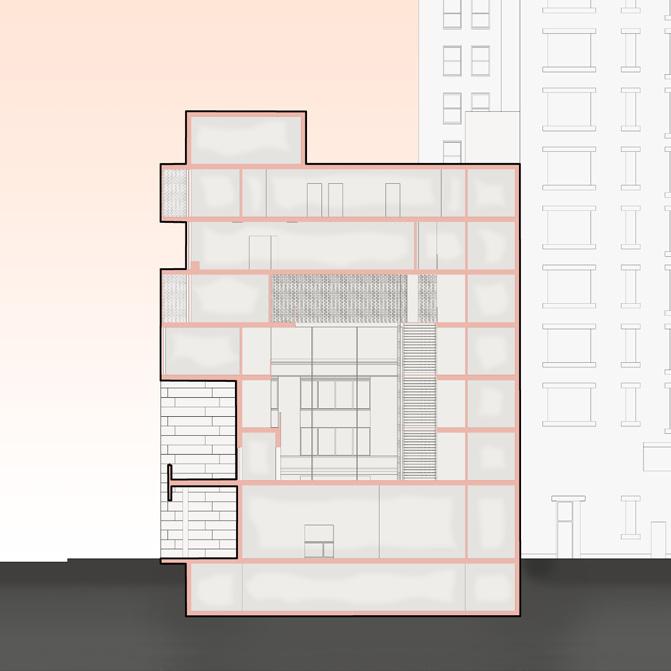
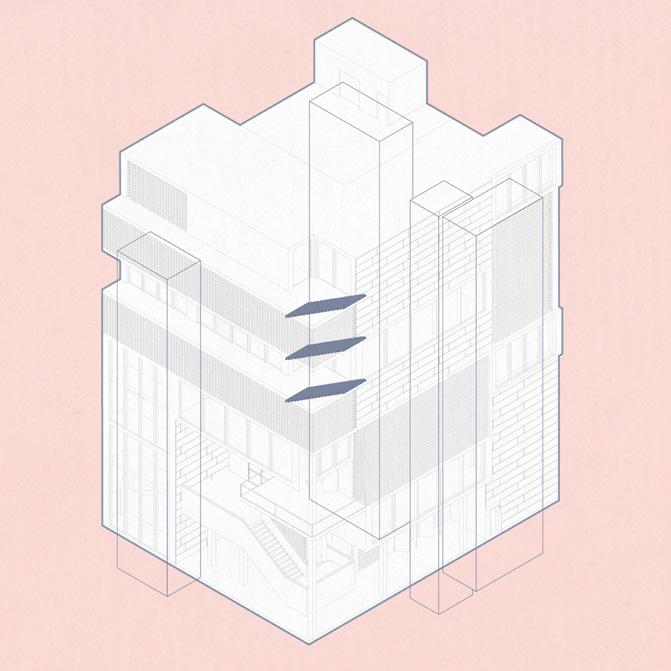
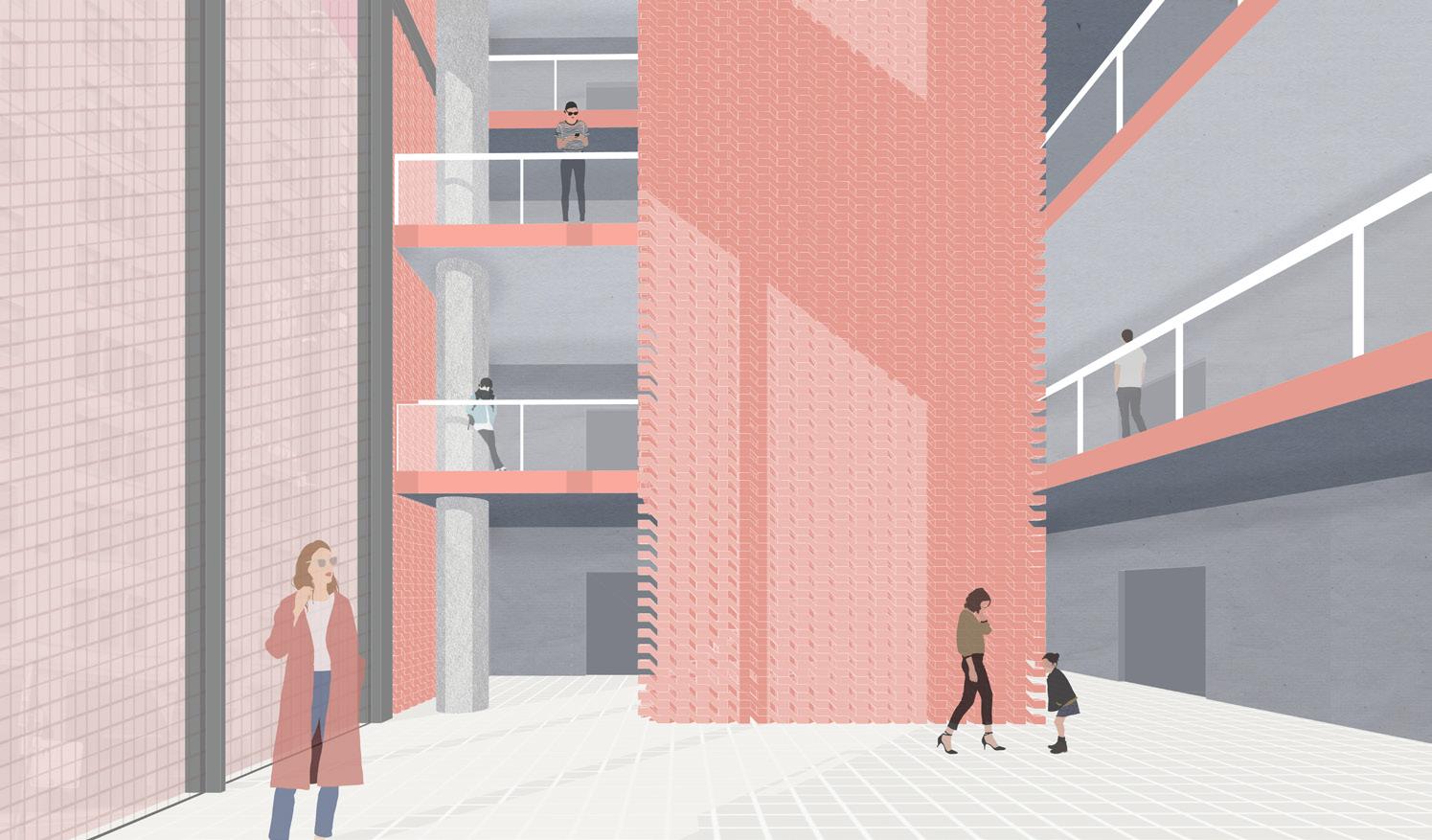
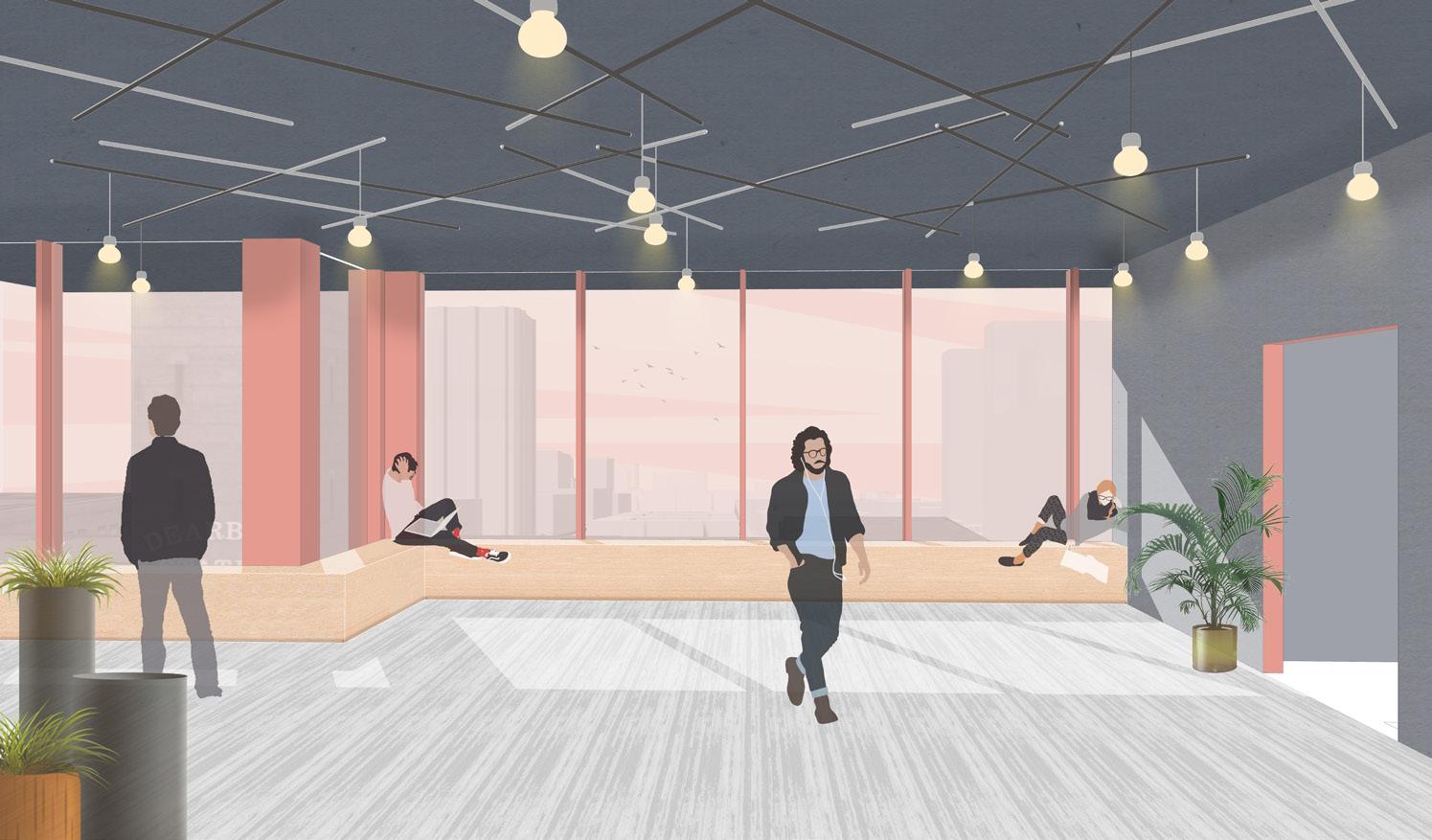
A large atrium was designed to promote a center for all occupants to return to and gather. A centralized architectural staircase was also promoted to encourage users to use the stairs instead of an elevator, further promoting the idea of health and wellbeing.
The bottom floor features a tool library and a seed exchange to encourage the surrounding community to practice sustainability through self sufficient gardens. Providing a dedicated space toward the exchanging and providing of tools and seeds helps facilitate and grow a community or nurture an already existing one.
Large floor-to-ceiling windows line the facade of this building and are masked with a terracotta brick netting in order to provide a protected yet exposed terrace. This doubles as both a sunshading device as well as a balcony for office workers and students to recieve fresh air and interact with the outside environment.
25 SOUTH LOOP URBAN AGRICULTURAL CENTER | | |
JUNIOR YEAR | | | 26

27 SOUTH LOOP URBAN AGRICULTURAL CENTER | | |

JUNIOR YEAR | | | 28
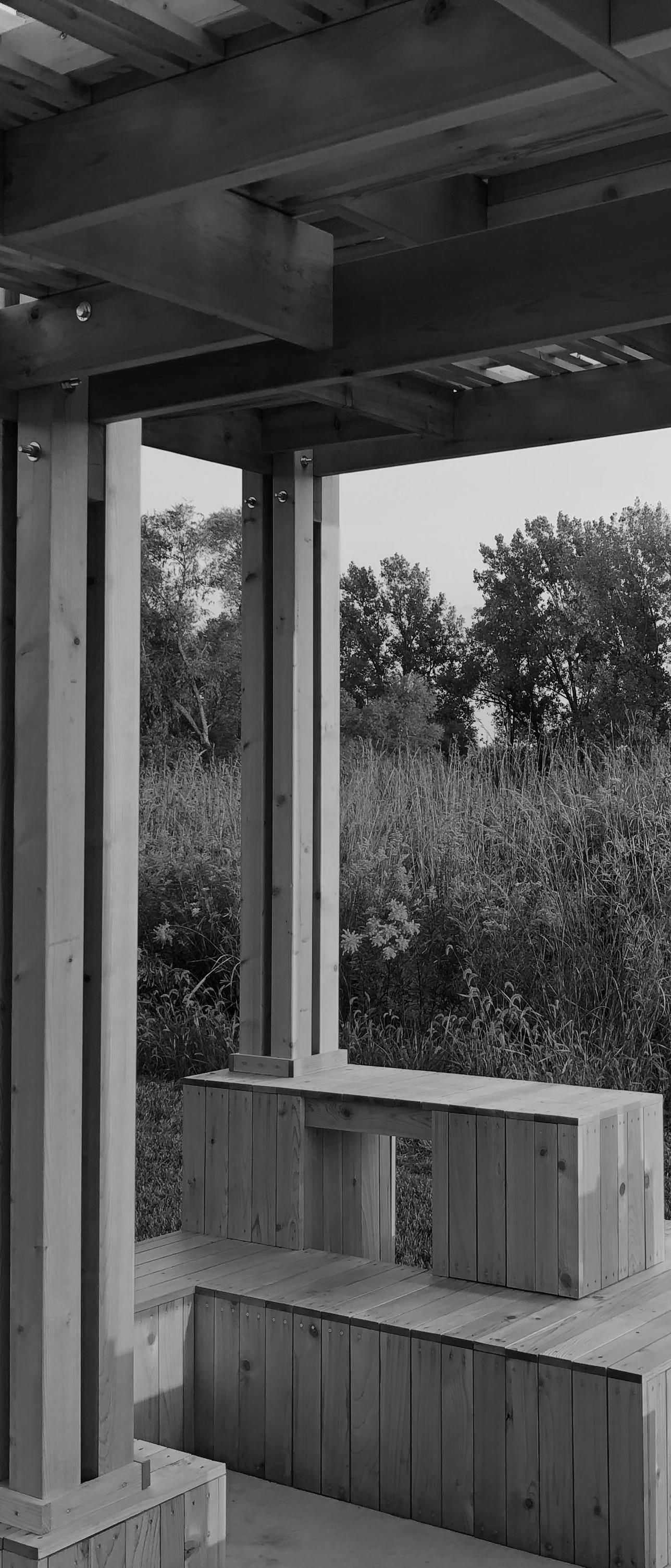
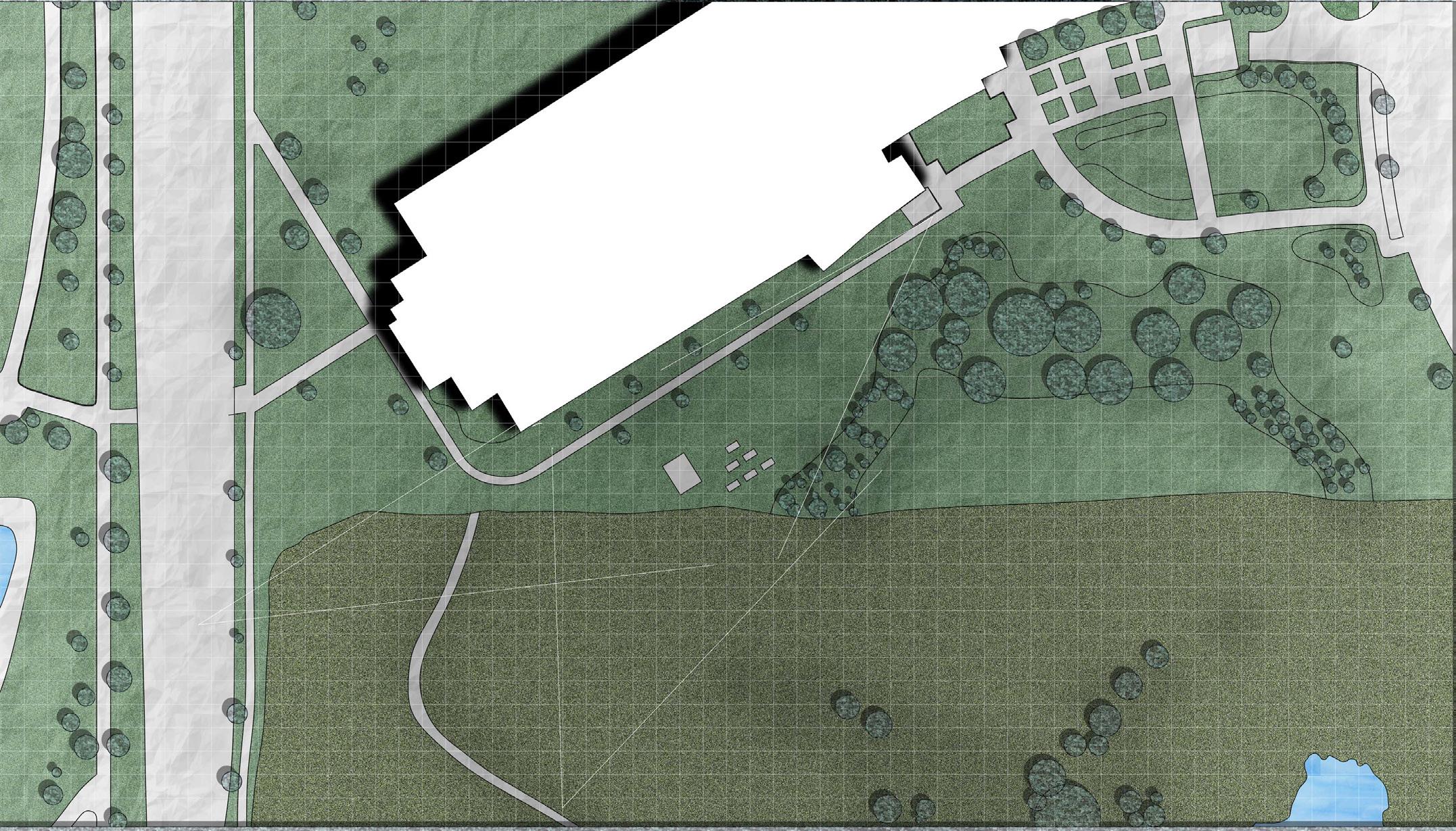
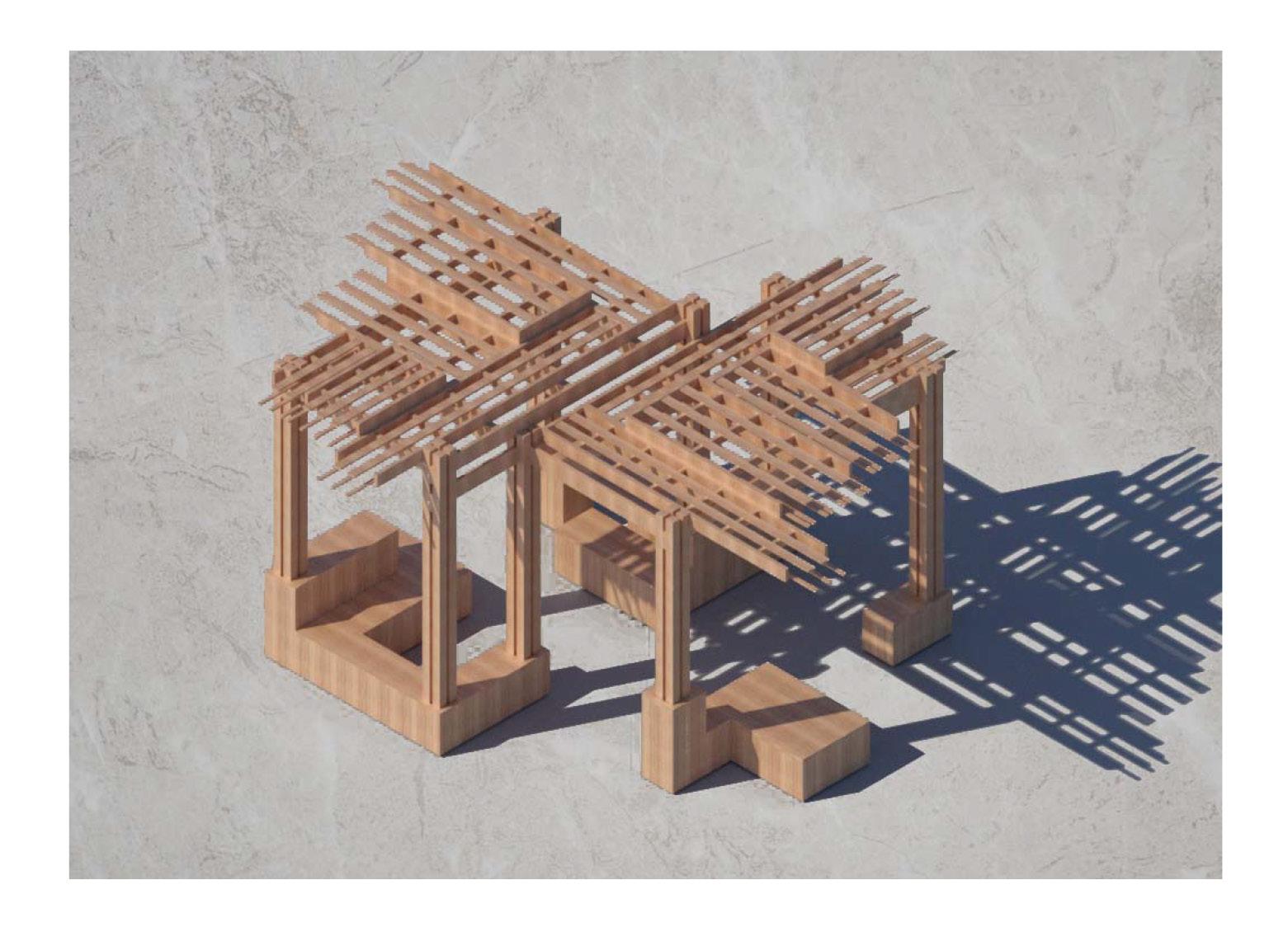
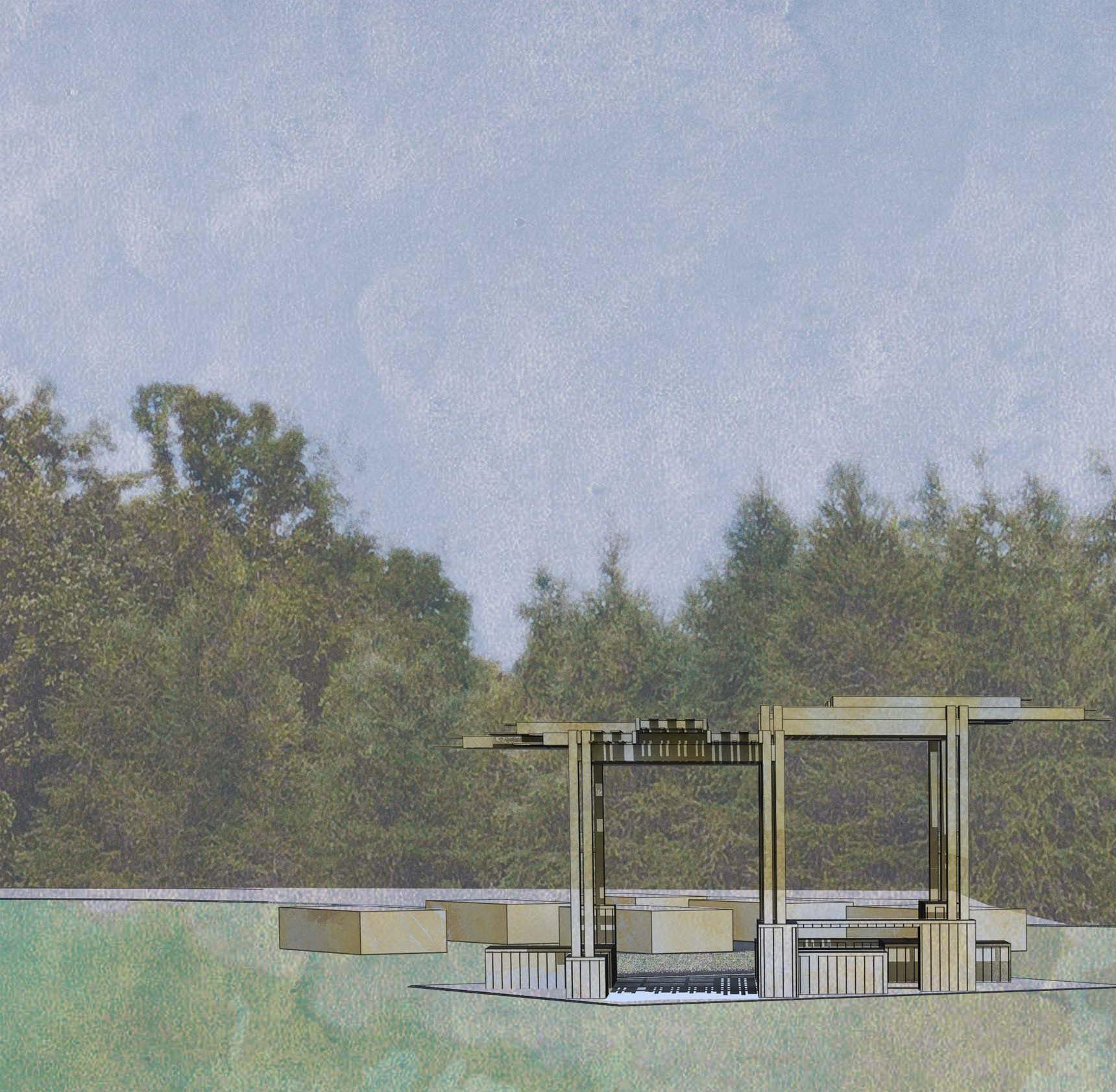
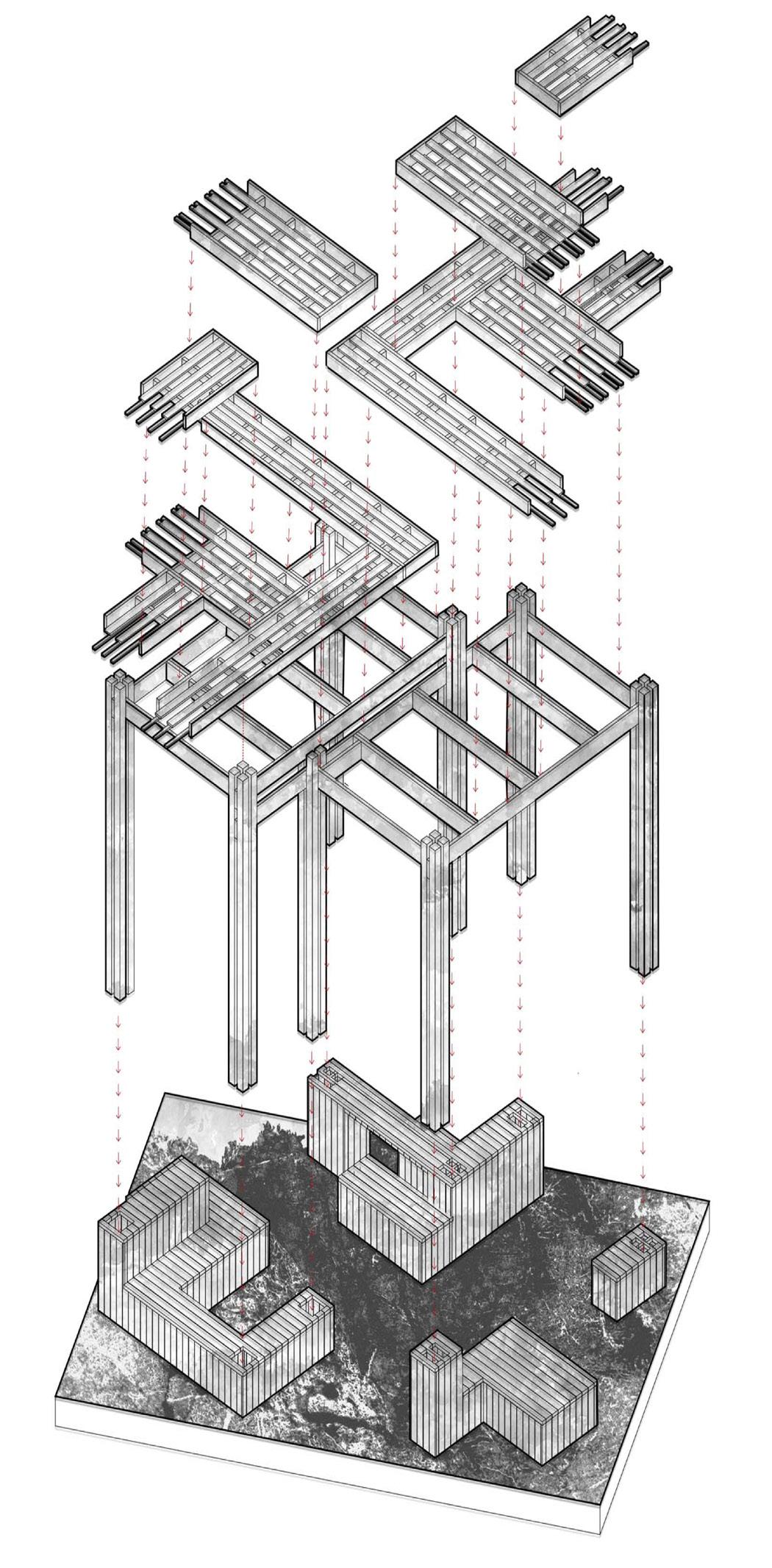
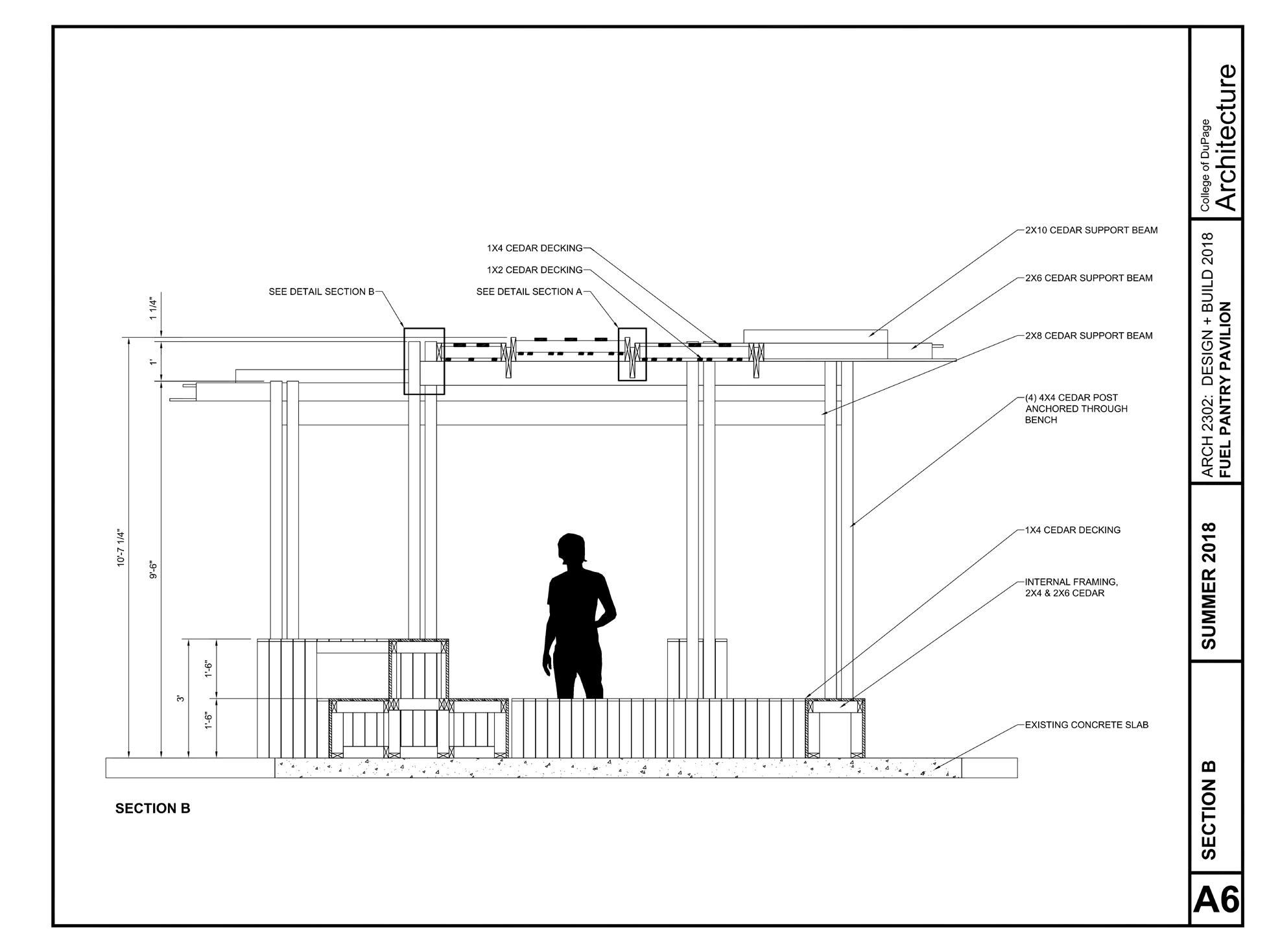
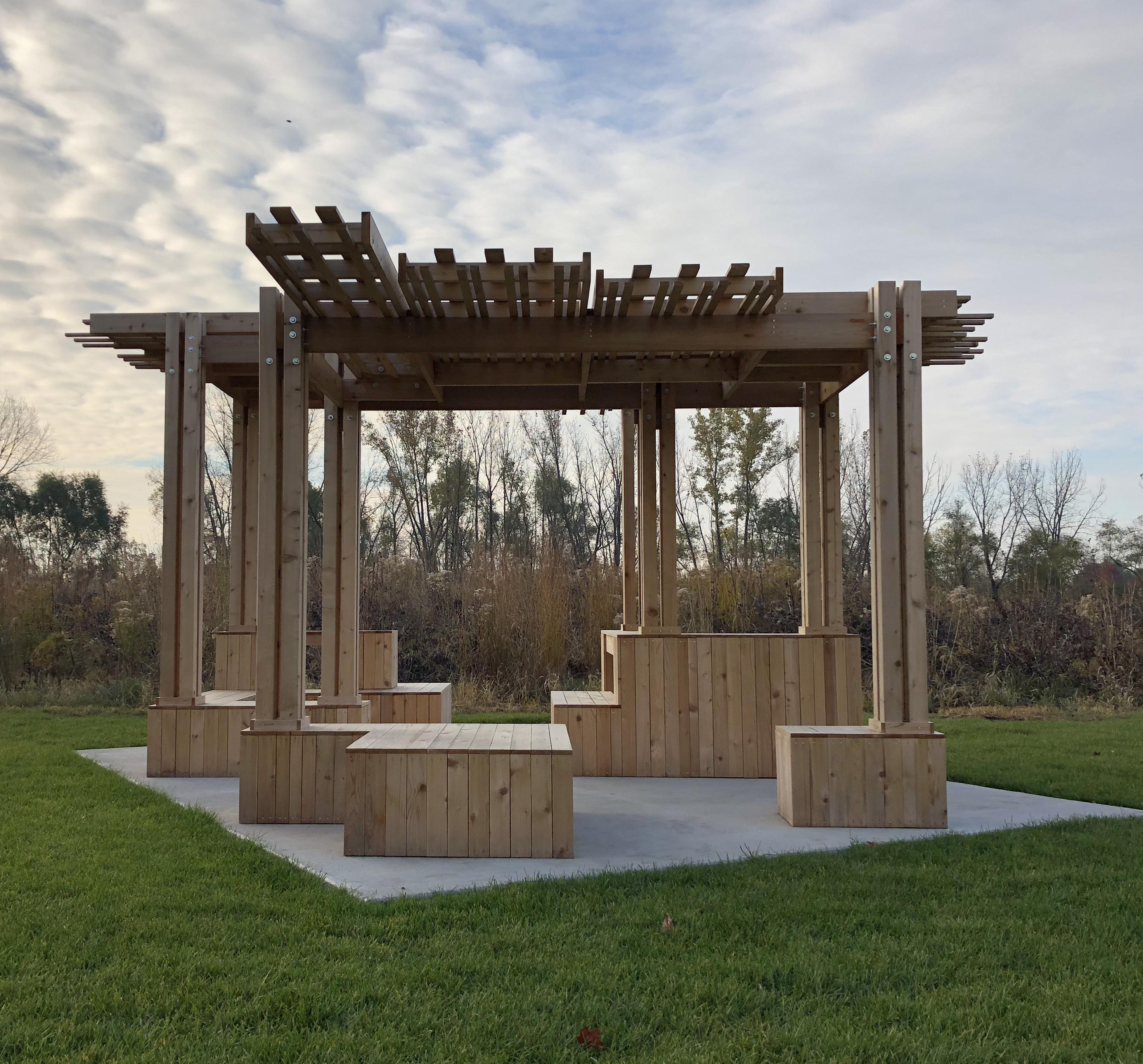
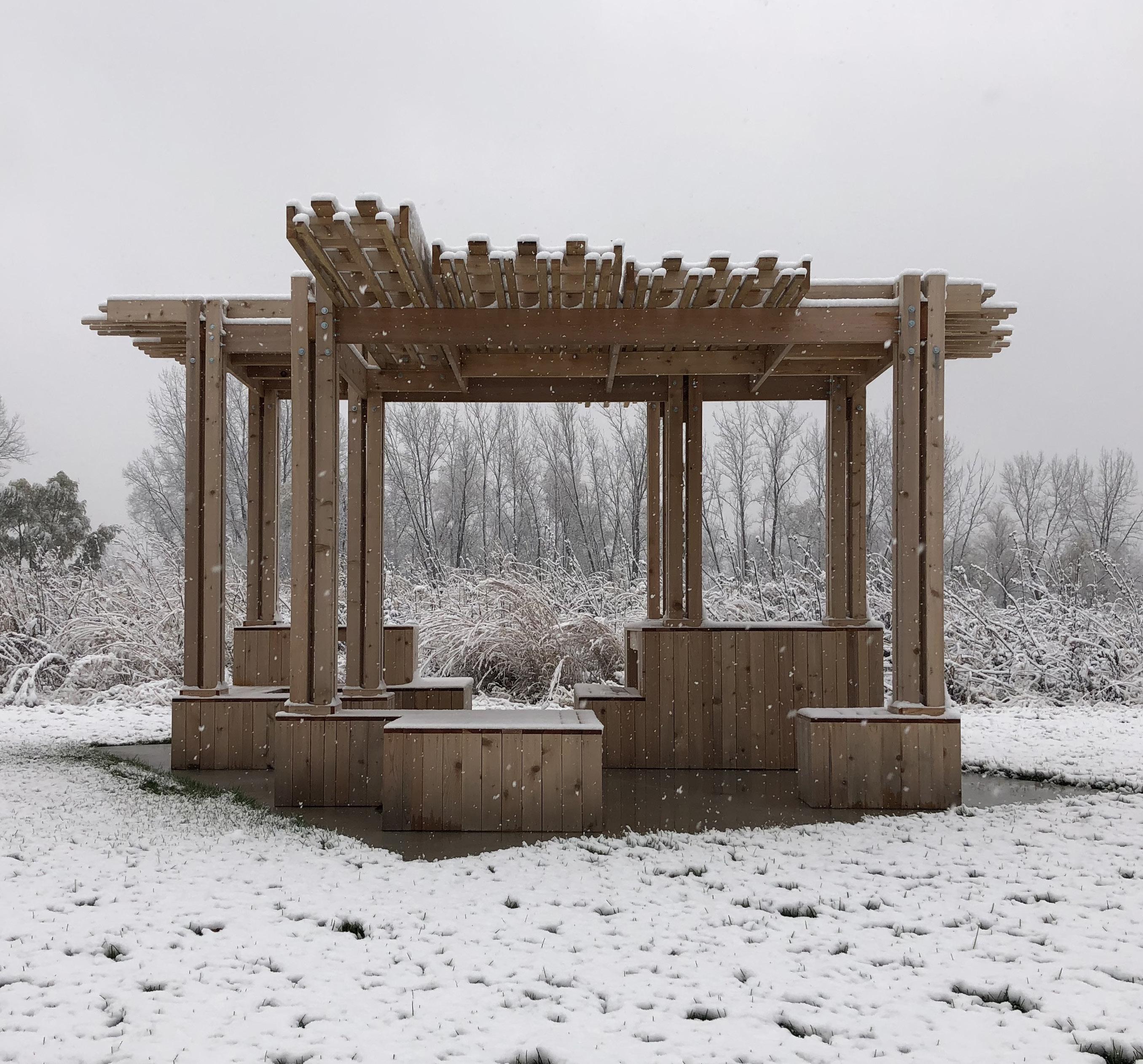
A small gathering pavilion was designed and created adjacent to the Russel R. Kirt Prarie and the College of DuPage Fuel Garden. This structure serves as a meeting point for prarie tours, as well as a gathering and teaching space for the garden.
Clients requested a seating area and gathering space that encouraged socialization, conversation, and interaction amongst students. As a part of this project, permits and construction documents had to be filled out and submitted to the Village of Glen Ellyn to be approved before construction.
In Collaboration With
Jacob Bielanski
Jacque Castle
Elizabeth Cisneros Tlaxcala
Vassiliki Demakis
Daniel Garczek
Nicholas Grant
Burhanuddin Jamali
Adam Koroghlanian
Christian Lazcano
Sofia Linares
Matthew Musil
Nataly Perez Gonzalez
David Perrine
Daniel Rodawold
Clients
College of DuPage Fuel Garden and Prarie Groups
11 DESIGN BUILD | | | 05 -
Build
Design
SOPHOMORE YEAR | | | 12
13 DESIGN BUILD | | |
Site Analysis
As a starting point for the design process, great emphasis was placed on the study of the surrounding context. Where is the sun, how does it move, how do people occupy the existing site, what is the history, what makes this place unique. The latent aspects of the site were studied and revealed, leading to design solutions that responded specifically to this site in a way that made the design be able to exist here, and nowhere else.
SOPHOMORE YEAR | | | 14

15 DESIGN BUILD | | |
Design

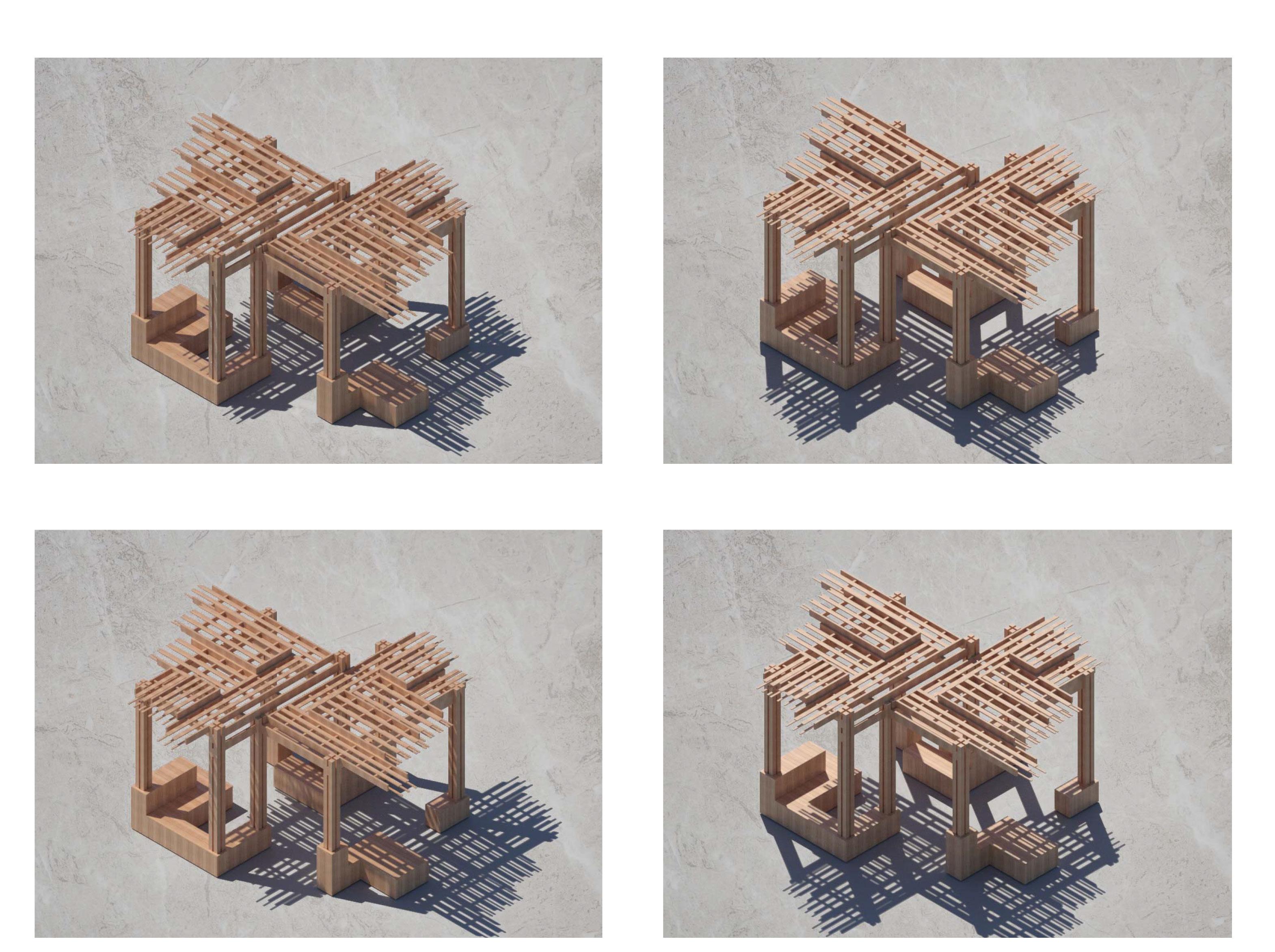
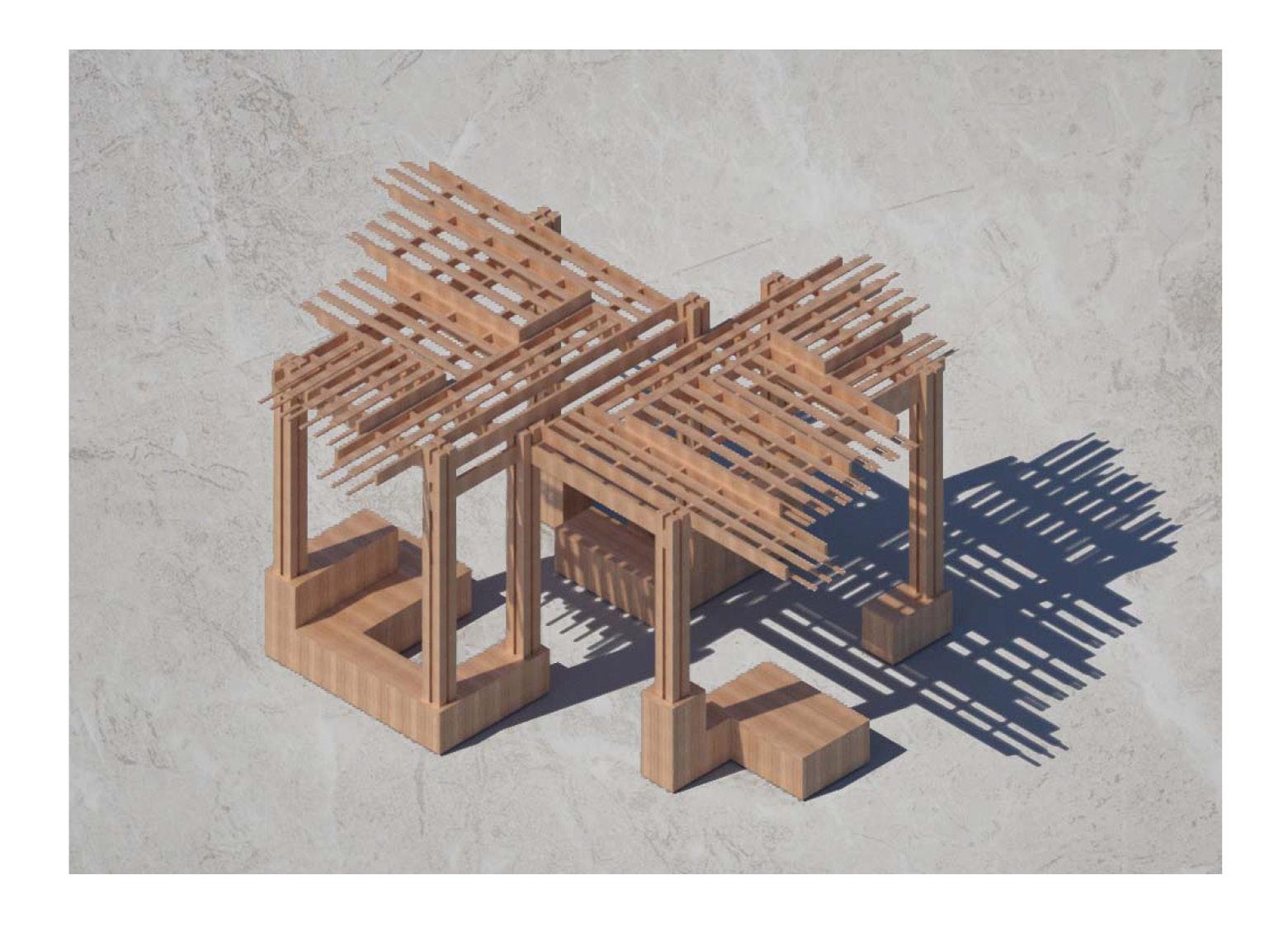
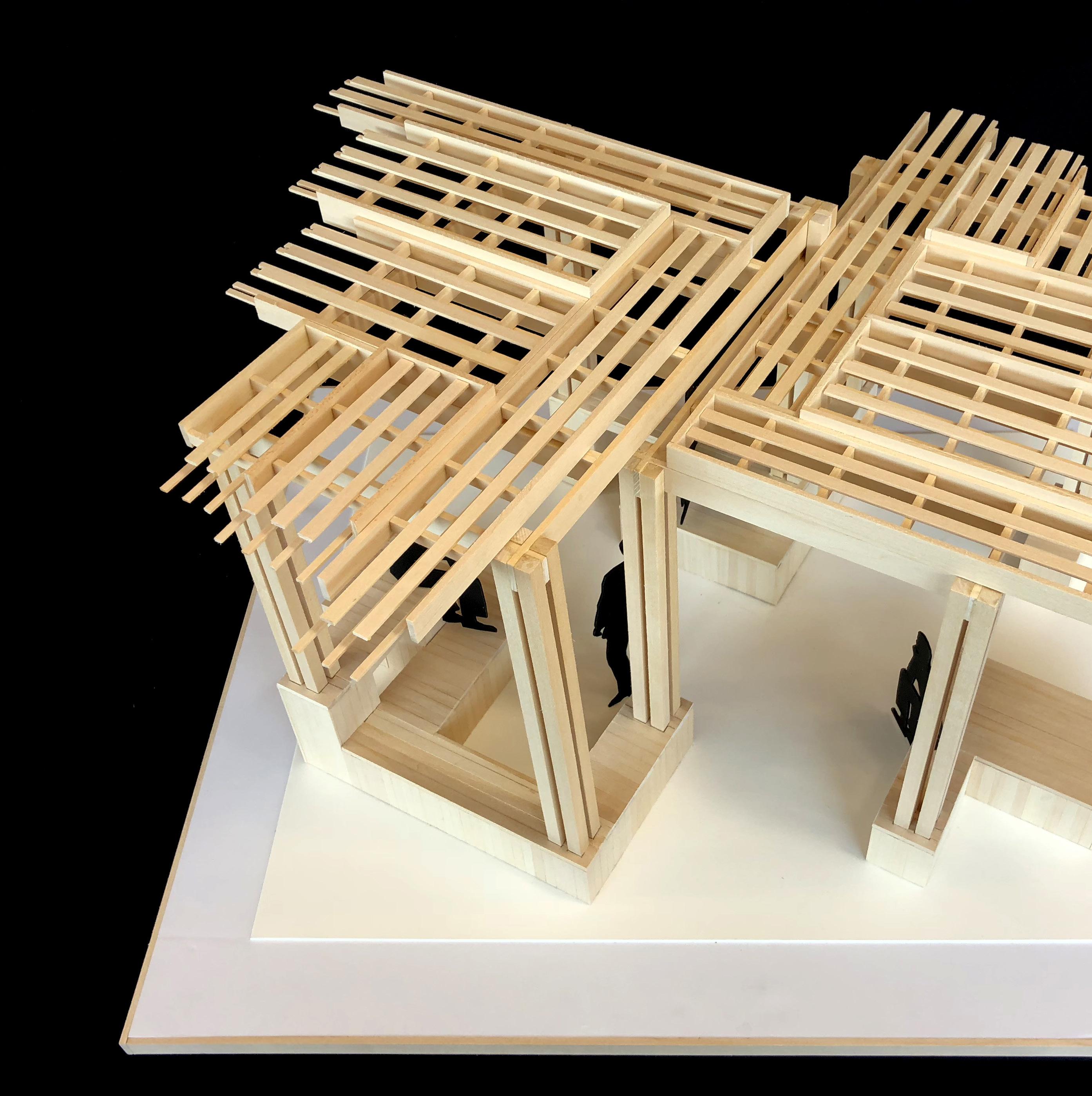
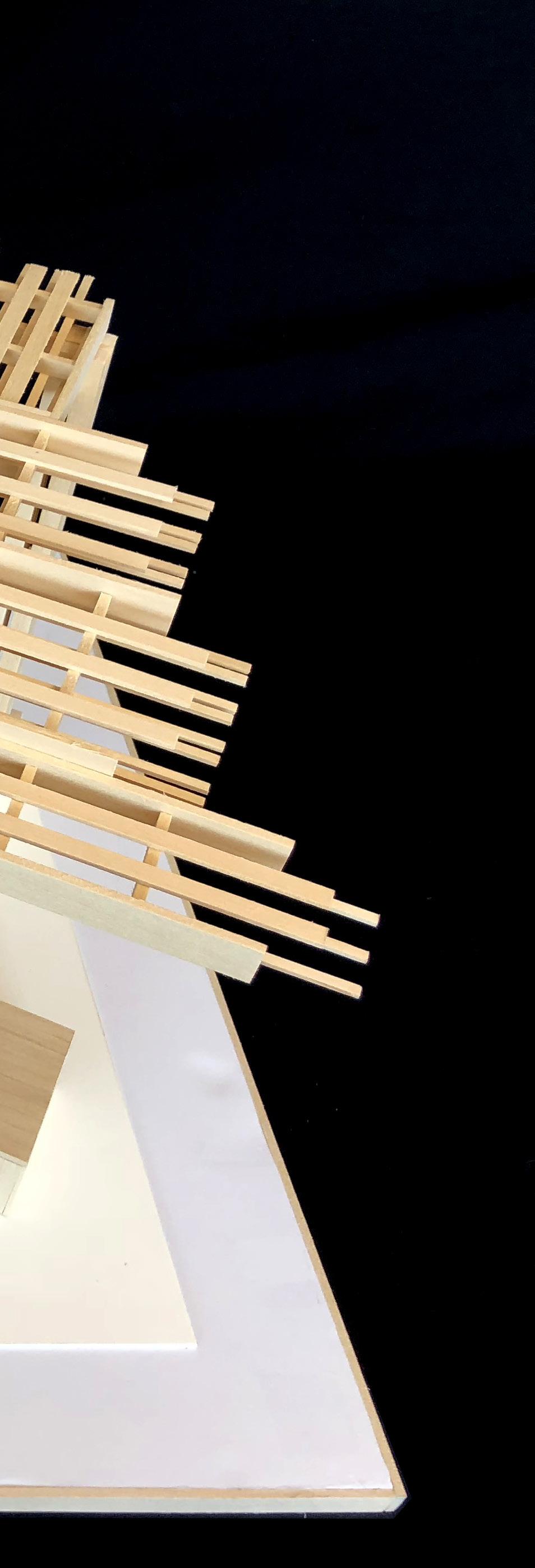
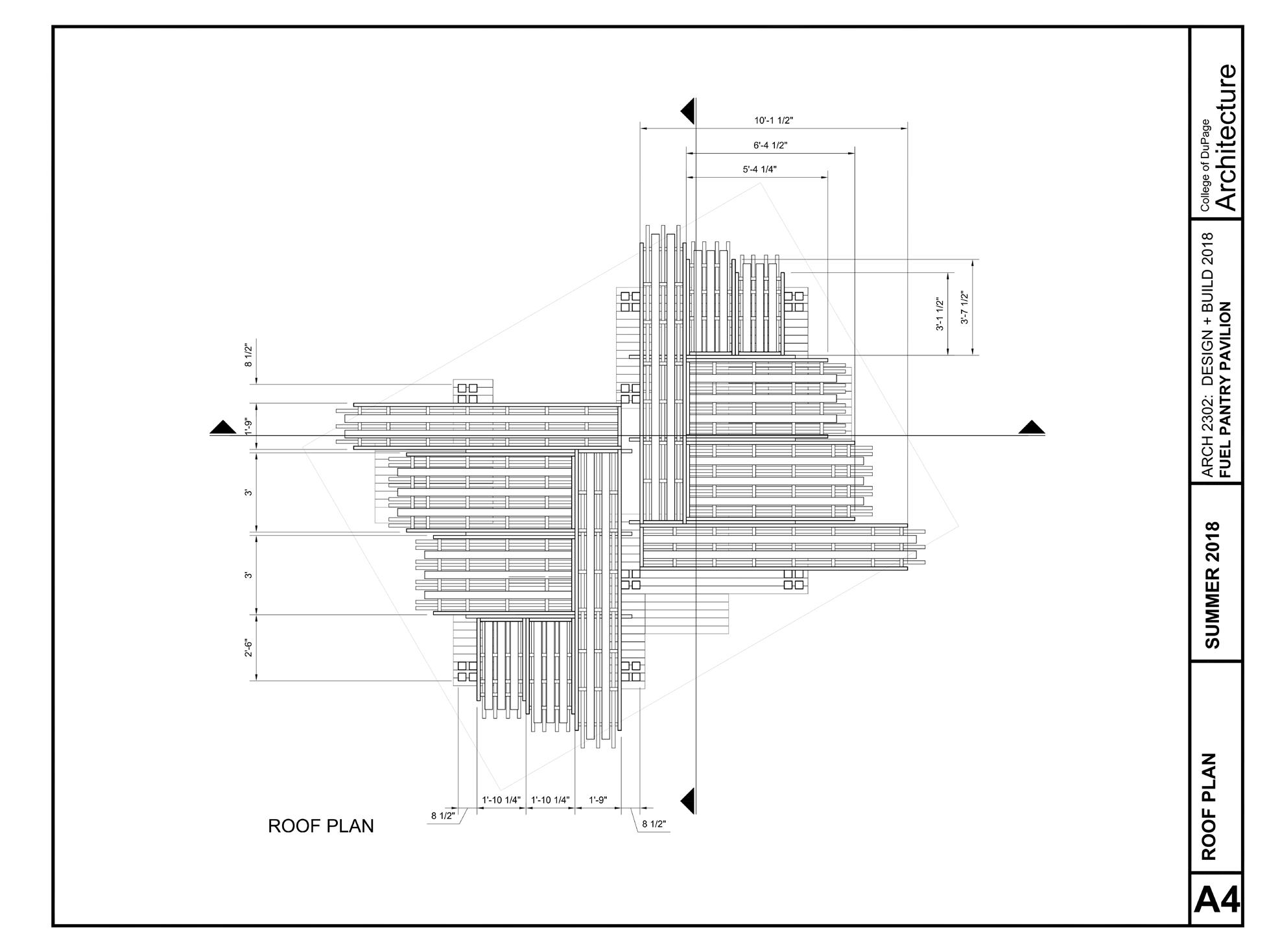
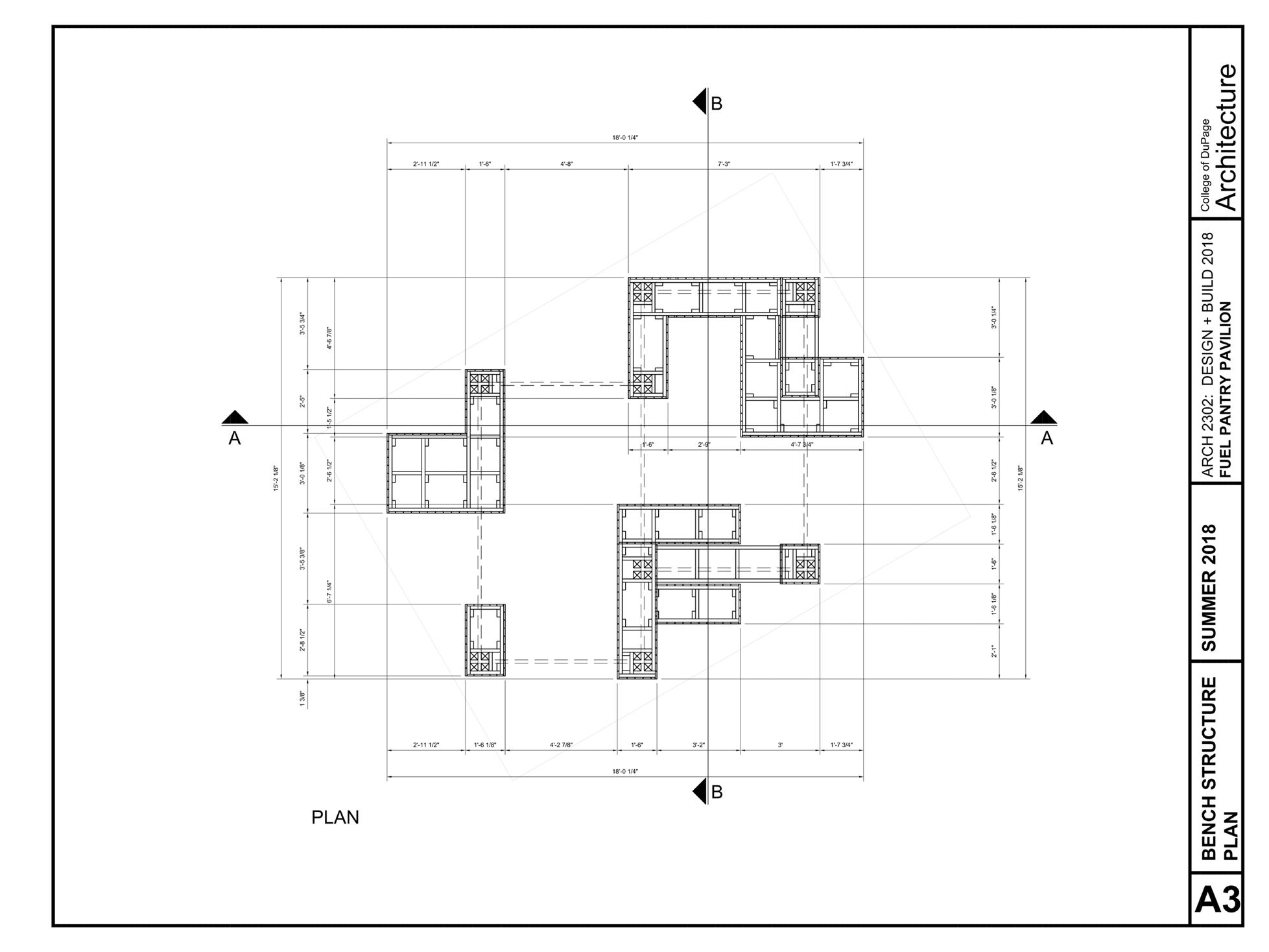
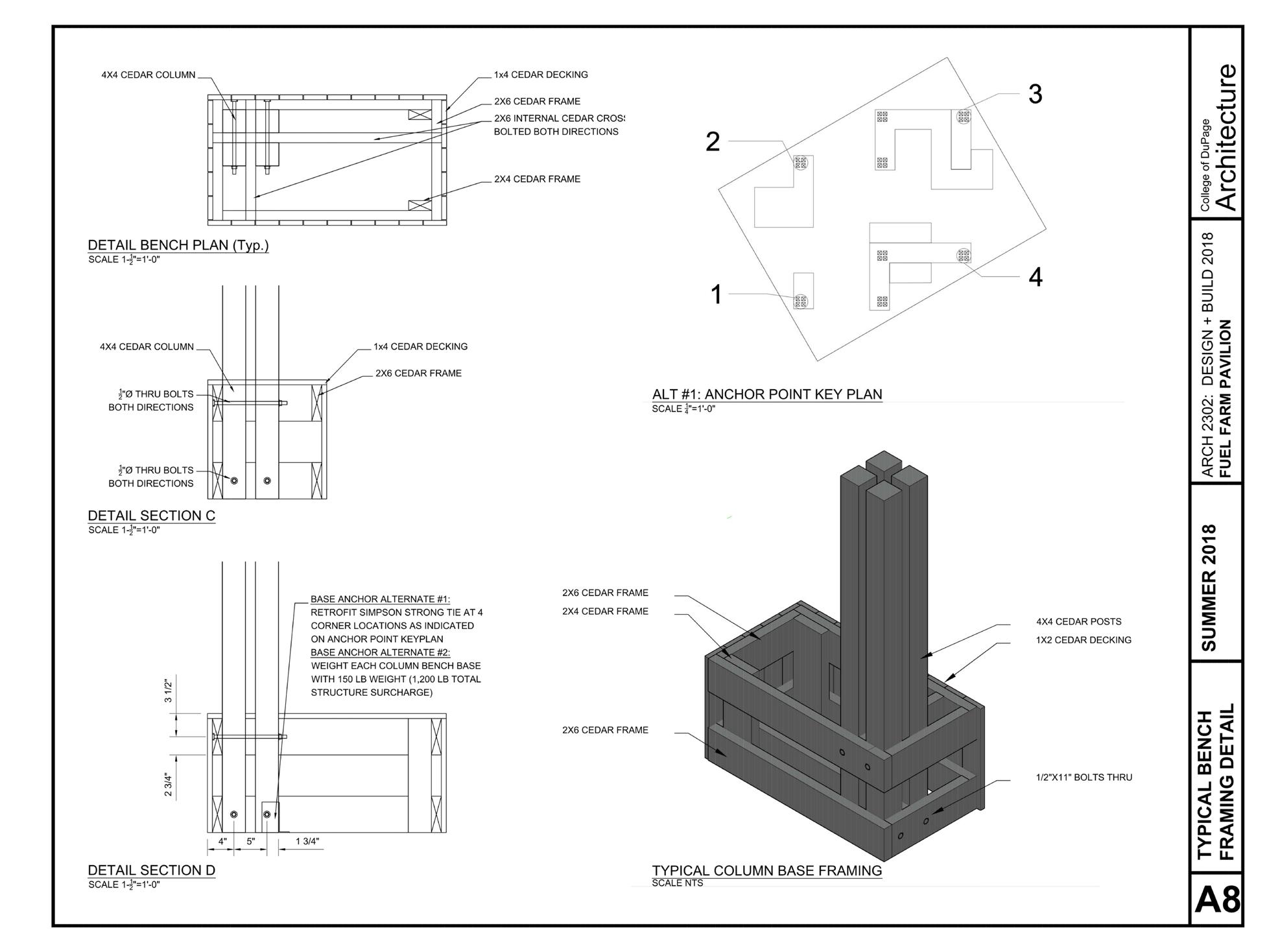
Various forms and arrangements were tested for the roof trellis and bench modules. This design took many forms as problems were worked out regarding structure, budget and shop-build limitations. A design was finalized featuring L-shaped benches that accommodated for the client’s spatial needs and an elegant trellis to provide sunshading.
SOPHOMORE YEAR | | | 16
17 DESIGN BUILD | | |
SOPHOMORE YEAR | | | 18
19 DESIGN BUILD | | | Summer
SOPHOMORE YEAR | | | 20
Winter
06 - Prosperity Gardens Headquarters
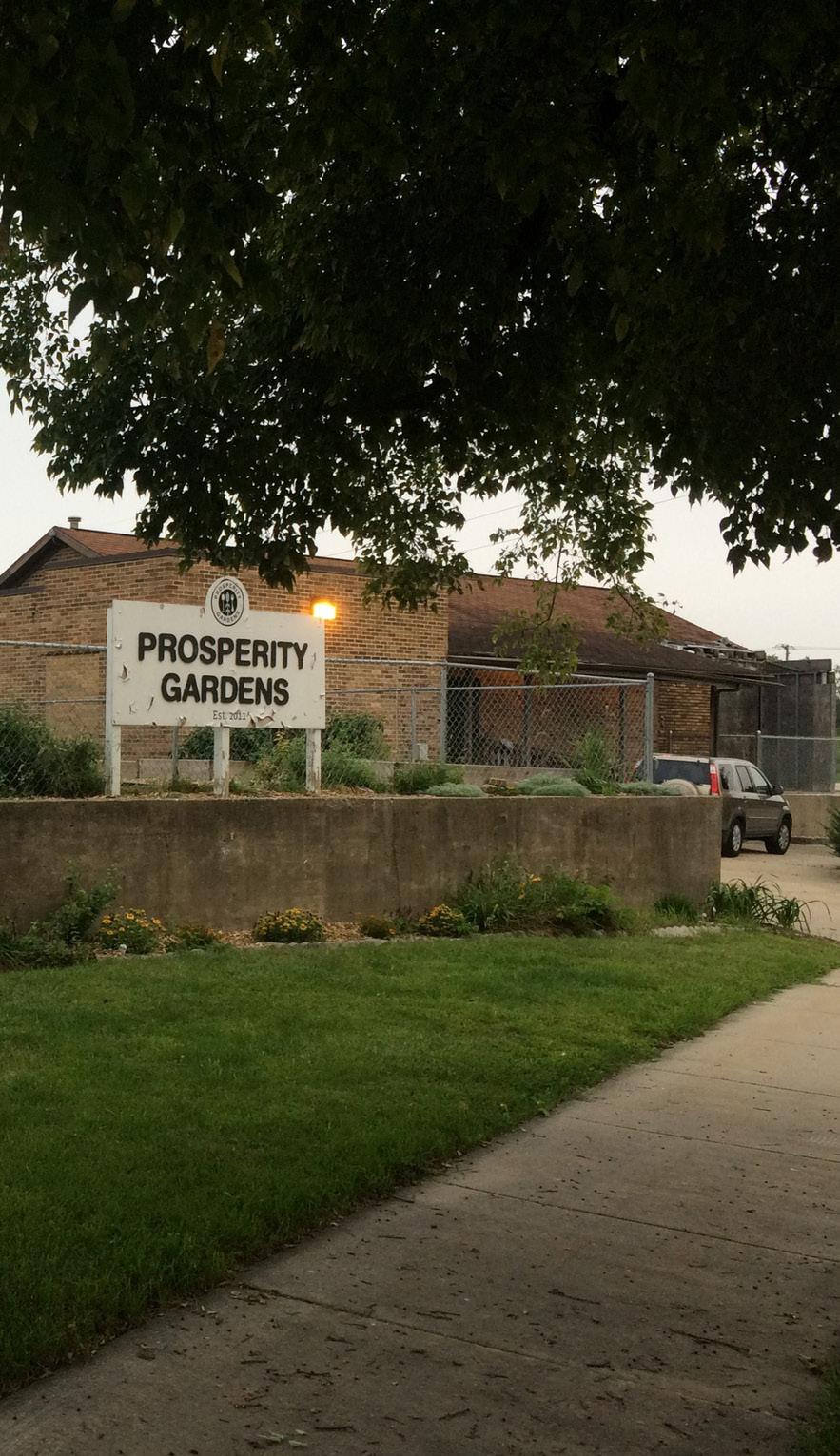
In 2016 students from the Illinois School of Architecture worked with the NonProfit Organization Prosperity Gardens to understand their architectural needs as they worked with young people who were participating in an alternative development program under the mission statement of “Cultivating Change - Transforming Lives”
This project is a continuation of that work. Since 2016, the organization itself has gone through some transitions and now seeks to support the most vulnerable homeless in the Champaign-Urbana Community.
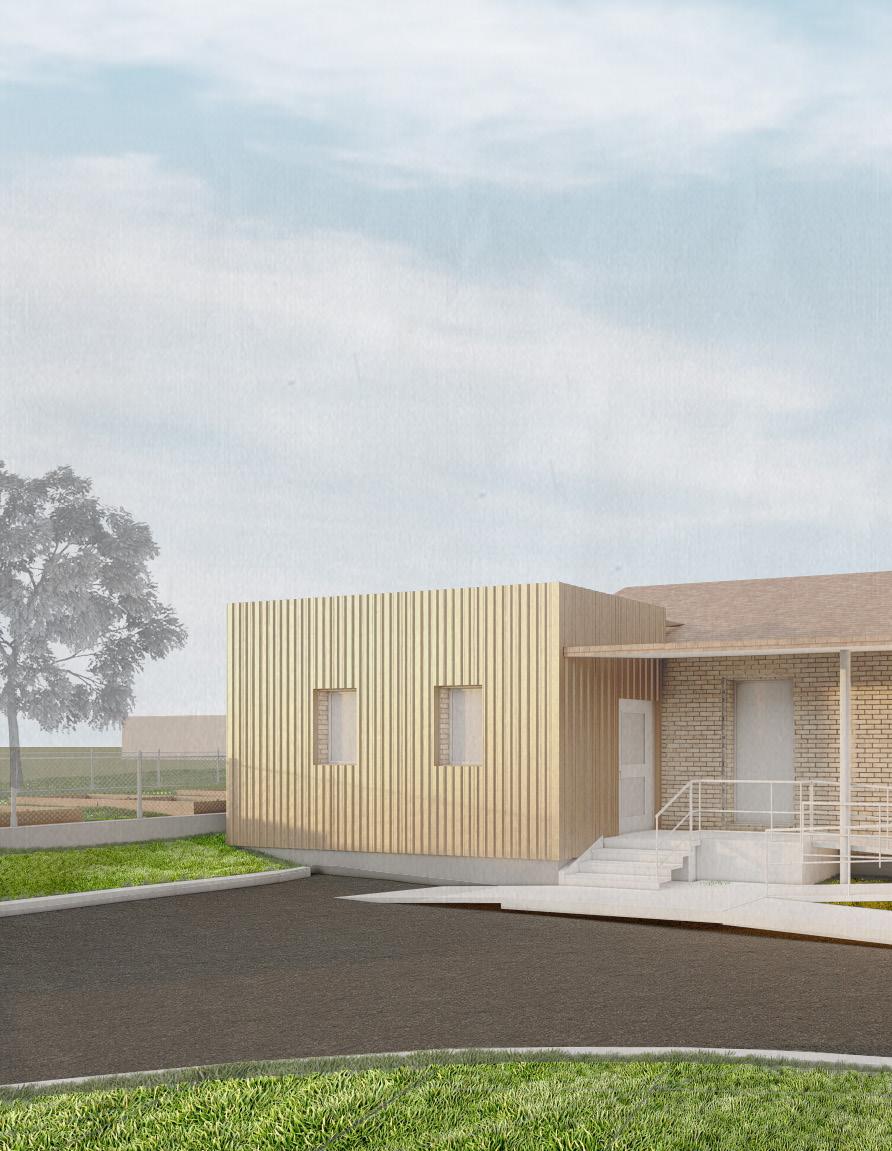
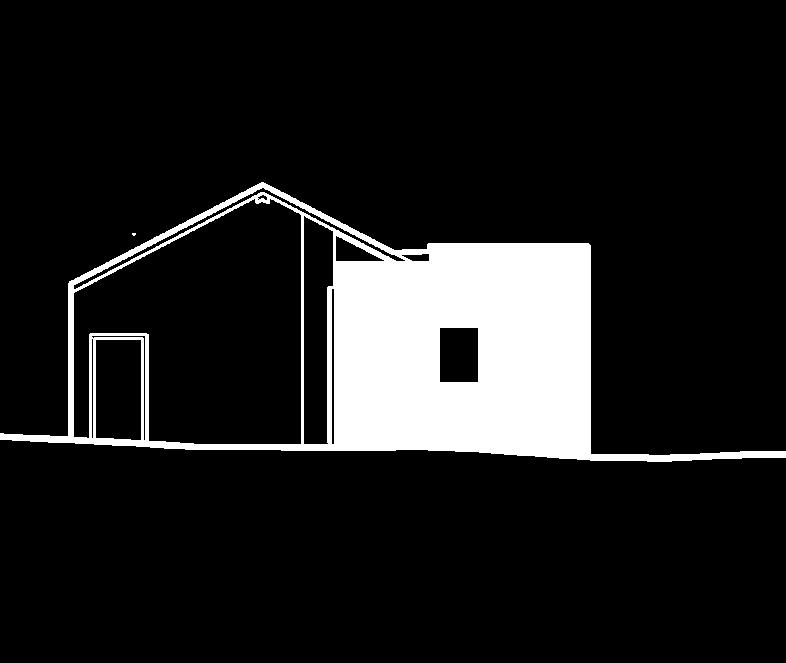
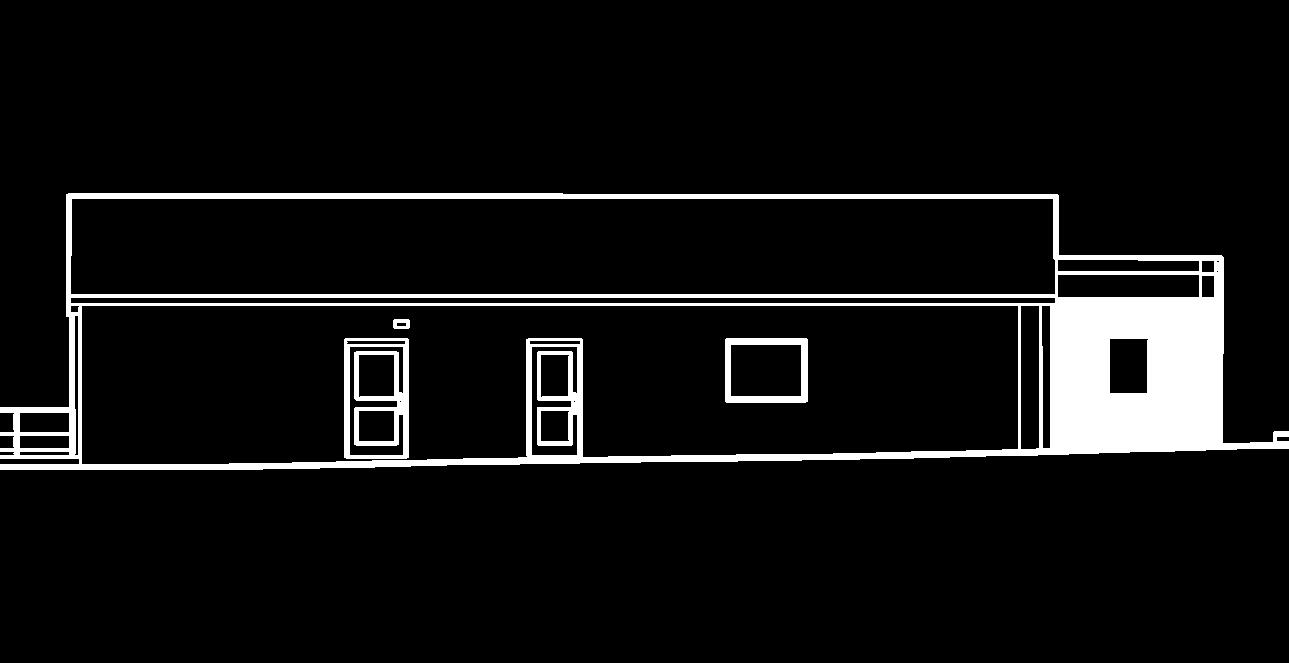
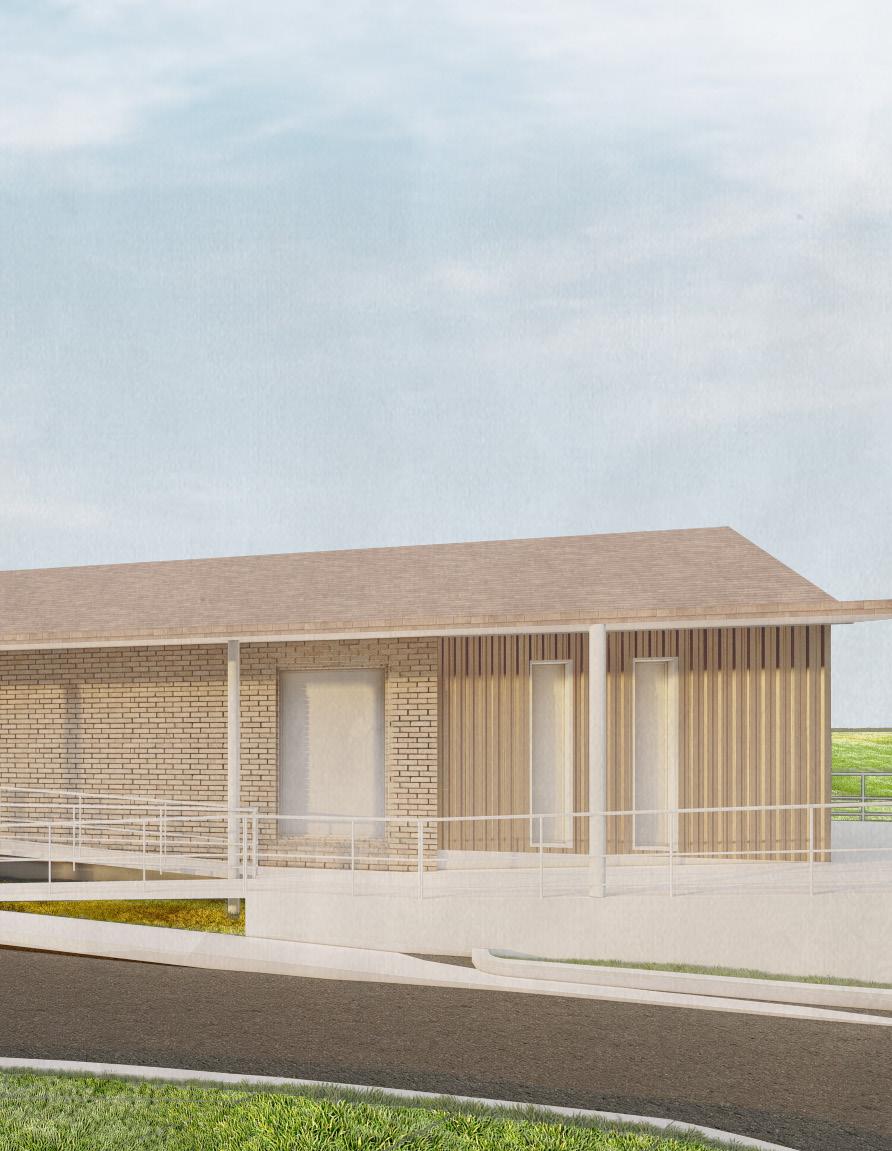
Prosperity Gardens Head Quarters (PGHQ) will utilize an abandoned building that previously housed evidence of crimes and transform it into a hub for Urban Agriculture. Throughout the duration of this project, many issues were resolved. Namely that of ADA accessibility, building enclosure to achieve desired thermal comfort, curb appeal aesthetics, the removal and design of key elements, fenestration elements and the creation of a new south facade.
37 PROSPERITY GARDENS HEADQUARTERS | | |
Fourth Year Studio University of Illinois Instructor Mark Taylor, Detail+Fabrication Chair
SENIOR YEAR | | | 38
PROPOSED REDESIGN
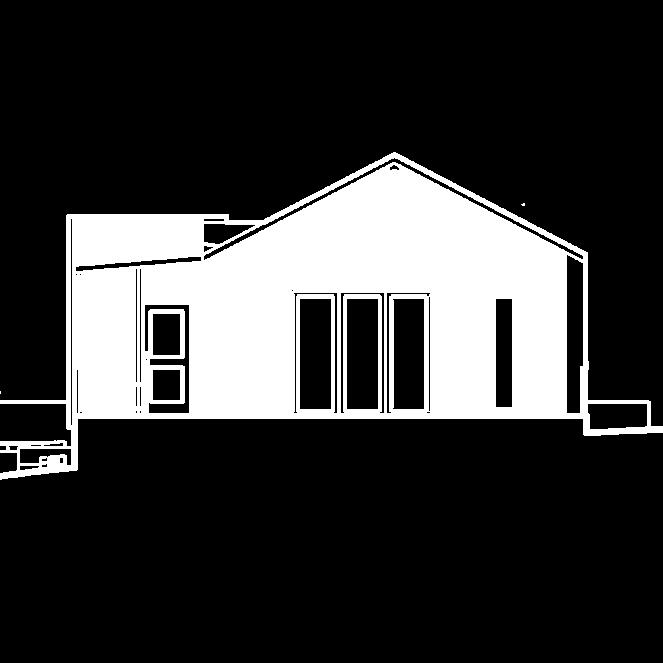
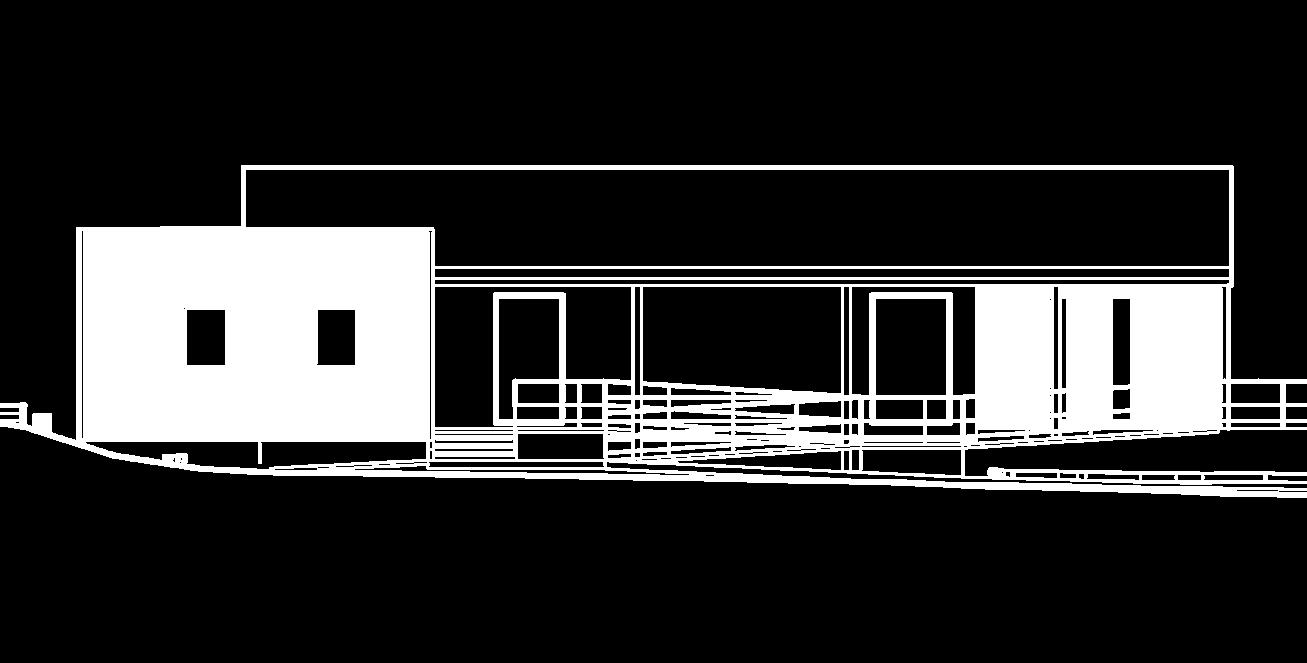
A large part of redesigning of the existing building was studying structural and thermal problems it had. The new proposed enclosure specifically with the idea of adaptive reuse in mind. The energy of insulated to lower on-going energy consumption. This high-performance well-insulated, and allowed interior spaces to utilize natural daylighting openings.
39 PROSPERITY GARDENS HEADQUARTERS | | |
ELEVATION
ELEVATION
EAST
NORTH
studying the envelope and addressing the many enclosure that wraps the building was designed of the building was overall reduced but high-performance envelope is climate-responsive, daylighting and ventilation with existing
SENIOR YEAR | | | 40
WEST ELEVATION SOUTH ELEVATION
Taking advantage of the local growing seasons, this community garden provides fresh food to sell in local markets.
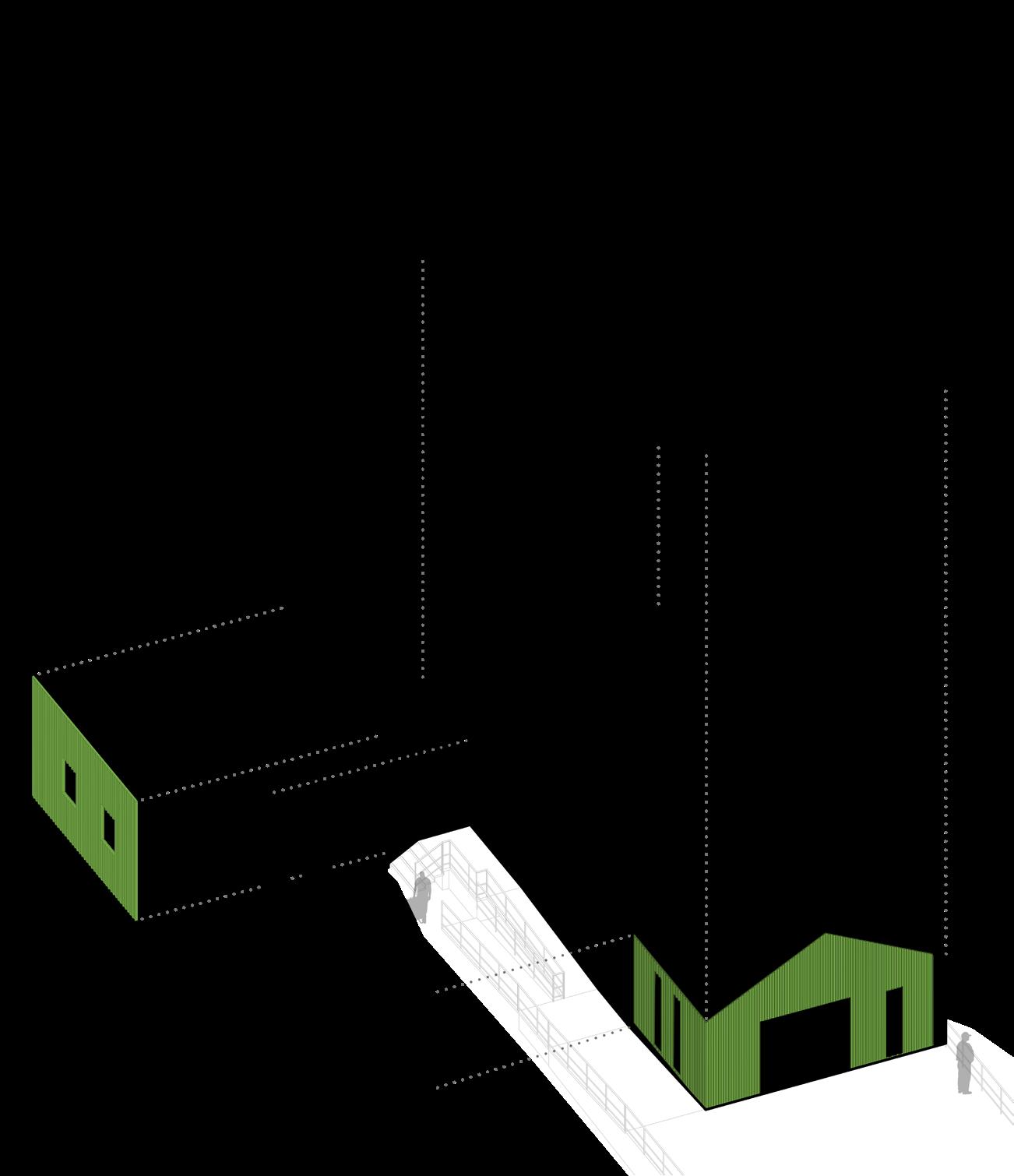
The new placement of the Office space allows for a wide view of the main gardening site as well as opportunities for passive heating through any of the three windows.




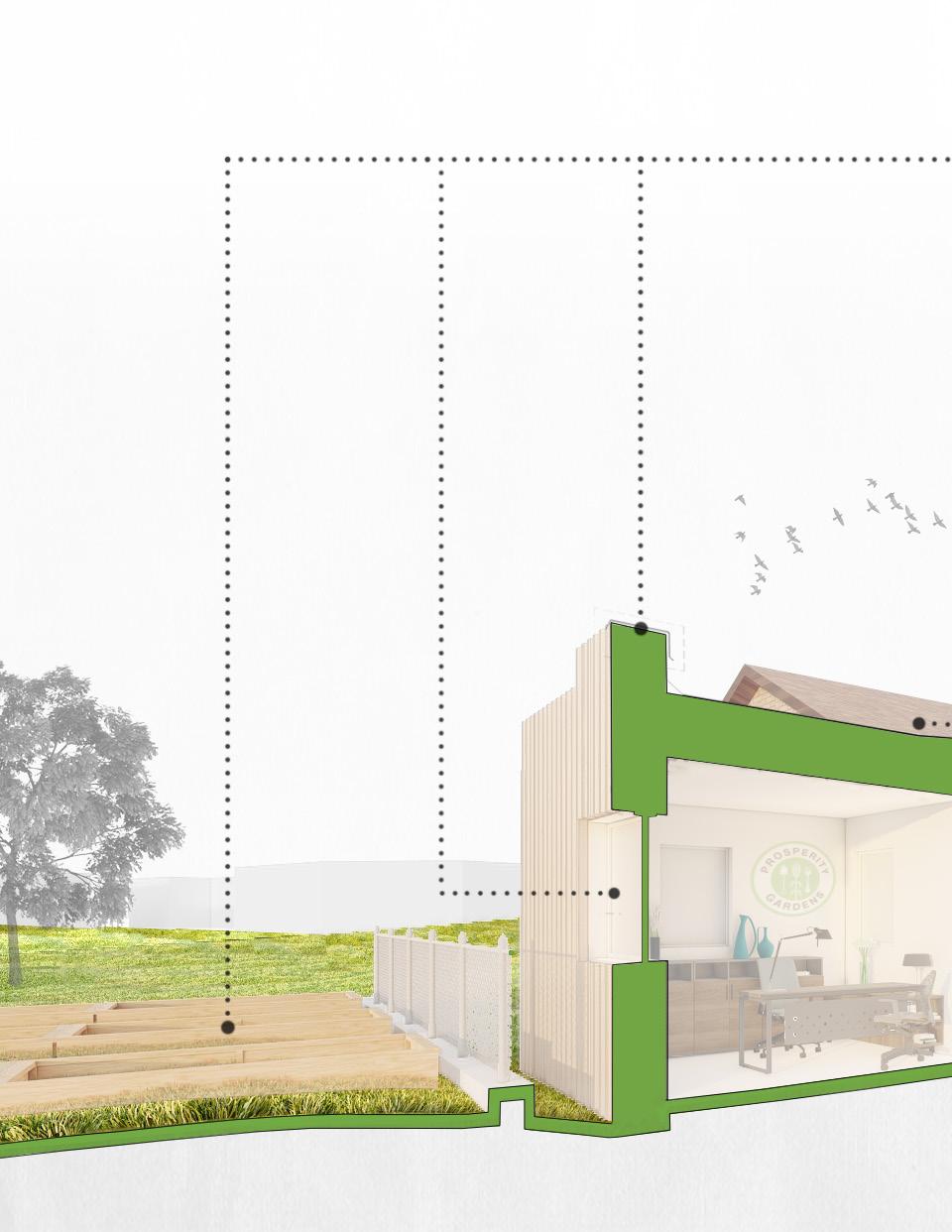
COMMUNITY GARDEN 180 DEGREE VIEW NEW EXTERIOR
The 7.2 Insul-Rib panel utilizes concealed clips and eliminates thermal short circuits. It has a fast assembly and easy installation, resulting in reduced construction costs. Designed for exterior applications.
41 PROSPERITY GARDENS HEADQUARTERS | | |
assembly time construction labor
WATER COLLECTION


Water can be collected along the slanted roof and into a cistern. This water can then be used to grow food in the community garden.
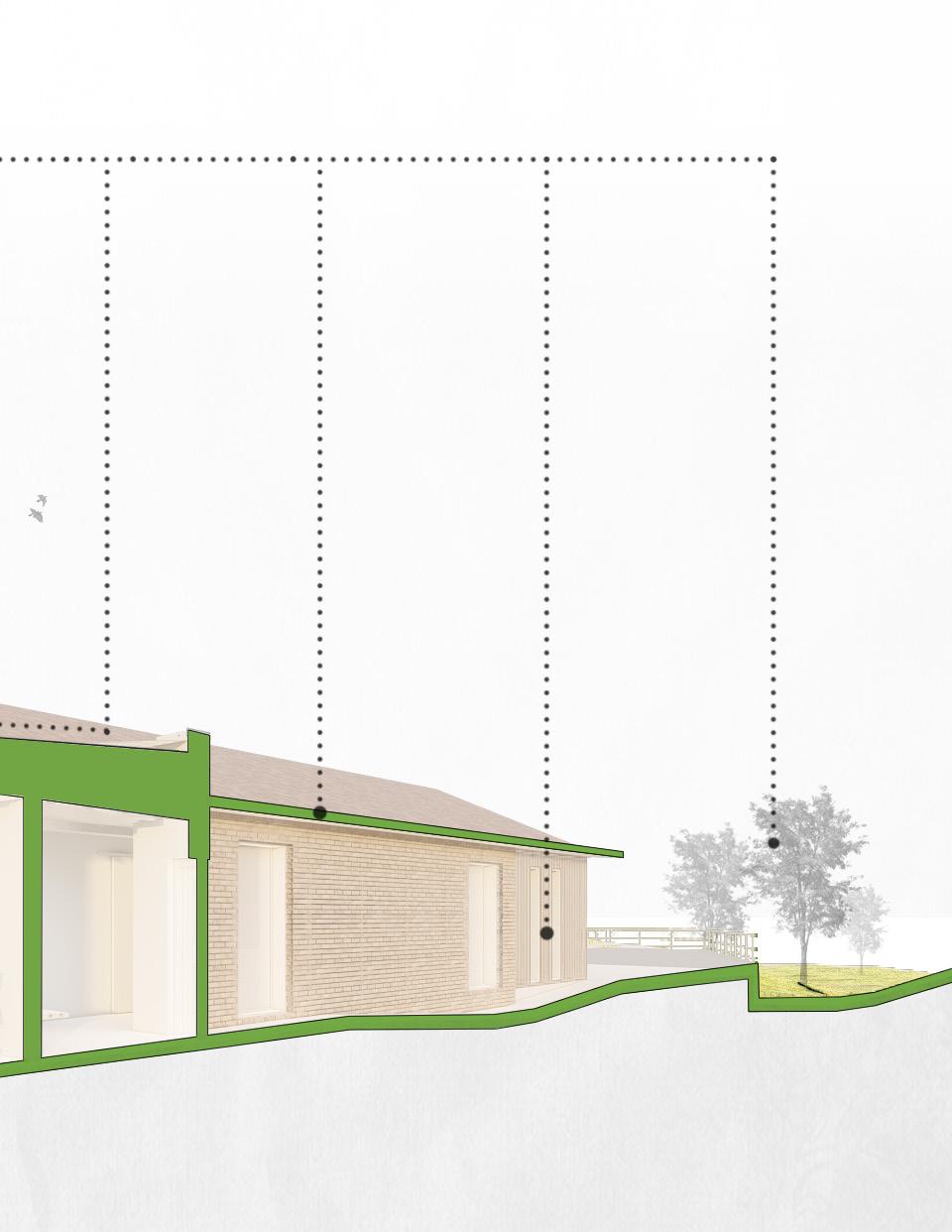
ROOF OVERHANG
Site specific to allow penetration of low winter sun while blocking the high summer sun.
COMMUNITY OUTREACH
Prosperity Gardens provides resources and opportunities to locals through the form of Urban Agriculture classes, resume-workshops and more!
FRUIT TREES
The canopy of the fruit trees creates a scene of a pleasant urban park, while producing fresh fruit.
SENIOR YEAR | | | 42
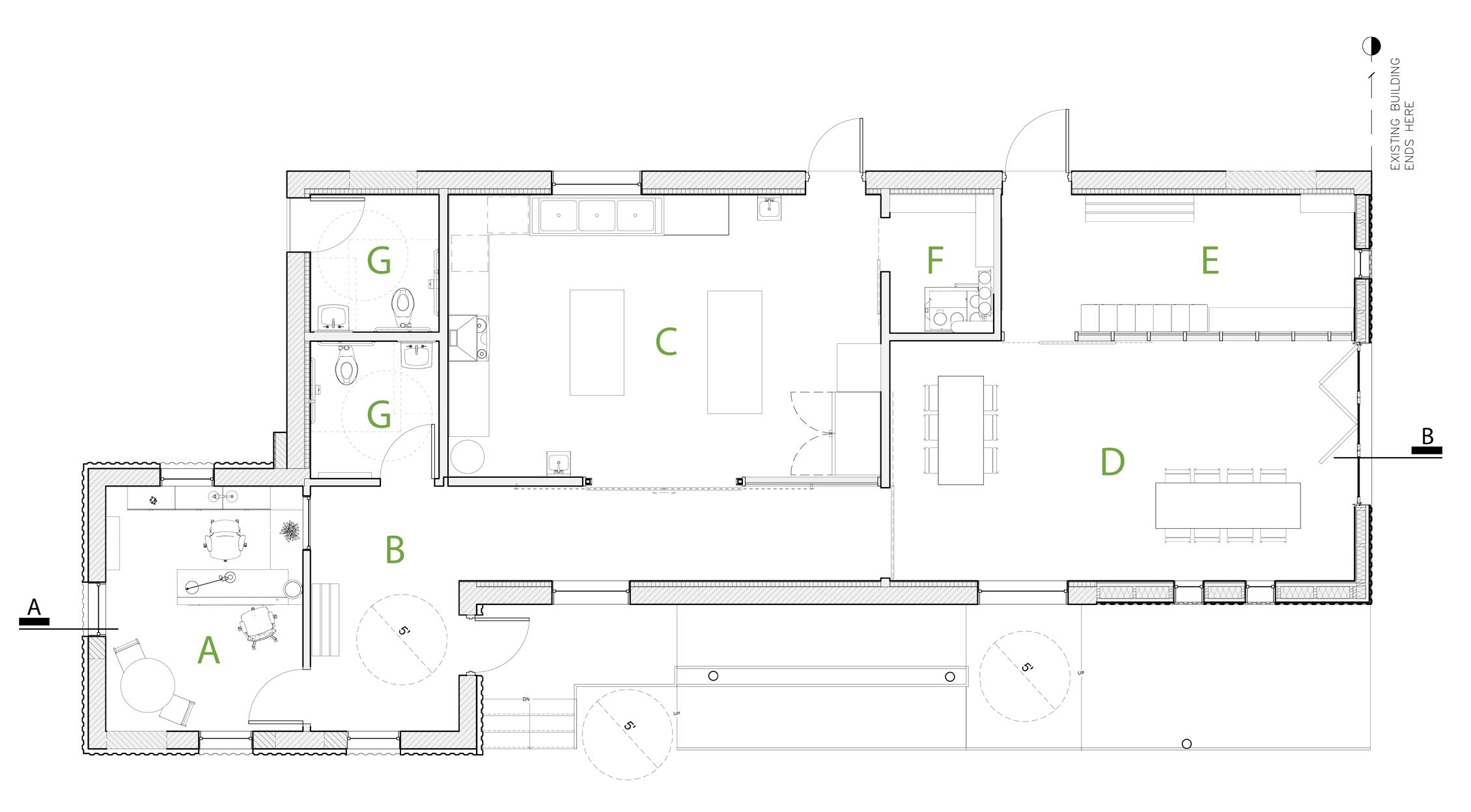
PROPOSED PLAN
OFFICE - 148 sf

LOBBY - 112 sf
KITCHEN - 426 sf
COMMUNITY - 347 sf
STORAGE - 153 sf
PANTRY - 44 sf
BATHROOM - 55 sf
Throughout the duration of this project we worked closely with a local architecture firm to address existing structural issues, create strategies in order to bring power, water, and sanitary systems to the building, and to recieve input on floorplan layouts. In addition to this partnership, we also worked closely with an energy consultant to map out strategies best for heating and cooling the spaces within as efficiently as possible.
43 PROSPERITY GARDENS HEADQUARTERS | | |
SECTION A
DETAIL LEGEND
1 - LOOSE FILL INSULATION 8 - NON-SKINNING SEALANT 15 - POP RIVET @ 24” O.C.

2 - 4 HOLE CF CLIP 9 - HEAD TRIM
16 - TAPE SEALER
3 - CLIP FASTENERS 10 - COLD FORM HEADER 17 - EXISTING BRICK
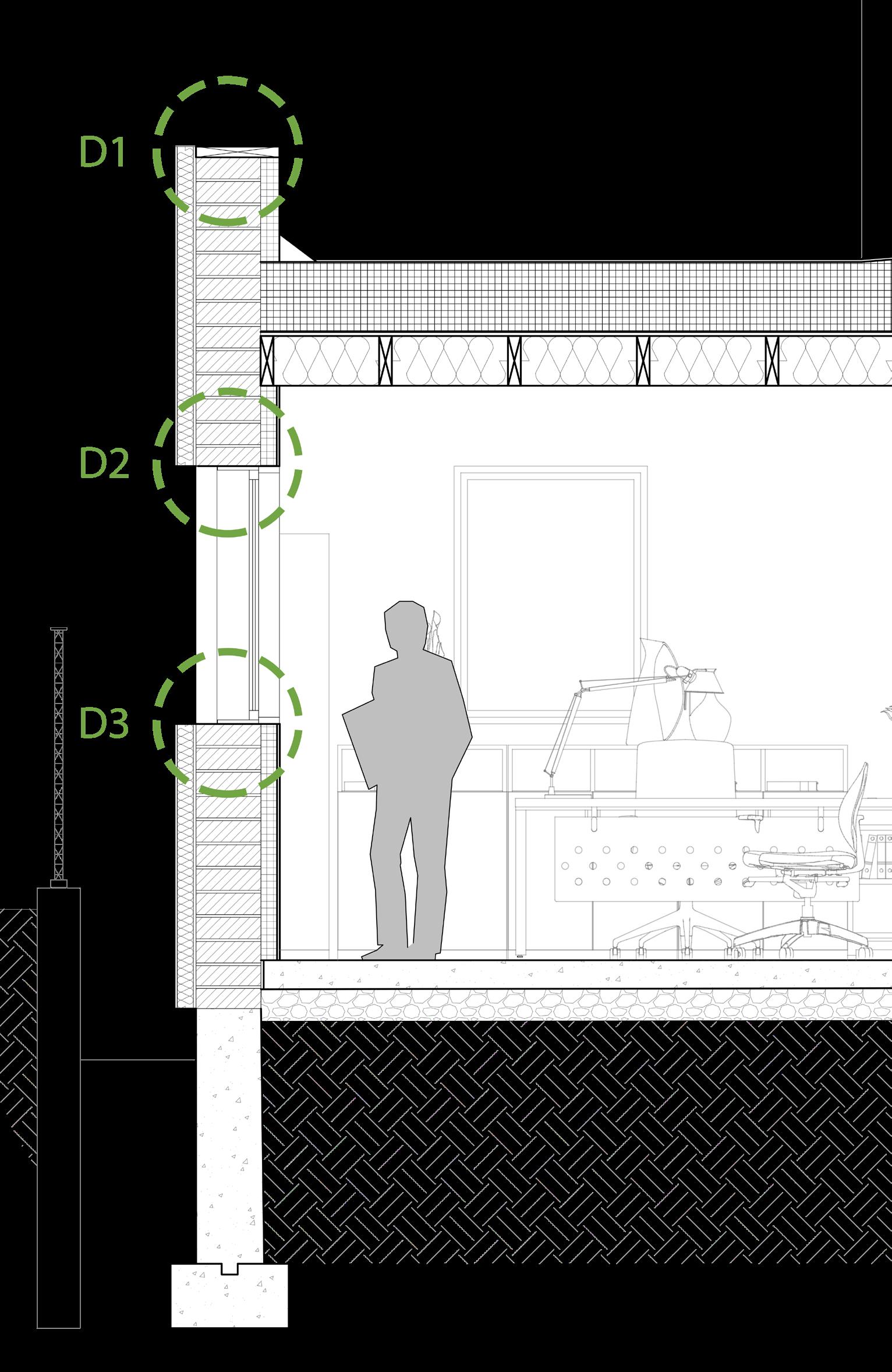
4 - THRU-FASTENERS W/ WASHER 11 - PERIMETER SEALANT 18 - 3” RIGID INSULATION
5 - SELF DRILL SCREW 12 - WINDOW FRAME
6 - 7.2 INSUL-RIB WALL PANEL 13 - SILL TRIM

7 - WALL PANEL CLIP 14 - 7.2 OUTSIDE CLOSURE

SENIOR YEAR | | | 44 DETAIL 01 DETAIL 02
03 1 2 4 5 6 7 8 9 12 14 17 18 13 10 15 16 11 3
DETAIL

Thank you for reading Eugenio Miguel Rivera +1 217 200 2584 eugeniomiguelrivera@gmail.com