DIGNITY: RETHINKING THE ARCHITECTURE OF AFFORDABLE HOUSING
ETHAN THOMAS
MASTER OF ARCHITECTURE
UNIVERSITY OF TEXAS AT SAN ANTONIO FALL 2025
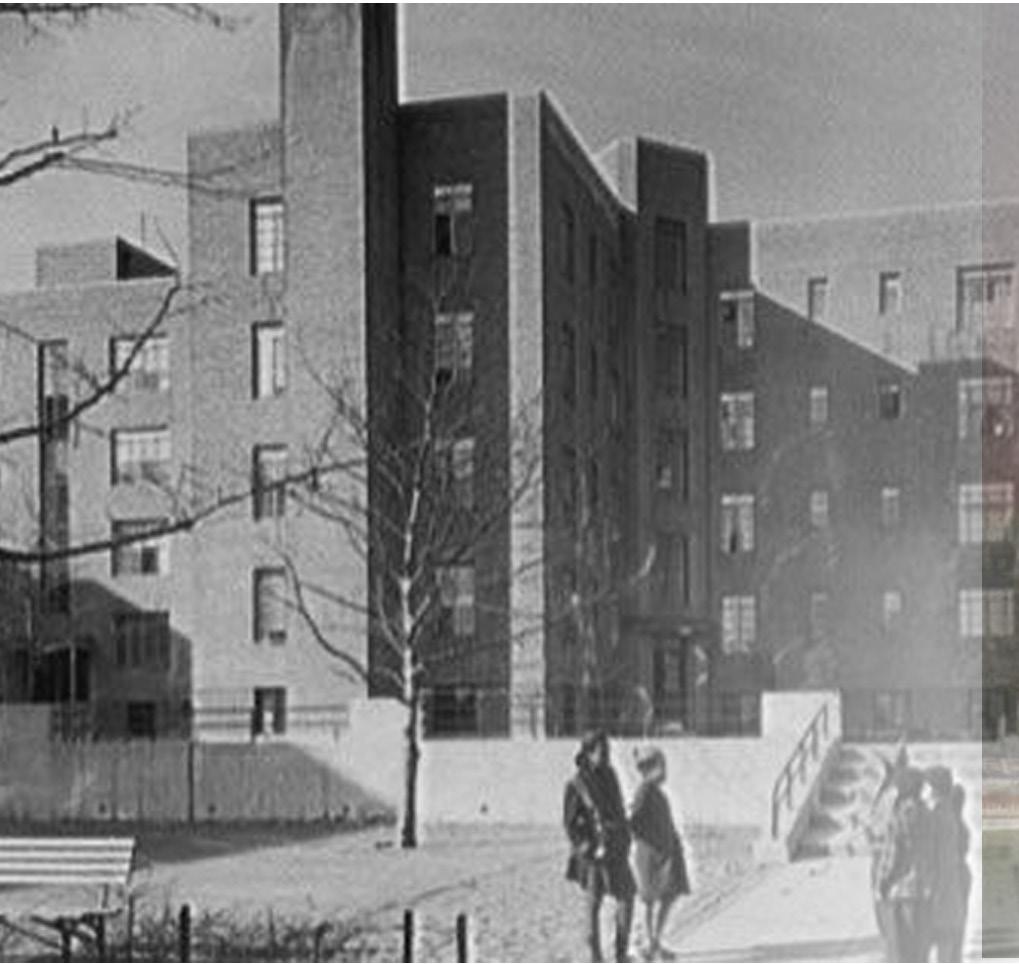
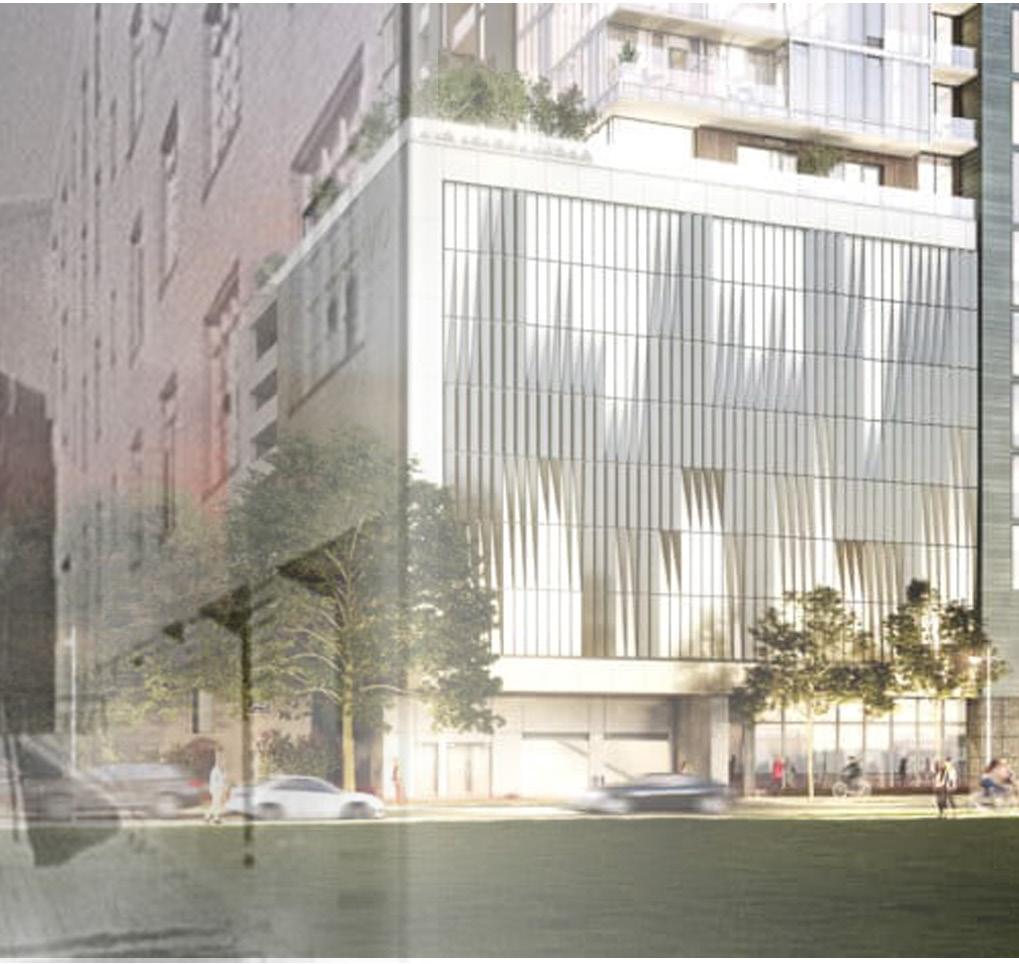
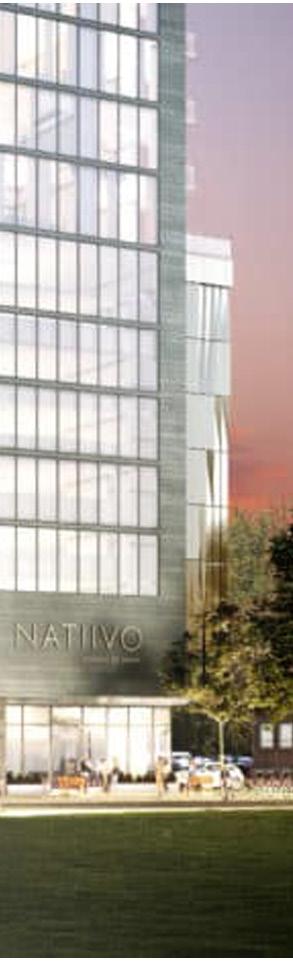
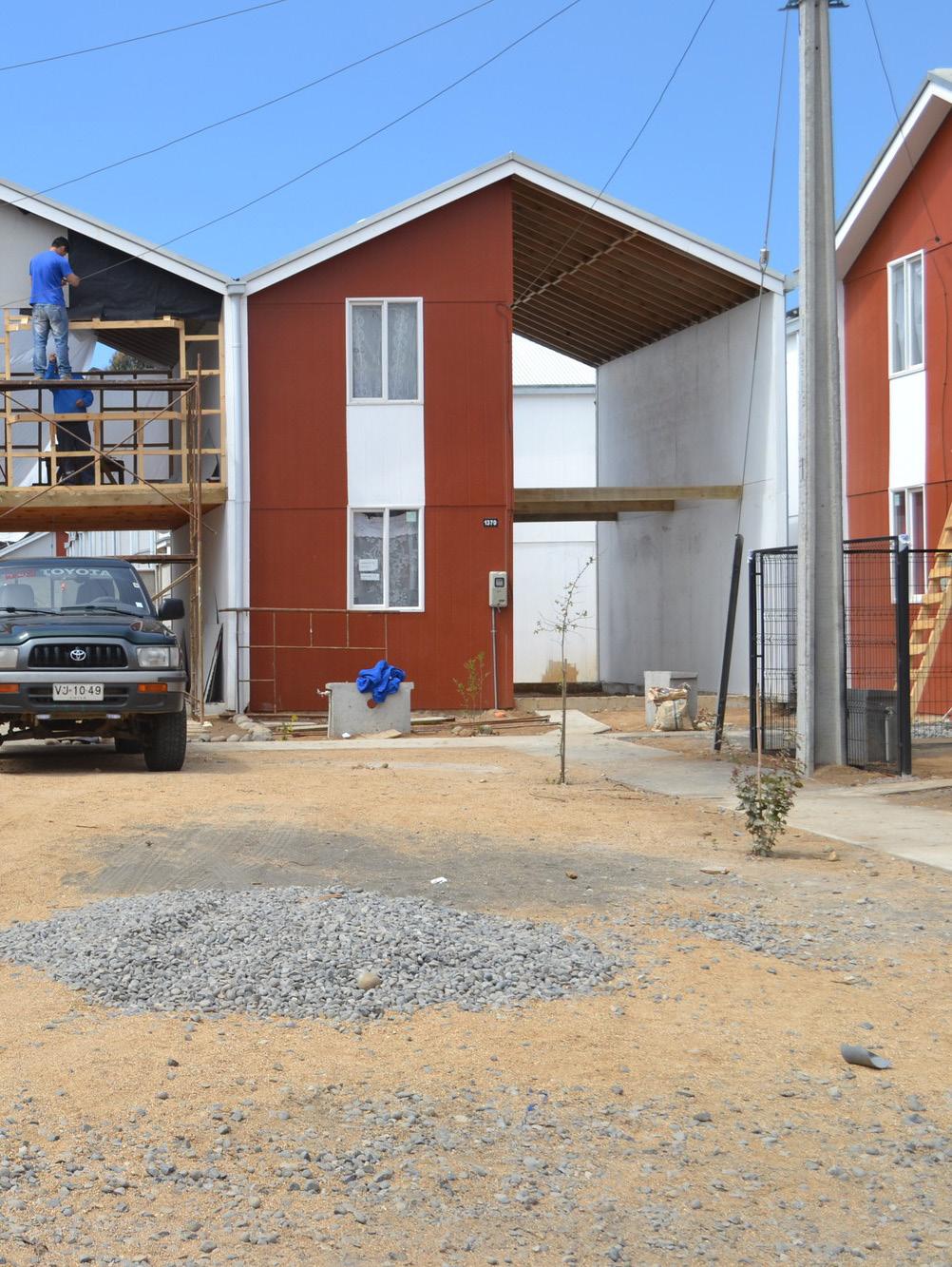
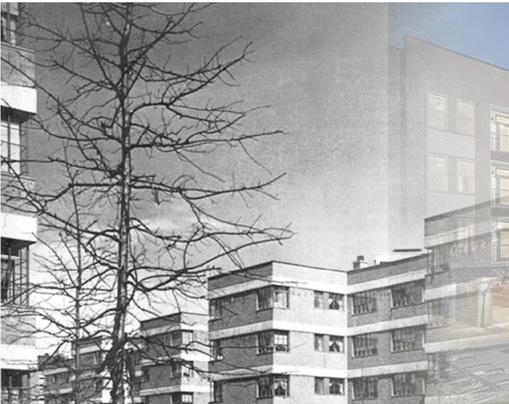
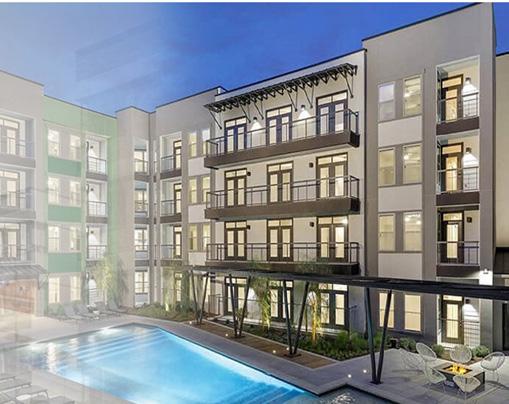
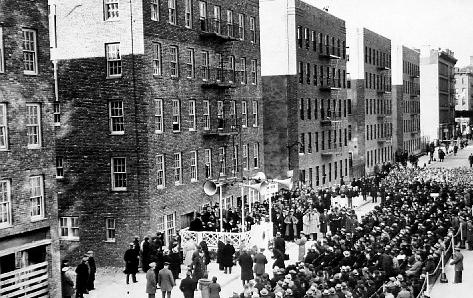
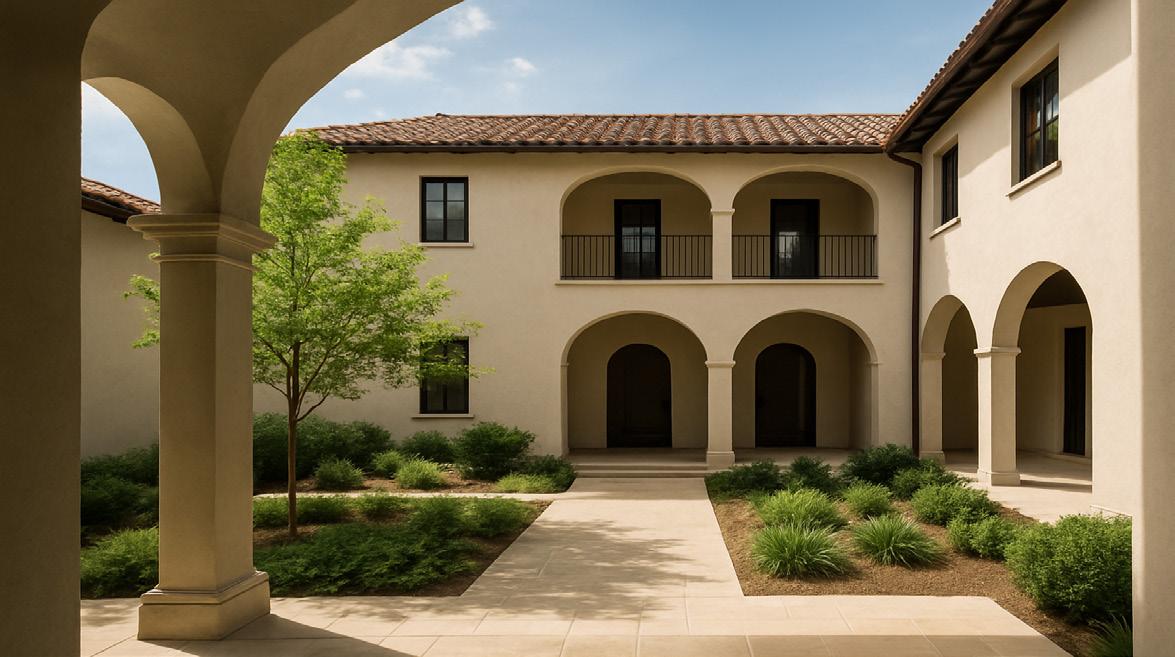
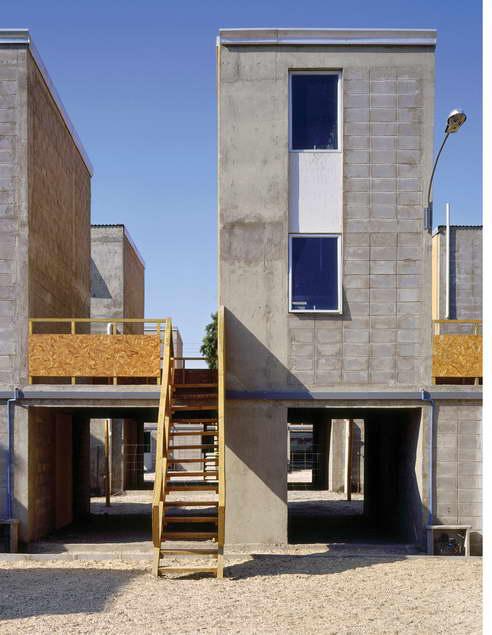
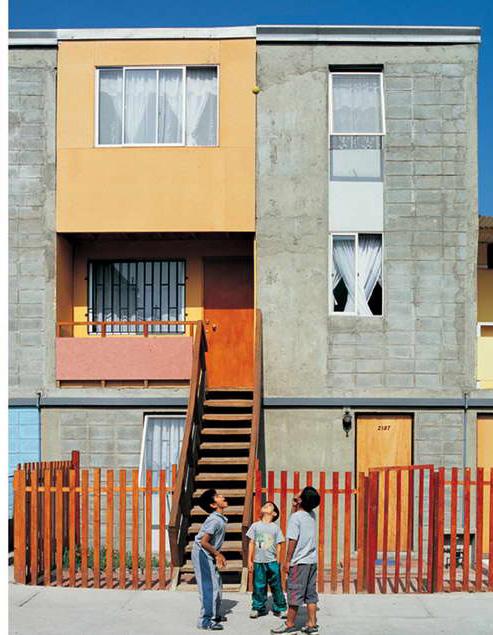
ARCHITECTURAL STRATEGIES FOR QUALITY, EQUITY, AND RELATIONAL LIVING AVISUALJUXTAPOSITIONOFEARLYSOCIALLYORIENTEDHOUSINGANDCONTEMPORARYEXCLUSIONARYDEVELOPMENT,ILLUSTRATINGTHEARCHITECTURALSHIFTFROM COLLECTIVE DIGNITY TOWARD MARKET-DRIVEN SPATIAL PRIORITIES.
All rights reserved. This book or any portion thereof may not be reproduced or used in any manner whatsoever without the express written permission of the publisher except for the use of brief quotations in a book review.
700N St Marys St.
San Antonio, TX. 78205
Printed in the United States of America
Cover Image Composition: Public domain and project imagery combined for academic use
FIRST EDITION
ETHAN THOMAS
FOR MICHAEL, WHOSE PASSION AND SPIRIT BECAME THE FOUNDATION OF MY OWN.
CHAPTER ONE - ABSTRACT
This project addresses the persistent architectural problem of dignity within affordable housing, examining how spatial quality, material expression, and environmental conditions influence social well being. In many communities, affordable housing has become synonymous with reduced expectations: limited access to light and air, constrained communal space, and environments shaped by economic efficiencies rather than human aspiration. This thesis reframes affordable housing as an architectural opportunity, arguing that dignity is not an added amenity but a fundamental spatial right embedded in proportion, materiality, privacy, safety, and the potential for community life.
Drawing from historical and contemporary precedents, the project identifies how earlier models of socially oriented housing embedded civic responsibility and spatial generosity; while contemporary market driven developments often privilege exclusivity and amenities over collective needs. Insights from theoretical literature, site analysis, and precedent studies establish a framework in which dignity becomes measurable through environmental quality, spatial coherence, and opportunities for meaningful social interaction.
The project situates this inquiry in San Antonio, where patterns of disinvestment, cultural erasure, and rising housing costs intensify the need for architectural intervention. Program and site parameters are defined through user needs, contextual conditions, sustainability criteria, and ethical responsibilities that emerge from designing for vulnerable or underserved populations.
The outcome is a set of architectural intentions that position affordable housing not as a technical problem but as a cultural and spatial challenge. By synthesizing research across literature, precedent analysis, and environmental considerations, the project outlines a trajectory for a design methodology that prioritizes dignity as a core architectural principle. This foundation establishes the direction for the Master’s Project, which will explore how architectural form, programmatic structure, and material decisions can cultivate environments that support equity, belonging, and long term community resilience.
RECLAIMING DIGNITY: RETHINKING THE ARCHITECTURE OF AFFORDABLE HOUSING
CHAPTER 2
ESSAY — THEORETICAL POSITION
Section One - The Architectural Problem
Defining the Problem
Affordable housing in the United States has long been shaped by economic pressures, policy decisions, and market logics that repeatedly undermine architectural quality. Over time, the discipline has come to associate “affordable” with reduced expectations: smaller unit sizes, diminished access to light and air, limited communal space, and a material palette defined by cost rather than performance or dignity. These conditions reveal a broader architectural problem: the systematic degradation of spatial quality for communities with limited economic power. The consequences manifest not only in physical shortcomings but in the social, environmental, and psychological impacts experienced by residents.
Loss of Dignity as a Spatial Condition
Across many cities, housing types that once embodied civic responsibility and spatial generosity have been replaced by developments designed for financial efficiency, exclusivity, and branding. The spatial loss of dignity is not abstract; it is visible in the reduction of shared outdoor spaces, the retreat of natural materials, the prioritization of rentable square footage, and the erosion of community infrastructure that once sustained social cohesion. Architecture becomes complicit when it accepts these diminished standards as unavoidable.
Why This Problem Matters Architecturally
When architectural quality becomes a privilege rather than a baseline condition, housing ceases to function as a stabilizing force in people’s lives. The architectural problem is therefore not simply affordability but the relationship between affordability and spatial value. Addressing this requires understanding dignity as a measurable architectural outcome grounded in proportion, environmental conditions, material performance, and the capacity of a building to support belonging, privacy, safety, and community life.
Position of the Thesis Project
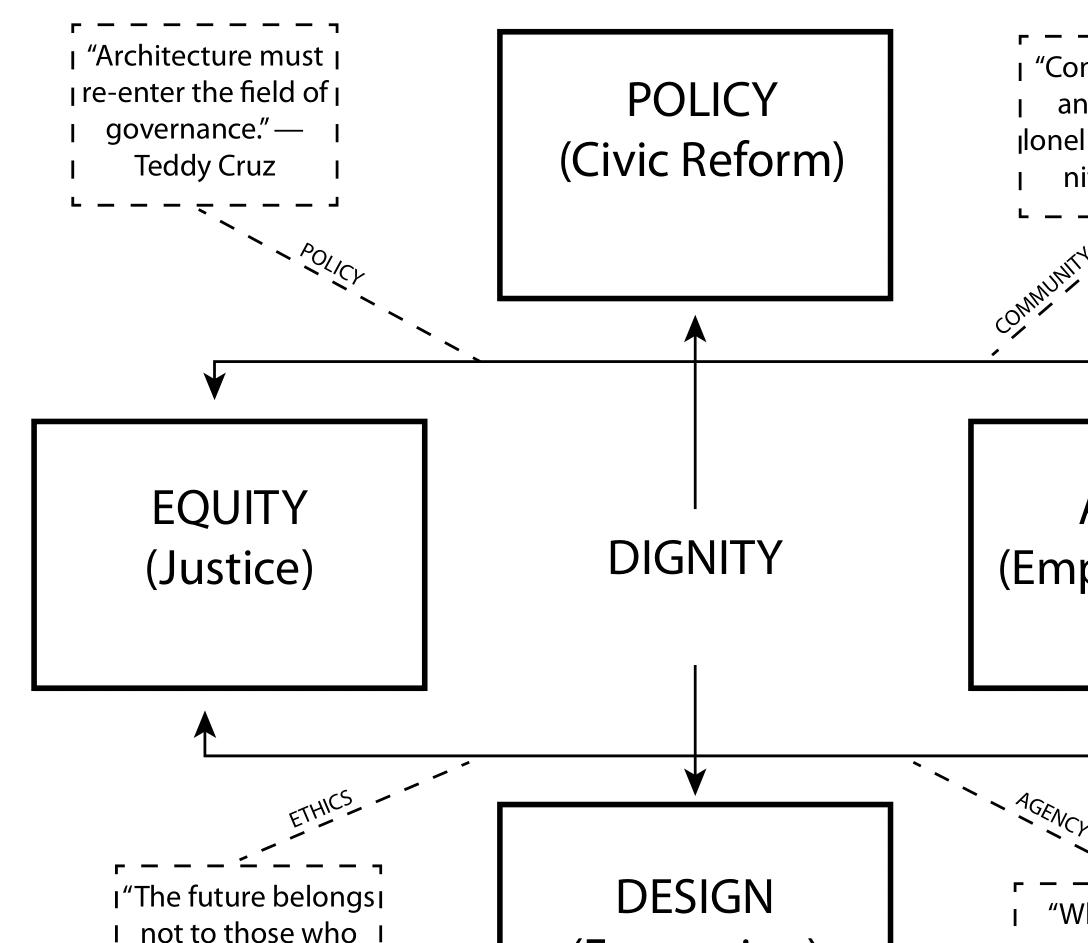
This project positions dignity as a foundational requirement rather than a secondary amenity. The architectural problem is not solved through cost efficiency alone; it is addressed by redefining what baseline quality means in affordable housing. This includes reconsidering unit layouts, communal spatial structures, material choices, access to light, ventilation, and the environmental responsibilities embedded within the building’s design. The Master’s Project builds from this reframed understanding to propose housing that is both affordable and inherently dignified.
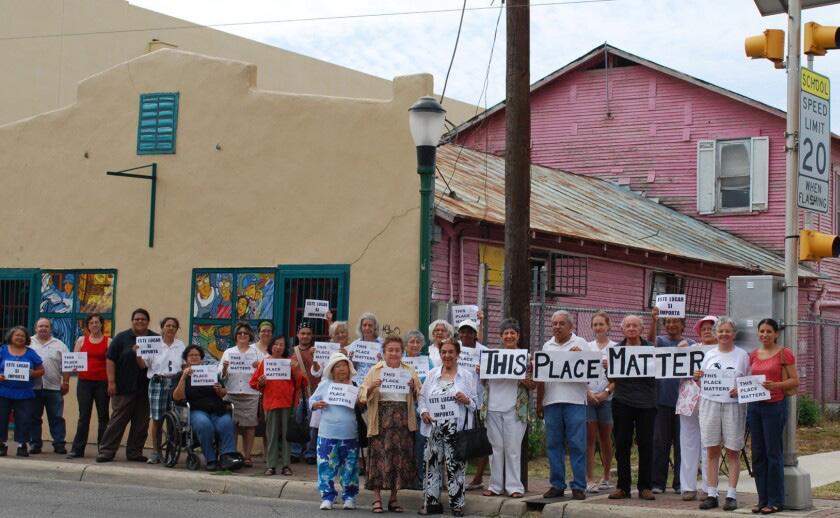
San Antonio - West Side
Section Two - Historical and Cultural Context
Early Models of Socially Oriented Housing
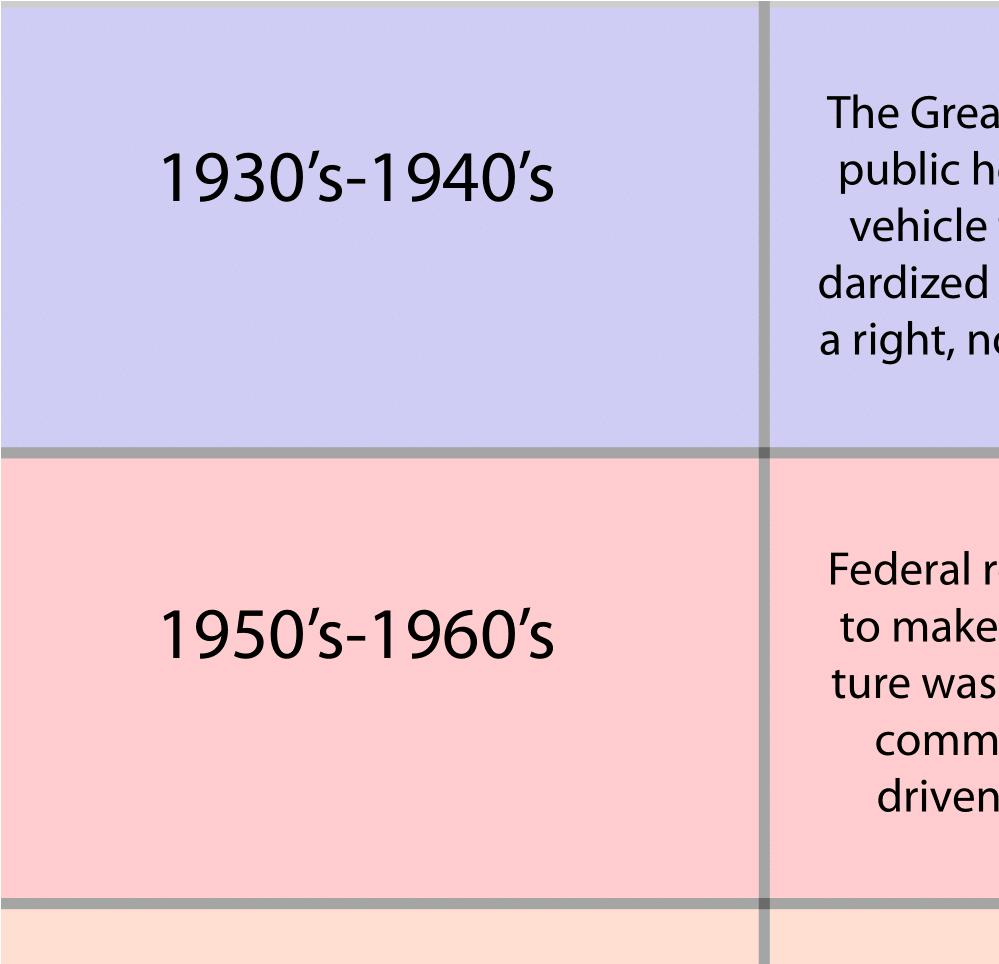
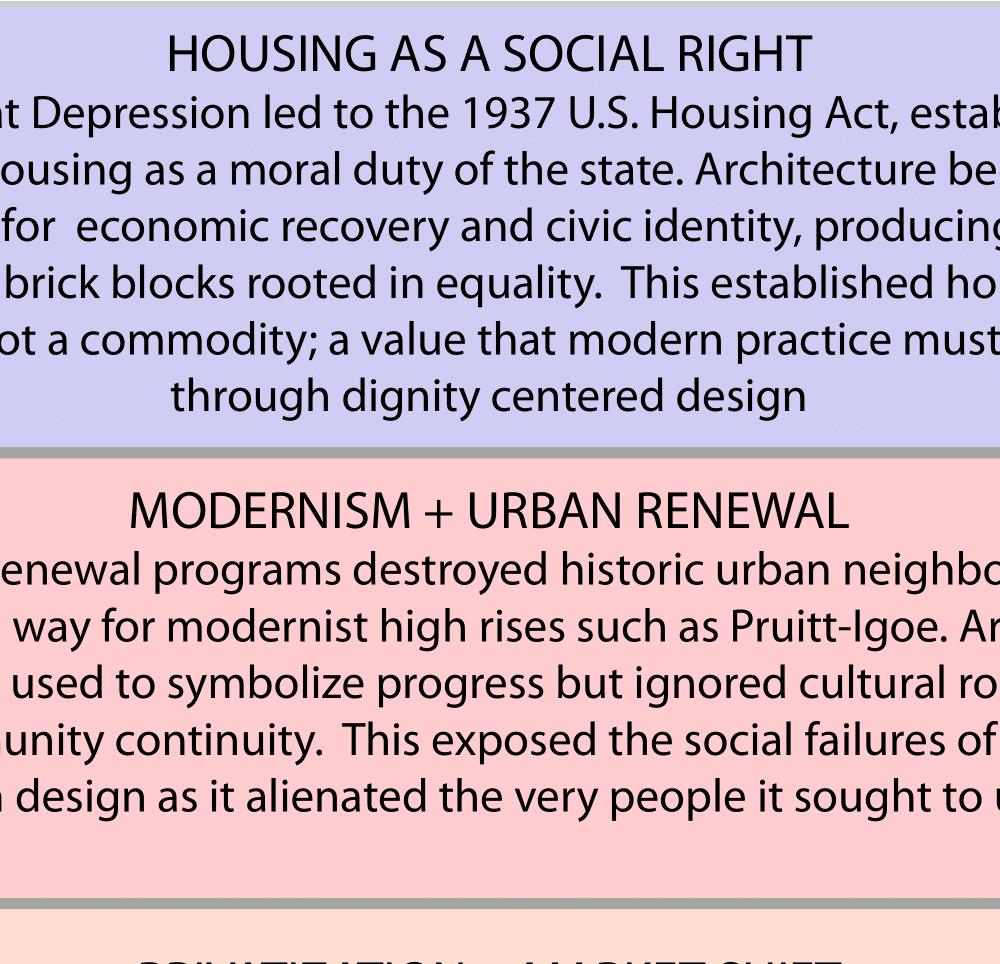
Throughout the early and mid-twentieth century, affordable housing in the United States often carried an explicit civic ambition. Projects such as worker housing, early public housing, and post-war social programs attempted to embed stability, community, and identity into daily living. While these projects varied in success, many shared a belief that spatial quality should not be determined solely by income. Proportions, access to daylight, communal courtyards, and human scaled circulation were understood as integral components of collective life. These early models demonstrated that affordable housing could be functional, durable, and socially intentional.
Shift Toward Market-Driven Development
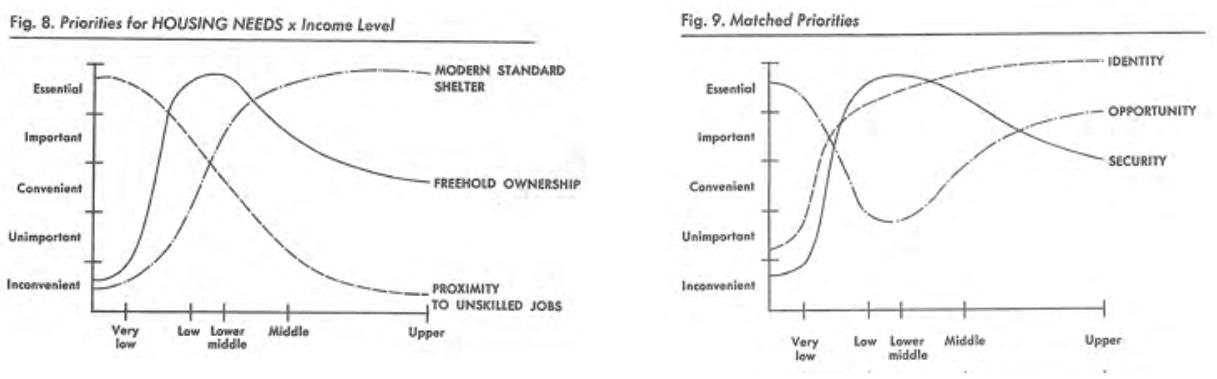
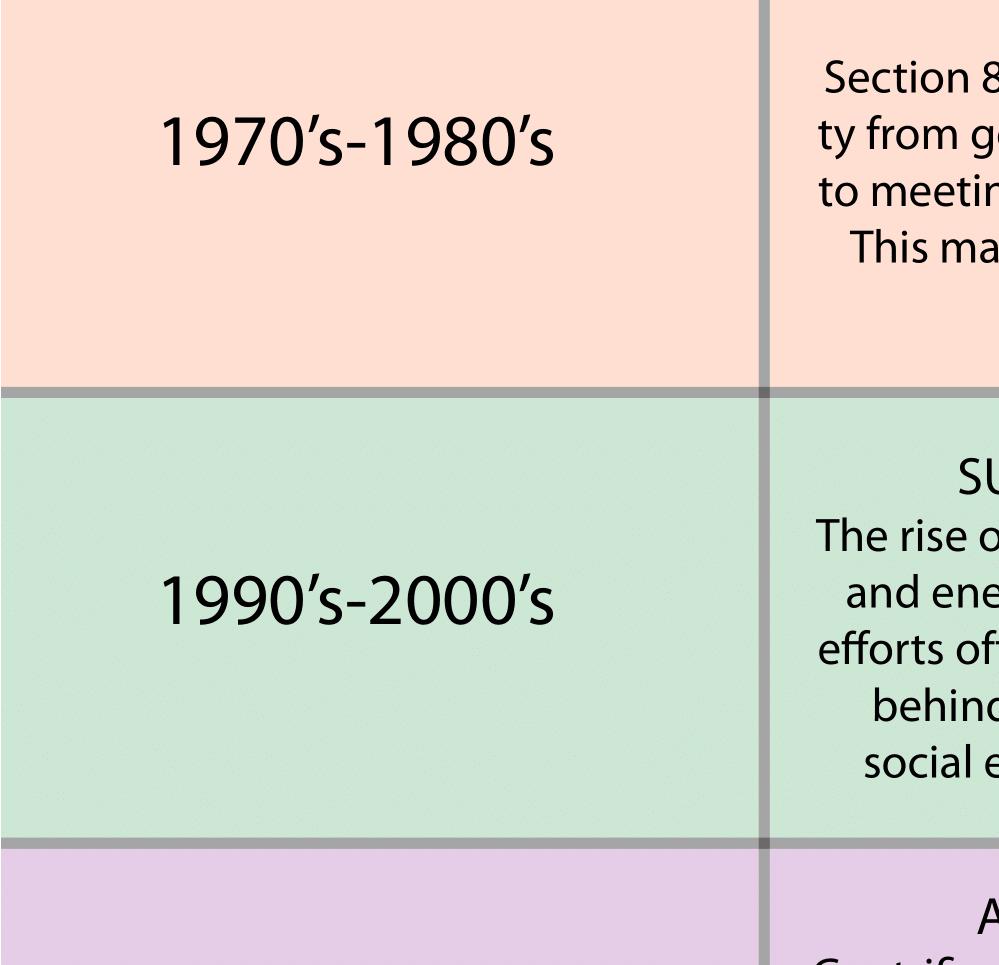
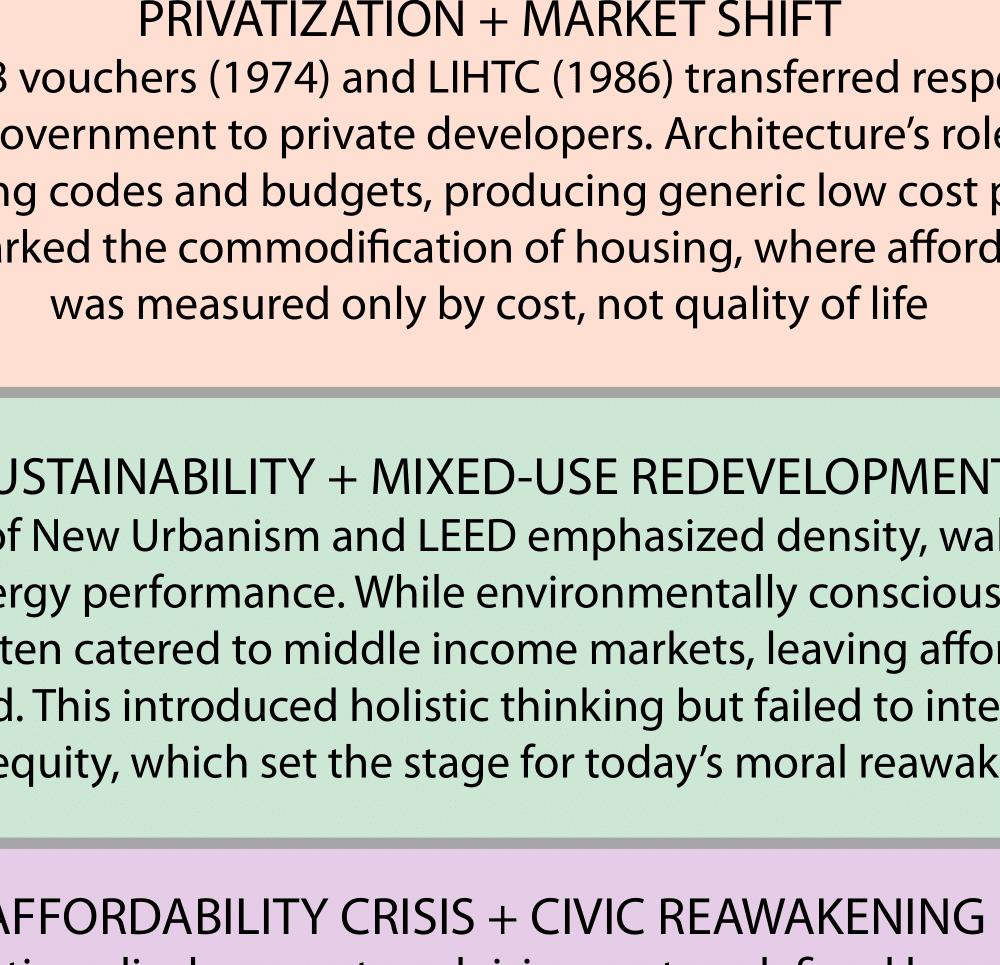
By the late twentieth century, federal disinvestment, urban renewal, and the rise of private development drastically reshaped the built environment. Policies such as redlining, urban highway construction, and the withdrawal of public funding created patterns of segregation and uneven development that persist today. Affordable housing became increasingly marginalized, both spatially and culturally, often sited in areas of disinvestment and designed with limited architectural ambition. This period marked a shift from housing as a public responsibility to housing as a commodity.
Consequences for Spatial Quality
As market forces intensified, architectural quality in affordable housing steadily declined. Efficiency metrics replaced spatial considerations, leading to reduced unit sizes, minimal communal amenities, and material choices optimized for developer profit rather than resident well being. This deterioration was not incidental, it reflected a broader cultural acceptance that some populations were entitled to less. These spatial decisions shape daily experience, influencing privacy, safety, environmental comfort, and the potential for meaningful social interaction.
Contemporary Conditions in San Antonio
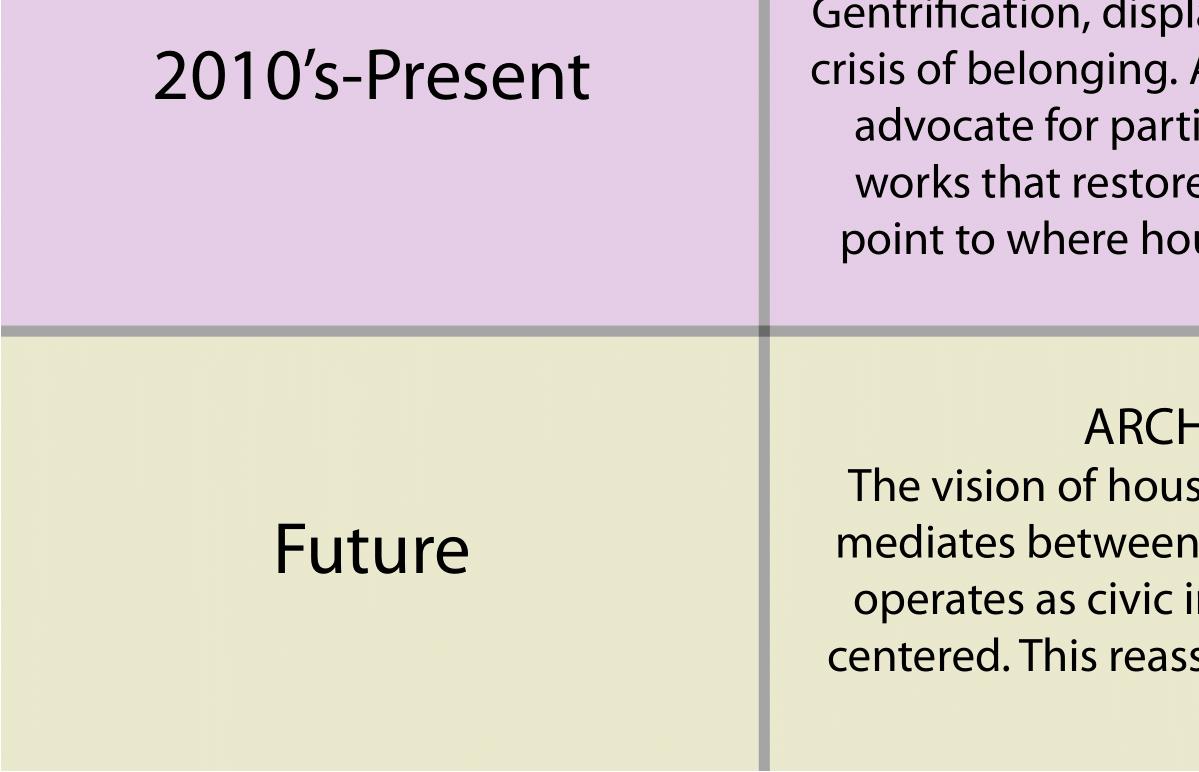
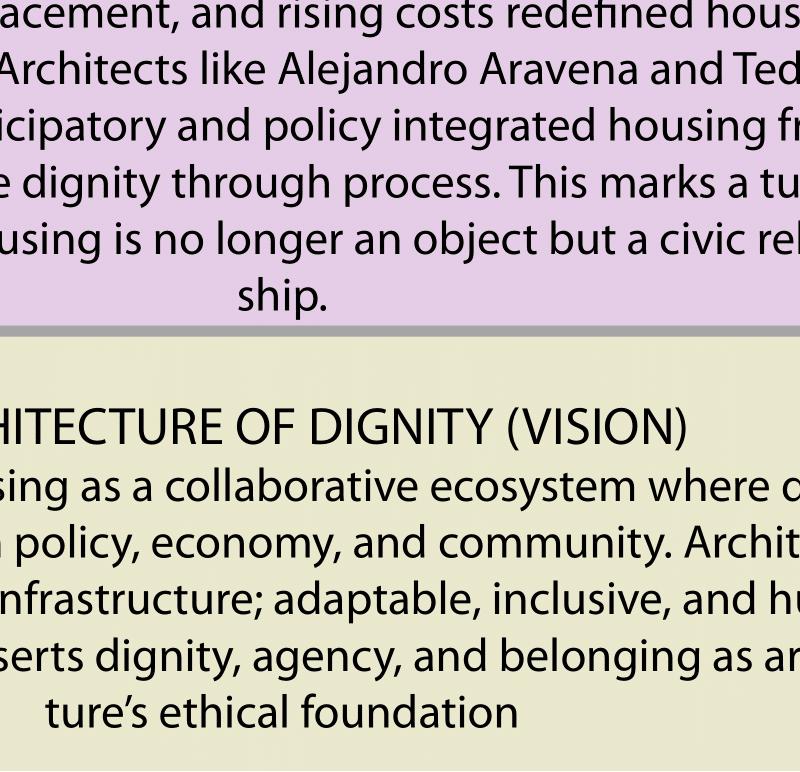
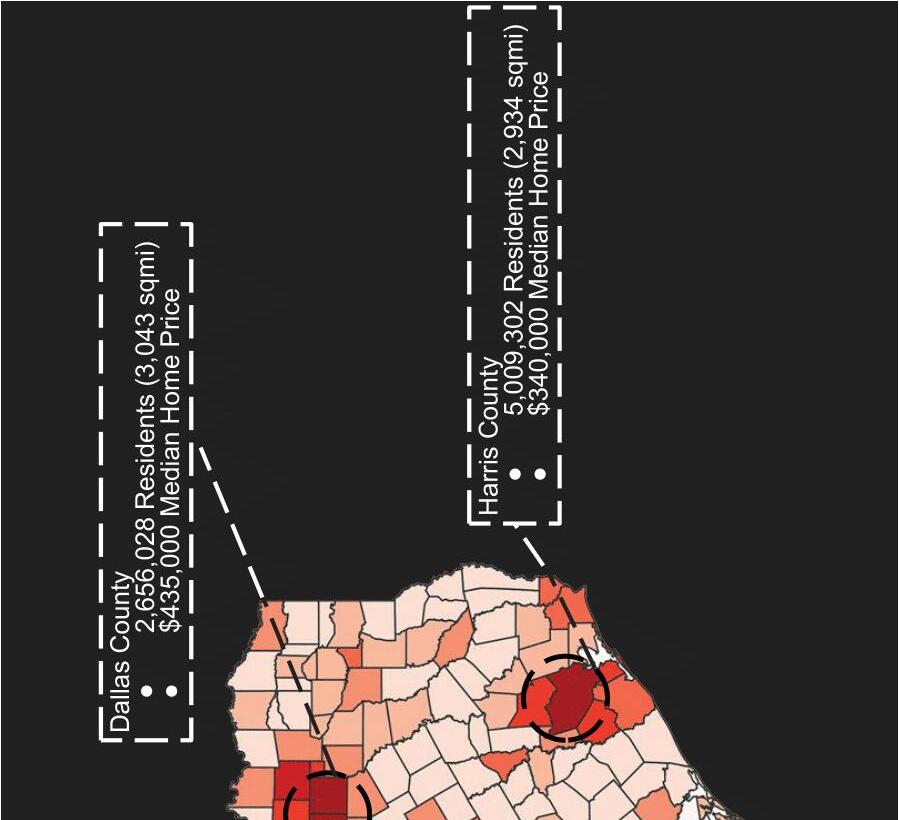
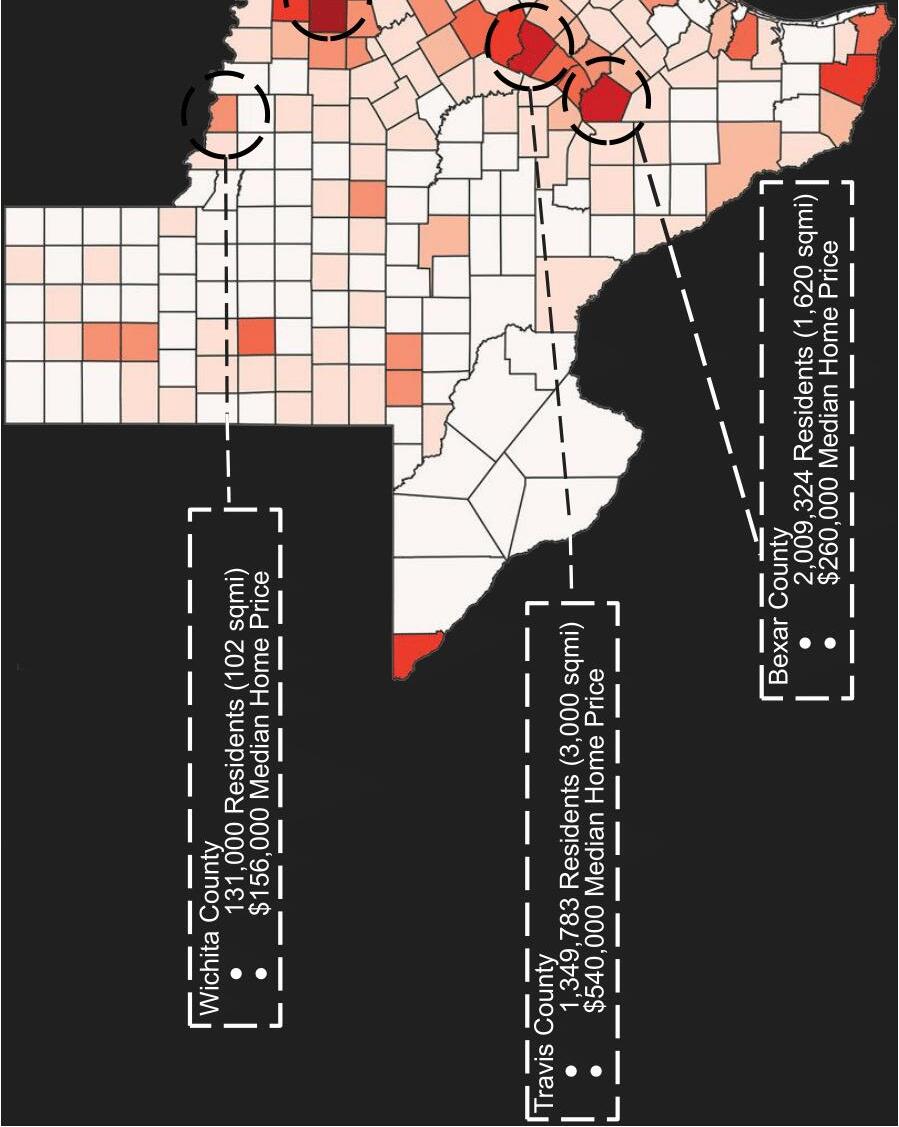
In San Antonio, these historical patterns intersect with local issues such as cultural displacement, rising land costs, and the uneven distribution of public investment. Neighborhoods on the West Side, in particular, have long experienced systematic underfunding, leading to vulnerable housing stock and limited access to high quality public space. These contextual conditions form the backdrop for this thesis: understanding that the architectural problem of dignity is inseparable from the cultural and economic forces that have shaped the city’s housing landscape.
Section Three- Dignity and Spatial Quality in Housing
Dignity as an Architectural Metric
Dignity is often framed as an ethical or social aspiration, yet it can also be understood as a spatial metric. Architecture communicates dignity through the quality of light within a room, the availability of private retreat, the scale and generosity of shared spaces, and the material choices that convey care rather than austerity. These characteristics do not require luxury; they require intention. When housing for economically vulnerable populations excludes these considerations, it reinforces the notion that some groups are undeserving of spatial generosity.
Environmental and Sensory Considerations
Natural light, ventilation, and acoustic comfort play essential roles in shaping daily experience. Yet in many affordable housing developments, these environmental qualities are compromised in favor of maximum unit counts or simplified massing strategies. Inadequate daylighting, thin walls, limited views, and minimal outdoor access accumulate into environments that feel restrictive rather than restorative. These sensory deficits impact mental health, social behavior, and the perception of agency within one’s living environment.
Communal and Social Dimensions
Dignity is not only an individual experience; it is also a communal one. Housing that supports informal encounters, shared activities, and visual connection to the outdoors fosters a sense of belonging. Conversely, environments lacking shared space, or those that reduce communal areas to under designed circulation zones, limit opportunities for collective life. Architectural decisions such as building massing, courtyard placement, and corridor width play active roles in enabling or constraining social engagement.
Implications for Affordable Housing
These insights position dignity as a core design parameter rather than an afterthought. Affordable housing must move beyond minimal compliance toward environments in which spatial quality is not sacrificed for cost efficiency. This requires reframing constraints as opportunities for innovation; using proportion, material economy, and environmental strategies to produce housing that is affordable, resilient, and elevating. The Master’s Project draws from these principles to define a new baseline for dignified, community oriented housing in San Antonio.
Section Four - Methods: Research, Representation, Ethics
Research as a Multidimensional Framework
The architectural problem of dignity in affordable housing requires a research approach that integrates historical analysis, literature review, precedent evaluation, and contextual study. This project draws from a wide range of sources to construct a comprehensive understanding of how dignity is spatially produced and denied. Texts addressing housing policy, environmental psychology, urban history, and architectural theory provide the conceptual foundation. Precedents offer material demonstrations of how architects have attempted, succeeded, or failed to embed dignity into built form. Contextual data from San Antonio grounds the research in real socio-spatial conditions.
Representation as Inquiry
Representation plays an active role in the research process. Diagrams, sketches, timelines, and comparative visuals are not simply methods of communication; they are tools for thinking. By drawing, mapping, and diagramming relationships between space, policy, and culture, the project identifies patterns and gaps that may not be visible through text alone. This iterative representational process reveals structural inequities in the built environment and clarifies opportunities for architectural intervention.
Ethical Commitments
Designing affordable housing carries ethical obligations that extend beyond meeting minimum programmatic and regulatory requirements. Architecture participates in larger social, political, and environmental systems, and therefore cannot be neutral in its consequences. Historically, the built environment has reinforced inequity through disinvestment, segregation, and the normalization of reduced spatial standards for marginalized communities. A responsible architectural methodology must confront these histories while establishing new criteria for practice, criteria grounded in spatial justice, environmental stewardship, and cultural recognition. Ethical commitments in this project include the prioritization of dignity as a baseline spatial condition; the careful consideration of how materials, light, ventilation, and spatial proportions influence well being; and the responsibility to design in ways that honor the cultural narratives and lived experiences of residents. These commitments frame architecture not as a passive responder to the housing market, but as an active participant in shaping more equitable futures.
Methodological Implications for the Master’s Project
The integration of research, representation, and ethical considerations informs the direction of the Master’s Project. Rather than approaching affordable housing as a technical problem to be solved, the project adopts a methodological stance that values spatial dignity, environmental quality, and community well being. This methodology sets the stage for architectural strategies that are rigorous, equitable, and deeply responsive to the lived realities of residents.
Section Five- Implications for the Master's Project
From Research to Architectural Intention
The research conducted throughout this semester establishes a clear foundation for the Master’s Project by reframing affordable housing as a spatial and cultural challenge rather than a purely economic one. Across historical precedents, literature, and contextual analysis, dignity emerges as a measurable architectural condition informed by light, proportion, privacy, environmental comfort, and opportunities for community life. These findings position the upcoming design work as an investigation into how architectural form and organization can actively support well being. Rather than approaching design as the creation of isolated units or standardized typologies, the project advances an integrative approach in which dignity is embedded at every scale of decision making; from the arrangement of individual rooms to the collective spatial systems that shape everyday experience.
Identifying Design Priorities
Key architectural priorities arise directly from the research methods and ethical commitments guiding this study. These include ensuring consistent access to natural light and ventilation, providing well proportioned and flexible living spaces, and designing circulation paths that encourage rather than inhibit social interaction. Material selection becomes an essential component, both in terms of environmental performance and in signaling care and permanence within the built environment. These priorities provide a criteria based framework for evaluating design decisions and establish a clear hierarchy of values that privilege human experience over cost minimizing strategies. The resulting approach ensures the Master’s Project engages the realities of construction and budget while still prioritizing spatial dignity as a foundational design requirement.
Site Specific Implications
The contextual analysis of San Antonio reveals how spatial inequities, cultural histories, and environmental conditions intersect within the city’s housing landscape. Designing within this context requires an understanding of the region’s climatic pressures, patterns of cultural displacement, and the spatial logic of neighborhoods shaped by decades of uneven public investment. These factors highlight the importance of shaded outdoor spaces, passively cooled circulation, durable materials, and connections to existing community assets. The Master’s Project will translate these contextual insights into spatial strategies that respond directly to place; ensuring that dignity is not only conceptualized within the building but reinforced by the way the project participates in its urban and cultural setting.
Establishing the Direction for Design Development
Collectively, these insights establish a clear trajectory for the upcoming design phase. The Master’s Project will test how architectural form, program distribution, material systems, and environmental strategies can converge into a cohesive environment where dignity is a baseline expectation. This approach positions the project as both a critique of current affordable housing models and a proposition for alternative futures grounded in spatial equity. By synthesizing research and methodological insights into a coherent design agenda, the project enters the next semester prepared to develop an architectural prototype that demonstrates how dignity, culture, and environmental responsibility can meaningfully shape the lived experience of affordable housing residents.
RECLAIMING DIGNITY: RETHINKING THE ARCHITECTURE OF AFFORDABLE HOUSING
CHAPTER 3
LITERATURE AND PRECEDENTS
Texts, Contributions, and Precedents
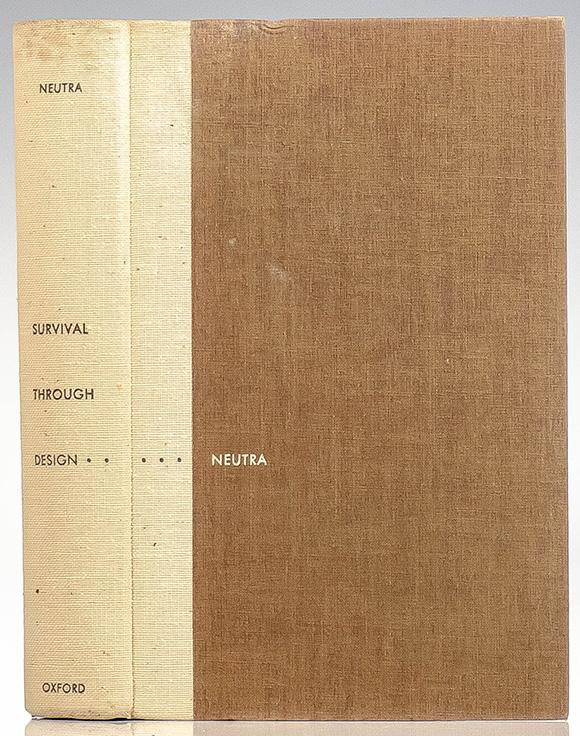
Richard Neutra — Survival Through Design
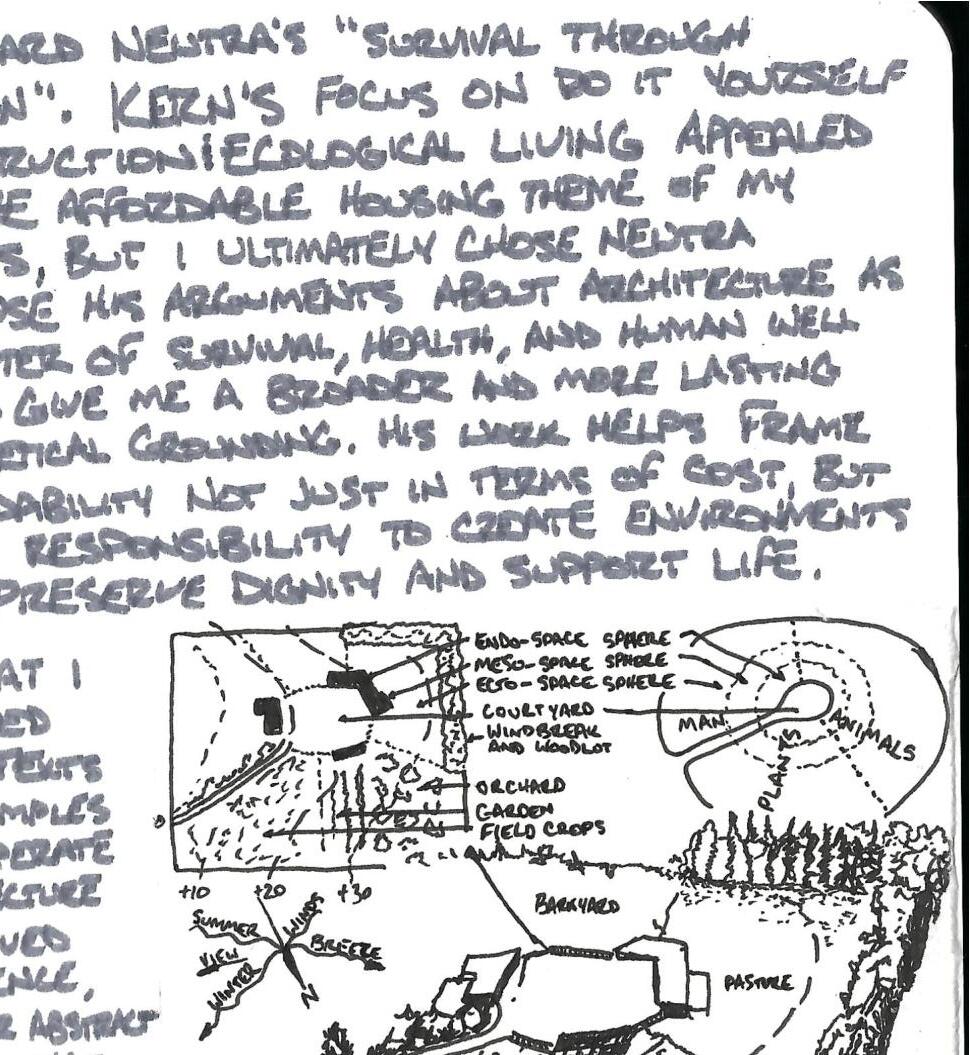
Neutra argues that architectural environments must support physical and psychological well being, positioning design as a mediator between human needs and environmental forces. His emphasis on daylight, proportion, sensory balance, and access to nature reframes dignity as a condition shaped through spatial intention rather than material extravagance. By linking environmental quality to human health, Neutra offers a framework for evaluating affordable housing beyond cost or efficiency, emphasizing the measurable impact of space on daily life. This text strengthens the project’s focus on designing environments in which dignity is embedded through proportion, light, environmental responsiveness, and thoughtful spatial organization.
Dolores Hayden — The Grand Domestic Revolution
Hayden situates housing within broader socioeconomic and cultural systems, demonstrating how domestic environments reproduce or resist inequity. Her work informs the project’s understanding of housing as a social infrastructure and reinforces the need for designs that support community life, shared resources, and collective dignity.
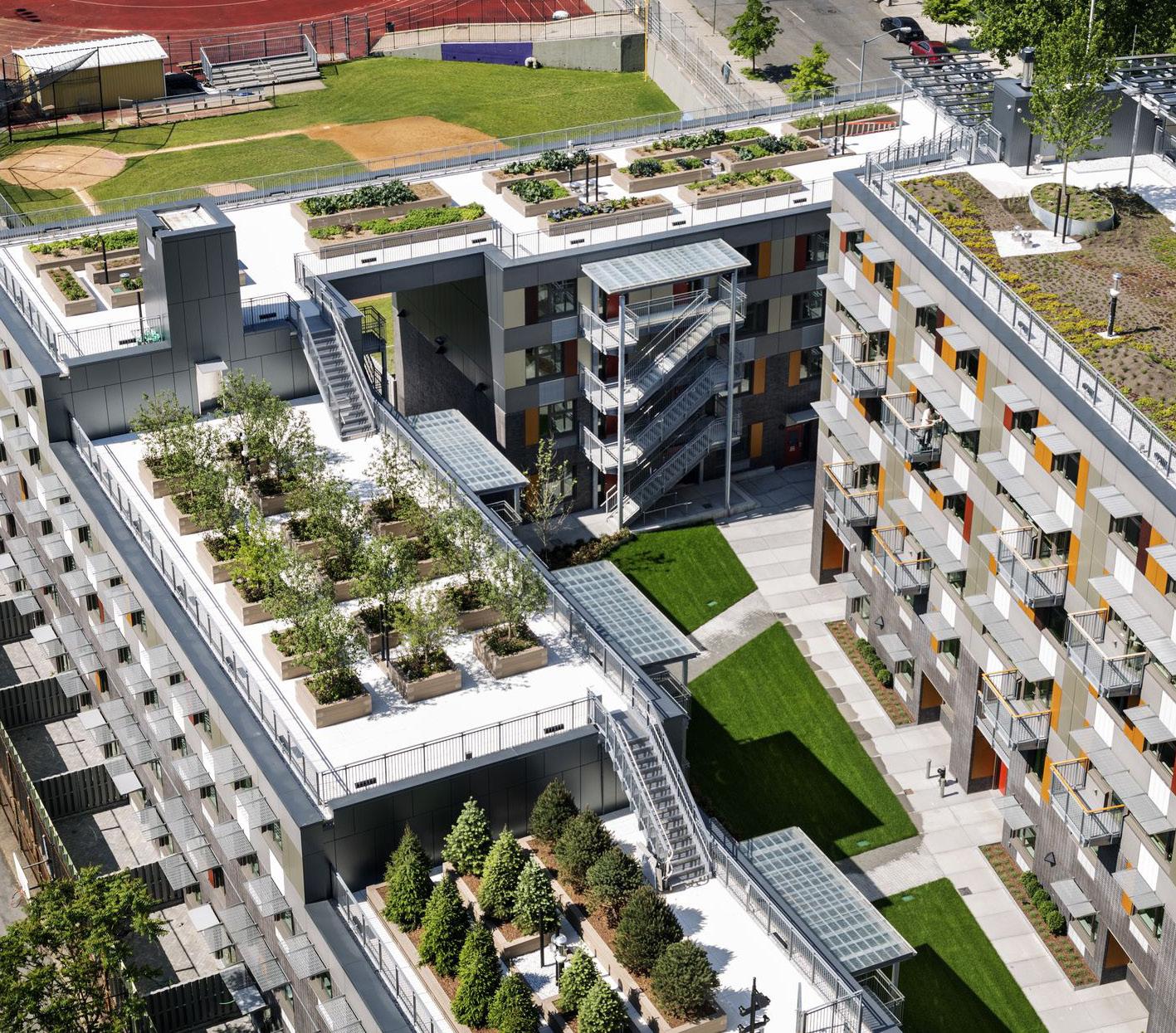
Via Verde, New York City (2012)
Via Verde demonstrates how contemporary affordable housing can integrate light, ventilation, outdoor access, and environmental performance within strict budgetary constraints. Terraced gardens, communal programs, and carefully proportioned units illustrate how dignity emerges through design strategies that prioritize health and community. This project informs the thesis’s focus on environmental quality and shared spatial systems.
Contemporary Amenity Driven Luxury Housing
Recent luxury residential towers often prioritize branded amenities and exclusive outdoor spaces over equitable spatial quality. Pools, roof decks, and curated lifestyle features become marketing tools rather than community assets. These precedents illuminate the widening gap between market driven design and dignified housing, highlighting what the Master’s Project must challenge: the reduction of spatial quality for those outside the luxury market.
RichardNeutra-SurvivalThroughDesign
ViaVerdePublicHousing-NYC(2012)
Needs and Evolution
CHAPTER 4 PROGRAM AND SITE
Section One - Client and User Needs
Defining the Housing Population
Affordable housing serves a diverse cross section of residents whose needs extend far beyond conventional unit metrics. Many have experienced unstable living conditions, limited access to supportive infrastructure, and environments that offer little control over comfort or privacy. These realities shape the baseline expectations for what dignified housing must provide. Understanding the client and user groups requires acknowledging both their practical needs and the broader social conditions that have historically constrained their access to quality environments. The project therefore defines users not only through demographic profiles, but through the spatial and environmental qualities necessary to support stability, self determination, and daily life with dignity.
Core Spatial Requirements
Meeting user needs in affordable housing requires more than satisfying square footage guidelines or providing minimal functional rooms. Residents depend on living spaces with meaningful daylight, operable windows, acoustic comfort, and layouts that support daily domestic activities without feeling constrained. Families may require adaptable spaces for shared routines, study areas, and storage, while individuals benefit from environments that balance privacy with opportunities for connection. Across all users, circulation must be intuitive, safe, and socially legible, while communal areas must be proportioned and distributed to encourage a sense of belonging rather than acting as residual or under designed spaces.
Residents bring cultural practices, family structures, and modes of social interaction that architecture can either support or inhibit. Housing that neglects these cultural dimensions risks creating environments that feel generic, prescriptive, or alienating. The program therefore incorporates spaces that facilitate informal gathering, shared meals, outdoor activity, and intergenerational interaction. These elements ensure that architecture responds not only to functional needs, but to cultural expressions of community, identity, and care.
Implications for Program Development
Translating user needs into architectural program requires prioritizing spatial dignity as a guiding principle. This influences the distribution of unit types, the placement of communal rooms, the configuration of circulation systems, and the integration of outdoor space. By grounding program decisions in resident well being rather than market efficiency, the project establishes a framework for housing that actively supports stability, agency, and social connection.
Section Two - Site Conditions and
Understanding the Urban Landscape
The project is situated within San Antonio, a city whose urban form is shaped by layered histories of cultural identity, migration, and uneven public investment. The West Side, in particular, reflects decades of systemic disinvestment, resulting in aging housing stock, limited infrastructure, and reduced access to high quality public amenities. At the same time, it remains a community defined by strong cultural ties, intergenerational households, and resilient social networks. These conditions form a complex backdrop for architectural intervention. Understanding the site requires acknowledging not only its physical characteristics, but also the social histories and cultural patterns that have shaped daily life. The challenge, and opportunity, is to design in a way that strengthens the community rather than contributing to ongoing cycles of neglect or displacement.
Spatial Patterns and Environmental Conditions
San Antonio’s climate and urban form play a significant role in shaping the architectural response. High temperatures, intense sunlight, and seasonal humidity create environmental pressures that must be addressed through passive cooling strategies, shading devices, and orientation-sensitive massing. Additionally, the neighborhood’s irregular street grid, varied lot sizes, and mix of residential and institutional buildings form a distinctive urban fabric. These spatial patterns provide both constraints and opportunities for designing housing that supports community interaction, outdoor activity, and environmental comfort.
Social and Cultural Context
The West Side’s cultural identity is deeply rooted, shaped by generations of families, community organizations, and public institutions that continue to define neighborhood life. However, pressures of displacement, rising land values, and inconsistent public investment have made housing stability increasingly fragile. Any architectural proposal must honor this context, supporting cultural continuity while addressing the spatial inequities that have historically constrained residents’ access to high quality environments. The site becomes an instrument for reinforcing belonging rather than accelerating displacement.
Implications for Site Strategy
These conditions establish a clear framework for site development. The project must negotiate climatic performance, neighborhood connectivity, pedestrian movement, and proximity to community resources. Outdoor spaces should be designed to provide shaded gathering areas, visible circulation paths, and safe transitions between public and private zones. The site strategy therefore becomes foundational to the project’s broader commitment to dignity, recognizing that the spatial experience of the site profoundly shapes the quality of everyday life for residents
Section Three - Codes, Standards, and Sustainability Criteria
Regulatory Framework as Design Foundation
Affordable housing must operate within a robust regulatory environment that includes building codes, accessibility requirements, and performance standards. These frameworks establish minimum thresholds for life safety, structural integrity, egress, fire protection, and occupant health. Rather than viewing codes as constraints, the project adopts them as foundational tools that support dignity and environmental quality. Key components of the International Building Code (IBC) guide decisions about occupancy classification, corridor widths, stair placement, fire separations, and means of egress. These requirements provide essential protections for residents and shape the spatial logic of housing in ways that reinforce safety, clarity, and comfort.
Accessibility and Inclusive Design Requirements
Universal design and ADA accessibility standards expand the regulatory foundation by ensuring that housing environments remain usable and equitable for people of all ages and abilities. Requirements for clear floor space, turning radii, accessible entries, and barrier free circulation pathways influence unit layouts, material transitions, and common area configurations. Beyond compliance, inclusive design supports dignity by providing residents with autonomy, safety, and ease of movement throughout the building. These standards encourage a more generous approach to proportion and circulation, reinforcing the architectural commitment to accessibility as a core component of spatial equity.
Environmental Performance and Sustainability Standards
Sustainability frameworks, including LEED, ENERGY STAR, and local environmental guidelines, extend the project’s focus on dignity through environmental responsibility. These standards influence material selection, envelope performance, ventilation strategies, and water use. Improving daylight access, reducing heat gain, integrating passive cooling, and incorporating durable, low toxicity materials contribute to long term occupant well being. For regions like San Antonio, where heat mitigation and energy efficiency are critical, sustainability criteria become essential drivers of both spatial organization and overall building performance.
Integration into Architectural Decision Making
Codes and sustainability requirements intersect to form a baseline set of criteria informing program distribution, massing strategies, and the design of indoor and outdoor spaces. By integrating these standards early in the design process, the project ensures that regulatory compliance and environmental performance reinforce, rather than hinder, the pursuit of dignified housing. This approach positions health, safety, environmental comfort, and equity as inseparable elements of architectural quality.
Section Four - Program Development and Design Parameters
Translating Research into Programmatic Form
The program for the project emerges from the intersection of user needs, contextual conditions, and regulatory frameworks. Rather than beginning with prescriptive unit counts or standardized typologies, the program is generated from criteria tied to dignity, environmental quality, and community well being. These criteria determine the size, arrangement, and relationship of spaces, ensuring that each component actively supports resident stability and daily life. The result is a program that prioritizes natural light, environmental comfort, flexible domestic arrangements, and opportunities for shared activity, rather than relying solely on market-driven metrics of efficiency or density.
Spatial Categories and Relationships
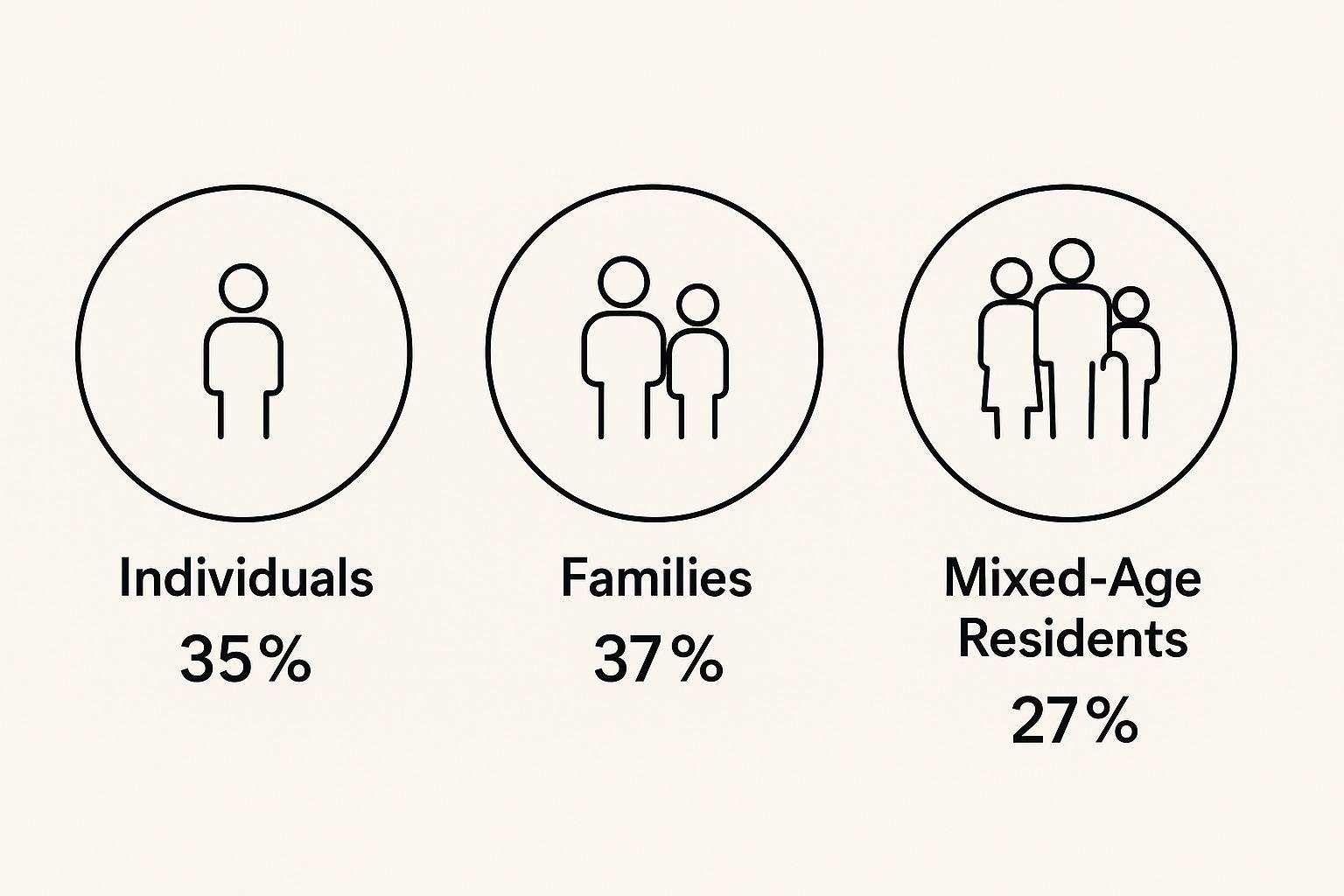
The program organizes spaces into three core categories: private living environments, shared community spaces, and supportive infrastructure. Private spaces include a range of unit types designed to accommodate individuals, families, and multigenerational households. Shared spaces include communal rooms, outdoor terraces, shaded courtyards, and circulation areas proportioned to encourage informal interaction. Supportive infrastructure, such as laundry rooms, storage, bicycle facilities, and administrative areas, reinforces the functionality and long-term resilience of the building. Together, these categories establish a hierarchy of spatial relationships that balance privacy, community, and everyday practicality.
Environmental and Climatic Considerations
Program development is informed by passive design strategies suited to San Antonio’s climatic conditions. Orienting units to maximize cross ventilation, locating communal spaces in shaded or sheltered zones, and integrating outdoor rooms into the circulation sequence all support thermal comfort and environmental performance. These strategies extend the project’s emphasis on dignity by ensuring that environmental quality is treated as an essential component rather than an additional feature. Such considerations shape the location, dimension, and adjacency of program elements throughout the building.
Establishing Design Parameters for the Master’s Project
The combined insights of user needs, site conditions, codes, and environmental strategies form the design parameters that guide the Master’s Project. These parameters define unit proportions, circulation structure, communal space distribution, material selection, and connections to the site. They also establish the baseline from which design iterations will emerge, ensuring that each decision advances the project’s central goal: creating affordable housing that is inherently dignified, contextually grounded, environmentally responsive, and socially supportive. The parameters therefore operate not as constraints but as a framework for architectural agency and innovation.
RECLAIMING DIGNITY: RETHINKING THE ARCHITECTURE OF AFFORDABLE HOUSING
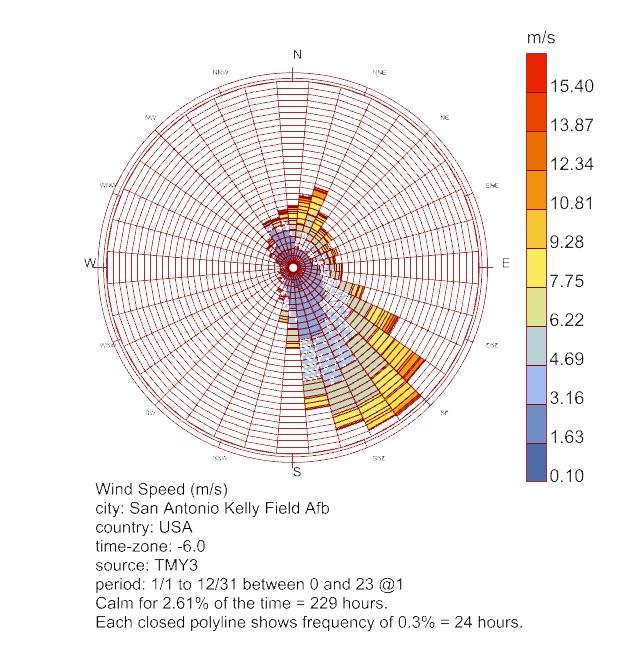
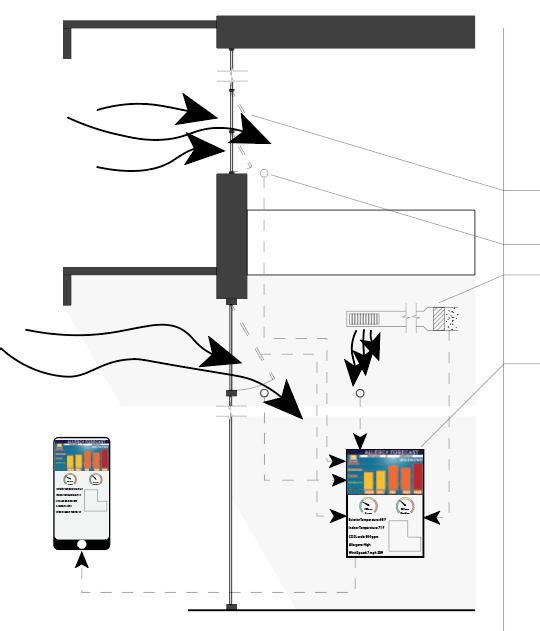
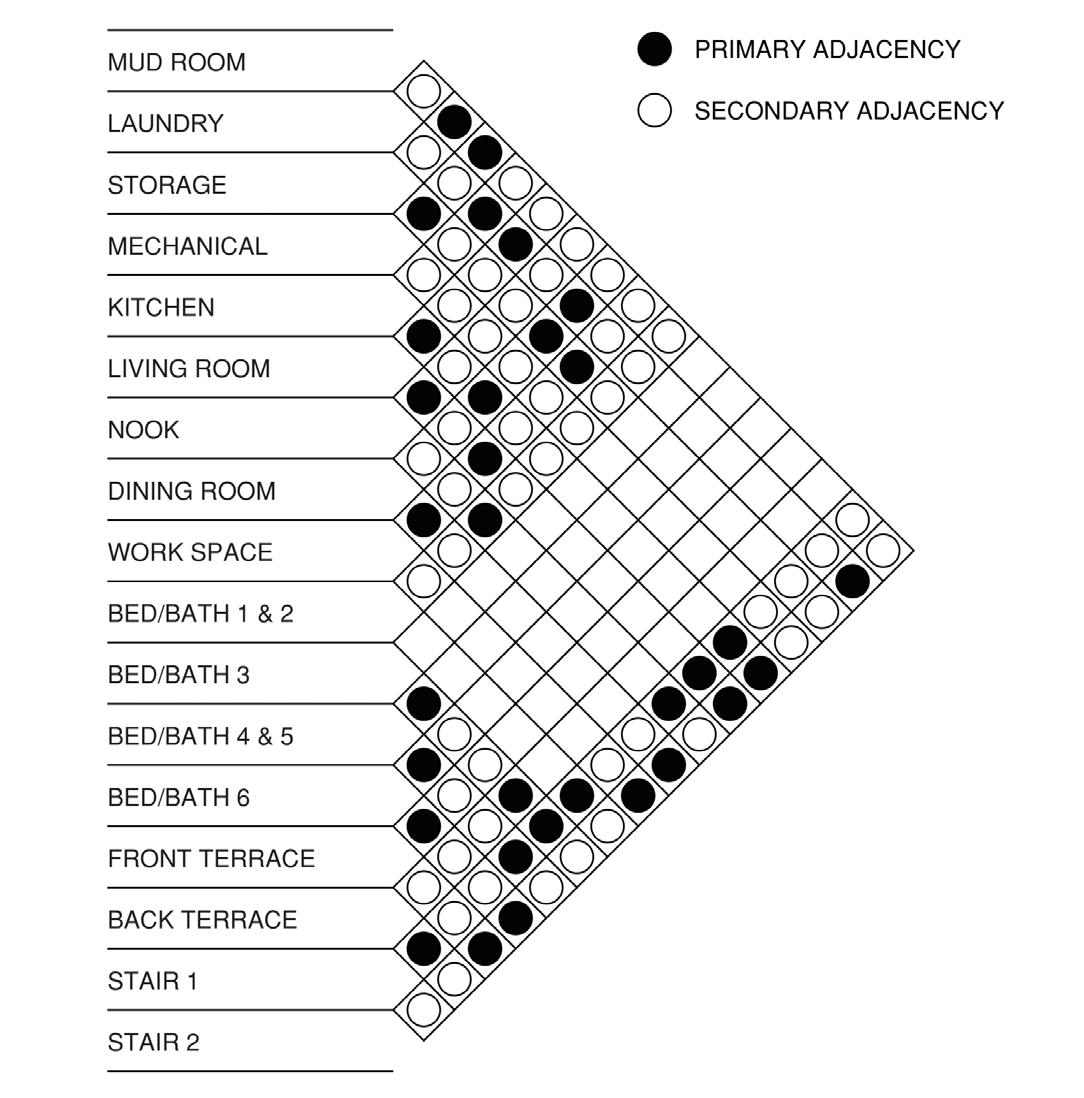
These supplementary diagrams illustrate the environmental, spatial, and programmatic considerations that inform the project’s design methodology. The wind rose and ventilation studies highlight the climatic forces of San Antonio and demonstrate how passive environmental strategies can enhance occupant comfort and reduce energy demand. The adjacency matrix organizes programmatic relationships across private, communal, and support spaces, clarifying how spatial decisions reinforce dignity, privacy, and community interaction. Together, these analytical tools translate research findings into actionable design criteria, ensuring that the project responds holistically to environmental performance, user needs, and architectural intent.
The research conducted throughout this semester established dignity as a defining architectural problem within affordable housing, revealing how spatial conditions, material choices, and environmental performance collectively shape the lived experience of residents. Historical precedents demonstrated that earlier civic minded housing ambitions embedded dignity through generous courtyards, well proportioned circulation, and long term material durability. By contrast, contemporary market driven developments often reduce spatial quality to meet financial metrics, diminishing access to light, privacy, communal space, and environmental comfort. Literature and precedent analysis further clarified that dignity is not conceptual rhetoric; it manifests in how buildings support physical health, psychological ease, and cultural belonging. This body of work reframed affordable housing as an architectural opportunity, one that can redefine baseline expectations for quality rather than reproduce systems of spatial inequity.
Evolving Understanding of the Project’s Ambitions
Across program studies, user needs, and site analysis, the semester’s work expanded the ambition of the project from addressing isolated deficiencies to articulating a comprehensive architectural agenda grounded in human well being. Understanding the lived realities of residents revealed that design must do more than provide shelter; it must create conditions for stability, agency, and social cohesion. The study of San Antonio’s West Side, its cultural history, environmental pressures, and spatial inequities; highlighted the need for housing that is climatically responsive, culturally attuned, and spatially generous despite economic constraints. This recognition shifted the project toward an approach in which program, materiality, orientation, and spatial hierarchy work together to reinforce dignity at every scale. Affordable housing becomes a platform for architectural intervention rather than a typology resigned to minimalism.
Key Insights
Three core insights emerged from this semester’s investigation. First, dignity can be evaluated architecturally through measurable spatial qualities such as access to daylight, thermal comfort, appropriate proportion, and opportunities for social interaction. These are not luxuries but essential conditions that shape daily life. Second, the relationship between architecture and cultural continuity is critical: environments that recognize community identity and support intergenerational patterns of living strengthen social resilience and belonging. Third, regulatory frameworks, including codes, accessibility standards, and sustainability criteria, serve as productive tools rather than obstacles. When engaged strategically, these frameworks create opportunities for elevating spatial quality, promoting environmental health, and ensuring long term building performance. Collectively, these insights position affordable housing as an essential architectural site where design decisions directly influence equity and well being.
Implications and Next Steps for the Master’s Project
The Master’s Project will build on this foundation by developing a design proposal that tests how spatial organization, program distribution, massing, and material systems can produce an environment where dignity is embedded into daily experience. Future work will refine unit layouts, explore massing strategies responsive to the San Antonio climate, and articulate communal spaces that strengthen social networks. The next phase will translate the project’s research and methodological criteria into architectural form, demonstrating how affordable housing can serve as a model for equitable, resilient, and culturally grounded environments.
BIBLIOGRAPHY
Neutra, Richard. *Survival Through Design*. New York: Oxford University Press, 1954.
Hayden, Dolores. *The Grand Domestic Revolution: A History of Feminist Designs for American Homes, Neighborhoods, and Cities*. Cambridge: MIT Press, 1981.
Dattner Architects and Grimshaw Architects. *Via Verde: A New Model for Affordable Housing*. Project Documentation, 2012.
Red Vienna Municipal Housing Authority. *Karl-Marx-Hof Architectural Archive*. Vienna City Archives, 1930.
San Antonio Office of Historic Preservation. *West Side Cultural and Urban Context Report*. City of San Antonio, 2022.
San Antonio Housing Authority (SAHA). *Affordable Housing Needs Assessment*. SAHA Publications, 2021.
U.S. Green Building Council. *LEED v4 for Building Design and Construction: Reference Guide*. Washington, D.C., 2017.
International Code Council (ICC). *International Building Code 2021*. Country Club Hills, IL: ICC, 2021.
City of San Antonio. *Unified Development Code*. City Planning Department, 2023.
Additional images and diagrams sourced from public domain or created by the author for academic purposes.