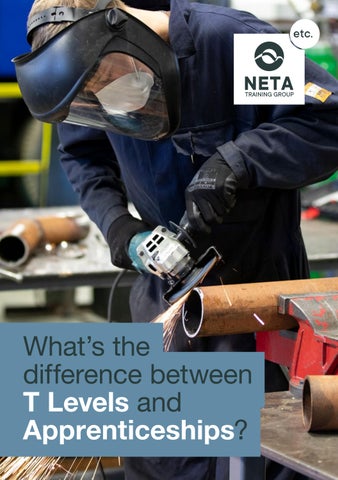

What’s
the
difference between T Levels and Apprenticeships?
There are various options available to young people once they have finished Year 11 at school. The table below sets out the differences between studying a T Level or undertaking an apprenticeship.
DESCRIPTION
AGE RANGE
DURATION
A mainly classroom based technical qualification (80% of the time) with industry placement experience included (20% of the time).
16-19 years old.
2 years (there is also an optional 1-year transition programme).
WHEN CAN YOU START?
Usually September intake.
Typically full time paid employment while gaining qualifications in the chosen field. Mainly based in the workplace with 20% off-the-job training.
16+ (no upper age limit).
12 months + depending on the level, the experience of the apprentice and the delivery model.
Throughout the year.
LEVELS
ENGLISH, MATHS AND DIGITAL SKILLS
ADDITIONAL SKILLS GAINED
Equivalent to a Level 3 qualification or 3 A Levels.
If not already achieved, then students would need to achieve GCSE or Functional Skills maths and English.
Industry recognised certification and workplace experience.
Includes Level 2 through to Level 7 (master’s).
If grade 4 at GCSE has not been achieved, then functional skills at the appropriate level will be incorporated into the apprenticeship.
Industry knowledge, skills and behaviours, plus sector recognised certification.
WORK EXPERIENCE
Minimum of 315 hours industry placement unpaid.
HOW ARE THEY ASSESSED?
HOW ARE THEY GRADED
All elements of the T Level are assessed and graded by the training provider. All elements must be passed for the student to receive their overall grade.
Pass, Merit, Distinction* If not all elements are met, they will receive a statement of achievement.
SALARY
Unpaid.
ADDITIONAL INFORMATION
The provider may provide discretionary financial support.
Yes. ARE THEY INCLUDED ON THE UCAS TARIFF?
WHAT ARE THE ENTRY REQUIREMENTS?
These are set by the college, school or other learning provider and will vary across courses.
Full time paid employment which includes 20% paid off-the-job time too.
The apprentice will be observed, hold discussions and complete written work for the training provider who will grade the work. At the end of the apprenticeship the apprentice will be required to complete an End Point Assessment.
Pass, Merit, Distinction.
Paid at least the National Minimum Wage for apprentices.
In addition to their salary, the apprentice will receive the company’s rewards and annual leave.
It will depend on the qualifications included within the apprenticeship standard.
These are set by the employer and/or stipulated in the Apprenticeship Standard and will vary across different job roles.