1. Projeto Florestas de Valor (‘‘Forests of Value Project’’) 09
“Standing” forests are worth more than cut-down ones
2. Viveiro Cidadão (‘‘Citizen Nursery’’) 11
Forest restoration in the Amazon and income generation
3. Brazilian Mangroves 12
Conservation, restoration, research and environmental education
3.1. Uçá Project 13
3.2. Amazon Mangroves 13
4. Urucu Oil Province 14
An international reference in sustainable operations in the “heart” of the Amazon
5. No Clima da Caatinga (‘‘Caatinga Climate Project’’) 16
Protection of water and forest resources, in addition to mitigating the impacts of climate change on the biome.
6. Vale Sustentável (‘‘Sustainable Valley’’) 19
Forest restoration and sustainable development in Brazil’s Semi-arid region
7. Semeando Água (‘‘Sowing Water’’) 21
Restoration of the Atlantic Forest and water bodies in the Cantareira System region
8. Reforestation of the Jataí Ecological Station 23
The largest ever carried out in a Conservation Unit in São Paulo
9. Corredor Caipira (‘‘Caipira Corridor’’) 25
Formation of agroforests and ecological corridors for the conservation and propagation of fauna and flora in São Paulo
10. Ecological Restoration Projects in the Forest Area of the Caraguatatuba Gas Treatment Unit 26
In 10 years, 5.500 plants, 51 native plant species, over 600 trees taller than 10 meters, and the return of fauna
11. Functional Forest Restoration 29
The functional diversity and the composition of the planted species accelerate the restoration process
12. Reforestation - União Biological Reserve 31
An important role in the conservation of the golden lion tamarins that inhabit the region
13. Natural Regeneration as a Tool for Environmental Recovery of Wetland Areas 33
A solution for areas that serve as nurseries, shelters, and protection against erosion and flooding
14. Onde a Onça Bebe Água: Comunidades e Bem Viver (‘‘Where the Jaguar Drinks Water: Communities and Well-Being’’) 35
Protection of the Cerrado, the jaguars of the biome, and the strengthening of local communities
15. Wildlife Passages for the Connection of Forest Fragments 37
Fewer obstacles and risks, as well as greater biodiversity gains
16. Guapiaçu Project 38
Ecological restoration, fauna reintroduction and environmental education in the Guanabara Bay region
17. Guardiões da Biodiversidade (‘‘Guardians of Biodiversity’’) 40
Indigenous peoples’ leading role in the conservation and sustainable management of natural resources
17.1. Raízes do Purus (‘‘Roots of the Purus’’) 40
17.2. Projeto Ar, Água e Terra: Vida e Cultura Guarani (‘‘Air, Water and Land Project: Guarani Life and Culture’’) 40
17.3. Projeto Biodiverso (‘‘Biodiverse Project’’) 41
17.4. Projeto Berço das Águas (‘‘Cradle of Waters Project’’) 41
18. Forest Restoration Project around the Wetland Area along the Route 3 Gas pipeline 43 Protection of the habitat of rivulid fish, which are threatened with extinction
19. Floresta Viva ‘‘Living Forest’’ (Socio-environmental Investment with Partners) 44 Partnership in investments for the restoration of Brazilian biomes using nature-based solutions
20. Restaura Amazônia ‘‘Restore the Amazon’’ (Socio-environmental Investment with Partners) 46 Restoration of millions of hectares of degraded areas in the Amazon Rainforest, combined with the support of family farming and the development of traditional peoples
21. Petrobras Bioeconomy Fund 49
Financing of socio-environmental bioeconomy projects and nature-based solutions that promote sustainable businesses with a positive social impact
22. Projeto Coral Vivo (‘‘Live Coral Project’’) 50 Protection of coral reefs through ocean research and aquaculture
Creation of a Brazilian network of deep-water coral experts and a collaborative platform
24. Sig@s Maricás Project 55
Research on biodiversity and the use of geotechnologies to identify regions with a high concentration of biological diversity and priority areas for conservation in the Maricás Islands
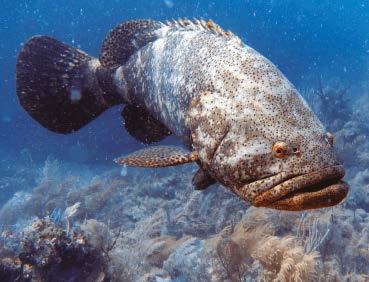
25. Projeto Meros do Brasil (‘‘Goliath Groupers of Brazil Project’’) 57
Scientific research on these fishes along the Brazilian coast, preservation and recovery of their populations and environmental education
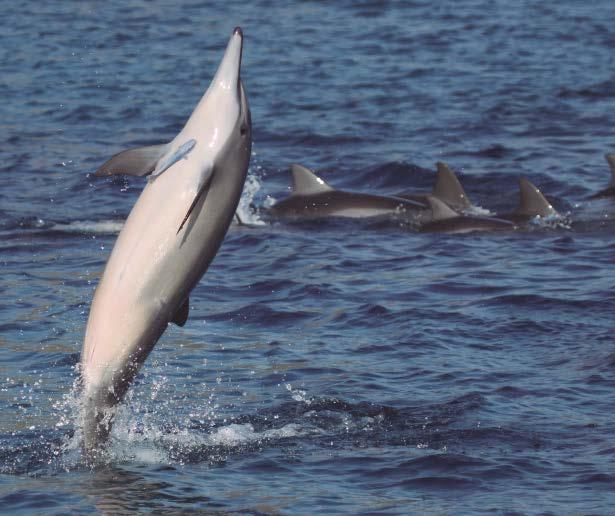
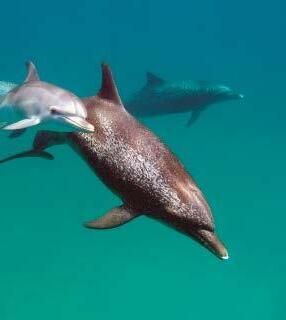
26. Projeto Golfinho Rotador (‘‘Spinner Dolphin Project’’) 58
Actions to promote the conservation and sociobiodiversity of the South Atlantic, the Brazilian archipelago of Fernando de Noronha, and the local spinner dolphins
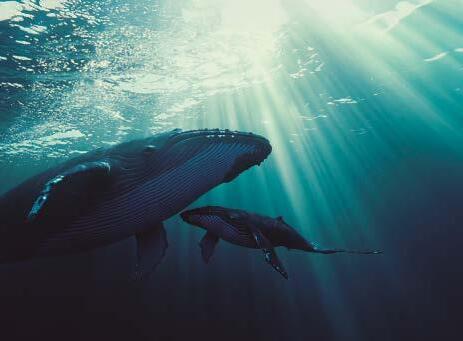
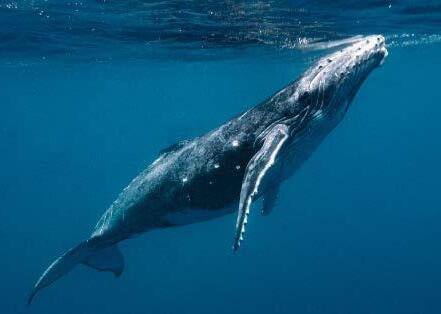
27. Projeto Baleia Jubarte (‘‘Humpback Whale Project’’) 60
Study and protection of the remaining population of humpback whales that reproduce in Brazilian waters
28. Viva o Peixe-Boi-Marinho (‘‘Long live the Manatee’’) 62
Conservation of an endangered species in Brazil
29. Aruanã Project 64
Conservation of sea turtles in Guanabara Bay
30. Assessment of Marine Turtle Interactions with Exploration and Production Activities 67
Very little interaction with platforms and vessels
31. Sea Turtle Nesting Monitoring Project 69
Identification of endangered species and generation of information for environmental management along the coasts of Amapá and Pará
32. Environmental Technologies for Innovation and Sustainability in the Equatorial Margin 70
Current coastline mapping, environmental characterization of sedimentary basins, technologies for environmental emergencies and for assessing impacts and biodiversity gains
33. Dedicated Integrated Monitoring Project in the Foz do Amazonas Sedimentary Basin 72
Species identification guide and environmental database
34. Spatio-temporal Census of Coastal and Migratory Bird Ecosystems in the Conservation Units of Amapá 75
36 thousand birds recorded from 236 species, ten of which are endangered
35. Migratory Birds 76
Conservation of coastal and marine birds, habitat protection, knowledge generation, and environmental education
36. Albatross Project 78
Reduction of incidental catch of albatrosses and petrels, scientific research to support public policies for the protection of these birds, and environmental education
37. Environmental Characterization Project of the Installation Area of the FPSO Anita Garibaldi (PCAAnita) 81
Characterization of the seabed environment
38. Regional Environmental Monitoring Project of the Campos Basin (PMAR-BC) 83
Generation of data on environmental quality and marine biodiversity of the Brazilian continental shelf and slope for improved environmental management of the basin
39. Beach Monitoring Projects (BMP) (‘‘PMP’’) 85
Rescue, rehabilitation, and release of thousands of animals each year
40. Cetacean Monitoring Project in the Santos Basin (CMP-SB) (‘‘PMC-BS’’) 87
29 species identified, seven of which are endangered
41. Monitoring Project of Marine Biota during Seismic Activities in the Santos Basin 88 Marine mammals made up the largest number of individuals sighted, while the humpback whale was the most frequently observed species.
42. Regional Characterization Program of the Santos Basin - RCP-SB ‘‘PCR-BS’’ 91
Identification of new species and contribution to biodiversity knowledge for science
Monitoring of Conservation Units along the coasts of Rio de Janeiro and São Paulo
44. Operational Center for Marine Image Environmental Analysis 95
Information on sensitive marine environments to guide submarine operations and support environmental licensing
III. Next Steps 96
I -Introduction
We, at Petrobras, have assets and operations in all regions of Brazil and in some countries abroad. Wherever we are present, in the exploration and production of oil and gas, refining, petrochemicals, biofuels, renewable energy, power generation, fertilizers, logistics, research, development and innovation, we act responsibly. We operate with integrity and sustainability, ensuring safety and operational efficiency, seeking to reduce emissions; adopting water reuse and lowering consumption; directing waste for reuse, recycling and recovery while reducing its generation; increasing the role of renewable energy in our portfolio; contributing to a just energy transition; promoting diversity, inclusion and economic and social development; caring for people and respecting the environment. This is our commitment to society.
Given the scope and diversity of our activities, we have a strong interface with biodiversity. We interact with biomes such as the Amazon Rainforest, Caatinga (the only exclusively Brazilian biome), Cerrado, Atlantic Forest, Pampa, Pantanal and the coastal-marine system, as well as with protected and sensitive areas. Therefore, we consider biodiversity to be part of our business and have integrated it into our corporate strategy.
We are mindful that biodiversity loss and the depletion of ecosystems as a result of human activities are a global reality with long-term implications for economies and societies. Therefore, we seek a positive net impact wherever we operate. We go beyond neutralizing negative impacts. We generate real additional benefits. And we create value.
We comply with all legal requirements of the countries where we operate. We adopt global best practices. We fulfill the commitments established in our Strategic Plan 2050 and our Business Plan 2025–2029, both widely reported in the media and available on our website. But that is not all.
Together with partners, we design, implement, monitor, and adjust actions focused on preventing, mitigating and offsetting impacts on biodiversity and ecosystem services wherever we operate.
In 2024 alone, we invested BRL 1.1 billion in socioenvironmental projects that we support voluntarily, such as those in the Petrobras Socioenvironmental Program portfolio; in research, development and innovation (R&D&I) projects, which we develop and carry out in partnership with 49 universities and institutes and 87 research centers, and in projects implemented in compliance with environmental licensing procedures. In total, there are 440 projects.
We monitor, study and protect more than 6,000 fauna species, approximately 140 of which are endangered, and we maintain 40 Wildlife Rescue Centers across Brazil for animal rehabilitation. Likewise, we monitor, study and protect more than 2,000 flora species, approximately 65 of which are endangered. We have restored 7,000 hectares of forests (70 km² or the equivalent of 10,000 soccer fields) and contributed to the conservation of 532,000 hectares (5.3 thousand km² or approximately 492.6 thousand soccer fields). We have strengthened the management of 27.9 million hectares of protected areas by developing projects and educational initiatives related to these areas. We have contributed to the publication of 1,032 scientific papers based on the knowledge generated through these initiatives, helping advance Science. Through environmental education actions, we have reached more than 2 million people. In addition, thanks to our socio-environmental projects, we have enabled the creation of 4,475 permanent jobs and 424 temporary ones.
By 2029, our socio-environmental investments will total approximately BRL 1.5 billion in a portfolio of around 160 projects of the Petrobras Socioenvironmental Programand initiatives related to the themes of oceans, forests, education and sustainable economic development.
We will conclude 2025 with 100% of our assets having Biodiversity Action Plans, aimed at conserving or improving biodiversity wherever we operate, identifying priorities and tangible, measurable actions for implementation.
We complement these efforts with actions implemented in alignment with the Brazilian Business Commitment for Biodiversity, established by the Brazilian Business Council for Sustainable Development (CEBDS), of which we are a member; the LIFE Coalition for Business and Biodiversity, which we are part of; the Convention on Biological Diversity; the Global Framework of Biodiversity and the 17 Sustainable Development Goals (SDGs) of the United Nations (UN) 2030 Agenda.
Finally, we take part in major national and international biodiversity forums that bring together companies from various sectors (Biodiversity Network of the National Confederation of Industry – CNI; the Biodiversity and Biotechnology Thematic Chamber of the Brazilian Business Council for Sustainable Development - CEBDS; the Biodiversity and Ecosystem Services Working Group of Ipieca, the global oil and gas industry association for environmental and social issues; and the Biodiversity Working Group of the International Chamber of Commerce - ICC, among others). The participation in these forums is essential for us to stay informed about trends, concepts and methodologies; identify industry best practices; engage in technical exchanges; and publish guidance documents on a variety of topics within the environmental and biodiversity agenda.
1. PROJETO FLORESTAS DE VALOR
“Standing” forests are worth more than cut-down one
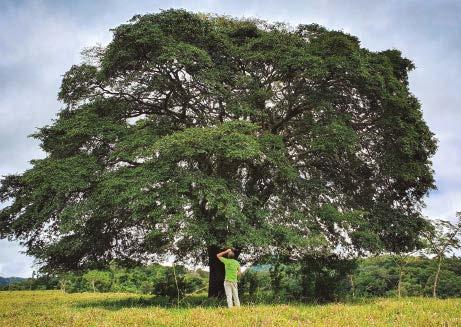
Executed by the Imaflora Institute and sponsored by Petrobras since 2013, the Forests of Value Project aims to maintain “standing” forests, generating value through the implementation and maintenance of sustainable production systems across 480 hectares of forest and sustainable harvesting in the Amazon, promoting products from local sociobiodiversity.
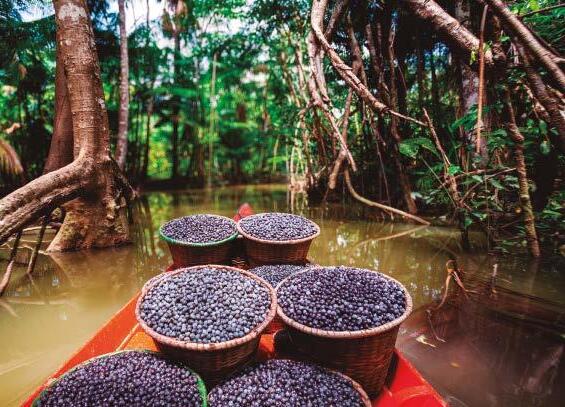
Among these products are Copaifera spp. (copaíba), Dipteryx odorata (cumaru), Bertholletia excelsa (Brazil nut), Theobroma grandiflorum (cupuaçu), Theobroma cacao (cacao), Euterpe oleracea (açaí), manioc flour, beijus, and other products from family farming.
To give an idea, over the past three years, the project has contributed more than BRL 3 million to income generation and enhancement for families, through the management and commercialization of products from Amazonian sociobiodiversity and family farming. The activities take place within an ethical market, with participants integrated into a system that ensures product origin and traceability throughout the production chain.
By establishing commercial partnerships with communities, companies, and public schools interested in acquiring the products, the project has already benefited over one thousand members of traditional Amazonian communities, including family farmers and quilombolas from four communities (Erepecuru; Trombetas; Alto Trombetas I – Mãe Domingas), organized into five associations and one cooperative. For this audience, more than 20 training sessions have been offered, three technical publications have been made available, and awareness campaigns have been developed highlighting the value of “standing” forests.
The project also has the advantage of strengthening biodiversity in the Trombetas-Mapuera, NhamundáMapuera, and Kaxuyana-Tunayana Indigenous Territories; in the aforementioned quilombola communities and in seven Conservation Units in the states of Pará and Amazonas, covering an area of over 10 million hectares.
Finally, the project contributes to the maintenance of carbon stocks and the reduction of greenhouse gas emissions, helping to mitigate climate change.
More information: www.imaflora.org Instagram: @florestasdevalor
2. VIVEIRO CIDADÃO
Forest restoration in the Amazon and income generation
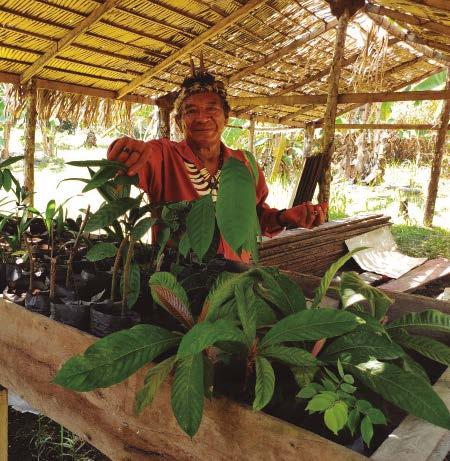
Implemented by the Ecoporé organization and sponsored by Petrobras through the Petrobras SocioEnvironmental Program, the Viveiro Cidadão Project expands forest restoration activities in areas of the Amazon in Rondônia. In doing so, it promotes the increase of carbon stocks, the reduction of greenhouse gas emissions, the establishment of ecological corridors, the return of Amazonian biodiversity to restored areas, and the conservation of fauna and the entire biome.
In partnership with rural and traditional communities, the project encourages ecological restoration and agro-food production in productive home gardens and implemented agroforestry systems, generating income in a sustainable manner; it values traditional knowledge; and promotes seedling cultivation and reforestation. In addition, it carries out environmental education and provides technical training within its scope of action. Over more than ten years of existence, it has enabled the restoration of 600 hectares and benefited more than 10,000 people.
Combining technical knowledge, traditional wisdom, camera traps, and direct sightings, the project carries out participatory biodiversity monitoring, as it involves farmers in the process of tracking fauna use of restored vegetation fragments, both for movement and as habitat.
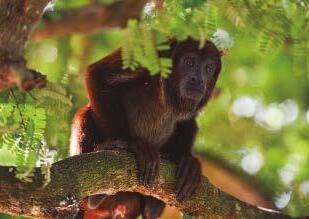
In total, 45 species are monitored, including 45% mammals, 22% birds, 20% reptiles, and 13% insects. Among these species, four are at risk of extinction according to the IUCN Red List of Threatened Species, with the northern brown howler monkey (Alouatta puruensis), the Rondônia marmoset (Mico rondoni), and the white-lipped peccary (Tayassu pecari) classified as vulnerable, while the black-faced black spider monkey (Ateles chamek) is considered endangered.
Knowing whether the ecological corridor connections are benefiting biodiversity, in addition to improving understanding of local ecosystem processes, helps guide efforts to expand forest restoration areas and define strategies for fauna conservation. Currently, biodiversity monitoring in the Viveiro Cidadão project restoration areas is directly aligned with national action plans for the conservation of threatened species of large cats, small cats, Amazonian birds, and Amazonian primates.
More information: viveirocidadao.org.br
II - Projects Portfolio
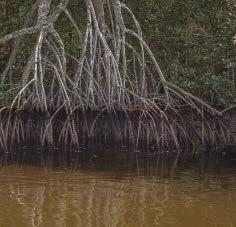
Considering that mangroves, coastal ecosystems that serve as a transition between land and sea, are of enormous importance for life on Earth and Brazil is the second-largest country in the world in terms of mangrove area after Indonesia and has the largest continuous mangrove belt in the world, our portfolio within the Petrobras Socio-Environmental Program includes projects for the conservation and restoration of this ecosystem.
Currently, within the program, we support ten voluntary projects operating in mangroves, either for their restoration or conservation, or for the protection of species that inhabit them. In addition, in partnership with the National Bank for Economic and Social Development – BNDES we support eight mangrove restoration projects along the Brazilian coast, through the “Manguezais do Brasil’’ (Mangroves of Brazil) call for proposals, under the Floresta Viva Initiative (see page 44).
Mangroves are found in various coastal regions around the world and cover 1.3 million hectares in Brazil, primarily along the North and Northeast regions. A total of 121 Brazilian Conservation Units contain mangroves, representing nearly 90% of the ecosystem across the country.
Mangroves protect coastal areas, sequester carbon, mitigate climate change, serve as nurseries and food sources for diverse species, and support communities economically dependent on their resources. It is estimated that between 70% and 80% of commercially important marine fish species rely on mangroves for their development.
3.1. Uçá Project
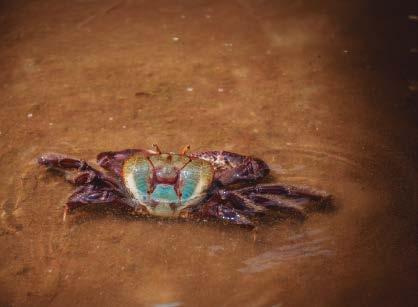
One of our mangrove-related projects is the Uçá Project, named after a crab (Ucides cordatus) common in this biome. Implemented by the NGO Guardiões do Mar and sponsored by Petrobras since 2012, the project operates on multiple fronts: research related to mangroves; conservation of coastal ecosystems with a focus on mangroves; enhancement of sociobiodiversity in ecosystems of Guanabara Bay and its surroundings in the state of Rio de Janeiro; maintenance of ecosystem services; environmental education, with community engagement; and the valorization of traditional peoples.
Within the scope of the project, 18.2 hectares of mangroves have already been restored through the planting of 64,500 seedlings. In editions of the Operação Limpa Oca, more than 60 tons of solid waste were removed from Guanabara Bay mangroves by labor sourced from traditional communities. Research has indicated changes in the reproductive period of the Uçá crab, which is relevant for the scientific community, and detected the presence of microplastics in various parts of the animal’s body and in its eggs, highlighting the importance of Operação Limpa Oca. The project has also promoted Community-Based Tourism in mangroves in Guapimirim, Rio de Janeiro, providing teams and resources to train local leaders in this field.
Environmental education activities, such as Andada do Uçá (itinerant) and Mundo Mangue na Escola (ongoing), included courses for training multipliers and citizen scientists, benefiting over 600 thousand people. They enabled a significant increase in the records of species observed on the iNaturalist app. In
addition, they were pioneers in accessibility for people with special needs in Rio de Janeiro, with the launch of a Brazilian Sign Language (Libras) glossary containing entries related to the mangrove ecosystem and other topics addressed in the project.
The project is now beginning the restoration of an additional 20 hectares in the Guapimirim Environmental Protection Area (APA).
The project integrates the most important Conservation Unit Councils within its area of coverage, as well as the Guanabara Waters Conservation Network (Redagua), a network of projects supported by Petrobras through the Petrobras Socio-Environmental Program that operates in an integrated manner in research development, knowledge production and dissemination, and the implementation of conservation, environmental education, communication, and social inclusion actions related to the Guanabara Bay Watershed in Rio de Janeiro and its connected ecosystems. The NGO Guardiões do Mar, in turn, coordinates the Eastern Subcommittee of the Guanabara Bay Watershed and has been recognized by the United Nations Environment Programme (UNEP) as an official partner for the Decade on Ecosystem Restoration.
3.2. Amazon Mangroves
Carried out by the Peabiru Institute, the Sarambuí Institute, and the Mangrove Ecology Laboratory (Lama) of the Federal University of Pará, the project, sponsored by Petrobras since 2021, restores degraded areas in the largest continuous mangrove stretch on the planet, located along the Brazilian
Amazon coast, and promotes socio-educational and sociocultural activities.
The project has already reforested 16.5 hectares through the planting of about 210,000 seedlings and propagules (vegetative structures that detach from plants to give rise to new ones), contributing to the strong preservation of Amazonian mangroves. It was responsible for developing maps and diagnostics that will serve as a basis for the creation of management plans for these mangroves aiming at the sustainable use of the uçá crab ( Ucides cordatus ) and the white mangrove tree ( Laguncularia racemosa ). Thus, it contributes to the continued generation of income and livelihoods for the communities that depend on resources extracted from local mangroves. In addition, the project raises awareness among the Amazonian population about the importance and richness of mangroves and the need to conserve this ecosystem and adopt sustainable management practices.
Finally, the project engages local communities in the conservation of Amazonian mangrove biodiversity and in the shared management of four Marine Extractive Reserves in the region.
More information:
Uçá: https://guardioesdomar.org.br/projetos/uca/ Instagram: @projetouca Mangues da Amazônia: https://manguesdaamazonia.org.br/ Instagram: @manguesdaamazonia
II - Projects Portfolio
4. URUCU OIL PROVINCE
An international reference in sustainable operations in the “heart” of the Amazon
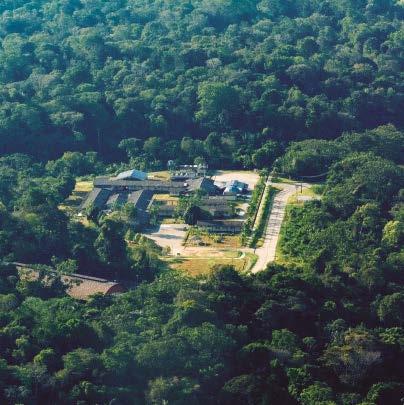
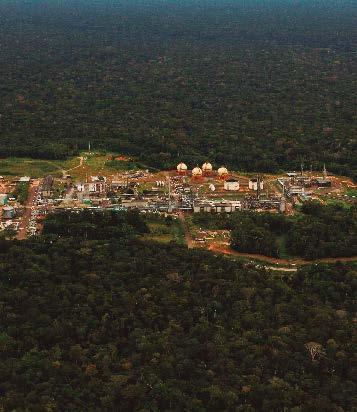
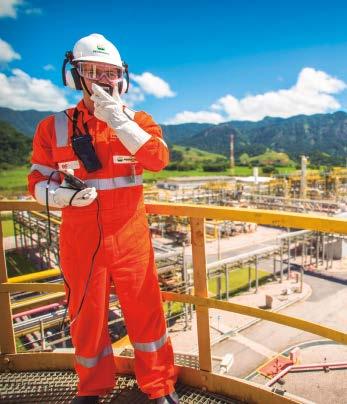
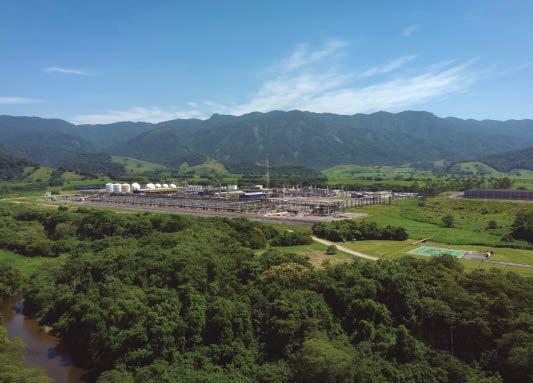
Petrobras’ greatest environmental success story, the company’s operations in the Urucu Oil Province, in the state of Amazonas, for the exploration of oil and natural gas in the heart of the Amazon Rainforest, represent the realization of a sustainable project that demonstrates respect for the environment and local biodiversity, as well as care in preserving an extensive area of standing forest within oil and gas fields.
Urucu is the largest onshore proven oil and gas reserve in Brazil, as well as Petrobras’ third-largest natural gas producer. It currently produces around 13 million cubic meters of natural gas and 25 thousand barrels of oil and condensate per day, representing 3.5% of the country’s total oil production and 80% of the natural gas used to generate electricity for Manaus, the capital of Amazonas, and five other municipalities in the state. It also produces 950 tons of LPG (liquefied petroleum gas, or cooking gas) per day, equivalent to 80 thousand cylinders, supplying Brazil’s North region and part of the Northeast. Since Urucu’s oil is of high quality, being the lightest among those processed in Brazilian refineries, these characteristics make it highly suitable for the production of premium derivatives such as jet fuel (QAV), naphtha (for petrochemical use and gasoline), and diesel.
In Urucu, there are 467 million square meters of green area kept entirely preserved for the conservation of local biodiversity, which includes jaguars, pumas, tapirs, margays, jaguarundis, small wild cats, snakes, anteaters, capuchin monkeys, spider monkeys, woolly monkeys, river dolphins, and macaws… More than 900 plant species and over 600 animal species have been recorded living freely in their natural habitats.
Environmental care began even before Petrobras started operating in the area, back in the 1980s. And it has been 37 years since then. We brought to Urucu ten eminent scientists from different environmental fields to recommend how we could operate there in a sustainable and exemplary way. All their recommendations were compiled into a Master Environmental Management Plan for the Amazon Region, which was implemented in full, and expectations were exceeded. Ten years later, when the scientists were brought back to Urucu, they were positively surprised by what they saw. It is no coincidence that the province is considered an environmental reference, even abroad.
All areas affected by the activities are restored after a meticulous process of species cataloging and intensive replanting of native vegetation, which includes soil preparation, decompaction, acidity correction, green fertilization, drainage, planting of native species, base fertilization, mulching, periodic maintenance, and results monitoring. To this end, Urucu has nurseries with tens of thousands of seedlings from about 40 native Amazon species. We have created Forest Groves where we plant species protected by law, such as the rubber tree, copaíba, andiroba, and the Brazil nut tree, a symbol of the Amazon. More than 1.5 million seedlings have already been replanted by Petrobras in Urucu, including in areas accessible only by river or helicopter.
Organic waste generated in the complex is turned into fertilizer. Recyclable materials and other waste are separated and transported by barges for sustainable disposal in partnership with licensed companies in Manaus.
The vision for the future in Urucu is inseparable from the pursuit of new projects, such as those carried out in partnership with our Energy Transition area, many of them under the Carbon Neutral Program. All the energy used in Urucu is already generated from the natural gas produced in the fields. In addition, solar panels have been installed to automate the oil wells. Further actions and investments are underway to reduce greenhouse gas emissions in the onshore oil province.
Petrobras’ track record in Urucu and, more broadly, in the Amazon demonstrates that it is possible to reconcile oil and gas production in the region with environmental preservation. Thanks to this history, Petrobras was granted, in 2024, the concession to explore two new areas in the region and renewed its concession to remain in two other areas, for a period of ten years. The total area covers 27 thousand square meters. The planned investment amounts to approximately BRL 3.5 billion by 2029.
More information:
Petróleo no Meio da Amazônia? #Boravê (youtube.com)
II - Projects Portfolio
5. NO CLIMA DA CAATINGA
Protection of water and forest resources, in addition to mitigating the impacts of climate change on the biome
Carried out by the Caatinga Association and supported by Petrobras since 2011, the No Clima da Caatinga project focuses on the only exclusively Brazilian biome, the most biodiverse semi-arid region in the world. The project protects the Caatinga’s water resources and forests through conservation and forest restoration actions. It helps mitigate the effects of global warming and supports the adaptation of rural communities to climate change.
The project’s relevance is enormous. Studies indicate that only 11% of the area covered by Caatinga vegetation, typical of the Northeast, remains compared to what is believed to have existed under the same climate and soil conditions before human occupation, demonstrating desertification. In Brazil, deforestation fell by 32.4% in 2024 compared to the previous year, but the Caatinga recorded a 13.4% reduction in the same period. Ceará and Piauí were unable to reduce deforestation. On the contrary, in these states, it increased by 23% and 5%, respectively, compared to 2023. The biome remains under pressure. In 2024, it accounted for about 14% of the country’s deforested area. Fires in the region also remained a concern. Although fire outbreaks declined in most biomes in 2025, the Caatinga was an exception, experiencing persistent and recurrent fires and increased desertification risks. Additionally, the biome plays a crucial role in climate regulation. It is estimated that during rainy periods, it may have been responsible for nearly half of Brazil’s carbon capture between 2015 and 2022.
In this context, the sustainable development of local communities and the maintenance of standing forest are strategies of the project to promote biodiversity protection and the maintenance of ecosystem services, increasing the resilience of these communities to climate change and semi-arid conditions
The project’s area of operation covers the municipalities of Fortaleza and Crateús (CE) and Buriti dos Montes (PI), with the Serra das Almas Natural Reserve (RNSA) as its base, a Private Natural Heritage Reserve (RPPN) occupying 6,285 hectares.
The project enabled the creation of five conservation units (CUs) and supported, through conservation actions, seven CUs that preserve around 6,500 hectares and store more than 1.6 million tons of CO2. It promoted the planting of 117,760 seedlings, restoring over 100 hectares and contributing to water security, biodiversity maintenance, and carbon sequestration in the Caatinga biome. It made 1,038 social technologies compatible with the Semi-arid available (plate cisterns, eco-stoves, biodigesters). and trained 2,769 farmers in good practices. It reached over 100,000 people through environmental education actions. The project stimulated sociobiodiversity in the Caatinga through the management of the native bee Jandaíra (Melipona subnitida), generating income for local communities while preserving standing forest. It benefited 4,000 families. It trained 2,769 farmers in good practices. It reached over 100 thousand people through environmental education actions. It stimulated sociobiodiversity in the Caatinga through the management of the native bee Jandaíra (Melipona subnitida), generating income for local communities while keeping the forest standing. It benefited 4,000 families.
The initiatives also supports and encourages research, as well as fauna reintroduction initiatives; implements actions for habitat protection; promotes the implementation of socio-environmental public policies, such as the Ceará State Law on Payment for Environmental Services; actively participates in the national action plans for Caatinga Birds,
Three-banded Armadillo, and Pollinator Insects; and carries out environmental education activities. In addition, it works on the conservation of species such as the three-banded armadillo (Tolypeutes tricinctus), the puma (Puma concolor), the grey-breasted parakeet (Pyrrhura griseipectus), and the Caatinga howler monkey (Alouatta ululata), most of them threatened with extinction in Brazil.
In 2023, the project conducted a study that calculated the benefits provided by its water-related actions. The analysis concluded that the forest cover of the RNSA prevents the runoff of 4,800 megaliters of water annually, due to the presence of trees whose roots absorb water. This results in reduced surface water runoff, increased water infiltration into the soil, lower sediment deposition, and greater support for the water cycle in a semi-arid region where water is scarce. The avoided runoff is equivalent to the annual supply of over 299 thousand plate cisterns of 16 thousand liters each, enough to meet the needs of a family during the dry season in the Caatinga.
The SROI (Social Return on Investment) assessment, carried out by the Institute for the Development of Social Investment, indicated that for every BRL 1.00 invested by Petrobras in the project, BRL 7.91 were generated in socio-environmental benefits.
More information: www.noclimadacaatinga.org.br
No Clima Da Caatinga (@noclimadacaatinga)
6. VALE SUSTENTÁVEL
Forest restoration and sustainable development in Brazil’s Semi-arid region
The Vale Sustentável Project aims to restore areas of legal reserve and permanent preservation by enriching forest cover, as well as promoting environmental education, strengthening family farming, and supporting artisanal fishing in the municipalities of Areia Branca, Alto do Rodrigues, Assú, Carnaubais, Guamaré, Galinhos, Macau, Serra do Mel, and Porto do Mangue, in the state of Rio Grande do Norte, in the Brazilian semi-arid region.
Implemented by the Norte-Rio-Grandense Association of Agronomists (Anea) in partnership with Petrobras, the project completed 10 years of activities in 2023, having achieved significant results so far: the reforestation of 290 hectares through the planting of 203,584 native seedlings of 49 different species from the Caatinga biome.
By 2027, more than 220 hectares will be restored through the planting of 200,000 native seedlings, totaling over 500 hectares of restored areas. To strengthen productive backyards, 29,497 fruit trees have already been distributed. By 2027, another 22,000 will be delivered, totaling 51,497.
Aiming to contribute to the sustainable development of the nine municipalities covered by the project and of 25 rural communities and associations of fishers and shellfish gatherers, the project counts on 38 partnerships that engage the National Institute of Agrarian Reform, city halls, the Federal Institute of Education, academia, the Eastern North Atlantic watershed committee, rural workers’ unions, community associations, and producer cooperatives.
Regarding the strengthening of agriculture, the project has already assisted more than 5,000 families through the implementation of productive backyards, agroecological gardens, and native bee meliponaries, such as the Jandaíra (Melipona subnitida), stingless. This work aims to promote human coexistence with the Semi-arid region, contributing to the improvement of the local population’s quality of life and ensuring food sovereignty and income generation from the commercialization of production surpluses (fruits, legumes, vegetables, greens…) and honey.
To strengthen education, the Vale Sustentável project has already trained more than 7,000 people in environmental education, serving early childhood, elementary school and secondary, technical, and higher education levels. The project offers courses in Gastronomy, fish handling, association management, and cooperativism.
In the current cycle, the project also foresees cleaning beaches, rivers, and mangroves, as well as planting trees in urban, rural areas, and 80 public schools. In addition, environmental agents, Caatinga seed collectors, multipliers, and family farmers (in natural resource conservation and sustainable agricultural practices) will be trained.
The SROI (Social Return on Investment) evaluation indicated that, for every BRL 1.00 invested by Petrobras in the Vale Sustentável Project, BRL 5.05 in environmental and social benefits were generated.
More information: https://projetovalesustentavel.com.br/ Instagram: @projetovalesustentavel
7. SEMEANDO ÁGUA
Restoration of the Atlantic Forest and water bodies in the Cantareira System region
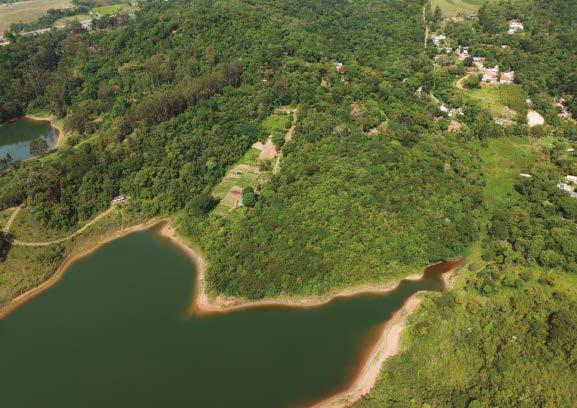
Implemented by the Institute for Ecological Research (IPÊ) and sponsored by Petrobras since 2013, the Semeando Água Project aims to reverse degradation processes in water bodies within the Cantareira System, one of the largest water catchment systems in the world. The system supplies water to more than 7 million people in the São Paulo metropolitan region, the largest in Brazil and one of the ten most populous metropolitan areas in the world.
In an important watershed area, greater forest cover would be desirable, which can be achieved through forest restoration and improved management of productive systems, especially in the most vulnerable areas, such as the surroundings of water bodies (rivers, reservoirs, and springs) and areas more prone to erosion processes.
In this context, the Semeando Água Project has already restored more than 70 hectares (one hectare equals 10,000 square meters) and planted approximately 150,000 native Atlantic Forest seedlings, mainly in areas near springs, rivers, and reservoirs. It has converted over 100 hectares into sustainable production systems, training more than 300 rural producers to cultivate these lands. The project has also operated on more than 50 rural properties across eight municipalities.
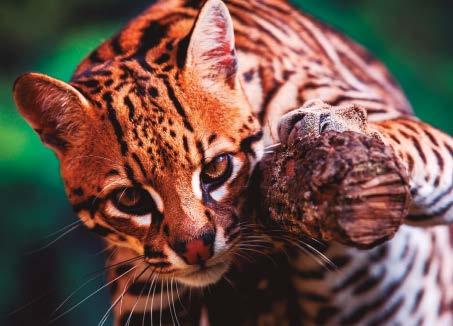
Moreover, the project increases landscape connectivity, contributing to the conservation of various fauna and flora species that inhabit the Cantareira System, such as the ocelot (Leopardus pardalis), the black-faced marmoset (Callithrix aurita), the southern bristle-tyrant (Phylloscartes eximius), the small lizard Enyalius (Enyalius perditus), and the juçara palm (Euterpe edulis).
More information: www.semeandoagua.ipe.org.br/ Instagram: @institutoipe
8. REFLORESTAMENTO DA ESTAÇÃO ECOLÓGICA DE JATAÍ
The largest ever carried out in a Conservation Unit
in São Paulo
In São Paulo, in the Pre-Salt Hub of the Santos Basin, the largest forest restoration ever promoted by Petrobras in a Conservation Unit in the state is underway, at the Jataí Ecological Station.
The restoration, a requirement of federal environmental licensing conducted by Ibama, is a partial compensation for greenhouse gas emissions generated by Petrobras activities during a long-term test (LTT) carried out to obtain data and information about the Tupi field. The field produces more than 800 thousand barrels of oil per day.
The restoration consists of reforesting approximately 425 hectares of native Cerrado vegetation, which will result in the storage of 60,000 tons of carbon over 20 years. In this total area, divided into three portions, 79,844 seedlings were planted on 135 hectares (portion 1). On 140 hectares (portion 2), 97,966 seedlings were planted. Finally, on approximately 150 hectares (portion 3), the planting cycle covered 125,438 seedlings, completing this phase.
The ground cover with native vegetation is being monitored in plots, through sampling, in semiannual campaigns, with eight campaigns conducted so far. All plots have shown satisfactory coverage.
The forest restoration has been benefiting the species of the Conservation Unit. At the Jataí Ecological Station, for example, there are plant species threatened with extinction, such as sucupira-preta, perinha-docampo, palmito-juçara, and xaxim.
Regarding fauna species, the Conservation Unit is home to, among others, eight mammals (giant anteater, howler monkey, maned wolf, puma, ocelot, agouti, brown brocket deer, and marsh deer). Birds are 19 (blue-winged macaw, chalk-browed mockingbird, noble macaw, sapphire hummingbird, crested blackbird, true blue grosbeak, batuqueiro, etc.). Fish species are four (striped guaru from the Cerrado, silver pacu, trairão, and emu catfish). Only one reptile is native to the location: the blue-tailed lizard.
More information: ec.jatai@fflorestal.sp.gov.br
9. CORREDOR CAIPIRA
Formation of agroforests and ecological corridors for the conservation and propagation of fauna and flora in São Paulo
The Corredor Caipira Project aims, by 2028, to establish 115 hectares of forests and agroforests forming ecological corridors to connect important forest fragments in the municipalities of Piracicaba, São Pedro, Águas de São Pedro, Santa Maria da Serra, and Anhembi, in the interior of São Paulo. This ensures the continuity of the water cycle and provides a suitable environment for plants and animals to thrive, disperse seeds, increase local forest cover, and preserve the region’s biodiversity.
The project is implemented by the Center for Support to Culture and University Extension in Environmental Education and Conservation (Nace)/ Pteca of the Luiz de Queiroz College of Agriculture (ESALQ) at the University of São Paulo (USP) and by the Luiz de Queiroz Foundation for Agrarian Studies (Fealq), with sponsorship from Petrobras through the Petrobras Socioambiental Program .
Local communities, academics, educators, and public environmental agencies, among others, are also partners in the project.
In the first edition of the project (2021–2022), 50 hectares were planted, and an Active Germplasm Bank (hereditary material) of 15 hectares was created for the genetic conservation of 20 economically and ecologically relevant native forest species. In the current edition, vegetation planting and restoration continue, moving toward the target.
The new approach of the project is to connect people with landscapes through environmental education and the coordination of public policies, valuing the rich local culture and integrating the community with the restored hectares of forests and agroforests.
The project area encompasses various types of terrain and soils. Due to its occupation history, it combines sugarcane plantations, other crops, pastures, and, in a small part of the territory, fragments of native Atlantic Forest and Cerrado vegetation, of high ecological importance, containing hundreds of plant species. The fauna is also highly diverse, including threatened species such as the southern muriqui, maned wolf, southern tamandua, gray brocket deer, and Cougar.
More information:
https://www,corredorcaipira.com.br
Instagram: @corredorcaipira
II - Projects Portfolio
10. PROJETOS DE RESTAURAÇÃO ECOLÓGICA EM FLORESTA NA UNIDADE DE TRATAMENTO DE GÁS DE CARAGUATATUBA
In 10 years, 5.500 plants, 51 native plant species, over 600 trees taller than 10 meters, and the return of fauna
Executed by the Laboratory of Tropical Forest Ecology (Labtrop) at the University of São Paulo (USP) and the Laboratory of Plant Ecophysiology at the Federal University of Rio de Janeiro (UFRJ), in partnership with Petrobras, the projects “Ecology and Ecosystem Restoration of the Coastal Plain in the Northern Coast of São Paulo” and “Development of Techniques to Optimize the Assessment Processes of Reforestation in Areas Degraded by Oil and Gas Industry Activities” have been promoting ecological restoration and biodiversity gains in the Permanent Preservation Area of our Caraguatatuba Gas Treatment Unit (UTGCA) and its surroundings since 2012.
The projects’ area of operation covers 1,300 meters in a setting of restinga vegetation and lowland Atlantic Forest, including a 50-meter-wide strip along the left bank of the Camburu River. The area had been deforested for over 50 years. The remaining vegetation consisted only of pastures and exotic grasses, with no connection to the surrounding forests.
In 2012, thanks to a partnership between Petrobras’ Research, Development, and Innovation Center, the Cenpes, the UTGCA, and the University of São Paulo, ecological restoration was carried out in the Permanent Preservation Area of the Camburu River at Petrobras’ São Paulo site, with the planting of approximately 15,700 seedlings of 48 native species across 6.5 hectares.
Ten years later, in 2022, a scientific partnership between Cenpes, the Plant Ecophysiology Laboratory at UFRJ and the Tropical Forest Ecology Laboratory at USP evaluated the restoration process. A census of the planted vegetation, which had been monitored since the time of planting, was conducted. An ecological sampling of what had been planted was carried out, including the identification of all spontaneously occurring species. The functional attributes of all sampled species, both planted and naturally regenerated, were analyzed.
Vegetation cover was also assessed. Using these data, along with information from the time of planting about the species, the results were measured based on three indicators: vegetation cover, taxonomic diversity, and functional diversity.
It was found that, over ten years, the forest developed satisfactorily, achieving good vegetation cover. The restored area now contains 51 native tree species: 35 planted, three replanted, and 16 from natural regeneration. Plant density is approximately 882 individuals per hectare. The number of plants matched the values found in a reference forest, and orchids and bromeliads are already observed on the trees. The area showed a net gain of nine species in terms of biodiversity. Some ecosystem functions are already being restored, such as soil cover, carbon sequestration, and nutrient cycling, which involves the exchange of substances between the soil and plants, essential for the development of plant species and the overall health of the forest.
The forest restoration is still ongoing, with 618 trees of 14 species already exceeding 10 meters in height. Among the plant species, there are, for example, some herbaceous plants and epiphytes. Regarding fauna, the presence of butterflies, beetles, snakes, birds, and armadillos indicates that the area is being recolonized by animals, as well as the reestablishment of important processes such as pollination, seed dispersal, nutrient cycling, and predation.
So far, the projects have produced 18 papers presented at scientific conferences; 10 undergraduate or course completion papers; 4 master’s theses; 1 doctoral dissertation; and 10 articles published in scientific journals.
11. RESTAURAÇÃO FUNCIONAL DE FLORESTAS —
The functional diversity and the composition of the planted species accelerate the restoration process
Resulting from a partnership between Petrobras and the Federal University of Rio de Janeiro, the Functional Forest Restoration project aimed to develop a methodology for evaluating, monitoring, and adjusting forest ecological restoration using Functional Trajectory Analysis (FTA) and models based on functional traits, to optimize the restorations carried out.
FTA consists of using the functional traits of planted species and naturally regenerating species as ecological monitoring indicators. Its application seeks to verify whether the restored area is also recovering its functional diversity, which is directly related to the various ecosystem functions and associated ecosystem services, such as water retention, carbon capture, and reduction of biodiversity loss risk, among others.
The project results, tested at our Caraguatatuba Gas Treatment Unit (UTGCA) in São Paulo, within the Atlantic Forest biome, showed that the functional diversity of planted seedlings and natural regeneration affected the functional trajectory and, consequently, the success of the restoration. Moreover, it was demonstrated that forests planted with both species possessing acquisitive functional traits (fast-growing and sun-tolerant) and species with conservative functional traits (slow-growing and shade-tolerant) achieved greater success in development, resembling the reference ecosystem more closely than plantations of only one functional group.
Currently, Functional Trajectory Analysis is being applied to other biomes where Petrobras conducts forest restoration activities, such as the Cerrado and the Amazon Rainforest. The methodology is expected to enhance and accelerate environmental restorations carried out by Petrobras now and in the future, contributing to forest maintenance and the full recovery of biodiversity and ecosystem services in these environments.
12. REPOSIÇÃO FLORESTAL - RESERVA BIOLÓGICA UNIÃO
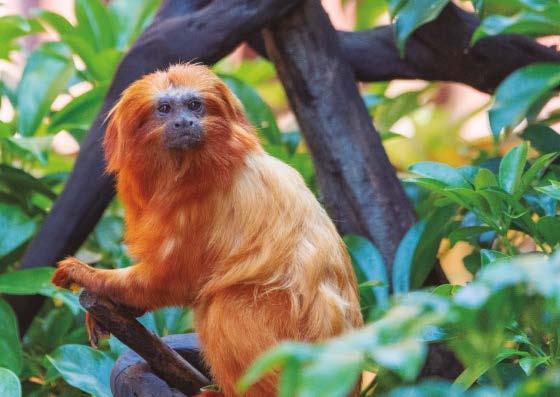
An important role in the conservation of the golden lion tamarins that inhabit the region
Started in 2018 and currently in a maintenance phase scheduled until 2029, the Reforestation Project - União Biological Reserve aims to restore approximately 19 hectares of Lowland Dense Ombrophilous Forest on the grounds of the Rebio União, in Rio das Ostras, Rio de Janeiro.
In the local Lowland Dense Ombrophilous Forest, a tropical forest of the Atlantic Forest biome characterized by dense vegetation and occurring in regions with little or no dry season, resides the golden lion tamarin (Leontopithecus rosalia), an endemic and endangered species. The restored forest will play a crucial role in conserving this animal, ensuring the continuity of the species through essential ecosystem services, aiding in the recovery of the Atlantic Forest, regenerating its habitat, enhancing connectivity between forest fragments, and maintaining ecological balance through the restoration of native vegetation and the eradication of exotic species.
The project also fulfills an environmental licensing requirement related to the construction of the Rota Cabiúnas Pipeline, Rota 2, which expands the flow of natural gas produced in the Pre-Salt fields of the Santos Basin, connecting the production areas to the Cabiúnas Terminal (Tecab), in Macaé, Rio de Janeiro. It is carried out by external companies under Petrobras’ supervision.
So far, 14,900 native Atlantic Forest tree seedlings have been planted in the project area, with their development being monitored to meet the standards required by the Brazilian Institute of Environment and Renewable Natural Resources (Ibama).
Additionally, in compliance with an environmental requirement related to the “Planting Authorization,” the exotic eucalyptus species, previously widely cultivated in the area now part of Rebio União, is being eradicated because it competes with native vegetation.
13. REGENERAÇÃO NATURAL COMO FERRAMENTA DE RECUPERAÇÃO AMBIENTAL DE ÁREAS ALAGADAS
Started in 2015 and completed in 2023, with excellent results that continue to be reaped, the project aimed to provide technologies to restore degraded aquatic ecosystems and implement natural regeneration to mitigate direct or indirect environmental damage caused by oil spills in alluvial vegetation (which grows in areas influenced by water). It also involved the identification of potential species (plants and microorganisms) for the recovery of affected areas. The area of the Presidente Getúlio Vargas Refinery (Repar), operated by Petrobras, was used as an experimental site for the project’s implementation.
The importance of the project is highlighted due to the ecological relevance of the wetlands. They are sources of organic matter for nearby environments. Serve as shelter and nurseries for wildlife. They contribute to erosion control. They help protect environments against flooding. In addition, they assist in maintaining water quality.
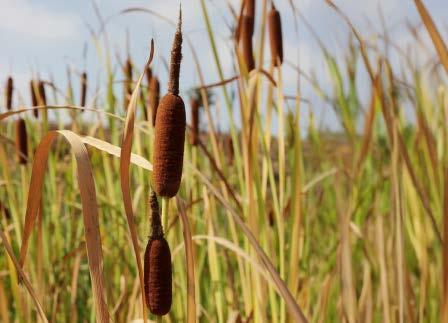
Among the results, when compared with data from 2001, 2012 and 2019, an increase in species diversity and life forms was observed throughout the regeneration process. When comparing the contaminated area with an uncontaminated one, little variation in functional traits was observed in 15 floodplain species. It can be noted that, after 20 years, the area affected by oil shows species richness comparable to that of a preserved area with similar ecological and physiographic characteristics. It was also found that the two dominant wetland-associated vegetation species in the area, Typha domingensis (cattail) and Neocabreria serrulata (cabuçu or water cabuçu), showed greater tolerance to oil contamination. Therefore, they have good potential for the restoration of contaminated areas.
A solution for areas that serve as nurseries, shelters, and protection against erosion and flooding
The natural regeneration project, the first to involve a long-term study (20-year) in wetlands affected by oil spills, included monitoring of meteorological conditions and the water table; the different phases various of plant growth and development; flowering; tree measurements (diameter, height, volume, weight, shape, etc.); soil bacterial communities; the physiology, anatomy and functional strategies of the vegetation; among others.
Finally, the project also demonstrated the effectiveness of an innovative soil decontamination method based on controlling hydraulic flow in wetlands, allowing the detachment of oil embedded in the soil and its subsequent collection using absorbent mats.
14. ONDE A ONÇA BEBE ÁGUA: COMUNIDADES E BEM VIVER
Protection of the Cerrado, the jaguars of the biome, and the strengthening of local communities
Supported by Petrobras through the Petrobras Socioambiental Program since 2024 and executed by the Pró-Natureza Foundation (Funatura), the project ‘‘Onde a Onça Bebe Água: Comunidades e Bem Viver’’ aims to protect the Cerrado by combating deforestation, promoting water security, restoring natural areas, and mapping ecological corridors for jaguars in the biome, a symbol of the Cerrado’s environmental health. In addition, it strengthens local communities through the implementation of agroforestry systems (AFS), which combine sustainable planting and environmental conservation; social inclusion; the restoration of Permanent Preservation Areas (PPAs); and support for early childhood. The project seeks to promote sustainable development, linking biodiversity conservation to the well-being of traditional communities. Its scope covers the Federal District, northeastern Goiás, and southwestern Bahia. The completion is expected in 2027.
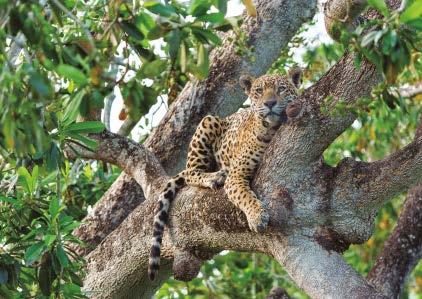
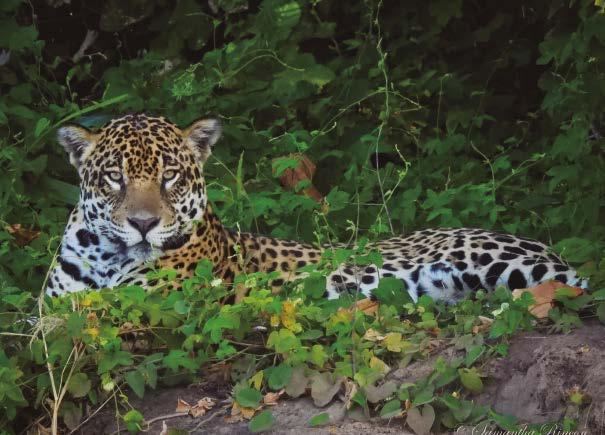
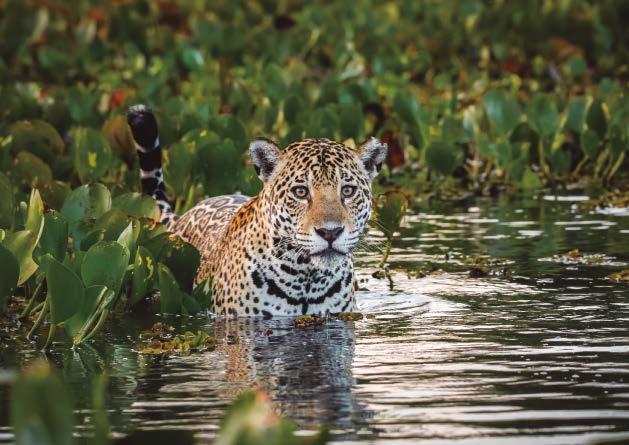
The jaguar is a key species of the Cerrado and an indicator of the health of the biome because, as a top predator, it regulates the populations of the species it feeds on, such as capybaras, white-lipped peccaries, collared peccaries, and wild pigs, preventing herbivore overpopulation and excessive degradation of the vegetation that serves as pasture. In addition, since the jaguar depends on clean water sources to drink, it is directly affected by the condition of riparian forests, which border and protect springs and rivers, as well as by the restoration of this vegetation promoted by the project. The species can be spotted between Brasília National Park, Chapada dos Veadeiros, and Grande Sertão Veredas.
As for the importance of the Cerrado, strengthening this biome means strengthening the cradle of Brazil’s waters, which is essential for national and South American water sustainability.
Key project actions include biodiversity conservation, environmental restoration, sustainable development, and community empowerment. Social networks such as Instagram and WhatsApp are used to share initiatives and connect the target audience with field activities.
Relevant project publications include Onde a Onça Bebe Água: Comunidades e Bem Viver and Sistemas Agroflorestais (SAFs): Unindo Conservação e Produtividade.
More information: https://funatura.org.br/projeto/onde-a-onca-bebe-agua-comunidades-e-bem-viver/
Instagram: @onde.a.onca.bebe.agua
15. PASSAGENS DE FAUNA PARA CONEXÃO DE FRAGMENTOS FLORESTAIS
Fewer obstacles and risks, as well as greater biodiversity gains
The Passagens de Fauna para Conexão de Fragmentos Florestais project involves the installation and monitoring of wildlife crossings in the Atlantic Forest, conducted experimentally to mitigate the effects of habitat fragmentation on wild mammals caused by oil or gas pipelines, as well as to assess the effectiveness of these passages.
The project was developed by Petrobras’ Research, Development, and Innovation Center, Cenpes, in partnership with the State University of Northern Rio de Janeiro and the Eco&Eco group. Since 2017, it has been implemented as an environmental condition for the renewal of operating licenses for pipelines installed in Rio de Janeiro, along the Right-of-Way between Cabiúnas, in Macaé, and the Reduc refinery, operated by Petrobras in Duque de Caxias.
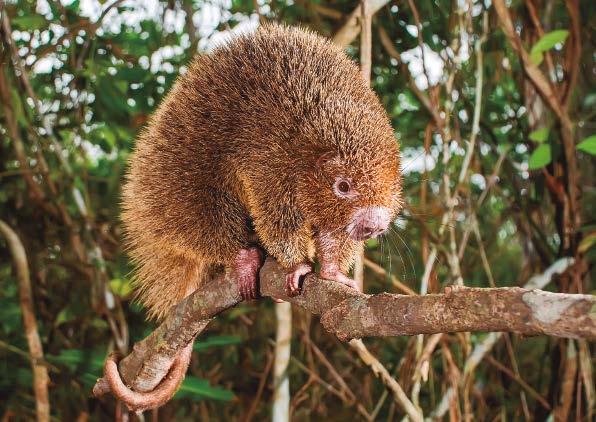
On private properties within the São João/Mico-LeãoDourado Basin Environmental Protection Area (APA), in buffer zones of the Poço das Antas Biological Reserve and the União Biological Reserve, as well as within these reserves themselves, mammals that primarily live in trees were monitored before and after the installation of six wildlife passages. For example, golden lion tamarins(Leontopithecus rosalia), brown-throated sloths (Bradypus torquatus), and Brazilian hedgehogs (Coendou spinosus).
Telemetry sensors were used to track animal movements, automatic cameras (camera traps) to capture images of those passing through the areas where the equipment was installed, and, in some cases, individual tagging to identify each animal after capture and release for further study.
It was observed that 40 species, in addition to the monitored ones, moved through the pipeline corridor. Preliminary results indicate that the pipeline corridors act as barriers for some brown-throated sloths and certain Brazilian hedgehogs, depending on the individual, but have very little impact on the daily activities of golden lion tamarins.
For the monitored individuals, the positive effect of canopy-connected wildlife passages was confirmed. However, for this outcome to be applicable to the region’s mammal populations, long-term monitoring will be necessary to demonstrate if animals move between areas, yielding biodiversity gains and risk reduction, thereby ensuring the protection and conservation of local species.
Ecological restoration, biodiversity monitoring, support for wildlife reintroduction, and environmental education in the Guanabara
Bay region
Executed by Ação Socioambiental (ASA) with support from Petrobras through the Petrobras Socioenvironmental Program since 2014, the Guapiaçu Project carries out ecological restoration of the Atlantic Forest and critical ecosystems in the Guanabara Bay region, it monitors local biodiversity, supports wildlife reintroduction, promotes environmental education, and strengthens Redagua –the Guanabara Water Conservation Network (a network of Petrobras-supported projects implemented in the Guanabara Bay area).
Currently, across all its areas of activity, the project focuses on strengthening sociobiodiversity in the metropolitan region of Rio de Janeiro by integrating mangroves and ombrophilous forests, which are characterized by yearround rainfall and require dense shade to thrive, being composed of palm trees, vines, and epiphytes…
Therefore, over the past three years, the project has restored 41 hectares of dense ombrophilous forest, with more than 100 thousand seedlings from over 120 endemic Atlantic Forest species, some considered vulnerable or critically endangered, such as Cambucá (Plinia edulis), Juçara palm (Euterpe edulis), and PauBrasil (Paubrasilia echinata).
It has also recovered five hectares of mangrove, one of the most threatened ecosystems, associated with the Atlantic Forest. This work included Limpa Oca operations, which removed nearly 22 tons of waste from within the mangroves.
The reforestation efforts take place on private land belonging to partner rural producers, who provide areas for forest planting. So far, 41 hectares have already been restored, which continue to be monitored and receive periodic maintenance.
Biodiversity monitoring is carried out with the aid of 90 camera traps. The expectation is to observe restored ecosystems with increasingly strengthened ecological processes, forming a large ecological corridor that connects all remaining mature forest fragments, improves the genetics of plant and animal species, and enables the ecosystem to become self-sustaining.
A notable achievement is the sighting of 12 southern muriquis in the Parque Estadual dos Três Picos region, in Cachoeiras de Macacu (RJ), with the help of a drone equipped with a thermal camera, which captured infrared images. These primates, endemic to the Atlantic Forest and threatened with extinction, are the largest in the Americas, reaching up to 1.5 meters in length and weighing over 12 kilograms.
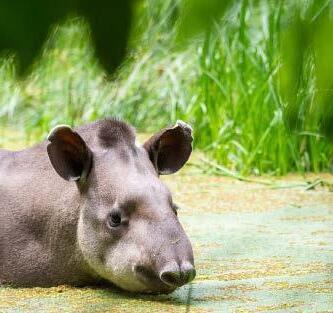
Regarding wildlife reintroduction, the project has reintroduced tapirs (Tapirus terrestris) to the region, which had been extinct there since 2014 and are ecologically important as seed dispersers. Today, 22 tapirs live freely in the area, nine of which were born in the wild.
Forest restoration actions, biodiversity monitoring, and the Guapiaçu Project are part of the Biodiversity Action Plan of the Boaventura Energy Complex, run by Petrobras, and contribute to the National Action Plan for the Protection of Ungulates (PAN Ungulates), the name given to hoofed mammals.
In terms of environmental education, the project disseminates knowledge in schools, from early childhood to high school, and in Conservation Units, where it promotes guided visits. Additionally, the Water Resources Monitoring Program has trained 185 environmental monitors, who carry out physicochemical and biological analyses in the main rivers that flow into Guanabara Bay. Thousands of children, young people and educators have participated in these activities since the beginning of the project.
Regarding job creation and income generation, the project provides assistance grants to crab gatherers and, through its Water Resources Monitoring Program, has trained monitors who have conducted physicochemical analyses in the three main rivers flowing into Guanabara Bay. Hundreds of grants have been awarded. Equally, hundreds of monitors have been trained.
The Guapiaçu Project is part of the Guanabara Water Conservation Network (Redagua), supported by Petrobras through the Petrobras Socioenvironmental Program. The network carries out research, produces and disseminates knowledge, and implements conservation, environmental education, communication and social inclusion actions related to the Guanabara Bay Watershed, in Rio de Janeiro, and its connected ecosystems. It has a unified strategic plan, shared objectives, coordinated actions and shares technicalscientific information, work methodologies, experiences and achievements. It is composed of the Aruanã, Coral Vivo, Guapiaçu, Meros do Brasil, Uçá projects and Petrobras.
More information: https://www.projetoguapiacu.org
17. GUARDIÕES DA BIODIVERSIDADE
Indigenous peoples’ leading role in the conservation and sustainable management of natural resources
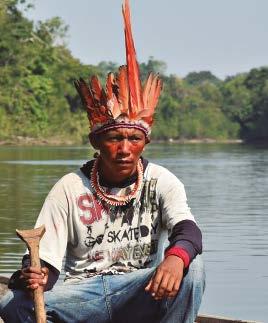
Considering that, Indigenous peoples, around the world are guardians of approximately 80% of remaining biodiversity, they play an indispensable role in the conservation and sustainable management of natural resourcesand the Indigenous territories are among the most preserved in Brazil, Through the Petrobras Socioenvironmental Program, we support, 65 projects that contribute to the empowerment and autonomy of Indigenous peoples and traditional communities. This is no small feat. This total represents 57% of the projects supported by the program.
In total, 105 Indigenous peoples and villages, 88 quilombola communities, and 164 other traditional communities are supported. This support is provided through actions for territorial conservation that involve the sustainable use of natural resources and consider the lifestyles of these groups, their production
systems and knowledge related to sociobiodiversity. Furthermore, it aligns with Petrobras’ Strategic Planning, which aims for biodiversity gains by 2030, focusing on forests and oceans, and a 30% expansion of protected areas such as Indigenous Lands and Quilombola Territories.
Four of the mentioned projects are: Raízes do Purus; Ar, Água e Terra: Vida e Cultura Guarani; Projeto Biodiverso; and Berço das Águas.
17.1. Roots of the Purus
Implemented by the indigenous organization Opan, the project aims to improve the quality of life of Indigenous peoples in the South and Southwest of Amazonas, conserve biodiversity on Indigenous lands, and contribute to mitigating climate change. In 2023 alone, it benefited six Indigenous Lands covering an area of 2.3 million hectares, promoting the sustainable anagement of resources such as pirarucu, Brazil nuts, açaí, and copaíba oil, generating income and strengthening social cohesion. The production of these resources totaled over 184,000 kg, generating approximately 700,000 reais in revenue. That same year, the project received the Banco do Brasil Foundation Social Technology Award in the category “Certified Social Technologies.” The project also participates in public policy forums.
17.2. Air, Water and Land Project: Guarani Life and Culture
Implemented by the Institute of Cultural and Environmental Studies, it promotes the sustainable management of Guarani Indigenous territories in Rio Grande do Sul.
It encompasses actions such as productive land reconversion, biodiversity recovery and conservation, and environmental education. The project has already operated in three river basins, conserving 3,000 hectares and involving more than 500 Indigenous people in its activities. Through the establishment of traditional plots for food use and agroforestry systems, it contributes to food security while maintaining and expanding vegetation cover. Environmental education actions address topics such as waste collection, recycling, and composting; sustainable territorial management; eco-efficient measures; and income generation, also providing opportunities to discuss human rights and gender equity
The project aims to strengthen the connection between Indigenous peoples and fauna and flora species, such as the collared peccary (Tayassu pecari), a species threatened with extinction in Brazil. In this context, it will conserve a region of great importance due to the presence of vulnerable or critically endangered species, more than 200 of which will be the focus of project actions.
It will, also, preserve sociocultural diversity within its area of influence, ensured by the continued presence of the Guarani in the territory.
17.3. Biodiverse Project
Carried out by the NGO Pacto das Águas, it covers more than 1.4 million hectares of the Amazon Rainforest across five Indigenous Lands and one extractive reserve located in the Northwest of the state of Mato Grosso.
peoples and rubber tappers in this work in favor of sustainable development and the maintenance of carbon stocks and biodiversity. It supports the strengthening of value chains for non-timber forest products and subsistence agriculture. To this end, it provides support, supplies and technical assistance for the management, transport and distribution of these products, in addition to strengthening the system for selecting, drying, and storing Brazil nuts within the territories.
Furthermore, it strengthens environmental, territorial and social management instruments to enhance community autonomy; access to public policies; the development of these policies; and monitoring, all for production, income generation and environmental conservation (National School Feeding Program, Food Acquisition Program, Minimum Price Guarantee Policy for Sociobiodiversity Products, and National Program for the Strengthening of Family Farming).
Indigenous and riverside women are a priority audience of the project, receiving training and capacity-building. The project directly benefits more than 900 people and another 3,000, indirectly.
17.4. Cradle of Waters Project
Its main objective is to mitigate climate change through the conservation of standing forest, involving Indigenous
Carried out by Operação Amazônia Nativa, it works on the implementation of actions from the Territorial and Environmental Management Plan of the Rikbaktsa territories and on the development of the second phase of the Territorial and Environmental Management Plan of the Apiaká do Pontal and Isolated Indigenous Land, involving the municipalities of Brasnorte, Apiacás, Cotriguaçu, and Juara, in the state of Mato Grosso. The plans establish priority actions that enable area
protection, strengthen traditional and sustainable resource management, create economic alternatives for livelihoods, and preserve Indigenous culture. In this way, they contribute to biodiversity conservation and climate regulation in the region.
Activities include support for area surveillance and monitoring systems, conservation through sustainable management, Brazil nut commercialization and the development of foundations for community-based tourism in the region.
The total area of supported Indigenous Lands exceeds 1.3 million hectares, maintaining an estimated carbon stock of around 190 million tons, in a conserved region of significant importance due to its species richness, including rare species, the large number of native fish and bird species, and the sociocultural diversity of its inhabitants.
18. PROJETO DE RESTAURAÇÃO FLORESTAL NO ENTORNO DA ÁREA DO BREJO NO TRAÇADO DO GASODUTO
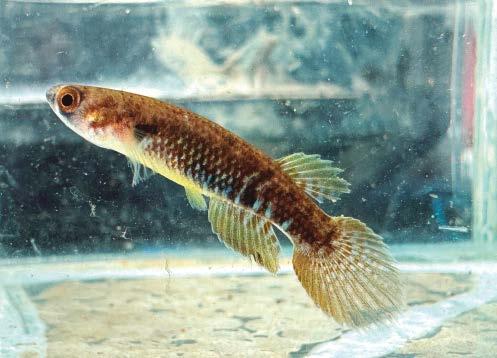
Started in 2021 and expected to be completed in 2029, the Forest Restoration Project around the Brejo Area along the Route 3 Gas Pipeline, implemented in Maricá, Rio de Janeiro, aims to restore a 1.33-hectare marshy area where endangered fish, the rivulids (Atlantirivulus maricensis), occur. These fish, also called “cloud fish” because they appear after rain cycles, live in temporary pools and areas at the edges of streams, formed by rainwater that accumulates and where eggs had been laid before the dry season. Brazil hosts the greatest biodiversity of rivulids in the world.
Within the scope of the project, managed by Petrobras and executed by the company Foco Soluções em Meio Ambiente, 2,216 seedlings have already been planted. This reforestation contributes to the protection of rivulid habitats, improves water quality, supports the ecological balance of the area and strengthens the conservation of this threatened species. In addition, it leaves a legacy for local biodiversity.
The project meets an environmental requirement established as a condition of the Operation License for the Route 3 Gas Pipeline. The condition was issued by the Brazilian Institute of Environment and Renewable Natural Resources (Ibama).
Protection of the habitat of rivulid fish, which are threatened with extinction
II - Projects Portfolio
19. FLORESTA VIVA (SOCIO-ENVIRONMENTAL INVESTMENT WITH PARTNERS)
—
Partnership in investments for the restoration of Brazilian biomes using nature-based solutions
A matchfunding initiative, in which contributions are matched or exceeded to leverage fundraising and impacts, Floresta Viva aims to support ecological restoration projects through the planting of native species combined with agroforestry systems across all Brazilian biomes. In this way, it contributes to preserving local biodiversity, making water resources available, reducing erosion, improving the microclimate, removing carbon dioxide from the atmosphere, and generating jobs, income and other associated benefits. The initiative, led by the National Bank for Economic and Social Development (BNDES) and integrated by Petrobras since 2022, is operationally managed by the Brazilian Biodiversity Fund (Funbio).
The Floresta Viva initiative is part of Petrobras’ strategy to expand socio-environmental investments in projects for the conservation, restoration, and sustainable use of forests and other ecosystems that increase carbon capture and storage and/or prevent greenhouse gas (GHG) emissions. These projects, recognized as nature-based solutions because they use it to solve social, environmental, and economic challenges, focus on climate change mitigation and enhance climate resilience.
Over seven years, through the calls for proposals “Manguezais do Brasil” and “Corredores de Biodiversidade”, BNDES and Petrobras will allocate BRL 118 million (of which 50% will be contributed by Petrobras) to 20 projects from selected civil society organizations prioritizing the Amazon, Atlantic Forest, Cerrado and Pantanal biomes. The goal is to restore 4,200 hectares, capture tons of carbon dioxide from the atmosphere, and generate social and environmental benefits through the work of civil society organizations.
Within the scope of the “Manguezais do Brasil” call, the plan is to restore 1,700 hectares of mangroves and restingas in the North, Northeast, Southeast and South regions, coastal ecosystems of high ecological, social and economic relevance. Restoration takes place in priority areas defined in the National Action Plan for the Conservation of Threatened Species and of Socioeconomically Important Mangrove Ecosystem Species of the Chico Mendes Institute for Biodiversity Conservation - ICMBio, directly contributing to biodiversity protection and the maintenance of essential ecosystem services.
The supported projects involve partnerships with around 30 institutions and are underway in 13 Conservation Units and 5 Indigenous Lands. Activities include the establishment of 11 seedling nurseries and the training of seed collection groups.
Under the “Corredores de Biodiversidade” call, the initiative supports restoration projects in ecological corridors within the Cerrado and Pantanal biomes, covering Bahia, Goiás, Mato Grosso, Mato Grosso do Sul and Minas Gerais. The objectives are to connect remaining forest fragments to facilitate wildlife movement and plant species dispersal, as well as to restore strategic areas of watersheds, strengthen ecosystem resilience to face extreme climate events, and consolidate local production chains.
More information: https://www.funbio.org.br/programas_e_projetos/ florestaviva/
II - Projects Portfolio
RESTAURA AMAZÔNIA
(SOCIO-ENVIRONMENTAL INVESTMENT WITH PARTNERS)
Restoration of millions of hectares of degraded areas in the Amazon Rainforest combined with the support of family farming and the development of traditional peoples
An initiative of the Ministry of Environment and Climate Change (MMA), the Ministry of Agrarian Development and Family Agriculture (MDA), and the National Bank for Economic and Social Development (BNDES), supported by Petrobras, “Restaura Amazônia” aims to transform the “Deforestation Arc” (from eastern Maranhão to Acre) into the “Restoration Arc” in the Legal Amazon. The areas of intervention include Conservation Units, Indigenous Lands, territories of traditional peoples and communities, Permanent Preservation Areas, Legal Reserves, public non-designated areas, and small family farming properties. The initiative is financed with resources from the Amazon Fund, managed by BNDES under MMA coordination, and by supporting institutions. Petrobras was the first company to join the project.
In summary, six million hectares of degraded areas in the Amazon Forest within the “Deforestation Arc” will be restored by 2030, aiming at biodiversity conservation, water resource availability, soil erosion reduction, microclimate improvement, job and income generation, food security, support for family farming, development of traditional peoples (Indigenous and Quilombola), and decarbonization. During this period, 1.65 billion tons of CO₂ will be removed from the atmosphere. By 2050, 24 million hectares of degraded areas will have been restored, an area larger than the state of São Paulo. Petrobras’ and BNDES’ investment will amount to BRL 100 million over five years.
Restaura Amazônia also contributes to the implementation of the National Plan for Native Vegetation Recovery (Planaveg), strengthening the production chain of restored species, attracting investments, providing technical assistance to selected projects, and consolidating a system for monitoring restoration progress and its permanence for the duration of the project and beyond.
Calls for proposals were launched at the end of 2024 and in 2025 through public calls for the registration of restoration projects. Projects were primarily selected by partner managers, such as Conservation International Brazil (CI Brasil), the Brazilian Foundation for Sustainable Development (FBDS), and the Brazilian Institute of Administration (Ibam), prioritizing, ecological and productive restoration projects in agrarian reform settlement areas, which represented the largest action ever launched for the recovery of native vegetation in settlements in Brazil. The projects prioritize the implementation of agroforestry systems that combine native species with food production and other products aligned with the productive vocation of the territories.
In 2025, Petrobras supported three calls for proposals, which selected nine projects for the restoration of deforested areas in the states of Amazonas, Acre, Rondônia, Mato Grosso, Tocantins, Pará, and Maranhão. The company also launched three more, the results of which will be released in 2026. The initiatives are aligned with the Petrobras 2025-2029 Business Plan, the company’s 2050 Strategic Plan, its Social Responsibility Policy, and the United Nations Sustainable Development Goals (SDGs) 13 (Climate Action) and 15 (Life on Land).
In addition, they complement Petrobras’ efforts to reduce greenhouse gas emissions, mitigate climate change, promote a just energy transition, achieve net-zero emissions, reduce deforestation in Brazil, the country’s main source of emissions, and increase socioenvironmental investments in nature-based solutions.
Created in 2025 as a result of a partnership between Petrobras and the sustainable investment manager Régia Capital, joint venture, formed by JGP and BB Asset, the Impact Fund for Socioenvironmental Projects in Bioeconomy and Nature-Based Solutions (or Petrobras Bioeconomy Fund) aims to leverage sustainable businesses with positive social impact in Brazil.
The Petrobras Bioeconomy Fund includes contributions from Petrobras (initially BRL 50 million) and from funds managed by Régia Capital (another BRL 50 million) and foresees that part of the financial return will be reinvested to ensure project scalability.
The Petrobras Bioeconomy Fund adopts the Impact Linked Compensation model, which links financial targets and socio-environmental outcomes to assess project performance. It is a pioneer in the use of this model in Brazil. The fund has its own governance structure for project selection and is managed by Régia Capital. As an innovative initiative, it aims to become a scalable hub or central point of support for the development of Brazil’s bioeconomy sector.
Financing of socio-environmental bioeconomy projects and nature-based solutions that promote sustainable businesses with a positive social impact
The fund supports businesses that promote species conservation and sustainable extractivism, productive restoration through cocoa cultivation and the use of bioinputs (biofertilizers, biofungicides, biopesticides...) It also fosters the development and replication of business models that are economically viable, socially inclusive, and environmentally responsible. Critical areas related to climate change and biodiversity preservation are prioritized and positively impacted, with a stronger focus on deforested regions. The fund also includes projects with the potential to generate employment and income, as well as those that will produce high-quality certified carbon credits and biodiversity credits.
Coral reefs are living structures formed by the accumulation of skeletons of animals and plants and they harbor an enormous diversity of algae, fish, and other organisms. Although they cover only 1% of the ocean floor, they host 25% of all marine species. Their formation requires the joint action of countless organisms that create a complex web of associations and successive events.
They remain fixed in the same place in the marine environment throughout their lives. Altogether, 30% of the world’s coastal regions contain coral reefs. In Brazil, 30% of the tropical coastline features these structures.
Coral reefs and coral environments are extremely sensitive to environmental disturbances and are among the most threatened ecosystems in the world. Global warming impacts them by causing problems such as water acidification, previously alkaline, and coral bleaching. (Due to rising ocean temperatures, corals expel the algae that feed them and give them their vibrant colors, without these algae, corals become more vulnerable, lose their camouflage, fail to shelter biodiversity, which consequently moves away, become more susceptible to diseases, and may die). Bleaching is one of the main causes of coral mortality. The increasing acidity of ocean waters also threatens life on reefs Approximately 27% of these environments have already been effectively lost, and projections indicate that, at the current rate, a similar loss could occur within the next 30 years.
Aiming to monitor and protect coral reefs, promote environmental education and communication to raise awareness about these formations and their importance, and contribute to the development of public policies on the subject, the Live Coral Project was created.
Sponsored by Petrobras for since 2006 and carried out by the Instituto Coral Vivo, the project promotes the conservation of coral reef biodiversity found on the rocky shores of islands surrounding Guanabara Bay and engages in dialogue with various social groups about this topic and related issues. These groups include students, teachers, community leaders, fishers, entrepreneurs in the fishing industry, and tourism professionals.
The Live Coral Project offers undergraduate, master’s, and doctoral students from all fields the opportunity to participate in the University Extension program at the Live Coral Project Base, located in Arraial d’Ajuda, Porto Seguro, Bahia. The program is an educational initiative that complements academic learning by providing hands-on experience.
In addition, the project publishes materials, on its website, for audiences such as children (“Tá Limpo”, “Mar de Cores”, “A Teia das Águas”...), school students (“Coral Vivo vai à Escola”, “Educação Ambiental na Educação Básica – Conservação e Sustentabilidade”...), university students (“Manual do Curso de Formação de Jovens”), and professionals (“Conhecendo os Recifes Brasileiros”, “Turismo Sustentável em Ambientes Recifais”, “Manual de Ecossistemas Marinhos e Costeiros para Educadores”...).
To date, the project has produced and published 38 works, contributed to the formulation of public policies, that promoted the National Action Plan for the Conservation of Coral Reef Environments, carried out environmental education activities in schools, and trained 290 people through the University Extension Program at the Live Coral Project Base. In 2025 alone, Departments of Education in 24 municipalities adopted the project’s books in their school networks through the Atlantic Literature Program , reaching more than 206,000 students.
The Live Coral Project is part of two networks of regional and national relevance, the Águas da Guanabara Conservation Network (Redagua) and the Marine Biodiversity Conservation Network (Rede Biomar). Both networks work for biodiversity conservation through educational, communication, socioeconomic, social inclusion, environmental restoration, and public policy support initiatives.
More information: www.coralvivo.org.br
23. PROJETO SENSIMAR – AMBIENTES MARINHOS SENSÍVEIS
Creation of a Brazilian network of deep-water coral experts and a collaborative platform
Started in 2016, completed in 2022, and having generated a relevant scientific basis to date, the Sensimar Project – Sensitive Marine Environments was a broad and pioneering initiative in the South Atlantic that encompassed the study of deep-water coral environments (found at depths of approximately 200 to 1,200 meters) and rhodoliths (rounded calcareous algae) along the southeastern Brazilian continental margin, where our main offshore oil and gas fields are located.
Developed by Petrobras in partnership with national and international Science and Technology institutions, the project conducted biological, ecological, and impact assessment studies in sensitive marine environments, deep-water corals (main focus) and rhodoliths.
Pioneeringly, the project was responsible for the installation of a submarine observatory in the Campos Basin for the assessment of coral reef banks.
Additionally, it carried out the first laboratory-based study on the maintenance of deep-water corals in Brazil. The project also conducted laboratory experiments with calcareous algae exposed to crude oil and oil-dispersant mixtures and produced the state of the art in natural and induced recovery of calcareous algae banks.
The study generated unprecedented data in the South Atlantic on the reproduction, connectivity, and genetic diversity of deep-water corals, their ecology and spatiotemporal dynamics, tolerance levels to certain stressors in laboratory experiments, as well as expanded knowledge of species through taxonomic and molecular description.
Aiming to expand and disseminate the scientific knowledge generated by the project to society, workshops on deep-water corals were held at national and international scientific conferences; presentations were made at congresses; scientific articles were published in specialized journals, and collaboration was established with the international multidisciplinary research program iAtlantic, which assessed and monitored the health of deep-sea and open-ocean ecosystems.
That’s not all. The Brazilian Network of Deep-Water Coral Experts (Rede CoralProf) and a collaborative online platform, Decode, were created for scientific purposes, enabling the availability and sharing of seabed data and images.
As an important recognition of its scientific contribution, the Sensimar Project was awarded the ANP Prize for Technological Innovation in 2024.
The scientific basis generated by the project now supports the development of new operational approaches aimed at avoiding, reducing, and mitigating impacts on these sensitive environments, promoting more sustainable actions in deep-water coral and calcareous algae habitats, and providing broad dissemination of the results achieved.
24. PROJETO SIG@S MARICÁS
Research on biodiversity and the use of geotechnologies to identify regions with a high concentration of biological diversity and priority areas for conservation in the Maricás Islands
The Sig@s Maricás Project, supported by Petrobras through the Petrobras Socioambiental Program since 2024 and executed by Firjan/Senai, combines biodiversity research and geotechnologies to identify regions with high concentrations of biological diversity and priority areas for conservation in the Maricás Islands, off the coast of the state of Rio de Janeiro. In addition, the project promotes environmental awareness among children, youth, and adults, based on knowledge about the local fauna and flora and the threats they face.
Within the scope of the project, scientific expeditions are being carried out to monitor the region’s marine biodiversity, including scientific dives, visual fish censuses, photographic records, and specimen collections. To date, 102 taxa (classification units in Biology used to group organisms) of marine invertebrates have been identified, including species endemic to the Brazilian coast, such as brain coral (Mussismilia hispida). Additionally, 84 fish species have been recorded, some classified as vulnerable or critically endangered, such as the butterfly ray (Gymnura altavela), the stingray (Myliobatis goodei), and the dusky grouper (Epinephelus marginatus), along with 24 species of macroalgae and one sea turtle (Chelonia mydas or green turtle).
One of the highlights of the underwater environment is the artificial reef resulting from the Moreno Shipwreck in 1874, which today hosts a variety of marine species and adds historical value to the archipelago.
On land, the Main Island has been surveyed through free walking explorations, which have already led to the identification of 90 plant species, 18 of which are endemic to the Atlantic Forest, such as the arrow fern (Asplenium douglasii).
Additionally, 22 bird species have been recorded, along with one terrestrial reptile (Salvator merianae or tegu lizard) and two mammals (Cavia sp. or preá and Capra hircus or goat). The presence of goats is concerning, as they are an exotic species that can potentially impact local vegetation, fauna, and soil.
As a core part of the project, geoprocessing is used to map and represent, spatially and accurately, the geography, biodiversity, and geodiversity of the Maricás Islands. Using images obtained from satellites, drones, or other technologies, the data collected are processed and transformed into information that helps identify priority areas for conservation, guide research, and improve understanding of the territory. In addition, the project investigates the geological history of the islands, from their formation to the present day, as well as the effects of climate changes over time, through the analysis of rocks, geological structures, and fossils.
As one of the results of this integrated approach, a collaborative Geographic Information System (GIS) will be developed to compile the information gathered into an accessible platform, allowing researchers and the community to consult, use, and, through Citizen Science, contribute to the data.
The Maricás Islands hold great importance. They harbor rich biodiversity with endemic and endangered species. Moreover, they provide essential ecosystem services, particularly for caiçara communities that depend on artisanal fishing. For this reason, the project also invests in environmental education, scientific outreach, and capacity-building initiatives with the local community, having so far held 44 events that have reached more than one thousand people.
More information: Instagram: @sigasmaricas
25. PROJETO MEROS DO BRASIL
Scientific research on these fish along the Brazilian coast, preservation and recovery of their populations and environmental education
Carried out by the Meros do Brasil Institute in partnership with educational and research institutions that make up the Meros do Brasil Network, the Meros do Brasil project, supported by Petrobras since 2007, aims to study groupers regarding conservation biology, genetics, environmental valuation, aquaculture, and marine pollution, as well as to provide support for preserving and restoring their populations distributed along the Brazilian coast (from Amapá to Santa Catarina, across nine states).
In addition, it engages in environmental education with children, adults, and traditional communities about the importance of groupers and contributes to the development of public policies for the conservation of the species and coastal and marine environments.
Groupers, which are endangered, have suffered a significant population decline over the past 65 years. Their populations have already decreased by more than 80% due to uncontrolled fishing, habitat destruction, pollution, their docile behavior, and the fact that they reproduce only between seven and ten years of age, which is a long time for a fish. For this reason, and given their ecological importance, as top predators that feed on other fish and invertebrates, serve as food for cleaner fish, and provide habitat for parasites, they are legally protected. Their capture is prohibited. It constitutes an environmental crime and carries fines and/or imprisonment.
The grouper is the largest species of grouper in the Atlantic Ocean and the second largest in the world. It can reach up to 2.5 m in length and weigh more than 400 kg. Its body is yellow-brown, greenish, or gray, with spines on its dorsal fin. It inhabits mangroves at birth and later coral or rocky reefs, shipwreck debris, and estuaries. It feeds on lobsters, crabs, octopuses, rays, turtles, smaller
fish, and even sharks, projecting its jaw and sucking in its prey. It can live for around 40 years. There is evidence that all groupers are born female. As adults, their only natural predators are sharks.
In 23 years of activities up to 2025, celebrated on National Grouper Day, September 21, the project has achieved significant accomplishments. In particular, in nine states where it has focal points (Pará, Pernambuco, Alagoas, Bahia, Espírito Santo, Rio de Janeiro, São Paulo, Paraná, and Santa Catarina) and 53 municipalities, along 1,500 km of the Brazilian coast.
In the last four years, 256 groupers have been monitored, including the largest aggregation in Brazil, located in Santa Catarina. Twenty-two publications about the animal and its habitats have been produced, the largest total volume released by any institution. The project team has worked in 26 environmental conservation units, observing groupers, their habitats, food chains, movements, and reproductive aggregations. More than 315 environmental education activities have been carried out. Today, the project is a world reference on groupers.
The Meros do Brasil Project is part of two regionally and nationally relevant networks, the Guanabara Waters Conservation Network (Redagua) and the Marine Biodiversity Conservation Network (Rede Biomar). Both networks work for the conservation of biodiversity through educational, communication, socioeconomic, social inclusion, environmental restoration, and public policy support actions.
More information: https://merosdobrasil.org
II - Projects Portfolio
26. PROJETO GOLFINHO ROTADOR
Actions to promote the conservation and sociobiodiversity of the South Atlantic, the Brazilian archipelago of Fernando de Noronha, and the local spinner dolphins
Implemented by the NGO Centro Golfinho Rotador since 1990 and supported by Petrobras for 25 years through the Petrobras Socioenvironmental Program, the Golfinho Rotator Project is responsible for the design and implementation of actions aimed at the conservation and socio-biodiversity of the South Atlantic (the portion of the Atlantic Ocean located south of the Equator, separating South America from Africa), the Brazilian archipelago of Fernando de Noronha, located in the state of Pernambuco, and the local spinner dolphins.
The Golfinho Rotador Project studies the dolphins (archipelago occupancy, distribution, feeding, behavioral ecology, genetics, strandings, interaction with tourism…). It proposes, disseminates and enforces conservation regulations for dolphins and whales and for Fernando de Noronha. Through environmental educommunication, it raises awareness among island residents and visitors about the need to preserve dolphins and our planet. More than 450,000 people have already been impacted by this activity. In addition, the project promotes ecotourism through the training of island residents. The project’s goal is to become a global reference in the conservation of oceanic island ecosystems through educommunication and research on dolphins.
The spinner dolphin is an open-ocean dolphin found in tropical and subtropical coastal waters. It has a long, slender beak, with the part farthest from the body being black. Its back is black, its sides light gray, and its belly white. It performs pirouette-like leaps, spinning several times around its body axis before returning to the water. This is how it got its name. It reaches an average length of 1.90 meters, weighs between 65 and 78 kg, and lives for about 35 years. More than 99.99% of the dolphins sighted in Fernando de Noronha belong to the spinner dolphin species.
In the archipelago, the analysis of data collected by the project team over more than 30 years on spinner dolphins has shown that the females are in charge. There, society is matriarchal, with a family structure based on the bonds between mothers, offspring, and siblings. The females are the genetic, cultural, and emotional link between individuals of the species. They choose their sexual partners. They raise their offspring without the males, showing a deep bond with the calves and teaching them the behaviors essential for life. They remain faithful to the territory, spending almost their entire lives in the waters around Fernando de Noronha, ensuring the stability of the local spinner dolphin population. They are supportive in their relationships with other females, collaborating in births and caring for each other’s offspring, which increases the survival chances of the young, especially considering that each female may have few offspring in her lifetime. They are also responsible for passing on the genetic heritage. Adult males float between different family units without establishing lasting bonds.
Due to the conservation actions developed by the Golfinho Rotator Project and the Chico Mendes Institute for Biodiversity Conservation - ICMBio, the frequency of spinner dolphins in Fernando de Noronha has remained practically the same since the Golfinho Rotator Project began. The spinner dolphins continue to visit their preferred sites, the Baía dos Golfinhos, Baía de Santo Antônio, and Enseada Entre Ilhas, 95% of the days of the year. They use these areas to rest, reproduce, care for their calves, and take refuge when sharks are nearby Regarding Fernando de Noronha and the South Atlantic, where the archipelago is located, the project protects and conserves the environmental
quality and living conditions of the local fauna and flora. It aligns organized tourism with the preservation of natural resources. Additionally, it reconciles human occupation on the territory of Fernando de Noronha with environmental protection.
Visitation is regulated. Only authorized boats and vehicles are allowed. Camping, overnight stays, and lighting fires on the beaches are prohibited. And, of course, the animals must be respected. They cannot be killed, captured, harassed, or fed.
The project is part of the Biomar Network, together with the Albatroz, Baleia Jubarte, Coral Vivo and Meros do Brasil.
More information: https://www.golfinhorotador.org.br Instagram: @golfinhorotador
Administered by the Baleia Jubarte Institute, the Baleia Jubarte Project, sponsored by Petrobras since 1996, has the mission of studying and protecting the remaining population of humpback whales that reproduce in Brazilian waters. After all, when it was created in 1988, this whale species was threatened with extinction. Today, after more than 35 years of the project’s existence, humpback whales have almost fully recovered in Brazil.
The current estimate is that approximately 35,000 humpback whales visit the Brazilian coast annually between June and November. These whales can reach up to 16 meters in length and weigh around 40 tons. They are easily identifiable by the almost black coloration of their body, the species’ typical dorsal fin, their large pectoral fins, which can reach up to one-third of their body length and are generally white, and their tail, whose underside has unique black and white patterns for each individual, allowing for individual identification.
The whales leave Antarctica, where they spend the summer feeding on krill, and migrate to the tropical and subtropical waters of Brazil during winter and spring in search of warmer waters for reproduction, giving birth to their calves, nursing them, and teaching the newcomers initial behaviors.
Seeking to ensure the full recovery of the species, the Baleia Jubarte Project operates on three fronts – scientific research, environmental education, and conservation policies.
On the scientific research front, through various longterm research lines, the project studies the biology of humpback whales, their behavior, and the conservation needs of the species. During the whales’ reproductive period, the project carries out research cruises, both in the Abrolhos Bank and other regions, recording the
number of groups and individuals of the species, as well as other scientifically relevant data (impacts caused by ocean pollution from plastics, vessel paints, chemical compounds that depress the whales’ immune or reproductive systems, risk of collision with vessels, etc.). The data are shared with partners to enhance the work. The project maintains the largest photo-identification catalog of the species held by a single institution, covering more than 8,000 animals.
In this research area, the increasing number of humpback whale populations, as well as intense global commercial navigation, have resulted in a growing number of collisions with vessels, constituting a new challenge for the Baleia Jubarte Project. In this context, the project has been working in partnership with the international NGO Great Whale Conservancy in Brazil to conduct further studies and propose voluntary recommendations to reduce collision risks. The Almirante Barroso Terminal, operated by Transpetro, was the first port facility in the country to adopt the recommendations.
On the environmental education front, the Humpback Whale Spaces receive thousands of visitors every year. They offer awareness-raising, educational, and informative activities. Additionally, they promote and guide responsible whale-watching tourism. Institutional documentaries and those about marine animals, nature, children, and publications are available for download on the project’s website for educators, parents, students, and interested parties. Some examples are the children’s booklets Momo: Assim Nasce uma História and Cartilha Educativa Baleia Jubarte – para Colorir, as well as the publications Baleia Jubarte Responde, Manual de Boas Práticas – Observação de Baleias, and Manual de Ecossistemas Marinhos e Costeiros.
On the public policy front, the Baleia Jubarte Institute e o Baleia Jubarte Project collaborate with public authorities and international organizations to ensure that public policies related to whale conservation, the marine environment, and the sustainable use of the sea and its resources are based on cutting-edge technical and scientific knowledge on these matters, thanks to more than three decades of experience acquired by the Baleia Jubarte Institute.
In terms of reach, in Brazil, the Baleia Jubarte Project operates, directly, along the entire coast of Bahia, with bases in Praia do Forte, Caravelas, and Itacaré; in Espírito Santo, with a base in Vitória; and in Ilhabela, São Paulo, and Rio de Janeiro, through partnerships with local institutions that also work for the conservation of whales, dolphins, and the marine environment. Internationally, the project is part of the Patagonian Sea Conservation Forum and participates in meetings on relevant international treaties, such as the International Whaling Commission and the Convention on the Conservation of Migratory Species.
The Baleia Jubarte Project is part of the Biomar Network, together with the Albatroz Project, the Coral Vivo Project, the Golfinho Rotador Project, and the Meros do Brasil Project. Funded by Petrobras through the Petrobras Socioambiental Program, the network is made up of some of the most important marine conservation projects in Brazil, with environmental education as one of its main pillars.
More information: https://merosdobrasil.org
II - Projects Portfolio
Conservation
28. VIVA O PEIXE-BOI-MARINHO
Implemented by the Aquatic Mammals Foundation and supported by Petrobras since 2013, the Viva o Peixe-Boi-Marinho Project conserves the species that gives the project its name and its habitats, which are Brazilian coastal and estuarine ecosystems, promoting social participation in the actions carried out. The Manatee ( Trichechus manatus ), after all, is classified as an “endangered” species. It faces threats such as habitat loss, pollution, accidental capture in fishing activities, and collisions with boats. The project has 25 partnerships, established with universities, institutes, associations, fishing colonies, and municipal departments.
The project’s efforts are focused on implementing actions in the following areas: research on the species (expanding knowledge), management, identification of threats, strengthening Marine Protected Areas, technological development (expanding the diversity of satellite transmitters for monitoring manatees and sea turtles), environmental awareness, sustainable community development, participation in public policy forums, and immediate assistance to stranded animals (alive or dead).
The project’s coverage area includes the Northeast region of Brazil, extending to the North of the country, in areas such as the coast of the state of Amapá. In the Northeast, along the coast of Piauí, a diagnosis of the occurrence areas of manatees is planned, including the ecological resources used by the species and the threats it faces. Along the coast of Amapá, where approximately 90% of the surface remains untouched by human activity and 72% of the territory is legally protected, making it the best-conserved section of Brazil’s tropical coas, a more realistic and comprehensive study of Brazilian manatees will be conducted than what is currently available.
One of the project’s recent milestones was the birth of Favo, a descendant of a female manatee reintroduced in the state of Paraíba, demonstrating the relevance of the species’ reintroduction into the wild by the project. Eight other manatees had been reintroduced into the wild during a previous project cycle, which ran from 2021 to 2023.
The project engages fishermen, residents of the areas it covers, and students in the activities carried out, creating and expanding a network of collaborators, recovering traditions, culture, and values, and promoting their continuity and appreciation. In addition, it fosters local economic development by supporting manatee-watching tourism and local productive arrangements, such as training in meliponiculture and handicraft production at the PeixeBoi & CIA Eco-Workshop, where products representing Brazilian aquatic fauna are made for sale.
The project’s results, including the production of 14 technical and scientific articles, five book chapters, and 13 abstracts presented at international and national conferences, contribute to global biodiversity conservation strategies, such as the Sustainable Development Goals, the Ocean Decade, and the Decade on Ecosystem Restoration, promoted and led by the UN. Additionally, they contribute to the implementation of a species conservation strategy in Brazil, described in the National Action Plan for the Conservation of the Manatee.
More information: https://vivaopeixeboimarinho.org
Instagram: @vivaopeixeboimarinho
29. PROJETO ARUANÃ
Conservation of sea turtles in Guanabara Bay
Carried out by the Littoralis Environmental Research Institute and sponsored by Petrobras since 2022, through the Petrobras Socio-Environmental Program, the Aruanã Project, whose name means “green turtle,” researches the five species of sea turtles found in Brazil, most of them threatened with extinction in the country (loggerhead, hawksbill, green, olive ridley, and leatherback turtles). It conserves these species and the coastal and marine environments they inhabit. In addition, it promotes awareness and environmental education activities, having already impacted more than 22,000 people through these initiatives. The project’s coverage area is the state of Rio de Janeiro, mainly the Guanabara Bay region, an area of great ecological importance.
The project carries out intentional captures of sea turtles, tagging and monitoring of individuals for scientific research, in partnership with universities, public and private institutions, NGOs and networks, aiming to expand knowledge about the ecology and habitat use of these turtles. Through these initiatives, it has already determined that the coastline of the Rio de Janeiro metropolitan region, including Guanabara Bay, is an important feeding area for green and loggerhead turtles.
Within its Citizen Science program, the project collects and organizes, on a collaborative platform, records of sea turtle occurrences, not only in the state of Rio de Janeiro but also from other locations, totaling over 400 records in less than two years, providing data for future conservation actions for these animals.
Regarding environmental education, the project maintains a permanent public and free exhibition at its headquarters on Itaipu Beach, in Niterói, where itinerant exhibitions and activities aim to disseminate ocean culture, the importance of sea turtles, and traditional knowledge from communities connected to the sea. In addition, it is implementing a new public visitation center in Niterói, in the newly created municipal conservation unit of Parque do Morcego.
Currently, the Aruanã Project is expanding its scientific research, the areas of intentional captures, and individual monitoring, extending its activities in Rio de Janeiro to Marina da Glória, in partnership with AquaRio, and to the municipality of Paraty.
30. AVALIAÇÃO DAS INTERAÇÕES DE TARTARUGAS MARINHAS COM AS ATIVIDADES DE EXPLORAÇÃO E PRODUÇÃO
Very little interaction with platforms and vessels
In the state of Sergipe, in coastal areas, beaches (Pirambu, Abaís, Barra dos Coqueiros, and Caueira) and offshore areas (ultramarine), Petrobras supports the project Assessment of Interactions Between Sea Turtles and Exploration and Production Activities, implemented by partners Salt and Fundação Tamar. The initiative is a requirement of the federal environmental licensing conducted by Ibama.
The project consists of approaching olive ridley turtles (Lepidochelys olivaceae) during their ascent to nest on the beaches of the Sergipe coast, capturing these animals and tagging them, for satellite tracking, transmitting the collected data (position, depth inhabited, maximum dive depth, dive duration, route, water temperature...) and analyzing this data.
So far, it has been observed that the number of turtle sightings is high throughout the year along the entire Sergipe coast. They follow three main routes. One route, heading south, goes from Sergipe to the São Paulo coast.
Another route, heading north, reaches French Guiana, passing through the mouth of the Amazon River. The third route crosses the Atlantic Ocean toward the African continent
The turtles dive to maximum depths of 190 to 200 meters. They swim in waters with temperatures between approximately 20° and 25°C, and in some cases in waters below 15°C.
Most of these animals leave Sergipe and migrate south, reaching the coastal regions of the states of Bahia, Espírito Santo, and Rio de Janeiro, going as far as the southern coast of São Paulo state.
It has been observed that interaction between the turtles, the platforms in the region, and vessels other than fishing boats is minimal.
In total, 30 olive ridley turtles, ranging in size from 66 cm to 77 cm and weighing between 29 kg and 47 kg, have been monitored for approximately 5,050 days so far.
31. PROJETO DE MONITORAMENTO DE DESOVAS DE TARTARUGAS MARINHAS
Identification of endangered species and generation of information for environmental management along the coasts of Amapá and Pará
Coordinated by Petrobras and carried out by Mineral Engenharia e Meio Ambiente Ltda., with support from Fundação Pró-Tamar during the first cycle carried out from 2022 to 2024, the Sea Turtle Nesting Monitoring Project aimed to identify and monitor sea turtle nesting beaches along the coasts of Amapá and Pará, tag individuals, and track them via satellite to obtain information about the animals from these regions, their behavior, and the habitats they use. The project met the requirements of federal environmental licensing conducted by Ibama. The data obtained will contribute to environmental management on the Equatorial Margin as well as to Brazilian biologists and scientists.
The project included mapping local sandy beaches (443 beach segments covering 314 km in total, being 30 segments in Amapá and 413 in Pará); participatory mapping of nesting areas with the support of local communities (202 participants from 51 institutions); and night monitoring (during the turtles’ reproductive period) and daytime monitoring of 11 segments across four selected beaches, totaling 57.3 km, based on data obtained in earlier stages.
Records included sea turtle sightings (174 strandings), nesting events (52), biometric measurements of encountered animals (78 dead and 82 alive), turtle tagging (64), transmitter marking (5), nests with hatched eggs (20), and hatchlings produced (1,079).
The five sea turtle species found in Brazil were identified: the green turtle (Chelonia mydas), olive ridley turtle (Lepidochelys olivacea), hawksbill turtle (Eretmochelys imbricata), loggerhead turtle (Caretta caretta), and leatherback turtle (Dermochelys coriacea). Among these species, the loggerhead, hawksbill,
olive ridley, and leatherback turtles are classified as threatened with extinction.
Of the turtles tagged with transmitters, one olive ridley remained in the nesting region during the monitored period. Three others moved along coastal areas of the continental shelf, beginning migration toward French Guiana, likely returning to their feeding grounds, and traveled nearly 2,000 km. The hawksbill turtle, on the other hand, moved within a smaller area, probably between small feeding sites of the species along the Brazilian continental shelf off the northern coast, where the waters are dark and few coral reefs are known to exist.
The information, presented at scientific events (Red ASO Tortugas, in 2023, and the 20th Latin American Congress of Marine Sciences in 2024), has become part of Petrobras’s database.
In 2025, the second cycle of the project began, now carried out by Arvut Meio Ambiente, to strengthen monitoring efforts in the region, generating additional environmental data over a longer period. It is expected to be completed in 2027.
More information: site: ProjetosAmbientais_FZA-59 (arcgis.com)
II - Projects Portfolio
32. TECNOLOGIAS AMBIENTAIS PARA INOVAÇÃO E SUSTENTABILIDADE NA MARGEM EQUATORIAL
Current coastline mapping, environmental characterization of sedimentary basins, technologies for environmental emergencies and for assessing impacts and biodiversity gains
Started in 2022 and extending until 2029, the set of research projects entitled Environmental Technologies for Innovation and Sustainability in the Equatorial Margin, resulting from a partnership between Petrobras, 23 national and international Science and Technology institutions, the Brazilian Navy, the Ministry of Science, Technology and Innovation, and the Geological Survey of Brazil, is of great relevance.
The projects aim to characterize the marine and coastal environment in order to ensure socially and environmentally responsible actions in assessing the potential of the Equatorial Margin as a new exploratory frontier for the oil and gas industry.
The purpose is to anticipate the generation of knowledge about the region and its areas of greatest environmental sensitivity, through scientific research carried out with partners, in order to achieve the specific objectives of conducting a regional environmental characterization of the five basins of the Equatorial Margin (Foz do Amazonas, Pará-Maranhão, Barreirinhas, Ceará, and Potiguar), developing technologies for the immediate detection of operational emergencies and the triggering of a first response within four hours; and establishing metrics for assessing the impact on biodiversity, aiming to achieve a net gain (greater than losses) in the context of operations in the Equatorial Margin.
The Equatorial Margin (EM) is a region that comprises the hydrographic basins of northern Brazil, between the states of Amapá and Rio Grande do Norte. It has recognized exploratory potential for presenting geological characteristics similar to those of Guyana and Suriname, where oil reserves estimated at more than 13 billion barrels have already been discovered. Petrobras
has also already operated in the EM, having drilled more than 700 wells, and having obtained license to conduct exploratory research in the deep waters of Amapá. Due to the characteristics of the oil and the estimated existing volumes, the region is very promising. However, its full potential has not yet been evaluated.
In environmental terms, the EM encompasses biologically complex and sensitive environments of great ecological and economic importance, characterized by a rich diversity of marine life influenced by large rivers flowing into the area, a variety of habitats, high temperatures, abundant sunlight, intense coastal and oceanic currents, and constant winds, these conditions require solid scientific knowledge to enable the sustainable use of local resources.
The set of projects began after Petrobras’ Research, Development, and Innovation Center, Cenpes, created a portfolio of projects aimed at characterizing the region’s ecosystems and developing solutions to prevent and mitigate potential environmental risks inherent to oil Exploration and Production activities.
Operating in mangrove, coastal, and oceanic environments, including pelagic (open sea) and benthic (seafloor) zones along the Brazilian continental margin (from the coastline down to 3,500 meters deep), as well as reef environments, the set of projects is highly comprehensive.
The regional environmental characterization includes the collection of primary data from the water column and sediment samples by teams on board research vessels equipped with specialized oceanographic instruments. The use of remotely sensed imagery and autonomous vehicles fitted with sensors complements this work, generating geological, physical, chemical, and biological data that will be integrated through statistical modeling and machine learning, forming a georeferenced database for use by Petrobras and its partners.
The mapping and characterization of reef environments are being carried out through the acquisition of highresolution geophysical and oceanographic data, as well as by filming with remotely operated vehicles (ROVs) and/or towed cameras, and through the collection of seafloor and organism samples.
Innovative techniques using environmental DNA (e-DNA) are being widely employed.
For the monitoring of marine megafauna, the use of drones and the application of Artificial Intelligence for the detection, identification, and quantification of mammals, chelonians, and birds, with the support of an image database, will allow coverage of the vast extent of the EM, minimize access difficulties to coastal regions such as mangroves and mudflats, and reduce risks to researchers.
Projects aimed at improving the response to environmental emergencies caused by oil spills will involve the use of drones and other types of autonomous vehicles, which, through onboard sensors, will generate real-time data that will be collected and integrated into a portal for contingency detection, monitoring, and alert issuance. A publicly accessible platform will also be used, containing time series of alerts on oil slicks.
Finally, the aim is to update the mapping of coastal sensitivity (SAO – Environmental Sensitivity to Oil charts) in the Equatorial Margin. The parameters used for oil dispersion modeling, necessary for contingency actions, will be improved by incorporating new oil weathering parameters (a combination of chemical, physical, and biological processes that alter the original composition of oil when it enters the sea). In addition, the spatiotemporal modeling of socio-environmental impacts in the studied region and on ecosystem services will be developed for application in geospatial digital tools to assess cumulative impacts.
33. PROJETO DE MONITORAMENTO INTEGRADO DEDICADO NA BACIA SEDIMENTAR FOZ DO AMAZONAS
Species identification guide and environmental database
The Integrated Dedicated Monitoring Project in the Foz do Amazonas Sedimentary Basin, whose first cycle was carried out from 2021 to 2024, as a requirement of environmental licensing conducted by Brazilian Institute of Environment and Renewable Natural Resources (Ibama), created a legacy. It built an important environmental database on the region and produced a guide for the identification of mammals, birds, and chelonians of the Foz do Amazonas and Barreirinhas sedimentary basins.
The project, coordinated by Petrobras and executed by Mineral Engenharia e Meio Ambiente Ltda., aimed, through visual and acoustic monitoring, to record birds, mammals, and sea turtles, and to acquire oceanographic data to expand knowledge of the region and thus identify possible impacts of exploratory offshore drilling activities on local biodiversity and ecosystems.
Oceanographic cruises departed from Belém to the offshore area where our exploratory blocks are located, at depths of more than 2,000 meters, and returned navigating in shallow waters, along the coast of Amapá.
For visual monitoring, equipment such as binoculars, cameras, GPS units, portable VHF radios, and laptops with appropriate software were used. For acoustic monitoring and profiling, hydrophones, sensors, and specific software, among other items, were employed. For oceanographic profiling, a multiparametric probe was used, capable of measuring parameters such as conductivity, oxygen, pressure, temperature, pH, collecting water and sediment for physical, chemical, and aquatic biota analyses, and measuring current speeds and flows.
Among cetaceans, the bottlenose dolphin (Tursiops truncatus) showed the highest number recorded and the greatest frequency of occurrences. Sightings of individuals from the Ziphiidae family, toothed cetaceans such as beaked whales, stood out due to their rarity and difficulty of observation. Among birds, the common tern (Sterna hirundo) showed the highest frequency and abundance. Regarding chelonians, only the loggerhead turtle (Caretta caretta) was observed.
Cetaceans and chelonians were mainly sighted at depths greater than 200 meters. In the case of birds, the highest concentrations occurred in the offshore area where depths are greater, and in shallower waters near the Cabo Orange National Park, with less significant concentrations in the estuarine region (between land and sea) from the mouth of the Amazon River.
All observed species were recorded and are included in the Guide for the Identification of Marine Fauna Species of the Foz do Amazonas and Barreirinhas Basins.
In 2025, the second cycle of this project began, carried out by Arvut Meio Ambiente, to further expand the database obtained. Completion is expected in 2027.
More information:
site: ProjetosAmbientais_FZA-59 (arcgis.com)
34. CENSO ESPAÇO-TEMPORAL DE AVES DE ECOSSISTEMAS COSTEIROS E MIGRATÓRIAS NAS UNIDADES DE CONSERVAÇÃO DO AMAPÁ
36 thousand birds recorded from 236 species, ten of which are endangered
Carried out from 2022 to 2024, the Spatiotemporal Census of Birds of Coastal and Migratory Ecosystems in the Conservation Units of Amapá generated relevant information for the management of bird habitats within the project area, in alignment with the National Action Plan for Shorebirds (species that live in humid environments, where they obtain food) and Migratory Birds . In addition, it monitored environmental quality in the studied areas and enhanced knowledge about the migratory routes of species that frequent the Conservation Units to feed and remain during the winter, leaving afterward.
The project was coordinated by Petrobras, executed by Ambipar Response Control Environmental Consulting S.A., and meets the requirements of environmental licensing conducted by the Brazilian Institute of Environment and Renewable Natural Resources (Ibama).
The census areas, all located in the state of Amapá and totaling over 116,000 hectares, encompassed coastal ecosystems of the Conservation Units; unvegetated coastlines (beaches and mudflats) and paludose forests (very wet soils interspersed with flooded areas) of the Cabo Orange National Park; the Maracá-Jipioca Ecological Station; and the Lago Piratuba Biological Reserve.
The execution of the project consisted of conducting campaigns to survey bird species from coastal and migratory ecosystems through observation censuses, drone surveys, and the capture of animals using mist nets, as well as the tagging of migratory specimens with satellite geolocators to determine their routes.
In total, over 36,000 birds from 236 species were recorded across eight quarterly campaigns, ten of which are listed as endangered in Brazil under the 2022 ordinance of the Brazilian Ministry of the Environment, or globally, on the Red List of Threatened Species of the International Union for Conservation of Nature (IUCN).
Noteworthy are the observations of species that had not previously been recorded in any of the Conservation Units monitored by the project, although they had been sighted in other locations in Amapá: the shorebirds American golden-plover ( Pluvialis dominica ), short-billed dowitcher ( Limnodromus griseus ), willet ( Tringa semipalmata ), and white-rumped sandpiper ( Calidris fuscicollis ), the royal tern ( Thalasseus maximus ), and the whitebellied sandpiper Mazaria propinqua.
In 2025, to further expand the database obtained, the second cycle of the project began, which is being carried out by Arvut Meio Ambiente. Its conclusion is expected in 2027.
All georeferenced project data will be stored in Petrobras’ database.
More information: site: ProjetosAmbientais_FZA-59 (arcgis.com)
II - Projects Portfolio
AVES MIGRATÓRIAS
Conservation of coastal and marine birds, habitat protection, knowledge generation, and environmental education
Supported by Petrobras since 2020, through the Petrobras Socio-Environmental Program , the Aves Migratórias Project (PAM) promotes the conservation of coastal and marine birds; protects their habitats , as well as those of other species that share the coastal ecosystems of northern and northeastern Brazil; generates knowledge to support the prioritization of areas for planning and implementing conservation actions for these animals; records sites important for the conservation of the species it studies and protects and carries out environmental education activities.
In addition, the project establishes connections with traditional coastal communities, such as fishers, through their relationship with birds. Thus, it promotes the sustainable use of natural resources, species and ecosystem conservation, and encourages the creation of handicrafts, paintings, and songs related to birds, in order to value local culture, generate income, and promote social well-being.
The project’s area of operation covers Rio Grande do Norte, Ceará, Piauí, Maranhão, Pará, and Amapá, including the Brazilian Equatorial Margin.
The project focuses on eight coastal bird species threatened with extinction in Brazil, highly impacted by human activities: red-necked stint, short-billed dowitcher, curlew sandpiper, American goldenplover, crooked-billed sandpiper, sand tern, royal tern, and roseate tern. To date, it has recorded 16 sites important for the conservation of these species along the Semi-Arid Brazilian coast, covering the states of Ceará and Rio Grande do Norte, and has also prospected new areas in the states of Amapá, Pará, Maranhão, and Piauí.
In the field of environmental education, the project encourages active public participation in scientific activities. Through the initiatives “Jovens Cientistas’’ (Young Scientists) and “Ciência é para Garotas’’ (Science is for Girls), it supports youth protagonism in schools and daycare centers, forming young leaders who advocate for science and the environment. At the Cajuais Visitor Center, it provides educational resources and interactive activities that promote environmental education, raising public awareness about the importance of migratory birds.
The project contributes inputs to two National Action Plans for the Conservation of Threatened Species , one focused on seabirds and the other on migratory shorebirds, which feed on small invertebrates in mudflats and wetland areas. It also contributes to various strategic plans and international working groups. As a member of the Management Council of the Cabo Orange Environmental Protection Area, in Oiapoque (Amapá), for example, the project contributes to the development and implementation of migratory bird management plans, the promotion of scientific research within its scope of action and the development of strategies for the sustainable use of natural resources.
More information: http://www.projetoavesmigratorias.org Instagram: @projetoavesmigratorias
II - Projects Portfolio
PROJETO ALBATROZ
Reduction of incidental catch of albatrosses and petrels, scientific research to support public policies for the protection of these birds, and environmental education
Carried out by the Albatroz Institute with sponsorship from Petrobras since 2006, and with support from universities and research institutes, the Albatroz Project is dedicated to the conservation of albatrosses and petrels, which are among the most threatened seabird species. The project’s main mission is to reduce bycatch of these birds in longline fisheries, preventing them from being hooked, dragged into the sea, and killed when approaching boats in search of food. In addition, the project conducts research to support public policies and promotes environmental education and ocean literacy initiatives.
Albatrosses are oceanic birds adapted to spend almost their entire lives at sea, going to land only to reproduce. They have hooked beaks to capture prey such as fish, crustaceans, and mollusks at the sea surface. Their plumage is dense, protecting them from the cold of the Antarctic and sub-Antarctic regions, where they spend part of their lives. Their long, narrow wings are adapted for gliding flight, allowing them to cover planetary-scale distances. They are capable of circling the Antarctic continent while expending very little energy. They return to land every one or two years to breed, build nests on remote islands, and feed their chicks there, taking turns with their partners. Some albatrosses can reach a 3.5 m wingspan, making them the largest birds in wingspan in the world. They can weigh up to 11 kg. They live for over 70 years.
In Brazil, the species most frequently observed are the Atlantic yellow-nosed albatross and the blackbrowed albatross. Less frequently, the shy albatross, white-capped albatross, light-mantled albatross, grey-headed albatross, and black albatross are also seen, with wingspans ranging from 2 to 2.5 m, facing varying levels of threat. Brazil’s waters are also visited by giant albatrosses, all threatened with extinction, such as the wandering albatross, royal albatross, Tristan albatross, and northern royal albatross. None of these eleven species breed in Brazilian territory, but all visit Brazilian waters, mainly in the South and Southeast, in search of food.
The Albatross Project protects these birds by producing and disseminating knowledge. The Albatross in Schools Program (‘‘Programa Albatroz na Escola’’- PAE) brings environmental education to students and teachers, promoting playful activities, while the Albatross Youth Collective encourages young leaders aged 15 to 29 to multiply marine conservation practices through environmental education and youth protagonism. At the Albatross Project Marine Environmental Education and Visitor Center in Cabo Frio (RJ), students, educators, fishers, tourists, and local residents deepen their understanding of ocean culture and learn about the biology and conservation of albatrosses and petrels, as well as marine biodiversity.
Through social media, the Albatross Project complements and expands this work, promoting knowledge in an accessible way to diverse audiences. Through its official website, it also reaches society by sharing publications developed by its team of environmental educators, researchers, and communicators, which are made available in a virtual library.
The Albatross Project has units in Santos (SP), Cabo Frio (RJ), Itajaí and Florianópolis (SC), and Rio Grande and Imbé (RS), consolidating itself as a national reference in oceanic bird conservation and marine environmental education.
The project is part of the Rede Biomar , together with the Baleia Jubarte, Coral Vivo, Golfinho Rotador and Meros do Brasil projects.
More information: www.projetoalbatroz.org.br Instagram: @projetoalbatroz
II - Projects Portfolio
37. PROJETO DE CARACTERIZAÇÃO
DA ÁREA DE INSTALAÇÃO DO
When we approved the Revitalization Project for the Mature Fields of Marlim and Voador in the Campos Basin, Rio de Janeiro, we planned the installation of two FPSOs (Floating Production, Storage and Offloading units) at those locations, the FPSO Anna Nery and the FPSO Anita Garibaldi. We also made a commitment: to carry out a campaign to characterize the seabed environment, which took place before the installation of the units there.
In total, 527 morphotypes of high biological diversity were recorded, belonging to the groups Polychaeta (marine worms), Crustacea (small shrimps), Mollusca (mollusks), Anthozoa (small anemones), Echinodermata (starfish), and Porifera (sponges), among others.
Characterization of the seabed environment
An oceanographic campaign was then carried out, in 2023, involving the collection of sediment samples over an area of 12.56 km², where 22 sampling stations were distributed at depths ranging from 600 to 700 meters. The samples were sent to laboratories from different companies and universities for the characterization of the area in terms of grain size, carbonate content, elemental composition of organic matter, metals, semimetals, and hydrocarbons. Likewise, through the analysis of the benthic macrofauna present in the samples, data were obtained on the taxonomic composition, density, richness, diversity, and dominance of the community. This work involved, among other professionals, 14 specialists responsible for describing and identifying marine organisms (polychaetes, crustaceans, and mollusks).
All organisms were sent to public institutions for registration, meaning their environmental value will be officially recognized by the government, they will be legally protected, and will remain available as objects of scientific study.
38. PROJETO DE MONITORAMENTO AMBIENTAL REGIONAL DA BACIA DE CAMPOS (PMAR-BC)
The Regional Environmental Monitoring Project of the Campos Basin (PMAR-BC) integrates the collection, interpretation, and storage of data for the environmental management of the basin’s operations. It began in 2017 and is still ongoing, meeting the requirements established in the Operating Licenses of the Stationary Production Units (UEPs) in the Campos Basin, and was approved by the Brazilian environmental authority (the Brazilian Institute of Environment and Renewable Natural Resources – Ibama).
Within the scope of the project, data are being generated on the biodiversity of the continental shelf (the natural submerged extension of the continent) and the continental slope (the ocean floor region that extends from the edge of the continental shelf to the abyssal plain, marking the transition between the continental and oceanic crust) of Brazil, including the deep-sea corals found in the region.
So far, two oceanographic campaigns have been carried out, in 2019 and 2023, during which more than 1,800 samples were collected to assess the physicochemical parameters of water, sediment and biological components at depths of 100, 400, 700, 900, and 1,300 meters. The samples obtained from the oceanic water column, phytopigments, hydrocarbons and other parameters. The samples collected from the seabed sediment were analyzed for grain size, carbonate content, elemental composition of organic matter, metals, semimetals, hydrocarbons, and benthic macrofauna (from the seabed). This work generated a total of 141,318 results, considering both water and sediment samples.
Regarding partial results, the project identified 754 distinct species in the sediment: polychaetes (361), crustaceans (198), and mollusks (195). In the water column, 158 fish larval species and 156 zooplankton morphotypes were recorded, with Copepoda being the most abundant.
Regarding the impacts on deep-sea corals caused by subsea systems (platforms, flexible pipelines, rigid pipelines...) in the Campos Basin, these were assessed through thousands of hours of video recorded by remotely operated vehicles (ROVs) and geophysical surveys. This assessment was conducted because, in the past, when imaging technologies were still limited for detecting the presence of corals in the region, they were affected by subsea installations. However, it was found that the physical impact affected a small portion of deep-sea corals, considering the total coverage of these formations in the basin.
So far, the project has generated a geospatial database updated annually and submitted to Ibama showing the distribution of corals in the region. In addition, it has enabled the development of a monitoring project for points of contact between deep-sea coral banks and subsea structures, allowing for the tracking of regional biodiversity and the respective sentinel organisms (which monitor ecosystem health, acting as early indicators of environmental risks).
39. PROJETOS DE MONITORAMENTO DE PRAIAS (PMP)
Rescue, rehabilitation, and release of thousands of animals each year
Petrobras carries out four Beach Monitoring Projects (BMPs) in the Santos, Campos, Espírito Santo, SergipeAlagoas, and Potiguar Basins, which together, cover the coastline of ten Brazilian states and represent the largest initiative of its kind in the world. These projects are implemented as requirements of federal environmental licensing, through contracts that involve 35 research and marine fauna conservation organizations working in partnership with local communities.
The projects involve the monitoring of 3,000 kilometers of the Brazilian coastline, the recording of every bird, turtle, or marine mammal (dolphin, whale, manatee, or sea lion) found dead or debilitated and their referral to a network of 40 veterinary facilities. There, the information collected helps broaden the existing knowledge on marine fauna health and the main threats they face. In addition, the data serve as a basis for conservation actions for the monitored species.
In 2024 alone, a total of 29,209 animals from the monitored groups were found within the projects’ areas. Of these, 4,085 were alive and were referred for veterinary care and treatment, to be later released back into the wild in locations suitable for each species.
Animals found dead were sent for necropsy to identify the causes of death. Interactions with fisheries, vessel collisions, marine litter, aggression, and acts of vandalism are among the most common causes associated with human activity.
The projects also gather information on the monitored species, including 25 classified as threatened with extinction, providing support for the National Action Plans for Threatened Species, coordinated by the Chico Mendes Institute for Biodiversity Conservation (ICMBio). They also contribute to the development of public policies on marine biodiversity and serve as research sources for the preparation of scientific publications. All monitoring activities are supervised by the Brazilian Institute of the Environment and Renewable Natural Resources (Ibama).
The public actively participates in the projects by contacting monitoring teams through published phone numbers whenever they spot a live or dead marine animal on the beach.
More than 262,000 stranded animals have already been identified within the scope of the Beach Monitoring Projects.
All BMPs carried out by Petrobras can be contacted through 0800-728-9001 (Petrobras Customer Service) by pressing 01 (animals on the beach) when prompted.
40. PROJETO DE MONITORAMENTO DE CETÁCEOS NA BACIA DE SANTOS (PMC-BS)
Started in 2015 and expected to conclude when Petrobras completes all its activities in the region, the Cetacean Monitoring Project in the Santos Basin (CMPSB) aims primarily to assess potential impacts of oil and natural gas exploration, production, and flow activities on cetaceans in the basin. In addition, it seeks to contribute to the conservation of these animals through long-term monitoring.
The project, designed to meet the requirements of federal environmental licensing conducted by Brazilian Institute of Environment and Renewable Natural Resources (Ibama), is currently executed by the environmental consulting firm Socioambiental Consultores Associados , on behalf of Petrobras and under its technical and managerial supervision.
In the second implementation cycle of the project, which is currently underway, 29 cetacean species have been identified in the Santos Basin, including 21 odontocetes (toothed cetaceans, such as dolphins and toothed whales) and eight mysticetes (baleen whales, which have baleen plates to filter food instead of teeth), distributed among seven families. Seven species (25.9%) are listed in the Official List of Brazilian Threatened Fauna Species: blue whale (Balaenoptera musculus), fin whale (Balaenoptera physalus), sei whale (Balaenoptera borealis), southern right whale (Eubalaena australis), sperm whale (Physeter macrocephalus), Guiana dolphin (Sotalia guianensis), and franciscana (Pontoporia blainvillei).
So far, transmitters have been attached to 131 individuals from 15 species to monitor their movements and collect acoustic data and images.
29 species identified, seven of which are endangered
Conducted in coastal and oceanic environments, the project covers an extensive area of 272,567 km² reaching distances of up to 350 km from the coast and depths greater than 2,000 meters. It was subdivided into three implementation cycles – the Short-Term Cycle, from 2015 to 2021; the Medium-Term Cycle, from 2021 to 2027, and the Long-Term Cycle, after 2027.
Data collection is carried out through direct approaches (visual surveys by onboard teams, acoustic monitoring, telemetry, and aerial surveys) and indirect approaches (genetic, biomarker, biochemical, and photo-identification analyses, as well as monitoring of apparent skin lesions), to investigate aspects of cetacean biology and assess the current status of their populations and the potential impacts resulting from oil and natural gas exploration, production, and transportation activities in the region.
A total of 639 biopsies have also been performed on 21 cetacean species for biological studies.
More than 100 works (scientific papers, monographs, dissertations, theses, etc.) have already been published, involving national and international institutions, based on data collected under the project.
The CMP-SB is one of the most robust cetacean monitoring projects ever conducted worldwide, making a significant contribution to the knowledge and protection of these animals in the Atlantic Ocean.
41. PROJETO DE MONITORAMENTO DA BIOTA MARINHA EM ATIVIDADES
SÍSMICAS NA BACIA DE
SANTOS —
Marine mammals made up the largest number of individuals sighted, while the humpback whale was the most frequently observed species
For decades, Petrobras has carried out seismic activities, or geophysical surveys, to obtain information about the marine subsoil through the emission of sound signals in the marine environment and the recording of waves reflected by the subsoil layers. This process aims to discover new oil and gas reservoirs, as well as to monitor reservoirs already in production. In this context, as a requirement of the environmental licensing process conducted by the Brazilian Institute of the Environment and Renewable Natural Resources (Ibama), Petrobras, through contracted geophysical data acquisition companies, implements the Marine Biota Monitoring Project (MBMP) during the seismic activities it carries out.
The project, which follows the guidelines of the Guide for Monitoring Marine Biota in Marine Seismic Surveys (Ibama, 2018), aims to generate data on the occurrence and behavior of marine mammals (such as dolphins and whales) and chelonians (sea turtles) in the Santos Basin, in order to mitigate the impacts of Petrobras’s seismic activities on these groups.
Therefore, since 2021, in deep and ultra-deep waters of the basin, in the areas of the Sapinhoá, TupiIracema, Itapu, Aram, Iara and Buzios fields, during daytime periods, with good visibility conditions, onboard observers monitor the aforementioned animals. Whenever one is detected within a 1,000-meter radius from the position of the seismic sources (air guns that emit sound waves), seismic activities are suspended. They are only resumed when no animals are sighted within a 1,000-meter radius around the source for a
30-minute scanning period and, subsequently, during the gradual increase of the source power until reaching its maximum level.
A preliminary analysis of the data generated since 2021 by monitoring in the aforementioned fields was carried out. Over more than 15,000 hours of observation, approximately 7,079 animals were sighted, with a predominance of oceanic and coastaloceanic species. The highest number of sightings occurred in June and July. The humpback whale ( Megaptera novaeangliae ) was the most frequently sighted species, due to its seasonal migrations from polar or subpolar waters to warmer waters during the onset of winter in those regions, for reproduction and calving. The peak migration of large whales passing through the region (mysticetes, or baleen whales that use baleen plates to filter food instead of teeth) occurred between June and November.
The largest number of individuals sighted, however, belonged to aquatic mammals of the order Odontoceti (toothed cetaceans), which were predominant in November, December, and May but recorded throughout the year, particularly the pantropical spotted dolphin (Stenella attenuata).
Among sea turtles, only 29 individuals were recorded, with the leatherback turtle (Dermochelys coriacea) being the most frequently observed species.
More information: https://comunicabaciadesantos.petrobras.com.br/
II
- Projects Portfolio
42. PROGRAMA DE CARACTERIZAÇÃO REGIONAL DA BACIA DE SANTOS (PCR-BS)
Identification of new species and contribution to biodiversity knowledge for science
Conducted by Petrobras in partnership with nine Brazilian universities (USP, Unesp, Unifesp, UFRJ, UFF, Uerj, UFPR, FURG, and PUC-Rio), the National Institute for Space Research (INPE), the Socio-Environmental Institute (ISA), and the Fisheries Institute of the State of São Paulo, as part of the Santos Basin pre-salt development, the Santos Basin Regional Characterization Program was one of the largest initiatives in the global offshore industry. It stood out for the scale and scope of its fieldwork and for the worldwide relevance of its results, which represent a lasting legacy for Science.
Indeed, the program, which also met environmental licensing requirements overseen by Brazilian Institute of Environment and Renewable Natural Resources (Ibama), went far beyond expectations. It encompassed an area equivalent to the territorial extent of Germany; described new species; detected others that are extremely rare; analyzed meteorological and oceanographic characteristics, as well as the quality of water and sediments; updated sensitivity maps of the region’s seven main estuaries through the use of drones and state-of-the-art geoprocessing; generated 130 scientific papers; supported 30 research lines involving around 300 researchers; and enriched the collections of Brazilian museums and scientific institutions.
To make all this possible, Petrobras used laboratories installed on oceanographic vessels for the analysis of chemical, physical, biological, and geological samples, as well as technologies for collecting sediments, seawater, and marine organisms, along with satellite imagery. In total, 365 days of work at sea were carried out.
The program assessed the ecosystems and biodiversity of a 350,000 km² area of the Atlantic Ocean, between Florianópolis, in the state of Santa Catarina, and Cabo Frio, in the state of Rio de Janeiro. In this effort, nearly 18,000 species inhabiting the region were recorded, including bacteria, planktonic organisms, benthic communities (organisms living on or near the seabed), fish, whales, dolphins, turtles, and birds. Additionally, it analyzed how currents and temperature, salinity and quality of water and sediments influence the distribution of these species.
Within the scope of the program, 37 species new to Science were described (for example, a new genus and species of Loricifera, Scaberiloricus samba gen. et sp. nov., a microscopic organism that lives between grains
of marine sediments) and 13 species (for example, the crustacean family Akanthophoreidae and eight mollusk species) that were previously unknown to occur in the Santos Basin, one of the most studied areas in Brazil.
Additionally, the presence of two other very rare species was recorded in the basin: a mini-crustacean called Megacalanus princeps, previously observed only once at Atol das Rocas in Brazil, and a seabird of the genus Pterodroma, a petrel never before recorded along the Brazilian coast.
Also in the basin, the presence of two other very rare species was identified, a mini-crustacean called Megacalanus princeps, previously observed only once at Atol das Rocas in Brazil, and a seabird of the genus Pterodroma, a petrel never before recorded on the Brazilian coast.
In addition, the project completed the update of environmental sensitivity charts for the region, which now cover an inventory of 2,273 species and 194 mapped Conservation Units, and serve for the planning and implementation of environmental emergency response actions.
More information: https://agenciagov.ebc.com.br/noticias/202309/pre-salgera-legado-inedito-para-ciencia-brasileira https://comunicabaciadesantos.petrobras.com.br
II - Projects Portfolio
43. PROJETO DE MONITORAMENTO DE ILHAS COSTEIRAS (PMIC)
Monitoring of Conservation Units along the coasts of Rio de Janeiro and São Paulo
Commissioned by the Chico Mendes Institute for Biodiversity Conservation (ICMBio) as part of the Environmental Licensing process for Phase 3 of the Santos Basin Pre-Salt Hub (conducted by the Brazilian Institute of Environment and Renewable Natural Resources - Ibama) and executed by the Instituto Mar Adentro (IMA) through a Cooperation Agreement with Petrobras, the Coastal Islands Monitoring Project (CIMP) monitors the conservation units along the coasts of Rio de Janeiro and São Paulo.
The project operates in three Brazilian federal strictly protected conservation units (CUs): the Cagarras Islands Natural Monument (MONA Cagarras), located in Rio de Janeiro, and in São Paulo, the Tupinambás Ecological Station (ESEC Tupinambás) and the Alcatrazes Archipelago Wildlife Refuge (REVIS Alcatrazes).
The project focuses on the characterization and monitoring of marine biodiversity through the recording and identification of invertebrate species and macroalgae on the rocky shores of the six islands and islets of MONA Cagarras, as well as the monitoring of seabird nests in the three CUs.
Benthic Biodiversity
The PMIC has already identified more than 250 species of benthic organisms (those that live on the seafloor), including invertebrates and benthic macroalgae, with previously unrecorded species in the MONA Cagarras region. The results were obtained through 234 scientific dives carried out in 121 onboard campaigns.
The PMIC has covered approximately 2,500 nautical miles in the region, obtained over 25,000 underwater photographs, and deposited more than 1,000 specimens of fauna and flora in various scientific collections at the National Museum-UFRJ and the Jardim Botânico Research Institute of Rio de Janeiro
Seabirds
The PMIC also monitors brown booby and frigatebirds on the islands within the project’s area of operation. During the first two years, 173 field trips were conducted to MONA Cagarras and Alcatrazes, totaling more than 3,400 hours of activity.
So far, 399 frigatebirds and 218 brown boobies have been banded, with biological and clinical data collected, as well as blood and feather samples. The results will form an unprecedented database on the clinical conditions of healthy animals in their natural environment.
Approximately 600 nests have already been identified and marked across the three CUs, as part of monitoring the birds’ reproductive success.
Population surveys are carried out by the PMIC using two methods: the traditional method, which involves ground counts, and the use of aerial images captured by drones, an approach unprecedented in Brazil for these species. This technology has proven to be a promising tool, providing greater accuracy and coverage in hard-to-reach areas.
All these data are essential for the conservation and management of these nesting sites, which constitute the largest frigatebird colonies in the South Atlantic.
Cetaceans
Regarding cetaceans, since the coast of Rio de Janeiro is a migratory corridor for whales and dolphins, the project aimed to organize a database and develop
an image bank of cetaceans, compiling results from previous monitoring conducted in the MONA Cagarras area and its surroundings between 2004 and 2019. The images will allow for the identification of species and individuals through natural markings on their bodies, as well as the monitoring of occurrences, behaviors, and movements of the species in this region.
II - Projects Portfolio
44. NÚCLEO OPERACIONAL DE ANÁLISE AMBIENTAL DE IMAGENS MARINHAS
Information on sensitive marine environments to guide submarine operations and support environmental licensing
Implemented at Petrobras in 2015, the Marine Image Environmental Analysis Operational Core, currently in operation, and composed of environmental and geoprocessing analysts, provides Petrobras with information on sensitive marine environments, aiming to guide the company’s submarine operations and support environmental licensing processes. After all, sensitive marine environments provide shelter, food, and breeding areas for various species.
The Core obtains images generated by remotely operated vehicles (ROVs) in any marine region of Brazil where Petrobras operates, both in shallow waters and at depths greater than 2,000 meters. These images are then integrated with data from sonar surveys and precision geopositioning, enabling the mapping, identification, and characterization of the environments in question.
This information provides accuracy in analyzing the environmental feasibility of submarine projects, indicating alternatives that allow for the mitigation of physical impacts from the company’s submarine installations and operations on nearby sensitive marine environments.
Ultimately, the operation of the Marine Image Environmental Analysis Operational Core contributes to the greater sustainability of Petrobras’ submarine projects, while also increasing our knowledge of marine biodiversity.
III. Next Steps
Now, like other countries that are signatories of the Kunming-Montreal Global Biodiversity Framework, Brazil has targets to achieve by 2030 and we will contribute to meeting them. This includes the target applicable to companies, in which we will monitor, assess and transparently disclose our risks, dependencies, and impacts on biodiversity.
We will also contribute to the implementation of Brazil’s National Biodiversity Plan ( National Biodiversity Strategy and Action Plan – Epanb), which aims to conserve Brazil’s biodiversity (protect threatened species, manage protected areas...); promote the sustainable use of Brazilian natural resources; ensure the fair sharing of benefits derived from the use of the territory’s biodiversity and promote environmental education.
Environmental reports, currently voluntary, as we already practice, will become mandatory according to established global standards.
We will continue working to obtain high-quality carbon credits that provide environmental and social benefits beyond the removal of tons of carbon from the atmosphere or avoided emissions. We will also seek to obtain biodiversity credits, which are being developed and granted under strict criteria, as a market in this area is being structured.
In this context, we have developed Biodiversity Action Plans for our assets and operational and
administrative units and we will implement going forward, while continuing to play a crucial role in promoting the protection of biodiversity in Brazil, a megadiverse country.
We will implement and support conservation and restoration actions and projects that not only protect ecosystems, but also contribute to climate change mitigation and the promotion of sustainability. Moreover, these actions can generate socioeconomic benefits for the communities where we operate, as healthy ecosystems are essential for sectors such as agriculture, tourism, and fisheries, which are important pillars of the Brazilian economy.
Among the socio-environmental projects we will continue to support are those focused on forest conservation and restoration across all Brazilian biomes, ocean conservation, and achieving biodiversity gains, as illustrated by the examples cited in this publication.
Through our research, development, and innovation center, Cenpes, in partnership with the International Institute for Sustainability (IIS), we will continue the ongoing work of adapting internationally recognized biodiversity net impact assessment metrics to Brazilian terrestrial, coastal, and continental aquatic ecosystems. Besides, as a groundbreaking initiative in Brazil and in the offshore world, Cenpes, in partnership with the Laboratory of Advanced Production Management Systems at the Federal
University of Rio de Janeiro (COPPE/UFRJ), is also beginning to define the criteria for creating metrics for assessing biodiversity net impact in marine environments.
The metrics will allow us, wherever we have new projects and operations, to quantify and evaluate our biodiversity impacts with increasing precision. In this way, we will have more effective strategies, processes, projects, and actions, we will better identify opportunities for biodiversity gains, and we will be better equipped to pursue continuous improvement in order to achieve the state of the art.
For us, biodiversity protection is directly linked to our socio-environmental responsibility, which entails acting ethically and conscientiously, taking into account the interaction between our operations, the environment, and the local or surrounding communities that depend on ecosystem services.
We aim to be a reference in the oil, gas, and energy sector for implementing practices of biodiversity conservation and sustainable use of ecosystem services. Furthermore, we want to inspire and influence other companies to do the same, or more and better, through our example.