Functional Organisational Structure
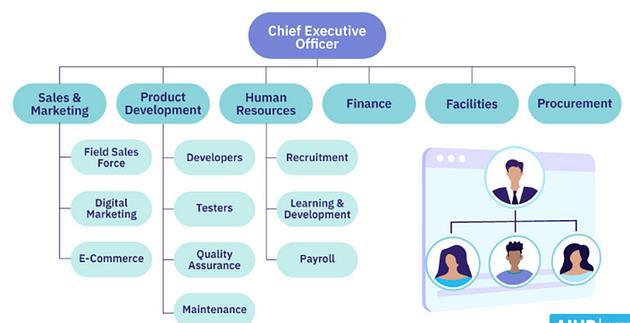
The organisation I am familiar with is Apple Inc. The organisation has a functional organisational structure. This type of organisational structure groups the firm into various functions and departments based on areas of specialization or expertise. In this case, employees are grouped based on their skills, expertise, and specialty.
Apple Inc. has maintained a functional organisational structure for decades, with the business divided into different business units/departments that form one functional organisation. For instance, the company has no general managers besides the CEO, and the performance of individuals controlling the company processes from product development to sales is measured based on a P&L statement.
A functional organisational structure has various benefits. For instance, it allows specialization and enhanced expertise in specific areas, resulting in high productivity. For example, Apple Inc. believes people with skills and expertise in a given functional domain should make decisions in that area.
In addition, the organisational structure provides clear reporting/hierarchical lines, making the management hierarchy welldefined. This clarity improves communication and simplifies supervision
Figure 1. Functional Organizational Structure
Figure 1. Functional Organizational Structure
and accountability. On the other hand, a functional structure has various disadvantages. For instance, the approach may hinder cross-functional communication and collaboration since different departments operate in silos.
This may lead to a lack of synergy across departments, undermining the achievement of company goals. Another disadvantage is that the structure is highly rigid and limits flexibility, hindering adaptability to changing consumer demands and market conditions. Due to these limitations, the organisational structure is best suited for firms with predictable and stable environments where work processes are uniform and repeatable.
Matrix Organisational Structure
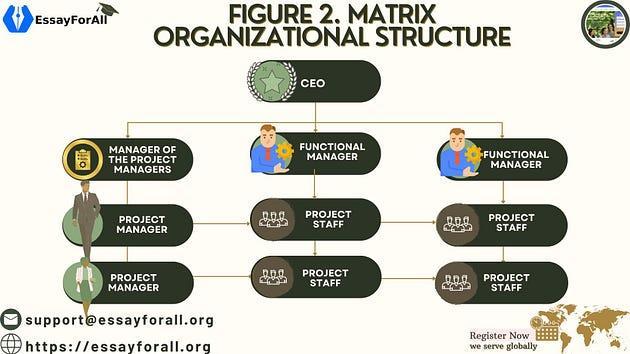
This organisational structure combines other structures, such as the divisional and functional structures. This means that employees and team members report to two managers: the functional area manager (e.g., marketing manager) and the project manager. Examples of firms with a matrix organisational structure include General Electric, Starbucks, Amazon, and Procter & Gamble.
Figure 2. Matrix Organizational Structure
Figure 2. Matrix Organizational Structure
This organisational structure has various advantages. For instance, the matrix structure is highly flexible, making adapting to changing circumstances easier. It also enhances communication and cross-functional collaboration among teams and employees. However, the organisational structure has various limitations, including the risk of conflicting priorities among departments.
This makes transparent governance vital to ensure the structure works effectively. In addition, the matrix structure is highly complex and may hinder accountability and cause confusion in communication, especially among new employees. However, the flexible nature of the matrix structure makes it best suited for complex and dynamic environments where crosscollaboration is a priority.
Choosing between a functional and matrix organisational structure should be based on the organisation’s priorities and goals, including the need for agility, specialization, and efficiency.
Analyse connections between your organisation’s strategy (or an organisation with which you are familiar) and its products or services, and customers. (AC 1.2)
An organisational strategy refers to a firm’s approach to structure and allocate resources to support business activities and achieve long-term goals. Organisational strategy, products/services, and customers are interlinked.
A firm’s strategic decision influences the development of its product/service offering. For example, a strategy that prioritizes/emphasizes innovation and differentiation ensures the product design and development process focuses on unique product features and cutting-edge technologies to attract customers who seek innovative solutions.
In this case, strategy guides product design and development. In addition, customers refer to the firm’s product/service end-users. They are linked to the organisational strategy since the strategy defines the customers or target market, their needs, and how the organisation will develop products that meet their needs.
Overall, the strategy is linked to organisation products/services and customers since it defines the product features, quality, and benefits while ensuring the products are tailored to customer needs and preferences. elegance
For example, Apple Inc.’s organisational strategy emphasizes excellence in design, innovation, and an integrated product and service ecosystem. In this case, the strategy has influenced the organisation’s design philosophy, which is characterized by elegance, simplicity, and quality/functionality.
The strategic focus has influenced the development of popular Apple products, including the iPhone, Mac computers, Apple Watch, and iPad, which are known for their sleek design, user-friendliness, and high functionality. In addition, Apple Inc.’s strategy influences pricing decisions and emphasizes premium pricing based on customers’ perceived value of Apple products. This aligns with the target customers who are tech-savvy and are willing to pay more for the Apple experience.
Regarding customer connection, Apple emphasizes customer experience and goes beyond to anticipate and understand customer needs. In this case, Apple’s product development process involves extensive market research and product testing to ensure its products/services exceed customer expectations. The firm’s retail stores and website also provide personalized customer experiences to enhance customer satisfaction and promote loyalty.
Overall, an intertwined connection exists between an organisation’s strategy, products/services, and its customers, where each element influences the other. An effective organisation must thus ensure that its strategy, products/services, and customers are aligned to create value and achieve goals effectively. Failure to provide this alignment could result in a mismatch between customer needs/preferences and product/service offerings, impacting customer satisfaction.
Analyse three external factors or trends currently impacting your organisation (or one with which you are familiar). The impact of these factors or trends could be positive, neutral or negative, some are short-lived whilst others are long-lasting. Identify organisational priorities arising from the factors or trends analysed. (AC 1.3)
External factors outside a firm affect its ability to do business. The political environment is a crucial factor impacting organisations, especially Ernst & Young (EY). This includes political factors such as geopolitical tensions, regulatory changes, and trade and tax policies that significantly impact EY’s operations. For example, Brexit in 2020 resulted in significant changes in tax and trade policies in the UK, which affected business operations.
This had negative consequences, as over 44% of businesses planned to relocate their operations to European countries. However, the company also benefited since Brexit created new business opportunities for EY regarding business risk consultancy following the changes.
Regarding organisational priorities, organisations such as EY were forced to change their operational models to adapt to changes in government regulations and trade policies. Firms like EY must also prioritize monitoring political trends in their countries of operation to ensure they anticipate changes and plan for them.
Another critical external factor impacting EY is technological advancements. According to McKinsey & Company, technology is a disruptive force that catalyzes change in the market. The rapid technological advancements, including AI, automation, and cloud computing, are causing significant disruptions in traditional business models across industries.
EY is not spared, as the disruptions create challenges and opportunities for the company. For instance, EY has invested in technologies such as automation and AI, allowing the organisation to automate repetitive tasks and efficiently analyze HR-related data to inform decisions. The company uses the EY Trusted AI platform to analyze data and tell the firm’s risk mitigation strategies.
EY also uses cloud technologies such as MS Teams and Microsoft Azure to enhance collaboration and communication. The organisational priorities emerging from the technological factor include investing and adopting these disruptive technologies to maintain its competitive position in the market or risk raging behind. In addition, the firm must prioritize upskilling its workforce to ensure they have the skills to leverage the technologies to contribute to client value delivery.
Lastly, economic factors such as economic growth, currency fluctuations, recession, and rising interest rates could impact business revenue and profitability. This factor could have a positive and negative impact on EY. For example, economic factors such as recession, economic uncertainties, currency fluctuations, and changes in interest rates present a business opportunity for EY since more businesses seek EY’s restructuring, risk management, and cost optimization services.
Economic growth may also increase demand for EY’s services related to strategic planning, mergers and acquisitions, and market expansion. However, economic challenges associated with economic downturns may negatively impact EY. For instance, COVID-19 created challenges for businesses, forcing them to undertake cost-cutting measures.
This reduced demand for EY services, reducing revenue and profitability for the firm in 2020. Based on external economic factors, EY must prioritize monitoring changes in global economic indicators to ensure it tailors its service offering to support businesses or clients seeking to leverage growth opportunities or navigate economic challenges. This can be enhanced by improving the firm’s market intelligence capabilities to ensure the development of customer-centric solutions.
When setting out its view on automation, AI and technology, the CIPD states, ‘Automation, artificial intelligence (AI) and other workplace technologies are bringing major changes to work and employment.’ Assess the scale of technology within organisations and how it impacts work. (AC 1.4)
According to CIPD, in its insights on automation, AI, and technology, the automation of business processes using AI and other technologies has brought significant changes to work and employment. Although the scope of these technologies depends on the organisation type, size, and industry,
technology has significantly transformed how firms operate and how people engage with their jobs.
Regarding automation and AI, organisations have witnessed increased adoption of automation and AI technologies due to increased pressure following the demand for enhanced operational efficiency in the workplace. For example, firms like Amazon have adopted robotic technologies such as Digit and Sequoia to help improve workplace safety and enhance order fulfillment efficiency.
Organisations in the hospitality industry are also using AI and automation technologies to personalize guest experience and improve operational efficiency. For example, Mariott International, Intercontinental, and Hyatt Hotels use chatbots to help answer guest questions, make reservations, and provide personalized recommendations (Ortenburg 2023).
In addition, organisations have become aware of the importance of cloud computing and big data analytics in enhancing operational efficiency. For instance, organisations across industries are adopting cloud computing and data processing technologies to help store and process large amounts of data to inform decision-making. For example, Amazon is a market leader in offering comprehensive, scalable, reliable, and low-cost cloud computing solutions through the Amazon Web Services (AWS) platform, powering hundreds of thousands of businesses.
This has allowed businesses to improve their operations by facilitating collaboration and accessibility of information across geographical regions. This has not only helped achieve work-life balance but also allowed firms to hire from a larger demographic. However, this also comes with significant challenges, including the risk of cyber-attacks and job losses.
Although it is difficult to quantify the scope of automation and AI technologies, it is undeniable that they have been widely adopted. Organisations must take measures to ensure they add value in areas where the technologies are likely to impact people, such as preparing for job losses in the future and redesigning strategies to encourage safe innovation.
Explain Edgar Schein’s model of organisational culture and explain one theory or model which examines human behaviour. (AC
2.1)
Organisational culture refers to the shared company values, norms, beliefs, assumptions, and attitudes. Organisational culture plays a crucial role in guiding employee behaviour and interactions in an organisation.
Edgar Schein’s Organisational Culture Model
This is a widely recognized framework that provides that organisational culture is made up of three levels, including artefacts and behaviours, organisational (espoused) values, and assumed values. Artefacts and behaviours are the visible, tangible, describable, or sensible aspects of the organisation that provide an observer with a clue about the organisation’s culture. They could include the firm’s dress code, facilities, people, technologies, organisational structures, colours, work processes, communication styles, symbols, and rituals.
The next level of organisational culture, according to Schein, is the espoused values. This refers to the accepted values, aspirations, and beliefs within an organisation. Organisational leaders mostly espouse values that include the organisational mission, vision, company goals and objectives, policies, and strategies. The assumptions and values dictate how firms should be run, how employees should be managed, and how clients should be treated.
The last level of organisational culture is the basic assumptions, which are the unspoken, unconscious, and hidden employee assumptions and values. In this case, they include the real aim of the organisation rather than what is written. In this case, Schein’s model provides a framework for embedding and transmitting the organisational culture. He provides that transmitted culture, which is key to creating a conducive organisational culture, involves embedding basic assumptions and ensuring they are reinforced with observable and unobservable values, artefacts, and norms.
This model has various benefits, including providing insights into underlying drivers of organisational behaviours and culture. It also helps identify areas of improvement by helping uncover discrepancies between stated values and actual practices. Lastly, the model provides a guide for firms seeking to develop strategies to influence an organisational culture.
On the other hand, the model has limitations due to its complexity, which could make it challenging to apply in practice. Its subjectivity may also hinder interpretation since different people could have varying views on culture, making it challenging to reach a consensus on appropriate interventions.
Motivational Theory: Maslow’s Hierarchy of Needs
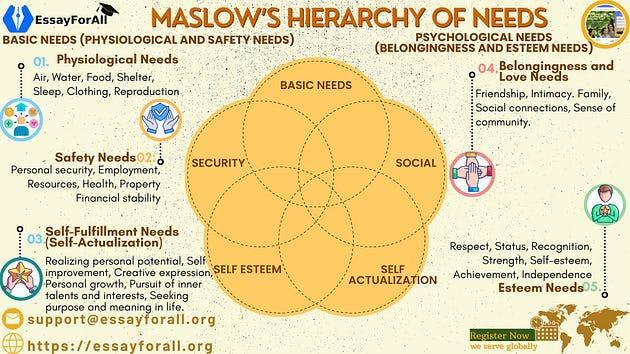
In an attempt to understand human behaviour, the need hierarchy theory known as Maslow’s Hierarchy of Needs categorizes human needs into five levels all illustrated by a pyramid. The first hierarchical level that determines behaviour is related to physiological needs, which include food, shelter, water and sleep needs.
Unless these needs are met, people including, employees striving to satisfy a demand could prioritise job security over other job characteristics. The next need is safety needs, which covers issues to do with finances, security from physical attacks, and other aspects. In this case, people, being the employees look for a place that can offer them some degree of stability and security such as secure work conditions, health safety concerns for example health insurance and job security.
Following the physiological and safety needs is the level that relates to love and belonging needs. Here, people are anxious and driven toward relationships and affiliations as well as attempts to create a communitarian spirit. Esteem needs lie in the next tier and may refer to the need for recognition and appreciation from others. Here, people seek power status, recognition, and achievements to meet this need.
Lastly, coming to the final need in the hierarchy, Maslow includes selfactualization, which means reaching the ultimate potential of a person. The goals of those at this need level seek personal growth and are eager to make a positive impact on projects they undertake by offering creativity and other forms of solutions.
According to Maslow, people have five stages of minimum essential demands providing a useful lens to view human behavior and the process of personal development at work following the hierarchy of needs concept. Overall, the application of this theory can prove useful in regard to meeting the diversity of employee needs, thus increasing the levels of motivation, commitment and productivity of the workforce.
Assess how people practices in your organisation (or one with which you are familiar) impact both on organisational culture and behaviour, drawing on examples to support your arguments. (AC 2.2)
People practices refer to the various approaches and processes organisations use across the different employee lifecycles. People’s practices play a vital role in influencing organisational culture and behaviour. For instance, people practice can create a positive culture by enhancing employee engagement, promoting satisfaction, and preventing turnover.
Key people practice within organisations in recruitment and selection. This practice shapes the organisational culture by ensuring only people whose values and goals align with organisational missions and vision are attracted. For example, firms that value innovation are more likely to recruit and select candidates who demonstrate a high level of creativity. This helps foster a culture of innovation within the organisation.
Apple is an excellent example of how the recruitment and selection process can be designed to attract candidates who align with the organisation’s core values of creativity, innovation, and excellence. The company’s recruitment
Figure. Maslow’s Hierarchy of Needs
and selection process emphasizes candidates with a passion for design and technology, character, and cultural fit, further reinforcing an innovative culture of creating revolutionary products and services throughout the organisation.
Regarding the impact of the recruitment and selection process on behaviour, effective recruitment approaches ensure candidates with the right skills, attitudes, and behaviours are prioritized to support a positive organisational culture. Apple’s recruitment and selection process emphasizes not only skills and expertise but also a candidate’s employability characterized by one’s character, right demeanor, and culture fit. Apple employees are encouraged to think differently, challenge the status quo, and embrace unconventional ideas, hence influencing employee behaviour by modelling a culture of innovation and collaboration.
Another key people practice impacting organisational culture and behaviour at Apple Inc. is performance management. Performance management practices such as goal setting, feedback, and recognition play a key role in enforcing the organisational culture. For instance, Apple’s performance management practices promote an alignment between employee goals and a firm’s strategic objectives and values.
The organisation has clear performance expectations, with employees’ performance being measured based on teamwork, innovation, and results categories. This helps reinforce the organisational culture of excellence within the organisation, contributing to organisational success.
Regarding the impact on behaviour, performance management practices at Apple emphasize providing regular feedback to offer valuable insights to help employees understand desired behaviours that need to change to support the achievement of performance targets. Employees are also recognized for their accomplishments to reinforce further behaviours that support exceptional performance.
Overall, people practices such as recruitment and selection and performance management play a vital role in shaping a firm’s culture and influencing employee behaviour. By ensuring alignment with the organisational values and objectives, the organisation can create a positive workplace culture that emphasizes innovation and excellence, resulting in enhanced success. However, failure to align people’s practices with organisational goals could
lower employee morale, leading to disengagement and underperformance and thus hindering innovation, productivity, and organisational success.
Peter Cheese, current CEO of CIPD asserts, ‘People professionals are a vital function in supporting businesses to adapt to rapidly changing circumstances’. Explain two different models or theories to managing change. (AC 2.3)
Effective change management allows organisations to effectively roll out change with employee support.
Lewin’s change Model
According to Kurth Lewis, change is implemented in three main stages: the unfreezing, change, and refreezing states. The unfreezing state involves disrupting the status quo by creating the readiness for change and communicating the need for change. In the second stage, the actual change is implemented with organisational support.
In the last stage (refreezing stage), the change is stabilized and could involve reinforcing desired change behaviour with incentives and rewards to create a culture of continuous improvement. Lewin’s change model has various benefits. For instance, it provides an easy, clear, and systematic approach to understanding and managing change, making it easy to implement.
In addition, it emphasizes the importance of psychologically preparing employees for change since this increases the likelihood of success. However, the model has limitations. For instance, the model provides that change is a linear process and oversimplifies it despite the change process being complex and non-linear process.
Kotler’s 8-step change model.
The other key change management model is Kotler’s 8-step change model. The model provides 8 steps in change management. It emphasizes creating the need for change and a sense of urgency, identifying a team of change agents and leaders across departments, developing a vision and change strategy, and communicating the vision to convince employees of the need to change.
In addition, the model emphasizes employee empowerment to ensure they act on the vision by removing change barriers while rewarding those promoting change. The other step involves creating short-term targets/milestones to help celebrate small wins by rewarding and recognizing those involved. The next step involves creating more wins and success stories through continuous improvement.
Lastly, the model emphasizes the need to ensure the change sticks by providing continuity of operation in a way that reinforces the desired change behaviour behaviour. This change management approach has various benefits. For instance, it is highly comprehensive and addresses crucial aspects of change, making it easier to follow through.
It also emphasizes continuous improvement through the creation of small goals and wins to ensure small wins are celebrated while continuously making improvements. A key disadvantage of the model is its complexity and time-consuming nature, meaning the model requires significant time to implement.
Overall, both change management models provide systematic approaches to change, each with its strengths and limitations. The selection of the most appropriate change management model depends on the specific needs and context of the organisation. Failure to use a change management model could hinder the change process due to unclear objectives, ineffective communication, and resistance to change.
A variety of models have been developed to explain how change is experienced. Discuss one model that explains how change is experienced. (AC 2.4)
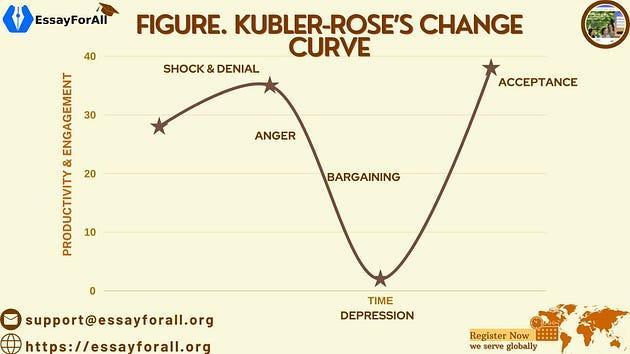
Understanding how people experience change is crucial since people experience change in different ways. Kubler-Rose’s five stages of grief provide a comprehensive framework demonstrating how change is experienced. The first stage is shock and denial. This is the first reaction employees get as a way of deflecting the change and is associated with lowered productivity.
Effective communication at this stage is crucial since it provides information needed to understand what is happening. The next stage is anger and fear, where individuals may feel angry, fear the change’s impact, and protest the
changes. If employees remain in this stage, change may not happen, and the change agent should strive to actively listen and observe while ensuring objections are addressed early and clearly to avoid chaos or crisis.
The third stage involves bargaining in an attempt to salvage the situation through a compromise, hoping that things will turn out differently. The next stage is depression, where one loses hope, resulting in extreme sadness and lack of motivation. Finally, individuals enter the acceptance stage once they note there is no going back.
In this case, they reduce focus on what they have lost and start exploring the change, learning about the change, and how to adapt. Offering training and support could help ensure individuals understand their roles. Individuals not only accept change but also show commitment to rebuilding their working approaches. Celebrating success can help ensure individuals remain committed to the new work approach.
Overall, the approach to experiencing change provides a framework for understanding and coping with emotional responses associated with a change. The model allows the individual experiencing grief to understand their emotions and navigate the grieving process effectively.
Figure. Kubler-Rose’s Change Curve
Figure. Kubler-Rose’s Change Curve
Failure to use such a model could make it difficult for employees to process their emotions during change, making them overwhelmed and confused. In addition, the absence of a structured approach to experiencing change could hinder coping and the success of the implemented change.
The CIPD’s Health and wellbeing at work survey 2022 found, ‘There is less management focus on health and wellbeing compared with the first year of the pandemic’, and goes on to remark that this is disappointing. Assess the importance of wellbeing at work and factors which impact wellbeing. (AC 2.5)
Importance of Well-being at Work
According to Meister, employee well-being refers to the individual’s physical, emotional, social, economic/financial, mental community, and career health. In this case, employee well-being at work matters since it impacts their productivity at work. Employee well-being at work is important in various ways.
For instance, enhanced well-being creates a positive work culture that improves employee satisfaction, which is key to attracting and retaining top talents, as well as creating more engaged, motivated, and focused employees. This not only results in improved organisational performance and productivity but also reduces turnover rates.
Well-being at work is also associated with enhanced creativity. This could result in enhanced customer service, resulting in customer satisfaction and loyalty, all of which drive a competitive advantage. In this case, making employees healthy, happy, and engaged reduces stress and leads to productive employees, hence promoting sustainability in business performance.
Factors Impacting well-being
One key factor impacting well-being at work is the level of control and autonomy. For instance, employees with greater control and autonomy over decision-making in their jobs are more satisfied and are characterised by improved mental health. This makes it crucial for organisations to ensure they support employee autonomy to enhance employee well-being and performance.
In addition, job demands are a key factor impacting well-being at work. Research shows that high job demands, especially with low resources, lead to increased stress burnout, impacting individual well-being. For example, COVID-19 resulted in a significant rise in job demands and reduced resources. This resulted in a change in job responsibilities, which caused burnout, stress, and increased cases of mental health issues.
Another key factor impacting well-being is work-life balance. Firms that adopt flexible work arrangements and support work-life balance enhance employee well-being, hence improving mental health job satisfaction and retention rates. Deloitte is an example of a company that promotes work-life balance by offering employees the option to work from home. This results in reduced stress and enhanced well-being for its employees.
Promoting employee well-being within an organisation is important since it enhances employee satisfaction, morale, and productivity, resulting in increased retention. In addition, employees who feel valued are more likely to remain engaged and committed to work, resulting in improved performance and overall organisational productivity. However, the failure to promote employee well-being could result in reduced job satisfaction, increased absenteeism, and employee turnover, making it crucial to adopt strategies that promote employee well-being.
The CIPD Profession Map states ‘People practices are the processes and approaches that we use across the employee lifecycle’. Discuss the links between the employee lifecycle and different people practice roles. (AC 3.1)
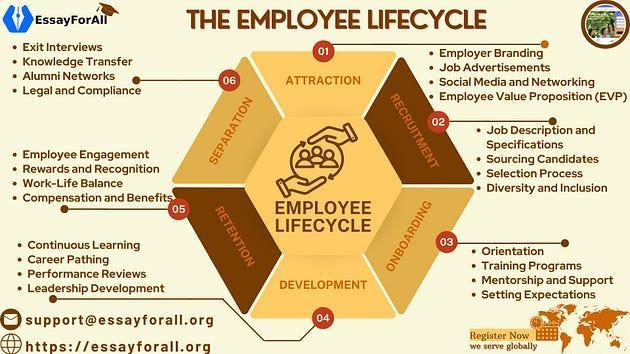
The various stages of the employee life cycle are interconnected with the different people’s practice roles within an organisation. For instance, various people practice specialists play a crucial role in maximizing employee potential across the employee lifecycle. For example, during the recruitment and selection process, HR professionals are responsible for identifying vacancies and attracting and selecting the best candidates to fill the positions.
In addition, HR professionals play a key role in onboarding and orientation since they develop onboarding and orientation programs to ensure a smooth transition into the organisation and ensure new hires understand their roles and responsibilities, as well as the organisational procedures and policies.
During training and development, the people practice team (HR professionals) works in collaboration with the firm’s departmental heads and managers to identify employee training needs and develop effective training and development programs to upskill employees, enhance their knowledge, and promote professional growth. They also identify talented employees and develop them to create a strong leadership pipeline for the future.
Regarding compensation and benefits, the HR professionals (compensation and benefits team) are responsible for reviewing compensation and benefits to ensure compliance with applicable laws/regulations. They also create payrolls and benefits based on prevailing market trends and laws to promote organisational competitiveness.
Regarding employee relations, the people practice professionals play a key role in managing employee relations in the workplace. They also address conflicts and employee concerns to ensure issues are addressed amicably. Finally, during offboarding, the offboarding specialist handles the process of separating the employee from the organisation. Together with the employee, the HR professionals process the necessary paperwork to ensure a smooth transition with minimal disruptions.
Figure: Employee Lifecycle
Understanding the link between the employee lifecycle and the various people practice roles is crucial since it helps the firm ensure its employees get the support they need at the different employment stages, resulting in enhanced employee satisfaction, engagement, and retention. Failure to establish a strong link between people practice roles and employee lifecycle could result in negative impacts, including reduced satisfaction, engagement, performance, and productivity, resulting in turnover.
Analyse how people practice connects with other areas of an organisation and supports wider people and organisational strategies. (AC
3.2)
The people practice is linked with various areas of an organisation and plays a vital role in supporting the people and organisational strategies. This connection makes it easier to implement organisational strategy. For instance, regarding recruiting and selecting talents, the recruitment teams work with other departments within the organisation to establish staffing needs and ensure vacancies are filled with the right people based on the organisational goals and needs.
According to Anwar and Abdullah, organisations must ensure that they recruit the right people to help implement the organisational strategies. Similarly, the training and development teams must work together with the different organisational departments to identify training and skills gaps to help develop effective upskilling strategies for promoting improved productivity.
Human resource and talent management is at the core of people practices and involves activities such as employee recruitment, training, employee relations, and performance management. Aligning people practices with organisational strategies can help ensure that the organisation attracts, trains, develops, and retains its top talent toward achieving the organisational goals and objectives.
In terms of strategic planning and organisational development, the people’s practice can help support these efforts. This is by ensuring that the organisation adapts to the changing business landscape while ensuring alignment between the workforce and strategic priorities. For instance, the organisation can build an agile workforce with the ability to support longterm growth by assessing the current and future workforce needs,
identifying skill gaps within the organisation, and rolling out talent development programs.
Overall, the link between people management and other areas of the organisation makes implementing organisational strategies feasible. However, ensuring a connection between people’s practice and the organisational objectives, goals, and priorities is key to advancing the organisational strategy and achieving sustainable success.
Discuss processes you have, or could use, for consulting and engaging with internal customers of the people function in order to understand their needs. (AC
3.3)
Seeking employee feedback is crucial within an organisation since it helps identify pain points and ensure their needs are addressed resulting in improved trust, productivity and employee retention. Organizations such as Uber have effectively utilized employee feedback to make informed decisions on its hybrid work models. Different processes could be used to engage and consult with internal customers as described below.
Consultation and Communication Processes
This entails proactive communication with the internal stakeholders to get feedback or information and or to convey a concern. Examples of methods are the ability to meet frequency, focus group discussions and pulse surveys. This makes it easy to have a progressive platform for discussion and keeps professionals up to date on new issues and concerns facing employees through intranet forums, emails and internal uses of social networks.
The process also enhances organizational transparency as well as bringing about good morale among the employees, thus enhancing the organizational culture in the process. The efficiency of this process should be assessed depending on the specific engagement metrics such as attendance to meetings, response ratio on surveys and the quality of the feedback received.
Stakeholder Analysis Process
This involves identifying various stakeholders who may be involved (for instance employees, senior management, and department heads) their concerns, and their power ratio in determining people management practices. Some of the methodologies that can be employed include
stakeholder mapping and power interest grids. One of the considerations highlighted here is the requirement of meeting stakeholders’ needs and power with regard to people professionals to engage them effectively.
The extent to which there is stakeholder engagement or support for training and development can be used as a measure of the success of stakeholder analysis (APM, 2024). Information from stakeholders can be collected at agreed intervals to ascertain satisfaction with the engagement effort and ensure engagement strategy adjustment.
Needs Analysis Activities
The process of needs analysis entails the systematic assessment of human and other resources with a view of understanding their expectations by the use of questionnaires, interviews as well as focus groups. It can also involve relating previous performance data, existing interviews, and feedback forms, with a view of understanding the areas that are wanting or those that have strengths.
A needs analysis ensures that the people function can identify specific things that need to be done in achieving the set goals, and the kind of support required to make people practices resonate with organisational goals. The general assessment of needs analysis activities can be measured with the assessment of pre and post-intervention tests. Promising factors include perceived job satisfaction ratings, attrition rates, and the general level of productivity to determine how well the perceived needs are being met.
Overall, implementing these structured processes is crucial for people professionals to understand and meet the needs of internal customers. Regular and effective liaison with stakeholders ensures that people practices remain relevant and impactful.