




by EDRIAN SEGARRA
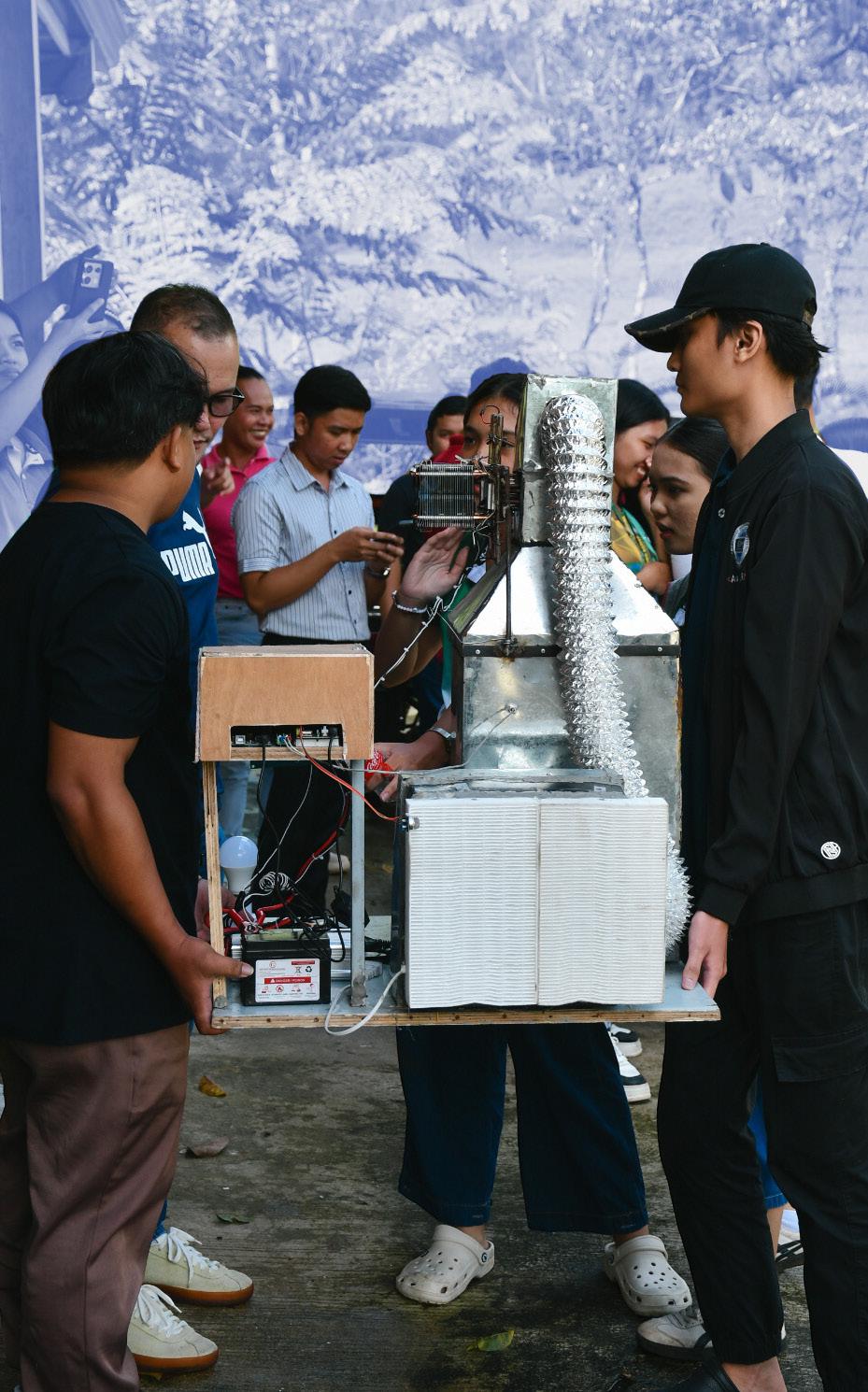
Concerns regarding student punctuality and safety within Eastern Samar National Comprehensive High School (ESNCHS) grounds led to the development of an Radio Frequency Identification (RFID) system, which had its pilot implementation this academic year 2024 — 2025.
The RFID system is a wireless communication system that uses radio waves to identify and track students’ movements in and out of the school premises.
The initiative began in late 2020 following the widespread use of COVID-19 QR codes for contact tracing, which then evolved and adopted similar barcode technologies that can track student attendance, store encrypted student information and emergency contacts.
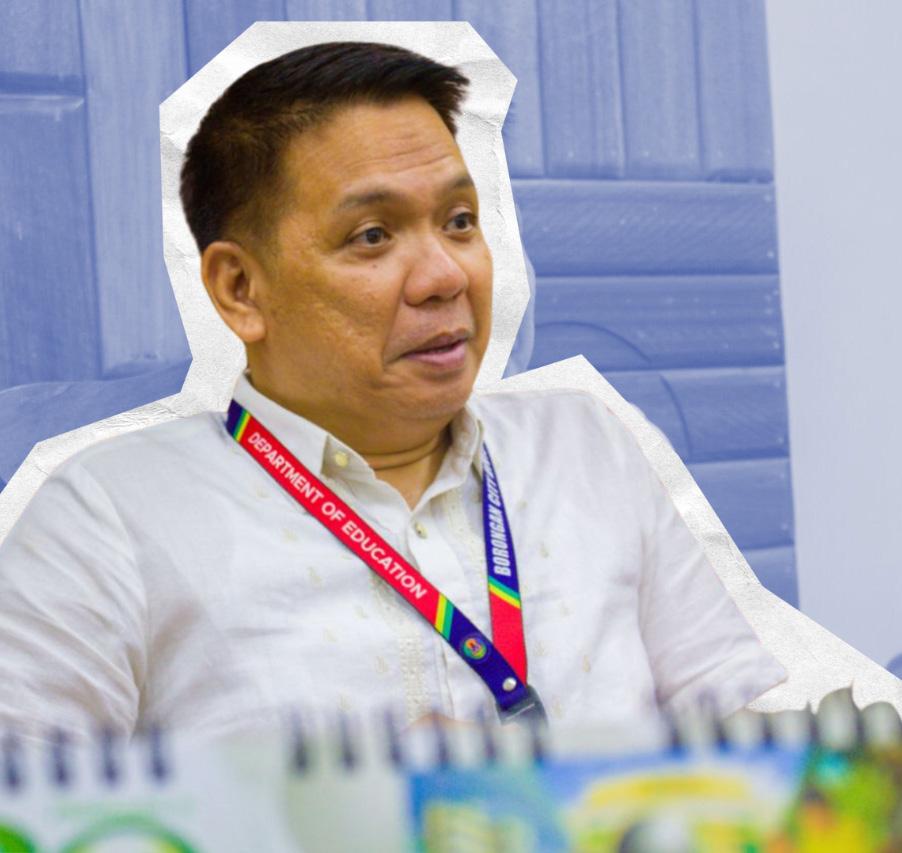
According to the project’s application developer, Carl Kevin Gallano, Teacher II, the initial plan formulated in 2020 did not continue due to funding restrictions only recommencing once Dr. Hazel B. Meneses, current Principal IV of the
school, took charge.
Once the vision was reestablished and innovated with new features, Gallano partnered with other ESNCHS teachers specializing in Information and Communication Technology (ICT) to design the hardware of the system.
After the pilot testing, the system temporarily came to a halt due to fluctuating energy that may damage the machines. Moreover, the machines get wet when it is raining.
“Kun mamaupay ta, kun it eskuylahan maghire hin usa nga tawo nga it iya trabaho, pahmanage la talaga hiton… bisan pagpaparung hit, kay dapat ma magpahuway it iya computer kay nagpapaso,” Sir
Kevin added.
This initiative marks the ongoing efforts to ensure that the students remain safe after school hours, creating a safer environment for students and preventing potential risks associated with unsupervised time. At the same time, it will refrain the ‘cutting’ classes of the students.
“Actually an time pa mait ni
Sir Basada han pandemic hadto nga pandemic nagkuan at hiya hin scheme kun paano ma-tatrack ba it nasulod, nagawas ha iskuylahan nga mga kabataan kay diba it iba nga establishment tira ginagamit QR code. Dinhi naman ha aton may hat QR code pero di hiya kuan ba effective asya at nga ginsugo kami maghimo hin program nga sugad hin,” Gallano added.

Shedding light on the importance of mental health awareness and support for students, a Division-Based Peer Facilitators Training on Mental Health and Psychosocial Support Services (MHPSS) was conducted for school club leaders in response to reports of an increasing number of anxiety cases among students in various grade levels.
Spearheaded by the Division School Health and Nutrition Unit, the event aimed to equip student leaders with essential skills and knowledge on how to properly provide psychosocial support for their peers experiencing mental health challenges to foster a sensitive and understanding school environment. In attendance were selected student leaders from the Supreme Secondary Learner Government (SSLG) and Barkada Kontra Droga (BKD) from various secondary
schools in Borongan City Division, and among them was Eastern Samar National Comprehensive High School (ESNCHS), which has a history of two confirmed cases of suicide and an upsurge of mental health concerns within learners.
Sir Harold P. Labro, MHPSS coordinator and ESNCHS school nurse II says this issue is extremely alarming as it can result in serious anxiety and depression if left untreated.
“That’s why we are strengthening our Mental Health and Psychosocial Support Services program through advocacy campaigns, information drives and training workshops like we had last year to help our learners with mental health crises,” Labro added. The two-day training focused on shaping the students into peer facilitators with workshops, interactive activities and discussions from the event’s speakers, highlighting the rising mental health challenges faced by today’s youth.



by SAMANTHA GAJOL
In light of recent discussions inside the Department of Education (DepEd) considering the integration the Filipino Sign Language into to the MATATAG curriculum, Mrs. Marina Estrada, Special Needs Education (SNED) Coordinator of Eastern Samar National Comprehensive High School (ESNCHS), emphasized that the incorporation will provide more focus on the needs of special students and build them a better future.
The said discussion involves equipping more teachers with FSL literacy, in response to shortage of educators with proper sign language training.
Estrada expressed how this potential implementation could help bridge the communication gap between special learners, their teachers, peers, and the community. By doing so, she believes, students with special needs will receive greater support and opportunities as more people learn to understand and connect with them.
"On my side, I am very grateful since they still give their attention to students like them, in which they need sufficient support, especially having difficulties in their life. Giving them the opportunity to learn and strive further in their education," she said.
She highlighted how their efforts in teaching FSL to regular students foster better understanding
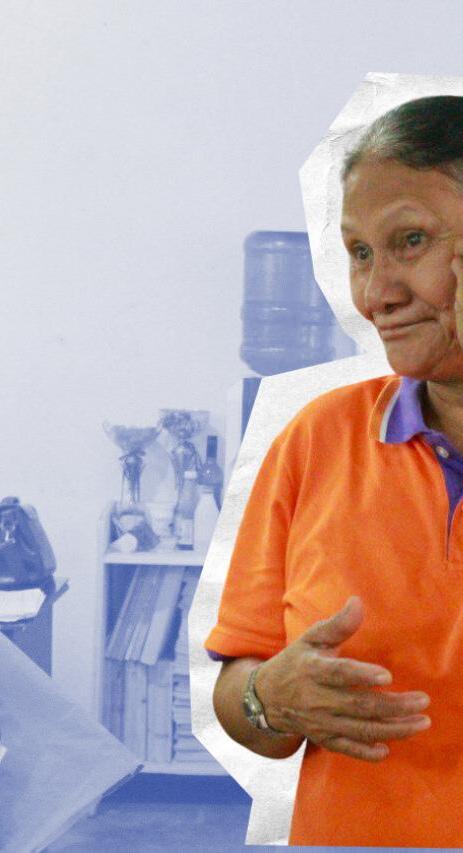
peers to create an inclusive environment.
"We teachers also train regular students since there were times when special students struggled to communicate, especially when no one like me who can understand them is around. That is why we decided to teach them. This helps make the special students feel cared for and gives them a sense of inclusivity among their classmates and other students they meet," she added.
Through sign language, one of the special students from ESNCHS expressed her hope for improved communication between teachers and students like her.
"I like that more teachers will learn how to communicate using sign language for us to better understand each other," the student shared, as interpreted by Mrs. Estrada.
PREPAREDNESS. Mock tests build confidence and sharpen focus for PISA 2025.

by JAN ANTONIETE DATOR
In preparation for the Programme for International Student Assessment (PISA) 2025, Eastern Samar National Comprehensive High School (ESNCHS) conducted a mock test to enhance students’
Focusing on mathematics and comprising a pre-test and post-test, the mock test is designed to help students prepare and gain confidence for the upcoming PISA exam.
Felinda Jamer, Science Department Head and one of the teachers who administered the mock test, emphasized how the activity allowed students to experience a formal testing setup and build focus, with a total of 600 students participating.
“Through these mock tests, students become more familiar with the format and questions, making them better prepared and less overwhelmed during the actual PISA test,” said Jamer. Jamer also noted how the tests serve as a tool to assess students’ understanding and help teachers identify areas where students struggle. “As teachers, these tests guide us in determining which topics to prioritize. The identical pre-test and post-test questions reveal where students encounter difficulties, helping us focus our efforts and enabling
students to recall and learn effectively.” One of the students from ESNCHS who took the mock test shared how the activity helped him recognize areas needing improvement.
“The test made me realize the fields I struggle with, which motivated me to study harder so that I will be better prepared for the actual PISA exam," said Jimson Mejica, one of the students who participated in the mock test.
PISA is a global assessment that measures the skills and knowledge of 15-year-old students in reading, mathematics, and science. Conducted every three years by the Organization for Economic Cooperation and Development (OECD), it evaluates how well students can apply their knowledge to realworld situations.
students participated in the mock tests. by

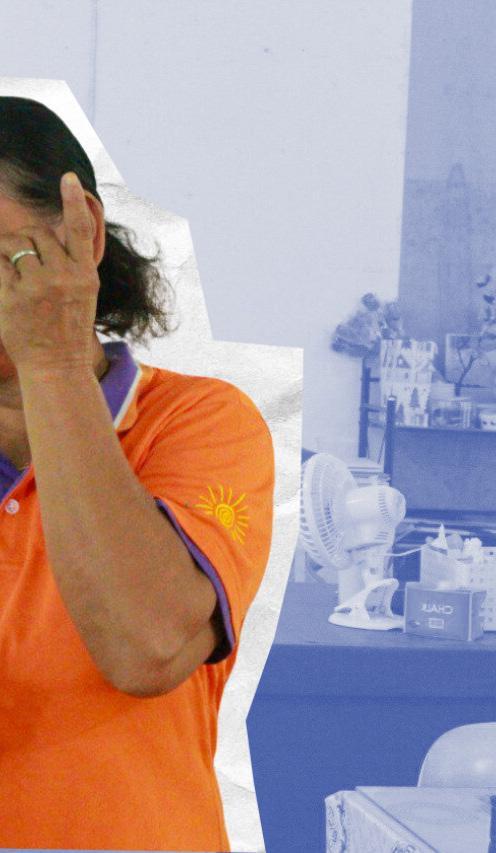
Mrs.
noted that the outcomes of their efforts have empowered special students to overcome obstacles and continue pursuing their dreams, with their achievements inspiring her to continue her duty to teach and care for those requiring special attention.
"Many of those students, especially those who are hearing-impaired, have already graduated from our school. Some are now working, and it is very touching and fulfilling to see not just yourself but also them overcoming the challenges they faced and achieving their goals," she said.
Looking forward, Mrs. Estrada believes that the integration of FSL into DepEd’s curriculum will equip special learners with the experience and confidence they need to succeed in life. For her, the smiles and determination of her students show that inclusivity and education truly build a brighter tomorrow.

by MELBOURNE POMBO
Rising cases of anxiety and depression among Filipino students have outpaced efforts to address them despite the progression in national efforts, including the passing of the Mental Health Law in 2018 and the continuous creation of succeeding legislations — in response, Comprehenyos are calling for urgent reforms to mental health support systems that matches the scale of the crisis.
Students struggle as support falls short
A survey by The Courier found that 87% of ESNCHS students have noticed an increase in stress, anxiety, or mental health struggles among their peers in recent years, while 50% frequently feel overwhelmed due to academic and personal pressures.
Despite existing services, 52% of students believe mental health support in schools is inadequate, citing limited accessibility, lack of awareness, and insufficient resources, while 18% admitted they were unaware such services even existed.
"Honestly, I am not even aware that there are mental health support services in school. If there is, it did not reach me or any of my friends," said an anonymous responder.
Students also pointed to increasing academic pressure as a major stressor, with curriculum changes intensifying anxiety rather than addressing student well-being.
"The system is built around schools, not students," said Brandon, an ESNCHS student.
The alarming rise of student suicides
The World Health Organization reports that depression and anxiety are among the leading causes of illness among adolescents, with suicide ranking as one of the top causes of death for ages 15 to 19.
DepEd data for SY 2021-2022 recorded 404 student suicides and over 2,100 attempts, while the following year, 254 student suicides were reported: 80 in elementary, 113 in junior high, and 61 in senior high.
Closer to home, ESNCHS recorded two suicide cases in the past two academic years.
The gaps in mental health support
On the rising mental health issues among youth, Harold Labro, School Nurse II and one of Borongan Division’s mental health coordinators, warns this rate will continue its steady climb for years to follow if no ‘holistic’ and rigid intervention will be carried out.
by JAN ANTONIETE DATOR
Anew building at Eastern Samar National Comprehensive High School (ESNCHS) is providing a safer and more accessible learning environment for student-parents enrolled in the Alternative Learning System (ALS) program. For young mothers like Cherry Mae Batiloy, this represents a significant improvement to their educational journey.
For the past year, the ALS program has offered a lifeline to an estimated 1,300 out-of-school youth in Borongan City, giving them a second chance at education. At ESNCHS alone, 157 students are enrolled in the 2024-2025 school year. Among them is Batiloy, a 20-year-old mother who previously faced daily challenges attending classes.
Previously, classes were held on the third floor of an old building, forcing Batiloy to navigate three flights of stairs with her child. This precarious situation presented significant safety concerns. "It was dangerous," Batiloy recounts. "We were constantly worried about our children's safety, and it was hard to focus on our studies."
The new ground-level building
According to Labro, several factors cause the steady progression in mental health concerns among students, which include poverty, bullying, social media exposure, family, academic concerns, and lack of mental health literacy.
He also partly attributed the growing numbers to the increasing ‘sensitivity’ of students, “That’s why we are telling our teachers to be sensitive with how we handle our students, how we react to them. We don’t know what the student is going through inside their households,” he said.
Too many students, too few counselors
Labro also explained that teachers are too overworked, and this disables them to facilitate hands-on behavioral observations on students, which will allow for a more holistic and direct help.
Meanwhile, Dr. Edgar Tenasas, OIC Schools Division Superintendent, said the ability of young people to ‘mask’ their true feelings is a major factor contributing to rising cases of mental health concerns.
Dr. Tenasas told The Courier in an exclusive interview that identifying signs or indicators that a student is ‘internally struggling,’ particularly suicidal ones, is difficult.
Adding to this, the Philippines currently only has 5,085 registered guidance counselors, 2,417 registered psychologists, and 651 registered psychiatrists — advocates say it shows severe shortage compared to the student population.
“There is only one guidance counselor serving 25,000 students,” said Dr. Sheila Marie Hocson, principal resource person for Heads Up PH, a mental health and well-being program by Unilab Foundation aimed at supporting Filipino youth.
Aside from the shortage of mental health professionals, she added that private mental health services remain costly, further worsening the country’s mental health crisis.
A reactive system: support comes too late Labro confirmed that Borongan schools lack counselors, delaying the rollout of mental health screening programs like DepEd and Unilab
Foundation’s Children and Adolescents Risk Screener (CARS).
In addition to counselor shortage, Labro believes mental health interventions in schools are too reactionary, asserting that they they gain attention only after a suicide case but fade from focus soon after.
"Action should be continuous," he said. "These efforts shouldn’t just resurface when a tragedy happens."
DepEd’s new law: is it enough?
With the newly signed Basic Education Mental Health and WellBeing Promotion Act, public and private schools are now mandated to establish Care Centers, division-level Mental Health and Well-Being Offices, and institutionalize services like crisis response and suicide prevention, backed by new plantilla positions for school counselors.
However, 66% of ESNCHS students experiencing mental health struggles said they would not feel comfortable seeking help from a school counselor or staff member, which, as a respondent suggests, ‘institutionalized services alone may not be enough.’
"If I needed help, I’d rather talk to a friend," one respondent admitted, aligning with survey data showing 75.5% of students prefer confiding in a close friend, while only 15.4% would turn to school counselors.
A student-centered, student-led approach
When asked what mental health initiatives they wanted to be implemented, 73.6% preferred anonymous hotlines, 64% wanted stress management programs, and 60% supported school-led mental health clubs.
Recognizing the discrepancy between students’ preferred outlets and school-based mental health services mandated by the new law, Labro plans to establish a school "teen center" where students can openly share their struggles with peers in a safe and supportive space.
“Here students can share their struggles or burdens to fellow students, parang kumustahan sessions lang, and we will do it regularly. In this way, there will be no reluctance anymore,” Labro explained.
Meanwhile, Dr. Tenasas, the Borongan’s Division Office is also training student leaders as peer facilitators to help classmates identify signs of distress and provide informed, non-judgmental support.
The superintendent said it is important to acknowledge the preference of students when it comes to mental health interventions, with this, he plans to progress the division’s student training to aid in addressing the mental health crisis.

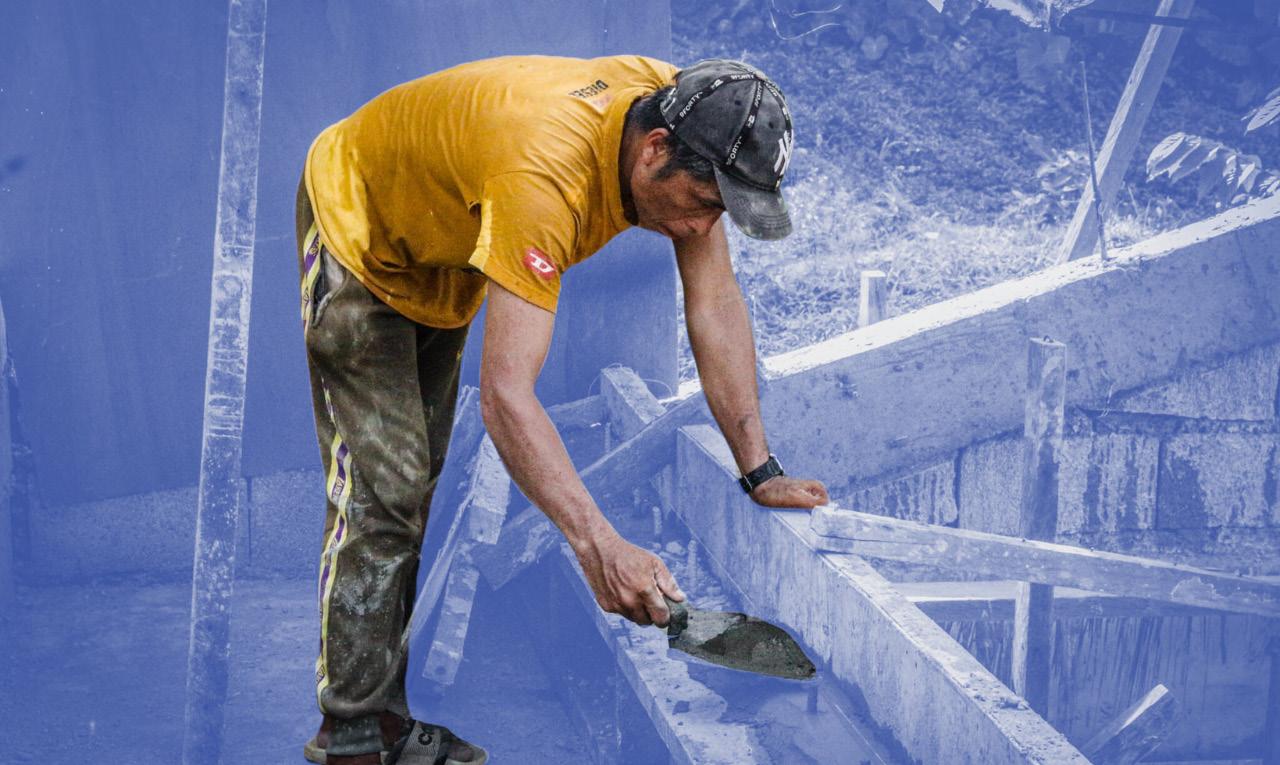
eliminates these risks. Now, studentparents can attend classes in a safer, more conducive environment, allowing them to concentrate on their studies without the added stress of worrying about their children.
Batiloy expressed deep gratitude to the school’s principal, Hazel Meneses, and the ALS teachers for their unwavering support and dedication in making
this improvement possible. "I'm so thankful to our principal, Ma’am Meneses, for bringing the ALS program to our school and our teachers for their understanding and support," she shared.
Batiloy's experience encapsulates the transformative power of the ALS program and the impact of improved facilities. Her simple yet powerful statement, "All in
to
We were constantly worried about our children’s safety, and it was hard to focus on our studies. “
CHERRY MAE BATILOY
STUDENT

by JERALYN CADIZ
To strengthen their commitment to climate action through innovation, the Youth for Environment in Schools Organization (YES-O) of Eastern Samar National High School (ESNCHS), among other local youth groups, has been selected by the city to receive aid from Bloomberg Philanthropies, making Borongan one of only two cities in the Philippines chosen among 150 worldwide.
Bloomberg Philanthropies has granted USD50,000 in climate action funding to Borongan’s youth groups, allowing organizations like YES-O to lead school-based environmental initiatives.
“This partnership has been incredibly beneficial,” said YES-O President Hien Katriel Medina. “With Bloomberg’s support, we organized two events—the Innovation Challenge, which encouraged students to develop research-based environmental solutions, and a symposium featuring a talk by city representative Vicky Gavilan.”
Students from the Science, Technology, Engineering, and Mathematics (STEM) strand actively participated in these activities, wherein they showcased innovative project proposals aimed at waste reduction and sustainable practices.
Medina affirmed how the partnership empowered young researchers to contribute to climate action while also acknowledging the challenges they faced.
“Balancing academic requirements with the demands of the partnership—including handling extensive paperwork, liquidation, and frequent meetings,” Medina admitted. “But despite the challenges, the experience was invaluable and I’d definitely encourage my juniors to participate and showcase their talents in the future.”
Through initiatives like these, Bloomberg Philanthropies continues to support young leaders in driving environmental action, all in aim to reinforce its mission to create lasting change in key areas such as education, public health, government innovation, the arts, and the environment.

by JULIA MARCELLA APURA
In the face of rising transportation costs and the challenges that students encounter in their daily commutes,
On May 20, 2024, the Libreng Sakay Program formally took effect and made use of the advanced bus system application designed by a team of Eastern Samar State University (ESSU) computer engineering students in Borongan City with assistance from the Department of Science and Technology (DOST). This has also marked Borongan City as the first implementer of the Smart City initiative in Eastern Visayas.
“Through the efforts of stakeholders like ESSU and DOST, we can offer free rides and help bridge the gap between different communities, promoting a more inclusive and cohesive city today and in the future,” Jose Ivan Agda, Borongan City mayor, said during the launching.
Ode to joy
Mary Joy Bingco is already wide awake and preparing for school before the day breaks. She would leave their house early to begin waiting for a tricycle on the side of the highway. Mary Joy presently lives in Sitio Nabiyawan, Brgy Sabang Suribao, Borongan City, and finds it challenging to travel to school as it is situated far from the downtown, and only a few jeepneys, pedicabs, or tricycles pass through the area.
“Guti la it nalabay tas kun mayda man, late tas puno kay damo man dama it makadto sawang pagiskuyla, pagtrabaho,” Mary Joy shared.
Other than Mary Joy, Cristine Pamittan is also an ESNCHS student-commuter. According to Cristine, she often falls short when it comes to educational needs, as her allowance is already
allocated to her basic expenses like transportation and snacks, which are now costly.
As soon as they learned that the local government unit launched the Libreng Sakay Program, Mary Joy and Cristine immediately complied with all requirements to be able to register for the program.
Aside from alleviating the financial burdens and making transportation more accessible, senior high school students-commuters commend the program for its convenience and service.
"Okay, gad hiya may kasi aircon maupay talaga pwede gud magmunimuni, di hiya malinop ha ulo pag sinakay ngan mahinay la’t dalagan hit bus kaya safe na safe, maupay ga it bus ngan okay boutan liwat it mga driver,” she said.

Tyrique Carson, former assistant section leader of the famed American marching band, initiated a virtual conference with ESNCHS MB in November 2024. During the session, he praised the band for their mastery of the Sonic Boom’s signature choreography and encouraged them to continue refining their craft.
Carson also discussed music education, band leadership and the history and culture of Historically Black Colleges and Universities (HBCU) marching bands.
areas. “It’s very difficult, not just because of the distance. We also have to secure land and coordinate closely with the city government before construction can begin.”
Overcoming challenges through

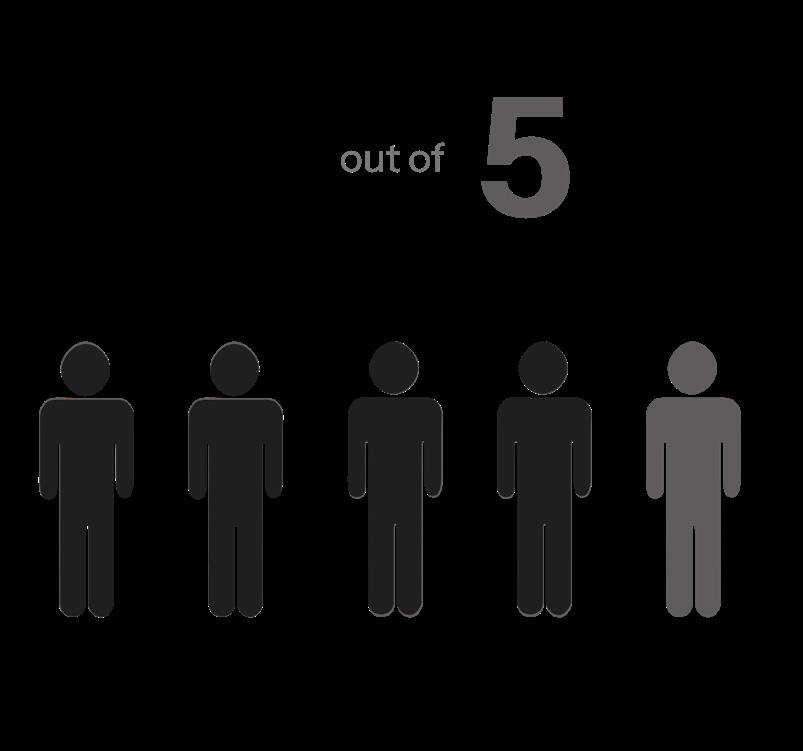
44%
6,363 out of
Libreng Sakay beneficiaries are student commuters
collaboration
Despite these obstacles, progress is being made. Many of Borongan’s remote barangays fall under the End Local Communist Armed Conflict (ELCAC) program, a national initiative aimed at fostering socioeconomic development in underserved communities. With the help of this program, two schools have already opened in upland barangays: Pinanag-an Elementary School and San Mateo Elementary School.
Now, plans are underway to expand secondary education with the construction of Borongan City National High School in Barangay Amantacop, one of the city’s most remote northern barangays. In addition, special senior high school classes have been rolledout in Pinanag-an, a barangay near the city’s southern border.
A vision for agriculture
The division is also looking to advance agricultural education with the planned Borongan City Agricultural School, to be built in Barangay Camada. However, Dr. Tenasas explained that the school’s unique learning modality requires additional planning and a local ordinance before operations can commence.
“This mode of learning needs careful coordination, but we are determined to open it,” he said. While the target opening is set for 2025, he noted its progress is dependent on further discussions with the NTF-ELCAC, with a meeting set this January.
Laying the foundation
For him, bringing accessible schools to far-flung communities is also building a strong foundation for the city’s future. “If we were just to keep developing the center of the city, how can we live in peace if those outskirts are overlooked? If we do that, the impact will be felt by all Boronganons, including those living in the center,” he said.
The division superintendent remains steadfast in his vision for the city’s youth. “If we stop dreaming and we will just be overwhelmed in the problems that we are facing, what will happen to you? If we do not sacrifice for the future of these young people, for the future of our Boronganons, what will happen to the city?”
With determination and collaborative efforts, the city sees a future where no mountain is too high, and no child is too far to pursue education.


Young photographers urged to capture city’s stories in landmark workshop

The workshop was led by Reginald James Lorico, a Philippines National Awardee in the Sony World Photography Awards 2024 and an alumnus of Eastern Samar National Comprehensive High School (ESNCHS) and The Courier. It was made possible through a partnership between Fujifilm PH and the Borongan City Information Office (BCIO).
"This is the first time we were invited by an LGU to conduct such a workshop. Your city is beautiful, something to be proud of. Sana mainspire kayo to really shoot and show everybody how beautiful your city is," said Marilen Catanghal, Fujifilm PH Imaging Solutions Manager.
To support aspiring photojournalists, Fujifilm PH donated three cameras—one each to Benowangan National High School, ESNCHS, and Sta. Fe National High School. BCIO’s Ruper Ambil
highlighted how financial limitations, not talent, often hinder students from pursuing photography.
“We are not lacking in talent; we just need to match what the big schools in Metro Manila have," Ambil said.
Catanghal encouraged young photographers to use the cameras to tell meaningful stories.
“Gamitin ang camera na ito, not only to take photos of your community but to tell your story and share it with the world,” she said. With newfound skills and access to professional equipment, young photographers are now empowered to capture and share unique perspectives once limited by resources.
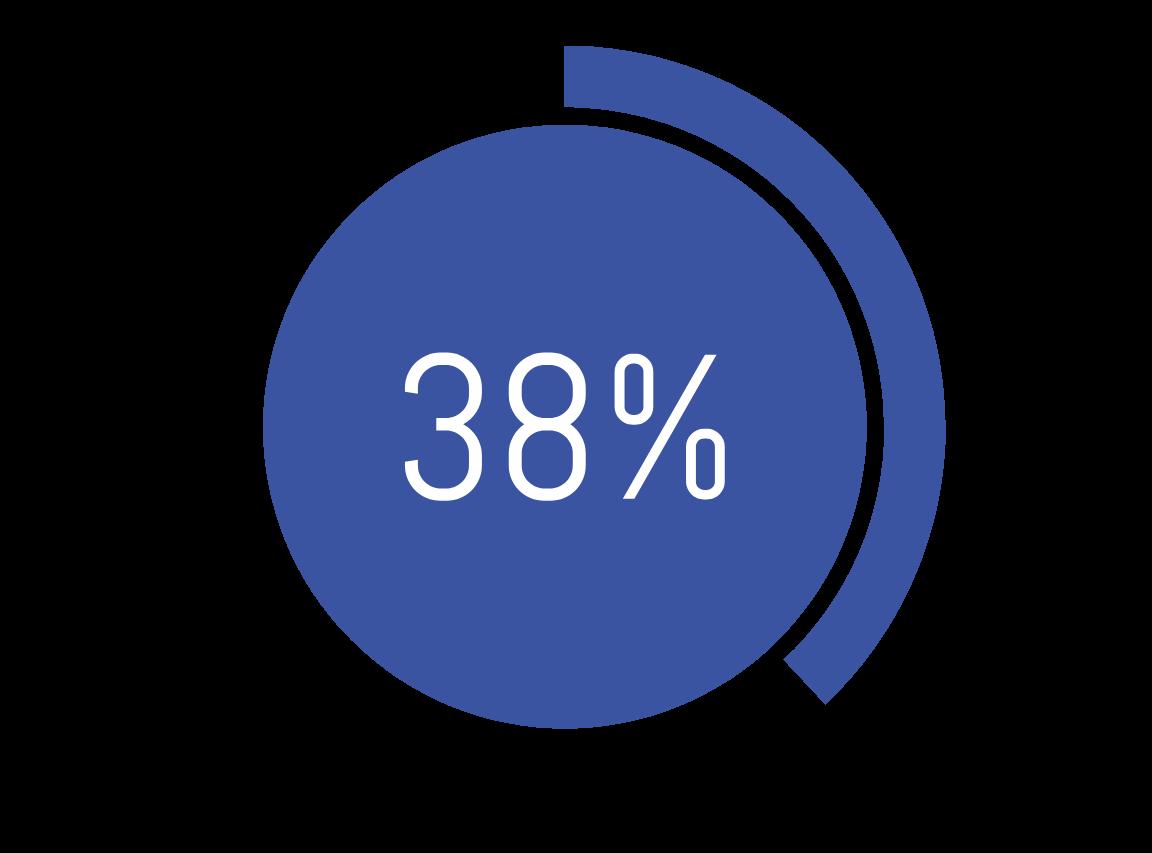
orongan City has seen a sharp rise in teenage pregnancies, with cases increasing from 92 in 2018-2019 to 120 in 2023-2024, prompting the City Population and Development (CPD) to take action.
City Population Officer Mark Lucio Cortado Jr. announced that CPD, in collaboration with the City Division, is launching programs and clubs in public high schools to address the issue.
Eastern Samar National Comprehensive High School (ESNCHS) recorded the highest number of cases, with 29 adolescent pregnancies in 2024. Cortado warned that without intervention, cases will continue to grow.
“This is a crisis that affects not just students but also stakeholders. We need to act immediately,” he said.
To combat the issue, CPD launched the You-forYou (U4U) Teen Trail Initiative at ESNCHS, providing adolescents with information on teen pregnancy prevention and sexually transmitted infections (STIs).
This year, the school will also establish an Adolescent Health Development Club, focusing on health, wellness, and creative expression to guide students away from risky behaviors.
Grade 11 students, aged 16-18, remain the most vulnerable group, according to Cortado. He urged teens to seek guidance from parents and trusted adults to make informed decisions about their health and well-being.
teenage pregnancy cases in Borongan City 2024
ACTION. Borongan tackles rising youth pregnancies through proactive measures.
Satellite pharmacies in Sta. Fe, San Jose, Lalawigan, Benowangan, and Maypangdan have served 35,077 beneficiaries, offering maintenance and prescription medicines, including free vitamins.
“The program significantly reduces the burden of medical expenses, especially for low-income families,” said Mayor Jose Ivan Dayan Agda. Clarita Cabil, a senior citizen beneficiary, shared how the program has helped her afford maintenance medication for her blood pressure. “I can no longer work, so buying my medicines is difficult. This program is a big help for seniors like me,” she said.
Recognized for its impact, the Libre Medisina program was honored by the Department of Health (DOH) during the Eastern Visayas Health Summit and Awards on December 10, 2024.

are from Borongan City.

by JAN ANTONIETE DATOR
very October, tvhe Philippines observes the Indigenous People’s Month-serving as a time to commemorate the rich and diverse cultures that form the backbone of our nation’s identity. Let us turn our focus to one of the most astonishing yet often overlooked indigenous groups of our country, the Badjoas, also referred to as the “Sea Gypsies”, traditionally maritime people whose lives are deeply intertwined with the waters of Mindanao and the Sulu Archipelago.

The Badjaos seafaring lifestyle demonstrates their perseverance and creativity. For generations, they have relied on the ocean for sustenance, livelihood, and identity. According to the National Commission for Culture and the Arts (NCCA), their expertise in fishing, pearl diving, and navigating vast waters reflects a profound relationship with nature. Their vibrant traditions, from music to crafts, further enrich Filipino culture.
Despite their many contributions to Filipino heritage, the Badjaos face numerous challenges in our modern world. Human Rights Watch reports that discrimination and displacement threaten the Badjao way of life forcing many to migrate to urban areas, where they struggle to adjust due to limited access to education, employment, and healthcare. Discrimination often forces them to resort to begging, further perpetuating stereotypes. A striking example of the Indigenous groups facing these conditions are the lives of the Badjoas in Borongan City, Eastern Samar. People who stroll through BayBay Boulevard and often encounter children, mothers cradling their babies, or men performing with small handmade drums— all with the same purpose-to beg for money or food.
It is also common to find Badjao families taking shelter in front of vacant buildings near the Wet Market, where young children run around wearing tattered clothes that hardly resemble clothing. Although BayBay Boulevard itself is near the ocean; the core of the Badjao ancestry, they still make their way to the streets and crowded parts of the city due to a list

of reasons. Climate change and overfishing endanger marine ecosystems, threatening not just the livelihood of the Badjoas but also their cultural identity. Currently, the estimated population of the Badjaos is 400,000, and it will continue to decrease if we don’t put our words into action.
“
For the Badjao, and for all indigenous people, let us to transform our country into one that is inclusive and strives for equity. Let us not forget those who wove the waves of heritage.
Every October, when we celebrate Indigenous People’s Month, we must ask ourselves: What does it truly mean to honor our indigenous communities? Recognition is not enough. We must take it upon ourselves to address the issues that hold the Badjaos back, and to come up with a solution as soon as we can.
The government must ensure that indigenous communities like the Badjao have access to education, healthcare, and sustainable livelihood programs. According to the Department of Education (DepEd), efforts like the Indigenous Peoples Education Program
have shown promise in empowering indigenous youth.
Additionally, conservation efforts should include the Badjao as active partners, recognizing their deep knowledge of marine ecosystems, as emphasized by the World Wildlife Fund (WWF). Most importantly, society must break down the walls of prejudice that isolate the Badjao and other indigenous groups from the rest of the nation.
Indigenous Peoples’ Month is more than a celebration; it is a call to action. Let us not only recognize the beauty of the Badjao culture but also work to uplift their lives. As the Commission on Human Rights (CHR) aptly states, the true measure of a nation is how it treats its most vulnerable communities. For the Badjao, and for all indigenous people, let us take matters into our hands to transform our country into one that is inclusive and strives for equity. Let us not forget those who wove the waves of heritage.
I am writing to address the current
policy at Eastern Samar National Comprehensive High School (ESNCHS), which allows students to wear either their official school uniform or a plain white shirt during school hours.
This policy, implemented at the beginning of the school year, aims to provide flexibility and inclusivity for students. It acknowledges the financial challenges faced by many families, ensuring that no student feels excluded or burdened due to the inability to purchase a complete set of uniforms. The school administration's decision to allow plain white shirts alongside uniforms shows a thoughtful approach to maintaining discipline and accessibility.
However, while the policy has been welcomed by some, it has also spurred debates among students. Among those students is me. I am concerned that the policy limits our form of self-expression. I fancy myself a “fashionista.” Since I have been young, it has been important to me to be able to wear the clothes that I feel show my identity. Moreover, we are only allowed to wear uniforms or white clothes, despite being a public school that is supposed to be more accessible for all. Not everyone has enough white clothes or uniforms that will last the week. Personally, I am running out of permitted clothes.
As a concerned member of the ESNCHS community, I believe there is value in reviewing this policy with regard to many students’ opinions. Perhaps a designated "laundry day" or clearer guidelines could address some of the concerns while maintaining the policy's implementation.
I hope your publication can shed light on this matter and open the floor for a broader conversation within our community.
Sincerely, Luiz Nino
Dearest gentle reader,
I am grateful for your comprehensive letter that has shed light to an issue that may have been overlooked for too long in the school. It is true that students’ self-expression is a vital part in their identity and, thus, must be carefully handled.
The uniform policy is strictly enforced by the school guards and it is that way for a good reason. It is not only to consider the financial challenges of some students, but also to ensure the safety and security of the school grounds. Wearing uniforms and white shirts enable the guards to quickly assess whether someone passing through the gates is truly a student or not. Moreover, it provides the school with a good and formal image, showing cohesion among the students and teachers alike in their designated wear.
All the same, your concerns are still valid and students’ self-expression is not a matter to be taken lightly. It is an integral part of being a student, developing your sense of style, boosting self-esteem, and building confidence. I recommend varying your clothes’ structure and style by wearing different kinds of polos, shirts, and blouses as long as they are the white. Let the policy be a way to challenge your fashion senses and learn to build your identity even when hindered by limitations.
Sincerely, The Courier Editor

by
n the previous academic years, especially in the recent pandemic, a major pause in education happened, even these past months in the ongoing school year. In response to this, it is important to make up for those school days by prohibiting class disruptions; there rose the Department of Education (DepEd) Order No. 034, s. 2021, which shows commitment to resumption and to prevent disruption of classes.
According to DepEd, 239 schools nationwide are considered "very high risk" to further learning losses because of the class suspensions, while 4,771 schools with 3,865,903 learners are categorized as "high risk." These risks make it necessary for the DepEd to cut off some "unnecessary" or "of ques tionable importance" when it comes to suspending classes.
Local government representatives and other organizations have been reminded by DepEd to refrain from needless class suspensions and the use of schools as gathering places for extracurricular activities as these concerns the disruption of most classes.
Due to the ongoing calamities, weather dis turbances, or public emergencies, class disruptions have also been, unfortunately, ongoing. Although these suspensions are necessary to ensure the safety of the students during these conditions, it is still important to make up for those lost days and become steadfast in gaining back the schedules to address learning gaps due to safety and health crises.
Class disruptions also impose a significant burden on educators, increasing their workload. The cognitive toll that minor disruptions can have on stu dents' learning is probably the reason why teachers worry about losing the momentum of their lessons. Consequently, disruptions can negatively affect both the potential time for learning in school and the amount of material teachers can cover.
Additionally, an implementing strategy covers, wherein even when there are school celebrations of noteworthy historical events or occasions, classes shouldn't be suspended. DepEd can't carry the blame for this one when controversy strikes up among students and their peers. It is no secret that our edu cation system is far behind other countries.
Students these days seem to be excited when something stops classes from running when there are certain events that are to happen inside the school, not knowing, maintaining educational continuity, lessening classroom disruptions, and


n the blink of an eye, the beautiful treasures of nature in Homonhon island in Guiuan, Eastern Samar, were lost due to the continuous extraction of resources, or mining. It is truly devastating to hear that what was once breathtaking nature has now been transformed into a muddy, empty space.
The abundance of nickel and chromite in the area has made it a focal point for mining companies. As a result, there are currently four mining companies operating in Guiuan: Emir Mineral Resources Corp, Chromite King Inc., Nickelace Inc., and Mt. Sinai Mining Exploration and Development Corp. Furthermore, the relentless mining activities from October 2024 to the present have severely impacted the land and the local communities, resulting in huge losses of natural resources.
According to an episode of Kapuso Mo, Jessica Soho, the island is slowly turning into a sea of mud, while the residents are contracting illnesses and suffering greatly from the impact on their livelihoods. Mining poses significant risks to both individuals and communities, exposing worers to toxic chemicals that lead to poisoning and longterm health issues. The unsafe conditions, combined with dust and water contamination, increase the risk of diseases and illnesses. Environmental damage, such as deforestation and polluted water sources, are also a major concern. Moreover, mining undermines livelihoods by depleting natural resources essential for agriculture and fishing.
Soil erosion and water scarcity make farming difficult, while the destruction of ecosystems harms local economies. Conflicts over land and resources often lead to displacement and poverty, trapping residents in a cycle of exploitation and environmental damage. Additionally, the effects of mining go beyond just the communities; the land itself has been severely affected. The constant extraction of resources has led to a massive loss of minerals and natural resources. It has also caused the deterioration of trees, resulting in erosion,
sinkholes, and loss of biodiversity, as well as the contamination of soil, groundwater, and surface water by chemicals emitted during mining processes. This further declines both the ecosystem and the atmosphere.
Recently, residents have taken to the streets in protest against the mining activities in their homeland. The community, long dependent on the natural beauty and resources of the region, has expressed deep concern over the destruction of local ecosystems. Locals argue that miners not only exploit their land but also threaten their livelihoods. As the impact on their health, environment, and economy worsens, the people of Guiuan are demanding urgent action to protect their future and preserve their


all be changed by a certain individual who decided to step up for the Filipinos.
In July 20 2024, former Sen. Sonny Angara took position as the 37th Secretary of the Department of Education or DepEd, by President Ferdinand R. Marcos Jr. at Malacañang Palace on Friday. He now holds responsibility as the new secretary of DepEd. His leadership and monitoring of his duties has been a success and led to an outstanding result for the Philippines education in learning.
As Education Secretary, I believe Angara’s focus is clear on improving public school infrastructure, enhancing teacher training programs, and addressing the digital divide in education. His legislative experience with initiatives like the Digital Workforce Competitiveness Act shows his dedication to preparing Filipino students for a tech-driven global economy. This shows how determined he is into shaping our education for the better of our future, coming as a student. Even as a former senator, he authored several measures signed into law by the President of the Philippines, such as: Anti-Bullying Act of 2013 (Republic Act 10627) The Insurance Code (Republic Act 10607) National Health Insurance Act of 2013 (Republic Act 10606).
Because of the degradation of status on our learning, I think the core of Angara’s vision for education is rooted in inclusivity, ensuring every Filipino-regardless of background-has the opportunity to succeed. His leadership in implementing the Universal Healthcare Act and other social welfare programs highlights his ability to integrate health and education policies, ensuring a holistic approach to student development. Under his leadership, I believe we will see reforms that prioritize equity, ensuring that every child, no matter where they come from has the tools to succeed.
With his international education at the London School of Economics and Harvard Law School, together with years of public service, Angara brings a unique mix of global perspective and local expertise to the table. His term as Education Secretary would likely be marked by reforms that prioritize equity, innovation, and sustainability in Philippine education.
If given the chance, Sonny Angara’s leadership as Secretary of Education would not only meet immediate challenges but also lay a foundation for more competitive, empowered generations of Filipinos. He would be leaving a legacy of providing pathways for every child to dream, learn, and achieve.

by
Cadiz
As Artificial Intelligence (AI) reaches a climax, tech-centric companies are seeking to discover even larger breakthroughs. Since the successful launch of OpenAI’s ChatGPT in November of 2022, the requisition to maneuver another technological stride has put major tech companies on a chokehold. Meta, formerly known as Facebook Incorporation, has aired its own AI assistant, MetaAI. According to Mark Zuckerburg, Meta’s Chief Executive Officer, MetaAI aims to amplify automotive software accessibility by introducing it to a larger audience by integrating it across Meta’s multiple social media services.
However, to a competitive degree, this market is undoubtedly oversaturated and truthfully impossible to fease in—as companies with indefinite bounds are progressively seizing the market to its full potential. With the demand on an uprise, it is anticipated that several major businesses would comply and compete with the development of computerized renditions, that are both distinct and satisfactory to the market. However, the rapid advancement of AI quickly rendered itself as unneeded— blurring the lines between innovation and redundancy.
While Meta promises convenience, their system garnered significant paths that lead to overdependence, and it consistently proves ignorance towards underlying implications. The method of gathering data used by MetaAI, is an example. MetaAI systems rely on usergenerated content from Facebook, Instagram, and Messenger, per the company’s privacy policy. As a result, every remark, photo caption, and status update becomes a possible data point, even though many users are uninformed of this subject.
A poll published by a school organization, revealed that 22 out of 49 students casually use MetaAI for tasks that could be done on their own. This issue becomes even


more alarming when examining how students have adapted to this technology. While this figure could seem insignificant upon first glance, it demonstrates a growing subset of young users who rely on algorithms to minimize the labor necessary for critical thinking and problem solving. The general availability of MetaAI, which is linked to platforms that students already use on a regular basis, worsens this reliance.
Introducing AI systems like MetaAI to a wider, less-informed audience doesn’t just threaten individual growth; it poses a societal risk. It’s irresponsible. Students who rely excessively on AI could compromise their ability to think independently, critically examine circumstances, or even question the biases inherent in these algorithms. At its core, AI is designed to mimic human intelligence, but in doing so, it inadvertently fosters intellectual complacency when used irresponsibly.v Convenience, while alluring, is fleeting. It might save you a minute, but those moments are part of the time you spend living—smoothing over your imperfections with disingenuous solutions, could only ever stunt you as a person. Mistakes, as inconvenient as they may seem, are the reasons why we adapt into something machines cannot reiterate. Code cannot replace a human’s trial and error.
by
With war at play, there would naturally be casualties—expected both from concerned territories. However, the effects of this war eventually reaches other countries that are geographically distant but are economically tied and dependent on the resources exported from the Middle East. With this, our country, the Philippines, is also in for an unprecedented ride mused by the war.
The strain between Palestine and Israel isn’t newly born, in fact it had planted its roots decades ago. In 1947, the United Nations (UN) proposed a partition plan for the British-controlled Palestine, it was partitioned into a Jewish and an Arab State. By receiving 56 percent of land, the Jews agreed but the Arab majority opposed. In the following year Israel declared its independence which prompted an attack by Arab armies from Egypt to Jordan.
However, the assault gave a major backlash, the fighting led Israel to victory which enabled them to control more land than reprimanded by the UN. During the six-day war in 1967, Israel had gained control over the West Bank, Golan Heights, and the Gaza Strip, the Arab population was in torment, leading them to call the event as “Nakba” which meant catastrophe.
At this time, the Philippines is also fighting a major battle which had breathed life decades ago, the struggle against inflation. Instead of guns, battle tanks, and aircrafts, Filipinos were combating against drowning oil tolls and skyrocketing prices. Considering the war, the Philippines, or any relative countries, are more vulnerable to economic crises.
As stated by the National Economic Development Authority, the country is critically dependent on two elements in relation with the Middle East: Overseas Filipino Workers (OFW) and oil supply.

Undoubtedly, OFW’s remittances are one of the greatest contributors to the economy. 10 percent of the population are working or living abroad, with its majority in the Middle East. Data from the Philippines Statistic Authority (PSA) showed that around 30,000 OFWs, mostly caregivers, are working and residing in Israel. In 2023, their cash remittances that reached the Philippines was P109.14 million.
A large amount but minimal compared to the US$307.981 million from OFWs in Saudi Arabia, earning the third spot from the largest source of overall remittances. It’s followed by the UAE with US$206.29 million in record. Furthermore, as the war extended to the different regions of the Middle East, the exportation of crude oil was heavily affected. Based on the Monetary Policy Report of the Bangko Sentral ng Pilipinas (BSP), it is to be expected that the prices for the crude oil in 2024 and 2025 are higher. In the report, price increase is brought by the falling global oil inventories and heightened tensions in the Middle East. On a different note, Asian nations have more than enough reason to approach the conflict with caution. However, many had shown who they favor the most, which if taken any further might cause unwanted tension in the Association of Southeast Asian Nations (ASEAN). For instance, Brunei with a significant number of Muslim populations have expressed a strong approval to the Palestinian cause. Indonesia is also close to th Palestinian authorities, as shown by their investment on the hospital in Beit Lahiya, which was unfortunately bombed. Malaysian support was also noted when Prime Minister Anwar Ibrahim banned Israeli ships from dock on their territory. Philippines on the other hand, have bilateral
It’s easy to get caught up in how much of an inconvenience school closures, cancelled events,
There are approximately
30,000 bythenumbers
OFWs in Israel
relations with Israel which goes back 60 years ago when the Treaty of Friendship in 1958 was established. One of its benefits is the Visa-free travel for Filipino tourists.





Historically, the Philippines and the U.S. share a forged relationship over decades, with mutual defense treaties and trade agreements reflecting their close ties. This partnership, however, makes the Philippines highly embraceable to shifts in U.S. leadership. Implemented policies influence everything from trades to military cooperation, shaping the Philippines’ ability to navigate regional and global challenges. With over 4.1 million Filipinos living in the U.S., according to the
healthcare, and education directly affect them.
Aside from individual lives, the U.S. election also has implications for the Philippines’ national interests. As one of the Philippines’ largest trading partners, U.S. economic policies shape trade relations and job opportunities.
Additionally, the U.S. plays a key role in Philippine security, particularly in consistently voicing its support for the Philippines’ claims over the West Philippine Sea, underscoring its firm

Over the course of several months, the once united leadership of President Ferdinand “Bongbong” Marcos Jr. and Vice-President Sara Duterte has suffered from a public fall-out.
The dynamic duo who had once won the 2022 Presidential Elections by a landslide, decided that there are differences regarding their work ethics that were only shown half-way through their 2-year partnership. Abruptly ending the line of their association and the path they once had shared in Filipino politics, and even going as far to labelling it as “a point of no return.’
As powerful politicians , they are compelled to serve the country—their personal grievances, discourse, and differences shouldn’t impede national politics or safety. Their disagreements are matters that grow beyond their grasp, and could eventually endanger the very own foundation of our country’s democracy. As leadvers, it’s their responsibility to outgrow their personal differences as there are numerous that they should not dwell on.
The Rise and Fall
Parallel to the present, the beginning of the Marcos-Duterte alliance appeared to be strong, and ironically, their political campaign, “UniTeam,” was also predicated on their partnership. It promised to uplift the proletariat and the country from the trenches, and even so far as persuading that the country’s deprivation of great governance could be compensated by unity. However, in hindsight, the oversaturation of their union will not be enough to even spare the filthy division their administration will face after only two years.
Instead of delivering the direction and progress they’ve promised in unison, both the President and Vice-President exposed the fact that their alliance was fragile and wasn’t based on the same grounds. It comes to show that there are no genuine allies when it comes to politics or power. Two powerful individuals that originate from separate and equally powerful political dynasties will undeniably have different ideas, policies, and motives. These differences will then escalate, leading to unwanted policy disagreements and political maneuvering— inevitably dissolving the once shared trust.
Although, the fall of this formidable alliance could’ve been avoided if the two parties hadn’t been traversed in secrecy and their own ulterior motives. This establishes the fact that people have entrusted democracy upon people who cannot even trust one another. Alliances grounded on found trust, reciprocity, and respect, can only then synergize with the unity found within their partnership.
v The Aftermath
“It’s not my fault that we are on this road to hell. It’s not my fault that he does not have the competence to lead.” Stated by VP Sara Duterte via Zoom.
On November 22 of 2024, Duterte hosted a digital pressconference via Zoom to further classify her relationship with President Marcos as bygone. A cascade of threats, revelations, and secrets restricted to authorities, were aired out for the public to feast on. Even if this was disclosed as a safety measure, since according to Duterte, her safety imperiled, her unpardonable media disintegration only cracked her fragile reputation even more. Duterte, or any political figure of the matter, should know that a sufficient amount of media decency is expected from the government. The failure to comply from this expectation will ultimately reveal their unprofessionalism, which truthfully, is enough to discredit you as a leader.

Just three days later, on November 25 of 2024, Marcos deformed the pressure, and amplified it back to Duterte. “There is the reckless use of profanities and threats to kill some of us, I will fight them,” sourced through a recorded nation-address. It was lengthy and most importantly appealing. Few of the statements Marcos released weren’t only a response to Duterte, but a calculated attempt into coursing a new narrative—he isn’t
It’s without a doubt that the following course of events then opens up new perspectives—oftentimes, politics is a competition to whoever has the most authority. But sometimes, it also tests your ability to perform. The process of becoming a powerful politician is tedious. It requires effort, time, and public appeal. Based on Marcos and Duterte’s statements, three things can be depicted: the attempt to discredit, evade, and depose— and all of which are done directly or indirectly.
Indeed, Duterte doesn’t seem to realize that she cannot discredit the administration she once took part in, even if she poses as a martyr. She isn’t the designated survivor, as her partnership with Marcos isn’t something she can easily toss, when it was a factor that made her candidacy viable. Such as, the same can be said towards Marcos; his terrible attempt at addressing matters passively aren’t enough to bridge the steep misunderstandings happening deep within the congress. As the foreboding leader of this country, he must do better to gain the trust of the people and the respect of his subordinates.
Tossing and turning the blame from one another will not change the fact that the administration is failing, and it’s under both of their leadership. Diplomatic rivalries that only aim to undermine each other’s authority will only further weaken the organization as a whole. Instead of engaging in this diplomatic horse race, they must refocus their efforts on collaboration and accountability, prioritizing the organization’s stability over



Hilarion “Larry” Dulfo is a man whose life is defined by discipline, perseverance, and an unrelenting commitment to his craft. At 36 years old, he is a living embodiment of what it means to be both a teacher and a student, and the idea that age is no barrier to excellence. A revered coach and guard, Sir Larry’s journey from an aspiring player to an internationally recognized athlete and respected mentor is nothing short of inspiring.
His career in Taekwondo began in 2003, when he first stepped onto the mat as a player in Eastern Samar National Comprehensive High School. Eager to prove his mettle, he competed in local competitions such as the Eastern Visayas Regional Athletics Association or EVRAA, where his talent quickly became apparent. His competitive drive didn’t stop there—he continued to excel, ultimately securing a spot in the nationals under the State Colleges and Universities Athletics Association or SCUAA in college, and later breaking into the international stage. Over the years, Sir Larry amassed a wealth of medals, ranging from local, to international competitions; each one a marker of his relentless pursuit of excellence.
Based dama han ak experience as a player, ginhahatag ko ha ira an ak mga gindanas; an ak mga ginkuha, igin-aapply ko daman kun ano ak igintraining han una as a player gin aapply ko daman ha ira.
HILARION “LARRY” DULFO
Taekwondo Coach
By 2015, Sir Larry soon became a guard in ESNCHS, and utterly happened he was a trainer at the same time, which naturally led him to a coach position that further solidified his legacy. Balancing two demanding roles—guarding the school from morning until afternoon, and coaching his athletes from four in the afternoon to eight in the evening—he developed a work ethic that inspired both his students and colleagues. Regardless of the demanding schedule, he remains fully committed to both his athletes and work.
Sir Larry’s coaching philosophy is grounded in the lessons he learned as an athlete: structured, and with strategic training plans. One of Sir Larry’s most notable recent accomplishments came in 2024, when he earned two silver medals at the 7th Heroes Taekwondo International Championship 2024 held in Bangkok, Thailand. Despite his wealth of accolades, for Sir Larry, his greatest achievement was not just the titles he has won, but witnessing along with him the success of his athletes who follow in his footsteps. Seeing his students achieve their own national and international dreams is a source of immense pride for him.
Though his coaching career is flourishing, Sir Larry remains, first and foremost, an athlete. His love for the sport endures, and as long as he is physically able, he will continue to compete and represent the taekwondo community with the same passion that first drove him to the mats.
It wasn’t like she had a choice, there weren’t any paths to divert her from her youthful crisis at his was something she had to face head on. Whether she wanted to

leven-year-old Cristina Yabora left the classroom crying. Her heartbeat rose as the thoughts inside her head spiraled—a child can only feel so much. Her body couldn’t brace as much pressure as it was given, what was she supposed to do? It wasn’t like she had a choice, there weren’t any paths to divert her from her youthful crisis—this was something she had to face head on. Whether she wanted to or not.
Cristina was only little, but she had already faced challenges bigger than her own.
Although, things aren’t how they appeared to be. Cristina was a sharp kid, and despite her self-doubt, there was an unwavering certainty beneath it—that she’d be able to navigate through this short-lived obstacle. Call it fate and determination, but truthfully, there was nothing more rewarding than her hard work coming to life. As she embraced her first victory, unaware of the very principles of journalism, it felt as if writing was something she’ll have for a lifetime.
Cristina never expected to fall in love with journalism. As a kid, she was only ever interested in reading stories, completely ignorant by the fact that she’ll be creating ones of her own. If she wasn’t ever encouraged to take on writing, that would’ve been a colossal loss for the world of journalism.
It comes to show that being around people who believe in you will take you to higher heights. If it weren’t for her coach, Emilyn Ladisla, would she even be aware of her potential? It’s telling that the people around her knew that she was capable, they were only waiting for her to realize that. If it weren’t for the people who believed in her, she wouldn’t even have as much success.
Except that it was only a matter of time when her fears weren’t the largest things she would ever encounter. It wasn’t expected or unexpected, but it only felt right that at some point in time, she had claimed victories that are far greater from where she started. From the modest halls of division competitions to the grand stage of nationals—twice a champion, thrice a qualifier. It reads like a tale on paper, but it was a tedious process of doubt and practice.
It was the National Press Conference of 2023, and this was the first time after a long pause of competing—maybe it was because she was fresh out the slammer, but something in the air felt heavy. The weight of her previous achievements, the scrutiny laid upon her performance, have been
intensified by an amount a teenage girl can’t handle. The pressure was more obvious than ever, and she had to give it her all. Regardless, she’s reminded of her consistency, and that alone was impressive.
Coming out of the competition unsatisfied, Cristina felt defeated. To her, the words in her article weren’t able to articulate her point, it fell short and weak—and she really hated the article. But her dissatisfaction was proven wrong by her own craft. It was a nice surprise, and a memorable sentiment. To her, the victory only validated her hard work more, and assured her once again that feature won’t keep her trapped within a box, a battlefield with no rules. A concept she’s irreversibly familiar with.
With her claimed victory, she was reminded of the little girl that once cried when she was asked to compete. She saw how far she’d come. The tears, the fears, the doubts—they were all necessary to reach this point. She wasn’t just growing as a writer, she was growing as a person who had learned to carry the weight of her ambitions.
Cristina knew that this victory wasn’t the end of the line. There was more to prove—not to others, but to herself. And as if fate had it, her next battle would be fought in a place that carried the weight of her beginnings: Borongan, Eastern Samar. The regionals were just around the corner, and for the first time in years, she would compete in front of the very people who had watched her evolve, stumble, and rise. As it would be her last regional match, she can’t help and think about the little girl who’d once cried. If only she could tell her that crying isn’t something she should be ashamed of—not when you know you’d still have the resilience to move forward.
Cristina Yabora had come full circle, not just as a writer but as a testament to perseverance and the quiet power of her talent. With plentiful achievements laying upon her shoulders—nothing felt as heavy as the thought of an eleven-year-old crying. Although this time’s different, pressure is a feeling she’s oddly familiar with and Cristina is now able to comfort the version of her that once wept.

JOErney Of a Prodigal Son
or most, staying close to your parents seems like the best way to help them. You can hold their hand when they’re scared, bring them a glass of water when they’re unwell, or simply be there to reassure them that everything will be okay. But what if the best way What if love demands distance?
This is the paradox Joe Mel Ben T. Bansing lives with daily. When the cruel hand of fate dealt his mother, Lorna Tiozon, a diagnosis of fatty liver and gallstones, the question hung heavy like the weight of his heart: what can an 18-year-old
For Joe Mel, the answer came in the form of a six-hour and fifty-minute bus ride from their home in Lawaan to Borongan—not to run away from responsibility, but to embrace it in a way his
Money had always been scarce, and it became even more so when he chose to study at Eastern Samar National Comprehensive High School, over 300 kilometers away. Yet, to him, the distance made sense. One might argue that
“Harani an Tacloban,” Joe Mel admits, “pero hindi ko bet kasi super crowded. Pag guti la na uran, nababaha. Tapos it mga boarding house mahal, danay makuri it tubig.” Tacloban’s cost of living would have drained their limited funds—a burden he was determined to avoid. Borongan, though farther, offered him a chance to save money while chasing quality education.
“I’m fighting for my future, and one of the reasons I’m doing this is because of my mom,” Joe Mel shared, his voice steady, though his eyes betrayed the exhaustion of being a STEM honor student, fighting for a future that he dreams will one day lift his
“Noong 2011, na-diagnose si mama ng gallstones,” Joe Mel recalled, “Pabalik-balik siya sa Manila kasi dun yung doctor niya sa UST.”
Their family scrapes together funds with help from strangers, church members, and even old friends of Lorna who are now politicians. But as Joe Mel knows all too well, charity is not endless, money is elusive, and the well of assistance often runs dry.
Lorna Tiozon, despite being frail, weak, and burdened by illness, continues to embody a mother’s love. She sells hotcakes in Manila, enduring the physical pain to ease her family’s financial struggles and to fund her trips back to Eastern Samar.
To support his family, Joe Mel took matters into his own hands calloused from the toil of love, he crafts bouquets from satin fabric to earn extra income.
Even when hunger gnaws his stomach, Joe Mel finds himself unable to eat as the thought of his mother—kneeling in prayer, tears streaming down her pale cheeks on an ordinary morning swallows him whole: “Kailan ko mararanasan ang umaga na almusal lang ang poproblemahin at hindi hanapbuhay?”
Every peso he saves, every meal he skips, and every step he takes is for her. It is his way of holding her hand from afar, of showing that love isn’t measured by distance but by sacrifice. And when he misses her most, Joe Mel finds home in the haunting melody of Dan Hill’s song, Sometimes When We Touch – a duet him and his mother sing in their little house at Lawaan.
That song echoes the depravity of distance between them. And though it’s only sometimes when they touch, the prodigal son fights for a future where they can finally hold each other without the weight of the world between them because away from her, Joe Mel is closer than ever to helping her the most.
by Arriane Jaine Alea

times that
For Ma’am Mary Danielle, that spark was ignited when she was just a kid. She recalls pretending to be a teacher with her friends, acting out lessons and taking the role of someone who could shape minds. It was through these moments that she first realized her dream. She wanted to be just like her mother, a teacher who shaped the lives of students with dedication and care.
“Actually, I first realized that I wanted to become a teacher when I was still a child. Nag-a-act na ak as a teacher han mga bata pa kami, together with my friends.” Ma’am Mary Danielle says with a smile. “That was the time wherein I realized nga ‘Ah! Pwede ngay-an ak maging teacher just like my mom.’”
However, her path to becoming an educator wasn’t without challenges. Despite graduating cum laude at the age of 20, her journey almost took a different turn when she was falsely accused of cheating by one of her professors. It was a moment that could have shattered her hopes and dreams. But in her darkest moment, it was her mother’s words that lit the way forward: “If others can do it, you can also do that one.”
Her mother’s faith in her was the anchor she needed. She pressed on, and soon after graduation, she secured a teaching job in Eastern Samar National Comprehensive High School (ESNCHS). In 2020, she passed the Licensure Exam for Teachers (LET) on her first try, becoming a regular teacher. By 2024, four years later, she had earned a promotion to Teacher 3, and at 25, she is now pursuing her doctoral degree. But it’s not just her career milestones that stand out—it’s the way she connects with her students.
Music has always been a part of her life. As a child, she was part of the chorale and played in the rondalla. Now, as a rondalla adviser, she shares that same love for
music with her students, not just teaching them to play instruments, but helping them find confidence and passion in their craft. Through music, she imparts the same lessons of perseverance and encouragement she received from her mother.
Ma’am Marilyn, on the other hand, has been a steadfast figure in ESNCHS for many years. As a seasoned educator nearing retirement, she reflects on her daughter’s journey with pride. “But maybe by 63, I will be retiring. And so, I’m sure that by that time, she is very much well-versed with the ins and outs of being a teacher,” she shares.
Her pride isn’t just because of the titles Ma’am Mary Danielle holds or the success she’s found—it’s in the way her daughter has grown into the kind of teacher who not only excels but lifts others up along the way.
Their bond isn’t just about being mother and daughter, it’s about walking side by side through life’s ups and downs, sharing dreams, and inspiring each other to be better every day. Ma’am Marilyn didn’t just teach her daughter how to be an educator; she showed her how to navigate life’s challenges, how to overcome doubts, and most importantly, how to pass on the same spark that started it all.
As Ma’am Mary Danielle continues to carve her path in the world of education, she carries with her the lessons and values instilled by her mother. In doing so, she is not just following in Ma’am Marilyn’s footsteps. She is leaving a trail of her own, one that future generations will undoubtedly look up to.
by Hien Katriel Medina
n many schools, students find comfort in their friends, teachers, or even a favorite quiet spot on campus. But at Eastern Samar National Comprehensive High School (ESNCHS), there’s another source of warmth and joy—Bella, the beloved school dog.
Bella isn’t just any dog; she’s a familiar figure on campus, known for her gentle nature and friendly demeanor. Whether she’s lounging under the shade of a tree or eagerly greeting students as they walk past, she has become a part of daily life at ESNCHS. Seeing her roam the grounds, tail wagging, brings an instant sense of comfort and happiness to many students, including me.
School days can often be
overwhelming— piles of assignments, exams looming over us, and responsibilities that sometimes feel like too much to handle. But no matter how stressful the day gets, Bella’s presence offers a kind of peace that words can’t fully describe. A quick glance at her curled up in a quiet corner or playfully chasing after nothing in particular is enough to remind me to slow down, to breathe. Studies have shown that animals can help reduce stress and anxiety, and Bella proves this effortlessly, simply by being there.
Taking care of Bella has

by Sofia Meneses
onning a red cap with white hairs poking out, he roamed the roads on his bicycle-mounted, red-and-white cart—a hint of the refreshing chill against the harsh sun.
Since he first began in 1992, 75-yearold Alberto Libanan, more commonly known as “Tatay Alberto,” has long perfected his craft, carrying in his cart a treat that is delighted by Boronganons who have come to adore and cherish it through the years.
Sorbetes is a traditional ice cream often sold by street vendors in the Philippines. Though also called “dirty ice cream,” the confection is anything but such. Children are quick to flock to the carts, begging their parents to spare a small 15 from their wallets.
A simple walk down the street will no doubt lead to a fateful encounter with the hardworking Tatay Alberto.
He peddles down the road on his bicycle-mounted, red-and-white cart. On his cart is an illustration of an ice cream, “MBMB” engraved on it. MBMB has become a familiar moniker of his ice cream—a name that passersby would excitedly utter once they see Tatay Alberto on his bike under his colorful, rainbow umbrella providing him shade as he labored.
His expertise showcases a variety of flavors, but the most sought out are mango and jackfruit, locally termed as “langka.” His delectable sorbetes melts into one’s mouth, its sweetness and chill a welcome break from the relentless heat of the country. He first learned his craft in Pangasinan, Luzon where he got to know how coconut milk, sugar, and fruits could be blended into a sweet concoction. Thereafter, he honed his skills as he poured and mixed into the years. Indisputably, Tatay Alberto has become a master of his craft, renowned in the streets of Borongan City.
Though financial hardship urged him to pursue this line of business, he has found the courage to continue crafting his sweet creation and pedaling down the streets in light of the love and endearment children held for him.
“Damo an nalilipay han ak trabaho, asya nakapagdesisyon ak hin,” he spoke, voice aged to a raspy murmur. “Naisapuso na nira, nakilala na ak.”
As Tatay Alberto devoted his years into the craft, perfecting every touch of sweetness and softness, his sorbetes has become a staple in every Boronganon’s childhood—a cherished memory tied to the sugary treat.
“An kabataan na-enjoy han ak trabaho,” he remarked, words clear though with a slight tremor.
become a collective effort in the school community. Students and staff make sure she is safe and well-fed, offering food, belly rubs, and companionship. I, too, have made it a habit to look for her around the campus, hoping to spot her wagging tail so I could hand her my leftover school lunch. On some days, she finds me first, her eyes filled with excitement as if she knows I’ve saved something just for her. It’s a small exchange, but in those moments, I feel an unspoken connection—one that makes school life a little warmer, a little lighter.
But Bella has been more than just a friendly face on campus. In many ways, she has been a silent witness to my own journey. She was there when I first stepped into senior high school, uncertain and overwhelmed, just as she was there when I was still a tenth grader, trying to find my place in this big campus. She saw me rushing to morning classes, staying late for school events, and finding comfort in the same familiar corners she calls home.
She watched as I walked the same paths, sometimes alone, sometimes with friends, always carrying the weight of schoolwork, dreams, and expectations. She doesn’t know it, but she’s been there through my highs and lows— the mornings when I was excited for the day ahead, and the afternoons when exhaustion clung to me like a heavy coat. She watched as I grew— not just in age, but in confidence, in resilience, in the way I carried myself.
She doesn’t know that I’m leaving soon. She won’t understand why one day I’ll stop looking for her with my lunch in hand or why my footsteps will no longer echo in the places we always crossed paths. She won’t notice the absence, but I will. She’ll keep roaming the campus, greeting new students, finding new hands to feed her, and new hearts to touch. Life will go on for her, just as it will for me.

Tatay Alberto’s unwavering zeal can be attested to the unwavering love that the children held for his ice cream. Many children grew up treasuring the treat, looking forward to his cart as they exit the gates after a long, arduous school day. With the children’s love, he too grew attached to his sorbetes and bicyclemounted cart no matter how exhausted he found himself at the end of the day after hours of grueling cycling.
Even in the days of heavy downpour and he struggled to keep shelter under his umbrella, he took pride in his work— continuing to traverse the streets of the city despite the languid sales due to the already cold weather.
His humble sorbetes was able to raise his family, providing for their everyday needs. He is even already a grandfather, his youthful child growing into a parent that too supports the whole family. Yet even as the years catch up to him and his knees weaken as pedaling becomes a more strenuous task, he is intent on continuing his craft, a fervent desire stirring his passion.
“Basta diri ak pagsinakiton…100 years.” Tatay Alberto replied, asked about how long he will continue to make his sorbetes. His love shines through in each day he dedicates to his timeless sorbetes. As long as the children will be peering through the streets for his sorbetes, he will be there with his red-and-white cart, waiting for them to bustle for a cone.
Truly, a special ingredient is poured alongside the coconut milk and the fruits— love. It is in every rush of sweetness, every breeze of coldness, and in every scoop of the delicacy.
Tatay Alberto smiled, “Love thy work, higugmaon it im trabaho.”
And maybe, months from now, I’ll find myself wondering if she’s still there, still greeting students with the same familiar warmth, still making someone’s stressful day a little bit better— just like she did for me.
But I hope she knows, in whatever way dogs understand, that she was special to me—that in the rush of deadlines and responsibilities, she was a reminder to slow down, to appreciate the little joys, and to cherish the simple moments.
Bella’s presence at ESNCHS is proof that sometimes, the smallest beings make the biggest impact. She may not understand school rules or academic pressure, but in her own way, she teaches something far more valuable—kindness, companionship, and the beauty of just being present.
And as I prepare to leave, I realize that Bella isone of the hardest goodbyes I never saw coming. I always thought leaving Compre meant saying farewell to my teachers, my friends, and the classrooms that have been my second home. But now, I see that it also means letting go of the quiet moments—those simple, fleeting encounters with Bella that made even the heaviest days feel a little lighter.
like home. But if not, a part of me will always remember the comfort of seeing her there, tail wagging, as if telling me that everything will be okay.

In some ways, we are alike. Just as she has been a silent witness to my years in Compre, I, too, have been a witness to hers. She has grown older as I have grown up, and while I will be moving on to new places, Bella will remain here, continuing to bring warmth to the next batch of students who will find comfort in her presence– just like I did.
Maybe one day, I’ll come back, even just for a visit. And if I do, I hope to find her here, still wagging her tail, still offering that quiet comfort that made Compre feel


by Nova Scotia Pombo
ly Borongan, commonly referred to as Borongan city airport, is far more than a hub of transport, it is also a critical gateway to connecting Eastern Samar to the international community. The airport has become a major driving factor for tourism, economic growth, and regional development besides terrace travel.
In the period of January-September 2024, Borongan recorded at least 85,000 tourists visiting the place, shattering previous project records. It shows how this airport has proven more useful in boosting local tourism and opening the paradise Borongan’s beautiful beaches, festivals, and wonders to more people. Some of these are the Philippine Kiteboarding Tour, Padul-ong Festival, and Miss Philippines Earth Beachwear Competition. These activities brought in much more visitors coming from within the country and outside, thereby branding the city as another class destination.
Rupert Ambil, chairman of flight operations for Borongan and officer-in-charge of tourism, said the increase in tourist arrivals is largely attributed to the regular Manila-Cebu-Borongan flights started by Philippine Airlines in December 2022. While initially running only twice a week, the flights were scheduled to increase to three a week in 2024. They will cater to passengers as well as cargo shipments. This partnership between the city government and PAL symbolizes the growing importance of that airport as a regional hub.
Borongan City Airport should also serve a very
trades and agriculture. Among its measures to ensure an efficient operation of the airport, city government has created local funding for ticketing and establishing a departure terminal. Civil Aviation Authority of the Philippines takes notice of the special model which plans to replicate the modular construction of Borongan to other public airports in the country.
The Airport is also strategically located to be in the eastern part of Visayas, making it a lifesaving place in every calamity or emergency. It is a vital lifeline for relief operations, medical supplies transport, and rescue missions. This makes it invaluable beyond commercial aviation.
Fly Borongan is expected to have an even more significant contribution to the further advancement of the region in the future. Infrastructure investments and more flight routes would surely improve connectivity, open new doors for travelers, and integrate Borongan into the global network.
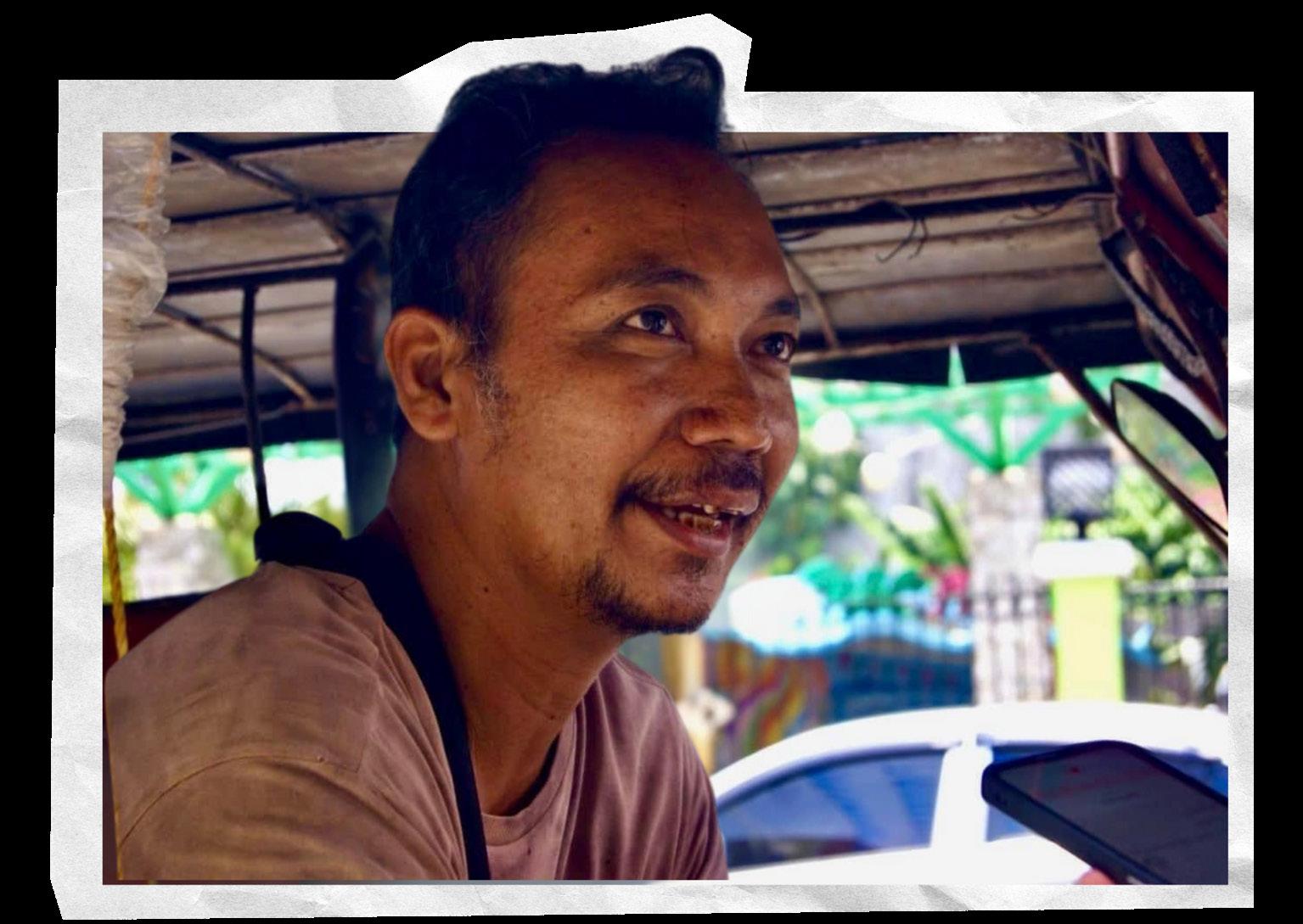
by Ayessa Menda

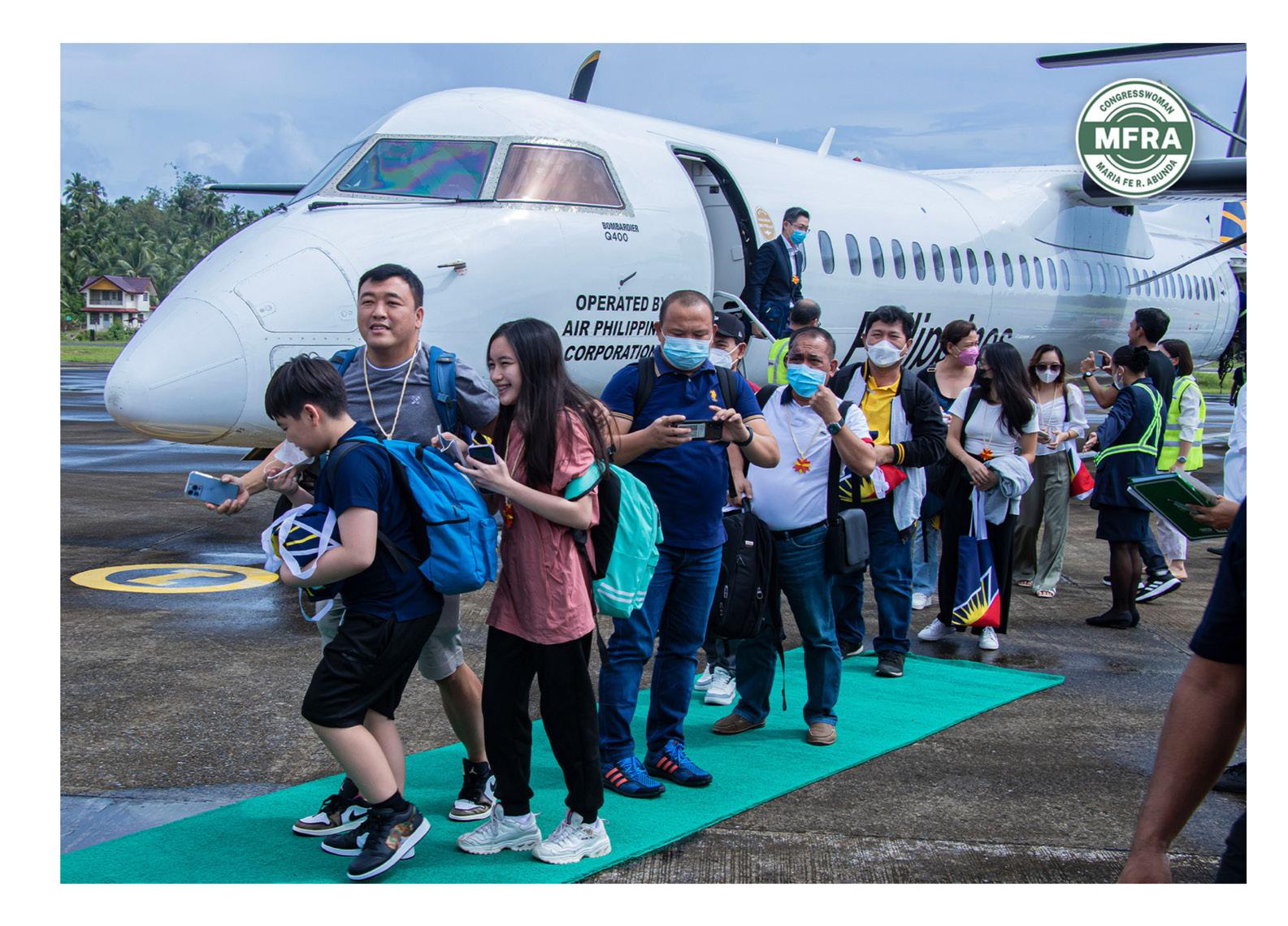
With all its records and futuristic initiatives, Fly Borongan is not just a destination and departure point. It is indeed an epitome of what Borongan and its people consider to be their resilience, progress, and opportunity.
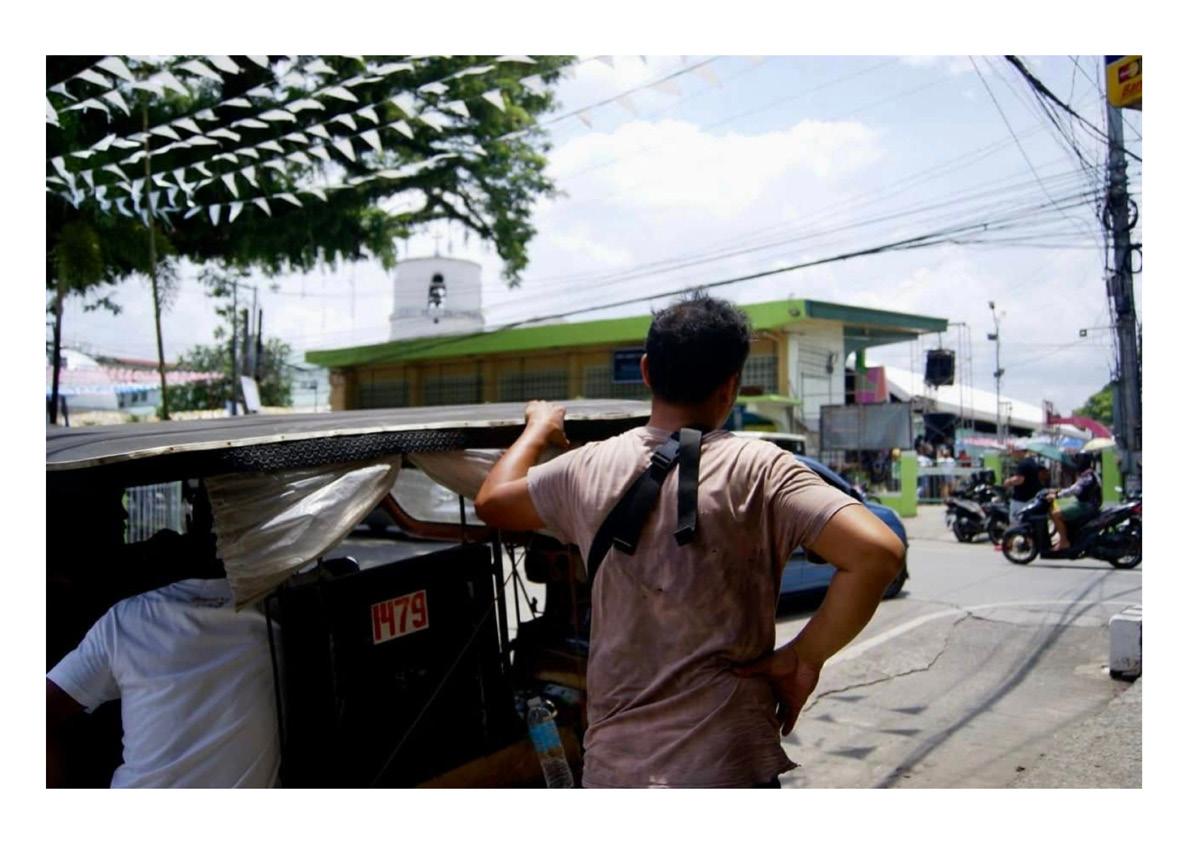
he busy streets were once then filled again by the contingents competing—representing their own districts, bringing the spirit of the Padul-ong Festival to life with their flamboyant garments and beaming smiles that reflect determination underneath the scorching sun.
A medley forms as the music blares along with the crowd’s palpable excitement, while the dancers swiftly move in perfect rhythm—each group more vibrant and creative than the last. Yet behind the spectacle, a story lies unraveled that is filled with sweat and tireless dedication for their vocation.
Coming from the neighborhood of Sta. Fe, Franko Casillano is a hardworking father and tricycle driver who goes back and forth from the City of Borongan to Bugas. Franko starts his day fulfilling his responsibility as a father to his four children, then seamlessly transitions to his role as a driver, working from dawn until dusk, the festival serving only a backdrop to his relentless workday. While the city is busy buzzing over the parade and competition, Franko can only get a glimpse, barely having time to catch up on the festivities.
The celebration was solely distant echoes compared to the close, urgent reality of Franko’s daily grind. His wrinkles sculpting and calloused hands are evident enough to portray how committed he is to his job just to be able to provide the needs of his family. Despite the blasting music that echoes through the streets, his focus was only on transporting his passengers and his priority to earn for his family exceeded. The festival’s grandeur contrasts
sharply with the exhaustion etched into his face and the weariness in his movements.
And as dawn approaches, he then finally returns home—where real celebration begins in the modesty of his family’s embrace. Though he has missed much of the public festivities, his family greets him with a simple and small gathering where they share a modest meal and recount their day. This intimate moment is their own version of the festival, filled with warmth and togetherness, affirming that the true fulfillment of the Padul-ong Festival lies in these shared moments of connection and love.
For Franko, the festival’s spirit is not merely about grand parades and public revelry but is embodied in the quiet but meaningful interactions with his family that contrasts the pulse of the blazing sound earlier. Their humble celebration, though small in scale, reflects a deep appreciation for the quality they spend together.
In this way, the essence of the fiesta isn’t found solely in the vibrant spectacle of the streets but also in the simple, enduring bonds that sustain and uplift them through the year.

by Ashly Contado


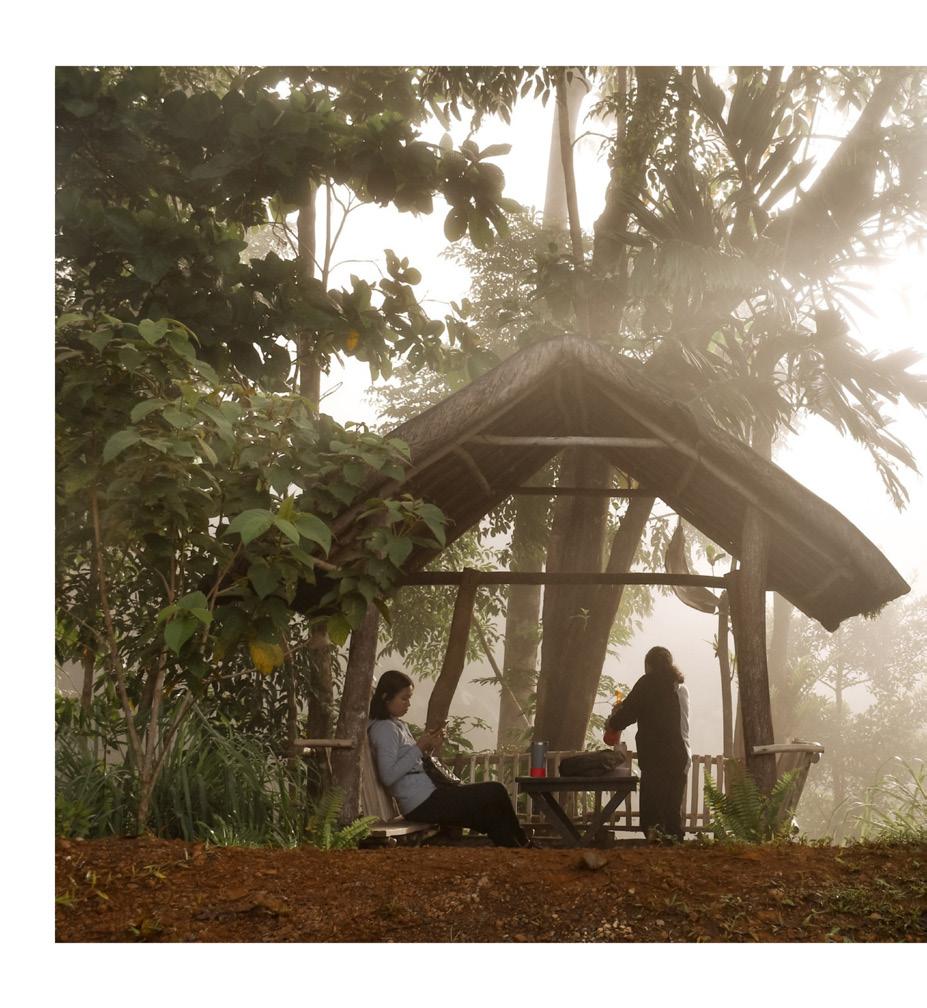




by Ashleigh Sotrina
As one of Borongan’s newly debuted attractions, Healtop Eco Park has been gaining recognition for its scenery. A quick three-minute drive from the Taboc Highway tucked away in the quiet alley of Libertad, lies the famous vista. From there on, the trip starts with a roughly 152-step climb that leads to a stunning view showcasing the beauty of Borongan city. For a mere 40, each step takes you a heartbeat closer to a one-of-a-kind experience, where the sounds of the city fade into a distant hum, and nature’s symphony takes center stage. With each upward stride, you’ll see the view of the city stretched out below, a breathtaking tapestry of fields and forests, bathed in the cerulean light of a nascent day. Every step is a perfumed pathway of flora and fauna as the wind’s caress intensifies as you near the summit.
From the observation deck, each turn is a perfect photograph waiting to be taken. At daylight, witness the beauty of the golden sun unfurled like a silken banner of gold, made even more magical by the soft blanket of fog flowing from the city below. The Eco park truly comes alive at night, where city lights, scattered like fallen stars, twinkle through the darkness of the alleyways of the town. Truly, it is a place where city and nature intertwine, a vantage softly shrouded in mist, in which heaven meets earth and the sea of clouds and glittering stars seems a touch away.
The park boasts an iconic crimson heart that stands boldly against the endless expanse of the sky — a popular spot among spectators that gives promising memories as vast as its reach. On this solitary vantage, the heart serves as a strong magnet for everlasting moments — a snapshot of laughter echoing through the crisp air, love blossoming under the azure sky, and shared experiences amidst the stunning view, all framed by the heart’s vibrant beauty.
Cozy cottages with a city view lie beyond the beauty of the park. Although they aren’t modern constructions, the walls, constructed of warm-toned bamboo, provide refuge from the over-stimulation of modern life. Honey-gold lights dangling from the boughs like golden teardrops imbued the passage in peaceful ambiance. The simple abode adds to the overall feeling of being in nature’s embrace — a haven from the clamor of the outside world. Here, weary souls yearning for respite find sanctuary within its walls and make new memories. Amidst the hum of chatter, one could easily lose track of time.
Visitors may also enjoy other amenities the park offers. Uphill, a karaoke machine is made available for those who seek a chance to release their inner songbird


personality and let loose. Soulful symphonies blend as the singing of the locals harmonize, weaving spells of joy and connection. Visitors may also bask under the million twinkling stars as they sit on the benches around the park. Against the backdrop of an awe-inspiring panorama, the humble snacks takes on a satisfying simplicity compared to the magnificence of the landscape. “Although tiring, the view and experience uphill makes it worth it”, said Ms. Gavan visited the place with her family in search of a peaceful getaway.
Behind the park’s majestic facade lies a legacy of dedication by Mano Rudy Morales and his family. Mano Rudy, a carpenter whose hands shaped not only wood but destinies, came from humble beginnings with his stay-at-home wife and children. Through years of sweat and sacrifice, their children went on to graduate school and find success in their chosen fields. This collective success resulted in the investment now known as’ Healtop Eco Park’. At the official opening, their impassioned words resonated with gratitude.”We thank all who helped in the making of this place”, Mano rudy stated. “The reason I worked so hard to build this is for people to get to experience the beauty our city possesses.” Mano Rudy’s words truly reflected in his work — Healtop Eco Park is now an up-and-coming spot for curious seekers who wants a peek of Borongan’s beauty.
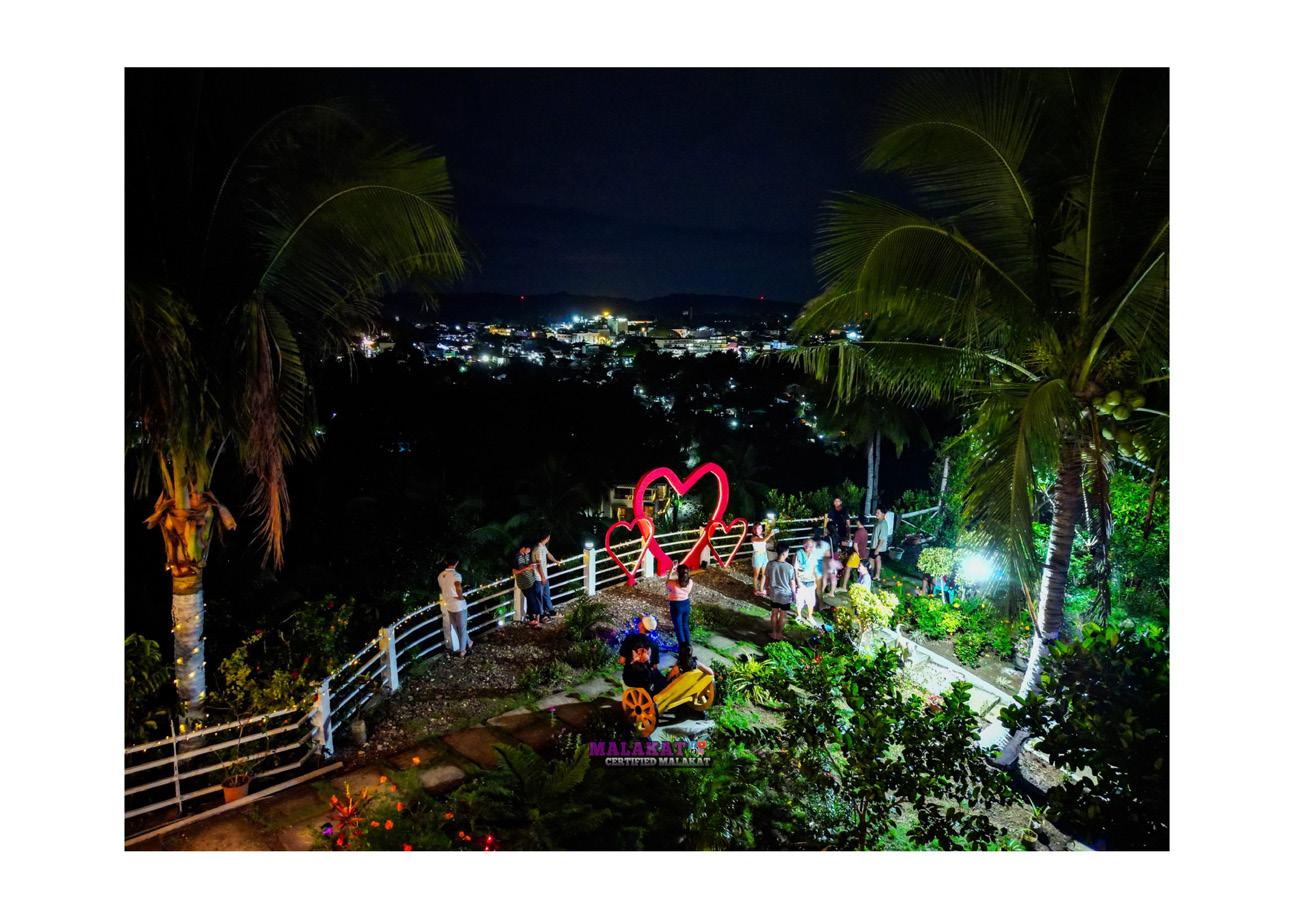
Yearning for respite from the city’s relentless rhythm? Framed by lush greenery and kissed by the winds — this is a perfect getaway from the chaotic city life. A sanctuary where worries melt away like the mist in the early morning sun. From sun-drenched bustle to fiery sunset hues, to the glittering city lights under a star-studded sky, let the whisper of the wind wash over you as you fully surrender to the true meaning of “Baysay Borongan”.
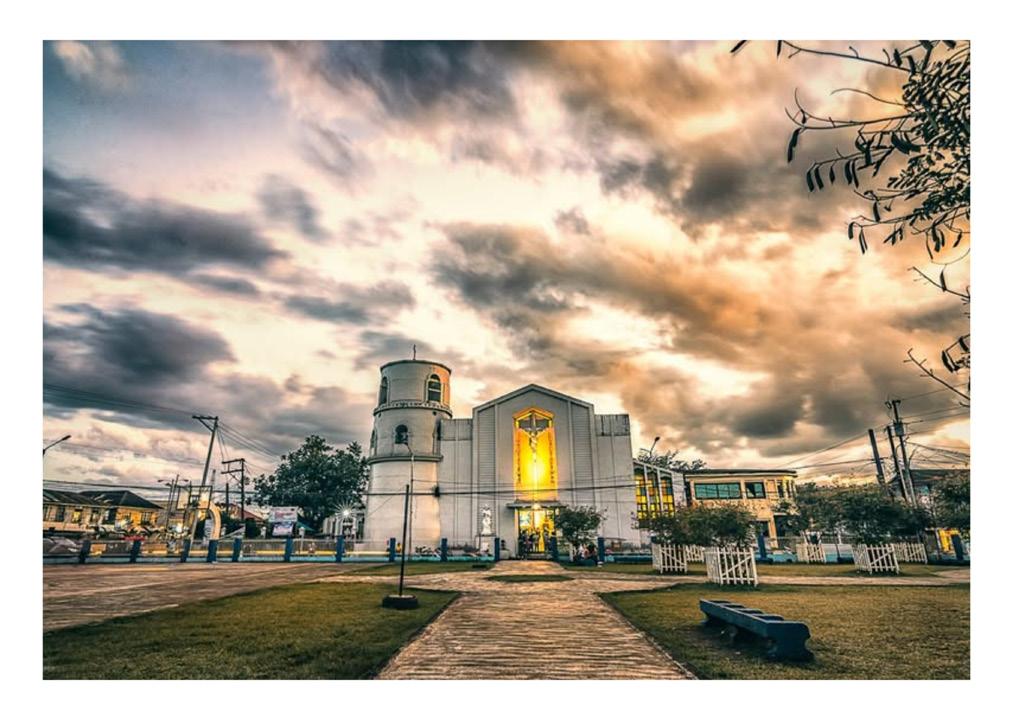

by Zelene Ladisla
or centuries, the Borongan Cathedral has been more than just a church—it has been a home for the weary, a refuge for the faithful, and a symbol of hope for an entire community. With its sky-blue walls reflecting the vast heavens, the cathedral stands proudly in the heart of Borongan City, offering warmth and solace to those who step inside. As sunlight filters through its stained-glass windows, colors dance along the pews, filling the space with an almost divine glow. Here, countless prayers have been whispered, tears have fallen, and faith has been strengthened, proving that within these walls, no one is ever truly alone.
But like the people it shelters, the cathedral has faced its own trials. First built by the Jesuits in 1710, it was reduced to ashes in 1773 before rising again under the hands of Fr. Roque de Osma. Through wars, disasters, and relentless typhoons, it has stood firm—much like the Boronganons who continue to believe in its unshakable presence. Today, it remains a place where stories of devotion are written every day, where flickering candles carry silent prayers to the heavens, and where faith continues to shine, undimmed by time or tragedy.
by Thea-Marie Balbin

Borong, meaning fog in Waray-Waray.
The clouds would hang low, as if within reach, while rivers meander through emerald valleys like delicate threads of chiffon, and waterfalls descend in elegance that serenade all souls. In search of the perfect weekend retreat? Follow the trail to the Hebacong-Suribao River-San Gabriel Circuit Tour, an exciting initiative by the Borongan City Tourism Office.
With its successful launch, this tour has quickly earned its reputation as a top destination for explorers, culture aficionados, and the souls yearning for a serene escape from the daily grind. Picture yourself cradled by nature as Borongan elevates you into its misty embrace. In this city, beauty isn’t just something you passively witness; it’s something you become a part of.
Heaven’s Veils: Up Close and Personal
Hebacong—a land kissed by the heavens and the clouds deemed proudly by the locals as its fine penumbrae. Perched on terrain elevated enough for the first flush of morning to skim one’s skin, you are able to see the famed sea of clouds roll over verdant mountains. The flora and fauna that call this region home await the eagerness of visitors that trek through the forest trails, and whether you’re catching sight of birds in flight or standing in awe of towering trees, the adventure is both invigorating and humbling.
As you ascend, your mere footprints become part of the city’s history— just like the visit of the Miss Philippines Earth 2024 candidates, who admired the beauty of nature. Hebacong’s view deck, the first spectacle of the tour, leads you to panoramic vistas where every corner is a picture-perfect moment—it’s simply the perfect prelude. The sea of clouds is a living aesthetic that you’ll want to capture and post. So, don’t forget your camera!
Going with the Flow
Inviting, refreshing, and serendipitous—the tour welcomes you to the Suribao River, nature’s poetry in motion! Glide along its calm waters on a kayak or bamboo raft and explore its pleasing course, flanked by towering mangroves and forest canopies teeming with birdsong. Every barangay you sail past offers a different perspective on riverside life, all within 45 minutes.
Once you are through the Banuyo-Camada channel, you will be able to encounter age-old fishing practices, with fishers gracefully casting their nets into the water. “A delightful experience,” described by a barangay council-

or from Brgy. E, Ethel Ty, as she recounted the distinct charm of kayaking through the communities in the river.
The placid waters beckon you to stop, take a deep breath, and enjoy the reposeful cadence of life. At the heart of this journey lies the opportunity to reconnect—not just with the environment, but with yourself. Go with the flow!
A Waterfall of Threads, A Cascade of Heritage
Arriving in Brgy. San Gabriel via coaster, you will discover the ingenuity and forward-thinking energy of Borongan City! In this community, artisans turn discarded coconut husks into sustainable, handcrafted products like mats, ropes, and home décor, which is the center of the city’s well-known coco coir industry. Witness their expertise firsthand as their artistry embraces sustainability at its core, with creations like the San Gabriel (SG) Eco-bags and Passion Bags.
Beyond the industry, the circuit tour reaches its pinnacle with a visit to the breathtaking Kaputian Falls, a secluded gem nestled within the barangay. Following a short hike through lush tropical foliage, the calming sound of water cascading into a clear, pristine pool will greet you. Plus, the surrounding forest imbues this oasis with an esse of vitality.
Mist and Soul Meet
“My experience of the tour, I would say it was a perfect sanctuary— pure bliss, I never thought na may ganon here in Borongan,” shared Ms. Donceras from Oras, a participant in one of the tour’s trial runs in October 2024. It’s not just about seeing the beauty of Borongan—it’s about immersing yourself in it, feeling it, and allowing it to resonate with the inmost parts of your being.
This circuit promises to reach deep within, stirring emotions and memories that are beyond the grasp of mere description. Echoing her sentiments, another enthusiastic participant, Ms. Apura from Bato shared, “The scenery was beautiful, and so were the people I was with.”
A retreat for the adventurous and the soul-weary alike, this is Borongan’s nature at its purest; the most relaxing postlude of them all.
by Mackenzie Gajol
ince the start of the shortened school year implementation, lots of students nationwide have been affected, both positively and negatively. If so, then in what ways?
According to the DepEd Order No. 8 series of 2024 or the Republic Act No. 7797, the school year 20242025 will now have altered schedules, which will begin on July 29, 2024, and will end on April 15, 2025. Thus resuming the school year 2025-2026 in June 2025, which will mark the return of the pre-pandemic school year schedule. Within this duration, multiple changes of students occur, and affect and participate more. Also, due to this instance, more time for self-study aids students to learn the lesson more effectively. With this type of schedule, students do not only enjoy less pressure from the lessons, but they also gain more time for reflection and assessment of themselves.
However, the shorter school year also has its negativities. Because of the
According to another study at the College of Education at Nueva Ecija University of Science and Technology, overloaded school works & events significantly have an impact on the students’ overall well-being. From the 51 students which were surveyed during the 2nd Semester of the School Year 2023-2024, it was discovered that overloaded school works & events negatively affects students’ physical health by causing exhaustion, disturbed sleep patterns, and increased stress. Mentally, the students reported feelings of stress, frustration, and decreased confidence, impacting their focus and motivation. In a nutshell, the new change of schedules by the Department of Education has a significant impact on the well-being of learners, may it be helpful to them, or a hindrance to success. With that said, it is also important to stay resilient & determined in times of change, whether in a positive way, or a negative way.

s laboratory equipment and research tools essential for students and teachers?
This question still concerns students and teachers up to this extent. They facilitate hands-on learning, allowing students to conduct experiments rather than just read about scientific concepts. This engagement enhances understanding and retention of complex theories, making science more accessible and enjoyable for learners.
Hence, the perspective of both students and teachers is that practical work is a crucial piece in science education, particularly in developing scientific practices. Science educators believed that the laboratory is an important medium and served as an avenue for teaching practical science concepts and theories. More importantly, the research found that laboratory works and activities bolster students’ scientific literacy and enhance their motivational skills. However, various studies also revealed that the insufficiency of well-equipped science laboratories in schools had brought difficulties in facilitating students’ learning and implementing laboratory works and activities. According to Universitas Negeri
Yogyakarta, When coping with the insufficient research apparatus and laboratory equipment, science teachers used technology integration as one of their tactics. They acknowledged that there are times that a particular laboratory experiment failed due to the scarcity of a suitable replacement or alternative to the needed laboratory equipment or apparatus. To supplement this, they use video clips to help students visualize the laboratory experiment. Although technology may come in handy in times wherein equipment is unavailable, and some educators just discuss what the students are supposed to see or to do, this leaves a huge gap and students become withdrawn and less interactive in science class.

Laboratory equipment and research apparatus is significant for students because they help students learn science through hands-on experience. This improves understanding, encourages curiosity, develops critical thinking skills, ensures safety and it makes the student mentally and physically prepared for their career, with these objects it will allow students to actually perform experiments rather than just read about them. Students who are already bombarded with monotonous notes, assignments and chores need to face the burden of not being exposed to the physical activities of science and research because of the lack of apparatus and equipment, this will entirely affect the mental health of some students knowing that they have
mid the vast expanse of our oceans, where marine ecosystems thrive, a pressing threat nities, and challenge global conservation efforts. As science and technology advances, isolate and safely manage oil pollution. Owing to the revolutionary strides of student researchers Arceno, an approach to handling oil spill has been developed, showcasing how young minds can
Amid the vast expanse of our oceans, where marine ecosystems thrive, a pressing threat looms—oil spills. These environmental disasters disrupt aquatic life, damage coastal communities, and challenge global conservation efforts. As science and technology advances, oil sequestration has emerged as a promising solution, employing innovative techniques to isolate and safely manage oil pollution. Owing to the revolutionary strides of student researchers from ESNCHS, Xanthe Malyssandre C. Escoto, Joselle Kristi Mari E. Tiu, and Alexa P. Arceno, an approach to handling oil spill has been developed, showcasing how young minds can contribute to solving global environmental challenges. As stated by the National Oceanic and Atmospheric Association (NOAA), the ocean is 97% of earth’s waters, covering 71% of its surface. Given its expansive amplitude, the decline of marine life due manmade water pollution poses a threat to humanity, as it is a primary source of oxygen and food. Moreover, the ocean absorbs 90% of the excess heat generated by human activity, making it a fundamental buffer against climate change.
Based on an article published by the Journal of Marine Science and Engineering, oil spills rank among the most severe environmental crises globally, posing significant risks to marine ecosystems, economies, and human health. Whether caused by illegal discharges, accidents during offshore drilling, or transportation failures, these incidents often result in substantial and sometimes irreversible damage to the environment and surrounding communities. In 2010, there had been an oil spill from the BP Deepwater Horizon that affected around 82,000 birds and is to blame for the deaths of about 6,000 marine turtles.

4,520 bythenumbers Out of high schools nationwide, do not have laboratories.
12,390
Source: DepED
to spare some time instead of resting. Therefore, providing a wellequipped science laboratory with sufficient research apparatus and laboratory equipment in secondary schools, especially in public schools, is essential in implementing laboratory work and activities of the teachers and students. The educational journey of a student is profoundly enriched by access to resources, particularly in the fields of science and research. While it is true that some students face challenges due to limited access to research apparatus and laboratory equipment, this situation also presents a unique opportunity for growth and innovation.
However, these oil spills ground and water life but also cording to a study on the Adverse Spills, among cleanup workers bers exposed to seven oil spills, health effects were found: headache, nausea, dizziness, tiredness symptoms. Furthermore, research tions affected by oil spills, including demiological studies, has highlighted impacts of such exposure. Overall higher rates or severity of depression, ders, psychological stress linked and post-traumatic stress disorder exposed to oil spills. Furthermore, oil spills marine life and ecosystem. occur due to accidents involving pipelines, refineries, drilling recreational boats, and marinas, In natural settings, Crude oil and natural gas naturally at locations called “seeps.” from the ground through cracks like freshwater springs bring In light of this, developing device using Arduino and Internet technology for detecting and ocean is essential for tackling lems caused by oil spills in Institutes of Health, the employment and Arceno’s research prototype decreases the amount of oil from spreading, reducing the

Project Gate Attendance Plus was first developed during the pandemic in the year

threat looms—oil spills. These environmental disasters disrupt aquatic life, damage coastal commuadvances, oil sequestration has emerged as a promising solution, employing innovative techniques to researchers from ESNCHS, Xanthe Malyssandre C. Escoto, Joselle Kristi Mari E. Tiu, and Alexa P. can contribute to solving global environmental challenges.
spills do not only impact also human condition. Ac-
Adverse Health Effects of Oil workers and community memspills, the following acute headache, skin irritation, tiredness or fatigue, and respiratory research on human populaincluding cross-sectional epihighlighted the mental health
Overall findings indicate depression, anxiety disorlinked to specific incidents, disorder among individuals
cause significant harm to In most cases, oil spills involving tankers, barges, rigs, storage facilities, marinas, as reported by NOAA.
naturally flow into the ocean These hydrocarbons escape cracks and sediments, much bring water to the surface. developing a remote-controlled Internet of Things (IoT) and managing oil spills in the tackling the environmental probwater. In light of the National employment of Escoto, Tiu, prototype for early oil detection oil spilled and prevents it the harm to the environment,

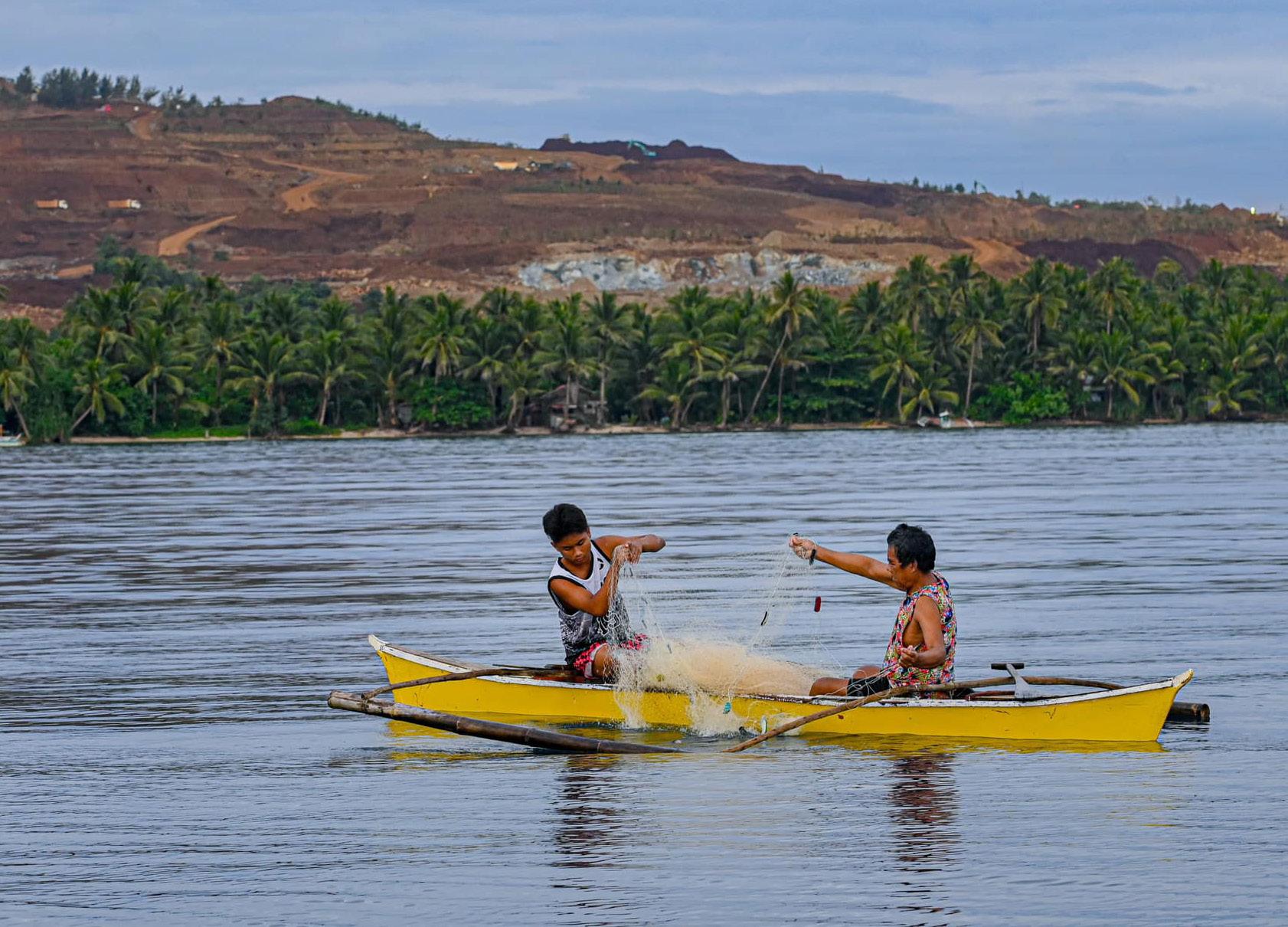
wildlife, and public waterways. Additionally, using the device encourages the growth of eco-friendly technology and helps reduce the environmental footprint of business activities.
Bagging the Regional Science, Technology, and Mathematics Fair in the Robotics and Intelligent Machines category, the researchers still seek to improve their experimental device despite its positive results in its effectiveness after being assessed by 20 professionals with expertise in the field, including two marine biologists from Eastern Samar State University. The assessment showed that the device works effectively, is dependable, and operates efficiently, marking a major step forward in maritime technology for tackling oil spills. The researchers have created an innovative solution that boosts environmental protection efforts while reducing the need for extensive human involvement. This development is set to make a meaningful difference in marine ecology and environmental management, showcasing the potential for further progress in this vital area.
All in all, oil spills pose a significant threat to marine life, human health, and the environment. However, the trailblazing work of Escoto, Tiu, and Arceno offers a promising solution. Their remote-controlled device using Arduino and IoT technology effectively detects and manages oil spills, minimizing environmental damage. With positive appraisals from experts, their technology reduces the need for extensive human involvement and shows great potential in protecting marine ecosystems. This breakthrough highlights the power of young researchers in driving progress toward a more sustainable future.
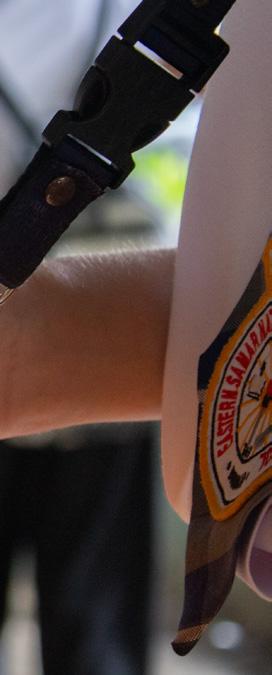
fying whether the student entered the school or not, in cases of accidents or emergencies where the school may be held liable.
Along with Sir Edwin R. Abobo Jr., an Information and Communications Technology teacher from ESNCHS, Sir Gallano designed and programmed the system with the use of Visual Basic programming language in 2023. As stated by Sir Gallano, the project was solely based on the Radio Frequency Identification System (RFID) with the key components being the kiosk, the scanner, the software, and the modem responsible for disseminating messages through the short message system. He started the development of Gate Attendance Plus by creating a prototype motivated by a thesis study he encountered during his college years, as an Information Technology major. However, the idea of adding a barcode scanner that sends text messages about the whereabouts of the students to their parents was originally proffered to him. As we speak, there are a total of five kiosks within the premises of ESNCHS, and only three are operational at present. According to Sir Gallano, the implementation of the project for the Academic Year 20242025 is only a trial run, on account of the inadequate preparations and professionals to handle the said technology. By the same token, Sir Gallano believes that there are still more advances to be made to elevate the project to attain the school’s objectives to safeguard the entirety of the student population.
The school guards also play a pivotal role in terms of the project’s cybersecurity measures, where
students can forge the attendance of a fellow student just by scanning their school identification card on the kiosk. With the help of the guards, the student’s identity can be accurately determined by facial recognition with the photo that appears on the screen of the machine. Additionally, the developers of Gate Attendance Plus have not yet noticed any more issues regarding its activation, thus far.
With all of the disarray occurring within the gates of the largest, most populated high school in the province of Eastern Samar, mere manpower is not enough to maintain the security of its students. It is during times like these when we should embrace technology, especially when it contributes to our betterment.
by Cherry Baquilod

The province of Eastern Samar has long been a paradise of minerals and natural resources, which probably accounts for the eager acts of extraction of many foreign mining companies,
people of the Philippines, most especially
continues to spread,
help but chime in the feud. Only wanting what’s best for the island, that is Homonhon.
In The Light of Estehnanons
The residents of Eastern Samar beg to disagree with the Guiuan mayor, Hon. Annaliza Gonzales-Kwan, after claiming the operations in Homonhon to be beneficial for the island and its people. They can see the economic toll that the mining cast on the future of the province. According to an article in Manila Bulletin, Eastern Samar official, Ray Cimatu, along with th multiple officials and representatives from all over the province protests to put a stop to the operations in Homonhon Island, as they continue to kill the island with 16 million pesos worth of chromite and nickel.
According to an article published by Rappler in their official website, there are, at present four mining companies that are currently operating on the island: Emir Mineral Resources Corp., Chromite King Inc., Nickelace Inc., and Mt. Sinai Mining Exploration and Development Corp. With four mining companies, the island is sure to decline, in terms of its economic state.
The Cascading Fallout
Mining is a significant driver of deforestation. Not only do mines clear
native forests for mineral extraction, they also often establish new access to land and further clearing, according to Science Direct. Forest loss and fragmentation have serious effects on biodiversity, yet rarely are these cumulative impacts of mining studied at the regional state. Weathering and erosion are also caused by mining. Because digging and blasting break rock into smaller pieces, waste rock has more surface area exposed to chemical weathering. For some mining wastes, this is only a small problem. However, some waste rocks create hazardous conditions when chemical weathering mobilizes metals or other undesirable chemicals that make groundwater highly acidic.
Relics Of The Past
The National Geographic Science states that enabling the extraction of non-renewable resources may result in greenhouse gases that will damage the lithosphere once abused. Non-renewable resources, by the name itself, are irreplaceable minerals that, if destroyed, may lead to the decline of humankind, because the energies that the minerals contain are those that humans depend on.

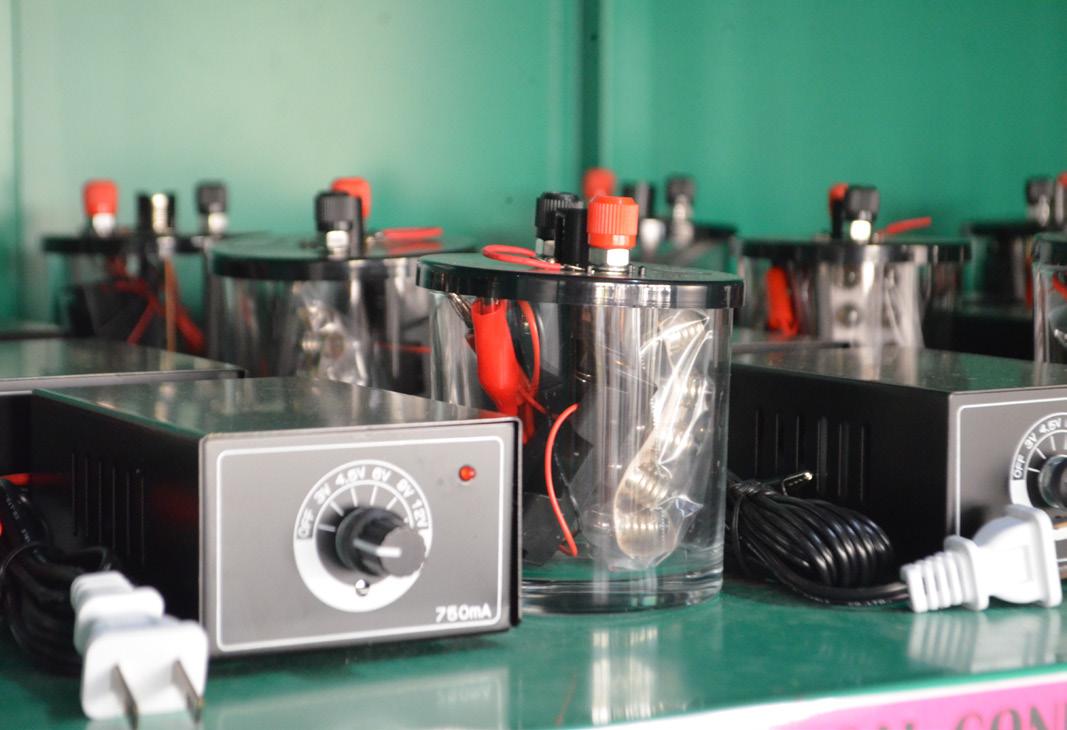
The Pathway to A Healthy Planet
All in all, the benefits that the operations in Homonhon provide are only temporary. In the long run, if these harmful human activities continue to occur, their habitats will deteriorate. It is still themselves that they will betray. As long as we breathe, we, inhibitors of the planet Earth, are the guardians of our surroundings. We should always keep in mind the future of our lives, and that we are still in charge of it, if we mind our actions in the present.
bythenumbers As of November 2024, of Homonhon’s barangays have active mining operations.
Source: Inquirer.net
by Jan Antoniete Dator
New laboratory equipment and materials revitalized the Eastern Samar National Comprehensive High School’s (ESNCHS) Department of Science and Technology (DOST) laboratory back to its former vigor, after having been operating minimally due to lack of science apparatus for years.
The grant, provided by the Department of Education’s Bureau of Learning Resources (BLR), included various of laboratory apparatus, particularly science models focusing on biology. The materials were delivered in October 2024 and are intended for use in both junior and senior high school lessons aligned with the curriculum. Elizabeth Corteza, Science Laboratory in charge, relived the state of the
laboratory years ago, “More on instruments iton hatag yana, pero masguti iton chemicals,” said Corteza.
“Han una nga mga years, kuan it hiya, although yana maskuan it iya production, masmadamo yana iton instruments, pero kun ha chemicals, gutiay la” Corteza remarked, highlighting both the improvements and the areas still in need of support.
by Denver Macapanas

hat if the answer to our energy woes lay not in sprawling wind farms or massive solar arrays but in something far smaller—the microscopic world of algae? In a world increasingly desperate for sustainable energy solutions, innovations often arise from the most unexpected sources. Enter biophotovoltaics (BPV), a new technology that utilizes photosynthetic microorganisms to produce electricity. Thanks to the pioneering efforts of Yaz Verlie A. Bagas, Jeanner Glyna B. Alura, and Yoko Odyssa C. Yodico, students from ESNCHS, the potential of BPV systems is now illuminated, placing the Philippines on the map of renewable energy ingenuity.
Harnessing Nature’s Power

BPV technology works by converting sunlight into electricity through photosynthetic microorganisms such as algae and cyanobacteria. This eco-friendly method uses microorganisms to develop bioelectrochemical systems, effectively creating living power plants. Among these organisms, Nannochloropsis oculata stands out as a promising candidate. This saltwater-loving microalga performs exceptionally well in photosynthesis and energy conversion which thrives in stressful conditions. With its abundance of pigments that maximize light absorption, Nannochloropsis oculata holds immense potential for renewable energy applications.

Optimizing the growth conditions of Nannochloropsis oculata improves voltage output, making it a viable alternative to fossil fuels. However, challenges remain. Inefficient electron transfer from photosystems to external electrodes and competition among metabolic pathways can limit power output. These issues are being addressed through improved system designs and refined cultivation methods, including the innovative efforts of the ESNCHS inventors.
Meeting Energy Demands Sustainably
The Philippines faces unique challenges in its energy landscape. A rapidly growing population with increasing electricity demands leaves many areas underserved by traditional power grids. Diesel generators, commonly used in these areas, are both expensive and environmentally damaging. The Renewable Energy Act of 2008 prioritizes sustainable energy sources, yet significant gaps remain.
Biophotovoltaics could fill these gaps by leveraging the Philippines’ abundant natural resources, such as sunlight and marine environments conducive to algae growth. BPV systems offer a sustain able, locally adaptable solution. Inno vations like those spearheaded by the ESNCHS team could transform rural energy access, reducing dependency on polluting fossil fuels while promot ing environmental preservation.
by Cherry Baquilod
nvision a world where bamboo replaced
supporting local economies and enhancing our quality of life. By recognizing the value of bamboo, we can better understand its potential to provide sustainable materials for construction, furniture, and crafts, all while promoting eco-friendly practices.
Did you know that Bamboo, also known as Bambusa, is the fastest growing plant? Bamboo is versatile and has notable economic and cultural significance in South Asia, Southeast Asia, and East Asia, being used for building materials, food source, raw product, and depicted often in arts, such as in bamboo paintings and bamboo working. It is also considered a lucky plant, and Feng Shui practitioners use it to promote positive energy flow. According to BioMed Central, bamboo has been identified as a potential instrument for socioeconomic development due to its fast growth, perceived environmental benefits, promising material properties, myriad applications, and relative underdevelopment as a global industrial
product. Many projects and interventions have been carried out that aim to utilize
Despite its promise, biophotovoltaic technology is still in its early stages. Key research focuses on enhancing electron transfer efficiency and maximizing energy output. Recent advancements include improved electrode designs with larger surface areas and reduced diffusion distances. Hybrid systems combining BPV with other renewable technologies are also under exploration to boost overall energy generation.
The ESNCHS project exemplifies grassroots innovation. Their work on refining Nannochloropsis oculata cultivation and integrating these findings into scalable, cost-effective BPV systems highlights the potential for meaningful contributions to global energy challenges.
Biophotovoltaics is more than a novel energy source; it represents a fundamental shift in how we view sustainability. By harnessing the power of microalgae like Nannochloropsis oculata, we unlock cleaner, greener pathways to energy that reduce reliance on fossil fuels and mitigate climate change. However, realizing this potential requires collective action, investment, and a commitment to innovation.
Are we ready to ignite this green revolution? The groundbreaking work of Bagas, Alura, and Yodico is more than a beacon of hope—it is a clarion call to action. These innovative strides in biophotovoltaics show that transformative change is within our

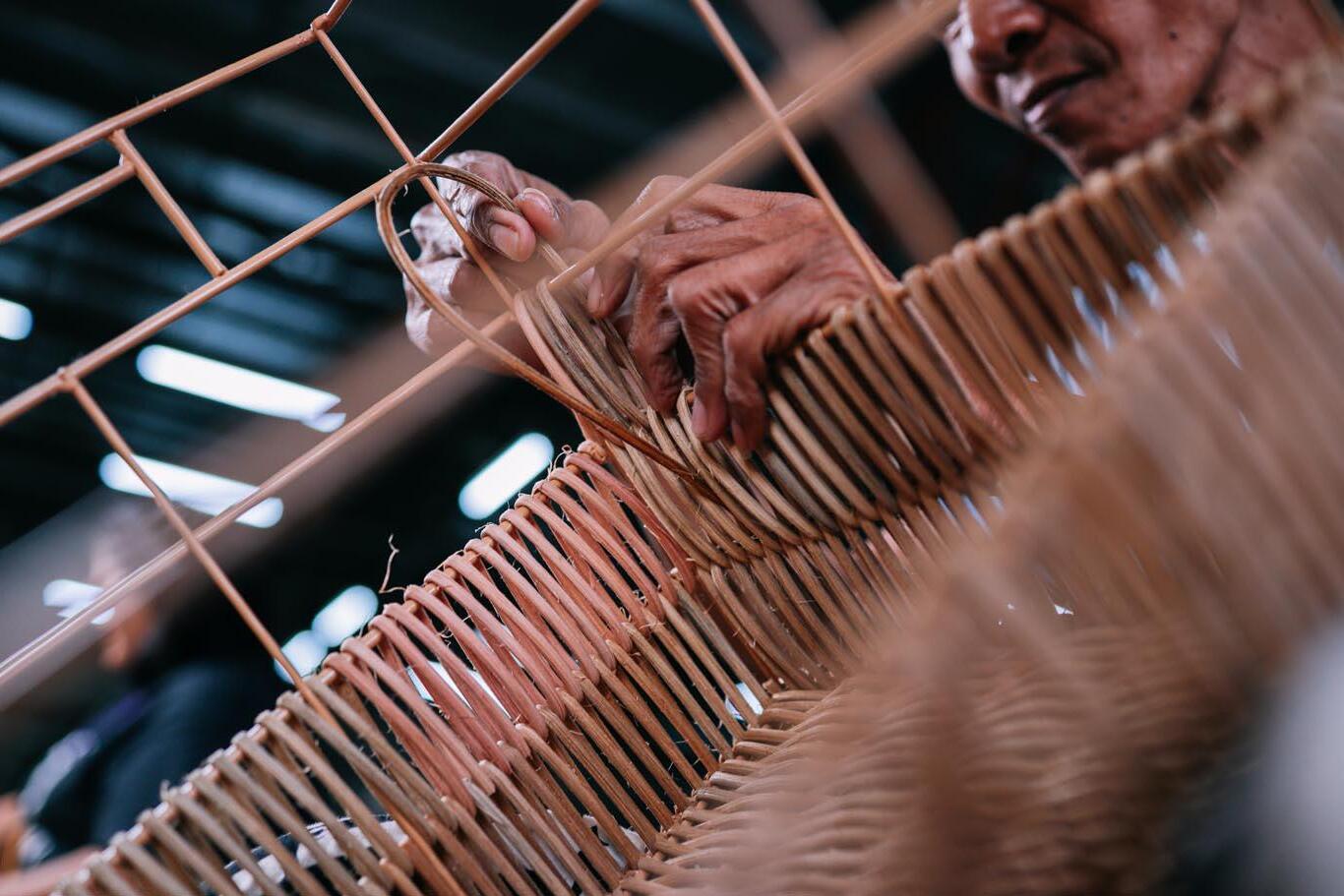
The rapid growth rate of bamboo allows for quicker harvesting
loads in extreme weather conditions. The City of Borongan is well-known for its unique bamboo products. For instance, Bato E-Bamboo



by CLAUSE WAYNE AMBIDA


by URIEL GARDIOLA
PASIG CITY, Manila — Watched by 31,000 live viewers, Borongan City’s pride Oasis Ballers bagged the national title during the Men’s Regular— Under 16 bracket during the 2024 National Youth Basketball League (NYBL), at the Ynares Sports Arena, October 18.
Oasis Ballers, known for their dynamic playing style and team cohesion, bested National Capital Region’s PCU Baby Dolphins in the coveted final phase, who were equally determined to claim the championship title.

Borongan’s bets locked in a slim 65-58 lead in their last game that completed their undefeated run in the league.
“I wasn't expecting to win in the nationals and felt the glory of God in me. We take one game at a time, motivate players on the defense and follow the system on offense,” said Oasis head coach Erwind Uy in an interview with The Courier.
NYBL Pilipinas, founded by Coach Fernando Arimado is a premier basketball initiative aimed at nurturing young talent within the National Youth Basketball League (NYBL).
Coach Arimado, renowned for his dedication in youth development and innovative coaching methods, the program emphasizes skill development, sportsmanship, and team cohesion.
Under the leadership of Coach Arimado, NYBL utilizes state-of-the-art training techniques and facilities, wherein participants are provided with opportunities to enhance their abilities, compete at higher levels, and gain valuable mentorship.
Moreover, their initiative not only focuses on athletic prowess but also instills values of discipline, commitment, and leadership among its players.

PHOTO BY KARRI UY
PRIDE. BCTC athletes brought pride to Borongan with 10 medals—1 gold, 3 silver, and 6 bronze—at the 7th Heroes Taekwondo International Championship 2024 in Bangkok, Thailand.

Thailand — Members of Borongan City Taekwondo Club (BCTC) proved their mastery in the game as they bagged multiple awards in Bangkok, Thailand after participating in the 7th Heroes Taekwondo International Championship 2024, August 10-12.
The local heroes, representing the Philippines, brought home one gold, three silver, and six bronze medals to tally a 10-medal overhaul.
The event garnered over 20 countries to participate worldwide with BCTC being invited as part of the Philippine team.
Moreover, various categories available in the tournament ranged from under 4 years old up to Master's event (over 60), with four main event types including Kyorugi, Poomsae, Poomsae-freestyle, and Taekwondo Dance.
Furthermore, the event was organized by 5th Dan Taekwondo Black Belter and former Top 15 Miss Universe Thailand 2015 Cassandra Haller.
International caliber talent
BCTC first tasted their international competition on
August 10, where Oscar Dulfo III received the Bronze Medal in the Under 9 Kyorugi Category, followed by Dwayne Amosco receiving the Gold Medal in the Under 12 Kyorugi Category.
Following the day 1 hauling, August 11 saw Clause Ambida’s bronze medal in the Class A Under 17 Kyorugi Category, then coach Sherwin Ambida’s bronze medal in the Masters Class Under 50 Kyorugi Category only to be wrapped up by Larry Dulfo receiving a silver medal in the Masters Class Under 40 Kyorugi Category.
Completing their international journey on August 12, Oscar Dulfo III received the Bronze Medal in the Under 8 Poomsae Individual Category, while Dwayne Amosco received the Bronze Medal in the Under 12 Poomsae Individual Category Class B.
In addition, Alexandra Beato, Queen Zenette Tonogbanua, and Jaden Dustin Jatulan brought home silver medals in the Under 12 Poomsae Mix Team Category.
EDITORIAL by MARCEL ENCINAS
The 2025 Borongan City Athletic Association (BCAA) Meet posed, to the student-athletes, yet another requirement with regards to scheduling. This month-long time frame event which is packed with innumerable activities per week calls for a careful balance not only in terms of athletic achievement but also academic excellence. Will these young athletes be able to balance their education without compromising their school life?
While the pressure to perform best in both aspects is not new, it has always been a delicate balance for studentsathletes especially with a long athletic meet, due to there being students who are made to prepare very hard, there is a real threat that academics would be placed on the unwelcome seat. It is commonly thought that the focus of concentration training does not dwell on education as both realms conflict in terms of attention. Though pressing, it is a risk that many are taking that may curtail their chances in the future.
There may be opportunities for glory
on the sporting field but student-athletes should prioritize their academic work. For a majority, sports will eventually be pursued for a time, while education will remain with them throughout their life which will aid them in their endeavors for the future. Success in learning the classroom contributes to the development of resilience and of critical thinking in life even those that set their dreams on becoming professional athletes.
However, this more intelligent approach is not easy since both worlds require different types of investments. In this case, academics help in achieving a
successful career after an athletic career. Losing faith is often not a viable option, especially regarding how BCAA’s long length can drain one’s hopes on multiple occasions. The schedules of a student athlete can be exhausting, isolating, and demoralizing and can ultimately lead to stress and emotional depletion.
There should be collaborative efforts from the educational institutions and student-athletes involved. Institutions should consider sending emails informed about study responsibilities to their student-athletes and provide appropriate academic support, for
instance programme wide deadlines and study support that does not interfere with practice times, for their student athletes. On the other hand, student-athletes must understand that they are in charge because their existence is dependent on achieving the required equilibrium.
It is imperative that if student-athletes tackle such challenges, they can enhance their ability to cope with difficult situations and manage their time effectively when it comes to balancing the unbalanced. It is not only feasible but rather necessary for the long term to manage studies concurrently with sports.

The legacy of the man behind one of Borongan’s meteoric sporting organizations
by LORENCE ESTROBO
Amid the development of the sporting landscape in Borongan
few are able to ignite it the same way as this local enthusiast has in recent memory.
Known by his peers as ‘Kuya Kap’, or ‘Kuya Ian,’ 36-year-old Ian Galo shares a quality of what enthusiasts have hardwired into their systems—to do the things they love. For him, it was his unwavering love for sports.
From his youthful years until now, he has been immersed and enamored with sports. As age has caught up with him, he has been laid back in actually joining the events themselves in the recent years. Despite not maintaining the prowess he once had in his hay day, his ability to organize and handle sports events shines through, ensuring maximum extraction on performance—hence, the conception of his very brand.
Humble beginnings
During the scourge that was the COVID-19 pandemic, people were trapped in their homes without much to do. According to Ian, this was the perfect opportunity. Seizing the moment, the group was created informally, brought about by what sports stood out in those times. Overtime, he witnessed the potential of where athletes can go, should the circumstances line up for it. Thus, HBSK Sports came into being, seeing light for the first time.
Initially dubbed as Home of Borongan Sports Klub, Ian had just flirted with the idea of creating a mere group, but in his mind had already drawn the blueprints of the future it held. By July of 2021, his newly made team, with him serving as chairman, had successfully delivered his athletes to compete in the Borongan - Sulat Race. The event, though impressive, had received little headlines to back up its quality. Soon after, by November of the same year, HBSK would gain its first taste of a talentmarred field coming from different municipalities of Eastern Samar—the Borongan Classic Bike Race. This spiraled into a series of successful events staged by HBSK that sparked headlines in Borongan City. Ian was living his dream, and as he hoped, it did not stop there.
A meteoric rise
Following the rapid ascent of the organization, the man had banked on the recent hype garnered by the field of cycling. Like a honey bee searching for nectar, this was the sweet spot. As a developing sport in the city around this time, the team would shift to another regional-level event, the Ay! Borongan Road and Criterium Race, participated by the host city’s riders and also those from


Tacloban, Leyte.
However, unlike Borongan Classic where the competition was dominated by the local bets, Ay! Borongan would seize a Tacloban overhaul, garnering 15 awards in the criterium, then championing the road category. Though Borongan was outpowered, Ian still felt that his goal was achieved. The event proved who was the best, largely influenced by a proper handling of the organization, for he and his team gunned for the credibility of the sports as a primary objective.
“Diri it yaada hit kadako hit participants it pagbase hit kasuccessful hit event. Aada it hiya hit credibility hit games,” reflected Ian on his philosophies of organizing events.
Borongan, during these times,
Lord, this year I'll give it my all. I hope fate will finally That


was no longer novel to the concept of top-caliber competition for it had garnered multiple recognitions of the matter in the past. The HBSK brand had just added to this exposure and was gearing up for its national cycling event, widely known as Borongan Classic II—the second iteration of the now famous series originated in the city, held in mid-December of 2022.
Locals participated in the event once again, but were joined by professional sporting groups, via Team Go for Gold Philippines, and the Excellent Noodles Cycling Team.
From what seemed like HBSK testing the waters on where to lean on, they suddenly had the nation’s prime contenders joining in to vie with them together.
Since then, Ian has continued

This year carries extra weight for the hopeful athlete. Having tasted the experience of competing at the Pambansang Palaro in 2019, the subsequent years brought the sting of not qualifying. This year, then, is a chance to reclaim that spot, to return to the national stage and prove his continued growth and dedication to the sport.
Matt’s journey into the dynamic world of Taekwondo began with a simple childhood curiosity. Around the age of nine, he would often pass by and observe children training.
“Every time I passed by the ESEC building, I saw children training in Taekwondo,” Matt recalls. “I eventually asked my parents if I could also enroll, and they gave their approval.”
What started as a childhood whim quickly blossomed into a dedicated pursuit. Matt has poured countless hours into mastering the intricate techniques and disciplines of Korean martial art. His dedication hasn't been without its challenges as facing tough competitors is a constant hurdle.
“Talented opponents are, of course, the biggest challenge in my athletic career because I consider them a threat to my goals,” he admits.
However, Matt possesses a unique perspective, one that speaks to his character. Even in victory, a sense of empathy lingers.
“It also comes to my mind after winning a tournament that my victory means ruining the dreams of my defeated opponent, and it also bothers me,” he shares. This sensitivity reveals a young athlete who is not only focused on personal achievement but also aware of the impact his actions have on others. His empathetic nature is perhaps what makes his past experiences even more poignant.
After competing at the national level in 2019, the subsequent years
on organizing more events, slowly testing out more sports other than cycling. The team expanded to a multi-sports organization by 2023 and has bred out events tainted towards that. Following more improvements, Ian shifted to renaming his club to the now renowned ICG Sports, built around his name.
Dawning the ‘rest, don’t quit’ mindset
As a growing organization, Ian and his team set out to have one common goal in mind—to craft great athletes. Though Ian was surrounded by talented athletes, they are still practically diamonds in the rough. He said that it is the efforts brought by these athletes that make them truly
brought the disappointment of not qualifying for the Palarong Pambansa.
This year, however, Matt’s dedication was recently rewarded with a gold medal finish in his weight category at the Borongan city meet, qualifying him for the Eastern Visayas Regional Athletic Association (EVRAA) meet.
He is currently engaged in rigorous preparation, focused on refining his skills for the regional competition. With his recent win and his sights set on EVRAA, that dream of returning to the national stage is burning brighter than ever.
For Matt, the rewards of his hard work far outweigh the sacrifices.
“It’s so fulfilling to see that all my sacrifices yielded positive results,” he says.
This sense of accomplishment fuels his drive to continue pushing his limits and striving for greater heights in the world of Taekwondo.
His story is more than just a tale of athletic pursuit; it's a story of discipline, empathy, and the pursuit of excellence. He’s a young man balancing the demands of academics and athletics—demonstrating that with dedication and a compassionate heart, achieving one’s goals is a real possibility, and not just a mere dream. He is a testament to the transformative power of sport, shaping not only physical prowess but also character and perspective.
Despite past setbacks, he remains resolute in his pursuit of a Palaro berth. He understands that achieving his goal requires not just talent, but also unwavering dedication and a spirit that refuses to be broken. This year, Matt Brandon Ortiz is determined to let his actions speak louder than words, striving to prove that with unwavering will and a heart full of hope, he can transcend his limitations and achieve greatness.


great.
“Natural progression of things, naangat ka hit im level. Mapa amateur level ma it, pero ngin kumita ka nga may potential hit im mga players, you start flirting with the idea of going for professional level,” Ian vocalized. “The quality of athletes here in Borongan, [is that] dako it ira potential. Though nagkakatalo la ha grit and determination.”
To him, every player should have it in them to take a halt, though not nullifying their progress by simply stopping. It is synonymous with his undertakings as club chairman. Years have passed since the organization’s highs, but they remain operational, no matter how slowly the pace. At its core and center, Ian sees his team lasting through a





sports, discipline, grit, camaraderie, development, and most importantly, the will to keep going.
Though it is without question that heading a multi-branched sports organization is a gargantuan task, it cannot be denied that the native from Borongan City still has his eyes unfazed by any challenge set in the future. Whether it is the funding aspect or the sheer size of it all, his passion still remains on top of his system.
Truly, Ian has proven their ‘rest, don’t quit’ mindset to be the key to greatness and aspires to imprint it onto whoever joins him in ICG Sports’ journey into the future—one filled with passion, hope, and the undying love for sports.
You cannot put a price tag on your passion.
to focus solely on their athletic development. This structured approach yielded commendable results, achieving a significant improvement in our overall district ranking, with Borongan City notably stepping up to a higher position than in previous years. This success was met with much fanfare, with district officials promising to increase the budget for training and competition expenses to maintain, and even surpass, the previous year’s achievements.
However, this year, a chilling silence has descended upon our athletes. The district, seemingly obsessed with replicating last year’s success, has inexplicably withdrawn its support, leaving our athletes to train solely after school. This drastic reduction in training time forces our athletes to juggle their academic responsibilities with their athletic pursuits, creating an unsustainable burden. The lack of dedicated training time significantly hinders their ability to improve their skills, develop their physical conditioning, and adequately prepare for the rigorous demands of EVRAA.
Adding to the frustration, the athletes themselves have reported that their concerns regarding the lack of budget for training and competition expenses have been largely ignored.
This not only hinders their ability to prepare effectively but also sends a disheartening message about the district’s commitment to their success.
District IV remained on top of the food chain after collecting a 156-medal production (82 gold, 49 silver, 25 bronze) then holding their fourth overall champion production, a streak which they have held since 2019. District IV was participated by elementary representatives coming from Taboc Elementary School, Bato Elementary School, Cati-an Elementary School, Can-abong Elementary School, host Eastern Samar National Comprehensive High School, and Saint Mary’s College of Borongan.
Following District IV on top, District II trailed with 131 medals to finish as runner-up, with District I
Going beyond this victory means not just opening the Olympics to kiteboarding, but also opening other opportunities for remote places around the world, such as Borongan.
With dramatic scenery, consistent breezes, and world-class conditions for kiteboarding, it has become a mustvisit destination for adventure seekers.
This is definitely great news because it boosts tourism and its potential sustainability, which are key to the thriving of any sport.
Wind-Powered Mastery
Kiteboarding is a thrilling combination of surfing and wind power that has captivated adventurers around the world. It's much more than a simple ride on the wind—it's a unique fusion of athleticism, technique, and science.
Athletes skillfully navigate both wind and water, combining precise control and daring maneuvers in one of the most exhilarating experiences in extreme sports.
Despite its great popularity, kiteboarding remains somewhat esoteric to many, especially when it comes to the science and mechanics that make the sport feasible. At its core, kiteboarding is about harnessing the power of the wind to shoot across the surface of the water. The rider, through lines attached to a harness on their body, controls a kite of considerable dimensions, and the wind generated provides the necessary force to drag the board.
The mechanics of kiteboarding are based on several scientific principles, primarily aerodynamics and hydrodynamics. Aerodynamics is the study of how air flows around moving objects, and thus it plays an important role in kiteboarding movement. When the wind hits the kite, the airflow splits into two: one flows above the kite, termed the extrados, and the other below, referred to as the intrados. The shape of the kite forces the air above it to move faster, thereby lowering the pressure relative to the higher pressure below. This pressure difference creates lift, which is the force necessary for keeping the kite in the air. According to Landell-Mills in his article Kitesurfing
Explained by Newtonian Physics, about 75% of the force drawing the kite back comes from the upward suction force, while the remaining 25% is from the direct push by the wind on the intrados.
Though the science of aerodynamics governs how kites fly, the science of hydrodynamics dictates how riders ride the water. In this case, the design of the board has a lot to do with the glide over water; the surface
area and shape determine drag and speed.
Meanwhile, the angle of attack (AOA) is critical in controlling lift; it refers to the angle between the kite’s surface and the oncoming wind. An ideal AOA ranges from 5 to 20 degrees; too little or too much can lead to stalling, where the kite loses lift and may crash. LandellMills also explains that by adjusting the AOA through bar control, riders can optimize lift and thrust, allowing for better performance and maneuverability.
Besides lift, four other basic forces interact with kiteboarding: lift, drag, weight, and thrust. Lift is used to describe the force that pushes the kite upwards, lifting it into the air. The opposing resistance acting on its movement is drag, and weight refers to the gravitational effect on both the rider and equipment; thrust is captured through the kite, where it is energy in the form of wind. For flight to be stable, these forces must be balanced: that is, lift must equal weight, and thrust must equal drag.
According to Kitesurf Experience, a popular website about kiteboarding, the basis of kiteboarding depends on how well one understands the nature of wind interactions with kites. When air flows over a kite’s surface, it creates both lift and drag. Lift occurs when the wind splits at the leading edge of the kite and flows above and below it. The air that flows over the top is accelerated, thus being at a lower pressure than the higher pressure on the bottom side of the kite, which pulls it up. This action is based on the angle of attack; when riders adjust this angle by pulling or releasing the control bar, they can maximize lift while minimizing drag. In addition, an ideal AOA between 5 and 20 degrees is necessary for stable flight; too steep an angle can cause stalling, and too shallow may not generate enough lift.
Riders must lean into the wind to keep tension in their lines, which is essential for controlling their trajectory and executing tricks. This interplay between aerodynamics and rider input allows for impressive maneuvers that showcase both skill and artistry. Maintaining a balance between lift and drag is of great importance; the National Air and Space Museum further illustrates this fact by showing that for a kite to be flying steadily, there must be equality between lift and weight, while thrust will oppose drag.
As more and more people experience the thrill of kiteboarding in Borongan, the local communities have started to see the economic and tourism benefits brought about by the sport. Apart from its natural attractions, kiteboarding promotes environmental awareness of the pristine coastline and marine ecosystems of the region.
The absence of adequate training facilities, the lack of nutritional supplements, and the dearth of full time guidance have left our athletes feeling abandoned and demoralized. They are expected to compete at their peak, yet they are denied the very resources that would enable them to reach their full potential. This disregard of their needs not only jeopardizes their chances of success but also sends a saddening message: victory is paramount, and individual growth is secondary.
True sportsmanship is not merely about winning medals. It is about fostering a love for the sport, developing discipline, building character, and learning valuable life lessons through teamwork and perseverance. By prioritizing victory over the wellbeing of our athletes, we are not only undermining their potential but also distorting the very essence of sportsmanship.
If the district truly desires to maintain a high ranking in EVRAA, it is imperative that they fulfill their promises and provide the necessary support for our athletes to thrive. Our athletes deserve better; they deserve the support, the resources, and the encouragement they need to thrive. Let us not sacrifice the future of our young athletes on the altar of misplaced ambition. Let us prioritize their holistic development and nurture a genuine love for sport, rather than burdening them with the weight of unrealistic expectations.
serving as third with 118. Rounding out the podium, District III landed on fourth, while District V tallied the least medals among the five districts.
Improvement through prep Despite staying overall winners for four consecutive years, District IV cracked on several sporting categories in last year’s edition of the games such as the Men’s Regular Basketball and Men’s Volleyball but were won back by this year’s iteration through improvements on the athletes’ performance. A part of it coming into fruition
was due to the 2024 Division Sports Clinic being undertaken from October 12, then continued on October 18-19, as preparation for


World Champ ‘Ahas’ Nietes impressed with boxing quality in Borongan by REE
In an interview with The Courier, the boxing sensation shared his insights on the Boronganon’s, who went toe to toe with various boxers from across Eastern and Central Visayas.
“Nakikita ko sa mga taga Borongan, magagaling ang



by SEAN ANDREI GUIAL
Borongan — Not even rain can stop District IV’s manhandling of the opposition.
District IV footballers from Eastern Samar National Comprehensive High School (ESNCHS) clinched the gold medal after fending off District I’s Sta. Fe National High School (SFNHS), 8-0, during their championship game of the Borongan City Athletic Association (BCAA) Meet 2024, December 11.
District IV dismantled District I’s play after essentially restricting the latter from gaining any points from all phases of the game to which they maintained up until the finish.
Following their victory, District IV
is slated to compete in the upcoming 2025 Eastern Visayas Regional Athletic Association (EVRAA) Meet later down the line.
Rain as roadblock
Before cruising to a complete sweep, ESNCHS made more adjustments amid the soaking rain rather than their actual opponents as the rain-marred sporting meet took a toll on many events also held in the oval.
The team uncorked their composed defending as a means to keep scoring stability rather than going aggressive towards the game itself.
Unopposed competition
Having made it to the finals phase with poise, District IV tallied an initial 2-0 production to set off the lead, brought by group efforts with still anyone to collect a decisive breakout.
With no valuable escapes so far, the team’s youngest bet and center forward Christian Russel, electrified the crowd with his livewire performance, enabling most of the team’s successive goals.

Right by Russel’s side, defender Kenrick Plaqua, and co forwards Jhonuel Lavado and Kyle Bianes each scored goals that piled up for District IV’s overwhelming lead. On the other hand, District I forward Michael Casillano proved relentless, ensuring that despite the opposition gaining scores, they would not register without disruption. Unfortunately for District I, their efforts were just not enough to convert what District IV had established by then which culminated with an 8-0 override that ensured them their victory.




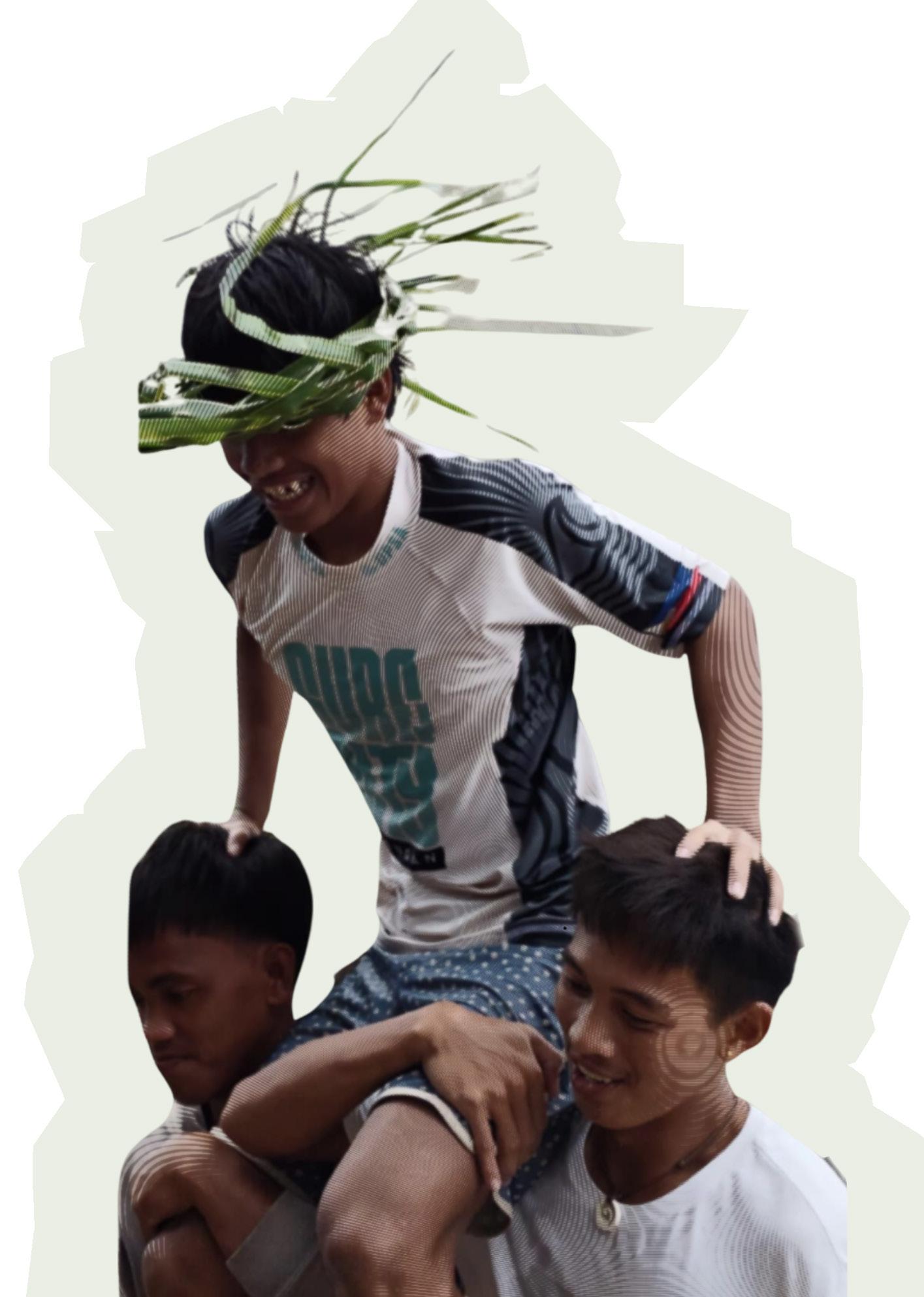


BARANGAY BATO COURT, Borongan — District IV representatives coming from Eastern Samar National Comprehensive High School (ESNCHS) clinched gold after pulverizing District I’s Sta.



spike production aided them in an attempt to shift the momentum back to their hands. Unfortunately for the seminarians, District IV had held off the necessary points to tally an 11-point manhandling to end their match for good, 25-14, that disallowed a third set and potentially a reversal from