Blue Spaces:
Working in partnership to improve local freshwaters in the UK
Jenny Wheeldon, Blue Spaces Manager
December 2025
Working in partnership to improve local freshwaters in the UK
Jenny Wheeldon, Blue Spaces Manager
December 2025
Esmée Fairbairn Foundation established the Blue Spaces programme in September 2022 to support communities to take action to improve their local freshwaters.
This report focuses on its development and the progress made achieving the programme’s objectives so far. It brings together learning from the funding process and highlights some of the brilliant work being done by place-based freshwater initiatives that we’re supporting across the United Kingdom.
By sharing this learning, we hope to demonstrate the impact of partnership and community-led work to improve freshwater habitats – for people and nature.
We’re excited about continuing to learn from this work and using it to shape Esmée’s future work. We also hope that it is useful to other funders, statutory organisations, environmental non-governmental organisations and community groups taking action on freshwater.
Jenny Wheeldon is the Freshwater Partnerships Programme lead at Esmée Fairbairn Foundation. Jenny joined Esmée on a secondment from Natural England, where she led on restoring protected rivers, including policy, delivery mechanisms and practice. She previously managed freshwater partnership projects in the charity, private and public sector. Jenny is an advisor to the cross-UK IUCN River Restoration and Biodiversity programme, River Restoration Centre and the Chalk Stream Physical Habitat & Ecology Expert Panel.
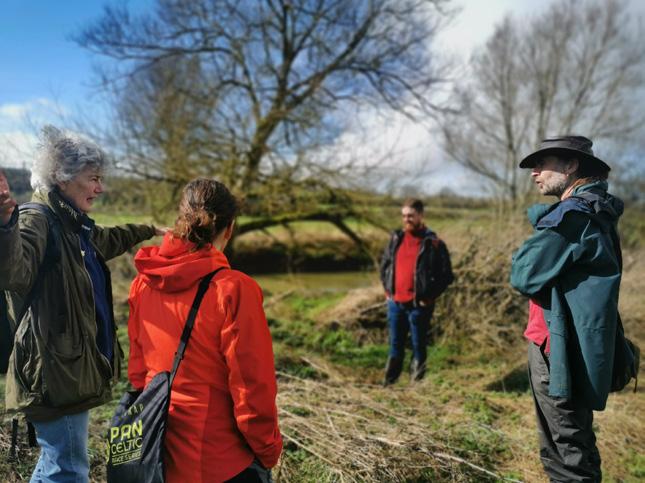
Left Jenny talking to Cwm Arian and the Evenlode catchment partnership by the River Evenlode.
When Esmée Fairbairn Foundation launched our strategy in 2020, we identified freshwater as a priority in our work to improve Our Natural World. As well as being a vital resource and habitat for wildlife, freshwater is a thread that connects our interests in how food is produced, how nature can be restored at scale and how communities can shape the places where they live – irrespective of their background, wealth, or privilege. Despite this, it is still overlooked by UK charitable funders.
Of £687m given to environmental causes in 2020/21, grants to freshwater were only £7.9m.
In 2021, we commissioned Cardiff University Water Research Institute to survey over 100 freshwater professionals about key future challenges and opportunities. Based on their findings, we prioritised our freshwater support in five areas:
• Delivery capacity and co-ordination
• Policy influence and campaigning
• Data and monitoring
• Green finance
• A proactive focus on place-based work
The Blue Spaces programme was set up in 2022 to explore ways Esmée could better support people to take imaginative approaches to look after the rivers, streams, lakes, ponds and wetlands where they live.
We appointed Jenny Wheeldon as a Freshwater Partnerships Coordinator to lead and manage the programme. Jenny was seconded into the role, bringing valuable freshwater sector experience into Esmée which may otherwise have been difficult to secure for a fixed term post.
Blue Spaces sought to support work at the intersection between two of our strategic aims: improving Our Natural World and supporting Creative, Confident Communities – with local people at the heart of driving change. We also recognised that traditional ways of involving communities in environmental planning and delivery were not accessible to all and wanted to support initiatives that were adopting more innovative approaches.
We aimed to encourage joint working between existing contacts and new collaborations, as well as proactively look for new partners. We also wanted Blue Spaces to reflect a range of stakeholder aspirations, engage communities, leverage additional resources, and enable more integrated approaches to freshwater action.
Areas we were particularly interested in included:
Demonstrating the role of freshwater habitats in addressing pollution, flooding, drought, and other effects of climate change.
Restoring and creating freshwater habitats and the recovery of freshwater dependent species.
Developing robust ways to report and share learning as widely as possible.
Developing innovative approaches to funding –including leveraging private investment.
Demonstrating novel approaches to understanding the health of freshwaters through innovations in monitoring and sharing information.
Embedding new ways of working that benefits projects beyond the funded period.
Addressing barriers and inequalities in the opportunity to influence, access, and enjoy freshwater environments.
Blue Spaces included both funding and learning support through a learning programme and peer network. The funding was primarily through development grants, which are smaller than Esmée's main grants. We used development grants to support organisations to develop their ideas and explore their potential to become sustainable longer-term initiatives. Our intention was to then support some of the development projects as longer-term grants. We recognised that we would not be able to support them all, so were conscious that any development funding should leave them in a better place.
Activities involve a mixture of environment, arts and community organisations, as well as public and private sector organisations. Pages 8 to 12 give an overview of the programme and our support. A map and list of projects is also on pages 34 to 36.
Esmée’s Involving Young People Collective (IYPC) worked on the Blue Spaces programme alongside Esmée staff to assess grants, support learning sessions, and evaluate the programme. The IYPC is a group of young people united by their passion for social change who are paid to work with us across all our activities.
Many of the Blue Spaces grants work towards more than one of Esmée’s 13 funding priorities. The key priorities are:
Learn more about the IYPC and their reflections on Blue Spaces.
We made a total of 26 grants across the UK.
Northern Ireland
1 development grant
1 main grant
development grants
4 main grants
1
7 development grant
main grants
These grants focus on building capacity in the sector, particularly as the Assembly is now active again, and which was highlighted as a need by organisations we fund as well as public and water sector bodies in Northern Ireland. We are supporting the Northern Ireland Environment Link freshwater task force to coordinate and support policy development and demonstration activities.
We launched a specific call for development projects in Wales as we had not received many applications for freshwater work in Wales previously. We were aware that there was innovative work underway, but partnership working at catchment scale had received little funding support.
Whilst these grants were not all specifically made as part of Blue Spaces, they met the programme’s aims, and they have joined the learning programme that runs alongside Blue Spaces funding.
Our funding to date Our support
Main grants
Development grants
£4.1m
Total awarded
37 months
Average term length; terms ranged from 24 to 48 months
Grants to 19 projects £3.4m Total awarded 12 Total grants
£282k
Average grant size; grants ranged from £138k to £540k
£736k Total awarded 14
Total grants 12 months
Average term length; terms ranged from 6 to 24 months
£55k
Average grant size; grants ranged from £16k to £90k
Blue Spaces had a number of objectives in addition to improving local freshwater.
Project activities met multiple objectives. This chart shows how many grants met each of the Blue Spaces objectives.
Many organisations had multiple focuses, with most having a focus on catchment management. Over half of the organisations also had a focus on arts and creativity, and nature protection and recovery.
Organisations new to Esmée
11 of the 19 organisations were new to Esmée and funded for the first time through the Blue Spaces programme – the majority of which are working in Wales.
Previously funded
• Transparent expectations required: Esmée was clear from the outset that not all development projects would receive long-term funding and required applicants to explain how the work would add value and avoid harm if further funding was not awarded.
• Trust vs. delivery tension: Building community trust is difficult when long-term funding isn’t guaranteed, and community priorities may not align with available resources.
• Alternative pathways: Some projects are progressing via other routes like Natural Resources Wales pilot catchments or income generation models.
• Farmer engagement barriers: Lack of clarity around potential complementary income sources for land managers, including farm support schemes, nutrient neutrality markets, and biodiversity net gain makes farmers reluctant to commit to new programmes.
• Skills and flexibility needed: Effective community engagement requires specific skill sets and adaptability to local needs.
• Remote access challenges: Reaching isolated communities is difficult without embedded local partners.
• Value of partnerships: Collaborations highlight the value of working with partners with complimentary skills. There is a need for local trusted partners in any community work, and partner costs to be adequately and equitably reflected in project budgets.
Role of arts and creativity
• Audience engagement: Arts and creativity can be effective ways to reach diverse and new audiences.
• Cross-sector collaboration: Different sectors need time and patience to develop shared language and working styles.
• Value of creativity: Arts bring unique perspectives and engagement techniques to environmental work.
• Models in Wales: The projects in Wales demonstrate a range of approaches to catchment restoration that include or are driven by communities.
• Models in Scotland: The projects in Scotland are demonstrating approaches that move away from prioritising fishery management to a more catchment focus, including or being driven by communities.
• Independence matters: Effective partnerships benefit from independent support, rather than relying on government or water company funding.
• New voices: Projects are engaging previously underrepresented groups in freshwater action. The involvement of Esmée’s Involving Young People Collective in Blue Spaces was key to assessing the ability of projects to do this meaningfully.
• Diversity, equity and inclusion (DEI): There is a strong desire from organisations working on freshwater for practical examples of how to embed DEI in their organisations and ways of working. There is also a growing recognition of the importance of this work but a lack of clarity on how to go about it or what help is available.
• Cultural context: Consideration of language and cultural heritage is vital to success in both place-based funding processes and project delivery.
• Citizen science: With high quality training, citizen science is an effective tool for data collection and engagement that can result in regulatory action on pollution.
• Time and flexibility: Building strong and effective community partnerships takes a lot of time. The support they need to grow effectively is varied and may not be clear at the application stage.
• Process and programme design: Funders may need to adapt their approaches and make changes to their standard application processes, balancing broad flexibility with targeted calls. Several respondents to our Wales call for applications were eligible to apply for our open fund but had never done so. A more specific call setting out the sort of organisations and partnerships we were interested in hearing from gave them confidence to apply to us.
• Development funding strengths: Development grants enabled experimentation and idea growth, encouraged new organisations to apply through targeted calls, and provided space for partnerships to form and evolve.
• Development funding challenges: The majority of projects needed more than 12 months to develop a shared vision of what they can achieve and how they will get there.
• Skills: The Blue Spaces funding managers’ cross-UK and specialist technical knowledge added value to assessments and the learning network. There is however a need to consider the capacity (skills and time) of a single funding manager and to take account of the need for wider staff resources e.g. finance, learning and communications teams to support any proactive programme.
• Asking about DEI: Conversations about DEI during the grant assessment process prompted applicants to reflect and act.
• Cultural awareness: Including provision of translation services is a key consideration in places with a strong cultural identity.
• Sharing knowledge: Sharing experience of working with underrepresented communities was a valued feature of the learning network; and there is an appetite from projects for more knowledge sharing and support on DEI.
• New and unusual partnerships: The approach resulted in partnerships that were broader and more diverse than usual. Organisations supported included arts and creativity practitioners, community energy, and coastal organisations. 11 of the 19 grantees had not been funded by Esmée before.
• Safeguarding: Responsibilities often needed clarification across the partner organisations, particularly when they lack experience of working more closely with communities.
• Independence: Independent sources of core funding for catchment partnerships are essential for legitimacy. Outside England there is no specific funding from government for catchment partnerships. Many are currently supported by regulator or water company funds, making it difficult for catchment partnerships to campaign on issues such as pollution and land drainage activities.
• Value of a learning network: The network added value, especially for newer or less connected organisations. Meeting face-to-face to share skills and experience was felt to be particularly beneficial. The learning network helped strengthen collaborations and provided peer support.
• Learning delivery: Whilst Blue Spaces didn’t use a dedicated learning partner, the Blue Spaces Manager took on this role with support from others including Esmée’s Learning Manager and the Involving Young People Collective. The strength of the Blue Spaces Manager delivering the learning element is their understanding of the sector as well as the supported organisations. However, they may not have always had the capacity of relevant skills. Their lack of independence from the funder may also inhibit the supported organisations from speaking freely.
• Participation costs: The cost of attending meetings and responding to funder requests should be factored into funding awards.
• High-quality, community-based ideas to act do exist and development funding can be an effective way to give communities time and space to develop them.
• Cultural and linguistic context is essential for rural engagement.
• Catchment partnerships need core funding to remain independent and effective.
• Sustaining what is started: To ensure positive outcomes can be achieved and sustained for communities in a place, it's vital that local people are at the heart of change and that the potential value and impact of the support on those communities is a core consideration of the project.
Insights from Blue Spaces are already informing the way that Esmée works, including our approach to other programmes such as New Connections, Youth-Led Creativity and our emerging approach to Seascapes.
The IYPC’s experience working on Blue Spaces helped them shape the Involving Young People Fund, a place-based, youth-led initiative using a participatory grant-making approach.
The Blue Spaces programme exemplifies the need to strategically allocate our resources. Place-based work will continue to be central to our efforts within Our Natural World, though we recognise it demands adaptability and sustained engagement. Consequently, there will be limitations on the number of locations we can prioritise. We are currently considering how to take this forward through our Seascapes programme. As part of our work in Creative, Confident Communities, we have also recently shared learning and our wider approach to place-based working.
Our broad freshwater outcomes allow us to support impactful UKwide projects, given the lack of independent funders in this area. However, being more specific, as with the Blue Spaces call in Wales, has attracted innovative proposals from new partnerships.
We’ll maintain a broad focus but will continue engaging with those working on freshwater to identify needs, understand impact, and transparently explain our funding decisions.
The Blue Spaces learning network has revealed a strong demand for skills development, knowledge retention, and effective communication within the freshwater sector. By linking newer organisations with established initiatives, we can help accelerate learning, foster collaboration, and strengthen the sector’s overall capacity.
Organisations supported by the Blue Spaces programme may depend on funding from regulators and those contributing to environmental pressures. Esmée’s independence as a funder enables us to support innovative approaches, respond swiftly to emerging opportunities, and empower organisations to challenge and influence decision-makers and polluters constructively.
In January 2025, Esmée commissioned Resources for Change to undertake a mid-strategy review of our progress on freshwater, including Blue Spaces. It explored the programme’s focus and impact as a place-based initiative as well as its use of a targeted call for applications. This helped inform some of the review’s recommendations on focusing funding and rebalancing it towards areas of greatest geographical need; strengthening the sector; the potential role of specific funding calls; and maintaining our independent approach.
We will continue to learn from and support the projects seeded through the Blue Spaces programme, as well as share learning on lessons and impact. This will help inform and strengthen other areas of our strategy, including our work on seascapes.
We remain committed to supporting community-led initiatives but we’re aware that the demand for support is much greater than we can meet. We are an open funder and will continue to consider applications for place-based and community-led action on freshwater.
We are specifically interested in work that demonstrates innovation in the scale of delivery; takes a partnership or collaborative approach; and seeks to tackle issues of wider interest to the community, including securing sustainable funding for catchment restoration and ensuring that marginalised voices are given greater weight in decision-making.
Learn more about Esmée’s Freshwater mid-strategy review
To understand how to prioritise our efforts, Esmée first held conversations with charities, organisations Esmée supports, and public and private sector contacts. We then established Blue Spaces projects around the UK through a mixture of inviting expressions of interest and grants. Our original intention was to ultimately select up to six partnerships across the UK to support longer-term change.
We initially focused on supporting development projects in Wales due to the high potential for learning and innovation. To help us reach beyond our existing networks and established partnerships, we launched an open call for projects in Wales to find and support organisations to develop their ideas, and explore their potential to become longer term, sustainable place-led initiatives.
The infographic on pages 20 to 23 gives an overview of the journey, the projects funded, and the organisations.
In Northern Ireland we prioritised support for capacity building to improve freshwater policy, regulation, and land management schemes. This decision was influenced by conversations with partners and external factors including restoration of the Northern Ireland Assembly, a review of the implementation of the Water Framework Directive, and public concern about water quality focused on Lough Neagh.
Esmée’s main funding route remained open for great ideas from across the UK that could contribute to our impact goals in any of our funding priorities, including freshwater. New and existing grants funded through this route and meeting our aims for Blue Spaces became part of the programme.
In late autumn 2024, we began considering the next steps for nine Blue Spaces development projects (seven in Wales, two in England). After assessing their progress against the original Blue Spaces criteria, recommendations for each project were made by a Esmée staff and the IYPC. A number were invited to submit a proposal for additional development or longer-term funding.
Following assessment of the resulting proposals, we awarded:
• Three additional development grants where external factors had meant progress was slower than originally anticipated, or more time was needed to strengthen the role of communities in the work. We are confident that this small amount of additional support will enable them to establish themselves as sustainable long-term partnerships and to access other sources of funding.
• Three long-term main grants to North Wales Rivers Trust, North Wales Wildlife Trust and Action for Conservation. These grants are for work that best meets the Blue Spaces criteria. One main grant was awarded to Pembrokeshire Coastal Forum to take forward marine-related work outside of the Blue Spaces programme.
Esmée launched an open call for ideas and projects in Wales in March 2023. We offered development grants of £10,000 to £90,000 to support organisations to develop their ideas and explore their potential to become longerterm, sustainable place-based initiatives. We were particularly interested in unusual partnerships and imaginative ways to engage people in protecting and restoring their local freshwaters.
Our support
£1.65m
Total awarded
14 Grants to 8 projects
Read our blog to learn more about the open call and assessment approach.
3
Average grant size; grants ranged from £16k to £90k Main grants Development grants
11
March – May 2023 May – Sept 2023 Sept – Dec 2023 2024 –
Organisations awarded further funding
Applications longlisted by the assessment panel and invited for a follow-up call
Expressions of interest received
We received 39 eligible expressions of interest in addition to 1 through our main application process, with a total value of £1.9m.
Applications were assessed by a panel of Esmée staff and the Involving Young People Collective against Blue Spaces – Wales criteria.
Organisations invited to submit a full proposal and were all awarded a grant (7 development grants and 1 main grant)
This included 4 development grants and 2 main grants.
This chart shows how the grants met the range of objectives for the Blue Spaces programme.
Most of the projects were delivered by partnerships. Organisations involved included environment, arts, community, public and private sector organisations. They had multiple focuses, with the majority having a focus on catchment management and arts and creativity.
Alongside our funding, we are running a learning programme to facilitate sharing of practice between funded organisations and more widely across the freshwater community.
We are taking an approach that:
• Supports and facilitates learning for funded projects through a network, shared resources and knowledge
• Shares insights and findings from the work with those who can use them to improve freshwater environments
• Informs Esmée’s wider work on engaging communities and partnerships
Together, we agreed some key themes to focus on through the learning relationship including:
• Action on diversity, equity, and inclusion, including in rural areas, with young people and Welsh language speakers
• How to work effectively with farmers, landowners and rural communities
• How to approach catchment planning and scaling up through genuine co-design, including meaningful open partnerships, and using local knowledge to document knowledge and customs, creating maps of past, present, and future
• Environment, creativity and arts working in partnership: benefits, techniques, community engagement skills, and expertise in arts applicable to the environment
• Citizen science methods and acceptance of evidence – looking at the CaSTCo (Catchment Systems Thinking Cooperative) project by The Rivers Trust
• Leveraging impact investment, and alternative funding models including social enterprise
• Legacy of individual projects and the cohort as a whole: learnings, project resources, citizen science evidence, and ways of working
We’ve had six meetings of the Blue Spaces learning network so far and supported organisations tell us that they value the opportunity to meet others working in the sector, to share learning, skills, and to support each other. Hearing all about the projects has illustrated the breadth of organisations, issues, and approaches involved.
The Blue Spaces network has also helped to facilitate regional and thematic join up. Projects in West Wales and around the Moray Firth, and those working on rights of nature and creativity have strengthened their collaboration through the Blue Spaces network.
In Scotland, catchment management has traditionally had a focus on fisheries. Being part of a UK wide network is proving valuable for Scottish organisations who are adopting more community led, integrated approaches to improving freshwaters.
To support equitable participation, Esmée provides an attendance allowance for Blue Spaces grantees and project partners to attend in-person network events – an aspect that organisations have consistently described as essential to their ability to take part.
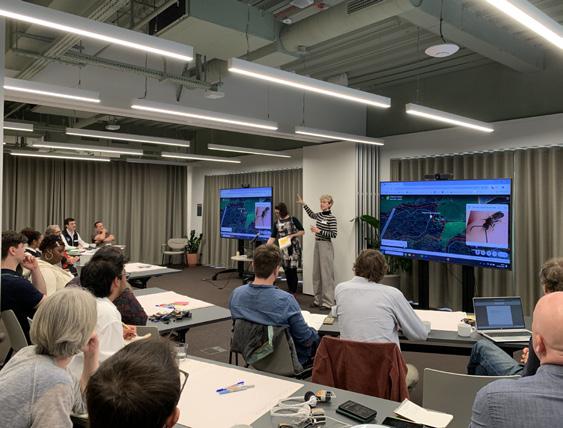
Getting to meet and be in the same room as so many folk working on different projects with different approaches was really inspiring and exciting. I definitely left the day feeling ‘zoomed out’ –like I was seeing more of the big picture – and feeling reinvigorated about what we’re doing with Connecting Threads.”
Tiki Muir (she/they), River Culture Curator, Southern Uplands Partnership (Destination Tweed Connecting Threads project)
Esmée’s Blue Spaces programme is exploring ways to better support work that engages with, and is shaped by, the diverse communities in a place, and tests new ways of working. A key outcome is to capture and share learning within Esmée, with the organisations we are supporting, other funders and the freshwater sector.
Esmée has set out a learning plan to evaluate the impact of the programme and facilitate learning from it. Individual grants all have agreed outcomes and indicators that relate to the nature, people, places and innovation outcomes, and the research questions on the next page. The partnerships aim to achieve change over long timescales, so there will be learning and impact beyond the length of the grants and our relationship with them.
Progress calls and grant reports from Blue Spaces grants were used to assess initial impact and gather learning about the research questions from the programme. It’s important to take into account that:
• The Blue Spaces projects are working in different policy, regulatory and geographic contexts. They are all working in some form of partnership with communities to deliver long-term freshwater improvements.
• Development grants enable organisations to build partnerships, incubate ideas and seek longer-term support for implementation. Often the impact of these will take time to become clear.
Our learning so far is summarised on the next page. We will need to review progress in another two and five years to determine the medium to longerterm impact of the Blue Spaces programme.
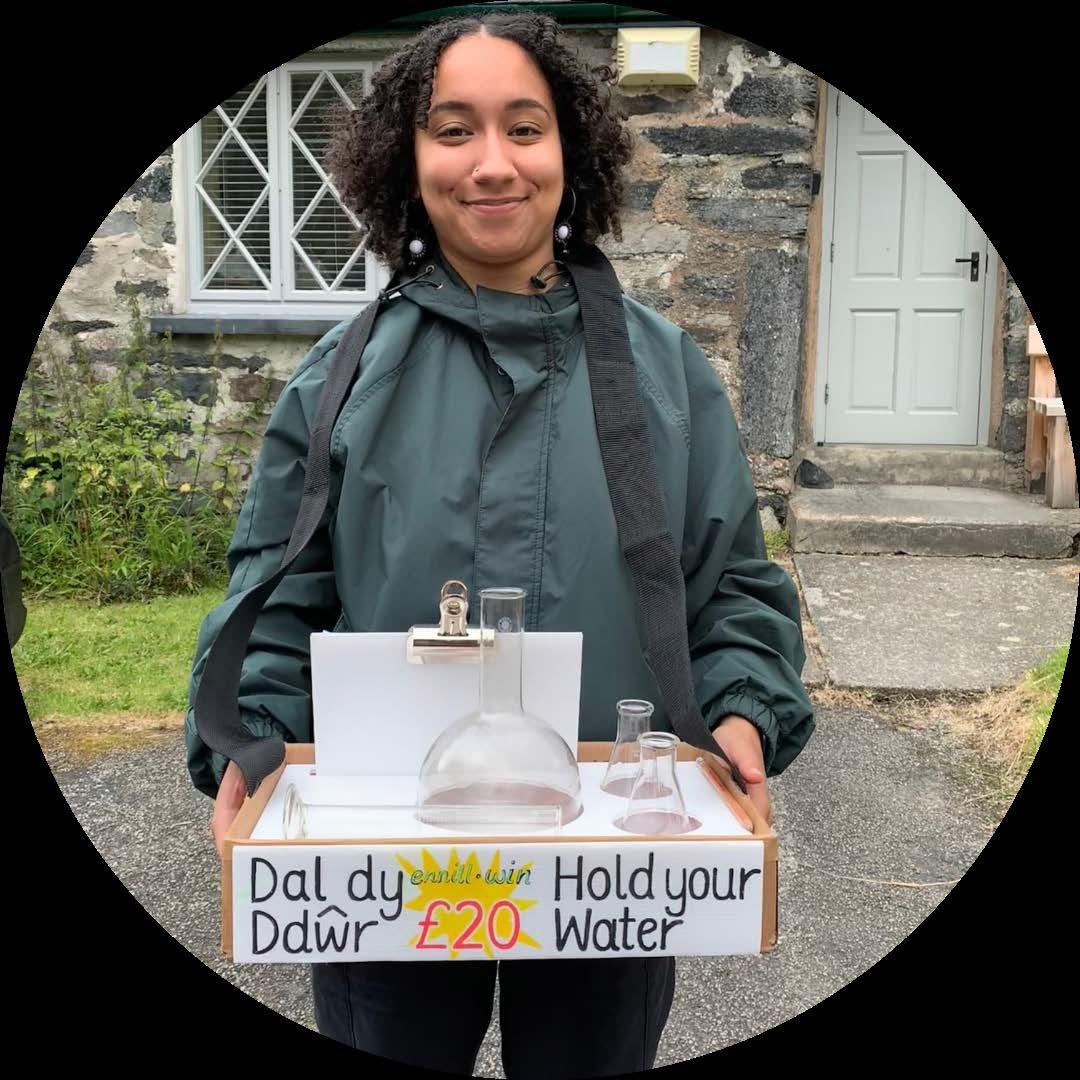
Nature
• To what extent is the health of the river/catchment likely to measurably improve as a result of the project?
People
Places
Innovation
• To what extent does the project involve the community?
• How effective was the project at bringing people and organisations together?
• What were the benefits for people and communities?
• What have projects learned from their innovative methods, approaches, or collaborations?
Varies by project, nature and scale of benefits will take time to become apparent.
Esmée’s additional learning questions
Varies by project, but all aim to deliver meaningful co-creation
Varies by project and nature of and scale of benefits will take time to become apparent.
• To what extent will more funding or capacity be leveraged to improve the local environment or support lasting engagement as a result of the project?
• New partnerships have formed, different ways of working have been tested, under-represented voices are shaping decision making, and additional funding has been secured by several projects.
• All projects have found that meaningful community cocreation has taken longer than originally planned and requires skills that environmental organisations may not havepartnership working has been invaluable to making progress.
• What have projects learned from the difficulties they have encountered.
• Are we finding and supporting the projects that need our help the most?
• Did we fund organisations led by and for the people they serve?
• How effective was the approach to reporting and sharing learning through the project?
• How effective was the approach taken to engaging the IYPC in the programme?
• What did we learn about the funding process e.g specific call for Wales, development funding, flexibility in approach?
• What additional or unexpected learning came up?
• The role of communities in project governance and longer-term planning was a key consideration in decisions about longer-term funding.
• Supported organisations said that they appreciated our flexible and light-touch approach to reporting. Feedback from the learning network was largely positive with organisations valuing the opportunity to connect and share experience.
• The IYPC experience of engagement in Blue Spaces has informed their involvement in other Esmée funding initiatives such as Youth-Led Creativity.
• Learning from the funding process and additional or unexpected learning is captured in the “Key Insights and learning” section.
• It is a challenge to work meaningfully with communities when funding for longer-term delivery of co-created action plans is not guaranteed.
The following case studies illustrate the work supported. We hope they help anyone looking to embark on similar work. They showcase the range of approaches featuring partnerships, community engagement, creativity, campaigning and citizen science.
We’re grateful to Action for Conservation, Findhorn, Nairn, and Lossie Rivers Trust, Groundwork Wales, North Wales Rivers Trust and North Wales Wildlife Trust for their honesty and insights.
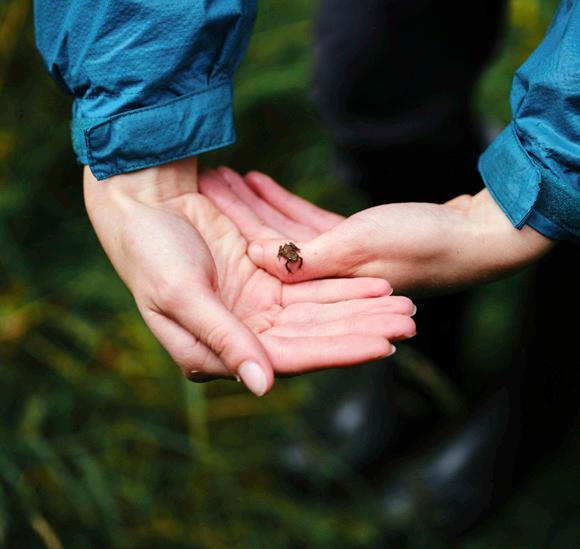
Action for Conservation uses pioneering approaches to inspire young people from diverse backgrounds to become the next generation of environmental leaders. They developed the UK’s first large-scale, youth-led nature restoration project at Penpont in Bannau Brycheiniog National Park.
Action for Conservation initially demonstrated the value of intergenerational mapping to identify community priorities for action on the River Sefin. Intergenerational mapping is an approach led by young people that brings together catchment interests, brokers difficult conversations, engages often excluded voices, and harnesses local wisdom alongside specialist input. They are now working with the Usk Catchment Partnership, Peak Cymru, and Landed, with young people to expand the approach in the catchment.
The aim is to:
a)Create community restoration plans on two sub-catchments of the river at Abergavenny and Penpont.
b)Establish River Ranger Programmes for local young people.
c)Encourage decision-makers to embrace community knowledge and youth leadership in the design, development and delivery of catchment-scale nature restoration efforts on Welsh rivers.
As the inheritors of future land/ waterscapes, young people have a key role to play in raising our ambition for our struggling rivers. For the multigenerational members of the Penpont Project, becoming better members of our riverine community – of the Usk Valley – means taking care of the waterways that run through Penpont. It also means sharing our learnings with others who care about the Usk and want better for the river that connects us from source to sea. This new project will allow us to do that, building on our existing work to involve more young people and communities in taking action towards a future where the Usk returns to better health, to the benefit of all.”
Hal Rhoades, Land-based Projects and Policy Lead, Action for Conservation
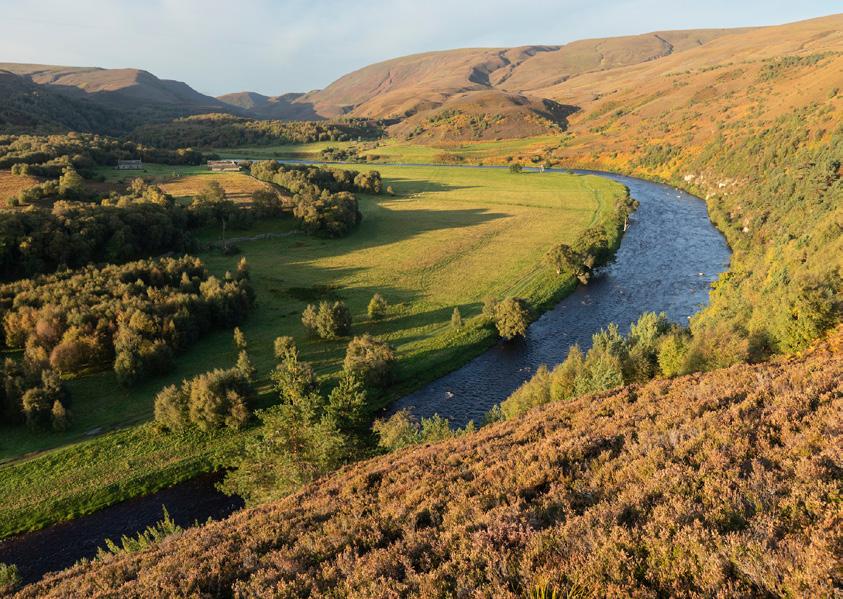
Findhorn, Nairn and Lossie Rivers Trust works at a landscape-scale, and in partnership with landowners and land managers, local communities and businesses; blending sources of funding and delivering practical actions to protect and restore rivers, watersheds, and the wildlife which inhabits them.
The Findhorn, Nairn and Lossie Rivers Trust has undergone a process of evolution from being a Fisheries Trust to becoming a place-based nature restoration intermediary; recognising the need to take a whole catchment approach to restoring the river, considering wider benefits for people and wildlife. The Findhorn Watershed Initiative was launched in 2022, with early funding as one of the Scottish Government’s Just Transition pilot projects. It has three impact areas:
a)Nature recovery: restoring a mosaic of nature-rich habitats from the Monadhliath Mountains to the Moray Firth.
b)Nature connection: growing a culture of nature connectedness, belonging and pro-nature stewardship amongst the people who live and work in this place.
c)Nature-positive economy: enabling more opportunities for high quality training, green jobs and nature-positive enterprise, with income from natural capital investment benefitting all the inhabitants of the Watershed.

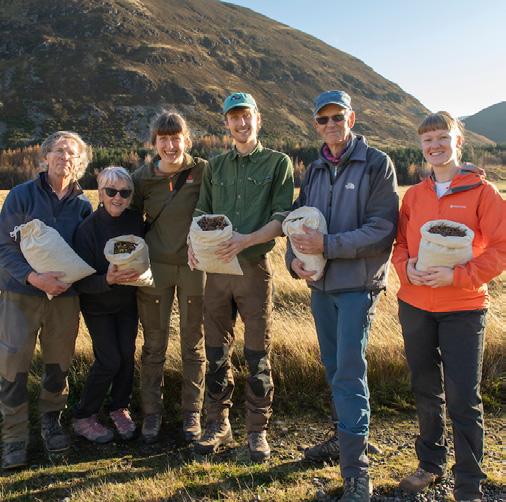
We are beginning to see our efforts over the first years of the project, relationship building and scoping restoration opportunities now begin to bear fruit, with sizable riparian woodland schemes being installed, our local events jam packed with enthusiastic local community members, and a blend of public and private finance being attracted to further support our work. This year, our commitment to navigating an ethical and equitable approach to nature finance has seen us publish a Watershed Finance Strategy which will act as a guide in future funding decision making. We are looking forward to implementing this strategy over the year ahead, and finding innovative and impactful ways to ensure highintegrity approaches to nature recovery and connection are realised in our watershed.”
Elle Adams, Executive Director, Findhorn, Nairn & Lossie Rivers Trust
North Wales Wildlife Trust operates across North Wales, managing nature reserves, campaigning and raising awareness of the natural environment.
The Trust is part of the Gofod Glas Partnership, working with Dyffryn Dyfodol CIC and Natural Resources Wales.
Gofod Glas aims to work with people in place, using creative intervention methods to co-create a communitypowered vision and plans for the River Conwy catchment, putting people at the centre of decision making about freshwater. The partners used a range of creative co-design activities to identify questions and actions about the River Conwy that the community wants to explore further. In doing so is engaging with community voices not always represented, including young people, farmers and anglers. The next steps are to explore and progress the initial community questions and proposed actions.

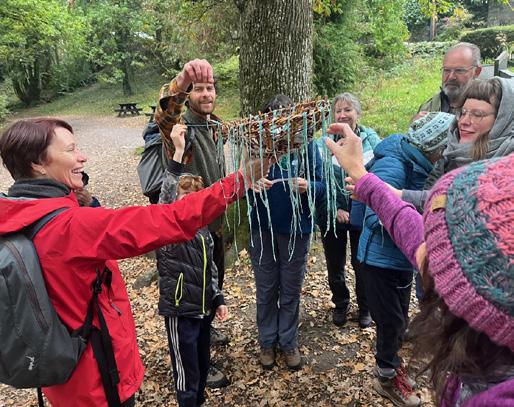
What is really different about this project is how we have developed and worked together as a partnership, and with creatives, to fundamentally change how we individually and collectively work and engage with communities. We are challenging the traditional institutional ‘expert culture’ to value and learn from all forms of knowledge and ways of knowing. Together, we are finding creative solutions to freshwater challenges – we are building a movement by working in creative ways, enabling people who traditionally do not have a voice, to feel welcome, valued and supported to participate in and lead explorations around freshwater. The support from Esmée has meant that we have been able to create an open, honest and critical partnership; and also embrace an emergent approach, i.e. being responsive to opportunities rather than planning outcomes in advance.”
Gofod Glas Partnership
Groundwork Wales delivers practical programmes and services that support the current and future wellbeing of our communities and people, and which work towards a more prosperous Wales.
Groundwork has been working in communities across Wales since 1990. Groundwork Wales was set up to support environmental restoration in the post-industrial landscapes of Wales. It works through developing relationships with communities and understanding their aspirations for the place that they live through initiatives such as Healthy Rivers. It has a particular focus on the South-East Wales valleys, where social and economic need is greatest, creating programmes that service people and the environment. They seek to help people build skills and improve job prospects, promote healthy lifestyles, motivate individuals and support communities to make use of neglected open space.
Groundwork used Blue Spaces development grants to establish a broad partnership for South-East Wales rivers, bringing together community interests, Dywr Cymru (Welsh Water), local authorities, waste handlers (BIFFA), and the construction industry. This coalition will act to improve river environments, whilst providing skills, training and volunteering opportunities for a diverse range of residents of the Valleys.

Learn more about the Healthy Rivers initiative
Groundwork Wales ability to create opportunities for people build skills and job prospects, whilst improving the health of rivers is impressive. The development funding helped them to establish the Healthy Rivers programme, through which they developed strong relationships with regulators, the public sector and industry, resulting in longer-term partnership funding for the programme. It’s a great example of how development funding can be a catalyst for longer-term sustainable change.”
Jenny
Wheeldon, Blue Spaces Manager, Esmée Fairbairn Foundation
North Wales Rivers Trust works across catchments in north and mid-Wales to restore streams, lakes, rivers and watercourses. As part of their work, they support people to become river ambassadors through education and hands-on projects.
The Trust leads the Menai Straits Partnership Forum to restore the Straits’ ecosystem for local communities and wildlife. They have a key role in ensuring the community drives the action of the Partnership. Working with communities from Maes G estate, they’ve run pilot schemes on the River Cegin – community training, oral history collection, pollution mapping, and growing plants for floating wetlands. They also train people to spot and report pollution (including snorkel survey accreditation). Additionally, they have explored barriers to engagement and jobs in the Welsh environment sector and rural areas.
Their long-term goal is to expand these efforts by developing and implementing a ‘People’s plan for the Cegin’, including further floating wetlands, natural flood management, and developing a market for biochar produced from community woodlands. Long-term, they aim to improve water quality and protect salmon and shell fisheries.

Watch a short film about North West Wales Rivers Trust’s Roots project, which was supported by Blue Spaces.
We are really impressed by how quickly a genuine, long-term commitment connection to multiple generations in the Cegin community has been established. The Trust are great at using creativity to identify and deliver solutions with the community and are lobbying strongly for better regulation of pollution. They have also shown great leadership on diversity, equity and inclusion in the Welsh environment sector.”
Jenny Wheeldon, Blue Spaces Manager, Esmée Fairbairn Foundation

1 Action for Conservation
Upper Usk
Towards project costs of using intergenerational mapping methodologies to develop restoration plans for recovery of the Upper Usk catchment in Wales.
2 Cwm Arian
Renewable Energy
Nyfer
Towards project costs for Nyfer am byth – Catchment Level Environment Action Network (CLEAN), engaging communities in best practice catchment management encompassing: land, water, and nutrient resources.
3 Groundwork Wales
Ebbw, Sirhowy, Rhymney, Taff and Ely
Towards project costs for Healthy Rivers South East Wales working with communities and partners across the South East Valleys catchment region to conserve the health of regional rivers.
4 North Wales
Rivers Trust Cegin
Towards project costs for Roots and Caru’r Cegin: a pilot to improve freshwater inputs to the Menai Strait, including .community training, oral history collection, pollution mapping, natural flood management and growing plants for floating wetlands.
5 North Wales
Wildlife Trust
Conwy
Towards project costs of Gofod Glas, an emergent creative project exploring human relationships with freshwater, highlighting water's powerful influence on culture, society and the environment
6 Pembrokeshire
Coastal Forum
Cleddau
Towards project costs for the Ecosystem Enterprise
Partnership developing investable action for river restoration.
7 Tir Canol (RSPB)
Leri
Towards core costs for Cynnal, a project involving co-designing a natural flood management action plan for the Leri catchment, in partnership with the Talybont Community Flood Group and others.
8 Welsh Dee trust
Gwenfro
Towards project costs for River Gwenfro Together! and a community action plan for Wrexham rivers.
9 West Wales
Rivers Trust
Teifi
Towards project costs for Llais yr Afon, which brings together citizen science, arts and activism to create a powerful new movement for social change which can be replicated across other rivers in the UK.
Scotland
10 Findhorn, Nairn, and Lossie
Rivers Trust
Findhorn
Towards project costs of the Findhorn Watershed Initiative. Nature recovery, nature connection, and nature-positive economy
11 Forth Rivers Trust
Esk and Leven
Towards core costs to support community engagement and campaigning on the Lothian Esk, and towards project costs to strengthen local stakeholder bonds and accelerate collective action, ensuring a wider group are represented and benefitting within environmental management processes in the Leven catchment
12 Southern Uplands Partnership
Tweed
Towards project costs for Connecting Threads: a five-year creative placemaking project based on a river, working with communities and creative practitioners along the River Tweed.
13 Spey Catchment Initiative (SCIO)
Spey
Towards core costs of a sustainable, climate resilient and thriving natural environment for wildlife and communities throughout the Spey Catchment.
Northern Ireland
14 Lough Erne Landscape Partnership (RSPB)
Lough Erne
Towards project costs for Lough Erne Landscape partnership working with UKILN to develop a conference, growing expertise and supporting community action on freshwater in Northern Ireland.
15 Northern Ireland Environment Link Freshwaters across Northern Ireland
Towards core costs for a dedicated Freshwater Development Officer, to provide critical expertise and assistance to focus on improving freshwater habitats through cross sectoral working.
16 Knepp Wildland Foundation
Adur and Arun
Towards core costs to create Weald to Waves, a nationally significant 100-mile nature recovery corridor across Sussex, from Ashdown Forest through Knepp, down three river catchments to restored kelp forests.
17 Norfolk Rivers Trust
Wensum, Bain and Ivel
Towards core costs for a regional project to accelerate restoration of chalk streams in East Anglia, providing a model of best practice of working at scale in freshwater conservation.
18 Rent-A-Role
Drama Service
Plym
Towards project costs to explore the concept of rivers as citizens, working to unite communities with the river on equal terms.
19 The Zoological Society of London
Thames
Towards core costs for River Partnerships in London, integrating community action and restoration finance into strategic plans for rivers.
Esmée Fairbairn Foundation
210 Pentonville Rd
London N1 9JY
020 7812 3700

info@Esméefairbairn.org.uk

Esmée Fairbairn Foundation
www.esmeefairbairn.org.uk
Registered charity 200051
Design: Steers McGillan Eves
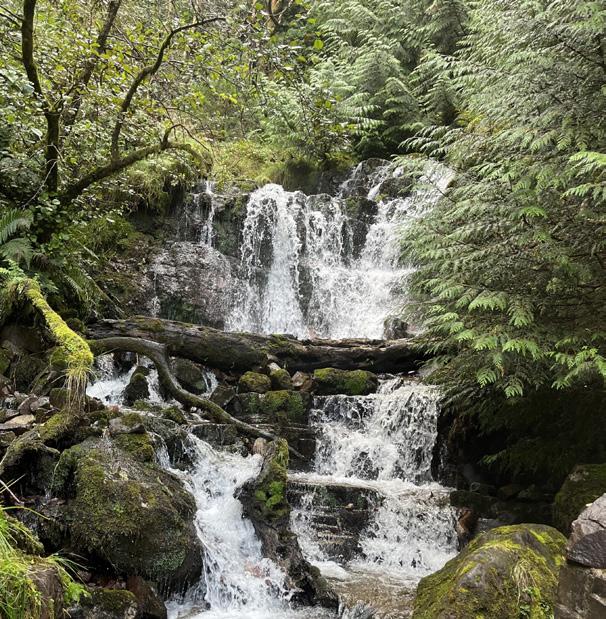
Page 4: Usk tributary falls
Page 18: Borrowdale Pools
Page 24: Usk at Brecon canal
Page 25: Blue Spaces learning event
Page 26: IYPC on a Blue Spaces site visit
Page 28: © Findhorn, Nairn and Lossie Rivers Trust
Page 29: © Action For Conservation
Page 30: © Findhorn, Nairn and Lossie Rivers Trust
Page 31: Goford glas, North Wales Wildlife Trust –© Iwan Williams