L O W E R S C H O O L
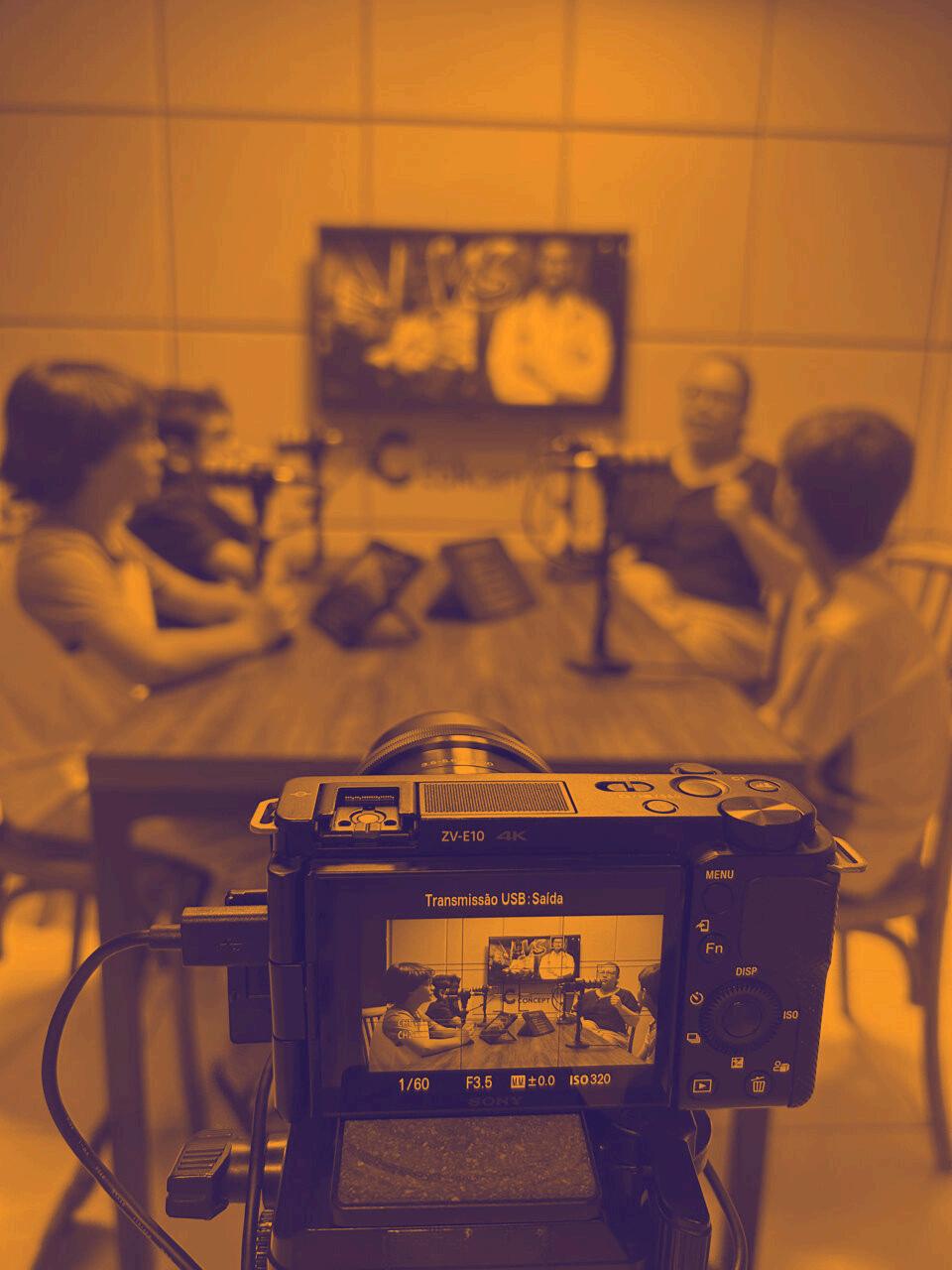
offers an academically rigorous, challenging, inclusive, global education designed to develop happy and thoughtful human beings who positively impact the world we live in. The school's program is designed to nurture the dispositions of lifelong learners who collaborate to co-create, embrace an entrepreneurial mindset, understand the meaning of living sustainably, and are globally and digitally fluent. Learners apply habits of mind to their daily actions, use the language of thinking to communicate, and understand the elements of design thinking to problem solve and innovate. Learning is facilitated and assessed through relevant, project-based experiences. Upon graduation, learners will be prepared for their university of choice in Brazil, or elsewhere around the world.
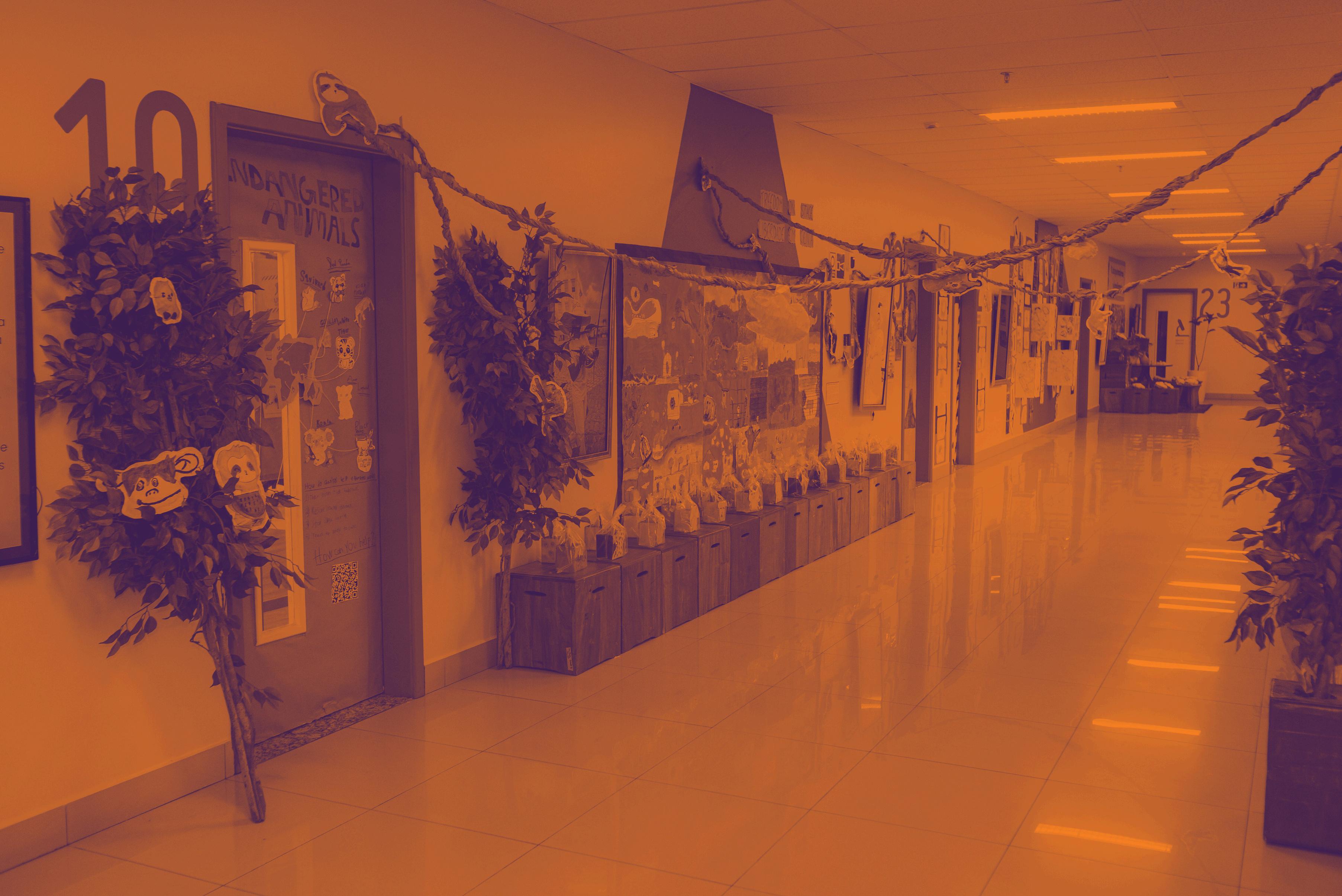

educação rigorosa, desafiadora, inclusiva e global, projetada para desenvolver seres humanos felizes e reflexivos, que impactem positivamente o mundo em que vivemos. O programa é desenhado para nutrir disposições de aprendizes ao longo da vida, que colaborem para cocriar, abracem uma mentalidade empreendedora, entendam o significado de viver de forma sustentável e se tornem fluentes global e digitalmente.
Os estudantes aplicam hábitos mentais em suas ações diárias, usam a linguagem do pensamento para se comunicar e entendem os elementos do design thinking para resolver problemas e inovar. A aprendizagem é facilitada e avaliada por meio de experiências relevantes e baseadas em projetos. Ao se formar, os alunos estarão preparados para a universidade de sua escolha no Brasil ou em qualquer lugar do mundo.

Expectativas Fundamentais de Aprendizagem por ano escolar
Based on our National Curriculum (Base Nacional Comum Curricular - BNCC and International Curriculum and Programs (Fieldwork Education, Illustrative Mathematics, Readers' and Writer's Workshop), learnings expectations in the Lower School are organized according to the following areas of knowledge:
Com base no Currículo Nacional (Base Nacional Comum Curricular - BNCC e nos Currículos e Programas Internacionais (Educação de Campo, Matemática Ilustrativa, Oficina de Leitores e Escritores), as expectativas de aprendizagem no Ensino Fundamental Anos Iniciais são organizadas de acordo com as seguintes áreas do conhecimento:
Língua Inglesa
English Language Portuguese Language
Língua Portuguesa
Mathematics
Matemática
Artistic Design
Design Artístico
Social Sciences (History and Geography)
Ciências Sociais (História e Geografia)
Natural Sciences
Ciências Naturais
Body and Movement
Corpo e Movimento
Sound and Exploration
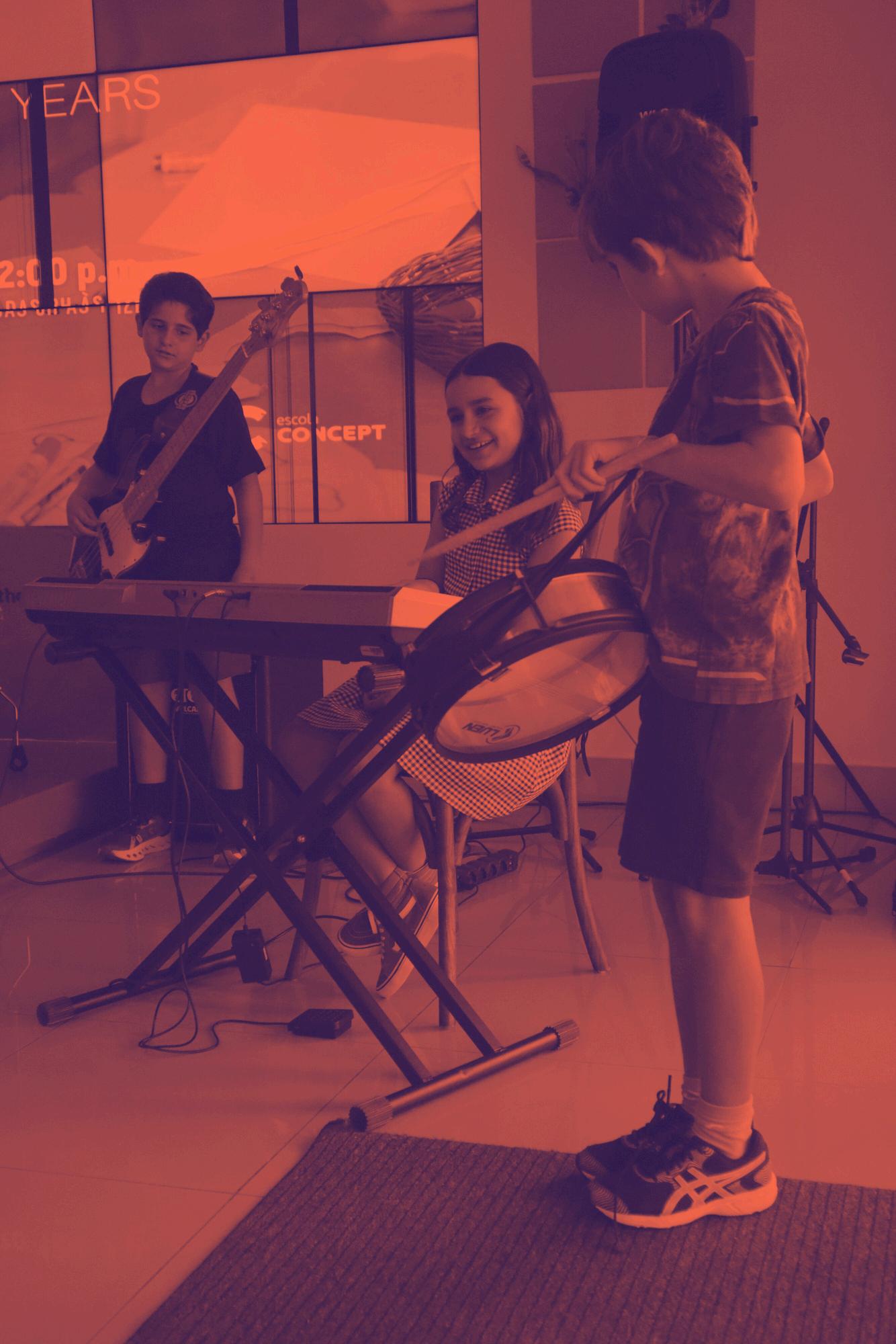
Som e Exploração
To introduce a topic, express an opinion, and organize ideas effectively.
To provide reasons supported by facts and details.
To develop a topic using facts, details, examples, and quotations.
To use dialogue and description to show events and character responses.
To use concrete words and sensory details to describe experiences clearly.
To gather and organize information from experiences, taking notes, and listing references.
Introduzir um tópico, expressar uma opinião e organizar ideias de forma eficaz.
Apresentar razões apoiadas por fatos e detalhes.
Desenvolver um tópico utilizando fatos, detalhes, exemplos e citações.
Usar diálogos e descrições para mostrar eventos e as respostas das personagens.
Utilizar palavras concretas e detalhes sensoriais para descrever experiências com clareza.
Reunir e organizar informações a partir de vivências, fazendo anotações e listando referências.
To order adjectives correctly in sentences.
To write complete sentences and fix fragments and run-ons.
To correctly use commonly confused words.
To use commas and quotation marks for direct speech and text quotations.
To use a comma before a conjunction in a compound sentence.
To choose precise words and phrases to express ideas clearly.
To use context clues to understand the meaning of words and phrases.
To use common Greek and Latin affixes and roots to understand word meanings.
To understand words by connecting them to their opposites and similar words.
Escrever frases completas e corrigir fragmentos e períodos longos (run-ons).
Usar corretamente palavras que são comumente confundidas.
Usar vírgulas e aspas em discursos diretos e citações de textos.
Usar a vírgula antes de uma conjunção em uma frase composta.
Escolher palavras e expressões precisas para comunicar ideias com clareza.
Usar pistas de contexto para compreender o significado de palavras e expressões.
Usar afixos e raízes gregas e latinas comuns para entender o significado das palavras.
Compreender palavras conectando-as aos seus opostos e palavras semelhantes.
To engage in discussions by asking and responding to questions, clarifying ideas, and linking comments to others’ remarks.
To review key ideas in discussions and explain their own understanding based on the conversation.
To paraphrase parts of a text presented in different formats.
To identify the reasons and evidence a speaker provides to support their points.
Participar de discussões fazendo e respondendo perguntas, esclarecendo ideias e conectando seus comentários aos dos colegas.
Revisar as ideias principais discutidas e explicar sua própria compreensão com base na conversa.
Parafrasear partes de um texto apresentado em diferentes formatos.
Identificar as razões e as evidências que um orador apresenta para apoiar seus pontos.
To use oral language effectively, beginning to adapt it to communicative intentions and situations that require mastery of formal records, prior planning of the speech, coherence in defending points of view and presenting arguments and the use of communication procedures. negotiation of necessary or possible agreements;
To express ideas with clarity and precision, being concerned about being understood by the interlocutor and using the word with an audible tone of voice, good articulation and adequate rhythm.
To plan, in collaboration with colleagues and with the help of the educator, slogans and awareness campaigns aimed at children.
To respect the turns of speech, selecting and using forms of address appropriate to the situation and position of the interlocutor.
To orally recount literary texts, keeping the main aspects of the source text.
To autonomously read different texts of the expected genres, knowing how to identify those that respond to their immediate needs and select appropriate strategies to address them;
To use and improve the learning of reading procedures in expository texts, with the purpose of study (reading, highlighting with focus, taking notes of doubts, recording important points, organizing schemes).
To strengthen the link with the practice of literary reading, making individual choices for autonomous reading.
To expand the understanding of more complex and extensive expository and literary texts.
To identify, in news, facts, participants, place and moment/time of occurrence of the reported fact.
To distinguish facts from opinions/suggestions in texts (informative, journalistic, advertising, etc.).
To read and understand expository texts of scientific dissemination for children.
To recognize the function of graphs, diagrams and tables in texts, as a way of presenting data and information.
To use the knowledge acquired through the practice of linguistic analysis to expand the ability to monitor the possibilities of language use, expanding the capacity for critical analysis.
To revise texts from a first version and, with the support of the educator, write the necessary versions until it is considered sufficiently well written.
To critically analyze different discourses, developing the ability to evaluate texts;
To spell words using direct and contextual regular phoneme-grapheme matching rules.
To correctly read and write words with syllables VV and CVV in cases where the combination VV (diphthong) is reduced in the oral language (ai, ei, or).
To find words in the dictionary to clarify meanings, recognizing the most plausible meaning for the context that gave rise to the query.
To use graphic accent (acute or circumflex) in paroxytones ending in -i(s), -l, -r, -ão(s).
To identify the function in reading and use, properly, in writing full stop, question mark, exclamation point, colon and dash in dialogues (direct speech), comma in enumerations and in separation of vocative and appositive.
To identify in texts and use in textual production the agreement between noun or personal pronoun and verb (verbal agreement).
To identify in texts and use in textual production the agreement between article, noun and adjective (agreement in the nominal group).
To recognize and correctly spell derived words with the suffixes -agem, -oso, -eza, -izar/-isar (morphological regulars).

To read, write, order and compare numbers up to 10 million.
To add, subtract, multiply and divide using whole numbers.
To make use of the relations between addition and subtraction, multiplication and division, and estimate results.
To solve and develop problems that involve different properties of multiplication (repeated addition, area model and proportionality).
Recognize that the rules of the decimal number system can be used for the decimal representation of a rational number e relate tenths and hundredths with the representation of the Brazilian monetary system.
To solve word problems involving fractions and decimals.
To round to two decimal places.
To identify regularities in numerical sequences composed of multiples of a natural number.
To determine the unknown number that makes equality true that involves the fundamental operations with natural numbers.
To associate prisms and pyramids with their nets and analyze, name and compare their attributes - as flat and spatial representations, among others.
To recognize right and non-right angles in polygonal shapes with the use of folds, squares, or geometry software.
To interpret and use coordinates.
To calculate the area of parallelograms and triangles.
To calculate the area and perimeter of rectangles and squares and related composite shapes.
To measure and estimate lengths (including perimeters), masses and capacities.
To measure, compare and estimate area of flat shapes with the support of the squared graph paper.
To know the larger measurements of time.
To register the daily maximum and minimum temperature.
To interpret pictograms, tally charts, bar graphs, line graphs, pie charts, and tables
To follow up on quantitative data collection with qualitative questions.
To describe the probability of events including even chance.

To identify changes and continuities over time, discussing the meanings of the great milestones in human history (nomadism, development of agriculture and grazing, creation of industry, etc.).
To identify the changes that have taken place in the city over time and discuss their interference in the ways of life of its inhabitants, taking the present as a starting point.
To identify the relationships between individuals and nature and discuss the meaning of nomadism and the establishment of the first human communities.
To relate the processes of occupation of the field to interventions in nature, evaluating the results of these interventions.
To identify the transformations that occurred in the processes of displacement of people and goods, analyzing the forms of adaptation or marginalization.
To identify and describe the importance of land, river and sea routes for the dynamics of commercial life.
To identify the motivations for migratory processes in different times and spaces and assess the role played by migration in the regions of destination.
To analyze different population flows and their contributions to the formation of Brazilian society.
To analyze, in the society in which he lives, the existence or not of changes associated with migration (internal and international).
To distinguish official national political-administrative units (District, Municipality, Federation Unit and large region), their borders and hierarchy, locating their living places.To compare the characteristics of work in the countryside and in the city.
To describe and discuss the production process (transformation of raw materials), circulation and consumption of different products.
To use cardinal directions in locating physical and human components in rural and urban landscapes.
To compare different types of maps, identifying their characteristics, designers, purposes, differences and similarities.
To identify the characteristics of natural and anthropic landscapes (relief, vegetation cover, rivers, etc.) in the environment in which it lives, as well as human action in the conservation or degradation of these areas.
To identify mixtures in daily life, based on their observable physical properties, recognizing their composition.
To test and report transformations in everyday materials when exposed to different conditions (heating, cooling, light and humidity).
To conclude that some changes caused by heating or cooling are reversible (such as changes in the physical state of water) and others are not (such as egg cooking.
To analyze and build simple food chains, recognizing the position occupied by living beings in these chains and the role of the Sun as a primary source of energy in food production.
To describe and highlight similarities and differences between the cycle of matter and the flow of energy between the living and nonliving components of an ecosystem.
To check the participation of microorganisms in the production of food, fuels, medicines, among others.
To recognize, in the local landscape and in the place where they are inserted, the different manifestations of nature and the appropriation and transformation of it by the action of its collectivity, of its social group;
To know and compare the presence of nature, expressed in the local landscape, with the manifestations of nature present in other landscapes;
To recognize similarities and differences in the ways that different social groups appropriate nature and transform it, identifying its determinations in work relationships, in everyday habits, in ways of expressing themselves and in leisure;
To know and begin to use written and imagery sources of information using, for that purpose, some basic procedures;
To know how to use observation and description in the direct or indirect reading of the landscape, especially through illustrations and oral language;
To recognize the spatial references of location, orientation and distance in their daily lives in order to move independently and represent the places where they live and interact;
To identify mixtures in daily life, based on their observable physical properties, recognizing their composition.
To test and report transformations in everyday materials when exposed to different conditions (heating, cooling, light and humidity).
To conclude that some changes caused by heating or cooling are reversible (such as changes in the physical state of water) and others are not (such as egg cooking.
To analyze and build simple food chains, recognizing the position occupied by living beings in these chains and the role of the Sun as a primary source of energy in food production.
To describe and highlight similarities and differences between the cycle of matter and the flow of energy between the living and nonliving components of an ecosystem.
To check the participation of microorganisms in the production of food, fuels, medicines, among others.
To propose, based on the knowledge of the ways of transmission of some microorganisms (viruses, bacteria and protozoa), appropriate attitudes and measures for the prevention of diseases associated with them, the burning of paper, etc.).
To associate the cyclical movements of the Moon and Earth with regular time periods and using this knowledge to build calendars in different cultures.
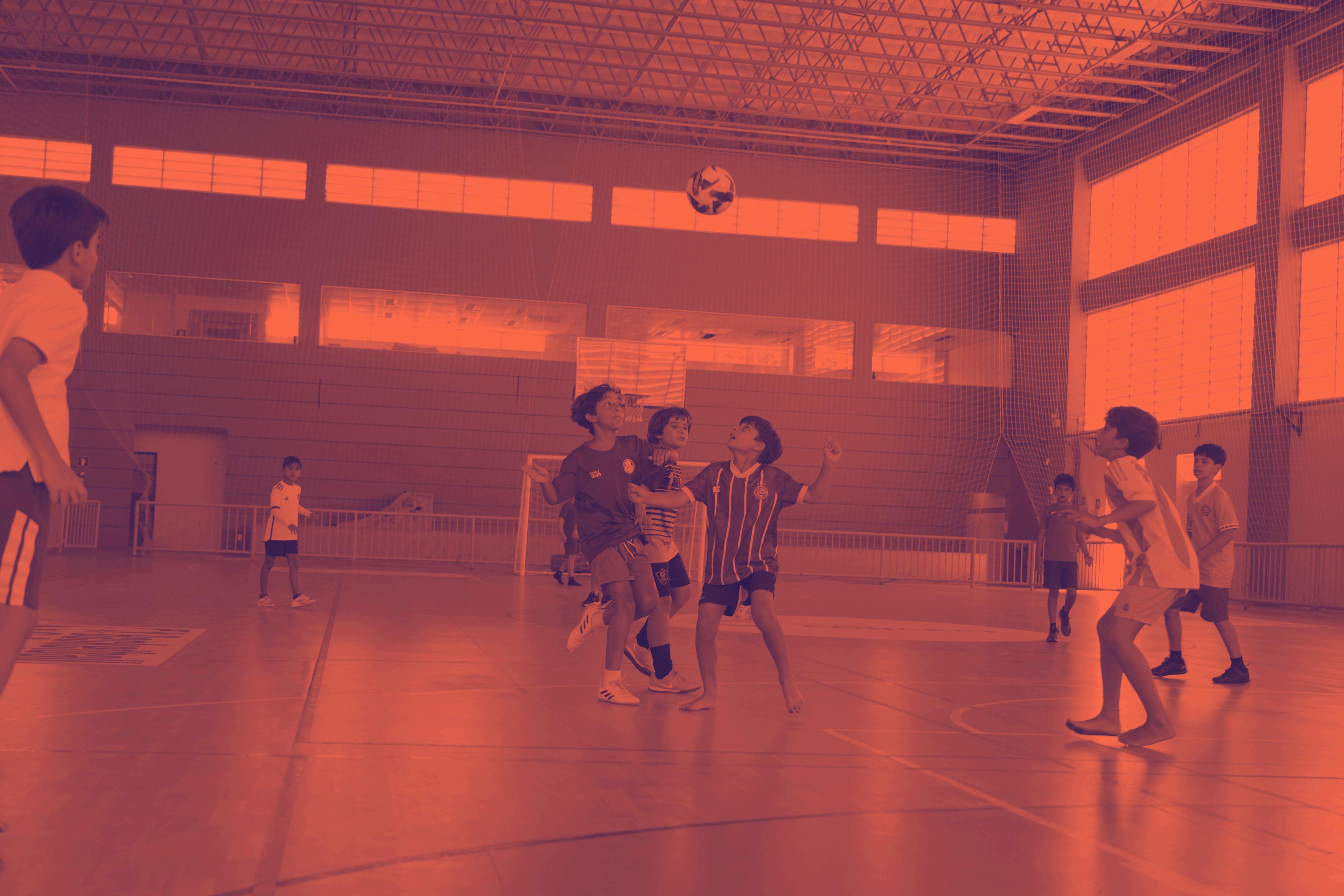
B O D Y A N D M O V E M E N T