Develop academic writing, argumentation, and rhetorical analysis through literary and informational texts.
Explore linguagem e discurso em diferentes gêneros, produza textos autorais e desenvolva leitura crítica e argumentação ética.
Portuguese Language Mathematics
Explore exponential and logarithmic functions, trigonometry, transformations, and real-world modeling
Social Sciences (History and Geography)
Analyze global interdependence, political systems, and inequality. Engage in research, case studies, and civic reflection.
Natural Sciences (Biology, Chemistry and Physics)
Study genetics, energy, sustainability, and climate through collaborative investigations and real-world applications.
PER GRADE LEVEL EXPECTATIONS
Expectativas Fundamentais de Aprendizagem por ano escolar
Career & College Counseling Guide
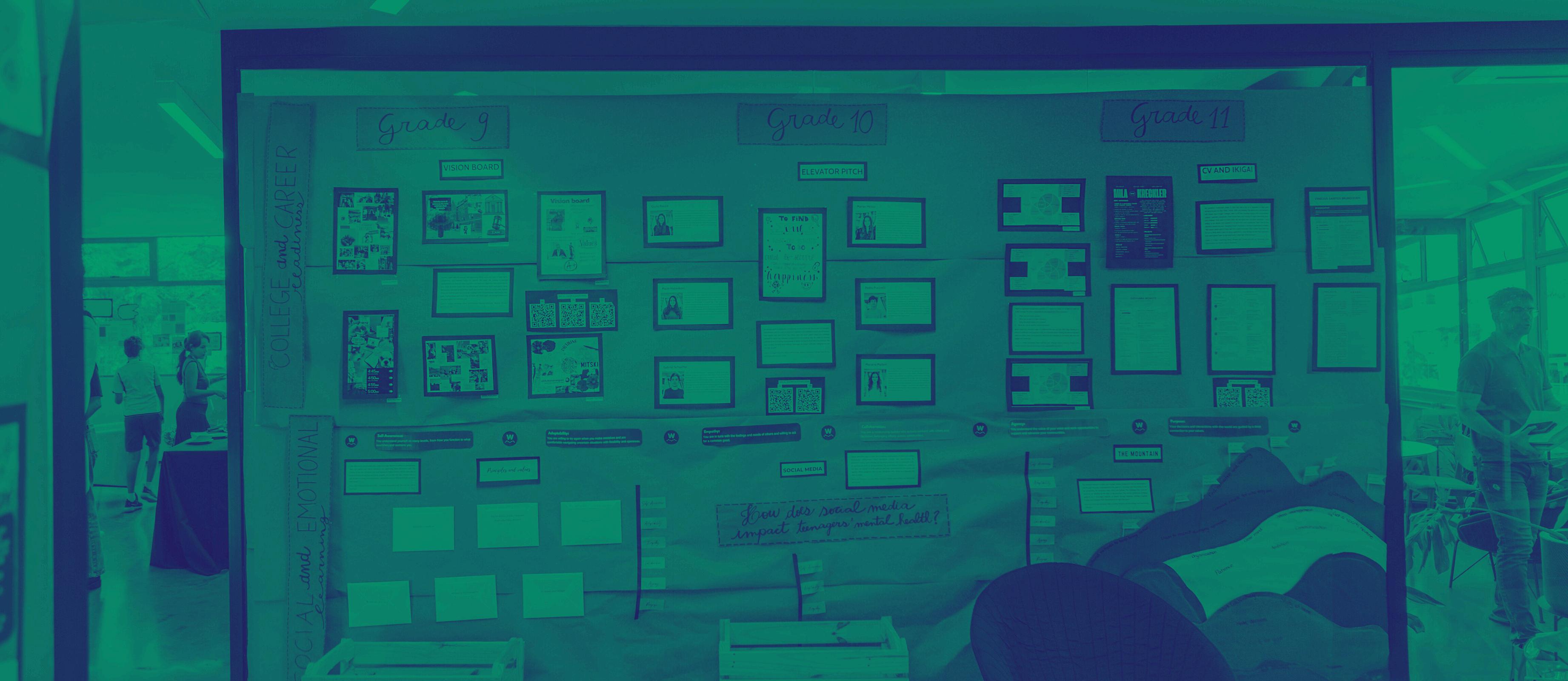
The WAKE College & Career Counseling Manual offers a structured framework for post-secondary planning Using the WAKE model Wonder, Act, Know, Execute it guides learners in self-discovery, academic growth, and career exploration, ensuring a confident and purposeful transition beyond high school
AP - Advanced Placement
College-level courses and exams offered in High School that allow students to demonstrate mastery of subjects, earn college credit, and strengthen university applications
E N G L I S H L A N G U A G E
Curriculum Snapshot
Aligned with the Common Core State Standards (CCSS), Grade 11 ELA ensures rigor, continuity, and international comparability.
At Escola Concept, learners engage with complex literary and informational texts, writing across genres, and advanced academic discussion through the Understand → Explore → Materialize model.
Course Overview
Learners investigate themes of identity, justice, and society through novels, plays, essays, and media texts. The course emphasizes literary analysis, argumentative and research writing, and oral communication in academic settings.
Learning Structure
S H L A N G U A G E A
I
Understand: Explore essential questions through anchor texts. Explore: Analyze structure, style, and authorial choices; compare perspectives.
Materialize: Apply learning in essays, research projects, and presentations.
Scan the QR code to access the complete document for the English Language Arts Curriculum. Or click here.
P O R T U G U E S E L A N G U A G E
Curriculum Snapshot
Aligned with the BNCC (Base Nacional Comum Curricular – Ensino Médio), Grade 11 Língua Portuguesa ensures continuity and national comparability.
At Escola Concept, learners deepen authorial, argumentative, and critical competencies through the Compreender → Explorar → Materializar model.
Course Overview
Learners read and analyze a wide range of texts (literary, journalistic, digital), focusing on critical positioning and discourse analysis. The course emphasizes essay writing, multimodal productions, and oral debates on ethical and social issues.
Learning Structure
Compreender: Guided reading of diverse genres.
Explorar: Analysis of argument, language, and ideology.
Materializar: Production of essays, reports, and digital projects.
Content Areas
Literary texts (modern and contemporary works)
Argumentative and opinion texts
Linguistic variation and discourse
Oral communication and debate
Multimodal and digital productions
Competencies
Write with clarity, cohesion, and critical perspective
BNCC EM13LP17–21 (Linguistic Reflection and Multiletramentos)
M A T H E M A T I C S
Curriculum Snapshot
Aligned with the BNCC (Ensino Médio – Matemática), Illustrative Mathematics, and CCSS, Grade 11 Mathematics ensures rigor, continuity, and international comparability,
At Escola Concept, learners deepen algebra, functions, geometry, and statistics through the Understand → Explore → Materialize model.
Course Overview
Learners extend their understanding of functions (linear, quadratic, exponential, logarithmic, trigonometric), sequences, and probability. The course emphasizes mathematical modeling, reasoning, and communication.
Learning Structure
Understand: Introduction of functions and models.
Explore: Use multiple representations, problem-solving, and proofs.
Materialize: Apply in real-world modeling and assessments.
CCSS MATH CONTENT HSA–HSS (High School Algebra, Functions, Statistics)
S O C I A L S C I E N C E S
Curriculum Snapshot
Aligned with the BNCC (Ciências Humanas – Ensino Médio), NCSS, and AP World History, Grade 11 Social Sciences ensures rigor, continuity, and comparability.
At Escola Concept, learners study history, geography, civics, and economics through the Understand → Explore → Materialize model.
Course Overview
Learners examine modern world history, globalization, governance, economic systems, and civic identity. The course emphasizes critical thinking, source analysis, and civic engagement.
Learning Structure
Understand: Introduction to historical and civic contexts. Explore: Source analysis, debates, and mapping exercises. Materialize: Projects, research papers, and simulations.
Content Areas
Global history: revolutions, conflicts, decolonization
NCSS Themes I–X (Culture, Time, Governance, Economics, Civic Ideals)
AP World History Framework
N A T U R A L S C I E N C E S
Curriculum Snapshot
Aligned with the BNCC (Ciências da Natureza – Ensino Médio) and NGSS, Grade 11 Natural Sciences ensures rigor and international comparability.
At Escola Concept, learners integrate physics, chemistry, and biology through the Understand → Explore → Materialize model.
Course Overview
Learners study advanced concepts in mechanics, chemical reactions, cellular biology, genetics, and ecology. The course emphasizes experimentation, data analysis, and ethical implications of scientific knowledge.
Learning Structure
Understand: Introduction of concepts and theories.
Explore: Laboratory experiments and data analysis.
Materialize: Application in research projects and presentations.
is a roadmap to help learners, families, and educators navigate post-secondary planning with confidence. Guided by the WAKE framework Wonder, Act, Know, Execute it empowers learners to explore their aspirations, build the skills and knowledge needed for success, and take ownership of their future. More than a guide, it is a living document designed to support self-discovery, academic growth, and career exploration, ensuring a purposeful and well-prepared transition beyond high school.
Developing a strong college list, refining applications, and preparing for standardized tests.
C A R E E R & C
Establish a "Central Theme" connecting personal strengths to future goals. Finalize a college list based on academic fit, location, and career goals. Take SAT/ACT/AP tests and analyze scores for improvement strategies. Start drafting personal statements, supplemental essays, and portfolios.
Available Resources
Naviance – Academic & career planning tool for learners.
WAKE Academic Roadmap – Guides learners on key milestones per grade.
College Fairs & University Visits – Opportunities to explore global institutions.
Counselor Meetings & Workshops – Personalized guidance at each stage.
A D V A N C E D P L A C E M E N TA P
Advanced Placement (AP) courses are college-level classes offered in High School that allow you to explore subjects in greater depth, challenge yourself academically, and potentially earn college credit. APs are recognized by universities around the world and help you stand out in applications for college, internships, and other opportunities.These classes are an opportunity to develop critical thinking, time management, and independent study skills all while discovering what truly inspires you.
Advanced Placement in Grade 11
In Grade 11, students take AP World History and AP English Language and Composition as part of their core. While taking the official AP exam is optional, all students will be learning the comprehensive AP course.
Also, in Grade 11, all students have the “voice and choice” in their course of study and will enroll in one “AP Honors Course” chosen from the following: