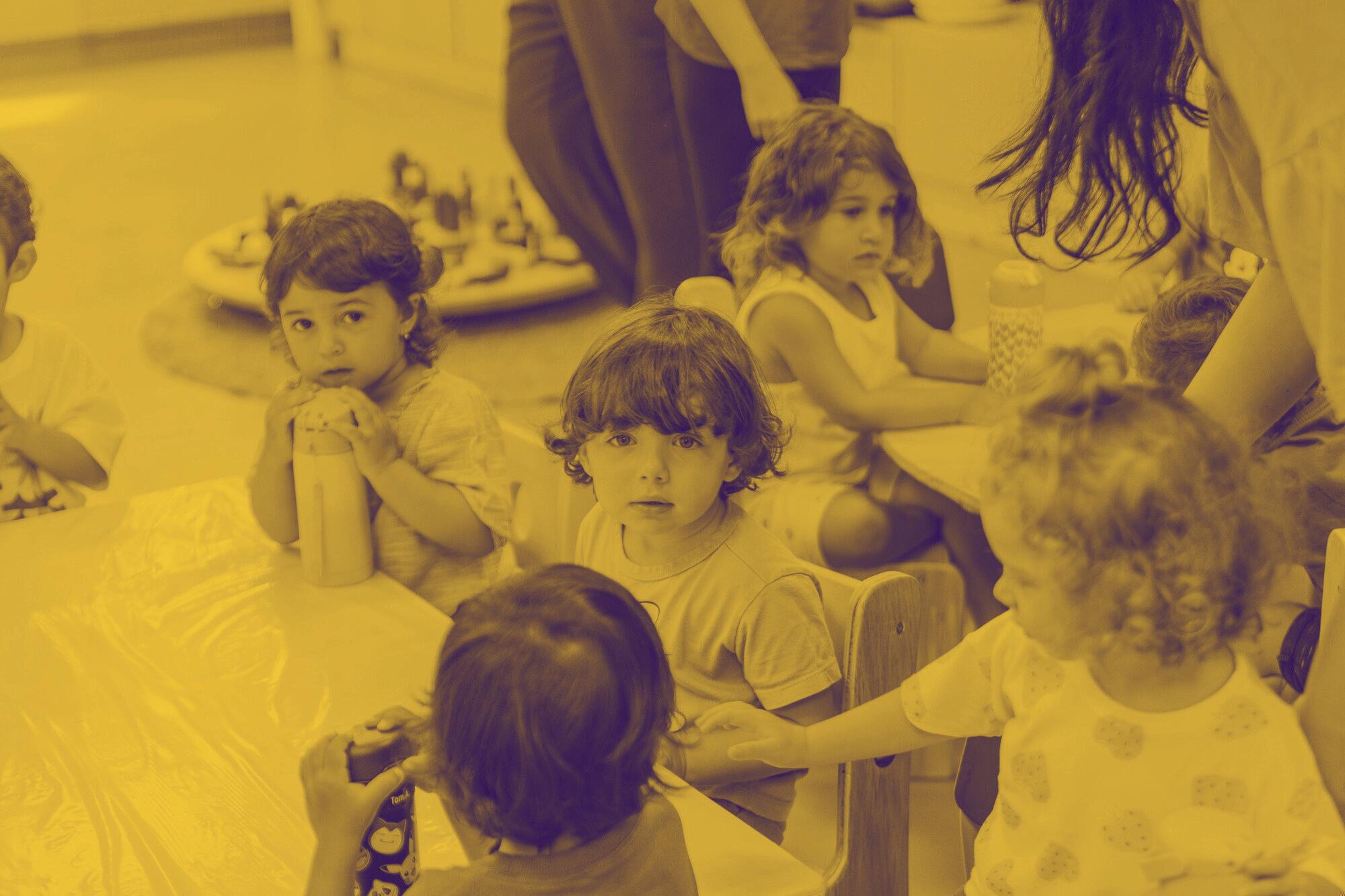
LEARNING EXPECTATIONS EARLY YEARS TODDLERS 2
Our mission Escola Concept
offers an academically rigorous, challenging, inclusive, global education designed to develop happy and thoughtful human beings who positively impact the world we live in. The school's program is designed to nurture the dispositions of lifelong learners who collaborate to co-create, embrace an entrepreneurial mindset, understand the meaning of living sustainably, and are globally and digitally fluent. Learners apply habits of mind to their daily actions, use the language of thinking to communicate, and understand the elements of design thinking to problem solve and innovate. Learning is facilitated and assessed through relevant, project-based experiences. Upon graduation, learners will be prepared for their university of choice in Brazil, or elsewhere around the world.

Nossa Missão
FOUNDATIONAL LEARNING PER GRADE LEVEL EXPECTATIONS
The National Curricular Common Base (BNCC) organizes learning into 5 Fields of Experience. This document provides you with clarity on what is the learning expectations per grade level.
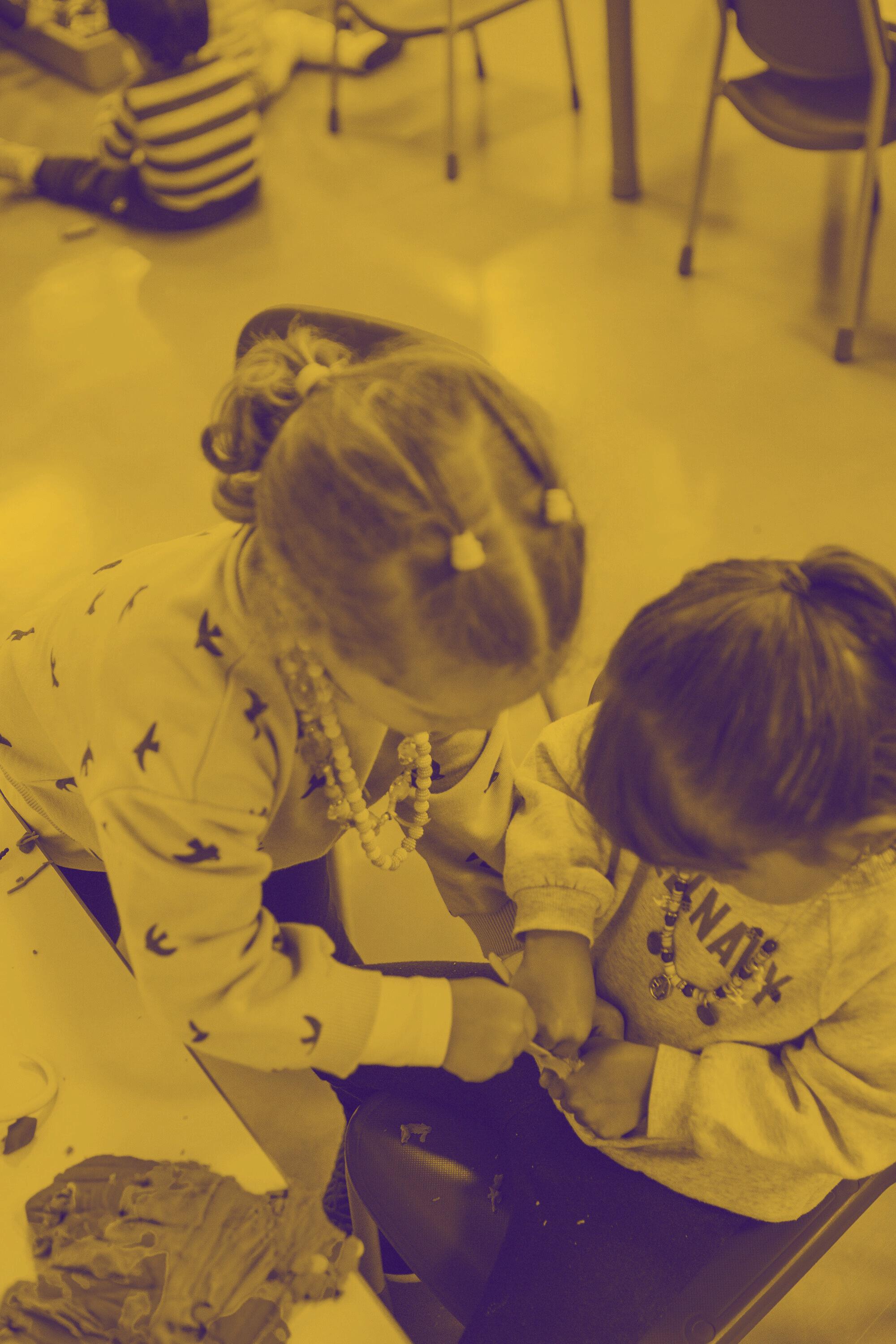
MYSELF, THE OTHER AND OURSELVES
BODY, GESTURES AND MOVEMENT
TRACES, SOUNDS, COLORS, AND SHAPES
SPACES, TIMES, QUANTITIES, TRANSFORMATIONS, AND RELATIONS
LISTENING, SPEAKING, THINKING, AND IMAGINING
MYSELF, THE OTHER, AND OURSELVES
Play with classmates in the different environments of the school, recognizing its functions.
Participate in games of cultural tradition, beginning to perceive and pay attention to caring for others.
Take risks in games, seek for self-references, and develop self-image and identity.
Explore the surroundings following basic self-care and perceiving solidarity attitudes.
Match objects by function and imitate actions of people or animals (themed corners); share objects, associate objects, explore materials and their characteristics of heaping, fitting, aligning, etc.; participate in group games (on wheels, with balls, etc.).
BODY, GESTURES, AND MOVEMENT
Manipulate, throw and roll objects spontaneously.
Participate in group games.
Take care of themselves.
Run with coordination between arms and legs.
Cross obstacles diagonally using arms and legs.
Move on the four-pronged stand, using legs and arms to support the body, yet without coordination between arms and legs.
Move spatially, being guided by notions such as front, back, above, below, inside, outside.
TRACES, SOUNDS, COLORS, AND SHAPES
Pay attention to the existence of noises, sounds, and music in the environment, singing, dancing, playing instruments spontaneously, and making sounds with the body.
Perceive the sound and the absence of it.
Appropriate the pulse through guided experimentation.
Listen and play songs of different styles.
Express themselves through simplified back-and-forth movement and doodles in circular shapes (random motor experimentation), experimenting with materials, textures, and colors.
Exercise mental representation (at the sensorimotor stage) to create objects.
Use different means (procedures and materials) in artistic production.
Explore materials and creative processes.
SPACES, TIMES, QUANTITIES, TRANSFORMATIONS, AND RELATIONS
Respect the living beings in the surroundings – people, plants, and animals.
Participate in care for the environment.
Interact in the environment, observing natural phenomena and changes.
Report and describe everyday incidents and natural phenomena (sunlight, wind, rain, etc.).
Follow the passage of time (before/now/after) in the school routine, perceiving differences.
Move around perceiving the space between people and locating objects.
Perceive their own body and their friends in space, becoming familiar with their image.
Identify properties of objects in the environment, establishing simple relationships.
LISTENING, SPEAKING, THINKING, AND IMAGINING
Form simple sentences to express wants and needs, in the search for communication with the other.
Observe and reproduce the reading behavior of the teacher and other adults.
Engage in storytelling moments.
Formulate and answer questions related to narratives.
Identify settings, characters, and events in commonly told stories.
Participate in situations in which the teachers write the speeches, collective texts, lectures, and recipes, realizing that speech can be represented graphically.
Identify and create sounds.
Recognize rhymes and alliterations.
Perceive regularities of the mother tongue and foreign language, verbally reproducing songs and actions, understanding contexts.


Muchness lives where curiosity
meets care

Finding Muchness by Kobi
2026 Theme of the Year