LEARNING EXPECTATIONS LOWER SCHOOL GRADE 1

Muchness lives where curiosity meets care


2026 Theme of the Year
Finding Muchness by Kobi
Our mission Escola Concept
offers an academically rigorous, challenging, inclusive, global education designed to develop happy and thoughtful human beings who positively impact the world we live in. The school's program is designed to nurture the dispositions of lifelong learners who collaborate to co-create, embrace an entrepreneurial mindset, understand the meaning of living sustainably, and are globally and digitally fluent. Learners apply habits of mind to their daily actions, use the language of thinking to communicate, and understand the elements of design thinking to problem solve and innovate. Learning is facilitated and assessed through relevant, project-based experiences. Upon graduation, learners will be prepared for their university of choice in Brazil, or elsewhere around the world.

FOUNDATIONAL LEARNING PER GRADE LEVEL EXPECTATIONS
Expectativas Fundamentais de Aprendizagem por ano escolar
Based on our National Curriculum (Base Nacional Comum Curricular - BNCC and International Curriculum and Programs (Fieldwork Education, Illustrative Mathematics, Readers' and Writer's Workshop), learnings expectations in the Lower School are organized according to the following areas of knowledge:
English Language
Portuguese Language
Mathematics
Performing Arts
Artistic Design
Social Sciences (History and Geography)
Natural Sciences
Body and Movement
Sound and Exploration
ENGLISH LANGUAGE
READER'S
WORKSHOP
To retell stories, highlight key details, and understand the lesson of the story.
To explain the differences between storybooks and informational books.
To use illustrations and details to describe characters, settings, and events in a story.
To identify the main topic of a text.
To use text features to find key facts and information.
To use illustrations and details to describe key ideas.
WRITER'S
WORKSHOP
To write opinion pieces by stating a topic, giving an opinion with a reason, and ending with closure.
To write informative texts by naming a topic, sharing facts, and ending with closure.
To write narratives by recounting events in order, adding details, using temporal words, and ending with closure.
To participate in research and writing projects by exploring topics and creating instructions.
LANGUAGE AWARENESS
To print all upper- and lowercase letters
To use common, proper, and possessive nouns correctly.
To use personal, possessive, and indefinite pronouns correctly.
To use verbs to show past, present, and future actions.
To use common adjectives correctly.
To capitalize dates and names of people.
To use correct end punctuation for sentences.
To spell new words phonetically using sound awareness and spelling rules.
To use context clues to understand word meanings.
To define words by their category and key attributes.
To connect words to real-life examples and their use.
LISTENING AND SPEAKING
To engage in collaborative conversations by following discussion rules and sharing ideas respectfully.
To ask questions to clarify understanding during conversations.
To ask and answer questions about key details in texts and presentations.
To ask and answer questions to gather information or clarify understanding.
PORTUGUESE LANGUAGE

ORAL SKILLS
Recite nursery rhymes, quatrains, rhymes, and tongue twisters with appropriate intonation and rhymes.
Express yourself clearly, making sure you are understood by the other person.
Listen attentively to what teachers and peers say.
Retell literary texts read by the teacher orally, with and without visual support.
Respect speaking turns during conversations.

READER’S WORKSHOP
Recognize that texts are read and written from left to right and from top to bottom.
Understand the different objectives of reading.
Search for, select, and read, with the educator's mediation (shared reading), texts that circulate in print or digital media, according to needs and interests.
Read aloud with a focus on decoding; in the case of frequently used words, read globally, by memorization.
Read considering reading strategies (selection, anticipation, inference, verification).
Locate explicit information in texts.
Relate text to illustrations and other graphic resources.
Identify elements of a narrative read or heard, including characters, plot, time, and place.
WRITER’S WORKSHOP
Plan and produce, in collaboration with colleagues and with the help of the educator, short texts in genres related to everyday life, advertising, journalism, investigative writing, and civic engagement.
With the educator as scribe, produce retellings of stories read by the educator, imagined stories, or stories based on picture books, observing the composition of narrative texts (characters, plot, time, and space).
Copy short texts, maintaining their characteristics and referring back to the text whenever you have questions about their graphic layout, word spacing, spelling, and punctuation.
Plan and produce, in collaboration with colleagues and with the help of the educator, (re)tellings of stories, poems, and other genres from the artistic-literary field.
Reread and revise the text produced with the help of the educator and with the help of colleagues to correct and improve it.
Edit the final version of the text, in collaboration with colleagues and with the help of the educator, illustrating, when appropriate.
LANGUAGE AWARENESS
Write, spontaneously or through dictation, words and sentences alphabetically – using letters/graphemes that represent phonemes.
Observe conventional writing, comparing it to written productions, and noticing similarities and differences.
Segment words into syllables orally.
Identify phonemes and their letter representations.
Relate sound elements (syllables, phonemes, word parts) to their written representations.
Compare words, identifying similarities and differences between initial syllable sounds.
Name the letters of the alphabet and recite them in letter order.
Know, differentiate, and relate letters in printed format, uppercase and lowercase.
Recognize the separation of words in writing by white space.
Compare words, identifying similarities and differences between medial and final syllable sounds.
Identify other symbols in the text besides letters, such as periods, question marks, and exclamation marks, and their effects on intonation.
Group words based on similar meanings (synonyms) and separate words based on opposite meanings (antonyms).
MATHE MATICS

NUMBERS
To count to 100.
To read, write, order and compare numbers up to 99.
To compose and decompose numbers to 99.
To be able to round to the nearest 10.
To add and subtract with independence within 20.
To solve and elaborate story problems involving addition and subtraction with numbers up to 99.
ALGEBRA
To develop an understanding of the meaning of the equal sign and connect story problems to equations.
To describe, after recognizing and explaining a pattern (or regularity), the missing elements in recursive sequences of natural numbers, objects or figures.
GEOMETRY
To compare and sort solid and flat shapes.
Identify and name the flat shapes (circle, square, rectangle, and triangle).
To identify and name solid shapes (cones, cylinders, spheres, and rectangular prisms) in familiar objects of the physical world.
To describe the location of people and objects in space relative to your own position.
MEASUREMENT
To compare length, capacity, or mass using terms such as higher, lower, longer, shorter, thicker, thinner, wider, heavier, lighter, among others, to order objects of daily use.
To name the units of measurement for length, time, mass and temperature.
To identify monetary values and show equal amounts in different combinations
DATA HANDLING
To read data expressed in tables and in simple column charts.
To sort and classify objects using one and/or two criteria.
To construct and interpret simple pictograms, tally charts, bar graphs, and tables.
To classify events that are impossible, certain, or (more or less) likely.
SOCIAL SCIENCES

GEOGRAPHY
To describe and compare the characteristics of their places of experience (housing, school, etc.).
To identify similarities and differences between games and play from different times and places.
To identify the use of public space uses (squares, parks) for leisure and different manifestations.
To observe and describe natural rhythms (day and night, temperature and humidity variation, etc.) at different spatial and temporal scales, comparing their reality with others.
To describe and compare different types of housing or objects of daily use (toys, clothing, furniture).
To describe working activities related to the day-to-day of the community.
To create mental maps and drawings based on itineraries, literary tales, invented stories, and games.
To develop and use simple maps to locate elements of the place of experience, considering space references (front and back, left and right, up and down, inside and outside) and having their body as a reference.
HISTORY
To identify aspects of their growth through the registration of the particular memories or memories of the members of their family and/or their community.
To identify the relationship between their own stories and the history of their family and community.
To describe and distinguish your roles and responsibilities related to the family, the school, and the community.
Identify similarities and differences between their current play and games and other times and places.
NATURAL SCIENCES
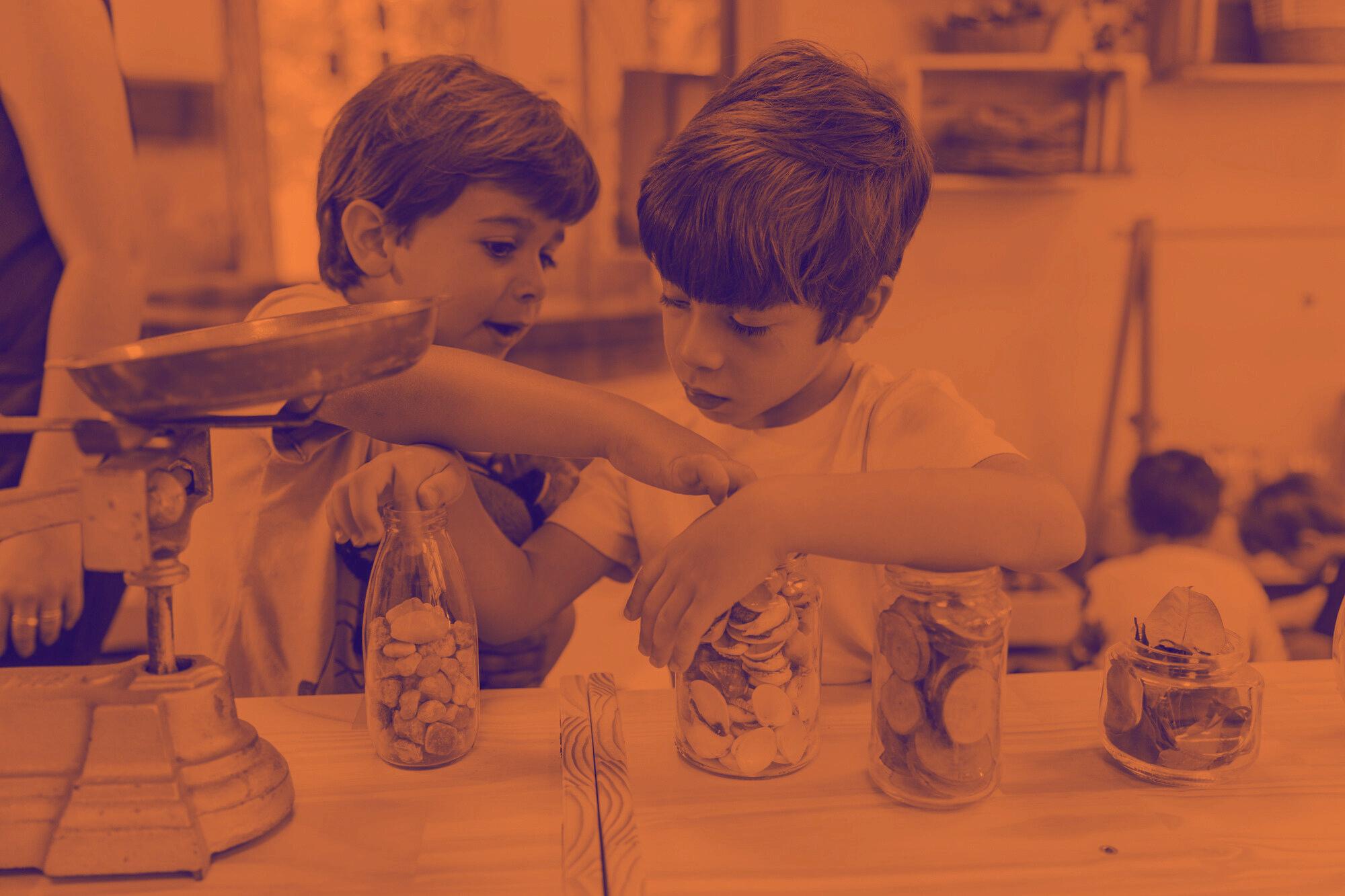
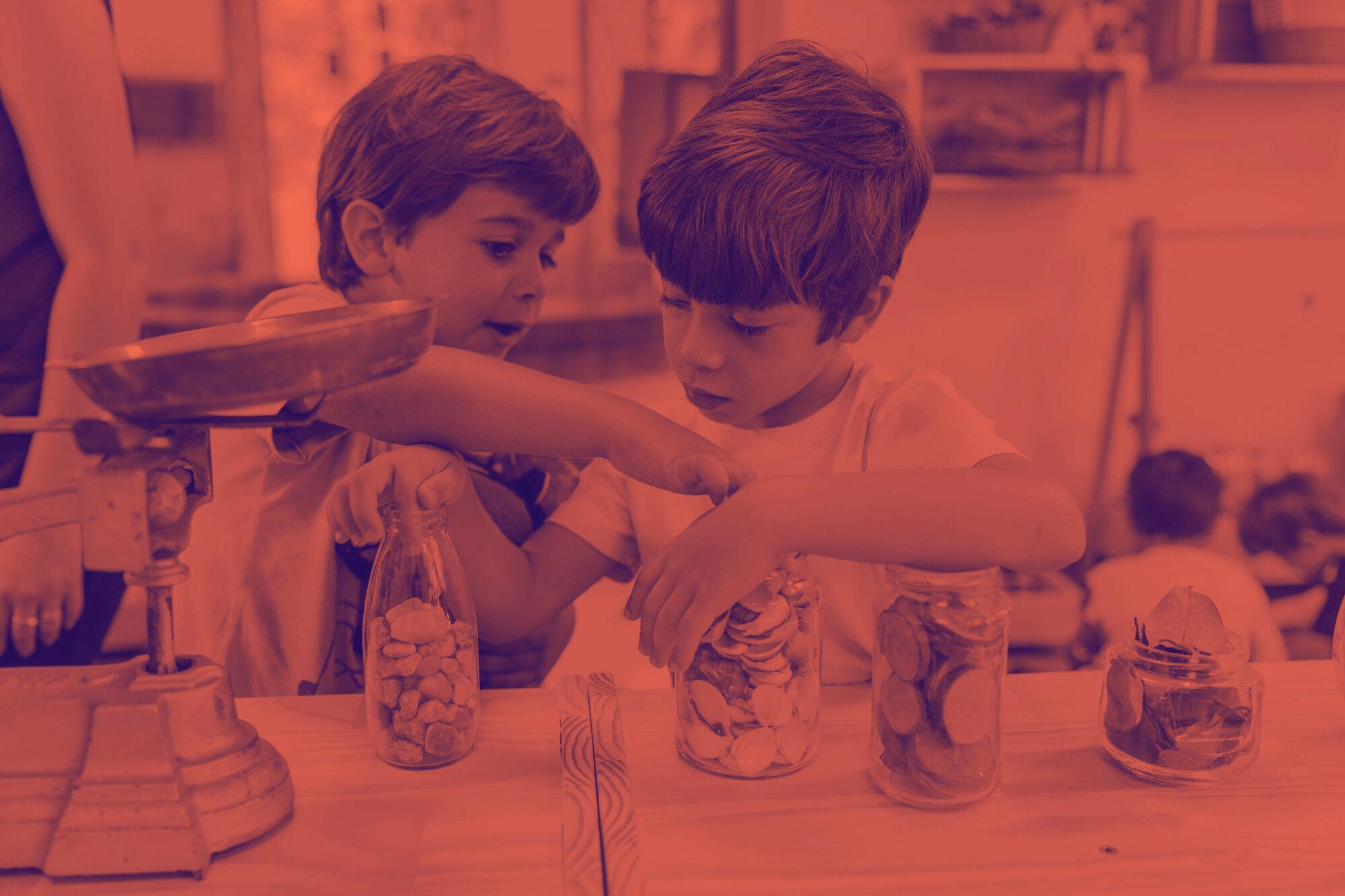
To compare different materials presented in everyday objects, discussing their origin, the ways in which they are discarded and how they can be used more consciously.
To locate, name and represent (through drawings) parts of the human body and explain their functions.
To discuss body hygiene habits (washing hands before eating, brushing teeth, cleaning eyes, nose and ears etc.).
To compare physical characteristics among colleagues, recognizing the diversity and importance of valuing, welcoming and respecting differences.
To identify and name different time scales: daily periods (afternoon, night) and tomorrow, tomorrow, days, weeks, months, years.
To exemplify length of days and nights of daily activities of humans and other living beings.
BODY AND MOVEMENT
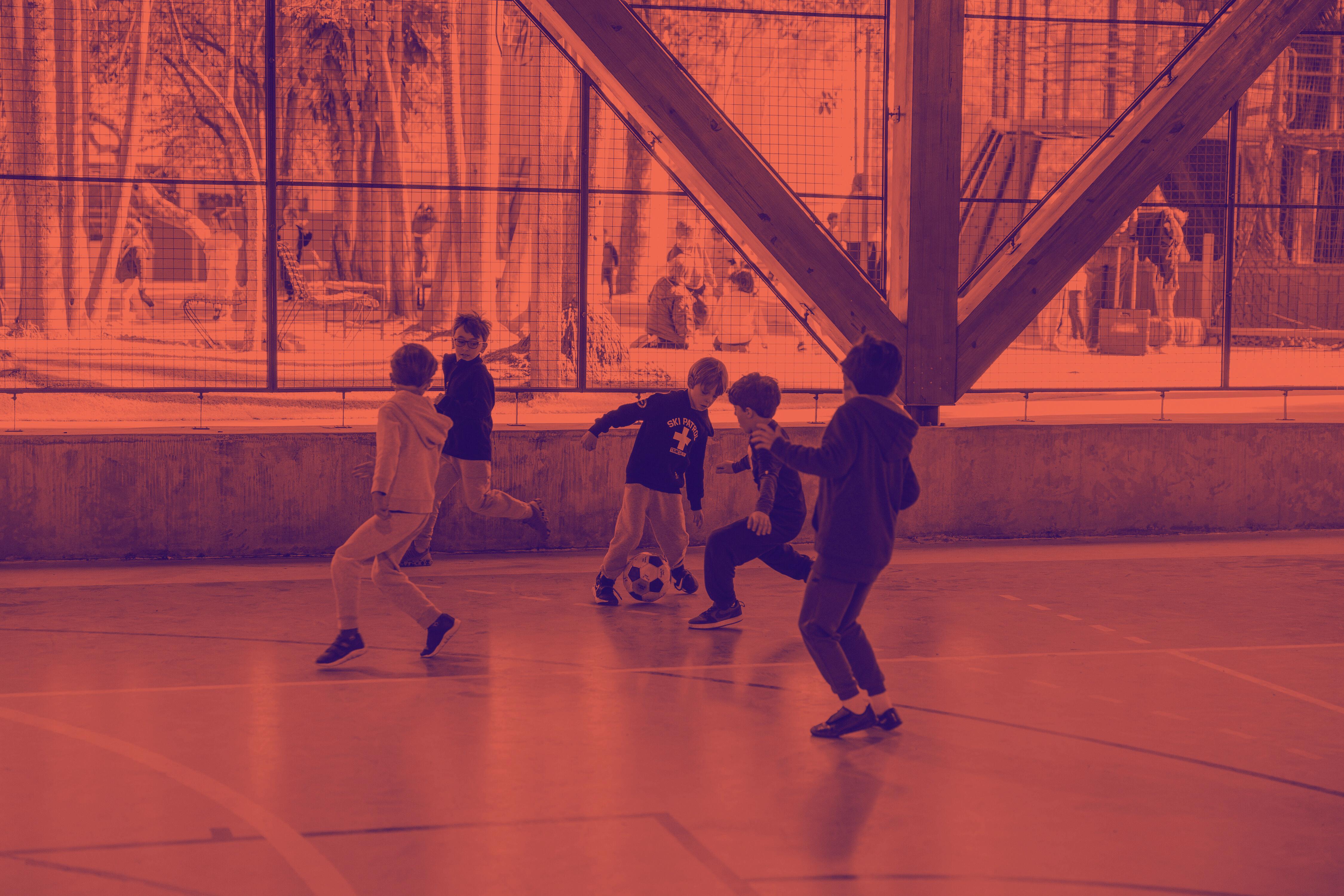
To experience, enjoy and recreate different games and popular culture games present in the community and regional context, recognizing and respecting the individual differences in the performance of colleagues.
To experiment and enjoy, valuing collective work and protagonism, the practice of branded and precision sports, identifying the common elements of these sports.
To discuss the importance of observing the norms and rules of branded and precision sports to ensure their own integrity and that of other participants.
To try, enjoy and identify different basic elements of gymnastics (balances, jumps, turns, rotations, acrobatics, with and without materials) and general gymnastics, individually and in small groups.
To explain, through multiple languages (body, visual, oral and written), the plays and popular games of the community and regional context, recognizing and valuing the importance of these games and games for their cultures of origin.
To plan and use strategies to solve challenges of plays and popular games in the community and regional context, based on the recognition of the characteristics of these practices.
To discuss the importance of observing the norms and rules of branded and precision sports to ensure their own integrity and that of other participants.
To participate in general gymnastics, identifying the potential and limits of the body, and respecting individual differences and body performance.
SOUND EXPLORATION
CONTEXT AND PRACTICES
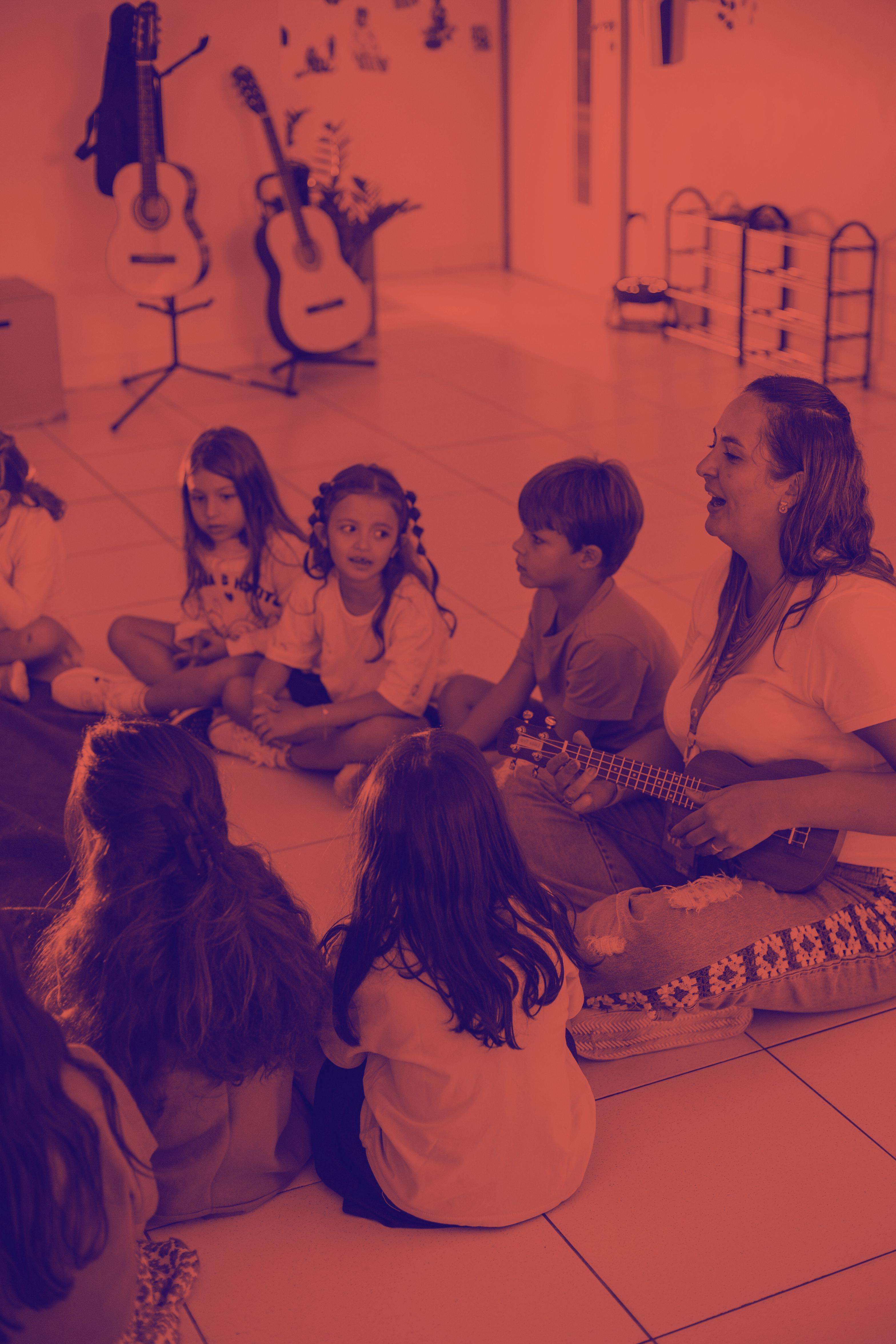
To identify and critically appreciate different forms and genres of musical expression, recognizing and analyzing the uses and functions of music in different contexts of circulation, especially those of everyday life.
To experience and appreciate different forms of dance manifestations present in different contexts, cultivating perception, imagination, the ability to symbolize and body repertoire.
LANGUAGE ELEMENTS
To understand and explore the constitutive elements of music (pitch, intensity, timbre, melody, rhythm, etc.), through games, games, songs and various practices of composition/creation, performance and musical appreciation.
MATERIALITIES
To explore different sound sources, such as those existing in the body itself (clapping, voice, body percussion), in nature and in everyday objects, recognizing the constitutive elements of music and the characteristics of various musical instruments.
MUSICAL NOTATION RECORDING
To explore different forms of unconventional musical recording (graphic representation of sounds, creative scores, etc.), as well as audio and audiovisual recording procedures and techniques, and recognize conventional musical notation.
CREATION PROCESSES
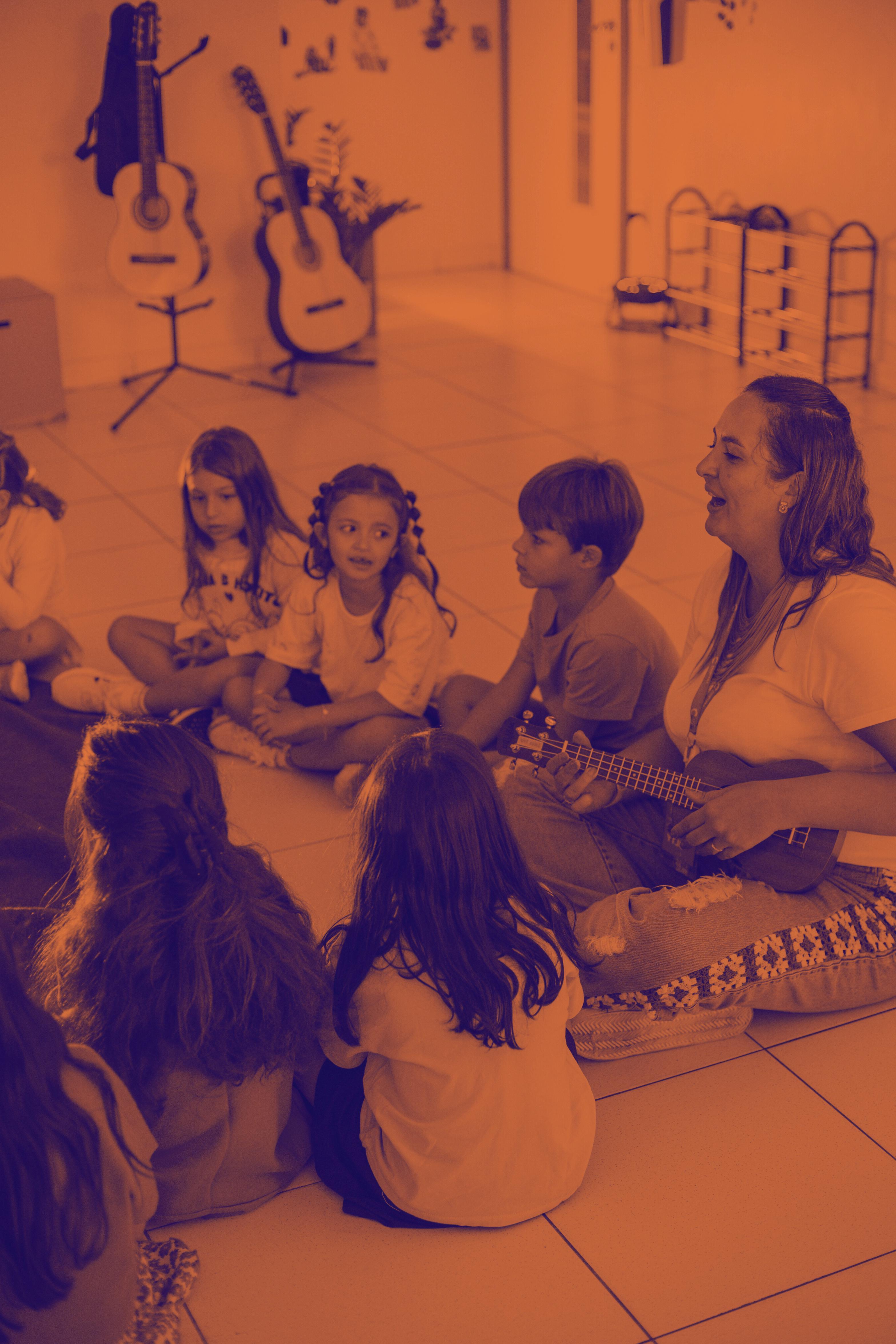
To experiment with improvisations, compositions and storytelling, among others, using voices, body sounds and/or conventional or unconventional musical instruments, individually, collectively and collaboratively.
To create and improvise danced movements individually, collectively and collaboratively, considering the structural, dynamic and expressive aspects of the movement's constitutive elements, based on dance codes.
To discuss, with respect and without prejudice, personal and collective experiences in dance at school, as a source for the construction of their own vocabularies and repertoires.
PERFORMING ARTS
CREATION PROCESSES
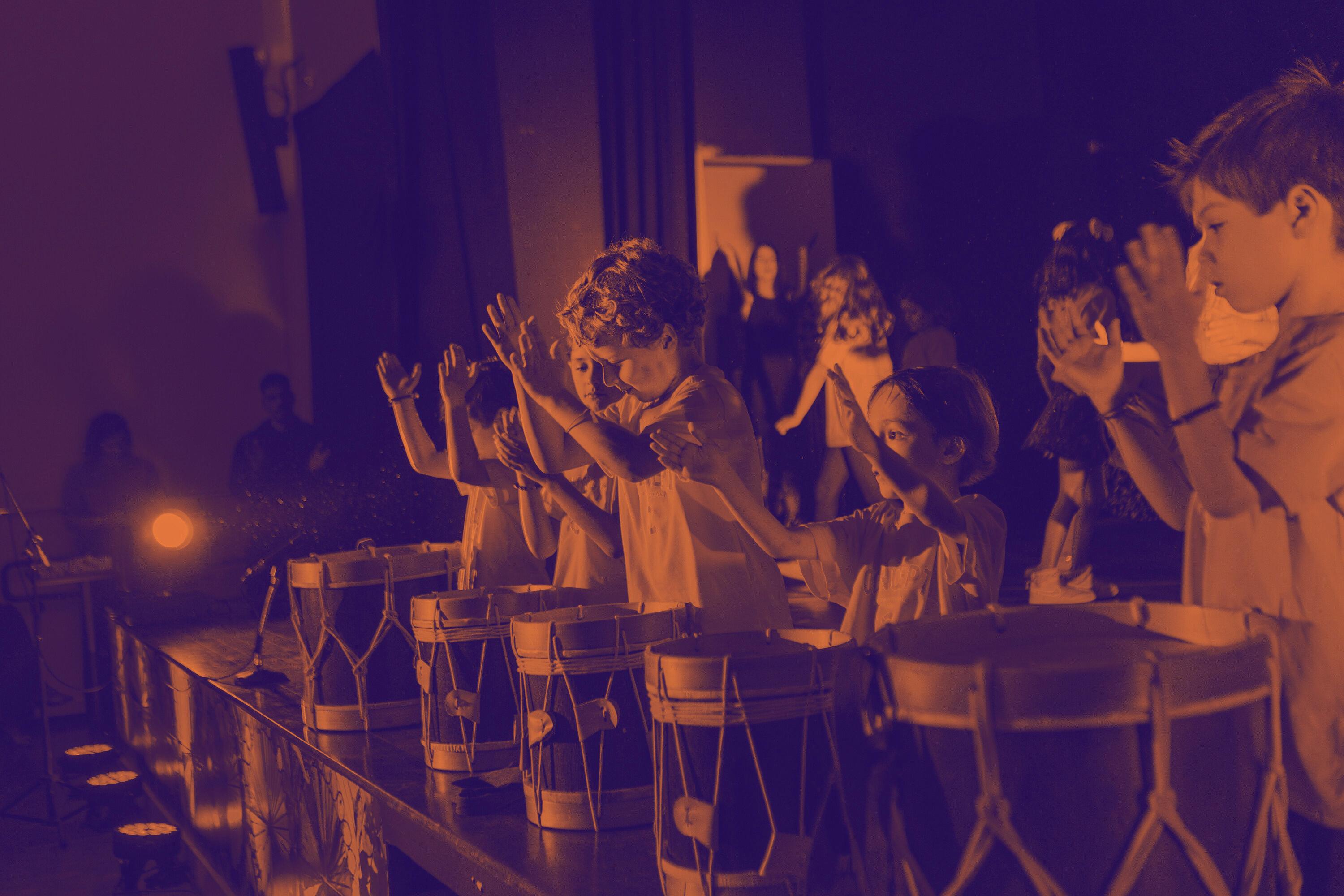
To create and improvise danced movements individually, collectively and collaboratively, considering the structural, dynamic and expressive aspects of the movement's constitutive elements, based on dance codes.
To discuss, with respect and without prejudice, personal and collective experiences in dance at school, as a source for the construction of their own vocabularies and repertoires.
To experience collaborative, collective and authorial work in theatrical improvisations and creative narrative processes in theater, exploring from the theatricality of everyday gestures and actions to elements of different aesthetic and cultural matrices.
To exercise imitation and make-believe, resignifying objects and facts and experiencing oneself in the place of the other, when composing and staging scenic events, through music, images, texts or other starting points, in an intentional and reflective way.
ARTISTIC DESIGN
CONTEXT AND PRACTICES
To identify and appreciate different forms of traditional and contemporary visual arts, cultivating perception, imagination, the ability to symbolize and the imagery repertoire.
LANGUAGE
ELEMENTS
To explore and recognize constitutive elements of the visual arts (point, line, shape, color, space, movement, etc.).
CREATION
PROCESSES
To recognize and experiment, in thematic projects, the procedural relationships between different artistic languages.
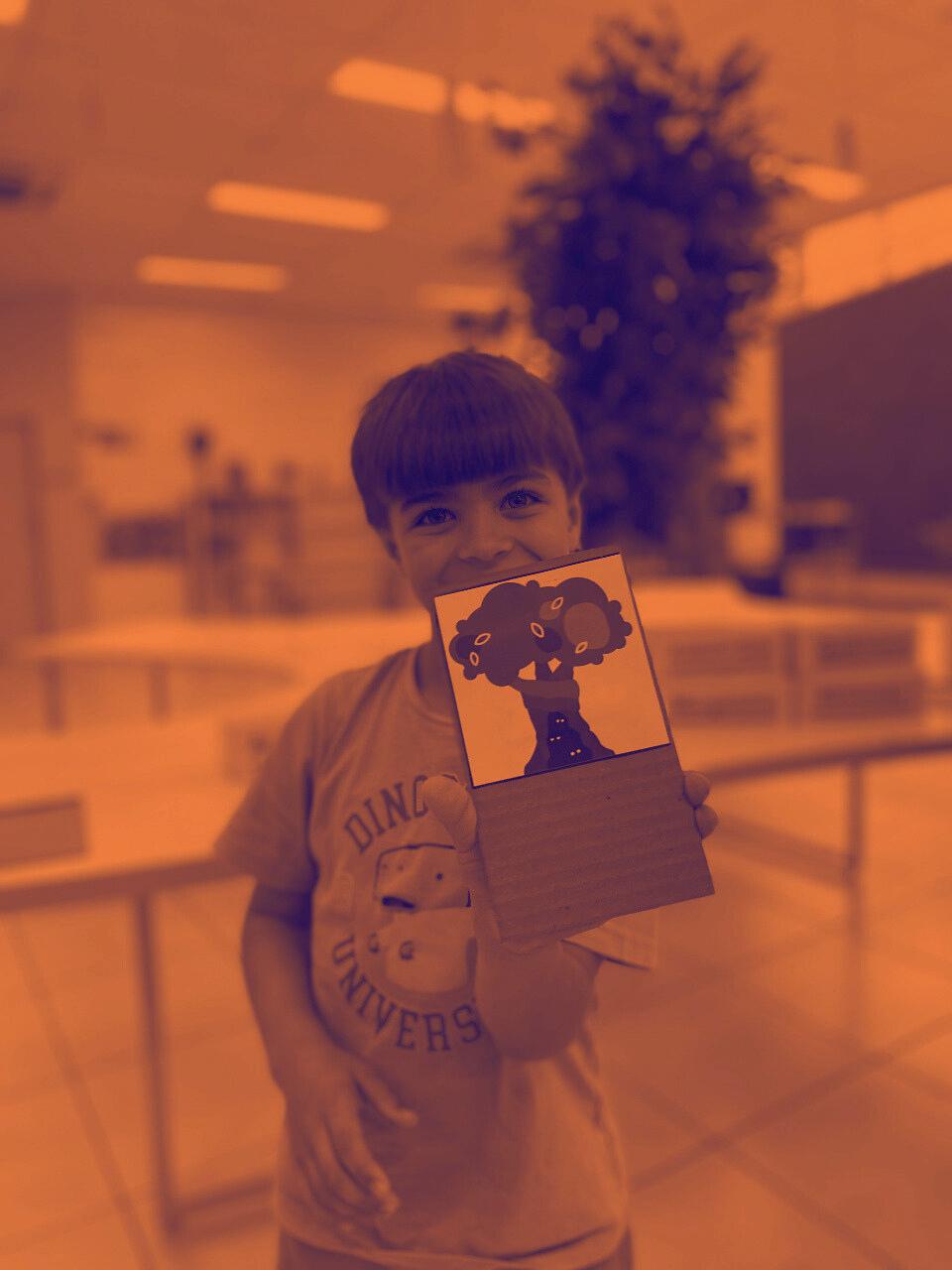
To experience creating visual arts individually, collectively and collaboratively, exploring different spaces in the school and community.
To dialogue about your creation and those of your colleagues, to reach plural meanings.
CULTURAL AESTHETICS MATRICES
To characterize and experiment with toys, games, dances, songs and stories from different aesthetic and cultural matrices.
To recognize and analyze the influence of different aesthetic and cultural matrices of the visual arts in the artistic manifestations of local, regional and national cultures.
MATERIALITIES
To experiment with different forms of artistic expression (drawing, painting, collage, comics, folding, sculpture, modeling, installation, video, photography, etc.), making sustainable use of conventional and unconventional materials, instruments, resources and techniques.
CULTURAL
HERITAGE
To know and value the cultural, material and immaterial heritage of different cultures, especially the Brazilian one, including its indigenous, African and European matrices, from different times, favoring the construction of vocabulary and repertoire related to different artistic languages.
ART AND TECHNOLOGY
To explore different technologies and digital resources (multimedia, animations, electronic games, audio and video recordings, photography, software, etc.) in artistic creation processes.
LANGUAGE SYSTEMS
To recognize some categories of the visual arts system (museums, galleries, institutions, artists, artisans, curators, etc.).