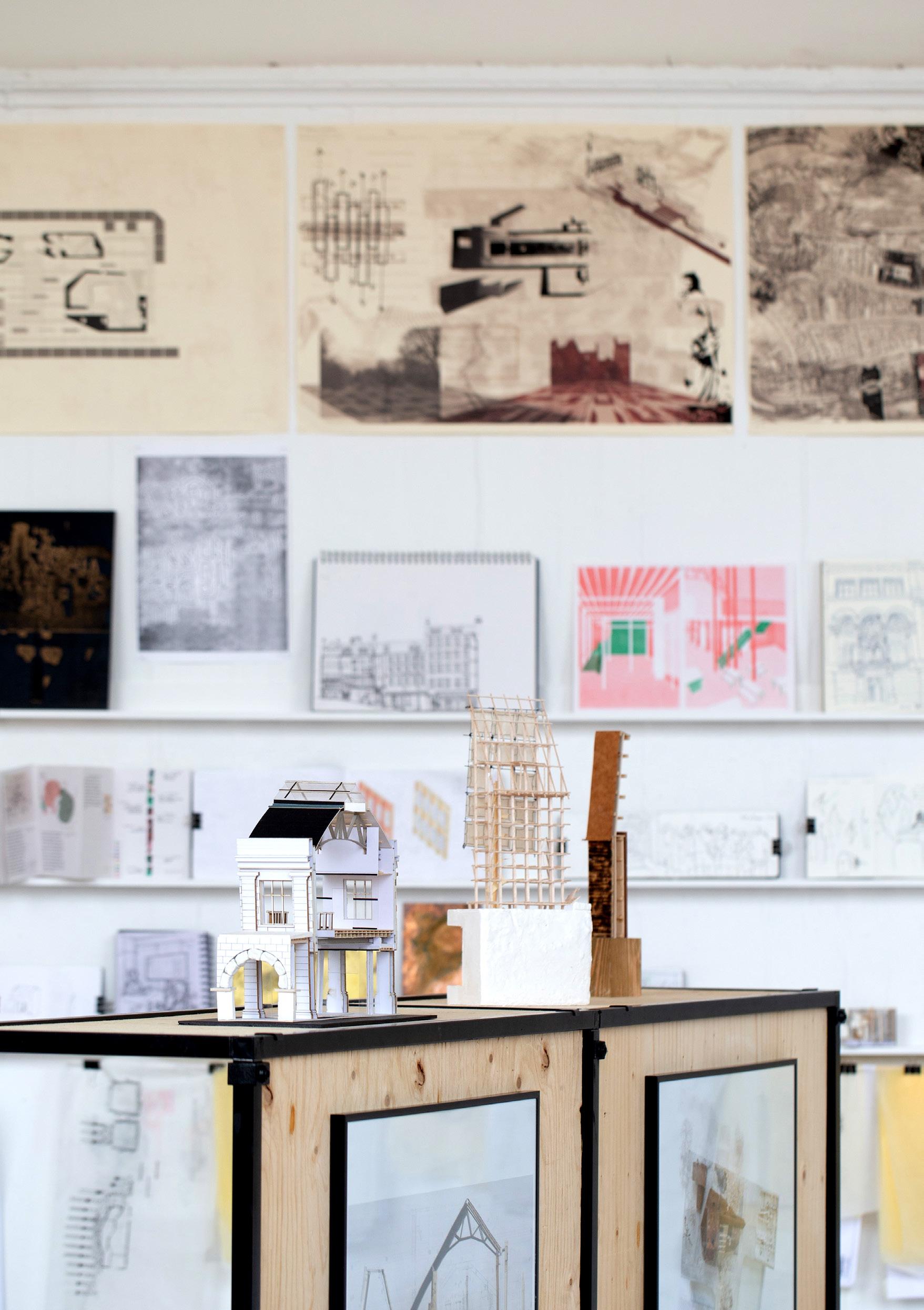
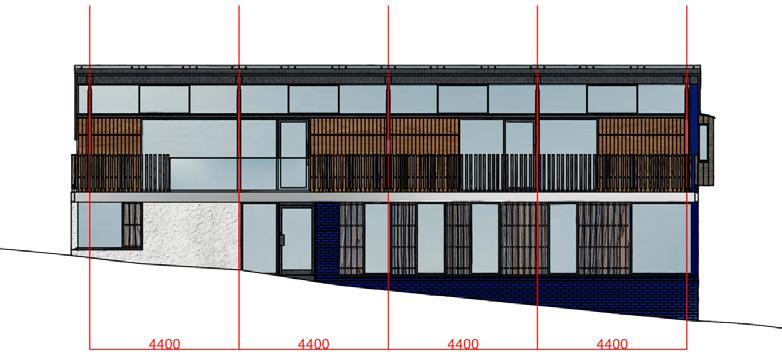
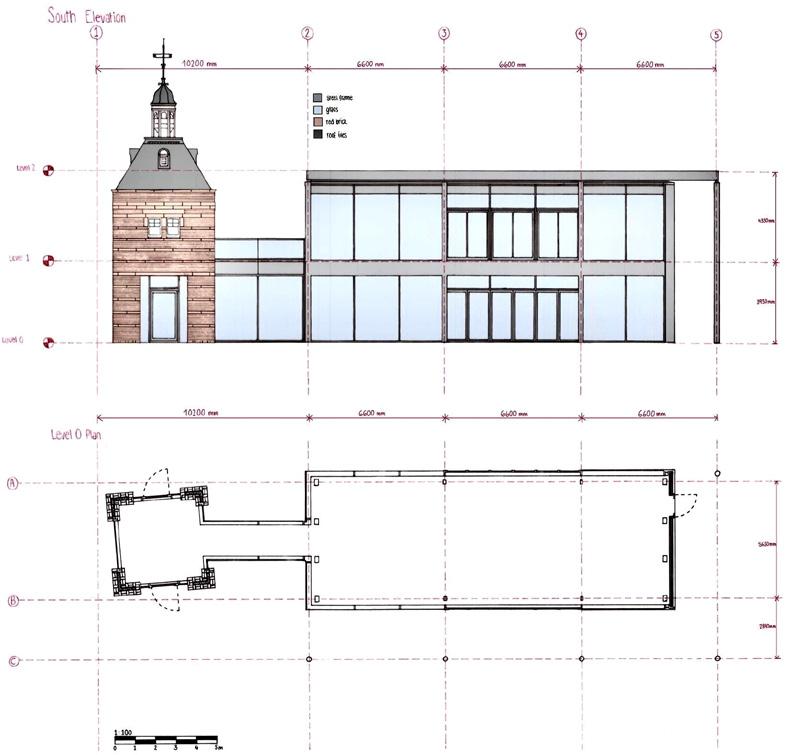
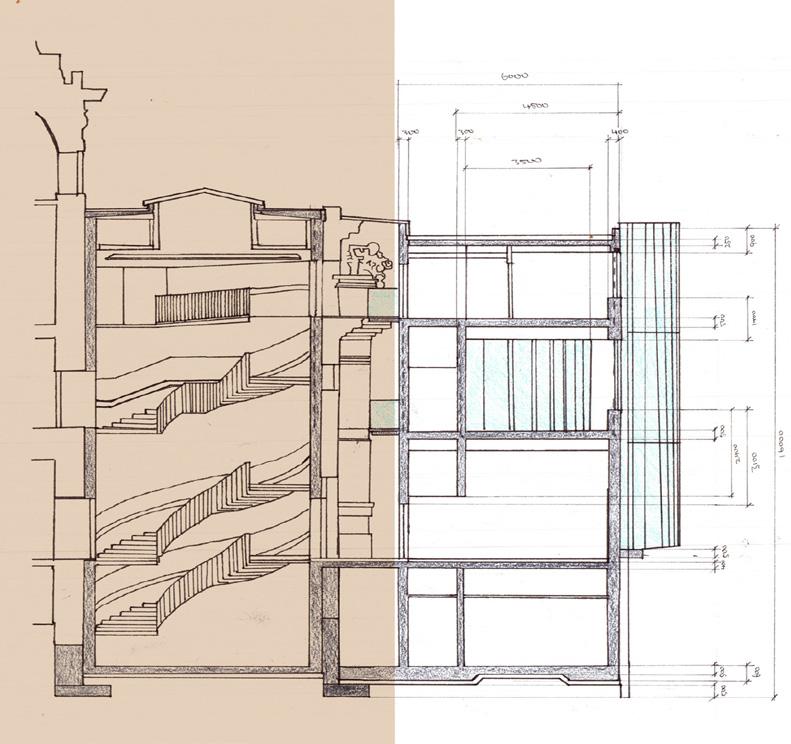
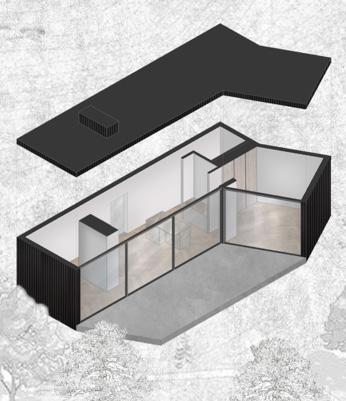
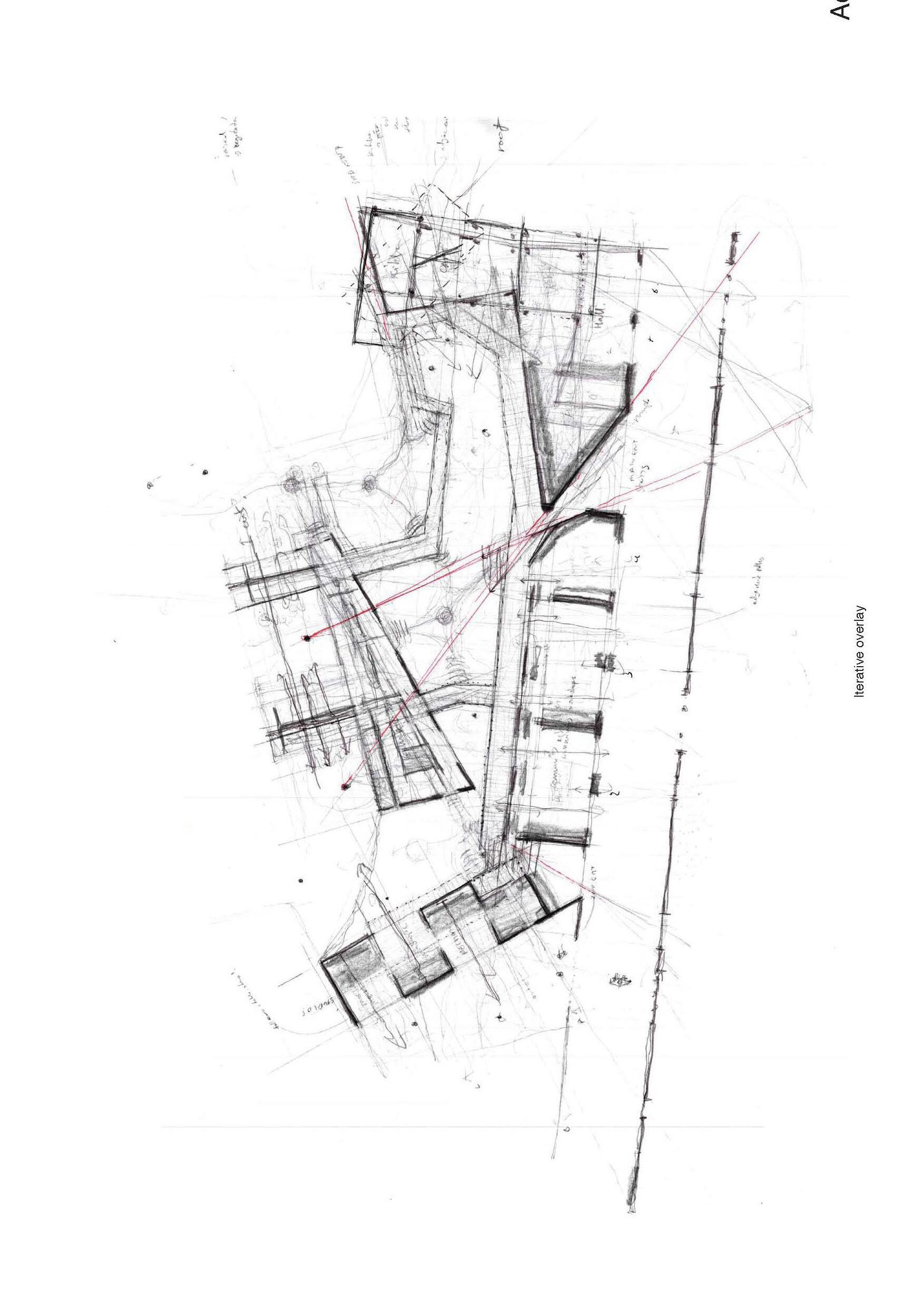
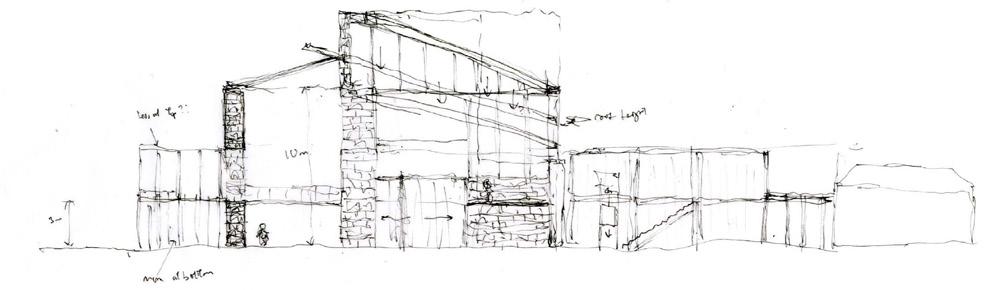
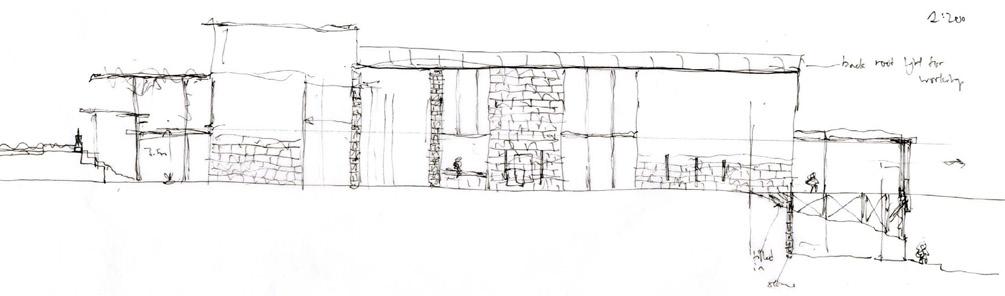
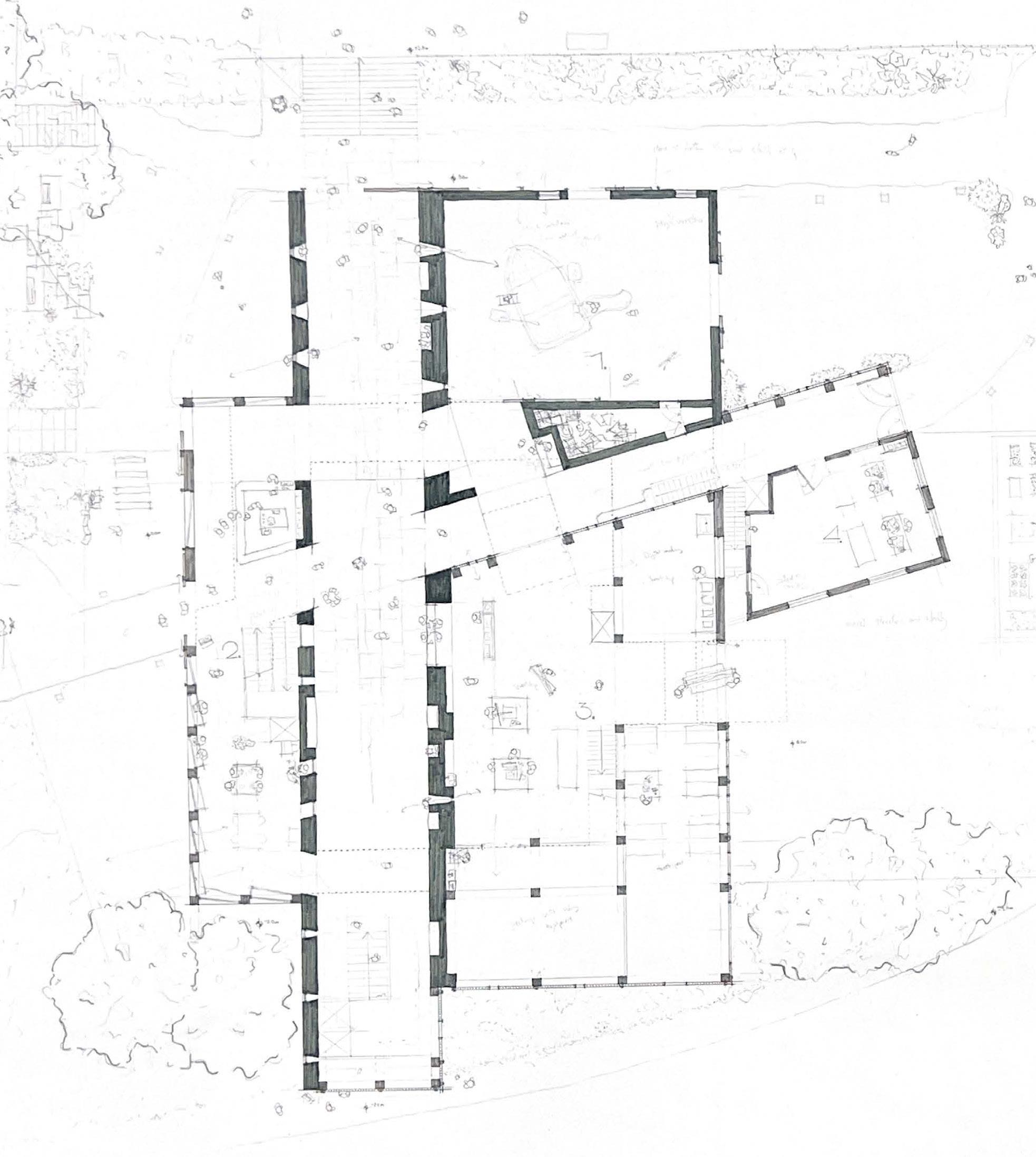
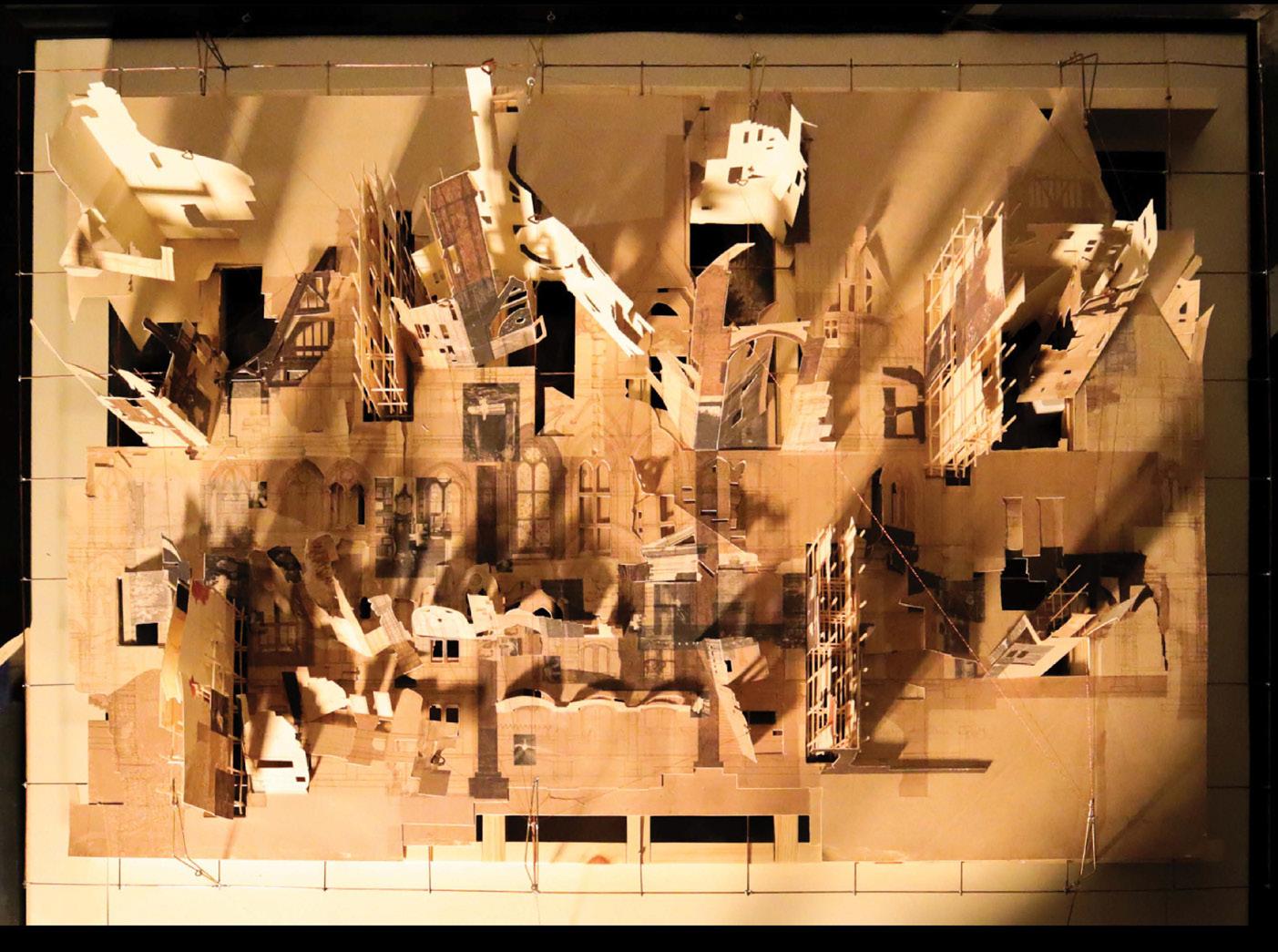
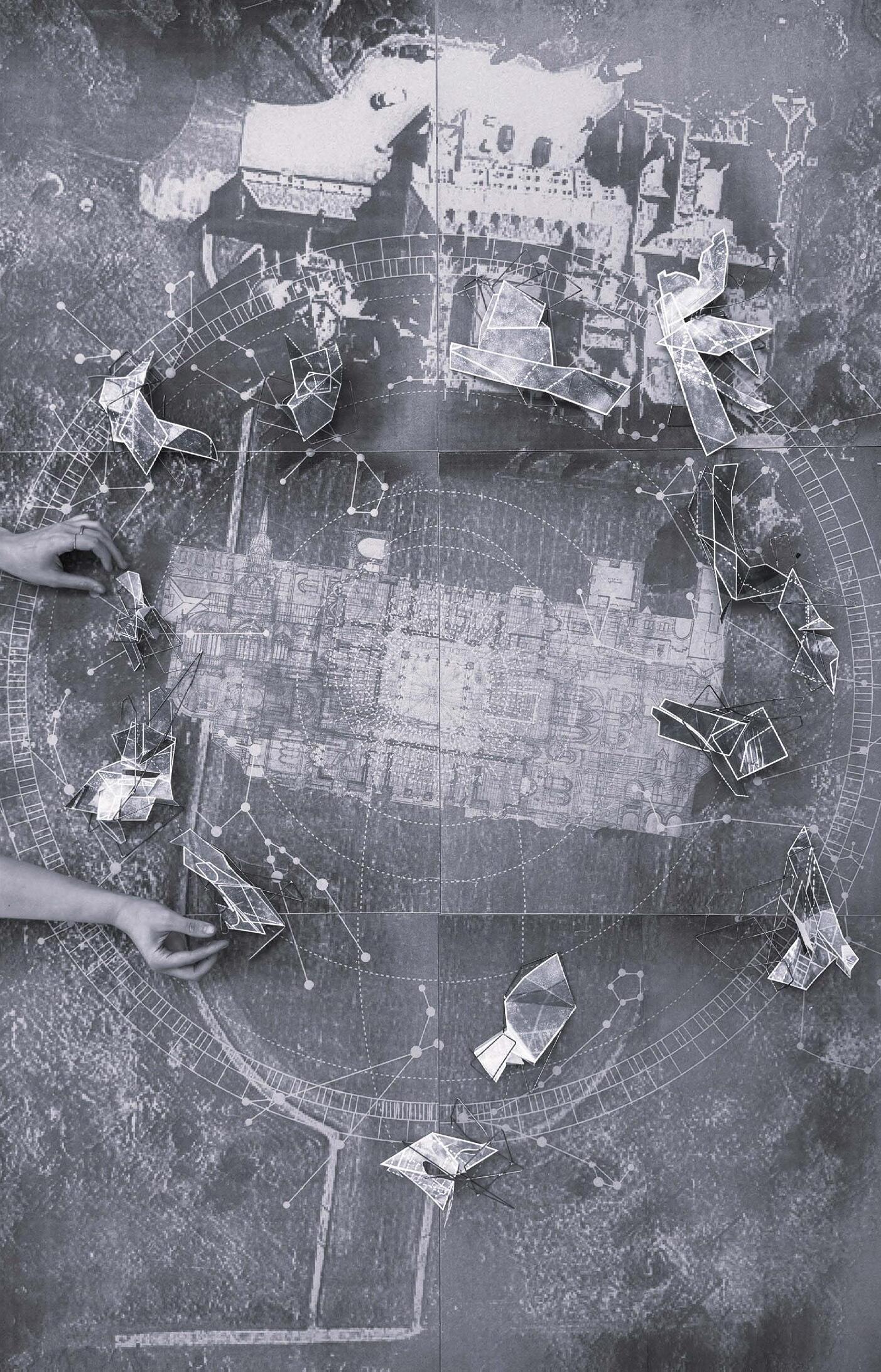
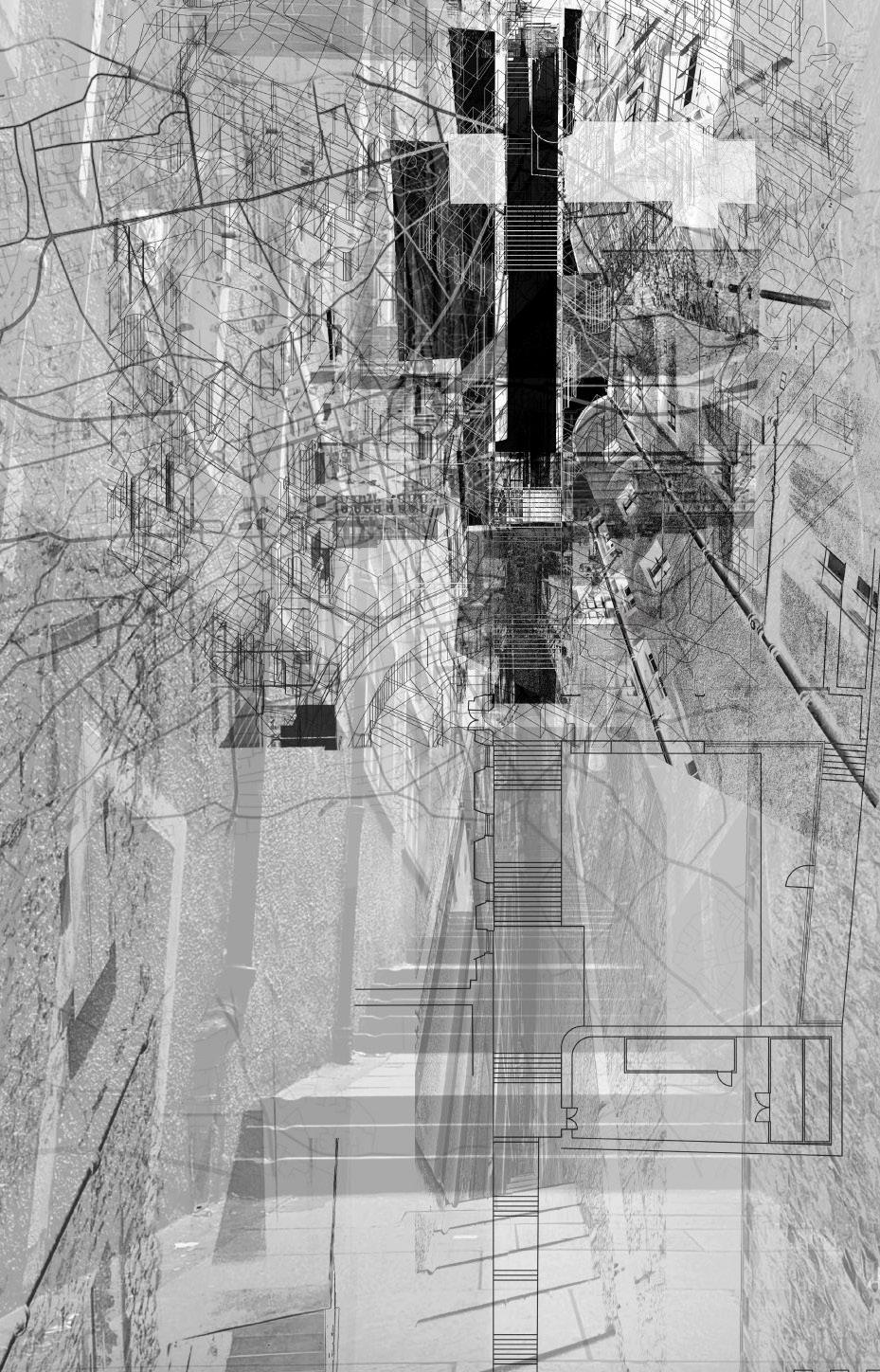
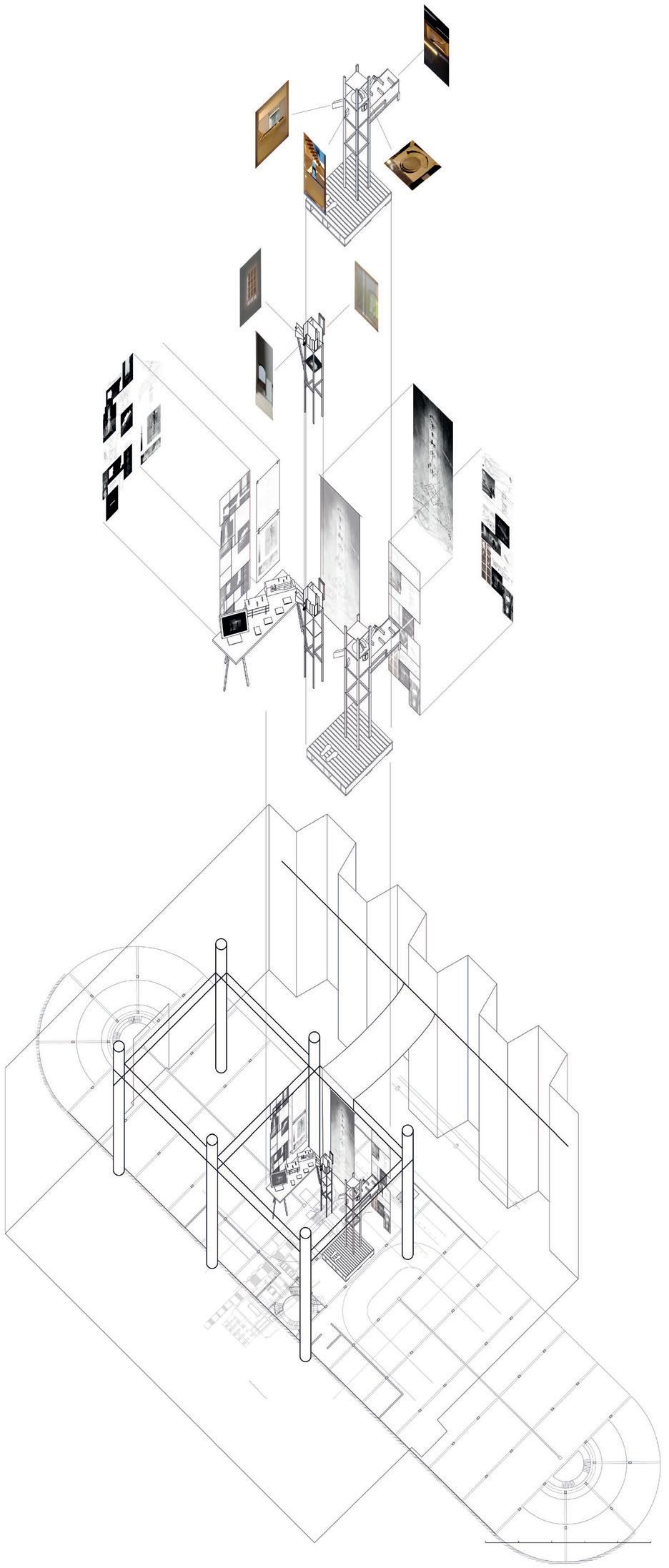
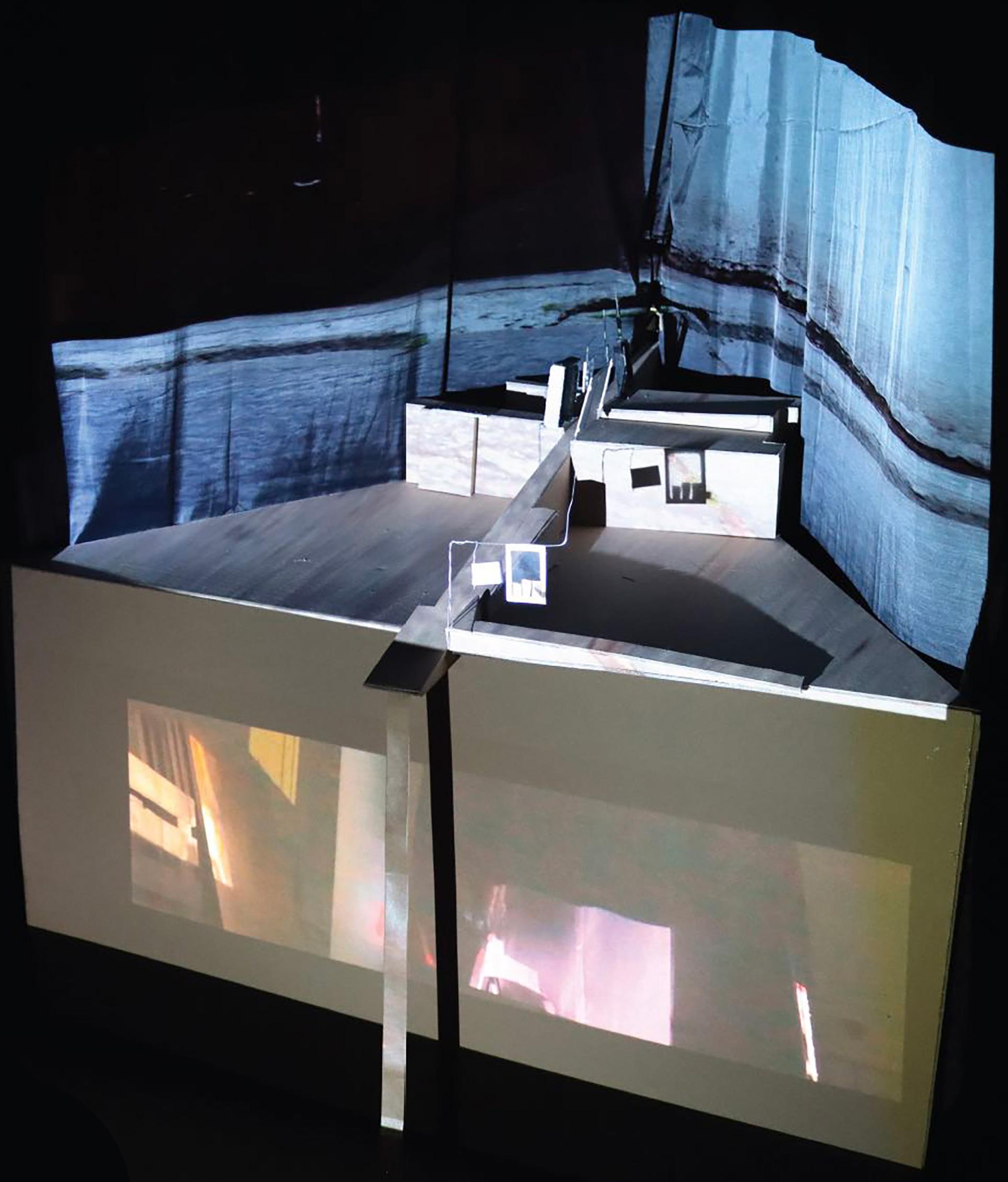
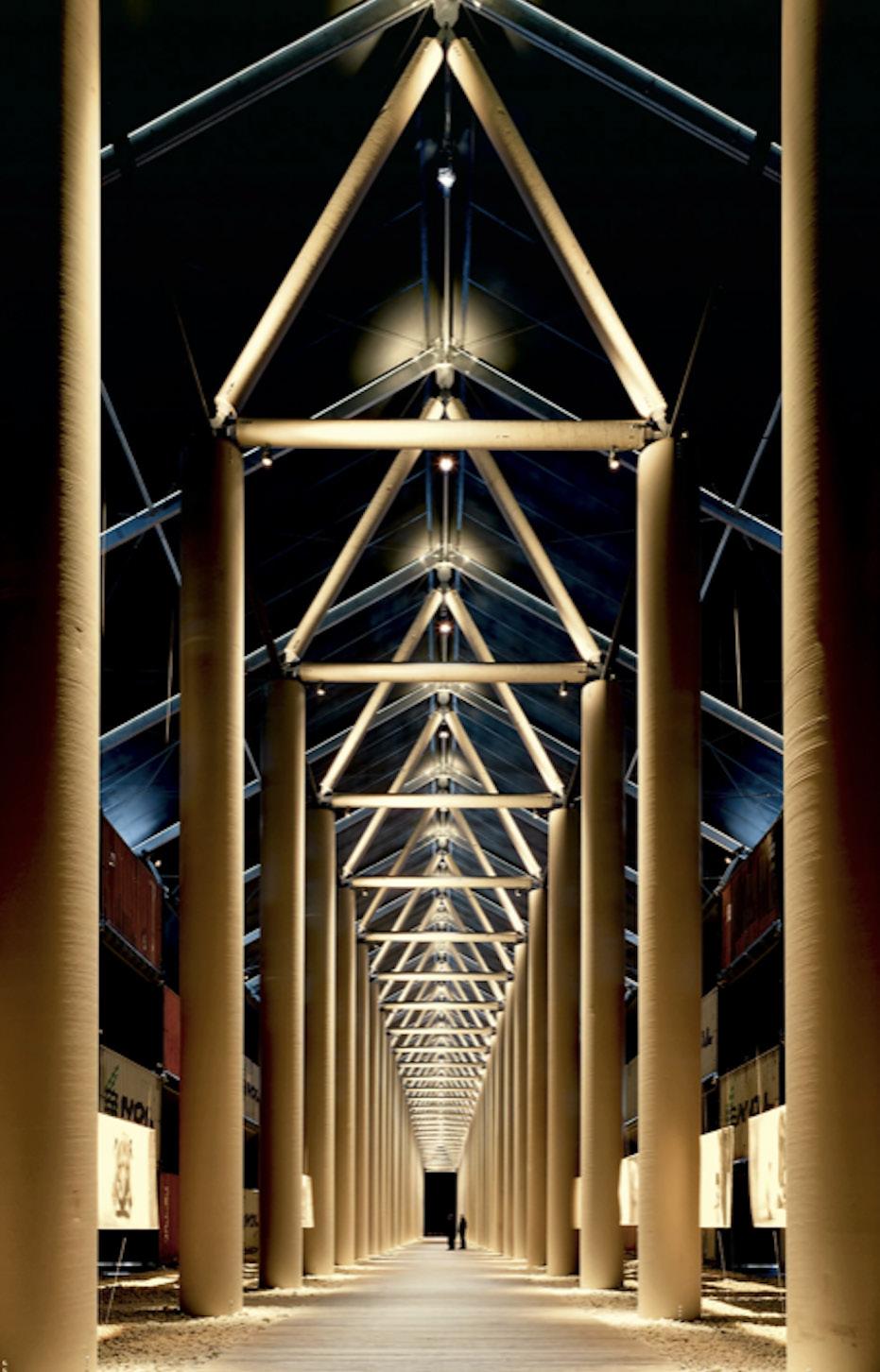
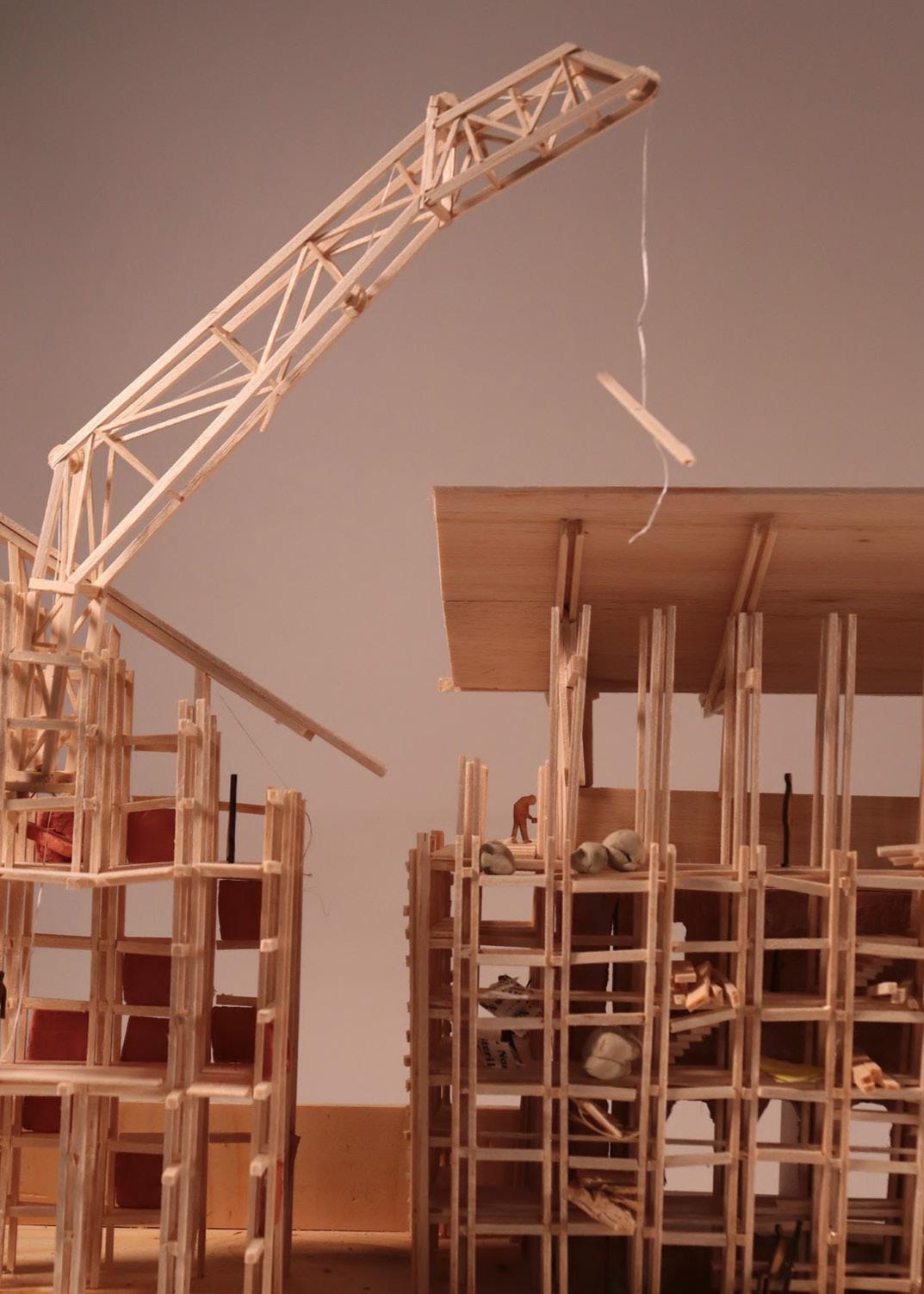
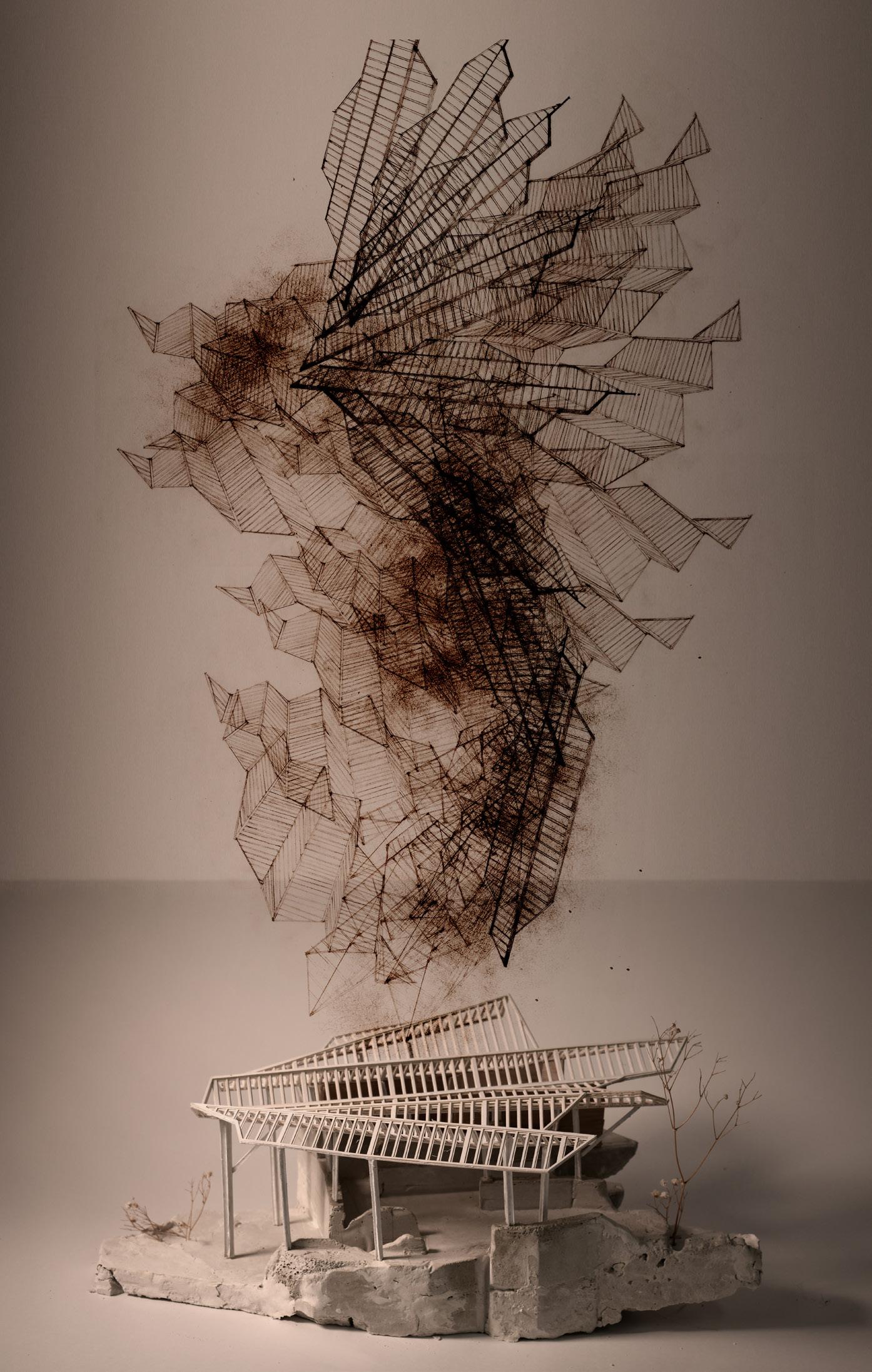
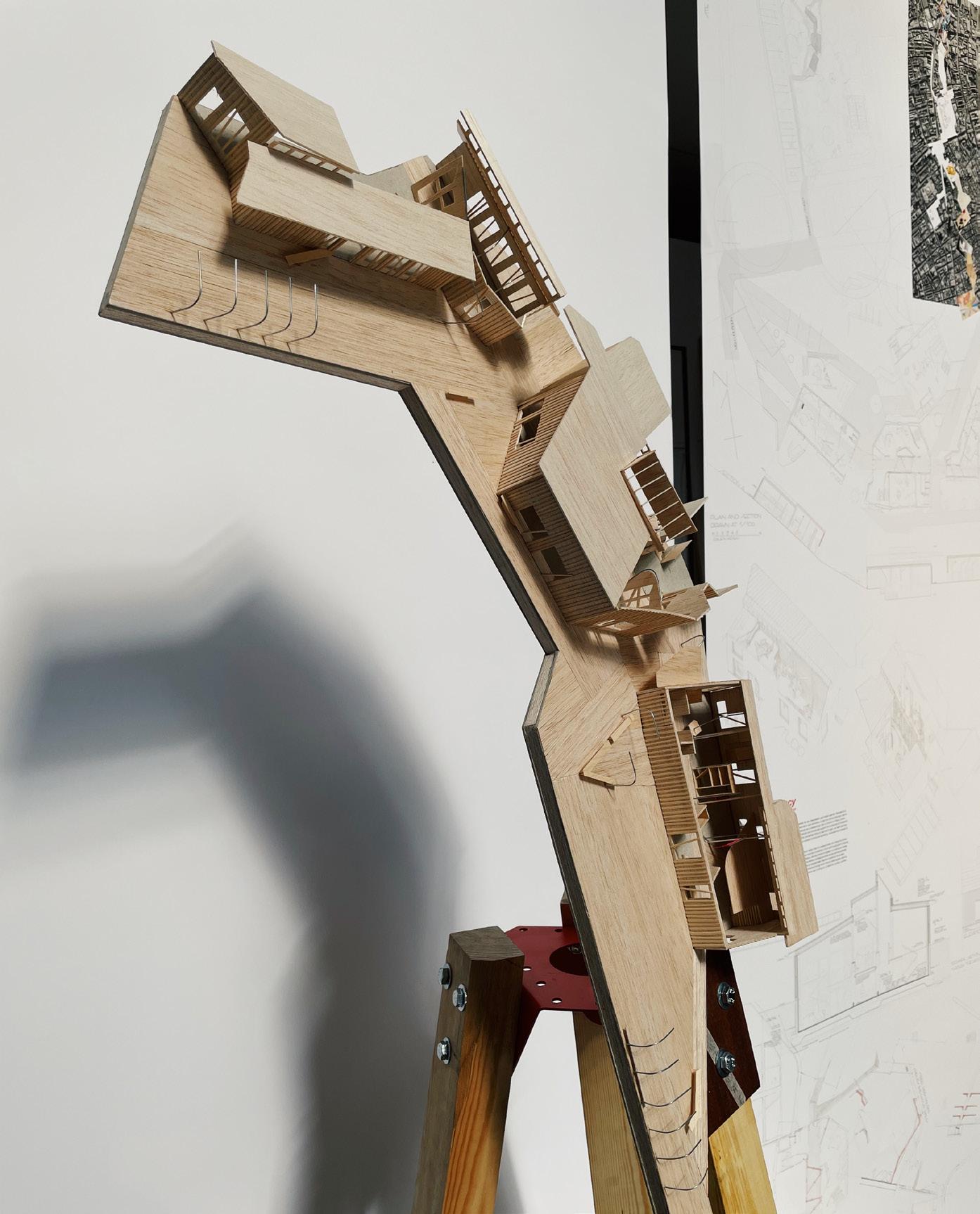
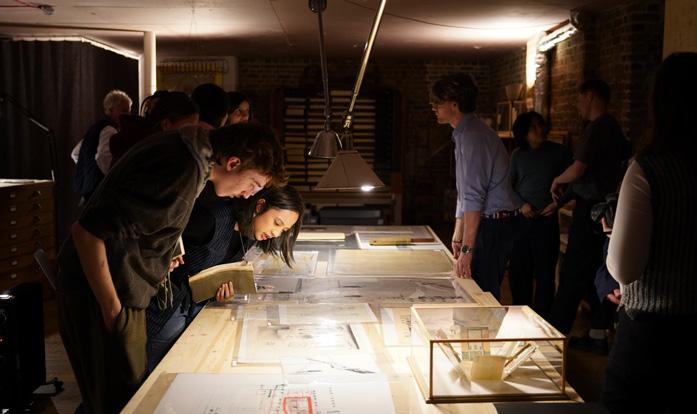
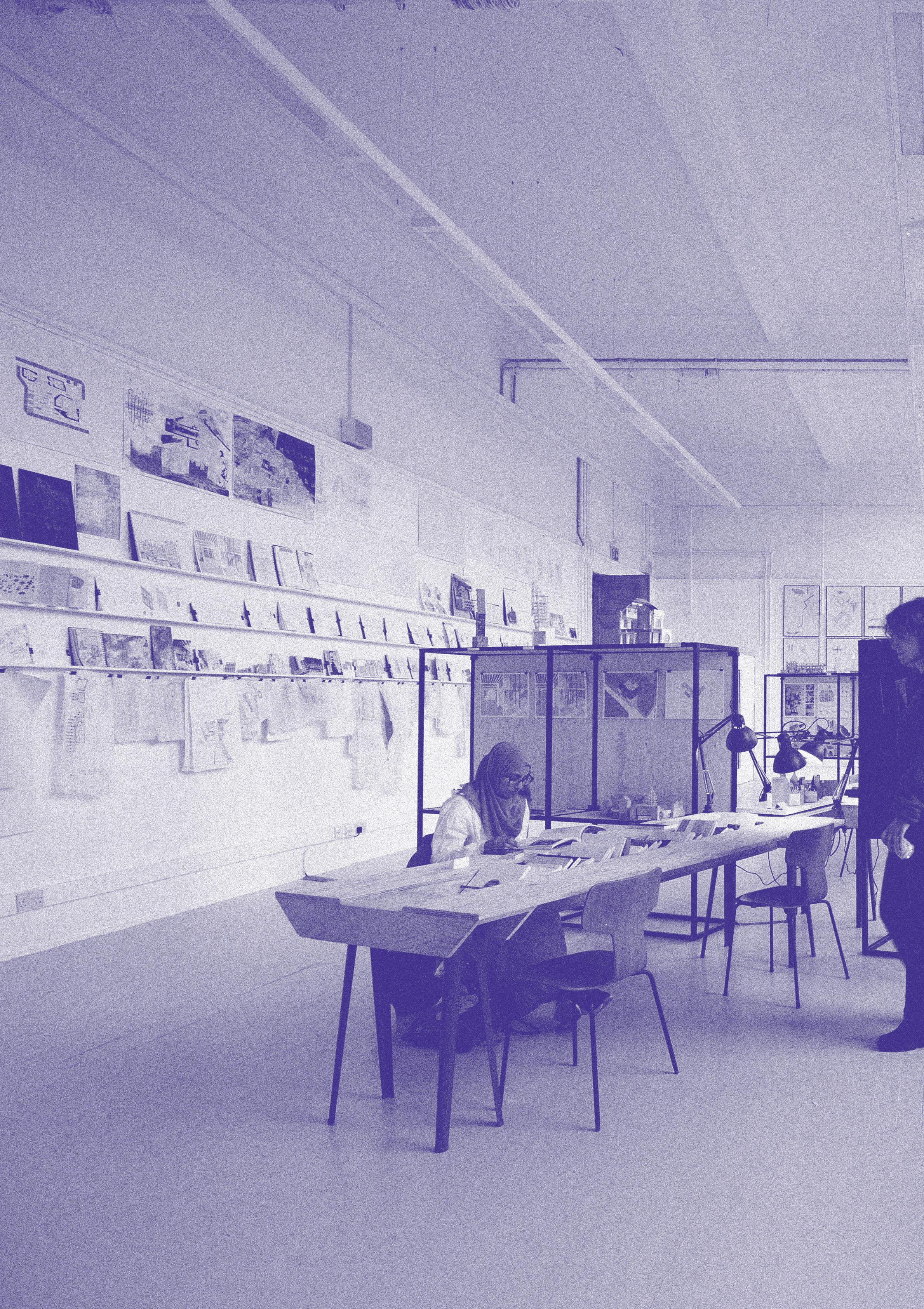
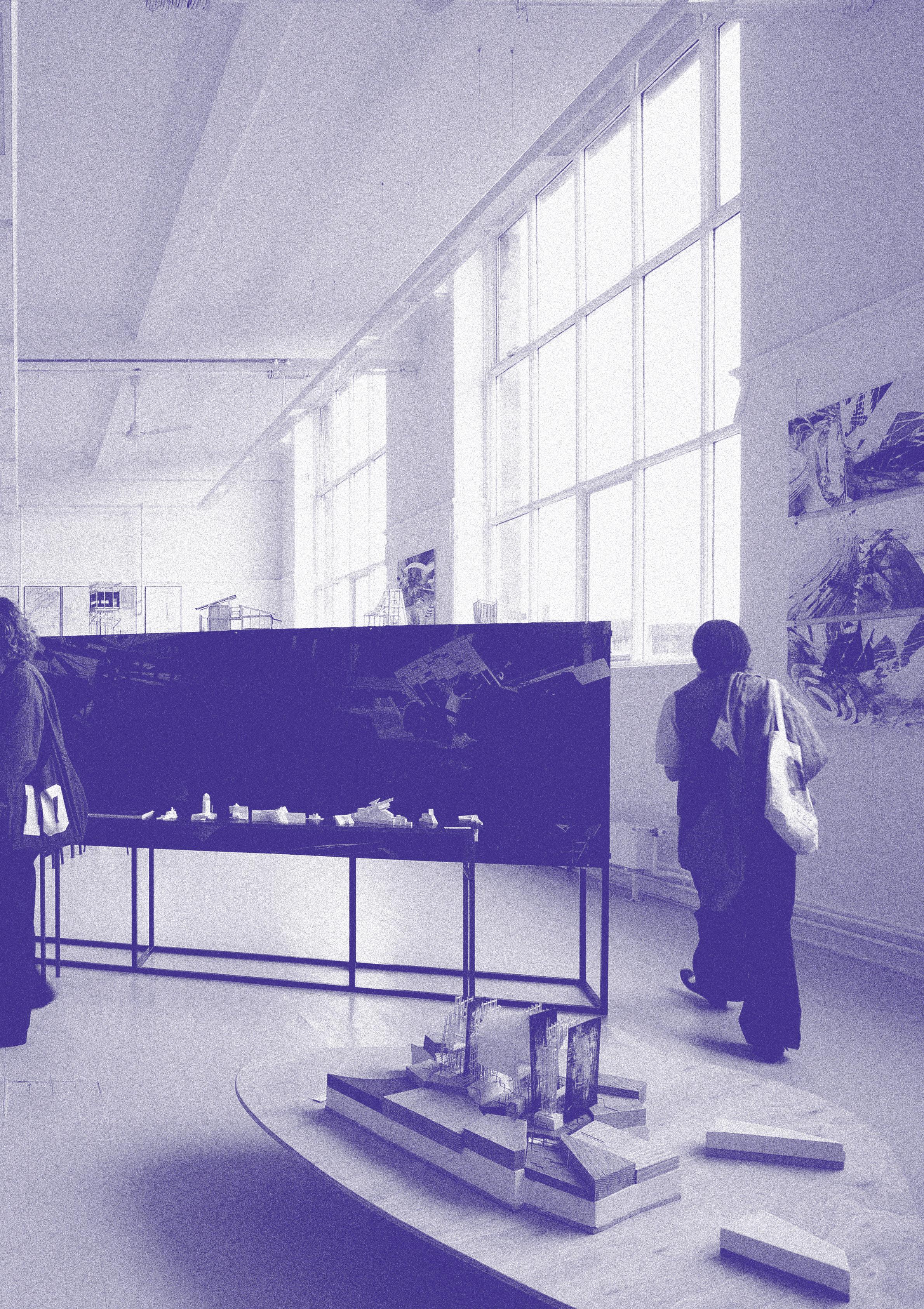
ESALA Graduate Show 2025 Lauriston Campus, Edinburgh College of Art
Photograph: Calum Rennie
year 1 year 2
Aidan Abbottspooner • Max Abrosimov
Ruqayyah Adam • Isla Adamson
Ru'Aa Al Harthy • Hanan Ali • Danah Aljamid
Janis Allen-Bernad • Ilhan Athar Putera Faizal
Beren Aydin • Rowan Bantick • Lucas Bell
Nathan Bell •Lauren Bowen Wort
Hanna Braithwaite • Mikael Bucha Dylan
Burrell • Elizabeth Carey • Millie Carr
Yuxiao Chen • Ruoyu Chen • Faye Clarke
Charly Coe • Tom Condy • Daisy Coombes
Caris Cripps • Hannah Crowley • Felicity Dixon
Christiana Doe • Nick Dolan • Sadie Douville
Joy El Chammas • Tommy Emery
Charlotte Evans • Ethan Evans
Mariella Farquhar • Yuzhe Feng • Laiba Feroz
Fraser Findlay • Sophie Fletcher
Havana Foyer • Emily Fyfe • Louis Garden
Alex Geng • Julia Giardini • Hannah Giblin
Sara Golding • Olivia Goldingay • Mariam Hadi
Mitchell Hamilton • Mary He
Tymofii Holovnia • Jessica Howat
Dariia Hryshchenko • Ginevra Iellici-March
Mika Janik • Sandy Jarvis • Adam Jedrzejczak
Poppy Johnson • Jasmin Jones • Katerina Kim
Akinda Kodithuwakku Arachchige
Anastasiia Kostiuk • Roksana Krzewinska
Julia Kurowska • Cheryl Lee • Yunhan Lei
Vicky Li • Raven Livara • Mariana Luque-Misajel
Shiqi Ma • Daniel MacKenzie
Jamie MacSween • Leanne Malaika
Dan Malitskyy • Vasiliki Mantzari
Eben McIvor • Keira McKnight Burrell
Shay Mclernon • Niamh Meikle
Eva Mellado Clooney • Viktoriia Mitsura
Reham Mohamed • Carmen Morrison
Ryan Morton • Rugile Neniskyte
Klara O'Brien • Winnie Oki • Gabriel Oprisor
Natasha Patel • Veronika Pokorna
Matilda Pooley • Megan Robertson
Craig Robertson • Amanda Romocea
Valeria Sammartino • Sakurako Sashida
Rory Scott • Caelyn Serrao • Holly Sladen
Eliza Stenning •Xiaoxi Sun • Harris Tait
Yijia Tan • Yasmin Thornton • Orchid Thway
Vlada Tsymbal • Anastasiia Turkot
Beth Turner • Mizuki Ueda • Berk Usar
Estelle Vaudin • Alex Vedy • Iona Waddell
Meg Walker • Yifei Wang • Kira Wei
Mingyang Wei • Ottilie Whiteman • Marina Wies
Megan Wilkinson • Safiyah Wilson
Cyrus Wong • Yee Ting Sana Wong • Al Wood
Katy Wright • Sophia Xu • Enhui Xu
Fengyu Yang • Kehan Yang • Chuhan Zhang
Yuening Zhang • Weihao Zheng
Kiky Zhu • Judy Zhu
Nadia Abinnour • Dominykas Adomaitis
Tom Ai • Aleena Ali • Safaa Al-kabee
Mukhamed Al-Khuraybi • Erin Angod
Fai Atkinson • Elifnur Aygun • Bill Baring
Hannah Barnett • Sophie Bathgate
Kuba Bednarski • Johnny Bradley
Ciara Briody • Rhona Brown • Ross Brown
Ronnie Bucad • Rime Byfanzi
Sophie Calder • Fin Carr • Maisie Chan
Binmo Chen • JJ Chu • Bruce Chu
Noah Claridge • Josh Cooke • Ryan Dai
Kayleigh de Beer • Sharon Ding
Bianca Dormido • Deniz Eroglu
Bailey Falconer • Lawrence Fung Roviras
Temi Ganzallo • Weiqing Ge • Nathan Gora
Yone Han • Euan Hao • Zhao Huang
Yue Huang • Nat Jakobi • Amy Jensen
Alexia Johnson • Brian Kim
Andrew Kowalski • Klaudia Koziej
Zhaohong Li • Rachel Li • William Liang
Te Liu • Rochelle Lok • Zhiliang Lu
Martyna Lyczek • Nicole Lyu
Solveig MacCallum • Zoe Mak • Mira Mekki
Laurel Meldrum • Ciara Morrison
Maria Necula • Nicole Ng • Naima Noack
Maja Nowaczyk • Andreea Paduretu
Ziqi Pang • Sourya Patnaik
Anastasia Petrarchini • Ioana Petre
Margaret Polukhtin • Sean Qiu
Taisho Ramcharran • Abbie Rashed
Ananya Sharma • Ziyan Shen • Izzy Skinner
Tara Smith • Mariia Solovei • Amy Song
Julia Stepniak • Charlotte Stewart
Valentina Tang • Natasha Taylor
Eunice Tho • Jenna Van der Merwe
Allen Walker • Audrey Wang
Charlotte Wright • Terry Xie • Mitchell Xu
Yuhang Xue • Ruiqi Yao • Raymond Yao
Aarusha Zahia • Betty Zeng • Amber Zhang
Cindy Zhang • Yile Zhang • Phoenix Zhang
Qingyang Zhou • Yihan Zhou • Muzi Zhu
Ruoyan Zou • Mia Zucchi
year 3 year 4
Lara Acikgoz • Karen Akiki • Ksenia
Arkhipov Cleo Averof • Matthew Baker
Molly Bonner • Eve Cameron
Caroline Chan • Gordon Chen
Wenzheng Chen • Yihui Chen • Eric Chen
Adam Chen • Kathy Choi • Ella Dai
Guy Di Rollo • Zsofia Droppa • Joyce Fan
Alice Feng • Ivan Feng • Tom Ferris
Ren Fraser • Xander Froggatt • Maddy Gale
Ruohan Geng • Anna Gillibrand
Pippa Glynn • Kirsty Green
Ellie Greenwood • Millie Hambleton-White
Ellie Hong • Whitney Huang • Anita Huang
Catherine Huang • Eleanor Hung
Seonaid Jervis • Beini Jiang • Megan Jones
Lauren Jordaan • Eugene Kam
Anfisa Karneeva • Isabella Laird • Zhiyu Li
Zifei Li • Moby Lo • Chang Lou
Kathleen McBride • Chiara Mesquita
Sofia Moggi • Alicja Mrowicka • Jeevan Nair
Rianna Onzivu • Elliott Osmond
Cameron Paul • Karolina Pavlikova
Drew Pimm • Joshua Powell
Emanuel Pruteanu • Kevin Ren • Luna Rojas
Farah Saiful Bahrin • Milenka Soskin
Holly Spragg • Harris Stewart • Xindi Su
Issa Tambourgi • Nathan Tollan
Ellie Trimlett • Aysel Naz Tunay
Lola Turner • Marika Urbanska
Felix Tsz Kiu Wong • Ella Woods
Sasha Worth • Ji Wu • Tianming Yin
Nandy Zhang • Sophie Zhang
BA Final Year
Khaira Abimbola • Daisy Bond • Paco Chow
Tianshu Fang • Sumaita Mahnur
Alissa Martinelli • Soraya Mohammad Asri
Hazel Neill • Luke Pearce • Estee Raus
Roshni Shah • Airam Soriano
Charlene Sun • Elaine Yang
Ella Aisher • Abdulrahman AlSuraya
Serena Arya • Harry Baldwin
Evelyn Barter • Hannah Bendon
Rona Bisset • Finn Brown
Alexandra Calder • Adela Chen
Yudian Chen • Una Chen • Eva Cheng
Aspen Cheung • Louis Clarkson
Andreea Colbeanu • Saoirse Cotter
Zara Coulter • Douglas Crammond
Tom Crenian • Alice Cross
Hannah Dalgleish • Chris Davies
Sally Dawson • Henry Ding • Max Edwards
Bella Fane • Ena Gavranovic • Emily Geens
Marcus Hall • Harith Hashim
Belinda Haynes • Chentowe He
Itske Hooftman • Bronwen Horler • Una Hu
Megan Hunter • Montaha Idris • Jacob Jiao
Callum Johnson • Anna Kerr
Wiktor Krzystolik • Justin Lai
James Langham • Yunze Li • Rose Li
Sichen Liu • Ritvik Loganathan
Yuanxin Lu • Shuduo Lu • Yujia Lu
Lucy Lucas • Rae Marino
Tidings Mazomba-Felix • Sam McKeown
Shay Miller • Danish Mohammad Razwi Isla Murphy • Campbell Murray
Simon Mydliar • Natalie Ng • Harriet Nixon
Oscar Nolan • Quinthia Nsema Bayekelua Peculiar Oyindamola Ogunbayo
Louise Paterson • Jenna Penman
Anastasia Redmond • Freddie Reid
Xiaoye Ren • Lucia Riege • Diana Saab
Joanna Saldonido • Rosie Shackell
Lara Sturgeon • Mengyang Tang
Holly Taylor • Julia Twardzisz • Fergus Tyler
Ed Varlow • Phoebe Vendil • Yusen Wang
Junyi Wang • Yuxuan Wang • Leia Wilson
Lucy Wright • Fanxuan Wu • Yuhan Xia
Yuxiao Xue • Yao Yu • Yuxi Zhang
Xu Zhang • Tom Zheng • Mingyu Zhou Yunlong Zhu
student - cohort
Editor
Racheal Hallett Scott
Catalogue Design
Calum Rennie
July 2025
Programme Director
Rachael Hallett Scott
Welcome to the sixth edition of the annual BA/MA (hons) Architecture catalogue that documents the 2024-25 academic year.
The BA/MA (hons) programme at Edinburgh School of Architecture and Landscape Architecture (ESALA) recognises architecture as a cultural, environmental and societal practice. As students progress through the programme they build knowledge and expertise across a range of courses that engage with design, technology, the environment, history, theory and the fine arts.
The projects that Course Organisers have chosen to feature here explore a wide range of scales, themes, and contexts—from first-year explorations in observational drawing and adaptive reuse to final-year dissertations and design projects that engage with complex social, environmental, material and urban challenges.
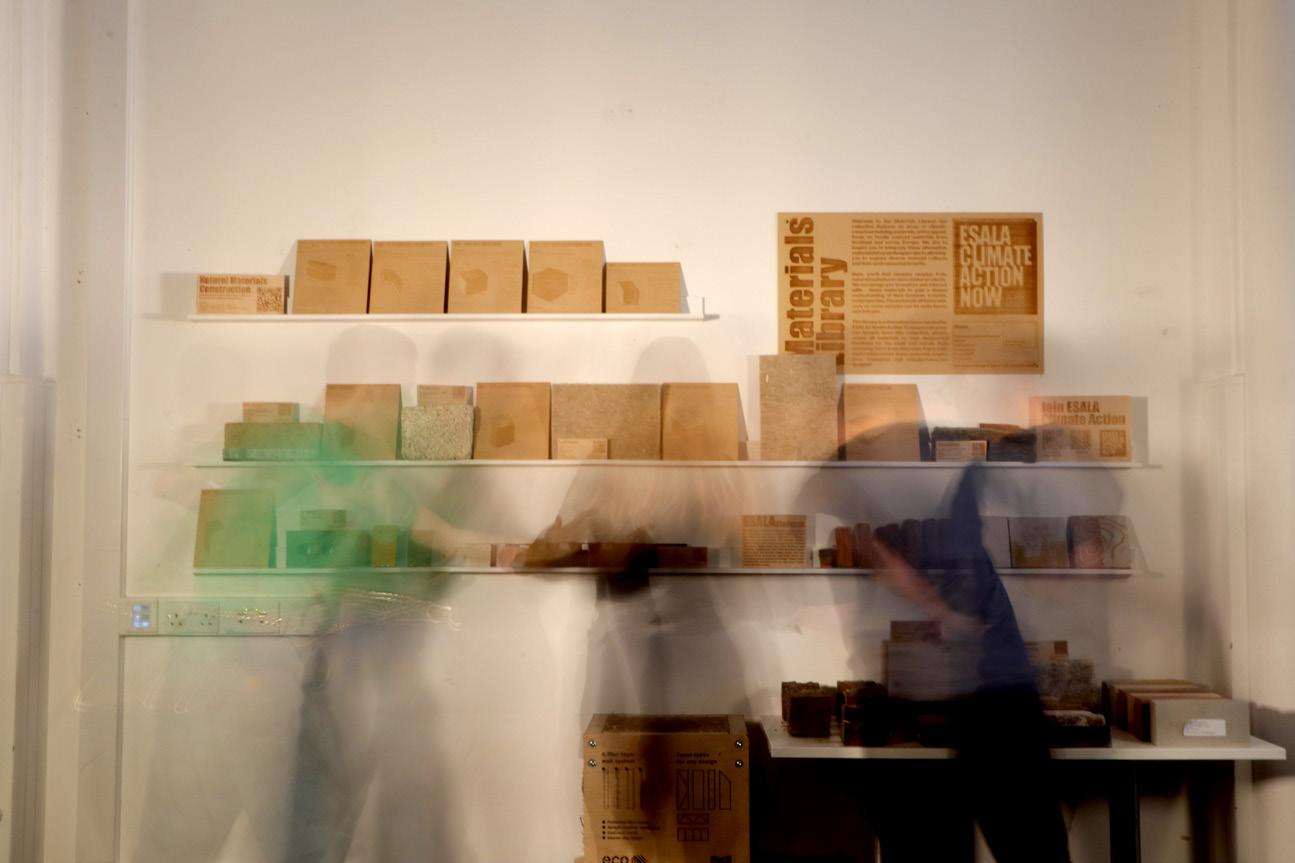
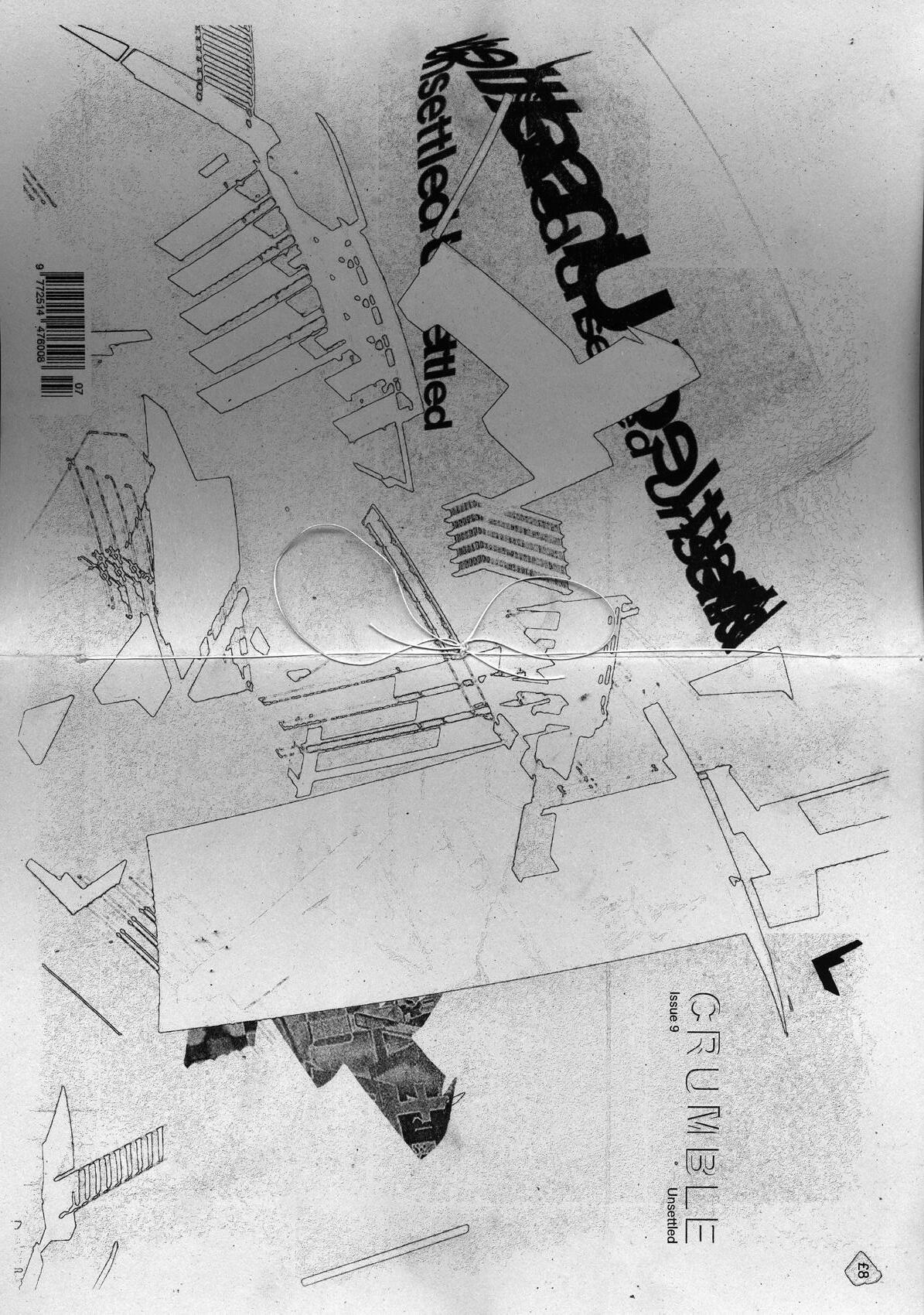
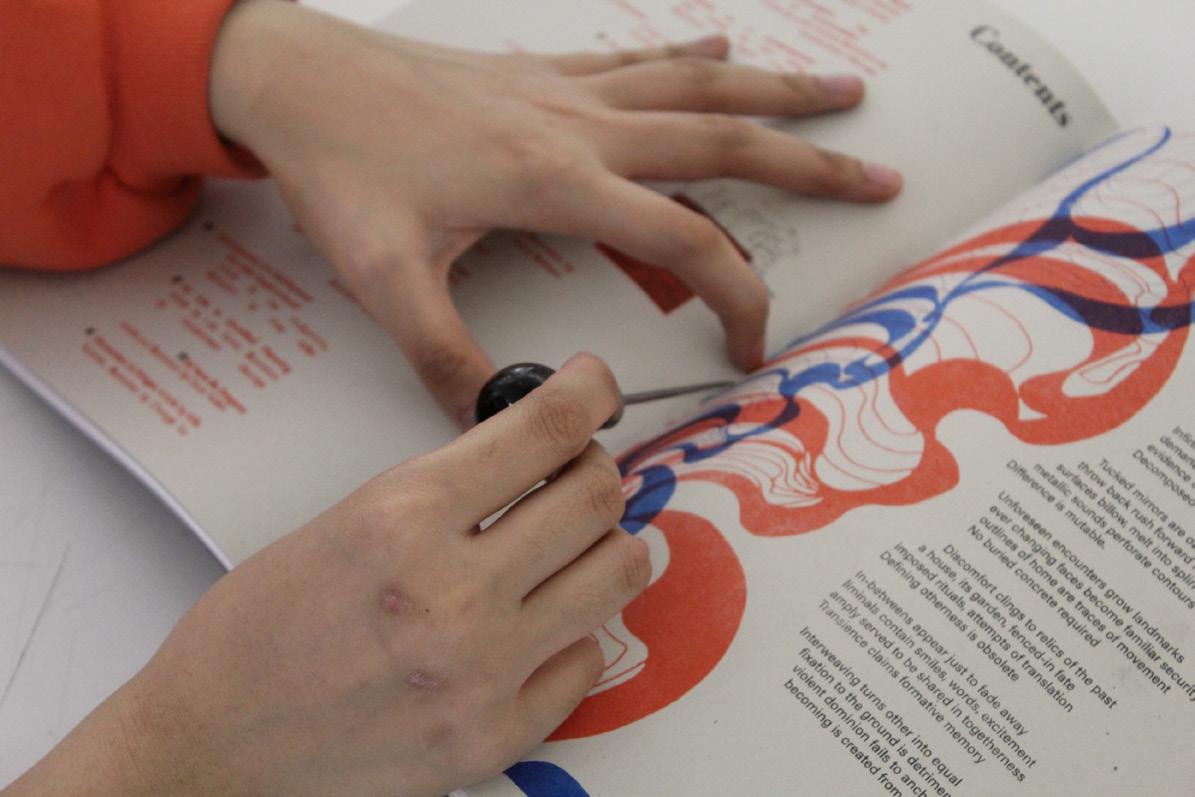
The catalogue also aims to illustrate the active, vibrant community at ESALA that is made up of students, architects, historians, engineers, landscape architects, cultural theorists, interior designers, librarians, administrative staff and technicians. The student society ArcSoc provides a social focus, whilst Crumble brings together students from across the wider Edinburgh College of Art to write, illustrate and publish a magazine each year. ESALA Climate Action is a staff and student collective that organises workshops and talks with a focus on how we learn, act and practice in this time of climate crisis.
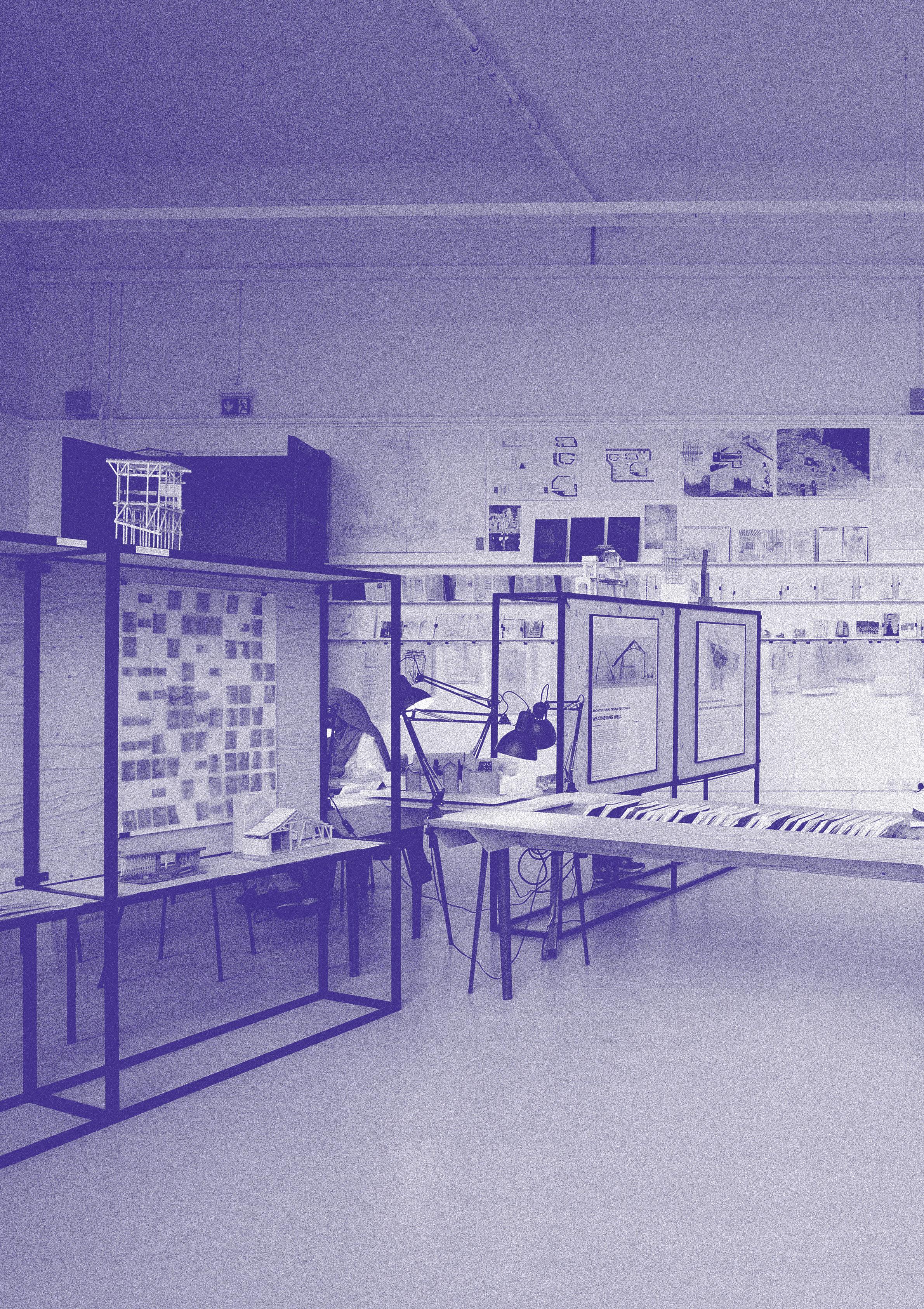
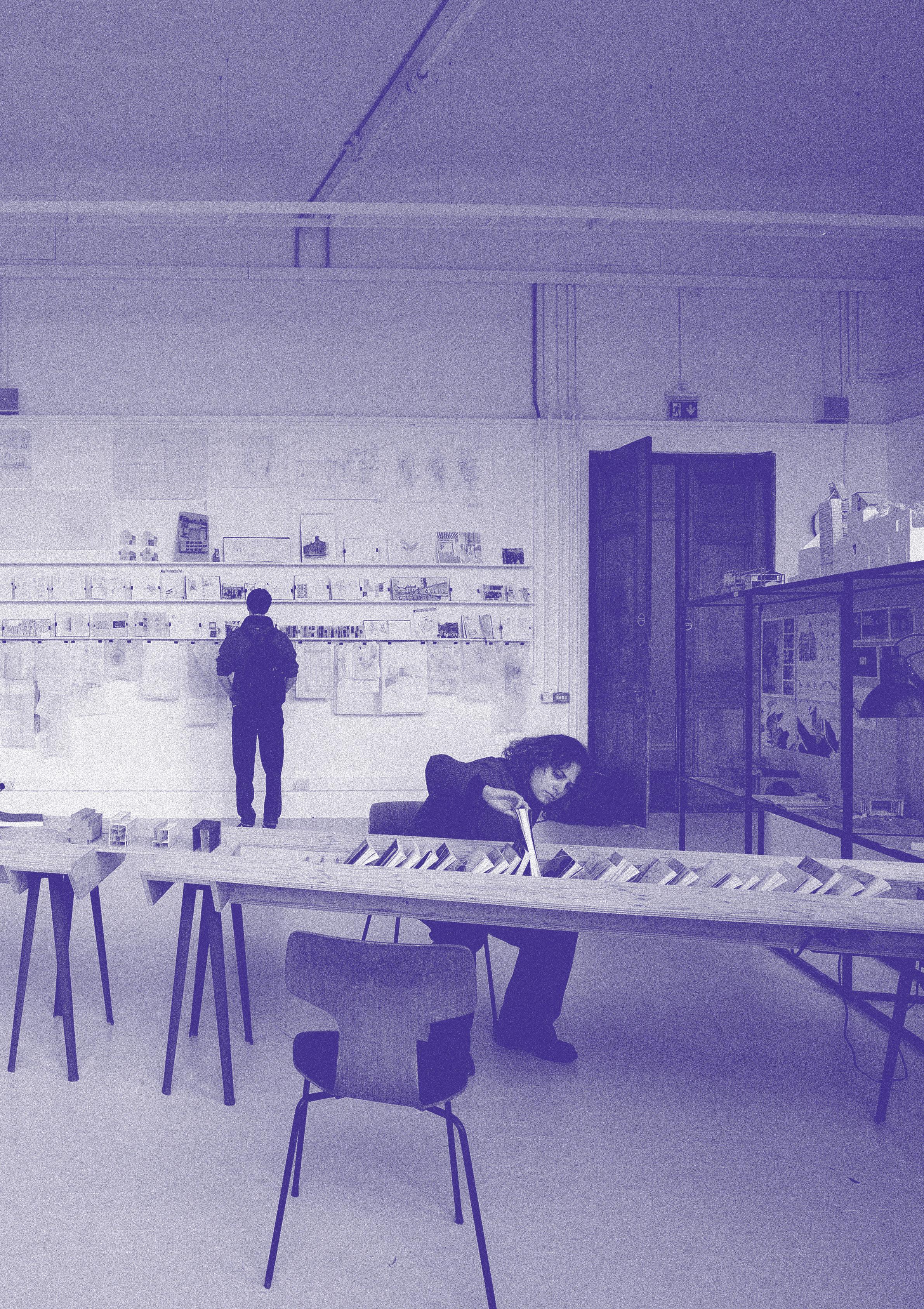
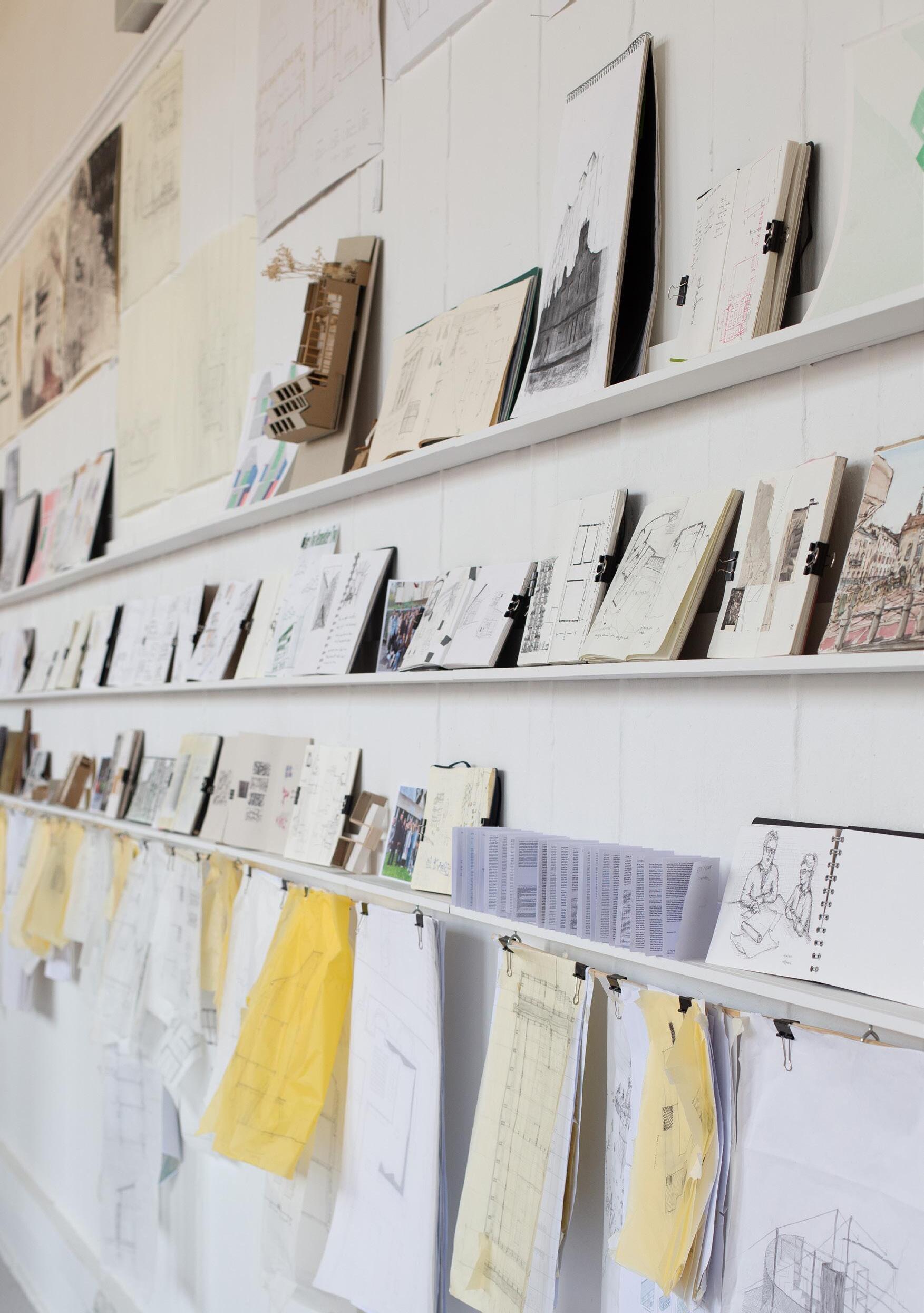
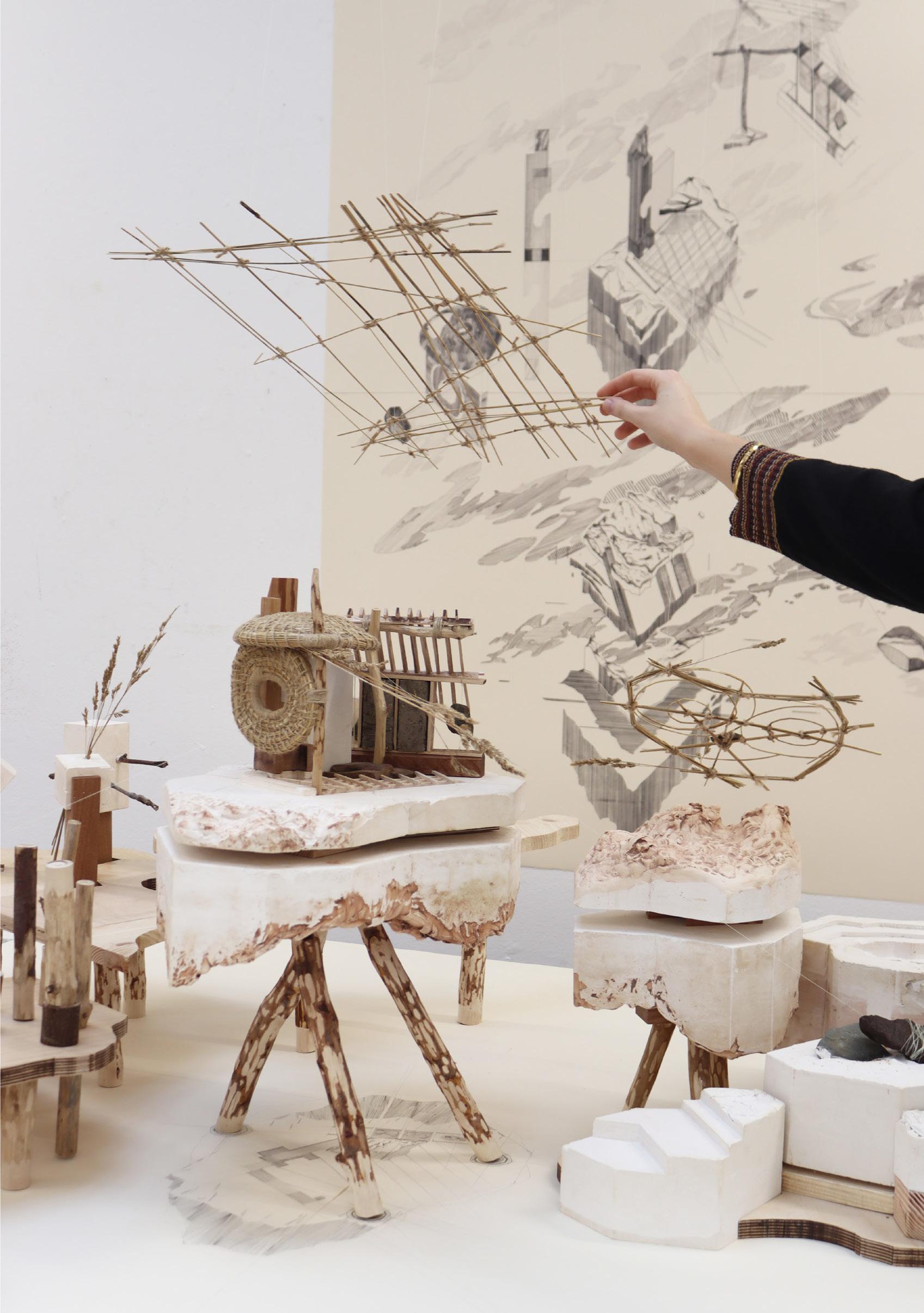
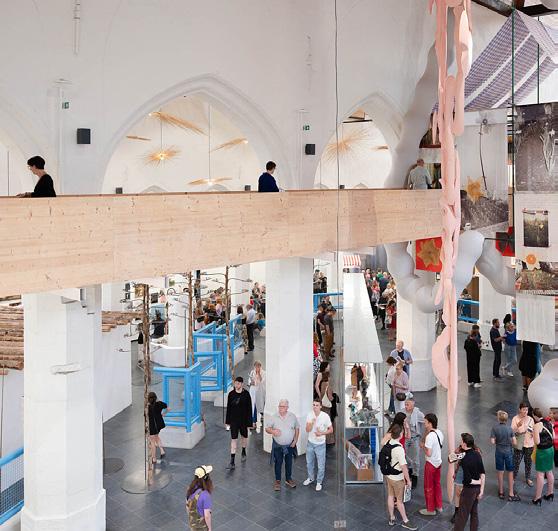
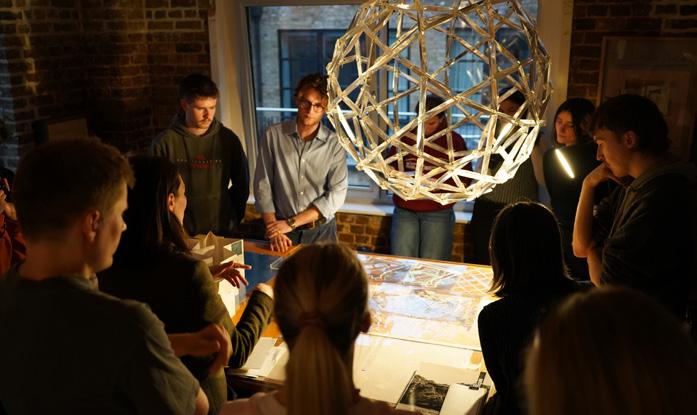
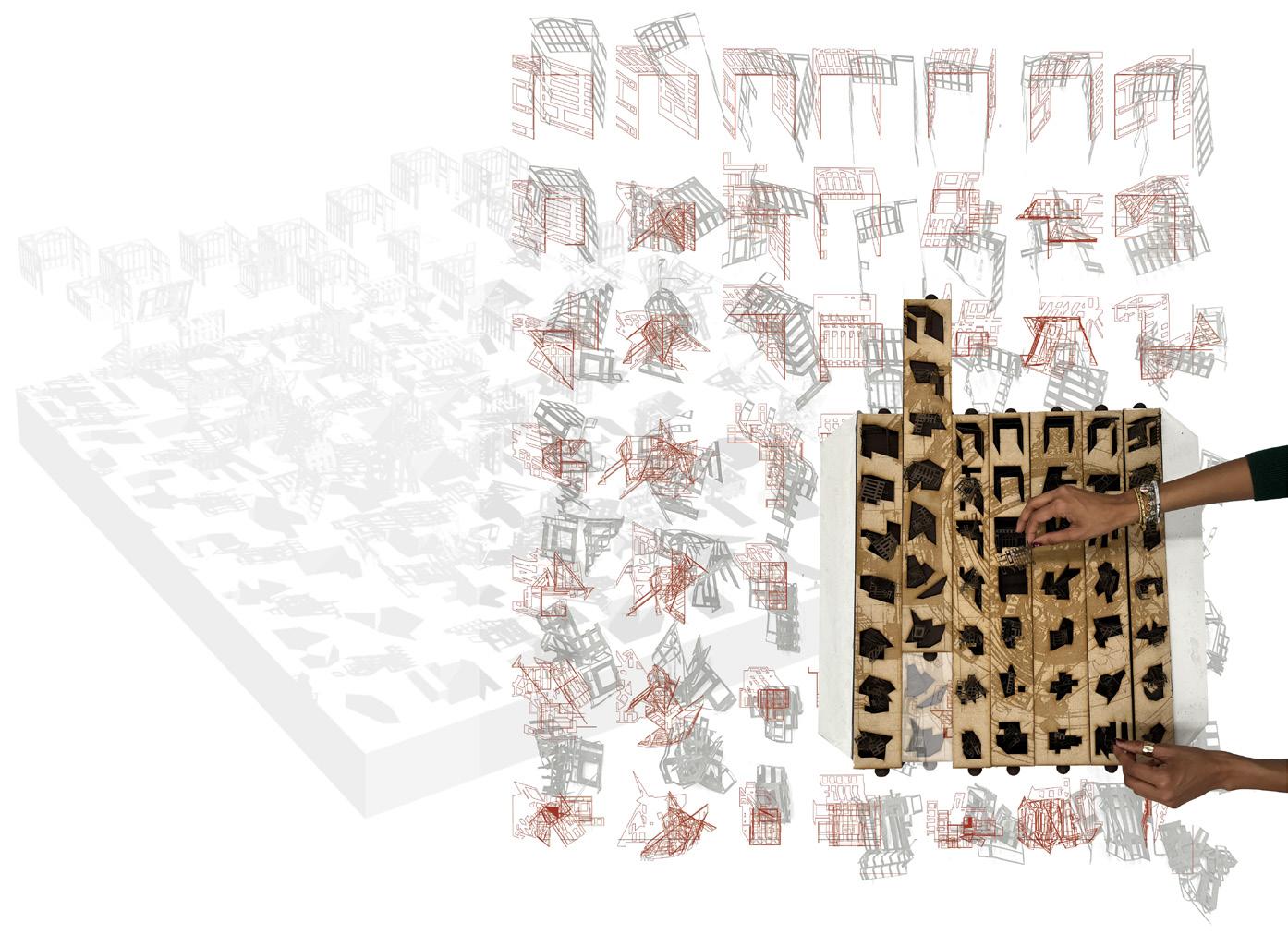
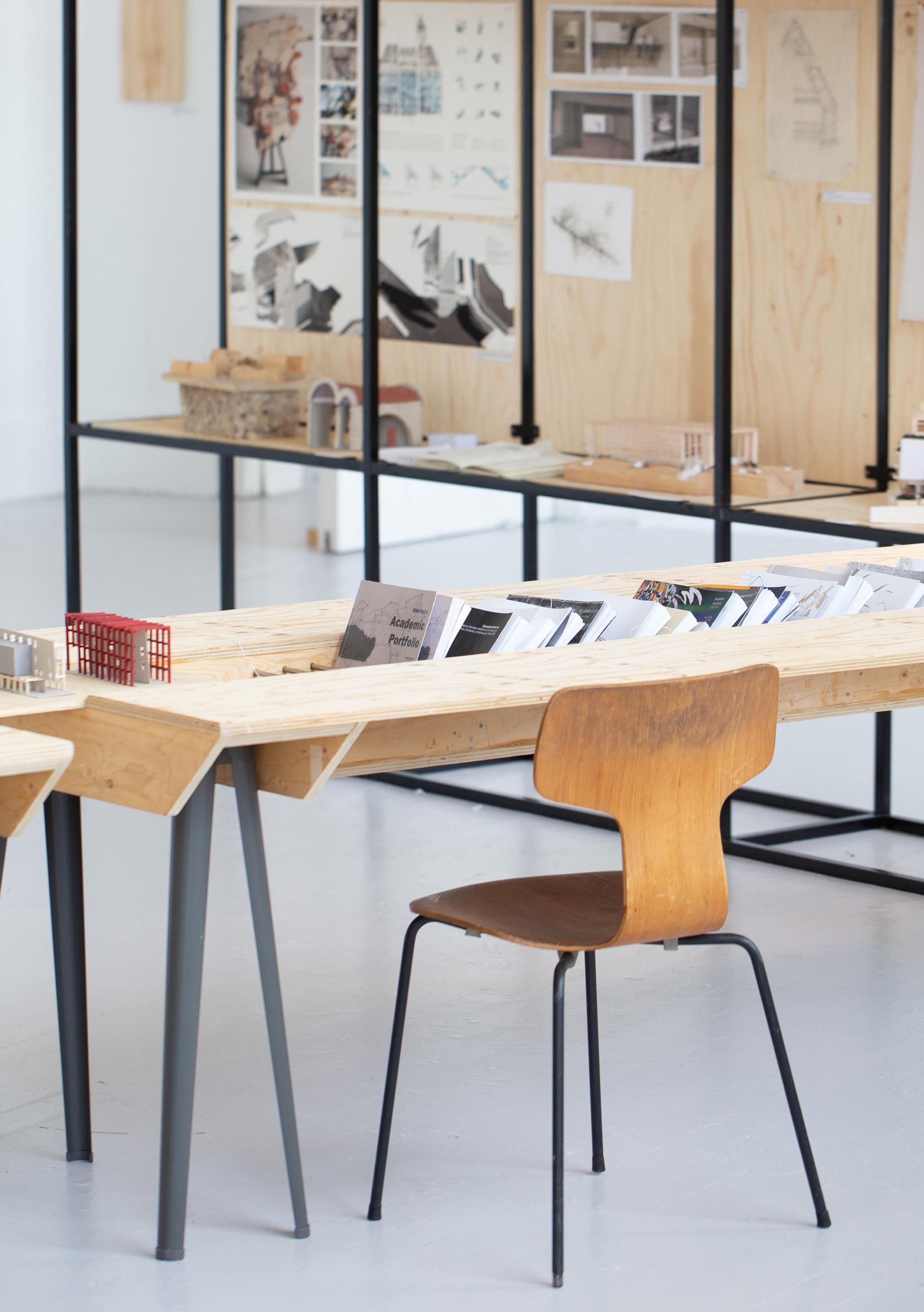
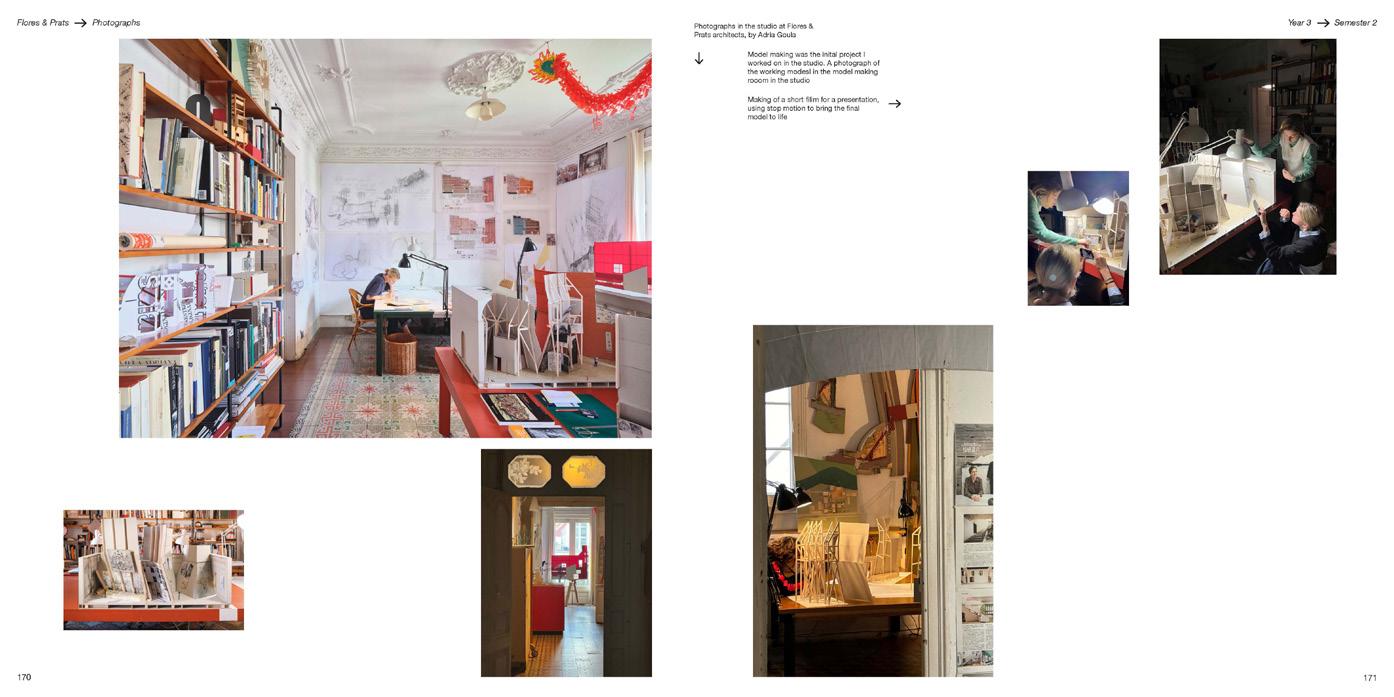
Through the catalogue are a series of images of the graduate show. This year the exhibition was built on the foundations of last year’s highly successful reimagining of the format, that placed the academic portfolios as a central focus of the show. The 2025 show added working models, process drawings and sketchbooks to bring into focus the iterative, critically reflective practice that underpins the programme.
I cannot write this introduction without a mention of the students graduating in 2025. This cohort arrived at ESALA just as the pandemic was ending. They burst into the studios and lecture theatres with enthusiasm, commitment and a joyful engagement with their studies. Spaces that had lain fallow for many months were filled again with drawings, models and laughter. They are a remarkable group of people who have infused our school community with their imagination, curiosity and care. We will miss them and wish them all the very best for the future!
Congratulations to the 2025 Graduates!
ESALA BA/MA Graduate Show 2025 Curation:
Rachael Hallett Scott assisted by Guy Di Rollo Furniture Design: Laura Harty, assisted by Michael Becker, Paul Charlton, Malcolm Cruickshank, Paul Diamond, Assistance: ECA Events Team Photograph: Calum Rennie
year 1
1*1 012
year 2
architectural design elements
1*2 020 1*3 026 1*4 028 1*5 036 1*6 040 environmental practices architectural history intro. to world arch. architectural design assembly technology & environment principles architectural history revivalism to modernism architectural design in place technology & environment building environment architectural history urbanism & the city architectural design any place technology & environment building fabric design thinking & digital crafting
year 2 electives
architectural design explorations
architectural theory
architectural placement working learning
architectural placement reflection
architecture dissertation
year 4 electives
architectural design tectonics
architectural design logistics academic portolio part 1 practice experience international exchange
public programme arc soc crumble magazine esala climate action now!
1*1 1*2 1*3 1*4 1*5 1*6
architectural design elements
environmental practices
architectural history intro. to world arch.
architectural design assembly
technology & environment principles
architectural history revivalism to modernism
Architectural Design: Elements
Mid-term Review, Adam House
Photograph: Rachael Hallett Scott
architectural design elements
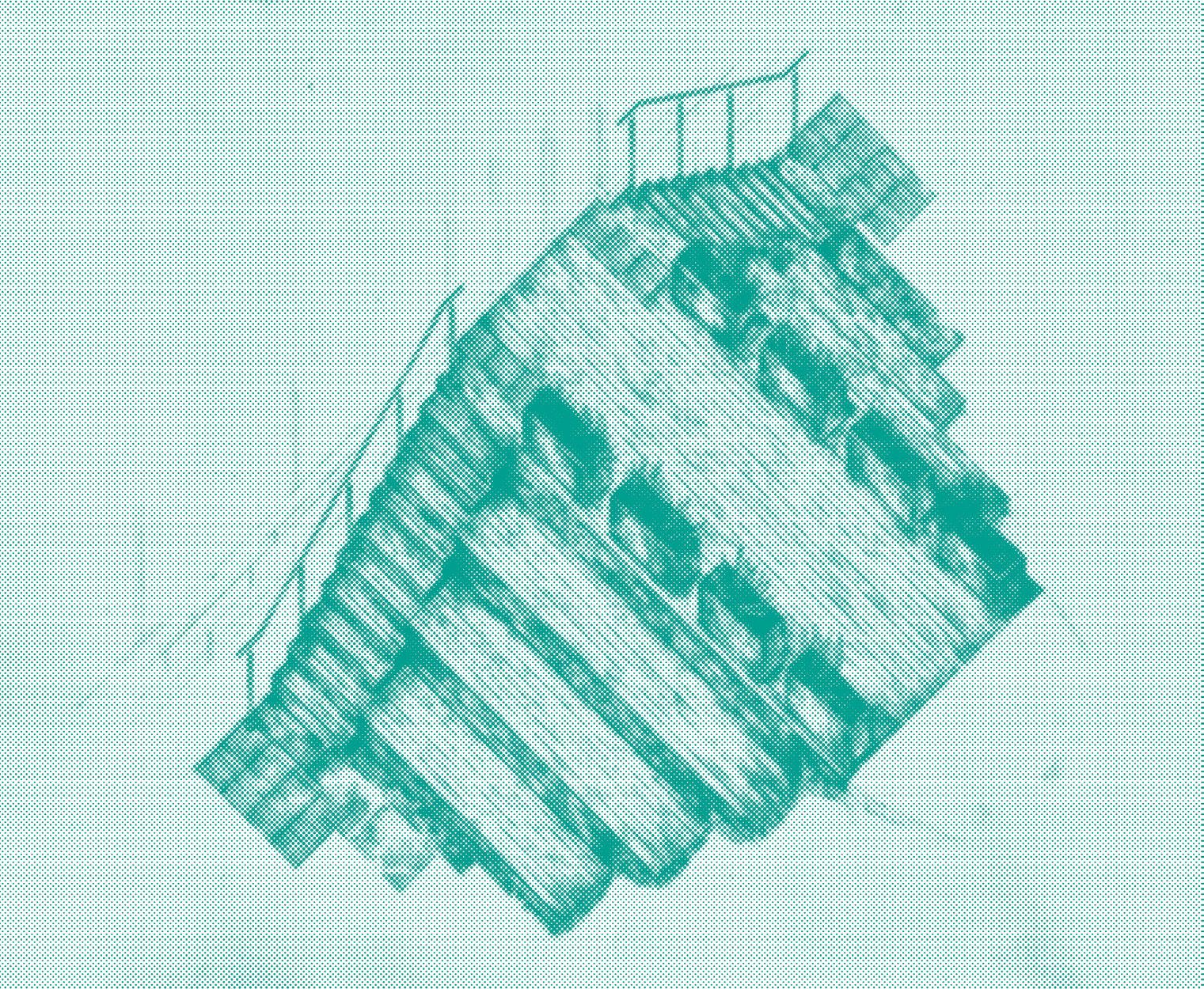
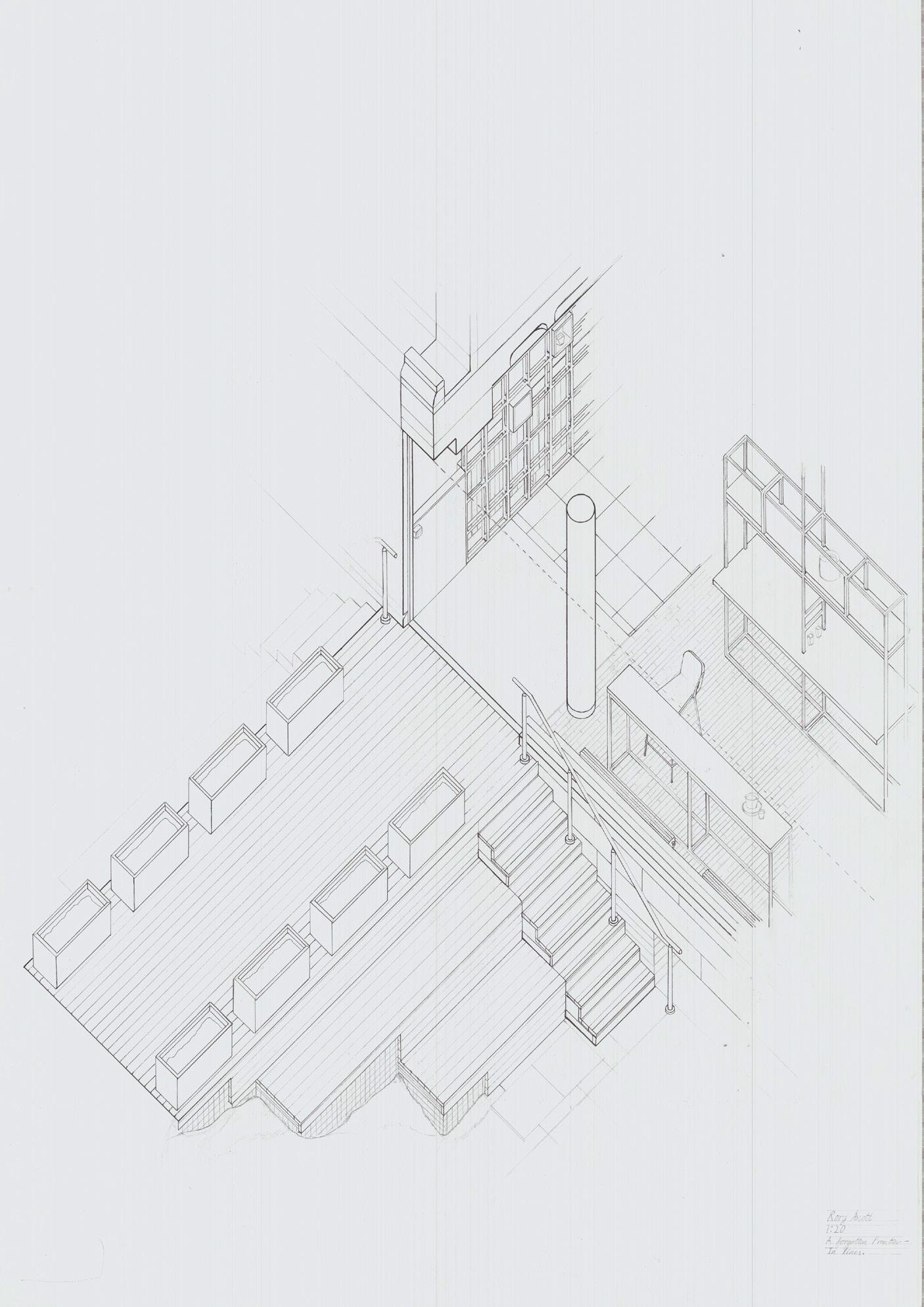
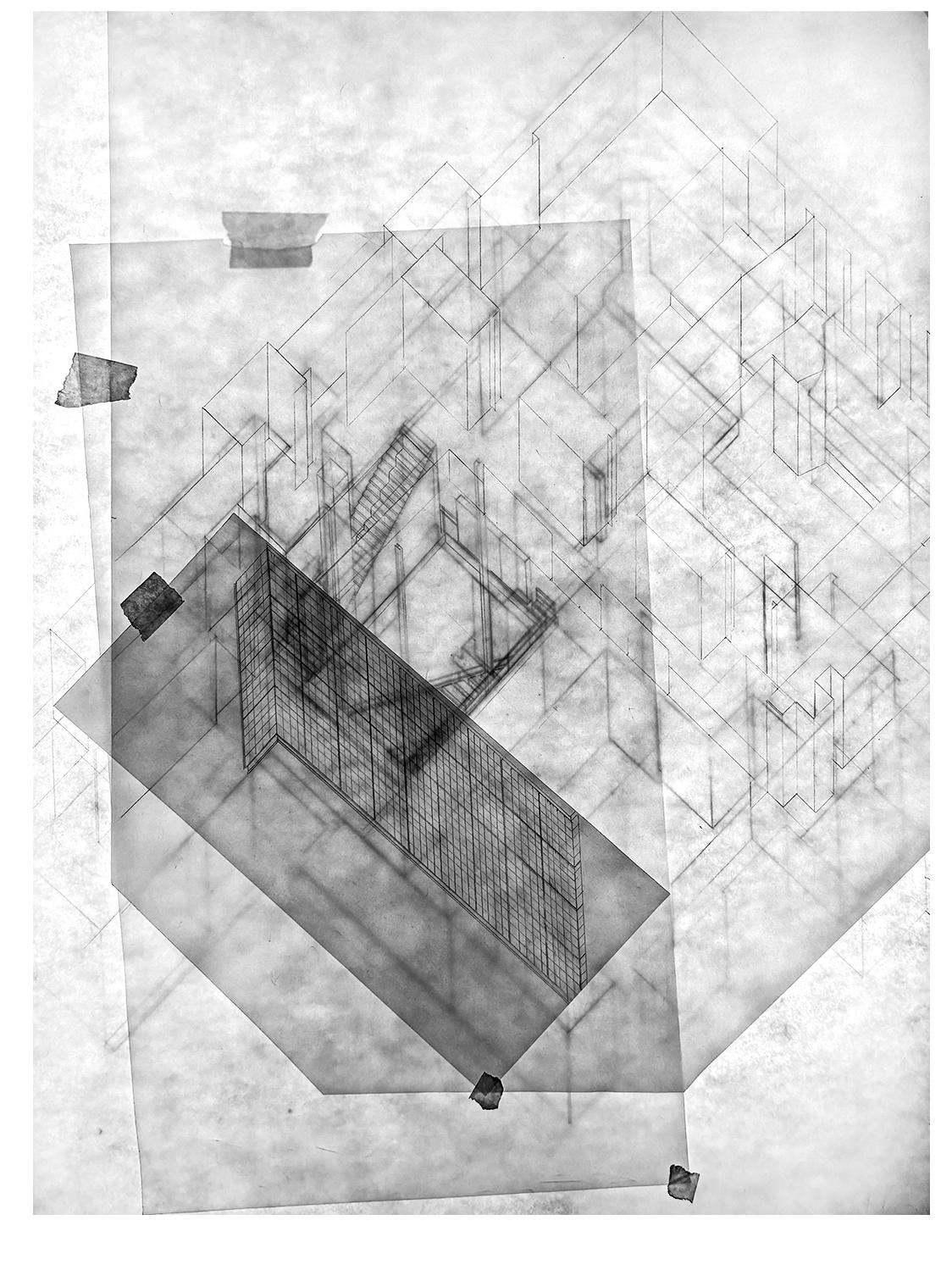
Katerina Kim Stair axonometric
Course Organiser
Kevin Adams
Poetry + Precision
Putting Things in Relation: 10 drawings of becoming
Architecture is about putting things in relation to other things. Architects draw to think, draw to create and, above all, architects draw to communicate the placing of relations. Before we understand architecture as the complex and systemised condition of making buildings we need to understand it as a basic human condition of being present in the world, being present alongside other presences and elaborating this presence with poetry and precision.
The first semester of Year 1 is an initiation into architecture and it concentrates on drawing. Making drawings with poetry + precision to communicate a specific framing of a place (territory + site) that allows us to recreate this place in an altogether different place, a new frame. The technique is the source of the creativity. We think about what is to be drawn (framing) and how it is to be drawn ( techne) and we aim for creativity (poetry) and communication ( precision). This avoids object thinking and lets the craft become the originator of thoughts through making. We encourage the drawing to enjoy the lines it makes: weight, length, curved, free, ruled, and the spaces that are made between them. Architecture can originate through mastering technique, aligned with close reading and spatial awareness.
It is about the act of drawing as a sense of feeling….to open up possibility. Getting to know lines and their extension/infinity. We cannot draw architecture without understanding it as the possibility of lines. Architecture is “lines made beautiful.” We don’t draw a thing, but the idea of a thing. Drawing is the gesture that proceeds from trying to show the “idea of the form” not the form itself… this is the perhaps the difference between making a drawing and making a copy or trace.
This is done through making a series of 2d orthographic drawings that focus on aspects of a single place within the city. When put together ( in relation) these drawings make a collective representation of the place that has the potential to become a new place in a new location and at a different scale. We complete this becoming through the installation of the drawings at scale in the studio to make a new representation of this.
Studio
environmental practices
Studio review
Photograph: Tiffany Dang
Course Organiser
Tiffany Dang
Environmental Practices is an interdisciplinary course that allows first year students in architecture and landscape architecture to develop a critical environmental sensibility alongside explorations in visual representation. In light of the current climate crisis, it is critical that design education engenders this next generation of architects and landscape architects with the capacity to engage creatively, critically, and productively with environmental processes.
The course is structured by a series of biweekly themes—sun, earth, life, and water—each framed by the reading of diverse texts from authors including Robin Wall-Kimerer, Naomi Klein, and Gilles Clément. Students are then given briefs to help them analyse each theme that encourages them to conduct independent fieldwork and engage with the natural world. Each exercise is designed to help students discover different relationships within the environment, including re-thinking their own relationship with the environmental contexts that they live within. Environmental Practices introduces students to a range of theories and practices concerned with interpreting the environment as a dynamic context where material and sensory knowledge are valued, discussed, and brought into making.
The course is taught by a teaching team comprised of tutors with broad backgrounds in architecture, landscape architecture, and visual arts. It is our collective hope that we can instill in students a culture of understanding architecture and landscape architecture as disciplines deeply entwined within socio-environmental contexts and inspire them to imagine future design scenarios that are attentive, supportive, and responsive to our shared planetary resources.
The course culminates in the curation of a portfolio of work that each student has developed over the course of the semester.
Course Bibliography
Timothy Morton
All Art is Ecological (2021)
Naomi Klein
The Changes Everything: Capitalism versus Climate Change (2014)
Gilles Clément
Manifesto of the third landscape (2004)
Robin Wall Kimmerer
Braiding Sweetgrass: Indigenous Wisdom, Scientific Knowledge and the Teachings of Plants (2013)
Peter Del Tredici
The Flora of the Future (2014)
Studio Tutors
Janice Affleck
Michael Davidson
Miriam Hancill
Cath Keay
Sinéad Kempley
Yulia Kovanova
Xinyue Liu
Hazel Mei
Charlott Rodgers
Susie Wilson
Rebecca Wober
Matt Zurowski
architectural history introduction to world architecture
Isidore of Miletus & Anthemius of Tralles, Church of Holy Wisdom (Hagia Sophia), 532-7 CE, Istanbul, Turkey
Course Organiser
Aleksander Musiał
The course offers an introduction to the history of architecture in a range of global contexts between ca. 3000 BCE and 1800 CE. Its trajectory begins with an examination of Ancient Egyptian, Greek, Roman, and Sub-Saharan architecture, followed by Mediaeval Europe, the Near East, Pre-Columbian America, and the re-evaluation of Antiquity in Renaissance Italy and Central/Eastern Europe. It goes on to survey early modern Britain and France, and the rise of the Baroque in Italy, the Spanish Empire, and beyond. These topics are complemented by lectures on the developments of religious and court architecture in India, China, and Japan. Semester 1 concludes with an examination of the theoretical, and stylistic aspects of European architecture in the age of the Enlightenment, and its global impact. Throughout the course the development of building technology and the social, religious, and political understanding of man-made structures are recurring themes. The course is not just a history of building styles or engineering, although both of those areas are discussed. It also shows what architecture can reveal about humanity’s subsequent attempts at world-making in reference to social, political, cultural and urban history. The course encourages a reflective approach to architecture which students can apply elsewhere in their degree programme, providing a vocabulary, and investigative frameworks to explore the social relevance of architectural production across time and space. The course draws on introductory lectures (three hours per week), tutorial discussions (including site visits, 1 hour per week), and independent reading (9-10 hours per week). In 2024 a new term essay brief was introduced, which invited students to develop the analytical skills of independent close-looking and urban contextualisation by concentrating on selected Medieval and Early Modern structures preserved in Edinburgh’s city centre. The course is followed in semester 2 by Architectural History 1B: Revivalism to Modernism, which covers the history of architecture from the nineteenth century to the present.
architectural design assembly
Sandy Jarvis Studio process diagrams
Course Organiser
Michael Lewis
As thinkers and makers in a space of cultural production, there is often an allure to novel technologies and solutions. We can become distracted— or seduced—by a sense of newness, drifting toward the pursuit of breadth over depth. Unchecked, this tendency can lead to a superficial (or worse, nonexistent) understanding of the histories that shape our present. At the same time, we must resist the urge to fix history in an immutable shrine. Understanding matures over time, and with experience we adapt and reframe artefacts and lessons from the past.
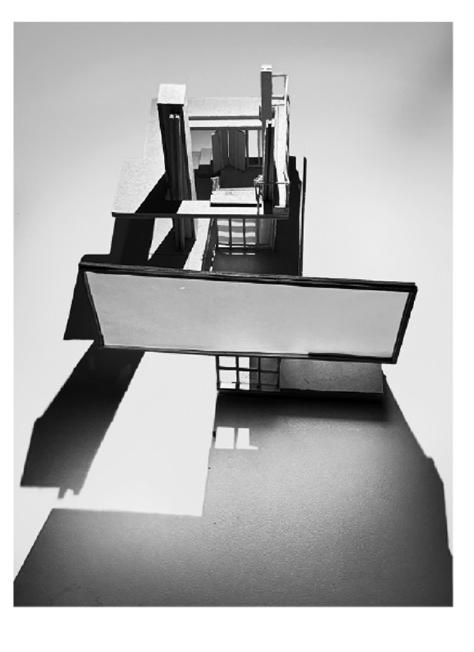
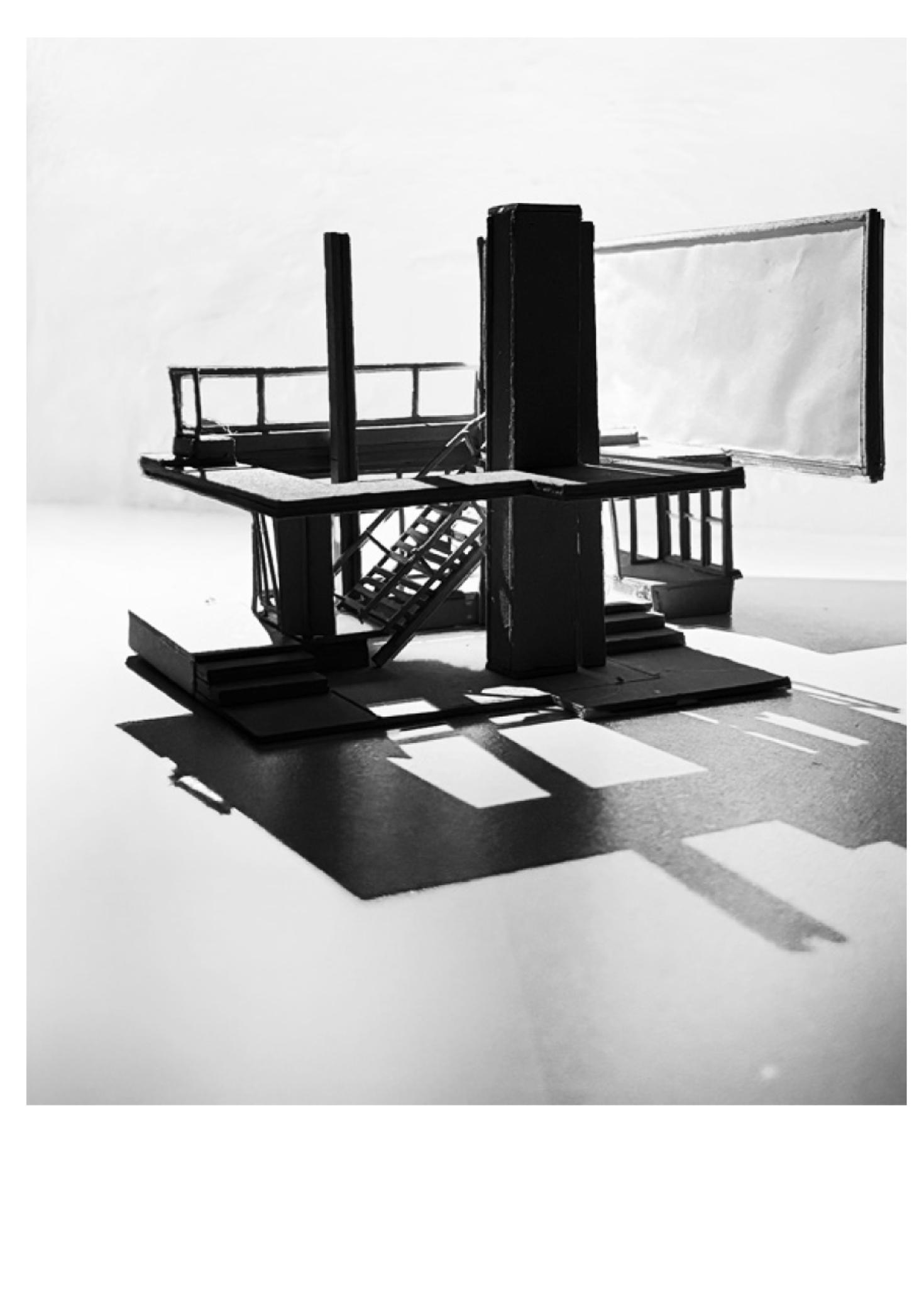
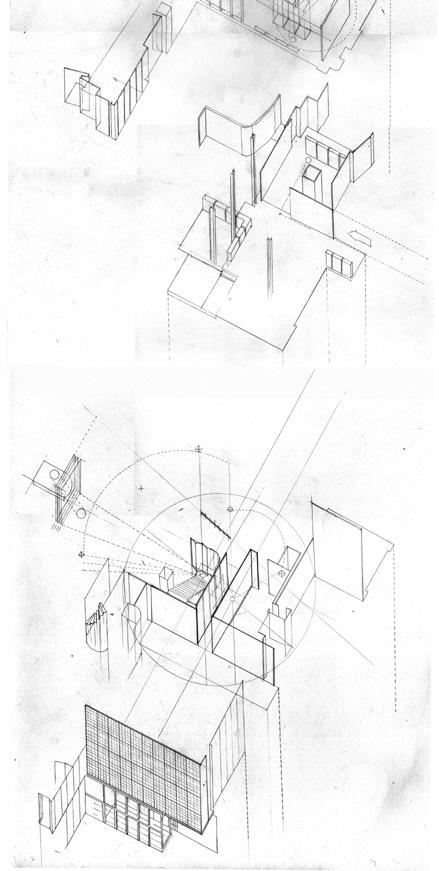
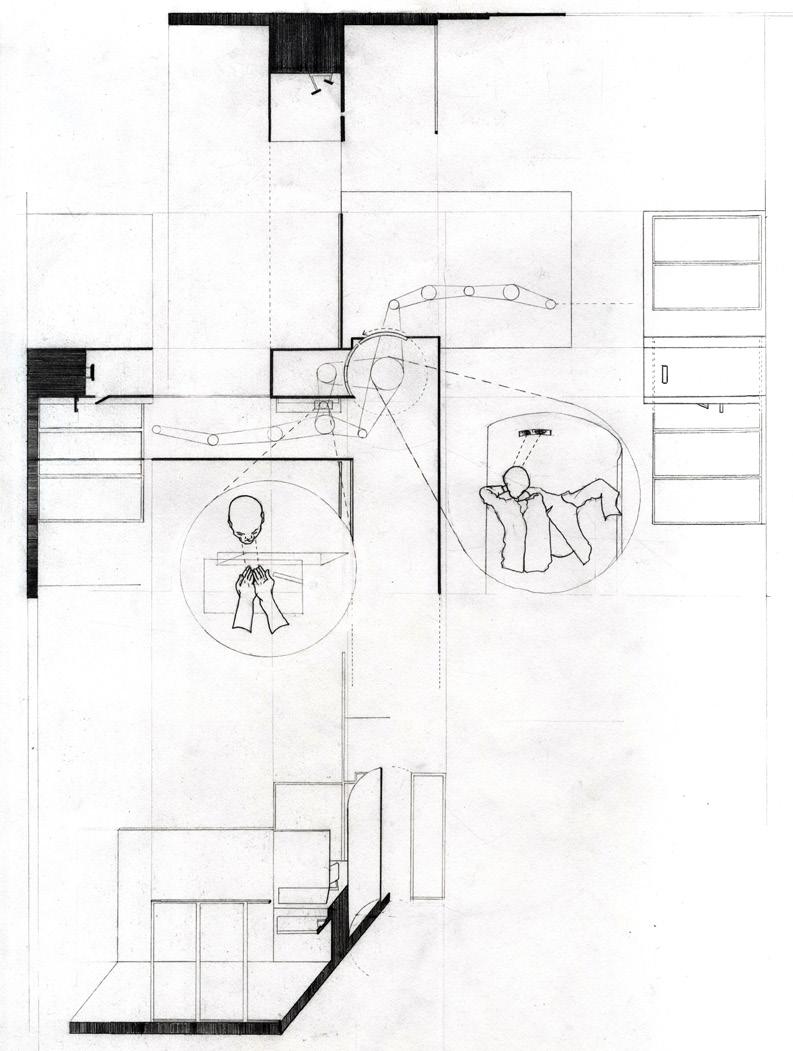
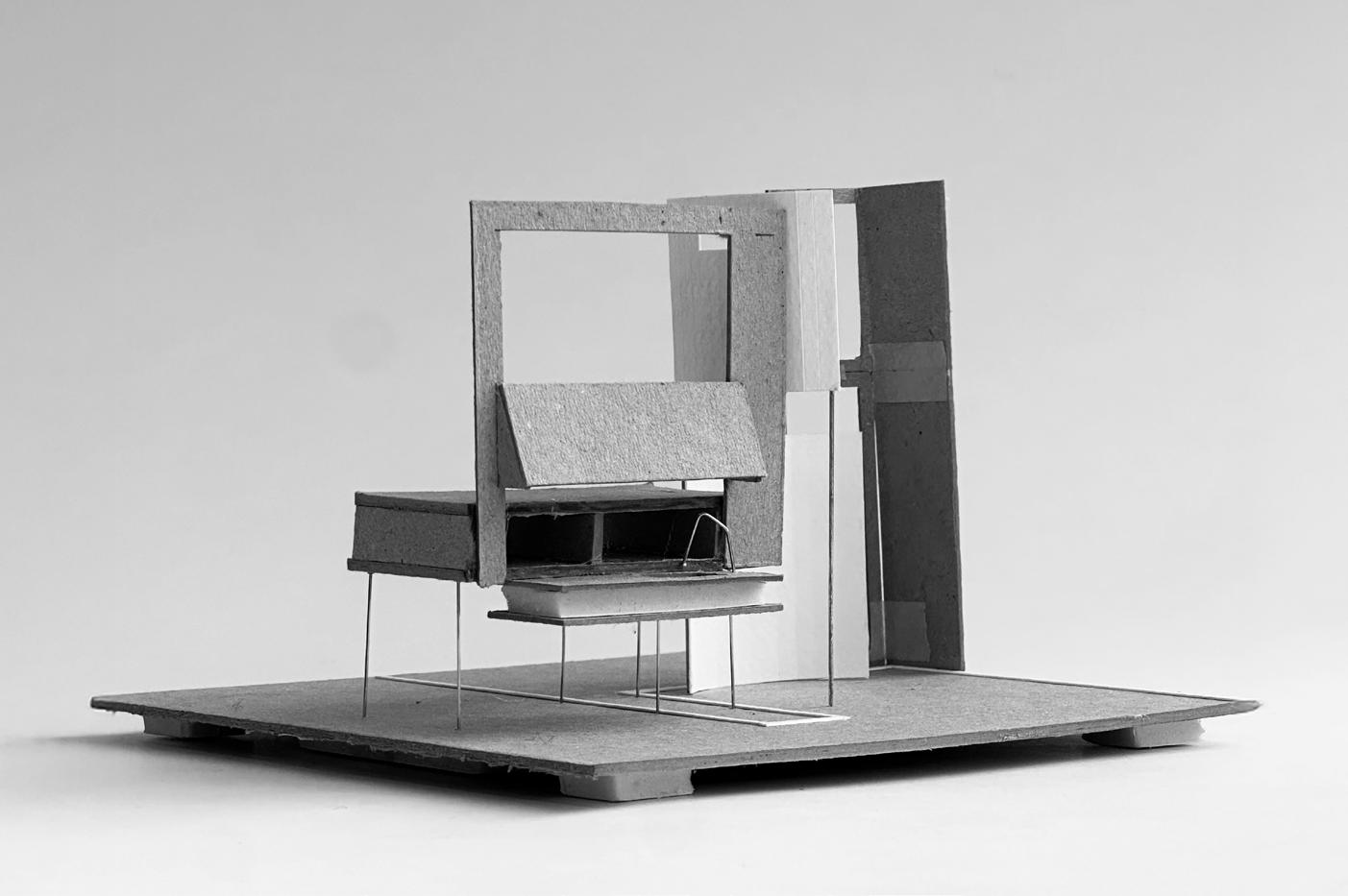
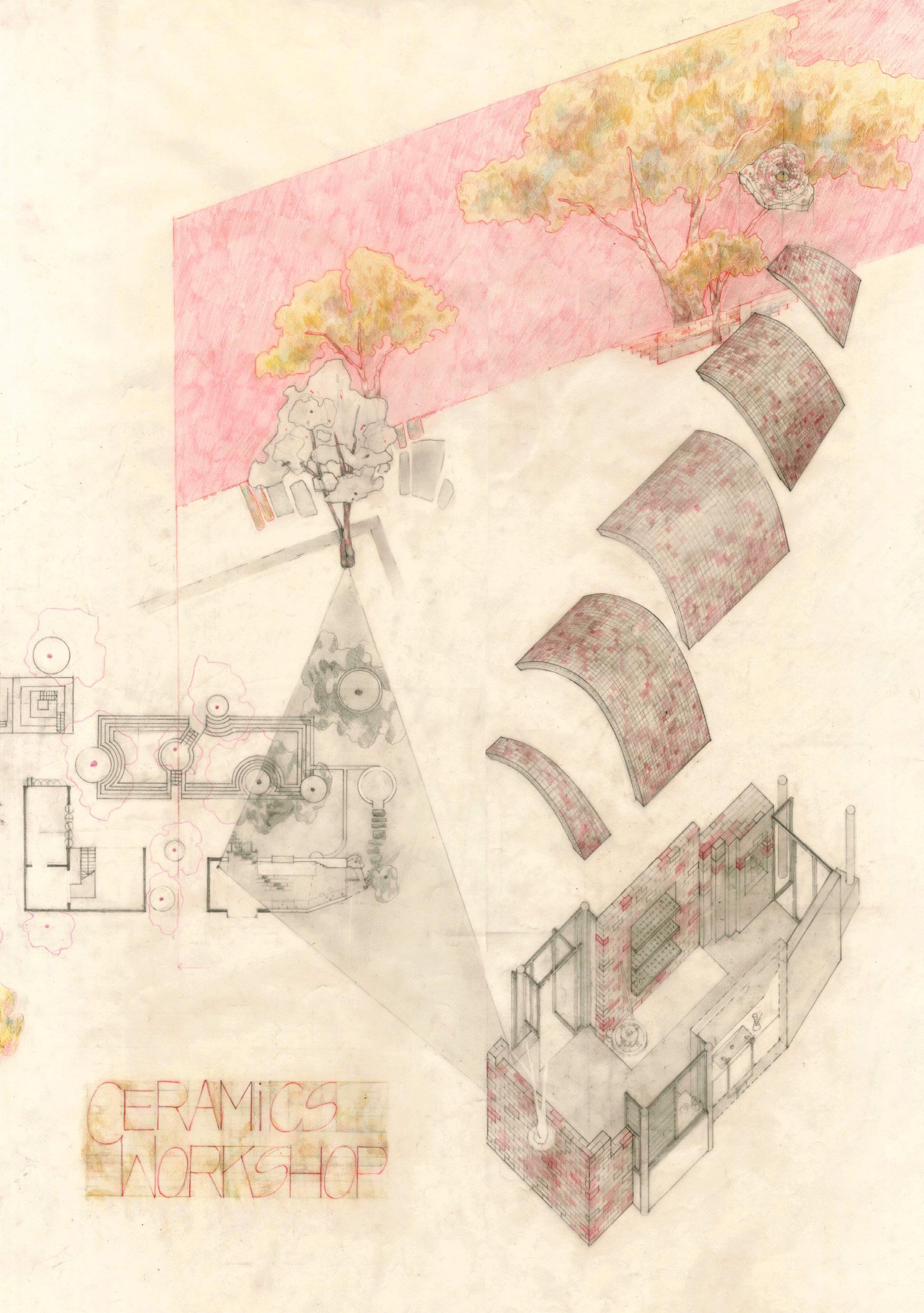
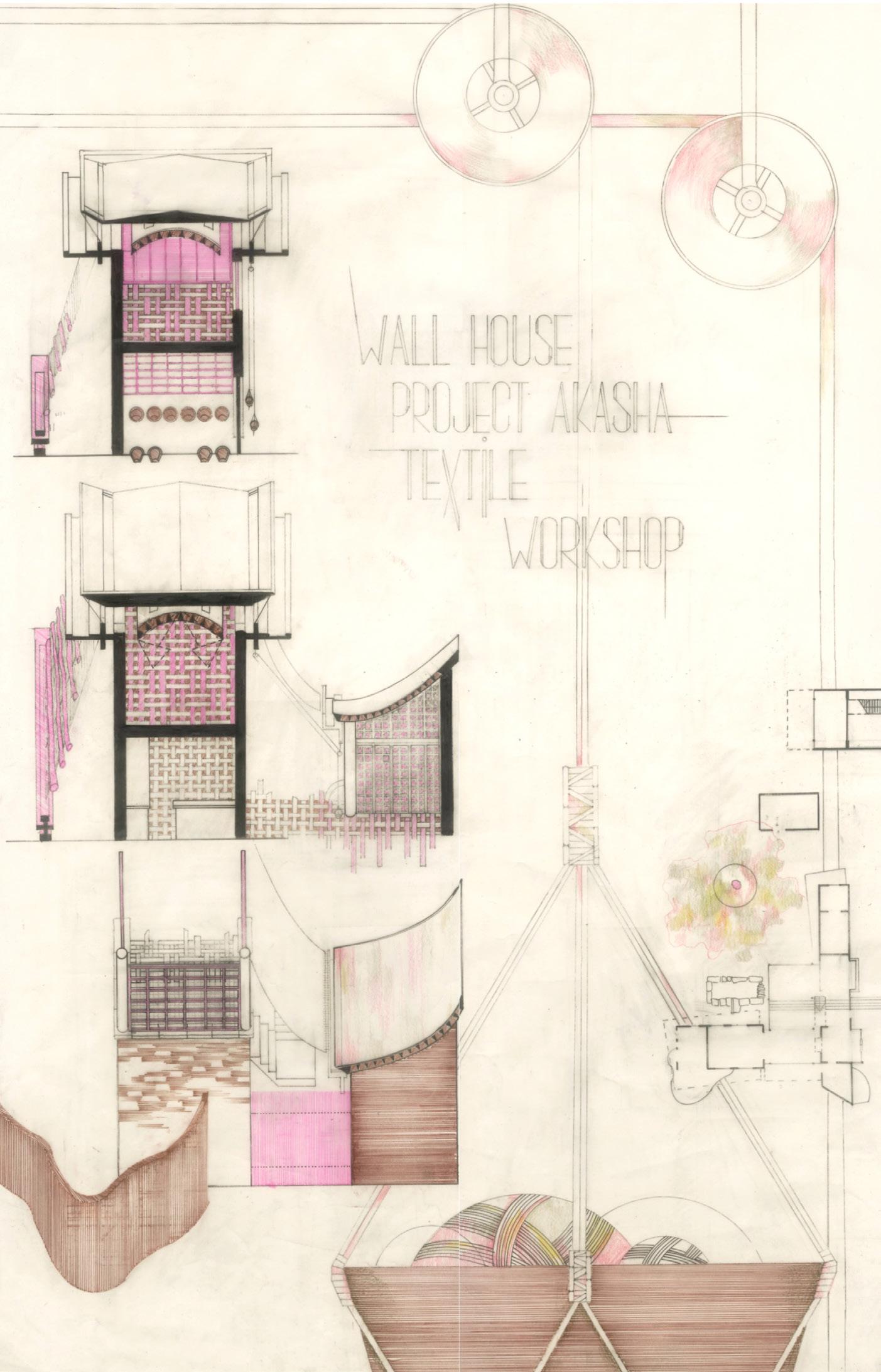
In Assembly, students began with close precedent research into some of architecture’s most celebrated houses. Through manual drawing and physical modelling, they unpicked the material and spatial strategies that make these dwellings work— and not. This process of architectural autopsy revealed opportunities for improvement and grounds for adaptation.
In the second half of the semester, students developed proposal augmentations that critically engaged with their precedents. Learning from the past while refusing to hold it in suspended preservation, they worked toward a forward-facing architecture— one that acknowledges inherited intelligence while advocating for present needs and future resilience. This process was guided by an ethos of care: in representation, in material decisions, and in how spatial interventions might extend or challenge an original agenda.
As architects working in the context of the Climate Crisis, our responsibility to existing buildings has never been more urgent. Adaptive reuse demands more than resourcefulness—it requires active listening: understanding a building’s logic, its flaws, and its latent potential. This positioned students as critical agents in ongoing narratives of change—approaching architecture not as a static object, but as a living, evolving framework.
Lucas Bell
Maison(s) de Verre Houses of Glass
Voyeuristic Architecture
Glimpses of Intimacy
4
3 Sandy Jarvis
Al Wood Wall House
Sculpting Akasha
technology & environment principles
Lecture at Drill Hall, Forresthill
Course Organiser
Pilar Perez Del Real
Technology and Environment: Principles offers students a strong foundation in the core structural, technological, and environmental concepts that support architectural design. The course encourages students to consider how buildings serve their occupants— providing safety, shelter, and comfort—while inspiring them to see how these functional requirements can contribute to richer, more purposeful architecture. Organised around three interconnected themes— Structures, Materials, and Environment—the course places sustainability at its core. Rather than treating sustainability as a separate concern, students are encouraged to embed it within their design thinking from the outset. This approach fosters a holistic understanding of the ecological, social, and economic impacts of architecture, helping students recognise how buildings relate to and influence their surroundings.
The Structures theme introduces students to how buildings stand and perform. It emphasises not only the importance of stability and safety but also how structural knowledge can inform and inspire architectural form. Students analyse how different materials shape form and function, and learn to anticipate the behaviour of key structural systems.
Within the Materials theme, students examine architectural materials from origin to application— starting with how raw resources are extracted, processed, and transformed into building components. The focus then shifts to how these components are assembled and joined to form architectural elements. Practical, hands-on tutorials with real materials give students direct experience of the principles of construction, detailing, and composition.
The Environment theme explores architecture’s role within the broader context of sustainable development. Students learn how to respond strategically to environmental challenges, incorporating passive solar design, fabric-first approaches, and strategies to improve building performance. Topics such as energy efficiency, thermal comfort, and carbon reduction are introduced through both theoretical and applied lenses, equipping students to create environmentally responsive designs.
This course is a compulsory part of the MA (Hons) Architecture programme, but also serves other degrees, including the MA (Hons) Architectural History and Heritage. In addition, it is a popular elective course taken by students from across ECA and the wider University.
Architectural History 1B explores how designers and patrons responded to the idea of modernity in a series of global contexts between 1800 and 2000. It begins with the stylistic revivals of the nineteenth century before turning to the advent of new materials and structural techniques. As the course moves into the twentieth century, the development of new architectural forms and approaches to space is discussed. The course includes focused discussion of the work of the pioneers of the Modern movement but also investigates the globalisation of modernist practice after the Second World War. The lecture list concludes with the reactions against, and attempts to overcome, Modernism in the late twentieth century.
During 2024–25, the course content continued to be diversified in terms of subject and theme.
New lectures this year included sessions on architectural reaction in the interwar period, Critical Regionalism, and more recent developments in China. Changes in the lecturing and tutoring team each year also bring fresh perspectives to familiar topics. The course assessment includes an essay (on an Edinburgh post-1800 building) and an exam, as well as a presentation which now asks students to give a virtual tour through a house.
As with Architectural History 1A, the course aims not only to provide a foundational knowledge of recent architectural history but also to encourage an independent, reflective approach, which sets architecture in wider contexts, and which fosters key skills needed for success at university.
The course is followed in second year by Urbanism and the City: Past to Present.
2*1 2*2 2*3 2*4
2*5 2*6
2*7
architectural design in place
technology & environment
building environment
architectural history urbanism & the city
architectural design any place
technology & environment
building fabric design thinking & digital crafting year 2 electives
Architectural Design: In Place Reviews, Adam House
Photograph: Nikolia Kartalou
architectural design in place
Sketchbook work, Studio desk
Photograph: Rachael Hallet Scott
Course Organiser
Rachael Hallett Scott
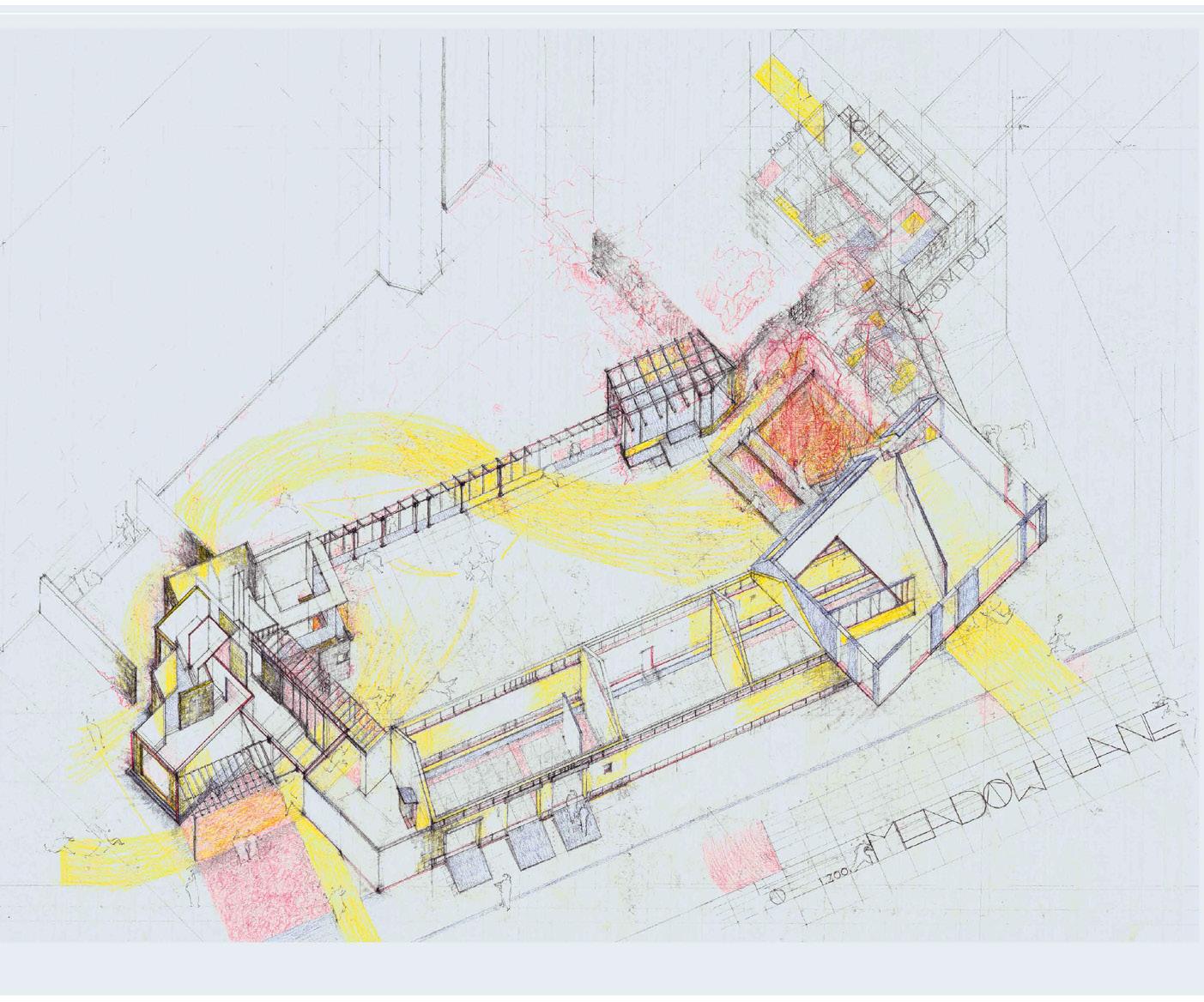
Architectural Design: In Place takes the concepts of site and situation as its focus. These core themes are supplemented by those of, public and private, place and identity. Woven through the semester there is also a keen interest in how we build in this time of Climate Emergency. The course aims to explore the interconnection of social, sustainable and spatial principles that underpin and inform the design of inclusive buildings and places. Collectively these threads of investigation inform a set of design exercises that expand on critical and self-reflexive dimensions of architectural design that were introduced in AD Elements and Assembly. The course begins with research and analysis of precedent buildings at city, building and human scales. This is followed by a close examination of 3 local sites and their physical, social and environmental contexts. The findings from these pair and group exercises inform student’s individual designs for a hybrid work and community building. Students are encouraged to critically reflect on how they work with existing fabric and their choices of materials in light of the Climate Emergency. Each week learning is supported through a series of thematic lectures, briefings and studio teaching. In Place also addresses the use of digital media through ‘Recipes for Representation’ a series of lectures and workshops that investigate the use of digital drawing tools, alongside analogue skills, to explore the representation of architecture.
1 Lawrence Fung Roviras
Meadow Lane: Working drawings
2 JJ Chu ArcadeAbbeymount Arts and Crafts Community Centre: Plan + section
technology & environment building environment
William Baring, Andrew Kowalski
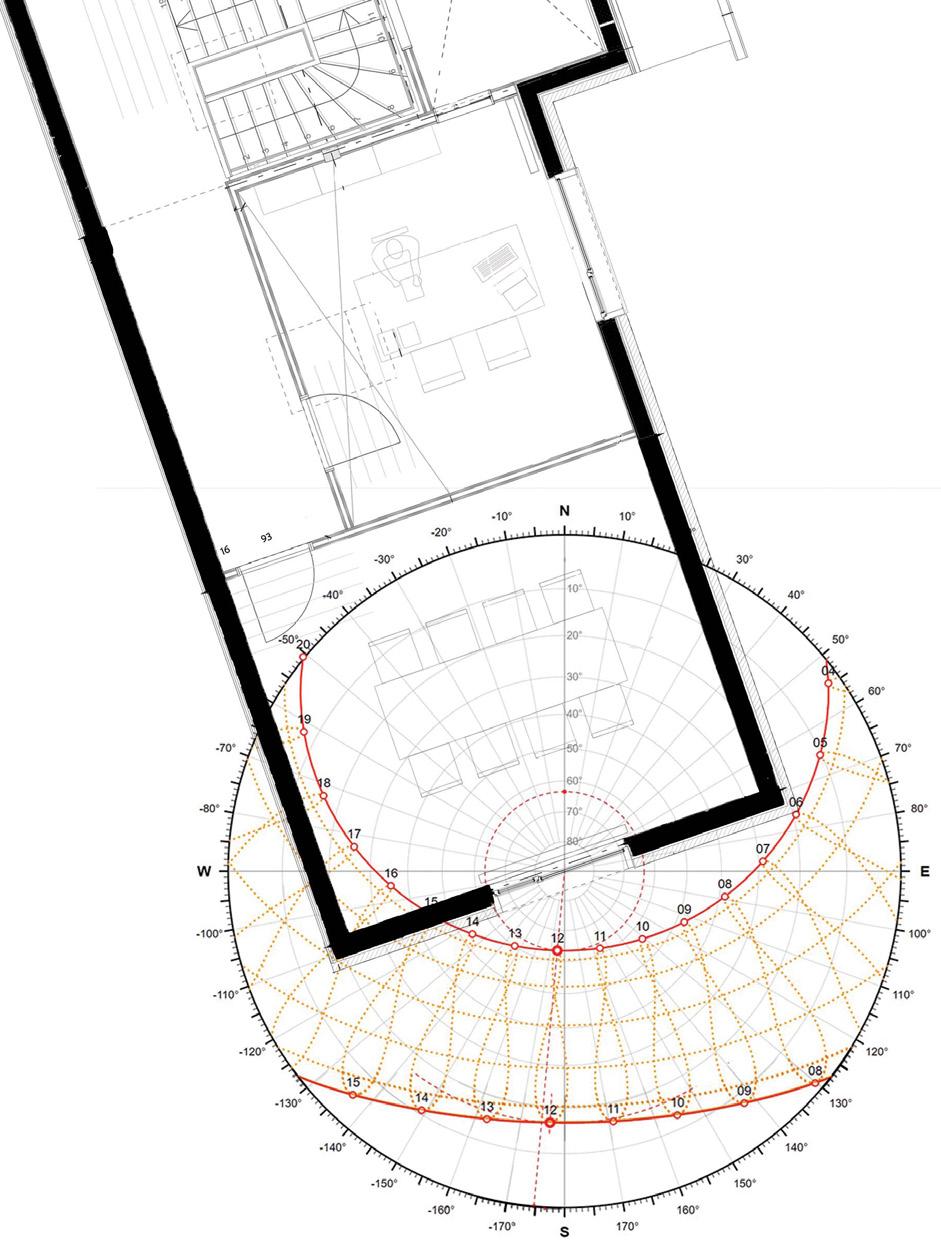
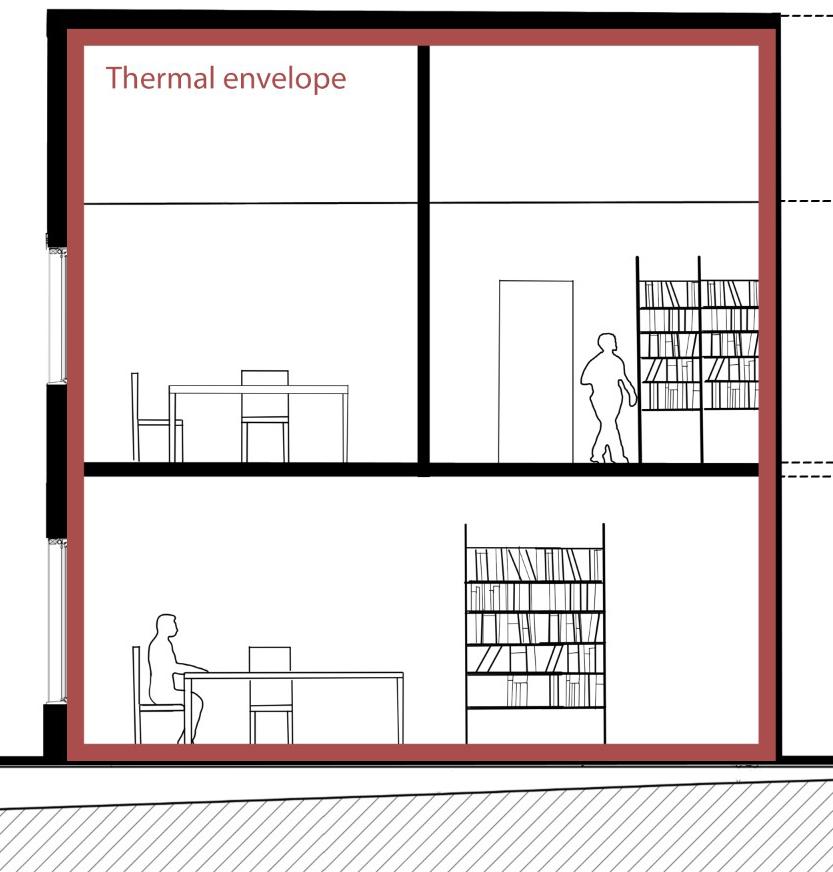
Thermal zoning analysis
Säynätsalo Town Hall, Finland
Alvar Aalto
Course Organiser
W. Victoria Lee
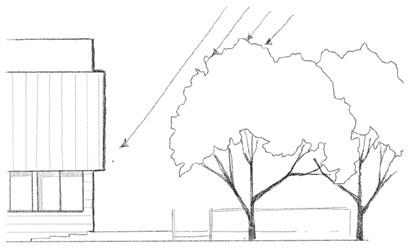
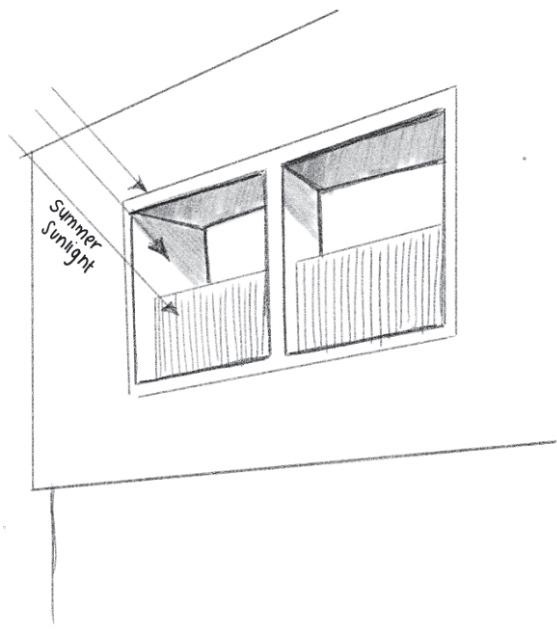
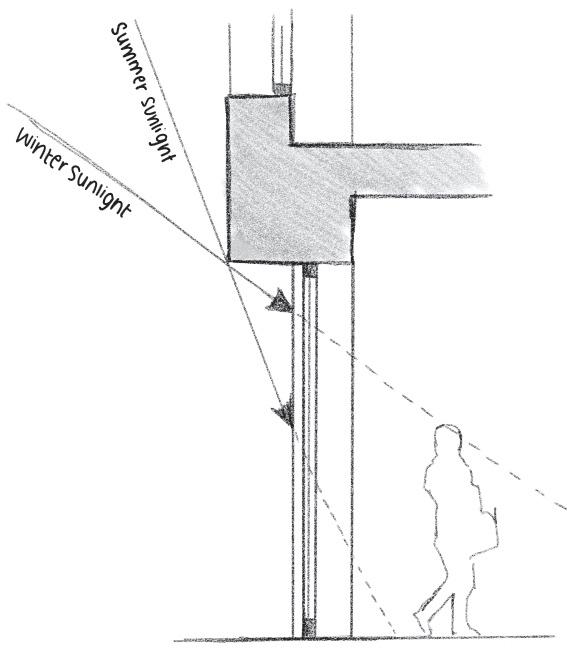
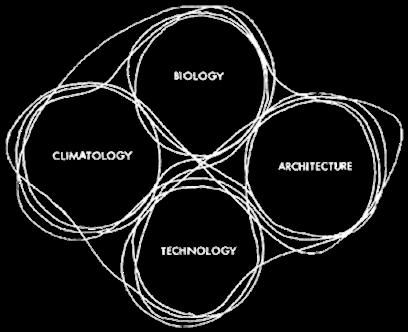
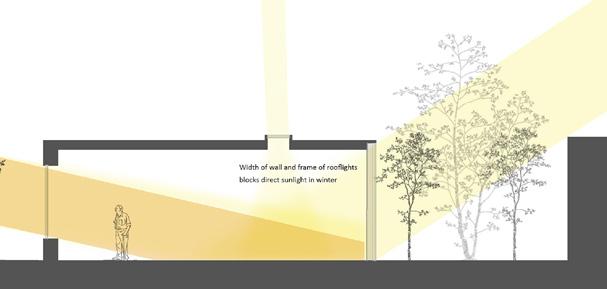
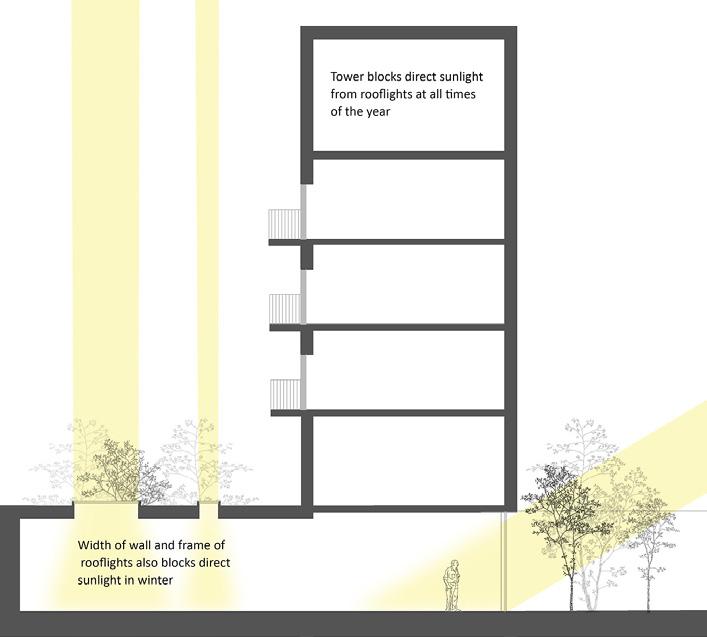
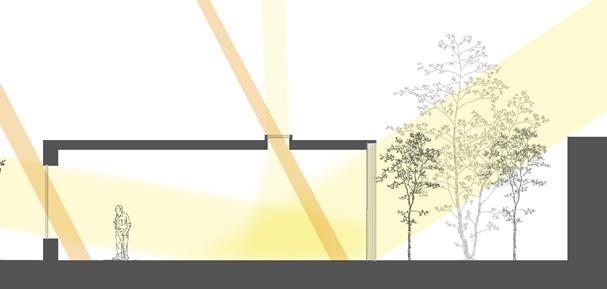
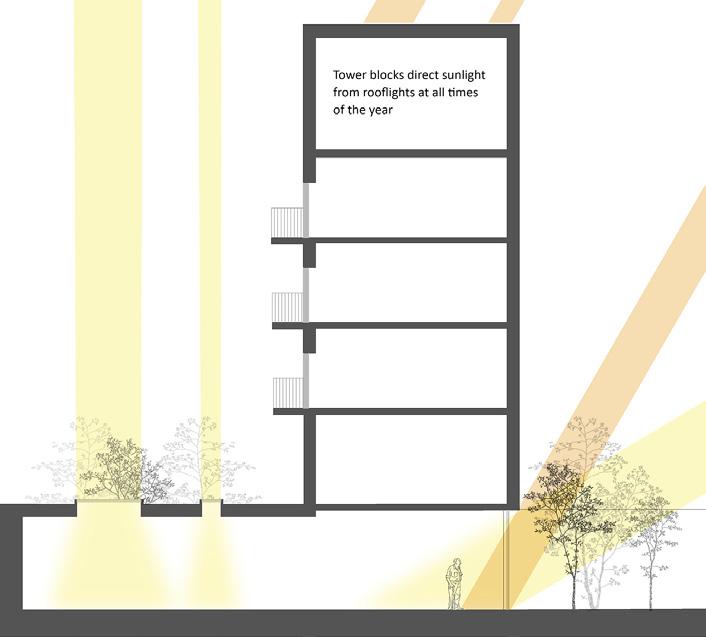
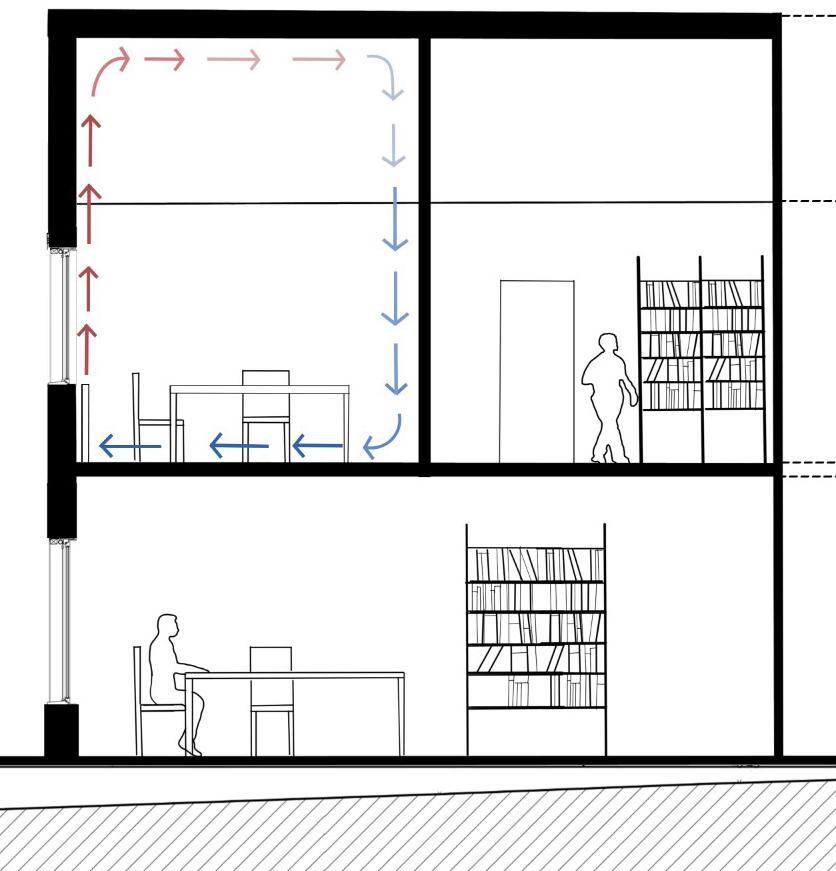
Building on first year courses Technology and Environment: Principles and Architectural Design: Assembly, TE2A: Building Environment further develops students’ understanding, analysis, and integration of environmental design in architecture. The course examines the roles of energy, light, heat, ventilation, and sound in building design. The course also introduces sustainable technologies, buildings performance assessments, building services and their implications for design. This course focuses on passive design strategies, but introduces mechanical (active) systems as a supplement. An emphasis is placed on the bioclimatic approach to architectural design, which advocates for designs that cater to the biology and psychology of humans whilst being responsive to the natural environment; with appropriate and thoughtful use of technology. The course covers a wide range of environmental design topics, including the following:
◊ Macro and micro-climates
◊ Solar geometry, daylighting, and artificial lighting
◊ Passive heating and cooling strategies
◊ Wellbeing, comfort, and other occupant needs
◊ Building heat and energy balances
◊ Natural and mechanical ventilation systems
◊ Building services and water conservation
◊ Acoustic fundamentals
Victor Olgay
The four interlocking and interacting components of bioclimatic design from Design with Climate: bioclimatic approach to architectural regionalism
Tutors
Elaine Pieczonka
David Seel
Pilar Perez del Real
Environmental analysis and climate change adaptations of design precedents
1 Amy Jensen, Andreea Paduretu
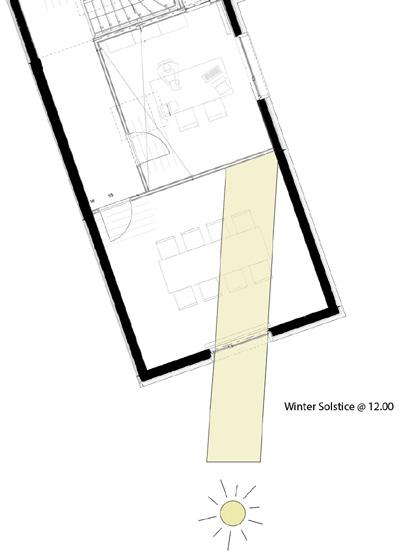
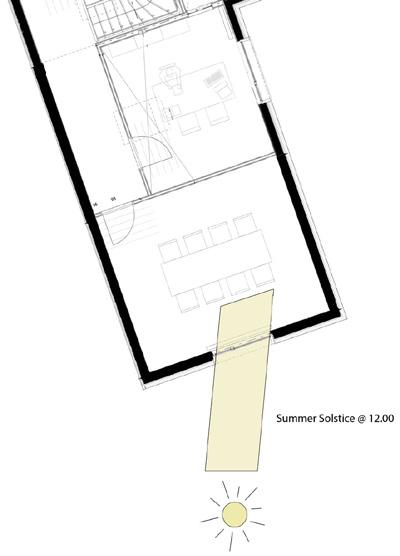
Solar analysis of direct and diffuse sunlight in and around the daycare centre
Sean O' Casey Community Centre, Dublin O'Donnell and Tuomey 2
Mia Zucchi, Weiqing Ge
Analysis of direct solar radiation penetration of the conference room, and analysis of thermal zoning at the first floor level
Stradsbestuur Town Hal, Lo-Reninge, Belgium noAarchitecten
architectural history urbanism & the city
The New Town from Edinburgh Castle, 2020 Photograph: Alistair Fair
Course Organiser
Alex Bremner
This course is a compulsory part of the MA (Hons) Architecture programme, but also serves other degrees, including the MA (Hons) Architectural History and Heritage.
Urbanism and The City: Past to Present builds on the foundations laid by Architectural History 1A and 1B by investigating the global history of city design and urbanism from ancient times to the contemporary period. Through an interdisciplinary course bibliography and readings in key historical texts on urbanism, the course examines the major historical trends and philosophies of urban emergence and development. The course takes a global view, and examines the experience of a diverse range of groups through an examination of themes including colonialism and empire, gender and sexuality, and the roles played in shaping the city by professional and non-professional actors.
Tutorials centred on Edinburgh site visits and training in research and writing will prepare students to perform first-hand research and compose original scholarship on the built environment. The goal of this course is to give students a critical acumen for evaluating the architectural transformation of the urban realm across disparate cultures and far-flung geographies over time, from Antiquity to the present day.
Lecturers
Alex Bremner
Moa Carlsson
Suzanne Ewing
Alistair Fair
John Lowrey
Olek Musiał
Liam Ross Margaret Stewart
Dimitrij Zadorin
Tutors
Robbie Macfarlane Lama Said
Mahnaz Shah
architectural design any place
Group 5 Final Reviews Studio
Photograph: Nikolia Kartalou
Course Organiser
Nikolia Kartalou
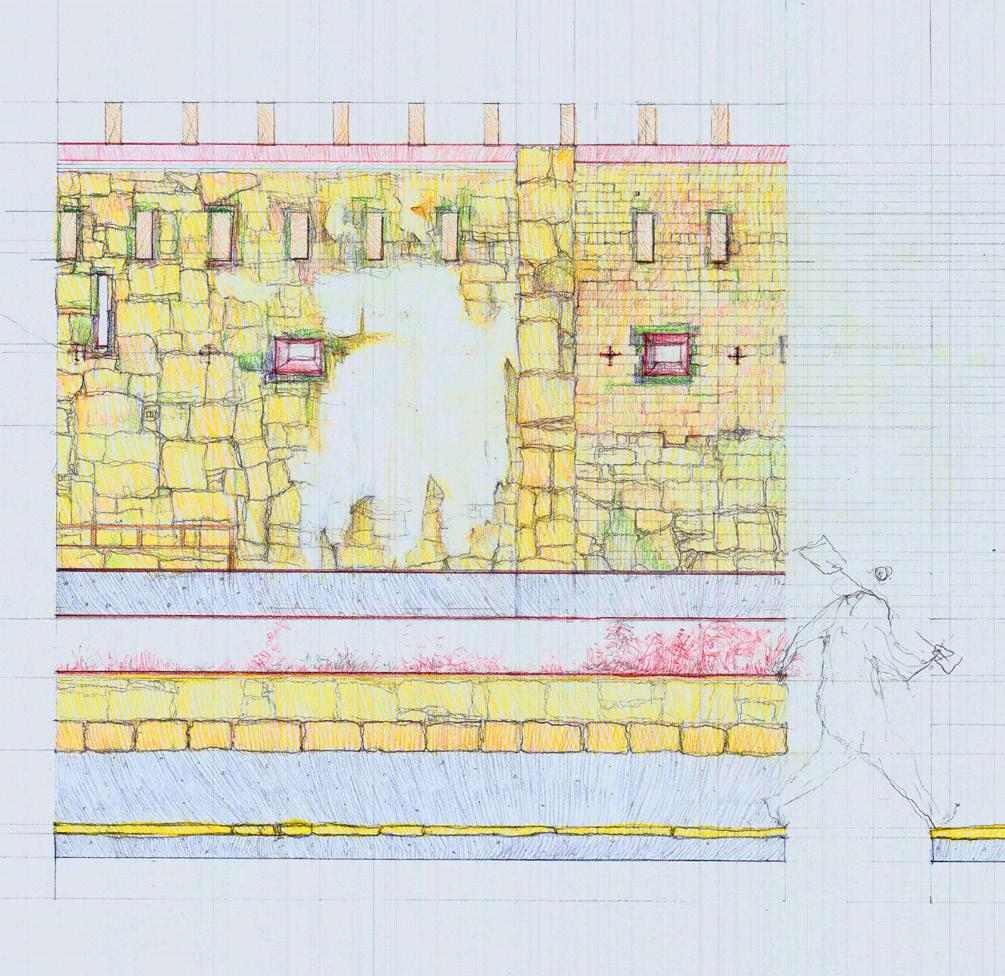
Any Place is focused on the exploration of conditions that extend beyond the local context. This year, the city of Venice (Italy) becomes both a literal and symbolic point of departure for all exercises of this course, offering a platform to examine how its unfamiliar context frames the everyday performances of life. The crumbling walls of Venice reveal the impermanent nature of housing, encouraging students to see buildings as enduring structures for evolving human activity. In doing so, it invites them to explore how structures can transform, accommodate new uses, and adapt to future inhabitants through the design of a multi-occupant residential building in Venice.
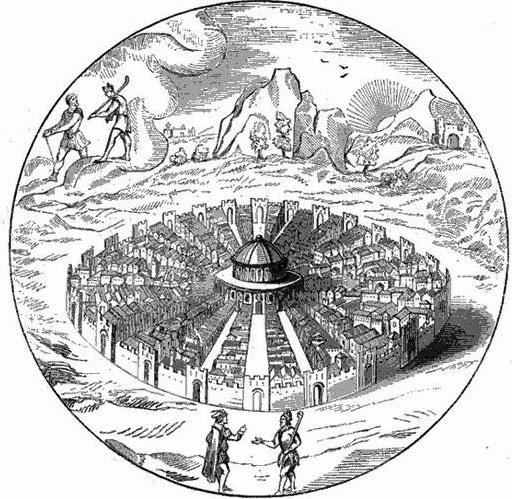
The design process unfolds through a series of exercises intended to foster students’ skills in design inquiry and technical competence, using both digital and analogue drawing, as well as model and video making. At the start of the semester, students are introduced to the context of Venice through literature. Italo Calvino’s Invisible Cities offers a foundation for spatial speculations and for identifying patterns of inhabitation in an imaginary setting. This initial interpretation of Venice provides the context for subsequent exercises, where students explore and analyse residential buildings to understand the spatial relationships inherent in housing typologies. By investigating these precedents, they are asked to compose, decompose, and recompose them within their imagined version of Venice—their own Invisible City
This sequence of exercises becomes both a method of investigation and a tool for synthesis, ultimately guiding students to develop design principles that respond to, and evolve within, an already-carved (unfamiliar) environment.
A site visit to Venice offers a gradual transition from the imaginary to the real, as students are invited to re-construct the narrative they have already imagined. By employing a critical, iterative methodology that responds to specific contextual requirements, they develop residential design proposals on one of three selected sites with existing building fabric, located in the Dorsoduro and Cannaregio districts.
Studio
Susana
1 Eunice Tho
Patterns of inhabitation in Invisible Cities : Isaura’s thousand wells (Thin Cities)
2
Amy Jensen Patterns of inhabitation in Invisible Cities : Olinda, Capriccio
3
Charlotte Stewart
Residential building with a community garden in Dorsoduro: Model and drawing
4
Betty Zeng
Patterns of inhabitation in Invisible Cities : Perinthia (Cities and the Sky)
Binmo Chen
Residential building in Cannaregio: Sectional model 6 JJ Chu
Residential building in Cannaregio: Sectional model
7
Hannah Barnett Patterns of inhabitation in Invisible Cities : The trading movements of Euphemia (Trading Cities)
8 Mariia Solovei
Residential project with a ceramic studio in Cannaregio: Section
9
Eunice Tho
Ryue Nishizawa’s Moriyama House : Expanding the outdoor living space
10
Jenna Van Der Merwe
Threshold sectional model 11
Lawrence Fung Roviras
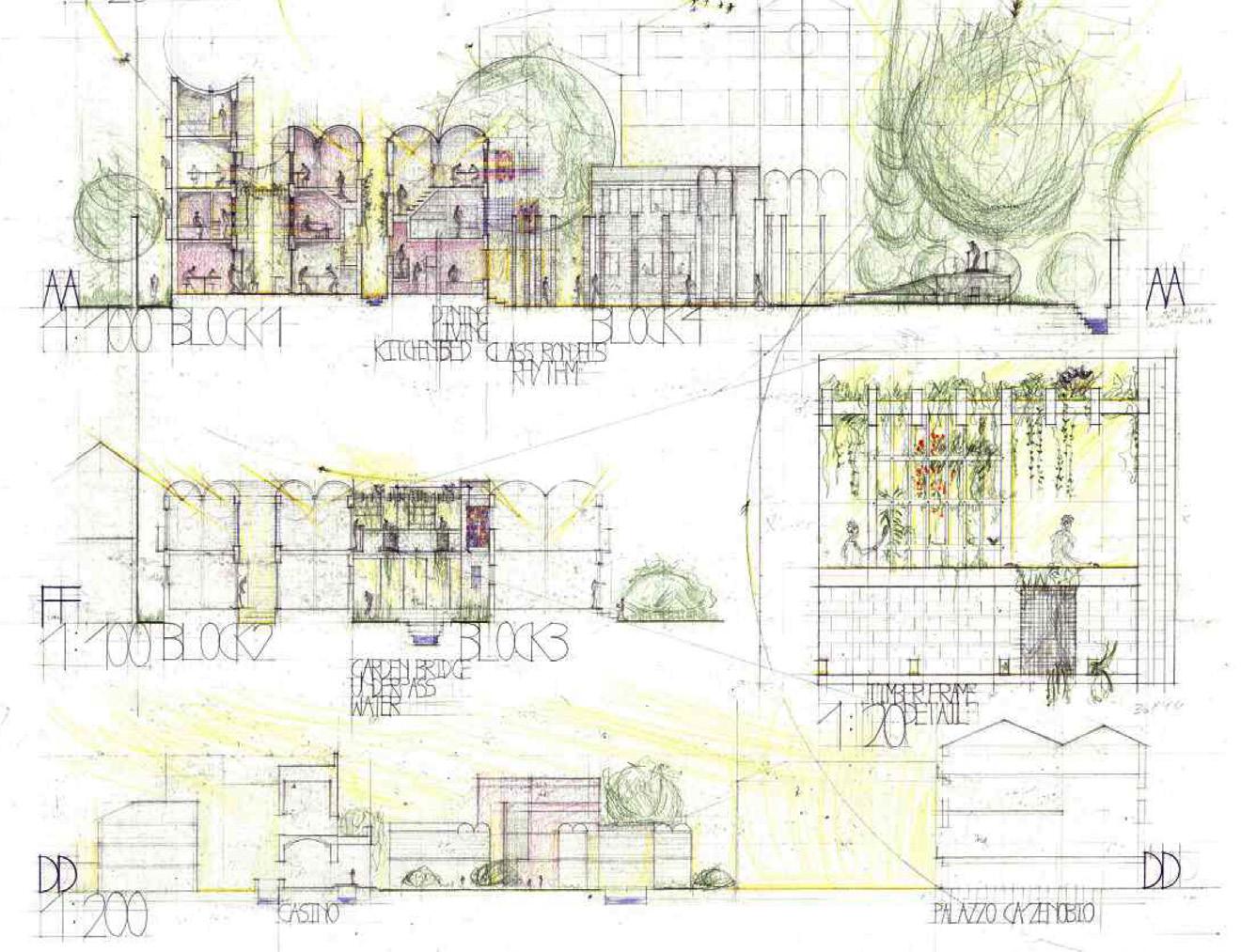
Residenziale Giardino
Zenobio housing scheme in Dorsoduro: Site elevations
12
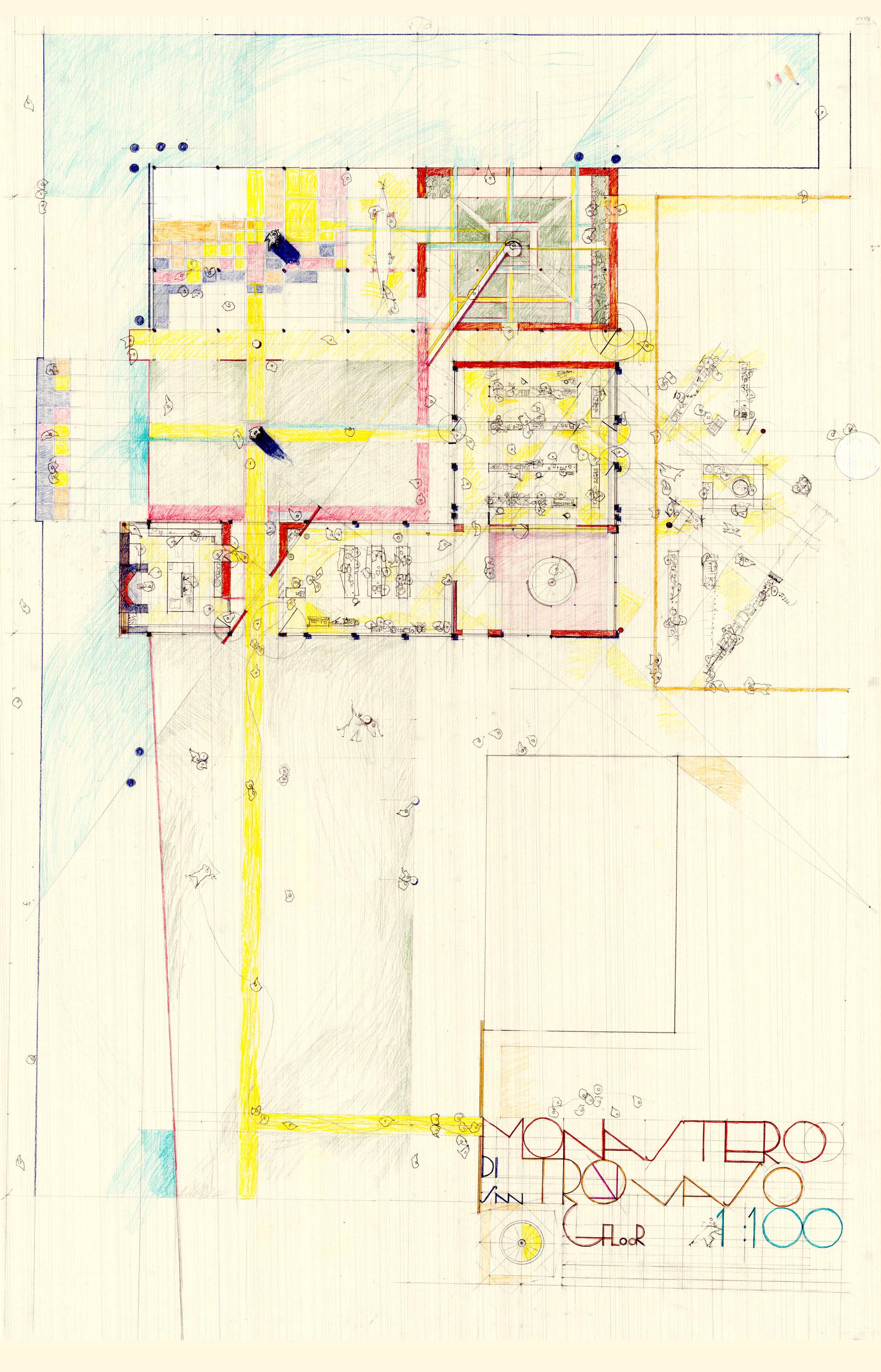
Josh Cooke
Proposed Monastero Di San Trovaso in Dorsoduro: Ground Floor plan
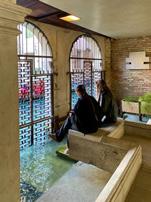
During the Venice trip, students visited their allocated sites in Dorsoduro and Cannaregio and conducted a comprehensive site survey in groups. The itinerary included visits to key architectural interventions in existing buildings, such as the Palazzo Venier di Leoni, home to the Peggy Guggenheim Collection, Tadao Ando’s design for the Teatrino di Palazzo Grassi, and significant works by Carlo Scarpa, including Aula Mario Baratto, the Masieri Memorial, Querini Stampalia, and Negozio Olivetti.
A tutor-led visit to the island of Giudecca provided an overview of housing contexts in Venice, while further excursions to the Scala Contarini del Bovolo, the Vatican Chapels and Teatro Verde, the San Giorgio Maggiore Bell Tower, and Lunardelli Venezia offered valuable insights into architecture as a discipline, particularly in relation to spatial experience, adaptive reuse, and material craftsmanship.
Site visits across Venice
Photographs: Martin Lambie
Nikolia Kartalou
Susana Do Pombal Ferreira
Susanna Boreham
Trip Tutors
Susanna Boreham
Mark Cousins
Susana Do Pombal Ferreira
Nikolia Kartalou
Shoko Kijima
Akiko Kobayashi
Martin Lambie
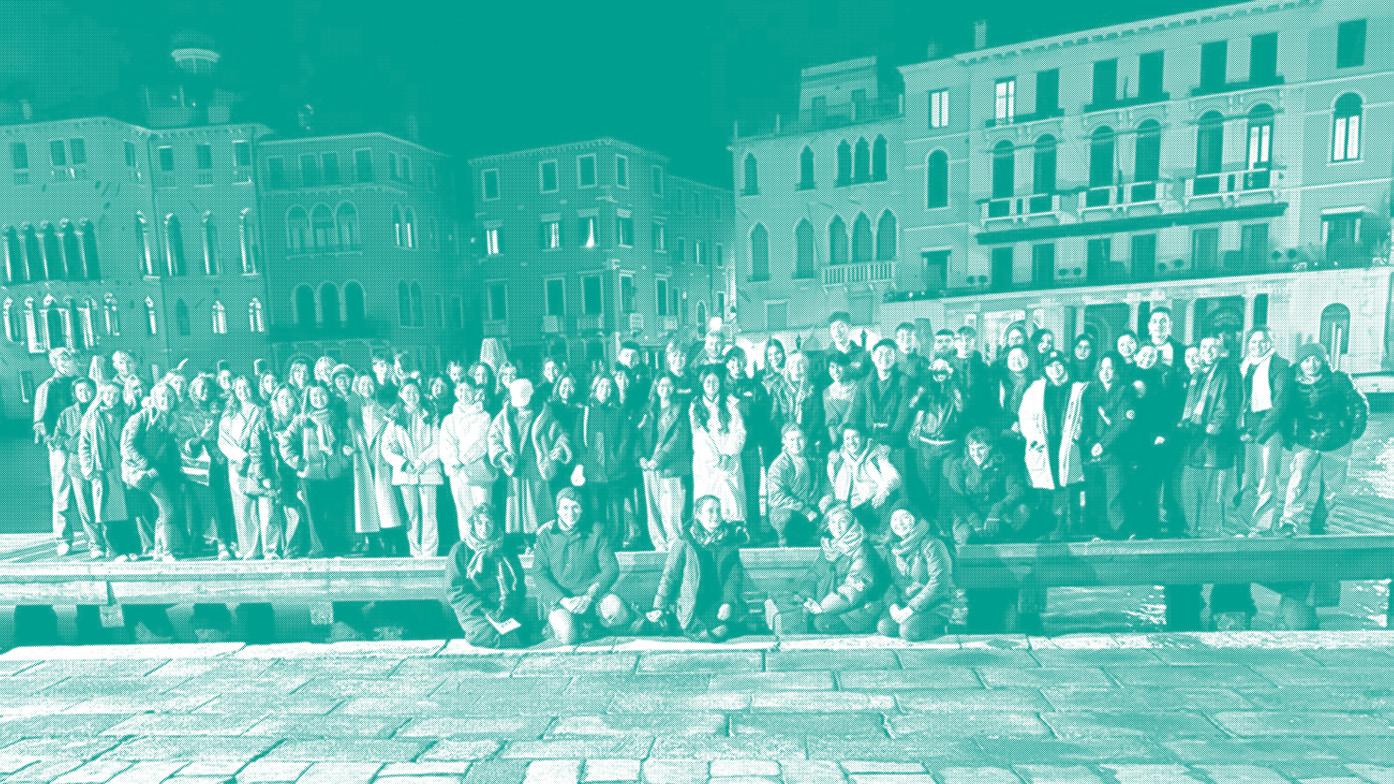
Venice Cohort Gathering
Photograph: Mark Cousins Above
1
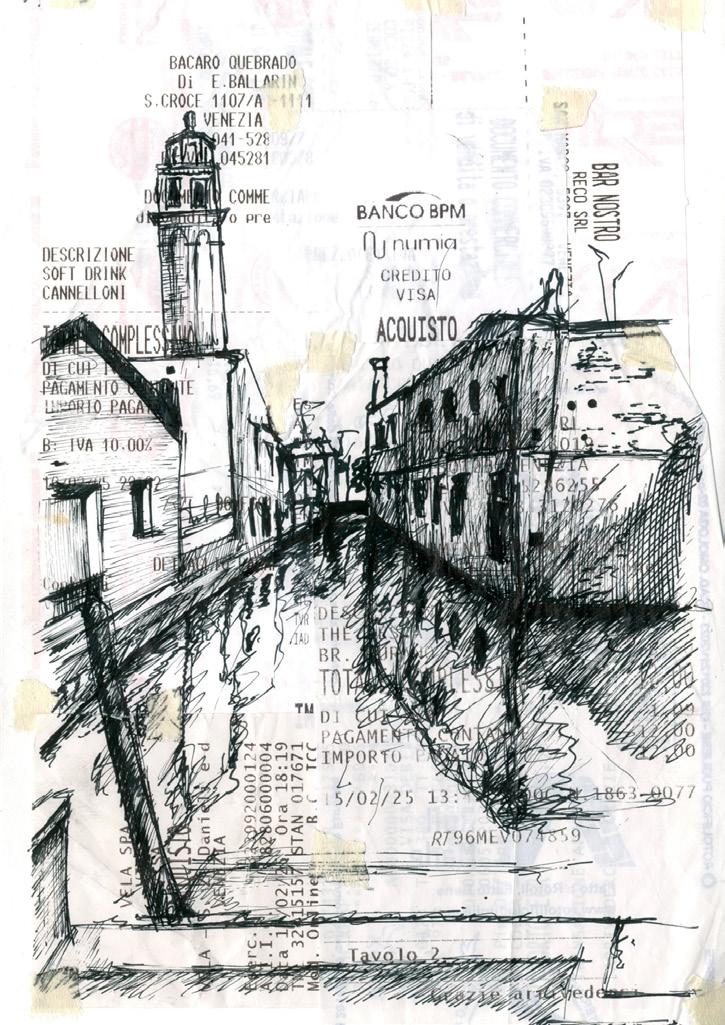
Amy Jensen
Venice explorations
2
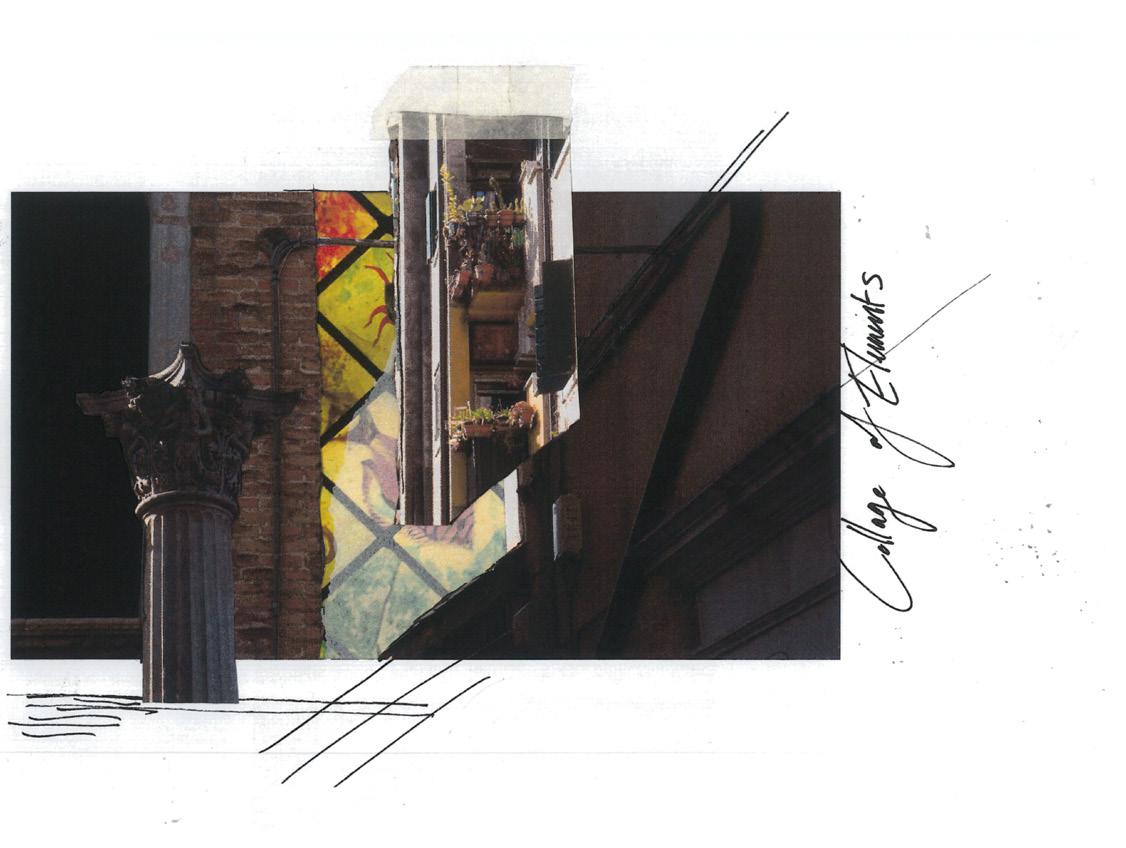
Dominykas Adomaitis
Exploring Venice’s patterns
3
Noah Claridge
Interpretation of Gino Valle’s Giudecca
Lawrence Fung Roviras
"For me, I absorbed the miraculous city of Venice by searching for steps, gutters, streams of water... and by feeling the rhythm through streets, campos and bridges.”
Eunice Tho
“During our visit to the garden site in Dorsoduro, we were honoured to be given a talk on the Armenian history and culture by a Venetian resident at the site, Minas. Through his valuable insight, I had also discovered that the slight incline of the existing building was a result of Venice’s unique foundations."
Residencies ba/ma<hons>
Binmo Chen
It was interesting to learn how buildings are designed to adapt to Venice's unique climate and conditions, and how other 'foreign' architects like Aldo Rossi and Carlo Aymonino
The bell tower is a prominent visual from the site. Prehaps adding a tower to my proposal might draw in people to see the garden?
Venice are often only experienced outside, with tree tops poking above walls. garden site into a publicly-accessible be beneficial socially.
JJ Chu
“ Any Place in Venice has been amazing.”
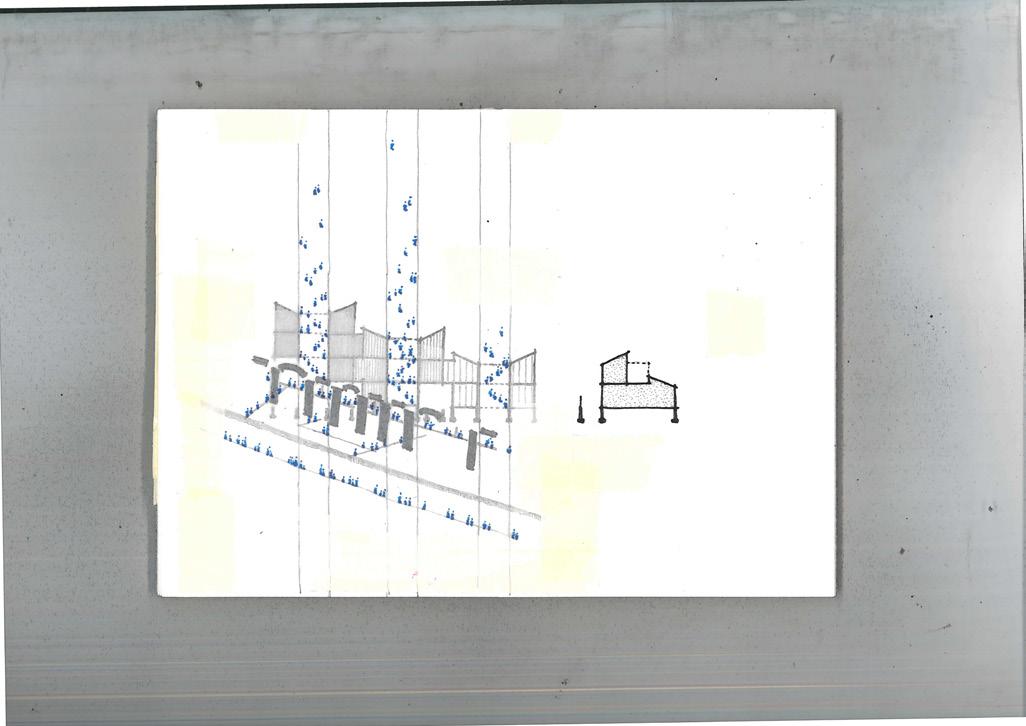
Lawrence Fung Roviras
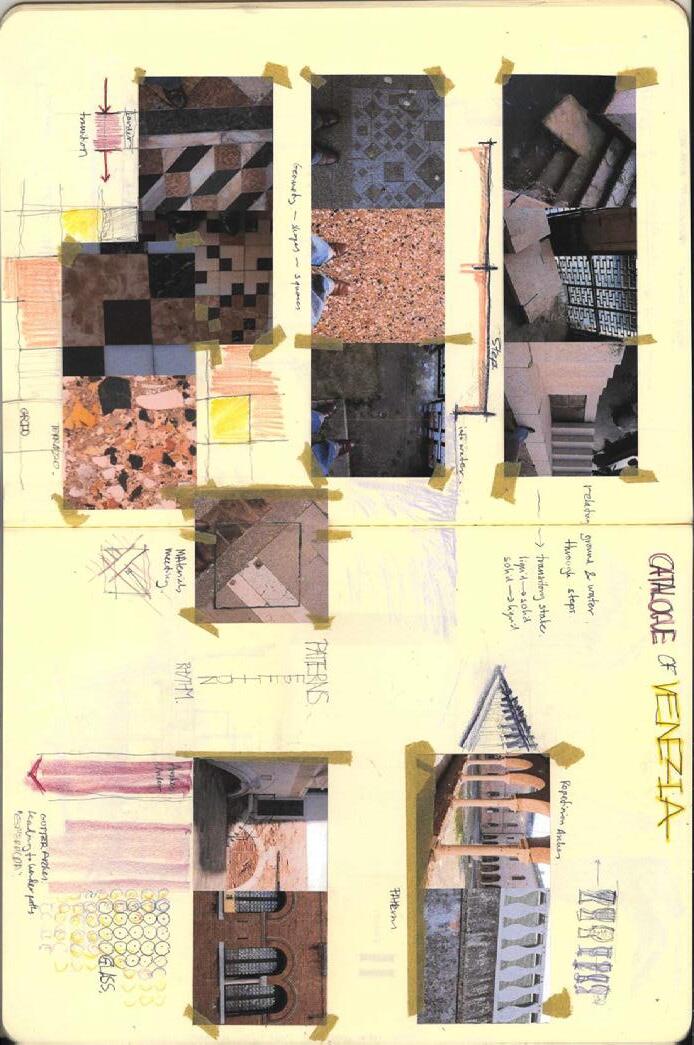
A catalogue of patterns in Venice
5
Euan Hao
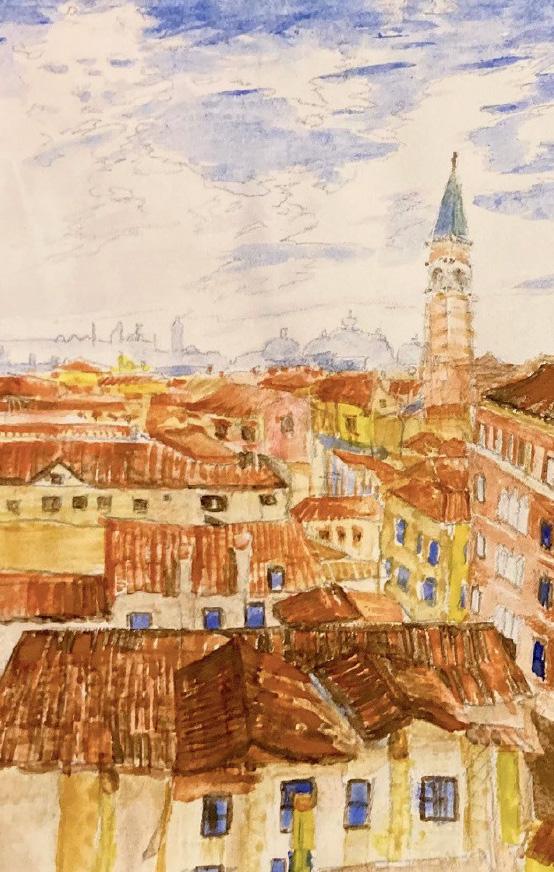
The view from Scala Contarini del Bovolo
6
Alexia Johnson
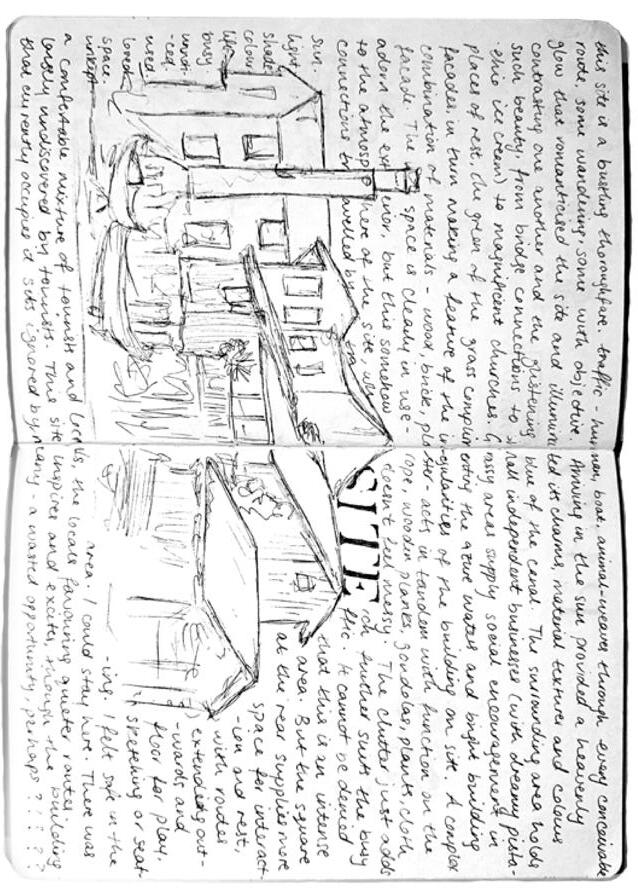
The Canal site in Squero di San Trovaso, Dorsoduro
7
Zoe Mak
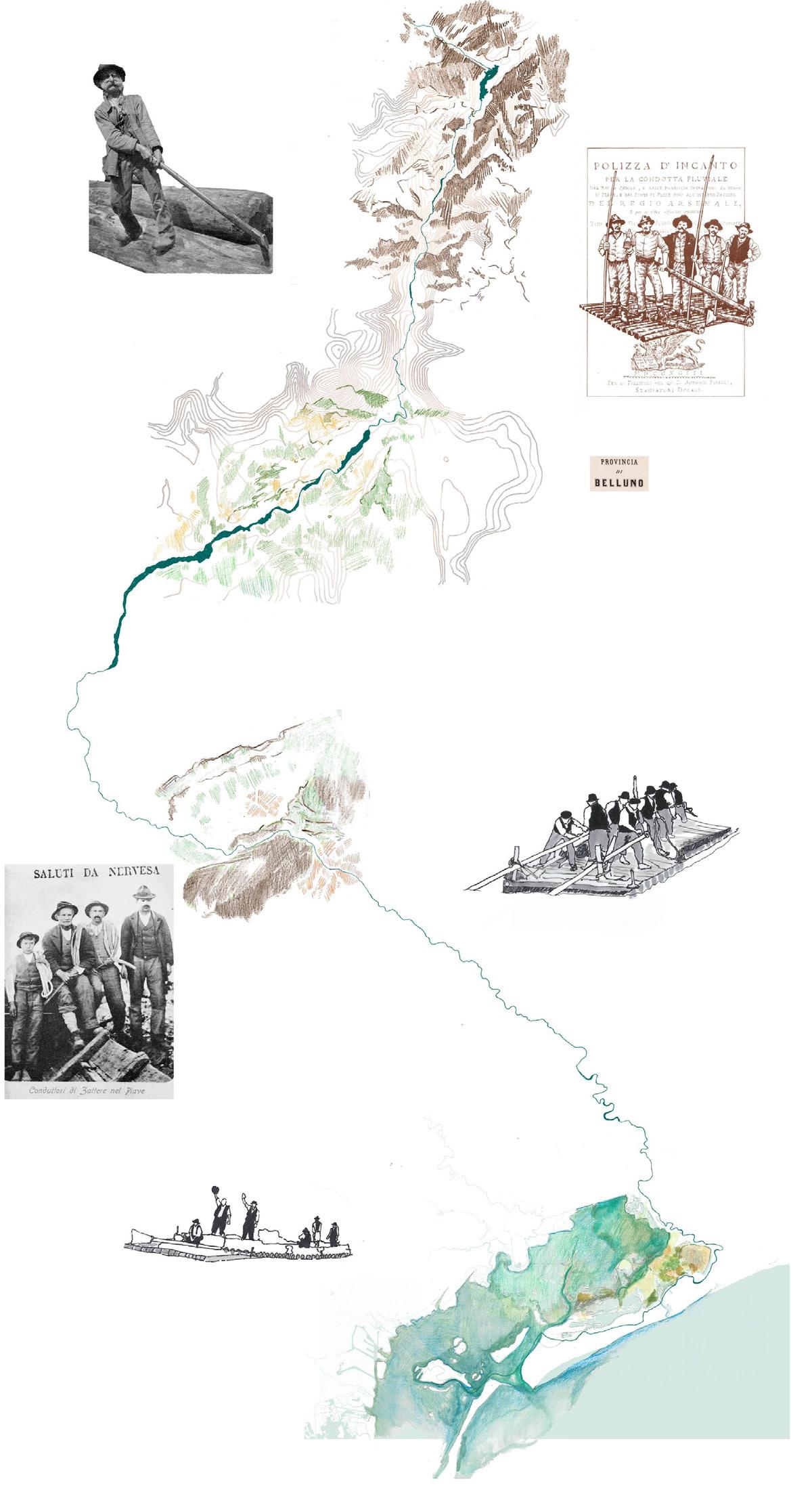
The foundations of Venice: Mapping the journey of the Zattieri
Noah Claridge
"Through study and observation, I developed an understanding of how people live, and how a ‘residential carpet’ of inhabitation is woven across the city’s landscape. This formed a deeper appreciation, useful for my subsequent design project work.”
Zoe Mak
“Calvino introduced Venice as a place of liminality, with the changing tides and movement of water. Experiencing it in the flesh, contextualised the intangible qualities of Venice as an architectural entity. A culturally rich city threatened by rising sea levels, with a history to be told."
Amy Jensen
“In some senses, buildings can be perceived as walls and nowhere is this more true than in Venice; an island of squares and channels surrounded by looming masses."
Zhiliang Lu
“I saw Venice, I heard Venice, I smelled Venice, and I felt Venice.”
technology & environment building fabric
Site visit at a concrete frame project
Photograph: Dimitris Theodossopoulos
Course Organiser
Dimitris Theodossopoulos
The course explores how building structures (timber, steel, concrete, masonry) are shaped around their response to loads and the need for environmental comfort and protection. The learning experience is formed by observation of good practice and assessment of performance, supported by the numerical study of a small structure, and the design of a building envelope and roof informed by their assembly strategy and tectonic expression. The course constantly aims to empower student participation and invert the classroom - prerecorded lectures inform small discussion groups. This learning environment moves around key concepts, good practice or case studies, allowing the students to explore aspects like structural loads; manufacturing and properties of materials; shaping frames around load-paths, bending moments and stiffness; assembly and performance of building envelopes etc. Fire safety is introduced through workshops on escape routes, fire spread or fabric protection.
2 * 5
Tutors
Georgina Allison
Cat Liggat
Maura Bisset
Irem Serefoglu
Guest Lecturers
Liam Ross ESALA
Pablo Ochoa
Wintech
Gary Walpole
NFRC
Sofia Bessa visiting academic
Federal University of Minas Gerais
Sean Qiu, Te Liu, Ruiqi Yao, Houyu Wang
Project 1:
Design around Structural Perfromance
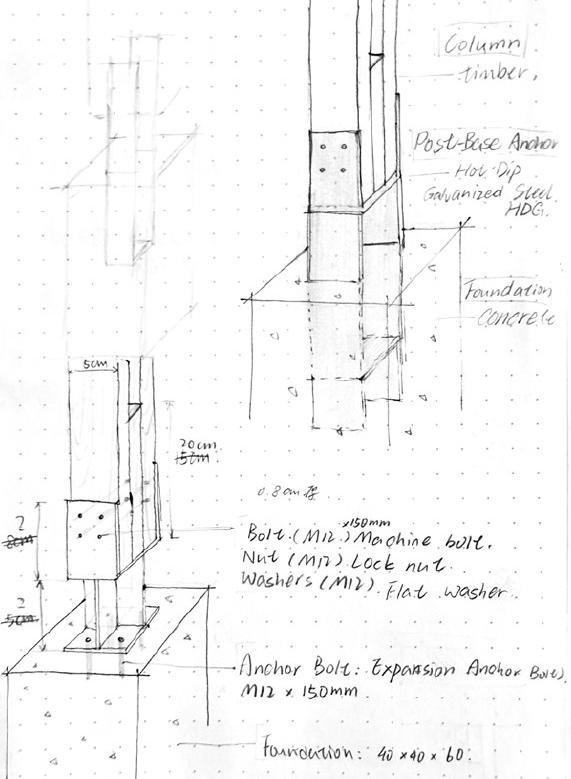
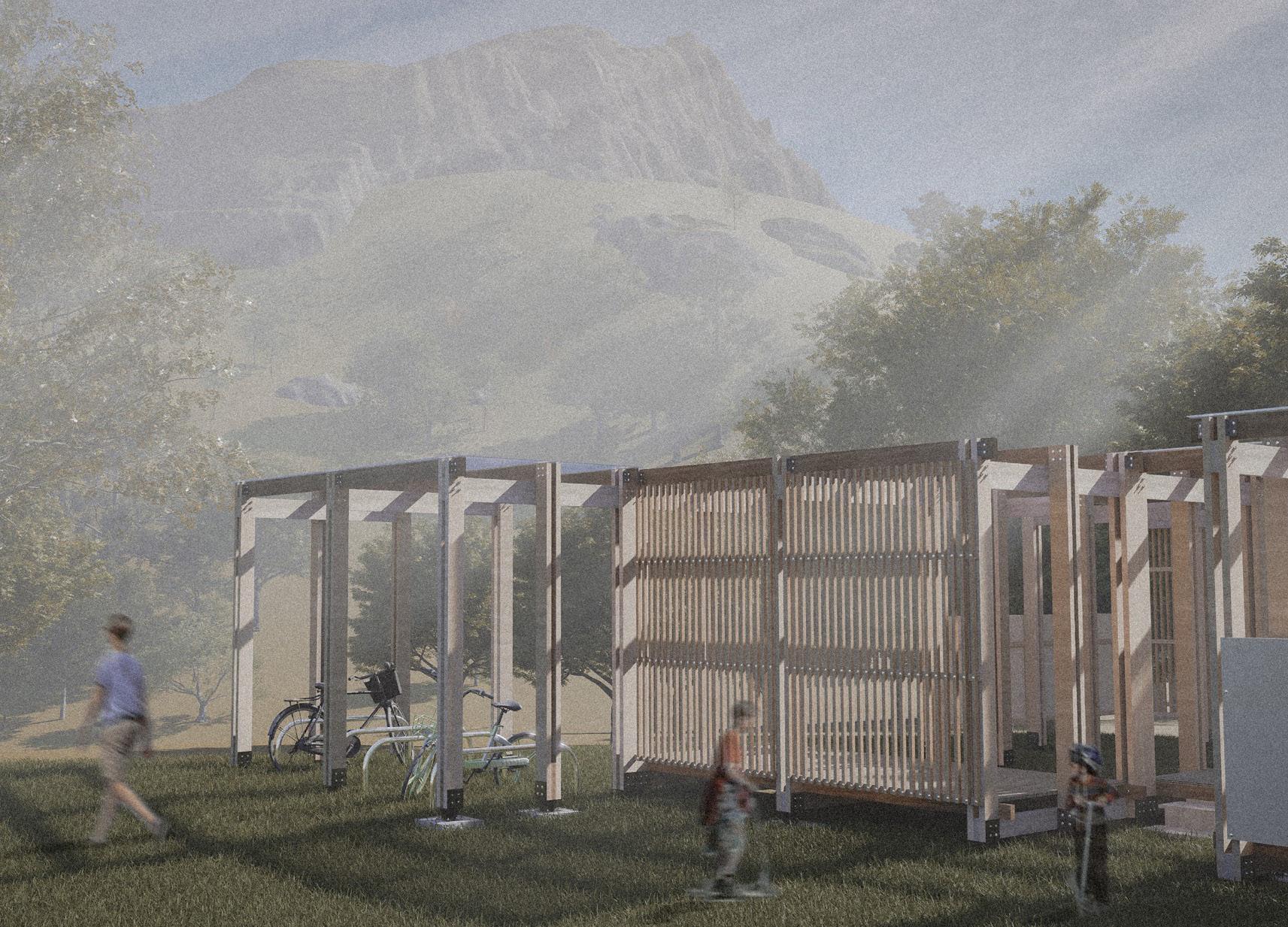
Precise sizing and detailing of a light timber structure for a community hub in Dumbiedykes, Edinburgh to provide focused spaces for community uses and a sort of urban centre and reference.
The lean frame designed by this group is a flexible, multipurpose structure of several modular units that creates a layered spatial experience, where children move freely between open and enclosed areas, engaging with light and structure, while seated visitors find moments of stillness, immersed in the surrounding landscape. The solution was developed by analysing pavilions of similar flexibility and use of timber, and the resulting flexible structure was then detailed with durable connections. Together with extensive calculations for structural sizing, the Embodied Carbon Content was evaluated to provide further parameters for design refinements.
Design around Building Envelope
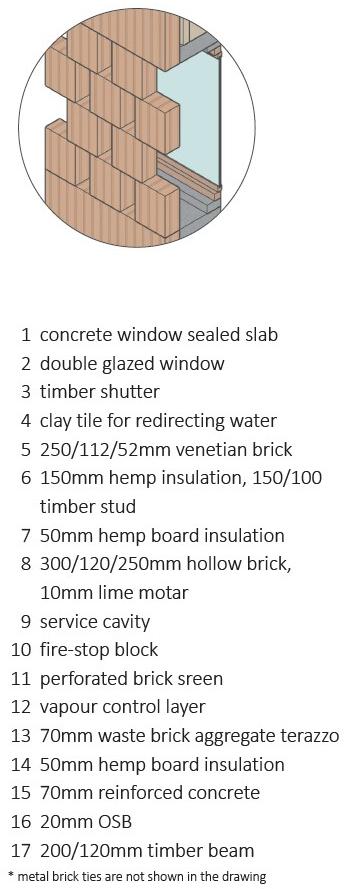
Exploring building envelopes and roofs in the development stage of design projects, by structuring the study of precedents and setting strategies around a specific aspect of performance. This enhanced how design is framed by materiality in the AD Any Place project, using their three sites in Venice.
A 1/100 scale technical exploration was deemed to be effective for the design inquiry and Tectonic themes were explored: solid/light; permanent/temporary; sustainability; process and hierarchy; permeability of the natural environment vs privacy.
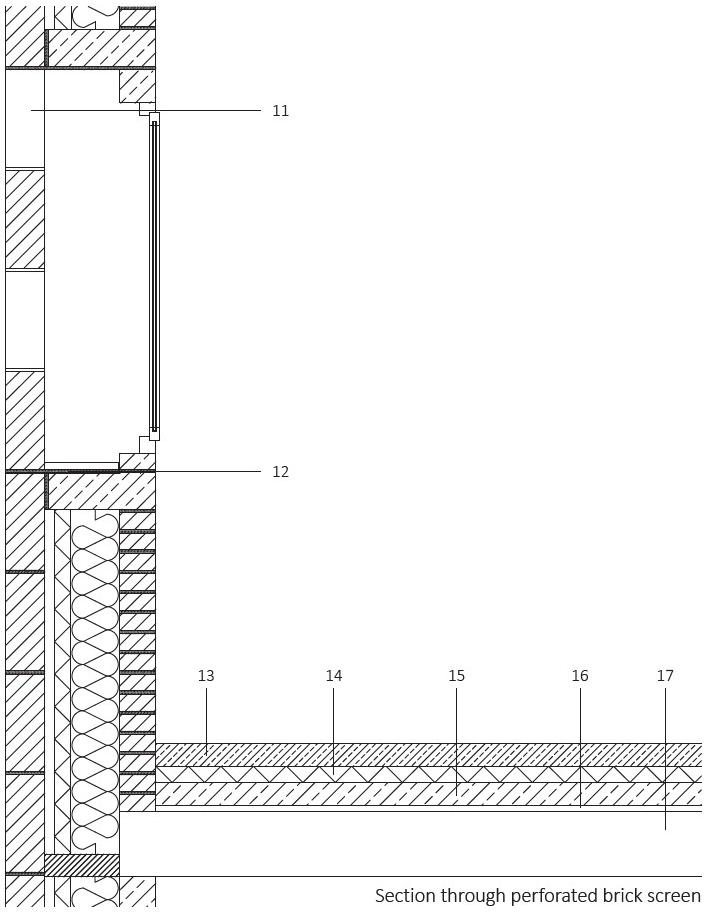
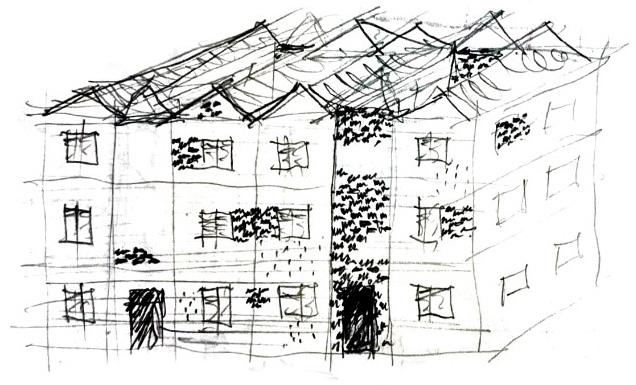
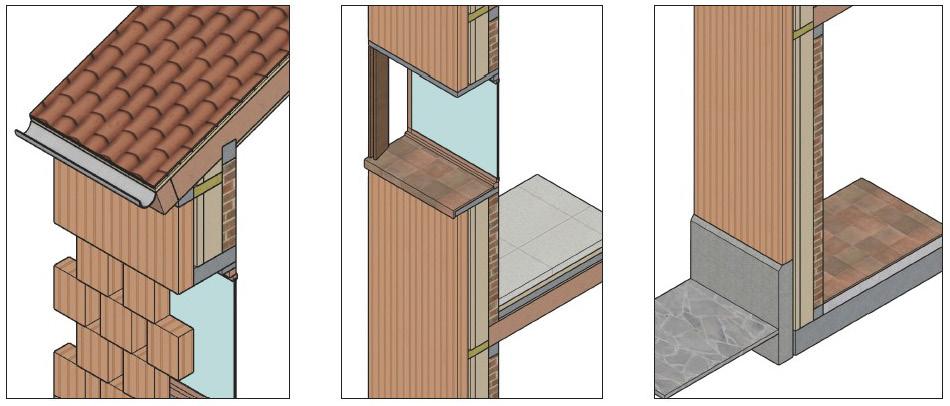
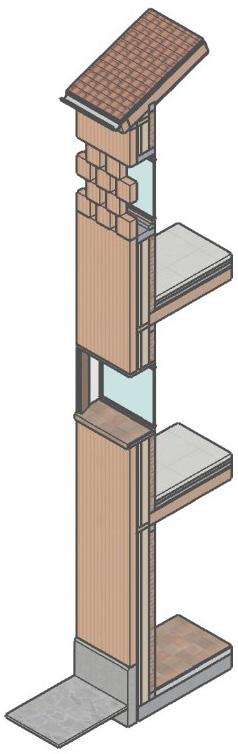
This group tested grades of transparency and the adaptability of brickwork in creating patterns, textures and perforations, seen as an opportunity for freedom in expression.
This course offers an introduction to computational design, with a focus on generative design tools and digital fabrication across scales. Students explore how these fields interact and complement one another, investigating the technological possibilities of translating digital systems into physical outcomes through various means. The course emphasises parametric and algorithmic design approaches alongside related digital crafting techniques. Participants are introduced to the digital workflow and methods for managing data sets related to design and fabrication. The course engages with digital computation and fabrication both theoretically and practically. It introduces students to core methodologies of the digital workflow and supports the development of a critical and analytical approach to computational design. Through exposure to basic strategies in computation and fabrication, students also engage with key ideas and debates surrounding the ‘Digital Turn’ in architecture.
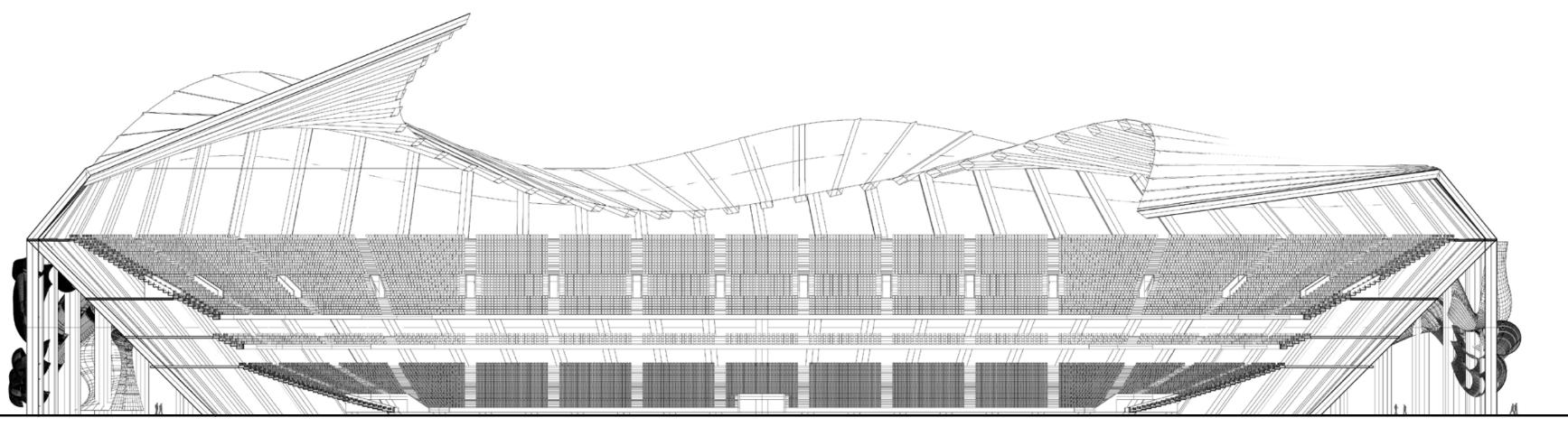
The first part of the semester includes an introduction to theoretical positions underpinning computational design, coupled with software tutorials and digital fabrication demonstrations. Students complete individual analyses of selected case studies, reflecting on their compositional and procedural logics. In parallel, they begin applying generative tools and producing exploratory design outcomes while using a range of online and offline resources. Assigned readings and critical reflection accompany the technical components throughout the semester. In the second half of the course this year, the focus shifted towards the architectural and technical components of stadium design. Students collaboratively engaged in the design of core elements such as the bowl, roof, and façade, applying computational methods to a real site and increasing scale and complexity. The elective culminated in the design and prototyping of parts of the stadium, located in Leith.
Teaching
Contributors
Yusheng Du
Catherine Zhang
Bryan Munnoch
year 2 electives
North East Studio Building, ECA Lauriston Campus, 1961
Photograph: Ralph Cowan Image from College Archive 0117499 1961
Spanning sites across the city, and populating some of the best loved quarters and buildings of the capital, the University of Edinburgh hosts a wide range of departments, specialisms and specialists. Within the BA/MA Architecture Programme, we invite students to explore the possibilities hidden behind the doors and minds of this rich learning environment, exploring beyond the discipline into diverse fields of enquiry. All students progressing to Year 2 require to take an elective course in Semester 2. This can be any level 8 elective from any Course or College across the university which is open to incoming students. The breath and scope of this selection may seem overwhelming, and as such we provide a useful handout well in advance of the selection period to assist with narrowing the extent of the search. We ask that students take seriously this moment to expand and tune their learning experience, reflecting on evidence from previous academic cycles to consider how and why they have chosen this degree pathway, and what, where and how they may wish to deploy these skills in future. A careful choice of elective might steer, supplement or challenge existing learning, so thinking carefully about how such a choice might consolidate foundations for future learning is vital, considering what it mean and how one might use it in the future.
Laura Harty
www.drps.ed.ac.uk/24-25/dpt/drpsindex.htm
Sample Electives Contemporary Cinema Architectural Acoustics and Spatial Sound Composing for Voices and Instruments
Creative Social Work and the Arts Drawing and Design Thinking Engineering Practice Ethnography: Theory and Practice
English-Chinese Translation European Languages Foundation Japanese Foundation Korean Fundamentals of Algebra and Calculus P rogramming for Business Applications Innovations in healthcare Introductory Financial Economics
Music 1A: Psychology of Music
Physical Geography Planning for a start-up Science, Nature and Environment
Sociology
Sustainable Development Goals
Textiles 1B: The role of Textiles in Art and Design
Visual Narratives in Design and Screen Cultures
3*1 3*2 3*3 3*4 3*5 3*6 3*7
architectural design explorations architectural theory architectural practice working learning architectural practice reflection international exchange professional studies practice experience
Sasha Worth
Studio installation
Architectural Design: Explorations
Unit 6: Tales, Totems, and Shrines
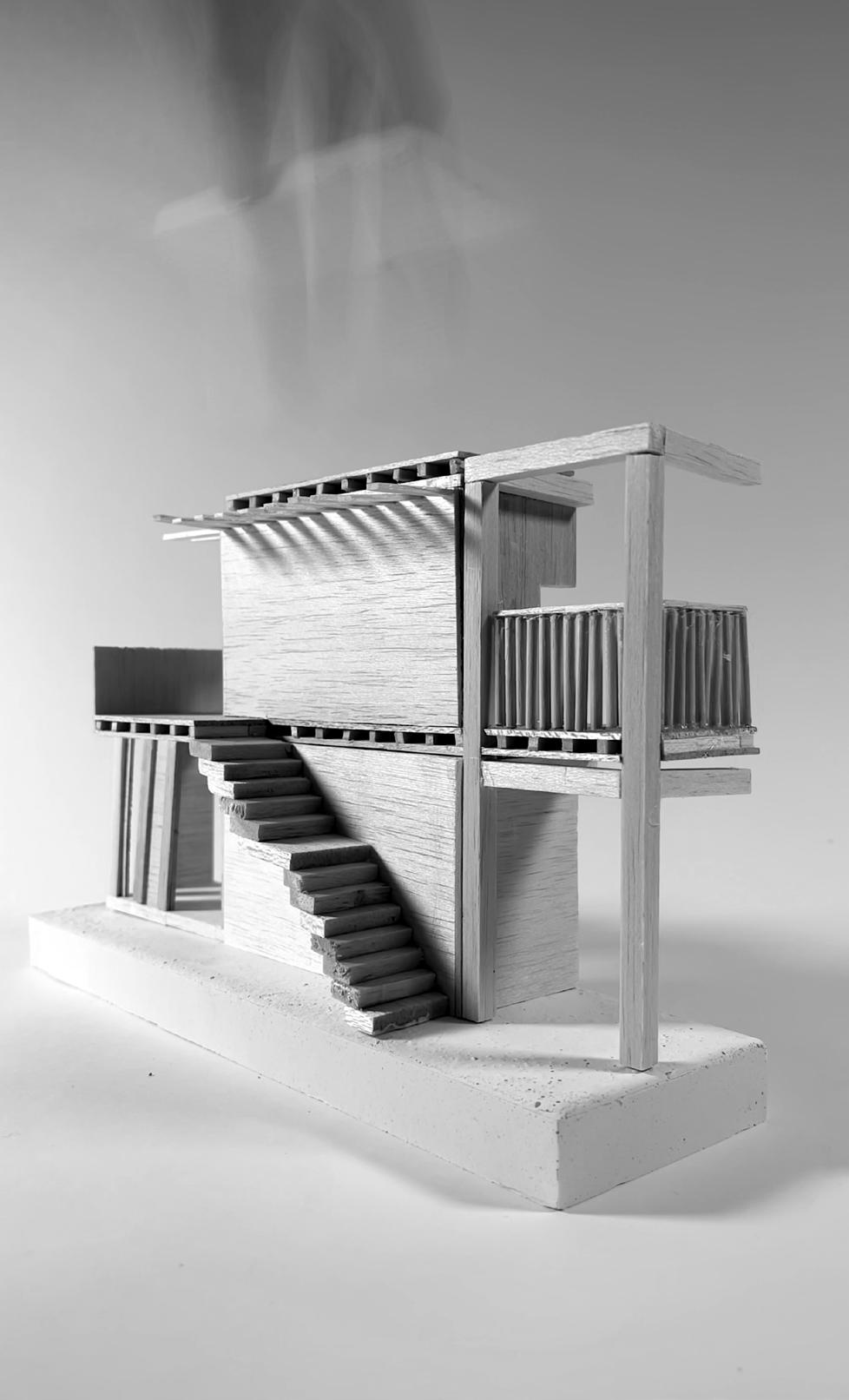
architectural design explorations
Daisy Bond, Megan Jones, Sasha Worth Vessels of Transformation
Course Organiser
Pepe Navarrete Jiménez
Explorations provides a platform for a number of design units from which the students get to choose. Usually working in groups, the diversity of proposed briefs marks a shift in their educational journey from more prescribed design courses to these highly speculative and experimentally-driven units.
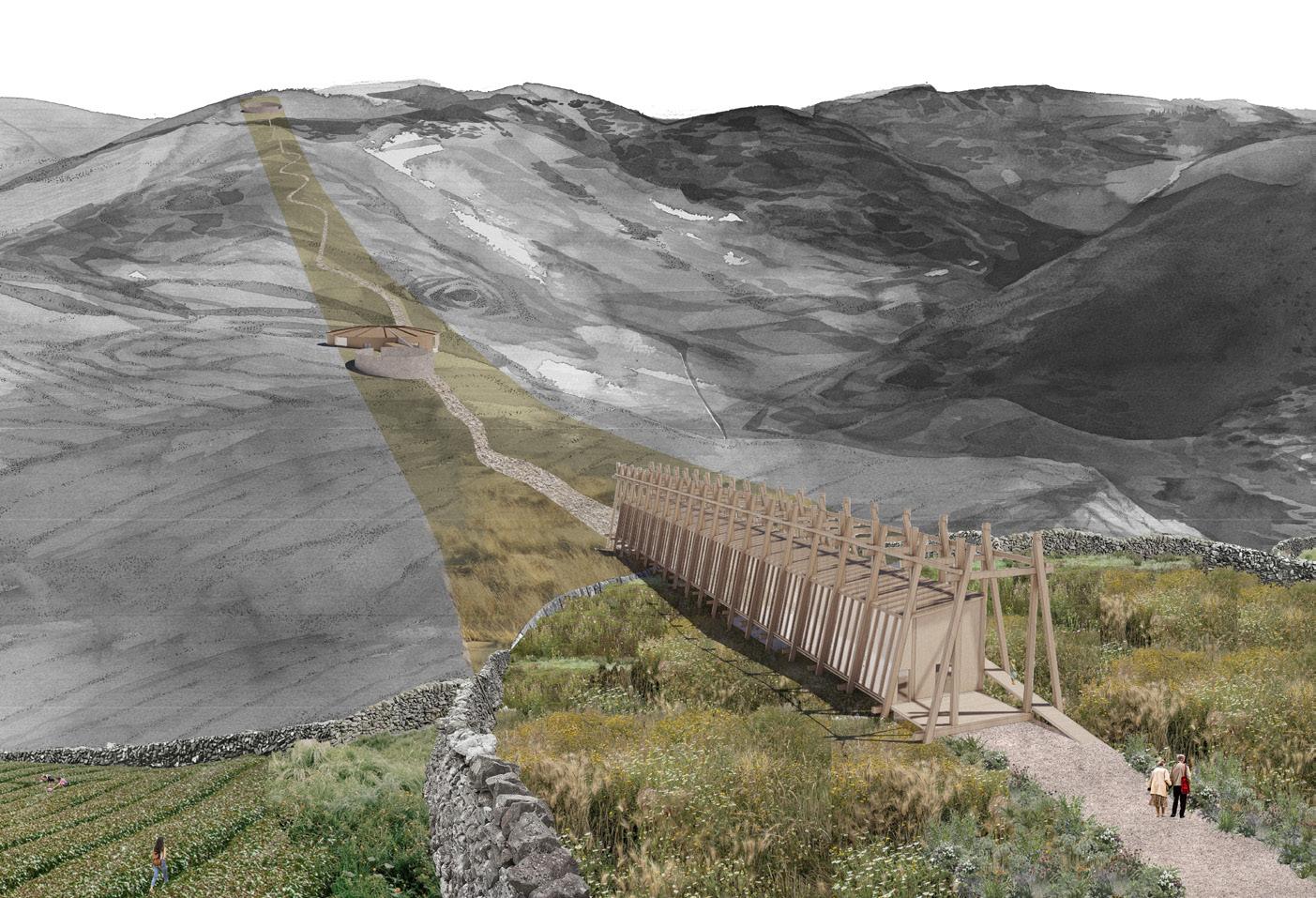
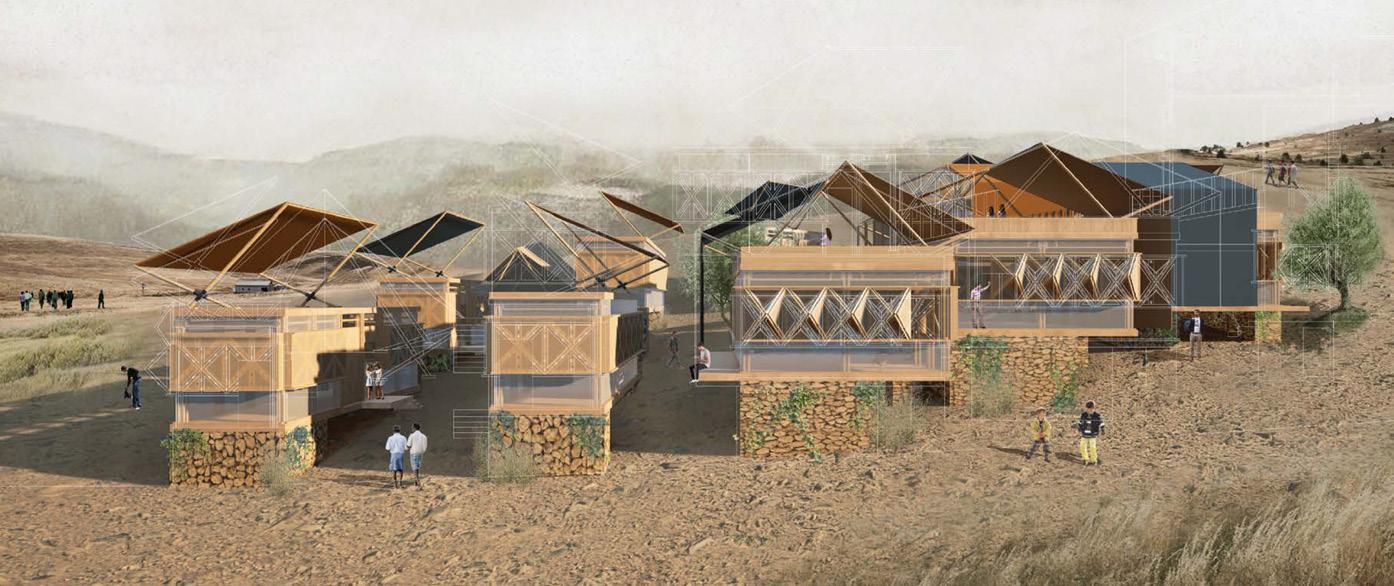
This year, our students have responded to six diverse briefs: unit 1 proposed an iteration of speculative interventions on the historical landmark of Mount Stuart, designing gardens, interiors and other epic architectures in the adventurous spirit of the Marquess of Bute; unit 2 built sensorial experiences of mediation between soundscapes and the city of Edinburgh by playing with the architectural imagination and focusing on walking as an aesthetic and prospective practice; unit 3 devoted to the intense production of bold architectural proposals for two competitions dealing with the complementary topics of high density cities in China and shrinking towns in Turkey; unit 4 run to the Pentland Hills conducting field studies and working across scales, from landscape to shelter, proposing territorial projects for its future habitation; unit 5 committed to the design of nomadic, temporary, resilient, sturdy, beautiful and hopeful schools for the people in Palestine, submitting these proposals to an international competition; unit 6 read on the links between old tales, craftmanship and storytelling to give shape to sophisticated artifacts of construction and imagination.
The work produced in the studios was complemented with shared activities focused on nurturing a common course culture, such as workshops on representational techniques, studentled presentations of their work-in-progress and a series of lectures open to all members of ESALA titled ‘Forms of Practice’. These talks aimed to enrich and expand our understanding of ‘practice’, and the diversity of approaches that the term entails.
Forms of Practice
Lecture Series Practice as a Project
Richard Hall Civic Soup: How to practise while in practice
Ruth Hamilton, Sigi Whittle Craft in Practice
David Byrne Practicing research inside the box
Samer Wanan Material Ecologies
Mireia Luzárraga (TAKK) Collective Practice Nicola MacLachlan
1
unit 1 mount stuart observatories
Studio Leaders
Adrian Hawker, Victoria Clare Bernie
This unit embraced the strange and unexpected architectural possibilities that arose from a process of research informed by drawing and structured by narrative discipline. It engaged a close ‘reading’ of the eccentric and highly figured architectural context of Mount Stuart, the ancestral island home of the 3rd Marquesses of Bute. It drew out a series of small, poetic and finely detailed architectures that resonated with a particular account of the house’s dense spatial fabric and complex, highly referenced, material surface.
Like the artist Ilana Halperin, we were struck ‘by the deep geologic nature of the house’ and imagined it as a form of quarry, a way of thematically accessing and isolating elements of its fabric to be observed and re-imagined elsewhere within its extensive grounds as new architectures – Observatories, each tailored to the pursuit of one of the many scholarly interests embraced by the Marquess during his relatively short lifetime.
Anna Gillibrand, Adam Chen
Wee Garden + The Forty-Five Avenue
2
Cleo Averof, Anfisa Karneeva, Guy Di Rollo Folly + Escarpment
3
Molly Bonner, Ella Woods, Drew Pimm
The Column + The Beehive Well
Contributors
Richard Collins
Morven Gregor
Rachael Hallet
Jessica Insley
Miguel Paredes Maldonado
Leo Xian
Techniques Tutor
Eric Lin
unit 2 soundings \ urban proximities
Studio Leaders
Suzanne Ewing, Andrew Brooks
The studio explores how sound and the sonic imagination offers insightful, experiential architectural knowledge, informs temporal aspects of architectural design practice and inflects architecture as a project-in-motion. We began by following Janet Cardiff and George Bures Miller’s A Night Walk for Edinburgh (2019), then developed practices of field-recording, transposition and interpretation. Selected Night Walk sites in the Old Town were reconfigured in the Minto House top floor studio for mid-term reviews: Pockets of Intimacy: Advocates Close; Architectural Eavesdropping: Stevenlaw’s Close; Rhythms of everyday life: Tron Square Housing; Exposing urban crevices: Old Assembly Close; A filtering threshold: City Chambers Arcade. Over the second half of the semester these explorations of urban proximity established dispositions for design propositions which re-imagined the site at Castle Terrace Car Park as an urban commons in a car-free future. Design iterations were inflected through drawing, video editing, auralisation and installation.
Researcher into mobilities, transport and land use, University of Edinburgh
Usue Ruiz Arana University of Newcastle
Techniques Tutor
Ollie Howell
unit 3 the competition studio
Spatial RestructuringReestablishing Urban Density
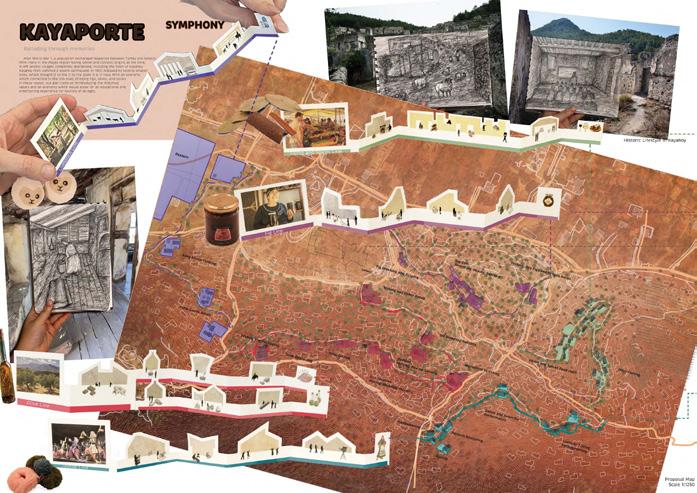
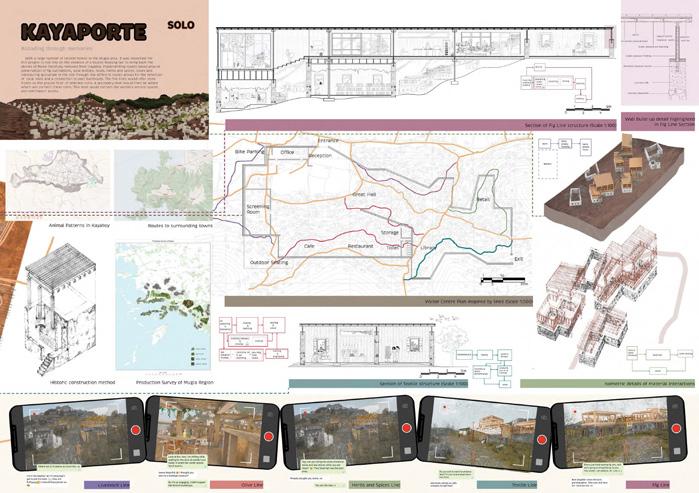
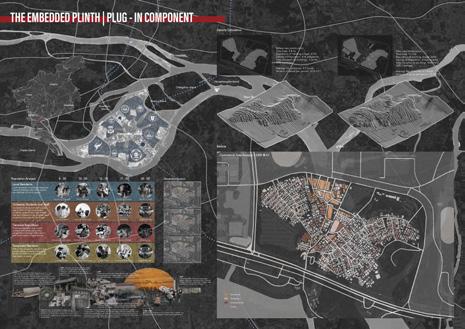
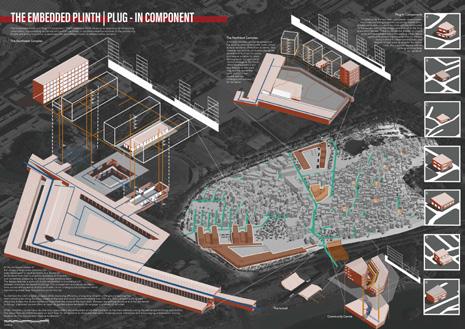
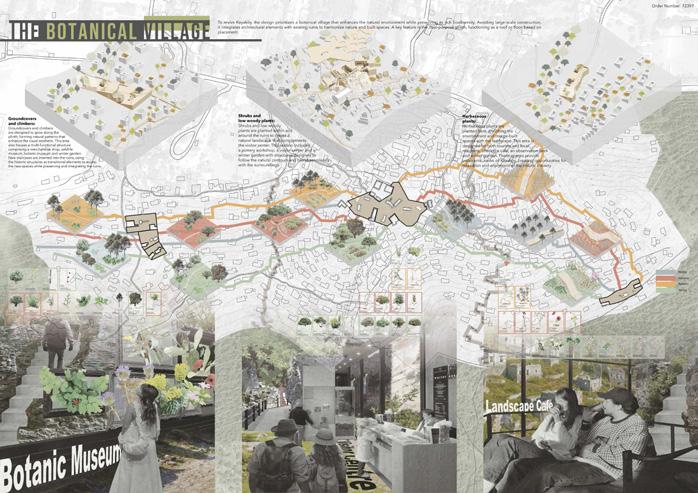
Living Ruins, An Open-Air Museum in the Ghost Village of Kayaköy, Turkey
1
Studio group
The abandoned village of Kayakoy Model
Studio Leaders
Ana Miret Garcia, Jack Green
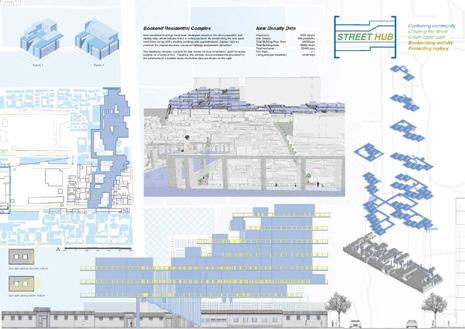
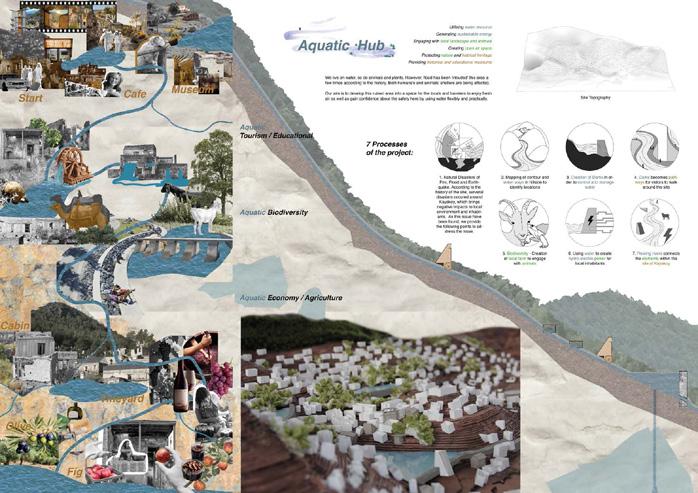
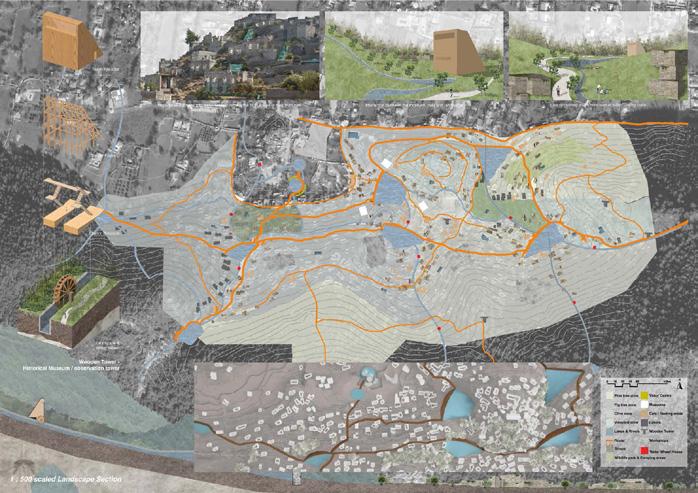
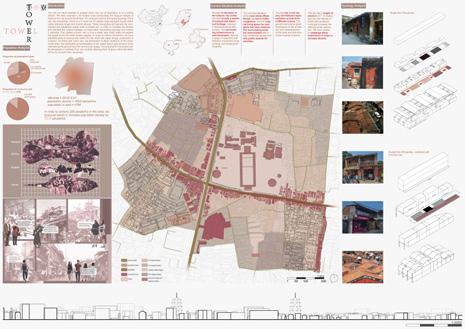
Unit 3 offers students the opportunity to participate in two International Architectural Ideas Competitions, which immerse students in pressing international debates beyond academia. The chosen competitions respond to the ethos of the unit: ‘learning from the Global South’, which aims at bringing the developing world to the centre of the conversation by critically examining and proposing solutions for current issues facing the Global South Countries (such as climate adaptation, urban inequalities, displacement and postcolonialism).
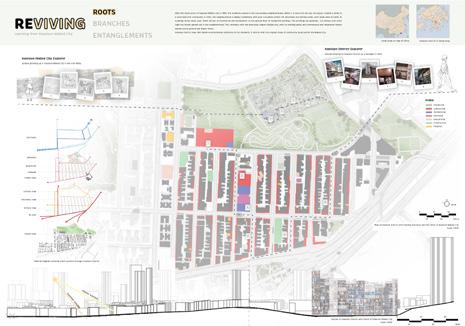
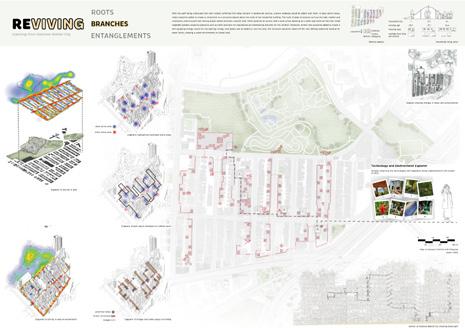
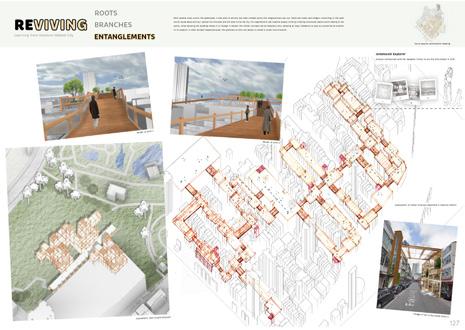
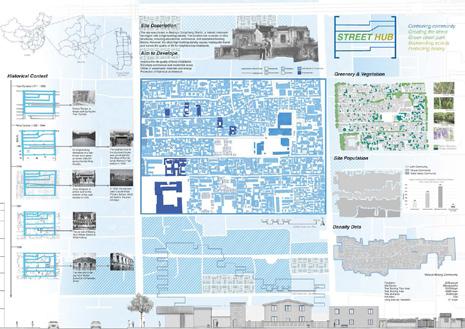
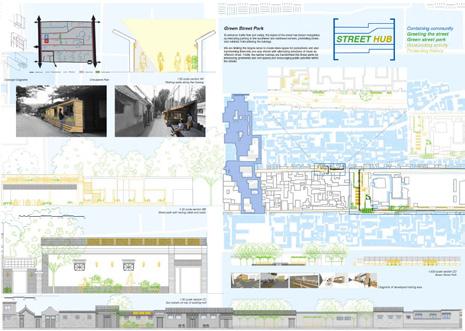
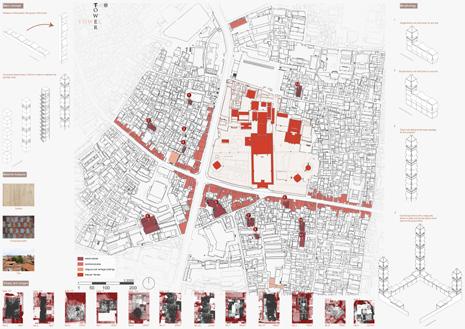
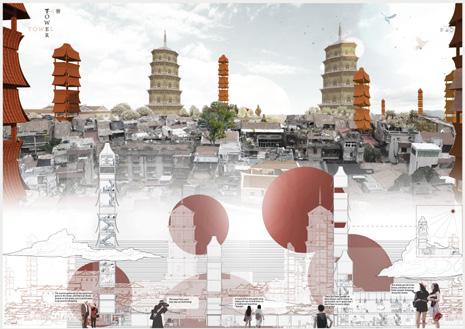
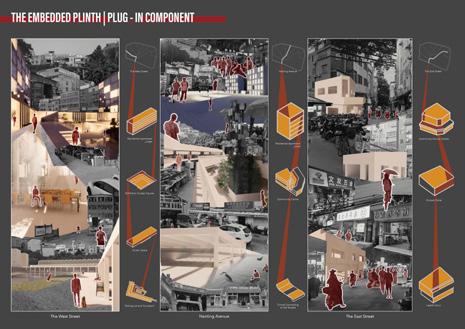
The 1st competition ‘Spatial Restructuring - Reestablishing Urban Density’ asked students to explore new urban scenarios for the future redevelopment of Chinese cities with a focus on preservation, reuse and improvement. The students applied small-scale and gradual organic and sustainable principles to the renewal of existing high-density old urban areas of their home cities.
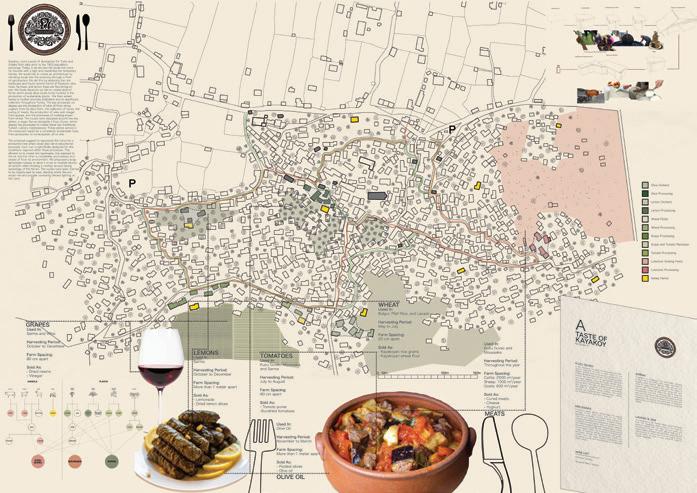
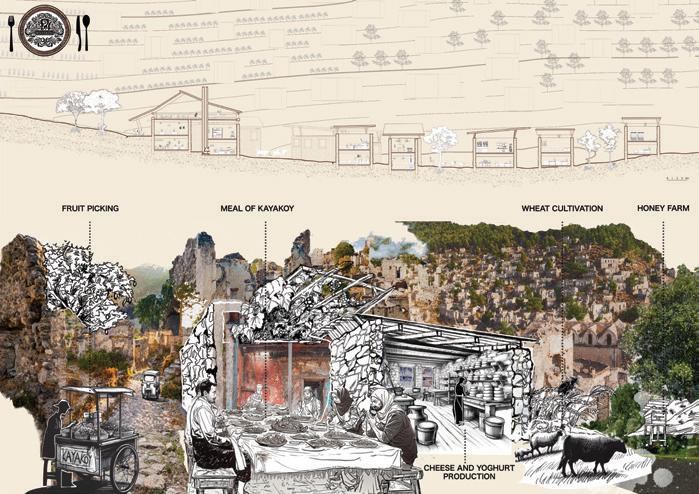
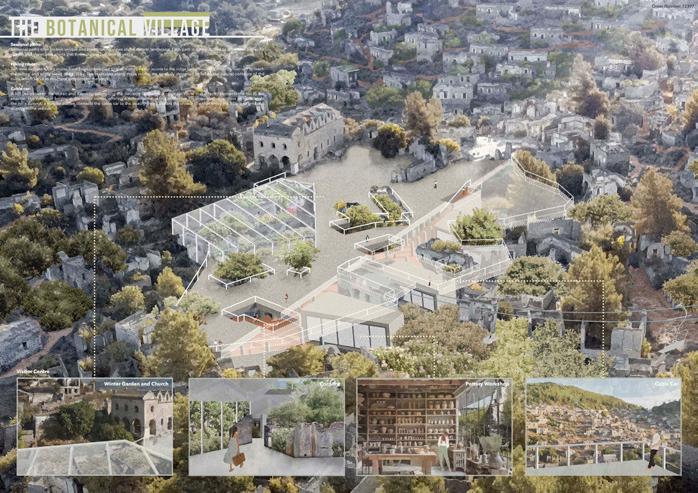
Through the 2nd competition ‘Living Ruins, An Open-Air Museum in the Ghost Village of Kayaköy, Turkey’, the students proposed innovative design solutions to revive and preserve an old abandoned Greek village through promoting sustainable tourism practices and supporting the local economy. By working in two different competitions, the students explored how the methods and ideas developed for one competition could be successfully redeployed to inform the other, ultimately giving rise to a body of work that integrated multiple design arguments into an intellectually consistent whole.
Review Critics
Rachael Hallett
Hafsa Olcay
Bilge Serin
Andy Stoane
Talks
Sophie Agne
Gina Jiang
Mark Dorian
Adrian Hawker
Andy Stoane
Techniques Tutor
Bingzhi Li
Kathy Choi, Elaine Yang, Charlene Sun, Issa Tambourgi Reviving
Kathy Choi, Elaine Yang, Charlene Sun, Issa Tambourgi Kayaporte
Eric Chen, Chang Lou, Zifei Li, Sophie Zhang Street Hub
Eric Chen, Chang Lou, Zifei Li, Sophie Zhang Aquatic Hub
Beini Jiang, Jeevan Nair, Wenzheng Chen A Taste of Kayakoy
Joyce Fan, Emily Fang, Ivan Feng, Kevin Ren The Embedded Plinth
Joyce Fan, Emily Fang, Ivan Feng, Kevin Ren The Botanical Village
unit 4 field objects the pentlands 1
Studio Leaders
Pepe Navarrete Jiménez, Andy Summers
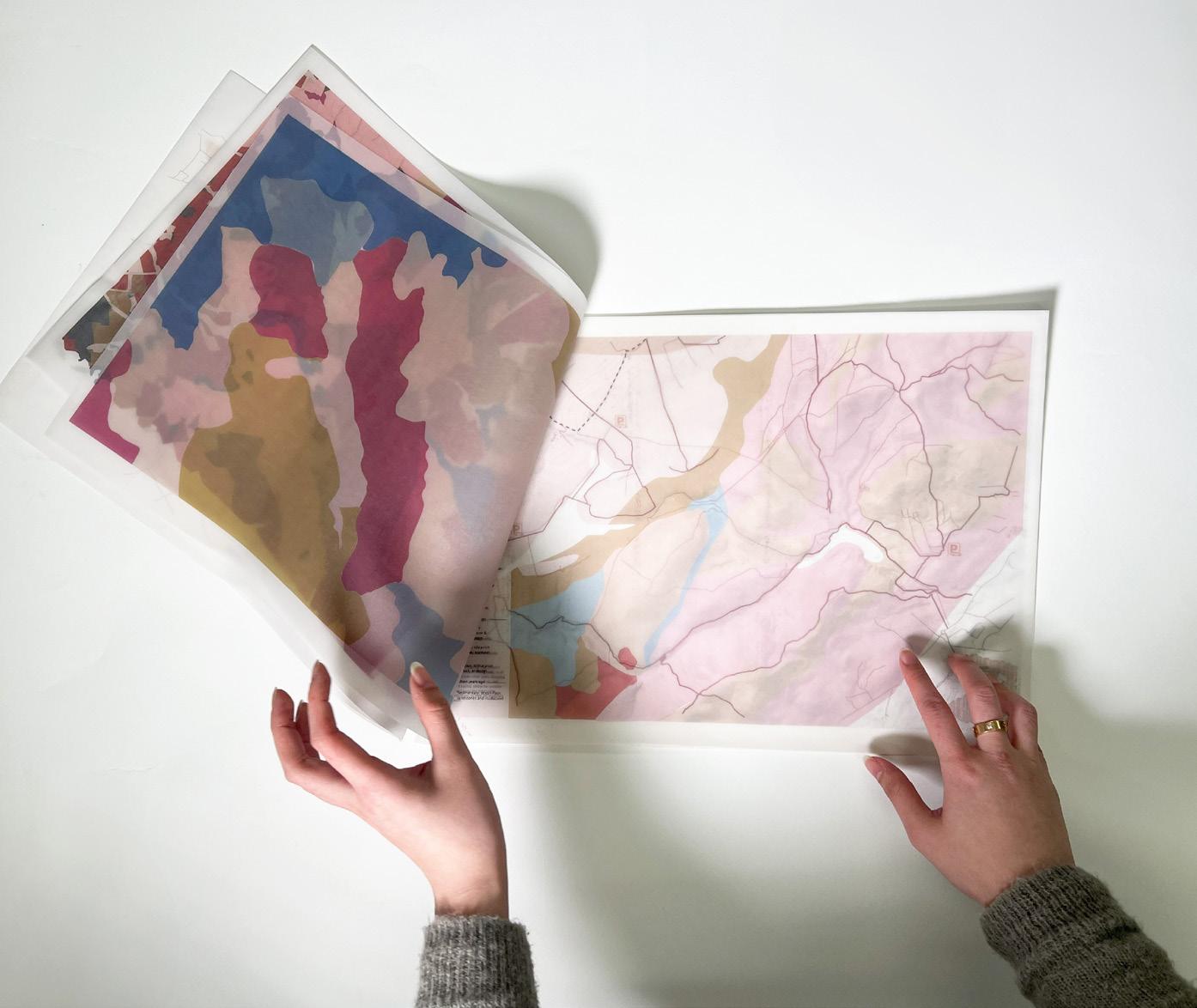
Field Objects focuses on environmental degradation, climate change, social and economic inequalities and territorial design by exploring forms of habitation in fragile environments. These habitats represent a unique testing territory for human settlements because of the associated risks its population might face with little resources while at the same time their ‘smallness’ allows for more open, creative, and tailored solutions. At the same time, identifying programmatic opportunities and potential design processes by working with these limitations is a strong projective force. This year we have aimed to develop a series of strategies in time for sustainable habitation in specific locations of the Pentland Hills Regional Park, questioning its own definition as a reserve and proposing multi-layered plans for both its protection and its future-making. These projects propose thematic concepts intertwined in a ‘common ground’ site design with a specific architectural array, as a network, understanding architectural objects as one of many available tools to tackle the needs and aspirations of communities while, at the same time, foster visions of entangled programmes of co-habitation among humans and more-than-humans.
Xander Froggatt, Andrea Lumina, Elliott Osmond, Cameron Paul Field Studies 2, 3
Ella Dai, Moby Lo, Giordano Porta, Estee Raus Pentland Tea&Tastes
Review Critics
Rachael Hallett
Laura Miani Fernández
Grigor Mitchell
Peter Robinson
Techniques Tutor Inka Eismar
1
unit 5 a school for palestine
Studio Leaders
Mark Dorrian, Maria Mitsoula
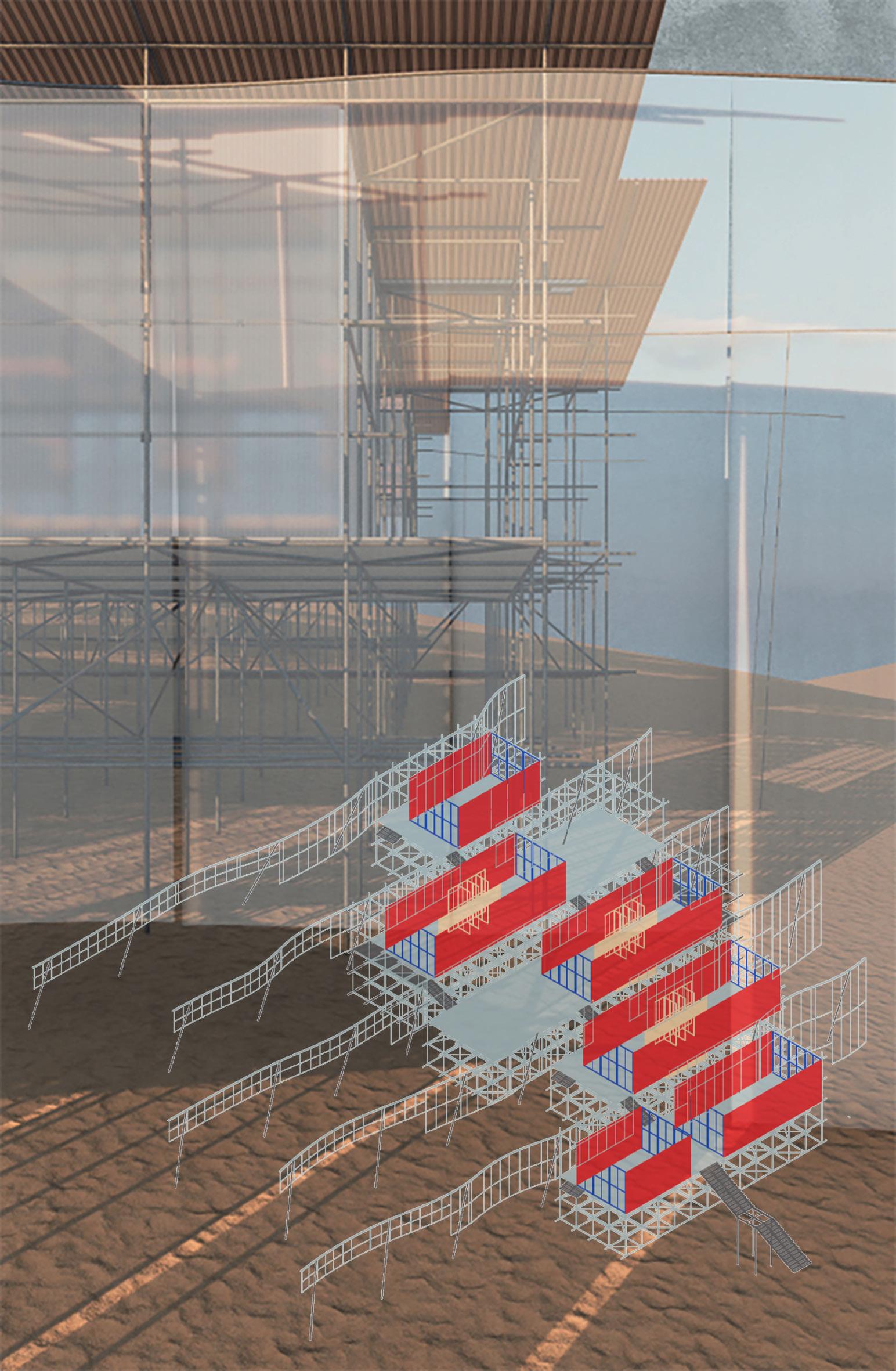
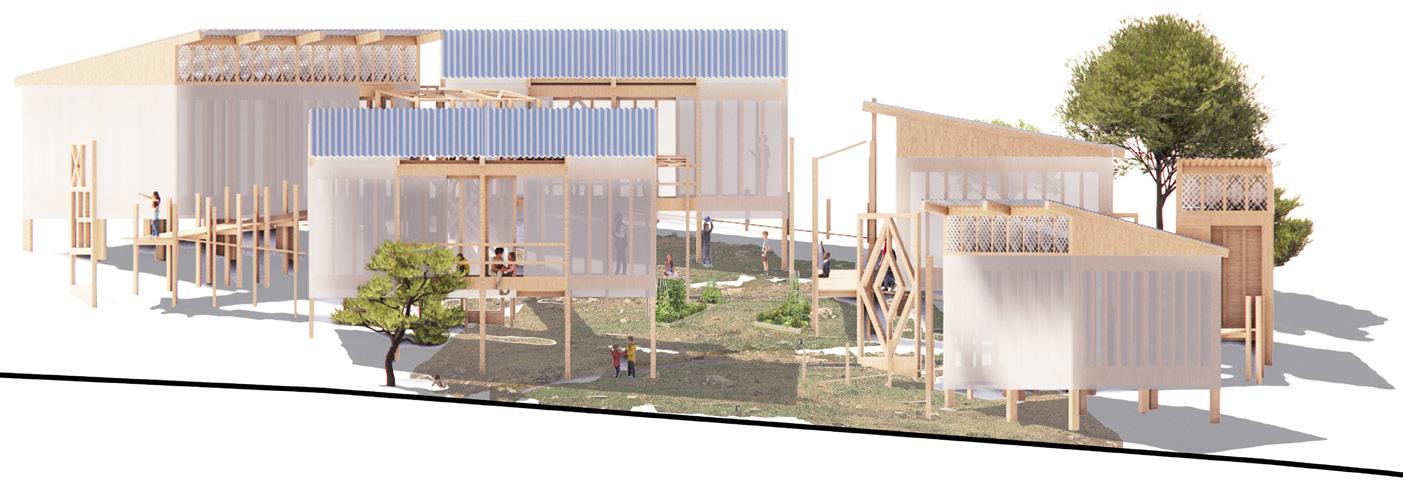
During the semester, Unit 5 developed projects that were submitted to an international competition for a ‘mobile’ school in the West Bank of Palestine. This sought to address some of the challenges of everyday life experienced in a context of violence and the destruction of infrastructure. The designated site is one of great precarity, which has recently experienced the demolition of a working school – the village of Khan Al Ahmar, home to the Bedouin Jahalin tribe, who were displaced there in the 1950s. The school was to be demountable and transportable if threatened, but also capable of developing into a permanent structure if conditions permit. Appreciative of the issues addressed, although concerned with the potential complicity of the competition programme with the presumption of a lack of claim upon the land, the studio adopted the principle that all projects should, if moved, leave traces that declare ‘this was here’.
Zsofia Droppa, Mille Hambleton-White, Eleanor Trimlet, Lola Turner Shadow Play School 2
Lara Acikgoz, Airam Soriano, Marika Urbanska Paths Through Patterns
3
Whitney Huang, Zhiyu Li, Ji Wu, Nandy Zhang Beacon
4
Soraya Asri, Sofia Moggi, Luna Rojas Threads of Learning
Review Critics
Ella Chmielewska
Chris French Lorens Holm
Eirini Makarouni
Elham Mousavian
Samer Wanan
1
unit 6 tales, totems, and shrines
Studio Leaders
Michael Lewis, Akiko Kobayashi
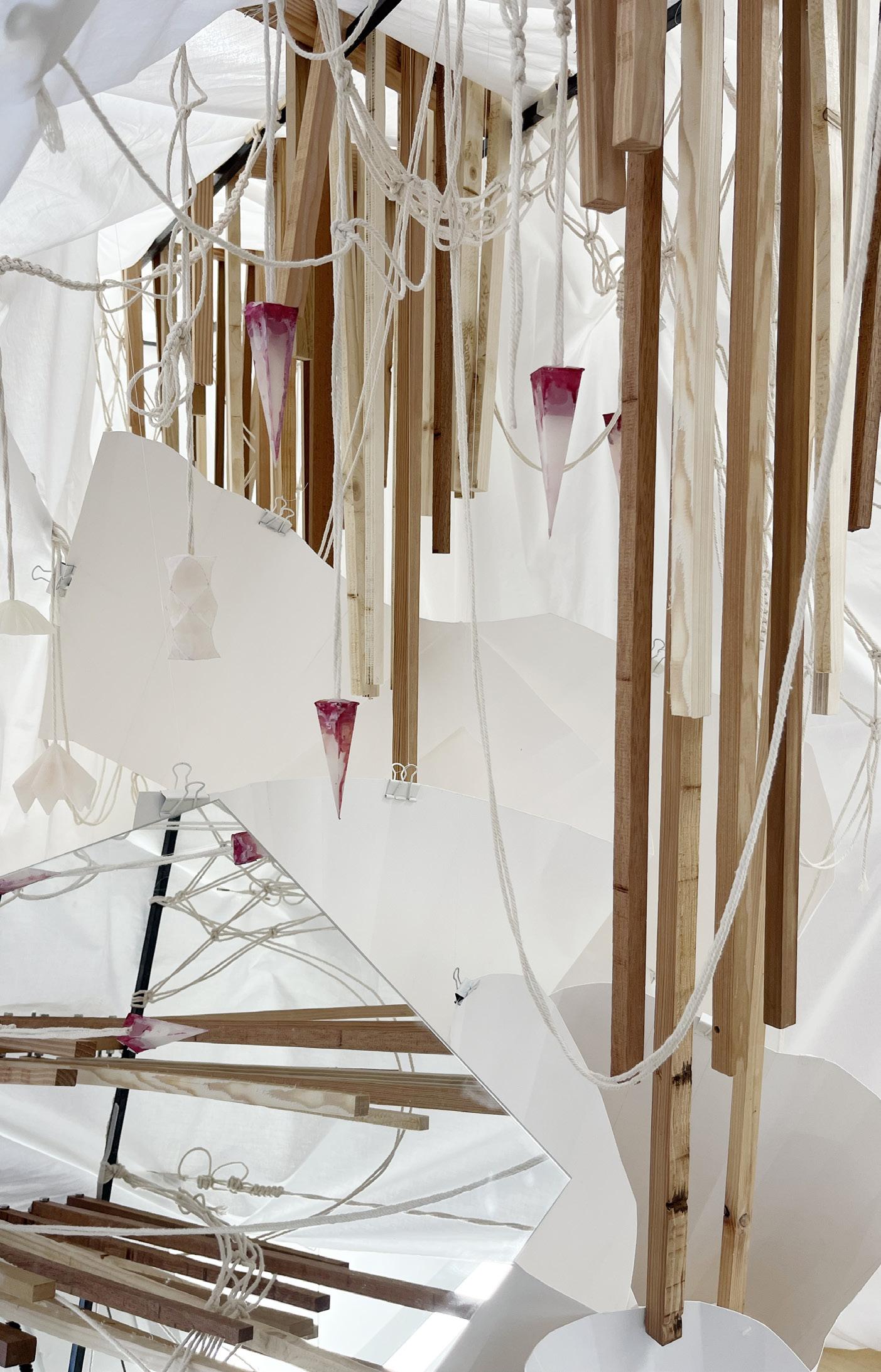
Tales, Totems, and Shrines focused on craft as a method of architectural exploration. We began the semester with an analysis of fairy tales to critically examine narrative structure and world building. From the distilled material and thematic interests of this investigation, we began a series of territorial descriptions through drawing and physical making. These opening translations of text into physical form established tailored languages of design that carried through the semester. As the work developed, we layered complexity through the refinement of these material relationships. Throughout, we relied on craft – including the making inherent in manual drawing – as both the mechanism to develop a process of thinking as well as the method to communicate design thinking. At the core, this unit was a study of process. Together, we created a feedback loop of iterative making that allowed space for intuition and play – taking seriously the potential for childlike wonder when applied through advanced manual skills.
Alice Feng, Hannah Geng,
Ellie Hong, Catherine Huang
The Nightingale and the Rose
2
Daisy Bond, Megan Jones, Sasha Worth
Rumpelstiltskin: Vessels of Transformation
3
Ren Fraser, Eugene Kam, Maddy Gale
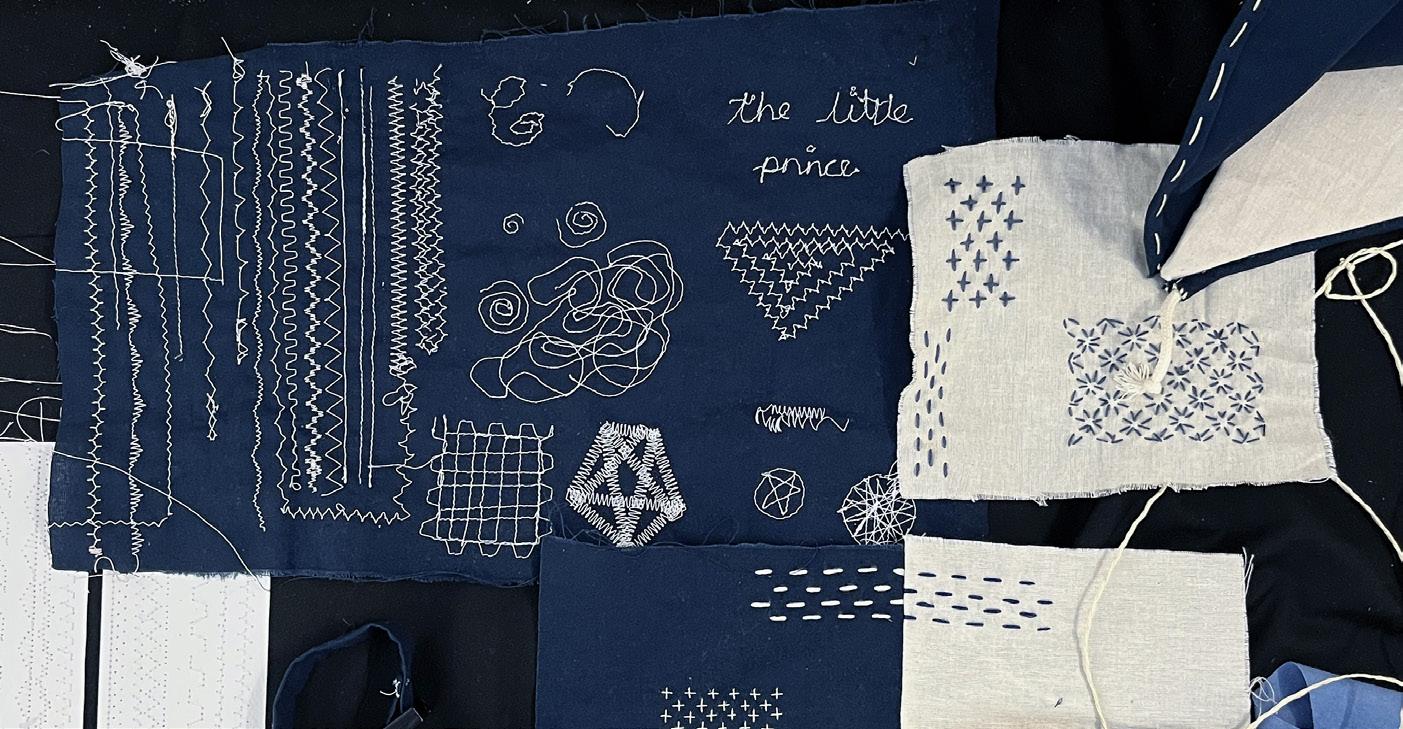
The Little Prince: Journey to Play and Discovery
4
Seonaid Jervis, Chiara Mesquita, Milenka Soskin
Three Little Pigs: Ways of Telling form Ways of Dwelling
Review Critics
Marisa Giannasi
David Lemm
Lisa Moffitt
architectural theory
The Architecture of Precarity and Liminal Spaces
Chiara Mesquita
Week 8 Journal Entry: Displacement
Architecture, as a discipline, is often celebrated as a stabilising force by creating spaces of permanence and belonging. However, in contexts of displacement, another dimension is revealed: its capacity to embody precarity and exclusion by creating liminal spaces that reinforce the marginalization of displaced communities.
Ahmed’s conceptualization of home challenges the traditional view of it as a stable sanctuary. She presents home as a paradoxical site of comfort and restriction. For migrants, it becomes a contested space shaped by loss and nostalgia.1 Navigating multiple homes involves profound emotional labour, as neither their place of origin nor destination fully accepts them. This dual estrangement highlights liminal spaces not just as physical transitional zones but as emotional and political constructs, shaped by displacement and exclusion.
Similarly to Ahmed, Thompson sets forth a response which is distinctly empathetic in contrast to the hostility that migrants are often met with and avoids reducing refugees to abstract statistics or faceless entities. 2 Her photo essay is a compelling visual accompaniment to these notions, making tangible how architecture materialises displacement, and making visible the lived realities of people whose stories might otherwise be overlooked or sanitised. The work exposes the precarious conditions that refugees endure: The camp's mud-brick homes, eroding over time and stained with pervasive red dust, highlight the impermanence and uniformity imposed
on the residents.3 The essay critiques the narrative of camps as merely temporary shelters by showing their long-term use and the lives established within them. Here, Thomson is inviting viewers to engage with the implications of a sociopolitical landscape that has permitted the instability of these sites.
The concept of liminality, which permeates Ahmed’s and Thomson’s works, resonates with Henri Lefebvre’s notion of the "right to the city" from last week’s readings.4 Displaced people, such as those living on the Bibby Stockholm Barge, are physically separated from the cities (and in this case from the land itself), relegated to oppressive spaces that offer shelter but little autonomy.5 These spaces, like refugee camps, exclude people from not only cities but from any sense of home which marks their existence as transient and undesirable.
These works have strongly instilled in me an awareness of architecture's complicity in displacement and subsequent marginalisation, again making explicit that spatial design is not neutral. It is not merely a tool for providing shelter; it is a medium that can either perpetuate or resist the violence of exclusion. Participatory design practices, as explored in Western Sahara’s refugee camps, offer a way forward.6 By involving displaced people in shaping their living environments, architecture becomes a tool for reclaiming dignity, agency, and identity. This approach encourages architects to design not only for survival but for belonging where the displaced can regain control over their own futures.
Course Organiser
Hafsa Olcay
This course explores the relationship between theory and architecture. Engaging with various forms of architectural theory such as essays, lectures, books, case studies, films, and other media; students developed skills to read, reflect upon, critique and discuss architectural theory, and means to apply theoretical knowledge to real world situations. This involved close reading of texts from within and outside of the discipline of architecture. We also analysed a range of case studies to better understand how theory can challenge assumptions and offer new ways of thinking about key problems. Through reading, writing and group discussions, digital and physical site visits, we explored different ways of thinking about architecture in a range of geographic, social, political, historical and material contexts.
The weekly modules involved thematic explorations of architectural discourse and practice, sampled different strands of architectural and critical theory including theories of the environment, critical disability theory, modernism, postmodernism, new materialism, decoloniality, critical race theory, information theory, displacement and more.
We had site visits to Granton hosted by Tim Vincent-Smith, the creator of ‘Pianodrome’; Joanne McClelland and Aythan Lewes from EALA Impacts; and Coll Drury and James Melville, two of the three students behind the ‘Instrumental Earth Building’ project in Granton.
In their assessed work, students developed skills in reading complex texts and developing personal responses to them. The reflective approach of the journal helped students to focus on how the course materials shed light on their own preconceptions, studio projects or wider social and cultural understandings. The essay provided an opportunity to explore a particular issue in greater depth. Overall, the course helped students to develop their own critical perspectives on how architecture does and might engage with a range of contemporary issues, and deepen their ability to use writing for self-reflection and wider communication.
Journal Entry References
1 Sara Ahmed Home and Away: Narratives of Migration and Estrangement
2, 3 Marnie Jane Thomson Mud, Dust, and Marougé: Precarious Construction in a Congolese Refugee Camp
4 Henri Lefebvre
The Right to the City: Writings on Cities
5 Bibby Stockholm 'Asylum Seeker Barge Docks in Dorset' BBC News, 2024
6 Manuel Herz Refugee Camps of the Western Sahara
Image: Cleo Averof Drawing of perception and memory of childhood home
Journal Entry for Week 8
Tutors
Alex Blanchard
Mark Hilley
Paul Pattinson
Ada Souza-McMurtrie
Guest Speakers
Alex Blanchard
Simone Ferracina
Liam Ross
architectural practice working learning
From Policy to Practice:
Why gender inequality persists in architecture
Sofia Moggi
As a female architecture student, I symbolise the increasing role played by women in the architectural profession. However, my experience of practice through internships and voluntary work has confirmed a systemic barrier to progress, due to gender bias. This essay reflects my personal role as an activist for change, a change which begins with educating oneself.
Female underrepresentation in architecture has a long tradition but in our contemporary world the issues of equality, diversity and inclusivity (EDI) are considered as ethical values which the profession must uphold. These concerns are assumed to be safeguarded through numerous progressive legislative frameworks and EDI policies. Sadly, persistent underrepresentation in leadership, gender pay gap and career progression disparities are clear indications of a different tale, and suggests performative equality measures and scarcity in progress. This essay will draw on historical analysis, legal frameworks, workplace studies and personal internship experiences, to critically assess the continued formal and informal barriers obstructing women in the profession. There is a necessity to drive beyond superficial initiatives and address this as a structural problem embedded in economic and cultural practices, requiring deeper redefinitions of labour values, accountability and workplace expectation to ensure a truly inclusive workforce and environment.
I believe that there is an urgent need for a deeper commitment to systemic reformation of practice as we know it today. This requires reforms in parental leave policies, enforced limits on unpaid overtime, and wage transparency, as well as a fundamental shift in architecture’s economic foundations. This will require a capital-driven exploitation framework transitioning towards a system esteeming career longevity, well-being, inclusivity and sustainability. It is this cultural shift, enforced by precise legislation, which will ensure a truly transformative change.
This APWL essay looked at the persistence of discrimination affecting women in contemporary architecture. Analysing both formal legislative frameworks and informal cultural structures, gender disparity is exposed as deeply entrenched within the profession, restraining inclusivity through systemic economic and social factors. This underlines the necessity to increase visibility for women but, further still, redefine labour values, economic priorities and workplace ethics.
Potential steps towards change can benefit from grassroots organisations such as ACAN but we need to appreciate the effectiveness of an individual activist against exploitative work norms if we are to overturn the capital-driven frameworks which undervalue females in the profession and secure an equitable, sustainable, and truly inclusive workplace environment.
Course Organiser
Mark Cousins
This honours course introduces 3rd Year MA students to the business of architecture in terms of its professional, ethical, procedural and corporate fundamentals. It also provides a framework to support students during their Practice Experience period in the second semester and helps to facilitate an active reflection on their workplace activities.
The course compliments Architectural Practice: Reflection (APR) and addresses a range of pertinent topics (such as the role of professional bodies, legislative frameworks and modes of procurement) in order to offer students a grounding in professional knowledge and help prepare them for future employment.
A series of lectures offered in Semester 1 examines key issues including the social and technical drivers impacting the profession today. We examine modes of professional accreditation, the sequencing of work, regulatory requirements and building contracts. We explain core competencies that will be required by students seeking employment, such as preparing a CV, collating a comprehensive portfolio, interview skills, working with on-line research databases, and recording professional experience. Knowledge gained through the lecture series is then tested through a series of distance-learning assignments. These set tasks are intended as work-based learning exercises and afford students an opportunity to analyse and reflect upon their work experience.
We have accumulated a sizable database of international practices who have employed ESALA students in the past but students are encouraged to approach their preferred practices to secure Practice Experience. We liaise closely with the Edinburgh Architectural Association (EAA) as well as professional bodies including the RIAS. The availability of job opportunities depends upon market forces and, therefore, we recognise the benefits of other forms of experience such as construction work, architectural journalism, volunteering, and other design spheres such as graphics, product design, interior design, acoustics, etc. Alternatively, students might get involved in architectural competitions, speculative design proposals, private commissions, or independent research projects in order to extend their knowledge of the profession.
3 * 3
architectural practice reflection
Course Organiser
Laura Harty
An integrated, supported period of practice experience is a particularity of our MA(hons) Architecture Programme. A transitional and preparatory moment, the practice experience period forms a bridge between academia and the professional world. The courses asks students tune their critical and analytical capacities across this time, asking how practice aligns or departs from their expectations, raising concerns, documenting challenges, identifying opportunities. The journal entries required offer a space to consider ways in which these issues might be foregrounded, examined or highlighted. Both visual and textual modes of analysis are encouraged, and this year we have seen how forms of reflection such as mind maps, scrap-booking, temporal diagrams can be useful both to explore and to explain situations. To support, bolster and complement the learning experience, this course draws upon the University developed Reflection Toolkit www.ed.ac.uk/reflection to surface and consolidate learning across the period of practice experience.
"This semester has been the most transformative period within my architectural journey so far. It has been marked by diverse experiences, new environments and critical reflection, all of which have enabled me to develop a greater understanding of my strengths, areas for improvement and interests within the field."
Sasha Worth
"Reflecting on this semester, has not only solidified the things I learnt, but also has helped inform my interest in the type of practice I would want to be a part of in the future, one that promotes sustainable, community engaging, and inclusive designs."
Lara Acikgoz
"The biggest outcomes of my degree have risen from these reflections, through designated time to critically reflect on the purpose of my degree and my development to accomplish my aspirations.Most importantly, it has provided the clarity and confidence to pursue architecture knowing that others are also protesting for institutional change for a supportive, equal, and diverse workforce."
Ren Fraser
3 * 4
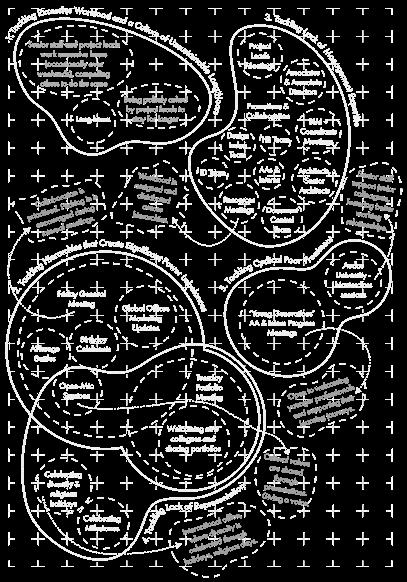
Mapping of office culture under ARB best-practice recommendations
Callum Symmons
Tutors
Calum Duncan
Laura Harty
James Haynes
Shoko Kijima
Akiko Kobayashi
Stephen Lovejoy
Michael O’Dell
Caryl Stephens
Lara Acikgoz
practice experience
Placement Locations
Scotland 56three
Atelier Ten
BARD
Edinburgh Printmakers
Lee Boyd Architects
Scottish Opera University of Edinburgh:
Visualising Old College
Graduate Show Assistant
England dMFK
Populous Reddy Architecture + Urbanism
Tanro
Europe
BIOSIS Architects Denmark
DNA Barcelona Spain
Fabre Speller
Architectes France
Gauvrit Architecte France
Ricardo Bofill Taller d'Arquitectura Spain
Africa
Lorax Property
Development South Africa
Asia & Oceania
Aedas Architects China
Aedas Dubai
Aedas Hong Kong
Beijing Institute of Architectural Design China
Deng-Yao
Construction Co. Taiwan
ECADI China
Gong Dong China
James Cai China
KillaDesign Dubai
LYYH Studio Architectural
Intern Hong Kong
Shigeru Ban Architects Japan
Vector Architects China
Zhejiang University of Technology Engineering
Design Group Co. China
Whilst many 3rd year students secure work experience in architectural practices (listed to the side) – many others choose to use the semester to explore architecture adjacent practices or self-initiated projects, be this design based competitions or preparing, writing and editing the student architecture magazine Crumble.
This year ESALA also offered opportunities to take part in a research and curatorial project ‘Visualising Old College’, and act as an Assistant for the design, development, and installation of the Graduate Show.
To complement these alternative endeavors, and in recognition of the current architectural job market, ESALA has set up and maintained a Projects Office initiative and a fund to support and encourage competition participation across the semester. Drawing on the array of university supported virtual learning platforms, and the sophisticated use of these in professional practice globally, competitions are often developed as a group working collaboratively across time zones and geographies.
international exchange
Lola Turner, Ellie Trimlett, Eve Cameron
"Madrid was invaluable to both our studies and our individual growth as designers. Immersion in Spanish culture and engagement with Spanish architects and buildings opened our eyes to new approaches to traditional and contemporary design. The experience of learning the Spanish language and building construction was challenging yet extremely fulfilling, furthering our studies."
International Exchange Coordinator
Pilar Perez del Real
International exchanges are an incredible opportunity for third-year students in the MA Architecture program to immerse themselves in an international experience. ESALA offers five destinations for students: Madrid, Milan, Athens, Stuttgart and Graz. Here are some of the many benefits students can look forward to:
•Cultural Immersion: Experience a new culture firsthand. Living and studying in a different country allows students to immerse themselves in its traditions, language, and daily life, enriching their understanding of the world.
•Personal Growth: Stepping out of your comfort zone helps build confidence, independence, and adaptability. You’ll learn to navigate new environments, solve problems, and develop a greater sense of self-reliance.
•Academic Enrichment: Gain access to diverse courses and teaching styles that may not be available at ESALA. This can broaden your academic perspective and enhance your educational experience.
•Networking Opportunities: Meet new people and make connections with students, professors, and professionals from around the world. These relationships can be valuable both personally and professionally.
•Career Advantages: Employers highly value international experience. Participating in an exchange program demonstrates qualities like flexibility, global awareness, and the ability to thrive in diverse settings.
•Language Skills: An exchange program provides a fantastic opportunity to improve your language proficiency through everyday practice and academic study.
•Travel and Adventure: Explore new places and cultures, make lifelong memories, and enjoy unique experiences that you wouldn’t have at home. It’s a chance to see the world from a different perspective.
We encourage students to take advantage of this opportunity to grow academically, personally, and professionally.
1, 2
Lola Turner, Ellie Trimlett, Eve Cameron
Madrid coursework
3
Karolina Pavlikova
Student social, Stuttgart
2024/25 Cohort
Eve Cameron
Tom Ferris
Xander Froggatt
Alicja Mrowicka
Eleanor Trimlett
Lola Turner
Universidad CEU
San Pablo Madrid
Ellie Greenwood
Drew Pimm
Poletecnico di Milano
Eleanor Hung
Chiara Mesquita
National Technical University of Athens
Karolina Pavlikova
Universität Stuttgart
Cameron Paul Ella Woods
Graz University of Technology
professional studies
Given the Climate Emergency and the growing concern regarding the architect’s social, moral, economic and legal obligations, what factors might you consider when discussing the choice of materials with your client?
Roshni Shah
The architect’s professional code directly calls for architects to advise clients on “...how best to conserve and enhance the quality of the environment and its natural resources”. There are many aspects to consider in this regard, especially now as “...it’s time for architects to choose ethics over aesthetics”.
The choice of materials is critical to designing sustainably and the first thing to consider therefore is the environmental impact of each material. This includes the embodied carbon and energy consumption expended during its production. According to the UK Green Building Council, materials such as “...steel, concrete and cement produce a lot of carbon during their manufacture” but using “bio-based or biogenic” materials expend less carbon.
Another consideration is energy efficiency and high performance insulation can enhance a building’s thermal performance. Materials that are durable and easily maintained should also be prioritised, reducing potential waste and need to repair or replace items. Additionally, locally sourced materials can help reduce transportation emissions and boost local economies.
It’s important to consider the circular ecology of materials. Potential strategies include reusing and recycling existing materials, or choosing materials that are biodegradable. Simone Ferracina argues
that we need to reassess materials more in terms of their “resilience, survival and reuse”. This principle should be embedded in construction and is exemplified in projects such as the ‘Pianodrome’, where an amphitheatre was assembled using recycled pianos.
Other available strategies include retrofitting (which updates an existing building) and designing for disassembly (which minimizes material waste and encourages reuse). Hiroshi Sambuichi promotes materials that already exist such as "air, light and heat to construct". For example, by utilising airflow in passive cooling systems or using thermal mass to stabilise internal temperatures can reduce requirement for mechanical HVAC systems.
Architects must ensure that all structural, fire safety and environmental regulations are met but we cannot ignore matters of cost here and typically, ecologically-friendly materials are initially expensive but are beneficial in the longer term, due to their enhanced efficiency and durability.
In conclusion, architects should advise clients to prioritise sustainable, low carbon and durable materials without ignoring cost issues and legislative regulations. By considering these key factors the architect’s social moral, economic and legal obligations will be satisfied.
Course Organiser
Mark Cousins
This BA course introduces students to architecture as a professional practice. It explores the key issues of practice including the architect/ client relationship, role of professional bodies, current legislation and methods of procurement.
A series of lectures in the first semester presents a comprehensive overview of practice and highlights a variety of issues shaping the profession. These include an introduction to business management strategies and the statutory frameworks within which projects are delivered. Students learn about the interdisciplinary relationships in the procurement, costing and realisation of architectural projects. The scope of these illustrated talks encompasses the role of the architect in society and the attendant challenges of being a responsible professional today.
Guest speakers include a variety of academics and leading practitioners who talk about the organisation of their individual offices (from sole trader to employee-owned business) reflecting on how their legal constitution affects matters such as liability, profit-sharing and the ethos of the practice. We explore a range of building contracts commonly used in contemporary practice, offering a comparison of their relative benefits and the difference between ‘traditional’ to ‘modern’ modes of procurement.
We also consider the key individuals within the construction team and how architects charge for their services depending on the particular fee mechanisms employed for different kinds of work. We examine common cost control mechanisms and the sequencing of work (based on the RIBA Plan of Work), as well as the tribulations of a real project from initial commission to final completion.
During the second semester, students submit six short essays testing their understanding of the lecture series, and their ability to read around these issues. The Professional Studies course encourages students to develop informed opinions on professional matters.
3 * 7
Guest Speakers
Julie
4*1 4*2 4*3 4*4 4*5
architecture dissertation year 4
electives
architectural design tectonics
architectural design logistics
academic portfolio part 1
ESALA BA/MA Graduate Show 2025 Edinburgh College of Art
Photograph:
Calum Rennie
architecture dissertation
Opening film stills The body encounters the crater lake
Joanna Saldonido
Course Organiser
Mark Dorrian
Students on the MA (Hons) Architecture degree take the Architecture Dissertation course during the first semester of their 4th year. It draws on the full range of scholarly expertise of ESALA faculty, most of whom contribute to it. The course gives students the opportunity to develop an extended study on a topic of their choice, developed in dialogue with their supervisor. In the first instance, students develop abstracts and, in relation to these, nominate supervisors with whom they would like to work. The study then develops through an ongoing programme of research, orientated and supported by regular supervisory meetings, which might vary between group and one-to-one tutorials. For architecture students used to working in collective studio environments, this is a different kind of course set-up and they are encouraged to share and discuss their work among one another. An important support for this are the 2-hour whole-course meetings that take place over the first four weeks of the semester. At these, during the first hour invited staff present aspects of their own research, discussing how they arrived at a topic, developed a methodological approach to it, established research questions, etc. The second hour is given over to questions and open discussion. The final meeting is led by alumni students of the course, who discuss and reflect on their own experiences of the Architecture Dissertation course. Architectural education should support the development of students as widely-skilled, articulate and reflective practitioners, whose work is culturally and historically informed and engaged in critical contemporary debates. The dissertation plays an important role in this, expanding and refining their skills as cultural producers, helping them articulate and demonstrate their own areas of concern, and – in the process – empowering them.
Ancient Rituals/Modern Spectacle: Ayurvedic Impacts on British Wellness Architecture in the Regency Era and its Afterlife
Serena Arya Supervisor: Olek Musiał
This study explores how Ayurveda, the traditional Indian system of medicine, has informed the architecture of British wellness spaces since the Regency era. Such sites include Basil Cochrane’s vapour baths as an early, yet uncredited British Ayurvedic space; and Dean Mahomed’s Medicated Indian Vapour Baths in Brighton, a pioneering enterprise in the popularisation of Indian healing in Britain. By comparing their choices in the realms of design and infrastructure, set within the broader cultural context, I argue that these spaces, while rooted in Ayurveda, reinforced reductive colonial ideology and Indian stereotypes, hence undermining Ayurveda’s inclusive principles.
Re-Per(forming) Architecture: Collapsed Space Through a Cinematic Lens
Joanna Saldonido Supervisor: Sepideh Karami
This dissertation places performance in dialogue with architecture, examining the complex, intertwining relationship between the two. With reference to the work of Barbara Bolt, it employs performative methods in order to re-perform and re-write the narrative of forgotten, abandoned and invisible architectural space. Through careful study of three specific sites at varying scales, the question of how we perform and subsequently re-perform architectural space is considered. Using film-making, video essay, ficto-critical writing, site visits and academic study, the study offers a critique of the lack of care of architectural spaces and aims to revitalise and re-narrate them using feminist voices.
Learning From The Acropolis:
A Journey Through Space and Time with Specific Reference to the Evolution of 20th-Century Modernism
Itske Hooftman
Supervisor: Mark Dorrian
This research examines the evolution of 20th century modernism conceived as a journey through space and time. It focusses on the Acropolis and how the direct experience of this iconic architectural assemblage, set within a symbolic landscape, led art historians, architects, photographers and filmmakers to theorise modernism in relation to a concept of ‘Greek-Picturesque’ classicism. The dynamic relation between architecture, location and wider landscape is addressed through historical case-studies of encounter which ‘zoom-in and zoom-out’ of the plateau, slope and foothills of the Acropolis and inform the hypothesis that the Picturesque shaped the evolution of modernism as visual and topographic narrative.
Unfallowed Ground: What if Our Cities Became Agriculturally Productive?
Douglas Crammond Supervisor: Andrea Faed
Investigating the critical intersection of urban land use and sustainable food systems within cities, this study focuses on how architecture and planning can address the growing challenges of food insecurity, population growth, and urban expansion. By examining underutilised urban spaces, I investigate how agriculture can be integrated into their fabric to enhance food security and sustainability. Combining theoretical research, policy evaluation, and case study analysis, the research underscores urban agriculture’s potential to reframe food systems. The findings suggest that reimagining urban spaces for agriculture can reduce cities’ dependency on external supply chains, mitigating food production’s environmental impact, and building more resilient communities.
year 4 electives
Abdulrahman AlSuraya On Drawing
MA (hons) students progressing to Year 4 are required to choose an elective course in Semester 1. This Level 10, 20-credit, course can be selected from a wide variety of schools across the university. However, in recent years, ESALA’s offering has been expanded and enriched through engaging staff to lead courses within their own research field and specific interests. The array of courses which we offer, Thinking with Fire, On Detail, On Colour, On Drawing, Technology and Environment 3, and Sustainable Architecture, Structural Form and Embodied Energy both speak to themes in contemporary practice but also extend strands of enquiry that were started in earlier years of study. This is a key moment for students to tailor the programme to suit their interests - we suggest that the elective can be deployed to challenge, complement or supplement the core teaching. For example, students may choose to develop their conceptual, theoretical, practical, analytical or critical skills. They can use this opportunity to hone their ability to identify individual learning needs and understand the personal responsibility required for further professional education.
The 4th year Elective is paired in Semester 1 with the research and writing of the Dissertation. We encourage students to consider how the elective choice will balance with their dissertation topic and future educational and professional opportunities by reaching out to peers, alumni, relevant Course Organisers and tutors for advice and guidance. This catalogue contains a summary of ESALAbased elective courses. However, students may check other alternative options on the University Degree Regulations and Programmes of Study (DRPS) website.
www.drps.ed.ac.uk/25-26/dpt/drpsindex.htm
elective 1 on colour
1
Douglas Crammond
Delectable:
An exploration of lexicalgustatory synaesthesia – a visual and gastronomic palette
2
Belinda Haynes, Andreea Colbeanu, Rae Marino
Spatial investigations
3
Belinda Haynes
Nature’s palette: Arrochar
Course Organiser
Fiona McLachlan
Colour is an essential factor in the perception of space. Through this elective course, students develop a basic understanding of the principles of colour theory, the most common colour specification and navigation tools used in architecture, and an intellectual framework with which they may then approach their own investigation in order to develop a deeper understanding of a focused project theme.
In the first four weeks students undertake painting exercises, observing the effect of adjacency, colour matching by eye, investigate the spatial effects of colour through small models, consider social and cultural meaning and association, light reflectance and material surface, and learn digital tools.
In Stage 2, students write an individual ‘Palette Proposal’ to identify a secondary source from which a colour palette is derived. In the final weeks there is an opportunity to apply their abstracted palette to consider the strategic use of colour in architectural design and how to make informed decisions on colour design.
This is a largely self-directed course, and is not intended to be prescriptive in any way. On the contrary, the nature of the individual investigation is promoted as a means of developing a reflective process of experimentation and critical review. The projects open up complex questions about visual perception, surface and form, figure and ground, composition, wayfinding, narrative, chance, sensory experiences, space perception, landscape, character, material surface and cultural identity.
Review Critic Rachael Hallett Scott
4*2 on colour
elective 2 on detail
Course Organiser
Laura Harty
Detail is an inevitable demand of any construction. The how, what, where and when of making form its necessary determinants. Detail draws or dismisses attention, emphasising that which is intended and concealing that which can be suppressed. Retaining somewhat of a rearguard affiliation, associated with that which follows, which comes after, the detail is often that which both too trivial for attention and too risky for reformulation; that which must be correct, approved, integrated. Subservient to concept, and liable to accrue anxieties, the detail is often sidelined, overlooked, and feared. This course, then, works against these troubling tendencies and asks that students pay attention to, analyse and consider that which the detail makes possible, its effects, roles and possibilities. This courses offers the detail its own space with the programme.
Distinct from last year, students worked initially on a sequence of select precedents, set out in a sourcebook document. This study resulted in a Vade Mecum, or guidebook, for each prescribed project which interpolated between published documentation and original research to produce preceptive details, drawn to scale. These details informed the direction and approach of subsequent interventions on the area around John Miller’s link between the Royal Scottish Institution and the National Gallery on the Mound. Upon a World Heritage listed platform, the only visible evidence of the second scheme is a series of flush glazed pavers and a stepped, flat roofed oddity, twisted obliquely on the otherwise neutral forecourt. This perturbance, termed by Miller as a ‘Mastaba’ has recently become the springing point and focus of a number of national and internationally significant protests, which meet at and gain traction from the elevation, backdrop and poignancy of its specific location on the Mound. The student’s work developed ‘Delinquent details’ to secure the site as a civic stage for peaceful protest.
Contributors
Grant Buttars
Rachael Hallett
Stuart Hill
Marcus Paine
Liam Ross
on drawing
the bridge: crossing the forth
Course Organiser
Victoria Clare Bernie
On Drawing foregrounds drawing as a tool for research, analysis and invention. In 2024 our work centred on the village of North Queensferry and the three bridges that span the Forth at the site of Queen Margaret’s medieval ferry. Here the site charts two hundred years of change in Scotland: the Industrial Revolution, the coming of the railways, mass urbanisation, the end of manufacture, the rise of the service economy, globalisation and the advent of mass tourism. And with that, fossil fuel extraction, land reclamation, pollution and overfishing, literacy and increased life expectancy. History is never simple; it is rarely either/or.
Students were invited to study the site through the medium of drawing, its geography, geology, ecology and history, with a view to identifying an individual line of enquiry and through that, a new place for architectural invention. A site to be represented through installation and the publication of a pamphlet, a documentary record of the evolution of the work. Individual themes emerged: pilgrimage routes, cinematic landscapes, shadow catching, engineered ruins, littoral registrations, choreographic autobiographies, dismantled thresholds, typographic topographies, optical mapping, storm drawing, the post-catastrophic coast and reading water. Each idea becoming the object of a drawn investigation through: analogue or digital drawing, filmmaking, printmaking, laser cutting, CNC routing, 3D printing, fabric printing, soldering and welding. Meteorology, oceanography, cartography, text, the miasma of relict radiation, 19th century engineering and lighthouse lens fabrication became the language of the studio and over the weeks new, previously unimagined architectural sites emerged as finely crafted drawings, films and installations.
Phoebe Vendil
The Type Collector’s Findings: Collated Evidence
2
Anastasia Redmond
Shadows in Time: The Forgotten and Unrealised History over the Forth
Contributors
Adrian Hawker ESALA, Metis John Darbyshire Consultant Ecologist
JCD Ecology 1
architecture, structural form + embodied energy
Course Organiser
Angus Macdonald
This is a lecture course that is concerned with the thinking behind the development of a new approach to architectural design that prioritizes respect for the environment and action on climate change. The course integrates the architectural design process firmly into the 'big picture' of environmental sustainability. It is specifically concerned with the design of architectural forms that have low embodied energy (as distinct from, and in addition to, low operational energy, on which more emphasis has tended to be placed). This requires an approach to design in which consideration of the embodied energy of the structure, and the appropriate technical methodology, is central from the outset, alongside visual agendas. The course is principally concerned with the development of a new philosophical basis for design which may enable the development of a different type of practice. It is not project- or studio- led, but it does incorporate case studies and discussion sessions with leading practitioners who employ a variety of green approaches to design. The course challenges the approach to architectural design that is adopted by most mainstream practices.
Technology and Environment 3 expands students' structural comprehension whose principles have been introduced in the previous technology courses. The course is a cross-college course provided by ESALA, allowing participation from ESALA as well as the School of Engineering (MEng Structural Engineering with Architecture Program). The course examines the interaction of form and force in a variety of advanced structural systems. This empowers students to embed structural shape and material exploration in the early stages of architectural design to moderate the ecological impact of decisions regarding the structure. The course presents contemporary advanced structural systems and introduces easy-to-compare structural principles for analysis of different structural systems, with complex geometries made of different kinds of materials. It also provides a project-based platform for stating and solving integrated structuralarchitectural design problems. This course introduces graphical and numerical approaches to investigate the structural performance of a building, without the need for complex mathematics, including graphic statics, discrete element analysis, finding flow of force, and Strut-and-Tie modelling. Using these methods, the course covers a variety of advanced structural systems such as shell and membrane structures, spatial structures, and prefabricated systems. The course includes weekly lectures on analytical methods and structural systems, with seminars introducing digital tools through interactive workshops. Tutorials support two essays and a group project. Essay 1 compares material efficiency and sustainability in existing buildings with similar structural systems. Essay 2 involves graphic statics analysis. The group project focuses on designing and building a material-efficient, low-carbon bridge.
Alice Xia, Natalie Ng, Tom Crenian, Kuba Smialek, Peculiar Ogunbayo
ReStrung: Reclaimed timber bridge with force-driven geometric design
Tutors
Amal Gerges
Irem Serefoglu
Dimitris Theodossopoulos
Guest Lecturers
Mariana Popescu
Civil Engineering and Geosciences
TU Delft
Angus Macdonald
ESALA
Dimitris Theodossopoulos
ESALA
1
elective 6 thinking with fire
Course Organiser
Liam Ross
In current discourse, Fire has become a powerful metaphor for understanding climate change. Activists assert that 'Our House is on Fire', while historians suggest we think of our current geological epoch as a 'Pyrocene'. Fire has long been recognised as both a constructive and destructive agent, key to the emergence of human civilisation but also a risk to it. Nonetheless, the importance of this element for both urban safety and planetary health have perhaps never been greater. This course invites students from architecture, landscape architecture, engineering, and related disciplines to studies the way fire has shaped our built and natural environments, but also to reflect on how, in the context of climate crisis, we might change our relationship to this element.
The course is structured through a series of lectures and seminars that study texts concerning fires in natural or designed environments. Its asks students to think about a wide variety of different kinds of fire; the free-burning fires that break out in urban and wildland settings, the controlled fires that burn within the domestic hearth, the industrial combustion that powers the production of build environments. Those texts are drawn from a range of disciplines; the history and theory of architecture, landscape architecture and engineering, but also related fields including art history, cultural studies, economics, earth science, engineering, sociology, literature, and philosophy. By studying these texts the course challenges students to reflect on fire as a physical tool, but also as a conceptual tool, an element that has offered us explanatory metaphors for understanding the environment, and our relationship to it. Reading between these texts, students are asked to identify ways in which our ways of thinking with fire might need to change if we are to imagine sustainable futures.
Diana Sabb Essay Abstract Image 1: 'Bread oven shaped like the pregnant belly of a woman 5000 B.C.E. Terra-cotta. '
Associated Quote: "Through the oven, raw material, whether dough, fetus or corpse, is transformed into a different state and emerges ‘newborn’ as food, infant or soul." Ronnberg and Martin, The Book of Symbols, 582. –Image 2: Fourier, Marie Charles. 'Phalansteries'. 1602. Associated Quote: “Campanella’s City: The combination of astrology and Christianity could not fail to lead to the adoption of the Copernican picture of the world in which men like Campanella believed. The City of the Sun was the reflection of this system on earth: seven concentric rings surrounding the sun were repeated in his design.” Johnston, Cities in the Round, 42. –Image 3: 'Patterns of energy-efficiency' Associated Quote: “The regional configurational model is both a spatial and numerical representation of the existing settlement pattern [and a means] in which it might be modified, by means of long-term planning policy, in order to improve energy-efficiency.”
Vinod Gupta , Energy and Habitat: Town Planning and Building Design for Energy Conservation, 20, 22. New Delhi: Wiley Eastern, 1984. –
Reference 1: Gaston Bachelard, The Psychoanalysis of Fire (London: Quartet, 1987), 14.
Circle – Focus - Centre
Diana Sabb
There are many forms of fire, be they literal burning flames that we can touch, or abstract fires burning inside us. Each behaves differently, but when looking at them I notice a common association - the resemblance of a circle, of something radiating outwards from within. Fire seems to have a centre, it provides us with a focal point, a focus for attention. In this research project I focus on images of fire that have a strong concentric arrangement. I gather images which explore the varied ways and contexts in which fire plays a central organizing role. The images are accompanied by associated quotes that connect each image into a narrative sequence.These associations follow a number of different lines, and tell a number of different stories. They all start with an image of a circle, evolving and transforming, zooming in and out. The project presents a set sequence, but as a viewer and reader I invite you to connect them in different sequences, to tell different stories. In this way, the project takes on the fire-like form of a reverie, since “[t]he reverie works in a star pattern. It returns to its center to shoot out new beams. And, as it happens, the reverie in front of the fire, the gentle reverie that is conscious of its well-being is the most naturally centered reverie.” 1
year 4 electives
architectural design tectonics
Ed Varlow The Forager Unit 2: Timber Studio
Course Organiser
Rachael Hallett Scott
Tectonics is the last in the sequence of Architectural Design courses offered on the Undergraduate programmes in Architecture at ESALA. The BA/MA(hons) programme curriculum has been designed for students to gain an increasingly finer grained understanding of the complexities of making an architectural design proposition as they progress from 1st to 3rd/4th year. This course represents a key opportunity for students to integrate learning from across the programme by design.
This year Architectural Design: Tectonics offers six thematic ‘units’. These units sustain the overarching pedagogical aims of precision and integration, whilst each investigating a diverse set of approaches to the role played by materials, technology and tectonics. Students work to detailed briefs and their individual project work is supported by specialist architectural and technical tuition.
Complimenting these specific unit themes, a series of shared talks and building visits frame common expectations/understanding for how we design and build in this time of Climate Crisis. Questions of material selection, modes of construction, and of building use have consequences well beyond the form of buildings; they contribute to problems of resource depletion, determine levels of embodied and consumed carbon, shape labour processes and the economic impacts of construction. AD Tectonics asks students to consider how we might extend our understanding to consider both the causes and the consequences of our design choices, from the point of extraction to the end of a buildings life and beyond.
Inhabited
unit 1 reorder the beauty of reuse
Belinda Haynes UoE Centre of Performing Arts
Studio Leaders
Nicky Thomson, David Byrne
The REORDER unit investigates the compositional order of places, spaces, buildings and materials through adaptive reuse.
Through an in-depth understanding of the material, social and historical contexts involved we identify strategies for creatively transforming existing buildings and elements which are grounded in an empathy for the context. The theme of order is employed in a diverse way as a means to understand and appraise the relationship between things old and new.
Edinburgh’s Summerhall Arts Complex offers up three buildings which are suitable for reuse. We are tasked with disentangling these structures from the existing maze and complex of interlinked buildings and reconfiguring them to provide new facilities for the University of Edinburgh that engage more generously with the city.
Our process starts with a precedent study, chosen at random from a list of ten options. This study offers an influence, often a trajectory, on decisions such as the selection of the found frame, the building programme, the reordering process, the resources to be used, and the methodology for reassembly. These decisions, in turn, affect the qualitative spatial outcomes for both interior and exterior spaces.
Nominations & Awards
Aspen Cheung
Student Award Nomination
RIAS / A+DS
James Langham
Student Award Nomination
RIAS / A+DS
Review Critics
Susanna Boreman
Cláudia Escaleira
Andrea Faed
Nikolia Kartalou
Rowan Mackinnon-Pryde
Douglas McCorkell
David McKenna
Neil Munro
Jonny Pugh
Contributors
Steph Leach
Summerhall Arts
Rowan Mackinnon-Pryde
Talk ‘Ordering’
Technical Tutors
Steven Ferguson
Jack Green
Nick Mills
reorder
1
unit 2 timber studio
Studio Leaders
Jamie Henry, Angus Henderson
Timber Studio explores the agency and responsibility of architects in an age of climate crisis and the environmental implications of the materials we employ. Timber specification is often positioned as an easy solution to low-carbon design: Using CLT instead of concrete or GluLam instead of steel absolves us of our guilt without having to alter our design approaches. Unit 2 commences with a detailed analysis of timber cultivation, extraction, processing and supply to interrogate the implications of our material choices on the landscape of the forest.
These investigations are brought into contact with questions of material waste, reuse of existing fabric, construction labour and food/housing insecurity through the “client” for the building proposals. The Ridge SCIO is a Dunbar-based social enterprise who offer skills training and community support through the regeneration of overlooked and undervalued urban environments. The proposals address these questions to support the existing ambitions of The Ridge whilst imagining new possibilities for derelict sites in the town centre.
Douglas Crammond, Shay Miller, Ed Varlow, Leia Wilson
Site model
2
Elaine Yang
Anchoring Production: Linking Craft, Food and Growth in Dunbar
3
Shay Miller Tending Tenons
4
Rona Bisset
Adaptation out of Necessity: A Phased Proposal for The Ridge, Dunbar
Nominations & Awards
Ed Varlow
AJ Student Award
Hannah Bendon
Student Award Nomination
RIAS / A+DS
Rona Bisset
Student Award Nomination
RIAS / A+DS
Review Critics
Neil Cameron
Jack Green
Rachael Hallett Scott
Akiko Kobayashi
Andrew MacQueen
Lisa Moffitt
Liam Ross
Contributors
Rob MacKenna
Katie Wood
timber studio
1
unit 3 archives and annexes working [with] drawings
Studio Leaders
Maria Mitsoula, Callum Symmons
Unit 3 explored ways of working with drawings from the DRAWING MATTER Collection, which were also the subject of the project and exhibition Alternative Histories. These drawings foregrounded the development of tectonic sensibilities through the generative practices of translating drawings into models, further drawings and design briefs.
We approached the drawings in the archive as promissory working drawings—a term usually associated with the detailed drawings that architects produce to describe (and anticipate) the construction and coordination of a building project. Through a forensic way of working-with archival drawings, students started imagining another, different future for these drawings, questioning: the architectural (hi)stories, theories and practices embedded in them; the ways particular modes of representations provide insights into the design process set up by their author(s); and, how this form of architectural knowledge is recounted and reworked today.
As a way of responding to this form of knowledge, the students proposed Annexes that addressed existing and imagined Archives. Situated around Lincoln’s Inn Fields in London—a site containing significant and diverse historic and contemporary buildings—each Annexe aims to reframe the relationship its Archive has with the city.
Harry Baldwin, Joanna Saldonido
Working with Clancy Moore
Architects' Alternative Histories model (2018) and Sir Joseph Paxton's patent specification for roofing improvements drawing (1850)
2
Bella Fane
Second Occupancy
3
Workshop at DRAWING MATTER
Images: Anna-Rose McChesney 4
Joanna Saldonido
Four Stories for the Soane, Constructing a Tale of Tending
5
Sam McKeown, Isla Murphy
Tracing Destruction: An Annexe for the London Archives
Nominations & Awards
Bella Fane
Student Award Nomination
RIAS / A+DS
Harry Baldwin
Student Award Nomination
RIAS / A+DS
Review Critics
Rory Corr
Mark Dorrian
Suzanne Ewing
Chris French
Pepe Navarrete Jimenez
Eirini Makarouni
Liz Simpson
DRAWING MATTER
Contributors
Jesper Authen
Kirsty Badenoch
Martha Cruz
Rosie Ellison-Ballam
Niall Hobhouse
Technical Tutor
Liz Simpson
archives and annexes
Studio Leaders
Fiona McLachlan, Mike O’Dell
This unit draws parallels between human aging and the weathering of buildings. The aim is to find an equilibrium between an expression and healthy acceptance of aging well and the need for preservation and durability to reduce maintenance and repair. Weathering well is taken to include cognitive health, mental agility, memory and social interaction as well as physical exercise and strength. The site focussed on the town of Grangemouth in central Scotland and on the redundant and neglected ‘La Scala’ cinema building, completed in 1913, originally known as the Empire Electric Theatre. Students developed their own brief in response to the site and overall theme of active aging. Our theme is also relevant at the scale of the town that has suffered from radical change and seismic shifts in fortune including the demolition of the historic port area to the west and the growth of the vast petrochemical site to the east of the town, now facing an uncertain future.
Wiktor Krystolik
and Stone
Lara Sturgeon Projected Memories
The Recasting of La Scala
Nominations & Awards
Wiktor Krzystolik
Student Award Nomination
RIAS / A+DS
Lara Sturgeon
Student Award Nomination
RIAS / A+DS
Review Critics
Audrey Grant
Andy Summers
Laura Harty
Rachael Hallett Scott
Lisa Moffitt
Carleton University
Alice Casey
TAKA Architects
Contributors
Janice Parker
Choreographer
John Deans and colleagues
Grangemouth
Heritage Centre
Geoff Bailey
Archaeologist
Graham Ross
Austin Smith Lord
Cllr Cecil Meiklejohn, Keir Stevenson
Falkirk Council
Contributors
Elham Moussavian
David Seel
unit 5 kists, cloisters + cabinets
Studio Leaders
Adrian Hawker, Victoria Clare Bernie
This Unit sought to generate a series of small, highly detailed architectures designed to be nestled into the grain of the historic coastal town of St Andrews in the Kingdom of Fife. Utilising the rich material, tectonic and tactile concerns of cabinetry, Kists, Cloisters + Cabinets aimed to explore how the language of architectural detail might be used to convey both a sensory and a poetic experience. Through a carefully structured address to context, drawing from the cultural narratives of a specific place, and a critically charged sequence of iterative scaled tectonic investigations, the Unit set out to develop a meaningful language of architecture in detail.
A language able to offer back to the town, its landscapes and its institutions a suite of rich and creatively informed interventions that engage with its past whilst initiating new programmes and civic rituals for its possible futures.
Itske hooftman, Callum Johnson, Roshni Shah Fragments in Focus
Nominations & Awards
Nixon
Bronze Medal Nomination RIBA
Roshni Shah
Student Award Nomination
RIAS / A+DS
Serena Arya
Student Award Nomination
RIAS / A+DS
Review Critics
Hernan Diaz Alonso
Richard Collins
Chris French
Rachael Hallett
Charlie Sutherland
Dorian Wiszniewski
Leo Xian
Contributor
Bryan Munnoch
4*3 kists, cloisters + cabinets
unit 6 inhabited bridges:
Studio Leaders
Kevin Adams, Neil Cunning
In the midst of the Great Caledonian Forest, there was a wetland valley and an inhabited bridge that gave shelter to all travellers overtaken by night on their journey: lords and ladies, royalty and their retinue, celebrities, politicians and humble wayfarers.
Italo Calvino
The project focuses on the architectural possibilities provided by the careful design of a series of inhabited bridges. Working across given site locations within a mythological Edinburgh condition, taking its context from the span of three temporal moments: 1693, 1831 and 2024, to propose an individual bridge design that elaborates a tectonic attitude through investigation of the relationship between the program space of the bridge and the ground territories that it spans and connects. The mytho-poetic position can provide a viewpoint into the resilience of cities, create moments within this and the give them the refuge that architecture might provide. Bringing the mythic to any situation - to borrow some elegant phrases from Robert Macfarlane (and substitute my own words in italics) - makes it possible to deduce a shared metaphysics of tectonic-ness, an exactness of sight; poetics as a function of precision; an attraction to the crystalline image; shivers of longing, aurora-bursts of vision, and elegies of twilight. Looking closely results in a sharpness in tectonic plenishment.
The resultant projects propose bridge accommodation to host all manner of typologies from theatres and law courts through to workshops, a mead brewery, a ghost hotel and a post office, amongst other uses. What they do share is a commitment to architecture that situates itself in both the mythic and the real by embracing tectonic approaches that hold on to the sensibilities of newly imagined urban narratives whilst ensuring considered empirical technical and environmental responses.
1 Abdul Alsuraya
Crossing the Rampart: A Bridge for Art and Memory
2
Eva Cheng
The Nestline: An Avian Centred Bridge
3
Natalie Ng
The Living Apothecary: lines, vaults, carriages
4
Oscar Nolan
Geo-Zymologies: chimneys, vessels, spikes and wells
Nominations & Awards
Oscar Nolan
Bronze Medal
Nomination RIBA
Evelyn Barter
Student Award Nomination
RIAS / A+DS
Natalie Ng
Student Award Nomination
RIAS / A+DS
Review Critics
Hernan Diaz Alonso
Chris French
Rowan Mackinnon-Pryde
Paul Pattinson
James Roach
Dorian Wiszniewski
4*3 inhabited bridges
architectural design logistics
Rona Bisset
Adaptation Out of Necessity Conservation and Re-Use
Course Organiser
Mark Bingham
Architectural education combines both academic and practice-based learning. This course is designed to incrementally develop student competencies across a range of key areas: contextual understanding and knowledge, research and evaluation, professionalism and ethics, design, management, and practice.
The course aims to bridge the gap between professional practice and the architectural design studio through two interrelated components.
Part 1 invites students—initially working in groups—to select a recently constructed building and produce a focused building report. This report should encapsulate and contextualise the building’s overall architectural identity or 'DNA'. Students will then choose a relevant logistical theme—such as durability, carbon and energy reduction, fire safety, adaptive reuse, heat, light and ventilation, water, life safety, inclusivity, or well-being—and investigate how this theme has influenced the architecture. Through a combination of drawings and written analysis, students will explore the impact of their chosen theme on the statutory, design, and constructional decisions that shaped the building at various scales.
Part 2 asks students to recontextualise this learning within the framework of their own parallel studio work in AD: Tectonics, through an individual drawing exercise. These drawings will briefly situate the student's tectonic project, and then, through a combination of text and visual presentation, demonstrate how the selected logistical theme is embodied in their own design work—both strategically and in detail.
Like professional practice itself, the course embraces complexity, unpredictability, and occasional messiness. It reflects the reality of architectural work: at times hectic, always challenging, but ultimately rewarding. By engaging directly with buildings and real-world themes, students gain critical insights into the range of competencies that shape the making of architecture.
academic portfolio part 1
Extract from Academic Portfolio
Nixon
Review pin-up
Course Organiser
Rachael Hallett Scott
The final course of the BA and MA(hons) programmes, Academic Portfolio 1 requires students to curate the work produced during their degree and present it in the form of a single integrated, reflective document.
This comprehensive chronological record of a student’s engagement involves all coursework, reports, dissertations, installations, sketches, drawings, models, practice experience, building visits and elective courses. These activities are mapped against the General Criteria and Graduate Attributes that the Architects Registration Board and Royal Institute of British Architects require at Part 1 level, the first of the three steps to becoming a registered architect in the UK.
The work to curate and present the portfolio is independent of the work of the courses themselves. Skills in documentation, file management, editing and graphic design are brought into play, all of which students have rehearsed when compiling portfolios in earlier years of the programme.
These beautiful, reflective and carefully curated documents are printed, bound and gathered together to form the core of the annual Graduate Show in June.
1 Academic Portfolios
ESALA BA/MA Graduate Show 2025 Curation: Rachael Hallett Scott assisted by Guy Di Rollo Furniture Design: Laura Harty, assisted by Michael Becker, Paul Charlton, Malcolm Cruickshank, Paul Diamond, Assistance: ECA Events Team Photograph: Calum Rennie 2 Bella Fane
Academic Portfolio Excerpts
Susana
Rachael Hallett Scott
Tutors
Do Pombal Ferreira
Laura Harty
Nikolia Kartalou
Elham Mousavian Pepe Navarrete Jiménez
Beate Hølmebakk Coordinator: Laura Harty
Beate is a professor at the Institute of Architecture at the Oslo School of Architecture and Design (AHO) where she is responsible for TAP–The Architectural Project that runs two master studios in building design: Building in Landscape and Building in Life. Hølmebakk’s teaching focuses on conceptual clarity, structural logic, and architectural form. Together with Per Tamsen she is the founder of Manthey Kula, an internationally recognized office working between architecture, landscape architecture, and art.
Robin Winogrond Coordinator: Chris Rankin
Robin is a leading landscape architect who teaches and practices internationally from a base in Zurich. Her work aligns with many aspects of landscape architecture as a spatial and temporal design discipline at ESALA, especially her concept of Geographical (Re)enchantment, atmosphere, imagination, the phenomenology of experience, environmental psychology and activating social space. Since 2018 she has taught studio courses at the Harvard University Graduate School of Design, while practicing internationally on projects, juries, lecturing, teaching and publishing. Her interdisciplinary background is reflected in her broad approach and practice.
Olivier Goethals Coordinator: Ed Hollis
Olivier Goethals is an architect based in Ghent, Belgium, who also teaches in the architecture school at KU Leuven. Much of Goethal’s work has focussed on creation of temporary interventions and exhibitions. Notably, as part of the Smoke and Dust Collective he was worked to create 019, a space for art in an abandoned electricity substation on the Noord Dok. 019 confronts us with a radical re-proposition of the relationship between architecture and art – each exhibition is built on the ‘ruins’ of the last one, the building itself becoming a rapidly iterated palimpsest of its own curatorial history.
Enabled by funding from the George Simpson Bequest, each year ESALA invites a number of internationally important academics and practitioners to visit as Geddes Fellows. During their stay, the Geddes Fellows interact with ESALA students and staff via events such as workshops, seminars and reviews, and by giving a major public lecture.
programme
INTERSECTIONS, the ESALA PGR Roundtable Research Seminar Series, has been collaboratively designed with Postgraduate Research Students as a dynamic series of discussions, aiming to foster interdisciplinary dialogue between the diverse topics of postgraduate research programmes at ESALA. The seminars will serve as a platform to explore a wide range of themes, examining them through the unique lens of research endeavours. Each session will be dedicated to a specific theme, allowing participants to approach it from the perspectives of their respective research fields and engage in discussions with an invited guest. This session of Intersections will focus on the theme of Knowledge(s) and Decolonisation
esala climate action now! ecan!
Advocator Members
Alex Blanchard, Alex Bottomley, Alex Liddell, Alexandra Calder, Anais Chanon, Andy Summers, Angus Macdonald, Anna Kerr, Arjun Gill, Callan Anderson, Campbell Murray, Chang Su, Chisom Akahara, Chris Pirrie, Chuhan Zhang, Dave Loder, David Currie, Emily Lynch, Finn Brown, Gina Olsson, Hannah Bendon, Havana Foyer, Ian Kwok, Ioana Petre, Itziar De Agueda Martin, Jenna Van der Merwe, Jiayi Tian, Jing Wang, Jinyu Yan, Joanna Saldonia, Joseph Sims, Karen Akiki, Katie Allison, Laura Harty, Lauren Jordaan, Li Yin, Louise Paterson, Martha Bohm, Martha Wilmot-Sitwell, Matthew Johnson, Nilsu Altunok, Pepe Navarrete Jimenez, Pippa Glynn, Quinthia Nsema Bayekelua, Rachael Hallett, Rachel Collins, Ren Fraser, Ross McLean, Rui Bo, Simon Mydliar, Simone Ferracina, Siya Kulkarni, Vitus Caspary, Vrusha Ranapura, Xinyi Deng
Materials Library Minto House, ESALA
Co-Convenors
Rona Bisset, Juliet Booker, Kate Carter
To prompt immediate action, the Edinburgh School of Architecture and Landscape Architecture (ESALA) established the ESALA Climate Action Network (ECAN), a collaborative group of students and staff dedicated to addressing the Climate Emergency through our teaching, research, and community engagement. In response, ECAN is committed to implementing carbon reduction strategies within the school, enhancing awareness of the social and ecological impacts of materials, and ultimately raising awareness of climate literacy while decolonising the curriculum to advance environmental justice and diversity.
Over the past year, there has been a significant emphasis on materials and emerging trends related to carbon reduction as well as authorship in both practice and academia. In ECAN, we aimed to concentrate on materials, particularly local resources. This focus has facilitated a change in the curriculum and increased awareness of these materials, exemplified by the new addition of a material library in Minto House. Both students and staff have been able to celebrate these materials and learn how to integrate them into their daily learning. Events and workshops have reinforced this emphasis, enabling various facilitators to shape students’ and staff’s perspectives and inspire creative and forward-thinking approaches. Progressive discussions have also been taking place during the bi-weekly advocacy meetings, enabling significant changes in the curriculum and allowing for a new direction in architectural language. Overall, ECAN has, and will continue to equip students with the skills necessary to incorporate climate action and, importantly, a just future into their design practices.
@esalaclimateaction
www.esalaclimateaction.eca.ed.ac.uk
Anastasia
arcsoc student society
Friday Lecture Series
Alejandro Martinez, Bona Fide Taller
West Court, ECA
Lecture Series 24/25
Sam Brown O'Donnell Brown
Scott McAulay
ECAN
Matt Loader
Loader Monteith
Keiran Gaffney
Konishi Gaffney
Imagine if ECAN
Alejandro Martinez
Bona Fide Taller
Nick Hayhurst, Jonathon Nicholls
Hayhurst and Co.
Millie Powell, Kirsty Watt
HERCollective
Andy Siddall
ECAN
Nick Hayhurst
Hayhurst and Co.
Mike Addington
GeoPly
Graham Currie
S+Co
James Binning
Assemble
Jonny Pugh, Cláudia Escaleria
Nada Nova
Ian MacLeod
Studio IMA
Ben Addy
Moxon
Fiona Blench,
Steven Blench
ChalkPlaster
Martin Flett
Ossian
ArcSoc is the official student body representing ESALA, dedicated to enriching the academic and social experiences of students. Our community is made up of students of all ages and levels of study, fostering an environment where learning, skill-building and camaraderie thrive. We are a non-profit society, relying on memberships, sponsorship and fundraising to host a plethora of thought provoking and varied events throughout the year. These popular events promote inclusivity, engagement and discussion and punctuate university life outside of the studios.
Central to ArcSoc’s ethos is our weekly lecture programme, The Horizons of Architecture. These sessions feature a diverse array of speakers, including world renowned architects, industry professionals and academics alike. Through these lectures, we aim for members to gain insights into contemporary practices, sustainable design innovation, and theoretical frameworks as standard. We hope to allow students to broaden their perspectives and impact their own work. The accompanying social calendar included; casual meetups, pub-crawls, ceilidhs, collaborative workshops and of course, our illustrious ESALA end-of-year ball!
Our thriving community is evergrowing with students, enjoying their university experience to the fullest.
To get involved or for more information, follow us on Instagram or contact us via email on arcsoc@ed.ac.uk
Committee 24/25
President
Rae Marino
Secretary
Julia Twardzisz
Treasurer
Adam Chen
Development
Leia Wilson
Anna Gillibrand
Lectures
Shay Miller
Rosie Shackell
Lucy Lucas
Memberships
JJ Chu
Binmo Chen
Social Secretaries
Sasha Worth
Megan Jones
Anastasia Petrarchini
Graphics
Raaida Hossain
Abdulrahman AlSuraya
Social Media
Xindi
Sustainability
Joanna Salonido
crumble magazine
Based at the University of Edinburgh, Crumble is an architectural magazine involving students and professionals from around the world. The magazine has featured work across Architecture, Illustration, Fine Art, History of Art, Linguistics, History, Politics, Classics, Social Anthropology, Law and English Literature.
The culture of conversation at Crumble starts with a BIG meeting where the issues' provocation is discussed followed by a series of smaller discussion groups where ideas for articles are brought to life. These encounters have been used as a means of generating content for the magazine. Crumble owes a great deal to these intangible and unrecorded conversations.
We'd like to thank everybody who contributed to this magazine in any way from conversation to illustrations to articles.
@crumblemag www.crumblemag.com
Issue 9
Editor-in-Chief
Harry Baldwin
Designer-in-Chief
Phoebe Vendil
Designers
Abdulrahman Alsuraya
Anastasia Petrarchini
Aspen Cheung
Bella Fane
Shay Miller
Content Editors
Daisy Watson
Ena Gavranovic
Julia Twardzisz
Juliet Booker
Lola Turner
Simona D'sa
Mina Pabuccuoglu
Sofia Klimaschewski
Treasurer
Peculiar Ogunbayo
Rory Scott
Rogers Stirk Harbour Scholarship
Awarded on submission of a project and two statements
Alice Wood
Alexander Dowell Prize
Awarded for the best performance in Year 1 Architectural Design at ESALA
Dariia Hryshchenko
David Gardiner Hardie Design Prize
Awarded for the best performance in Year 1 Environmental Practices at ESALA
Emily Fyfe
David Gardiner Hardie
Technology Prize
Awarded for the best performance in Year 1 Technology & Environment at ESALA
Alice Wood
ESALA: Year 1 Architecture Bursary
Awarded for the best performance in year 1 in Architecture at ESALA
Alexander Jervis, Jasmin Jones
ESALA: Year 1 Architecture Bursary
Awarded for the best performance in Architectural Design: Assembly at ESALA
awards & accolades year 1 year 2
Joshua Cooke
Rogers Stirk Harbour Scholarship
Awarded on submission of a project and two statements
Lawrence Fung Roviras
Walter Allan Yuill Memorial Prize
Awarded to the best Year 2 student studying Architecture at ESALA
Binmo Chen
Nancy Rosemary Henderson Design Prize
Awarded for the best performance in Year 2 Architectural Design at ESALA
Abdul Rashed
Nancy Rosemary Henderson
Technology Prize
Awarded for the best performance in Year 2 Technology & Environment at ESALA
Lawrence Fung Roviras
Alexander Flynn Bequest (Best sketchbook)
Awarded for best sketchbook or online work in any or 1st, 2nd or 3rd year Architecture at ESALA
year 3 year 4
Yihua (Jessica) Zhan
Bond
ESALA: BA Architecture Prize
Awarded the best performing student in BA Architecture at ESALA
Jing Hei
UG Architecture
Professional Studies Prize
Awarded for the best placement report of the year at ESALA
Roshni Shah professional studies performance at ESALA
Tom Crenian
ESALA: MA Architecture Prize (Year Out)
Awarded to the best performing student in MA Architecture (year out) at ESALA
Rona Bisset, Simon Medlar
Alexander Flynn Bequest
Sasha Worth Daisy Bond, Megan Jones, Sasha Worth
ESALA: Year 3 Architecture Bursary
Awarded to the student(s) showing the best studio work in Architectural Design: Explorations
Awarded for best work outside the curriculum in any or 1st, 2nd or 3rd year Architecture at ESALA
Sasha Worth
Women in Property Regional Winner
James Langham, Oscar Nolan, Shay Miller
ESALA: Year 3 Architecture Bursary
Awarded for the best performance in year 3 in MA Architecture at ESALA
Jaiming (Jasmine) Yang
ESALA: Technology Prize
Awarded for the best technology project in Architecture at ESALA
Phoebe Vendil
Women in Property Regional Winner
Devon Tabata
James Langham
ESALA: MA Architecture Prize
Awarded the best performing student in MA Architecture at ESALA
Charlotte Wayment
Harriet Nixon
Helen A. Rose Prize
Graduating Student MA Architecture
Emma Astley-Birtwistle
Joanna Saldonido
ESALA: Architecture Dissertation Prize
Douglas Crammond
Awarded for the best Honours
ESALA: Architecture Dissertation Prize
Dissertation in Architecture at ESALA
Awarded for the best Honours
Dissertation in Architecture at ESALA
Lucas Gjessing
ESALA: Tectonics Prize
James Langham
Awarded for the for the best integration of technology and environment in a UG studio project at ESALA
ESALA: Tectonics Prize
Awarded for the for the best integration of technology and environment in a UG studio project at ESALA
Thomas Everett Iain Wylie Travel Award
Wiktor Krzystolik
Awarded for academic excellence at ESALA
ESALA: Technology Prize
Awarded for the best technology project in Architecture at ESALA