PORTFOLIO ARCHITECTURE
ERINA SEKAR ASRIby

2021 - 2022 Selected Works


Hello My name is Erina Sekar Asri, but you can call me Erin. I am a creative, fast learner, and detail-oriented person who is passionate about architecture, especially modern and green architecture, as I believe it is a way to improve the quality of life. Through out my 4 years of college, besides developed architecture skills, I also developed skills in managing social media and content making through my organization experience. Link to 2019-2021 Portfolio +62 821 1481 7790 sekarasri.erina@gmail.com Erina Sekar Asri erinaskr https://issuu.com/erinasekar/docs/ cv_portfolio_erina_sekar_asri 3D Modeling SketchUp 2D Drawing AutoCAD Rendering and Post Production Lumion, Enscape, Adobe Photoshop Layout and Page Design Adobe InDesign, Canva Video Editing Adobe Premiere Handy Skills Sketching, photographing, architecture model making, and clay modelling Language Skills Bahasa Indonesia (Native) and English (Upper Intermediate)SKI ll S e T conc T a c T
-
ca TI on
3 Tangerang Selatan
Organisational experience: Be an active mem ber of Ratoh Jaroe traditional dance extracurric ular for 3 years. In that mean time, I participated in many competitions and win 18 trophies with the team.
Suasana
in 11
which 3 of them
where I got a roll with big contributions.
leads me to be an Architecture Graduate who's not just specialized with the knowl edge of Architecture, but also have a
This
about interior design and details.
I was responsible to manage all activities
to carry out various
2018-2022 2015-2018 Universitas Sriwijaya, Architecture SMAN
- 3.70/4.00 GPA - Final Project title: Museum Of E(art)h with Green Building Approach - Actively participated in student organitation - Participated in 5 architectural competitions
Bachelor Degree of Engineering, with 3.70 GPA Majored in Science e DU
organ IS a TI onal & l ea DI ng exper I ence jan-feb 2022 (1,5 mon TH ) jan-D ec 2022 (1 year) apr- S ep 2021 (6 mon TH ) Freelance Interior Designer Sayembara SUMEKS Real Estate Expo Sayembara Aksi Reaksi by IMA Sriwijaya Sayembara Archivolks by UPN Veteran 120 Hours Architecture Competition Bamboo Elementum by Suara Festival Head of Media and Information Department Interior Design Intern My scope of work started from meeting with the clients, surveying the existing site (doing a measurement and documentation), creating concepts and mood board, 3D modeling, rendering, presenting, and making con struction drawings. With the previous 2 years experience as the staff of this department, in my 3rd year in Architecture school, I was chosen to be the head of this department. As a leader of 33 staffs,
that must be carried out by this department, as well as directing and guiding members
activities. Such as keeping our social media active by creating contents.
Involved
projects,
were projects
-
internship experience
deep understanding
Renovation project to transform 35 m² area from a house to coffee shop Individual Participant - Architectural Competition to design a 36 m² house Group Participant - Top 10 - Architectural Competition to design public space Group Participant - Architectural Competition to design 'healing environment' as public space Group Participant - Architectural Competition to design school facility in Eco Moyo, Kenya Group Participant - Architectural Competition to design bamboo installation at IMA Sriwijaya (Ikatan Mahasiswa Arsitektur) at
Studio, Jakarta W or K exper I ence compe TITI on exper I ence
Contents. 06. Museum of E(art)h Final Academic Project // 2022 24. 34. 40. 48. National Science Institute The Venn Room Brainmaker Coffee Hub Talk Kopi 6th Semester Academic Project // 2021 120 Hours International Competition // 2021 Proffesional Freelance Project // 2022 Internship Project // 2021 4 | 5 Porfolio's Contents
m US e U m of e ( ar T)H
bac K gro U n D
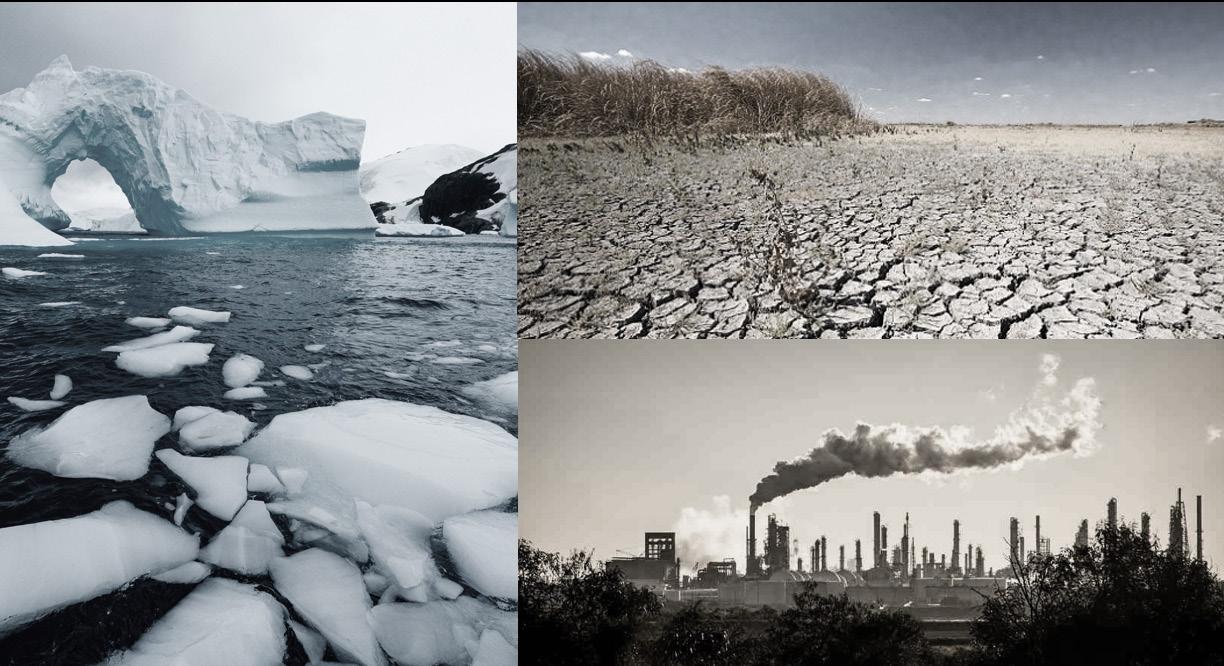
Global warming is one of the sign of climate change. This is nothing but the re sult of human activities that are not being responsi ble to the environment. If we do nothing about this problem, it is expected that by 2100 the earth could warm up to more than 4°C. Therefore, we need a plat form to make people aware of this important message. Thus, the idea to create a Museum of E(art)h with Green Building approach was being made.
a T IS m US e U m of e ( ar T)H ?
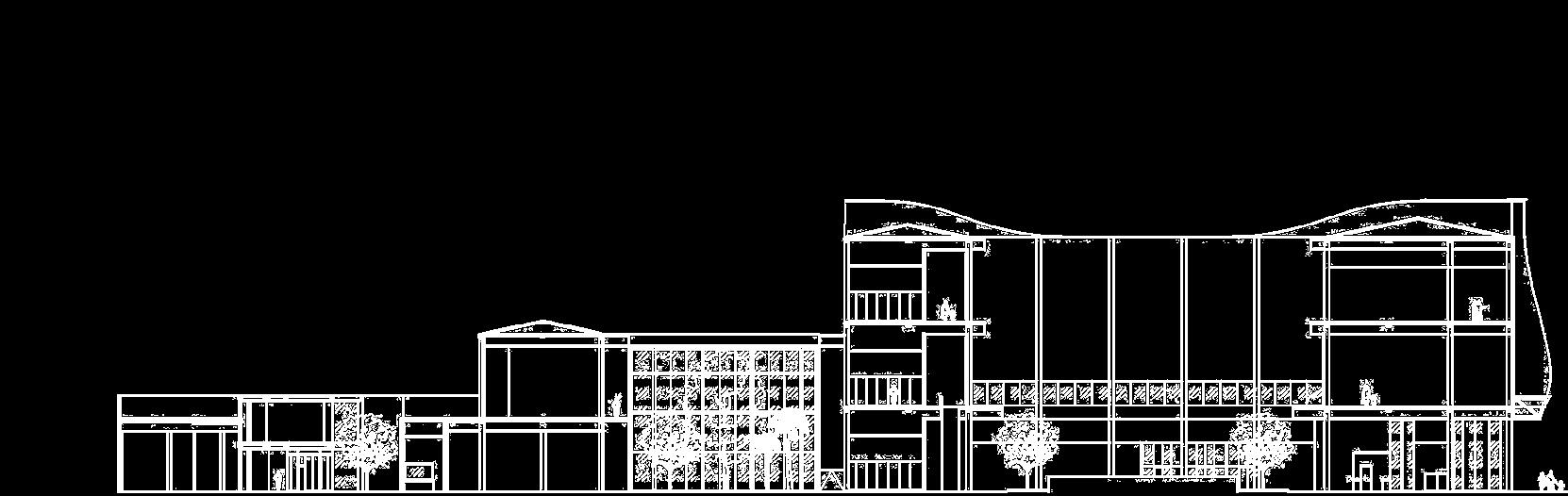
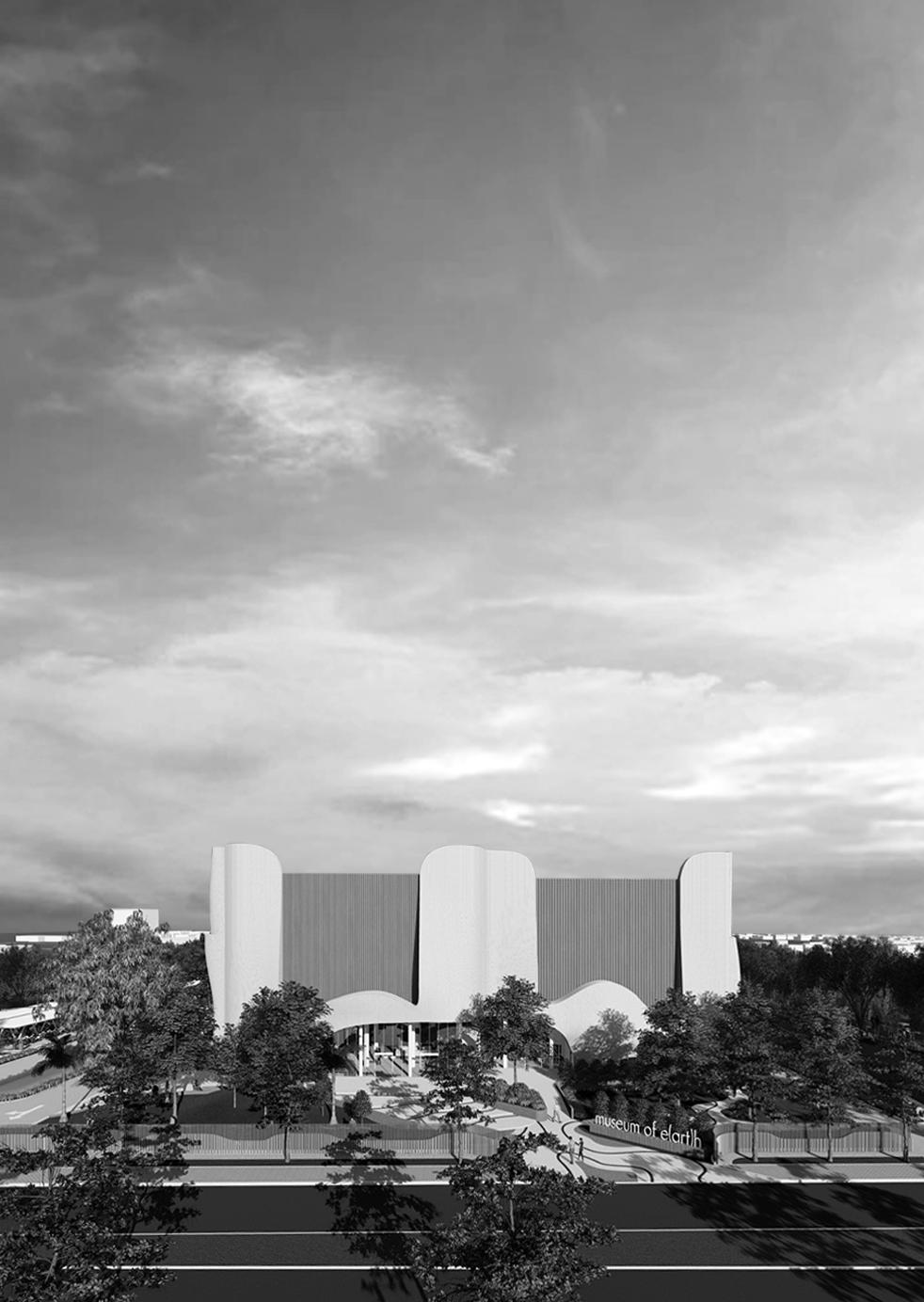
Museum of E(art)h is a science and technol ogy-based contemporary art museum. With the theme of ‘earth and climate change’, un like most of other museums that tends to exhibit something related to the past. This museum is designed to bring an interesting narrative stories about ‘the past-the pres ent-the future’ through it’s exhibition room layout design. Therefore, visitors has a more fun and unforgettable experience to learn about the climate change issues.
6 | 7 Museum Of E(art)h with Green Building Approach
YEAR: 2022 | BUILDING TYPE: Museum | CATEGORY: Academic (Final Project) WH
loca TI on
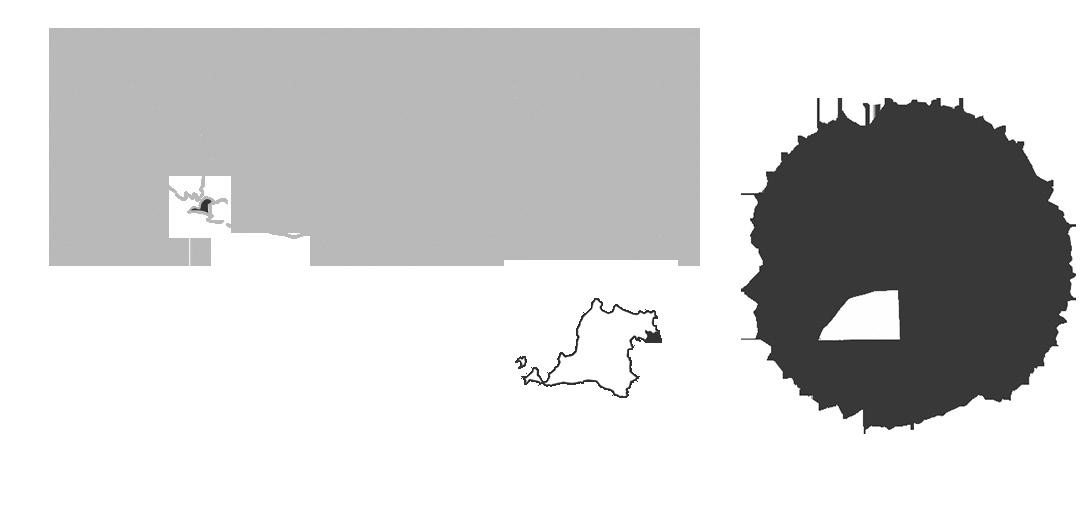
Jl. Boulevard BSD Tim., Cilenggang, Serpong
Banten South Tangerang
cep T
green b UI l DI ng
ba S e D on green SHI p raTI ng T ool S by green b UI l DI ng co U nc I l I n D one SI a appropr I aT e lan D US e energy eff I c I ency & con S er V aTI on W aT er con S er V aTI on maT er I al S o U rce S & cycle S I n D oor H ealTH & comfor T b UI l DI ng en VI ronmen T managemen T me T ap H or I c arc HIT ec TU re: 4 elemen TS of ear TH
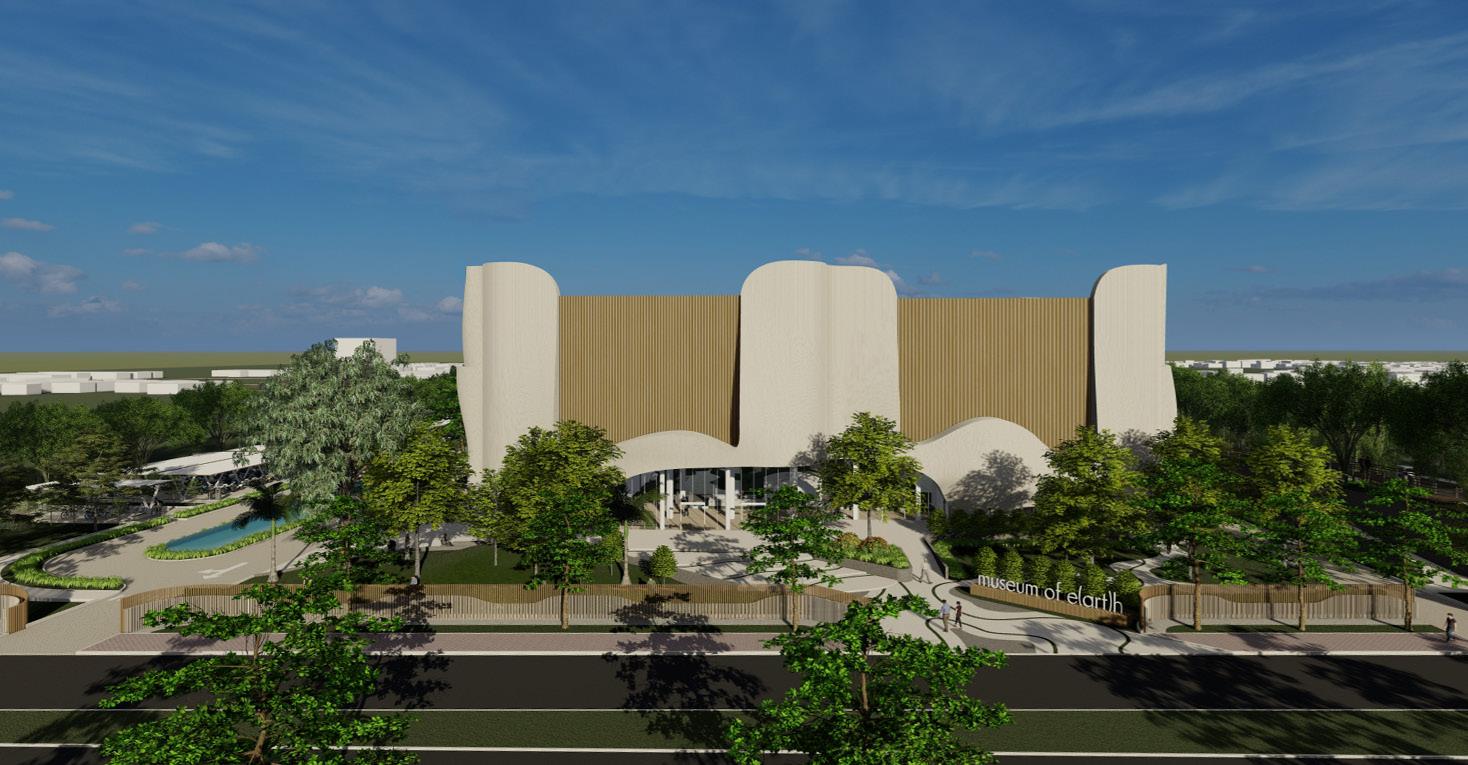
Building and construction industry responsible for 36% of final energy use and 39% of CO2 emissions globally. For that reason, Museum of E(art)h was designed with a Green Building approach as it main concept. This con cept was also chosen to maximize the natural feeling on the site and the building.
The concept of metaphoric architecture will also be used in the process of designing the building shape and facade design. The metaphor used is the ele ments of earth, which are; water, fire, earth, and air. These four elements are transformed into one sin gle unit of building.




8 | 9 Museum Of E(art)h with Green Building Approach con -
ma I n
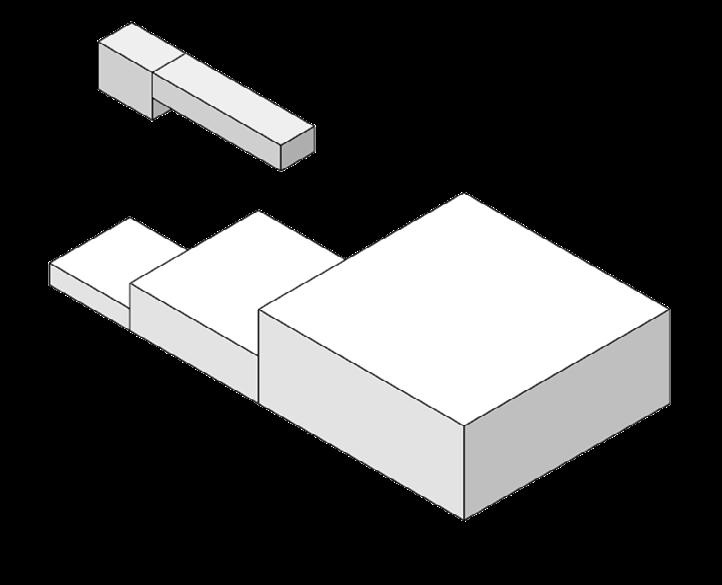
The basic form of the building comes from three cubes with dif ferent scales arranged in parallel, resembling the contours of the land found on the site.
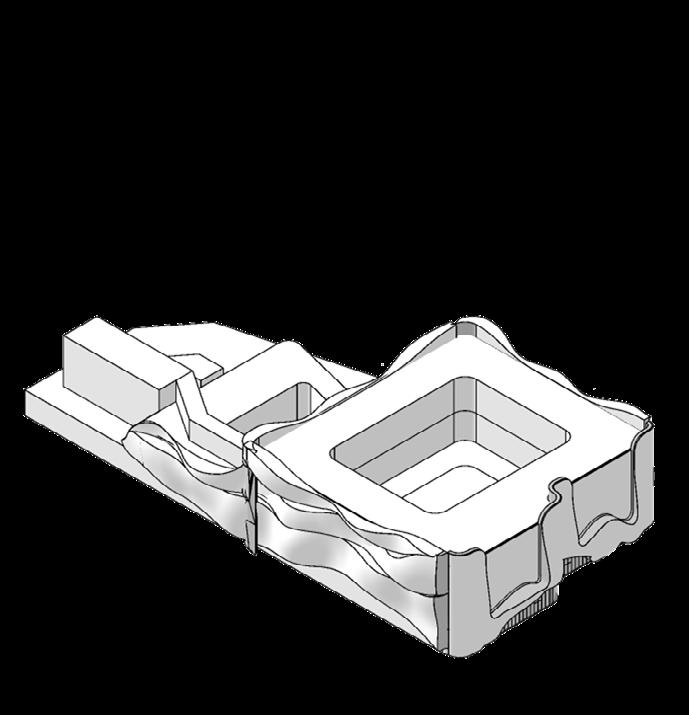
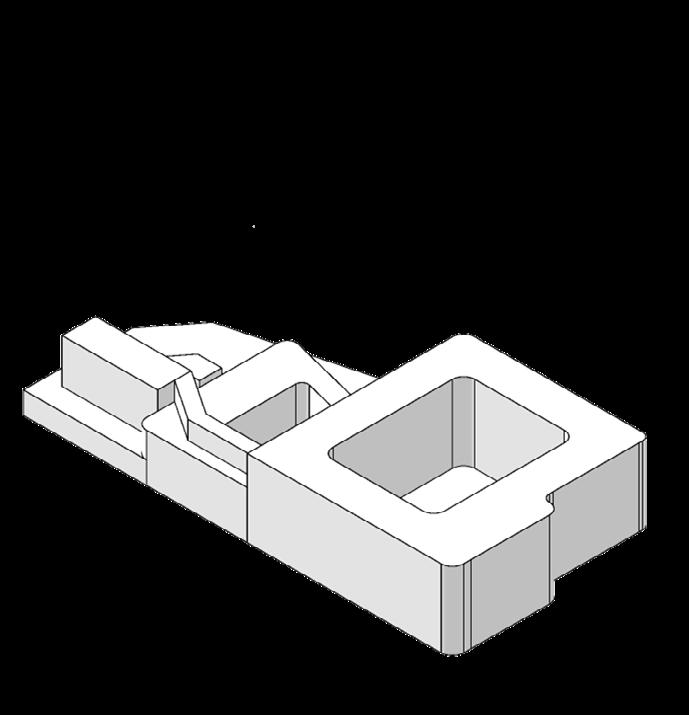
The additive process is in the form of connecting lines for each floor of the three main masses, as well as a subtractive process in the center of the building.
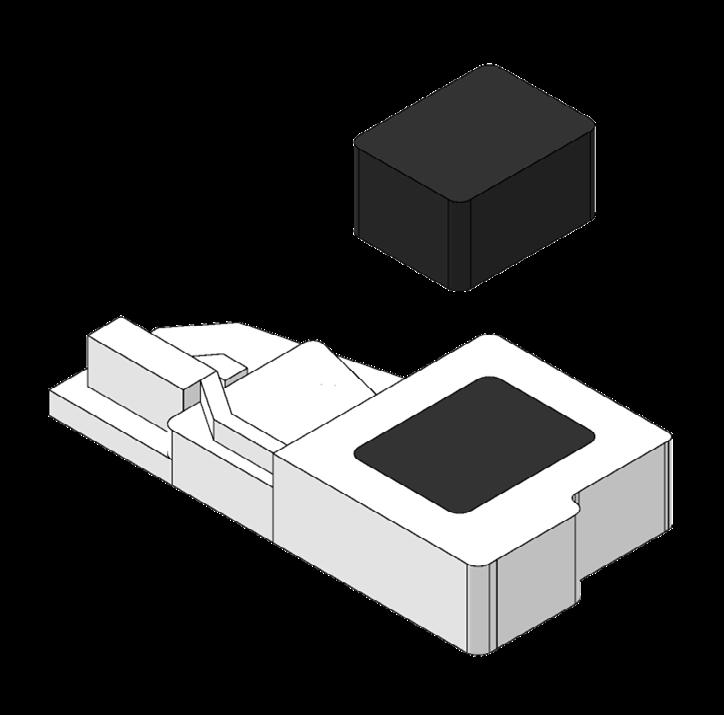
There is an inner court in each main mass as a provider of natu ral lighting and ventilation.
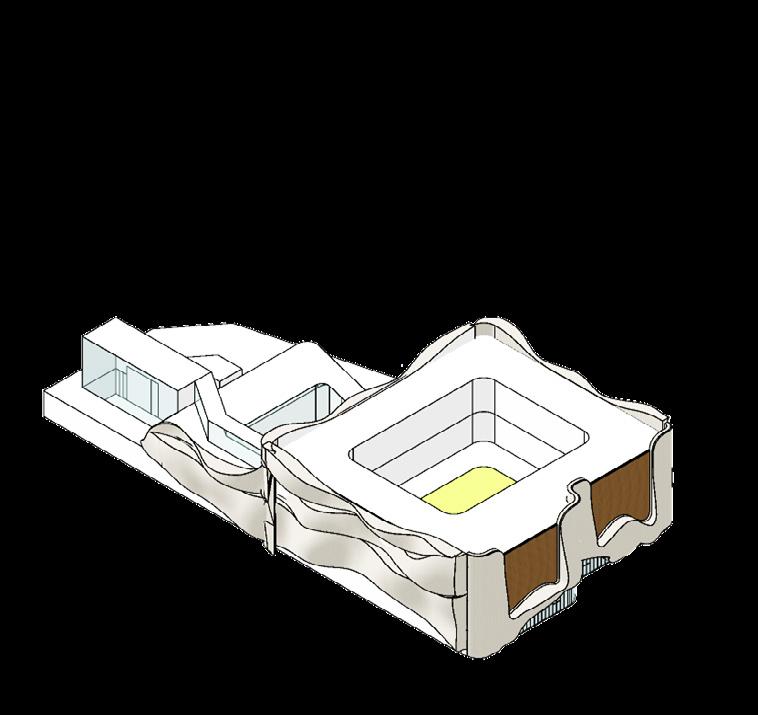
The addition of skin on the facade of the building with a metaphor ical concept of one of the ele ments of the earth, namely water.
Articulation process with the ap plication of materials in buildings.
SIT e plan concep T
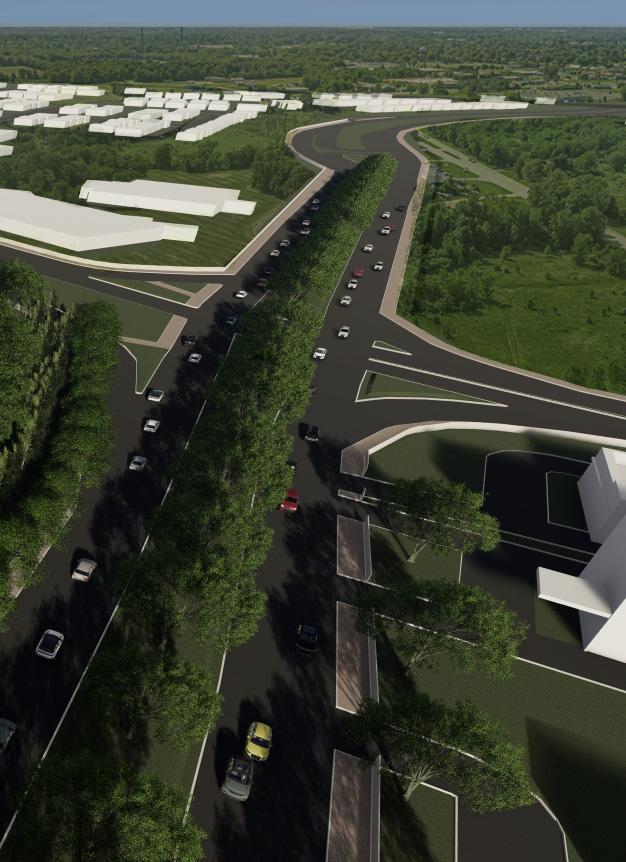
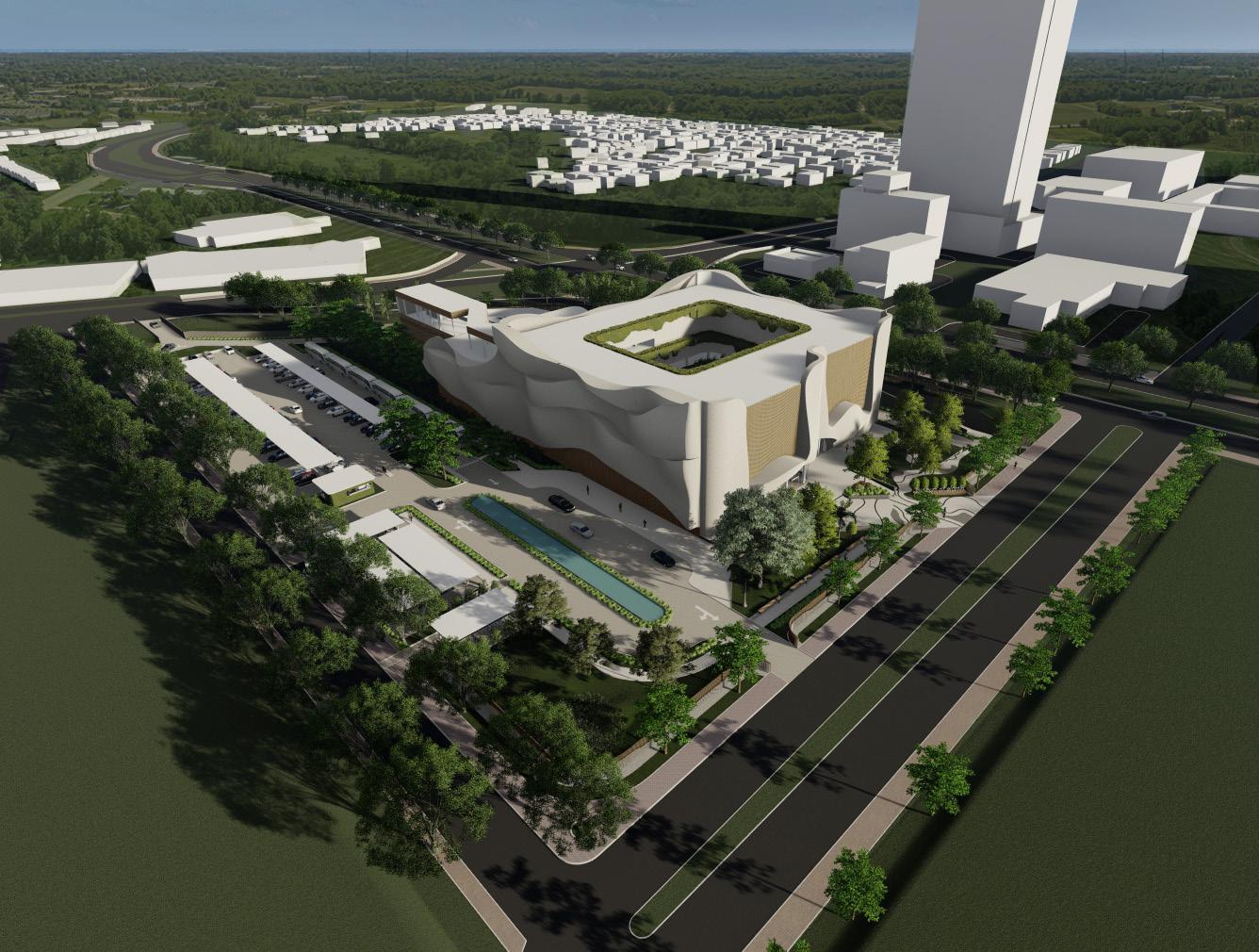
Main vehicles entry point that located on the main road, so it is easier to find and reach.
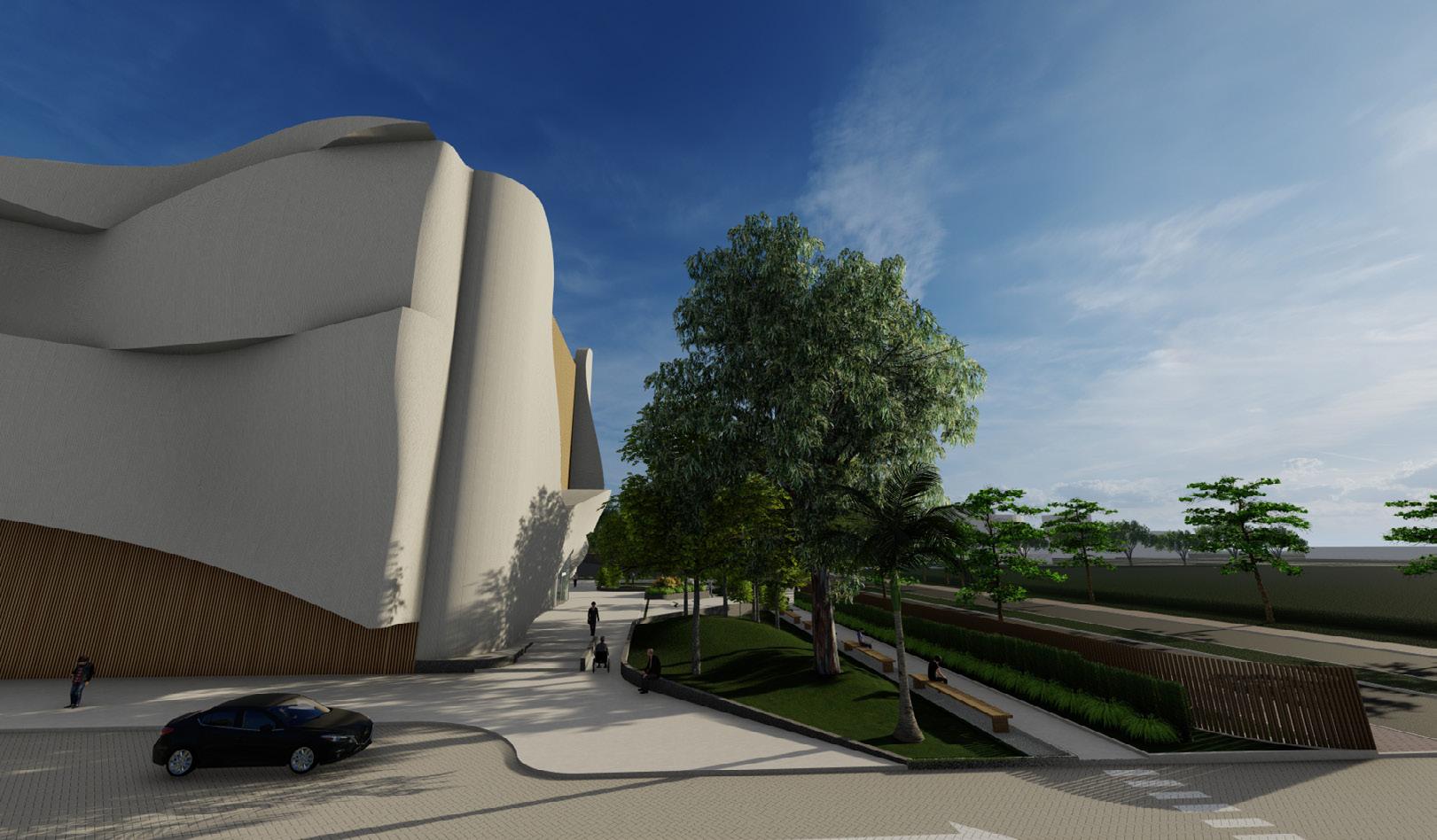
Preserve the land contour with all the existing trees on it, and create a pedestrian path to utilize it.
Use a white roof to reduce the absorption of solar heat into the building.
Provide trees on pedestrian paths to protect pedestrians from the heat
Design a beautiful green space at the front of the building (main side) as a way to create a more natural feeling that characterizes the Museum of E(art)h.
Use paving blocks on roads and parking areas.
Place the parking area at the back side of the site, so the view of the building from the main road becomes max imized.
As a flooding prevention, the building has a higher elevation than the street and outdoor areas. Drop-off area is located just right side on the side of the building entrance. Provide bicycle parking facility.
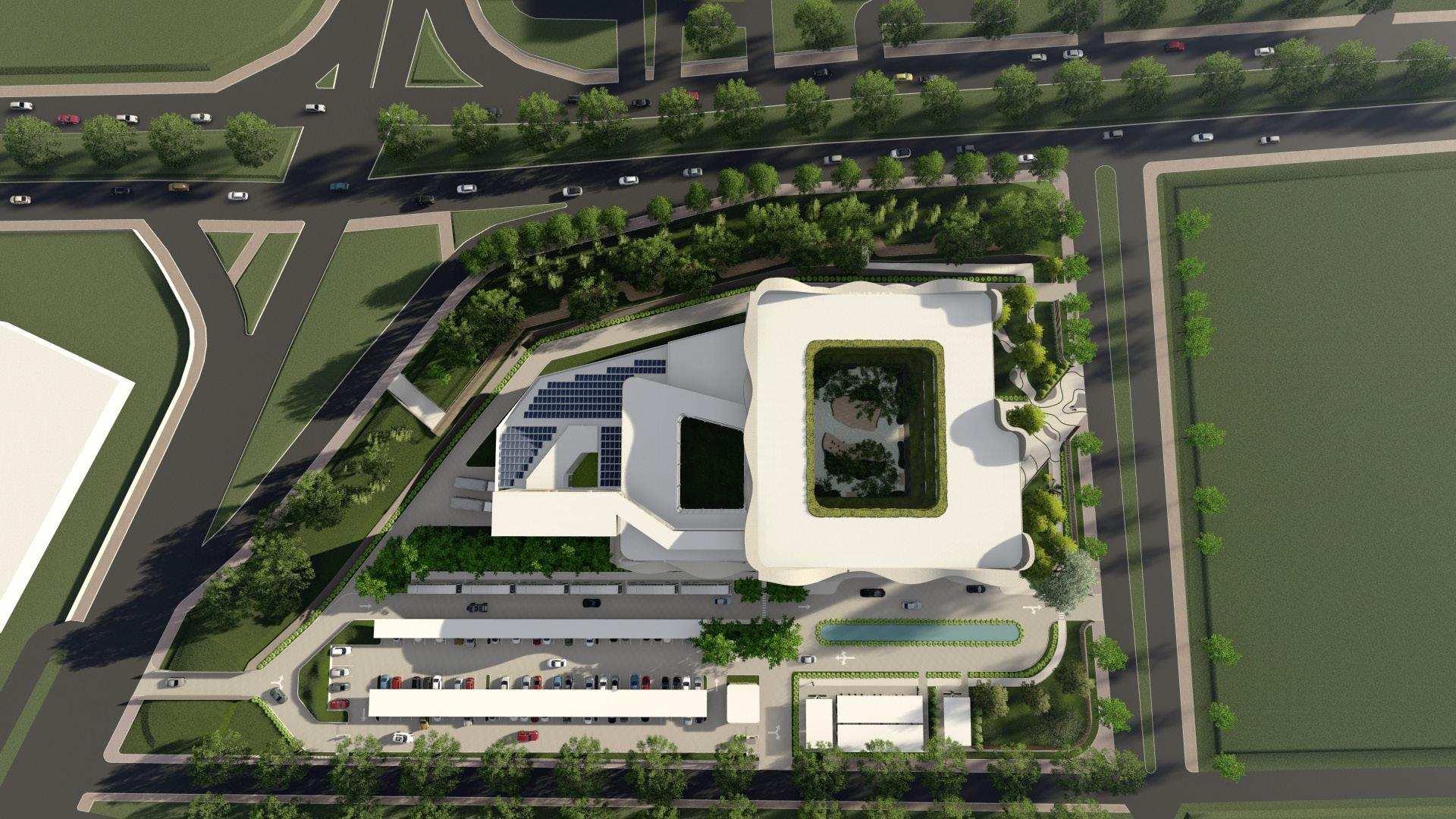
1 6 7 9 108 2 3 4 5 10 | 11 Museum Of E(art)h with Green Building Approach
1 8 2 9 4 6 3 10 5 7

ServicesArea VisitorsArea
The designs of the site and building come with many environmental considerations. For instance, I decided not to cut down any trees on the existing site and let the contour just as it is. Although it blocks the view from outside to inside, instead of seeing it as a weakness, I made it as a design potential by creating a full of breeze walking path that has a great view of the surroundings.
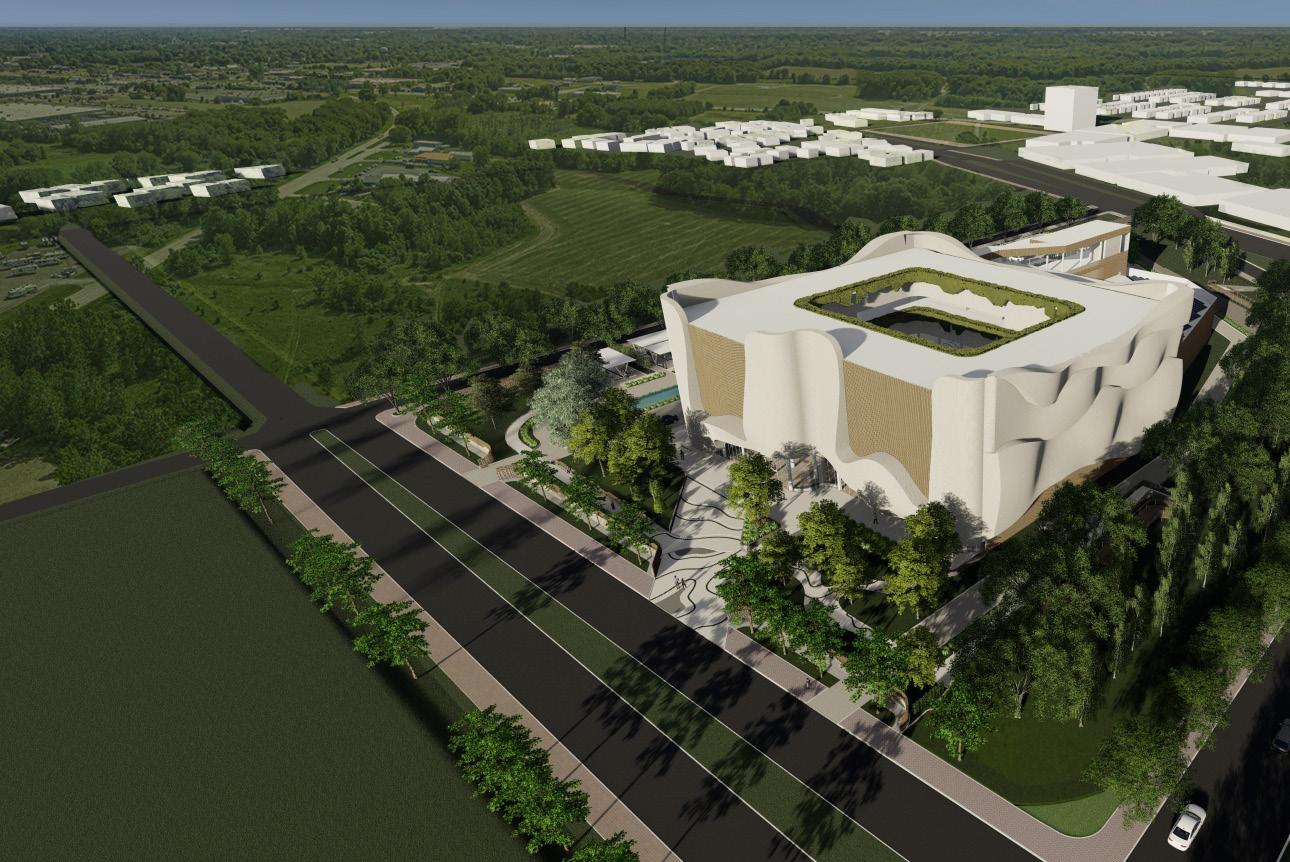
12 | 13 Museum Of E(art)h with Green Building Approach
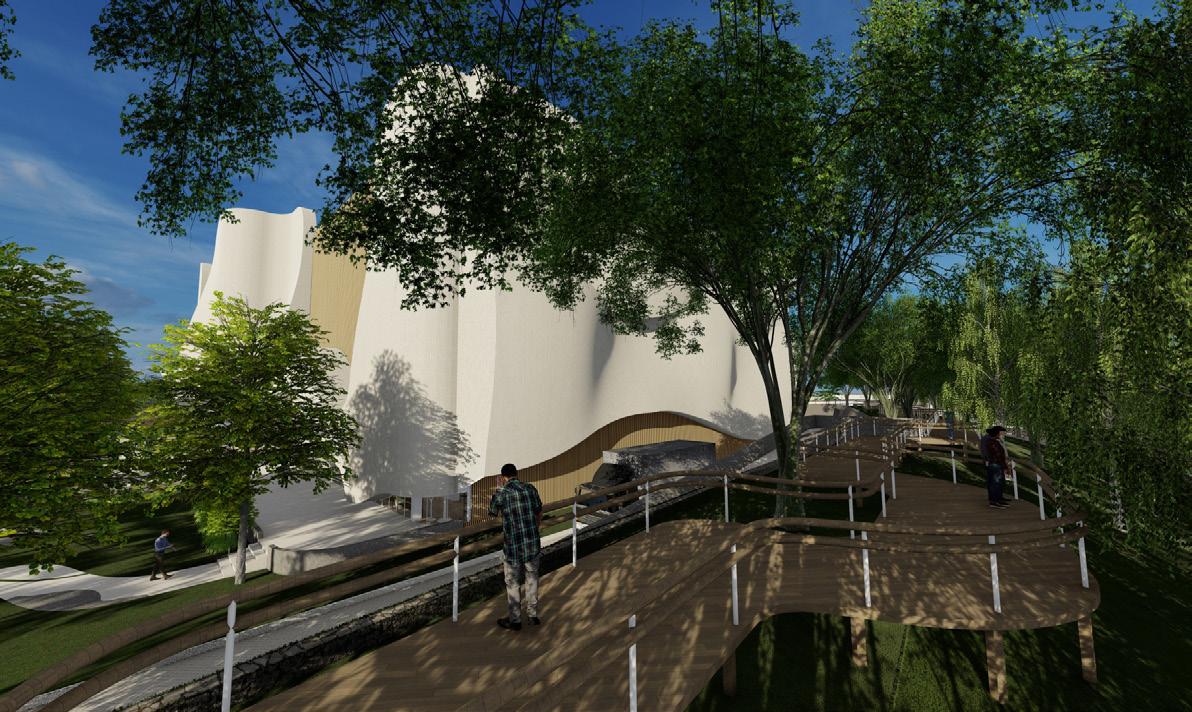




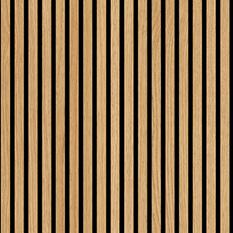
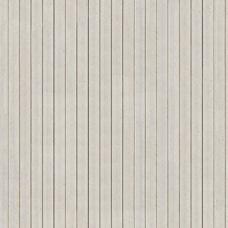
HPC (Husk Plastic Composite) as the main finishing material used in the building facades as a way to promote sustainability.

14 | 15 Museum Of E(art)h with Green Building Approach
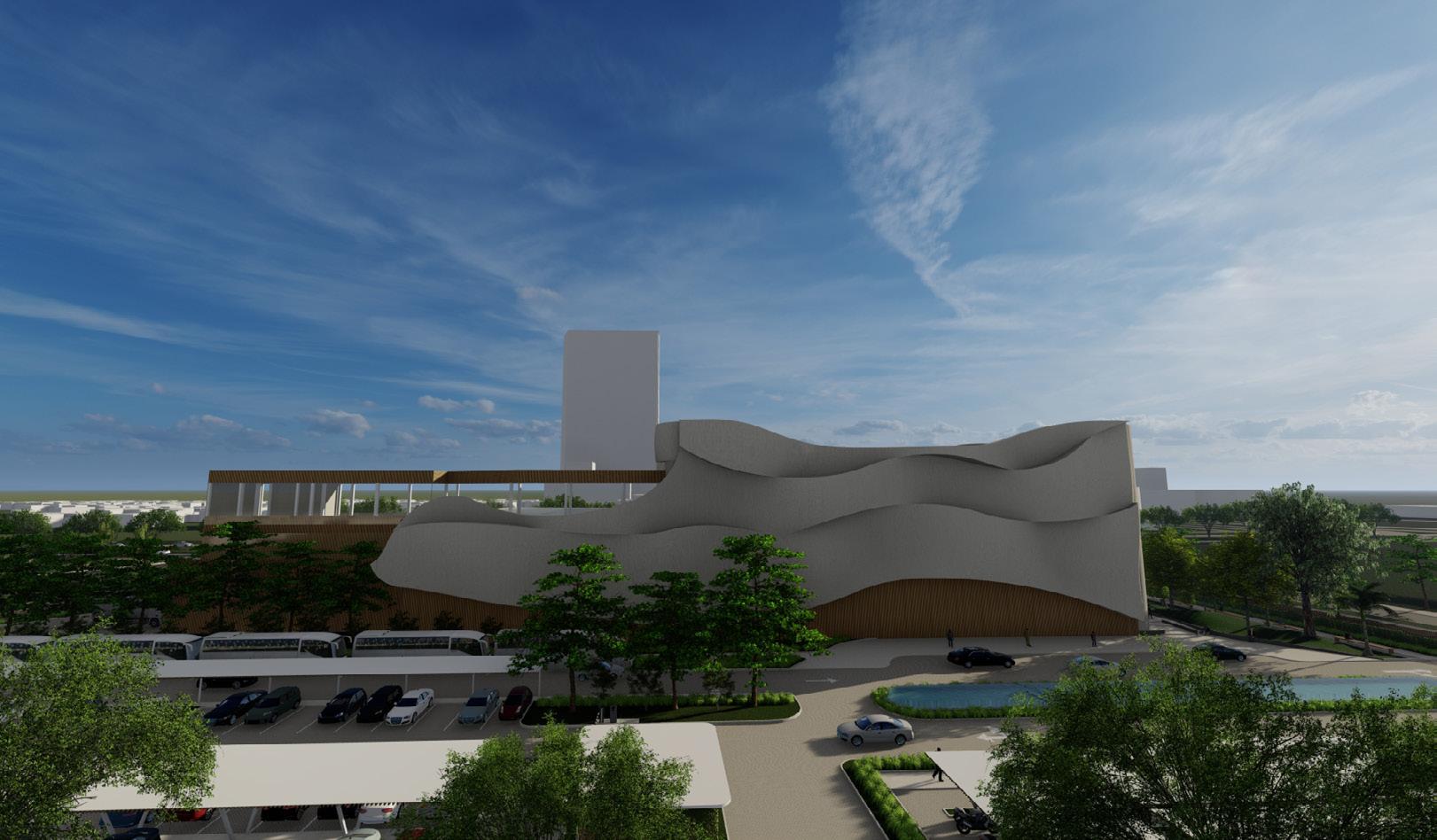
The Element of Earth's concept of "Water" is applied in the form of wavy and abstract shapes of the building's facade.
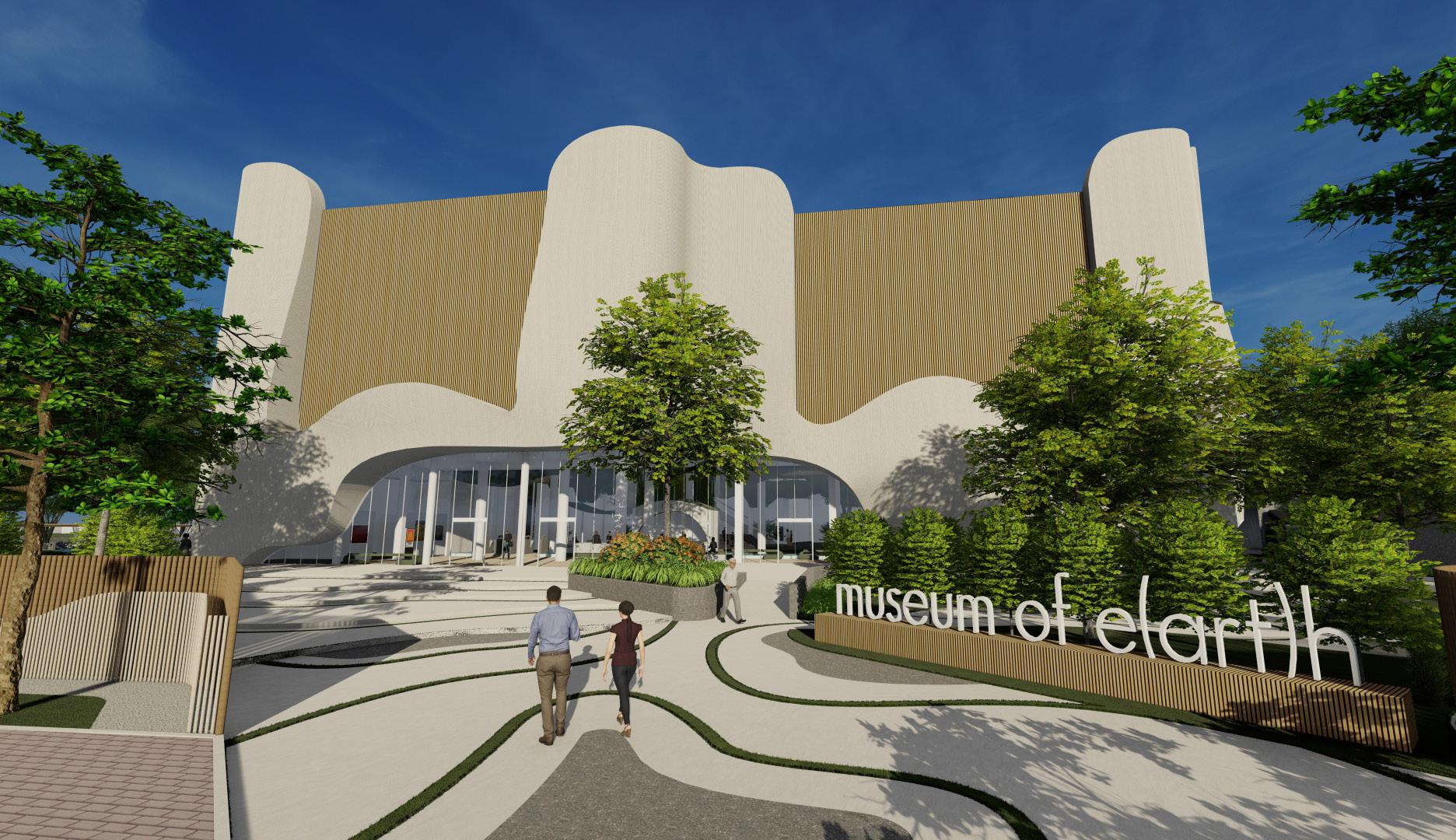

The building has multiple inner courtyards, it's an in terpretation of the Element of Earth's concept of "Fire" with its emitting light char acter and "Air". So that the building has more access to natural light from the sun and air from outside.

16 | 17 Museum Of E(art)h with Green Building Approach
The Element of Earth's concept of "Earth" is applied in the form of a building that consists of three-floor levels that parallel and resem bles the existing contours on the site.
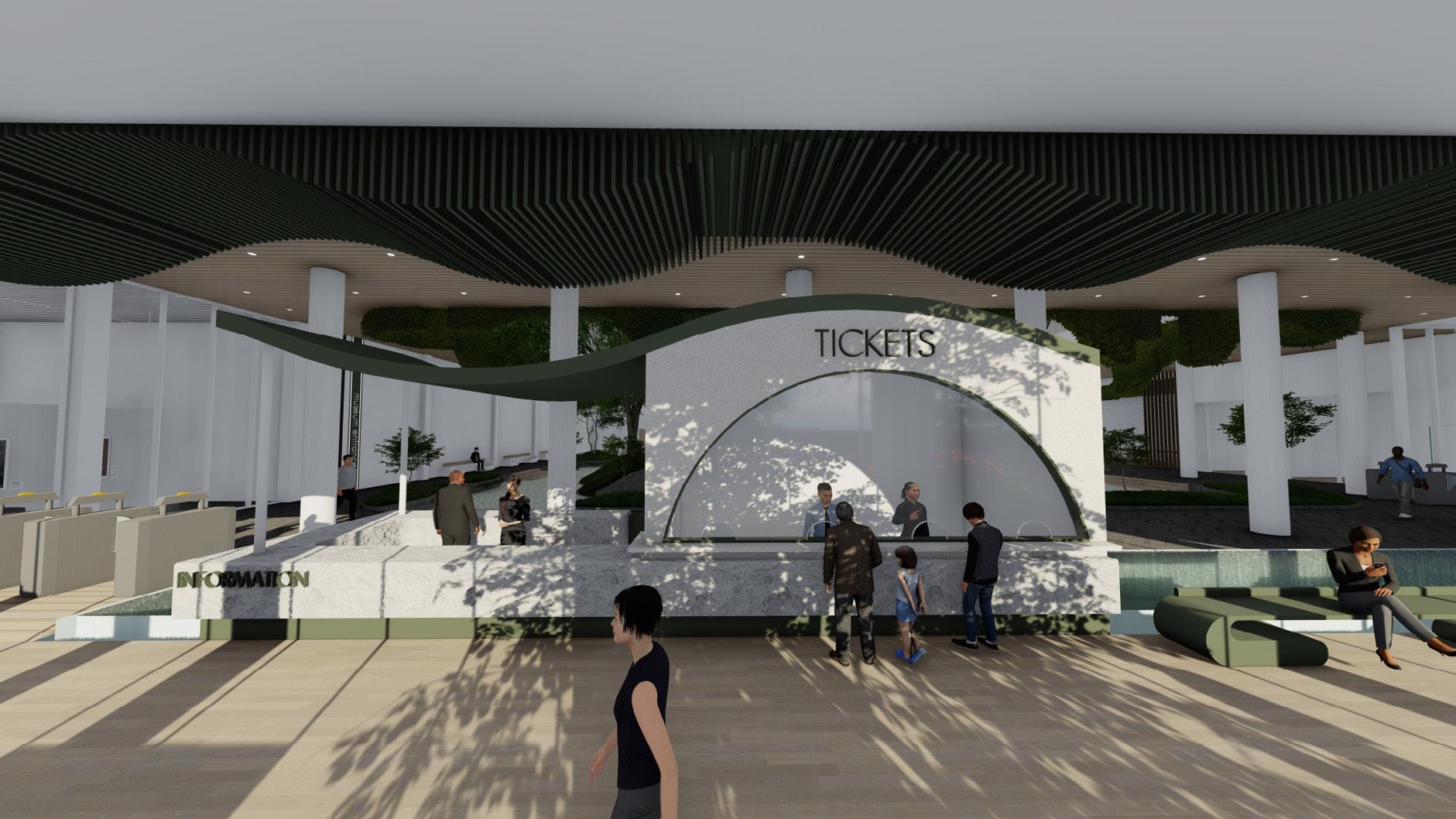
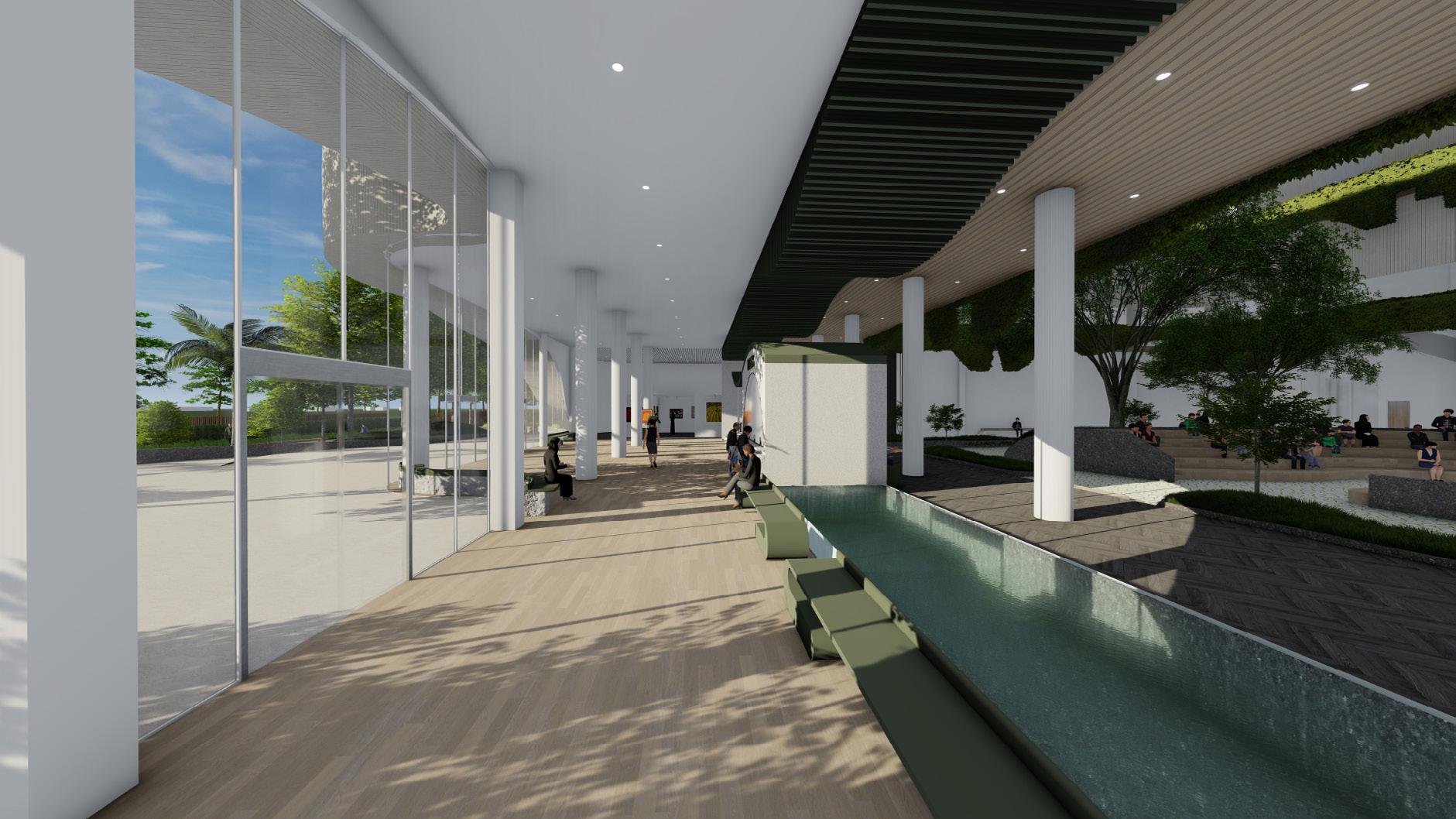
There's a water feature that acts as a partition that divides the public and semi-public visitors area. This was created to maintain a connection between the lobby area and the interior courtyard so that natural air can enter the lobby and re duce the need for artificial ventilation.
18 | 19 Museum Of E(art)h with Green Building Approach
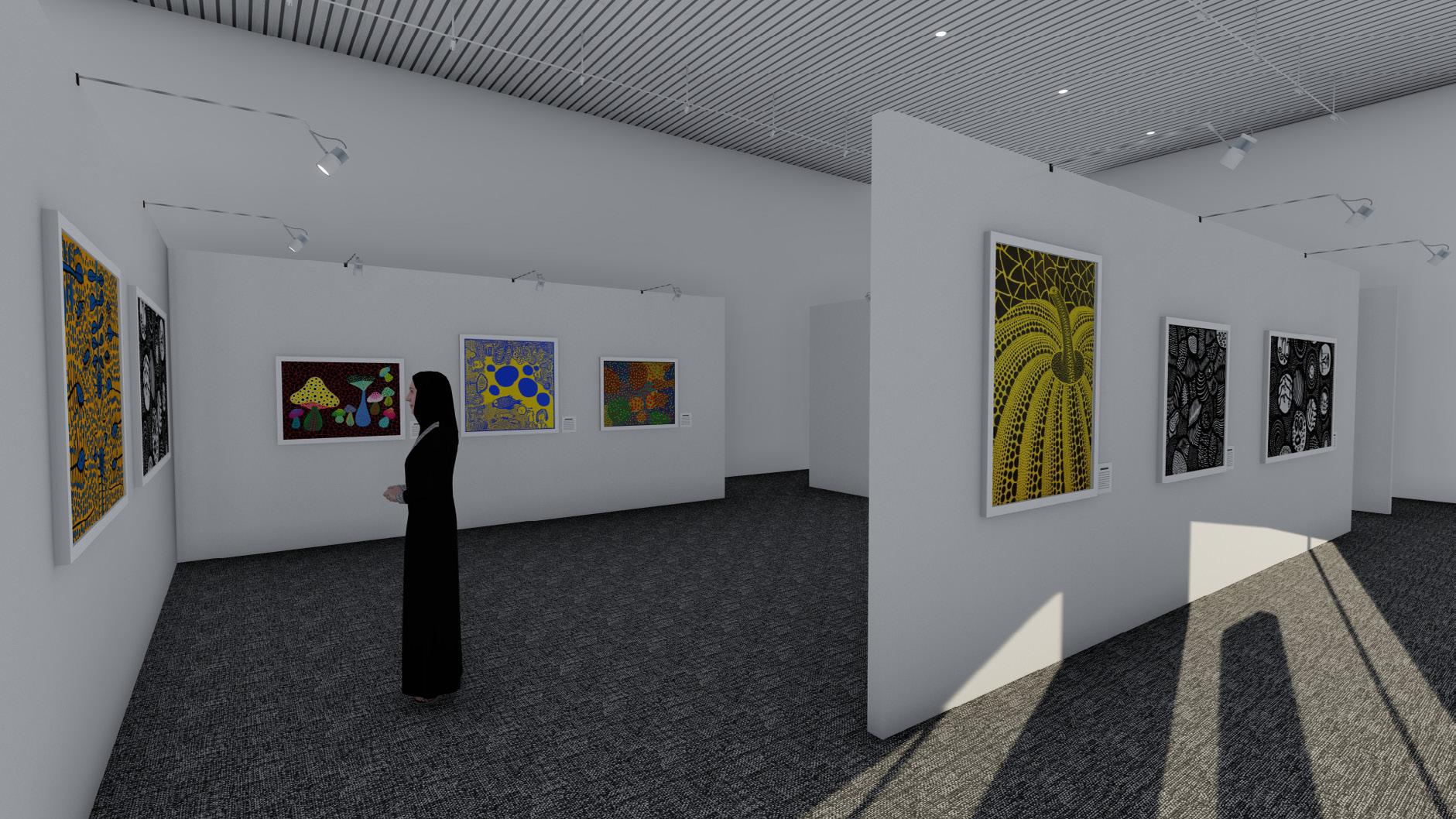
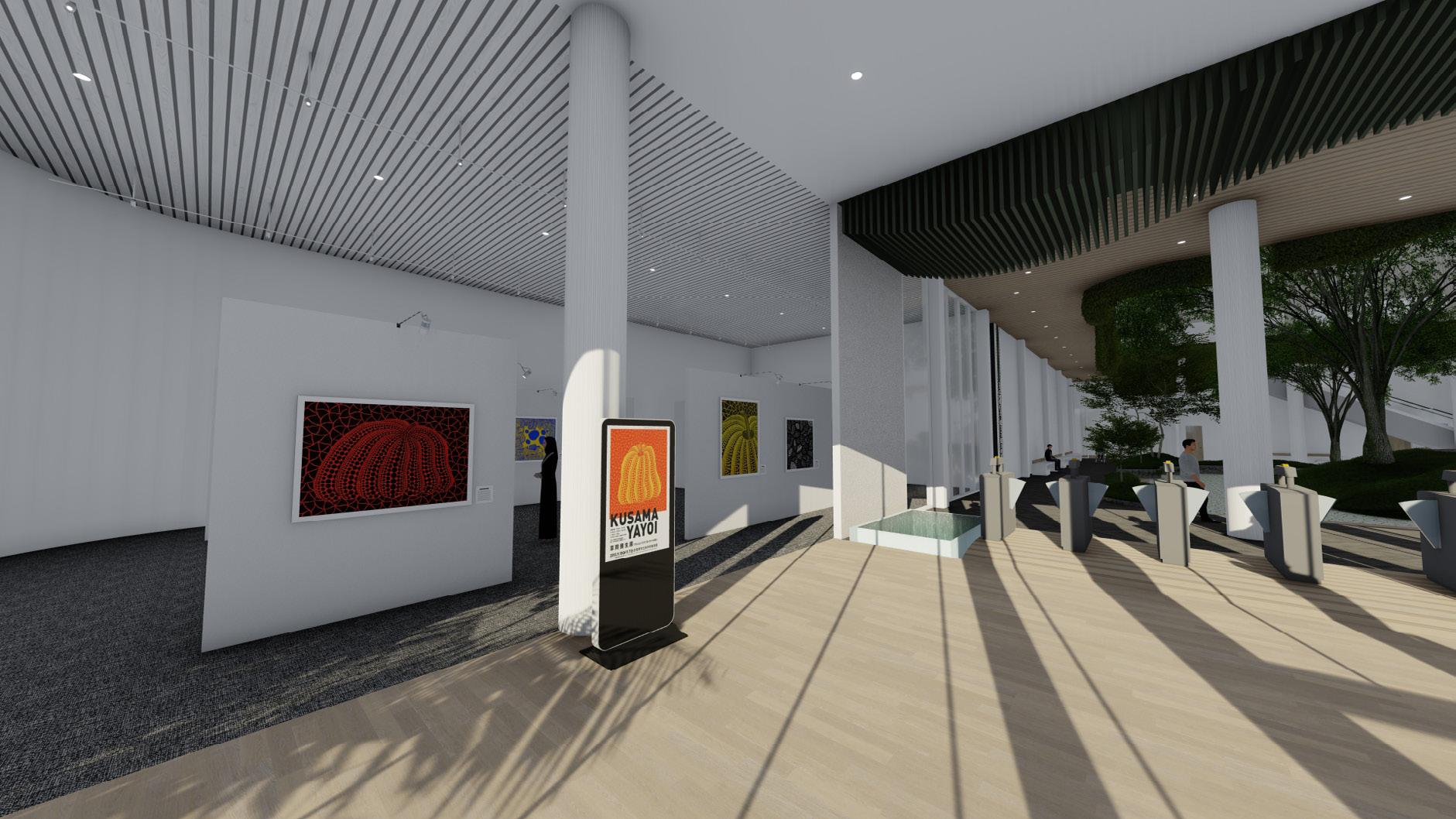
Temporary exhibition space that is integrated with the mu seum lobby, so it's possible to hold free exhibitions.
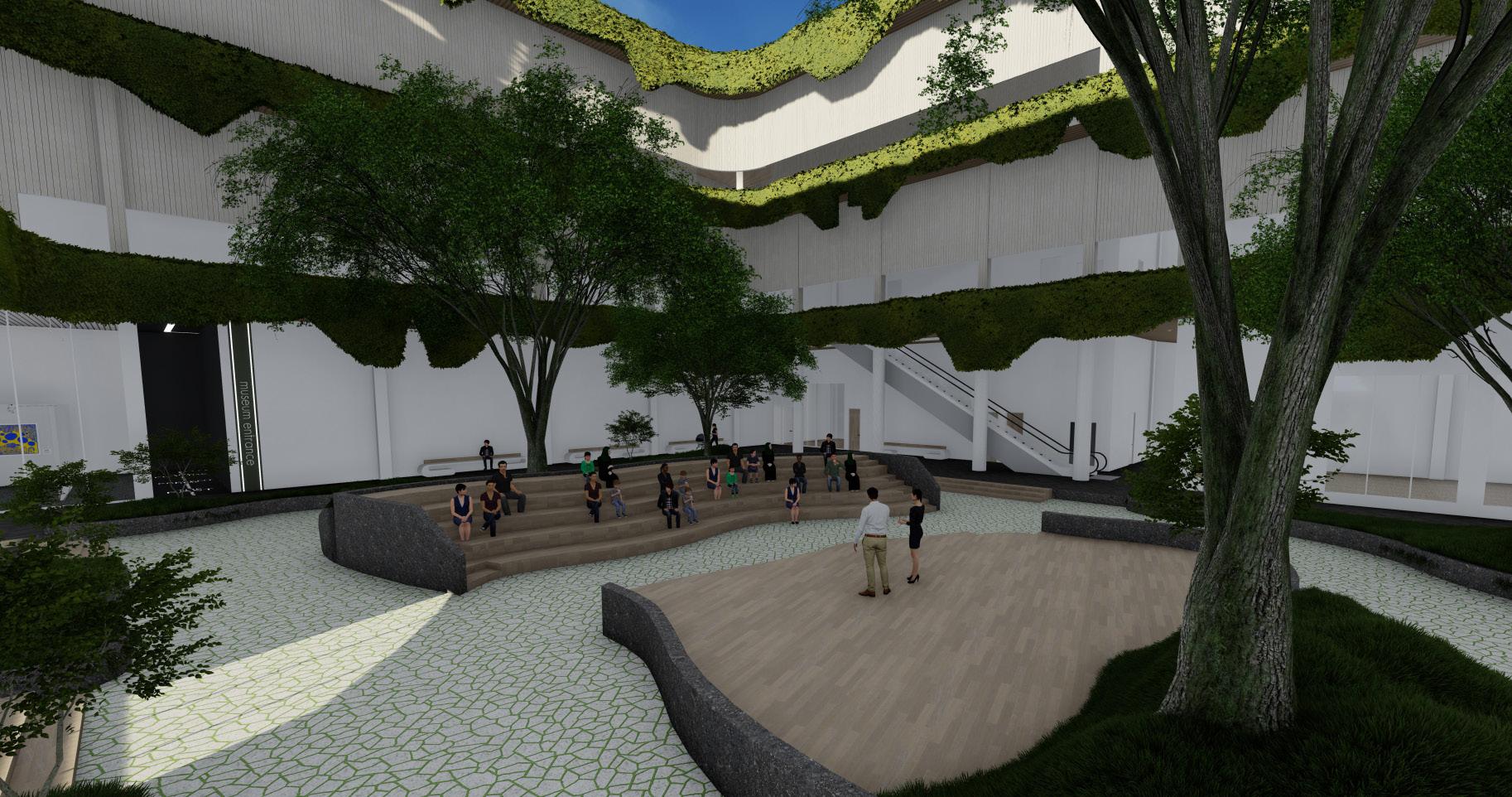
20 | 21 Museum Of E(art)h with Green Building Approach
Inner courtyard in the building that connects all access to the building facilities. This courtyard also has an amphitheater for contemporary performing arts.
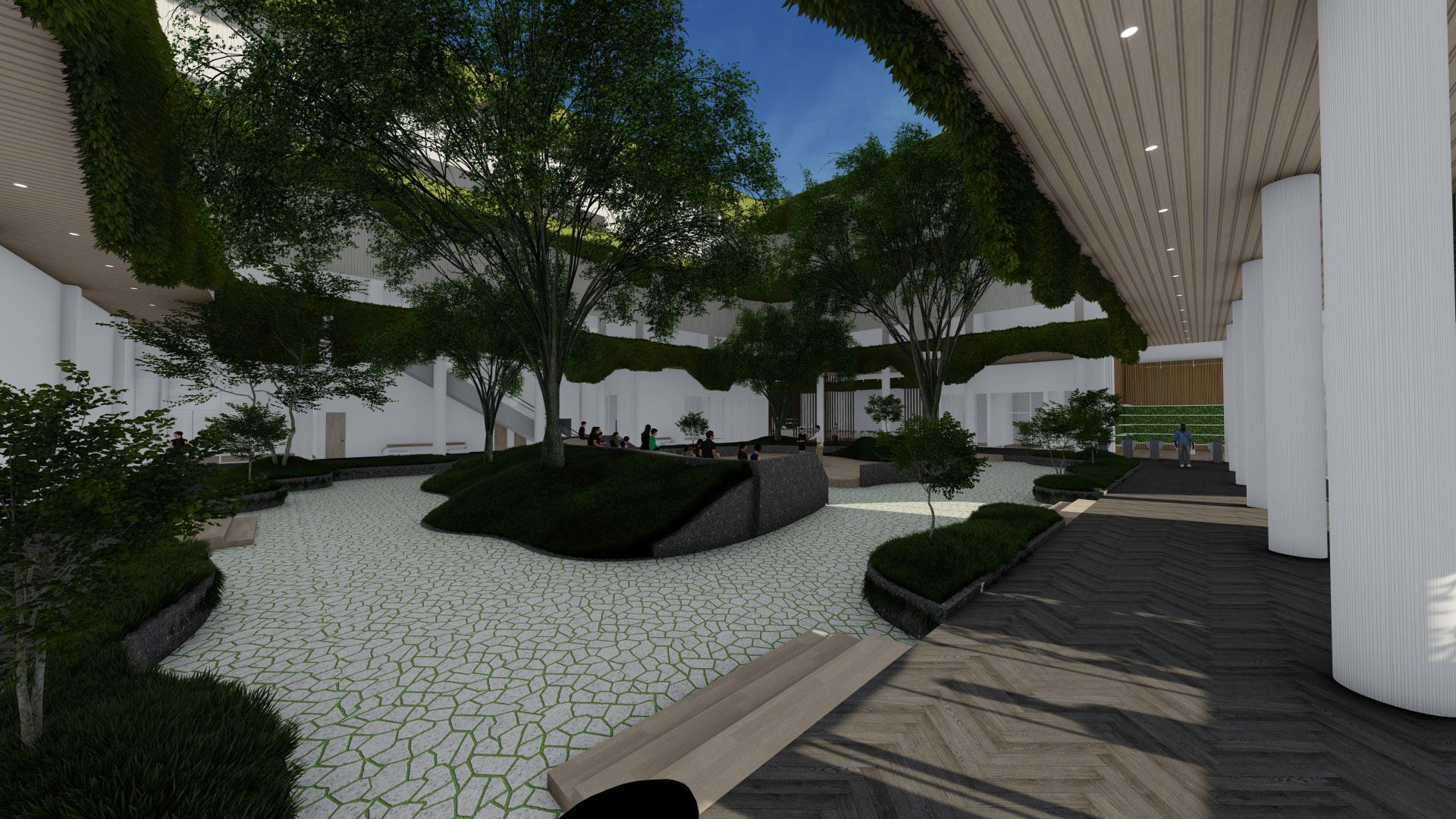
22 | 23 Museum Of E(art)h with Green Building Approach The permanent exhibition space will be arranged with a linear flow room layout, where the visitors will be made as if they are in a narrative story about the earth from the past (how it originally looked) until how it might look like later in the future with the cause of climate change. This narrative was chosen with the main purpose to educate and raise society's awareness about climate change. This is how the story will be shown: THe pa ST T H e e (ar T )H ex HI b ITI on THe f UTU re pre S en T Forest Area 1 6 9 7 8 10 2 3 4 5 Aquatic Area Arctic Area Grassland Area Desert Area Documentations & Infographics of Earth from 1937-2100s Climate Change in Indonesia 7 Causes of Climate Change 11 Elements of Chaos Ways to Save Our Planet
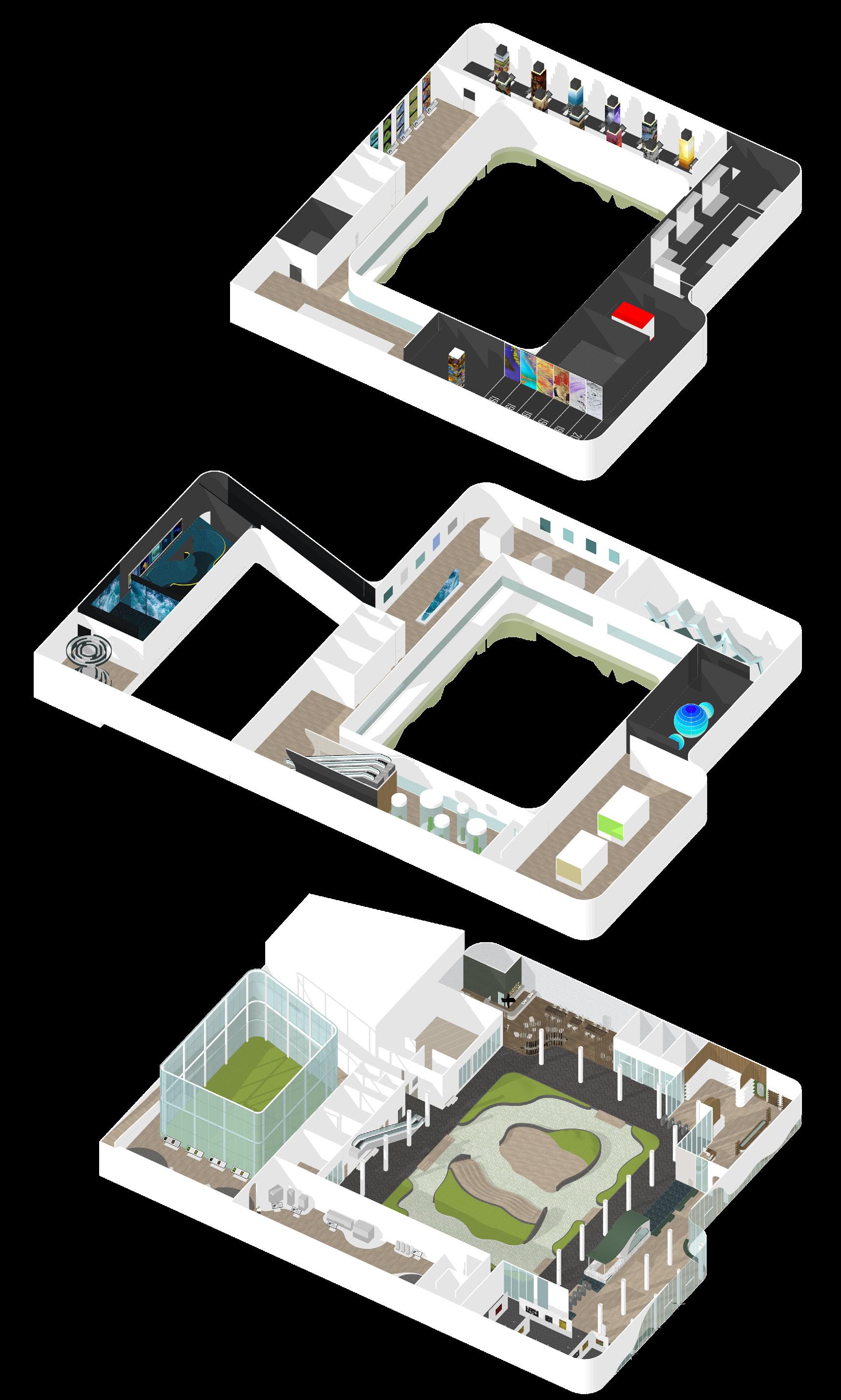
1 2 3 4 5 6 7 8 9 10
na TI onal S c I ence
bac



U n


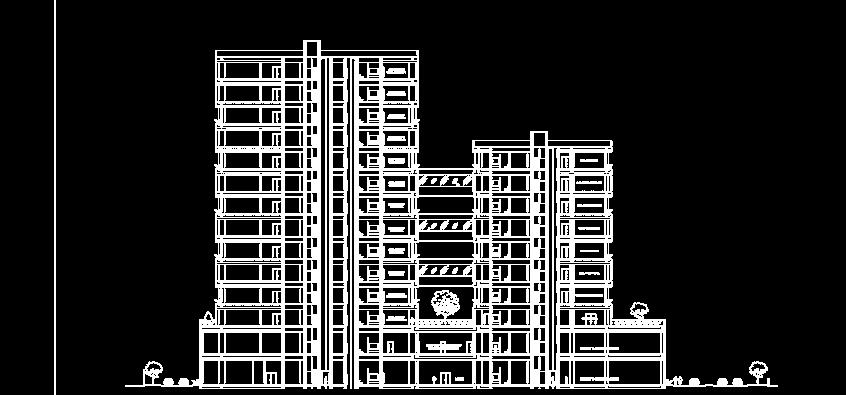
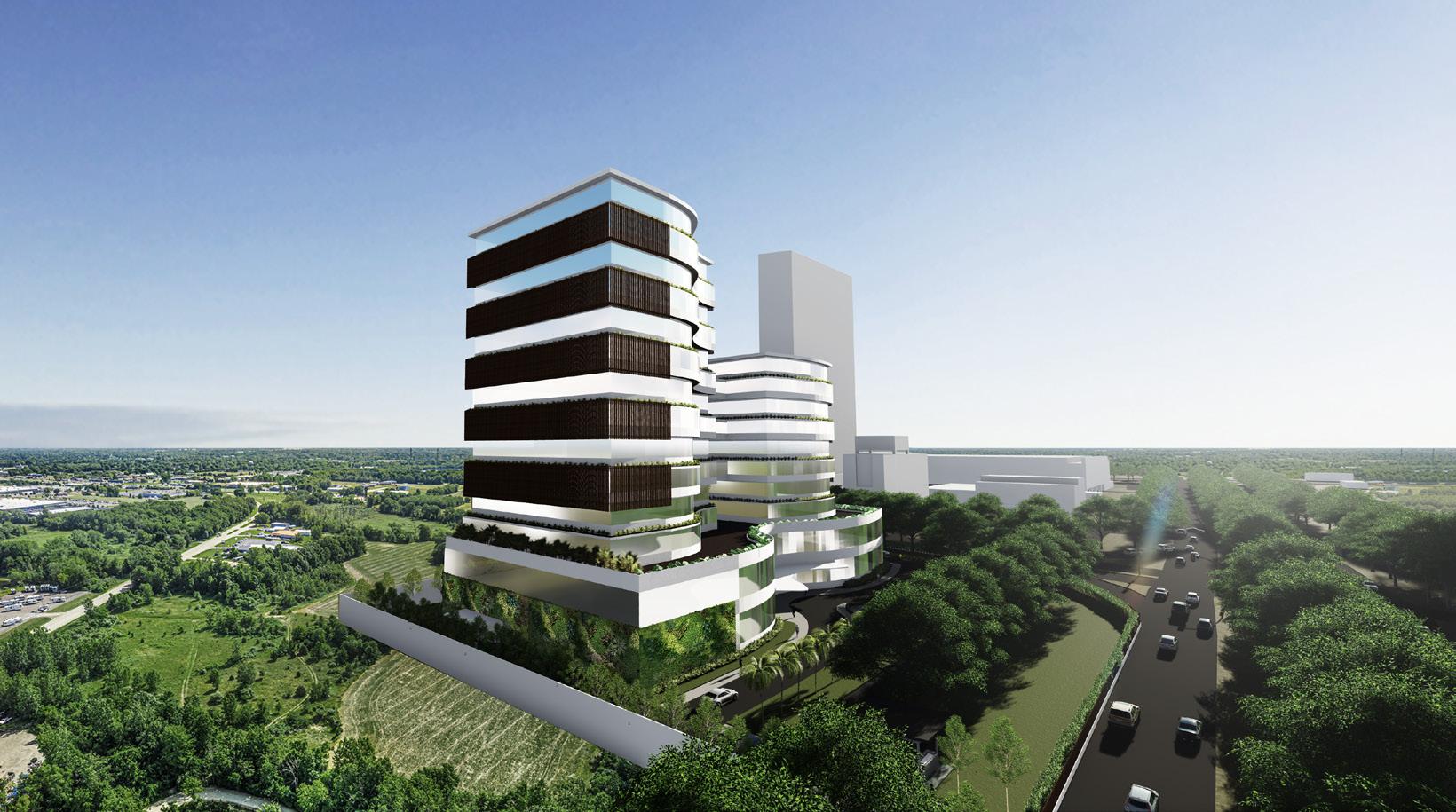
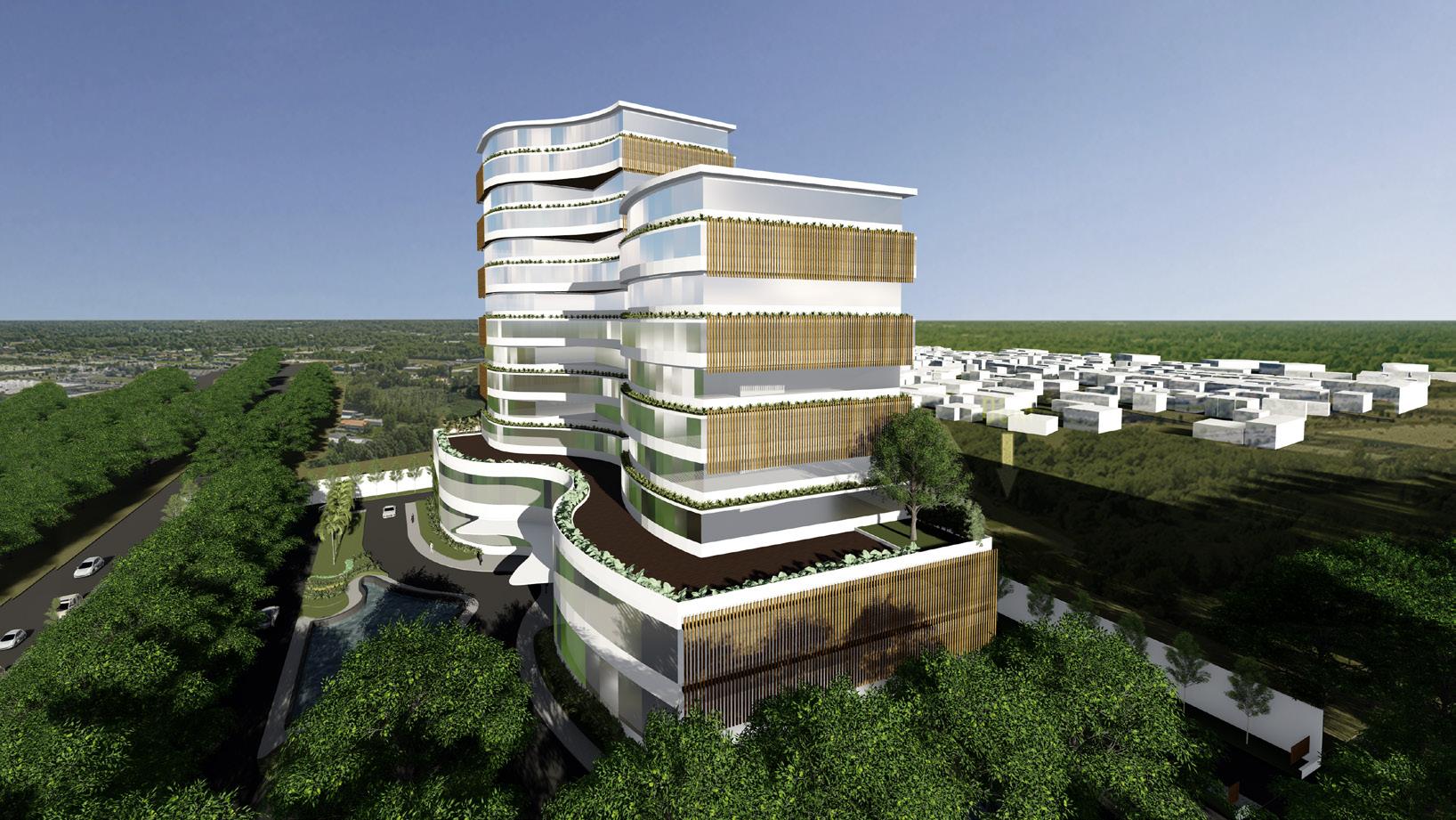
The National Science Institute is an educational instution that comes with the aim to increase the number of high quality scientist that comes from Indonesia. There are 6 depart ments at this institute, namely Math ematics, Physics, Chemistry, Biology, Geography, and Astronomy. Locat ed in BSD, South Tangerang, which is a strategic location for education and
I op HI
Biophilic design is an approach to architecture that seeks to connect building occupants more closely to nature. These are the reasons why this concept is being chosen for this project:
24 | 25 National Science Institute
I n STITUT e YEAR: 2021 | BUILDING TYPE: High-rise Building | CATEGORY: Academic (6th Semester Project)
technology development.
Increase biodiversity Increase productivity and concentration Reduce stressImproving mental health Visual and non-visual connectivity with nature b
l I c D e SI gn concep T
K gro
D
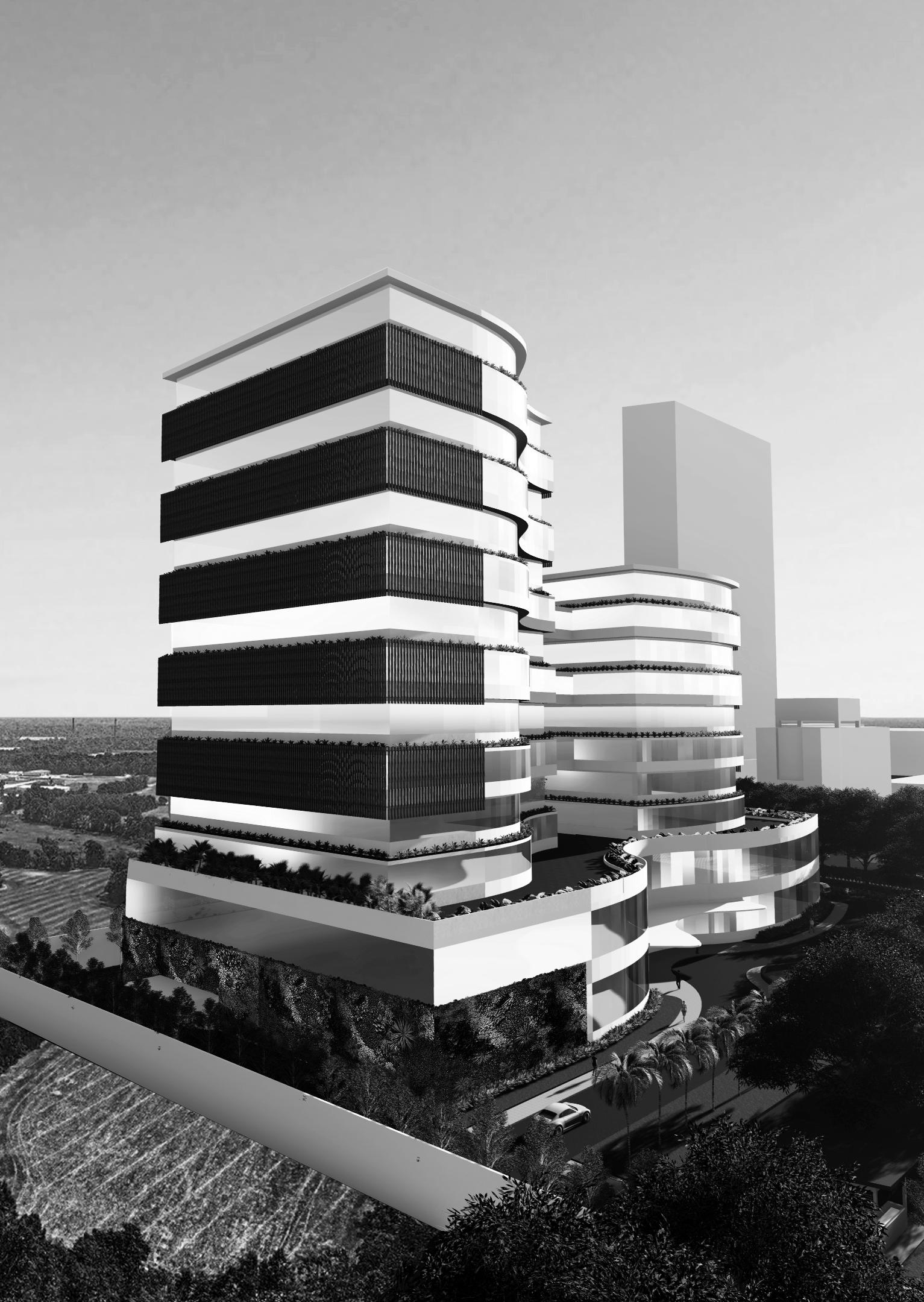
The basic form of the building comes from three blocks with an arrangement like the image on the left. The long side faces of the building are south-north oriented.
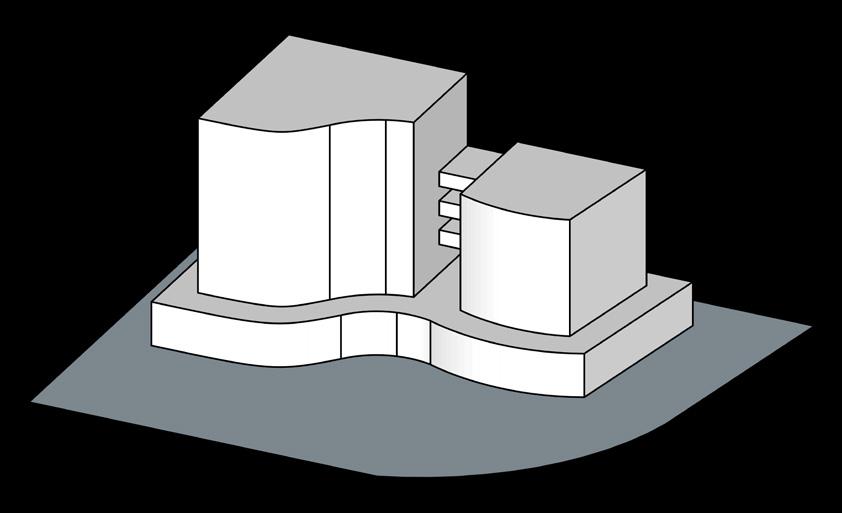
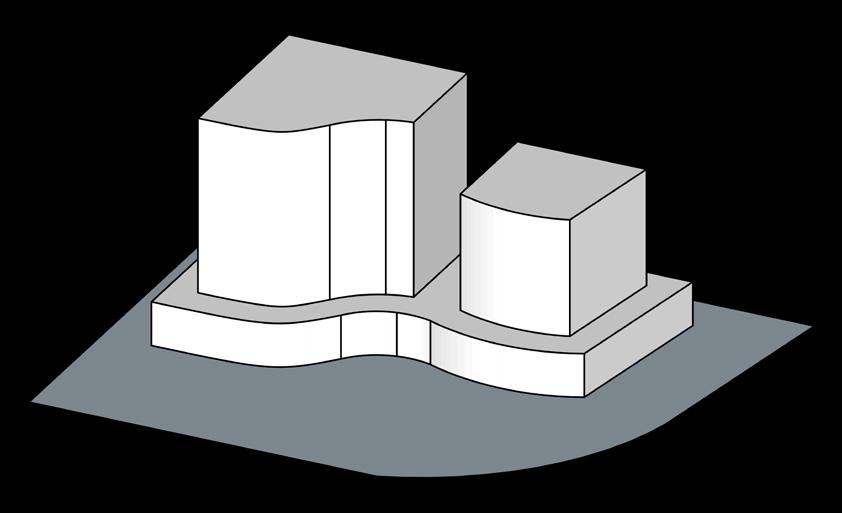
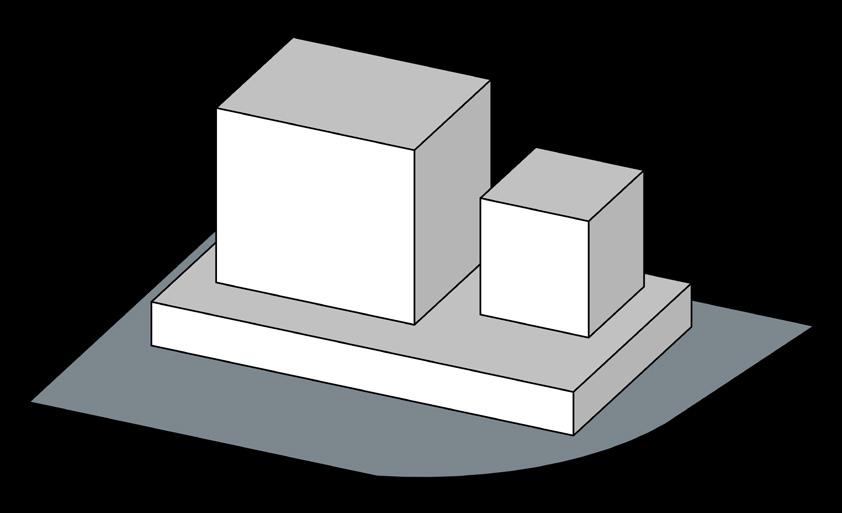
The subtractive process of the building mass to create a more organic shape as a form of bio phlic design application.
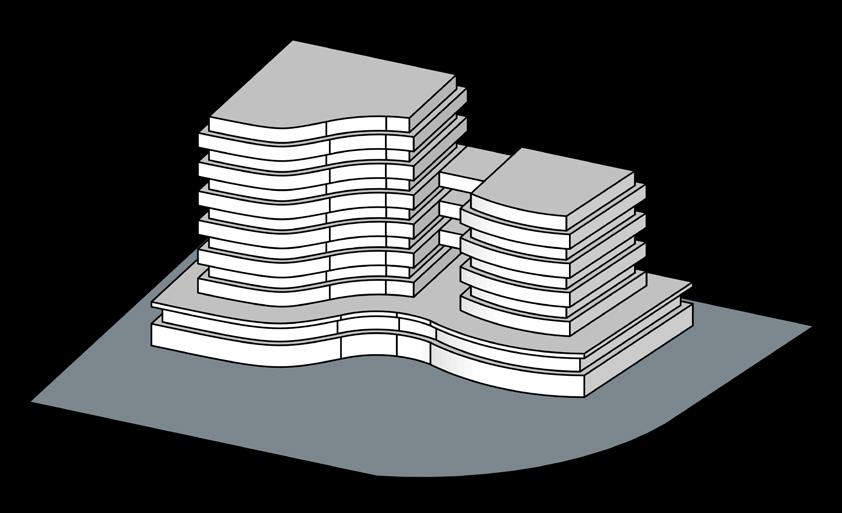
The addictive process between two high-rise building masses so that the building becomes more connected.
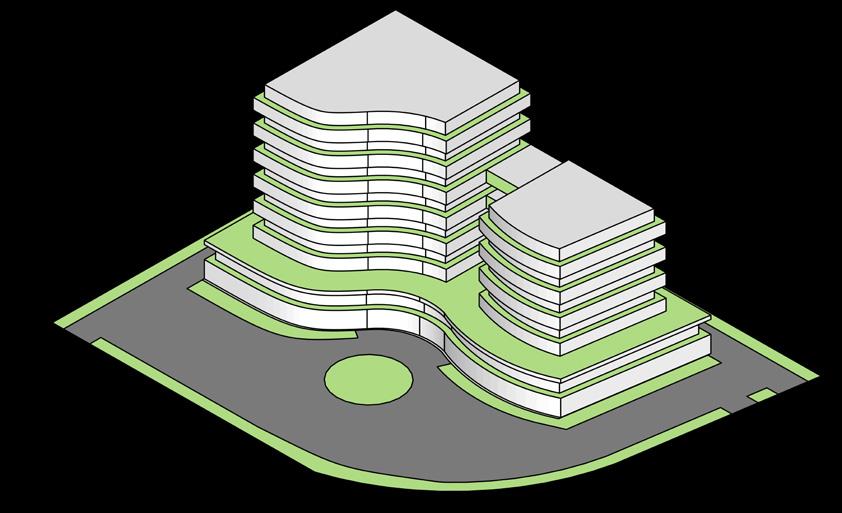
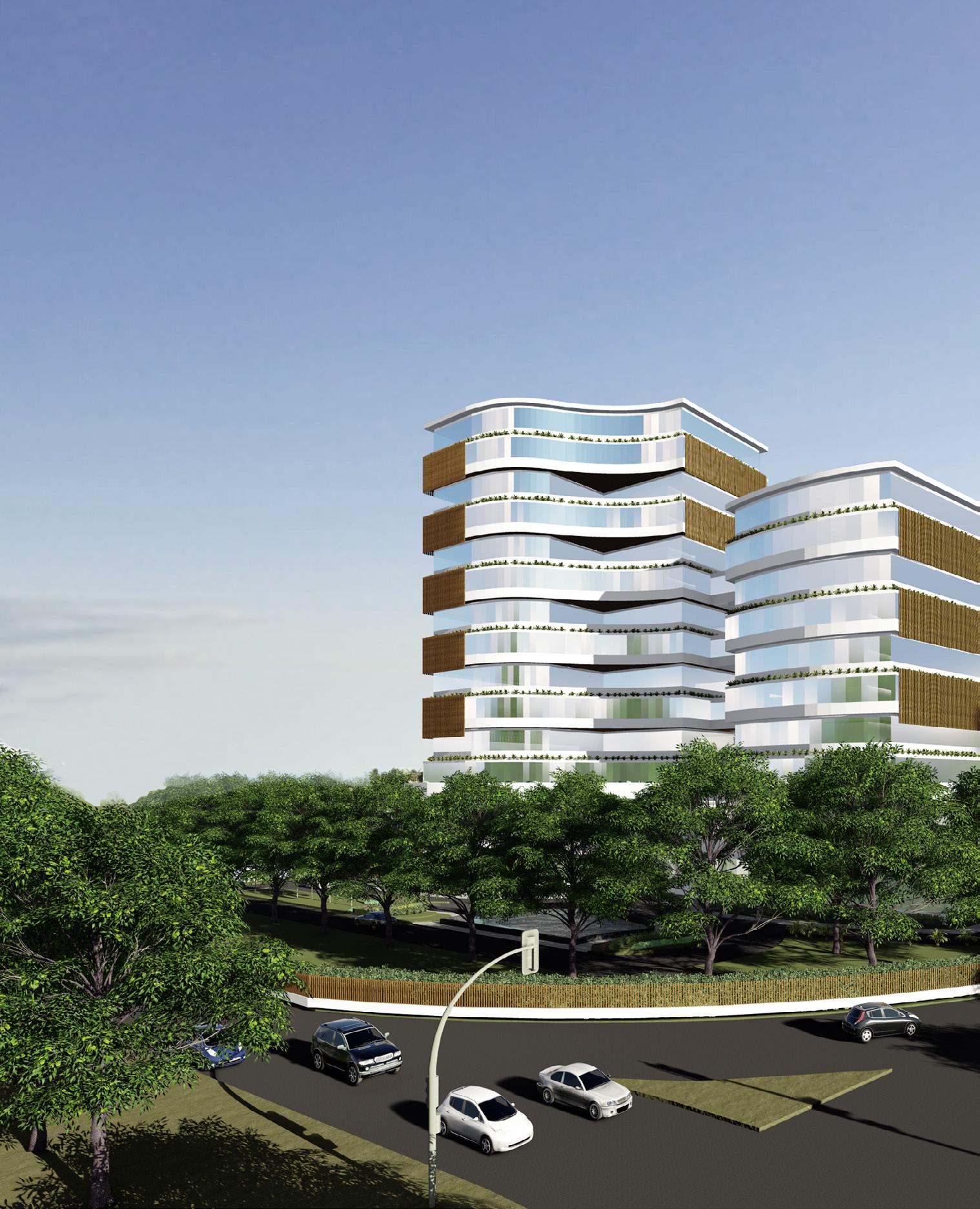
The articulation process of the building so it becomes more de tail. The shape was inspired by the dynamic and multi-layered shape of corals.
Adding green space on each layer to enhance the natural ef fect and the feeling of connec tivity with nature from the user perspective.
26 | 27 National Science Institute MASS TRANSFORMATION
Z on I ng DI agram
5th-10th Floor Laboratorium
4th Floor Student organization center
3rd Floor
Cafetaria, garden, mushola, copy center
13th-14th Floor Astronomy Department
11th-12th Floor Geography Department
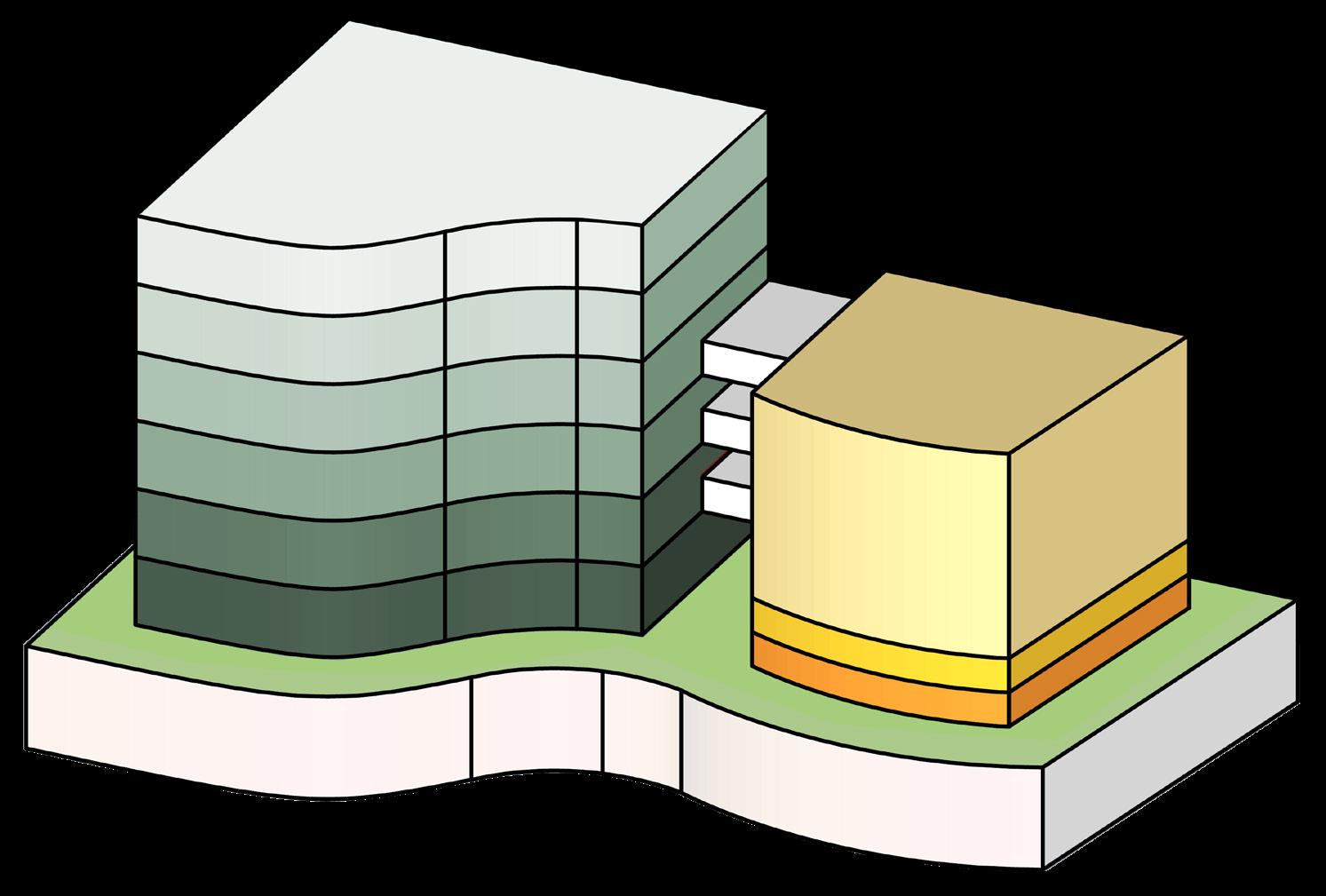
9th-10th Floor Geography Department
7th-8th Floor Chemistry Department
5th-6th Floor Physics Department
3rd-4th Floor Mathematics Department
1st-2nd Floor Public area, academic center, library, student lounge, auditorium
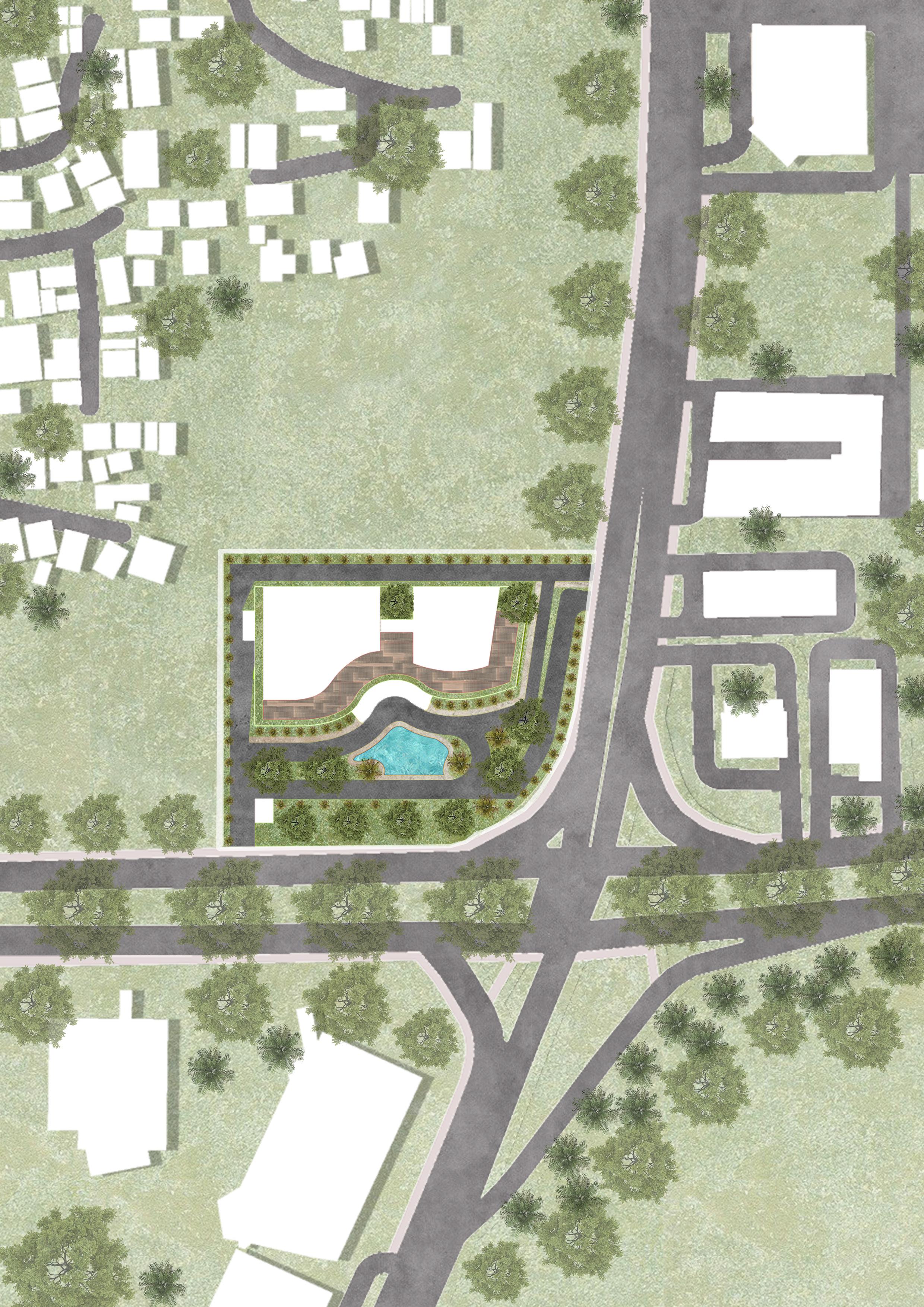
Two point entrances to avoid traffic con gestion
Lots of vegetation as a sun shaders to keep the envi ronment cool and as a noise barrier from the main road
28 | 29 National Science Institute
1st Floor - Floor Plan


5th, 7th, 9th Floor Layout Plan
2nd Floor - Floor Plan
11th & 13th Floor Layout Plan
3rd Floor - Floor Plan
12th Floor Layout Plan
4th, 6th, 8th, 10th Floor Layout Plan
14th Floor Layout Plan
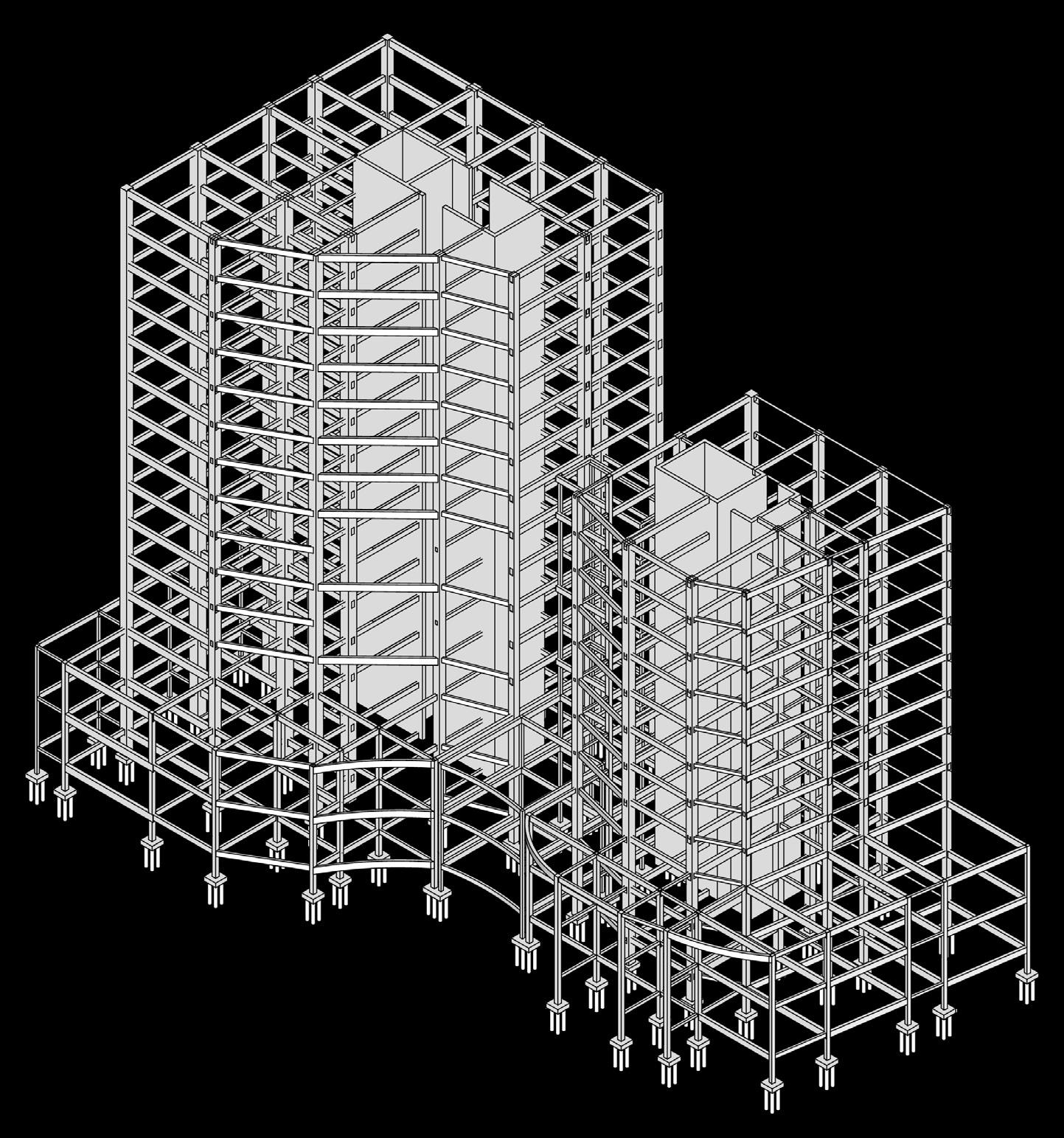
Frame Structure
30 | 31 National Science Institute Rigid
Reinforced Concrete Column 100 x 100 Bore Pile Foundation Central Core Central Core
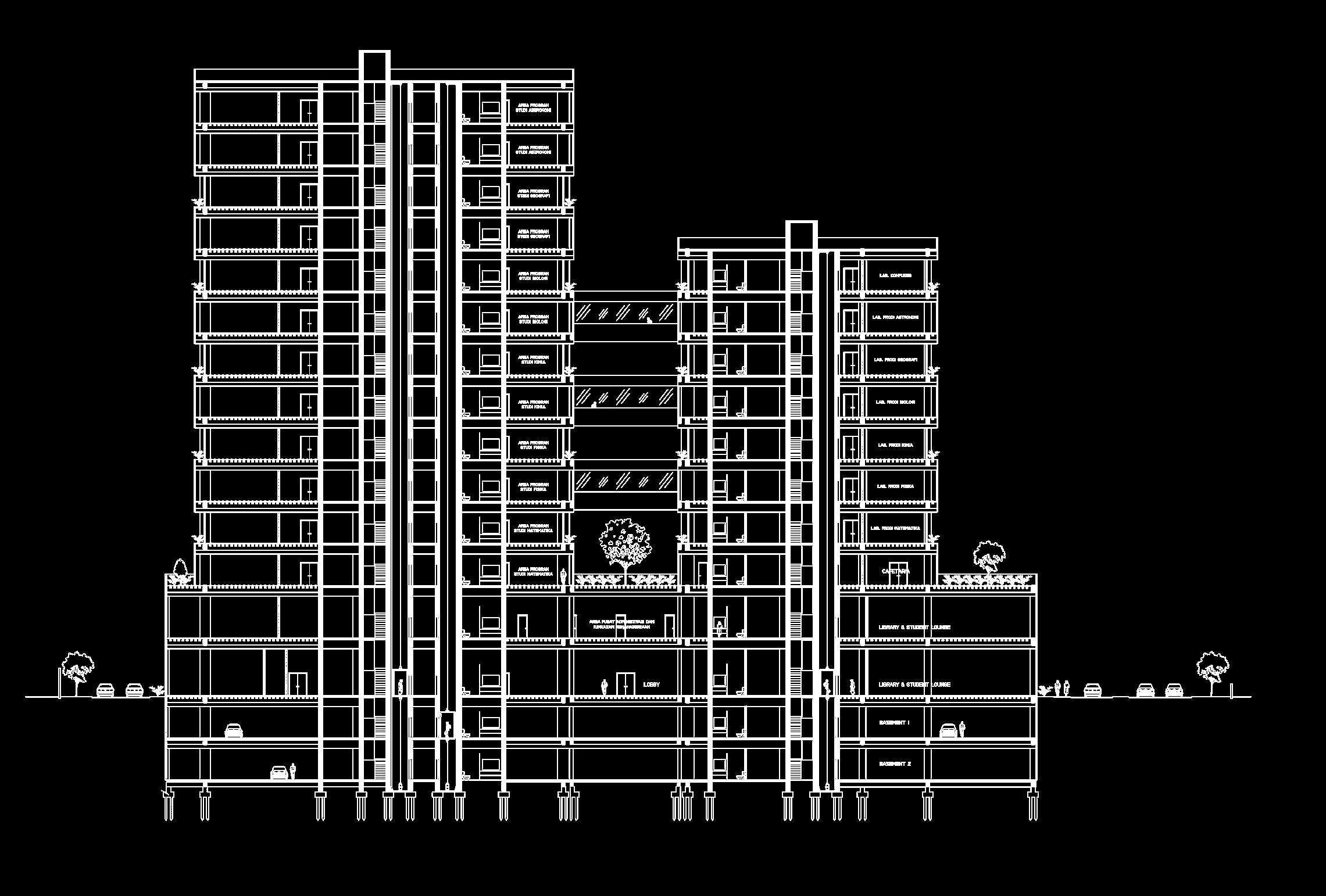
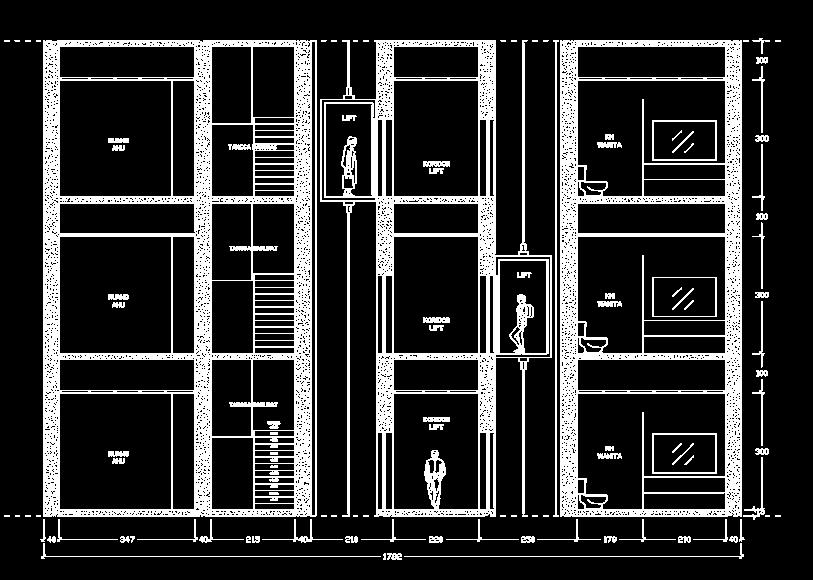
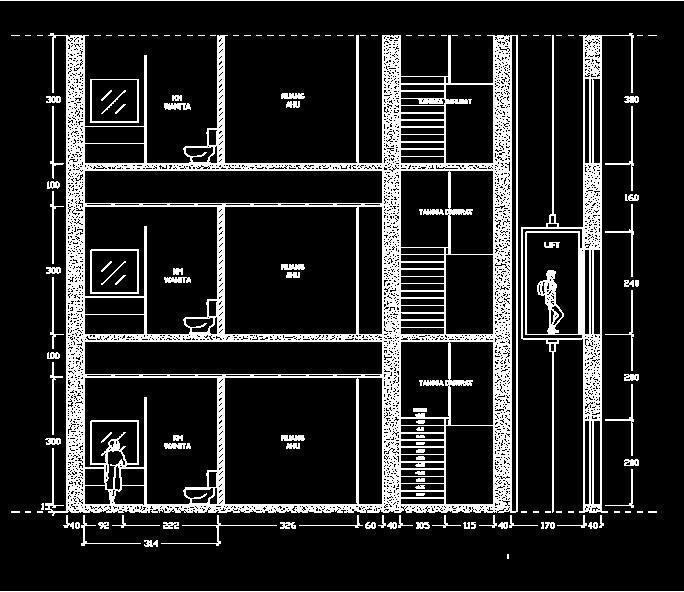
Detail Section - Core A Detail Section - Core B 35x65 & 15x25 One-Way Pan Joists and Beams System Glass curtain wall
Installment of the wood panels as the building's sec ondary skin on the eastwest side to reduce heat ra diation from the sun to the building.
32 | 33 National Science Institute
The
Located in Eco Moyo

Centre, that is a

school that comes
village.
in
34 | 35 The Venn Room
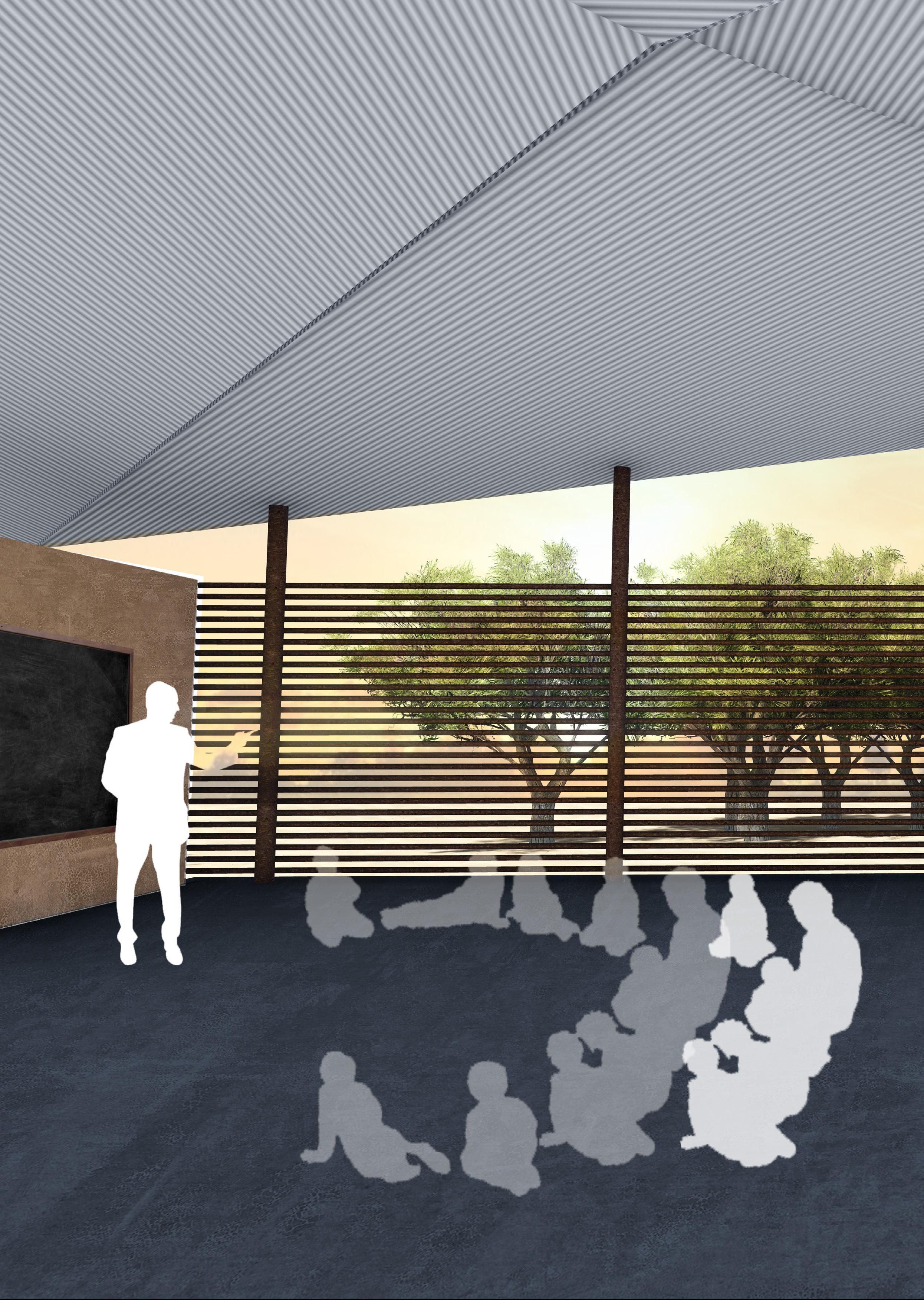
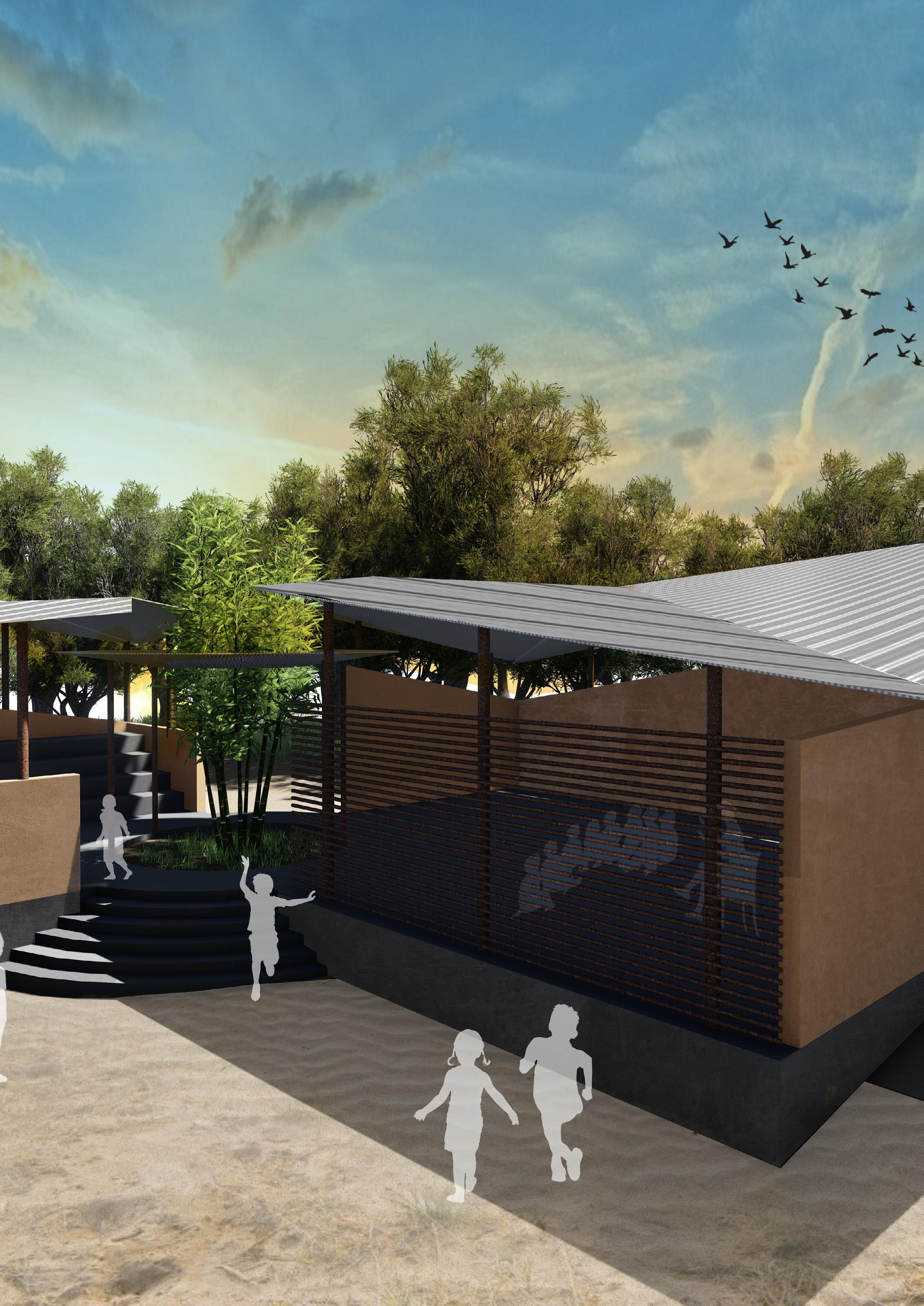
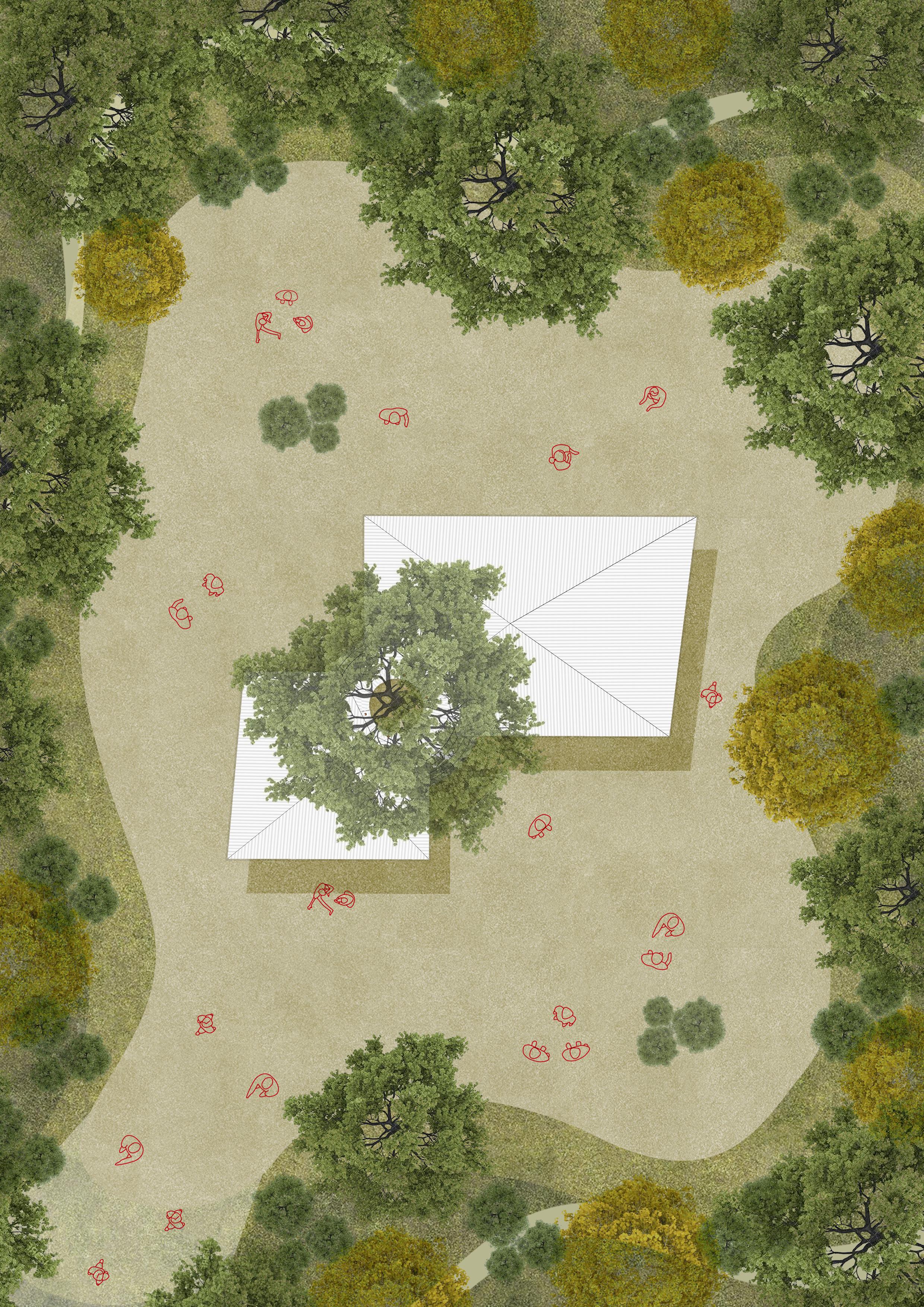
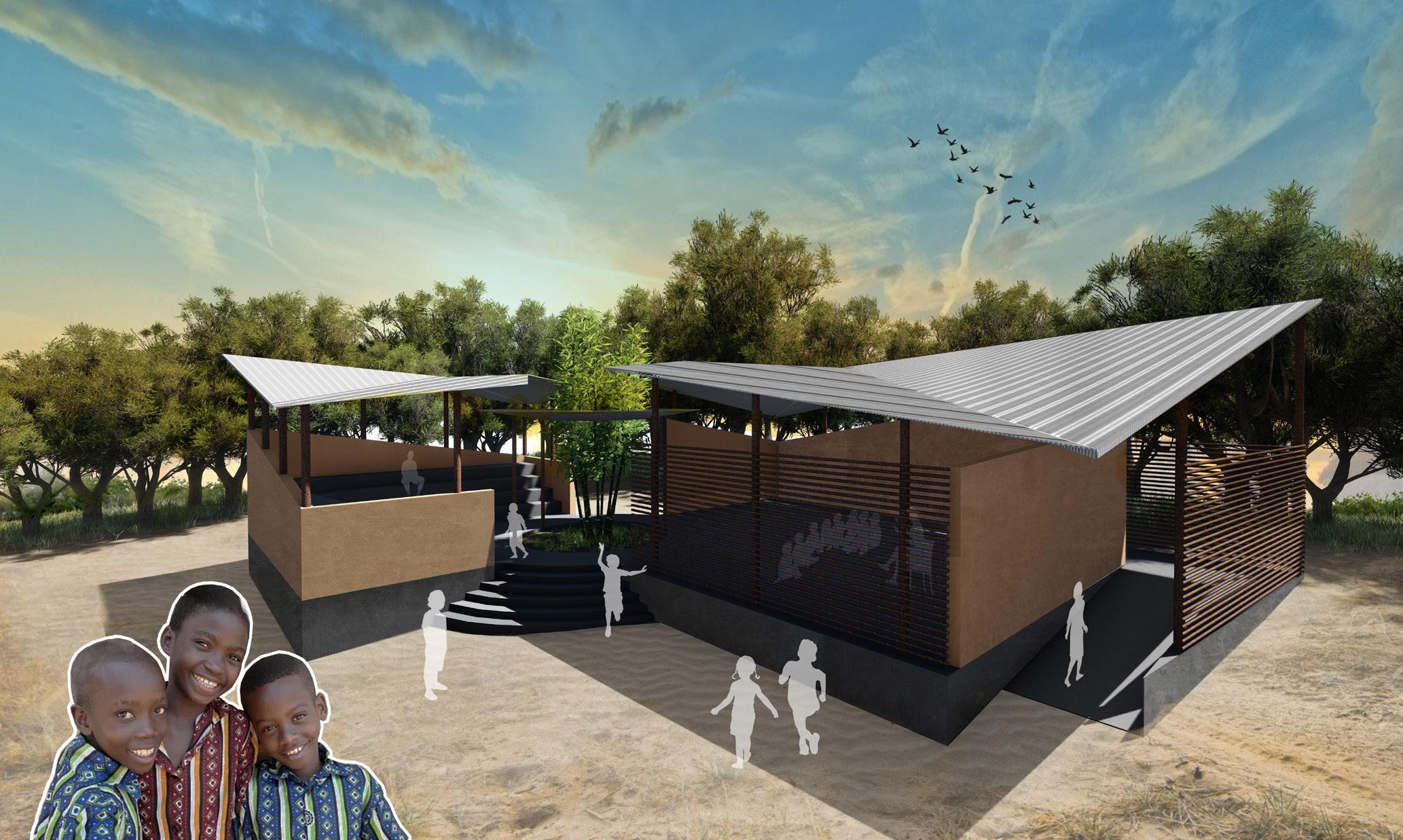
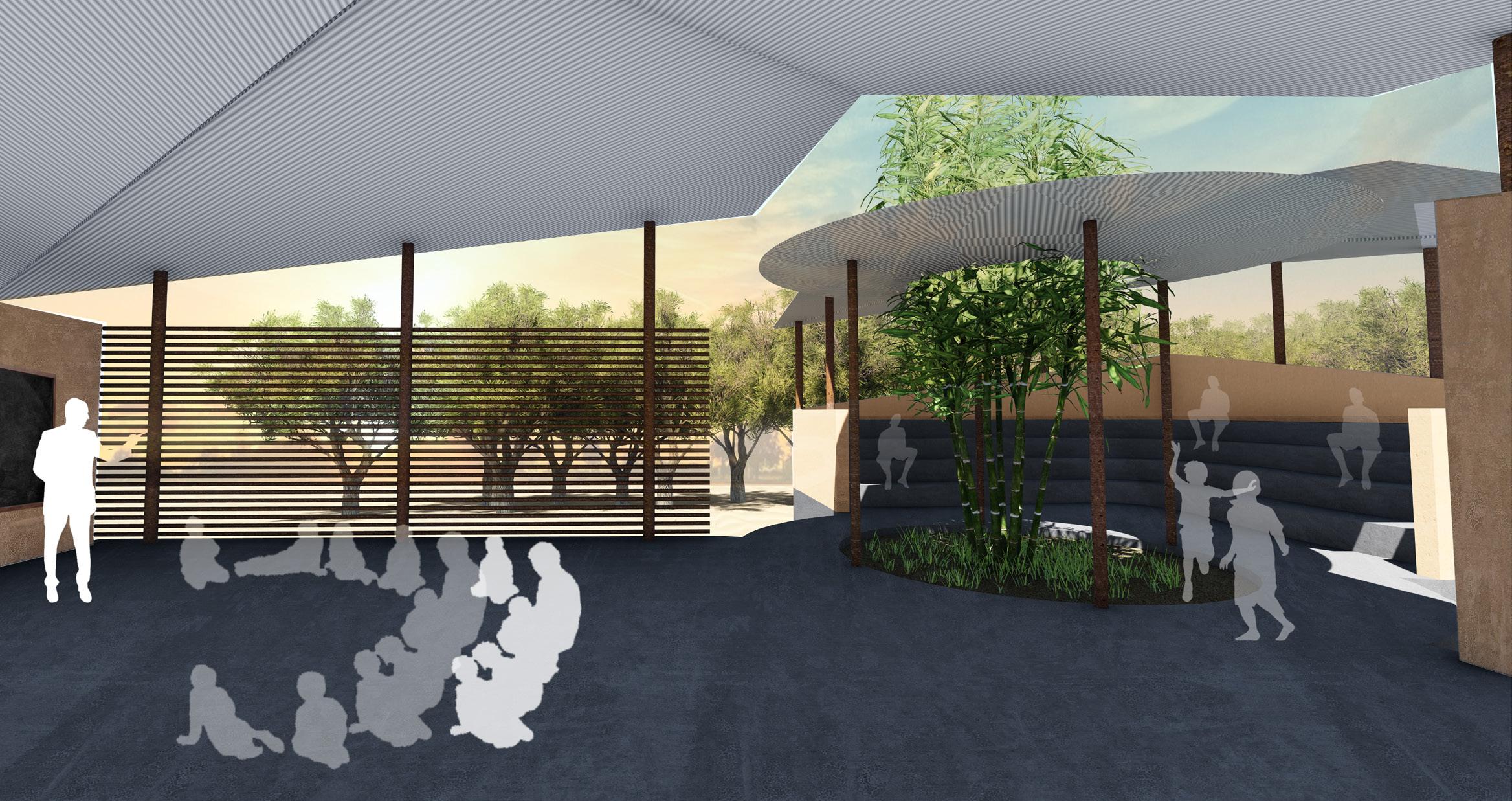
Venn Room is a place that can be used for playing, teaching, and gathering. This place function and have qualities at three different scales: a couple, a group, and a crowd.
Education
unique farmbased
with the ambition to provide free primary education to children
Dzunguni
TH e V enn room YEAR: 2021 | BUILDING TYPE: Multipurpose Classroom | CATEGORY: Int. Competition (120 Hours) - Team of 2 bac K gro U n D Kilifi, Kenya
TH e concep T
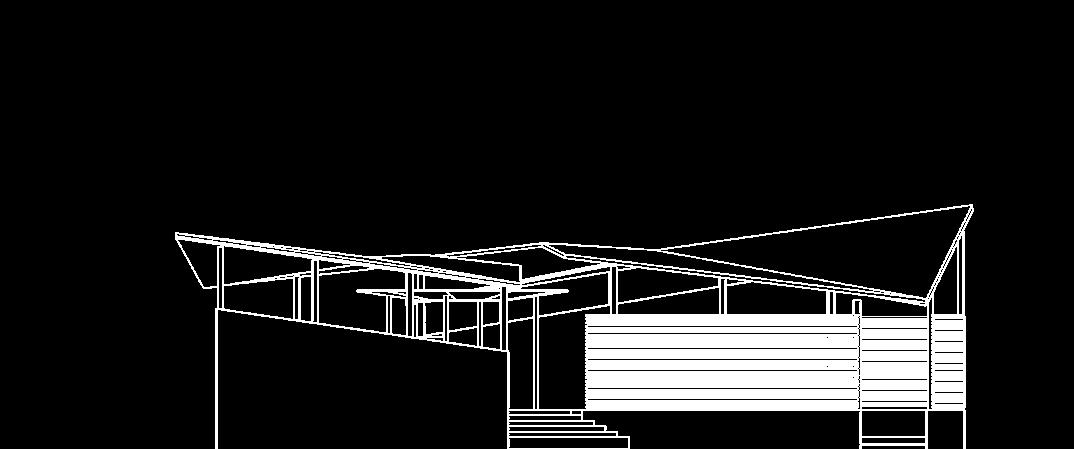
This project is based on the Venn diagram system which widely used to shows the logical relation between sets. The concept was applied by forming an architectural space (layout) based on a wedge to divide the function and capacity of the space. This Venn diagram system divides the spaces into three parts, where the space on the section is used for the transition space between the other two spaces.

36 | 37 The Venn Room
Group
Couple
Crowd
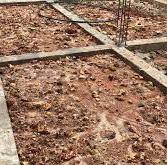
Kifusi
Pulverized coral stone or recycled material from demolished build ings for the leveling mass
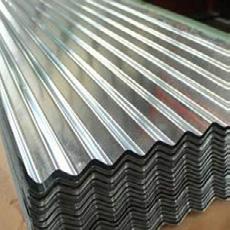
Roofing material for the

The program for this building was for a multipurpose classroom. There are 2 main aspects that took notice when de signing this building, which are the ther mal comfort factor in equatorial climates and available local materials.
38 | 39 The Venn Room
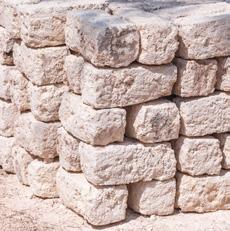
Coral Stone With clay/earth as the finishing materials
Mabati Sheet
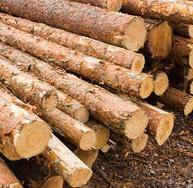
Casuarina
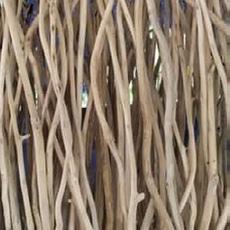
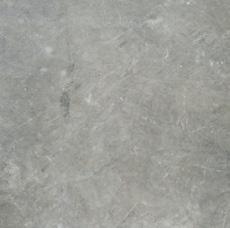
Twig Material to create partition walls that allows the breezes coming in from outdoor Sheet building Concrete Flooring material for the building
Wood Log Material for the main structure
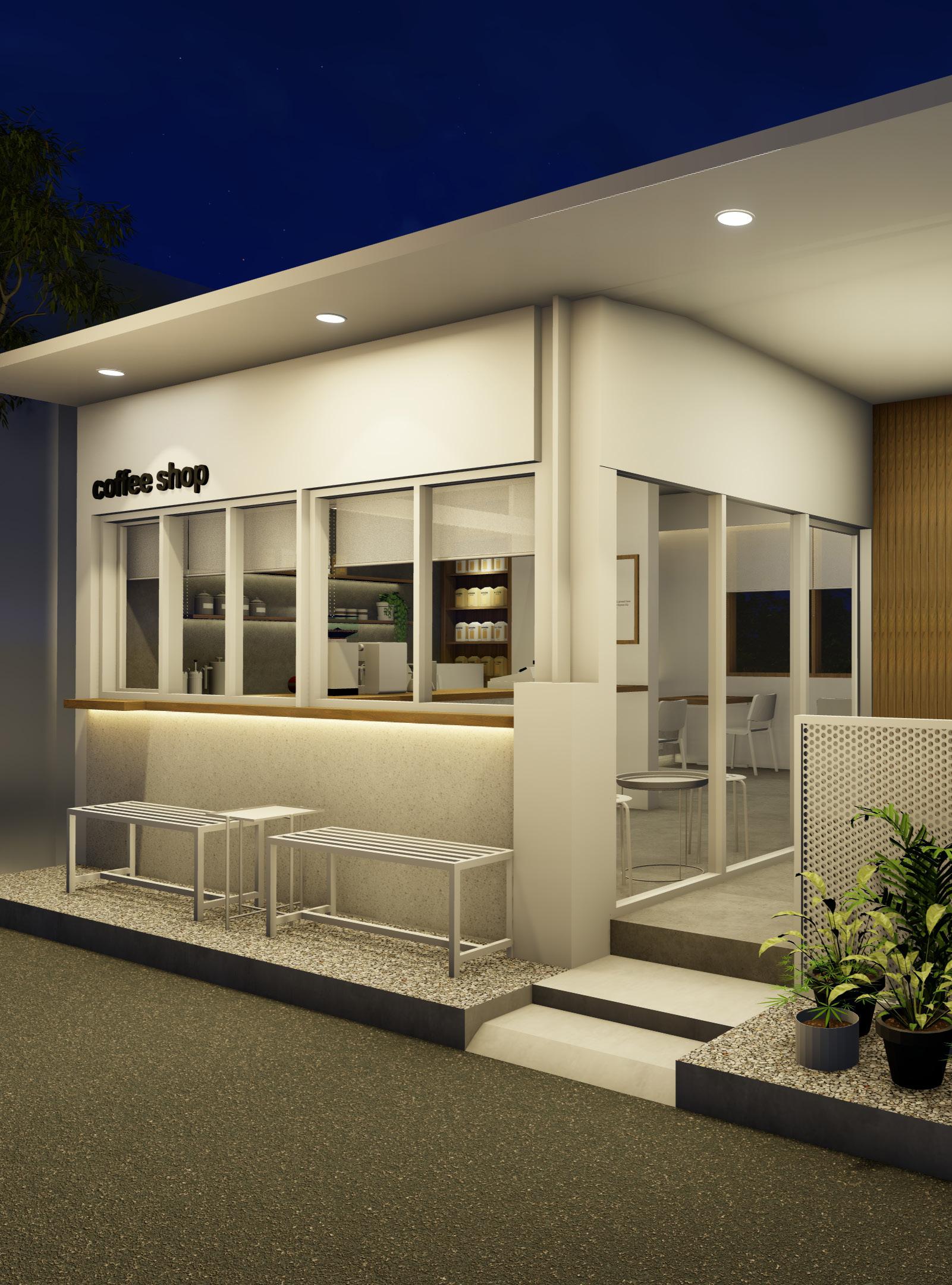
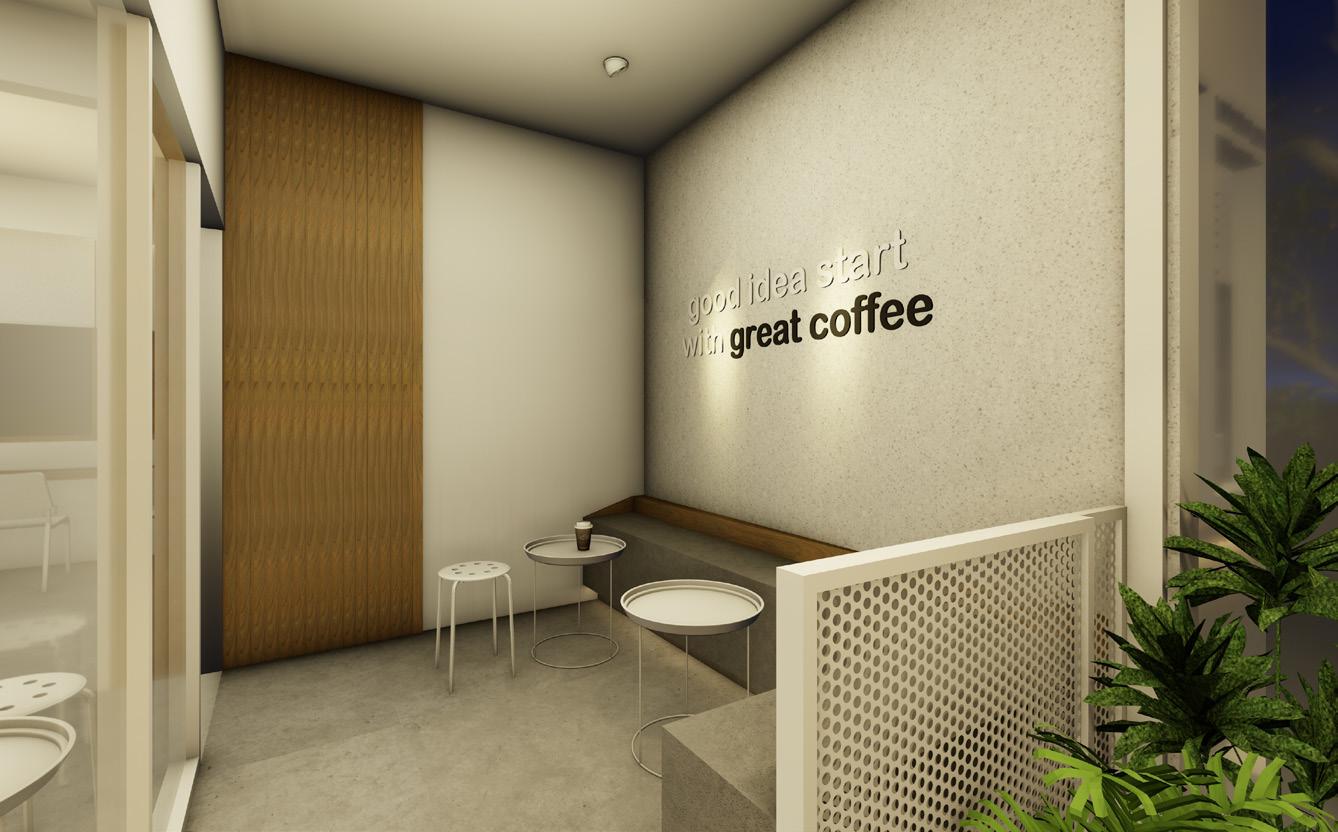
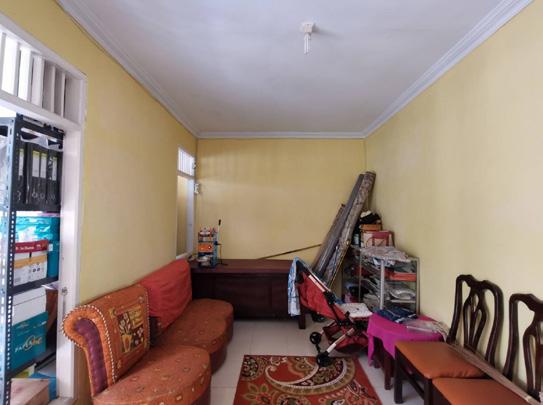
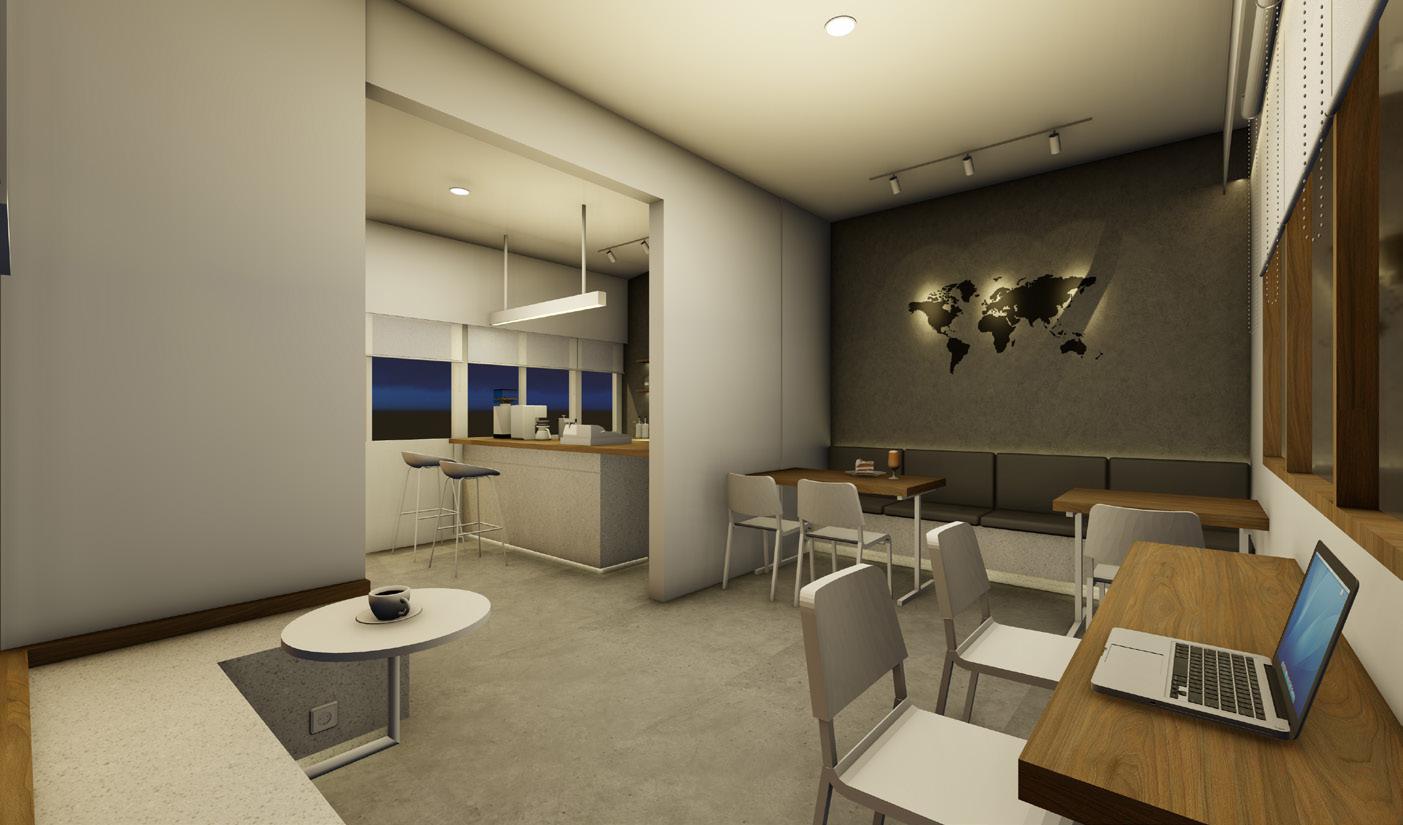
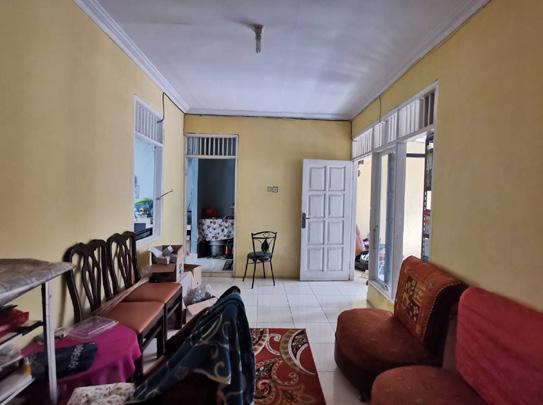
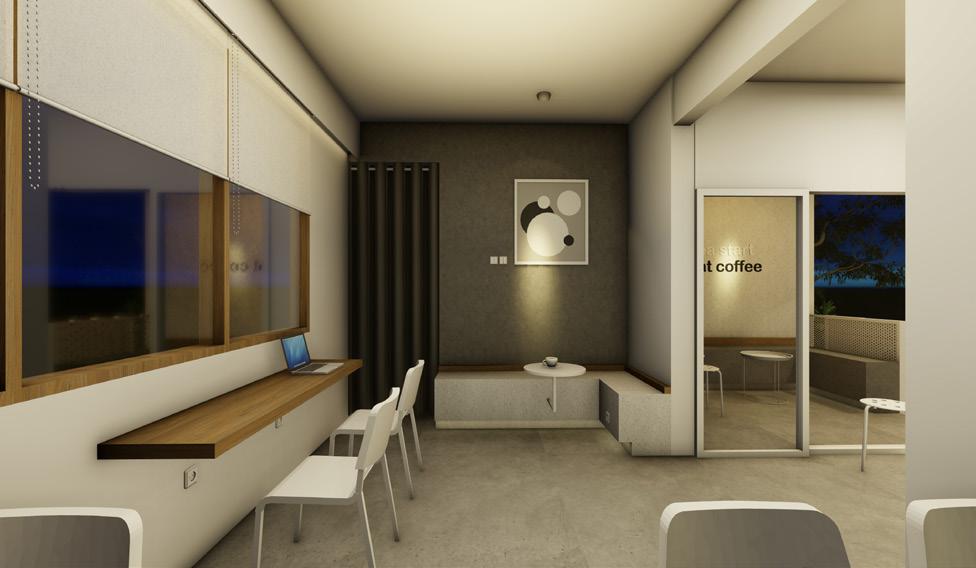
is my first experience as an interior designer who works solo. I got a project to trans form a 35 m² area in a house into a coffee shop with a limit ed budget. The main goals of this project is to make a com fortable place
young folks to have the best coffee expe rience from it's slow bar. This place also provides working and outdoor area
people to hangout.
scope of work started from meeting
the clients, sur veying
existing site (doing
docu
concepts and mood board,
mod eling,
ing,
40 | 41 Brainmaker Coffee Hub This
for
for
My
with
the
a measurement and
mentation), creating
3D
rendering, present
and making construction drawings. bra I nma K er coffee HU b YEAR: 2022 | BUILDING TYPE: Hospitality | CATEGORY: Proffesional Freelance (Renovation Project) bac K gro U n D
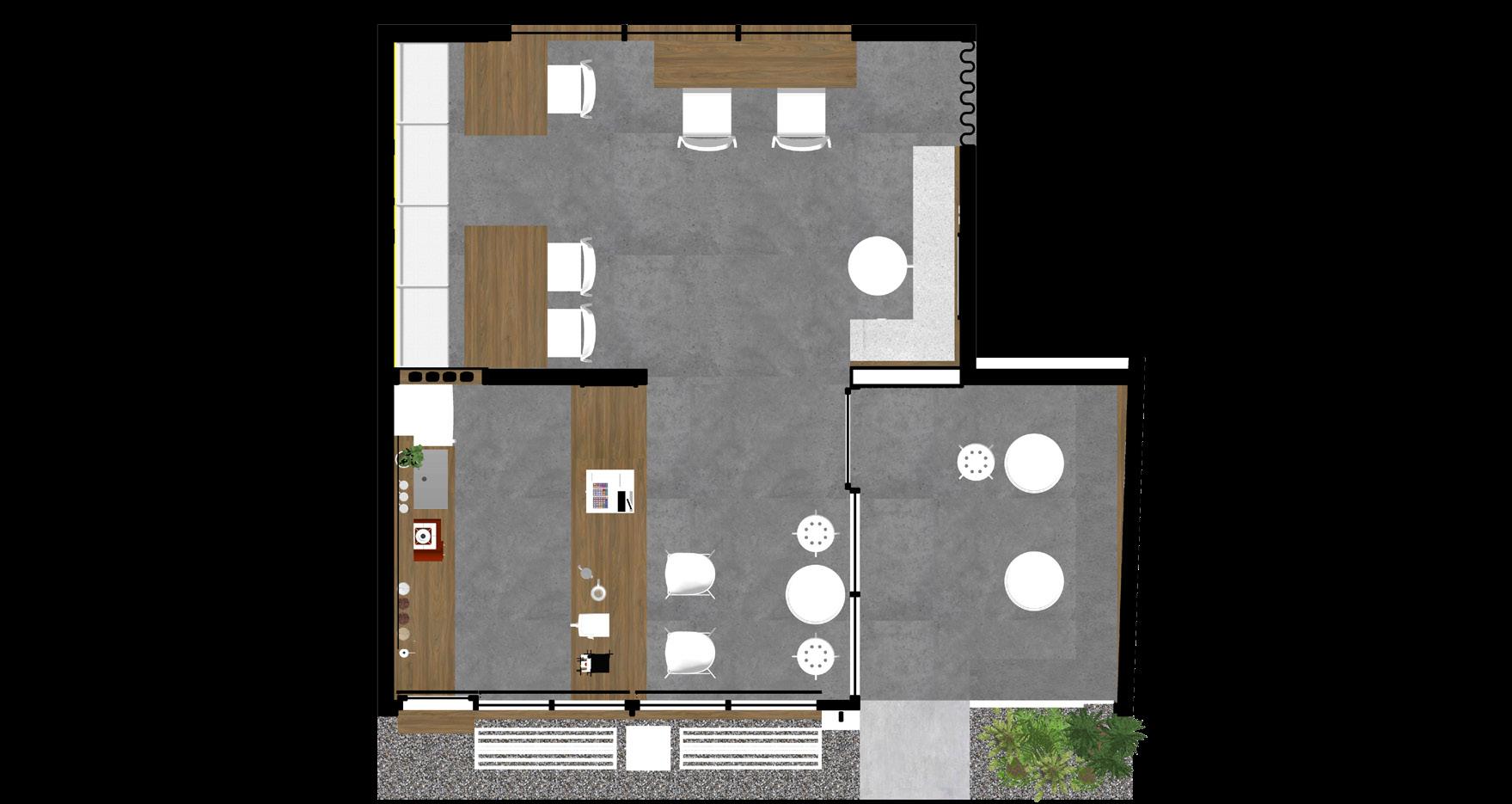
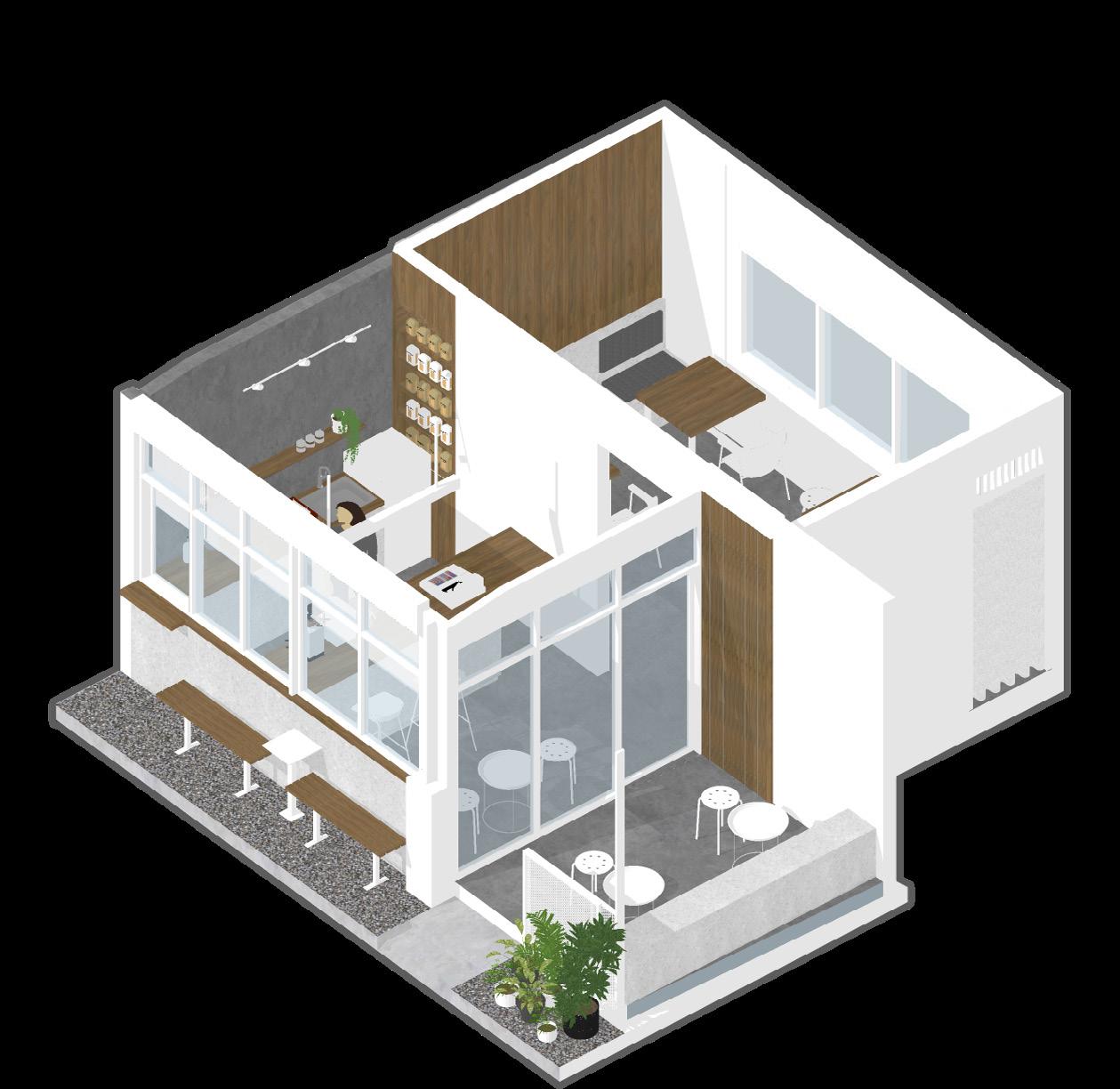
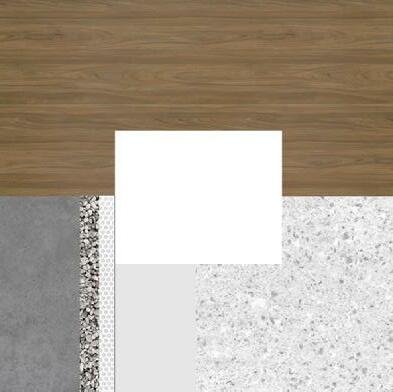
42 | 43 Brainmaker Coffee Hub layo UT plan IS ome T r I c VI e W Terrace : 4 Transition Area : 5 Slow Bar Area : 5 Working Area : 10 S eaTI ng capac IT y maTerIal boarD
T ran S - forma TI on
fron T faca D e
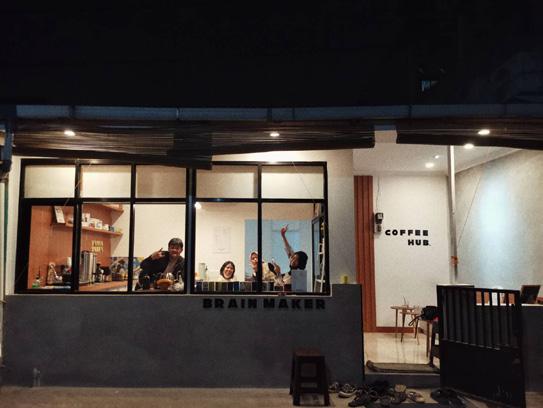
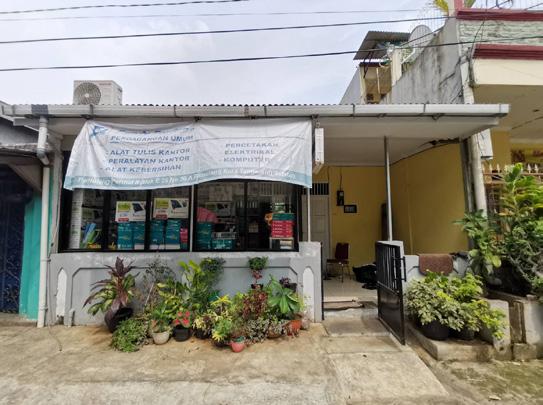
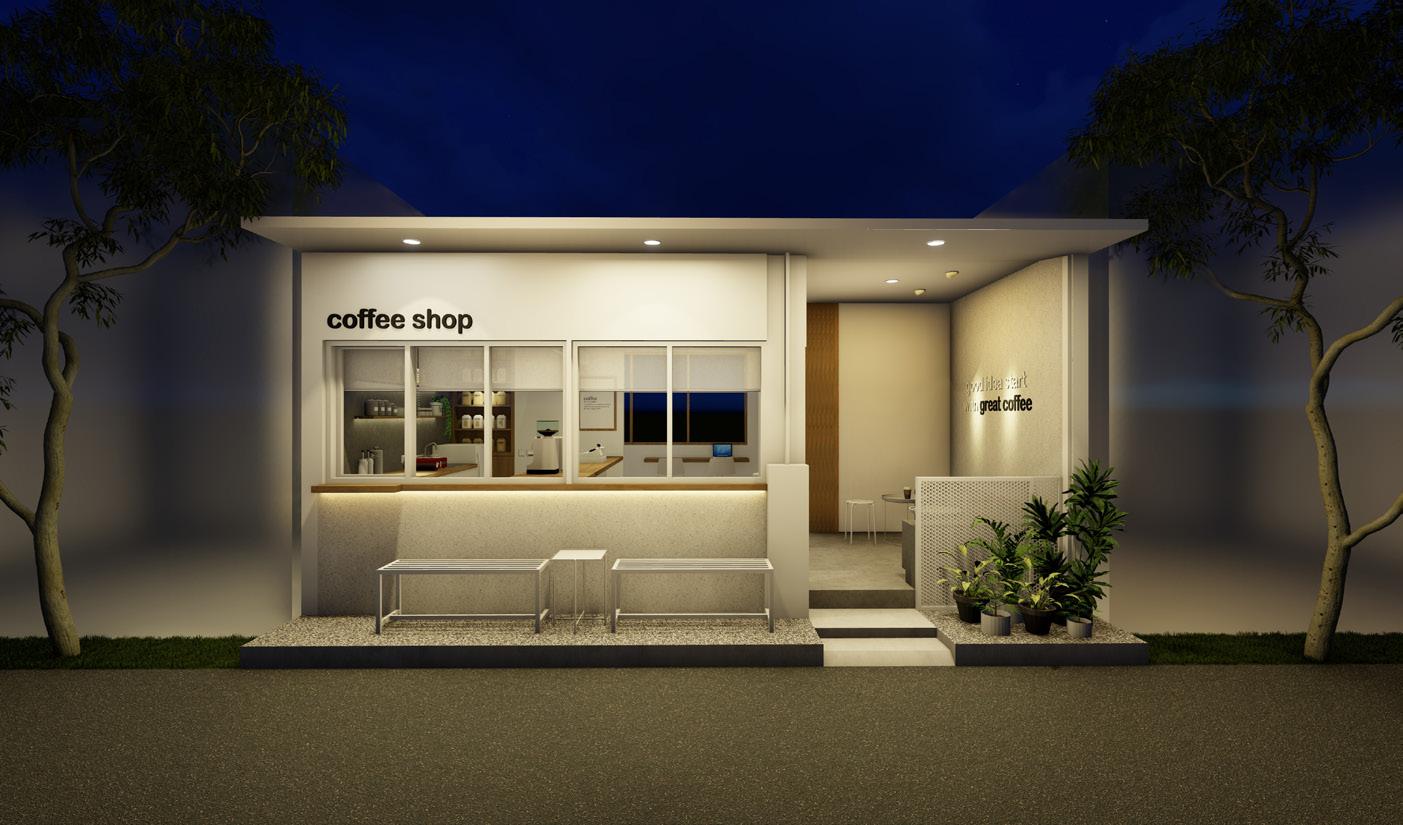
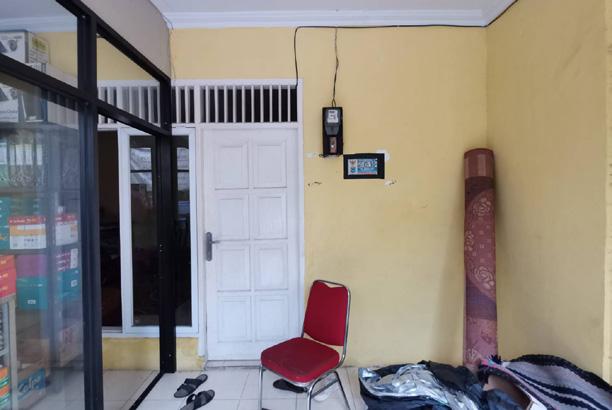
Located in a dense neighborhood, the facade of the building is transformed to a more modern and clean look, so it can easily get caught by sight.
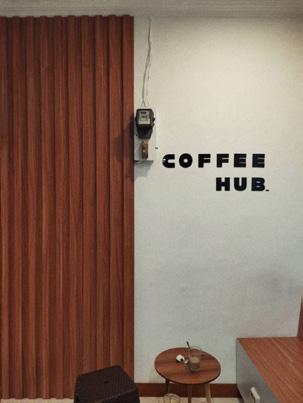
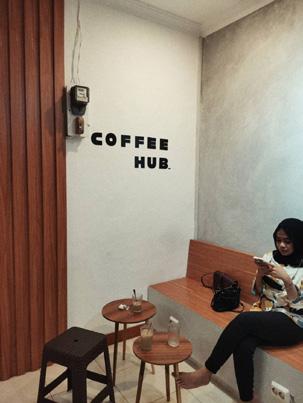
T ran SITI on area
Partition wall was being made not just for aesthetic reason, but also to cover the front door (as the building originally is the house of the owner), so the permanent wall not permanently covered.
D e SI gn
T ran S - forma TI on
Slo W bar area (VISIT or'S
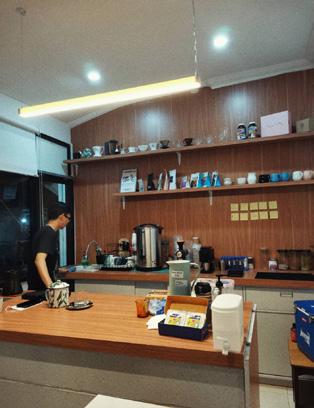
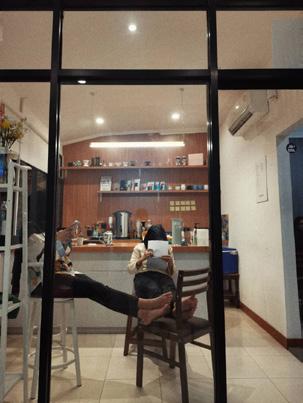
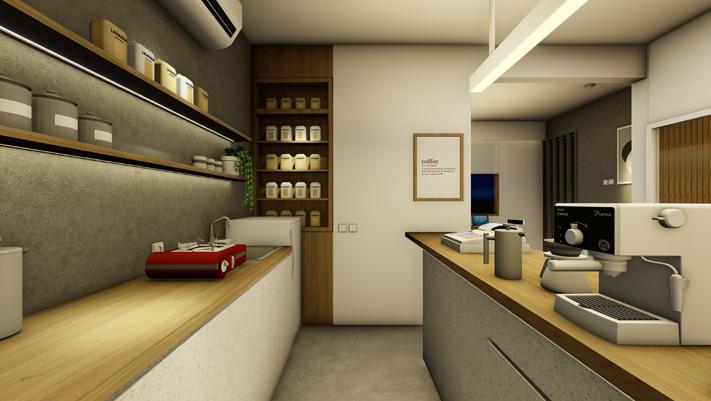
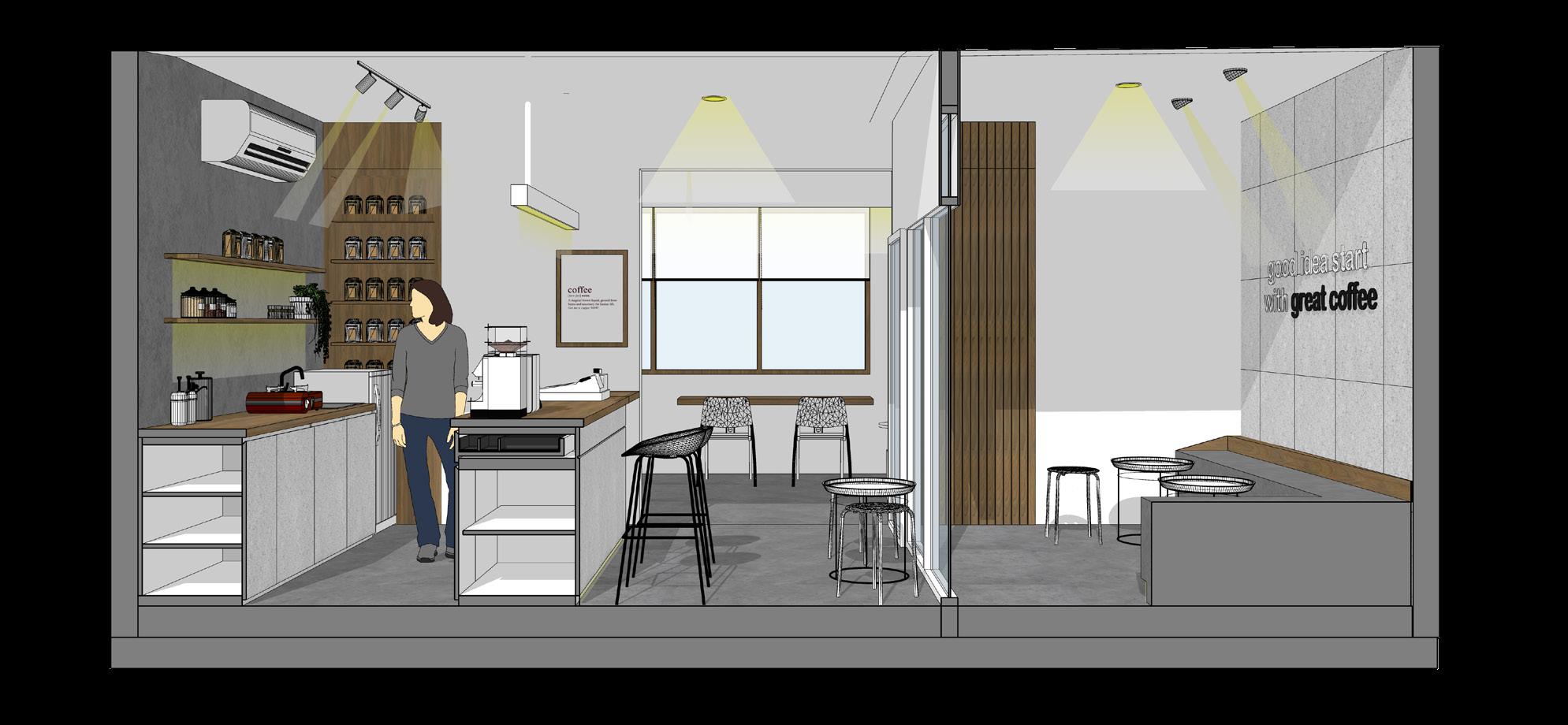
The main activity in this area take place at the table between the barista's and the visitor's. Therefore, the table is made with a height of 90 cm and a size wide enough to create the best comfort and coffee experience among them.
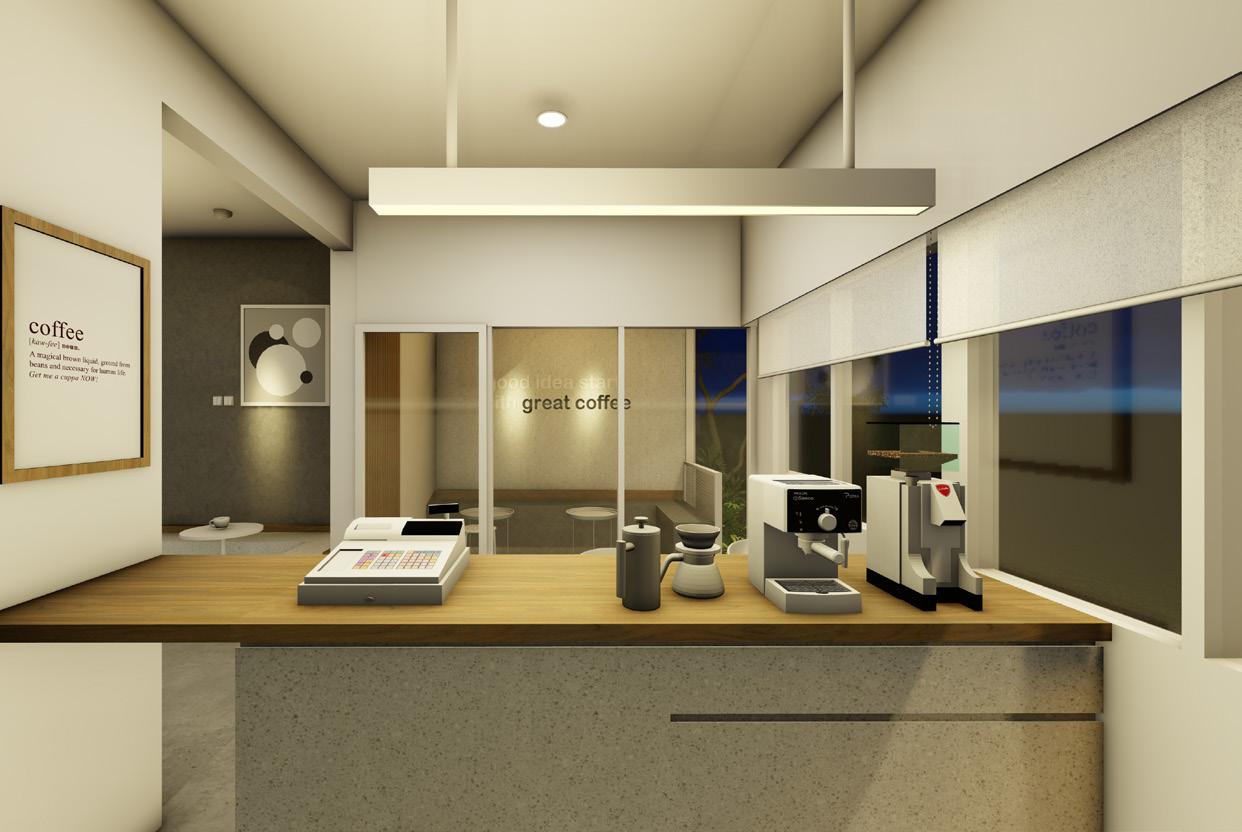
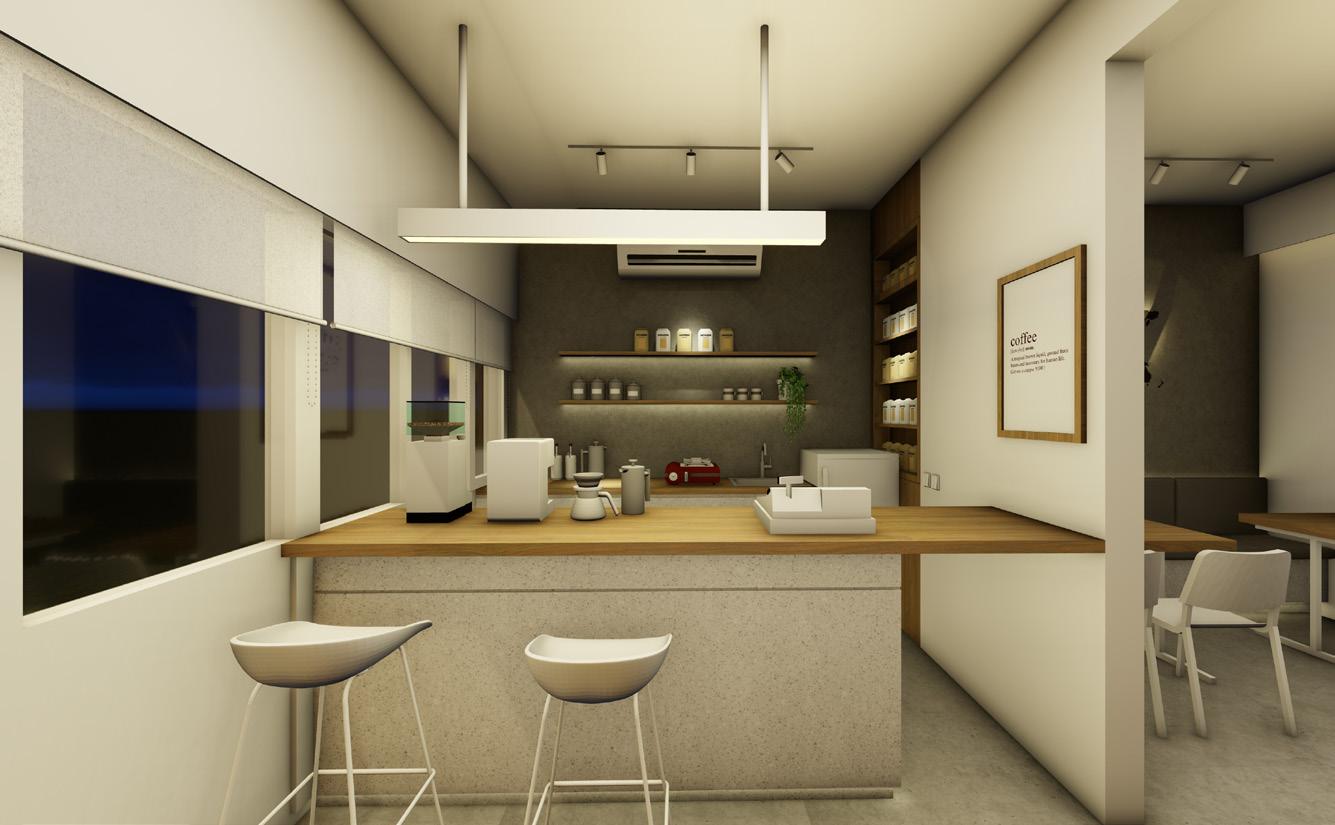
S lo W bar area ( bar ISTa'S VI e W)
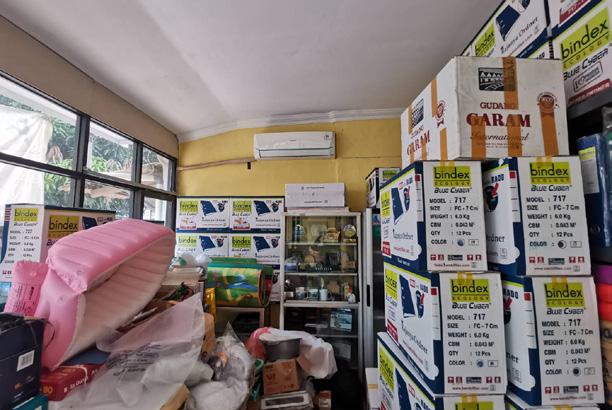
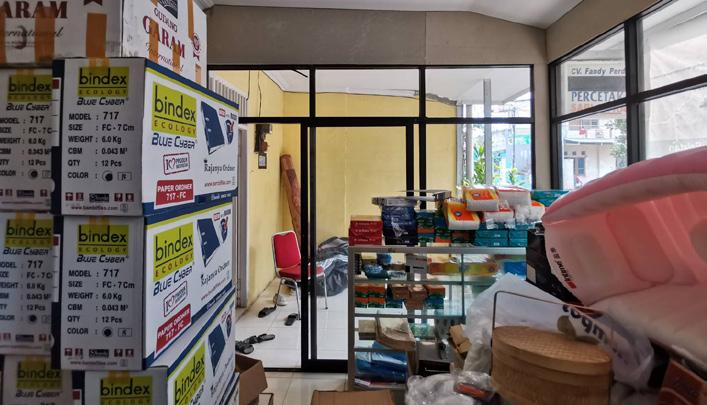
Utilize the additional external space that already exists and break down a part of the building wall to create a new circulation path.
44 | 45 Brainmaker Coffee Hub
D e SI gn
VI
e
W)
W or KI ng area
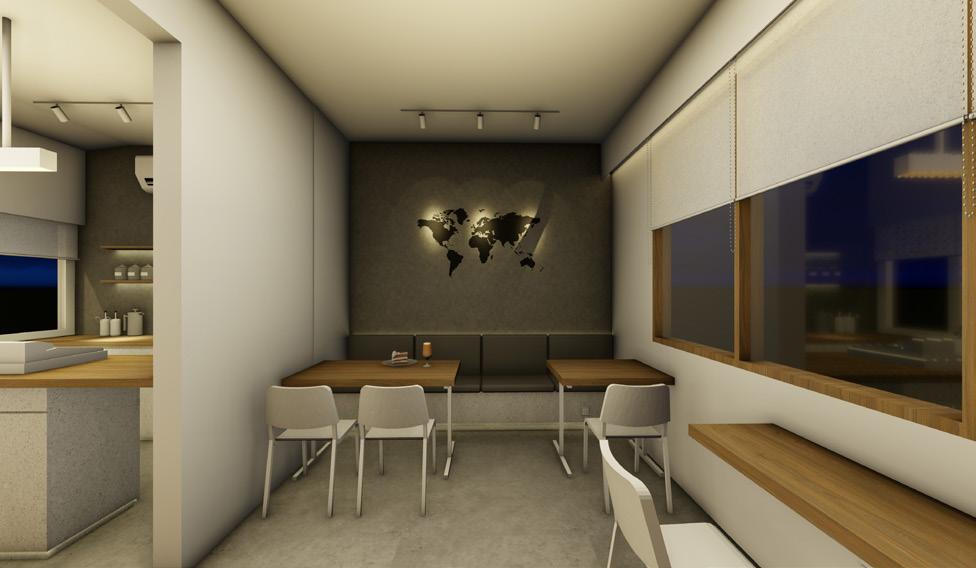
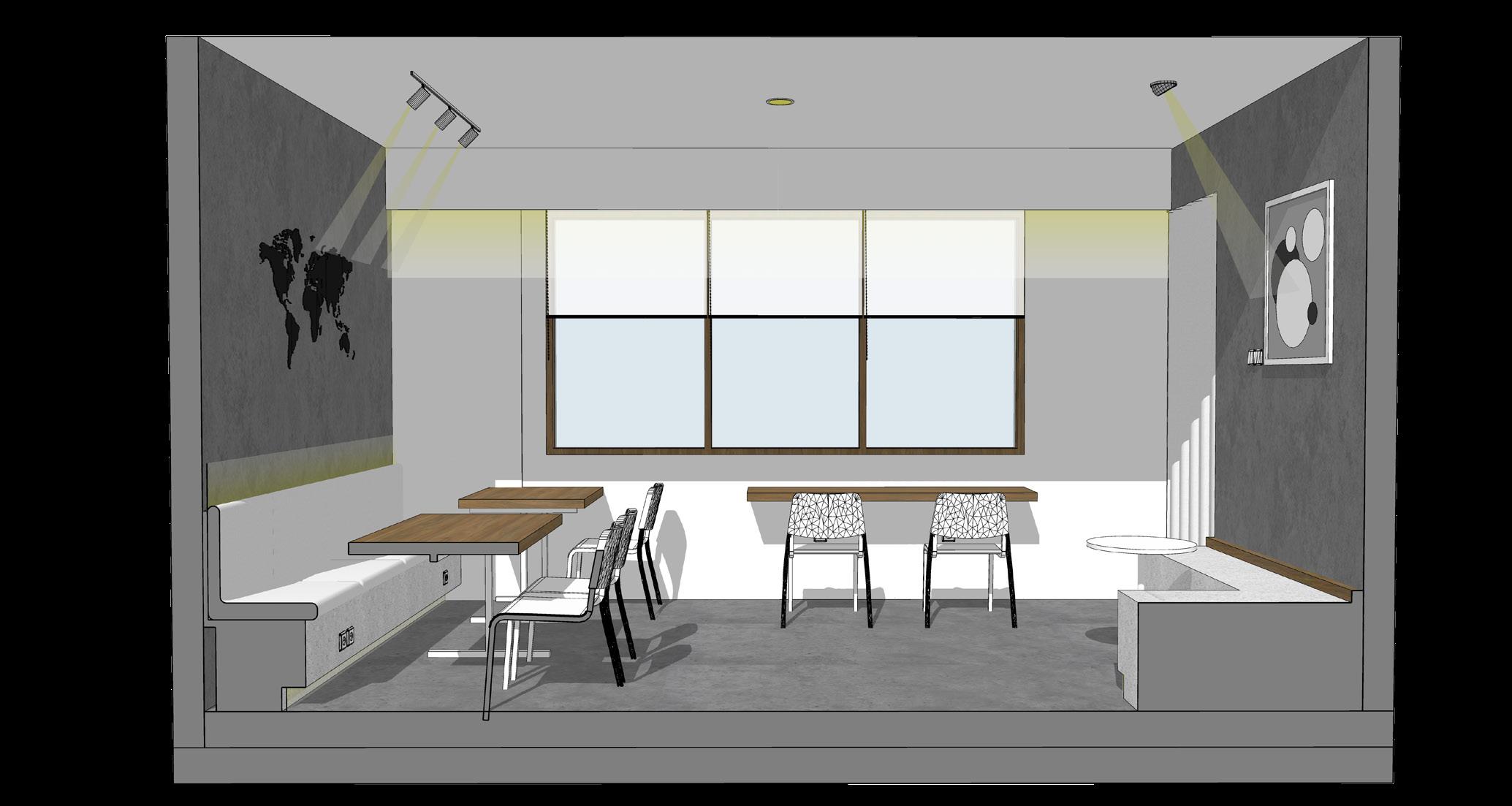
Make additional windows on one side of the wall that directly faces the backyard to maximize natural lighting and make a better view.
Seating layout that maximize the visitors capacity without making the space feel to tight and stuffy.
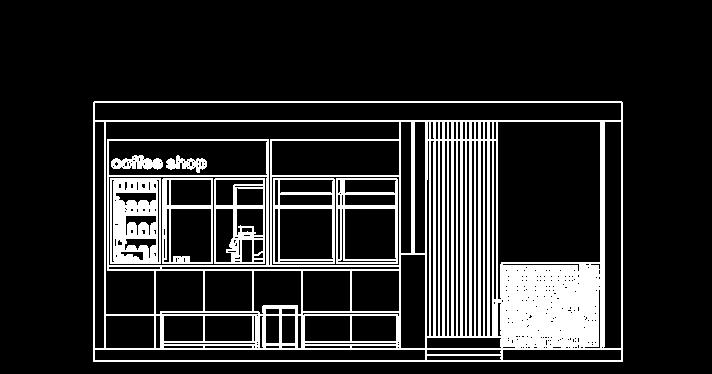
46 | 47 Brainmaker Coffee Hub S c H ema TI c D e SI gn
Section A - Transition & Slow Bar Area
Section B - Working Area
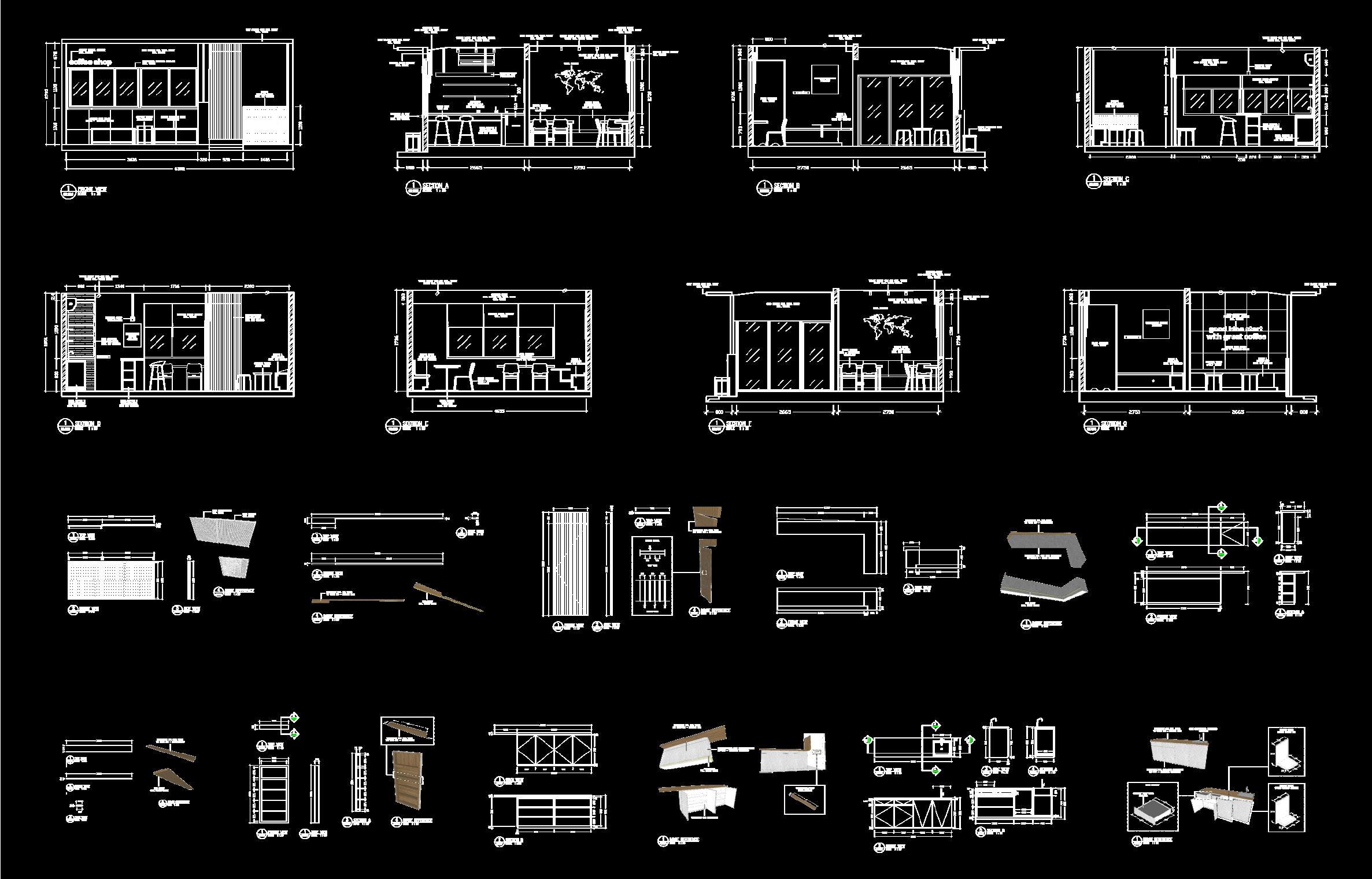

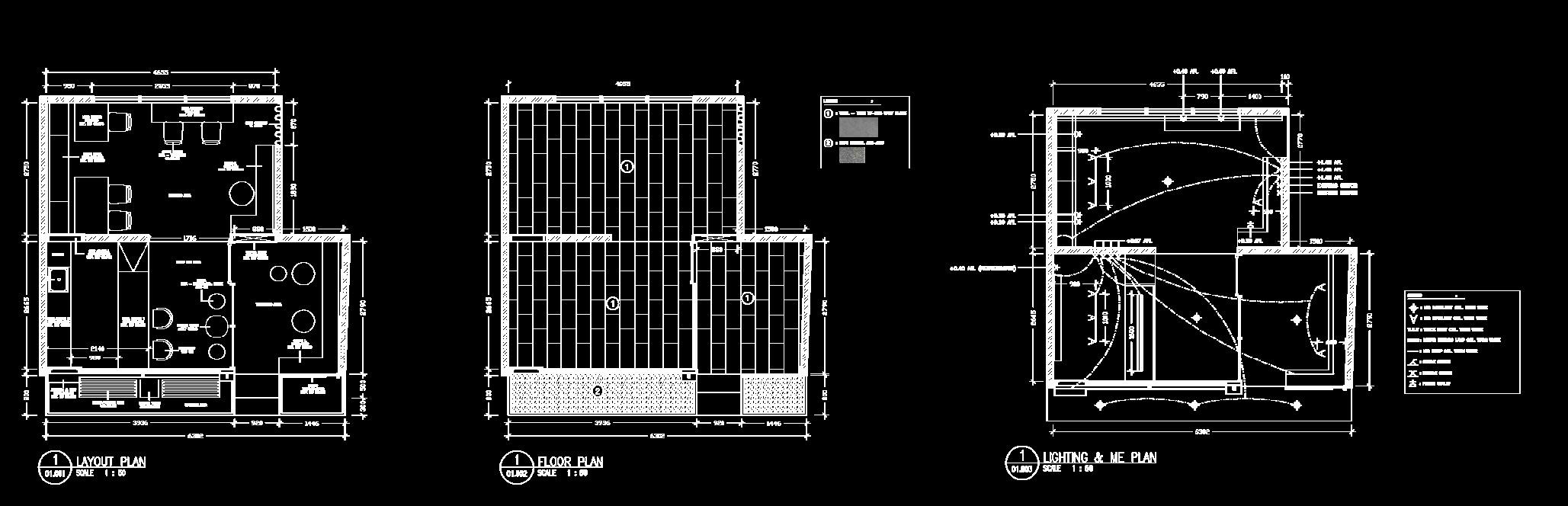
SH op D ra WI ng
T al K K op
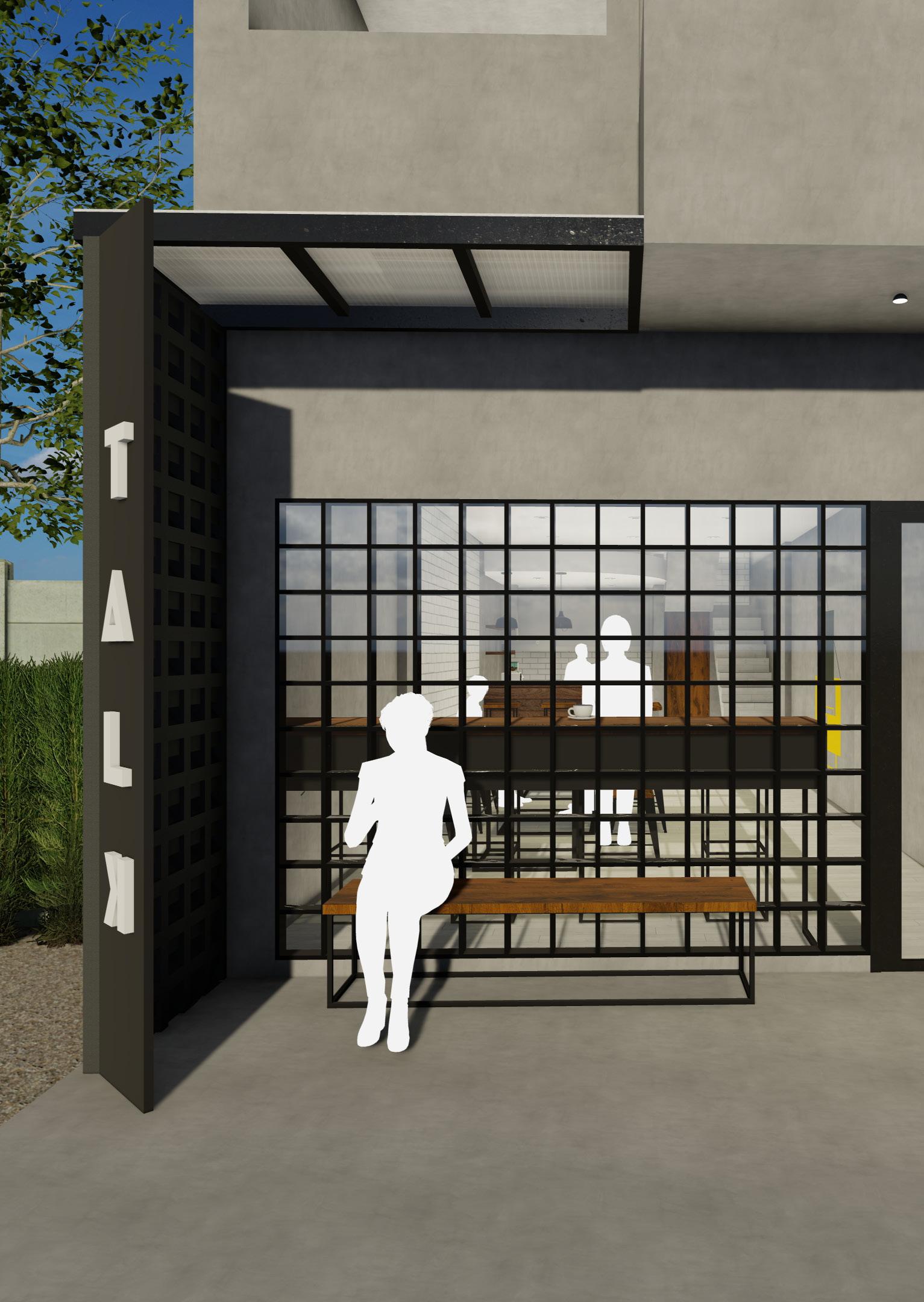
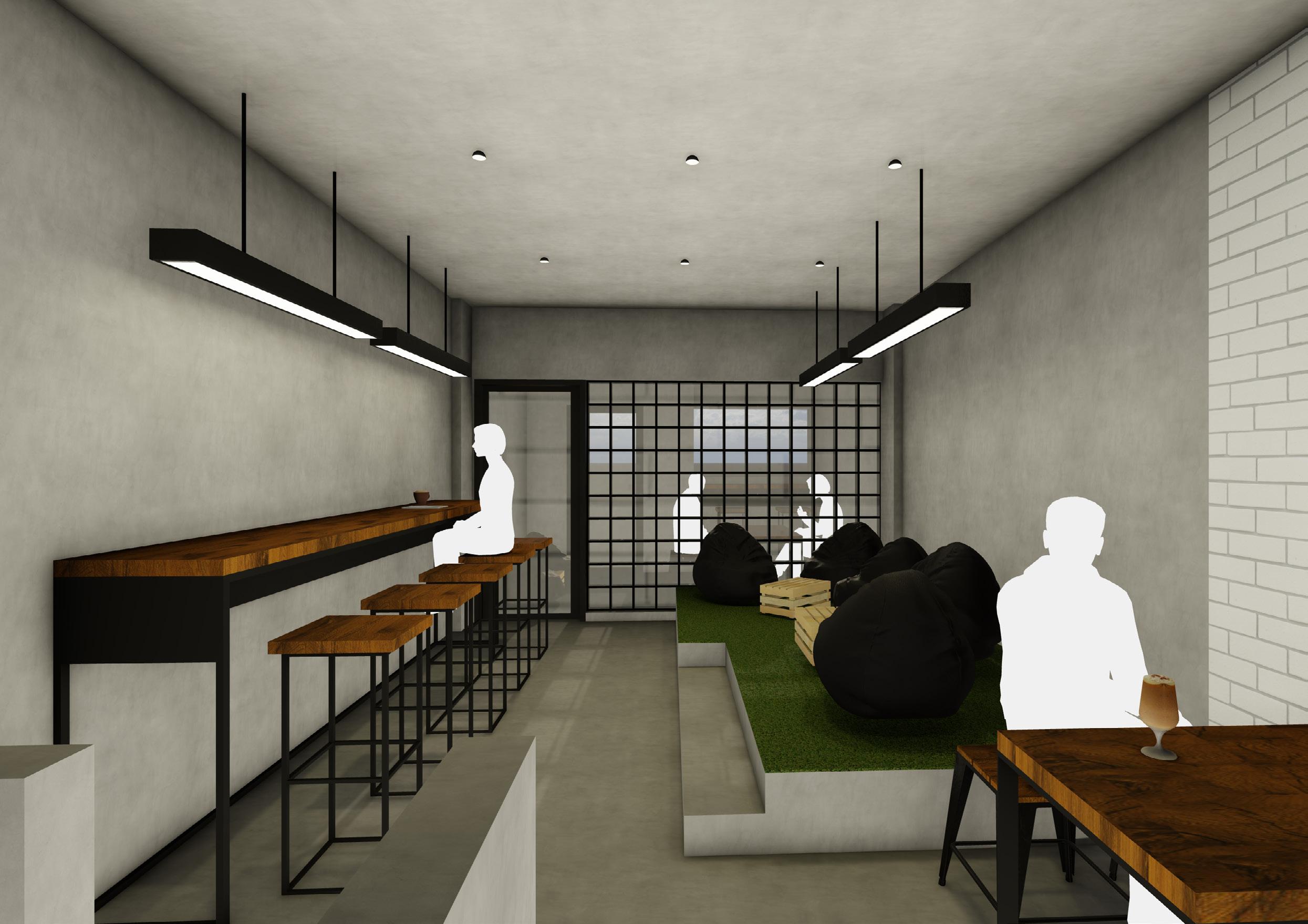
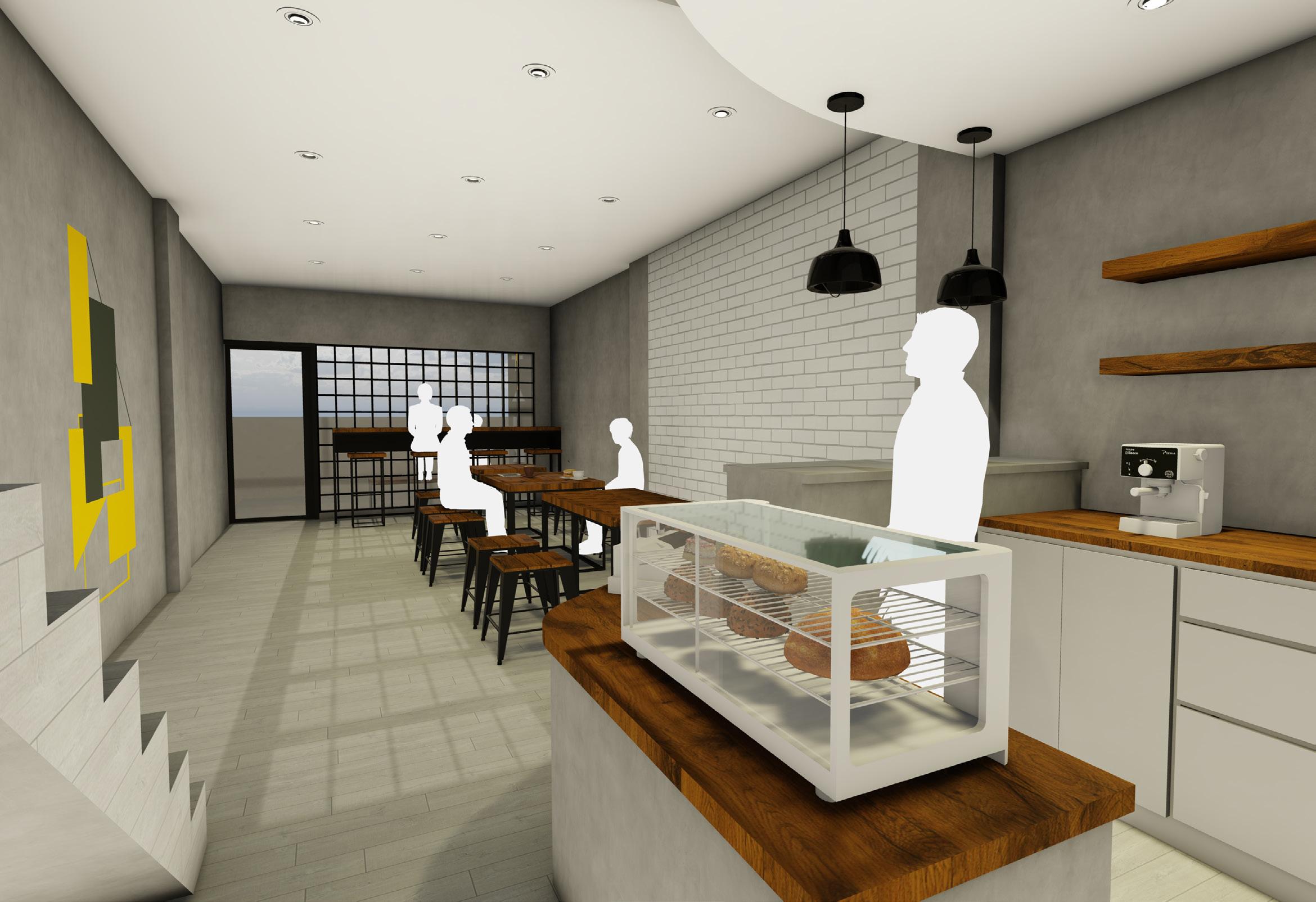
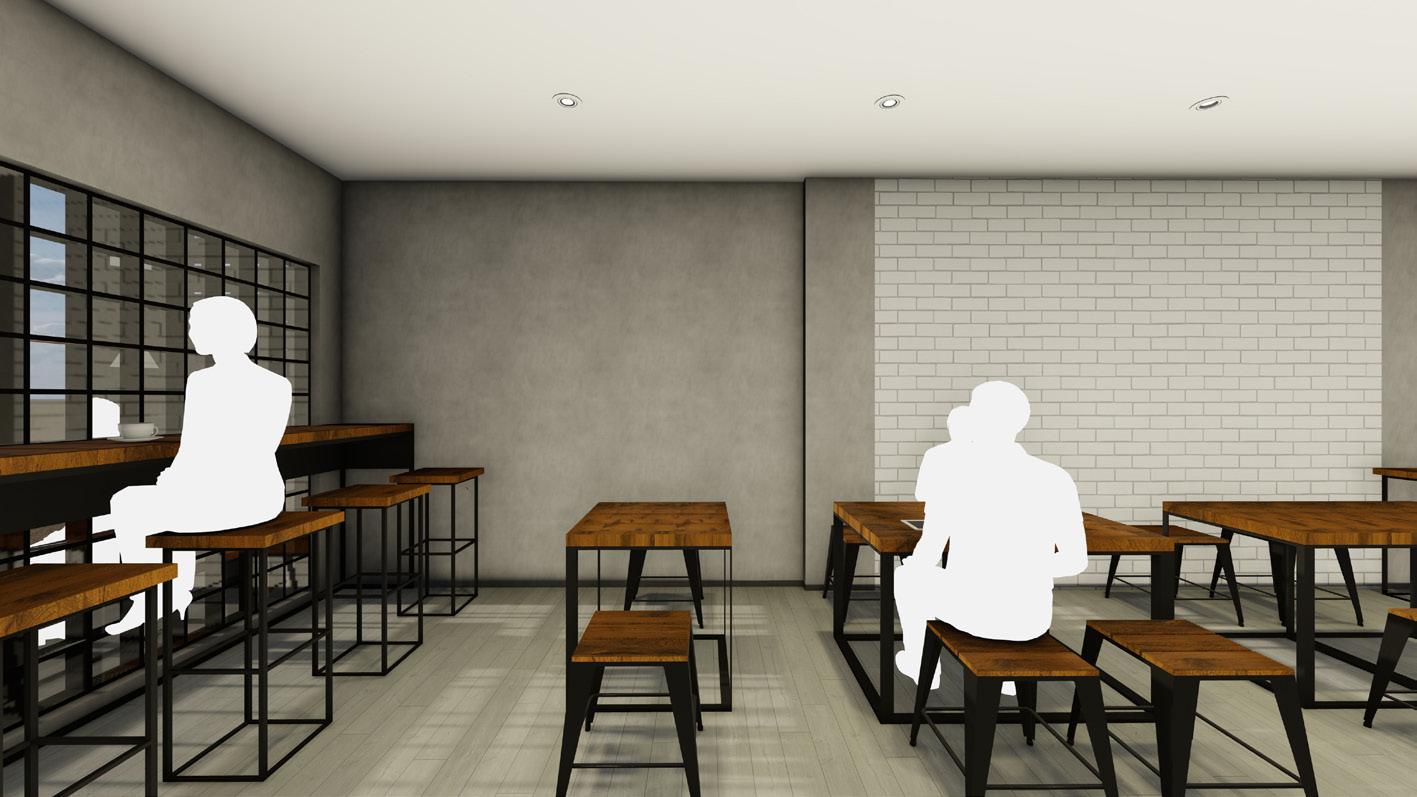
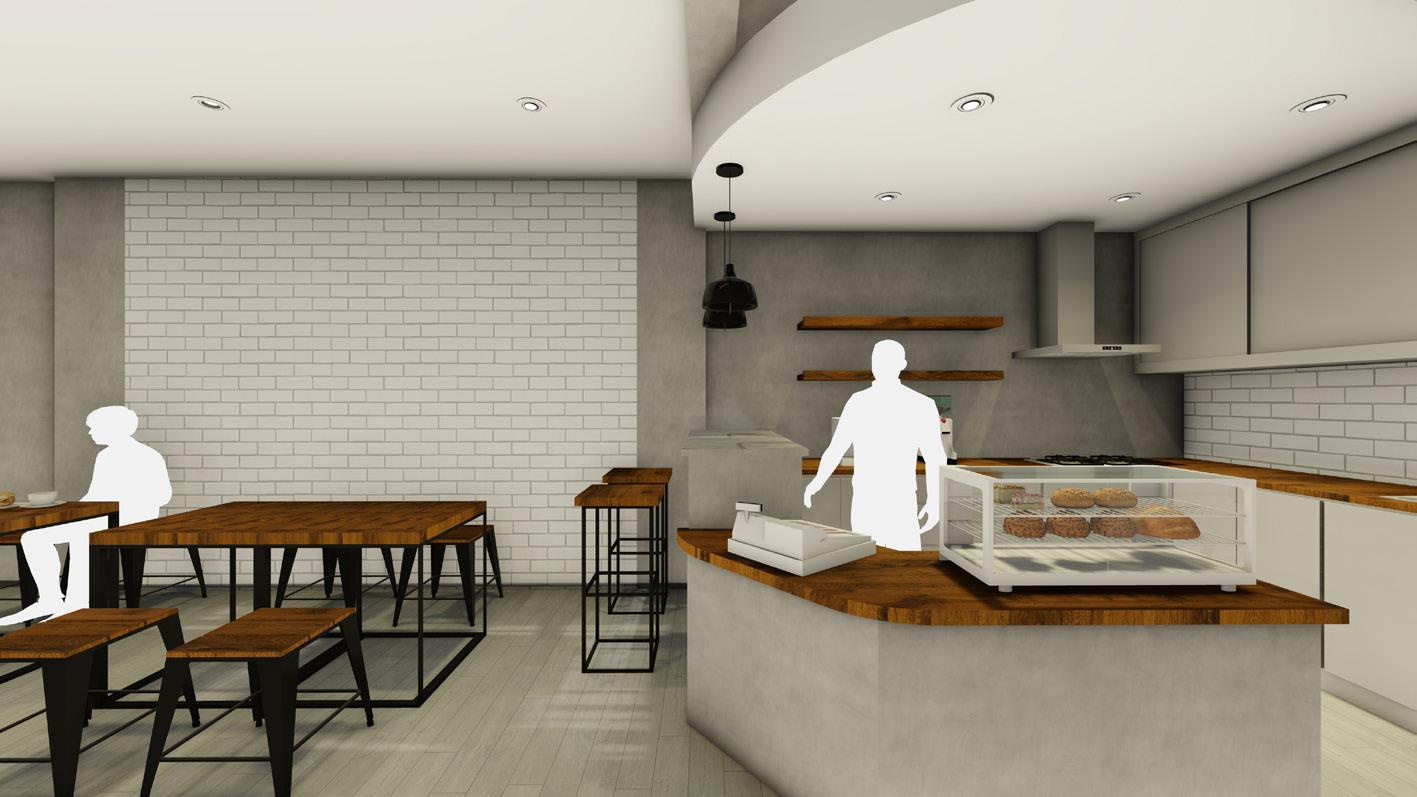
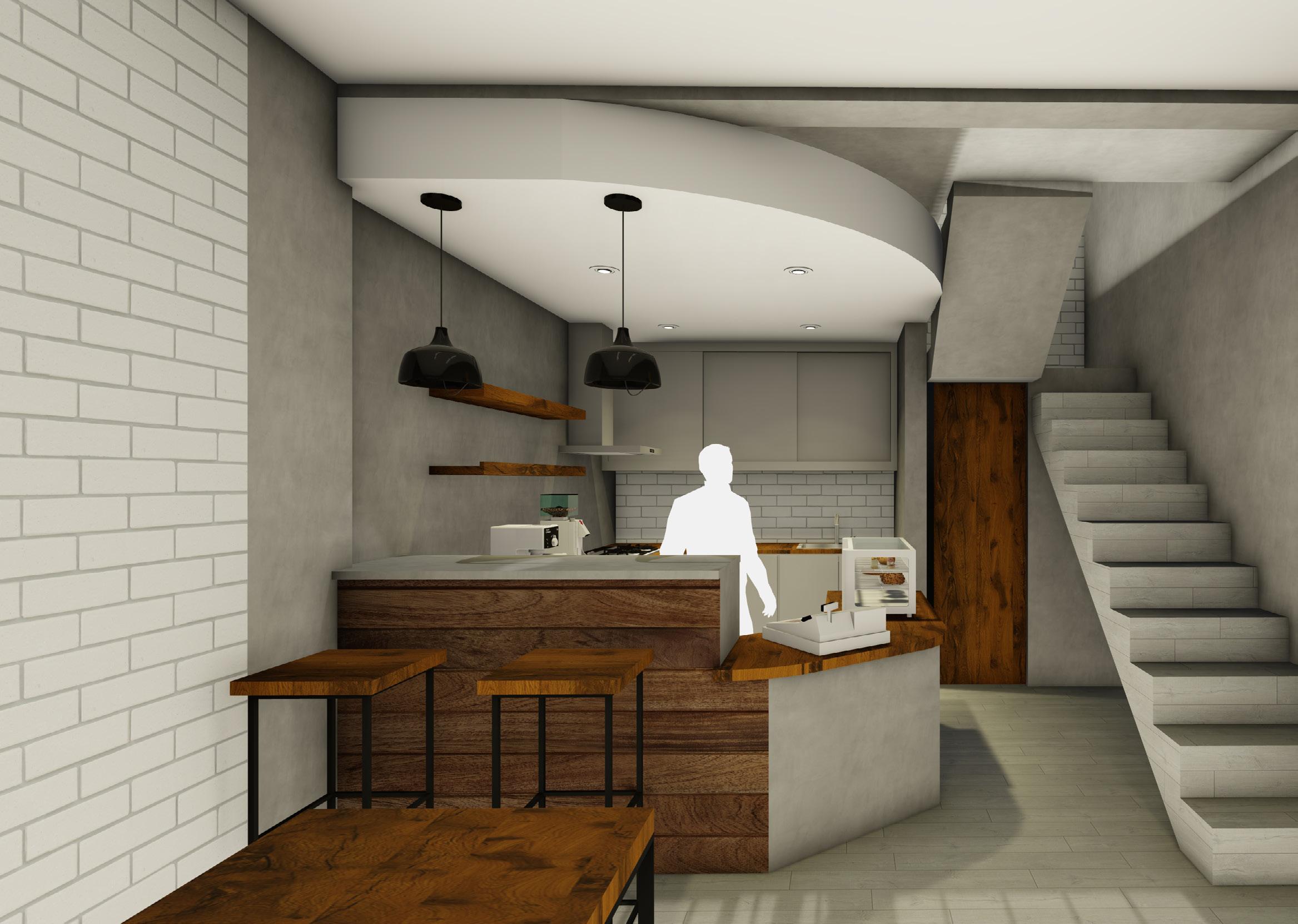
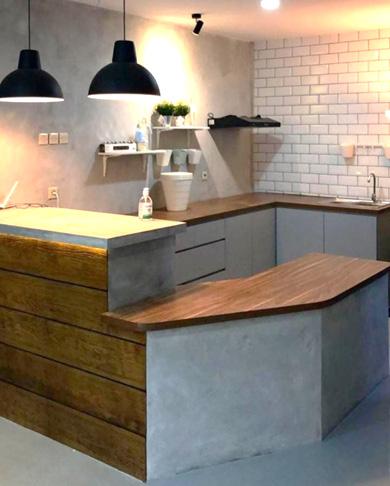
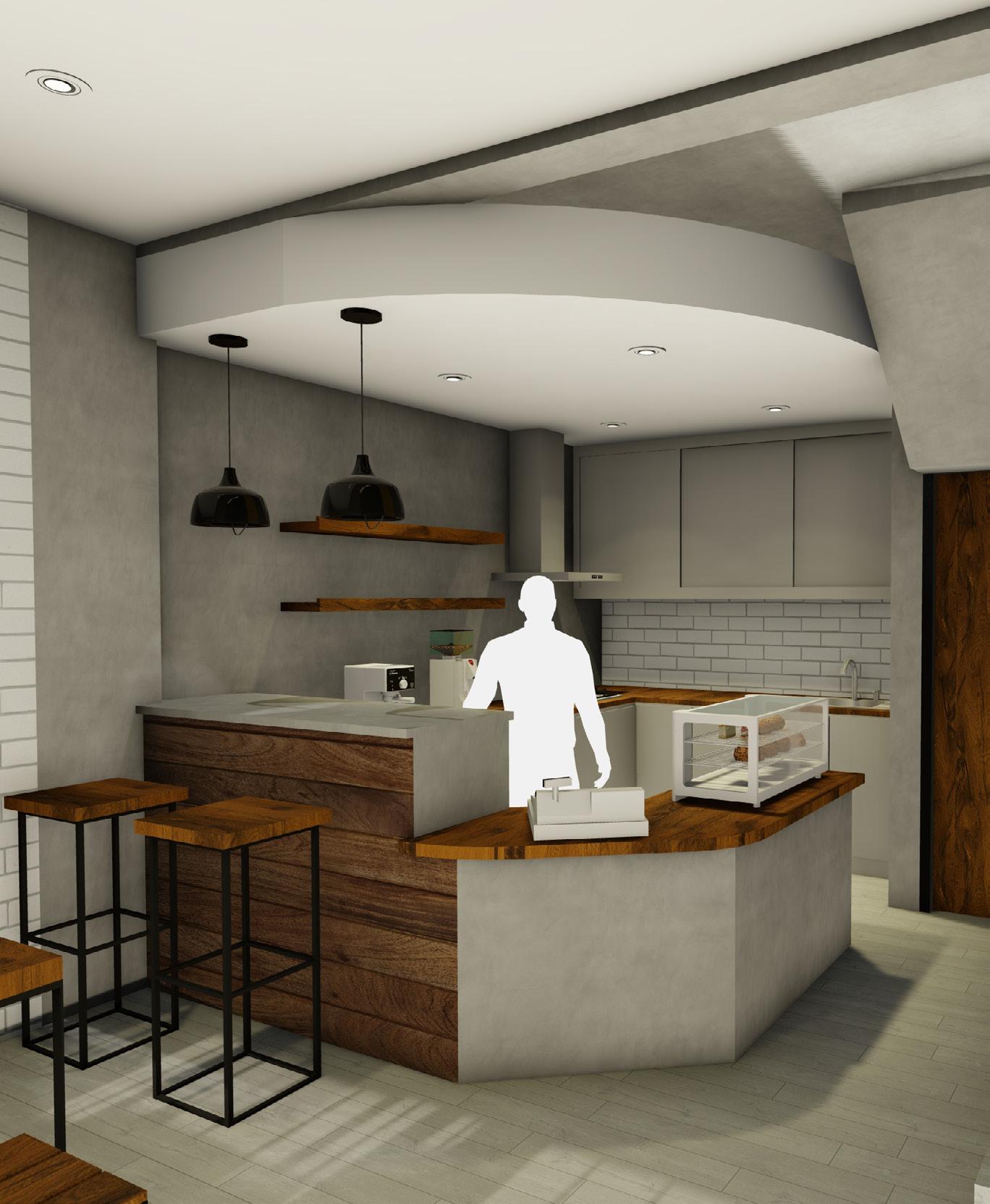
Talk Kopi is a coffee shop that locat ed in the Tangerang area. Because this is a franchise outlet, the design of this coffee shop has a speficic design style to match, which is in dustrialist with a lot of concrete.
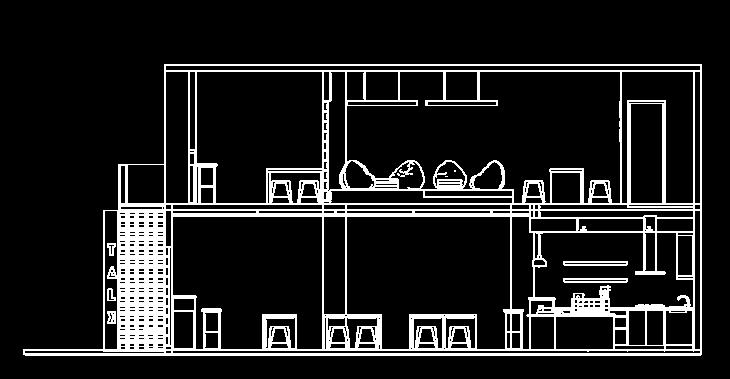
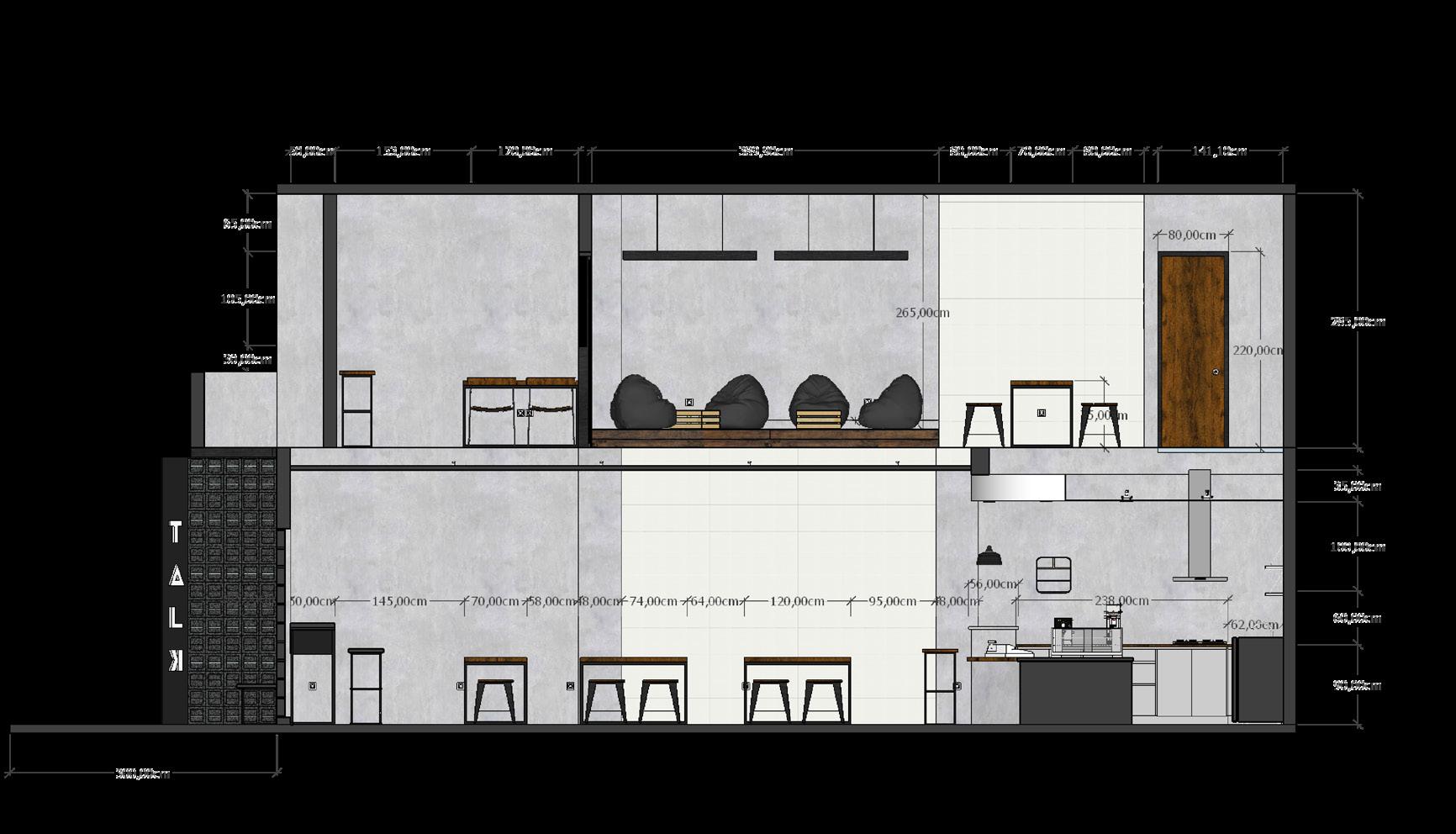
This internsip project is a work that I did directly under the guidance of the Principal Designer as the project designer. I contributed and followed this project from the very beginning until the final stage. That is, starting from concept making, space layouting, 3D modelling, and making shop drawings.
48 | 49 Talk Kopi
I YEAR: 2021 | BUILDING TYPE: Hospitality | CATEGORY: Internship Project (Assistant Designer) bac K gro U n D
ISomeTrIc
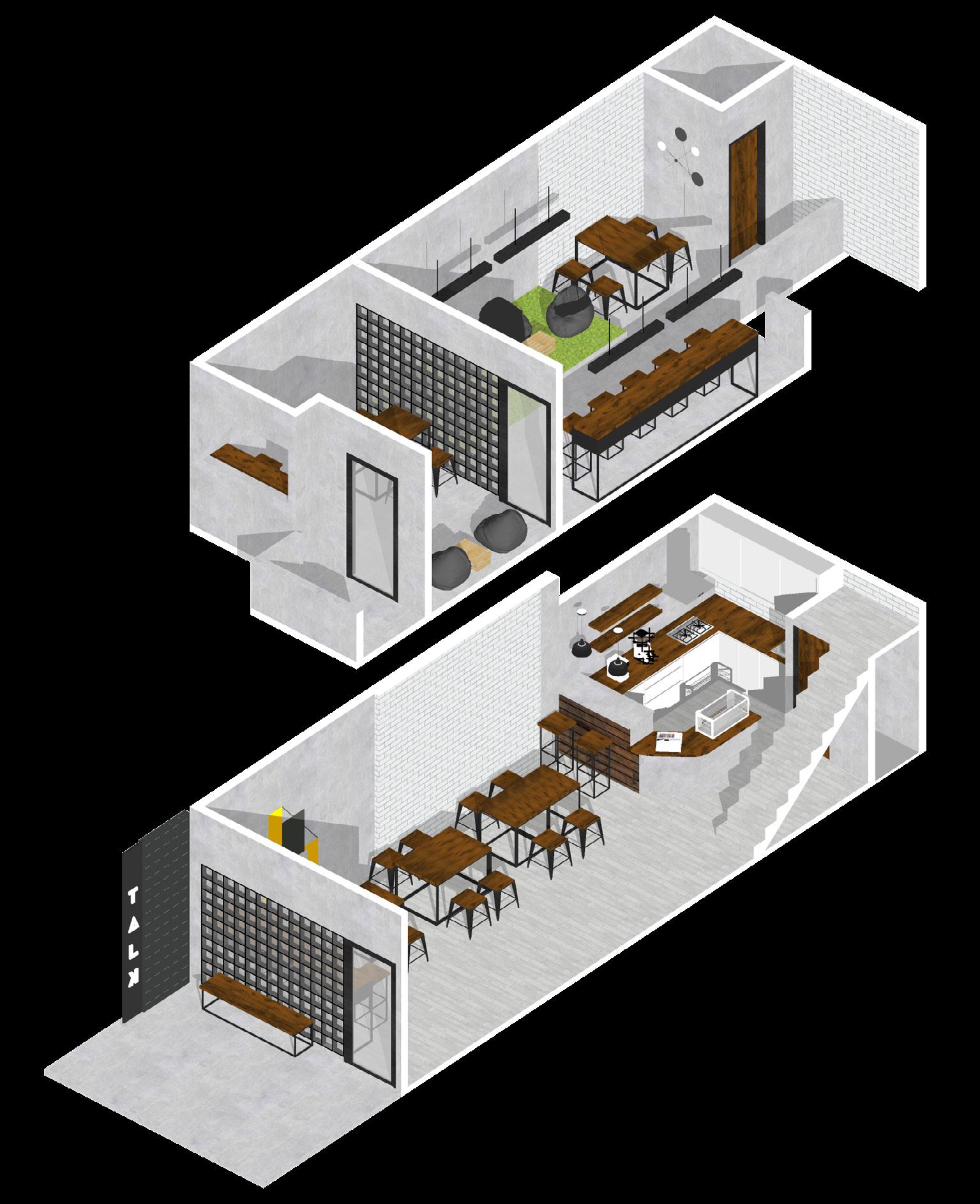
VIeW 50 | 51 Talk Kopi
1st floor 2nd floor
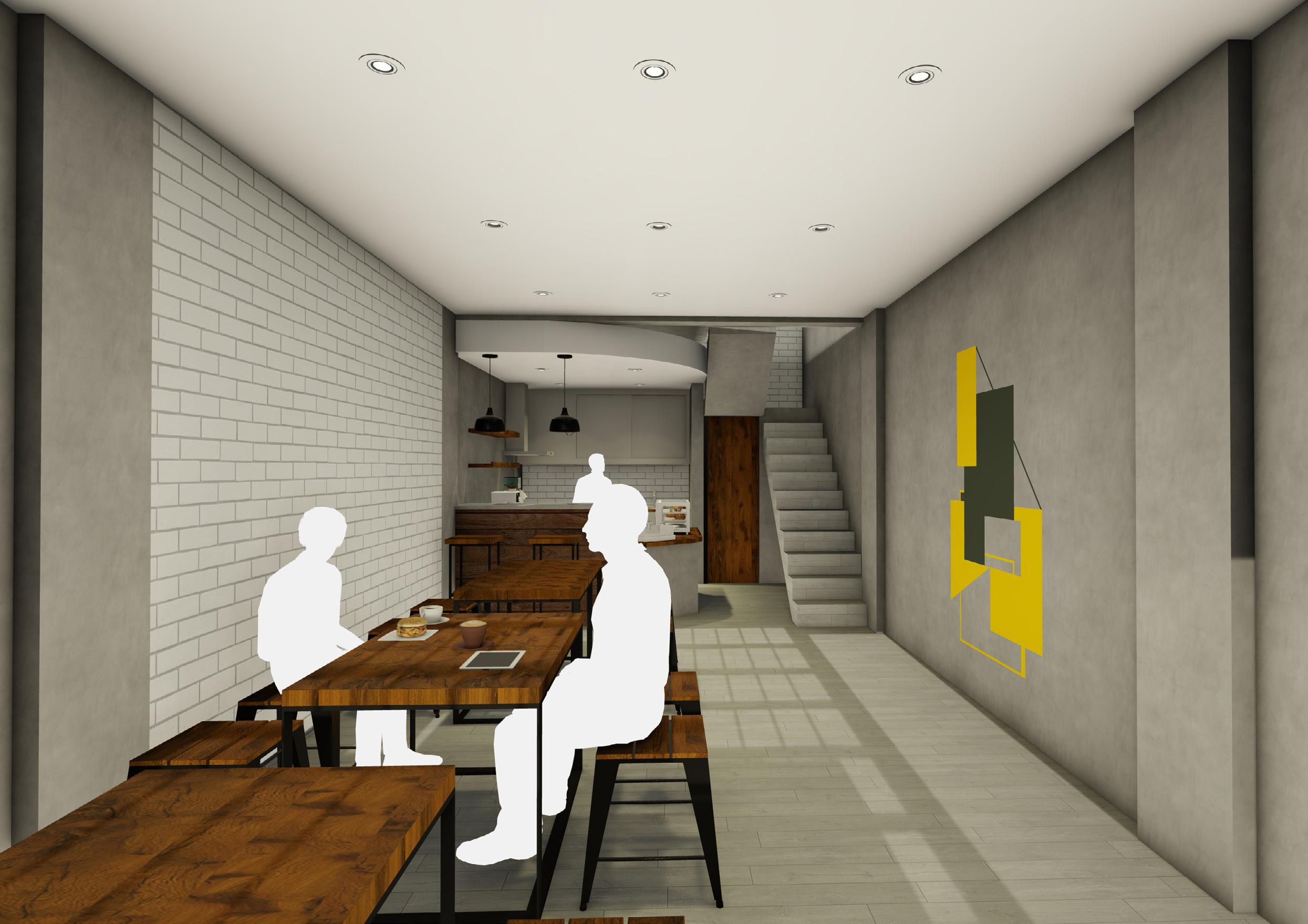
A clear pathway from the front door to the or dering area at the back of the room. The order ing area was being placed in the back for an easier plumbing installment.
52 | 53 Talk Kopi
54 | 55 Talk Kopi
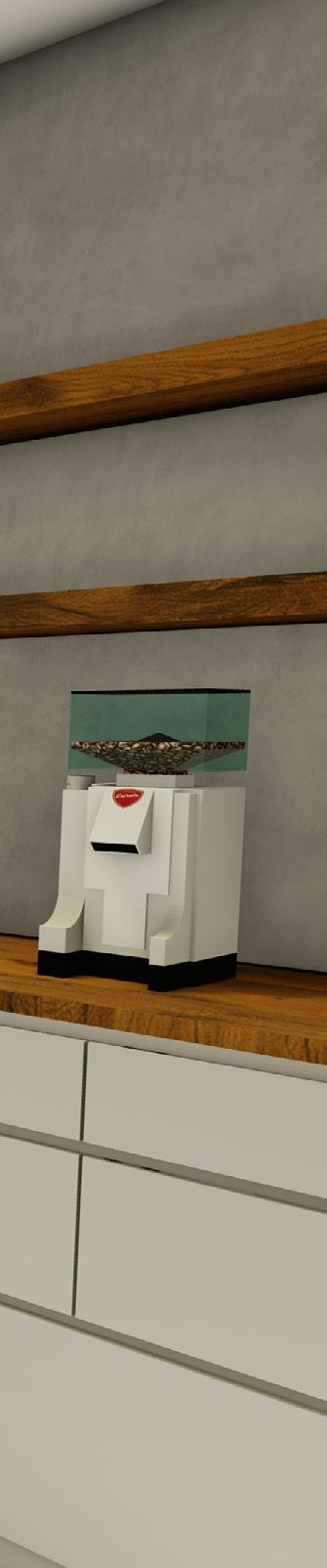
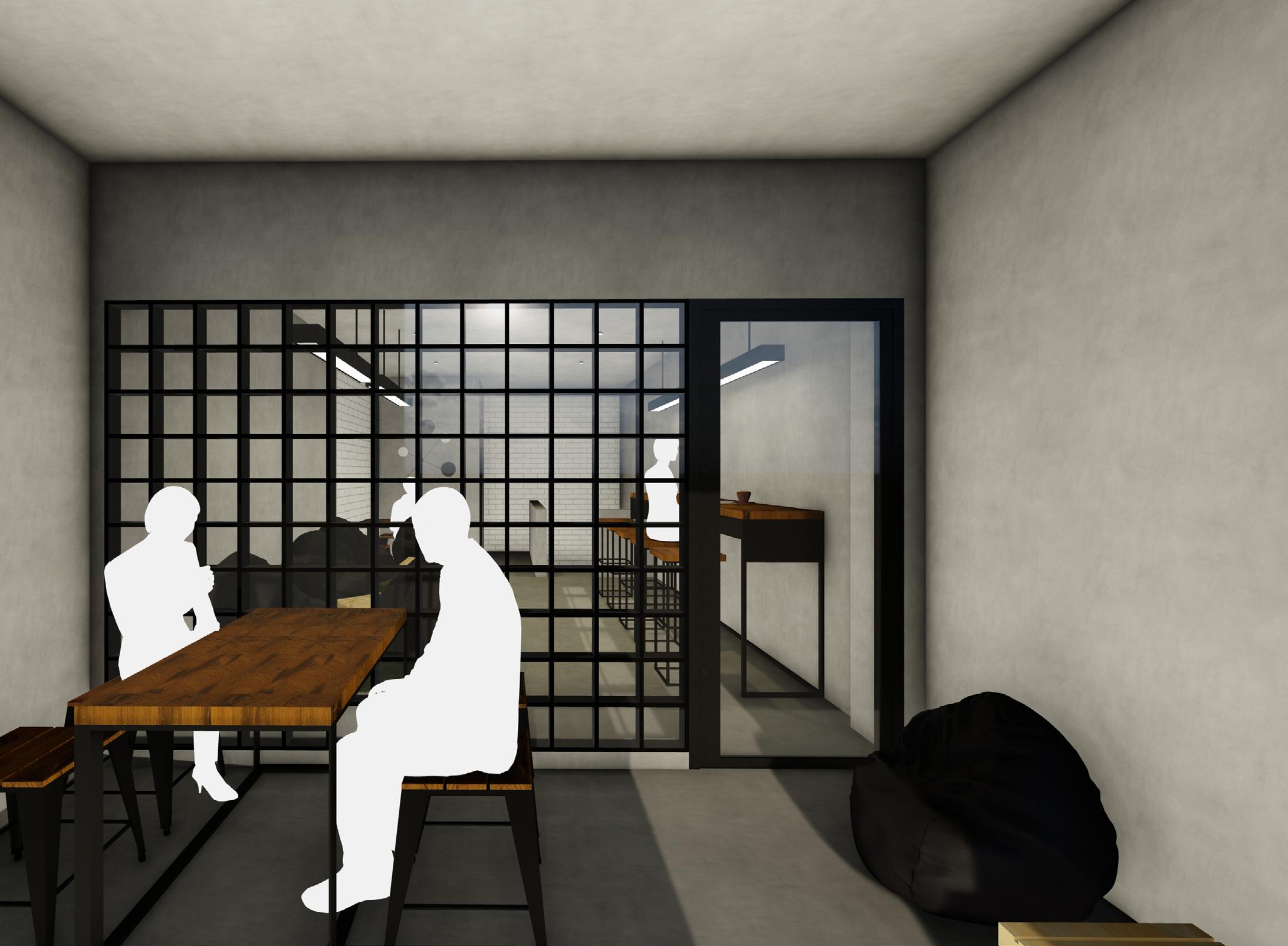
The outcome of the design. A combination of industrial and rustic material.
56 | 57 Talk Kopi
The second floor outdoor area.
THanK yoU+62 821 1481 7790 sekarasri.erina@gmail.com Erina Sekar Asri erinaskr