
ERIC TURNER
A LUDDITE FALLACY
2024, third year final project
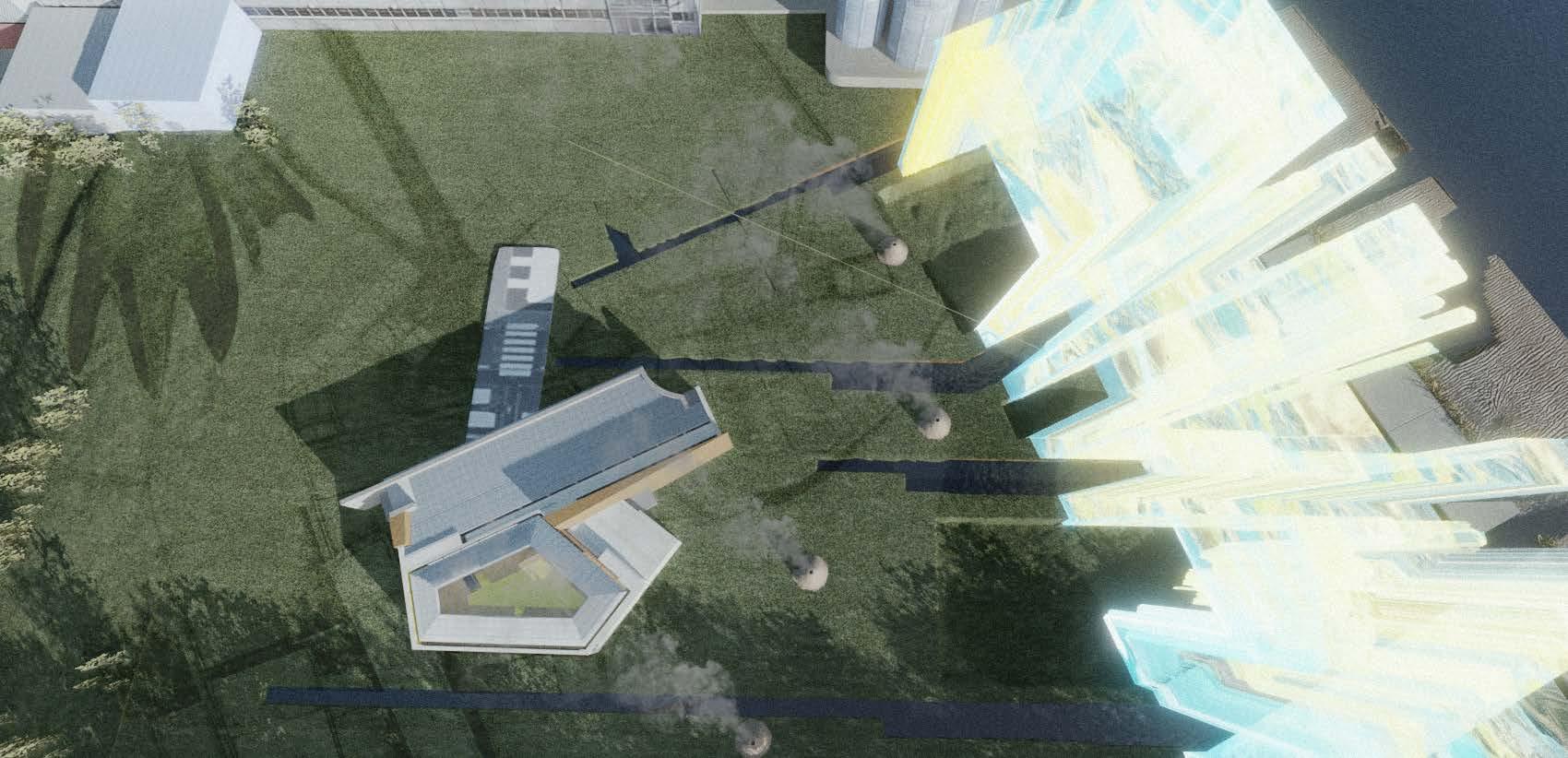
A Luddite Fallacy proposes an alternative political system and way of living in Grays, Essex, to a backdrop of increasing workplace automation. The project tests generative AI and chance-based workflows, with AI as an inevitable collaborator with the architect of the future.
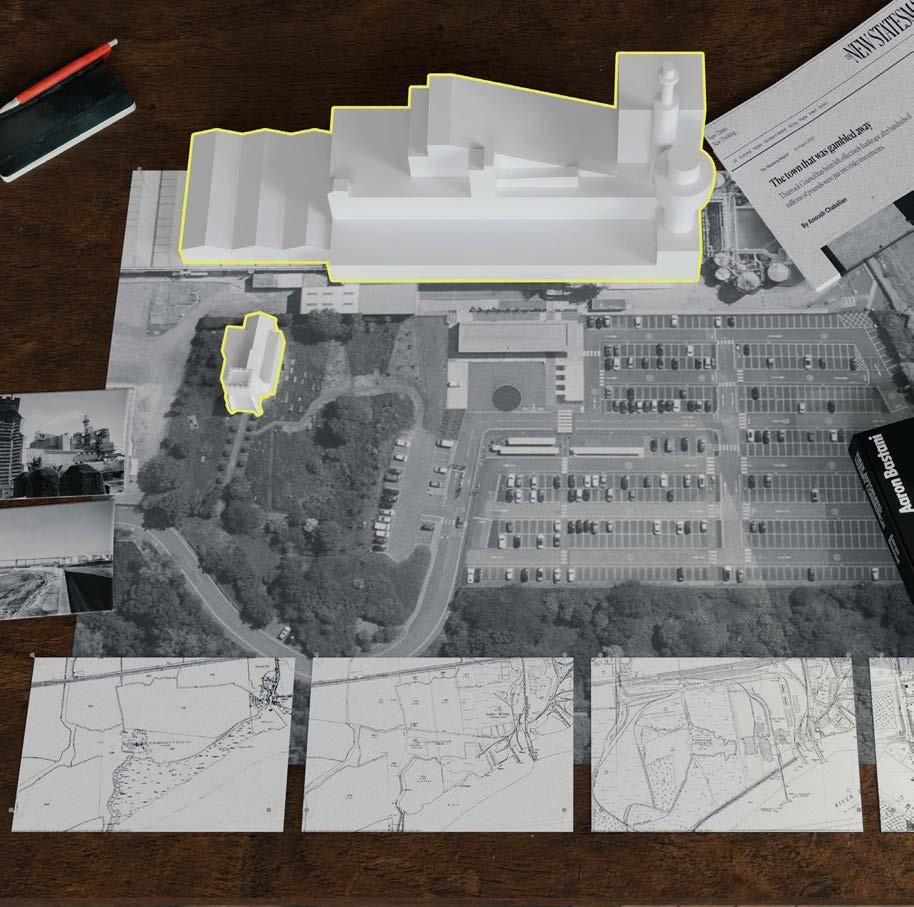
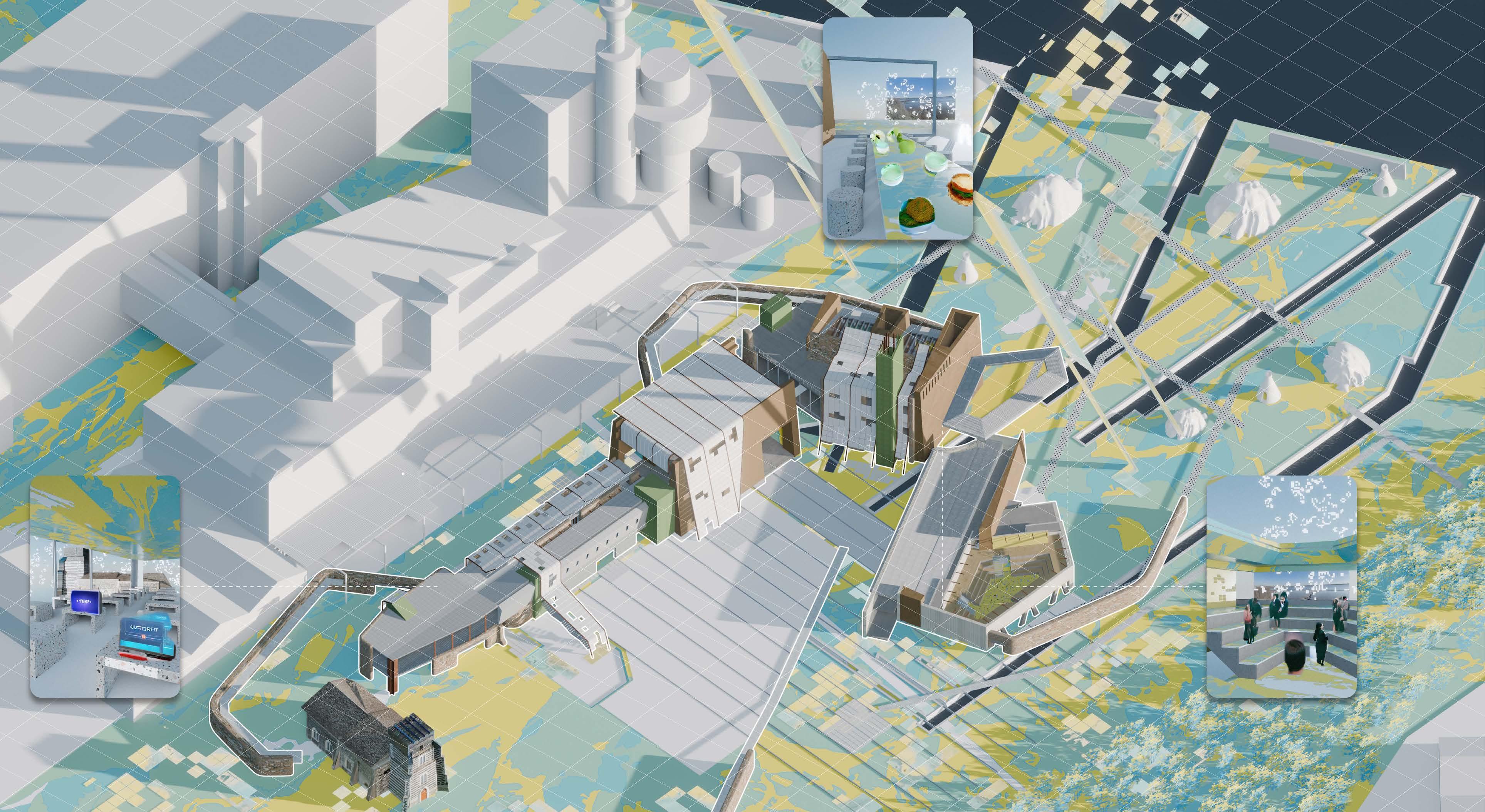
The proposal is a new city hall for an independent, self-governing Grays, where the local community gains stewardship of the landscape and engages in debate over the construction, conservation and rewilding of the Thames estuary. An empty political testbed is left following the council’s 2022 bankruptcy, allowing a post-scarcity economic system to be established, similar to Aaron Bastani’s concept of Fully Automated Luxury Communism. Situating itself between the Procter & Gamble soap factory and the 13th Century St Clement’s church, the city hall acts as a base point for resistance against further industrialisation, mediating the boundary between production and conservation.
Taking into account the notion of the ‘automated landscape’, where fully automated factories can take on optimised spatial configurations no longer catering for the human body, this surplus space is inhabited and excess material is used in the construction of the city hall.
Simulated deskspace - Site situation between 13th century church and 20th century Procter & Gamble factory
Film still - excerpt from film describing superimposition of landscape strategies
Nominated RIBA Bronze Medal

Landscape / fragment model - projection onto fragmented and varied scale model of site and proposal. Left is St Clement’s church, top is Procter & Gamble factory, grids and projection describe landscape treatment and architectural fragments rise above the ground plane.

Composite sectional visual - showing three key moments, the relationship between courtroom & town, debate chamber & landscape, archive & church
FILM (2m 51s) https://vimeo.com/944277037


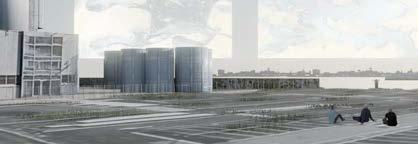

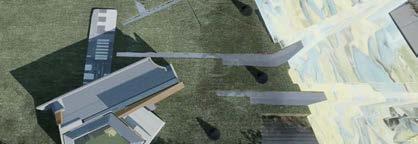


towards the
- site as an in-situ timeline of changing attitudes to extraction
Ground floor / landscape plan - over and underlaid generation frames show speculation and residue from AI involvement in the design process.
View from the Thames - axonometric drawing
Sectional moments - (left to right) archive, component store, coutroom, debate chamber
View
Thames
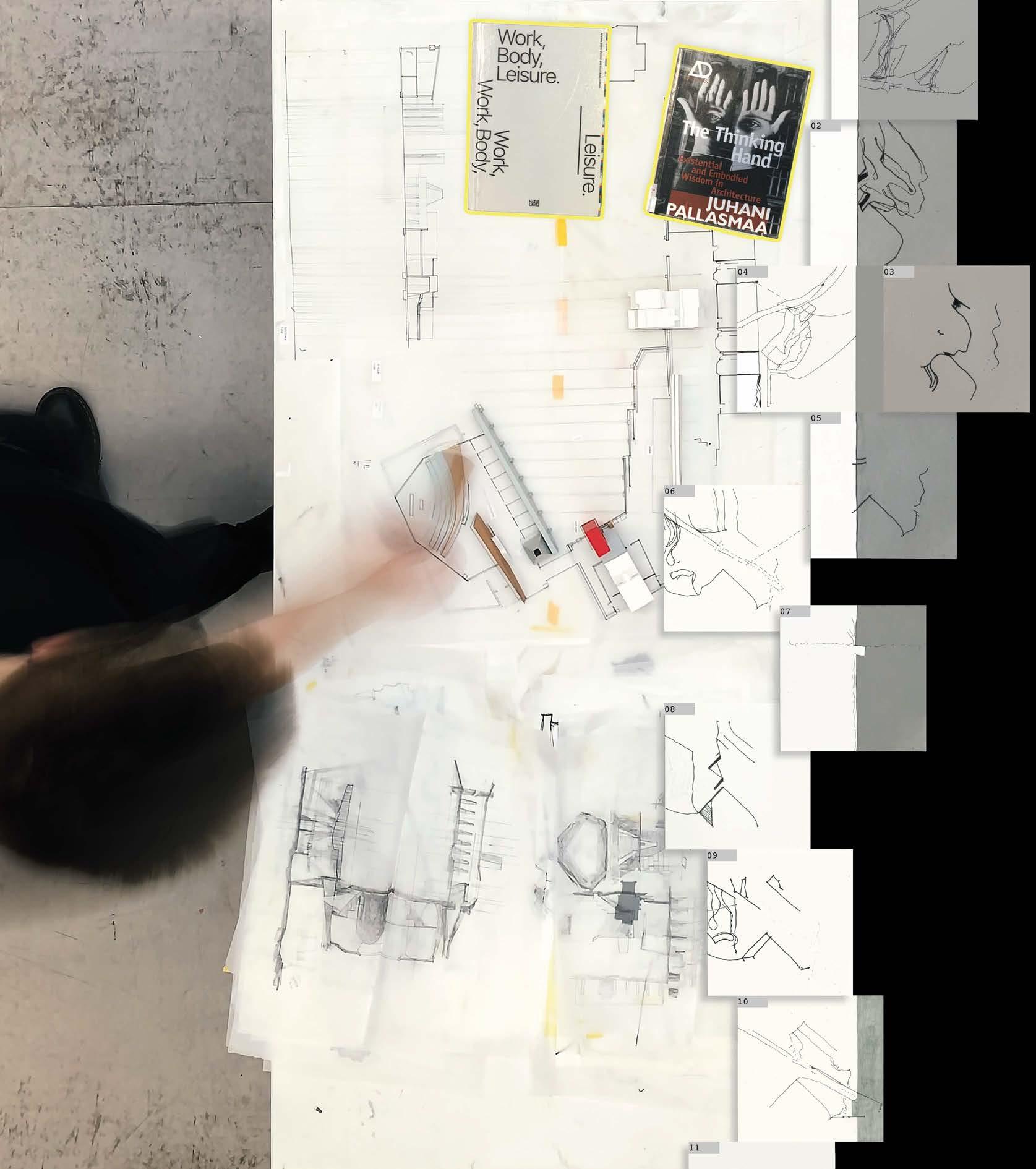
A table of ‘residue’ left by designing by hand - these sketches and models become datasets upon which AI models are trained, effectively automating the hand of the architect, acting as a design voice to subvert a human designer’s logical design process. Juhani Pallasmaa describes an embodied wisdom in the hand of the architect - does an AI trained on this hand carry the same wisdom?
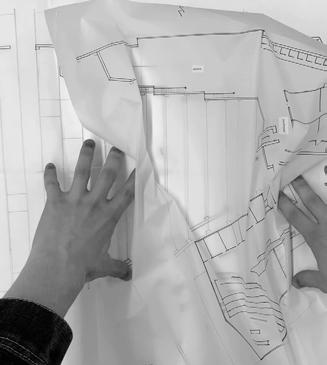

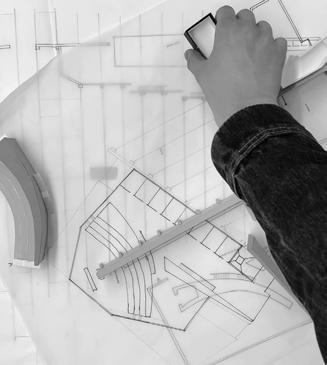
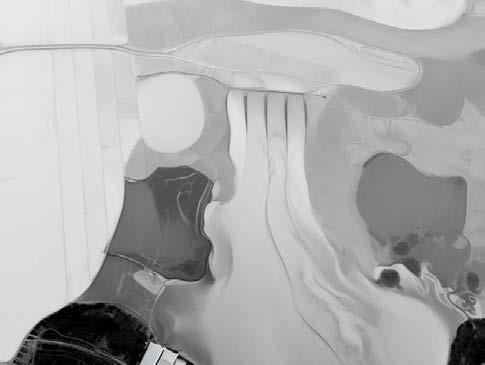
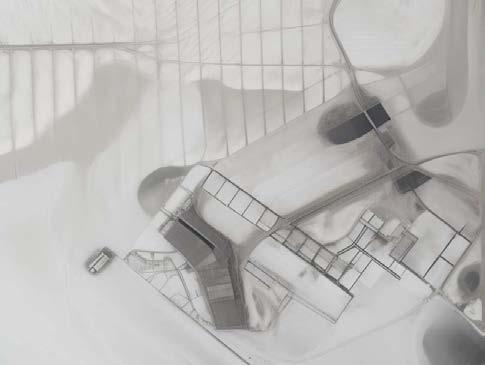


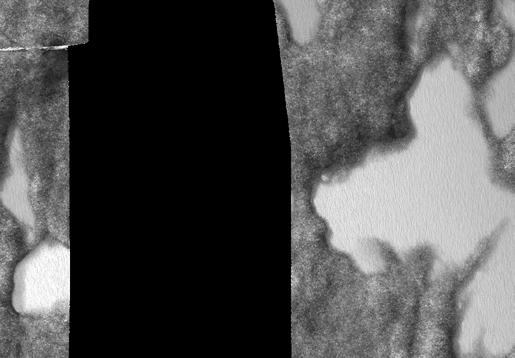
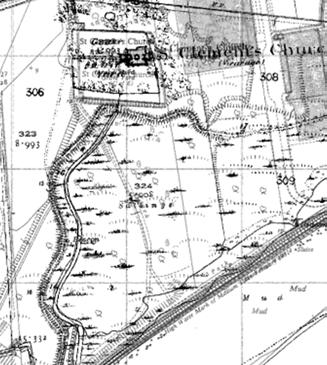


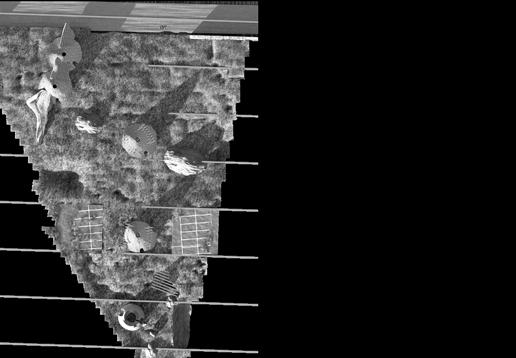

AI - disrupted workflows - showing how a ‘conversational’ back-and-forth design process with AI was realised: (1) where AI abstracts an input and (2) a response in which the human designer asserts themselves to rationalise an AI output.
Three landscape treatments - rewilding, extraction, constructing of conservational barriers. The deployment of these around the town hall and the wider area would be discussed within the debate chamber. They are shown separately as a human-made base ‘palette’ and generative ‘continuations’.
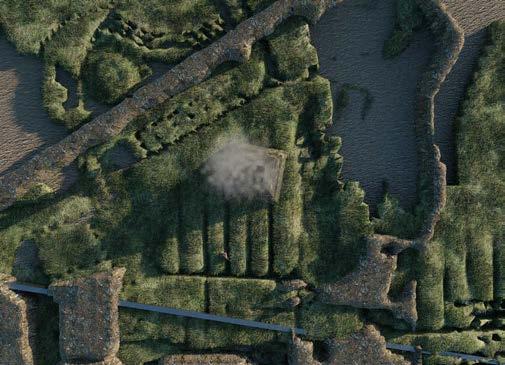
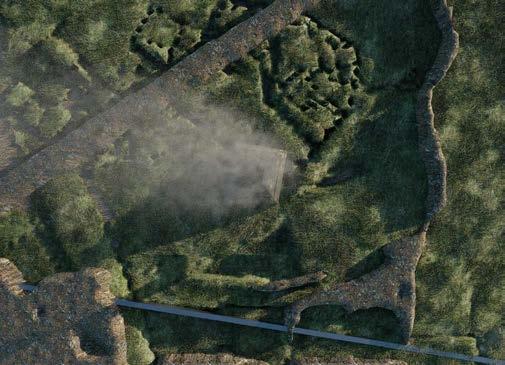
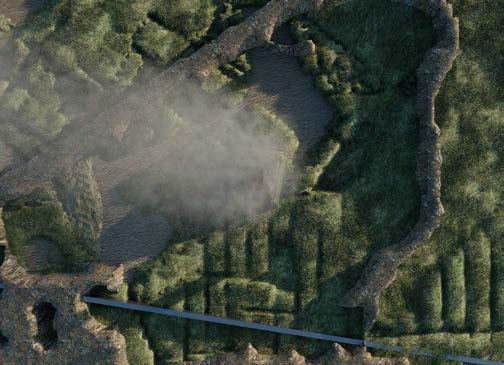


original image

POST-SCARCITY SINECURE
2023, third year explorative research
Post-scarcity sinecure is an investigation into class divide and automation in Tilbury. The Amazon LCY2 fulfilment centre, Tilbury Dock and the Tilbury2 port are all sites of advanced workplace automation - the project imagines a post-work future brought about by a full automation of all essential tasks, including devolving local government planning decisions to AI. Two emergent classes are present, the ‘free agent’ and the ‘bullshit worker’, representative of the theories of Aaron Bastani and David Graeber respectively.
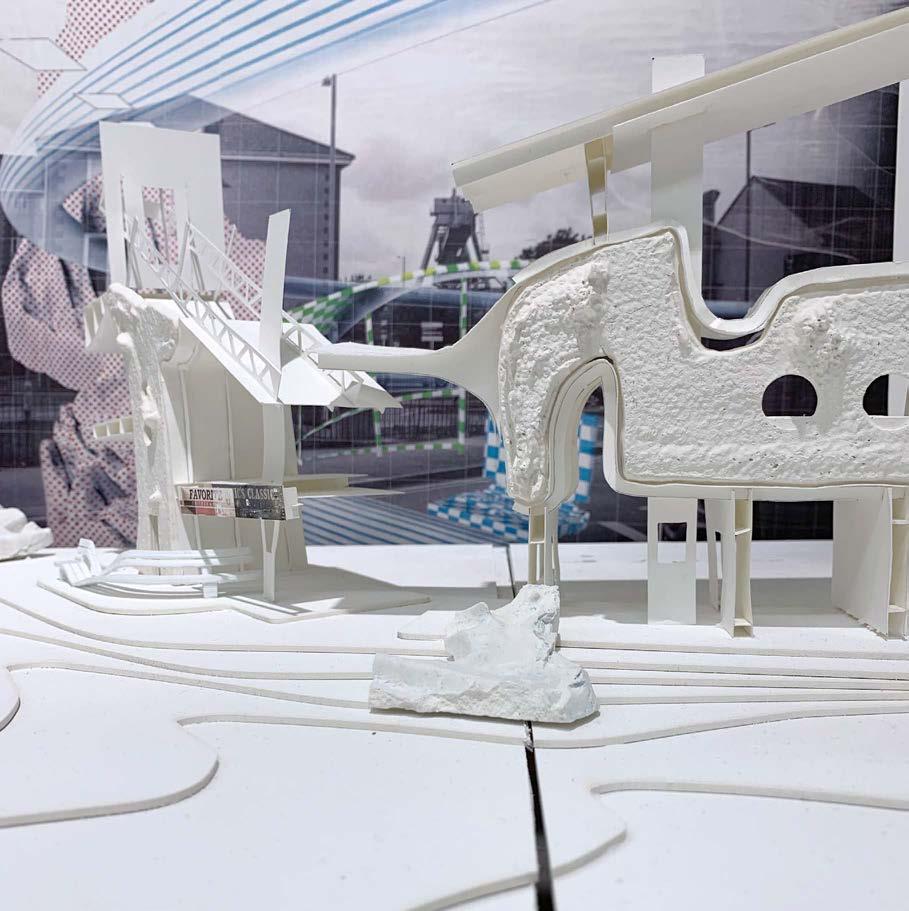
Through feedback loops fed by surveillance of the behaviour of these disparate classes, the AI spatialises this (existing) divide, creating logistical highways for the automated movement of goods that subdivide the town. Through critical collaboration with AI technology by building around these algorithmically generated fragments, uncomfortable and irrational spaces are rationalised by the human touch.
Atmosphere

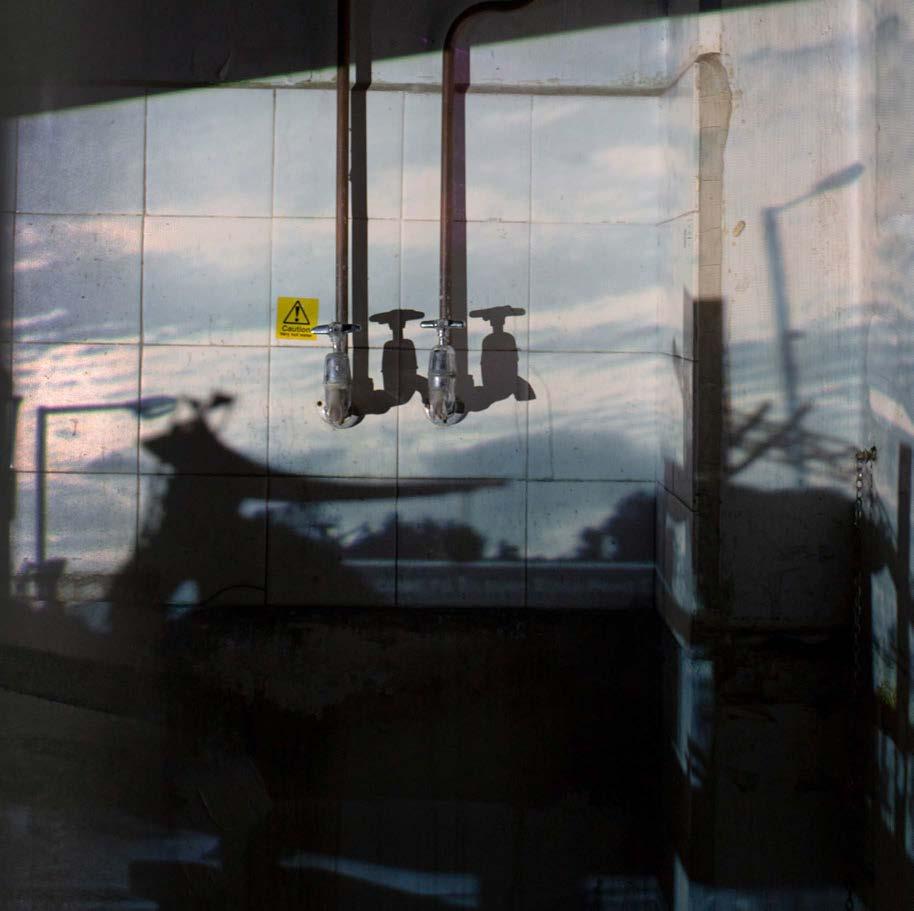
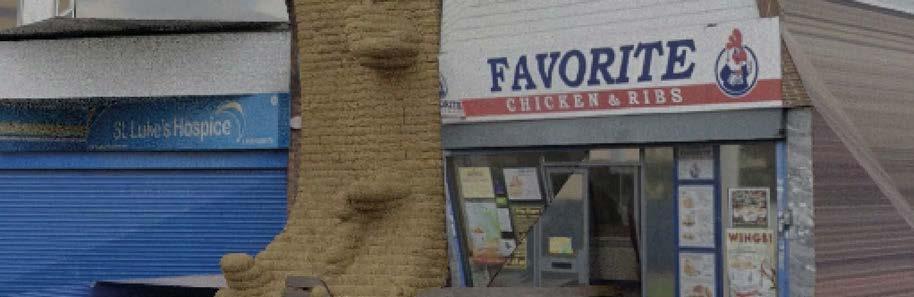
Model of re-interpreted AI townscape - the high street status quo is altered by uncanny AI fragments - hallucinations around which to build.




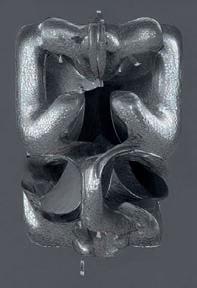

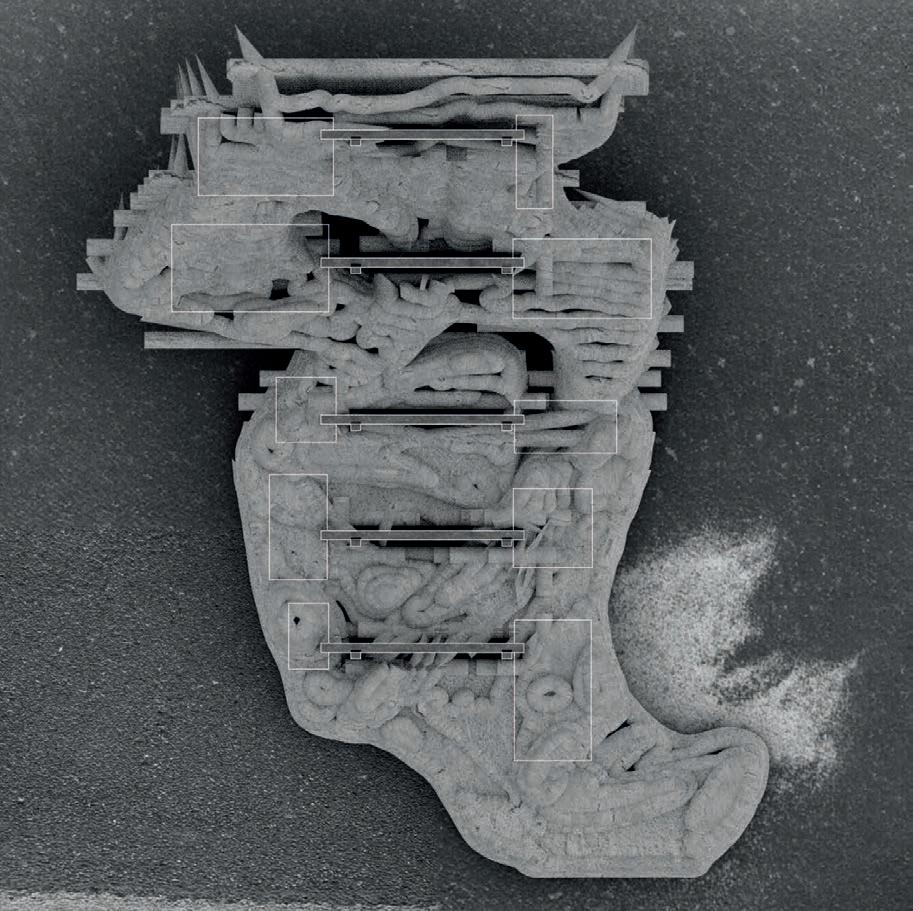
Stable diffusion LoRA outputs - AI reconstructions trained on a dataset of my own work
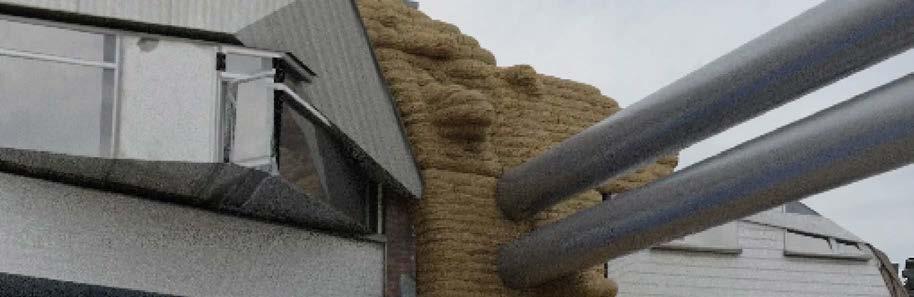
Extruded sandstone nateriality study - steel armature from defunct industrial equipment supports a computationally extruded sandstone form derived from AI generations
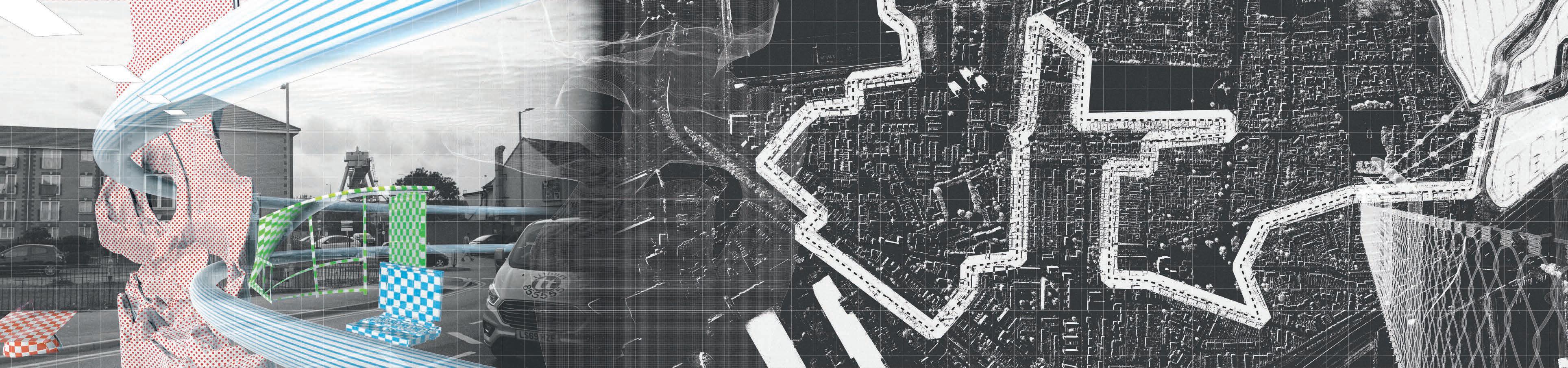
Border condition - hybrid map-eye-level drawing of automated logistics boundary and border condition set to divide Tilbury into two distinct halves


VIDEO

DELIVERANCE
2023, second year project
Winner of second year portfolio prize
Deliverance speculates on a future in which Deliveroo is banned from operating in London due to it’s poor treatment of workers, similar to Uber in 2017. The riders, represented by the IWGB union and still posessing the means to deliver, organise as a worker-owned delivery cooperative and occupy the ‘Deliveroo Editions’ dark kitchen in South Bermondsey.
The proposal retains the existing kitchen (now to be run as a community kitchen), as well as incorporating bike repair facilities, a street-facing space for the IWGB union, emergency accommodation for riders and saunas for relaxation and easing the muscular strain that delivery entails. The whole building is accessible by bicycle, superimposing onto the existing building a network of ramps, gangways and bike racks.
The nurture extends into the city - mapping of deliveries and items identified common waypoints passed by riders, which are the sites of ‘cabby shelters’: small havens within the city with provisions and space for the riders to rest.
Elements of the design language are derived from ‘visual sampling’ - where geometries and forms from the locality that the riders pass every day inform the design, creating an architecture of familiarity while collaging and grafting elements to synthesise new forms.
Saunas on the first floor - interior snapshot
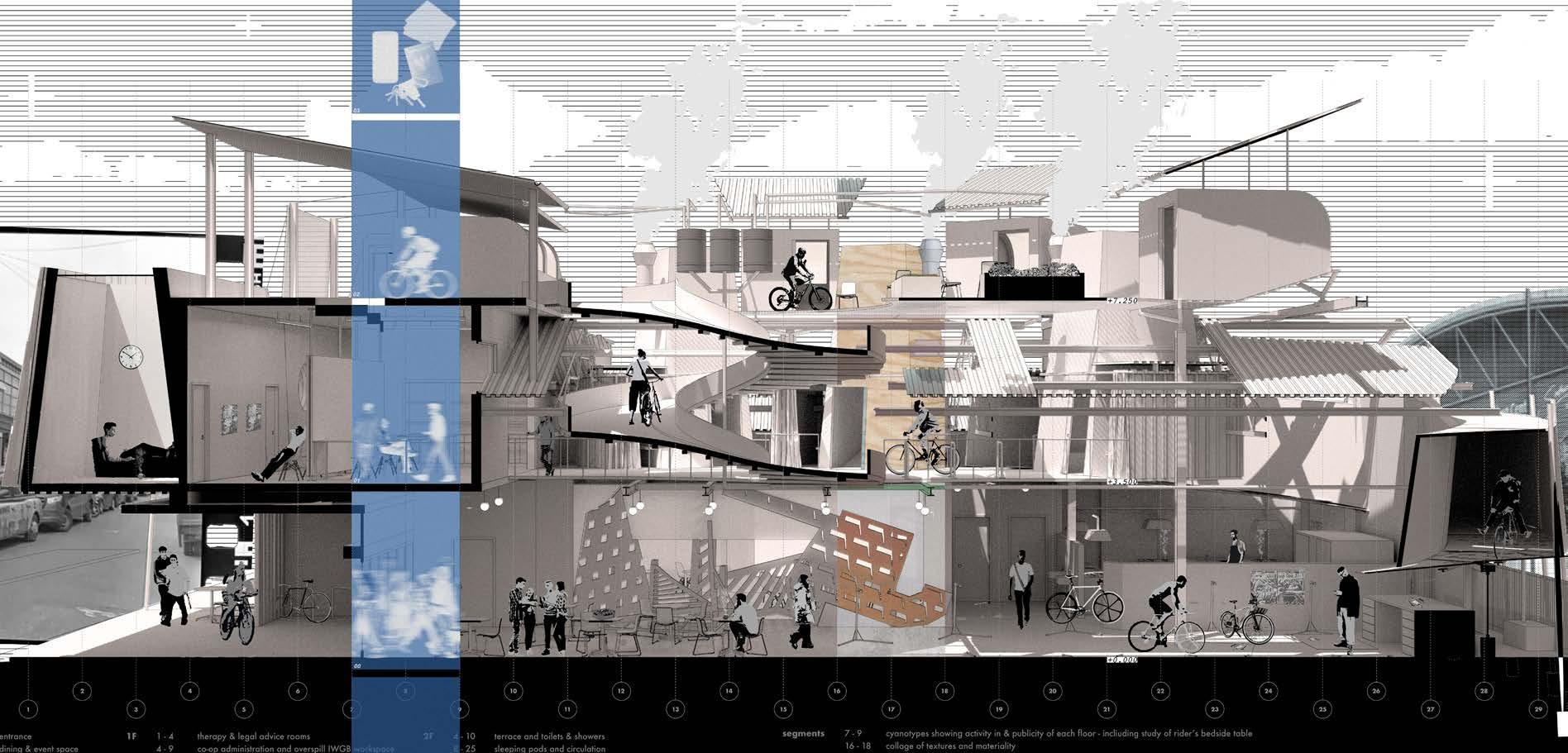
Long section - segments of activity and materiality overlaid
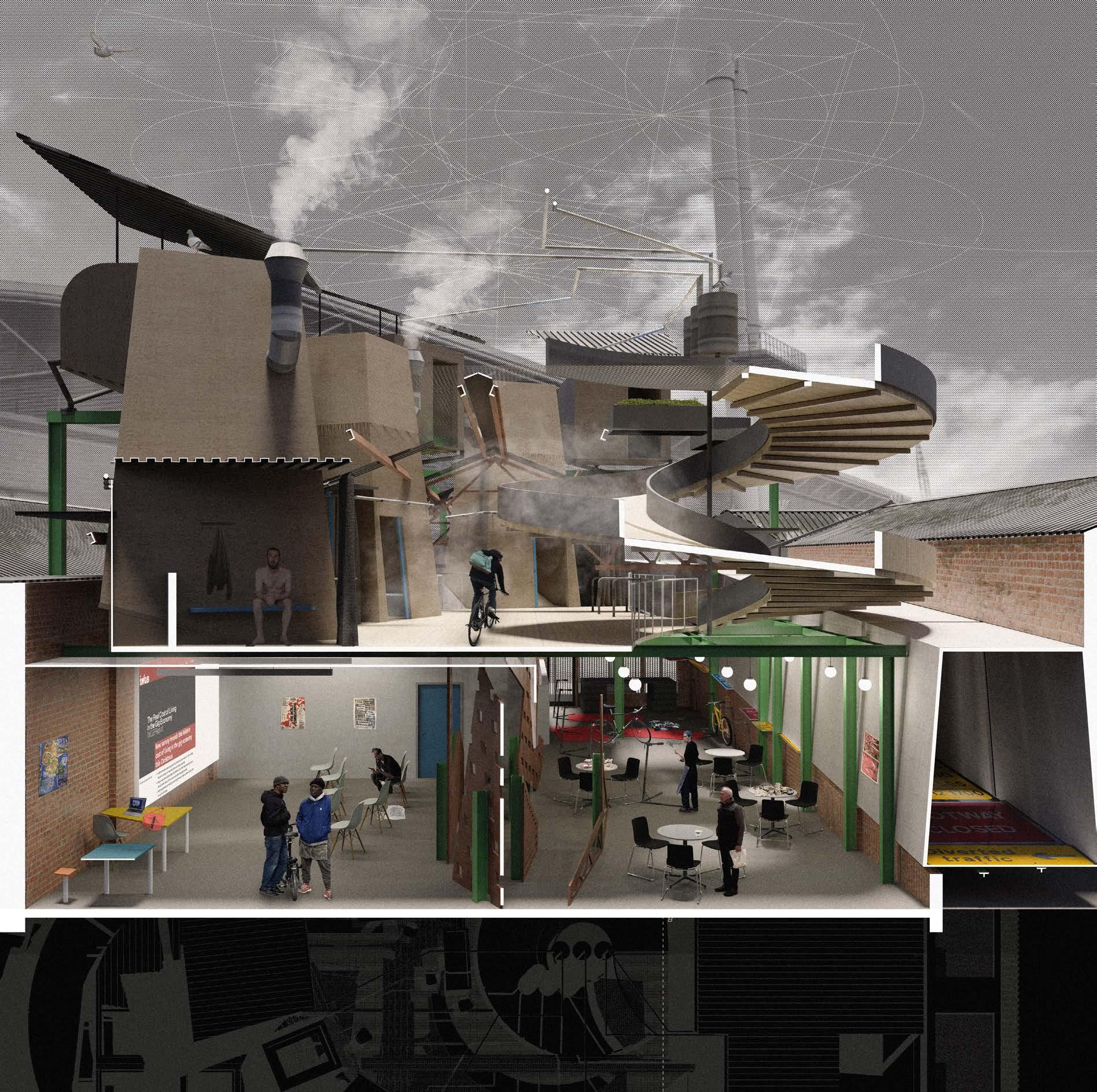
Short section - cutting through IWGB presentation room, reconfigurable event space, sauna pods and ramp up to residential level.


ISLINGTON MOVING MUSEUM
2022, second year project
The Islington Moving Museum is a direct response to Islington council’s archive - where a handful of archivists decide what is and isn’t culturally important and worth inclusion in the archive.
The proposal is an independent archive that uses digital methods of archival (photogrammetry) and encourages donors to talk about the objects that they are digitally ‘donating’, attaching an oral history to each object, accessible to all.
Started with an investigation into markets in Nag’s Head, an initial intervention involves moving the outdoor Holloway car boot sale indoors into the Nag’s Head shopping centre, a underutilised and often lifeless space.
The Islington Moving Museum aims to occupy these ‘nothing’ spaces and roams between them, leaving relics of objects archived in their locality in the form of pasted up posters.
The museum packed up and in motion - interior view
View of the museum occupying a ‘nothing space’ - Bowman’s Mews, Nag’s Head
Internal component diagram - the infrastructures that allow the museum to archive and occupy
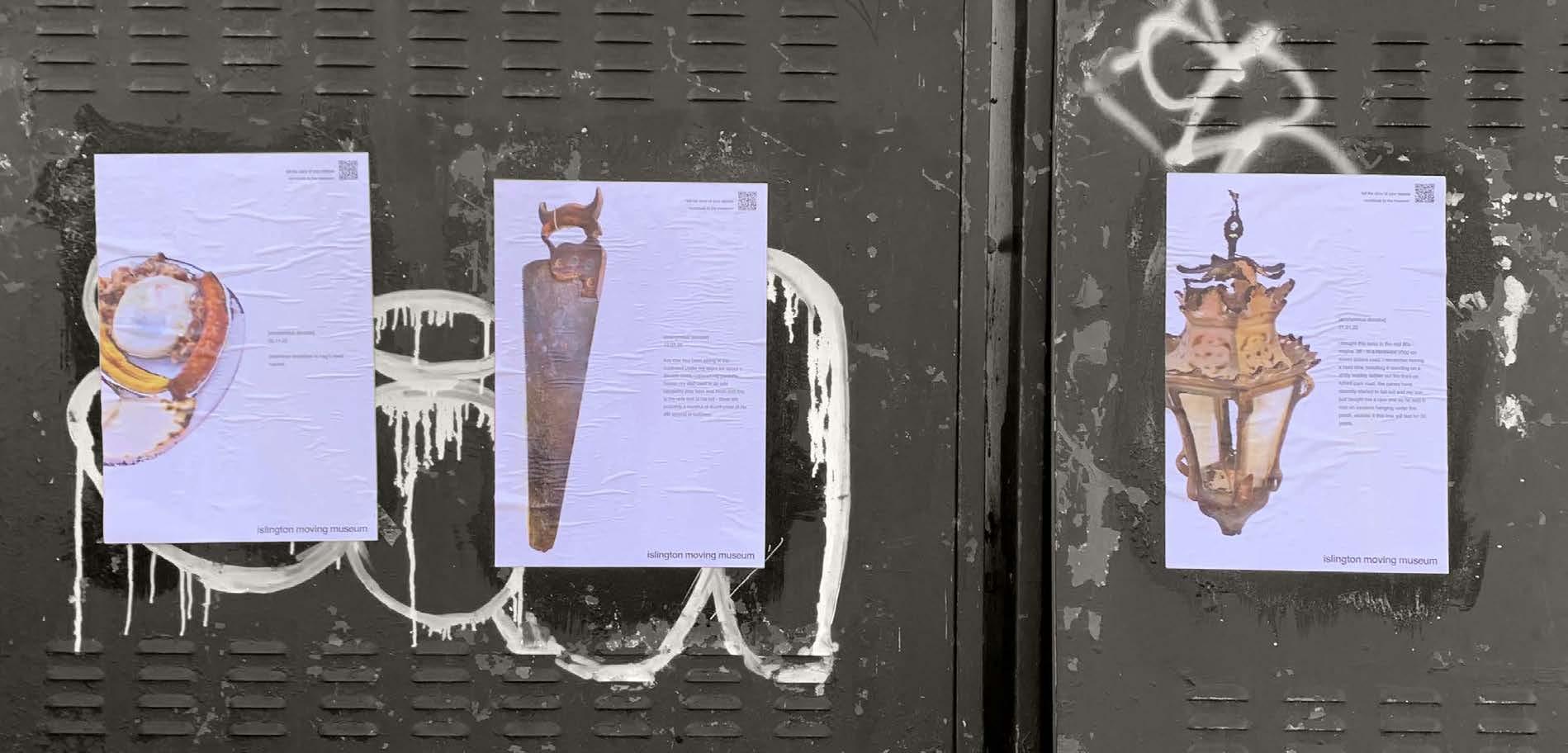


Postering in Nag’s Head
Posters deployed around Islington - displaying archived pieces as a public callout for donations to the museum - these are left as relics of the museum in a space it once occupied.


INSTALLATION CONCEPT
2025, personal project
(3-channel video, text, projection on mesh)
A compulsion to revisit familiar places while abroad found me digitally travelling through google street view. Acting simultaneously as archive and new media, the installation’s three video channels travel along a spatial collage of London high streets. Annie Ernaux’s autobiographical The Years follows her life through a collective memory of political and cultural events - in a similar fashion, the collectively recognised 3D streetscape (retrieved and reconstructed from the semi-public domain of google) is given personal meaning when presented in the context of journal entries penned in London.


drawing - isometric
RALLY FESTIVAL ‘VISIONAERE’ STAGE
2023, CAKE Architecture
Work in the studio and workshop with CAKE architecture. Designing, fabricating and constructing Stage 3 for the first year of RALLY festival, an independent festival in Southwark park, South London.
The stage takes hints from Berlin’s Club der Visionaere as well as the city’s architectural canon, abstracting and re-working a static Miesian form into a playful and dynamic stage in the round.
Concept
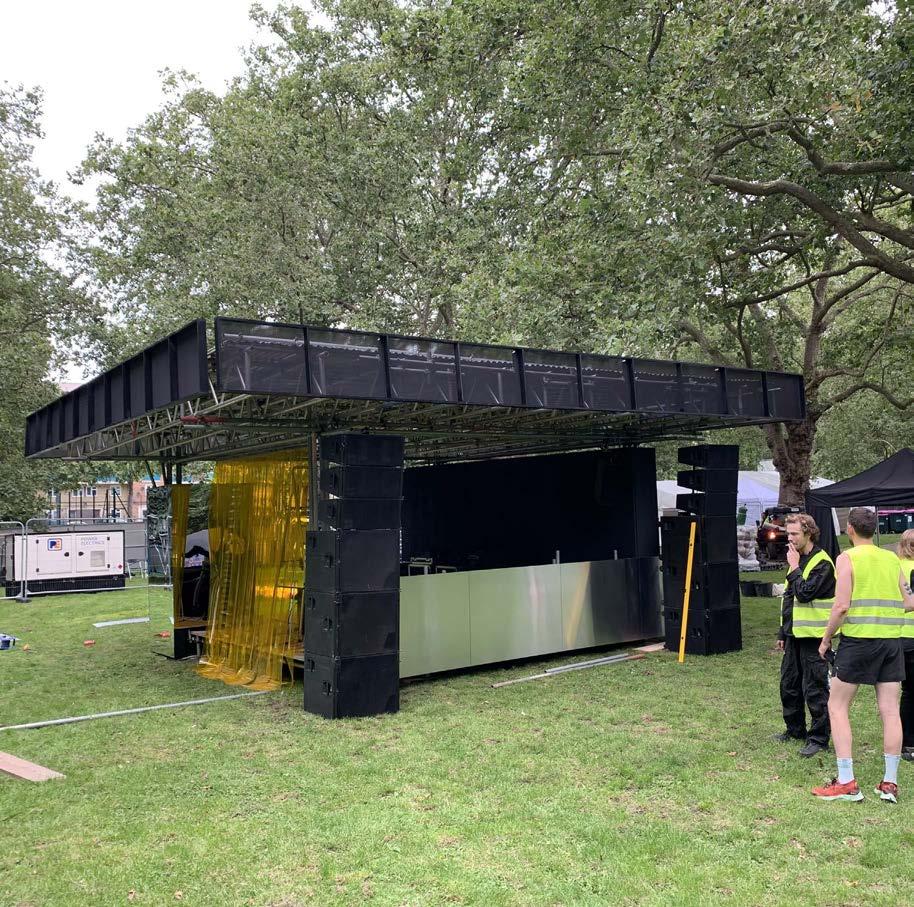
Visionaere stage on festival day


Prefabrication - building and staining wooden flats in the workshop
Concept model

Stage canopy - prefabricated in workshop
Finished stage - pre-festival

RALLY FESTIVAL ‘AGNES’ STAGE
2024, CAKE Architecture
Architect’s Journal Small Projects Award Winner
Design and fabrication work with CAKE architecture on the larger ‘Agnes’ stage for RALLY’s second festival. Time was spent in the workshop with set designers constructing demountable elements that would fit the scaffold structure, as well as during the install on-site.
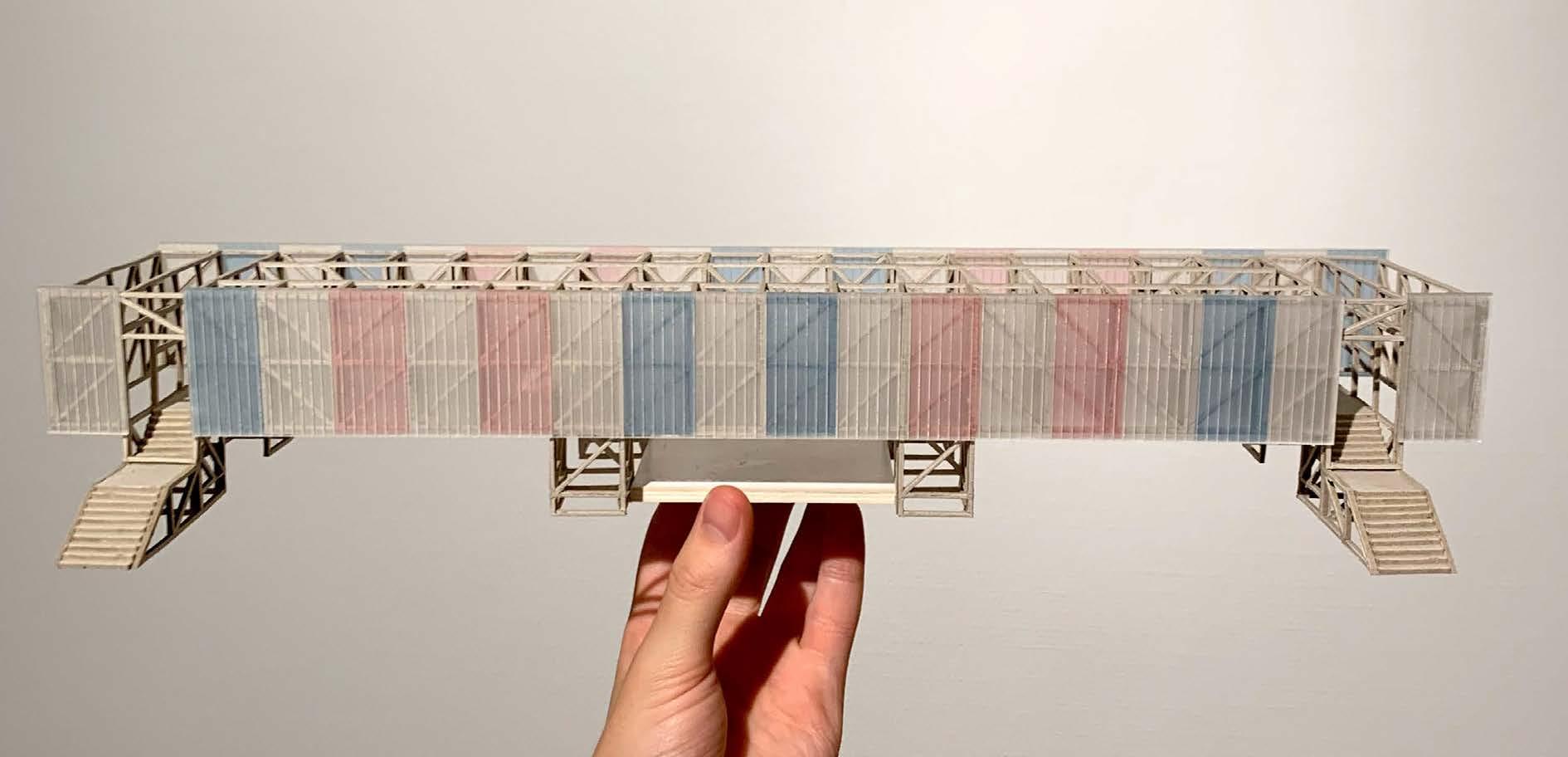
A meditation in pink, blue and white, the stage references Agnes Martin’s subtle paintings and draws a comparison between the meditative states entered while dancing and viewing art.
My technical involvement in the project culminated in a build pack of technical drawings to aid the stage’s re-animation in future years of the festival.
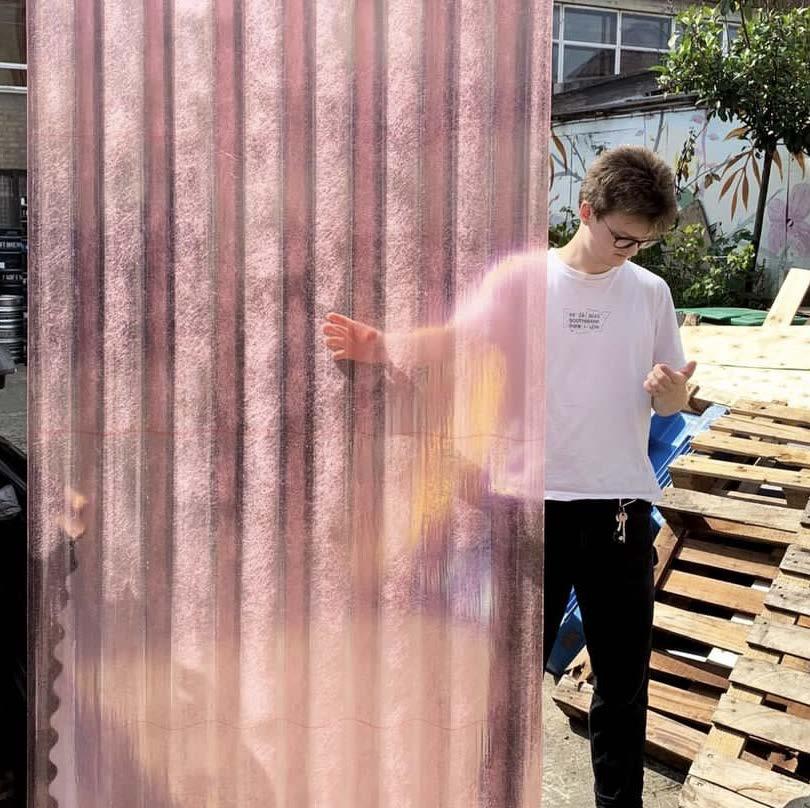
Testing vinyl application to GRP panels - these were wrapped individually with translucent pink and blue vinyl
Agnes stage on festival day
of stage - produced for AJ Small Projects presentation
Excerpts from build kit - incorporating lessons learned from Agnes’ first deployment at RALLY 24
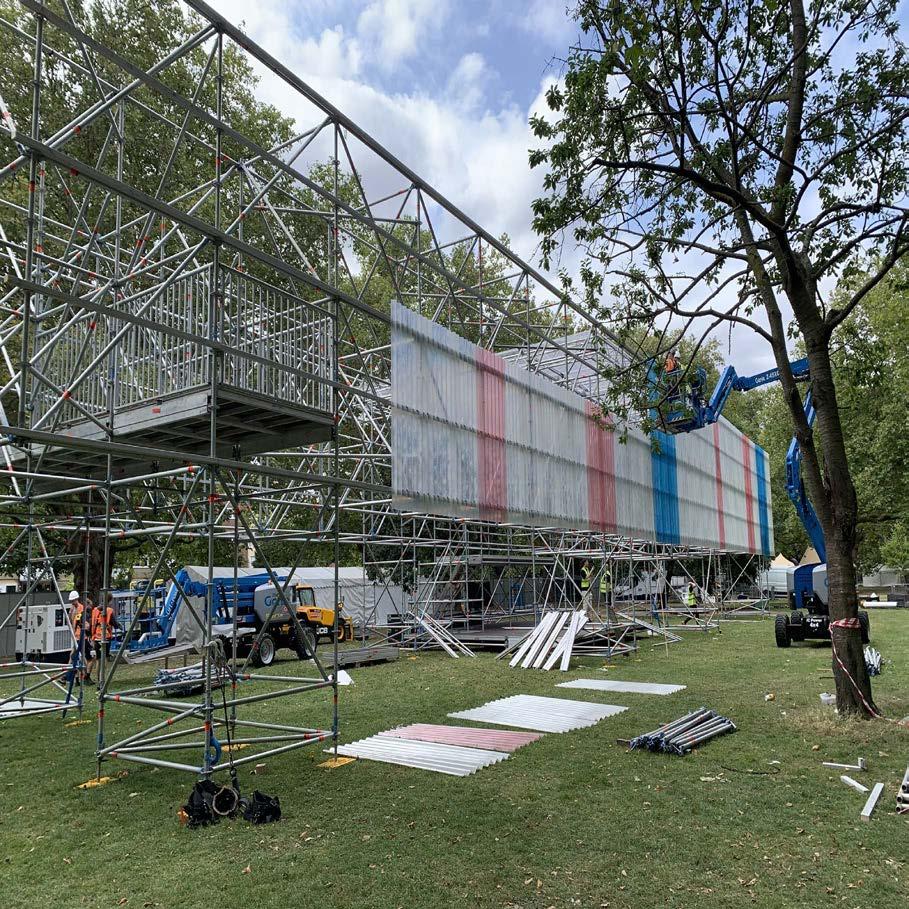
On-site assembly - cladding the scaffold structure with GRP panels
Model


TOWER PROJECT
2025, Herzog & de Meuron
Process and exhibition model making for a 260m tall tower project in Southern Europe.
Studies from 1:1 through to 1:500 scale testing facade elements, retail units, public realm treatment, balcony arrangement and general arrangement.
1:250 massing model
1:100 sectional model
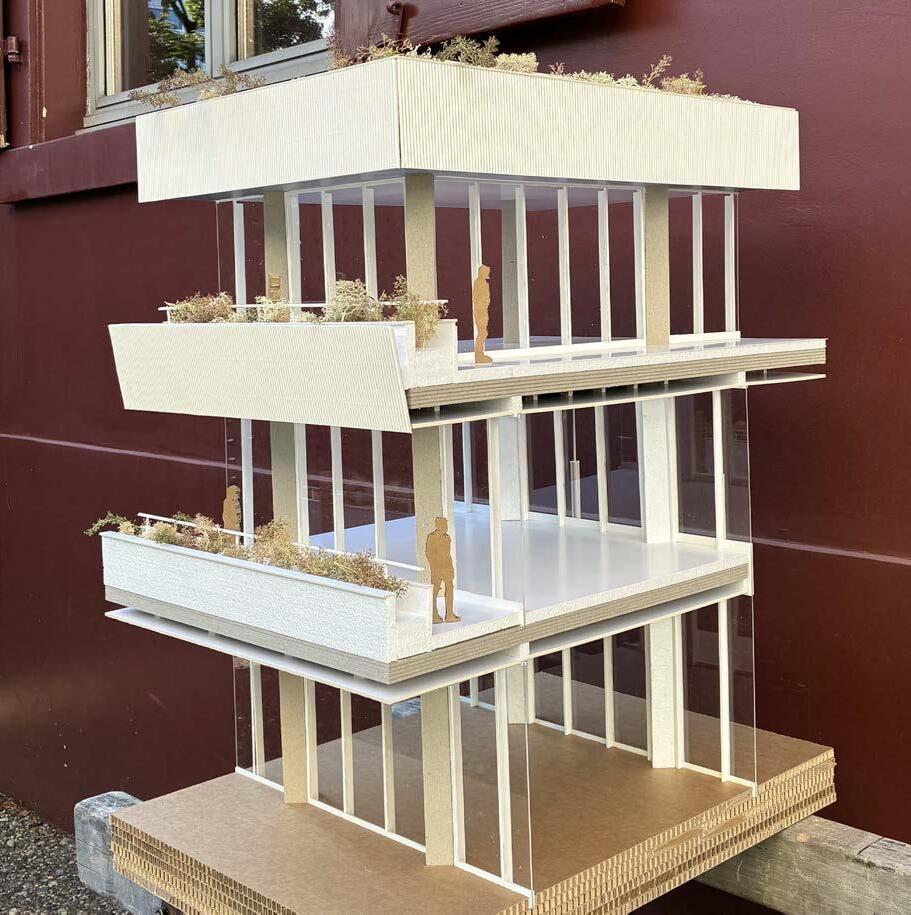
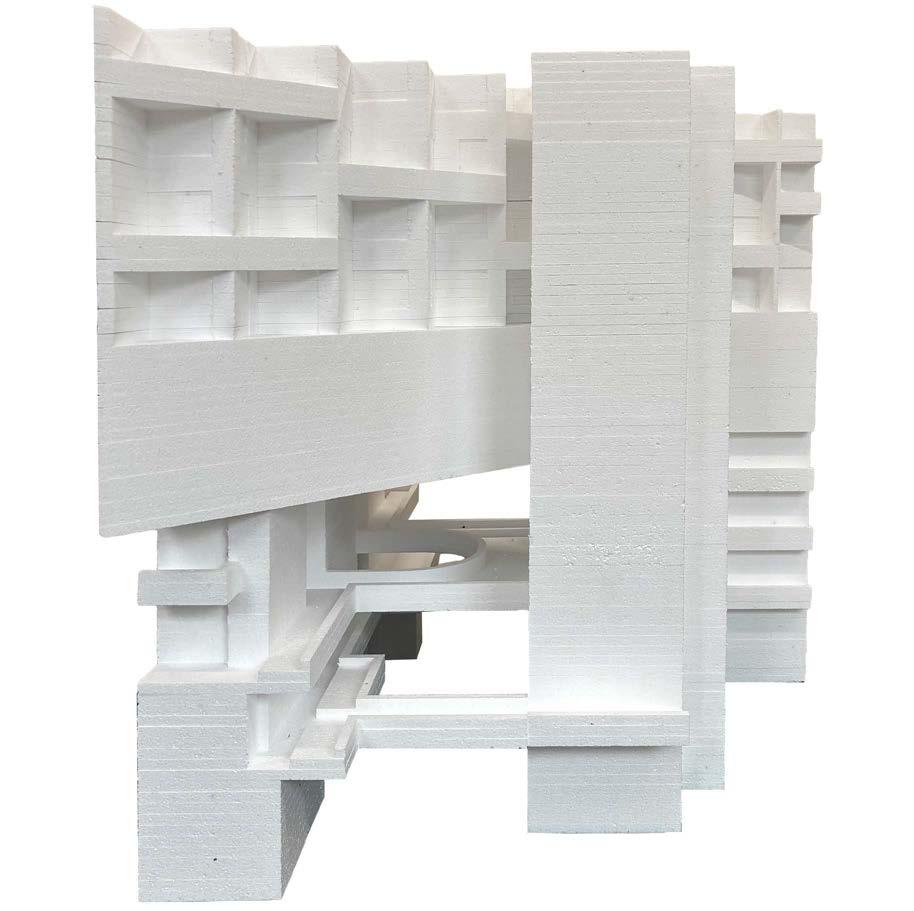

1:25 exhibition massing model
1:1 facade panel test
1:20 sectional model of lower podiums and ground floor retail units

99 FOREST ROAD
2022, technical / professional practice report
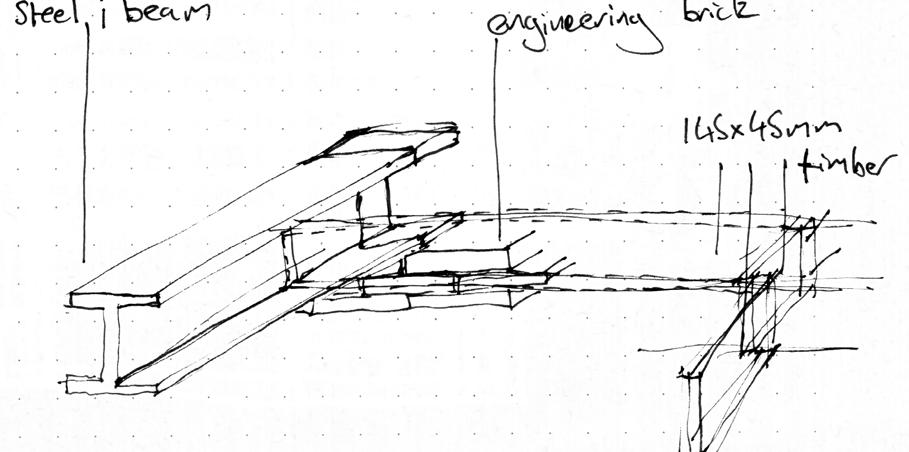
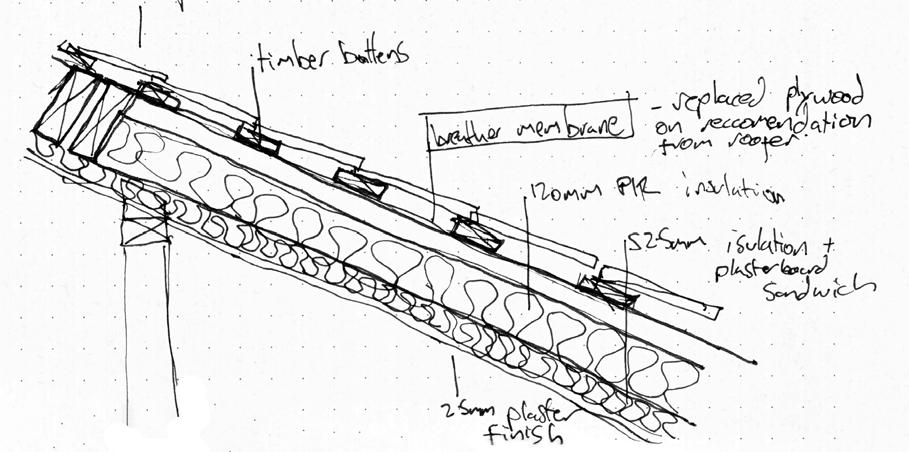
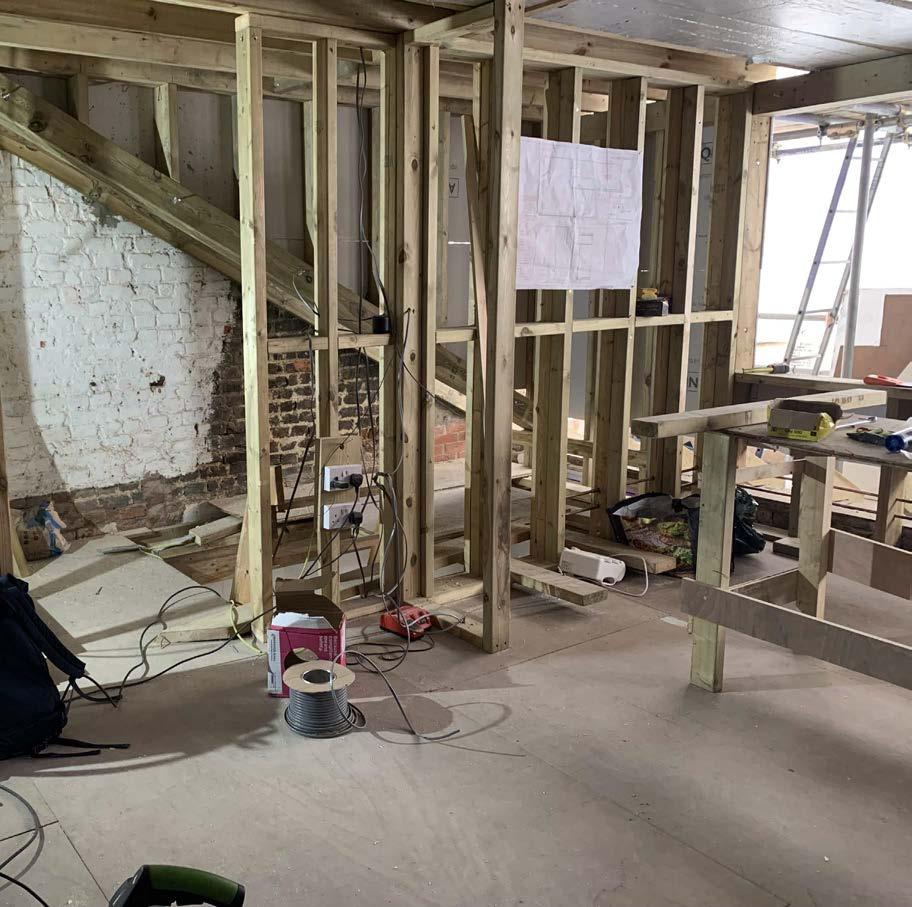
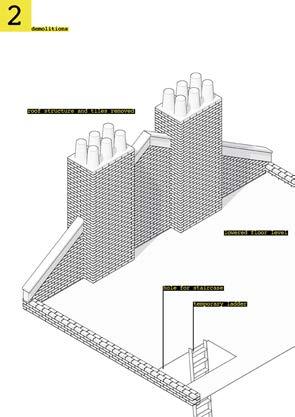
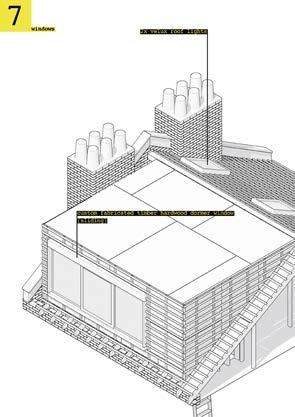
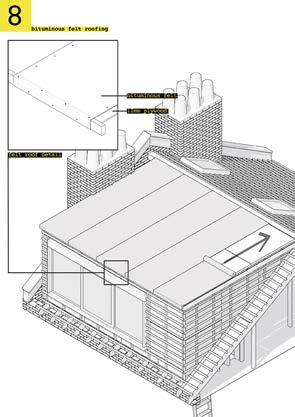
Technical report on a loft extension in Dalston, following and analysing the relationships between architect, contractor and client as well as an investigation into how a project moves from design to realisation. Time was spent on side during multiple site visits talking to the site team and visually surveying progress and technical details.





TECHNICAL STUDY
2024, accompanying third year project
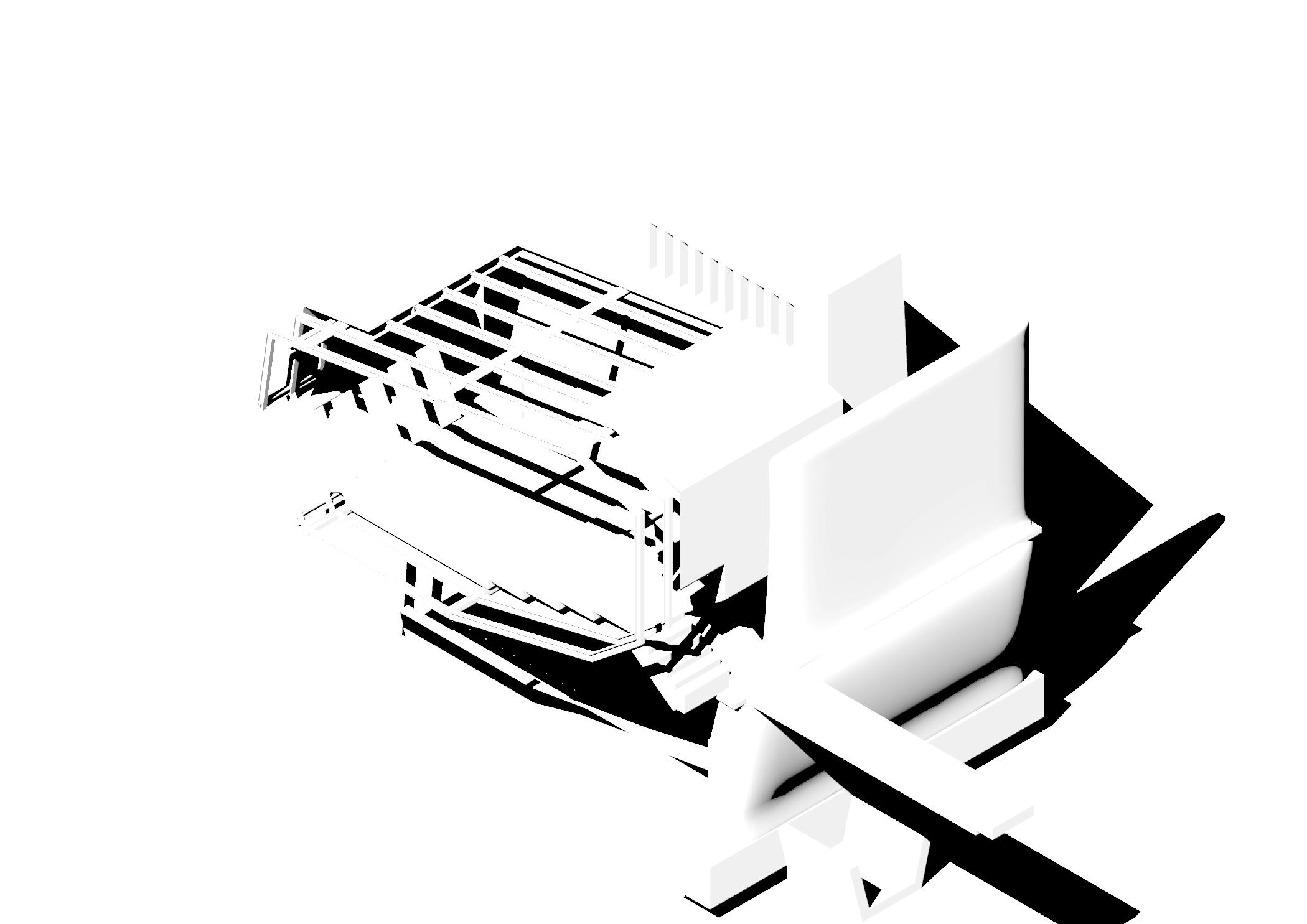
Majority of foundation is gabion
Concrete
