Selected Works: An Exploration of Spatial Storytelling
Erica Morrissey I Fall 2022-Summer 2024
Selected Works: An Exploration of Spatial Storytelling
Erica Morrissey I Fall 2022-Summer 2024
Phone Number: (904)-887-5725
Email: Morrissey0924@gmail.com
LinkedIn: https://www.linkedin.com/in/erica-morrissey-55400919b/
Education
University of Michigan
Fall 2023-Current
M.Arch Candidate
University of Florida
Fall 2019-Spring 2023
Bachelor of Design-Architecture
Minor in Landscape Architecture;
Minor in Theatre Productions-Set Design
Final GPA: 3.92
Awarded: Summa Cum Laude
XR 3D Artist/Scenic Designer Fellow at the University of Michigan’s Center for Academic Innovation
My duties include:
Current
-Lead props designer/fabricator for the short film: Black Performance as Social Protest; with a focus on recreating historic architecture
-Collaborating alongside other fellows and supervisors to design 3D environments on the LED Stage
-Designing in software including but not limited to: Unreal Engine, Unity3D, Substance Painter
-Fabricating physical and digital props for 3D environments
Projects I have worked on include:
-Black Performance as Social Protest; a short film (stage hand and scenic designer and props fabricator)
-University of Michigan Power Center Digital Twin; a digital course at the University of Michigan (3D environments artist and site researcher)
-Project Yeti; Mount Everest Leadership Simulation; props fabricator and set designer
Taubman School of Architecture Fabrication CNC Coordinator (CNC Router and Waterjet)
-Prepare all Router and Waterjet files from students and faculty
-Manage incoming questions and payments from students and faculty
-Assign files to student assistants and assist with complicated files on the router and waterjet
-Regular maintenance on the CNC and Waterjet
-Review and revise CNC files from students and faculty
Projects I have worked on:
-Fabrication of custom furniture for the fabrication lab, faculty, and staff (router)
-Design and fabrication of large-scale decor for the University of Michigan’s Children’s Hospital (router)
-Fabrication for the University of Michigan faculty exhibition (waterjet)
FL and Elmhurst, IL)
As an architecture intern at Dewberry Architects, I honed my skills for the Federal and Justice markets of the profession by working on multiple projects in collaboration with my team. Below are several projects I worked on and the roles I performed:
-Lead Conceptual Designer for the Lockport Pavilion and Comic-Con venue in Lockport, IL (2023)
-Co-Inspector and Designer for the Hanover Park City Hall Site Survey and Spatial-ADA Analysis Package (2023)
-Draftsmen and renderer for the Design Development phase for the Lake-in-the-Hills Police Department, IL (2023)
-Lead renderer for the Leesburg Police Station in Leesburg, Virginia (2022)
Current
May 2022-August 2023
January 2023-May 2023
As a Design Collaborator for the 1ST Place, winning design in the New Housing Division for the International Design Competition known as the Solar Decathlon, I, along with other architects and engineers designed and planned a prototype, net zero, solar-based home commissioned by the Tebughna People of Tyonek, Alaska. We were also tasked with creating a short film that showcased the way of life of the Tebughna people, and how the proposed home is integrated into their subsistence lifestyle. Below are several of my primary roles in the creation and execution of the project:
-Collaboration with other designers to create the concept of the home: spatial layout, location, and material
-Facilitating weekly meetings with Village Elders
-Lead drafter for floor plans of the home as well as the graphic designer of village site plan and lead renderer for the interior renderings
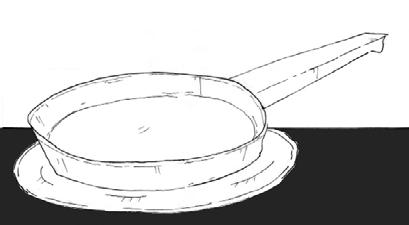
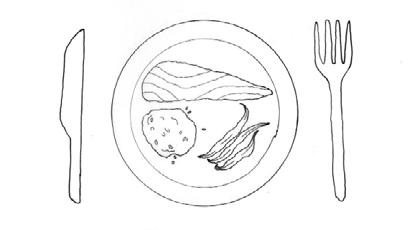
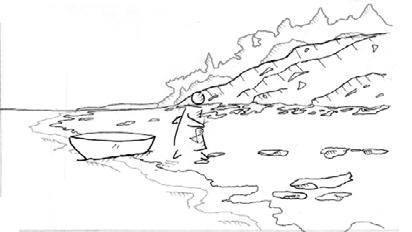
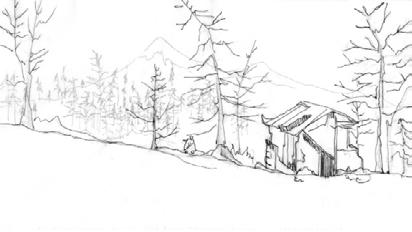
-Managing the short film team and lead storyboard artist for: A Fisherman’s Tale (linked to the side)
-Designing and animating final scenes
University of Florida NOMAS Chapter Vice President
My duties included:
- Working closely with the President to establish budgets for GBM’s, events, and panels
-Creating the program for above mentioned events, as well as overseeing and hosting them
-Lead in coordinating with Professor Donna Cohen for the Old Mount Carmel Church
Community Design Charrette (Summer 2022)
-Working with staff and the community for NOMAS Outreach and Legacy Mentorship Programs
University of Florida School of Theatre and Dance Scenic Artist
As a scenic artist for UF’s School of Theatre and Dance, my duties include:
-Fabrication of set pieces through various mediums such as wood, metal, and paint
-Lead drafter via AutoCAD for the department’s floor plans and fire evacuation routes
-Routine maintenance of scene shop and theaters
Productions include:
-Stagehand for the filming of UF’s production of Three Sisters by Anton Chekov (Spring 2021)
-Production/Fabrication Crew for UF’s production of the musical A Little Bit of Night Music by Hugh Wheeler and Patrick Quentin as well as Agbedidi: West African Dance (Fall 2021)
November 2021-December 2022
August 2020-May 2023
As you make your way through this portfolio you will notice there is a wide breadth of work that may make it difficult to categorize this publication into one area of study. This is good! As a designer, I have been fortunate enough to be educated in a variety of skills from sketching and handrafting to BIM modeling and 3D visualization, even set design and CNC fabrication. As a designer and a curious human, I value the collection of new skills and techniques that I can implement within my own work which is a love for narrative and spatial storytelling. My love for storytelling has been crafted throughout my life and truly honed throughout my education at the University of Florida and the University of Michigan. I hope the following works bring you just as much enjoyment as they do for me.

The Dwelling Design Competition: Awarded Top 25 : In collaboration with (1) team member
(3D modeling and rendering by author; site plan in collaboration)

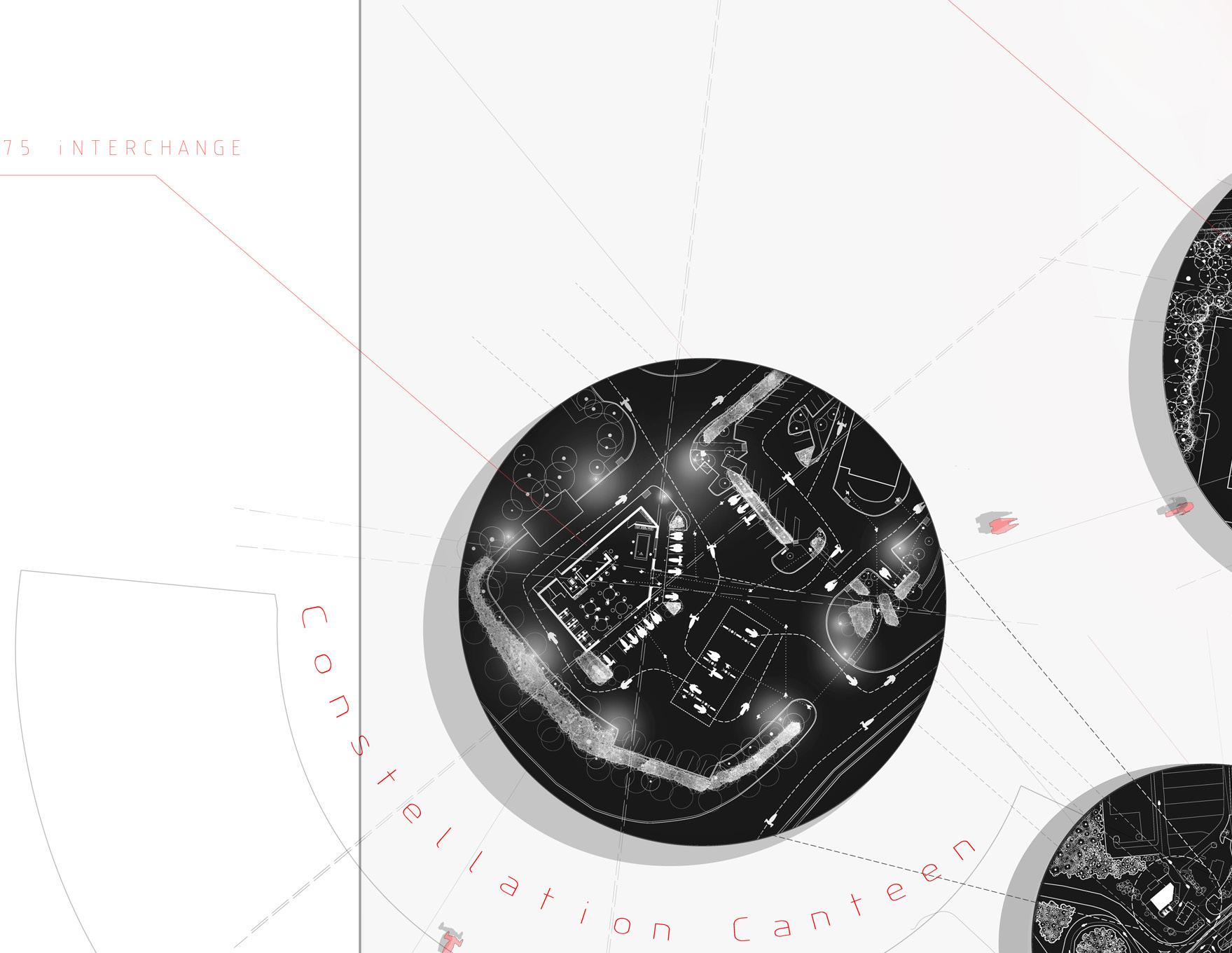
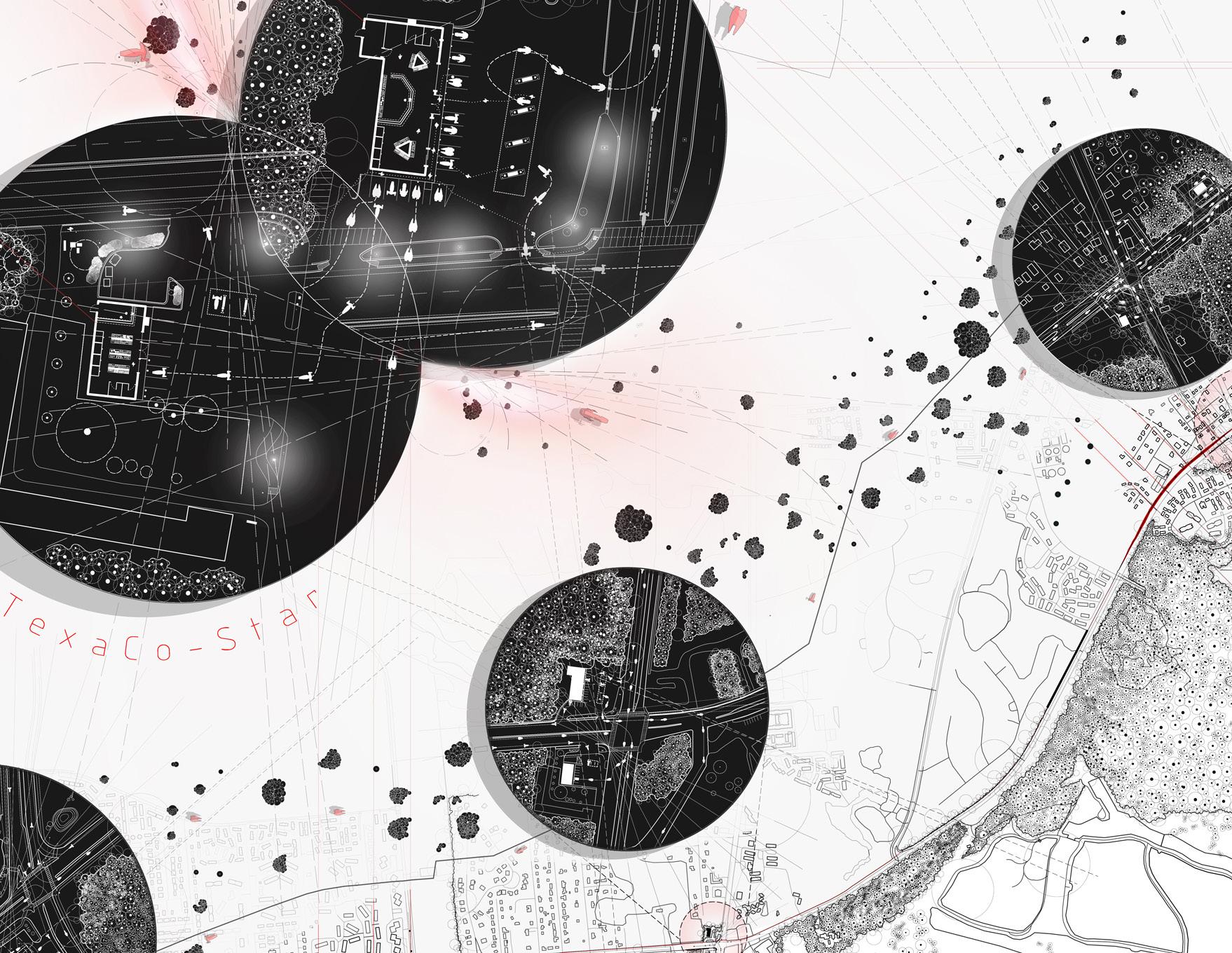
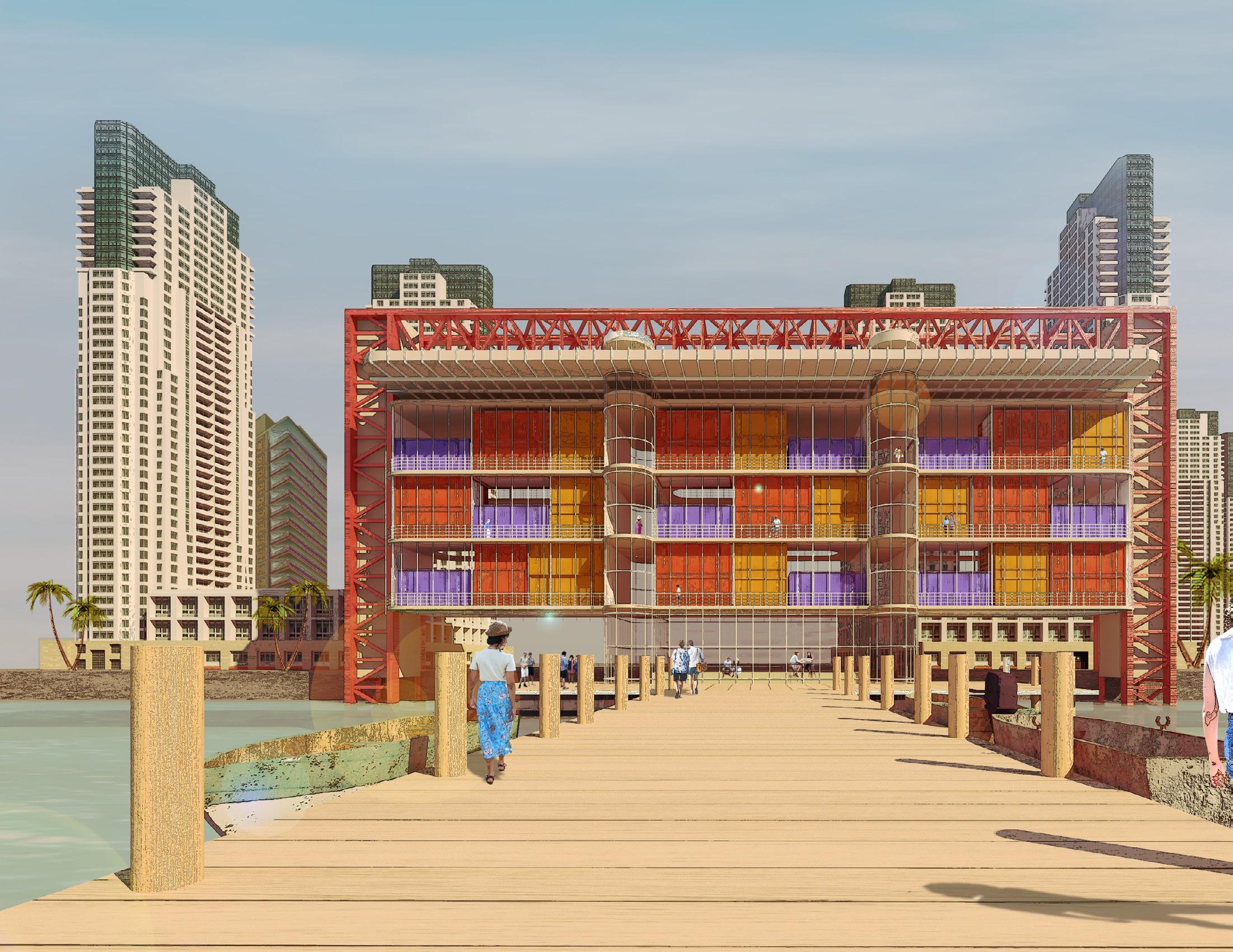
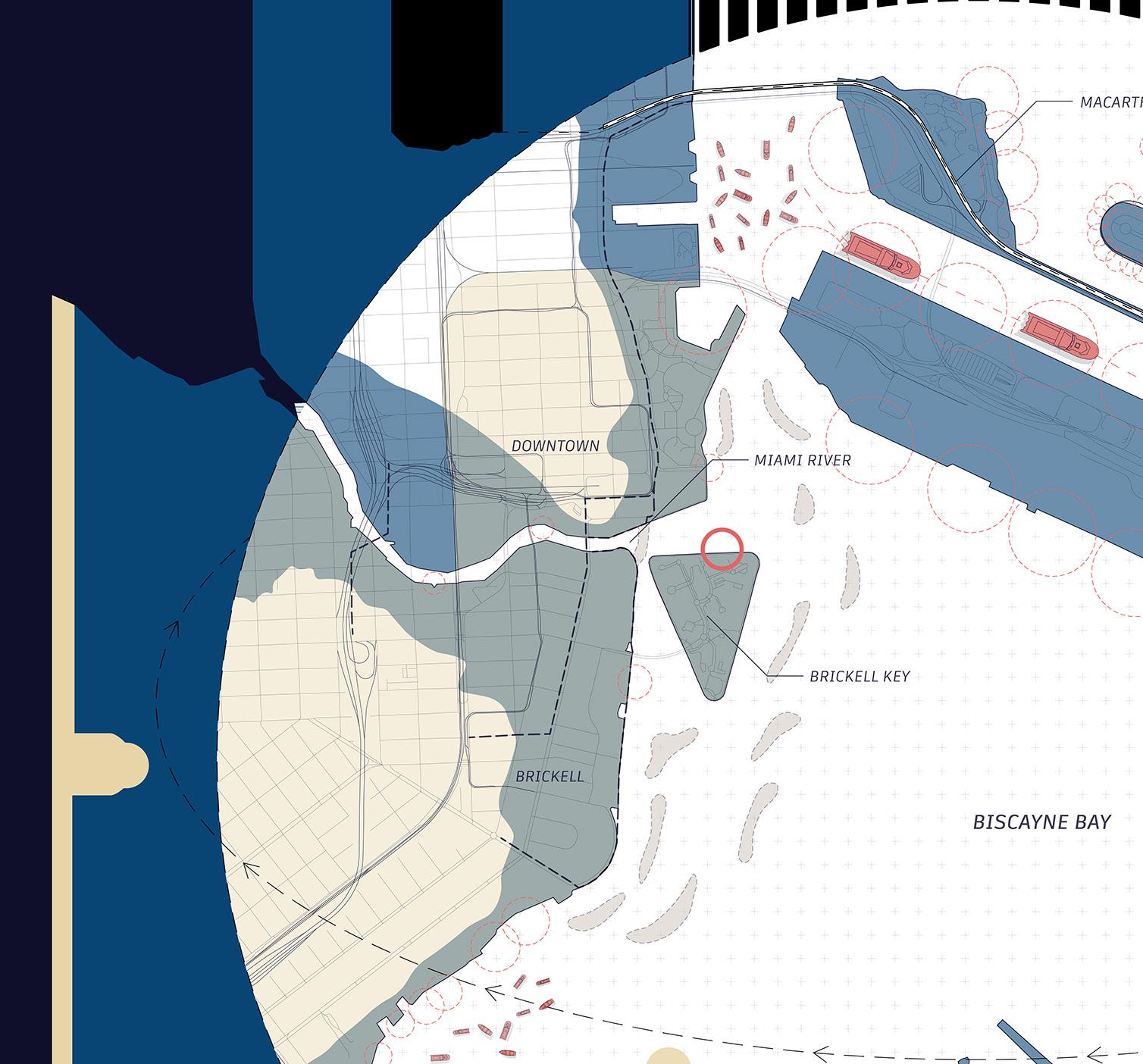
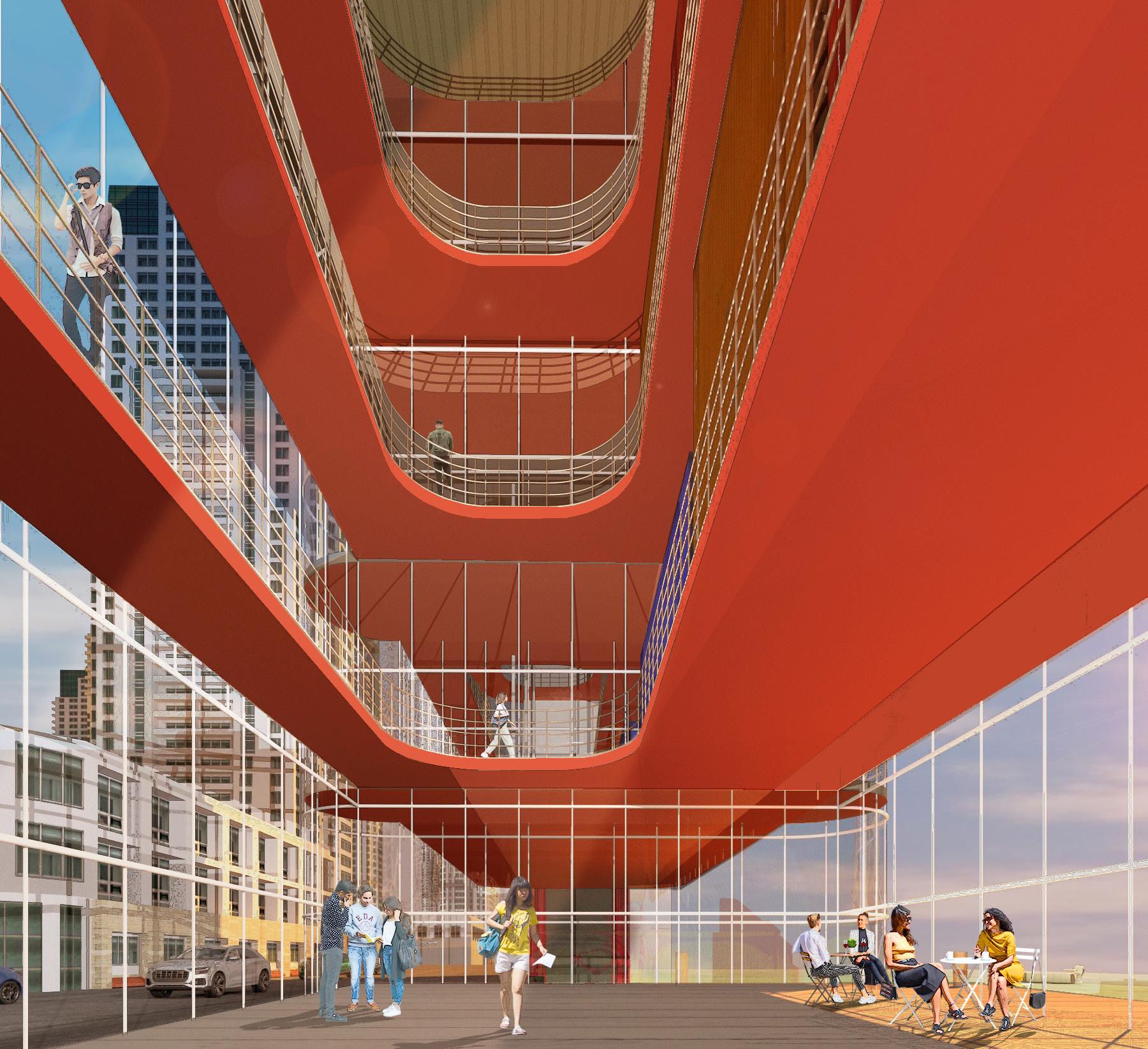
The project speculates on the potential for high density, modular living at the urban and ecological center of Miami. It is located on Brickell Key, at the confluence of Downtown Miami, The Miami River, and Biscayne Bay. The dense urban site is anticipated to be extremely vulnerable to the effects of sea level rise; yet, it could also become the testing grounds for innovative climate resiliency strategies of the the future of Brickell Key.
(3D modeling and section by author; plans in collaboration)
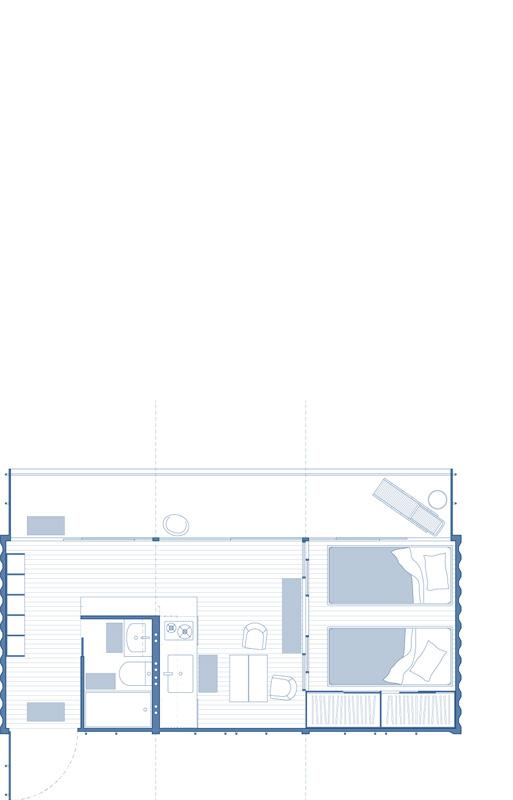
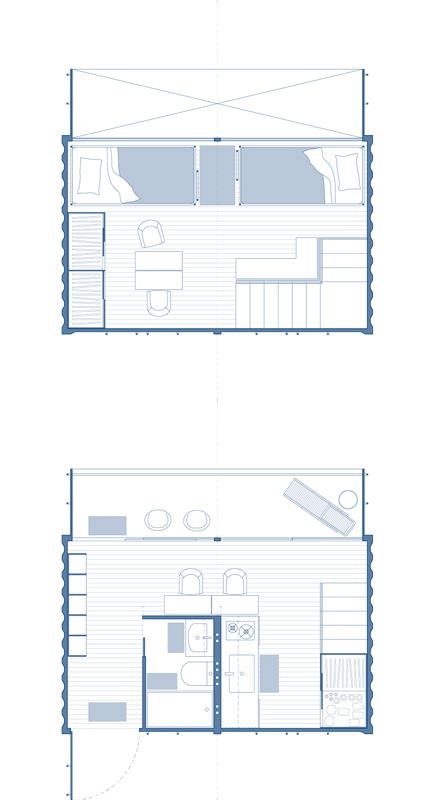
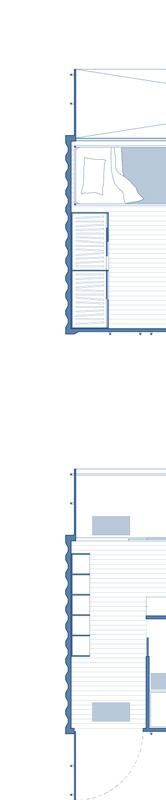
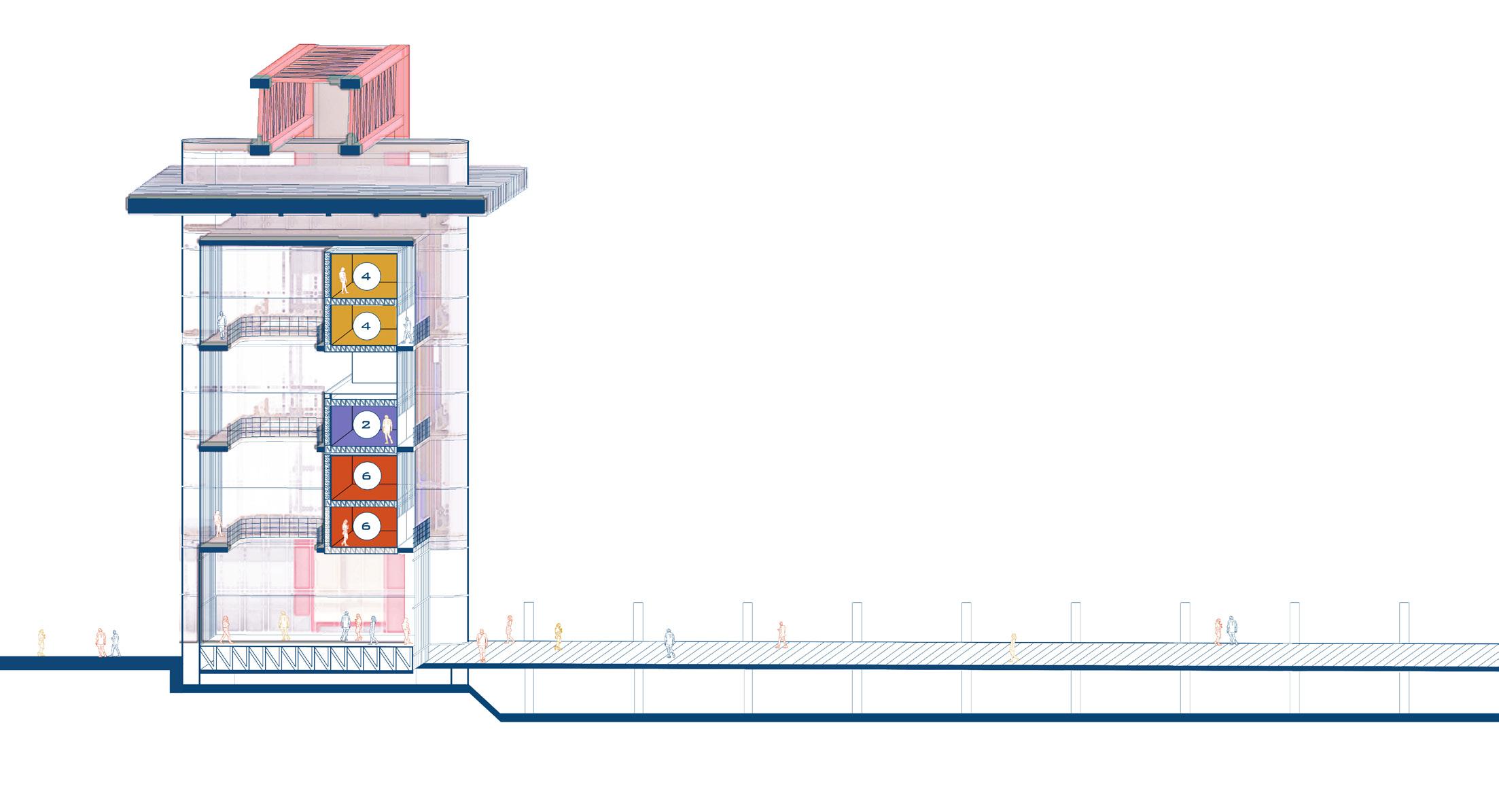
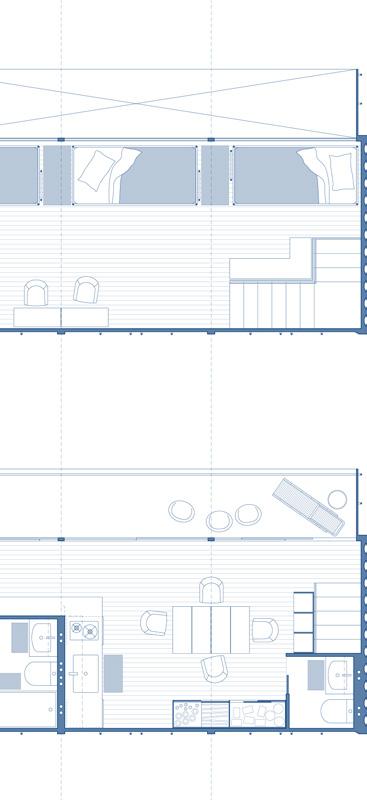
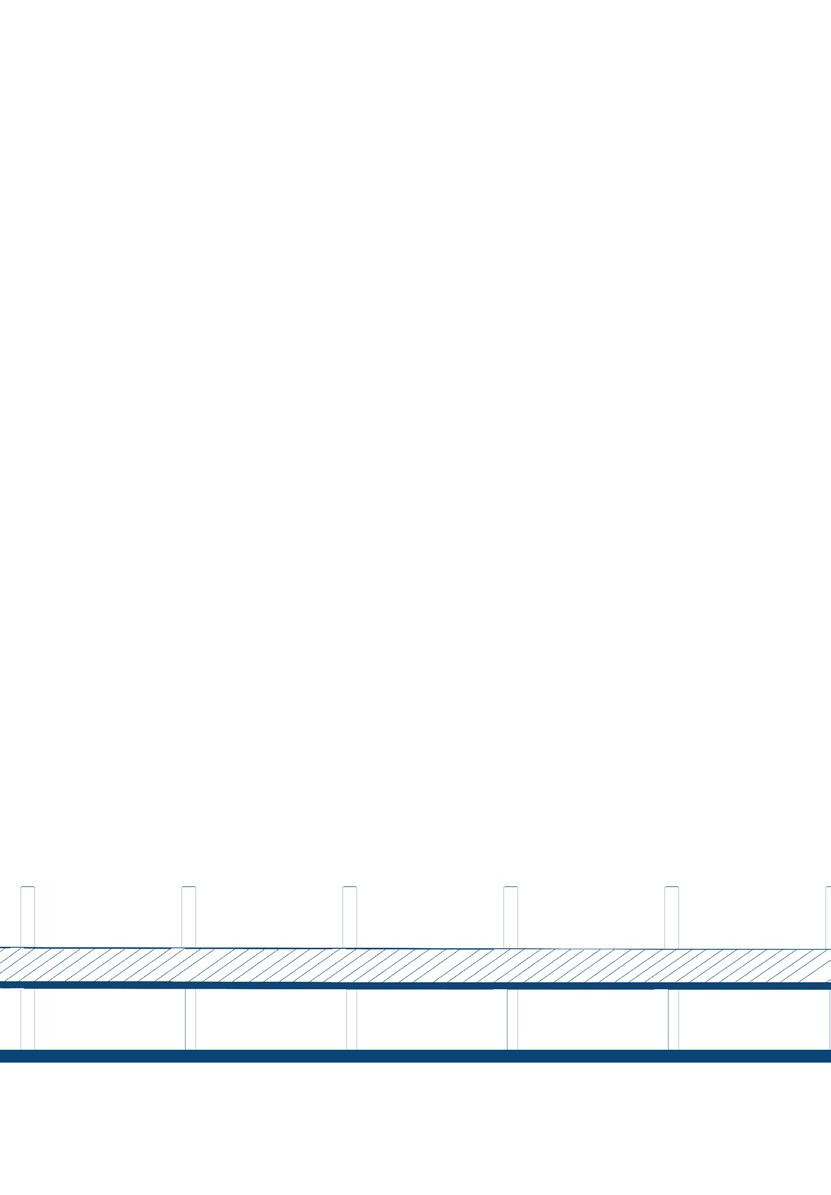
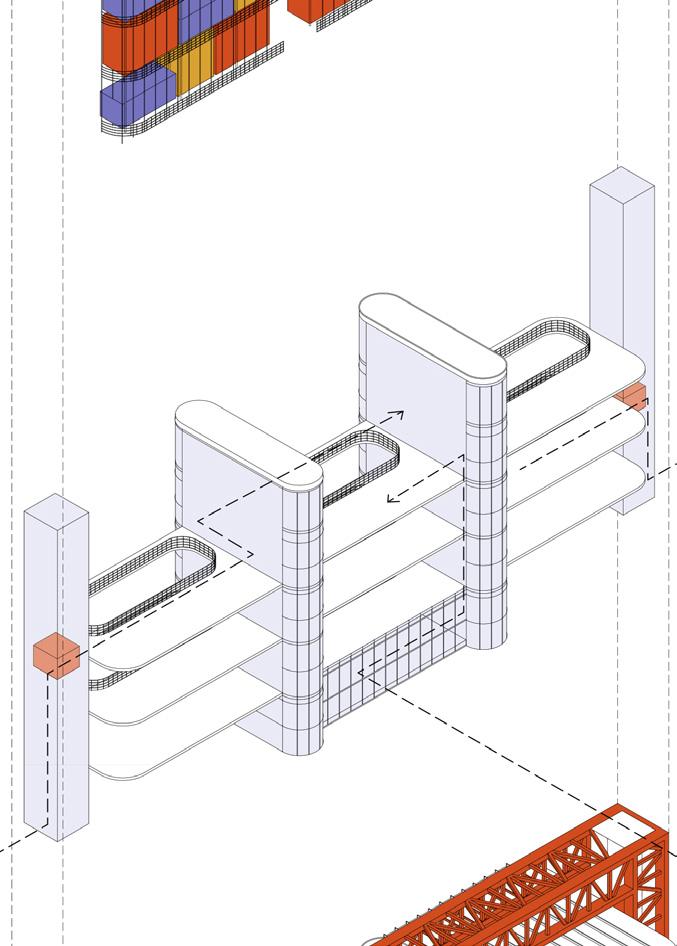
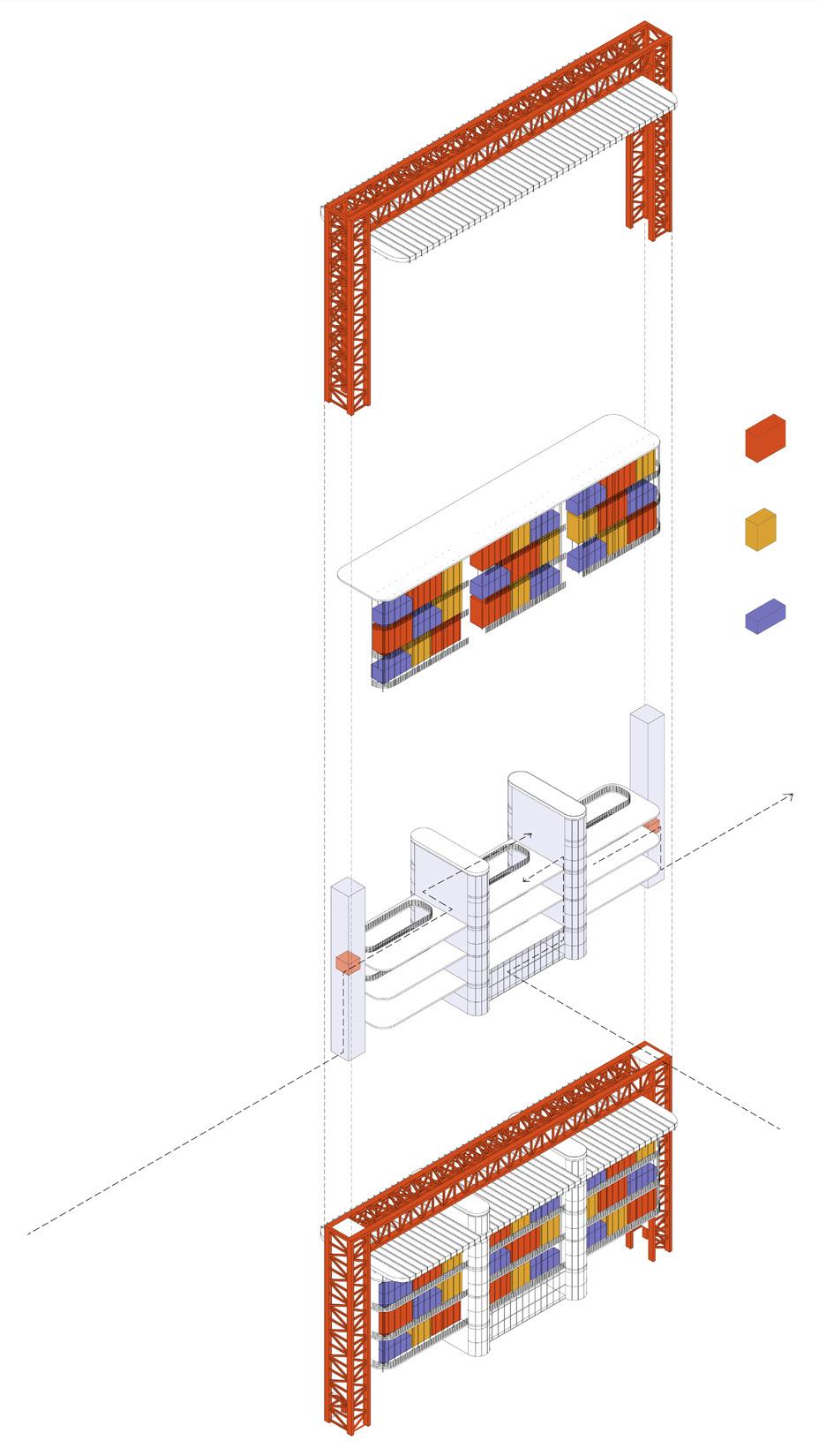
The project utilizes upcycled shipping containers from the Port of Miami as a modular prototype for compact dwelling units. They will be inhabited by graduate students and researchers analyzing the effects of climate change on Miami.
(3D modeling and rendering by author; axon by collaborator)
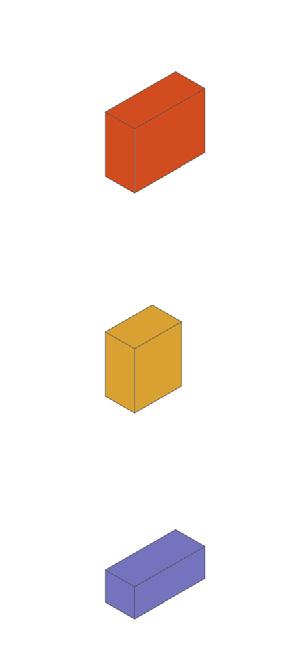
6-PERSON
4-PERSON
2-PERSON
Jefferson Chalmers, MI
In collaboration with (2) team members With Professors Craig Borum and Claudia Wigger
This project proposal is located on the Detroit River at the edge of the Jefferson Chalmers neighborhood. the site is rich in history both historically and geographically. It borders a man-made canal on the left, and A.B. Ford Park to the right. The Detroit River served as a huge anchor of industry and transportation for the city. However, the topography of the site and the neighborhood at large has caused severe flooding. With this site being in a desirable space with the canals, waterfront, and new community center and park, the neighborhood has made this space more available to the residents. Preserving the natural environment and creating space for non-human inhabitants has influenced the design process. Moments of hydrology have created a combination of preservation, community, and activity.
(3D modeling, rendering, and section perspective by author)
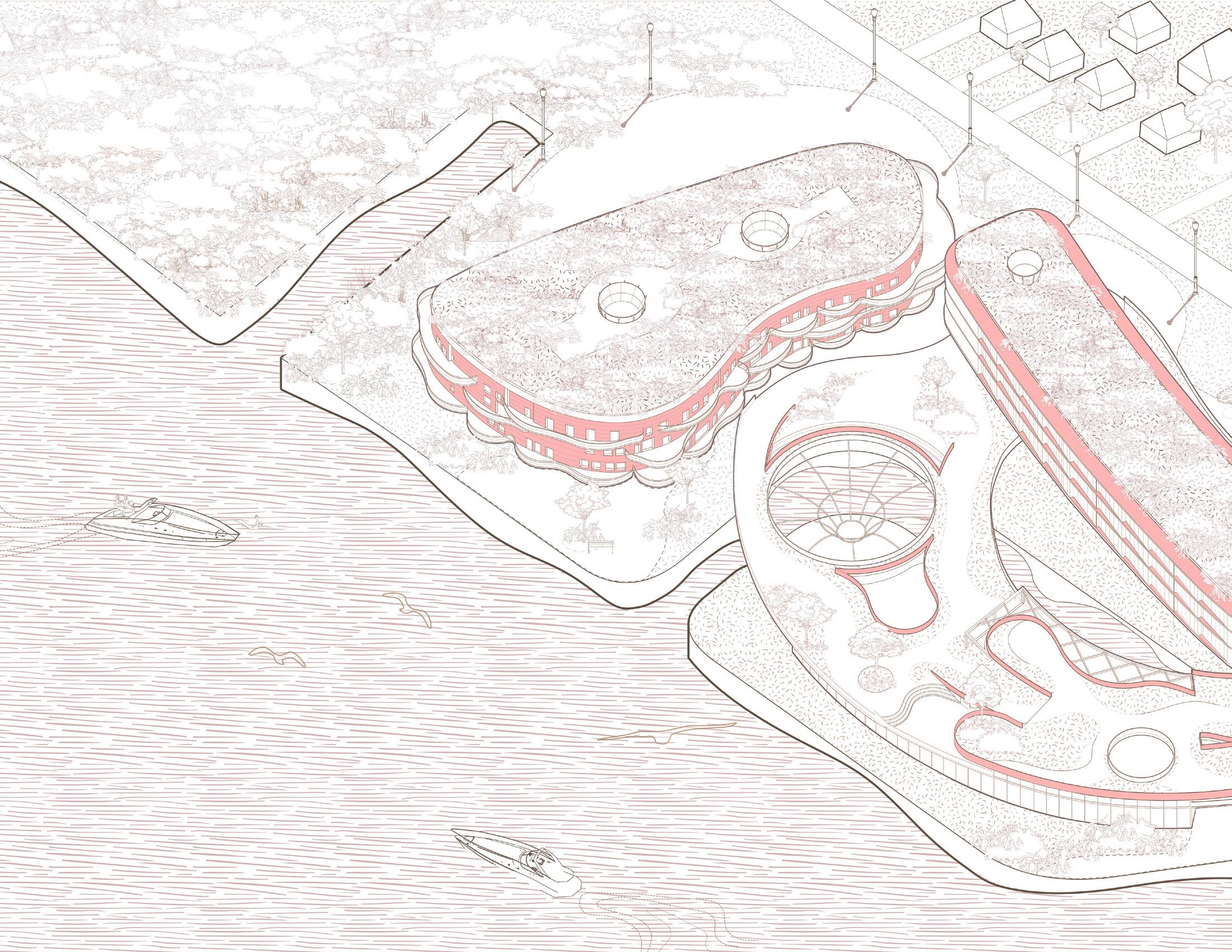
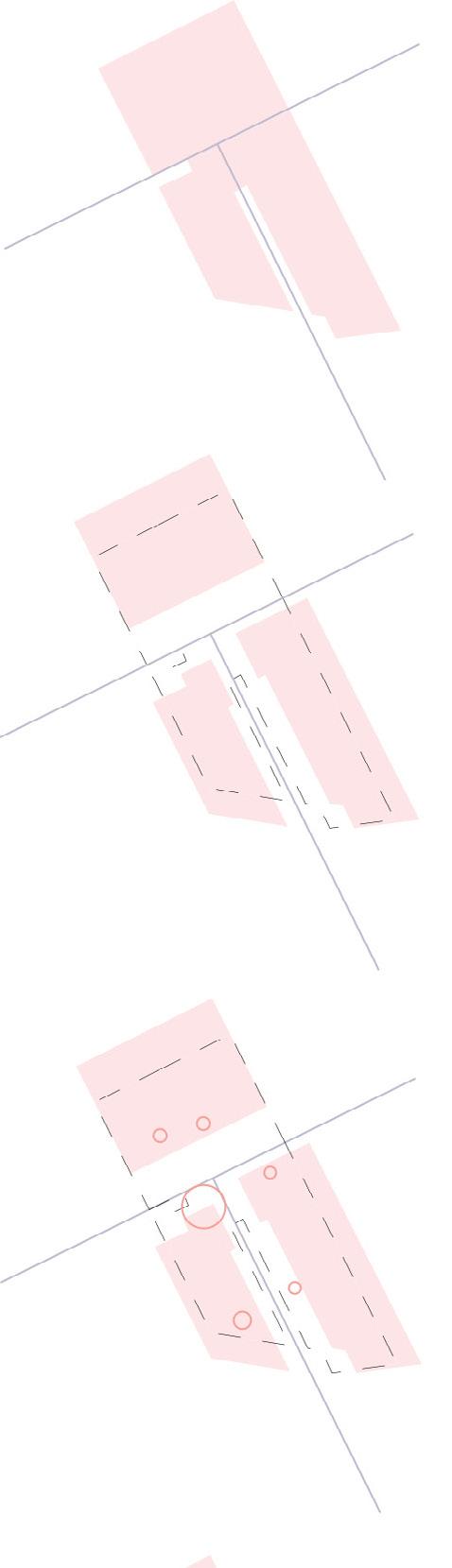
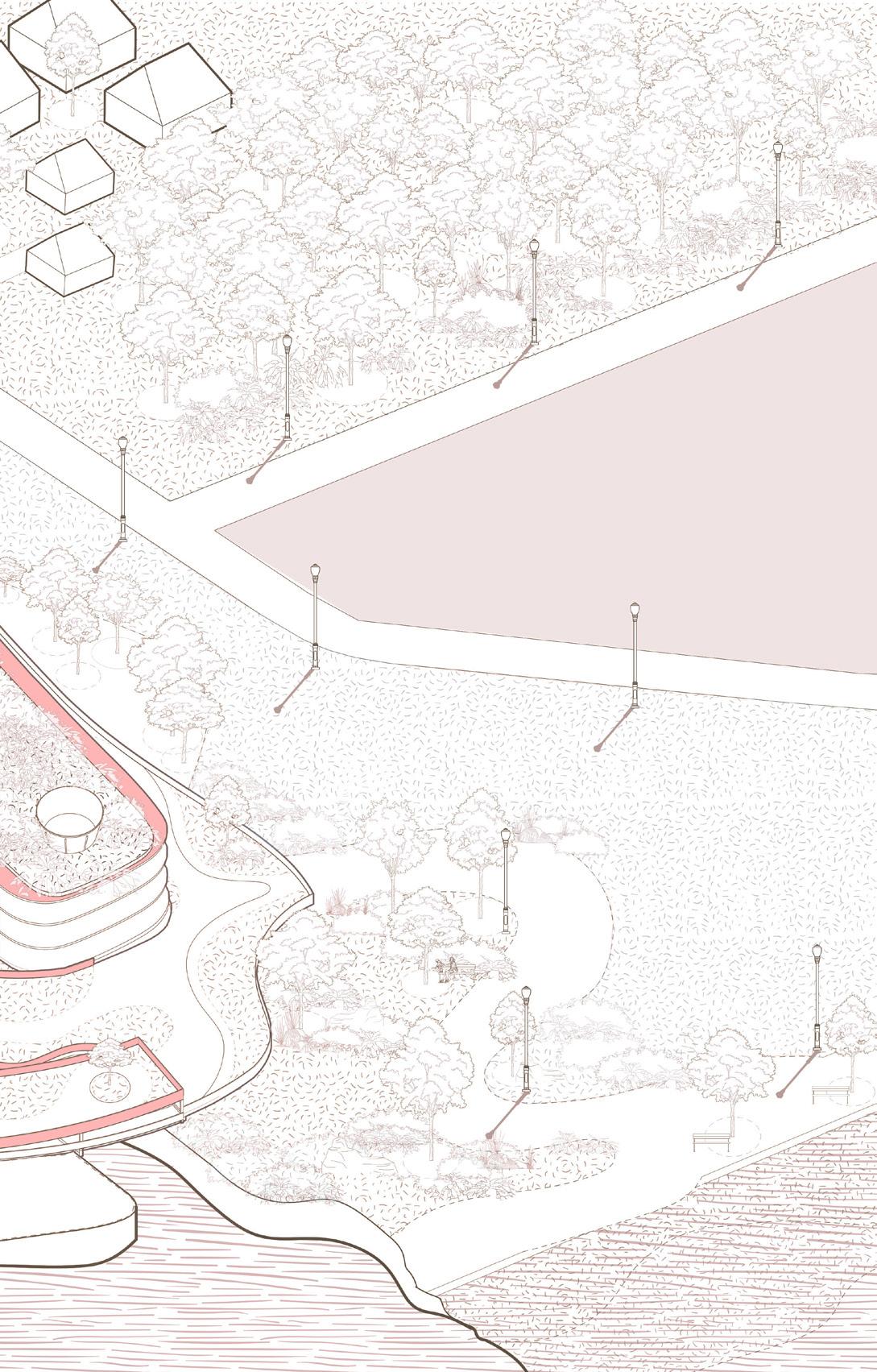
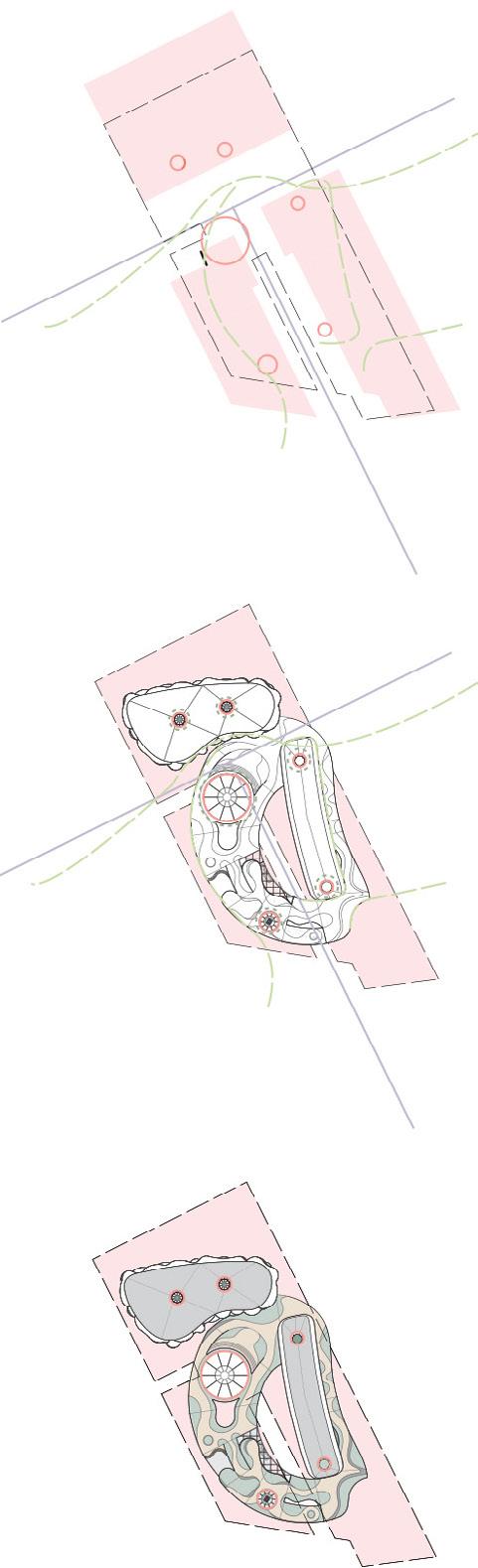
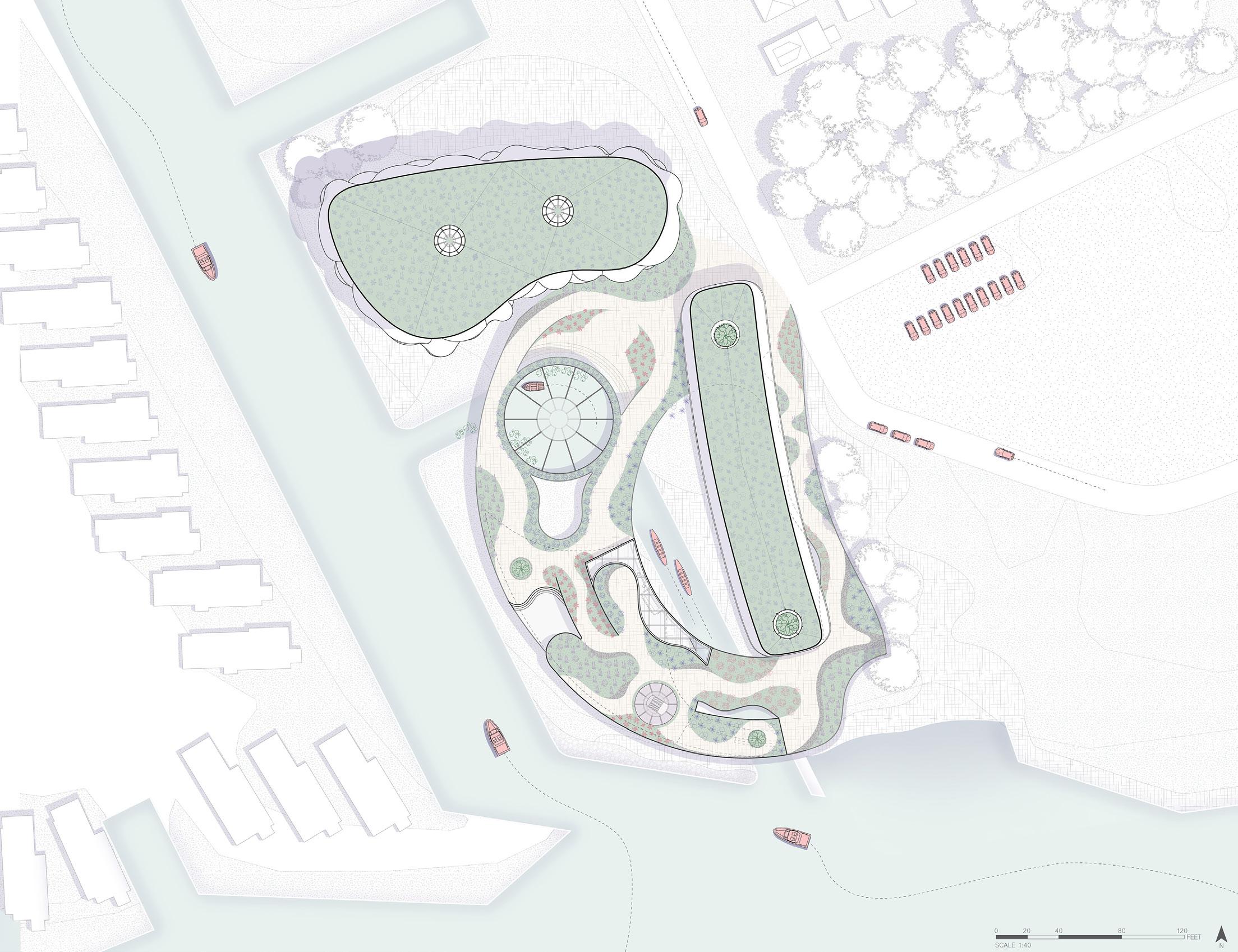
Watering Hole’s curvilinear form comes from the sites contxt and its relation to hydrology. The site of Watering Hole is a former failed housing development from the post-war years. Traces of housing foundation can still be seen, however, the most prominent remnants are the three manmade channels on the property. These three channels divide the site into 3 main segments, allowing water to be integrated throughout the property. From these segments, we broke the site into 3 main masses that would later become the three main programmatic spaces of Watering Hole: the two residential blocks and the public recreation spaces. From there, we identified areas of public space that the rest of the project would flow around, like flowing water around a rock in a riverbed. This logic led to the development of the Watering Hole’s fluid, curvilinear form.
(3D modeling, site iso, by author; infographic in collaboration)
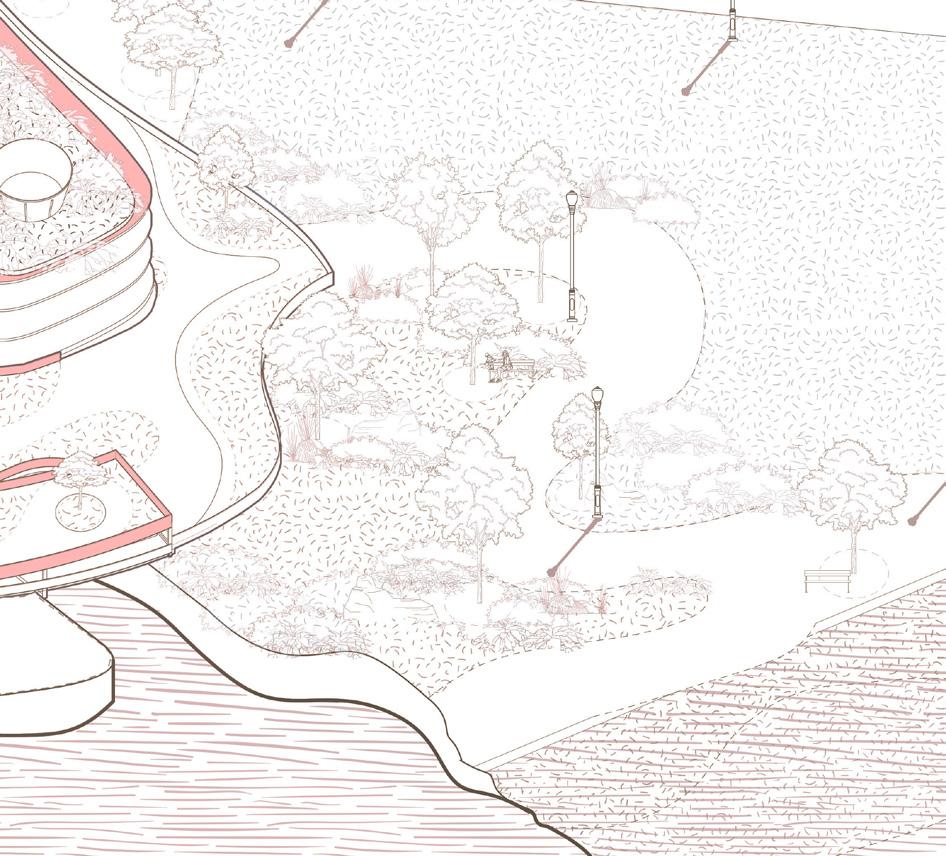
Watering Hole, located in the historic Jefferson Chalmers Neighborhood in Downtown Detroit, is home to a rich community that Watering Hole aims to preserve and promote. With a multitude of floor plans for every stage of life as well as numerous amenities such as a public parkway that is integrated into the complex, the Watering Hole is a place for life to happen.
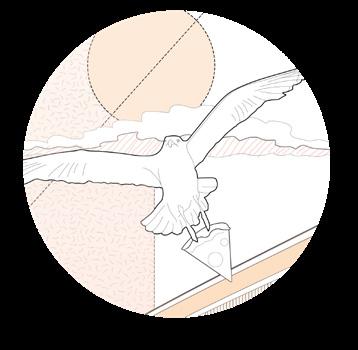
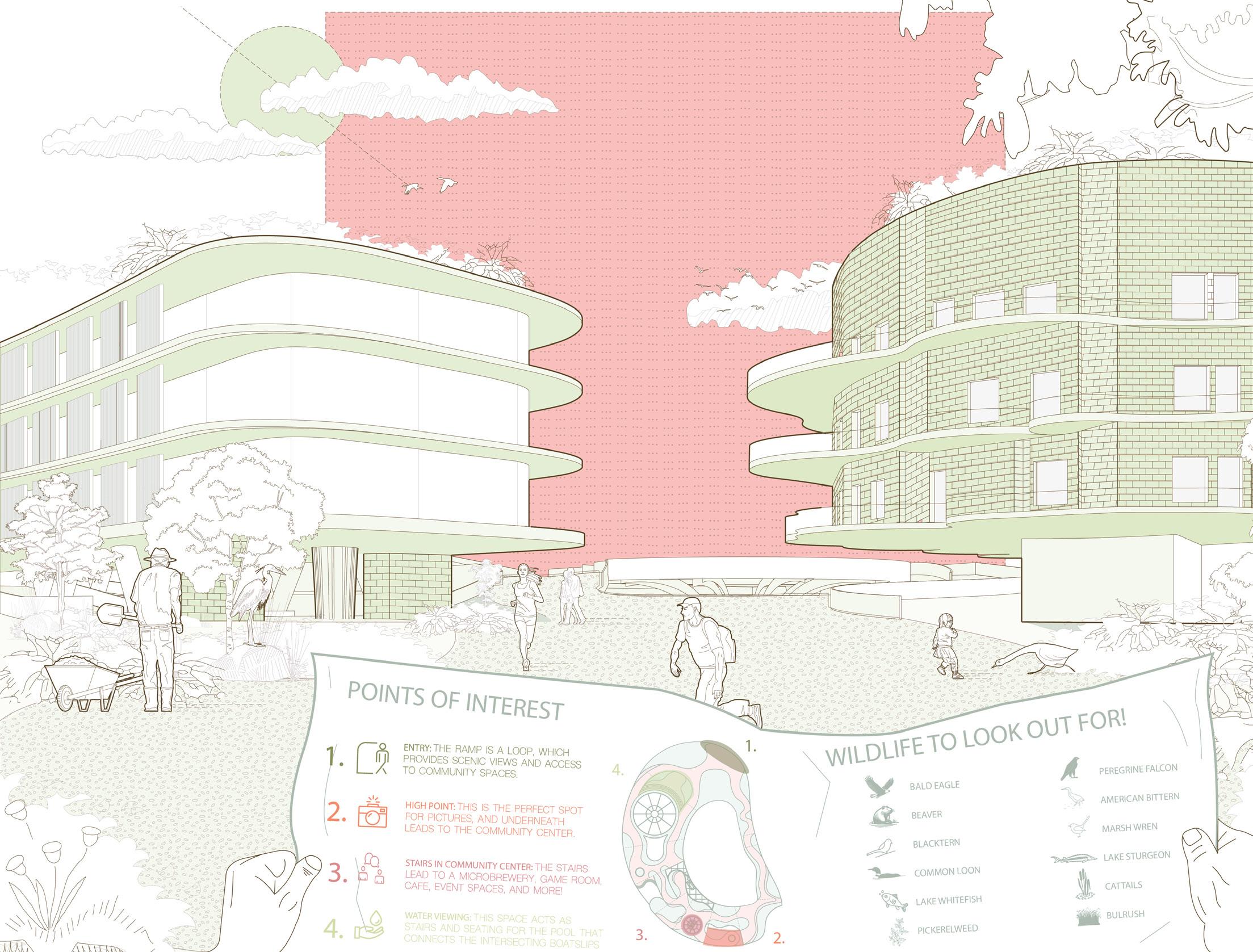
Human and Animal Interaction made easy!

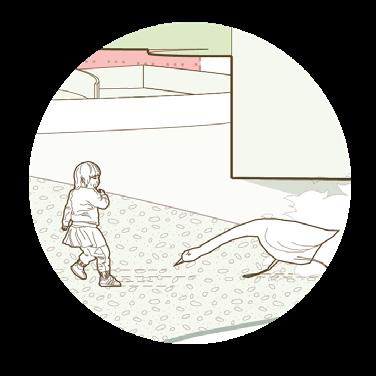
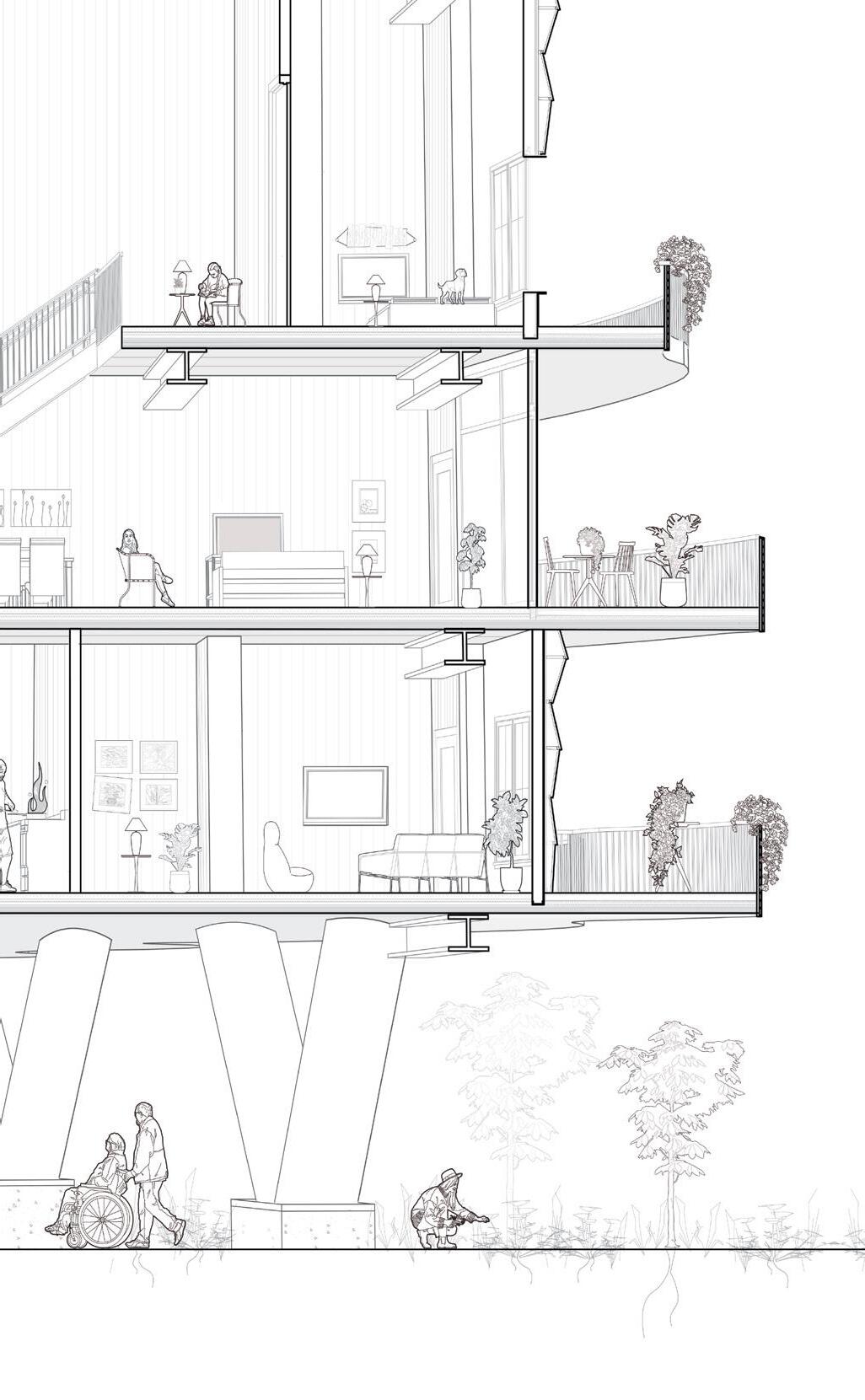

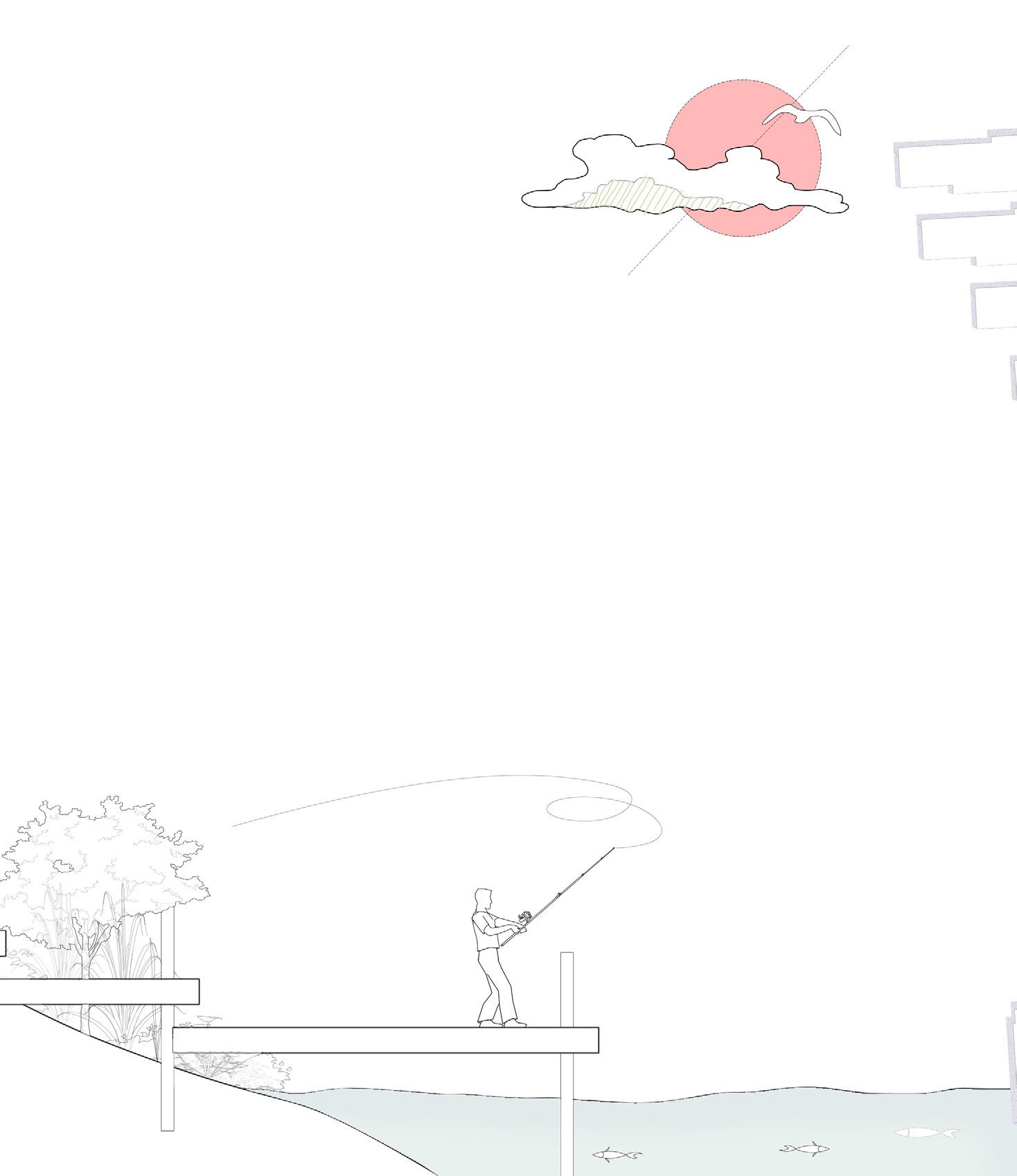
Never a dull moment on the parkway! (3D modeling, renders, and section perspective by author; site plan in collaboration)


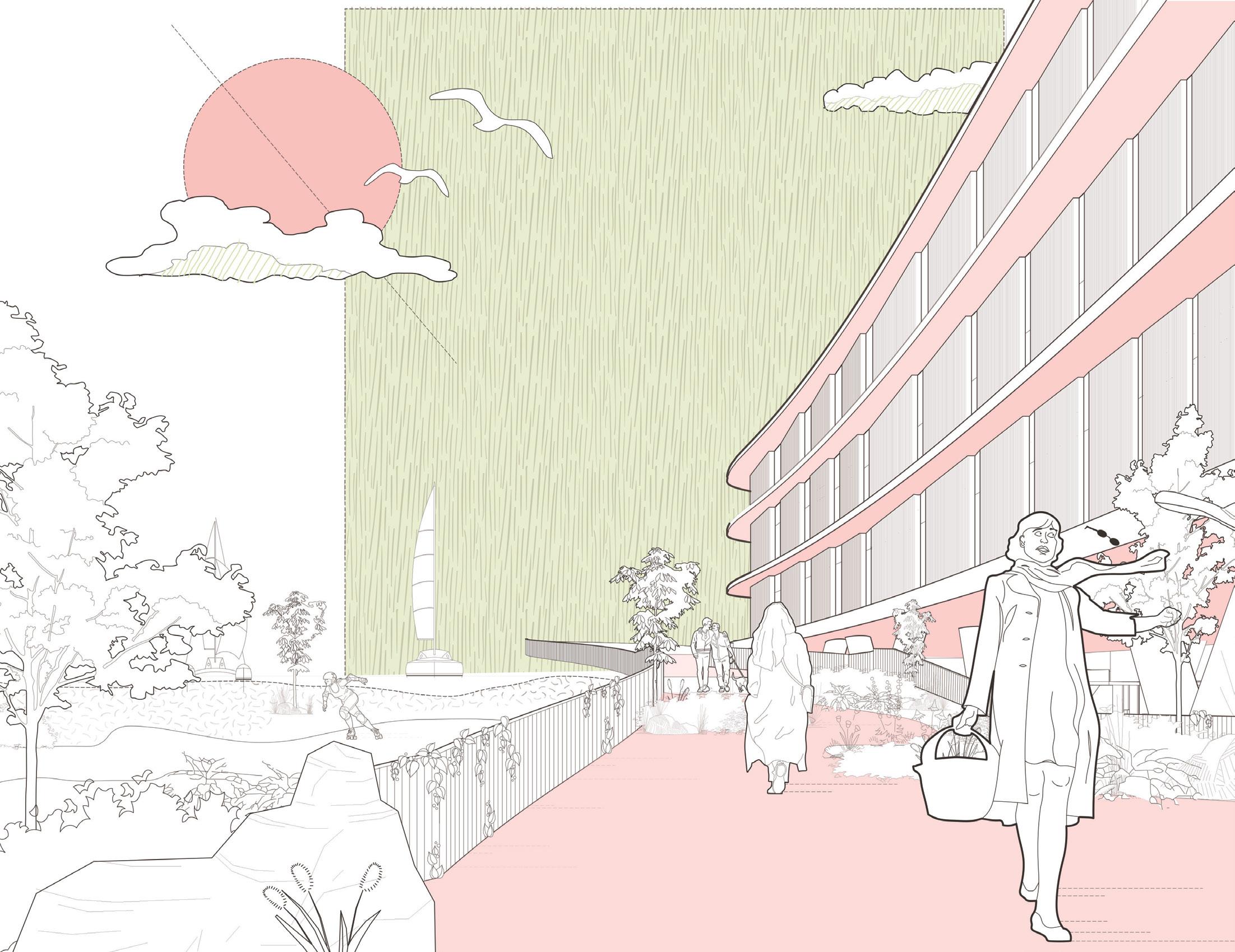
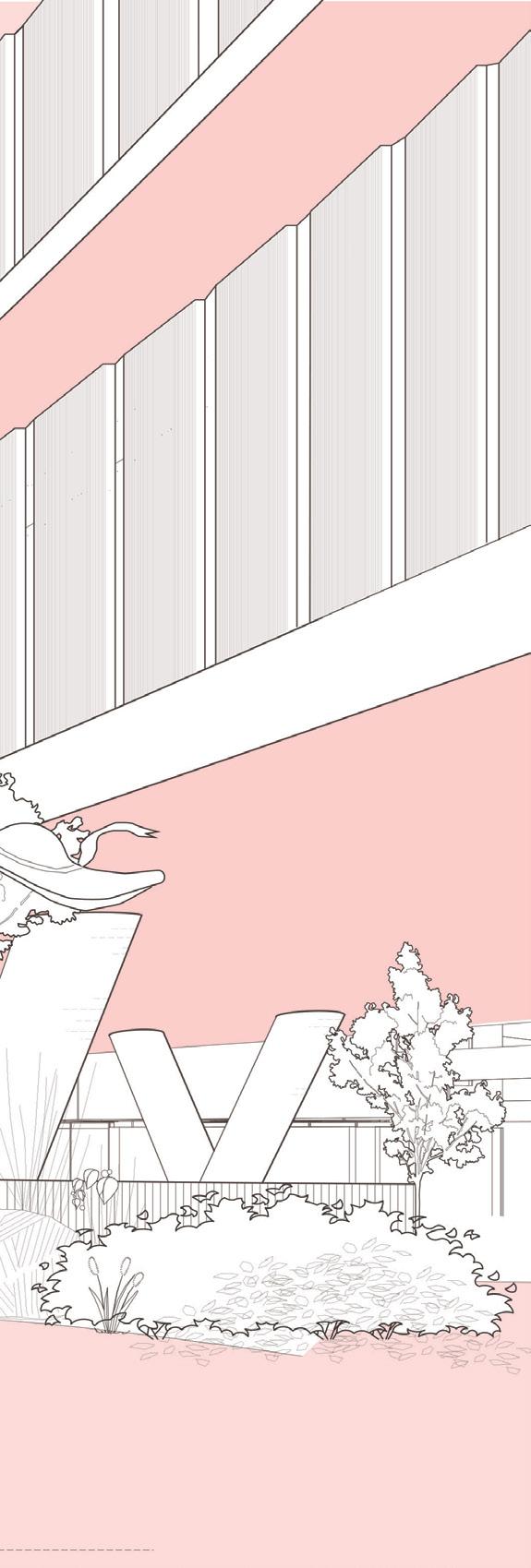
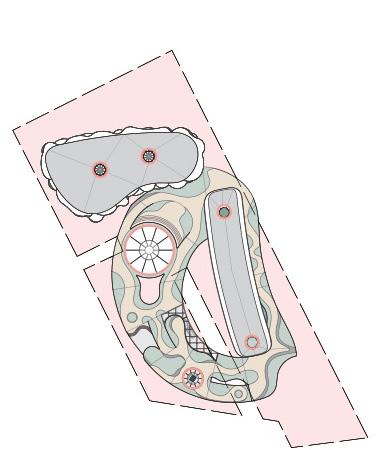
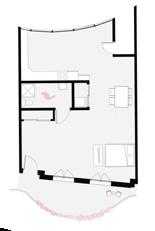
Welcome to Housing Block One! Surrounded by the elevated parkway, this floating housing block is home to two-floor plans: Studio Apartments and Townhomes that have two bedrooms and two baths!
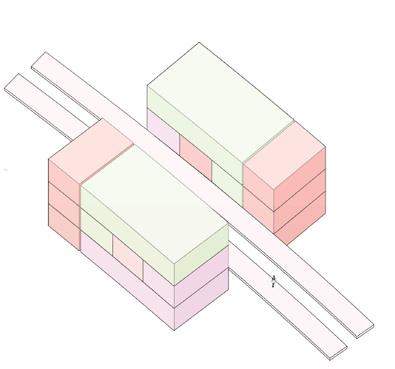
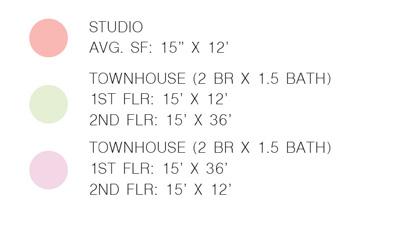
(infographics in collaboration)
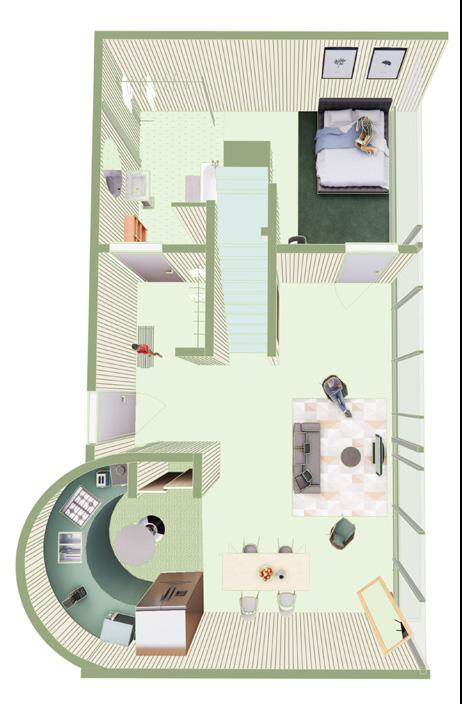
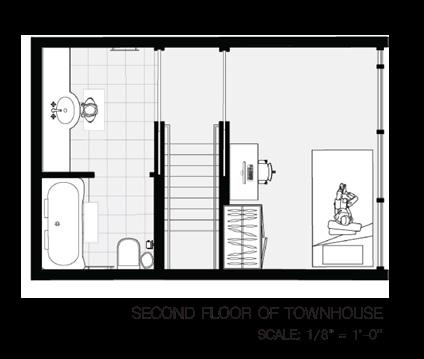
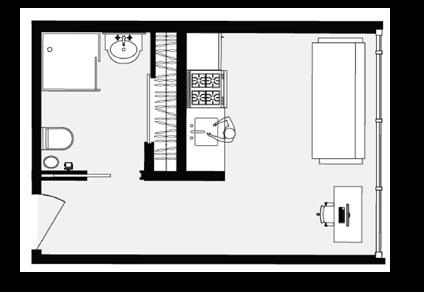
The first of the housing blocks is oriented along the North-South property line of the site. Floating above the ground plane, the apartments provide unobstructed views of the elevated parkway, the river, and A.B. Ford Park across the street.
(3D modeling, rendering, plans by author; iso plan by collaborator)
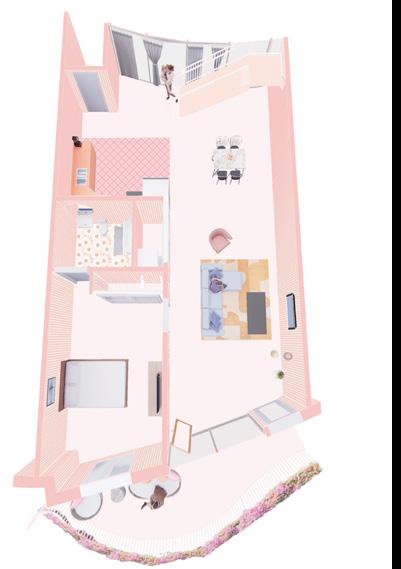
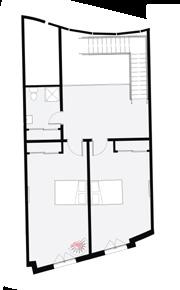
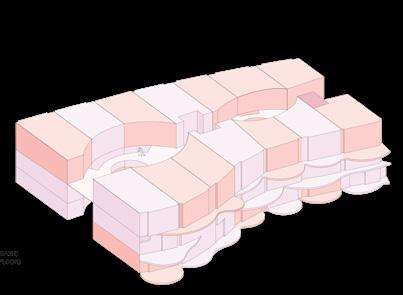
The key feature of the second housing block is that it offers spacious two-story Townhomes with three bedrooms and two baths. With a large living room and a private balcony, these units are perfect for young families or friendly living!
(3D modeling and rendering by author; plans and iso plan by collaborator)
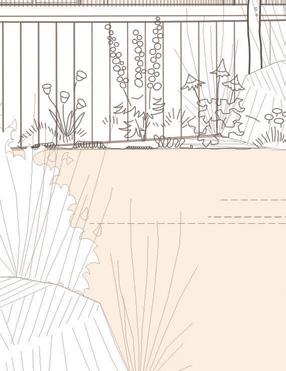
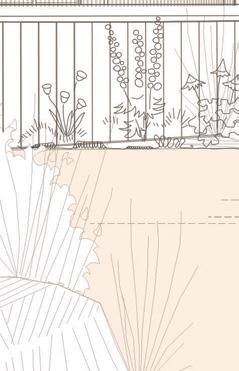
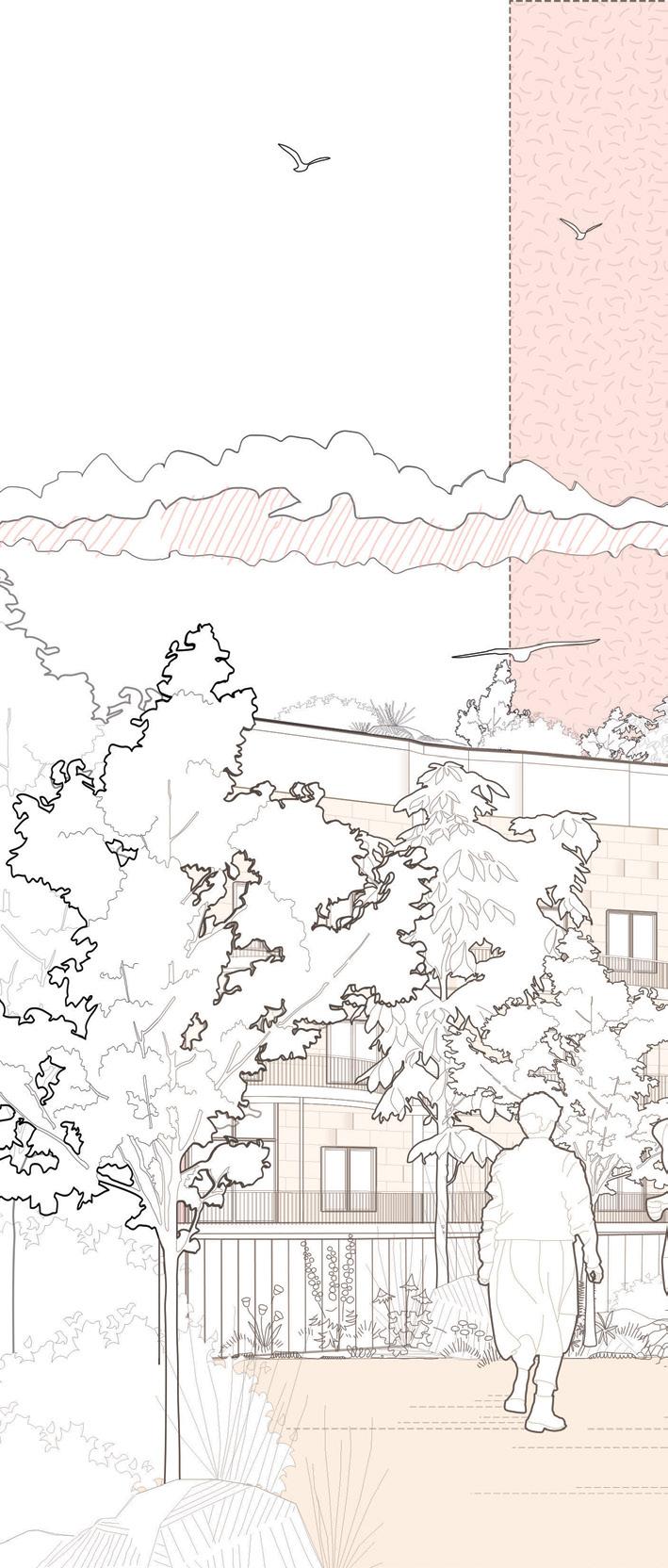
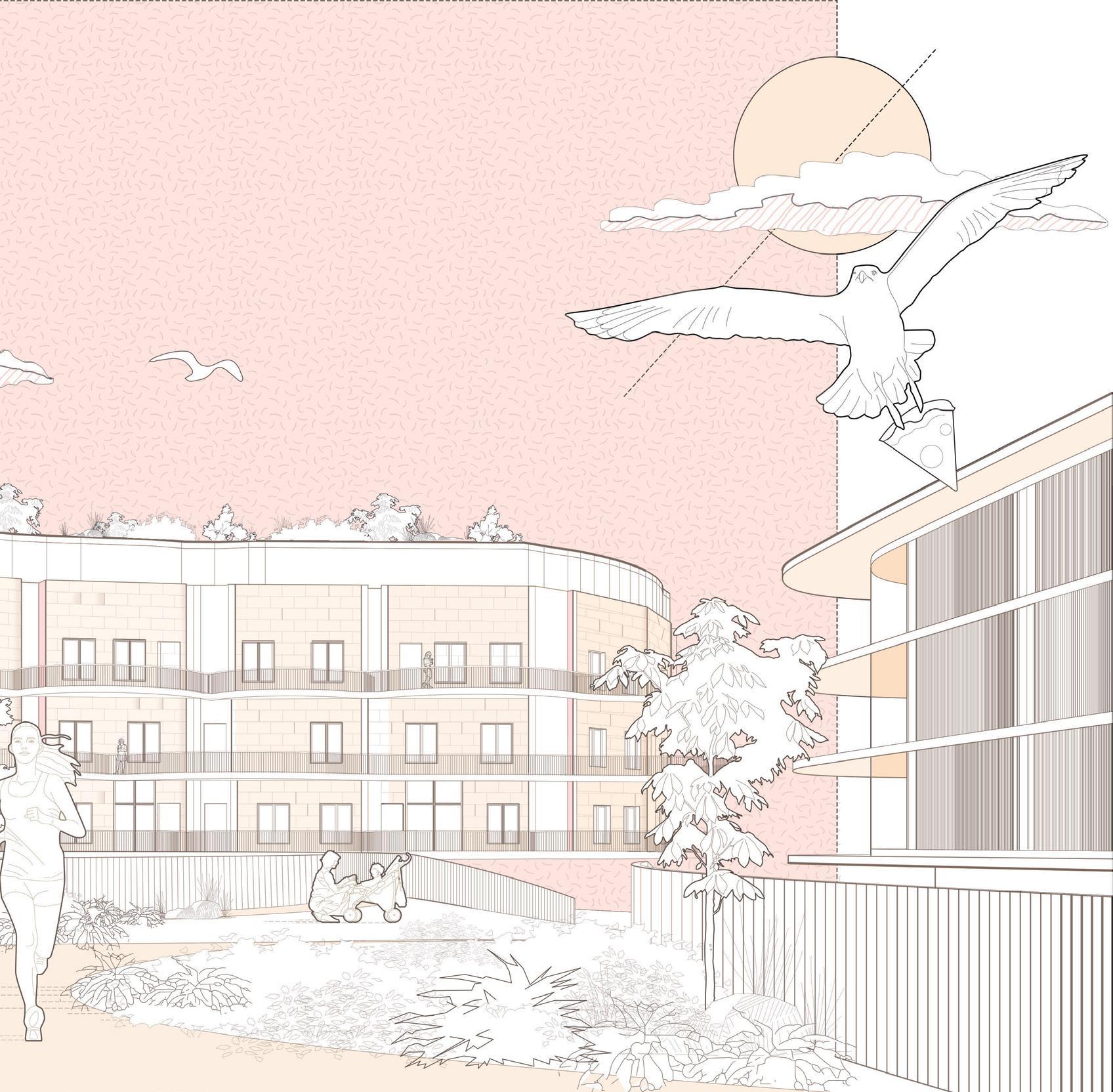
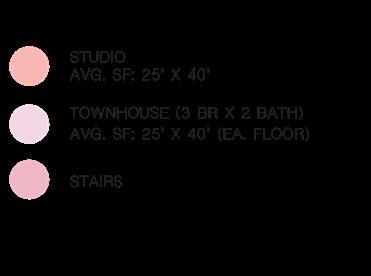
Welcome to the second housing block! Here, residents can find accommodations for larger families in our three-bedroom two two-bath, or enjoy spacious studio apartments. You Are Here!
(infographics in collaboration)
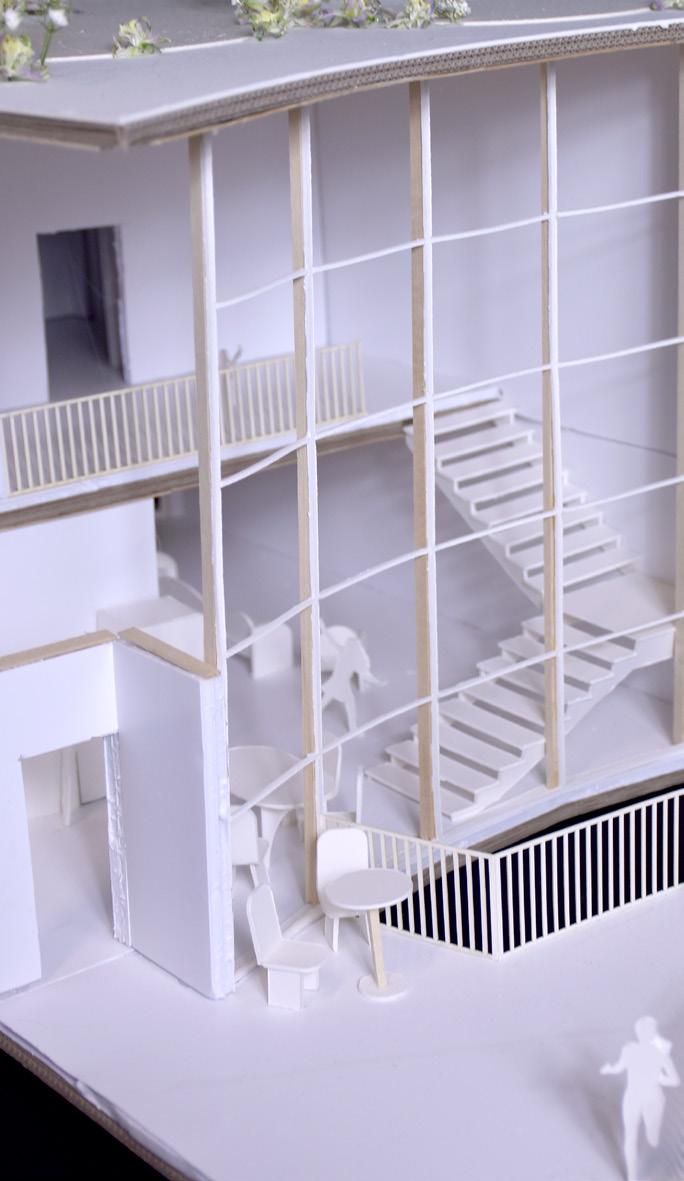
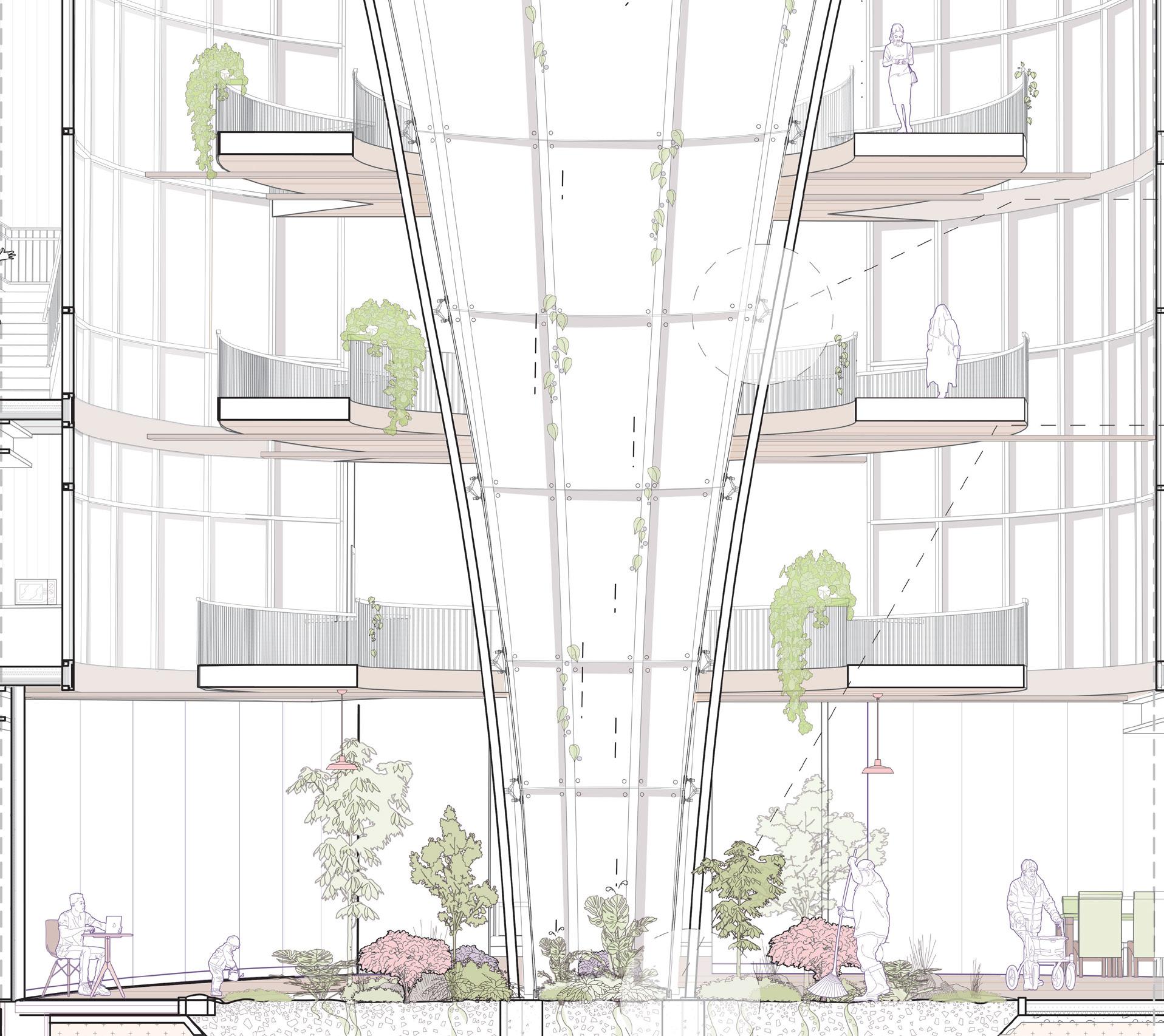
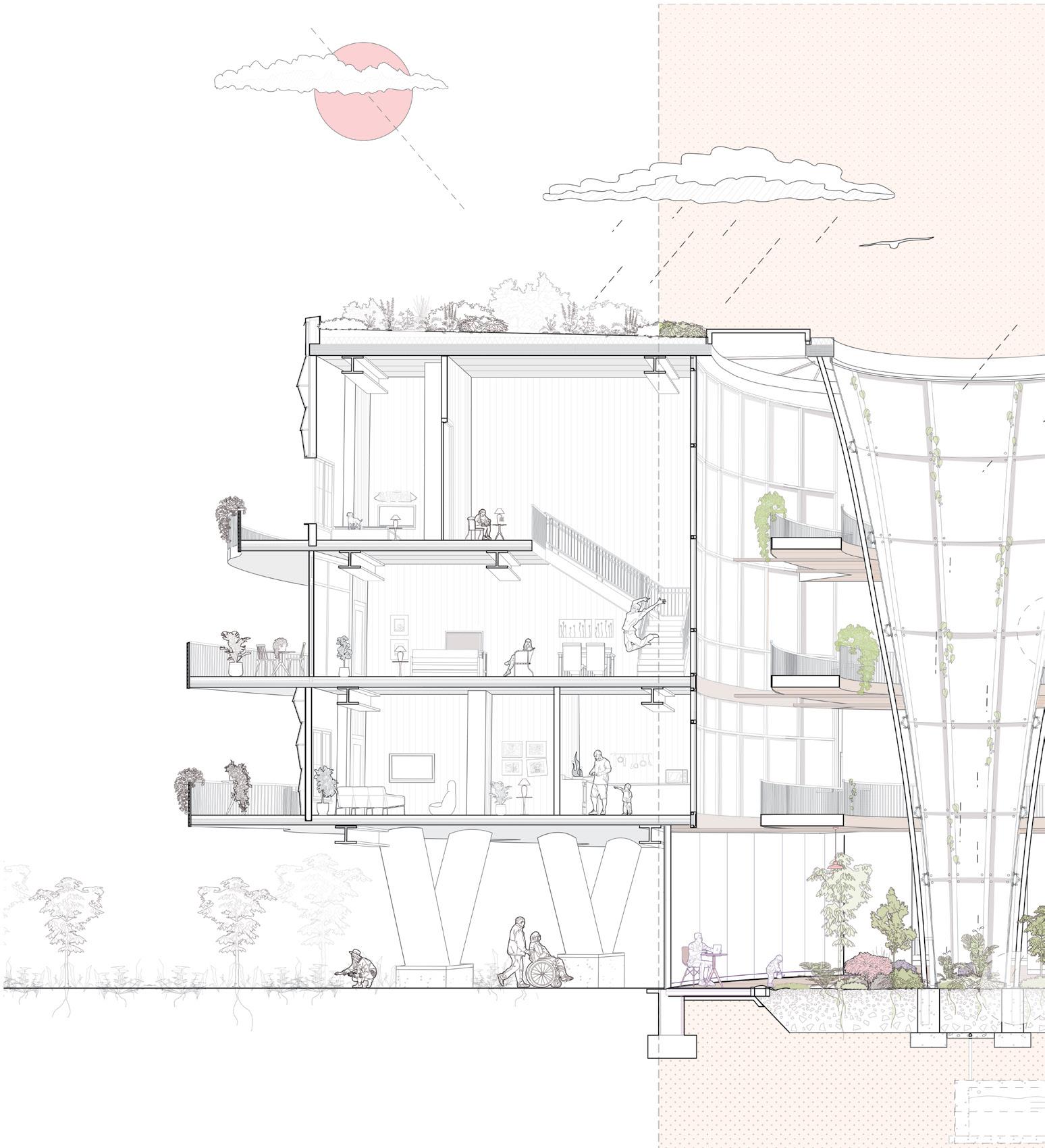
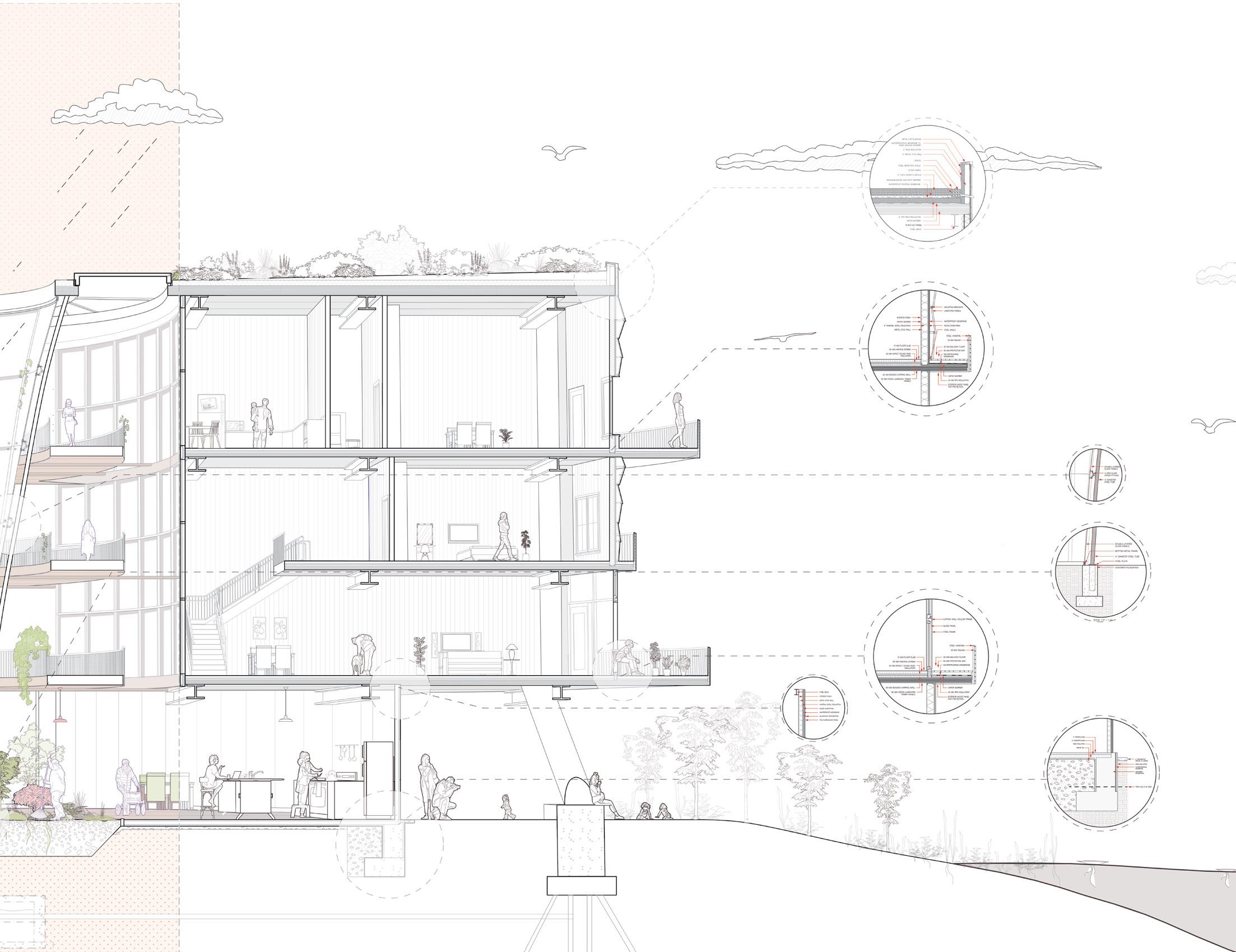
Finally, a key feature of Watering Hole is the idea of community engagement around a series of structural funnels. Depicted here in the second housing block, the funnels provide a point of intersection between nature, the built environment, and the inhabitants of Watering Hole. These funnels, made of polycarbonate, channel water down to a cistern that can be used for the greywater system.
(section perspective by author, model in collaboration)

In collaboration with University of Michigan’s Center of Academic Innovation and Dr. Anita Gonzalez
Black Performance as Social Protest is a short film Black Performance as Social Protest is a short film that was produced by U of M’s Center of Academic Innovation in collaboration with Dr. Anita Gonzalez a professor of Black Studies and Performing Arts, and is co-founder and Research Professor of the Racial Justice Institute. This short film takes the viewer through history, highlighting the black experience in America and the forms of protest and liberation that accompanied those eras. As the set and props designer for this short film, I worked closely with Raymond Majewski, the XR Environments Designer, to design and integrate the physical props and sets with the digital
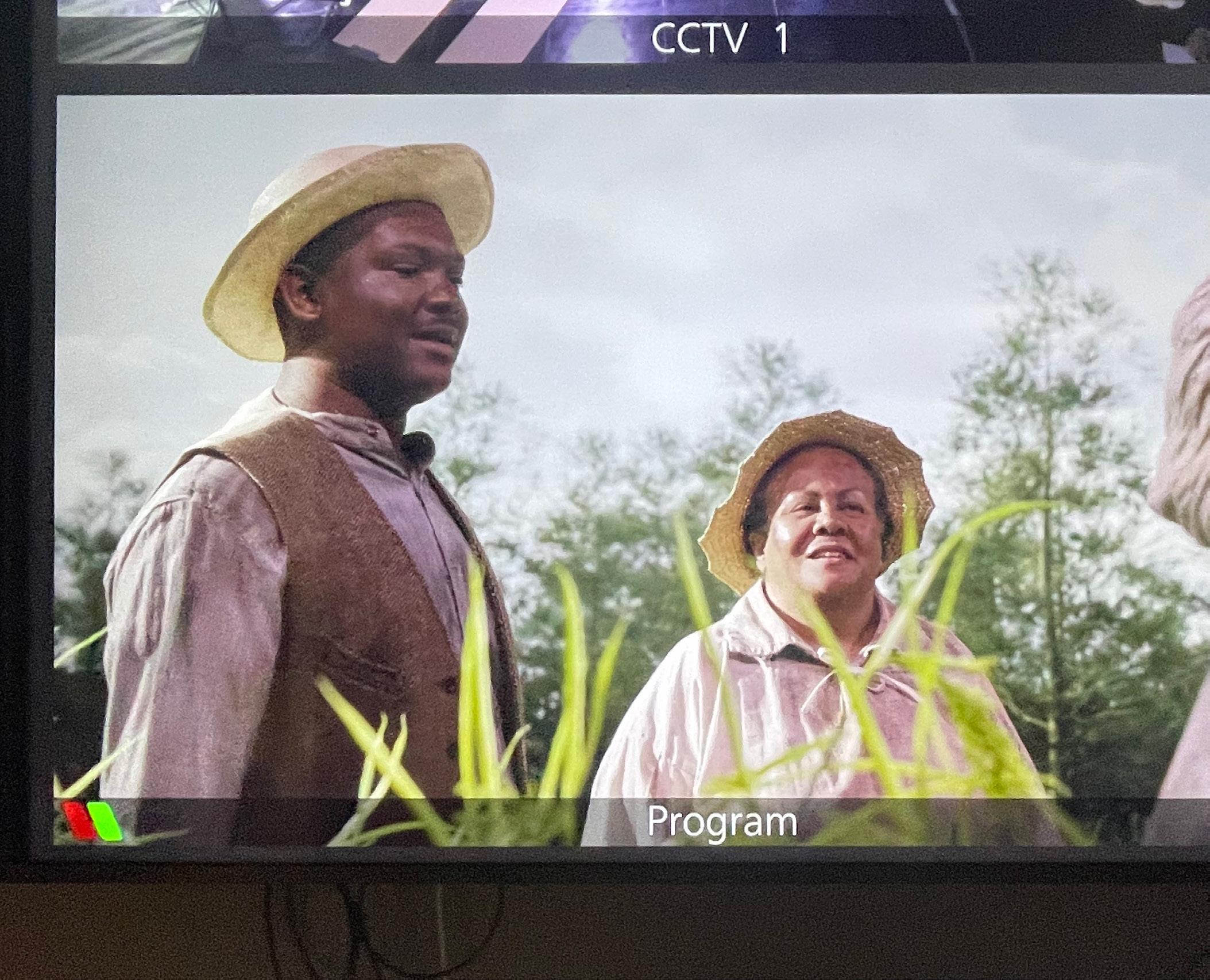
(props by author; prop axons in collaboration; film stills by collaborator)
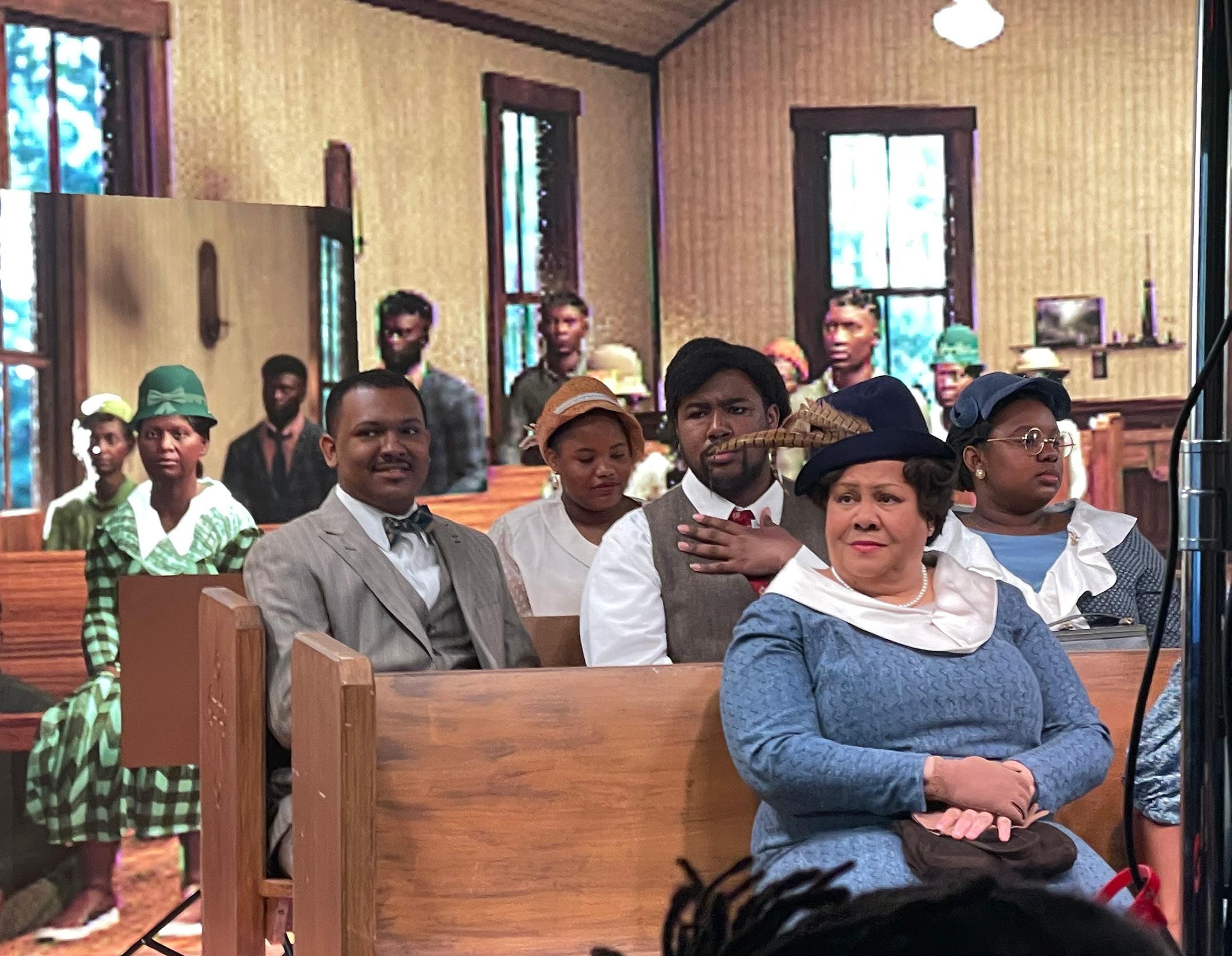
Working closely with the lead XR environments artist on the LED Stage, we had to ensure that the digital and physical set pieces and props were historically and environmentally accurate as each scene is an actual depiction of a place and time in history in the Black Liberation Movement in the United States. Looking through historical images and Google Earth, we had to fact-check our designs to present an authentic history. The following spreads highlight the props designed and fabricated.

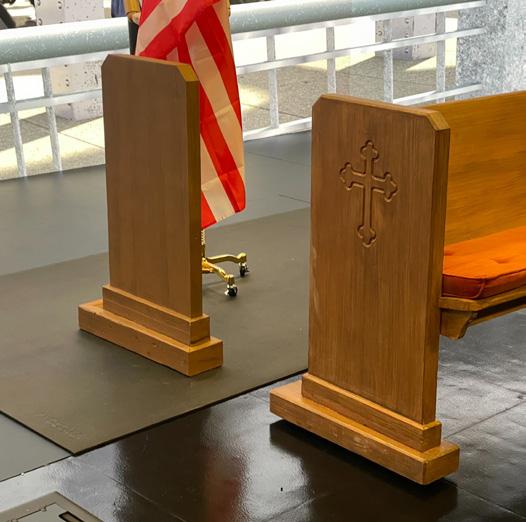
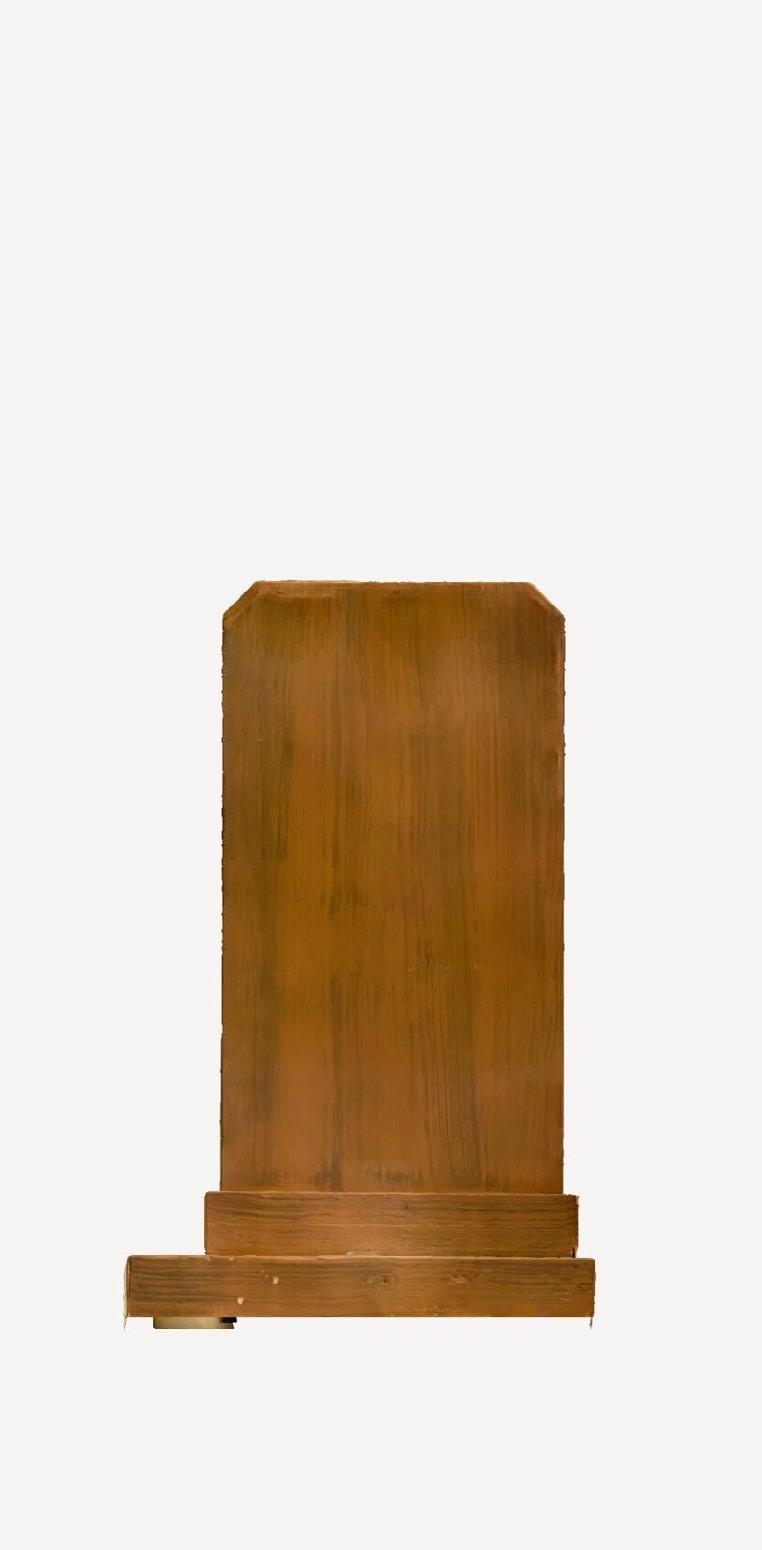
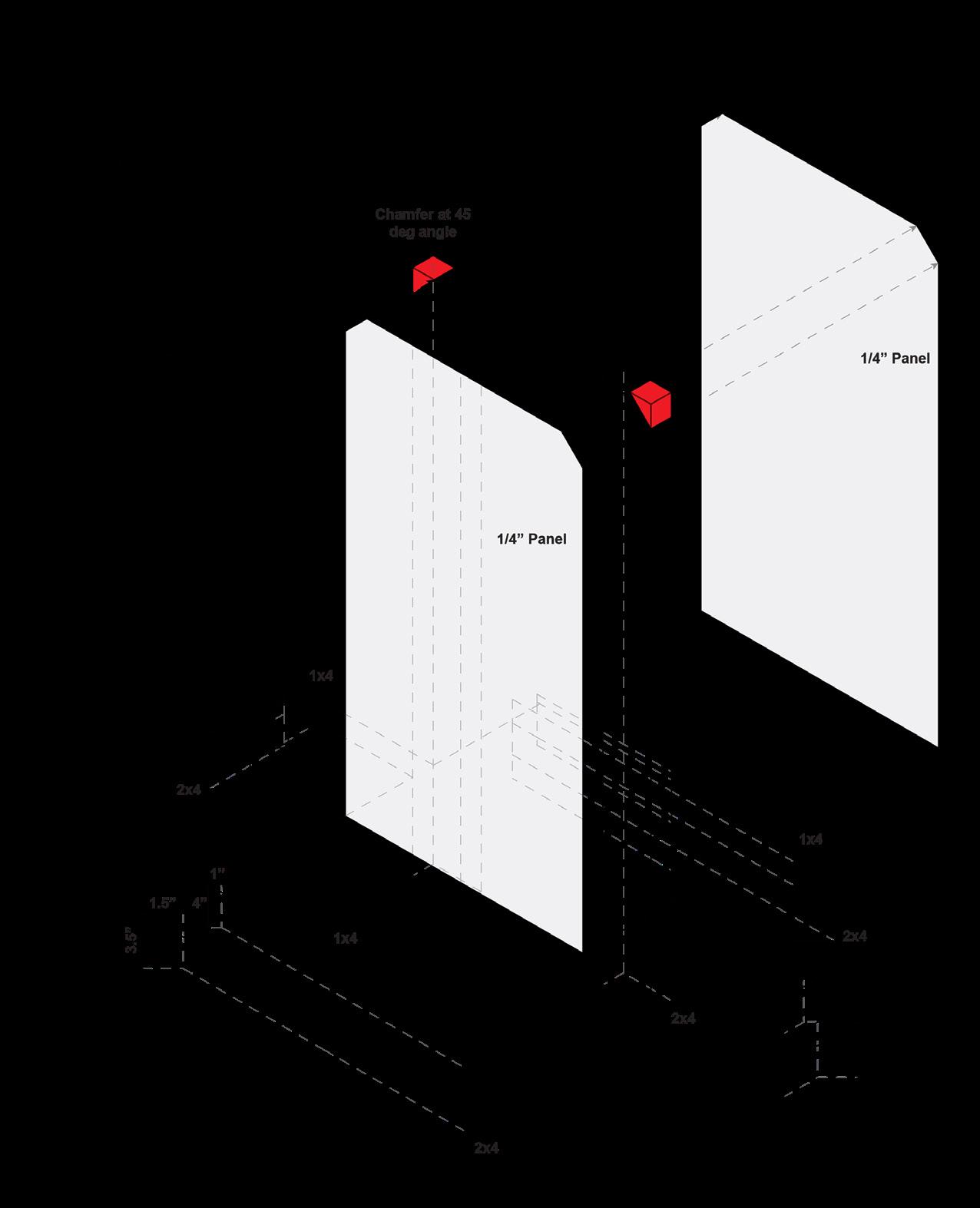
(props by author; prop axons in collaboration; BTS photos by collaborator)
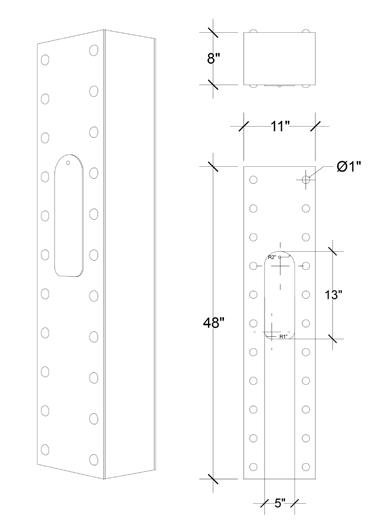
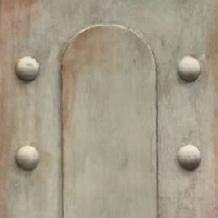
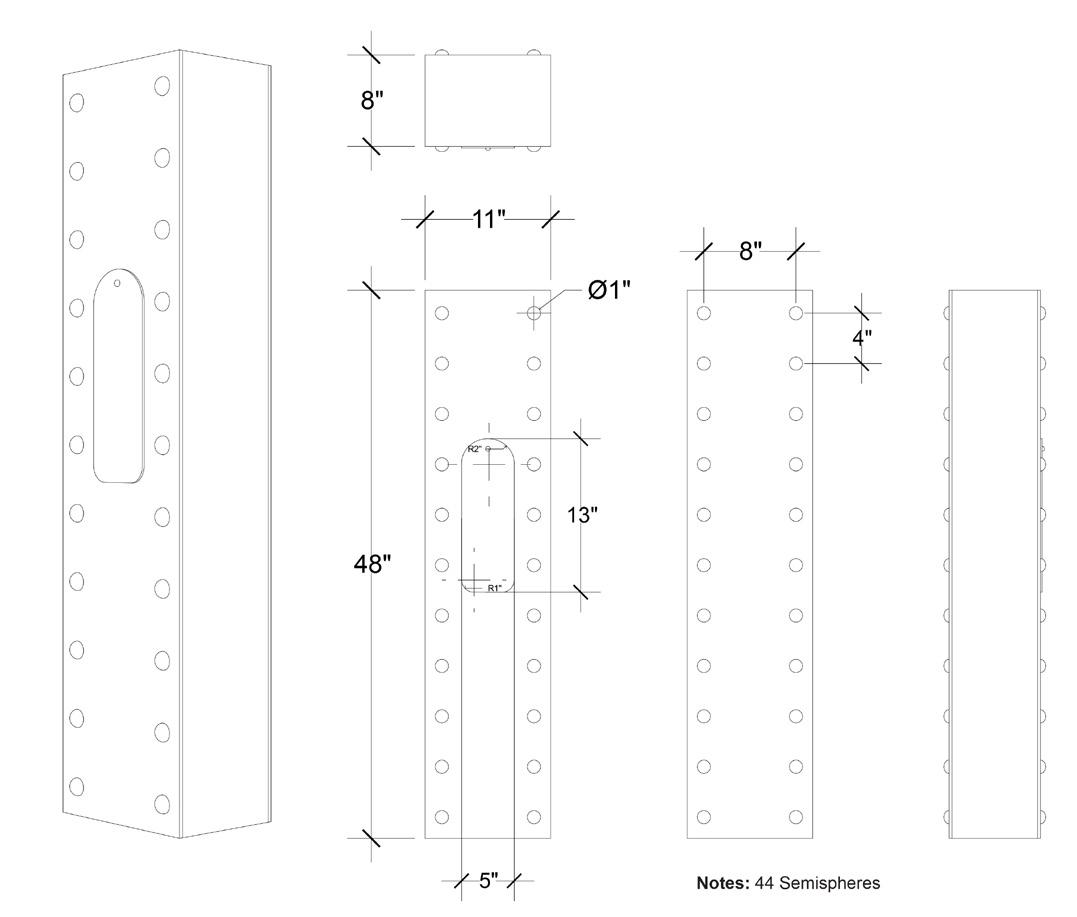
The film culminates in a scene depicting the historic March on Selma. While a majority of the scene is digital on the LED stage, the director wanted to make the shot have more depth for both the actors and the camera. Thus I was tasked with building and painting the steel columns on the “bridge” that the actors and camera would pass by. The prop is made of thin sheet wood and 3D-printed rivets. From there I gave it several paint treatments to create the illusion of steel and rust.
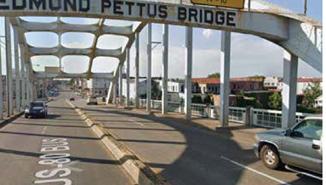
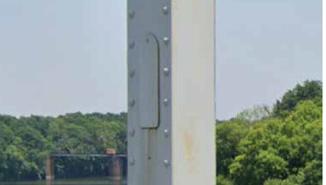
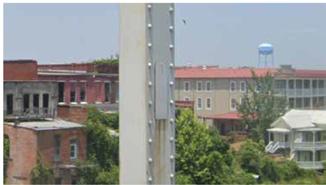
The steel column prop, while appearing heavy and metal, is incredibly light. With thin sheet wood and paint treatment, it gives the illusion of the historic Selma Bridge. The prop while being accurate to the real bridge, also had to match the digital environment to give a layered effect to the camera.
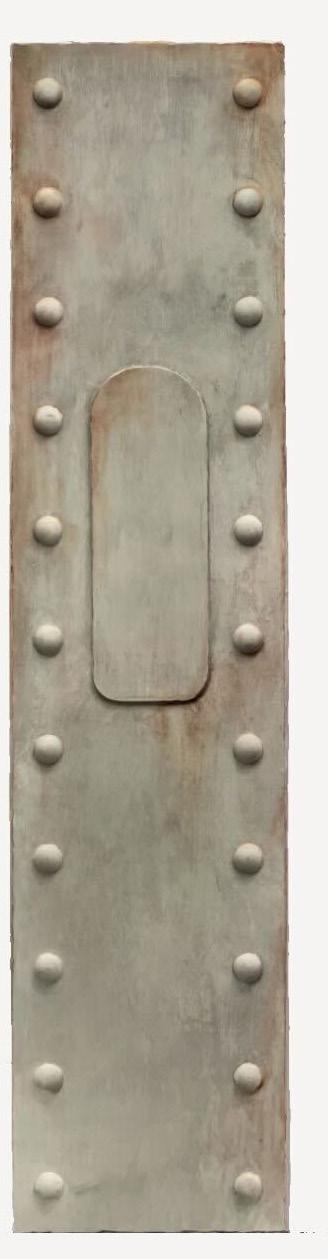
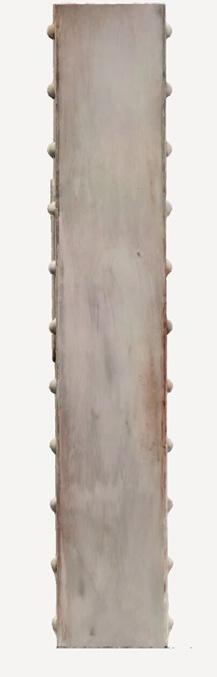
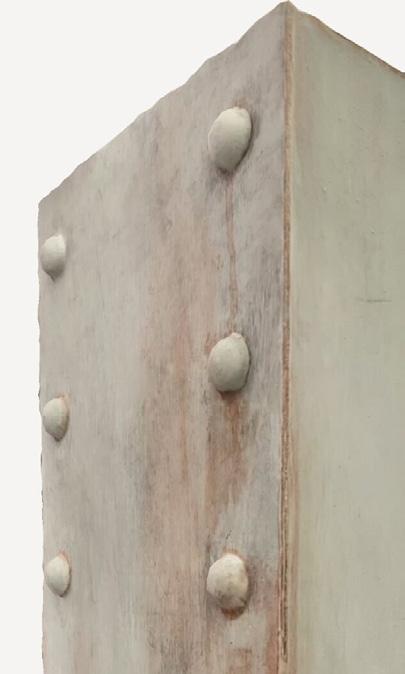
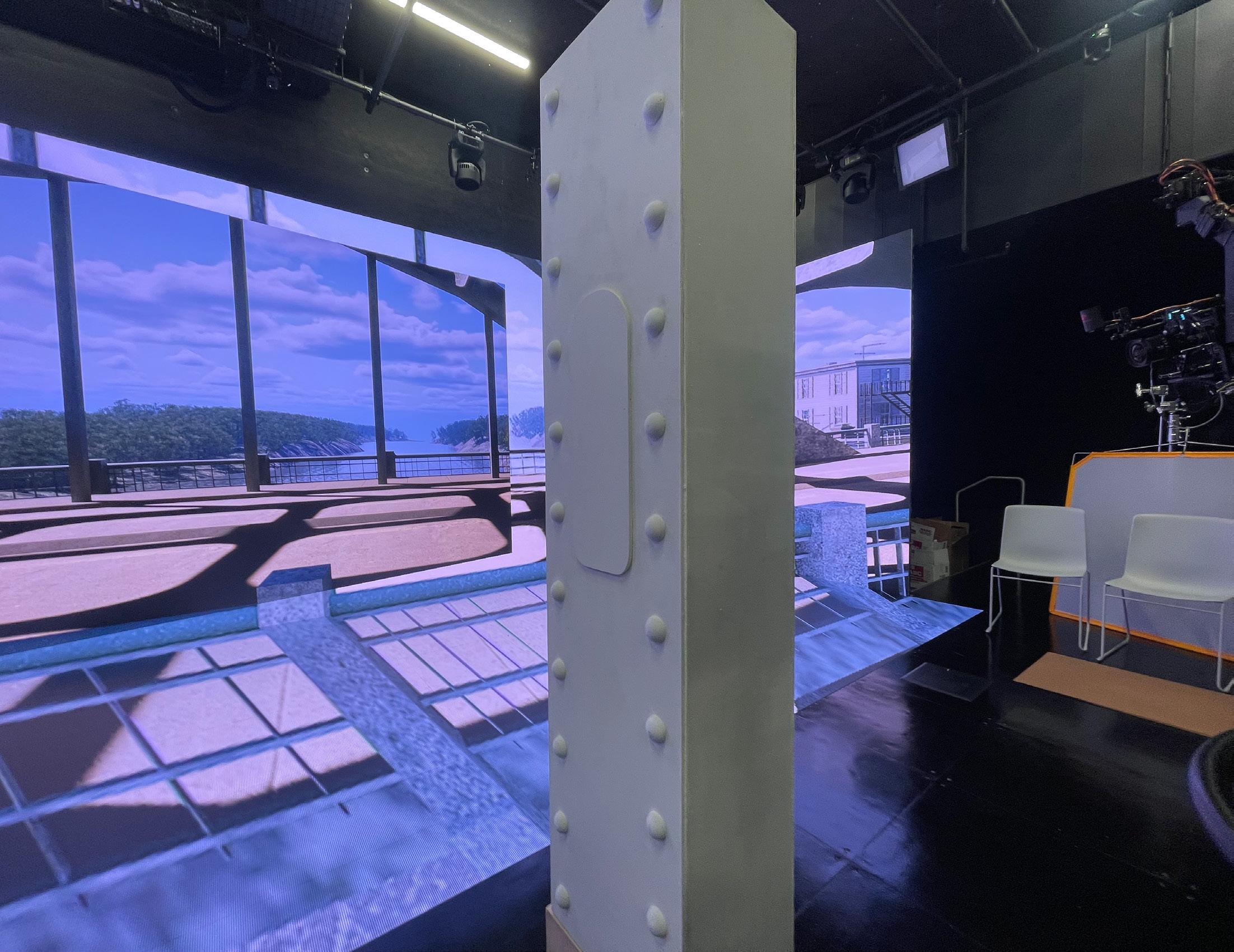
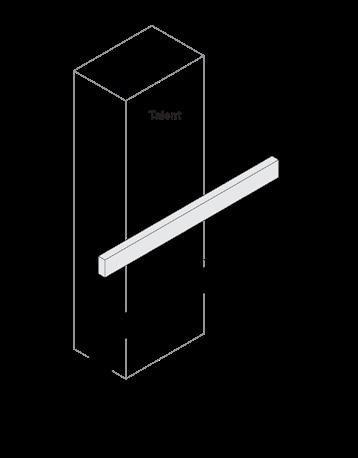
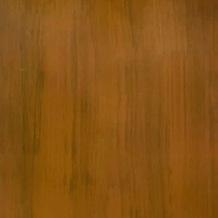
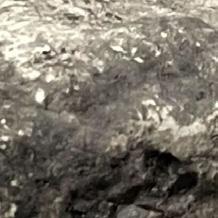
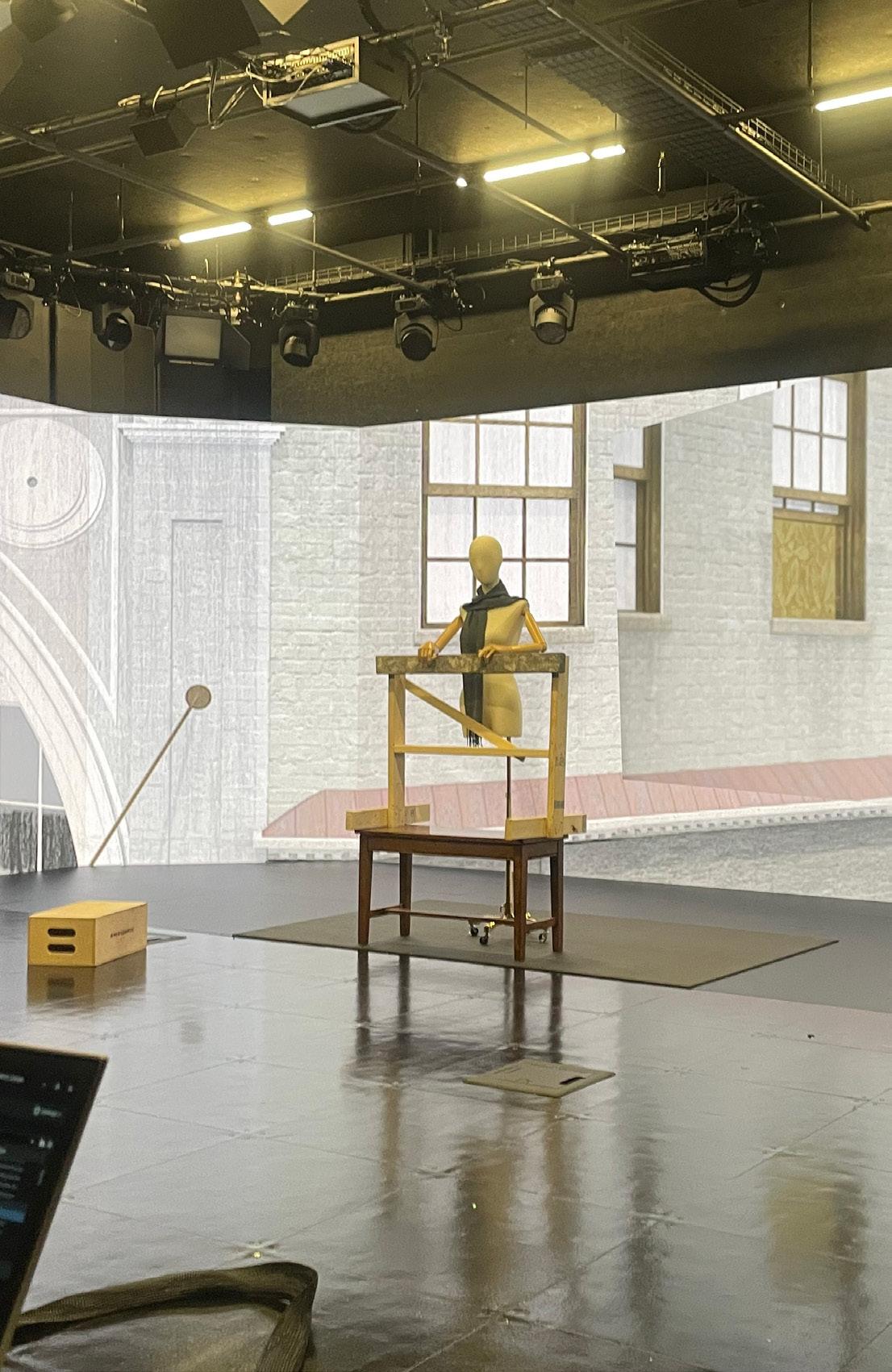
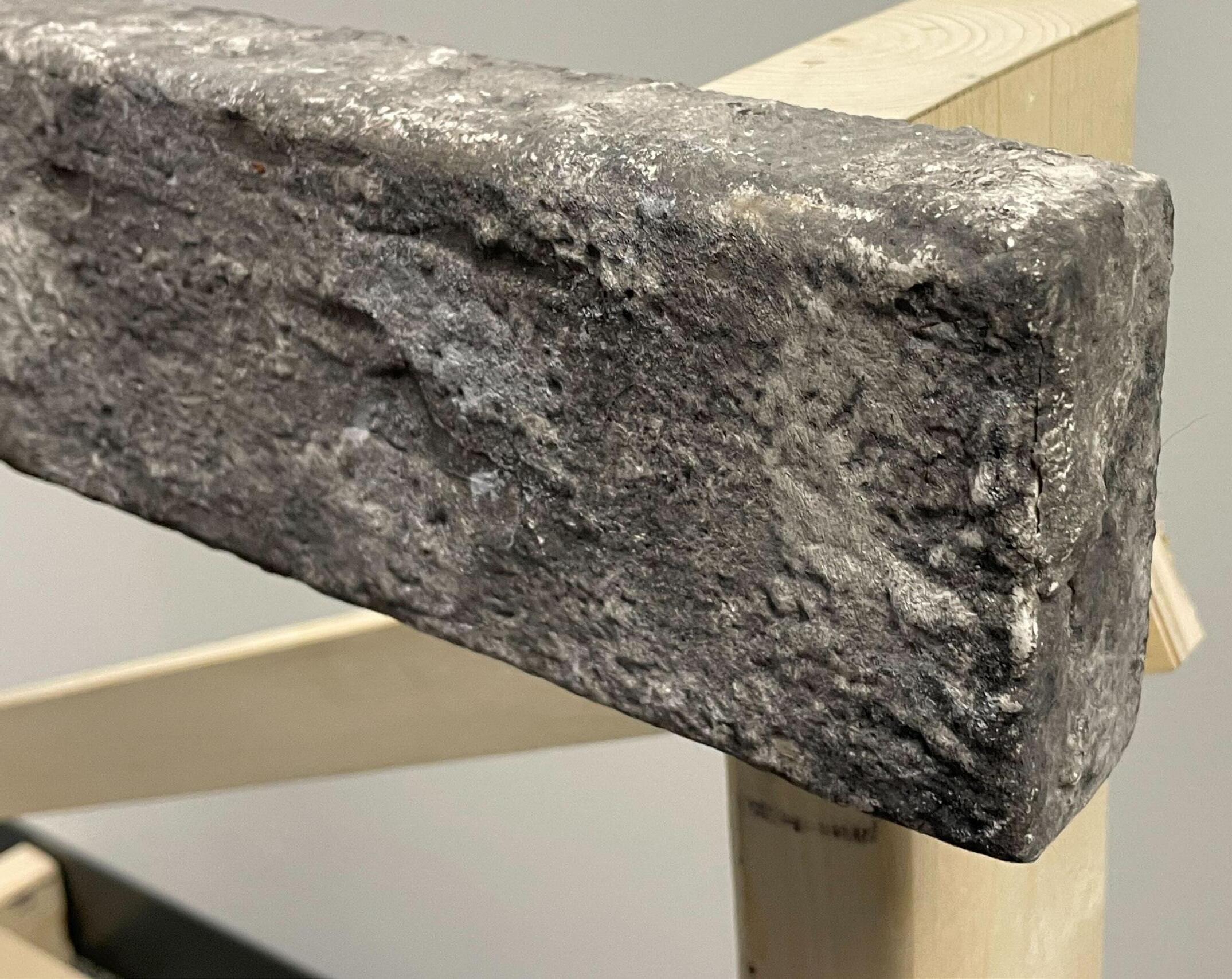
Several of the scenes in BPSP required actors to interact with the set. Thus, physical props had to be made that the actors could touch, lean on, hold, etc while also having to be partially digital. One of those scenes was the neighborhood scene in which residents of a historic black neighborhood would call out from their windows to each other. While the building facades were digital, I was tasked to make a physical “stone” ledge that the actors could interact with. The ledge was made of a series of 2x4s that were then coated in joint compound to create the stone texture and then sponged to give the marbled effect.
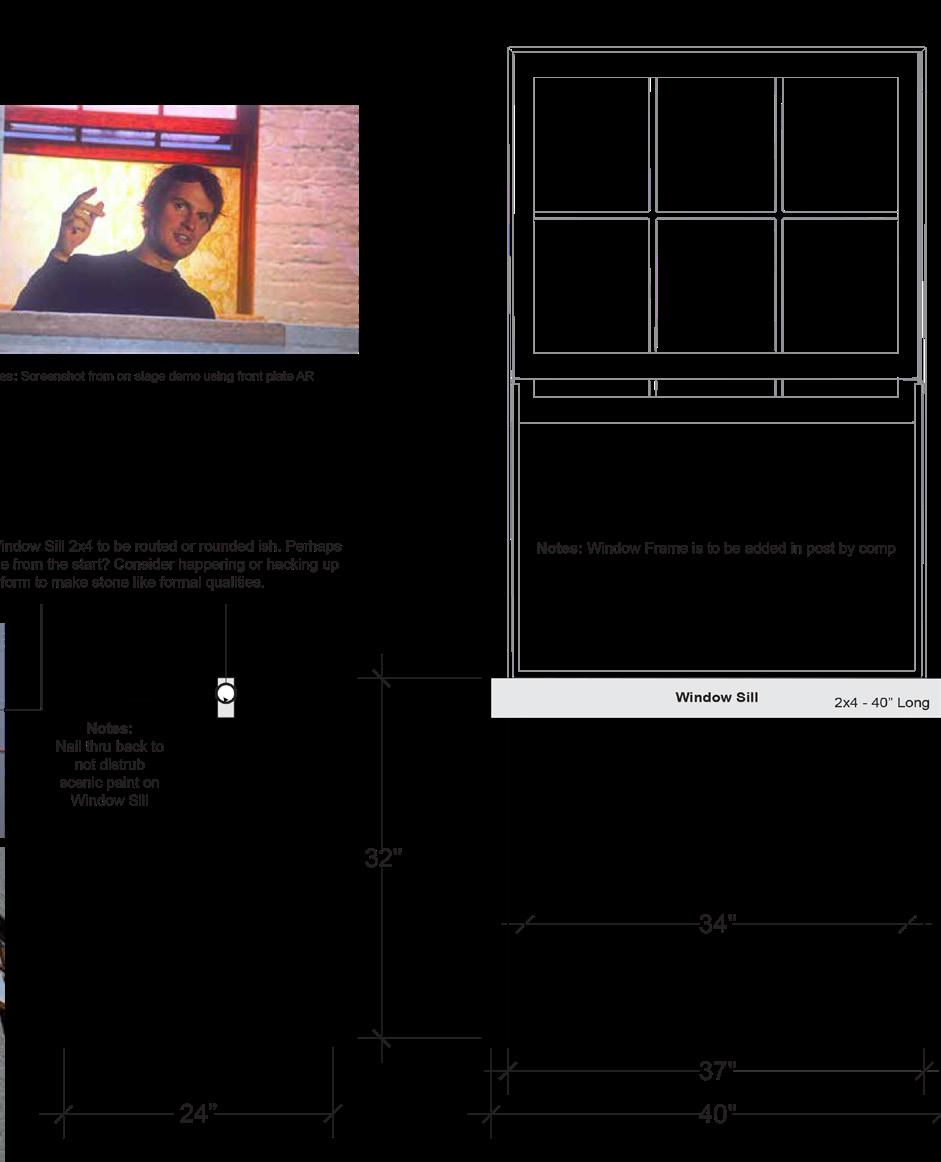
(props by author; prop specs in collaboration; BTS photos by collaborator)
Ann Arbor, MI
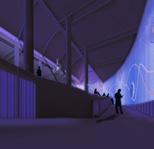
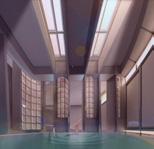
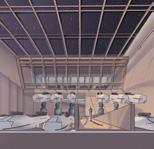
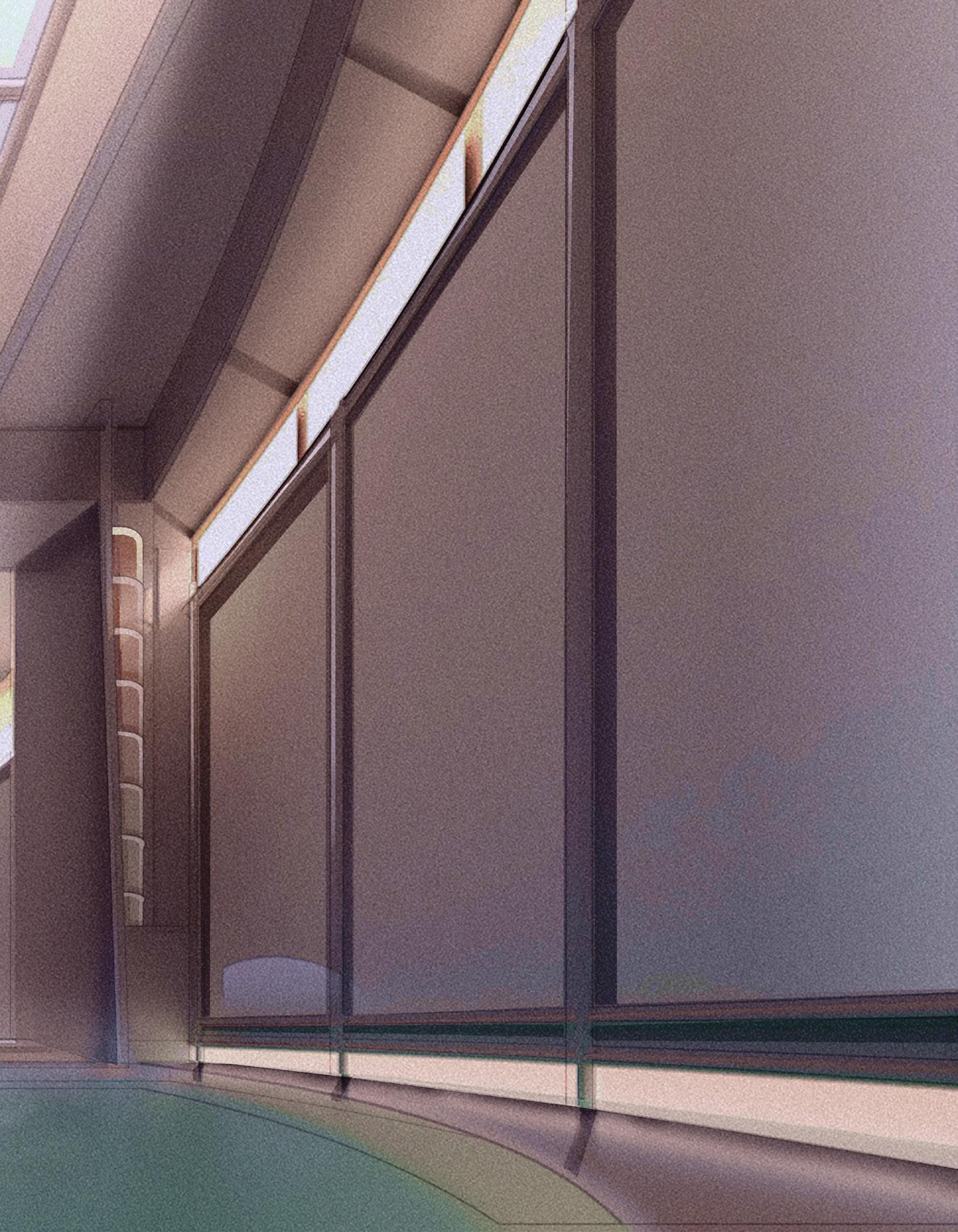
To dream and the act of dreaming is one of the oldest forms of creating and viewing cinema. It is a phenomenon that turns the sentient mind into our very own projection room, displaying scenes of intelligible or sometimes unintelligible sensory events. As the director and audience, one becomes fully immersed in their own private viewing.
This project, known as Dreamweaver, is the synthesis of recent work on converting dream to film and how to “direct” it, that’s coming out of U-C Berkeley, The ATK Computational Neuroscience Lab at Kyoto, and methods of Greek, Roman, and Egyptian antiquity. The objective of this project is that it aims to not only provide a ritualistic respite of the day-to-day but also induce, through various immersions, one’s cinema, while at the same time staging an entertaining spatial narrative of the age-old question, “Why do we dream” and how can others view it. view it.
These storyboard illustrations (images to the right) were then collaged into a linear walkthrough of Dreamweaver. Each space prepares the visitor for the act of dreaming.
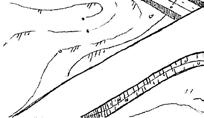
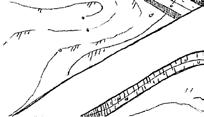
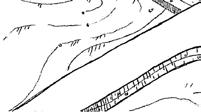
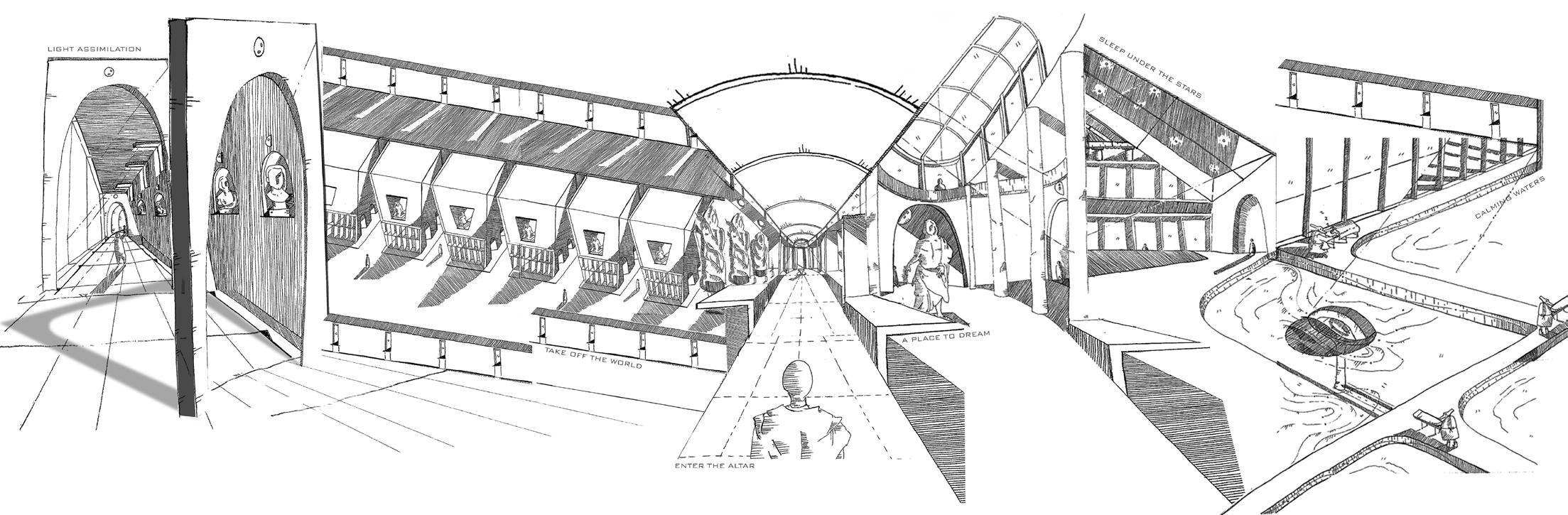


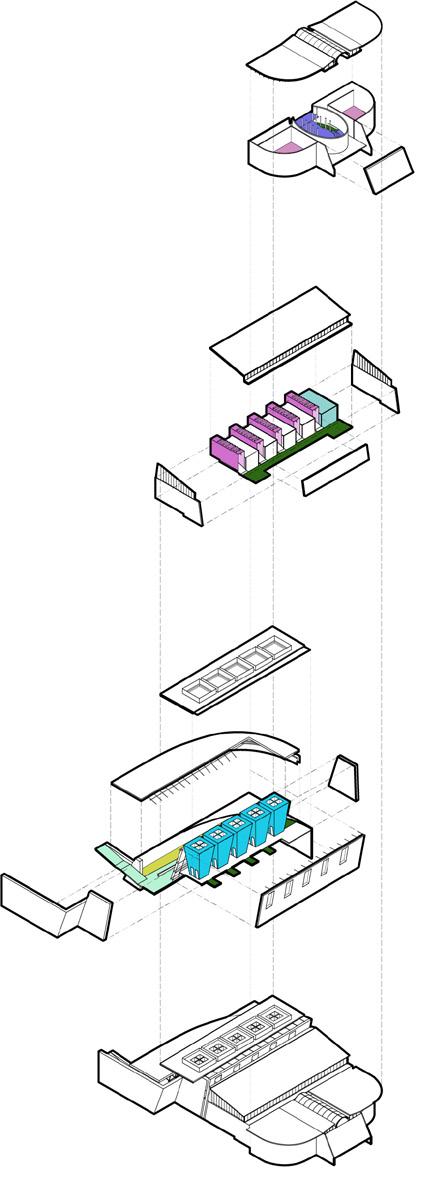
From these illustrations and the subsequent collage, three spaces of circulation (top row) and three spaces of rest (bottom row) were identified. Each of these six spaces has varying levels of privacy. These planar spaces were then used as a series of “puzzle pieces” to organize the planar progression of the project.


While these are the six main spaces of movement and rest, additional transition spaces were needed to create a fluid floor plan of Dreamweaver.
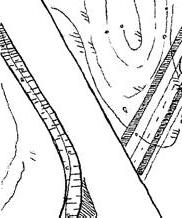
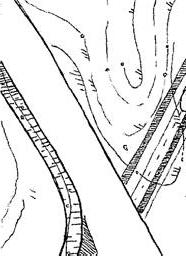
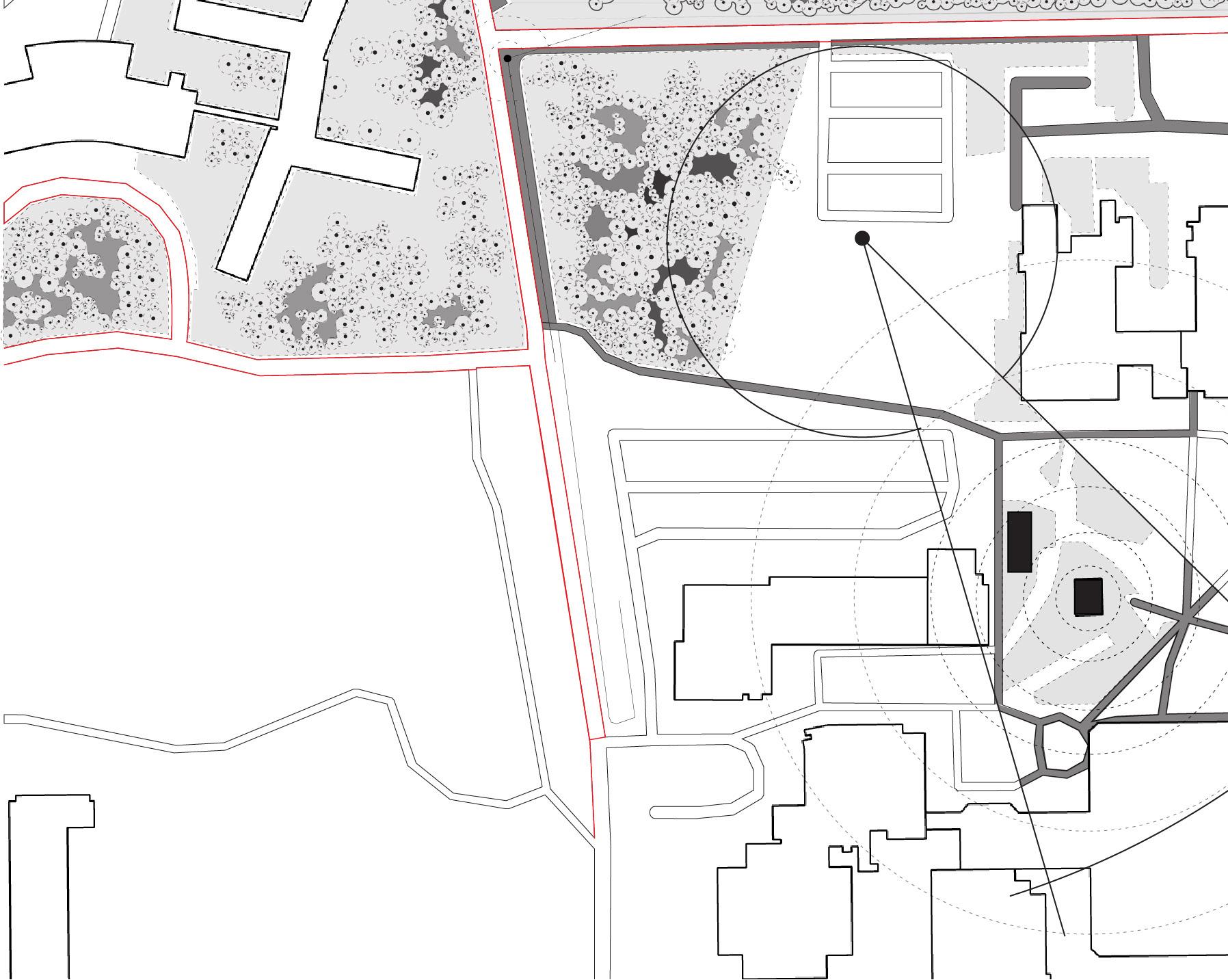
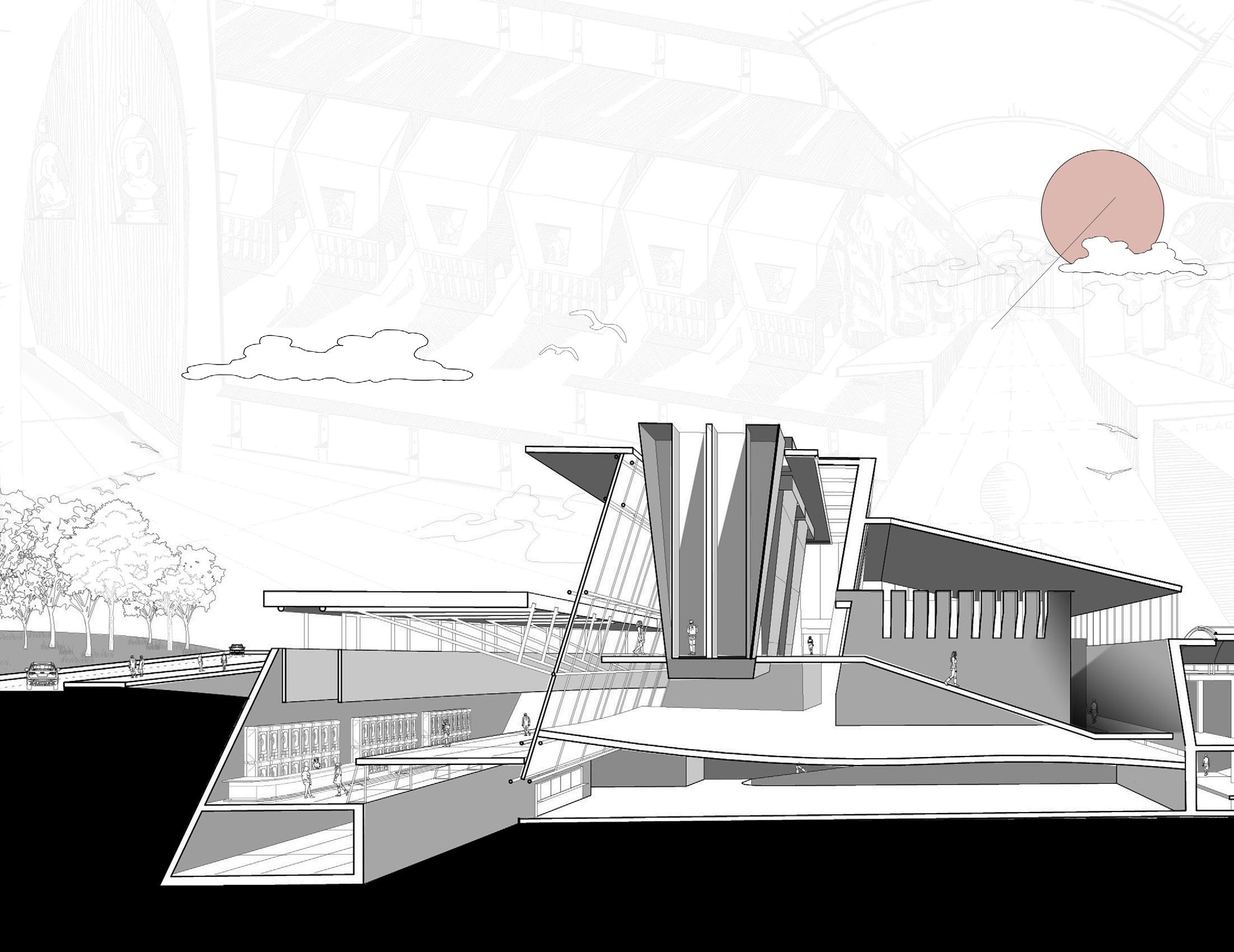
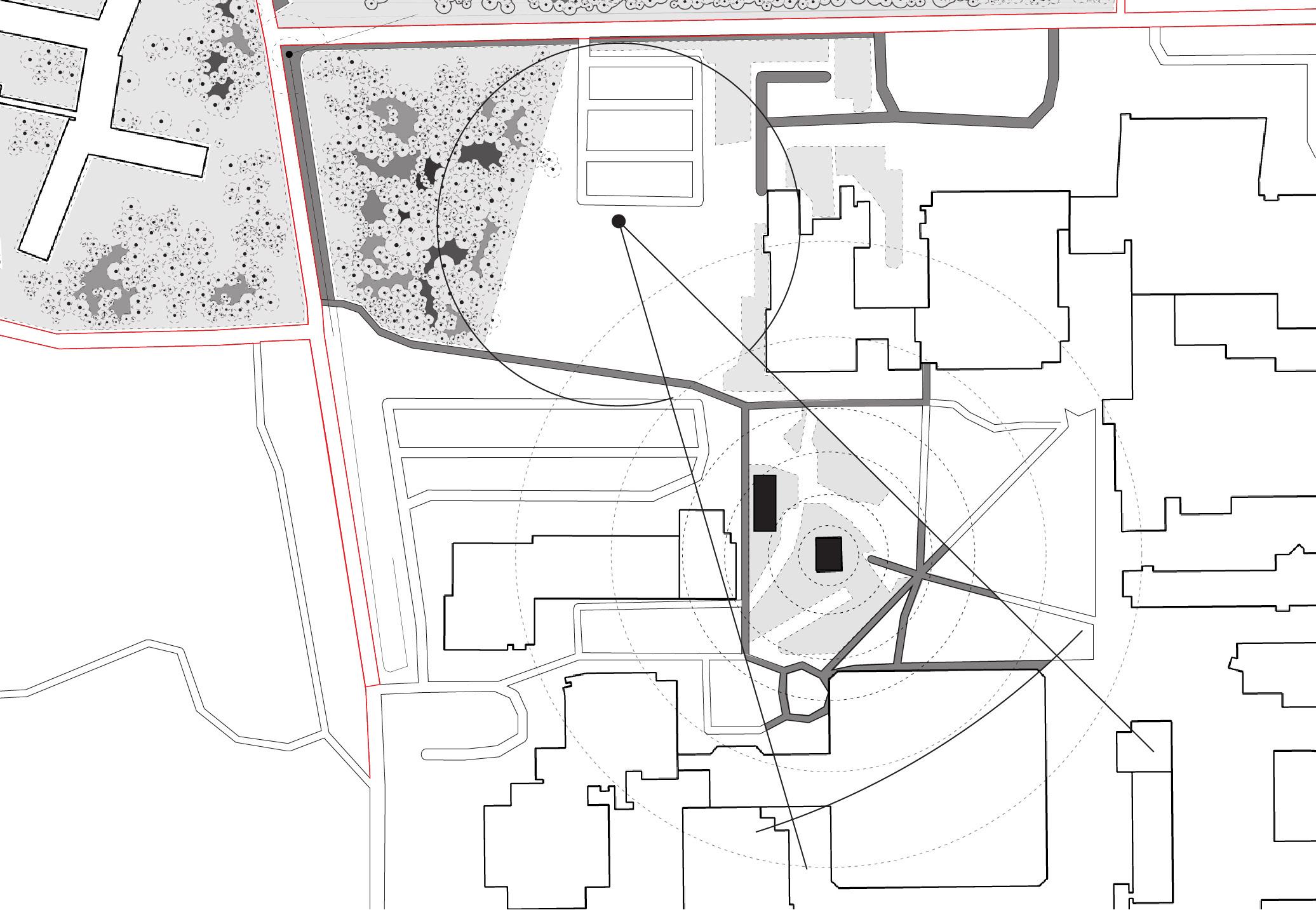
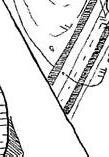
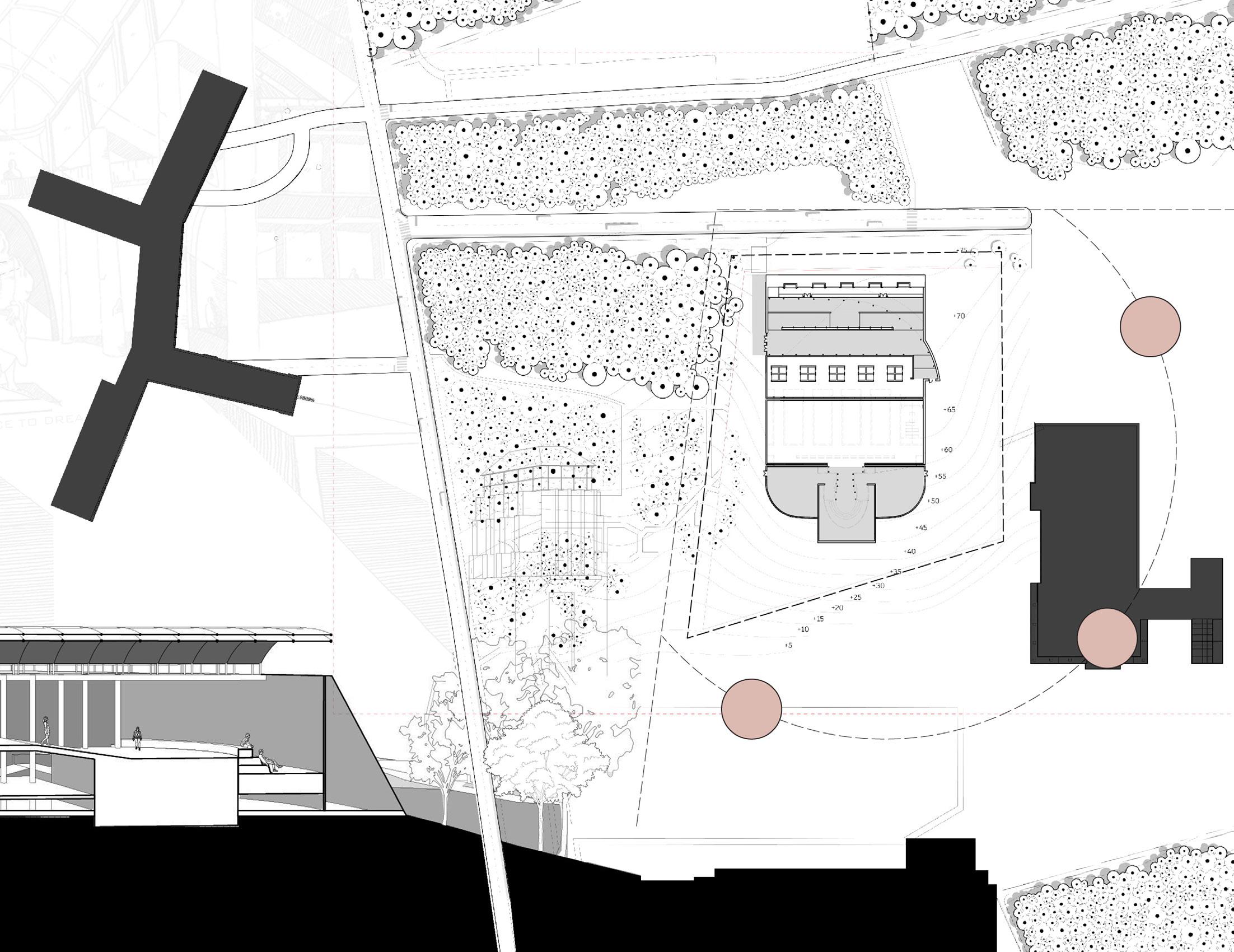
The project resides on the upper slopes of Hayward and Murfin, overlooking the Walgreens Center and the Grove, while also being sheltered from the sensory overload of campus by the forest around it. Upon entry from Hayward, inhabitants are invited into the “concessions” and foyer where they are given a change of clothes by the researchers and are “encouraged” to leave their personal electronics in the lockers. Proceeding forward, the guests enter into the chambers where they shed their previous exterior and step into a new space of mind and being.
Section View
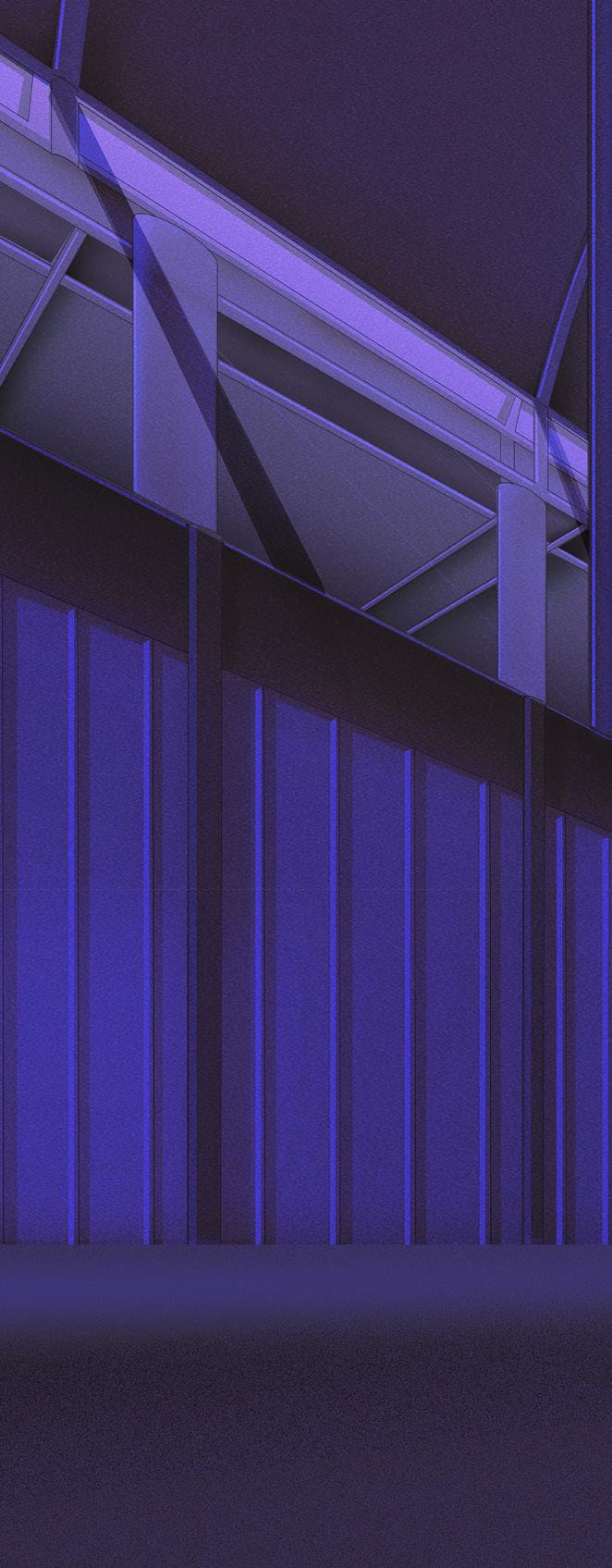
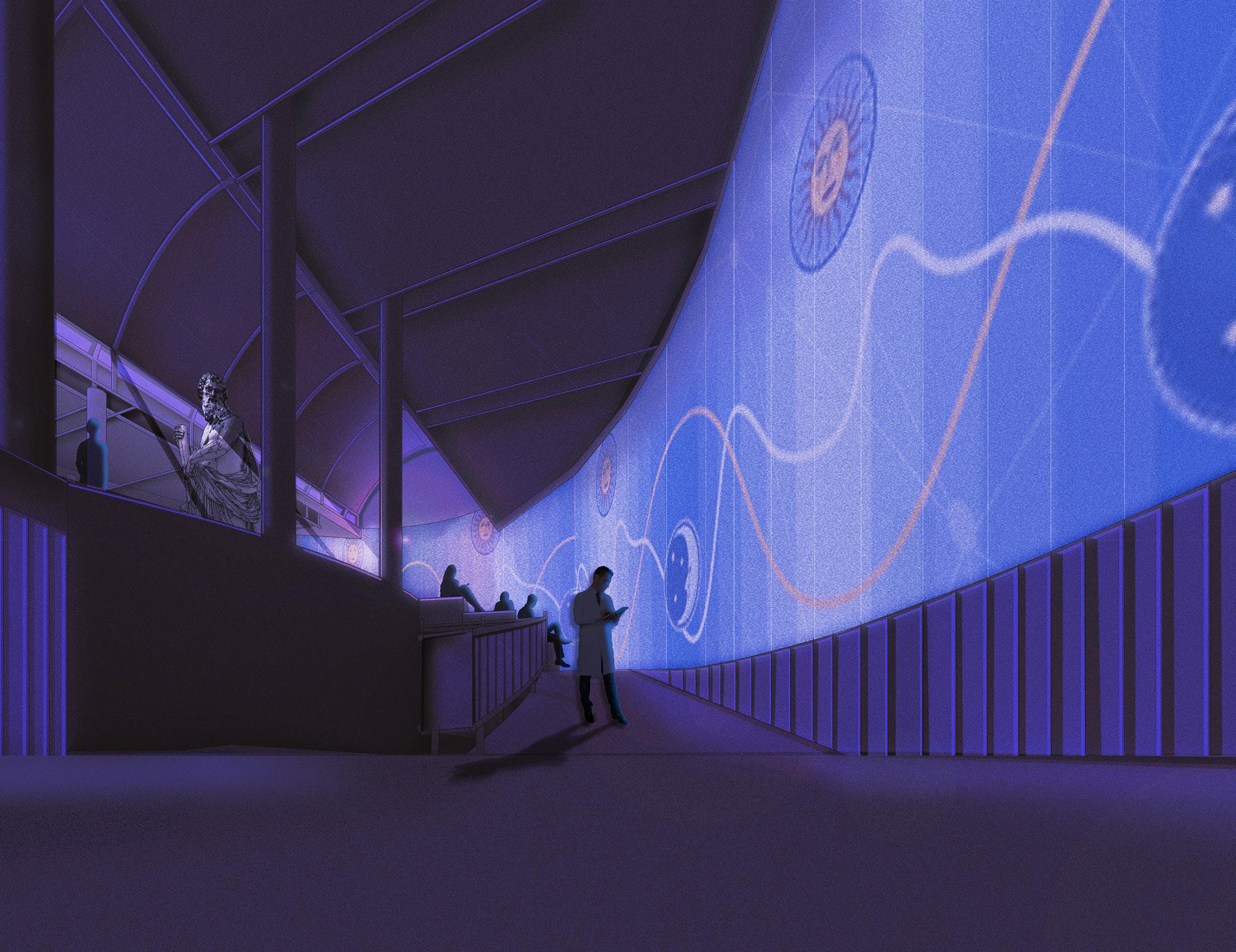
Passing through a series of “rites”, inhabitants finally reach the inner sanctum of Dreamweaver (image on the right) where they are introduced to a short film of sorts that provides them with a brief on the project itself, its purpose, and what it hopes to achieve and offer them. That being: In the 21st century, the human mind, body, and soul are under a constant barrage of stimuli with little to no respite. Media of all sorts constantly plagues the conscience, never truly allowing the “unconscious” to do its work for the human body. When tasked with designing a movie theater, I asked myself, in a world full of unending and unobstructed access to media (including film), why can’t cinema do the opposite, and instead by a sanctuary for the mind, generating a more archaic form of entertainment.”
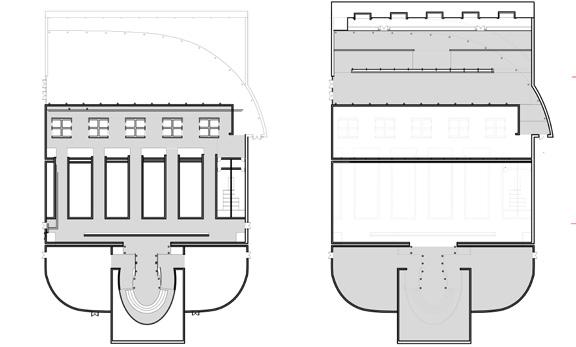
Code Compliant Floor Plans
After this brief, guests are permitted entry into the sleeping chambers; these are a series of research/observation rooms that overlook various sensory experiences that the guest will be guided into in order to induce and study the act of dreaming-creating one’s own cinema of the mind.
(See Right) Exploded Axon Highlighting Programmatic Spaces
Tyonek, Alaska
First Place in Solar Decatholon New Housing Division
In collaboration with (14) team members (this was a competition studio); work depicted is centered around authors contributions
With Professors Mark McGlothlin and Bradley Walters
The Tebughna Fireweed Team from the University of Florida presents a sustainable new housing design for the Native Village of Tyonek in Tyonek, Alaska. Located just north of the Kenai Peninsula, 40 miles from Anchorage, and accessible only by plane or boat, Tyonek is a subsistence community with a housing crisis. Existing housing in the village is old and in disrepair, and lacks adequate infrastructure to provide reliable electrical utility service through the long winter months. Celebrating the tribe’s rich history and their intimate understanding of the region’s ecosystems, this new housing aims to restore the people’s autonomy and independence by creating homes that are powered by the sun. Designed to meet aggressive performance targets, the houses are also designed to weather and age gracefully over time in this arctic environment, with “right to repair” central to our design ethos.
(photo by Village Elder; rendering in collaboration)
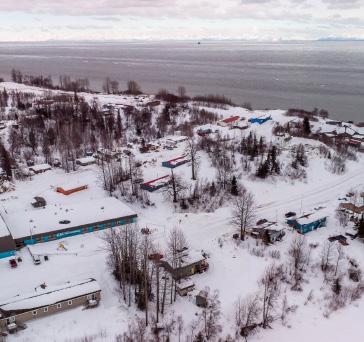
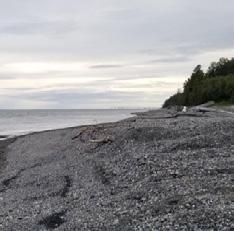
The people of Tyonek, or the Tebughna (“the beach people’’ in the native Dena’ina Athabascan language) have lived on the northwest shore of the Cook Inlet for thousands of years. Historic issues of flooding led to a total relocation from the shoreline to the bluff in the 1930s, eliminating historic architectural precedent. The current population of Tyonek is 152 people, with 135 families. The predominant ethnicity of the community members are those of Native Alaskan descent, with most residents of the village being of working age or older. The Tebughna people continue to maintain a subsistence lifestyle, drawing from their lands the resources necessary for life in this remote area.
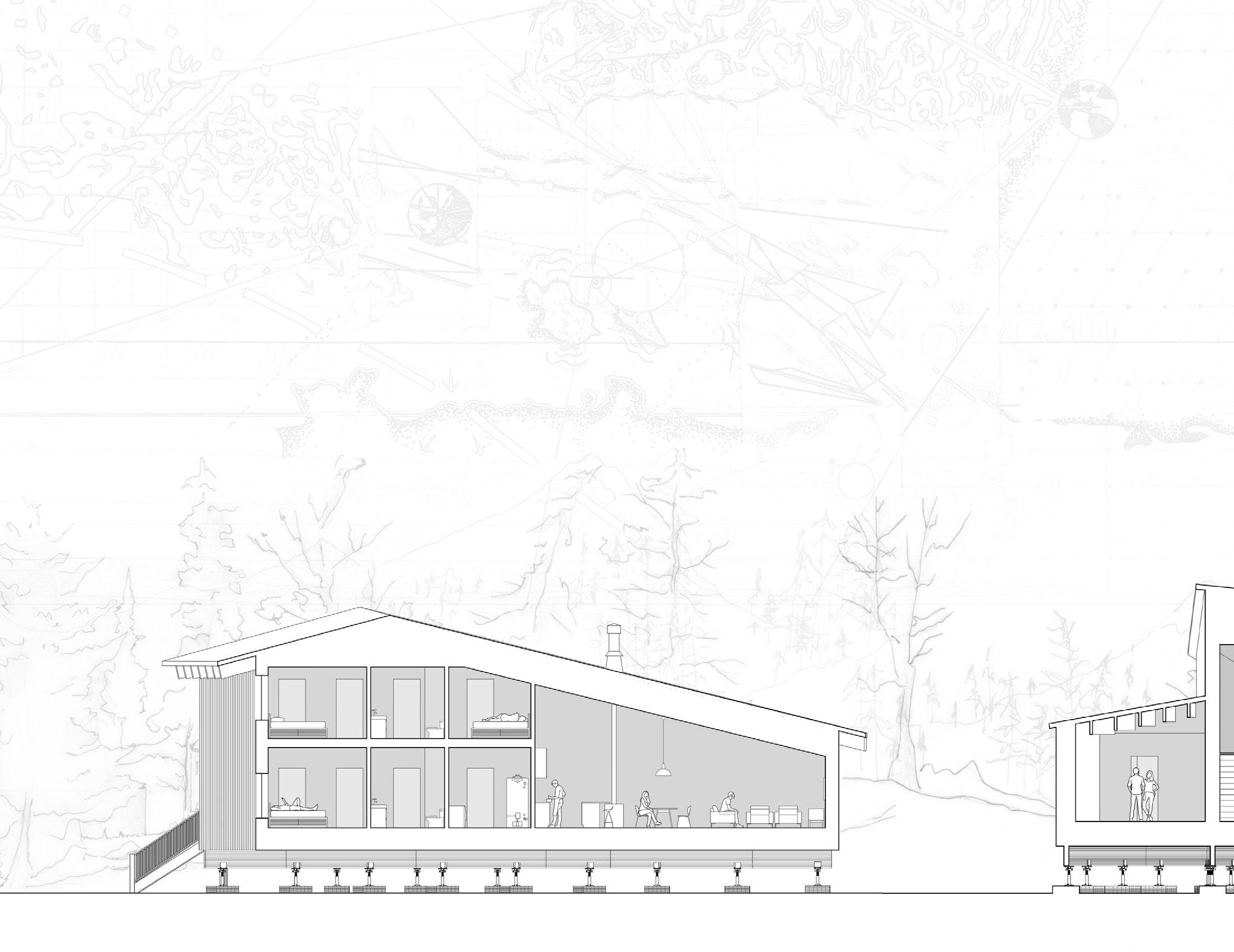
(photo by Village Elder; site plan by author; sections in collaboration)
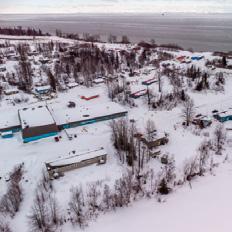
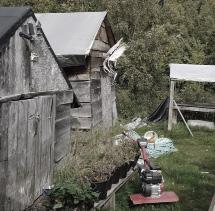
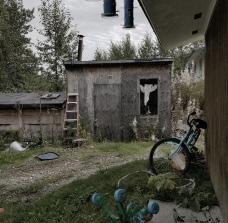
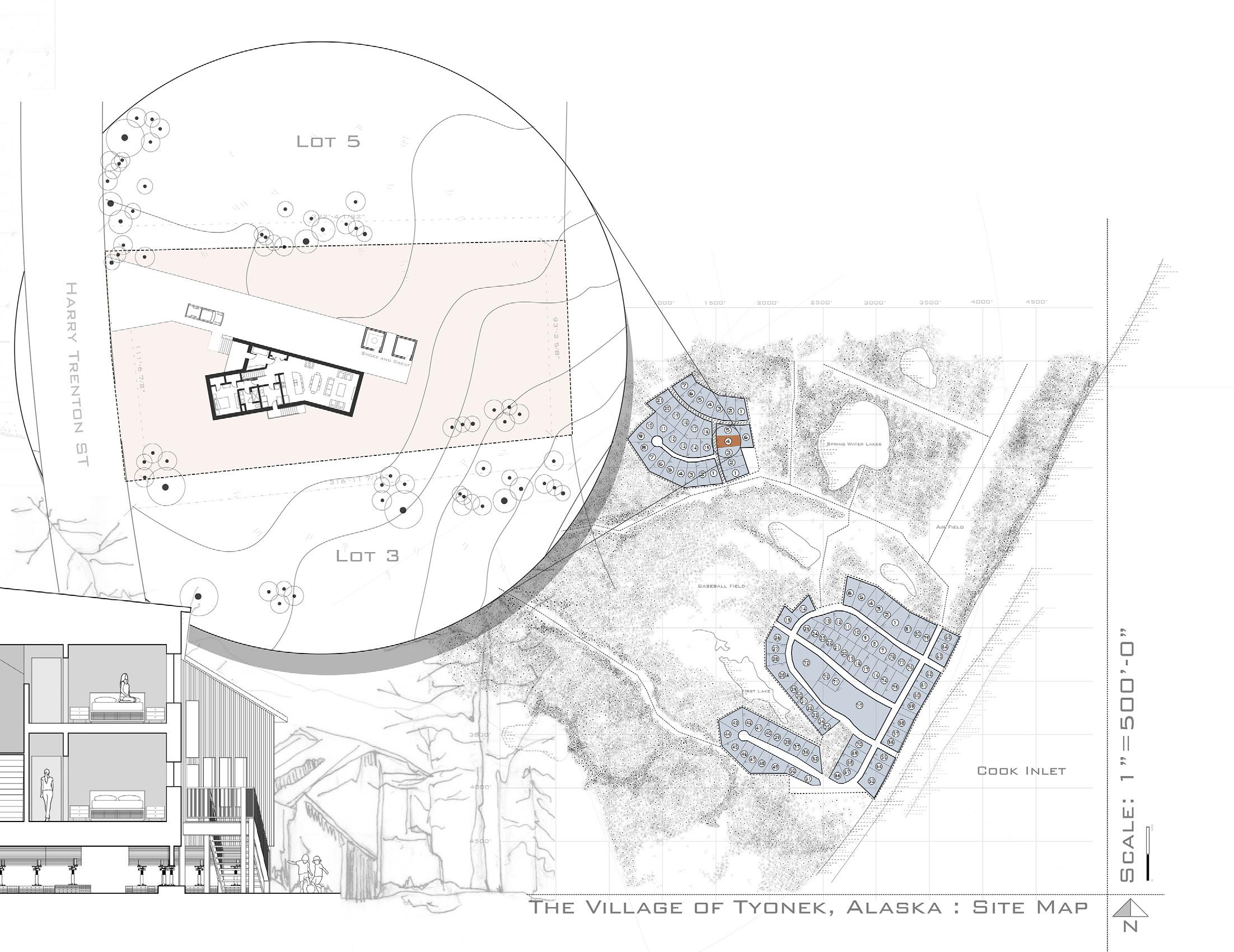
Below is a site plan of the village in Tyonek, Alaska. Here we can see the two main hubs of the village, the “Downtown” and the “Suburbs”. While thee definitions may differ from our own, the downtown area is home to the largest amount of abandoned buildings while the suburbs is where most of the residents live now, as well as being the location for Fireweed.
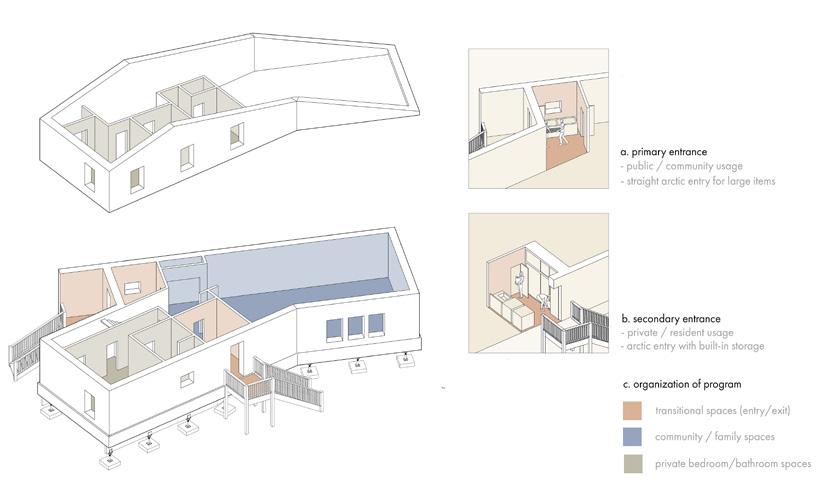
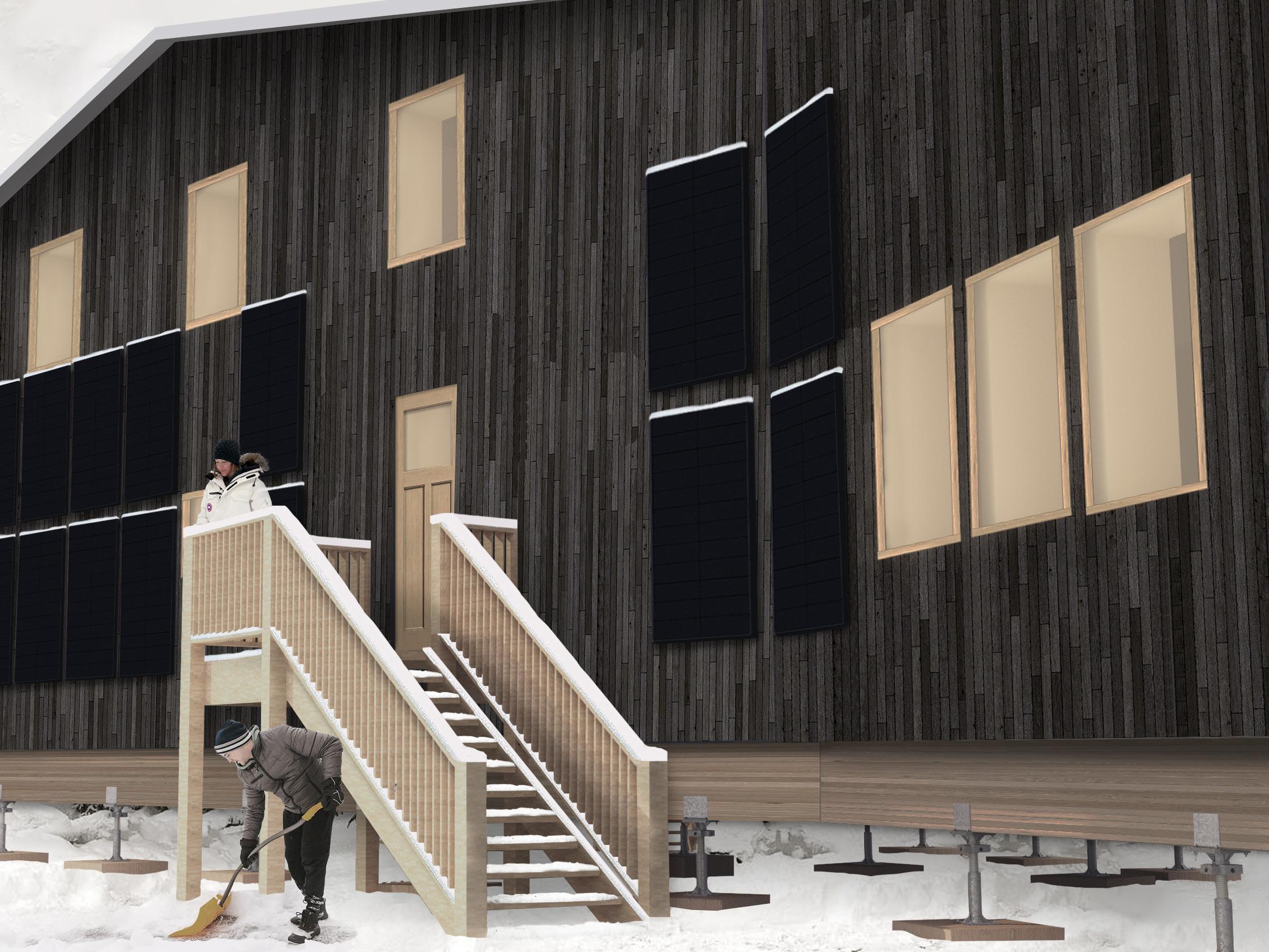
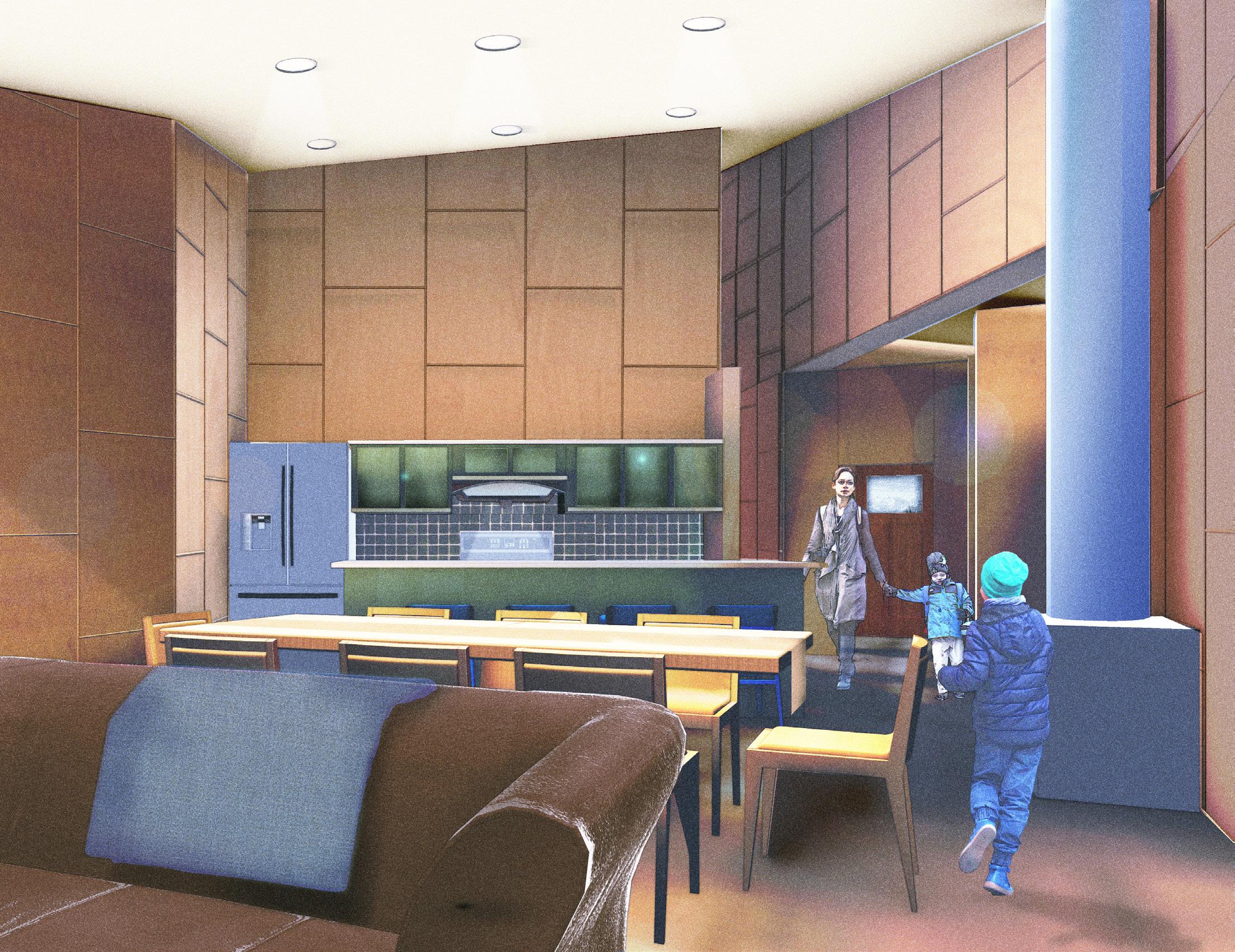
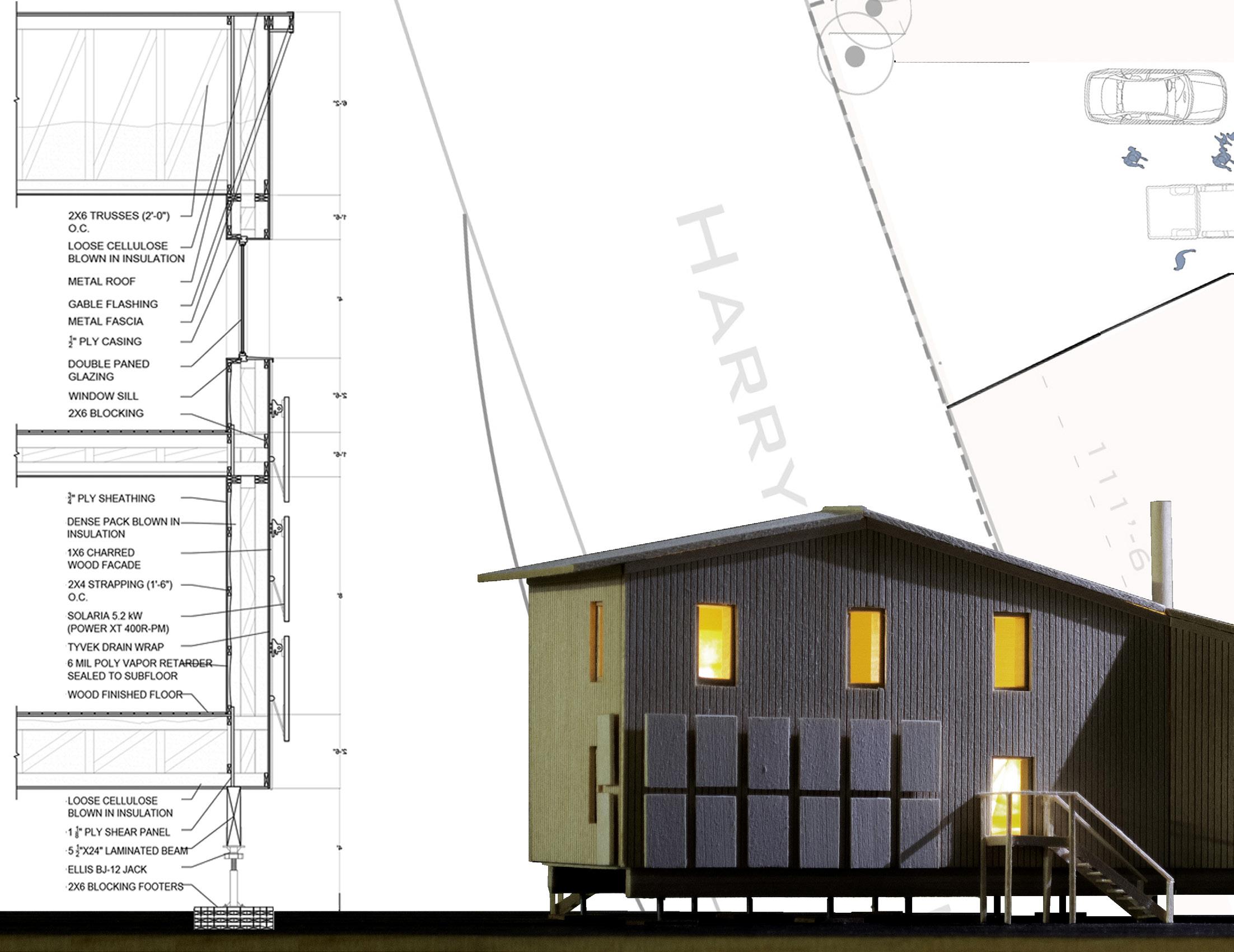
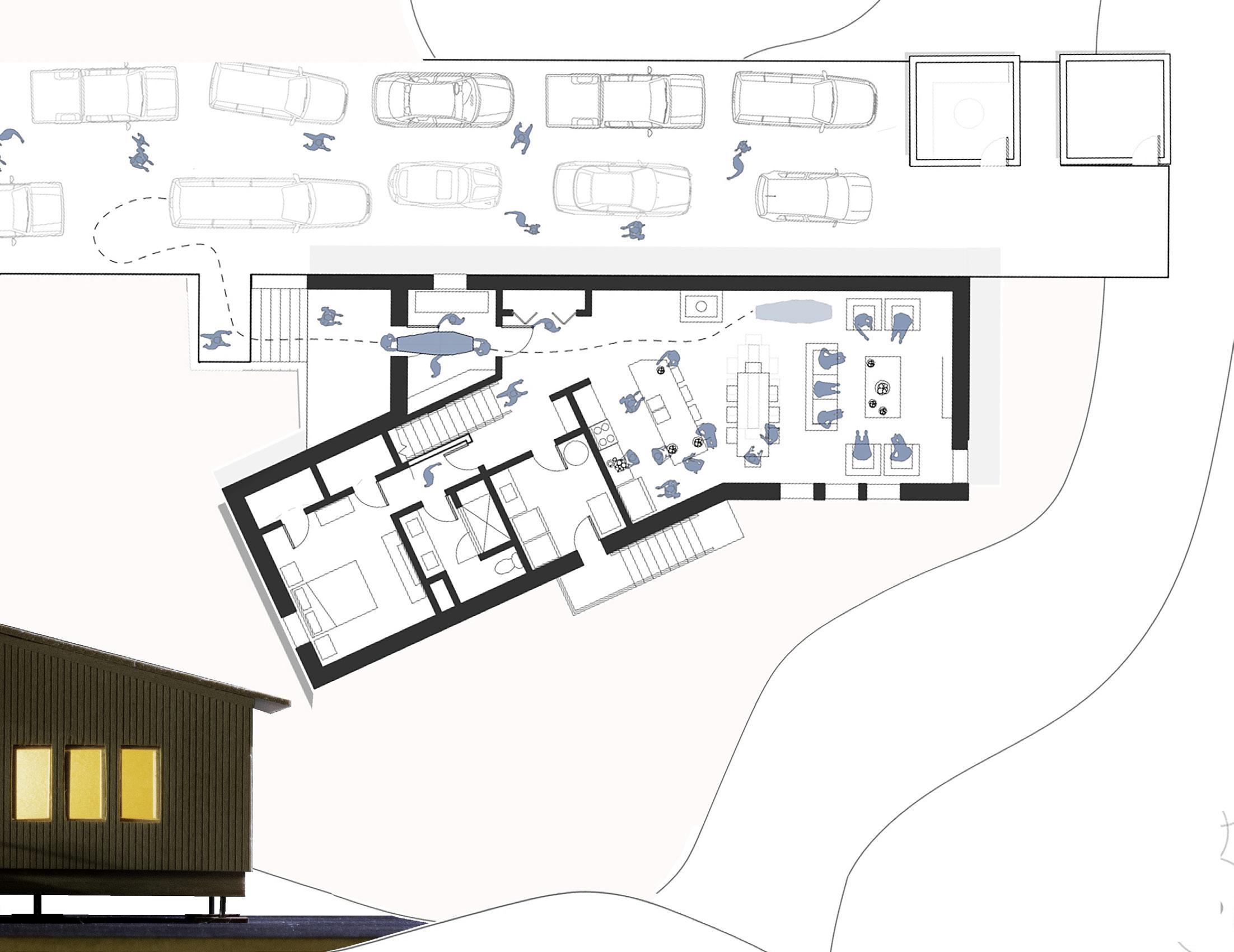
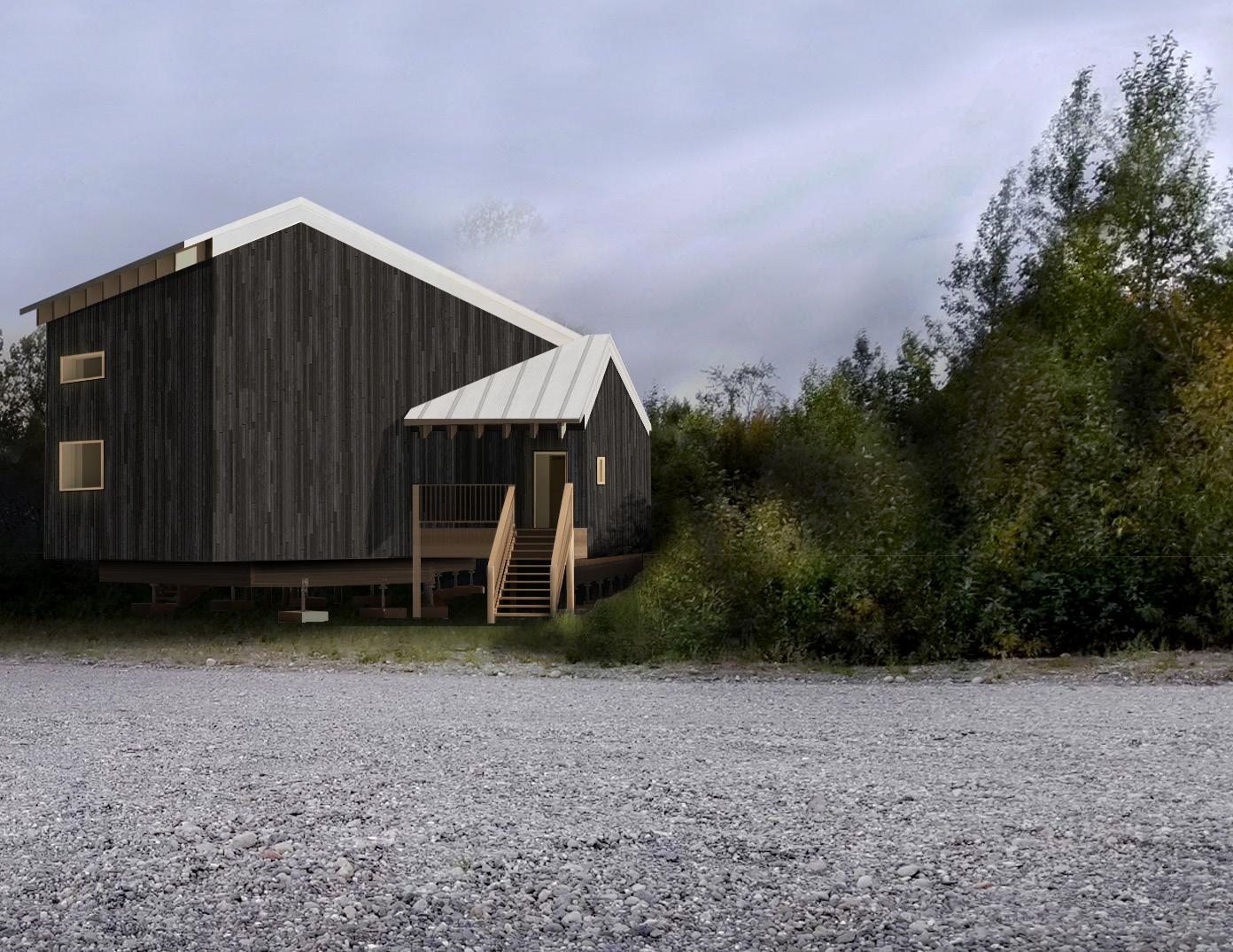
The house is designed around the spatial needs of the Tyonek family featuring flexible living space, particularly the main dining and living areas, and three private bedrooms that o er abundant storage. One of two entryways has an arctic entry that allows direct access into the living room. Local funerary practices require this direct entryway for bringing the co n of the deceased into the home. The large living spaces are also designed for these cultural gatherings with ample fl exible space that can accommodate large groups of people. On the exterior of the home, a warm material palette is used to contrast the cold climate of Tyonek.
(rendering by author; infographics by collaborator)
Solar Panels in a Place with 4 Months of Sunlight
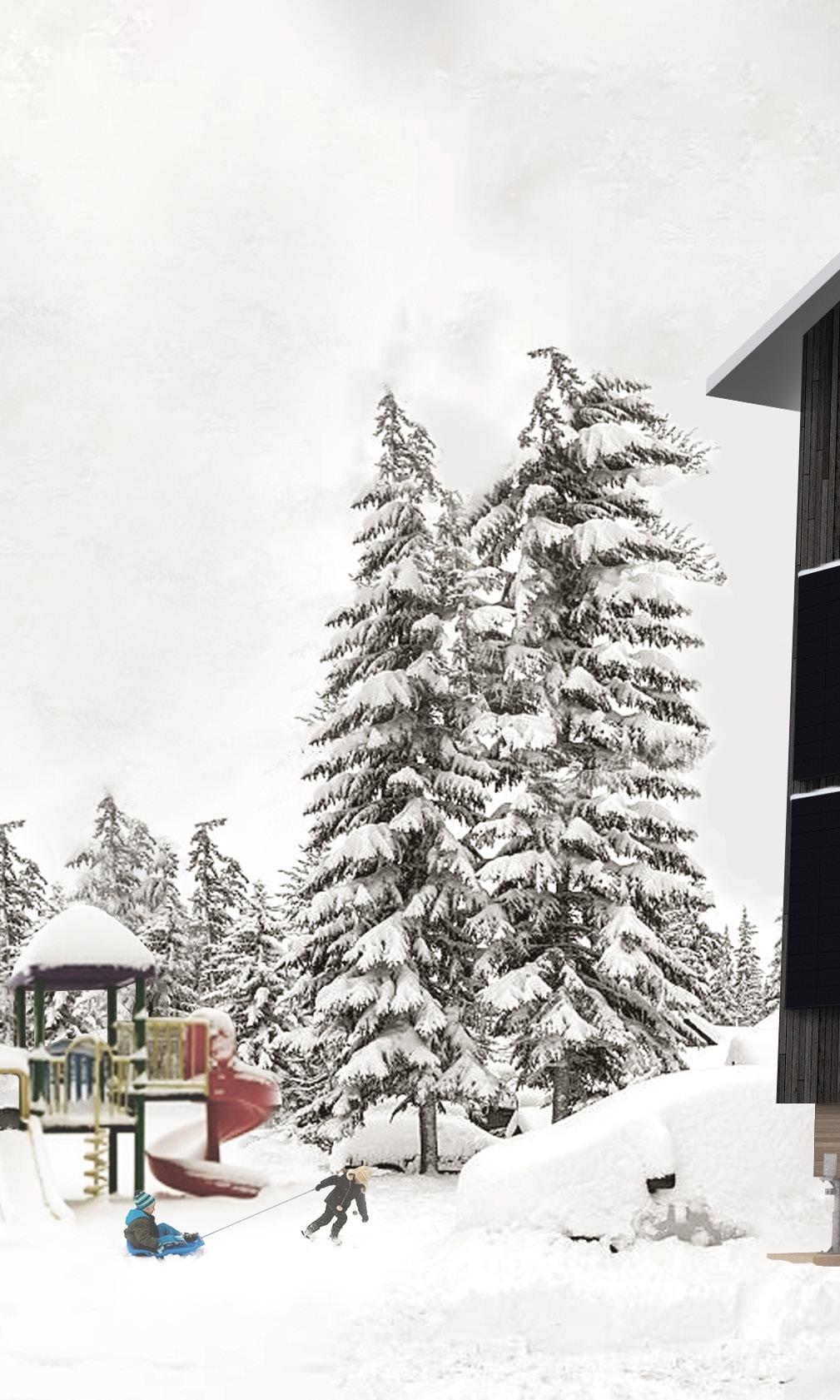
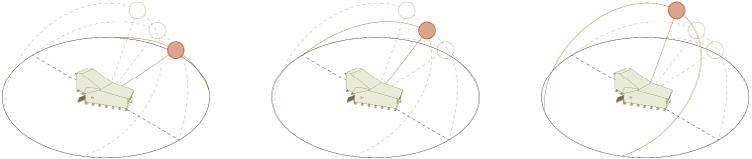
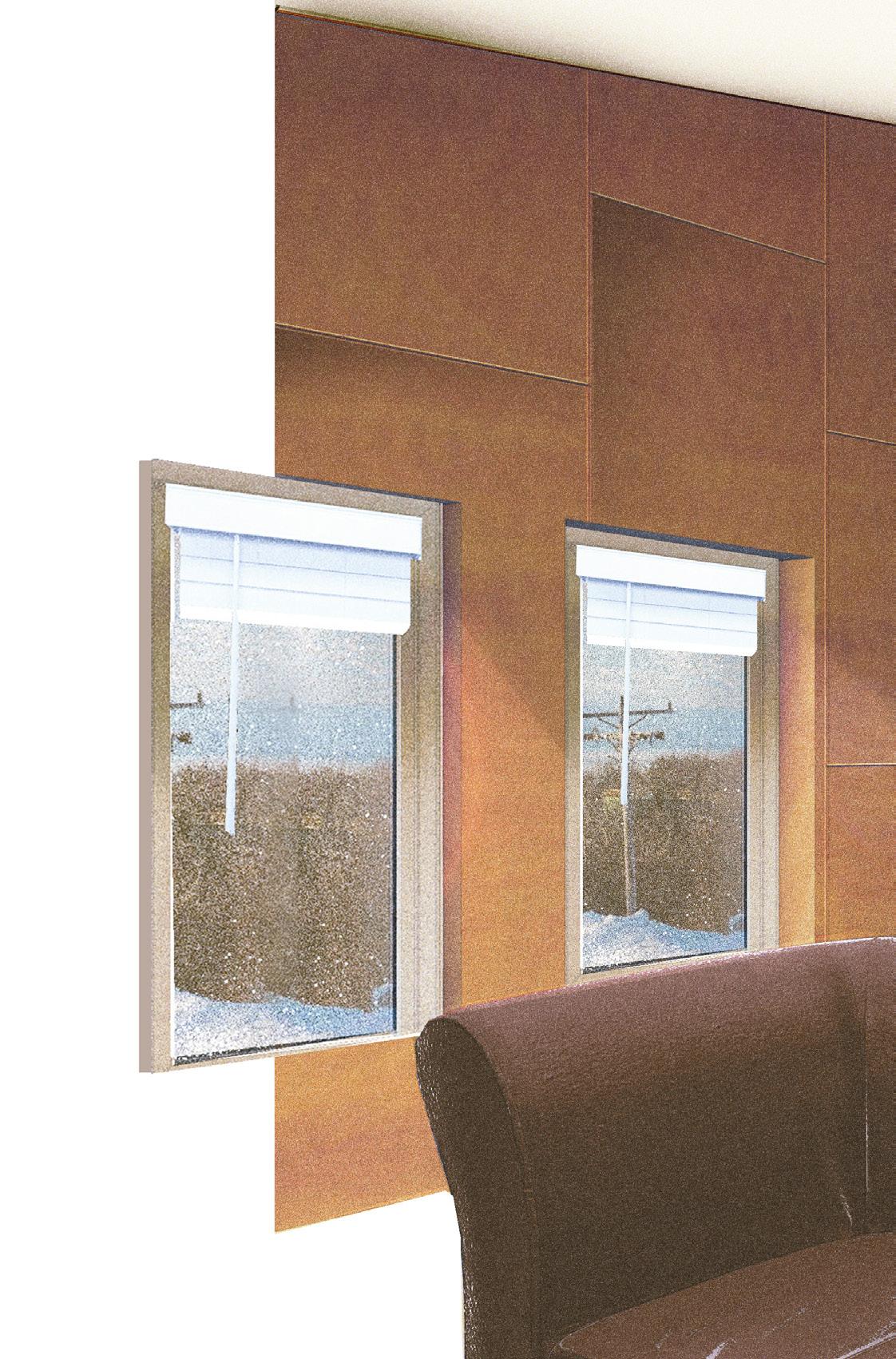
The Village is located within Climate Zone 7 (very cold), according to the International Energy Conservation Code’s (IECC) climate map. Whereas the summer brings warmer, longer days, the limited winter sun complicates PV electricity production. The warmer months are May through September, with daily highs commonly reaching 59°F. During the coldest months, the daily high averages below 32°F with the sun rising only 5 degrees above the horizon and for only a few hours a day. The Village receives about 131 inches of snowfall during a normal year. Precise and considerate design choices were taken to mitigate the negative effects of these harsh winter conditions. The house rests on footings lifted above the cold ground. Windows are strategically oriented to the south to capture the sparse winter sun. Solar panels are placed vertically on the facade to optimize sun angles and prevent snow coverage. Arctic entries are included in the two entries into the home, serving as a mediator between the warmth of the home and the frigid Alaskan climate. Envelope assemblies have high R-values, allowing for the inside of the home to remain warm. A wood stove is included for supplemental heating, as the utility power grid of Tyonek can be unreliable. Furthermore, a metal roof and charred finish of the main wood siding makes the home more resilient to weathering in the cold climate.
(plan by author; model by collaborators)
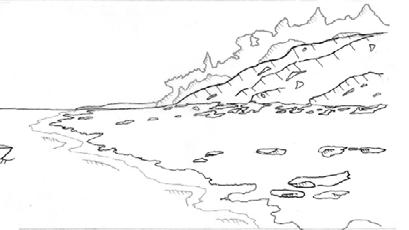
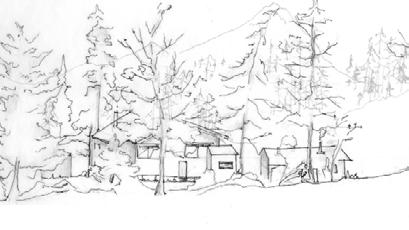
The final step of designing Fireweed was figuring out a way to convey the life of the Tebughna people to those who may not be familiar with them. We thought this would be best shown through the mediaum of film. For the elders, this is a home to be born in, raise a family, care for their elders, and finally a place to be laid to rest. It is not simply land to live on, but in fact, a place to establish roots that grow with each generation. These houses are designed to be worthy to the traditions and customs of the people of Tyonek, honoring their Athabaskan values and connectivity to family and the natural environment. For thousands of years the Tebughna Tribe has persisted in the harsh climate of Alaska. To live in such a place requires resilience and dedication to oneself and family, therefore we hope to provide a home that they can find comfort in, support, and ideally call their own. The Fireweed is the first plant to grow again after a forest fire, it adapts and proliferates in harsh climates. The story of Fireweed is the story of the people of Tyonek.
(sketches by author; rendering in collaboration)

University of Florida School of Theater and Dance
2020-2023
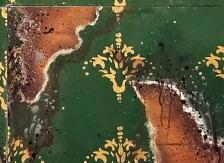
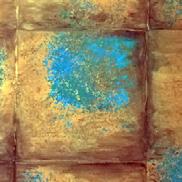
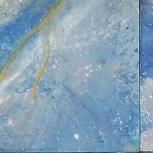
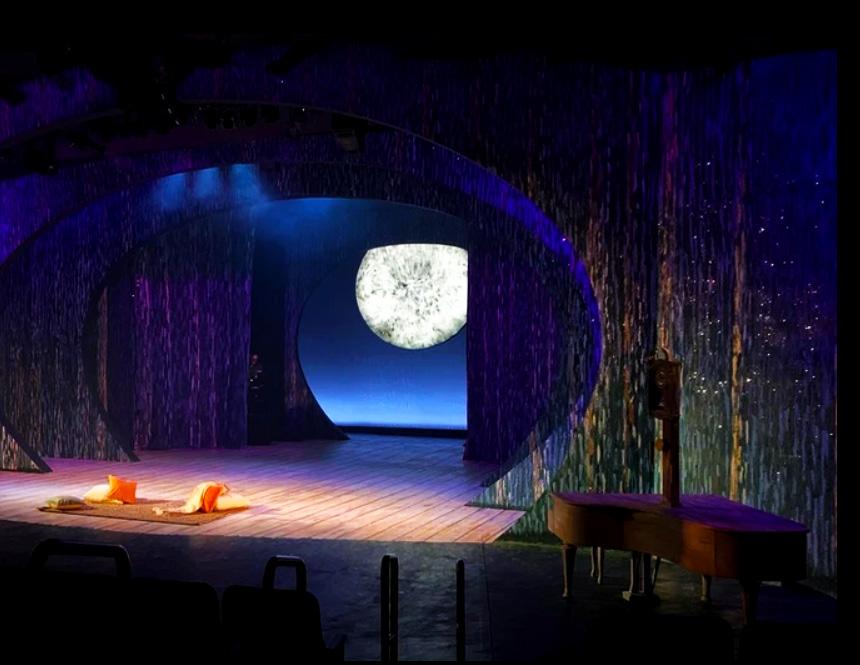
During my time at the University of Florida, I worked on several theatrical productions as a student scenic artist. The following spreads are a series of shows that I was able to contribute to. My primary roles included: props fabrication, scenic design, and scenic painting. The two productions I have included are: A Little Night Music in which I did props and scenic painting (portals and floor treatment), as well as a set of paint recipes and texture samples for Sagittarius Ponderosa.
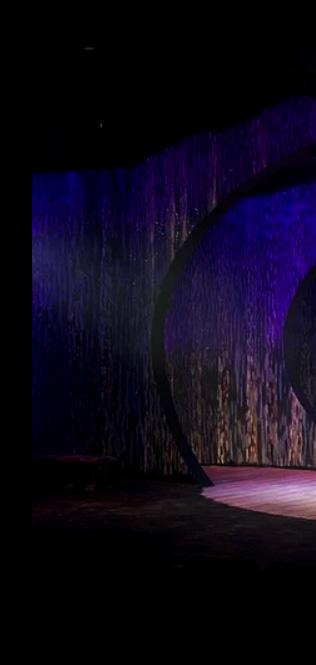
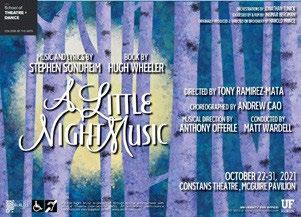
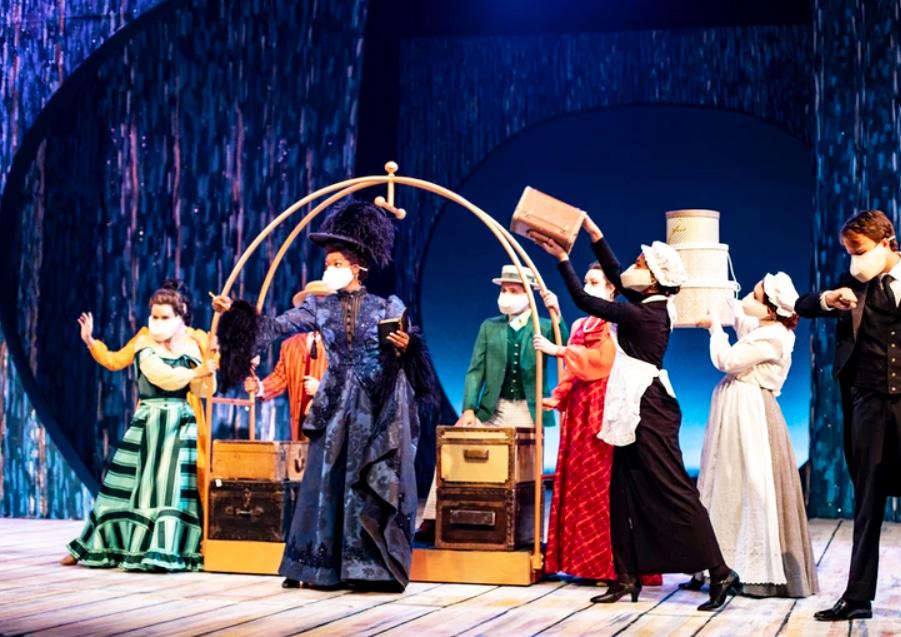
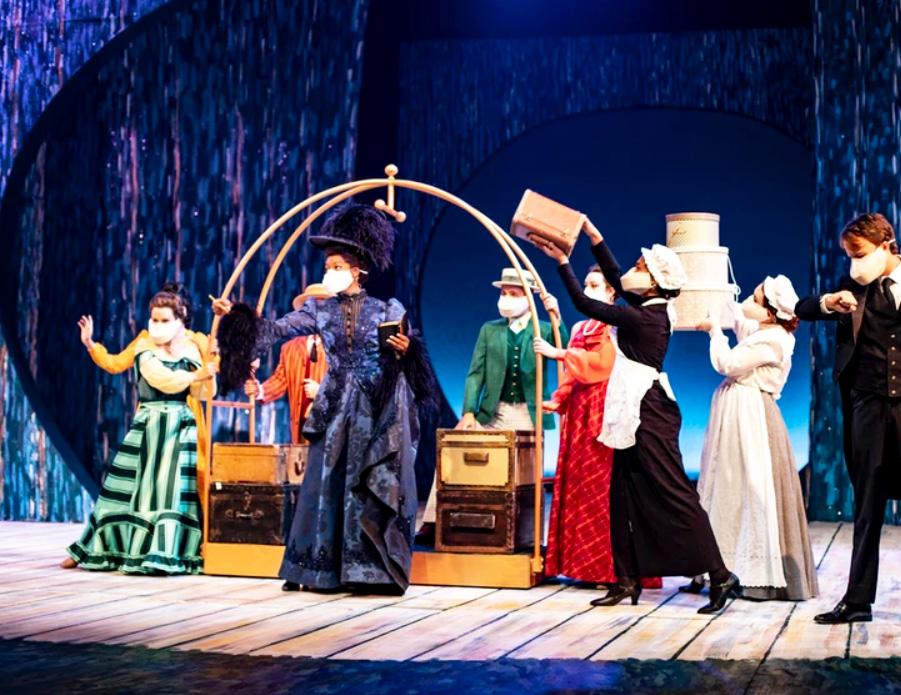
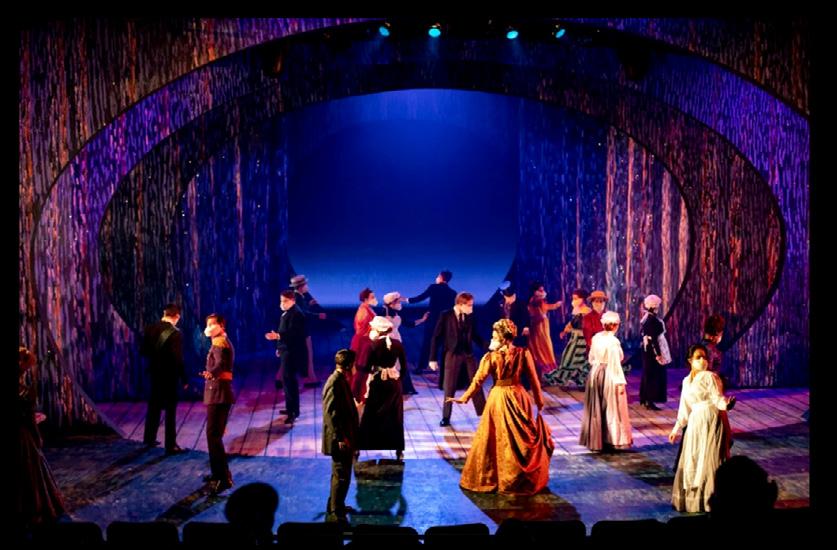
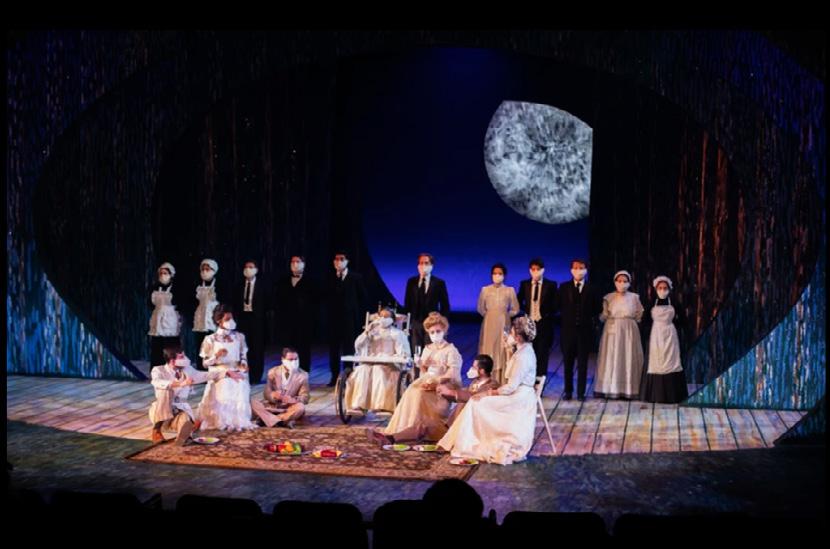
The production and show run of A Little Night Music took place during the end of the Covid-19 Pandemic (October 2021). As you can see from the production photos, the actors, as well as the crew wore masks. While this made things difficult at times, the efforts of the cast and crews made for an amazing show in both production quality and the talent of the actors.
(photo by SOTD)

(photo
Another scenic element I worked on was the floor treatment of the stage. The goal of the floor was to look like wood decking that leads into a grassy field. The wood treatment included virbrant tones of orange, blue, and yellow to match with the tones of the storyline.
(photo by SOTD)
Below are several behind the scenes production photographs. The portals (3 sets) were a lengthy process in which they had to undergo many layers of paint treament to achieve the final look. As a scenic painter for the show, I had to set up and paint on the scaffolding to cover the entirety of the portals.
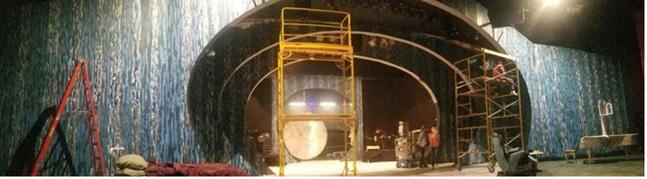
The base of the portals was done by mixing light blue, dark blue, and green paints with plaster to create a paste. These were then applied with spatulas to create textured stripes on the portal to mimic tree bark. Due to the use of spatulas, this was a lengthy process that required a large crew.
(photo by author)
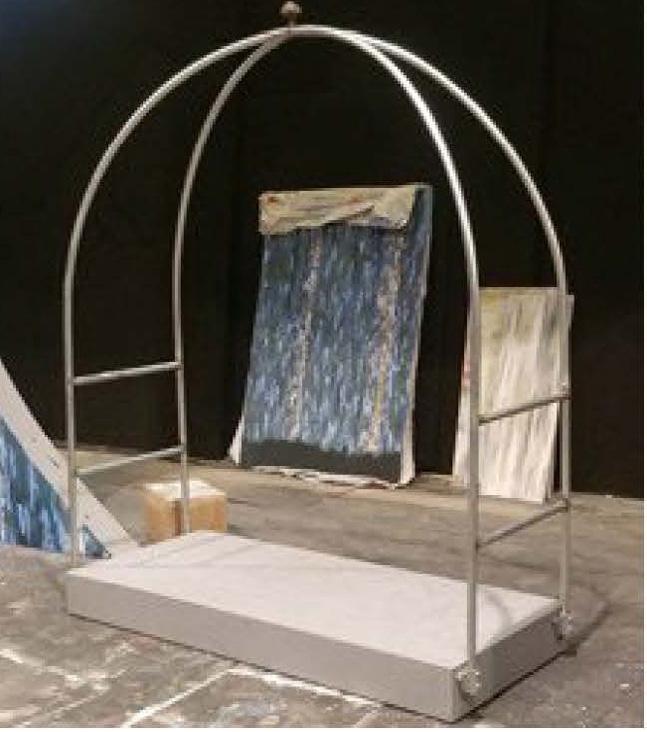
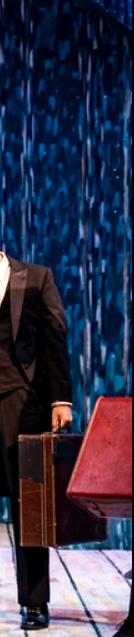
One of the props that I was tasked to fabricate (with assistance from faculty) was the luggage cart that was used in several scenes such as the muscial number “The Glamorous Life”. The luggage cart was done by bending metal pipes by a jig that was then welded together. I then gave it a paint treament to give the final gold finish seen in the production (see large image to the left) (above photo by author)
During my time at SOTD, I was permitted to take an Advanced Scenic Painting Studio. The final project of this class was to produce a full set of scenic artist deliverables for the show Sagittarius Ponderosa. I was tasked with developing the paint recipes, and paint and texture methodology, as well as creating physical deliverables of the set such as paint and texture swatches.
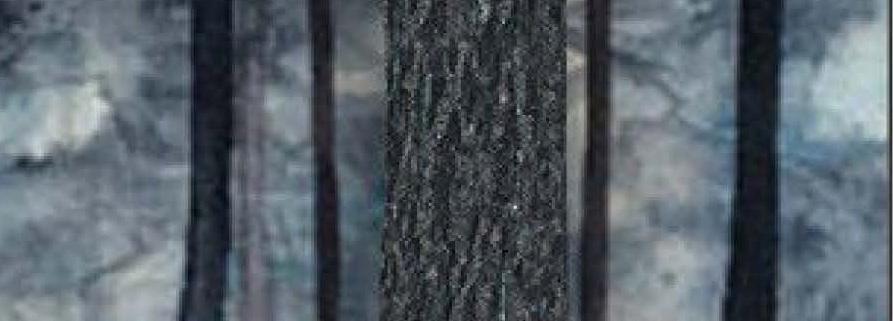
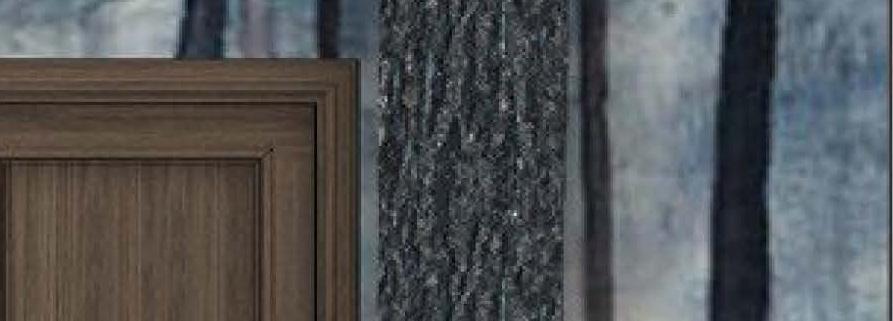


Tree Bark Paint Recipes
1) Tree Bark
- 1 Part: Burnt Sienna
-1 Part: Raw Umber
-1/2 Part: Paynes Grey
-2 Part: Van Dyke Brown
3) Pine Needle Blue
-3 Part: White
-2 Part: Thalo Green
-3 Part: Thalo Blue
-2 Part: Paynes Grey
2) Tree Bark Highlight
-1 Part: Tree Bark Recipe
-1 Part Van Dyke Brown

1) Snow Fall Shading
-3 Part White
-1/2 Part: Paynes Grey
3) Wood Floor Tan
-1 Part: White
-2 Part: Yellow Ochre
-2 Part: Burnt Sienna
-1 Part: Raw Umber
-1 Part: Raw Sienna
2) Dirt Ground Base
-2 Part: Raw Umber
-2 Part: Raw Sienna
-1/2 Part: Burnt Umber
-1 Part: Deep Red

1) Dark Blue Forest Wash
-1 Part: Pine Needle Blue
-1 Part: Water
-1/2 Part: Thalo Blue
2) Grey Forest Wash
-1 Part: Dark Grey
-1 Part: Water

1) Light Grey
- 1/2 Part: Paynes Grey
2) Dark Grey
-1 Part: White Grey Tones Recipe
-3 Part: Paynes Grey
-2 Part: White
(paint samples and recipes by author)
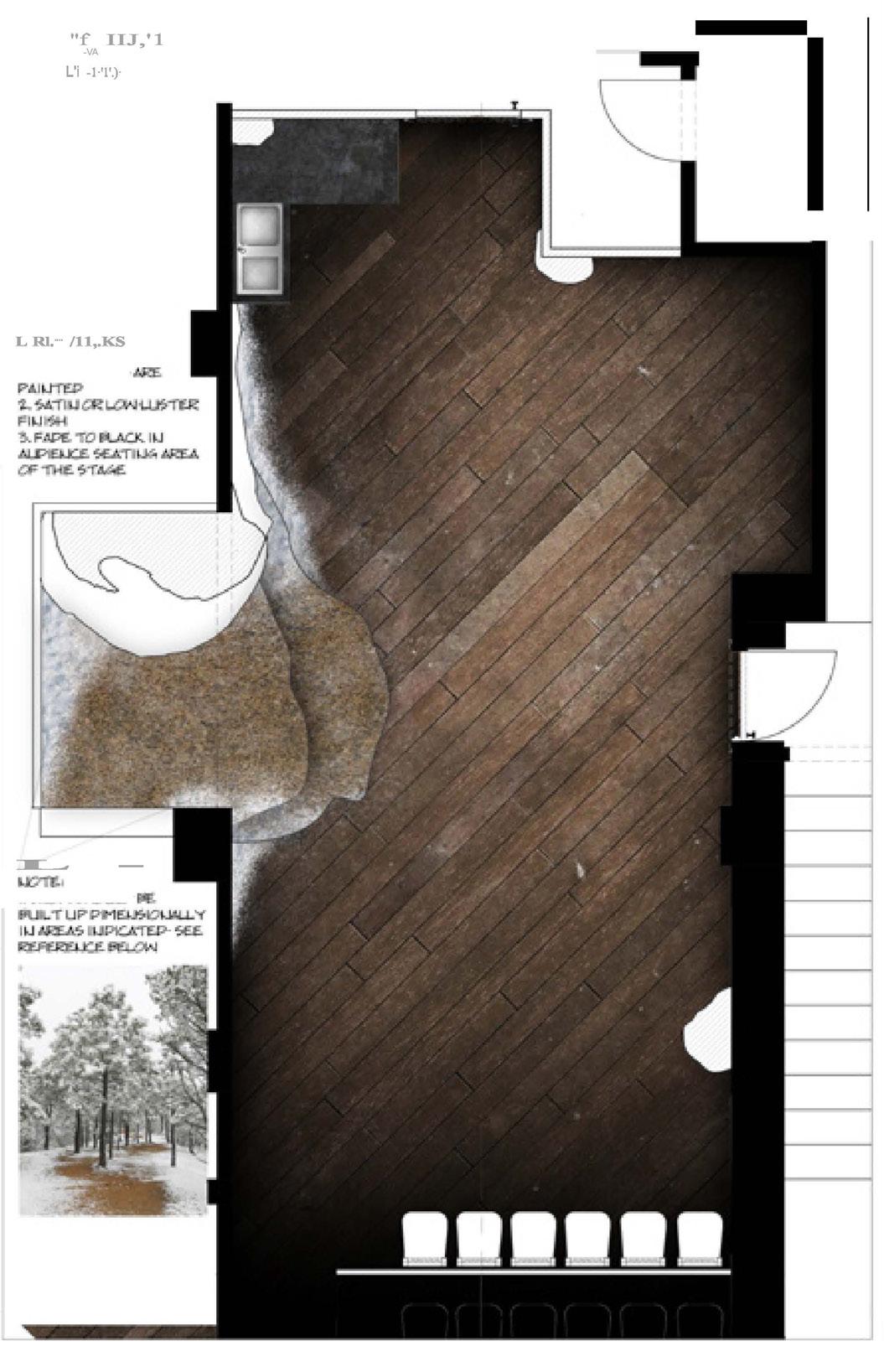
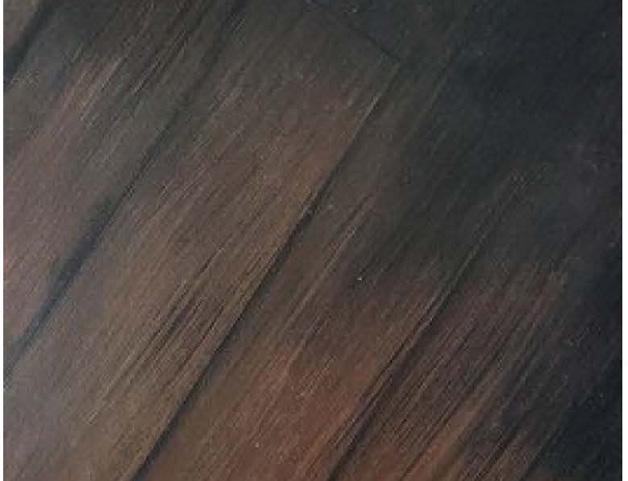
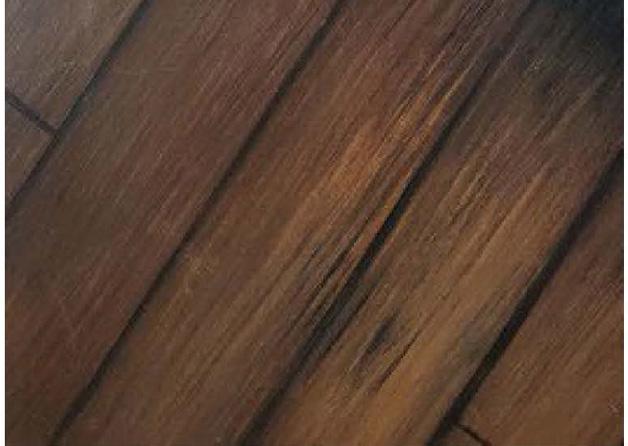
The edges of the wood floor treatment of SP needed to fade into a nearly black, thus the treatment for the outskirts of the floor varies from the central floor panels.
(by author)
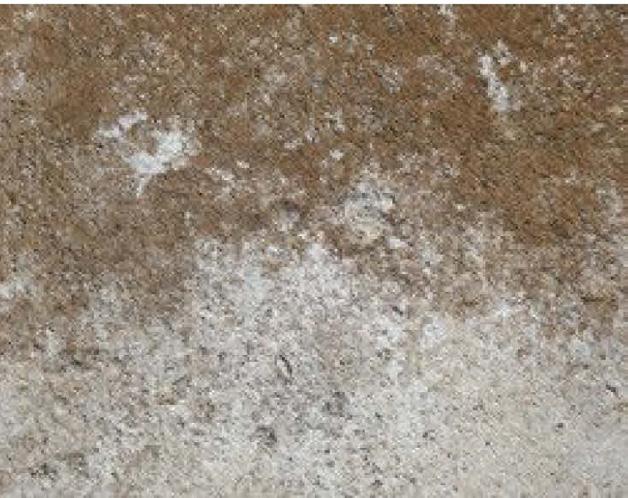
The center of the floor treatment is lighter in complexion with a dusty overtone from the residual “snow”
(by author)
The texture base for this portion of the floor is the same for both the dirt and snow. Using a mixture of saw dust and glue, they are then sponged with their respective color.
(by author)
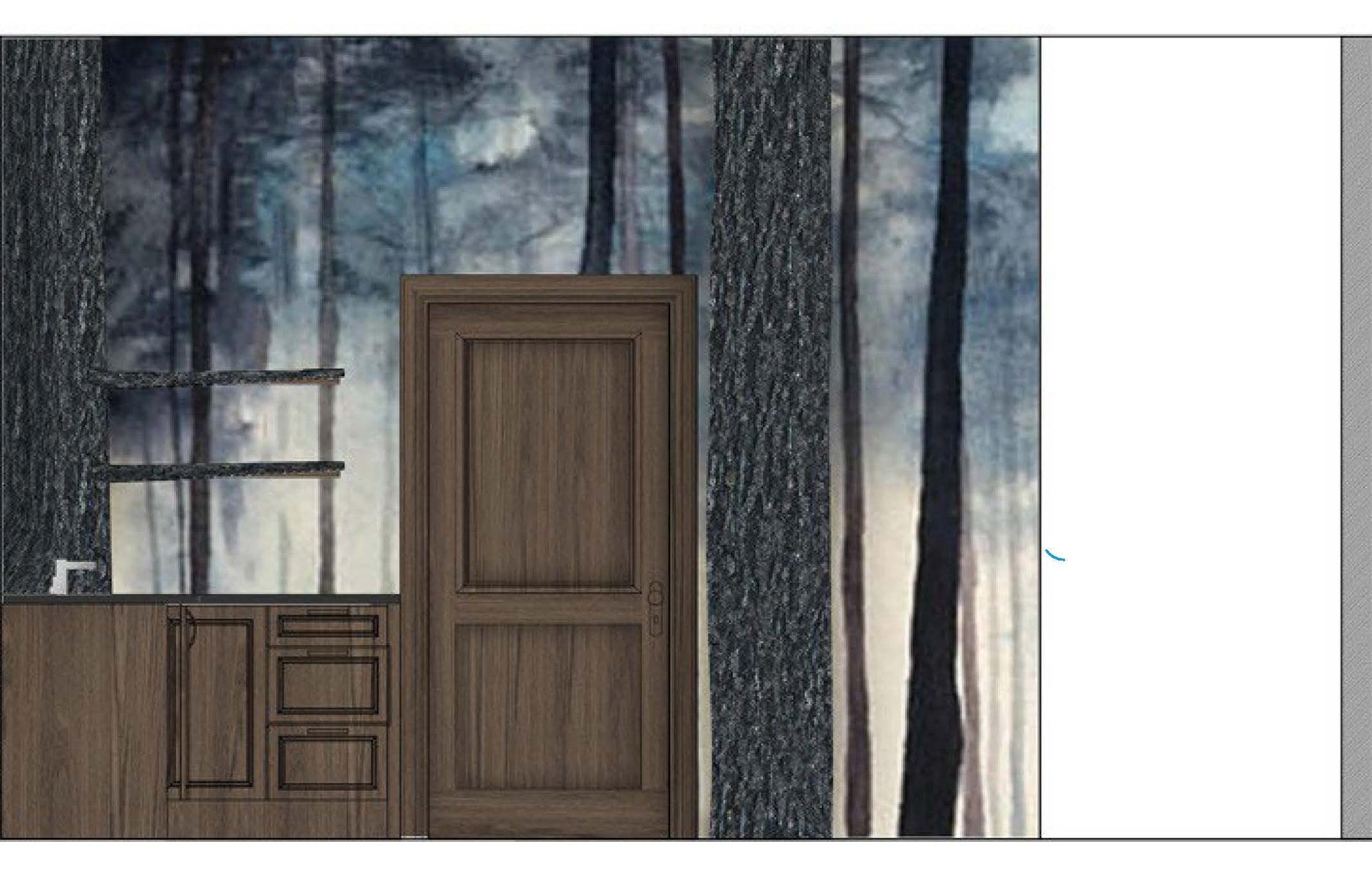
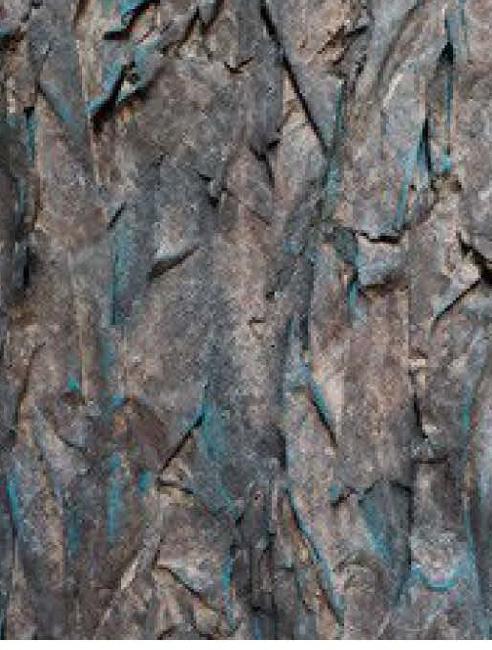
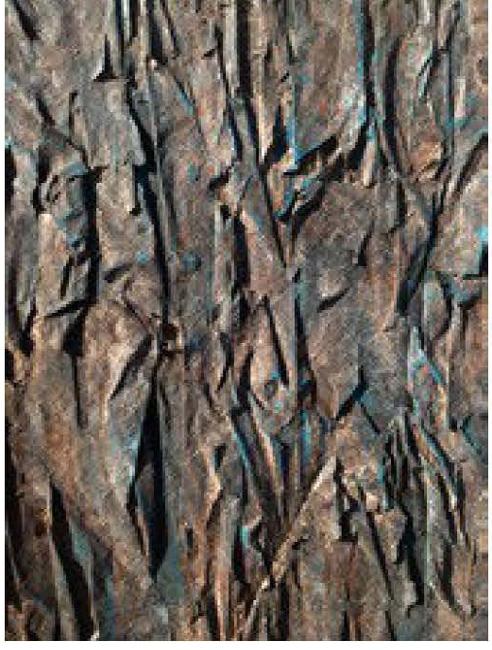
The lead set designer wanted the tree elements of the backdrop to be 3D rather than just a paint treatment. Therefore, to form the trees as well as get the layers of the bark, I used reams of butcher paper to create the illusion of a tree trunk. From there, I did a series of paint treatments and saw dust texturing to get the wood finish with the accented blue highlights.
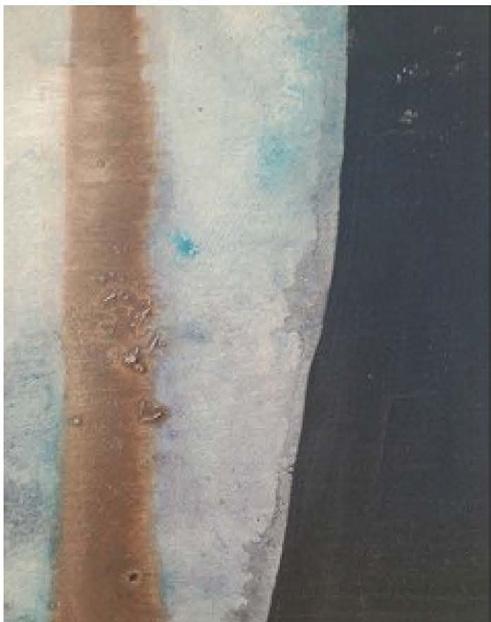
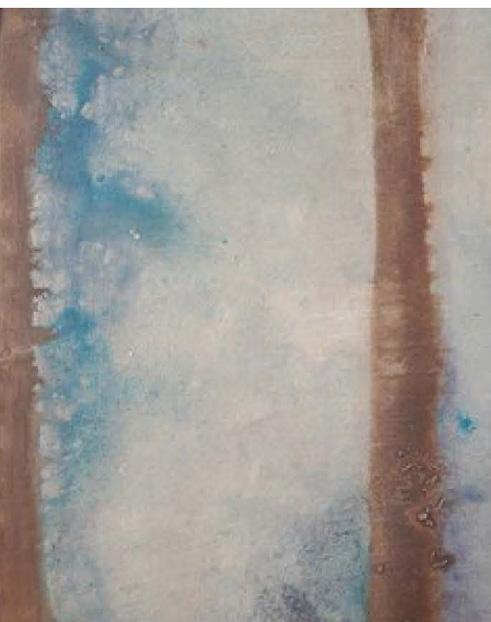
In order to achieve the background watercolor texture, without the dripping effect (as the wall was upright), this process leveraged the sponging technique. Through many layers of light misting, sponging on color, and then gently patting the area dry, the watercolor forest was achieved, providing a calming backdrop for the 3D tree elements.
3 4 (texture and paint samples by author)

With Professor Peter Sprowls
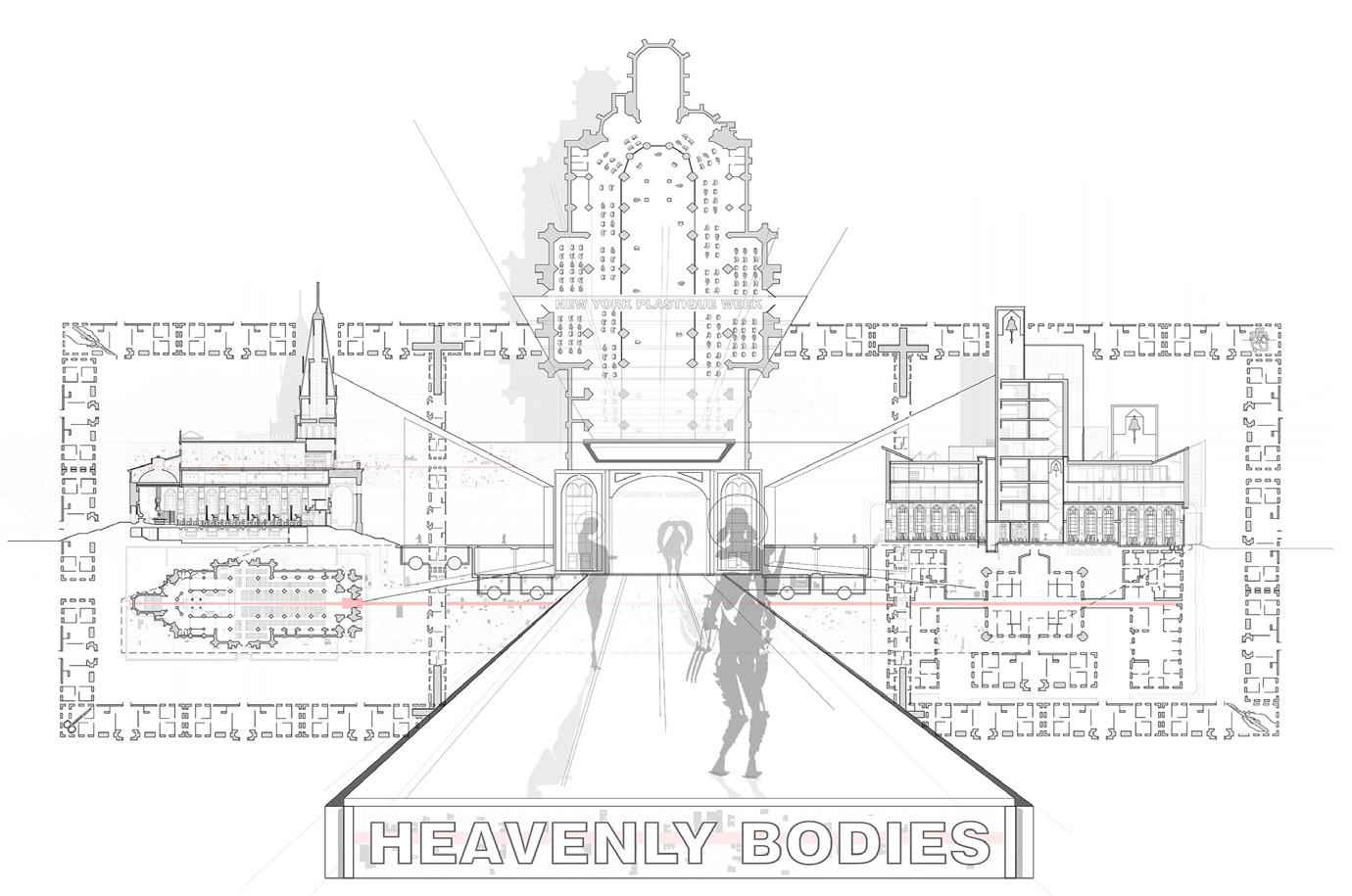
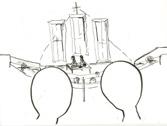
In this exploration of New York City, more particularly Park Avenue, it was found that there is an absurd number of plastic surgery clinics along Park Ave, developing an interest in plastic surgery as a culture and a spectacle. This resulted in the site analysis drawing above, that aims to look at how plastic surgery begins to intersect with other spaces that have preformative qualities, namely churches and runways. It is from this drawing that a thesis was developed that would drive the entirety of the following project: That Park Avenue is a runway that plastic surgery clinics perform on to proselytize plastic surgery as the new religion of New York City.
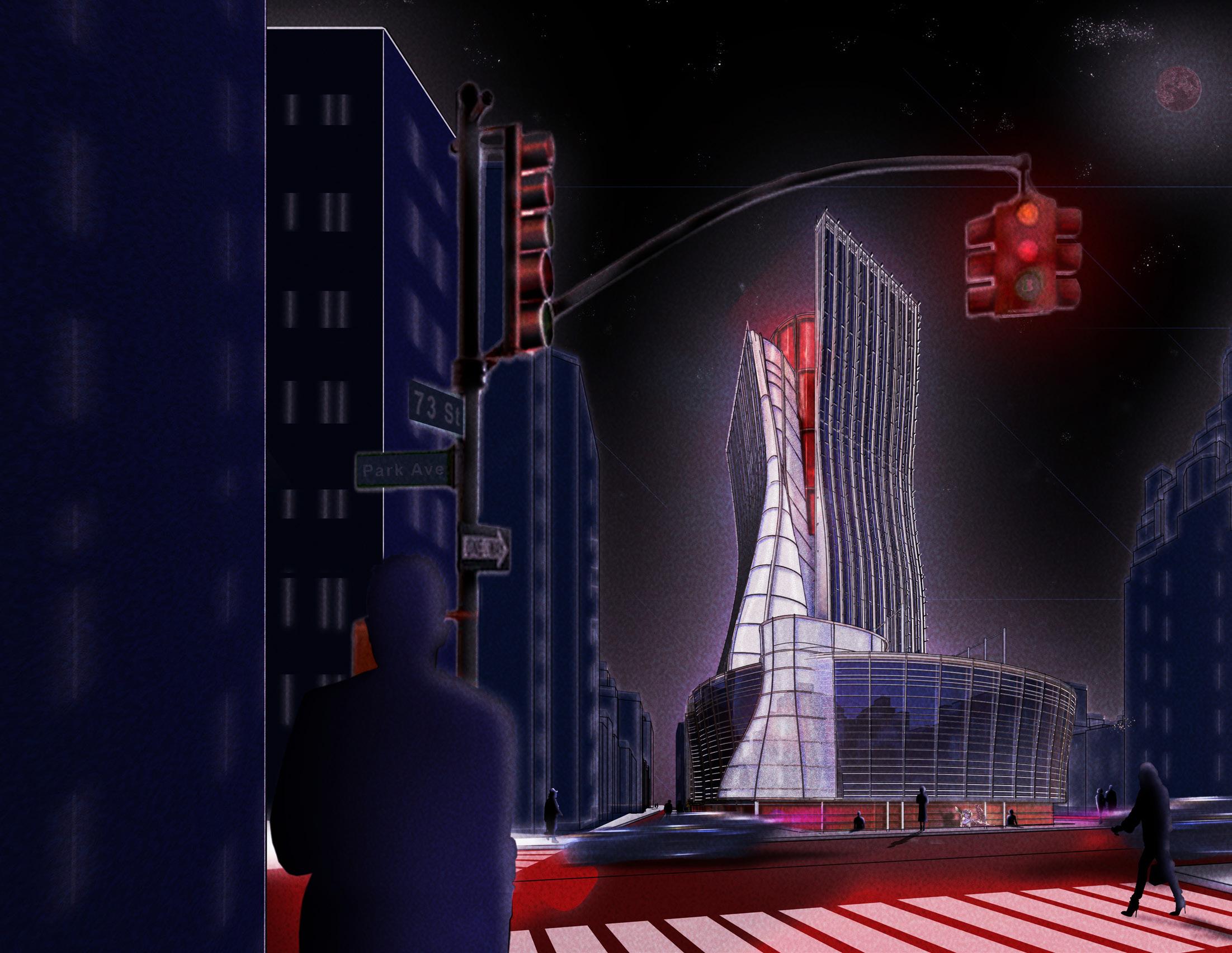
In collaboration with (1) team member (rendering by author; drawing in collaboration)
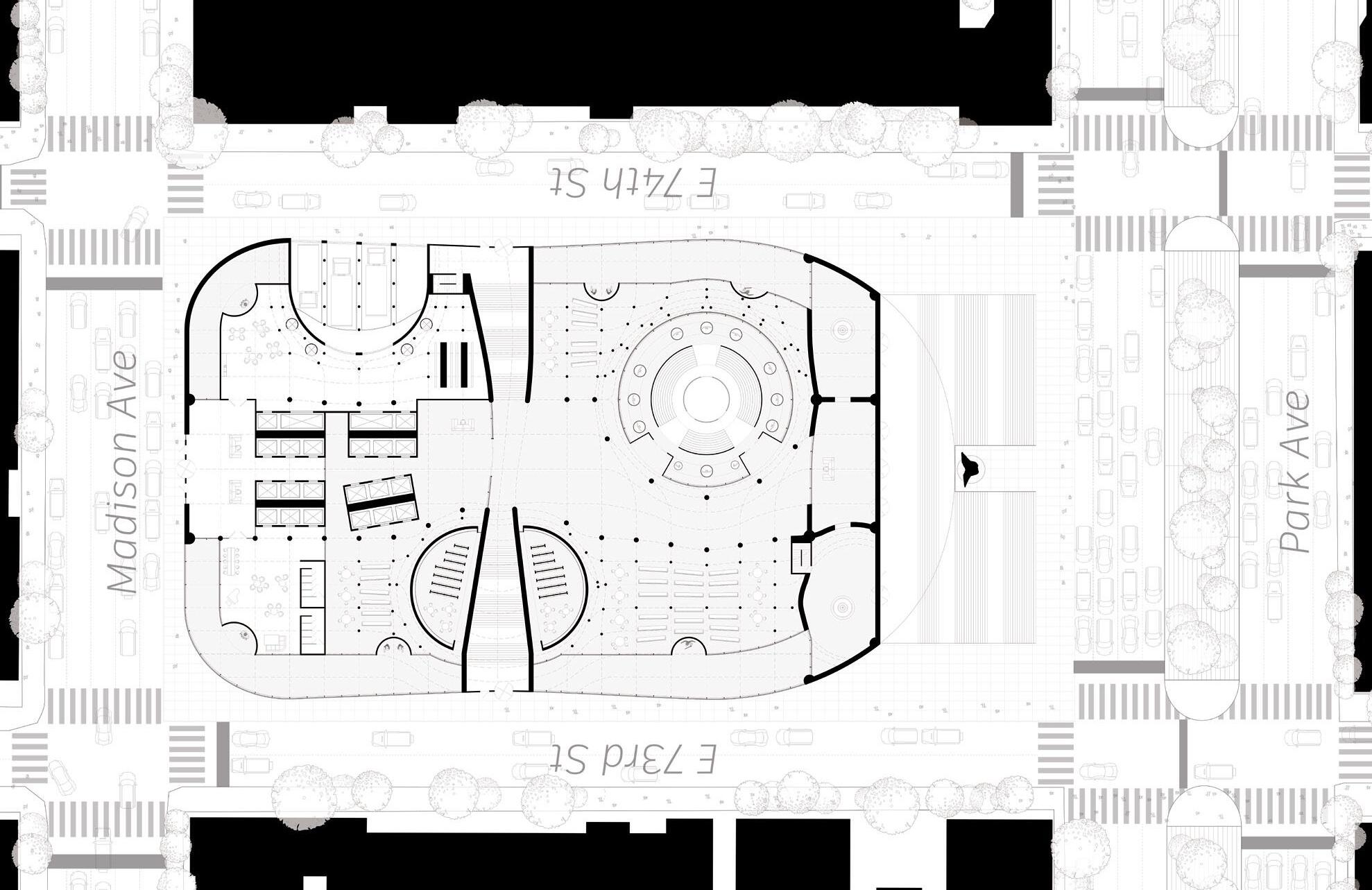

In terms of location for the surgical monastery, it was found that the highest concentration of these religious spaces and clinics was between East 72nd St and East 75th St; thus, it was decided to locate the project between 73rd and 74th St. While cosmetic surgery clinics are abundant along Park ave, especially in the upper east side, they are primarily individual private clinics that only rent out smaller office spaces. Thus this is a proposal for a monastery that aggregates these cosmetic practices into a singular institution to give cosmetic culture a stronger presence in the city that they did not have before.
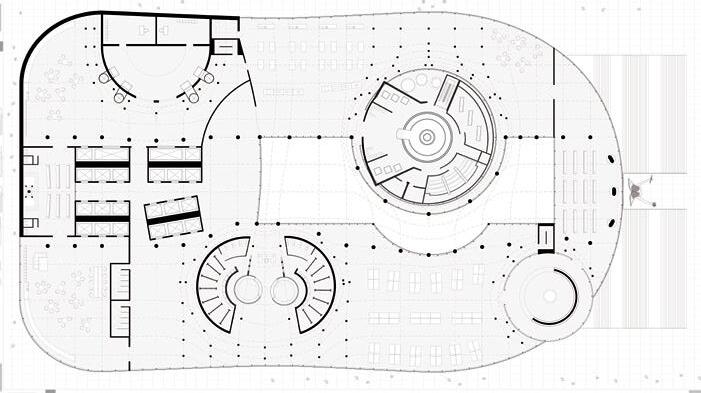
floor plan above: by author and collaborator)
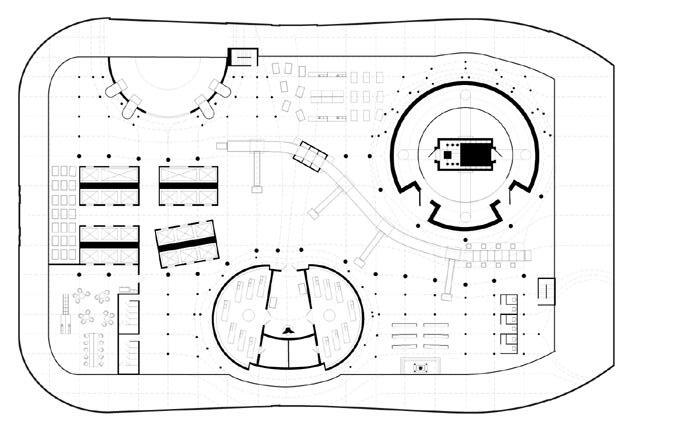
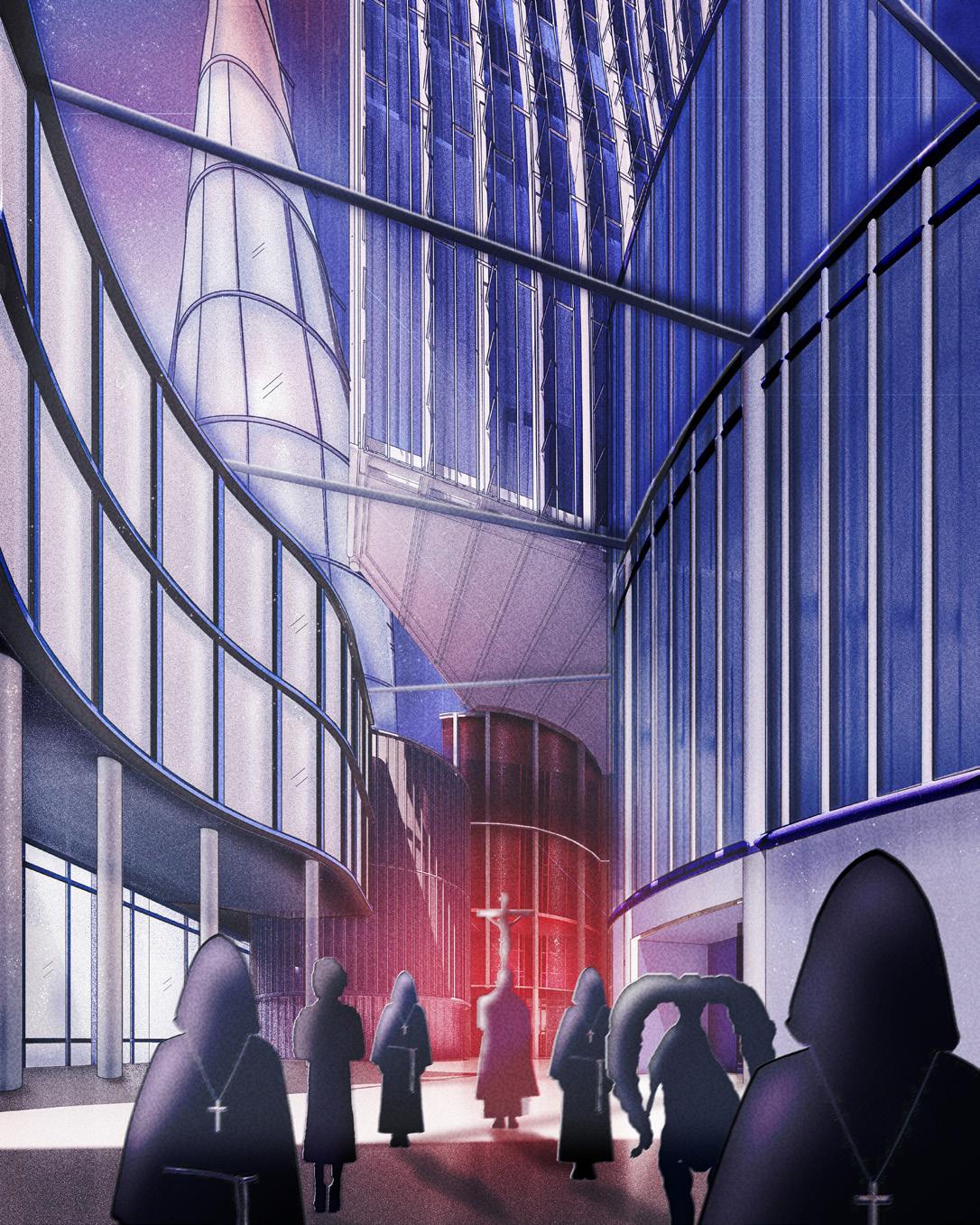
floor plan above: by collaborator) (cathedral render above: by author)
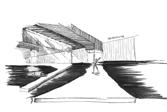
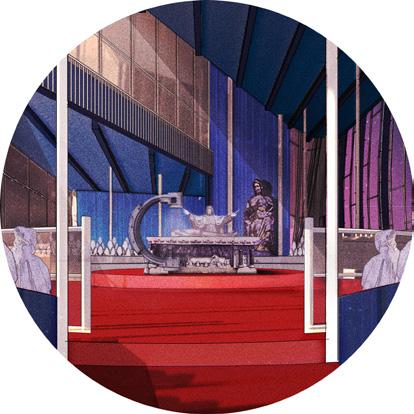
The ground floor (seen left) takes on the typology of a cathedral, with a series of programmatic implants that puncture through all levels of the plinth. Surrounding these implants is an ambulatory containing chapels for visitors to process around, in addition to a nave and transept that are deformed by said implants, playing host to many spectacles such as the procession seen here. While the illustration above depicts a procession of monks and patients alike, it is open to all those who are intrigued by the monastery.
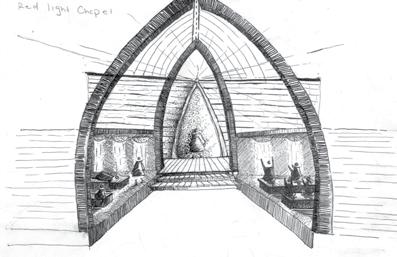
The surgical tower has three primary cosmetic sacraments, including the ritual bathhouse, surgical theater, and red light therapy chapel. Between those main programs are supplemental surgical suites (facing Park Ave) and residences (facing Central Park) for the clergy and patients. As one can see, the tower portion of the monastery has a very rigid ritualistic cadence of programs from cleansing oneself in the bath to healing in the red light therapy chapel. The tower itself is a very insular element with respect to public space because it serves a very specific user group, that being those performing and receiving surgery. The flow and arrangement of spaces in the plinth, on the other hand, is much looser and free-flowing. While it has the undertones of ritual as seen in the ambulatory and implants, the intensity of it is much less than the tower. The dynamic between the plinth and the tower generates a gradient of public space that has been implanted into Park Ave to perpetuate the once implicit cult of plastic surgery, now making it explicit to the city.
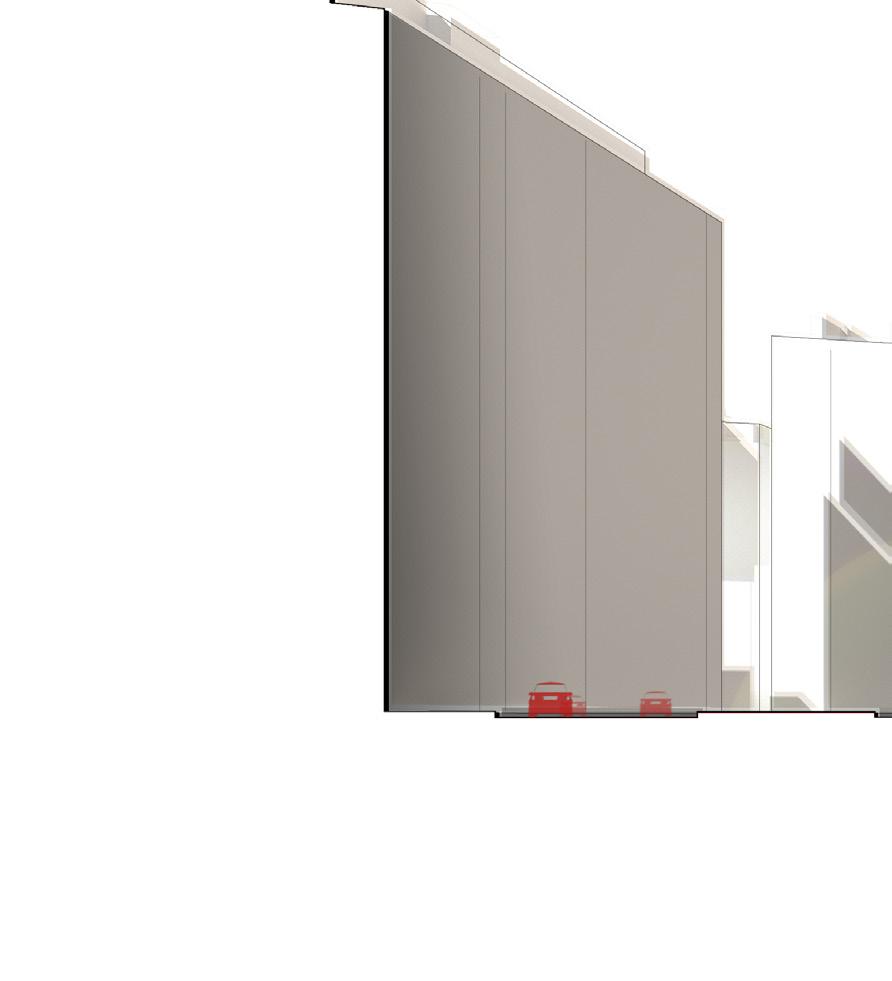
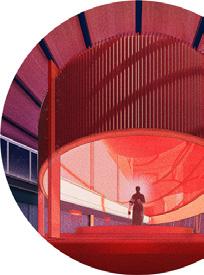
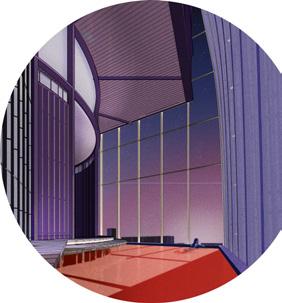
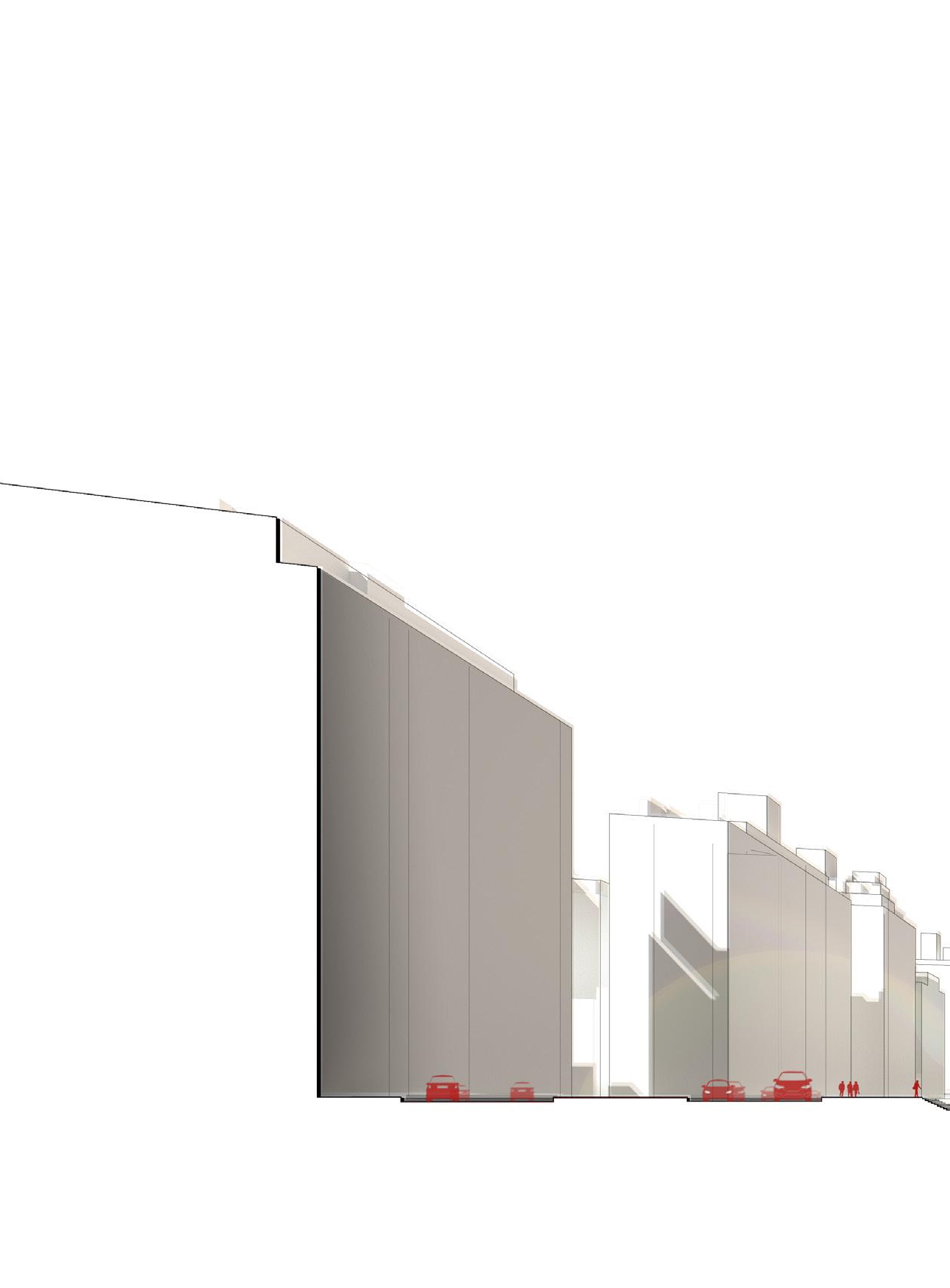
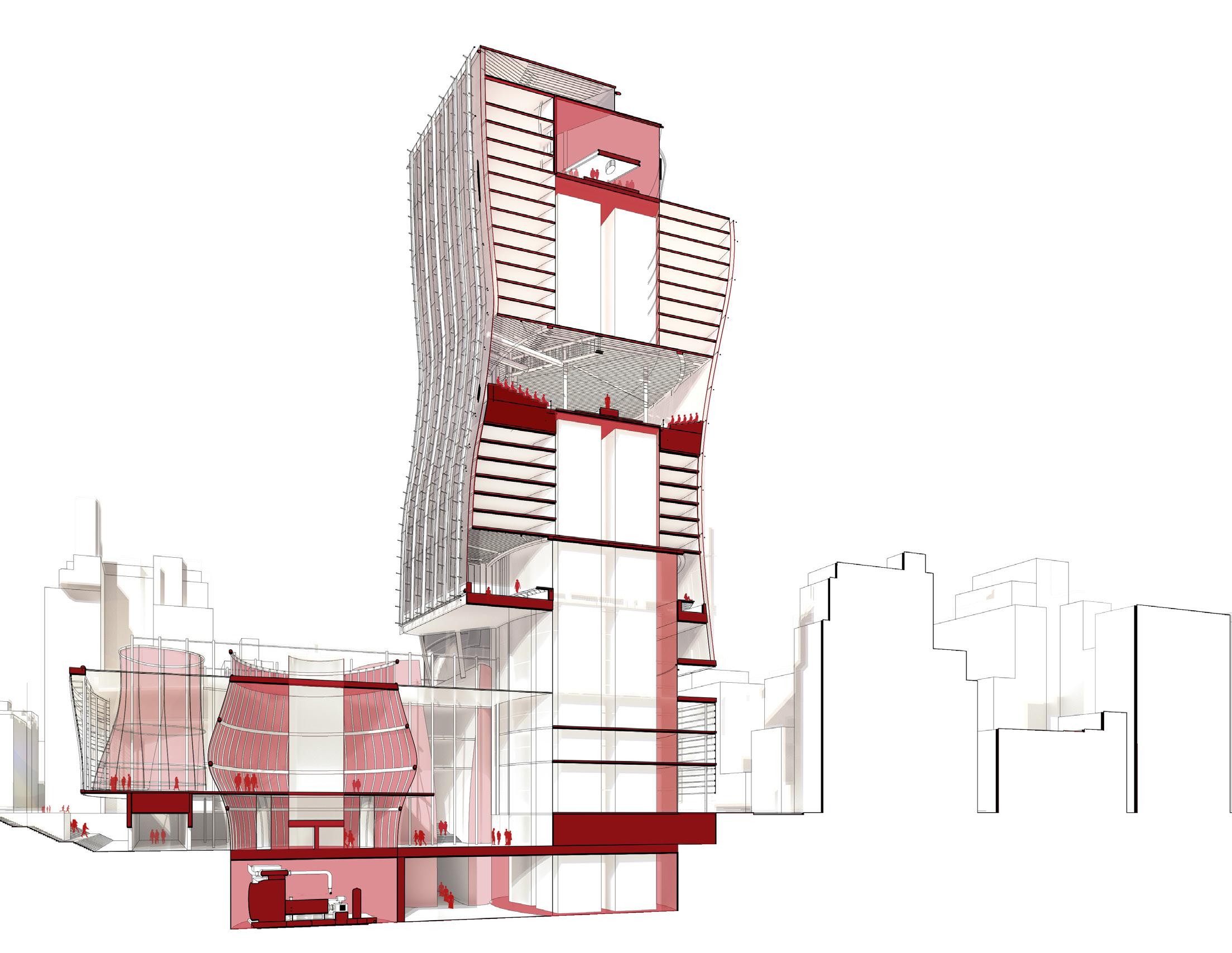
The above section perspective highlights the transition from the most public space, being Park Avenue to the most sacred programs within the tower element. Furthermore, it highlights the system of implants within the plinth as well as the main implant that punctures through the tower.
(section perspective above: by author)






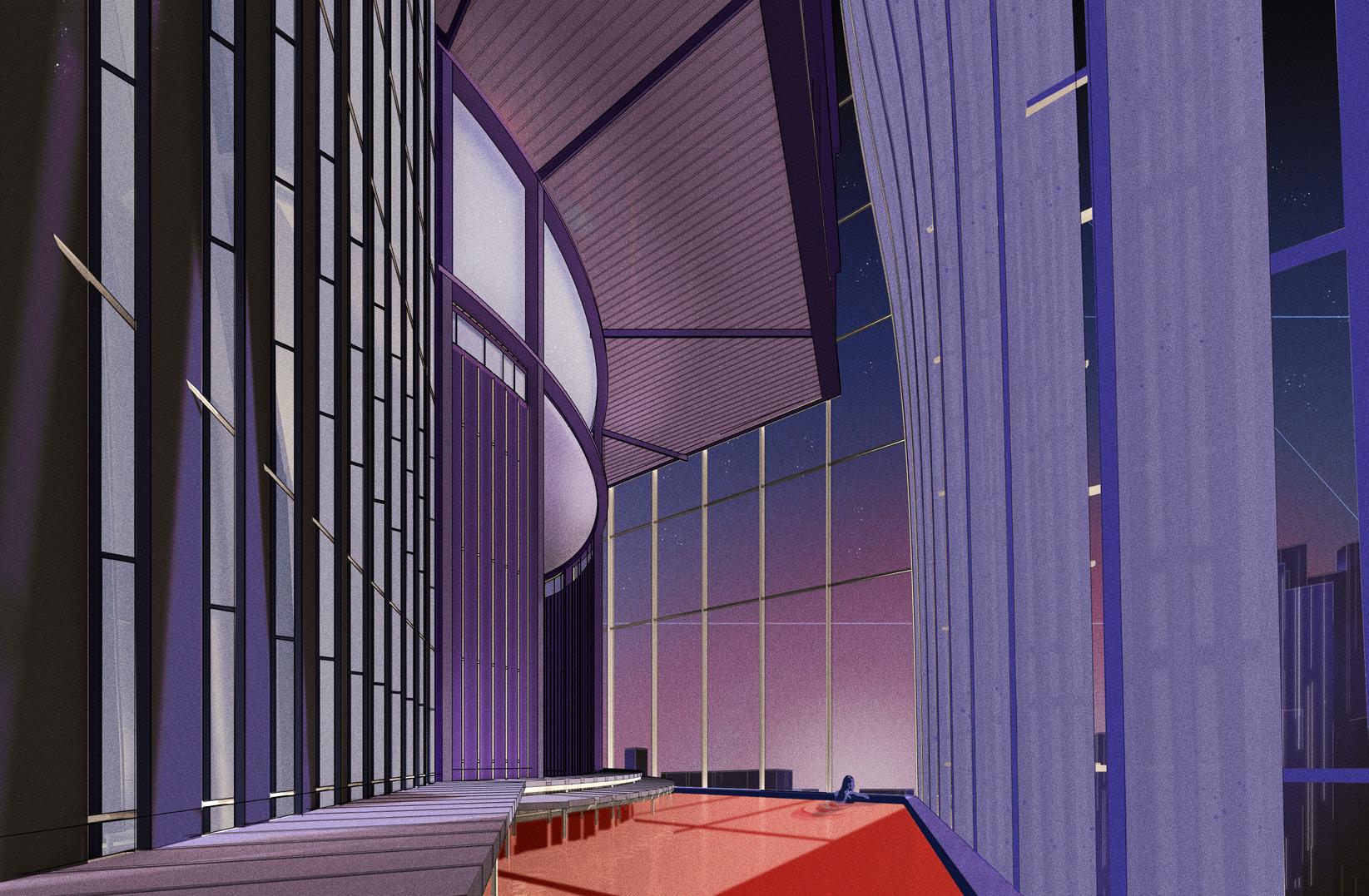


Above depicts the three rituals that take place in the surgical tower for those recieving surgery. It is displayed in a triptych format, paying homage to the thesis drawing as well as the triptych in the classic religous sense. The first of these surgical rituals is the Spiritual Baths. Here, patients are given the chance to cleanse themselves of their old body and worries from the world outside of the monastery. Also in the medical sense, it supliments pre-operation procedures. This stage of the procession is meant to be one of relaxation and reflection for the individual before they enter into the Surgical Theatre.


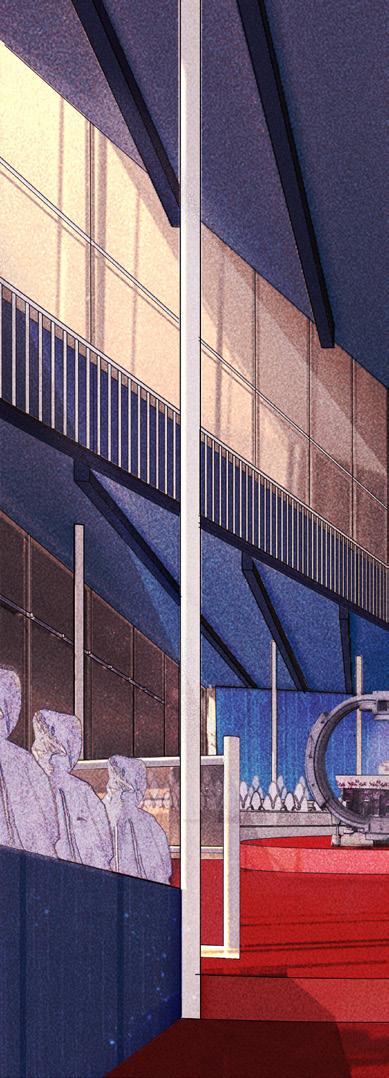
The illustration in the center of the triptych is the Sugical this holy space, the idea of ritual and preformance is transformation while a congregation of monks and patients inverts the private aspect of a surgery, in particular almost enlightening experience, as the congregation way, it becomes a right of passage for the patient.
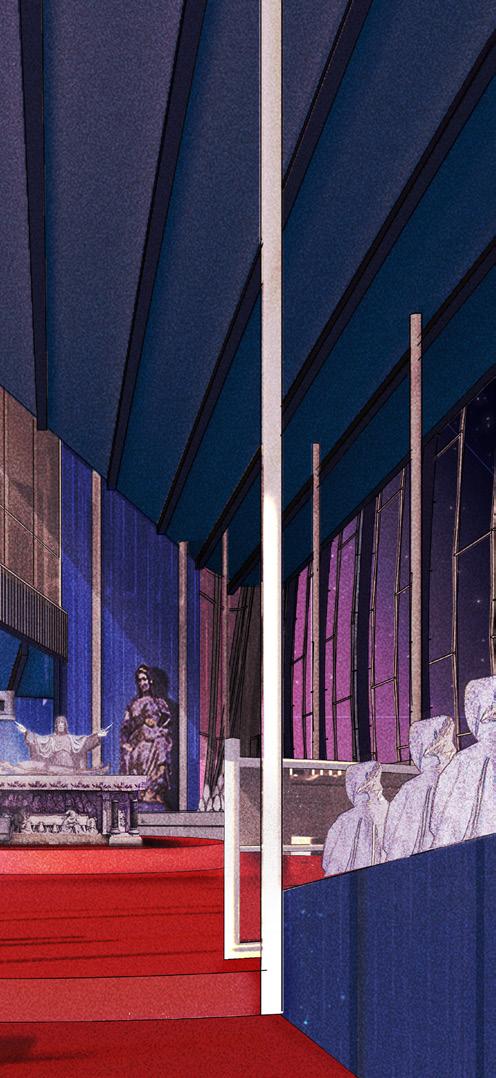
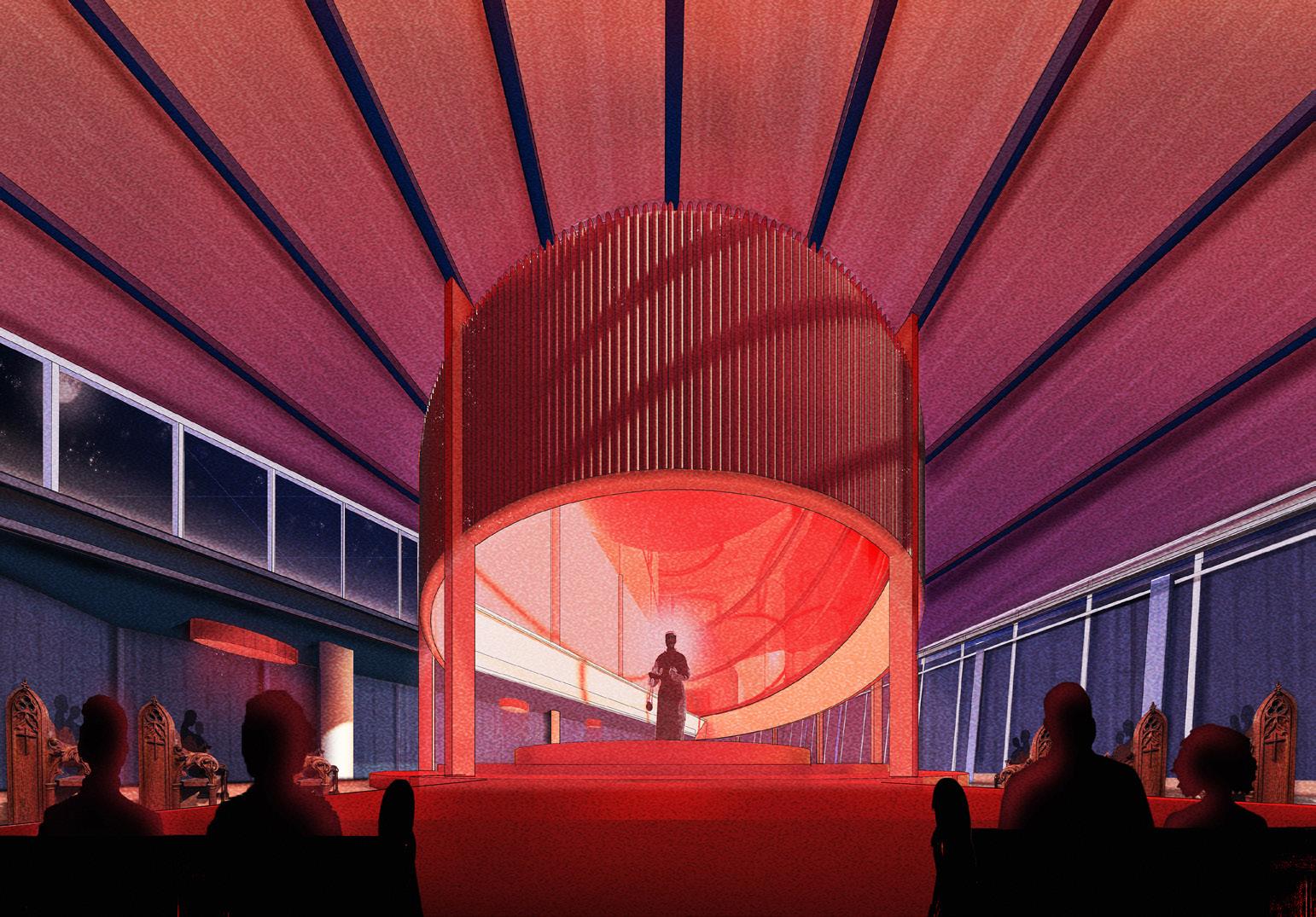
Sugical Theatre, the inner most sacred part of the project. Within is on full display. Within the Surgical Theater, patients undergo patients spectate the service on the operating altar. This program plastic surgery. Instead, it puts the surgery on full display, making it an is allowed to see the physical transformation of the human body. In a
Lastly in service to the tradition of postoperative therapy, in particular red light anti-inflammatory therapy, the tower holds a Red Light Therapy Chapel at the very top of the monastery. This chapel acts as a sanctuary for patients, it is a place for them to congregate with the other inhabitants, being cared for by the monks while also passing through their last sacrament, ultimately being inducted into this cult of unique individuals. Here, they are allowed to convene once more before they present their new selves to the world.
Design Portfolio
Thank you for your consideration!