UNDERSTANDING GENERATION ALPHA
HOW TO SELL SLOW-MOVING MERCHANDISE
MUST-HAVES FOR FALL PRODUCT STYLING THE REVOLUTION
UNDERSTANDING GENERATION ALPHA
HOW TO SELL SLOW-MOVING MERCHANDISE
MUST-HAVES FOR FALL PRODUCT STYLING THE REVOLUTION
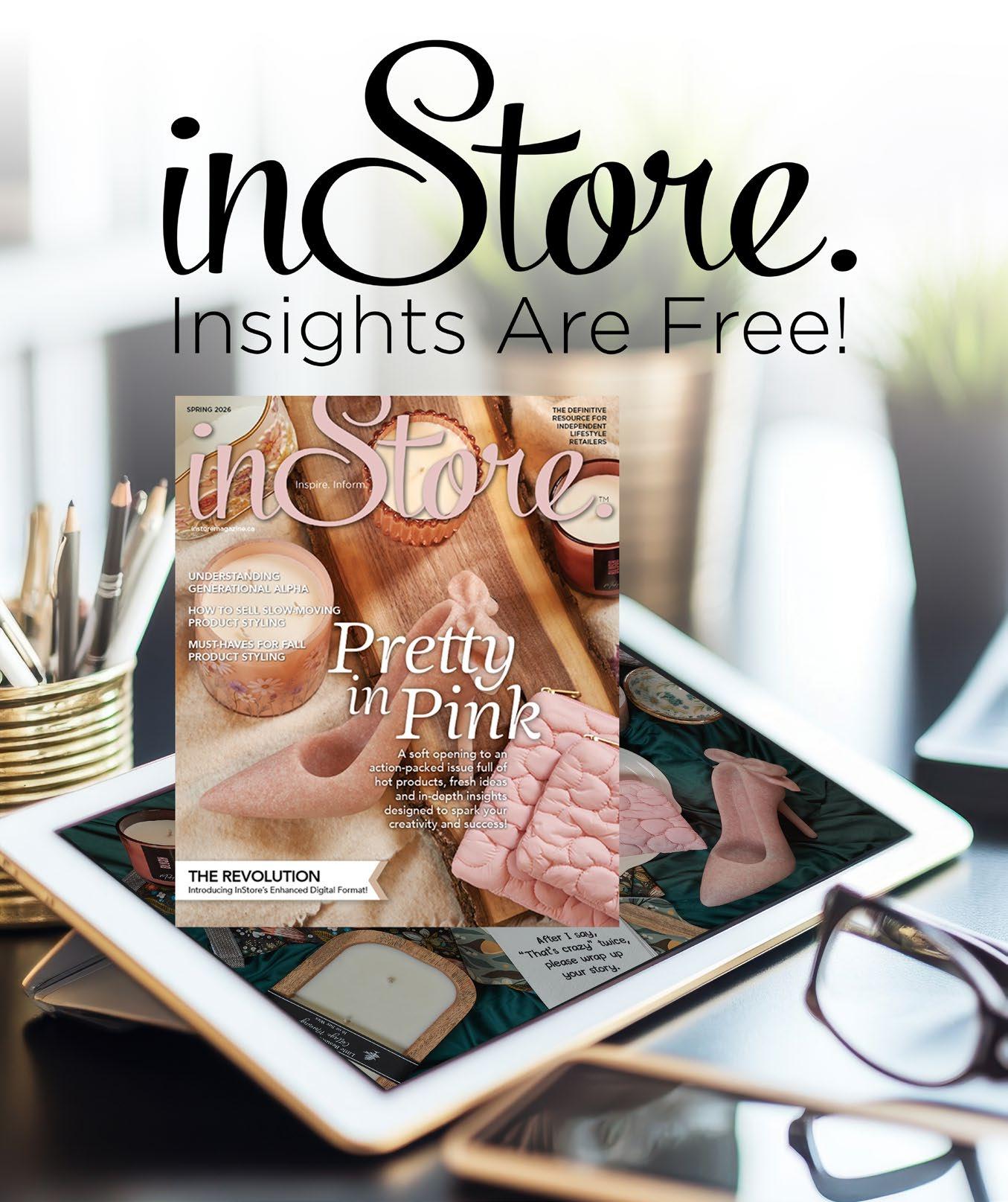
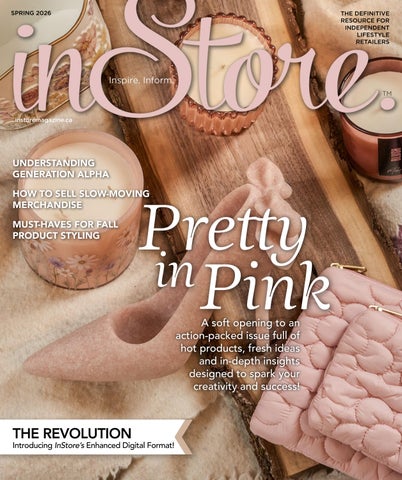
A soft opening to an action-packed issue full of hot products, fresh ideas and in-depth insights designed to spark your creativity and success!
Introducing InStore’s Enhanced Digital Format!











DEPARTMENTS
16 News & Notes
share their thoughts
24 Shop Profiles
Meet the mother and daughter duo behind the Copper & Sparrow boutique in Winkler, Manitoba and the millennial owner of Rare Form, an ArtDeco inspired gift shop in Chicago’s hip Andersonville neighbourhood.
By Jessica Harlan
62 Retail Visions
The ultimate guide to merchandising fall décor: By Nickeisha Lewis
FEATURES
11 Pretty in Pink Décor awash in pretty, feminine pink
12 Gourmet You Say?
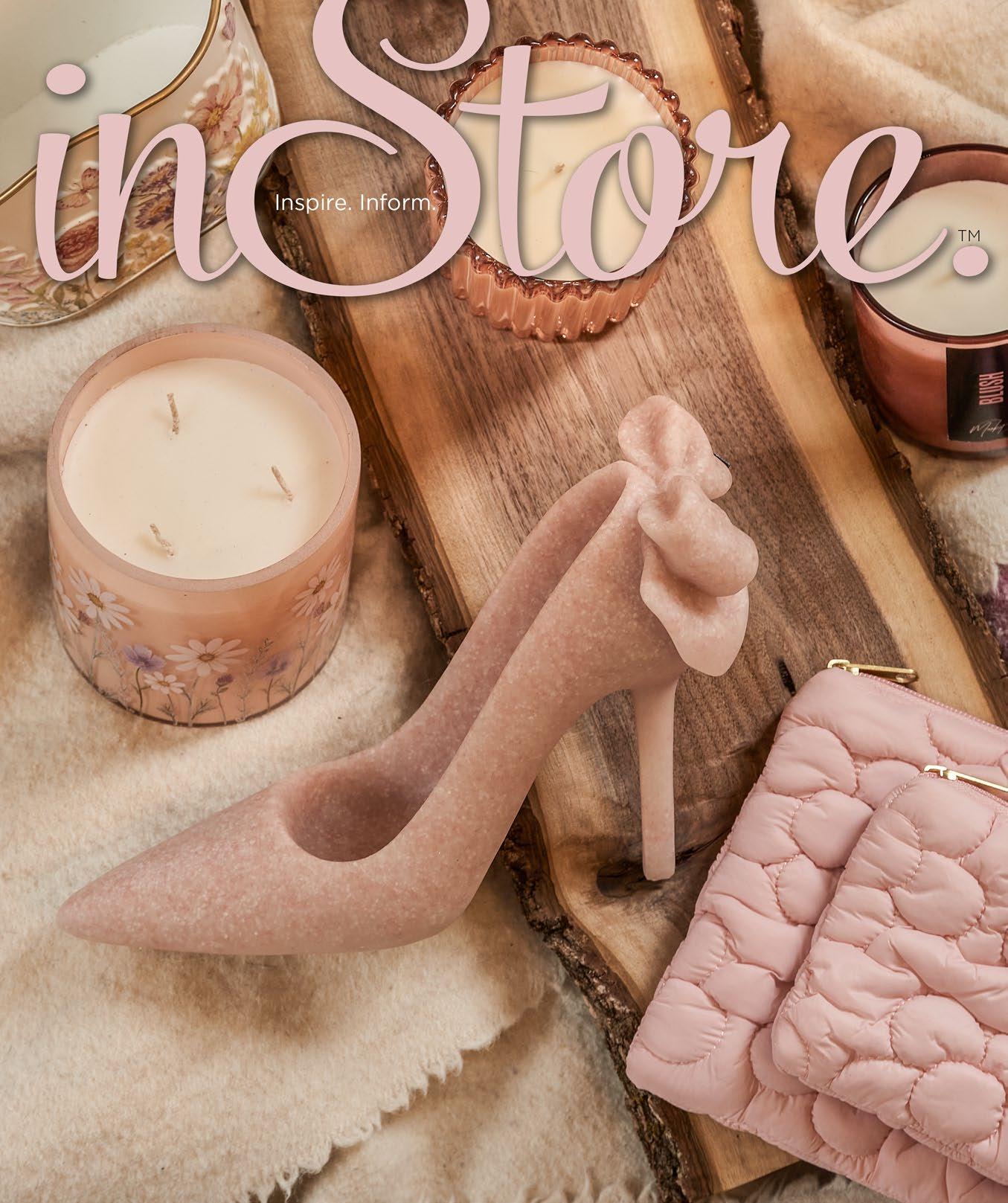
Gear up for Q4 entertaining with new gourmet foods and must-have kitchenware
14 Greetings!
A vibrant selection of handmade greeting cards and stationery for every celebration FEATURE
57 Fall Gifting Guide
Two curated themed groupings for fall gifting, offering a fresh take on seasonal hues
46 Falling For
We’re head-over-heels in love with this richlyhued fall-themed product assortment
42 Understanding Generation Alpha
This group of shoppers sway the purchasing habits of their families in a big way. Learn more in this very insightful article.
By Natalie Hammer Noblitt
52 The Advantages of AI
Now is the time to learn how AI can maximize your sales both instore and online. We’ll show you how!
By Natalie Hammer Noblitt
New lines, launches, industry goings-on and trade show news FEATURE
34 The North American Pulse
A deep-dive with data from our U.S. sister publication, Giftbeat, into what products and categories are selling south of the border with tips and tricks on successfully navigating retail from the publication’s panel of 300 independent reporting stores.
By Erica Kirkland
48 Trends from Ambiente 2026
InStore visited the world’s largest consumer goods fair in Frankfurt this past February to report on the upcoming trends in the world of lifestyle, décor and gifts.
By Erica Kirkland
60 Moving and Managing Slow-Moving Inventory
The seven steps to turning unsold inventory into opportunity — through smarter buying, creative marketing and proven resale strategies.
By Samantha Conner
Explore the largest selection of Furniture, Home Decor, and Gift on the West Coast.







Welcome to the inaugural issue of our digital transformation! With rising print prices and unsustainable postage, InStore has shrugged off the handcuffs to embrace a digital future where we can provide as much content as we like. Those of you that read and commented on my Instagram post knew this transition was coming, but for those that didn’t know, read on to discover the why behind our transformation.
Supporting small business owners is a big reason why I love my life. The impact my work has had on so many store owners and small vendors brings me immense joy so when a predatory competitor came knocking three years ago I knew that I would never sell out or be bullied out of the market, no matter how many dirty tricks they tried – and they tried them all. Through it all, I relied on Tracy Chapman’s strength and her soulful track Crossroads where she talks about sitting at a cross in the roads and having to choose a path – selling your soul (selling out) or staying true to yourself. In other words, as she sings, choosing, “All the reasons why I live my life.”
I haven’t shared much about my personal life in the magazine as I don’t see myself as the star here, but rather just the medium to spotlight store owners. But suffice to say, I’ve been taking care of myself and learning to pivot, live with less and charge on for a long time. At 16, I was living alone on welfare, having escaped an abusive home, but as, my good friend Janice tells me, “You have never chosen to be a victim of your circumstances.”
For nearly 30 years, my life’s work has been as a journalist and advocate for independent store owners — first with Retail News (published and shut down by CanGift), then by launching InStore, and for the last eight years as the owner of Giftbeat for U.S. indies, so, when I was faced with a predatory competitor - Canada’s second-largest B2B publisher with deep pockets and millions in government grants – I was frightened but determined to stay the course or pivot if need be.
continued on pg 6 >
THE DEFINITIVE RESOURCE FOR INDEPENDENT LIFESTYLE RETAILERS
Editor & Publisher
Erica Kirkland ekirkland@instoremagazine.ca
Art Director Gerry Wiebe
Advertising Inquiries
ekirkland@instoremagazine.ca 905-690-0492
Contributing Writers
Samantha Conner, Jessica Harlan, Nickeisha Lewis, Natalie Hammer Noblitt
Photographers
Will Fournier, Castlerock Studios
Stylist
Sarah Fournier
InStore Magazine™ was founded independently in 2014 by Erica Kirkland. The magazine is published four times a year and sent to 12,000 independent retailers in Canada selling giftware, home décor, fashion accessories and lifestyle items.
© 2026 InStore Magazine™. The contents of this publication are the property of InStore Magazine Inc. Reproduction or use of the contents in whole or in part, for any reason, is strictly prohibited without the written consent of the copyright owner. The publisher is not responsible for product claims made by the companies mentioned herein.
InStore Magazine™
6191 Cadham Street Niagara Falls, ON L2G 3A3 Email: editorial@instoremagazine.ca 905-690-0492


“Looking forward to seeing your Spring edition Erica. Your perseverance is a source of inspiration to everyone around you!”
Janine Ward, Lavender Hill Home, Hamilton, Ont.
“I can’t wait to see the magic you create next with InStore! Thank you for staying authentic and true to the community you’re serving. Nothing beats integrity in the small biz retail landscape and that is just one of many reasons we’re so grateful for you!
Cindy-Lea Stephensen, Once Upon a Tea Leaf, Maple Ridge, B.C.
“You’re inspiring more people than you realize. Congratulations for standing your ground and thank you for all you do for this industry. Can’t wait to continue to follow your journey!”
Carly Brenton, Paperscript, St. Catherines, Ont.
“I love the support you have always provided to small businesses. It’s been invaluable to our community. In a digital age, this is a big step forward with the ability to attract new companies and foster new connections in such a big way! We’re excited to be part of the InStore family!”
Liz Combdon, Sea Salt & Twig, Cormack, Nfld.
“Erica, I have so much respect for you for standing your ground and doing what is right! My team and I look forward to your publications every quarter and will continue to do so with the change to strictly digital. Looking forward to more content without the rising costs for you!”
Aileen Jenkins, Seasons Home & Gift, Elora, Ont.
“We all need to pivot and keep forging forward. This is my 30th year as a retailer and I really have learned that if we don’t keep up, we will be another statistic. Congratulations on standing up for what you believe in.”
Cheryl Jordan, The Country Cupboard, Petewawa, Ont.
“Our staff fight to be the first to read your magazine when it comes in the mail!! Going digital is fine with us as. We understand the costs of doing business these days!!” Kevin and Leslie Ouderkirk, Kids Korner, Cornwall, Ont.
“I think what you do is amazing and will support you however I can. As much as I love a hard copy (I’m old school lol), I look forward to seeing what you do with the online version. I look forward to InStore so much.”
Tracey Tilden, Stone House Décor, Calgary, Alta.
“I always look forward to the next issue of InStore. Can’t wait for even more content as you go online! Thank you for always supporting independent businesses.”
Heather Blandford, Lulu & Lavigne, Hamilton, Ont.
“Looking forward to a bigger and better digital version of InStore! Durriya Rehan, Fine Finds Boutique, Vancouver, B.C.
“This sounds like an amazing step forward. InStore is a such a vital resource and digital is great way to bridge the gap. You are a strong woman and leader! Can’t wait to see this progression!”
Teresa Schaubel, Giftologie, Niagara Falls, Ont.
TELL US WHAT YOU THINK!
Thank you to everyone who took the time to write to us. If you have something you’d like to share, email Publisher & Editor Erica Kirkland at ekirkland@instoremagazine.ca.

Our Independence is Not for Sale Store owners are the lifeblood of this industry. You don’t make millions and neither do I. I make a living. I don’t need or want a luxury vehicle or a vacation home; I need you – “The reasons why I live my life,” – which is why I have turned down all three offers from this competitor to buy and bury InStore. The last unsolicited offer was for $500K.
My voice and independence — like yours — are not for sale. I don’t have an ego that demands I have the “most advertisers” or the “biggest magazine”. I want to produce the best magazine for independent gift retailers regardless of how many advertisers are on board. Instead of staying in the gutter, fighting for a share of limited print ad dollars, I decided to say “Screw it. Let’s pivot and make something bigger and better – but digital.”
We hope you enjoy all the new changes this issue has in store and I look forward to sharing more about me in the future. In the meantime, if you’re curious about what tickles my fancy, check out my Pinterest page. You’ll find a ton of inspiring retail spaces, product styling and merchandising pins.
Until the next issue!
Erica Kirkland, Publisher & Editor

INIS_Instore_2026_04.pdf 1 26/03/2026 14:22



From must-have entertaining goods to the prettiest pink objects for the home, we’ve got your fall inventory plans covered!
Soft, feminine pinks and pretty florals are the current darlings of home décor
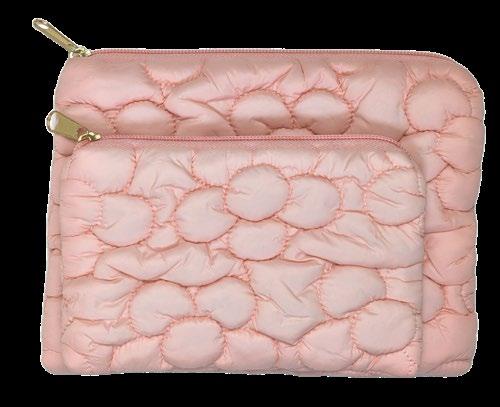
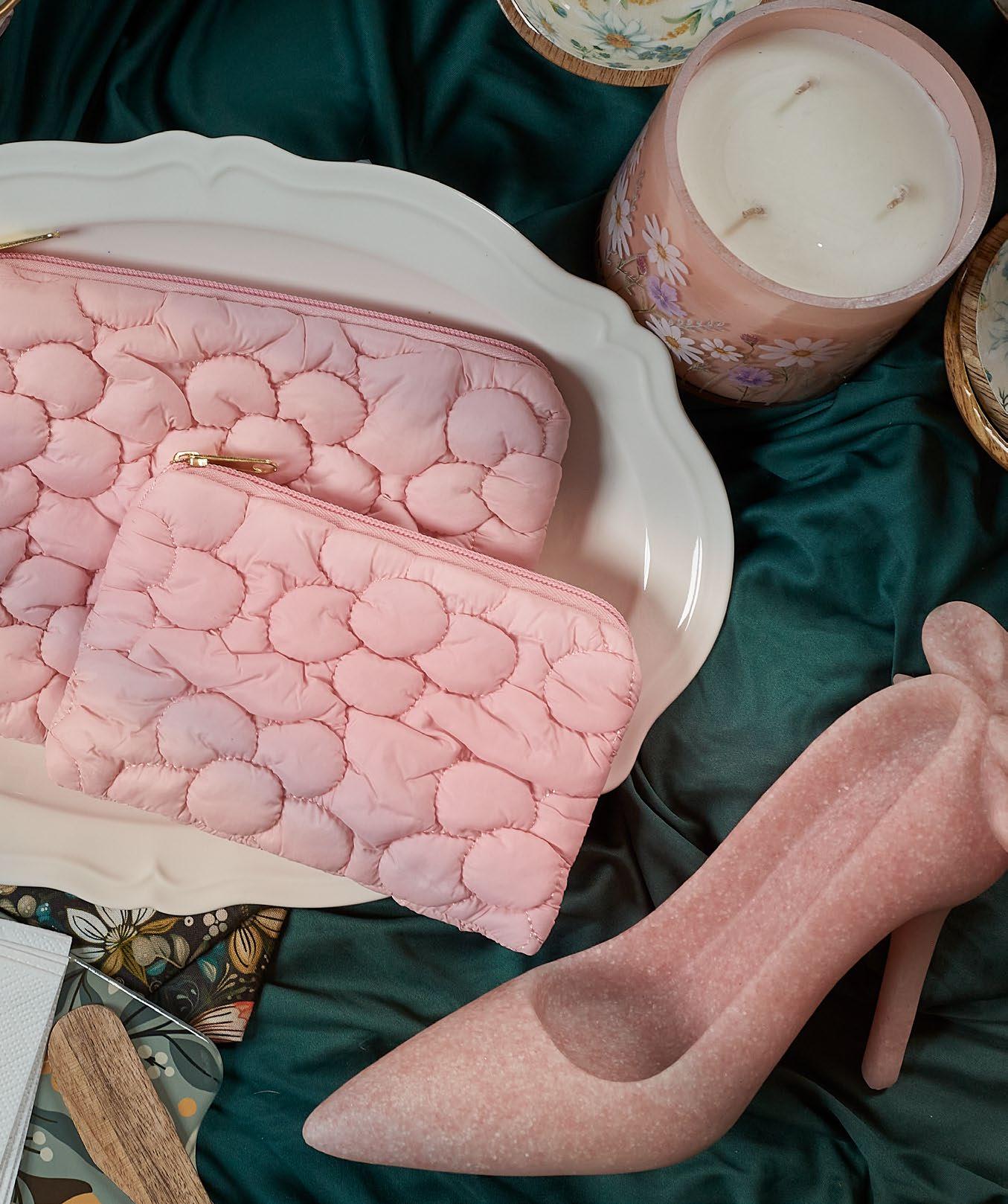
Quilted pouch set from Demdaco, $43 retail. Distributed by Canfloyd, 800-263-3551, www.canfloyd.com

Black cherry Merlot-scented ribbed glass 10-ounce soy candle jar. Made in Canada. $40 retail, Market Candle Company, 905-235-5559, www.marketcandlecompany.com
SHOP THIS PAGE! Click on any item for direct access to these vendors and fresh inventory!

Statement Piece! Anchor your Pretty in Pink vignettes with this head-turning piece!

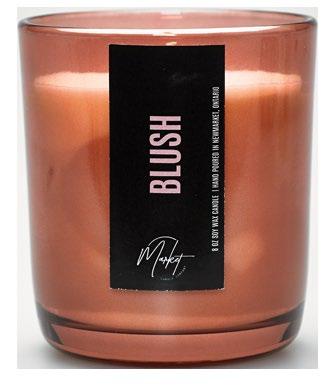
Blush nine-ounce soy candle scented with jasmine, saffron and cedar. Made in Canada. $36 retail, Market Candle Company, 905-235-5559, www.marketcandlecompany.com
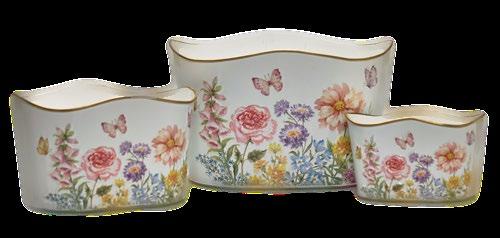
Nested wildflower tin planter set, $39.99 retail, Burton & Burton, www.burtonandburton.com
Quartz high heel from Elevarre, $158 retail. Distributed by Canfloyd, 800-263-3551, www.canfloyd.com
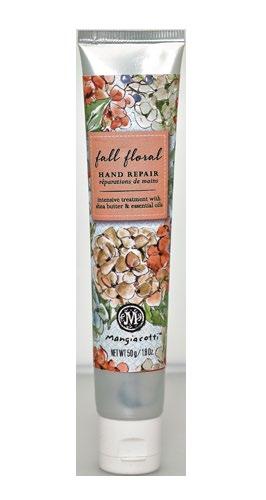
Mangiacotti Fall Floral hand repair cream, $14.99 retail, Boston International, bostoninternational.com
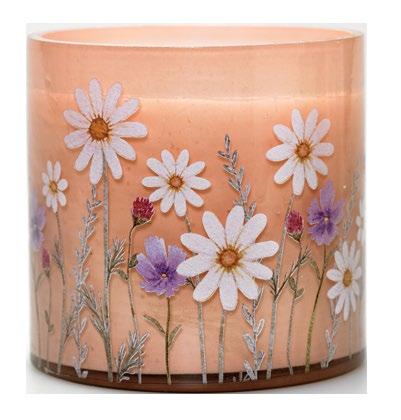
Lavender-scented, three-wick Blushing Meadow candle with giftbox, $26.99 retail, Burton & Burton, www.burtonandburton.com
We’re Loving
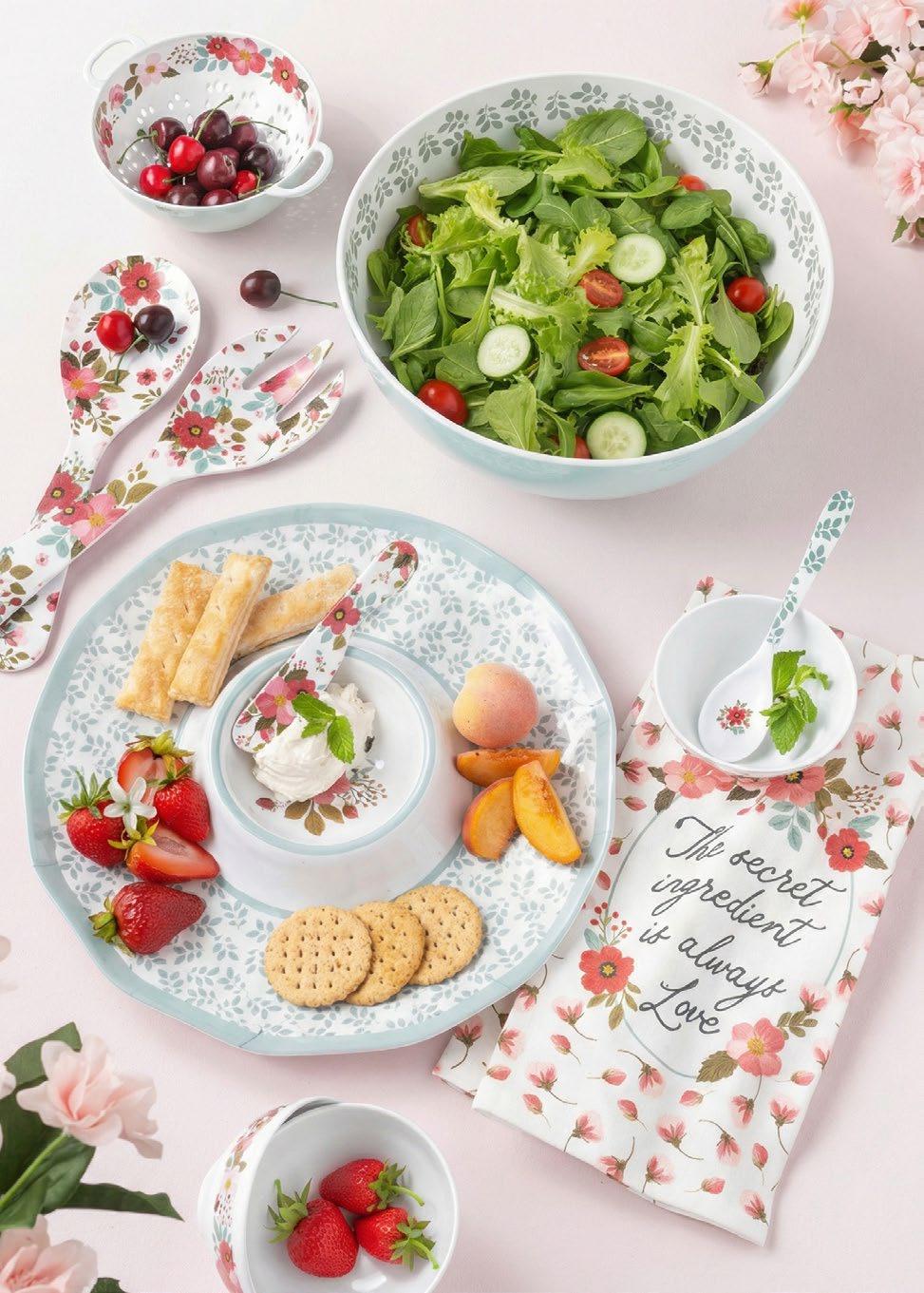
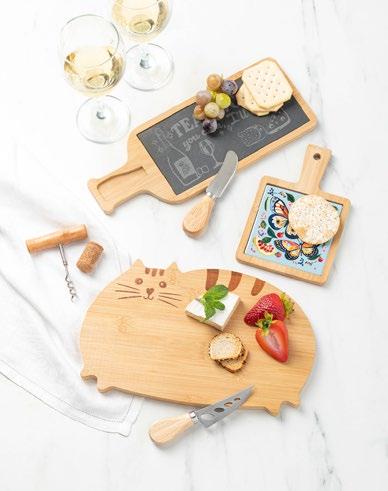
Gear up for Q4 entertaining with new gourmet foods and must-have kitchenware

Tins of shortbread. Made in Canada. Mary Macleod’s Shortbread, 416-461-4576, www.marymacleod.com

White platter from Casa Domani, $34.99 retail, Canfloyd, 800-263-3551, www.canfloyd.com.

Sweet Bliss hot mustard. Vegan and gluten-free. Made in Canada. $11 retail, Atlantic Mustard Mill, 902-326-9017, www.atlanticmustard.ca
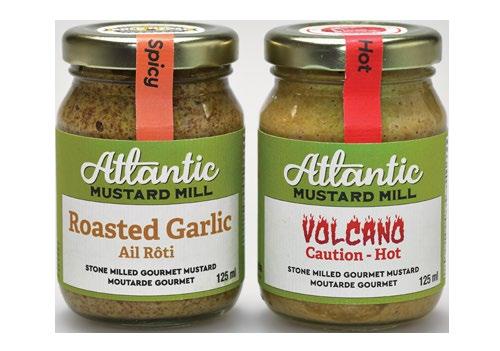
Roasted Garlic and Volcano mustard. Vegan and gluten-free. Made in Canada. $8.50 retail each, Atlantic Mustard Mill, 902-326-9017, www.atlanticmustard.ca
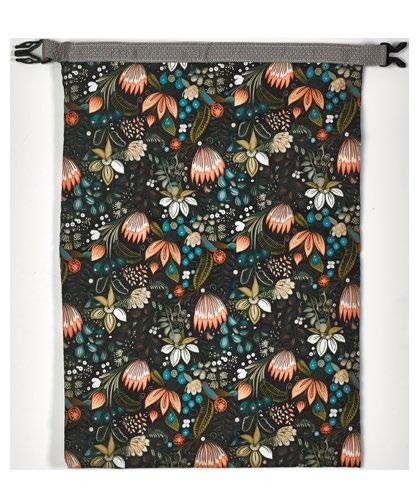
Colibri bread bag. Handmade in Canada. $30 retail, Fenigo, 519-954-7877, www.fenigo.com

Twenty-count of three-ply cocktail napkins, $5.50 retail, Ellembee, www.ellembee.com
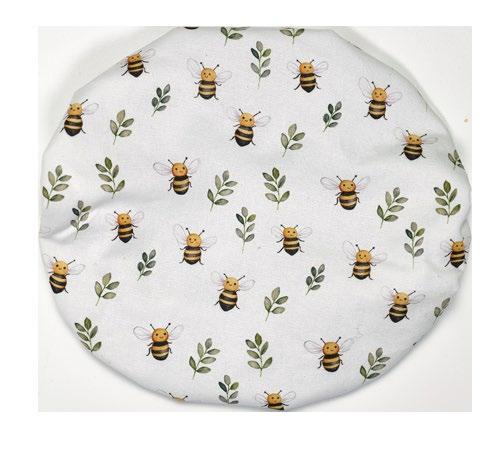
Set of three bowl covers. Handmade in Canada, $32 retail, Fenigo, 519-954-7877, www.fenigo.com













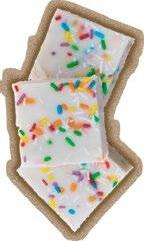































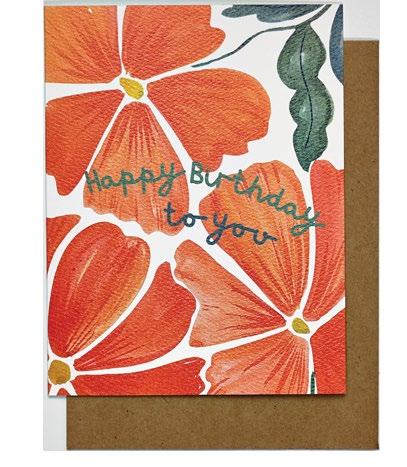
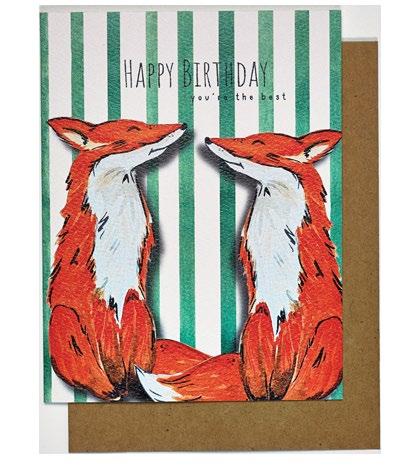
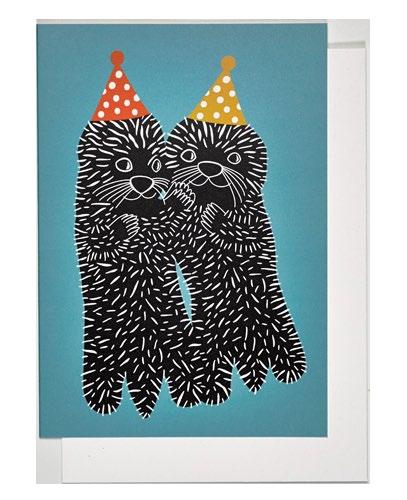
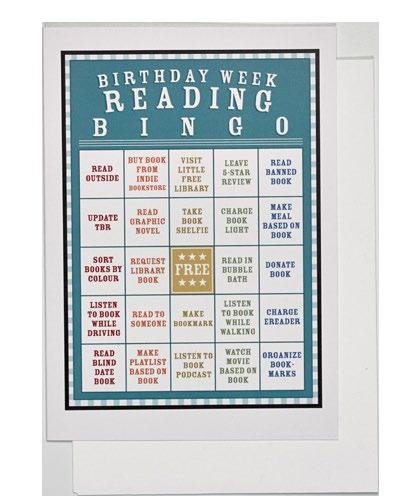
Birthday bingo greeting card. Handmade in Canada, $7 retail, The Handcrafted Story, thehandcraftedstory.com
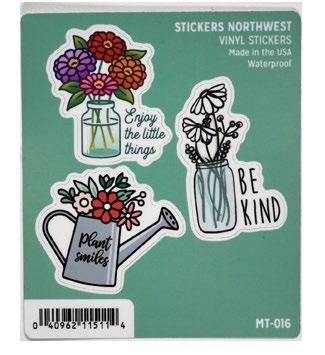
New mini matte laminated vinyl sticker sets with over 60 combinations, Stickers Northwest, www.stickersnorthwest.com
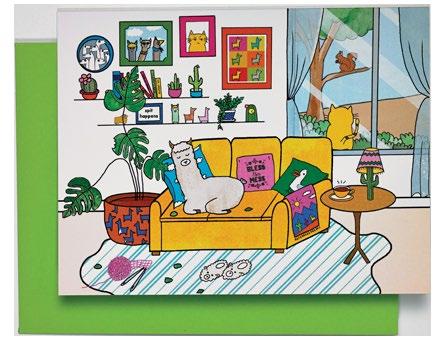
Llama birthday drama greeting card digitally printed in Canada, $7 retail, Evil Llama and Friends, evilllamaandfriends.com

On March 18, the Canadian Gift Association (CanGift) sent a notice to its membership regarding the restructuring of the association. The notice explained that due to “significant changes” in the industry, “evolving retail dynamics” and the “lasting ripple effects of the Covid-19 pandemic,” the board undertook a thorough review of the association’s structure and operations and made the decision to restructure in order “to ensure we are best positioned to serve our members and the industry in the years ahead.”
The letter went on to express gratitude to the many longstanding staff members of CanGift whose “dedication, hard work and passion have helped build CanGift into the strong and respected organization it is today” and stated moving forward it would “operate with a streamlined internal team of two staff members who will oversee the day-to-day management of the association including financial management, membership and member services as well as hotels and hospitality.” The release did not name who these staff members are or their contact information, and the association did not reply to InStore’s
outreach for an answer.
In place of full-time association and show staff, CanGift is partnering with The Bayley Group to support key operational areas including show operations, sales and management. While contacts were listed for two event co-leads, registration, sales and logistics, no show manager was listed. InStore reached out to CanGift to ask who would be managing the show and received no response. As it stands, there is apparently no show manager overseeing the event but rather support staff and sales representatives.
The release went on to state that by outsourcing show management, “the association will remain focused on what matters most – serving our members,” and that, “CanGift will continue to prioritize member benefits, industry knowledge, advocacy and member services, which remain at the very heart of who we are as an association.”
When asked how the board would gather feedback from exhibitors and retailers to inform The Bayley Group regarding direction of the show, InStore received no reply.
In addition to The Bayley Group, the association has partnered with EASE, a division of MNP, to manage day-to-day bookkeeping and financial processes while also listing a member from The Bayley Group, Diane (no last name provided) as the contact for members regarding “Finance”.
While the January 2026 Toronto Gift & Home Market was held in the Toronto Congress Centre South building, the upcoming August event, scheduled for August 9 to 12, is being held, again, in the Toronto Congress Centre North. A notice on CanGift’s website says that “The upcoming fall show is now located at the Toronto Congress Centre North Building,” and that it will feature a “New show! New floor plan! and New adventures!”
There will be two main entrances at the north building: the west wing entrance and the main entrance where the lobby is located. The main entrance will house hospitality services and the show office. All shuttles, taxis and car services will drop off and pick up at the main entrance. Attendees with badges can use entrances three, four and five.
The note went on to state that attendees registered for one of the association’s spring events or the Fall 2025 event, will be automatically registered for the upcoming market, and that pre-registered attendees will receive an email from Conexsys Registration in July with a link to download and print their badge. (cangift.org)
While the Toronto Market Week (TMW) has announced plans to expand into hall three at the International Centre for the August event, based on the addition of 20 new exhibitors, the employees who were the architects of the show have left Newcom, leaving a team that consists of sales reps and operational coordinators but no show management.
Melissa Arnott, formally vice-president of shows for Newcom and the management head for TMW for the past five years, was no longer employed by Newcom as of June 2025 while Tiffany Gin, the show’s manager for the past five years and a Newcom employee for nearly eight, was gone from Newcom in February 2026 following the January event. In addition, Samantha Nagy, a social media and marketing strategist, who worked for Newcom for seven years, is no longer with the company. InStore reached out to Newcom to ask whether the organization planned to replace the show management team and was not provided with an answer. We reached out to both Tiffany Gin and Melissa Arnott for comment. Arnott replied, declining to comment on the reasons for her departure, stating, “She is choosing to focus on her future.” Gin did not reply.
The Toronto Market Week’s team is now led by Kathy Koras, senior sales manager; Taylor Gerrard, sales representative; Tom Ly, senior operations coordinator and Sarah Borisko, director of operations for all of Newcom’s trade shows and magazines. Marketing has been outsourced to Catherine Luzena of the Practical Marketing Group.
While TMW sent out a press release announcing an expansion into hall three for August (it currently occupies halls one and two), show management did not respond to questions regarding the future of the show’s location.
The Greater Toronto Airports Authority (GTAA) officially ramped up its Pearson LIFT program in March and designated new “logistics and laydown” zones around the airport. The International Centre is ground zero for the planned transit hub.
Based on current municipal planning and public transit revitalization records, the land occupied by the International Centre is a primary node for the transportation hub and Pearson Airport expansion.
With this expansion slated and the city of Mississauga officially launching the LIFT program in March, InStore asked the president of Newcom Media, Joe Glionna, the organizers of TMW, “What is the long-term strategy for the show and permanent showrooms when the current building’s footprint is part of a multi-billion dollar infrastructure revitalization? Are exhibitors being advised on the stability of their long-term investments in a location that, per public record, may not exist in its current form by 2035?” Glionna declined to answer questions or comment including whether it was still his position that Erica Kirkland, the publisher and owner of Instore Magazine, “Was not welcome on his show floor.”
The over 40 permanent showrooms at the International Centre, under the Show T.O. banner, pulled their square footage from the Toronto Gift & Home Market and invested millions in tenant hardware and renovations in showrooms within a building that is slated for demolition or repurposing while the Toronto Gift & Home Market made the strategic decision years ago to move out of the International Centre due to its impending handover to the GTAA.
The city and the GTAA’s plans were widely known and reported on before these showrooms were built and before TMW was imagined yet no showroom owner can answer InStore when asked, “Where will these showrooms go once the building is shut down or demolished?” Of the owners that did answer and who recognize the impending future, the reply was along the lines of, “I’ll be retired and out of the business by then.”
The fall version of TMW is set to take place August 9 to 11 at the International Centre in halls one, two and three, while the Show T.O. showrooms will be open from August 6 to 13. (www.torontomarketweek.ca)
InStore reached out to the president of Newcom Media, Joe Glionna, and the director@cangift.org email account in addition to CanGift’s current volunteer president, Ashley Tott of Gourmet Du Village, to ask if there were plans to come to the table and organize transportation for store owners to easily travel between the two shows so they aren’t left paying out of pocket for Ubers. InStore received no response.


If you attend the Toronto markets - or if you attended in the past and no longer do so –we want to hear and share your perspectives on the Canadian trade show landscape! Email Publisher & Editor Erica Kirkland at ekirkland@ instoremagazine.ca to share your experiences and insights!
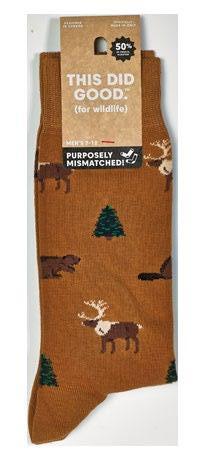
Friday Sock Co., Canada’s original mismatched sock company, based in Calgary, has released a number of new designs to its already extensive collection for men, women and children. All the company’s socks are ethically produced in Italy, and they can also create custom socks. Socks retail from $18.95 (www.fridaysocks.com)
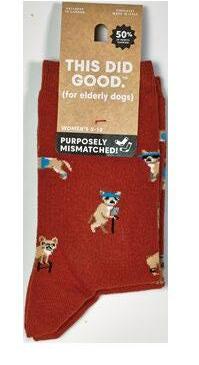
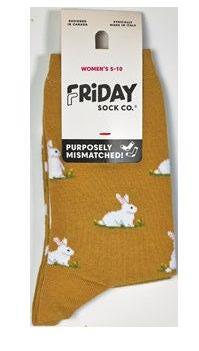
InStore recently came across the newly founded company Morel and wanted to share its story and products with readers to give the brand some muchwarranted exposure!
Founded in Montréal in late 2025, Morel combines a clear visual identity with a disciplined approach to sourcing and product development. Each collection is conceived in Montréal and produced with trusted partners in Asia. What we love about the brand is that it’s focused on B2B, and they actually ask for and use retailer feedback to create collections. In fact, the company founder told InStore, they view their retailers as active collaborators in shaping the assortment and that retail purchasing patterns guide ongoing assortment refinement, allowing the brand to focus on pieces with strong-sell through potential.
Certain pieces form families, such as Silée and Appenzell, yet the philosophy behind Morel is not to impose matching sets. Each edition is conceived as if it was a collection gathered over time, allowing retailers to layer pieces naturally within their existing assortment.

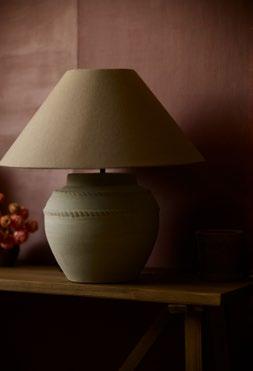
Only proven best sellers are produced at mass scale and are intended to become reliable foundations for boutiques. The remainder is developed in small seasonal batches to preserve a sense of rarity and the atmosphere of a wellcurated antique store.
Étienne Saint Denis, the creative director and founder of Morel, began his career in photography. His work has been presented at the Fondation Louis Vuitton in Paris and the Aperture Foundation in New York while he has collaborated with internationally recognized clients across Montréal, Toronto, New York, Paris, London and Berlin with features in publications such as Architectural Digest France and Vogue Italia
Morel specializes in petite lamps, complemented by realistic faux greenery and framed artworks on linen canvas with a sprinkle of home goods. Currently all sales are handled through Faire (faire.com/ direct/morel), however Saint Denis advised InStore that, “A dedicated B2B platform and select sales representation are in development.”
Distribution is based in Vancouver, serving both Canada and the United States. 877-571-1099, (www.morel-world.com)
Rōune is another small Canadian brand InStore editors recently connected with on Instagram. Rōune boots are designed in Canada but handcrafted in Italy from pure Italian leather, designed with a signature gusset specifically for wide calves. Our editors were intrigued with the collection and the story behind the brand and asked the owner to share how she founded Rōune. Not surprisingly, like many entrepreneurs, the progress was much like three steps forward, two steps back or as founder and creative director, Rany Kham, so accurately puts it, “The Rōune story is three and a half years of failing, until I didn’t.”
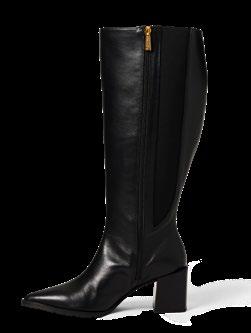

As Kham tells, it, “I started Rōune (pronounced: ru-in) because I was tired of the fashion industry telling me my body was ‘wrong’ because my calves didn’t fit their standard measurement. I was fed up with not being able to even try on any knee-high boots, let alone a luxury boot, so I decided to bet on myself and build the solution.”
This journey saw Kham go from her parents’ basement in Kingston, Ont., to artisan workshops in Tuscany. “It definitely wasn’t that girlboss montage we see on social! It was far from glamorous.”
Indeed, building the perfect boot required seven iterations and three artisans, but as she says, “It was worth every cent of my savings and then some.”
Many founders can relate to the trials and tribulations she went through: “There were moments where everything that could’ve go wrong, did. I’ve dealt with artisans ghosting me with my deposit, manufacturing errors that devastated my inventory and a year-long hiatus where I had to step away just to grieve the business I thought I was losing. I’ve felt like a total fraud, standing in the middle of an industry with zero experience and no clue what to do. But the hiatus gave me clarity. I rebranded, rebuilt and realized that Rōune isn’t just about footwear, it’s about the bravery to take up space in an industry where we weren’t invited.”
(www.roune.ca)

Erica Kirkland, publisher and editor of Giftbeat and founder of InStore Magazine is headlining the Greeting Card Association (GCA) conference taking place this August 17 to 19 in Lousieville, Kentucky.
The session, A Data Dive into Current & Future Market Trends, will give attendees the chance to learn what’s happening in today’s greeting card market, hear predictions shaping the future of the category, gain insights on how independent gift retailers stock and sell greeting cards, and ask questions in an open, interactive discussion.
The GCA’s annual Greeting Card Conference is an educational conference where card publishers, industry suppliers and retailers meet for three days, filled with networking, education, events and fun. For the first time in the GCA history, the annual conference will coincide with the annual Louie Award Celebration for the best greeting cards and makers of the year.
Both members and non-members can attend the conference and the association has structured the pricing to meet the diverse needs of its community. Attendees may choose to participate in the Louie Awards ceremony on August 17, extend their experience with a condensed, short-track version of the conference or join the full GCA Annual Conference through the evening of August 19. This flexible format makes it easier for attendees to engage at a level that works best for their schedule, goals and business.
Since its founding in 1941, the GCA has supported greeting card publishers across North America, representing over 230 companies. The Greeting Card conference is one of three signature events hosted by the GCA each year. For more information, visit (www.greetingcard.org)
If you’re planning to attend the Greeting Card Conference, send InStore publisher and editor Erica Kirkland an email at ekirkland@instoremagazine.ca InStore would be thrilled to organize a “Canada Night” event for a group, no matter how big or small!
InStore is the place where retailers come to find products from vendors large and small. Our independent publishing company doesn’t charge for reviews, run advertorials or require companies to purchase advertising in order to be featured in our content.
We have, however, made the submission process simple, transparent and equitable for all. Visit www.instoremagazine.ca/editorial for full and easy-to-read details and instructions.
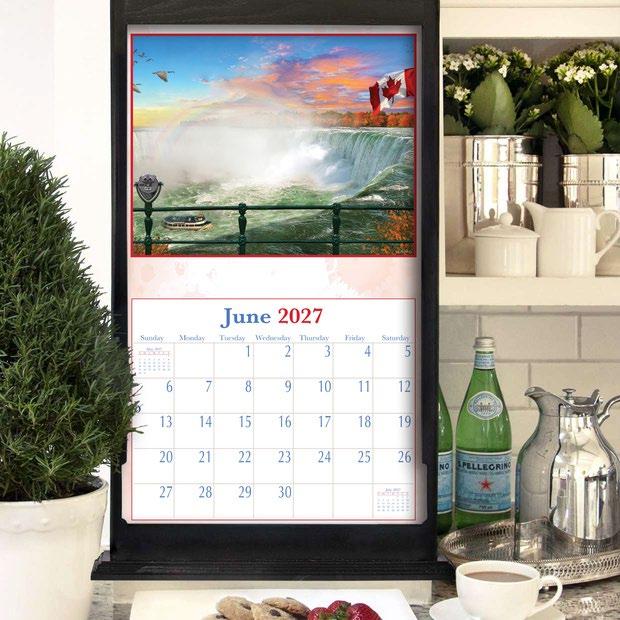
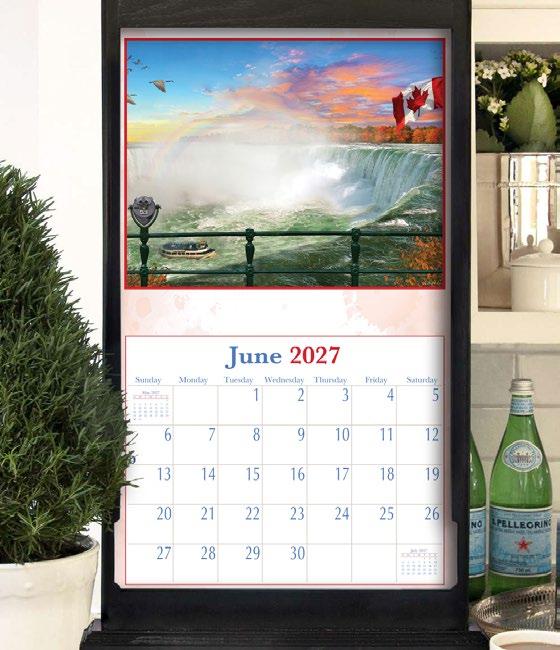
After more than 30 years in the calendar business, Pine Ridge Art has brought all of its printing back to Canada in time for its 2027 release. Now, the entire calendar range is designed and manufactured in Canada.
In a press release, the company stated, “We are listening to our customers and know that being able to promote Canadian made product is one of many effective selling strategies for our retailers.” For more details, visit (www.candym.com)
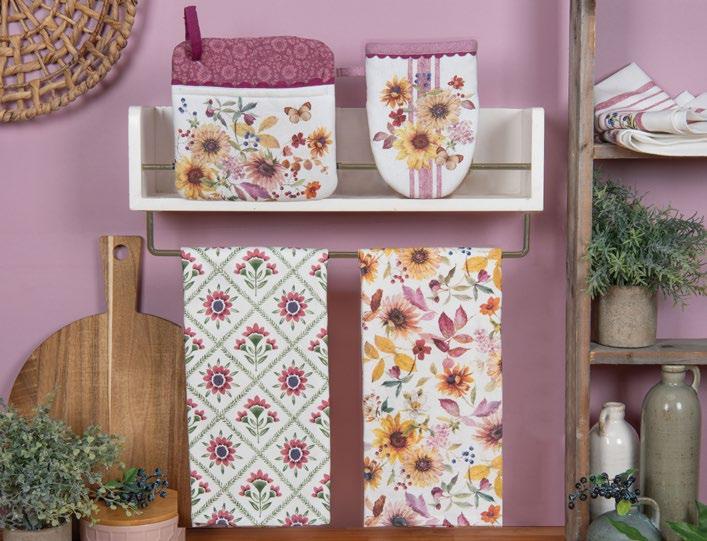
Founded in 1951 as a hand-printer of linen and calendar towels in rural Hope Valley, Rhode Island, Kay Dee Designs has grown from humble beginnings into one of the most trusted names in the kitchen textile industry, guided by a steadfast commitment to quality, design, newness, and customer relationships.
“Celebrating 75 years in business is a tremendous honour and a testament to the trust our customers place in us,” said Richard Rakauskas, president of Kay Dee Designs. “While the industry has evolved, our focus has remained the same — delivering an ever-changing product line of well-designed, highquality kitchen textiles.
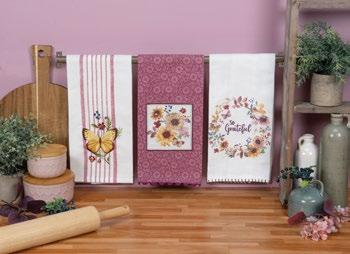
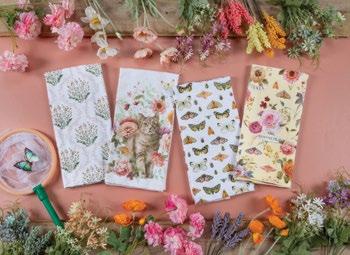
The company’s robust 2026 introductions include collections from Canadian artist Lisa Audit, known for her contemporary floral designs and love for unique patterns. Lisa studied graphic design and art before starting her career as a wallpaper designer. This led her to explore licensing her artwork where she has found her career success. Today, she is one of the most sought-after artistic brands across several industries. Her art and patterns have been licensed on products for every room in the home, including tableware, stationery, kitchen textiles, bedding, bath, rugs and wall décor. (kaydeedesigns.com)













BE SEEN WHERE IT MATTERS
InStore Magazine is the trusted voice of Canada’s independent retail community — connecting boutique retailers across Canada with the products, brands and stories that move the industry forward.

AFFORDABLE ADVERTISING
With our transition to digital, advertising rates have dropped by 25 percent across the board while the content of the magazine grows even more robust. Click here to view our advertising rates and options!

SPECIAL RATES FOR SMALL MAKERS
InStore’s exclusive advertising program for new and small businesses is MORE AFFORDABLE NOW than ever before. These rates are not published on our website as they are only available to qualifying companies. Email publisher and editor Erica Kirkland directly for details at ekirkland@instoremagazine.ca



By Erica Kirkland
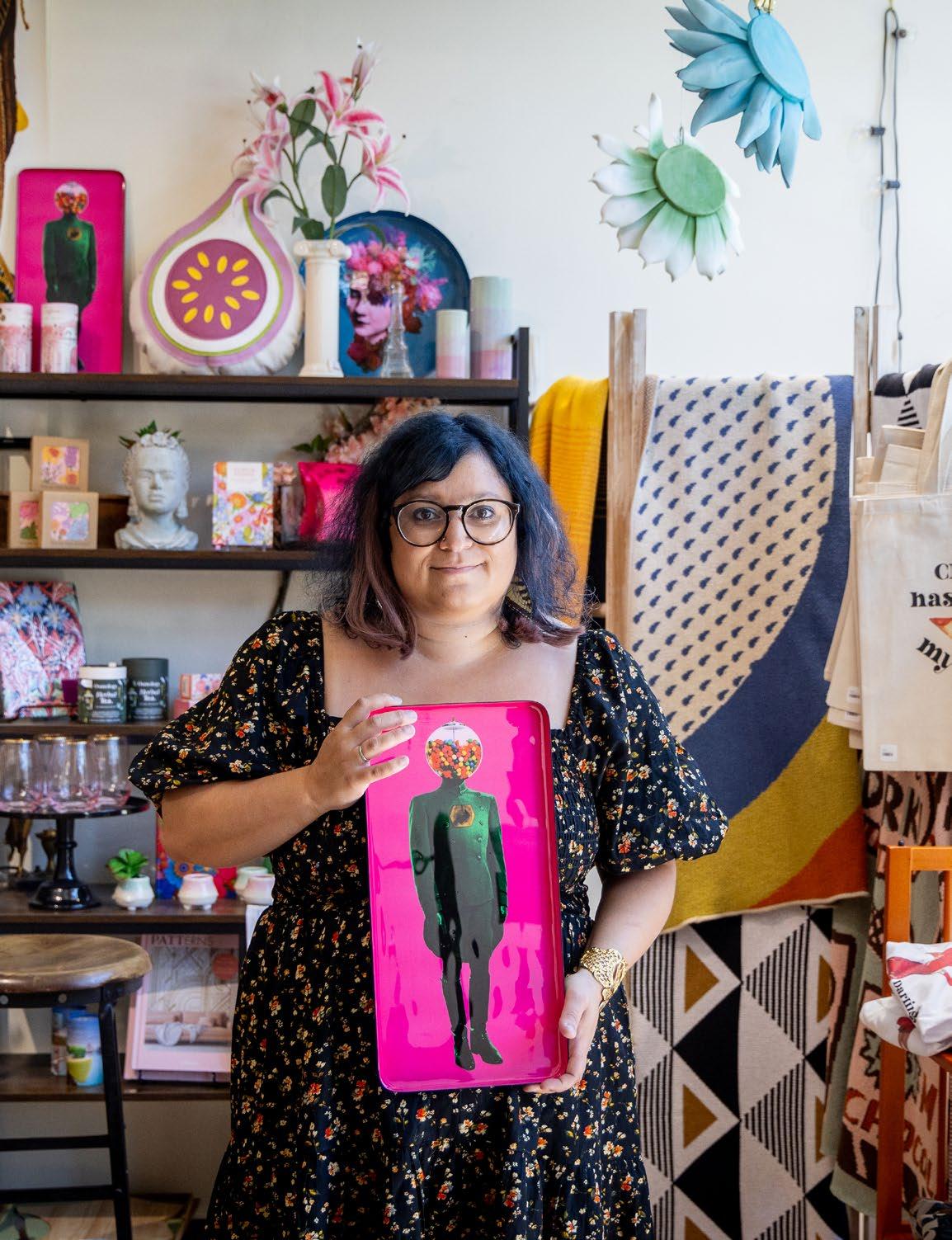
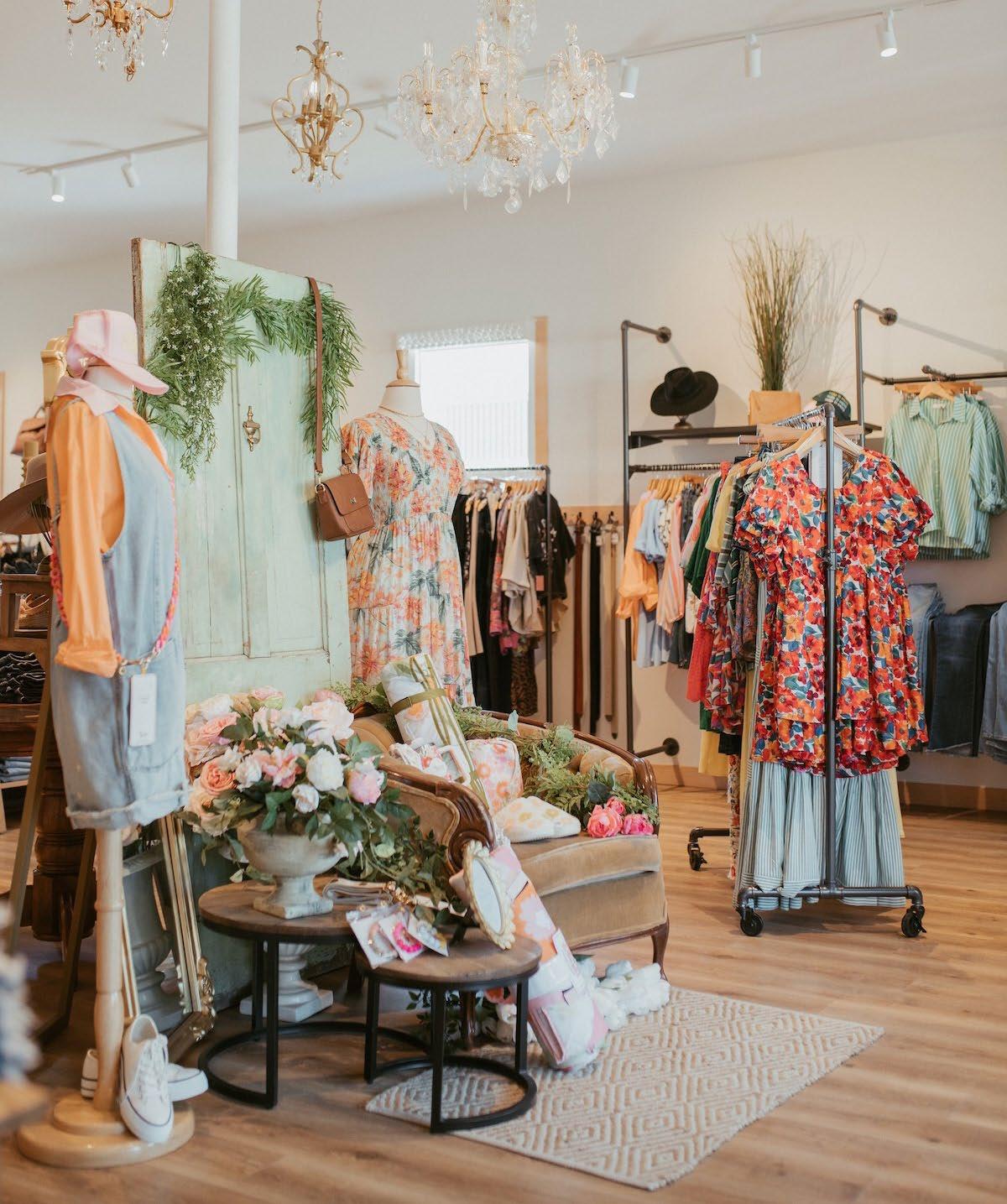
In this issue, contributing writer Jessica Harlan interviewed the mother and daughter team behind the stunning Copper & Sparrow based in Winkler, Manitoba and the young female business owner who started an art deco-themed gift shop, Rare Form, in Chicago’s Andersonville neighbourhood.
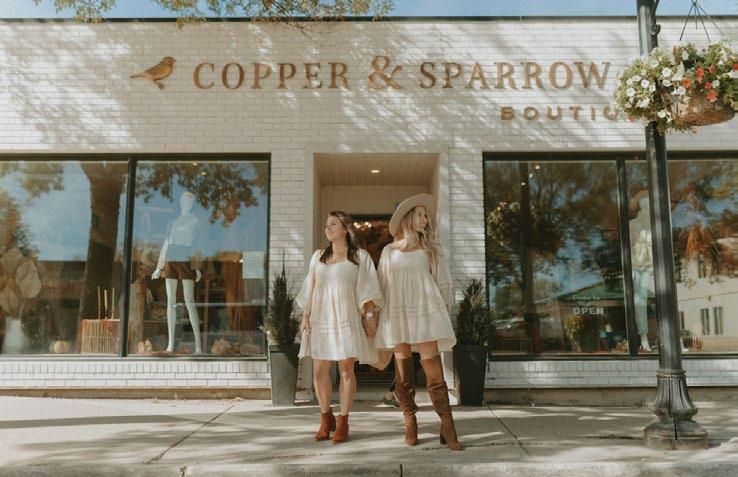
While the vibrant small town of Winkler (population 13,745), located approximately 100 kilometres southwest of Winnipeg and the big city of Chicago may not seem to have much in common, both areas are actually well known for their strong entrepreneurial spirit – Winkler and Andersonville in Chicago. Come inside as we take you into these two unique, beautiful stores and interview the owners to get their perspective on everything retail and what makes their stores a success!


By Jessica Harlan
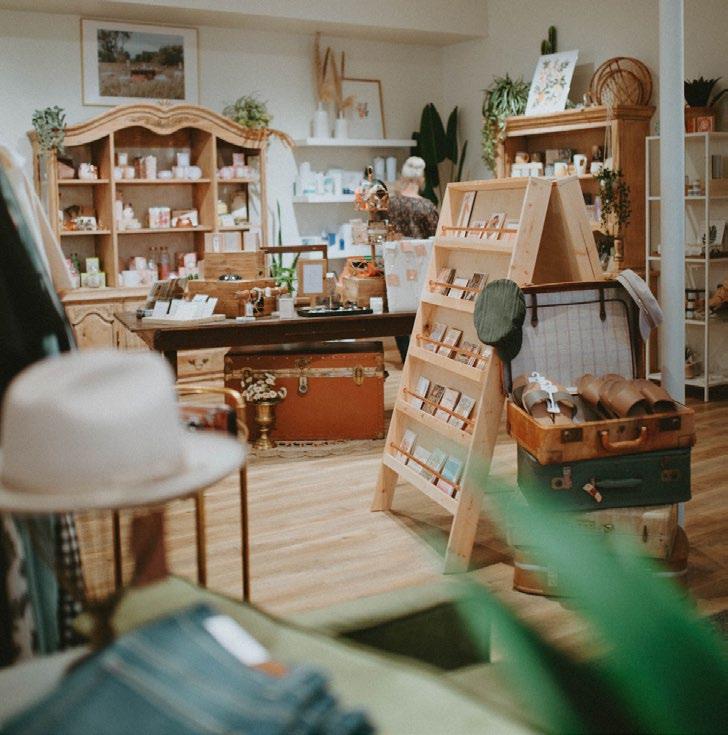
Shaelyn Thiessen and Connie Fehr, owners of Copper & Sparrow, are proud of the fact that their apparel and gifts appeal to women of multiple generations. As mother and daughter, they’re able to curate their selection from two diverse perspectives. And, as the shop is located within Winkler’s downtown historic district and is one of the few fashion and gift boutiques in the area, the store has developed a fiercely loyal customer base. Shaelyn, the daughter of the duo, talks to InStore about how she and mom Connie have cultivated their relationships with their customers and combined their unique talents to make one very special shop.
What makes your store unique?
Our goal has always been to be a space where a mother and daughter can both find something that makes them feel beautiful. My mom and I own the boutique together, and we really wanted to bring that to our town. We’ve also become known for a warm and welcoming atmosphere. We’ve created an experience where customers can come, bring their coffee, sit on the couch and chat with their friends. It’s about having community and style all come together.
How would you describe your store and its atmosphere?
We always say, it doesn’t have to match, it just has to go. We have a bright green
JUST THE STATS
Store: Copper & Sparrow
Location: Winkler, Manitoba
Square Footage: 2000
Employees: Seven
Website: www.copperandsparrow.com
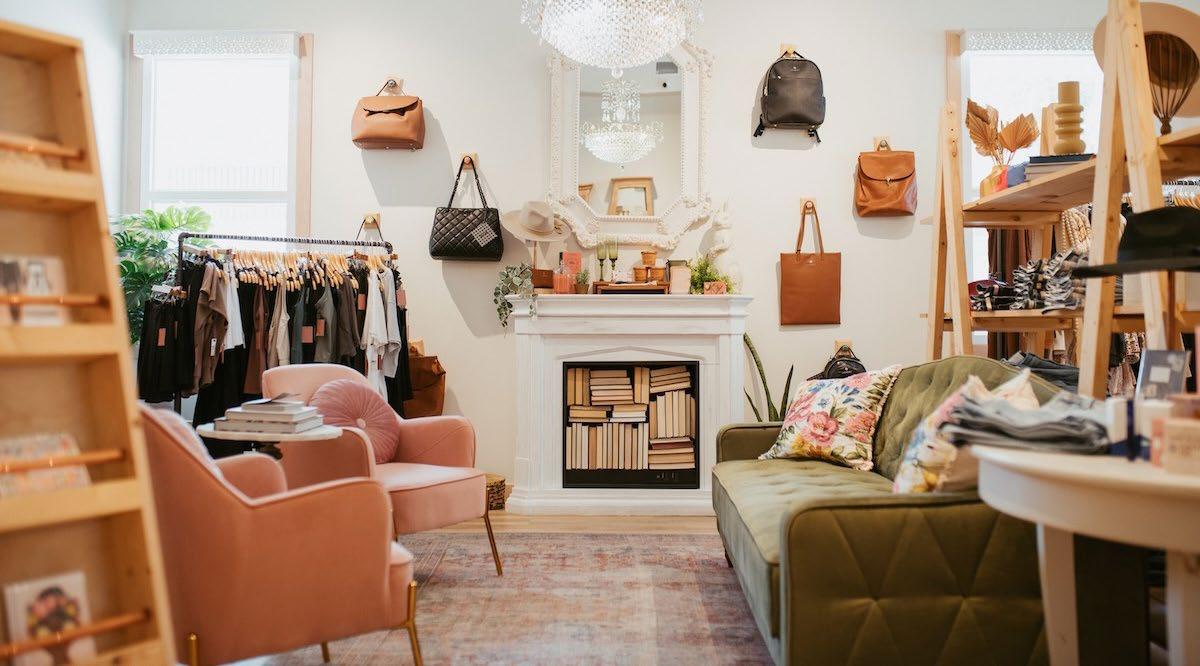
couch, pink velvet chairs and rustic wood furniture. We have a collection of chandeliers, including one that was from my grandma from one side of my family and one that was from my grandma from the other side. It feels so special to have them here. Everything in the store is curated and thoughtfully chosen for our customers and for their wardrobe.
What is your background and why did you get into retail?
My mom, Connie, worked in retail in her youth, then worked a bunch of side hustles while raising her kids. She was an interior designer, did wedding decorations, was a bookkeeper for the family farm and helped with the school plays, among other gigs. She always enjoyed fashion, design, anything creative. I was in between jobs, taking online classes for university, when a small startup boutique came up for sale. We were like, “Is this it? Is this our opportunity?” With a bunch of prayers, we jumped in. My background
in psychology and management has helped with customers and with team dynamics, while Mom does a lot of the displays and merchandising.
To what do you attribute your success?
Having two generations being able to purchase is such an advantage. My mom and I have similar styles, so we can create a cohesive experience. Also, we have become known for our friendly atmosphere, so great customer service plays a part in our success. We try our best to know their names and remember the details of our customers’ lives. Lastly, the commitment to helping women build wardrobes they truly love. If we don’t love how someone looks in something they’re trying on, we will gently suggest something else.
How do you promote your store and what are your most successful promotions or marketing mediums?
We’ve tried other methods but we keep coming back to social media. It just works, and everyone’s on it. Instagram is the most popular. We find that our reels go over very well. We’re doing more of the comical reels now. People love them and they get shared more and more. We find that we can sell a lot through Instagram. We’ll have Tuesday
Try-Ons in our Stories where we try on our items and list the sizes and prices. People can DM us to buy and we’ll ship it out to them. We’ve also started dabbling on TikTok. We’re not doing much there yet but it could get big for us. It’s a little more organic and natural. We’ll do a day in the life video or pack for a trip. People love the behind-thescenes content.
What has been your most successful recent event?
It’s important for us to be involved in local charities. We’ve participated in a few charity fashion shows that have been super successful. We don’t run them but we show our clothes in them and help out. It’s a great way to raise money for a good cause, and an amazing tool to connect with different women. We’ve also partnered with a local woman-owned florist in town for International Woman’s Day. We made flower crowns, served snacks and guests got a discount in the store that night.
Do you have a favourite product line?
Dresses are big for us. It’s so fun to help ladies find a dress for all the occasions in her life, like showers, graduation, date night and just because. In the past we’ve focused more on feminine dresses — florals, puffed sleeves — but recently
we’ve switched over to have a little more of everything. We’re trying to fill a gap with sleeker styles for someone who wants something a little more modern and form-fitting.
At the moment, what are your biggest struggles or pain points?
The price increases and competing with large retailers like Amazon and Shein has been hard. We’ve had to cut back on a few lines that weren’t sustainable because they were at a higher price point. In a small town, where there are only a few places to purchase unique goods, it’s hard to break through that “I’ll just order online” mentality. We still struggle with that.
Looking back, what is the biggest lesson you have learned?
The power of consistency. Everything’s changing so fast — the algorithms, the market. But showing up consistently for our customers, our staff, and each other builds loyalty and trust. Above all, that’s what will sustain a business — at least the kind we want to run.
What’s it like for mom and daughter to work together?
We are so much of the same person, but we think differently. It’s so fun when we’re buying because we have a similar style. We each have our strengths and they complement each other really well. Mom does all the bookkeeping and the décor and I manage staff. I’m onsite more, and I do all the pricing. She’s my best friend and I wouldn’t want to change it for the world!
Finally, how do you stay inspired?
There are two things. One is that our favourite thing to do when we travel is visit other stores. We’ll hop on Instagram, find a local shop to visit, talk to their staff, check out what other people are doing and what their trends are. Second, we always go back to where our name came from, the Bible verse Matthew 10:29. My interpretation of it is that each one of us is valued and important and that we all have purpose.
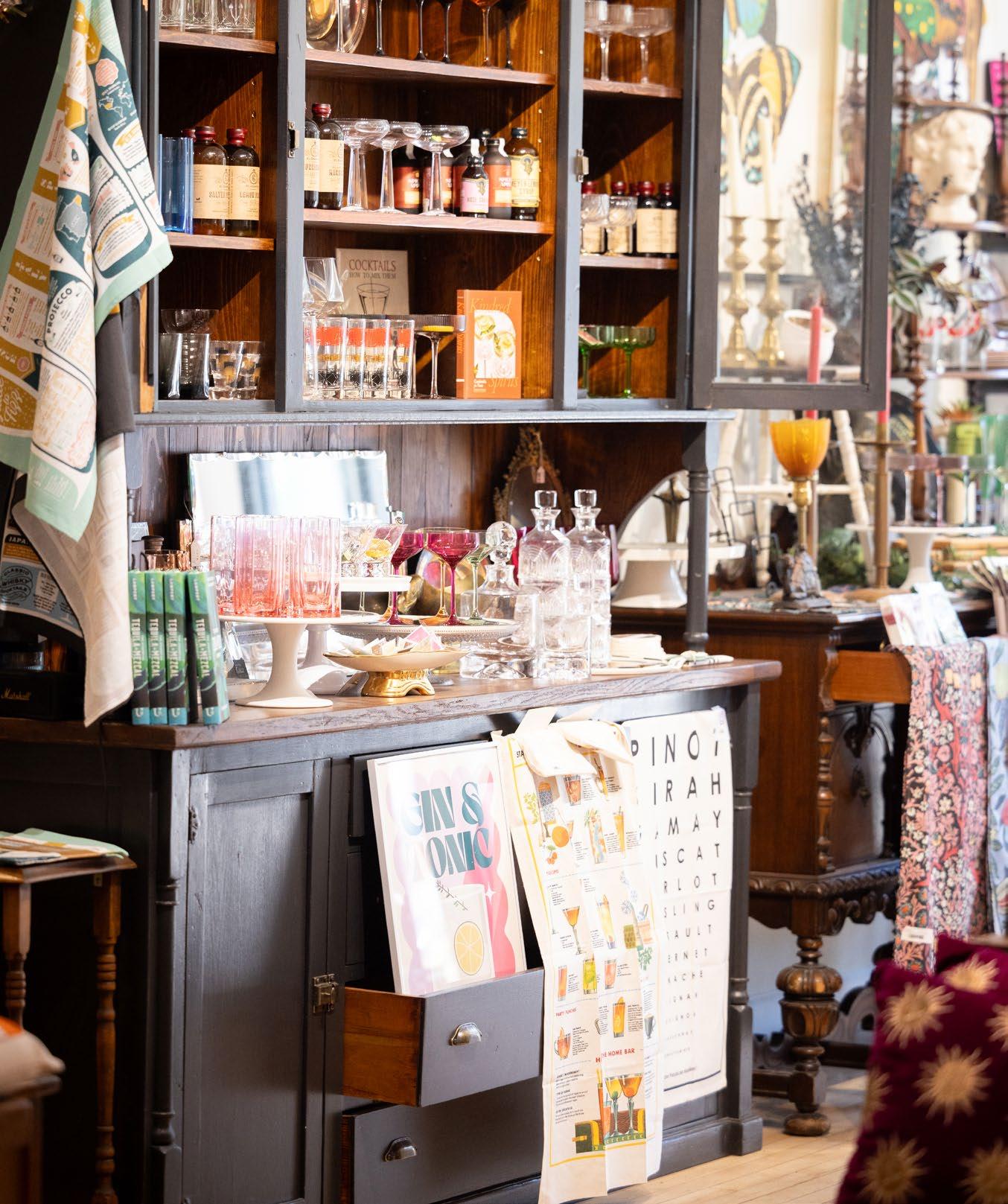
By Jessica Harlan / Photography by Kathleen Hinkel
With advanced degrees in art history as her guide, Emma Lewis started her art print company and gift shop as a pandemic pivot. As a professor and a new mom, she saw the teaching landscape change and realized she needed to change as well. Her paper goods brand, the Twentieth, started as fun greeting cards she designed for her mom friends, combining vintage images of powerful women with messages toeing the line between sweet and salty. Her wholesale business, along with the vintage prints she sourced and sold at festivals and markets, impelled her to open her brickand-mortar shop in 2023 in Chicago’s Andersonville neighborhood.
What makes your store special?
We are known for collections which are influenced by Art Deco and Art
Nouveau styles. We fall under a larger umbrella of vintage home goods and gifts, combining actual vintage goods with vintage-inspired products. I seek out vintage barware, ceramics, porcelain –really whatever I can find that I think my customers will like. I’m hoping to expand more into vintage jewellery, but that’s a bit of a rabbit hole.
How would you describe the atmosphere of your store?
Our store is maximalist and eclectic. The one comment I get more than anything is that people find things they don’t see anywhere else. We’re in an older building and I redid the 100-year-old floor when I moved in, but it’s a little creaky when you’re walking around, which definitely adds to the atmosphere of the store. Another big focal point is the giant teal wall covered with prints in gold frames. It’s very distinctive. All our fixtures
JUST THE STATS
Store: Rare Form
Location: Chicago, Ill.
Square Footage: 1400
Employees: Two full-time, one part-time
Website: www.shoprareform.com
Social Media: www.instagram.com/ rareformchicago
Top Lines:
Creative Co-op, Petal Lane, Sadie Green Lovett and Co., Viski
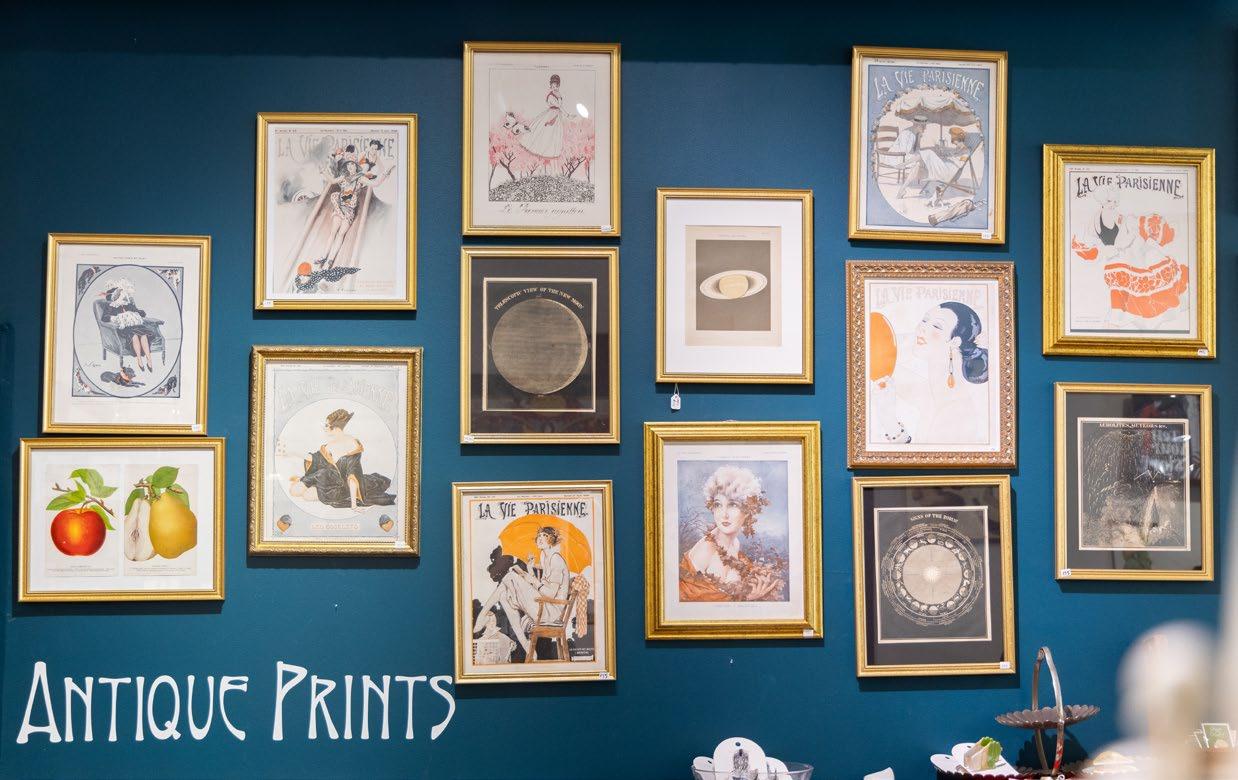
are antique furniture, and I like to layer them vertically. I’ll take an Art Deco end table, an old footstool and a rustic carton and stack them on top of each other. My customers love the layered fixtures as much as they love the items we sell. The store is a really an experience. People love looking through the bins of art prints – it’s a mini art gallery experience – and I’m always getting more art in.
To what do you attribute your success? I really have to credit my neighbourhood, Andersonville. I live in a wonderful neighbourhood that has gotten a lot of press and is a mecca for small businesses in Chicago. We have an absolutely terrific chamber of commerce that puts on a ton of events. For instance, we just had a Coffee and Cocoa crawl during the slow season in the dead of winter. They stationed different coffee-related treats at different stores. You buy a ticket and you go to each location to get a little treat. We hosted a donut shop and we got a ton of people in the store.

How do you promote your store?
As an elder Millennial, I try my best on the social media front. I use Instagram, including buying ads and working with influencers. I did get a little press coverage when I opened, and since then it’s been word of mouth. I find it to be very niche. When people find me, if they like me, they love me and they bring their friends and family members from out of town.
What has been your most successful recent event?
We occasionally do craft nights and I recently hosted an embroidery night, using the little embroidery kits we sell during the winter. People came in and we all muddled through our embroidery kits together. I don’t do these a ton because we don’t have a huge space to work with, but they’re really fun, and I get to know some of my customers.
Do you have a favourite new product line?
I’m excited about a line I just picked up from Atlanta, the Saint Austin Company. They make these reproduction brass trinkets and glass plates with cool vintage images, the kind of aesthetic you’d expect from turn-of-the century small objects. It’s a very steampunk aesthetic and I’m very excited to introduce that line to my customers.
At the moment, what are your biggest struggles or pain points?
Probably the tariffs. It’s difficult to maintain a consistent profit margin when the costs are constantly in flux due to tariffs and brokerage fees that often come in after the merchandise has been priced and put on the floor.
Looking back, what’s the biggest lesson you’ve learned?
I’m nothing without my community. My customers, my neighborhood, my chamber of commerce, my fellow store owners — we all subscribe to the idea that a rising tide lifts all ships. Community over competition is absolutely essential to the way I
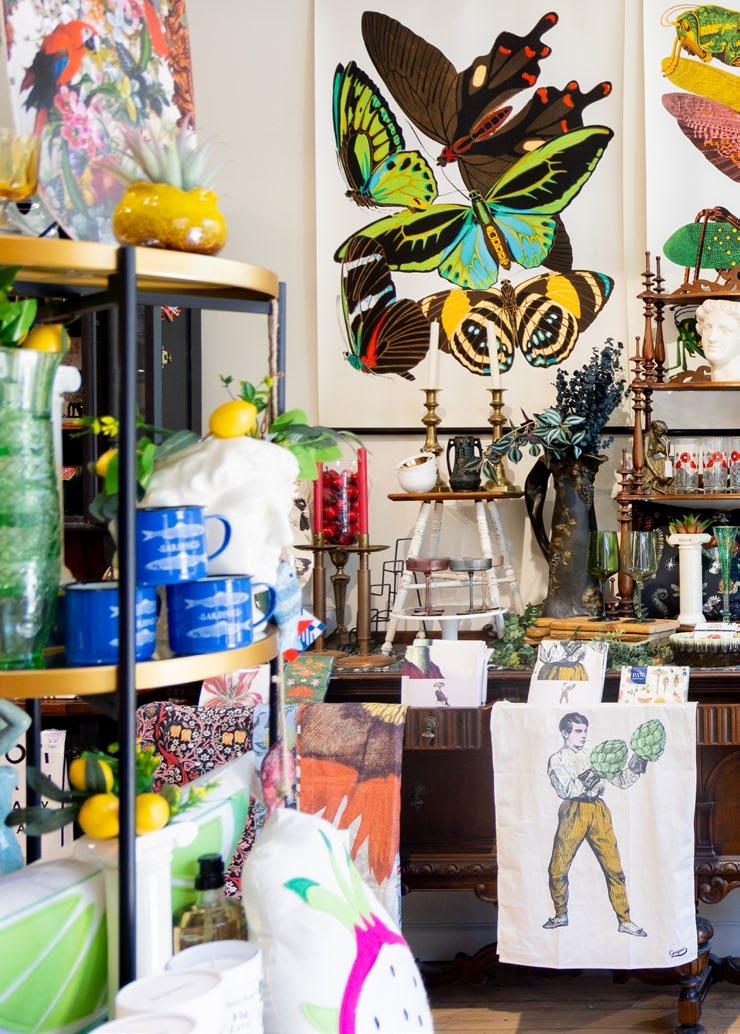
run my business, to my identity in the neighbourhood and to our relationship with our customers. We’re always sending people to other stores if we don’t have what they need and vice versa. That’s what makes Andersonville a friendly place for small businesses. All of our customers really care about the value of having a neighbourhood based on small businesses.
Finally, how do you stay inspired? I find inspiration in the antique images
I use for my brand. I’m always looking for these hundred-plus-year-old images and it’s a constant source of inspiration. It makes it very apparent when a brand like Saint Austin comes along and their products look just like my favourite antiques that I collect. I’m also inspired by my relationship to art history and to my antiques that I bring into the store, whether prints or objects. I look for really thoughtful ways of preserving that history and brands that are able to do that successfully.
A deep dive into independent retailing south of the border with insights from InStore’s sister publication Giftbeat
By Erica Kirkland
NOTE :
The Cold Winter Winds Brought a Welcome Increase in January Sales
Exactly 60 percent of independent gift retailers in the United States reported year-over-year sales in January were up, with an impressive 38 percent noting sales were up by 10 percentage points or more. In addition, 10 percent of store owners managed to hold steady. Despite the challenges of increased product prices and a challenging economy, independent store owners worked hard to carve out their piece of the consumer market share this past January. Last year, the numbers were not as rosy with 46 percent of store owners reporting year-over-year gains in January.


Each monthly issue of Giftbeat includes nine charts with the top 10 bestselling vendors in those nine categories based on actual retail sales. In the March issue one of the categories tracked was tea towels and the list was based on actual January store sales from the publication’s panel of 300 reporting stores. Over the course of the year, over 70 categories are tracked in Giftbeat.
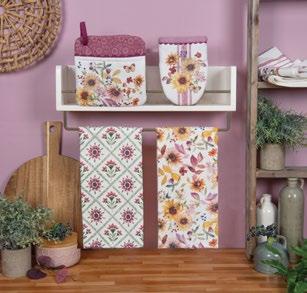
1. GEOMETRY: tea towels, dishcloths
KAY DEE DESIGNS: seasonal, state, lodge, various 3. PRIMITIVES BY KATHY: Trash Talk by Annie
MARIASCH STUDIOS: custom, various
CJ BELLA CO: seasonal, various
MUD PIE: various
NOW DESIGNS: various
ELLEMBEE: humorous
WILD HARE: humorous, solid colours
WILDWOOD DESIGNS: various HONORABLE MENTIONS: Blue Q, Drinks on Me

Share your struggles and successes with InStore by emailing publisher and editor Erica Kirkland at ekirkland@instoremagazine.ca! We’ll compile your feedback into articles that will inform the industry on what’s happening in Canadian stores from coast to coast.
Afew times a year Giftbeat asks our panel of 300 reporting stores in the United States to tell us about the new brands they’ve brought in that other store owners should know about. The purpose of this question is to unearth hot brands that have not yet made it onto the Giftbeat charts, yet which are showing promising sell-through rates. For InStore, we’ve chosen to showcase the brands that are available now on the Canadian market.
““We brought in Emily Lex Studio and they have been selling well!” reports a store owner from Massachusetts while a retailer from New Hampshire writes, “Emily Lex watercolour books are doing great.”
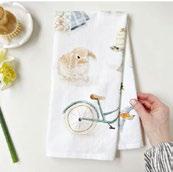
The brand offers art kits such as watercolour workbooks, paintable postcards and painting supplies alongside finished products including notepads, stickers, greeting cards, gift tags, tea towels, books and more.
Emily Lex is a watercolour artist, author and illustrator known for her delicate, airy painting style. Based in Gig Harbor, Washington, she transitioned from a long-time blogger to a full-time artist and author a few years ago. For over a decade, Lex ran a popular lifestyle blog (Our Jones Design Company). After experiencing burnout, a journey she detailed on her blog, she later pivoted her career to focus specifically on being an artist which to Emily means many things, including making art, but also using her gifts, talents and passion to add beauty to the world.
“For me, it’s delighting in the little things, then capturing them through
scratchy pencil sketches and pretty watercolour puddles or stringing together thoughtful words as encouragement to others.” Giftbeat loves the closing sentiment on her About Us page: “Beauty matters. It brings peace and joy to our souls and reminds us that God is good and we are loved. May you find delight and encouragement here.” Well, we certainly have! (shop.emilylex.com)
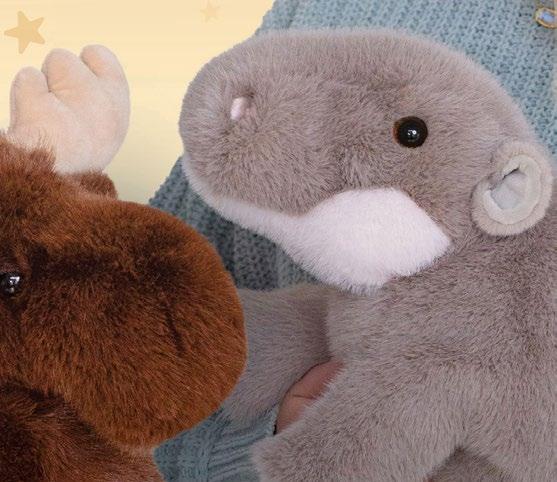
A new line for a South Carolina retailer is Cuddle & Kind which is actually a Canadian-based line. As the store owner says, “It’s this adorable line of hand-knit, stuffed animals – something grandparents will buy for their grandchildren. Also, the sale of one doll gives 10 meals to children in need.”
details.
Every single doll is handcrafted by women artisans in Peru, providing them with a sustainable, fairtrade income. Stuffed with hypoallergenic polyfill, filled to the ideal cuddle weight, the products have been deemed safe and non-toxic by both U.S. and Canadian safety standards. Most importantly, with the purchase of each doll, 10 meals are provided to children in need.
The people behind the Cuddle & Kind brand are a Canadian family, the Woodward family, who are on a mission to help feed children in need. With a background in health care, the family recognized the crucial role nutrition plays in a child’s development, and their dolls are now being sold around the world.
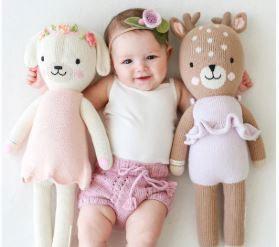
The variety of adorable animal-themed dolls are made with premium cotton yarn, ensuring they’re safe, soft and cuddly, and then accented with premium felt and knit
“As parents, we believe all children should have enough food to eat and the opportunity to thrive, so when we saw a documentary on the devastating impact of childhood hunger on millions of children around the world, it inspired us to help. On that day, we decided to start a company whose purpose is to help improve the lives of children and to make a difference.” (cuddleandkind.com)
Despite strong January sales, U.S. store owners remain cautious and concerned at the moment. What’s keeping them on edge isn’t their store sales but rather the political climate.
While a Massachusetts retailer simply states, “Mental patient in the White House,” as his cause to be ‘very concerned’, a Utah retailer whose traffic is down, says, “Protests are dominating peoples’ thoughts.” On the same note a Florida retailer begs, “Please let the tariffs be done with,” while a Rhode Island retailer reports she’s “Concerned about the national debt.”
“It’s getting harder to maintain or increase sales,” writes a New Jersey store owner while a North Carolina retailer reports, “Last year was off, and so far this year is worse.”
A retailer from New York state says, “January started much stronger than anticipated, so we are hopeful, but I’m concerned because of the social unrest in our country.”
“It’s hard to get my head in the retail mindset when there are so many horrific things happening in our country and around the world,” says a Wisconsin retailer. She goes on to say she tries to focus on the positives: “We do bring joy and meaning to celebrations. We provide a peaceful respite from the terrible things we see in the news. We bring a sense of happiness and normalcy to people’s lives.”

An Illinois retailer, who is a ‘bit concerned’, reports, “I’m cutting back my budget in double digits on all but my staple departments. If I’m wrong I know I’ll be able to get goods quickly.”
“I actually could say ‘very concerned’, but we’re trying to be optimistic and positive for our staff and our customers,” says an Oregon retailer. “We went to Dallas, Vegas and the Seattle show, but they felt different and sparsely attended. We hope the business climate becomes more normal instead of so reactive as it’s so trying on our souls.”
On the bright side, a Maryland retailer writes, “Coming off a great holiday season and a great January, plus streamlining our inventory, we are very optimistic for 2026. We know the areas we want to focus on and the areas we need to let go. It feels good to have such a grasp on our plan for the year.”
Prices are on the increase due to tariffs, yet 79 percent of independent gift retailers in the United States are very or somewhat confident they can maintain the margins needed to keep their doors open. The vast majority – 95 percent –
have already increased their prices to offset increased wholesale costs, and for the most part, there hasn’t been much pushback from their customers.
With the price of goods becoming more expensive, store owners are getting sharper and more diligent when it comes

to their margins. “If I can’t get it at 2.2 times mark up, I’m not ordering it,” writes a Florida retailer, while a New Hampshire retailer shares, “We have to make margins. If we can’t make mark up, we don’t write it.”
A California reporting store with multiple locations writes, “We have to maintain margins or we close. We used to mark up 2.5, now we are 2.8 or three times.” But her customers haven’t noticed the increases. As she shares, “Our sales and traffic are up.”
“Last year we started raising prices on most items to give us greater margins,” shares a Maryland store owner. “We have set ourselves up for more profit along with more space to adjust if needed.”
It’s incredible how quickly things change. A mere 10 years ago, retailers were focused on marketing through a variety of traditional mediums including print, radio and television while today retailers are zeroed in almost exclusively on marketing their stores using social media platforms.
An Oklahoma retailer plans to spend her time and money on social media and emails with a focus on highlighting, “limited-time sales on specific products and new products to produce a sense of urgency.”
“We do really well with posting the new things that come in on social media,” writes a California store owner. “It drives people into the store.”
A South Dakota retailer has found marketing momentum with Stories. “Stories are very informative and we get new followers,” she says about the impact of using this tool.
“Facebook, Instagram and Tiktok,” are the focus for a South Carolina retailer. “I don’t really do newspaper advertisements anymore because it got so expensive. I do a ‘Filmtastic Friday’ video every week (on social media) to show new products. I’ve been doing it for years and have a good following.”
A Pennsylvania retailer writes, “I tend to not spend much on marketing and do most of my promoting for free on Facebook. However, I think I will promote my posts more this year to get more people in. I need to make it a priority to
post daily on Facebook and Instagram, even when I don’t feel like it.”
A Tennessee retailer has had great success boosting posts writing that, “Boosting posts on Instagram really works, especially when we detail certain products - customers come in and ask for that product.”
“We spend $250 per month for a social media person who helps guide us in what and how to post,” writes an Ohio retailer. “Then we pay for ads on Facebookroughly $1000 per year.” She also writes, “We do a lot of advertising locally (signs at local events, team sponsorships, event sponsor etc.) and that runs us around $10,000 per year.”
For some retailers, depending on location, old standards like billboards and mass mailings are still great marketing mediums.
“We are in a great location and a busy tourist area,” writes an Arizona store owner, so she focuses on billboards and special events to market her store.
For a Montana retailer who’s located off a major highway, billboards are a primary source of marketing. She is also going to “Explore geo-fencing with some targeted ads,” this year.
“We will continue to advertise in our downtown’s shopping directory,” shares a Wisconsin store owner. “Once people are downtown they can’t help but see our store because we’re on the busiest corner with huge windows. I’ll be keeping those
windows clean and the displays looking clean, fresh and interesting.”
For a retailer in California with multiple locations, covering all the bases with a variety of promotions is the key. She lists, “Birthday postcards, monthly ads in several newspapers, coupon books, a Christmas catalogue and 12 days of Christmas campaign,” as her top marketing methods.
“Direct mail coupons, social media boosts, local newspaper ads and coupon magazines,” will be the focus for a Utah store owner who writes, “There is a big noticeable boost when coupons hit homes.” She also, “Teamed up with a local realtor to give him content that features my business and extends his reach.”
A Florida retailer is spending her marketing dollars on “hiring more people who can help with content creation.” She wants to focus on “creating good content that her customers want to see.” She will also continue with, “Our Fifth Saturday Sales which have grown exponentially since we started them a year ago.” In addition, she writes, “We have an inhouse chef who plans and teaches many of our classes. He has been posting his recipes on our local foodies page and has developed a following. People come in to see him now because of his Facebook posts.”
Despite the positive news –that sales were up for 60 percent year-over-year in January for independent gift store owners in the U.S. – retailers remain very concerned. In this open-ended question, all the store owners commenting expressed concerns ranging from price increases and trouble finding staff to headaches faced sourcing affordable products to an unstable political environment impacting the overall mood of the country – and the world.
“The tariff impact is starting to show up now, a little later than we expected,” says a Montana retailer, while a Wisconsin store owner writes, “I’ve noticed there were price increases on almost everything I reordered after the first of the year.”
A Massachusetts retailer sums it up nicely writing, “No one knows what’s coming next: More tariffs? Who will be bombed next? Is there a war on the horizon?”
An Illinois retailer drills down into the details, writing that, “The housing bubble is going to burst, there is civil unrest and the stock market will have a major correction.”
With ongoing threats and the looming dread of “what’s coming next”, store owners are well, concerned.
A decline in traffic is impacting store owners, some to the point of going into

debt to keep their stores afloat.
“We are in debt and it’s not getting better,” writes a Michigan retailer with multiple locations. “I’m out of money and our sales are down. I’m trying to figure out what my options are and how we can improve sales and decrease costs even more.” As if that stress isn’t enough, she goes on to say that “The USA is a hot mess right now and seems to be getting worse daily.”
“Finding and seeing what the next new trend will be and keeping up with it,” is a challenge facing another retailer from Massachusetts. “Enewton has been huge for us and looking at what the next Enewton or Jellycat will be” tops their list of concerns.
A Pennsylvania retailer is concerned about product sourcing, writing “My biggest concern is that if I don’t order
enough new I won’t entice customers, however if I order too much all at once, I won’t be able to pay for it when it’s due. The typical retail dance that I hate to play.”
A lack of new items for the 2026 holiday season has a Tennessee retailer concerned. “I felt like the Christmas selections at Atlanta Market were lacking this year. There didn’t seem to be any trends and it was more of a repeat from last year. We were disappointed and didn’t order half as much as we did at last January’s market.” She wondered out loud, “Did the tariffs have anything to do with the choices for this year?” while an Ohio retailer wrote that some of her store’s “favourite brands have priced themselves out of the market.”
When we ask this question, staffing inevitably ends up on the list as it’s an ongoing issue for small businesses.
“Staffing – it’s always staffing these days,” writes a New Jersey retailer. “Only the very young want jobs and they come and go by the time you almost get them trained. Also, they have very little work ethic –always asking for time off!”
“We just lost two core team members - those are going to be hard shoes to fill,” says a concerned New Hampshire retailer while a Texas retailer says among her staff, “Generating enthusiasm and warmth gets harder by the day, especially among our younger team members.”
Giftbeat is a monthly publication that tracks the top 10 vendors in 70 plus product categories based on what is selling at the register and gathers insights into what’s happening in independent retail shops across the country by polling our group of 300 reporting stores located in every state. For more information or to subscribe visit www.giftbeat.com.
Fall is the season of new beginnings and this issue is full of ideas to springboard new marketing ideas, product assortments and much more!
By Natalie Hammer Noblitt
Retailers may not yet realize the consumer power held by today’s tech-savvy teens and younger consumers, specifically those in Gen Alpha born between 2010 and 2024. Even when they’re not spending their own money, this group of shoppers sway the purchasing habits of their families in a big way.
As retailers target new and younger consumers, it makes sense to learn about them without relying on old assumptions about the age group. Notably, Gen Alpha are the first generation of kids completely immersed in technology since birth. This exposure drastically shapes how they view shopping, where they get their information about products and whose opinions they trust.
Knowing Gen Alpha’s preferences can also help stores understand spending patterns in today’s average household, including purchases made by both their parents and grandparents.
“Some reports indicate that Gen Alpha influences more than 51 percent of household consumer spending, so their interests and impact are vast,” says John Hyland, head of sales for market research group TeenVoice (www.teenvoice. com). TeenVoice closely studies this demographic as a for-profit branch of American Student Assistance, a non-profit platform designed to help teens voice their opinions.
“Gen Alpha have grown up with an unprecedented access to information,” Hyland adds. “This results in them being informed as consumers, but also highly skeptical and likely to keep seeking independent validation for their

choices. As the validation changes, so does their preferences. This can be perceived as fickle, but is more accurately described as a researched, intentional fickleness.”
Other characteristic of Gen Alpha can be seen in recent study by global advisory firm Teneo, in its Gen Alpha Consumer Influence Study. Findings from this 2025 study revealed Gen Alpha’s influence equates to approximately $255 billion in consumer spending in the United States and United Kingdom combined. Teneo interviewed 1000 children born between 2010 and 2014, along with their parents. Participants answered questions about family spending habits, the degree of influence Gen Alpha holds over household decision making, what reasons the families make purchases, their

brand loyalty and asked about sources they look to for trustworthy information.
Teneo’s research echoes that of TeenVoice about Gen Alpha’s need for validation. And while extremely tech capable, these teens say they value transparency over hype. They also look for people to trust who seem genuine rather than trendy. Gen Alphas remain cautious about trusting the digital content they’ve grown up so readily using. Only 22 percent trust sources on social media, while 80 percent say they trust information from their parents instead.
When you compare Alphas to the generation that came right before — Gen Z (born 1997 and after) —
“Gen Alphas remain cautious about trusting the digital content they’ve grown up so readily using. Only 22 percent trust sources on social media.”
they hold a very different mindset, researchers say. While Gen Z is also familiar with tech and saw the birth of smartphones and social media, they may not have been introduced
to it as early as Gen Alpha. Another difference is that while Gen Z grew up with the internet and video games, that generation didn’t have as much exposure to social media, voice assistants, virtual reality and interactive gaming (think Roblox and Minecraft) as Gen Alpha. When it comes to technology, experts say Alphas grew up within it rather than having it introduced. The parents of Alphas are often Millennials or Gen X.
“Brands expecting Gen Alpha to follow suit from Gen Z, which prioritizes ethical choices and is greatly influenced by the online world, could be in for a surprise,” says Gee Lefevre, Teneo’s global
head of consumers and economics. “Our findings show a generation skeptical of media messages and steadfast in their opinions. They co-pilot family decision-making to the tune of billions of dollars in discretionary spending.”
He reiterates that past expectations about technology aren’t right for Gen Alpha. The future of consumer engagement will “depend less on viral reach and more on trust that feels human and real-world,” he says.
It feels unique that Gen Alpha relies on people close to them to make decisions, such as friends and family, rather than placing stock in online opinions. They value real people’s experiences when making decisions over the glamour of influencers.
Teneo research also noted a lack of consideration for ethical or environmental values during purchasing decisions by Alphas. It’s not that these qualities don’t matter at all, it’s just that teens today are more likely to consider immediate traits such as style and visual appearance first. After that, they will pay attention to how the products are sourced, looking for traits like cruelty-free when it comes to categories like skincare.
What is a little more predictable about Gen Alpha is what categories of products they seek to purchase. “Favoured are health and beauty products, fashion and apparel,
“They co-pilot family decisionmaking to the tune of billions of dollars in discretionary spending.”
food and beverages, including restaurants, media and gaming,” says Hyland. “A large portion of these consumers – 72 percent –proclaim fashion as a key part of their self-expression.”
But because of the fickleness exhibited by this group, Hyland says preferences can swing dramatically over time among these consumers. “Popular content creators are wise to be thoughtful about their endorsements, as followers in this group expect sincerity. This generation is turned off quickly if they sense they are just being sold.”
Brand discovery for Alphas isn’t about intentionally seeking out brands but about finding them in organic ways, especially as they surface within the platforms and content teens already are engaged in consuming, according to TeenVoice research. But Alphas will search using AI tools to make their shopping more efficient, says TeenVoice. Studies show 81 percent of Gen Alpha report using AI tools for searches, compared to 52 percent of Gen Z. These tools

reduce the amount of scrolling they must do to get to content that fits their style, Alphas say.
As this generation grows, their spending habits will continue to be more relevant to retailers, considering that right now their influence alone is quite powerful.
“For each dollar Gen Alpha spends on themselves, there are another $2 spent on them directly,”

says TeenVoice’s Hyland. “Beyond that, another $10 of household spending is influenced by them and another $100 of trend/influence is created because of those purchases. Taken together that amounts to over $10 trillion of consumer spending.”
When it comes to advising retailers, Hyland stresses the importance of keeping an eye on this group of consumers, especially as they
behave in a particular region or marketplace for independent retailers.
“Don’t discount how purposeful Gen Alpha is,” he says. “They are a discerning audience that is not easily manipulated, so why try?”
Instead, find ways to engage this generation in a way they want to be approached, he says. “Talk to them, listen to them and build strategies to attract them based on what is learned. Avoid trying to ‘relate’ to teens by using their language or
latching on to their viral trends. They will regard this attempt as inauthentic.”
And although technology is a key part of reaching this demographic, it can’t be done in a quick or glossed over manner, experts say.
“Gen Alpha is surprisingly suspicious of AI personalization,” Hyland adds. “Only 18 percent express an interest in brands who are tracking their behaviour in order to make personalized recommendations.”
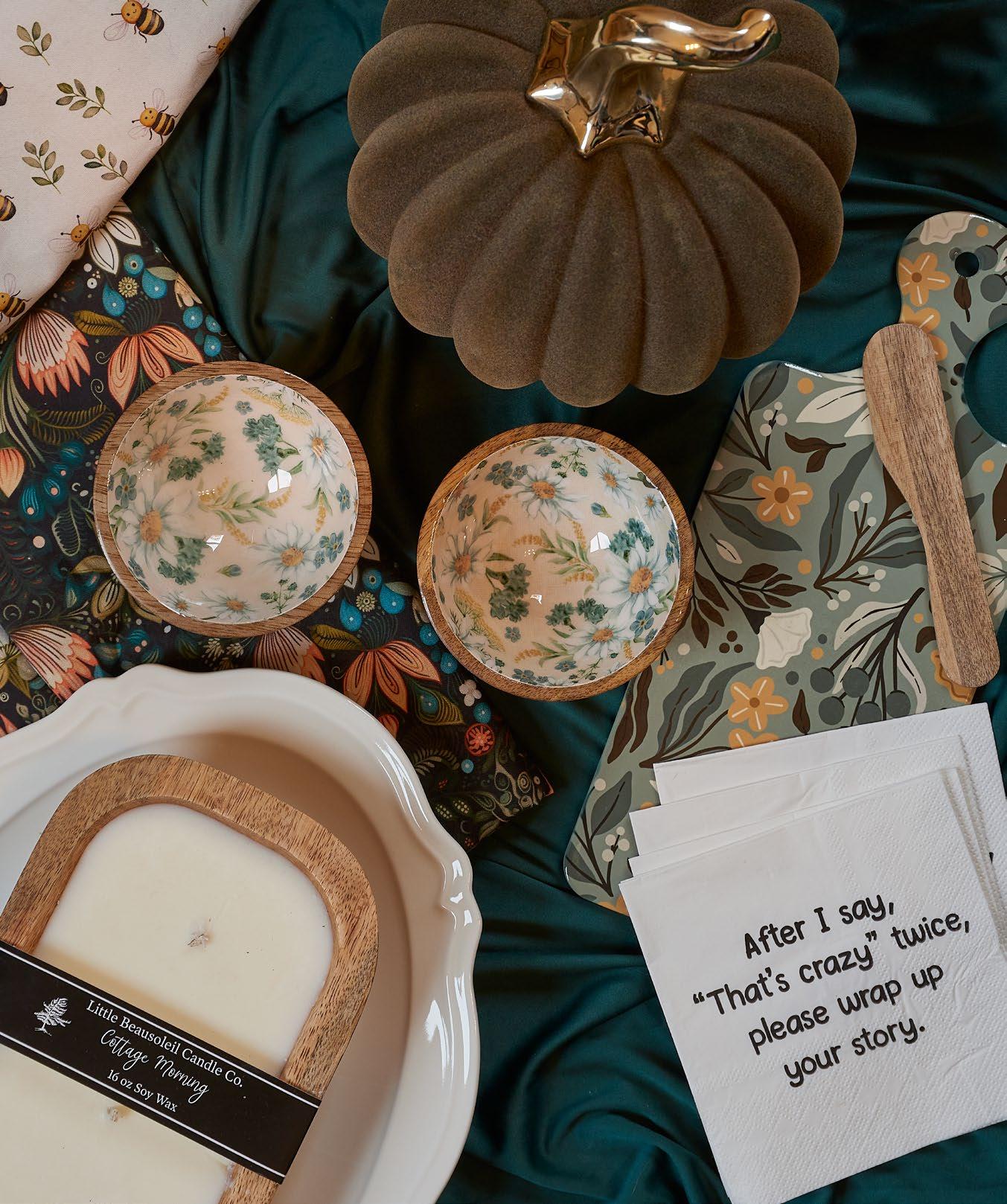
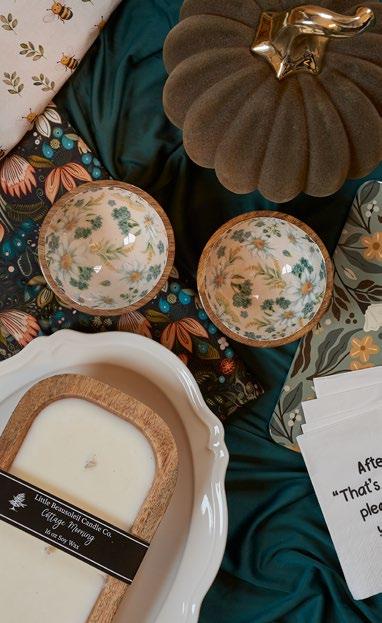
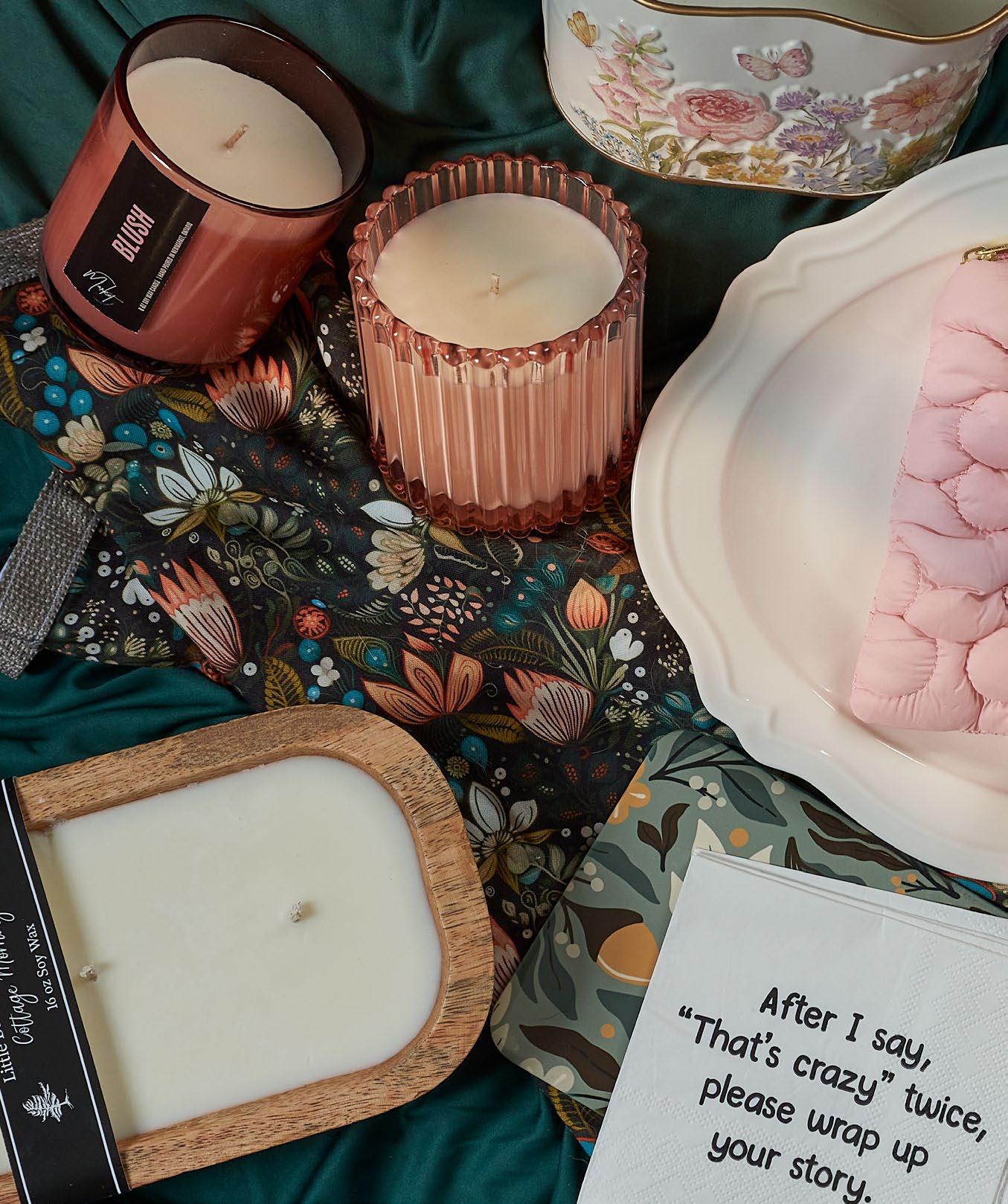
We’re head-over-heels in love with this richly-hued fall-themed product assortment. We cross merchandised categories across this colour scheme to ignite your imagination while maximizing your add-on sales potential!

White platter from Casa Domani, $34.99 retail, Canfloyd, 800-263-3551, www.canfloyd.com
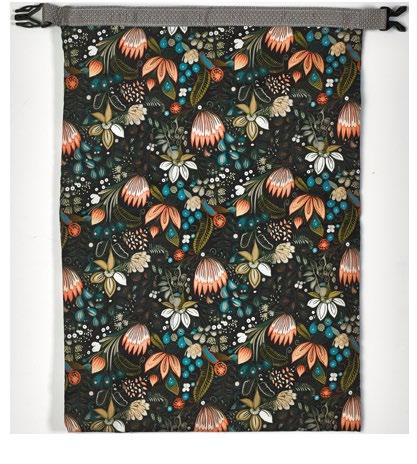
Colibri bread bag. Handmade in Canada, $30 retail, Fenigo, 519-954-7877, www.fenigo.com

Twenty-count of three-ply cocktail napkins, $5.50 retail, Ellembee, www.ellembee.com
Click on any item for direct access to these vendors and fresh inventory!
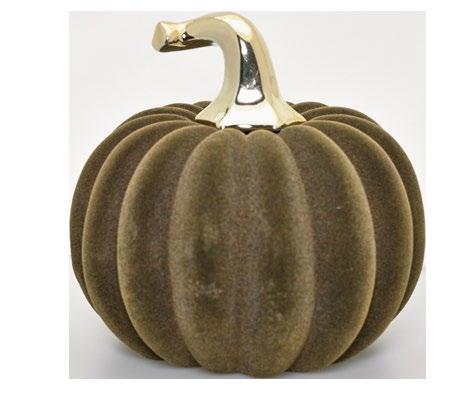
Hunter green flocked pumpkin, $38.75 retail, Boston International, bostoninternational.com
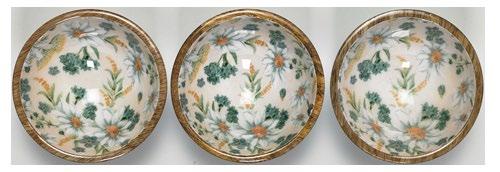
Wildflower dip bowl set (sold with wooden tray not shown), $45.99 retail, Burton & Burton, www.burtonandburton.com
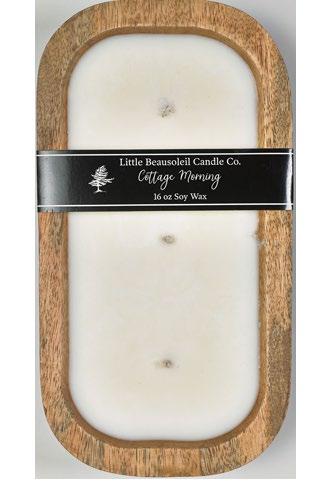
Three-wick bowl candle. Handmade in Canada, $49.99 retail, Little Beausoleil Candle, littlebeausoleilcandleco.ca
Set of three bowl covers. Handmade in Canada. $32 retail, Fenigo, 519-954-7877, www.fenigo.com
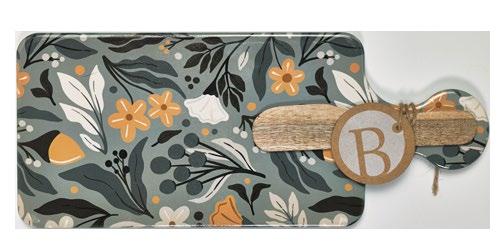
Autum Acorn charcuterie set, $20 retail, Boston International, bostoninternational.com

By Erica Kirkland

InStore visited the world’s largest consumer goods fair in Frankfurt this past February to unearth the upcoming trends impacting the world of lifestyle, décor and gifts.
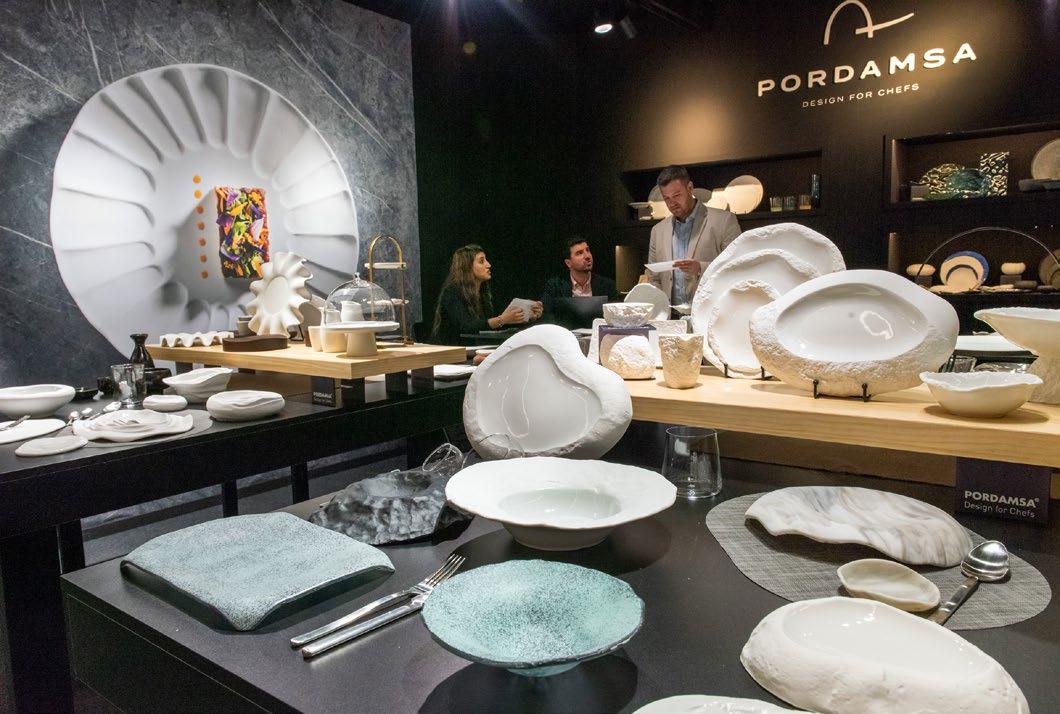
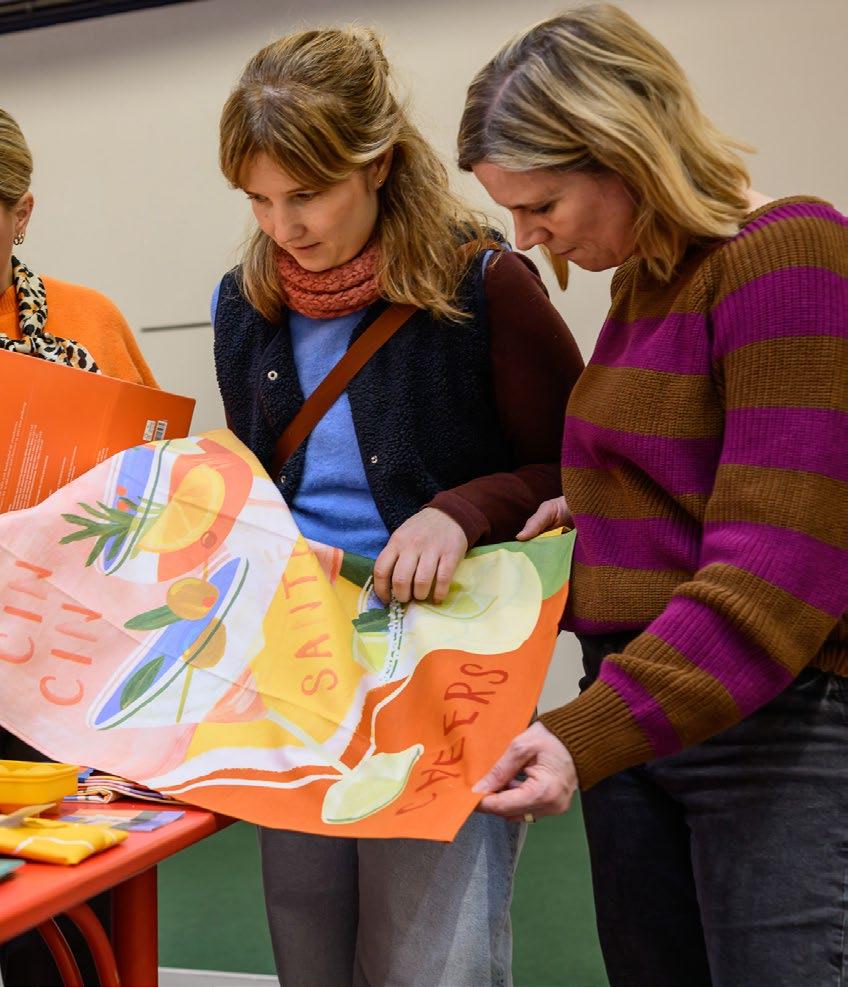
Ambiente, which took place in tandem with Christmasworld and Creativeworld, this past February 6 to 10 in Frankfurt, Germany, confirmed the fair’s leading role as the key lifestyle trade show in an industry undergoing rapid change. InStore Magazine’s Publisher & Editor Erica Kirkland was on the show floor, among over 4600 exhibitors and 140,000 attendees from over 170 countries, and was the only Canadian publication invited to the fair by the organizers.
The fair kicked off on the day before the event with Compass Talks which revealed where the global consumer goods industry currently stands and the key issues at stake. The tenor of the panels was clear: waiting is not an option. What is
needed are further developments in business models, more resilient value chains and better preparation for uncertainties, such as customs duties and import regulations. Futurist Ben Hammersley, speaking on behalf of many participants, stated during the session, “The decisive factor for the future is not certainty in planning, but the ability to deal with uncertainty – with the right mindset, curiosity and adaptability.”
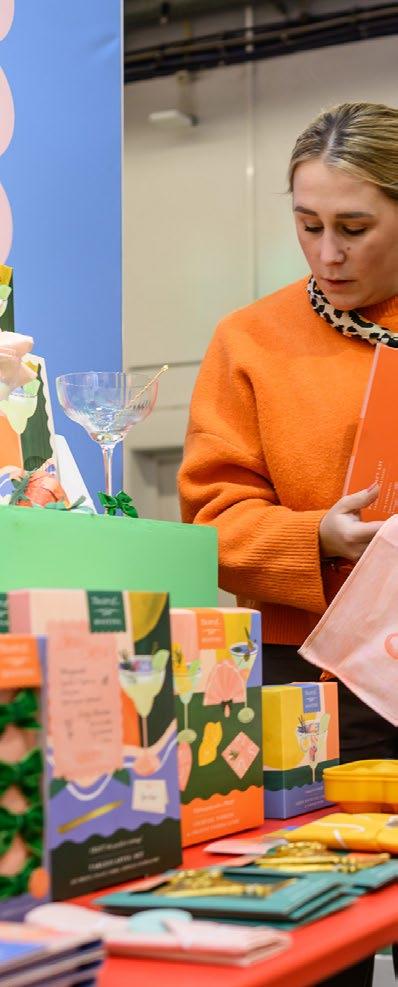
A big focus at the fair was of course on modern lifestyles, seasonal decoration and creative DIY products that stimulate consumer demand, but with the global consumer goods industry transforming at a rapid rate, Ambiente highlighted that what matters most now to store owners are not large, established brands, but nimble, small and medium-
sized enterprises that drive bold innovation – from artificial intelligence to new business models.
Most visitors to Ambiente attend the fair not only to source new products but to learn from the fair all the trend insights they gleam by partnering with leading designers and architects. These trend setters look at how consumers want to live, work and dwell and which colours, shapes and materials they’ll be craving in the coming years. From their collective experience the fair presented three directions: Brave, Light and Solid.
Brave celebrates the joy of experimentation using contrasting materials and techniques to form unexpected collaborations. It’s here that craftsmanship meets
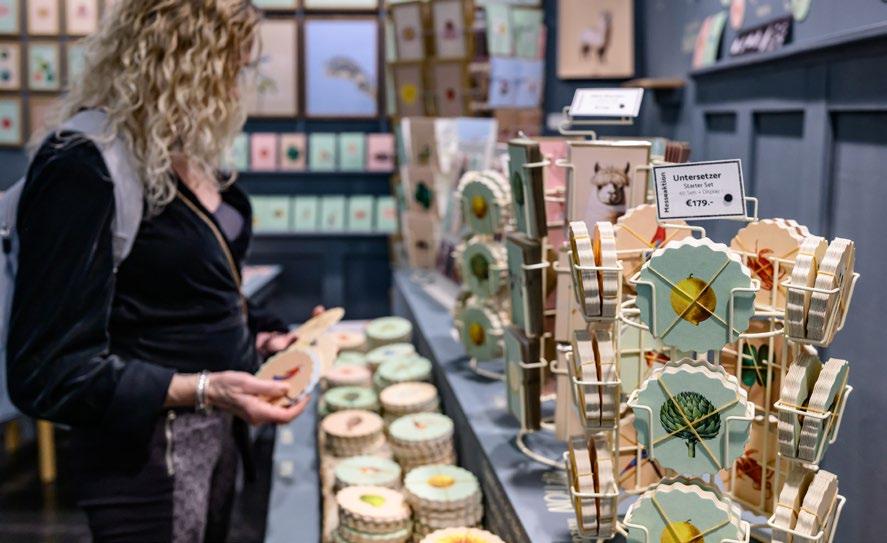
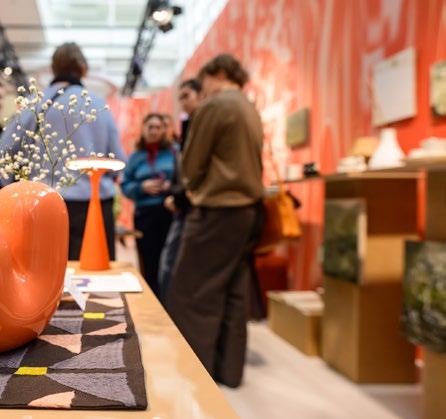
technology and where retro elements meet digital transformation, backed by playful colours and expressive shapes. Figurative motifs such as animal depictions or floral prints underscore the narrative character of this trend.
Light brings clarity and ease with transparent, flowing materials and subtly dynamic structures. Pastel tones, silvery surfaces and shimmering effects alongside designs that seem weightless combine to
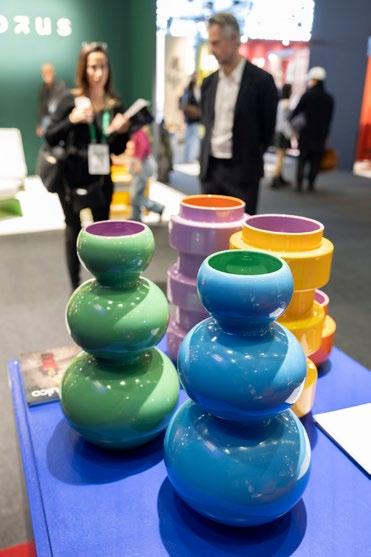
evoke an atmosphere where delicacy and strength meet in harmonious balance.
Solid responds to the desire for lasting yet versatile trends with modular furniture, clean forms and a bold colour palette. At the same time, unconventional materials, recycled resources and geometric structures introduce a fresh modernity to this traditional assortment. Solid combines functionality with self-assurance and places quality and sustainability at the centre.
Ambiente, Christmasworld and Creativeworld will take place at the Frankfurt Exhibition Centre from January 29 to February 2, 2027, in Frankfurt, Germany.
The Compass Talks will once again kick off the event on January 28. Visit ambiente.messefrankfurt.com for more details.

By Natalie Hammer Noblitt
Brick-and-mortar retail’s growing reliance on artificial intelligence (AI) isn’t a cause for worry, experts advise. Nearly 90 percent of retailers say AI has positively impacted their revenue, according to the Retail AI Council (retailaicouncil.com). They also report that AI-enabled e-commerce is projected to reach $22.6 billion by 2032. The question isn’t whether
retail will embrace the power of AI, because it already has wholeheartedly. Now is the time to learn how AI can maximize sales in both physical stores and online.
Small and medium-sized retailers don’t need to be intimidated by AI, says expert Tony Moroney, co-founder of Access CX and a
AI strategy, customer service and transformation advisor.
There are many ways retailers can use AI to enhance the customer experience and automate routine tasks. Those strategies are evolving quickly, creating a retail environment where AI is ready to react and take on new meaning for retailers and shoppers.
A retail report released at the beginning of this year shows that retailers around the globe are adopting AI and investing in technology in big numbers. The study, backed by tech company Kyndryl, says that AI and tech are effective at handling in-store tasks, like inventory precision, stockkeeping and other data-driven decisions. But it also states that getting back to retail basics is the most important goal for brickand-mortar stores, whether they use AI. Agility on the store level is important because the study found this is still where most sales are happening around the world.
“Retail is entering a critical era
where every technology investment must prove its value,” says Rachel Calhoun, global vice-president for retail at Kyndryl. “Retailers have spent years layering new technology atop legacy systems, but this next year demands a shift from expansion to integration. Those that balance physical operations with digital intelligence, while deploying responsible agentic AI, will set the pace for the future.”
And what is agentic AI, you may ask? That’s where AI really moves forward to interact with data and complete goals, acting as an agent.
“We didn’t have laptops, mobile
There are three common forms of AI and they are:
phones or the internet when I started working,” Moroney says. “AI became ingrained in our lives before we even realized it and now we’re at a point where we’re talking about AI making decisions for businesses and consumers based on what it’s learned about us.”
For years, businesses talked about digital tools transforming their landscapes, but much of that shift simply meant using AI to convert physical processes into digital ones, says Moroney. The distinction with AI, however, is that it’s not passive: AI doesn’t just automate tasks, it automates decisions. However, rest assured, tech is not going to take over or become your brand, Moroney assures store owners.
This type of AI provides datacentric forecasting, such as Netflix’s recommendation engine, which analyzes your viewing history to suggest other shows you’ll enjoy.
This AI generates content text, images and videos. It’s what people think of when they hear about ChatGPT. The output is the end point.
This form of AI is process centered. Instead of just predicting data or expressing it, agentic AI provides context for information against a broader goal and acts on all the decision points along the way. Agentic AI doesn’t wait for commands, but instead takes initiative, learns, adapts and executes with intent all on its own.
One common fear is that AI will eliminate jobs, but that isn’t entirely true. AI excels at repetitive tasks and analyzing large volumes of data, says Moroney, but it does not excel at empathy, context or relationshipbuilding. The goal for using AI, he says, should be augmentation of your staff, not replacement. What it can realistically do is boost productivity by 20 percent. “If you already have 10 staff members, AI can give you the power of 12,” he says. That’s a boost, not a reason to let go of your workforce.
Assigning tasks to AI can be a boon for retailers. Effective strategies include giving it jobs like drafting text for ad campaigns in seconds instead of you spending hours coming up with something, having AI write reports that summarize complaints so you can teach team members how to offer better customer service and using AI to analyze purchasing data to get insights about your shoppers.
All of these steps free up time to let your people focus on what humans do best: building trust, strengthening relationships and delivering meaningful customer experiences.
“AI can do the heavy lifting,” he says. “But it’s still your brand. You’re responsible for the output.”
AI tools, many available for as little as $20 per month in forms like ChatGPT and Gemini, can analyze customer behaviour, summarize phone calls, identify complaint patterns, compare competitor messaging and even refine a brand’s voice. Moroney says that this tech once required enterprise-level budgets but is now accessible to smaller operations. That availability can even out the playing field for independent stores competing with larger retailers.
“Big retailers may spend millions on AI,” says Moroney, “but small retailers don’t need millions to get meaningful benefits. They can be nimbler and use AI to maximize the advantage they already have in
creating customer relationships.”
Analyzing competition is another area where smaller retailers can use AI to differentiate themselves. Looking at a competitor’s website, having AI tools compare it with yours and even comparing your brand voice can give a store valuable insight. One way to use that data is to make sure your brand and voice really stand out — and don’t sound like the big guys, Moroney says.
The gains in competitiveness using AI tools can be sizeable. Companies using AI personalization to attract sales earn 40 percent more revenue than those without, according to a recent study by the Retail AI Council. AI chat leveraged to provide customized service is associated with four times higher conversion rates.
Unlike large national chains, smaller retailers often know their customers personally and will always provide the best service, says Moroney. AI can amplify that strength rather than replace it.
“We’ve been using AI for years — we just didn’t call it AI,” says Moroney, pointing to recommendation systems we’ve relied on from Netflix and Amazon, as well as tools like Google Maps and Google Translate. Now Chat GTP and Gemini AI services allow small retailers to analyze every transaction, every inquiry and even customer sentiment in real time by simply inputting information into a chat

what they rang about in the first
common complaints, concerns
Another large shift resulting from AI isn’t just about internal productivity — it’s about how consumers are changing how they purchase. Search behaviour is evolving rapidly for everyday shoppers. Instead of typing keywords into search engines and scrolling through links, consumers are increasingly asking AI systems direct questions — and receiving complete recommendations about


“If I say I want to go to Dallas, see a football game, visit a memorabilia store and have a steak dinner, AI won’t just give me links,” Moroney says. “It will hand me a plan. It may even ask if I’d like it to make the bookings.”
That means retailers are no longer just competing for shelf space or search rankings (SEO). They are vying for attention in an
Are you using AI to help improve your business?
If so, email your insights to Publisher & Editor Erica Kirkland at ekirkland@instoremagazine.ca so we can share your success with readers?
Are you interested in learning how to use ChatGTP or Google Gemini?
If enough readers are interested, InStore will host a free webinar to show store owners how easy it is to use these tools, hopefully assisted by store owners who are already using them successfully. Let us know if you’re game by emailing Erica at the above address with the subject line AI!

to be involved — even making the payments. That’s the world that we’re heading into now.”
All vendors are welcome to submit products for a chance to appear in InStore. CLICK HERE to review our editorial submission guidelines and procedures!
The Summer 2026 issue of InStore will focus on product assortments, trends and business articles related to fall and Q4 buying and selling. As a trade publication, InStore’s content is forward thinking, ensuring buyers have plenty of time to purchase the products we feature for their upcoming assortments.

EDITORIAL DEADLINE: MAY 15, 2026
We’re looking for:
• Stocking Stuffers
• Entertaining & Gourmet Food
Home Decor for Fall/Winter
Stationery
InStore’s exclusive advertising program for new and small businesses is MORE AFFORDABLE NOW than ever before. These rates are not published on our website as they are only available to qualifying companies. Email publisher
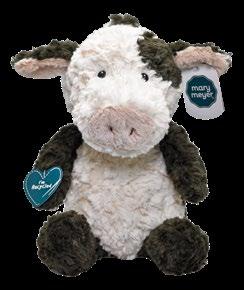

Personal Care & Scented Products
Fashion & Fashion Accessories
Jewellery

Baby & Kid’s Clothing, Books, Toys & Gifts
ADVERTISING BOOKING DEADLINE: JUNE 5, 2026

Advertising in InStore isn’t just about exposure, it’s about about conversion. With three decades of industry experience and two respected titles — InStore Magazine and Giftbeat — our team of photographers, stylists, writers and merchandisers, led by owner Erica Kirkland and art director Gerry Wiebe, a professor of graphic design at Fanshawe College, have worked as a team since the publication’s founding in 2014 and know the market inside and out. Our advertisers rely on us for help with advertising strategies, creating ads, wholesale assortment planning and consistent visibility and brand credibility. Companies who appear in InStore on a regular basis build and grow their retailer base by having direct access to the country’s most engaged audience of independent retailers alongside support from our team of industry professionals.
by
by
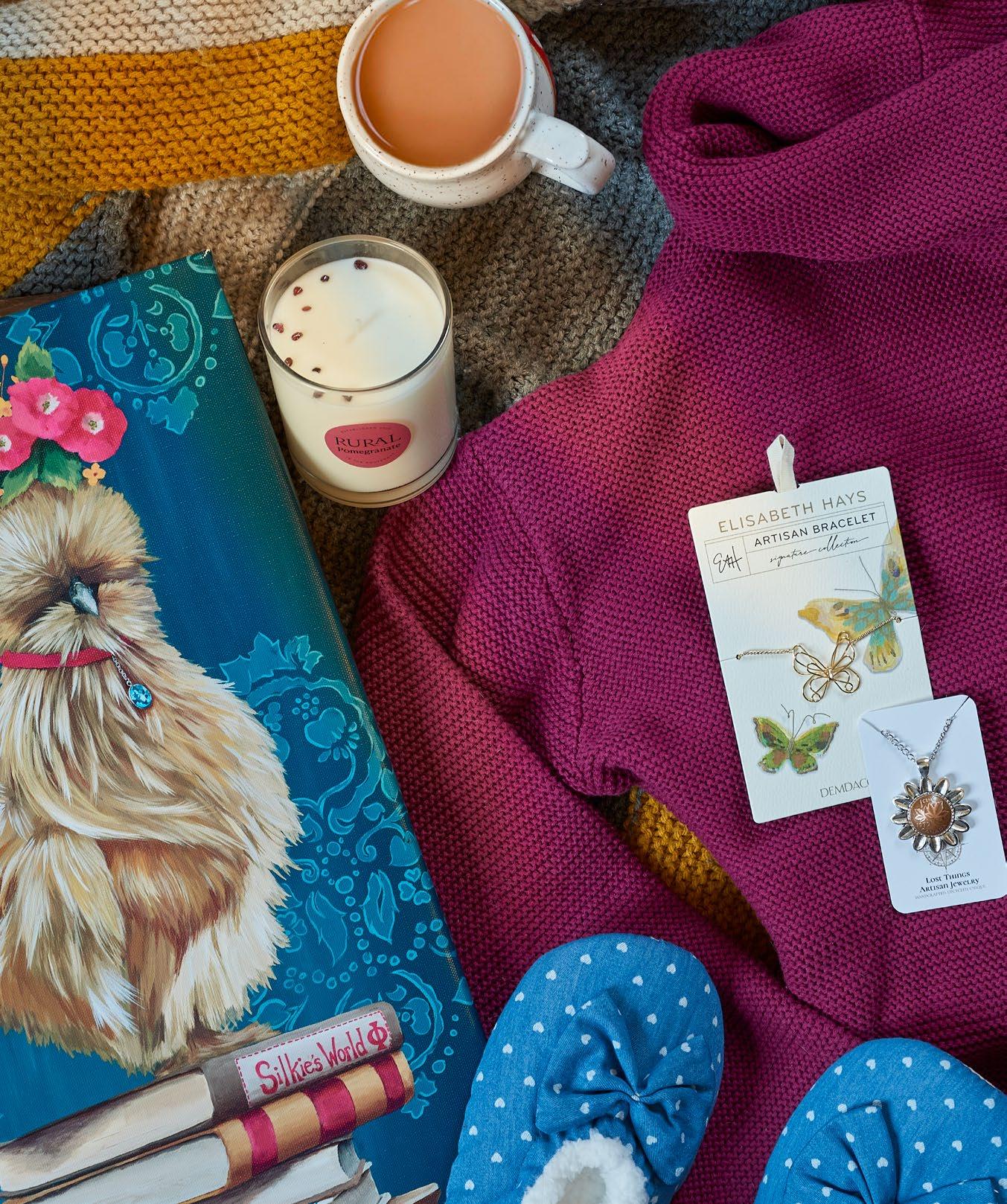
Two curated themed groupings for fall gifting with a fresh take on traditional seasonal hues
After summer, ease the transition into the season’s darker hues by introducing mid-toned orange, peach and light green assortments first
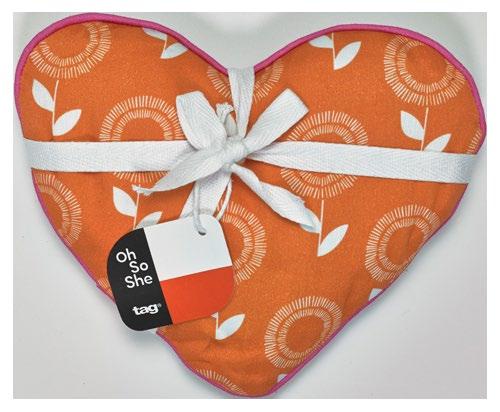
Warming eye and face pillow from Tag, $35 retail, Candym Enterprises, 800-263-3551, www.candym.com
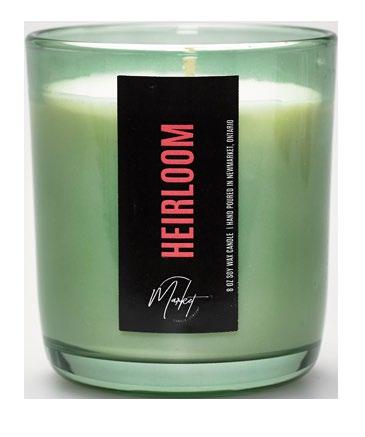
Heirloom nine-ounce soy candle scented with tomato leaf and wild herbs, $36 retail, Market Candle Company, 905-2355559, www.marketcandlecompany.com
Click on any item for direct access to these vendors and fresh inventory!

Max reading glasses in Honey from Looblapp, $57.50 retail. Distributed by Candym Enterprises, 800-263-3551, www.candym.com
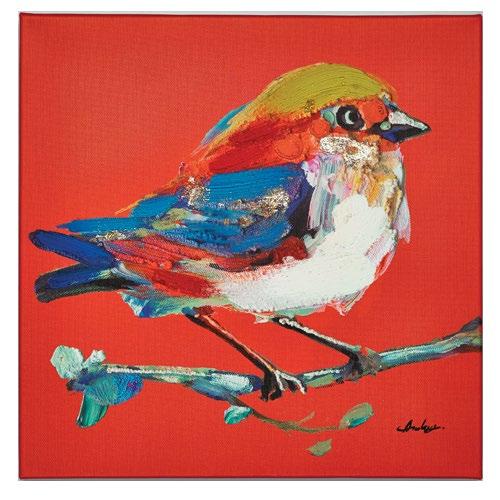
Bold Plumage, a hand-embellished 16-inch by 16-inch piece of canvas art, $43.99 retail, Streamline Art, streamlineart.com
Mangiacotti Fall Floral foaming handwash, $16.99 retail, Boston International, bostoninternational.com
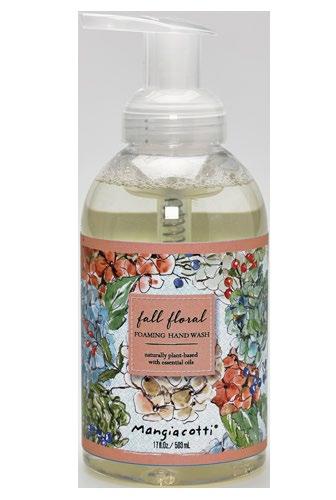
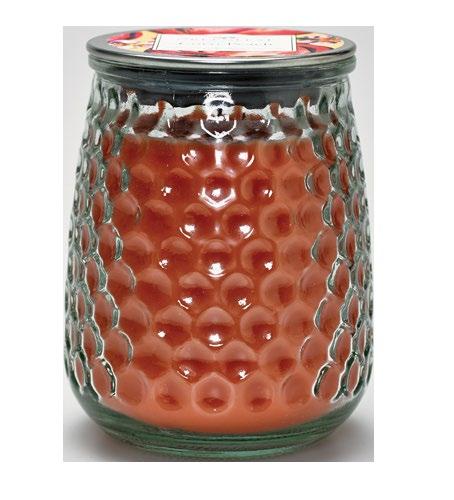
Greenleaf jar candle, $38.50 retail, Distributed by Candym Enterprises, 800-263-3551, www.candym.com

Penny heart necklace on an 18-inch copper chain. Handmade in Canada, $50 retail, Lost Things Artisan Jewelry, 250-858-7738, lostthingsartisanjewelry.faire.com

A beeswax candle gift set that comes boxed with four candles and a glass tray. Made in Canada. $20.95 retail, Tu-Bees Honey, www.tubeeshoney.com

We anchored this assortment with a deep, solid-coloured plum sweater from a small Canadian maker.
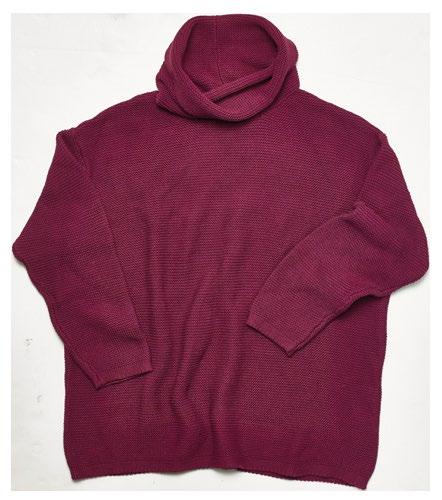
Dog Walker Sweater ethically made from organic cotton and pre-washed. Available in five colours for early fall. $94 retail, Echo Verde, www.echoverde.com
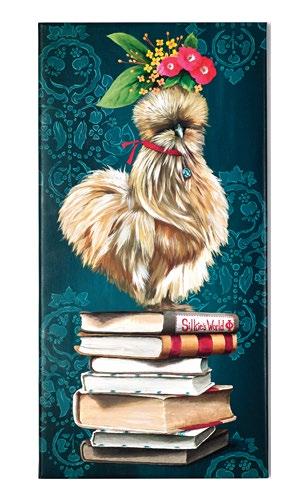
Brown Silkie
10-inch by 20-inch canvas art, $47.99 retail, Streamline Art, streamlineart.com
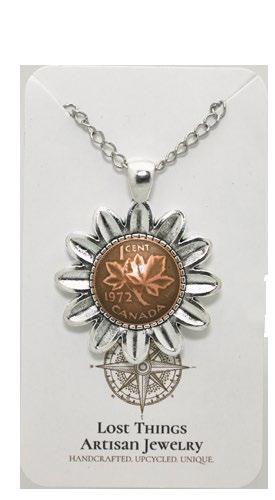
A deep plum sweater from Canadian maker Echo Verde paired with medium denim blues makes for an intense colour palette perfect for later fall assortments
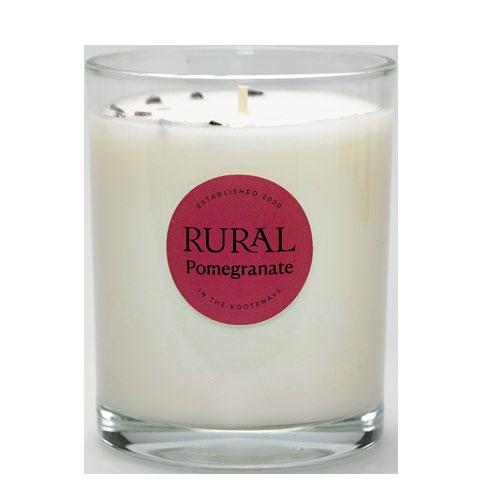
Our Team is Loving! Our crew is currently obsessed with these deliciously scented candles.
Pomegranate glass candle sprinkled with garnet gemstones and scented with a range of rich notes, $42 retail, Rural Candles, www.ruralcandles.com

Shampoo, conditioner and sea
salt hair spray in Inis’s signature beachy fragrance. Inis Energy of the Sea, inis.com
Penny floral necklace on a 20-inch stainless steel chain. Handmade in Canada, $60 retail, Lost Things Artisan Jewelry, 250-858-7738, lostthingsartisanjewelry.faire.com
Click on any item for direct access to these vendors and fresh inventory!
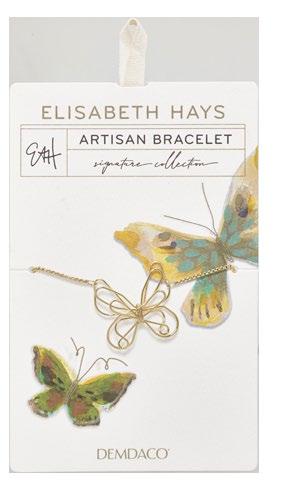
Butterfly charm bracelet from Demdaco, $45.50 retail. Distributed by Canfloyd, 800-263-3551, www.canfloyd.com
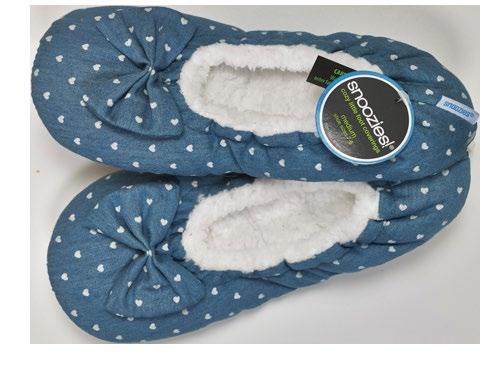

Ballet-style slippers from Snoozies in denim print. Distributed by Cross Border Sales Agency, 905-417-6332, www.crossbordersalesltd.com
Cotton everyday bag, $14 retail, Ellembee, www.ellembeegift.com

BY SAMANTHA CONNER
If you’ve ever stared at a rack full of last season’s styles and thought, “What am I going to do with all this?” you’re not alone. Every boutique owner faces the challenge of managing slow-moving or unsold inventory. But the good news? That stock doesn’t have to collect dust or drain your cash flow.
Here are the steps you need to take to turn unsold inventory into opportunity — through smarter buying, creative marketing and proven resale strategies. Whether you’re a brick-and-mortar, online or mobile boutique, these tips will help you clear space and protect your profits.
• Pull a quick report to see what’s been sitting the longest — 90 days, 120 days or more.
IDENTIFY:
• What sizes or colours are left
• Which categories aren’t moving?
• What is your total cost and potential markdown value?
Sometimes your shoppers just need to see it differently. Move the product to a new spot in your store, pair it with fresh arrivals or feature it in a themed display.
TRY THIS:
• Create an “Under $30” or “Last Chance” rack near checkout
• Add a “Style it Three Ways” post on social media featuring the unsold item
• Mix your sale lineup with new arrivals to increase exposure
Turn older items into value packs. FOR EXAMPLE:
• Pair a slower-moving tee with a trendy accessory or a candle with a tea towel
• Offer “Buy One, Get One 50% Off” bundles
• Create “Mystery Bags” that feel fun and exclusive
These creative offers keep customers engaged while helping you move multiple pieces at once.

Rather than random markdowns, make it an event! Your audience loves the excuse to shop. TRY:
• A “Clear the Rack” weekend
• An “End of Season Warehouse Sale”
• If your regular audience isn’t biting, meet new customers where they’re already shopping.
• Post in Facebook Buy/Sell groups or community swap pages
• List products on discount apps like Poshmark
• Join a local pop-up or market event
If items just won’t move, consider donating them to a local women’s shelter, school fundraiser or non-profit. Not only does it free up space but it supports your community and may qualify as a tax deduction.
Getting rid of unsold inventory isn’t just about clearing shelves — it’s about learning from it.
ASK:
• Did I overbuy a certain category?
• Did my pricing, timing, or marketing miss the mark?
• Can I plan better with my next buying cycle?
Unsold inventory happens to everyone but it doesn’t have to define your profit margin. Whether you re-style, bundle, mark down, or donate, the key is to move it strategically and learn from it.
Samantha Conner is the director of wholesale at The Boutique Hub, where she connects brands and retailers through education, strategy and community. With over a decade of experience in sales and boutique development, she’s passionate about helping independent retailers buy smarter, sell faster and scale with confidence both in-store and online. theboutiquehub.com
This article originally appeared in the February 2026 issue of our U.S. sister publication for independent gift retailers, Giftbeat. inStore. Spring
By Nickeisha Lewis
Seasonal décor is essential to the retail store experience. When customers walk into a store that reflects the time of year, it instantly feels more engaging and memorable. Updating your décor with the season is more than just an aesthetic choice, it’s a smart retail strategy.
Fall décor, in particular, is the preparation season for the biggest season in the retail year. A strong fall display can take you through Thanksgiving and Black Friday.
Done well, seasonal décor enhances the in-store experience, encourages walk-ins and impulse purchases. Done poorly, it simply takes up valuable space without delivering a return. That’s why it’s important to invest in décor pieces that not only look good, but also work hard for your store.
Your storefront sets the tone before customers even step inside. Updating outdoor planters with faux grass, fall flowers, colourful foliage or a few decorative pumpkins is a simple investment that immediately signals the change of season. The benefit is curb appeal. A welcoming storefront draws people in and increases foot traffic, which is the first step toward more sales.
Wooden crates, carts, or barrel displays are another smart investment. These pieces add height, texture
and structure to merchandising tables while reinforcing a cozy fall aesthetic. From an ROI perspective, they are extremely versatile. They can be reused year after year, work across multiple product categories and help create layered displays that highlight merchandise and help customers to discover more products.
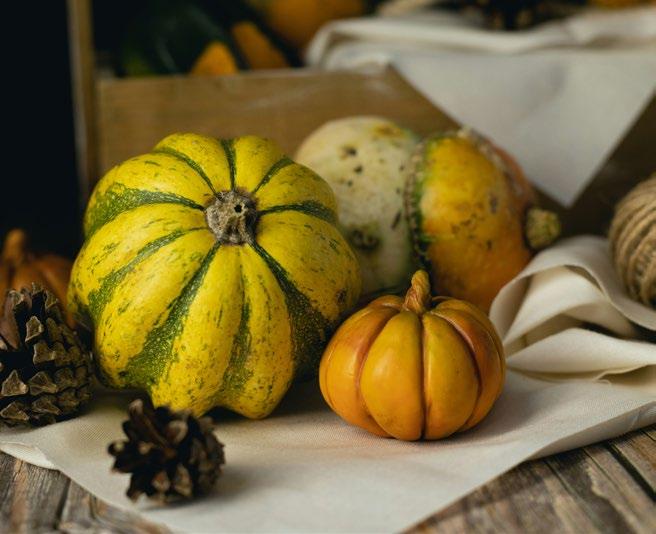
Flowers are a powerful detail in a retail space. A vase filled with autumn foliage in shades of rust, copper or burgundy instantly warms up a space. Placing these arrangements at cash counters, table displays or in fitting room areas creates a welcoming environment without taking up valuable retail space. Implementing them is subtle but effective because they soften the space and create moments of visual interest that elevate the overall store experience.
Too many retailers overlook the power of scent in a retail space. A room diffuser with woody or spicy



their tracks, it becomes one of your most valuable marketing tools.
For retailers looking to make a bigger statement, consider one standout focal piece, such as an oversized decorative tree made with natural trunks and artificial autumn foliage. A feature like this can anchor your window or act as the centrepiece of your store. The ROI comes from the visual impact. A strong focal point becomes the display for customers’ to photograph and share.
Pumpkins, gourds and squash are classic fall décor for a reason - they work across the entire season, from Halloween to Thanksgiving. Lining pumpkins and gourds in your window or incorporating them into product displays creates instant seasonal storytelling and makes your store feel festive and timely.
Layer pinecones, twigs, leaves, ornamental corn and hay bales into your displays. These materials add texture while helping frame your products. The benefit here is visual depth as natural materials help guide the eye toward the merchandise and make displays feel richer and more intentional.
notes creates a cozy fall atmosphere that customers will feel the moment they walk in your doors. Scent marketing works because it connects emotionally with shoppers and can make the environment more memorable, encouraging customers to linger longer in the store.
Your windows are where fall décor can really shine. Decorative trees in autumn tones, climbing faux foliage or branches with reddish leaves help bring movement and life to a window. Larger visual elements, such as a faux tree, act as focal points that capture attention from the street and draw people inside. When your window display stops people in
Lastly, seasonal signage should never be overlooked. When your messaging matches the mood of the season, it ties the entire display together and reinforces the story you’re telling.
In closing, when choosing fall décor, focus on a few pieces that are large enough to make an impact and durable enough to bring out year after year. The right seasonal investments don’t just decorate your store, they enhance the customer experience, strengthen your brand and ultimately help drive sales.
Nickeisha Lewis is the founder of Nola Designs, a retail interior design firm based out of Kitchener, Ont. Nickeisha and her team focus on helping femaleowned businesses take their retail stores to the next level. www.noladesigns.ca