A Servant Leader Shaping Communities Through Service, Mentorship, and Real Estate Influence
Eric Lawrence Frazier, MBA CEO andPublisher Office: (800) 401-8994 Ext. 703
Email: eric.frazier@thepowerisnow.com Website: www thepowerisnow com
Leonna Rose Berame Magazine Creator
Sharon Rose Barellano Administrator / Graphic Designer
Alvin Magua Michael Mbugua Website manager
Managing Writer Writer
HEADQUARTERS
The Power Is Now Media Inc.
37396th StreetRiverside, CA92501
Ph: (800) 401-8994 | Fax: (800) 401-8994
info@thepowerisnow com www.thepowerisnow.com
IMPORTANT STATEMENT OF COPYRIGHT:
HEADQUARTERS
The Power Is Now Media Inc 3739 6th Street Riverside, CA 92501
Ph: (800) 401-8994 | Fax: (800) 401-8994
info@thepowerisnow.com www thepowerisnow com
The Power Is Now Magazine™ is owned and published electronically by The Power Is Now Media, Inc Copywrite 2022 The Power Is Now Media Inc All rights reserved “The PIN Magazine” and distinctive logo are trademarks owned by The Power Is Now Media, Inc.
“ThePINMagazine.com”, is a trademark of The Power Is Now Media, Inc
“Magazine.thepowerisnow.com”, is a trademark of The Power Is Now Media, Inc. No part of this electronic magazine or website may be reproduced without the written consent of The Power Is Now Media, Inc
Requests for permission should be directed to: info@thepowerisnow com
A Servant Leader Shaping Communities Through Service, Mentorship, and Real Estate Influence
ARTICLES
Alabama: Debunking the “You Need 20% Down” Myth Modern Paths to Homeownership
Alaska: Remote-Area Utility Disclosure Laws and Buyer Protections (2025 Update)
Arizona: New Groundwater/Water-Use Rules How They Affect Subdivision Feasibility)
Arkansas Real Estate and Economic Trends 2025: Growth Driven by Affordability and Migration
California Real Estate and Economic Trends 2025: Resilience, Regulation, and a Shifting Housing Landscape
Colorado Real Estate and Economic Trends 2025: Balancing Growth, Affordability, and Innovation
Connecticut Real Estate and Economic Trends 2025: Finance, Higher Education, and the State’s Property Revival
Delaware Real Estate and Economic Trends 2025: Growth Driven by Strategic Location and Steady Demand
Florida: Flood Insurance Reforms (2025) and How They Alter Closing Costs
Georgia: Georgia Residential Market Data Atlanta Metro and Secondary Cities (2025)
Hawaii: Leasehold vs. Fee
Simple A 2025 Legal and Financial Primer for Buyers
Idaho: Boise’s MicroMarkets That Outsmart the Boom: Where to Hunt for Value in 2025
Illinois: 2025 Property-Tax Reassessment Trends Around Cook County
Indiana: Real Estate Data
Affordability, Inventory, and New Builds
Iowa Real Estate and Economic Trends 2025: Agricultural Resilience Meets Urban Expansion
The Midwest’s Hidden Affordability Champion — How Wichita and Topeka Are Quietly Gaining Ground
Kentucky Real Estate and Economic Trends 2025: The Bluegrass Rebound
Louisiana Real Estate 2025: Post-Storm Elevation Grants and Market
Coastal Elevation Grants and Flood Mitigation Credits (2025 Practical Guide)
South Carolina: FestivalCalendar Pricing — How to Monetize Short-Term
South Dakota: Housing Metrics Stability & Investor Appeal
Tennessee: Market Data Nashville Effect & Statewide Spillover
Utah: Housing Metrics
Rapid Demand & New Supply Constraints
Vermont: Market Data — Second-Home Demand & Inventory
Virginia: Real Estate Data
— Northern VA Pressure & Tidewater Markets
West Virginia: Housing Data
— Affordability and Redevelopment
Washington: State Market
Data — Seattle Recovery & Suburban Expansion
Wyoming: Real Estate Snapshot — Low Density, Resource-Driven Markets
Wisconsin: Market Data Madison & Milwaukee Versus the State
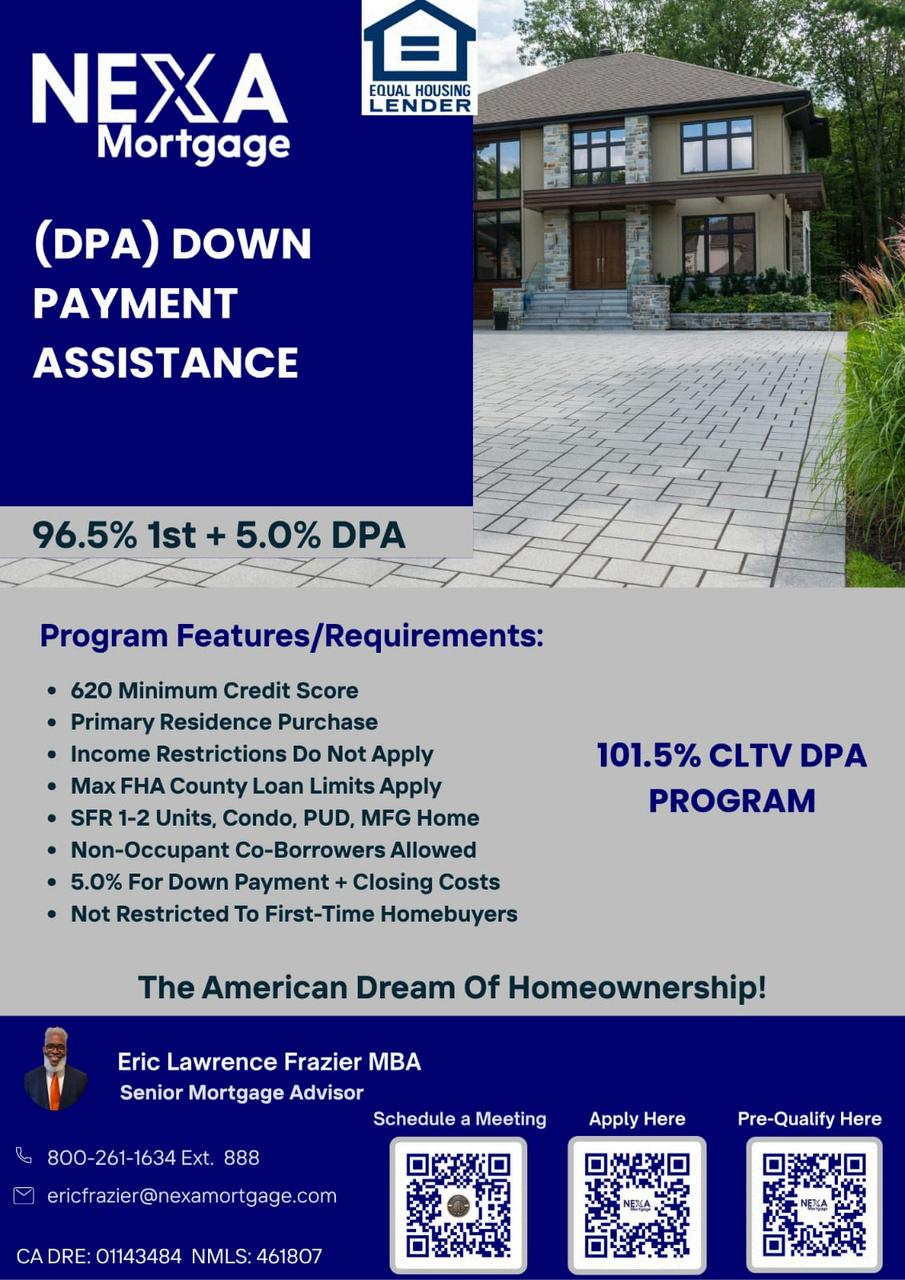
BE YOUR CLIENT’S LINK TO DOWN PAYMENT ASSISTANCE
Withaffordabilityandsavingtobuya
homebecomingmoreandmoredifficult for California homebuyers, the demand for financial assistance is at a record high. By participating in the GSFA programs, you canopenupawholenewrevenuestream, become a down payment assistance expertANDhelpmorehomebuyers.
As we welcome November, a month that often calls for reflection, gratitude, and renewed purpose, The National Magazine continues its mission to celebrate leadership, service, and knowledge that make lasting impact. This issue, dedicated to stories of integrity and transformation, highlights individuals and insights that move both hearts and markets.
Our Cover Person of the Month, Alonzo Duncan III, perfectly embodies the spirit of this November edition. His remarkable journey from correctional officer to parole agent, and now to an independent security consultant and mentor reflects a lifetime of dedication to service, discipline, and community uplift For nearly three decades, Alonzo served with distinction in law enforcement, guided by faith, mentorship, and a deep commitment to helping others find their own purpose Today, he continues to give back as a speaker, volunteer, and advisor proving that retirement from a profession is never retirement from purpose. His story reminds us that leadership is measured not only by achievement, but by the number of lives elevated along the way.
This November issue also brings together vital developments from across the housing and real estate industries. We feature the latest press releases and policy briefings from the National Association of REALTORS® (NAR), the National Association of Real Estate Brokers (NAREB), Fannie Mae, Freddie Mac, and other national housing authorities These updates spotlight critical shifts shaping the American housing landscape from affordability and mortgage innovation to regulatory reform and fair housing enforcement. Collectively, they paint a clear picture of a market that continues to adapt and grow despite persistent challenges.
Equally significant, we proudly introduce the 50-State Real Estate Market Update Series a comprehensive editorial initiative examining the local forces shaping housing markets in every corner of the nation. Each state feature offers a data-rich, policy-aware, and forward-looking perspective on the trends driving property values, new construction, rental activity, and economic development.
From Alabama’s evolving low-down-payment pathways to California’s new property tax and rent-control measures, and from Arizona’s updated groundwater regulations to Delaware’s softening coastal inventory, each piece captures the unique blend of opportunity and complexity that defines today’s real estate climate. Our goal is simple but powerful: to bring our readers the most relevant and credible state-level insights that connect economic data, legislation, and real-world housing experience.
This series is not just about numbers—it’s about people It’s about the agents advising first-time buyers, the families seeking stability, the developers adapting to sustainability standards, and the communities redefining growth. By mapping the intricate landscape of U.S. housing, we aim to help readers make informed, confident decisions that create generational wealth and strengthen the fabric of neighborhoods across America.
November is also a fitting time to think about gratitude and growth Despite fluctuating interest rates, inflationary pressures, and supply constraints, opportunity remains for those prepared to act with strategy and knowledge. Whether you are a homeowner, a housing advocate, or a real estate professional, this issue offers both perspective and practical insight to guide your next move.
As you explore the inspiring story of Alonzo Duncan III, dive into the policy updates from our nation’s leading real estate organizations, and review the 50-state data analyses, I invite you to share what you learn Discuss it, post it, and bring others into the conversation. Real progress in housing and in leadership begins with information shared and acted upon.
Thank you for reading and for continuing to make The National Magazine your trusted source for real estate insight and inspiration. Together, we’re not just tracking markets we’re shaping the future of homeownership and leadership across America
Happy
Reading EDITOR IN CHIEF
Eric Lawrence Frazier, MBA
Your trusted advisor in business and wealth
www ericfrazier com | www thepowerisnow com | www ericfrazier net NMLS #451807 | CA DRE #01143484
A Straightforward Guide Every Seller Should Read Before Listing
If your listing isn’t getting traction, here's what you need to realize Homes are sitting longer today And one of the reasons why?
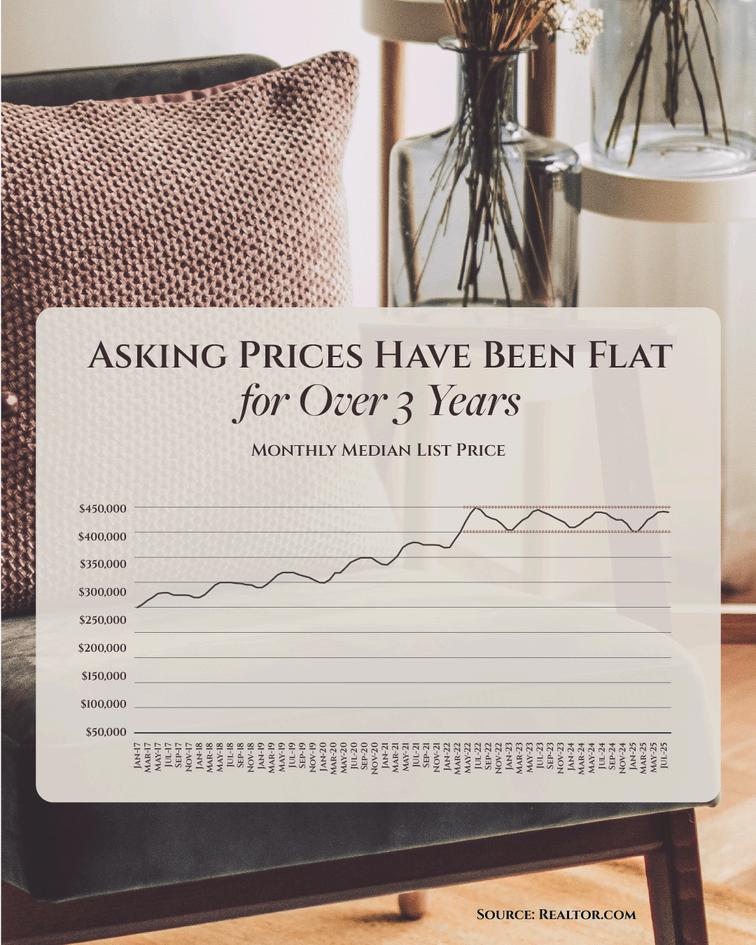
Overpricing like it’s 2021 again. Unlike a normal market where list prices keep rising, they’ve actually been flat for over 3 years. And that’s a change worth paying attention to
List prices have leveled off because buyers are being more selective as inventory has grown over the past few years There are more homes on the market, and sellers need to take note.
So, if your home isn’t getting showings or offers, take it as a sign to check in with your agent A small price adjustment could be the move that gets buyers through the door
Because in a market like this you can’t just wait it out and hope for the best. Patience won’t sell your house. But the right price will.
Eric Lawrence Frazier, MBA - Principal advisor
Debunking the “You Need 20% Down” Myth Modern Paths to Homeownership
For many first-time homebuyers, the idea of needing a full 20 % down payment can feel like a wall a barrier to entering the housing market. In the state of Alabama, however, that notion is becoming increasingly outdated. Across the market, lenders and state programs are offering pathways to homeownership with significantly lower down payments, and even in some cases, none at all, for qualified buyers. By understanding what’s available in Alabama as of October 2025, prospective homeowners can aim toward purchasing a property with far less upfront cash than once thought necessary. This article will explore the range of low-down-payment and state-sponsored programs in Alabama, detail how creative seller-financing and alternative underwriting approaches are being used, and provide practical steps for buyers to take advantage of these opportunities.
Low-Down Mortgages and State Assistance Programs
One of the most significant tools in Alabama’s homebuying toolkit is the assistance offered through the Alabama Housing Finance Authority (AHFA). Their “Step Up” program provides a first mortgage along with a deferred second loan to cover down payment and closing costs. Eligible buyers may receive up to $10,000 or up to 4 % of the sales price through a 10-year second mortgage paired with a 30-year fixed first mortgage. For firsttime homeowners and lower-income buyers, this significantly replaces the need for a full down payment. Beyond that, the AHFA First Step mortgage revenue bond program offers belowmarket interest rates and pairs with FHA, VA, USDA or HFA Advantage conventional loans.
Other state-wide options include conventional loan programs that allow as little as 3 % down for eligible borrowers. For example, programs like Freddie Mac’s Home Possible® or Fannie Mae’s HomeReady® allow low-income borrowers to put down only 3 % and utilize gift funds or down payment assistance.
And for eligible rural borrowers, the USDA Rural Development Section 502 Direct Loan program allows purchase with no down payment, given income limits, primary residence requirement, and ruralarea eligibility.
Local Programs, Seller Financing, and Creative Strategies
Beyond state-wide programs, many Alabama municipalities maintain their own assistance programs. The City of Huntsville’s Homeownership Assistance Program (HOAP) offers up to $24,999 in down-payment or closing cost assistance via a deferred loan that is forgiven annually over five years. Similarly, Decatur’s H.O.M.E. program will cover half of the minimum required down payment or the closing costs for eligible low-income families within city limits.
On the creative financing side, some buyers are using sellerfinancing or “soft second” arrangements where the seller agrees to carry a second lien (often at low or zero interest) to reduce upfront cash required. While not unique to Alabama, pairing these arrangements with state assistance enhances affordability. Buyers should negotiate with sellers about carrying part of the financing, prorate closing cost credits, or provide purchase incentives in lieu of large down payments.
Eric Lawrence Frazier, MBA - Principal advisor
2. Compare the loan types. If you qualify for a USDA or VA loan, you may be able to purchase with zero down if the property is eligible. Conventional programs allow as little as 3 % down if paired with assistance. The “you need 20% down” rule is no longer universal in Alabama.
3. Leverage local assistance. City-level grants or deferred loans can cover thousands of dollars of upfront costs, significantly lowering what you bring to closing. Local programs often require you to live in the home for five years for full forgiveness of assistance.
4. Negotiate with the seller. Use state and local program approvals as leverage when making offers. A seller may be more willing to carry a second or cover extra costs if you present a serious offer backed by assistance eligibility.
5. Stay conscious of total costs. While down payment size may shrink, you still must be able to afford monthly payments, taxes, insurance, homeowners’ association dues (if applicable), and mortgage insurance premiums (for lower down payment loans). Factor in these costs when calculating the budget.
Conclusion
In Alabama, the long-standing idea that you must put down 20 % to buy a home no longer holds true for a wide range of buyers. With state programs like the AHFA Step Up and First Step offerings, municipal assistance initiatives, and national low-down-payment loan products, qualified buyers can move forward with as little as 0 % to 3 % down. By thoroughly researching eligibility, comparing loan options, engaging in home-buyer education, and positioning themselves strategically with sellers, aspiring homeowners can gain entry into the market sooner and with fewer barriers at the door If you’re ready to buy, make the call to a participating lender today and see how these pathways might apply to your situation don't let the old 20 % myth hold you back
Eric Lawrence Frazier, MBA - Principal advisor
Have you heard? 1 in 5 sellers are dropping their asking price right now.
And that opens the door for buyers like you to negotiate for a better price. You’ve got more leverage than you’ve had in years.
Want to know which negotiation tactics are actually working for buyers here in our local market? Contact me and I’ll give you the details
Eric Lawrence Frazier, MBA - Principal advisor
REMOTE-AREA UTILITY DISCLOSURE LAWS AND BUYER PROTECTIONS
(2025 UPDATE)
Purchasing property in Alaska’s remote regions brings unique rewards pristine landscapes, expansive views, and a sense of true independence. But it also carries unique risks, especially when it comes to utilities and infrastructure. In remote-area markets, buyers may face off-grid or semi-offgrid systems, variable utility service, and limited resale markets. Over recent years, the state of Alaska has strengthened disclosure laws and buyer
protections for such purchases, making it more important than ever for buyers and agents to understand what must be disclosed, how underwriting is affected, and what to watch for when assessing resale risk. This article will explain the key disclosure and utilityservice laws, examine how those rules affect underwriting and resale viability, and provide practical guidance for buyers navigating Alaska’s remote property market in 2025.
Eric Lawrence Frazier, MBA - Principal advisor
Disclosure Requirements and Remote Utility Risks
Under Alaska Statute 34.70 (AS 34.70.010–.200) sellers of residential real property must deliver a completed disclosure statement to buyers before a written offer is made or allow the buyer an early termination window if the statement is provided later. That statement covers a broad array of items: structural systems, plumbing, heating, water supply, and utilities. The form explicitly includes a section on utility service, drainage, and water systems, which in remote regions often means off-grid power, well or spring supply, septic or holding tanks, and shared utility/supply arrangements. In remote Alaska, utility frameworks often fall outside the mechanised grid, and buyers may encounter costs and servicing risks they do not typically face in urban markets.
For example, some remote properties rely on diesel generators, solar/battery systems, private water collection or hauling, and bulk propane or oil heating. These systems may require regular maintenance, qualified technicians who may only travel seasonally, and higher per-unit cost structures. When these conditions exist, the disclosure statement must reflect known defects or conditions. A seller who provides full and accurate disclosure under AS 34 70 avoids liability for previously known defects.
Underwriting, Resale Risk and Remote Utility Factors
From an underwriting perspective, lenders and insurers scrutinise remote-utility properties more closely due to the added risks: service disruptions, high replacement/maintenance costs, and sometimes lack of comparable sales all of which affect value and resale potential. Buyers and agents must ensure verification of utility systems: Is the power grid connected? If not, what generation/ storage system is in place?
Who maintains it, and is there documented history? What is the cost of heating and utilities per annum? What level of accessibility applies in winter months (e.g., road access, fuel delivery)?
Additionally, remote-location disclosures are tied to resale risk. When a buyer wants to sell later, potential buyers and lenders will closely evaluate whether the utility systems are sustainable, what the operating costs are, and whether the property’s service history is reliable.
Lawrence Frazier, MBA - Principal advisor
If utilities are unstable or costly, that may reduce buyer pool and increase days on market. In response, Alaska’s updated rules and forms require sellers to highlight known utility issues or rely on approximations (not to withhold facts).
Recent legislative efforts (such as House Bill 257) further expand the duty of licensed real-estate professionals to disclose representation and duties, which indirectly enhances buyer protections in remote areas by raising professional standards for property-condition disclosure.
Buyer and Agent Best Practices
Given the heightened utility and disclosure risks in remote Alaska, here are key practices for buyers and their agents:
1. Obtain the state disclosure form early, review carefully, and ask specific questions about utilities. If the form notes “private generation” or “holding tank”, follow up with service records, maintenance history, and cost details.
2 Request documented utility cost history. What has electricity, heating, fuel, and water cost annually in recent years? Is the property reliant on periodic fuel deliveries? What happens when deliveries are disrupted?
3. Validate accessibility and contingency plans. Remote access may affect utility servicing. Is the road plowed and maintained year-round? Who services the generator, water system, septic?
4 Consider resale viability upfront
Ask: Are there comparable sales with similar utility arrangements? Will a conventional lender approve this property later or is it likely to remain in a limited market segment?
5 Ensure full disclosure of known utility issues or conditions. If the seller knows of past service disruptions, mechanical failures, or deferred maintenance, this must be disclosed to avoid future liability. The buyer may then negotiate credits, repairs, or contingencies.
Conclusion
Buying property in Alaska’s remote areas offers remarkable opportunities but it also presents unique utility- and infrastructurerelated risks that demand careful attention. The state’s disclosure laws provide foundational buyer protections, clarifying that sellers must deliver comprehensive information about utilities and systems. For buyers and agents, the task is rigorous: validating utility reliability, costs, maintenance history, and resale prospects By taking a thorough, informed approach before the offer, you reduce the likelihood of surprises and ensure you enter a transaction with your eyes open. If you’re considering a remote-area purchase, especially where utilities are nontraditional, this is the time to ask the right questions and build certainty around service and value.
Eric Lawrence Frazier, MBA - Principal advisor
HAWAII: HAWAII:
LEASEHOLD VS. FEE SIMPLE A 2025 LEGAL AND FINANCIAL PRIMER FOR BUYERS
LEASEHOLD VS. FEE SIMPLE A 2025 LEGAL AND FINANCIAL PRIMER FOR BUYERS
When buying real estate in Hawaii, one of the first major decisions a buyer must face is the ownership structure: deriving from one of two systems fee simple or leasehold. This distinction carries significant implications for financing, resale, equity-building and risk exposure. As we move into 2025, both investors and owner-occupants in Hawaii’s housing market must understand how leasehold properties
differ from fee simple, how title type affects financing, taxation and exit strategy, and what trends are emerging in the islands’ unique environment. This article presents a clear guide to fee simple vs. leasehold ownership in Hawaii, explores legal and financial considerations, and helps buyers determine when each type may or may not fit their goals.
Understanding Fee Simple vs. Leasehold Ownership
Fee simple ownership constitutes complete ownership of the land and improvements, with the owner holding the title indefinitely. In Hawaii, fee simple is the standard form of residential ownership, offering the broadest rights: to occupy, sell, lease, or mortgage the property.
Leasehold ownership, by contrast, means the buyer owns the structure (home or condo) while leasing the underlying land from a fee-owner for a fixed term often 30 to 99 years. The leaseholder pays ground rent and remains subject to lease provisions, including renewal terms, escalations, surrender clauses, and potential reversion of the land at lease expiry.
(often every 10 years) and less certainty at lease expiration.
2. Financing complexity: Lenders look closely at remaining lease term when financing leasehold properties. Many loan programs require lease terms extending at least five years beyond the mortgage term. The shorter the lease life, the more difficult it becomes to obtain conventional financing.
3. Resale and equity-accumulation: Fee-simple ownership generally offers stronger equity-growth potential and broader market appeal. With leasehold, as the lease remaining term shortens, value may decline. At lease expiration, unless renegotiated, structures may revert to the landowner, undermining long-term investment security.
Legal and Financial Implications
4. Risk and exit strategy: In leasehold deals, buyers need to assess lease escalation clauses, renewal terms, surrender conditions, and the identity of the landowner (often trusts or estates) and their historical behaviour. Fee simple ownership avoids these uncertainties.
1 Up-front cost vs long-term cost: Leasehold properties typically list at significantly lower purchase prices compared to their fee-simple equivalents. For example, recent data show leasehold condos trading at roughly 25 % lower than comparable fee-simple units. But that cost advantage often comes with monthly ground rent, potential escalations
Lawrence Frazier, MBA - Principal advisor
When Each Ownership Type Makes Sense
Leasehold can work well for: buyers seeking lower upfront cost, retirees or part-time residents planning shorter-term use, investors focusing on rental income rather than long-term appreciation, and those comfortable with lease risk and payment obligations.
Fee simple is generally preferred by: full-time owner-occupants, long-term investors, buyers needing conventional financing, and anyone seeking maximum control, resale ease, and equity potential.
Practical Buyer Checklist for 2025
Review the remaining term of the lease (for leasehold): ideally 30+ years beyond expected loan term.
Examine ground rent escalation schedule and historical increases.
Confirm whether the lease allows extension, conversion to fee simple, or full purchase of the land.
For fee simple: verify full title ownership of land and improvements, absence of ground rent obligations, and standard financing eligibility.
Consult financing specialists and local legal counsel experienced in Hawaiian title forms
Build scenarios: compare total cost of ownership (purchase price + ground rent + HOA + taxes) across leasehold vs fee simple over 10- to 20-year horizons
Consider resale market: check how many leasehold properties were listed and sold recently; note financing limitations, days on market and price discounts.
Conclusion
In Hawaii’s real estate market in 2025, understanding ownership structure is essential. Fee simple ownership offers predictable rights, equity growth and financing simplicity. Leasehold may present short-term affordability, but carries unique risks including lease expiration, rent escalation and financing constraints. Buyers who approach the market informed by reading lease documents, calculating total cost of ownership, and aligning ownership type with timeline and intentions position themselves for smoother transactions and stronger long-term outcomes. Whether you’re seeking your permanent island home or a part-time retreat, evaluate fee simple and leasehold honestly and proceed with clarity about which path aligns best with your strategy.
Eric Lawrence Frazier, MBA - Principal advisor
Timing and approval risk: Because these rule changes are relatively new and comment periods and review remain active, developers should build extra buffers into their timelines and contingency reviews into contracts to account for regulatory delays or modifications.
Conclusion
Arizona’s evolving groundwater and water-use regulatory framework marks a consequential shift for subdivision feasibility in desert-adjacent markets. Developers and buyers alike must account for elevated infrastructure and monitoring obligations, altered approval pathways, and the heightened importance of alternative supplies and disclosure. For those preparing to build or invest in 2025 and beyond, the best strategy is to treat water supply not just as a utility cost line item but as a foundation of project viability, financing, and resale value. If you’re involved in development or buying land in Arizona’s rapidly growing desert regions, now is the time to ask hard questions about water certainty and plan accordingly.
Eric Lawrence Frazier, MBA - Principal advisor
Arkansas Real Estate and Economic Trends 2025: Growth Driven by Affordability and Migration
Arkansas has quietly become one of the most promising housing markets in the southern United States. As larger urban areas in neighboring states like Texas and Tennessee become increasingly expensive, buyers and investors are turning to Arkansas for its affordability, stable economy, and expanding job opportunities. In 2025, the state continues to attract both new residents and businesses, making its real estate market a reflection of balanced growth and steady demand.
Economic Overview
The Arkansas economy in 2025 has shown consistent expansion, anchored by manufacturing, agriculture, and a growing tech presence.
The state’s GDP growth has been moderate yet stable, supported by increased industrial investment and federal infrastructure spending. Unemployment remains low hovering around 3.5% thanks to job creation in logistics, healthcare, and advanced manufacturing.
Northwest Arkansas, home to major corporations like Walmart, Tyson Foods, and J B Hunt, remains the economic powerhouse of the state. The region’s expanding business ecosystem continues to attract skilled workers, creating secondary growth in real estate development and commercial infrastructure. Meanwhile, central Arkansas, particularly Little Rock and its surrounding suburbs, has seen diversification in financial services, education, and health industries, further stabilizing the state’s job market.
Rural regions, while slower to rebound, are benefiting from new infrastructure initiatives and broadband expansion that have encouraged small business growth and remote work opportunities. These efforts are gradually bridging the urban-rural economic divide that has long characterized Arkansas
Real Estate Market Performance
The Arkansas housing market in 2025 demonstrates a favorable combination of affordability and rising demand. Median home prices have increased to around $245,000, representing a year-over-year growth rate of approximately 6%. This moderate price appreciation is drawing attention from first-time buyers and investors who are priced out of costlier southern metros.
Lawrence Frazier, MBA
Principal advisor
Rental markets are also tightening across the state, particularly in Fayetteville, Bentonville, and Little Rock, where increased student populations and workforce migration have pushed average rents to nearly $1,250 per month, a significant rise from previous years Vacancy rates have dropped to their lowest in nearly a decade, prompting developers to ramp up multifamily construction projects.
One key factor supporting real estate growth in Arkansas is its low property tax rate one of the lowest in the country which continues to be a magnet for retirees and investors alike The combination of affordable housing, reasonable taxation, and quality-of-life amenities has made Arkansas particularly appealing for those seeking a slower-paced yet economically stable lifestyle.
Rural regions, while slower to rebound, are benefiting from new infrastructure initiatives and broadband expansion that have encouraged small business growth and remote work opportunities. These efforts are gradually bridging the urban-rural economic divide that has long characterized Arkansas.
Real Estate Market Performance
The Arkansas housing market in 2025 demonstrates a favorable combination of affordability and rising demand. Median home prices have increased to around $245,000, representing a year-over-year growth rate of approximately 6% This moderate price appreciation is drawing attention from first-time buyers and investors who are priced out of costlier southern metros.
Eric Lawrence Frazier, MBA - Principal advisor
Rural regions, while slower to rebound are benefiting from new
Regional Housing Insights
Northwest Arkansas:
The Fayetteville-Springdale-Rogers metro remains the strongest housing submarket in the state Median home values have crossed the $300,000 threshold, but the region still ranks among the most affordable tech and corporate hubs in the country. Strong population inflows, largely due to job growth and the University of Arkansas’ expanding footprint, have created sustained housing pressure
Central Arkansas:
In Little Rock, housing activity has rebounded following a brief cooling in 2023 Downtown revitalization and suburban expansion in areas like Bryant and Benton have created a healthy balance between new construction and existing home sales The demand for single-family homes continues to outpace supply, though modest price appreciation and new listings have helped keep the market competitive but accessible.
Eastern and Southern Arkansas:
These regions remain slower in real estate activity, primarily due to limited economic diversification. However, local governments are introducing incentives for property rehabilitation and rural development to attract investors interested in long-term gains from affordable land acquisition and renovation projects
Market Challenges and Opportunities
units and build-to-rent communities in suburban areas, which are yielding steady returns due to strong rental demand The state’s ongoing investments in highway expansion, broadband access, and industrial development are expected to drive further population and housing growth through 2026.
While Arkansas’ housing market remains one of the most stable in the South, it is not without challenges. Rising construction costs and limited labor availability have slowed down the pace of new housing developments. Additionally, as mortgage rates fluctuate between 6.5% and 7%, affordability is being tested, particularly for first-time buyers
Nevertheless, opportunities abound. Investors are increasingly focusing on small multifamily
The growing emphasis on sustainability is another noteworthy trend. Several developers in Bentonville and Fayetteville are experimenting with energyefficient housing designs, leveraging Arkansas’ lower construction costs to build green-certified homes that appeal to younger, ecoconscious buyers
Economic Outlook for 2025–2026
Looking ahead, Arkansas’ economic trajectory is set to remain strong. The combination of an affordable cost of living, pro-business policies, and steady job creation makes the state a favorable environment for both residential and commercial real estate. Population growth though moderate compared to Texas or Florida is expected to accelerate as more remote workers and retirees relocate to the state seeking lower living expenses.
Consumer spending remains solid, supported by rising wages and increased employment participation. Inflationary pressures have eased and h a f c
onclusion
In 2025, Arkansas stands out as a model of steady economic progress and sustainable housing growth. While it may not experience the explosive booms seen in larger southern markets, its balance of affordability, opportunity, and livability positions it as a reliable choice for buyers and investors alike. From the thriving business centers of Northwest Arkansas to the revitalized neighborhoods of Little Rock, the state’s real estate market continues to mature supported by solid fundamentals, community investment, and an economy that’s quietly gaining
ALONZO DUNCAN III
A Servant Leader Shaping
Communities Through Service, Mentorship, and Real
Estate Influence
A Servant Leader Shaping Communities Through Service, Mentorship, and Real Estate Influence
Every so often, a leader emerges whose life and work embody the true meaning of service. In the Inland Empire, that leader is Alonzo Duncan III. Known for his compassion, discipline, and unshakable commitment to uplifting others, Duncan has spent decades building safer communities, mentoring at-risk youth, and championing opportunities for second chances.
This month, he is highlighted for his role as the organizer of the 9th Annual Gala for the 100 Black Men of Inland Empire, a signature event that raises resources and awareness for mentorship and community empowerment programs across Riverside and San Bernardino counties. His journey is not just a career path it is a story of service, leadership, and lasting impact.
Background and Early Career
Alonzo Duncan III’s career was shaped by both education and lived experience. He pursued an Associate of Arts in Criminal Justice at Chaffey College, a Bachelor of Science in Criminal Justice from the University of Phoenix, and a Master of Science in Administration of Justice/Homeland Security from the University of Phoenix. These academic achievements provided the foundation for his 29-year career in law enforcement.
He began with the California Department of Corrections, Division of Adult Parole Operations, working as a Correctional Officer before advancing to the role of Parole Agent I. For nearly three decades, Duncan dedicated himself to public safety and rehabilitation, working directly with individuals transitioning from incarceration back into society. His work often meant being a bridge between the justice system and communities, ensuring accountability while also advocating for second chances.
These early years defined his worldview: that transformation is possible, and that mentorship and opportunity can change lives. It was this belief that later guided his pivot into broader community service and leadership roles.
Career Highlights and Achievements
After retiring from public service, Duncan transitioned to a new chapter as an independent Security Consultant, specializing in personal security for highprofile individuals, high-value assets, and corporations. His reputation for professionalism and integrity carried over seamlessly into this role, allowing him to remain active in service while adapting to the private sector.
Yet his legacy is far more than professional titles. Duncan is a lifelong member of Omega Psi Phi Fraternity, Inc., where he currently serves as the 12th District Chair. Through this fraternity, he has taken on leadership roles that emphasize scholarship, perseverance, and community uplift.
In addition, Duncan has become a key figure in the 100 Black Men of America, Inland Empire Chapter, where he focuses on mentorship, youth development, and community empowerment. His work includes coaching youth football at the elementary level and mentoring at-risk male adolescents, giving them tools to succeed academically, socially, and professionally.
✨ Alongside his service, Duncan’s wife has built an equally inspiring legacy. A dedicated teacher and basketball coach at Summit High School, she has devoted her life to empowering young women to achieve their potential. At this year’s Gala, she will be honored for her work in education and athletics a recognition of the countless lives she has touched both in the classroom and on the court. Together, Alonzo and his wife embody a partnership rooted in service, mentorship, and community empowerment. ✨
Duncan’s service has been recognized through numerous awards, including the California Department of Corrections Employee of the Year, the Omega Psi Phi Fraternity Man of the Year Award, the Superior Service Award, and the NAACP Ernest McBride Award. These honors highlight both his professional excellence and his deep dedication to improving the quality of life for underserved communities.
Recent Contribution: Leading the 9th Annual Gala
This year, Duncan’s leadership takes center stage with his role as Chair and Organizer of the 9th Annual Gala for the 100 Black Men of Inland Empire. This annual event is more than a celebration it is a lifeline for many of the organization’s programs that provide mentorship, scholarships, and community outreach.
✨ For the first time, the Gala will also spotlight the powerful contributions of educators, with Duncan’s wife being among the honorees. Her dual role as a teacher and coach represents the very essence of empowerment giving young women the skills, confidence, and discipline to succeed. Her recognition at the Gala not only reflects her own achievements but also illustrates the couple’s shared mission: uplifting the next generation through mentorship and opportunity. ✨
The Gala gathers local leaders, professionals, educators, and families to celebrate progress and rally support for youth empowerment Under Duncan’s leadership, the event emphasizes unity and collaboration, creating a platform where resources are mobilized for real, measurable impact. Proceeds directly benefit young people in the Inland Empire, particularly in Riverside and San Bernardino counties, where mentorship programs have already touched countless lives
Colleagues and community members recognize Duncan’s role in making the Gala not only a success but also a symbol of what dedicated leadership can achieve. One fellow member of the organization remarked, “Alonzo doesn’t just organize events; he creates opportunities. The Gala is proof of his vision bringing together people, resources, and ideas to make a difference ”
Personal Philosophy and Leadership Style
At the heart of Duncan’s journey is his belief in second chances. His years in corrections showed him firsthand the challenges faced by individuals trying to rebuild their lives after incarceration. Rather than focusing solely on enforcement, he championed rehabilitation, believing that communities are stronger when opportunities for growth are extended to everyone.
He often reflects on his own life choices, saying, “I made choices that gave me new chances, and I want to do the same for others.” This philosophy drives his mentorship efforts, where he works tirelessly to instill values of accountability, discipline, and perseverance in young men.
This shared philosophy extends to his wife’s work as well, as she instills confidence and resilience in young women through education and athletics. Together, their leadership styles complement each other—he focuses on discipline blended with empathy, while she champions teamwork, confidence, and empowerment on and off the basketball court
As a leader, Duncan is approachable, humble, and grounded. He leads not from a place of authority but from a place of service. His leadership style blends discipline with empathy, ensuring that those he guides feel supported and inspired to succeed. While his professional accomplishments are many, Duncan often says his proudest role is that of fatherhood a responsibility he considers his greatest legacy.
Looking Ahead
Looking to the future, Duncan remains committed to expanding the reach and impact of mentorship in the Inland Empire. His vision includes strengthening educational programs, expanding scholarship opportunities, and supporting entrepreneurship among youth and young adults. Through the 100 Black Men of Inland Empire and his continued consulting work, Duncan aims to provide even greater platforms for empowerment.
✨ He and his wife also envision expanding their joint impact he through mentorship and advocacy for young men, and she through education and athletics for young women. Their partnership reflects a balanced, communitydriven legacy that uplifts across generations and genders. ✨
His long-term goal is simple yet profound: to continue building bridges where others see barriers. Whether through mentorship, community engagement, or leadership events like the Gala, Duncan is determined to leave behind communities that are stronger, more resilient, and more united.
Conclusion and Call to Action
Alonzo Duncan III is more than a professional; he is a servant leader whose life reflects resilience, mentorship, and community transformation. From his 29year career in law enforcement to his current role as a consultant, mentor, and organizer of the 9th Annual Gala, he has consistently demonstrated that true leadership is rooted in service.
✨ Alongside his wife—a teacher, coach, and role model—Duncan represents the power of partnership in service. Their combined legacies remind us that mentorship is not just about one individual, but about families and communities working together to uplift future generations. ✨
As the Inland Empire celebrates the success of this year’s Gala, Duncan’s story stands as a reminder that leadership is not about recognition—it is about impact. His life calls us to serve others, create opportunities, and build legacies that uplift generations to come.
For partnerships, mentorship opportunities, or professional consulting inquiries, you can reach Alonzo Duncan III at:
California
Real Estate and Economic Trends 2025: Resilience, Regulation, and a Shifting Housing Landscape
California’s housing market in 2025 remains one of the most scrutinized in the nation — a complex intersection of affordability challenges, economic strength, and policy reform. Despite persistent concerns over housing costs and population shifts, the state continues to display resilience, fueled by a diversified economy, ongoing tech sector innovation, and ambitious efforts to expand housing availability. From Silicon Valley to the Inland Empire, California’s market is evolving, adapting to both economic pressures and the realities of changing demographic patterns.
Economic Overview
California’s economy remains the largest in the United States and ranks among the top five in the world. In 2025, the state’s GDP exceeds $5 trillion, driven by dominant sectors such as technology, entertainment, logistics, and renewable energy The job market has strengthened after a slower 2023, with the unemployment rate hovering around 4.6%, a notable improvement from the pandemic years.
Eric Lawrence Frazier, MBA - Principal advisor
High-income jobs in tech and finance continue to cluster in coastal metros, but employment diversification across inland regions is reshaping the labor map Logistics, healthcare, education, and green technology have emerged as pillars of stability, particularly in the Central Valley and Southern California. The state’s heavy investment in clean energy initiatives including solar, wind, and battery technology — is also spurring construction and infrastructure jobs that bolster local economies.
However, inflationary pressure and elevated housing costs continue to challenge middle-income households. The cost of living remains among the highest in the country, driven primarily by shelter expenses. Yet, despite population outflows to more affordable states, California’s economic momentum remains firmly rooted in its innovation-driven sectors and high global demand for its exports.
Real Estate Market Performance
The California housing market in 2025 is marked by a delicate balance between recovery and recalibration. After sharp price corrections in 2023 and early 2024, home prices have stabilized and, in some metros, begun to climb again. The median home price statewide sits near $790,000, up roughly 3% year-over-year, signaling cautious recovery amid high mortgage rates that still linger between 6.5% and 7%.
Sales volume remains below prepandemic levels, but limited housing supply continues to prop up prices. Inventory shortages, particularly in coastal areas like San Diego, San Francisco, and Orange County, have sustained competition among buyers despite affordability constraints. Conversely, inland markets such as Riverside, Sacramento, and Bakersfield are experiencing stronger activity, attracting first-time buyers and investors seeking relative affordability.
Rental markets continue to tighten across major cities. Average rents have increased by roughly 6% statewide, reaching over $2,900 per month in Los Angeles and $3,400 in San Francisco. The state’s rent control measures particularly under the Tenant Protection Act of 2019 have moderated the pace of increases, but demand remains elevated due to limited supply and high barriers to homeownership
Eric Lawrence Frazier, MBA - Principal advisor
Regional Housing Insights
Southern California:
The Los Angeles and San Diego markets are leading indicators of resilience. Los Angeles has seen a modest rebound in luxury home sales, while San Diego remains one of the most competitive housing markets due to limited land availability and strong employment growth in biotech and defense. The Inland Empire Riverside and San Bernardino Counties continues to attract families priced out of the coast, contributing to rapid suburban growth and new single-family construction.
Northern California:
The Bay Area remains expensive, but tech layoffs in 2023 have tempered demand slightly, creating more balanced conditions. San Francisco’s downtown condo market is recovering as office occupancy rises, though at a slower pace than pre-pandemic levels. Sacramento, on the other hand, remains a migration hotspot for remote workers and government employees seeking affordable alternatives to the Bay Area.
Central Valley:
Regions like Fresno, Modesto, and Bakersfield are experiencing robust homebuilding activity and consistent population inflows. These markets are becoming central to California’s housing relief strategy, offering lower costs and opportunities for middle-income buyers Affordable land and expanding logistics industries are fueling long-term residential and commercial development.
Eric Lawrence Frazier, MBA - Principal advisor
Eric Lawrence Frazier, MBA - Principal advisor
Opportunities and Innovations
While challenges persist, California’s market is also a proving ground for housing innovation. Modular construction, adaptive reuse of commercial properties, and public-private partnerships are expanding. Cities like Los Angeles and San Jose have introduced incentives for developers to convert vacant office buildings into residential units a strategy aimed at revitalizing urban centers while tackling the housing shortage.
The California Housing Finance Agency (CalHFA) continues to expand its low down payment and first-time homebuyer assistance programs, including initiatives such as the Dream for All Shared Appreciation Loan, designed to help moderate-income buyers overcome the affordability gap. Additionally, sustainability-driven development is gaining traction, with developers integrating solar energy systems, drought-resistant landscaping, and electric vehicle infrastructure into new builds.
Economic and Real Estate Outlook for 2026
Looking ahead, California’s economic foundation remains sound. Job growth in renewable energy, healthcare, and technology will likely sustain income stability, while housing demand continues to shift toward inland and suburban areas. The state’s population decline has slowed significantly, suggesting that migration patterns may stabilize as affordability initiatives and economic opportunities expand.
Home price appreciation is expected to remain moderate, ranging from 2% to 4% annually, depending on region and local supply conditions. The rental market will likely see continued pressure due to limited new multifamily development and ongoing demand from those unable to buy.
Overall, California’s real estate market in 2025 is not defined by boom or bust but by recalibration As policy reforms take effect and infrastructure investments unfold, the state’s housing environment is gradually aligning with its long-term vision of inclusivity, sustainability, and resilience
Eric Lawrence Frazier, MBA - Principal advisor
Conclusion
California’s 2025 housing story is one of endurance through adjustment. Despite affordability hurdles and regulatory complexities, the market’s underlying strength lies in its economic diversity, persistent demand, and capacity for innovation. As developers, policymakers, and homebuyers navigate this evolving landscape, the focus is shifting from short-term correction to long-term transformation.
The Golden State’s path forward is clear: sustainable growth, expanded access, and a redefined relationship between housing and opportunity California remains a barometer for the nation’s real estate trends a complex yet dynamic ecosystem that continues to evolve in pursuit of balance between prosperity and affordability
Lawrence Frazier, MBA
Principal advisor
Colorado
Real Estate and Economic Trends 2025: Balancing Growth, Affordability, and Innovation
Colorado’s real estate market in 2025 presents a complex picture of sustained growth tempered by affordability challenges. The Centennial State, long celebrated for its quality of life, booming tech scene, and stunning natural environment, continues to attract both new residents and investors However, as housing prices outpace wage growth and infrastructure strains under population pressures, the state is seeking ways to balance prosperity with accessibility.
Economic Overview
Colorado’s economy in 2025 remains among the most dynamic in the nation. Its gross state product has surpassed $520 billion, supported by thriving industries including technology, aerospace, renewable energy, health care, and professional services. The Denver metro area continues to act as the economic nucleus, driving regional innovation while supporting a growing number of startups and corporate relocations.
Unemployment in early 2025 stands near 3.2%, well below the national average. Job creation remains strongest in metro Denver, Boulder, and Colorado Springs, where employers are benefiting from a young, educated labor force. However, this same economic strength has fueled persistent housing affordability issues. The influx of high-income earners, particularly from coastal states, has pushed demand and prices upward, reshaping the demographic composition of several cities.
Inflationary pressures have eased compared to previous years, but consumer costs remain elevated, particularly in transportation and housing. Rural areas are also gaining renewed economic relevance as broadband expansion, renewable energy projects, and agritech innovations breathe new life into local
The Colorado housing market in 2025 continues to reflect both opportunity and strain. The statewide median home price sits around $575,000, marking a 5% increase year-overyear While this rate of growth is slower than the double-digit surges of the early 2020s, it still challenges affordability for many first-time buyers.
Denver’s housing market remains the benchmark for statewide trends. Limited inventory, strong job growth, and consistent population inflows have sustained home values. Median prices in the Denver-AuroraLakewood metro area now exceed $650,000, making it one of the least affordable markets in the Mountain
Eric Lawrence Frazier, MBA - Principal advisor
Rental markets have tightened across the state, with average rents climbing to $2,050 per month, an increase of roughly 7% compared to 2024
Colorado Springs:
Once considered a secondary
Northern Colorado:
Cities like Fort Collins, Loveland, and Greeley continue to attract tech workers, small business owners, and investors seeking value beyond Denver. The area benefits from the presence of Colorado State University and a growing renewable energy industry. While prices remain more moderate than in Denver, they are rising quickly, signaling increasing demand and limited supply.
Mountain and Resort Areas:
Colorado’s resort markets including Aspen, Vail, and Steamboat Springs remain dominated by luxury and secondhome buyers
Inventory is tight, and prices have reached record highs. However, local governments are increasingly promoting workforce housing initiatives to address the shortage of affordable units for service workers and year-round residents.
Market Drivers and Challenges
One of the most pressing challenges in Colorado’s housing landscape is affordability. While incomes have grown modestly, they have not kept pace with escalating home prices. As a result, more households are burdened by housing costs exceeding 30% of their income.
Eric Lawrence Frazier, MBA - Principal advisor
Mortgage rates averaging around 6.6% have further constrained purchasing power. Though cash and investment buyers remain active, particularly in luxury and resort segments, many traditional homebuyers face difficulty competing in the current environment.
The construction sector is also grappling with cost pressures. Labor shortages, land-use restrictions, and high material prices have slowed new home production. Despite state and municipal efforts to streamline permitting and encourage density, supply continues to lag far behind demand
However, innovation in housing delivery is emerging as a potential solution. Prefabricated and modular construction projects are gaining momentum, especially in mountain and suburban markets. Builders are leveraging these methods to reduce costs and meet sustainability targets, aligning with Colorado’s environmental priorities
Economic and Policy Developments Impacting Housing
State policymakers have taken several steps in 2025 to address housing and economic challenges. The Colorado Affordable Housing Fund has expanded grants and low-interest financing for local governments to incentivize affordable development. Legislative reforms promoting accessory dwelling units (ADUs) have also gained traction, particularly in Denver and Boulder, where homeowners are increasingly adding rental units to their properties.
On the economic front, the state continues to attract significant corporate investment. Several tech companies have relocated operations to Colorado, citing the state’s business-friendly climate and access to a skilled workforce. Renewable energy projects, including major wind and solar installations across the eastern plains, have created hundreds of new jobs and stimulated regional development.
Outlook for 2025–2026
Looking forward, Colorado’s real estate market is expected to remain strong, though moderated. Analysts project home price growth of 3–5% in 2026, supported by steady population gains, job growth, and a limited housing pipeline Rental rates will likely continue climbing but at a slower pace as new apartment developments reach completion.
Eric Lawrence Frazier, MBA - Principal advisor
Conclusion
Colorado’s 2025 housing and economic landscape captures a state in transition vibrant, prosperous, yet challenged by its own success. The interplay between economic vitality and housing scarcity defines much of the current narrative. With strong job creation, population growth, and innovation in housing design, Colorado remains one of the most desirable places to live and invest in the nation
Yet the path ahead requires balance. Policymakers, builders, and residents must navigate the delicate task of preserving affordability while supporting progress. If Colorado can successfully align growth with accessibility, it will continue to serve as a national model for sustainable and inclusive housing development in the years ahead.
Eric Lawrence Frazier, MBA - Principal advisor
Connecticut Connecticut
Real Estate and Economic Trends 2025: Finance, Higher Education, and the State’s Property Revival Real Estate and Economic Trends 2025: Finance, Higher Education, and the State’s Property Revival
Connecticut’s housing and economic profile in 2025 paints the picture of a state regaining balance after years of uneven growth. Once challenged by population stagnation and high living costs, Connecticut has quietly reestablished itself as a hub for financial services, healthcare, and higher education industries that now serve as the backbone of its recovery. Real estate markets across the state, particularly in cities like Hartford, Stamford, and New Haven, are reflecting this resurgence, supported by improved employment numbers, infrastructure spending, and a renewed sense of confidence among both homebuyers and investors.
Eric Lawrence Frazier, MBA
Principal advisor
Connecticut’s economy in 2025 is experiencing steady improvement driven by finance, insurance, and higher education its long-standing pillars of economic stability. The state’s GDP surpassed $340 billion, with notable contributions from professional services, advanced manufacturing, and biotech sectors. Unemployment stands at 3.8%, a decline from the previous year, signaling consistent job growth across urban and suburban areas. Stamford and Hartford continue to serve as the state’s financial anchors, hosting major firms such as The Hartford, Travelers, and several hedge funds that benefit from Connecticut’s proximity to New York City. The insurance and financial sectors have rebounded after pandemic-related slowdowns, with hiring in underwriting, technology, and risk management accelerating. These developments have increased demand for both commercial and residential real estate, particularly near transit corridors and downtown business districts.
Higher education institutions such as Yale University, the University of Connecticut, and Quinnipiac University remain major economic drivers, contributing billions annually to the state’s economy. The student population, combined with staff, researchers, and service providers, creates consistent housing demand in nearby areas particularly New Haven, Storrs, and Hamden spurring mixed-use developments and longterm rental investments.
Real Estate Market Overview
The Connecticut housing market in 2025 is defined by tight inventory, rising prices, and shifting buyer demographics. The statewide median home price reached $420,000, representing a 5.5% increase year-over-year, though the pace of growth has moderated compared to the rapid escalation seen in 2021–2023.
Demand remains strongest in Fairfield County, where proximity to New York City and strong local economies keep prices elevated. Stamford’s downtown condo market, for example, continues to attract professionals seeking urban amenities
Eric Lawrence Frazier, MBA - Principal advisor
investment in transit-oriented development near Metro-North rail stations is also boosting property demand for commuters who work part-time in New York. improved homeownership rates. Suburbs such as Glastonbury, Farmington, and West Hartford are seeing renewed construction activity, with new permits rising approximately 8% year-over-year
Eric Lawrence Frazier, MBA - Principal advisor
New Haven County:
The combination of academia and industry continues to fuel growth in New Haven. The life sciences and biotech corridor along the I-91 and I95 routes has become a major draw for new talent, driving both residential and commercial real estate expansion. Investors have capitalized on this trend, focusing on multifamily conversions and shortterm rental opportunities catering to visiting professionals and researchers.
Challenges and Opportunities
Despite its strengths, Connecticut faces several ongoing challenges. The state’s property taxes remain among the highest in the nation, which can deter first-time homebuyers In addition, older housing stock in urban centers requires modernization to meet current energy efficiency standards. However, these obstacles are being counterbalanced by new housing initiatives
State programs such as the Connecticut Housing Finance Authority’s (CHFA) Down Payment Assistance Program continue to help qualified buyers access homeownership with reduced upfront costs Meanwhile, municipalities are partnering with private developers to create mixedincome communities and revitalize aging neighborhoods
The ongoing push toward green building practices is also shaping market behavior
Developers are integrating sustainable materials and energy-efficient systems to attract environmentally conscious buyers, particularly in new construction projects across suburban and exurban markets.
Economic Outlook for 2025–2026
The state’s near-term outlook remains optimistic Continued strength in finance, insurance, and education is expected to sustain job creation and income stability The Federal Reserve’s gradual easing of monetary policy in late 2025 could also improve affordability by reducing mortgage rates slightly, bringing more buyers back into the market.
Population growth, though modest, is projected to accelerate as remote workers relocate from New York and Boston seeking larger homes and a lower cost of living
Eric Lawrence Frazier, MBA - Principal advisor
The rental market is likely to remain tight, particularly in university-adjacent areas and urban centers. New housing starts are forecasted to rise modestly as construction materials stabilize in price and local permitting reforms take effect.
Conclusion
Connecticut’s 2025 real estate market demonstrates the powerful synergy between its economic strengths and housing demand. The convergence of thriving financial institutions, world-class universities, and revitalized urban centers is driving both stability and opportunity. While challenges like affordability and property taxes persist, the state’s efforts to expand housing access, modernize infrastructure, and attract new industries are reshaping its future.
For buyers, investors, and residents, Connecticut represents a region of steady growth and enduring value where finance and higher education form not only the state’s economic backbone but also the foundation for a promising housing future.
REAL ESTATE AND ECONOMIC TRENDS 2025: GROWTH
REAL ESTATE AND ECONOMIC TRENDS 2025: GROWTH
DRIVEN BY STRATEGIC LOCATION AND STEADY DEMAND
DRIVEN BY STRATEGIC LOCATION AND STEADY DEMAND
Delaware’s real estate and economic profile in 2025 paints the picture of a state capitalizing on its strategic location, business-friendly climate, and sustained housing demand. Known as the “First State,” Delaware continues to attract both homebuyers and investors drawn to its favorable tax environment, proximity to major metropolitan hubs, and expanding infrastructure. The result is a real estate market that, while modest in scale, mirrors the dynamism of larger neighboring states like Maryland and Pennsylvania.
Economic Overview
Delaware’s economy has remained steady through 2025, supported by its leading industries—finance, healthcare, education, and manufacturing The state’s GDP has seen moderate growth, estimated at around 2.1%, reflecting resilience in the face of national economic slowdowns. Major employers such as JPMorgan Chase, AstraZeneca, and ChristianaCare continue to anchor job stability, while the Port of Wilmington and the state’s logistics corridors have benefited from increased trade activity.
Unemployment has hovered around 3.9%, below the national average, thanks to ongoing private-sector hiring and new investments in tech and renewable energy The state’s small size and integrated transportation network also make it a vital link for regional commerce, with easy access to Philadelphia, Baltimore, and Washington, D.C. These economic advantages have directly influenced housing demand, particularly in commuter-friendly areas such as New Castle County and the growing coastal markets of Sussex County.
Housing Market Snapshot
Delaware’s housing market in 2025 remains competitive, with a steady rise in both home prices and sales activity. The median home price is approximately $385,000, marking a year-over-year increase of about 4%, driven primarily by low inventory and high buyer interest from out-of-state movers. The median rent across the state sits around $1,750 per month, continuing an upward trend as rental demand strengthens in suburban and coastal zones.
Home construction has picked up slightly compared to 2024, especially in Kent and Sussex Counties, where developers are targeting retirees and remote professionals seeking affordable alternatives to Maryland or New Jersey.
Eric Lawrence Frazier, MBA - Principal advisor
However, limited land availability in northern Delaware and rising construction costs have constrained new supply, sustaining price pressure in existing home markets.
Notably, areas like Middletown, Smyrna, and Milford have become hotspots for both homeownership and rental development due to their balance of affordability and accessibility. Meanwhile, the luxury segment in Rehoboth Beach and Lewes continues to thrive, driven by high-income buyers seeking coastal second homes.
Migration and Demographic Shifts
Population growth in Delaware remains modest but positive. The state’s appeal to retirees particularly from the Mid-Atlantic and Northeast regions continues to shape its demographic profile. Over 20% of Delaware’s residents are now aged 65 or older, influencing housing design and market segmentation toward accessible, lowmaintenance, and community-based developments.
At the same time, younger professionals are increasingly drawn to the state’s urban centers like Wilmington, where revitalization efforts and job opportunities in the financial and tech sectors are gradually reversing earlier population declines. This mix of migration patterns is contributing to a diverse real estate landscape one that caters simultaneously to retirees, commuters, and remote workers.
Lawrence Frazier, MBA - Principal advisor
Affordability and Lending Conditions
While Delaware remains more affordable than neighboring states, affordability challenges have grown. The state’s Housing Affordability Index has declined slightly in 2025, as wages have not kept pace with the steady rise in housing costs. First-time buyers face particular challenges amid tight inventory and competition from investors targeting rental income opportunities.
Mortgage rates, averaging between 6.3% and 6.7% through 2025, have cooled some demand but not enough to cause major price drops To help lower barriers, Delaware State Housing Authority (DSHA) continues to expand its Homeownership Loan Program and Preferred Plus Assistance Program, offering down payment support and reduced-interest options to qualifying buyers.
Additionally, localized programs such as the First State Home Loan and the Realtor® Housing Assistance Fund are being promoted to help moderateincome households close the gap between earnings and rising costs. These efforts have been critical in maintaining homeownership accessibility in a market where supply constraints persist.
Commercial and Development Activity
Delaware’s commercial real estate sector has experienced steady growth, particularly in industrial and logistics spaces. The expansion of the Port of Wilmington, coupled with continued ecommerce demand, has driven new warehouse and distribution center development along the I-95 corridor. Retail space remains stable, with redevelopment projects focusing on mixed-use centers that combine retail, dining, and residential components.
The office market, however, continues to evolve. Wilmington has seen a gradual recovery as employers adopt hybrid work models, prompting adaptive reuse of older office properties into residential and co-working spaces. This trend reflects a broader shift toward multi-purpose downtowns that blend living, working, and entertainment further enhancing urban livability.
Outlook for 2025 and Beyond
Looking ahead, Delaware’s real estate market is expected to maintain moderate but sustainable growth through the remainder of 2025. Key factors supporting this outlook include population inflows, stable employment, and state-level initiatives promoting housing diversity. The ongoing challenge will be ensuring affordability, particularly for first-time buyers and renters, as rising construction and financing costs continue to shape the market.
Delaware’s strategic location along the Eastern Seaboard remains one of its strongest assets, positioning it as an appealing alternative for those seeking affordability without sacrificing proximity to major job markets If housing supply expands and infrastructure investments continue, Delaware is well-poised for steady economic and real estate growth in the years ahead.
Lawrence Frazier, MBA
Principal advisor
Flood Insurance Reforms (2025) and How They Alter Closing Costs
Eric Lawrence Frazier, MBA - Principal advisor
Florida’s housing market has long been defined by its mix of desirable coastal locations and significant exposure to natural hazards particularly hurricanes and flooding. In recent years, the insurance framework underpinning these homes has evolved rapidly. In 2025, a wave of reforms specifically targeting flood-insurance requirements and closing-cost implications is reshaping how buyers, sellers, and lenders approach real-estate transactions in the Sunshine State This article will explain the key legislative changes in flood-insurance regulation, assess how they influence closing costs and buyer financing, and lay out practical steps for both consumers and professionals operating in Florida’s market.
New Flood Insurance Requirements and Disclosure Rules
One of the earliest major shifts in 2025 occurred with the passage of Senate Bill 948, which became effective on October 1, 2025. This law requires landlords, sellers of condominiums or cooperatives, and mobilehome park owners to provide detailed disclosures about past flood damage and current flood-risk status to prospective tenants or buyers. Meanwhile, the state has implemented requirements under state-backed insurer Citizens Property Insurance Corporation that many of its policyholders obtain separate flood-insurance coverage, even if the home is outside a federally designated high-risk zone. The disclosure is driven by the fact that floods account for a significant share of claims in “low-risk” areas in Florida. On the federal level, Florida-based legislators introduced bills such as the Flood Insurance Transparency Act of 2025 and the Removing Barriers to Private Flood Insurance Act, aimed at making flood-insurance cost structures more transparent and boosting private-market participation. These reforms reflect an increasing recognition that flood risk is more widespread than traditional “100-yearfloodplain” maps imply, particularly in Florida’s low-lying coastal and inland zones.
Impacts on Closing Costs, Underwriting, and Risk Assessment
From a transactional perspective, these changes have direct implications for closing costs and underwriting profiles in Florida.
First, the flood-insurance requirement imposed on Citizens policyholders means that buyers may face additional premiums at closing— above standard homeowners insurance—based on flood-insurance rates.
Eric Lawrence Frazier, MBA - Principal advisor
Moreover, because some properties outside designated zones now must carry separate flood coverage, down-payment and closing-cost calculators must account for higher recurring premiums. Second, lenders may require proof of flood coverage during the underwriting process, potentially delaying closings if policies are not in place. One report found that during the 2025 government-shutdown of
Third, for resale and valuation purposes, properties with inadequate floodinsurance compliance or lack of proper disclosures may face price discounts or reduced buyer pools. In effect, flood-risk becomes not just an insurance issue but a value-factor. According to analysis from the Carnegie Endowment for International Peace, homes in high-flood-risk
Practical Steps for Buyers, Sellers, and Professionals
For buyers:
Confirm whether the property is covered by a Citizens policy or other residential insurer that now triggers separate floodinsurance requirements. Obtain a preliminary flood-insurance premium estimate and incorporate it into your
The flood-insurance reforms of 2025 are redefining how real-estate transactions in Florida are structured highlighting the fact that flood risk is no longer a fringe concern reserved for beachfront properties. From expanded disclosure requirements to mandated flood-insurance premiums as part of closing costs, buyers and sellers must now treat flood coverage as a core component of affordability and market value. As the rules continue to evolve, staying informed and planning ahead will be the difference between a smooth closing and unexpected financial exposure. If you’re preparing to buy or sell in Florida, consult with an insurance-savvy agent or lender early, budget appropriately for all insurance components, and treat flood risk as integral to your decision not another line item to hope clears.
Eric Lawrence Frazier, MBA - Principal advisor
GEORGIA RESIDENTIAL MARKET DATA — ATLANTA METRO AND SECONDARY
CITIES (2025)
The state of Georgia remains a standout in the U.S. housing market in 2025, particularly within the Atlanta Metropolitan Statistical Area (MSA) and key secondary cities. While major metros across the country face cooling demand, Georgia continues to attract both investors and owner-occupants thanks to a combination of population growth, economic strength, relatively affordable housing compared to other Sun Belt hotspots, and a strong rental market.
This article presents a detailed look at median price trends, building permit activity, inventory and vacancy data across Atlanta and its surroundings, and shines a light on emerging secondary markets helping buyers, investors and agents navigate the 2025 landscape in Georgia.
Regional housing and price trends
In the Atlanta MSA, recent data illustrates modest shifts in pricing and sales volume.
For September 2025, the Georgia Multiple Listing Service (GAMLS) reported a median residential sales price of $388,000, down about 1.4 % year-over-year. Active listings stood at 26,970 units for the month — up over 20 % compared to the same period last year. According to Redfin, in the City of Atlanta median home values were approximately $392,310, representing a 4.8 % decline in the prior year as of September 2025. The market is showing signs of more balance: in the 11-county metro region, some suburbs like Cobb County reported median sale prices around $455,000 (July 2025) with a year-over-year gain of about 3.4 %.
In the rental sector, forecasts for the Atlanta region project average effective rent increases of roughly 1.9 % by year end 2025 after absorbing a lull in new supply. Multifamily absorption exceeded new completions in late 2024, a signal that rental demand is beginning to outpace the pipeline.
Several points stand out:
Sales volumes are stabilising but not surging.
Inventory is slowly increasing, offering more choice for buyers. Price growth is modest overall, with some downward movement in core city areas and more resilience in suburban locations.
Months supply, inventory and investment-related signals
Inventory is an essential sign of market momentum. For September 2025, Atlanta’s residential inventory stood at 4.70 months up from 3.96 months a year earlier. While this remains within what many market observers consider a balanced to slightly sellerfavourable range, the comparison to a lower months-supply level a year ago points to more room for buyer negotiation. Relatedly, more than twothirds of homes in metro Atlanta sold below their original listing price in early 2025 a shift from the pandemic-era bidding wars. For investors, these shifts mean greater caution is warranted: while Georgia continues to offer attractive yields and relative affordability, the window of rapid appreciation is likely past. Emphasis is increasingly on fundamentals: rental cash flow, demand drivers, location, and value-add opportunities.
For buyers:
Consider suburban markets and secondary cities outside the core Atlanta city limits where inventory is expanding and prices are less volatile
If buying in the city or near downtown, budget for slower resale and ensure the home is well-conditioned and competitively priced.
Factor in longer days-on-market relative to peak-market conditions; homes priced above market risk stagnation.
For sellers:
Ensure pricing reflects current comparables; overpricing carries greater risk of extended listing time and price reductions.
Highlight rental demand (if applicable) and value-add potential, especially in neighbourhoods seeing migration from state-migrants.
Prepare for negotiation with inventory up, buyers may seek concessions or delay flexibility.
For investors:
Focus on markets showing strong rental absorption and slowing new supply (which supports rent growth).
Secondary cities or outer suburban counties may offer better entry-price deals and longer-term upside than the densified core.
Monitor permit activity: a drop in new construction signals tighter supply ahead, which may favour acquisition now.
Conclusion
In 2025, Georgia’s real-estate market anchored by the Atlanta metro region is in a phase of stabilisation and select opportunity. While price growth is no longer meteoric, solid fundamentals in employment, migration and rental demand continue to support performance. The balance is shifting: inventory is growing, days-on-market are lengthening, and buyers hold more leverage than in recent years. For agents, buyers or investors, success will depend less on chasing dramatic appreciation and more on careful market selection, renting or buying in areas with strong demand drivers, and aligning expectations with the current reality of 2025. Georgia remains a compelling market, but the rules have evolved and the playing field is more level than ever.
Eric Lawrence Frazier, MBA - Principal advisor
Hawaii:
Leasehold vs. Fee Simple A 2025 Legal and Financial Primer for Buyers
When buying real estate in Hawaii, one of the first major decisions a buyer must face is the ownership structure: deriving from one of two systems fee simple or leasehold. This distinction carries significant implications for financing, resale, equity-building and risk exposure. As we move into 2025, both investors and owner-occupants in Hawaii’s housing market must understand how leasehold properties differ from fee simple, how title type affects financing, taxation and exit strategy, and what trends are emerging in the islands’ unique environment. This article presents a clear guide to fee simple vs. leasehold ownership in Hawaii, explores legal and financial considerations, and helps buyers determine when each type may or may not fit their goals.
Understanding Fee Simple vs. Leasehold Ownership
Fee simple ownership constitutes complete ownership of the land and improvements, with the owner holding the title indefinitely In Hawaii, fee simple is the standard form of residential ownership, offering the broadest rights: to occupy, sell, lease, or mortgage the property.
Leasehold ownership, by contrast, means the buyer owns the structure (home or condo) while leasing the underlying land from a fee-owner for a fixed term often 30 to 99 years. The leaseholder pays ground rent and remains subject to lease provisions, including renewal terms, escalations, surrender clauses, and potential reversion of the land at lease expiry.
Legal and Financial Implications
1.Up-front cost vs long-term cost: Leasehold properties typically list at significantly lower purchase prices compared to their feesimple equivalents For example, recent data show leasehold condos trading at roughly 25 % lower than comparable feesimple units. But that cost advantage often comes with monthly ground rent, potential escalations (often every 10 years) and less certainty at lease expiration.
2.Financing complexity: Lenders look closely at remaining lease term when financing leasehold properties. Many loan programs require lease terms extending at least five years beyond the mortgage term. The shorter the lease life, the more difficult it becomes to obtain conventional financing.
3.Resale and equity-accumulation: Feesimple ownership generally offers stronger equity-growth potential and broader market appeal. With leasehold, as the lease remaining term shortens, value may decline. At lease expiration, unless renegotiated, structures may revert to the landowner, undermining long-term investment security.
4.Risk and exit strategy: In leasehold deals, buyers need to assess lease escalation clauses, renewal terms, surrender conditions, and the identity of the landowner (often trusts or estates) and their historical behaviour. Fee simple ownership avoids these uncertainties.
Eric Lawrence Frazier, MBA
Principal advisor
Practical Buyer Checklist for 2025
Review the remaining term of the lease (for leasehold): ideally 30+ years beyond expected loan term.
Examine ground rent escalation schedule and historical increases.
Confirm whether the lease allows extension, conversion to fee simple, or full purchase of the land.
For fee simple: verify full title ownership of land and improvements, absence of ground rent obligations, and standard financing eligibility. Consult financing specialists and local legal counsel experienced in Hawaiian title forms.
Build scenarios: compare total cost of ownership (purchase price + ground rent + HOA + taxes) across leasehold vs fee simple over 10- to 20-year horizons.
Consider resale market: check how many leasehold properties were listed and sold recently; note financing limitations, days on market and price discounts.
Conclusion
In Hawaii’s real estate market in 2025, understanding ownership structure is essential. Fee simple ownership offers predictable rights, equity growth and financing simplicity. Leasehold may present short-term affordability, but carries unique risks including lease expiration, rent escalation and financing constraints. Buyers who approach the market informed by reading lease documents, calculating total cost of ownership, and aligning ownership type with timeline and intentions position themselves for smoother transactions and stronger long-term outcomes Whether you’re seeking your permanent island home or a part-time retreat, evaluate fee simple and leasehold honestly and proceed with clarity about which path aligns best with your strategy.
Eric Lawrence Frazier, MBA - Principal advisor
Boise’s Micro-Markets That Outsmart the Boom: Where to Hunt for Value in 2025
For years, Boise, Idaho, stood as one of the most talked-about real estate markets in the United States. Its rapid rise in home prices during the pandemic era transformed it from an affordable frontier city into one of the nation’s most competitive housing zones. By 2025, however, the story has evolved. The explosive boom that once defined Boise has cooled into a landscape of micromarkets neighborhoods that perform independently of broader market averages. These areas now offer strategic opportunities for buyers who are ready to navigate beyond the headlines and hunt for genuine long-term value.
Eric Lawrence Frazier, MBA - Principal advisor
From Boom to Balance: Understanding Boise’s Market Shift
Between 2020 and 2022, Boise’s home prices skyrocketed by nearly 70%, driven by in-migration from expensive West Coast metros, historically low mortgage rates, and a rush for lifestyle-oriented living. By late 2023, however, rising interest rates and affordability fatigue slowed demand. In 2025, Boise’s housing market reflects balance rather than frenzy.
Boise’s market is no longer a single story of expansion; it’s a network of submarkets that behave differently based on infrastructure, proximity to job centers, and local amenities. Smart investors and homebuyers in 2025 are focusing on micro-market intelligence recognizing that not all of Boise moves in unison.
Neighborhoods Defining the 2025 Micro-Market Map
Boise’s housing market can be divided into several micro-markets, each with its own rhythm, buyer profile, and growth trajectory.
1. The North End – Stability and Lifestyle Premium
The North End remains one of Boise’s most desirable areas, known for its historic homes, mature trees, and proximity to downtown. While price appreciation has slowed, values remain stable. Buyers seeking longterm security rather than short-term equity gains continue to favor this neighborhood. The area’s walkability, boutique shops, and urban amenities help it maintain a consistent base of demand.
2. West Boise – The Quiet Performer
Once overlooked, West Boise has emerged as one of the most balanced and affordable parts of the city. With median home prices around $420,000,
Lawrence Frazier, MBA - Principal advisor
it provides solid value for families and firsttime buyers. The area benefits from strong school zones and new commercial development near Eagle Road, attracting stable owner-occupant demand rather than speculative activity.
Southeast Boise offers a mix of older and newer homes, with demand boosted by proximity to Boise State University and the Greenbelt. Investors are eyeing this area for 2025 and beyond due to rental stability and its growing appeal among young professionals.
4. Harris Ranch and Barber Valley –Smart Growth Corridors
Once considered fringe developments, Harris Ranch and the Barber Valley corridor are becoming models of smart urban planning With infrastructure expansion and mixed-use zoning, these neighborhoods offer newer inventory that appeals to hybrid workers seeking modern amenities. Developers are maintaining controlled release schedules to avoid oversupply, making this one of Boise’s most resilient micro-markets.
5. Meridian and Kuna – The Value Frontier
Outside Boise proper, Meridian and Kuna represent the region’s affordability frontier. Meridian’s well-established communities provide access to top schools and newer construction, while Kuna’s growth trajectory positions it as the next major residential hub. Median prices around $385,000 make Kuna especially attractive to entry-level buyers and investors targeting cash flow rather than short-term appreciation.
Economic Drivers Supporting Local Demand
Boise’s real estate resilience is tied directly to Idaho’s broader economic health. The city’s employment base continues to expand in technology, healthcare, and logistics. Micron Technology’s continued investment in semiconductor manufacturing and Amazon’s regional distribution presence have strengthened job stability across Ada County
Population growth remains positive, though more measured, with Boise’s metro population projected to exceed 830,000 by the end of 2025. Unlike during the boom years, migration is now fueled by professionals seeking long-term relocation rather than speculative moves. This demographic shift has created a steadier, more sustainable demand base for housing.
Eric Lawrence Frazier, MBA - Principal advisor
Timing Strategies for 2025 Buyers
For those looking to buy in Boise’s micro-markets, 2025 presents a window of opportunity shaped by timing and precision.
Late Spring to Early Fall Buying Advantage: Historically, Boise’s market sees the highest listing activity between April and August. However, sellers in 2025 are more flexible due to longer average days on market currently around 42 days Buyers who enter the market during mid-summer often find room for negotiation.
Leverage Rate Fluctuations: Interest rates are expected to fluctuate between 6.5% and 7%, depending on federal monetary policy Buyers securing homes during minor rate dips will have more competitive payment structures and stronger equity positions.
Target Inventory Repricing: Developers in West Boise and Meridian are adjusting pricing strategies to move unsold new-construction homes. Monitoring these repricing phases can yield discounts between 3% and 5% on base home costs.
Focus on Long-Term Value Drivers: Proximity to parks, schools, and expanding job corridors remains a defining factor in Boise’s appreciation potential. Buyers prioritizing these fundamentals over speculative “flips” are positioned for steadier returns.
Boise’s Outlook: A Smarter, DataDriven Market
The era of runaway growth in Boise is over but that’s not a bad thing. The city’s 2025 market rewards informed, data-driven buyers who understand timing, micro-geography, and lifestyle alignment. For the first time in years, Boise feels accessible again to those seeking quality of life without sacrificing financial prudence.
As migration patterns stabilize and construction balances with demand, Boise’s housing market is shaping into one of the West’s most strategically investable cities.
In 2025, value doesn’t come from chasing the next boom it comes from recognizing the quiet strength of the neighborhoods that outsmarted it.
Eric Lawrence Frazier, MBA - Principal advisor
2025 PROPERTY-TAX REASSESSMENT TRENDS AROUND COOK COUNTY PLANNING TIPS
2025 PROPERTY-TAX REASSESSMENT TRENDS AROUND COOK COUNTY PLANNING TIPS
Property taxes have long been a central issue in Cook County, shaping everything from home affordability to investment strategy. As one of the most heavily taxed counties in the United States, Cook County’s property tax reassessment cycles hold significant implications for homeowners, buyers, and investors alike. In 2025, these reassessments have taken on renewed importance amid evolving market values, updated assessment models, and shifting municipal budgets.
The Cook County Assessor’s Office has introduced new digital valuation systems designed to make assessments more transparent and equitable. However, these changes have also introduced uncertainty, with homeowners experiencing noticeable adjustments to their assessed values. Understanding the mechanics of these reassessments and how they can influence both pricing and negotiations is critical for anyone active in the Chicago-area housing market this year.
Eric Lawrence Frazier, MBA - Principal advisor
This article examines Illinois’s 2025 property-tax reassessment trends in and around Cook County, providing practical guidance on how homeowners, sellers, and buyers can plan effectively, manage costs, and negotiate strategically in a changing fiscal environment.
Understanding the 2025 Reassessment Cycle
Cook County operates on a triennial property reassessment schedule, meaning every three years, property values are reevaluated to align with current market conditions. The 2025 cycle affects several key regions, including the City of Chicago, north suburban Cook County, and south suburban areas
The reassessment process relies heavily on updated market data comparable sales, income information for rental properties, and costreplacement models for unique assets. In 2025, the Assessor’s Office implemented a more data-driven approach using AI-assisted valuation software, which has improved accuracy but also led to some unexpectedly higher assessed values.
Residential properties in fastappreciating neighborhoods like Logan Square, Avondale, and Oak Park have seen increases of 8% to 15% in assessed value compared to 2022. Meanwhile, parts of the south suburbs where values remained steady experienced minimal adjustments. This widening tax disparity is prompting homeowners to pay closer attention to their property-tax bills and appeal opportunities
Impact on Pricing and Negotiation Strategies
The property-tax reassessment doesn’t just affect existing homeowners it directly influences buyer behavior and property negotiations.
Higher assessed values typically lead to increased annual taxes, which can reduce affordability and alter perceived value during a sale.
For sellers, understanding the projected tax implications can be a negotiation tool. Buyers increasingly request estimated post-sale tax calculations to ensure that the total cost of ownership remains within their budget. A property listed at $450,000 with a $9,000 annual tax burden can appear far less attractive than one with an $8,000 bill, even if the difference in price is minor.
Real estate professionals in Cook County are advising clients to secure pre-listing tax estimates and disclose potential increases transparently.
This approach not only builds trust but also prevents last-minute deal disruptions during underwriting or escrow. For investors, the reassessment can signal both opportunity and caution high-value areas may carry heavier longterm tax liabilities, while undervalued neighborhoods offer a better margin for future appreciation.
Appealing Assessments and Managing Costs
One key feature of Cook County’s system is the property-tax appeal process, allowing homeowners to challenge assessed values they believe are inaccurate. Appeals can be filed with the Cook County Assessor’s Office, the Board of Review, or the Illinois Property Tax
Additionally, property owners should monitor exemption eligibility such as the Homeowner, Senior, or Longtime Occupant Exemptions which can significantly offset tax increases. Staying proactive in reviewing assessments, filing appeals, and leveraging exemptions remains the most effective strategy to manage costs amid reassessment cycles.
Eric Lawrence Frazier, MBA - Principal advisor
For prospective buyers and investors, planning around reassessment trends is as much a financial exercise as it is a market strategy. In areas like Evanston, Skokie, and Cicero, tax adjustments are prompting price negotiations where buyers factor in future property-tax projections. Lenders, too, have become more cautious, requiring updated escrow estimates during the underwriting process.
Municipalities use reassessments to align tax revenues with budget needs for schools, infrastructure, and public safety. Consequently, an area’s property-tax environment often signals its long-term investment potential. Neighborhoods with stable tax rates and consistent service improvements tend to maintain stronger resale values.
By analyzing these local trends and timing purchases around reassessment cycles, buyers can identify value opportunities whether through negotiating tax contingencies, seeking homes in recently reassessed zones, or prioritizing undervalued communities poised for growth
Conclusion
Cook County’s 2025 propertytax reassessment is more than a bureaucratic update it’s a financial event that shapes affordability, investment returns, and housing decisions across the region. While the modernization of assessment systems has brought greater fairness and transparency, it has also underscored the importance of proactive planning.
Homeowners and buyers alike should stay informed, appeal when necessary, and collaborate closely with tax advisors and real estate professionals to navigate potential cost increases. In a market where every percentage point matters, understanding reassessment cycles isn’t optional it’s essential for making smart, financially sound decisions in Illinois’s evolving real estate market.
Real Estate Data Affordability, Inventory, and New Builds
Indiana’s real estate market in 2025 continues to be defined by its balance of affordability, steady construction activity, and resilient demand. While other states grapple with sharp price swings, Indiana has maintained a reputation for stability a trait that appeals to both firsttime buyers and long-term investors. Cities like Indianapolis, Fort Wayne, and Evansville are driving growth through diverse housing projects, a strong labor market, and infrastructure investments that keep the state attractive to families and businesses alike.
The combination of moderate home prices and sustained new housing permits positions Indiana as one of the Midwest’s most sustainable markets However, affordability is being tested as material costs and
labor shortages impact new build timelines. Meanwhile, shifting rental dynamics are signaling a more balanced market between tenants and homeowners.
This article examines the state’s key housing metrics median prices, construction trends, and rental market performance to provide a complete snapshot of Indiana’s real estate outlook for 2025.
Real Estate Data
Affordability, Inventory, and New Builds
Indiana remains among the most affordable states for homeownership, even as national housing costs have climbed.
Eric Lawrence Frazier, MBA - Principal advisor
The median home price statewide as of October 2025 stands at approximately $247,000, a modest 4.3% yearover-year increase. In Indianapolis, the median sits slightly higher at $270,000, while smaller cities like Fort Wayne ($229,000) and Evansville ($210,000) continue to provide some of the most accessible price points in the Midwest.
Mortgage rates hovering around 6.8% have slowed some buyer activity, yet strong wage growth and steady employment across manufacturing, healthcare, and logistics have preserved affordability. The Indiana Housing and Community Development Authority (IHCDA) reports increased participation in downpayment assistance and first-time buyer programs, reflecting the demand among younger buyers entering the market despite higher financing costs.
In rural and suburban counties such as Tippecanoe and Hendricks, affordability remains a key draw for families relocating from higher-cost states like Illinois and Michigan, further sustaining healthy population inflows.
Inventory and Market Supply: Builders Catching Up
After several years of constrained supply, Indiana’s housing inventory has improved notably in 2025. The state’s months of supply a key indicator of market balance has increased from 1.6 months in early 2023 to 2.7 months in mid-2025, signaling a transition toward a more neutral market.
Occupancy rates remain high averaging around 94% statewide but rent concessions have begun to reappear in select urban centers as landlords compete for tenants. This marks a shift toward a healthier balance between rental demand and supply
In Indianapolis, luxury apartment completions in districts like Broad Ripple and downtown have contributed to a slight cooling of rent growth, while workforce housing remains highly competitive Secondary markets such as Muncie and Kokomo are seeing renewed investor attention as rental yields remain above national averages, particularly for small multifamily properties.
New Builds and Development Patterns
Lawrence Frazier, MBA
Construction activity across Indiana remains robust, fueled by both public and private investments. The Indiana Department of Transportation’s infrastructure projects especially the I-69 expansion and new regional roadways have unlocked new residential development zones in suburban and exurban areas.
Developers are targeting affordabilityfocused projects, with median newhome prices averaging around $320,000, still well below comparable builds in neighboring states. Energyefficient designs, modular construction, and adaptive reuse of vacant commercial properties have also gained traction in 2025 as cities push for more sustainable housing stock.
Local planning boards are encouraging mixed-use developments that combine retail, housing, and community space, especially in revitalizing downtowns like Fort Wayne’s Electric Works district and Lafayette’s riverfront. These projects are contributing to both housing supply and long-term urban renewal efforts.
Principal advisor
Conclusion
Indiana’s real estate market in 2025 stands out for its combination of affordability, supply recovery, and construction momentum. While rising material and labor costs remain challenges, the state’s balanced fundamentals continue to attract buyers, renters, and investors seeking long-term stability.
Improving inventory and new development in suburban and secondary cities suggest that Indiana’s growth is sustainable rather than speculative For buyers, this means more choice and less pressure to overbid. For investors, it presents steady returns in an economy built on pragmatic growth and consistent demand.
As the state maintains its affordability edge and supports housing expansion through policy and infrastructure, Indiana remains one of the Midwest’s most promising real estate environments for 2025 and beyond.
Real Estate and Economic Trends 2025: Agricultural Resilience Meets Urban Expansion —
The Dual Engine of Real Estate Growth
Iowa’s 2025 real estate market presents a unique picture of balance between its thriving agricultural backbone and its steadily growing urban centers. While major coastal markets struggle with volatility, Iowa continues to show measured, stable progress rooted in two powerful forces agricultural resilience and urban expansion.
From the farmlands of Sioux County to the metropolitan pulse of Des Moines, Iowa has built a model of sustainable housing growth that other Midwestern states are beginning to emulate
Economic Strength: Agriculture as the Foundation
Lawrence Frazier, MBA - Principal advisor
Agriculture remains the defining pillar of Iowa’s economy, contributing roughly 10% of the state’s GDP and supporting tens of thousands of jobs directly and indirectly. The state’s agricultural productivity particularly in corn, soybeans, and livestock ti t t i
In regions such as Cedar Rapids, Ames, and Mason City, proximity to agri-industrial employers has created small but consistent demand for workforce housing. These areas benefit from lower construction costs and strong community infrastructure, creating pockets of opportunity f ff d bl
Des Moines: The Urban Engine of Growth
At the same time, Des Moines stands as Iowa’s economic and real estate engine. The city’s transformation into a financial and insurance hub has elevated its status among the Midwest’s fastesti t I 2025
Developers have increasingly focused on mixed-use and multi-family projects in the downtown corridor and suburbs like Waukee, Ankeny, and Altoona. These developments cater to remote professionals and young families seeking a blend of affordability, amenities, and access. The city’s investment in infrastructure including the I-80 expansion and Des Moines International Airport modernization — continues to attract both residents and investors
Another crucial factor in Des Moines’ housing market strength is its low vacancy rate, currently below 4%. The steady influx of new residents, combined with controlled construction costs, keeps rental demand high. While affordability remains central to Iowa’s appeal, Des Moines has begun to see gradual appreciation as migration from higher-cost regions, including Chicago and Minneapolis, grows
Eric Lawrence Frazier, MBA - Principal advisor
Balanced Growth Across the State
Unlike boom-and-bust states that rely heavily on one sector, Iowa’s real estate resilience lies in its balance. Agricultural towns provide a stable foundation for the rural housing market, while cities like Des Moines, Cedar Rapids, and Iowa City add an urban growth layer. This dual structure allows the state to maintain steady momentum even when national markets fluctuate.
Moreover, Iowa’s mortgage delinquency rates remain among the lowest in the country, supported by prudent lending and strong household financial health. First-time homebuyers continue to benefit from programs through the Iowa Finance Authority, which offers down payment assistance and favorable loan terms to moderate-income families.
Energy-efficient building initiatives and local zoning incentives have also begun shaping Iowa’s suburban landscape. Cities such as West Des Moines and Coralville are investing in sustainable residential projects with solar-ready homes, efficient water systems, and smart energy integration aligning with state-wide environmental goals
The 2025 Housing Forecast
Looking ahead, Iowa’s housing market is expected to experience moderate growth between 3–4% through 2026.
Urban areas will likely continue to attract younger professionals due to employment opportunities, while rural communities benefit from increased agricultural income stability. The strongest investment opportunities are anticipated in suburban nodes surrounding Des Moines, where population growth and infrastructure expansion intersect.
Conclusion:
Challenges remain, particularly in construction material costs and the aging rural housing stock, but statesupported renovation grants and public-private partnerships are working to modernize older homes. The agricultural sector’s continued health, combined with responsible policy, positions Iowa as one of the most economically stable real estate markets in the Midwest.
A State Built on Balance and Stability
Iowa’s 2025 real estate market illustrates how economic balance creates long-term stability. The symbiotic relationship between agriculture and urbanization forms a dual growth engine that insulates the state from national volatility. For investors, homeowners, and policymakers, Iowa’s example underscores the value of diversified growth where rural productivity supports urban expansion, and urban innovation strengthens the rural economy in return.
Eric Lawrence Frazier, MBA - Principal advisor
Real
Estate and Economic Trends 2025: The Midwest’s Hidden Affordability Champion How Wichita and Topeka Are Quietly Gaining Ground
In 2025, Kansas is emerging as one of the Midwest’s most underrated housing markets — a state whose story of quiet resilience and affordability is finally being recognized on the national stage. While states like Texas and Colorado continue to attract attention for their explosive growth, Kansas has built a foundation of steady, sustainable expansion, marked
by affordable housing, a diversified economy, and strong community infrastructure.
Cities like Wichita and Topeka have become symbols of this evolution. Both are witnessing population inflows from higher-cost states and neighboring metros, drawn by the promise of homeownership at attainable prices, stable employment, and an improving quality of life. In a year when housing affordability dominates national conversations, Kansas stands out as the Midwest’s hidden affordability champion.
Economic Overview: A Stable Core Amid Regional Change
Kansas’s economy in 2025 is demonstrating consistent growth despite broader national headwinds. The state’s GDP growth rate hovers around 2.5%, reflecting strength in aviation manufacturing, agriculture, logistics, and renewable energy Wichita remains the economic hub home to major aerospace employers such as Textron Aviation and Spirit AeroSystems while Topeka and Kansas City continue expanding in healthcare, education, and tech-related services.
Unemployment is relatively low at 3.8%, with job creation driven by both large employers and small business development across suburban and rural counties. Importantly, wage growth is keeping pace with inflation, helping to preserve the state’s reputation for affordability
Kansas’s real estate market benefits directly from this balanced economy. With an average home price of $265,000 statewide, Kansas remains among the most affordable in the nation, offering significantly better costof-living metrics than neighboring Colorado or Missouri. This affordability has fueled a wave of migration not necessarily large in scale, but
In 2025, the city’s median home price is around $259,000, marking a 4.7% annual increase a healthy but sustainable pace that keeps housing within reach for working families
The city’s downtown revitalization projects, including the Riverfront redevelopment and Innovation Campus expansion, have attracted new residents and small businesses.
Suburban areas such as Andover, Maize, and Derby are growing rapidly, offering new subdivisions, master-planned communities and
Eric Lawrence Frazier, MBA - Principal advisor
Rental demand is also increasing, particularly among young professionals and remote workers relocating from larger metros like Denver and Dallas. This combination of affordable entry points and stable rent growth positions Wichita as a long-term opportunity market for both investors and homeowners
Topeka: Policy-Driven Growth and Revitalization
Topeka, Kansas’s capital city, is also undergoing a quiet transformation. Historically viewed as a government and education hub, Topeka has leveraged public-private partnerships to modernize its infrastructure, attract new businesses, and enhance residential livability.
The “Choose Topeka” relocation incentive program, launched a few years ago, continues to bring in remote professionals with relocation grants and housing assistance. This initiative has successfully diversified the city’s demographics and injected energy into its housing market.
Topeka’s median home price of $230,000 remains among the lowest for any U.S. capital, offering an unbeatable affordability advantage. Neighborhoods such as North Topeka and College Hill are seeing new investments in retail, dining, and walkable housing developments. The city’s downtown has experienced steady commercial occupancy, driven by new coworking spaces and mixeduse projects that blend residential living with small business incubation.
New Development Corridors and Future Outlook
Eric Lawrence Frazier, MBA - Principal advisor
Across Kansas, the I-35 and I70 corridors are driving much of the real estate momentum
These routes link major urban centers and facilitate logistics expansion particularly in Johnson County and Douglas County, where industrial and residential developments are rising side by side. The proximity to Kansas City adds a metropolitan advantage, allowing residents to enjoy urban access without paying urban prices
State policies promoting energyefficient housing and infrastructure modernization have further bolstered development. Builders are responding to demand with mid-sized single-family homes and affordable multifamily projects,
while maintaining Kansas’s hallmark of quality construction and reasonable costs.
Conclusion: Kansas’s Quiet Ascent
Looking ahead to 2026, Kansas’s housing market is expected to grow at a 3–4% rate, with Wichita leading appreciation and Topeka maintaining affordability. Rural regions are also benefiting from modest but steady housing activity tied to agricultural stability and renewable energy expansion.
Kansas may not dominate national real estate headlines, but its quiet ascent in 2025 underscores the value of measured growth and enduring affordability. With two strong urban anchors — Wichita and Topeka — supported by thriving regional economies and a stable housing market, the state offers a blueprint for sustainable prosperity.
As remote work continues to influence migration and as housing affordability remains a top concern nationwide, Kansas stands positioned as a realistic and rewarding destination for both homeowners and investors. The state’s blend of economic stability, development potential, and livable communities makes it not just a “flyover” market, but one of the Midwest’s best-kept real estate success stories.
Eric Lawrence Frazier, MBA - Principal advisor
Real Estate and Economic Trends 2025: The Bluegrass Rebound — Louisville and Lexington Lead a Housing Comeback
Kentucky’s housing market in 2025 is writing one of the more compelling comeback stories in the American South. After years of slow post-pandemic recovery, the Bluegrass State has found renewed strength in two major urban anchors Louisville and Lexington. Both cities have leveraged local job growth, economic diversification, and steady in-migration to fuel a measured but sustainable housing rebound.
While affordability challenges remain in some metro areas, Kentucky’s real estate sector continues to be defined by balance and opportunity Its blend of affordable homes, economic resilience, and regional accessibility positions it as one of the most promising Southern markets heading into 2026
Economic Overview: Recovery Built on Stability
Kentucky’s economy in 2025 is expanding at a moderate but consistent pace The state’s GDP growth is around 2.4%, supported by gains in manufacturing, logistics, healthcare, and automotive production
Eric Lawrence Frazier, MBA - Principal advisor
The unemployment rate, which stood at 4.6% at the start of 2024, has since improved to 3.9%, signaling a healthier job market and renewed consumer confidence.
The Louisville–Lexington corridor has emerged as the state’s strongest growth axis The region’s central location, within a day’s drive of two-thirds of the U S population, continues to attract corporate investment in distribution, manufacturing, and e-commerce. Global players such as Ford, Toyota, and UPS maintain a strong presence, reinforcing stable employment opportunities that directly support housing demand.
Inflationary pressures and higher mortgage rates have impacted affordability nationwide, yet Kentucky’s relative value remains intact. With a median home price of approximately $280,000, the state still offers entry points well below the national average, keeping homeownership within reach for middle-income families
Louisville: Urban Revitalization and Strong Market Fundamentals
Louisville is at the heart of Kentucky’s housing rebound Once challenged by sluggish price growth and downtown stagnation, the city has revitalized its urban landscape through mixed-use redevelopment, infrastructure upgrades, and cultural investments.
In 2025, the median home price in Louisville stands near $295,000, reflecting a modest 5.2% year-over-year increase. Neighborhoods like Butchertown, Germantown, and Nulu have experienced significant appreciation, driven by young buyers and small business owners drawn to the city’s growing creative economy.
Louisville’s economic base remains diverse logistics and shipping led by UPS’s Worldport hub, healthcare anchored by Norton Healthcare and UofL Health, and a growing tech ecosystem fostered through public-private partnerships. This diversification continues to stabilize the city’s housing sector even amid national market fluctuations
The city’s rental market has also matured, with rising demand for multi-family units and adaptive reuse projects converting older industrial spaces into modern apartments. For investors, Louisville’s mix of affordability, steady population growth, and evolving downtown appeal makes it a strategic long-term market.
Lawrence Frazier, MBA - Principal advisor
Lexington: Steady Growth and Academic Stability
Lexington, home to the University of Kentucky, remains one of the state’s most stable housing markets. The city’s median home price is approximately $310,000, reflecting a 4.8% annual increase driven by continued inmigration, university expansion, and healthcare sector growth.
Lexington’s diversified economy encompassing higher education, equine industries, and biomedical research has shielded it from the volatility seen in purely industrial or tourism-based markets. The city’s development focus has shifted toward sustainable suburban growth, particularly in neighborhoods such as Hamburg, Beaumont, and Masterson Station, where new singlefamily and townhome projects cater to young professionals and families.
Urban planning initiatives are also reinforcing Lexington’s long-term livability. The city’s Imagine Lexington 2045 Plan emphasizes mixed-use corridors, walkability, and infill development, designed to accommodate population growth while preserving farmland and environmental assets that define the Bluegrass identity.
Statewide Housing Trends: Affordability and Rural Opportunity
Beyond its major metros, Kentucky’s smaller cities and rural counties are quietly benefiting from remote work trends and lifestyle migration. Towns such as Bowling Green, Elizabethtown, and Owensboro are attracting buyers priced out of larger cities, leading to steady appreciation and a surge in local construction permits.
Statewide, housing inventory remains constrained but improving. Builders have cautiously ramped up activity as material costs stabilize and supply chains normalize. The Kentucky Housing Corporation’s first-time buyer programs, which provide down payment assistance and favorable mortgage rates, continue to support homeownership access among moderate-income households.
Rural housing initiatives, combined with agricultural land preservation efforts, are helping maintain balance between growth and sustainability a delicate equilibrium that has defined Kentucky’s housing policy in recent years.
Eric Lawrence Frazier, MBA - Principal advisor
The 2025 Outlook: Measured Growth and Expanding Opportunity
Looking ahead, Kentucky’s real estate outlook for 2025 and beyond remains optimistic. Modest appreciation, strong employment, and population inflows from neighboring states such as Indiana, Ohio, and Tennessee are expected to sustain demand
The Bluegrass region is positioned for continued success, with Louisville leading in commercial and urban development, and Lexington driving stability through d ti d
Kentucky’s appeal lies in its affordability and lifestyle balance a place where residents can enjoy homeownership, open space, and cultural vitality without the economic strain found in more overheated markets.
Conclusion: A Comeback Grounded in Balance
Kentucky’s 2025 housing rebound reflects the broader story of the state itself resilient, balanced, and forward-looking. Louisville’s urban renewal and Lexington’s
For homebuyers and investors alike, the Bluegrass State offers something increasingly rare in today’s housing climate: stability paired with genuine opportunity.
As the year unfolds, Kentucky’s model of measured development and strong regional identity serves as a reminder that true real estate recovery is not defined by speculation, but by confidence, community, and longterm value.
Lawrence Frazier, MBA
Principal advisor
MARYLAND MARKET UPDATE: WHY BALTIMORE’S
MARYLAND MARKET UPDATE: WHY BALTIMORE’S
HOME PRICES ARE RISING FASTER THAN MOST
HOME PRICES ARE RISING FASTER THAN MOST
Louisiana’s real estate market in 2025 continues to evolve under the dual pressures of climate resilience and economic revitalization Following several years of recurring storms, coastal flooding, and rebuilding challenges, the state’s response has entered a new phase one defined by elevation grants and disaster-mitigation incentives aimed at protecting both properties and communities.
These grants are more than just construction reimbursements; they are reshaping how buyers, sellers, and investors assess value. In many parts of the Gulf Coast, homes built above the base flood elevation (BFE) are no longer just safer they are seen as premium assets. As Louisiana’s policymakers and local housing markets adapt to this changing landscape, the intersection between risk management and property valuation is becoming a defining feature of real estate in 2025.
The Economic Backdrop: Resilience Through Investment
Louisiana’s broader economy remains on an upward trajectory after several years of slow recovery. The state’s GDP growth is projected at 2.1% for 2025, buoyed by gains in energy, logistics, and tourism Job growth in construction, insurance, and engineering services much of it tied to floodmitigation work has given a meaningful boost to regional economies in
rates, remains steady in safer, elevated zones. The median home price statewide is approximately $263,000, with higher appreciation rates in parishes participating in state or federal mitigation programs.
The Federal Emergency Management Agency (FEMA) and the Louisiana Office of Community Development (OCD) have played crucial roles in expanding access to elevation funding through the Hazard Mitigation Grant Program (HMGP) and Restore Louisiana, which reimburse homeowners for approved elevation projects and retrofit work designed to prevent future flood losses.
Baton Rouge, Lake Charles, and the Greater New Orleans area
Unemployment sits at 4.4%, slightly above the national average but declining as rebuilding initiatives continue.
Housing demand, while tempered by rising mortgage
How Elevation Grants Are Reshaping Market Behavior
Louisiana’s elevation grant programs were initially viewed as postdisaster recovery tools, but in 2025 they’ve evolved into a strategic driver of buyer confidence and property pricing
Buyers increasingly view elevated homes as lowerrisk, lower-cost investments over time. Properties with certified elevation certificates and documented compliance with FEMA flood maps often qualify for lower insurance premiums, reducing long-term ownership costs by thousands of dollars annually.
In New Orleans’ Gentilly and Lakeview neighborhoods, for example, homes elevated above the base flood level have sold for 10–15% higher than comparable non-elevated properties since 2023 This “resilience premium” signals a deeper market shift: flood mitigation is no longer a government requirement — it’s a form of equity protection.
For sellers, completing elevation work prior to listing has become a competitive differentiator. Realtors across southeastern parishes report that elevated homes typically attract faster offers and fewer inspection
like Prog Impl
In re has retro Res with supp proj floo syst Man
Terrebonne, and Calcasieu, have introduced streamlined application portals for homeowners seeking cost-sharing options. Grants can now cover up to 75% of eligible elevation costs, depending on income and property type, making them accessible to both middle-income families and lowerincome residents affected by repetitive flooding.
Regional Market Insights: Where the Elevation Effect Is Most Visible
At the same time, private lenders and insurers have begun factoring elevation data into underwriting. Banks offering home equity lines or new construction loans increasingly request FEMA elevation certificates to confirm compliance, while insurers offer discounts for verified mitigated properties.
These practices have brought much-needed transparency to the market. Buyers can now more easily differentiate between mitigated and unmitigated homes leading to more rational pricing, reduced risk exposure, and ultimately, a more sustainable housing ecosystem
New Orleans Metro: Older homes undergoing elevation or floodproofing under the Gentilly Resilience District and Lower Ninth Ward Redevelopment Program are seeing improved market activity. Listings highlighting “FEMA compliant” or “post-elevation renovation” features consistently attract more engagement
Lake Charles: Following hurricanes Laura and Delta, elevation projects funded through HMGP grants have helped stabilize neighborhoods previously at high risk. Property values in raised areas have increased roughly 8% yearover-year.
Eric Lawrence Frazier, MBA - Principal advisor
Baton Rouge: Elevated new construction is expanding in flood-prone suburban zones such as Denham Springs and Prairieville, supported by builders incorporating mitigation measures into standard design plans.
These trends reflect a broader transition from reactive rebuilding to proactive resilience signaling that mitigation measures are now central to long-term investment decisions in Louisiana’s housing markets.
The 2025 Outlook: Elevation as a Market Standard
Looking forward, elevation and mitigation requirements are expected to become standard components of property valuation in coastal and low-lying regions. With updated FEMA floodplain maps set to roll out across Louisiana in late 2025, appraisers will have clearer metrics for incorporating mitigation value into official property assessments.
For buyers, this shift means more transparency and for sellers, a stronger incentive to invest in protective measures before listing. The market is gradually rewarding foresight: elevated homes are more than just physically secure; they represent financial resilience.
Conclusion: Building Equity Through Elevation
Louisiana’s housing market in 2025 is redefining what it means to build and protect value. Elevation grants, once viewed as reactive tools, have become proactive instruments for community stability, risk reduction, and wealth preservation.
By blending government support, private lending innovation, and homeowner initiative, Louisiana has turned climate resilience into an economic advantage The state’s evolving housing model offers a blueprint for other coastal regions facing similar challenges: sustainable, transparent, and forward-looking markets can emerge even from repeated disaster.
In the years ahead, one message is clear in Louisiana, elevating homes is now synonymous with elevating opportunity.
In 2025, Maine’s housing market is facing a unique intersection of opportunity and regulation. As coastal demand and shortterm rental activity continue to surge, many homeowners and investors are finding themselves navigating complex tax rules when converting seasonal rentals into full-time residences or vice versa. Seasonal properties from ocean-view cottages in Kennebunkport to lakeside cabins in Rangeley have long been a staple of Maine’s economy However, with the state tightening enforcement on seasonal rental taxation and property-use classifications, understanding these laws has never been more critical For investors and homeowners, 2025 is the year to review compliance strategies and avoid tax pitfalls that could undermine returns or trigger unexpected liabilities.
Seasonal Rentals and Maine’s Taxation Framework
Maine’s seasonal rental market has historically benefited from strong tourism, but the tax environment has evolved considerably. Under state law, short-term rentals (less than 28 consecutive days) are subject to Maine’s 9% lodging tax, similar to hotels and inns. This applies to platforms such as Airbnb, Vrbo, and private vacation rental arrangements.
However, where many property owners stumble is during the transition between seasonal and full-time use The Maine Revenue Services (MRS) treats such changes as taxable events depending on the property’s classification and income reporting history.
For example, when a seasonal rental is converted to a long-term residence, the owner may become ineligible for certain business expense deductions previously claimed under Schedule C, while still remaining liable for partial-year occupancy taxes on income earned before conversion.
This shift creates a gray area particularly when the transition occurs midyear leading to possible underreporting or double taxation if owners fail to properly allocate rental versus personal use days. MRS auditors have increasingly focused on
Switching Between Seasonal and Full-Time Use: Legal and Tax Considerations
Converting a seasonal rental into a full-time residence or vice versa is not just a lifestyle decision; it’s a tax classification change that can have long-term implications.
1 Declaring Property Use Changes
When an owner decides to shift from a short-term rental to full-time occupancy, they must update their use designation through both local zoning offices and the MRS. Maine municipalities use
2. Depreciation Recapture Risks
Owners who previously claimed depreciation as a business expense while renting their property may face depreciation recapture if the property is later converted for personal use. This means that upon sale, any prior depreciation deductions must be “recaptured” and taxed as ordinary income a detail often overlooked until closing.
3. Mixed-Use Property Rules
Many Maine property owners blend personal use with short-term rental income, such as renting out their home for summer months while
As Maine’s tourism sector expands, state and local governments are adopting stronger oversight to curb tax leakage and manage community impacts from short-term rentals. Several 2025 developments are shaping the taxation landscape:
Enhanced Platform Reporting: As of January 2025, rental platforms like Airbnb and Vrbo are required to automatically report rental income to the Maine Revenue Services, mirroring federal 1099-K reporting thresholds. This change reduces underreporting risks but increases the likelihood of discrepancies being flagged.
Local Registration Mandates: Cities such as Portland, Bar Harbor, and South Portland have introduced or expanded rental registration requirements, demanding proof of tax compliance and occupancy limits. These regulations not only affect how properties are listed but also how owners report income and claim deductions.
Conversion Timing Rules:
Municipalities are beginning to enforce stricter timelines for declaring property-use changes. For example, Portland now requires owners to register a full-time conversion within 30 days of occupancy change to maintain homestead eligibility and avoid penalties
Strategic Tax Planning for 2025
For Maine property owners navigating seasonal-to-full-time conversions, tax planning should be proactive rather than reactive. The following strategies can help minimize liabilities:
1. Conduct a Midyear Tax Review
Before switching property use, homeowners should calculate projected rental income and determine how many rental-use days fall within the calendar year. This helps establish clear documentation for both state and federal tax filings.
2. Utilize Safe Harbor Rules
The IRS “14-day rule” allows property owners to rent their homes for up to 14 days annually without declaring the income ideal for homeowners transitioning to full-time residence but seeking limited seasonal flexibility.
3. Track Local Permitting and Zoning
Because Maine municipalities set their own definitions for seasonal versus year-round occupancy, ensuring compliance with both local zoning ordinances and state tax law prevents administrative conflicts that can delay sales or refinancing.
4. Keep Comprehensive Records
Maintaining a log of rental income, occupancy dates, maintenance costs, and property-use declarations is essential. In Maine, documentation should be retained for at least six years, aligning with the state’s audit window.
Eric Lawrence Frazier, MBA - Principal advisor
The Broader Economic Implications
Maine’s tighter taxation and conversion rules are part of a broader effort to stabilize housing availability amid population growth and tourism-driven demand. By holding property owners accountable for tax transparency, the state aims to ease the strain on year-round housing stock while maintaining revenue streams from seasonal tourism. For investors, this environment rewards diligence those who master the details of property-use transitions will be best positioned to maximize returns and remain compliant in 2025.
Eric Lawrence Frazier, MBA - Principal advisor
Housing Data D.C. Suburban Pressure & Inventory Constraints
Maryland’s housing market in 2025 continues to reflect the tightrope balance between demand and supply that defines much of the MidAtlantic region. With Washington, D.C., as its economic anchor, Maryland’s suburban counties particularly Montgomery, Prince George’s, Anne Arundel, and Howard have experienced steady growth driven by strong employment, federal contracting, and hybrid work flexibility. However, this rising demand has collided with one major obstacle: a persistent shortage of available homes.
Eric Lawrence Frazier, MBA - Principal advisor
The result is a competitive, data-driven marketplace where even minor inventory shifts can impact median pricing and buyer behavior. Across Maryland’s suburban belt, affordability is being tested as home seekers expand their search beyond the traditional D.C. commute zone. Rental vacancy rates are tightening, while builders face mounting challenges from zoning restrictions and material costs
This article examines Maryland’s 2025 housing data in detail covering price trends, inventory constraints, commuter influence, and the broader market dynamics shaping suburban life around the nation’s capital.
Maryland’s 2025 Housing Market Overview
According to the Maryland Association of Realtors’ early 2025 market data, the state’s median home price rose to approximately $415,000, marking a 4.8% year-over-year increase. The growth, while modest compared to post-pandemic peaks, reflects the state’s ongoing imbalance between supply and demand.
Montgomery County, one of Maryland’s most expensive areas, saw median sale prices approach $560,000, supported by high-income federal and biotech employment. Prince George’s County, long considered a more affordable alternative, recorded median prices near $405,000, with notable appreciation in areas like Hyattsville and Bowie as first-time buyers sought value within proximity to the capital.
The months of housing supply statewide has hovered near 1.7 months, well below the balanced market threshold of 4–6 months. This shortage continues to exert upward pressure on home prices and intensify competition among buyers.
Commuter Flows and Their Influence on Housing
Proximity to D C remains one of Maryland’s defining real estate drivers. Roughly one in five Maryland workers is employed in federal or government-adjacent roles In 2025, the emergence of hybrid work models has created a more flexible geography of demand.
Eric Lawrence Frazier, MBA - Principal advisor
Professionals now weigh commute convenience against lifestyle amenities, leading to growth in suburbs like Laurel, Crofton, and Germantown communities with strong transportation links yet lower price points than Bethesda or Silver Spring
Public transportation and road upgrades have also influenced buyer distribution. The expansion of the Purple Line light rail, connecting New Carrollton to Bethesda, is expected to enhance accessibility along key Montgomery and Prince George’s corridors, potentially spurring future appreciation near transit nodes. Meanwhile, Howard County continues to attract upper-middle-income buyers who prefer a midpoint between Baltimore’s corporate sector and D.C.’s federal base.
Rental Vacancy and Market Tightness
Maryland’s rental market has mirrored its ownership side, tightening under population and job growth pressures.
As of late 2025, statewide rental vacancy rates average around 4.1%, compared to 5.6% two years prior. In Montgomery County, the rate is even lower just 3.3% driven by constrained multifamily development pipelines and high-income renter demand.
Rent growth has also accelerated in urbansuburban mixed zones. Silver Spring and Rockville report annual rent increases of 5–6%, with studio and onebedroom units leading the surge. The demand stems from young professionals and remote workers opting for flexibility rather than long-term ownership in a competitive interest-rate environment.
Rent growth has also accelerated in urbansuburban mixed zones Silver Spring and Rockville report annual rent increases of 5–6%, with studio and onebedroom units leading the surge. The demand stems from young professionals and remote workers opting for flexibility rather than long-term ownership in a competitive interest-rate environment.
Local governments are responding with mixed measures. Prince George’s County has expanded incentives for developers constructing mixed-income housing, while Montgomery County has implemented stricter rental data reporting to improve transparency on pricing trends and availability.
Inventory Constraints and Policy Challenges
Despite strong demand, Maryland’s new housing construction remains sluggish. Building permit activity across major counties fell by nearly 12% year-over-year, limited by zoning hurdles, rising labor costs, and infrastructure capacity concerns.
Eric Lawrence Frazier, MBA - Principal advisor
Montgomery County, for instance, continues to face community resistance to density increases, especially around Metro-accessible areas.
In contrast, Prince George’s County and Anne Arundel are attempting to streamline approvals for townhome and small-lot singlefamily projects. However, even these efforts have not yet produced a measurable easing of inventory pressure.
Experts argue that longterm relief may require regional coordination between Maryland and D.C., focusing on transitoriented development and incentives for middle-income housing. The state’s upcoming “Housing Opportunity Act”, proposed in early 2025, aims to address zoning reform and increase affordability near job centers
As of late 2025, statewide rental vacancy rates average around 4.1%, compared to 5.6% two years prior. In Montgomery County, the rate is even lower just 3.3% driven by constrained multifamily development pipelines and high-income renter demand.
Outlook for 2026
Looking ahead, Maryland’s housing market appears poised for gradual moderation rather than correction Interest rates remain a moderating factor, but limited housing supply ensures ongoing stability in pricing. Analysts expect 3–4% median price growth through 2026, with particular strength in mixed-use suburban zones that combine accessibility, safety, and community infrastructure.
Buyers, meanwhile, will continue to face limited options, especially in high-demand commuter corridors.
Conclusion (approx. 130 words)
For renters, competition is likely to remain intense until new multifamily units enter the market in late 2026.
Maryland’s housing market in 2025 underscores how geography and infrastructure intersect with economics. The state’s D.C. suburbs driven by employment, transit access, and demographic change remain both highly desirable and supply constrained. As hybrid work reshapes commuting patterns, affordability continues to define which counties attract sustained buyer interest.
Ultimately, Maryland’s challenge and opportunity lie in balancing proximity to
Eric Lawrence Fra advisor
Massachusetts Market Metrics Boston vs Regional Price Divergence
In 2025, Massachusetts stands as one of the most economically vibrant yet housing-constrained states in the nation. The sharp divide between Boston’s highpriced metropolitan core and its surrounding regional markets has never been more pronounced. While the city continues to attract global companies, students, and investors, affordability challenges have pushed many residents toward the outer suburbs and smaller towns across Worcester, Plymouth, and Essex Counties.
This divergence is not only a matter of geography but also of economics. Rising construction costs, zoning restrictions, and limited land availability in Greater Boston have compounded price pressures, while regional cities with better affordability and remotework appeal have captured growing demand.
This article examines Massachusetts’s 2025 real estate market data, comparing Boston’s median pricing, inventory, and rent growth with emerging suburban and regional trends. It highlights how new housing starts and policy responses are shaping the state’s evolving real estate map and what these shifts mean for buyers, renters, and developers alike.
Eric Lawrence Frazier, MBA - Principal advisor
Boston’s Market: High Prices, Tight Supply
As of late 2025, Boston’s median home price reached approximately $780,000, marking a modest 2.9% year-over-year increase. This stabilization follows years of double-digit growth that peaked during the pandemic-era housing surge. Yet, while price acceleration has slowed, the underlying supply crunch remains severe.
The months of housing supply in Boston stands at just 1.4 months, according to Massachusetts Association of Realtors data far below the healthy balance of four to six months. Demand remains elevated among high-income earners, medical professionals, and international buyers connected to the region’s education and biotech sectors.
The rental market shows even more dramatic pressure. Boston’s average rent rose 6.1% in 2025, with onebedroom units averaging around $3,150 per month. Limited multifamily construction, coupled with continued inmigration of students and early-career workers, has kept vacancy rates near record lows at 3.8%.
Neighborhoods such as Back Bay, Beacon Hill, and the Seaport District continue to command premium pricing, while slightly more accessible markets like Dorchester and East Boston are seeing sustained interest from buyers seeking relative value within city limits.
Regional Divergence: Suburbs and Smaller Cities Gain Ground
Outside of Boston, the market tells a different story. Worcester County, now a leading beneficiary of migration from Boston, has experienced steady 5–6% annual price growth, with median home values hovering around $440,000.
The city of Worcester itself has transformed into a secondary tech and education hub, anchored by biomedical and health science investments.
Plymouth County and parts of Essex County are also outperforming the state average. Many households priced out of Greater Boston are turning to towns like Hingham, Beverly, and Andover areas that offer commuter access with more living space and competitive prices.
Meanwhile, Western Massachusetts remains the state’s affordability outlier. Springfield’s median price in 2025 is roughly $295,000, with modest 3% annual appreciation. Analysts note that demand here is supported by regional universities and lower-cost remote work opportunities, but new construction remains limited, preventing broader market softening.
Eric Lawrence Frazier, MBA - Principal advisor
This regional variation underscores a broader truth: Massachusetts’s housing pressures are now distributed unevenly, with Boston’s affordability challenges spilling outward into communities once considered stable and moderately priced
New Housing Starts and Construction Trends
Housing production continues to be one of Massachusetts’s defining policy challenges As of mid-2025, building permits statewide declined by nearly 8% compared to 2024, largely due to regulatory complexity and high land costs.
In regional markets like Worcester and Lowell, adaptive reuse projects converting underused commercial buildings into mixed-use residential spaces — have become more common, adding incremental supply while revitalizing downtown cores.
Rent Growth and Affordability Outlook
Rental growth in Massachusetts has been particularly sharp in suburban areas where new multifamily supply has lagged. Across the state, average rent prices increased by 5.4% in 2025, with suburban towns experiencing some of the fastest gains.
Middlesex County, for example, saw a 6.8% increase in median rents, outpacing Boston’s rate as hybrid workers sought larger homes with commuter access. Conversely, smaller cities like Pittsfield and Springfield experienced milder 2–3% rent gains, reflecting their more balanced local economies.
Affordability remains a central concern. The state’s median household income of $97,000 cannot keep pace with current housing costs in many counties.
Conclusion
Massachusetts’s 2025 real estate data reveals a market in transition — one defined by both opportunity and constraint. Boston continues to command national attention for its economic vitality, yet its escalating prices and limited inventory have forced a growing share of buyers to look outward.
Regional cities such as Worcester and Plymouth are capturing renewed interest, offering relative affordability without sacrificing access to jobs and infrastructure. However, the state’s long-standing supply shortage remains the common denominator behind rising costs across all markets.
For Massachusetts to sustain balanced growth, the challenge ahead lies in aligning housing production with economic expansion. Encouraging zoning reform, transit-oriented housing, and adaptive reuse will determine whether the state can bridge the gap between its thriving urban economy and its tightening regional housing grid
VARIATIONS & BUILDING ACTIVITY VARIATIONS & BUILDING ACTIVITY
Michigan’s housing market in 2025 is defined by regional variation rather than a single statewide trend. Affordability, job gains tied to manufacturing and technology, and uneven new construction have produced distinct outcomes across metros Detroit shows pronounced rebound characteristics in price and demand; Grand Rapids remains a steady, value-focused growth market; and Ann Arbor continues to trade on premium pricing tied to its university and research economy Below I summarize the most relevant market metrics buyers, sellers and investors use to evaluate these metros and the statewide building-activity backdrop.
Median sale prices, recent changes, and what they mean
• Detroit (metro & city core): Median sale prices in Detroit registered roughly $97–98K, representing a YoY gain near 4–5% in recent monthly reports a sign of continued recovery from deeper lows earlier in the decade. Detroit’s median has shown modest month-to-month movement as inventory and investor activity fluctuate.
• Grand Rapids: The metro’s median sale price sits around $298K–$306K, with year-over-year changes in the low single digits and relatively small month-to-month variation evidence of a mature regional market that absorbs inventory without extreme volatility. Grand Rapids’ pricing reflects steady demand from local jobs and an expanding services sector.
• Ann Arbor: Ann Arbor’s median sale price is substantially higher than statewide medians roughly $498K–$527K on recent data with YoY changes in the low single digits and some seasonal MoM swings driven by university-area dynamics and limited supply. The city’s premium reflects strong, persistent buyer demand and constrained new supply.
Months of supply and inventory context
Statewide inventory has eased compared with the tightest pandemic years but remains constrained relative to a balanced market. Michigan’s average months of supply is about 3 months, implying a market that still favors sellers in many neighborhoods while allowing localized buyer leverage where new listings have climbed Lower months of supply in high-demand neighborhoods (especially parts of Grand Rapids and Ann Arbor) sustain upward pricing pressure.
• Ann Arbor: Ann Arbor’s median sale price is substantially higher than statewide medians roughly $498K–$527K on recent data with YoY changes in the low single digits and some seasonal MoM swings driven by university-area dynamics and limited supply. The city’s premium reflects strong, persistent buyer demand and constrained new supply.
Months of supply and inventory context
Statewide inventory has eased compared with the tightest pandemic years but remains constrained relative to a balanced market. Michigan’s average months of supply is about 3 months, implying a market that still favors sellers in many neighborhoods while allowing localized buyer leverage where new listings have climbed. Lower months of supply in high-demand neighborhoods (especially parts of Grand Rapids and Ann Arbor) sustain upward pricing pressure.
Investor purchase share, foreclosures and delinquency trends
Institutional and local investor activity in Michigan has been steady investor share of purchases in metro Detroit has remained notable, and in some reports edged up
Lawrence Frazier, MBA - Principal advisor
slightly year-over-year, reflecting interest in rental fundamentals and affordability arbitrage compared with coastal markets.
Foreclosure and seriousdelinquency rates remain below the levels seen in prior national crises but have ticked modestly in segments exposed to higher leverage; statewide foreclosure starts are monitored monthly and remain relatively contained compared with national spikes. These dynamics produce localized opportunities for buy-to-rent strategies, but also call for careful underwriting and neighborhood analysis. (market trend summaries)
Rent levels and rent growth
Rent growth in Michigan has been moderate. Median rents vary materially by metro: Detroit’s median rents are lower than Grand Rapids and Ann Arbor, but all three metros have seen positive rent growth in recent 12month periods as demand for rental housing remains healthy and new multifamily completions have not yet fully caught up with renter demand. Vacancy rates and submarketlevel absorption should be reviewed when projecting cash flow, as downtown and university-adjacent submarkets show different seasonality and risk profiles.
Eric Lawrence Frazier, MBA - Principal advisor
4.Risk management: Watch foreclosure starts and delinquency indices as early warning signs; maintain conservative leverage assumptions and stress test rent and vacancy scenarios.
Conclusion
Michigan’s housing market in 2025 is a study in microregional outcomes: Detroit’s recovery, Grand Rapids’ steady value growth, and Ann Arbor’s premium, university-driven market each require distinct strategies. Months of supply around three months, moderate permit activity, and a condo vs single-family pricing gap shape where value and risk concentrate. Whether you’re buying, investing, or building, suc level data, align and planning ar uneven constru
Eric Lawrence Frazier, MBA - Principal advisor
Minnesota’s housing market in 2025 is walking a careful balance between affordability, construction growth, and economic stability. After several years of rising mortgage rates and constrained supply, the state has entered a new phase marked by incremental recovery in inventory and modest price movement. The story isn’t about runaway appreciation or sudden cooling it’s about how Minnesota is finding a sustainable rhythm in one of the Midwest’s most stable real estate environments.
Buyers and builders alike are adapting to evolving conditions. While affordability pressures persist in core counties such as Hennepin and Ramsey, expanding construction activity in outer regions like Wright and Sherburne is beginning to relieve supply shortages. As new housing permits increase and price growth steadies, 2025 may represent a turning point where balance, not boom, defines the market.
Affordability and Median Prices
As of October 2025, the statewide median home price in Minnesota stands near $358,000, reflecting a 2.4% year-over-year increase. This moderate growth suggests a normalization of the market following the volatility of the pandemic years
Minneapolis and St. Paul continue to anchor the state’s housing demand, but affordability challenges remain for firsttime buyers.
In Hennepin County, which includes Minneapolis, median prices hover around $380,000, while Ramsey County averages $340,000. These urban cores remain relatively expensive compared to statewide figures, but both counties have seen slower appreciation rates since mid-2024. Meanwhile, suburban and outlying counties are showing stronger sales momentum. Wright County, for example, reported median prices at $330,000 with increased listings, while Sherburne County and Scott County have experienced double-digit permit growth, signaling expanding housing opportunities in commuter zones.
Construction Trends and New Permits
Minnesota’s new construction market is showing renewed activity after several years of cautious building. According to the Minnesota Housing Partnership’s 2025 data, new residential building permits have risen by roughly 9% compared to 2024, with the most growth occurring in suburban and exurban regions. Builders are focusing on midpriced single-family homes and smaller multifamily units that meet the needs of cost-conscious buyers.
The Twin Cities metro area continues to lead construction activity, accounting for more than 60% of all residential permits statewide.
Eric Lawrence Frazier, MBA - Principal advisor
However, regional centers such as Rochester, Duluth, and St. Cloud are also reporting steady increases in development, largely driven by job stability and university-linked housing demand. The construction rebound is not uniform, though builders remain cautious about labor shortages and material costs, both of which continue to influence delivery timelines and pricing.
Inventory Levels and Market Supply
A key metric shaping Minnesota’s housing health is months of supply, which measures how long the current inventory would last if no new homes were added As of fall 2025, the state’s average months of supply stands at 2.5 months, an improvement from the 1.8 months recorded in 2023 but still well below the 4-6 months considered balanced.
Increased new listings in Dakota and Anoka counties have helped ease local shortages, while outer markets such as Stearns County and Olmsted County are showing faster turnover rates due to affordability and access to major employers. Rising supply has given buyers slightly more negotiating power, but competitive conditions persist for well-priced properties under $350,000.
Foreclosures and Market Stability
Foreclosure activity across Minnesota remains historically low but has begun inching upward in 2025. Statewide filings rose about 7% year-over-year, largely reflecting residual financial strain from earlier rate hikes Nonetheless, delinquency rates remain among the lowest in the Midwest, supported by strong employment figures and stable household incomes.
Counties like Ramsey and Hennepin have reported a mild uptick in early-stage delinquencies, primarily among adjustable-rate mortgage holders However, foreclosure completions remain minimal thanks to intervention programs from the Minnesota Homeownership Center and expanded refinancing options. The state’s regulatory focus on borrower protection continues to mitigate risk, maintaining overall stability in the housing sector.
Rent vs. Buy: The Cost Equation
One of the most defining aspects of Minnesota’s housing conversation in 2025 is the rent versus buy comparison. Rising rents—up 5% statewide year-over-year are pressuring many households to reconsider ownership as a more predictable long-term option.
Mississippi’s housing market in 2025 stands out for its affordability but also its growing need for modern, cost-effective housing models. With median home prices among the lowest in the country and an ongoing shortage of new supply, modular and factory-built homes have emerged as a pragmatic alternative for entry-level buyers and investors alike. These homes offer the promise of newer construction, lower costs, and faster delivery, without sacrificing quality or resale potential. This article explores the types of modular housing gaining traction in Mississippi, examines financing options and resale dynamics, and outlines what buyers should know to make smart decisions in the current environment.
Modular and
Factory-Built
Home Types
Modular homes in Mississippi typically fall into two categories: factory-built panelized homes and fully manufactured homes. Panelized homes are assembled off-site and erected quickly on traditional foundations, while manufactured homes include HUD-code units placed on either leased or owned land.
In Mississippi, the appeal of these home types is strong: one analysis placed Mississippi among the states with the highest share of manufactured homes among new singlefamily housing
For example, in rural and suburban counties where land costs are low but construction labor is constrained, builders are increasingly using panelized methods to bring homes to market faster and at a lower cost. The result: buyers can access homes for around $180,000–$230,000 in many markets, compared to conventional builds with median values above $249,000 statewide.
These homes don’t aim to feel cheap: finishes, floor plans, and land parcels are often comparable to site-built homes, meaning the perception of quality holds up when properly executed.
Financing Options & Buyer Considerations
Financing modular homes in Mississippi requires an understanding of both the home type and land arrangement
Traditional Fannie Mae/Freddie Mac loans apply for panelized modular homes on foundations, but manufactured HUD-code homes can require chattel loans or special programs if the land is leased.
In Mississippi, one of the key considerations is resale value Because modular homes often have lower entry costs, buyers must still evaluate neighborhood comparables, lot size, and association fees. Given the state’s rising lot and build costs as noted by local builders starting costs in some counties are climbing, making modular housing an important gateway but not a miracle solution
Another financing angle: Mississippi state programs and non-profits are expanding support for affordable housing, especially for low-income renters and firsttime buyers According to the 2025 housing profile, there is a significant gap in affordable rental housing in the state a factor that makes homeownership models such as modular homes even more relevant.
For buyers, the checklist should include: verifying foundation/land ownership, confirming the build quality and inspection standards, reviewing local zoning for factorybuilt units, and budgeting for potential higher upkeep if land is leased
Resale, Value Retention and Market Signals
One of the most important resale considerations in Mississippi is how modular homes compare to conventional builds in appreciation While data is less robust than for traditional homes, trends suggest that newer modular homes located in well-established subdivisions or on owned land perform comparably over time The key differentiators remain land, location, and community infrastructure.
In Mississippi’s current market where median home values are about $188,641 and yearover-year growth is modest (around 1.0%) the relative cost advantage of modular housing is more meaningful than ever.
Buyers converting from rental to ownership are increasingly choosing modular options because the price floor is lower and the stock of older homes needing major renovation is high. That means a modular new build can offer fewer maintenance surprises, which improves value retention Still, because lot sizes and location vary widely, the resale premium must be assessed on a caseby-case basis.
Strategic Tips for 2025 Buyers
Target counties where lot and labor costs remain moderate. Some coastal or rapidly growing counties report very high lot costs, making even affordable models more expensive.
Choose homes on owned land vs land-lease communities when possible, to maximize resale potential and avoid complex loan structures.
Check local zoning and permitting rules for modular/manufactured homes some jurisdictions have higher regulatory burdens or homeowner fee structures
Compare total ownership cost (including lot, utilities, insurance) with traditional homes in the same area sometimes the cost advantage is smaller than anticipated
Leverage state and federal programs aimed at affordable housing and first-time buyers these can improve financing terms or reduce upfront costs.
Conclusion
Mississippi in 2025 presents a compelling environment for modular and factory-built housing solutions. With median prices among the lowest in the nation and significant demand for entry-level homes, modular build models offer genuine opportunity But success depends on thoughtful execution selecting the right land, ensuring sound financing, and prioritizing resale quality. For buyers looking to achieve homeownership without sacrificing long-term value, modular housing in Mississippi is not just a “cheap option” it’s a viable solution when aligned with market realities.
Eric Lawrence Frazier, MBA - Principal advisor
Developer Incentives & Tax Credit Programs
Financing Revitalization Projects
Missouri’s real estate resurgence is being shaped not only by private investment but also by one of the most extensive incentive frameworks in the Midwest. Across cities like St. Louis, Kansas City, and Springfield, local governments are actively courting developers through a blend of tax credit programs, financing tools, and revitalization grants aimed at rebuilding older housing stock and stimulating economic growth. These programs ranging from Low-Income Housing Tax Credits (LIHTC) to Opportunity Zones and local redevelopment districts are positioning Missouri as a strategic destination for investors seeking both social impact and solid financial returns.
Lawrence Frazier, MBA
Principal advisor
Understanding Missouri’s Incentive Ecosystem
Missouri’s development incentives are built around a layered financing model designed to attract developers to under-invested areas. At the core are state-allocated LIHTC (Low-Income Housing Tax Credits), Historic Preservation Credits, and New Market Tax Credits (NMTC) each of which supports distinct project types but often works best when combined.
The Missouri Housing Development Commission (MHDC) manages the state’s LIHTC allocations, which mirror federal credits but offer additional state-level matching to expand project feasibility. In 2025, MHDC continues to prioritize projects that emphasize affordability, adaptive reuse, and energy efficiency, particularly in older urban corridors. The state typically allocates around $200–$250 million annually in combined federal and state housing credits, helping produce or preserve thousands of affordable units statewide. (mhdc.com)
Equally influential are Historic Preservation Tax Credits, which reimburse up to 25% of qualified rehabilitation expenses for approved properties. St. Louis and Kansas City have leveraged these credits extensively to transform industrial warehouses, vacant schools, and downtown lofts into mixed-use developments. The pairing of Historic and LIHTC credits has become a proven financing model for revitalizing legacy neighborhoods that might otherwise remain stagnant.
Local and Regional Development Programs
Beyond statewide programs, Missouri’s local governments operate targeted incentive districts to attract redevelopment capital. Kansas City, for example, utilizes Tax Increment Financing (TIF) to reimburse developers for infrastructure improvements that benefit public use. St. Louis offers Community Improvement Districts (CIDs) and Chapter 353 abatements to lower property tax obligations for redevelopment projects.
Many of these tools are especially active in opportunity-zone tracts, where federal capital gains incentives align with local redevelopment goals. In cities like Columbia and Springfield, smallerscale investors are using these frameworks to renovate multifamily buildings and retail properties in emerging corridors.
New Market Tax Credits and PrivatePublic Partnerships
Missouri’s participation in the federal New Market Tax Credit (NMTC) program has become another key growth driver. Through NMTC allocations, developers can secure equity investments in qualified low-income communities, often lowering the effective cost of capital by 20%–25%
In 2025, several Missouri-based community development entities (CDEs) have prioritized projects that deliver measurable community benefits such as job creation,
Eric Lawrence Frazier, MBA - Principal advisor
workforce housing, and health or education facilities. These projects have been particularly impactful in mid-sized markets like Springfield and Jefferson City, where traditional capital flows remain limited.
Public-private partnerships are increasingly central to these efforts. For instance, the St. Louis Development Corporation (SLDC) has partnered with local banks and nonprofit lenders to bridge financing gaps for adaptive reuse and infill housing projects. These partnerships are being credited with restoring hundreds of vacant parcels to productive use, creating both tax revenue and housing stability in underserved neighborhoods.
Urban Revitalization Trends in Missouri’s Major Cities
Across Missouri’s metros, redevelopment momentum is visible in both residential and commercial sectors:
St. Louis: Driven by Historic and LIHTC credits, the city’s core continues to attract mixed-use and multifamily conversions. Developers are also repurposing historic school buildings and industrial complexes into residential lofts
Kansas City: The downtown and riverfront districts are benefiting from combined TIF and CID programs, encouraging retail and residential infill. The city’s Bannister Federal Complex redevelopment is a flagship example of brownfield revitalization backed by layered incentives.
Springfield and Columbia: Smaller cities are leveraging Opportunity Zones and MHDC funding to enhance affordable housing availability while retaining their historic character
These trends collectively demonstrate how Missouri’s layered incentive model rather than relying on a single credit type has become a cornerstone of urban economic development.
Challenges and Considerations for Developers
Despite strong incentive structures, developers face several challenges Application complexity and compliance monitoring for programs like LIHTC and Historic Credits can extend project timelines. In addition, state budget caps on tax credits can result in annual competition among developers, leading to oversubscription in highdemand areas.
Financing professionals also note that stacking multiple incentives while powerful requires precise coordination among lenders, equity partners, and public agencies. The most successful projects typically engage specialized consultants or legal teams familiar with MHDC and municipal incentive protocols.
Moreover, developers must consider affordability requirements and long-term compliance obligations when using state or federal housing credits. These stipulations can limit rent flexibility or resale timelines, making strategic planning essential to balance return expectations with community goals
Conclusion
Missouri’s approach to real estate revitalization demonstrates how public policy can drive private-sector participation. The combination of LIHTC allocations, New Market Tax Credits, and local redevelopment programs has fueled both affordable housing and commercial renewal across the state For developers and investors seeking opportunity in 2025, Missouri’s cities offer a blueprint for aligning profitability with social value. Success, however, hinges on understanding the state’s multifaceted incentive system, leveraging expert guidance, and ensuring projects genuinely serve the neighborhoods they aim to transform.
Eric Lawrence Frazier, MBA - Principal advisor
WUI REGULATIONS AND BUYER DUE
WUI REGULATIONS AND BUYER DUE
DILIGENCE FOR MOUNTAIN LOTS (2025)
DILIGENCE FOR MOUNTAIN LOTS (2025)
Montana’s breathtaking mountain landscapes are some of the most desirable in the country, attracting buyers seeking solitude, scenic views, and a closer connection to nature. Yet, with this beauty comes a new layer of responsibility. Recent changes to Wildland-Urban Interface (WUI) regulations in 2025 have reshaped the process of purchasing and developing property in fireprone regions across the state. Buyers can no longer treat these mountain lots as simple real estate transactions; they now represent complex risk profiles influenced by vegetation management, access routes, and insurance eligibility.
State and local governments have
Understanding Montana’s 2025 WUI Framework
The Wildland-Urban Interface (WUI) refers to areas where human development meets or intermingles with wildland vegetation zones particularly vulnerable to wildfire As of 2025, Montana has adopted a stricter regulatory model aligned with national standards from the International Wildland-Urban Interface Code (IWUIC). These updated provisions emphasize proactive fire mitigation and risk transparency at the time of sale.
Under the new rules, counties such as Gallatin, Missoula, and Flathead require builders and buyers to adhere to fuel reduction buffers of 30 to 100 feet, depending on slope and vegetation density. Homes constructed within WUI-designated zones must now use Class A fire-rated roofing materials and noncombustible exterior finishes. In addition, defensible space certifications verified through county fire marshals or qualified inspectors are now part of closing documentation in many jurisdictions.
Lawrence Frazier, MBA - Principal advisor
These enhanced standards aim to reduce the number of total-loss claims from fires that have intensified due to climate conditions. Buyers purchasing older mountain properties must also confirm retrofitted compliance if renovations or additions are planned.
Permittee Responsibilities and Clearance Requirements
Montana’s WUI laws also outline distinct responsibilities for property owners and developers. A WUI construction permit is now required for new builds or significant remodels within mapped high-risk areas. Permittees must submit vegetation management plans, structural fire-hardening details, and documented emergency access routes.
The clearance requirements are nonnegotiable:
Zone 1 (0–30 feet): Remove flammable vegetation and install irrigated landscaping or gravel barriers.
Zone 2 (30–100 feet): Thin trees to reduce canopy overlap, prune branches within 10 feet of structures, and ensure ground fuel removal.
Access and egress routes: Must remain clear for emergency vehicles, with minimum road widths and turnarounds as defined by local codes.
Noncompliance can delay permits or result in post-closing fines if discovered during inspections. For buyers, understanding whether a property already meets these standards or estimating the cost to bring it into compliance is a crucial step in financial planning.
Eric Lawrence Frazier, MBA - Principal advisor
Insurance and Financing Implications
In 2025, the intersection of WUI regulations and property insurance has become one of the most critical due diligence areas. Insurers operating in Montana, including national carriers like State Farm and regional underwriters, have tightened coverage criteria for mountain and forest-adjacent homes.
For prospective buyers, obtaining quotes from multiple insurers early in the process helps prevent closing disruptions. In some areas, the Montana FAIR Plan serves as a safety net, offering limited coverage for properties otherwise uninsurable under private markets, though at significantly higher costs.
Buyer Due Diligence Checklist
Given these evolving risks, a structured due diligence approach can save buyers both money and stress. Key steps include:
1.Confirm WUI Zoning: Verify whether the parcel lies within a designated Wildland-Urban Interface map through the local planning department
2.Obtain Prior Fire History: Request county or state wildfire incident records for the property’s region.
3.Evaluate Compliance: Hire a certified fire mitigation consultant to assess vegetation management, defensible space, and construction materials.
4.Estimate Retrofits: Factor in potential costs for compliant roofing, siding, and fuel reduction.
5 Check Insurance Eligibility: Secure written quotes before purchase; some carriers require pre-inspections.
6.Document Permits and Maintenance: Maintain copies of WUI permits, clearance certificates, and inspection reports for future resale value. These actions not only ensure safety but also improve long-term marketability in an increasingly risk-sensitive real estate market.
Conclusion
Buying a mountain property in Montana today is about balancing dream and diligence. The views may be timeless, but the regulatory and environmental realities are rapidly evolving. WUI regulations have turned fire preparedness from a voluntary measure into a legal and financial necessity. Buyers who understand clearance requirements, secure proper insurance, and verify compliance before closing are far better positioned to protect both their investment and their peace of mind.
Montana’s natural beauty remains a powerful draw, but informed ownership is now the cornerstone of responsible living in its wildland borders. With the right preparation and professional guidance, purchasing a mountain lot in 2025 can still offer both security and serenity without the hidden hazards.
Eric Lawrence Frazier, MBA - Principal advisor
Nebraska Nebraska
HOUSING METRICS STABILITY AND DEVELOPMENT HOUSING METRICS STABILITY AND DEVELOPMENT
While much of the U.S. housing market has experienced dramatic swings in prices and supply, Nebraska has stood out as a model of consistency. The state’s housing sector in 2025 reflects a steady, grounded market supported by balanced demand, moderate pricing, and ongoing development in its key metropolitan areas Omaha and Lincoln. This measured pace has helped shield Nebraska from the volatility seen in neighboring regions, even as it quietly attracts out-of-state buyers searching for affordability and economic stability.
The state’s blend of urban vitality and small-town resilience continues to support a housing market that grows without overheating With building permits trending upward, a stable rental market, and limited speculative activity, Nebraska offers both investors and homeowners a secure environment This article reviews the most recent housing data from across the state, highlighting median prices, permit activity, rent dynamics, and investor behavior shaping Nebraska’s 2025 real estate landscape.
Median Home Prices and Market Stability
As of late 2025, Nebraska’s median home price sits at approximately $290,000, reflecting a year-over-year increase of about 4 2%—a healthy but sustainable pace. In Omaha, the state’s largest housing market, median prices hover around $315,000, while Lincoln trails slightly at $295,000. These figures mark Nebraska as one of the few states maintaining affordability while still delivering consistent appreciation.
This moderate growth reflects the underlying strength of local economies anchored by healthcare, insurance, and logistics industries. Unlike many states where speculative buying has inflated prices, Nebraska’s appreciation is largely driven by organic household formation and in-migration from more expensive markets like Colorado and Minnesota. The months of housing supply currently around 2.8 months statewide suggests a modestly competitive but not overheated environment
Rural counties have also seen renewed interest, particularly in commuter-accessible areas near I-80, where land remains affordable and construction costs are lower
Building Permits and Construction Trends
New construction in Nebraska continues to align with demand, avoiding the overbuilding that has strained other regional markets. In 2025, the state issued roughly 10,400 building permits, marking a 6% year-over-year increase. Omaha accounted for more than half of these approvals, driven by multifamily and single-family developments catering to both firsttime buyers and renters transitioning toward ownership.
Lincoln has experienced a comparable rise in permits, particularly in mixed-use residential zones that blend apartments, townhomes, and small retail spaces. Developers in Nebraska have benefited from predictable permitting processes and fewer regulatory hurdles compared to coastal states.
Lawrence Frazier, MBA - Principal advisor
Rural and suburban construction, particularly in counties like Sarpy and Lancaster, has increased steadily, though builders are facing higher material and labor costs. Nonetheless, Nebraska’s construction pipeline remains robust, supported by local governments that emphasize controlled, infrastructure-ready expansion.
Rental Market and Affordability Trends
Nebraska’s rental market remains one of the most balanced in the Midwest. The statewide median rent is approximately $1,250 per month, with Omaha and Lincoln averaging $1,350 and $1,275 respectively. While rents have increased slightly about 3% year over year they remain significantly below national averages.
Vacancy rates have stabilized around 5.2%, a level that supports both tenant choice and landlord profitability. Importantly, the state’s rent-toincome ratio remains favorable; most households spend less than 25% of income on rent, compared to nearly 35% nationally.
New multifamily construction has helped absorb demand while limiting sharp rent spikes. In Lincoln’s downtown corridor, for example, several recently completed mid-rise projects have expanded the housing stock for young professionals and university staff.
These additions have also encouraged gradual redevelopment of older properties, helping modernize the city’s housing inventory without major displacement.
Investor Participationand MarketConfidence
Investor activity in Nebraska’s residential market is rising but remains measured. Institutional investors and large-scale property firms have shown limited interest
due to the state’s modest population density, but regional investors and local REITs continue to play a vital role.
Investor participation now accounts for approximately 16% of all residential transactions, up from 12% in 2023. Much of this activity is focused on Omaha’s inner-ring suburbs and smaller multifamily properties near Lincoln’s educational and medical districts.
The state’s predictable appreciation and low foreclosure rates make it attractive for long-term investment rather than quick-turn speculative ventures.
Eric Lawrence Frazier, MBA - Principal advisor
Lenders also report relatively low delinquency rates around 1.2% statewide which reinforces the state’ reputation fo borrower stability.
For smaller investors Nebraska’s stead rental yields an lower entry cost compared to market like Denver o Minneapolis make an appealing, lowe risk opportunity fo portfolio diversification
Housing Development an Infrastructure Outlook
Infrastructure investment continue to complemen Nebraska’s housin stability. Severa transportation an utility upgrade launched betwee 2023 and 2025 hav opened new residential corridor along the Omaha Lincoln growth axis State and municipa agencies ar prioritizing sustainable development practices, such as
green building incentives and Omaha and Lincoln remain central to this
Eric Lawrence Frazier, MBA
Principal advisor
WATER CONSERVATION MANDATES AND DEVELOPER COMPLIANCE COSTS (2025)
Nevada’s real estate market is facing a new set of challenges and opportunities as water scarcity takes center stage. With rapid population growth in the Las Vegas, Reno, and Carson City metros, state regulators have introduced stringent water conservation mandates aimed at reducing residential and commercial water consumption. These rules are reshaping development strategies and significantly impacting the cost structures for new home construction. For buyers, understanding the financial and practical implications of these regulations has become an essential part of due diligence.
The new water mandates are not just an environmental measure they carry financial consequences for developers and homeowners alike.
Eric Lawrence Frazier, MBA - Principal advisor
Compliance affects lot pricing, construction materials, landscaping design, and long-term utility expenses. This article explores Nevada’s 2025 water conservation rules, their impact on per-lot construction budgets, and the disclosure requirements that buyers must consider before committing to a property purchase.
Developers are responsible for providing buyers with water usage estimates at closing.
Nevada’s 2025 Water Conservation Regulations
In response to prolonged drought conditions and dwindling water supplies, Nevada enacted updated statewide water conservation mandates in early 2025. These rules apply to both residential and commercial developments, with stricter enforcement in high-growth urban areas. Key elements include:
*Landscape Limitations: Developers must implement xeriscaping and limit turf installation, reducing the use of water-intensive plants
*Low-Flow Fixtures:
All new homes are required to include low-flow faucets, showerheads, and toilets, along with water-efficient irrigation systems.
*MeteringandReporting: Properties must have submeters for irrigation and indoor water usage to monitor consumption.
*Approval Process: New subdivisions require detailed water conservation plans demonstrating compliance before permits are issued. These regulations aim to ensure that each new residential lot minimizes water usage while maintaining functional outdoor and indoor living spaces.
For example, in Las Vegas, a typical singlefamily home lot now includes: High-efficiency irrigation systems: $4,000–$6,000 additional cost Xeriscaping materials and installation: $3,500–$5,000 Indoor water-efficient fixtures: $1,500–$2,500
Eric Lawrence Frazier, MBA - Principal advisor
These costs are oft resulting in highe However, developer savings can partially enhancing the m sustainable water pra
Multifamily develop particularly when systems or commu legislation encourag irrigation, reclaimed irrigation controllers costs but align wit goals.
Buyer Disclosure an
Water conservation buyer disclosure obl required to provide d
Estimated annual Specific landsc systems
Compliance certi
These disclosures ongoing operationa sustainability feature provide accurate developers to fines may face unexpecte issues if not fully info
Financial planners a usage estimates car or properties with ex areas, additional ho fees may be implem wide irrigation and la with state mandates
Eric Lawrence Frazier, MBA
j i i trategies to remain vation rules. Common lawns and maximizing e overall compliance
ng homes as waterious buyers. Developing shared ce individual lot costs
o offers a marketing y value environmental ficient systems may ounger, sustainabilityenges. Water scarcity d slow development, buyers seeking new of compliance against particularly in areas
represent a turning ers, these rules have strategies, requiring ble infrastructure. For crucial for evaluating documentation, and y and expense, it also where water scarcity Properties built with e better positioned to t long-term value, and features a critical ving forward.
Eric Lawrence Frazier, MBA - Principal advisor
New Hampshire:
Real Estate — Inventory Constraints & Price Trends Real Estate — Inventory Constraints & Price Trends
New Hampshire’s housing market in 2025 is characterized by tight inventory, rising prices, and sustained demand, particularly in areas influenced by commuter flows from neighboring Massachusetts. Counties like Hillsborough, Rockingham, and Merrimack are experiencing a unique balance: a strong desire for suburban or semirural homes paired with limited new construction. This scarcity has contributed to shorter time on market for desirable properties, competitive bidding, and gradual but steady appreciation across the state.
As buyers continue to seek more space, proximity to good schools, and easy access to Massachusetts job hubs, the state faces challenges in meeting housing demand. Limited lot availability and zoning restrictions have amplified competition, while municipal planning and permitting processes struggle to keep pace.
This article explores New Hampshire’s real estate metrics for 2025, including county-level median prices, months of supply, days on market, and permit activity, while highlighting the influence of commuter-driven demand on market dynamics.
County-Level Medians and Price Trends
Median home prices across New Hampshire have seen moderate increases in 2025, reflecting high demand and constrained supply. For example:
Lawrence Frazier, MBA - Principal advisor
*Hillsborough County: Median price approximately $425,000, up 6% year-overyear.
*Rockingham County: Median price near $550,000, reflecting its proximity to Boston and strong commuter demand.
*Merrimack County: Median price around $395,000, with suburban towns seeing faster growth than rural areas.
As buyers continue to seek more space, proximity to good schools, and easy access to Massachusetts job hubs, the state faces challenges in meeting housing demand. Limited lot availability and zoning restrictions have amplified competition, while municipal planning and permitting processes struggle to keep pace.
Inventoryand MonthsofSupply
Inventory constraints are a defining feature of the market in 2025. The state currently has roughly 2.5–3 months of housing supply, a clear seller-favored condition. In counties adjacent to Massachusetts, such as Rockingham, supply drops closer to 2 months, leading to competitive bidding and higher median sale prices.
Low supply is largely driven by two factors:
1.Limited new construction, constrained by permitting timelines, land availability, and zoning regulations.
2.Steady buyer demand from Massachusetts commuters seeking more space or lower property taxes.
These supply constraints have resulted in homes often selling within 15–25 days of listing, particularly in commuter-accessible towns like Bedford, Nashua, and Exeter.
Eric Lawrence Frazier, MBA - Principal advisor
The low months-of-supply metric directly correlates with days on market. Across southern New Hampshire, particularly Hillsborough and Rockingham counties, desirable homes often receive multiple offers within the first week of listing. Average days on market statewide range from 20–30 days, a substantial decrease from 35–40 days in 2023.
Properties in commuter towns are often snapped up even faster, demonstrating that proximity to Massachusetts employment hubs remains a significant driver of market activity. Homes in more rural or northern counties still experience longer market times, typically 45–60 days, yet competitive buyers are increasingly willing to travel further for affordability and quality of life.
Building Permits and Construction Activity
Despite high demand, new construction in New Hampshire remains moderate. Statewide, building permits in 2025 have increased by roughly 4–5%, indicating cautious growth. Rockingham and Hillsborough counties account for the majority of permits, while northern counties see fewer new builds due to infrastructure limitations and smaller populations.
Single-family homes dominate new construction activity, while multifamily projects have started to emerge in towns near commuter corridors to address workforce housing shortages. Municipalities are focusing on streamlining approvals to mitigate long-term inventory shortages, but development remains slower than demand growth.
Commuter-Driven Demand and Market Influence
A significant factor shaping New Hampshire’s housing market is the flow of commuters from Massachusetts. Many buyers are attracted to towns with strong schools, lower taxes, and reasonable commute times to Boston, Manchester, and Nashua employment centers.
Eric Lawrence Frazier, MBA - Principal advisor
This commuter-driven demand has several implications:
Higher median prices in southern counties
Rapid absorption of newly listed properties
Increased interest in developments that combine proximity, modern amenities, and lower taxes
Developers and real estate professionals are closely monitoring these trends, as commuter preference drives micro-market pricing differences across counties.
Conclusion
New Hampshire’s real estate market in 2025 is defined by constrained inventory, competitive bidding, and steady price growth, particularly in commuter-accessible counties. Limited months of supply, rising median
Eric Lawrence Frazier, MBA - Principal advisor
NewJersey:
Maine’s real estate landscape offers an intriguing contrast: entry prices that often undercut the national average, paired with persistently elevated mortgage rates. This creates a tug-of-war for buyers does Maine's affordability advantage truly ease the burden of stiff borrowing costs, or do high interest rates erase that edge?
House prices in Maine have climbed significantly in recent years Still, when compared to hotspots nationwide, they remain on the more approachable end of the spectrum. At the same time, borrowing costs have risen sharply since the pandemic, placing added pressure on monthly payments.
This article explores whether Maine’s relatively modest
home prices sufficiently mitigate the impact of today’s elevated mortgage rates. We’ll unpack current trends in mortgage interest, analyze Maine’s housing affordability, and examine how these shifts affect buyers. Ultimately, we’ll ask: can Maine’s price advantage still deliver home-buying opportunities in a high-rate environment?
County-Level Median Prices and Trends
New Jersey’s real estate prices have continued to increase moderately across the state, driven primarily by suburban expansion. Some notable 2025 median prices include:
Bergen County: $625,000
Morris County: $590,000
Somerset County: $575,000
Monmouth County (coastal): $645,000
Ocean County (coastal): $450,000
These medians reflect a combination of high demand, strong employment centers, and limited new supply. Suburban counties benefit from proximity to major cities, attracting families seeking larger homes and better schools Coastal counties, while still desirable for lifestyle reasons, face higher variability in prices due to flood insurance costs, storm resiliency requirements, and seasonal market fluctuations.
Eric Lawrence Frazier, MBA - Principal advisor
Inventory and Months of Supply
Statewide inventory remains tight, with an average of 2.5–3.2 months of supply. Suburban counties near the New York City commuter belt see particularly low inventory, often closer to 2 months, which fuels competitive bidding and multiple-offer scenarios Coastal markets, by contrast, experience slightly higher inventory due to seasonal fluctuations and properties that are primarily second homes, though demand for permanent coastal residences remains steady.
Limited inventory continues to put upward pressure on home prices, while properties in highly desirable school districts or commuter-friendly areas often sell within 20–25 days. For buyers, this means prompt decisionmaking is critical, particularly when targeting suburban communities with high-quality amenities.
Building Permits and Construction Activity
New Jersey has seen a modest uptick in residential permit activity in 2025, reflecting an effort to meet growing suburban demand. Counties like Morris and Somerset report strong permit issuance, particularly for single-family homes, townhomes, and mid-rise condominium developments.
Coastal counties have more complex permitting processes due to additional environmental and floodplain regulations. Developers must consider setbacks, stormwater management, and coastal resiliency features, which can increase project timelines and construction costs.
Despite rising costs, the pipeline of new construction remains vital for addressing tight inventory and sustaining market growth. Local governments are actively encouraging infill development in suburban areas to maximize land use while minimizing sprawl.
Commuter-Belt Influence
New Jersey’s housing market is heavily influenced by its role as a commuter state. Towns within an hour of New York City or Philadelphia command premium pricing due to convenient access to major employment hubs. Median home prices in these commuter-friendly counties have risen 5–7% year-overyear, reflecting persistent demand from professionals seeking suburban living without sacrificing urban connectivity.
The commuter belt effect also drives new construction trends, with developers targeting mid-sized lots and modern amenities that appeal to families relocating from urban cores
Eric Lawrence Frazier, MBA - Principal advisor
Transportation infrastructure improvements, including upgraded rail and highway access, further support suburban growth patterns.
Coastal Resilience and Market Implications
Coastal markets face unique challenges in 2025 due to climate-driven risks. Floodplain regulations, storm mitigation requirements, and elevated insurance premiums have reshaped property values and development strategies Buyers and developers must account for:
Storm-resilient construction standards: Elevated foundations, reinforced materials, and floodproofing.
Insurance considerations: Premiums vary significantly based on flood risk zones, affecting affordability and long-term costs.
Permitting and compliance: Coastal towns often require detailed environmental and engineering reports before issuing construction approvals.
Properties that comply with resilience standards tend to command higher initial prices but offer long-term protection against weather-related losses, making them more secure investments despite upfront costs.
Conclusion
New Jersey’s 2025 housing market reflects the intersection of suburban growth, commuter-driven demand, and coastal risk management. Suburban counties benefit from proximity to employment hubs, high-quality schools, and moderate construction activity, while coastal areas contend with storm resiliency requirements and insurance costs. Inventory constraints remain a defining factor fueling competitive sales and gradual price appreciation across the
Buyer demand is finally climbing again
Why? Mortgage rates just dipped to their lowest level since last October and that was enough for some buyers to jump back in.
If you’ve been waiting to move –or your listing didn’t sell earlier this year – this could be your moment.
You’ve got the chance to list while demand is heating up and before other sellers catch on.
Send me a message if you want to know my plan on how to take advantage of this moment – and get ahead of the competition in your neighborhood.
Pennsylvania’s real estate market in 2025 presents a diverse and evolving landscape across its major metropolitan areas and surrounding suburbs. Cities like Philadelphia and Pittsburgh show distinct trends in pricing, inventory, and construction activity, reflecting local economic conditions, population growth, and urban development policies. Suburban markets continue to absorb spillover demand from urban centers, influencing both home values and days on market.
Understanding these regional dynamics is critical for buyers, investors, and developers seeking opportunities in Pennsylvania’s competitive housing environment. This article examines key market metrics, including median home prices, inventory levels, days on market, multifamily development pipelines, and permit activity. By analyzing these indicators, market participants can make informed decisions about timing, investment potential, and neighborhood selection while navigating Pennsylvania’s complex and regionally varied real estate markets.
Eric Lawrence Frazier, MBA - Principal advisor
Median
Pennsylvania’s median home prices vary significantly across metropolitan areas:
Philadelphia: Median home price approximately $420,000, reflecting strong urban demand and limited inventory in key neighborhoods.
Pittsburgh: Median home price around $280,000, offering relative affordability and steady appreciation.
Suburban MSAs: Median prices range from $310,000–$360,000, depending on proximity to urban centers and amenities
The urban-suburban price divergence reflects differing supply pressures, with Philadelphia’s higher-density markets commanding premiums while suburban areas remain attractive for first-time buyers and families.
Inventory and Days on Market
Inventory levels vary across the state:
Philadelphia: Approximately 3 months of supply, indicating a seller’s market.
Pittsburgh: Roughly 4–4.5 months of supply, reflecting more balanced conditions.
Suburban areas: Inventory generally between 3.5–4 months, providing buyers moderate negotiating power.
Days on market correlate with inventory pressures. Philadelphia homes typically sell within 30–40 days, whereas Pittsburgh and suburban properties average 45–60 days, allowing for slightly longer decisionmaking timelines.
Multifamily Pipeline and Permit Activity
Pennsylvania’s multifamily construction pipeline is active, particularly in urban centers:
Philadelphia: Over 3,000 multifamily units under construction, driven by demand for apartments, condos, and mixed-use developments.
Pittsburgh: Approximately 1,500 units in various stages, including adaptive reuse projects and new builds.
Permit activity supports both urban and suburban growth: new single-family permits in the Philadelphia metro total around 2,200 annually, while Pittsburgh sees roughly 1,200 permits, reflecting steady residential development.
Lawrence Frazier, MBA - Principal advisor
Regional Market Patterns and Investment Insights
Investors and buyers must consider distinct regional patterns:
Philadelphia: Limited inventory and high demand drive premium pricing; multifamily projects are particularly attractive for rental income opportunities. Pittsburgh: Affordable prices and slower absorption rates create opportunities for long-term investment and rehab projects.
Suburban Areas: Growing demand from families and remote workers supports moderate appreciation and healthy rental markets
Understanding these patterns enables strategic decision-making, whether purchasing a single-family home, investing in a multifamily property, or analyzing market trends for future development
Conclusion
Pennsylvania’s 2025 housing market reflects regional diversity, with Philadelphia commanding premium prices, Pittsburgh offering affordability, and suburban markets bridging the gap. Inventory levels, days on market, and permit activity highlight the state’s dynamic housing landscape, while multifamily pipelines indicate continued urban growth and investment potential.
Buyers and investors can navigate these patterns by analyzing local medians, inventory constraints, and development trends. Strategic market awareness ensures informed decisions, whether seeking primary residences, rental properties, or development opportunities. With a clear understanding of Pennsylvania’s urban and suburban metrics, participants can maximize opportunities and align investment strategies with the state’s evolving real estate market.
Eric Lawrence Frazier, MBA - Principal advisor
Rhode Island’s coastal real estate market faces unique challenges due to rising sea levels, increased storm intensity, and flood risk. In response, state and municipal programs have introduced coastal elevation grants and flood mitigation credits, providing financial support to homeowners, buyers, and developers who invest in flood-resilient construction or retrofitting. These programs not only reduce the financial burden of protective measures but also influence property valuation, buyer decision-making, and disclosure requirements.
Understanding how these incentives operate is critical for anyone participating in Rhode Island’s coastal housing market. Buyers and sellers must consider grant eligibility, cost-sharing requirements, and the potential impact on insurance premiums, property value, and resale prospects. This guide explores the 2025 coastal elevation and flood mitigation programs, detailing how they reshape real estate strategies, influence pricing, and affect disclosure practices in one of the nation’s most flood-sensitive housing markets.
Rhode Island’s coastal real estate market faces unique challenges due to rising sea levels, increased storm intensity, and flood risk. In response, and municipal programs have introduced coastal elevation grants and flood mitigation credits, providing financial support to homeowners, buyers, and developers who invest in flood-resilient construction or retrofitting. These programs not only reduce the financial burden of protective measures but also influence property valuation, buyer decision-making, and disclosure requirements.
Understanding how these incentives operate is critical for anyone participating in Rhode Island’s coastal housing market. Buyers and sellers must consider grant eligibility, cost-sharing requirements, and the potential impact on insurance premiums, property value, and resale prospects. This guide explores the 2025 coastal elevation and flood mitigation programs, detailing how they reshape real estate strategies, influence pricing, and affect disclosure practices in one of the nation’s most flood-sensitive housing markets.
Coastal Elevation Grants: An Overview
Coastal elevation grants in Rhode Island provide financial assistance to raise homes above floodprone levels. Key features include:
Eligibility: Typically available to homeowners in FEMA-designated flood zones and municipalities with approved hazard mitigation plans.
Funding: Grants can cover a portion of elevation costs, including foundation lifting, structural reinforcement, and utility relocation.
Impact: Elevated homes benefit from reduced flood insurance premiums, lower long-term maintenance costs, and improved resale value.
By reducing upfront financial barriers, these grants encourage proactive measures to protect property and support market stability in coastal communities.
Flood Mitigation Credits and Insurance Implications
Flood mitigation credits are financial incentives applied to reduce insurance costs for properties with documented protective measures. Programs generally include:
Stormproofing Credits: Discounts for installing flood barriers, reinforced doors/windows, or elevated mechanical systems.
Elevated Structure Credits: Additional reductions for homes raised above base flood elevation.
Compliance Incentives: Credits encourage adherence to local floodplain management regulations, improving community resilience.
For buyers, these credits lower ongoing insurance expenses, making previously high-risk properties more financially viable and attractive in a competitive market.
Influence on Buyer Calculus and Market Dynamics
The availability of grants and credits significantly alters buyer behavior:
Enhanced Affordability: Financial incentives reduce total investment costs for flood mitigation, increasing accessibility to coastal properties
Resale Considerations: Elevated and mitigated homes are perceived as lower risk, often selling at a premium relative to non-mitigated properties.
Disclosure Requirements: Sellers must clearly disclose mitigation measures, grant usage, and any lien or costsharing agreements attached to the property
Buyers can leverage these programs to acquire safer properties while sellers benefit from demonstrating proactive flood risk management, creating a mutually advantageous market environment.
resilience, these programs make coastal real estate more accessible and strategically valuable.
Understanding eligibility, program mechanics, and disclosure requirements is essential for making informed decisions and optimizing long-term value For buyers, mitigation measures reduce risk and insurance expenses; for sellers, they enhance property appeal and marketability. By incorporating these incentives into transaction planning, participants in Rhode Island’s coastal market can navigate flood-prone areas safely and profitably while supporting broader community resilience.
Eric Lawrence Frazier, MBA - Principal advisor
WestVirginia:
West Virginia’s real estate market in 2025 reflects a combination of affordability and redevelopment opportunities, offering a unique landscape for buyers, investors, and developers. The state’s historically low home prices make it an attractive destination for firsttime buyers, retirees, and investors seeking value. Simultaneously, urban and rural redevelopment initiatives, often driven by tax incentives and permitfacilitated renovations, are revitalizing neighborhoods and improving housing quality.
Understanding West Virginia’s housing metrics including median prices, months of supply, permit-driven redevelopment, and vacancy rates by county is essential for navigating the market effectively. These indicators provide insight into local affordability, investment potential, and the pace of housing improvements This article examines 2025 housing trends across West Virginia, highlighting both challenges and opportunities in maintaining affordability while promoting redevelopment
Eric
NewMexico:
Growing pains are usually unwelcome but in Greensboro’s case, they signal something powerful. Over recent years, this midsized metro in North Carolina has quietly emerged as one of the fastest-appreciating housing markets in the state. While many areas are seeing modest price gains, Greensboro is seeing numbers that suggest a different trajectory. Why is this sudden growth happening? What forces are pushing up prices at a rate well above the state average? And what does it mean for anyone thinking about buying, investing, or moving there?
In this article, we’ll look closely at Greensboro’s housing market: the scale of its year-over-year price growth, the migration patterns feeding demand, state-level data for contrast, and what industry and l ti t d
New Mexico’s housing market in 2025 demonstrates a clear divide between urban growth centers and rural communities. Cities like Albuquerque and Santa Fe have experienced steady price increases, rising demand, and ongoing construction, while rural areas face slower growth, limited inventory, and unique supply challenges These differences highlight the need for buyers and investors to carefully evaluate location-specific factors, including median home prices, months of supply, and infrastructure accessibility.
The state’s real estate trends are influenced by multiple factors: migration from neighboring states, affordability relative to coastal markets, and varying zoning and permitting policies. Urban markets are attracting professionals and remote workers seeking larger homes and more modern amenities, whereas rural areas offer lower costs but often limited services and slower appreciation. This article explores New Mexico’s 2025 housing data, examining median prices, inventory levels, supply constraints, and the urban-rural dynamics shaping real estate decisions across the state.
Urban Housing Market Trends
Urban centers in New Mexico, particularly Albuquerque, have seen notable price growth in 2025. The median home price in Albuquerque is approximately $360,000, reflecting a 5% year-over-year increase.
Eric Lawrence Frazier, MBA - Principal advisor
Santa Fe, with its strong appeal for retirees and remote workers, shows a median price around $495,000. These urban markets have a monthsof-supply metric of roughly 3 months, indicating a moderately competitive environment where well-priced homes sell relatively quickly.
Urban growth is fueled by employment opportunities, infrastructure development, and amenities that appeal to younger families and professionals. Construction activity has ramped up, with both single-family homes and condominiums seeing steady permits issued, particularly in areas with strong transit and community services.
Rural Market Characteristics
Rural counties across New Mexico, including Chaves, Grant, and Taos, display Eric
contrasting trends. Median home prices are significantly lower, ranging from $200,000 to $280,000, providing affordability advantages but with slower turnover. Months of supply in these regions average 5–6 months, reflecting less competition and longer time on market.
Supply constraints in rural areas stem from limited development pipelines, smaller workforce populations, and fewer construction permits. Additionally, infrastructure challenges such as access to water, electricity, and road networks further restrict expansion, keeping inventory tight despite lower demand. Buyers in rural communities benefit from lower entry costs but may encounter limited financing options and fewer modern housing options compared to urban areas.
Supply Constraints and Development Challenges
New Mexico’s overall supply limitations impact both urban and rural markets. Urban centers are constrained by land availability and zoning policies that favor controlled growth over rapid expansion. Rural areas face slower permitting processes, limited construction capacity, and infrastructure challenges that restrict large-scale development.
For example, Albuquerque’s urban infill projects often encounter delays due to environmental reviews, water-use assessments, and neighborhood opposition. In rural areas, new construction projects require careful planning for access roads, utility connections, and longterm maintenance.
Lawrence Frazier, MBA - Principal advisor
These constraints contribute to steady price growth in urban markets and moderate appreciation in rural counties.
Developers are adapting by exploring mixed-use projects, infill housing, and smaller-lot developments to maximize land use while complying with regulations. These strategies help address demand without overextending local infrastructure or altering community character.
Urban vs Rural Buyer Considerations
Buyers navigating New Mexico’s housing market must weigh urban convenience against rural affordability Urban homes offer proximity to employment, modern amenities, and relatively faster property appreciation, but at higher costs and competition. Rural properties provide more space and lower purchase prices but may entail higher costs for utilities, longer commutes, and limited service availability.
Investors can find opportunities in both contexts: urban rental properties cater to professionals and remote workers, while rural properties appeal to retirees, vacation buyers, and long-term investors seeking lower entry costs. Awareness of supply limitations, infrastructure constraints, and local market trends is essential for making informed purchasing decisions.
Conclusion
New Mexico’s 2025 housing market illustrates a clear urbanrural divide. Urban centers like Albuquerque and Santa Fe experience steady demand, rising prices, and moderate inventory constraints, while rural areas face slower growth, limited supply, and longer time on market. Supply limitations, infrastructure challenges, and permitting considerations shape development patterns across the state.
For buyers, investors, and developers, understanding these dynamics is critical for making informed s aligned with their goals. decisions. Urban markets offer higher appreciation potential but increased competition, whereas rural areas provide affordability and space with fewer modern amenities. By carefully analyzing median prices, months of supply, and local market conditions, participants in New Mexico’s housing market can identify opportunities and risk
Eric Lawrence Frazier, MBA - Principal advisor
STATE MARKET DATA: NYC RECOVERY & UPSTATE DYNAMICS
Understanding the nuances between boroughs and counties is critical for both buyers and investors. Factors such as median sale prices, rental trends, vacancy rates, inventory levels, building permits, and office-to-residential conversions play a pivotal role in shaping decisions.
This article examines New York’s 2025 housing landscape, highlighting borough-specific trends in NYC and contrasting them with patterns observed across upstate counties. The analysis offers insights into pricing, demand, and opportunities across the state’s diverse markets.
Eric Lawrence Frazier, MBA - Principal advisor
NYC Borough Trends and Median Prices
The five boroughs of NYC exhibit unique price points and recovery patterns in 2025:
Manhattan: Median sale price ~$1,120,000; rental vacancy remains low (~3.8%), showing sustained demand for luxury and mid-market apartments.
Brooklyn: Median sale price ~$850,000; moderate increase in condo conversions and new multifamily projects.
Queens: Median sale price ~$720,000; strong rental market with growing interest in family-friendly neighborhoods.
Bronx: Median sale price ~$560,000; more affordable borough with rising investor activity and residential conversions.
Staten Island: Median sale price ~$580,000; steady demand for single-family homes and suburban-style living.
These borough-specific medians highlight the diversity of New York’s real estate market, where luxury and family-oriented segments coexist alongside areas with emerging affordability and growth potential.
Rental vs Sale Trends and Vacancy Rates
Rental and sale markets have evolved differently in NYC. Rents have increased year-overyear by approximately 6%, reflecting strong demand from young professionals and families seeking flexible living arrangements. Sale activity is more concentrated in Manhattan and Brooklyn, driven by investment buyers and office-toresidential conversions, which have added new housing inventory without increasing land use.
Vacancy rates remain low across prime neighborhoods, particularly in Manhattan, Brooklyn, and parts of Queens, while the Bronx and Staten Island maintain slightly higher vacancy rates due to less investor saturation and fewer newly constructed high-density projects. These differences underscore the importance of analyzing boroughspecific data when assessing market opportunities.
Lawrence Frazier, MBA
Principal advisor
Inventory and Permit Activity
NYC’s inventory remains constrained, with roughly 2–3 months of supply in highdemand neighborhoods. The city has experienced a surge in building permits, particularly for mixed-use developments, multifamily residential buildings, and adaptive reuse of office spaces.
Office-to-residential conversions have become a significant trend, adding housing units in Manhattan and Downtown Brooklyn while mitigating oversupply in the commercial sector. Permitting processes remain complex but streamlined in key redevelopment zones, encouraging private investment and sustainable growth
Upstate Market Dynamics
Upstate New York presents a contrasting scenario, marked by affordability, moderate growth, and diverse opportunities for buyers. Counties such as Albany, Monroe, and Onondaga have median home prices ranging from $310,000–$380,000, significantly lower than NYC Months of supply average 4–5 months, providing a more balanced market for buyers.
Upstate regions attract residents seeking affordability, larger lots, and proximity to emerging employment hubs Investor activity remains moderate, often focusing on rental properties or vacation homes in scenic areas. Inventory constraints are less severe than in NYC, but permitting delays and infrastructure limitations can still impact new construction timelines.
Investor Share and Opportunities
Lawrence Frazier, MBA
Investors continue to play a pivotal role in both NYC and upstate markets. In the city, investors account for approximately 25–30% of sales, particularly in Brooklyn and Manhattan, leveraging both condo conversions and new development opportunities. Upstate, investor share is lower, averaging around 15–18%, but these buyers are often drawn to high-rental-demand neighborhoods or properties near universities and employment centers.
Office-to-residential conversions provide additional avenues for investment in NYC, allowing developers to transform underused commercial properties into valuable housing units. These conversions contribute to meeting urban housing demand while maintaining neighborhood character and supporting sustainable growth.
Principal advisor
Conclusion
New York’s 2025 housing market demonstrates clear contrasts between NYC’s urban recovery and upstate’s affordability-driven growth Borough-specific medians, rental vs. sale trends, low vacancy rates, and permit activity highlight the city’s resilience and investordriven expansion, particularly through office-toresidential conversions. Upstate markets offer balance, affordability, and moderate competition, appealing to long-term buyers and investors seeking space and lower entry costs.
For buyers, understanding the nuances between boroughs and counties is essential for informed decision-making, while investors must strategically target high-demand segments and redevelopment opportunities. By analyzing pricing, inventory, and market trends, participants can identify opportunities aligned with both short-term and long-term objectives across New York State
South Carolina’s short-term rental market thrives on seasonal events and tourism, from Myrtle Beach summer festivals to Charleston’s historic celebrations and music events. With consistent tourist inflows, property owners have opportunities to maximize revenue by strategically leveraging festival calendars and local events. In 2025, understanding rate optimization and effective maintenance scheduling has become crucial for owners seeking to extract the highest seasonal yield from their rental properties.
Seasonal pricing and festival-based rate adjustments allow short-term rental owners to balance high demand periods with lower occupancy seasons, maintaining profitability while minimizing vacancy. This article explores practical strategies for monetizing short-term rentals in South Carolina, including ratestacking techniques, event-driven pricing, and proactive property management. By aligning rental
rates with local calendars and ensuring top-quality guest experiences, owners can optimize earnings while sustaining longterm rental appeal.
Understanding Festival-Calendar Pricing
Festival-calendar pricing involves adjusting rental rates according to local events, holidays, and peak tourism periods. Key components include:
Event Identification: Track major festivals, sports events, concerts, and seasonal peaks in cities like Charleston, Greenville, and Myrtle Beach.
Peak-Period Rate Adjustment: Increase rates during high-demand periods to capture premium income while maintaining competitive positioning. Off-Peak Discounts: Offer reduced rates during low-demand periods to sustain occupancy and avoid empty calendar gaps. This dynamic pricing strategy helps property owners align income potential with local demand fluctuations.
Rate-Stacking Techniques
Rate-stacking refers to layering multiple pricing strategies for short-term rentals to maximize profitability:
1.Base Rate Setting: Determine the standard nightly rate based on comparable properties and market research
2.Event Surcharges: Add incremental rate adjustments for dates coinciding with festivals, conventions, or holiday weekends.
3.Minimum Stay Requirements: Implement minimum nights during high-demand periods to increase overall revenue per booking.
4.Length-of-Stay Discounts: Encourage longer bookings during off-peak periods with discounted rates, reducing turnover costs.
By combining these techniques, owners can optimize seasonal yield while keeping rentals attractive to diverse traveler segments.
Maintenance Planning and Guest Experience
Effective management is essential to sustain high occupancy and positive reviews:
_Scheduled Maintenance:
Align cleaning, repairs, and property upgrades with off-peak periods to minimize disruption during high-demand weeks.
Quality Standards: Maintain furnishings, appliances, and amenities to ensure premium guest experience, increasing repeat bookings.
LocalVendorPartnerships: Utilize trusted cleaning, landscaping, and maintenance services to guarantee readiness for festival-driven influxes.
previous years to refine current strategies.
Calendar
Conclusion
Proactive property management ensures that rentals remain competitive and highperforming throughout the year.
Maximizing ROI Through Strategic Calendar Use
Property owners can further enhance returns by integrating data-driven insights:
Market Analysis: Track occupancy trends and pricing performance from
Synchronization: Coordinate pricing with local event organizers, municipal calendars, and seasonal travel forecasts
Dynamic Updates: Adjust rates regularly based on real-time demand, booking velocity, and competitor pricing. This strategic approach ensures short-term rentals capture peak revenue potential without sacrificing occupancy during quieter months.
Festival-calendar pricing in South Carolina’s shortterm rental market offers a powerful tool for maximizing revenue and maintaining high occupancy By leveraging event-based surcharges, dynamic rate-stacking, and proactive maintenance scheduling, property owners can capitalize on seasonal demand while preserving guest satisfaction.
Strategic use of festival calendars, coupled with thoughtful property management, allows owners to optimize returns, sustain positive reviews, and remain competitive in a dynamic market. In 2025, integrating data-driven insights with hands-on operational planning ensures that South Carolina short-term rentals achieve both profitability and longterm appeal, delivering measurable value to owners and guests alike.
Eric Lawrence Frazier, MBA - Principal advisor
South Dakota:
Why Vermont’s Housing Market Still Leans on Out-ofState Buyers
South Dakota’s real estate market in 2025 is defined by steady growth, consistent affordability, and strong investor interest, particularly in urban centers like Sioux Falls. Unlike some national markets experiencing volatility, South Dakota maintains a balance between supply and demand, offering both security for homeowners and opportunities for investors. The state’s measured growth, combined with moderate property prices and reliable rental demand, makes it an attractive option for both long-term residents and investors seeking consistent returns.
Understanding the key housing metrics including median home prices, months of supply, permit activity, vacancy rates, and investor share is essential for informed decision-making. This article examines South Dakota’s current housing landscape, highlighting how market stability and investor engagement create opportunities for buyers, developers, and real estate investors while maintaining sustainable growth across urban and suburban areas.
Eric Lawrence Frazier, MBA - Principal advisor
Permit Activity and Development Trends
New construction in South Dakota continues at a measured pace, supporting both urban and suburban growth:
Sioux Falls: Over 1,200 building permits issued in 2025, predominantly for single-family homes and small multifamily projects.
Rapid City: Approximately 750 permits issued, targeting mid-range residential units.
Permit activity reflects steady development, with new housing supply aligning with population growth and market demand without oversaturating the market.
Investor Share and Market Appeal
Investors play a notable role in South Dakota’s housing market, particularly in urban centers:
In Sioux Falls, investor purchases account for roughly 18–20% of total sales, including single-family homes and small multifamily units. Investors are attracted by the state’s stable appreciation, moderate entry prices, and reliable rental income potential.
Suburban markets also benefit from selective investment, often focused on newly developed subdivisions or rental-ready properties. This level of investor participation supports rental availability, neighborhood development, and overall market liquidity.
Conclusion
South Dakota’s housing market in 2025 exemplifies stability, affordability, and investor-friendly conditions Median prices in Sioux Falls and surrounding areas offer accessible opportunities for buyers, while balanced months of supply, moderate vacancy rates, and steady permit activity provide predictable market conditions.
For investors, the state offers reliable returns, particularly in urban areas where investor purchases comprise a significant share of transactions. Buyers and developers alike benefit from a stable, well-regulated market that encourages sustainable growth. By understanding key metrics and trends, market participants can make informed decisions that align with both shortterm opportunities and long-term housing needs, ensuring South Dakota remains a compelling real estate market in 2025.
Eric Lawrence Frazier, MBA - Principal advisor
North Carolina:
STR Regulations and License Economics
After 2024–25 Ordinances
North Carolina’s short-term rental (STR) market has undergone significant changes following new ordinances enacted in 2024–25. Cities across the state, including Charlotte, Raleigh, Asheville, and Wilmington, have introduced regulations that impact registration requirements, tax obligations, and operational limits for STR operators. These changes have a direct effect on return on investment (ROI) for property owners, altering profitability, property management strategies, and long-term planning.
Short-term rentals remain a popular investment in North Carolina due to the state’s diverse tourism appeal, urban expansion, and growing business hubs. However, recent ordinances impose stricter caps on rental days, registration and licensing requirements, and tax remittance obligations, aiming to balance neighborhood concerns with economic benefits. This article examines how these regulatory changes influence the STR market, providing insights on compliance, financial implications, and strategic approaches to maximize ROI in a newly structured environment.
Eric Lawrence Frazier, MBA - Principal advisor
Regulatory Overview
North Carolina’s 2024–25 ordinances vary by municipality but share common objectives: ensuring safety, protecting neighborhoods, and collecting appropriate tax revenues. Key provisions include:
-Registration a Licensing: STR owne must register properti with city authorities a obtain licenses operate legally. No compliance can result fines or licen revocation.
-Rental Day Cap
Several cities, such Asheville and Wilmingto have imposed annu caps on the number of days a property can be rented short-term, typically ranging from 90 to 180 days per year.
-Local Taxes: Operators are required to collect and remit occupancy or lodging taxes to municipalities, in addition to state-level taxes, ensuring fair contribution to local infrastructure and tourism services.
These rules aim to prevent oversaturation of STRs in residential neighborhoods while maintaining revenue
The new ordinances significantly influence the profitability of STR properties. Reduced rental day limits restrict potential rental income, while registration and licensing costs add to operational expenses. Investors must also account for taxes, insurance, and compliance costs, which collectively reduce net revenue.
Impact on Return onInvestment(ROI)
For example, a property in Asheville that previously generated $40,000 annually through unrestricted STR bookings may now see net income closer to $28,000–$30,000, depending on cap limits, taxes, and operating expenses. Similarly, cities with stricter zoning rules may require additional
ety inspections, fire approvals, further ators
property owners and trategies:
Optimize occupancy y focusing on peak and high-demand high-quality interiors, amenities to justify
erm rental or hybrid ent caps, balancing stable income with seasonal STR opportunities.
By strategically navigating these factors, operators can sustain profitability despite regulatory constraints.
Neighborhood and Community Implications
The ordinances also reflect broader community concerns. Many municipalities have sought to reduce negative impacts of STRs on neighborhoods, such as noise, parking congestion, and transient occupancy.
Eric Lawrence Frazier, MBA - Principal advisor
While some investors view these measures as limiting, they also stabilize property values by preventing oversupply and encouraging professional, compliant operations.
Compliance ensures better relations with local authorities, reduces legal risk, and promotes long-term viability of STR investments. Municipalities increasingly emphasize transparent reporting, fair taxation, and adherence to zoning rules as integral components of a sustainable STR ecosystem
Conclusion (100–150 words)
North Carolina’s 2024–25 STR ordinances have reshaped the economic landscape for short-term rental operators. With stricter registration, licensing, tax obligations, and rental day caps, investors must carefully evaluate potential ROI, optimize property management, and strategically plan for seasonal demand.
While these regulations introduce operational challenges, they also promote neighborhood stability and sustainable market practices. By understanding compliance requirements, leveraging peak rental opportunities, and investing in property quality, STR operators can continue to generate profitable returns. For investors and property owners, adapting to these changes is essential to maintain success in North Carolina’s evolving short-term rental market.
Eric Lawrence Frazier, MBA - Principal advisor
North Dakota: Housing Snapshot EnergyLinked Markets
& Stability
North Dakota’s housing market in 2025 continues to reflect its close ties to the state’s energy sector, particularly oil, natural gas, and renewable energy developments. Cities like Fargo and Bismarck have seen growth patterns influenced by energyrelated employment, migration trends, and regional economic stability Unlike some larger metropolitan areas, North Dakota’s real estate market is relatively balanced, with moderate price growth, manageable inventory levels, and stable foreclosure rates.
Understanding the dynamics of energy-linked markets is critical for buyers, investors, and developers. Housing activity often correlates with energy sector performance, influencing both short-term supply and long-term market stability. This article examines North Dakota’s 2025 housing data, including median home prices, months of supply, permit activity, and delinquency trends, highlighting the factors that shape investment decisions and inform property strategies in the state’s energy-driven economy.
Median Home Prices and Market Activity
North Dakota’s housing market remains relatively affordable compared to national averages, though regional variation exists:
Fargo: Median home price approximately $340,000, reflecting strong demand in the state’s largest city and regional employment center.
Bismarck: Median home price around $310,000, with steady growth influenced by stable government employment and moderate energysector activity.
Smaller energy-linked towns, particularly those impacted by oil and gas development, exhibit more cyclical pricing patterns. Housing prices in these areas may spike during periods of sector expansion and moderate when energy production slows.
Months of Supply and Inventory
North Dakota maintains a healthy balance between housing supply and demand, with average months of supply ranging from 3.5–4.5 months across major cities. Fargo, as a metropolitan hub, experiences slightly tighter supply due to higher population density and economic activity, while Bismarck and smaller energy towns have more moderate availability.
Eric Lawrence Frazier, MBA - Principal advisor
This balanced supply contributes to a stable market, minimizing volatility and supporting consistent pricing trends. For buyers, inventory levels are sufficient to allow choice without the extreme competition seen in larger coastal markets.
Foreclosure and Delinquency Trends
Foreclosure and delinquency rates in North Dakota remain low compared to national averages, reflecting steady employment and conservative lending practices. Fargo and Bismarck report foreclosure rates under 1%, and mortgage delinquency trends are similarly minimal.
Even in energy-linked towns that occasionally experience employment fluctuations, local support programs and stable long-term contracts help maintain market stability. Low foreclosure activity provides reassurance for both homeowners and investors seeking secure, longterm housing opportunities.
Building Permits and Construction Activity
Permit activity in North Dakota reflects measured growth, with new construction primarily focused on single-family homes and smaller multifamily units in Fargo and Bismarck Annual building permits in Fargo are roughly 1,200 units, while Bismarck issues around 700 units, accommodating growing families, energy-sector employees, and new residents relocating for jobs.
Developers consider local zoning regulations, infrastructure capacity, and energy-sector-linked demand when planning new projects. Energy boom periods can accelerate construction timelines, while slower economic periods may reduce permit activity temporarily, creating a responsive, market-aligned approach.
Energy Sector Influence on Housing Stability
The energy sector plays a critical role in housing stability across North Dakota. Cities with strong energy employment experience population influxes that boost housing demand, rental occupancy, and property values. Conversely, areas experiencing energy production slowdowns may see minor cooling in sales or rental activity.
Buyers and investors must account for these fluctuations, focusing on cities like Fargo and Bismarck, which maintain a diverse economic base, providing resilience against sector-specific volatility. Energy-linked market data informs decisions on pricing, timing, and property type, ensuring strategic alignment with local economic conditions.
Eric Lawrence Frazier, MBA - Principal advisor
Conclusion
North Dakota’s housing market in 2025 reflects a stable, energy-influenced environment. Cities like Fargo and Bismarck offer balanced supply, moderate price growth, and low foreclosure rates, while smaller energy-linked towns experience cyclical trends tied to sector activity. Building permit activity and controlled inventory support measured growth, offering secure opportunities for buyers and investors.
Understanding the correlation between energy employment and housing trends is critical for market participants. Those targeting North Dakota properties benefit from focusing on metropolitan hubs with diverse economies while considering the cyclical nature of energy-dependent regions. With careful planning and market awareness, North Dakota offers a stable, opportunity-rich housing landscape for 2025 and beyond.
Eric Lawrence Frazier, MBA - Principal advisor
Tennessee: Market
Data
Nashville Effect & Statewide Spillover
Tennessee’s real estate market in 2025 continues to feel the ripple effects of the “Nashville Effect,” where strong growth in the city drives demand, pricing, and construction activity across the state. Nashville’s thriving economy, fueled by entertainment, healthcare, and tech industries, has created high housing demand, prompting spillover into surrounding areas such as Franklin, Murfreesboro, and even farther afield in Middle and East Tennessee. This dynamic has reshaped both urban and suburban markets, influencing median prices, rental trends, and investor strategies.
Understanding these patterns is crucial for buyers, developers, and investors navigating Tennessee’s housing landscape. This article examines key metrics including median home prices, construction permit activity, rent growth, investor participation, and short-term rental (STR) performance influenced by tourism. By analyzing the statewide impact of Nashville’s growth, market participants can identify opportunities, manage risk, and strategically plan purchases, developments, and investments.
Median Home Prices and Regional Trends
In 2025, Tennessee’s median home prices reflect a combination of urban demand and suburban spillover:
Nashville Metro: Median home price approximately $485,000, driven by limited supply and high buyer demand.
Franklin & Murfreesboro: Medians range between $420,000–$450,000, reflecting the spillover from Nashville’s core market.
Statewide Rural & Secondary Cities: Median prices around $310,000–$350,000, offering affordability compared with urban centers
The pricing gradient illustrates the Nashville Effect, with urban and nearby suburban areas commanding premiums while peripheral regions provide more accessible alternatives.
Construction Permits and Housing Supply
Tennessee’s construction sector responds to population growth and housing demand:
Nashville Metro: Over 3,500 building permits issued in 2025, primarily for single-family homes, multifamily units, and mixed-use developments
Rent Growth and Investor Activity
Rental markets in Tennessee reflect the combined influence of population growth, tourism, and short-term rental demand:
Suburban Areas: Permit activity includes 1,200–1,500 new builds, aligning with population migration and commuter demand Infrastructure Considerations: Growth areas require careful planning to ensure roads, utilities, and public services meet expanding residential needs.
Robust permit activity indicates a market adjusting to rapid demand while attempting to prevent excessive shortages.
Lawrence Frazier, MBA
Rent Growth: Nashville rents increased 6–7% YoY, with strong demand in downtown and neighborhoodadjacent units Suburban areas experienced 3–5% growth, reflecting more balanced supply.
Investor Activity: Investor purchases account for 20–25% of transactions in high-demand urban zones, focusing on rental properties and STR opportunities. Tourism-Influenced STRs: Popular events, music festivals, and conventions increase occupancy rates and allow premium pricing for short-term rentals in Nashville and nearby cities.
Investors benefit from the combination of appreciation potential and elevated rental yields driven by tourism and population inflows.
Principal advisor
As Nashville grows, surrounding markets adapt:
Middle Tennessee: Cities like Murfreesboro, Franklin, and Lebanon absorb residential demand from those priced out of Nashville.
East Tennessee: Knoxville and Chattanooga markets see moderate spillover, often attracting remote workers seeking affordability.
Strategic Opportunities: Developers and investors can target growth corridors, focusing on new subdivisions, rental properties, and mixed-use projects.
Understanding these spillover dynamics allows stakeholders to anticipate demand shifts and align investment or development strategies accordingly.
Conclusion
Tennessee’s real estate market in 2025 illustrates the powerful influence of the Nashville Effect, with urban growth shaping pricing, construction, and rental dynamics across the state. Median prices, permit activity, and investor engagement reflect both concentrated demand in Nashville and broader spillover into suburban and secondary markets.
For buyers, developers, and investors, recognizing these patterns enables informed decisions regarding timing, location, and property type. Short-term rentals, driven by tourism, provide additional income opportunities, while construction and permit trends indicate areas of sustained growth By strategically analyzing the Nashville Effect and statewide spillover, participants can optimize returns, balance risk, and contribute to the state’s evolving housing landscape.
Eric Lawrence Frazier, MBA - Principal advisor
Utah:
Housing Metrics — Rapid Demand & New Supply Constraints
Utah’s real estate market continues to experience robust growth in 2025, driven by population inflows, job expansion, and limited housing supply. Cities like Salt Lake City are witnessing unprecedented demand, creating tight inventory conditions and accelerating property appreciation. Rapid growth combined with constrained supply presents challenges for buyers while providing opportunities for developers and investors who can strategically navigate the market
Understanding Utah’s key housing metrics including median sale prices, permit counts, days on market, multifamily pipelines, and affordability measures is essential for market participants. These indicators provide insight into demand pressures, construction activity, and pricing trends, allowing buyers, sellers, and investors to make informed decisions. This article examines 2025 housing data in Utah, highlighting strategies for addressing supply constraints and capturing opportunities in a fastmoving and highly competitive market
Eric Lawrence Frazier, MBA - Principal advisor
Median Home Prices and Market Pressure
Salt Lake City leads the state in property demand:
Salt Lake City: Median home price around $575,000, reflecting strong appreciation from the past year.
Suburban Areas: Medians range from $450,000–$520,000, providing alternative options for buyers priced out of the urban core.
These figures indicate sustained demand, particularly in well-connected neighborhoods with access to employment hubs and quality amenities. Affordability challenges continue to rise as demand outpaces available inventory.
Permit Counts and Supply Constraints
New construction attempts to keep pace with demand, though supply constraints persist:
Salt Lake City: Over 2,400 permits issued in 2025, primarily for singlefamily homes and townhomes.
Suburban Regions: Approximately 1,500 permits, focusing on multifamily developments and infill projects.
Despite active permit issuance, limited land availability, zoning restrictions, and high construction costs constrain rapid expansion, contributing to persistent supply-demand imbalances
Days on Market and Multifamily Pipeline
Homes in Utah are moving quickly, reflecting heightened competition:
Days on Market: Average for single-family homes in Salt Lake City is 35–40 days, shorter in high-demand neighborhoods.
Multifamily Pipeline: Developers are adding units to meet rental demand, with over 1,200 new multifamily units projected to come online in 2025
Fast sales cycles and the expanding multifamily pipeline indicate both urgency for buyers and opportunity for investors targeting rental income.
Affordability Measures and Market Strategies
Rising prices and limited inventory challenge affordability:
Price-to-Income Ratio: Median home prices are increasingly exceeding 4.5 times the median household income in urban cores.
First-Time Buyers: Access to state programs, low-down-payment options, and creative financing solutions is critical.
Investor Considerations: High demand for rentals creates opportunities, especially in areas underserved by single-family homes or multifamily units.
Buyers, developers, and investors must evaluate market entry timing, location, and financing strategies carefully to optimize outcomes amid rising costs.
Eric Lawrence Frazier, MBA - Principal advisor
Conclusion
Utah’s housing market in 2025 exemplifies the challenges of rapid demand coupled with limited new supply. Median prices in Salt Lake City and surrounding suburbs reflect sustained growth, while permit counts and multifamily pipelines signal ongoing efforts to meet demand. Homes sell quickly, and affordability pressures are significant, particularly for first-time buyers.
Market participants can capitalize on opportunities by understanding key metrics, identifying supply-constrained areas, and leveraging financing programs or development incentives. Developers and investors targeting multifamily and single-family properties can meet market needs while achieving competitive returns. In this dynamic environment, informed decision-making is essential to successfully navigate Utah’s high-demand, supplyconstrained housing market.
Negotiating Seller Equity Participation in Tight Markets A
How-To (2025)
Ohio’s housing market in 2025 continues to experience tight inventory, particularly in high-demand metropolitan areas such as Cleveland, Columbus, and Cincinnati. Limited supply combined with rising demand has created appraisal gaps, where the market price agreed upon by buyers and sellers exceeds lender appraisals. These gaps can create obstacles in securing financing, slowing transactions, and affecting investment returns.
One increasingly popular strategy to address these challenges is seller equity participation. By structuring agreements that allow sellers to retain a portion of future home appreciation or share in equity, buyers and sellers
can bridge appraisal gaps while creating mutually beneficial arrangements.
This article provides a practical guide to negotiating seller equity participation in Ohio’s tight markets, exploring legal structures, financial considerations, and negotiation strategies designed to align both parties’ interests and facilitate successful closings.
Understanding Seller Equity Participation
Seller equity participation allows the seller to maintain a stake in the property’s future appreciation in exchange for concessions, such as
accepting a lower upfront sale price or contributing to closing costs. This structure benefits both parties in several ways:
Buyers: Overcome financing barriers when appraisals fall below the agreed purchase price, reduce upfront costs, and gain access to competitive properties in tight markets.
Sellers: Participate in potential future gains, create flexibility to close deals quickly, and remain competitive in markets with limited inventory.
Common forms include shared appreciation agreements, sellerfinanced equity participation, or hybrid models where the seller retains a percentage of resale profits for a defined period.
Negotiating Strategies in Ohio
To implement seller equity participation effectively in Ohio, buyers and sellers should follow several key strategies:
1.Market Analysis: Understand comparable sales, neighborhood trends, and appraisal practices in cities like Columbus or Cincinnati. Accurate data helps structure equitable participation percentages.
2.Transparent Agreements: Clearly outline the equity participation percentage, calculation method, and timeline for payout. Legal counsel should draft formal contracts to prevent disputes
3.Leverage in Tight Markets: Highlight competitive advantages for sellers, such as reducing contingencies, offering flexible closing dates, or accepting risksharing terms.
4 Appraisal Considerations: Use the participation structure to bridge gaps when appraisals are lower than the agreed sale price, ensuring lenders approve financing while maintaining seller and buyer alignment.
These strategies help both parties navigate Ohio’s tight markets while minimizing risk.
Contractual Clarity: Agreements should specify percentages, timing of payments, and conditions for resale or refinancing events.
Tax Implications: Both parties must consider capital gains, income recognition, and potential IRS treatment of shared appreciation or seller-financed arrangements
Financing Approval: Lenders must be informed and agree to the structure, as unconventional agreements can affect loan eligibility.
Proper documentation and financial planning ensure that equity participation agreements are enforceable, transparent, and beneficial to both parties.
Practical Applications
In Ohio, shared appreciation agreements are increasingly used in high-demand neighborhoods such as Short North in Columbus or Over-theRhine in Cincinnati. Buyers gain access to otherwise unattainable properties, while sellers retain potential upside without the property remaining unsold for extended periods. This strategy also encourages collaboration, as both parties’ interests are aligned: buyers maximize immediate affordability, and sellers benefit from future market appreciation.
Additionally, hybrid arrangements that combine seller concessions with participation agreements are effective in suburban markets where appraisal gaps are smaller but inventory remains limited. These approaches offer flexibility and adaptability to various transaction types, from single-family homes to smaller multi-unit properties.
Eric Lawrence Frazier, MBA - Principal advisor
Conclusion
Seller equity participation has become a practical solution in Ohio’s tight housing markets, bridging appraisal gaps while aligning buyer and seller incentives. By understanding market trends, structuring clear agreements, and considering legal and financial implications, both parties can achieve favorable outcomes in competitive environments.
For buyers, equity participation provides access to desirable properties while mitigating financing challenges For sellers, it offers a pathway to maintain a stake in future appreciation and close deals efficiently. In a market defined by limited supply, strategic negotiation of equity participation is an effective tool to facilitate transactions, balance risk, and unlock opportunities in Ohio’s evolving real estate landscape.
MARKET DATA SECOND-HOME
& INVENTORY
& INVENTORY
Vermont’s real estate market in 2025 is unique, shaped significantly by second-home demand and seasonal fluctuations. Popular destinations such as Stowe, Burlington, and the Lake Champlain region attract vacationers, remote workers, and retirees seeking recreational and serene living environments. This seasonal demand drives specific pricing patterns, occupancy trends, and investor strategies distinct from urban-centric markets.
Understanding Vermont’s housing metrics including median sale prices, seasonal home share, permit activity, months of supply, and short-term rental (STR) influence is essential for buyers, sellers, and investors navigating the state’s market. With high second-home prevalence, market stability can vary significantly between primary-residence areas and vacation-heavy towns. This article explores Vermont’s 2025 real estate landscape, highlighting the impact of second-home ownership on inventory, pricing, and rental opportunities, while providing strategies for successfully engaging in this niche yet lucrative market
Median Prices and Seasonal Home Share
Median property values in Vermont reflect both primary and secondary home demand:
Stowe: Median home price approximately $615,000, influenced heavily by second-home and resort-driven demand.
Burlington: Median around $475,000, reflecting urban amenities and primary residence purchases.
Lake Champlain & Peripheral Towns: Medians range $400,000–$550,000,
Short-Term Rental Influence
STRs play a crucial role in Vermont’s housing market, particularly in resort areas:
Occupancy Patterns: Peak tourist seasons (skiing, summer lakeside activities, and fall foliage) drive STR occupancy to 80–90%.
Investor Participation: Approximately 15–20% of purchases in high-demand resort towns are investor-driven, focusing on STR profitability.
Market Impact: High STR activity can temporarily reduce availability for primary residents, elevating median home prices and contributing to seasonal supply constraints. Owners leveraging STRs can maximize seasonal revenue, but careful adherence to local regulations and community considerations is essential
Conclusion (100–150 words)
Vermont’s 2025 housing market reflects the interplay between primary residences and robust second-home demand. Median prices in resort and urban areas, coupled with seasonal home prevalence and permit trends, reveal both opportunities and challenges for buyers and investors. Short-term rentals further influence availability, rental income potential, and market dynamics.
Understanding these metrics is vital for making informed real estate decisions, whether acquiring a primary home, investing in STRs, or purchasing a second property. By analyzing seasonal trends, supply constraints, and STR regulations, participants can effectively navigate Vermont’s market, optimizing investment potential while balancing community and lifestyle considerations. Vermont’s real estate landscape offers a unique blend of stability, opportunity, and seasonal vibrancy for 2025.
Eric Lawrence Frazier, MBA - Principal advisor
Market
Data Affordability and New Supply
Oklahoma’s real estate market in 2025 continues to be defined by affordability, balanced supply, and growing investment interest, particularly in metropolitan areas such as Oklahoma City, Tulsa, and Norman. While national housing markets face high costs and inventory constraints, Oklahoma maintains competitive pricing, attracting first-time buyers, relocating families, and investors seeking value.
Eric Lawrence Frazier, MBA - Principal advisor
As new construction projects continue to come online and rental demand remains steady, understanding market metrics such as median sale prices, months of supply, construction activity, and investor participation is essential for informed decision-making. This article explores the state’s housing dynamics, highlighting how affordability and new supply influence buyer behavior, rental opportunities, and investor strategies across Oklahoma’s diverse housing markets.
Median Home Prices and Affordability
Oklahoma remains one of the most affordable housing markets in the United States, with median home prices reflecting steady growth but remaining accessible:
Oklahoma City: Median sale price approximately $310,000, up 4% year-over-year.
Tulsa: Median sale price around $280,000, showing consistent appreciation without pricing out first-time buyers.
Norman: Median sale price roughly $295,000, benefiting from demand near educational and employment hubs.
This affordability supports strong demand from local buyers and investors seeking cost-effective entry points into the market.
Months of Supply and Inventory Trends
Oklahoma’s housing market exhibits a healthy balance between supply and demand. The state averages 3–4 months of supply in urban centers, with slightly longer timelines in suburban and rural areas. This balanced market reduces extreme price volatility while providing opportunities for buyers to negotiate in competitive segments.
Inventory expansion has been supported by new construction, particularly in suburban neighborhoods and growing city corridors. The availability of move-inready homes, alongside newly permitted projects, helps maintain market stability and supports sustainable growth.
Construction Starts and New Supply
Construction activity in Oklahoma has increased steadily in 2025, with several projects underway in highdemand areas:
Oklahoma City: Approximately 1,500 new building permits issued, focusing on single-family homes and low-rise multifamily units.
Tulsa: Around 1,200 permits issued, primarily targeting entrylevel homes and rental properties.
Norman: Permit activity is slightly lower, near 800 units, accommodating moderate population growth and universitydriven demand.
Developers are responding to both population growth and increasing investor interest, ensuring that new supply aligns with local demand while maintaining affordability.
Eric Lawrence Frazier, MBA
Rental Market and Vacancy Rates
Oklahoma’s rental market remains stable, with urban rental vacancy rates averaging 6–7%. Cities such as Oklahoma City and Tulsa show moderate demand for rental units, particularly among young professionals and families who prefer flexibility or are priced out of homeownership.
Principal advisor
For prospective buyers and investors, analyzing median prices, supply levels, and construction trends is essential for making informed decisions. Oklahoma offers a unique combination of affordability, growth potential, and market stability, creating opportunities for both homeownership and investment in 2025 and beyond.
Eric Lawrence Frazier, MBA - Principal advisor
Real Estate Data — Northern VA Pressure & Tidewater Markets
Virginia’s real estate market in 2025 is defined by contrasting regional dynamics, particularly between the high-demand Northern Virginia corridor and the Tidewater coastal region. Northern Virginia, driven by proximity to Washington, D.C., experiences intense buyer competition, limited inventory, and elevated home prices Tidewater markets, encompassing areas like Norfolk, Virginia Beach, and Newport News, provide more moderate pricing but are influenced by military and port-related employment, along with tourism and coastal considerations.
For buyers, investors, and developers, understanding Virginia’s housing metrics including median home prices, inventory levels, permit activity, commute-time trends, and rental vacancy rates is crucial to navigate the market effectively. This article examines 2025 real estate conditions in both Northern Virginia and Tidewater, highlighting opportunities, challenges, and strategies for engaging in these distinct yet interconnected markets.
Principal advisor
Median Home Prices and Regional Trends
Virginia exhibits substantial regional variation in home pricing:
Northern Virginia (Arlington, Fairfax, Loudoun): Median home prices approximately $625,000–$680,000, reflecting high demand, limited supply, and D.C. area spillover.
Tidewater (Norfolk, Virginia Beach, Newport News): Medians range from $350,000–$420,000, offering relatively affordable options for first-time buyers and military families.
Rest of Virginia: Median prices vary between $310,000–$450,000, with moderate growth driven by suburban expansion. These disparities underscore the market pressure in Northern Virginia, compared with more balanced conditions in Tidewater and other regions.
Inventory Levels and Permit Activity
Housing supply is tight in high-demand areas while more available elsewhere:
Northern Virginia: Months of supply average 2.5–3 months, indicating competitive conditions; permit activity includes 3,000–3,500 new builds, primarily single-family homes and townhomes.
Tidewater: Months of supply closer to 4–5 months, reflecting moderate demand; permits total around 1,200–1,500, including multifamily units and infill projects.
Construction activity seeks to mitigate shortages, but Northern Virginia continues to face supply constraints impacting affordability and buyer competition.
Virginia’s real estate market in 2025 highlights the contrasting dynamics of Northern Virginia’s high-demand urban corridor and the more moderate Tidewater coastal region. Median prices, inventory, permit activity, commute times, and rental vacancy rates illustrate both pressure and opportunity.
Buyers and investors navigating Northern Virginia must contend with elevated prices and limited supply, while Tidewater provides a more balanced environment with moderate pricing and development potential. Strategic engagement, including location selection, timing, and property type evaluation, is critical for success in Virginia’s diverse housing landscape.
Eric Lawrence Frazier, MBA - Principal advisor
Oregon:
UGB (Urban Growth Boundary) Adjustments and How They Reshape Subdivision Potential (2025)
Oregon’s urban growth boundaries (UGBs) play a pivotal role in shaping real estate development, land use, and housing availability. Designed to contain urban sprawl, UGBs define the limits within which cities like Portland, Salem, and Eugene can expand. In 2025, several municipalities implemented UGB adjustments, opening new parcels for residential and mixed-use subdivisions. These boundary modifications have significant implications for developers, investors, and prospective homeowners, as the newly available land increases supply options and reshapes pricing dynamics in constrained urban markets.
Understanding UGB adjustments is critical for anyone navigating Oregon’s real estate landscape. With stricter statewide land use laws, subdivision potential is tightly controlled, and new parcels can unlock high-value development opportunities. This article explores the 2025 UGB changes, the parcels they make available, and how these adjustments impact subdivision planning, housing affordability, and market strategy.
Eric Lawrence Frazier, MBA - Principal advisor
Understanding Urban Growth Boundaries in Oregon
Urban growth boundaries are legally defined zones established to guide city expansion while protecting farmland, natural resources, and ecological areas. The Oregon Land Conservation and Development Commission (LCDC) oversees UGB regulations, ensuring compliance with state planning laws
Adjustments to these boundaries are rare and carefully reviewed, involving public hearings, environmental assessments, and infrastructure analysis. When a UGB is expanded, it allows cities to incorporate previously rural land into their jurisdiction, opening opportunities for residential development, mixed-use subdivisions, and infrastructure investments.
single-family and mixed-use subdivisions.
Salem: Boundary adjustments added 120 acres, enabling new residential projects and infrastructure improvements near the city’s periphery.
Eugene: UGB tweaks provided 85 acres of previously restricted land, creating opportunities for infill developments and smaller subdivision projects.
These parcels often represent prime locations for developers due to proximity to existing infrastructure, transit access, and municipal services The expansion creates flexibility in land acquisition and development strategy, potentially easing supply constraints in highdemand areas.
Implications for Subdivision Development
UGB adjustments directly influence subdivision potential in several ways:
1.Land Availability: Newly incorporated parcels increase the total supply of developable land, allowing developers to plan larger or higher-density subdivisions.
2.Pricing Dynamics: By expanding supply, UGB adjustments may moderate local housing prices, especially in areas previously constrained by limited developable land.
3.Infrastructure Considerations: Developers must coordinate with municipalities to extend roads, utilities, and essential services to new subdivisions, impacting project timelines and costs.
4.Environmental and Zoning Compliance: Even with UGB expansions, developers must adhere to environmental protection laws, zoning regulations, and sustainable planning practices.
Strategic planning around these factors ensures profitable, compliant, and market-ready subdivisions that align with city growth plans.
Investor and Buyer Opportunities
Investors and homebuyers benefit from UGB adjustments by accessing previously unavailable parcels that can support higher-quality housing or mixed-use projects. Developers can target parcels that combine proximity to city centers with affordability, creating opportunities for both market-rate and affordable housing.
Buyers seeking new subdivisions may see increased options in areas previously limited by UGB constraints, while investors can capitalize on early development phases before price adjustments occur. Understanding municipal planning priorities, land costs, and infrastructure availability is critical to maximize returns in this evolving landscape.
Eric Lawrence Frazier, MBA - Principal advisor
Conclusion
Oregon’s 2025 urban growth boundary adjustments have significant implications for subdivision potential, housing supply, and market strategy. By opening previously restricted parcels in Portland, Salem, and Eugene, municipalities provide new opportunities for residential development and mixed-use projects while maintaining regulatory oversight and environmental protection.
For developers, investors, and buyers, these adjustments offer a chance to access high-value land, plan strategic subdivisions, and anticipate changes in pricing dynamics. Understanding UGB modifications, available parcels, and associated infrastructure requirements is essential for success in Oregon’s carefully managed real estate market. By aligning development plans with UGB expansions, market participants can navigate growth responsibly while maximizing both opportunity and return.
Washington:
State Market Data Seattle Recovery & Suburban Expansion
Washington’s real estate market in 2025 is shaped by the recovery of Seattle’s urban core and the growth of surrounding suburban areas. After several years of pricing volatility and inventory constraints, Seattle has stabilized, driven by strong tech employment, increased remote work flexibility, and ongoing infrastructure improvements. At the same time, suburban communities in King, Snohomish, and Pierce counties are experiencing spillover demand as buyers seek more space and affordability while maintaining access to employment centers.
Understanding Washington’s housing metrics including median home prices, new permits, inventory, condo versus single-family trends, and multifamily pipelines is critical for buyers, developers, and investors looking to make informed decisions in 2025. This article examines the evolving dynamics of the Seattle metro area and suburban expansion, highlighting opportunities for investment, construction, and strategic property acquisition across the state.
Median Home Prices and Regional Trends
Seattle and its suburbs continue to show varied pricing patterns:
Seattle Metro: Median home price approximately $790,000, reflecting strong urban demand and tech-driven growth.
Eric Lawrence Frazier, MBA - Principal advisor
Suburban King & Snohomish Counties: Median prices range $600,000–$650,000, offering alternatives for buyers priced out of the city core.
Pierce County & Surrounding Areas: Medians around $450,000–$500,000, providing more affordable options with reasonable commute access.
This pricing gradient demonstrates how urban recovery and suburban expansion are creating distinct opportunities and affordability considerations.
New Permits and Construction Activity
Permit issuance has increased to accommodate continued growth:
Seattle: Over 4,200 permits issued in 2025, including single-family homes, townhomes, and multifamily developments
Suburban Areas: Around 3,500 permits, focusing on single-family housing and midrise apartments to serve growing commuter populations
Infrastructure Considerations: Municipalities are emphasizing sustainable construction, transit access, and zoning compliance to support expansion
Active permitting reflects both pent-up demand and strategic planning for long-term housing growth.
Inventory, Condo vs Single-Family, and Multifamily Pipeline
Housing supply and type distribution impact affordability and investment decisions:
Inventory: Seattle’s months of supply are roughly 3 months, while suburban areas range 3.5–4.5 months, signaling tighter urban conditions.
Condo vs Single-Family Trends: Singlefamily homes remain the most soughtafter in suburban markets, while condos dominate urban infill projects in Seattle.
Multifamily Pipeline: Approximately 2,500 multifamily units projected statewide, primarily in high-demand urban neighborhoods, supporting rental demand and investor activity.
Understanding supply type and availability is key for buyers, developers, and investors evaluating both primary and rental markets.
Lawrence Frazier, MBA
Principal advisor
Washington’s real estate market in 2025 demonstrates a clear recovery in Seattle alongside significant suburban expansion. Median home prices, new permits, inventory levels, condo versus single-family trends, and multifamily pipelines illustrate both opportunity and competitive pressures.
For buyers, strategic selection of location and property type is essential to navigate pricing and availability differences between urban and suburban areas. Developers and investors can capitalize on ongoing demand through targeted construction, multifamily development, and acquisition of properties in emerging suburban hotspots. By analyzing these housing metrics, stakeholders can make informed decisions and optimize outcomes in a market characterized by recovery, expansion, and strategic opportunity across Washington State.
Eric Lawrence Frazier, MBA - Principal advisor
Wyoming’s real estate market in 2025 is defined by its low population density and strong connection to natural resources, including energy production, agriculture, and outdoor tourism. Communities across the state vary significantly, from rural counties with modest residential demand to resort towns like Jackson and Teton Village, which experience high demand from second-home buyers and investors.
Understanding market dynamics including median home prices, land-sale activity, months of supply, rural versus resort metrics, and permit counts is essential for buyers, investors, and developers navigating Wyoming’s distinctive landscape.
This article explores Wyoming’s housing conditions in 2025, highlighting the contrasts between resource-driven rural markets and high-demand resort communities. By analyzing current pricing trends, construction activity, and land availability, stakeholders can make informed decisions and identify opportunities in this unique, low-density real estate environment.
Median Home Prices and Regional Variations
Wyoming’s median home prices vary widely depending on location.
Resort Towns (Jackson, Teton Village): Median home price approximately $1.25 million, driven by strong second-home and vacationpropertydemand.
Rural Counties (Sweetwater, Sheridan, Albany): Median home prices range from $280,000–$375,000, reflecting affordability and slowerturnover.
Statewide Median: Approximately
$420,000, highlighting the contrast between urban, resort, and rural markets
These variations illustrate the pronounced effects of tourism, amenities, and population density on pricing areas and growing resort communities.
Land-Sale Activity and Permit Counts
Land availability and development activity shape Wyoming’s market:
-Land Sales: High demand for both recreational and agricultural land in rural counties has driven steady sales, with average lot sizes ranging 5–40 acres.
-Permit Activity: Approximately 650–750 permits statewide in 2025, focusing on single-family homes, vacation properties, and occasional multifamily units in resort towns.
Land and permit activity provide insights into future development trends, particularly in resource-driven
Months Supply and Market Dynamics
Wyoming’s low-density housing market shows diverse supply patterns:
-Rural Areas: Months of supply average 6–8 months, offering flexibility for buyers but slower turnover for sellers.
-Resort Towns: Months of supply tighten to 2–3 months, reflecting high demand from seasonal buyers and investors
-Rural vs Resort Comparison: The contrast between abundant rural inventory and constrained resort supply emphasizes strategic considerations for pricing, timing, and acquisition.
Eric Lawrence Frazier, MBA - Principal advisor
Understanding months of supply is crucial for evaluating market competitiveness and identifying investment opportunities.
Conclusion
Wyoming’s 2025 real estate market highlights the unique interplay between low-density rural areas and high-demand resort towns. Median home prices, landsale activity, permit counts, and months of supply illustrate the divergent market dynamics across the state.
For buyers and investors, recognizing these regional distinctions is essential. Resort communities offer opportunities for high-value investments and vacation property acquisitions, while rural areas provide affordable options with longerterm growth potential. By closely analyzing pricing, inventory, and development activity, stakeholders can navigate Wyoming’s resource-driven markets effectively, maximizing both strategic investment outcomes and lifestyle benefits in 2025.
References
Wyoming Realtors Association. (2025). State real estate trends and market data 2025. https://www.wyorealtors.org
Wyoming Department of Administration & Information, Economic Analysis Division. (2025). Housing and permit reports 2025. https://eadiv.state.wy.us
i s c o n s i n :
WMarket Data — Madison & Milwaukee
Versus the State
Wisconsin’s real estate market in 2025 reflects distinct dynamics between urban centers and statewide trends. Cities like Madison and Milwaukee are experiencing competitive markets driven by employment growth, population influx, and a mix of residential and rental demand. While urban centers see strong appreciation and rising investor interest, many other counties in Wisconsin continue to offer stable, affordable housing, creating a diverse landscape for buyers, investors, and developers.
Understanding Wisconsin’s key housing metrics including median sale prices, permit activity, inventory, rent growth,
Eric Lawrence Frazier, MBA - Principal advisor
and investor share is essential for making informed real estate decisions Madison and Milwaukee serve as barometers for urban market trends, while statewide data provides context for opportunities in secondary cities and rural areas. This article examines 2025 housing patterns, highlighting both the pressures and opportunities in Wisconsin’s multifaceted real estate environment.
Median Home Prices and Regional Comparison
Housing prices vary significantly across Wisconsin:
Madison: Median home price around $435,000, reflecting high demand driven by university-related growth and tech-sector employment.
Milwaukee: Median approximately $350,000, influenced by urban renewal, investor activity, and proximity to Lake Michigan.
Statewide Median: Around $290,000, illustrating the affordability of smaller cities and rural counties.
These variations demonstrate a notable gap between urban cores and the broader state market, impacting both affordability and investment strategy.
Permit Activity and Housing Supply
New construction is targeting both urban and suburban growth areas:
Madison: Over 1,500 permits issued in 2025, including single-family homes, townhomes, and multifamily units.
Milwaukee: Approximately 1,800 permits, with a focus on condo conversions, infill development, and multifamily properties.
Statewide: Smaller cities and rural counties combined accounted for 2,200 permits, primarily single-family homes.
Permit trends indicate continued investment in urban housing supply while maintaining moderate expansion in less densely populated areas.
Eric Lawrence Frazier, MBA - Principal advisor
Inventory, Rent Growth, and Investor Share
Market activity demonstrates key differences between regions:
Inventory: Madison maintains roughly 3 months of supply, Milwaukee 3.5 months, and statewide 4–5 months, reflecting higher competition in urban centers.
Rent Growth: Average monthly rent in Madison increased 6% YoY, Milwaukee 5% YoY, while statewide average rose 3%, showing strong urban rental demand.
Investor Share: Approximately 20% of transactions in Madison and 18% in Milwaukee involve investor purchases, indicating healthy interest in income properties, whereas statewide investor participation is lower at 12%.
Eric Lawrence Frazier, MBA
Principal advisor
These factors influence affordability, competition, and the potential for rental income in different parts of Wisconsin.
Conclusion
Wisconsin’s 2025 real estate market reveals clear contrasts between urban hubs like Madison and Milwaukee and the broader state. Median prices, permit activity, inventory, rent growth, and investor share highlight strong demand and competitive conditions in urban centers, while more moderate trends prevail statewide.
For buyers, investors, and developers, understanding these regional distinctions is critical. Urban areas provide opportunities for rental income and strategic acquisitions, while smaller markets offer affordable options with lower competition. Analyzing these housing metrics allows stakeholders to navigate Wisconsin’s diverse real estate landscape effectively, optimizing investment potential and addressing the needs of both residents and seasonal demand in 2025.
Eric Lawrence Frazier, MBA - Principal advisor
Home Ownership
By Eric Laurence Fraizer, MBA
Home ownership brings stability to individuals and families who have never had a dwelling place that they could call their own. There Is something special about owning real estate that 1s unlike anything else on earth you can own.
Real Estate you own is not like cars that decay over time and you have to replace them.
Real Estate you own is not like clothes that go out of style and you have to buy new ones.
Real Estate you own is not like expensive vacations or experiences that only last a moment in time.
Real Estate you own is not like an apartment where the landlord may increase the rent until it's no longer affordable.
Real Estate you own is not like staying at your parents house where you know can't stay forever