I am a Master of Architecture graduate dedicated to advancing my career in design and developing a broader knowledge of the technical built environment. Beyond the finished product, I am deeply interested in the design process - understanding how form and function emerge through both thoughtful decision-making and the ability to understand the technical side of construction. My approach is rooted in analyzing the surrounding context to create
designs that are both responsive and clientfocused. I’ve got skills in technical details, software, design, and public relations, and I intend to apply these skills while learning and developing them to help better myself and add value to any place I work. My primary interest lies in adaptive reuse architecture, where I embrace the challenge of transforming existing structures to serve new purposes while preserving their architectural integrity.
Relevant skills
- Archicad
- Sketchup
- Twinmotion
- Adobe Photoshop
- Adobe Illustrator
- Adobe InDesign
- Adobe Lightroom
- AutoCAD
- Model Making
- Revit
- Researching
/ Essay writing
- Photography
- Matterport Scanner
- Microsoft Word
- Microsoft PowerPoint
- Microsoft Excel
- Google Docs
- Google Slides
Master Thesis Project
Post Postal
Enhancing the surrounding community through adaptive reuse
Skills Applied
- ArchiCAD
- Sketchup
- Twinmotion
- Model Making
- Adobe Photoshop
- Adobe Illustrator
- Adobe Illustrator
- Adobe Indesign
- Sketches
- Word / Mendelay
- Power Point
- Indesign
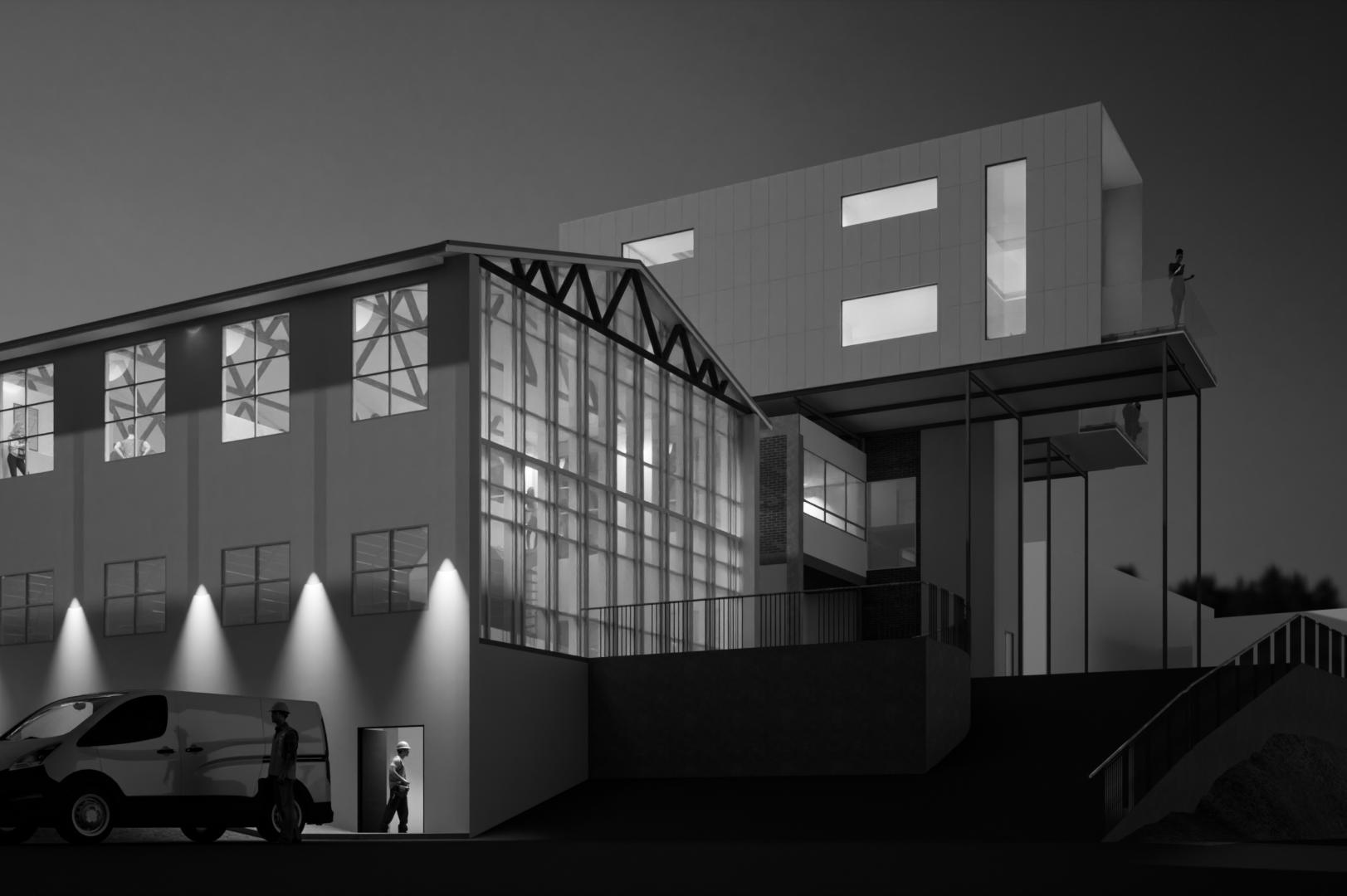
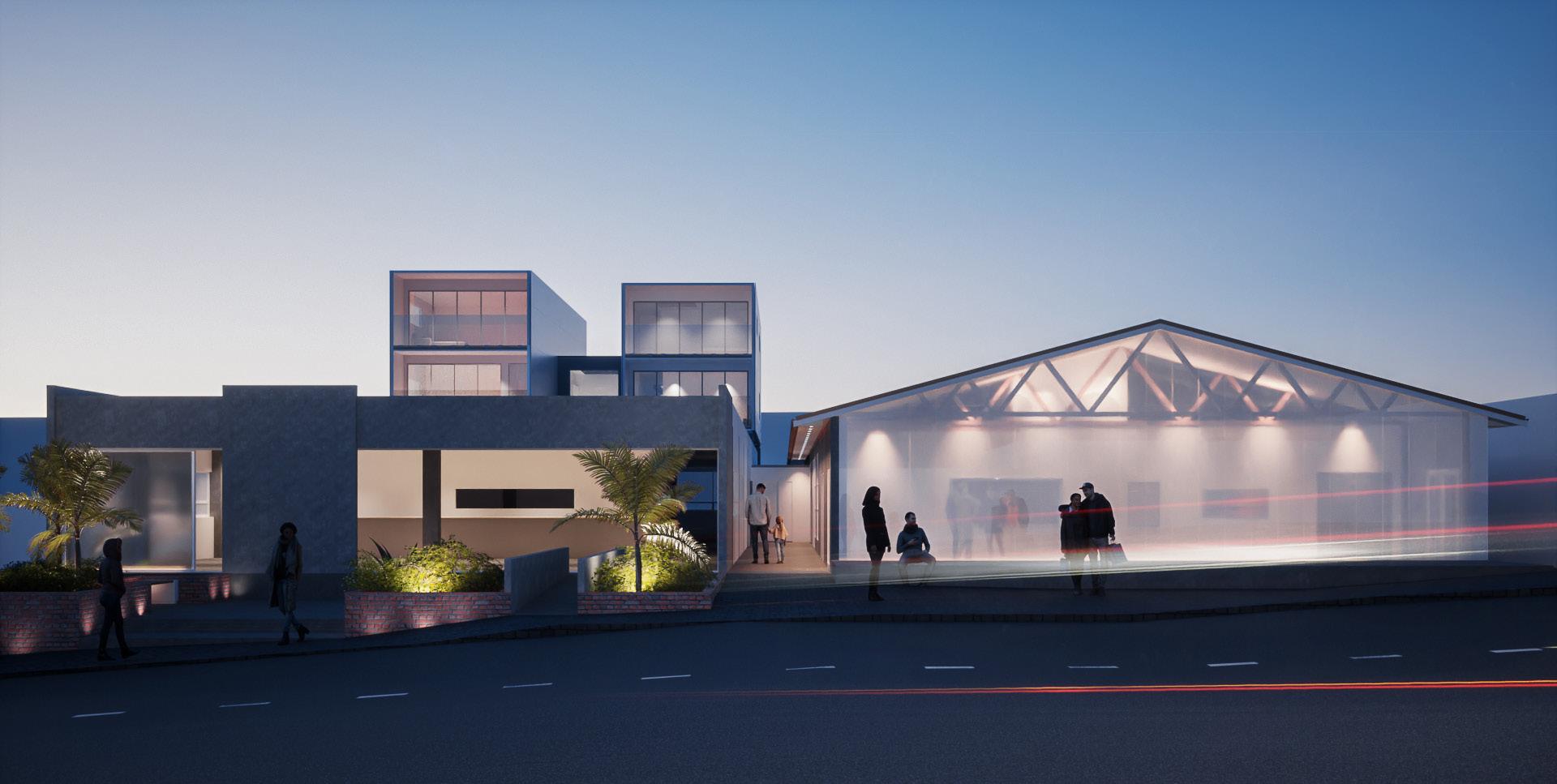
My thesis aims to conserve two existing buildings that have served the local community of Birkenhead. What made the challenge unique was that while one building was abandoned, the other was still used as a telephone exchange. Furthermore, as a context-based project, the new implementation should respond to the needs of the Birkenhead community.
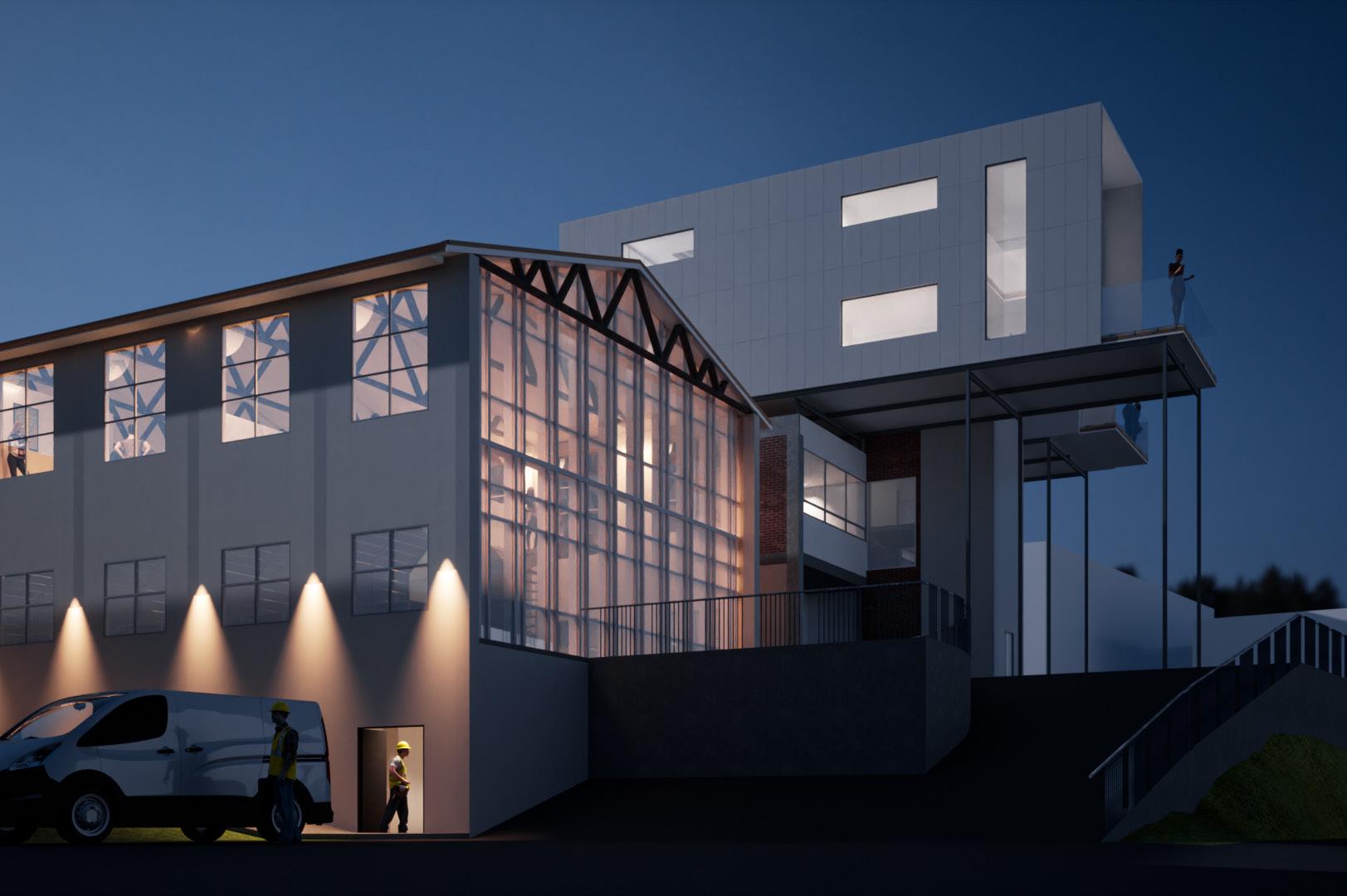
The proposal is to convert the structure into a community space, where it can be hired for specific events for the unique communities of Birkenhead. At its base core, it will remain a co-working space, with a cafe/eatery in front of the post office. The critical point of this project is to produce a ‘third space’ for Birkenhead and to unify the various communities in the suburb. The interventions consist of gutting the interior but retaining the external structure, so in the event of a programme change, the structure can remain intact without any drastic changes.
Above: Front perspective of both structures at night.
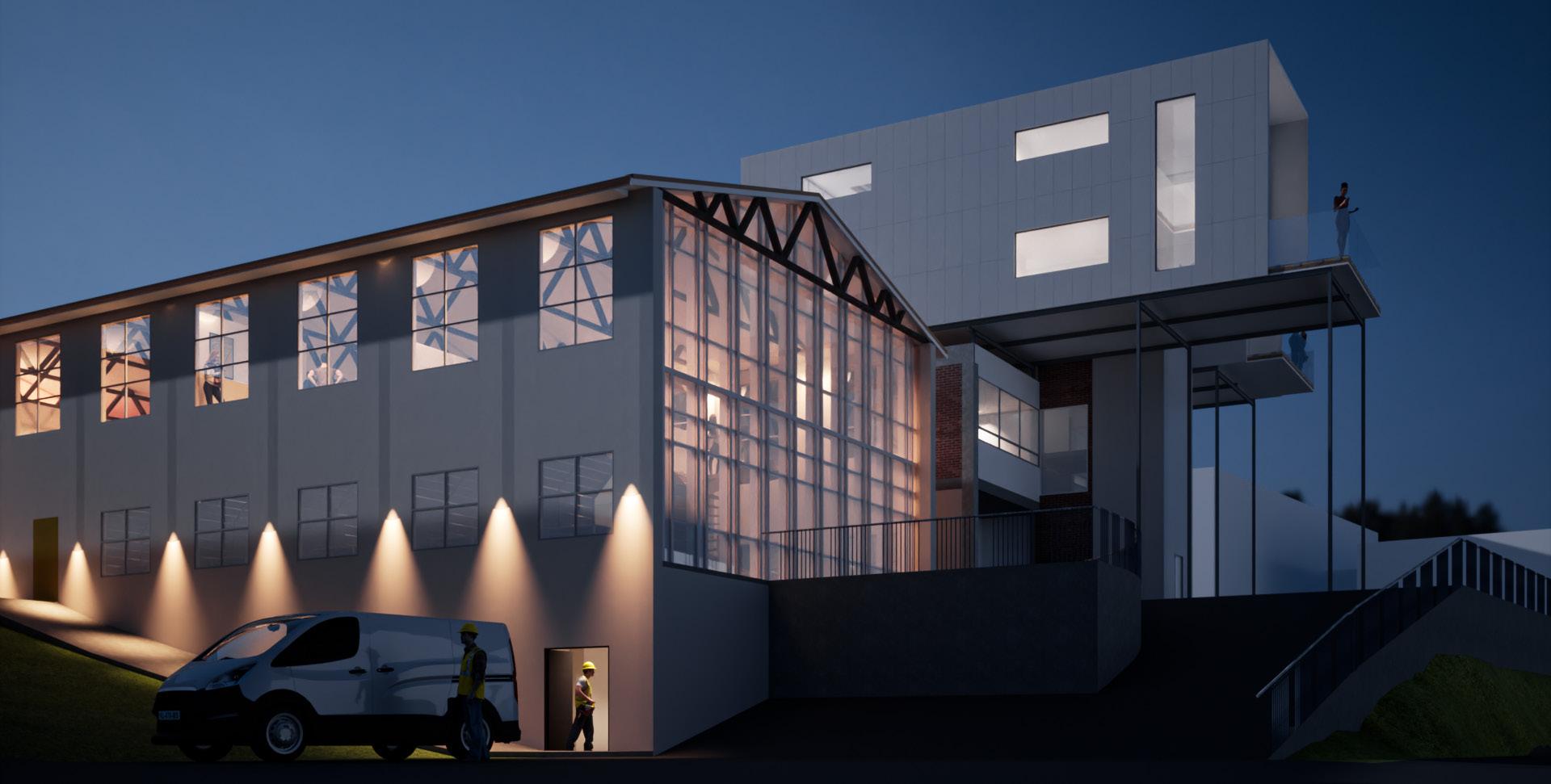
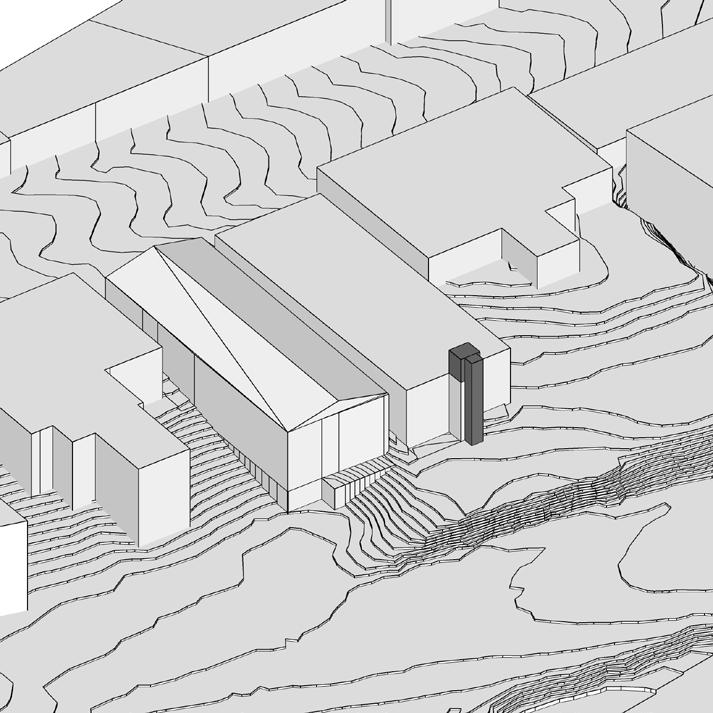
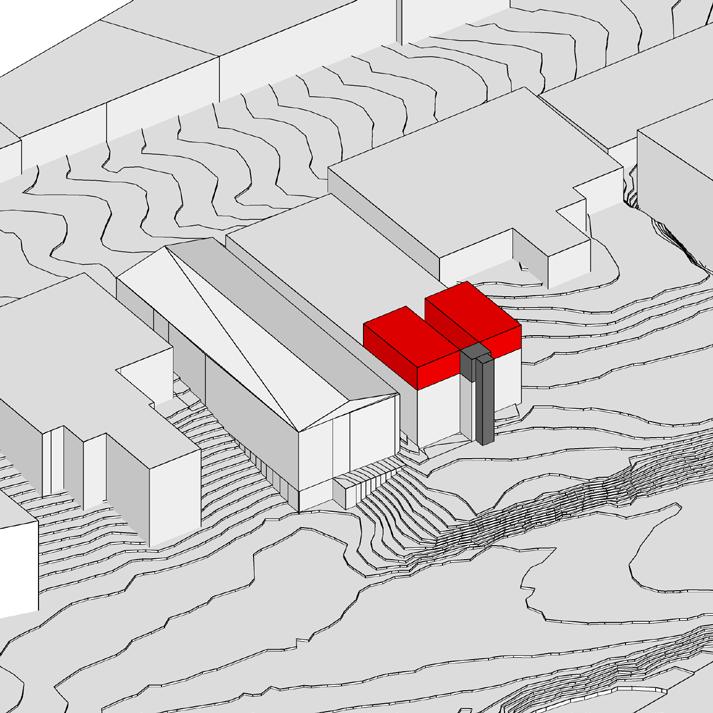
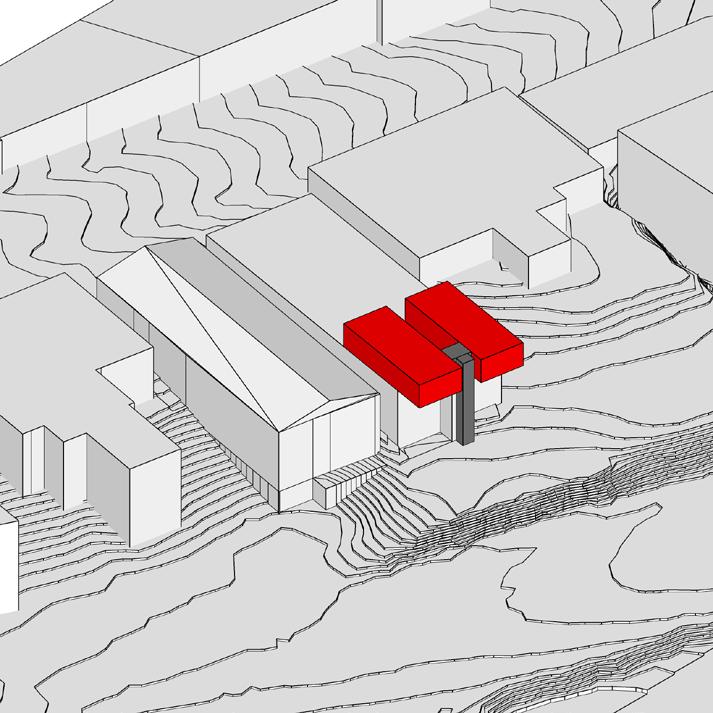
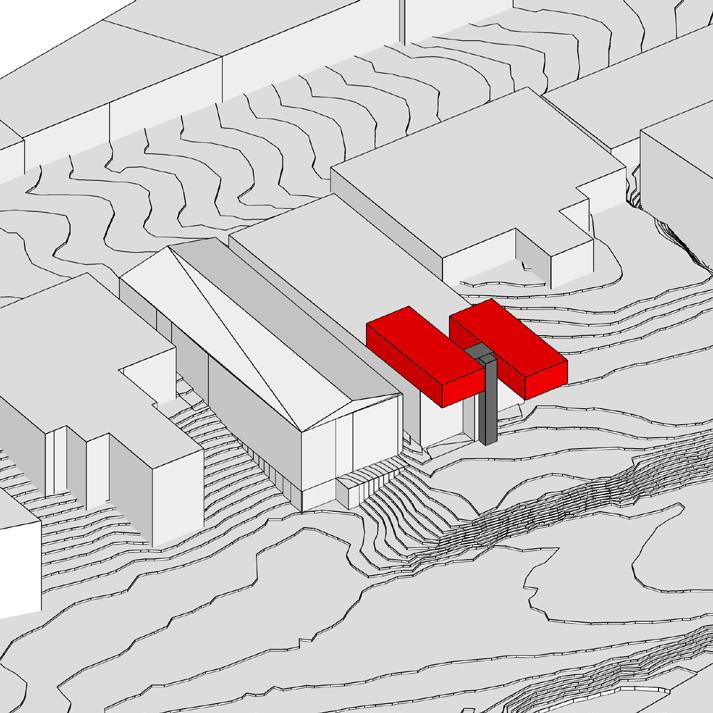
In addition to the community space, additional apartments have also been constructed on top of the chosen site. While the apartment ‘pods’ position provides luxury-level views of the Auckland CBD, its primary goal is to provide housing for the growing population of Birkenhead. These pods are modular by design, as they are built offshore and can be implemented in other locations that face similar housing issues. Furthermore, they can also be removed from its premises without altering the original forms of the existing buildings.
Above: Rear persective of the telephone exchange.
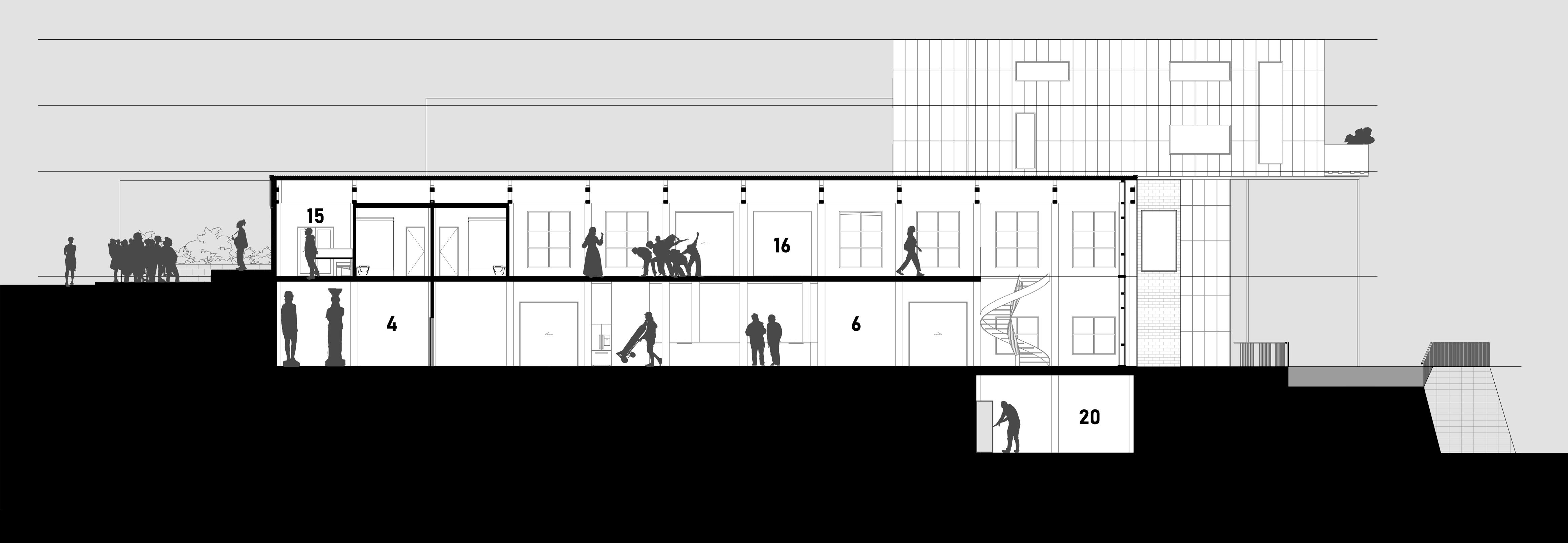
16. Adaptable space*
17. Temporary storage
18. Vault - museum*
19. Alley - main thresh.
20. Service Room
21. Living Room
22. Kitchen - housing
23. Dining room
24.Master Bedroom
25. Bedroom
26. Ensuite
27. Water Closet
28. Laundry
29. Walk-in closet
30. Decking
Note: Areas that are marked with * are
Above: Cross section of the post office.
Right: Apartment pods development.
Commercial Design Mortlock McElroy Architects
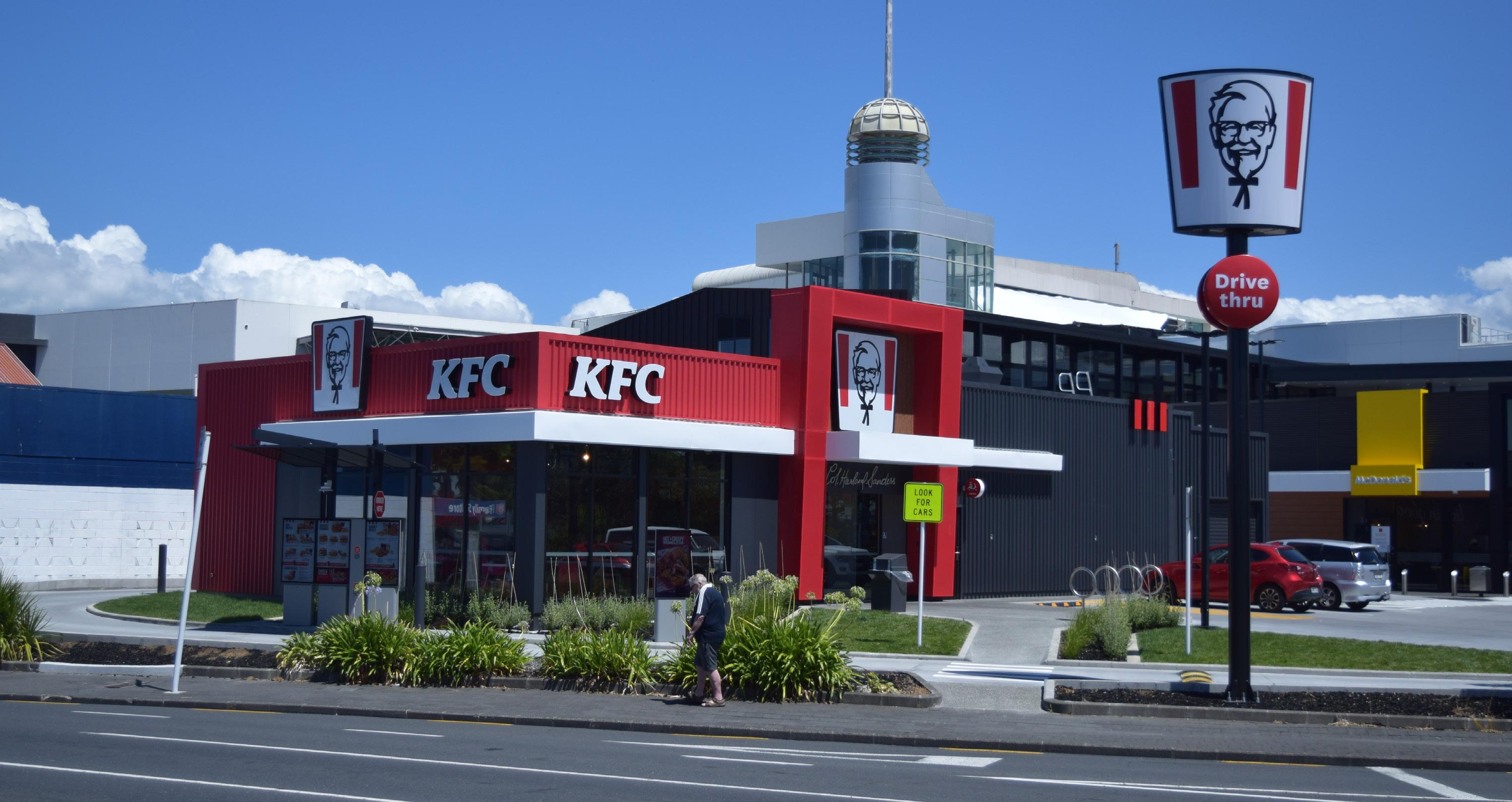
KFC Deisgn
Producing a commercial fast food space for a global brand
Skills Applied
- ArchiCAD - Photoshop
- Building consent documentation - Detail Deisgn
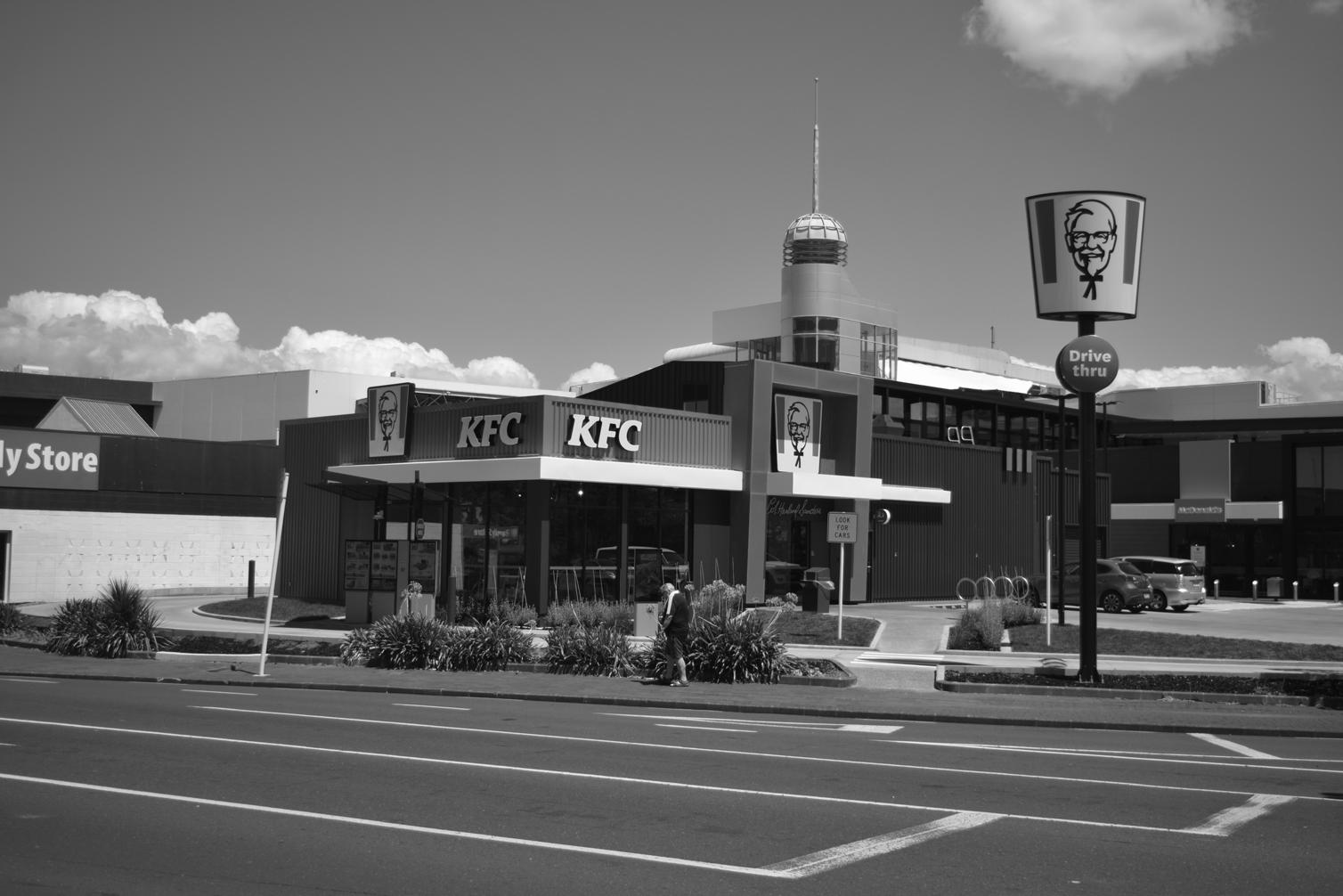
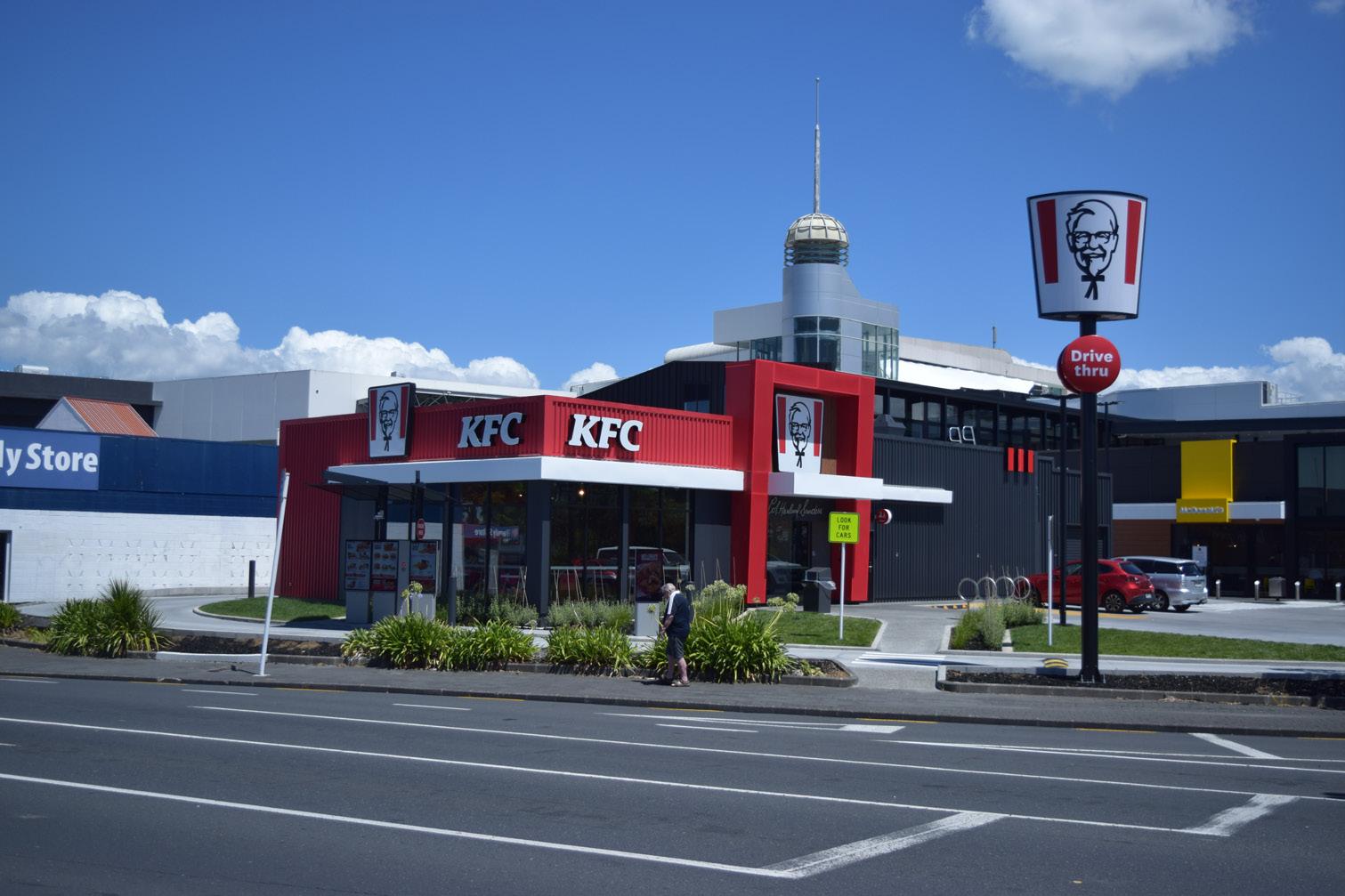
Mortlock McElroy LTD are the architects behind KFC stores around New Zealand. To improve efficiency, most current designs within the country are derived from a specific project, dubbed ‘Standard Store’. This base design is then altered to fit the particular site chosen for a new KFC.
The projects that I have been involved with includes but are not limited to Birkenhead, East Tamaki, Kaiapoi and Massey Road KFC’s, which are all derived from the Standard Store. My involvement around these projects can range within the building consent documentation, from detail drawing, to site layouts for the speaker station or garden. All details were drawn using AutoCAD.
Birkenhead KFC
Equipment Plan
Sliding
Section Drawing
Residential Design
JDA Studio Garage Conversion
Converting an existing garage into a multipurpose living space
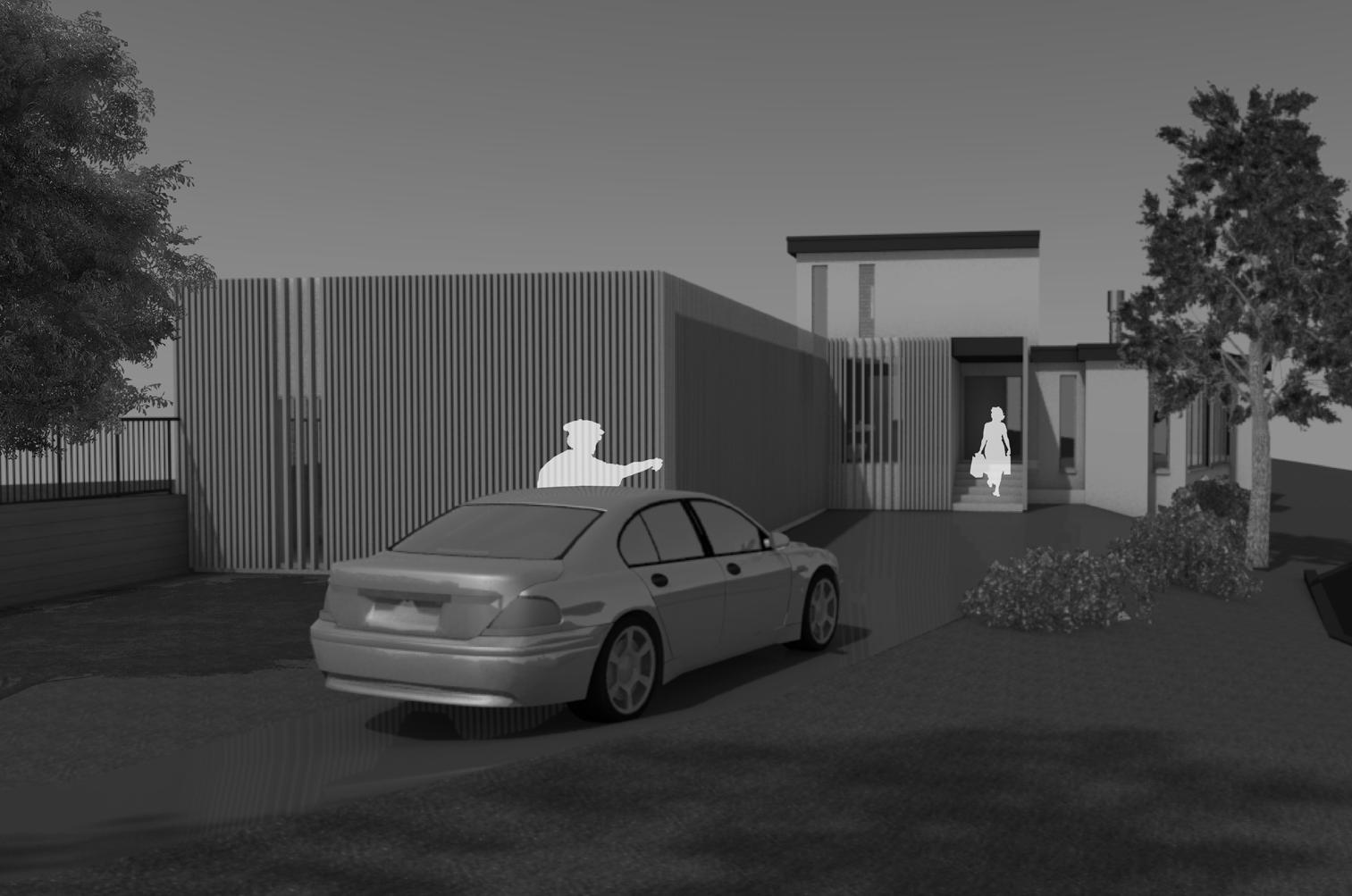
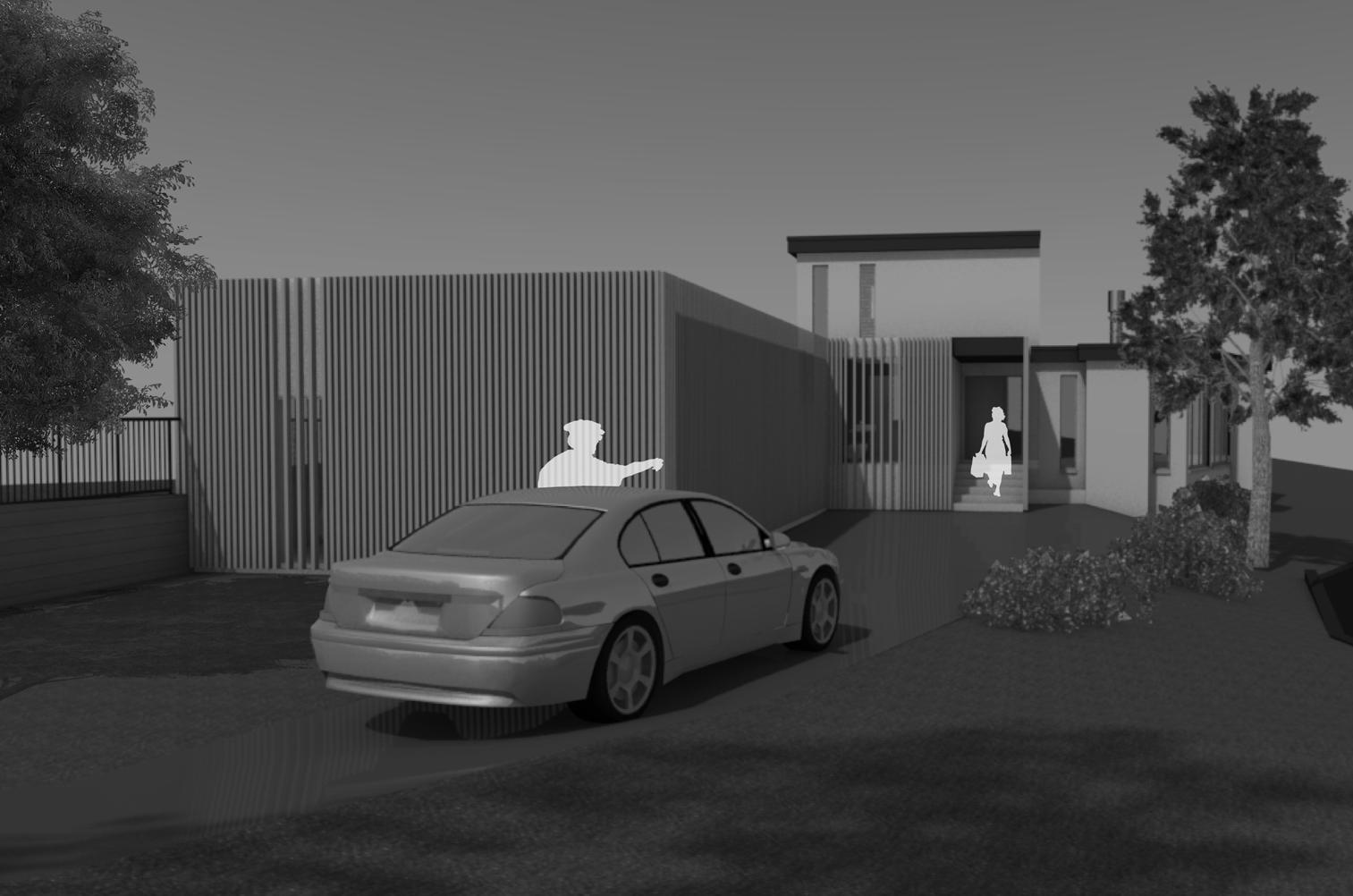
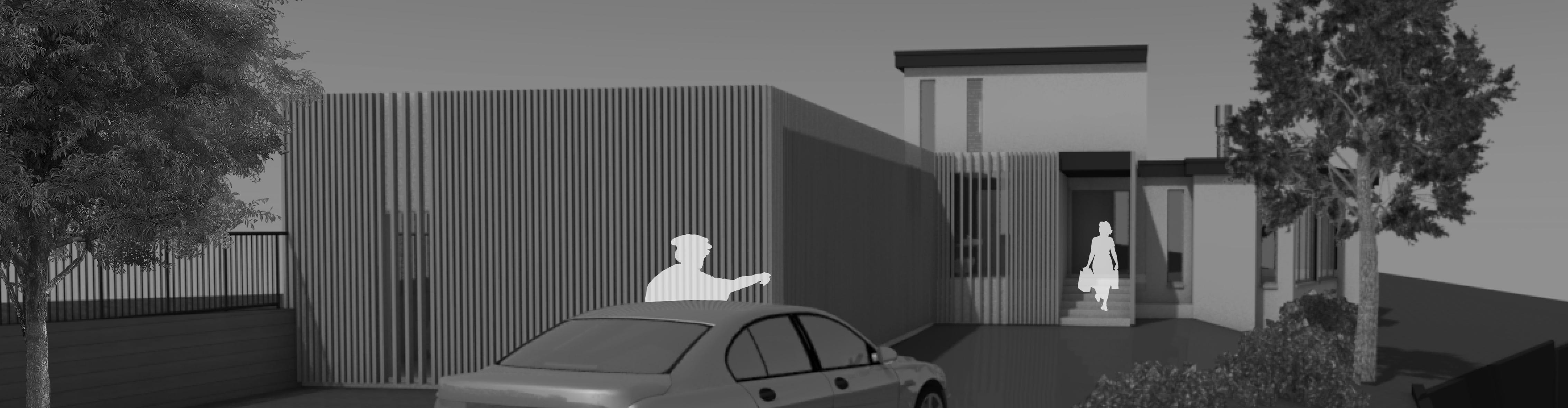
The clients want to provide extra living quarters for temporary living. The space had to offer the necessary amenities to be self-sufficient from the main house while retaining a double garage space. The room could also be rearranged for other uses if it is not used as a living space. Based on the client’s wishes, the extension is wrapped with vertical timber battens, which would mask the garage opening and hide the windows. Furthermore, the cladding would extend to the front door, accentuating the entry.
Main driveway elevation
Bachelor Studio Project
Glow Week
Realistic application of an art installation
Skills Applied
- Photoshop - Illustrator
- Sketching - Model making
- Physical construction
- Teamwork
- Time management
TEAM: THE R3 PROJECT
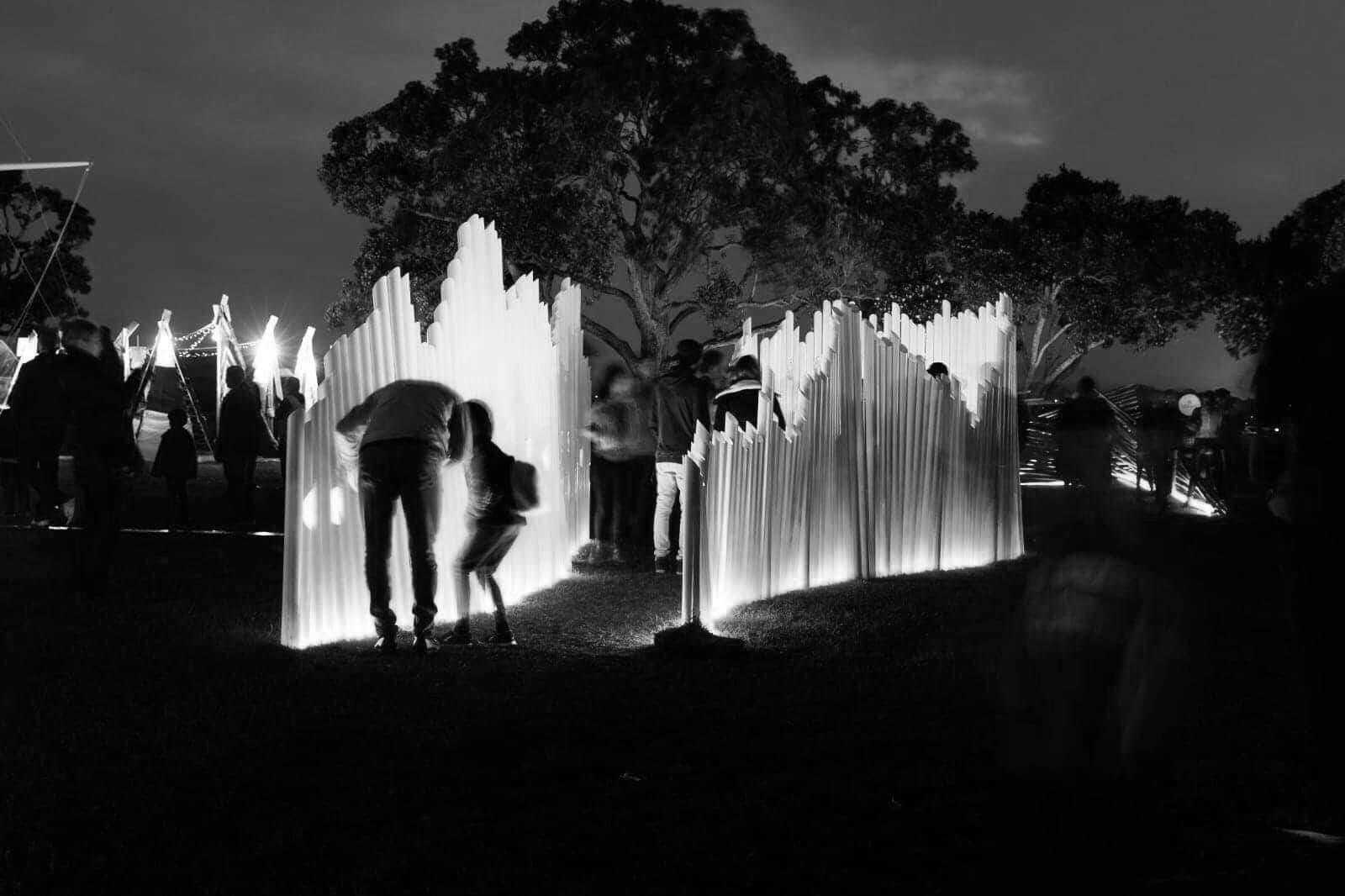
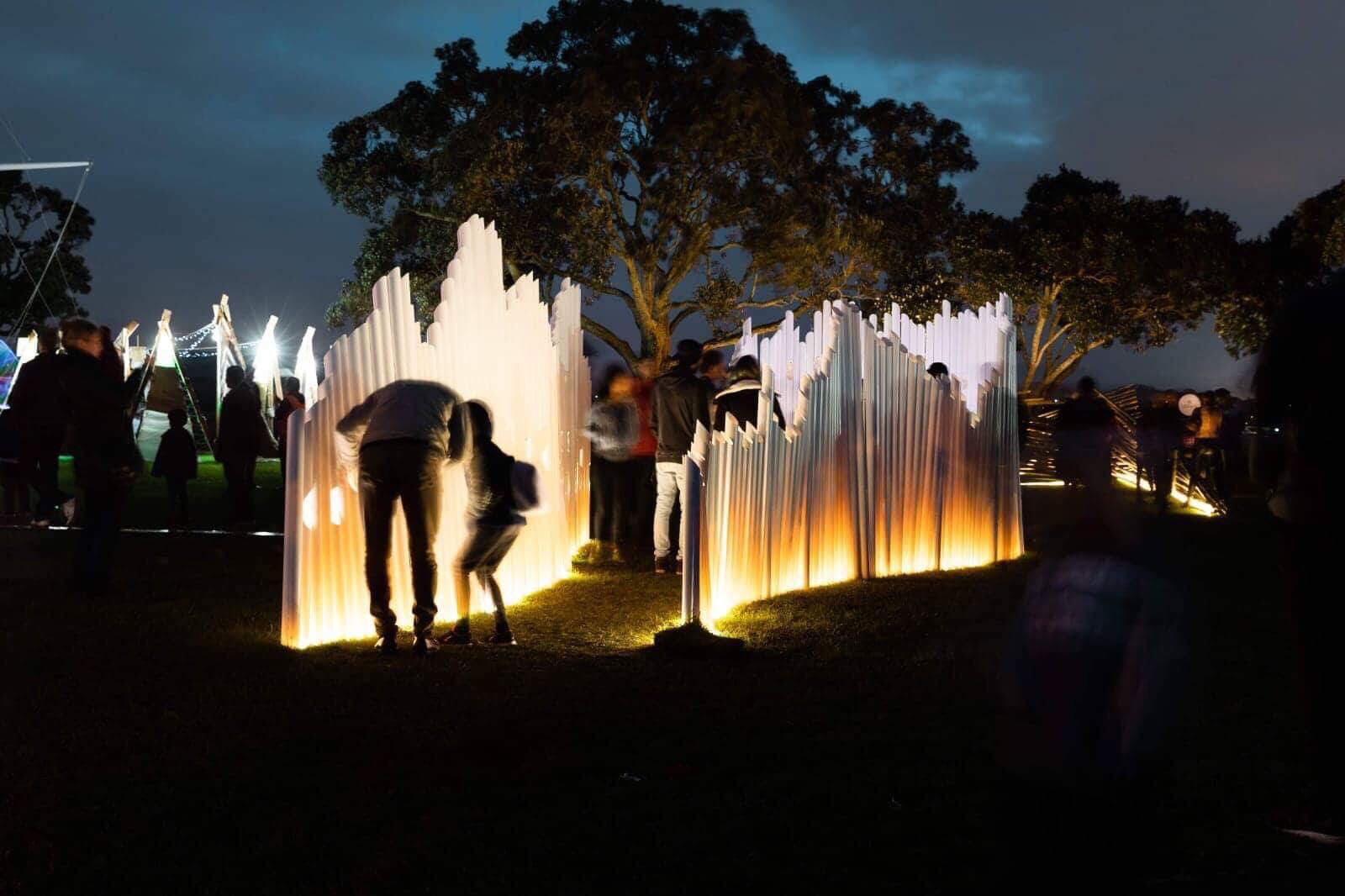
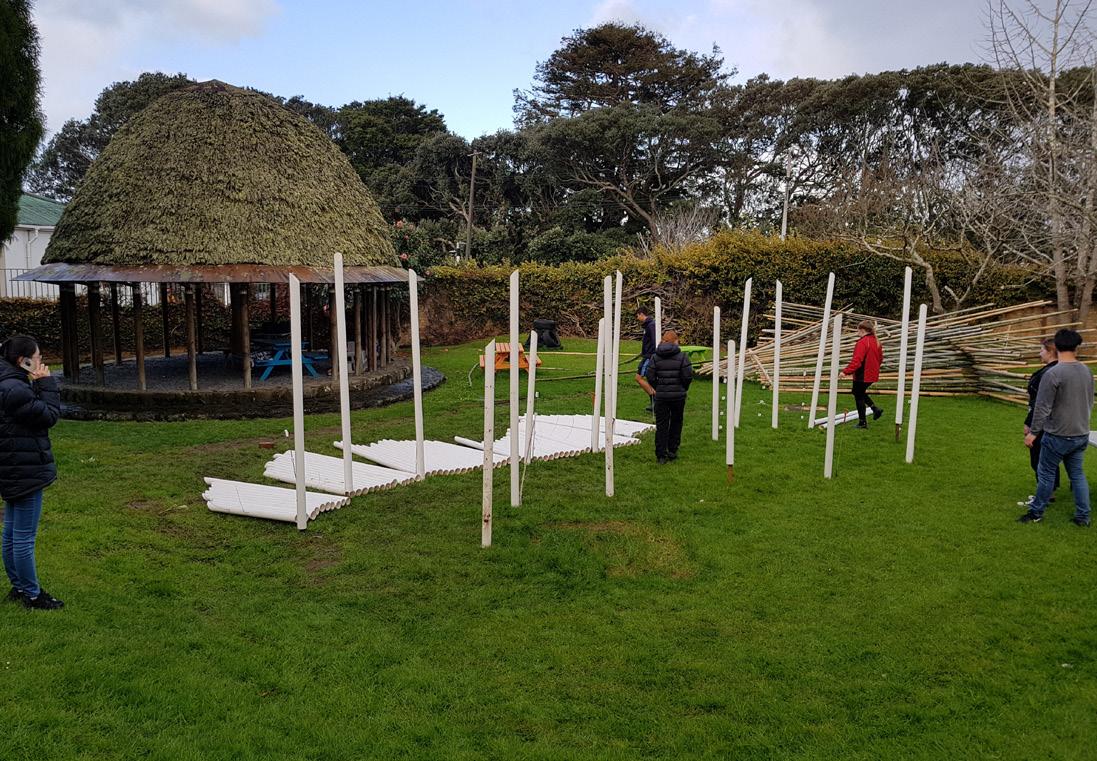
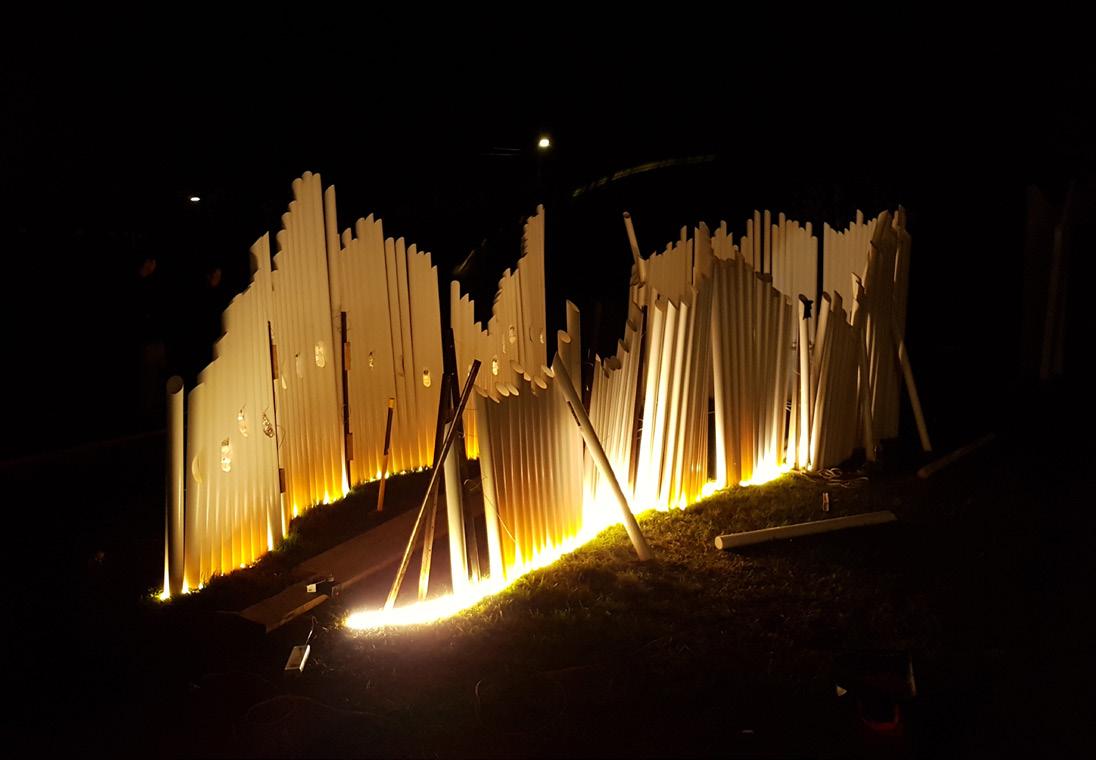
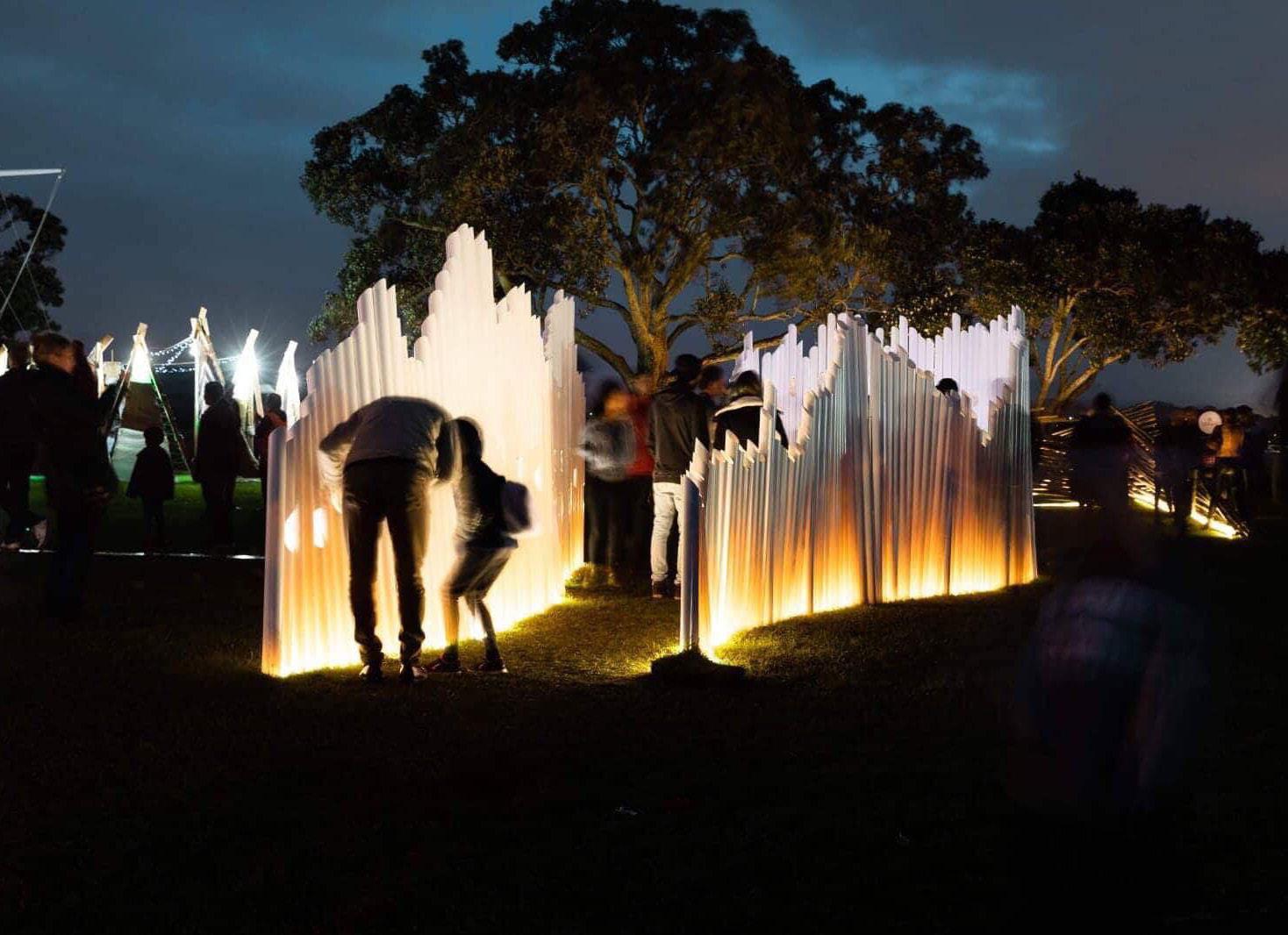
Glow Week is a Studio project held annually for 2nd year Bachelor Students in Unitec. Held during Auckland Art Week, this project aims to give students hands-on experience in a design they created. Initially, we were placed in teams of four to produce a concept for an active art installation during the day and night. As Devonport Domain located our site, having the site placed next to the shoreline meant that wind could be used to our advantage. After our concept proposal, we had to merge with a separate group to produce our final design, which will be showcased during Art Week,
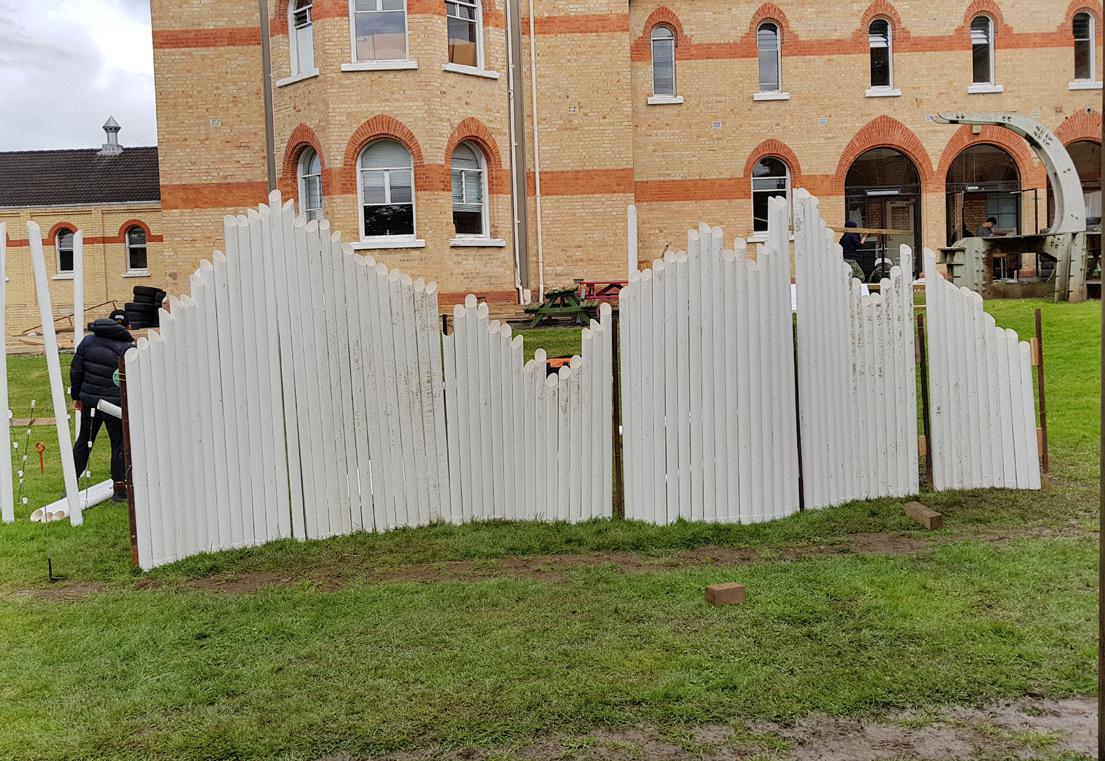
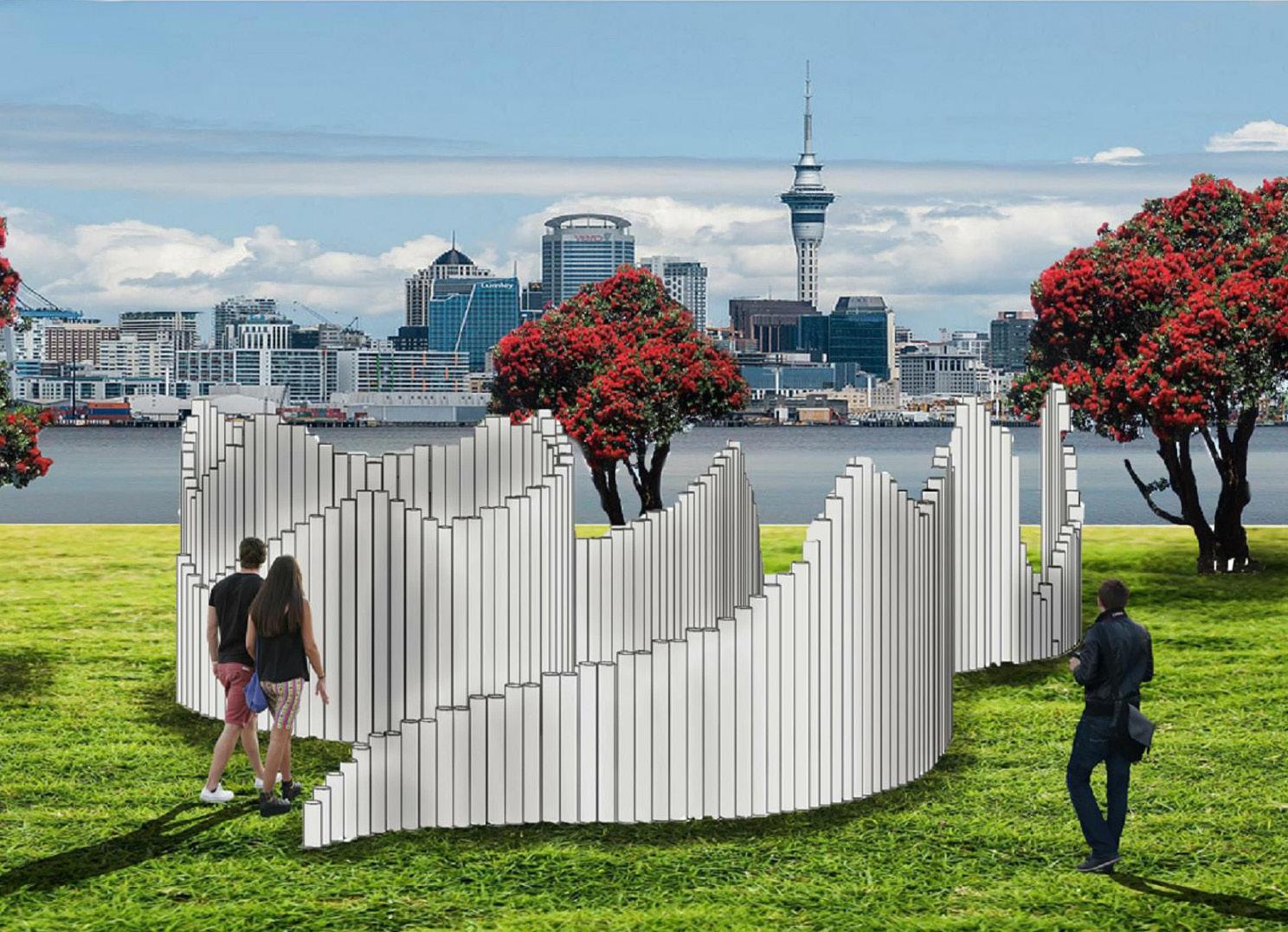
For our combined group, we named ourselves the R3 Project as we based our ideas around the three R’s in Recycling: Reduce, Reuse, and Recycle. Our design utilised PVC drainage pipes donated from Hynds to create an interactable pathway.
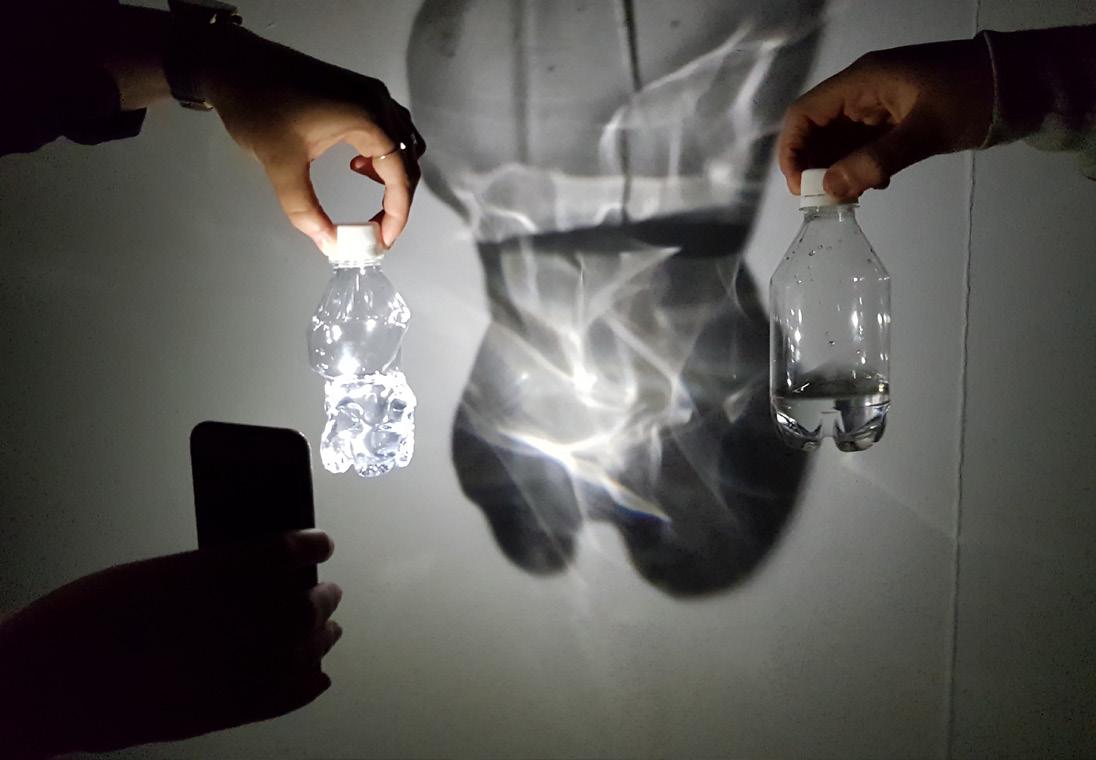
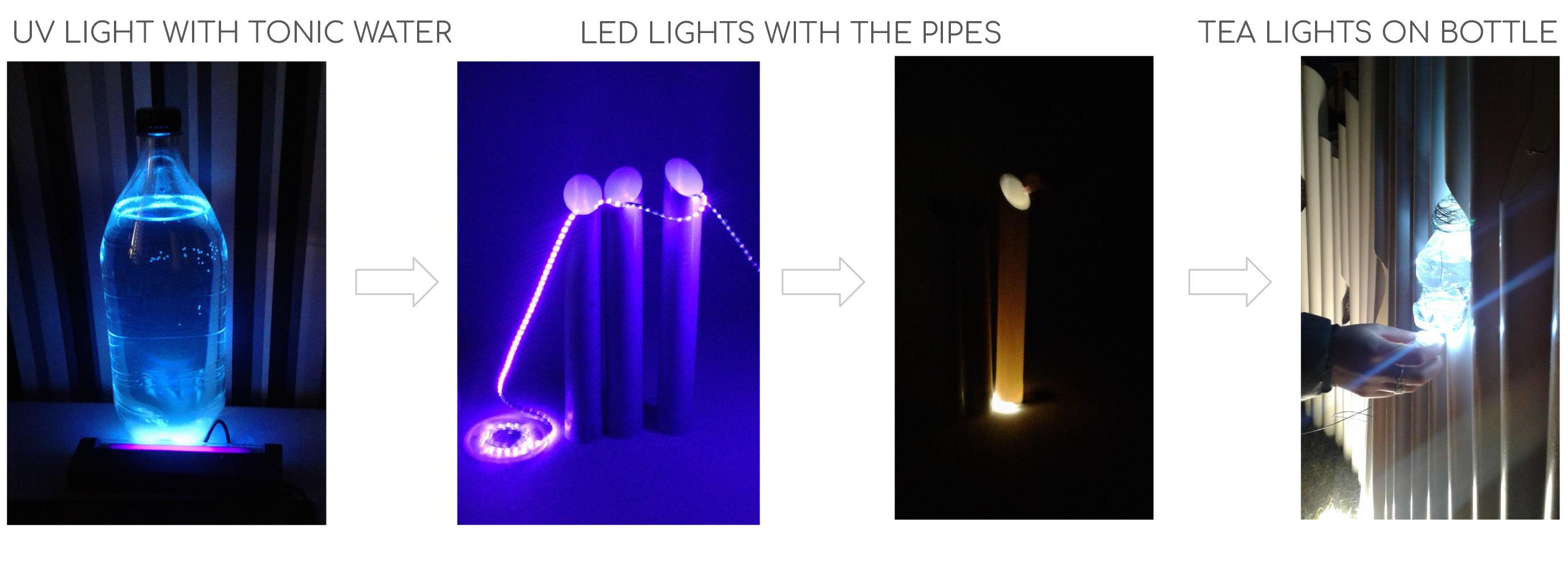
Its ‘glow’ feature would contain lights planted at the base of the pipes, illuminating the installation. The main intention of the lights is to be refracted from water bottles suspended inside the pipes, which would create a water effect on the ground to simulate walking through a body of water.
Our main goal for this installation is to raise concerns about plastic pollution within our oceans. Rather than discarding and forgetting our waste, this installation hopes to remind the public that recycling can form benefits in the long term. After the event, we recycled all our pipes and sold anything else that could not be recycled, allowing us to produce a net zero cost for the overall project.
Our installation at night.
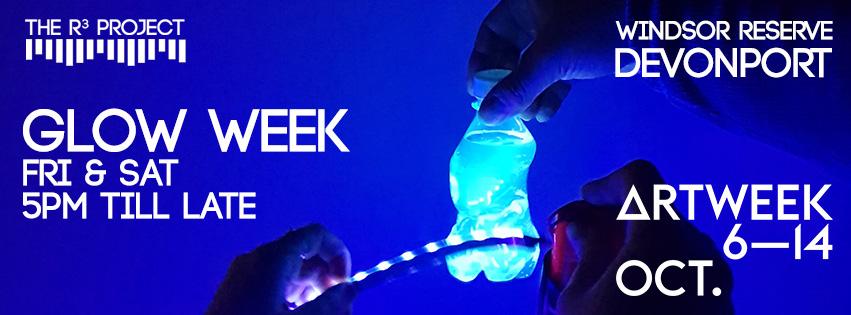
While everyone worked as a group, one of my prioritised tasks was handling our social media. The tasks required for that role include creating our brand logo, producing adverts to promote the event, and managing our Instagram page. Aside from handling our social media, I was still hands-on with developing our installation. As the goal was to produce the whole installation at no cost, we had to contact different suppliers and ask for a potential donation to our installation. Brands like Marley were charitable to supply us with PVC piping, while Light.co.nz lent us a waterproof LED strip to illuminate our water bottles.
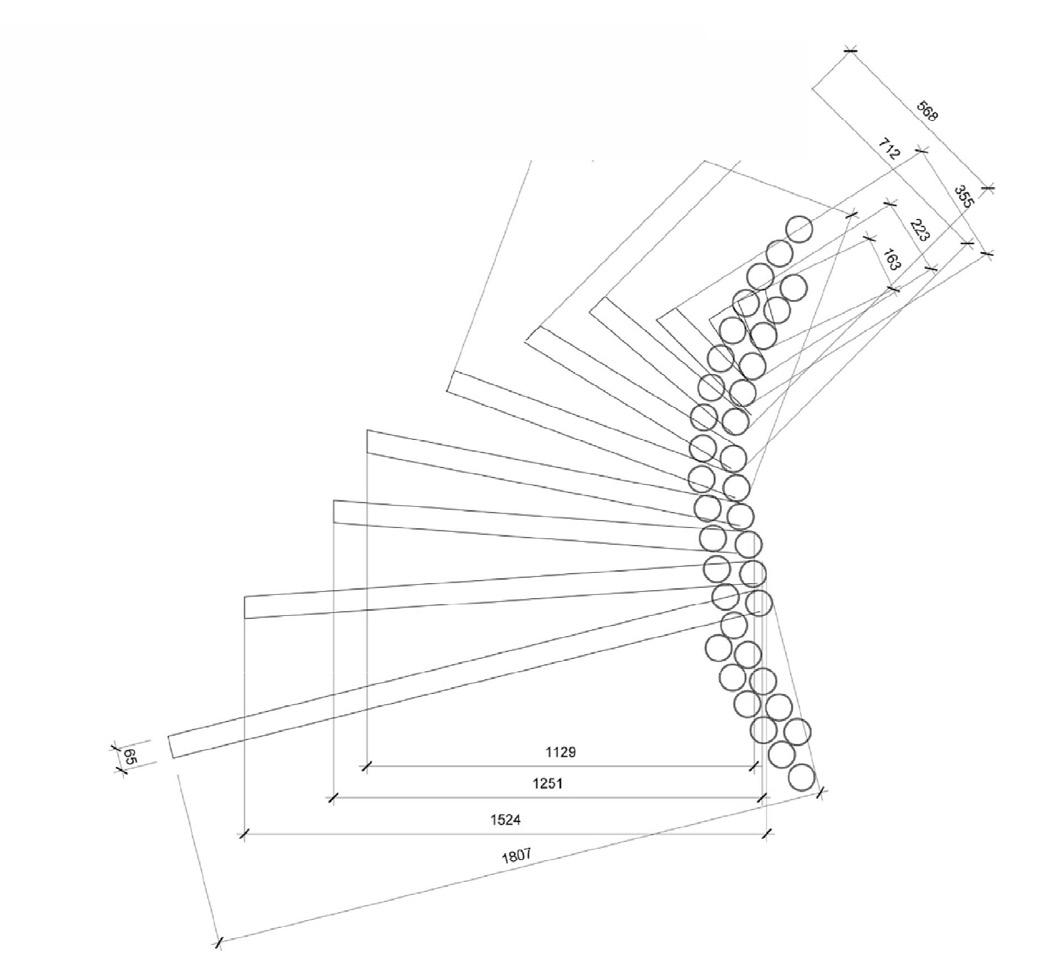
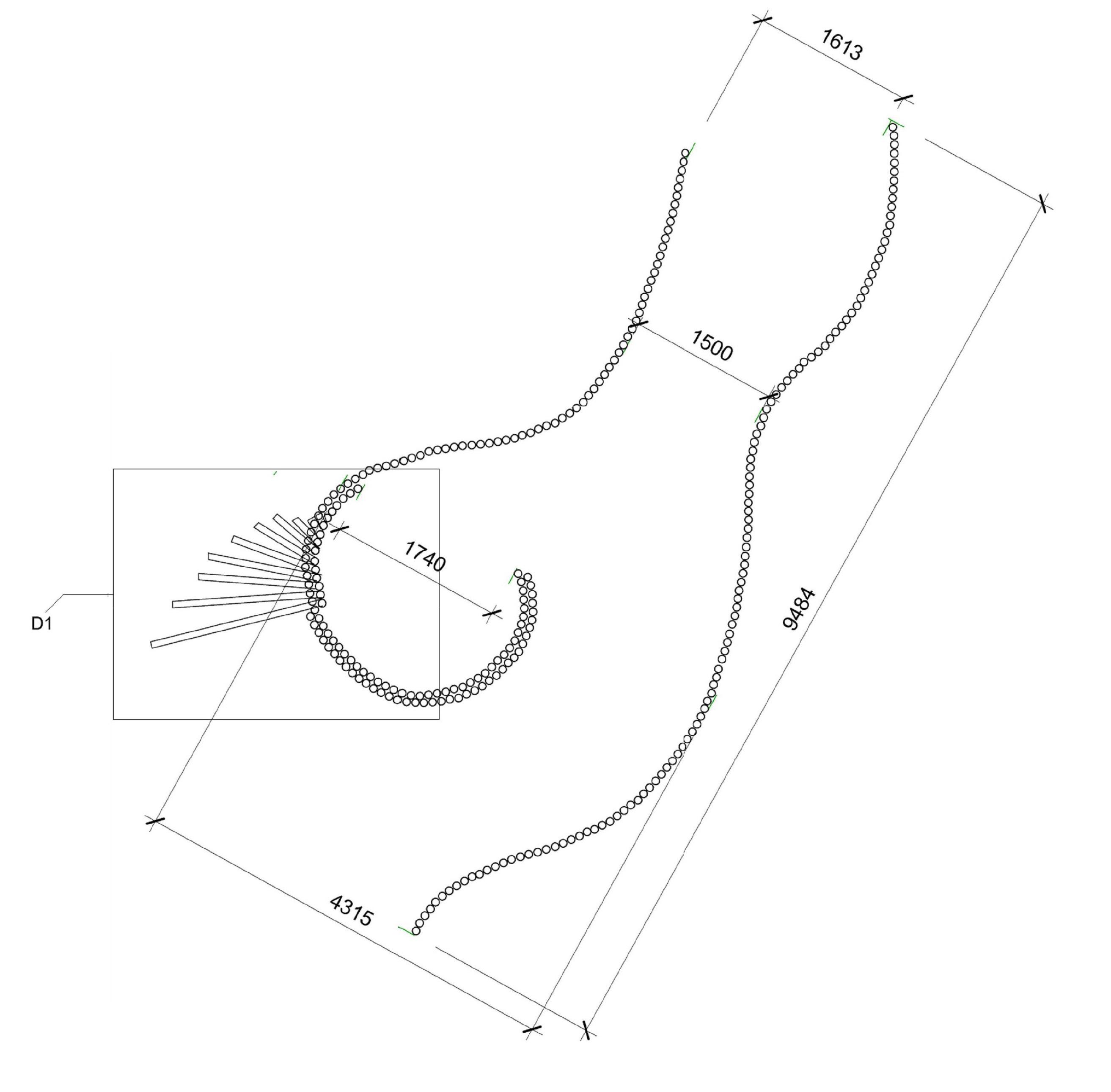
Pictured below are the schematic drawings of our installation. Note the extended detail showcases a xylophone we implemented to make our installation more playful.
Top: Lighting design development.
Middle: Concept render of our installation.
Below: Graphic design for our social media page.
Master Studio Project Sustainable Factory Design
Developing a factory design through sustainable materials
Skills Applied
- ArchiCAD - Twinmotion - Sketchup
- Model making
- Detail design
- Photoshop
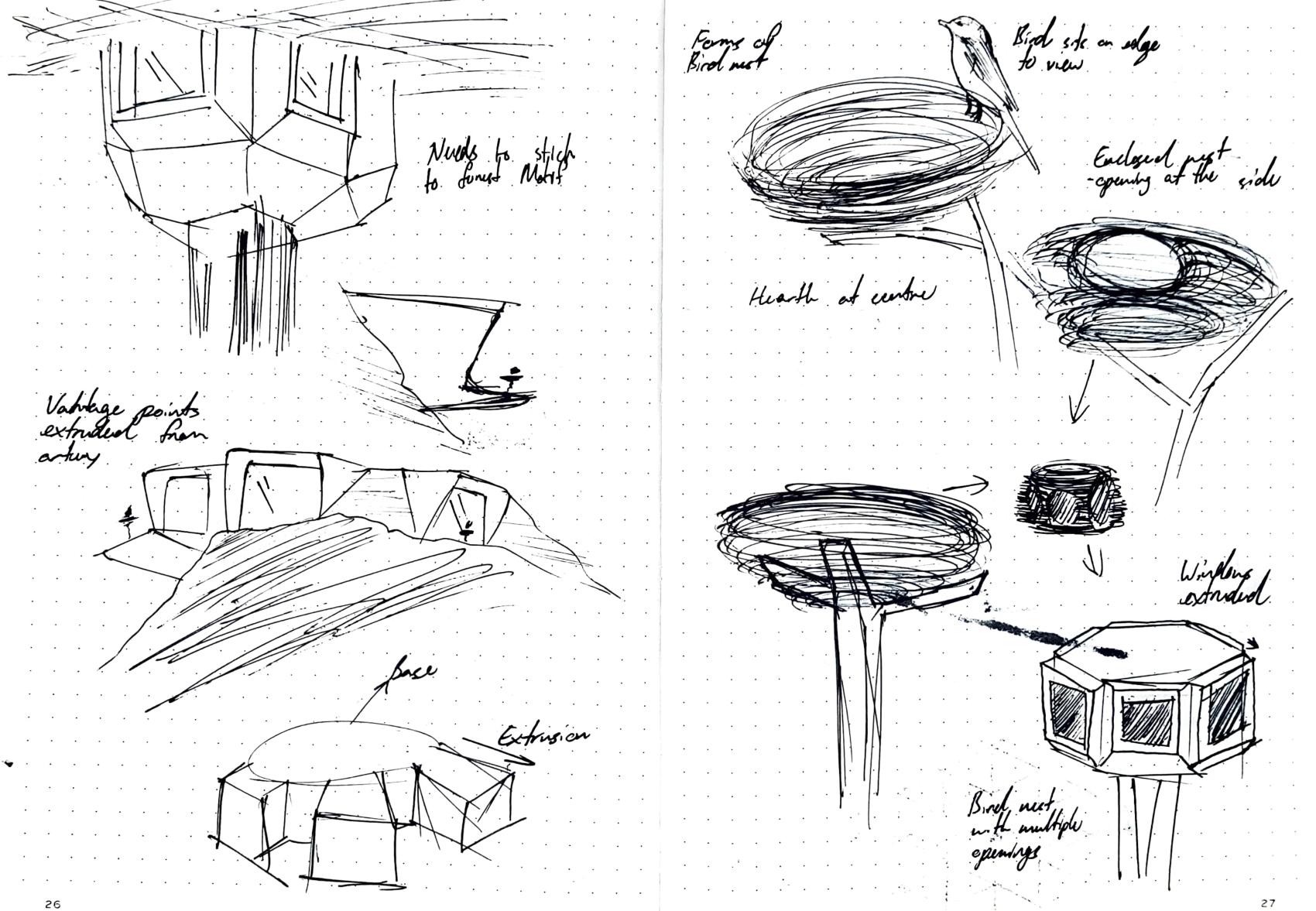
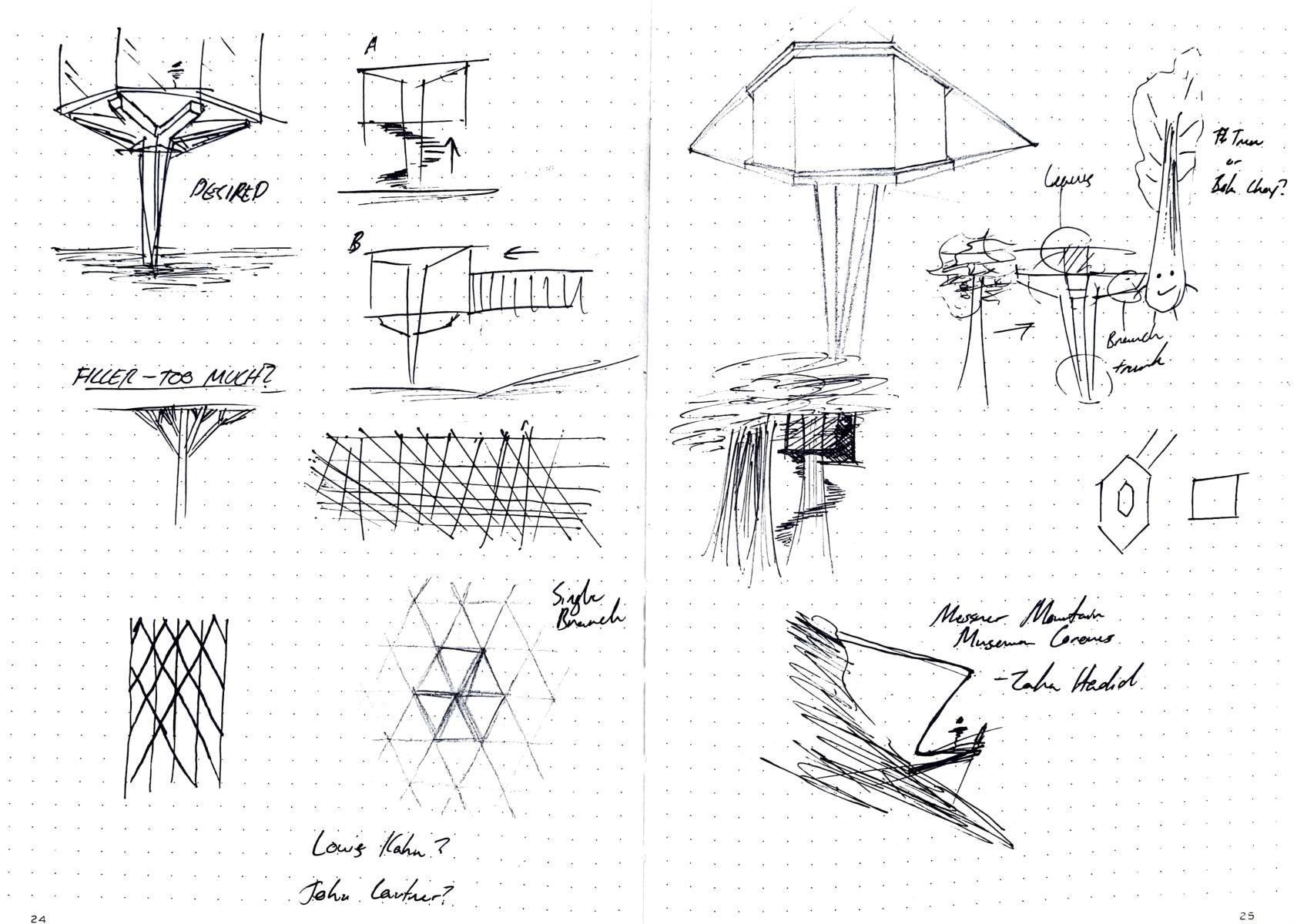
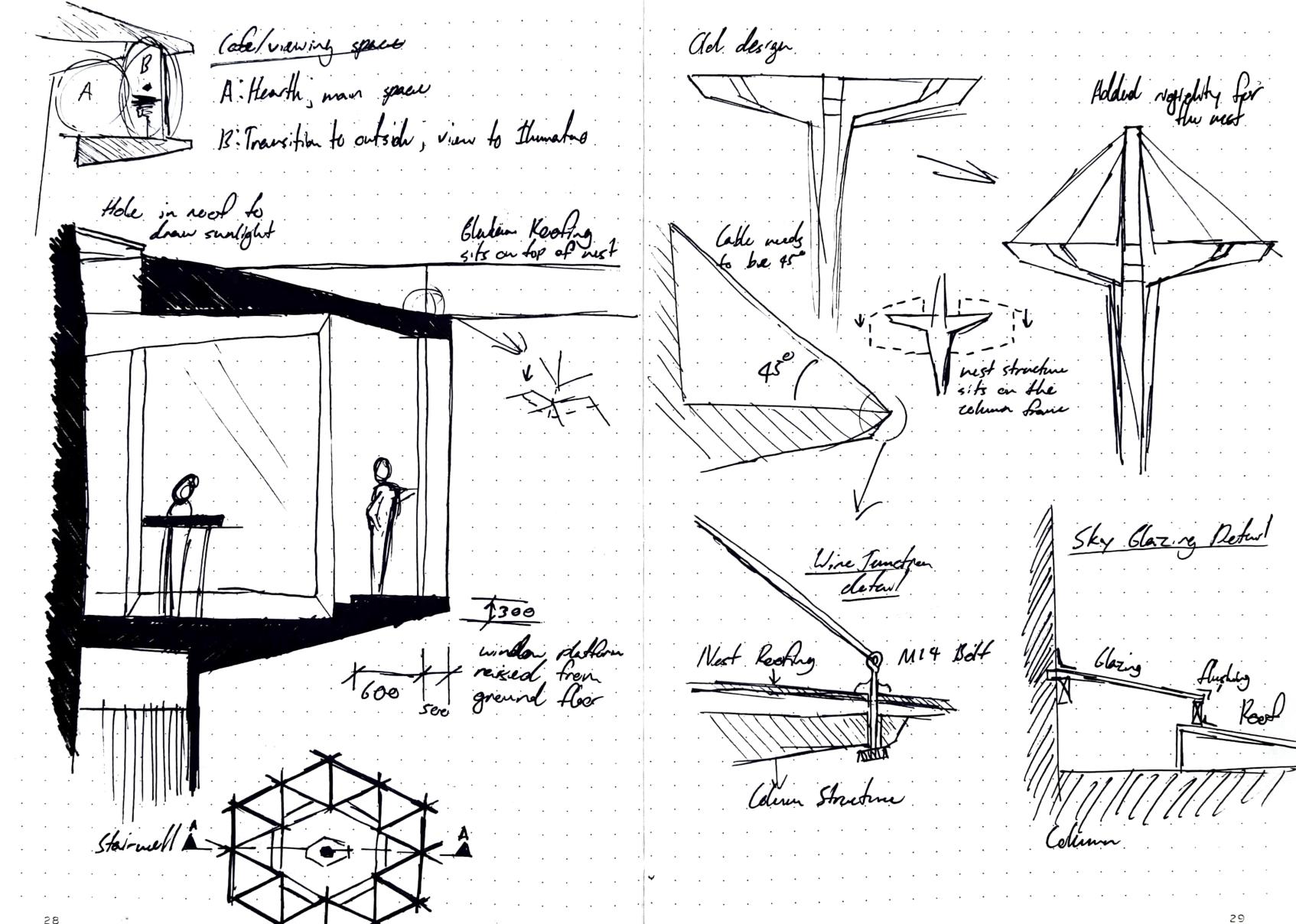
Sketchbook development of the public entry space.
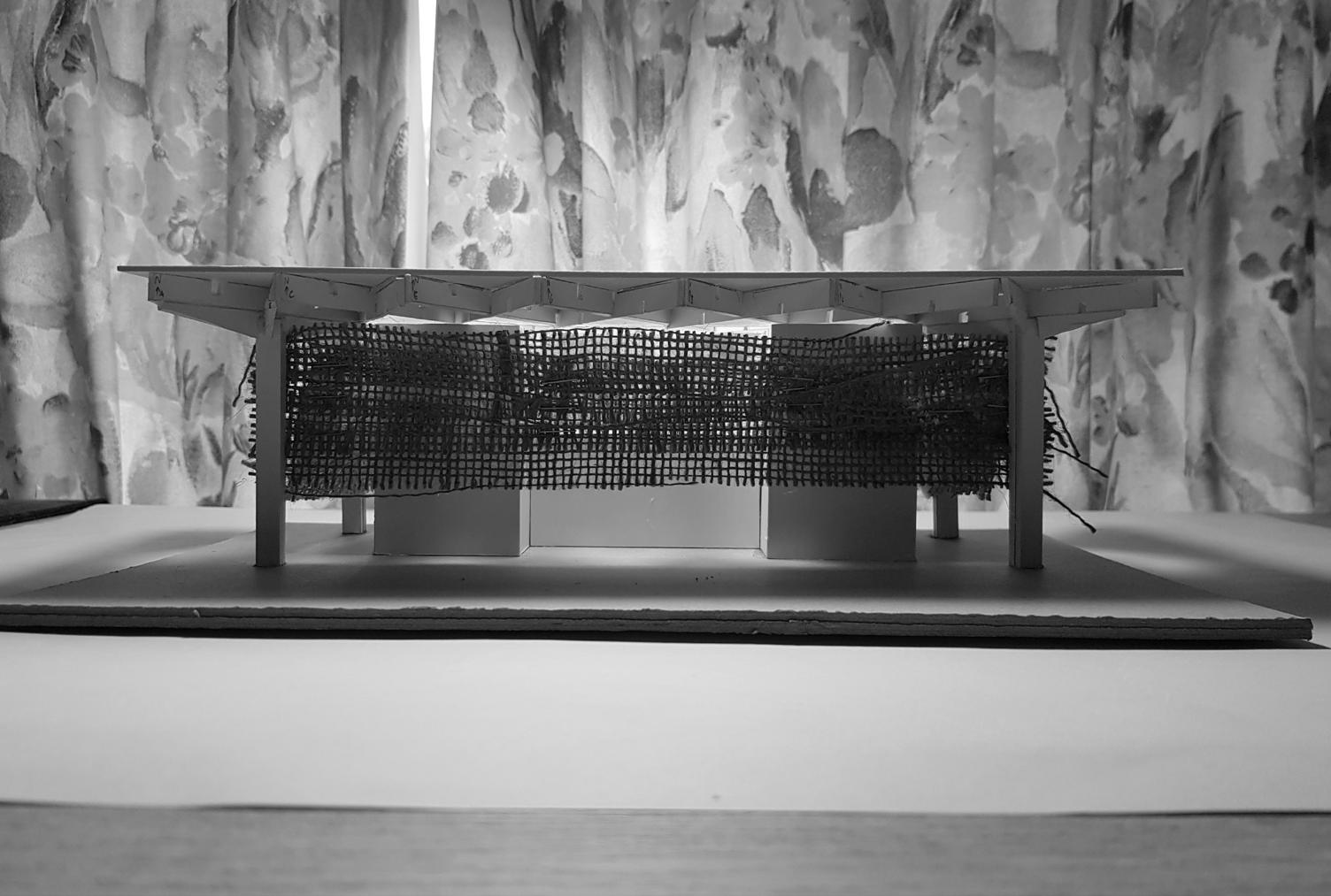
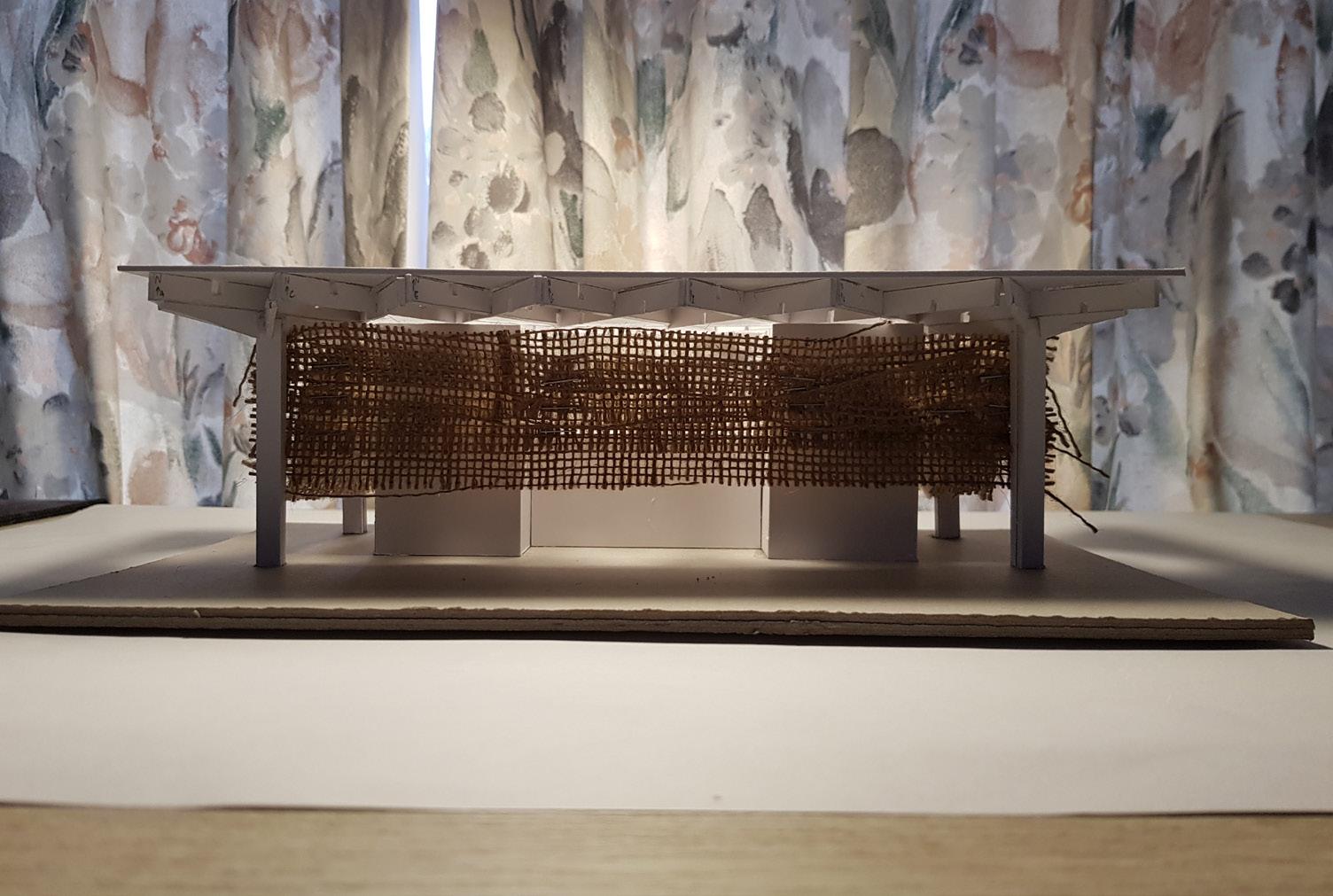
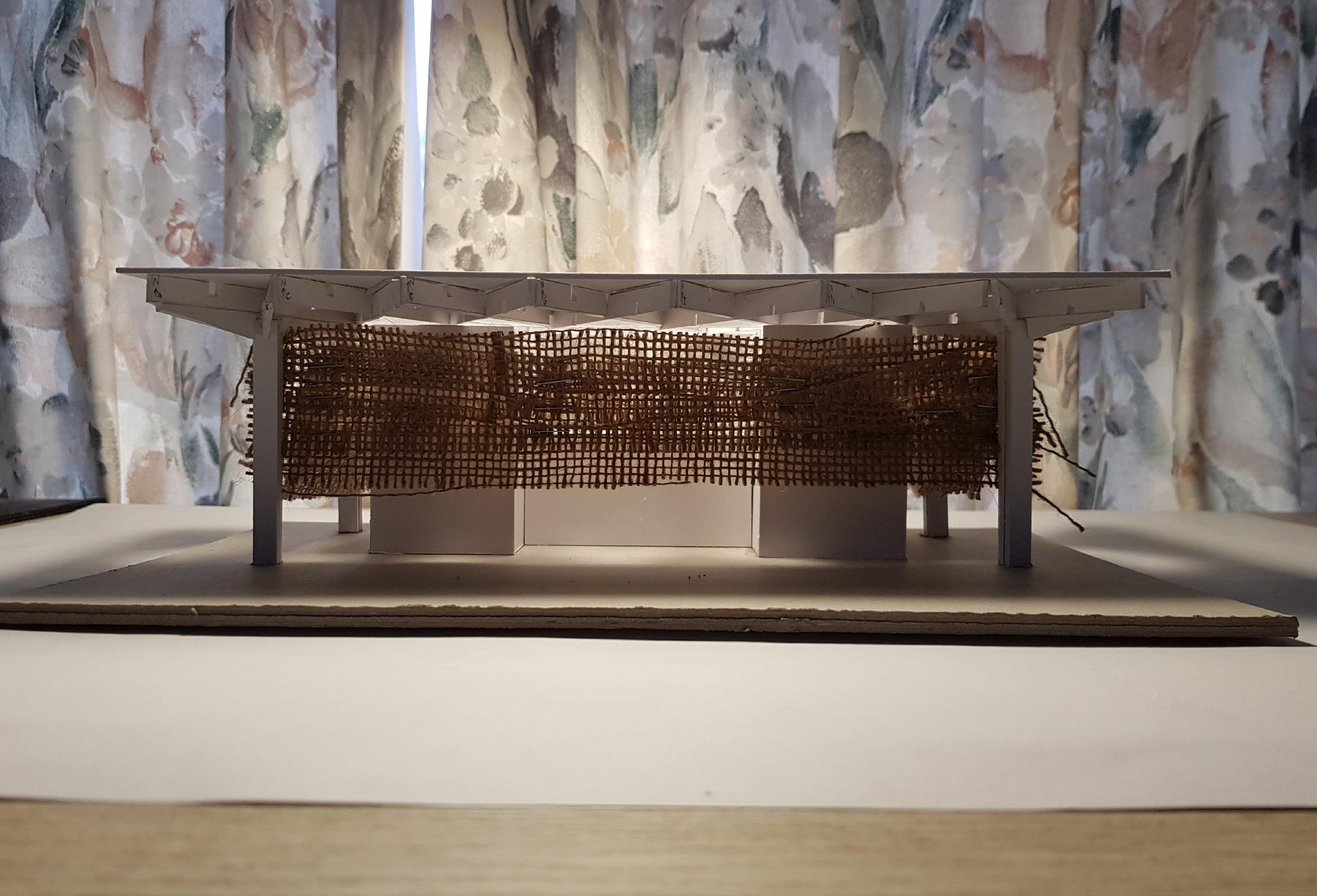
Physical concept model, showcasing burlap fabric for a shutter system.
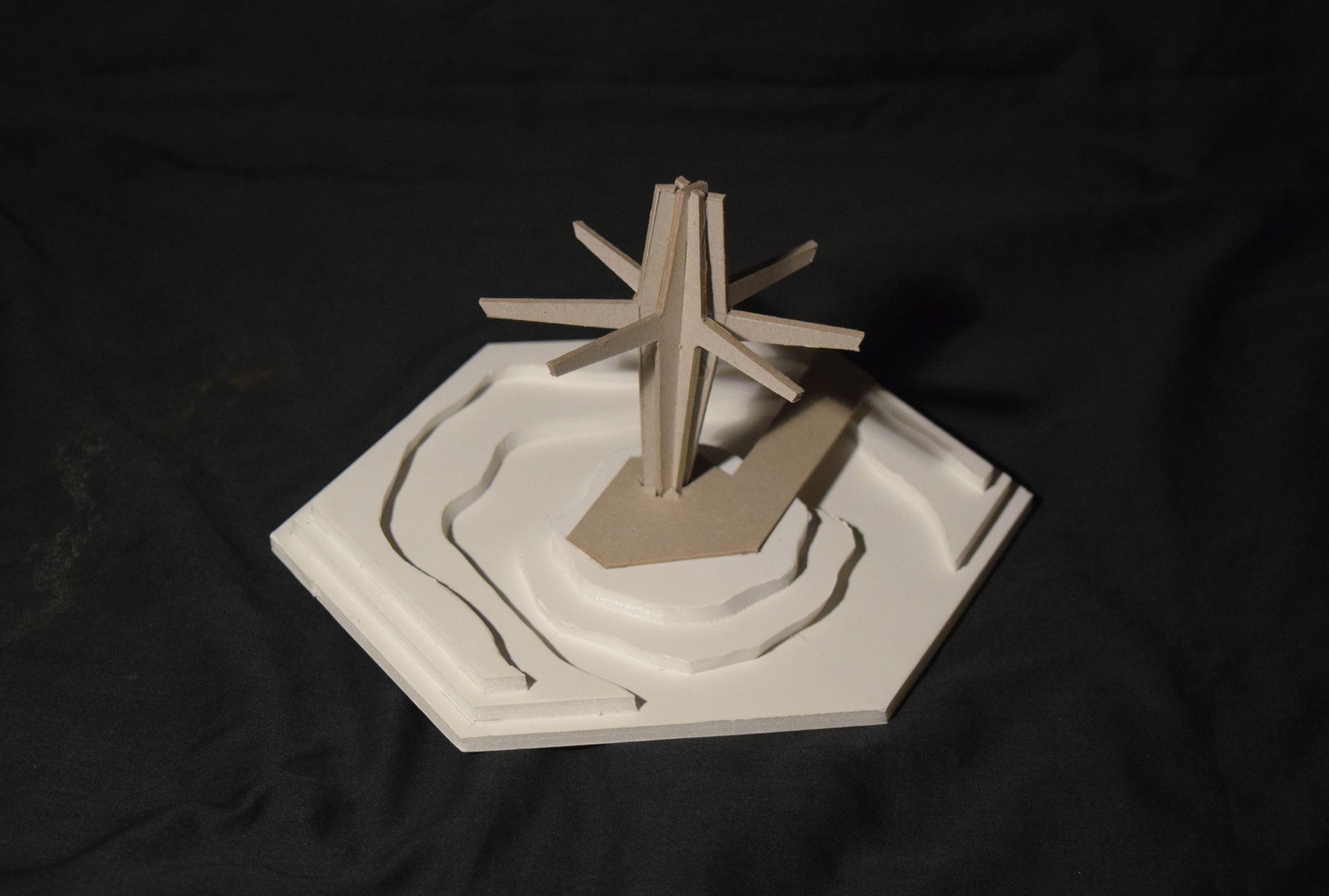
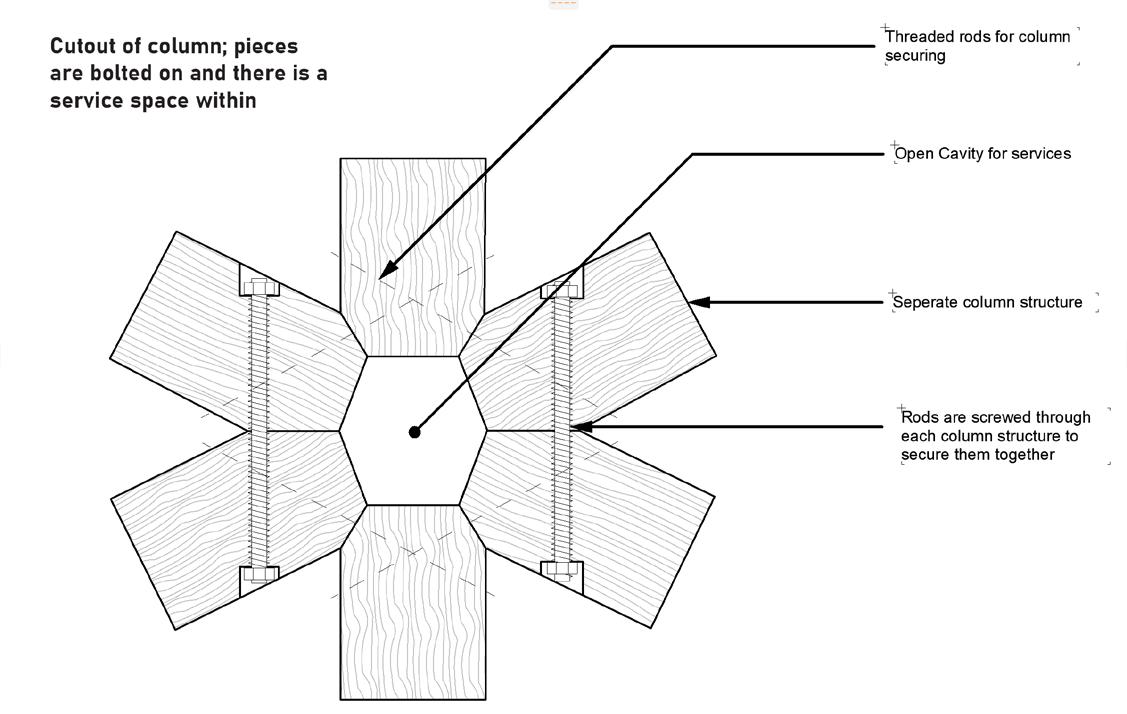
Structural development model of the ‘tree trunk’ column.
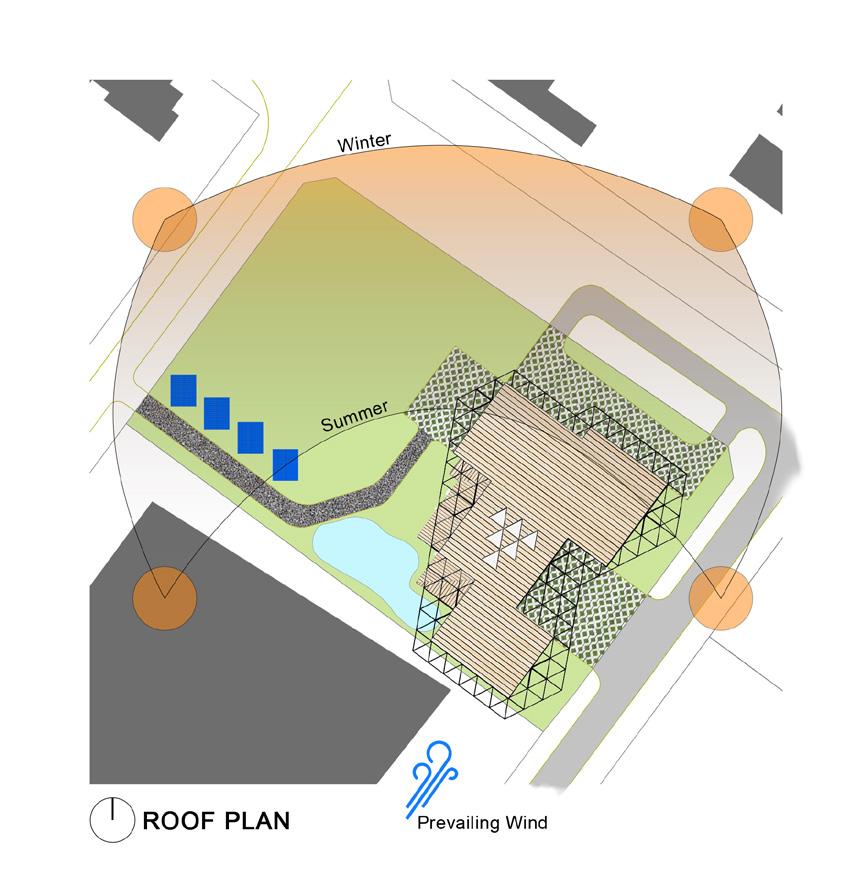
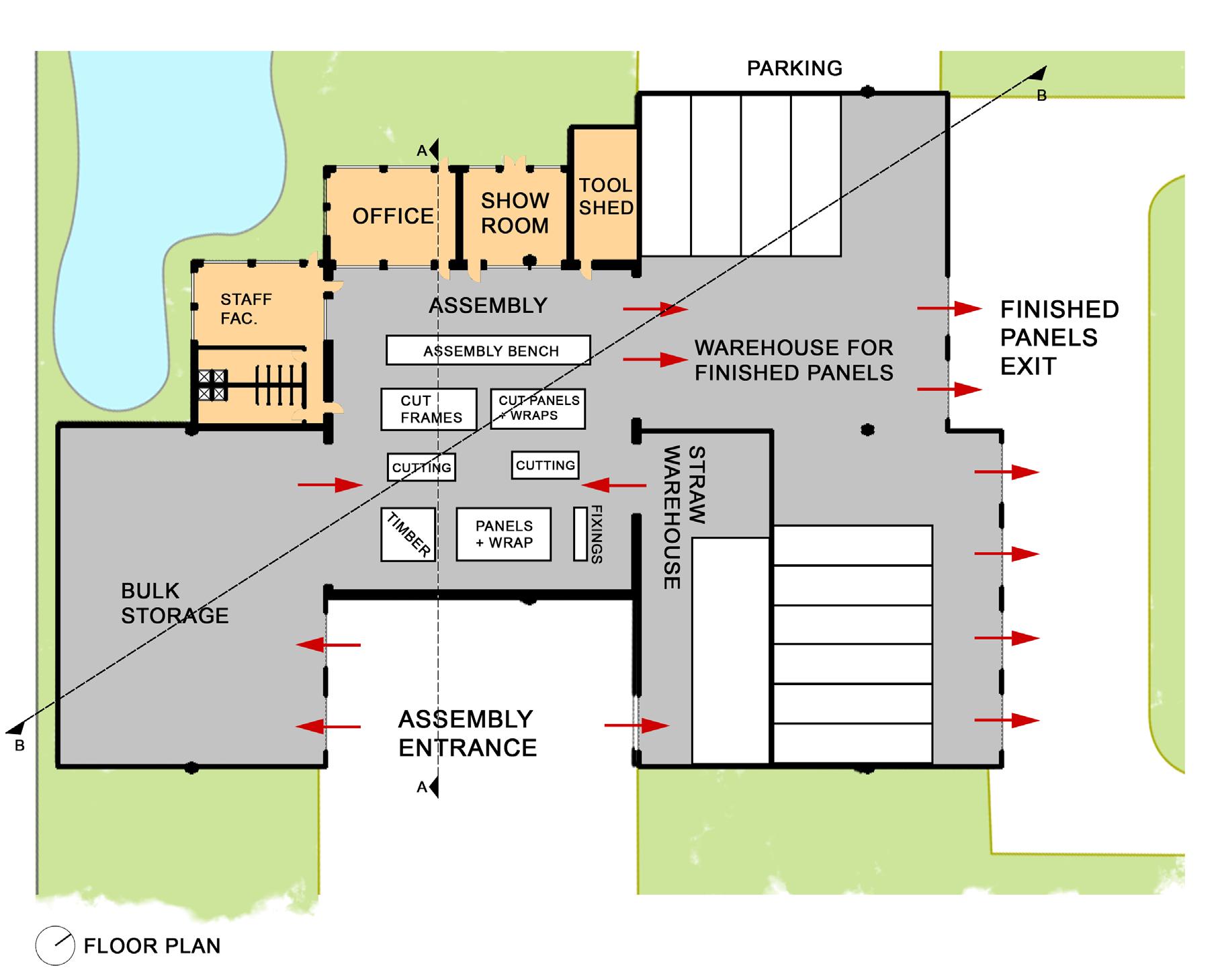
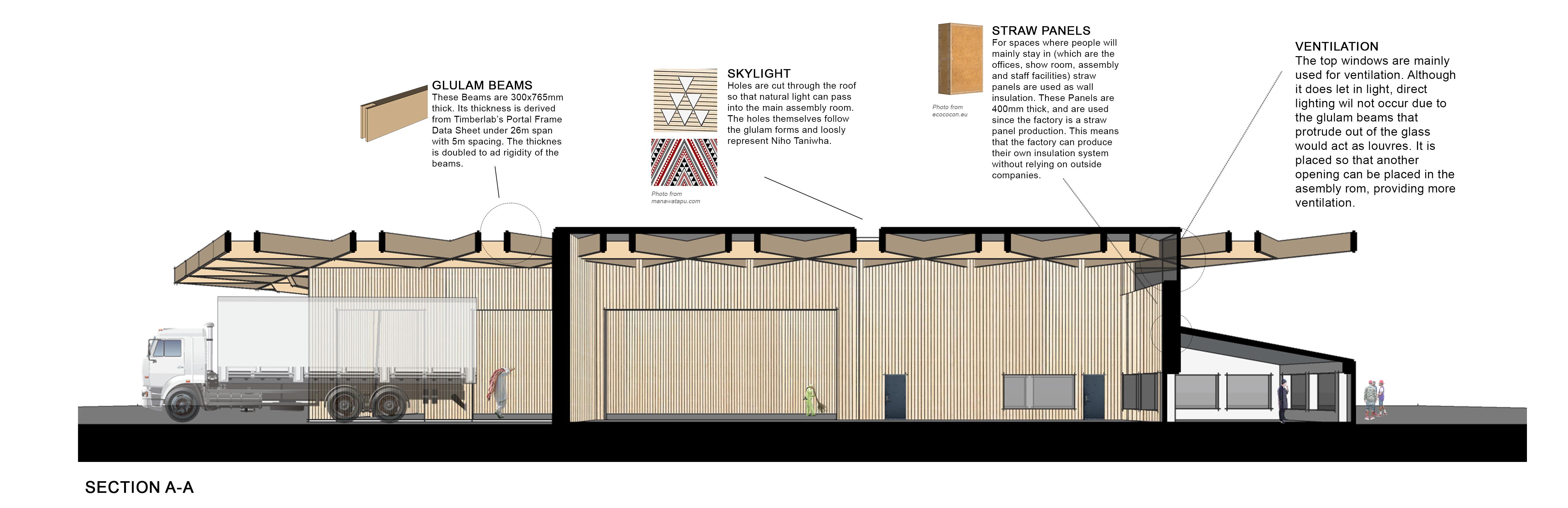
For our first-year Master’s studio, we returned to the site of Ihumatao for a new project. Our task was to produce a factory that produces timber and straw panels as an eco-friendly alternative to insulation. This project aims to make a factory made out of sustainable materials and to implement a distinguishable roofing system.
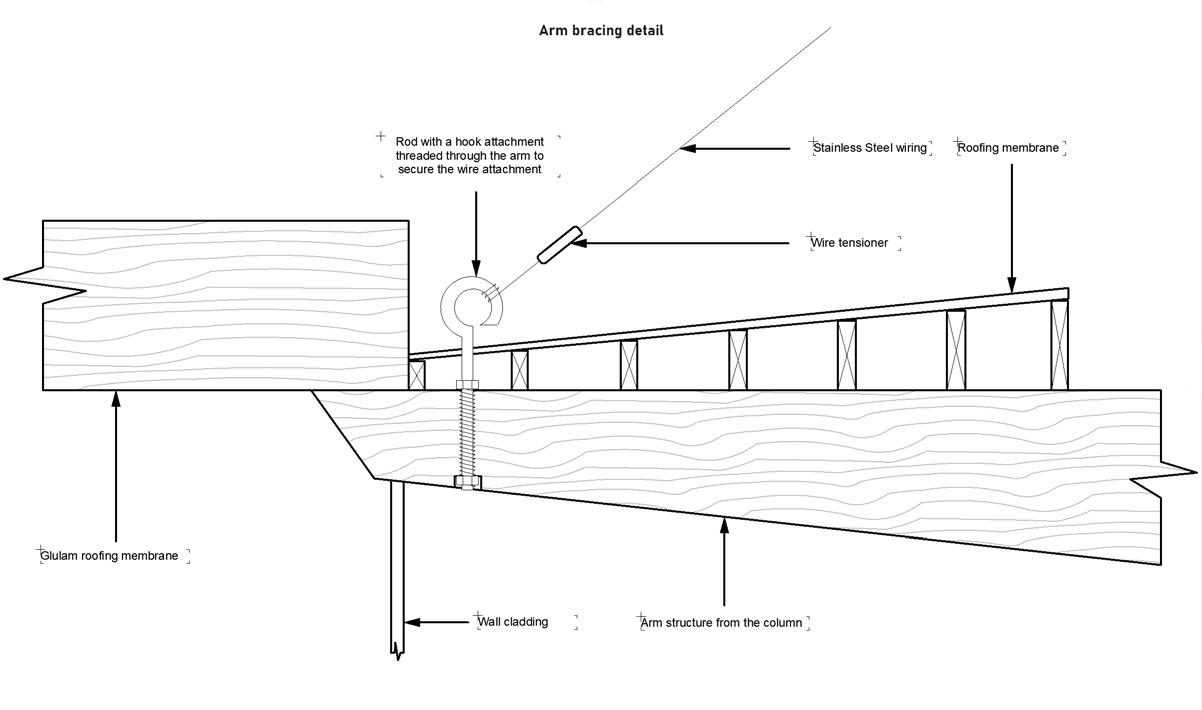
My design proposal is to utilise Glulam beams as the primary material for my structure. The intention was to create a form that represented a forest. The roofing system would be suspended in custom-designed columns that would present themselves as tree trunks. The factory walls would also be made out of the same straw panel the factory makes.
Aside from the factory, a proposal for a new entry point for the public was also needed. I created a structure that would be housed in one of the external ‘trunks’ that suspended the roofing system. Its design was based on birds’ nests (noted on the left page).
Furniture Design Stool Design
Designing and constructing a stool made from wood
Skills Applied
- Design development - Wood crafting
- Workshop
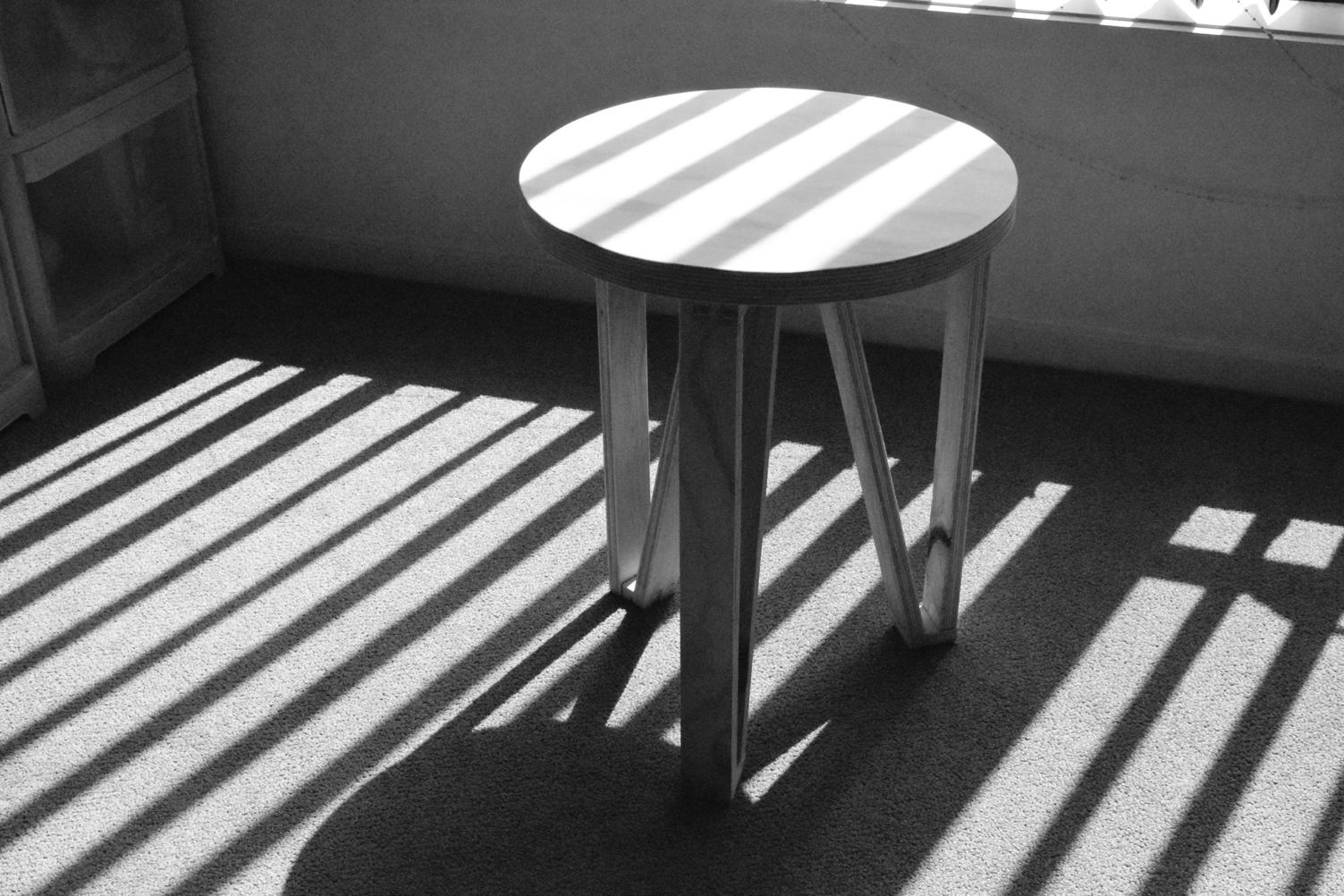
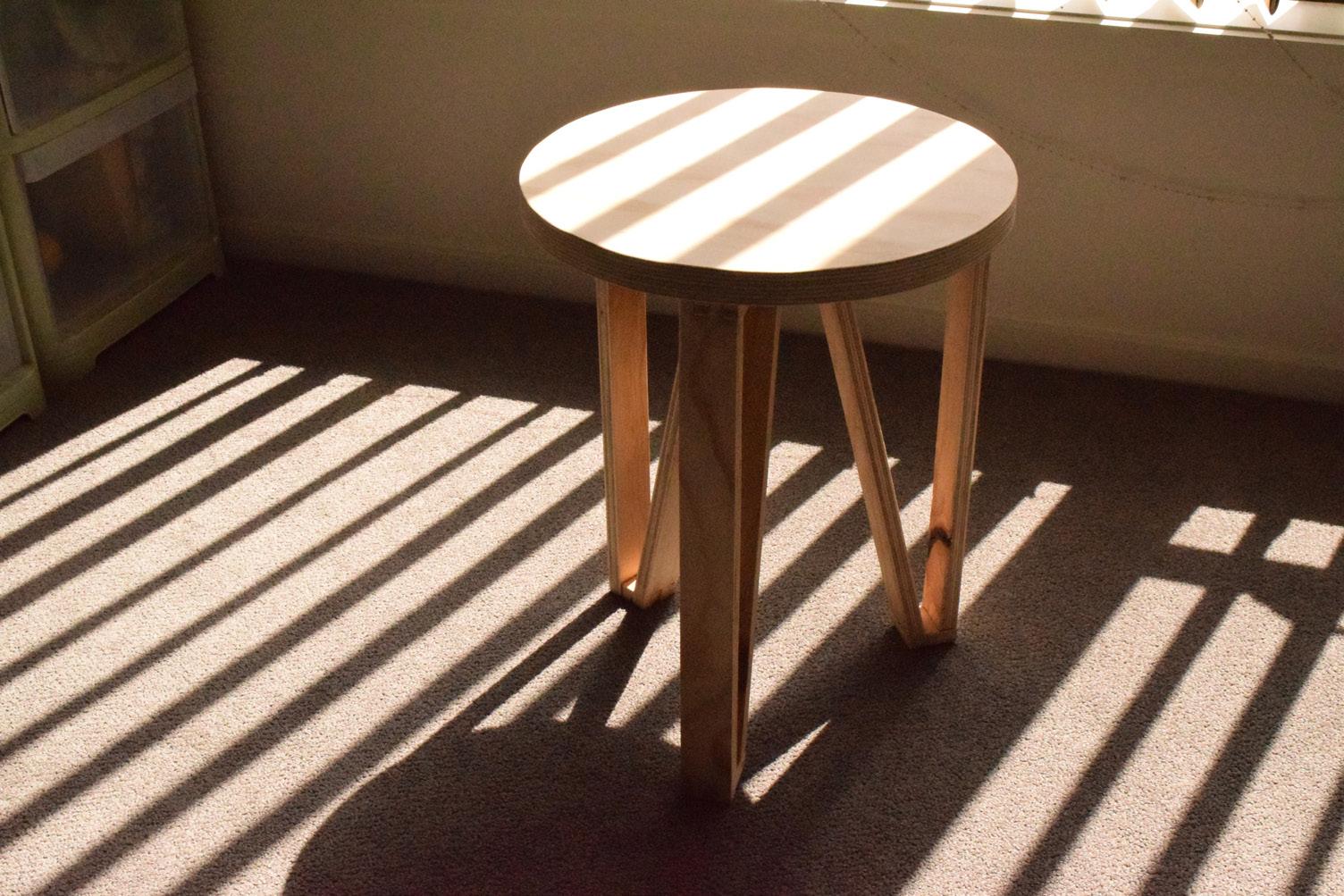
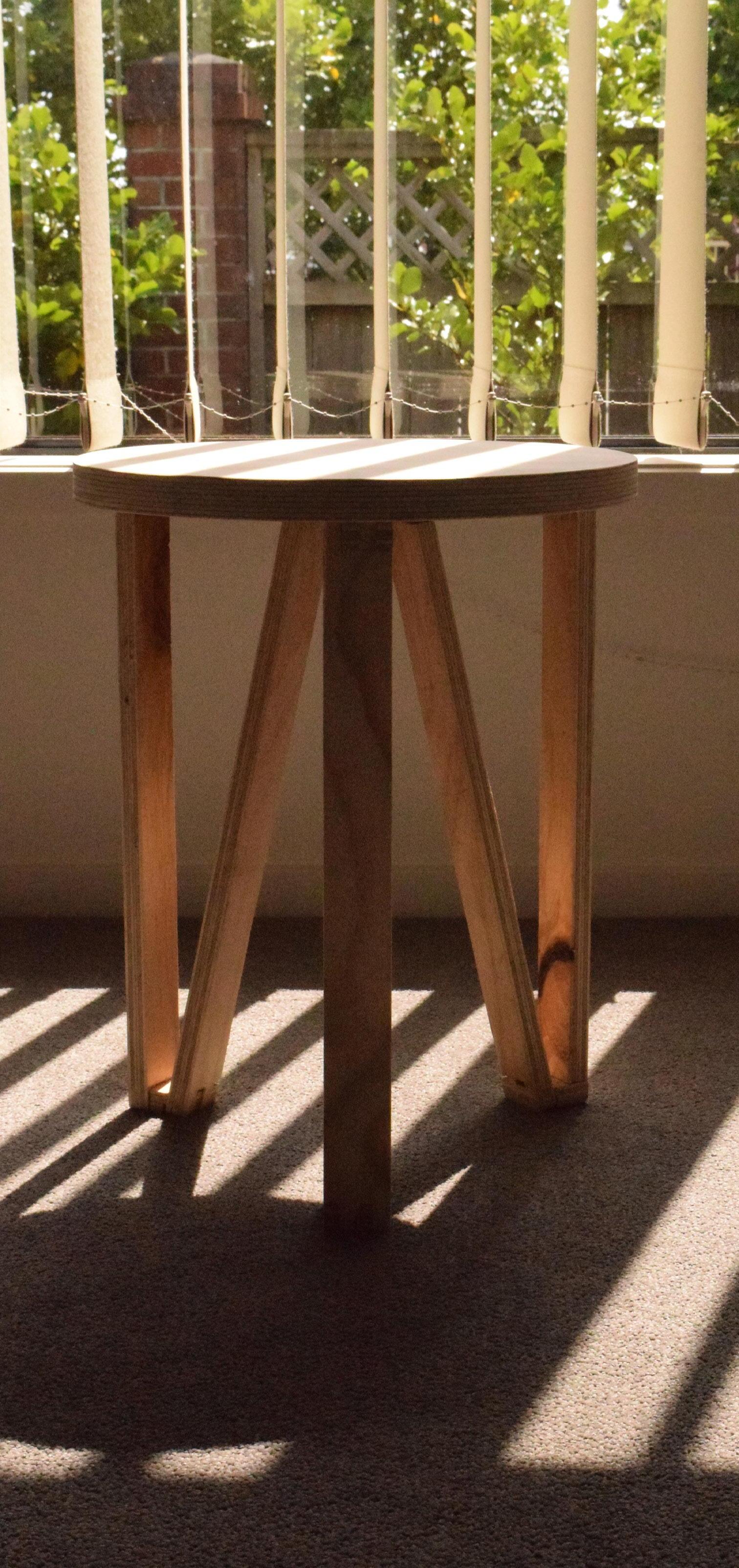
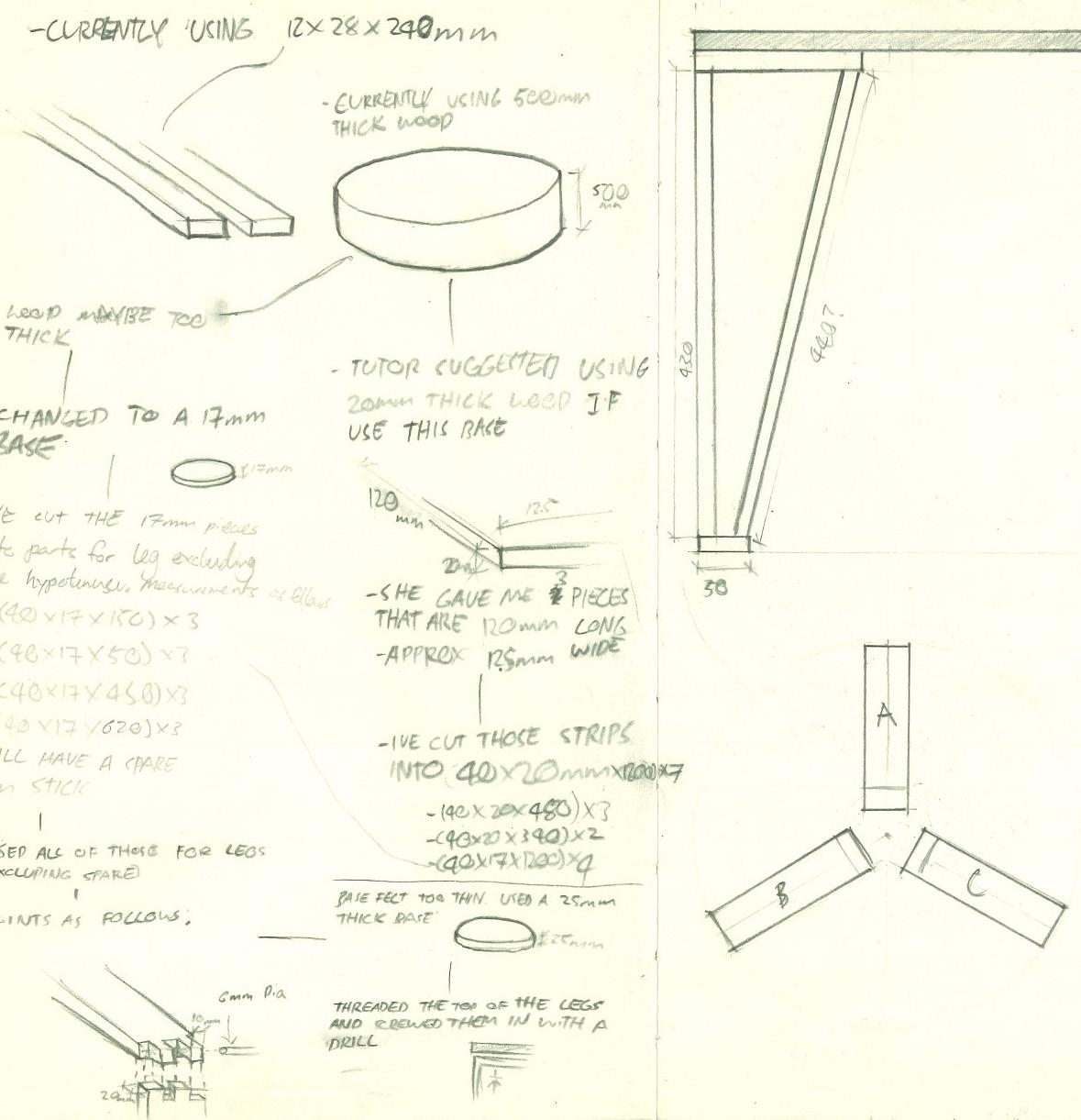
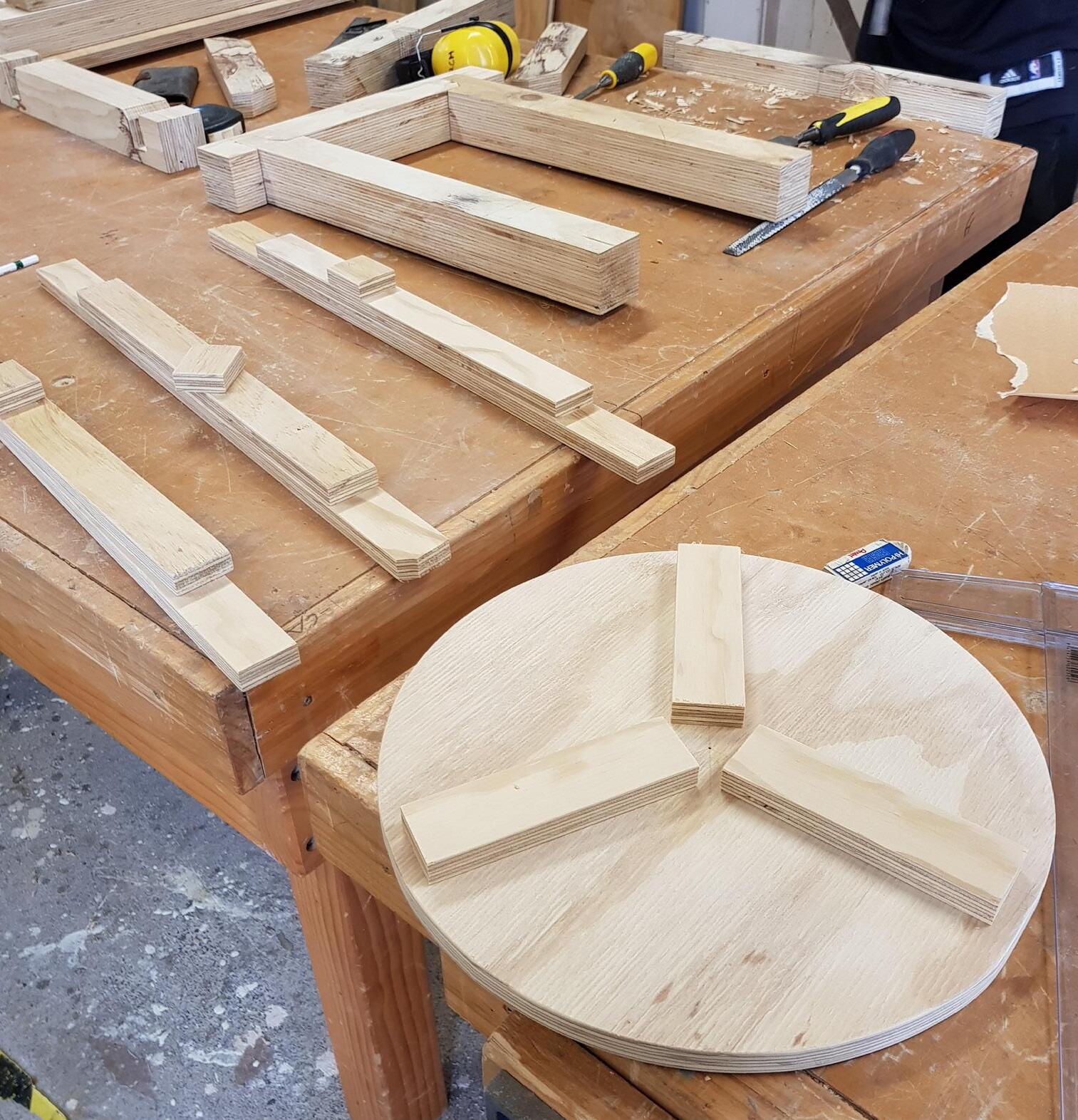
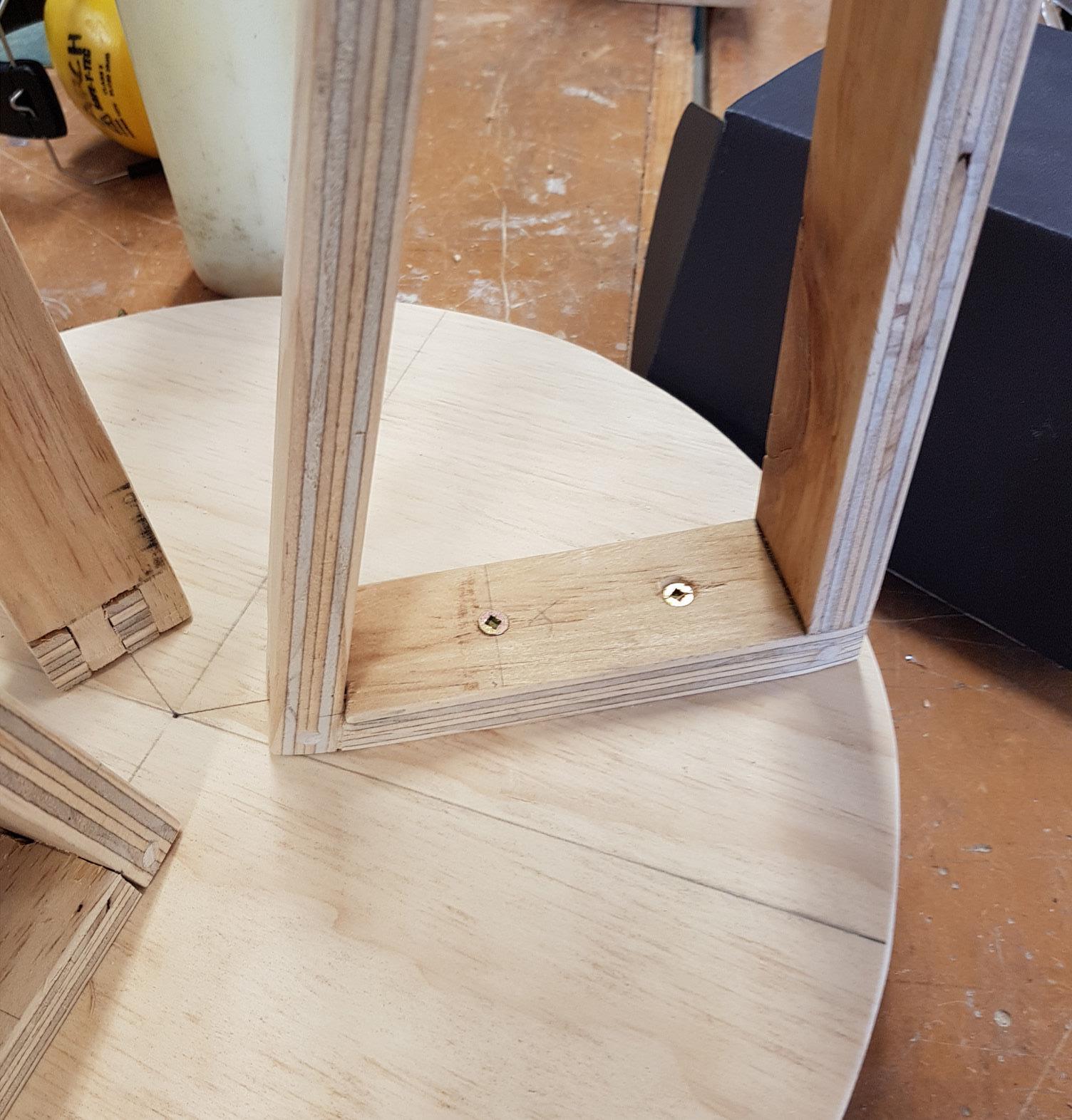
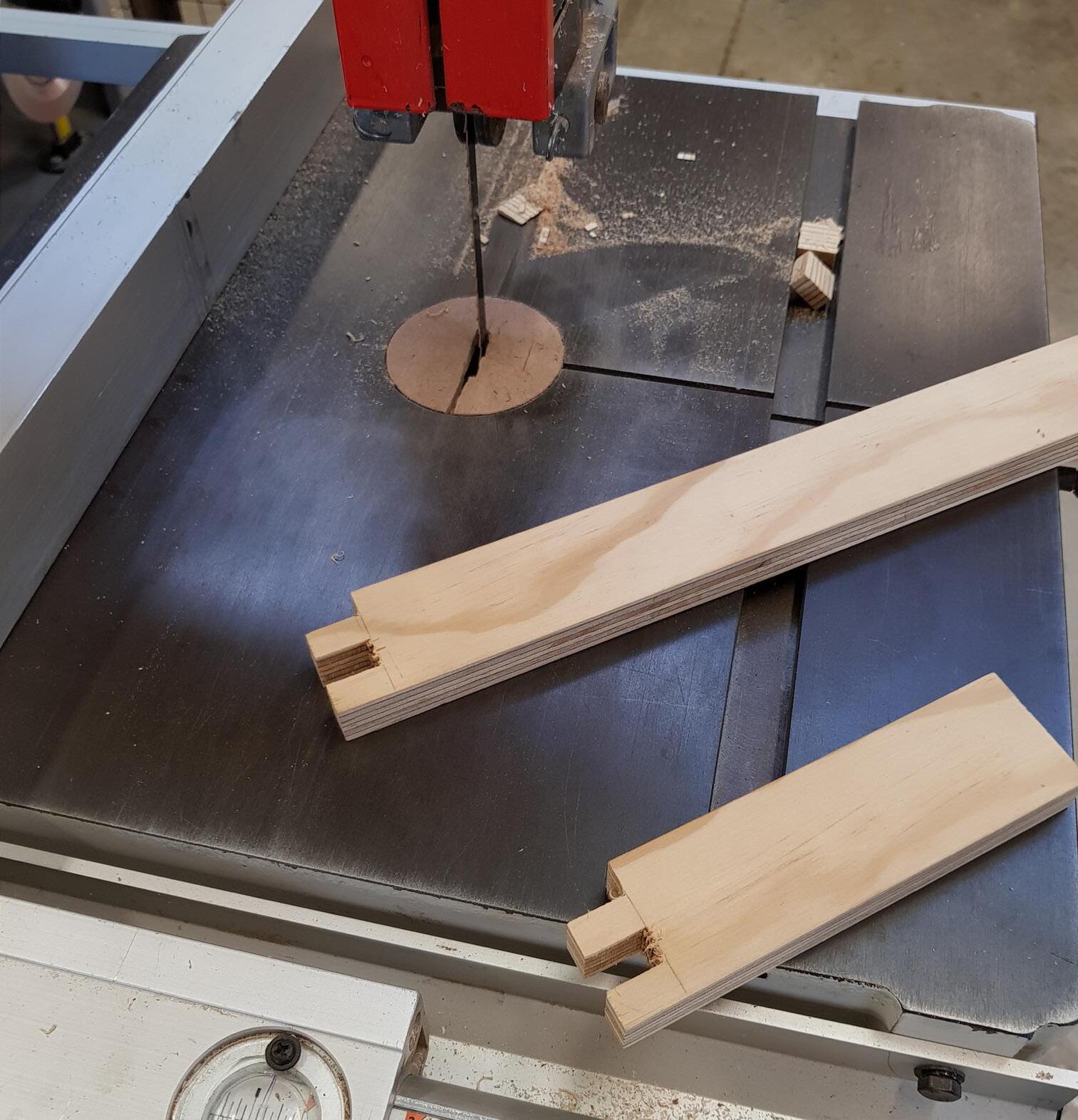
Design Process is an elective hosted by David Chaplin that teaches the fundamentals of design development. In the class, we were tasked with designing a wooden stool, which we had to construct ourselves. Documenting our stages of construction, we had to follow the design process guidelines established by Christopher Alexander in his book ‘Nature of Order.’
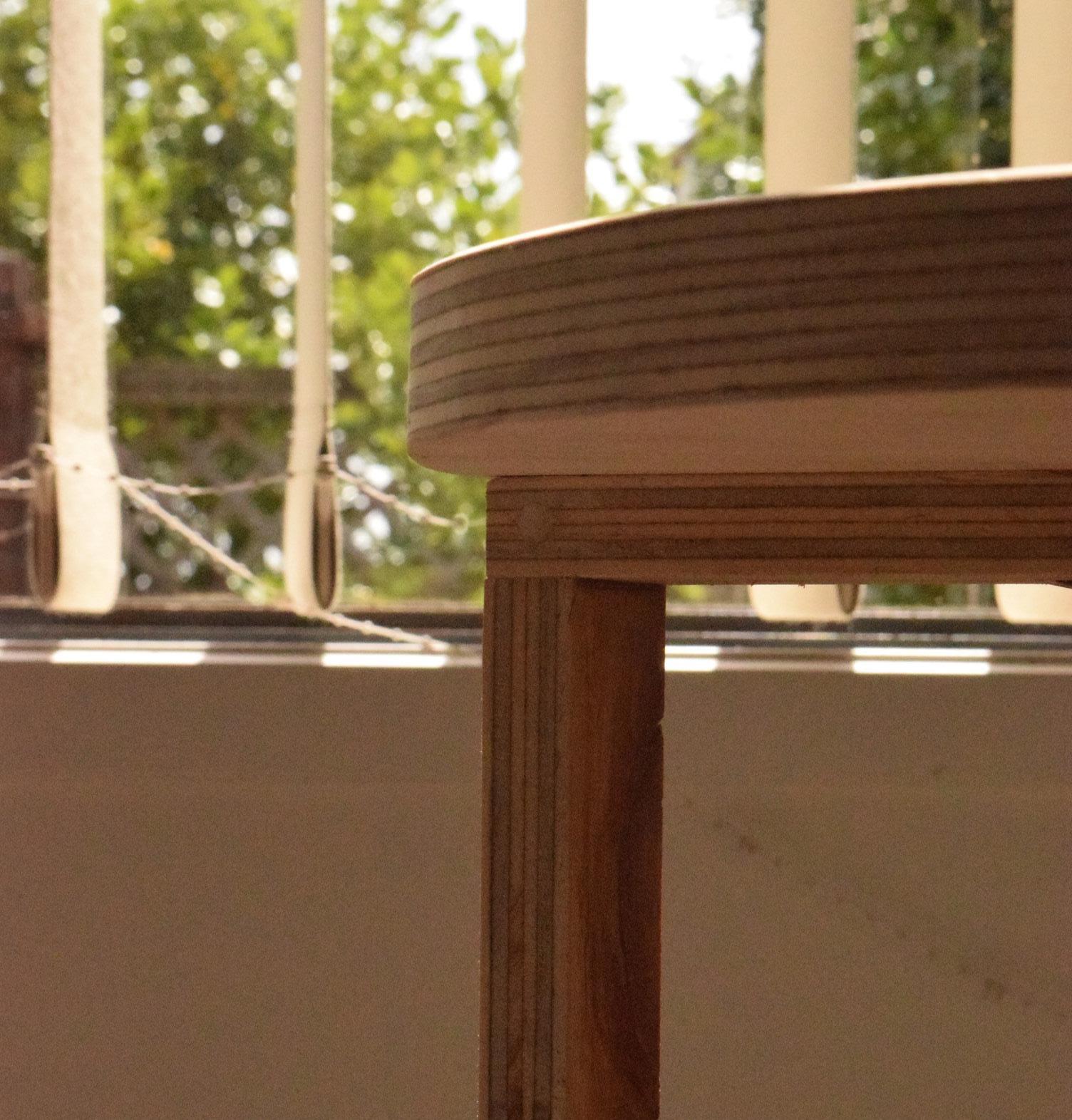
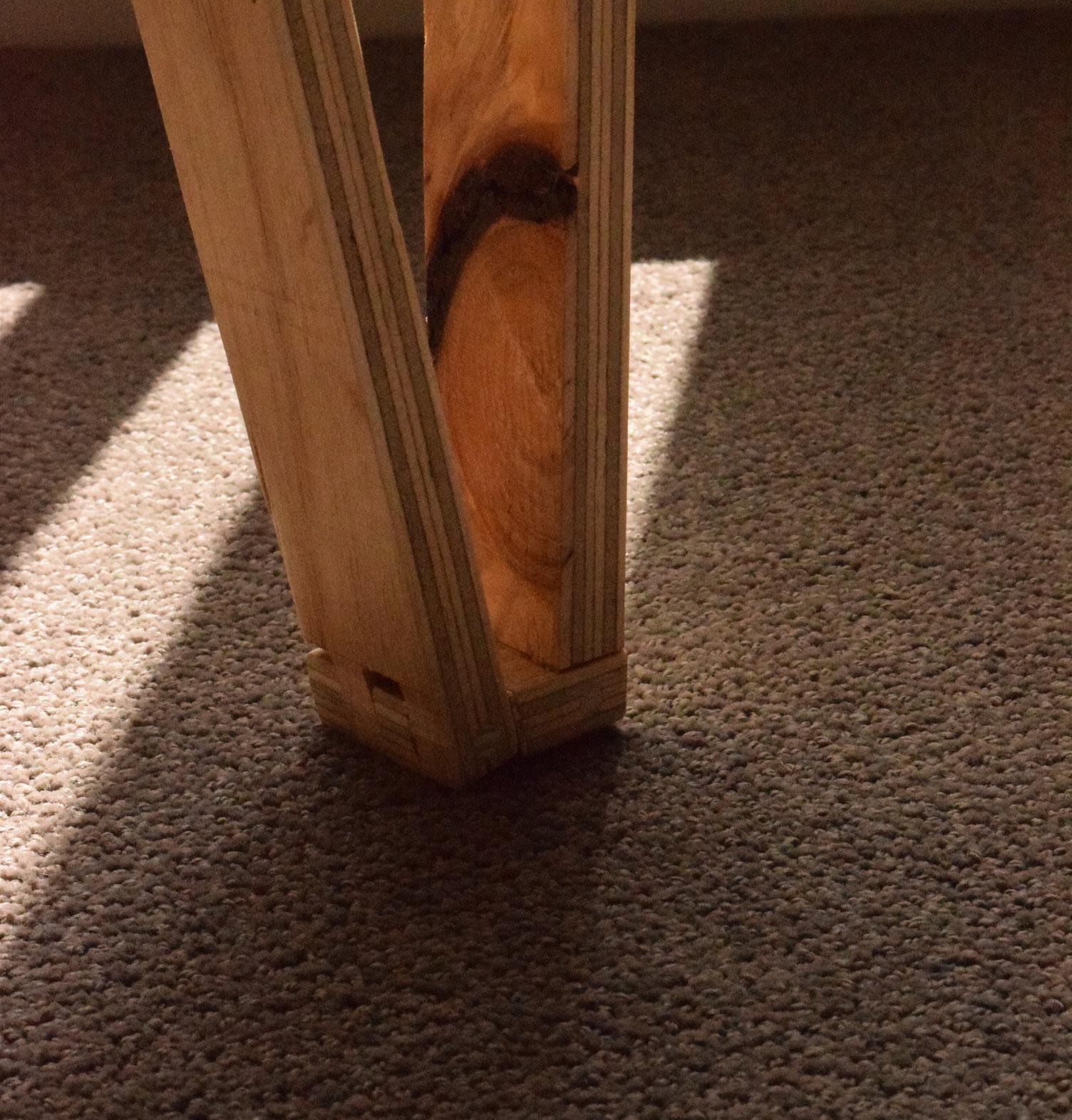
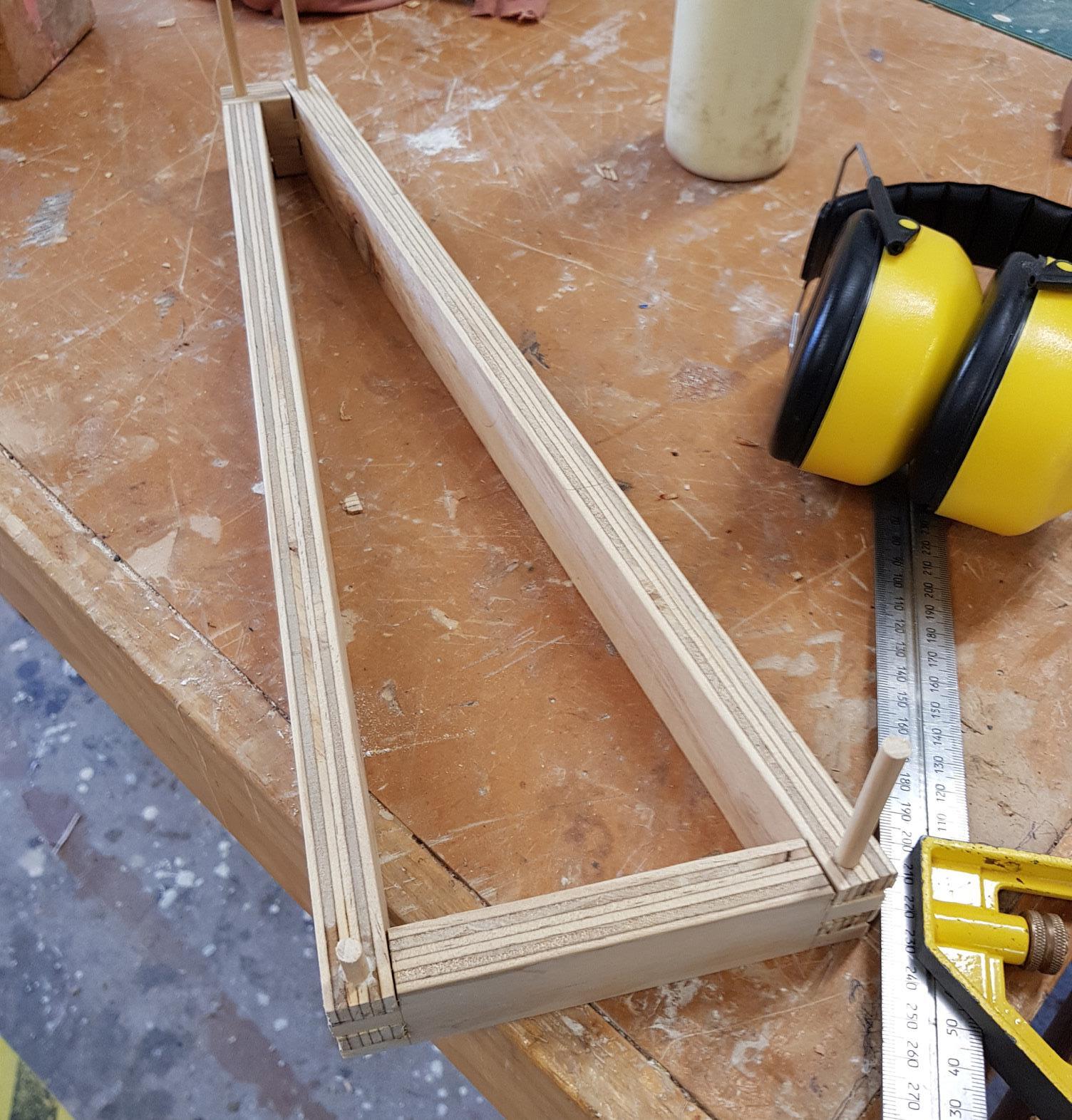
Dubbed ‘Model 03’ as the third piece of furniture I’ve designed, I was heavily inspired by Alvar Aalto’s stool 60. Much like his design, I emphasised lightness, simplistic forms, and ease of construction. Utilising only three legs rather than four added to the simplistic nature of the design, as that was the bare minimum of how many legs were needed to support a person. Furthermore, removing a fourth reduces weight and makes it much easier to carry. While the original concept required the legs to be made from a single bent piece, the design is revised to consist of four pieces interlocked with a dowel threaded through. The ‘V’ shaped legs also emphasized strength within the footings and a focus on the centre of the stool.
While we were fortunate to utilise all the tools in the workshop, the materials had to be sourced ourselves. This challenge emphasised cost efficiency, requiring my design to be as simple as possible. Luckily, I found spare materials within the workshop to produce my stool.
To produce my design, I had to utilise the university workshop. A number of tools were utilised to cut tits individual pieces, which were later sanded to be handled for general use.