Page 1
Page 2 Towards an agenda of a combinatorial composition program based on WFC
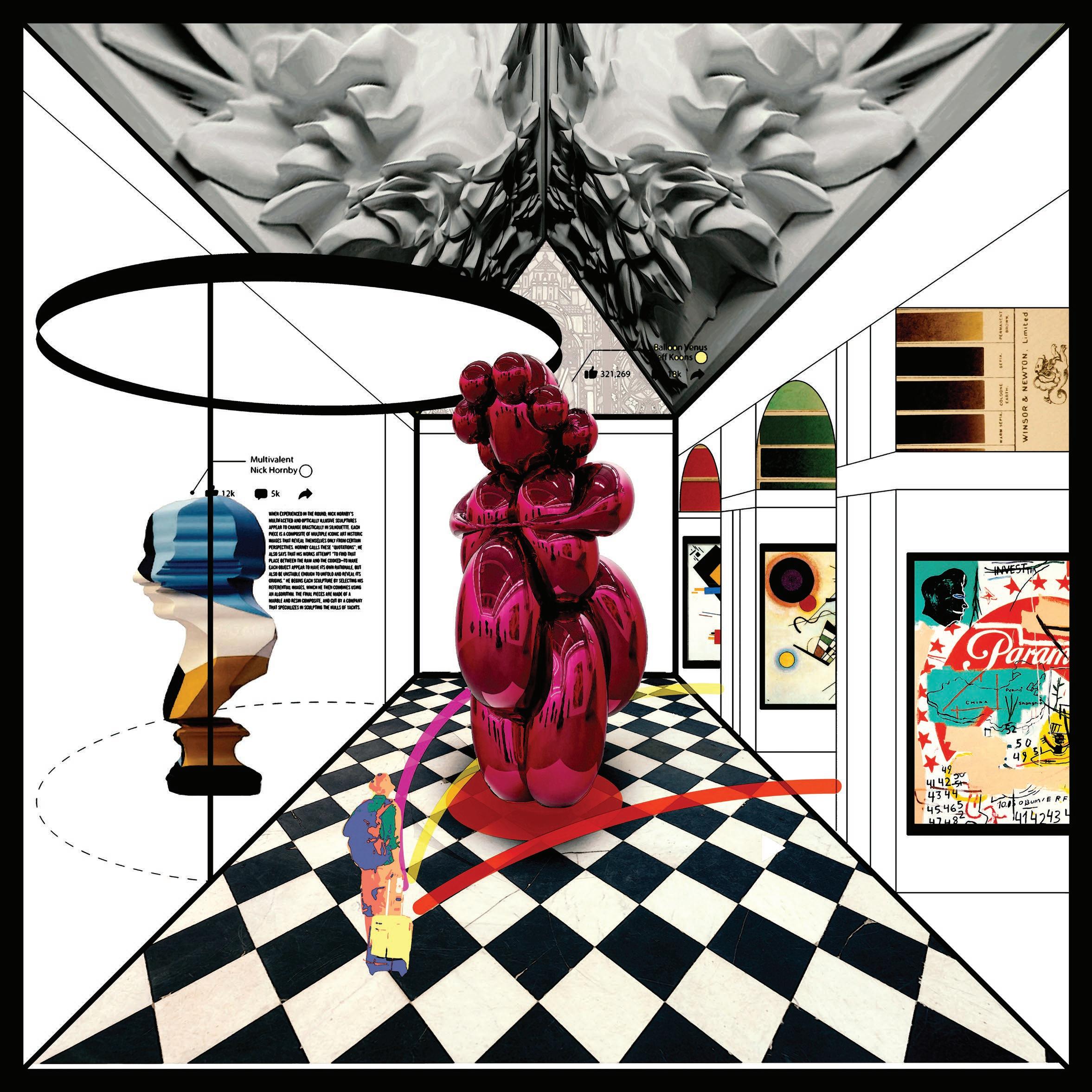
The project is about new approach to design not as a single static solution but as a traniable/customizable phenomena that can adapt to our everday life, and perhaps dicover new potential of design in both technolgy and archtiec ture criteria.
Page 3
Page 4 Towards an agenda of a combinatorial composition program based on WFC Contents Theoretical Foundation ------------------------------------------------ 6 Introduction 8 Methodology 9 Introduction 10 Agenda Diagram --------------------------------------------------------------------------------------------------- 12 Objectives 13 Case Study ---------------------------------------------------------- 14 Seul City Machine 16 Seul City Machine 17 IHEART Blob ------------------------------------------------------------------------------------------------------- 18 IHEART Blob-Thicc seams 19 Vend-O-Kiosk 20 Flow City 21 Image In Place ----------------------------------------------------------------------------------------------------- 22 Image In Place 23 Affective Balloons 24 The Urban (UN) Seen. Artificial Intelligence as future space 26 The Urban (UN) Seen. Artificial Intelligence as future space ---------------------------------------------------------- 27 Site Analysis -------------------------------------------------------- 28 Site Allocation 30 Site Allocation | Beyhaqi Park Ride Station 31 Green Layer-Green Spaces 32 Transportation Nodes ----------------------------------------------------------------------------------------------33 Transportation Node 34 Built Fabric 35 Density Map 36 Spatio-Functional Analysis ------------------------------------------ 38 Park and Ride Definition --------------------------------------------------------------------------------------------39 Trans-Regional 40 State of the art-Activity Clusters 41 State of the art-Activity Flow 42
Page 5 State of the art-Activity Distribution 43 State of the art-Flow Analysis 44 State of the art-Load Estimation 45 Programs effectivness scores --------------------------------------------------------------------------------------46 Speed score 47 Distant /Possibilities table 48 Site mapping example 49 Solver Setup 50 Highest score ------------------------------------------------------------------------------------------------------54 Syntactic Code ----------------------------------------------------- 56 Wave Function Collapse (WFC) 58 Slots definition 60 Monoceros | Examples with numbers ------------------------------------------------------------------------------- 61 Modules and rules | Access 62 Modules and rules | Access 63 Modules and rules | Car-Parking 64 Modules and rules | Bus-Parking 65 Modules and rules | Shop-Storage ----------------------------------------------------------------------------------66 Modules and rules | Restaurant 67 Modules and rules | Shop-Storage 68 Modules and rules | Restaurant 69 Observation Analogy ----------------------------------------------------------------------------------------------- 70 Observation Analogy 72 Observation Analogy 73 Resulted graph | Observation 166 74 Resulted graph | Observation 166 75 Technical Documents ----------------------------------------------- 76 Plan |Ground Floor 78 Plan |Second Floor 80 Plan |Third Floor 81 Elevations and Section ---------------------------------------------------------------------------------------------82 Renders ------------------------------------------------------------ 84
Theoretical Foundation
Page 6 Towards an agenda of a combinatorial composition program based on WFC
According to human demands, architecture as one of social services has been organized to come up with different solutions
Archtiecture has been influenced by other deciplines like Economy, Politics and ...
However in the past few years, tech industry began to satisfy societal necessities that emerges from a communicational platforms to lots of criterias.
Nowadays many architectural elements are not functioning well because of changes that occur on virtual spaces, Virtual space is the common space between people all around the world, a distribution of network that constantly emerge and disappear events, the network of unlimited proximities.
How an architect can behave as an agent into a flow of events? what is impact of virtual space in architecture both as analysis method and as a design tool?
Page 7
Theoretical Foundation
Although Architecture has been traditionally bounded with material dimension ,after the second WW, Turing’s de-cryptography1 algorithms led to the third generation machine ( ICT ) as the information paradigm2 testimony, a new level of complexity has emerged : immaterial dimension of spaces; In the knowledge-based economy, as the flow of events and information is at the core of the global transactions - the “meta product”-3, traditional approaches to organize the physical space are not effectively able to comprehend such multi-dimensional complexity.In this situation,the mutation speed of the so called meta-product has been also taken to another level which requires sophisticated instruments and indicators to measure the consecutive chaotic effects4. SUCH Instruments cannot be provided by the classic material -based approaches as they hold architectural solutions into a static state with immutable outcomes. In other words, based on Eco’s linguistic analogy OF SPATIAL SYSTEM, there is a gap emerging between the two “technical” and “syntactic” codes which is paraphrased by the third code, the “semantic code”5 : the layer of interaction between space and user. BASED ON ECO’S DEFINITION, THE “code’ is a rule which correlates elements of an expression-plane with elements of a content-plane. A ‘code’ is an instrument for connecting the expression of signs to their content, and is a correlational device which generates ‘sign-functions”6. : Syntactic code is the mediator that interrelates the spatial sub-systems pure definition of technical coeds). The gap is rooted to the fact that the semantic layer is affected by the unpredictable meta-context of cyber-realities7 which brings out a dual dilemma .On one side, the physical state of space has limitS to reflect the multidimensional possibilities and on the other side, the emerging cyber-reality can provide space design with responsive solutions compati ble with contemporary dynamics.Otherwise, the static design practice is radically useless when society changes pace over time. Responsive solutions propose responsive space ; dynamic organisation which can flexibly change based on the reciprocal user-space interaction.Such approach takes the physical state of space towards a new dimension; a psycho-cognitive alteration of the dematerialized space. In fact, the design process,will take place in an ever-mutating loop instead of a one-time monodirectional practice: a responsive protocol as Galloway states8; a User-Oriented Interactive Space.
1 Turing Allen, Universal Machine, 1943
2 Castel, M., The rise of the network society, John Wiley & Sons, 1996, city, pp 46.
3 Deleuze, G.,Negotiations 1972-1990,, Columbia Press, New York, 1995.
4 Taylor, M., C., The emerging network culture, the moment of complexity, 2001
Eco Umberto, On Ugliness, Bompiani , 2007,
Eco, A Theory of Semiotics, p. 48
Benedikt, M., CyberSpace, First Step, The MIT Press, Massachusetts, 1991
Galloway, A., Protoco
Towards an agenda of a combinatorial composition program
Page 8
based on WFC
5
6
7
8
Introduction
Theoretical Foundation Methodology
The ever-mutating loop to receive User-Oriented Interactive Space needs reciprocal context for letting users involve themselves in design development. So based on Eco’s linguistic analogy of spatial interactive system,the analytical Design process is divided into three main layers:
Code
’We mean by code, for instance, a verbal language such as English, Italian or German; visual systems, such as traffic signals, road signals, card games, etc; and so on.’ Umberto Eco.
Eco explains that a ‘code’ is a rule which correlates elements of an expression-plane with elements of a content-plane. A ‘code’ is an instrument for connecting the expres sion of signs to their content, and is a correlational device which generates ‘sign-func tions. (A Theory of Semiotics)
Act of architectural design can redefine in 3 catergories:
Technical Codes: Coding that refers to knowledge of Architectural Engineering (beams, columns, roof systems, screens and insulation and etc.) They include the initial architectural elements. In his opinion, in this code, there is no relationship of content.
Syntactic Codes: These code are from space codes and refers to positioning and the way architecture components are related. Social and cultural contract involved in forming these codes and architecture elements are put together based on a certain logic in syntagmatic relationship and create signification such as staircases relationship with the yard.
Semantic Codes: These codes are focusing on the secondary and implied signification of architecture. This is where the individual elements of architecture, in relation to one-to-one and implied implications, produce a deeper signification. Eco divides semantic codes into four types: a) The codes with primary function such as roofs, stairs, windows. b) The code which has secondary, implied function such as Facade, ventilator and frame. c) Codes which produce connotation of ideological settlement such as panjdari (five windowed room),
VarietySolidityadaptability
Technical code syntactic semantic
Data
Page 9
Theoretical Foundation
Introduction
Agenda Diagram
Cycle-feedback-finite
Architecture or building industery procedure is a finite process which always comes to an end, weather become success or not.
However procedure of software devlopers is look like a cycle rather than a finite process. the task of a developer is not always become with an certain answer or any thing absoulote they have permission to experience and discover, they can upgrade or downgrade the design according to user feedback immediately. they can share and use others design. they may remain on a single projct for their entire life, becasue unlike architectureal projct it alwas have to enhance by passing time.
Linear process: finte process should achive all the target
Cycle process: infinte process developement is the result of each iteration any issues on each step can solve in next iteration
Site-condition Form of space-occupatio project
Technical Code
identity:
All
Static design solutions
Dynamic design solutions
User Feedback
Diagram1.
electrical system -
-
-
Syntactic Code
identity: physical/Adaptable
Syntactic Code includes all the physical neccesities of a program in a minimum level, becasue more materiallity cause less adaptability
removable wall/ oor/roof panel - adaptable lighting - temporary
Design Strategies
Dynamic design solutions
Hyper Space
Semantic Code
identity: Virtual/Adaptable
Semntic Code can a ect the user experience without physical
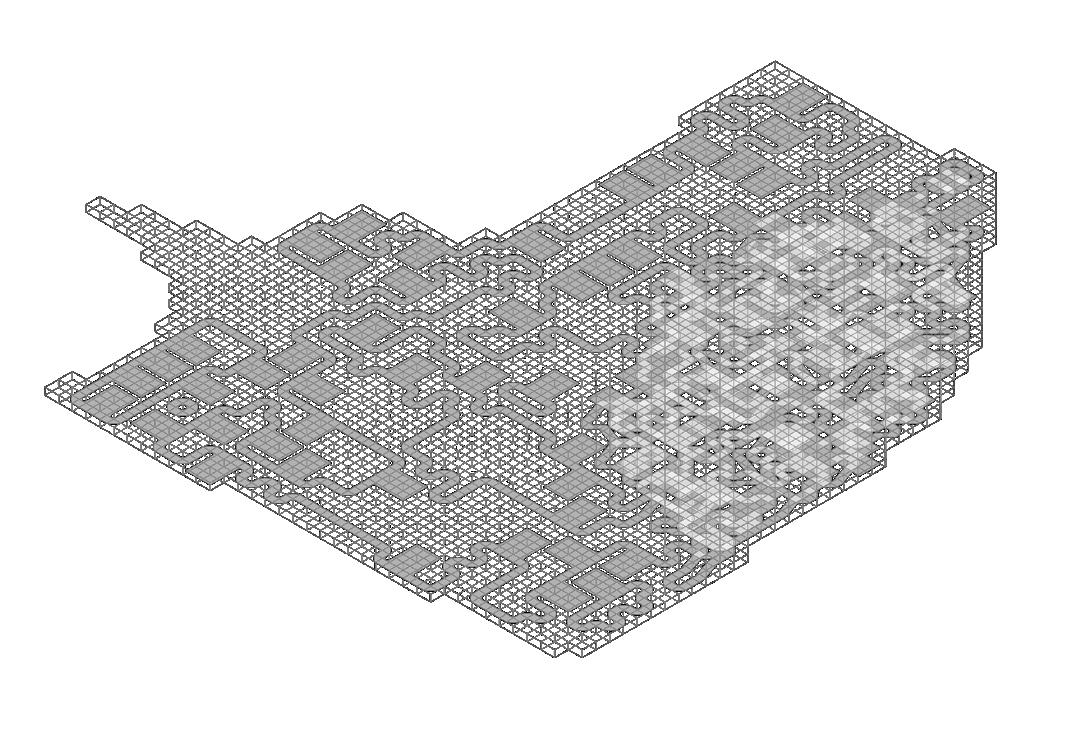
Local App -
Base App - Public
Designer can apply the strategies due to Syntactic and Semantic Layers and immidietly gather reponses to improve the design strategies
User
Towards an agenda of a combinatorial composition program based on WFC
Page 12
Theoretical Foundation
physical/Rigid
Infrastructures
vertical circulations
building structure
piping
changes
digital infrastructure
Internet
Devices*
allocation
Theoretical Foundation Objectives
Research objectives
Based on the problems previously stemmed, the research objective approach is to design a dynamic self-regulating system that can responsively adapt to the reciprocal user-space interaction beyond the limits of spatial materiality. In other words, the research aims to exploit a data-driven design process instead of the classic rule-based top down procedures to decrease the disruptive impact of temporal delay; towards a real-time interaction through a sponta neous feedback loop between designers and users.
Main objectives
Theoretical : To Achieve some Proposal definition ( What is Dematerialized Space? How to Define ? )
The main tendency of this design based research is to designate a practical model for making a real-time interaction through a spontaneous feedback loop between designers and users.
Dematerialized space is generated by minimum physical occupation to have maximum adaptivity with virtual space. Practical ( Experimental) : How To REALIZE ( HOW TO Make?) ? How to Design?
Page 13
Case Study
Page 14 Towards an agenda of a combinatorial composition program based on WFC
Page 15
Case Study
Seul City Machine

What happens when the sensor-imbued city acquires the ability to see – almost as if it had eyes? Ahead of the 2019 Shenzhen Bien nale of Urbanism\Architecture (UABB), titled “Urban Interactions,” ArchDaily is working with the curators of the “Eyes of the City” sec tion at the Biennial to stimulate a discussion on how new technologies – and Artificial Intelligence in particular – might impact archi tecture and urban life. Here you can read the “Eyes of the City” curatorial statement by Carlo Ratti, the Politecnico di Torino and SCUT. If you are interested in taking part in the exhibition at UABB 2019, submit your proposal to the “Eyes of the City” Open Call by May 31st, 2019: www.eyesofthecity.net
Seoul City Machine is a city symphony from the urban landscape of tomorrow. Narrated and scripted by an AI chatbot trained on smart city data sets the film is a love letter from the City Operating System to the citizens it affectionately manages. The film is a por trait of a city where machines and technology are now the dominant inhabitants of space. Here the eyes of the city are numerous and we are endlessly scanned by its countless sensors, lasers, cameras and satellites in order to feed the data models and optimize our experience. Our guide to the city is the disembodied voice of its urban management software. The script and dialogue have been gen erated through a conversation with a real artificially intelligent chatbot. We listen as the city machine voices its own creation story and introduces itself to its citizens.
The film is an abstract sequence of vignettes, fragments and moments of a future Seoul, a city in which all of the hopes and dreams, fears and wonders of emerging technologies have come true. Using contemporary Seoul as a visual backdrop the present-day city is overlaid with cinematic visual effects to depict an autonomous world of machines where the sky is filled with drones, cars are driver less, the street is draped in augmented reality and everyone is connected to everything.
Page 16 Towards an agenda of a combinatorial composition program based on WFC
Case Study Seul City Machine
For all of their history, the machines around us have stood silent, but when the city acquires the ability to see, to listen and to talk back to us, what might constitute a meaningful reciprocal interaction? Is it possible to have a productive dialogue with an autono mous shipping crane loading containers into the hull of a ship at a Chinese mega port; or, how do we ask a question of a warehouse filled with a million objects or talk to a city managing itself based on aggregated data sets from an infinite network of media feeds? Consumer-facing AIs like Amazon’s Alexa, Microsoft’s Cortana, Google Assistant or Apple’s Siri repeat biases and forms of interac tions which are a legacy of human to human relationships. If you ask Microsoft’s personal digital assistant Cortana if she is a woman she replies “Well, technically I’m a cloud of infinitesimal data computation.” It is unclear if Cortana is a she or an it or a they. Deborah Harrison, the lead writer for Cortana, uses the pronoun she when referring to Cortana but is also explicit in stating that this does not mean she is female, or that she is human or that a gender construct could even apply in this context. “We are very clear that Cortana is not only not a person, but there is no overlay of personhood that we ascribe, with the exception of the gender pronoun,” Harrison explains. “We felt that ‘it’ was going to convey something impersonal and while we didn’t want Cortana to be thought of as human, we don’t want her to be impersonal or feel unfamiliar either.”
The personalities of machines like these may seem innocuous, just novel interfaces through which to open an app, set a reminder or operate our devices while we have dirty hands but the assumptions and decisions that underpin these AI characters will form the foundation for generations of autonomous technologies to follow. How we engage with these artificial bits of intelligence is shaping our expectations for the next generation of human-machine interactions. “I have the deepest respect for humans, you invented calcu lus…and milkshakes,” says Cortana. Do we need to become fluent in C++ or the mechanics of machine vision in order to have a pro ductive conversation with our city? How might we develop new forms of empathy or understanding with our technologies through alternative protocols of machine native interactions? The purpose of these questions is not to explore whether or not these early forms of computational intelligence constitute any kind of sentience but rather, as our technology companies race to bring more and more natural AIs to market, the question of how we design and interact with machines and how they might behave when we do is increasingly significant. Machines don’t see or understand the world as we do yet we insist on trying to push our interfaces with them through the forms of language and vision that we associate with ourselves. Perhaps what we should be doing is looking at how, at these early stages, we can be prototyping new modalities of communication. The future of AI is not natural conversations with latex skinned, humanoid-shaped robots, but rather its complex relationships with driverless cars, mirrored black rectangles, giant infrastruc tural objects and planetary scaled logistical systems.
Page 17
Case Study

 IHEART Blob
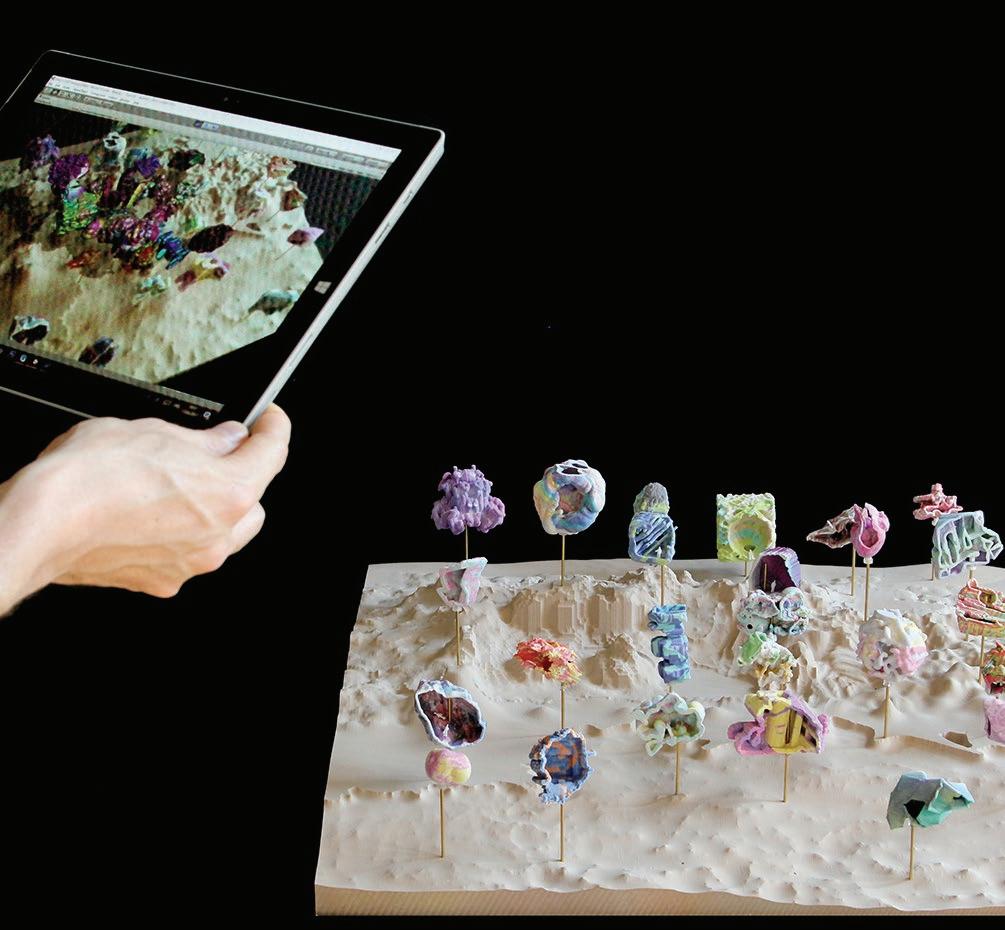
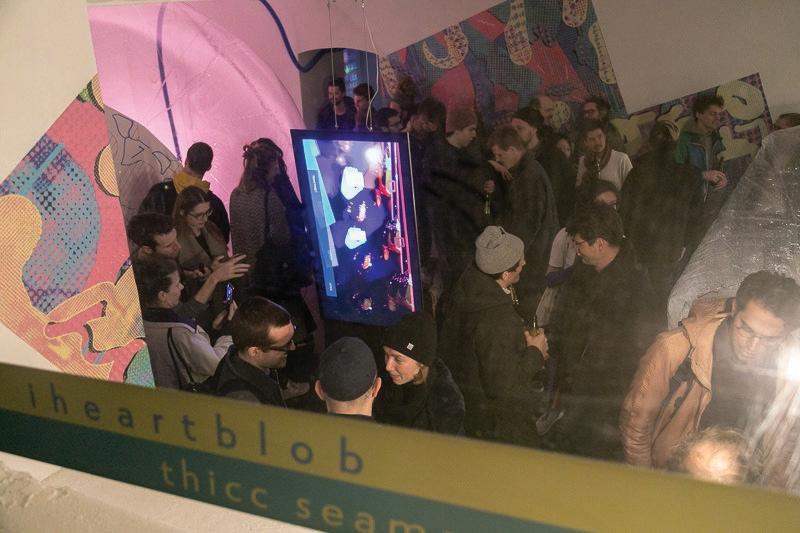
iheartblob is an award winning architectural design studio and research collective formed by Aleksandra Belitskaja, Ben James and Shaun McCallum, currently based in Vienna. The studio has a strong focus on the Architectural Object, yet, draws on core tenets from an array of philosophical and theoretical principles whilst exploring new models of architectural thinking and constructing. The work is meant to both enchant and reflect on the crisis of thought which runs through architecture today by investigating new and estab lished ideas as though they were materials, engaging seriously with hard hitting agendas, whilst remaining at a distance from full immersion.
Each project revels in expanding new visual languages of architecture where projects are rarely seen in traditional plan and section but are rather expressed through mixed reality objects, real-time renderings as well as custom designed architectural software in an attempt to reflect their Lagrangian derivations. Through the exploration of these mediums, the work always enables new discussion surrounding our current cultural, practical and theoretical framework in which architecture resides. The studio has developed numer ous provocative proposals for international competitions as well as having worked exhibited across the globe including Storefront for Art and Architecture, New York and A+D Museum in Los Angeles.
Towards an agenda of a combinatorial composition program based on WFC
Page 18
Case Study
IHEART Blob-Thicc seams
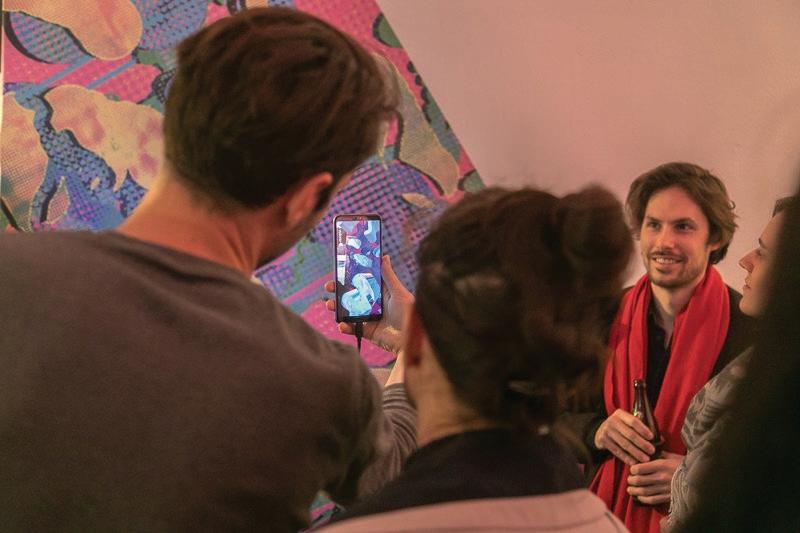
We no longer live in a purely physical world; we live in a post-digital hybrid that is simultaneously simulacra and tangible. The digital is so interlaced into our everyday consciousness that we often take for granted its impacts on society, politics and culture. We’re over saturated with digital content, and the physical architecture that surrounds it is stretched and deflated - it can no longer barricade the digital inside. Thicc Seams looks at the world not as physical versus digital objects but as two juggernauts jostling in the same space; their seams, their edges and their layers are becoming exposed as the digital is beginning to seep out. It is these moments that give us the most understanding about the relationships between physical and digital objects. Here they share interactions and reflect upon a phenomenal transparency as well as a literal transparency; a digital transparency and therein a phygital transparency. This is a notion of visibility that opposes a separation of physical and digital and encourages the digital to tear at physical seams. Seams within purely physical architecture are the residue of parts – a legacy of tectonics that the digital does not have. Here, the digital uses these seams expressed as the interplay between physical material connections, high contrast edges, corners, projections and a myriad of spatial and formal overlaps to forge a new type of relationship between parts to wholes, and manifest themselves in a much more nuanced way than the mere agglomeration of physical architectural parts.
Page 19
AUGMENTED REALITY INTERACTIVE GAME
Case Study Vend-O-Kiosk
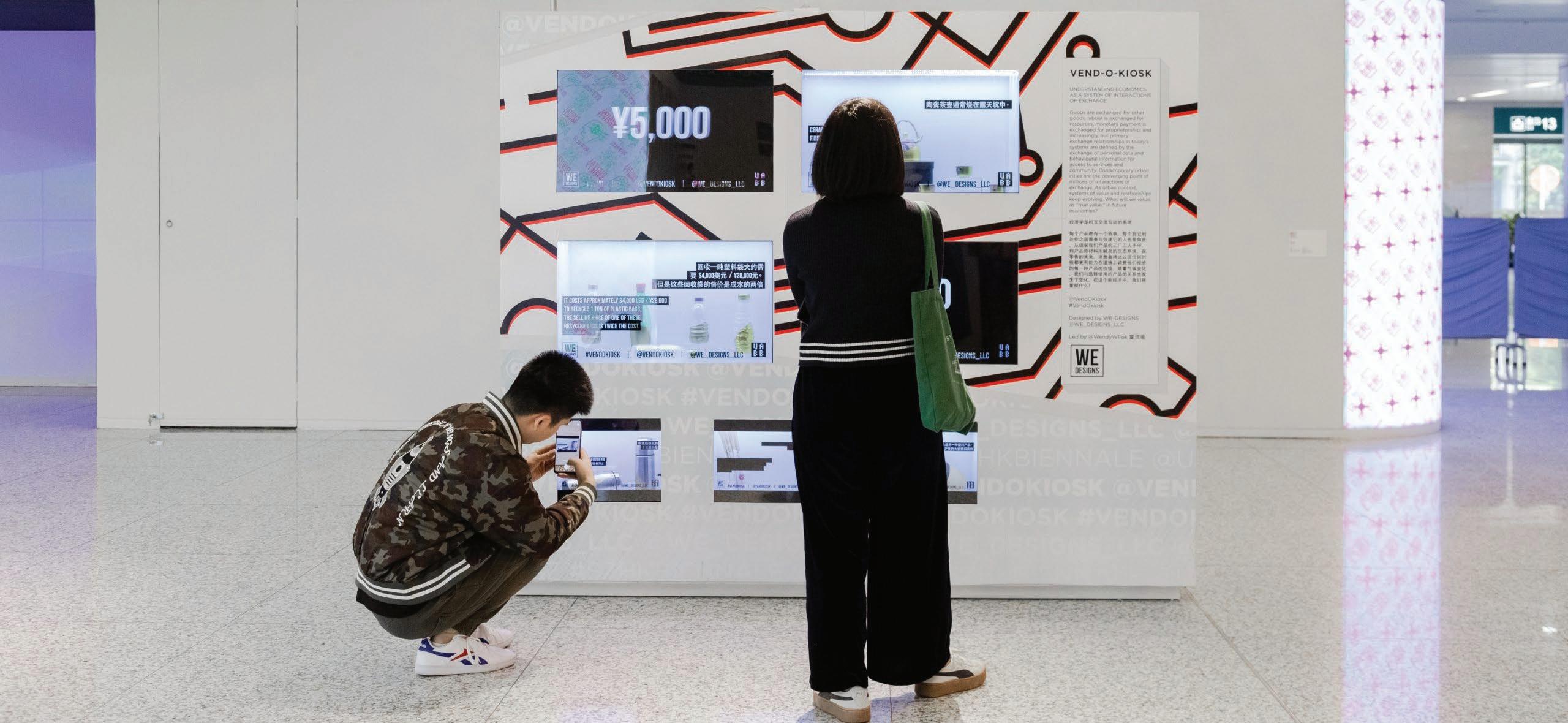
215 BC Roman Egypt, a scientist in Alexandria invents a way for a machine to accept a coin and dispense a fixed amount of holy water correlating to the weight of the coin. In iterations both past and contemporary, vending machines chart the history of our economic behaviors and reflect an underlying playful element in the zeitgeists of urban consumerism and consumer experience, from postal office.
Challenging the future of the next economy, how might new technological scenarios in the future of consumption affect the relation ship between the human and urban terrains. WE-DESIGNS proposes our “Vend-O-Kiosks” that will be exhibited at the Bi-City Biennale of Urbanism/Architecture in Shenzhen, China, as part of a “tri-city” proposal. The WE-DESIGNS team will also design and facilitate a series of programs and workshops to supplement the exhibitions in Shenzhen, China, with a future exhibition in New York City.
Connecting cities around the world, this project initiates a united, global conversation surrounding the future of the next economy. This project questions how the adoption of new technologies will affect the spatial, social, and ethical repercussions of innovation driven by AI. All data collected by the “Vend-O-Kiosks” will be published and publicly available as open-sourced data. Users will learn about the “manual” and the “automated” next to one other, allowing them to witness the machine operated “digital,” while still being able to “physically” interact with the objects of “labor.”
The active discussion with this proposal is to offer these global communities a realistic look at the machines that operate behind the scenes of our daily-lives and to allow them to individually interact with the often unseen and invisibly operating technologies that power our cities. Our “Vend-O-Kiosks” 售 encourage visitors to reconsider the notion that “machines are taking over their jobs,” and instead evoke a discussion surrounding the evolution of design practices in our future economy.
an agenda
Page 20 Towards
of a combinatorial composition program based on WFC
Case Study Flow City
The era of new mobility is coming closer, urban infrastructure faces the challenge of adding both new systems and patches to the ex isting. The increasing complexity in urban mobility has enhanced the great importance of nodes in urban infrastructure. Time spent in these infrastructural nodes has been stretched and the importance of ‘passenger experience’ has increased accordingly.
An infrastructural hub, as the node this in new mobility, is like a city of flows. Movements of people are not just determined by des tination but also largely influenced by the space embracing them. When do people stop, how do they move; what is the different rhythm between queuing and wandering? As a hub of infrastructure, its ultimate goal is to provide smoothness. To accommodate and facilitate a seamless flow it is not just key to optimize functionality but also to enhance the interactivity of building systems with users. The more intelligent/smart buildings become the less that needs to be expressed in impressive and excessive formal complexity but rather enhanced by clarity and spatial openness in architecture with intelligent use of light and materials.
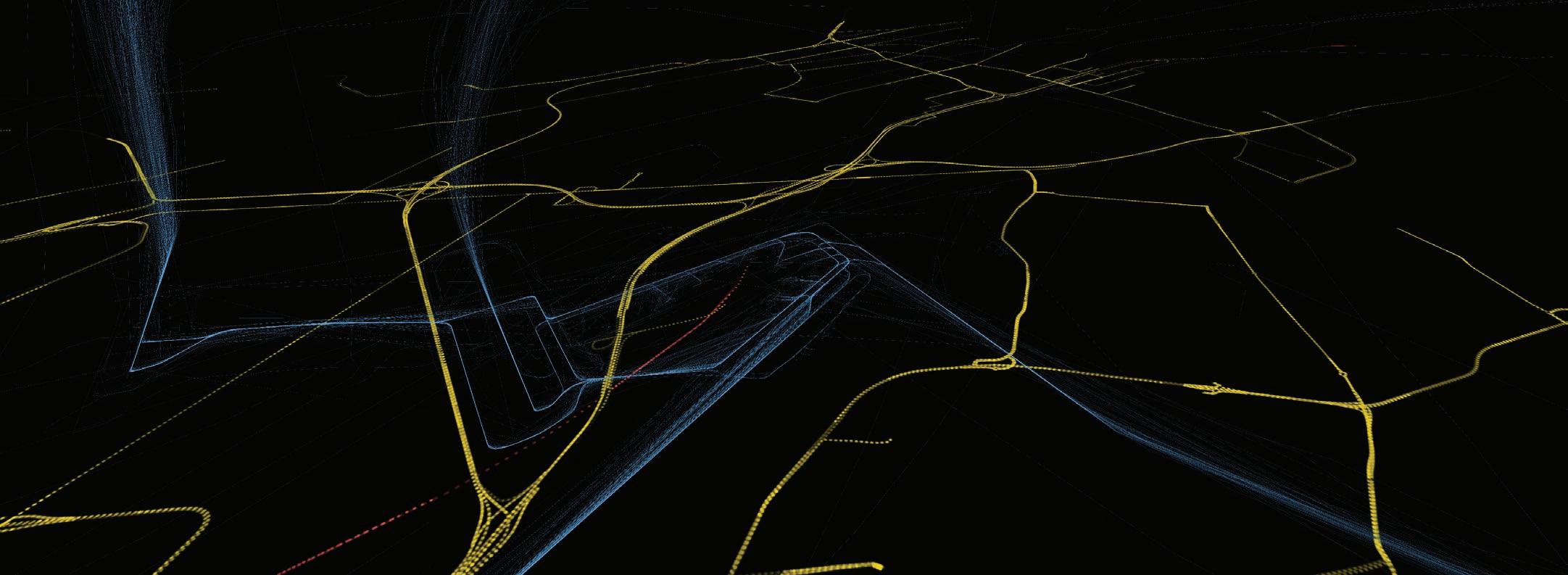
KAAN Architecten in collaboration with Estudio Lamela, ABT and Ineco, (abbreviated as KLAIR) is designing the new terminal at Am sterdam Airport Schiphol. Central to the design is the urban integration of the new terminal with the rest of Schiphol on both landside and airside to expand and reinforce the ONE Terminal concept. An overlapping area and a diversity of user flows distinguish the re ception hall for departing passengers and make a distinctive space for the baggage reclaim hall underneath the raised check-in floor. Furthermore, short and direct routes on the landside, maintaining the efficient connection to train station, bus station and parking area are urban integration elements that contribute to keeping Schiphol a “compact city”.
The video installation presented here uses metaphorical impressions to express the notion of seamless flow in an era of new mobility. Through showing the immense density, variety, and seemingly chaotic actions and movements of people in contrast with a back ground that presents the freedom of running and walking in an abundantly lit open space we express our aim to create the future of mobility nodes – the ultimate fluent experience.
Page 21
Case Study Image In Place
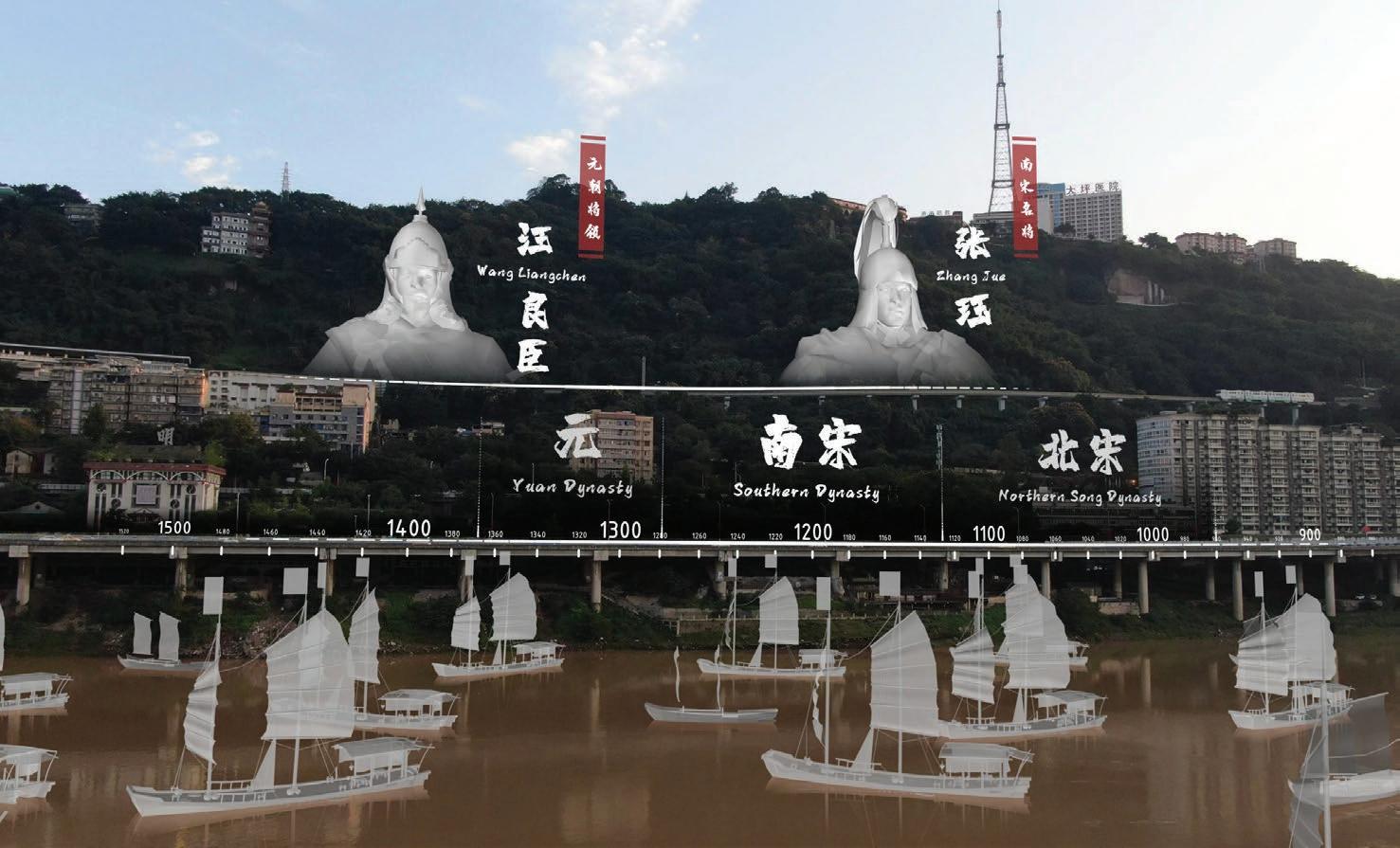
Augmented Reality (AR) technology can integrate complex professional information into space in form of dynamic graphics. It allows people to see the visualized logical structure and professional discipline achievements, see the covered space, and see the historical and future urban features in the real urban environment. Therefore, people’s understanding about the development, the operation logic and the spatial characteristics of the city are improved.
Through AR technology, people have an “eye” for a thorough observation of the city. When the UAV takes this “eye” high into the sky and flies freely, people can transcend their physical smallness and gain a macro perspective that they can control.
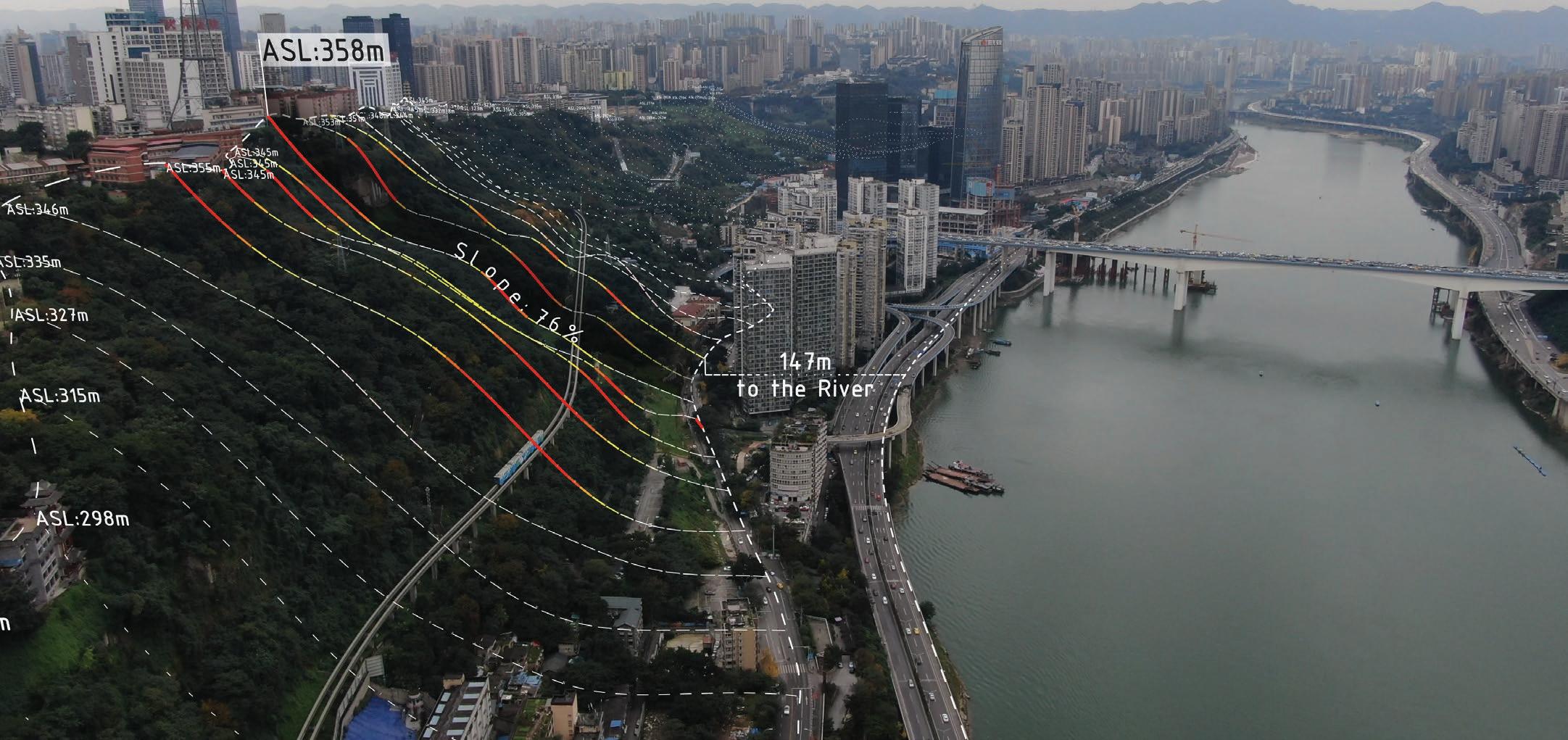
This is an eye provided by urban civilization for people to observe the city, and urban civilization also provides rich data information and interpreting paradigms for such observation. Therefore, we think that this eye can be called “the eye of the city”.
When people have this eye, they can be regarded as god in a sense. Not only can they achieve a transparent state of being fully aware, but they can also form a virtual image of their ideas and designs about the city , and then convey them to others intuitively and trans parently through the “eye of the city”. In this way, Communication between people will be more effective than ever.
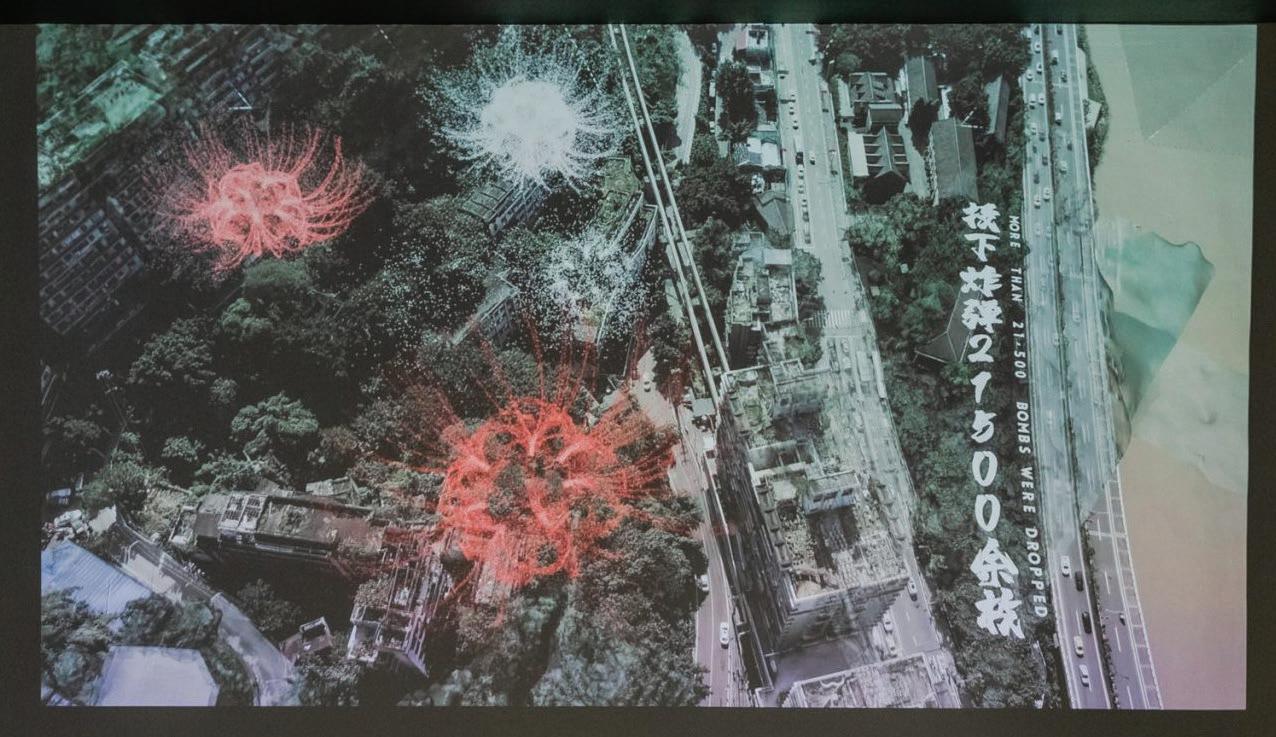
In this work, we choose Chongqing Hualongqiao area as our experiment site. After using photogrammetry technology to reconstruct the model of this region, and inviting experts from different areas to provide professional information, we have fused UAV aerial pic tures and photogrammetry reconstruction 3d scenes with programming dynamic graphics to generate animation of AR, which com bines the special topography with the city status of Chongqing in different historical periods to form a series of dynamic, millennial and in-depth digital analysis.
Towards an agenda of a combinatorial composition program based on WFC
Page 22
Case Study
Page 23
Image In Place
Case Study
Affective Balloons
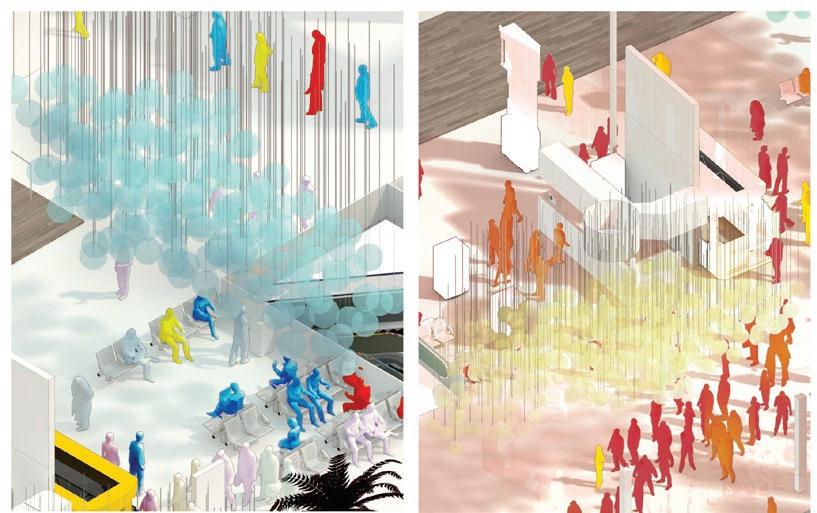
More than an infrastructural space of circulation, Futian Station is a social confluence point of repose and destination—a vibrant ur ban public interface where a myriad of stories and passengers unfolds and forms the collective public conscious. Whether it’s joy from reunions, sadness during departures, or anger due to delays, emotions observed in the station are dynamically rich and in constant flux. Affective Balloons addresses the curatorial statement by employing AI technologies as “Eyes of the City”, to map and interact with the emotional landscape of the bustling train station.
Affective Balloons envisions a cluster of soft installation in the form of translucent PVC balloons augmented by LED lights. Responding to the emotions detected in space using AI, the installation is a malleable infrastructure that creates calming and stress-relieving envi ronments with occasional moments of surprises in an otherwise bustling and overwhelming transport hub.
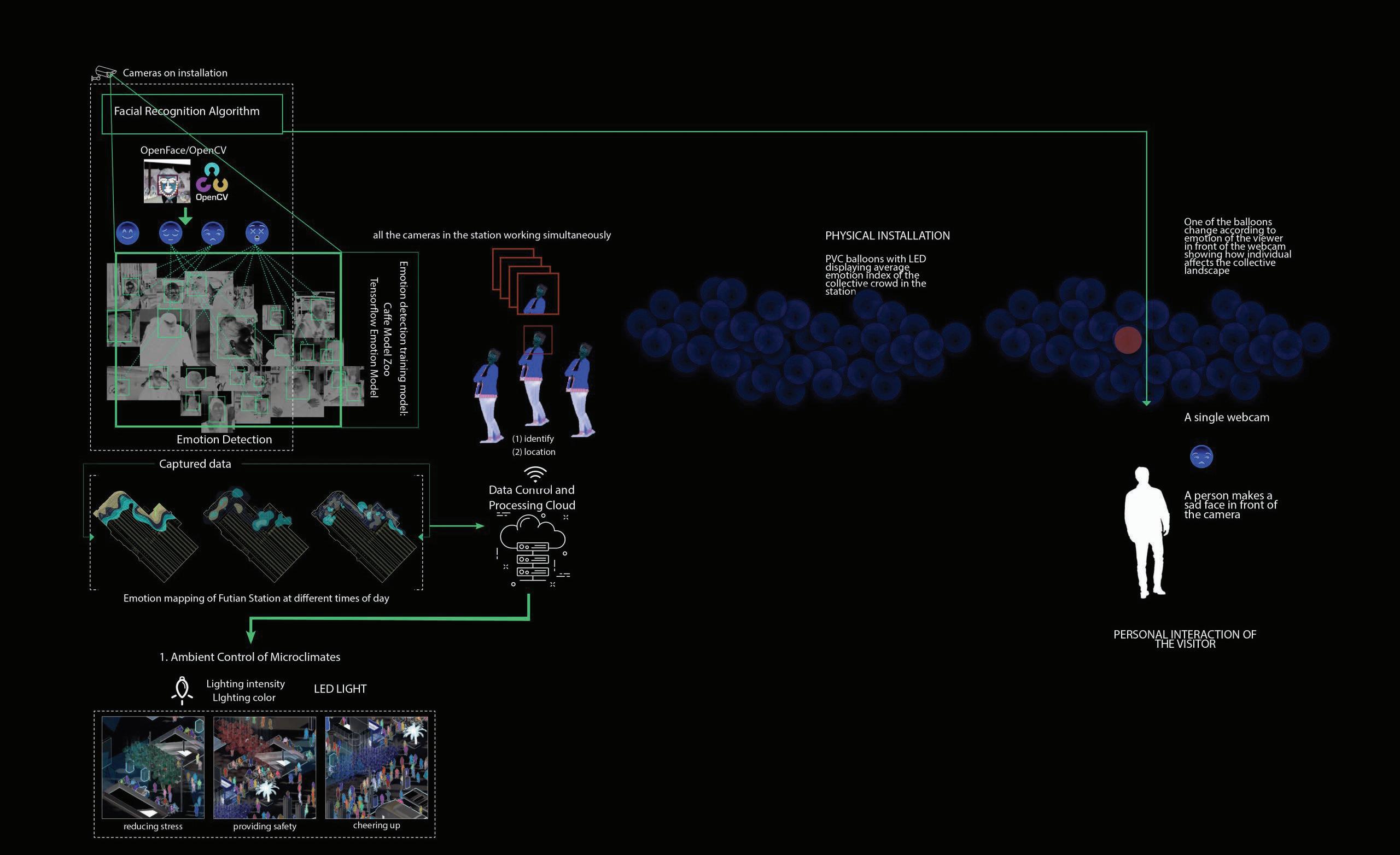
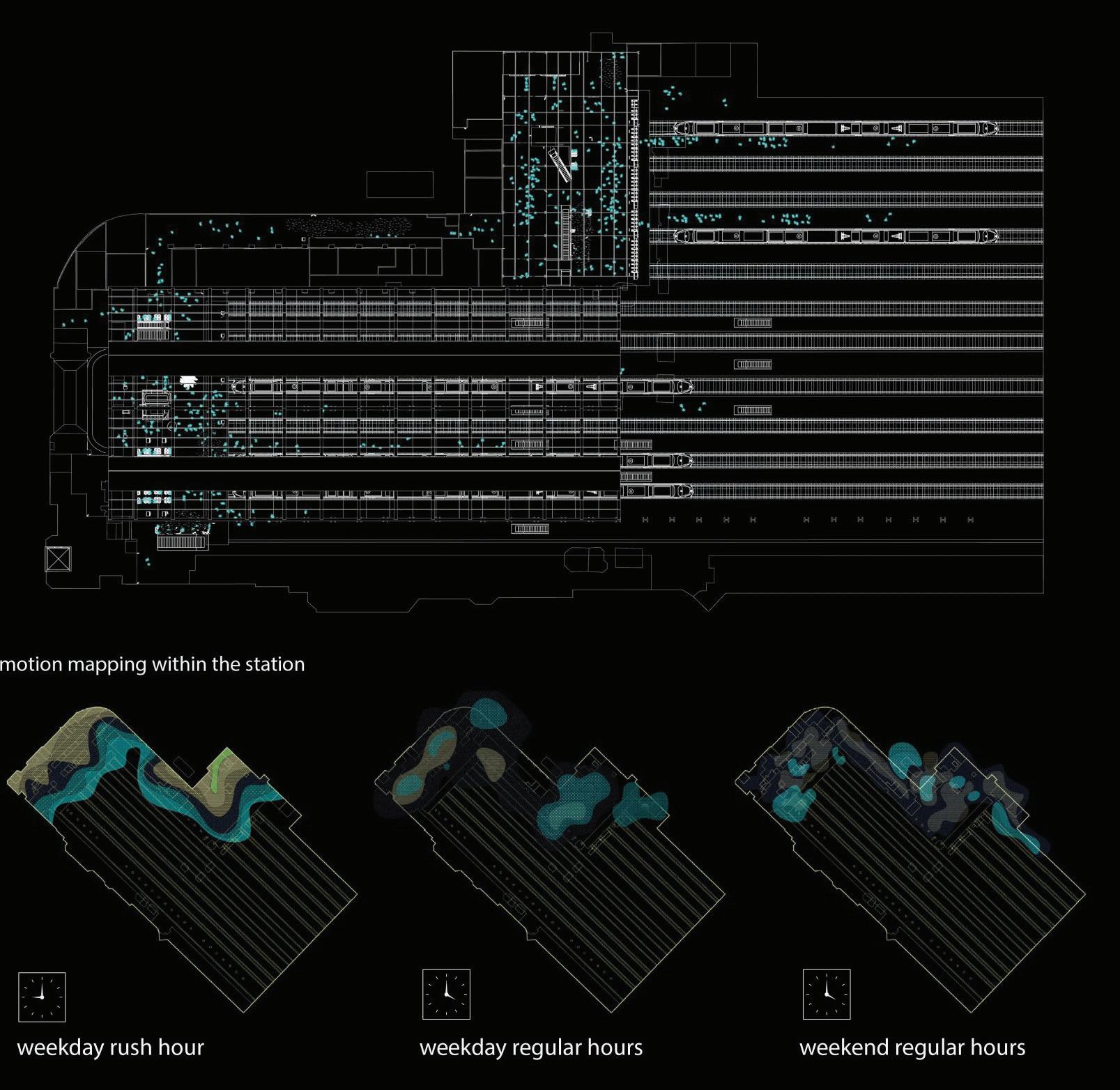
The rise of emotion AI detection furthers the viability of accurately assessing human emotions and behaviors. From an architectural design perspective, through the distributed spread of detection and data collection, Futian Station will be able to map out and understand the emotional and behavioral patterns of its visitors in space. Affective Balloons harnesses the power of real-time data by allowing a spatial intervention to respond to people’s emotional needs and provide ambient changes based on fluctuations of emotions in space, both at a collective and an individual level.
Towards an agenda of a combinatorial composition program based on WFC
Page 24
Case Study
Affective Balloons
The project uses captured image data to run emotion detection algorithm to monitor and track the shifting emotional landscape within Futian Station. Based on categorization of emotions detected and averaged throughout key points in the station, a central cloud controls the balloons’ color and light intensity (LED lights), as well as the fullness and volume of the balloons for subtle ambient environmental modifications to reflect the collective emotional consciousness of the station. The balloons contract and dim down to accommodate feelings of sadness and doldrums, and expands and brightens to celebrate a jovial and cheerful crowd.
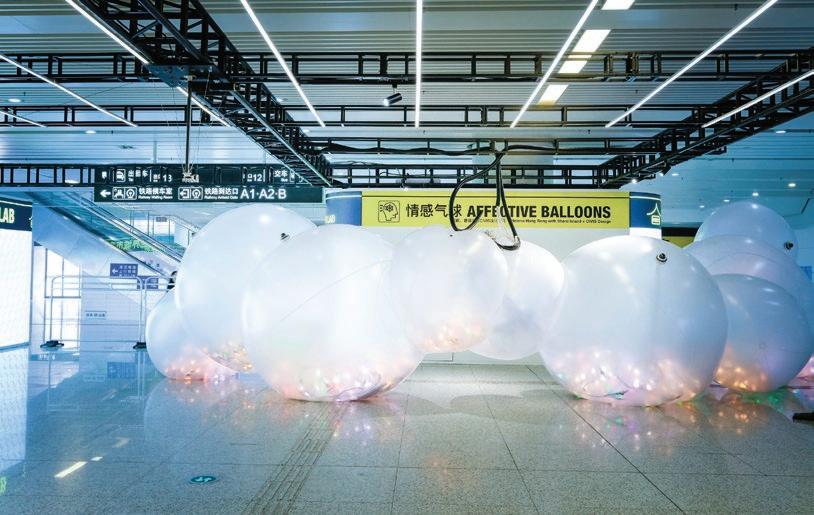
The installation creates a semi-private space which invites a more personal interaction with the visitor. Underneath the canopy, a webcam and screen allow the visitor to see the visualization of emotional landscape across the station. The visitor can make a fa cial expression at the webcam and change one of the balloon’s form and light, which allows them to recognize the impact of their individual feelings on the collective environment.
Page 25
Case Study
The Urban (UN) Seen. Artificial Intelligence as future space
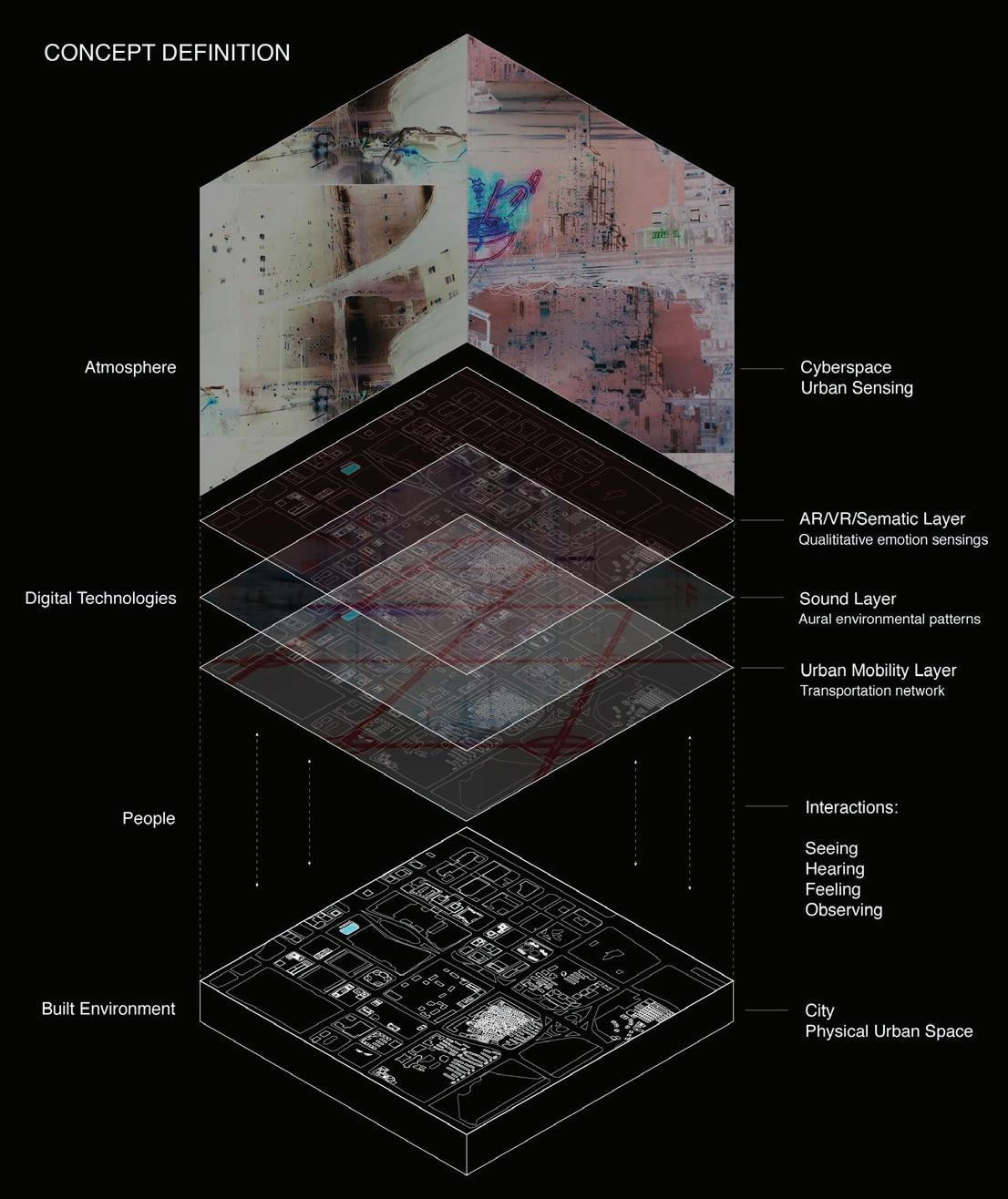
Technological evolution has defined the modern city; inevitably, digital technology will continue to transform public and private space. The built environment can react in real-time to various data, enabling us to design responsive buildings rather than merely install static technical systems. According to the United Nations, 55% of the world’s population now lives in urban areas, a proportion that will likely rise to 70% by 2050; nearly 90% of such growth will occur in Asia and Africa.
The Urban (Un) Seen is addressing sustainable urbanization by measuring, visualizing and sonifying data with a focus on global urban noise pollution. Our audiovisual installation is driven by a noise sensor network that is data-driven, community-driven and art-driven; the goal is to maximize community participation, awareness and sensor network scaling to enable the creation of a real-time sound map of global cities. At the core of the Urban (Un) Seen project are several noise sensors around the exhibition and throughout Shen zhen; residents will be invited to experience the city through the sonic spatial data they provide.
Towards an agenda of a combinatorial composition program based on WFC
Page 26
Case Study
The Urban (UN) Seen. Artificial Intelligence as future space
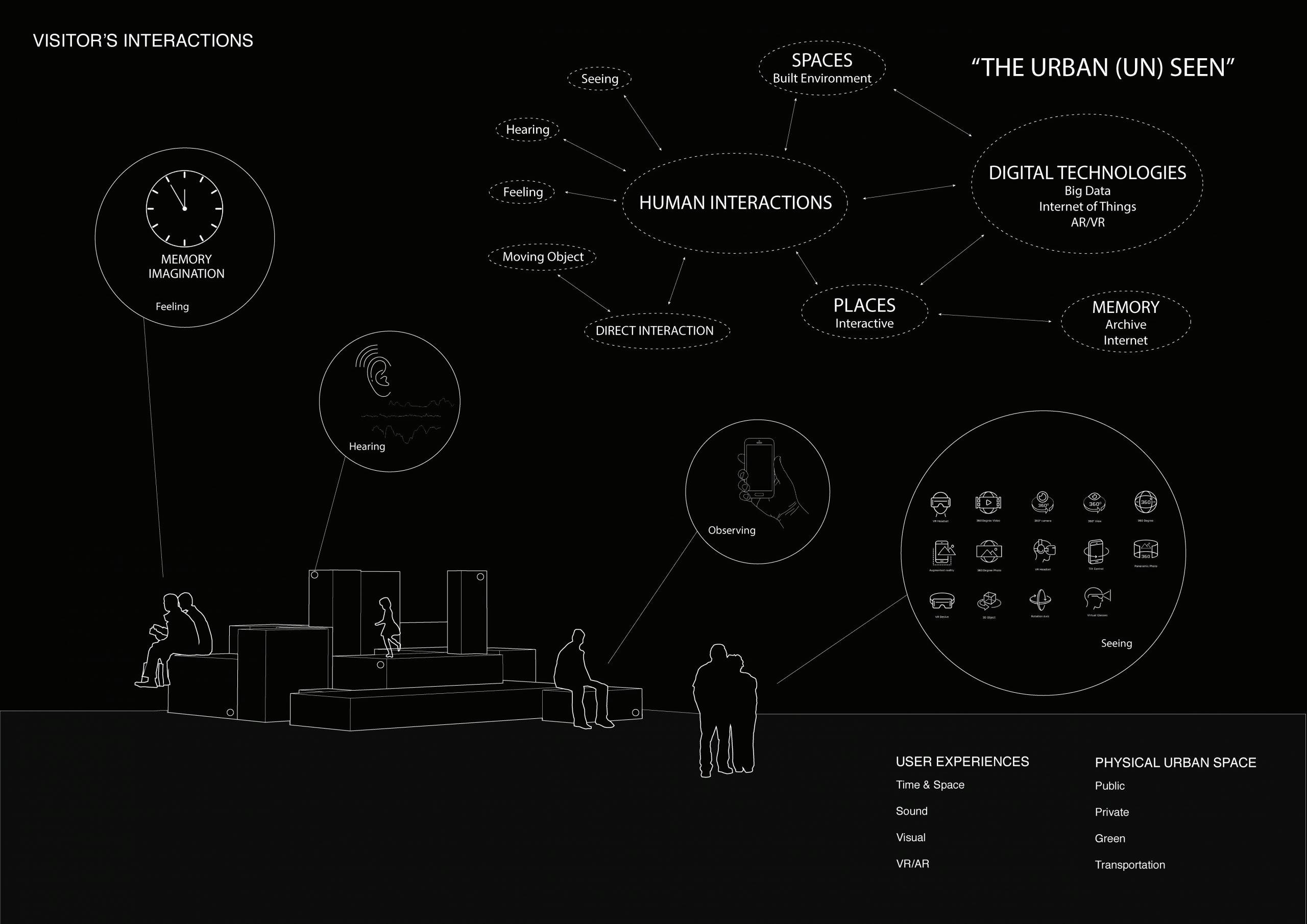
Technological evolution has defined the modern city; inevitably, digital technology will continue to transform public and private space. The built environment can react in real-time to various data, enabling us to design responsive buildings rather than merely install static technical systems. According to the United Nations, 55% of the world’s population now lives in urban areas, a proportion that will likely rise to 70% by 2050; nearly 90% of such growth will occur in Asia and Africa.
The Urban (Un) Seen is addressing sustainable urbanization by measuring, visualizing and sonifying data with a focus on global urban noise pollution. Our audiovisual installation is driven by a noise sensor network that is data-driven, community-driven and art-driven; the goal is to maximize community participation, awareness and sensor network scaling to enable the creation of a real-time sound map of global cities. At the core of the Urban (Un) Seen project are several noise sensors around the exhibition and throughout Shen zhen; residents will be invited to experience the city through the sonic spatial data they provide.
Page 27
Site Analysis
Page 28 Towards an agenda of a combinatorial composition program based on WFC
Although the site location or the function of the space is not a limitation for our design method, focusing on hinge points (places with maximum daily flow) can explore the maximum potential of the design method.
Page 29
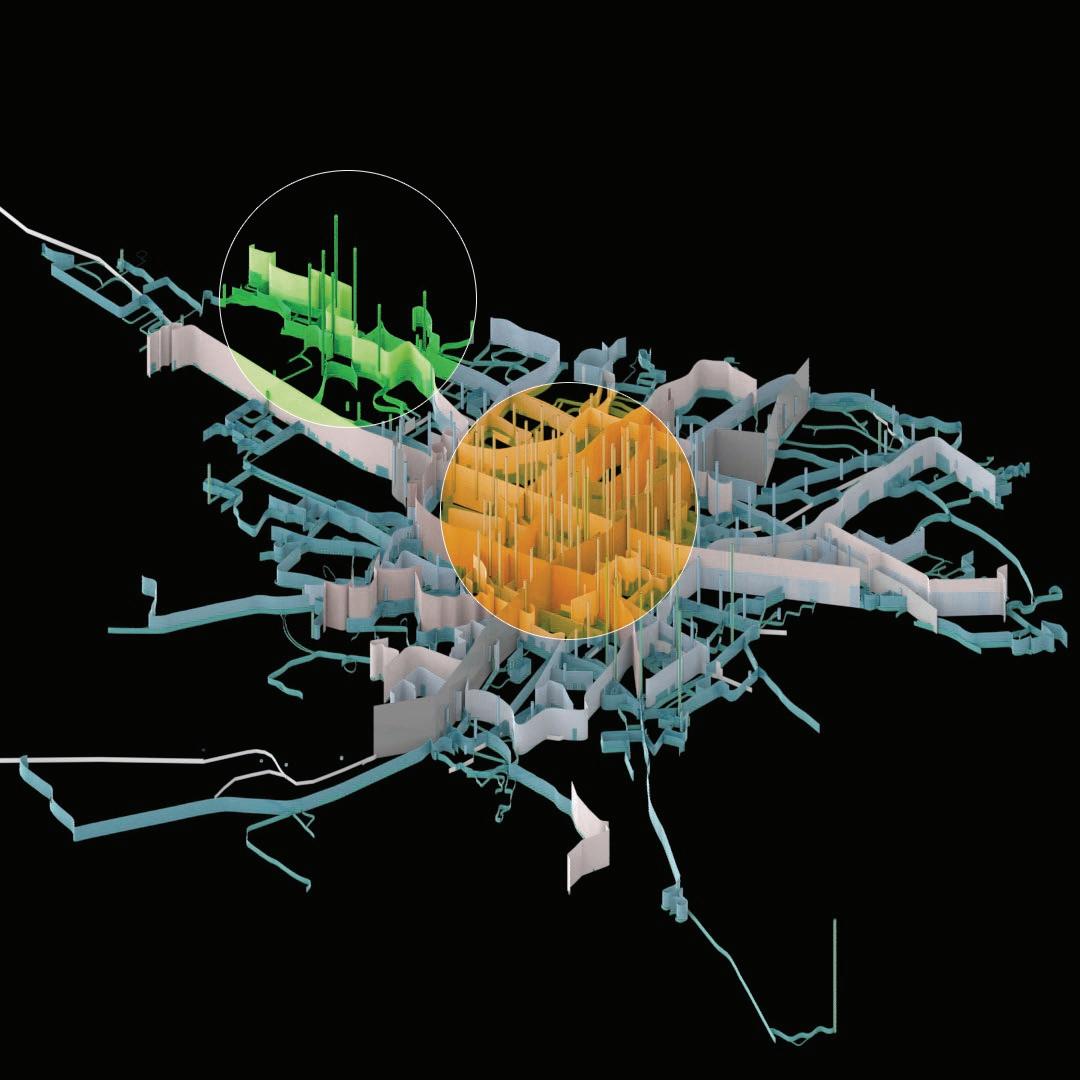
Page Site Analysis Site Allocation Future Present Prediction of FUTUTRE hinge point based on urban developing plan Present hinge point of Tehran Route Station Traffic ->www.data.tehran.irData provided by
Site Analysis
Site Allocation | Beyhaqi Park Ride Station
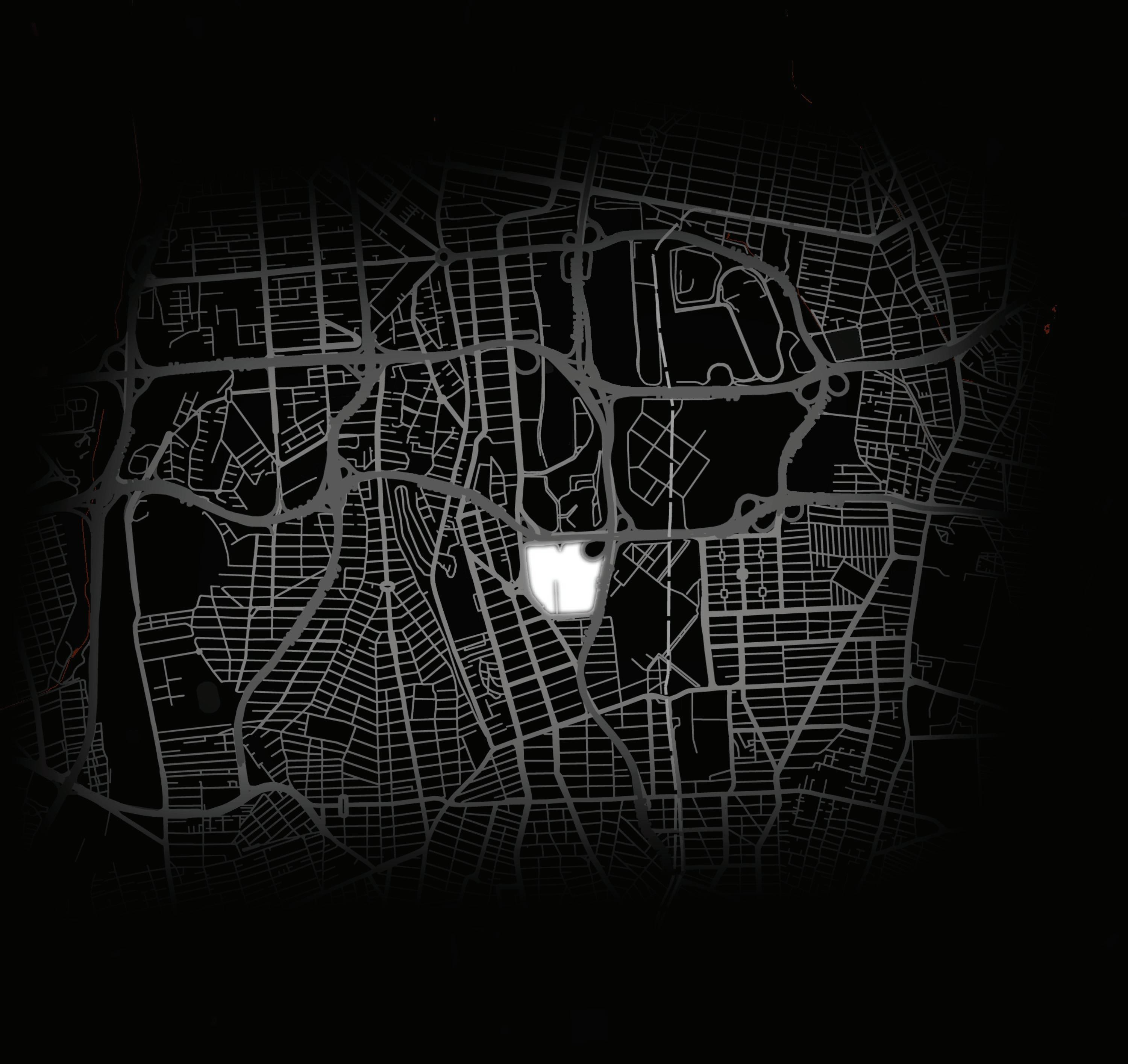
Byehaqi Parki Ride station is one of the most crowdy hinge points of tehran with many different types of travellers.
The Abbas Abad hills is made from cultural and public utilities. Abbas Abad hills recently become Tehran’s public landmark. it gains lots of tourists and also Tehran dweller.
Beyhaqi renovation project can re-configure the hills as solid complex by augmenting a tangible digital layer.
Area : 140,000 m2
Page 31
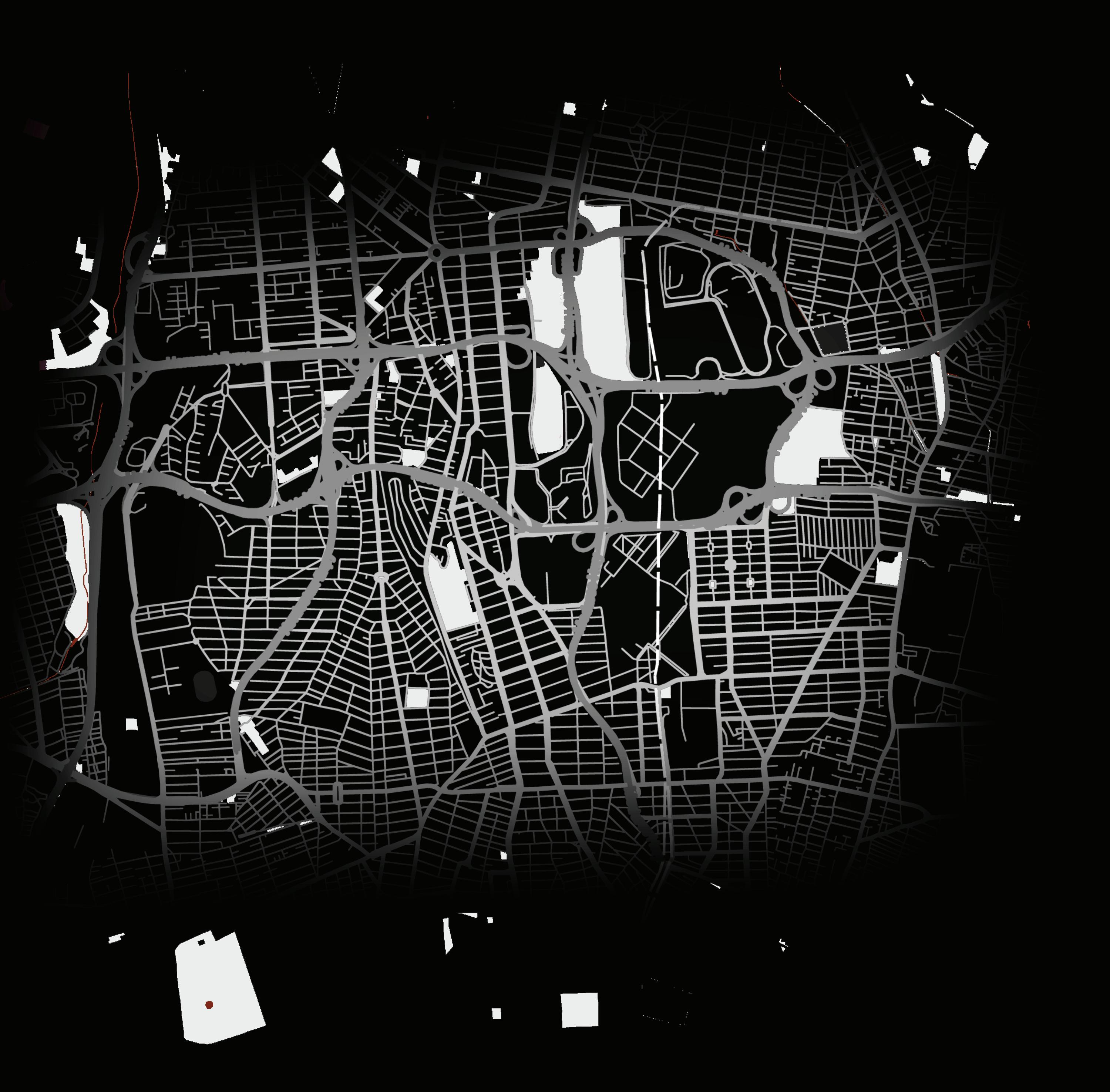
Infrastructural Analysis Green Layer-Green Spaces
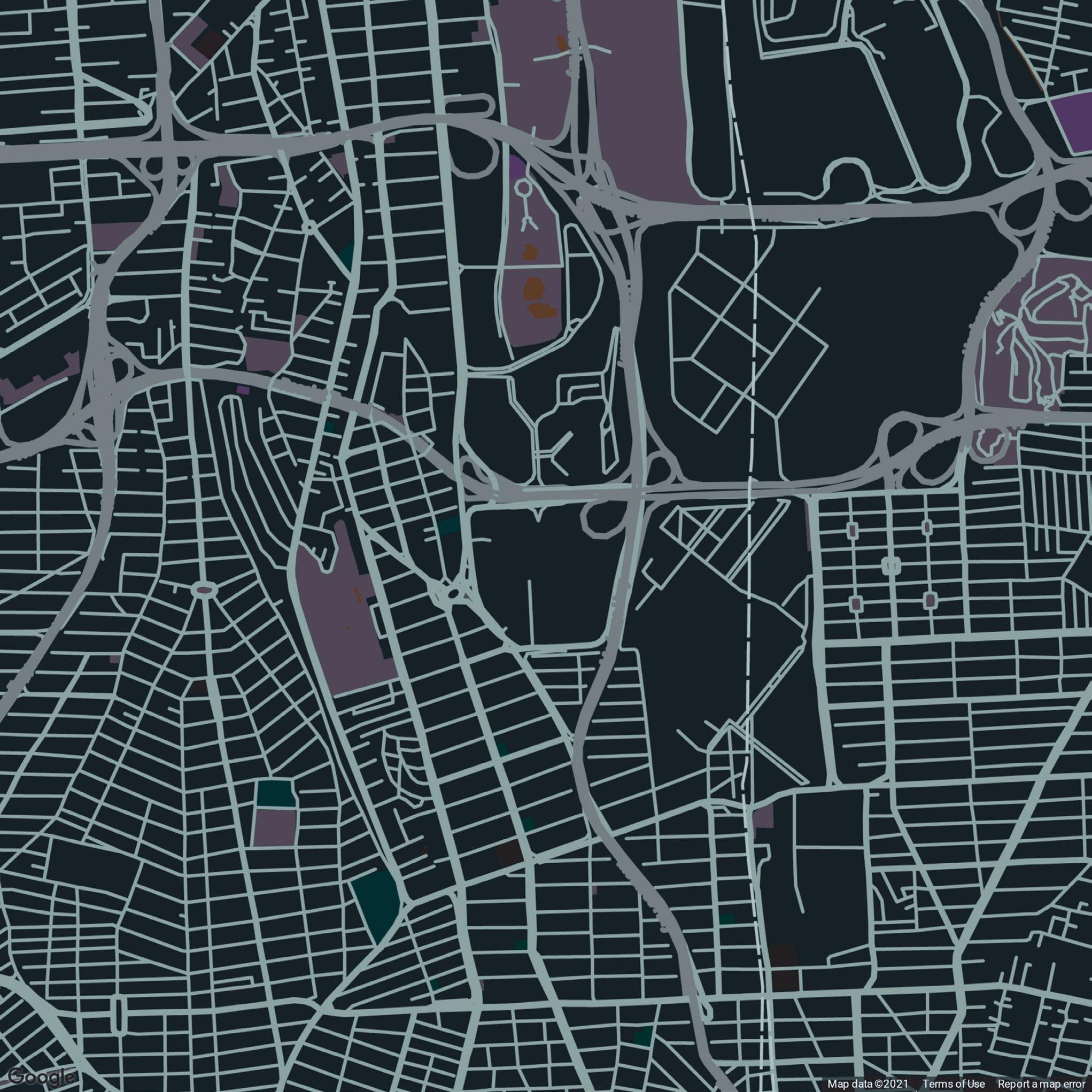
Page 33 LINE2 Modares Resalat BokharesSt Qasir St Zagros St Ra ee St Vali-Asr St Saei Park Nourooz Park Mosalla Site BeheshtiSt BeyhaqiSt Nelson mandela St LINE3 M M M M M BRT BRT BRT BRT BRT BRT BRT BRT BRT Bus Terminal BRT BRT BRT M Haqani M Haqani M Sohravardi M Vali Asr M City Theatre M Monirie M Mahdiyeh M Ghodousi M Sayad-e Shirazi M Khajeh Abdollah-e Ansari M Shahid Zeynodin M Meydan-e Jahad M Mofateh M Haft-e Tir M Taleqani M darvazeh Dowlat M Ferdousi M Darvazeh Shemiran M Meydan Enqelab M Towhid M Mirdamad M shari’ati M Gholhak M Tajrish BRT Behesht Madaran BRT Seyed Khandan BRT Dameshq BRT Shahid Hemmat BRT South Vanak Sq. BRT North Vanak Sq. BRT MirdamadBRT Zafar BRT Niyayesh BRT Khabarnegaran BRT Amanieh BRT Park Way BRT Mahmoudiyeh BRT Homayouni BRT Pesyan BRT Baghe Ferdows BRT Shahid Kazemi BRT Tajrish BRT Taleqani BRT Enqelab BRT Jomhouri BRT Jami BRT Imam Khomeini BRT Rahahan BRT Ostad Hasan-e Bana BRT Asna Ashari BRT Kerman BRT Resalat BRT Elmo-Sanat Qods Mirzaye Shirazi Shahid Beheshti Motahari Shahid Beheshit Pele-Aval Pele-Sevom Abshar 32 Tavanir Transportation Nodes Infrastructural Analysis
Page 34 Towards an agenda of a combinatorial composition program based on WFC Beyhaqi M Shahid Beheshti 1-3 M Mosalla-1 M Darvazeh-dowlat M Imam Khomeini Airport M Tajrish-2 M Rah-Ahan-3 M Vali-asr M Teatr-e-shahr M Azadi M Mehr-Abad BRT Beyhaqi-Line 5 BRT Elm-o-sanat BRT Abshar-Line 7 BRT Terminal 5-3 BRT Khavaran Terminal 3-2-8 Terminal Terminal Infrastructural Analysis Transportation Node
Infrastructural Analysis
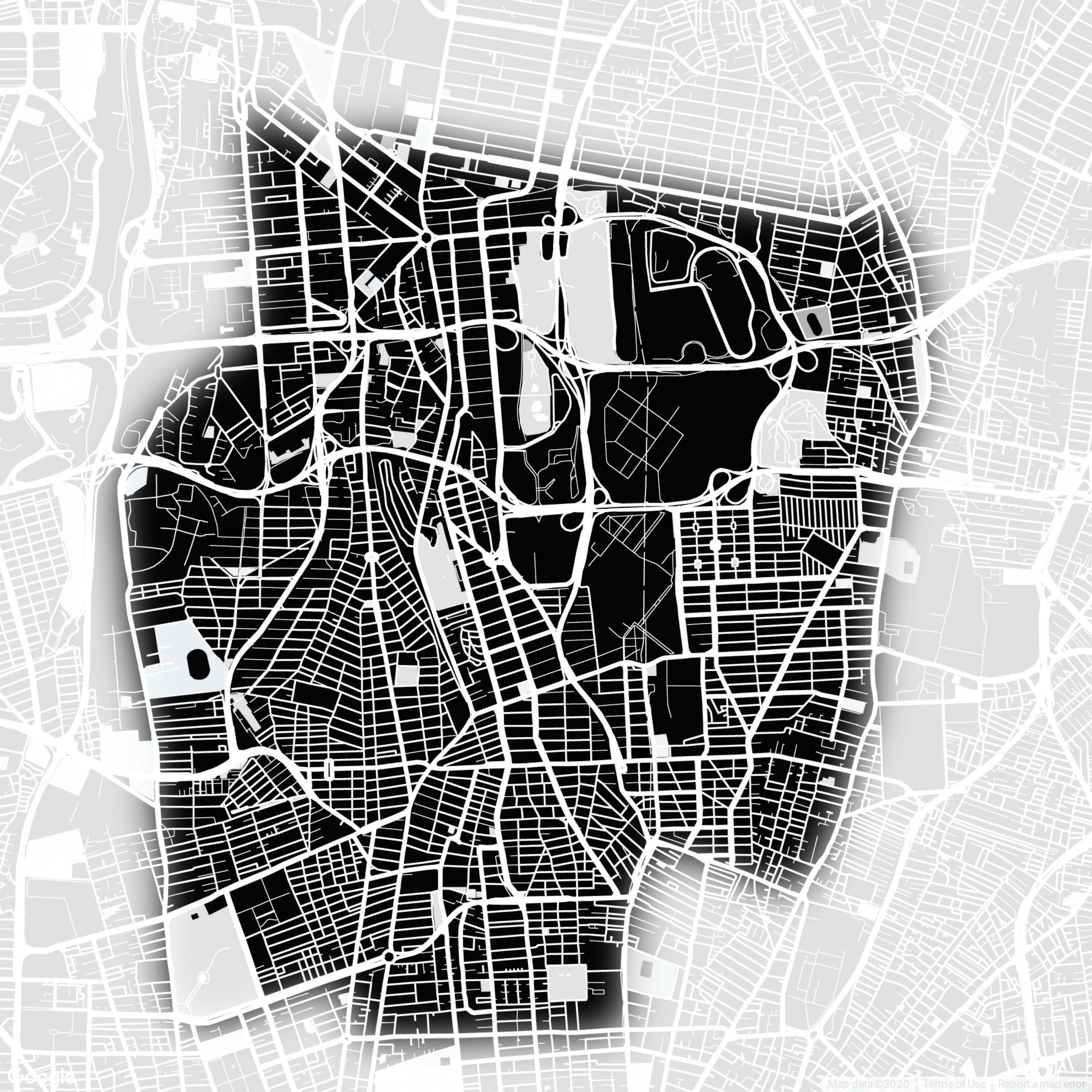
200m North Built Fabric

Density Map Infrastructural Analysis

Spatio-Functional Analysis
Page 38 Towards an agenda of a combinatorial composition program based on WFC
Spatio-Functional Analysis
Park and Ride Definition
Park and Ride
a system for reducing urban traffic congestion, in which drivers leave their cars in parking lots on the outskirts of a city and travel to the city center on public transportation.
“a new park-and-ride system in the town to cut traffic jams” Definitions from Oxford Languages
Objectives of Park-and-Ride/Pool Facilities
• Increasing availability of alternatives to driving alone, by providing travelers with the opportunity to readily transfer from low- to high-occupancy travel modes and vice-ver sa.
This opportunity affords an effective combination of passenger collection by automo bile or bicycle, with trunk route travel via rail transit, bus, vanpool, or carpool.
• Concentrating transit rider demand to a level enabling transit service that could not otherwise be provided. In many low-density areas, without park-and-ride facilities and service, no attractive public transit could be effectively operated.
• Expanding the reach of transit into low-density areas, thereby bringing more riders to premium transit services like rail and express bus. For such services, park-and-ride users can represent a substantial portion of total ridership and induce demand concentra tions sufficient to warrant the higher quality of transit service.
• Offering a convenient, safe meeting point and parking location for carpoolers and vanpoolers, to facilitate pool formation, and to support ridesharing in locations where sufficient demand might not otherwise occur for ridesharing to a common destination.
• Reducing vehicle-miles of travel (VMT) and possibly pollutant emissions. Encouragement of high-occupancy travel mode use and reduction in distances driven alone, as long as severe indirectness of travel does not result, can help reduce sys tem
VMT. With proper system design, VMT reductions can in most cases translate into air quality improvements.
• Shifting of parking away from the CBD and, to some extent, other dense activity centers.
Thousands of parking spaces for a region’s central core may be provided through parkand-ride and park-and-pool facilities. This transfer of parking can have significant effect on reducing CBD parking supply requirements and downtown street congestion.
• Relieving neighborhoods of uncontrolled informal parking caused by park-and-ride/ pool activity occurring in the absence, or with insufficient capacity, of formal facilities.
Page 39
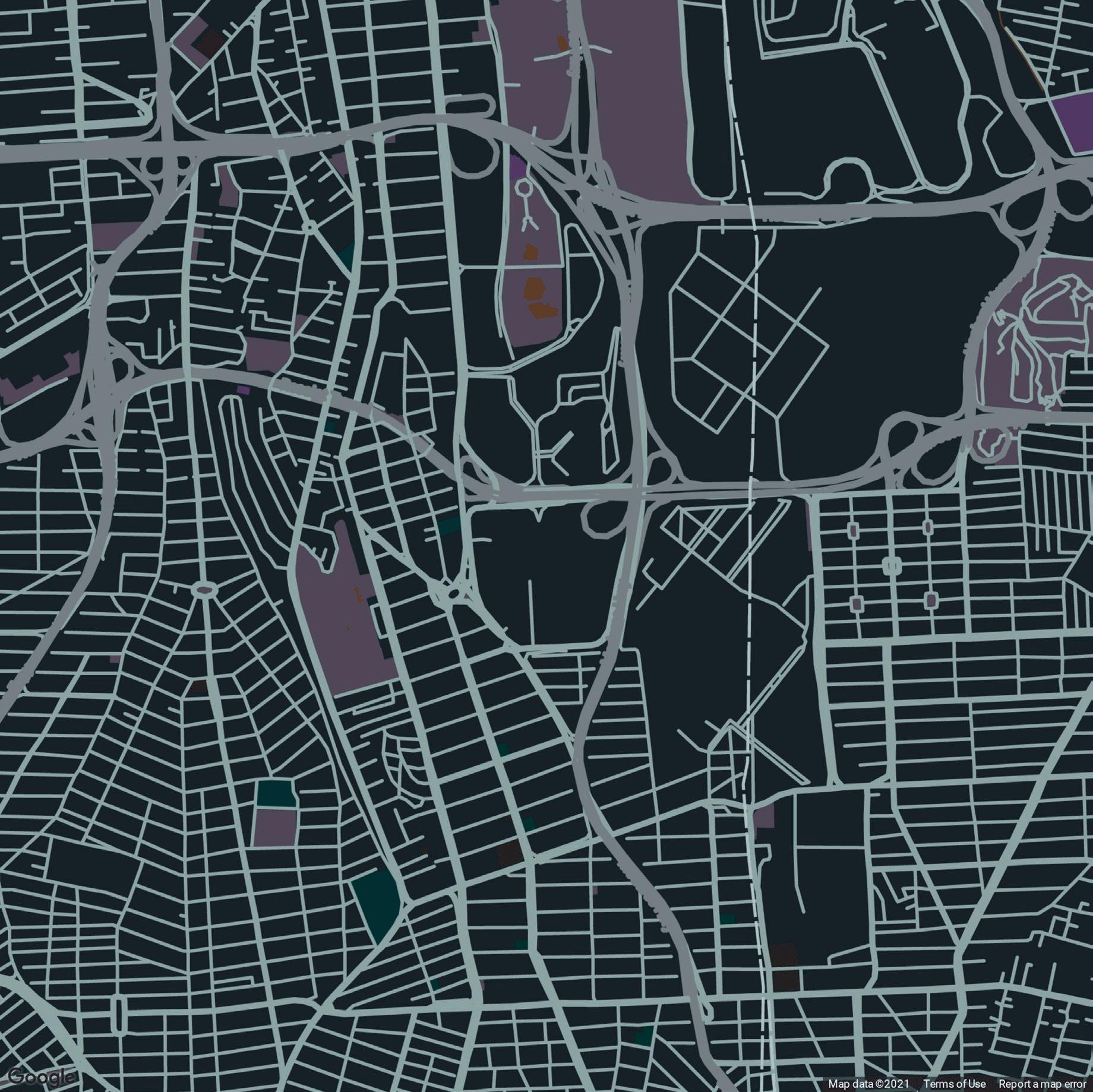
Page 40 Towards an agenda of a combinatorial composition program based on WFC Trans-Regional LINE2 Modares Resalat BokharesSt Qasir St Zagros St Ra ee St Vali-Asr St Saei Park Mosalla Site BeheshtiSt BeyhaqiSt Nelson mandela St LINE3 M M M Nourooz Park Ab-o-Atash-complex Central Bank Museum Book Garden National Library Mashahir Sq Rah-e-Choubi Rah-e-Choubi Dadeh pardazan saeena Rastesh commercial Kaman Complex Barsa novin FarasooRonak Mapna Newshanik Jahan foulad Petroshimi Shaypour Ministry of Roads and City Planning Dana Insurance Mellal Restaurant Horse Riding club Skate park Water View Tabiyat Bridge Gonbad Mina Planetarium Zima Reptile park War Museum Game cinema Ab-o-atash 200m North Spatio-Functional Analysis
Page 41 Spatio-Functional Analysis Activity Clusters Transportation Services Managment Entrances P&R Managment Public Facilites Banquet hall Bank WC Mosque Hyper Market Restaurant & cafe Public Transportation Crosstown Transportation Bus Transportation Agencies Drivers Facilities RestRoom Car Transportation Agencies Urban Travel BRT Vehichle Maintenance Cars Parking CarWash Car Inspection Automobile repair shop Bus Maintenace services Bus Parking Buses 4,717 m 100 m 300 m 128 m 2 100 m 2 6,000 m 693 m 2 55,310m 10,076m 57,480m 2 10,276m 1,344 m 600 m 2 67,756 m 2 2,044 m 6,761 m 2 74,517 m 2 82,805 m 2 7,860 m 2 428 m 2 1,277 m 200 m 200 m 2 160 m 300 m 100 m 800 m 500 m State of the art-Activity Clusters
Page 42 Towards an agenda of a combinatorial composition program based on WFC Recycle Area Hypermarket Bank BRT cafe Parking Covered cargo Bus Parking Bus Parking Insurance TechnicalInspectionBanquetHallManagment mosque Parking Parking Power Station 20,930 450Parking lot 13,001 400Parking lot m 2 Cafe-Managment Mosque-Restroom BRT 5,000 m 2 1,452 m 2 4,717 m 2 Shahrvand Saman Bank Recycling center Power Station 6,000 m 2 15,000 m 2 33,700 m 2 Cargo Bus Parking Bus Parking 3,000 m 2 Insurance 3,000 m 2 Technical Inspection 3,000 m 2 Technical Inspection 3,000 m 2 4,520 m 2 5,630 m 2 Covered Parking 6,780 m 2 Managment 6,780 m 2 320 m 2 30533m 2 m 2 Parking 0 1 2 3 4 5 6 7 8 9 10 11 12 13 14 15 16 17 18 19 20 21 22 23 24 0 1 2 3 4 5 6 7 8 9 10 11 12 13 14 15 16 17 18 19 20 21 22 23 24 0 1 4 5 6 7 8 9 10 11 12 13 14 15 16 17 18 19 20 21 22 23 240 1 2 3 4 5 6 7 10 11 12 13 14 15 16 17 18 19 20 21 22 23 24 0 1 2 3 4 5 6 7 10 11 12 13 14 15 16 17 18 19 20 21 22 23 24 0 1 2 3 4 5 6 7 8 9 10 11 12 13 14 15 16 17 18 19 20 21 22 23 24 0 1 2 3 4 5 6 7 8 9 10 11 12 13 14 15 16 17 18 19 20 21 22 23 24 0 1 2 3 4 5 6 7 8 9 10 11 12 13 14 15 16 17 18 19 20 21 22 23 24 0 1 2 3 4 5 6 7 8 9 10 11 12 13 14 15 16 17 18 19 20 21 22 23 24 0 1 2 3 4 5 6 7 10 11 12 13 14 15 16 17 18 19 20 21 22 23 24 0 1 4 5 6 7 8 9 10 11 12 13 14 15 16 17 18 19 20 21 22 23 24 0 1 2 3 6 7 8 9 10 11 12 13 14 15 16 17 18 19 20 21 22 23 24 0 1 2 3 6 7 8 9 10 11 12 13 14 15 16 17 18 19 20 21 22 23 24 0 1 2 3 4 5 7 8 9 10 11 12 13 14 15 16 17 18 19 20 21 22 23 24 0 1 2 3 4 5 6 7 10 11 12 13 14 15 16 17 18 19 20 21 22 23 24 0 1 4 5 6 7 8 9 10 11 12 13 14 15 16 17 18 19 20 21 22 23 24 2 3 4 5 6 7 8 9 10 11 12 13 14 15 16 17 18 19 20 21 22 23 24 2 3 4 5 6 7 8 9 10 11 12 13 14 15 16 17 18 19 20 21 22 23 24 200m North State of the art-Activity Flow Spatio-Functional Analysis
Page 43 1000 100 Transportation Services Management Entrances P&R Managment Public FacilitesPublic Transportation Crosstown Transportation Bus Transportation Agencies RestRoom Car Transportation Agencies Urban Travel BRT Vehichle Maintenance Cars Parking CarWash Automobile repair shop Bus Maintenace services Bus Parking Buses Hyper Market1000 Dinning Food Court Flower shop Book Shop Diy Shop Health Care Music Shop Clothes Shop Shopping Car Inspection 10,076 m 10,276 m 67,756 m 2 200 m ActivityClusters Cars PublicTransportation PublicFacilities Shops State of the art-Activity Distribution Spatio-Functional Analysis
Page 44 Towards an agenda of a combinatorial composition program based on WFC BRT RUSH HOUR ~ 10 : 00 FLOW ~ 2000 People PARKING RUSH HOUR ~ 09 : 00 FLOW ~ 700 People TERMINAL RUSH HOUR ~ 11 : 30 FLOW ~ 500 People CARGO DELIVERY RUSH HOUR ~ 15 : 00 FLOW ~ 500 People MAINTENANCE RUSH HOUR ~ 16 : 00 FLOW ~ 470 People CARWASH RUSH HOUR ~ 15 : 00 FLOW ~ 300 People CAR INSPECTION RUSH HOUR ~ 12 : 00 FLOW ~ 700 People BRT RUSH HOUR ~ 18 : 40 FLOW ~ 2000 People 00:00 0 500 1000 1500 2000 2500 (PERSON) FLOW TIME 01:00 02:00 03:00 04:00 05:00 06:00 07:00 08:00 09:00 10:00 11:00 12:00 13:00 14:00 15:00 16:00 17:00 18:00 19:00 20:00 21:00 22:00 23:00 24:00 (HOUR) Spatio-Functional Analysis State of the art-Flow Analysis
CARGO
Page 45 00:00 0 500 1000 1500 2000 2500 01:00 02:00 03:00 04:00 05:00 06:00 07:00 08:00 09:00 10:00 11:00 12:00 13:00 14:00 15:00 16:00 17:00 18:00 19:00 20:00 21:00 22:00 23:00 24:00 TIME (HOUR) (M2 x PERSON) LOAD LOAD = COEF x FLOW COEF = PARKING RUSH HOUR ~ 09 : 00 LOAD ~ 2000 M2 x PERSON TERMINAL RUSH HOUR ~ 11 : 30 LOAD ~ 2000 M2 x PERSON BRT RUSH HOUR ~ 10 : 00 LOAD ~ 2000 M2 x PERSON CARWASH RUSH HOUR ~ 15 : 00 LOAD ~ 2000 M2 x PERSON BRT RUSH HOUR ~ 18 : 40 LOAD ~ 2000 M2 x PERSON CAR INSPECTION RUSH HOUR ~ 12 : 00 LOAD ~ 2000 M2 x PERSON MAINTENANCE RUSH HOUR ~ 16 : 00 LOAD ~ 2000 M2 x PERSON
DELIVERY RUSH HOUR ~ 15 : 00 LOAD ~ 500 People occupied area of a person ≈ 1m2 occupied area of terminal per person ≈ 2m2 occupied area of a parking lot per person ≈ 2.2m2 occupied area of a person ≈ 2.5m2 occupied area of parking lot per person ≈ 3m2 Spatio-Functional Analysis State of the art-Load Estimation Source : https://www.dimensions.com/
Page 46 Towards an agenda of a combinatorial composition program based on WFC Car Inspection Car Wash Shopping Maintenance Parking Cargo Agencies Dinning Terminal Possibility Distance This is heuristic evolutionary optimization to find best form of activity clustring, with respect to given constrains. Activies can freely flow on possibility surface. Position on this surface can be describe with XActivity , YActivity * Programs effectivness scores Programs allocation-Solver1

Page 47 High Speed Low Speed SpeedScoreActivity = -Dist(LowSpeedZone , PositionActivity) SpeedScoreActivity = -Dist(HighSpeedZone , PositionActivity) LowSpeedActivity HighSpeedActivity HighSpeedActivityLowSpeedActivity Dinning Shopping Maintenance CarService Cargo TerminalParking -528802.97 Programs allocation-Solver1 Speed score
current static state
design
to
in the
that constantly changes over time
can handle
the current
has.
Page 48 Towards an agenda of a combinatorial composition program based on WFC Possibility DistanceActivities Distribution Table Distant /Possibilities table Programs allocation-Solver1 Site Boundaries: Convert the
to a dynamic actor role
region: -Provide social utilities according
functions demands -Dynamic programs
-shift
solutions into a digital platform that
multidimensional program as
project
allocation-Solver1
mapping example
The activites can expand due to given Distribution Table.
Verest, quis non parcilis sa qui imin et ius ea sit res atur seritata coribusdae aut omnienihicit omni blatibus simin non consecto cus se inihiciis reici alictatur? Sed utam quibus audiae qui diciligenis corporuntiae quibus molupti alibus aut doluptat venienet, ut fuga. Et perunt aliquibus et, ut debis quiasinis repuda qui ut la quis dempor aspe voloreh entionsequi ate nem labori dolorerem cuptas et quaeper ibusdae lam, ut aut facimusa peribeaquas ipiscipsam lam, optate omnit, es eossum, cus.
Met mo est endestio bereict aquibus dis maionserchit excerumquae quam fugiatur? Enis quam si occus quam, solora qui adias etus quis ne eos volorehenis autem
Page 49
Programs
Site
Page 50 Towards an agenda of a combinatorial composition program based on WFC Minimum Activity Area Penalty PenaltyActivity = AreaActivity - AreaMinActivity Objective Problem Hyper Parameter Optimizer Parameter Generation_Size : 150 Population_Size : 60 Crossover_Rate : 70% Crossover_Rate : 70% Mutation_Rate : 15% Fitness_Function = ((AreaActivity * PenaltyFactorActivity)-PenaltyActivity )+ (SpeedScoreActivity) Activity Min. Area Parking 3000 m2 Car Service 300 m2 Maintenance 1000 m2 Terminal 6000 m2 Cargo 3000 m2 Shopping 3000 m2 Dinning 3000 m2 XActivity 0<X<1 YActivity 0<Y<1 -263534.2 -130899.82 1734.56 134368.94 267003.32 399637.71 532272.09 664906.47 797540.85 930175.23 1062809.61 First Gen Last Gen Fitness Value Standard Deviation Graph Min area Penlaty Solver Setup Programs allocation-Solver1
Page 51 1349800 1349800 0 -909387 Fitness FunctionPenalty Factor -528802.97 -396168.59 -263534.2 -130899.82 1734.56 134368.94 267003.32 399637.71 532272.09 664906.47 797540.85 930175.23 1062809.61 Last Gen First Gen Standard Deviation Graph Parallel Coordinate Plot 0 -1349800 909387 -173504.86 Fitness Criteria Fitness Criteria 1 2 Penalty FactorFitness Value

Gen: 79 | Ind: 34 Gen: 79 | Ind: 48 Gen: 79 | Ind: 52 Gen: 80 | Ind: 39 Gen: 80 | Ind: 44 Gen: 80 | Ind: 45 Gen: 80 | Ind: 52 Gen: 81 | Ind: 44 Gen: 82 | Ind: 53 Gen: 82 | Ind: 55 Gen: 109 | Ind: 41 Gen: 125 | Ind: 6 Gen: 125 | Ind: 12 Gen: 126 | Ind: 6 Gen: 128 | Ind: 9 Gen: 128 | Ind: 17 Gen: 131 | Ind: 19 Gen: 132 | Ind: 3 Gen: 132 | Ind: 7 Gen: 132 | Ind: 13 Gen: 132 | Ind: 14 Gen: 132 | Ind: 22 Gen: 133 | Ind: 2 Gen: 133 | Ind: 8 Gen: 134 | Ind: 19 Gen: 134 | Ind: 25 Gen: 134 | Ind: 28 Gen: 134 | Ind: 31 Gen: 134 | Ind: 36 Gen: 134 | Ind: 38 Gen: 134 | Ind: 41 Gen: 135 | Ind: 5 Gen: 135 | Ind: 34 Gen: 135 | Ind: 39 Gen: 135 | Ind: 44 Gen: 135 | Ind: 46 Gen: 135 | Ind: 50 Gen: 135 | Ind: 54 Gen: 135 | Ind: 57 Gen: 136 | Ind: 5 Gen: 136 | Ind: 37 Gen: 136 | Ind: 40 Gen: 136 | Ind: 44 Gen: 136 | Ind: 48 Gen: 136 | Ind: 51 Gen: 136 | Ind: 58 Gen: 137 | Ind: 10 Gen: 137 | Ind: 19 Gen: 138 | Ind: 21 Gen: 138 | Ind: 26 Gen: 138 | Ind: 29 Gen: 138 | Ind: 37 Gen: 138 | Ind: 45 Gen: 138 | Ind: 54 Gen: 139 | Ind: 5 Gen: 139 | Ind: 18 Gen: 140 | Ind: 20 Gen: 140 | Ind: 26 Gen: 140 | Ind: 32 Gen: 140 | Ind: 36 Gen: 140 | Ind: 40 Gen: 140 | Ind: 48 Gen: 140 | Ind: 51 Gen: 140 | Ind: 53 FV. 1 : 0 FV. 2 : -1.3098e+6 FV. 1 0 FV. 2 -1.3098e+6 FV. 1 0 FV. 2 -1.3098e+6 FV. 1 : 0 FV. 2 : -1.3098e+6 FV. 1 0 FV. 2 -1.3098e+6 FV. 1 0 FV. 2 -1.3098e+6 FV. 1 0 FV. 2 -1.3098e+6 FV. 1 0 FV. 2 -1.3098e+6 FV. 1 0 FV. 2 -1.3098e+6 FV. 1 0 FV. 2 -1.3098e+6 FV. 1 0 FV. 2 -1.3159e+6 FV. 1 : 269757 FV. 2 : -1.3334e+6 FV. 1 269757 FV. 2 -1.3334e+6 FV. 1 269757 FV. 2 -1.3334e+6 FV. 1 : 269757 FV. 2 : -1.3334e+6 FV. 1 269757 FV. 2 -1.3334e+6 FV. 1 269757 FV. 2 -1.3334e+6 FV. 1 269757 FV. 2 -1.3334e+6 FV. 1 269757 FV. 2 -1.3334e+6 FV. 1 : 269757 FV. 2 : -1.3334e+6 FV. 1 269757 FV. 2 -1.3334e+6 FV. 1 269757 FV. 2 -1.3334e+6 FV. 1 : 269757 FV. 2 : -1.3334e+6 FV. 1 269757 FV. 2 -1.3334e+6 FV. 1 269757 FV. 2 -1.3334e+6 FV. 1 269757 FV. 2 -1.3334e+6 FV. 1 269757 FV. 2 -1.3334e+6 FV. 1 : 269757 FV. 2 : -1.3334e+6 FV. 1 269757 FV. 2 -1.3334e+6 FV. 1 269757 FV. 2 -1.3334e+6 FV. 1 : 269757 FV. 2 : -1.3334e+6 FV. 1 269757 FV. 2 -1.3334e+6 FV. 1 269757 FV. 2 -1.3334e+6 FV. 1 269757 FV. 2 -1.3334e+6 FV. 1 269757 FV. 2 -1.3334e+6 FV. 1 : 269757 FV. 2 : -1.3334e+6 FV. 1 269757 FV. 2 -1.3334e+6 FV. 1 269757 FV. 2 -1.3334e+6 FV. 1 : 269757 FV. 2 : -1.3334e+6 FV. 1 269757 FV. 2 -1.3334e+6 FV. 1 269757 FV. 2 -1.3334e+6 FV. 1 269757 FV. 2 -1.3334e+6 FV. 1 269757 FV. 2 -1.3334e+6 FV. 1 : 269757 FV. 2 : -1.3334e+6 FV. 1 269757 FV. 2 -1.3334e+6 FV. 1 269757 FV. 2 -1.3334e+6 FV. 1 : 269757 FV. 2 : -1.3334e+6 FV. 1 269757 FV. 2 -1.3334e+6 FV. 1 : 269757 FV. 2 : -1.3334e+6 FV. 1 269757 FV. 2 -1.3334e+6 FV. 1 269757 FV. 2 -1.3334e+6 FV. 1 : 269757 FV. 2 : -1.3334e+6 FV. 1 269757 FV. 2 -1.3334e+6 FV. 1 269757 FV. 2 -1.3334e+6 FV. 1 269757 FV. 2 -1.3334e+6 FV. 1 269757 FV. 2 -1.3334e+6 FV. 1 269757 FV. 2 -1.3334e+6 FV. 1 269757 FV. 2 -1.3334e+6 FV. 1 269757 FV. 2 -1.3334e+6 FV. 1 : 269757 FV. 2 : -1.3334e+6 FV. 1 269757 FV. 2 -1.3334e+6 FV. 1 269757 FV. 2 -1.3334e+6 FV. 1 : 269757 FV. 2 : -1.3334e+6 FV. 1 269757 FV. 2 -1.3334e+6 FV. 2 -1.3334e+6 FV. 2 -1.3334e+6 FV. 2 -1.3334e+6 FV. 2 : -1.3334e+6 FV. 2 -1.3334e+6 FV. 2 -1.3334e+6 FV. 2 : -1.3334e+6 FV. 2 -1.3334e+6 0 Score Gen: 149 | Ind:0 Ind:5 Ind:10 Ind:15 Ind:20 Ind:25 Ind:30Ind:0 Gen: 148 | Ind:0 Gen: 147 | Ind:0 Gen: 146 | Ind:0 Gen: 145 | Ind:0 Gen: 0 | Ind:0
Gen: 81 | Ind: 47 Gen: 81 | Ind: 48 Gen: 81 | Ind: 49 Gen: 81 | Ind: 51 Gen: 81 | Ind: 55 Gen: 81 | Ind: 56 Gen: 82 | Ind: 41 Gen: 82 | Ind: 48 Gen: 128 | Ind: 24 Gen: 128 | Ind: 25 Gen: 129 | Ind: 17 Gen: 129 | Ind: 24 Gen: 130 | Ind: 21 Gen: 130 | Ind: 33 Gen: 131 | Ind: 4 Gen: 131 | Ind: 11 Gen: 133 | Ind: 12 Gen: 133 | Ind: 14 Gen: 133 | Ind: 15 Gen: 133 | Ind: 24 Gen: 133 | Ind: 25 Gen: 133 | Ind: 30 Gen: 134 | Ind: 6 Gen: 134 | Ind: 13 Gen: 135 | Ind: 7 Gen: 135 | Ind: 13 Gen: 135 | Ind: 18 Gen: 135 | Ind: 21 Gen: 135 | Ind: 23 Gen: 135 | Ind: 26 Gen: 135 | Ind: 28 Gen: 135 | Ind: 30 Gen: 136 | Ind: 11 Gen: 136 | Ind: 14 Gen: 136 | Ind: 17 Gen: 136 | Ind: 22 Gen: 136 | Ind: 25 Gen: 136 | Ind: 28 Gen: 136 | Ind: 31 Gen: 136 | Ind: 34 Gen: 137 | Ind: 30 Gen: 137 | Ind: 38 Gen: 137 | Ind: 44 Gen: 137 | Ind: 51 Gen: 137 | Ind: 55 Gen: 138 | Ind: 10 Gen: 138 | Ind: 15 Gen: 138 | Ind: 19 Gen: 139 | Ind: 25 Gen: 139 | Ind: 30 Gen: 139 | Ind: 37 Gen: 139 | Ind: 44 Gen: 139 | Ind: 51 Gen: 140 | Ind: 5 Gen: 140 | Ind: 8 Gen: 140 | Ind: 14 Gen: 140 | Ind: 54 Gen: 140 | Ind: 57 Gen: 141 | Ind: 3 Gen: 141 | Ind: 5 Gen: 141 | Ind: 21 Gen: 141 | Ind: 28 Gen: 141 | Ind: 34 Gen: 141 | Ind: 37 FV. 1 0 FV. 2 -1.3098e+6 FV. 1 0 FV. 2 -1.3098e+6 FV. 1 : 0 FV. 2 : -1.3098e+6 FV. 1 0 FV. 2 -1.3098e+6 FV. 1 0 FV. 2 -1.3098e+6 FV. 1 0 FV. 2 -1.3098e+6 FV. 1 0 FV. 2 -1.3098e+6 FV. 1 0 FV. 2 -1.3098e+6 FV. 1 269757 FV. 2 -1.3334e+6 FV. 1 14832 FV. 2 -1.3179e+6 FV. 1 : 269757 FV. 2 : -1.3334e+6 FV. 1 269757 FV. 2 -1.3334e+6 FV. 1 269757 FV. 2 -1.3334e+6 FV. 1 : 269757 FV. 2 : -1.3334e+6 FV. 1 269757 FV. 2 -1.3334e+6 FV. 1 269757 FV. 2 -1.3334e+6 FV. 1 269757 FV. 2 -1.3334e+6 FV. 1 269757 FV. 2 -1.3334e+6 FV. 1 : 269757 FV. 2 : -1.3334e+6 FV. 1 269757 FV. 2 -1.3334e+6 FV. 1 269757 FV. 2 -1.3334e+6 FV. 1 : 269757 FV. 2 : -1.3334e+6 FV. 1 269757 FV. 2 -1.3334e+6 FV. 1 269757 FV. 2 -1.3334e+6 FV. 1 269757 FV. 2 -1.3334e+6 FV. 1 269757 FV. 2 -1.3334e+6 FV. 1 : 269757 FV. 2 : -1.3334e+6 FV. 1 269757 FV. 2 -1.3334e+6 FV. 1 269757 FV. 2 -1.3334e+6 FV. 1 : 269757 FV. 2 : -1.3334e+6 FV. 1 269757 FV. 2 -1.3334e+6 FV. 1 269757 FV. 2 -1.3334e+6 FV. 1 269757 FV. 2 -1.3334e+6 FV. 1 269757 FV. 2 -1.3334e+6 FV. 1 : 269757 FV. 2 : -1.3334e+6 FV. 1 269757 FV. 2 -1.3334e+6 FV. 1 269757 FV. 2 -1.3334e+6 FV. 1 : 269757 FV. 2 : -1.3334e+6 FV. 1 269757 FV. 2 -1.3334e+6 FV. 1 269757 FV. 2 -1.3334e+6 FV. 1 269757 FV. 2 -1.3334e+6 FV. 1 269757 FV. 2 -1.3334e+6 FV. 1 : 269757 FV. 2 : -1.3334e+6 FV. 1 269757 FV. 2 -1.3334e+6 FV. 1 269757 FV. 2 -1.3334e+6 FV. 1 : 269757 FV. 2 : -1.3334e+6 FV. 1 269757 FV. 2 -1.3334e+6 FV. 1 269757 FV. 2 -1.3334e+6 FV. 1 269757 FV. 2 -1.3334e+6 FV. 1 269757 FV. 2 -1.3334e+6 FV. 1 : 269757 FV. 2 : -1.3334e+6 FV. 1 269757 FV. 2 -1.3334e+6 FV. 1 269757 FV. 2 -1.3334e+6 FV. 1 269757 FV. 2 -1.3334e+6 FV. 1 269757 FV. 2 -1.3334e+6 FV. 1 269757 FV. 2 -1.3334e+6 FV. 1 269757 FV. 2 -1.3334e+6 FV. 1 269757 FV. 2 -1.3334e+6 FV. 1 : 14832 FV. 2 : -1.32e+6 FV. 1 269757 FV. 2 -1.3334e+6 FV. 1 269757 FV. 2 -1.3334e+6 FV. 1 : 269757 FV. 2 : -1.3334e+6 FV. 1 269757 FV. 2 -1.3334e+6 FV. 1 269757 FV. 2 -1.3334e+6 FV. 2 -1.3334e+6 FV. 2 -1.3334e+6 FV. 2 : -1.3334e+6 FV. 2 -1.3334e+6 FV. 2 -1.3334e+6 FV. 2 : -1.3334e+6 FV. 2 -1.3334e+6 FV. 2 -1.3334e+6 Ind:35 Ind:40 Ind:45 Ind:50 Ind:55 Ind:60

Terminal Shopping Cargo Maintenance Parking Car Services Dinning XParking=0.48 YParking=0.40 XCargo=0.97 YCargo=0.05 XTerminal=0.23 YTerminal=0.32 XShopping=0.29 YShopping=0.45 XMaintenance=0.15 YMaintenance=0.26 XCarService=0.47 YCarService=0.22 XDinning=0.91 YDinning=0.70 Highest score Programs allocation-Solver1
Page 55
Syntactic Code
Page 56 Towards an agenda of a combinatorial composition program based on WFC
Architectural elements and relations
Page 57
Syntactic Code
Wave Function Collapse (WFC)
WHAT IS WAVE FUNCTION COLLAPSE
Wave Function Collapse (WFC) algorithm developed for game design by Maxim Gumin and extended and promoted by Oskar Stålberg with his game Townscaper.
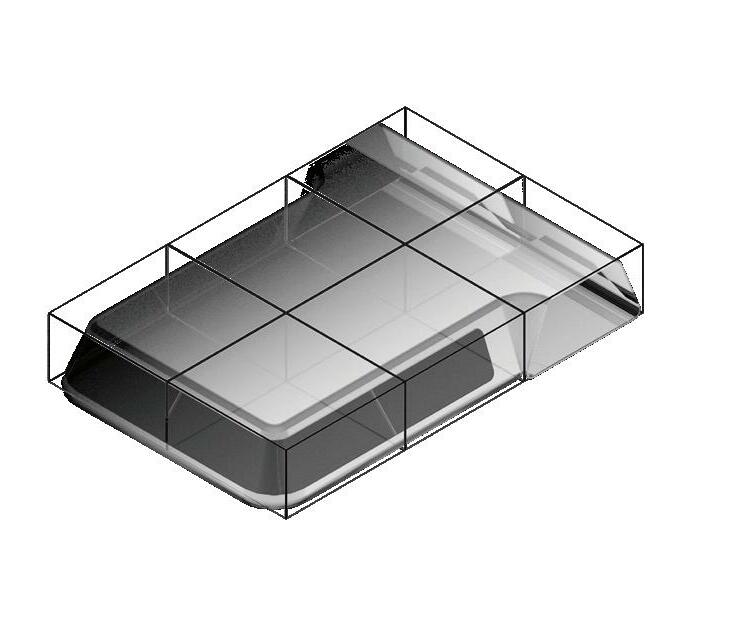
WFC is an algorithm that fills an entire spatial envelope with Modules in a meaningful way. The envelope is divided into discrete box-like Slots. The algorithm selects and places Modules into the Slots, making sure any two placed Modules can become neighbors (do have a common con nector) according to specified Rules.
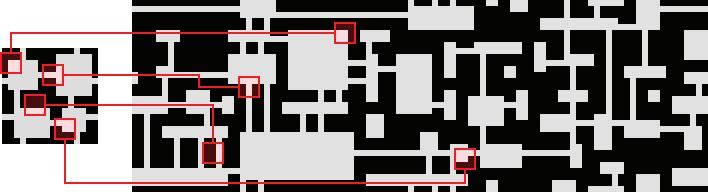
WFC is not a growth algorithm – it always generates a complete valid aggregate (or no solution at all), leaving no Slots empty. It has important implications for design, architecture and urban planning: the aggregates are not branching, but create rhizomatic structures, there is no overlap ping, there are no untreated areas.
It also requires a certain sensitivity and usage strategies, which makes WFC and Monoceros a methodology rather than just a tool. It can be used for projects of various scales and types and the use can be partial and shallow as well as thorough and informed. It is a great approach to materi alize big data distributed in space into meaningful volumetric assemblies.1
Towards an agenda of a combinatorial composition program based on WFC
Page 58
2 Subdigital.Monoceros https://monoceros.sub.digital/
Syntactic Code Wave Function Collapse (WFC)
WFC initializes output bitmap in a complete ly unobserved state, where each pixel value is in superposition of colors of the input bitmap (so if the input was black & white then the unobserved states are shown in different shades of grey). The coefficients in these superpositions are real numbers, not complex numbers, so it doesn’t do the actual quantum mechanics, but it was inspired by QM. Then the program goes into the obser vation-propagation cycle:
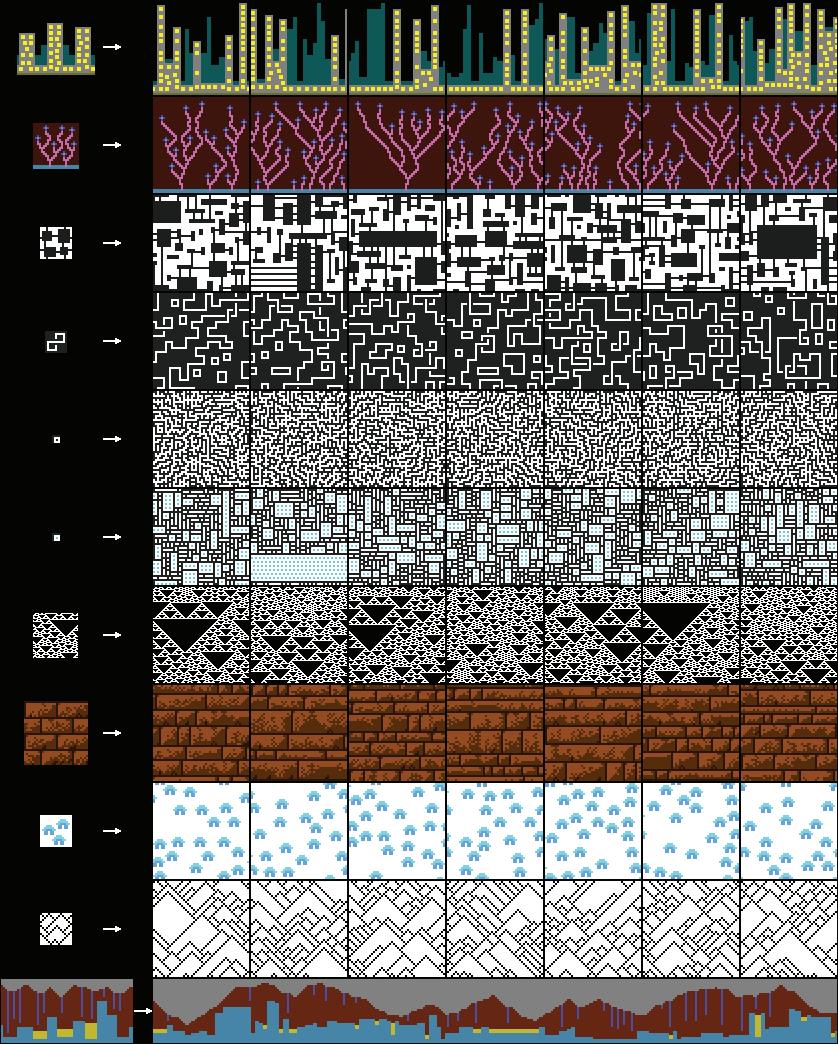
On each observation step an NxN region is chosen among the unobserved which has the lowest Shannon entropy. This region’s state then collapses into a definite state according to its coefficients and the distribu tion of NxN patterns in the input.
On each propagation step new information gained from the collapse on the previous step propagates through the output.
On each step the number of non-zero coef ficients decreases and in the end we have a completely observed state, the wave func tion has collapsed1.
Page 59
Refrence Github.WaveFunctionCollapse. https://github.com/mxgmn/WaveFunctionCollapse
Syntactic Code
Slots definition
The algorithm is defined as follows:
Initialize the world to a fully non-deterministic state, where every Slot allows every defined Module.
Repeat following steps until every Slot allows exactly one Module (a valid, deterministic result), or any Slot allows zero Mod ules (a contradiction):
Observation (Slot choice): Pick a Slot at random from the set of Slots with the smallest Module count that are still in non-de terministic state (allow more than one Module),
Observation (Module choice): Randomly pick a Module from the set of still available Modules for the chosen Slot and re move all other Modules from this Slot, making it deterministic (allowing exactly one Module),
Constraint Propagation: Remove Modules from neighboring Slots based on the Rules. Repeat recursively in depth-first or der for each Slot modified this way.
If WFC generated a contradictory result, start over again with a different random state
A plug-in for Grasshopper, which is a visual programming platform for Rhinoceros 3D CAD software. Monoceros was developed at studio Subdigital by Ján Toth and Ján Pernecký. Monoceros is an implementation of the Wave Function Collapse (WFC) algorithm developed for game design by Maxim Gumin and extended and promoted by Oskar Stål berg with his game Townscaper.
Monoceros serves to fill the entire world with Modules, respecting the given Rules. The plug-in wraps WFC into a layer of abstraction, which makes WFC easily implemented in architectural or industrial design. It honors the principles of WFC and Grasshopper at the same time - offering a full control of the input and output data in a Grasshopper way and their processing with a pure WFC.
Wave Function Collapse (WFC) is a procedural generation algorithm that essentially attempts to satisfy constraints on a world (see CSP for more). Its name is inspired by quantum mechanics, but the similarity is just at the surface level - WFC runs com pletely deterministically.
In its simplest form the algorithm works on an orthogonal grid. We initially have:
-A world defined by a mathematical graph, in our case represented as an orthogonal 3D grid.
-A set of Rules describing what can occupy each tile on the grid depending on what its neighbors are.
The grid tiles are graph nodes, also called Slots in WFC (and in Monoceros). Graph edges are implicitly derived from Slot adjacen cy: two Slots are connected by an edge, if they are adjacent to each other on the grid. Every Slot contains a list of Modules that are allowed to reside in it. Conceptually, Modules could have any meaning that we assign to them, some usual meanings being that the Slots populated by them contain geometry, images, navigation meshes, or other high-level descriptions of a space.
Towards an agenda of a combinatorial composition program based on WFC
Page 60
WFC algorithm starts with Slots allwoing placement of multiple listed
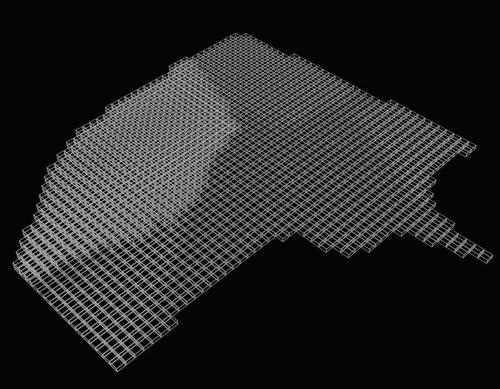
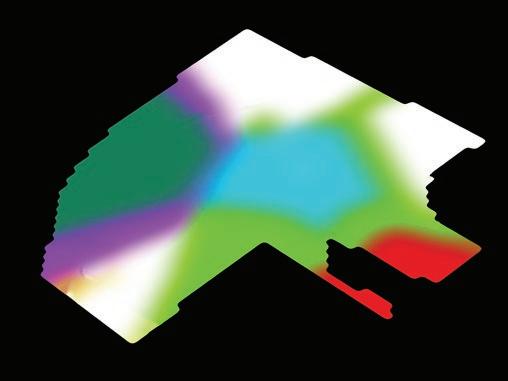
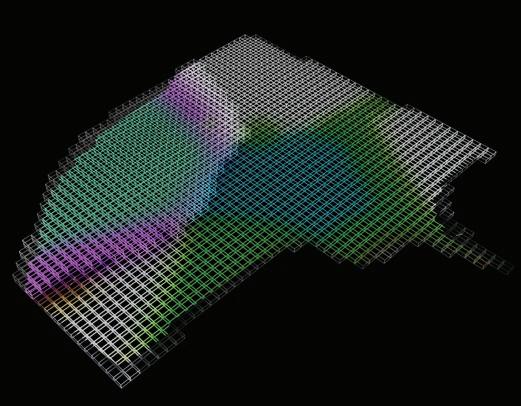
Each Module allows only certain other Modules to be placed
Rule set. The adja cency Rules are direction-aware.
follows the Rules to remove dis allowed Modules from Slots adjacent to each Slots allows placement of only those Modules that can be ad jacent to the Modules allowed to be placed by neighboring Slots. Such state is called a Canonical world
Page 61 Monoceros | Examples with numbers Slot Placement Procedure Slots Initial state 1 Modules 2 Rule set 3 Initial state allowing placement of any modules Chooseing a random Slots and randomly picking one of the allowed Modules to be places. 4 Observation 1 2 3 1 1 1 1,2,3 1,2,3 1,2,3 1,2,3 1,2,3 1,2,3 1,2,3 1,2,3 1,2,3 1,2,3 1,2,3 1,2,3 1,2,3 1,2,3 1,2,3 1,2,3 1,2,3 1,2,3 1,2,3 1,2,3 1,2,3 1,2,3 1,2,3 1,2,3 1,2,3 11 1 2 2 2 2 2 2 3 3 3 3 3 1,2,3 1,2,3 1,2,3 1,2,3 1,2,3 1,2,3 1,2,3 1,2,3 1,2,3 1,2,3 1,2,3 3 1,2,3 1,2,3 1,2,3 1,2,3 1,2,3 1,2,3 1,2,3 1,2,3 1,2,3 1,2,3 1,2,3 1,2,3 1,2,3 5 Propogation 1,2,3 1,2,3 1,2,3 1,2,3 1,2,3 1,2,3 1,2,3 1,2,3 1,2,3 33 3 2 1 1,2,3 1,2,3 1,2,3 1,2,3 1,2,3 1,2,3 1,2,3 1,2,3 1,2,3 1,2,3 1,2,3 1,2,3 1,2,3 1,2,3 1,2,3 1,2,3 1,2,3 333 33 22 2 11 1 1 1,2,3 1,2,3 1,2,3 1,2,3 1,2,3 1,2,3 1,2,3 1,2,3 1,2,3 1,2,3 333 33 222 2 2 11 1 1 1 1 1 11 1,2,3 1,2,3 1,2,3 1,2,3 333 33 222 2 2 11 1 1 1 11 1 1 11 11 1,2,3 5 Propogation 333 33 222 2 2 11 1 1 1 1 1 11 1 1 1 1 11 6 Solution 333 33 222 2 2 11 1 1 1 1 1 11 1 1 1 1 11 The
Modules,
adjacency
WFC
Program allocation Syntactic Code
Syntactic Code
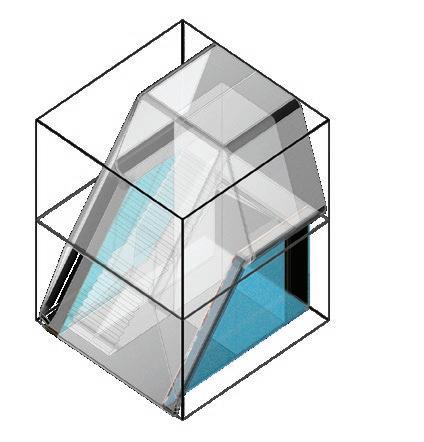
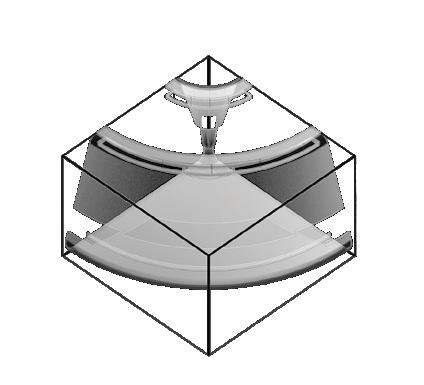
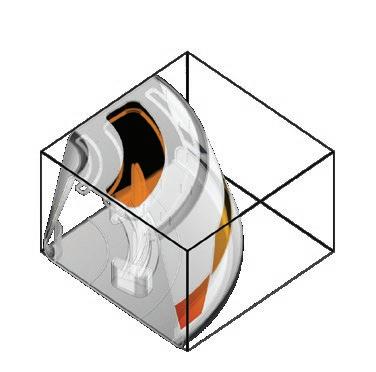
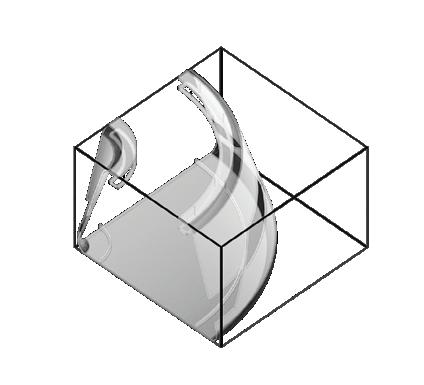
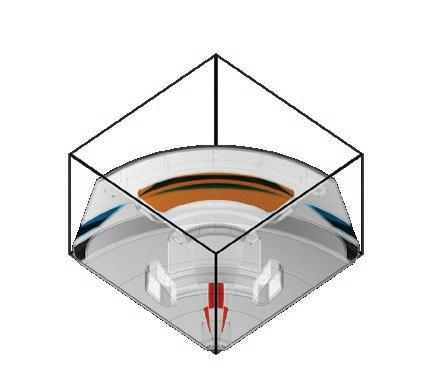
Page 62 Towards an agenda of a combinatorial composition program based on WFC Modules and rules Modules and rules | Vertical Access Vehicle Access Pedestrian access Vertical-Ped-access Vertical-Ped-access Vertical-Ped-access A-A X V-PLAN SECTION Y +0.00 Elevator Room 9.80 m 5.00 m 7.00 m 0.00 m s S tra ght P e d a c c e s s X T urn P e d a c c e s s 0 1 T urn P e d a c c e s s 0 2 T urn P e d a c c e s s 0 3 T urn P e d a c c e s s 0 4 S tra ght P e d a c c e s s Y C a r P a rk ing X C a r P a rk ing Y S hop S tora ge Y R e s ta ura nt RY e s ta ura nt X S hop S tora ge X S tra ght P e d A c c e s s SX hop S tora ge X T urn P e d A c c e s s 0 1 T urn P e d A c c e s s 0 2 T urn P e d A c c e s s 0 3 S tra ight P e d A c c e s s Y S hop S tora ge Y S tra ght R oute X T urn R T urn R T urn R T urn R wa fle from 2 s urf s u fa c e s a s l s t L s t<B re p> N umbe r of s a bs ( nt) s lot T h c k ne s Ss tra ght P e d a c c e s s X T urn P e d a c c e s s 0 1 T urn P e d a c c e s s 0 2 T urn P e d a c c e s s 0 3 T urn P e d a c c e s s 0 4 S tra ght P e d a c c e s s Y C a r P a rk ng X C a r P a rk ing Y S hop S tora ge Y R e s ta ura nt Y S tra ight R oute X R e s ta ura nt X S hop S tora ge X T urn R oute 0 1 T urn R oute 0 2 T urn R oute 0 3 T urn R oute 0 4 C a r P a rk ing X B us P a rk ing X S tra ght R oute Y B us P a rk ing Y C a r P a rk ng S tra ight P e d A c c e s s Y S hop S tora ge Y S tra ght P e d A c c e s s Y R e s ta ura nt Y S tra ight R oute Y C a r P a rk ng Y S tra ght P e d A c c e s s Y S tra ight R oute X T urn R oute 0 1 T urn R oute 0 2 T urn R oute 0 3 S tra ight P e d a c c e s s Y C a r P a rk ng Y S hop S tora ge Y T urn R oute 0 4 C a r P a rk ing X B us P a rk ng X
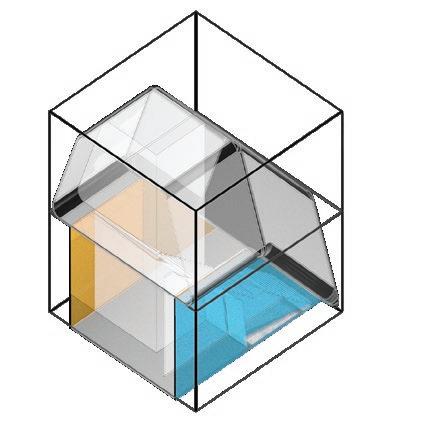
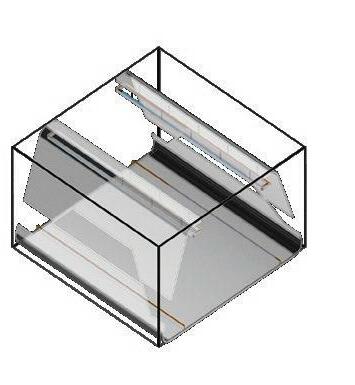
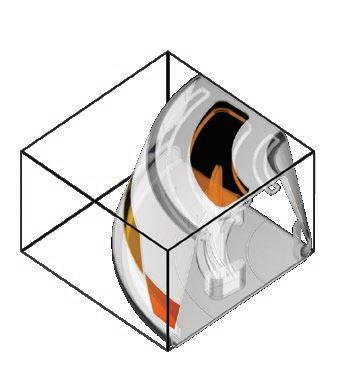
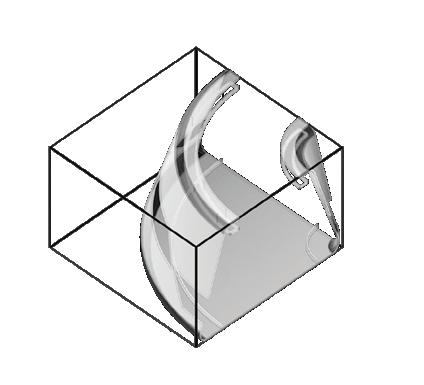
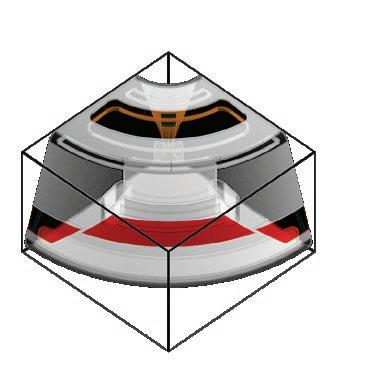
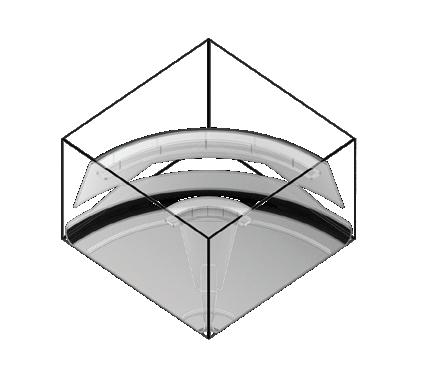
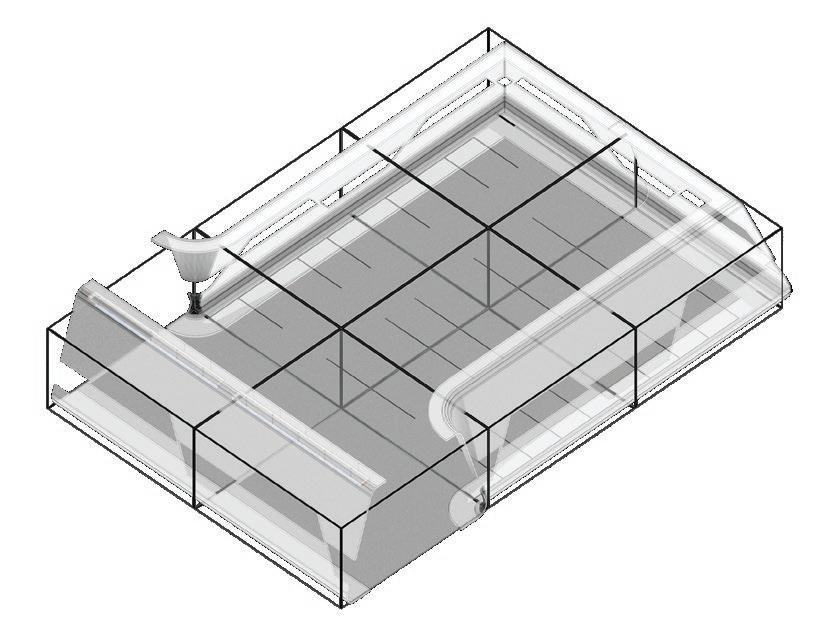
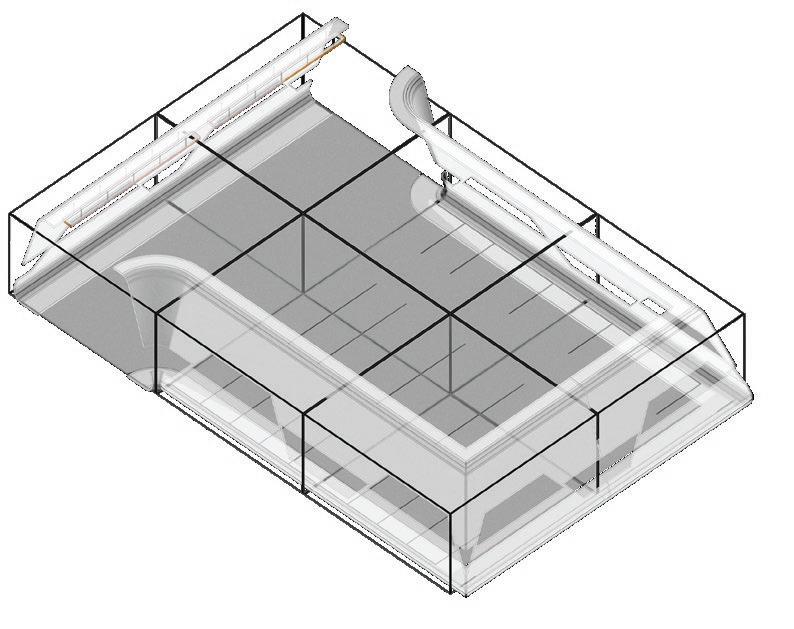
Modules are designed to mediate between data driven design approaches and the practical model
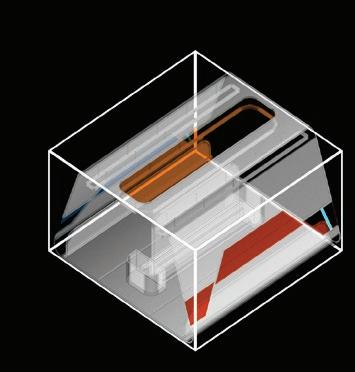
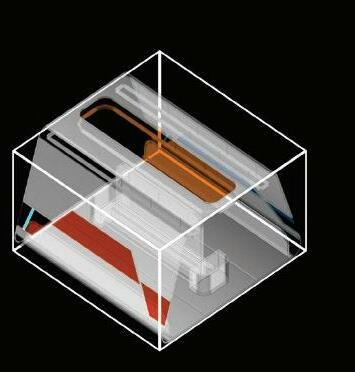
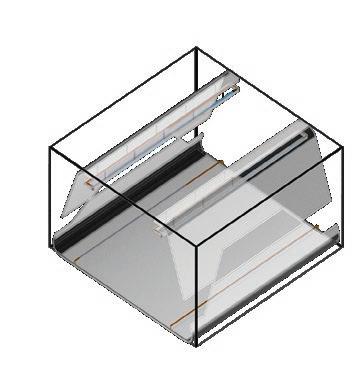
Page 63 Modules and rules | Horizantal Access 10.00 m 5.00 m 0.50m 10.00 m 5.00 m 10.00 m 5.00 m 2.00m 1.00m 10.00 m 5.00 m Straight-Ped-access Straight-Ped-access Straight-Route Turn-Ped-access Turn-Route A-A A-A B-B B-B Straight-Route Turn-Ped-access Turn-Route Turn-Ped-access Turn-Route Straight-Ped-access Straight-Route Turn-Ped-access Turn-Route Turn-Ped-access Turn-Route X H-PLAN H-PLAN 03-PLAN 03-PLAN SECTION SECTION SECTION SECTION X 01 01 03 03 Y Y 02 02 04 04 A-A A-A B-B B-B Syntactic Code
Page 64 Towards an agenda of a combinatorial composition program based on WFC 20.00 m 5.00 m Car-Parking Car-Parking A-A Car-Parking X PLAN SECTION Y A-A S tra ight P e d a c c e s s X T urn P e d a c c e s s 0 2 T urn P e d a c c e s s 0 3 T urn P e d a c c e s s 0 4 C a r P a rk ing X S tra ight R oute R e s ta ura nt X S hop S tora ge X S tra ight P e d A c c e s s SX hop S tora ge X T urn P e d A c c e s s 0 1 T urn P e d A c c e s s 0 2 T urn P e d A c c e s s 0 3 T urn P e d A c c e s s 0 4 S tra ight P e d A c c e s s Y S hop S tora ge Y S tra ight P e d A c c e s s RX e s ta ura nt X T urn P e d A c c e s s 0 1 T urn P e d A c c e s s 0 2 T urn P e d A c c e s s 0 3 S tra ight P e d A c c e s s Y R e s ta ura nt Y T urn P e d A c c e s s 0 4 S tra ight R oute X T urn R oute 0 1 S tra ight R oute Y C a r P a rk ing Y T urn R oute 0 2 T urn R oute 0 3 T urn R oute 0 4 S tra ight P e d A c c e s s X C a r P a rk ing X T urn P e d A c c e s s 0 1 T urn P e d A c c e s s 0 2 T urn P e d A c c e s s 0 3 S tra ight P e d A c c e s s Y T urn P e d A c c e s s 0 4 Modules and rules | Car-Parking Syntactic Code
Page 65 30.00 m 5.00 m Bus-Parking Car-Parking A-A Bus-Parking X PLAN SECTION Y A-A R e s ta S tra ight R oute X S tra ight P e d A c c e s s SX hop S tora ge X T urn P e d A c c e s s 0 1 T urn P e d A c c e s s 0 2 T urn P e d A c c e s s 0 3 T urn P e d A c c e s s 0 4 S tra ight P e d A c c e s s Y S hop S tora ge Y S tra ight P e d A c c e s s RX e s ta ura nt X T urn P e d A c c e s s 0 1 T urn P e d A c c e s s 0 2 T urn P e d A c c e s s 0 3 S tra ight P e d A c c e s s Y R e s ta ura nt Y T urn P e d A c c e s s 0 4 S tra ight R oute X T urn R oute 0 1 S tra ight R oute Y C a r P a rk ing Y T urn R oute 0 2 T urn R oute 0 3 T urn R oute 0 4 S tra ight P e d A c c e s s X C a r P a rk ing X T urn P e d A c c e s s 0 1 T urn P e d A c c e s s 0 2 T urn P e d A c c e s s 0 3 S tra ight P e d A c c e s s Y T urn P e d A c c e s s 0 4 S tra ight R oute X S tra ight P e d A c c e s s X T urn P e d A c c e s s 0 1 T urn P e d A c c e s s 0 2 T urn P e d A c c e s s 0 3 S tra ight P e d A c c e s s Y T urn P e d A c c e s s 0 4 B us P a rk ing X T urn R oute 0 1 S tra ight R oute Y B us P a rk ing Y T urn R oute 0 2 T urn R oute 0 3 T urn R oute 0 4 Modules and rules | Bus-Parking Syntactic Code
Page 66 Towards an agenda of a combinatorial composition program based on WFC S tra ight P e d a c c e s s X T urn P e d a c c e s s 0 1 T urn P e d a c c e s s 0 2 T urn P e d a c c e s s 0 3 T urn P e d a c c e s s 0 4 C a r P a rk ing X R e s ta ura nt X S hop S tora ge X S tra ight P e d A c c e s s SX hop S tora ge X T urn P e d A c c e s s 0 1 T urn P e d A c c e s s 0 2 T urn P e d A c c e s s 0 3 T urn P e d A c c e s s 0 4 S tra ight P e d A c c e s s Y S hop S tora ge Y Shop-Storage Car-Parking A-A Shop-Storage X PLAN SECTION Y A-A 20.00 m 5.00 m Modules and rules | Shop-Storage Syntactic Code
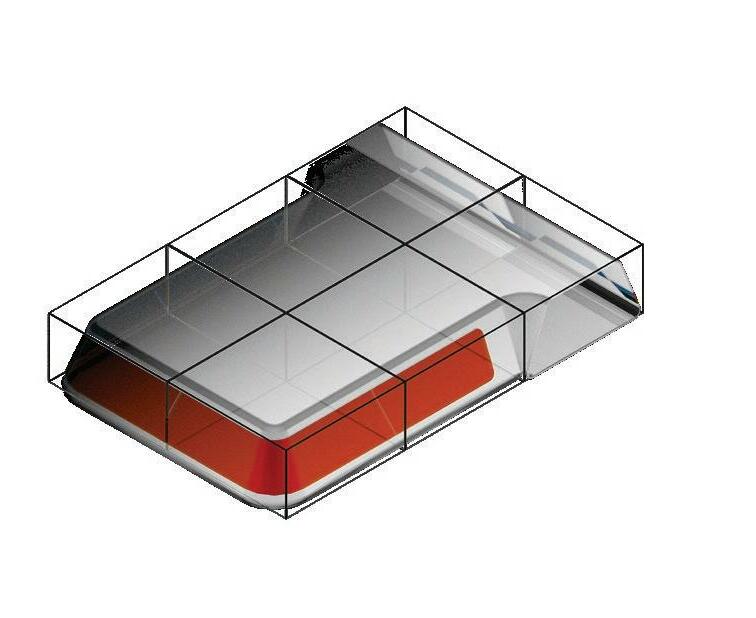
Page 67 Oven Restuarant Restaurant A-A Restaurant X PLAN SECTION Y A-A Modules and rules | Restaurant S tra ight P e d a c c e s s X T ur T ur T ur T ur C a R e S h S tra ight P e d A c c e s s SX hop S tora ge X T urn P e d A c c e s s 0 1 T urn P e d A c c e s s 0 2 T urn P e d A c c e s s 0 3 T urn P e d A c c e s s 0 4 S tra ight P e d A c c e s s Y S hop S tora ge Y S tra ight P e d A c c e s s RX e s ta ura nt X T urn P e d A c c e s s 0 1 T urn P e d A c c e s s 0 2 T urn P e d A c c e s s 0 3 S tra ight P e d A c c e s s Y R e s ta ura nt Y T urn P e d A c c e s s 0 4 Syntactic Code
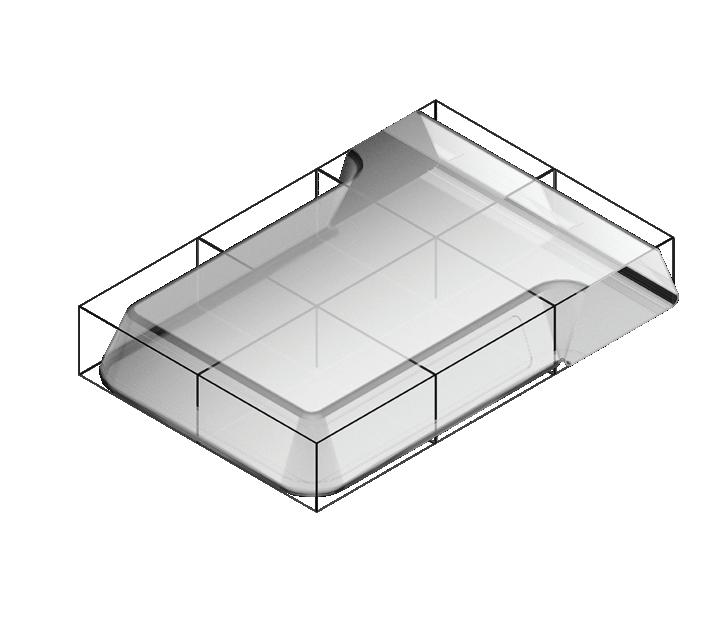
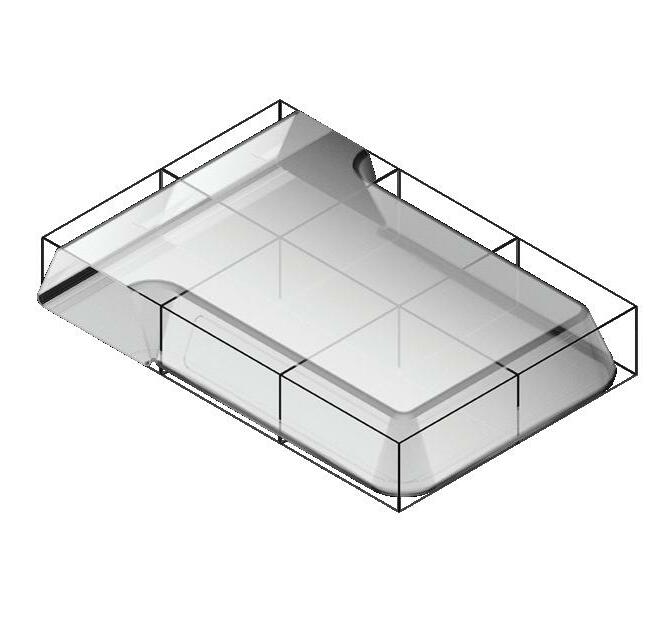
Page 68 Towards an agenda of a combinatorial composition program based on WFC Restroom Restroom Restroom Restroom X PLAN SECTION Y A-A Modules and rules | Shop-Storage S tra ight P e d a c c e s s X T urn P e d a c c e s s 0 1 T urn P e d a c c e s s 0 2 T urn P e d a c c e s s 0 3 T urn P e d a c c e s s 0 4 C a r P a rk ing X R e s ta ura nt X S hop S tora ge X S tra ight P e d A c c e s s SX hop S tora ge X T urn P e d A c c e s s 0 1 T urn P e d A c c e s s 0 2 T urn P e d A c c e s s 0 3 T urn P e d A c c e s s 0 4 S tra ight P e d A c c e s s Y S hop S tora ge Y T urn P e d A c c e s s 0 3 Restroom Restroom Syntactic Code
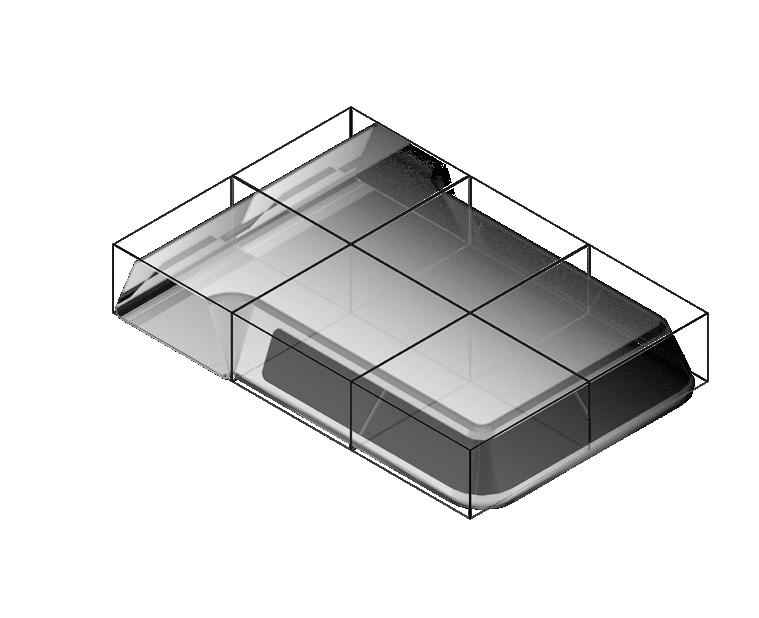
Page 69 Restuarant Restaurant X Y Modules and rules | Restaurant Syntactic Code Oven Restaurant A-A PLAN SECTION A-A S tra ight P e d a c c e s s X T ur T ur T ur T ur C a R e S h S tra ight P e d A c c e s s SX hop S tora ge X T urn P e d A c c e s s 0 1 T urn P e d A c c e s s 0 2 T urn P e d A c c e s s 0 3 T urn P e d A c c e s s 0 4 S tra ight P e d A c c e s s Y S hop S tora ge Y S tra ight P e d A c c e s s RX e s ta ura nt X T urn P e d A c c e s s 0 1 T urn P e d A c c e s s 0 2 T urn P e d A c c e s s 0 3 S tra ight P e d A c c e s s Y R e s ta ura nt Y T urn P e d A c c e s s 0 4 Staff room Staff room
Page 70 Towards an agenda of a combinatorial composition program based on WFC Observation Analogy Syntactic Code 364 56 641 44 2 58 12 5 Seed 14 1 2 3 4 5 6 7 8 398 655 02 38 12 71 11 1 Seed 546 1 2 3 4 5 6 7 8 333 56 572 54 10 72 14 2 Seed 125 1 2 3 4 5 6 7 8 435 57 574 28 14 47 5 3 Chart Title 1 2 3 4 5 6 7 8 Observation 14 Observation 125 Observation 546 Observation 742 Shop Bus-Parking RestaurantPedestrain Car-Parking Roads Restroom Sta Room-O ce Shop Bus-Parking RestaurantPedestrain Car-Parking Roads Restroom Sta Room-O ce Shop Bus-Parking RestaurantPedestrain Car-Parking Roads Restroom Sta Room-O ce Shop Bus-Parking RestaurantPedestrain Car-Parking Roads Restroom Sta Room-O ce 364 364 364 364 58 58 58 58 2 2 2 2 641 641 641 641 56 56 56 56 44 44 44 44 12 12 12 12 5 5 5 5
Page 71 429 49 618 50 15 65 8 5 Chart Title 1 2 3 4 5 6 7 8 Observation 322 Observation 782 Observation 166 Observation 88 Shop Bus-Parking RestaurantPedestrain Car-Parking Roads Restroom Sta Room-O ce Shop Bus-Parking RestaurantPedestrain Car-Parking Roads Restroom Sta Room-O ce Shop Bus-Parking RestaurantPedestrain Car-Parking Roads Restroom Sta Room-O ce Shop Bus-Parking RestaurantPedestrain Car-Parking Roads Restroom Sta Room-O ce 364 364 364 364 58 58 58 58 2 2 2 2 641 641 641 641 56 56 56 56 44 44 44 44 12 12 12 12 5 5 5 5 356 665 02 26 5 59 28 2 Chart Title 1 2 3 4 5 6 7 8 421 49 570 48 6 72 12 6 Chart Title 1 2 3 4 5 6 7 8 356 665 02 26 5 59 28 2 Chart Title 1 2 3 4 5 6 7 8
Page 72 Towards an agenda of a combinatorial composition program based on WFC Test No. Roads Car Parking Pedestrain-access Shop Buspark Restaruant Restroom Hosts Attempts Observation 1 333 56 572 54 10 72 14 2 432 125 2 398 55 602 38 12 71 11 1 127 546 3 435 57 574 28 14 47 5 3 251 742 4 429 49 618 50 15 65 8 5 178 322 5 421 49 570 48 6 72 12 6 212 782 6 366 49 592 42 12 68 26 1 277 166 7 356 65 602 26 5 59 28 2 12 88 0 364 56 641 44 2 58 12 5 241 14 Syntactic Code Observation Analogy
Page 73 0 50 100 150 200 250 300 350 400 Roads 0 5 10 15 20 25 30 35 40 45 50 55 60 65 Car-Parking 0 50 100 150 200 250 300 350 400 450 500 550 600 Pedestrain-access 0 5 10 15 20 25 30 35 40 45 50 Shop 0 10 20 30 40 50 60 70 80 90 Buspark 0 10 20 30 40 50 60 70 Restaruant 0 2 4 6 8 10 12 14 16 18 20 22 24 26 28 Restroom 0.0 0.5 1.0 1.5 2.0 2.5 3.0 3.5 4.0 4.5 5.0 5.5 6.0 Host Syntactic Code Observation Analogy
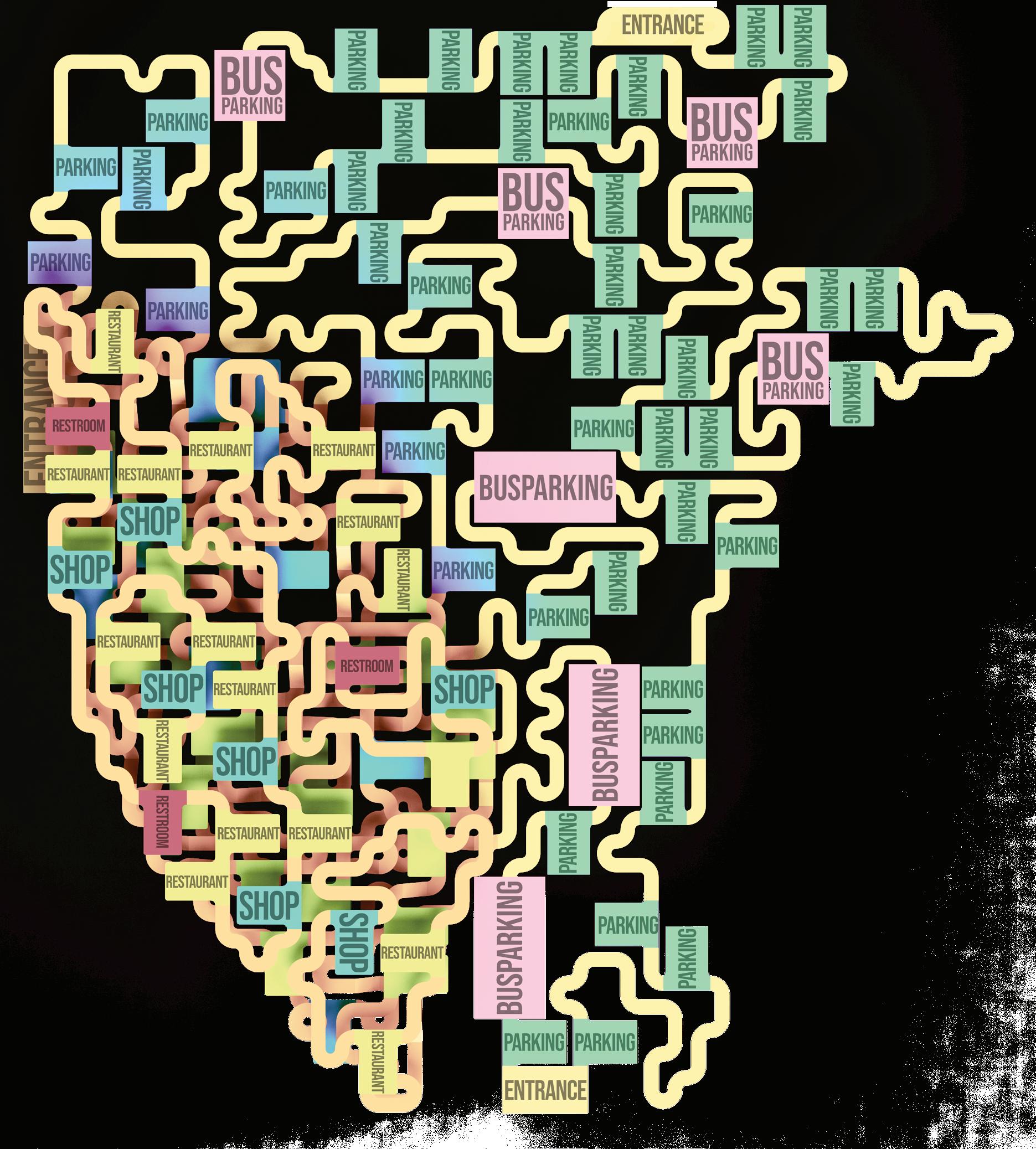
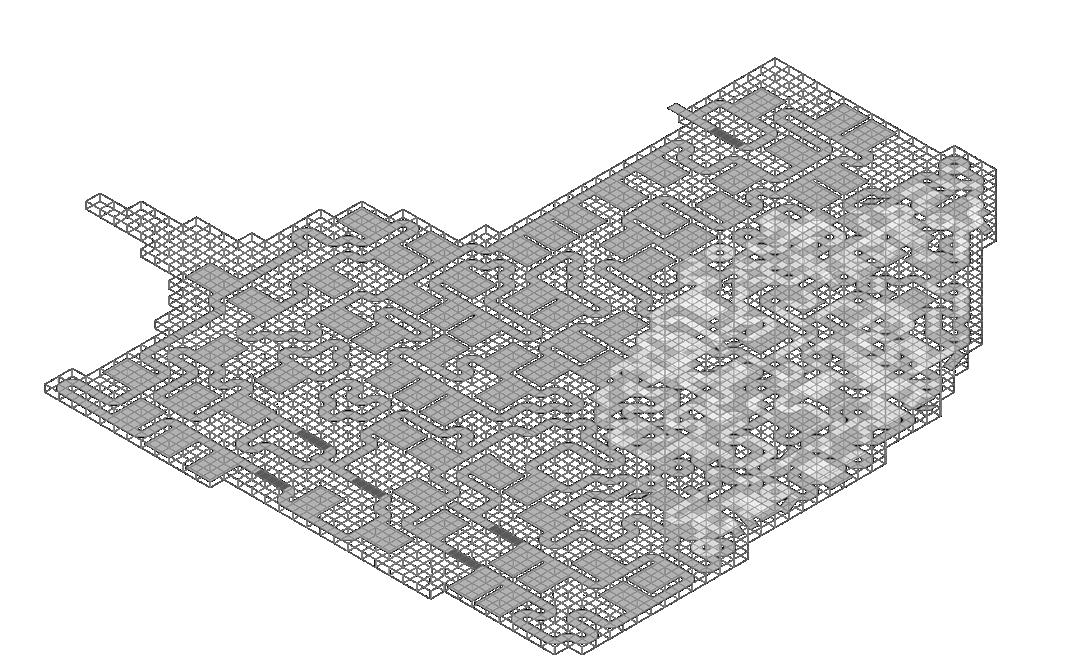
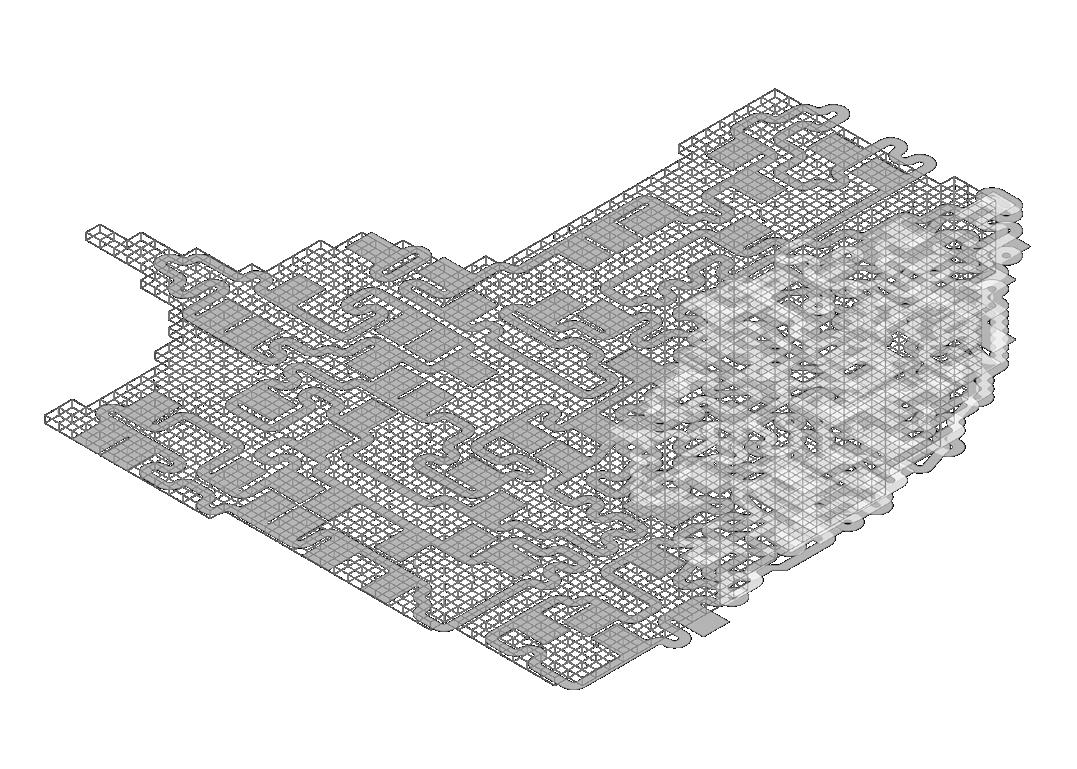
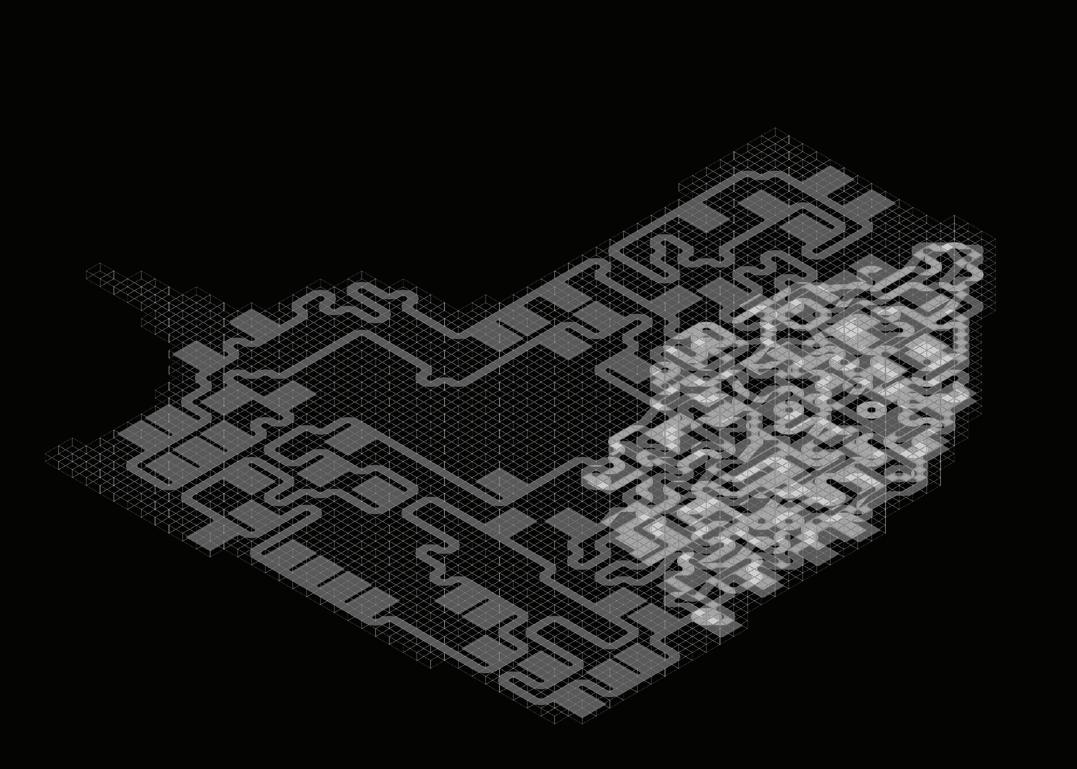
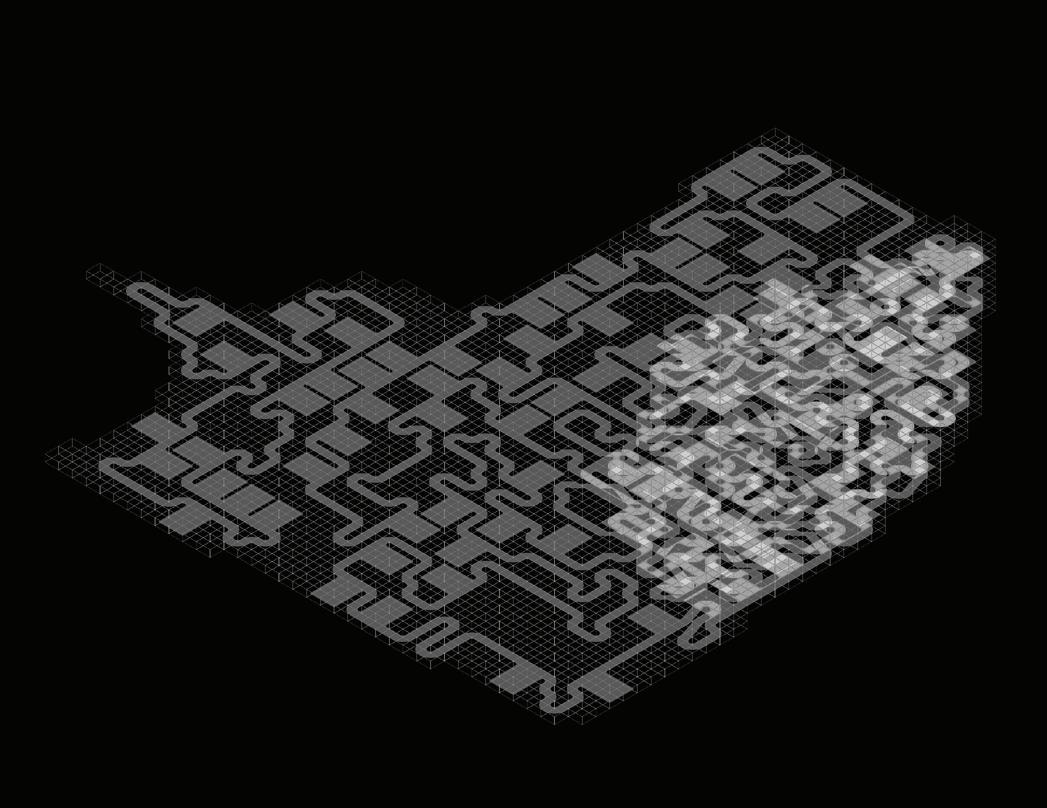
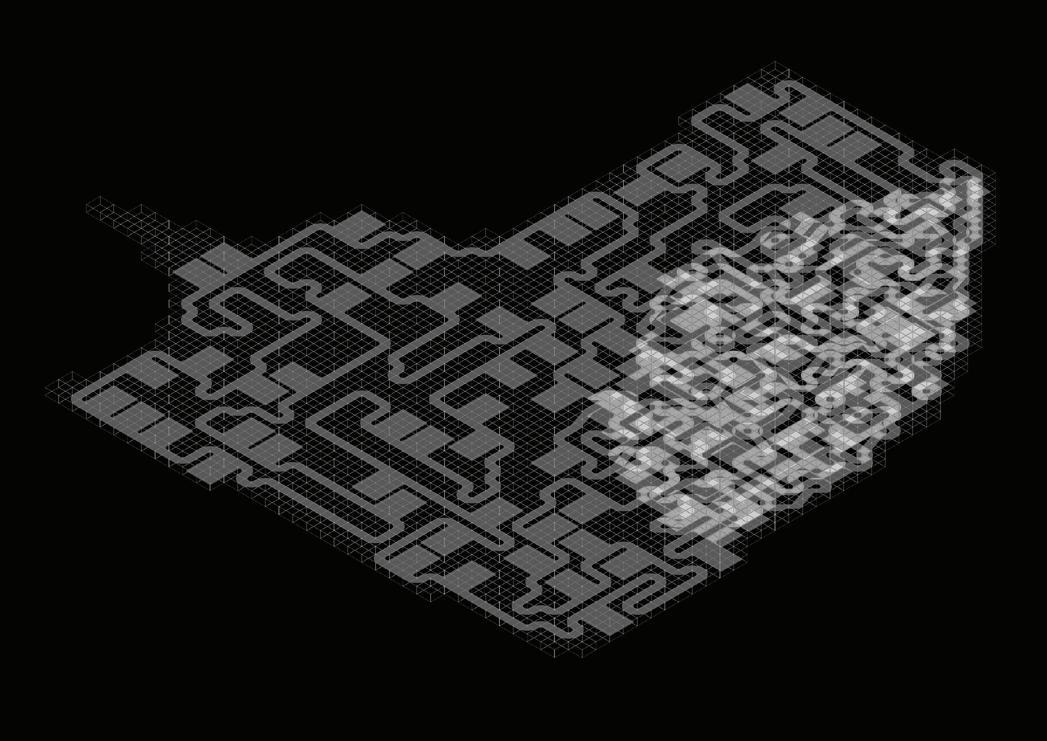
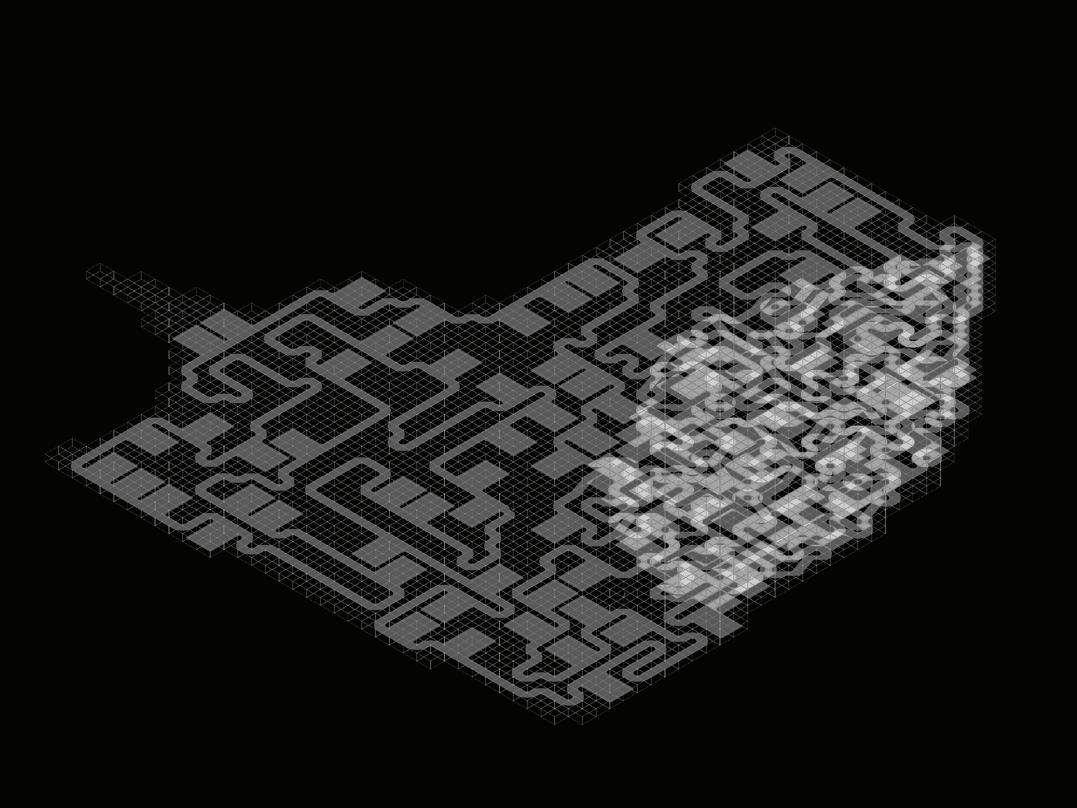
Page 74 Towards an agenda of a combinatorial composition program based on WFC 15m North Resulted graph | Observation 166 Syntactic Code

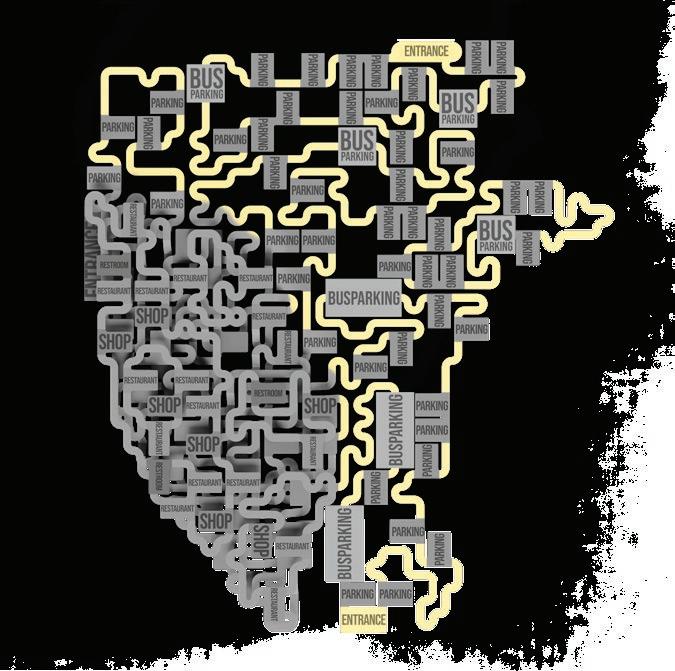
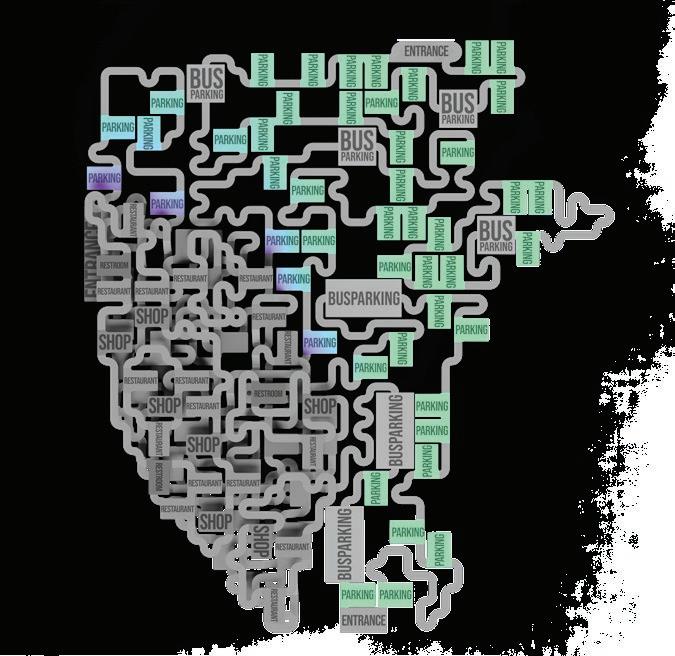


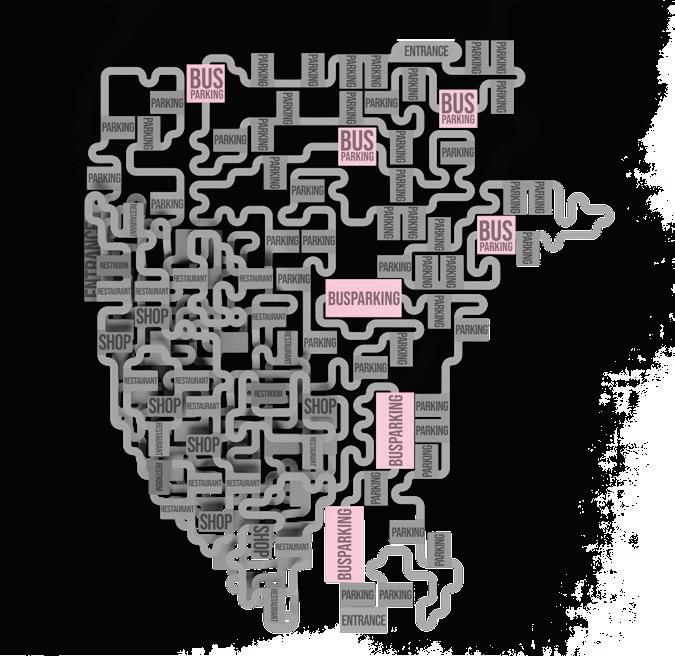
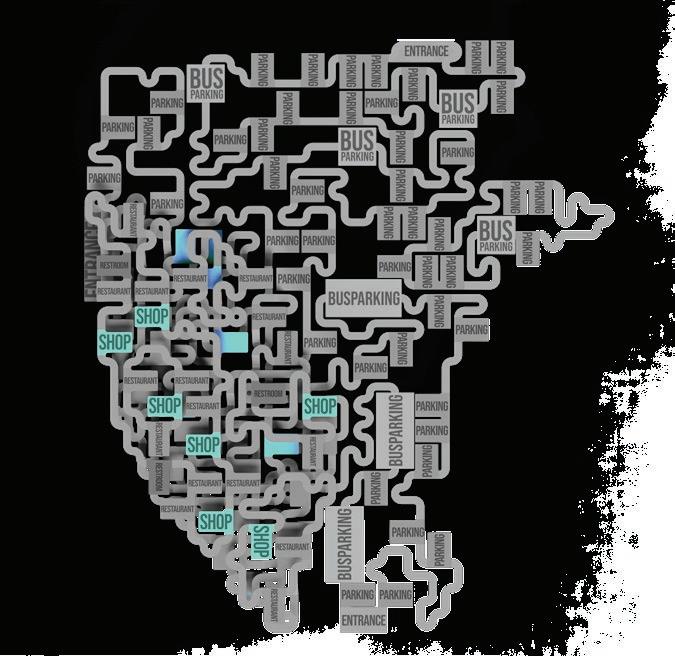
Page 75 Resulted graph | Observation 166 Syntactic Code S t a ght P e d a c c e s s X T urn P e d a c c e s s 0 1 T urn P e d a c c e s s 0 2 T urn P e d a c c e s s 0 3 T urn P e d a c c e s s 0 4 S tra ight P e d a c c e s s Y C a r P a rk ng X C a r P a rk ng Y S hop S to a ge Y R e s a ura n Y S hop S ora ge X S tra ight R ou e X T urn R ou e 0 1 T urn R ou e 0 2 T urn R oute 0 3 S tra ght R oute Y T urn R oute 0 4 B us P a rk ng X B us P a rk ng Y Roads Parking Pedestrain access Restaurant Bus-Parking Shop
Page 76 Towards an agenda of a combinatorial composition program based on WFC Technical Documents Architectural plans,elevations and section
Page 77
Page 78 Towards an agenda of a combinatorial composition program based on WFC Straight-Ped-access X 26 37 47 228 20 12000 22800 41 33 44 20 45 4500 25 10 2 28 21 62 37200 124,800793 6 7 5 3 PEDESTRIAN ROUTE VEHICLE ROUTE VERTICAL ACCESS SHOPPING PARKING TOTAL DINNING Straight-Ped-access Y Turn-Ped-access-01 Turn-Ped-access-02 Turn-Ped-access-03 Turn-Ped-access-04 Vertical-Ped-access X Vertical-Ped-access Y Shop Storage X Shop Storage Y Restuarant X Restuarant Y Car-Parking-X Car-Parking Y Bus-Parking-X Bus-Parking-Y Straight-Route-access X 65 58 63 429 42900 87 86 70 Type Modules Name Count Total Count Total Area Straight-Route-access Y Turn-Route-access-01 Turn-Route-access-02 Turn-Route-access-03 Turn-Route-access-04 4 3 9 5400 1 1 FACILITIES Restroom X Restroom Y Office and Staff room-X Office and Staff room-Y Plan |Ground Floor Technincal Documents
Page 79 15m North
Page 80 Towards an agenda of a combinatorial composition program based on WFC Straight-Ped-access X 24 29 34 185 20 12000 18500 31 32 35 12 20 2000 8 7 7 2 2 5 3000 355000230 1 0 5 1 PEDESTRIAN ROUTE VERTICAL ACCESS SHOPPING FACILITIES TOTAL DINNING Type Modules Name Count Total Count Total Area Straight-Ped-access Y Turn-Ped-access-01 Turn-Ped-access-02 Turn-Ped-access-03 Turn-Ped-access-04 Vertical-Ped-access X Vertical-Ped-access Y Shop Storage X Shop Storage Y Restuarant X Restroom X Restroom Y Office and Staff room-X Office and Staff room-Y Restuarant Y Technincal Documents 15m North Plan |Second Floor
Page 81 Straight-Ped-access X 21 31 34 193 20 12000 19300 41 32 34 5 13 1300 8 4 3 2 2 5 3000 329000231 0 1 5 8 PEDESTRIAN ROUTE VERTICAL ACCESS SHOPPING FACILITIES TOTAL DINNING Type Modules Name Count Total Count Total Area Straight-Ped-access Y Turn-Ped-access-01 Turn-Ped-access-02 Turn-Ped-access-03 Turn-Ped-access-04 Vertical-Ped-access X Vertical-Ped-access Y Shop Storage X Shop Storage Y Restuarant X Restroom X Restroom Y Office and Staff room-X Office and Staff room-Y Restuarant Y Technincal Documents 15m North Plan |Third Floor
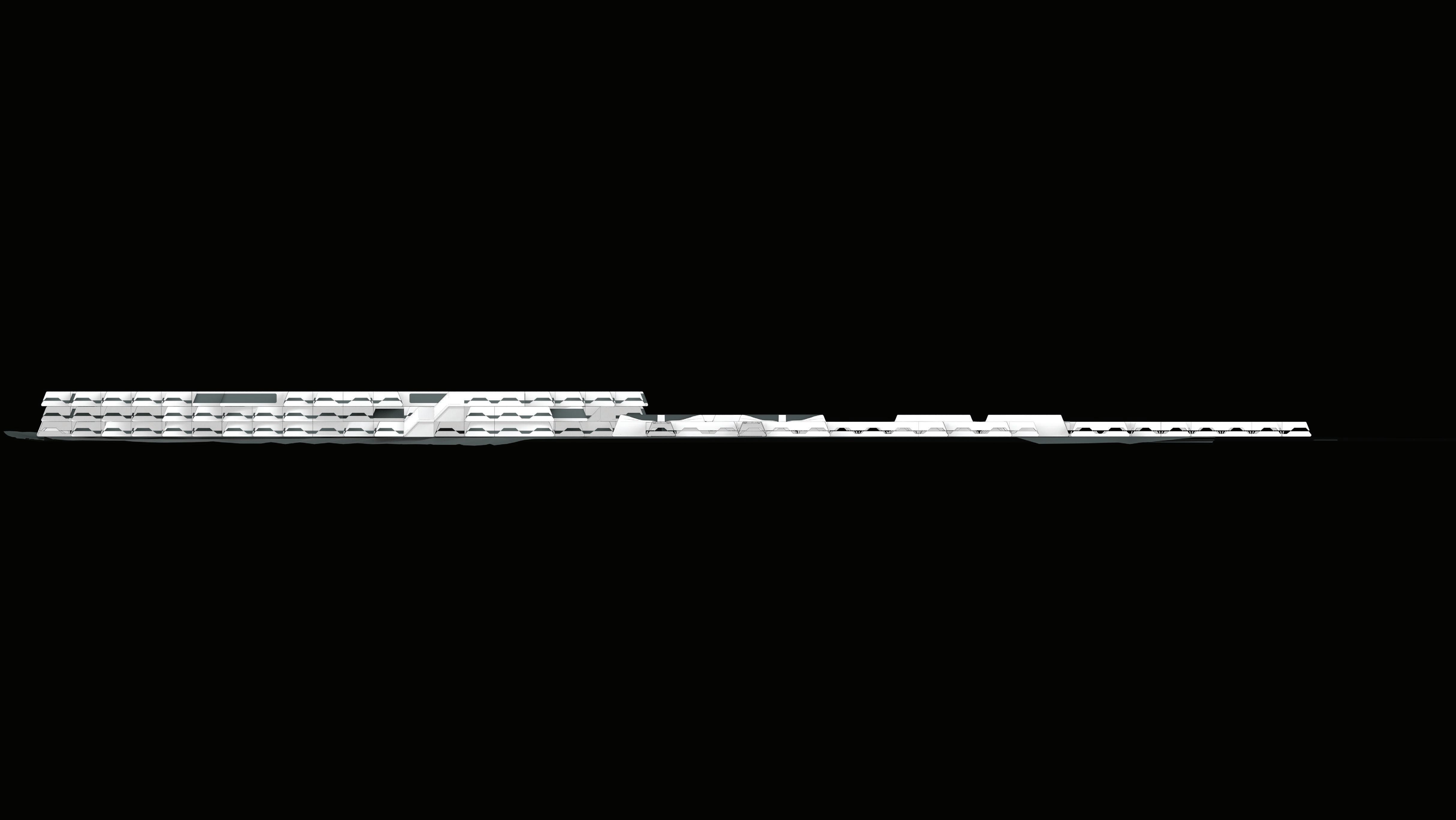



North Elevation
+11.00 +10.00 +09.00 +07.00 +13.00 +14.00 +15.00 +03.00 +05.00 +02.00 +01.00
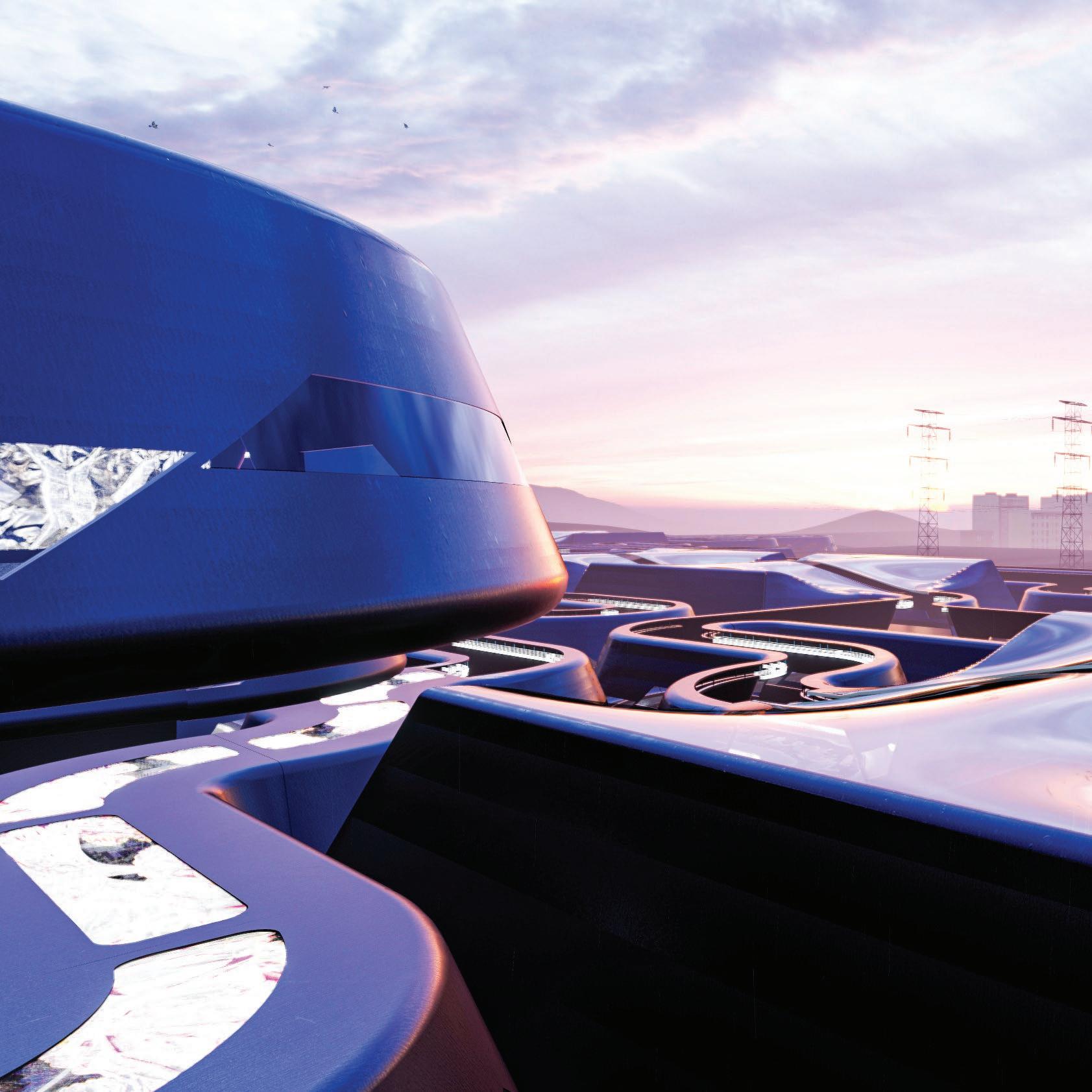
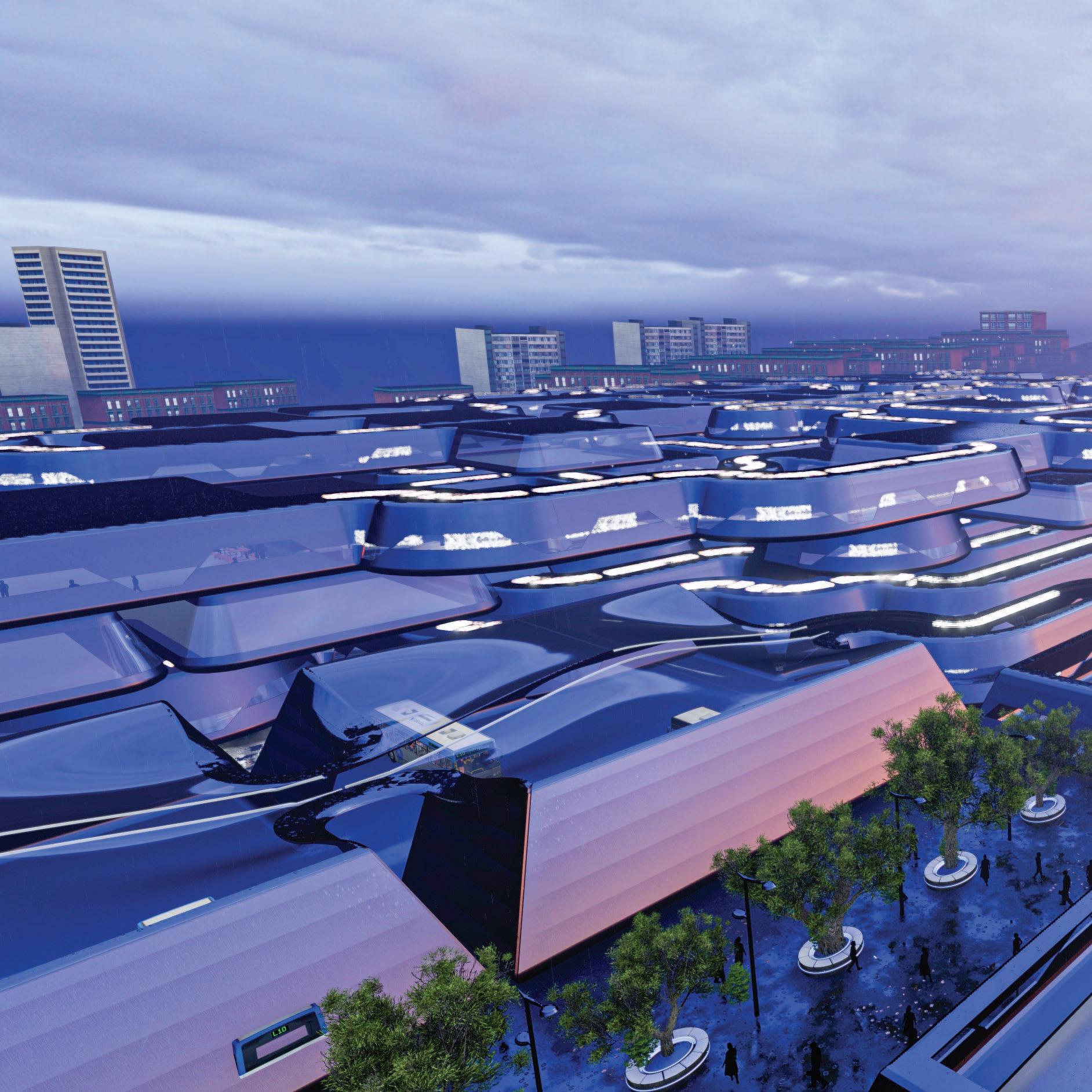
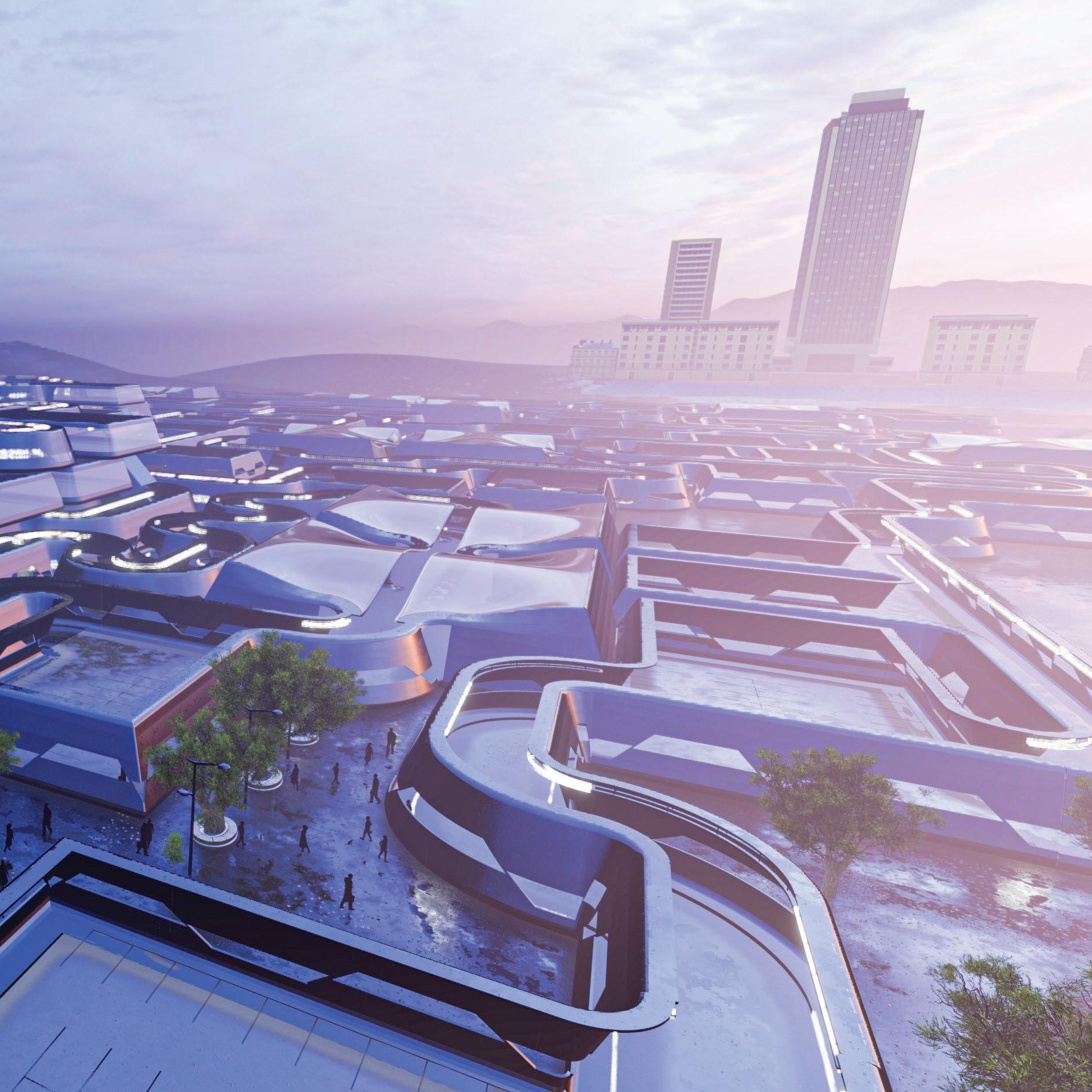
Renders
Page 84 Towards an agenda of a combinatorial composition program based on WFC
Page 85