EQUINE MASSAGE THERAPY
M
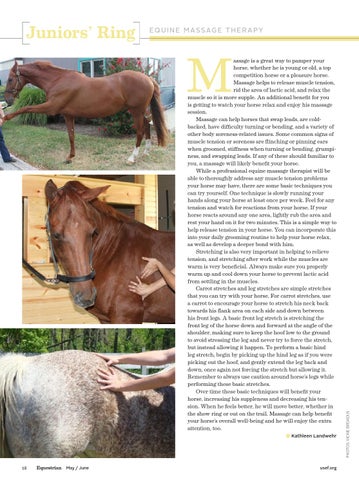
assage is a great way to pamper your horse, whether he is young or old, a top competition horse or a pleasure horse. Massage helps to release muscle tension, rid the area of lactic acid, and relax the muscle so it is more supple. An additional benefit for you is getting to watch your horse relax and enjoy his massage session. Massage can help horses that swap leads, are coldbacked, have difficulty turning or bending, and a variety of other body soreness-related issues. Some common signs of muscle tension or soreness are flinching or pinning ears when groomed, stiffness when turning or bending, grumpiness, and swapping leads. If any of these should familiar to you, a massage will likely benefit your horse. While a professional equine massage therapist will be able to thoroughly address any muscle tension problems your horse may have, there are some basic techniques you can try yourself. One technique is slowly running your hands along your horse at least once per week. Feel for any tension and watch for reactions from your horse. If your horse reacts around any one area, lightly rub the area and rest your hand on it for two minutes. This is a simple way to help release tension in your horse. You can incorporate this into your daily grooming routine to help your horse relax, as well as develop a deeper bond with him. Stretching is also very important in helping to relieve tension, and stretching after work while the muscles are warm is very beneficial. Always make sure you properly warm up and cool down your horse to prevent lactic acid from settling in the muscles. Carrot stretches and leg stretches are simple stretches that you can try with your horse. For carrot stretches, use a carrot to encourage your horse to stretch his neck back towards his flank area on each side and down between his front legs. A basic front leg stretch is stretching the front leg of the horse down and forward at the angle of the shoulder, making sure to keep the hoof low to the ground to avoid stressing the leg and never try to force the stretch, but instead allowing it happen. To perform a basic hind leg stretch, begin by picking up the hind leg as if you were picking out the hoof, and gently extend the leg back and down, once again not forcing the stretch but allowing it. Remember to always use caution around horse’s legs while performing these basic stretches. Over time these basic techniques will benefit your horse, increasing his suppleness and decreasing his tension. When he feels better, he will move better, whether in the show ring or out on the trail. Massage can help benefit your horse’s overall well-being and he will enjoy the extra attention, too. ■ Kathleen Landwehr
12 Equestrian May / June
usef.org
PHOTOS: VICKIE BROADUS
Juniors’ Ring