





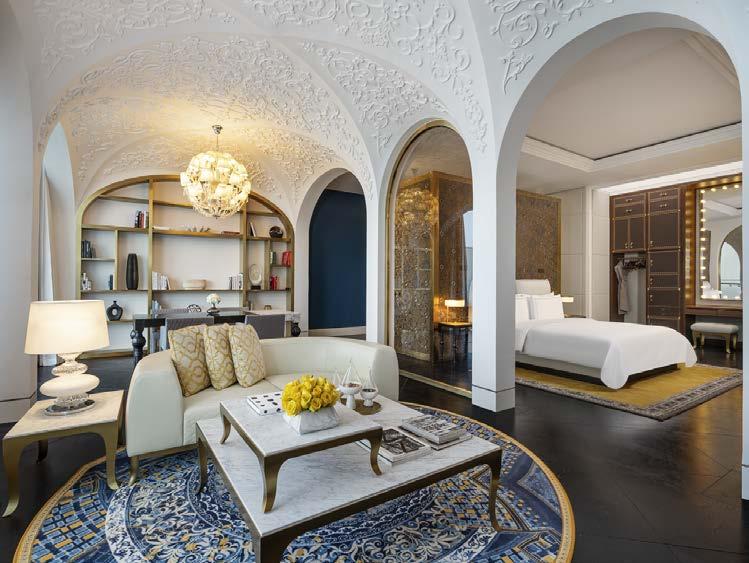
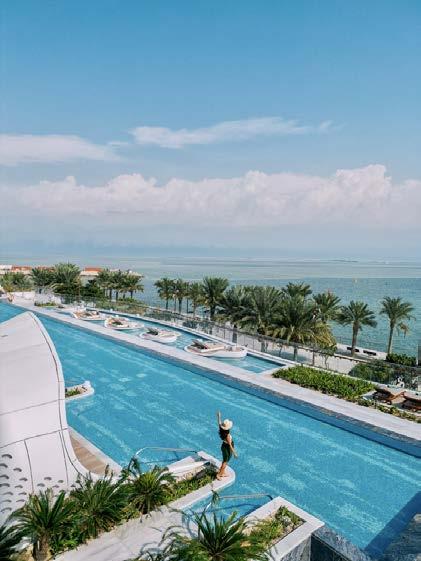
Step into a world of opulence when you book a Suite at Raffles Doha.
Experience the added luxury of QAR 750 credit to spend on dining in the hotel, and QAR 500 towards any Spa treatment.
Children aged 12 and below are welcome to indulge in the enchantment of complimentary dining.
Rates starting from QAR 3,500 per night
For reservations, please call +974 4030 7100 or email reservations.doha@raffles.com


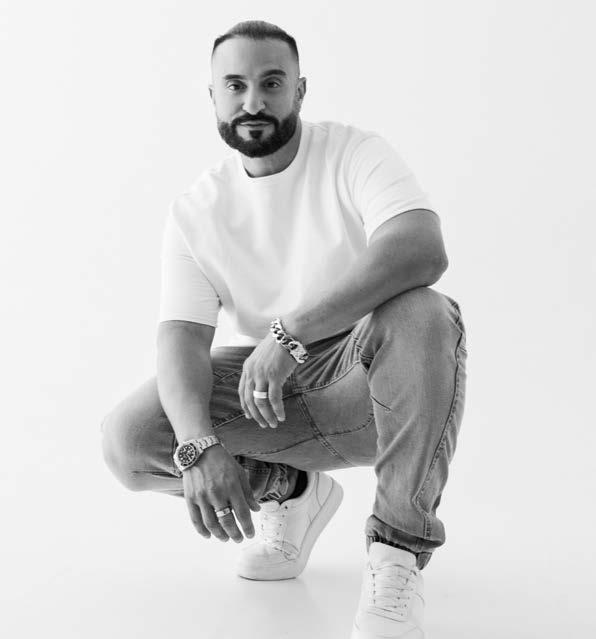
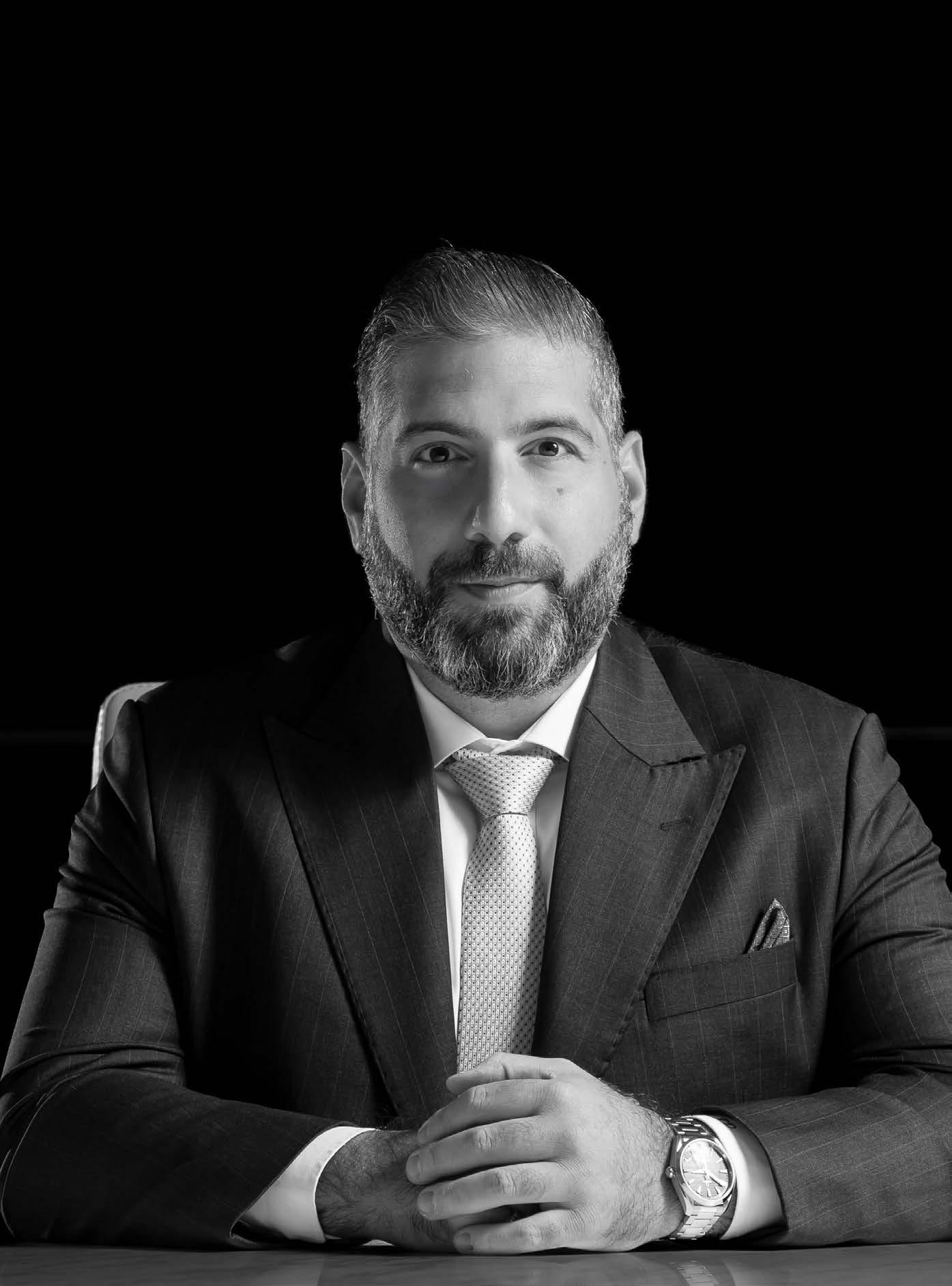
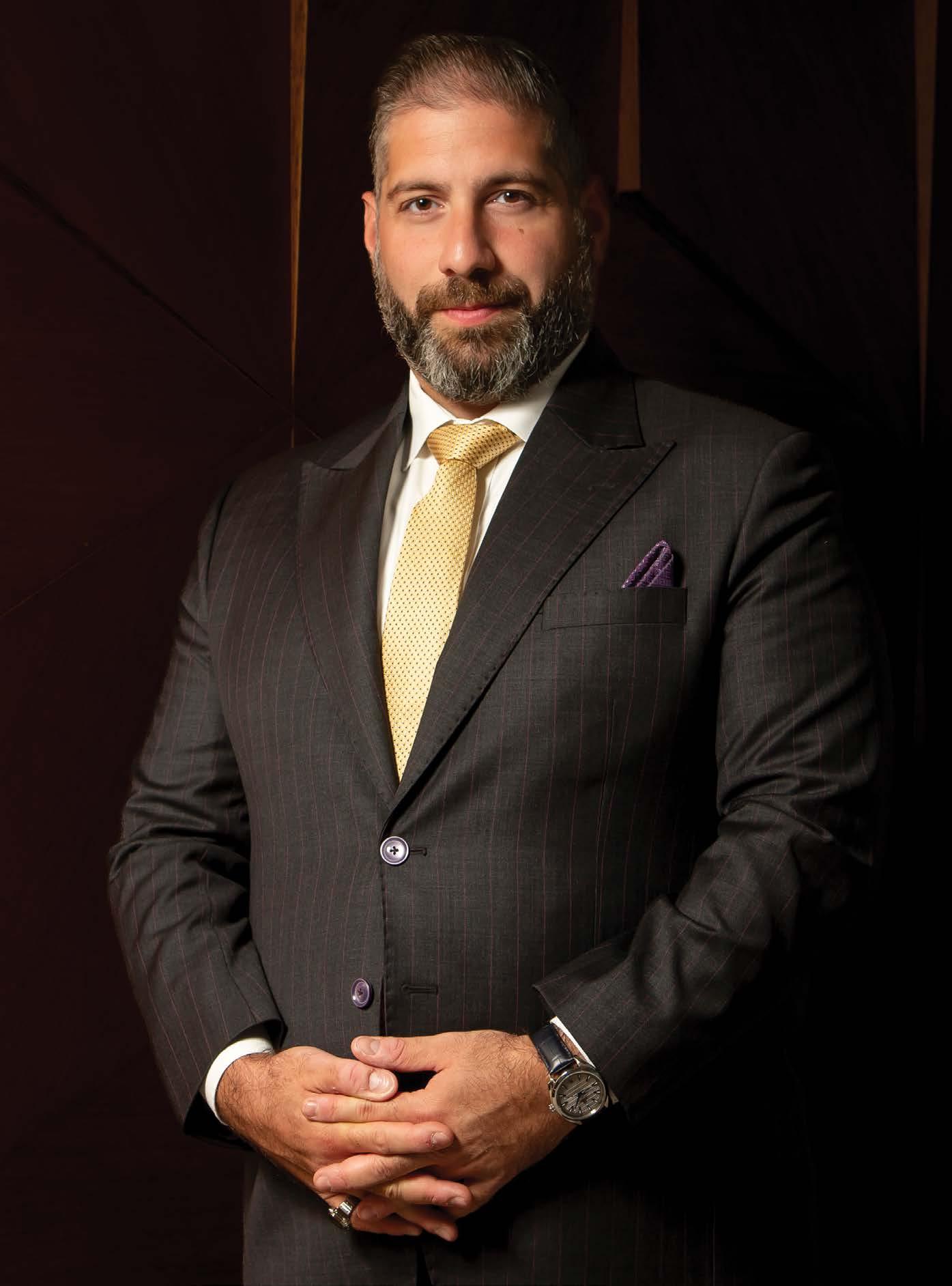
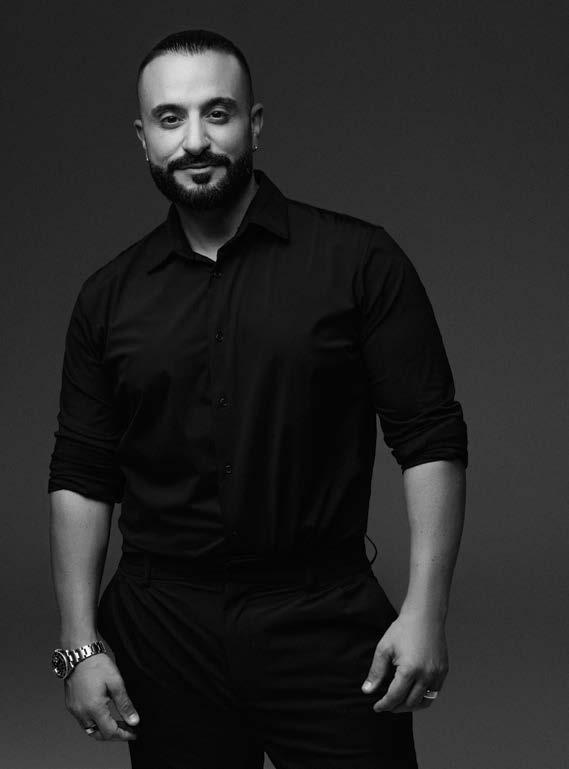
→ Kris Fade is a multi-award-winning radio presenter and host of The Kris Fade Show,
CEO Wissam Younane wissam@bncpublishing.net
MANAGING DIRECTOR Rabih Najm rabih@bncpublishing.net
ART DIRECTOR Simona El Khoury
EDITOR IN CHIEF Anil Bhoyrul anil@bncpublishing.net
MANAGING EDITOR Tamara Pupic tamara@bncpublishing.net
FEATURES EDITOR Aalia Mehreen Ahmed aalia@bncpublishing.net
DIRECTOR OF INNOVATION
Sarah Saddouk sarah@bncpublishing.net
GROUP SALES DIRECTOR – B2B GROUP Joaquim D’Costa jo@bncpublishing.net
HEAD OF PARTNERSHIPS Samir Glor Samir@bncpublishing.net
15 Building ROAR Fitness Across Borders
How SARAH LINDSAY took ROAR from London to Dubai.
30 In It For The Long Run KRIS FADE on leaving behind a lasting legacy for his children.
36 Pioneering The Next Digital Frontier
A look into NOQODI , a UAE-born digital payments platform.
44 5 Lessons from Being Part of the UAE Transformation Mapping the Gulf’s next decade.
FII9
60 Amplifai Health
Deploying AI-powered thermal imaging for early diabetic-foot screening.
62 Rebellions
Developing next-generation AI inference chips that redefine compute efficiency.
64 Dunia Innovations
Applying AI-driven materials discovery to advance clean energy and industrial chemistry.
66 Insilico Medicine
Leveraging generative AI for drug discovery and healthy longevity.
68 Noematrix Intelligence
BUSINESS DEVELOPMENT DIRECTOR Andy Soulahian andy.soulahian@bncpublishing.net
COMMERCIAL LEAD
Anna Chipala anna@bncpublishing.net
COLUMNIST Tamara Clarke
CONTRIBUTING WRITERS
Martina Di Licosa, Shailesh Dash, Nadim Zidan, and Fida Chaaban
SUBSCRIBE
Contact subscriptions@bncpublishing.net to receive Entrepreneur Middle East every issue
COMMERCIAL ENQUIRIES sales@bncpublishing.net
Access
41 Entrepreneurship in the Gulf From intent to impact.
Creating proprietary embodied AI systems with human-like learning and decision-making capabilities.



With rising challengers such as Wio Bank and global players eyeing the Emirates, the UAE cements its position as a hub for financial innovation.

Anew chapter is opening in the Emirates’ banking story as Revolut, one of the world’s largest digital financial platforms, intensifies its build-out in the UAE. The company is now in “day-zero build mode,” working to convert its in-principle approval into a full licence and targeting a public launch once regulatory clearance is complete. Its GCC leadership has confirmed that the UAE will be Revolut’s first operating market in the Middle East — a powerful signal of the country’s appeal as a global fintech hub. This development reinforces what many have long recognised: the UAE is not just welcoming innovation, it is actively defining the region’s digital banking future. And in this evolution, the biggest beneficiaries are the customers.
There is a quiet revolution unfolding across the UAE’s financial sector — one that is redefining how people think about banking and who truly benefits from innovation. As digital-first banks rise and global fintechs anchor themselves in the region, the Emirates are making clear that the future of banking is being shaped right here.
Wio Bank stands out as one of the UAE’s strongest homegrown success stories. Since its launch, Wio has quickly become a model for what modern banking in the Emirates can be: intuitive, fully digital, transparent, and built around real customer needs rather than outdated processes. Its rapid growth in customer adoption and deposits reflects a market that is young, ambitious, digitally savvy, and eager for smarter financial tools.
But Wio is part of a much wider movement. The UAE’s forward-thinking regulatory environment, world-class digital infrastructure, and appetite for innovation are drawing global players, raising the competitive bar, and accelerating the shift toward customer-centric financial services.
For consumers, this surge of activity is producing exactly the right kind of pressure: better products, clearer pricing, faster service, and banking experiences that fit seamlessly into everyday life. Whether through multicurrency accounts, intelligent savings tools, or app-only onboarding, the UAE’s new banking ecosystem places empowerment at the centre.
The rise of digital banks in the UAE is not just a financial trend — it is a reflection of the country’s broader vision. A vision that champions innovation, attracts global talent, and turns opportunity into meaningful progress for the people who live and work here.
In this new era of banking, institutions may compete — but the customer is finally, undeniably, on top.

Anil Bhoyrul Editor-in-Chief



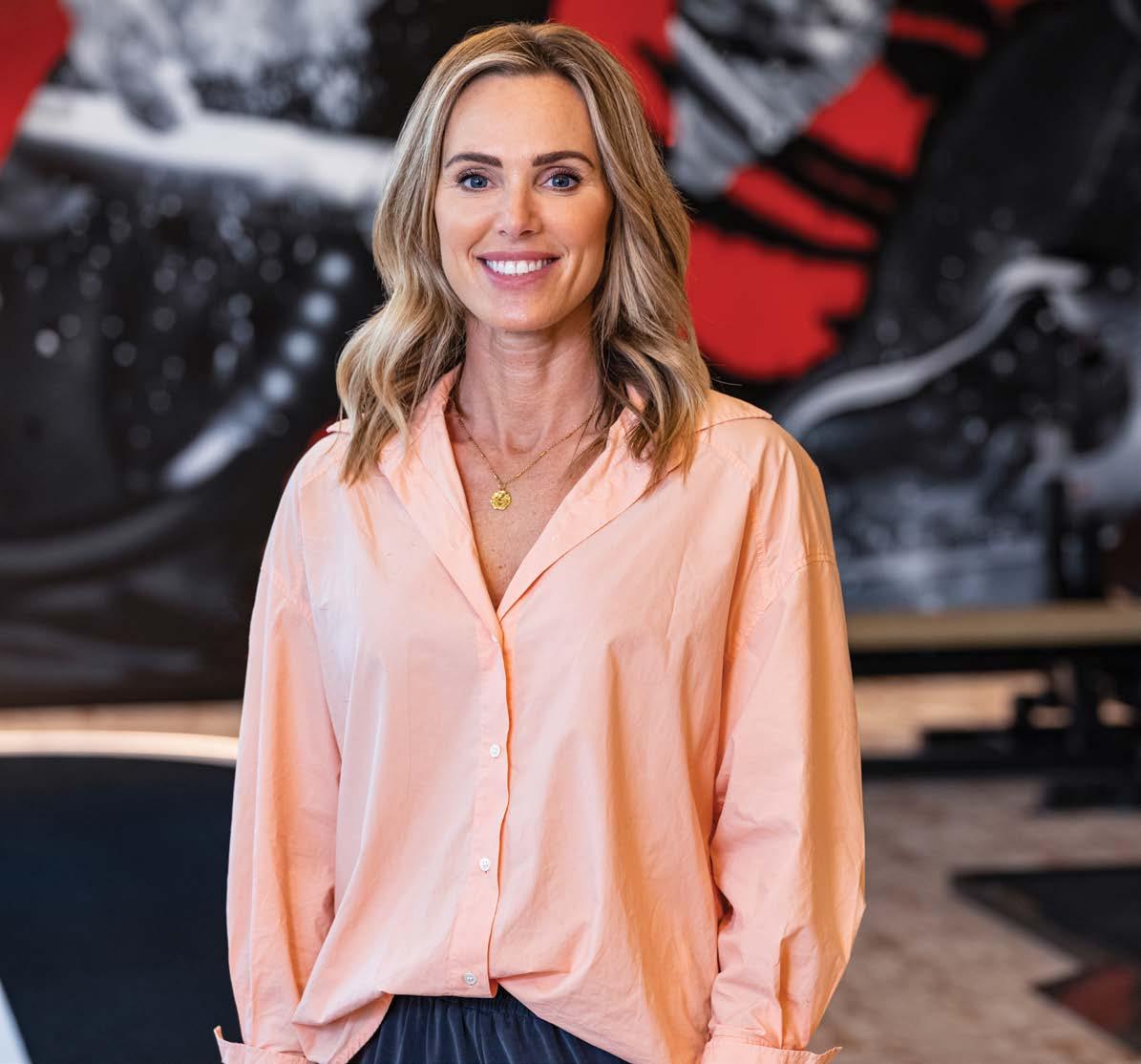
The former Olympic speed skater turned entrepreneur reflects on the mindset, momentum, and lessons behind taking ROAR Fitness from London to Dubai.
by TAMARA PUPIC
When Sarah Lindsay stepped away from a career on the ice as an Olympic speed skater, European gold medalist, world silver medalist, and ten-time British champion, she carried with her more than athletic achievements. She carried a team mindset that would later shape the culture of ROAR, a trio of personal training gyms she founded in London in 2010. Transitioning from athlete to entrepreneur, she says, was “less of a shift and more of an integration.” Lindsay explains, “I’d spent years working as part of a sports team with the mindset that if one person wins, we all win. That philosophy translated naturally into business. It’s vital that everyone understands the responsibility they carry and how powerful their energy and effort can be in shaping the atmosphere of the room.”
ROAR’s international expansion began in an unexpected chapter. During the COVID-19 pandemic, Lindsay and her team spent extended time in Dubai, a period she describes as operationally stressful but strategically clarifying. The optimism of the city, she says, helped them regain momentum. “We completely fell in love with the city,” she notes. “Dubai’s optimism and growth mindset gave us the confidence to come back stronger.” ROAR’s fourth location and the very first facility in Dubai opened in early 2023. Lindsay flew in four team members from London to help her set up the business; today, ROAR Downtown (Dubai) operates with 17, with further growth in progress. Lindsay says the decision to enter the UAE market when they did proved crucial. “We found the perfect space and location, which I doubt would still be available if we’d waited.”
Setting up the business introduced new realities. Dubai’s regulatory environment allowed ROAR to move quickly, but the process came with higher-than-expected costs and several unanticipated fees. “Setting up in Dubai was quicker but definitely more expensive,” she recalls. “My advice is to plan a financial cushion for those surprises.” What eased the transition, however, was the openness of the business community. “There’s always a way here.

THE TRAFFIC [IN DUBAI] SURPRISED ME—AND HOW LITTLE PEOPLE ARE WILLING TO TRAVEL. IN LONDON, CLIENTS MIGHT CROSS THE CITY FOR THEIR TRANSFORMATION. IN DUBAI, PEOPLE WANT SOMETHING NEARBY.”
People are willing to help, so I asked for a lot of advice early on—and that made all the difference.”
While ROAR’s values remain consistent across every location, Lindsay observed differences in how teams are built and how clients behave. In London, most trainers come through recommendations because ROAR has an established network; in Dubai, the team had to start from scratch, meeting more people and conducting more interviews. Client habits also differ. “The traffic [in Dubai] surprised me—and how little people are
willing to travel. I’m half joking, but convenience really is king here.” she says. “In London, clients might cross the city for their transformation. In Dubai, people want something nearby.” That preference, however, has created stronger long-term retention and reduced the need for frequent marketing. Plus, Lindsay says Dubai’s strong understanding of and commitment to strength training has aligned naturally with ROAR’s methodology, making the brand’s transition into the market straightforward.
As a personal trainer and nutrition coach, Lindsay has an
extensive client roster that includes Ellie Goulding, Nick Grimshaw, Mel B, Pixie Lott, Christine Lampard, Professor Green, and Piers Morgan, among many others. For clients who cannot access a ROAR facility in person but who want ROAR’s structured training, she is preparing to launch Sarah Lindsay Coaching. “It will offer one-to-one coaching, nutrition support, and regular check-ins, fully overseen by me,” she says. “I’m incredibly excited to help more people achieve life-changing results, wherever they are in the world.”
For entrepreneurs considering
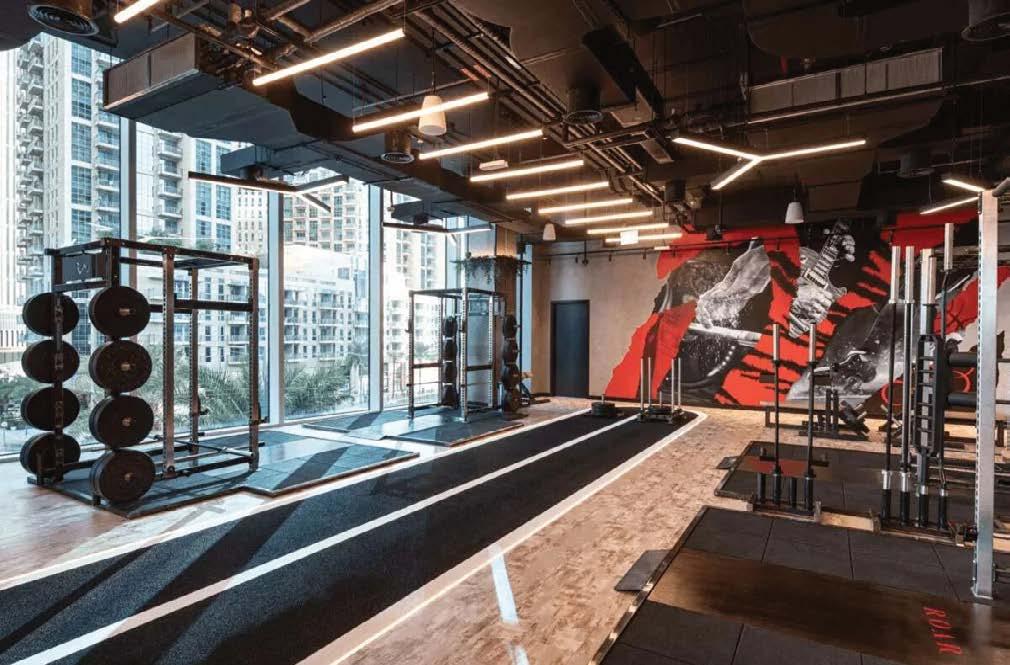
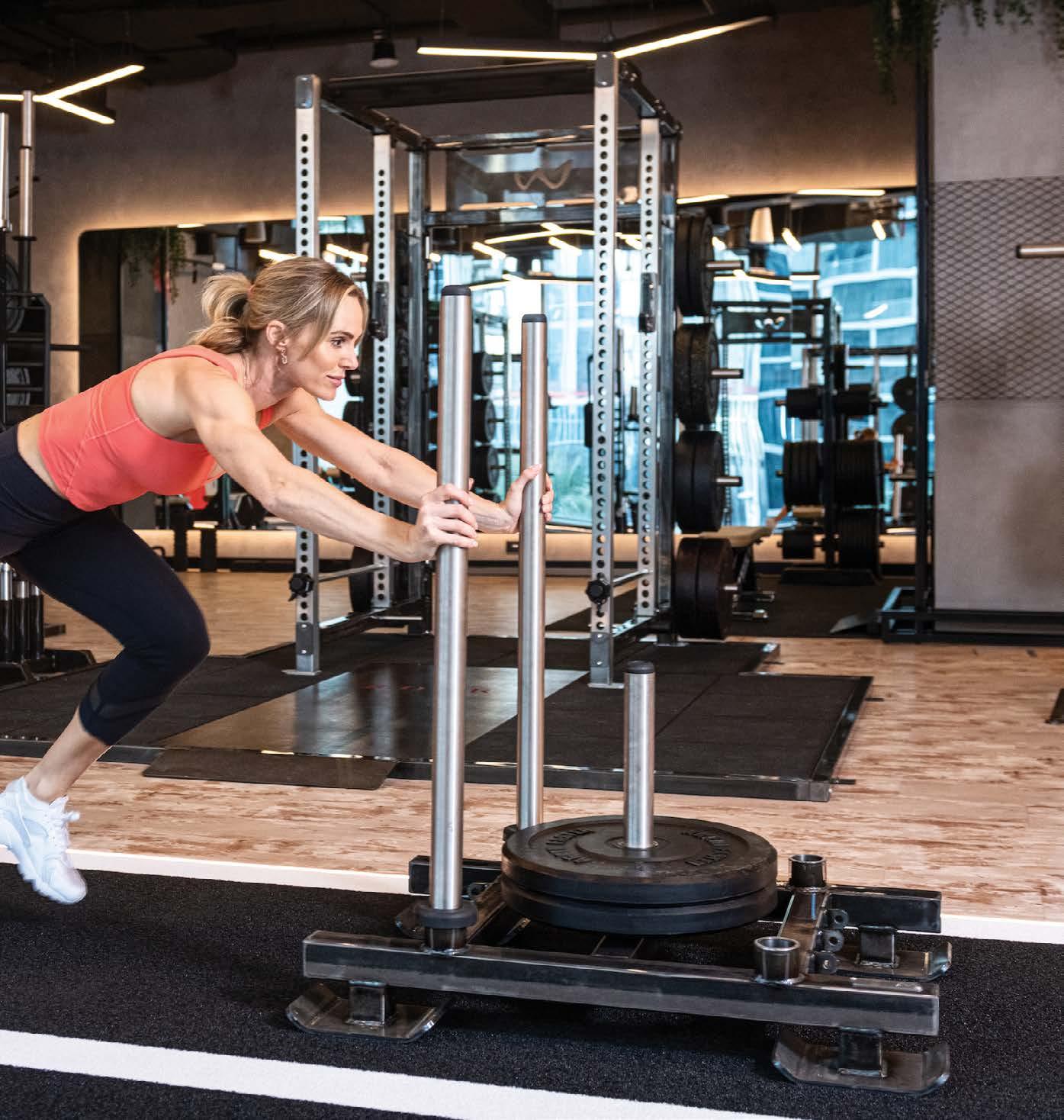
→ Lindsay opened ROAR's very first facility in Dubai in early 2023- ROAR Downtown.

“
SPEND TIME HERE, IMMERSE YOURSELF, AND NETWORK CONSTANTLY. DUBAI IS SMALL AND CONNECTED— WORD TRAVELS FAST. IT’S A FANTASTIC PLACE TO BUILD A BRAND, BUT YOU HAVE TO SHOW UP AND ENGAGE.”
expansion into the UAE—especially women leading their own ventures— Lindsay offers direct guidance.
“Speak to as many business owners as possible and gather advice,” she says. “Outsource your setup to professionals who understand the system. Small mistakes can be costly and time-consuming.” Most importantly, she stresses visibility and engagement. “Spend time here, immerse yourself, and network constantly. Dubai is small and connected—word travels fast. It’s a fantastic place to build a brand, but you have to show up and engage.”

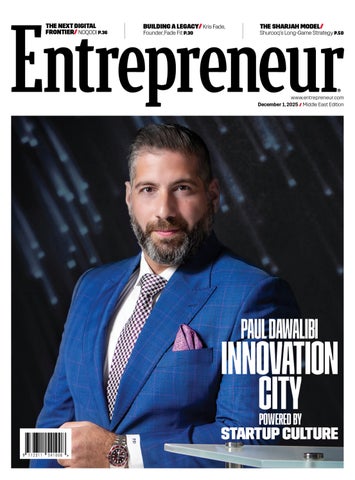
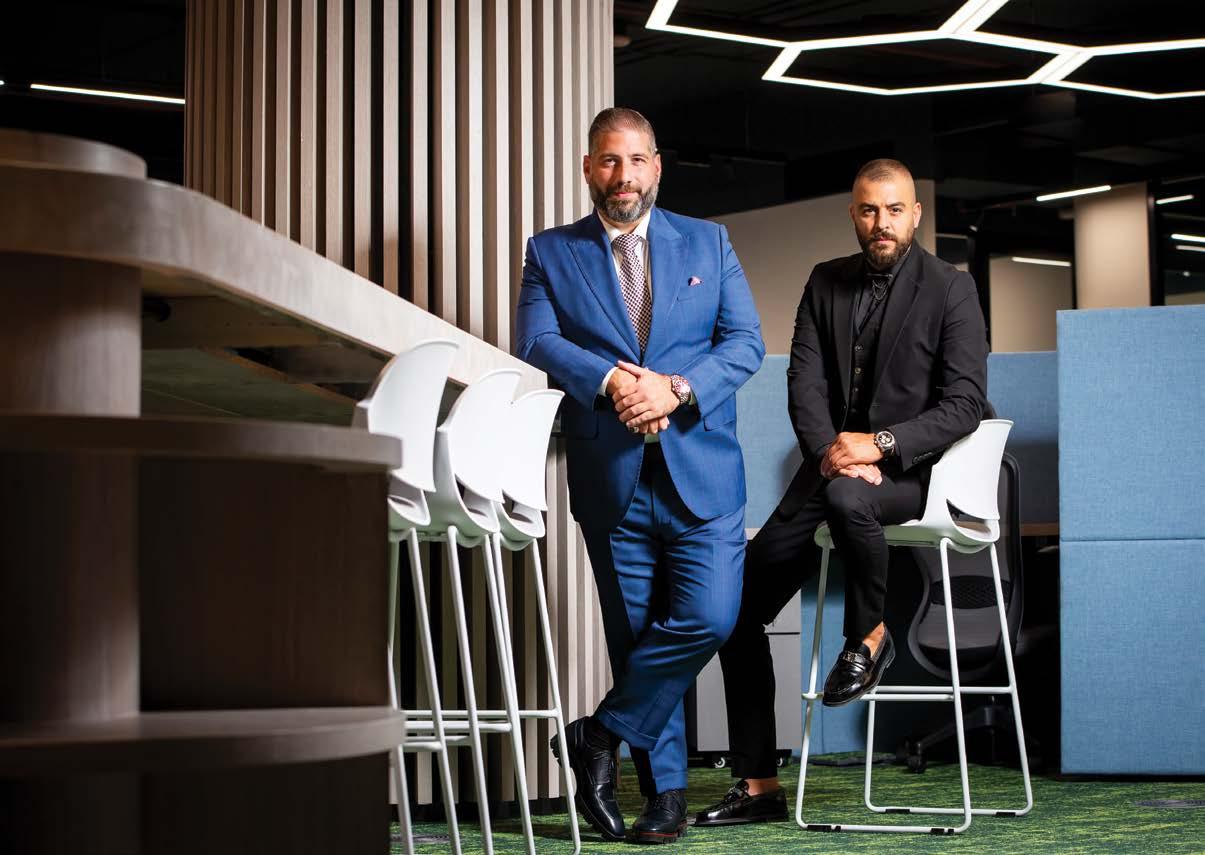
Just three months since the official launch of Innovation City, the Ras Al Khaimah-based technology freezone is setting benchmarks that offer a new perspective on what it means to foster founder-centric innovation.
by AALIA MEHREEN AHMED
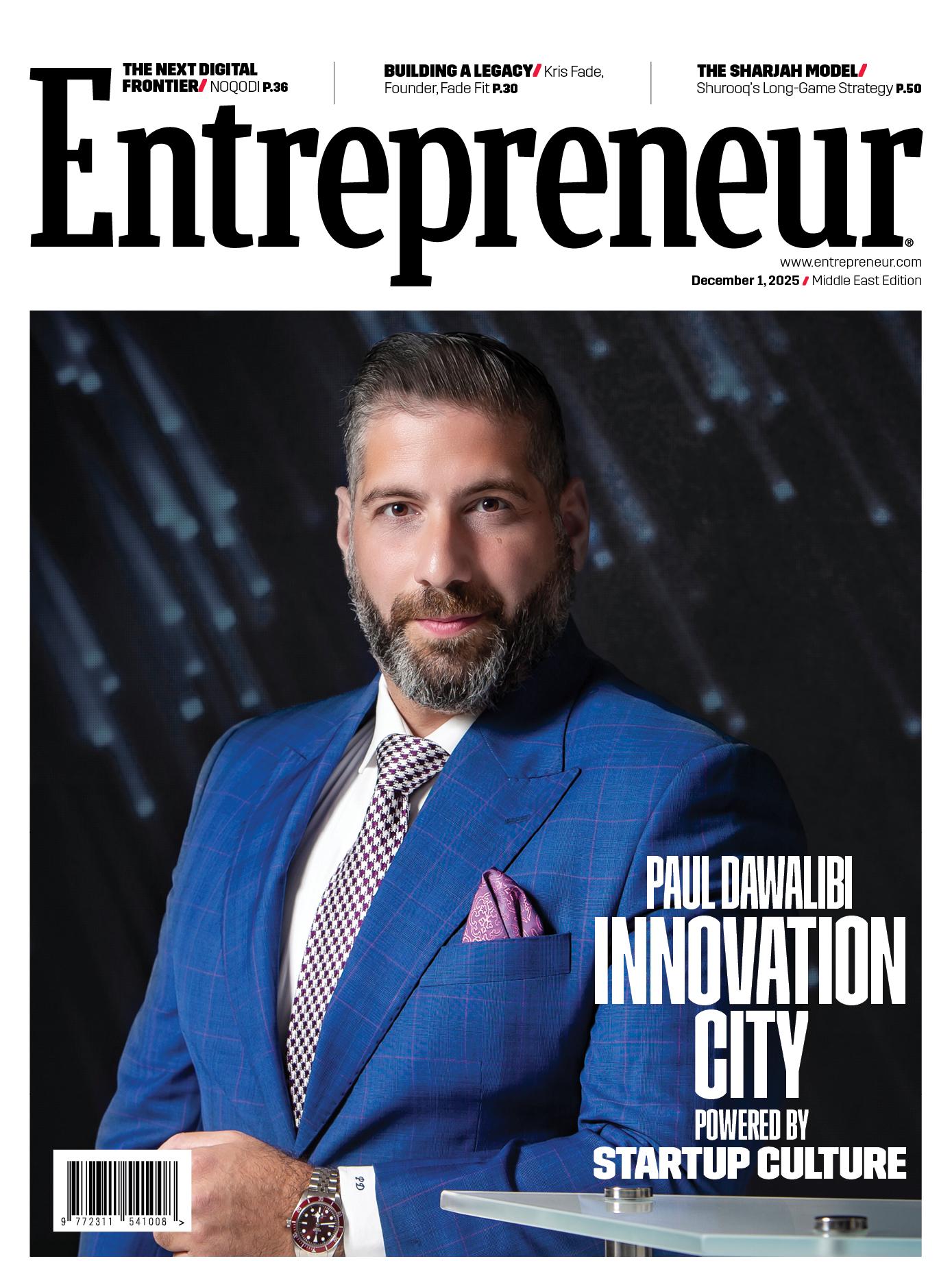
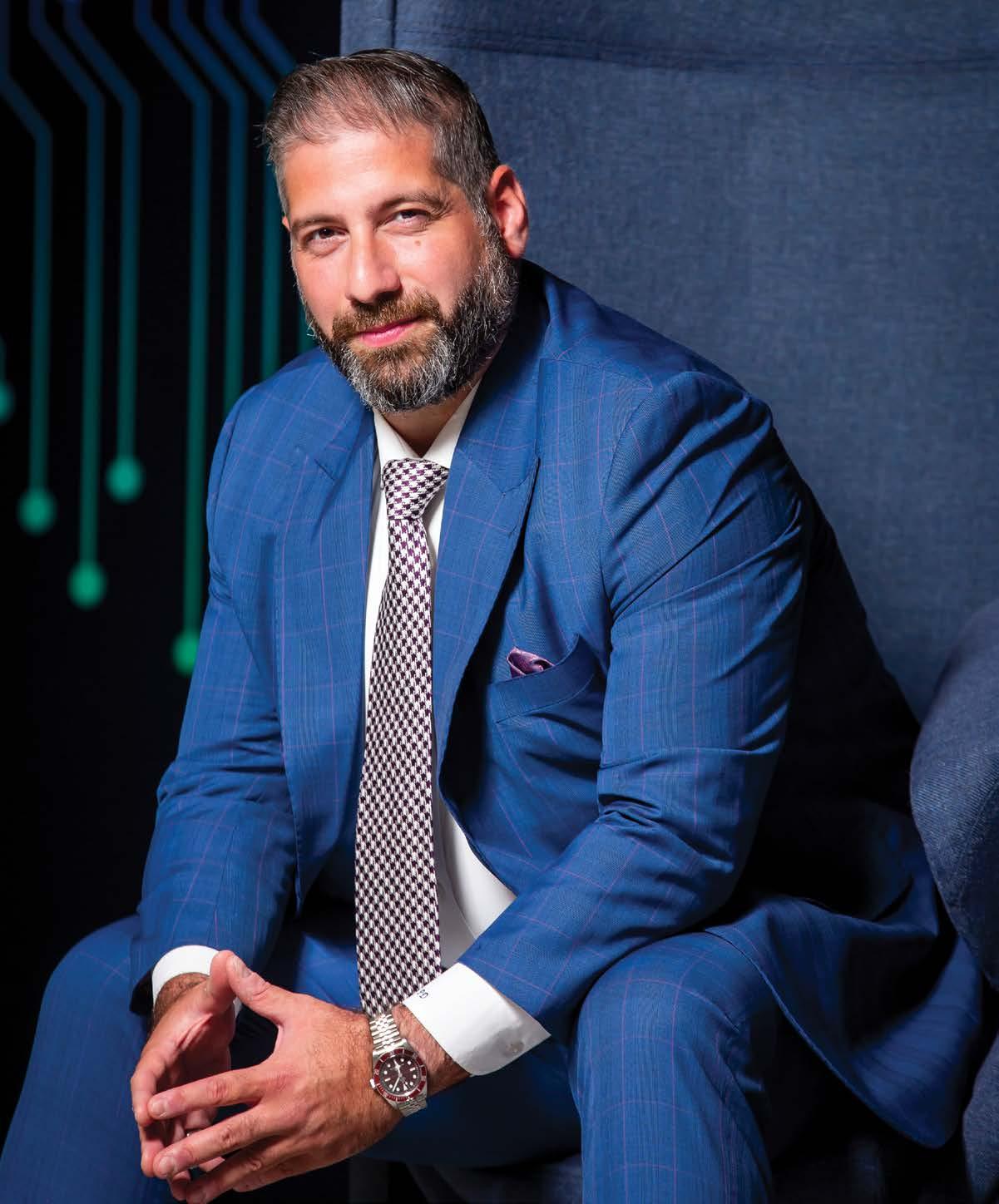
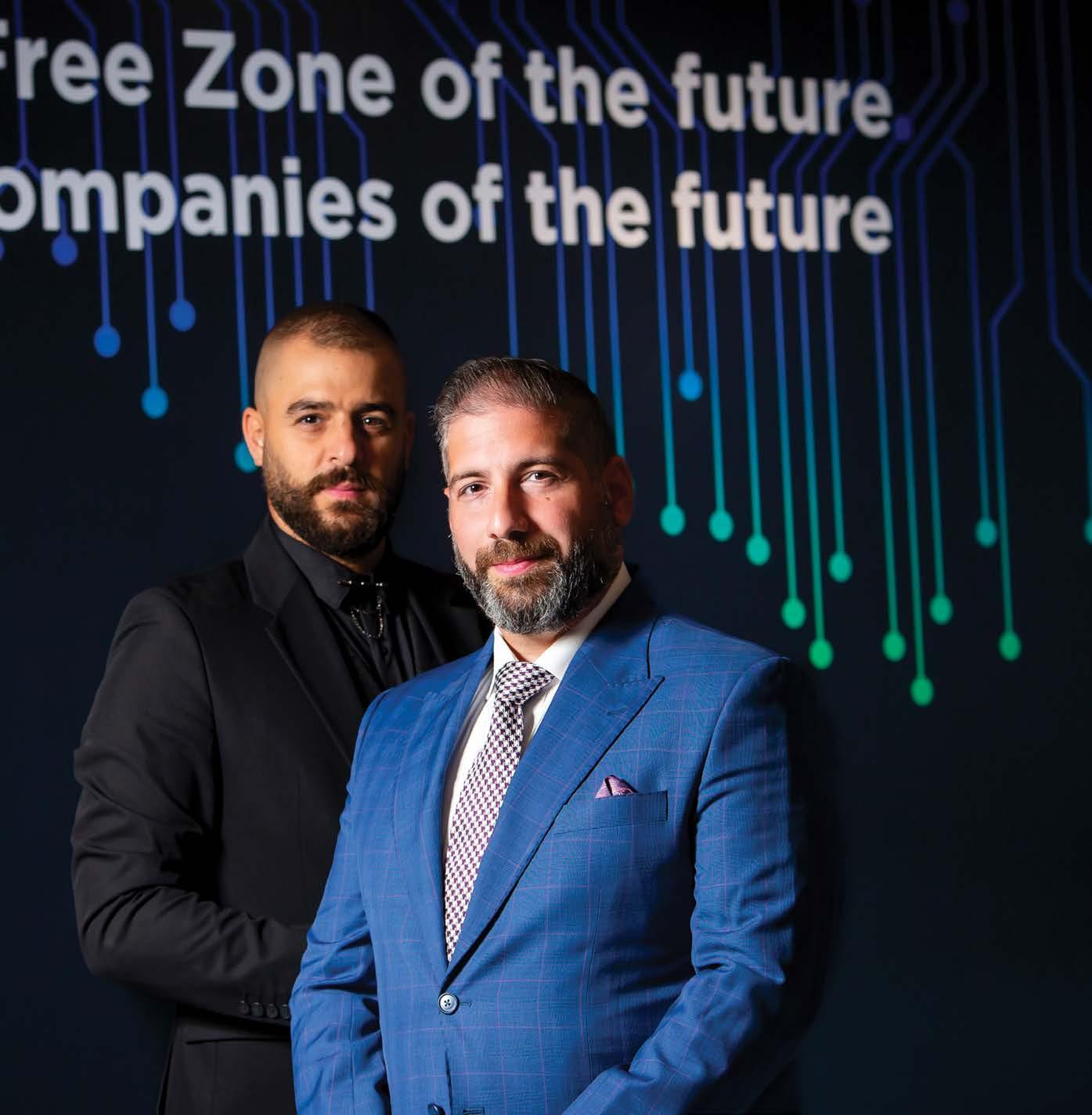
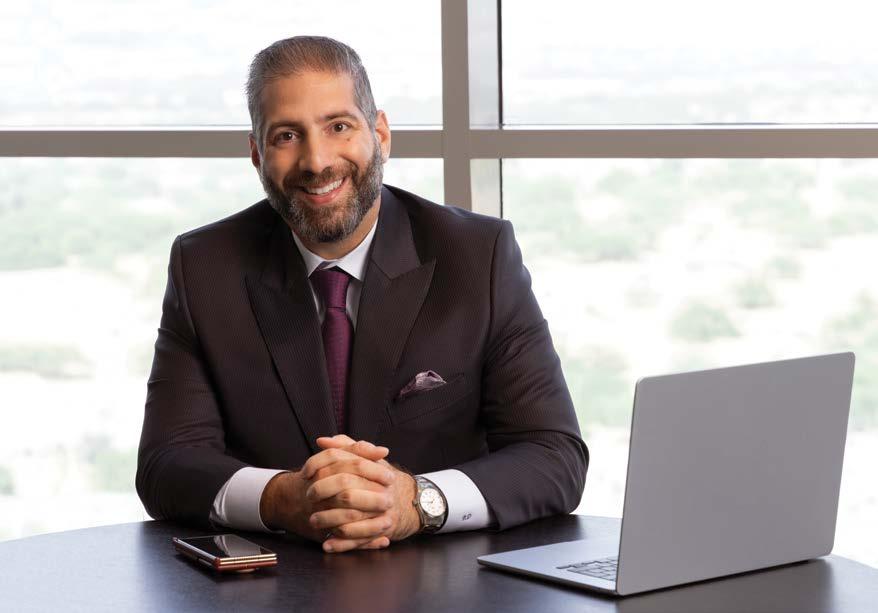
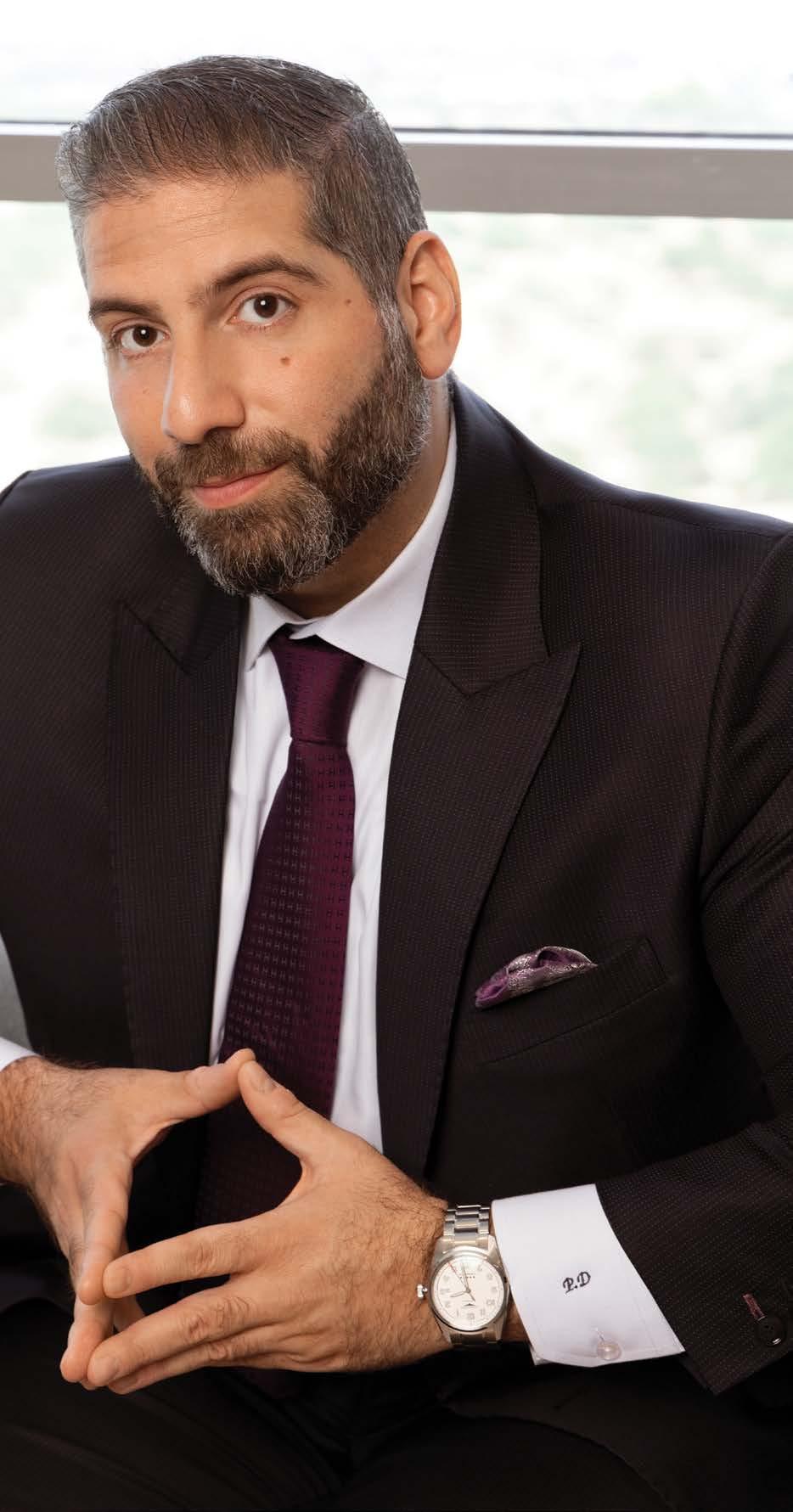
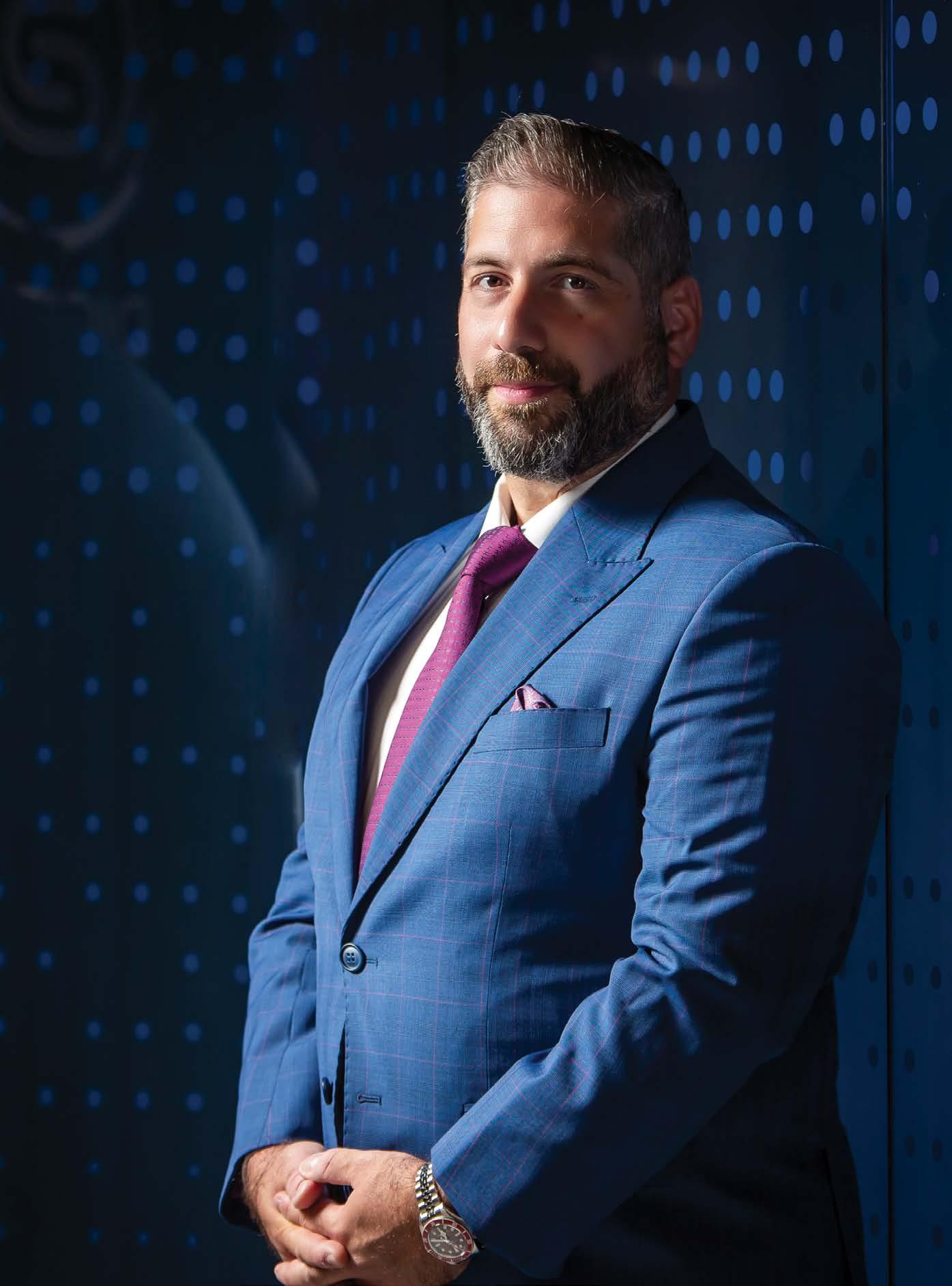
In a nation bustling with pioneering startup ideas and future-oriented founders, Innovation City in Ras Al Khaimah carved a unique spot for itself in history when, in October 2025, it announced its ambition to be the world’s first free zone fully powered by artificial intelligence (AI). Built as an innovation and technology-focused initiative, Innovation City aims to cater to, and create, the next generation of modern industries. Currently, it operates across five main verticals: Web3, AI, gaming/iGaming, robotics, and healthtech. As such, Paul Dawalibi, CEO of Innovation City, notes
that the free zone’s singular role is to be the nexus between the idea makers and their futuristic visions. “Innovation City exists to solve one problem: How do we remove the friction between a founder and their moonshot?” he declares. “When we looked at the landscape, we realized something fundamental: founders today don’t just need a place to register a company—they need an ecosystem engineered for breakthrough ideas. The UAE is filled with free zones, but none were built from the ground up for the future—for industries that move at the speed of software, evolve through decentralization, and depend on relentless experimentation.” }}
Innovation City will always feel like a startup — fast, agile, relentless. A platform that moves at the speed of its founders and bends itself to their ambitions. That’s why we say, “You Belong.” Because we’re not just creating a place to do business; we’re creating a home for people who dare to build the impossible.”
The dichotomy of keeping up with industry pace versus incessant research and development (R&D) requirements is a particularly acute observation raised by Dawalibi. Take the case of the tech giants like Amazon, Alphabet, Meta, Apple, and Microsoft– in 2024, it was reported across multiple studies that they collectively spent a whopping US$200 billion in R&D alone within one fiscal year. The reasoning behind such massive spending, of course, goes back to the need for innovation, and the proof is in the pudding: a 2025 report by content aggregation and market-research platform Gitnux showed that, globally, 71% of consumers are willing to pay more for products and services from innovative companies. The same report also shows that 65% of global innovation leaders are investing in AI to enhance their R&D processes. For tech startups that are just starting out, Innovation City has emerged as the perfect launchpad in this regard. “Web3, AI, gaming/iGaming, robotics, and healthtech share a common DNA: they are exponential technologies, they blur the lines between digital and physical, they require regulatory clarity and rapid iteration, and they attract the kinds
of people who wake up every day wanting to change the world,” Dawalibi adds.
What Innovation City thus offers founders is the freedom of choice, says Dawalibi. “They get freedom to build, to innovate, to test, to break things, to start again—and more tangibly, they get an ecosystem designed with intention: a foundercentric offering and community built for emerging tech, not retrofitted for it; a concierge-style licensing experience where we say ‘yes’ more often than ‘no’; a community of frontier builders—a tribe of people who think big, move fast, and are allergic to bureaucracy; a gateway to Ras Al Khaimah’s broader innovation agenda, including matchmaking and soft-landing programs; and a home base in Ras Al Khaimah, the fastest-growing emirate in the UAE, which is one of the safest, fastestgrowing countries in the world.”
But the one, “rare” trait that Dawalibi believes sets Innovation City apart from its competitors is that it embodies the entrepreneurial spirit that defines startups. “And that is because it is one itself,” he says. “Innovation City will always feel like a startup — fast, agile,

relentless. A platform that moves at the speed of its founders and bends itself to their ambitions. That’s why we say, “You Belong.” Because we’re not just creating a place to do business; we’re creating a home for people who dare to build the impossible. A place where founders don’t just fit in — they finally feel like they belong.”
It is this founder-centric (and founder-like!) approach that Innovation City has used to define its AI-powered regulatory framework. “The UAE is unique—no other country has multiple world-class regulatory bodies pushing the limits of innovation simultaneously; but that
landscape can also be intimidating for founders,” Dawalibi says. “Our approach was simple: Innovation City is not another financial regulator. Innovation City is the launchpad that feeds the UAE’s innovation superstructure. We built a model that sits earlier in the
founder journey: experimentation, product development, building and testing, non-regulated activities, and incubation before formal licensing with regulators like Virtual Assets Regulatory Authority (VARA), Financial Services Regulatory Authority (FSRA), and Dubai Financial Services Authority (DFSA). This means founders can start sooner, build faster, and validate before stepping into heavier regulatory environments. When I say we’re “not competing, but completing,” I mean this: The UAE doesn’t need }}
IN FIVE YEARS, I WANT PEOPLE TO SAY: ‘THE WORLD’S MOST IMPORTANT TECHNOLOGIES AND TECHNOLOGY COMPANIES WERE BORN OR GROWN IN RAS AL KHAIMAH.’”
another competitor. It needs an orchestrator— a single innovation engine that ties all the pieces together and becomes the foundation for greatness. Founders can come to us, build with speed, and then scale through the UAE’s broader regulatory architecture. We are the gateway, not the gatekeeper.”
In thus perfecting its role as the often elusive missing piece in solving the entrepreneurial puzzle, Innovation City has already seen tangible results to mark its success. “We are already the largest community of web3/crypto/blockchain companies among any free zone in the UAE,” Dawalibi shares. “We’re onboarding companies across all five pillars, and our growth has validated the thesis: the world was waiting for a place like this.”
“But numbers alone don’t define success,” Dawalibi adds almost immediately. “Success for us means thousands of companies building the next generation of Web3, AI, gaming, robotics, and healthtech products, thousands of high-skilled jobs created in Ras Al Khaimah, billions in enterprise value generated in the emirate, and—most importantly—a reputation as the UAE’s most fearless hub for innovators and builders. In five years, I want people to say: “The world’s most important technologies and technology companies were born or grown in Ras Al Khaimah.”
At this point, Dawalibi clears the air about something that may have crossed the minds of some: why stick to just five verticals? “We didn’t choose these five

verticals randomly; they chose us,” he quips. “These are the industries redefining how humanity works, plays, heals, and builds. The UAE deserves a dedicated home for them—a place where dreamers don’t feel like outliers but like pioneers on the frontier. That’s what Innovation City is. These five verticals are only the launch pad. What we are building here is a free zone that becomes the tip of the innovation spear for Ras Al Khaimah and the entire UAE. Innovation City is designed to live on the frontier — to always be where the world is going, not where it has been. We’re not pretending we can predict the future. Instead, we’re doing something far more powerful: we’re creating the most future-ready, futurefocused free zone on the planet. A place built to adapt, evolve, and reinvent itself as fast as human imagination demands.”
As such, Innovation City’s work across these five sectors serves as a teaser for its long-term goals. “Yes, these five verticals give us focus today — but the true ambition of Innovation City is far greater,” Dawalibi says. “We are opening our doors to anyone bold enough to build technology, to challenge convention, to create something genuinely new. Innovation City is not just a home for innovators; it is a magnet for the future itself.”
Now, while much of Innovation City’s ambition spans the larger frontier-tech landscape, Dawalibi is clear that Web3 requires its own kind of clarity and direction. “We’re entering a new chapter—not the hype cycle }}
→ Innovation City offers company registration, licensing, visas, and office space for tech-driven companies of all stages and sizes. Its targeted sectors include Web3, AI, gaming / iGaming, robotics, and healthtech.

of tokens and speculation, but the foundational era where blockchain becomes invisible infrastructure powering trust, ownership, and digital identity,” he says. “Globally, the shift is toward utility. In the UAE and Ras Al Khaimah, the shift is toward leadership. This region isn’t following trends—it’s shaping them, and to accelerate adoption we need education on two levels: retail users who want Web3 to feel like magic—simple, seamless, delightful, with technology disappearing behind the experience—and institutions that need to understand that blockchain isn’t a threat, it’s an upgrade. As for protecting the constructive side of this movement: sunlight is the best disinfectant. Transparency, governance, and thoughtful regulation create an environment where bad actors can’t hide and great ideas can thrive. This is where Innovation City excels—and why it’s becoming the global home for Web3.”
As Dawalibi and his team at Innovation City hope to carry on the momentum they’ve achieved in 2025 into the new year, the CEO reiterates that their barometer of success will always go beyond statistics. “Success is not a building, a license, or a headline– it is when founders around the world say, “If you’re serious about technology, you go to Innovation City”; it is when global investors treat Ras Al Khaimah and Innovation City as a deal-flow engine; or the next unicorn is born from our ecosystem; and when Innovation City is recognized as one of the world capitals of future industries,” he says.
And to get to that goal, Dawalibi has a simple piece of advice to the various stakeholders that make up the entrepreneurial ecosystem. “Whether you are part of the government, a founder, an investor, or a regulator—it would be this: Protect the startup spirit,” he says. “It is the single most precious resource in innovation. If we stay bold, stay curious, and stay committed to building the future—not managing the past—then Innovation City won’t just succeed. It will redefine what a free zone can be!”
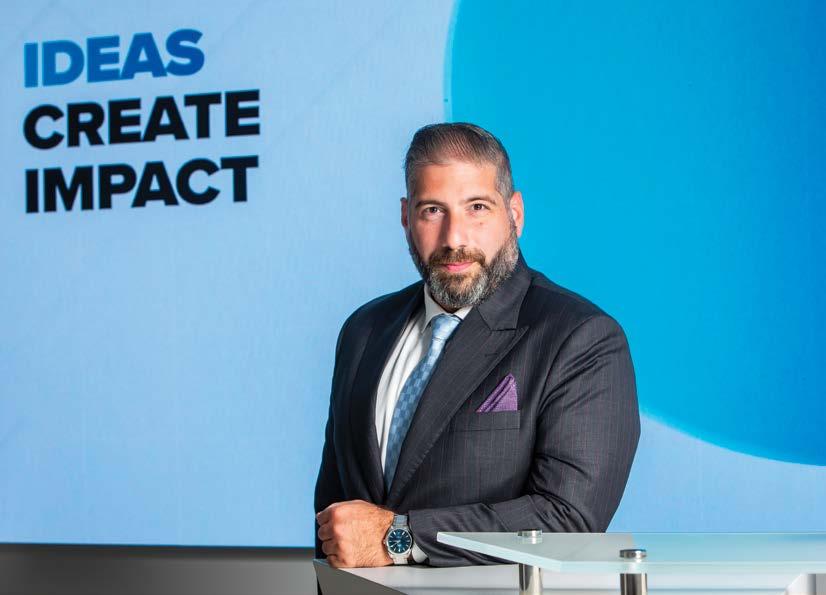
Kris Fade had already cemented his spot in the UAE as a beloved radio host and media personality long before he maneuvered his way into wellness entrepreneurship by launching Fade Fit. But with the healthy snacks line, Fade gets to do something that has long underscored his various business endeavors: to leave behind a lasting legacy for his children. by
AALIA MEHREEN AHMED
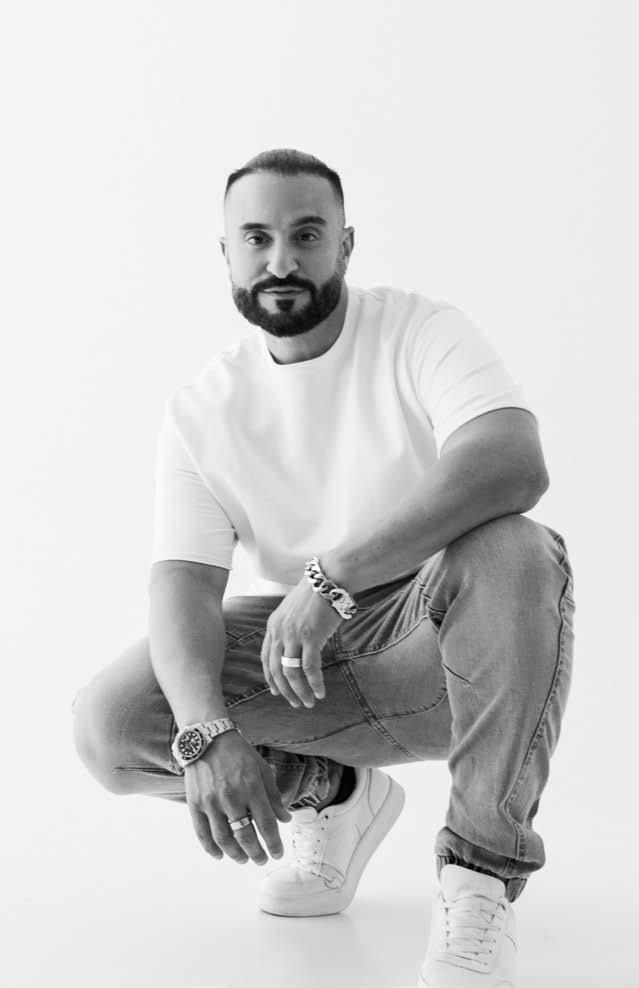
↓ Kris Fade is a multi-award-winning radio presenter and host of The Kris Fade Show, the UAE’s most listened-to English breakfast radio show. He is also the founder of Fade Fit, one of the UAE’s fastest-growing family-owned health and wellness brands.
For the past 16 years, rain or shine, a breakfast radio show running from 6–10am UAE time has been a constant and reliable companion to many (currently over one million daily listeners) in the country and beyond. Named eponymously after the star of this feature, The Kris Fade Show —hosted by Kris Fade, Priti Malik and Big Rossi— began in 2009 and airs live on 104.4 Virgin Radio Dubai as well as in a delayed broadcast format on the KIIS Network in Australia. For the Lebanese-Australian Fade, the show’s everincreasing popularity is a testament to the rigorous rise of Dubai as a brand in and of itself. “The Kris Fade Show has evolved over the years,” he says. “I’ve been doing it for 16 years now, and I get to do it with my best friends. We laugh together, we have serious moments together, and we share our lives with one another and with our audience. Over the years, it just keeps getting bigger and better. I’m in year 16 now, and I don’t think we’ve ever had as many listeners as we have this year. The commercial side of the show and the station is at its peak. It’s the number one radio station in the country, but I truly believe it’s one of the top—maybe even top five—radio stations globally. And that’s not just coming from me personally. I look at the numbers, the stats, the inventory, the talent we have, and the success we’ve achieved as a station. It’s pretty incredible. A lot of that has to do with the people we have, but it’s also because of the country and the city itself. Dubai is thriving, the UAE is thriving, and our show is thriving. I love it. I absolutely love what I get to do every day!”
In the 16 years since that momentous decision to host the show, Fade has interviewed and hosted events with multiple A-list celebrities from Hollywood and Bollywood, been a cast member for two seasons of the globally successful Netflix reality show Dubai Bling with his wife Brianna Fade, and also clinched a number of industry awards for his media work. Having secured an enjoyable career path that, in his own words “pays well”, Fade could’ve easily chosen the comfort of familiarity and carried on with radio and his other media appearances. But in 2018 he was hit with a realization that ultimately led to the launch of Fade Fit, his health and wellness brand that offers a range of clean, affordable, and family-focused nutrition products. “When I first started this, I really did think to myself, ‘I want to build something that my children can take over if they want,’” Fade, a father of three —daughters Noushie and Kikki from his previous marriage, and son Kruz with Brianna— says. “And that’s where it all kind of started. It’s pretty unbelievable to see where it started and where we are now. It’s a 100% family business—100% owned by my family—and it began as an idea. It was truly just an idea that came from me eating healthier but not being able to find snacks on the shelves that I felt were healthy enough for my children. And if they were, they came from overseas. That was the gap in the market where I thought, I’m

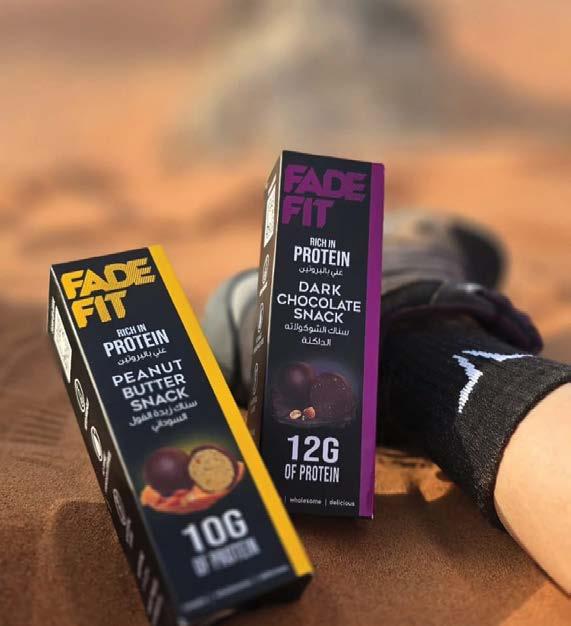
going to create healthier snacks for kids. We started doing that, and we had great support from local retailers. But ultimately for me, it was more about
creating a legacy that I want to leave for my children.”
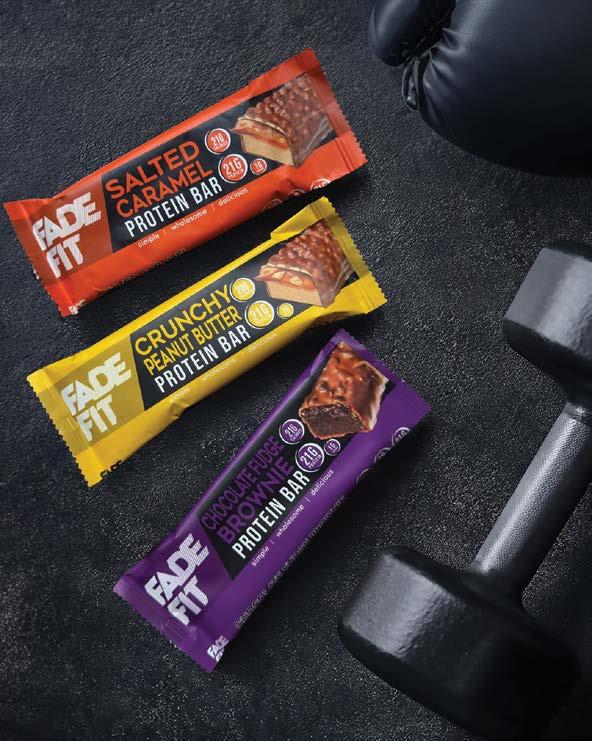
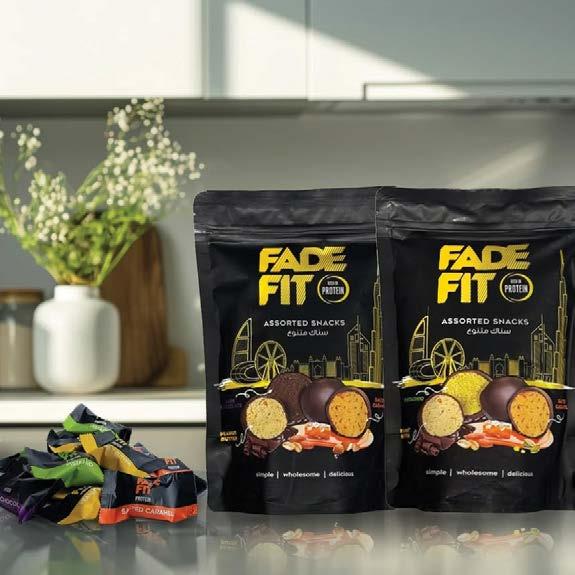
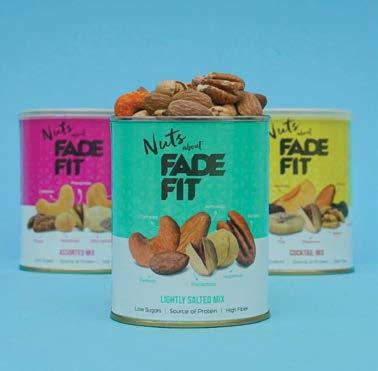
Officially launched in 2019 in the UAE, Fade Fit today offers protein bars, protein
balls, protein puffs, energy snacks, nuts, kids snacks, vitamins, as well as merchandise. The products are available across major regional retailers such as Carrefour, Spinneys, and Waitrose; F&B outlets like Subway and Starbucks; and online platforms including Amazon and Talabat. Having positioned itself strongly across the UAE and the wider GCC region, Fade Fit has also embarked on a steady global expansion journey.
“From that initial idea [of creating healthy kids’ snacks], we began developing adult snacks and protein bars, and we now have around 20 Stock Keeping Units (SKUs) on shelves,” Fade adds. “We’ve become one of the fastestgrowing snack companies in the UAE— and in some retailers, we are the number one selling local brand on the shelves, which is brilliant. We’re also in every Starbucks across the UAE, Saudi, and Qatar, and for us, as a family business, that was a huge opportunity. I approached the Alshaya Group [the firm that operates Starbucks across MENAT] years ago—they liked the product, and they gave me the opportunity.
There was no reason to give a guy who was only two or three years into building a business the chance to be in one of the largest retail chains in the world. But they trusted me, and now we have that huge partnership. We’re also in Subway and Costa Coffee which, again, are household names. Our kids’ snacks
have Paw Patrol and LOL Surprise —absolute global brands— on our products. I believe such collaborations are really important. We want to be around people; we want them to see us and know who we are. I don’t want this to just be a snack brand; I want people to “feel” the brand, and for them to meet us in person and say, “Oh, there’s Kris.” Human connection is so important!”
But as much as Fade Fit has been a letter of love and promise to his children, the brand has also been a direct reflection of the founder’s own journey with health and
IT’S VERY DIFFICULT TO RUN A SUCCESSFUL BUSINESS OR BUILD A BRAND WHILE SAYING, “THIS IS MY PERSONAL LIFE AND THAT’S MY BUSINESS.” IT’S ALL ONE. SOME PEOPLE DON’T AGREE WITH THAT, AND SOME PEOPLE CAN’T SUSTAIN IT, BUT I FEEL LIKE I WORK WELL BLENDING MY PERSONAL LIFE, MY FAMILY, AND MY BUSINESS SIDE.” “

fitness— an aspect of his life he has been publicly open about over the years. “It would have been around 12 years ago when I weighed 128 kilos– I was obese, smoking, depressed, and anxious…and I knew something needed to change,” Fade recalls. “I had seen doctors, psychiatrists, and psychologists who wanted
to prescribe medication to calm my anxiety and depression, and none of it worked. I tried, but I just felt like those solutions weren’t for me. That’s when I started training and going to the gym, and it made me feel remarkably better. I realized that it felt like taking a pill—it was like medicine. So I began
doing more physical activity, getting healthier, and eating cleaner, because once I started training more, I naturally wanted to eat better. That’s when my life transitioned. I lost a lot of weight, gained muscle, and started looking after myself. I became more conscious of the food I was
putting into my body, and it was a huge turning point for me.”
As is typical of anyone who dedicates themselves to a healthier lifestyle, Fade soon learnt the importance of discipline– a trait that later aided him in leading the business as well.
“Consistency, especially in fitness, is one of the hardest things you can do but as I get older, I feel like I’m getting better at it—better at juggling everything and finding balance,” he says.
“I’ve realized it’s okay to have that burger once in a while, it’s okay to enjoy life; you don’t have to be extreme. But if you can stay committed long enough, you end up winning the game. Consistency is something I believe is essential if you want to succeed. There are so many people and businesses that do something really well, but only for a short period of time—they put their focus in, and then they lose it. You’ve got to be consistent. It’s an everyday thing. In my personal life, I feel like I have that consistency. I’ve woken up at 4:20 every morning for the last decade or so. It’s not easy, but I do it. I’m consistent with the way I live my life: when I take vacations, what I eat, how I structure my routine. And in business, we’ve implemented that same mindset. I’m very consistent in everything we do.”
In thus amalgamating his hopes for his kids’ futures, his general affinity towards

people, and his own fitness goals, Fade has been able to create a business that has been able to successfully marry his personal and business lives– two aspects that he says he has no intention of separating. “If you want to be successful, you need your business and personal life to align. It’s very difficult to run a successful business or build a brand while saying, “This is my personal life and that’s my business.” It’s all one. Some people don’t agree with that, and some people can’t sustain it, but I feel like I work well blending my personal life, my family, and my business side.”
That approach, one that isn’t uncommon in many family businesses, seems to have been the right one for the Fade family so far. “Brianna, my wife, is the brand manager, so everything brand-related — the way it looks, the way it feels, and how it appears out in the market — goes through her,” Fade explains. “Even with potential collaborations, I always run them by her first and ask, “What do you think?” We bounce ideas off each other a lot. Product tasting is 100% a family thing as well. We bring products home, everyone tastes them, and we get everyone’s opinion — especially the kids. Now that the girls [Noushie and Kikki] are in their teen years, they have their own tastes, and I know that if something pops with teenagers, it’s going to pop with everyone. So we make sure they’re aligned with it. The girls always have their
say. Even the youngest one [Kruz]— he’s obsessed with our Fade Fit kids’ snacks. He can say “Fade Fit,” he goes to the cupboard and grabs them. I love that. We cut them into little pieces and he eats them, and I’m like, that’s fantastic. So anything new, everyone is involved!”
But while Fade certainly hopes that he can hand over the business to his children sometime in the later future, for now he has concerned himself with ensuring they learn the ethics of the craft first. “I listened to my daughters in another interview where I wasn’t present, and they were asked, “What do you remember about your dad?” They both answered at the same time, “He’s one of the hardest workers we know.” That was cool,” he says. “I want them to know that. I want them to understand that hard work is essential if you want to succeed, and that to be in the top 1% in whatever you choose to do, you’ve got to be the hardest worker in the room. They already know that, and I encourage them to carry that mindset—whether it’s at school, in sports, or at home.”
In addition to his and his family’s inputs, Fade is quick to note the contributions of the extended Fade Fit team as well. “People assume we have a team of hundreds, but we don’t– we’re a really small team,” he reveals. “When I say it’s a family business, it truly is. But without the people around }}
me helping us expand and grow, I wouldn’t be able to do this on my own. I have a great team around me, and yes, I put pressure on them. I’m all about pace. I think you’ve got to move quickly. When you take too long,
In explaining his leadership approach and how the team at Fade Fit operates, Fade unintentionally sheds light on how a new generation of business leaders approach communication and how the tenets of its effectiveness
your competitors start to approach you, or they beat you to something, or an idea takes so long to hit the shelves that it’s no longer relevant. So I’m very much about speed and execution. If you want to be a part of our brand, you’ve got to work all the time. Now, when I say ‘all the time,’ I don’t mean three or four days straight without stopping, but when it’s time to work, you work!”
render in today’s ecosystem. “I posted about this on LinkedIn the other day — I’m always on WhatsApp. I don’t use email. I believe using email is for 2005,” Fade says. “WhatsApp, or any instant platform, is where you need to be. You make decisions quicker. I’ve closed massive deals — million-dollar deals — through WhatsApp conversations back and forth. Yes, formalities may
eventually go to email to finalize, but everything is done on WhatsApp. So you’ve got to be ready to work, be ready to be on WhatsApp, and respond. I know I’m pretty hard to work for. Because I don’t really want to hear, “Oh, I don’t work weekends,” or “I finished at 5:30, I’ll reply tomorrow.” You’re not going to win doing that. I’m not going to win. And if you’re here just for a paycheck — then this isn’t the place to be. But at the same time, I want my team members to just…be cool. Come in relaxed. Enjoy what you’re doing. Don’t do it because you have to — I want there to be enjoyment in it as well!”
Now, Fade’s pace- and results-driven approach is congruent with —and even appears to be warranted in— the highly saturated market his brand operates in. According to the
US-based market research platform Grand View Research, the global healthy snacks market size was estimated at US$95.61 billion in 2023 and is projected to reach $144.64 billion by 2030, growing at a CAGR of 6.2% from 2024-2030. Another 2024 study by Global Market Insights, shows that increasing consumer awareness on health benefits, a growing food industry, changing life styles and trends, and intense competition are all key trends defining the global healthy snacks market, particularly for the 20252034 time frame.
While all of the above explain Fade’s leadership approach, there is one particular market trend that he says he’s intentionally steered clear of obsessing over. “I don’t look at my competitors,” Fade says. “I don’t focus on them. I focus
on what we’re doing — that’s all I do. Even from a radio point of view, I have no idea what’s going on with competitors. And that’s not me being egotistic; it’s me saying that I know what I need to do to be number one, and I’m going to stay focused and driven. I believe that when you start looking at what your competitors are doing, it begins to influence your decisions — you start thinking, “Maybe I shouldn’t do that because they did that,” and I don’t want that. I want to stay focused on our vision and push forward. The only area where I look at competitors is price point. I want to make sure we’re competitive when it comes to being on shelves. You’re never going to win the game if you’re selling similar snacks or similar products and one is $3 and the other is $7 — you’re never going to win that battle. So for me, it’s about putting out the best possible snacks I can.”
But in the midst of such fierce passion for his brand, Fade has also remained wildly cautious about his own capacity and how much he can financially invest in sustaining the business– a lesson he earnestly hopes for other budding entrepreneurs to keep in mind as well. “Having my personal brand definitely made things [in entrepreneurship] easier,” he says. “But when people come up to me with zero cash or zero experience saying, “Hey Kris, I’m thinking about launching a brand,” I’m always like… I don’t know if you want to do it…Because what happens is you start digging a hole thinking you’ll climb out, and suddenly you’re in debt and wondering what happened. And it’s not because your product isn’t good or you’re not good — it’s because this industry is owned by billion-dollar companies. It’s not technically a monopoly, but if you go to a supermarket and grab the top 30 snacks, they’re probably owned by three global companies. We’re a family business going up against brands that spend a million dollars a week or month on marketing. A million dollars in marketing alone? I’m lucky if I can get $10,000. So you’ve got to find creative ways to break through and get your
product into the right hands. You have to work really hard to navigate that. And honestly, if I wasn’t Kris Fade with a personal brand, I don’t think I could’ve done it the way we have.”
“WHETHER YOU WALK INTO A GROCERY STORE IN AMERICA, FRANCE, THE UK, AUSTRALIA, KUWAIT, OR DUBAI, I WANT YOU TO SEE FADE FIT ON THE SHELF AND SAY, “I LOVE FADE FIT, LET ME GRAB ONE OF THEIR SNACKS.” THAT’S WHAT I WANT TO BUILD– A LEGACY BRAND LIKE KELLOGG’S OR UNCLE TOBYS IN AUSTRALIA. AND THEN THAT LEGACY WILL BE LEFT FOR MY CHILDREN.”
Here, Fade reiterates the need for first-time founders to first secure some financial stability before stepping into the world of entrepreneurship. “People think being an entrepreneur or starting a business is glamorous because of social media but it is so hard,” he says. “It’s incredibly hard to make money. I’m not trying to put anyone off — but just be prepared. So many people say, “I have
this idea, I’m going to quit my job,” and I’m like, do not quit your job. I myself haven’t even quit radio. I do radio mainly for love of it now — and yes, I get paid well — but I wouldn’t give up everything just to do Fade Fit. I need more than that. I love doing many things. Financially, Fade Fit could sustain my life, 100%, but still — don’t quit your day job until you’re truly ready.”
Something else Fade isn’t ready to let go of is complete ownership over Fade Fit. “I’ve already been offered two buyouts,” he reveals. “I’ve had two people — individuals or companies — come to me wanting to buy Fade Fit and take it off my hands. And I’m not ready for that yet. A) the number wasn’t where I felt it should be, and B) I’m just not ready. I think it’s got a lot more to go. Yes, maybe one day in the future, we may get acquired. That would be one of the proudest days of my life — being acquired, having my name, Fade, and the brand Fade Fit still going, and me still being part of the business. I’ll always be part of the company, I’ll always be involved. But yeah — it’s interesting. Good times ahead, hopefully.”
For the foreseeable future, however, Fade has a clear cut goal in mind. “I want you to walk into a supermarket in any major city across the world and see our brand on the shelf — and have it be a brand you love and trust,” he declares.
“That’s my dream. Whether you walk into a grocery store in America, France, the UK, Australia, Kuwait, or Dubai, I want you to see Fade Fit on the shelf and say, “I love Fade Fit, let me grab one of their snacks.” That’s what I want to build– a legacy brand like Kellogg’s, or Uncle Tobys in Australia. And then that legacy will be left for my children. Also, as we learn more about ourselves and our bodies, and about what we’ve been putting into our bodies over the last 30 to 40 years, I want to make sure we’re pushing living a healthier lifestyle, and choosing healthier options. That’s what I want with Fade Fit: something that lasts.”
As the UAE’s fintech market continues to boom, one homegrown platform has quietly claimed its mark as a one-stop-shop for digital payment services sought by government entities, private sector businesses, and consumers. by
AALIA MEHREEN AHMED
ASeptember 2025 report by Mordor Intelligence noted that the UAE fintech market —expected to reach US$46.67 billion by the end of 2025— is forecast to rise to $81.55 billion by 2030 at a compound annual growth rate (CAGR) of 11.81%. The statistics reflect what many can already casually observe: fintech is growing exponentially in the UAE. But within a market that houses many different verticals and services, there is one particular sub-sector that looms large over the rest: digital payments. As per the same Mordor Intelligence report, digital payments made up for a whopping 57.56% of the total UAE fintech market share in 2024. In the midst of this ecosystem sits noqodi, a UAE-born fintech regulated by the Central Bank of the UAE and backed by emaratech Group, a UAE-based technology company owned by the Investment Corporation of Dubai (the principal investment arm of the Dubai Government). “noqodi was built on a clear vision: to create a secure, inclusive, and reliable national payments ecosystem that supports the UAE’s accelerated shift toward a fully digital economy,” declares Thaer Sulieman, General Manager at noqodi. “As digital services expanded across public and private sectors, the country encouraged fintech partners capable of ensuring trust, compliance, and seamless user experiences at scale. Our unique impact lies in our role as a national financial enabler—a platform that connects government entities, businesses, and consumers under one unified and secure payments layer. By combining regulatory alignment, advanced technology, and deep integration with national platforms, noqodi has become a trusted backbone for digital payments across the UAE.”
By thus serving as a bridge between government and private sectors, noqodi’s impact extends beyond that of a regular digital payments platform. That is perhaps best reflected in the range of tools it offers: from digital wallets for individuals and businesses; online and in-store payment acceptance through processing and aggregation models; and merchant and payee acceptance for both wallet and credit card payments to government payment processing and reconciliation; QR payments; local fund transfers, and even escrow services (a financial arrangement in which a neutral third party holds and manages funds or assets on behalf of two parties involved in a transaction). “What differentiates noqodi is our deep
public-sector integration, compliance-first architecture, and end-to-end financial infrastructure,” Sulieman says. “Few fintechs in the region combine government-level scale with flexible, modular services that also support everyday consumers.”
For Suleiman, his tenure at noqodi isn’t his first rodeo in the fintech space. Prior to his current role, in a career that has spanned over two decades, he had notably launched the region’s first digital wallet, CashU, and one of the UAE’s earliest payment gateways, PayFort. As such, having deeply familiarized himself with the pulse of the industry, Suleiman notes that there are a few distinct traits that demarcate the digital payment needs of the public sector from the private. “Government entities require uncompromising reliability, regulatory compliance, and strong security controls, especially given the sensitivity and scale of the transactions they handle. Private-sector clients, on the other hand, focus more on speed, cost efficiency, and seamless integration into their business operations,” he says. “In both sectors, our mission remains consistent: to deliver secure, compliant, and frictionless digital payments that enhance transparency, reduce operational complexity, and support the UAE’s wider digital transformation. We aim to enable a unified national payment experience—one that is
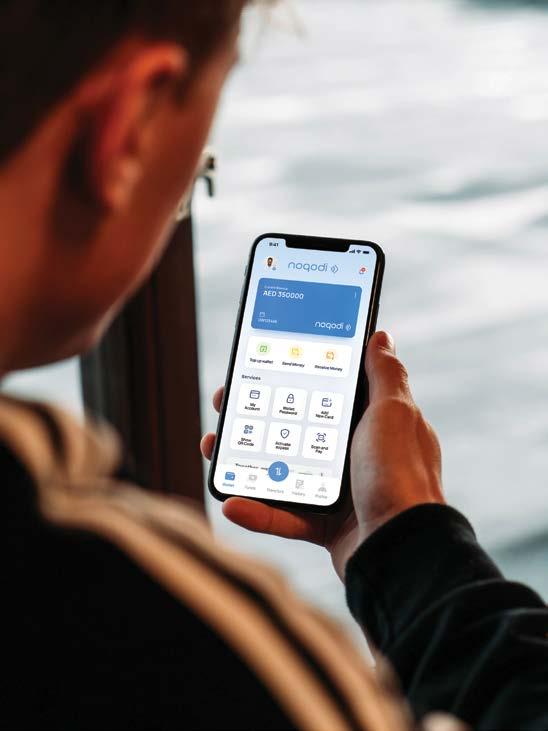
NOQODI WAS BUILT ON A CLEAR VISION: TO CREATE A SECURE, INCLUSIVE, AND RELIABLE NATIONAL PAYMENTS ECOSYSTEM THAT SUPPORTS THE UAE’S ACCELERATED SHIFT TOWARD A FULLY DIGITAL ECONOMY.”
trusted by institutions and convenient for users across all segments.”
To further expand its presence across the
nation in becoming a full-service financial ecosystem –rather than simply remaining a digital payment provider–noqodi is in the process of launching two features for businesses: credit card acquiring and customized card-issuing. “It is a move that positions us as a full financial enabler, allowing faster and seamless onboarding for all types of merchants— especially small and medium enterprises (SMEs)—and helping businesses accept payments more efficiently,” Suleiman explains. “It also equips end-users with a wider range of payout instruments through tailor-made cards suited to each segment, in addition to the existing payment tools. For the UAE fintech landscape, this means increased innovation, greater competition, and more localized payment options. For customers, it means better pricing, faster settlement, enhanced reporting, and new use cases such as tourist cards, virtual cards, SME and corporate expense cards, and integrated acquiring solutions—all supported by a platform allowing both credit card acquiring, aggregation and wallet management.”
In a country that aims to have one million operational SMEs by 2030, noqodi opens up opportunities for small business owners to

FROM AN INCLUSIVITY PERSPECTIVE, NOQODI IS ACTIVELY WORKING TO SUPPORT GROUPS THAT ARE TRADITIONALLY UNDERSERVED—SUCH AS YOUTH,
overcome some widely persistent financial obstacles– ones that Suleiman himself is keen on weeding out. “Many SMEs continue to face challenges such as high payment acceptance costs, delayed settlement cycles, complicated onboarding processes, and limited access to financial tools, and noqodi helps address these by offering competitive acquiring models that reduce cost burden, efficient settlement and transparent reporting, digital tools that simplify spend management and reconciliation, and a foundation for future embedded finance services that combine card acceptance, merchant wallets, and additional financial services such as card issuance, remittance, and QR code payments,” he explains.
Suleiman adds that one of noqodi’s main objectives is to help SMEs operate more efficiently and “grow with greater financial confidence.” “SMEs need financial tools that are simple, reliable, and cost-efficient, and noqodi addresses this through fast and compliant merchant onboarding, affordable online and in-store payment acceptance, automated reconciliation and reporting, wallet-based business solutions for micro-merchants, and,
soon, prepaid virtual and physical cards for controlled business spending,” he reiterates. “Our focus is thus on reducing manual effort, improving cash-flow visibility, and giving SMEs the same level of financial control typically available only to larger enterprises.”
While much of what has been discussed so far covers ease of online payments for businesses, there is of course the end-user market as well. With multiple studies showing financial inclusivity and a lack of interoperability within the digital economy, noqodi has channeled its efforts into creating a customer-first digital wallet that brings together relevant financial services that are designed for inclusion across multiple user segments. “Today’s consumers expect payments to be fast, intuitive, and secure— and the noqodi wallet is evolving to meet these expectations,” Suleiman says. “We are enhancing the user journey with biometric login, adaptive authentication, device intelligence, and integrated payment options across government and private platforms. From an inclusivity perspective, noqodi is actively working to support groups that are traditionally underserved—such as
youth, tourists, lowincome workers, and individuals without full access to traditional banking or with temporary needs for financial services. Through secure wallet accounts and accessible digital services, we enable these groups to safely participate in the digital economy.”
Suleiman’s approach is well aligned with how the overall market is poised at the moment– an October 2025 study by US-based
→ With seamless integration and a unified platform, noqodi enables effortless collections, secure transactions, and an end-to-end digital payment experience trusted across the nation.
a strong government push toward a cashless economy and the country’s increasing digitalization. According to Suleiman, the surety of such trends continuing will fuel noqodi’s expansion plans as well. “The GCC and surrounding region present strong opportunities driven by digital adoption, proactive government agendas, and a growing need for unified payment orchestration,” he notes. “Countries like Saudi Arabia, Kuwait, and Oman
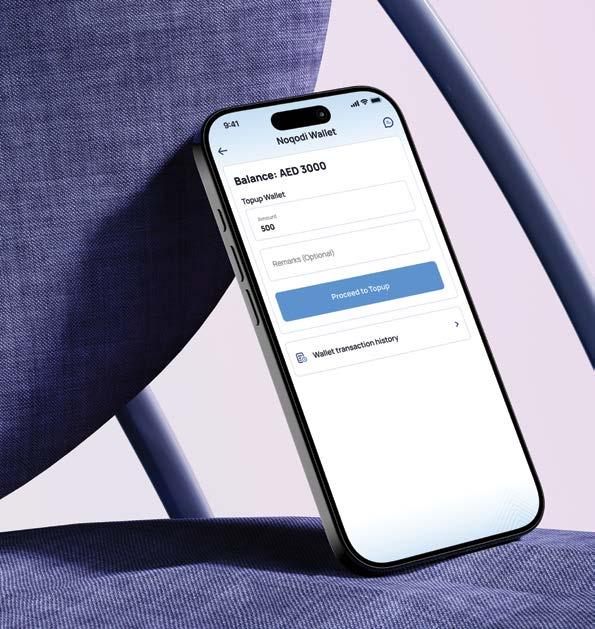
market research firm Research And Markets shows that the UAE mobile wallet market was valued at $4.18 billion in 2024, and is expected to reach $8.28 Billion by 2030 at a CAGR of 12.12%. Defining this growth are already established factors such as
share the UAE’s ambition of building cashless ecosystems supported by strong regulatory frameworks. noqodi, as a Dubai-based eWallet and fintech leader, aims to act as a connector across regional countries and beyond—through
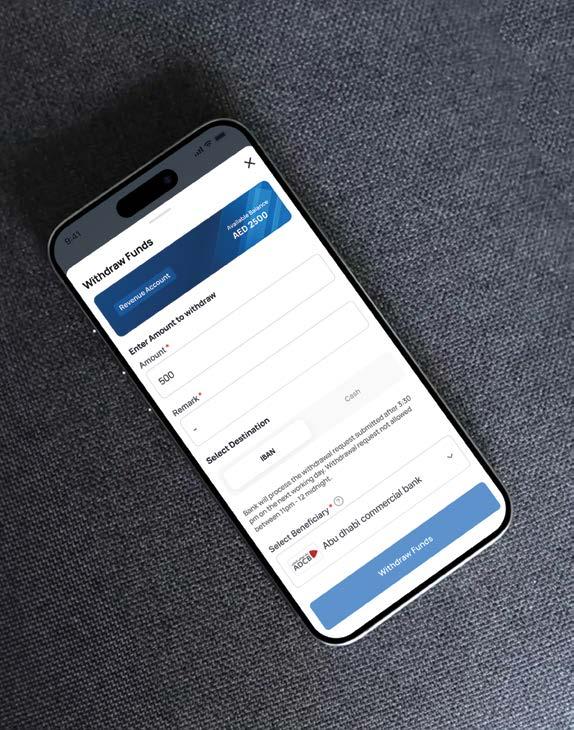
partnerships with other licensed financial institutions—to ensure a seamless, cashless experience for visitors traveling to and from Dubai. Our regional expansion strategy is partnership-led, compliance-driven, and tailored to the priorities of each market.”
As Suleiman and his team move into 2026, the business leader is confident that his firm can continue to cement itself as an integral part of the region’s fintech ambitions. “The trends that excite us most include instant payments and real-time settlement rails, digital identity as a primary enabler of financial
authentication, tokenization and new digital asset frameworks, and embedded finance integrated directly into consumer and business journeys,” Suleiman says. “To support these shifts, regulatory frameworks will need to continue advancing in areas such as interoperability, open finance, cross-border digital services, and national wallet frameworks. These changes will accelerate innovation while ensuring consumer protection remains at the core. noqodi is deeply aligned with this future, and we are committed to playing a leading role in shaping the next chapter of digital payments in the region.”

Enlighten Your Eternal Beauty, Inside and Out!
@muarjewels www.muarjewels.com
info@muarjewels.com

Ultimately, entrepreneurship in the Gulf is no longer an alternative career path; it is a central pillar of national strategies aimed at diversification, innovation, and youth employment. by
MARTINA DI LICOSA
When I began reporting on the world of business, telling stories of entrepreneurship and break-
ing down every success and failure, what struck me most was the contrast between aspiration and entrepreneurial execution. Across the UAE, Saudi Arabia, Qatar, and beyond, young people are eager to start businesses. Yet, turning those ideas into sustainable, scalable enterprises often proves far from straightforward.
The latest country-level findings from the Global Entrepreneurship Monitor (GEM) paint a hopeful picture: entrepreneurial activity surged in places such as Saudi Arabia (total early-stage entrepreneurial activity or “TEA” was at about 25% in 2023, compared to 19% in 2022) and Qatar (TEA went up to 14.3% in 2023
THE APPETITE FOR ENTREPRENEURSHIP IN THE GCC IS STRONG, THE GAP BETWEEN INTENT AND EXECUTION IS WIDE, AND CERTAIN GROUPS (PARTICULARLY WOMEN AND YOUTH) FACE STRUCTURAL BARRIERS.”
after two years of declines) as per the GEM National Report KSA 2023-2024
Other markets, such as Egypt, still report below-average early-stage business participation, a reminder that regional momentum exists, but it’s far from uniform. In Jordan, the latest GEM national survey shows that 79% of youth say they feel confident about starting a business, yet only around 13% of 18–24-year-olds are involved in early-stage entrepreneurial activity. The issue is partly caused by gender disparities. Women-led businesses remain rare in the MENA region, accounting for fewer than 5% of enterprises, compared to a global average of 23–26%, according to a report by PWC.
These numbers reveal three truths: the appetite for entrepreneurship in the GCC is strong, the gap between intent and execution is wide, and certain groups (particularly women and youth) face structural barriers.

A common thread I spotted among successful entrepreneurs from within the newsroom is a borderline-reckless “just do it attitude.” Waiting for the perfect conditions is often a sign of fear rather than caution. The UAE was ranked first globally in GEM’s 2023-24 survey for the ease of starting a business, and Sharjah rose to fourth among GCC cities in the 2024 Global Startup Ecosystem Report, consolidating its status as an entrepreneurial haven. Yet, despite this promising environment, the reality is that many startups fail simply because founders waited too long for ideal funding, mentorship, or regulation before testing their ideas. In Saudi Arabia, for instance, 57.3% of would-be entrepreneurs say they are held back by a fear of failure, according to GEM.
This is good news for determined entrepreneurs: those who act decisively and iterate early can turn modest beginnings into large-scale success.
Take the example of Ahmad Al-Zaini, co-founder and CEO of restaurant-management cloud platform Foodics. Starting in Riyadh back in 2014, before the city was widely regarded as a hotspot for entrepreneurship, Foodics raised well over US$170 million in its 2022 Series C round and says it has processed over six billion orders across its platform. That level of scale shows how building capability and readiness to adapt matter more than waiting for ideal conditions.
The most successful entrepreneurs are constantly working on themselves as individuals as well as their businesses with an understanding that success requires developing concrete capabilities rather than just business plans.
Fluency in emerging technologies matters more than ever in a region whose markets are rapidly evolving. PwC’s research highlights the critical importance of entrepreneurial capabilities for youth in

MENA. With youth unemployment reaching 24% in 2024, founders who continuously scan for technological trends, from AI to digital platforms, and are ready to pivot when markets shift, are far more likely to succeed.
Cross-cultural communication is also key. In the GCC, startups routinely interact with multinational teams, local partners, and international investors, making language skills and cultural fluency a practical asset. One way to consciously exercise communication skills is by seeking out external mentorship. PwC data suggests that small business survival rates in the region double when founders are guided by experienced mentors. Entrepreneurs who actively seek mentors gain invaluable perspective and
credibility. Regional incubators and accelerators, from Dubai to Sharjah (such as Sheraa and iAccel GBI), are increasingly providing opportunities to meet investors and peers, and founders who engage fully in these networks often accelerate faster than those who remain isolated.
Another lesson is to approach growth with a regional mindset from the outset. GCC markets are diverse, and while starting in Dubai or Riyadh may be convenient, scaling across the region requires foresight. In its Global Economic Prospectus for June 2025, the World Bank notes that non-oil sector growth “remains resilient, particularly in the manufacturing and services sectors” for oil-exporting countries in the MENA region. Designing products,
pricing, and logistics with export in mind allows founders to take advantage of GCC trade agreements and free zones and positions them for sustainable growth beyond their initial market. Consider Pickl, the Dubai-born burger chain founded in 2019. After launching in the UAE, the brand signed a multi-territory deal in 2024 to open 30+ sites across Saudi Arabia, Egypt, and Kuwait by this year. By designing its business model from day one for regional expansion, from a standardized menu and streamlined supply chain to culturally tailored offerings, Pickl shows how thinking regionally from the start can turn a local concept into a GCC-wide success story.
Ultimately, entrepreneurship in the Gulf is no longer an alternative career path; it is a central pillar of national
strategies aimed at diversification, innovation, and youth employment. Intent is high, infrastructure is improving, and non-oil sectors are poised for expansion. The difference between aspiration and impact is deliberate action, capability building, and regional thinking.
Founders who embrace these principles will not only launch businesses, they will contribute to shaping the economic future of the region.

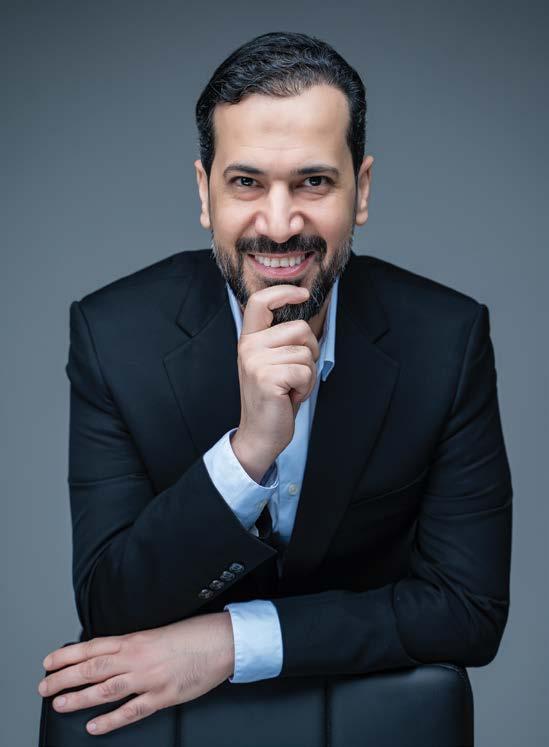
Martina Di Licosa is a business journalist reporting on consumer startups at Forbes. She is based in New York City and holds a Master of Science degree in journalism from Columbia University.
From regulation-by-design to public–private synchrony and the rise of AI-powered ecosystems, the Gulf’s transformation is accelerating. Here’s what business leaders need to understand—and where the next decade of opportunity lies.
by SHAILESH DASH
As we come towards the end of the year 2025, and for me, nearly 25 years in the Gulf building businesses and working with various stakeholders, I can see the marked difference in why the UAE and some of the other regional economies like KSA, to some extent, have been able to move so much faster on their developmental path. At the same time, contrary to any views, the transformation is only accelerating—from digital economies to sustainable infrastructure and capital markets.
Usually, business owners, investment bankers, consultants, and investors develop their strategies based on past experiences and their views of the future, but when changes are happening at the speed they are today because of AI and human psychology, one has to really strategize and think of a bold future enabled by AI to build a successful business. I have tried to outline here a few themes, which are my take/perspective on how I see the developments unfolding in the region, particularly UAE/KSA, and the future—and, most importantly, how private corporations can benefit from it.
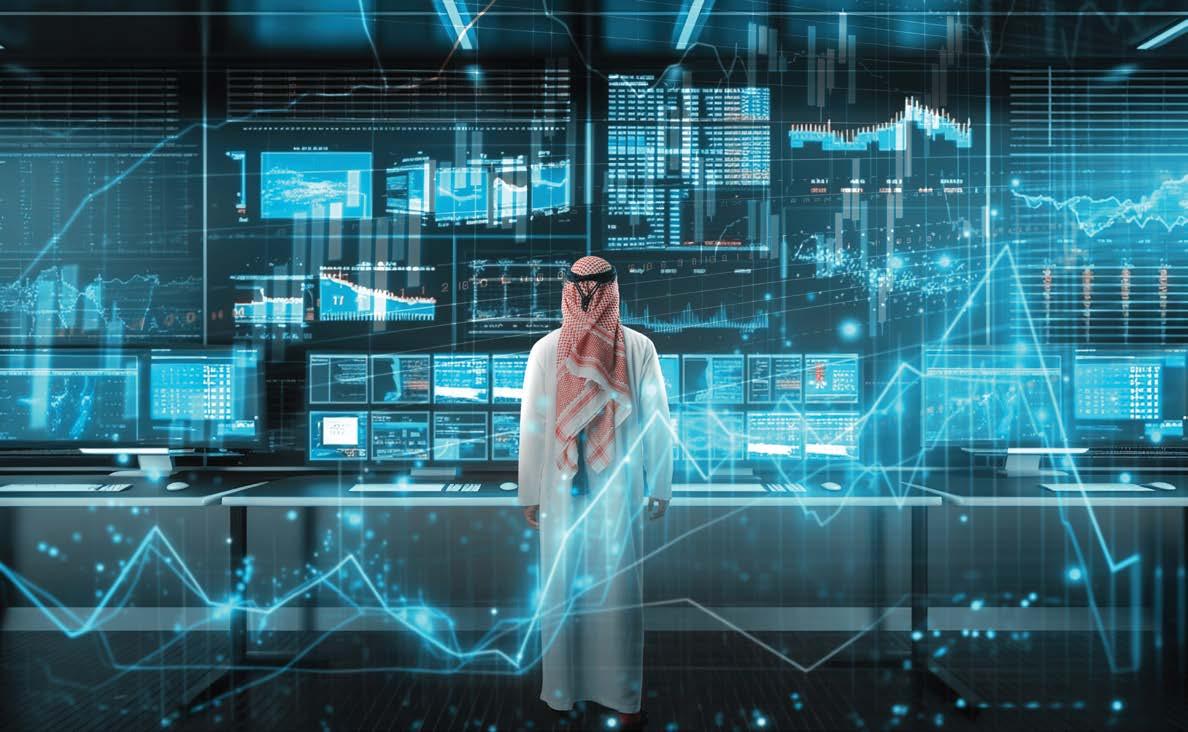
THE UAE DOESN’T WAIT FOR PERFECT FRAMEWORKS, IT DEFINES THE DESTINATION FIRST. WHETHER IT’S DIGITAL ASSETS, SUSTAINABILITY, OR LOGISTICS, THE REGION’S LEADERSHIP CREATES CLARITY OF INTENT AND THEN BUILDS THE REGULATORY
Vision precedes regulation — and that’s by design.
The UAE doesn’t wait for perfect frameworks; it defines the destination first. Whether it’s digital assets, sustainability, or logistics, the region’s leadership creates clarity of intent and then builds the regulatory infrastructure around it. That sequencing attracts capital faster than any
policy paper ever could.
The UAE defines the destination first, then builds frameworks to make it happen. That can be seen through many solid institutions that have been built in the last 20–25 years, such as DIFC, ADGM, VARA, various free zones and industrial zones, and fintech regulations in the region, to name a few. Therefore, for business owners in the
IT.”
region or those trying to build businesses here, please look at the announcements from government/policymakers and make your plans quickly to work on the opportunities presented rather than waiting and doubting the timing of the actual event/process to happen. It will always bear fruit if you are agile and plan according to the government initiatives.
Public–private alignment is the UAE’s superpower.
The speed of execution we see here comes from coordination — not chaos — that compounds progress. Transformation happens at speed when governments, capital, and enterprises move in rhythm. Vision 2030, D33, the ADNOC–Masdar partnership, and similar strategies only work because policy, capital, and enterprise leadership are structurally aligned. When governments and investors move in rhythm, transformation compounds.
In the UAE context, the public side often offers strategic assets: land, master planning, regulatory enablement, and sometimes seed funding, while the private partner brings operational expertise, capital efficiency, and innovative technology. For example, in real estate/mixed-use PPPs, the government provides land or zoning benefits, while private partners take design, construction, and management roles. This coupling enables high-leverage private investment and shifts the role of the state from “builder” to “enabler/ partner.” This layered regulatory clarity is atypical in many markets and gives the private sector better predictability of government collaboration, risk allocation, and legal enforceability.
The UAE is deliberately diversifying away from an
oil-based economy; PPPs are a tool to develop infrastructure, health, education, renewable energy, and smart cities. For example, Dubai Finance publishes a PPP Projects Pipeline list—helping the private sector see ahead where opportunities are. In many emerging markets, this level of foresight and transparency is missing. For any investor/strategic player, this means earlier access to deals and potentially first-mover advantages if they plan well. The UAE also aims to act as a regional hub. Many global players view UAE PPPs as a gateway to MENA/Central Asia—so the scale, ambition, and cross-border relevance tend to be higher.
Culture is the invisible currency of progress.
No project or capital deployment succeeds here without cultural fluency. Success in the UAE and GCC demands a rare blend of respect for legacy and comfort with disruption. Those who
THE SPEED OF EXECUTION WE SEE HERE COMES FROM COORDINATION — NOT CHAOS – THAT COMPOUNDS PROGRESS. TRANSFORMATION HAPPENS AT SPEED WHEN GOVERNMENTS, CAPITAL, AND ENTERPRISES MOVE IN RHYTHM.” “
read the social fabric as well as the balance sheet are the ones who scale sustainably.
In the UAE/GCC, cultural fluency can be a competitive advantage. For example, understanding local business rhythms may allow one to identify faster-moving deals or avoid pitfalls where others mismanage the cultural dimension. It is important to also understand that the UAE is
modernizing rapidly—culture is not static. For example, inclusion of women and a shift toward innovation and global business models are growing. Therefore, a partnership that includes culturally credible local representation, community engagement, and respect for heritage will often have smoother access to resources, approvals, and stakeholder goodwill.
THE NEXT DECADE WON’T BE ABOUT BUILDING HIGHER WALLS OF EXPERTISE, BUT STRONGER BRIDGES OF UNDERSTANDING. THE INTEGRATORS WILL DEFINE THE FUTURE BY HELPING HUMANITY PROSPER WITH INTEGRITY.”
Serious capital follows conviction, not momentum.
The market here rewards strategic patience — investors who build in energy, infrastructure, and digital ecosystems, not those chasing short-term valuation spikes. The new power players are the ones turning regional ambition into balance-sheet reality. All the large players in the UAE economy have spent at least a couple of decades investing in local industries and growing with them.
The investment window opens when governments roll out policy changes (e.g., energy transition, datacentre infrastructure, renewables, urban redevelopment) — and those firms who have the conviction and relationship/ footprint are best placed to benefit. International firms such as Google, Microsoft, Tesla, Brookfield, and Uber are live examples of such success.
All major international and local players need to view their strategies with a futuristic lens and think ahead to sectors where relationship/regime will matter even more — e.g., data centers (zoning, grid, cooling, sustainability), AI-hardware infrastructure, carbon capture/removals, and large-scale renewables in emerging markets — and
identify firms playing the “decade-long game” rather than the short-term trade.
The future belongs to integrators.
GCC growth now sits at the intersection — of finance and technology, of sustainability and infrastructure, of public vision and private execution. The next decade will be defined by those who connect sectors, bridge silos, and translate national agendas into investable outcomes.
While in the past we had general managers and later specialists who were in demand, the next decade will reward those who can integrate — technologies, disciplines, ecosystems, and
ideas. Therefore, integration can be viewed as the next evolutionary stage of progress — beyond mere innovation or expertise. We can see examples in the convergence of technology such as AI + IoT + genomics + blockchain, and the blurring of industries such as finance + tech + energy + data + gaming. Therefore, our education system and leadership teams will need training to think across boundaries — economic, social, technical, and regulatory — and map cause-effect loops, not silos. This makes it important to create fusion teams such as finance with data science, or sustainability with engineering, and to orchestrate ecosystems. For

example, building platforms where partners, suppliers, and customers co-create value while using data governance and trust as the new currency. This can be done through layering and fusion of technology. I would like to end by saying: the next decade won’t be about building higher walls of expertise, but stronger bridges of understanding. The integrators will define the future by helping humanity prosper with integrity.

Shailesh Dash is an awardwinning entrepreneur, ideator, mentor, and philanthropist. A veteran of the MENA alternative investments sector, Dash has over 20 years of alternative investment experience. In 2010, he started Al Masah Capital which has successfully raised over US$1 billion and established itself as one of the fastest growing alternative investment management and advisory firms focusing on the MENA and SE Asia region. Before Al Masah Capital, Dash had managed $4 billion of assets and executed 14 IPOs and five trade sales. In addition, he created the second largest PE business in the MENA region (extrapolated from rankings of PEI Asia) and served on the boards of 12 companies.
Entrepreneur Nadim Zidan breaks down why Dubai has become the epicentre of global wealth migration— from visionary policies and tech-driven growth to real estate dynamism and the emirate’s unmatched safety, ease, and opportunity.
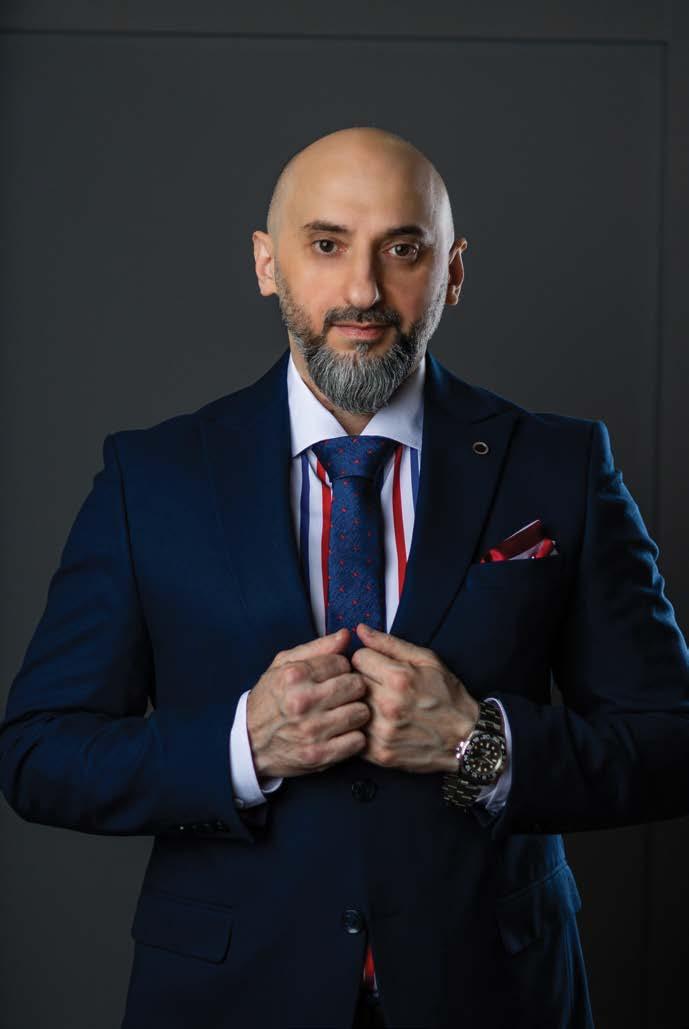
For more than a decade, Nadim Zidan has forged a reputation as a driven, results-oriented figure in both the financial and digital spheres. After a successful career as a wealth management investment banker—where he earned the prestigious CEO Award—Zidan transitioned into entrepreneurship, founding Celebrity Bee FZ, a social media marketing and branding agency that today serves celebrities, VIPs, public figures, and leading businesses across the region.
His background in banking, combined with ten years of building digital influence for clients across global markets, has shaped a unique perspective on the forces transforming Dubai.
“My experience in banking and wealth management gave me global perspective, but Dubai’s entrepreneurial spirit inspired me to take the leap,” he says.
His ventures, from Hollywood Stars Medical and Leisure Tourism to the rebranded Celebrity Bee, have positioned him at the intersection of wealth, influence, and the region’s accelerating growth.
Zidan’s insights come at a pivotal moment for the UAE—now the world’s most sought-after destination for high-net-worth migration. “In 2023 alone, over 4,500 millionaires relocated to the UAE, with Dubai leading the way,” he notes.
“Today, Dubai is home to more than 68,400 millionaires, 206 centi-millionaires, and a growing number of billionaires.”
What’s behind this influx, he says, is simple, “Dubai is a city where prosperity and possibility go hand in hand.”
Zidan attributes much of Dubai’s pull to its world-class infrastructure. “From world-class
airports, superb public transit, and lightning-fast internet, to luxurious hotels and cutting-edge healthcare, every detail is designed for efficiency and comfort,” he says. This commitment to seamless
allows full foreign ownership. “In 2024, Dubai recorded an all-time high in residential transactions,” he adds.
“The market here is energetic, international, and always evolving.”
systems allow founders to launch, scale, and manage operations quickly. Meanwhile, “the banking and financial system is advanced, offering seamless global transactions and bespoke
digital currencies, and social media, he has helped individuals across industries build their identities as public figures, influencers, or emerging celebrities.
His philosophy mirrors
living—enhanced by relentless investment in smart technology—puts Dubai “on par with, or surpassing, the world’s top cities.”
Central to Dubai’s momentum is its leadership’s bold, future-first approach.
“Dubai’s vision, led by His Highness Sheikh Mohammed bin Rashid Al Maktoum, is what sets it apart,” Zidan explains. He points to national strategies such as Dubai Vision 2040 and the Metaverse Strategy, which “push boundaries” and signal a government “always a step ahead, creating fertile ground for entrepreneurship, investment, and family offices to thrive.”
Dubai’s property sector has become the global benchmark for luxury, performance, and investor confidence. Zidan calls it “truly exceptional,” noting the diversity of offerings— from Palm Jumeirah penthouses to designer villas and commercial hubs—paired with regulatory clarity that
This clarity extends across the business landscape.
“The UAE’s laws are investor-friendly, transparent, and secure,” he says. Zero personal income tax, streamlined free zone structures, strong investment protection, and long-term residency programs such as the Golden Visa have all contributed to Dubai becoming, in his words, “a true haven for wealth.”
For Zidan, quality of life is as important as economic appeal. “Dubai consistently ranks among the world’s safest and happiest cities,” he says.
“Harmony is not just a word here; it’s part of daily life.” He describes a multicultural environment where people “live and work together peacefully,” supported by top-tier healthcare and familyfriendly communities. Entrepreneurs, he adds, benefit from unmatched simplicity and speed.
“Setting up a business is refreshingly easy,” Zidan explains. E-government platforms, digital signatures, and cashless
solutions for HNWIs and corporations alike.”
Dubai’s rise as a hub for blockchain and digital assets further reinforces its position as a futuredriven economy. “Dubai is at the forefront of blockchain and crypto regulations,” Zidan says, highlighting the role of the Virtual Assets Regulatory Authority (VARA). “This openness to innovation is a game changer, attracting forward-thinking investors and businesses eager to participate in the digital economy.”
As both an investor and thought leader in the crypto sector, Zidan has seen firsthand how clear governance and strong institutional support have accelerated the city’s digital asset ecosystem. Beyond his professional work, Zidan describes himself as a lifelong learner and someone committed to inspiring others. “My greatest passion is empowering people to realize their fullest potential,” he says. By merging his expertise in wealth management,
Dubai’s own appetite for reinvention: embrace risk, adapt to change, and pursue new horizons. “Dubai offers endless space to expand, innovate, and grow—a true canvas for visionaries,” he explains.
For family offices, global millionaires, and investors reshaping their portfolios, Zidan distills the appeal of the UAE into one defining thought: “Dubai is more than a financial center— it’s a place where dreams become reality.” The city’s infrastructure, vision, legal foundations, and vibrant multicultural community create a platform “designed for meaningful growth, legacy building, and extraordinary living.”
In a world searching for stability, innovation, and opportunity, Dubai, he believes, is the place for those ready not only to protect their wealth, but to elevate it. “For those ready to make a mark on the future,” he says, “there’s no better place to be.”
/Sharjah
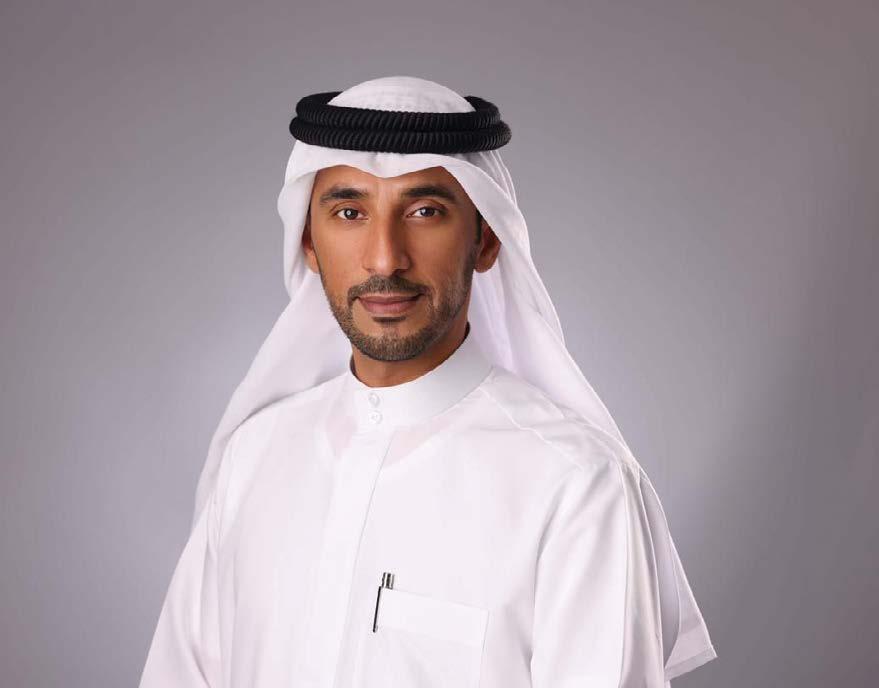
With AED 5.8 billion in sales generated by just three developments, Yousif Al Mutawa, Chief Real Estate Officer at Shurooq, explains how the firm’s long-game strategy is delivering one of the region’s fastest-growing real estate markets
by ENTREPRENEUR MIDDLE EAST STAFF
More than a decade ago, as Sharjah began expanding its urban footprint, the regional property market was dominated by rapid development cycles and skyline-driven ambitions. Sharjah Investment and Development Authority (Shurooq) took a different direction. It focused on long-term value, communitycentred planning, and projects built to last.
Today, this approach is reflected in the results.
Shurooq’s real estate portfolio has exceeded AED5.8 billion in sales. Nearly 4,400 homes have been purchased by residents and investors from more than 90 nationalities. From 2018 to 2024, Shurooq
IN SHARJAH SUSTAINABLE CITY, THE RESIDENTS COMPLETE THE SYSTEM. THEY ARE NOT RECIPIENTS OF A CONCEPT — THEY ARE PARTICIPANTS IN IT.”
achieved a 48.9% compound annual growth rate in property sales, demonstrating steady performance despite global market shifts. “We were never chasing speed or volume,” says Yousif Al Mutawa, Chief Real Estate Officer at Shurooq. “Sharjah’s
development philosophy is anchored in long-term value creation; for people who live here, and for those who invest here.”
That distinction —residents first, capital second— underpins much of Shurooq’s real-estate strategy and its three anchor projects:
Maryam Island, Sharjah Sustainable City, and Ajwan Khorfakkan. Together, they form a study in how city-building can evolve in the Gulf: less spectacle, more substance; less short-term speculation, more generational thinking.
}A Market Expanding, But Not Exploding
According to the Sharjah Real Estate Registration Department, the emirate recorded AED 44.3 billion in property
THERE IS A DIFFERENCE BETWEEN DEMAND THAT CHASES PRICE MOVEMENT, AND DEMAND THAT FOLLOWS LIFESTYLE AND VALUE. SHARJAH ATTRACTS THE SECOND.” “
transactions during the first nine months of 2025, marking a 58.3% year-on-year increase compared to the same period in 2024. These are confident numbers, but they do not tell the full story. Sharjah’s expansion has not been driven by a frenzy of launches or speculative flipping. The city’s appeal rests instead on affordability relative to neighbouring hubs, strengthening infrastructure, and a distinct sense of
place that attracts end-users and long-horizon buyers.
Al Mutawa describes the profile clearly: families putting down roots, global talent seeking stability, and regional buyers betting on fundamentals rather than hype. “There is a difference between demand that chases price movement, and demand that follows lifestyle and value,” he notes. “Sharjah attracts the second.” }}

‘T

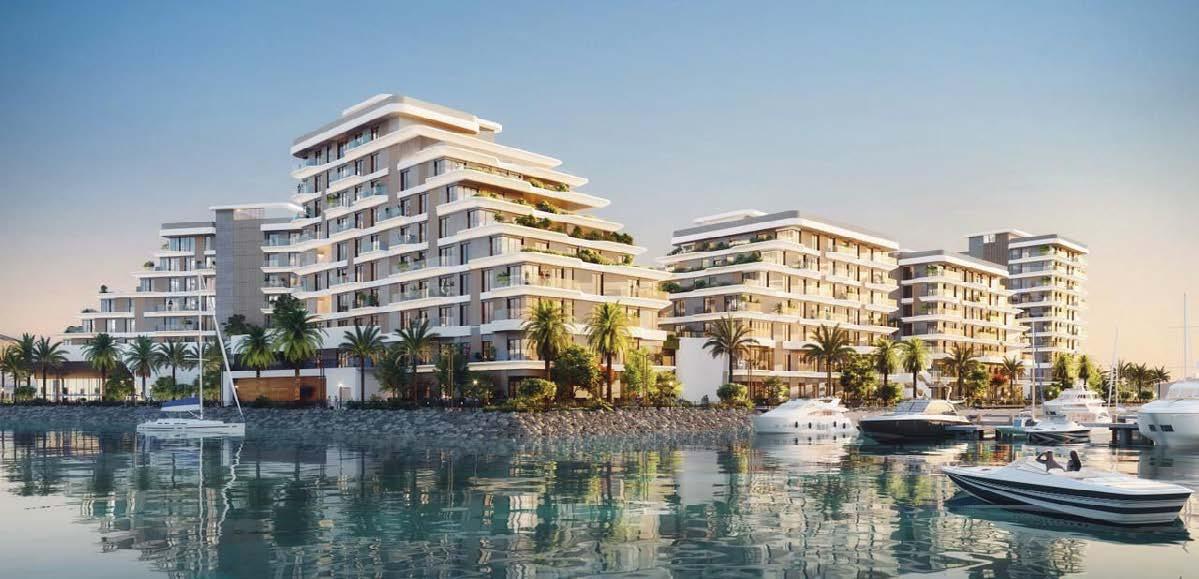
Along the Al Mamzar waterfront, Maryam Island has quietly become a turning point in how people imagine Sharjah’s coastal life. Developed by Eagle Hills Sharjah, the joint venture between Eagle Hills and Shurooq, the project reflects a vision built on creating communities with substance. The development is not just sold — it is lived in. Of more than 3,083 residential units, 99% have been sold, and 1,278 homes are already occupied, with phased handovers continuing until 2028. Its success did not come from recreating Dubai’s coastline model or Abu Dhabi’s island strategy. Instead, Maryam Island balances waterfront access with community-oriented density, independent retail and public promenades, and architecture that speaks Sharjah’s language rather than imitating its neighbours.
Sharjah’s waterfront is thus not a stage for luxury posturing; it is an urban extension of existing neighbourhoods, designed for residents first and investors second. In the first six months of 2025, 138 units worth AED220 million were sold, driven in part by a 15% rise in price per square foot year-on-year; evidence of organic appreciation grounded in demand, not marketing.
“Maryam Island proves that coastal development can support density, culture, walkability, and community cohesion,” Al Mutawa says.
}Sharjah Sustainable City: Sustainability Without Sloganism
In a region where “sustainable” can feel like a tagline, Sharjah Sustainable City is notable for resisting aesthetic greenwashing.
The first sustainable master-planned residential community developed by Shurooq in partnership with Diamond Developers spans 7.2 million square feet and has sold all 1,252 units, generating AED2.5 billion in sales. Beyond the sold-out headline, the community stands out for something less visible and more consequential: measurable performance. Solar roofs offset consumption. Greywater recycling reduces demand. Waste systems divert material away from landfills. Resident-led initiatives reinforce behaviour change rather than imposing environmental ideals from the top down. “Technology only matters if people embrace it,” Al Mutawa says. “In Sharjah Sustainable City, the residents complete the system. They are not recipients of a concept — they are participants in it.”
With the final phase handover underway, the community’s blueprint is influencing planning beyond the development itself and informing how utilities, mobility, and resource management evolve in newer districts.
NOT EVERY COASTAL DEVELOPMENT SHOULD COMPETE WITH A SKYLINE,” AL MUTAWA SAYS. “AJWAN COMPETES ON PEACE, ON NATURE, ON AUTHENTICITY — ALL WHILE UPHOLDING THE HIGHEST STANDARDS OF MODERNITY AND SUSTAINABILITY.”
living destination rather than a weekend escape. Of 185 units, 62% are sold, amounting to AED271 million in transactions. The project will introduce more than 682,000 square feet of residential space, supported by amenities including the east coast’s first waterpark, a marina, and a pedestrian promenade.
Crucially, Ajwan does not seek to urbanize Khorfakkan’s natural character. Instead, it leans into it — mountain and sea sitting at the centre of its identity; not as a backdrop but as the primary value layer. “Not every coastal development should compete with a skyline,” Al Mutawa says. “Ajwan competes on peace, on nature, on authenticity — all while upholding the highest standards of modernity and sustainability.”
Khorfakkan’s accelerating tourism profile supports
that proposition, positioning the project within a lifestyle ecosystem rather than as a standalone destination.
If Shurooq’s work shares one consistent thread, it is restraint: taking the time to understand how a neighbourhood should breathe before deciding what it should look like. That patience shows up in what Shurooq does not do: scatter launches across districts, chase speculative spikes, or build enclaves disconnected from the cultural rhythm of the city. “Real estate only works when people want to live there in twenty years.” Al Mutawa says. “Our responsibility is to create places that last.”
A new wave of launches is now in its final planning stages, marking what Al Mutawa describes as the most significant progres-
sion yet in this development cycle. The details remain under wraps, but the scale and direction of what is coming signals a major chapter ahead for Sharjah’s urban future.
Sharjah’s evolution offers a counter-narrative in a region accustomed to velocity. It suggests that cities can grow without racing; that communities can densify without losing identity; that sustainability can be engineered quietly rather than broadcast loudly.
Shurooq’s developments are not the whole story of Sharjah’s rise, but they are among its clearest signals. In a landscape often defined by speed and spectacle, Sharjah is building something rarer: a real estate narrative that reads less like a market cycle, and more like a legacy in progress.
}Ajwan Khorfakkan: The East Coast Writes Its Own Chapter
Sharjah’s east coast has always held emotional and geographic significance, but Ajwan Khorfakkan reframes it as a future-
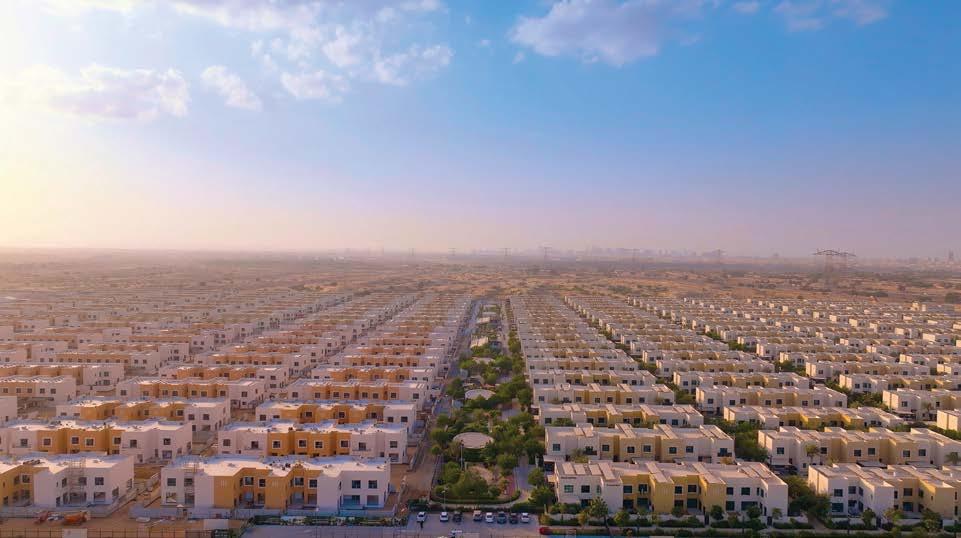

→ Kory Marchisotto, Global Chief Marketing Officer, E.L.F.
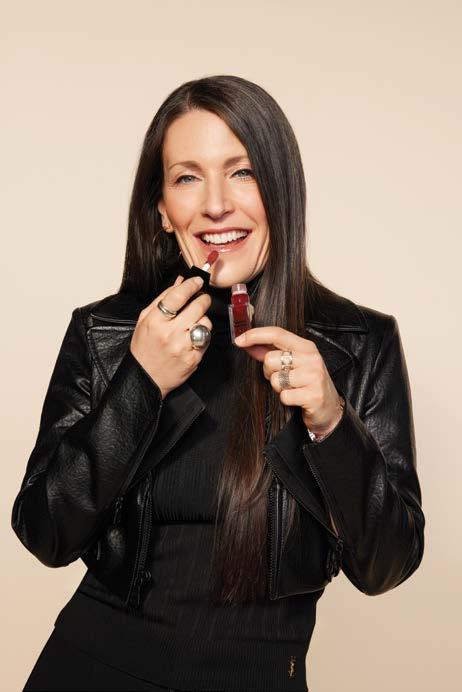
From better goods to better wardrobe bests, every issue, we choose a few items that make the approved executive selection list. In this edition, our picks are from e.l.f. Beauty and KAYALI.
e.l.f. Beauty makes its GCC debut through an expanded partnership with Sephora.
e.l.f. Beauty (NYSE: ELF) has announced its entry into the Gulf Cooperation Council (GCC) market through an exclusive retail partnership with Sephora. The agreement expands a relationship that began in 2024 with e.l.f.’s launch in Sephora Mexico. Starting November 21, 2025, e.l.f. Cosmetics will be available in all 70 Sephora stores across the GCC. e.l.f. Cosmetics and e.l.f. SKIN are already accessible online in the region through Sephora’s e-commerce platform, sephora.me.
According to the company, the GCC has been the highest-requested region without a retail presence, supported by strong social media engagement and rising regional demand for the brand.
“When we say Zero Distance between our company and our community, we mean it,” says Kory Marchisotto, Global Chief Marketing Officer, E.L.F., "The GCC is e.l.f.’s #1 most requested region with surging searches and social mentions. We force multiplied with our partners at Sephora to meet our community where they are at e.l.f. speed. Our open ears and bias for action has our community screaming - Eyes. Lips. Finally.”
This launch marks the latest step in e.l.f. Beauty’s international expansion strategy. www.elfbeauty.com

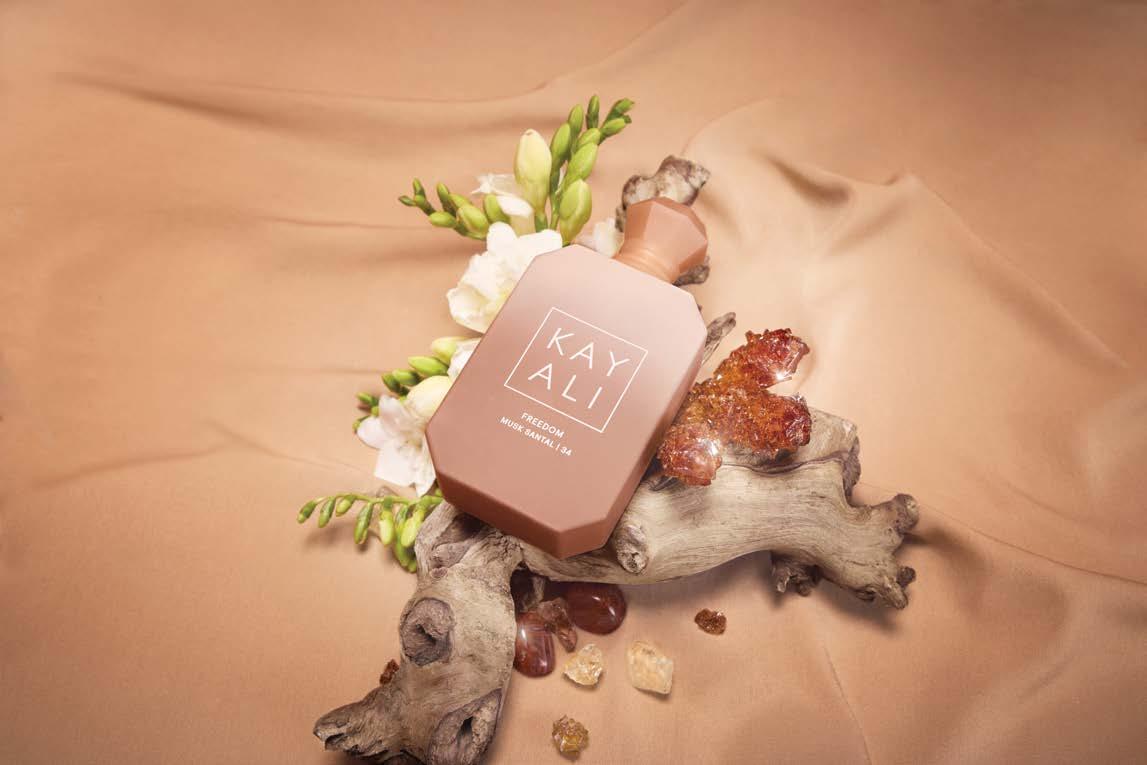
The Freedom Collection celebrates empowerment, selfexpression, and individuality through its four unique scents.
Anchored by the timeless note of musk, the collection reimagines this iconic ingredient through four distinct creations – Freedom Musk Bouquet | 27, Freedom Musk Santal | 34, Freedom Musk Matcha | 45, and Freedom Musk Latte | 41.
“The story behind this collection is deeply personal to me. It was inspired by my own journey toward independence and learning to fully embrace who I am without holding myself back. I started asking myself - what does freedom smell like? And for me, it had to be musk. In the 60s, women wore musk as a form of rebellion, stepping away from traditional
florals to express strength and confidence. That energy really inspired me. My goal with this collection is to help everyone find a musk - or 3 or 4 - that truly resonates with them. Our tagline, Find Your Light, comes from something deeply personal to me - it’s about discovering your inner power and letting it guide you. I want everyone to feel empowered to celebrate themselves, free from others' expectations or pressures. While embracing this freedom can be daunting, nothing is more fulfilling,” says Mona Kattan, founder and CEO, KAYALI.
In addition to Kattan, the Freedom campaign also stars fellow fragrance lovers and creatives Cynthia Victor (@ shawtysin_), Zak Heath (@zak.heath), Yasmin Basi (@beautybyyasi), Jonathan Mefré Fendju (@ jonathanmefre), Rebecca Maurino (@ rebeccamaurino), Travaulya Wallace (@travaulya), and Basmala Alaa (@bsmallaalaa). www.kayali.com
Features Editor, Entrepreneur Middle East, with Mona Kattan, founder and CEO, KAYALI.


Five visionary startups are harnessing AI to transform industries and propel the world’s next wave of innovation. by AALIA
MEHREEN
AND
The FII9 Innovators Pitch 2025, hosted by the Future Investment Initiative (FII) Institute, spotlighted five startups that presented breakthrough AI-powered solutions transforming healthcare, sustainable materials, and next-generation computing. In this series, we explore how each of these innovators is shaping the future with technologies designed to deliver real-world impact.
Deploying AI-powered thermal imaging for early diabetic-foot screening.
amplifaihealth.com
Among the chronic diseases that are widely spoken about by healthcare and wellness professionals globally is diabetes– an endocrine-related disorder that, as per the International Diabetes Federation Diabetes Atlas (2025) affects 11.1% –or 1 in 9– of the adult population (20-79 years) worldwide, with over 4 in 10 unaware that they have the condition. That number is expected to rise by 46% by 2050– which will mean approximately 853 million adults affected by the disease. But did you know that diabetes is linked to a number of foot-related complications such as ulcers, infections and, in worst cases, amputations? A January 2023 research paper in the American Diabetes Association shows that “the lifetime risk of foot ulcer is 19% to 34%, and this number is rising with increased longevity and medical complexity of people with diabetes.” Addressing this challenge head-on is KSA-based Amplifai Health. “Amplifai
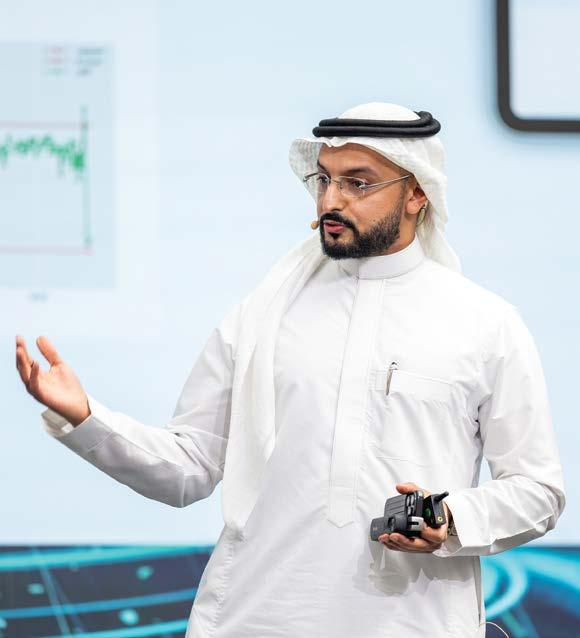
Health uses artificial intelligence (AI) and thermal imaging to make early health detection simple and accessible for everyone,” explains its CEO Dr. Meshari Alwashmi. “Our technology can spot early signs of diabetic foot problems to help prevent amputations, and it is also used in sports medicine to
detect injuries before they happen. Every 20 seconds someone loses a limb to diabetes, and we are using AI to make thermal imaging affordable and widely available so people can get the right care at the right time.”
As has been the case for many new healthcare startups, the inspiration for
Amplifai Health too came amidst the COVID-19 crisis. “During the pandemic, much of healthcare relied on conventional cameras for remote care,” Dr. Alwashmi recalls. “That made us ask a simple question: what if we could go beyond the limits of normal cameras? Smartphones today already include powerful sensors, including thermal cameras, that can see more than the human eye. We realized that by combining these new camera modalities with artificial intelligence, we could “Amplifai” (amplify) our senses and make healthcare more proactive, precise, and accessible to everyone and anywhere in the world.”
Since its inception, Amplifai Health’s progress has earned it multiple accolades as well– the most recent being the first place winner at the G20 South Africa SME Innovation Awards 2025, as well as emerging as one of the five winners (from a global pool of 576 applicants) at the the FII9 Innovators Pitch 2025 by
the Future Investment Initiative (FII) Institute. “It was an honor to pitch at FII9, representing Saudi Arabia on the global innovation stage,” Dr. Alwashmi says. “My key message was that the future of healthcare innovation is global and inclusive. Saudi entrepreneurs are now contributing transformative technologies to solve universal problems. I wanted the audience to see that a Saudi-born healthtech company can lead in AI medical devices globally.”
But all of this isn’t to say that it’s been smooth siling for the team at Amplifai Health. “Our biggest challenge was working with noisy thermal data and ensuring the accuracy required for medical use,” Dr. Alwashmi reveals. “Thanks to our team, we
WE REALIZED THAT BY COMBINING THESE NEW CAMERA MODALITIES WITH ARTIFICIAL INTELLIGENCE, WE COULD “AMPLIFAI” (AMPLIFY) OUR SENSES AND MAKE HEALTHCARE MORE PROACTIVE, PRECISE, AND ACCESSIBLE TO EVERYONE AND ANYWHERE IN THE WORLD.”
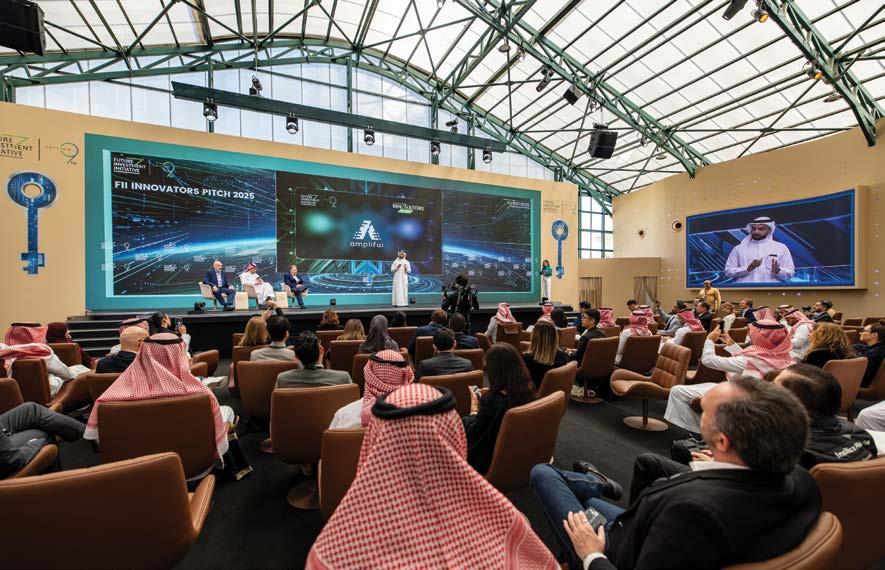
Dr. Meshari Alwashm i, CEO of Amplifai Health, shares tips for entrepreneurs
} “Focus on solving a real problem that matters deeply to you. The journey
built algorithms that clean and analyze thermal signals with precision. We also faced regulatory hurdles, which we overcame by working closely with the Saudi Food and Drug Authority (SFDA) and completing multiple clinical
will test your endurance, but your purpose will carry you through. Surround yourself with people smarter than you, stay humble, and remember that impact and integrity build lasting companies, not just innovation.”
trials to validate our software.”
As such, winning the FII9 Innovators Pitch 2025 was a massive validation of the challenges they’ve hitherto overcome through resilience and hardwork, says Dr. Alwashmi. “More impor-
tantly, it’s recognition for the brilliant engineers, clinicians, and researchers who believed in our mission to transform healthcare and improve lives through technology,” he adds. “Earning this recognition despite being one of the youngest and leanest teams highlights the power of focus, creativity, and belief in our mission. We take pride in being the first globally approved AI solution for diabetic foot complications and in representing our country’s growing innovation ecosystem on the world stage.”
With this win bolstering their vision and resolve, Dr. Alwashmi says the next growth step is expanding the
startup’s global presence. “We’re scaling through collaborations with hardware manufacturers, hospitals, and health ministries, both regionally and globally,” he says. “It also strengthens investor confidence as we move into Phase 2, where we’ll expand into new use cases like sports medicine. Our goal is to become the global standard for AI-driven thermal diagnostics, integrated across healthcare and sports. We aim to help millions of patients avoid preventable complications and support athletes in detecting injuries early, while building a sustainable business that exemplifies Saudi innovation with global impact.”
Developing next-generation AI inference chips that redefine compute efficiency.
In a move that underscores the growing global momentum around AI hardware, Rebellions has become the first Korean AI semiconductor startup to establish
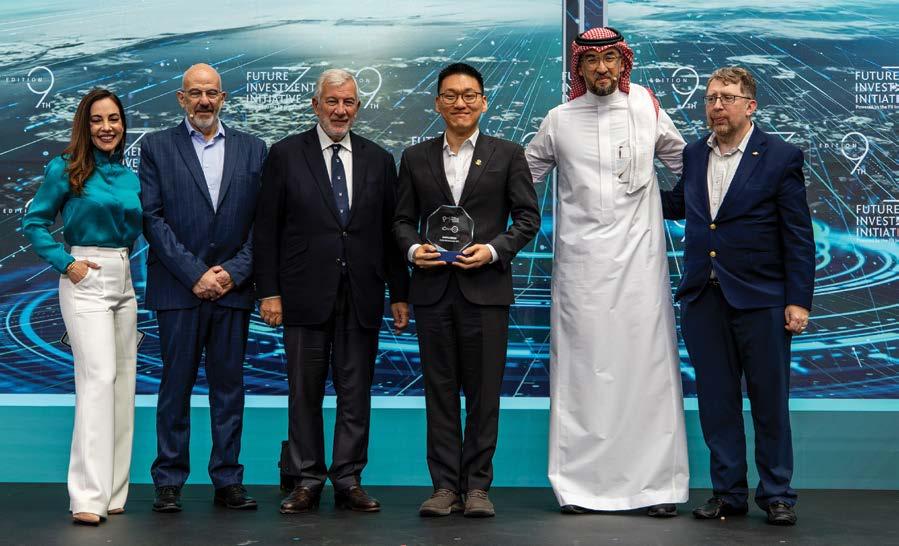
Sunghyun Park, co-founder and CEO, Rebellions. “Our chips are purpose-built for inference, the stage where AI meets real-world users, services, and industries. By combining hardware efficiency with a developerfriendly software stack, we make high-performance AI deployment dramatically more accessible. In short, we enable organizations to run more with less — less power, less cost, less complexity — without compromising on capability.”
a corporate presence in Saudi Arabia.
Known for its advanced AI inference chips that combine high performance with remarkable energy efficiency, the Seoul-based company is now positioning itself at the heart of the Kingdom’s rapidly expanding tech ecosystem—aligning with Saudi Arabia’s ambition to become a hub for artificial intelligence, deep tech, and sustainable innovation.
“We address one of the biggest bottlenecks in AI today — the fact that running advanced models at scale is becoming unsustainably expensive and energy-intensive,” says
The idea was inspired by a noticeable gap between the semiconductor industry’s investment priorities and the practical needs of enterprises. While most AI hardware development had focused on model training, many real-world applications such as chatbots, vision systems, and edge analytics continued to face significant inefficiencies. “We believed the future of AI would depend not only on training larger models but on serving them efficiently and sustainably,” Park says. “That insight led to Rebellions: a company focused entirely on purpose-built inference hardware designed for the era of ubiquitous AI services.”
Rebellions’ enterprisefocused approach is validated by its strong industry alliances. In July 2024, Waed Ventures, Aramco’s venture capital arm, led a US$15 million Series B extension investment round, marking the company’s first MENA
investor and supporting Rebellions’ entry into the Kingdom’s AI infrastructure market. Since then, Rebellions raised US$250 million in a Series C at a valuation of US$1.4 billion.
Today, Rebellions is not only delivering rack-unit products to Aramco’s data center, but cooperating with other enterprises in Saudi Arabia, in addition to its growing activity in the United States, Europe, and key Asia-Pacific markets.
In taking part in the FII9 Innovators Pitch 2025, the Rebellions team highlighted their key message: the next leap in AI won’t come from being bigger or faster — it will come from being smarter, more efficient, and more responsible. “We wanted to highlight that performance and sustainability don’t have to be trade-offs; they can, and must, coexist,” Park explains. “Standing alongside some of the world’s most innovative startups reaffirmed our belief that AI hardware from Korea can compete — and collaborate — on a truly global scale.”
The recognition from the FII9 Innovators Pitch 2025, Park says, served both as validation and motivation. “It validates the years of engineering discipline, long nights, and patient problem-solving that go into deep-tech innovation — and it motivates us to keep pushing boundaries,” he says. “More than anything, it symbolizes that world-class semiconductor
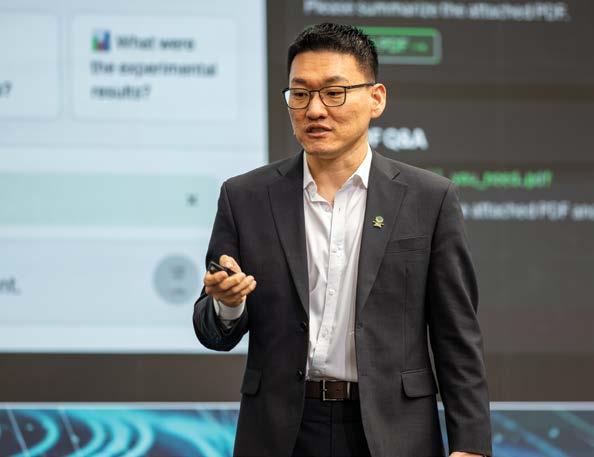
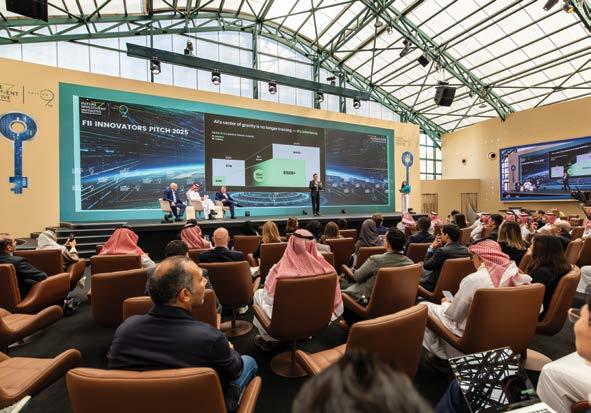
Rebellions Co-Founder and CEO Sunghyun Park Advises Entrepreneurs
} "Stay focused on real problems, not just trends. Deep-tech takes time, and progress can feel slow — but conviction compounds. Build with integrity, surround yourself with people who challenge you, and measure success not only by valuation but by the value you create for others. Ultimately, technology should serve people and the planet; if you hold that belief at your core, the rest will follow."
innovation can emerge from Asia and scale globally. We see it not as a trophy but as a responsibility to keep proving that high-impact, high-efficiency AI technology can be built outside of Silicon Valley.”
Furthermore, the exposure at FII9 opened new opportunities across the Middle East. “We’re now exploring collaborations that combine Korea’s semiconductor excellence with Saudi Arabia’s vision for AI-driven transformation,” Park explains. “In practical terms, it accelerates our ability to localize manufacturing, certification, and developer support in key global markets.”
In two years’ time, Park points out, the team aims to see Rebellions chips deployed across multiple regions, powering AI data centers and enterprise workloads at scale. “We plan to strengthen our software ecosystem so that developers can build, optimize, and deploy on Rebellions hardware as easily as they would on any mainstream platform. At the same time, we’ll continue to expand our presence in strategic markets like the Middle East and Southeast Asia, where demand for sovereign and efficient AI infrastructure is accelerating,” Park concludes.
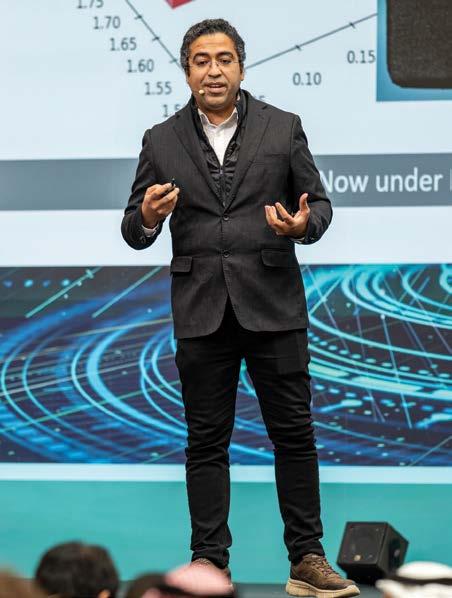
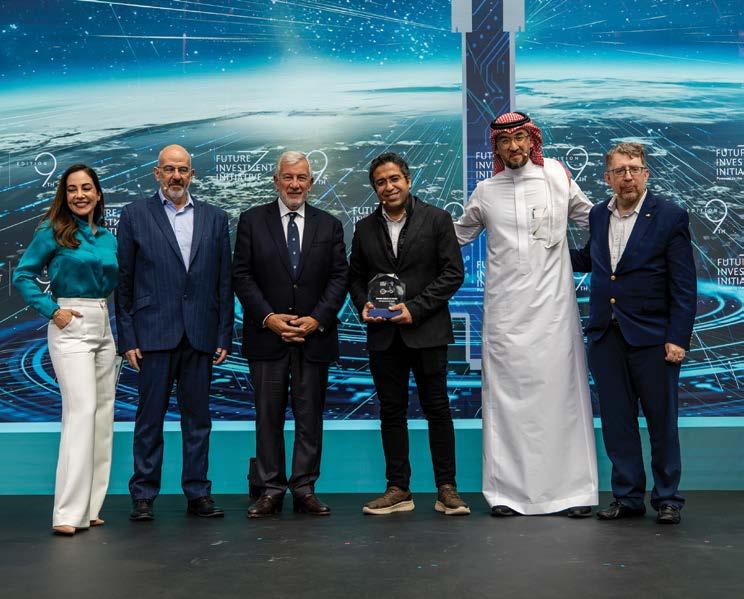
Applying AI-driven materials discovery to advance clean energy and industrial chemistry.
With the climate change crisis becoming a more formidable threat with every passing day, the quest to discover carbonnegative and resourceefficient alternatives –particularly to replace traditionally harmful materials such as cement, steel, and composites– has become even more immediate. But while those in the fields of climate science, advanced manufacturing and renewable energy have consistently carried out extensive research and development (R&D) in this regard, there is one hidden bottleneck that has often stalled favorable results,
explains Ahmed Ismail, co-founder and Chief Operating Officer at Berlin-based climatetech startup Dunia Innovations. “It still takes 20-40 years and hundreds of millions of dollars to discover and scale new functional materials such as next generation catalysts, batteries, solar cells and others,” he explains. “At Dunia Innovations, we turn that into months and at a fraction of the cost using our Intelligent Research and Innovation System (IRIS), the world’s first fully integrated artificial intelligence AI- and robotics-driven materials acceleration platform.”
Indeed, by combining scientific principles with real-world data, the startup accelerates the discovery of materials that unlock scale in energy, manufacturing, and beyond. This has been largely achieved through bringing together a team of experts across the the fields of electrochemistry, materials science, physics, robotics engineering, business, and AI. “We have been working in the energy industry for more than 20 years and we have seen the same story over and over again: the science for clean fuels, hydrogen, fusion energy, and better batteries has already been developed several decades ago. What’s
missing are the functional materials that make it commercially real,” says Ismail. “By functional materials, we mean, for example, more efficient catalysts that make green hydrogen and cleaner fuels with no energy penalty, better coatings that can withstand extreme temperatures and neutrino penetrations inside a fusion reactor, etc. AI alone couldn’t predict and design such materials, because there wasn’t enough high-quality industrial data to train the AI agents. So we asked ourselves: what if we built a system that generates its own industrially relevant data, learns
from it, and keeps innovating? That’s how IRIS, our materials acceleration platform, was born.”
The implications of reinventing the physical materials of the world are wide-ranging— for starters, by accelerating the AI-driven discovery of such material, sustainable construction can become both profitable and scalable. But Ismail reveals that convincing industry leaders that such a future is attainable was a challenge in and of itself. “Initially, we had a technical challenge in orchestrating the response mechanism between the AI and the robots so that they can feed each other their outputs autonomously, but the hardest part was convincing the industry that AI can’t just “guess” the right catalyst or coating, it has to be tied to real, device-level testing,” he shares. “We overcame that by building the full stack ourselves: AI models, autonomous robotic labs, and industrial validation. Once we showed partners that we could design 80,000 candidates and deliver working materials in two months, the conversation changed. In only four months, we signed several commercial partnerships with global partners worth more than US$58 million and we are already scaling our capabilities to be able to work with more industrial partners.”
A major stepping stone towards realizing this goal came when Dunia Innovations became one of the
winners of the FII9 Innovators Pitch 2025– an experience Ismail describes as “electric and unprecedented.” “You’re standing in front of leaders who can actually deploy solutions at global scale,” he continues. “Our message was simple: if we want flying cars, fusion energy, green hydrogen, we must reinvent how humanity discovers materials. Dunia is building that engine. AI plus automation can compress decades of materials innovation into months. So this win is a huge validation that the world is ready for materials innovation to move as fast as software. Our team has been building deep tech that’s not always visible from the outside, but can unlock trillion dollar value for several industries. This recognition says: ‘Yes, this is the right problem, and this is the right time.’”
Ismail also notes that the milestone opens up the path for global expansion. “This win opens doors with
exactly the people we want to work with: energy leaders, multiple industry verticals, high profile investors, and ecosystem partners in the Middle East and across the world,” he explains. “We’re now raising funding to build our first GigaLab, which will be an enormous autonomous facility that can design, make, and test up to 1,000 materials a day. Visibility from FII9 helps boost and speed up those conversations.”
As such, Ismail and the Dunia Innovations team have clear-cut targets moving into 2026. “Our biggest goal is to operate the world’s most productive materials innovation engine that is able to generate new, industrially validated materials every month, and powering projects across energy, chemicals, and electronics sectors, amongst others,” Ismail declares. “More concretely: We will have our first GigaLab live, generate over one million
materials data points, and multiple Fortune 500 companies using our platform. Longer-term, our ultimate goal is to enable the discovery of a new type of chemistry that does not exist today– one that can change our lives for the better and enable the world to achieve better energy efficiency and complete circularity.”
Ahmed Ismail, co-founder and COO of Dunia Innovations shares tips for entrepreneurs
} “Build your venture to solve the hard problems. AI for consumer apps is becoming crowded and highly competitive but AI for the physical world and deeptech is wide open for innovation and disruption. Don’t wait for “perfect data”; build the system that creates it. And surround yourself with partners who think in decades, not quarters. That’s how you get to change a whole industry.”
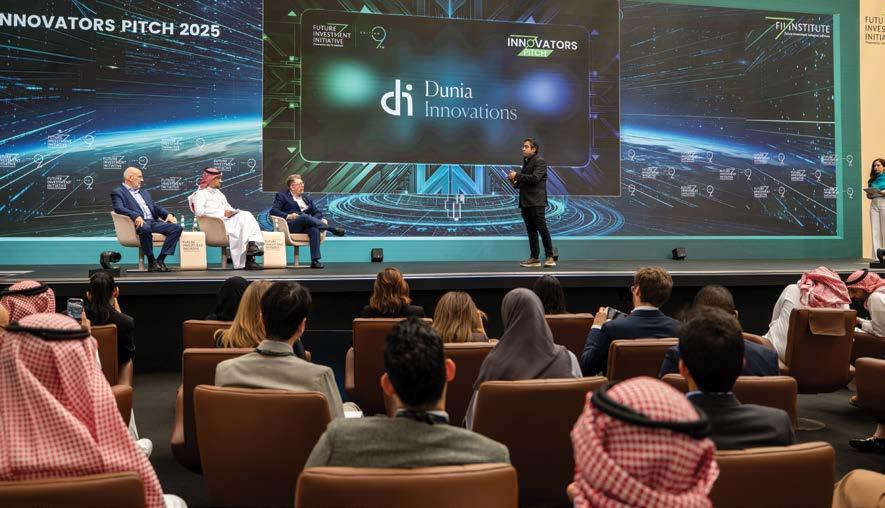
Leveraging generative AI for drug discovery and healthy longevity.
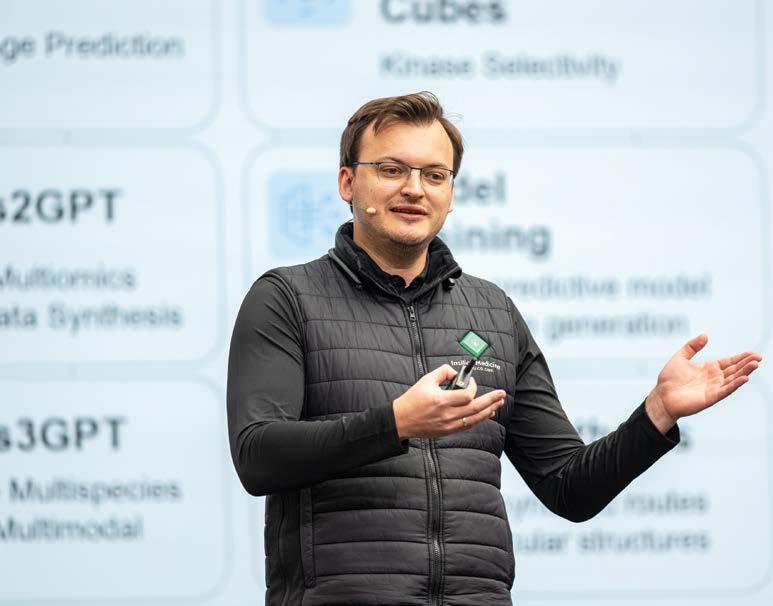
Insilico Medicine, a clinical-stage generative artificial intelligence (AI)-powered drug discovery company, was founded back in 2014 with a mission to accelerate and optimize the development of novel therapeutics. “Drug development is widely recognized as a lengthy and costly process, often taking over a decade and requiring billions of dollars, with a failure rate exceeding 90%,” explains Dr. Alex Aliper, co-founder and President, Insilico Medicine. “Recognizing the significant bottlenecks in drug discovery, we envisioned using AI to help extend healthy longevity for people by innovating in this field.”
Dr. Aliper’s initial focus was on leveraging AI to solve complex biological problems, but over time, his work has evolved into an end-to-end AI-driven solution
industry partners, academics, and investors of the platform’s true efficiency and impact proved to be the most demanding part of the journey. That changed in 2019. “We launched in-house drug discovery pipeline programs powered by our proprietary AI platform,” Dr. Aliper says. “The most advanced program driven from this platform, Rentosertib, has now successfully completed Phase 2a clinical trials, confirming safety and showing promising trends in efficacy for patients. In addition, nine other programs developed using our technology have received IND clearance.
“Even more excitingly, by harnessing state-of-the-art AI and automation technologies, Insilico has set a new benchmark for efficiency in preclinical drug development. While
WHILE TRADITIONAL EARLY-STAGE DRUG DISCOVERY TYPICALLY REQUIRES 2.5 TO 4 YEARS, INSILICO HAS NOMINATED 20 PRECLINICAL CANDIDATES WITH AN AVERAGE TIMELINE, FROM PROJECT INITIATION TO PRECLINICAL CANDIDATE (PCC) NOMINATION, OF JUST 12 TO 18 MONTHS PER PROGRAM.”
aimed at addressing challenges across biology, chemistry, clinical medicine, and a range of scientific disciplines. “Our goal is to harness the power of AI to improve the efficiency of drug discovery, reduce costs, and significantly increase the success rate,” he says.
One of Dr. Aliper’s greatest challenges was proving the real-world effectiveness of the Insilico Medicine AI platform. Between 2014 and 2019, the team focused on developing advanced generative AI engines across biology, chemistry, and clinical applications. Yet, convincing
traditional early-stage drug discovery typically requires 2.5 to 4 years, Insilico has nominated 20 preclinical candidates with an average timeline, from project initiation to preclinical candidate (PCC) nomination, of just 12 to 18 months per program.”
Taking part in the FII9 Innovators Pitch 2025 was an opportunity for Dr. Aliper to share insights and help more people understand both AI-driven drug discovery and the innovative work that Insilico Medicine is advancing. “The Middle
East is rapidly emerging as a hub for cutting-edge technologies, and the growth of the biopharmaceutical sector in the region holds exceptional promise,” he says. “We are very optimistic about this opportunity and have recently initiated a localized project in the Middle East with the goal of discovering a novel drug from scratch using AI, advancing it to the
needs. “Our ultimate goal remains unchanged: to harness advanced AI technologies to address diseases and aging, thereby extending healthy longevity to everyone,” Dr. Aliper concludes.
“In the near term, over the next 2 to 5 years, I anticipate the emergence of biology super intelligence, chemistry super intelligence, and even
pharmaceutical super intelligence. This will take the form of a powerful AI system capable of transforming every stage of drug R&D. Beyond simply enhancing existing processes, such an AI will actively assist humans in decision-making, bringing us significantly closer to efficient, high-success-rate drug discovery.”
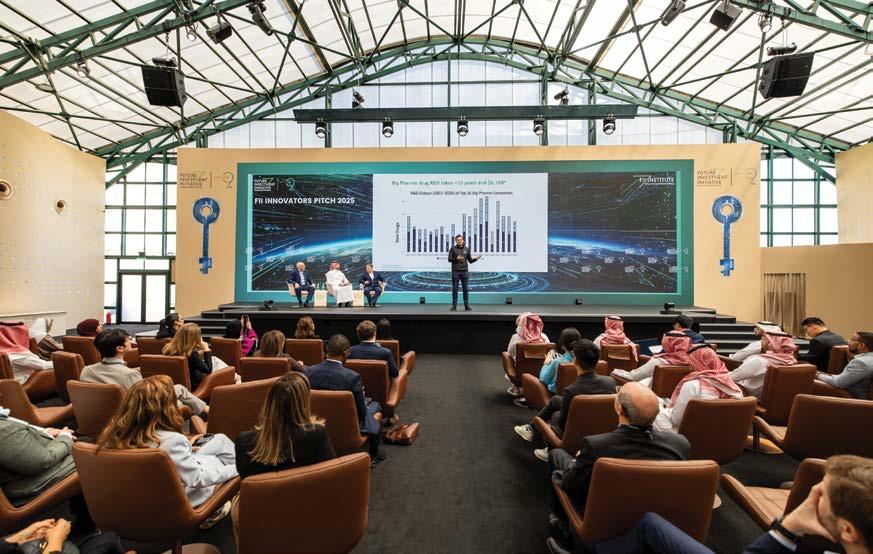
preclinical candidate (PCC) stage right here in the region. Our aim is to bring the full potential and proven capabilities of AI-driven drug discovery to the Middle East, while also benefiting from its dynamic technological ecosystem and strong local support.”
Going forward, Insilico Medicine will remain committed to establishing a deeper presence in the MENA region, achieving tangible results, and rapidly developing therapies that address patients’ most urgent
Dr. Alex Aliper, co-founder and President, Insilico Medicine, on AI-driven drug discovery
}"Compared to traditional biopharmaceuticals, AI-driven drug discovery remains a niche and highly specialized field. In reality, many stages of conventional drug development can be significantly enhanced and optimized through the application of AI, indicating substantial potential for future advancement. However, regardless of the specific area of focus, case validation remains essential, a principle that Insilico Medicine has consistently upheld over the years. We welcome increased attention and broader participation in this field, and look forward to collaborating to address global health challenges with innovative, worldwide solutions.”
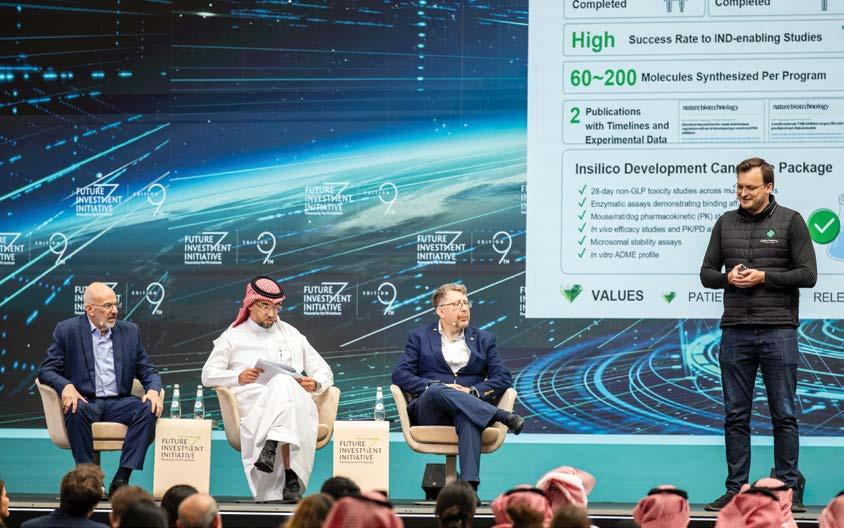
Creating proprietary embodied AI systems with human-like learning and decision-making capabilities.
noematrix.ai
When Cewu Lu founded Noematrix Intelligence in November 2023, his goal was clear: to build the foundational intelligence layer that would finally allow robots to adapt, operate, and learn in the messy, unpredictable environments of everyday human life.
Today, Noematrix is emerging as one of the most technologically ambitious players in the global embodied AI race— developing what Lu calls “a
universal robot brain,” powered by proprietary models, force-centric learning, and an infrastructure built to scale.
“We are a cutting-edge technology firm dedicated to developing and applying embodied intelligence technologies,” says Lu. “Our core focus is on researching and developing force-centric embodied intelligence large models and the supporting infrastructure around them.”
Noematrix’s product line spans intelligent robot solutions, foundational AI
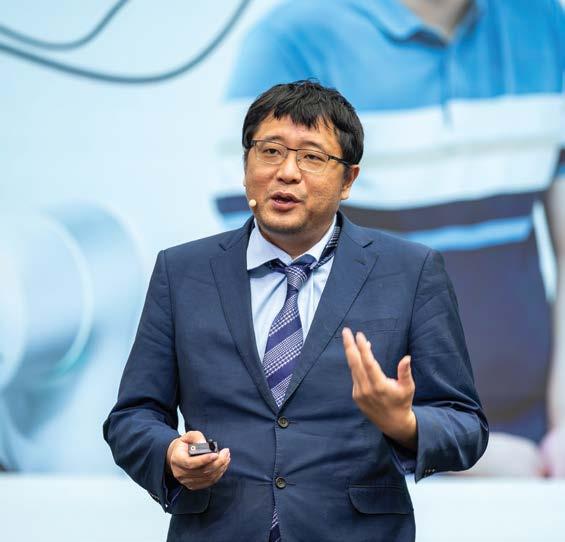
brains, data-collection systems, and training platform tools. Across all of them, the team is tackling what Luo identifies as three critical bottlenecks in embodied AI: enhancing the generalization ability of embodied intelligence across diverse scenarios,
improving robotic operational capability, stability, and robustness, and increasing high-quality data-collection efficiency and accelerating training. To address these challenges, Noematrix has independently developed embodied-intelligence
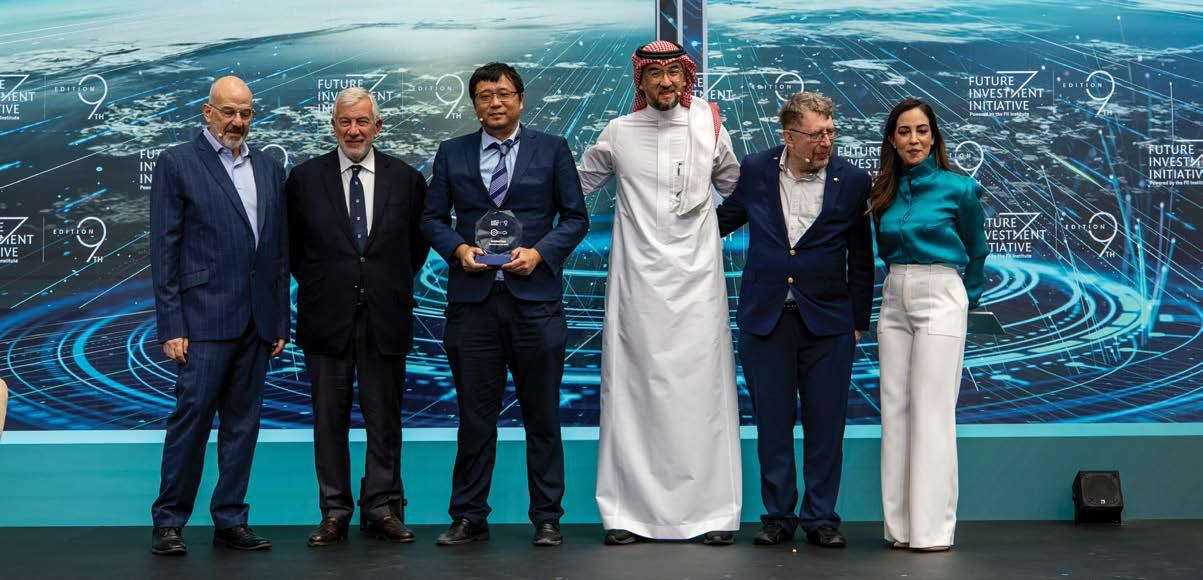
foundation models, including its Physical World Model and Force-Trajectory Model.
“Our upper-layer world model creates diverse structured representations of the physical environment and objects,” Lu explains. “This allows robots to understand physical rules more effectively and achieve a higher level of generalization—with a reduced model scale.”
A defining breakthrough for Noematrix lies in its unique integration of trajectory-space and force-space parameters. “As the world’s only robotics company with proprietary force generalization capabilities, our AI brain allows robots to mimic
Noematrix Intelligence co-founder Cewu Lu Shares Advice for Founders
} My advice is to stay focused on solving a real, hard problem—not just what’s trending. For us, that meant years spent working on fundamental technologies like structured representations and force-aware interaction. Build solutions that create practical, measurable value. And let your vision be driven by long-term impact, not short-term validation.”
Noematrix trains its models largely on real-robot operational data, supplemented by in-the-wild collection, force-feedback inputs, and haptics. “Crucially, our field data acquisition solution operates at just 1% of the cost of traditional teleoperation systems,” Luo notes. “It is algorithmically adaptable to train with any robotic arm through fast pairing. This gives us a highly economical, scalable pathway for data acquisition—solving one of the biggest inefficiencies in robotics.”
The company recently took the global stage at the FII9 Innovators Pitch 2025 in Riyadh, where Noematrix was recognized as one of five global
foundation for redefining how robots interact with and adapt to the human world.”
Noematrix demonstrated how its foundation model converts visual signals into structured, actionable knowledge—enabling robots to handle unseen scenarios with minimal data input.
“The exposure at FII9 has already attracted interest from international investors and strategic partners,” Lu adds. “This recognition validates our persistence in tackling one of AI’s hardest challenges: bridging perception and action in unstructured environments.”
Looking ahead, Lu sees Noematrix
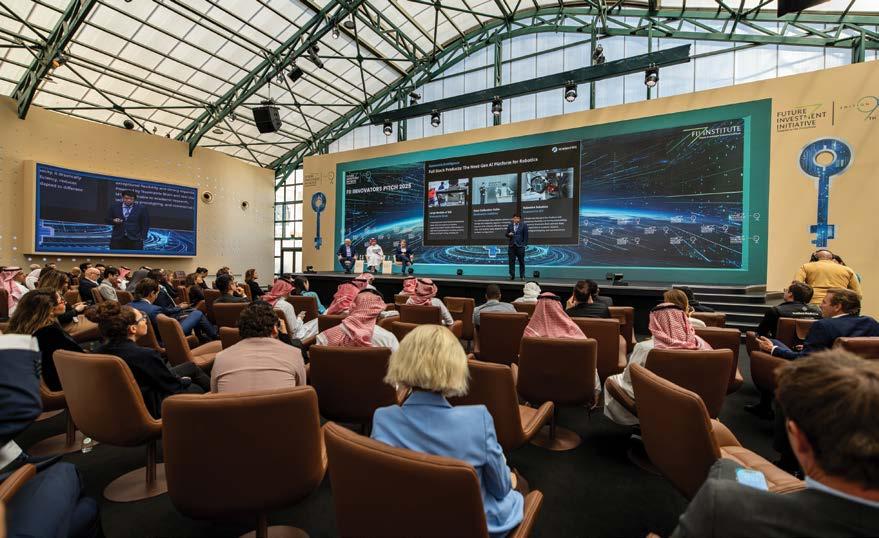
AS THE WORLD’S ONLY ROBOTICS COMPANY WITH PROPRIETARY FORCE GENERALIZATION CAPABILITIES, OUR AI BRAIN ALLOWS ROBOTS TO MIMIC HUMAN EXECUTION OF COMPLEX, CONTACT-RICH TASKS— SUCH AS CUCUMBER PEELING OR ICE CREAM SCOOPING—AT THE COGNITIVE LEVEL.”
human execution of complex, contactrich tasks—such as cucumber peeling or ice cream scooping—at the cognitive level,” says Lu.
Unlike many robotics companies driven primarily by simulation,
innovators advancing the future of AI and robotics. “It was an inspiring experience to present at FII9 among global innovators,” says Lu. “Our key message was simple: embodied AI is not just a technological leap—it is the
becoming an industry-defining force.
“In the next two years, we aim to establish Noematrix Intelligence as the standard for embodied intelligence in robotic operations,” he says. “Our technology will power a new generation of adaptive robots across industries.” A major milestone is also on the horizon, “We plan to launch our first lightweight, low-cost robotic manipulation platform,” Lu reveals. “This will enable any enterprise to deploy and customize robots that learn efficiently with minimal data.”
The partnership announcement was made official on November 25, 2025.
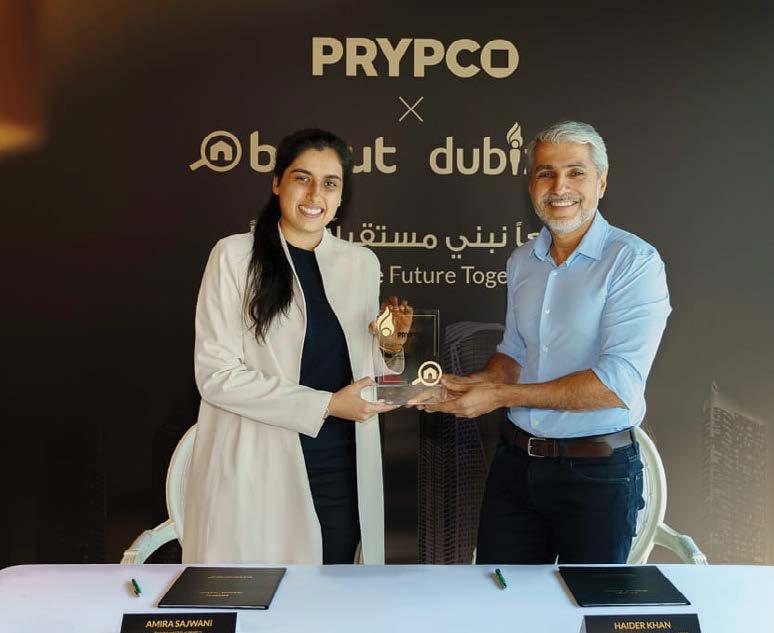
UAE-based real estate firm PRYPCO has announced an exclusive partnership with UAE-based real estate platforms Bayut and dubizzle.
PRYPCO is a proptech company transforming the UAE real estate experience by connecting buyers,
sellers, investors, brokers, agents, and banks on one platform. Its offerings cover the full property lifecycle, and PRYPCO Mortgage helps clients secure home financing efficiently with quick approvals and streamlined steps.
Bayut is a leading real estate portal that allows users to search, buy, sell, and rent residential and commercial properties across the country, offering verified listings and data-driven market
insights. Meanwhile, Dubizzle is the UAE's largest online classifieds platform, enabling individuals and businesses to buy and sell secondhand items like cars, electronics, and furniture, while also providing listings for jobs, rentals, and community services.
"It's an honor to be here in the Dubizzle offices, but more so to be getting into a partnership with the biggest proptech in town," said Amira Sajwani, Founder and CEO of PRYPCO. "You guys have created what nobody else did over the years, where tech didn't prosper as much and didn't have as much opportunity. So honestly, it's our honor and we have massive respect for the hard work that happens here."
On his part, Haider Ali Khan, CEO of Bayutand dubizzle, and CEO of Dubizzle Group MENA, added: "Similarly, I think we have a lot of respect for Amira and what she's built across PRYPCO as well... They're the first ones who actually came up with tokenized title deeds, which I thought was brilliant and exceptional. So we're very excited. She's very forward-looking, and so are we. And hopefully we can use tech to really solve some actual problems and not just flag a wave of tech across. So we're very excited about this partnership and look forward to working with them."