Ensemble Q continues to shine as Queensland’s premiere large chamber ensemble and one of Australia’s most respected musical organisations.
In 2025 the concert program expanded significantly, presenting 19 performances across four series, a festival, regional touring, a collaboration with The Australian Voices, and a sold-out appearance at the Ukaria Cultural Centre. A new partnership with The University of Queensland enabled the creation of a popular new Sunday afternoon series at the award-winning GHD Auditorium, which will evolve into our mainstage series in future years. The QPAC Series was presented on three Monday evenings and featured bold masterworks including George Crumb’s Black Angels and the Australian Premiere of Jörg Widmann’s Schummanliebe with German Baritone Benjamin Appl.
For the first time in 2025, Ensemble Q appointed a Composer-in-Residence, awarding the position to Melody Eötvös, whose superb new septet Baelo received its premiere. Several of her existing chamber works were also featured across the season.
A major new initiative, Soundscapes & Stories – A One Day Festival, was developed and staged at Sandgate Town Hall. This immersive event introduced an innovative audience-engagement model, incorporating a fourtiered mentorship framework and generating a new work that will play a central role in Ensemble Q’s future artistic activities.
Ensemble Q received a generous Queensland Arts Showcase Program grant from Arts Queensland to support the entire 2025 season, enabling a strengthened artistic vision and increased reach.
Key partnerships and collaborations in 2025 included QPAC, The University of Queensland, ABC Classic, The Australian Voices, ANAM, 4MBS Classic FM, Queensland Art Song Festival and Elm House.
All Ensemble Q mainstage concerts were recorded and continue to feature regularly on ABC Classic, expanding our national presence and ensuring our performances reach audiences across Australia.
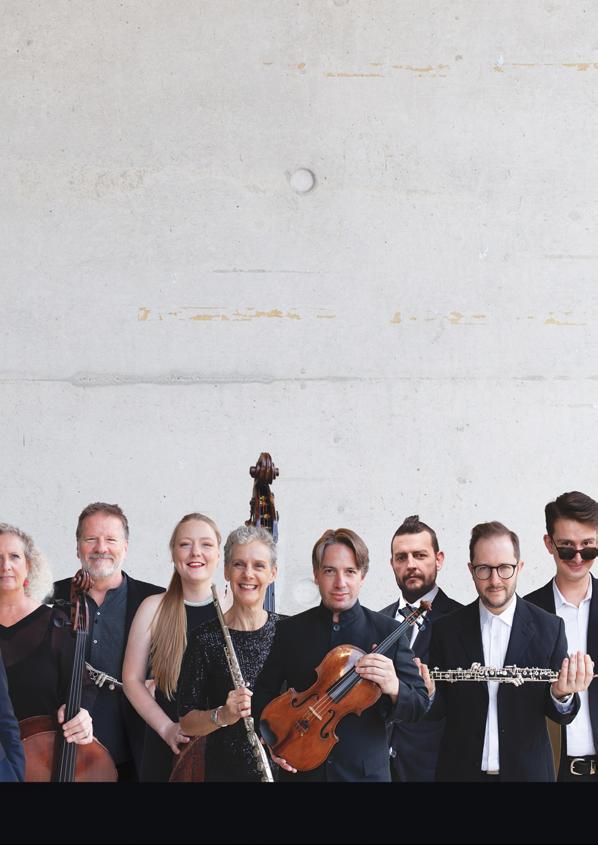







2025 has been a strong year for Ensemble Q, with 19 performances across Queensland, South Australia, and NSW. Some standout performances included our performance of the rarely performed “Black Angels” by George Crumb, the beautiful Berwald Septet and Melody Eötvös’ Baelo, and of course the privilege of performing the Australian premiere of German composer Jörg Widmann’s Schummanliebe, with the astonishing German baritone Benjamin Appl, made possible by our collaboration with Alexandra Flood and the Queensland Art Song Festival.
For the first time since the creation of Ensemble Q, we applied for government funding for the 2025 season and were awarded $54,600 as part of the Queensland Arts Showcase Program from the Queensland Government, through Arts Queensland. The effects of this grant have already shaped our future and with Arts Queensland’s help we were able to present more performances in wider regions, with greater impact than ever before. Our 2025 mission to bring music to the people, for the people became a reality and we can not thank Arts Queensland enough.
Our ever growing network of incredible sponsors have also stepped up as true supporters of Ensemble Q and donations were received from many new donors, to whom we give our warmest thanks. Particular thanks go to our major donors - Philip Bacon AO, Di Jameson and Frank Mercurio, Professor Ian Frazer AC and Caroline Frazer.
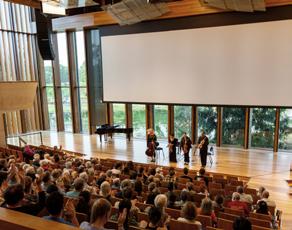
Collaborations are incredibly important to Ensemble Q and this year presented a feast of collaborations that are forging our future as an ensemble. Particular thanks goes to Liam Viney, Director of the School of Music at The University of Queensland, who has allowed us to create and present our now popular Sundays by the Lake Series in the stunning GHD Auditorium. The consistent comments from audience members were about how beautiful the experience is, to sit and watch high level chamber music whilst watching ducks and moorhens fly to their watery nests and clouds rolling in behind us (including the odd rather violent storm....). The feeling in that venue is one of connection, warmth and enjoyment and we look forward to continuing and expanding our series there next year.
Other collaborations included the previously mentioned connection with the Queensland Art Song Festival, and another vocal connection with The Australian Voices. Huge thanks to their director, John Rotar for his energy and enthusiasm for our One Day Festival, and the glorious collaborative performance of the Stanhope Requiem. It was wonderful to partner with ANAM and create student placements for 3 exceptional young violists, a double bassist and a flautist in our series concerts. And we warmly thank Laura Bethke and Gavin Cook at Elm House, who saw the possibility of creating a chamber music series with our two bookings and created a whole new audience in the Morton Bay region. And of course warmest thanks goes to QPAC, who have hosted our mainstage series since 2022. Deep gratitude goes to 4MBS Classic FM for providing us with a rehearsal venue on many occasions, as well as the Queensland Youth Orchestra when we were in need of both venue and percussion equipment.
One of the most important events for us was the Soundscapes & Stories - a One Day Festival event at Sandgate Town Hall. Not one person present wasn’t deeply moved or delighted by the opportunity to sit within the orchestral format, or be surrounded by voices with an instrumental core, or be blindfolded and listen to one of the greatest string works of all time. The four tiered mentorship program was a great success, with Ensemble Q leading members of the Cherubim Ensemble, Queensland Conservatorium and Mini Q in inspiring performances across the day.
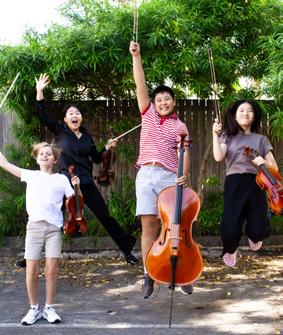
Education remains at the heart of Ensemble Q’s mission, with the creation of Mini Q, our newest flagship string quartet of 12 and 13 year old superbly talented young musicians, brought together by Ensemble Q for weekend workshops and performance opportunities. Between the One Day Festival, Mini Q, the ANAM placements and mentorship placements in our concert series, we presented real educational and high level performance opportunities for 26 young artists in chamber music settings and 24 side-byside orchestral placements in collaboration with 4MBS Classic FM for their Gilbert and Sullivan Opera Gala.
2025 was another year of financial and operational strength and growth. With a gross income of $349,715, we paid $223,000 to artists in the 2024/25 year and received $217,494 in ticket sales and performance fees plus $96,786 in private donations. Increased support from corporate partners and donors ensured we could expand our programming and outreach while maintaining financial stability. As we look to 2026 we are delighted to be receiving a two year operational grant from Arts Queensland of $70,000 per year, and we warmly thank Professor Ian Frazer AC and Caroline Frazer for their enormous generosity with a significant donation that makes it possible for us to continue our educational programs at the highest level throughout 2026. We thank all of incredible family of donors, all of whom make us feel supported with their generous donations and encouragement.
In conclusion, I extend my deepest gratitude to our musicians, supporters, audiences, and staff, whose collective passion and dedication make Ensemble Q’s work possible. Together, we are ensuring that chamber music remains a vital and vibrant part of Queensland and Australia’s cultural fabric.
Trish Dean
CEO & Co-Artistic Director, Ensemble Q
2025 was another defining year for Ensemble Q – a season marked by artistic expansion, new collaborations, ambitious projects and the deepening of our role as one of Australia’s leading chamber ensembles. It was a year in which our musicians, partners and audiences demonstrated extraordinary commitment to the ensemble’s vision, allowing us to extend our reach both artistically and geographically.
Our concert program grew to 19 performances across four series, alongside regional touring, festival appearances, and a memorable sold-out performance at the Ukaria Cultural Centre. The breadth of repertoire this year – from cornerstone works of the chamber canon to new Australian compositions – reflected our ongoing commitment to presenting music of exceptional quality, diversity and relevance.
A significant highlight of 2025 was the establishment of our Composer-in-Residence program, launching with the appointment of Melody Eötvös. Her outstanding new septet, Baelo, was a major artistic achievement for the ensemble and resonated deeply with audiences. Programming a curated selection of her chamber works across the season also allowed us to champion one of Australia’s most compelling compositional voices.
We were proud to introduce a major new initiative, Soundscapes & Stories – A One Day Festival, presented at Sandgate Town Hall. This immersive event brought together performance, mentorship, creativity and community engagement in a new way for Ensemble Q. The four-tiered mentorship structure not only nurtured young artists but also integrated them meaningfully into the creative process, culminating in the premiere of a collaborative new work. This project represents a model we intend to build on in the coming years.
We are also proud to have presented eleven Australian works in that one event, with works by Joe Twist, Luke Hammer, Sarah Hopkins, Wilfred Lehmann, Melody Eötvös, Angela Zhang, Anne Levitsky, Josephine Gibson, Amber Evans, Katherine Anderson and Margaret Tesch-Muller.
Our partnership with The University of Queensland proved transformational, giving rise to a vibrant new Sunday afternoon series in the GHD Auditorium. Its popularity exceeded expectations and confirmed UQ as the future home of Ensemble Q’s mainstage Brisbane activities. Equally meaningful were our collaborations with QPAC, The Australian Voices, ANAM, ABC Classic, 4MBS Classic FM and Elm House, each relationship contributing uniquely to the artistic and educational fabric of the year.
We are grateful to have received support from the Queensland Arts Showcase Program, enabling us to deliver an expanded season with stronger production values, broader programming and increased accessibility for growing audiences.
A further point of pride is that all our mainstage concerts were recorded by ABC Classic, ensuring that Ensemble Q’s performances continue to be shared with listeners across the nation, strengthening our identity and presence within Australia’s cultural landscape.
Our musicians are all exceptional and we are deeply proud of our abillity to attract and retain some of the most extraordinary musical minds in the country, most of them resident in Brisbane. Despite being a relatively small organisation, we are seeing and hearing that we make a big impact upon the reputation of Queensland, the viability and quality of chamber music locally and nationally, and the educational opportunities that we are able to offer our students. This is what we set out to do, and we are delighted to hear from voices far and wide that they are impressed by our profile and valued by our supporters.
As Artistic Directors, we feel immense gratitude for the commitment of our brilliant musicians, the generosity of our partners and supporters, and the enthusiasm of our audiences. The 2025 season reaffirmed that Ensemble Q is entering a bold new chapter – one that balances artistic excellence with innovation, education and community connection.
We look ahead to 2026 with excitement, determination and a clear artistic purpose, confident that the foundations built this year will support even more ambitious and meaningful projects to come.
Paul and Trish Dean Co-Artistic Directors, Ensemble Q
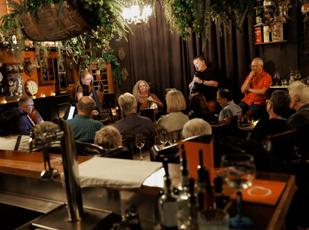
FEBRUARY 11 - WHISKEY BAR Ravel & Bach Duos (Sold out)
MARCH 17 - QPAC - GRAND SEPTET
MARCH 23 - UKARIA CULTURAL CENTRE (Sold out)
APRIL 8 - WHISKEY BAR with Joe Chindamo (Sold out)
MAY 4 - SUNDAYS BY THE LAKE - Death & the Maiden
MAY 19 - QPAC SERIES - Black Angels
MAY 27 - WHISKEY BAR - Bach, arranged (Sold out)
JUNE 15 - SUNDAYS BY THE LAKE - Brahms & Bosmans
AUGUST 3 - ELM HOUSE with Ed le Brocq (Sold out)
AUGUST 25 - QPAC - A POET’S LOVE with Benjamin Appl
SEPTEMBER 7 - SUNDAYS BY THE LAKE Beethoven, Clarke & Mozart
SEPTEMBER 23 - WHISKEY BAR - When Harry met Phoebe (Sold out)
SEPTEMBER 27 - SOUNDSCAPES & STORIES - A ONE DAY FESTIVAL (Sold out)
SEPTEMBER 28 - ELM HOUSE - Metamorphosen (Sold out)
OCTOBER 4 - LONG LISTEN FESTIVAL, Eudlo Qld
OCTOBER 5 - GRETEL FARM, Eureka NSW (Sold out)
OCTOBER 14 - WHISKEY BAR - Harping On (Sold out)
OCTOBER 26 - SUNDAYS BY THE LAKE - Piano quintets
OCTOBER 28 - REQUIEM with The Australian Voices
Plus three performances by Mini Q
ONLINE & RADIO PRESENCE
YouTube 16,900 views in 12 months from across the globe 675 Channel Subscribers
FACEBOOK 1.3K followers
INSTAGRAM 1837 followers
NEWSLETTER 944 active subscribers
Total audience members = 3280
At least 7 performances were aired on ABC Classic in 2025
ABC Classic reaches over one million listeners nationally each week. A typical broadcast is likely heard by 40 - 60,000 listeners across Australia.
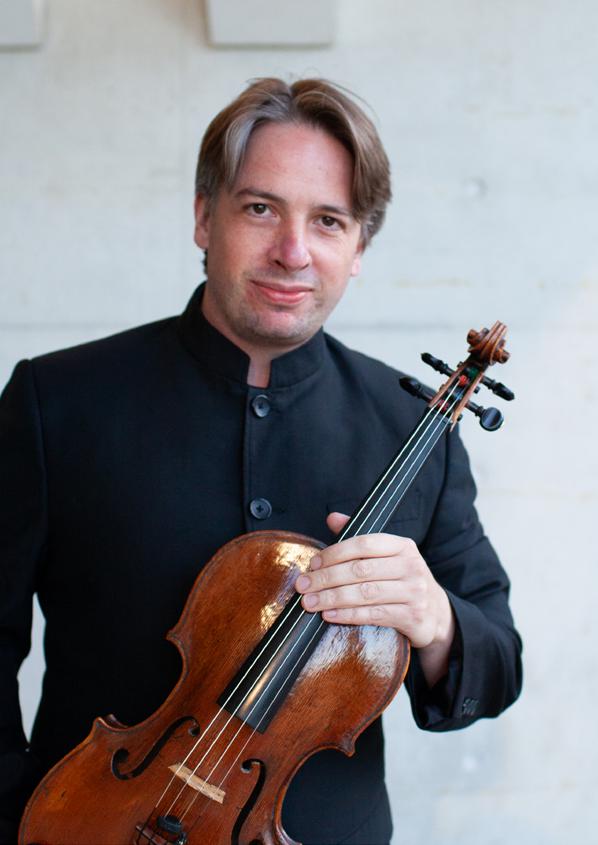
Antonin Dvořák Bagatelles
Ernő Dohnányi Serenade for string trio
Melody Eötvös new work (world premiere)
Franz Berwald Grand Septet
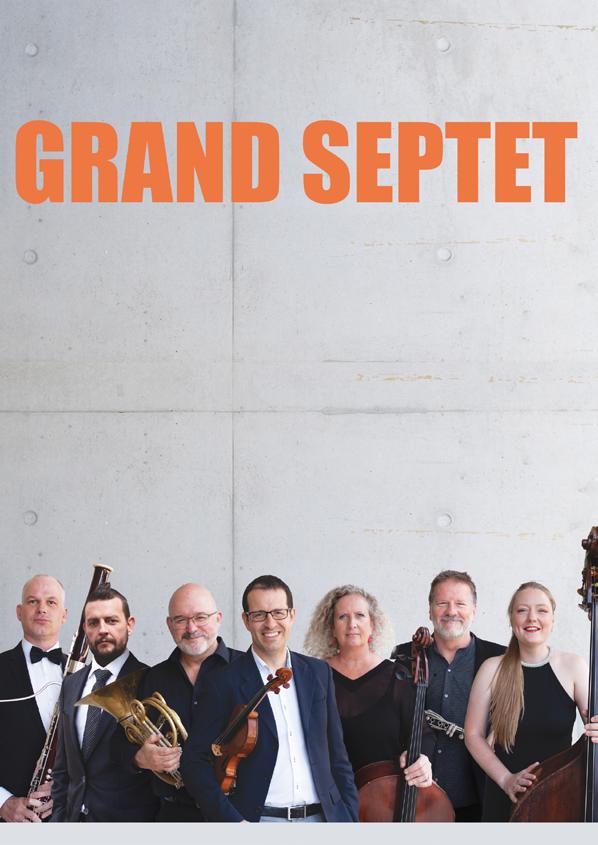
MONDAY 17 MARCH
Grand Septet (Ensemble Q)
Seven’s the magic number in Ensemble Q’s surprising chamber recital.
Concert Hall, QPAC, Brisbane
Reviewed on 17 March, 2025 by Paul Ballam-Cross on 18 March, 2025

Now, here’s some unusual repertoire! This Ensemble Q performance leapt from a Dvořák arrangement to Dohnányi to new Australian music – all tied together by the fact that the tentpole pieces were for seven players.
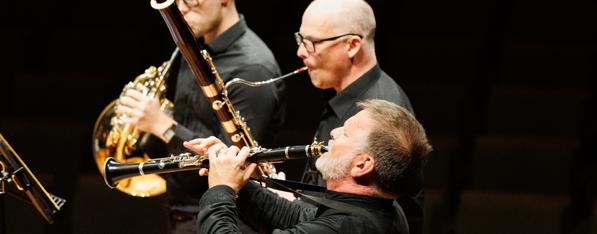
The performance began with cellist Trish Dean’s rejigging of Dvořák’s Bagatelles Op. 47, originally for two violins, cello, and harmonium (or piano if you don’t happen to have a harmonium on hand), for the combination of string trio, double bass, clarinet, French horn and bassoon. It’s the same combination as the famous Beethoven Septet, but what a refreshing change to hear different music for this ensemble.
The Bagatelles are gorgeous little pieces, and, like most Dvořák, you’ll find yourself humming snatches of the tunes for ages. In their new septet format, the works fit seamlessly, but best of all was being reminded of just how good Ensemble Q are—my notes for the third movement, for instance, read “ridiculously tight,” and with playing that good, it’s not just a pleasure to listen to the performance but also to watch the players working together.
Next was Ernő Dohnányi’s oh-so-Hungarian Serenade for String Trio, spotlighting violinist Adam Chalabi and violist Christopher Moore alongside Dean’s cello. This is a surprisingly virtuosic set of pieces, with the trio taking the last movement at a rip-roaring tempo. (It’s worth noting, too, that Moore had a terrific tune in the Romanza slow movement – justice for the viola, hurrah!)
Next was the premiere of a new piece by Australian composer Melody Eötvös, Ensemble Q’s Composer-in-Residence for 2025. I enjoyed a release of her piano music last year (review here), where I described her compositions as having “an intriguing sense of storytelling … pieces abound with surprising titles, and that sense of a tale unfolding is reflected in her colourful music.”
This new piece for septet, titled Baelō, didn’t grab me as hard, I’m afraid. Eötvös was there to introduce the piece and admitted to her love of sand-themed works (“I love sand … and I love music,” was the rather disarmingly neat summation), but what struck me was how familiar many of the sounds felt. The piece is inspired by the ancient Roman town of Baelo Claudia in Spain, and so, being Spanish-ish, there was rather a lot of Phrygian sounds (AKA the flamenco scale, if you’re so inclined). It certainly evoked Spain, but I wanted it to push beyond that hazy, atmospheric quality into something stranger and more unexpected. There were a few moments that stood out – bassist Phoebe Russell got some super cool glisses, which turned into some great vertigo-inducing moments for the ensemble. I simply wanted more weird, and less picture-postcard Spain.
The grand finale was the Grand Septet by Swedish composer Franz Berwald. Amazingly, despite the work dating from 1828, clarinettist Paul Dean remarked that he was fairly sure he had given its Australian premiere in the early ’90s. So, Berwald is definitely not a household name, but this is nonetheless a work worth getting to know. Dean also suspected a Mendelssohn influence in the piece, and I think he might be onto something—there were a few moments that rang a Mendelssohn-esque bell, but it’s a terrific piece on its own merits, too. Some lovely part-writing was brought out nicely by each player in the second movement, and the last movement’s surging intensity was great fun – particularly the horn and bassoon’s burbling “pa-papapageno” theme.
A terrific set of pieces, and a wonderful chance to see such high-level players interacting with each other close up. It’s abundantly clear that Ensemble Q love what they do and are having a blast playing their repertoire – it’s interesting, unusual, and great fun for both players and audience alike.
Top notch.
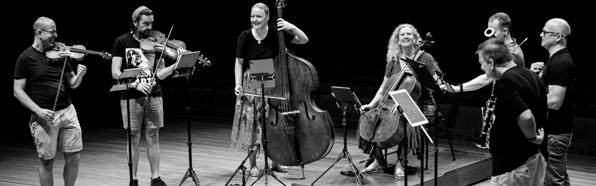
ARTShub Music review: Grand Septet, QPAC
A world premiere and some rarely performed works for string and woodwind open Ensemble Q’s 2025 QPAC series.
19 Mar 2025 14:33
Suzannah Conway

Co-Artistic Directors, Trish and Paul Dean, have created an exceptional year of fine chamber music programs for Ensemble Q. Exciting collaborations within their pool of talented musicians utilise a range of unusual and tempting venues across Brisbane and south-east Queensland, as well as further afield.
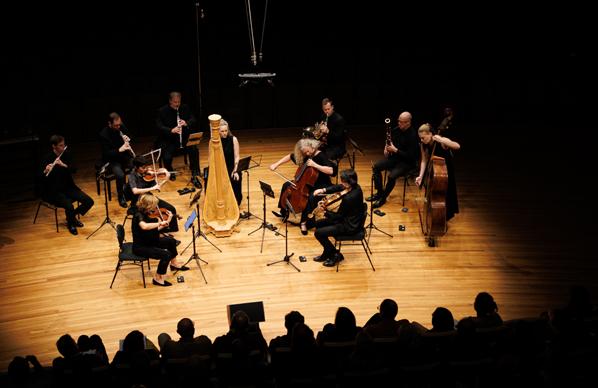
As part of their main QPAC series, their year opened with Grand Septet – four works for a mixed ensemble of strings and winds – which will be broadcast on ABC Classic FM in April. Seemingly a winning combination of instrumentation for a chamber group, the septet of violin, viola, cello, double bass, clarinet, bassoon and horn offers a range of almost symphonic sonority and musical colours without losing the tone and texture provided by a solo player.
The concert commences with Dvořák’s Bagatelles Op.47, five short melodic pieces originally written for two violins, cello and harmonium (or piano). In a new and very fine arrangement by Trish Dean for the string and wind septet, Dvořák’s work is given additional and well-crafted musical textures. It seems to sizzle and sparkle in this version with its newly created sonority.
Based on a folksong theme, the mostly bright, tuneful music is bounced around from one instrument to another, from strings to wind and back again, with alacrity. Technically assured, the septet play with great enthusiasm and style, each instrument offering an individual palette of musical colours under an umbrellaed and joyous soundscape. An impressive rendition of this work.
Ernö Dohnányi’s Serenade for String Trio is a melange of styles, bringing together Hungarian folk tradition, classical romanticism and early 20th century modernism. The classical five movements for violin, viola and cello flow from a brisk Allegro towards a melancholic and lyrical Romance, followed by a vigorous Scherzo, some introspective variations and then a rollicking and fast Rondo. A roller-coaster of a ride for the musicians with mood swings and many shifts in dynamics, especially in the variations, it requires great technical skill and expressive sensitivity.
From Adam Chalabi’s controlled violin with its sweeping lyricism through Christopher Moore’s emotive viola solo and the underlying warmth and richness of Trish Dean’s cello, the Serenade is managed with prowess and panache. It showcases an impressive and technically virtuosic interplay between the three instrumentalists that is both exciting and exhilarating to watch and hear.
Ensemble Q’s 2025 Composer in Residence, Melody Eötvös, was commissioned to write a new work for this concert. A world premiere, Baelō was inspired by the Big Drift sand dunes in Victoria and the Baelo Claudia Archaeological Complex and sand dunes in Bolonia, Spain. A prolific composer, Eötvös’ music is greatly influenced by innermost thoughts, ideas and feelings. She is also inspired by visual stimuli, particularly of the natural world, to which the amazing and beautiful images on her website attest.
As written for the Septet, the five separate short movements of Baelō are played without any noticeable breaks and very much merged into each other as the work progresses. This is powerful, atmospheric and evocative music – the drifting of the sand being heard in the first dark notes of the double bass and through the remaining strings as they begin to play Joining the strings, the long, slow notes of the woodwind depict a sad and melancholic mood, perhaps to illustrate the ever-present sea. We hear Spanish rhythms as the clarinet rides above the bassoon and horn, with its melodic trills and wistfulness, with hints of Arabic rhythms also discernible.
All in all, this is a marvellous ethereal work where the individual instruments have their own colourful voices, while working together harmoniously. An impressive new work, beautifully realised.
The final work is the rarely performed Grand Septet in B flat major by Swedish composer, Franz Berwald. Berwald’s skilful orchestration is very well constructed to show off the individual qualities of all seven instruments, while at the same time offering a cleverly balanced and rounded delivery by the whole septet.
The sprightly Adagio leads to an emotive Andante, then a foot-tapping rhythm in a fun Scherzo and a fierce and frenetic Finale. Ensemble Q play this extremely well, obviously relishing their exciting individual roles, with many excellent solos by all the players. They work impressively and seamlessly together to deliver an excellent performance of this glorious work, and a performance that is one to remember.
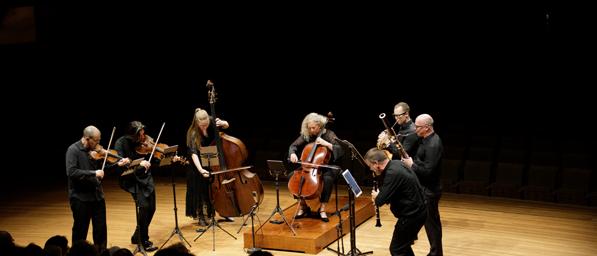
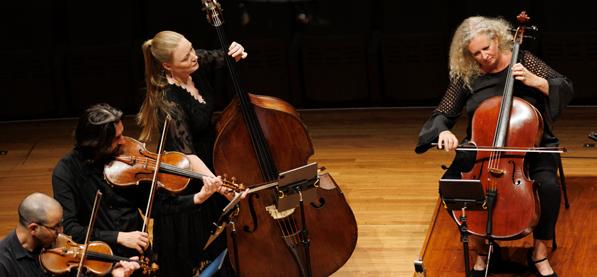
MONDAY 19 MAY
André

An entertaining and intelligent program from Ensemble Q, with just the right mix of the comforting, the adventurous and the heartfelt.
Concert Hall, QPAC, BrisbaneReviewed on 19 May, 2025 by Gillian Wills on 21 May, 2025
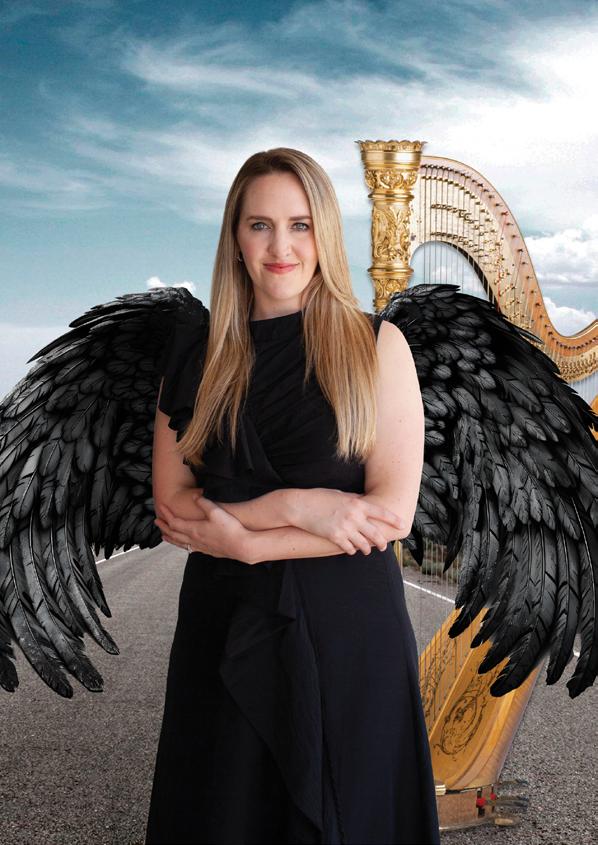
David Bowie on hearing George Crumb’s Black Angels: Thirteen Images from the Dark Land for the first time said, “it scared the bejabbers out of me.” He dubbed it a “study in spiritual annihilation”.
Paul Dean, co-artistic director of Ensemble Q deserves a pat on the back for programming this rarely performed, harrowing and richly-imagined listening experience, one steeped in numerology and symbolism. Crumb wrote it during the Vietnam War, in 1970. It’s rarely performed due to its extended instrumental techniques (such as bowing upside down) and use of percussion, metal thimbles, glass rods and electric string quartet.
Violinists Zöe Black and Anne Horton, violist Christopher Moore and cellist Trish Dean gave a brilliant reading of Crumb’s bleak behemoth with its borrowings from the Latin Dies Irae and Schubert’s Death and the Maiden. In the first movement, Night of the Electric Insects, the quartet were superb in driving the chilling, skittered whining like whirring helicopter blades.
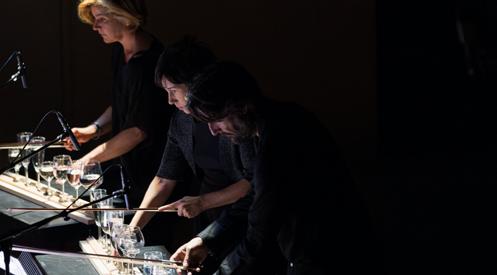
One of the stand-out moments was in the tenth movement when Black, Horton and Moore bowed crystal glasses in unison with immaculate precision while Trish Dean accompanied this sonic surprise with meandering lyricism. The ensemble didn’t hold back in their snappy and intermittent execution of Japanese, German, Russian, Hungarian and Swahili expression.
Alongside Crumb’s treatise there were three other works in this compressed interval-free recital. Paul Dean’s arrangement of Ravel’s piano piece Le Tombeau de Couperin features six French dances which hark back to a bygone age and the work explores formal structures and courtly mannerisms.
For anyone frowning at Dean’s audacity in arranging this for Ensemble Q, Ravel’s publisher asked him to do the very same in transcribing four of the movements for orchestra. ‘Tombeau’ literally means ‘tomb’. Each suite was dedicated to one of Ravel’s deceased friends but the tone isn’t mournful but elegant and joyful in spirit. They are celebratory rather than grief stricken. It was rewarding to listen to the individual players because each part was so beautifully shaped. Impressionistic flurries by oboist Huw Jones and Dean on clarinet sparkled to perfection within an opulent ensemble sound.
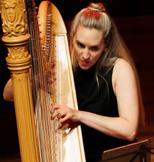
Emily Granger was the harp soloist in Andre Caplet’s impressionistic Conte fantastique for harp and string quartet. She was insightful and sure-fingered in her sweeping articulation of virtuosic passagework.
Tchaikovsky’s Adagio Lamentoso from Symphony No. 6 in B Minor was another example of music inspired by death and mortality. Violinist Zoe Black’s leadership excelled. She produced luminous tone in this stirring performance.
Ensemble Q’s line-up presents some of the most important musical influencers and top flight players in Australia. Their presence on QPAC’s concert hall stage made an impact even before a note was heard which prompted an expectation of superior performance. The expectation was fulfilled.
This was an entertaining and intelligent program with just the right mix of the comforting, the adventurous and the heartfelt.
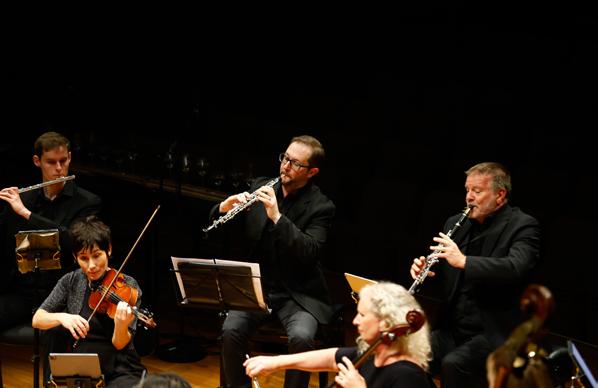
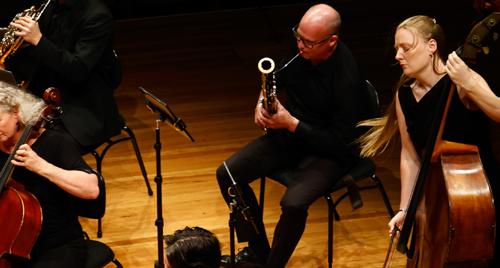
7 CONCERTS
5500 audience members
5 educational workshops
ABC Classic broadcast and selection as Concert of the Month in December 2024
MONDAY 25 AUGUST
Henri Chausson Poème, Op. 25
Robert Schumann Märchenerzählungen (Fairytales) Op 132
Jörg Widmann Schumannliebe (Australian Premiere)
Benjamin Appl shines in a program calculated to please lovers of Schumann, French Impressionism and Art Song.
Concert Hall, QPAC, Brisbane Reviewed on 25 August, 2025 by Gillian Wills on 27 August, 2025

A Poet’s Love begins with Schumann’s charming Märchenerzählungen (fairy tales) in four movements for the unusual blend of clarinet, viola and piano which immerses the audience in Schumann’s lyrical and romantic language. In a work which reflects Schumann’s oppositional identities – Eusebius (dreamy and poetic) and the bold, searching and volatile Florestan – Benjamin Roskams’ viola is warmly pliant and rewarding. Paul Dean speaks volumes through the clarinet in leading the emotional charge. Daniel de Borah delivers tantalising glimpses of the piano’s might but, in general, the balance could more often favour his glorious shading.
Chausson’s Poeme, prompted by one of Ivan Turgenev’s short stories and arranged by the composer for solo violin, string quartet and piano, is stylishly captured in this performance. The ensemble scales the work’s spirituality and tragedy, adding nuance to the harmonic shifts and shimmering sonic spheres. Violinist Adam Chalabi solos with improvisatory flair and a lovely tone.
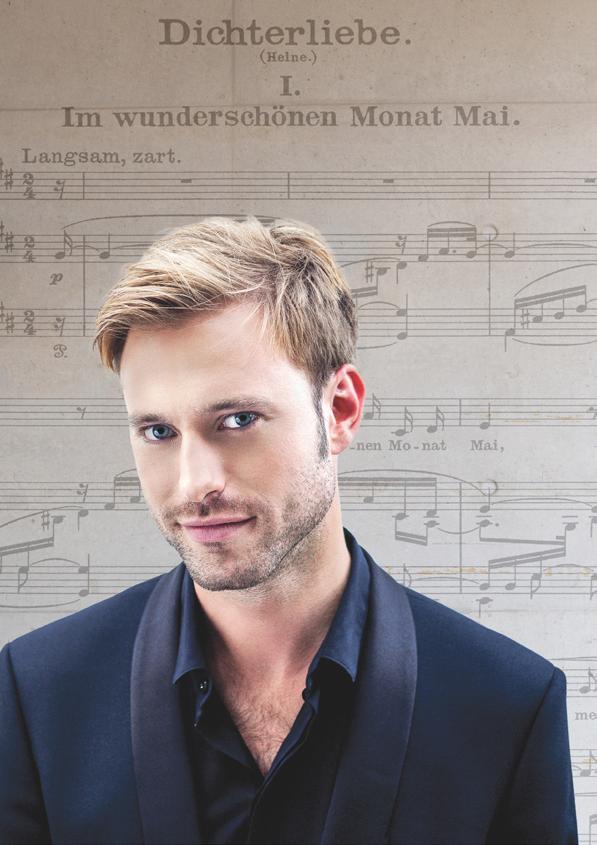
Composer Jorg Widmann’s stimulus for his exhilarating and adventurous Schumannliebe, given its Australian premiere in this concert, is Schumann’s popular song cycle for voice and piano, Dichterliebe(A Poet’s Love), which maps a young man’s journey through heartbreak after a lover’s rejection.
Widmann uses the same ordering of Heinrich Heine’s poems as Schumann and replicates the composer’s original vocal lines, but the accompaniment is reinvented through surprising and imaginative orchestration involving advanced instrumental techniques, daring silences, theatrical introductions, shooting pops of colour, jagged rhythmic threads, weird juxtapositions and – in between the songs – melodramatic summary. As Widmann is an acclaimed clarinettist, his writing champions the instrument which Dean admirably highlights.
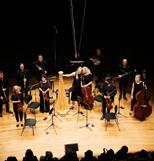
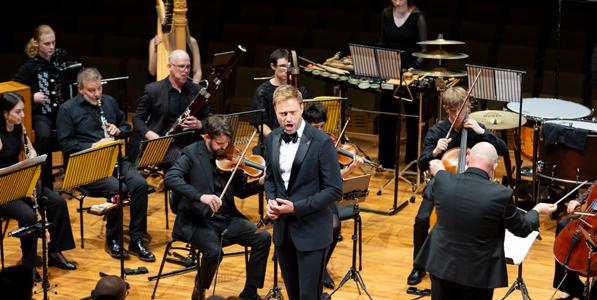
It is rewarding to see young players, hornist Hannah Waterfall and accordionist Artemii Safonov for instance, in the midst of established stars such as cellist Trish Dean, violinist Anne Horton and bassist Phoebe Russell. Directed by Peter Luff, the orchestra cushions and embellishes the soloist’s lyricism in between splashes of wild extroversion.
A protégé of Dietrich Fischer-Dieskau, baritone Benjamin Appl performs courtesy of The Queensland Art Song Festival. His quiet authority and questioning eyes challenge the audience and his luminous voice eloquently explores the shifting feelings of rage, despair, acceptance and forgiveness. With Appl’s stunning yesteryear delivery it is as if he embodies 19th-century Lieder traditions while the orchestra fields 21st-century trends.
Highlights include Ich grolle nicht in which baritone and ensemble rail against the loved one’s “snake-infested heart”, the emotionally strident Wenn ich in deine Augen seh and the seductive Ich will meine Seele tauchen. A winning program especially appreciated by fans of Schumann, French Impressionism and Art Song.
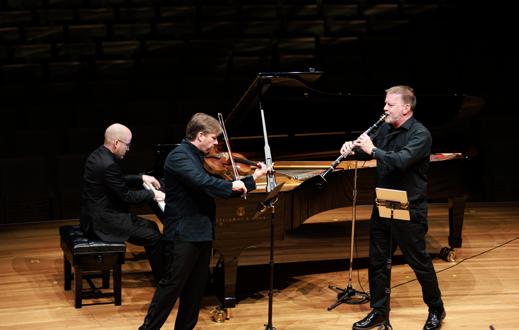
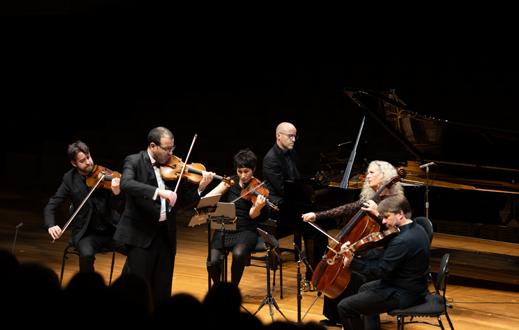
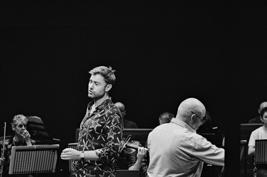
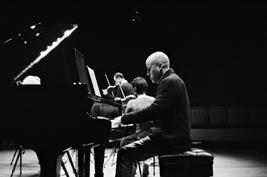
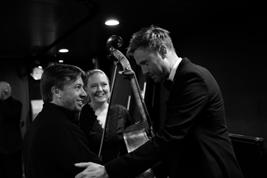
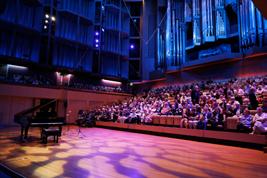
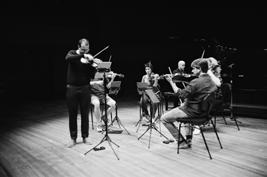
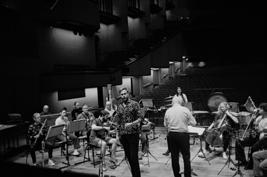
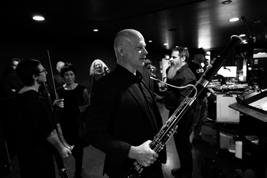
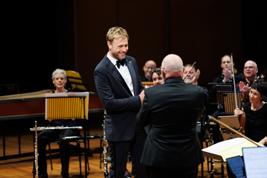
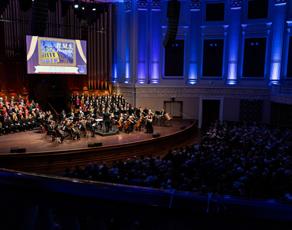
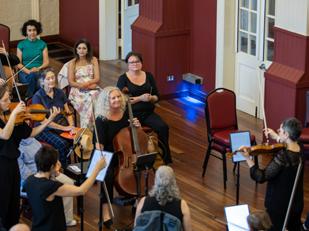
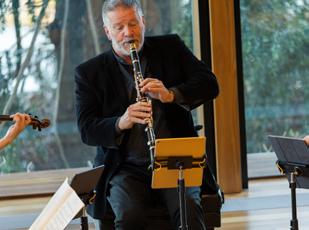
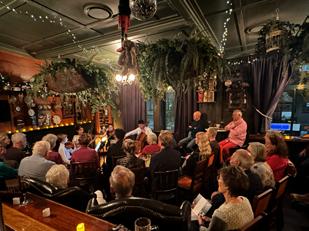
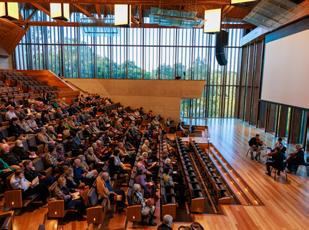
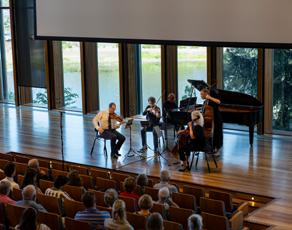
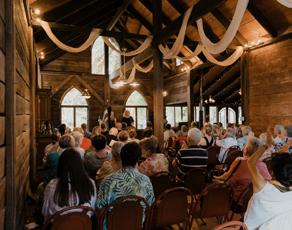
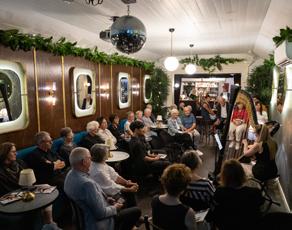
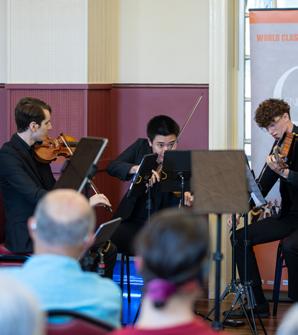
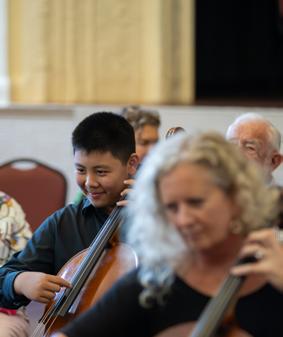
The Ensemble Q education program includes side by side placements, workshops, training orchestra projects and workshops. In 2025 we provided:
• 26 chamber music placements
• 24 side-by-side orchestral placements
• Creation of the Mini Q program
• Four tiered mentorship model at Soundscapes & Stories - a One Day Festival.
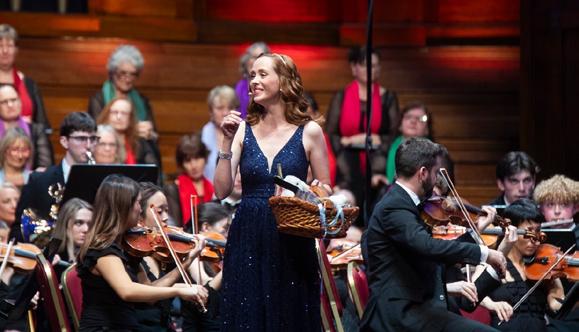
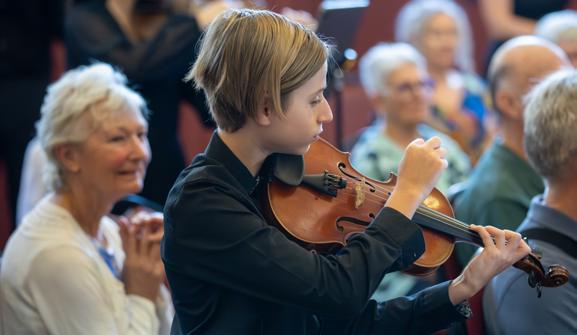
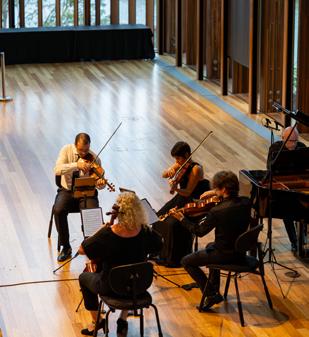
2025 Ensemble Q educational partnerships included:
• Australian National Academy of Music (ANAM)
• The University of Queensland
• 4MBS Classic FM.
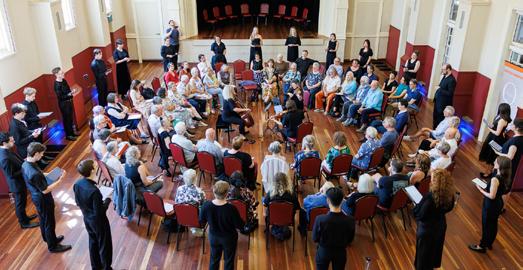
This event was a defining moment in Ensemble Q’s audience engagement and creative capacity.
Through 3 immersive performances and a composer forum, Ensemble Q engaged audience members with performances by a four-tiered mentorship model, performing 11 Australian works surrounded by masterpieces by Britten, Strauss and Arvo Pärt.
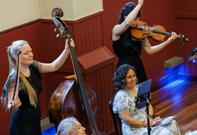
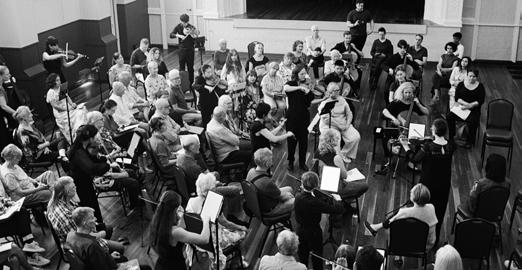
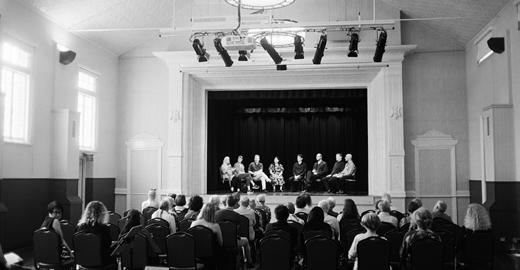
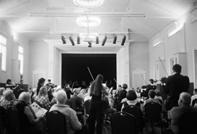
Special guests included Ed le Brocq,The Australian Voices and composers Joe Twist, Melody Eötvös, Sarah Hopkins, John Rotar, Paul Dean, Angela Zhang and Luke Hammer.
Musicians in the four-tiered mentorship model included Mini Q, the Fiddlesticks Quartet (QCGU) and Cherubim Ensemble, led by Sophie Rowell, Trish Dean, Anne Horton, Phoebe Russell and Paul Dean.
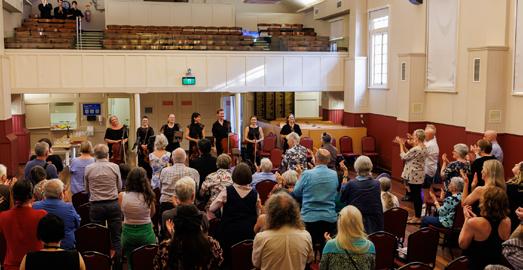
Ensemble Q – Sundays by the Lake Series, Advanced Engineering Building no. 49, University of Queensland, Brisbane, 4 May 2025
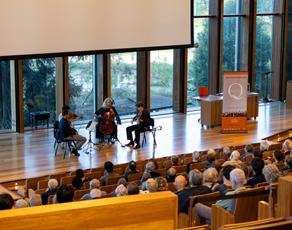
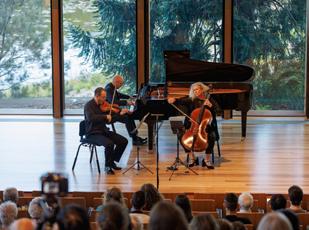
The first of Ensemble Q’s Sundays by the Lake performances was well worth the trip out to the University of Queensland. The concert took place in the stunning building no. 49 which has a glass wall so you can look out across the stage to the lake, trees and wildlife beyond. It was the perfect setting for the melancholic themed program, featuring works by two composers who tragically died young, but who continued to compose even in the face of cruel and final illness. Lili Boulanger ’s ‘D’un soir triste’ (Of a sad evening) and ‘D’un matin de printemps’ (Of a Spring morning) (1917/18) were sweeping and sad trios that captivated the audience – a very impressive turnout on a potentially rainy Brisbane afternoon. These pieces were composed in the last months of Lili’s life, and some parts may have been notated by her famous musical sister, Nadia. Yet, while the piano captures a foreboding, the superb strings lend a gliding hope. The musicians were Daniel De Borah (piano), Trish Dean (cello) and Adam Chalabi (violin).
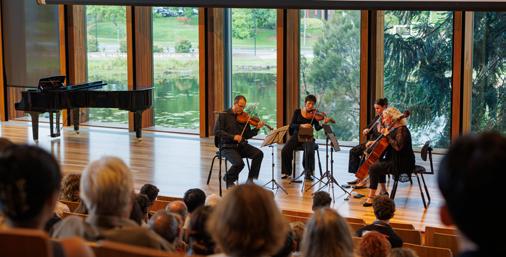
Franz Schubert’s String Quartet No. 14 in D minor. D. 810 ‘Death and the Maiden’ (1824) followed – and this piece jumps in feet first! Schubert’s quartet was played by Trish Dean (cello), Adam Chalabi (violin), Anne Horton (violin) and Helena Burns (viola) – Brisbane-born Helena is part of the Australian National Academy of Music’s (ANAM’s) placement program, allowing her to be star player with Ensemble Q’s brilliant constellation, while mentoring with the group’s Adam Chalabi, who is also Head of Violin at ANAM. This is a brilliant addition to Ensemble Q’s contribution to the musical landscape. Paul Dean introduced the Schubert quartet as one of his faves, and possibly one of the most perfect musical compositions – and from this performance, I would have to concur. The opening five notes form one of the best musical introductions ever – dramatic, succinct, economic yet engaging – immediately pivoting to a quiet melodic interlude, before building to a fast and furious filmic frenzy – once again, the melancholy tempered by moments of grand passion. The four movements were over all too soon, and the final galloping notes coincided with swaying trees and a sudden onset of heavy rain that was like a nod to the group’s Artistic Directors (Trish Dean and Paul Dean) that their choice of venue was sanctioned by the composers’ spirits. As I walked to the bus, my umbrella’s jaunty angle pulsed with Schubert’s resounding and uplifting beat, defying the rain and the sadness of the composers’ lives. This music is immersive theatre.
Ensemble Q’s Sundays by the Lake series continues with only three more performances in June, September and October. Don’t miss this unique musical experience. Beth Keehn
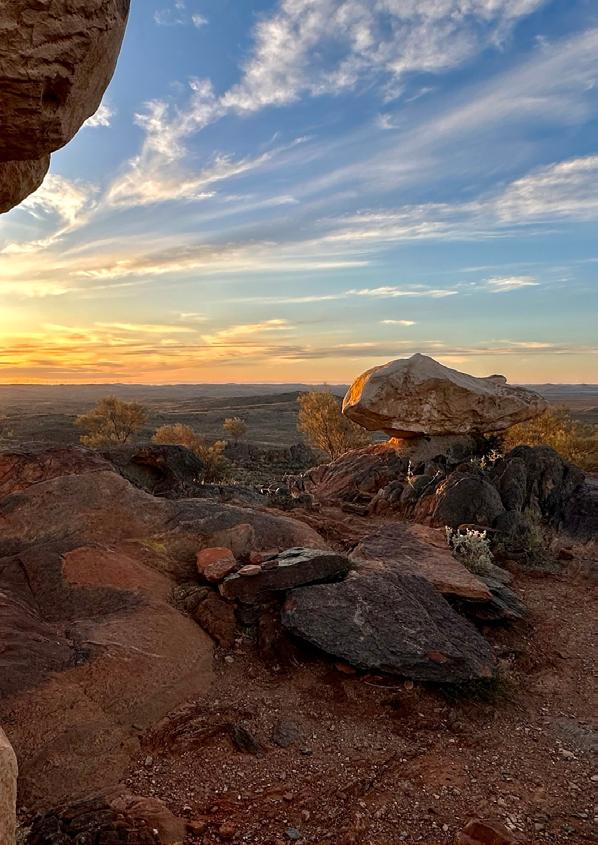
In 2025 we performed 27 works by Australian composers:
Melody Eötvös - Baelo (World Premiere commission)
Wilfred Lehmann - Theme & Variations for clarinet quintet
Joe Twist - Lament for cello and choir
Paul Stanhope - Requiem
Sarah Hopkins - Reclaiming the Spirit
Melody Eötvös - Once to Find
Angela Zhang - Nocturne (World premiere)
Paul Dean - Suite for clarinet and cello
Kate Moore - Ropes
Elena Kats Chernin - Blue Silence
Calvin Bowman - Curly Pyjama Letters
Nat Barstch - Call & Response
Christopher Sainsbury - Djagamara
Anne Boyd - Goldfish Through Summer Rain
Lachlan Skipworth - Ode
Ross Edwards - Ulpirra
Elena Kats-Chernin – Unsent Love Letters
Sally Greenaway – Liena
Alice Chance – Emily’s Suite (World Premiere)
Hillary Kleinig – A Thing of Beauty (World Premiere)
Sarah Elise Thompson – Sanddollar
Tara Minton – Lullaby
Bernardo Alviz - Elegia y Brillo para dos (World Premiere)
Josephine Gibson - Sit Laus Vobis
Amber Evans - Adnoartina of Uluru
Katherine Anderson - Alleluia
Margaret Tesch-Muller - Kyrie
Our 2025 Composer in Residence was Melody Eötvös

Ensemble Q acknowledges and thanks the following brilliant partners for their generous support







Ensemble Q is supported by the Queensland Government through Arts Queensland.
Ensemble Q Australia Inc is a non-profit company listed on the Register of Cultural Organisations and can receive tax deductible donations to assist our operational expenses. ABN 66494650123
Ensemble Q warmly thanks our key donors who generously donated in 2025
Philip Bacon AO, Di Jameson & Frank Mercurio, Professor Ian Frazer AC and Caroline Frazer, Helen Mair, Di Haskell and Ken Robinson, Dr Philip Aitken and Dr Susan Urqhuart, David and Christa Siddle, Robert and Christine Dagworthy, Dr Sheena Burnell, Mark Wakely, Vicki Brooke, Gavin Rebetzke, Dinah Blunt, Kathleen Clifford, Alan Wilson, Marilyn Christiansen, Charmaine Lawton, Len and Wendy McPherson, Robyn Tennant, Robyn Evans, Kayla Szumer
We acknowledge the Traditional Custodians of the many lands on which we meet, work and live, and we pay our respects to Elders past and present - people who have sung their songs, danced their dances and told their stories on these lands for thousands of generations, and who continue to do so.
PIANO
DANIEL DE BORAH
VIOLINS
ADAM CHALABI
SOPHIE ROWELL
GLENN CHRISTENSEN
ANNE HORTON
VIOLAS
CHRISTOPHER MOORE
BENJAMIN ROSKAMS
CELLO
TRISH DEAN
BASS
PHOEBE RUSSELL
FLUTE
ALISON MITCHELL
OBOE
HUW JONES
SARAH YOUNG
CLARINET
PAUL DEAN
BASSOON
DAVID MITCHELL
FRENCH HORN
PETER LUFF
NICHOLAS MOONEY
TRUMPET
ALFIE CARSLAKE
PERCUSSION
JACOB ENOKA
HARP
EMILY GRANGER
GUEST ARTISTS
BENJAMIN APPL, BARITONE
JOE CHINDAMO, ACCORDION
ZOE BLACK, VIOLIN
ED LE BROCQ, NARRATOR & PRESENTER

www.ensembleqaustralia.com
ensembleqaustralia@gmail.com
CO-ARTISTIC DIRECTORS
PAUL DEAN & TRISH DEAN
CEO - TRISH DEAN
OPERATIONS MANAGER
DANIEL FOSSI
PRODUCTION ASSISTANT
AMIRA RYAN
MANAGEMENT COMMITTEE OF ENSEMBLE Q AUSTRALIA INC
CHAIR - PAUL DEAN
TREASURER - GAVIN REBETZKE
SECRETARY - TRISH DEAN
DANIEL DE BORAH
JACQUI SOMERVILLE
ACCOUNTANCY
BJ CAMPBELL & ASSOCIATES
PHOTOGRAPHY
GAVIN REBETZKE
VIDEO
DAVID SPEARRITT
MARKETING & DESIGN
TRISH DEAN
EVENTS ASSISTANT
BRIDGET WEGNER
ANAM ARTISTS
JAMIE MILES, viola
SEBASTIAN COYNE, viola
HELENA BURNS, viola
BRADEN SIMMS, flute
OAKLEY PAUL, double bass
EMICA TAYLOR, flute
MENTORSHIP PLACEMENTS (CHAMBER)
LUKE HAMMER, violin
INGRAM FAN, violin
FELIX HUGHES-CHIVERS, viola
STIRLING HALL, cello
CALEB CHRISTIAN, cello
HANNAH WATERFALL, horn
ELLA HICKS, percussion
ARTEMII SAFONOV, accordion
ENSEMBLE CHERUBIM (mentorship placements)
CLARE COONEY, violin
SOPHIE ELLIS, violin
RORY SMITH, cello
MINI Q
COCO WANG, violin
ALESSANDRO MARTINEZ, violin
SERENA KANG, viola
SAMUEL WU, cello