
SYRACUSE ARCHITECTURE
B. ARCH: CLASS OF 2025
06-25 culture and arts centre: dubai
SYRACUSE ARCHITECTURE
B. ARCH: CLASS OF 2025
06-25 culture and arts centre: dubai
28-37 pop-up design
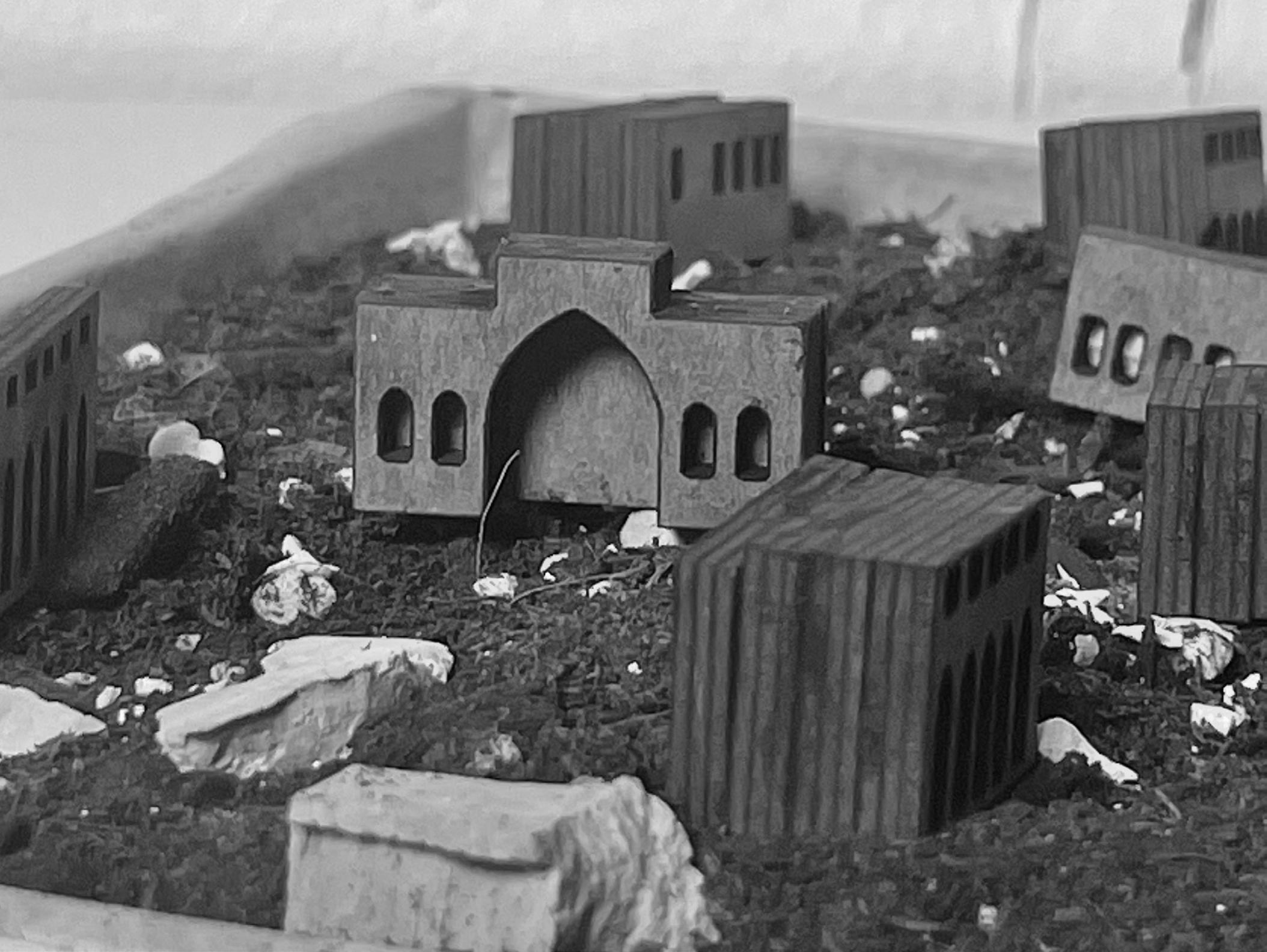
40-41 post-trauma city
44-45 graphite&charcoal 46-47 colored pencil
50-57 survey abroad: sketches & maps
60-61 basket and loom weaving samples
64-67 photography: moments
sample work from comprehensive studio.
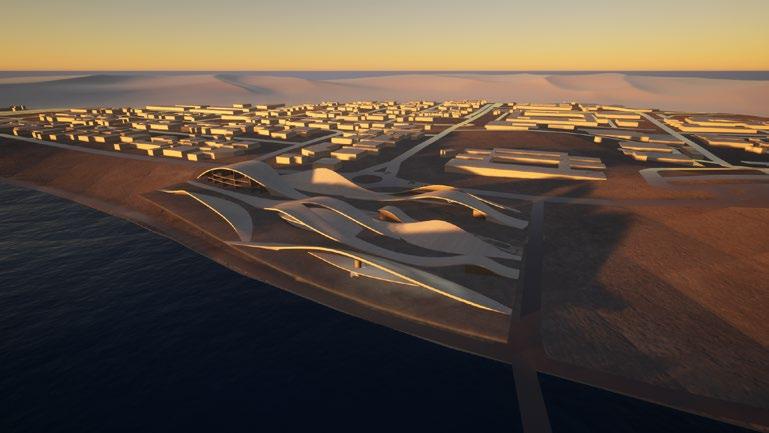
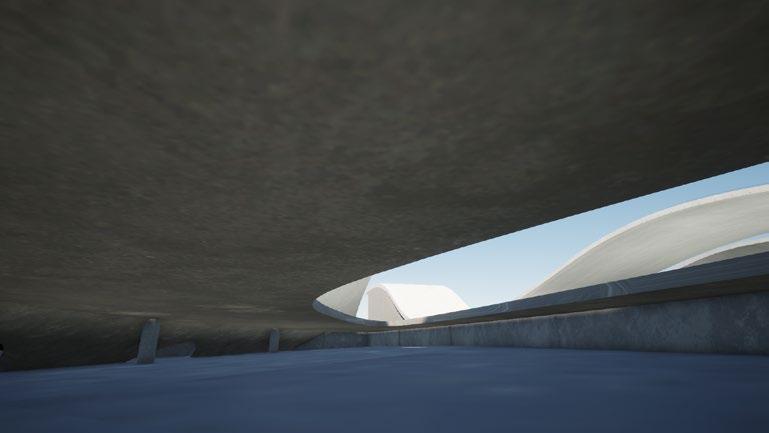
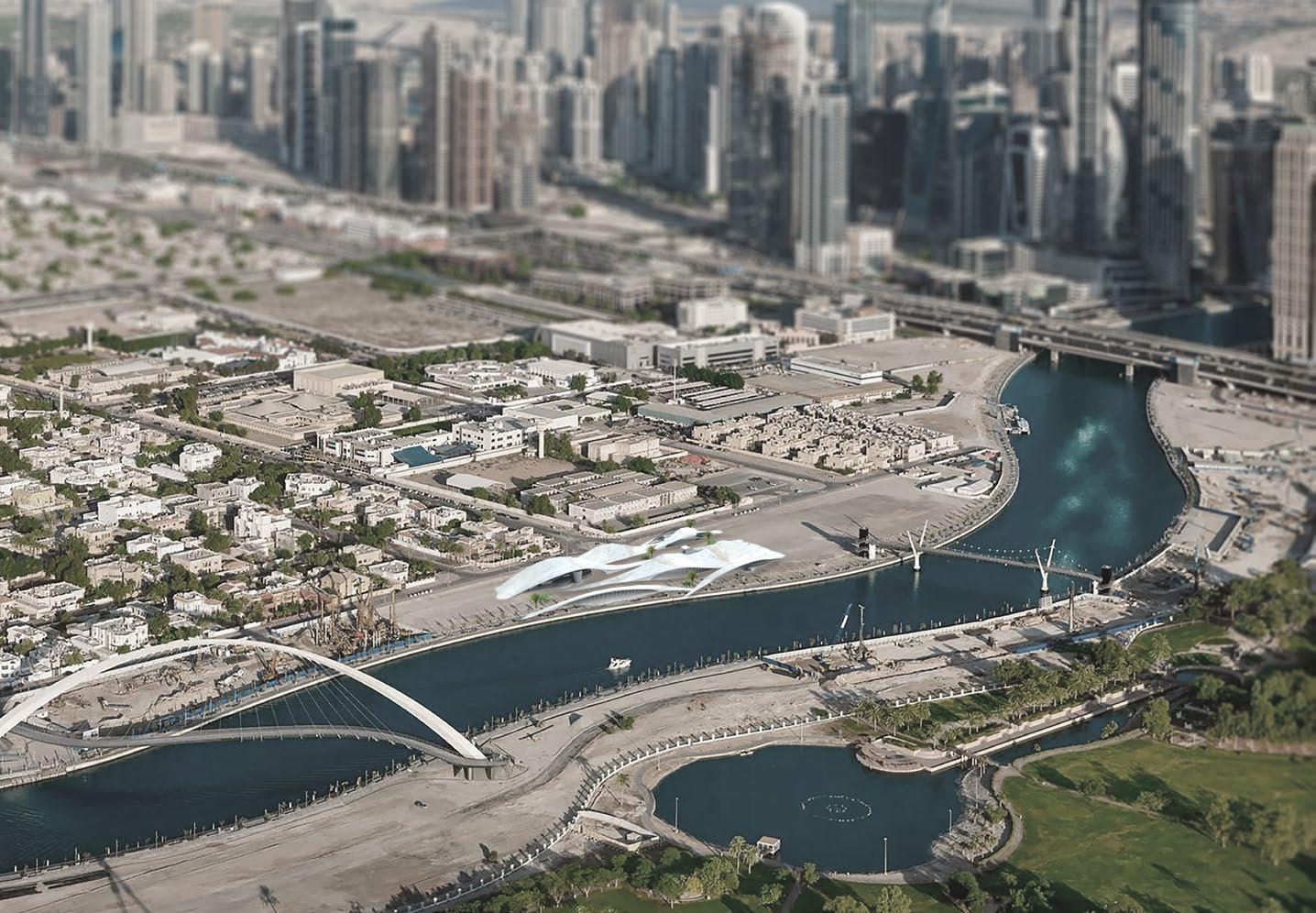
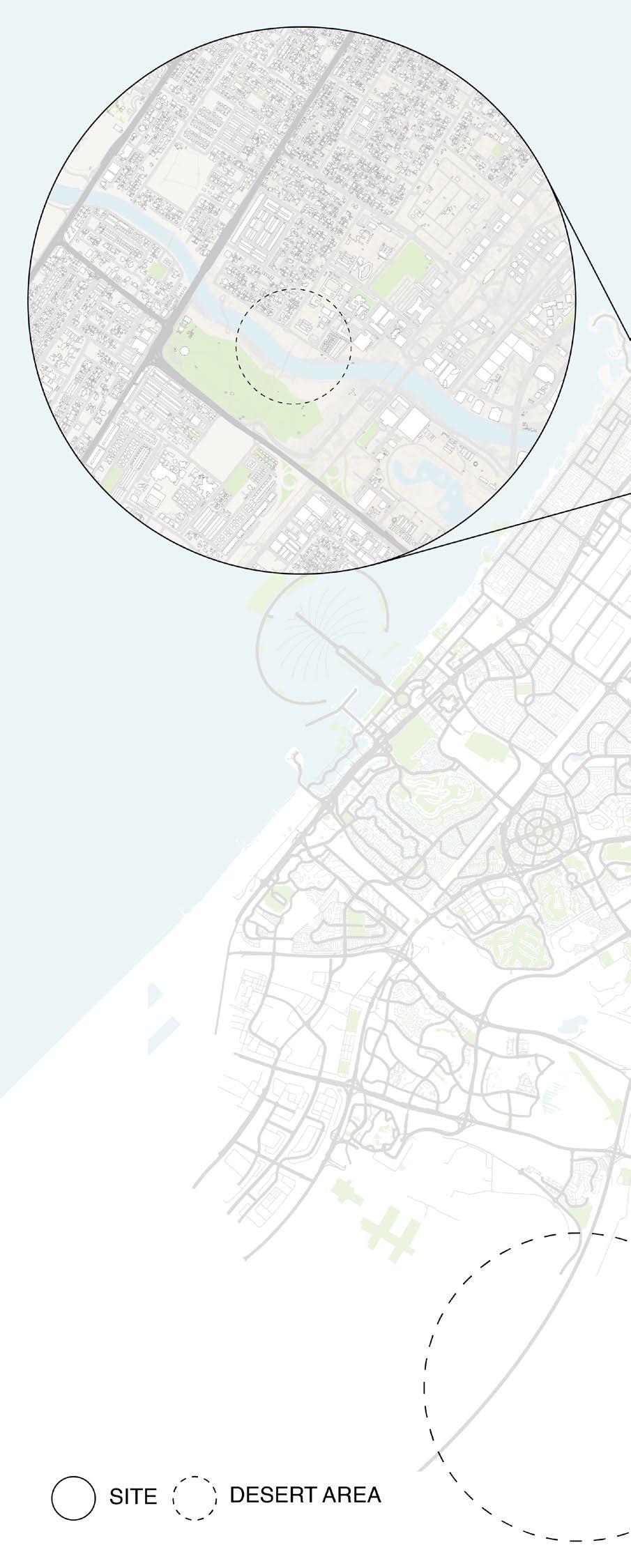
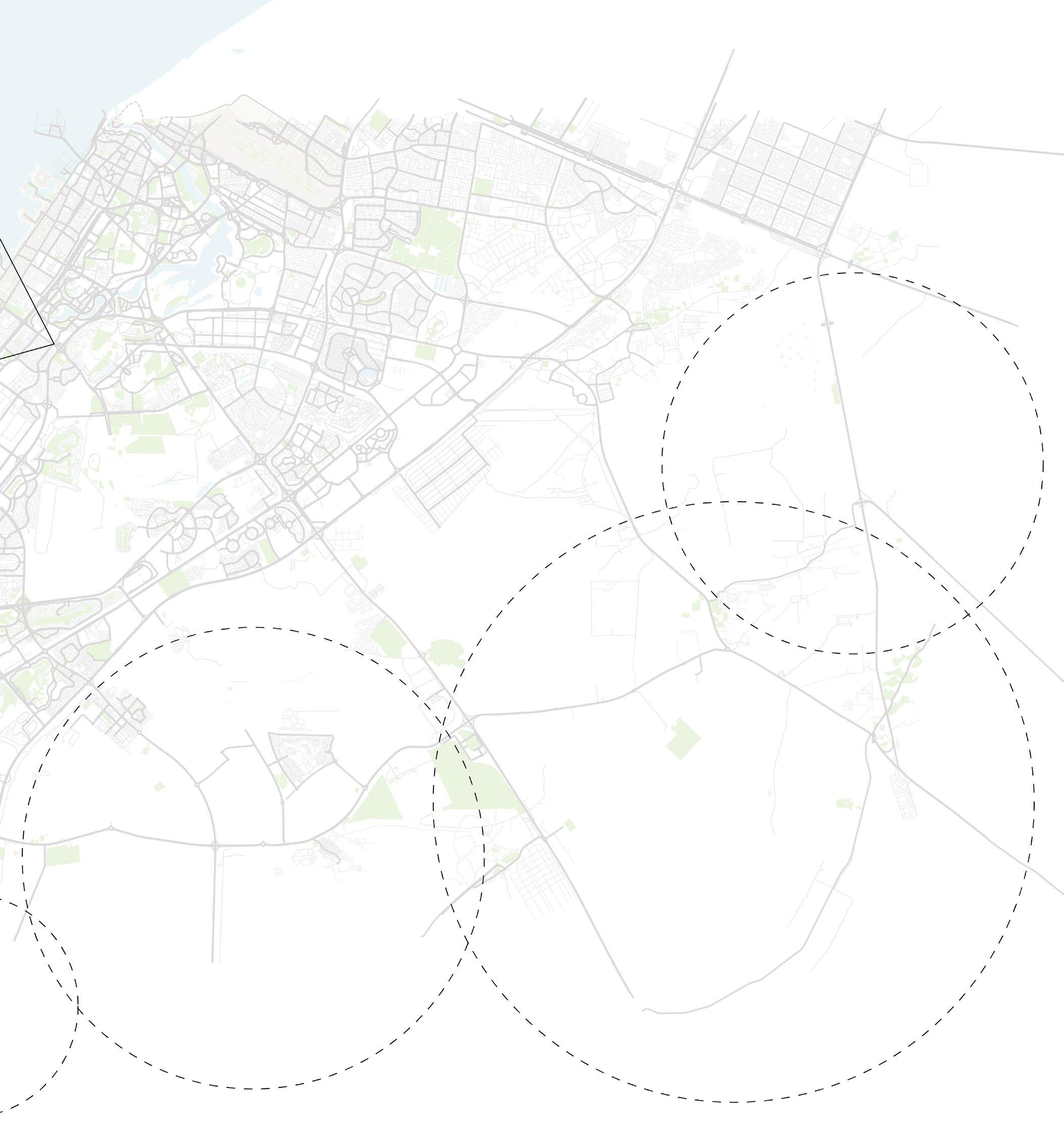
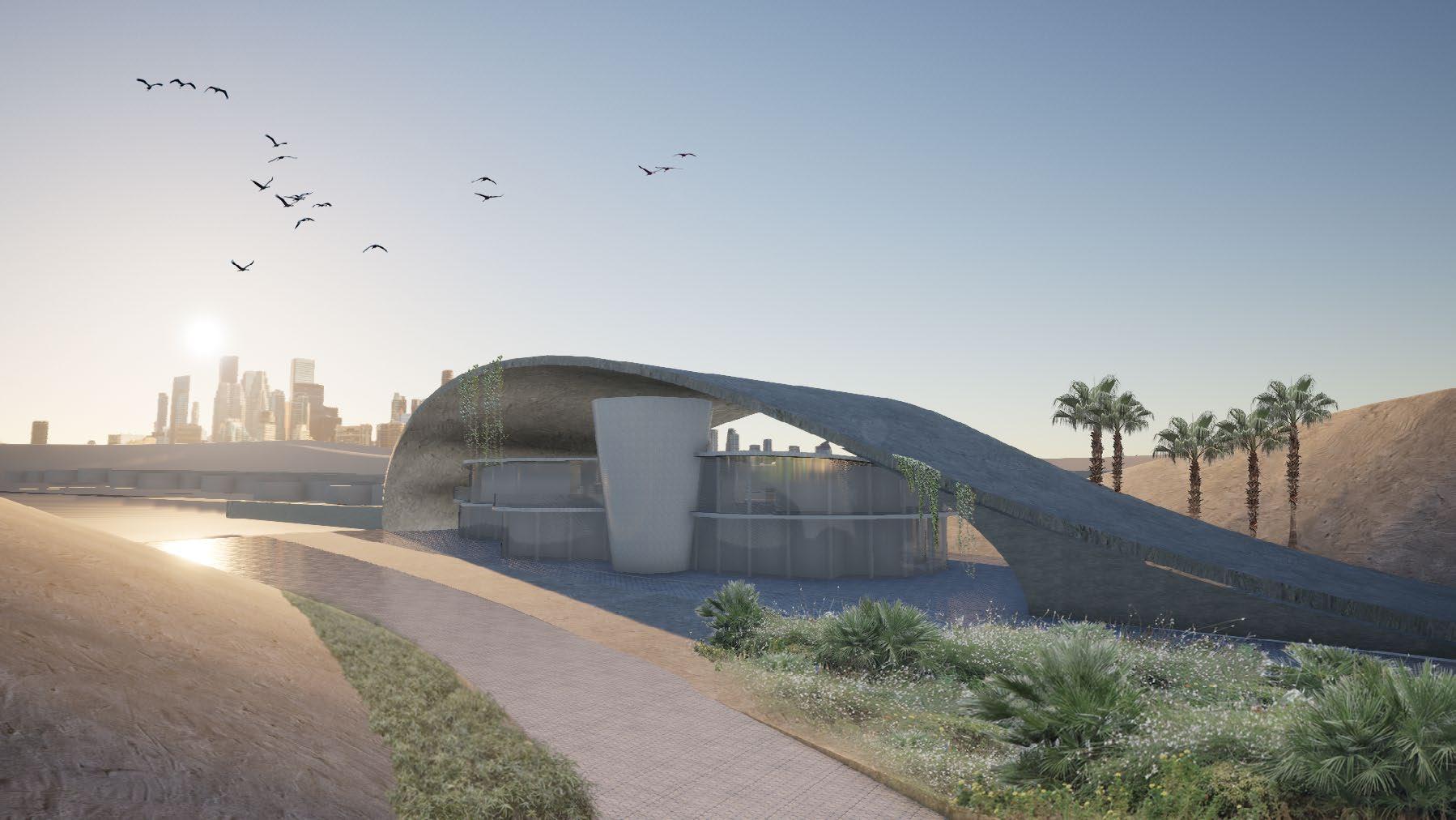
In the Safa zone of Dubai, the project rests on a 64-hectare urban park near the business bay with the goal of helping to integrate foreign and local culture and maximize the advantages of the site.
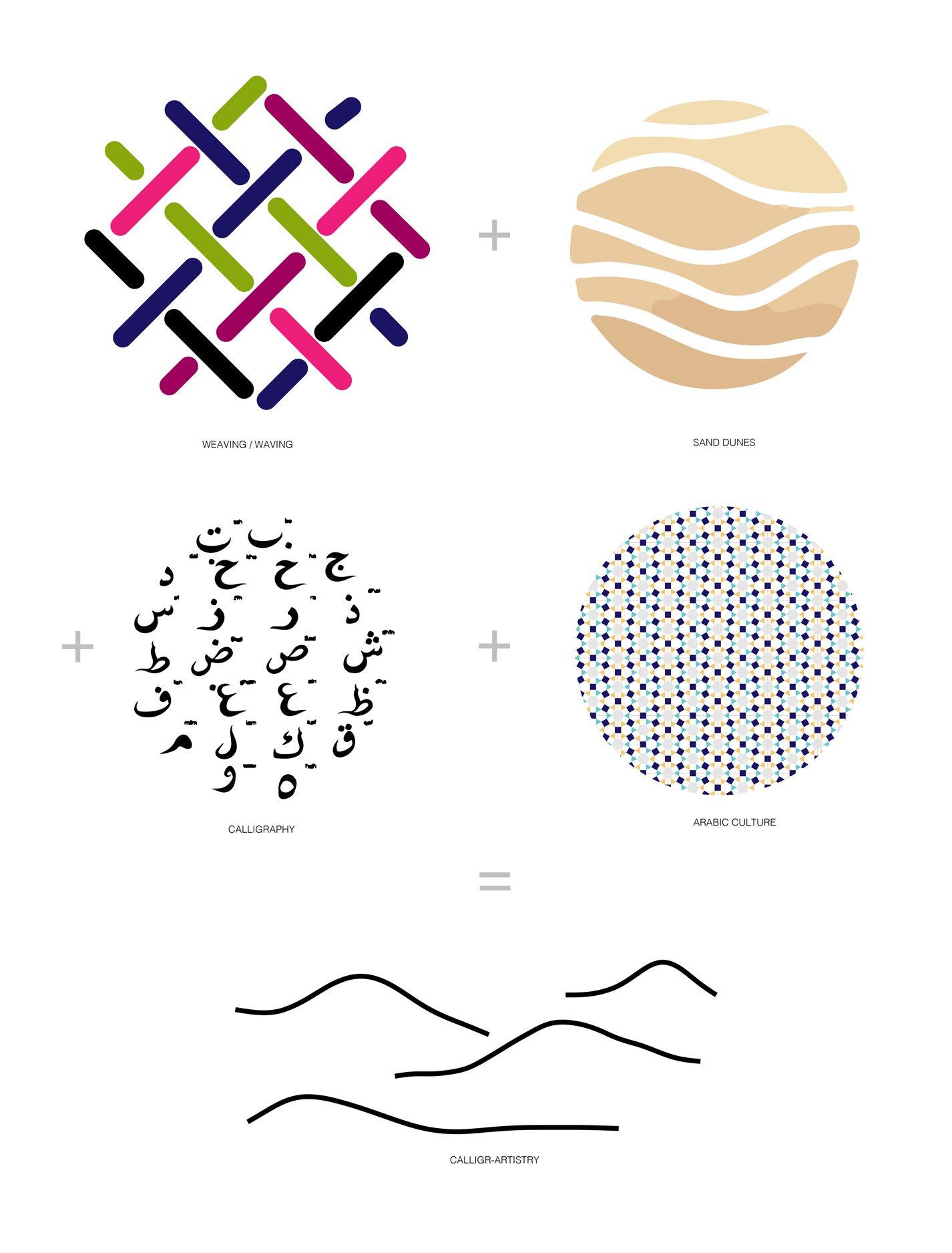
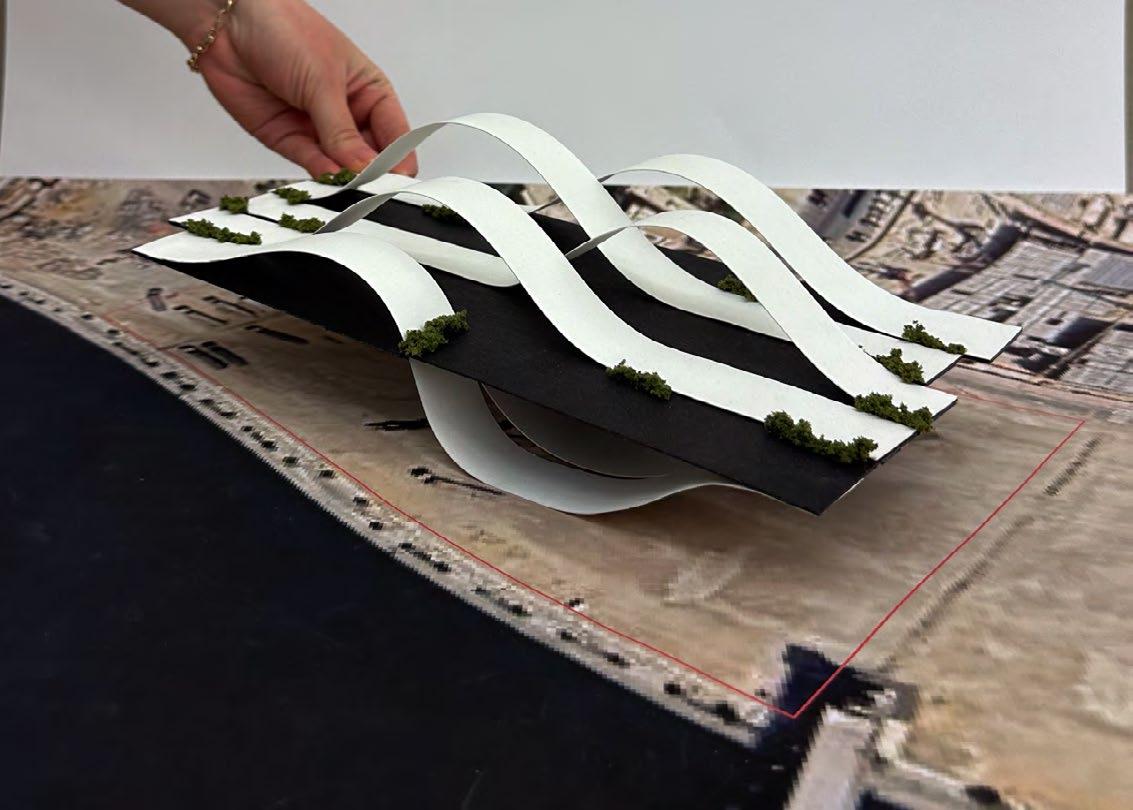
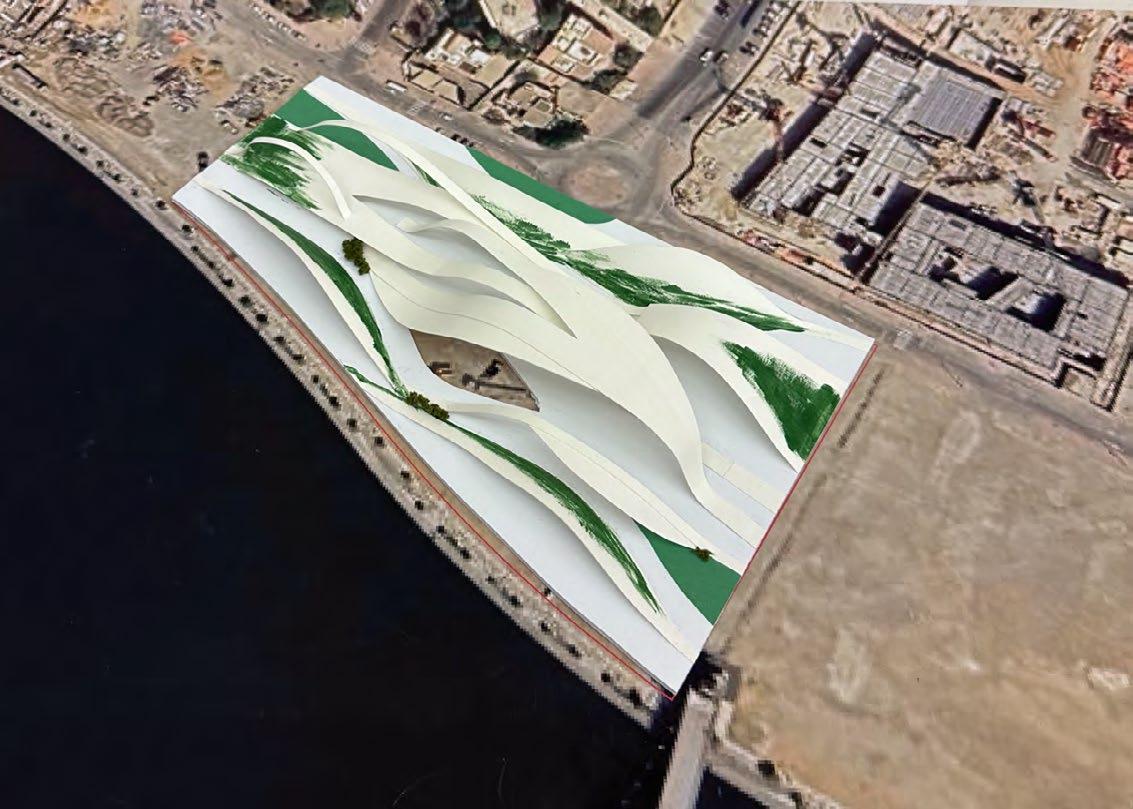
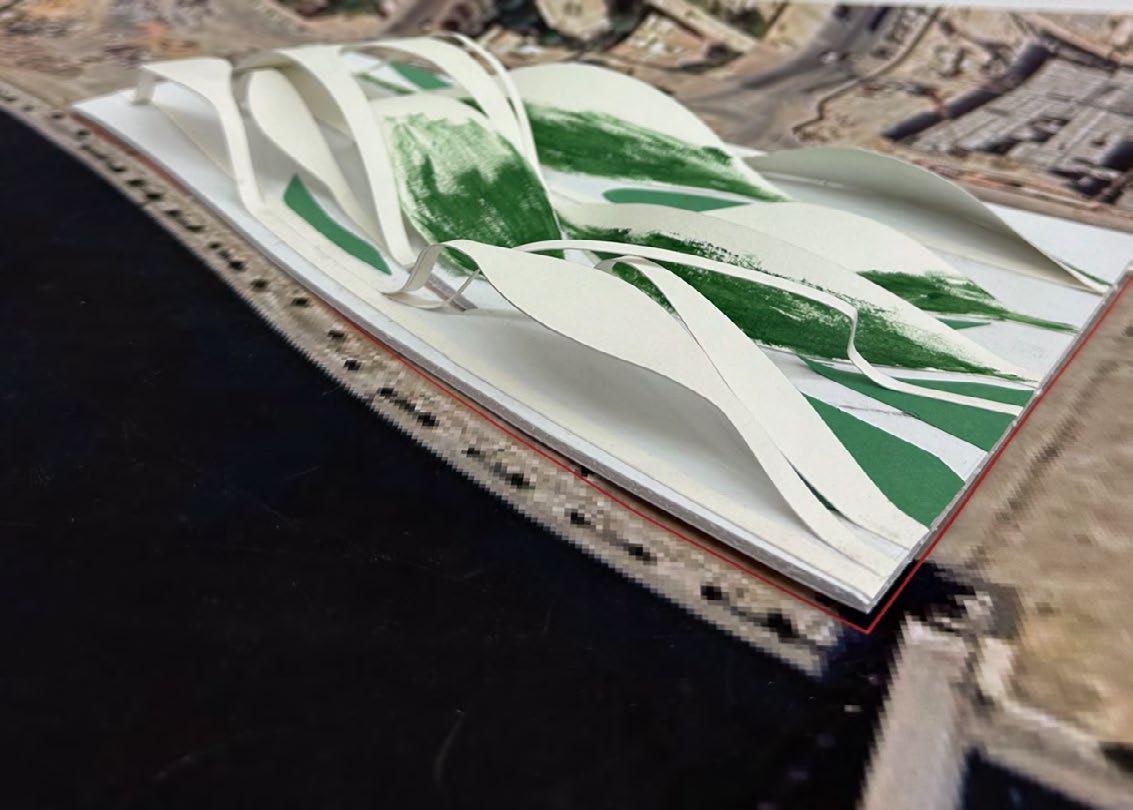
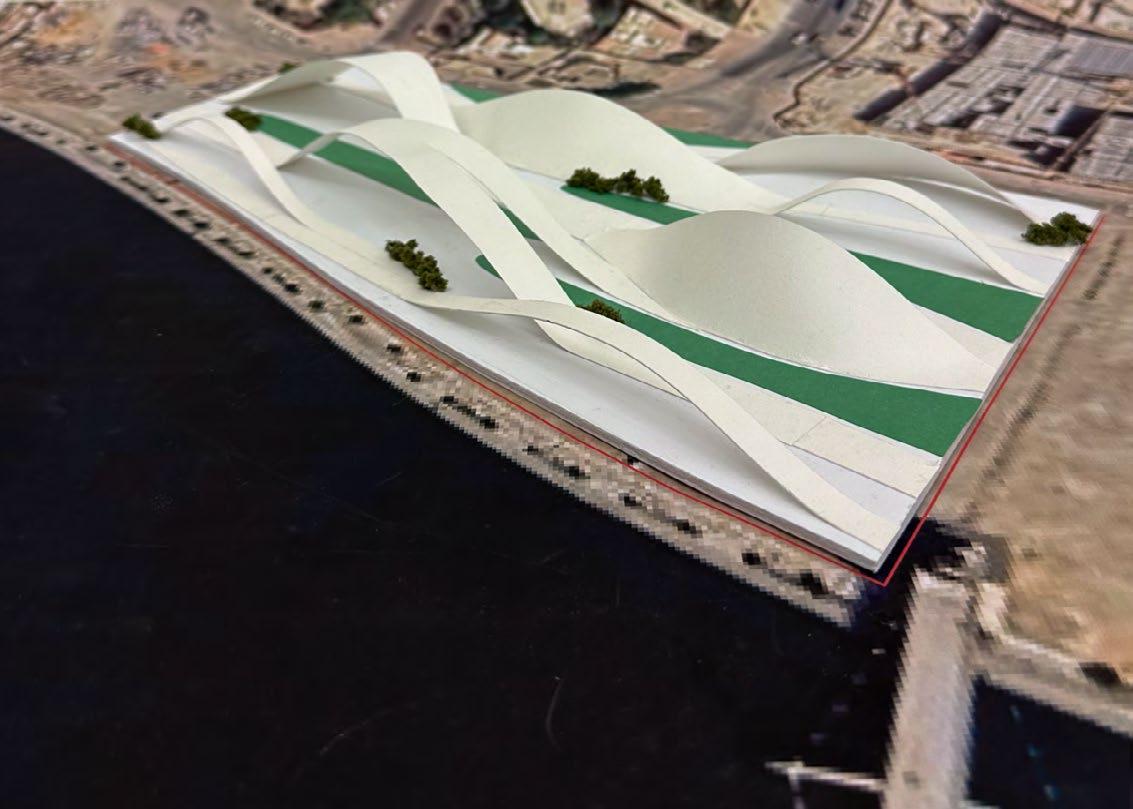
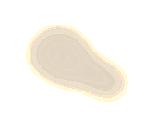
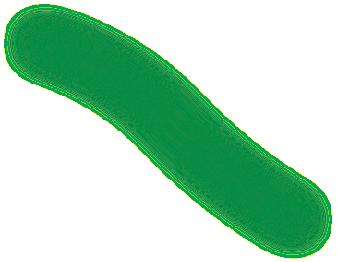
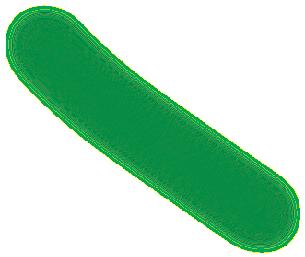
As seen in site plan, the overall form is inspired by Arabic characters' sense of movement and grace. Islamic calligraphy has dual significance in the culture, since the manuscripts in which it appears are both religious documents and objects of beauty, playing a pivotal role in expression of self, community, and faith.
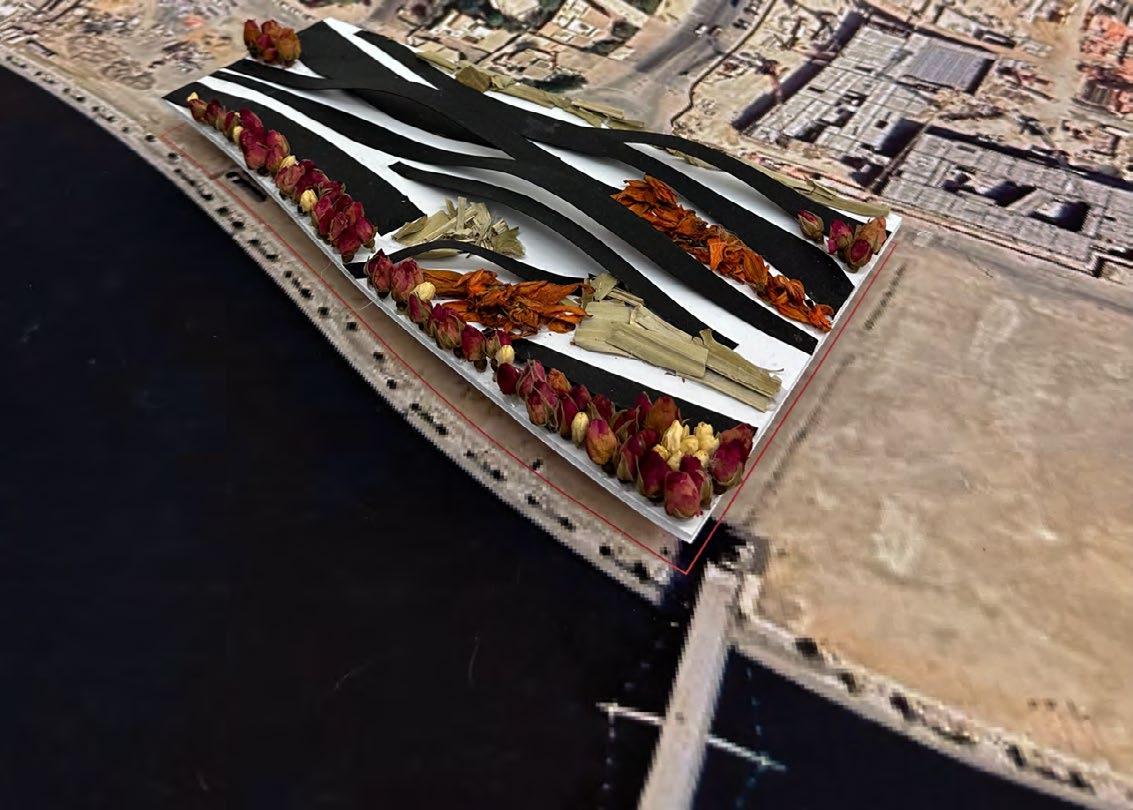
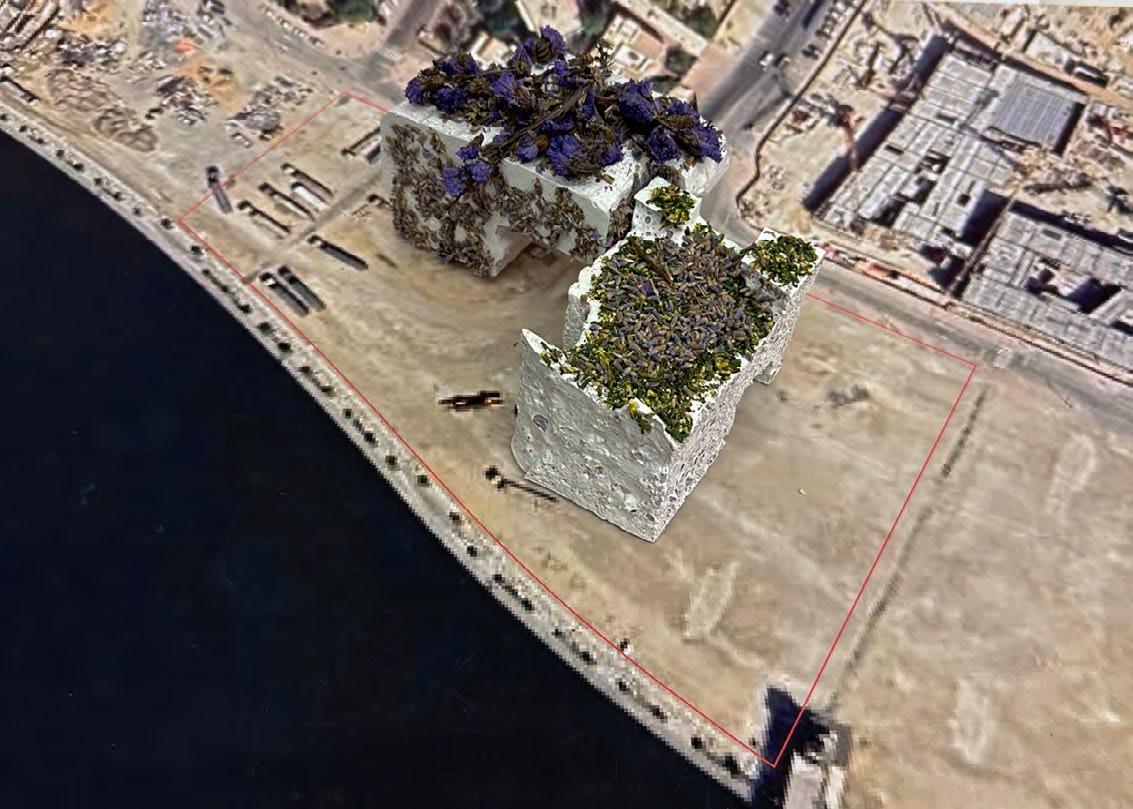
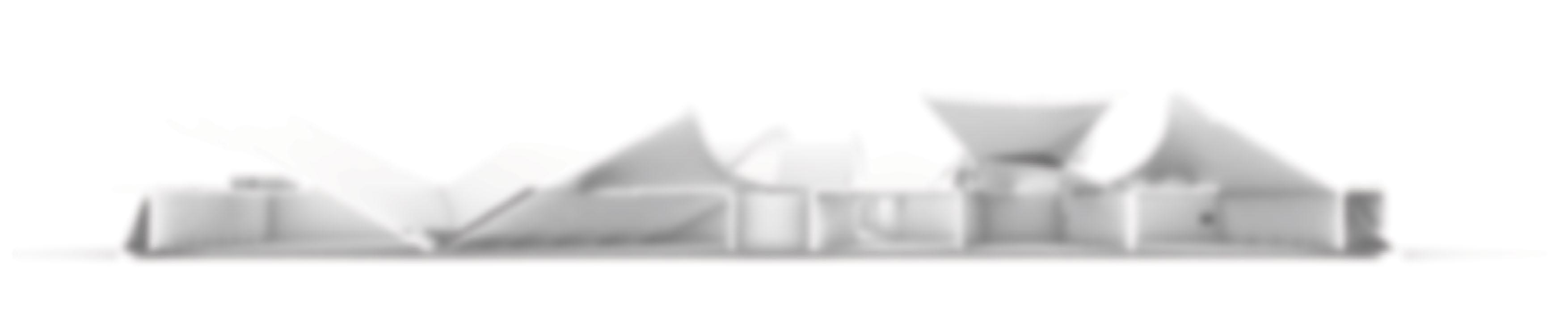
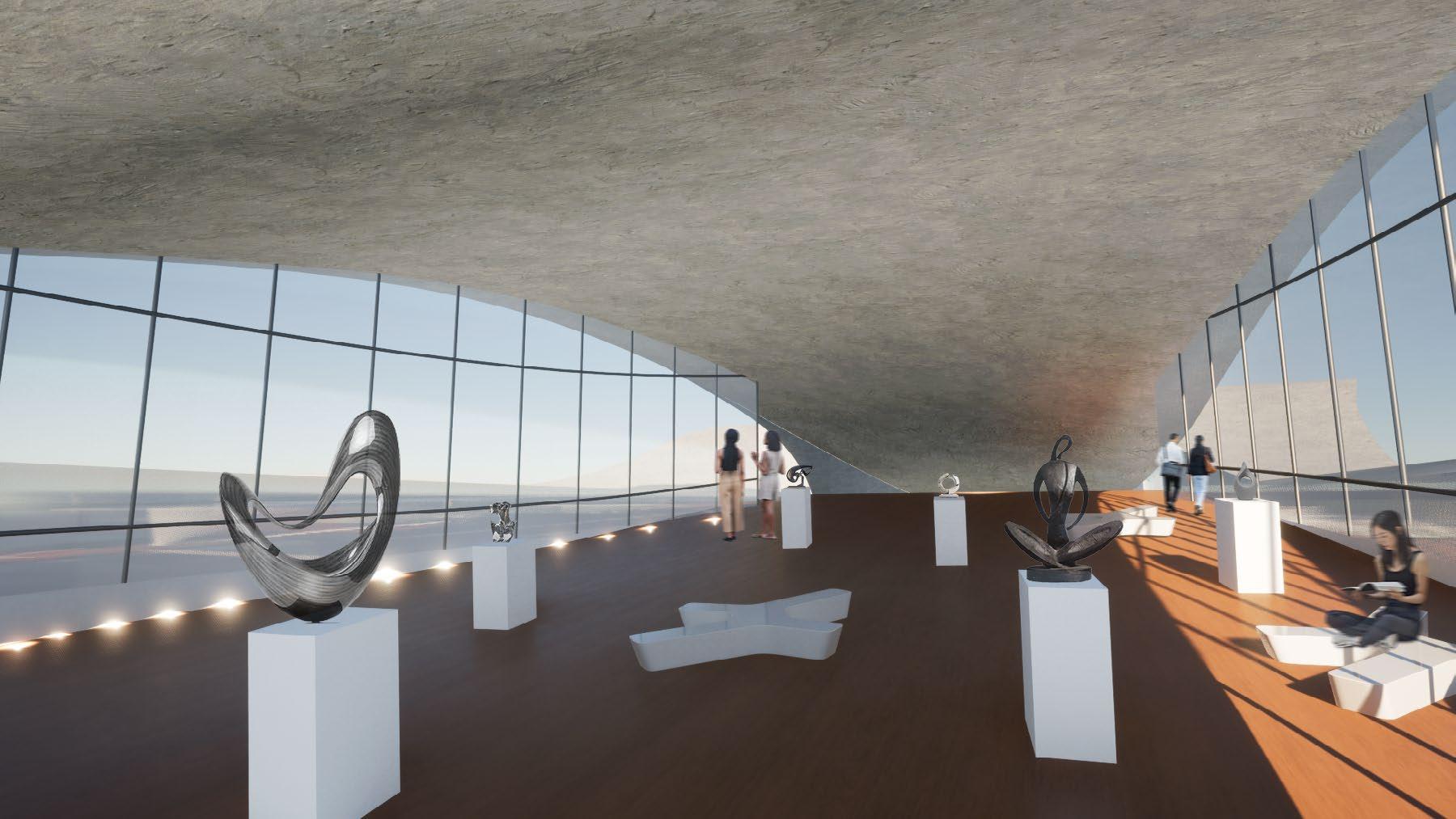
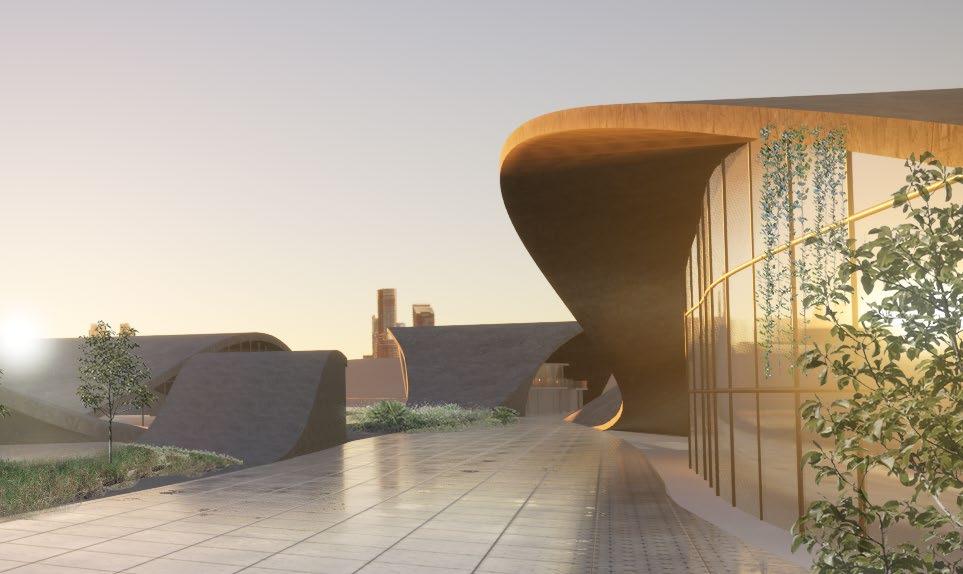
The complex has been divided by programmatic needs, with respect to public, private, and semipublic divisions. For example, the residences and dining facilities for the artists are the most private spaces while the café and exhibition hall are the most public spaces. The landscape weaves in and around these ribbon-like forms to connect all user groups.
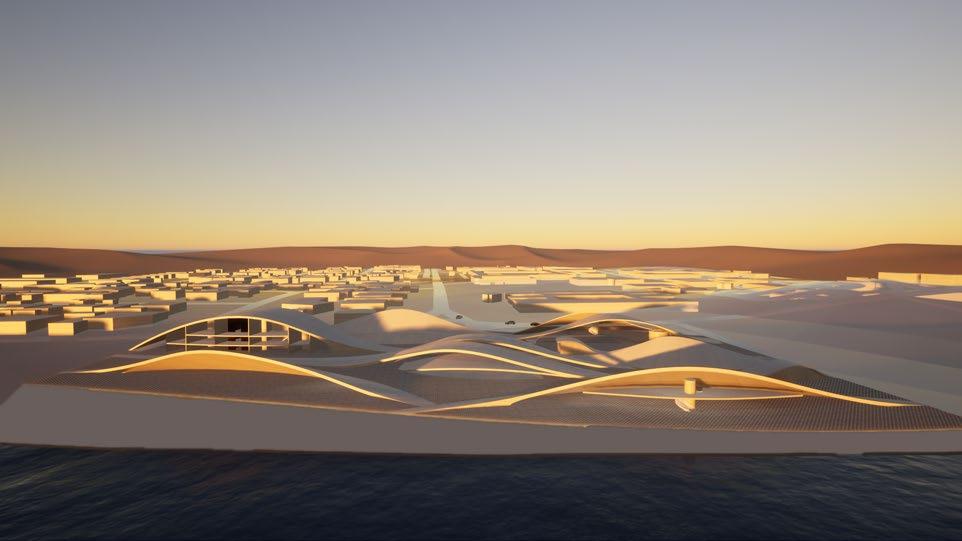
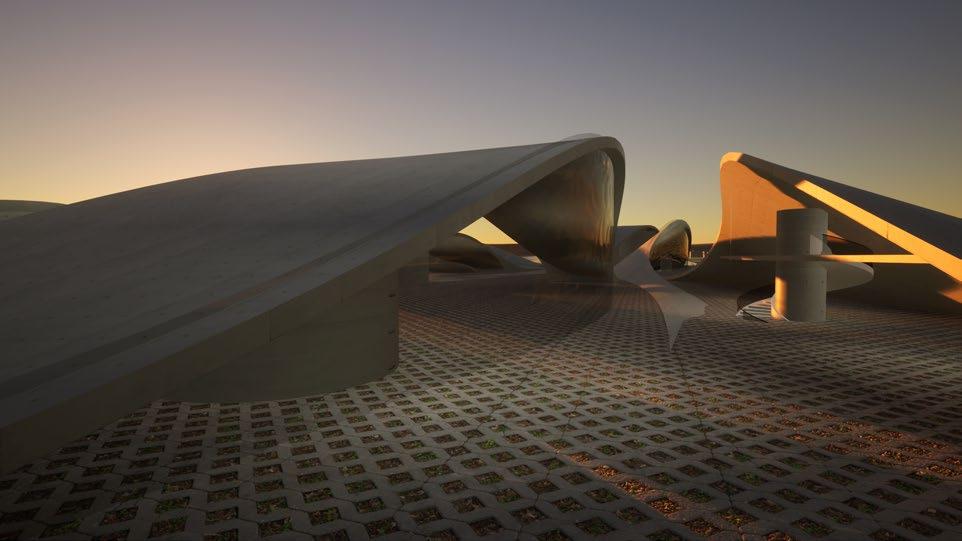
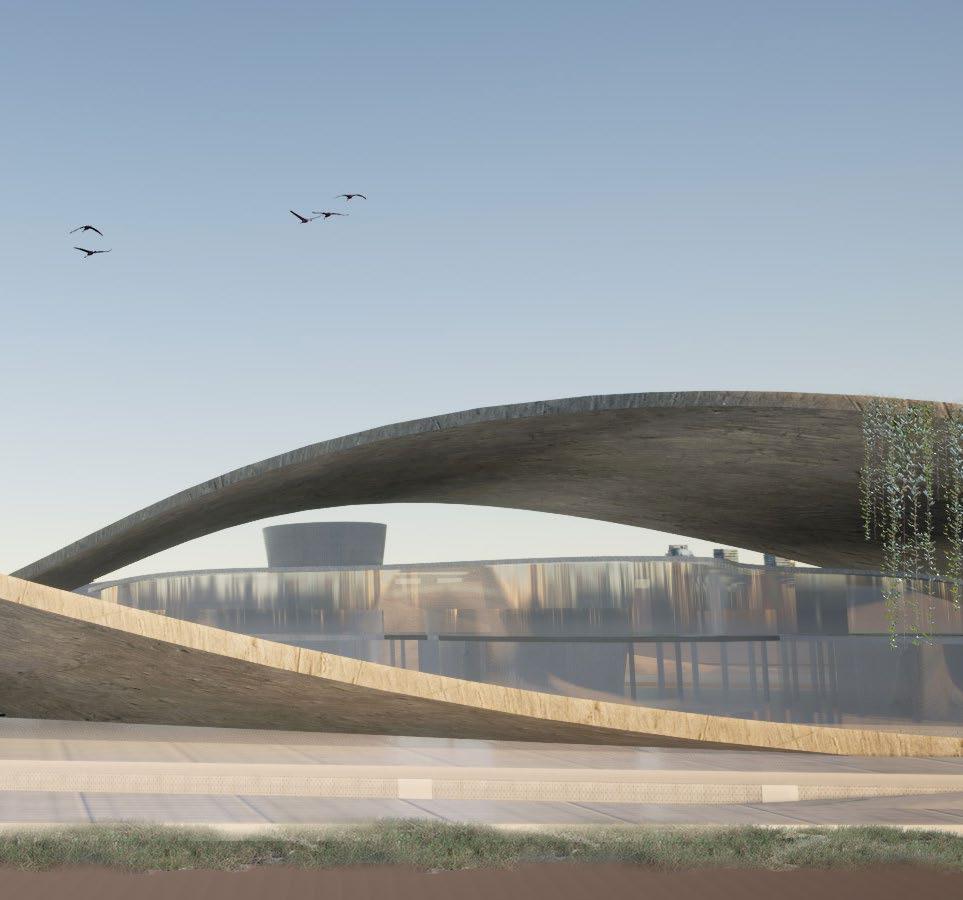
form follows canal
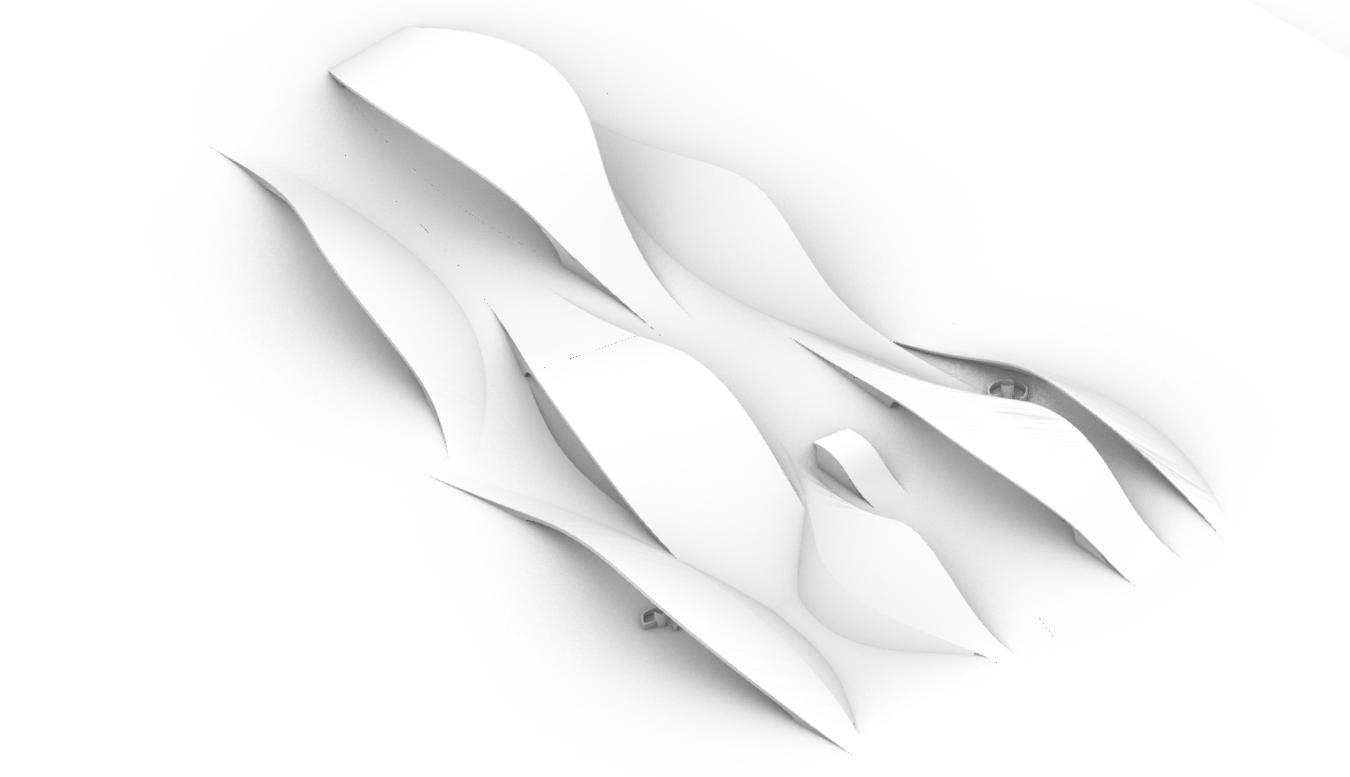
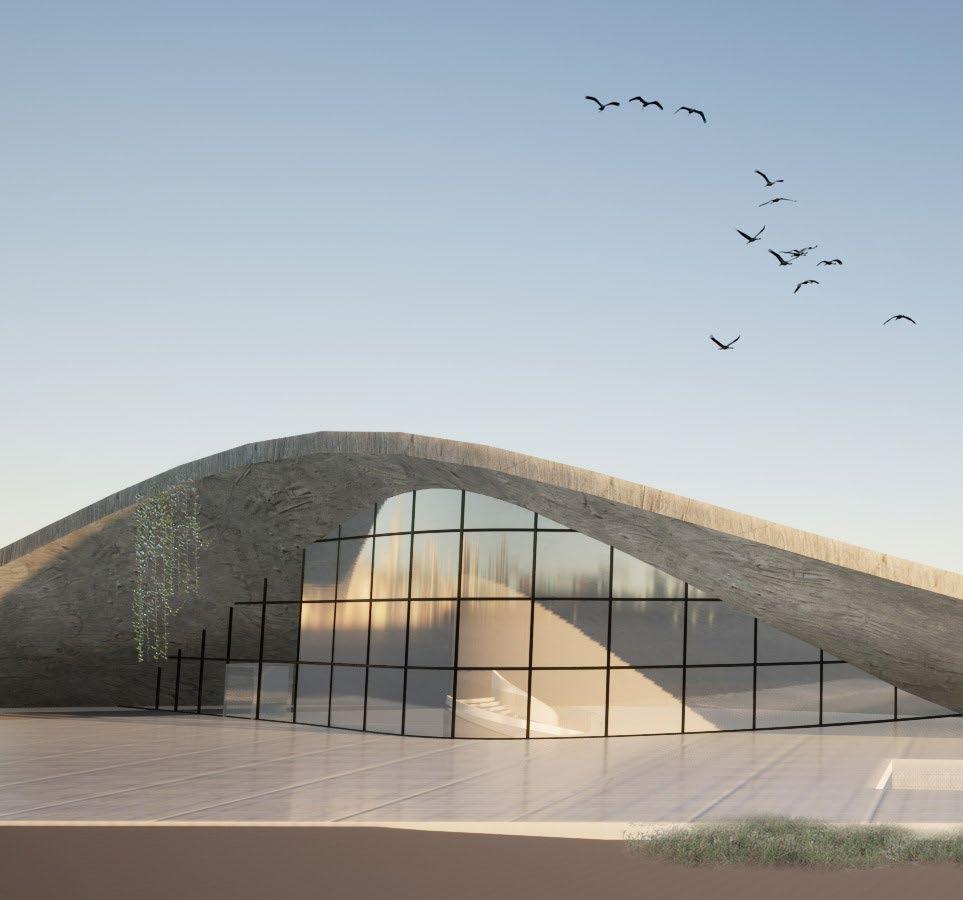
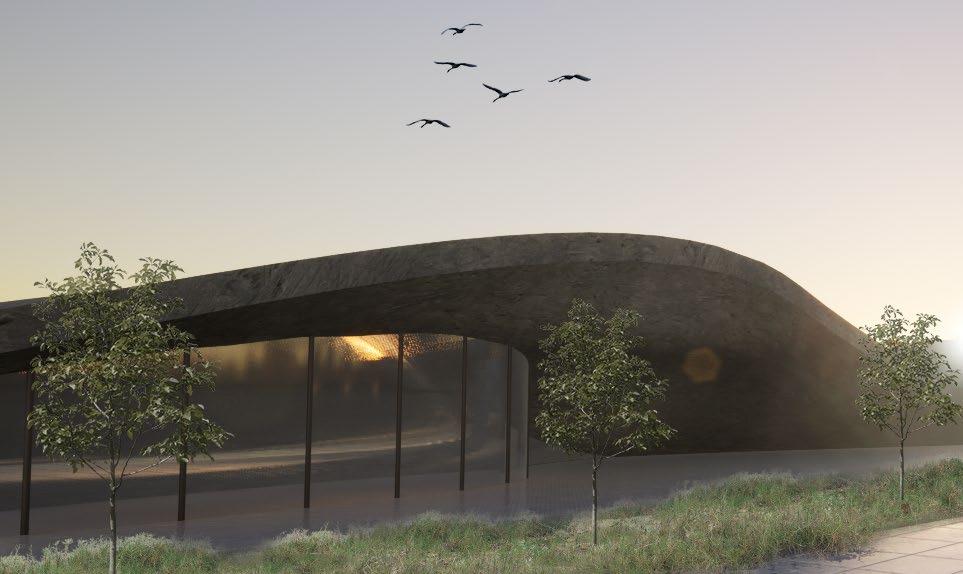
waving form, peels out of ground
ground voids house main programs
glass curtain walls to maximize views
an artist’s residency program in Dubai
keywords: weaving/waving, natural vs. artificial, blend into the landscape, temporality, manmade, evolving
The ambition of the project is to create a dynamic space, intermingling between natural and artificial forces. As seen in the site plan, the overall form is inspired by Arabic characters' sense of movement and grace. Islamic calligraphy has dual significance in the culture, since the manuscripts in which it appears are both religious documents and objects of beauty, playing a pivotal role in expression of self, community, and faith.
The building is a culture center in Dubai, along the canal. The complex has been divided by programmatic needs, with respect to public, private, and semi-public divisions. The residences and dining facilities for the artists are the most private spaces while the café and exhibition hall are the most public spaces. The landscape weaves in and around these ribbon-like forms to connect all user groups. Additionally, the creation of a flowing, dynamic public space connects the city and river harmoniously. Material choices align with local construction practices, emphasizing the use of concrete, steel framing, and glass to create enduring structures that harmonize with Dubai's skyline.
The distribution of: exhibition space (artist's work), the multi-functional hall (living quarters & dining space), workshop space (artist's workspace), library (art history books / Arab art history and culture), administration & office space, café (for visitors), support & utility space, and landscape & plaza provide a balance between the functional needs of the residency program, the comfort and convenience of the artists and visitors, and the administrative requirements of running such a facility
The architecture in the UAE showcases a fusion between ancient Islamic design principles and contemporary architectural styles. Material choices for the project adhere closely to existing trends and construction practices in the area. Dubai's iconic skyline is made possible by the extensive use of concrete for constructing buildings, roads, and foundational structures. Dubai's construction industry heavily relies on high-quality concrete and cement to ensure the durability and longevity of buildings. The city's modern and towering structures often rely on structural steel for robust frameworks and reinforcement. Glass is not only aesthetically pleasing but also plays a vital role in creating visually striking facades and allowing natural light into buildings. In Dubai's skyline, glass curtain walls and windows are prominent features that enhance energy efficiency and provide panoramic views. Advanced glass technologies, such as low-emissivity coatings and insulated glazing, contribute to sustainable building practices.
The climate conditions in Dubai are very warm and sunny, due to its position near the line of the Tropic of Cancer, with a tropical desert, hot arid climate classification. The sustainability strategy is three-pronged: social, economic, and environmental. The design aims to satisfy a climate response that reaches beyond a technological and environmental scope in which the waving form creates shaded space for the public and places much of the program underground to create maximal thermal comfort. The project is mainly concrete, embedded in the ground, so it is low maintenance and a cheap way to build compared to the Dubai skyline which is steel and glass construction.
With the aim of accommodating seven artists for temporary stays, each cohort will engage in projects over a period of 6-12 months. Each artist will have access to a dedicated studio space, encouraging exploration beyond their usual artistic context. Comprising international members, these cohorts will converge in Dubai to immerse themselves in the rich tapestry of UAE culture, history, and art, fostering cross-cultural exchange and creative exploration.
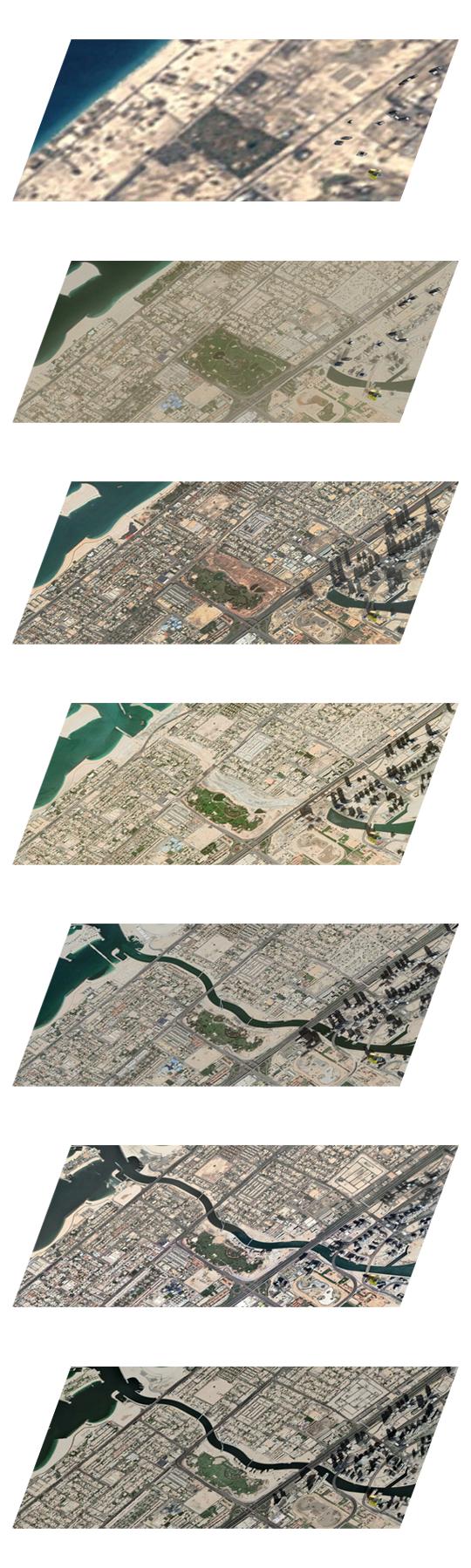
1985
desert land
developing city
2014
emerging infrastructure
2016
canal construction
2018
progressing urbanization
2020
completed urban sprawl
2024
proposed project
ADDRESSES VARIED PROGRAMMATIC NEEDS
INTEGRATES LOCAL CULTURE, STYLE
PASSIVE THERMAL COMFORT (INSULATION, MATERIALITY)
DIVISION OF PRIVATE VS. PUBLIC INTEGRATION WITH THE SITE ARCHITECTURAL DISTINCTION
ADDRESSES VARIED PROGRAMMATIC NEEDS
INTEGRATES LOCAL CULTURE, STYLE
PASSIVE THERMAL COMFORT (INSULATION, MATERIALITY)
DIVISION OF PRIVATE VS. PUBLIC INTEGRATION WITH THE SITE
ARCHITECTURAL DISTINCTION
ADDRESSES VARIED PROGRAMMATIC NEEDS
INTEGRATES LOCAL CULTURE, STYLE
PASSIVE THERMAL COMFORT (INSULATION, MATERIALITY)
DIVISION OF PRIVATE VS. PUBLIC INTEGRATION WITH THE SITE ARCHITECTURAL DISTINCTION
ADDRESSES VARIED PROGRAMMATIC NEEDS
INTEGRATES LOCAL CULTURE, STYLE
PASSIVE THERMAL COMFORT (INSULATION, MATERIALITY)
DIVISION OF PRIVATE VS. PUBLIC INTEGRATION WITH THE SITE ARCHITECTURAL DISTINCTION
ADDRESSES VARIED PROGRAMMATIC NEEDS
INTEGRATES LOCAL CULTURE, STYLE
PASSIVE THERMAL COMFORT (INSULATION, MATERIALITY)
DIVISION OF PRIVATE VS. PUBLIC
INTEGRATION WITH THE SITE ARCHITECTURAL DISTINCTION
ADDRESSES VARIED PROGRAMMATIC NEEDS
INTEGRATES LOCAL CULTURE, STYLE
PASSIVE THERMAL COMFORT (INSULATION, MATERIALITY)
DIVISION OF PRIVATE VS. PUBLIC INTEGRATION WITH THE SITE ARCHITECTURAL DISTINCTION















A B C D E F G H I J 6.5m 9m 9m 14.5m 16m 9.5m 10m 13m 8m 17.5m 17.5m 16.5m 13.5m 17m 17m
1 2 3 4 5
PLAN: GROUND FLOOR 1:200











render: living quarters
sample work from branding / pop-up design studio at SCI-Arc.
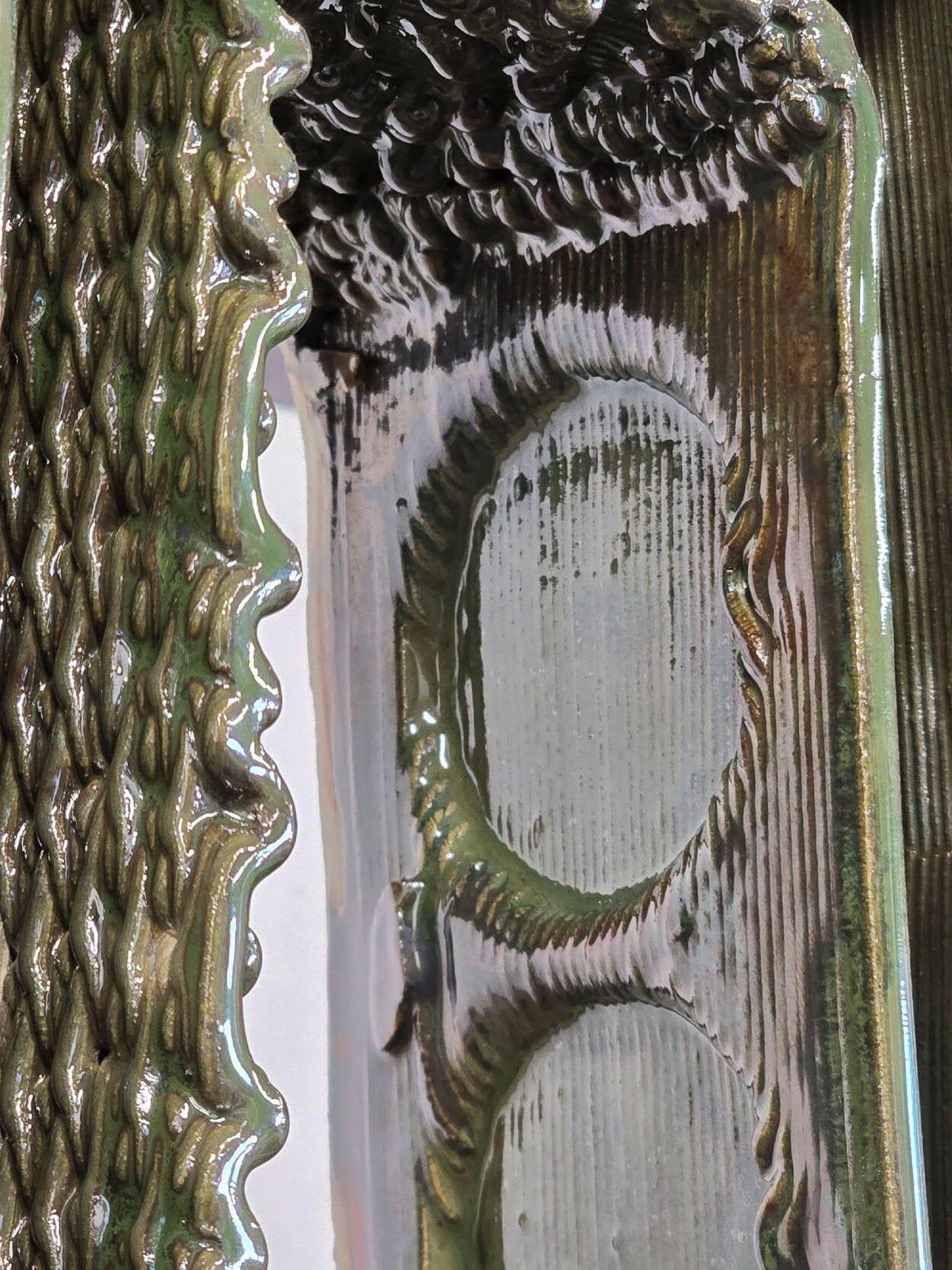
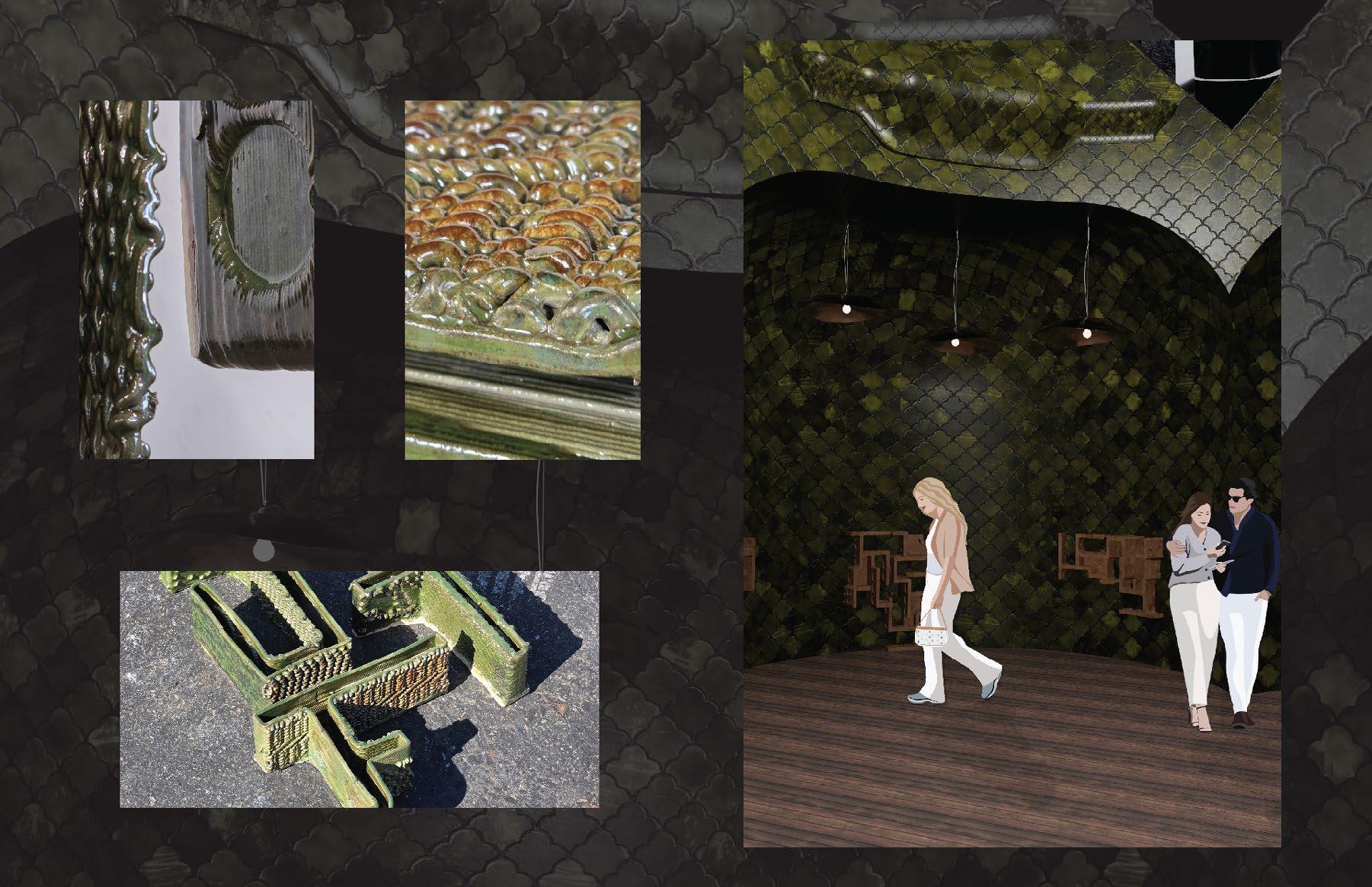
Fall 2024, branding / pop-up design studio at Southern California Institute of Architecture under Prof. Herwig Baumgartner, Rhino + Blender + Illustrator + Photoshop + 3D printed ceramic component pieces (printed with robots) + various glazes + 3D print with black filament + plexiglass with laser-cut etchings + chipboard + plastic scale figures, physical model at 1:200 scale. Semester-long collaboration with Jayden Schexnayder.
Chanel represents the new ideal of popularized timeless, elegant designs, and an openness to experimentation and avant garde. Aesop is a tried and true solution to skincare and beauty products, valuing quality and consistency over all else.
Chanel wants to remain of the moment: the pop-up will appeal to young consumers who appreciate and enjoy interactive art and interesting, engaging media. Aesop is known for its modern approach to prestige branding: this pop-up will serve as hype for the brand and showcase its delicate process of making. The pop-up becomes something more than just selling the product. There is an environmental angle to all of this the design fits in because it is about how the product is sourced and made, and that process of making.
By establishing an exterior/interior condition with Chanel acting as the exterior and Aesop nestled within the interior, the collaboration proposal between these two brands still maintains each brand’s strong identities without compromising either brand’s individual goals.
Through this unique brand collaboration, a full sensory experience activates this untapped space in the Arts District by drawing users into the pop-up through the visual stimulus of the billboard and media / kinetic work of Chanel, and the olfactory stimulus and experiential / wellness qualities offered by Aesop.
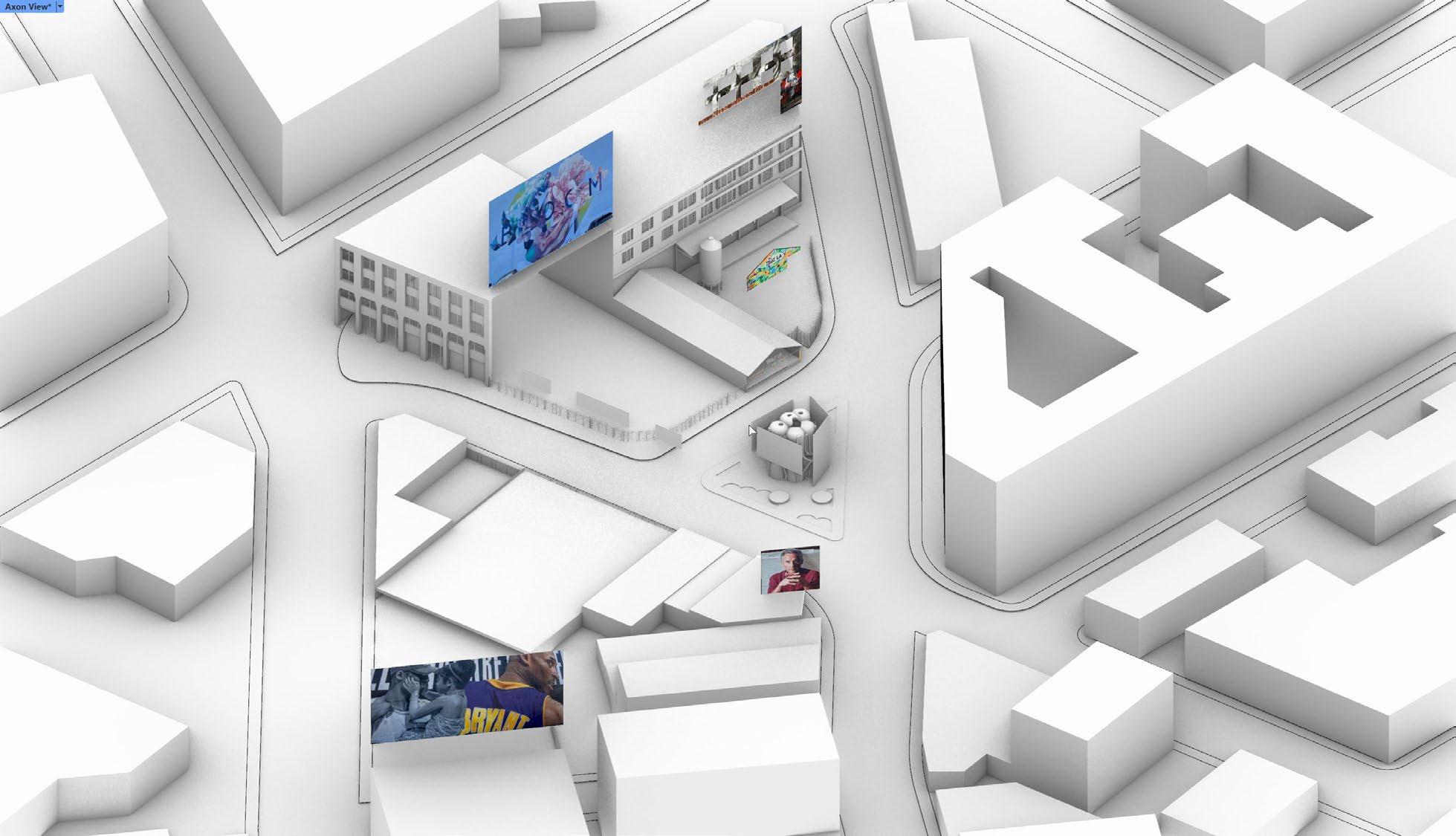
The mural culture in the Arts District allows for CHANEL to maintain their billboard culture / in-your-face advertising style by synthesizing their brand within the medium of the mural and become part of the aesthetic of the district, with the exterior walls of the pop-up functioning as interactive “billboards” for low-res art installation.
From the perspective of Aesop, the Arts District is an opportunity to engage with the consumer culture, trendy population, and younger audience that typically spend their leisure time around the area. There is an existing interest in wellness, technology, and rational betterment of self and community. Aesop wants to promote itself in an area of the Arts District that it relates to, so the shopping/consumer hub of the Arts District is where the brand naturally gravitates towards.
The established positions of the Chanel media-billboards are based on the different ways that users will be approaching and circulating on the site. The structure designed went through many different iterations, and is inspired in part by the Petersen Automotive Museum in Los Angeles.
On the interior, Aesop’s apothecary lab takes over. The ceramic liner on the inside houses the lab and demystifies the fragrance-making process of the perfumery, offering an intimate, personalized space. A range of plants and smells peek out of the exterior, drawing in users via the sensory experience.
There are two very different things happening on this one site. The space in between becomes poché space and negotiates two very different geometries.
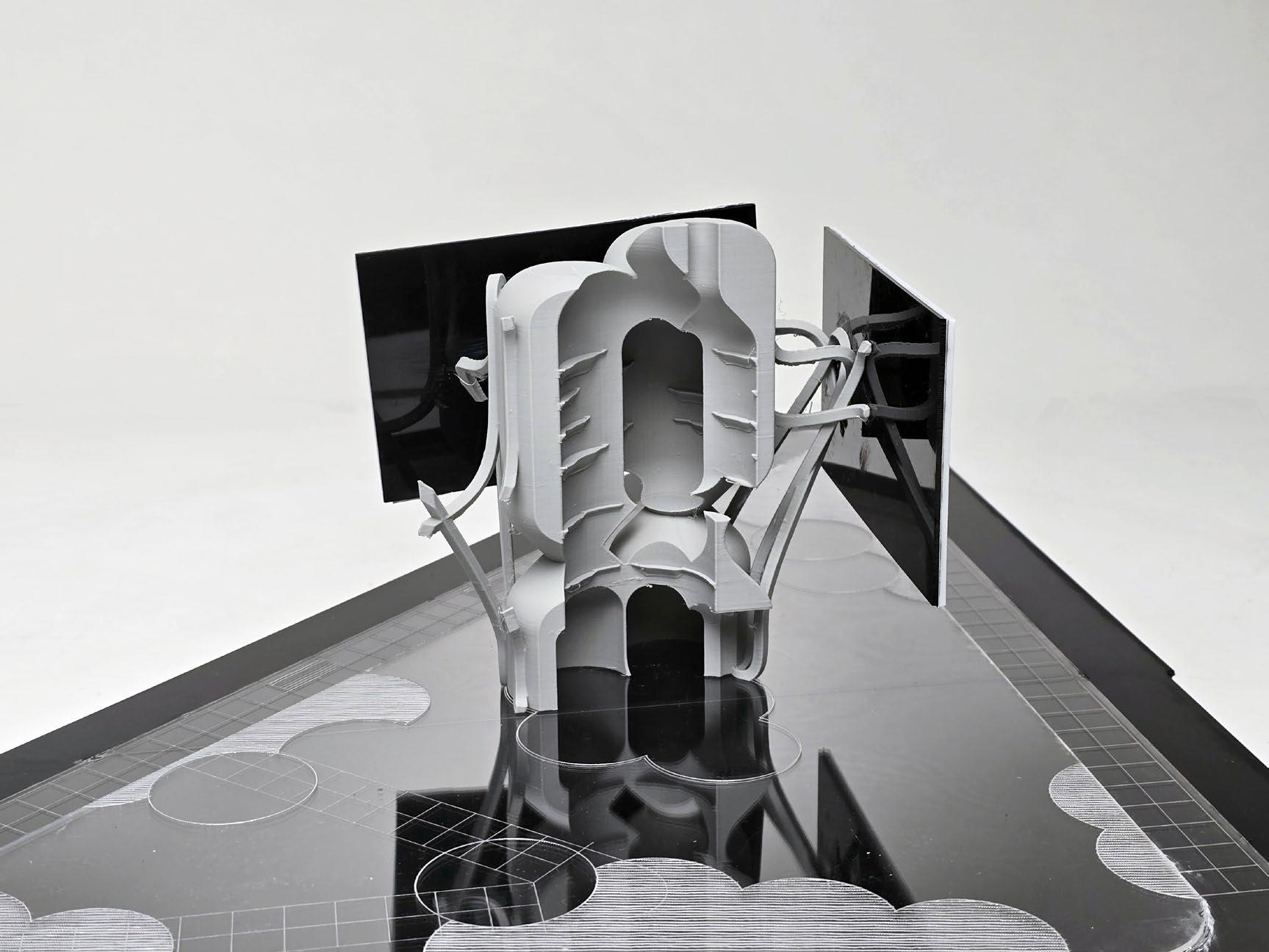
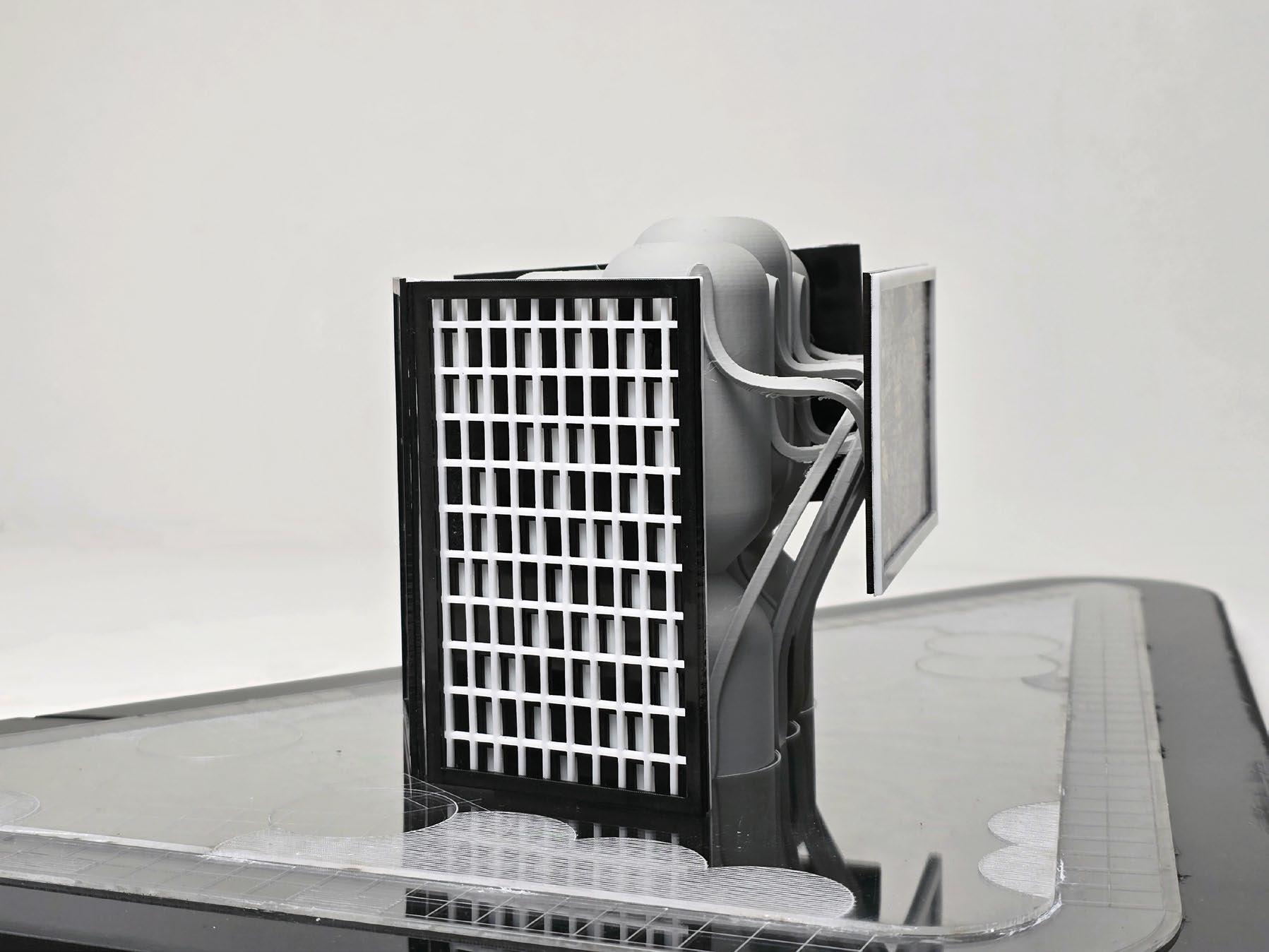
physical model: sectional chunk showing screens, site treatment, interior shelving conditions, exterior structure
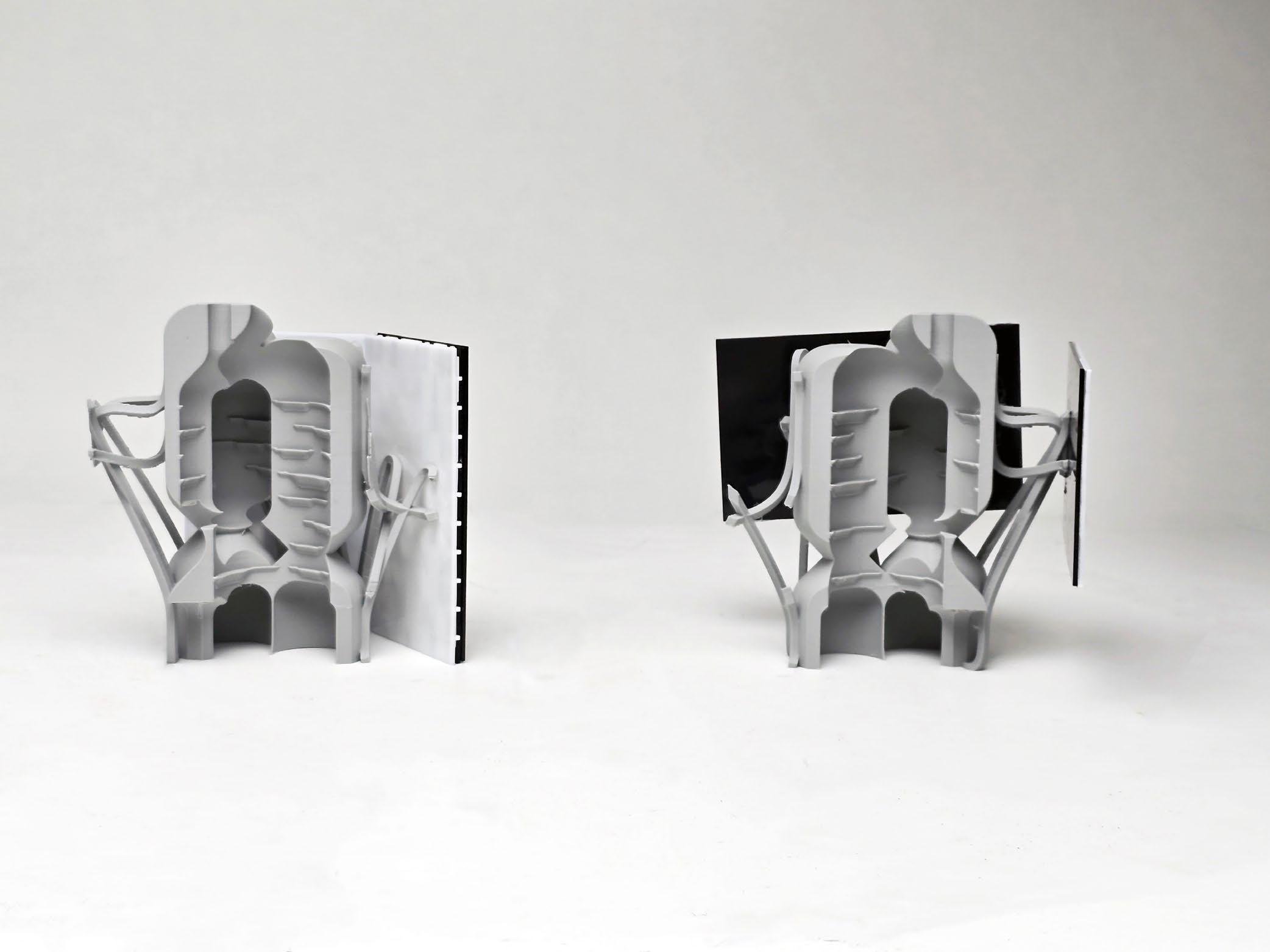
physical model: interior vs. exterior
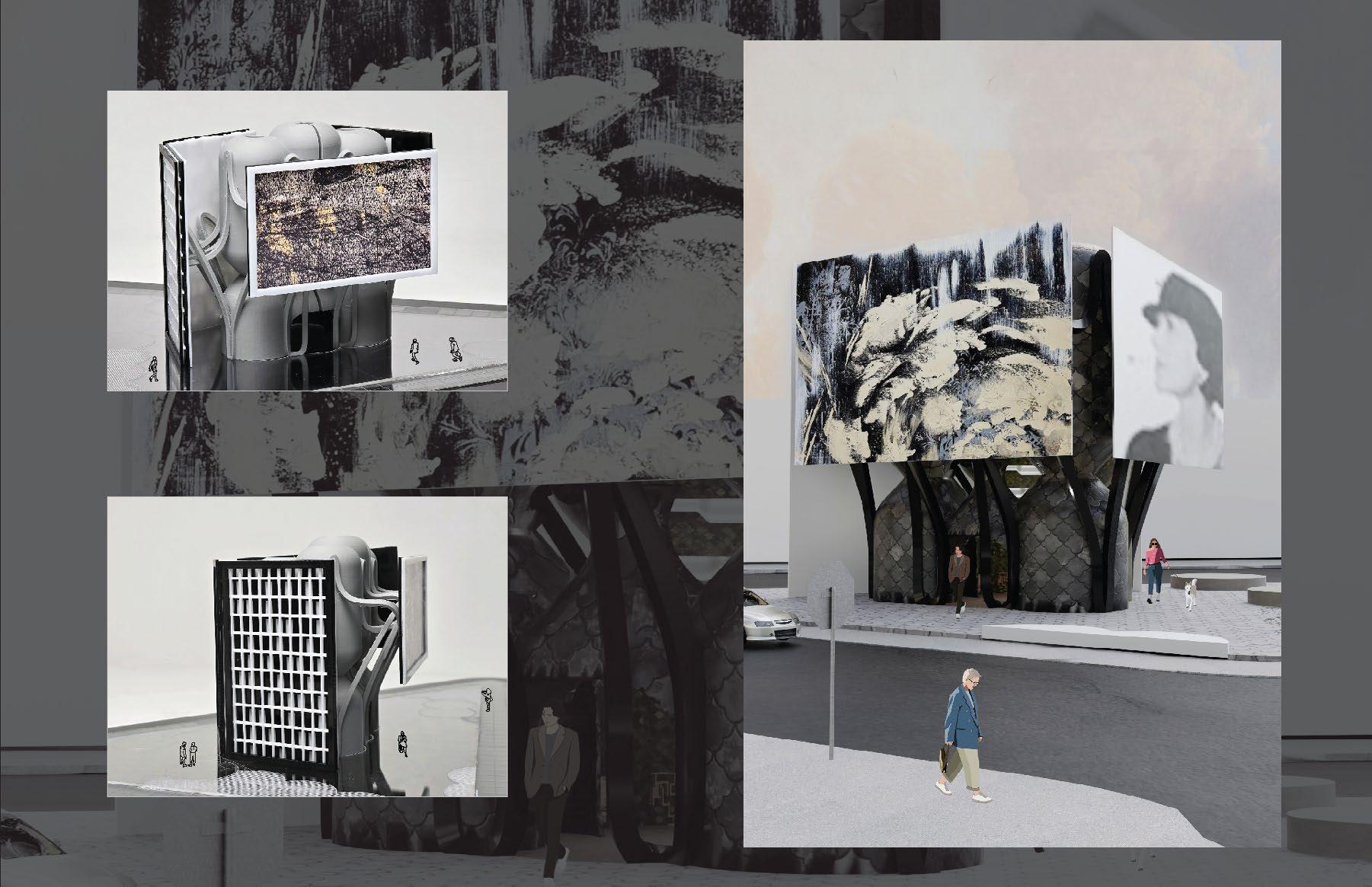
screens with site context and performance
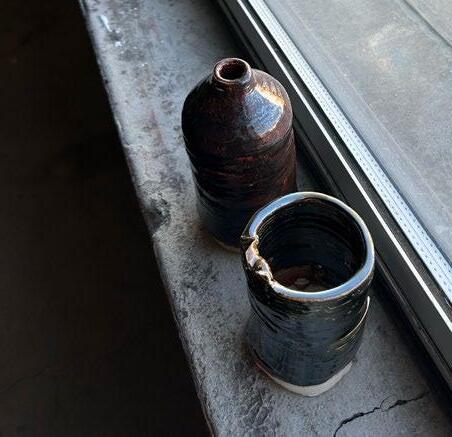
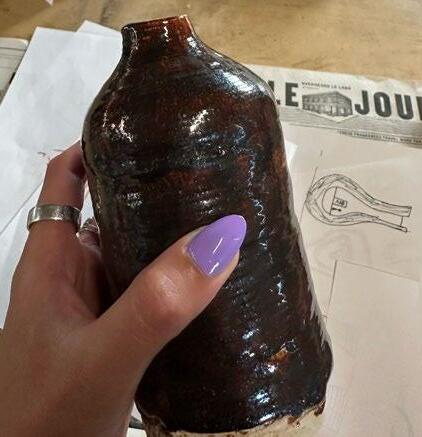
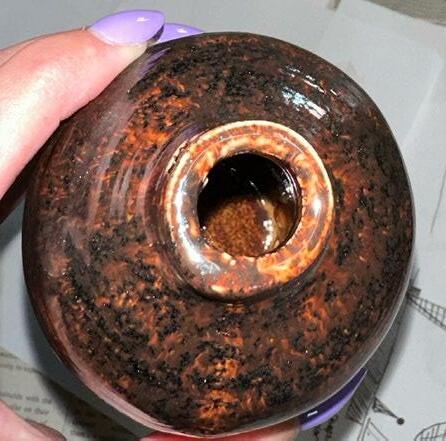
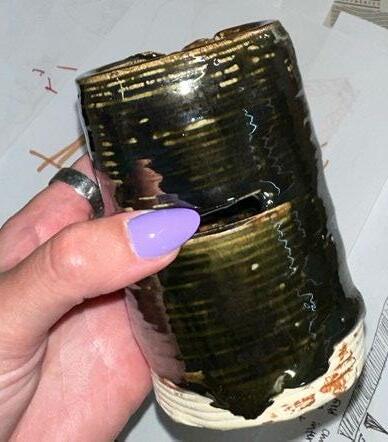
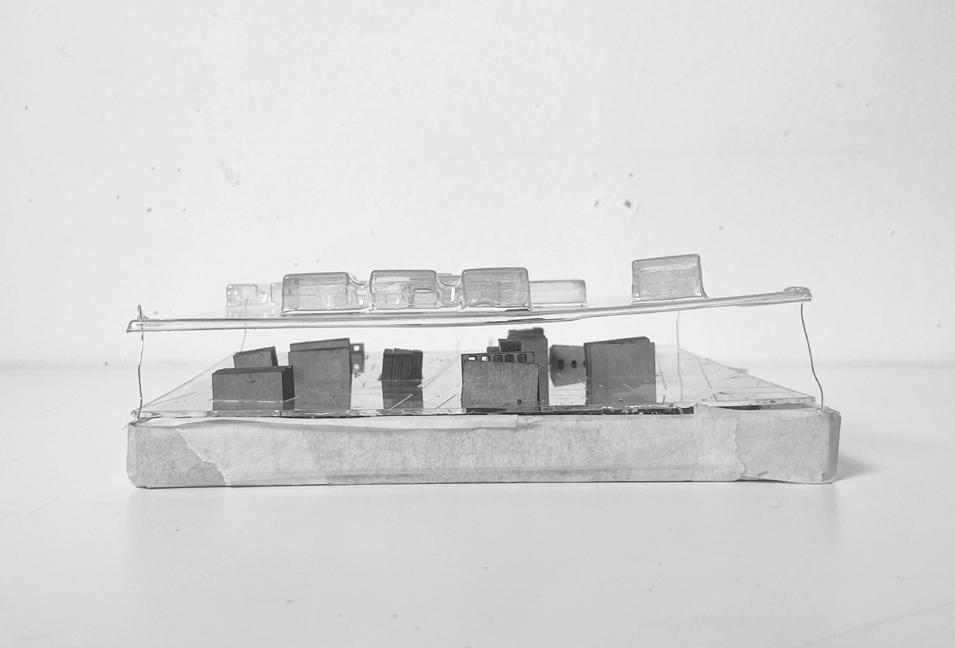
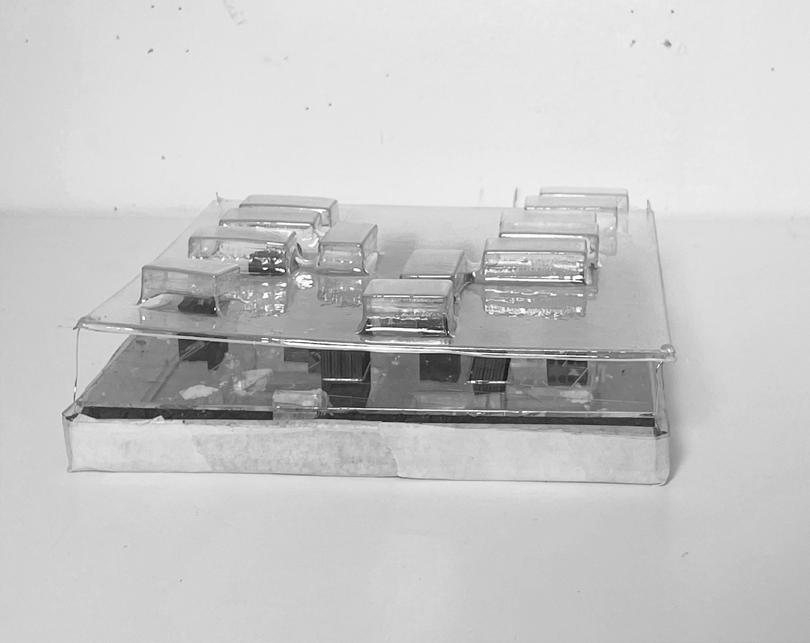
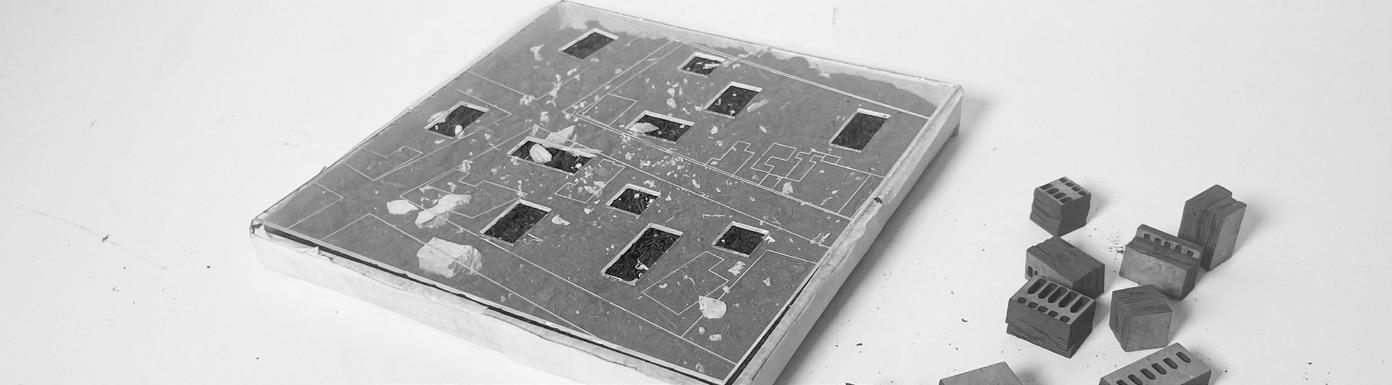
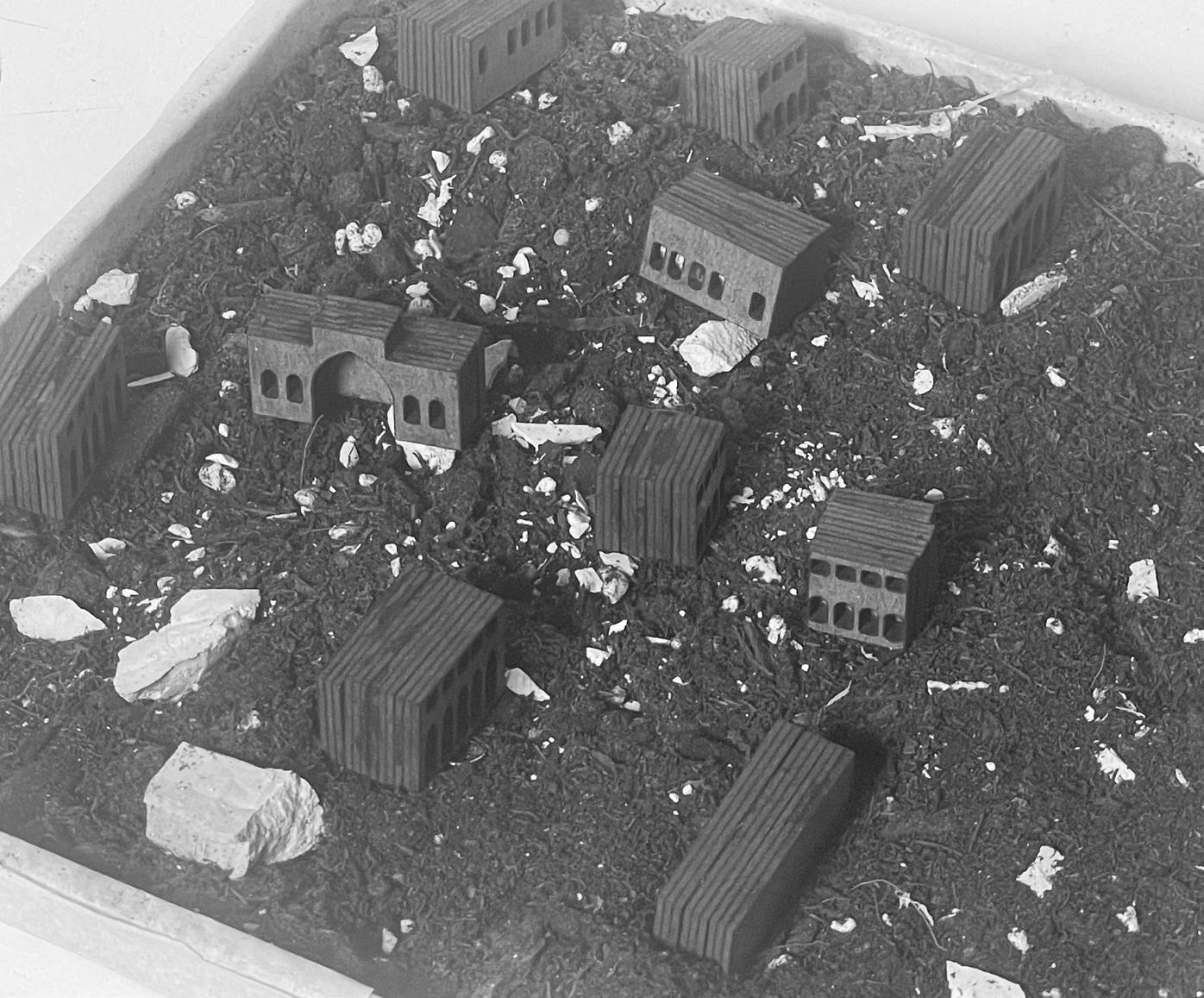
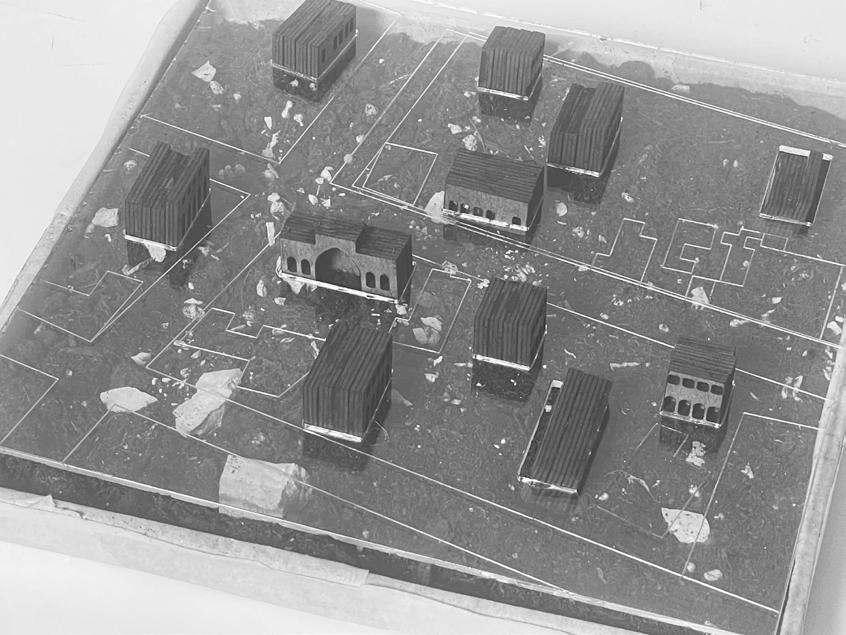
Research and analysis of urban memory through the case study of Aleppo, studying how the city has dealt with atrocity and trauma, which informs how to create of spaces for the poignance and vigor of life to occur.
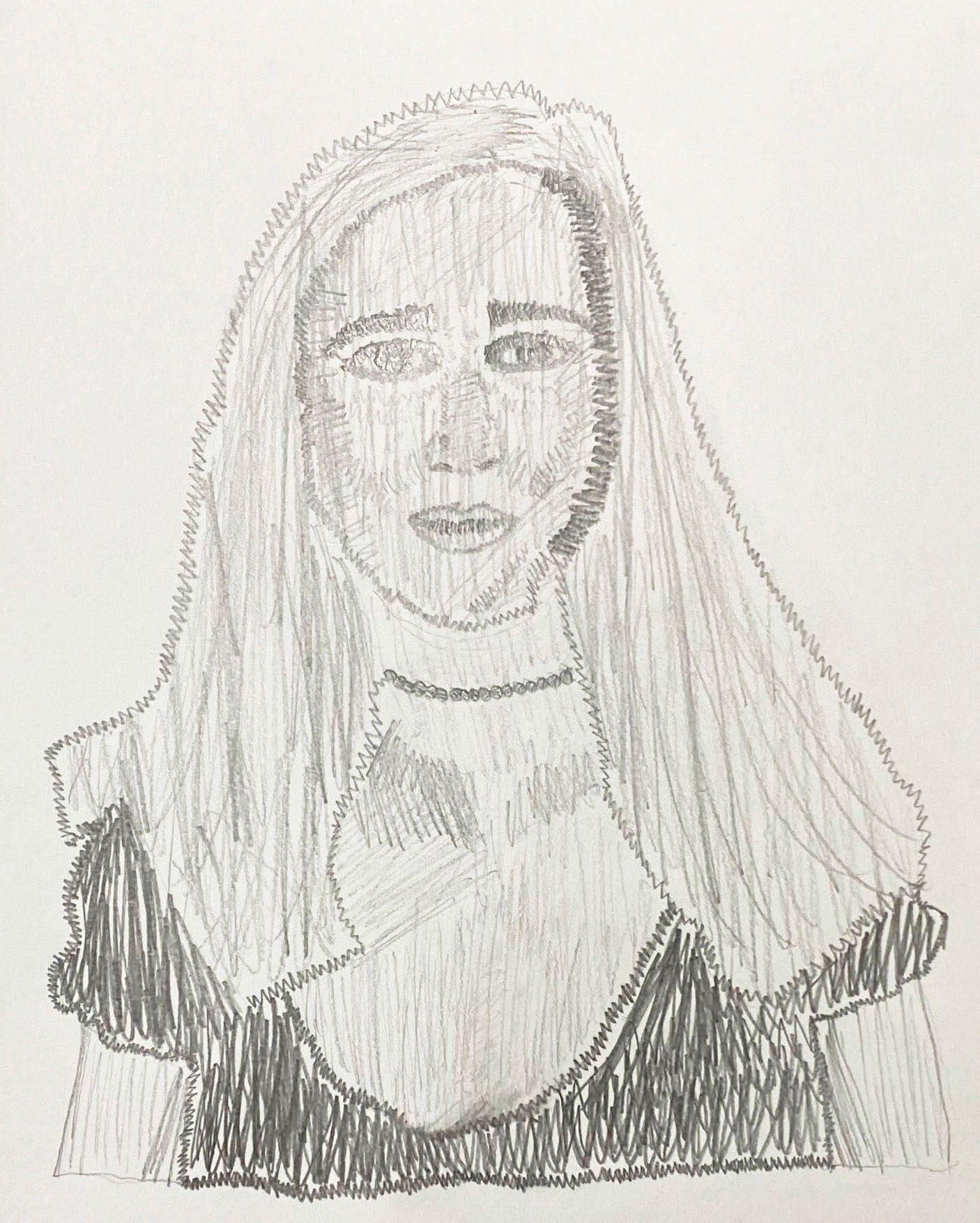

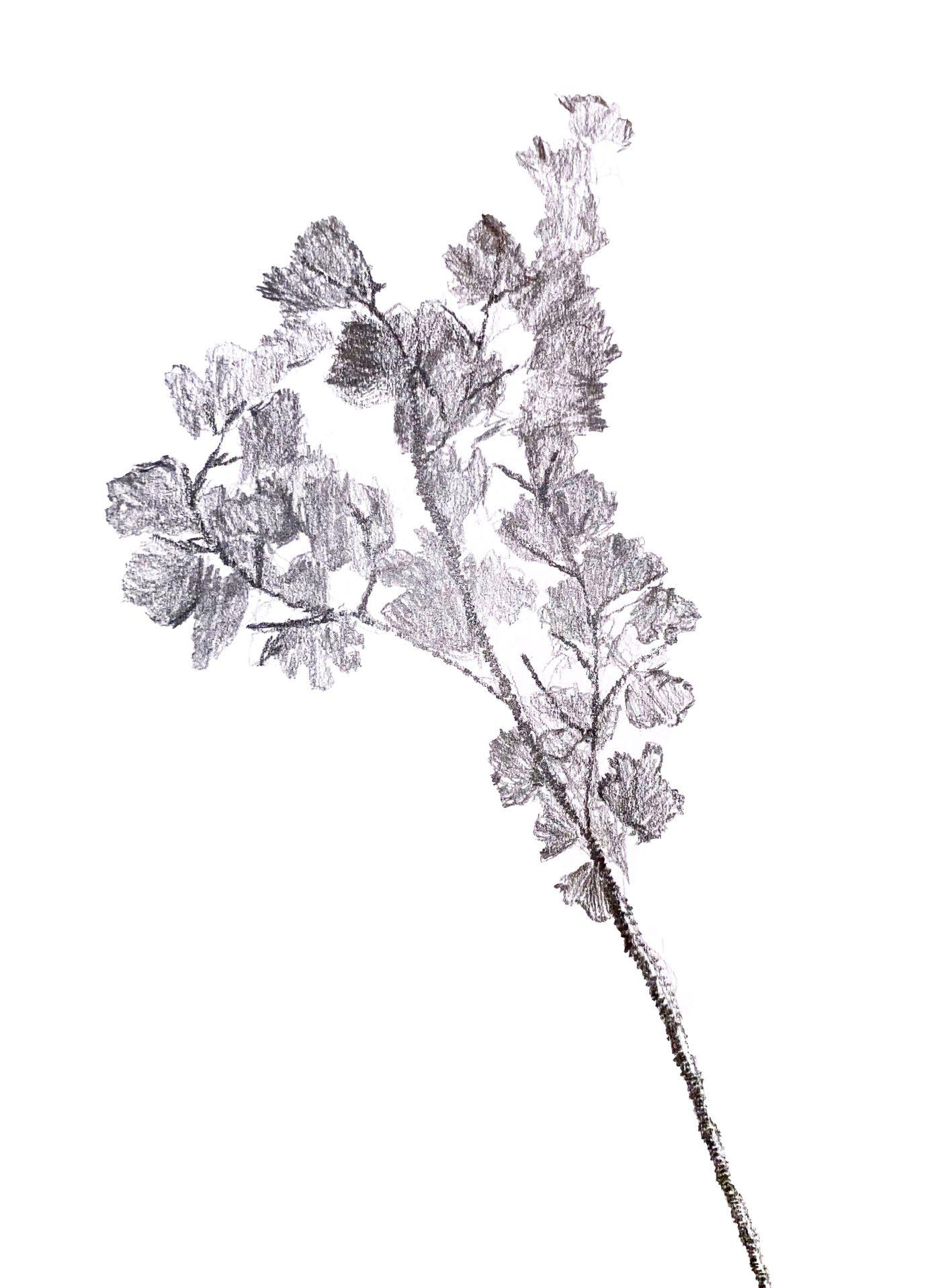
Left: self-portrait using only line to convey depth, shadow, expression.
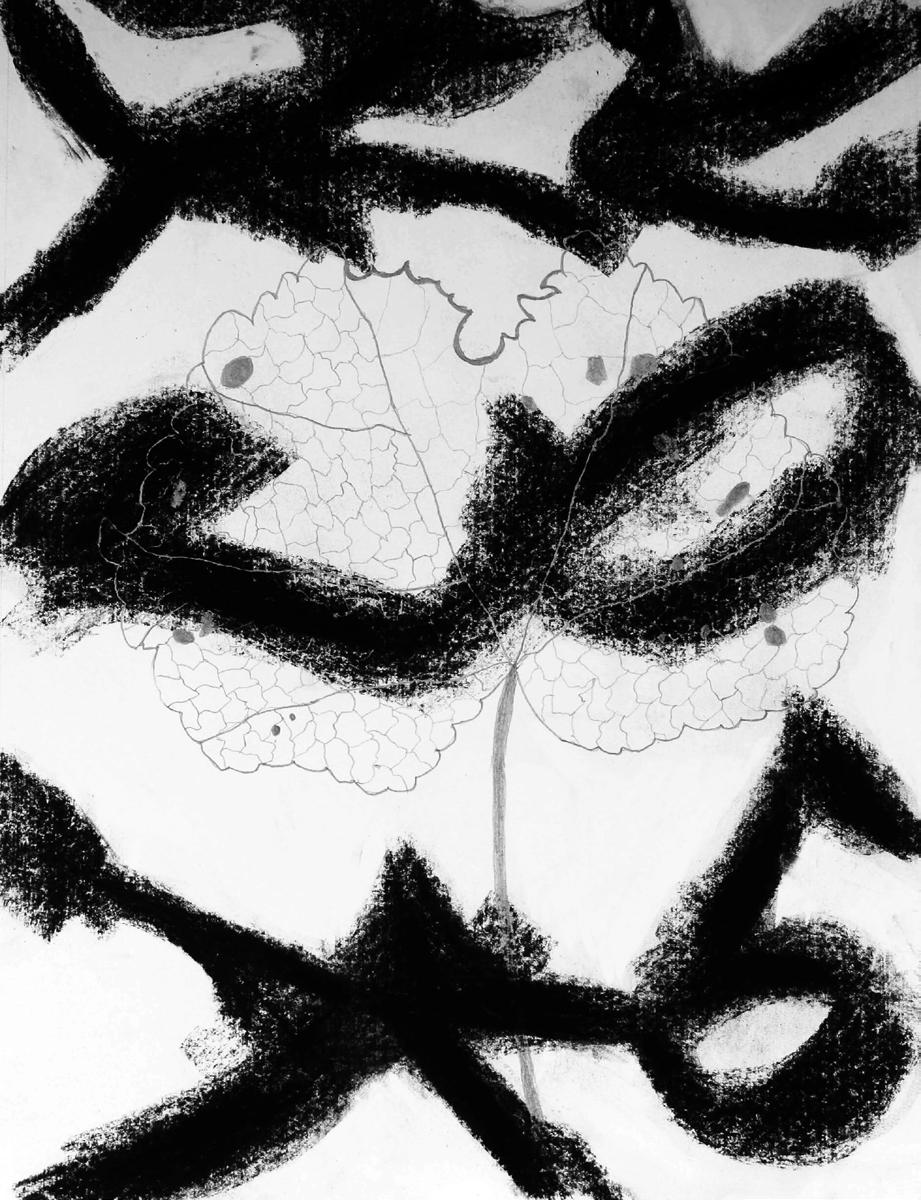
Right: (1) wildflowers drawn using only line. (2) A dead leaf on the ground is meticulously drawn using graphite pencils layered under the shadows of the branches and leaves of the tree above with soft charcoal.
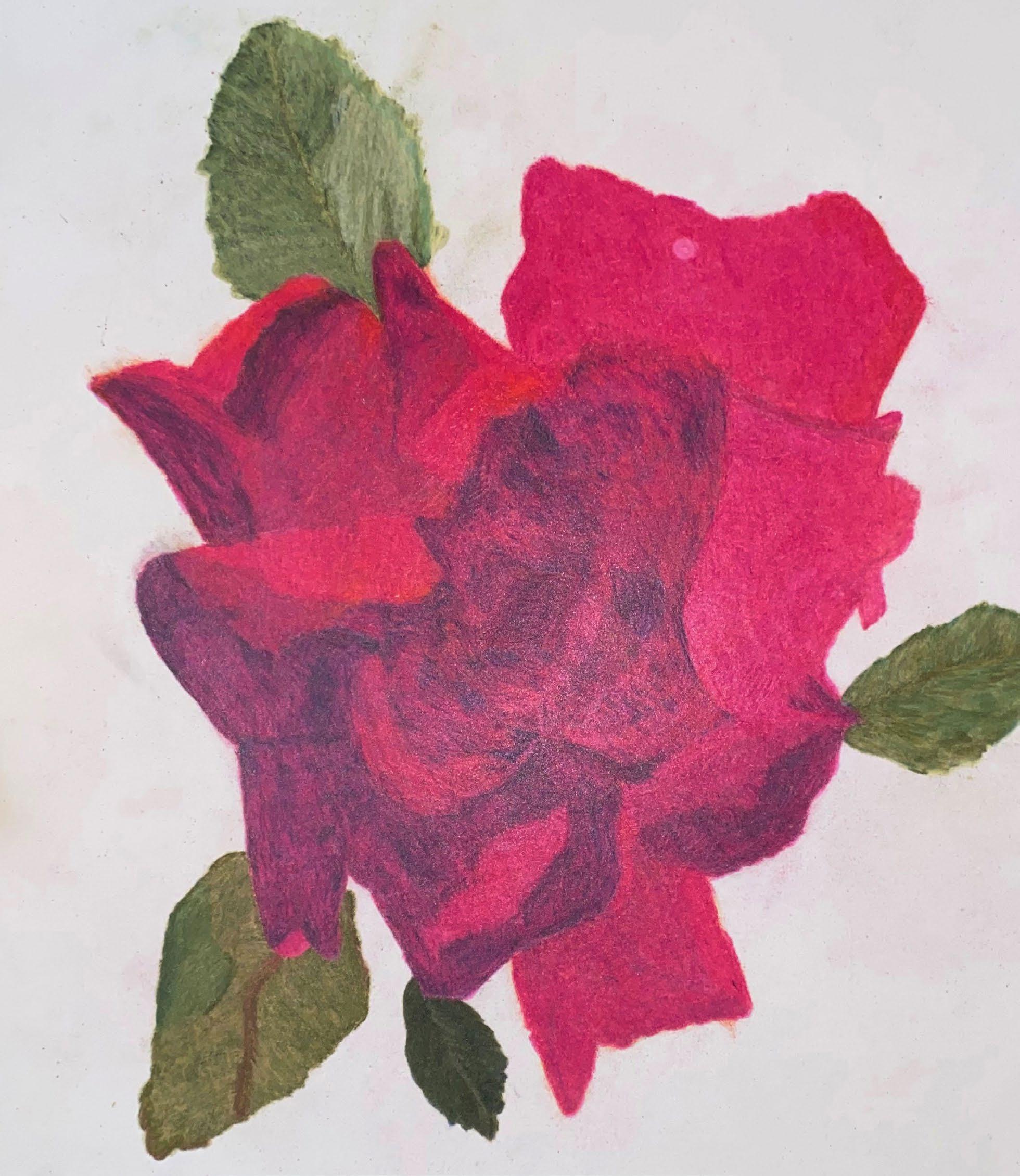
Summer 2022, Independent project, Prismacolor + Faber-Castell colored pencils (individually-selected) + Gamsol + Blending stumps, 11 x 14”.
A found rose was drawn over a period of multiple weeks through building up layers of colored pencils through techniques like melting the colors into the page, blending using various sizes of paper stumps, careful build-up of color from light to dark, and varying types of strokes.
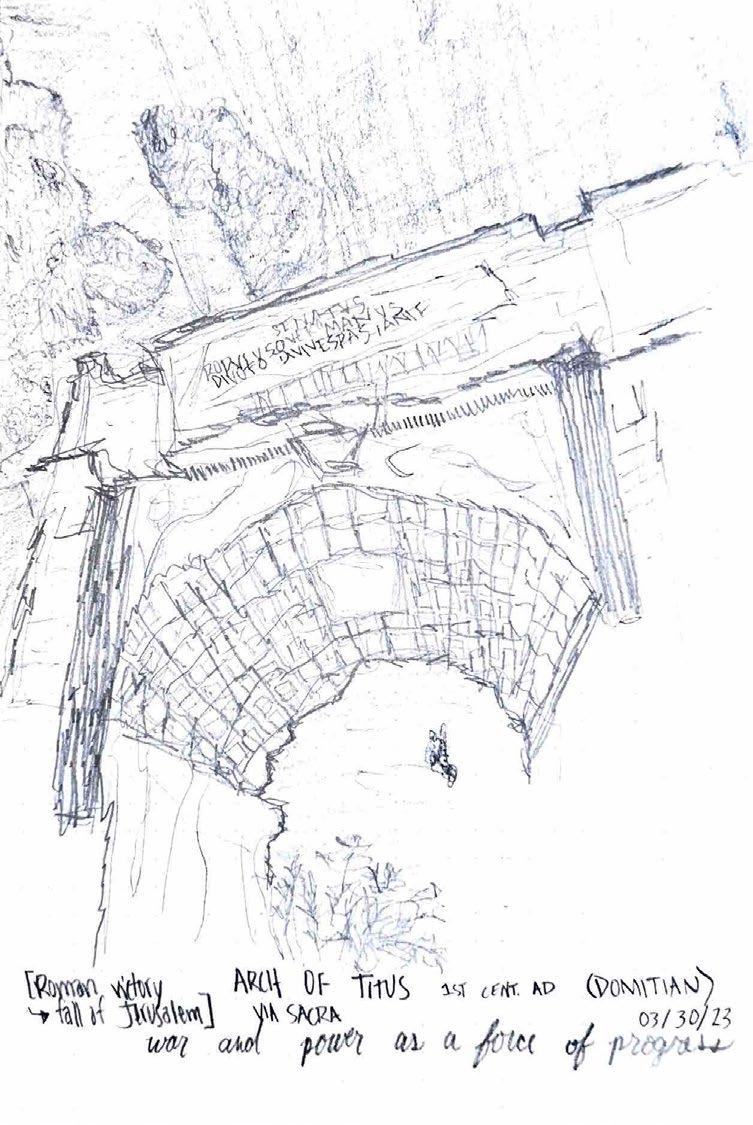
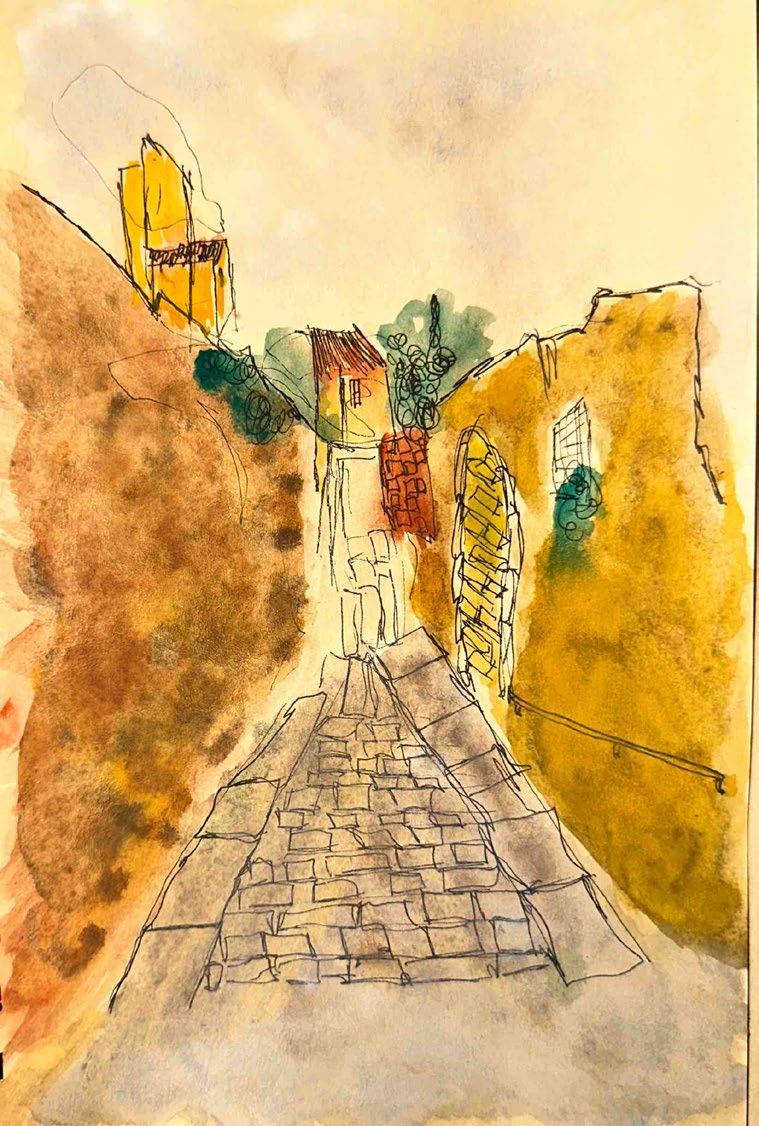
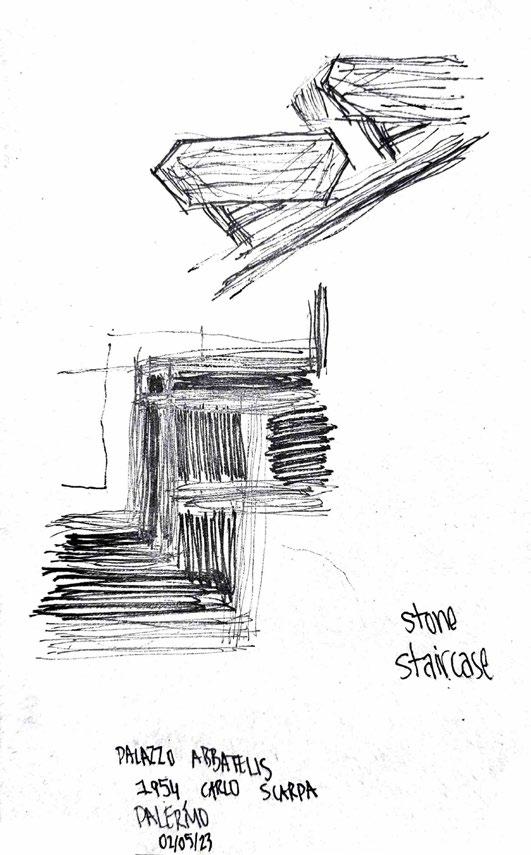
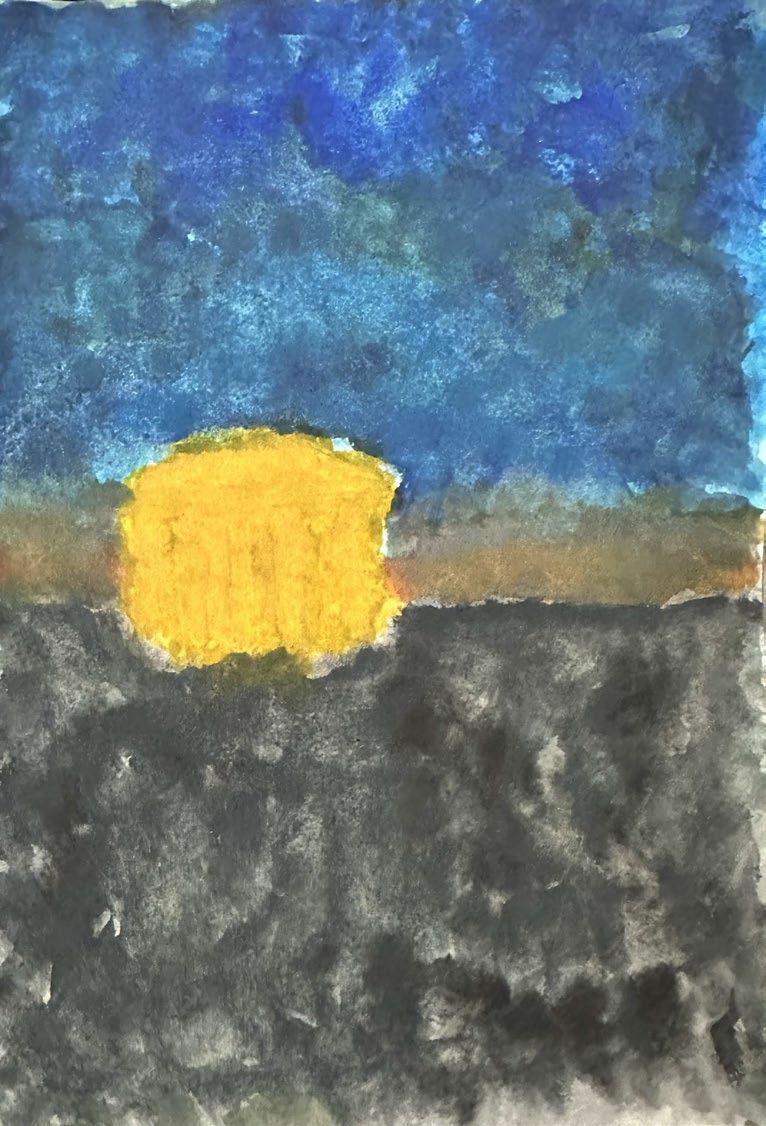
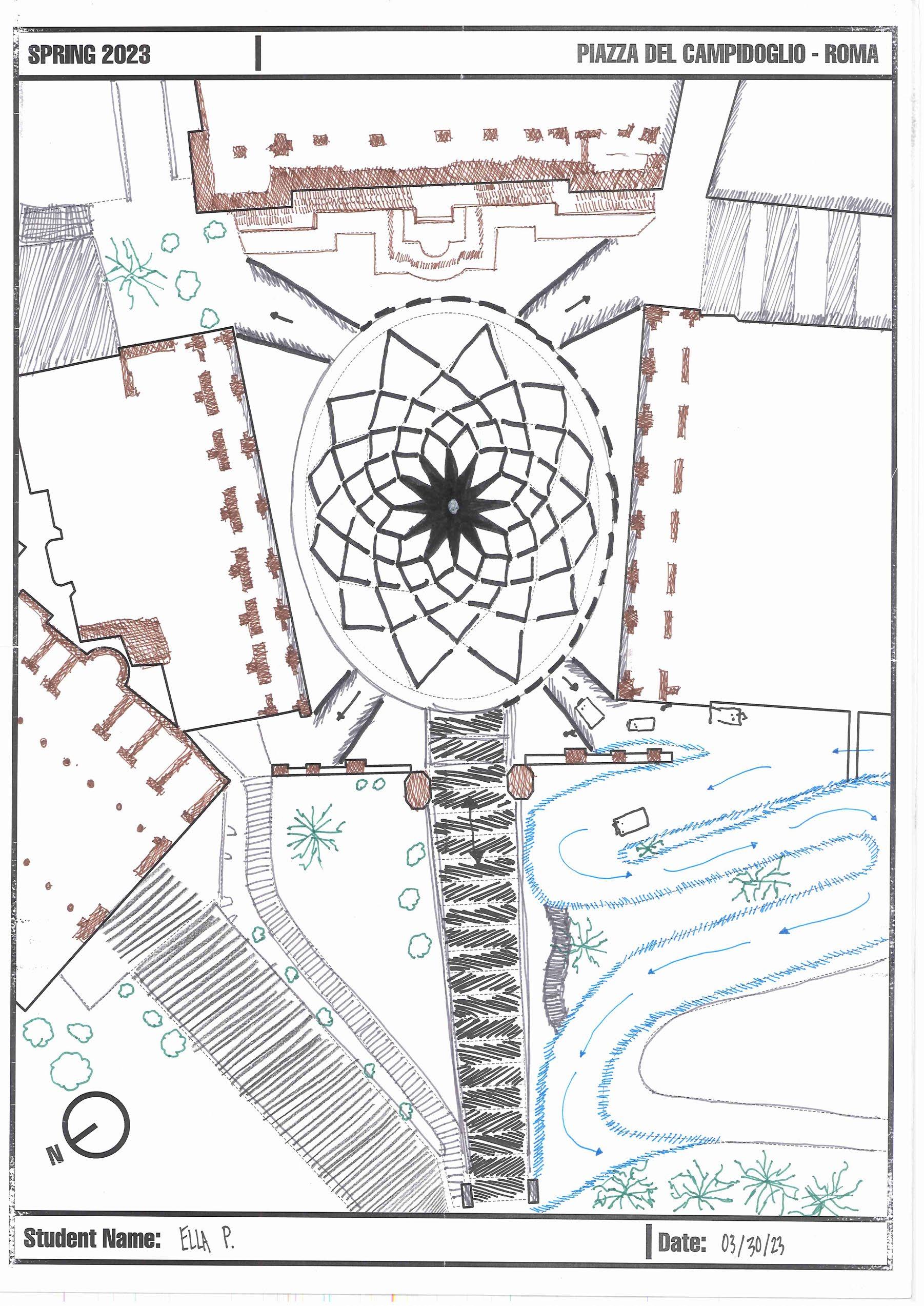
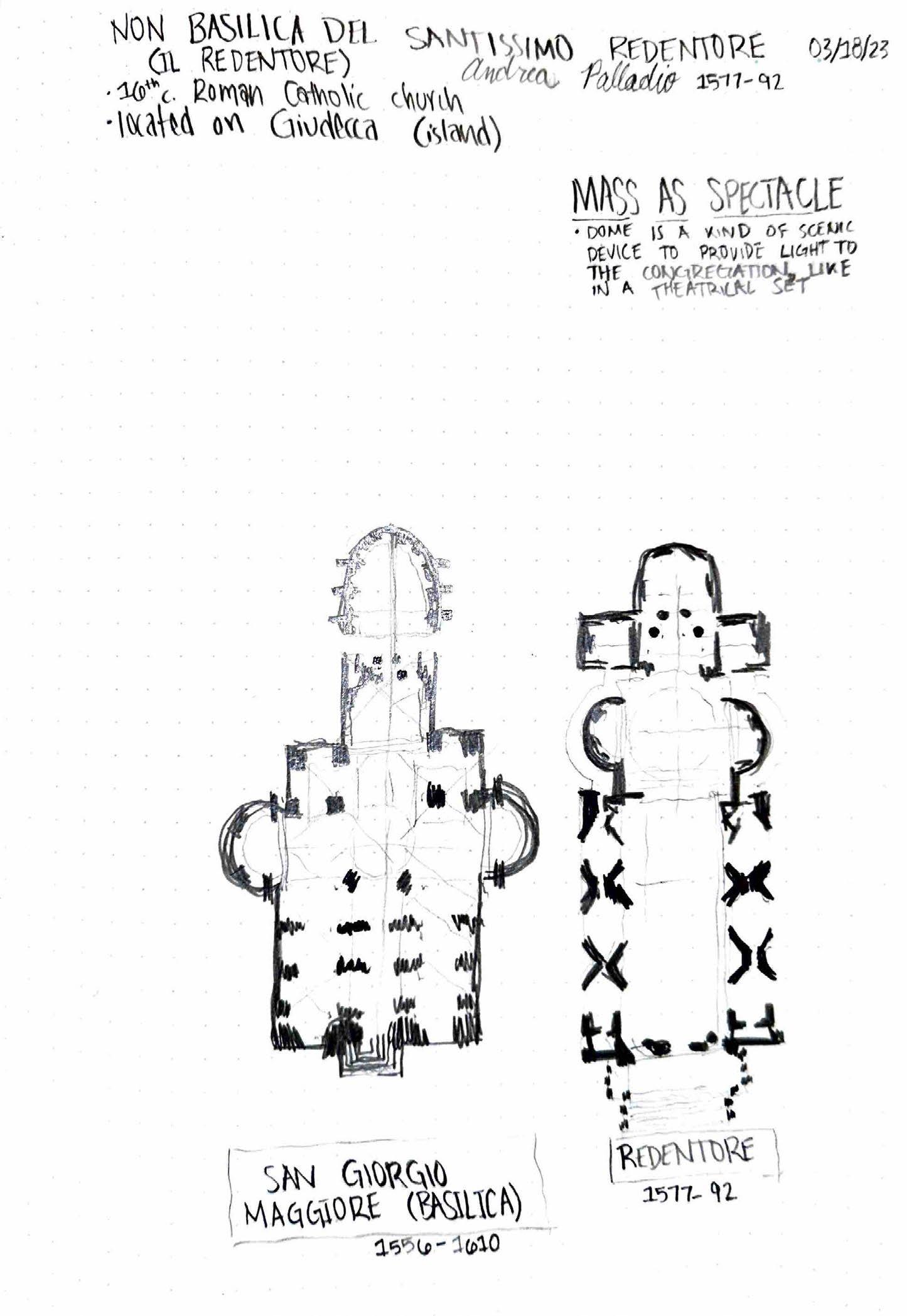
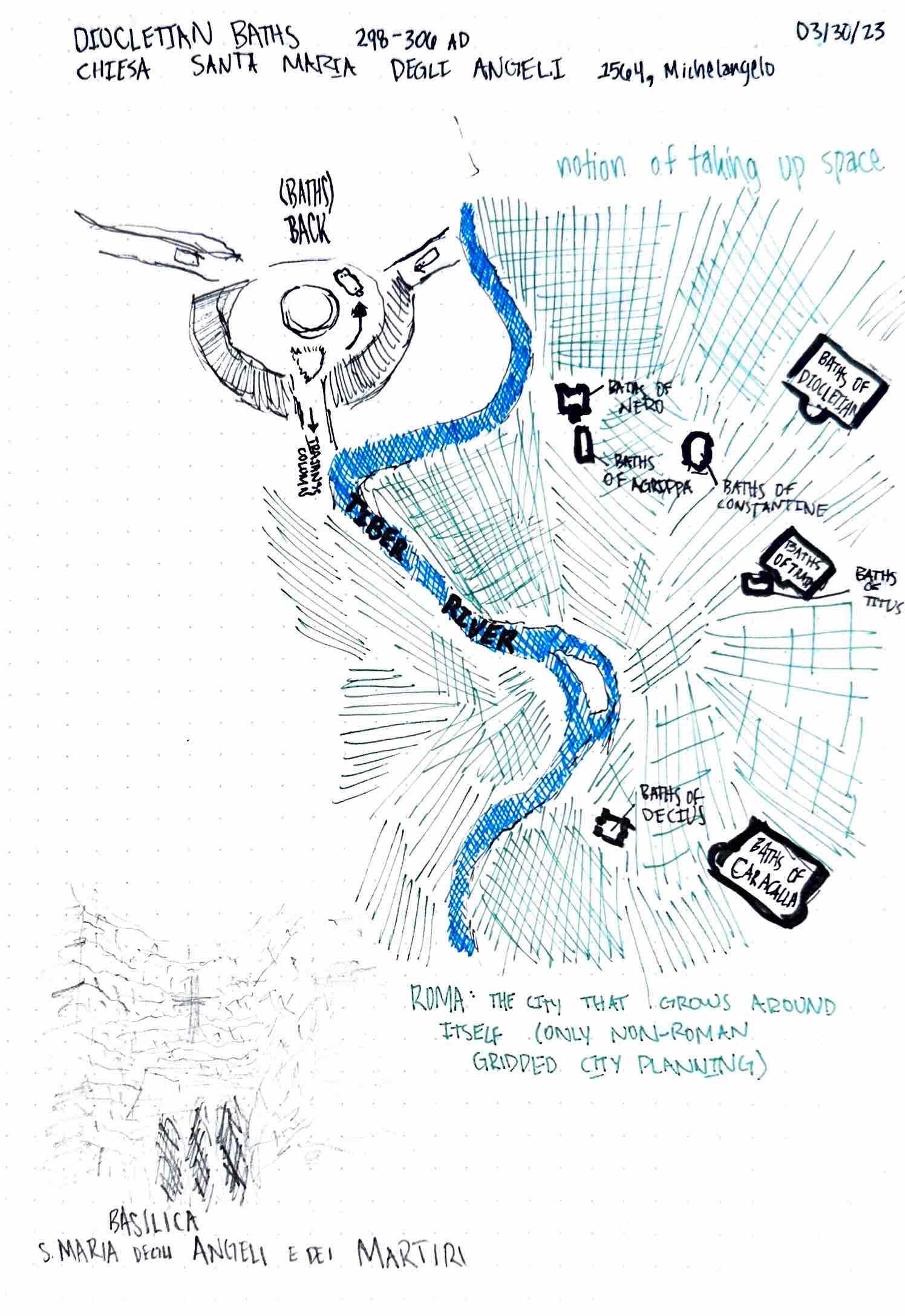
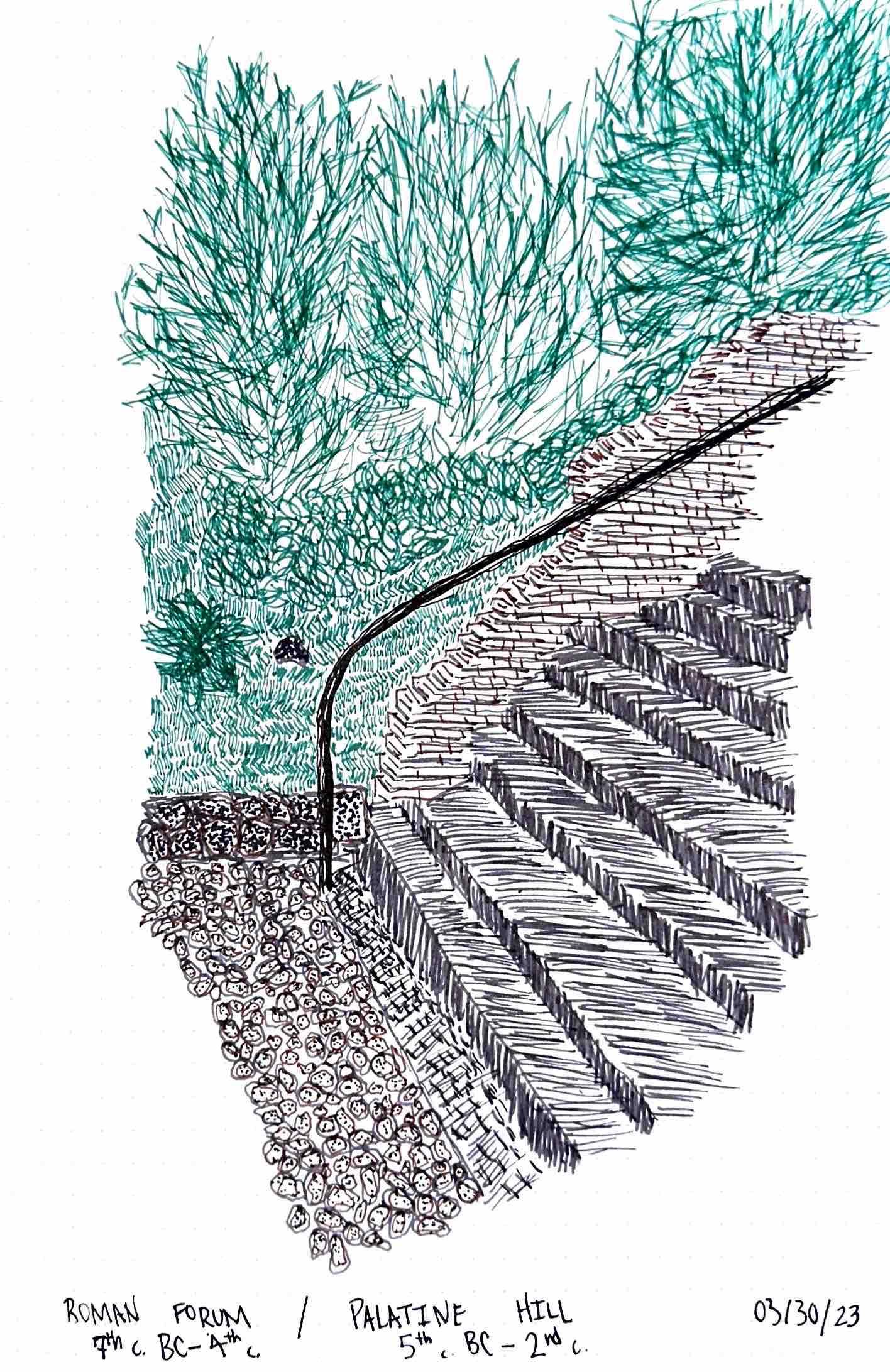
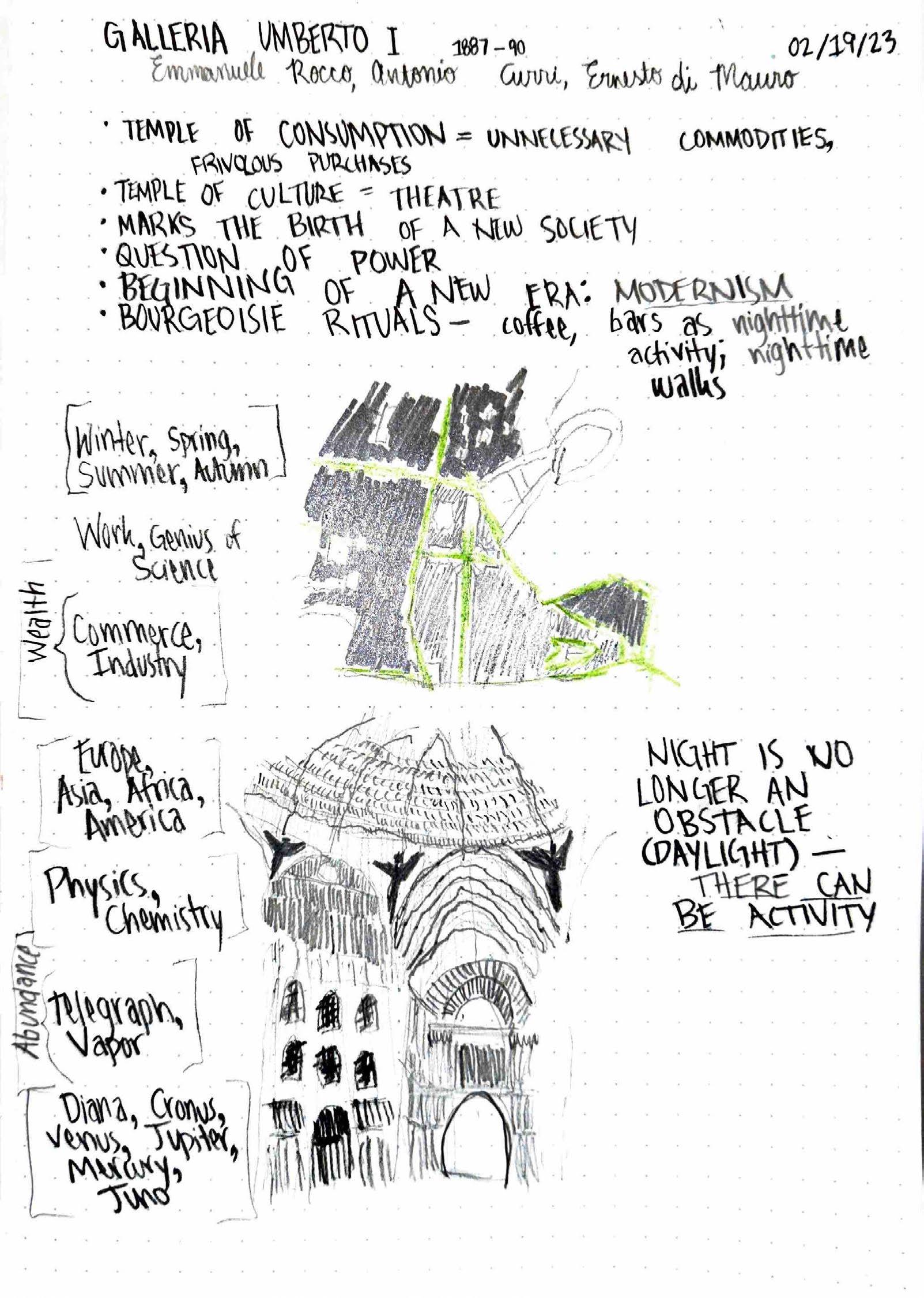
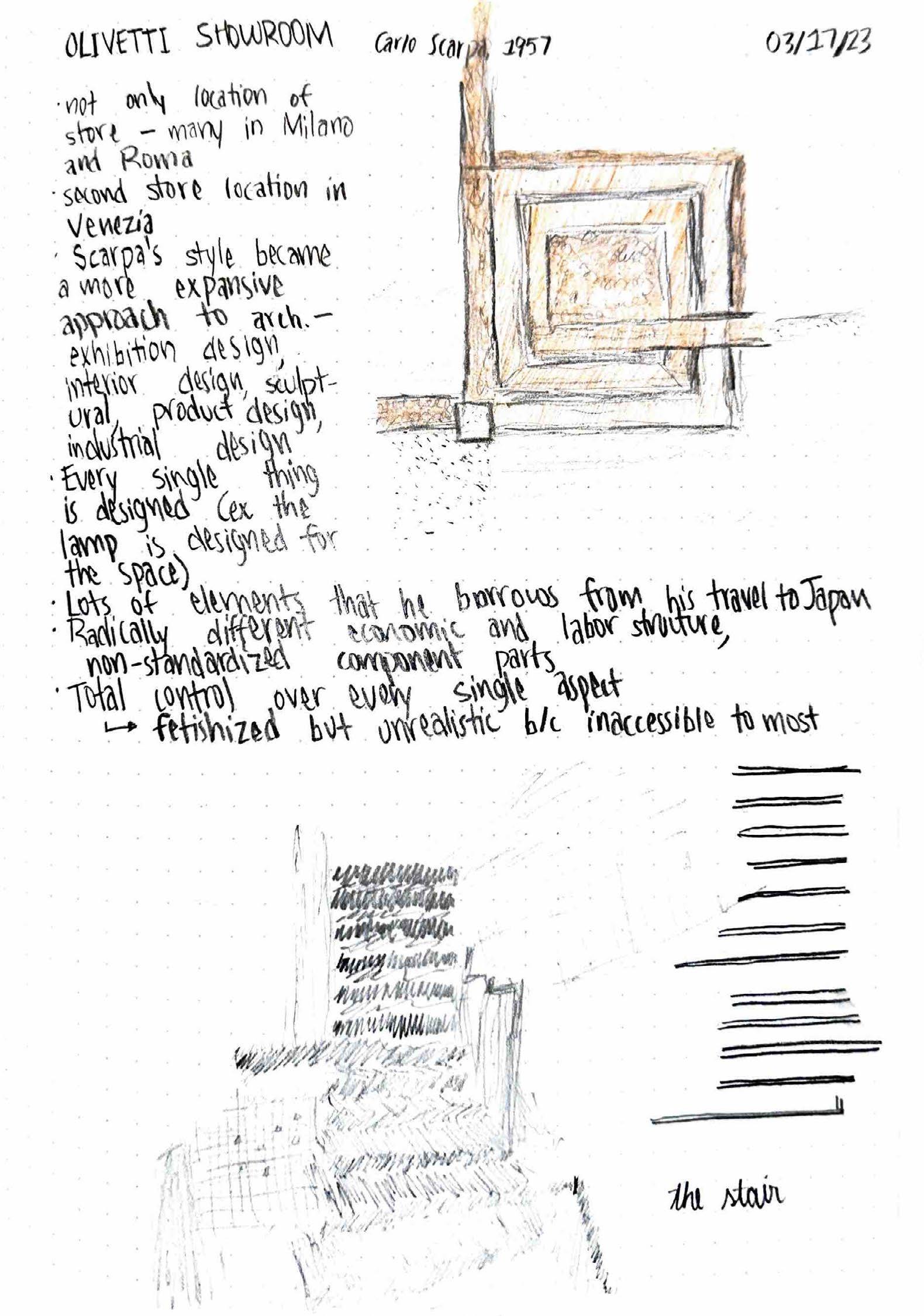
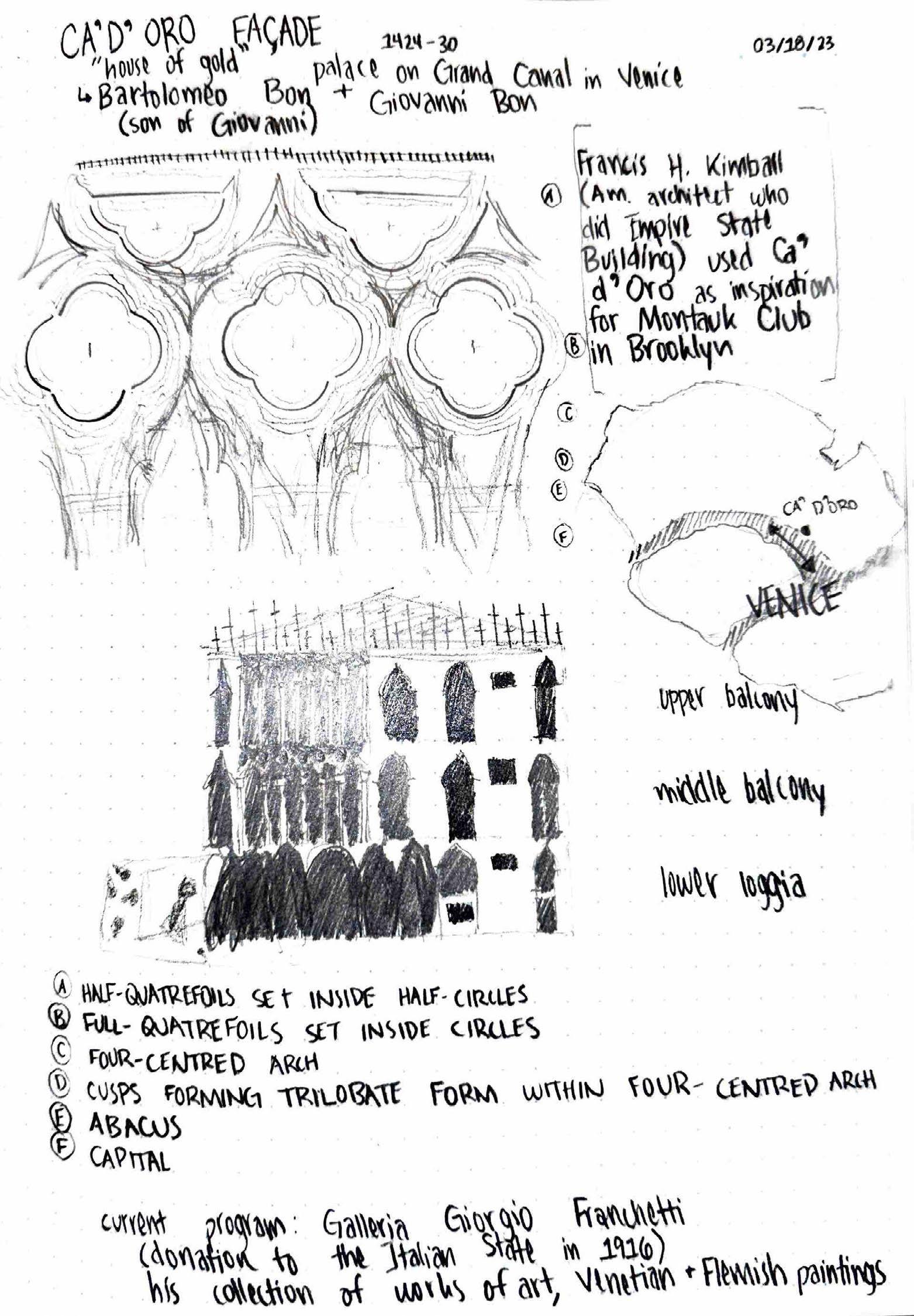
sample work from survey of italian architecture traveling seminar course.
Spring 2023, (Traveling) Survey of Italian Architecture with Profs. Daniele Profeta + Luca Ponsi + Olivia Gori, various lineweights of Faber-Castell pens + Sakura Koi watercolor sketch box travel pan set + Faber-Castell graphite pencils, 148 mm x 210 mm. Selection of independent coursework from class trips to Sicily (Catania, Agrigento, Marsala, Palermo) + Venezia, Vincenza + Florence + Naples, Pompei + Rome.
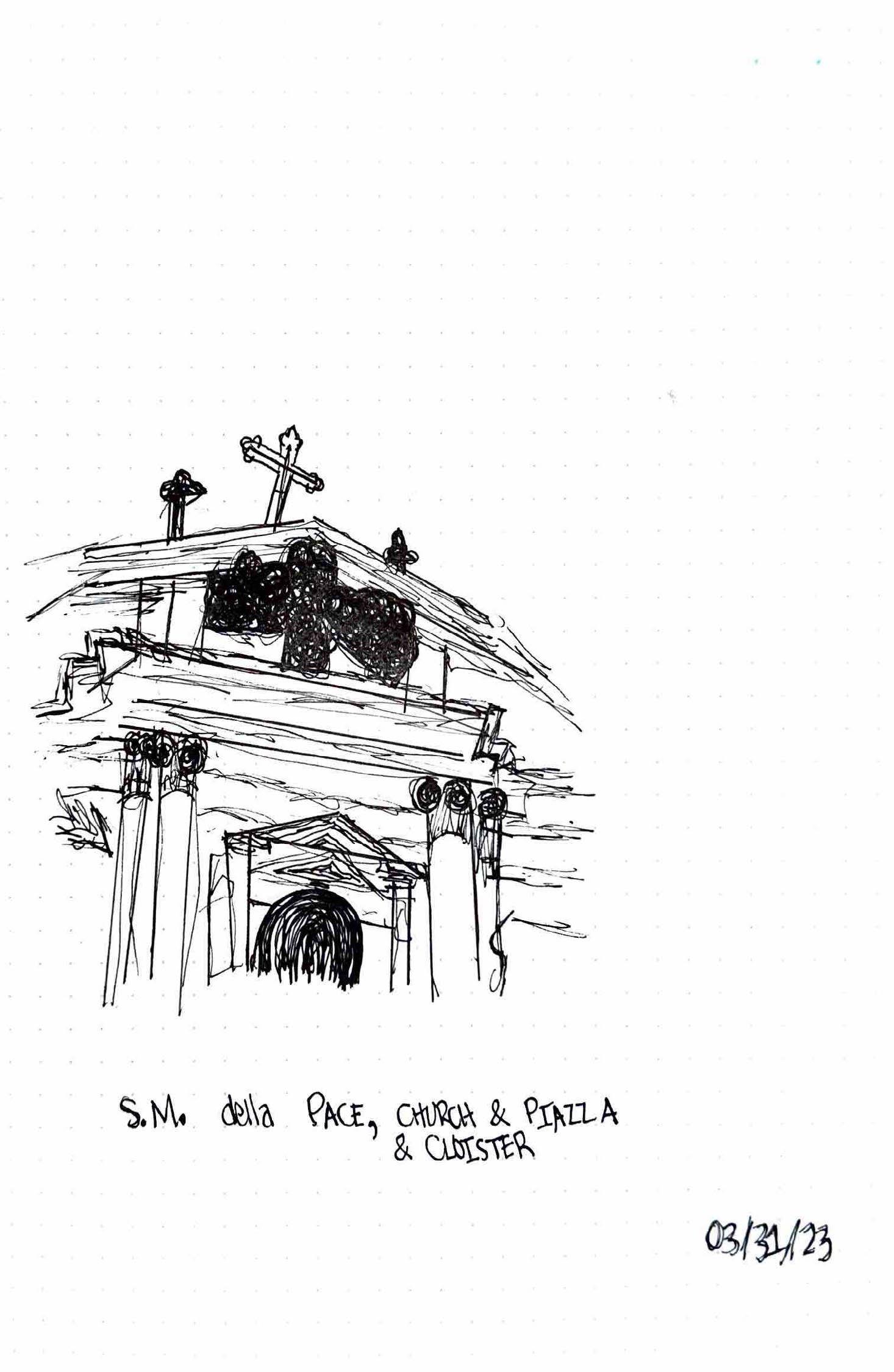
Analytic sketch as a field research tool, building a series of comparative analyses and an increased capacity to see, understand, and critically evaluate architecture and urban form within specific cultural frameworks. Exposure to a broad cross-section of built architecture, urban/spatial form and territorial infrastructures, from ancient to modern periods which coexist, highlighting the ever-changing nature of the Italian built environment. The study of the stratified urban fabric (urban palimpsest) which helps to illuminate the issues of urban morphology and directly relate to protected city centres, such as Florence.
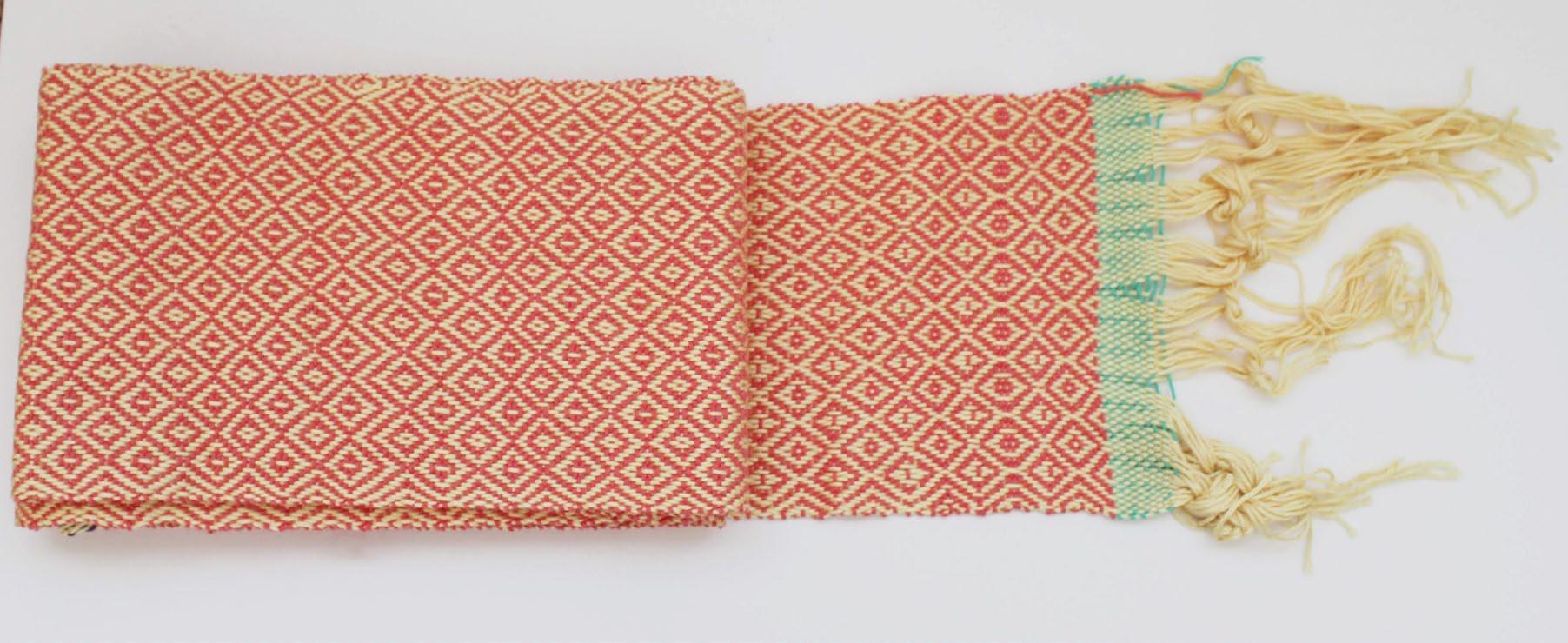

2019, Independent project, Dyed yarn: cotton/ wool blend, 172” x 6.5”.
This functional runner brings colorful, upbeat energy to dining tables with bright, fun colors and a youthful pattern.
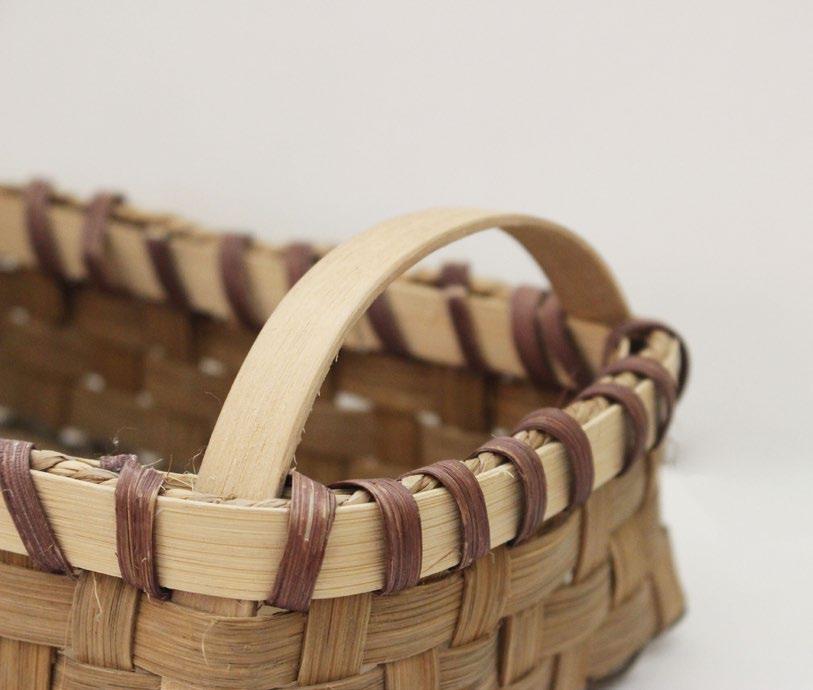
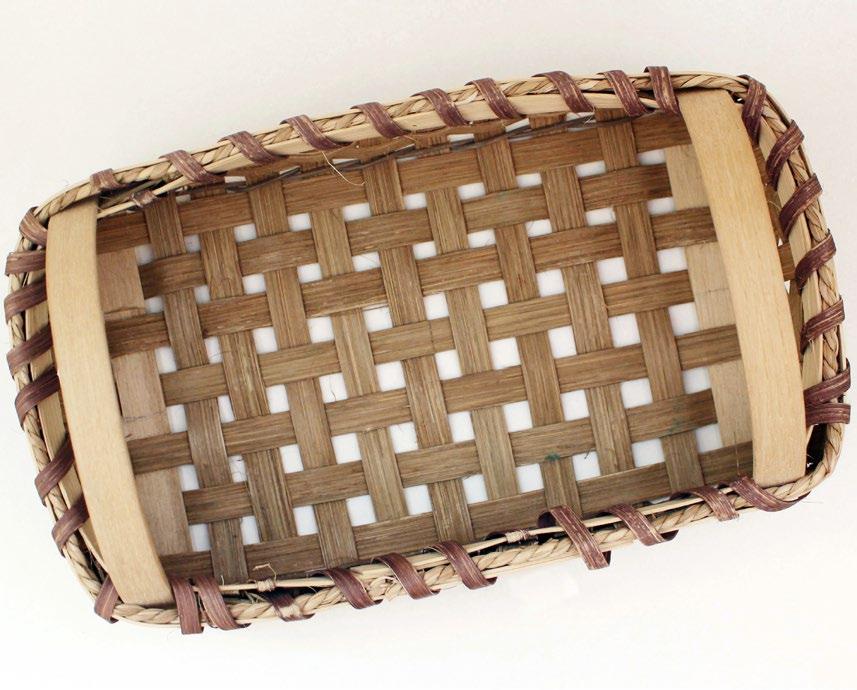
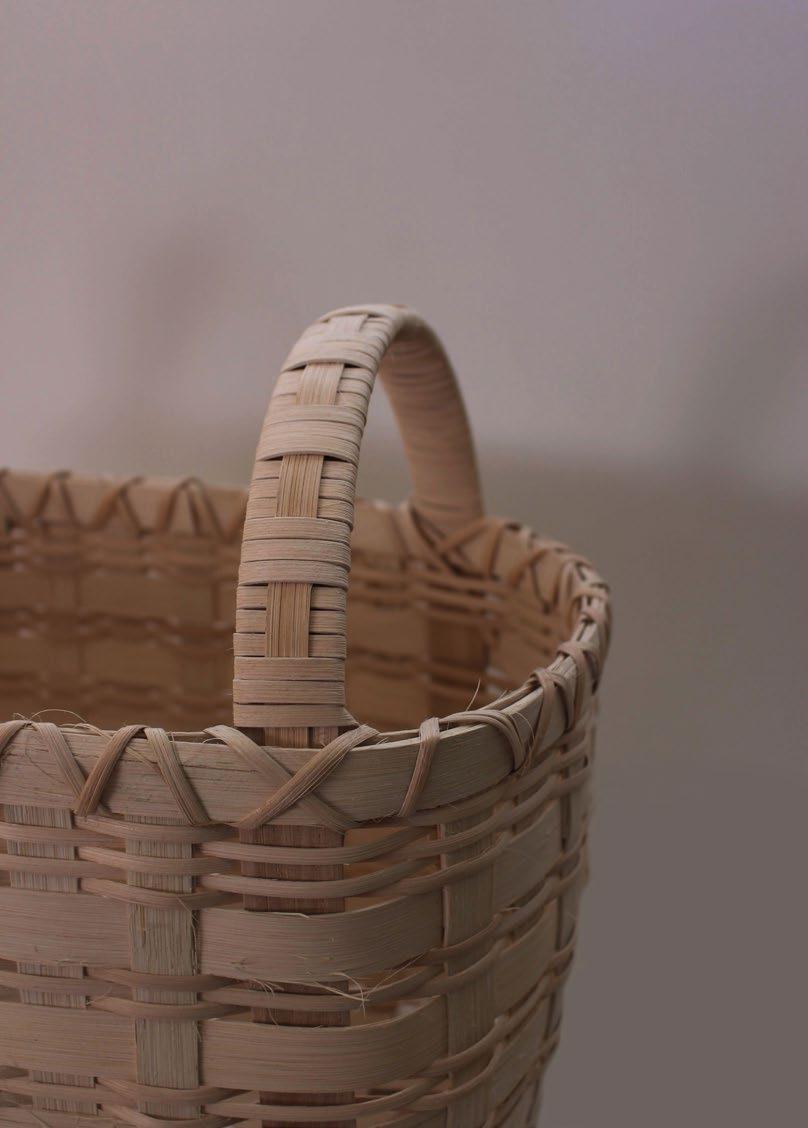
2017, Independent project, Natural 1/4” and 1/2” reed, 10” x 5” x 2.5”.
This basket was created for a coffee table in a family living room, so the color stains were chosen based on colors already present in that room, and the pattern of weave mirrors the checkerboard pattern of the table.
Summers, Independent projects.
Exploration of textiles through variations in pattern, color, and scale as a means of making, by hand.
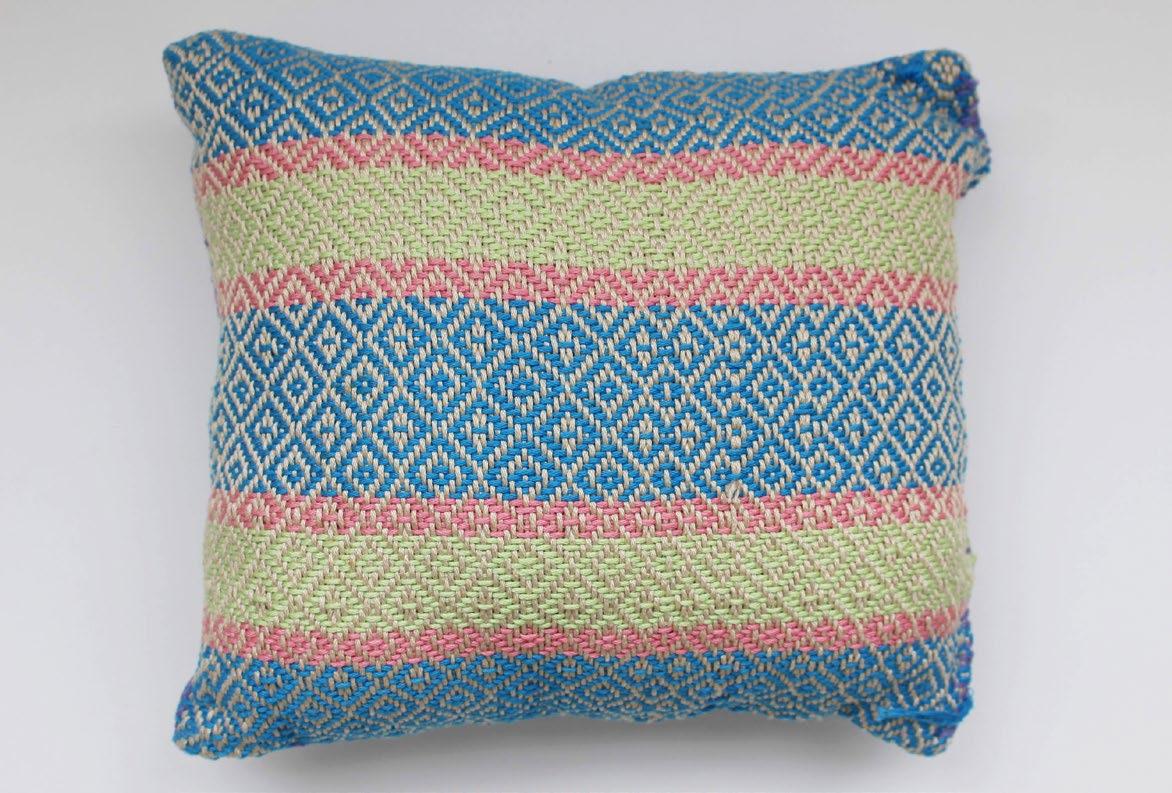
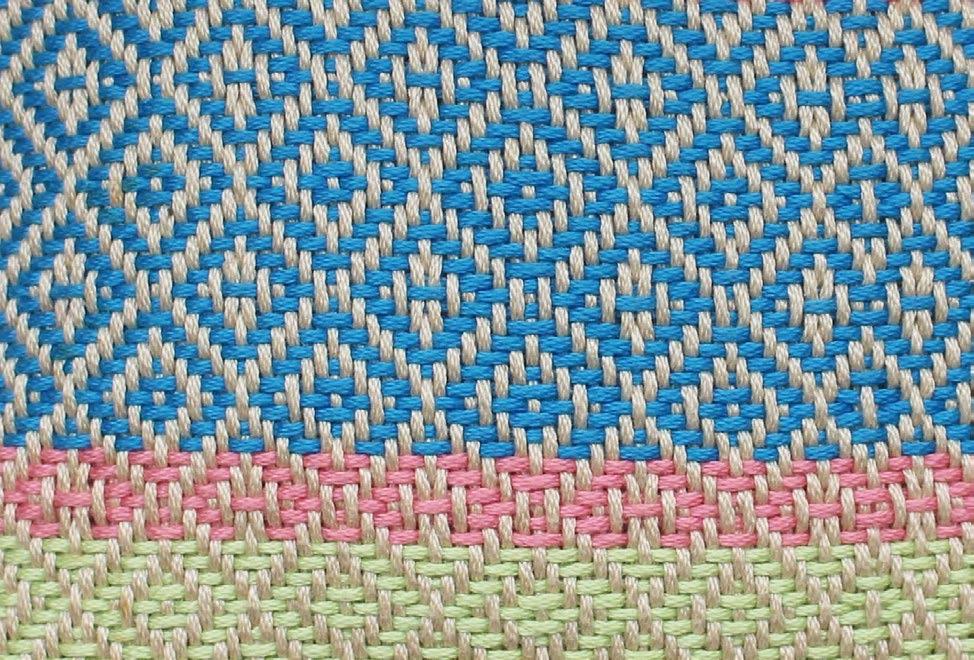
2018, Independent project, Dyed yarn: cotton/ wool blend, 11” x 9.5” x 5”.
This pillow uses multiple contrasting colors to guide attention to certain areas of the pattern. The woven exterior of the pillow was then hand-sewn into a finished product.
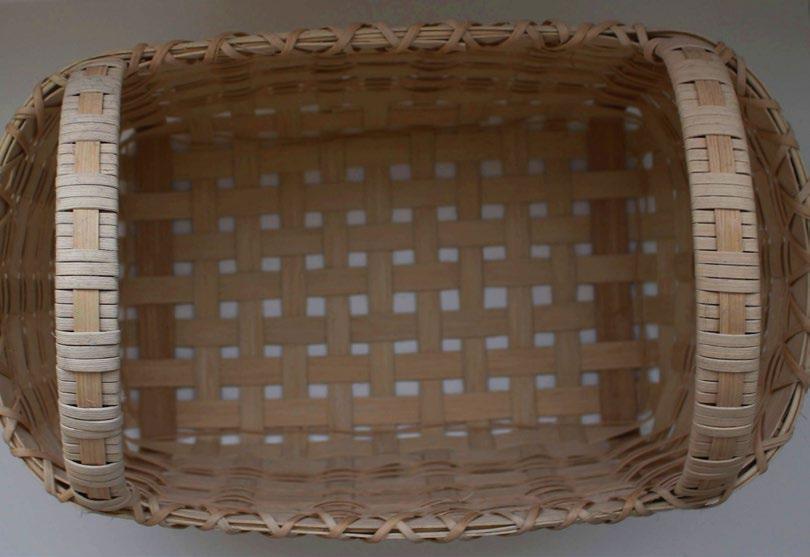
2019, Independent project, Natural 1/4”, 1/2”, and 3/4” reed, 18” x 11” x 14”.
This large storage basket brings light into the enclosed space with varying sizes of reed for a more complex pattern.
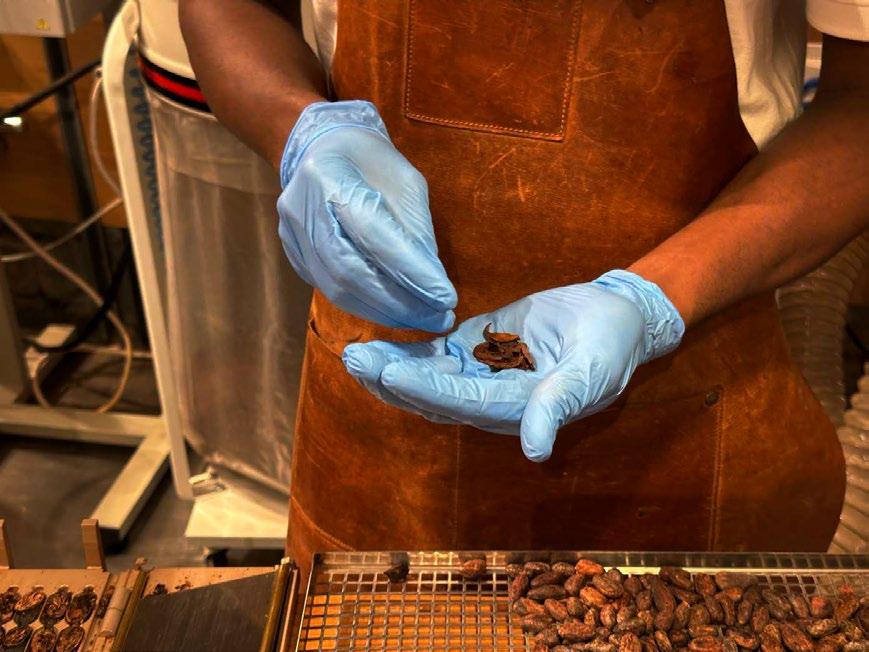
sample work from mediterranean food systems through photography coursework.
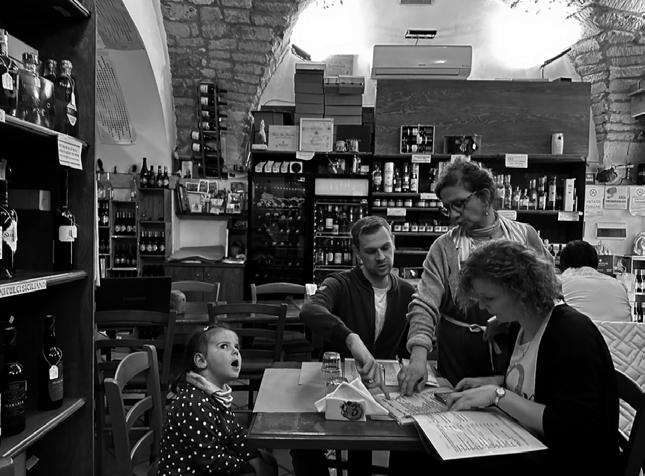
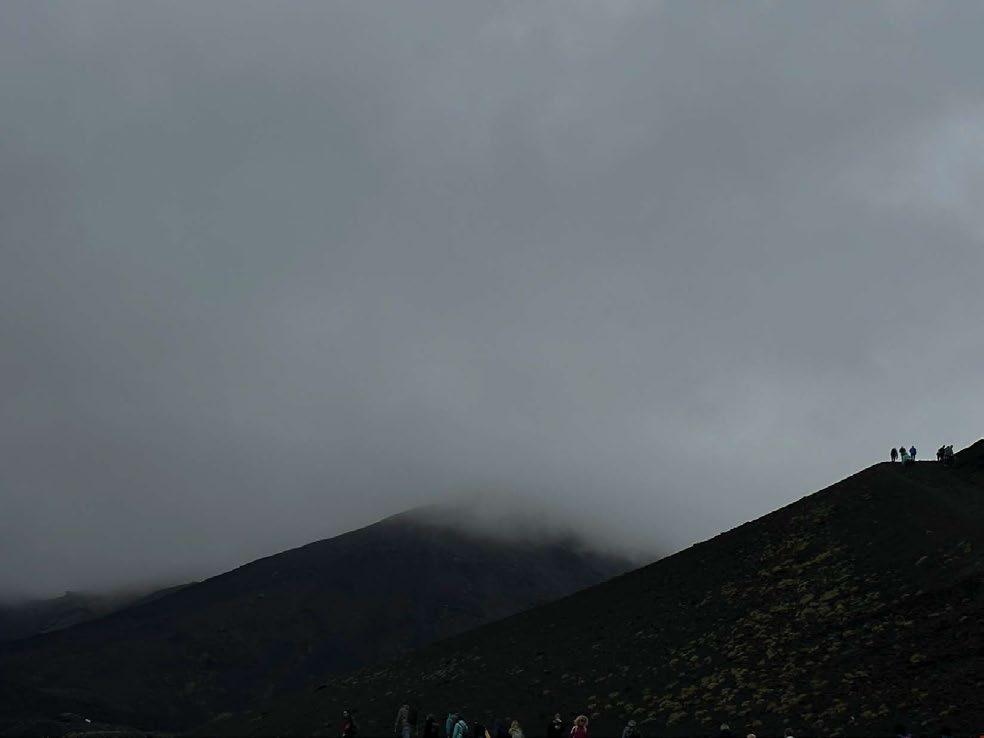
“A swing between sea and land, volcano and beach, beauty and dirt, silence and noise, town and country, swarming crowds and solitary craftsmen.”
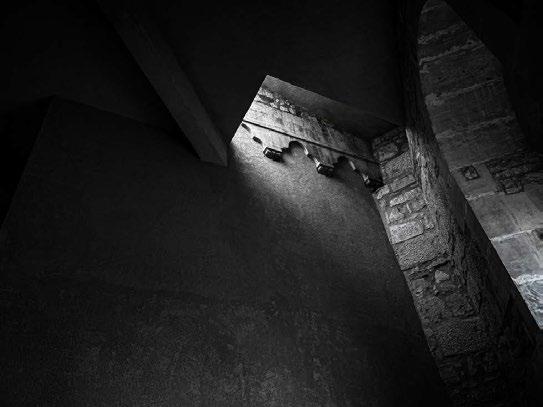
Quintessential beauty is the four elements mixed into one. Water, earth, fire (sun), and air (atmosphere). If one of these elements is missing, we cannot have light.
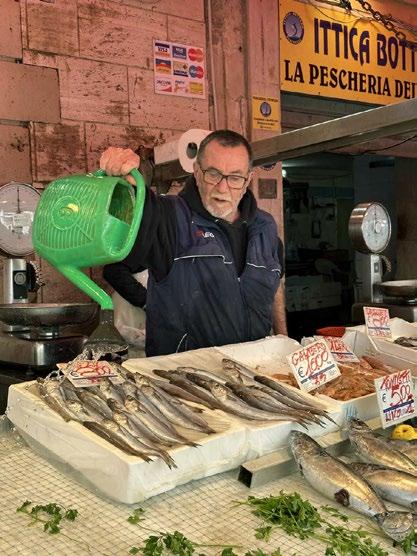
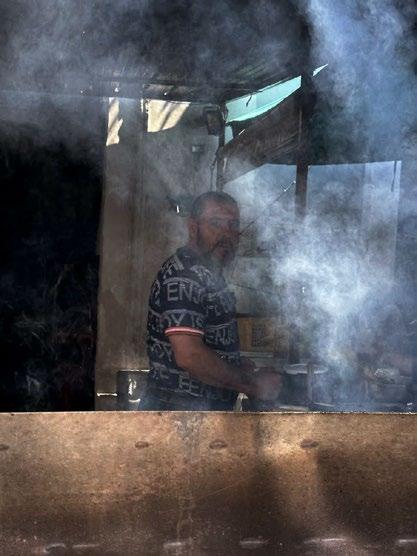
“We are a land torn between hope for the future and expectation for a miracle.”
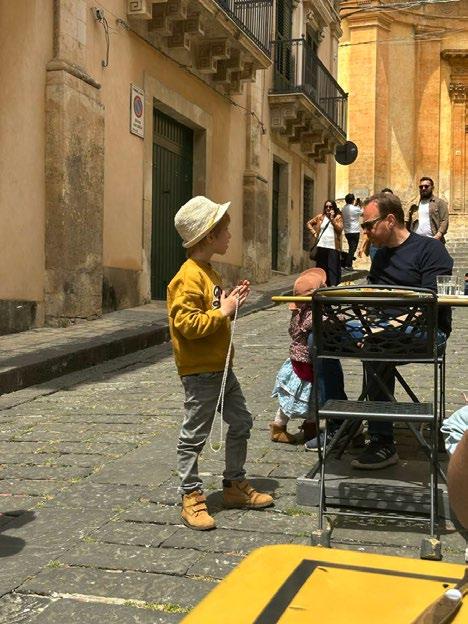
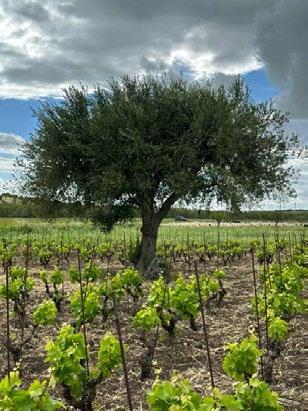
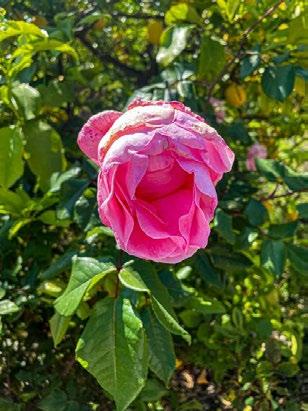
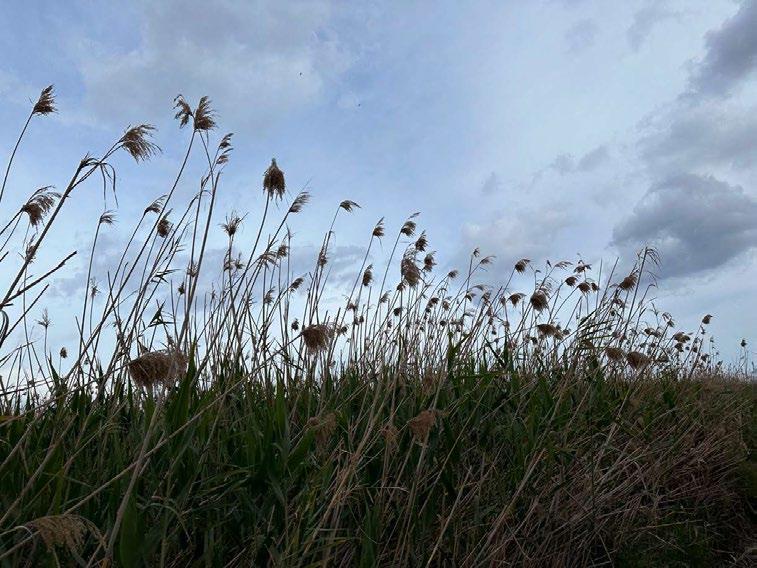
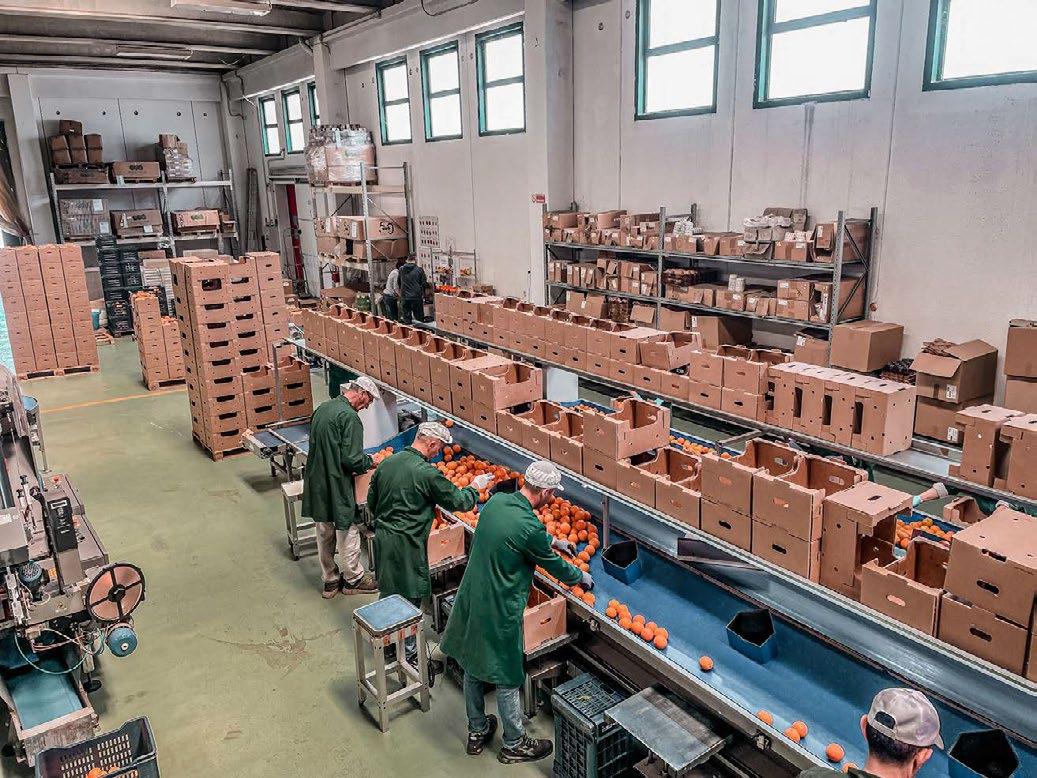
Here, factory workers are seen working the production line at an orange farm. The oranges come from a myriad of local farms. The photograph is meant to bring in a reminder of the many workers behind every bite of food. Each piece has gone through dozens of hands before it reaches the table.
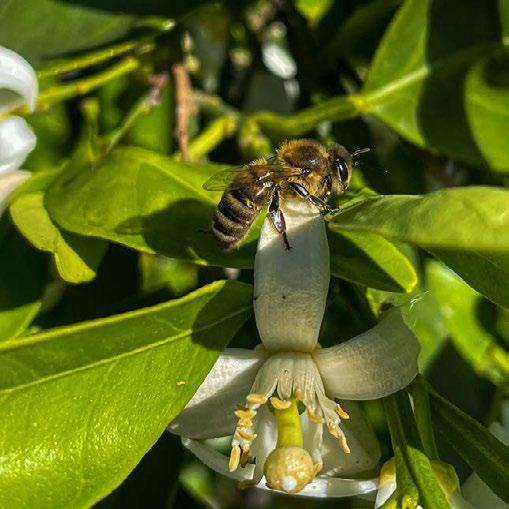
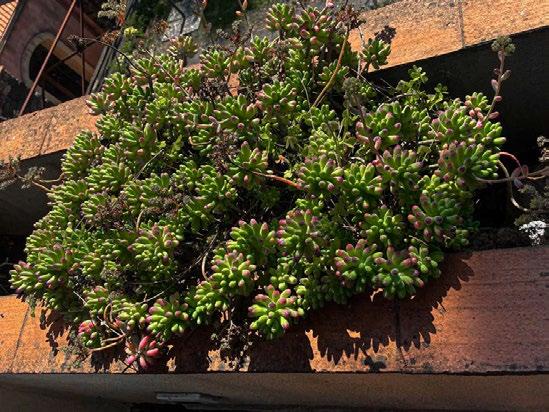
The other image shows a close up picture of a honeybee resting on the flower of an orange tree. This is cropped close in on the subject and meant to draw the viewer’s attention into the details due to their framing. By physically zooming in on the plants and nature, it is hoped that the web of organisms and their constant interactions can be noticed. Thus, the camera focus is meant to bring in the viewer’s.
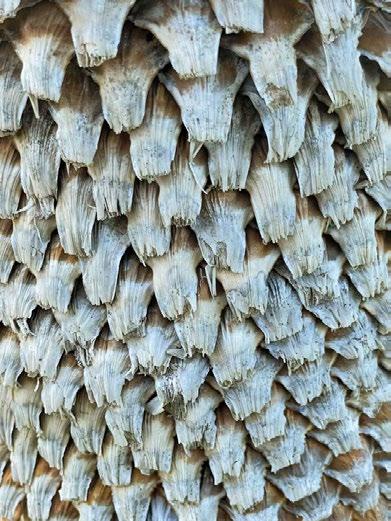
Food used to be medicine. Now, we have shifted away from that. Humans have cultivated entire economies (i.e. zoos) around watching, learning, and understanding behavior of animals which we hunt. But, the rising trend of farm to table habits has demanded proof of that untampered process. The agriculture, processing, and distribution have been more exposed and regulated as a means of controlling what the general population is putting into their body. This is especially important since an important consequence of industrialization within the scope of food: that we no longer know what we are putting into our bodies. This blind trust puts a lot of pressure on government and political power to be our sole protectors.
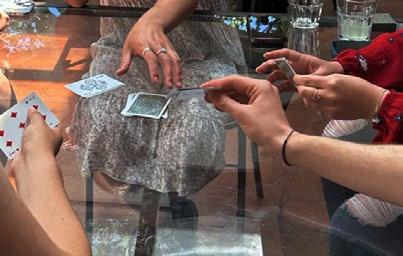
This shows a couple of boats in the Siracusa harbor. The boats are resting in the wake at sunset and are reminders dichotomy between the land and the sea. The ocean plays a tremendous role in Sicilian daily life as both a means of production, occupation, and joy.
On a map, Sicily lies at the center of the Mediterranean Sea — the buffer between North Africa and Western Europe. It exists as the entrypoint for refugees and migrants to enter the European Union and is constantly experiencing migratory fluxes.
Siracusa holds 3 natural characteristics that motivated the Ancient Greeks to establish an important hub on the southeastern coast of Sicily: natural springs, natural port, and the island
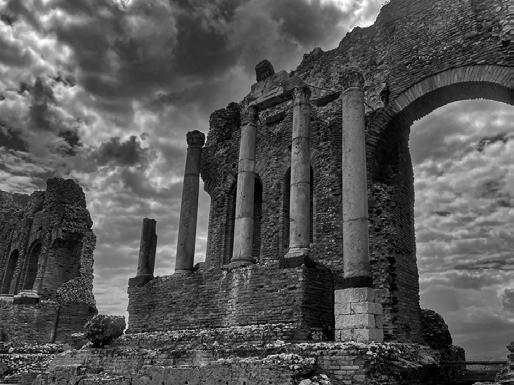
Ancient Greek and Roman ruins have been rediscovered today, after centuries of settlers and locals alike building empires atop. So, although cities rise over time as the result of human tendency to build up, we have now dug up the past to reveal the first arrival of humans to Sicily. The Ancient Romans were particularly influential for making agriculture profitable: creating successful systems of roadways and irrigation to maximize efficiency with advanced technologies.
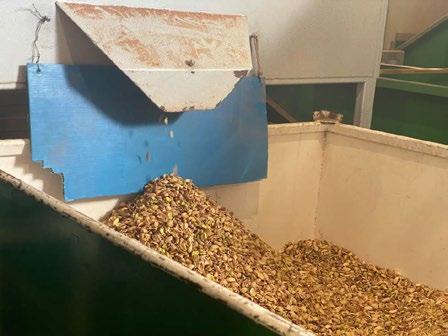
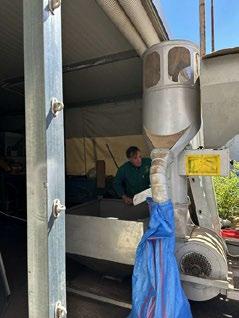
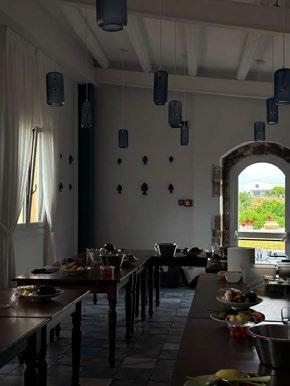
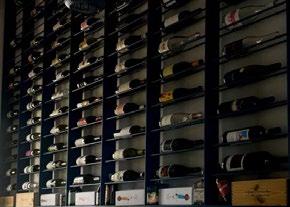
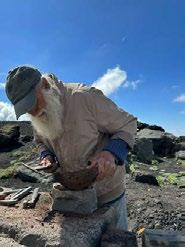
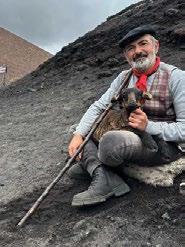
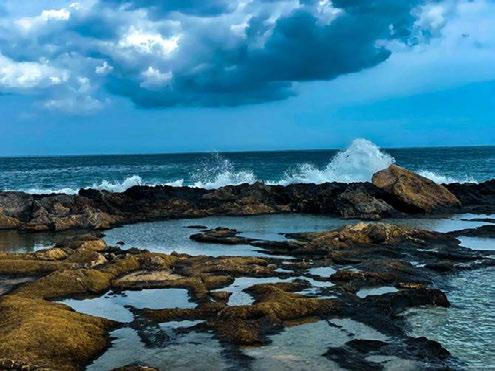
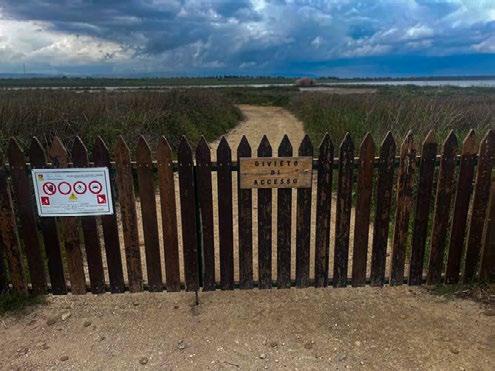
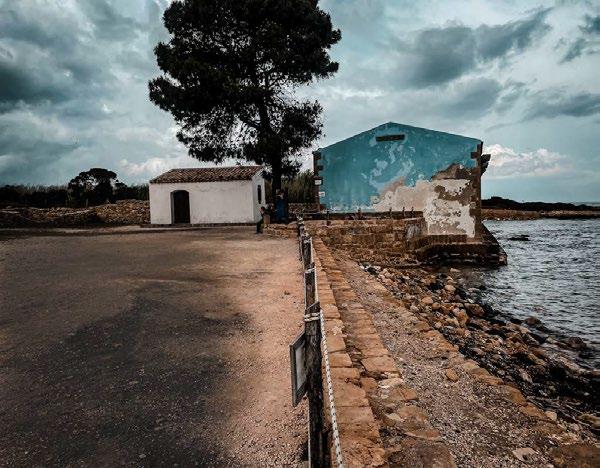
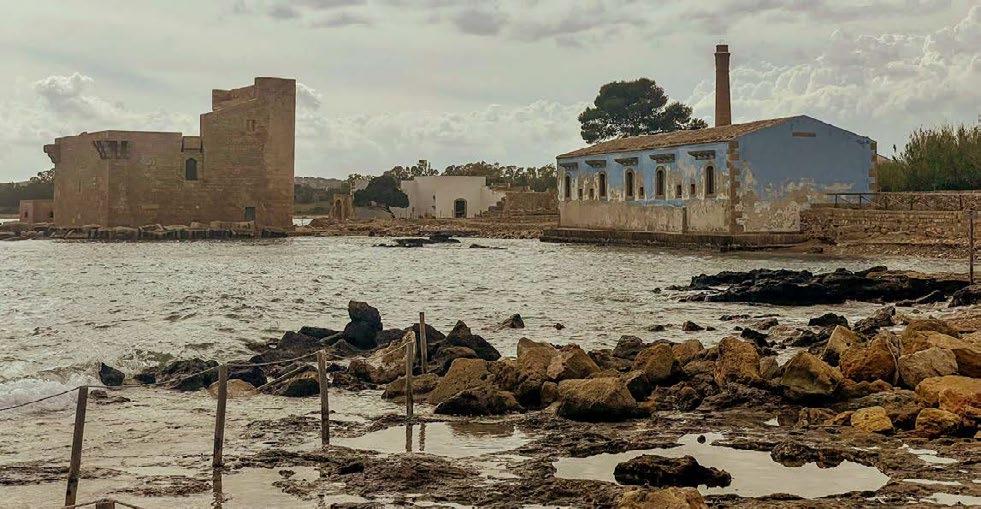
Riserva Naturale di Vendicari has many types of water bodies. An important one for food is the marsh since salt was used to preserve and store food, not only as seasoning. There were structures erected to defend the coast from pirates; In the past, it was the ancient fort. The guards communicated from one defense lookout to another using fire at night and smoke during the day. These practices, commonly associated with food preparation, were reimagined as technologies for defense and communication.
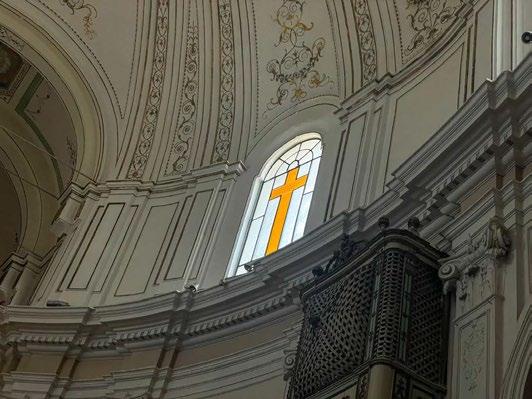
Food is more important and symbolic than just consumption: it exists as a chain of humanity, encounters, and sensuality. Traditions surrounding food seem to be the only ones who outlast centuries of invasion, earthquake, and corruption (disasters of physical, natural, and political nature).
(512) 673-0093 enplowma@syr.edu