The Association of Professional Engineers of Nova Scotia
Engineers Nova Scotia Council 2024-2025
Dr. Jennie Rand, P.Eng.
Andrew Thalheimer, P.Eng.
Dr. Sue Molloy, P.Eng.
Martin Corbett, P.Eng.
John Crane, P.Eng.
Aaron Kennedy, P.Eng.
Wayne MacDonald, P.Eng.
Malcolm Palamarek, P.Eng.
Krista Phillips, P.Eng.
Kayleigh Rayner Brown, P.Eng.
Brian Ward, P.Eng.
Ex-Officio Members
Denise Pothier, FEC, P.Eng.
DS (Pal) Mann, FEC, P.Eng.
Zone Representatives
Darrin McLean, FEC, P.Eng.
Breagh Thomas, P.Eng.
Oliver Browning, FEC, P.Eng.
Vivek Tomar, FEC, P.Eng.
Conrad LeLièvre, FEC, P.Eng.
Ron Marks, FEC, P.Eng.
Andrew Polegato, FEC, P.Eng.
Harry Daemen, FEC, P.Eng.
Committee Chair Persons
Legislative Committees
James Brown, P.Eng.
Bob MacDonald, FEC, P.Eng.
George Goad, FEC, P.Eng.
Dr. Sue Molloy, P.Eng.
Committees of Council
Jeff Knapp, FEC, P.Eng.
Andrew Thalheimer, P.Eng.
CEO Committees
John Eisnor, FEC, P.Eng.
Jade Farr, EIT
Thomas Simmons, EIT
Darrell Marsh, P.Eng.
Browren Allard, P.Eng.
Craig Arthur, P.Eng.
Audrey Hiscock P.Eng.
Alan Ehrenholz, P.Eng.
Alexandra MacDonald
President
Vice-President
Past-President
Councillor
Councillor
Councillor
Councillor
Councillor
Councillor
Councillor
Councillor
Engineers Canada Director
CEO & Registrar
Cape Breton/Victoria
Cape Breton/Victoria Colchester
Halifax/Hants
Kings/Annapolis
Pictou
Cumberland
Antigonish/Guysborough
Board of Examiners
Complaints
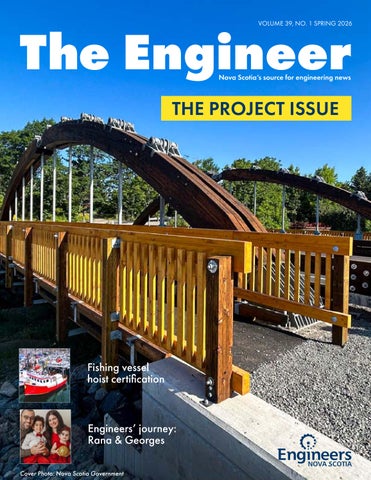
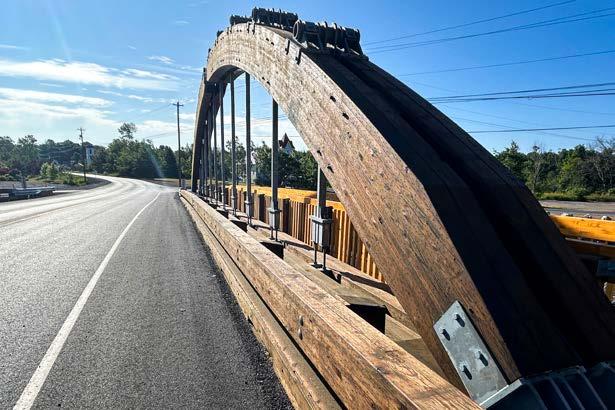
Cover Photo: Bass River Bridge, Nova Scotia Government
The Project Issue of The Engineer
Dr. Jennie Rand, P,Eng., President, Engineers Nova Scotia
Pal Mann, CD, FCSSE, FEC, P.Eng., ICD.D, CEO & Registrar, Engineers Nova Scotia
We are pleased to welcome you to the Project Issue of The Engineer - a showcase of the engineering work that is strengthening communities across our province.
While this issue focuses on how engineers are supporting Nova Scotians, we would like to share information on two internal projects that are part of our strategic initiatives and will help shape the future of engineering regulation in Nova Scotia.
Modernizing the Engineering Profession Act
The modernization of the Engineering Profession Act continues to be one of our most important priorities. With support from Stewart McKelvey LLP, we have completed a comprehensive two-year review of the current legislation, including comparisons to other Canadian jurisdictions, and a risk analysis to identify areas where the Act can better serve the public in today’s engineering landscape.
“Each project featured in this issue reflects the ingenuity and dedication that define our profession.”
The resulting draft recommendations position us to begin formal discussions with the provincial government. The government has received our review paper, and we now await the opportunity to share our thoughts and develop a joint roadmap to modernize and strengthen our legislation, regulations, and bylaws. The goal is clear: a modern, transparent, and effective Act and regulations that support public protection, improve governance, align with national best practices, and reflect the realities of contemporary engineering - from evolving technologies to new practice areas. This work is essential to ensuring that the social license, the trust placed in the engineering profession, remains strong.
Relocating to a Modern, Accessible Office
We will also be undertaking a significant operational effort: finding and relocating to a new office designed to help us meet the demands of modern regulation. Extensive assessments
confirmed that our longtime home in a heritage building at 1355 Barrington Street could not support our long-term operational and strategic needs.
With Council’s support, we are starting the Request for Proposal process to put this four-phase project into motion: disposition of our current office, securing new office space, renovation and fit the new office space, and finally an office move. Our goals for the new office are to create an accessible environment that provides flexible and functional workspace for staff, volunteers and interest holders, and improves our ability to deliver efficient regulatory services to registrants and the public. As part of this initiative, we will follow up on opportunities to share space with regulatory partners, such as the geoscientists, technologists, land surveyors and interior designers. This project represents our commitment to operational excellence and to positioning Engineers Nova Scotia for the decades ahead.
continued from page 4
Celebrating Excellence in Engineering
The projects in this issue - and the engineers behind themdemonstrate the profound impact our profession has on Nova Scotia. We encourage nominations for the Lieutenant Governor’s Award for Engineering Excellence, which is presented annually; the award highlights achievements that combine technical mastery with meaningful contributions to the public good. The nominations period is open, and we look forward to your submissions.
“Every engineer who stamps a document reinforces a commitment to integrity and competence, and we are honoured to support that responsibility. ”
Upholding the Public Trust
While we embrace progress and innovation and celebrate our work, we hold fast to our mandate: to protect the public interest through high standards of practice, ethical conduct, and professional accountability.
Looking Ahead
As aways, the future of engineering in Nova Scotia will be shaped through collaboration across communities, sectors, and disciplines. We extend our thanks to all who contribute to this important work, and we hope you enjoy this year’s Project Issue of The Engineer.
a registrant’s
Last year’s Lieutenant Governor’s Award winner, Dexter Nova Alliance’s Highway 104 Twinning
National Engineer Month events
March 11 and March 18
Virtual Town Halls These moderated, interactive sessions will allow you to engage the CEO of Engineers Nova Scotia on topics that are important to you. This session is free to Engineers Nova Scotia Registrants (P.Eng., EIT, and Student Registrants). Attendees will earn 1 professional development hour for regulatory learning towards the Engineers Nova Scotia Continuing Professional Development program.
Register: Session 1, Session 2
March 7
9th Annual Curling Bonspiel
The National Engineering Month Curling event is a fun and engaging competition. Team registration is now open. Every team will play 4 one-hour (4-end) games. Register today, compete for Nova Scotia’s top engineering curling team for the year and win the trophy!
Trivia Night
Trivia Night is back at the T-Room this March to kick off National Engineering Month!
Join us for an evening with a mix of engineering-themed brain-teasers and general trivia. Whether you’re here to compete for the win and prizes or simply enjoy a relaxed, social evening, bring a friend, make new connections, and enjoy some pizza. The event is free and open to all attendees, and each member may bring one guest. Register.
March 5
Photo: iStock
Photo: iStock
National Engineer Month events
March 13
Lacrosse Game Night: Thunderbirds vs Rock
Join us for a Friday night at The Nest! Join Emerging Professionals Committee for a night of networking, socializing, and fun at the Scotiabank Centre, home of the Halifax Thunderbirds. Meet fellow emerging professionals, enjoy light appetizers, and get ready to cheer on the team at ORSO Pub & Grill before heading to the game. Register.
Details Coming Soon:
Friday, March 13 Pi (-1) Day
March 24
Sweat & Sip Spin Class
A high-energy class with cardio, rhythm moves, and upper-body weights, all set to a curated playlist with lights and sound.. Register.
Saturday, March 28
Photo: iStock
Photo: Neil Thompson
Complex projects are
failing.
The future of engineering is integrated.
Dalhousie University’s Certificate in Systems Engineering and Complex Project Management will help you confidently navigate complex, interconnected, digital environments.
Offered 100% online and at your own pace, you’ll come away with systems-based expertise employers need. This 3-course certificate could apply toward your professional development hours.
Register for the first course FOCUSED. FLEXIBLE. JUST RIGHT FOR WORKING ENGINEERS.
Engineers’ journey: Rana Al Seddik, P.Eng. & Georges Chemaly, P.Eng.
Some journeys aren’t measured in miles, but in the moments and the people who carry us forward with love and support. For Rana Al Seddik, P.Eng., and Georges Chemaly, P.Eng., 2021 marked the beginning of a new chapter: side-by-side, building their engineering careers and raising a family.
When Rana and Georges moved from Lebanon to Canada in May 2021, the world was still largely shut down due to the pandemic. “It was difficult at first,” Georges recalls. After arriving, they spent weeks in quarantine in Montreal and then in Nova Scotia. “I can still remember going back and forth carrying all 14 bags, while Rana was three months pregnant.” Friends who had arrived earlier helped them navigate housing issues at a time when Lebanon’s economic crisis had frozen much of their savings.
The move was also about building a better life. “We were thinking about
more opportunities for our family, about how and where we want our kids to grow, and giving them the opportunities we didn’t have ourselves,” Rana explains. “Canada is stable and welcoming, and Nova Scotia is very family-oriented.”
Rana and Georges first crossed paths in Jordan, where Georges was managing major airport infrastructure projects, and Rana had arrived for a short-term assignment. Both had begun their careers in Lebanon and had already gained extensive engineering experience across the Middle East. Georges led large construction projects in Jordan and Algeria, overseeing complex sites and multidisciplinary teams, while Rana designed electrical systems and coordinated on-site work for significant airport developments.
By the time they moved to Nova Scotia in 2021, they brought not only a wealth of diverse experience but also a shared drive to grow and succeed
together. Rana joined Nova Scotia Power as an Underground Distribution Electrical Engineer before transitioning into her current role as Senior Regional Electrical Engineer, leading regional projects and strengthening governance. Georges took on a Project Manager role at the Department of Public Works in the Government of Nova Scotia, where he oversees major infrastructure projects, coordinates teams and contractors, and ensures every detail stays on track.
Like many internationally trained engineers, navigating the Canadian job market was difficult at first, ; from differences in work culture to regulatory requirements. Even before arriving in Canada, they had connected with the Immigrant Services Association of Nova Scotia (ISANS). After settling in, they attended job search sessions, workshops, and the Orientation and Communication Skills for Engineers (OCSE) program. “The OCSE program was very helpful,” says Rana. “It prepared me for the work environment in Canada, especially in Nova Scotia, and I also met others going through the same journey, which was really motivating.” Georges adds, “The coordination between ISANS and Engineers Nova Scotia regarding experience and requirements made the transition much smoother for us.”
During that time, Rana balanced learning with caring for their newborn son, often holding him in her arms as he cried while she followed along. “We tried the little swing, but it didn’t always work,” Georges smiles. “She just held him and kept going.”
Through late-night study and shared notes, they supported each other as they
Georges Chemaly, P.Eng.
Rana Al Seddik, P.Eng.
worked toward licensure. “Receiving my P.Eng. designation is a milestone I’m very proud of,” Rana says. “It represents credibility, accountability, and trust, and shows that my work meets the standards expected of engineers in Nova Scotia.” For Georges, it is more than a title. “It’s about ethics, accountability, and making decisions that serve the public.”
As an engineering couple, Rana and Georges understand the pressures of deadlines, exams, and professional expectations without needing to spell them out. Being in the same profession also allows them to connect over work in ways most couples might not. Whether it’s sharing insights from different projects, new tools, or management strategies, they learn from each other and help each other grow. “Some may not like to marry a partner in the same field,” Rana says. “But being both engineers worked great for us.”
“He’s very caring and detail-oriented, not just at work but at home,” she adds. And when the day feels long, or energy runs low, they lift each other up. “If I don’t have the energy to study, he steps in to help and motivate me, and I do the same for him.”
“I don’t think I would be where I am today without Rana,” says Georges. “She has this patience and resilience, and always looks at the positive side, even when things are hard. She’s like a marathon runner while I’m more of a sprinter.” Moving to Canada was a big step, but having a partner on the same page makes all the difference. “When you support each other, you can turn challenges into opportunities,” he adds. “Starting over together is a chance to grow, learn, and build something new as a team.”
Today, they are raising two children, a four-year-old son and a one-year-old daughter, while continuing to build their careers and a beautiful life together in Nova Scotia with common goals. “People here are very welcoming,” they say. “We’re looking ahead to opportunities where we can make a meaningful contribution to the community and inspire our children.”
Rana and Georges have built their journey together one step at a time, leaning on each other as partners, supporting each other as friends, and celebrating every professional achievement, big or small, as true teammates. What began as a chance meeting in Jordan eventually carried them across continents and oceans, leading them to Canada, where they continue to grow together as engineers, parents, and partners.
Strengthening safety on wharves and at sea
The Nova Scotia Department of Labour, Skills and Immigration, in partnership with Engineers Nova Scotia, has launched an important new initiative aimed at improving safety on fishing vessels and wharves across the province. The Nova Scotia Fishing Vessel Hoist Certification Initiative seeks to build a comprehensive list of licensed engineers who are qualified to inspect and certify hoists used in marine environments—equipment critical to daily fishing operations.
Hoists play a vital role in loading, unloading, and handling gear aboard fishing vessels and on wharves. When these devices are improperly designed, installed, or maintained, the consequences can be severe. Over the past decade, the Nova Scotia Workers Compensation Board has recorded an average of seven injuries per year related to hoist use in the fishing industry. Because not all vessels participate in the WCB program, the true number of injuries is likely higher. Incidents range from minor injuries to tragic fatalities in both Nova Scotia and Prince Edward Island.
Recognizing the importance of proper oversight, the initiative aims to ensure that only qualified, licensed
professional engineers are performing hoist inspections and certifications. This effort aligns with existing legislation that governs equipment safety in marine environments. By establishing a verified list of professionals with the technical expertise required for hoist assessment, the initiative strengthens access to
to the newly created Nova Scotia roster. The online form allows applicants to identify their areas of expertise, whether working with hoists on vessels, wharves, or both. Professional engineers who already appear on the established Prince Edward Island list are also encouraged to submit their names to support the Nova Scotia effort.
Once compiled and verified, the final list of qualified engineers will be published on the Fish Safe NS website, ensuring easy access for vessel owners, wharf operators, and safety managers. Engineers Nova Scotia will confirm that each individual listed is licensed and in good standing, while the Department of Labour, Skills and Immigration will maintain and oversee the initiative.
“ For professional engineers, this initiative represents both a call to action and an opportunity to contribute meaningfully to public safety.”
-Pal Mann, FEC, P.Eng., CEO and Registrar of Engineers Nova Scotia
proper certification services—especially for rural or remote fishing communities where these resources may be limited.
“This list will be a useful tool for the fishing industry, which requires hoisting equipment to reduce the sprains and strains of manual handling, and to move heavy loads,” explains Scott Nauss, P.Eng., Senior Executive Director of the Safety Branch of the Nova Scotia Department of Labour, Skills, and Immigration.
Licensed professional engineers who meet the qualifications for hoist certification are encouraged to add their names
Together, the two organizations aim to reduce workplace incidents, strengthen compliance with safety requirements, and support a safer fishing industry.
This initiative is a direct response to real risks and past tragedies—and represents a proactive step toward preventing future ones. By increasing the availability of certified professionals and reinforcing safe work practices, Nova Scotia is demonstrating its commitment to protecting those who work in one of the province’s most demanding industries.
Photo: iStock
VOLUNTEER OPPORTUNITY: ASSESSORS NEEDED
We are recruiting Assessors with 3 years P.Eng Experience for the Competency-Based Assessment program. Click to learn more.
THIRD ANNUAL PROJECT ISSUE
SHOWCASING WORK OF NOVA SCOTIA ENGINEERS FROM THE PAST YEAR
Exterior rendering of the QEII Halifax Infirmary Acute Care Tower as seen from Bell Road, showcasing the tower’s modern façade, integrated patient-focused design, and the new 14 storey tower.
Rendering for illustrative purposes only. final design may vary.
Project: QEII Halifax Infirmary Expansion Project
Location: Halifax
Submitted by: Build Nova Scotia
In 2025, the QEII Halifax Infirmary Expansion Project achieved major engineering milestones, advancing Atlantic Canada’s largest healthcare infrastructure project. Significant site preparation, excavation, crane installation, and podium construction were completed within an active hospital campus. These achievements reflect disciplined engineering, complex logistics planning, and strong coordination, establishing the foundation for above-ground construction in 2026 safely.
Participating engineers – Build Nova Scotia: David Benoit, P.Eng., Andrew Feener, P.Eng., Rory Hastey, P.Eng., Hamzeh Khammash, P.Eng., Omar Khartabil, P.Eng., Gail MacDonald, P.Eng., Jessica McNeil, P.Eng., Mike Morgan, P.Eng., Nancy Soliman,, P.Eng. Sabine Wilkie, P.Eng. and Ibrahim Yousef, P.Eng.
Exterior rendering of the QEII Halifax Infirmary Acute Care Tower showcasing the tower’s modern façade, integrated patient-focused design, and the new 14 storey tower.
Rendering for illustrative purposes only; final design may vary.
Architectural rendering of the main entrance for the new acute care tower, designed tomaximize natural light and create an inviting, accessible arrival for patients, staff, andvisitors.
Rendering for illustrative purposes only; final design may vary.
Participating engineers – Nova Scotia Health: Michael Barton, P.Eng., Rob Bohan, P.Eng., Michael Chisholm, P.Eng., Joshua LaFond, P.Eng., Anthony Lord, P.Eng., Ryan Murphy , P.Eng.and Shady Tawadrous , P.Eng.
Participating engineers – Shared Services: Doug Balcom, P.Eng., Courtney McCardle, P.Eng. and Rick Rout , P.Eng.
Engineers in Training: Colin Arsenault, Matthew Bethune, Adam Forward, Emma Leeshanok, Alexandra MacDonald, Kiran Persaud, Andrew Purvis, Youssef Reda, Yassine Yassine and Ian Westhaver
Image Credits: Build Nova Scotia
Project: Kings Road
Location: Cape Breton County
Submitted by: Nova Scotia Department of Public Works
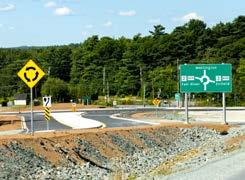
In 2025, the province completed work on a 1.5 kilometre stretch of Kings Road in Sydney. It’s expected to improve safety and efficiency for more than 22,000 vehicles a day. Crews added three roundabouts and created a four-lane corridor with a raised median. This design should reduce the higher-than-average collision rate along the main roadway in and out of downtown by eliminating left turns. P.Eng. Participants: Alex Small, P. Eng.
Project: Bass River Bridge
Location: Colchester County
Submitted by: Nova Scotia
Department of Public Works
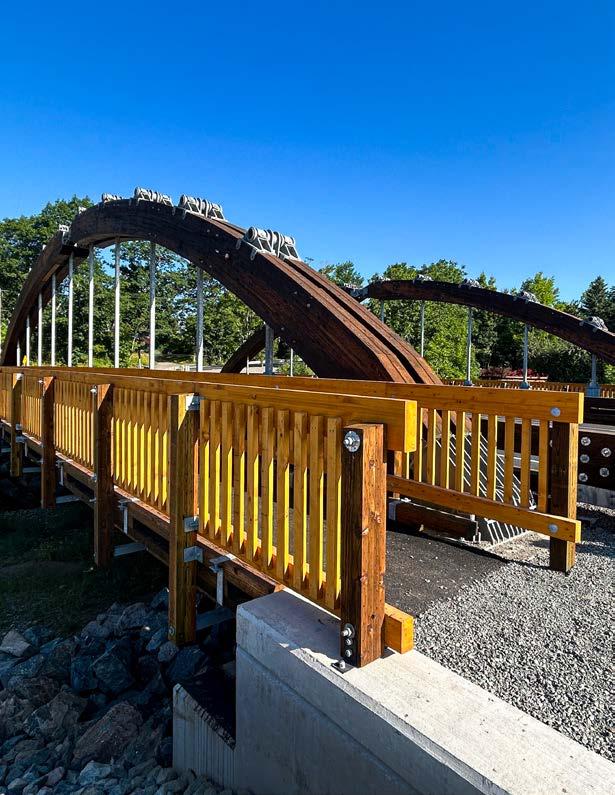
The Bass River Bridge is a glue-laminated three-pin timber arch bridge located on Trunk 2. It was completed and opened to traffic in 2025. The 30-metre span superstructure is supported by cast in place concrete foundations. It also includes two sidewalks located on either side of the bridge. The new bridge replaces a two-span timber bridge that was located downstream and adjacent.
P.Eng. Participants: Chris Verge, P. Eng.
Photo Credit: Nova Scotia Government
Project: Hollo Medical Valved Holding Chamber
Location: Halifax
Submitted by: Hollo Medical
The Hollo Chamber project rethinks how people use inhaled medication in everyday life. Informed by insights from over 1,000 patients and clinicians, the work addresses real-world challenges around usability, portability, and stigma. Central to the project is a novel flow-control valve designed to simplify technique and improve consistency with each dose.
P.Eng. Participants: Dr. David Hodgson, P.Eng, and Sara Fedullo, EIT
Photos Credit: Hollo Medical.
functional and aesthetic product details have been omitted for discretion
Project: McNally East roof replacement
Location: Halifax
Submitted by: Saint
Mary’s University
Saint Mary’s University replacement of +70-year-old McNally East metal roof with a modern metal roof including solar PV panels providing +170,000 kwh of clean renewable electricity every year. In addition to the significant improvement to climate resiliency, the new roof system will increase the R-value of the roof from R-5 to R-30.
P.Eng. Participants: Dennis Gillis P.Eng., Ben Doucet P.Eng., Ivor MacDonald Eng, Louis Dionne P.Eng.
Photo Credit: Saint Mary’s University
Project: New Waterford
Hub
Location: New Waterford
Submitted by:
Build Nova Scotia
A community wellness centre opened in New Waterford in 2025, which is attached to the new school that opened in 2024. These facilities add to the two recreational fields that were updated and promote health and physical activity in the community and surrounding area. The wellness centre provides space to support social, cultural and recreational activities and has been widely used since its opening.
P.Eng. Participants: CBRM Health Care Redevelopment is a multi-year, phased project to redesign and rebuild health care infrastructure on the Island. Engineers from Build Nova Scotia and Nova Scotia Health work collaboratively on the individual projects featured here. Team members are: David Benoit, P.Eng.; Mike Morgan, P.Eng.; Jeff Slipp, P.Eng., Kendall Murphy, P.Eng., Lindsay Hawco, EIT, Leanne Stone, P.Eng., Peter MacDonald, P.Eng., Ken LeBlanc, P.Eng., Ian McDiarmid, P.Eng., Shaun Dieltgens, P.Eng., Anas Tahir, P.Eng., Madison Levatte, P.Eng., Navaneeth Jeyakumar, EIT.
Photo Credits: Build Nova Scotia
Project: Cape Breton Regional Hospital Expansion
Location: Sydney
Submitted by: Build Nova Scotia
The Cape Breton Regional Hospital is almost doubling in size, with a new Cancer Centre and Clinical Services Building entering peak construction. These buildings will deliver new programs and services and provide care for more people, closer to home. A new Energy Centre will power, heat and cool the facilities. Once the entire project is completed, a second provincial PET-CT scanner will be included.
Project: Northside Health Complex
Location: Northside
Submitted by: Build Nova Scotia
A new 181,000 square foot health centre, long-term care home and laundry facility are in mid-construction, to strengthen primary care. The centre will provide new short-stay beds; greater access to urgent care, clinics, renal dialysis, public health, mental health and addictions services and chronic disease management support; and an endoscopy centre of excellence.
Project: Salty Hair Surf Shampoo
Location: Halifax
Submitted by: Salty Hair
Salty Hair Surf Shampoo is a solid shampoo bar designed to gently cleanse and refresh without stripping hair’s natural oils. Formulated with a Dalhousie Engineering capstone team, the pH-balanced, biodegradable formula delivers rich lather without waxy residue. Made in Nova Scotia, the project reflects a longterm vision to grow local manufacturing, ingredient innovation, and low-impact cosmetic production.
P.Eng. Participants: Mike Petrosoniak, P.Eng.
Photo Credit: Salty Hair
Project: Aerotech
Connector
Location: Halifax County
Submitted by:
Nova Scotia Department of Public Works
The new Aerotech Connector is a five-kilometre highway that connects Trunk 2 to Exit 5A of Highway 102, giving drivers a safer and more efficient commute. The project includes a climbing lane. It was also built lower than surrounding homes and is lined by trees to reduce noise and visibility. The location was picked to avoid or minimize impact on wetlands and environmentally sensitive areas.
P.Eng. Participants: Joseph Avery, P. Eng.
Photo Credit: Nova Scotia Government
Project: Highway 104 Rest Stations Location: Colchester County
Submitted by: Nova Scotia Department of Public Works
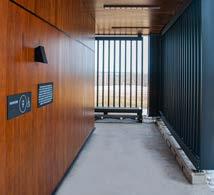
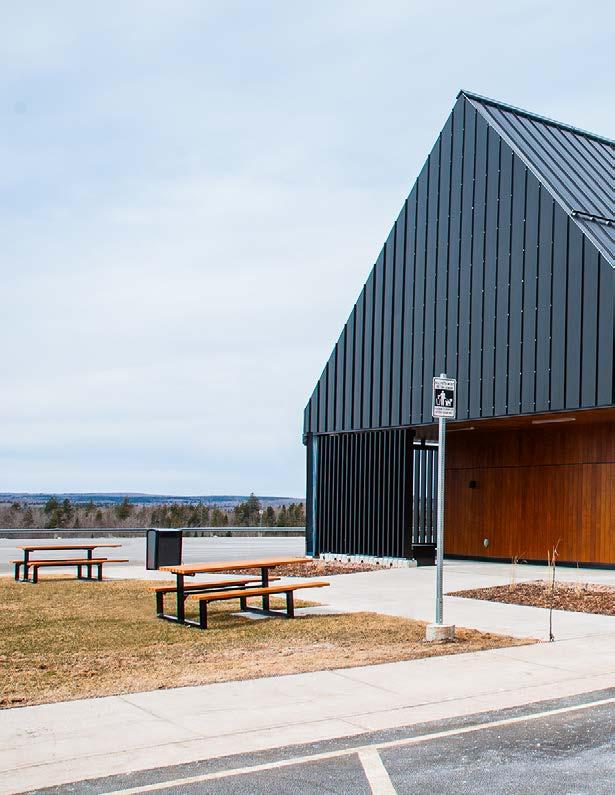
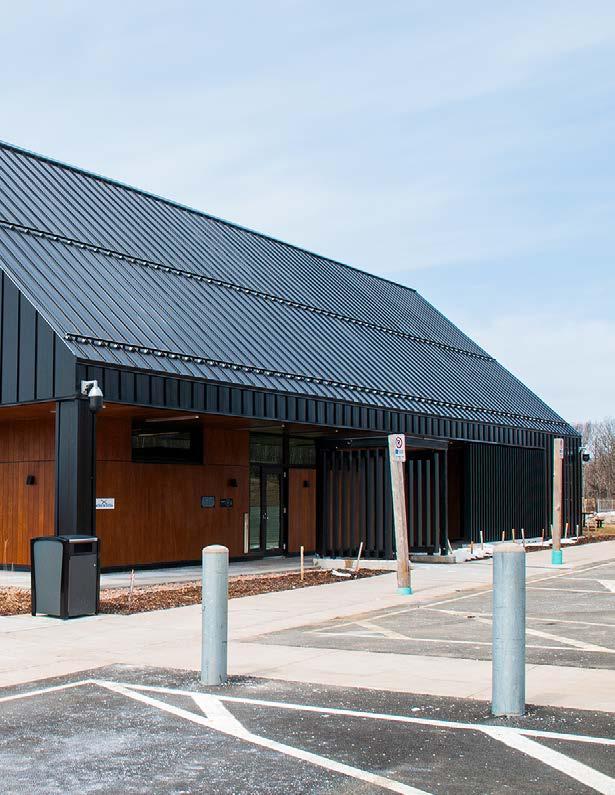
Located on the east and west sides of the Trans-Canada Highway, the new Highway 104 Rest Stations offer essential amenities for travelers. The design is inspired by a contemporary reinterpretation of Nova Scotia’s historic train stations. With picnic tables, pet areas and a walking loop, the rest stations welcome travelers and awaken their senses to the surrounding landscape.
P.Eng. Participants: Peter Blight, P. Eng.
Photos Credit: Nova Scotia Government
Sessions:
Christine Bonnell-Eisnor, FEC, P.Eng.
CNSOER’s Role as the Lead & Lifecycle Offshore Energy Regulator
Anne Lombardi, P.Eng.
Energy Modelling and Affordability: The role of energy modelling in reducing operating costs and improving occupant comfort in multi-unit buildings Nancy Soliman, P.Eng. & Alex MacDonald, EIT
Building the Future of Care: Innovation Behind the QEII Halifax Infirmary Expansion
Contact us to reserve your corporate table of 8 (7 Seats + 1 engineering student seat)
Four women engineers leading change
At this year’s Spotlight on Local Innovation event, four women engineers will take the stage—each bringing a distinct professional journey, a lived understanding of the challenges women face in engineering, and a shared commitment to inspiring the next generation.
Engineering beginnings: motivation and role models
For Anne Lombardi, P.Eng., a passion for engineering began with an early understanding of climate change and a desire to be a part of the solution.
As she described, “I tend to be a solutions-type person. The engineering side of climate change felt like a way I could help the planet.”
Christine Bonnell-Eisnor, FEC, P.Eng. started her journey in Cape Breton. A gifted high school teacher inspired her love of mathematics, and she followed the engineering path, knowing it offered security and opportunity. Her path—including work terms across Canada, a career in energy regulation, and raising two children who are studying engineering—reveals how deeply representation matters. Her daughter ultimately chose engineering
after seeing a woman at a Go ENG Girl event whose story “was exactly like me.”
For Alex MacDonald, EIT, engineering was almost a family tradition— her father an engineer, her mother an educator—but the defining piece was the presence of female engineers she could see herself in. “I had a relative who was a female engineer. It was really nice to have her as a role model,” she said. She also attended Go ENG Girl starting at age eight, and credits it with shaping her direction: “I started there 20 years ago and then joined the engineering field.”
Nancy Soliman, PMP, P.Eng., grew up immersed in engineering. Raised in Egypt by parents who were both engineers, alongside two engineer brothers, she was introduced early to the profession’s practical side. As a youth, she accompanied her father to worksites, where she witnessed engineering design translated into real-world construction. That early exposure sparked a lasting passion for hands-on problem-solving. “At that age, it was the simple things,” she recalls, “fixing something and immediately seeing the result—making a positive impact through a simple skillset.”
Challenges and barriers: confidence, culture, and subtle bias
Each woman spoke about persistent barriers facing women in engineering— not always overt discrimination, but the quieter currents shaping confidence, participation, and belonging.
Anne described the emotional challenge of entering male-dominated spaces: “It was difficult to be the young female in the room, worried about saying something wrong,” noting it can
be exhausting when you don’t see yourself in professional spaces—underrepresentation can become a psychological burden.
Christine identified another subtle barrier: the societal reaction when women say they are engineers. “People say, ‘Oh, that’s so tough—she must be so smart.’ It comes across as condescending,” she noted. Her engineer husband, and son who is studying civil engineering, never receive the same reaction.
Alex added that even today, women can be made to feel out of place. She recalled a previous workplace where she would arrive onsite and be asked, “Are you lost? Are you supposed to be here?” They did not expect to see a young woman in engineering on the site. “These are things our male coworkers don’t have to think about,” she explained.
Nancy emphasized that inclusion only becomes meaningful when organizations actively commit to it. During her field engineering work, she encountered resistance from site owners who were reluctant to have women engineers on site. In each instance, her employer firmly supported her and her colleagues, making it clear that they belonged. “When organizations are intentional about inclusion, it makes a lasting difference,” she said.
Anne Lombardi, P.Eng.
Christine Bonnell-Eisnor, FEC, P.Eng.
What women bring to leadership
This year’s Spotlight speakers also shared thoughtful reflections on how women’s experiences shape leadership.
Christine added that women often bring empathy to technical leadership roles. “You’re giving your staff tasks, but these are human beings… work is secondary to their personal life,” she explained. This doesn’t diminish analytical rigor but complements it, strengthening decision-making with humanity. She also acknowledged that some older male colleagues still exhibit superiority toward women, though she has encountered many supportive male mentors as well.
Nancy also highlights sustained technical competence, goal-oriented decision-making, passion and determination as common traits among women who advance into leadership roles. “They are deeply passionate and intentional about their goals and values,” Nancy explained. Their success, she noted, often achieved not only through opportunity, but from persevering through barriers.
Alex added that women leaders help cultivate workplace cultures where inclusion becomes the norm, not an afterthought. Working now in a womanled environment, she noted, “This is the most inviting place I’ve worked. Barriers simply aren’t accepted here.”
Opening doors: how the profession can evolve
All four speakers stressed that increasing gender diversity requires intentional action:
• Representation matters. Seeing women in leadership or even in meetings “creates equity in opportunities,” Anne said, explaining that organizations should invite women to sit at tables where decisions happen, not as tokens, but because diversity is powerful and necessary.
• Organizational support matters. After Nancy graduated from engineering, she began her career in the oil and gas sector, working in field-based engineering roles—an environment traditionally considered challenging for women. She credits her employer’s structured commitment to diversity and inclusion as a critical enabler of her early career development. She recalls being told, “The sky is your limit,” a message she now passes on as a mentor.
• Language and culture matter. Alex notes how even small comments can exclude and urges colleagues to be mindful—“not actively excluding someone is sometimes the best way to ensure everyone feels included.”
• Early support matters. Christine pointed to research showing girls begin losing confidence in STEM in middle school. She advocates for more outreach, role models, and ways to dismantle the perception that engineering is too hard. “People are more than capable; they just need to see it in themselves.”
Inspiring the next generation
The Spotlight on Local Innovation event provides a seat at every table for a university student. Each engineer reflected on what they hoped those engineering students would take away from the experience.
Anne hopes people see possibility: that engineering is not a narrow identity, but a place where they can make meaningful impact on issues they care about.
Christine wants students to see that career paths aren’t linear—that she “didn’t wake up one day a CEO” but built her path through co-op terms, perseverance, and balancing real life, including raising children and completing an MBA part-time.
Alex hopes they are inspired not just academically but personally: “Being a good engineer isn’t about being the smartest person in the room… it’s about your people skills,” many of which are learned through community involvement and stepping outside comfort zones.
For Nancy, exposing engineering students to the wide range of career paths and industry sectors available to them is essential. She believes early exposure broadens their perspectives and helps them see how their studies translate into tangible, real-world impact which helps them study with enthusiasm and excitement.
The four women presenting at Spotlight represent different disciplines, sectors, and professional arcs. Yet across their stories runs a shared message: women need to see themselves in engineering, and engineering needs women.
Nancy Soliman, PMP, P.Eng.
Alex MacDonald, EIT
Professional engineering and the oath of obligation
Article submitted by Tom Giovannetti, P.Eng., P.Surv., NSLS
Tom
Giovannetti, P.Eng., P.Surv., NSLS
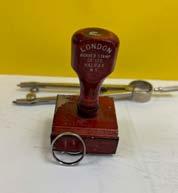
Professional engineering in Canada has long been grounded in public protection, ethical responsibility, and the principle of self-regulation. Although many Canadians are familiar with the Iron Ring ceremony, the true foundation of the profession lies not in ceremony but in its enduring commitment to public service, competence, and accountability.
The regulatory framework for engineering began with the Constitution Act, 1867, which distributed powers between federal and provincial governments. Among those provincial responsibilities was the authority to regulate professions to safeguard society. As Canada industrialized, the demand for technical expertise grew, and provincial governments created statutory bodies with the authority to govern engineering practice. These bodies were entrusted with establishing entry-to-practice
standards, ensuring public safety, and setting ethical expectations for professional conduct. Self-regulation emerged not as a privilege but as a responsibility built on fairness, scientific knowledge, and a clear moral duty.
A central part of entering the profession is the Oath of Obligation, traditionally recited during the Ritual of the Calling of an Engineer. The oath is more than a tradition—it is a personal commitment to integrity, competence, and service to the public. Coupled with provincial Codes of Ethics, originally developed by Engineers Canada, this oath forms the moral framework of the profession. Engineers pledge to protect the public, maintain their competence, act with honesty, and uphold fairness in all professional interactions. `The objectives laid out in provincial engineering legislation further clarify what society expects from the profession. In Nova Scotia, the Engineering Profession Act outlines the responsibilities of engineers in four key areas. The
first is the promotion and improvement of professional proficiency. Engineers are expected to maintain and advance their knowledge, applying up-to-date standards and practices across industry, government, academia, and consulting.
The second objective is advancing and protecting the interests of the profession by helping ensure that engineering standards remain current and scientifically sound. Outdated or nontechnical regulations can undermine public safety, and engineers play a vital role in advocating for modern, evidence-based approaches.
The third objective is to assure the public of the competence of professional engineers. Public trust is at the heart of self-regulation, and engineers demonstrate competence through responsible decision-making, adherence to standards, and ethical practice. Finally, the Act emphasizes the welfare and usefulness of engineers to society. Through innovation, sustainability, and responsible stewardship, engineers contribute to the wellbeing of communities across Canada. The legislation highlights the importance of creating the conditions that allow engineers to apply their expertise effectively for the public good.
Across the country, engineering legislation is built on the expectation that engineers will uphold their ethical obligations, remain competent throughout their careers, and act consistently with the profession’s responsibility to society. The Oath of Obligation is not a symbolic gesture but a lifelong commitment to these values.
As engineers reflect on their roles, a key question emerges: Are we living the obligations we accepted as part of our commitment to protect the public and advance the profession? The continued strength of engineering in Canada depends on each professional upholding these responsibilities every day.
About the Author
Tom Giovannetti, P.Eng., P.Surv., NSLS, is a professional engineer and professional surveyor with decades of experience in engineering practice, regulatory interpretation, and the advancement of professional standards. His work reflects a deep commitment to the principles of self-regulation, public protection, and the continued growth of the engineering profession, following in his father’s footsteps in supporting the ongoing development of the engineering and surveying fields.
Lieutenant Governor’s Award nomination open
DEADLINE: FEBRUARY 28
We encourage you to nominate outstanding engineering achievements in Nova Scotia that demonstrate excellence and innovation.
Award information and submission forms can be found at: engineersnovascotia.ca/awards
Congratulations to Nova Scotia’s newest Professional Engineers!
Engineers Nova Scotia introduces new P.Eng. to the engineering community with each issue of The Engineer.
Hesham Ashour, P.Eng.
Discipline: Civil Engineering University: Alexandria University
LinkedIn
What inspired you to pursue a career in engineering?
I was drawn to engineering because it allows complex problems to be transformed into practical, viable solutions with real impact. Civil engineering, in particular, appealed to me for its direct responsibility toward infrastructure, safety, and communities.
What positive changes does earning your P.Eng. designation bring?
Earning my P.Eng. formally recognizes my experience and professional accountability, strengthening my credibility in senior and client-facing roles. It also supports continued leadership growth and a stronger connection to the engineering profession and its ethical standards.
Jenna Burt, P.Eng.
Discipline: Ocean and Naval Architectural Engineering University: Memorial University
LinkedIn
What inspired you to pursue a career in engineering?
My desire to apply my knowledge and skills in a way to benefit society and my need to work in a field which reflects my values and ethics including sustainability, safety, and integrity.
What positive changes does earning your P.Eng. designation bring?
Coming from rural NL, achieving my P.Eng. designation has been a surreal and satisfying milestone in my career. To exercise my engineering judgement and to empower each workplace I enter to be safe, sustainable, and supported is extremely gratifying. I am thrilled to be an example and potential inspiration to other aspiring professional engineers.
Isobel DeMont, P.Eng.
Discipline: Mechanical and Environmental University: Dalhousie University
LinkedIn
What inspired you to pursue a career in engineering?
What I love most about my career in engineering is that no two days are the same. I love learning, so being able to solve unique problems that require me to research and critique new information is exciting. This continuous engagement keeps the work interesting and pushes me to be the best version of myself as I strive to help those around me.
What positive changes does earning your P.Eng. designation bring?
Earning my P.Eng. designation will help me be a better mentor for my students. I will be able to extend my deeper connection to the engineering community to the students, enhancing their learning experience. It will also allow me to take on larger roles in my position, advancing my knowledge and contribution to engineering education.
Mark Gebert, P.Eng.
Discipline: Mechanical Engineering University: University of Alberta
LinkedIn
What inspired you to pursue a career in engineering?
I was drawn to engineering because of my interest in understanding how things work. Today, as a practicing engineer, I am motivated by the complex challenges I get to solve and the chance to collaborate with multi-disciplined individuals every day.
What positive changes does earning your P.Eng. designation bring?
With this designation, I aim to increase the scope of my practice and take on greater responsibility at work. My goal is to continue improving my technical and professional skills so I can meaningfully contribute to the future of Canadian energy.
Matthew Moulton, P.Eng.
Discipline: Structural Engineering University: Dalhousie University
LinkedIn
What inspired you to pursue a career in engineering?
I love solving problems with computer software and seeing projects come to life.
What positive changes does earning your P.Eng. designation bring?
I work in consulting on a structural team that is relatively new and growing. Earning my P.Eng. will really help boost our bandwidth and continue the team’s progression!
Edsel Mynssen, P.Eng.
Discipline: Civil Engineering University: Catholic University of Petropolis
LinkedIn
What inspired you to pursue a career in engineering?
I started building structures as a child, and yes, Lego was my favorite toy. From there, my curiosity about how structures can stand on their own became my passion. Also, being able to say I was part of a team that built something that will stand for decades and will make a difference in people’s lives.
What positive changes does earning your P.Eng. designation bring?
To build a legacy. I want to be recognized as someone who creates a career grounded in compassion for others and technical skills, leaving a better world for future generations.
Ismael Ncharre Njoya, P.Eng.
Discipline: Civil Engineering University: University of Johannesburg
LinkedIn
What inspired you to pursue a career in engineering?
From an early age, I was always fascinated by the concept of landscape transformation, where empty lands were transformed into massive innovative infrastructures. My brother, who is a mechanical engineer, inspired me to turn my curiosity into passion. The opportunity to improve people’s lives through development naturally led me to engineering.
What positive changes does earning your P.Eng. designation bring?
My long-term goal is to become a leading construction role player who contributes to bridging the gap between engineering and social demands. I am aiming to ensure that engineering plays a critical role in benefiting communities by responding to infrastructure challenges and by driving up economic development.
Utkarsh Patel, P.Eng.
Discipline: Transportation Engineering University: Dalhousie University
LinkedIn
What inspired you to pursue a career in engineering?
My interest in engineering grew from a fascination with how well-designed infrastructure can shape cities, improve mobility, and positively impact everyday life.
What positive changes does earning your P.Eng. designation bring?
I aspire to contribute to improving traffic operations, enhancing mobility, supporting innovative and sustainable transportation and infrastructure development across Nova Scotia with data-driven and community-focused solutions.
Gurpreet Singh Selopal, P.Eng.
Discipline: Engineering Physics University: Dalhousie University
LinkedIn
What inspired you to pursue a career in engineering?
My interest in engineering was shaped by a desire to apply fundamental materials engineering to practical challenges. Through research and technology development, I realized that engineering is a powerful framework for transforming scientific knowledge to develop reliable, cost-effective clean energy and sustainable agriculture technologies.
What positive changes does earning your P.Eng. designation bring?
Earning my P.Eng. designation has strengthened my professional credibility and recognized my commitment to ethical and responsible engineering practice. It has opened new opportunities for leadership, collaboration, and training the next generation of engineers.
Noorullah Speen Jan, P.Eng.
Discipline: Civil Engineering University: University of New Brunswick
LinkedIn
What inspired you to pursue a career in engineering?
My father was a residential contractor in the UAE for nearly 35 years, and visiting his job sites introduced me to the full construction process. Seeing strong teamwork firsthand, alongside the UAE’s high-rise construction boom, sparked my interest in understanding the technical side of the industry.
What positive changes does earning your P.Eng. designation bring?
I have held my P.Eng. designation since 2015, and it has been fundamental to my professional development by reinforcing engineering ethics, accountability, and continuous learning, while strengthening my technical judgment.
Engineers Nova Scotia introduces new P.Eng. to the engineering community, with a portrait and a brief write-up.