Protecting the electricity grid against solar storms
Issue | Putanga 34/2026
Food: producing more, wasting less
How engineers are involved in this ongoing quest
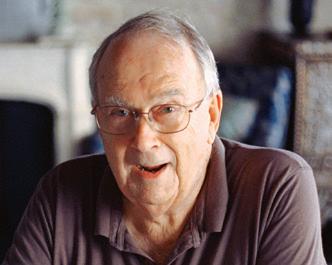
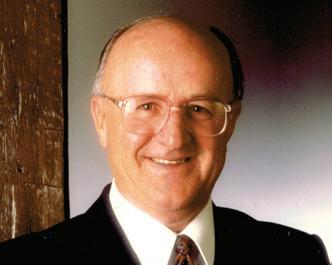
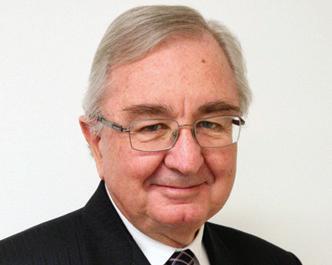
Five new Distinguished Fellows
Discover their interesting, varied journeys
Circular thinking
Why the climate crisis can be an opportunity to create a better future
PREVIOUSLY
3.95 GWP
1.89 GWP
0.485 GWP
Locally made. Less distance. Fewer emissions.
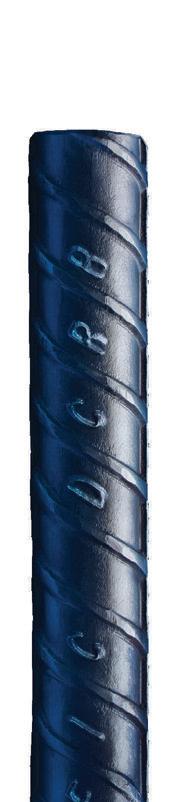
PACIFIC™ and PACIFIC DCRB™ are more than reinforcing steelthey’re a smarter foundation for New Zealand’s low-emissions future. As steel emissions fall, origin matters. Imported reinforcing can travel thousands of kilometres, significantly increasing cradle-to-site emissions. Pacific Steel reinforcing products are produced locally, giving local scrap new life, shortening supply chains, and avoiding unnecessary transport emissions.
Local scrap. Local steel. Lower transport emissions. Coming to market in 2026. pacificsteel.co.nz
06
“For most of human history, the only sign of a geomagnetic storm occurring was the aurora dancing across the sky.”
issue I roto
“We can’t just build back stronger, build back better, we must build back differently, and I feel the pressure of that every day.”
32
30 “ This project has provided the engineering community with direct, local experience in the construction of large dams in New Zealand.”
48
Tip Top opened its first milk bar in 1935 in Wellington’s Manners Street. It was the first dedicated milk bar selling only ice cream and milkshakes.
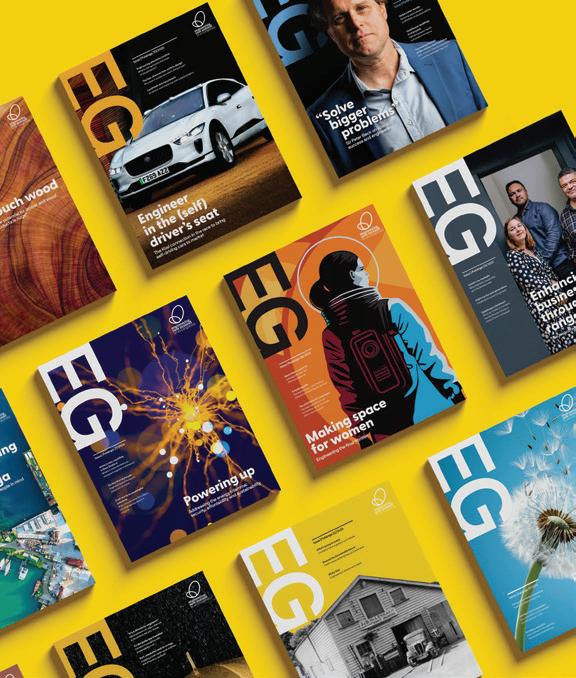
EG is available digitally for members on our website.
Printing
Your cover is printed on Forest Stewardship Council (FSC) approved and elemental chlorine free (ECF) paper. The inside pages are Programme for the Endorsement of Forest Certification (PEFC) approved and elemental chlorine free (ECF). EG is printed using vegetable-based inks made from renewable sources. Printing and fulfilment by Bluestar.
Please recycle your paper envelope – it’s 100% recyclable and made from PEFC accredited paper.
Disclaimer
Advertising statements and editorial opinions expressed in EG do not reflect the views of Engineering New Zealand Te Ao Rangahau, its members, staff, or affiliated organisations unless expressly stated.
Print ISSN 2537-9097 Online ISSN 2537-9100
This issue of EG was published in March 2026.
Features
Ngā āhuatanga
6
Weathering space weather
Protecting New Zealand’s electricity grid against solar storms.
16 Food: producing more, wasting less Why engineers are key players in the ongoing quest to find better ways of producing food and reducing waste in the sector.
22 Celebrating our new Distinguished Fellows Showcasing their interesting and varied journeys.
30 Circular thinking Why this engineer believes that the climate crisis and its urgent need for solutions can be an opportunity for engineers to create a better future.
32 Dam a first in decades Completing the Waimea Community Dam.
Best practice Ngā mahi papai rawa
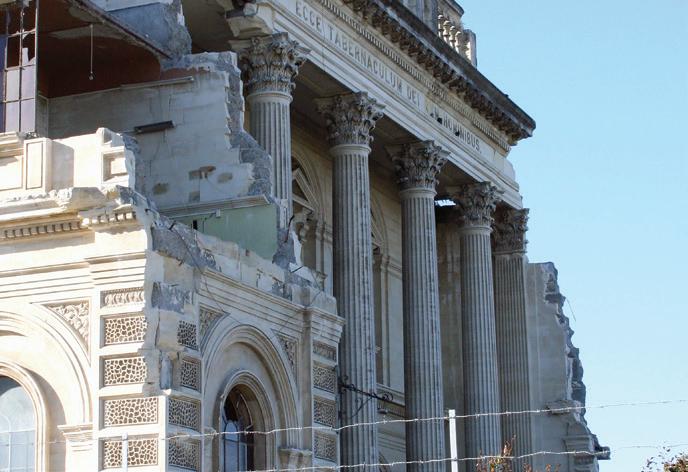
40 Earthquake-prone building system to be refocused Moving towards a more targeted risk management model.
42 Please read carefully Why it’s essential to maintain an awareness of the law and read the things you sign, even when you’re busy.
43 All roads lead to… council Why the focus on councils is likely to be a key issue in this year’s election cycle.
Shorts Ngā
52 Secret life of engineers
54 Foundation’s impact continues A wrap-up of some great outcomes from 2025.
55 Leading questions
45 Barrier clarity Vehicle barriers: when, where and how?
46 Fast-tracking bridge construction
Standardising bridge replacements.
48 Ice cream: from dream to reality
A look at the engineering ingenuity and imagination from the past that led to commercial production of the treat we enjoy today.
50 Cross-discipline upskilling Engineering: not just a profession but a dynamic and evolving practice.
56 Bedside table
57 One to watch
59 Obituaries
60 Engineering genius
On the cover: Visualisation of coronal mass ejection (CME) in August 2012. Image: NASA/ Goddard Space Flight Center
Engineering Envy #21
Chosen by Te Ao Rangahau staff
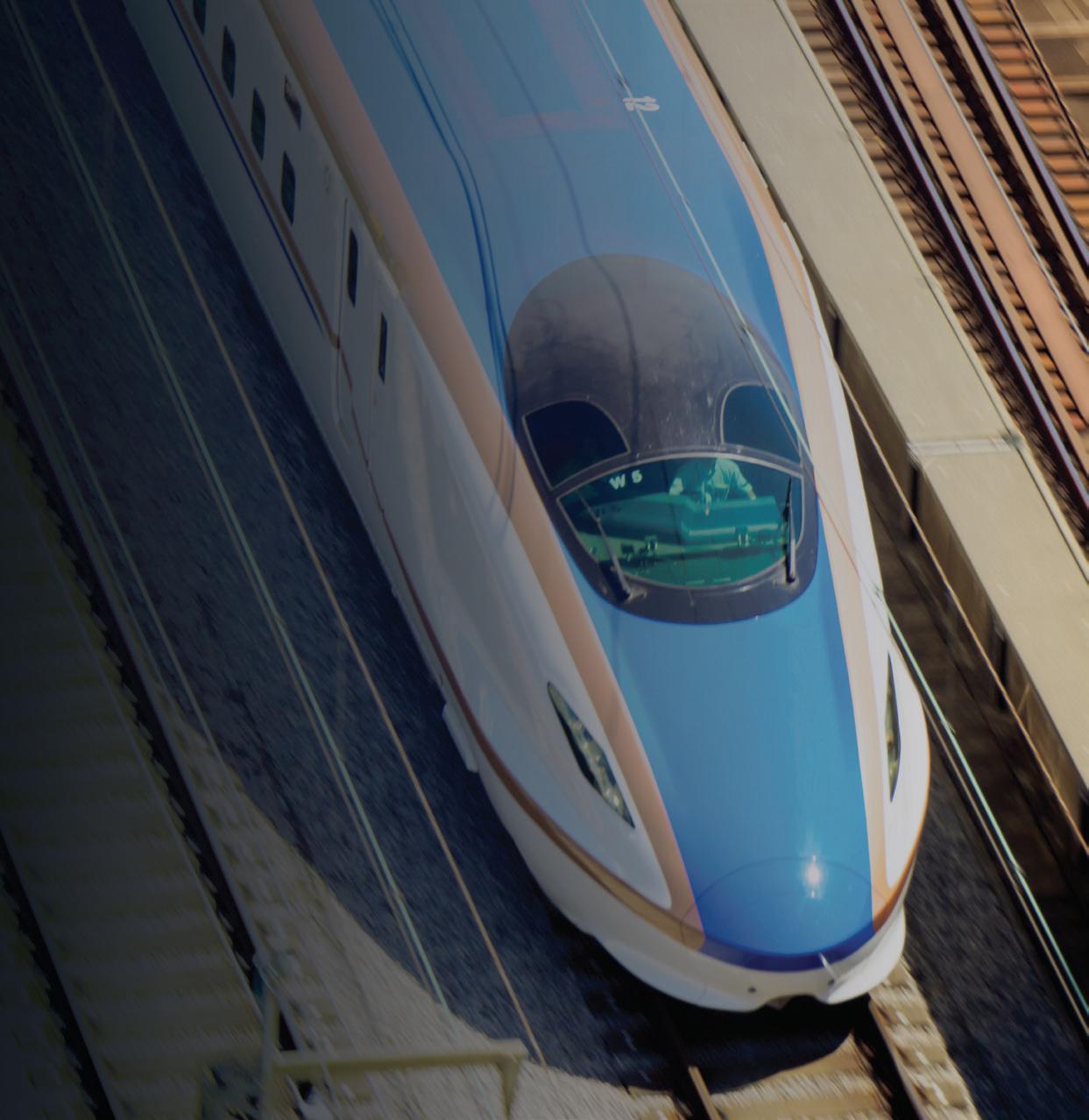
Shinkansen: Japan
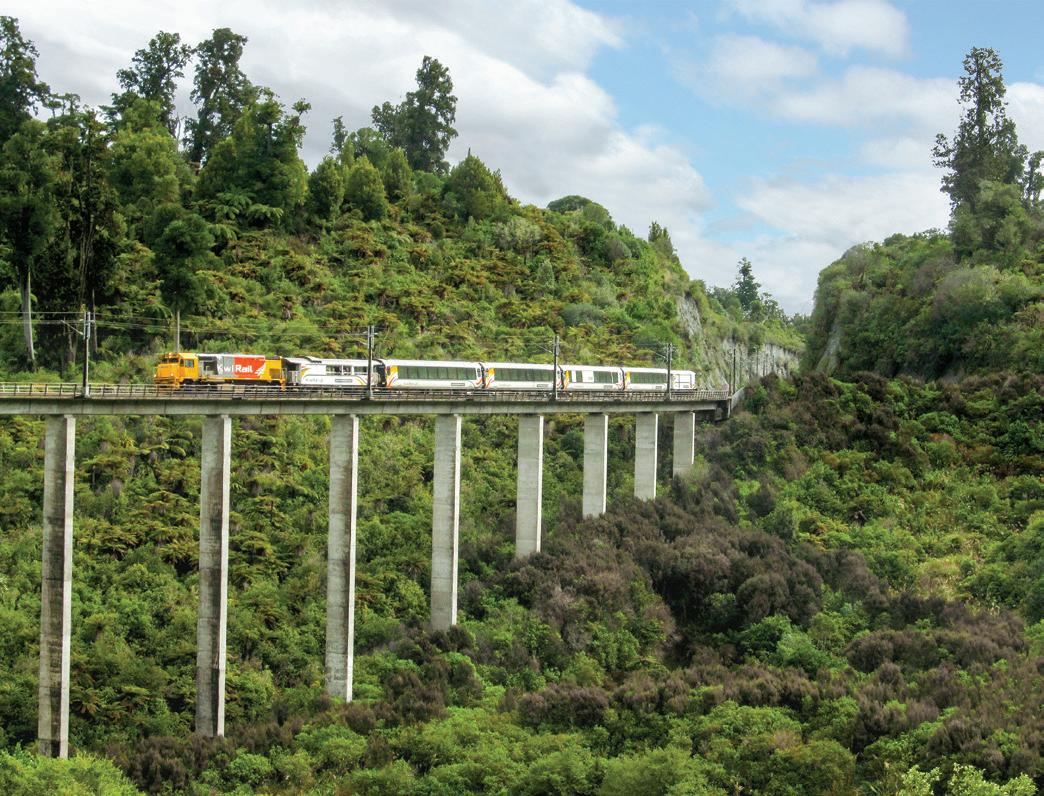
The first of Japan’s nine Shinkansen high-speed rail lines, the Tokaido line, was opened ahead of the 1964 Olympic Games in Tokyo. In case the 100m sprint wasn’t exhilarating enough, this engineering marvel carried passengers at speeds of up to 285kph – the fastest train in the world at the time .
In the decades since, the network’s top speed has crept up. The claim of “fastest train in Japan” is currently held by the Hayabusa train on the Tohoku line, which reaches 320kph. These speeds aren’t required to make up for lost time, either. The average delay across all trains on the Tokaido line, covering 514km between Tokyo and Osaka? Just 96 seconds. But the engineers haven’t finished yet. The Chuo Shinkansen line currently under construction is expected to operate at a maximum of 505kph. Sceptical? You shouldn’t be. In 2015, a superconducting magnetic levitation – maglev – train clocked an envy-inspiring world record of 603kph.
Travelling on the Shinkansen is incredibly smooth and dependable, to the point you barely notice the engineering behind it. I wish we had one from Auckland to Wellington!
– Francis Pangan, Competence Assessment Advisor
A rātou kōrero What they said Thanks for your support
“They are grieving incredibly hard, and I know that New Zealand grieves with them.”
Prime Minister Christopher Luxon after visiting the site of the Mount Maunganui landslide in January and meeting with affected families.
“His experience leading change and building strong teams, and his ability to work across government and business, will help MBIE support businesses and communities.”
Deputy Public Service Commissioner Heather Baggott on the appointment of engineer Nic Blakeley as Secretary for Economic Growth and Chief Executive of the Ministry of Business, Innovation and Employment.
“I would like this research to help inform future building codes and give engineers better tools for decisionmaking, as well as strengthen pathways for women to progress in engineering.”
University of Canterbury structural engineering PhD student Samantha Krieg is a recipient of Canada’s 2025 Order of the White Rose scholarship, which honours the 14 women murdered in the 1989 École Polytechnique massacre in Montreal.
This column marks my last as President of Engineering New Zealand Te Ao Rangahau, and the first farewell from a President holding office for two years.
I have been very privileged to be President and, speaking personally, I feel that two years in the role was enormously beneficial to the organisation. There was time for me to thoroughly understand the business, plus the management team could implement longerterm strategies as there was greater continuity of governance. We recently developed and implemented a three-year strategy with the support of the Board, during which time we have achieved a great deal. This work will continue with a new three-year strategy to be developed later this year.
Examples of our work over the past two years include engaging in meaningful discussions with Building Consent Authorities to help them understand the role of geotechnical engineers in signing off work. We have been a strong advocate to the Government and ministers for engineering issues. Also, philanthropic support for the Wonder Project has increased significantly. Additionally, work has commenced to introduce classes to
CPEng, Engineering New Zealand’s brand has evolved, and we are commencing discussions with our Young Engineers on how to give them a voice directly through to the governing Board. The Board itself has also evolved over the past two years. We are slightly smaller and now have a board member with legal expertise, which completes the recommendations from the Board review.
Change is not without its challenges, of course. There were some minor procedural issues to work through with the Presidency length increasing, and we have adjusted to the smaller Board. But when I reflect on the achievements of the past two years and how well the Board, elected by members, has worked with senior management, I think everyone can be proud of Engineering New Zealand being a forward-looking, dynamic organisation, open to change and prepared to listen to members and others. This is reflected in our increased membership year on year, despite tough economic circumstances. It was a great honour – thanks for your support.
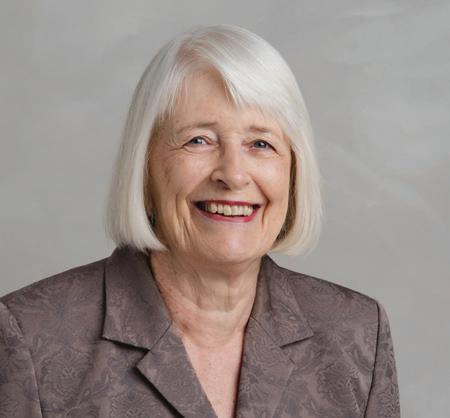
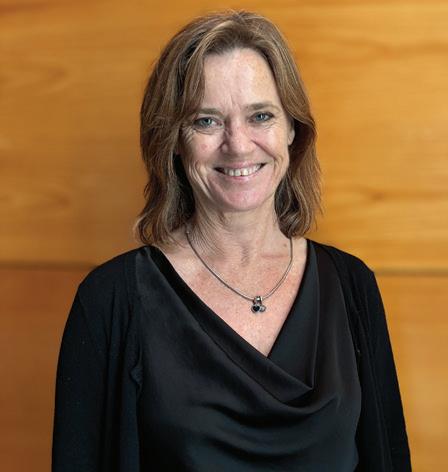
Jan Evans-Freeman DistFEngNZ President, Te Ao Rangahau
Weathering space weather
Aurora australis, photographed from southern Melbourne during the May 2024 solar storms. Photo: Yash Soorma
How engineers and other experts are helping to protect New Zealand’s electricity grid against solar storms. >>
WRITER | KAITUHI Laurie Winkless
New Zealanders are familiar with natural hazards: earthquakes, volcanoes, landslips, floods, hydrothermal activity, tsunami – many of us have had our daily lives impacted by at least one of these.
But there is a natural hazard missing from that list.
One that doesn’t pose the same immediate risk to our safety, but which has dire implications for our electricity infrastructure, putting it front-of-mind for a growing number of organisations across Aotearoa: space weather. This is a catch-all term to describe a range of phenomena originating from the Sun, which, despite being ~150 million km away, influences every aspect of life on Earth. We’re most familiar with the Sun’s photons – the light it generates – which drive everything from the process of photosynthesis to our planet’s weather and water cycles. But light is not the only thing that reaches us from the Sun.
Our Sun screams… and belches
As a massive, dynamic ball of super-hot plasma, the Sun also creates twisted magnetic fields whose complex interactions lead to more dramatic solar activity.
“You can think of both solar flares and coronal mass ejections (CMEs) as huge explosions on the Sun,” says Professor Craig Rodger from the University of Otago.
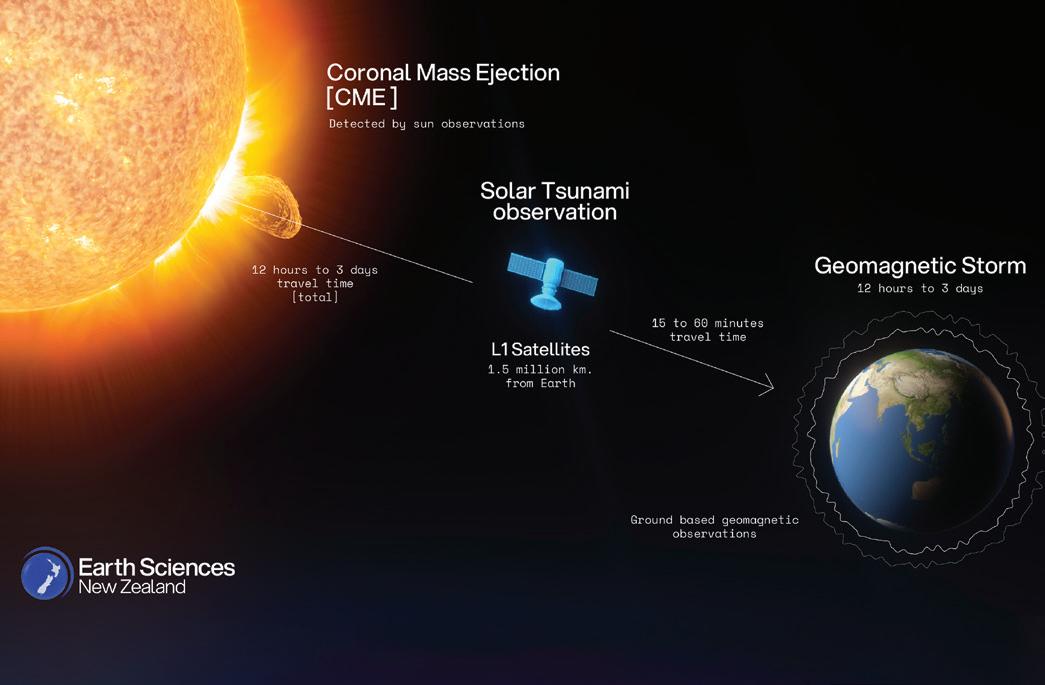
Opposite: Diagram showing the travel time for solar activity from the Sun to L1 satellites, and satellites to Earth, where the activity is picked up by magnetometers. This warning allows organisations like Transpower to engage their contingency plans for geomagnetic storms. Image: Earth Sciences New Zealand.
While these two events can occur simultaneously, they differ from one another, and they each have different impacts on Earth.
Flares are bright bursts of radiation (everything from gamma rays to microwaves) that travel in all directions at the speed of light. US-based space weather scientist Dr Tamitha Skov describes flares as “solar screams” which might be loud, but don’t physically hurt anything. The strongest flares do nothing more than disrupt radio communications that pass through the upper atmosphere, leading to temporary radio blackouts.
In contrast, CMEs are giant clouds of the Sun’s plasma – and its magnetic fields – that are expelled from the Sun, akin, Tamitha says, to “… a belching out of tonnes of material” – not just photons but particles too. That difference has a huge impact on speed. Light travels at approximately 300,000 km per second through the vacuum of space, which means it takes about eight minutes for sunlight to reach us. In contrast, the slowest CME moves at around 300 km per second, so its journey to Earth can take up to five days. Once a CME gets here, its magnetic fields interact with the Earth’s, which can trigger geomagnetic storms.
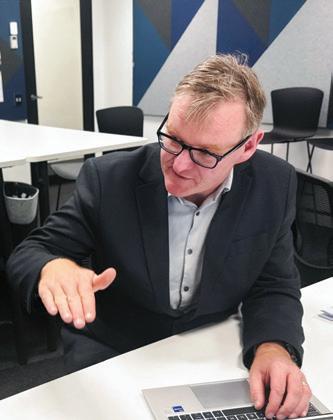
Above: Matt Copland MEngNZ, Head of Grid and System Operations at Transpower. Photo: Transpower.
Right: Visualisation of coronal mass ejection (CME) in August 2012. Image: NASA/Goddard Space Flight Center
“For most of human history, the only sign of a geomagnetic storm occurring was the aurora dancing across the sky,” says Craig. But today, for those managing electricity grids, strong CMEs can spell disaster. A CME’s arrival can induce powerful electrical currents, known as geomagnetically induced currents (GICs), and voltage instabilities in long transmission lines. In extreme conditions, these unwanted GICs can even overload transformers, causing them to fail, leading to widespread power outages.
Where science meets industry
Thankfully, none of this is news to Matt Copland MEngNZ, Transpower’s Head of Grid and System Operations, who says, “We’ve been thinking about and making preparations for extreme solar storms for years.”
Part of this preparedness comes through accessing data and alerts from satellites that are dedicated to monitoring solar activity. These tend to sit at the L-1 point – a location in space between the Earth and Sun where their gravitational forces balance out.
“L-1 is about 1.5 million kilometres away,” says Craig. “So, for normal CMEs, we get about an hour’s warning
For most of human history, the only sign of a geomagnetic storm occurring was the aurora dancing across the sky.
– Professor Craig Rodger
that it’s coming. For the really fast ones, we might only get 15 or 20 minutes.”
“That’s not enough time for us to actually implement a response,” says Matt. Instead, Transpower must act on forecasts of previous storms, “… assume it’s going to be the big one, and get the grid into the best state of readiness we can before the CME hits that L-1 satellite”.
Once the CME approaches Earth, ground-based measurements become important. Magnetic
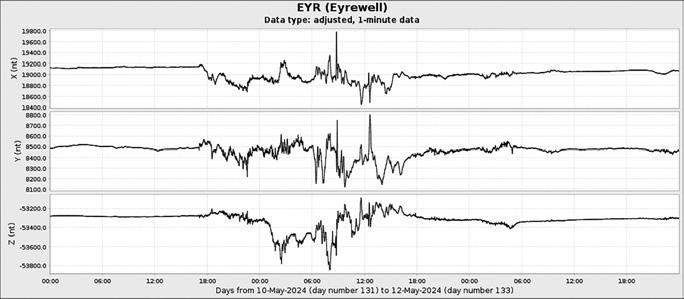
observatories, including at Eyrewell in north-west Christchurch and at Scott Base in Antarctica, can measure changes in the Earth’s magnetic field. And there is a network of sensors across the electricity grid that monitor GICs and temperature spikes.
Transpower’s multilayered response strategy sits on firm science foundations. Since 2015, the company has worked closely with Craig and his team at the University of Otago, supported by the Ministry of Business, Innovation and Employment’s (MBIE) Endeavour Fund.
“The Solar Tsunami Programme started with wanting to understand the science of space weather,” explains Craig. “But it quickly morphed into a way to tackle realworld questions about the hazard’s potential impact on our electricity infrastructure.”
“Transpower gave us 15 years’ worth of data and observations to start working with,” Craig recalls. This unprecedented data-sharing enabled researchers to model GIC behaviour across the network and identify vulnerable locations. This, in turn, allowed Transpower and the Otago team to develop a mitigation plan, “a
switching cookbook,” says Craig, that Transpower could use to minimise the impact of any future space weather events on the normal operation of the grid.
In May 2024, the plan faced its first test.
National preparedness
For days, social media platforms were flooded with images of aurora australis dancing across New Zealand skies – the most widespread showing of the southern lights in decades. It was caused by a series of powerful solar storms now collectively referred to as the Gannon event, named after space physicist Dr Jennifer Gannon who had sadly passed away a week prior.
“On the morning of Saturday 11 May, I woke to an alert on my phone from NOAA’s Space Weather Prediction Centre,” Craig explains. “It said that the event had reached G4/G5, which is basically the biggest geomagnetic disturbance level,” so he was not surprised when Matt Copland called him.
“That event met Transpower’s threshold for enacting our switching plan,” Matt says. So, he and his team
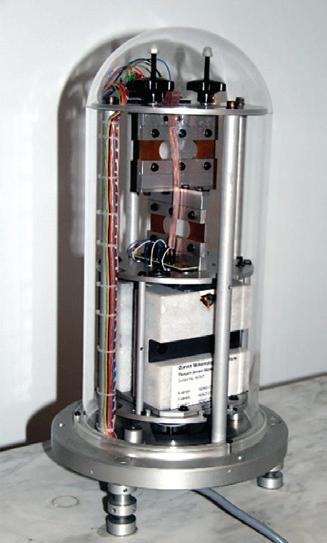
Above: Fluxgate magnetometers record local variations of the Earth’s magnetic field, taking one measurement every second. Photo: Tanja Petersen, Earth Sciences New Zealand
Top right: One minute averages of geomagnetic field changes during the Gannon solar storm in May 2024. Image: Earth Sciences New Zealand
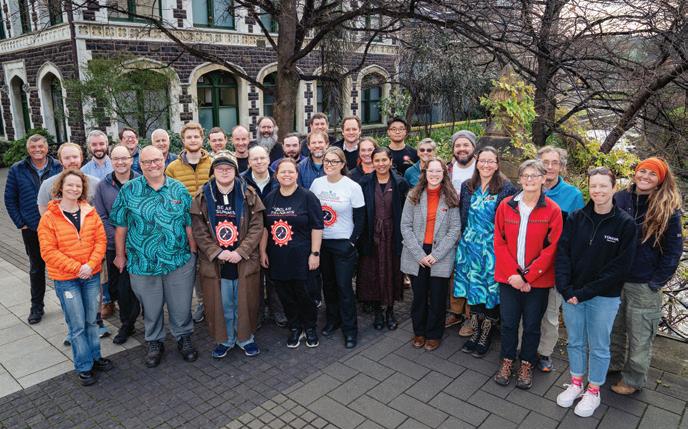
Bottom right: The Solar Tsunamis team at the University of Otago, June 2025.
Photo: Dave Bull, University of Otago
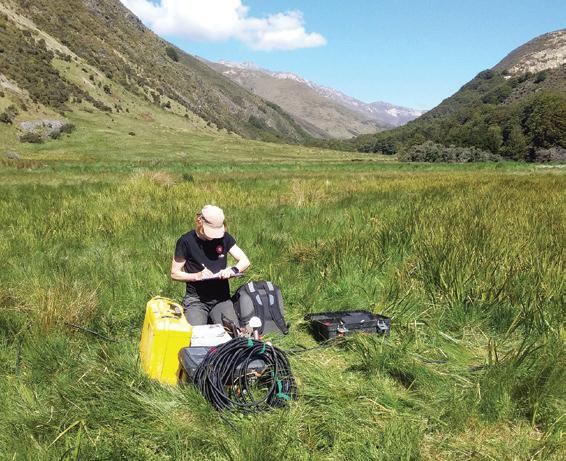
Above left: GNS geophysicist
Wiebke Heise undertakes field work to investigate the electrical properties of the New Zealand landscape. Photo: Earth Sciences New Zealand
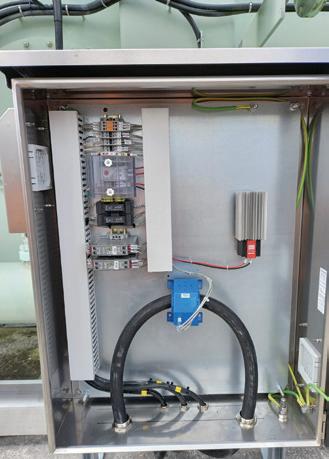
Above right: Geomagnetic Induced Current sensor installation for a transformer at Henderson substation.
Photo: Transpower
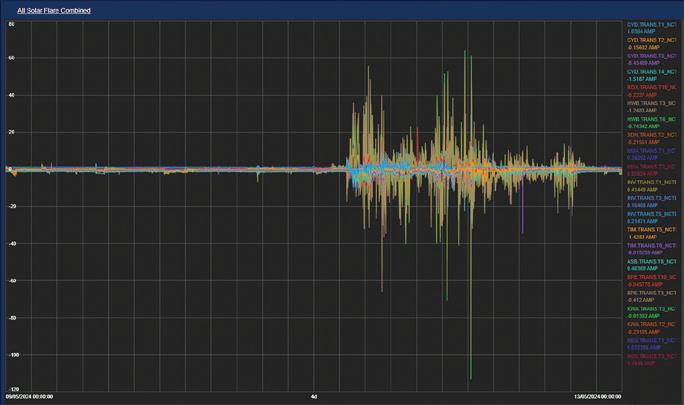
Left: Graph showing Geomagnetic Induced Currents measured on transformers across the grid during the May 2024 Gannon solar storm.
Image: Transpower
started working through it, reconfiguring the grid and disconnecting some transmission lines to safeguard key transformers across the network.
Over the following 48 hours as the storm rolled on and more CMEs arrived, Transpower continued to monitor it, issuing grid emergency notices and switching circuits where needed. Measurements made across the network confirmed the accuracy of the University of Otago models. There was no loss of power to customers throughout the event, and no damage caused to the grid.
Professor Tom Wilson, Chief Science Advisor at the National Emergency Management Agency (NEMA), emphasises the significance of this industryacademia partnership: “Transpower’s culture of embedding research into their operational decisionmaking and their operational resilience... is celebrated
internationally as an exemplar of best practice.”
NEMA had been the first to flag the impending storm on 10 May 2024. “Space weather has been on the National Risk Register since 2016,” says Tom. “Responsibility for planning for it sits across MBIE and NEMA.” But the Gannon event “energised” the agency and wider government do even more, he says.
“We’ve had a massive lift in operational readiness in the last 16 months.”
NEMA developed a National Space Weather Response Plan and established a Space Weather Science Advisory Panel – which includes scientists from universities, science agencies, Transpower, and NEMA – with an operational response subgroup. In November 2025, the agency conducted its first national exercise, Tahu-nui-a-Rangi, simulating a major space weather event.
“We ran that in the National Crisis Management Centre, aka “The Bunker” below the Beehive,” says Tom. “That gave us an opportunity to test what a big event might look like and more importantly, to test the national system.”
Preparing for the big one
Transpower is continuing to expand and develop its plans too. In 2026, working with the Electricity Authority, it will run a large-scale, hands-on industry exercise focused on space weather.
Matt explains: “We’ll work with the distributors, retailers, generators. The aim, as always, is to improve capability and preparedness.” And building on their ongoing MBIE-funded work with the University, Transpower has also been carrying out studies with transformer supplier Hitachi to understand how their hardware might respond to a solar storm 10 or 100 times bigger than the Gannon event.
This is not just a theoretical exercise. While it might seem to the wider public that the Sun is especially active right now, “… this is just it beginning to come back to normal,” Tamitha cautions.
“The previous cycle, which lasted from 2008 to 2019, was the anomaly. It was unusually quiet.” The Sun’s activity cycles, she explains “… are modulated over very long timescales – it doesn’t just wax and wane over
11 years.” And what we’re seeing now sits just below the median of all the solar cycles we’ve ever logged, she says. In other words, we can expect to see a more active Sun in the coming decades.
Alongside their science-led operational protocols, Transpower is also exploring hardware solutions. In 2026, the company will install its first GIC blocker at Benmore substation. These devices can absorb the unwanted DC currents before they reach transformers, but they are expensive.
“We’ve been working with a modeller to understand the economic consequences of doing nothing,” says Craig, weighing the costs of mitigation against potential losses. What that analysis has shown is that, even with mitigation measures in place, a one-in100-year event could cost the country in excess of $1.4 billion.
“Discussions are ongoing and new hardware will take years to implement. But it feels good to know that we’re on the journey together and we have a plan for tomorrow.”
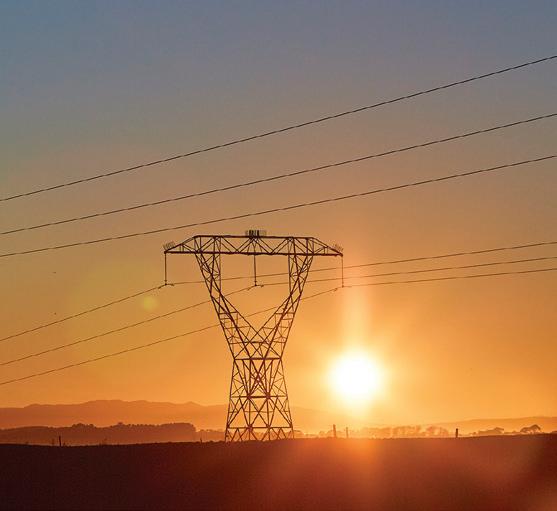
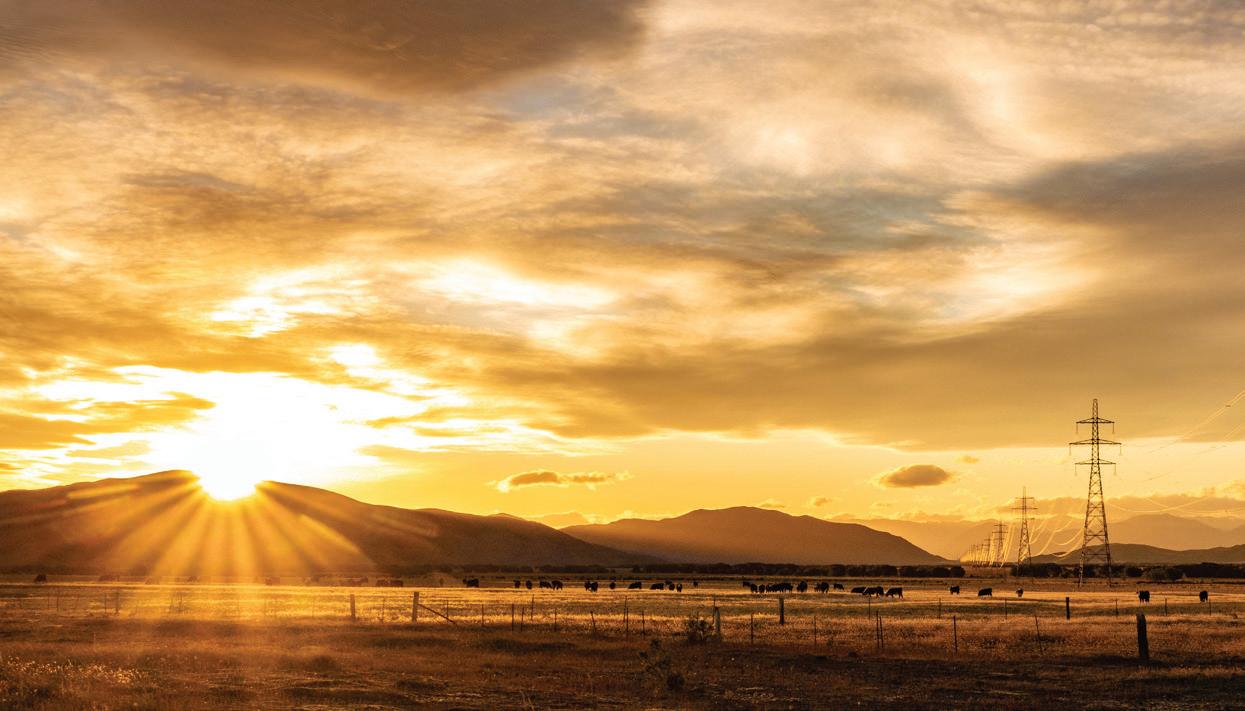
Below: Sunset over Transpower's TwizelChristchurch 220 kV line through Mackenzie Pass, South Canterbury. Photo: Transpower
Support kids to go from school to STEM
Help them find the wonder in an engineering career
Volunteer for the Wonder Project and join a local classroom as they take on a fun, hands-on STEM learning experience.
You’ll earn CPD, inspire young Kiwis in your community, and leave an impact that will last a lifetime.
After 2025 programmes:
• 67% of ākonga (students) reported they were interested in a STEM career
• 96% of kaiako (teachers) increased their confidence teaching STEM
• 89% of ambassadors said they’d like to be involved again
How Wonder Project volunteers inspire future engineers
When STEM professionals volunteer for the Wonder Project, they give back to their community by inspiring young Kiwis with STEM – uplifting their confidence, shifting perceptions, and opening their eyes to the possibilities of a STEM career. Mark Struthers’ experience on the Wonder Project was no different.
Aotearoa is facing a skills and diversity shortfall across science, technology, engineering and maths (STEM). STEM professionals are essential to driving major innovations and progress for our motu. So, to protect our future, we need more of them. That’s why 422 STEM professionals across the country volunteered to inspire the next generation at local schools in 2025. STEM professionals like Mark Struthers.
It was a no-brainer for Struthers to become a Wonder Project Ambassador. Having had limited STEM education experiences when he was younger, he saw the Wonder Project as an opportunity to ensure the next generation knew what opportunities were available to them, and foster early passions for STEM.
“I would’ve loved to learn more about STEM at a young age, so being involved in the Wonder Project [was] my way of helping our tamariki who may feel the same way” says Struthers.
He joined a class at Maidstone Intermediate School, where he encountered some ākonga (students) like him with an existing interest for STEM, others who had already decided STEM was too hard or boring, and some that didn’t understand what STEM careers involved at all.
“I don’t really get involved in [STEM] cause it’s not really my favourite subject. I’m not interested in a STEM career.” – Lucy, wonder ākonga.
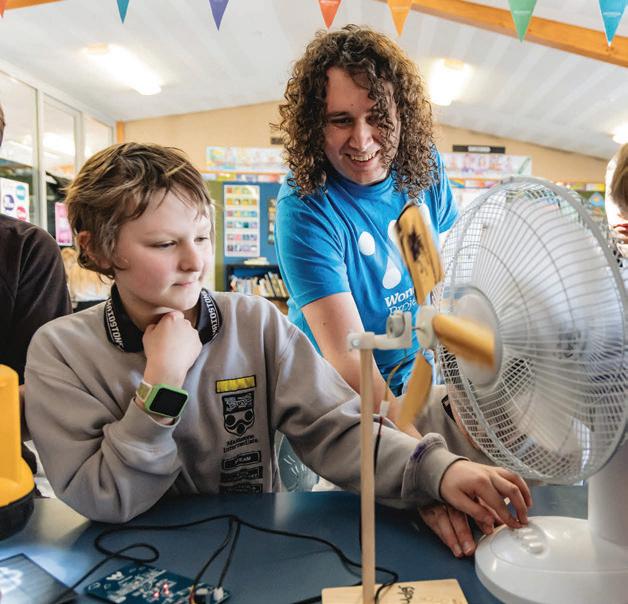
After a series of classroom visits where Struthers shared his career story, supported ākonga to build a wind turbine to power a mini town, and helped ākonga and their kaiako (teacher) find their confidence, he discovered his support had reached beyond the already engaged.
“I went into this hoping to help those who were already curious about STEM, but I was surprised by those who started off not so interested and were by the end really engrossed in the Power Challenge.”
Future STEM superstar Lucy said, “At the start, I wasn’t that confident because I didn’t think it would be the fun-est. Now I think STEM is fun and exciting and it will definitely be helpful with jobs you want to do.”
It’s safe to say, the hours Struthers volunteered at Maidstone Intermediate made a lifelong impact – not just on ākonga perceptions of STEM, but on the future of the STEM industry.
“I find STEM careers in NZ are typically stumbled into. So, it was super rewarding to think the next generation of STEM professionals may not be the same after seeing students light up at how cool these challenges are!”
Food: Producing more, wasting less
WRITER | KAITUHI Matt Philp
Engineers are key players in the ongoing quest to find better ways of producing food and reducing waste in the sector.
Cookies made with Rubisco protein isolate in place of egg.
Photo: Leaft
Necessity is supposedly the mother of invention, but waste isn’t a bad catalyst for innovation either, particularly when it comes to food. Take the example of Auckland upcycling business Rescued Kitchen. Responding to the fact that 10 percent of all bread is wasted, the founders devised a solution to transform surplus loaves into bread flour, for use in baking mix, cakes and biscuits. Or consider the work of University of Auckland researchers to tackle horticultural byproducts. Led by Professor of Food Science SiewYoung Quek, the team, which includes researchers from Massey University and Malaghan Institute, hopes to transform unwanted fruit byproduct into bacterial cellulose, which can then be used to create new food products.
It’s not only about tackling waste. Fonterra, for instance, which is already one of the world’s most efficient dairy manufacturers, has embraced AI, robotics and automation to maintain its position.
As producers here and around the world grapple with the need to become more sustainable, efficient and productive, clever engineering solutions will only become more valuable.
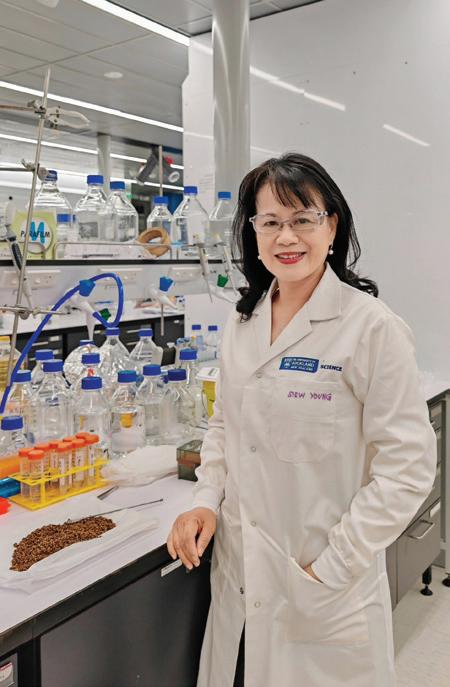
Siew-Young, who has a PhD in Chemical Engineering, is Founding Director of the University of Auckland’s Future Food Research Centre. A multidisciplinary body focused on “critical challenges in the future food space”, its research areas include bioactive and novel food ingredients, byproduct utilisation, and food processing and quality.
The latest is the abovementioned project involving horticultural byproducts. Funded by a three-year, $3 million grant from the Ministry of Business, Innovation and Employment, it includes a collaboration with colleagues at the Singapore Institute of Technology, and A*STAR, who are looking to develop novel high-value, nutrient-rich products from mushroom biomass. The New Zealand researchers, meanwhile, are focused on transforming unwanted byproducts from juice and wine industries into healthy new food products and nutrition-boosting ingredients to add to existing foods.
Siew-Young says sustainability is a pressing global issue and has received immense attention including in New Zealand, noting that 48 percent of our greenhouse gases come from agriculture. Reducing that carbon footprint must involve attacking agricultural byproducts. According to a Ministry for the Environment report, New Zealanders annually throw away or waste 1.2 million tonnes of food, 18 percent of which ends up in landfill, where it creates yet more methane. In the case of fruit and wine pomace or solid residue, 100,000 tonnes are thrown away each year, overburdening landfills, adding to emissions and polluting waters.
“We wanted to see how we could create value from that byproduct,” says Siew-Young, who is also Editorin-Chief of Dutch publisher Elsevier’s Future Foods journal. The idea is to turn selected horticultural byproduct into bacterial cellulose, which can then
be used to create new foods or food ingredients. In Singapore, meanwhile, the team is focused on using mushroom mycelium to create high-value food products. In both cases, the researchers are working with industry partners “… who can take our prototype in the lab and scale it up in their facilities”, says SiewYoung, who sees a crucial role for engineers in the future of food.
“For example, process engineers are involved in transforming byproduct into high-value ingredients via various processing methods. Mechatronic engineers can help in horticulture and food manufacturing through robotics and environmental engineers can design smart irrigation systems.
“Energy is another area where engineers can contribute to decarbonising the food sector. Engineers can do a whole lot.”
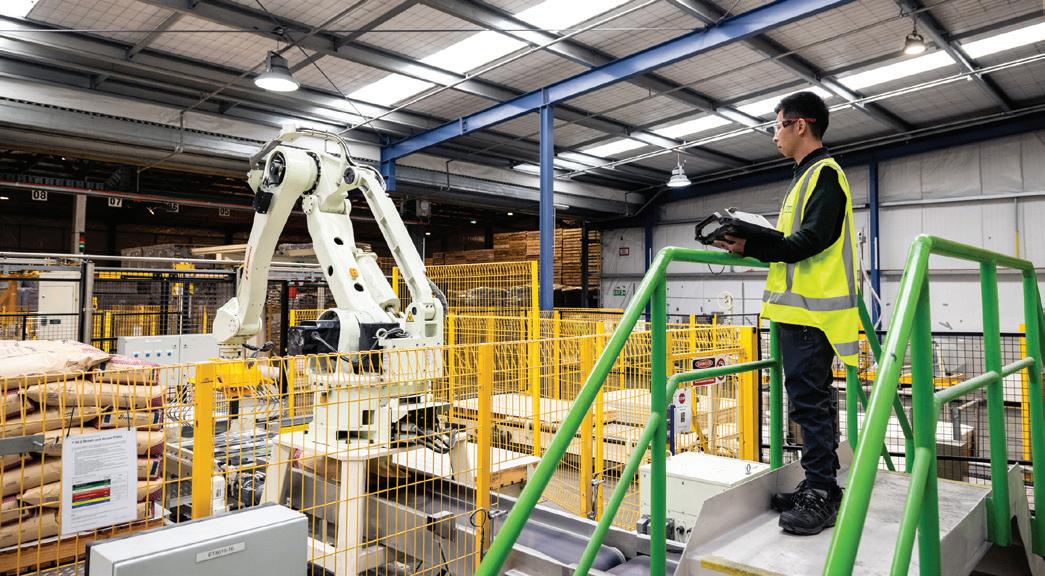
We use machine learning vision systems to inspect 66 million milk powder bags, reducing waste and downtime and maintaining product quality.
– Aaron Goldsbury
You’ll get no argument from Aaron Goldsbury MEngNZ, Chief Engineer for Fonterra.
“One of our key strategies is to be a leader in innovation, using technology to solve challenges and build on our competitive advantage,” he says, adding that clever engineering has been central to this. The farmer-owned Co-operative has been using robotics for more than 20 years. Fonterra’s 27 manufacturing sites around Aotearoa are highly automated, with advanced process controls that use machine learning to optimise product yield while remaining within product specifications. Aaron refers to Fonterra’s Eltham site, where cheese is processed on an automated high-speed slicing line. Elsewhere, the Co-operative operates the world’s largest milk powder driers, delivering the efficiencies of scale that give it a marketplace edge.
Fonterra has also embraced AI and related technologies. “We use machine learning vision systems to inspect 66 million milk powder bags, reducing waste and downtime and maintaining product quality,” says Aaron. He adds that Fonterra also uses AI to streamline digital processes across the Co-operative and its supply chain.
Above: Professor Siew-Young Quek, Founding Director of the Future Food Research Centre.
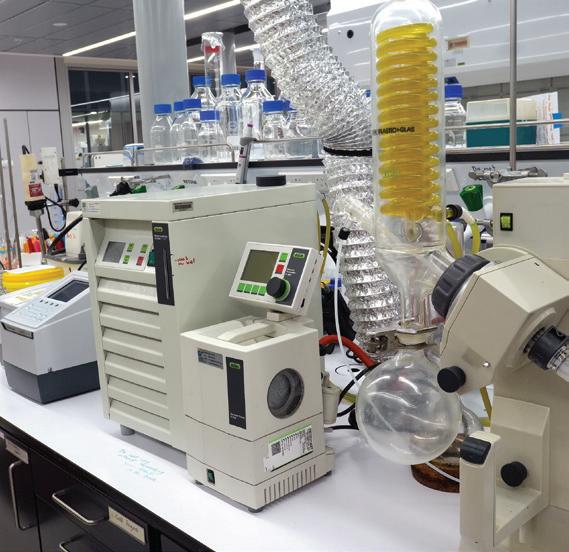
Top right: At the chemical sciences lab at the University of Auckland, several projects are underway to devise new “superfood” ingredients.
Photos: University of Auckland
Right: Sliced cheese in production at Fonterra's Eltham site.
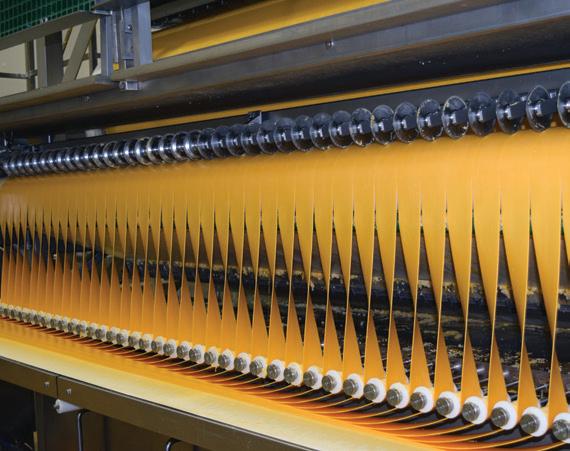
Below: Fonterra’s manufacturing sites are highly automated. Photos: Fonterra Co-operative Group Limited
The innovation he’s most excited about, however, is Fonterra’s new Digital Maintenance Programme, which he says is cutting edge. “AI looks at the data that’s generated from our 650,000 assets. It brings together maintenance data, process data and engineering data to standardise and optimise what maintenance we do... It also looks at our maintenance information for those assets, such as planned maintenance activity and breakdown-type activity. It is constantly looking to improve how often and what kind of maintenance we do, and to predict failures before they can happen.”
And regarding energy efficiency, he says, “We’re using innovation to help achieve our decarbonisation strategy and reduce the amount of energy we use.” The Co-operative recently upgraded one of its refrigeration plants in Taranaki, installing an industrial-scale heat recovery unit.
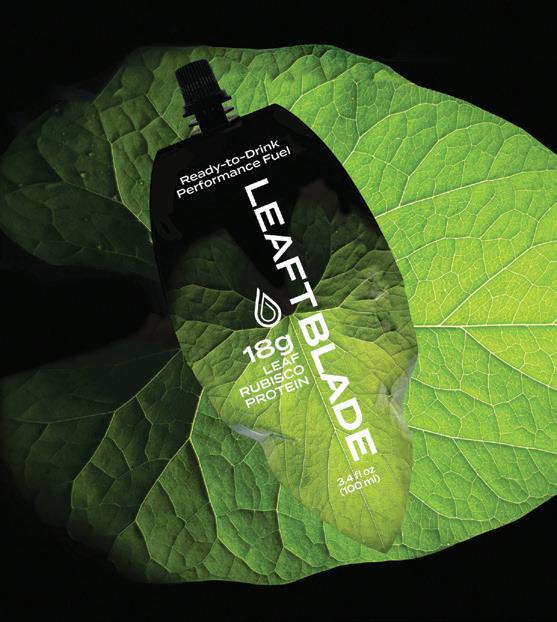
Another food producer with engineering smarts is Canterbury’s Leaft Foods. Leaft’s hero ingredient is Rubisco, a highly concentrated protein extracted from lucerne that it sells as Leaft Blade, a liquid fuel shot for athletes. The company’s other major product is Rubisco protein isolate. An impressively functional ingredient, it foams, gels and emulsifies much like eggs or whey but with no allergens, making it potentially valuable for bakery products and the plantbased food sector. In 2025, the company announced a partnership with food ingredient import giant Lacto Japan, opening a door to the highly innovative Japanese food manufacturing sector. Leaft cofounder Maury Leyland is an Engineering New Zealand Fellow. CEO Ross Milne is a chemical and process engineer. The team includes a dozen engineers, and Leaft employs chemical and process interns during the summer.
“We have a really strong engineering theme in the company,” says Maury. “We’ve always had that mindset of ‘how can we produce Rubisco in a way that is truly scaleable?’ In a lot of our early testing and innovation, for example, we pushed ourselves to use off-the-shelf equipment. Constraining ourselves to processes that can be scaled has been an enormous strength.”
The Lacto deal is a potential gamechanger for Leaft. It currently manufactures in a 30,000 square foot factory in Rolleston and has 100 hectares of crops grown for it by arable farmers in Southbridge.
“We’re looking ahead to building our next factory, which would be a big step up.”
First, however, there’s work to do. “For us, the job is to build up a pipeline of customers via Lacto, and in the US and New Zealand, working through the product development cycle with them and getting product into their hands,” Maury says. She notes that we are talking here about high-value exports.
“If you’re a truly functional protein, then you’re at a price point well above basic proteins. And that’s the key – to compete at the price point of eggs.”
Above: Leaft Blade fuel shot with 18g Rubisco protein per 100g serve.
Opposite: Creamy emulsion of Rubisco protein isolate.
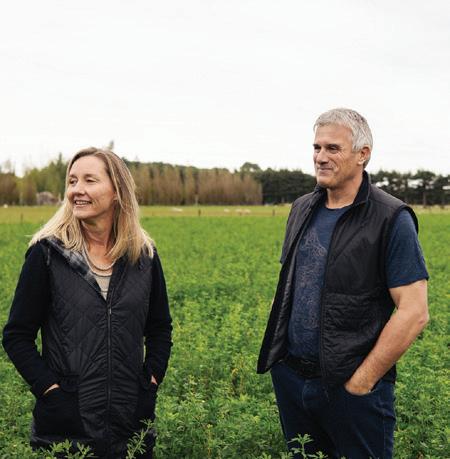
Below: Leaft co-founders Maury Leyland and John Penno. Photos: Leaft
Fostering food innovation at school
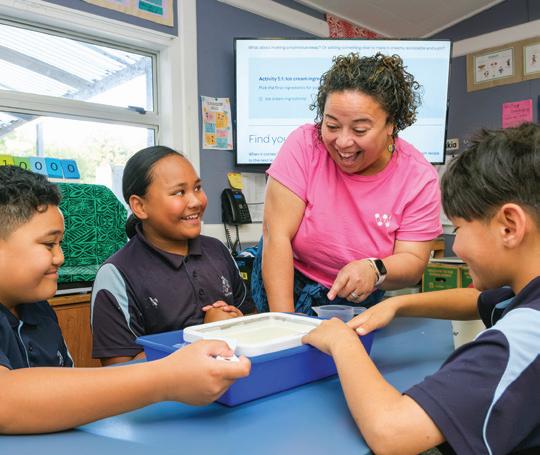
To continue shaping the future of food, Aotearoa needs a strong, diverse science, technology, engineering and maths (STEM) pipeline. That’s why Fonterra has teamed up with Engineering New Zealand’s Wonder Project to co-found and sponsor its newest challenge for schools: the Ice Cream Challenge. It aims to inspire young Kiwis with the wonders of food science and encourage them to become the next generation of changemakers in the industry. In the Ice Cream Challenge, ākonga (students) discover the science behind this popular sweet treat. Across a school term, they experiment with flavour, texture and techniques, using dairy or alternative ingredients to create their own ice cream. Each school is given everything it needs to run the challenge, including an ice cream kit, ākonga activities, an online learning hub, a detailed challenge guide and a volunteer STEM professional to bring the magic to the classroom – and it’s all free. Following a successful pilot in 2025 across 51 classes, in 2026 the challenge will be released nationwide across 200 classes, promising fun, excitement and delicious ice cream, making STEM learning a little sweeter.
Above: Ākonga at Favona School work with their Wonder Project Ambassador, Lisa Leilua from Fonterra, to create their own ice cream.
Photo: Wonder Project
Celebrating our newest Distinguished Fellows
Engineering New Zealand Te Ao Rangahau is proud to showcase our newest Distinguished Fellows –engineers whose dedication and hard work have earned them our highest membership class. So how did they celebrate the news, what are their superpowers and what job do they look back on most fondly? EG reveals the person behind the accolade.
Find out more about our new Distinguished Fellows at engineeringnz.org/fellows >>
Jenny Culliford graduating from the University of Canterbury. Photo: Supplied
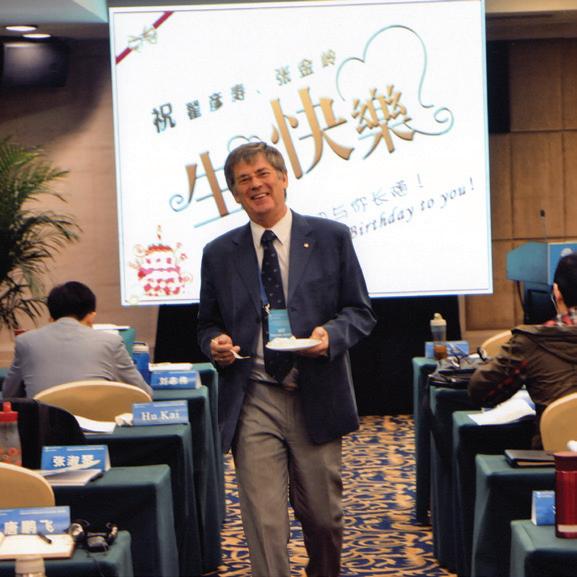
Stephen Jenkins celebrating a student’s birthday during a break in classes in China. Photo: CNAEC
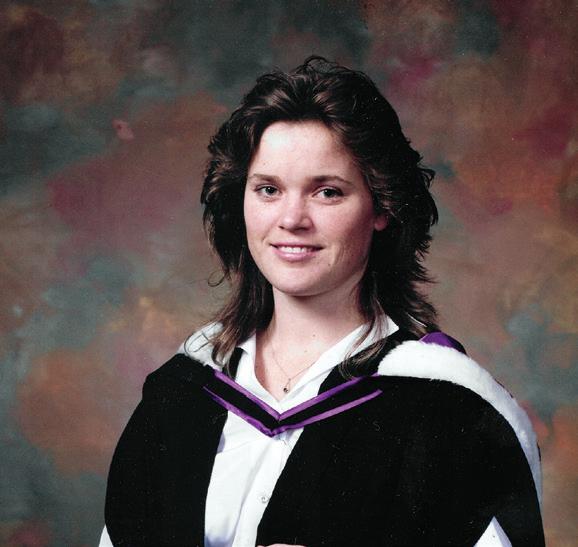
Lisa Roberts graduating from the University of Auckland in 1990. Photo: Supplied
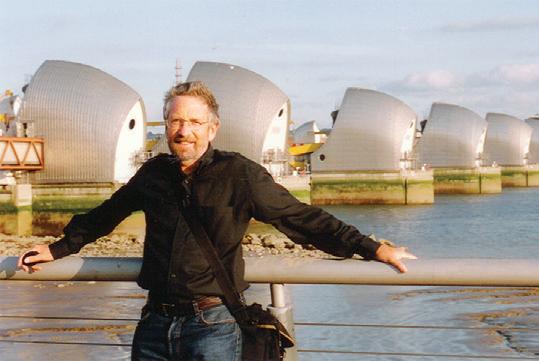
Terry Kayes overlooking the completed Thames Barrier, Woolwich, London. Photo: Supplied
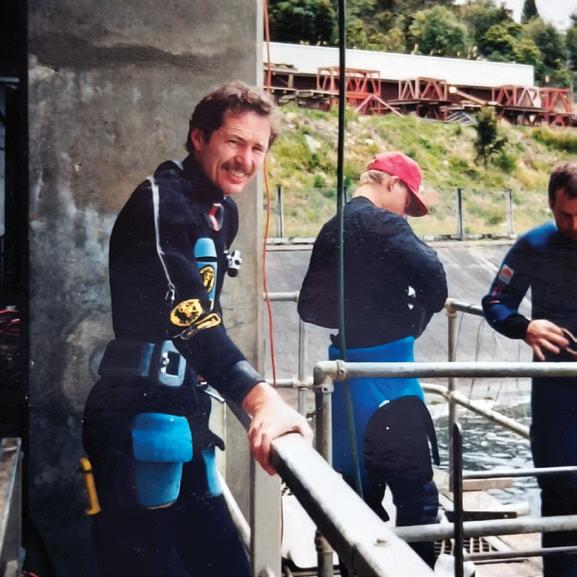
Mark Hedley worked as an engineer-diver from 1983–1998. Photo: Supplied
Jenny sums up the work this Distinguished Fellowship recognises: Early in my career I participated in various activities promoting engineering to young women. This exposure led to further recognition and opportunities to contribute to the profession and work with a wide group of people and organisations outside of my consulting engineering job.
I celebrated the news of my Distinguished Fellowship by… making myself a cup of tea after a morning phone call from [Engineering New Zealand President] Jan Evans-Freeman. My husband John and I did share a bottle of good wine that evening.
I couldn’t have got here without… Sister Mary Bernard, the Principal of Sacred Heart College in Lower Hutt. She persuaded Hutt Valley Memorial Technical College to include me in their seventh form maths and additional maths classes after being turned down by two other nearby schools. She even had the nuns occasionally lend me their car, saving me a threekilometre cycle each way.
Jenny Culliford DistFEngNZ
Based in: Te Whanganui-a-Tara Wellington
Current role: I’m retired but continue to work with Engineering New Zealand as a chair of Disciplinary and Investigating Committees. I am also on the Board of IChemE in New Zealand.
My hidden talent as an engineer is… a long-held interest in safety practices that was first kindled in the oilfields of Iran and led to several roles with safety responsibilities, both project- and operations-related, including a global governance role.
My first engineering-related paid job was… 60 days of practical work in the appliances division toolroom at General Motors in Lower Hutt.
The job I look back on most fondly is… being employed as a process engineer on a part-time basis by Morrison Cooper & Partners when we returned to New Zealand from the United Kingdom with two small children. I was later able to increase my hours gradually on my terms – this was unusual back then.
The most significant way my field has changed since I began my career is… in the tools used in design. Slide rules, cumbersome calculators and manual drawings have been replaced by highly sophisticated design tools.
My top piece of advice for early career engineers in 2026 is… be curious and embrace advances in technology. Be open to new opportunities. You have the tools and training to succeed in a rapidly changing world.
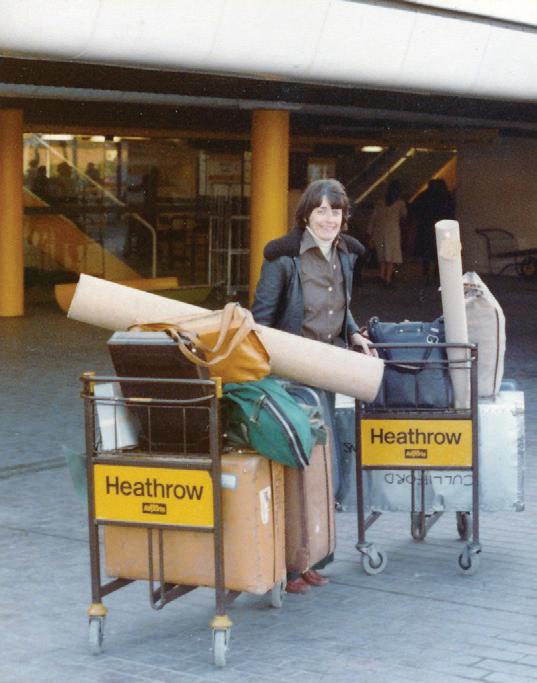
Jenny Culliford at Heathrow Airport in January 1979 after evacuation from Iran at the time of the revolution. Photo: Supplied
Stephen Jenkins DistFEngNZ CPEng
IntPE(NZ)
Based in: Te Whanganui-a-Tara Wellington
Current role: Technical Director, Industrial
Mechanical, Aurecon
Stephen sums up the work this Distinguished Fellowship recognises: Early in my career I was encouraged by my mentors to join Engineering New Zealand to support the profession. I became involved at a branch level then joined the Council as a seconded young engineer. I progressed through to the ACE New Zealand board and to a committee on the global International Federation of Consulting Engineers (FIDIC), becoming one of their accredited international trainers. Training young people to become professional engineers and competent consultants has been a large and rewarding part of my life – the world is short of good engineers.
I celebrated the news of my Distinguished Fellowship by… taking three deep breaths to recover from the thrill and then sharing the news with my wife.
I couldn’t have got here without… the teams I have worked with in New Zealand and around the world, the people who provided support for the service roles I took on, and role models in the profession who were so generous in their personal example, ethics, wisdom and advice.
My superpower as an engineer is… that the core of my engineering has always been the range of experience, my search for parallel knowledge and the ability to “join the dots of history”. I am a fan of the lesserknown histories of science and technology in areas of civilisation that are ignored or undocumented in standard engineering history.
My very first paid job was… washing pots in a commercial kitchen during high school.
The job I look back on most fondly is… not a job but a commission, given I have been at the one organisation professionally. It was presenting training to younger engineers in Korea, China and Papua New Guinea. Their enthusiasm, the friendliness of the people and the astounding contrast between the problems that we encountered as a learning team of tutor and students was the best educational experience of my life.
The most significant way my field has changed since I began my career is… that in my first work in engineering I spent hours learning how to print neatly on tracing paper drawings and to use the new drafting machines that were replacing the T-square and set square. Although I did little drawing, the briefing sketches had to be neat and clear and peak loads meant you were the back-up. Computer-aided design rather than just drawing has now become standard and has the capacity to standardise and make normal engineering somewhat boring in my view.
My top piece of advice for early career engineers in 2026 is… that a range of knowledge and experience is better (and more stimulating) than specialisation.
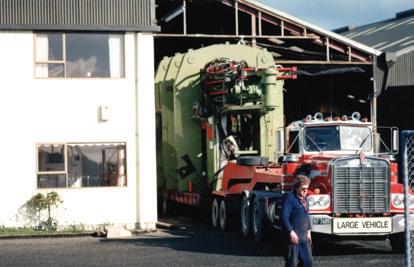
110 tonnes of triple dump wool press on the move in one piece.
Photo: Supplied
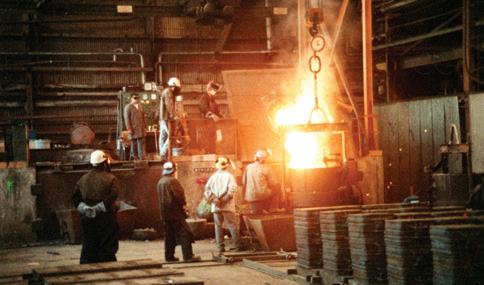
Pouring metal at Hillside railway workshop foundry for stainless steel castings, made for the 30MW MP turbine inner casings at Wairakei Geothermal Power Station. Photo: Supplied
Mark sums up the work this Distinguished Fellowship recognises: Temporary works is one of the most challenging but enjoyable fields of structural engineering. It has been very rewarding mentoring many new graduates, coaching them in the disciplines of temporary works and construction engineering, and seeing them prosper and succeed.
I celebrated the news of my Distinguished Fellowship by… experiencing astonishment and disbelief! I feel very privileged to work in a job that I enjoy and certainly wasn’t seeking recognition, but apparently, some of my peers and Engineering New Zealand thought differently and I am very humbled by that.
I couldn’t have got here without… the support of my wife and family – they have shared a large part of me with the engineering community. Also, the support of Downer, who has freely given me the time to lead and support the Temporary Works forum.
My superpower as an engineer is… my faith in God. Once I said to God that I would do anything He wanted – be a missionary – anything. His very clear response was: “Be the best engineer you can be, because from now on, you’re working for Me.” He has led me on a rewarding and satisfying path and given me the abilities I needed.
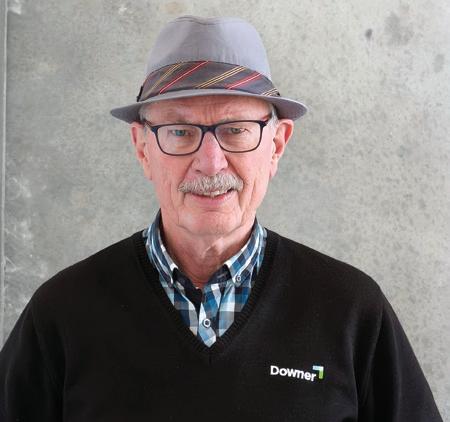
Mark Hedley DistFEngNZ CPEngNZ IntPE(NZ)
Based in: Tāmaki Makaurau Auckland
Current role: Senior Principal Engineer –Structures & Temporary Works, Downer NZ
The job I look back on most fondly is… working as an engineer-diver on marine pipelines and hydro power stations for Brian Wilson Consulting Engineer. The upgrade of Tokaanu Power Station in the 1990s gave me the opportunity to both design complex pre-stressed concrete structures and oversee the successful underwater construction.
The most significant way my field has changed since I began my career is… developing good practice for temporary works. They are designed and built under pressure and urgency and it is inconvenient and costly to carry out the proper reviews, inspections and signoffs. The Temporary Works forum has been leading the New Zealand construction industry to a place where these disciplines are becoming normal.
My top piece of advice for early career engineers in 2026 is… Kia mataara – be vigilant. It was the motto from my old secondary school, Wairoa College. The best procedures, rules and check sheets cannot guarantee absolute safety because people, methods and equipment are continually changing. I urge engineers involved in construction to make regular site visits, be vigilant, and find trouble before it finds us.
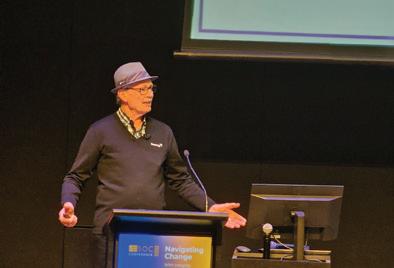
Mark presenting at the SESOC Conference 2025. Photo: Aidan Fogelberg
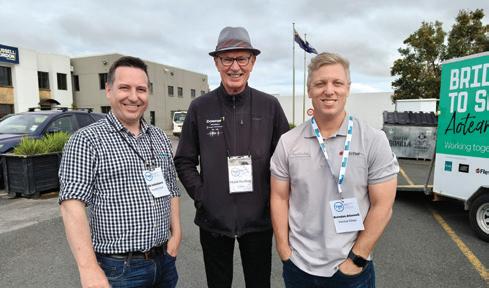
The Temporary Works forum started with a chat between Gil Johnstone (left), Mark Hedley and Brendan Attewell (right). Photo: Natasha Jokhan
Lisa Roberts DistFEngNZ CPEng
Based in: Tāmaki Makaurau Auckland Current role: Independent consultant
Lisa sums up the work this Distinguished Fellowship recognises: I work with infrastructure-based organisations to improve asset management practices – though the title is misleading as it’s about delivering services through assets. I have a special interest in improving the resilience of critical infrastructure systems to disaster.
I celebrated the news of my Distinguished Fellowship by… I haven’t yet as I was too shocked – my mum celebrated more than me!
I couldn’t have got here without… Simonne Eldridge, a friend since university who helped me get into, and during, my first graduate engineering role. Warwick Busch, at (then) Worley-GHD, who gave me the opportunity to manage international, industry-leading asset management projects at a relatively young age. Also, Dave Brunsdon, a friend and mentor through my 25-year career in lifelines infrastructure.
My superpower as an engineer is… working on the edge, where engineering intersects with the rest of the world, and using my ability to bring together different people and experiences to deliver outcomes. One thing that drew me to asset management was that it intertwined engineering with many fields. Similarly, with “lifelines” I enjoy bringing together a wide range of perspectives to lift infrastructure resilience.
My very first paid job was… delivering newspapers. In relation to engineering, i had many labouring jobs on building sites during uni holidays – the job market was dire and proper intern jobs hard to find.
The job I look back on most fondly is… chalet maid in a French Alps ski resort – the beautiful vistas of snowy mountains and the vin chaud to warm you up at a pause on the slopes (I’m blanking out the hours of laundry and cleaning toilets).
The most significant way my field has changed since I began my career is… its size and maturity. When I started out there was a small number of people working passionately to develop practices in this new field of asset management and another handful in lifelines engineering. Now they are mature, multisector industries.
My top piece of advice for early career engineers in 2026 is… don’t panic at the current job market –it will swing back again. If you can, find a graduate programme that gives you a broad grounding across multiple fields so you can find your niche. Engineering is a vast field of opportunity – if you stay curious and adaptable you’ll find your place. >>
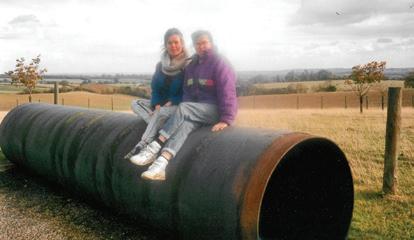
During first graduate job at Binnie and Partners: Ampthill to Sundon pipeline in UK with Simonne Eldridge, 1991.
Photo: Supplied
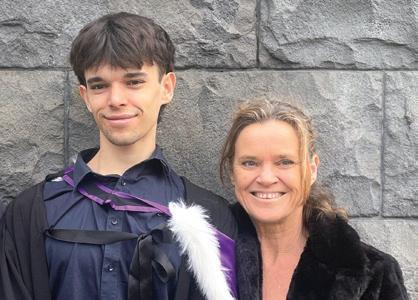
Lisa at son Jack's Civil Engineering graduation in 2025. Photo: Supplied
Terry sums up the work this Distinguished Fellowship recognises: I’ve been recognised for what has been described by others as an extraordinary contribution to leadership in the engineering profession and for service to the community. I was Managing Director of Tonkin + Taylor for 17 years and have served on a range of engineering, community and local body boards. In my work I have sought to support and to grow others, which has included an extensive history of formal coaching and mentoring.
I celebrated the news of my Distinguished Fellowship by… sharing it with my wife and children.
I couldn’t have got here without… the incredible people I’ve worked with throughout my career. A major influence in my early career was Professor Peter Taylor, who was key to my choosing geotechnical engineering as a focus.
My hidden talent as an engineer is... listening, being curious and taking a genuine interest in others. My not-so-hidden talent is singing, and I was a professional singer as a member of the NZ Opera Chorus for 15 years.
My very first paid job was… as a school student, selling shoes at John Court Ltd in the two weeks prior to Christmas. My first construction job, as an engineering student, was early in the construction of the New North Road/Dominion Road interchange in Auckland. On day one I was assigned the task of digging the pit for the long drop toilet!
Terry Kayes ONZM DistFEngNZ
Based in: Tāmaki Makaurau Auckland
Current role: Primarily retired, but still actively working with a range of people as a qualified mentor/coach.
The job I look back on most fondly is… when early in my career (in the early 1970s), I worked in London and was responsible for the site investigation for the Thames Barrier. I remain immensely proud of my contribution to that remarkable structure. Yet the role I remember with the greatest fondness is my time in leadership at Tonkin + Taylor. I learnt an extraordinary amount along the way, supported by others who helped shape both my growth and the culture we built together. At first I struggled to define the role, but I came to realise that conversation is the medium of leadership, and that talking with people – listening, exploring ideas, learning together – is real work. The relationships, the shared purpose and our collective achievements made that period immensely satisfying and deeply enjoyable. In the 1990s I was honoured to be appointed Honorary Consul to Malaysia, a role that came about from work connections in Malaysia
The most significant way my field has changed since I began my career is… the inclusion and contribution of women in the profession. For instance, the Engineering School (Ardmore) in my time was exclusively male –there was no accommodation or provision for women.
My top piece of advice for early career engineers in 2026 is… be curious, and if you are making a decision choose the option where you are likely to learn the most.
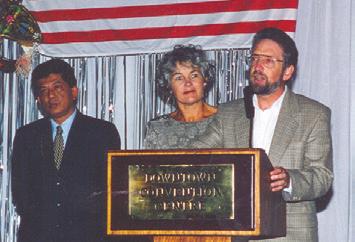
Speaking as Honorary Consul for Malaysia in Auckland. Photo: Supplied
RESOURCES JUST FOR MEMBERS.
Explore your Engineering
New Zealand online portal and get member-only resources to take your engineering to the next level.
From Producer Statements to Practice Notes; design documentation to contract templates and everything in between. Improve your engineering practice – make it your daily go-to.
Scan now and see what’s available
Circular thinking
WRITER | KAITUHI Alexandra Johnson
Why one award-winning engineer sees the climate crisis and its urgent need for solutions as an opportunity for engineers to redefine how they design and build for a resilient, regenerative future.
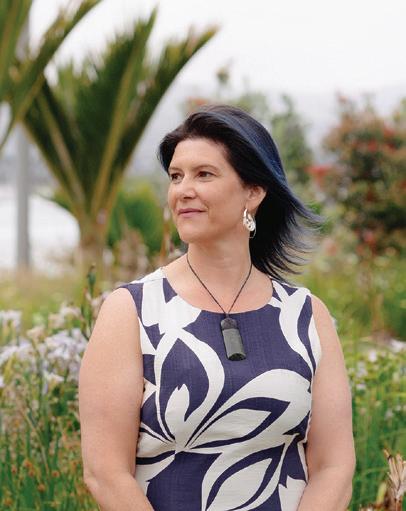
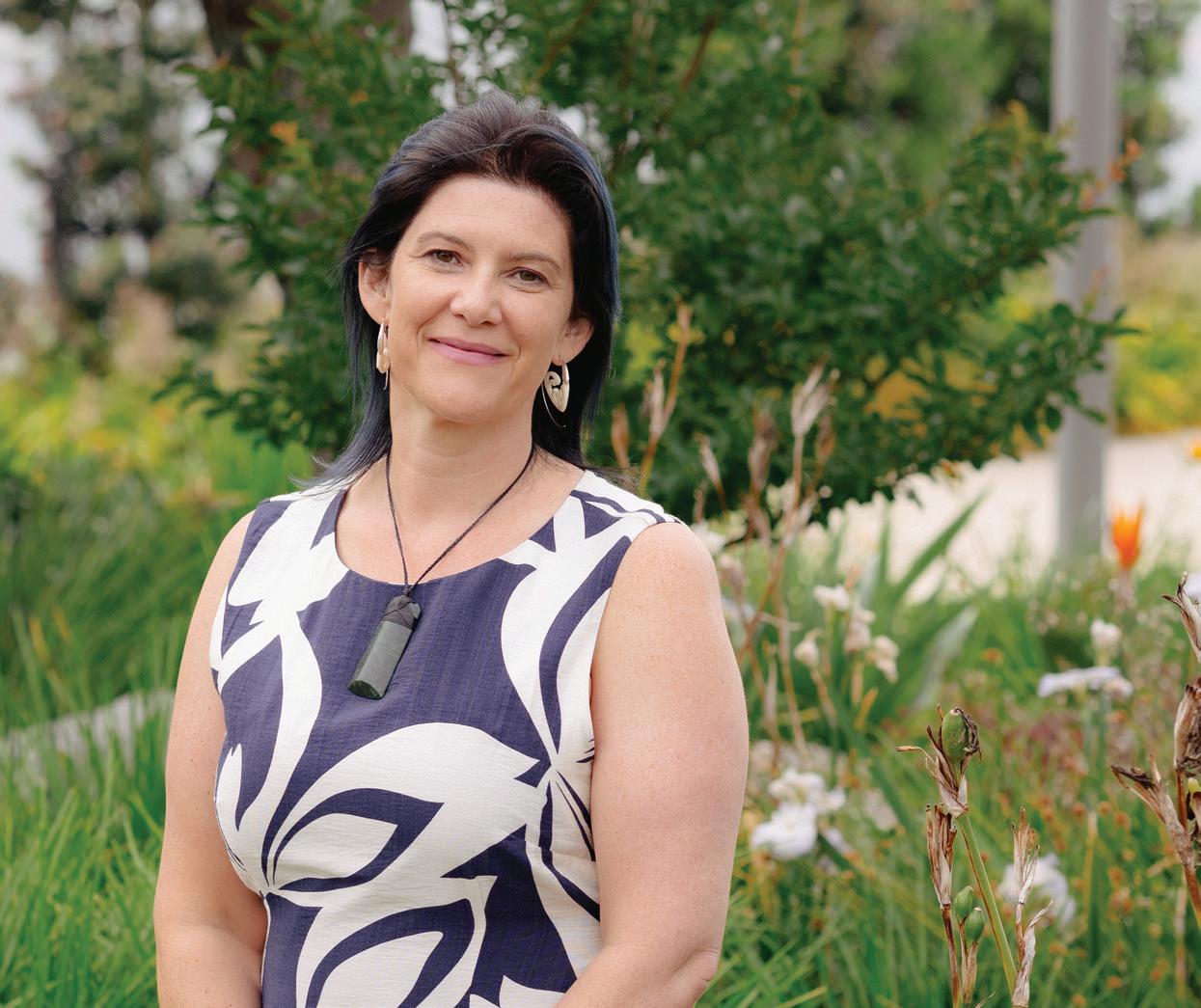
“The beauty of engineers is that we are problem solvers,” says new Te Ao Rangahau Fellow Tania Hyde.
“But we’ve been asking the same questions for 100 years and it’s time for us to start thinking differently.”
The 2025 winner of ACE New Zealand’s Futurespace Award, Tania has been intrinsic to the adoption of circular economy concepts and sustainable practices, both at Beca, where she is Technical Director and Circular Design Lead, and in the wider engineering profession.
She’s the co-creator of Beca’s Circular Design Framework (CDF), a
We need to build different risk profiles, work together for a better New Zealand, not a better me or a better company.
tool to help engineers adopt circular economy principles such as waste reduction, the circulation of materials, the inclusion of cultural perspectives and the regeneration of nature. The framework, which was gifted from Beca to Engineering New Zealand, has shaped Practice Note 32 and is a now a key resource for climate action Continuing Professional Development modules.
The CDF was borne from a shared vision with a colleague and an unequivocal wake-up call from her then six-year-old son.
“We were discussing the issues and he came up to us and said: ‘You know the planet is for the plants and animals and the insects too, right? You just need to think differently to fix it’.”
Tania says the framework is about thinking differently and asking different questions.
“Do you understand where your waste streams are coming from? What are you sending to landfill, by design? Can you remove waste through your designs? What are the natural systems, such as water, that you are disrupting?”
In Aotearoa, Tania says, we’re often pushed to do the bare minimum to protect the environment.
“I was recently in Europe and heard a lot about how Australians and New Zealanders are too risk averse,
too concerned with IP to innovate. We need to build different risk profiles, work together for a better New Zealand, not a better me or a better company.”
Tania is an advocate for AI platforms such as Planet Price, which turns the environmental impact of a project into a single financial metric.
“What I liked about partnering with Planet Price is that it considers not just carbon, but all the planetary costs, such as water, ocean acidification and biosphere integrity – the externalities that we don’t pay for during construction.”
She provides an example: “We designed two road options, each with a cost of $30 million to build. We put it through the software so it could apply
an environment dollar value to them. It gave us two different planet prices, one at an additional cost to the planet of $3 million and the other at $1.6.
“Why wouldn’t we choose the latter? It gives the whole picture at the decision-making table.”
With a deep reverence for Māori and indigenous knowledge, Tania sees many resonances between her own Celtic ancestry and Māori worldviews, such as a respect for land and strong kinship ties, and she and Beca’s Te Ahi Tūtata team are currently bringing indigenous knowledge systems more sharply into a new version of the CDF, in their Pou Whakahaere tool.
She says the importance of storytelling is key to relationships as it
makes listeners take notice.
“I've noticed that Māori are particularly good at bringing things into focus and inspiring people to become much more invested. Addressing climate change requires a behaviour change and that’s the piece that’s lacking. It's about knowing how to tell a story and build a shared vision.”
Tania has dyslexia and she believes it gives her the ability to think differently –and that’s a good thing.
“When I was at school, my Mum was told I would never amount to much, but I’ve come to understand that it’s my superpower. I see how things connect to form complex systems. Now I get called into brainstorming sessions because I come at things from a different angle.”
Tania believes engineers play a pivotal role in safeguarding our natural world by designing and delivering the built environment sustainably. She recommends engineers ask themselves three key questions to shape their designs: Where does this asset sit in the system, not just the site? How am I designing to avoid waste and landfill? Does this asset restore more than it takes?
“We see the impacts of what we do in weather events, the billions of dollars spent on infrastructure recovery costs. The current model is not working. We can’t just build back stronger, build back better, we must build back differently, and I feel the pressure of that every day.”
Photo: Paper + Pearl Photography
Dam a first in decades
WRITER | KAITUHI Kathy Young
The project in numbers
13 million cubic metre reservoir, spread over 68 hectares
Project duration: 5 years of construction (March 2019 – April 2024)
Total steel used: 3,000 tonnes of reinforcing steel
Concrete used: 32,000m3
Spillway: 165m long, can handle 1,058m3 of water per second
Concrete face: 12,000m2 with 4,000m3 of concrete
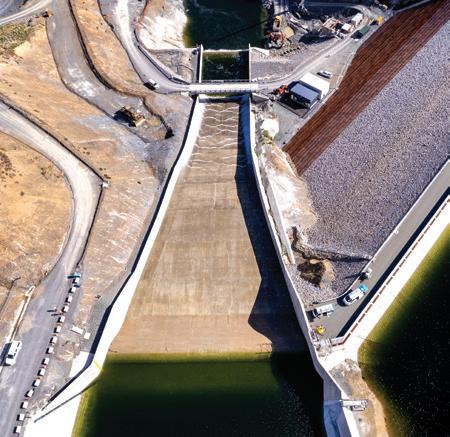
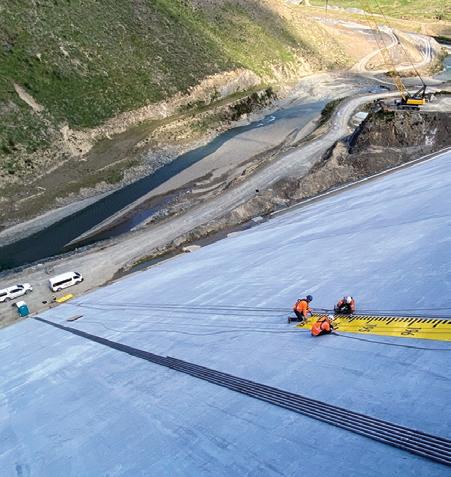
While not without its challenges, the completion of the award-winning Waimea Community Dam has not only increased water security, but provided the engineering community with direct, local experience in the construction of large dams in Aotearoa after a long dry spell.
The Nelson-Tasman region’s population has grown substantially, and the climate has changed, since the last large public sector dam was built in the region. Additionally, much of the civil construction workforce that worked on the new 53-metre-high concrete-faced rockfill dam had never built anything like it before.
In March 2019 at the start of construction, Damwatch Engineering Ltd was appointed to provide design and construction quality supervision services and deliver technical input. In the weeks and months that followed, Damwatch discovered numerous geotechnical challenges. The first involved the excavated rock, intended to form the bulk of the dam's embankment.
“The rock was not the predominantly strong
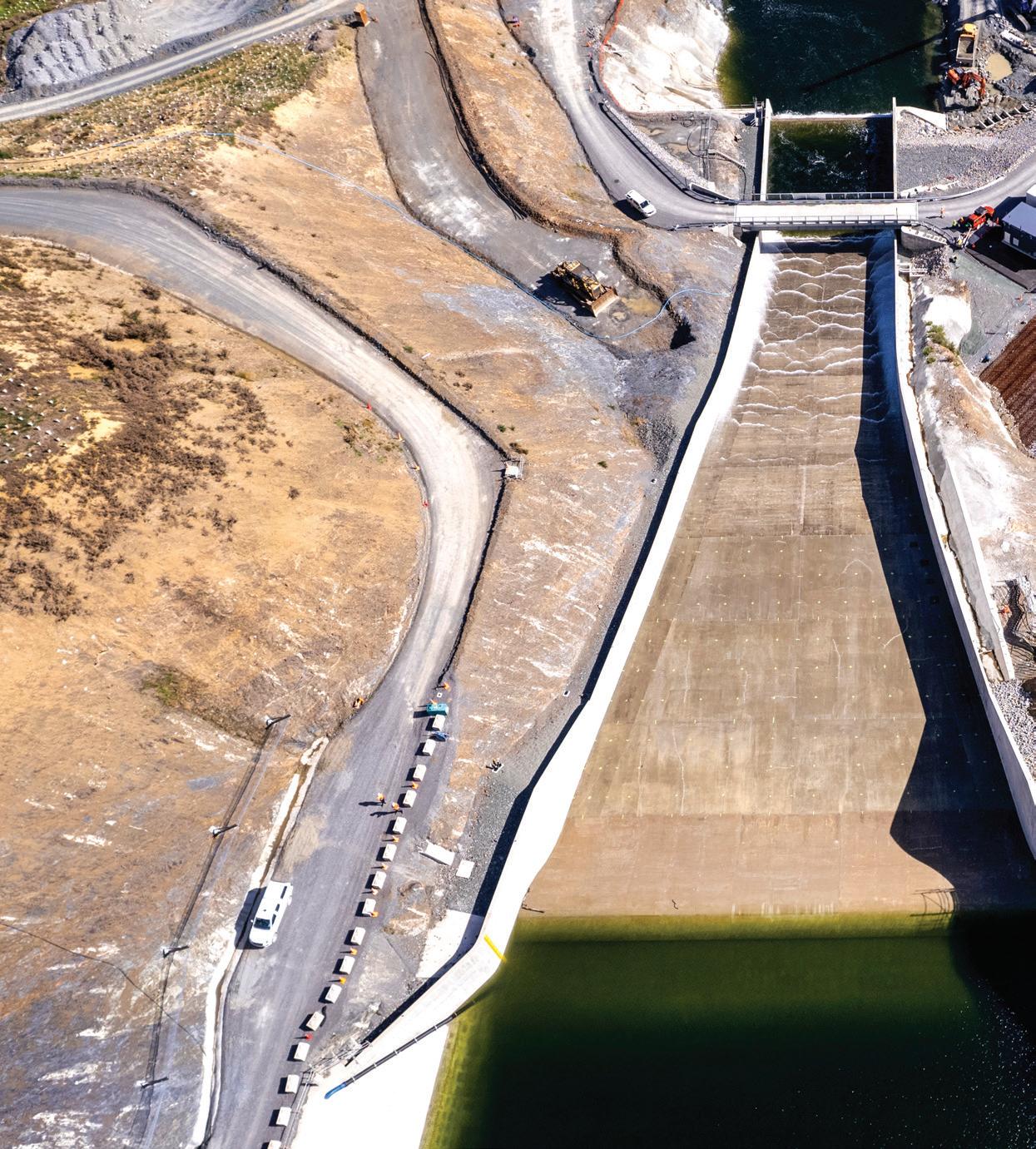
The reservoir fills and water flows down the spillway for the first time in January 2024. Photo: Tim Cuff
greywacke sandstone that was predicted by earlier investigations and necessary to ensure the dam drained properly if ever necessary,” says Peter Amos FEngNZ CPEng IntPE(NZ), Managing Director of Damwatch. “It included at least 50 percent argillaceous mudstone and siltstone. As it was being compacted the rock broke down really easily, compromising its drainage properties.”
As the dam sits at the tectonic plate boundary between the Alpine Fault and the Hikurangi subduction zone, its safe performance is critical. The location is upstream of around 1,600 people, and has to be able to withstand a magnitude 7.1 earthquake to meet New Zealand’s Dam Safety Guidelines. The structure needs to safely drain any post-earthquake leakage through a damaged concrete face without saturating the embankment, which could induce failure.
Damwatch’s response was to completely redesign the embankment zoning, incorporating a chimney drain behind the concrete face that extended down to a nine-metre-thick drainage blanket at the base of the dam. Imported rock was then mixed with local alluvial gravels, which were hard-wearing and pervious.
“This solution is a first for New Zealand rockfill dams,” says Brian Benson CMEngNZ CPEng IntPE(NZ), Lead Embankment Engineer at Damwatch.
“This internal drainage layer behind the concrete face, coupled with the blanket drain at the base, limits earthquake and aftershock leakage and prevents
destabilising seepage pressures.” Dr Lelio Mejia, a globally recognised earthquake geotechnical engineer from the United States, provided oversight for this novel approach.
Another challenge involved the entrance to the spillway, which, upon excavation, revealed a large crush zone in the foundation rock running almost down the middle. Left untreated this could erode over time, creating dangerous seepage paths undermining the spillway.
“That led to a change in the construction of the foundation of the spillway,” says Peter. “The shear zone material was excavated and replaced with mass concrete.” He says the spillway was then anchored into the ground with rock bolts, with a drainage system running through the trench underneath the spillway.
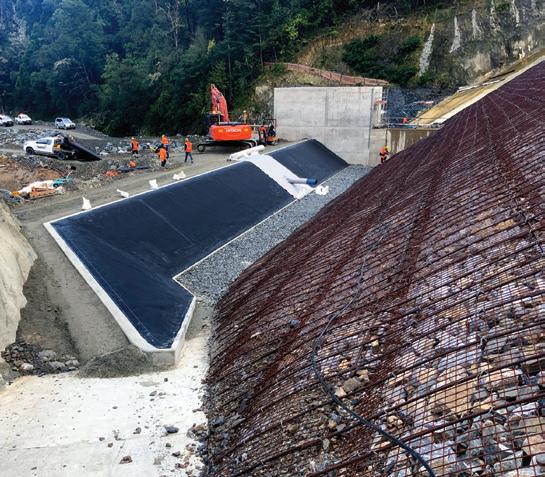
This solution combined intensive grouting of the rock with a flexible Carpi Tech waterproof synthetic liner, or geomembrane, to provide a blanket over the approach channel floor and walls, so water can’t seep under the spillway. Beneath the geomembrane is a bedding foundation that has been compartmentalised to isolate and monitor any signs of leakage.
“It’s a material used overseas to seal leaking dams that had only been used once before in New Zealand, in 2013, on part of the Tekapo Hydropower Canal,” says Peter.
Through earthquake modelling, predicted movement posed another challenge: how to keep
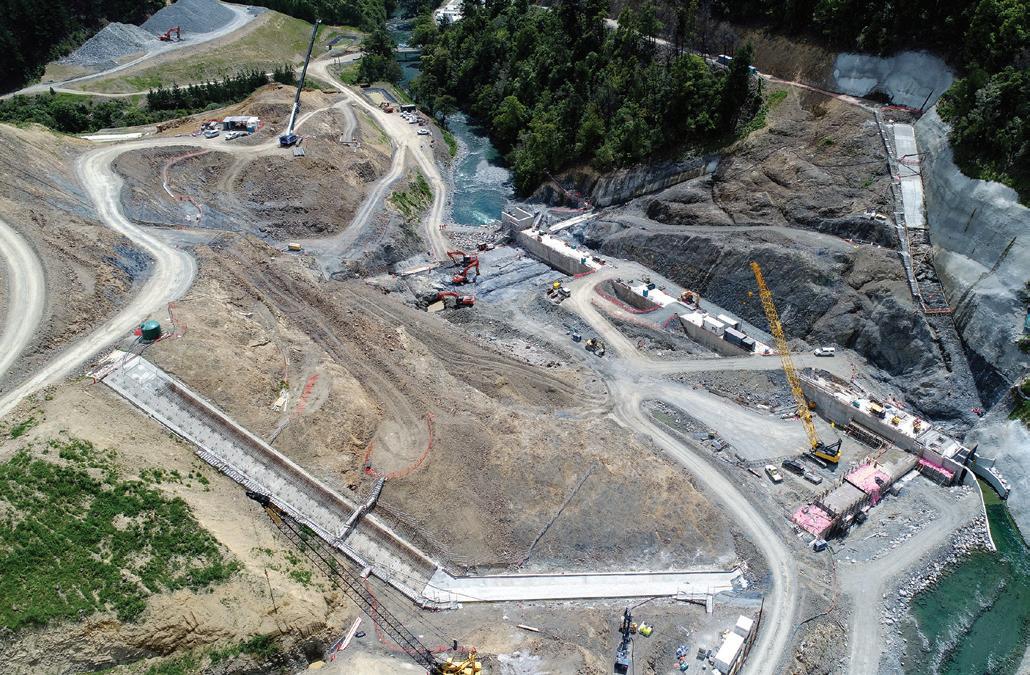
Dam foundation with river diversion.
Photo: Tim Cuff
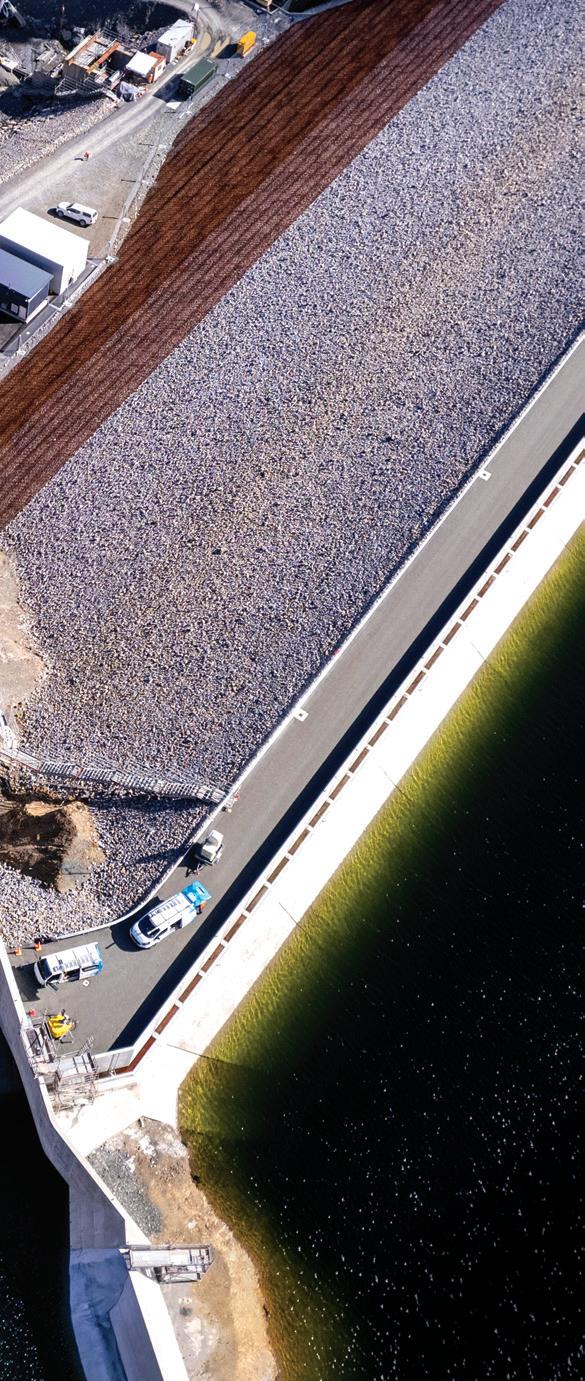
Above left: Waimea Dam's 12,000m2 concrete face, completed in 2023. Photo: Tim Cuff
Above right: Drainage collection from toe of dam.
Photo: Damwatch Engineering Ltd
This project has provided the engineering community with direct, local experience in the construction of large dams in New Zealand.
– Peter Amos
parapet wall joints at the dam crest watertight when they could open substantially during seismic events.
“The analysis revealed the crest could settle by up to 1.1m, with another 350mm from a big aftershock,” says Peter.
The solution was a flexible external waterstop system using the same geomembrane.
“We worked with Swiss manufacturer Carpi Tech to develop bespoke connection pieces that could accommodate the expected deformations while maintaining a water seal,” says Peter.
“This means it can stretch and allow for large movements without compromising its integrity.”
The project also showcased how computational tools are transforming dam engineering in Aotearoa. Computational fluid dynamics (CFD) software was
used to redesign the spillway approach and plunge pool, optimising flow conditions without the time and cost of building a laboratory physical hydraulic model. The CFD analysis resulted in modifications to the approach channel shape, ensuring even flow distribution that wouldn’t overtop the spillway walls during extreme floods. It also refined the plunge pool geometry to minimise erosion during discharge events.
The Waimea Community Dam was officially opened in February 2025. The reservoir was named Te Kurawai o Pūhanga by Ngāti Koata and can hold 13 million cubic metres of water, providing long-term water security for the people of the Tasman District and the region’s horticultural industry. It also improves river health by increasing minimum flows. Damwatch, with mechanical engineers MTL (NZ) Ltd won a Silver Award at the 2025 ACE Awards for this project. With no major dams built in Aotearoa for decades, a generation of engineers and construction workers had little experience with these structures. Peter, as a 25-year member and past Chair of the New Zealand Society on Large Dams (NZSOLD), says: “This project has provided the engineering community with direct, local experience in the construction of large dams in New Zealand. In NZSOLD’s mission to protect people, property and environment from the harmful effects of dam failure, the building of this dam has provided invaluable experience for future generations.”
Opposite:
Project was proud to sponsor the Best Junior Construction prize.
Paul Rasmussen
Engineering New Zealand’s Wonder
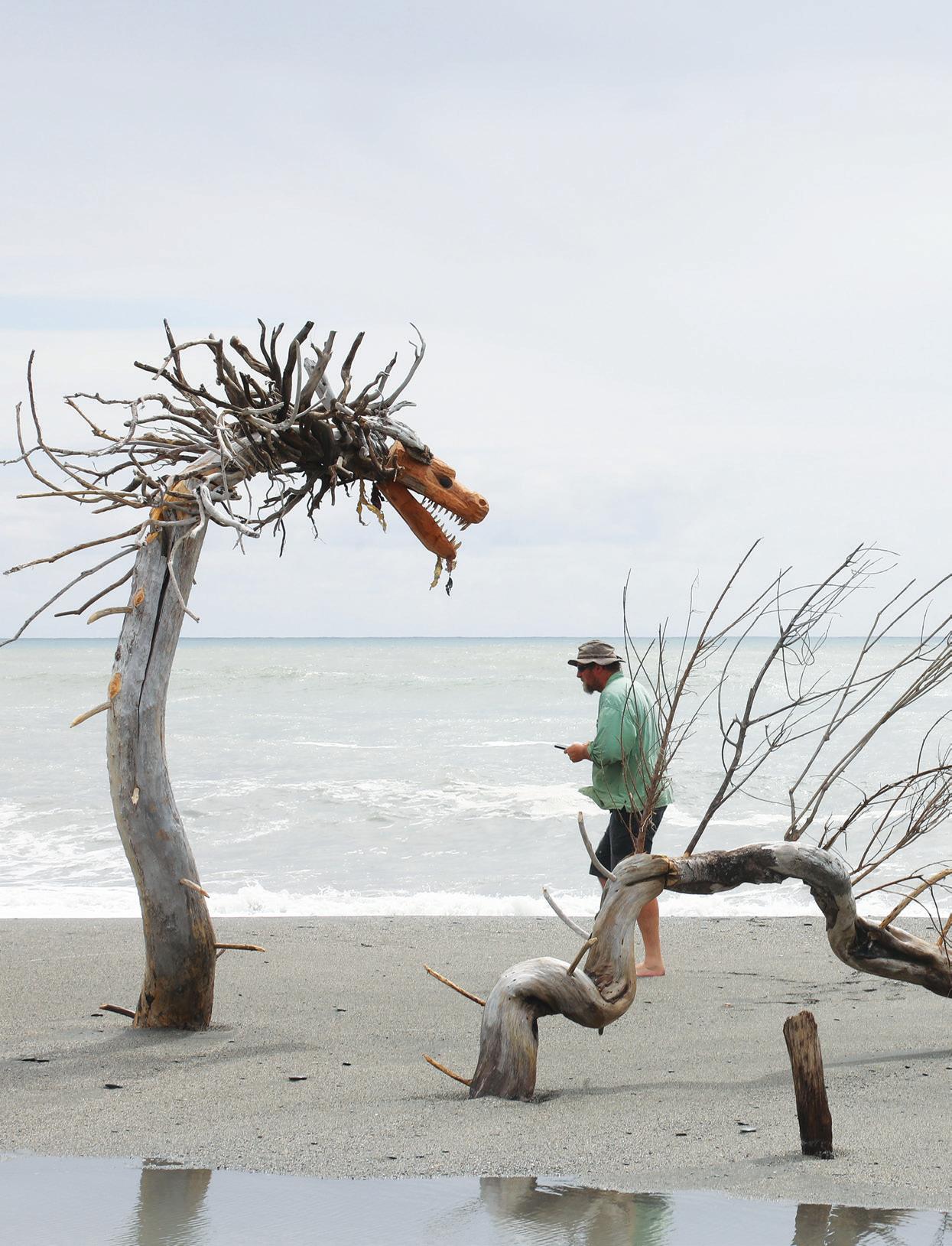
Hokitika’s Driftwood and Sand festival is an annual event that began in 2002 and draws visitors and locals who use driftwood, beach debris and found objects to create sculptures like this year’s Grand Winner, Questionable Pet, shown here.
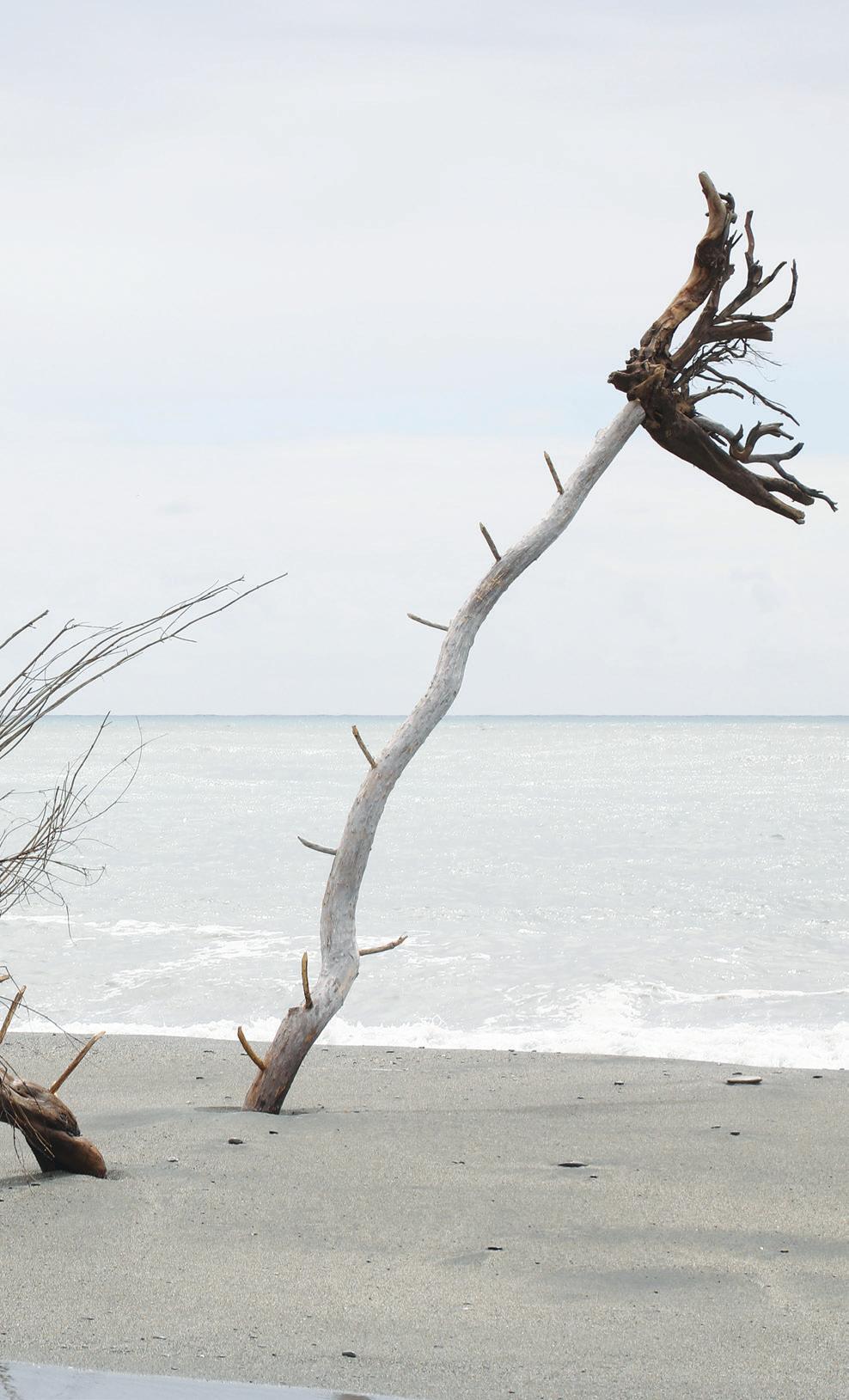
Snapshot While the works of art created on a West Coast beach in January might not be there now, their creators engineered imaginative pieces with structural integrity and they were certainly fit for purpose.
Photo:
40 Earthquake-prone building system to be refocused
42 Please read carefully
43 All roads lead to… council 45 Barrier clarity
46 Fast-tracking bridge construction
48 Ice cream: from dream to reality
50 Cross-discipline upskilling
Earthquake-prone building system proposed to be refocused
Chris Penk
The Government is proposing to change the regulatory framework for managing earthquake-prone buildings (EPBs). What is changing and what are the implications for engineering practice?
In September 2025, the Government announced decisions to reform the EPB system to shift towards a more targeted risk management model, in which seismic work requirements reflect local seismic conditions and the vulnerabilities posed by specific building types.
Under the current system, EPBs are required to be strengthened to at least 34 percent of the New Building Standard (%NBS), regardless of their type, location, or risk profile. While this provides a clear benchmark, it also implies a level of precision and consistency which is, in practice, unachievable. This can lead to situations where the same building receives multiple seismic assessments, and where remediation methodologies
are economically unviable or technically disproportionate.
Accordingly, the proposed Building Act amendments will replace this blanket requirement with tiered risk mitigation requirements.
What is changing?
The new EPB framework introduces tiered obligations based on three key factors: seismic zone, building type and height, and the external risk profile (people density).
For example, an unreinforced masonry building of three storeys or more in a rural town would require façade securing, while the same building in an urban centre would require a full retrofit. Buildings of heavy construction (concrete) that are three storeys or taller will require a targeted retrofit that remedies identified high risk deficiencies.
The proposed shift means that engineers will need to become familiar with new remediation methodologies
The resulting proposals sought to reflect best practice in modern seismic risk management and the financial realities of building ownership.
(façade securing, targeted retrofit and full retrofit). Notably, the %NBS metric will not play a role in the proposed new EPB system. Most retrofits will focus on key vulnerabilities only, and as such will have a more targeted scope of work than currently. Making remediation more affordable for building owners makes it more achievable. At present, many EPBs risk being abandoned rather than strengthened.
Evidence-based reform
The proposed changes are informed by a comprehensive review process carried out by the Ministry of Business, Innovation and Employment (MBIE), including expert analysis from engineers. An independent steering group covering seismic engineering, property development, behavioural science and resource management provided crucial oversight. The resulting proposals sought to reflect best practice in modern seismic risk management and the financial realities of building ownership.
The proposed new EPB system settings aim to manage seismic risk more effectively. By narrowing the scope of mandatory remediation to buildings to those that pose the greatest life safety risk, the EPB system becomes more workable for building owners, engineers and territorial authorities.
International alignment
The revised approach set out in the Bill before Parliament brings New Zealand closer to international practice. Few countries mandate seismic upgrades across all building types at a national level. Instead, overseas programmes tend to focus on risk-targeted retrofit methodologies and risk disclosure. The new EPB system would incorporate both these elements, while retaining significant penalties for noncompliance.
Implications for engineering practice
Engineers will play a central role in implementing the new system. Territorial authorities will determine the applicable mitigation requirement for each EPB, but engineers will be responsible for providing a solution for the required seismic work and verifying that it has been completed to the required standard.
Engineers will be guided by a new EPB Methodology and updated Seismic Assessment and Retrofit Guidelines. MBIE intends to consult on this material in the latter half of 2026, with a view to finalising it early in 2027.
The changes also intersect with the Health and Safety at Work (HSW) Act 2015. Cabinet has agreed that if duty holders meet relevant requirements under other legislation, such as the Building Act, they won’t be held to a
higher standard under the HSW Act for the same risk. Hon Brooke Van Velden is set to introduce legislation to Parliament that would give effect to this change.
Looking ahead
A parliamentary select committee is considering changes to the Building Act’s EPB provisions. Obligations under the current EPB system will remain in place until this legislation completes its parliamentary stages.
The proposed EPB system changes
are a significant development for building owners and seismic engineering practices. Engineers will have an interest in the proposed new retrofit methodologies, and I look forward to hearing about engineers’ feedback when MBIE consults on the new EPB Methodology and updated Seismic Assessment and Retrofit Guidelines.
Chris Penk is Minister for Building and Construction.
Please read carefully
Here’s why it’s essential to maintain an awareness of the law and read the things you put your signature to, even when you’re busy.
Consider the following scenario: you are an engineering professional under pressure. You have many competing priorities and all of your clients want their work done before the Easter holidays. You’ve been contacted by a former client who has some urgent design work they need help with. It’s a stretch, but they’ve been a good, reliable client, so you come through for them. The design work is complete and you sign their PS1 (it’s an Engineering New Zealand template, rather than the ones you usually sign, but it should work anyway), all within a week. Job done. Client happy.
Months later, you receive a notification from Engineering New Zealand saying: “We have received a copy of a PS1 signed by you, in which you have claimed to be a Chartered Professional Engineer (CPEng). Our records show you are not a CPEng. Please explain.”
It is an offence under section 7 of the Chartered Professional Engineers of New Zealand Act 2002 to represent yourself as a CPEng without actually being one. This is what is known as a “strict liability” offence – no intention is required, and an offence is committed even if you do it by mistake. In 2025, Engineering New Zealand detected a number of individuals falsely claiming to be CPEng in documentation, usually producer statements. When asked, the reasons are varied, but often go
along the lines of “it was a mistake” or “in my region, Chartered Members/ Technologists etc can sign producer statements, so I thought it was ok”. Producer statements are used across the motu to help building consent authorities process consent applications. It is generally understood that different authorities have different standards. While many require all producer statements to be signed by Chartered Professional Engineers, others do not. It’s up to the authority to decide who they consider qualified enough to provide assurances as to a design or object’s compliance with the Building Code. What appears to be less understood is that this difference is reflected in the various producer statement templates that are available. Importantly, the widely used Engineering New Zealand and ACE New Zealand producer statement template is drafted in such a way that only CPEngs can sign it, and when you place your signature on the document, you are representing yourself as a CPEng. It appears that this is where some have gone astray. Many engineers are not properly reading the documents they are signing. Crucially, the issue is not the signing of the producer statement itself, it is the signing of a document – any document – that represents the signatory as a CPEng. It is only after this is pointed out to them that they realise what they have signed. Engineers lead busy lives. Frequently at the centre of important projects with many moving parts, they often find themselves under intense pressure, particularly around holiday times like
Easter or Christmas. It is all too easy to affix your signature to a document given to you late in the day to get it out before the end of the workday. However, section 7 is strict: you must not represent yourself as a CPEng if you are not a CPEng. The lesson is clear: please take the time to read what you are signing. Documents can be different and templates can change. If the template you are using requires you to be a CPEng to sign and you are not a CPEng, you’ll need to find another template. The best of intentions will not save you from what is in black and white on a signed page.
Izaac Sugrue is the former Legal Team Leader at Engineering New Zealand.
Izaac Sugrue
All roads lead to… council
Quiz
With a general election this November, the Government's been introducing new draft legislation, keen to achieve as much as possible beforehand. This was expected, as it’s an important step in turning policy work into law.
We're reviewing the Emergency Management Bill (No 2), Building (Earthquake-prone Buildings) Amendment Bill, the Planning Bill and the Natural Environment Bill. Our conclusion? All roads lead to local council. Take the new Emergency Management Bill. Under the updated system, local councils remain central in the emergency management system, handling everything from planning for emergencies, declaring the state of local emergencies, and leading the response and recovery phases. Also under the new Bill, councils are required to strengthen the role of communities and iwi Māori in emergency management.
Similarly, proposed changes to the earthquake-prone building system under the Building Act (Earthquakeprone Buildings) Amendment Bill retain the role of local councils in the framework. Under the updated system, councils will need to identify buildings “within scope” in medium- and highseismic zones, determine whether these buildings are earthquake-prone and identify priority buildings. Councils are then responsible for issuing earthquake-prone building notices, updating the national register and notifying owners of classification.
The same is true for the new Planning and Natural Environment Bills, which
will replace the current Resource Management Act. Under these Bills, local councils must collaborate and develop regional spatial and land use plans, making sure they align with the overarching direction central Government sets, while simultaneously working out what the new resource consenting process looks like.
This is not a new trend. Over the past year we’ve observed an increase in policy decisions being left to councils to implement, typically without any additional funding to support or enable the change. So, if all roads lead to council, what does this mean? Is anything really changing? Under the proposed new legislation many of the roles of councils will remain the same, but the scope of those roles is changing and often the processes surrounding them. When scope changes, further time or resources are required to manage that change and establish new ways of working. This will be difficult in the current environment, with Government signalling council rate caps at four percent and potential sweeping structural change proposed to local government.
The focus on councils is likely to be a key issue in this year’s election cycle. We’ll be watching with interest as it impacts the feasibility of change across many of the areas in which engineers work, and could have an effect on councils’ capacity to undertake critical infrastructure work.
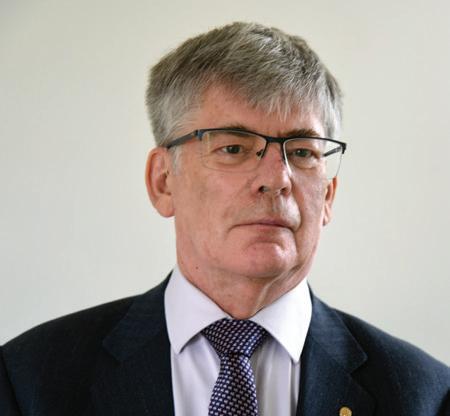
Dr Richard Templer FEngNZ is Chief Executive of Te Ao Rangahau.
Test your knowledge around the lunch table. (It’ll pay to read through EG before attempting if you want full marks.)
1. The Wairākei Power Station was the first in the world to use flash technology for power generation.
2. The 2026 Fellows’ Dinner in Wellington on Friday 20 March will celebrate and honour how many new Fellows and Distinguished Fellows? (A) 31; (B) 41; (C) 51.
3. What is the International System of Units (SI) unit of pressure?
4. *How many rail lines do Japan’s Shinkansen bullet trains operate on?
5. The Modified Mercalli intensity scale is used to categorise what natural phenomenon?
6. *What is the capacity of the Waimea Community Dam, completed in February 2025? (A) 1,300,000m3; (B) 13,000,000m3; (C) 130,000,000m3
7. A 2023 review into the design of what structures prompted the development of a series of modules to provide guidance on and improve approaches to their design?
8. The Arthur Mead Award honours the legacy of the eminent engineer who was instrumental in designing which two Auckland dams?
9. The secondary purpose of Te Ara Tupua – the coastal path along State Highway 2 between Wellington and Lower Hutt – is to provide a safe walking and cycling track. What is its primary purpose?
10. *Coronal mass ejections (CMEs) –huge explosions on the Sun that trigger geomagnetic storms – can have dire implications for which critical infrastructure?
*This issue of EG holds the answer you’re after – hunt around and get reading!
Got a question that’ll leave your peers stumped? Submit it to eg.quiz@engineeringnz.org
Dr Richard Templer FEngNZ
Barrier clarity
Martin Pratchett MEngNZ CPEng
Vehicle barriers: when, where and how?
There’s a difference between a barrier designed to stop a person falling and one designed to stop a moving vehicle. As engineers, we frequently encounter residential driveways, car decks and garages where this distinction has been blurred. We see pedestrian balustrades on driveway walls or lightweight framing at the end of a garage backing onto a bedroom. The assumption is often that because the setting is residential, the risks are lower, or that a simple wheel stop will suffice.
Physics does not adjust its parameters for private land, and a vehicle impact on a structure designed only for pedestrians can cause it to fail. The confusion often stems from the Building Code’s different sections. Clause F4 addresses pedestrian safety from falling, typically requiring a barrier where a fall of 1m or more is possible. Clause B1 addresses structure and requires resistance to impact loads likely to be experienced. Meeting the requirements of F4 does not automatically meet the requirements of B1. The difference between vehicular and pedestrian loading is vast. A system designed solely for human loads cannot withstand vehicular impact.
People often argue that a specific area is not “intended” for vehicles, or that the homeowner will be careful. Ministry of Building, Innovation and Employment Determination 2017/077 clarifies that barriers are required based on foreseeable use rather than the owner’s intentions. If an area is physically accessible to a vehicle
and a fall hazard exists, the risk of accidental impact is considered a “reasonable probability” rather than a remote possibility. This foreseeable use principle means we must design for the worst scenario.
There is a common misconception in vehicle barrier design that wheel stops are a safety barrier, but they are designed to position a car, not to stop a moving vehicle (see AS/NZS 2890.1). Standard kerbs and wheel stops can be counter-productive at higher speeds. A barrier kerb, for example, can act as a fulcrum, causing a vehicle to overturn or become airborne if struck at speed.
Accepting that a vehicle barrier is necessary, the design challenge becomes the load path. It’s not sufficient to select a post and bolt that can withstand 30kN in isolation.
Structures are systems: we need to visualise where that energy goes and follow the load path. For example, a deliberate collector strategy that accounts for stiffness and strength, like a continuous edge beam, is required. Otherwise that force can be concentrated on a single member or connection. This can tear the connection out or split the timber grain before the load can be shared across adjacent members. On a timber car deck, the impact load is applied 0.5m above the deck, but the connections sit at joist/bearer level. This creates a significant moment and high loads from the post to the foundations. The barrier is part of a system and every link in that chain, from the rail to the joists and down to the foundation –
including all the connections – must be considered and verified.
There are situations where the full load on a vehicle barrier may be reduced. For example, highway barriers function by deflecting vehicles impacting at shallow angles. While AS/NZS 1170.1 prescribes fixed impact loads, a design could be treated as an Alternative Solution if the geometry constrains the vehicle. If a residential driveway is narrow and prevents a vehicle from turning to hit the barrier perpendicularly, we can calculate the reduced force based on the angle of impact. The reduced loading must be supported by calculations and diagrams that show your assumptions.
An often-overlooked issue is garage end walls. If a garage wall backs onto a bedroom or a steep bank, that wall is acting as a vehicle barrier. It may require a Specific Engineering Design to ensure it can withstand the impact actions. Ultimately, vehicle barriers on residential land require the same rigour we apply to all structures. By understanding the true magnitude of vehicle loads, and designing complete load paths to the ground, we ensure that our designs protect both the structure and the people around it. A new guidance document is now available in the Guidelines and Templates section of Engineering New Zealand’s membership portal to help navigate these decisions.
Martin Pratchett MEngNZ CPEng is Engineering Practice Manager at Te Ao Rangahau.
Fast-tracking bridge construction
Liam Coleman FEngNZ CPEng
To address the growing infrastructure deficit, standardising bridge replacements has become a cornerstone of KiwiRail’s strategy for managing its ageing bridge stock.
KiwiRail manages 1,300 bridges spanning 55km, with an average age of 76 years. Despite limited funding, service levels have been maintained, but costs are escalating. Bridge replacement costs exceeded NZ$300,000 per metre in 2021 and the structural deficit was predicted to reach NZ$11 billion over the next 70 years. Without life-extension strategies, safety and network integrity are at risk.
Standardising bridge replacements
In 2021, a typical bridge span cost approximately $300,000 per metre and could take between three to five years to deliver after being identified as end-of-life, which is an unsustainable model. In response, KiwiRail launched a modernisation programme aimed at making bridge delivery more structurally efficient, cost-effective and faster. The first step was harmonising design standards, transitioning from American (AREMA) to New Zealand and Australian rail/road standards. By adopting and tailoring the AS5100 load model to suit New Zealand’s rolling stock and future requirements, KiwiRail
achieved a 40 percent improvement in design efficiency.
To illustrate: the new standardised deck design uses 30 percent less concrete, features a shallower construction depth (providing greater headroom without raising track levels), eliminates the need for complex posttensioning, and maintains the same span capabilities as previous designs. These concrete bridge spans are also designed for delivery via KiwiRail’s own network, maximising internal logistics and reducing road congestion.
Improving buildability and reducing risk
Buildability was a key focus during the development of KiwiRail’s standard designs. Maximum lift weights were capped to align with industry capabilities, enabling contractors to confidently invest in reusable staging and crane infrastructure. KiwiRail also promoted automation and off-site
manufacturing, aiming to produce as many components as possible in controlled environments to improve quality and reduce on-site complexity.
A frequently overlooked aspect of bridge replacement is the inherent delivery risk borne by contractors. Through the standardisation programme, KiwiRail sought to reduce this risk to provide greater confidence to the industry during tendering. One example is the development of weathering steel decks. Traditionally, contractors were responsible for procuring materials and fabricating decks in time for planned rail closures (Blocks of Line). Steel procurement alone could take between six and eight months, with fabrication adding another few months – delays that contractors had to manage and absorb.
Instead, KiwiRail directly contracted fabricators for the production and delivery of bridge spans, which were
To complement new builds, KiwiRail developed innovative standardised lifeextension techniques, particularly for timber substructures, which make up 25 percent of the network.
then provided to contractors as freeissue components. This approach shifted delivery risk to KiwiRail (reduced through standardisation), removed supply uncertainty for contractors, and accelerated steel structures renewal timeframes by 12 to 18 months. This has led to more competitive pricing of steel spans, delivering cost savings which KiwiRail reinvests into other bridge projects. This strategy created a visible pipeline of work for the industry, improving confidence and reducing risk.
As a direct result of this initiative, KiwiRail costs for steel span bridges have reduced from close to $300,000 per metre to below $140,000 per metre. While material costs remained constant, the industry benefitted from a clear understanding of KiwiRail’s bridge replacement approach, enabling more efficient planning and execution.
Extending life and reducing the deficit
Full-scale replacement of all bridge spans remains impractical. To complement new builds, KiwiRail developed innovative standardised life-extension techniques, particularly for timber substructures, which make up 25 percent of the network. One such method, called entombing, is a low-cost solution (under NZ$150,000 per pier) that extends the life of timber piers by more than 30 years and can be implemented by KiwiRail’s in-house crews.
Additionally, structural health monitoring and digital twin technology are being used to demonstrate inherent capacity and avoid unnecessary strengthening. Together with standardised designs, these lifeextension initiatives have reduced the structural deficit from NZ$11 billion in 2021 to NZ$3 billion in 2025. With other strategies under development, KiwiRail
aims to reduce this figure further.
The nation’s extensive bridge network faces mounting challenges from ageing infrastructure, rising costs and increasing demand. KiwiRail’s standardisation programme demonstrates how harmonised design, improved buildability and innovative life-extension strategies can significantly reduce costs, accelerate delivery and mitigate risk. By combining modernisation with proactive maintenance and digital technologies, KiwiRail has already cut its structural deficit by more than two-thirds, setting a blueprint for New Zealand for sustainable asset management across all bridges in the country.
Liam Coleman FEngNZ is KiwiRail's former Professional Head (Structures) – Infrastructure. He is Vice Chair of the Bridge Engineering Technical Society.
Photo: Alan O'Brien
Ice cream: from dream to reality
Cindy Jemmett
Nothing says kiwi summer like an ice cream at the beach. But it took a lot of engineering ingenuity and imagination to commercially produce the treat we so easily enjoy today.
In colonial New Zealand, cream and sugar were easy enough to come by, but the more challenging ingredient needed for making ice cream was ice. Luckily for ice cream-loving early settlers, by the 1850s ice was an established commercial product. It was harvested from large lakes in the United States and shipped around the world, including to New Zealand. Through the 1850s and 1860s it was not uncommon to see advertisements in the local newspapers announcing the arrival of a shipment of ice – and shortly after, ads from hotels proclaiming ice creams for sale.
Ice cream churns were available in New Zealand from the late 1840s. These were metal cylinders, one inside the other. Ice was packed in the outer cylinder, with salt added to bring the temperature down to -5 degrees Celsius. This was then cold enough to freeze the cream in the inner cylinder. Hand cranked paddles scraped the frozen cream from the sides of the container and provided aeration at the same time.
The 1870s saw the advent of mechanical refrigeration and in 1881, the country’s first commercial meat freezing company was established in Dunedin. Locally made ice was now readily and cheaply available.
Food safety and quality standards
With numerous small producers making ice cream, quality standards were variable. In 1915 the Health Department brought in regulations stipulating that to be advertised and sold as ice cream the product must contain at least 10 percent milk fat. Food inspectors fined shopkeepers whose ice cream failed to meet this standard. Food safety was another concern. In January 1913 more than 200 cases of food poisoning were reported in Whanganui, with most traced back to a popular ice cream shop. It was concluded that the cream supplied to the shop had carried bacteria. Pasteurisation of cream by heating it to kill bacteria was introduced and became common practice, but required a more sophisticated factory set up.
In 1924 the Robinson Ice Cream Company Ltd was leading the way with its state-of-the-art machinery. A reporter from the Auckland Star visited the factory and described in rapt detail the process of pasteurisation and homogenisation. The cream was heated to 145 degrees Fahrenheit (62.7 degrees Celsius) and maintained at this temperature for half an hour before being forced, at a pressure of 2000lb per square inch, through small holes in the homogeniser – breaking the globules of fat to “give the smoothness which is desired by all ice cream manufacturers and appreciated by the public generally”.
The rise of Tip Top
With refrigeration and food safety sorted, competition in the ice cream industry turned to product design and market share. Tip Top opened its first milk bar in 1935 in Wellington’s Manners Street. It was the first dedicated milk bar selling only ice cream and milkshakes. By 1937 there were six Tip Top milk bars in Wellington. In 1936 Tip Top opened a factory on Waterloo Quay and invested in the latest equipment, including a votator. This scraped surface freezer was the first of its kind in New Zealand and enabled Tip Top to run a continuous, rather than batch, freezing process.
With market leading machinery and economies of scale, Tip Top was able to buy out smaller players and produce more sophisticated and novel products. In 1951, the company launched the Jelly Tip – vanilla ice cream on a stick with raspberry jelly at the top, coated in chocolate – which is still available today. In 1953 Tip Top merged with Robinson Ice Cream Company Ltd, effectively absorbing one of their largest competitors. In 1962 Tip Top opened its Auckland factory overlooking the Southern Motorway. With the latest facilities and equipment, the company’s research and development team was able to dream up even more sophisticated creations with chocolate, nuts and injected ripples of fruity flavours. In 1964 they launched the still popular Trumpet. From dream to reality, nothing could be sweeter.
Cindy Jemmett is Heritage Advisor at Te Ao Rangahau.
Young boy and girl eating ice creams, December 1947. Photo. Whites Aviation Ltd. Ref WA10156-G, Alexander Turnbull Library.
Cross-discipline upskilling
Eleanor Laban
Regardless of your discipline, engineering isn’t just a profession, it’s a dynamic practice that evolves with technology, society and the challenges we face.
The principles that underpin great engineering remain the same across disciplines: adaptability, collaboration and a commitment to continuous learning. While a profession is defined by qualifications and standards, a practice is about how we apply knowledge, make decisions and improve outcomes every day.
Since 2021, Engineering New Zealand has partnered with NZ Transport Agency Waka Kotahi (NZTA) and the Heavy Vehicle Engineers Group to create a vocational pathway for heavy vehicle specialist certifier (HVSC) engineers. Previously, there was no clear framework for growth or technical development. Now, there are several key programmes that directly support HVSCs in their practice. In 2024, the heavy vehicle engineering training programme was launched, featuring eight Fundamental Skillset and 10 specialised training modules.
Ivan Torstonson, Manager Heavy Vehicles Certification at NZTA, says that when the HVSC training programme was launched, he knew it was unique.
“The programme of work has reinvigorated the industry and the heavy vehicle engineers are sharing their knowledge for the benefit of all.”
Building on that success, in 2026 Engineering New Zealand, with NZTA and industry, are introducing three advanced modules focused on heavy vehicle chassis design, alongside
Chassis Code of Practice sections that set clear guidelines for consistent, safe outcomes nationwide.
“In the global landscape of heavy vehicle engineering, clear guidelines are rare – especially those addressing the complexities of chassis certification. It’s exciting to see progress emerging here in New Zealand,” says Ivan.
Focusing on understanding the regulations, analysis and component fatigue related to heavy vehicle chassis certification, the new training modules apply systems thinking – understanding how changes in one area ripple through to others. They also encourage critical thinking, bringing to life skills like analysis, evaluation of evidence, and making sound and reasonable judgement.
This highly complex area of vehicle engineering often comes with inconsistent outcomes and techniques. The Code of Practice aims to set good practice guidelines that engineers can utilise and build on. The Code is being designed to improve consistent outcomes nationwide, build ethical behaviour in delivering quality heavy vehicle chassis compliance, and maintain safety on our road network.
We’re also aware that the end-toend process for producing heavy vehicle compliance often relies on the manufacturing industry, which works closely with the engineers. This intrinsic interdependence is now streamlined thanks to a new, upcoming 10-module online training programme for manufacturing certifiers. Although designed for the heavy vehicle industry, this training programme is suitable for people wanting to get a better
grounding in basic manufacturing tasks, including understanding drawings, welding and mechanical fasteners.
Our work with the heavy vehicle engineering industry reflects a commitment to ongoing learning and a desire to have ethical frameworks that guide professional behaviour. It also highlights the importance of an industry whose work underpins the country's supply chain. This matters beyond heavy vehicles because these modules embed systems thinking and critical thinking, which are universal across engineering disciplines.
Behind these programmes of work are capabilities that apply to all engineers, such as planning strategic self-development and reflecting on your practice, as well as adaptability and relevance, ethical leadership, and collaborative engagement. Then comes a focus on implementation and impact – translating training into real-world improvements that matter. These aren’t just buzzwords, they’re the foundation of engineering excellence, whether you’re designing bridges, writing code, or certifying vehicles.
The heavy vehicle training programme is open to all engineers. While its context is vehicle-focused, many modules, such as those on mechanical fasteners and fatigue analysis, offer insights relevant to any discipline.
Find out more at hvsctraining.engineeringnz.org
Eleanor Laban is Manager, Strategic and Sector Programmes at Te Ao Rangahau.
52 Secret life of engineers
51 Inside job
54 Foundation’s impact continues
56 Bedside table
55 Leading questions
57 Preview
56 Bedside table
58 Leading questions
57 One to watch
59 Obituaries
59 Obituaries
60 Engineering genius
60 Engineering genius
Ngā tūhinga poto me ngā pito kōrero Shorts
Secret life of engineers
The main focus of Campbell Dawson
CMEngNZ CPEng’s career to date has been building and maintaining BCD Group’s Hamilton operation. He’s been leading an office of around 70 staff, while steering major projects and fostering strong client relations. Always keen to push himself to be better, in early 2026 Campbell will relocate to Christchurch to establish BCD Group’s first South Island office. Outside of work he recently established the new sports centre Padel Park in Hamilton with Black Sticks captain Nic Woods.
How did the idea for Padel Park come about?
During a conversation at a social event when someone mentioned the racket sport padel. My friend and now business partner Nic Woods had been playing a lot overseas and we agreed this was something lacking in New Zealand. After research into the padel market and the potential for growth of the sport here, we decided to take the risk and start a business in Hamilton.
Your facility offers padel and pickleball, what’s the difference?
The main difference is possibly the amount of movement. Padel is a forgiving tennis and squash cross where you will be moving a lot around the court/bouncing off walls to return the ball to your opposition. Pickleball is a little less movement as it is a third of the size of a tennis court but is very fast in succession of hitting to and from your opposition. Both are super easy to learn so I’d encourage anyone to try.
What is your role with Padel Park?
Director is the title, but Nic and I do everything. Being a small business and a start up, we have both had to take control of everything from design, procurement, marketing, funding, accounting, construction management to vacuuming the warehouse concrete floors.
What other sports have you been involved with?
I have always loved all types of sport and have tried just about everything –football, rugby, rowing, tennis, skiing, swimming – the list goes on. Nic is similar; however he’s captain of the Black Sticks and has dedicated his life to hockey.
Who is Padel Park aimed at?
All ages and demographics. We are aiming it at people who like either competitive or social competition, and want it to be part of a community where you can exercise, have fun and form new social connections.
This is the first business you’ve established. How did being an engineer influence the way you approached this? Having an engineering background has helped me meticulously plan and programme things, as well as assess and manage the project’s risk throughout. Problem solving is also crucial when starting up a business and like engineering, you must be quick to pivot and come up with solutions without stressing over the small things.
How has your engineering knowledge influenced the design and construction of the facility?
I was able to visualise and design the layout of the facility. My understanding of construction programming and breaking large projects into smaller bite-sized chunks made it easy. Gaining appreciation for architecture during my structural engineering career also helped me with requirements around layout and visual appeal.
Tell us something about establishing this business that might surprise people.
People are willing to lend a hand to support local startups. We had an incredible team of industry partners, our parents and even my grandma helping get the vision up and running. Word got out and we had Kiwis from the UK who play padel reach out and offer help.
What’s the best advice you’ve received about setting up a new business?
Marketing in this day is everything – from my good friend and our accountant Chelsea.
What’s next for you?
Establishing our Christchurch branch, and then another business venture for sure. Maybe another sports club, but it could also be something totally different.
Campbell Dawson CMEngNZ CPEng
Role: Hamilton Office Manager/ Structural Engineer, BCD Group
Based in: Kirikiriroa Hamilton
Education: Bachelor of Engineering (Hons), University of Canterbury, 2018
Foundation's impact continues
Glen Cornelius FEngNZ CPEng IntPE(NZ)
The past 12 months have seen continued progress for the Engineering New Zealand Foundation, with great outcomes made possible by the generosity of members who believe in a thriving, inclusive, future-focused profession.
The third year of the Foundation’s Grant Programme saw a process change to reduce the time pressure on interested applicants. We moved from a once-ayear funding round to a more flexible, responsive model to better reflect how innovation happens. Good ideas don’t arrive on a timetable and they shouldn’t have to wait to get the support they need. We’re now assessing applications on their individual merit, when the time is right for the project and the people behind it. Some periods may see fewer grants approved; others may see a flurry of activity. What matters is quality, impact and alignment with the Foundation’s mission.
This new approach has already proven positive. In 2025 the Foundation supported a range of initiatives that reflect the breadth of engineering and the communities it serves. We were delighted to support robotics clubs at primary schools in Rotorua and Tauranga, helping spark curiosity and confidence in eager, inquisitive young learners. We continued our investment in the Wonder Project, supporting its work to inspire rangatahi through engaging, hands-on STEM experiences.
We also supported kaupapa that strengthen engineering’s cultural competence and social impact. This included funding a hugely successful wānanga in September which focused
on mātauranga Māori, leadership and engineering practice. We supported He Rau Aroha, which continues to build Māori collaboration, capability and corporate social responsibility across engineering and infrastructure. In different ways, these initiatives contribute to a profession that is more capable and more representative of the communities it serves.
Another 2025 highlight was announcing the second recipient of the Francis Small Award. Dr Daniel Moroder FEngNZ CPEng IntPE(NZ) was recognised for his exceptional voluntary contribution to the profession over many years, particularly through his work with the New Zealand Timber Design Society. From writing technical guides to convening conferences and generously sharing knowledge, Daniel exemplifies the selfless and ongoing service that underpins a strong professional community.
The Matata Initiative also progressed through its second year, continuing its focus on encouraging Māori and Pasifika rangatahi into engineering study and careers. In 2025, 15 scholarships of $5,000 provided practical support at a critical point in students’ journeys. We’re thankful to work in partnership with the likes of Pūhoro STEMM Academy who have taken the lead with scholarship delivery. Southland’s regional development agency Great South has ensured that students in the lower South Island don’t go without, hosting a hands-on engineering exploration day at Murihiku Marae in October. Amanaki STEM Academy also supported pathways for
Pacific learners into the engineering profession.
None of this work happens in isolation, or without support. We were honoured to receive a substantial bequest from the family of Wallace (Wal) McQuarrie in early 2025. Wal’s legacy to the profession was acknowledged at the 2025 Fellows’ Dinner in March, where his daughter Tracey was presented with a certificate of acknowledgement on behalf of the Foundation. It served as a reminder that generosity can extend far beyond a lifetime and can shape opportunities for generations to come.
Your generosity enables the Foundation to back innovative ideas, support students, recognise service and invest in initiatives that strengthen engineering in Aotearoa. Every contribution expands what we’re able to do and who we’re able to reach. Looking ahead, we’re focused on increasing the Foundation’s visibility, continuing to develop the Grant Programme, growing the impact of the Matata Initiative, and supporting projects that reflect the values and aspirations of the profession. The challenges facing engineering and Aotearoa are complex, but they aren’t without opportunity. The Foundation is here to support our profession to meet those challenges.
Glen Cornelius is Chief Executive of Duncan Cotterill and Chair of the Engineering New Zealand Foundation.
Learn more about the Foundation and donate to make an impact and improve the future of engineering at engineeringnz.org/foundation
Leading questions
New Fellow Dr Emily Afoa is a proud descendant of Ngāpuhi and Ngāti Maniapoto, co-director of Tektus Consultants, and kairangahau (researcher) and co-Principal Investigator for Wai Ora Kāinga Ora with Pūrangakura. She leads with purpose, foregrounding mātauranga and tikanga Māori in watersensitive design and water infrastructure delivery. Her work spans catchment-scale water management, public infrastructure, and land development, guided by a commitment to te mana me te mauri o te wai and the advancement of indigenous leadership. Her diverse experience across local government, academia and consultancy has earned her a range of accolades including the Te Mana Kiwi SPPEEx Te Ngaru Whakateo Award (2025), recognition as a Business Leader in the 2023 University of Auckland 40 under 40 Awards, and 2017's Young Water Professional of the Year.
What attributes make you a good leader?
I’m collaborative, creating inclusive environments that value mātauranga and tikanga Māori alongside technical rigour. I act with integrity, am willing to share my vulnerabilities and I lead by example, bringing people together around shared goals.
At the end of each day, what tells you whether you’ve been successful?
I feel successful if I’ve learned something new, shared knowledge or sparked new ideas with others. Or if I’ve inspired someone to share my passion for wai and our water sector, if I’ve moved a kaupapa forward,
supported my team’s wellbeing, or delivered tangible value for clients and communities.
Who opened a key door for you?
So many people – initially my parents, for instilling the belief that I could excel no matter what path I chose and giving me a strong foundation. Others include Dr Elizabeth Fassman-Beck and Dr Robyn Simcock, who shared their passion for water-sensitive design, challenging me to stretch my thinking and turn it into action. Dr Kēpa Morgan for encouraging me to join South Pacific Indigenous Engineering Students and inspiring my ongoing journey to ground my professional practice in cultural integrity.
What mistake have you learned from most?
Early in my career, I focused on technical detail and thought that design would speak for itself. It didn’t. My biggest lesson has been leaning into how relational work is – relationships with colleagues, clients, industry peers, communities, tangata whenua and with the environment itself. Without these, and open, honest communication, even good solutions can fail.
How do you approach a difficult conversation with someone you lead?
With responsive understanding. I find these a challenge and am still improving in this area. I've learned to avoid delay, prepare and allow sufficient time to ground the kōrero in our shared kaupapa and desired outcomes. I work to understand the person’s perspective,
Dr Emily Afoa FEngNZ CPEng IntPE(NZ)
Role: Pou Whakarae | Director at Tektus Consultants Ltd
Based in: Tāmaki Makaurau Auckland
Education: Bachelor of Arts/ Bachelor of Engineering (Hons), University of Auckland 2006; Doctor of Philosophy (Civil Engineering) University of Auckland, 2011
listening first, before clearly articulating impacts, speaking unambiguously. Then working together to create practical next steps.
Who is a leader in Aotearoa you admire?
Te Arikinui Kuini Ngā wai hono i te po. She reminds me that our relationship with wai is ancestral and alive, something we inherit and are obligated to protect. I admire how she elevates kaupapa that matter deeply to our sector: environmental stewardship, strengthening partnerships and collaboration, and pursuing prosperity without diminishing people or place.
What questions have you been asking yourself lately?
How do we make the water sector visible and compelling, telling clear stories about what we do and the breadth of roles and skills needed, so people see a stable and long-term career pathway where they can improve community wellbeing and te taiao?
Bedside table
New Engineering New Zealand Fellow
Toa Greening is a technologist whose career spans information engineering, IT security and sustainable innovation. He’s best known for advancing microcar electric vehicles (EVs) through Microcar NZ Ltd, where he promoted narrow EVs such as the Tango T600 as practical solutions to congestion and emissions. His work highlights micromobility as a pathway to decarbonise transport while maintaining efficiency on urban roads. He has also established himself as a “Radio Spectrum Kaitiaki” advocating for responsible management of the radio frequency spectrum to support communications and emerging technologies. His dual focus on sustainable transport and spectrum stewardship reflects a broader commitment to future-ready infrastructure and innovation.
What’s on your bedside table?
My phone – mostly just for the alarm –and a worn-out pair of red earphones that only works through one side. By about 5am, a small child is usually perched beside it, updating their breakfast order and reminding me that an Orca isn’t really a killer whale at all, but a dolphin.
Any books, and if so, why did you choose them?
The Innovator’s Dilemma: When New Technologies Cause Great Firms to Fail by Clayton Christensen looks at why big companies often fail when new technologies disrupt their industries. It is very motivating in terms of what I have been trying to achieve with Microcar EVs.
Nga Tama Toa: The Price of Citizenship by Monty Soutar is a timeline and collection of stories from WW2 soldiers of the East Coast Company C Māori Battalion. It’s both personal and motivating at the same time.
How do they help you in your work?
They are both motivational books, one which provides personal motivation of the past with a grandparent who served in the Māori Battalion and my other grandparents who were persecuted in Nazi-occupied Holland. The Innovator’s Dilemma inspires me to push beyond conventional “advice” and overcome the setbacks I encounter in advancing Microcar EVs.
Role: Cyber Security Architect, Function 10 Consulting
Based in: Tāmaki Makaurau Auckland Education: Bachelor of Technology in Information Engineering, Massey University, 1994
Which group of engineering professionals are these books most helpful for?
Engineers working on innovative or disruptive technologies need to stay grounded. Motivational reading and connecting with like-minded peers can help maintain focus and resilience.
What is the top book or publication you’d recommend to other engineers and why?
I regularly read technical content across LinkedIn channels and academic platforms, along with engineering journals, blogs and podcasts. I also use several AI tools in a research assistant capacity to explore a wide range of topics. While AI is excellent for gathering high-level insights, it’s essential to validate deeper technical details independently and arrive at your own well-researched conclusions.
Toa Greening FEngNZ
What publication has most influenced your career?
After completing The Windows NT 4.0 MCSE Study Guide by Alan R Carter and earning industry certification, my IT engineering career went into full turbo mode. A few years later, I launched my own IT consulting business, taking on a diverse range of projects across New Zealand’s tech landscape.
What book is on your “must read” list?
Anne Frank’s The Diary of a Young Girl is high on my reading list, as I seek a better understanding of what my grandparents endured during the occupation of Holland. The following Māori proverb sums it all up. Kia whakatōmuri te haere whakamua, I walk backwards into the future with my eyes fixed firmly on the past.
What do you read for fun?
I am a proud science fiction and fantasy nerd so authors F Herbert, B Herbert, J Anderson, R Hobb, R Feist, D Eddings, H Sidebottom. There is nothing like reading a spectacular trilogy during downtime to recharge and recalibrate.
Speed read
Ebook/paper copy
Borrow/own
Bookmark /turn down page
One to watch
Engineers are a vital part of a multidisciplinary University of Canterbury (UC) team that has developed new protective headgear for junior rugby players that could be on sale soon. UC Faculty of Health’s Professor Nick Draper says the softshell headgear prototype is the culmination of more than a decade of his research team’s work investigating the causes and consequences of rugby players’ head collisions. The data has been integrated with UC Engineering innovations including advanced impact testing, machine learning-based analysis of head impacts and protective material design. Mechanical Engineering Senior Lecturer Dr Natalia Kabaliuk, lead engineer on the project, tells EG more.
In practical terms, what did your role involve?
I led the engineering research underpinning the headgear design. This includes developing a novel impact testing apparatus to replicate real-world rugby collisions, integrating machine learning models to analyse real-world head impacts and for brain strain prediction, and applying advanced material science to optimise energy absorption within strict design constraints.
What aspects of this headgear will “wow” engineers the most?
The use of innovative flexible triply periodic minimal surface metamaterials and lattice structures for impact protection. These geometries are computationally optimised to dissipate
energy efficiently while maintaining the required thin profile and comfort.
What unique engineering challenges did you encounter with this project?
The headgear must comply with World Rugby’s thickness limit of 10 ± 2 mm, which makes achieving effective energy dissipation extremely challenging. We also had to balance structural integrity, wearability and user acceptance – all while ensuring robust protection against both linear and rotational impacts.
How does this differ most from other projects you’ve worked on that contribute to better or safer sport?
This project is highly translatable to other softshelled protective equipment. It also required close collaboration across disciplines – engineering, sports science, computer science, neuropsychology, brain biomechanics and medical imaging – to create an evidence-driven, youth-specific protective headgear grounded in realworld impact data.
As an engineer, what is it about this project that makes you most proud?
Developing technology that protects young athletes’ brains. The focus on youth players – girls and boys – means this work has the potential to make contact sports safer for the next generation.
Dr Natalia Kabaliuk (right) with Mechanical Engineering PhD student Congyu Xu. Photo: University of Canterbury
If you’re an Engineering New Zealand member, you can choose how you receive EG magazine – delivered in print directly to your letterbox, or sent digitally to your inbox. Log in to your online member portal at engineeringnz.org to update your preferences.
Obituaries
Andrew Brickell FEngNZ CPEng 1946–2025
Andrew Brickell FEngNZ CPEng has been described as an approachable, thoughtful, good-humoured man whose commitment to engineering stemmed from a genuine love for the profession and a deep interest in his field.
Andrew earned his degree in civil engineering at the University of Canterbury, later gaining a Master of Engineering Science in Melbourne, and a Diploma in Business Administration and Bachelor of Business Studies from Massey University. He was a widely respected construction contracts specialist, known for his technical expertise and dedication to mentoring and training, delivering countless workshops and lectures for a range of organisations.
Born in Lower Hutt, Andrew began his career in 1964 as a cadet with the Ministry of Works, later working in Australia and the United Kingdom before returning to New Zealand in 1997 to join MWH. He continued as Contracts Advisor with Stantec NZ in 2016, later running his own consultancy, Enmore, from 2018 to 2022. His career spanned more than five decades, taking him to at least 20 countries, where he helped shape major infrastructure contracts. He played a key role in the 2013 drafting committee for NZS 3910, 3916 and 3917, and helped draft the FIDIC suite of international contracts.
Andrew’s work was recognised by five industry awards, including for his work on the NZS 3910 contracts and the Hutt Valley Wastewater Plant design-buildoperate strategy. He passed away in October after a long illness.
Douglas Ritchie FEngNZ
1932–2026
Doug Ritchie FEngNZ was raised in Taranaki and attended New Plymouth Boys’ High School. He gained a Bachelor of Electrical Engineering from the University of Canterbury in 1954, while carrying out a cadetship with the Hydro Electricity Department, before taking part in the United Kingdom Graduate Apprenticeship Programme. He worked for the New Zealand Electricity Department until 1959 and in 1960, joined Cable Price Corporation as Contract Engineer, becoming General Manager then Managing Director. He served on numerous boards of directors from 1970 to 2004 in the automotive, financial investment, transport, power, construction and scientific research sectors.
With a long interest in Engineering New Zealand, Doug was Wellington Branch Chair in 1976. In 1988 he became Vice President, and in 1989, President. He was also Chair of the Engineering Publication Co Ltd from 1980–89 and a member of the Institution of Electrical Engineers (London). During the 1990 IPENZ Conference, Doug’s address as President was described as a “far-ranging vision of the Institute’s past and future”. He stressed the need for engineers to speak with clarity and conviction to those in authority, and to become knowledgeable in the jargon and techniques of management and the marketplace. Also, to strive for prominence and respect for the profession in the eyes of the community at large – all of which is timeless advice.
DistFEngNZ
1945–2025
Alan Bickers MNZM DistFEngNZ had a noteworthy engineering career, principally in local government, strategic asset management and community service. Born in India, he was educated at the University of Auckland, graduating with a Bachelor of Engineering (Civil) in 1967. He began his career with the Ministry of Works in Palmerston North, and in 1980 was appointed as the City Engineer for Palmerston North City Council. He later became Chief Executive of Tauranga City Council and finished his career in strategic management consulting.
Throughout his career, Alan exhibited an extraordinary ability to manage and control complex systems and processes. This was recognised by ministerial appointments, including with Transit New Zealand. He was also a commissioner on several significant decisions under the Resource Management Act. He was Chair of the Manawatu Branch of Engineering New Zealand from 1980–81, then President of the organisation from 1991–92. His significant contributions within the profession have been forward-looking – for example, he played a major role in developing new governance arrangements for Engineering New Zealand and local government engineering, new disciplinary processes and expanded international relationships for the profession. A Distinguished Fellow since 2002, he was awarded the Maclean Citation in 2012.
Alan Norman Bickers MNZM
From the Augmented Human Laboratory…
What started as a research project in Aotearoa – a camera to be worn on the finger – has evolved into a Singapore-based tech startup that the creators describe as “a new class of smart wearable”.
Lightweight –weighs 285 grams
Allows up to four hours of continuous use
Hands-free, screen-free, wearable device
AiSee is an AI-enabled headphone that hears and sees what the user does and can talk back to the user. The idea was conceived in the Auckland Bioengineering Institute’s Augmented Human Laboratory, when research engineer Hussel Suriyaarachchi, a master’s student at the time, helped develop and build prototypes of the AiSee headset for the visually impaired.
Hussel is now AiSee’s Chief Technology Officer, leading product development and engineering. He says one of their key current focuses is using the AiSee programme to improve inclusivity and accessibility in public attractions and spaces for visitors with visual impairments. AiSee is an open platform for developers, allowing them to develop and run their own Android apps directly on the device.
Touchpad controls
High-resolution camera
PARTNER WITH US
With 23,000 members and strong industry, government and academic links, Engineering New Zealand Te Ao Rangahau is the voice of the profession. Partnering with us gives your organisation a powerful way to lead, showcase expertise, and connect with the country’s largest group of engineers.
Why partner with us?
• Reach New Zealand’s largest engineering community through multi-channel marketing.
• Engage and educate members via articles, events and thought-leadership opportunities.
• Collaborate on strategically-aligned initiatives that advance the profession.
• Partner with a trusted organisation committed to helping you achieve your goals.
A partnership with Engineering New Zealand delivers more than visibility. It brings awareness, connection and impact. Together, we can showcase your strengths, engage meaningfully and shape the future of engineering in Aotearoa.
To learn about partnering with us, get in touch with Luke Pirie, Business Development Manager at luke.pirie@engineeringnz.org
YOUR TICKET TO AUCKLAND’S ENGINEERING EXCELLENCE
Join the Engineering New Zealand Auckland Branch to honour the luminaries, the emerging leaders, the next generation of up-and-comers and the engineers with the biggest impact. Be at the 2026 Auckland Awards on Friday 15 May and celebrate the impact that engineers make on Tāmaki Makaurau.