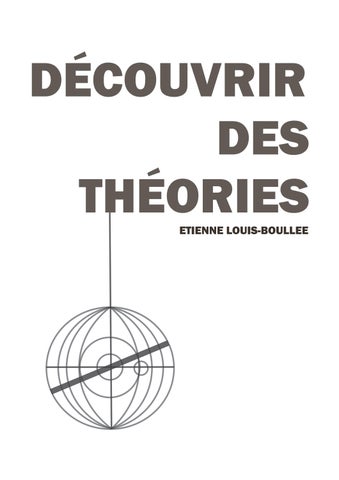
DETAILS
ARTIST
Emily Bohan
Découvrir des théories
G39 Griffith University Gold Coast
Jessica Blair, and architectural tutors
DATE
April 2023
ExhibitionDetails2 .............................................................................................................. .
AUDIENCE LOCATION TITLE
........................................................................... ........................................................................... ...........................................................................
EXHIBITION CURATION
Although Etienne Louis-Boullee theories are the foundations of this exhibition, the curations of each piece carefully considered the complexity of his works and approaches a simplistic representation to explore his depth of studies. In order to demonstrate the theory behind his designs, the pieces needed to work collectively and to uncover all properties in his design theory.
For this to accurately answer the research question the theories on nature had to be divided and progressively dive deeper into the complexity of study. Breaking down the questions acted as the best way to approach the exhibition. Taking a step by step procedure to examine a broad scope of what he is best known to then dive into the complex science behind his design. This approach aimed to engage the audience through a brief understanding and push viewers curiosity.
3ExhibitioncurationalChoices .............................................................................................................. .
Boullee’sDepthinDesign4 .
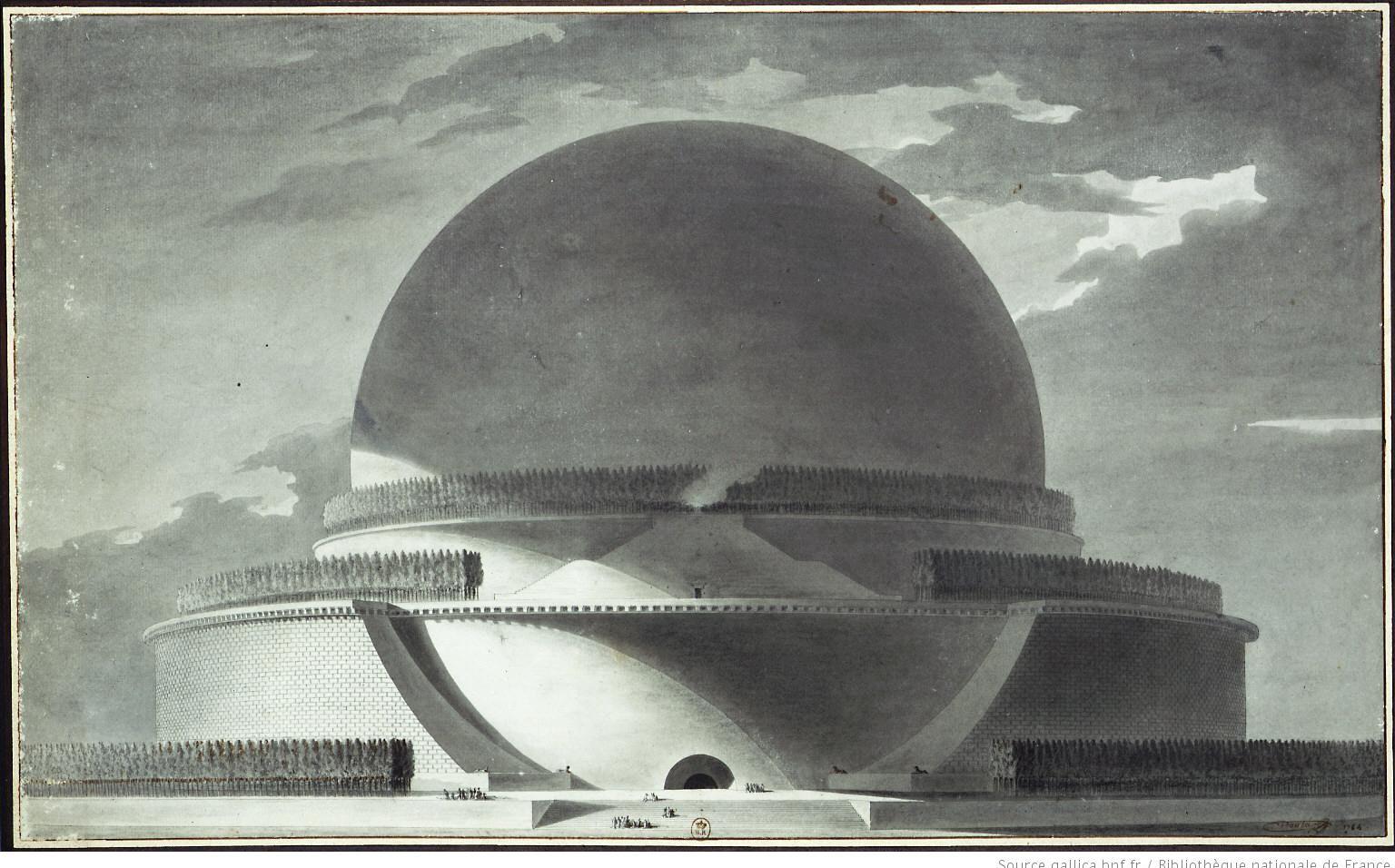
Figure 1: Cénotaphe de Newton (exterior view) by Etienne Louis-Boullee
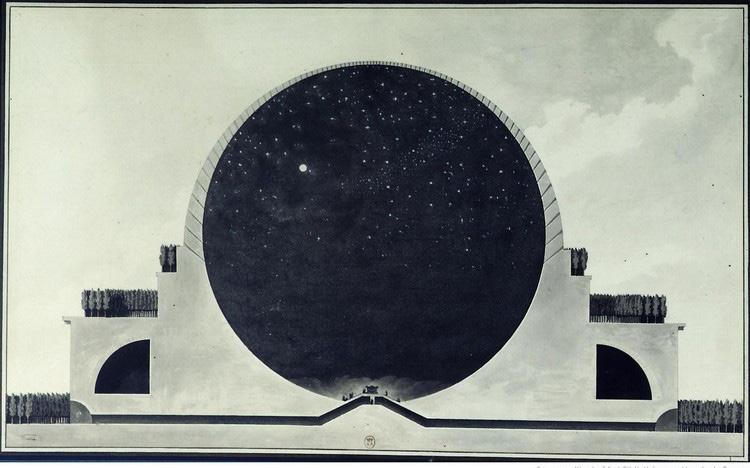
Figure 2: Cénotaphe de Newton (interior view) by Etienne Louis-Boullee
This exhibition examines how Boullee’s theories inspired his architectural approach to transform the characteristics of nature into design strategies, resulting in the exploration of volumetric harmony and its influence on the human senses. In particular, it aims to understand characteristics such as symmetry, variety and regularity and natures persistent exploitation of these properties to influence human response.
Through his pursuit as a theorist, he investigated the nature of regular and irregular volumes discovering that symmetry (gives order), variety (gives planes that diversify as we observe them) and regularity (gives a beautiful shape) present order and clarity, whereby irregular volumes have no distinction and result in a confused impression. The form dramatically used in Boullee’s works is the sphere as it incorporates all properties of volumes, having an immeasurable hold on our senses offering what he calls ‘the greatest surface to the human eye’. “It combines strict symmetry with the most perfect regularity’ and the greatest possible variety: its form is developed to the fullest extent and is the simplest that exists; its shape is outlined by the most agreeable contour and finally the light effects that it produces are so beautifully graduated that they could not possibly be softer.”
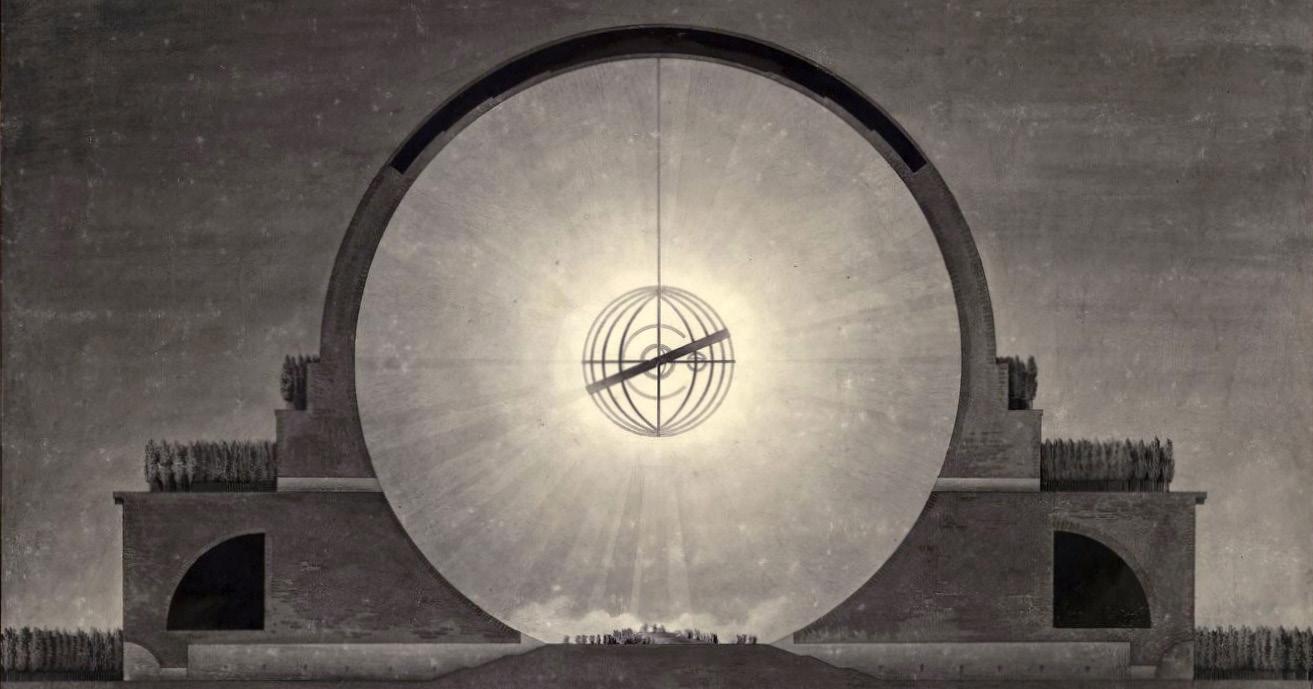
In order for these principles to be applied in contemporary architecture we must further our understanding of nature’s play on the human senses. Boullee’s presents this idea of ‘character’ through the seasons, for they force us to express ourselves in accordance with their effect. For example, the character of summer, forces joy with ‘glorious light’, ‘vivid colours’ and ‘clearly defined form’. These characteristics of nature link back to he’s theories on volumetric harmony revolutionise the principles of design. To then implement these theories into contemporary architecture we need to explore how these elements of nature can be transformed into design strategies. In Boullee’s Metropolis and Newtons Cenotaph picturesque forms, play on light and shadow and grandeur scale mimic natures characteristics to play on our senses.
FOREWORD 5Foreword .............................................................................................................. . 1
1
UNDERSTANDING BOULLEE
“Dominated by an excessive love for my profession, I have surrendered myself to it completely... I have made it a rule that I shall work for the benefit of society and thus merit public esteem... Our buildings...should be to some extent poems... You who are fascinated by the fine arts, surrender yourselves completely to all the pleasure than this sublime passion can procure! No pleasure is so pure. It is the passion the makes us love to study, that transforms our pain into pleasure.”
Boullee’s romantic expression of his love and drive for his carrerr throughout he’s ‘Essay on Art’ demonstrates in itself his presence through the Renaissance, his willingness to learn and passion for art was undoubtedly fuelled by societies focus on classical philosophy, literature and art, driving his career into the theoretical studies of design. Although he studied French Classical Architecture and neoclassicism, Boullee defied the ideals of his degree and became a theorist and a creative genius approaching design as pure art that captured the science of a building. Only a handful of his designs were constructed but his controversial approach to architecture captured large public followings and altered the expectations of a conventional career. Through he’s studies Boullee acknowledges ‘there is no art that we can create alone’ as nature provides all our ideas. Boullee’s interest in natures effects unquestionalbly stemmed from his era’s narritive outlook and passion for the discoveries of science and unknown depths of world.
Understandthecontext6 .
1
Figure 3: Cénotaphe de Newton (interior view) by Etienne Louis-Boullee
7UnderstandingBoulee’sTheories .............................................................................................................. .
UNDERSTANDING BOULEE’S THEORIES
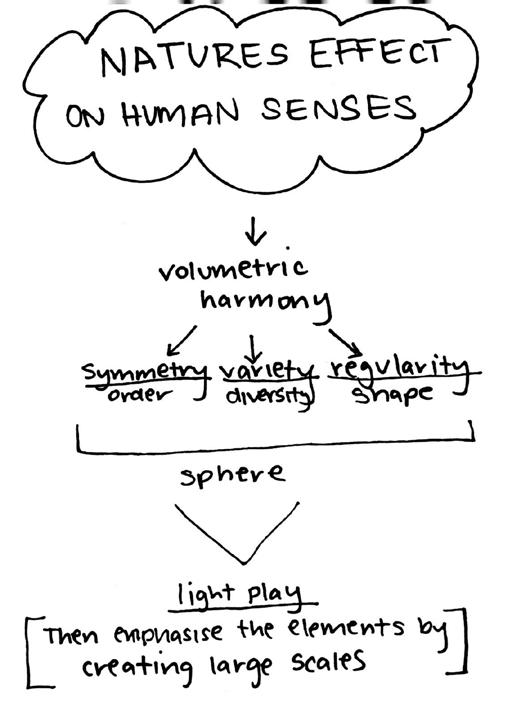
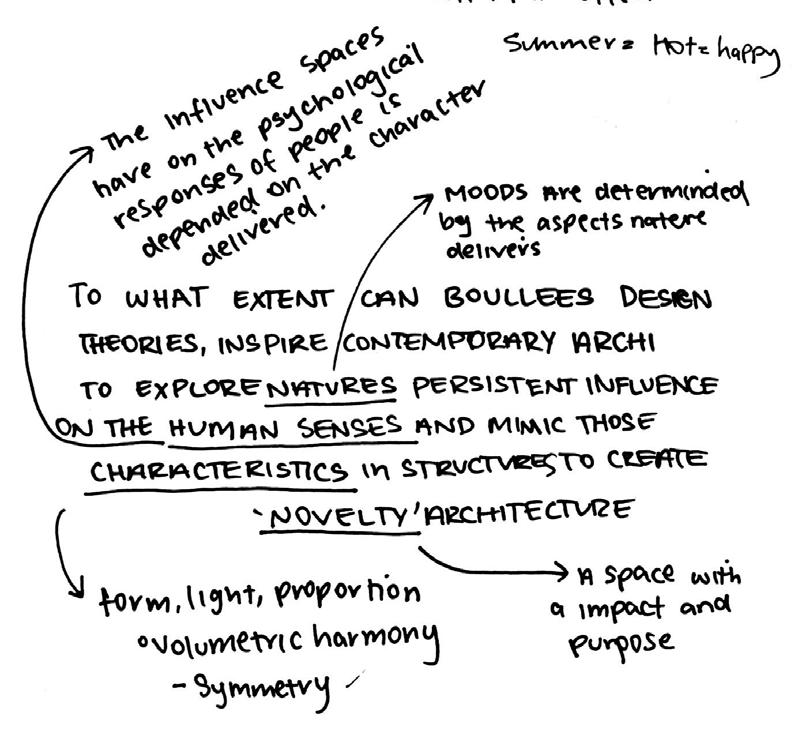
The investigation into Boullee’s architectural approach uncovered complex narratives and sciences to his design. The poetic methods to his design often exceeded the engineering capability of his time, resulting in few constructed designs. His large-scale designs had clear intentions to go no further than his paper, although he was inspired by how Greek and Gothic Architecture, was built exclaiming that it ‘seemed to stand by some miracle’. Furthering into the research involved in understanding his studies, it was diagrams that best explained his theories, presenting the most relevanT properties in a systematic order. This approach was followed by various prototypes research questions being broken up and compared to the diagram to ensure all topics and subtopics were covered.
UnderstandingBoullee’sTheories8 . 4
9ResponsetoBoulee’sDesignTheories .............................................................................................................. .
1. THEORIES BEHIND ART, BY EMILY BOHAN, APRIL 2023
ARTIST STATEMENT
THEORIES BEHINF ART A COLLAGED SERIES
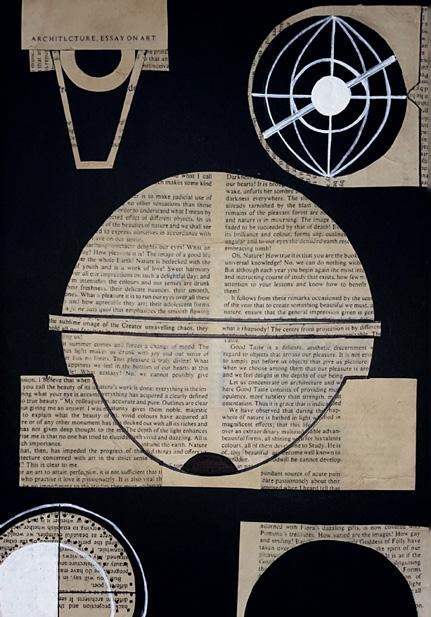
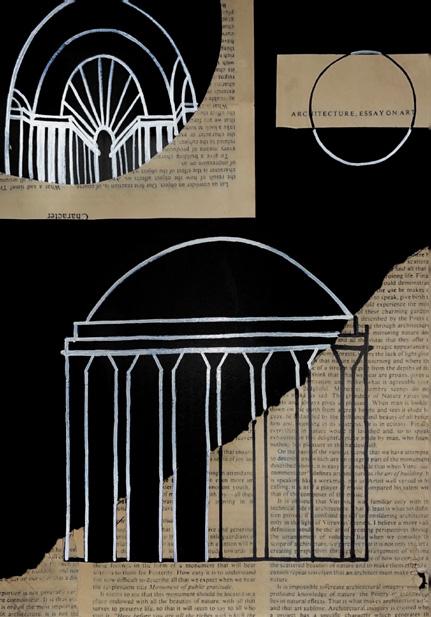
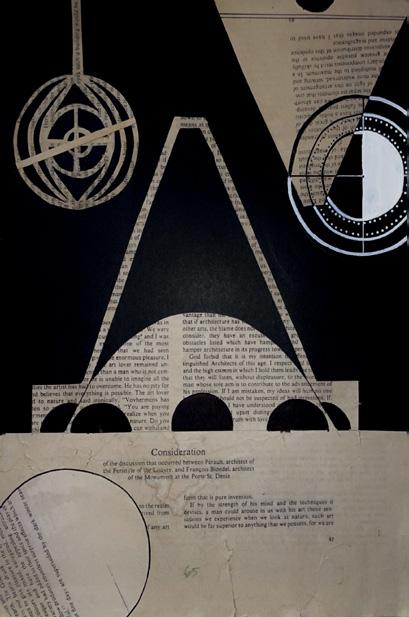
Boullee’s creative and genius approach to architecture derived from his willingness to learn and passion for art. He dedicated his life to his profession and changed the conventional approach to design through his theoretical studies (Boullee 1976). To capture how significant these theories were to his design, a series of collages composed of his original works and fragments of his ‘Essay on Art’ captured the cloaked ideas behind his architectural designs. This series clearly explores his approach and narrates his profession as a theorist and architect, constructing a simplistic understanding of the fundamental history of Boullee.
THE PROCESS & MATERIALS

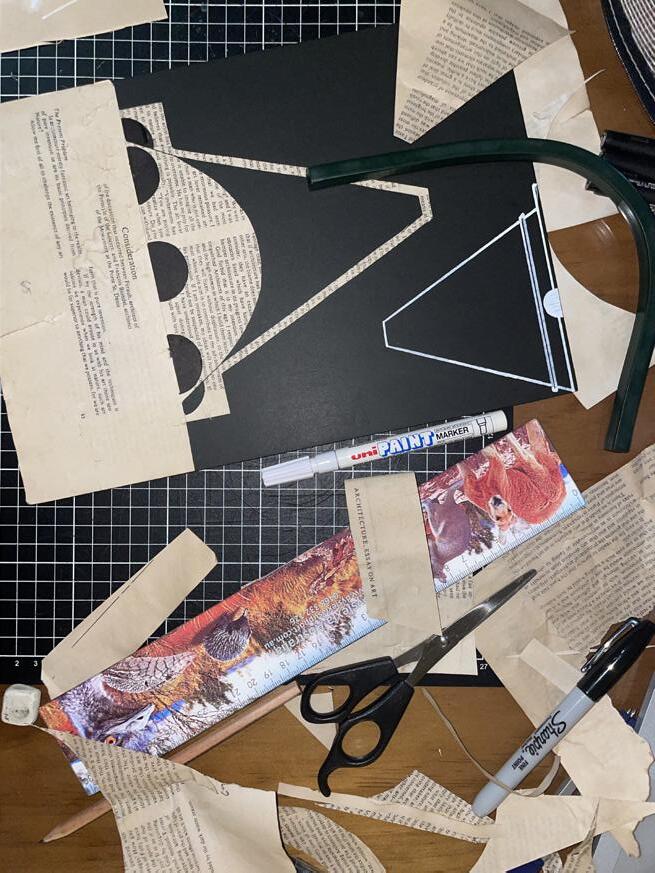
To capture Boullee’s architectural design and theoretical studies, it was crucial to use primary research from his ‘Essay on Art’. For the collage it was also important to adhere to his aesthetic of washed tones to ensure nothing was interrupting the emphasis of his design. A printed copy of his ‘Essay on Art’ was bathed in coffee to create a similar visual to his works. The essay was then manipulated through a process of cutting, to create forms similar to his designs. Once the paper was cut, glued, and layered, a black pen was used to sharpen and define edges and then a white pen to emphasis his original design ideas. These elements work together and
ResponsetoBoulee’sDesignTheories10 .
11ResponsetoBoulee’sDesignTheories .............................................................................................................. .
2. NATURES POWER THROUGH SEASONS, BY EMILY BOHAN, APRIL 2023
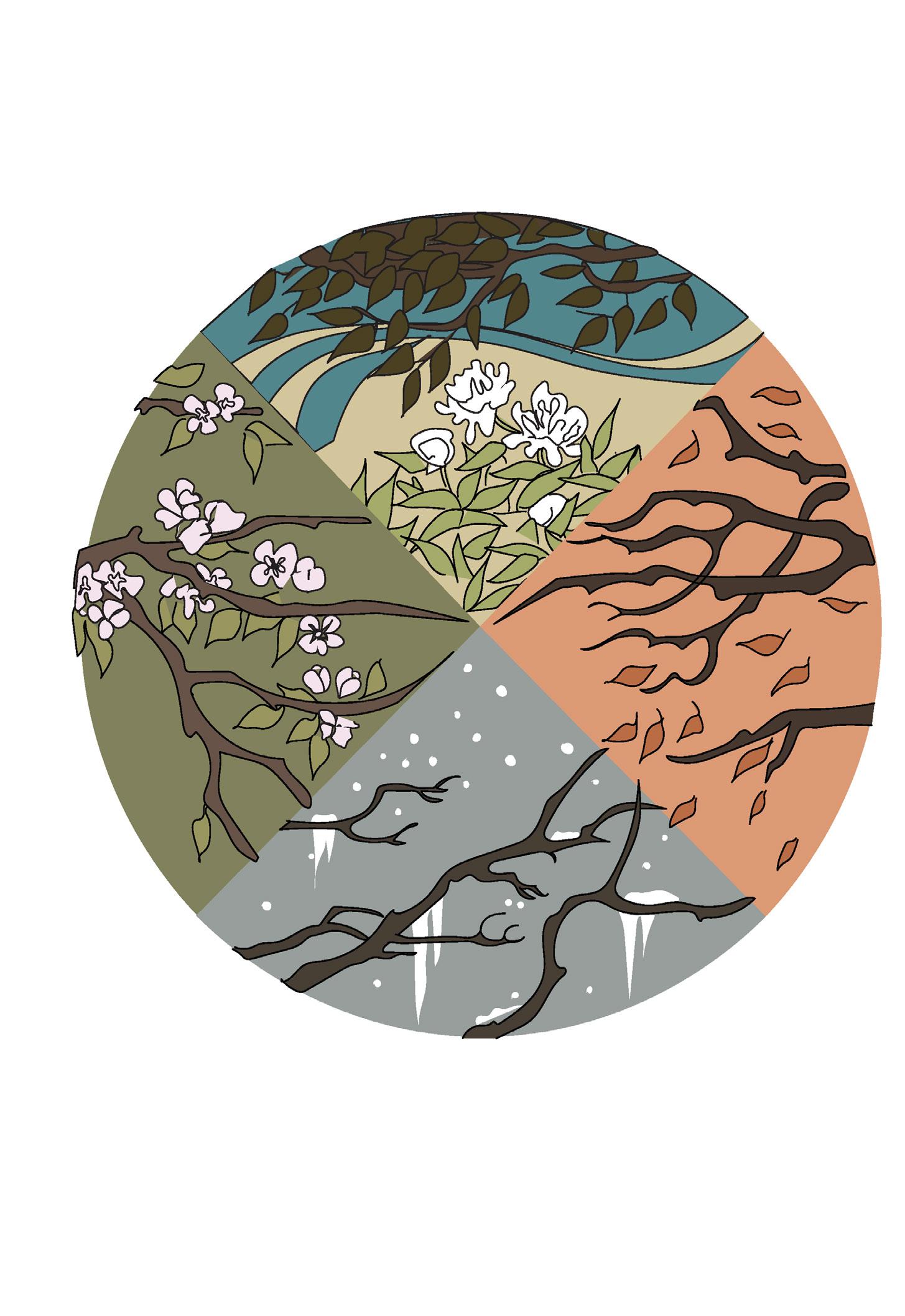
Representaion of Spring
Representation of Winter
Representation of Summer
ResponsetoBoulee’sDesignTheories12 .
Representations of the Seasons, Digital Media, by Emily Bohan, April 2023
ARTIST STATEMENT
NATURES
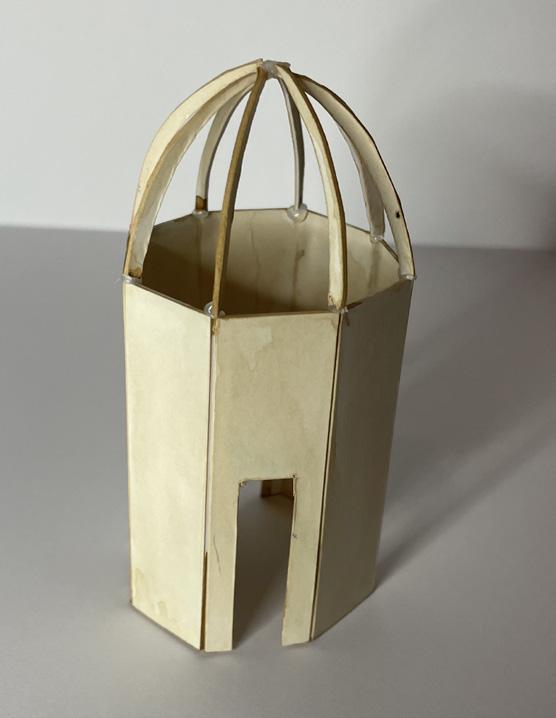
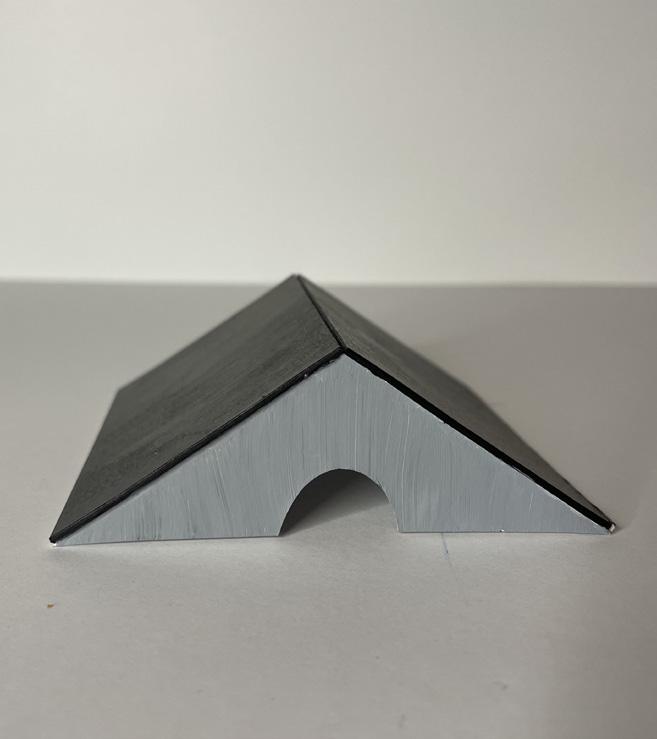
To further the understanding of nature’s effect on the human senses we can observe the characteristics of seasons. Each year nature provides us with the ‘most interesting and instructing course of study that exists’, it gives opportunity to understand human response and the properties that influence our senses. Each season holds this immense responsibility through it own unique characteristics, educating us on how to manipulate a human’s emotional responses to design. To accurately explore these theories and interact with viewers senses, models that reflected each season’s characteristics were created and composed of design properties such as form, proportion, colour, light and shade (volumetric harmony). To further this investigation, the audience become an important part of the piece and express what they believe each model represents. The models can be moved on a platform that explores a season through an artistic approach and specifically
POWER ON THE SENSES A MODELED STRUCTURE INSPIRED BY BOULLEES EXPLORATION OF NATURE13ResponsetoBoulee’sDesignTheories .
THE PROCESS & MATERIALS
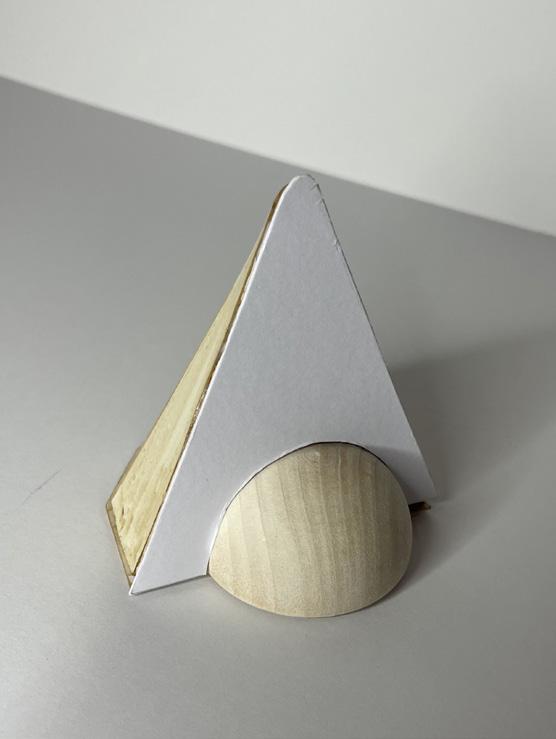
These miniature models were constructed with white card. This choice of material allowed an easy approach to creation and created consistency through all models. Card also could give the sharp lines and forms that Boullee explores in his designs. The choices of colour stemmed from the seasons characteristics, hence lighter colours for warmer seasons and darks colour with low brilliance for the colder seasons.
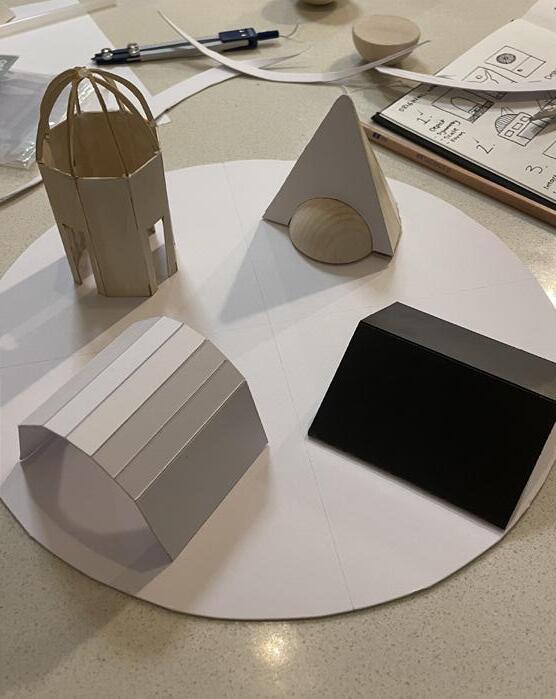
To accurately transform each Seasons characteristics into design strategies, the mood that each season forces upon our senses needed to be identified. Boullee’s romantic descriptions of the Seasons in his ‘Essay on Art’ made for an easier translation between their characteristics and how they effect us. Once this was understood the process of creating models that reflected these characteristics could be created and exhibited.
Summer is a time of ‘glorious light [which] makes us drunk with joy… What pure happiness we feel in the bottom of our hearts at this spectacle!’, as autumn approaches and prepares us for what is to come from winter. ‘A sad time!.. Night follows in its wake, unfurls her sombre shades over the earth and spreads darkness everywhere. The image of the good life has faded to be succeeded by that of death! Everything has lost its brilliance and colour. forms sag, [and] outlines are hard and angular. Once we escape winter Spring approaches and ‘colours are mixed, variegated, mottled. Forms are picturesque and have the appealing
ResponsetoBoulee’sDesignTheories14 .............................................................................................................. .

15ResponsetoBoulee’sDesignTheories .............................................................................................................. .
3. THE SPHERES HIDDEN POWER, BY EMILY BOHAN, APRIL 2023
ARTIST STATEMENT
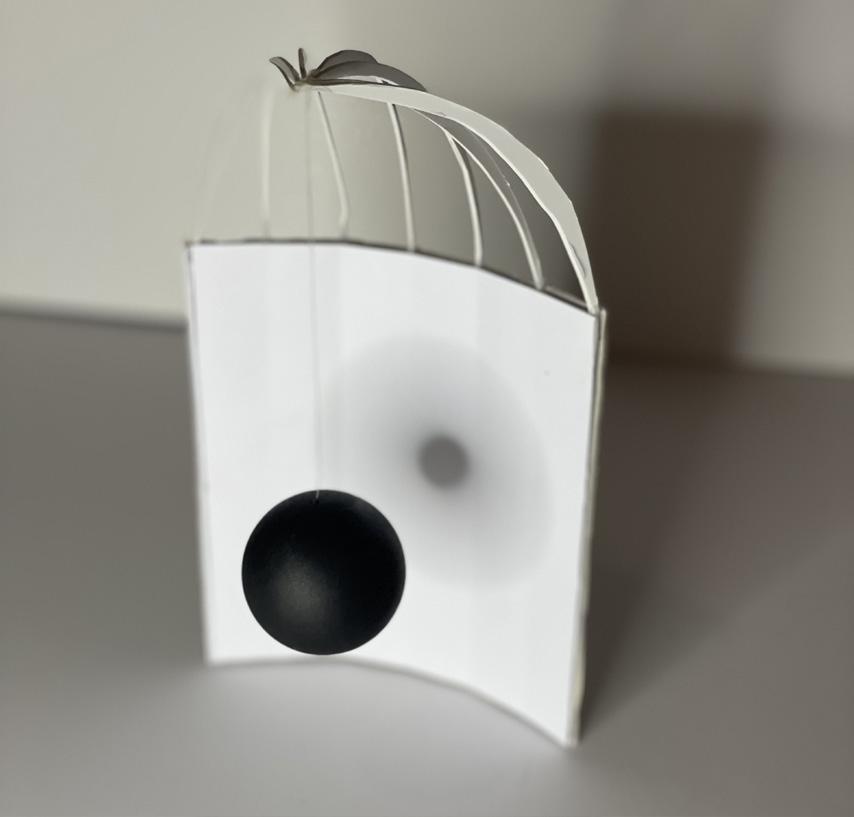
THE SPHERES HIDDEN POWER A BOULLEE INSPIRED STRUCTURE ACTING AS A CANVAS TO A FLOATING SPHERE
As the exhibition dives further into Boullee’s theories, the comprehension of his designs and the characteristics he implements begin to advance viewers ideas on his remarkable approach to architecture. Once there is an understanding of volumetric harmony the depth of his designs expands immensely. The model presented explores the complexity of the sphere, its presence its-self is enough to represent all properties of volumetric harmony. This theory explores characters such as symmetry (gives order), variety (gives planes that diversify as we observe them) and regularity (gives a beautiful shape) presenting us with order and clarity.
THE PROCESS & MATERIALS
Originally it was intended that multiple spheres of different size and colour could hang by fishing line to represent the volumes differing effect when manipulated. Moving further with the experimentation of the sphere it became clear that regardless of the volumes manipulation it would always be ‘the greatest surface to the human eye’. It was important that this idea was presented in a simplistic and impactful manner while also linking back to Boullee’s designs. Representing the properties of volumetric harmony were simple to show as the sphere alone could accomplish all. To then incorporate Boullee’s designs, a white card model was constructed as a canvas to play on the lighting and shadowsv the sphere created. The model produced was impactful through its simplistic display and deep meaning. The single spheres depth of character creating immense effects on our responses.
ResponsetoBoulee’sDesignTheories16 .
4. EXPESSIONS OF ORDER AND CLARITY, BY EMILY BOHAN, APRIL 20023
ResponsetoBoulee’sDesignTheories
17
.

ResponsetoBoulee’sDesignTheories18 .............................................................................................................. .
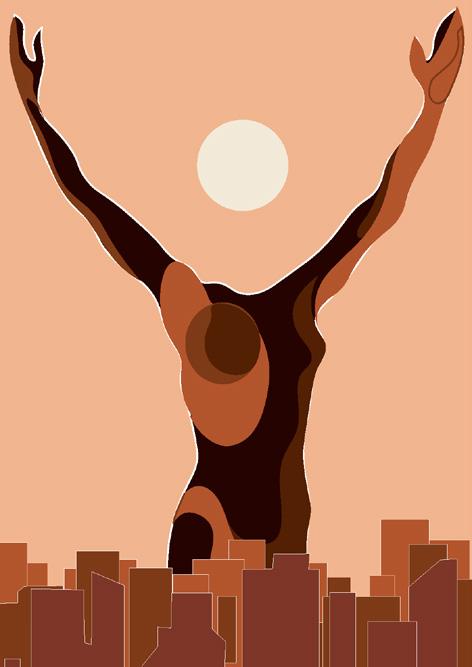
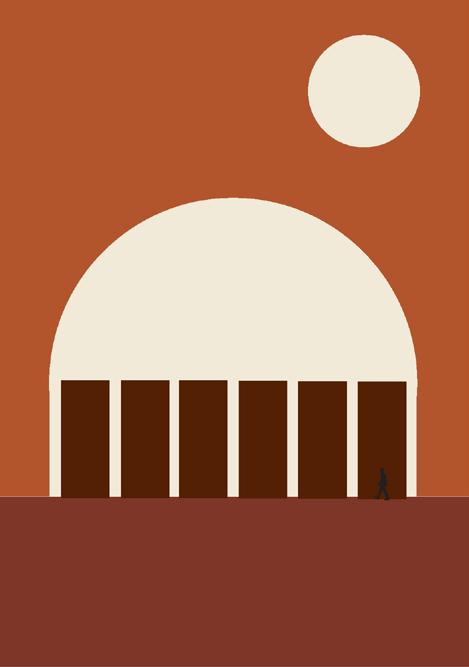
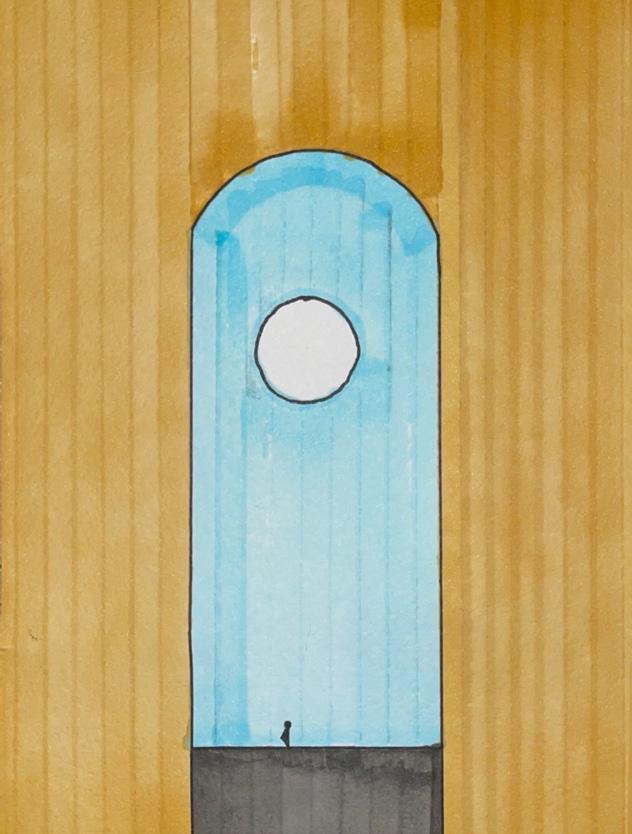
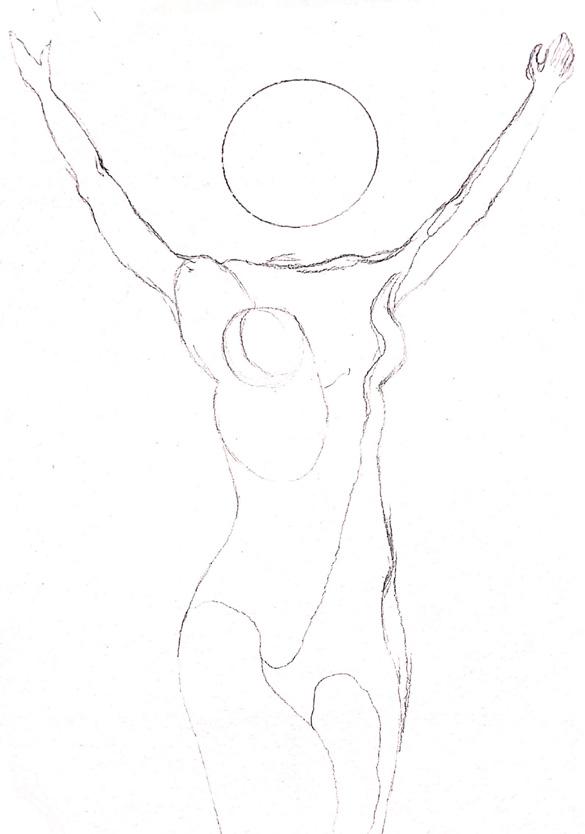

PHASE 2 - COPEC & FINE LINE PHASE 1 - SKETCHED FORMS
ORGINIAL
19ResponsetoBoulee’sDesignTheories .
DEVELOPMENT OF
WORKS
Developmental process of ‘Expression of Order and Clarit’by Emily Bohan
ARTIST STATEMENT EXPRESSION OF ORDER AND CLARITY
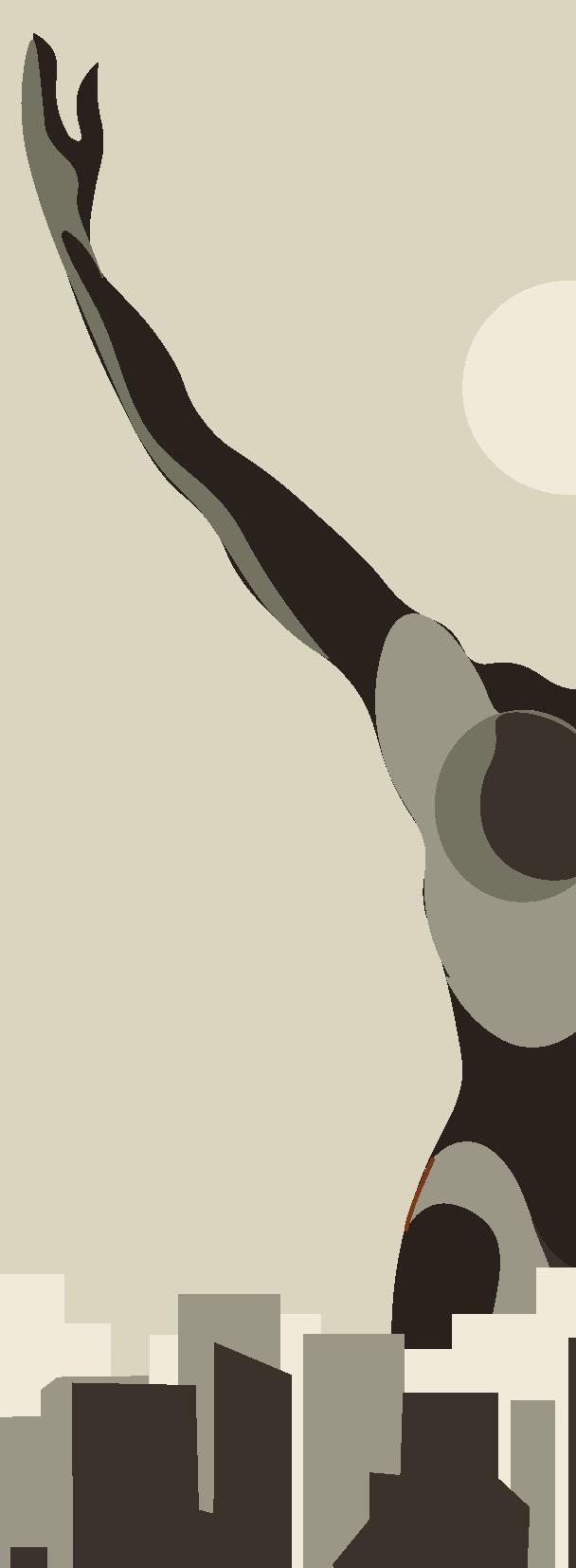
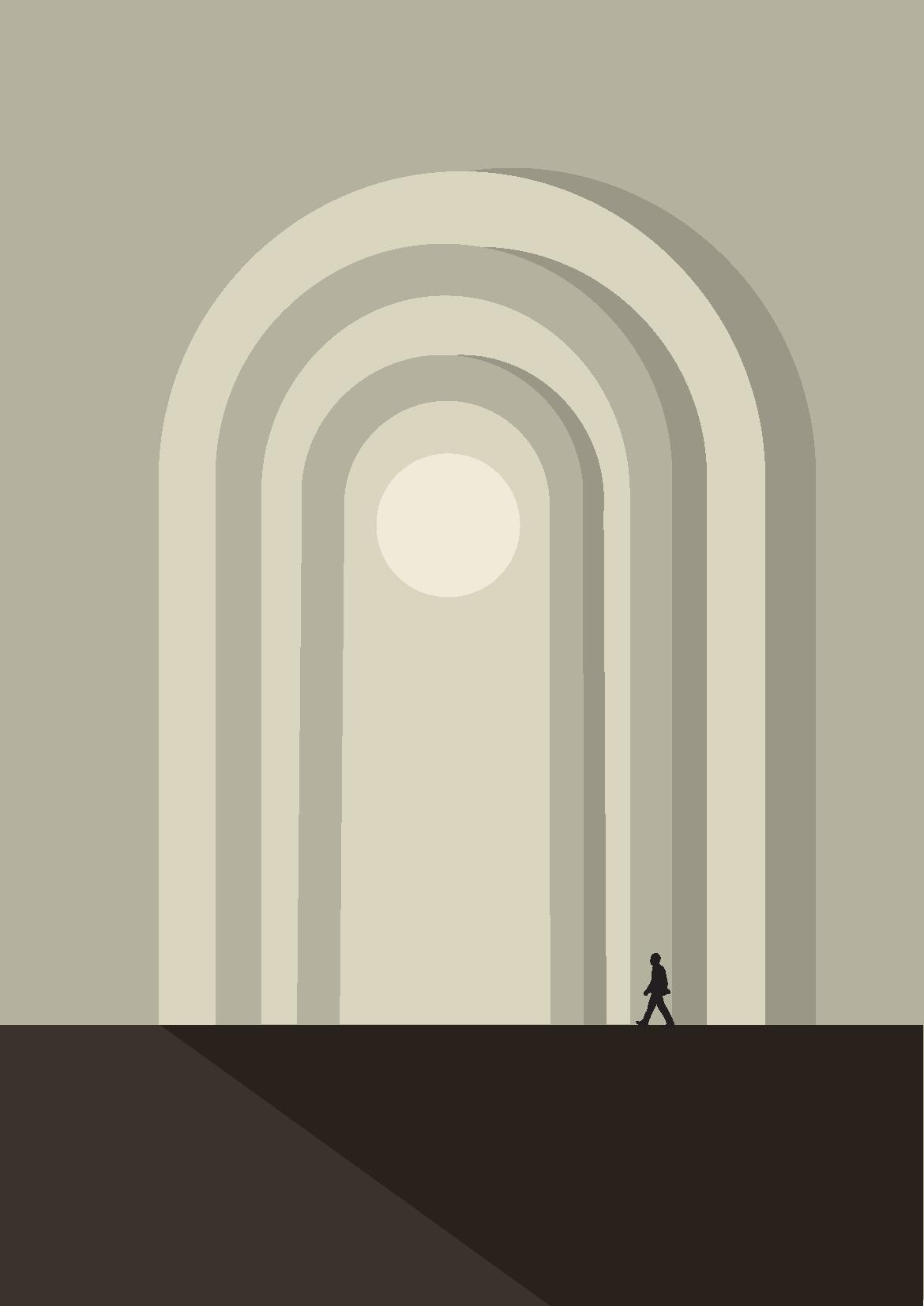
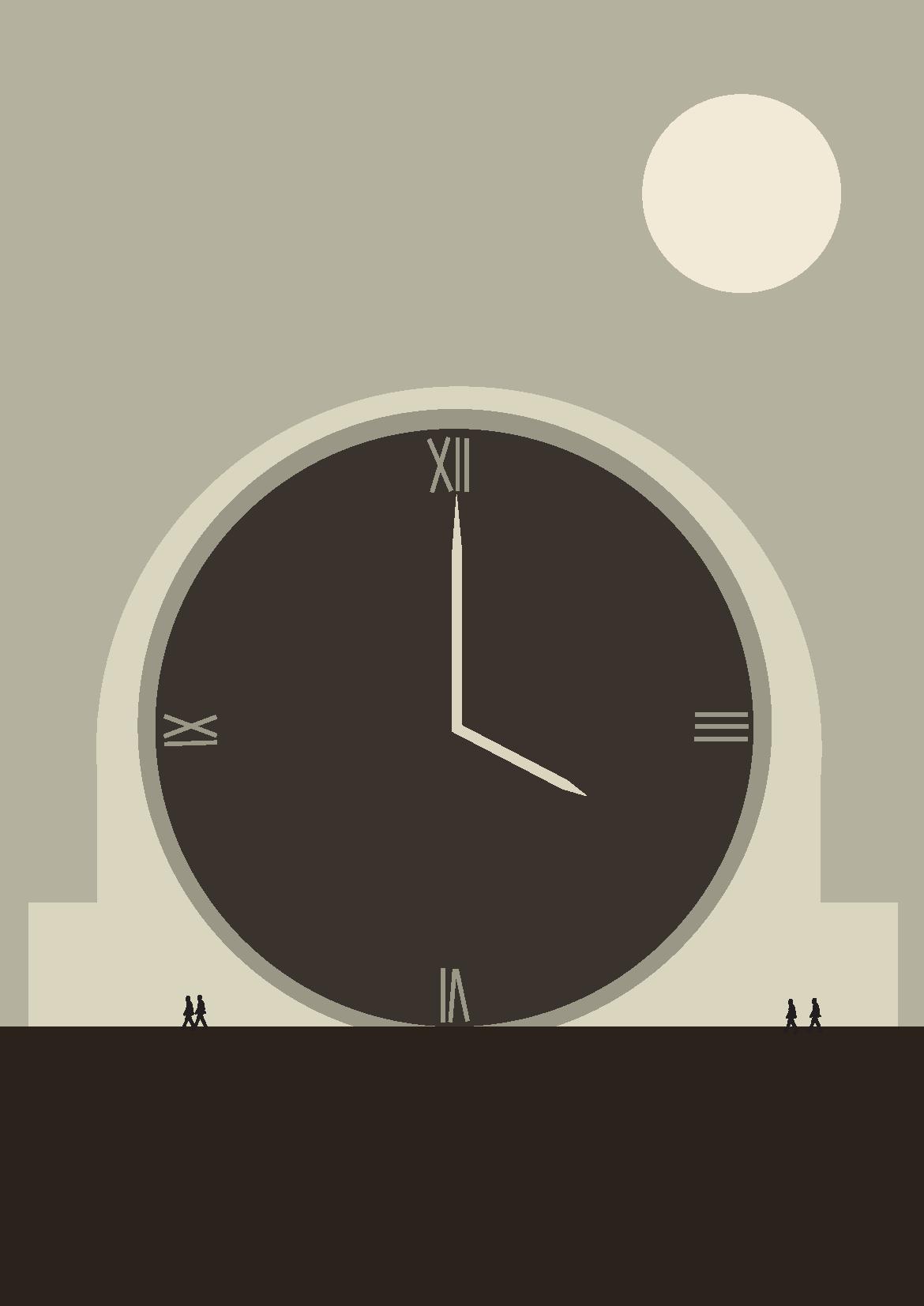
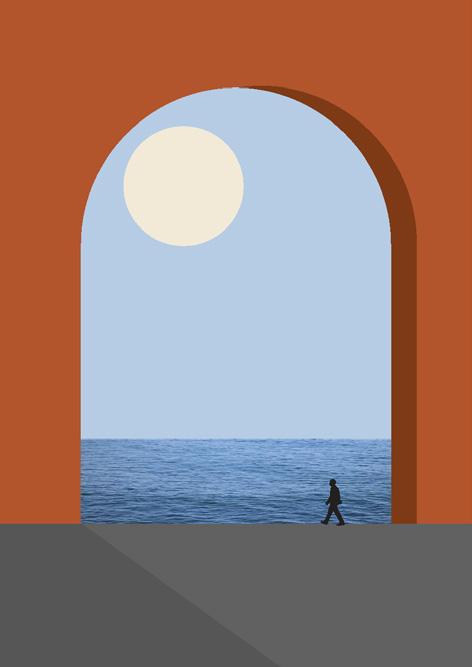
In the attempt to explore volumetric harmony in two-dimensional arrangements, a series of contemporary digital media works were created and inspired by the visual representations of Boullee. For the works to present volumetric harmony the audience needed to view and sense order and clarity. The use of regular and symmetrical forms explored these ideas through sharp edges and simplistic shapes. As did Boullee, these properties are emphasised through large scale forms which are perceived through the comparison to people. The use of muted tones compliment the scale in attempt to draw focus to the regularity and symmetry.
THE PROCESS & MATERIALS
For the exhibition to capture the theories surrounding Boullee’s designs, an exploration of the characteristics in volumetric harmony felt necessary. To properly understand the ideas behind his complex work, simplistic presentations can act as a method to clearly express his studies. The use of digital media allowed for accurate and sharp forms that explored actual symmetry. Initially these prints were attempted with copec markers and fine line pens, but to ensure the prints accurately presented the fine works of Boullee, it concluded that digital materials was the best way to achieve this. The original digital pieces also took a contemporary approach to his ideas and incorporated vibrant colours. As a result, it was felt that this took away from the characteristics that were so important to capture, therefore the final pieces mimicked the muted washed Boullee used in his designs.
ResponsetoBoulee’sDesignTheories20 .............................................................................................................. .
REFERENCES
Boullee, Etienne-Louis. 1976. Architecture, Essay on Art. London: Academy Editions.
Branca, Glen. 2014. MADDISON COLVIN. September 07. Accessed April 2023. https://maddisoncolvin.com/ blog/2014/9/7/tienne-louis-boulle.
Dickson, Andrew. 2017. Key features of Renaissance culture. March 30. Accessed April 2023 . https://www.bl.uk/shakespeare/articles/key-features-of-renaissance-culture.
The Editors of Encyclopaedia Britannica. 2019. Étienne-Louis Boullée. December 11. Accessed April 2023 . https://www. britannica.com/biography/Etienne-Louis-Boullee.
Vidler, Anthony. 2016. Etienne Louis Boullée (1728-1799). November 21. Accessed April 2023. https://www.architectural-review.com/essays/reputations/etienne-louis-boullee-1728-1799.