By irene John and eileen Zhu News Editors
The Emory Wheel
This article contains references to sexual assault.
Emory University’s Student Government Association (SGA) plans to hold a special election for SGA president after the Elections Board disqualified presidential candidate Vlad Senenko (27C) for failing to submit campaign expenditure receipts after a majority of students voted for him. Senenko’s disqualification left the SGA presidential race with no available candidates to take the office. Voting for the special election starts on March 23, and the Elections Board will release results on March 24.
Over the past four years, SGA elections have featured many controversies, including disqualified candidates and alleged election fraud. The Emory Wheel has compiled a timeline of these incidents and their impact on election results.
2022
Three days before the 2022 election cycle concluded, the Elections Board disqualified presidential candidate Elisabet Ortiz (24C) because she took a gap year while running for office. In a March 19, 2022 Instagram post, Ortiz claimed the Elections Board based their decision on “discriminatory policies.” Ortiz called on the student body
By KaTherine MoMBo Contributing Writer
This article contains references to sexual assault.
From picking up caps and gowns to figuring out their post-graduation plans, seniors nationwide are preparing for graduation. At Emory University, the Robert T. Jones, Jr. Scholarship provides four seniors with the opportunity to spend one year abroad to either take courses without seeking a degree or pursue a master’s degree at the University of St Andrews in Scotland. This year, the University awarded Asmita Lehther (24Ox, 26C), Yurok Song (26C), Claire Burkhardt (26C) and Josh Grand (26C) this prestigious scholarship from a pool of 36 applicants.
Emory and the University of St Andrews established the scholarship in 1976 to honor Robert “Bobby” Jones (29L), a world-renowned golfer who attended Emory’s School of Law. Jones often expressed affection for the city of St. Andrews, Scotland, which awarded him the Freedom of the City in 1958. The scholarship, open to all graduating seniors at Emory, covers the full tuition and living stipend for one year of study at the University of St Andrews. Four students from the University of St Andrews are also selected to pursue a master’s degree or a year of non-
to vote no confidence for SGA president and stated that her gap year was “involuntary” since she had to take a year off to confirm her legal emancipation from her abusive family. In her original post, Ortiz claimed that she would appeal her case to the Elections Board, but later chose to drop out of the race.
The other SGA presidential candidates, Ranjan Kesavan (24C), Eleanor Liu (21Ox, 23B) and Alyssa Stegall (21Ox, 23C), remained in the race, but no candidate secured a majority, leading to a runoff election between Liu and Stegall. No confidence won the runoff, receiving 656 votes (51.37%) and beating the runner-up candidate Stegall, who garnered 621 (48.62%) votes.
With no candidate winning a majority, the SGA lLegislature decided to invoke the line of succession in an emergency meeting rather than hold another election. Stegall’s running mate, Noah Marchuck (24C), who won the SGA vice presidential election on March 25, 2022, ultimately assumed the position of president. SGA formally swore Marchuck in on April 18, 2022.
Emma Friese (24C) and Sruti Kumar (20Ox, 22C), who worked together on Ortiz’s campaign, submitted a formal complaint to SGA’s Constitutional Council about a lack of official procedure when “no confidence” wins an election cycle. The council heard the case before ultimately concluding that
By Tori Mooney SGA Desk
Emory University’s Student Government Association (SGA) Vice President of Finance Grant Lichtman (26B) confirmed in an interview with The Emory Wheel that SGA plans to increase the Student Activity Fee (SAF). The potential SAF increase would go into effect for the 202728 academic year. The SAF is currently $133 per semester as per the Finance Code. In March 2024, students voted to increase the SAF from $116 to $133 for the 2025-26 academic year and approved a measure to schedule yearly SAF increases based on the Consumer Price Index, a federal measure of national inflation.
According to SGA’s Finance Code, the SAF helps fund SGA, “all various SGA establishments” and “all student groups.” The SAF also helps fund Student Programming Council (SPC), Belonging and Community Council, Club Sports, TableTalk, Emory Entrepreneurship & Venture Management, Media Council and Outdoor Emory.
there’s at least some things that are going to change about their funding and what events they fund, especially the amount of funding that they provide for programs,” Lichtman said.
In October 2025, SPC announced that there would be no Homecoming concert due to changes in funding.
SPC has hosted a Homecoming concert every fall since 2021.
Lichtman said the SAF increase will allow SGA to cover
$550,000 from the SAF in the Spring 2026 semester. Including the Spring 2026 SAF, the SGA Contingency Account had $546.349.70 as of November 2025. The Contingency Account funds University-wide programs and events. SGA also adds the unspent SAF funds to the account at the end of the year.

expenses for programs the University previously funded.
SGA is currently conducting benchmarking research to decide how much to increase the SAF, according to Lichtman. He explained this process involves researching the SAFs at Emory’s peer institutions, discussing new changes with Campus Life and collecting input from students and members of the administration.
“We’re also meeting with some students on campus and some other members of the administration so that we can all come together and figure out what students want to be funded by Campus Life and what they wouldn’t want going forward,” Lichtman said.
degree seeking study at Emory.
As part of the application process, students submitted a resume, two essays and three letters of recommendation. The scholarship committee, composed of Emory administrators, alumni and Bobby Jones trustees, made their decisions based on applicants’ “academic excellence, exemplary character and integrity.”
For Grand, Jones’ legacy in athletics and law mirrored his own path, ultimately inspiring him to apply.
“The skills that soccer nurtured in me, and the balance that it grounded in my Emory experience was certainly a leading contributor to my decision to apply,” Grand said.
As the captain of Emory’s men’s soccer team, Grand led the team to two consecutive University Athletic Association championships. He plans to pursue a master’s degree in public policy next fall, which will mark the program’s inaugural year at the University of St Andrews.
“It provides a massive opportunity to get out of my comfort zone and explore new things,” Grand said.
Grand has also completed internships with the U.S. Senate Committee on Foreign Relations and the Atlanta mayor’s office of International and Immigrant Affairs and is currently writing a philosophy honors thesis examining the moral and national responsibilities of U.S. foreign aid.
“Learning about public policy in
Lichtman cited federal and University-wide funding cuts in prompting the decision to increase the SAF.
“We know that going into next year,
the U.K. presents an awesome opportunity to gain a new perspective,” Grand said. “Being able to apply those lessons to how we view policy in the United States will be refreshing.”
Lehther also plans to pursue a master’s degree in public policy with a focus on health policy. During her sophomore year of college, Lehther learned about Accredited Social Health Activist (ASHA), an organization that provides health services to community members in need. Lehter cited ASHA as her inspiration to further understand how policy can improve healthcare accessibility.
“I’ve always seen medicine, wellbeing and the law as being very connected, especially when it comes to the social determinants of health,” Lehther said.
Lehther, who is the president of Emory’s Sexual Assault Peer Advocate (SAPA) group, led a Student Government Association initiative requiring all SGA members to receive SAPA training. She intends to continue this mission abroad by working with sexual assault survivor advocacy groups in Scotland.
“While I’m also doing a master’s program, my hope is that I’ll be able to be not only a more full person, but also a more full advocate,” Lehther said. “I want to be someone who can speak to anyone, understand more about the world, and I think the best way to do that is by traveling and by
For instance, SGA passed a bill on Jan. 26 to fund the 2026 Mosaic Graduation Ceremony. Belonging and Community Justice (BCJ) in Campus Life funded the inaugural event in 2025, but according to SGA President Tyler Martinez (26C), BCJ is no longer able to do so due to funding changes.
A November 2025 Financial Report stated that SGA is expected to receive
learning.”
At the University of St Andrews, Song hopes to pursue a master’s degree in mathematical biology, also known as biophysics. Mathematical biology is a rare field of study for graduate-level programs, so for Song, this opportunity is a “lucky match.”
Song said the scholarship’s application process offered him an opportunity to reflect on his Emory experience as a senior.
“It's very helpful to oftentimes reflect back, especially your senior year, … not just for the Bobby Jones Scholarship, but as you approach your graduation,” Song said.
Song is the division chief of operations for Emory Emergency Medical Service (EEMS), and he spends “40 to 60 hours a week” attending to responsibilities, including answering 911 calls and responding to medical emergencies on campus. He described his EEMS experience as fundamental in teaching him to turn complex situations into structured questions.
Burkhardt plans to earn a master’s degree in Middle East, Caucasus and Central Asian Security Studies at the University of St Andrews, furthering her interest in international relations.
At Emory, Burkhardt was named a Fox Center Undergraduate Humanities Honors Fellow, where she is currently working on an honors thesis and a microhistory on Ahmed al-Sharaa, the president of Syria.
For the SAF to increase, SGA must pass a bill and submit it to a student referendum, according to Lichtman. If the referendum does not pass, Lichtman said responsibility would fall to future student administrations to decide how to handle the funding shortage.
“A good amount of the actual increase in the SAF that we want to make is more long-term,” Lichtman said. “We can probably still support a lot of programs next year, but beyond
Burkhardt stated that writing her thesis inspired her to apply to graduate programs where she could participate in similar research.
“I figured that if I loved doing my thesis so much, I should consider seeing if I can do this in grad school as well,” Burkhardt said.
At the University of St Andrews, Burkhardt hopes to explore more extracurriculars, including participating in Race2, an annual charity hitchhike in different European locations.
“Part of the joy of studying abroad and doing new things is that you don’t always know what you’ll get out of them,” Burkhardt said. “But, I am looking forward to the opportunity to be in a new place, keep studying subjects that I’ve invested in from different perspectives and being able to build relationships with cool people.”
If you or someone you know experienced sexual assault, you can access Emory’s Department of Title IX at 404-727-0541 and the Office of Respect’s hotline 24/7 at (404) 727-1514. You can reach the Atlanta Grady Rape Crisis Center crisis hotline 24/7 at (404) 616-4861 and the Decatur Day League Sexual Assault Care and Prevention crisis hotline 24/7 at (404) 377-1428.
— Contact Katherine Mombo at katherine.mombo@emory.edu
SGA Special Elections Presidential Platforms
Emory University’s College
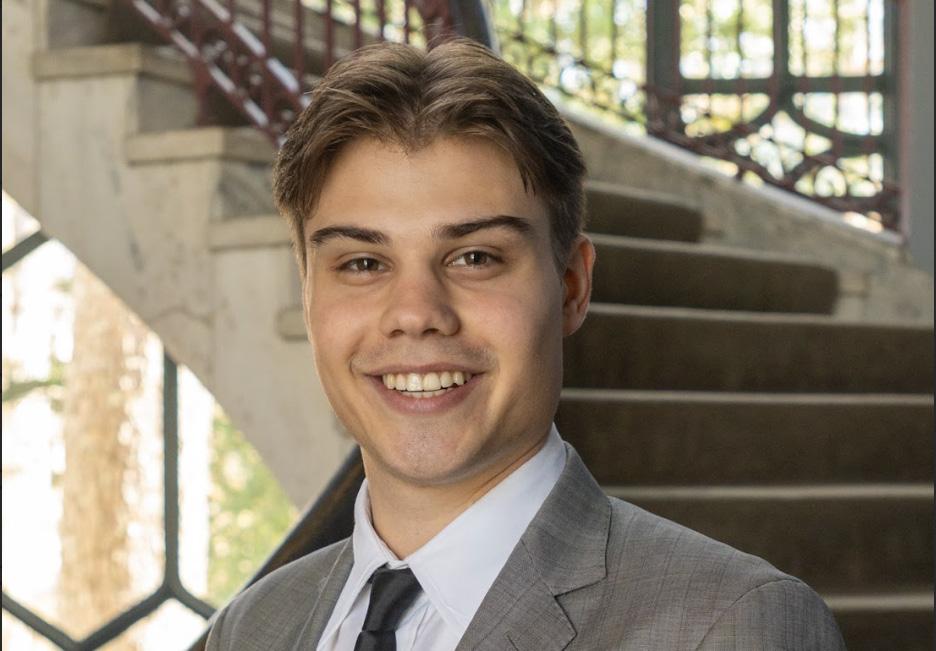
Council President Vlad Senenko (27C) is running for Student Government Association (SGA) president. In his campaign platform, Senenko emphasized his goals of improving academic and social programming and addressing uncertainties about SGA and Emory resources.
Senenko hopes to increase institutional accountability in SGA by providing students with a petitioning mechanism, giving them the opportunity to influence SGA policies and actions. Senenko added that one of his main priorities is to address potential issues regarding SGA’s distribution of the Student Activity Fee. He hopes to launch an internal audit of SGA to analyze funding allocation and help improve financing for campus organizations.
Additionally, Senenko wants to improve SGA’s internal management by increasing trans-
parency through a project management platform for SGA members to share goals and action items. He also hopes to open committee meetings up to the student body and create a public SGA calendar.
Senenko also wants to help students navigate employment opportunities better by creating a “Student Employment Office.” Furthermore, his platform includes plans to increase financial equity by creating a microgrant program that assists students facing financial or technical emergencies.
Senenko plans to improve housing accessibility by reinstating the Emory Housing Fair on the Atlanta campus and creating an online student housing exchange platform. He also states in his platform that he wants to improve the accuracy of the shuttletracking app, Passio GO!, and publish a live dashboard that shows students their status on parking waitlists for spaces around campus.
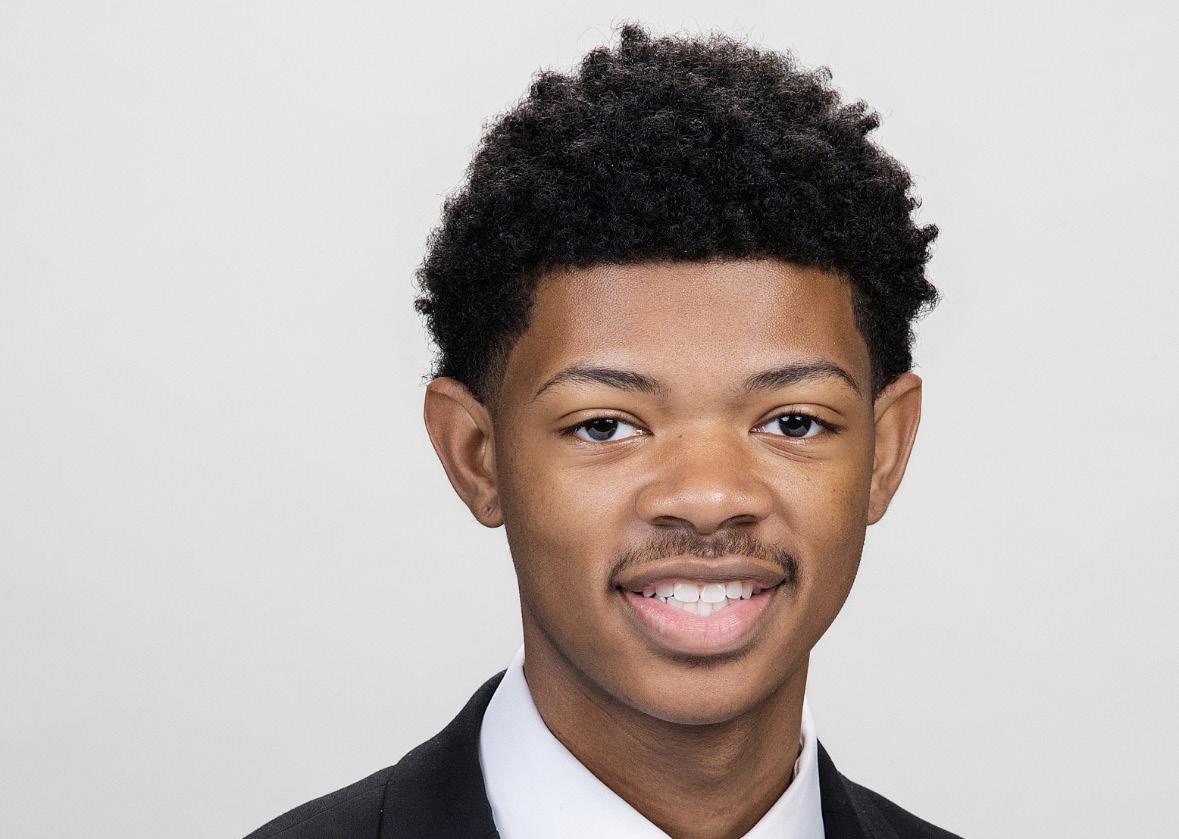
Robert W. Woodruff Debate Scholar Kalil Bennett (27C) is running for SGA president. Bennett previously served as a member of SGA’s First Year Council. His campaign focuses on establishing a strong connection between SGA and the student body, while also prioritizing transparency and initiatives to support well-being. His goals also include improving dining access, public safety resources and promoting connection with the student body.
Bennett aims to foster a better relationship between students and SGA by hosting “Ask the Cabinet” office hours that are open to all students, having SGA members attend club general body meetings and increasing SGA’s social media presence. Bennett also plans to expand SGA’s presence at Wonderful Wednesday events and aims to organize a semesterly “SGA week” for stu-
dents to hear from University resources.
Bennett plans to promote student well-being by hosting events with Kaldi’s during exams, expanding the health access vending machines and increasing student access to risk awareness programming and mental health resources. His campaign also includes plans to improve food access by making ready-made meals available for purchase with meal swipes and increasing the availability of fresh produce.
In addition, Bennett wants to improve transparency by creating an SGA bill tracker, bimonthly financial reports and legislative meeting recaps. Bennett plans to review SGA codes and increase communication with University administration.
Bennett also plans to extend Robert W. Woodruff Library hours, increase SafeRide access and establish partnerships with rideshare services.
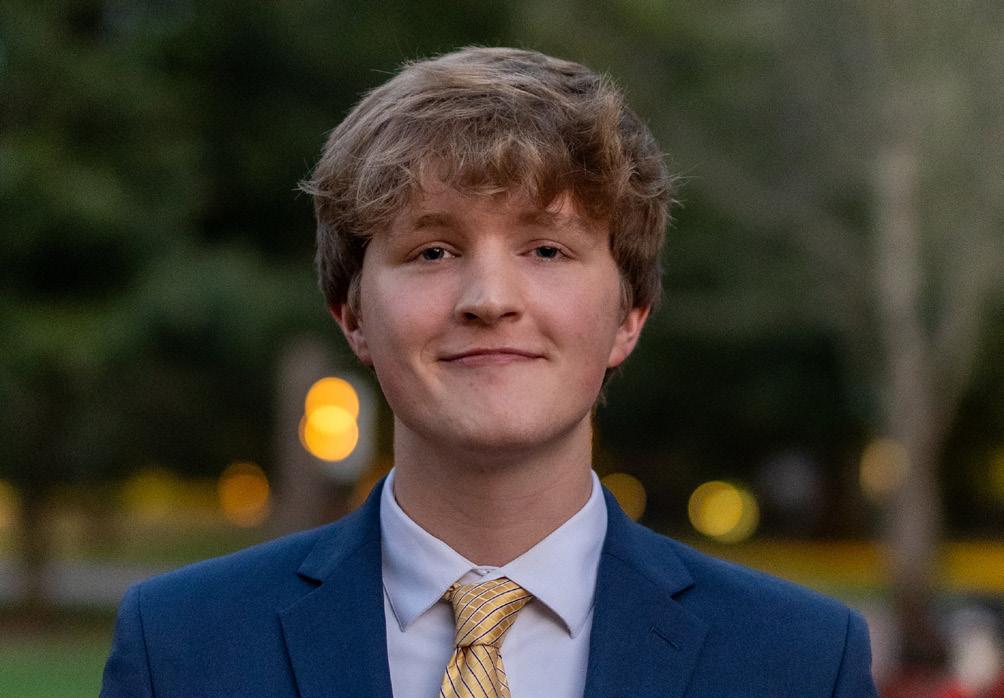
Oxford College Student Government Association (OxSGA) President Jack Steffen (26Ox) is running for SGA president. He hopes to make SGA more accessible by giving students access to feedback mechanisms and improving transparency.
His platform includes initiatives that aim to increase accountability within SGA committees so each student is aware of what SGA is working on. He also aims to facilitate a mentor program across Emory’s campuses and schools, expand dining options and support student financial aid needs.
Steffen cited Emory’s recent decision to move to a needaware admission process as creating an “equity issue” for students from underserved backgrounds. He aims to subsidize required academic platforms and create a textbook exchange program to alleviate
costs.
Steffen hopes to publish midterm reports regarding SGA expenditures, bills, resolutions and initiatives to increase transparency. Additionally, Steffen plans to bring back Diversity, Equity and Inclusion practices at Emory, protect students from federal prosecution and increase open expression rights for University community members.
Furthermore, Steffen wants to foster mentorship between upperclassmen and underclassmen across Emory’s various schools, including Goizueta Business School and Oxford College. He hopes to implement a pair-up program that connects students in similar fields of interest with each other.
Steffen also plans to enhance dining options by expanding Dooley Dollars or meal swipes to popular locations in Emory Village like Falafel King, Chipotle or Cava. He also hopes to establish 24/7 library hours during the entire semester.
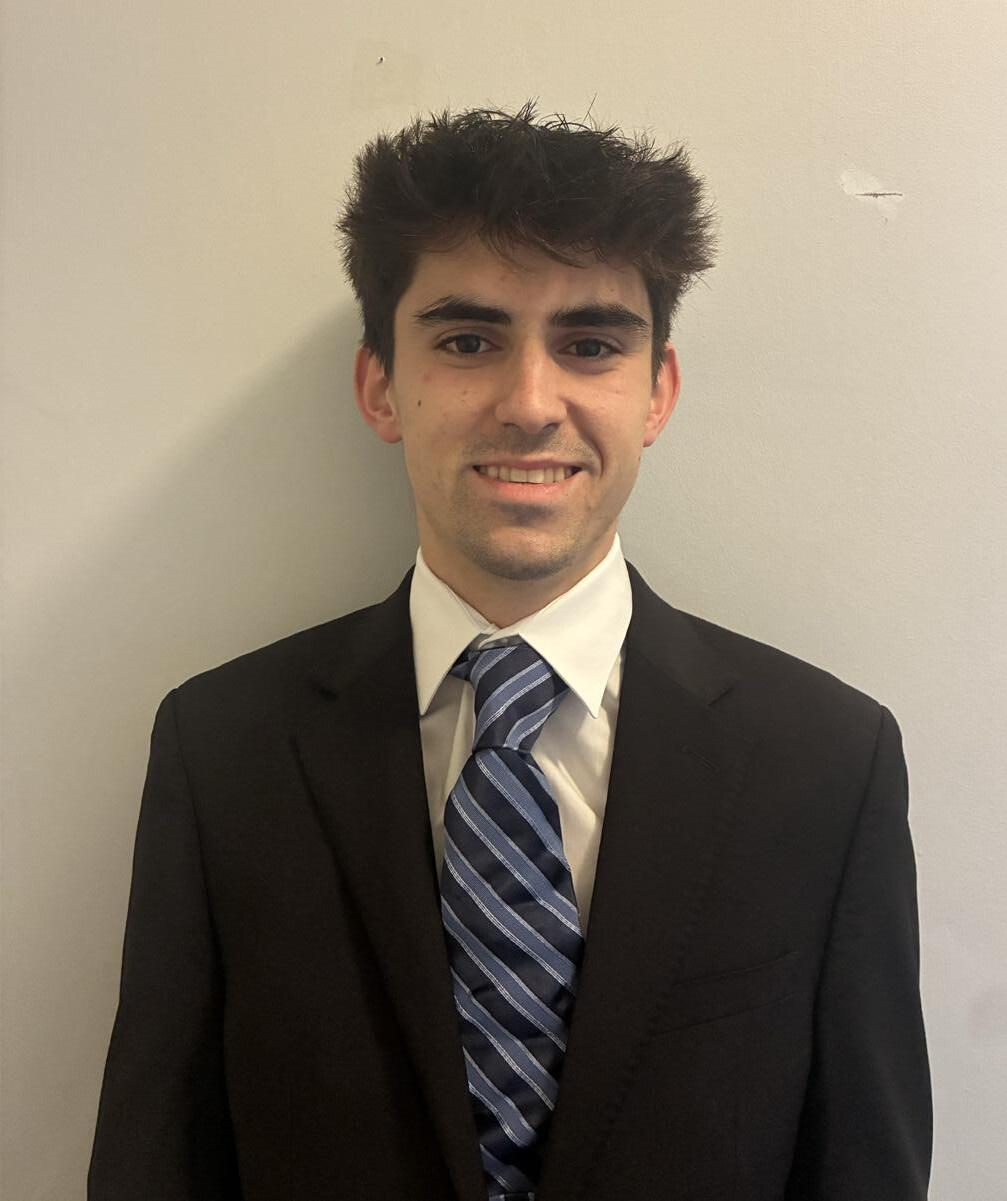
connected.
Men’s cross country and track and field athlete Ryan Van de Berghe (28C) is running for SGA president. Van de Berghe aims to strengthen Emory’s social life and community by promoting more consistent and engaging campus events. He also hopes to increase funding for clubs and put on high-quality events. Van de Berghe intends to help raise the number of annual club events and create more spaces for students to interact with one another. He hopes that these events will make Emory students feel more
To improve the overall student experience, Van de Berghe intends to both promote and simplify club registration while enabling and encouraging students to host their own events at Emory. He plans to improve communication so students can remain aware of campus events.
Van de Berghe also aims to increase the number of latenight dining options available on campus and reduce “unnecessary barriers” that could pose challenges to the ways in which student organizations operate at the University.
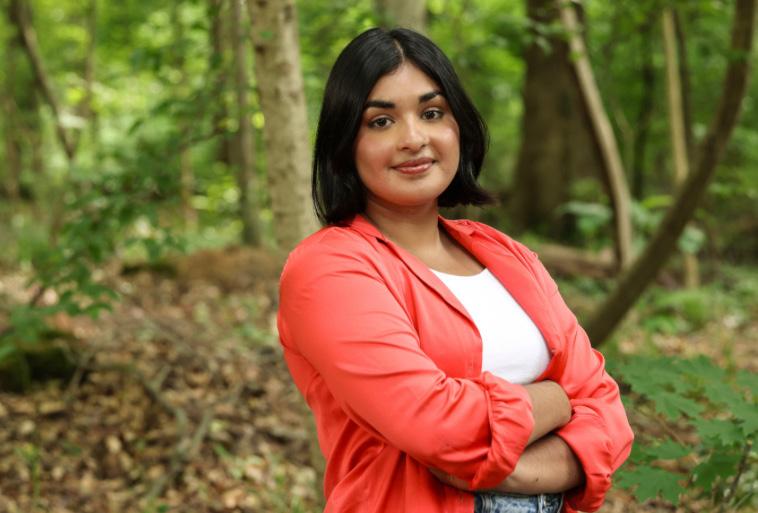
Anissa Patel
Vice President of Sustainability for SGA and University Senate Committee on the Environment member
Anissa Patel (27C) is running for SGA president. Patel highlighted three pillars in her platform: integrity, transparency and student empowerment.
Patel plans to improve accountability in SGA by establishing a standard of conduct for representatives and an enforcement mechanism for breaches in the standard.
Patel also wants to improve the connection between the student body and SGA members by holding more SGA events, inviting student groups to SGA meetings and furthering opportunities for students to interact with SGA members. She also plans on “instituting” SGA as a governing body of the University, and speaking with the Attorney General of SGA to address any issues in their governing documents.
She plans to improve transparency by making budget and policy documents accessible to the student body and publishing legislation and presentations on the SGA website. Patel also mentioned working with Student Involvement, Leadership and Transitions to create more communication channels between students and administrators.
Additionally, Patel wants to collaborate with the Office of Sustainability Initiatives, Residence Hall Association, Housing Operations, and Transportation and Parking Services to maintain a cohesive campus culture. Patel also aims to improve student transportation options by continuing the subsidized MARTA pass pilot program, promoting carpool education initiatives and creating a new transportation role in the SGA executive branch. She also hopes to improve the club management process and hopes to implement 24-hour library access during finals.
Vlad Senenko
Jack Steffen
Kalil Bennett
Ryan Van De Berghe
Looking back on past SGA presidential campaigns
Continued from Page 1
the runoff election was constitutional and the Elections Board had not overstepped its authority.
2023
SGA presidential candidates Khegan Meyers (24B) and MaKenzie Jones (22Ox, 24C) faced scrutiny on Fizz, a social networking app where Emory students can post anonymously, during the 2023 SGA elections. On the app, students expressed anger at Meyers’ critique of Jones’ statement that Title IX, a civil rights law that prohibits sex-based discrimination, was “practically in tatters,” leading students to accuse Meyers of “mansplaining” to Jones.
In the initial election on Feb. 27, 2023, no presidential candidate received a majority of the vote. Of the 1,293 votes cast, Meyers received 603 (46.63%) votes, and Jones received 398 (30.78%) votes. The Elections Board disqualified Rizky Lubis (24C), another SGA presidential candidate, on Feb. 24, 2023, for failing to submit campaign expenditure receipts but did not do so in time to remove him from the ballot. Lubis received 122 (9.43%) votes.
During the runoff election on March 2 and March 3, 2023, Meyers won by 11 votes, earning 50.45% of the 1,215 votes cast.
Later that semester, former Director of Student Involvement, Leadership
and Transitions (SILT) Lisa Loveall revealed that the SGA president, vice president, speaker and vice president of finance had each begun receiving a $2,500 stipend, totaling $10,000 in spending since Sept. 1, 2022. SGA receives the majority of its funding from the Student Activity Fee, a part of Emory’s tuition, angering some students who were unaware of the new stipends they were paying for.
2024
In the 2024 SGA presidential election, Abigail Dubinski (25B) beat Jayden Davis (25B). Dubinski received 1,059 (56.93%) of the 1,860 votes cast, and Davis received 561 (30.16%) of the votes.
Davis and his campaign manager Elijah Robuck (26C) challenged Dubinski’s victory in a complaint to the Elections Board, alleging bribery, voter intimidation, fraud and harassment. However, the SGA Elections Board found all of their claims were either false or outside its jurisdiction at a March 3, 2024 hearing.
Robuck and Davis then appealed the ruling to SGA’s Constitutional Council, the organization’s highest judicial body, which issued a unanimous decision stating that while the Elections Board was “negligent at times,” it did not “seriously” violate the SGA Constitution. Dubinski was sworn in as SGA president on April 15, 2024.
Lichtman says SGA plans to increase funding for student activities starting in 2027-28 school year
Continued from Page 1
that, it might get a little tricky if we’re not collecting enough SAF money.”
Lichtman said he aims to write up the bill for the student referendum in mid-to-late March. He said there is a “small chance” the bill might carry over into the 60th SGA, which takes office on April 6.
Gabi Yu (27B) said that SAF funding should be allocated toward initiatives where “people might actually feel a difference.” She said even if the increase is minor, the impact depends on how the money changes the student body’s experience.
“It’s not how much, it’s how you use it,” Yu said.
Cruz Maldonado (28B) said his opinion on a potential SAF increase would depend on the amount.
“Any increase in tuition is probably bad for most students, but depending on how much it is, I wouldn’t mind paying more,” Maldonado said.
Regarding communication with
the student body, Lichtman said that the current SGA has continued to emphasize financial transparency.
“If we end up increasing the SAF by a lot, it’s a lot more important that future SGAs are more transparent,” Lichtman said.
Lichtman delivered a financial report during SGA’s Nov. 17, 2025 legislative session, detailing SGA’s funding, spending and accounts.
The report publicized the majority of SGA’s financial data for the first time in recent years. He added that he plans to deliver an additional report this semester, stressing the importance of future SGAs continuing this practice.
“It’s important that students know that this sort of financial information doesn’t have to be private,” Lichtman said. “If they want to know this information from SGA, then they have that right to learn it from them.”
— Contact Tori Mooney at tori.mooney@emory.edu
The Emory Wheel
Volume 107, Issue 5 © 2026 The Emory Wheel
Alumni Memorial University Center, Room 401 630 Means Drive, Atlanta, GA, 30322
Business (404) 727-6178
Editors-in-Chief Jack Rutherford and Lauren Yee editorinchief@emorywheel.com
Founded in 1919, The Emory Wheel is the financially and editorially independent, student-run newspaper of Emory University in Atlanta. The Wheel is a member publication of Media Council, Emory’s organization of student publications. The Wheel reserves the rights to all content as it appears in these pages, and permission to reproduce material must be granted by the editor-in-chief.
The statements and opinions expressed in the Wheel are those of the authors and do not necessarily reflect those of the Wheel Editorial Board or of Emory University, its faculty, staff or administration.
The Wheel is also available online at www.emorywheel.com.
2025
In the 2025 presidential election, no candidate received more than 50% of the vote, leading to a runoff election. In the runoff, Tyler Martinez (26C) defeated Seth Weinfield (27C), earning 802 (58.36%) of the 1,374 votes. Weinfield earned 572 (41.63%) votes. In the vice presidential race, Zoe Grotjan (24Ox, 26B), who ran on the same ticket as Martinez, also defeated Maahi Sethi (27C), who ran on a ticket with Weinfield.
On April 14, 2025, Emory University’s Office of Student Conduct suspended SGA and College Council for alleged behavior “potentially constituting discriminatory harassment.” According to an email sent by Director of Community Standards and Education Victor Lopez, members of SGA and College Council allegedly violated the Student Group Accountability Framework and the University’s Equal Opportunity and Discriminatory Harassment Policy between April 7 and April 10, 2025. Lopez alleged that SGA and College Council’s actions were “rooted in discriminatory assumptions, bias, and stereotypes” in the email.
175 days after the suspension, SGA resumed its public meetings. No one has shared any additional information about the suspension with the Wheel.
2026
On Feb. 15, College Council Speaker of the Legislature Elijah Robuck (26C)
shared a Constitutional Council complaint about SGA presidential candidate Senenko with the Wheel. The complaint alleged that Senenko had improperly nominated three College Council legislators.
Additionally, on Feb. 16, an anonymous Instagram account accused SGA presidential candidate Ameer Alnasser (25Ox, 27C) of posting antisemitic content on his personal Instagram account. Alnasser dropped out of the presidential race in the morning of Feb. 18. The same anonymous Instagram account also reposted the Constitutional Council complaint accusing Senenko of nominating College Council legislators unconstitutionally. Additionally, the account alleged that Senenko and SGA vice presidential candidate Kenan Bajraktarevic (25Ox, 27C) “repeatedly ignored SGA rules and regulations for their own personal benefit.” Bajraktarevic also withdrew from the vice presidential race in the morning of Feb. 19.
In the evening of Feb. 18, the account posted an anonymous Fizz statement that accused a SGA presidential candidate of sexual assault without naming a specific candidate. The Wheel cannot verify the legitimacy of the claims.
The Constitutional Council released a decision on Feb. 18 stating that Senenko did not violate the SGA code in his nomination of three legislators. Although Senenko ran unopposed for
the presidential election, the Elections Board announced his disqualification in an email disclosing the election results on Feb. 27. Senenko failed to submit itemized receipts for his campaign expenditures by the required deadline, violating Part VI, Article 4 of the SGA Elections Code. If the Elections Board had not disqualified him, Senenko would have won the SGA presidency with 425 votes (51.02%).
As no eligible candidate won the election, the Elections Board appealed to the Constitutional Council for guidance, which ruled on March 2 that SGA would hold a special election. The election period started on March 6 and will end on March 24. On March 17, the SGA Elections Board announced on its website that five candidates are running in the special election for the presidency.
If you or someone you know experienced sexual assault, you can access Emory’s Department of Title IX at 404-727-0541 and the Office of Respect’s hotline 24/7 at (404) 727-1514. You can reach the Atlanta Grady Rape Crisis Center crisis hotline 24/7 at (404) 616-4861 and the Decatur Day League Sexual Assault Care and Prevention crisis hotline 24/7 at (404) 377-1428.
— Contact Irene John at irene.john2@emory.edu and Eileen Zhu at eileen.zhu@emory.edu
Community discusses Mexico's cartel violence in wake of spring break
By lucy BenJaMin Contributing Writer
This article contains references to gun violence.
As Emory University students return from spring break, some have had to change their plans after recent cartel violence reignited in Mexico. The violence comes after military personnel injured Nemesio Oseguera Cervantes, known as “El Mencho,” the leader of the Mexican criminal organization Jalisco New Generation Cartel (CJNG), on Feb. 22. Cervantes later died while being transported to Mexico City because of his injuries.
Samantha Weber (29C) originally helped coordinate a spring break trip to Cancun for 105 students. However, after reports of escalating cartel violence in several Mexican states, nearly 65 students dropped out of the trip.
“A lot of people were like, ‘Is this even safe?’” Weber said.
Mexican security forces collaborated with U.S. forces, including the Central Intelligence Agency, to track Cervantes’ location to a remote cabin in Tapalpa, Mexico. When Mexican troops attempted to detain him, the operation escalated and military personnel shot Cervantes. The cartel Cervantes led, CJNG, is linked to largescale drug trafficking operations.
Since the killing, violence has increased in several Mexican states, including road blockades and burning vehicles. The U.S. Department of State issued a Level 2, “exercise increased caution” travel advisory in August 2025 for parts of Mexico. The rating indicates that “there is a risk of terrorist violence, including terrorist attacks and other activity in Mexico.”
Although the immediate violence following Cervantes’ death has subsided, federal officials continue to note high crime and kidnapping rates in certain
areas.
Despite the advisory, Mexico remains one of the most popular international spring break destinations. According to the U.S. Embassy & Consulates in Mexico, thousands of U.S. citizens visit Mexico over spring break every year.
Alejandro Guardado (26G), a graduate student in the history department, linked the military operation to the “kingpin strategy,” where law enforcement targets a top leader of a drug trafficking organization to destabilize the rest of it. He believes that the Cervantes killing could destabilize more regions in Mexico.
“Similar to other killings or the arrests of other leading figureheads, this might escalate more violence,”
“The violence affects mostly regular people, the poor young people who are prey to these networks, ordinary citizens who are victims of these organizations.”
- Professor Pablo Palomino
Guardado said. “It might be seen as an opportunity for others to get involved or take over new markets, new territories.”
Following the operation, U.S. President Donald Trump urged Mexico to “step up” its efforts against drug cartels, reinforcing his administration’s goal of addressing drug trafficking across the U.S.-Mexico border.
Adee Weller (26G), a graduate student in the department of political science, said that although the Mexican military possesses a strong capacity to target drug cartels, the army also has “systematic weaknesses,” including “corruption within the military forces,” making it difficult to go after
these groups.
Associate Professor of Latin American and Caribbean Studies Pablo Palomino said that media coverage does not highlight the people who are most affected by cartel violence.
“That violence affects mostly regular people, the poor young people who are prey to these networks, ordinary citizens who are victims of these organizations,” Palomino said.
Palomino added that conversations around the U.S.-Mexico border often overlook how U.S. demand and domestic policy choices perpetuate cartel power.
“The demand for drugs comes from the United States,” Palomino said. “The weapons that the drug criminal organizations use come from the United States … There’s a tendency to outsource, to push abroad the sources of these problems, when everything, to a good extent, is of our own making in the U.S.”
Weller emphasized that cartel violence does not simply affect people in Mexico, as cartel networks operate globally.
“These events are particularly important, not only because there are millions of people living in Mexico … but this also isn’t an isolated incident that only affects people in Mexico,” Weller said. “This has reverberating effects for the stability broadly of the illicit economy across the globe.”
If you or someone you know is struggling in the aftermath of gun violence, you can reach Emory’s Counseling and Psychological Services at (404) 727-7450 or the Substance Abuse and Mental Health Services Administration Disaster Distress hotline 24/7 at +1 (800) 985-5990.
— Contact Lucy Benjamin at lucy.benjamin@emory.edu
The Emory Wheel
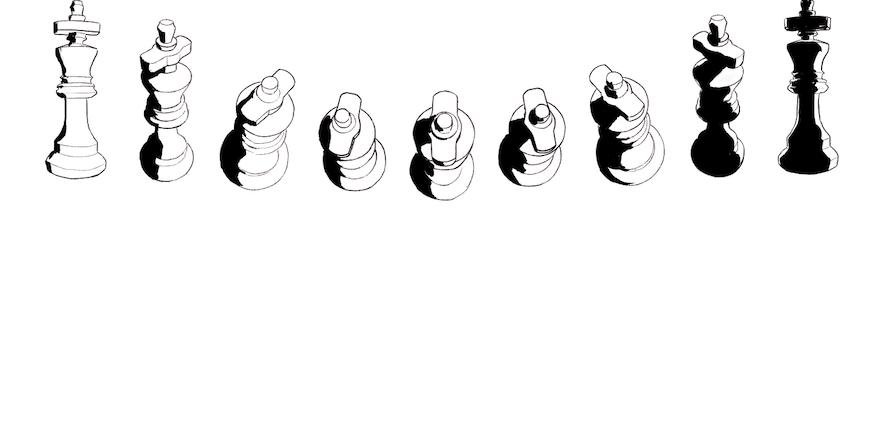
‘Revolving door’ among University leadership will harm Emory
Leadership turnover is now alarmingly systemic in higher education. In a recent Q&A with The Emory Wheel, Emory University Provost and Executive Vice President for Academic Affairs Badia Ahad explained that the higher education landscape has changed significantly over the past decade, making administrative roles increasingly challenging especially in the last five years, and pointed to Emory as part of a larger trend affecting institutions across higher education.
Emory continues to reshuffle administrators at a rate that now outpaces all peer institutions. With executive instability becoming commonplace at the University, it is easy to forget how fundamental strong leadership is to campus identity. Such a high turnover rate should be raising eyebrows. This level of administrative churn results in instability in institutional priorities and strategic planning, limiting the University’s ability to build sustained trust with faculty, staff and students.
Since 2000, presidents at peer institutions have served an average tenure of 11.9 years, with most universities cycling through fewer than three presidents in that period. Emory, by contrast, has had four
With executive instability becoming commonplace at the University, it is easy to forget how fundamental strong leadership is to campus identity.
permanent presidents in that same timeframe, each serving an average of just under eight years. Over the past year alone, Emory has seen
three deans step down, an interim university president arrive and announced several upcoming and ongoing leadership searches across its schools. Interim deans currently lead several of Emory’s schools, including Emory
ners, rapid turnover can raise questions about continuity, accountability and the longevity of strategic commitments — factors that often shape long-term investment decisions.
In an interview with the Wheel, former ECAS Dean Robert Paul attributed the extensive turnover
University.
Emory must rethink how it defines and supports effective leadership as elite institutions face federal scrutiny. A cultural shift must originate from leaders at the top.
Expectations for institu -
tion highlights a potential long-term solution as the search for a provost continues.
Emory must begin to prioritize internal appointments to promote stability, ease leadership transitions and retain committed talent.
College of Arts and Sciences, Oxford College and the Nell Hodgson Woodruff School of Nursing.
nent — Candler School of Theology
Dean Jonathan Strom and Goizueta
Business School Dean Gareth James will both step down this summer.
This trend has tangible consequences beyond administrative organization charts.
Deans play a central role in shaping a school’s identity and advocating for students and faculty at the administrative level, making sustained leadership essential for trust, continuity and long-term academic vision — conditions rarely met in two or three years.
Frequent leadership changes disrupt faculty retention, stall strategic initiatives and weaken the alumni networks that sustain academic communities.
For students, turnover translates into inconsistent priorities, delayed reforms and limited opportunities to build trust with senior leadership before another transition occurs.
Over time, this instability can influence how prospective students and families assess Emory’s appeal. For donors and institutional part-
The Emory Wheel
Jack rUtherforD eDiTor-in-Chief
Irene John News Editor
Eileen Zhu News Editor
Mira Krichavsky Editorial Editor
Joshua Glazer Opinion Editor
Crystal Zhang Opinion Editor
Mia Hamon A&L Editor
Clara Hilsman A&L Editor
Hunter Buchheit Features Editor
an institution, a culture of constant upward mobility to roles outside of its walls risks prioritizing shortterm achievements over long-term commitment.
For students, turnover translates into inconsistent priorities, delayed reforms and limited opportunities to build trust with senior leadership before another transition occurs.
The challenge facing Emory is not whether it can attract talented leaders, but whether it can create the conditions for them to stay long enough to meaningfully shape the
tions place pressure on deans during
Removing the expectations of term employment contracts with versity leaders the opportunity to create enduring growth strategies through sustained investment, collaborative governance and leadership models focused on continuity rather than constant transition.
Emory must focus on internal investments and promotions, increasing retention by elevating qualified candidates with experience in University administration and longstanding connections to the student body.
For instance, by promoting former Oxford College Dean Badia Ahad to university provost, Emory incorporated her leadership expertise and existing relationships with Oxford students into the University’s central administration.
Interim University President Leah Ward Sears (80L) extended a twoyear contract to Ahad, noting that she did not want to wait longer to find a provost.
However, Ahad’s rapid promo -
As Emory launches yet another national search for the next Goizueta dean, ECAS dean and university president, Emory must move beyond symbolic listening sessions toward structural reform.
Without addressing the systemic drivers of turnover, each new search risks becoming part of a recurring cycle rather than a lasting solution.
The challenge facing Emory is not whether it can attract talented leaders, but whether it can create the conditions for them to stay long enough to meaningfully shape the University.
Emory should pair these searches with enforceable commitments — longer-term contracts of at least five years to incentivize continuity, competitive compensation structures tied to retention and mandatory, recurring open forums between deans and the student body to foster transparency and trust.
These measures would signal that Emory values sustained leadership over resume building, and that accountability to students and faculty does not end once a contract is signed.
Without institutionalizing these safeguards, each new appointment risks becoming another temporary fix in an increasingly predictable revolving door.
ameLia BUsh ManaGinG eDiTor
ethan JacoBs ManaGinG eDiTor
siya kUmar ManaGinG eDiTor
JacoB mUscoLino ManaGinG eDiTor
chLoe nam ManaGinG eDiTor LaUren yee
Sophie Bergman Sports Editor
Sonia Liew Sports Editor
Will Peck Senior Editor
Sasha Emmerich Image Editor
Sage Buchris Photo Editor
Jack Sutton Deputy Photo Editor
Emerson Farrar Deputy Photo Editor
Saba Faisal Deputy Illus. Editor
Tiany Guo Deputy Illus. Editor Volume 107 | Number 5
tony ZhoU | Business ManaGer Business/Advertising Email business@emorywheel.com
eDiTor-in-Chief
Ethan Altshul Crossword Editor
Malk El-Abtah Social Editor
Kristen Seo DEI Editor
Angela Chan Copy Chief
Disha Kumar Senior Copy Editor
Alaina Crotty Copy Editor
Malia Yap Copy Editor
Aimee Zhang Copy Editor

The above editorial represents the majority opinion of The Emory Wheel’s Editorial Board. The Editorial Board is composed of Carly Aikens, Shreya Aithal, Editorial Board Editor Mira Krichavsky, Eliana Liporace, Pierce McDade, Niki Rajani, Meiya Weeks and Opinion Editor Crystal Zhang.
Tiany Guo/Depu T y illusTraTion eDiTor
Beyond bagels — embracing religious Judaism
By JoshUa gLaZer opinion eDiTor
Every Friday at roughly 6:15 p.m., my friend Risa and I make the 15-minute stroll from our dormitories in Hamilton and Raoul Halls to the edge of Emory Village. My friend wears a long black dress while I keep warm in khakis and a navy blue quarter zip, with a kippah — a headcovering for Jewish men — on my head. Compared to the other Emory University students in sweatshirts heading to the library or the dining hall, we stand out in our formal attire.
When we reach the Rohr Chabad House, Friday night services commence in the sanctuary. After entering, I shake hands with Rabbi Zalman Lipskier and the other attending men. In more orthodox Jewish spaces, men and women sit separately to recreate the practice of the Holy Temple in Jerusalem. I grab a prayer book and sit down as the opening prayers of the services begin. At last, I feel at home. I would not call myself religious, but I have developed a strong and close connection to God at Emory. Through classes I have taken, latenight conversations with friends and attending religious Jewish spaces like Chabad at Emory and Emory Hillel, I have been able to synthesize and tighten this relationship with God, although my faith is less about belief than it is about belonging and tradition.
I would not call myself religious, but I have developed a strong and close connection to God at Emory.
This spiritual awakening did not happen overnight. For most of my upbringing, I considered myself more culturally Jewish, a common and growing trend among Gen Z Jews in America.
I was raised in a conservative Jewish household in New York City and observed most major Jewish holidays, including Passover, Rosh Hashanah and Hanukkah. After several years of attending the New York Hebrew after-school program in elementary and middle school, I knew the basic prayers and stories that define Judaism. I listened attentively to the Torah chanted in Hebrew at the bar and bat mitzvahs of my friends and family, reading the
English translation to follow along. I was hesitant to believe all of the stories and prayers. However, curiosity for my Jewish history and identity kept me engaged and returning to spaces like the sanctuary and Hebrew school.
I attribute most of my Jewish identity and passion for Zionism and Jewish advocacy to the summers I spent at sleepaway camp, an experience I cherish from my childhood.
I attended Camp Ramah in the Berkshires — located just two hours north of New York City — ever since I was 10 years old. Camp is where I made some of my closest friends, learned how to throw a frisbee and, most importantly, escaped the city lifestyle.
Camp Ramah was also where I most frequently engaged with religious Judaism. As a camper, I ate kosher, prayed every morning and observed the Sabbath.
Even still, early on, I did not connect with the religious aspects of Judaism. During Friday night services as a young camper, I would count down the prayers and minutes until we could leave to eat Shabbat dinner.
Everything changed when I had my bar mitzvah. In August 2022, I had my own small bar mitzvah ceremony in the ancestral city of Jerusalem, right next to the Kotel, commonly known as the Western Wall, which is the most revered site in Judaism. As I chanted the verses of the Torah and danced with my family around the holy text, I felt God’s presence.
I rejoiced in celebration with the symbolic weight of my Jewish ancestors on my shoulders. It was unexpected. But it was real, and I have been chasing that feeling ever since.
My bar mitzvah sparked a new fascination: understanding religion and spirituality. Over the past few years, I have learned that in both monotheistic and polytheistic world religions, people perceive and worship the divine differently, and within religions, interpretations of God can vary significantly.
I have also found that Emory’s diversity and multiculturalism make having conversations about religion easy. Through class discussions and chatting with friends, I have learned how Christian students at Emory worship Jesus through prayer, coffee and Bible study groups.
Last semester, I took Associate Professor of Religion Ellen Gough’s Religion in the News class, where I was exposed to the major world religions and learned how various
faiths interpret God, prayer, family and worship.
Now I understand, through conversation and my own lived experiences, that God is everywhere. God can be found in the sports we play, the meals we cook, the views we cherish and, of course, in the prayers we chant. God also brings us together, from singing at the Shabbat dinner table to sharing life stories in office hours. When I think about where I find God the most, it is not just the sanctuary.
As I chanted the verses of the Torah and danced with my family around the holy text, I felt God’s presence.
I have found God within the Christmas carols I sang with the Emory Concert Choir in December 2025 and the beauty of the sunset when I departed Glenn Memorial United Methodist Church. God was there in the late-night discussions I had with friends about the true purpose and meaning of life.
In the Chabad at Emory sanctuary every Friday night, I sing prayers with my second family — prayers that my Jewish ancestors have sung for thousands of years. As a result of this discovery, I no longer fear where my life is headed. I have become more confident and loving of myself and my achievements, and I trust that God has been present in each and every moment, struggle and triumph. And to that, I can only say: amen.
On March 20, Chabad at Emory is hosting its annual Shabbat770, the largest gathering of Jewish and non-Jewish students at one symbolic Emory Shabbat dinner — and the more students, the merrier. I will be hosting a table at the event, and I encourage anyone who is interested to join me at the dinner table by sending an email. We will eat, dance, pray, share stories and sing — the ultimate celebration of the Jewish faith.
So whether you are Jewish, curious or want to make new friends, there is a seat at the table. You will truly understand what it means to be Jewish, and I promise, you will not leave on an empty stomach.
— Contact Joshua Glazer at joshua.glazer@emory.edu

Dear Doolino I left Emory for a week and fell in love!
By DooLino CaMpus overlorD
Dear Doolino,
I went to Miami with my situationship over spreak, and I think I fell in love with her. What should I do?
Sincerely, Smitten Spring-Breaker
Dear Smitten Spring-Breaker,
Congratulations! For the first time, I am confident that the wording of a submitted question would end the life of a Victorian child. As a centuriesold skeleton, it took me a moment to determine the meaning of the word “spreak,” but I now understand that you are referring to every midterm-plagued Emory University student’s wet dream — a reprieve from the drudgery of college life.
It is often touching grass that brings people such clarity, but it appears that you have determined your life’s path by touching seawater instead. I have never been a fan of the ocean, as it corrodes the calcium in my impeccable bones terribly, but to each their own, I suppose.
So, you fell in love. What a joy. Or is it? Much depends on whether your situationship feels the same, but showing her your heart is risky. By confessing your love, will you be breaking an ironclad pact to keep things strictly casual? Or have you never even uttered a single indication of attraction to your situationship, and stolen glances and latenight conversations define the term?
Either way, you are in quite the sticky situation, my fallen friend. However, do not fear. I will attempt to utilize my superior socialization skills in order to rescue you from the puppy-dog pathetic nature of a quiet, unspoken love.
The first step, Smitten SpringBreaker, is clearly manipulation. You must pinpoint her emotional weaknesses and use them to your advantage, an age-old tactic that primarily students in the Goizueta Business School practice. You must make her “sprealous.” The meaning of sprealous, of course, is “spring break jealous.” What, everyone can make ridiculous portmanteaus, but when I do it, it’s suddenly a problem? There are many ways to make someone sprealous.
I will attempt to utilize my superior socialization skills in order to rescue you from the puppy-dog pathetic nature of a quiet, unspoken love.
For one, you can make up a vacation fling. You were in Miami, where, famously, only legal activities happen over spring break. Perhaps you were in the club, getting turnt off of … seltzer water. Sit your situationship down and regale her with a fictional story of how you were pulled away from your group and spent the night with a roguishly attractive and perfect stranger, someone almost as incredible a catch as yours truly.
As you describe this experience in painfully uncomfortable detail, keep a close focus on your situationship’s eyes.
If you are lucky, a fire will have begun to burn inside of her, and she will be forced to grapple with painful jealousy

and unable to hide that she is in love with you, too.
I personally love manipulating others. However, if you are boring and against playing with the emotions of those you love, there are a few more options. For instance, you could always just tell her how you feel. Not in a mature conversation, of course — that would be uninspired. You must find a way to orchestrate a big reveal.
One way to do this would be to organize a PowerPoint night with all of your closest friends, and some enemies to spice things up a little. If you are not familiar with the concept of a PowerPoint night, let me enlighten you. PowerPoint nights involve gathering a group of people in front of a television and taking turns making your own personalized slideshow. As an aficionado of various forms of torture, I can confirm that forcing people to listen to you speak about your passions is an effective way to cause significant emotional distress. You should use it to elicit a confession of love.
Organize a PowerPoint night where everyone, including your situationship, recaps their spring breaks. When it gets to your turn, start off casually — the beach, the clubs and the blue skies — and then, once everyone is comfortable and unsuspecting, you drop the bomb: “This spring break, I fell in love.”
With your situationship seated directly in front of you, you will be able to get your feelings out and force her to respond — and do it all in front of a captive audience. Before you do all of this, however, you must look deeply inward, my sorrowful spreaker. Reflect on your relationship with this femme fatale and ask yourself if you are truly in love with her.
Vacations, as you clearly know, alter our way of seeing the world. The tides may have swept you away, and you might have mistaken them for your feelings, or maybe you confused the pain of a sunburn with the ache of a loving heart.
Give yourself at least a week to process everything that you have just experienced. You might find that you have been romanticizing being on vacation with your situationship, and she is not the right person after all. On the other hand, she might be just that. After that week of reflection, you might truly believe with all of your aching and sandy heart that your situationship is your fated soulmate.
In this case, you should tell her. After all, she might have gained the same realization over spreak, and if you never try, you will never know. Bare your heart the way you laid your skin bare to the ultraviolet rays last week, Smitten Spring-Breaker. Something beautiful could happen.
Follow your passion, make a performative Instagram post of your beach pics, and never forget: Doolino knows best.
—
Find Doolino six feet under the University Quadrangle.
saGe BuChris/phoToGraphy eDiTor
Chabad at Emory to host Shabbat dinner with Jewish and non-Jewish community members on March 20.
sa Ba faisal/Depu T y illusTraTion eDiTor
If SGA wants trust back, it must deliver results
By kenan BaJraktarevic ConTriBuTinG WriTer
Since its last election cycle in 2025, Emory University’s Student Government Association (SGA) has experienced immense disruption. After the Office of Student Conduct suspended SGA for nearly half a year due to alleged “discriminatory harassment,” along with poorly timed controversies and SGA’s overall lack of productivity, it is no surprise that 48.98% of votes cast in this year’s presidential race were for no confidence.
Emory students who voted no confidence did not act unreasonably — their opinions reflect the condition of SGA as an irreputable institution.
Currently, SGA is not equipped with the authority or the manpower to enact substantive changes, and this is evident in its current committee structure. Committees are organizational divisions within student government that serve a designated set of priorities, such as Diversity, Equity, Inclusion and Belonging (DEIB) and Finance.
Emory students who voted
on broad institutional topics rather than specific areas of student life that would provide tangible, day-to-day improvements.
SGA must restructure its committees to focus on specific issues Emory students would like to see addressed. Individual committees could cover important topics like mental health, facilities, academics or transportation, rather than subjects that are too internally focused, such as the Governing Documents committee, or those that are too broad, such as Student Concerns.
SGA should also employ and regularly meet with open committees, bodies that any student can join, not just SGA members. This type of structure allows for candid feedback, greater output capacity and provides a way to hold leadership accountable. Sticking with closed committees results in less progress and less accountability for leaders. I encourage interested voters to look at student governing bodies at other universities and see what SGA could achieve moving forward.
With the relatively inert nature of current SGA committees, the only codified positions making real impact are the appointed vice presidential positions. The 19 vice presidents manage meaningful areas such as technology and sustainability, and serve as points of contact on relevant campus issues, but they have limited operational capacity.
Compared to our peer institutions, such as Vanderbilt University’s (Tenn.) student government, Emory SGA’s committees are largely concentrated
In addition, the appointment and confirmation process for their positions leads to lackluster progress and little accountability. The process is efficient only at the start, as an appointment is much quieter and easier than a direct election, but appoint-
ments lack checks and can lead to lower responsiveness to student concerns as there is less pressure to deliver on responsibilities. SGA should place more leadership positions on the ballot rather than filling them through appointment.
Additionally, SGA has mismanaged its agenda to prioritize broader institutional policy debates over practical campus improvements. While SGA’s response to the shuttering of Diversity, Equity and Inclusion (DEI) at the University through a student referendum was an important acknowledgment of student concerns, it was not a strategic use of its time.
direct student needs while navigating wider institutional issues in a balanced, responsible manner. However, restoring trust in SGA requires more than better priorities. SGA elections have overstated the roles of the president and executive vice president because they are the only elected positions in the executive branch.
By placing a disproportionate amount of attention on these roles, elections center on candidate personalities rather than on their policies, creating sharper divisions.
Expanding the number of elected leadership positions could help distribute interest beyond the president and executive vice president, encouraging more substantive election discussions, which would foster highercaliber leadership that can rebuild faith in SGA’s ability to deliver results.
Moreover, the lack of outreach to underrepresented majors leads to a much narrower pool of candidates.
Since policy change depends mostly on University action, SGA is most effective when it serves as a bridge between students and the administration. Student government should not be unnecessarily antagonistic toward administrators on matters where they should be working together.
Above all, SGA must prioritize producing tangible improvements on campus issues where it can realistically create change, like data gathering to help address student mental health concerns, while still representing the student body on broader university matters such as DEI.
A competent SGA would prioritize
As the 2024-25 Oxford SGA (OxSGA) president, I observed that pre-law or social sciences students largely dominated student government. While such students may naturally be drawn to SGA, at the same time, the lack of representation of other academic backgrounds reflects SGA’s subpar effort to promote participation among these students.
If SGA actively seeks out all Emory students to participate in elections, it would be much more successful at bringing diverse voices to the debate stage, as well as more competent candidates. Students of all academic backgrounds should feel invited to make a difference on campus. During my term, I implemented both formal programming and informal directives
that led to increases in OxSGA leadership candidate pools. The key to that is outreach.
Ultimately, the polarizing way SGA leadership is selected and discussed has created conditions that make voting no confidence increasingly appeal-
SGA will remain impaired in its mission of promoting student interests at Emory if its institutional weaknesses remain unaddressed.
ing to students at the ballot box. Both voters and incoming student leaders should stop and consider whether the current structure of SGA truly serves the student body. SGA will remain impaired in its mission of promoting student interests at Emory if its institutional weaknesses remain unaddressed.
Although students may have lost confidence in SGA, it does not need to remain that way. By focusing on concrete results, transparency and increasing broader participation, SGA can better serve its constituency and begin rebuilding the credibility it has lost. These challenges are not insurmountable. The right guidance — whether through quality leadership or through direct university intervention — can make our SGA recognizable as an impactful, trustworthy entity once more.
— Contact Kenan Bajraktarevic at kbajrak@emory.edu



The Emory Wheel Arts Life
Fivas, Friedland sign off as editors-in-chief, reflect on the Wheel
By Shreya aithal
E ditorial B oard M EMBE r
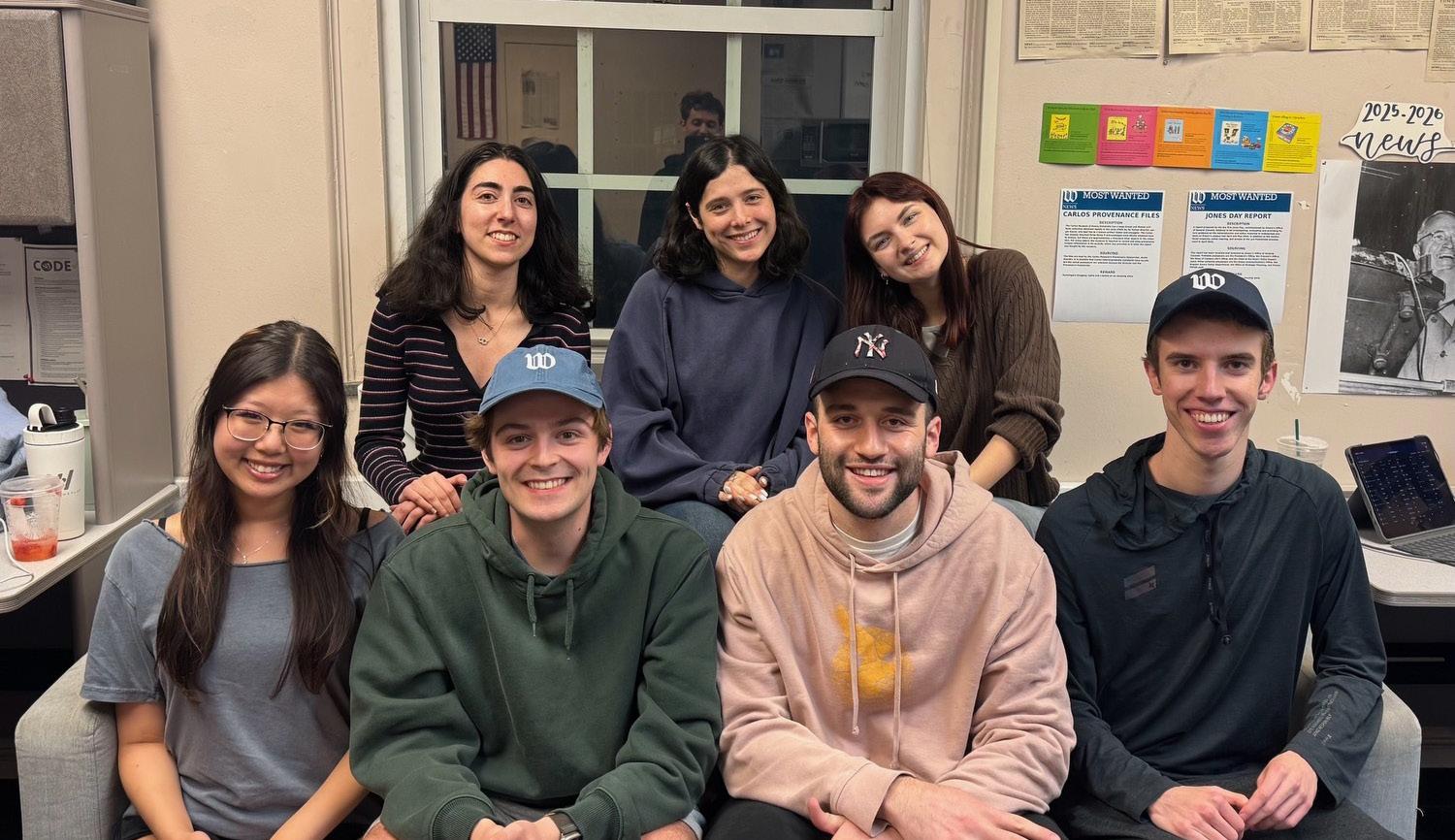
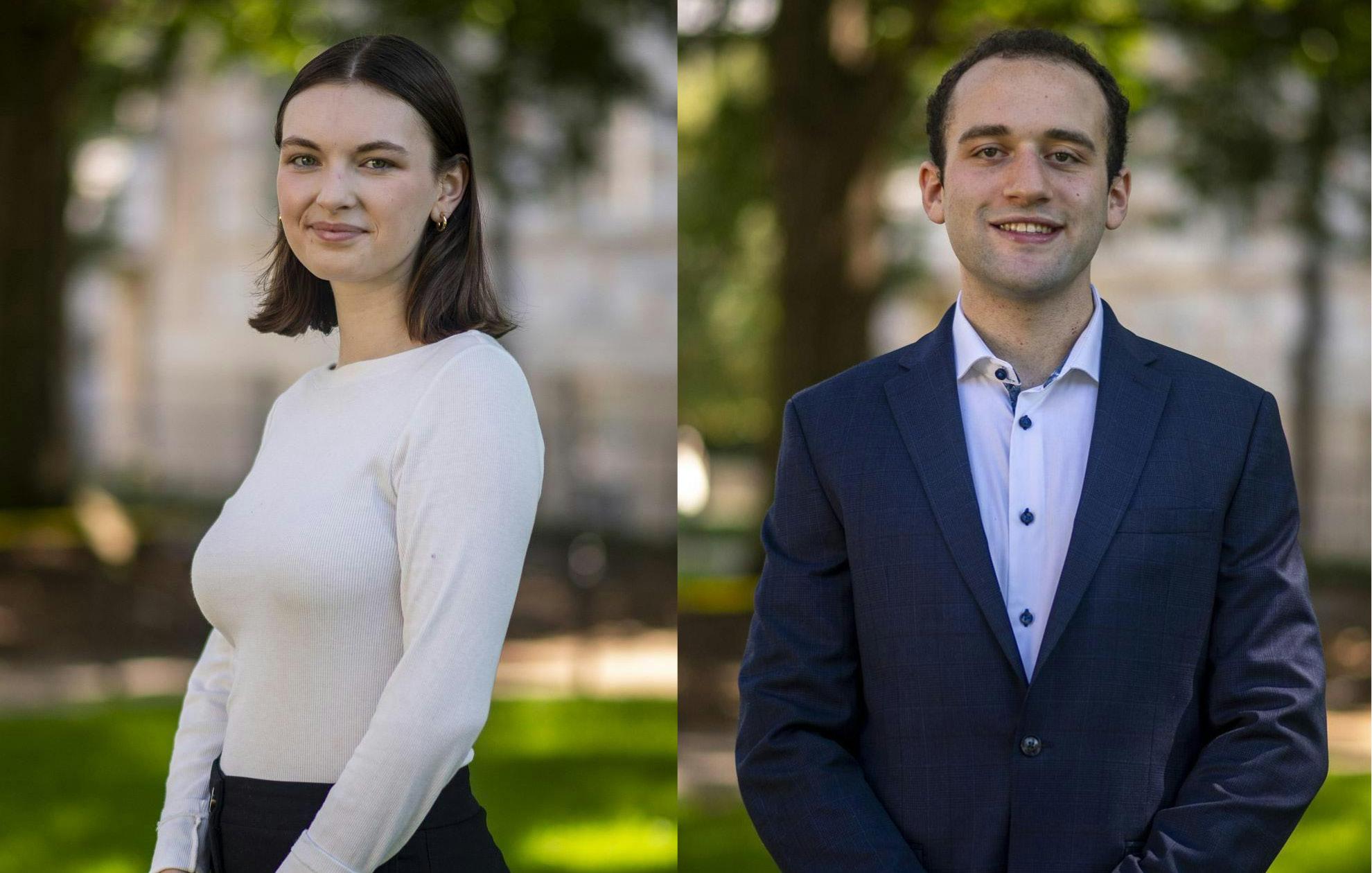
From impromptu renditions of the “Star-Spangled Banner” by Francis Scott Key (1814) to covering protests at the Centers for Disease Control and Prevention (CDC), college life is anything but predictable. When you throw journalism into the mix, unpredictability is just the beginning. At least, that is the case for co-editors-in-chief (EICs) of The Emory Wheel, Ellie Fivas (24Ox, 26C) and Spencer Friedland (25C). After four years of working at the paper, Fivas and Friedland ended their tenure on March 5.
Significant changes in Emory University’s administrative policies marked Fivas and Friedland’s tenure, from the abolition of diversity, equity and inclusion efforts on campus to changes in financial aid, such as a transition to need-aware admissions. Additionally, the duo focused on expanding the paper’s coverage and improving the Wheel’s website.
Fivas began her career at the Wheel both writing for the Opinion section and serving as an Editorial Board member, later serving as the Opinion section editor. In 2024, Fivas became the managing editor for both sections before starting her term as co-EIC in 2025. This spring, Fivas will graduate with a degree in political science and English and plans to pursue a master of science at Northwestern University’s Medill School of Journalism (Ill.).
Friedland, who began writing for the News section, served as its section editor, eventually becoming the managing editor before being elected co-EIC last spring. Having graduated early with degrees in philosophy, politics and law and film and media, Friedland will spend the remainder of the spring semester backpacking through Europe before pursuing a law degree this fall.
Fivas and Friedland sat down with the Wheel to reflect on their time as EICs and share their most cherished memories and experiences.
This Q&A has been edited for length and clarity.
The Emory Wheel: Going into this year, what were your main goals for the Wheel and yourselves as EICs? How do you feel those goals panned out?
Fivas: One thing that was really exciting about Spencer and I’s campaign for editor-in-chief is that we had a lot of big ideas. Our platform was [14] pages long — which is ridiculous in hindsight — but we were really excited about all of the things that we wanted to accomplish. That
included transitioning the Wheel into a nonprofit, that included really focusing on community here and making sure we build up positive experiences here for everyone, not just our editors but also our writers. We also were really interested in revamping our social media, making the Wheel’s content more accessible for people who didn’t want to pick up a paper copy. And really what was exciting is that we were riding the wave of being named the best small newspaper in the country by the Society of Professional Journalists. So at the heart of our plans were really to maintain the excellent coverage we’ve been doing and really keep expanding on it. In retrospect, I’m proud to say we’ve done a lot of that. We had our final exec[utive board] meeting last night and I was pondering all the things that have changed at the Wheel since we took over, and it’s incredible how much work our exec board has put into their individual sections and how that’s been able to change the experience of being at the Wheel in a positive direction.
Friedland: Ellie said it very well. I’m proud of the Multimedia stuff we were able to get done: the new website, the new social media updates, the new cameras, hiring a larger team of editors on the Multimedia side. … and just generally, I’m really proud about the content we were able to publish this year. We did a great job expanding coverage in ways that we haven’t done in the past. I know I did some things on News when I was managing editor to expand coverage to a little more reaction to global events and Lauren Yee (25Ox, 27C), the next editor-in-chief, has done a really good job at working on that as well.
TEW: This year has been marked by a lot of institutional changes, like DEI policies, Emory going need-aware and leadership transitions. What was navigating those changes like as EICs?
Fivas: From the outside looking in, you wouldn’t think that things happening at the Emory administrative level or even in national politics would impact student journalism that much, but that has certainly not been the case. Spencer and I have had to work through a lot of different scenarios that have involved national politics and people’s reactions to national politics — requests to take things down, changing expectations for journalists nationally based on the political turmoil that’s been going on. Especially at an Emory administrative level, being right there, ready to ask the hard questions about why some of these things are happening
has been both a privilege but also a burden, trying to press for answers and figuring out why things at Emory are changing the way they are. Spencer has done a lot of really great coverage of the turnover that’s been going on in administration. From my perspective, it’s incredible how much more important student journalism and journalism in general gets when people are confused and there’s a lot of change going on. We’re lucky to have had such a great team of writers and reporters and editors who have been able to go the extra mile in terms of seeking answers for some of the changes that have happened.
Friedland: I felt a lot of the time like a fireman putting out fires every day. You could definitely wake up any day of our tenure and there was something a week out or a week before that broke that changed a lot at the University. It was an incredible opportunity to cover it, sometimes though it was extremely stressful or complicated, but at the end of the day, every editor-in-chief has some of those moments.
TEW: What were your biggest challenges during your tenure?
Fivas: My biggest challenge has been remembering how to be both a person and also an editor at the same time. I came into being editorin-chief from Opinion, which meant that I had to really redirect my focus on the News section. … I came into being an editor-in-chief with a learning curve of having to figure out how to be a News reporter and how to do it effectively and also how to balance all of the work I have done at the Wheel in the past with all the work that I began to do as editor-in-chief.
I feel really lucky to have had both of those experiences while at the Wheel. Being able to go out and cover protests at the CDC, but also reflect on community issues when I was managing the Editorial Board, is a really valuable dichotomy, but that personal transition has been one of my biggest challenges.
Friedland: Being only a steward of the Wheel, only being here for a year has been very odd, because it’s unlike businesses and clubs in the amount of work and money we’re dealing with. There are lots of things that Ellie and I would have liked to
have done more of, but again, you have to realize that this is also a club, and not everyone can put 100 hours into it. There’s so much more I’d like to do for the Wheel, but at the same time, you have to give it up. I’m super excited for Lauren and Jack [Rutherford (27C)] to take it over, but it’s also like giving up my baby. It’s been very weird the last couple of weeks knowing that my time at the Wheel has been up.
TEW: What has working with each other been like this year, and what were your favorite memories?
Fivas: The parts that when I look back on our tenure as editor-in-chief, that I’ll always remember, are the moments when we’ve sat across from each other in the newsroom and had a really big problem on our hands. Those ones will always stick out, not because they were the negative experiences — although they weren’t optimal — but because it was when our ability to work together and problem solve really shined for me.
Going into being editors together, we only worked together in the sense of both leading two important sections of the Wheel, but we were able to come together and be really great partners in the sense that we listened to each other really well. We have conversations about difficult topics in ways that not only can we get solutions, but we also consider all sides. I always know that we’re having the right conversation when we disagree, because it means we’re asking the hard questions. And I feel confident about most of the decisions we’ve made, which is probably a good sign that we’ve made the right ones. And even when it got hard, I knew that if Spencer and I talked it out, then we would be able to come to a place where both of us feel positively about our discussion.
Friedland: I kind of feel the opposite. I know there were definitely hard times at the Wheel — it’s not what I remembered a week later though. I remember the late nights laughing at 3, 4 a.m., joking around, singing the national anthem at 4 a.m. while waiting to get a call back from the Walton [Press] printing office. My favorite memories are the random ones where Ellie and I aren’t really
doing anything or sitting around and just talking shop. Of course, there’s amazing memories of covering different things, but I feel like the downtime is what I’m going to miss the most. Coming onto the Wheel, I had zero friends on the paper and now I have a dozen friends that I’m very thankful the Wheel has given me. Fivas: I agree, the fun parts were fun too. One thing that’s really nice about being a co-editor-in-chief with somebody is that you’re working with somebody who cares just as much as you do about the newspaper. I don’t think that there was a second throughout our entire tenure when I felt as though either of us diverged in our love for what we do, which is a good feeling.
TEW: Is there anything else you would like to discuss?
Friedland: I want to shout out Lauren and Jack really quickly. I was their managing editor when they were both news editors, and I’m so proud that they are the next editorsin-chief. As much as I don’t want to leave and want to run the Wheel forever, I couldn’t pick any two people better to run the Wheel after Ellie and I. And I know that they’re going to do an incredible job and I can’t wait to see what they do from a different perspective of being Emory and Wheel alumni.
Fivas: At the end of all our editors’ meetings, we do this thing called shoutouts … and it’s always really lovely, because people shout people out for things they’ve done great in the past week or so. I want to give a shoutout to every single person who has contributed to the Wheel in our term, because they have all individually contributed to making it such a fantastic time for everyone and such a great paper.
I can’t say enough good things about the people who work at the Wheel. From our executive editor, Maddy Shapiro [(26C)], all the way down to someone who just wrote maybe one Sports article, everyone’s contributions are so important and that’s the reason why student
nalism works, because people keep coming back and caring.
— Contact Shreya Aithal at shreya.aithal@emory.edu
jour-
Fivas (24Ox, 26C) and Spencer Friedland (25C) and their executive board attended their final print on March 3.
nataliE sandloW/sEnior staff PhotoGra PhEr
Ellie Fivas (24Ox, 26C) joined The Emory Wheel through the Opinion section and Editorial Board, whereas Spencer Friedland (25C) first reported and edited for the News section.
‘Spring is coming’: Usher in the season with these staff selections
By artS & life Staff
Spring can be a work of art. As the rain dramatically pours in roaring cascades and flowers fiercely bud, sunsets begin to resemble beautiful paintings more than just a day turning to dusk and students resting on the Emory University Quadrangle appear more like shots from a movie than scenes from reality. These moments reflect one simple fact: Spring is coming. And March 20 marks the first official day of the season — Punxsutawney Phil has nothing on us now. Finally free of the prolonged winter America’s loved and loathed groundhog placed us in, there is no better way to embrace the return of sunshine, gentle breezes and Atlanta greenery than with music. So, trade snow and puffer coats for sunshine and swimsuits, and celebrate this season of change with these staff selections.
‘I Forgot That You Existed’ by Taylor Swift (2019)
I have always thought my long-term memory is better than my short-term memory. Perhaps this is a side effect of my ADHD, or maybe it is simply my mode of operating. Regardless, there is one exception: my love of spring and hatred of winter. In the depths of winter’s harshness, when my car is covered in a thick, unbreakable coat of ice and the snow turns to a disgusting shade of gray slush, it feels as if spring may never come. But when it finally and inevitably does return, I tend to live in the moment, something Taylor Swift encourages on her 2019 track
“I Forgot That You Existed.”
a gentle breeze, Caroline Polachek captures my feelings with her candid words in “Spring Is Coming With A Strawberry In The Mouth.” This track reflects Polachek’s unique production style and songwriting, blending a clattering drumline and arbitrary beats with a pulsing synth as a backdrop to dreamy, monologue-like vocals.
With winter’s desolate air fading, Polachek frankly admits to her past failure in love but optimistically submits to its air of possibility, singing, “Dear Louise / There are so many things I want / But mainly / And like everybody / I want, I want, I want, I-I want to be loved.” Incorporating lyrics from her 2023 song “Blood and Butter,” inspired by love and its rebounding nature, Polachek punchingly sings — on both tracks — “And what I want is / To walk beside you / Needing
ing their own strength, beauty and capacity for change. For Musgraves, during the spring, April showers will soon come to an end and May flowers will bloom once again. As Musgraves sings, “There’s always been a rainbow / Hanging over your head.” All you have to do is look up.
— Jacob Muscolino, Managing Editor
‘Thunder Road’ by Bruce Springsteen (1975)
When spring rolls around, there is only one thing on my mind: golf. I picture a crisp, blue-skied morning, standing on the tee box with a driver in hand. I take a deep breath to focus, but I am interrupted by
of change and sacrifice than this Winter classic. More importantly, this track has defined the past four months of my life, with its lyrics on an endless loop in both my mind and my Spotify. Needless to say, I am elated about the possibility of listening to this song surrounded by blossoming trees, perfect weather and love that takes years to form.
— Sammy Brodsky, Senior Staff Writer
‘Everybody Loves the Sunshine’ by Roy Ayers Ubiquity (1976)
My quintessential song of spring, “Everybody Loves the Sunshine,” captures the joy that arrives when gray skies give way to blue and bare
new season: “Funny how a melody sounds like a memory / Like a soundtrack to a July Saturday night,” Church sings. Even if country music is not your usual genre, this track is worth a listen when February suddenly feels like April. After all, there is no better way to celebrate the start of spring than with an ode to Bruce Springsteen himself.
—
Sonia Liew, Sports Editor ‘Fleeting’ by Sarah
(2025)

Swift writes the song about a friend-turned-foe, but the messaging still fits my circumstances. Spring is about forgetting past hardships while learning to embrace growth. With each new budding flower or other springtime cliché, the season practically forces this idea down our throats, shoving it in our faces. But that does not make it wrong. Swift opens the track, singing, “How many days did I spend thinking / ’Bout how you did me wrong, wrong, wrong? / Lived in the shade you were throwing / ’Til all of my sunshine was gone, gone, gone,” finally realizing her festering anger only hurts herself. By the end of the track, Swift assumes a new outlook on life: “It isn’t love, it isn’t hate, it’s just indifference / So, yeah.”
While colloquial and silly, Swift teaches us that, just as the seasons change, we, too, should embrace transformation, specifically, in relation to our mindsets. When this track plays, I forget my loathing for the cold and focus instead on my gratitude for the warmth. So, this spring, forget about past resentments, and look towards the future instead — I hear it’s sunny.
— Amelia Bush, Managing Editor ‘Spring Is Coming With A Strawberry In The Mouth’ by Caroline
Polachek (2024)
When spring arrives, it is undeniable. An instinctual part of your mind and body unites in celebration, grateful for the blooming flowers and the blue skies. Spring is a time of revitalization for much of the world and our senses — including our taste buds.As a child, when spring approached, bringing with it sunny days and clouds of pollen, I rejoiced and dragged my mother to our local farmers market seeking one thing only — strawberry ice cream. Now, far from home as the sun shines with
nothing / But the sun that’s in our eyes.” Despite the lyrics’ melancholic tone, Polachek welcomes the sadness to wash over — in a way, cleansing her, preparing for a rebirth. She allows the listener to reminisce about winter while promising warmth, singing, “Spring is coming / Spring is coming.”
So let go, soak up the sun and indulge in your favorite ice cream, for the best is yet to come.
— Mia Hamon, Arts & Life Editor ‘Rainbow’ by Kacey Musgraves (2018)
It is an aphorism that in the wake of April showers, one will see May flowers. For me, springtime remains tied to a feeling of liberation. Spring is a moment of renewal, when one can exchange darkness for light and cold solitude for warm companionship — a reawakening and renaissance. Kacey Musgraves revels in resilience when singing about a shattered past in “Rainbow.” In the resounding finale of her album, “Golden Hour” (2018), Musgraves finds hope in a technicolor sky and leaves behind a past filled with despondent monochrome.
While a cathartic piano flourishes, Musgraves longs for an end to hardship in deep, tender vocals, “It’s hard to breathe when all you know is / The struggle of stayin’ above / The risin’ water line.” And while the instrumentals are beautiful, on “Rainbow,” silence is just as powerful. Musgraves pauses and breathes in the pre-choruses, painting a landscape of rainfall subsiding and clouds shedding as she enters the song’s captivating chorus. For Musgraves, calmness and bravery come from within as she indulges in self-empowerment over a solemn and thunderous piano score. “The rain and wind stopped blowin’ / But you’re stuck out in the same ol’ storm again / Let go of your umbrella,” Musgraves sings.
Musgraves empowers listeners to weather any storm by recogniz-
a wailing harmonica from Bruce Springsteen’s “Thunder Road.” My shoulders instinctively relax with my eyes locked onto the bermudagrass fairway. Springsteen, nicknamed The Boss, enters the track: “The screen door slams, Mary’s dress sways,” a line that I have been singing for years. The band’s momentum swells, and Springsteen offers himself as Mary’s last option, singing, “Waste your summer praying in vain / For a saviour to rise from these streets.” It is now or never for Mary. The fairway is wide open. I bring the club up to my shoulders, load my weight and swing. The ball soars into the clouds. Springsteen commands: “Roll down the window / And let the wind blow back your hair.” I toss the club into my bag and whip the golf cart along the path as fast as I can — chasing heaven, freedom and my dimpled golf ball that awaits me in the distant grass. On sunny spring mornings, you do not wait or pray for a savior — you just take the swing.
— Joshua Glazer, Opinion Editor
‘Love Takes Miles’ by Cameron Winter (2024)
Spring is a season commonly filled with romance, sunshine and geese. On “Love Takes Miles,” Cameron Winter synthesizes those three elements into the ultimate anthem of love and dedication, and, yes, spring. The song begins with a subtle horn and mellow drums, while this generation’s Bob Dylan, Winter, poetically describes love’s effects on a person, as “Love will make you fit it all in the car,” describing the responsibilities of a relationship. Winter’s lyrical ambiance in the first verse blossoms into a euphoric chorus, with a lively piano melody backing his stellar vocals as he vibrantly expresses the hopeless remarks of being “lonely as hell” while frankly singingsinging that “Love takes miles (Love takes miles), love takes years.” As we transition from Atlanta’s unpredictable winter to a time of beauty and wonder, no song better backs the ideals
branches bloom with life. It reminds me of the thoroughfares near my house in Charlotte, N.C., where massive oak trees line the busy streets. I know spring has truly arrived when it feels natural to be enveloped under the shade of a sprawling canopy. I cannot wait to drive with the windows down, shaded by those trees, blasting Roy Ayers Ubiquity just as a bright ray of sunlight hits my face.Ayers chose the band name Roy Ayers Ubiquity to encapsulate his musical range, a testament to his genreless and soulful music. To me, spring represents a season with unlimited range, with a half a foot in winter as we step into the warmth of summer. Spring is a season bursting with new life, opportunities to enjoy the outdoors and a sense of freedom. As Roy Ayers recites the catchy chorus “My life, my life, my life, my life / In the sunshine / Everybody loves the sunshine,” the bandthe band lives up to its name, capturing the ubiquitous feelings of joy, optimism and liberation that permeate through all of us as spring comes.
— Ethan Jacobs, Managing Editor ‘Springsteen’ by Eric Church (2012)
My favorite thing about Atlanta is that I can listen to “Springsteen” with the windows down in early February, a nice contrast to my home in the totally sunny, definitely not windy Chicago, where the month brings warm subzero temperatures. I am no country fanatic, but there is something about that first warmish day when it suddenly feels socially acceptable to blast this song and enjoy life. After all, we are in the South — the heart of country music. The song opens with the gentle strum of a guitar accompanied by soft piano, a pairing that perfectly captures the warmth and ease of early spring. Eric Church understands how to bottle the nostalgia that arrives with longer days and warmer air. The lyrics encapsulate the familiarity that accompanies a
Kinsley
In my home state of New Jersey, spring lasts for approximately a week. Temperatures only reach 70 degrees in May, and by Memorial Day weekend, summer is in full swing. Rarely do I get to experience spring’s quintessential rhythms — walking around in a short-sleeved T-shirt, feel - ing the warmth nestle on my skin. So while the long-anticipated and short-lived season may seem like a letdown, and a song titled “Fleeting” could easily feel like a taunt to my face, it is quite the contrary. In the post-chorus, Sarah Kinsley repeats, “It’s not forever, it’s just a feeling / It’s not forever, it’s only fleeting,” reassured that better days are to come. I cannot change the weather in the “Garden State,” but I can forge ahead and away from the stubborn pull of seasonal depression.After all, spring is, if anything, an encapsulation of optimism and rebirth. As Kinsley echoes in the outro, “Things will turn around, they will turn around / It’s not forever, it’s just for now,” she reminds me that although spring is, in fact, fleeting, its true beauty lies in the change it brings — something that can only be appreciated in the foreground and wake of it all.
— Evangeline Park, Music & Live Art Desk
‘Buttercup’ by Jack Stauber (2017)
Spring is a reunion — an electric one at that. The sun reclaims its place in the sky, breaking through winter clouds and reuniting with the greenery that shriveled in its absence. Animals emerge from hibernation, and birds chirp with newfound energy. In his track “Buttercup” from his 2017 album “Pop Food,” Jack Stauber captures this rejuvenating sensation — the first deep breath of springtime air as the world thaws and slowly returns to life. Opening with a mellow, murky guitar, “Buttercup” quickly dissolves into a sweet, sunny haze of Stauber’s voice drifting above a muted synth instrumental. With a warbling delivery, Stauber acknowledges his lover’s magnetic pull: “Can’t look at your eyes / Without sparking some…,” he sings. Stauber’s lyrics and vocals are endearingly off-kilter, evoking the unsteady steps we take outside on the first warm day of a new year. The chorus itself sizzles, as Stauber gives in to the undeniable chemistry between himself and his lover: “Electrify my heart-art-artart-art-art-oh-ooh-ooh,” he sings, with an inflection just as exhilarating as new love, a new season, or both. Stauber delves headfirst into the daze of springtime, of new beginnings and unexpected revelations. “Surprise, I’m in the same time, o-ah / Beneath the same sun (Oh, yeah),” Stauber sings, honing in on the joy of reunion. Similar to a March sunset drive through a glowing countryside, “Buttercup,” like spring, is sweet — and dreamy in every way.
— Hunter Buchheit, Features Editor
tiany Guo/dEPuty illustration Editor
Aahil Makhani blends business, trivia, competes on ‘Jeopardy!’
By hunter Buchheit fEaturEs Editor
On a sound stage, bright lights shone down on Aahil Makhani (27B), a first-year Master of Business Administration (MBA) student at Emory University’s Goizueta Business School, as he prepared to compete on the television quiz show “Jeopardy!” (1964-).
“My mom tells me stories of when I was a baby, taking a screwdriver and opening up our VCR because I wanted to figure out how it worked.”
— Aahil Makhani
Makhani, however, is not your average trivia whiz. His appearance on the program culminated a decades-long love for problem solving that extends far beyond memorizing the obscure factoids with which “Jeopardy!” challenges its contestants.
Born in Karachi, Pakistan, Makhani moved to the United States at the age of two, growing up in Birmingham, Ala., where curiosity shaped much of his childhood.
“My mom tells me stories of when I was a baby, taking a screwdriver and opening up our VCR because I wanted to figure out how it worked,” Makhani said.
Makhani also helped his father run a gas station during his younger years, contributing to his quest for knowledge as he observed firsthand the details that kept the small business
running — managing inventory, coordinating with vendors and cultivating customer relationships.
Working alongside his father sparked Makhani’s interest in business, especially regarding supply chains.
At Auburn University (Ala.), his undergraduate alma mater, Makhani entered as an engineering major before settling on supply chain management, which he felt had the people-oriented focus he craved.
Outside of his academics, another passion took shape. Makhani deepened his love for problem solving by competing in Quiz Bowl throughout middle school, high school and college. Trivia was innate to him, and inquisitiveness came naturally.
“It’s less that I chose to get into trivia, and more so that, the way I operate, it doesn’t make much sense to me not to know these things,” Makhani said.
Makhani’s interest in trivia changed shape while he lived in Savannah, Ga., as a postgraduate student working for Target.
Outside of his weekend shifts, Makhani played trivia at a local bar with his coworkers on Monday and Wednesday nights. Eventually, the host asked Makhani if he wanted to lead the trivia nights himself, and he accepted the offer. After four years of hosting in various cities around Atlanta, Makhani embarked on his next challenge: competing on “Jeopardy!”
According to Makhani, the process to secure a spot on “Jeopardy!” is “easier than it used to be.” After two written exams and a screen test, the show selected Makhani to participate.
In contrast to Quiz Bowl, a teambased endeavor, “Jeopardy!” is a solo competition — competitors must be self-reliant.
The contestants must also be generalists with their knowledge, while Quiz Bowl contestants often focus on particular areas of expertise. “You have to depend on yourself to get the
answers, and so you have to be a little broader in scope,” Makhani said.
To prepare, Makhani studied the show’s most common categories, including presidents and geography. His preparation overlapped with another major challenge: searching for an internship.
However, despite the busy schedule and finishing with $0 after a $4,800 wager, Makhani enjoyed his time on the show.
“After having worked in and around the supply chain, I saw that, oftentimes, people on the ground floor, their ideas and opinions, kind of get overlooked when strategic decisions are happening.”
— Aahil Makhani
Now, with the thrills and nerves of competition and interview season behind him, Makhani looks forward to the rest of his time at Goizueta. As a graduate student, Makhani appreciates the MBA program’s small class sizes and opportunities to connect with alumni.
He hopes to continue his mission of making positive change in his future workplace.
Aahil Makhani (27B), who for the past four years hosted trivia nights, competed in “Jeopardy!” season 42.
“After having worked in and around the supply chain, I saw that, oftentimes, people on the ground floor, their ideas and opinions, kind of get overlooked when strategic decisions are happening,” Makhani said. “So I wanted to bring those voices up and actually have an impact on the work they do.”
Through his involvement with Goizueta’s Business & Society Institute, Makhani advocates for that same positive change, particularly by confronting the status quo in work environments. He hopes to live out that commitment in his day-today life by engaging in meaningful conversations.
“I try to take up that role in workplaces, when I can, of not being afraid of challenging the going narrative of ‘This is the way it is,’” Makhani said. Whether navigating discussions about workplace equity or waiting to buzz in on a tough trivia question, Makhani remains level-headed. As he looks toward the future,
Makhani keeps one principle in mind: Business centers around helping people.
“It’s very easy for an accountant or a [chief financial officer] to reduce people to numbers and figures on a spreadsheet,” Makhani said. “But at the end of the day, people are affected by every decision you make in business.”
As Makhani prepares for his next chapter in consulting, he will continue to collect knowledge, be it about Shakespeare or supply chains — guided by the curiosity that drives him to understand the systems around him.
– Contact Hunter Buchheit at hunter.buchheit@emory.edu
Inspiration eclipses entertainment in ‘The Secret Lives of Mormon Wives’
B y J aco B M u S colino
M ana G in G E ditor
This article contains spoilers.
If TikTok can teach us anything, it is that the internet uncannily obsesses over “tradwives.” The paradoxical lifestyle — women who blend traditional domesticity with modern ideas of womanhood — captivates followers. Whether preparing nearly everything from scratch or starting a successful business, “tradwives” reckon with what it means to be a traditional woman in the 21st century.
From Nara Smith to Hannah Neeleman, these aesthetic homemakers generate significant traction online. Therefore, it is no surprise that reality TV fans and social media consumers alike indulge in “The Secret Lives of Mormon Wives” (2024-), a show in which Mormon mothers attempt to straddle the line between tradwife and girlboss.
The fourth season of the show, released on March 12, follows the cast of nine Mormon mothers as they pursue careers while navigating difficulties in their faith, families and friendships.
Taylor Frankie Paul, the show’s star, coined the term “MomTok” in 2020 to build a social media base for Utah’s Mormon mothers.
The group initially gained notoriety and national attention after Paul exposed a swinging scandal within her group in 2022, in which multiple married couples, including Paul and her former husband, swapped sexual partners. This became the focus of the show’s first season.
Since its 2024 premiere, the women amassed millions of followers across social media platforms, embarked on new business ventures and even pursued Hollywood careers. While the first three seasons focused on rela-
tionship conflicts, season four highlights the professional successes of “MomTok” and the unfortunate struggles that accompany such fame.
The abrupt shift in theme is a progressive change for a somewhat regressive reality TV show. While positive in some respects, it ultimately reduces the show’s entertainment value by removing much of its characteristic tension and some of its most interesting moments.
The new season begins on a shockingly brighter note than season three’s focus on infidelity, trauma and mental health.
Since the show left off, Jennifer Affleck and Whitney Leavitt each achieved their lifelong dream of being cast in “Dancing with the Stars” (2005), Mayci Neeley released her autobiography, “Told You So”(2025) and “The Bachelorette” (2003-) announced Paul as their next star.
Season four encapsulates and explores the challenges women face as they navigate career opportunities while contending with harsh expectations to prioritize motherhood and marriage. In the season’s most vulnerable storyline, Mikayla Matthews endures emotional turmoil as her traumatic past and chronic illness resurface, disrupting her marriage and career as an influencer.
In earlier seasons, the women’s careers functioned as a backdrop to their more personal lives, but now, they become central to the show. The shift is enticing and even inspirational, but largely fails to provide entertainment for viewers.
The series also delves into the deeper relationships between the “MomTok” women as they support one another while battling both professional and personal obstacles. While shows of a similar nature, like “The Real Housewives of Salt Lake City” (2020-), capitalize on drama between women,
“The Secret Lives of Mormon Wives” breaks this longstanding trend.
In both professional and personal settings, the women show up for one another, through interviews, therapy sessions and hospital appointments.
The camaraderie among the “MomTokers” feels earnest and bucks the insincerity of previous seasons, making the viewer care more about the women’s bonds with one another.
However, this sisterhood is neglected at times as “DadTok” overtakes the screen.
While these men are occasionally entertaining, their unengaging scenes provide the best time for a bathroom break.
Not only are the husbands’ onscreen moments boring, they reinforce the toxic masculinity that is ruinous to this season’s more feminist intentions. The title, “The Secret Lives of Mormon Wives,” is the show’s purpose: to explore the behind-the-scenes experiences of women whose struggles are often silenced. Granting more screen time to “DadTok” feels both old-fashioned and pointless.
The fathers’ integration into the series reflects a broader problem with season four: drama and entertainment taking a backseat. In its earlier seasons, the series attempted to showcase inspirational storylines while also feeding the audience juicy fights, gossip and clandestine rendezvous — factors that make the genre so entertaining. For season four, the producers skimmed over conflicts, such as when Leavitt missed out on Neeley’s book launch event or when Demi Engemann and Affleck renewed their previous rivalry. Where the producers could have highlighted how the wives address internal conflict, they instead left viewers with hours of dull career-focused storylines, not the screaming matches or shocking reveals promised.
Drama should not be taboo — it reflects real life, and reality TV should parallel that.
The genre’s beauty lies in allowing the audience to sink into someone else’s life for a few hours, forgetting one’s own personal challenges in the process. The show should continue to bring the world resilient, harrowing stories of womanhood, but be careful not to let these journeys eclipse the drama that arises from life’s complexities. As the show’s earlier seasons revealed, there is a way in reality TV to feature personal and collective growth
while also stirring up enticing drama. This balance defined the popularity and appeal of “The Secret Lives of Mormon Wives,” but the fourth season struggles to recapture the strength of its first three. Despite this, the “tradwife” fad continues to enchant audiences, drawing them to the show, so consider witnessing how social media trends meet television in this acclaimed series. You may just be led into reality TV temptation.
– Contact Jacob Muscolino at jake.muscolino@emory.edu

‘Never Really Over’: 5 tracks celebrating change
By AmeliA Bush M anaging E ditor
Amid the wide range of human emotions, change can sometimes ignite the most daunting ones. When life shifts, it can feel unending and permanent. But, while terrifying, new beginnings can provoke some of life’s most meaningful moments. From entering new roles to making new friends, lived experience is what we make of it. So, I present five tracks to embrace new beginnings, because while scary, the beauty of change cannot be ignored.
‘Changes’ by David Bowie (1971)
With such an on-the-nose title, it would be remiss of me to discuss the topic of change without mentioning David Bowie’s 1971 track “Changes.”
On my first day of junior year, my high school physics teacher played “Changes.” Mr. Kaback tied each discussion of velocity or magnetism to Bowie singing “ch-ch-changes,” ultimately reminding us of the course’s central theme: change. While physics has not entered my mind in years, just the thought of the word “change” brings me right back to that thirdfloor classroom with Bowie and Mr. Kaback. Now, as a sophomore in college, the track no longer represents Newton’s laws — it reflects my own journey toward accepting growth.
Bowie eases the listener in with a budding piano that escalates into a humming synth, which quiets as his voice enters the track, reflecting, “Still don’t know what I was waiting for.”
Bowie approaches change with both peace and energy, with passionate vocals alongside calming lyrics. In “Changes,” Bowie is content with his current circumstances — however, he longs for a fresh start, urging the listener to “turn and face the strange.” After all, when one does face the oddities of life, they may find they are not quite as scary as they may seem. While even the physical may alter with time, certain things remain constants, never leaving us. “I watch the ripples change their size / But never leave the stream of warm impermanence and / So the days float through my eyes / But still, the days seem the same,” Bowie sings, comforting the listener amid times of uncertainty and alteration.
In an upbeat chorus, Bowie rebels against change itself, singing, “Ch-ch-changes, pretty soon now you’re gonna get older / Time may change me, but I can’t trace time.” Bowie takes charge of his own life, refusing to be defined by nature’s confines, remaining impervious as the jarring beat pangs, enunciating each word he sings. Bowie resists the negative connotations associated with transitions, while a beautiful, soft saxophone line alters in cadence as the track closes.
‘Mess It Up’ by Gracie Abrams (2021)
My first listen to “Mess It Up” by Gracie Abrams and my discovery of the loop function on Apple Music happened simultaneously. On a particularly bad day, as I walked to Summit Coffee in Emory Village during my freshman spring, the track repeated, incessantly. Unsure how to undo this loop, I accepted it as a fact of my circumstances. Trekking through the pouring rain, eager to meet up with my friends, I realized I no longer wanted to correct my mistake.
The water pooled and creeped into my shoes, on my legs and into my headphones. With the track so instilled in my brain and motions,

I wanted to touch the lyrics, and on this day, they took the form of raindrops.
With a hint of uncertainty throughout, Abrams recognizes her own faults as she reflects on a past relationship. “Doesn’t feel bearable / Guess I thought when I left, it would all stop / Hmm, it would all stop,” Abrams sings. Yet, despite the presence of her pain throughout, the song — and Abrams herself — continues. A sharp, quick guitar intensifies during the chorus as Abrams’ emotions escalate, before suddenly halting as she sings “I just go mess it up.” On the bridge, her high-pitched vocals layer atop themselves, equally pounding, visceral and moving — a roaring pattern that reflects the chaos within change. With “Mess It Up,” Abrams wishes for things to stay the same while recognizing life’s temporal, unpredictable nature. It was no longer raining when I left the coffee shop, and although I thought my sadness would be everlasting, it eventually faded. Because while it would be nice, and certainly simpler, for transformations to be linear, oftentimes they are not. In fact, occasionally it takes messing a few things up before finally getting it right. While uncomfortable at times, and at others, unbearable, Abrams teaches us that change is necessary to grow.
‘How To Live’ by Del Water Gap (2025)
Abrams recognizes her mistakes and messiness while still begging for different circumstances, but indie musician Samuel Holden Jaffe, also known as Del Water Gap, takes a different approach. He embraces life’s disarray in its entirety. On “How To Live,” the musician provides a space to work out life’s wrinkles, an antidotal realness as he craves exploration rather than stagnation.
For Del Water Gap, life is a learning curve that is nonlinear, confusing and full of change. Most characteristically, Del Water Gap is honest with the listener throughout the track, detailing his own flaws and fears. He unabashedly states that he tends to play the victim in relationships while also admitting the shame he feels in being alone.
He does not utter these thoughts with embarrassment, but with a grave acceptance. Del Water Gap sings about “Figuring out just how to live” by describing life through phases of making money and finding love. Because, for him, life is not about singular events or moments of chance — it is about seeking the unknown through lived experiences. He shares his wisdom with the listener, singing “But there’s gold under the rust.”
While the title suggests the track will be a how-to guide for living, the true message is much simpler — amid new beginnings, one thing remains constant: We are all simply figuring it out.
‘Never Really Over’ by Katy Perry (2019)
It can be easy to view change as synonymous with endings. And yet, Katy Perry defies this expectation in
her 2019 track “Never Really Over.” While some may look at a subsiding relationship as a forever goodbye, Perry fights back.
With a tongue-twister, whirlwind of a chorus, Perry sings, “Just because it’s over doesn’t mean it’s really over / And if I think it over, maybe you’ll be coming over again / And I’ll have to get over you all over again,” justifying her thoughts while simultaneously spiraling within them. Perry’s lyrics reflect a simple truth: Confronting endings is possible. As Perry candidly admits to her past failures, she opts to focus on the positives, singing, “Oh, we were such a mess / But wasn’t it the best?” Perry embraces the tension between her unattainable fantasy and stark reality. As she nonsensically spirals into overthinking and overanalyzing, she reveals an epiphany: A chapter closing does not mean that everything within it must stop. As she sings “Thought it was done, but I / Guess it’s never really over,” a clock ticks in the background. The motif repeats as Perry holds her final note, echoing before turning into a ticking clock once again as Perry revolts against time’s confining nature.
On “Never Really Over,” Perry embraces the inherent tension in endings and beginnings. “Thought we kissed goodbye / Thought we meant this time was the last / But I guess it’s never really over,” Perry sings. Just as she allows her relationship to never fully conclude, but modify with time, perhaps we should do the same.
‘Welcome to New York’ by Taylor Swift (2014)
It is no secret that Taylor Swift’s “1989” (2014) is, if not the defining pop album of the 2010s, the album of reinvention — the singer made a pivotal shift with her fifth record, abandoning her southern-girl charm for pop superstardom. But beyond the album’s significance in Swift’s career trajectory, it is also, colloquially put, a banger — after all, it won Album of the Year at the Grammys, and for good reason.
“Shake It Off” (2014) embraces fun and carefree living, “Wildest Dreams” (2014) details a lusty romance and “Bad Blood” (2014) showcases rage and revenge. Yet, no track marks Swift’s powerful genre hop quite like the album’s opener, “Welcome to New York.”
Swift welcomes her evolving artistry, singing, “It’s a new soundtrack, I could dance to this beat, beat forevermore.” By discarding lyrical ingenuity in favor of aesthetic and entertainment value, Swift embraces entering new eras of life. “Took our broken hearts, put them in a drawer / Everybody here was someone else before,” Swift sings, welcoming new life experiences with an upbeat fashion.
With a wink and a pulsing beat, Swift does not shy away from the dynamic nature of life, embracing it — bright lights, broken hearts and all. So seek out the new, be it New York or new beginnings, because after all, “it’s been waitin’ for you.” – Contact Amelia Bush at amelia.bush@emory.edu

Mini Crossword
By ethan altShul Crossword Editor


Ginna nEBriG/staff illustrator
Trouble in transfertown: the issue with the transfer portal
By soPhie BergMan Sports Editor
A decade ago, most college athletes spent their entire careers with one program. Successful college teams were built not only on talent but on the loyalty that kept rosters intact long enough for players to execute as a unit. In the era of the transfer portal, players who stay with their original team are increasingly rare, and fans are finding collegiate sports more difficult to watch.
Since the NCAA Division I Council loosened transfer portal regulations in 2021 to allow players to transfer schools without losing a year of eligibility, the number of athletes who have entered the portal in sports like NCAA men’s basketball has nearly doubled.
The transfer portal was created in 2018 to increase access to player mobility and raise the chances of postcollege success for athletes. In the 2021 transfer legislation announcement, Division I Council Vice Chair Jon Steinbrecher explained that the new expansion would benefit studentathletes in the NCAA by prioritizing their “opportunity and choice.”
However, the Council failed to factor fans — the backbone of collegiate sports — into the equation. Although the transfer portal provides valuable opportunities for studentathletes, particularly through the financial incentives created by Name, Image and Likeness (NIL) deals, its increased flexibility has contributed to an uneven playing field across the NCAA, making college athletics less enjoyable to watch as a fan.
As a college sports enthusiast, I firmly believe that the transfer portal disrupts the excitement of collegiate competition. Inevitably, schools with more funding are able to pick up better players and win championships, all
while shopping for their next season’s roster on the portal.
Watching college sports used to be personal and exciting. Fans rooted for their teams with the hopes that their players would win championships, and athletes felt like more than just strangers on a screen. The college basketball players I grew up watching were unpaid athletes playing pure ball. Now, tuning into collegiate sports feels more like watching funded teams mess with the natural flow and excitement of college competition. Without NIL deals, far fewer players would likely want to transfer, and teams would remain stable and motivated by group-oriented success rather than monetary gain.
Even when teams spend money to reach the top, it doesn’t always result in a dominant season. The University of Louisville (Ky.) men’s basketball team demonstrates one of the many pitfalls of the transfer portal. In the 2025 offseason, the team was believed
to have $10 million in NIL support and picked up three top-25 transfers from the portal. They were projected to be a top contender for the championship title this season with their newly acquired talent. However, at the end of the regular season, the team sat at No. 24 in the Associated Press NCAA men’s basketball rankings.
Unfortunately for schools like Louisville, team chemistry and connection are some of the most crucial elements of success in team sports, and they cannot be bought. The transfer portal opens the opportunity for teams to flexibly shift their rosters, but it comes with a catch. Teams must scramble to reevaluate what works for them, and it makes joining a team feel like entering a one-year contract.
The transfer portal also seems to challenge the most basic principle of sports: loyalty. One look at Iowa State University’s football situation shows how accepted disloyalty has become in the collegiate sports world.
Following the Iowa State Cyclones’ longtime head coach Matt Campbell’s departure to Penn State University’s (Pa.) football team, 55 Cyclones players entered the portal to transfer — more players than an entire NFL roster.
This flexibility of departure should not be permitted or encouraged, since it gives players zero responsibility to show loyalty and respect to their teams and the institutions they represent. With such permissible roster flips, fans have a harder time getting to know their players, and organizations face challenges like building familiarity with their athletes’ strengths and weaknesses.
Additionally, the dynamic between coaches and players has completely shifted. The system once revolved around coaches trying to impress recruits, and once players joined the team, they had to prove themselves to earn minutes. Now that valuable players can leave a team at any given
moment, coaches have an unspoken obligation to treat players as though they still need to be won over. The transfer portal overshot the sweet spot of giving deserving players the freedom of negotiation and crossed the threshold of giving players too much authority on a team.
Looking back 10 years, the number of Cinderella teams making appearances in the Final Four was much higher than today. In 2026, it seems that the schools with the greatest additional funding can “buy” success in March Madness by securing top player prospects with NIL contracts. Every year, when filling out my March Madness bracket, I am tempted to put my favorite team, the University of Wisconsin Badgers, as the champions. As a fan, I want to see them succeed. But in recent years, putting Wisconsin at the top of my bracket seems too unrealistic, and I often end up choosing the teams that have the best transfer players. How lame.
College sports are just not the same anymore, and the transfer portal is to blame. I hate to see organizations with a surplus of funding surpass my team just because they were able to buy better players. College athletes deserve to be compensated, but in a way that supports both the athletes and the fans. I’m not saying that I’m in favor of eliminating the transfer portal, but college sports would be more enjoyable if transferring had more restrictions. Athletes should be allowed one penalty-free transfer, but any subsequent transfer should require a year of ineligibility. Players might be upset by stricter rules, but it’s a change that needs to happen to prevent college sports from becoming semi-professional sports teams.
— Contact Sophie Bergman at sophie.bergman@emory.edu
‘Footwork’ at Emory explores soccer’s influence beyond the pitch
By gaBBy sanders Contributing Writer
As Atlanta prepares to host matches for the 2026 FIFA World Cup, Emory University is highlighting the city’s connection to the global game by creating a new initiative called “Footwork.” The project, which features a series of exhibitions and events across Emory’s campuses, explores soccer’s influence on history and culture while celebrating the communities that shape and surround the sport.
The “Footwork” initiative includes
three interconnected exhibitions at the Stuart A. Rose Manuscript, Archives and Rare Book Library, Oxford College Library and Michael C. Carlos Museum. Together, the displays use artifacts, stories and photographs to tell the story of soccer in Atlanta and beyond.
Clint Fluker (16G, 17G), senior director of culture, community and partner engagement for Emory Libraries and the Carlos Museum, explained Atlanta’s role as a host city for the 2026 World Cup and the opportunity to connect Emory’s collections inspired the idea for “Footwork.”

With international attention turning toward the city, the initiative invites students and visitors to explore soccer’s cultural impact in Atlanta.
“It’s international in scope, the sport itself, and our community here at Emory as well,” Fluker said. “We were trying to play with those two veins of identity … our personal taste, our personal identity, what you like to wear on your feet, what sneakers you got.”
Fluker, who serves as project lead for the “Footwork” initiative, emphasized the collaborative process in curating the exhibits brought together a range of voices and diverse perspectives within Atlanta and the soccer community.
“As you go to the different exhibits, you’ll see a lot of different faces, but you’ll also see a lot of different cultures represented throughout and different approaches to how to talk about soccer and sports,” Fluker said.
Building on themes of identity, diversity and culture, the project also explores Atlanta’s historic ties to the game. Randy Gue, assistant director of collection development at the Rose Library and co-curator of the exhibition, said the project shows how the sport can serve as a powerful storytelling tool for exploring American history and Atlanta’s connections to that history.
“[Sports is] a lens to look through American history, and so thinking about this exhibit, soccer is the world’s game,” Gue said. “It takes that lens and even broadens it larger than a nation.”
One item Gue described is a ticket request form for a 1968 match
between the Atlanta Chiefs and Santos FC, the Brazilian club led by soccer legend Pelé. The form advertised Pelé as the “World’s Highest Paid Athlete,” and “the world’s greatest soccer player,” connecting Atlanta to the larger global history of soccer.
The project brings together both historical context and contemporary connections between soccer and fashion. Co-curator Melissa Carnegie, founder of the sneaker and lifestyle brand Kicks & Fros, helped shape the exhibit’s focus on sneaker culture and street style by acquiring visual materials from Adidas, including images of the first Adidas Sambas cleats and different jerseys. She said the exhibition shows soccer culture extends beyond the game itself and trickles into everyday identity.
“A lot of people have a pair of Sambas in their closet, and that Sambas started from a soccer cleat.”
- Melissa Carnegie
“We always said that soccer is about community, whether that community is the fans attending games or the soccer style going into different communities, so we wanted to be able to mesh those two together,” Carnegie said.
Carnegie said sneakers can serve as cultural artifacts that reveal the sport’s history beyond the field. By
tracing the origins of popular footwear styles, the exhibit draws attention to how soccer culture influences everyday fashion.
“I wanted to be able to storytell on how the Adidas Samba went from a cleat, outdoor cleat, to a sneaker that we wear every day,” Carnegie said. “A lot of people have a pair of Sambas in their closet, and that Sambas started from a soccer cleat.”
The exhibit includes interactive activities such as coloring sheets and pens for visitors to design their own sneakers, according to Carnegie. She hopes these sources of creative engagement will allow visitors to interact directly with the history of soccer.
“I hope they feel a sense of belonging, of soccer,” Carnegie said. “It’s just not this game that’s played on a field, but it transitions over into your lifestyle, over into your community. I hope they see themselves in some of these players, in some of the artifacts that we shared.”
Ultimately, the “Footwork” initiative intends to spark curiosity and encourage visitors to explore the deeper stories behind the sport as well as the different lenses through which we can understand our communities and the activities that bring people together.
The curators of the exhibit hope the project will leave a lasting impact as a part of the World Cup festivities. With the global spotlight soon turning to Atlanta, “Footwork” offers visitors a new way to see the city.
— Contact Gabby Sanders at gabby.sanders@emory.edu
Chloe nam/m anaGinG editor
Emory library’s new “Footwork” exhibit features Adidas Sambas sneakers from each year dating from 1950 through 2014.
sasha emmeriCh/imaGe editor
Sports The Emory Wheel
Women’s golf swings into a promising spring season

By Tvisha Jindal Contributing Writer
After capturing the 2025 NCAA Division III Championship last spring, the Emory University women’s golf team entered the 2026 season ranked No. 1 in the country as they look to defend their title. After finishing the fall season, the Eagles opened the spring with a statement performance at the Space Coast Classic in Melbourne, Fla., from Feb.
21 to 22, finishing fifth in a 14-team field composed entirely of Division I programs except Emory. In their second tournament, the Savannah Harbor Invitational in Savannah, Ga., from March 9 to 10, the Eagles delivered another dominant performance, tying for second out of 19 teams.
Head coach Liz Fernandes, now in her third season with the program, has helped guide the team on an upward trajectory, including the national title
last year and a runner-up finish in 2024. While the Eagles have established themselves as one of the top teams in Division III golf, Fernandes’ message remained the same. She wrote in an email to The Emory Wheel that she believes the team’s focus on preparation is what keeps them ready to “step up.”
“It’s the same expectation at every tournament to play our best and play our game,” Fernandes wrote.
Emory women’s golf has some
veterans to reinforce this mentality, returning two golfers who competed on the last two national championship teams, giving the team leadership and postseason composure.
One of those returners is junior captain Carys Code, the reigning individual national champion, who set an NCAA Division III championship record with a four-day total of 285 at last spring’s event. Code said her goal is to have the same level of success this year as last season, but she is focusing on staying consistent in her preparation.
“You can’t control the outcome, but you can control how you prepare,” Code said. “As long as we can reflect and think, ‘I did everything that I could to prepare,’ then that’s a success.”
That process-oriented mindset encapsulates the team’s identity. Code said the team’s mindset is centered on the individual discipline golf requires.
“Everybody’s playing against the course,” Code said. “You’re not really … playing against a team.”
“It’s the same expectation at every tournament to play our best and play our game.”
- Liz Fernandes
Sophomore Zimo Li, who tied for first at the Space Coast Classic, spoke about this discipline.
“I’m a very process-oriented person because I cannot control results,” Li said. “I know bad results are going to make me feel really frustrated, so
instead of focusing on results, I focus on process.”
“You can’t control the outcome, but you can control how you prepare.”
- Carys Code
Li recently rose to No. 1 in the Division III individual rankings, alongside Code at No. 3 and freshman Xinyi Zheng at No. 7. The roster’s depth and talent are reflected in the strong freshman class as well. Zheng has quickly emerged as a key contributor, earning a top 20 finish at the Space Coast Classic.
Together, the roster balances experience with youth, featuring both veterans who understand national championship pressure and younger players eager to contribute to the team on a national stage. Not only that, but Code said the team is always supporting each other and celebrating their achievements.
“Our team is really good at lifting each other up and cheering for each other’s successes,” Code said. “We win as a team, we lose as a team.”
With a national title to defend, the Eagles understand the target on their backs, but internally, nothing has changed. If the opening weeks are any indication, the Eagles are not satisfied with just being No. 1 for now — they are intent on staying there.
— Contact Tvisha Jindal at tvisha.jindal@emory.edu
Redemption or rebuild? Looking into Braves’ 2026 preseason
By Maxine Podgainy Contributing Writer
After enduring a disappointing, injury-plagued 2025, the Atlanta Braves are set to open their regular season on Friday, March 27 at Truist Park against the Kansas City Royals. Last year, the team finished 76-86 for their first losing record and playoff miss since 2017.
In 2025, the Braves were riddled with weak performances and excessive injuries, with the team setting a new MLB record for most players used in a season — 71. Their struggle to maintain a consistent lineup and rotation throughout the year resulted in a fourth-place finish among the five teams in the National League East Division.
This season, the Braves play backto-back every day for their first 13 matchups, beginning with six home games. The team faces the Royals in the first three games, and then moves on to the Athletics, a team based in West Sacramento, Calif., for the next three.
This busy stretch at the start of the season has led analysts to speculate about several changes in the rotation for Atlanta. A six-player rotation is likely for the first few weeks of the season. This strategy would give pitchers rest and reduce early injuries, a problem the team faced in the preseason. The five likely start-
ers would be left-handed pitcher Chris Sale and right-handed pitchers Spencer Strider, Reynaldo López, Grant Holmes and Bryce Elder.
Several options have been named for a potential sixth starter, including JR Ritchie and Didier Fuentes, the Braves’ No. 2 and No. 3 prospects, respectively. Fuentes made his MLB debut on June 20, 2025, and pitched in four games last season for a 0-3 record, recording 12 strikeouts in 13 innings pitched with an ERA of 13.85. Ritchie, a 2022 draft pick, is pitching during his first non-roster invite to spring training with the Braves, and has recorded 14 strikeouts in 12 innings pitched and has started in four games. Other options include veterans José Suarez or Martín Pérez, who could provide stability as the pitching prospects find their footing.
The Braves have had several notable absences from spring training. Among those missing are left-handed pitcher Joey Wentz, who tore his right ACL in a game against the Tampa Bay Rays on March 8, and right-handed pitchers Spencer Schwellenbach and Hurston Waldrep, who have both been placed on a 60-day injury list.
Schwellenbach was reportedly primed to be a fixed piece of the team’s starting rotation, and Waldrep was expected to begin the season in the minor leagues as potential pitching depth. Wentz was also in conten-
tion to start for the upcoming season. These three losses have forced the Braves to explore replacement options, creating uncertainty around the start of the season.
The team has also had trouble with outfielder Jurickson Profar, who was suspended on March 3 after testing positive for performance enhancing drugs for the second time in his career. Under the MLB’s Drug Prevention and Treatment Program, Profar will be suspended without pay for 162 games, missing the entire 2026 season and losing his $15 million salary. Profar was expected to be a regular player, either in left field or as a designated hitter, which left the clubhouse with two holes to fill.
In addition, ESPN announced in early October 2025 that longtime manager Brian Snitker would not be returning to manage the team in 2026. In November 2025, Walt Weiss was named as his successor. With several recent injury-plagued seasons under Snitker, Weiss said he is hopeful that implementing more rest days for everyday players, including first baseman Matt Olson, second baseman Ozzie Albies, third baseman Austin Riley and others, will prevent injuries from piling up.
The Braves’ infield core remains mainly intact aside from the position of shortstop, which will be filled by veteran Mauricio Dubón as the intended shortstop Ha-Seong Kim

recovers from a finger injury. Dubón is expected to cover shortstop for the first four months of the season. The projected outfield consists of superstar and unanimous 2023 National League MVP Ronald Acuña Jr., 2022 National League Rookie of the Year Michael Harris II and longtime left field and general outfield veteran Mike Yastrzemski.
The overall issue for the Braves is maintaining a consistent starting rotation, preventing injuries to key
Courtesy
bats including Ronald Acuña Jr. and maintaining a healthy pitching staff. Despite an absence-filled spring training, the Braves have found several good replacements for injured players and should now focus on keeping them healthy. With many moving parts in play, here’s to hoping that this year brings a winning season back to Atlanta.
— Contact Maxine Podgainy at maxine.podgainy@emory.edu
Courtesy of sam Gardella
Sophomore Zimo Li takes a swing at the 2026 Space Coast Classic where she tied for first place alongside Division I athletes from Seton Hall University (N.J.) and Dartmouth College (N.H.).
of d. Benjamin miller/Wikimedia Commons Pitcher Grant Holmes delivers a pitch against the New York Mets.