DeFlock Emory protests against campus surveillance over safety concerns
By Siya Kumar and JacoB muScolino Managing Editors
A black piece of paper with a green camera outline greets students at the entrance of various buildings across Emory University’s campus: “You are being tracked.” The piece of paper is a flyer, part of the DeFlock Emory Coalition’s efforts to demand Emory’s removal of Flock Safety cameras across campus.
The coalition is made up of student and faculty members and consists of campus groups such as EmoryUnite!, Emory National Lawyers Guild, Emory Students for Justice in Palestine, Emory’s chapter of American Association of University Professors (AAUP), Sunrise Emory and Emory Students for Socialism (SFS).
For the past months, University community members have protested the presence of Flock Safety cameras on campus. Flock Safety is a security and technology company that partners with local, state and federal governments to provide artificial intelligence (AI)-powered services such as automated license plate readers (LPR).
Several cities across the United States ended their partnerships with Flock Safety amid concerns that the company could share the data it collects with agencies such as Immigration and Customs Enforcement (ICE) and the U.S. Department of Homeland Security. Although federal agencies cannot directly access information from the Flock Safety cameras, they can request the data that the cameras collect from local government agencies.
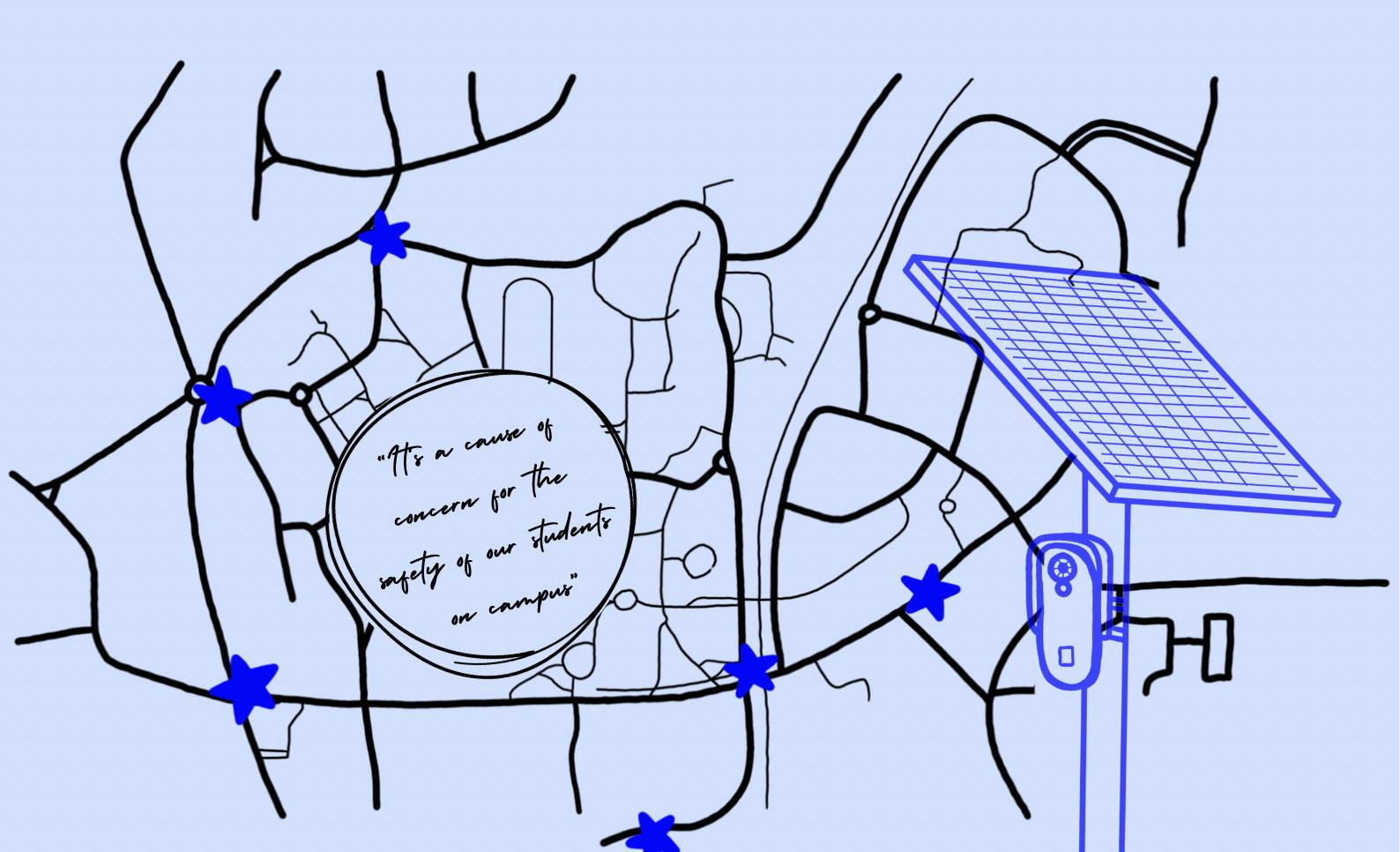
“They can be accessed by immigration enforcement,” DeFlock Emory member Tony Torres (29C) said. “It’s a cause of concern for the safety for our students on campus.”
According to the DeFlock Emory Coalition, the University has shared Flock cameras’ data with the
Lumpkin County Sheriff’s Office, the Kennesaw State University (Ga.) Police Department and the Hiram Police Department.
DeFlock Emory accessed this information through open records requests publicly available online.
In a statement to The Emory Wheel, Assistant Vice President of University Communications Laura Diamond said that only sworn Emory Police Department (EPD) officers have access to Emory’s LPR information.
Diamond directed the Wheel to a Jan. 6 statement from Flock Safety denying any partnership with ICE. The company stated that any access to Flock data would need to be explicitly granted by the customer and “comply with applicable law.”
“Emory does not share footage with the federal government unless law enforcement officials present a valid criminal warrant or specific court order issued by a federal judge,” an Emory spokesperson told Atlanta News First.
In another statement, Diamond told the Wheel that the Office of Critical Emergency Preparedness and Response met with community members to assess concerns regarding Flock LPRs on campus. Diamond said EPD is actively investigating these anxieties.
“During the meeting, EPD explained policies for accessing and sharing information from LPRs,” Diamond wrote. “Based on community feedback, EPD is taking additional steps to further review how data is shared.”
DeFlock Emory member Maya Vizuete (28C) and community members have identified at least 10 cameras on campus with Flock Safety’s logo.
“People are concerned that their data is not safe,” Vizuete said. “We have seen Flock being used to target protesters, to target migrants.”
Diamond said that Flock cameras have been on the Atlanta campus
since 2024 to help EPD “investigate threat cases and criminal trespass issues.”
Vizuete said that the University has not shared enough information with students and faculty about the use of Flock cameras. According to Vizuete, the University denied the DeFlock Emory Coalition’s request for information about the cameras.
The coalition delivered a petition to the University administration on April 10, demanding that Emory end its relationship with Flock Safety, remove all automatic license plate readers from campus and establish a community-led, transparent review of Emory’s current surveillance practices. According to Torres, the petition has just over 1,000 signatures.
For Torres, the use of Flock cameras on campus is “unnecessary” due to the presence of regular security cameras.
“Emory hasn’t been really transparent with their information sharing,” Torres said. “The major issue, too, is that they didn't come to the community about putting these Flock cameras up in the first place.”
Emory University Senate PastPresident and Professor of Philosophy
Noëlle McAfee said that with recent security issues on campus, there is a “value in surveillance.”
“No one’s intending to make this a police state, but that’s the safest place,” McAfee said.
McAfee added that the absence of permanent University leadership has worsened the security and communication issues on campus.
“We don’t have a permanent president who can weigh these different concerns and make a decision,” McAfee said.
Young Democrats of Emory Treasurer Raleigh Maxwell (28C) mentioned other security protocols, such as requiring EmoryCards for building access, as examples of transparent security practices on campus.
“I don’t think that Emory partnering with Flock Safety makes Emory
students feel safer,” Maxwell said.
Maxwell also said that members of the DeFlock Emory Coalition have been in communication with the University to prevent ICE from accessing data collected by the Flock cameras.
“It’s scary because if Emory is willing to share this, if they’re willing to roll back all the [Diversity, Equity
and Inclusion] protections, where is the line when Emory does not cooperate with this administration because it’s seeming to increasingly harm students,” Maxwell said.
— Contact Siya Kumar at siya.kumar@emory.edu and Jacob Muscolino at jake.muscolino@emory.edu
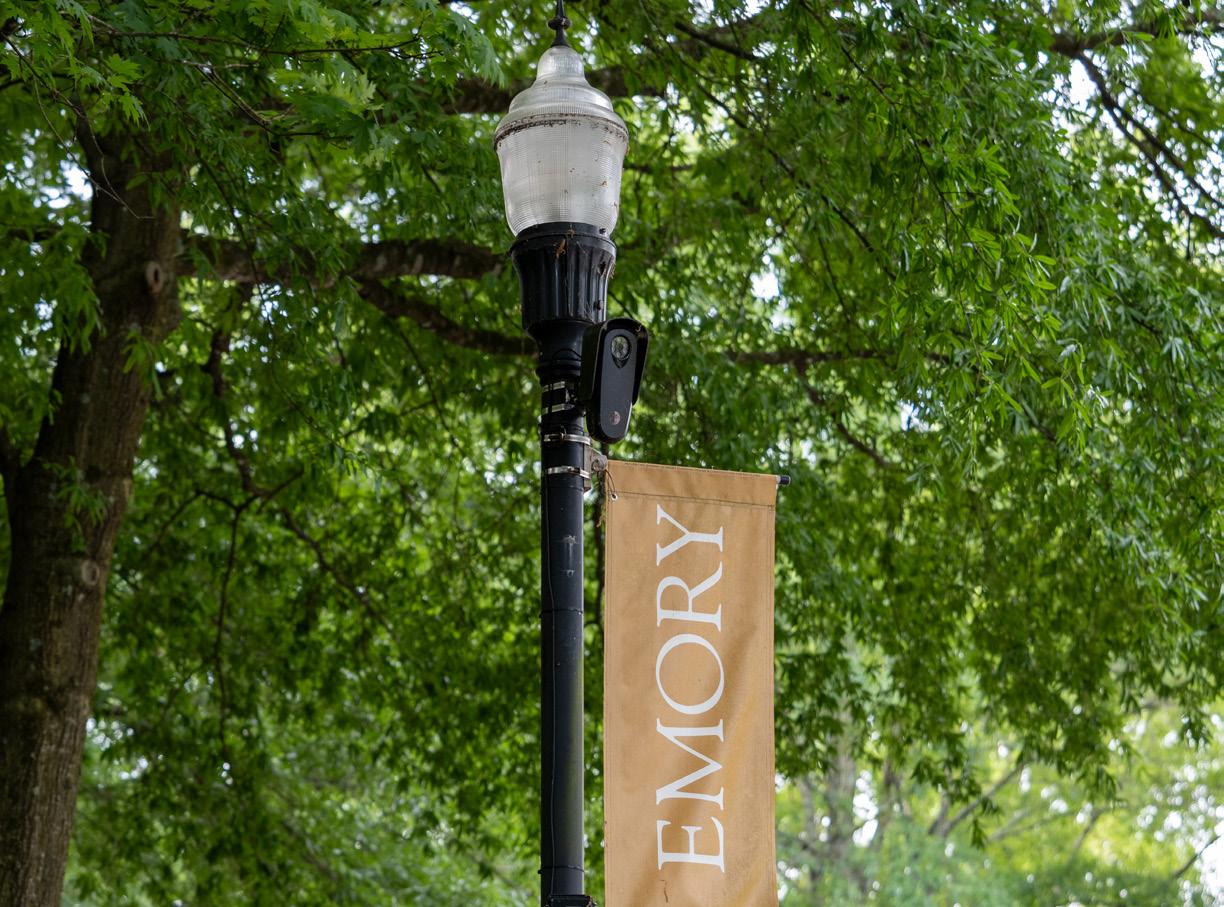
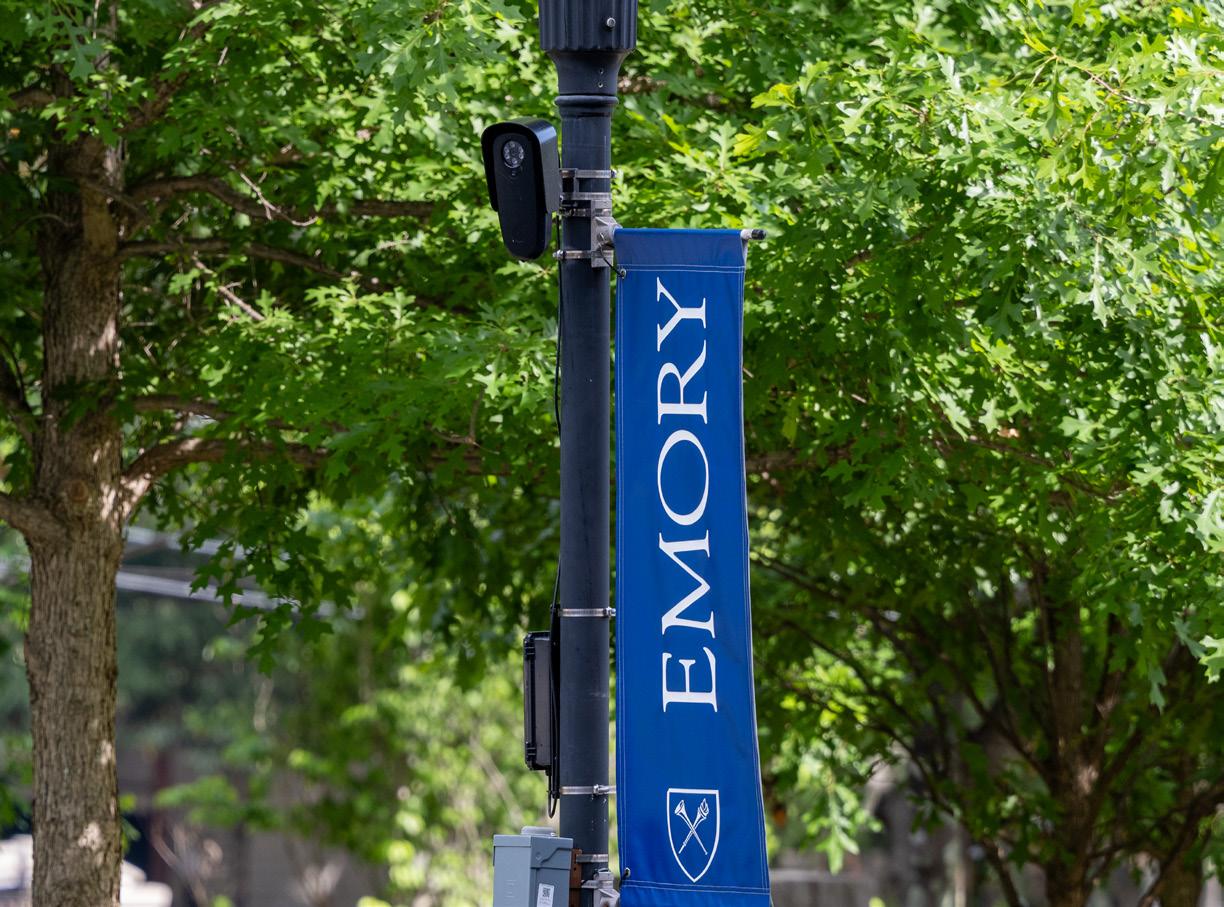
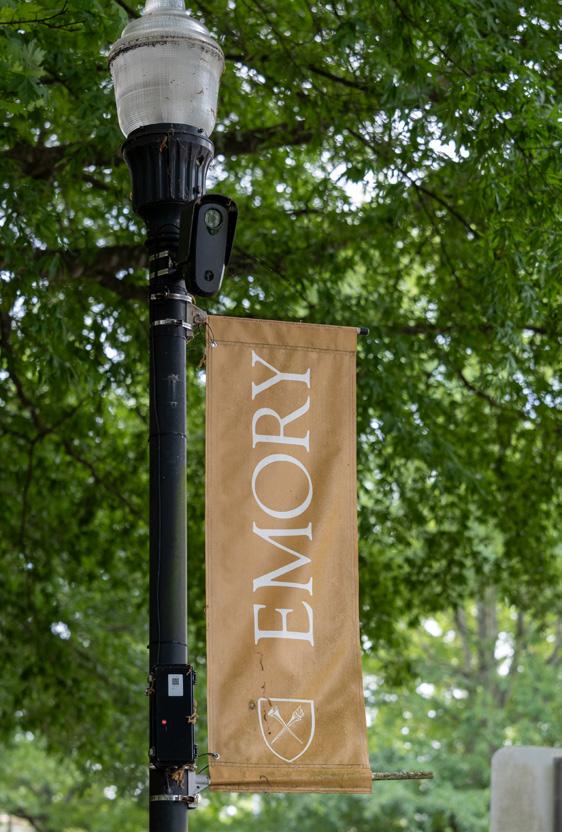
SagE BuchriS/Photo Editor Emory University first installed Flock Safety cameras in 2024.
SagE BuchriS/Photo Editor Community members have criticized privacy issues surrounding data collected by Flock Safety cameras.
Emory to open IDEAS floor as new themed housing option
By alySon Harvey Staff Writer
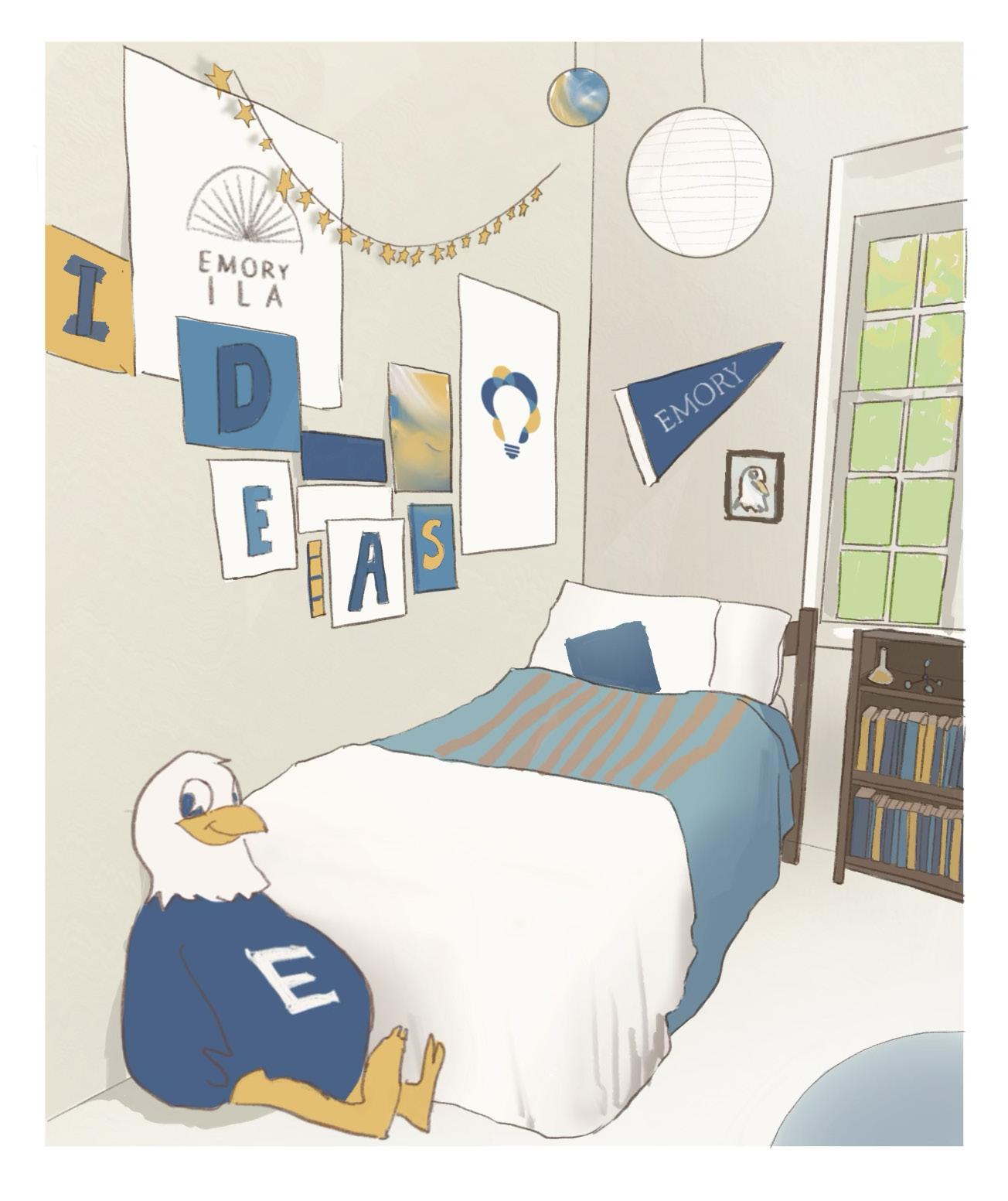
On the first floor of Raoul Hall, Emory University plans to introduce the Interdisciplinary Exploration and Scholarship (IDEAS) floor, a new themed housing option based on the principles of community, reflection and growth. The housing option will be available for incoming freshmen starting in fall 2026.
The floor is inspired by the IDEAS Fellowship, a program organized by the Institute for the Liberal Arts (ILA), which “unites undergraduate students of all majors who aim to enhance their ability to think across various disciplines and unify their liberal arts education.” The IDEAS floor will bring together first-year students who are passionate about interdisciplinary thinking and want to engage with their liberal arts education, according to the ILA.
Director of the IDEAS Fellowship and ILA Assistant Teaching Professor Rose Deighton-Mohammed (21G) said that the floor is designed to fos-
ter community and allow students to explore the liberal arts.
“I really do hope that this culture of curiosity and the sense of feeling safe and supported in exploring intellectual life and community life at Emory is something that we can build through this,” Deighton-Mohammed said.
According to Deighton-Mohammed, the IDEAS floor will offer students an opportunity to interact with their peers outside the classroom through lifelong learning and civic engagement.
“Taking these values of liberal arts into a community living and learning setting is a really special opportunity because this is how you make these values part of how you go about
your day-to-day life, and think about your place in the world, and reflect on who you want to become through
your time at Emory and beyond,” Deighton-Mohammed said.
The IDEAS floor invited current IDEAS Fellow Claire Dokko (28C) to serve as Resident Advisor (RA) and incoming IDEAS Fellows Chad Himes (29C) and Alejandro Arriaga (29C) to serve as Sophomore Advisors (SAs) next semester.
Dokko reflected on the importance of her residence hall community to her first-year experience.
“This beautiful community is something that I wanted to bring to a lot of other first years experiencing living in the residence halls for their first time,” Dokko said.
As an SA, Himes said he believes the experience will enable him to learn from the diverse perspectives of individuals on the IDEAS floor.
“It’ll be very interesting to see how these students grow, and, by watching how they grow, it’ll
influence my own reaction to how I’m controlling my own life and my own college experience,” Himes said.
Additionally, Himes aims to encourage IDEAS floor residents to explore their passions and interests.
“In our busy day-to-day lives, it’s hard to give space to really think about why you’re choosing a direction or what you’re actually doing,” Himes said. “That’s something we really want to cultivate on the IDEAS floor is giving space for reflection and exploration in academic and personal life.”
Like Himes, Dokko said she hopes to both mentor students on the floor and gain insight from their experiences.
“I really do think mentorship is a two-way street,” Dokko said. “I’m so excited to just learn so much from the other people living on the floor, as hopefully they’ll also glean some knowledge from me and the other RAs and SAs as well.”
— Contact Alyson Harvey at alyson.harvey@emory.edu
Community remembers April 25 encampment on two-year anniversary
By inaara lalani
Atlanta Events Desk
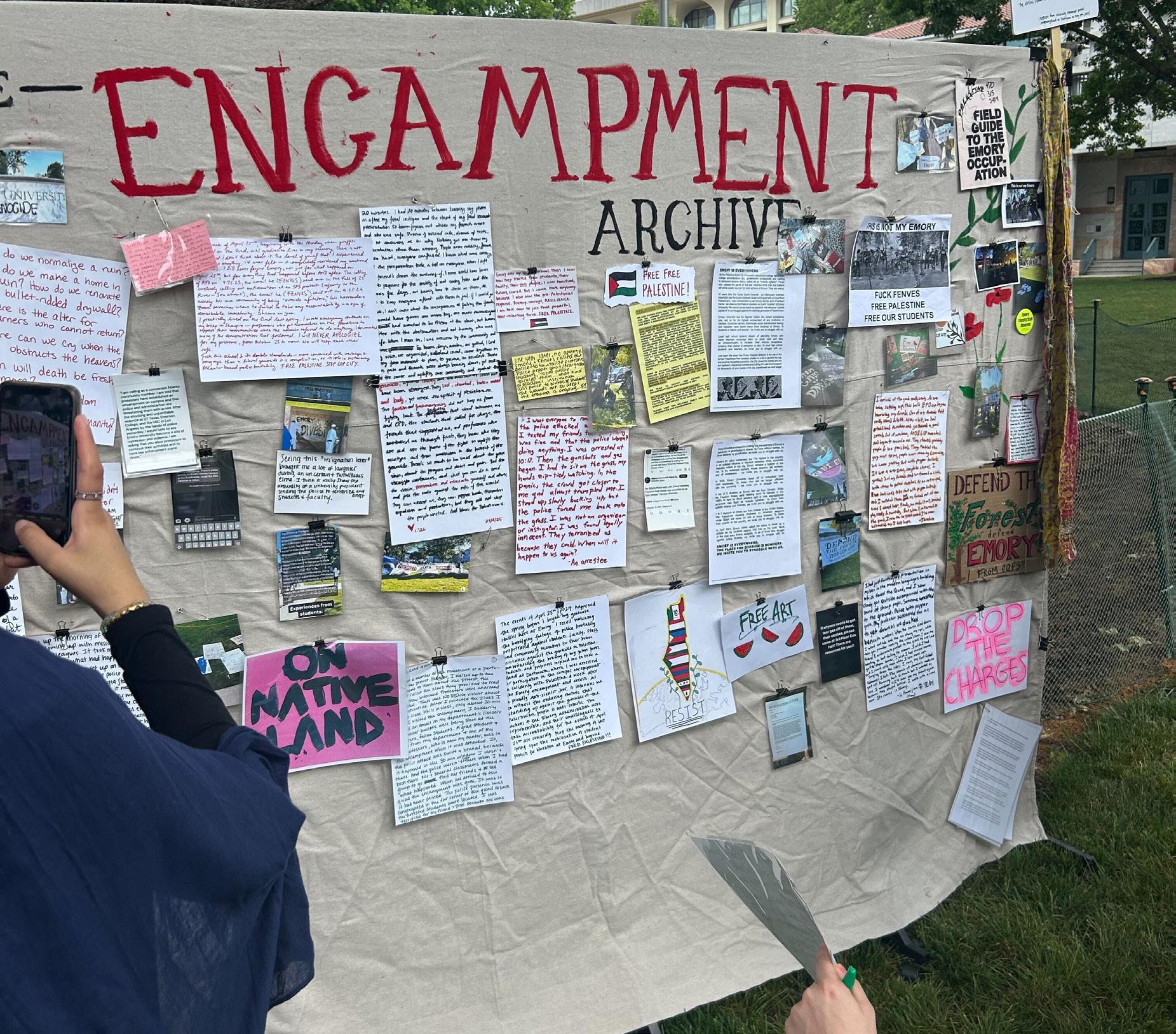
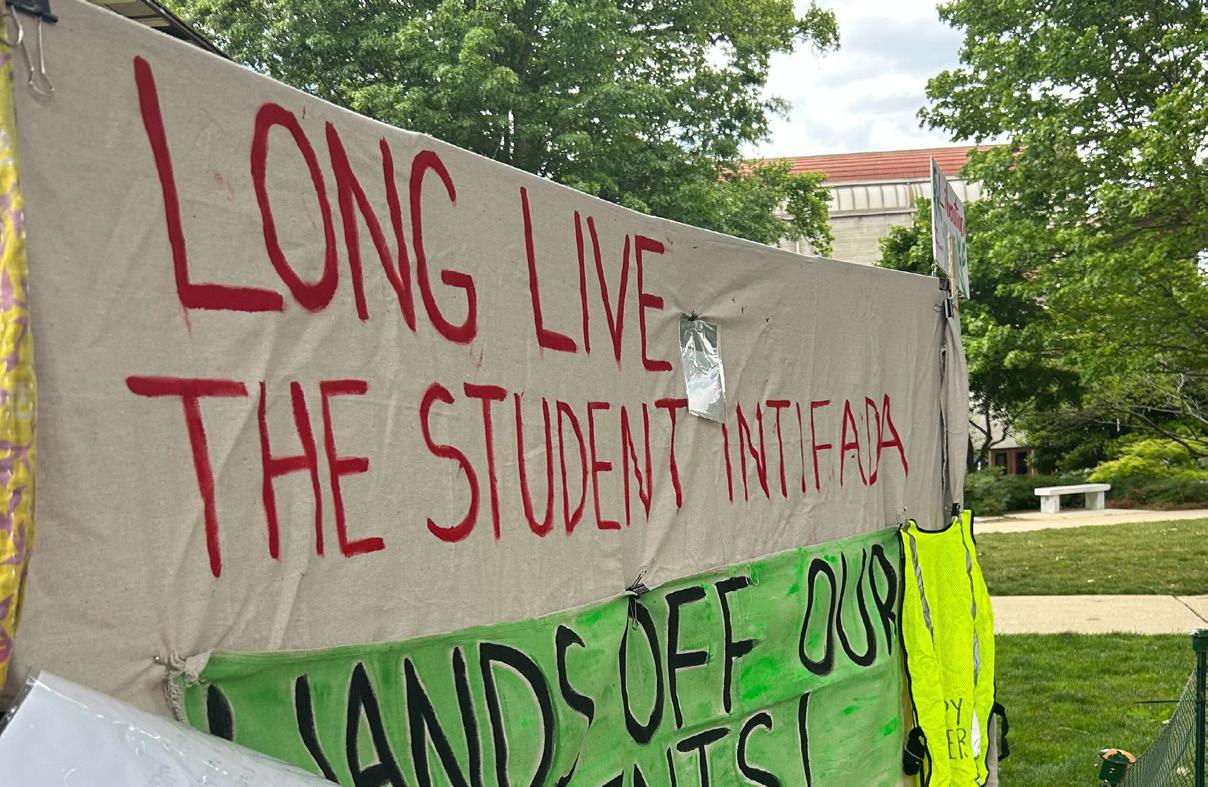
On April 25, 2024, Emory University students congregated at the Quadrangle, setting up a proPalestine encampment with blankets, tables and tents, to protest the Israel-Hamas war. Within hours, the University had called police on protestors, with the Emory Police Department (EPD), Atlanta Police Department and Georgia State Patrol (GSP) arresting 20 members of the Emory community on the Quad. Two years later, Faculty and Staff for Justice in Palestine-Georgia, in collaboration with Emory Students for Justice in Palestine (ESJP) and Public Health for Palestine & Collective Liberation, gathered on the Quad to remember the encampments with an exhibit of photos and letters on April 24.
ESJP President Michael Krayyem (26C) noted that the University’s response to the encampments “woke
up” many Emory students who were previously unaware of the conflict.
“It brought to light a lot of the oppression the Palestinians go through there every single day,”
Krayyem said.
ESJP Vice President Elijah Brawner (26T) recalled the police response during the protests. When protesters attempted to gain access to Candler School of Theology, officers from EPD and GSP guarded the doors before using irritant gas to disperse the crowd back towards the Quad.
“We were occupying the atrium, and there were police staging right next to us,” Brawner said. “It was a very intense experience.”
Krayyem was also present during the protests, stating that he witnessed police deploying tear gas and rubber bullets.
“When I was filming them, the police started to yell at me,” Krayyem said. “They said, ‘If you don’t get out of the way, if you don’t stop filming, we’re gonna put you in cuffs too.’”
Last year, 50 community members attended a protest held to honor the one-year anniversary of the encampments. Students and faculty gathered to put pressure on the University to divest from Israel and demand then-University President Gregory Fenves’s resignation. Fenves became the University’s sixth chancellor in September 2025.
On April 23, nearly two years after the encampment, University Senate Past-President and Professor of Philosophy Noëlle McAfee, Professor of English Emil’ Keme and Professor of Economics Caroline Fohlin filed a lawsuit arguing Emory violated its free speech policies when it ended the encampment on April 25, 2024.
According to the lawsuit, the professors were arrested after confronting officers for assaulting students. The lawsuit alleges that the University refused to take corrective action despite how the criminal charges “lacked merit.”
Brawner hopes the exhibit will
remind students of the struggles students faced during the encampments.
“If future Emory students remember that, then they will have done enough because it will keep the flame of rebellion alive on campus in a more meaningful way,” Brawner said.
Krayyem reiterated the historical significance of the encampments and wants them to serve as reminders to students of the University’s past actions.
“Emory likes to paint itself as an advocate of civil rights,” Krayyem said. “It’s one of their things they try to harp on, but that’s not the case whatsoever.”
Will Barrett (28C) called the law enforcement response to the encampments a “complete overreaction.” He advised students to exercise caution when evaluating the University
administration’s statements, adding that he chose to attend the anniversary to interact with other student activists.
“We learned that student interest and activism is fleeting, and so meeting the people who are still involved is important,” Barrett said.
Brawner said he believes the archive of photos and letters told a story of resistance that allowed students and faculty to learn about others’ experiences.
“There was something very unique about it,” Brawner said. “Building the encampment archive is, in some sense, reconstructing the encampment and allowing people a window into what that week was like.”
— Contact Inaara Lalani at inaara.lalani@emory.edu
Founded in 1919, The Emory Wheel is the financially and editorially independent, student-run newspaper of Emory University in Atlanta. The Wheel is a member publication of Media Council, Emory’s organization of student publications. The Wheel reserves the rights to all content as it appears in these pages, and permission to reproduce material must be granted by the editor-in-chief. The statements and opinions expressed in the Wheel are those of the authors and do not necessarily reflect those of the Wheel Editorial Board or of Emory University, its faculty, staff or administration. The Wheel is also available online at www.emorywheel.com.
inaara L a L ani/atL anta Ev EntS dESk
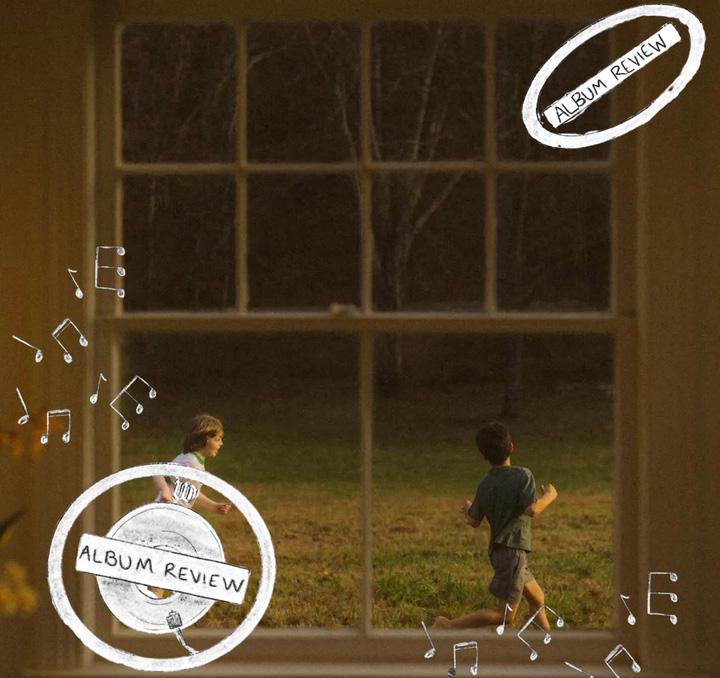
The event featured photos and letters from community members at the April 25 encampment.
inaara L a L ani/atL anta Ev EntS dESk Police arrested 28 protestors at the April 25, 2024 protest.
tiany guo/dEPuty iLLuStration Editor
The Emory Wheel Opinion
DeFlock Emory: End mass surveillance on campus
By DeFlock emory coalition
Flock Safety Automated License Plate Readers (ALPRs) have been confirmed to operate on and around Emory University’s campus since 2024. These artificial intelligence (AI)-powered tracking cameras continuously record license plate data and feed this data into what Flock itself markets as “the nation’s largest crime-solving LPR network” with 4,800 agencies and 20 billion monthly plate reads.
We understand the need for campus security, but the scale of Flock deployments, ease of AI image recognition and nationwide connectivity of Flock databases make these cameras a danger to the Emory community.
In 2025, Flock ran a pilot program sharing data directly with the Department of Homeland Security. Flock has asserted that it does not share data with Immigration and Customs Enforcement (ICE), but an American Civil Liberties Union investigation and reporting by VPM reveal that local law enforcement agencies still search Flock data on behalf of federal agents, who use it to unlawfully detain immigrants.
Flock cameras have also been used to track protestors and a woman seeking an abortion across state lines, and municipalities have paid out large sums after officers used Flock data to stalk citizens not under investigation.
These Flock cameras were installed on our campus without meaningful democratic oversight, community consultation or public accounting of how the data will be used and shared. Coalition members met with the Emory Police Department (EPD), but the agency dodged accountability and failed to address core concerns about Flock’s capabilities. The administration
must remove all Flock cameras from campus, and Emory students should take action to ensure it does so.
In response to The Emory Wheel’s inquiries, Assistant Vice President of University Communications and University Spokesperson Laura Diamond wrote that “only sworn EPD officers have access to the university’s account,” and that Emory “does not share footage with the federal government unless law enforcement officials present a valid criminal warrant or specific court order issued by a federal judge.”
This response suggests the administration is either misinformed or dodging some risks of Flock cameras, as both claims leave a critical loophole. Emory administration has not stated whether Emory’s Flock account shares license plate data, as opposed to raw footage, with local law enforcement.
Because network sharing is Flock’s core function, agencies can search one another’s license plate reads without ever touching the underly-
ing video — this is precisely how federal agencies are currently obtaining Flock data nationwide, by asking local police to run searches on their behalf.
A promise not to share footage with federal agencies is cold comfort to a student whose license plate data may end up with ICE through a localagency intermediary. We call on the administration to clarify, in writing, whether its Flock database is accessible through network sharing to local, state and federal agencies.
We have reason to doubt that EPD’s use of Flock has been limited. When an outside agency searches another agency’s Flock data, the query appears in the responsive agency’s audit logs. The project HaveIBeenFlocked compiles these logs when agencies release them. Emory does not release its own, but other agencies’ logs show two things: EPD has shared Emory’s cameras outward so outside agencies can search them, and EPD itself has run searches against other agencies’ cameras.
Those entries list vague search reasons like “case” or “image download” – placeholder text that gives no indication of which investigation, suspect, or active threat justified the search. The oldest recorded EPD search is from April 24, 2023, a year before Emory said its own Flock cameras were installed. While this does not prove cameras were on campus in 2023, it does show that EPD has been querying the national Flock network for at least three years.
The reason logged for that query was “Protest” — based on the date, likely the peaceful Stop Cop City protest on campus. These limited records available suggest EPD has used Flock in connection with peaceful protests. Emory University must remove Flock cameras from campus and publicly release EPD’s full Flock
audit history.
Even with proper oversight, Flock itself is not trustworthy. Flock claims that agencies must opt in to crossagency data sharing, but a Ventura County, Calif., audit found that outof-state and federal agencies searched its data more than 364,000 times in two months after the Ventura County Sheriff’s Office had disabled Flock’s “National Lookup” feature to comply with California law.
The administration must remove all Flock cameras from campus, and Emory students should take action to ensure it does so.
A pending class action lawsuit alleges Flock cameras in San Francisco were searched by out-ofstate agencies over 1.6 million times in seven months, in violation of the state’s ALPR Privacy Act, with ICE, U.S. Customs and Border Protection, the Federal Bureau of Investigation and the Bureau of Alcohol, Tobacco, Firearms and Explosives. Flock’s contract also grants the company a perpetual license to use customer data, and this data can be sent overseas to train Flock’s AI.
When Evanston, Ill., terminated its contract, Flock left two cameras installed without authorization. Emory administrators have not disclosed whether it has opted into Flock’s data-sharing features, but Flock’s track record shows opting out is no guarantee of protection. Either way, our data is at risk, and Emory owes us the truth.
The Emory community does not want our data to fall into the wrong hands. The University Senate voted
33-3 to prohibit voluntary sharing of immigration information with federal authorities, and in a Student Government Association referendum, 89% of students supported a similar policy.
Integrating AI-enabled ALPRs is a qualitative escalation — it moves the university from localized monitoring to a system designed for crossjurisdictional tracking. When movement data is permanently recorded and retrievable, it can be weaponized and used to identify organizers, map social networks, stifle dissent and expose vulnerable community members to retaliation by state actors or bad-faith data requests.
The roads around Emory connect to homes, clinics, places of worship and organizing spaces, none of which should become part of a searchable surveillance record. Students, staff and faculty should not have to wonder whether driving to a protest, a reproductive health appointment, a religious service or a political meeting could be part of a database accessible beyond campus.
Momentum against Flock is accelerating nationwide. Denver announced that it will replace Flock ALPRs. Amazon terminated a partnership that would have integrated Flock into Ring cameras. From Flagstaff, Ariz., to Santa Cruz, Calif., public pressure has driven the removal of ALPRs. Our petition has over 1000 signatures. We call on Emory to immediately terminate its Flock Safety contract, and on the Emory community to join the DeFlock Emory Coalition to prepare for mass mobilization should Emory ignore our demands.
We demand that our university be the institution it claims to be: one that defends inquiry, dissent and the people who make this community possible.
Tasfia Jahangir serves as co-chair of EmoryUnite!, the PhD workers’ union at Emory University. Anayancy Ramos is the lead for the International Student Working Group of EmoryUnite!. Both Jahangir and Ramos are part of the DeFlock Emory Coalition, which includes Sunrise Emory, Emory Students for Socialism, EmoryUnite!, Behind the Glass Emory, the Black Student Alliance, Emory’s chapter of the American Association of University Professors (AAUP), Stand Up Emory, Emory National Lawyers Guild, Emory LGBTQ+ Graduate Coalition, and Emory Students for Justice in Palestine. Inquiries about DeFlock Emory? Contact emoryunite@gmail.com.
The Emory Wheel
Irene
Hilsman

sage BuChris/Photo
Flock camera pictured at Emory’s Clairmont campus.
MARTA’s World Cup makeover leaves Atlanta with same problems
By Will carraWay staff Writer
The FIFA World Cup comes to Atlanta in June this year, bringing with it an estimated 300,000 domestic and international visitors. In anticipation of such a significant influx, the city has made multiple significant improvements to its transportation infrastructure, focusing on bettering the network reach and rider experience of the Metropolitan Atlanta Rapid Transit Authority (MARTA).
Atlantans will certainly reap the benefits of these infrastructure improvements for years after the World Cup concludes. However, locals deserve intentional transit investment just as much as their cities’ international visitors. It should be in the interest of Atlanta’s city leaders to make transportation faster, safer and more accessible even away from the global spotlight.
With over 1,000 miles of bus transit routes and 38 rail stations, MARTA represents the largest public transit system in the American Southeast and the ninth largest in the nation. Despite its size and recent additions, MARTA still has many shortcomings. With complaints ranging from operational issues and reliability to user experience, it is clear that the network is still in need of significant improvements.
Fortunately, recent upgrades, along with those scheduled for completion before the World Cup in June, are likely to bring much-needed relief to the ageing system. MARTA’s website indicates that these operational improvements, station and train modernization, and payment-system upgrades
DOOLINO KNOWS BEST
are all centered around providing guests a seamless transit experience for the duration of the games.
Riding the bus or the train is increasingly unpopular among Atlantans. MARTA’s combined network of buses and trains saw almost 65 million riders in 2024, a number that has been decreasing over the past decade. As of 2024, MARTA ridership is down almost 50% from its preCOVID level.
Clearly, more and more Atlantans are choosing cars as the more convenient and comfortable way to get around the city. If the city wants residents to use MARTA, it needs to improve the system’s frequency and reliability first and foremost across the board, ensuring that Atlanta’s residents have equitable access to functional transit.
It should be in the interest of Atlanta’s city leaders to make transportation faster, safer and more accessible even away from the global spotlight.
Around 65% of MARTA’s rail delays are caused by faults in its aging trains, some of which date back to the system’s inception in the 1970s. To address this, MARTA spent roughly $646 million to replace the old fleet with state-of-the-art vehicles, with some trains set for release in 2026.
Bus networks have also seen a sig-
nificant overhaul, with the agency focusing on frequency and route optimization in a NextGen Bus Network that launched on April 18. MARTA has not seen an upgrade this extensive in its entire 50-year operation. MARTA introduced plans for transit improvements only recently, in the last seven years, conveniently timed around when Atlanta was listed as a candidate joint host city for the 2026 World Cup, in 2018.
While these improvements have the potential to be beneficial to MARTA’s ridership and passenger experience, it is important to question the city’s motivations behind its transit investments.
MARTA has been losing riders for decades and upgrades are long overdue. Yet, the timing of the current improvements indicates that a citywide need alone is not sufficient to warrant a transit overhaul. If the city only uses MARTA upgrades as a strategy to receive the financial benefit of a major global event, then they are not truly pro-transit.
Upgrades must show consistent support for infrastructure improvements that have a lasting impact, not a new paint job. The city must prioritize its own citizens when planning and executing public transit expansion by continuously expanding reach and improving frequency beyond tourist centers.
Beyond improving timing, many of MARTA’s event-centered upgrade initiatives have focused on aesthetics. Renovated stations, expensive new trains and new fare gates all benefit the system but will do little to solve the rail network’s poor reach and lim-
ited frequency. Instead of providing lasting connectivity and convenience for Atlanta’s growing population, the upgrades primarily offer a one-time showcase for visitors that will, without future investment in long term sustainability, fall victim to the same ailments that currently push riders away.
If the city only uses MARTA upgrades as a strategy to receive the financial benefit of a major global event, then they are not truly pro-transit.
The city’s future investment in MARTA cannot rely on tourism and entertainment. Instead, residents need frequent and reliable service that offers a faster and more convenient commute than their car. While the NextGen Bus Network fixes the frequency problem, it is still subject to the same traffic conditions as private vehicles, essentially eliminating any incentives for its use.
In its defense, the city opened a new bus-only rapid transit route aimed at reducing traffic delays. This is a useful alternative to creating high-capacity transit corridors in the absence of rail infrastructure, but lane enforcement is oftentimes difficult, and the concept remains limited by street width. Instead, Atlanta should focus on expanding its rail network — a plan that has already emerged in city governance.
MARTA’s Board approved the implementation of multiple light rail lines extending from Atlanta’s core, most notably along the Beltline in 2019. However, Atlanta’s city government and Beltline officials have since halted its implementation. These plans take Atlanta in the right direction, but favoring aesthetic upgrades takes funding away from such vital functional improvements.
As it stands now, the city of Atlanta seems to be using MARTA as a marketing campaign by advertising its recent upgrades to the world. While they might look pretty, these improvements fail to follow through in truly connecting Atlanta’s sprawling urban center.
While Atlanta’s visitors are an integral part of the city’s vibrant culture and booming tourism industry, its residents deserve safe and efficient public infrastructure built for their specific needs. As Atlantans, we must show our government that future-oriented transit investment is worth the price. By using the new infrastructure, despite its remaining flaws, we can drive up ridership numbers, giving the city more reason to keep Atlanta moving. In addition, none of this can happen without civic engagement from transit-oriented constituents.
Numbers are irrelevant to leaders who do not care, so it is imperative that students, many of whom rely on MARTA to access our city, vote transitforward candidates to city positions to cement transit-focused, sustainable development in Atlanta’s future.
— Contact Will Carraway at will.carraway@emory.edu
Dear Doolino, I’m not ready for the real world!
By Doolino CaMPus overlord
Dear Doolino,
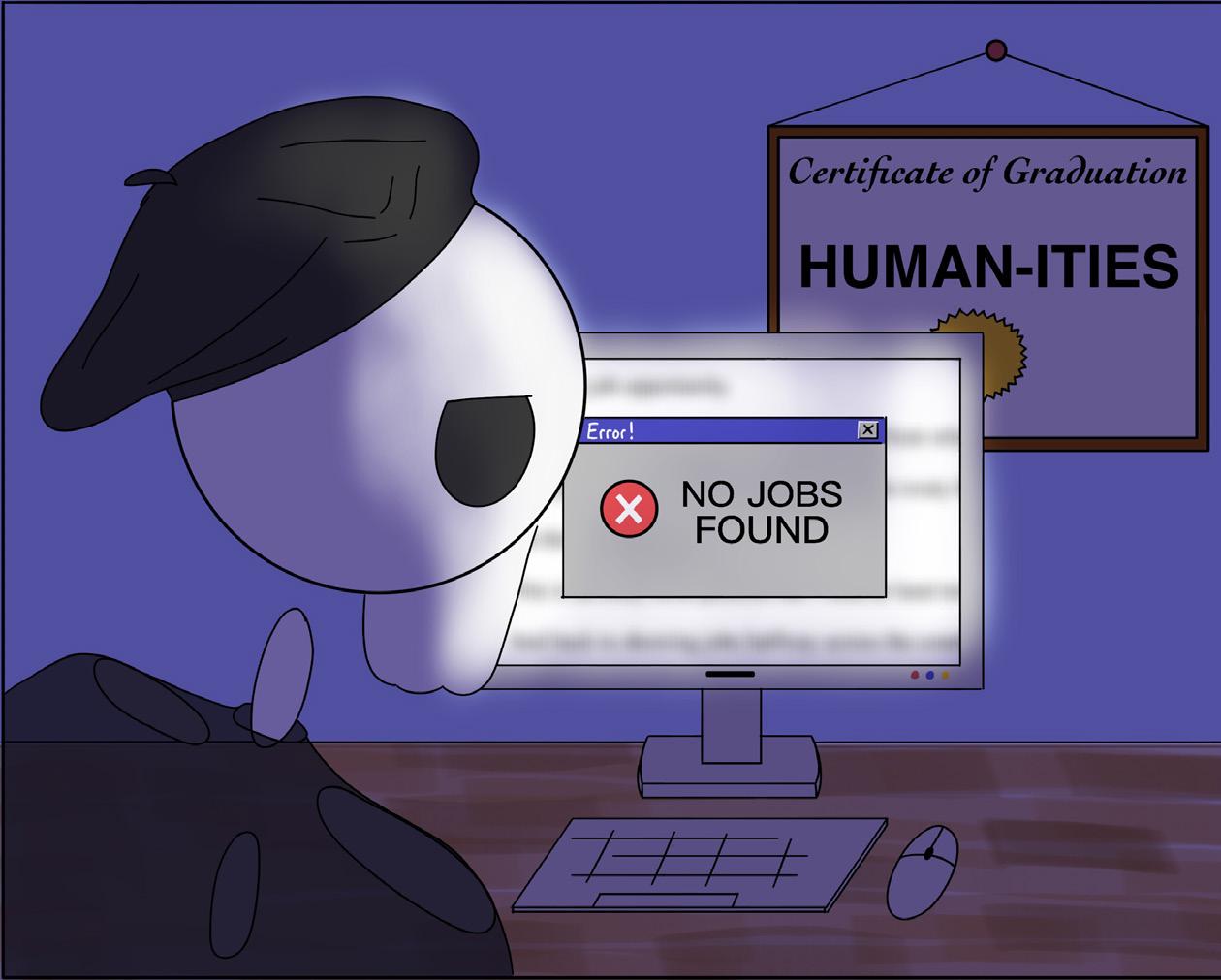
I am a graduating senior and humanities major. All of my pre-med friends keep making fun of me and telling me that I will never get a real job. I am so scared to graduate, and I worry that all four years of college have been for nothing.
What should I do?
Sincerely, Gasping Grad
Dear Gasping Grad,
Do not fear, for at the very least, you are not alone in your suffering. Hundreds of humanities majors at Emory University, and indeed, thousands around the country, are currently paralyzed with fear at the prospect that they have worked themselves to the bone for a single logo-embossed sheet of parchment that will, by all accounts, do absolutely nothing for their careers. We live in a society that has, unfortunately, largely disregarded the power of the arts and humanities.
I, for one, have a healthy appreciation of both the arts and sciences — as a skeleton, I am well-versed in calcium, anatomy and all things decomposition. On the other hand, I also enjoy a good evening at the theater — and even at Emory’s recent opera performance, although my old friend Timothée may disagree. I believe that
every degree has its value. However, you pesky humans have left the world in such a rotten state that your fears about not finding a job might not be entirely unfounded. Thus, I will try my best to assist you.
The first option is an obvious one: Simply speedrun another degree. You have, what, two weeks left in your college career? That is a perfectly acceptable amount of time to add a concentration in something simple and straightforward, such as neuroscience and behavioral biology (NBB). Ask any pre-med student, and they will tell you that NBB is the easiest major around. Who cares if Add/Drop/Swap is over? Simply bribe — I mean, petition‚ your academic advisor to let you register for every single class required to complete the major.
Email each professor and explain your dilemma, then take all of the exams required for each class over the course of a 24-hour period. I am not joking, Gasping Grad. I am talking back-to-back classes with no breaks for food, sleep or water. It will be intense, but the six-figure starting salary that is guaranteed to await you after you exit these hallowed halls will make it all worth it. After all, everyone knows college is not about the connections you make and the career stepping stones you acquire — it is about a piece of paper that will determine every step you take until you die. So invest in that piece of paper now! Maybe you are tired of academics. That is a fair emotion to harbor at this point in your undergraduate career, and I will not judge you in the slightest. Okay, that is a lie — I judge
everyone. However, I will still propose another, less academically-oriented option: Marry rich. There are plenty of students on this campus who are confident that their majors will not lead to unemployment or who already have six-figure jobs lined up after graduation.
so simply envision what the profile of a future gazillionaire would look like and tweak your tastes so you are guaranteed to match with them.
If you are concerned about your own profile not meeting their expectations, you can embrace the age-old tradition of catfishing and adjust your
In your remaining time at Emory, devote every waking hour to acquiring a suitable mate whose arms you can fall safely into the moment you walk that graduation stage. Keep in mind, though, that those aspiring to be doctors or Ph.D. researchers still have several more years of investment before they start making bank.
One potential way to acquire your future sponsor-sponse is to sign up for Date Drop, a weekly algorithmic matching service. On Date Drop, you are able to adjust your preferences,
profile picture with edits. Find ways to only go on virtual dates or fall conveniently ill each time you see each other in person, covering your face until you have been legally married and your bag is secured. Whatever you do, just do not sign a prenup.
Despite the fact that I have been advising you to rely on other people, you might find comfort in knowing that even for your non-humanities friends, grades and a major alone do not make one automatically finan-
cially set for life. A skill that is just as important as a diploma is the ability to network. Ask any Goizueta Business School student — they have entire classes dedicated to learning how to write cold emails and exchange business cards with CEOs.
Truly, the word network is so ingrained in their heads that upon hearing it, they are sure to fall into an immediate trance, offering firm handshakes and making impeccable small talk. If you want to get a job that pays well, you should simply brown-nose every rich employer in your area. It does not matter what job you will be doing — if you are simply polite and personable enough, they will be sure to offer it to you on the spot regardless of how qualified you are. Similar to our NBB example, simply go on as many coffee chats as you can in a week, not stopping to eat, sleep or even breathe. By the end of it, you will certainly be employed, even if it is just by the coffee shop as thanks for giving them so much business.
Ultimately, Gasping Grad, the only real thing you can do at this point is trust yourself. You have worked hard to get to this point, and the world needs people who care about the humanities. You might be a Starbucks barista for a while, but eventually, you will find a job that allows you to explore your passions. There is a path for you out there, I promise. Do not let your friends get in your head. Own your passions, walk that stage and never forget that Doolino knows best.
— Find Doolino six feet under the University Quadrangle.
The Emory Wheel Arts Life
Poet Danez Smith writes with passion, purpose, pride
By Hunter BucHHeit
f eature S e ditor
From a young age, words surrounded poet Danez Smith. Growing up in a community filled with storytellers whom they loved to sit and listen to, Smith became fascinated by language and the way people express themselves.
As Smith frequented the library in their youth with their mother, their interest in writing only grew.
“I grew up with somebody who had a ferocious love for words as well,” Smith said.
Smith is not the first in their family to become a poet. In fact, their father wrote in the art form as well, making Smith’s foray into the medium feel “destined.”
But despite this feeling of fate, Smith’s introduction to poetry came through the spoken word — performing in poetry slams during high school. To them, as someone who liked writing, they saw reading a piece out loud as the final culmina-
tion of poetry’s potential.
“The spoken word was my first love, the written word came not too far behind,” Smith said.
While Smith loved to read as a high schooler, at the time, they did not realize that living artists also wrote full books of poetry.
After all, when Smith’s high school teachers assigned poetry to read for class, they assigned only one or two older pieces at a time.
College shifted Smith’s perspective on the art, as they delved into complete poetry collections.
After a college professor at the University of Wisconsin-Madison asked Smith if their poems were only good when read aloud, Smith felt taken aback, and decided to try realizing their pieces on paper.
A nationally-recognized writer with four published poetry collections, Smith appeared in Emory University’s annual Raymond Danowski Poetry Library reading series earlier in April, coinciding with National Poetry Month.

Smith also appeared in the 26th annual 12th Night Revel at the Atlanta History Center, an event that supports Emory’s Stuart A. Rose Manuscript, Archives, and Rare Book Library.
While accolades and awards attest to their personal poetic power, Smith continues to immerse themselves in creative communities.
A founding member of the Dark Noise Collective, a nationwide poetry community grounded in what the collective describes as “radical truth telling,” Smith works to build connections through poetry, something they first encountered participating in slams.
“I feel really grateful to have come into a relationship with poetry through spoken word, because spoken word does not happen alone,” Smith said. “It only happens in rooms full of people.”
For Smith, poetry is integral to the human experience, a practice that came far before the written record.
“It’s always important to remember that the oral tradition of poetry is the oldest tradition of poetry,” Smith said. “People have been using poetry to entertain, to educate, for rituals for far longer than people have even been literate.”
After years of writing and performing poetry, Smith does not view the spoken and written forms as two separate practices. Smith loves the whole art — no matter how it manifests.
“I love that I write an art form and love an art form that can come to people expressed in so many different ways,” Smith said.
Smith’s creative process swings back and forth like a “pendulum” — flexible with when and how they create while oscillating between a set routine and a free-flowing creative state. Some days, Smith awakes before dawn, sitting down to write in an intentional manner.
However, other times, inspira-
tion strikes at seemingly random moments. Smith likens these creative sparks to a little fairy whispering lines of poetry into their ear.
“What I find when I’m lingering and waiting for inspiration to hit is that you gotta let it be slower for a little bit sometimes so you can really listen,” Smith said.
For Smith, making poetry is a process that changes both the creator and consumer. For poets, writing can solidify ambiguous, harbored feelings. For readers, indulging in poetry can serve as a means of healing and identifying inner strength.
“It’s a transformative practice, in that when you’re an artist, that is worth your soul,” Smith said. “People leave your work transformed.”
But that transformation can only occur after facing the unnerving and uncomfortable. Smith said that at times, creating poetry can be incredibly personal and challenging.
Channeling the idea of the “hard poem” — a work or idea that follows writers their entire lives, manifesting in different ways as the artist ages — Smith has begun to tackle difficult stories that have followed them for years.
“The way you’re going to write about [the difficult stories] in your 20s is different than how you do it in your 30s, than in your 40s, 50s, all the way on until you can’t write about it no more,” Smith said.
Smith said that the struggles artists face when creating are central to their idea that public art must have a purpose beyond attention or fame.
“I always think about, ‘What do you want your work to be useful for for the people who encounter it?’”
Smith said.
To Smith, their purpose lies in helping people feel strong and free, wherever that freedom takes them.
Smith said they channel the life experiences and difficult moments that shaped them into their work.
“One of the most useful things I
could think to give to somebody is a sense of armor as they go back into the world,” Smith said.
Currently working as a visiting Tallman scholar in poetry at Bowdoin College (Maine), Smith hopes to foster the same passion and love for poetry with their students that they discovered in college.
“My job is just to bring the poems that people can fall in love with,” Smith said. “It’s too good of a secret to keep to myself.”
But Smith does not just limit themself to poetry. In fact, they are currently expanding past the medium they know and love and venturing into a new creative realm: the novel. Smith is currently working on their first manuscript, in which they explore the words and stories that have been “alive” in them since childhood.
“My home is always with me, all the amazing inspirational parts of it and all the things that maybe scar you up but also make it home,” Smith said.
Decades into their career and continuing to explore different forms of writing, Smith hopes that aspiring poets will be less critical of their own work.
“I see so many young poets sort of pre-judging something before they even try to put it down on page,” Smith said. “So just try. That’s the biggest thing, is try — and in wild ways.”
Smith also encourages students to read as much as they can and to write with “great risk,” molding form and personality, memories and experiences to craft pieces that move both the body and the soul.
“Your work should be good, whether it’s read aloud in a room by you or by someone else, or whether it’s just taken in quietly into somebody’s heart,” Smith said.
— Contact Hunter Buchheit at hunter.buchheit@emory.edu
Returning home: Love letter to Emory’s finest, Falafel King
By Fiona Ferguson
S taff W riter
Writing about food in Atlanta is not particularly challenging. Considering the number of food-related articles I wrote over the last year, there were far too many options to choose from.
My search for flavor took me across the city — around Decatur, Ga., down the Beltline, to East Atlanta Village, Ga. and the Old Fourth Ward, Ga. I ate and wrote far more than I published, loving every minute of it. During my final year at Emory University, it was my way to bid adieu to my home for the past four years, learning about Atlanta one bite at a time.
After seeing just a fraction of what this city has to offer, I decided it was time to return home to Druid Hills, Ga. I avoided writing about Emory Village during my tenure as a columnist, as it seemed like low-hanging fruit for a student body that likely knows it quite well. Falafel
King, however, is different. Amid a neighborhood where expensive corporate chains are becoming more prevalent, Falafel King refuses to be outcompeted.
The “hatbox of a restaurant” was taken over 20 years ago by Jane and Nicholas Nam, a married couple who immigrated from South Korea in 1999. Despite the pair’s origins, their handwritten chalk menu features Mediterranean and Japanese offerings: classic falafel, shawarma, dolma and hummus alongside Japanese soups and sides.
Nicholas once prepared fresh sushi, slicing up eel, tuna and yellowtail to order, but his sushi bar has since been scrapped. The restaurant leans further toward Mediterranean flavors without it, but the seaweed salad, fried dumplings, ramen and udon noodles do not appear to be going anywhere.
Though those who experienced Falafel King’s sushi reminisce fondly, the restaurant’s mainstay is in the name: The falafel is truly incredible.
With each order, Jane drops small balls of a spiced chickpea mixture into a wok filled with hot oil, frying each until absolute crisp perfection. The exterior gains a dark brown crunch while the fluffy inside retains a green-flecked color from parsley and cilantro. In 2007, Atlanta Magazine named it “best falafel” in Atlanta, and in 2011, Atlanta Journal-Constitution readers selected it as the second-best falafel in the city.
The fresh, flavorful falafel is dropped into a remarkably soft pita for the sandwich, alongside lettuce, tomato and cucumber. The clipped corner of the pita, which is snipped to stuff the hot bread, is always served alongside the sandwich — a charming appetizer for the delicious bites ahead.
Ordering the pita “mixed” adds shaved chicken shawarma for only a dollar more, a selection I make nearly every time for the peppery flavor it gives the meal. Falafel King’s shawarma is less piquant than most
I have tried, but carries a meatiness that complements the aromatic falafel rather than competing with it. Plate options are also available, serving the contents of a pita sandwich separately alongside a choice of two sides — a sesame-forward seaweed salad or creamy hummus, for instance.
In my opinion, the plate is unnecessary, as the pita sandwich is a near-perfect menu item. We do not need to reinvent the wheel, after all. At $6.99 to $8.59, the dependable dish is all anyone needs — well, almost. Adding the spicy orange sauce served with each order — an addictive sriracha mayonnaise that also sits in squeeze bottles on the indoor tables — is essential. One can only wonder how much of this sauce the restaurant goes through daily, especially given the rate at which I consume it.
Most Emory students have likely walked past the funky-shaped building, with its courtyard of red patio furniture sitting out front. The
four-sided pyramid roof and dated signage stick out beside a drab Chase Bank and grayscale Buffalo Wild Wings GO. Piano melodies of songs like “Ode to Joy” (1824) play over loudspeakers, beckoning passers-by with an eclectic warmth that perfectly matches the charisma of Falafel King itself. It is cozy and unchanged in a way that almost feels like grandma’s house — if grandma deep-fries chickpeas in a wok.
Consider this my love letter to the hole-in-the-wall that satiated four years of hunger, through a brief stint as a vegetarian, post-class cravings and my impromptu meet-ups with friends.
There is no telling when the next cheap and delicious pita sandwich will be this close to home. So for the next two weeks, before I officially cross the stage as an Emory alumna, I will be eating there every chance I get.
– Contact Fiona Ferguson at fiona.ferguson@emory.edu
Photo CourteSy of danez Smith Poet Danez Smith is currently working on their first novel.
‘The Great Divide’: Noah Kahan discovers home beyond hometown
By Mia HaMon
a rt S & L ife e ditor
Home is where life begins — a part of you always lingering on the familiar bends of well-traveled roads and the nostalgic smiles of old friends.
On his fourth studio album, “The Great Divide,” singer-songwriter Noah Kahan explores the tension between fame’s grandeur and the love he abandoned to obtain it. Seeking to resolve his internal struggle between a career in the spotlight and the simplicity of living in the shadows, Kahan embraces storytelling and shifts in perspective — nodding to his own guilt and selfishness. Released April
24, the 17-track record, followed by a deluxe version released the same day, embodies the genre-bending nature of “Stick Season” (2022), blending country, folk and pop around heartfelt lyricism. Now grappling with his costly success, Kahan draws a line between the person his hometown expects him to be and who he has been all along. The album opens with “End of August,” transporting the listener to Kahan’s hometown of Strafford, Vt.
A repetitive piano melody drifts like wind, and cicadas hum, anticipating winter. Kahan’s vocals reverberate through the somber tone and instrumentation, reminiscent of lost hope and nostalgic change. The pace shifts
as Kahan enters the chorus — the piano pounding, his voice working to keep up. “Woah, everythin’ you see out hеre will die / Oh, it’s a matter of time / ’Til it’s fields of ice and reflector lights,” Kahan sings. For the artist, winter returns like an old friend he no longer remembers but still knows. And as summer fades, Kahan scrambles to hold on to relationships, offering “a ride home or an alibi” rather than a genuine connection. The song closes with an electric surge before dissolving into silence, Kahan softly murmuring his zip code, “05072,” welcoming the album with a thesis-like acknowledgment of his home.
Signifying his self-awareness and
7. + or - particle
8. Showed the way 9. “Relax, soldier!” 10. Tenn. athletes 11. Obligation
12. Walk through water
13. Winter vehicle
18. Seine sights
21. Shoplifted
23. Free ___ bird
24. Ho ___ Minh City
25. Adele song
26. Surgeon, informally
27. Carnival city
28. Conduction rod?
29. Fix, as text
30. Sushi seaweed
31. DVD part
32. FedEx rival
33. Udder part
37. Palindromic address
39. Unreturned serve
42. Twenty ___ (graduate’s year)
43. Director DuVernay
44. “Guernica” painter
47. Like much Jewish food
48. Blowgun missile
50. Run-down area
51. Wrestler John
52. High-tech break in
53. “___ of Dogs” (Wes Anderson movie)
55. Words of woe
56. Slender
57. Used 32 Down
58. Fed. power dept.
59. Home location, slangily
61. Stonewall ___
62. Pirouette pivot

self-abasement, Kahan sings from the perspective of someone from home on “Haircut,” embodying other personas by imagining their perspective on his life. With Kahan’s immediate vocals opening the track, the song seeps with anger and jealousy as the speaker clings to stagnancy, blaming Kahan for leaving. “You grew your hair out long, now you think you’re Jesus Christ / There ain’t nobody mistakin’ your guilt for some great sacrifice” — a sharp critique of the arrogance fame can breed. By criticizing himself, Kahan’s storytelling successfully invites listeners into his guilt, fostering engagement and understanding.
“Willing and Able” finds Kahan embracing his stagnation in relationships over a folk-guitar rift and a punchy bassline. He describes his tendency to oscillate between the simplicity of being home and the isolation of staticity, singing, “When I make my flight, I’m the devil / But when I stay the night, then we drink.” Kahan holds space for reflection through brief, gentle pauses in instrumentation and lyrics. He understands that leaving words unsaid can be all the more devastating — and impactful.
Highlighting his desperation for emotional endurance, Kahan repetitively sings in the outro, “I’d be willing and able” before switching to “If you’re willing, I’m able,” conveying his longing for forgiveness to the audience and the power of compassion after despair.
As oposed to his harshness and borderline self-deprecating lyrics on previous tracks, with “Dashboard,” Kahan embraces himself, flaws and all. A guitar strum opens, then drops away — mirroring Kahan’s tendency to bolt when his relationships are in turmoil. And as the verse transitions into the chorus, the guitar intensifies with Kahan’s internal anger permeating into his vocals as he sings, “Look at you go, crossing state lines with your shadow / Tryna run away, change your zip code / Turns out that you’re still an
Graduation
By etHan altsHul Crossword Editor
a**hole.” Although starkly confessional, the chorus complicates Kahan’s honest message with an upbeat and joyful tone, all while acknowledging the inescapable toil of fleeing. The album’s second single, “Porch Light,” channels Kahan’s mother, watching his life unfold through headlines rather than phone calls. A finger-picked guitar in minor keys sets a drab yet intriguing tone. “And I’ll pray for you, be in pain for you / I’ll leave the porch light on / Heartbroken, each morning when it’s me that turns it off,” Kahan sings, the speaker’s worry calcified as distance. Detached yet not unwound from Kahan’s life, his mother’s anxiety transpires into disconcert and callousness. Kahan comments on life’s ability to continue regardless of contact, singing, “So it goes, so it goes, so it goes.”
“All Them Horses” confronts the way disconnection breeds both sadness and fury. Velvety vocals trace Kahan’s displacement across airports and time zones. An imposter in his sadness, Kahan recalls floods that stain neighbors’ homes — the validity of his sorrow depleting in the face of others’ inescapable devastation. “Do you remember cryin’ for all them horses? / They did not look scared at all,” Kahan sings. Happy for his own success, yet guilty for leaving others behind, Kahan views himself as making a living on disconnection.
“I’ve crossed the county line, I cannot go back / I’m always on my own,” Kahan sings. Alone and far from home, Kahan wrestles with his inability to leave the past in the past, reminiscing on what is and the what-ifs.
Through the album, Kahan searches for a sense of home, wherever that may be, while acknowledging that part of him will always remain in a small Vermont town — where the winters are long, and love is the only thing that keeps it warm.
– Contact Mia Hamon at mia.hamon@emory.edu

Photo m aniPuL ation
By Sa Sha emmeriCh/Photo editor
Sports The Emory Wheel
The sixth man behind Emory men’s basketball playoff run
By Pranav addanki Contributing Writer
The intensity inside Gainbridge Fieldhouse in Indianapolis on April 5 was palpable. The Emory University men’s basketball team was in the midst of a steep comeback late in the second half of the 2026 NCAA Division III Men’s Basketball Championship, and Emory fans packed the stands.
Among them was 14-year-old Will Hostetter of Sandy Springs, Ga. For him, this moment was a big step in a journey of his own.
Will is a typical teenager in a lot of ways — he loves sports, plays basketball in his free time and can be found watching cartoons or movies. However, Will’s life has been different from most since the day he was born. He was diagnosed with cerebral palsy and epilepsy, conditions that have made tasks others take for granted a daily challenge for him. Even so, that has never interfered with Will’s love for basketball, which his mother Mora said began around his second birthday during March Madness.
“Ball was his first word,” Mora said. “I remember him pointing to the TV and saying, ‘Ball, ball,’ so he’s loved watching basketball forever.”
Will’s passion for basketball eventually led his family to Team IMPACT, a national nonprofit organization that pairs children facing serious illness and disability with a college sports team for at least two years. Staff work to identify specific goals for each participant, whether that is building confidence, improving socialization or developing resilience, and the team partnership becomes a way to achieve those goals.
In October 2024, Will matched with the Emory men’s basketball team, with intentions of improving
his socialization skills and building meaningful relationships within the Emory community. He was thrilled to be on a college basketball court, but was also slightly shy at first. Will’s case manager at Team IMPACT, Kirsten Robinson, said Will gradually became more comfortable with the team.
“They were almost like a slow burn with their friendship. They really met each other where they were at, so that it fit for them. It was special that each and every time, there was something that added to it.”
— Kirsten Robinson
“They were almost like a slow burn with their friendship,” Robinson said. “They really met each other where they were at, so that it fit for them. It was special that each and every time, there was something that added to it.”
Through regular visits to practices and games, Will settled into a rhythm with the program and has become a regular at the George W. Woodruff Physical Education Center.
“The security folks know him,” Mora said. “When we came for the game against [Yeshiva University (N.Y.)], we had people helping us and escorting us. … They were like, ‘Oh, we know where he wants to sit.’”
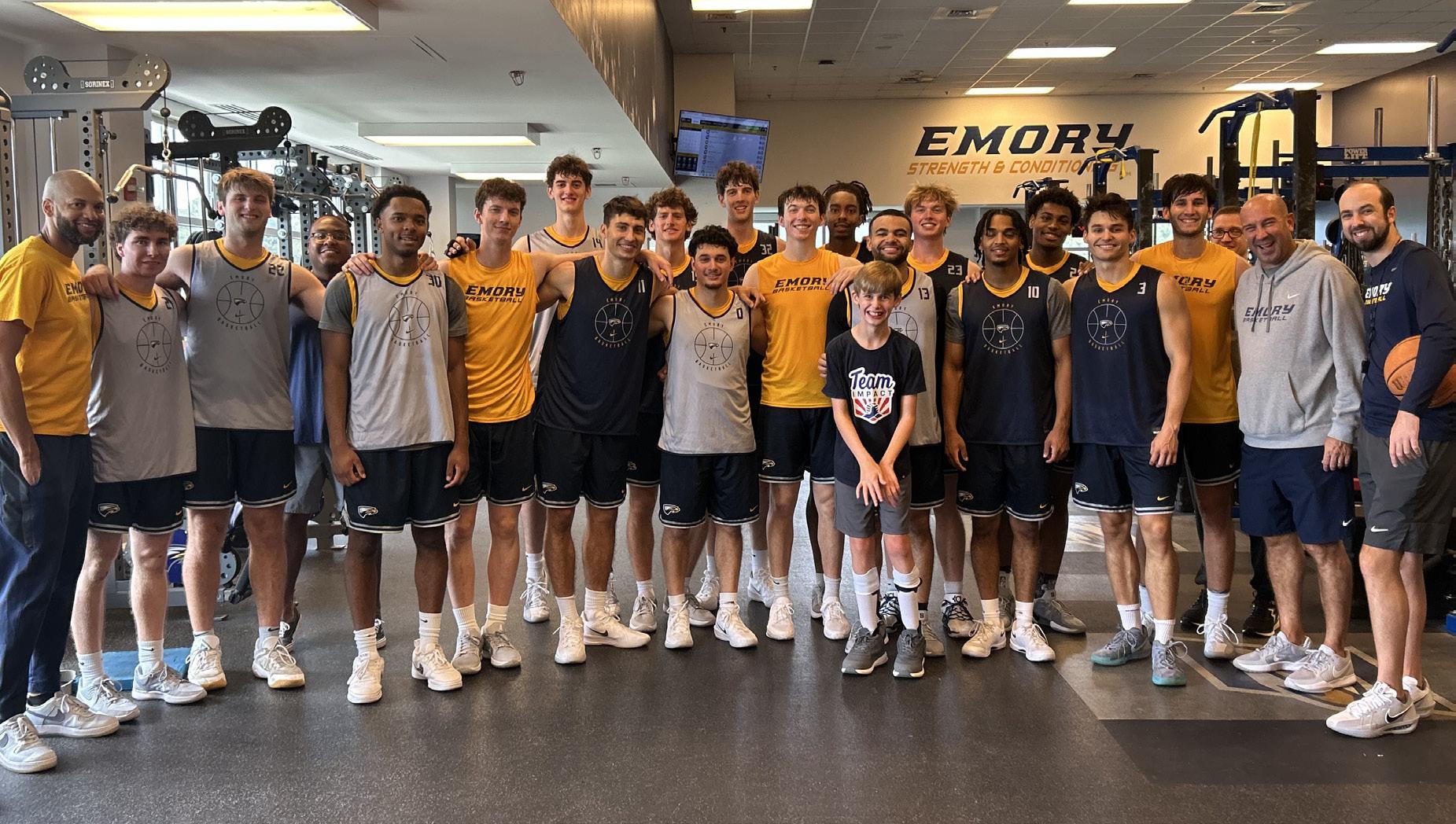
But Will does not just stay on the sidelines. When practice ends, he is often out on the floor shooting around with the players. After games, teammates seek him out for a postgame hangout. Head coach Jason Zimmerman, assistant coach Chad Hixon and staff have welcomed the Hostetter family warmly, and
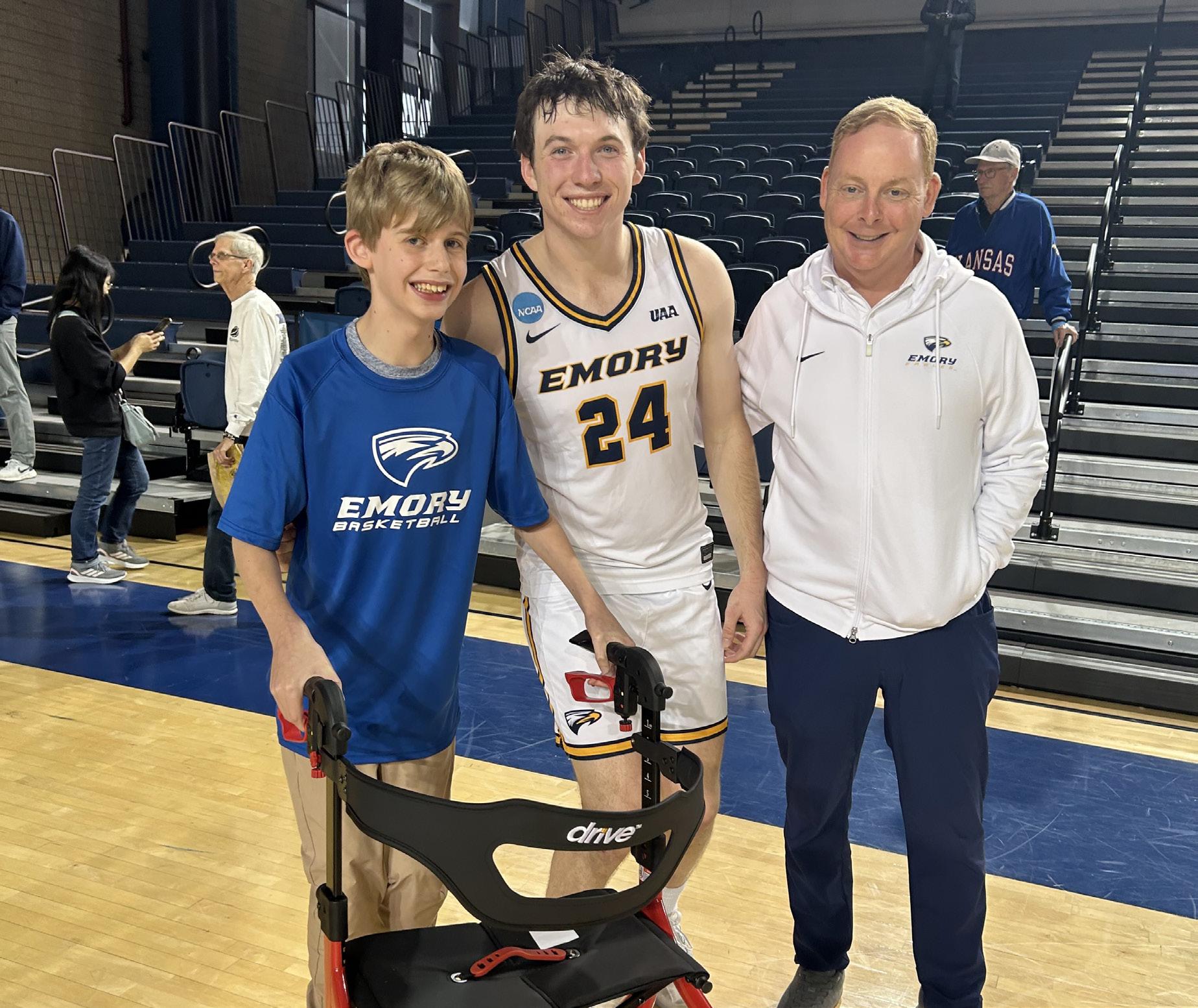
Mora has recognized how much of an impact it has made on Will.
“It has been a confidence booster for him,” Mora said. “Having that connection to something, and walking into the gym and knowing that he belongs there and that there are people who know him and know his name has definitely been a good thing for him.”
The team’s intentional relationship building with Will extends far beyond game days. A leadership team of players, including junior guard and forward AJ Harris, senior guard Tyson Thomas, junior forward Ethan Fauss and junior forward Spencer Hall, has taken the initiative to keep close contact with Will even when he isn’t at Emory. Over the summer, both Will and the players sent video messages back and forth, whether it was a quick update on life, or for Will, even his own basketball clips.
The no-days-off mentality within the Eagles’ locker room applies to everyone on the team, including Will.
Mora said that the special thing about the team’s relationship with Will is that it does not feel forced — rather, he’s just a part of the group.
“They’re just people who have a heart for that,” Mora said. “It doesn’t feel like an ask — it feels like they want to do it.”
Among all the players, Harris has formed a particularly special connection with Will. He is someone that Will focuses on during games and looks for after the final buzzer. When Robinson texted Harris to tell him that Team IMPACT was sending Will to the national championship game, the response was immediate: “Let’s go. This just made it even better.”
The relationship between Will and the team has been beneficial for both sides. Harris said getting to know Will and having him present throughout the season was a grounding experience that gave them extra motivation for each game.
“It was a good reminder of why we play basketball in the first place, seeing what kind of joy it brought to him just being on the sidelines, … getting in the huddle and saying, ‘Go Eagles,’” Harris said. “Seeing how special that was to him made me remember how special it is to be a part of a team and be a part of
something that’s bigger than myself.”
When the Eagles made their deep run in the NCAA Division III men’s basketball tournament this spring, Will was there for every step — all the way from the regular season to the title game against the University of Mary Washington (Va.) (UMW). In a moment he will never forget, the team surprised Will with a video telling him that he was going to Indianapolis for the championship game.
“You could see on his face, the wheels turning, like ‘Oh my gosh, this is so exciting, they’re doing this for me,’” Mora said.
When Will and his father, Robert, arrived, the scene was beyond his wildest dreams. There was an NCAA film crew nearby and Charlie Baker, the president of the NCAA and former governor of Massachusetts, greeted them. The moment was big, but it was nothing that both Will and Emory couldn’t handle. Will’s presence was even a motivating factor for the Eagles.
“Just knowing that he was watching the game, he was in the building, was just really special to us. It gave us an extra little juice.”
— AJ Harris
“Just knowing that he was watching the game, he was in the building, was just really special to us,” Harris said. “It gave us an extra little juice.” The Eagles came back from down 13 with five minutes left in regulation, with a 3-pointer from Fauss tying the game with 10 seconds remaining. However, UMW tipped in a heartbreaking last-second shot to end Emory’s historic run.
Will called Mora from Indianapolis right after the game concluded, and had the longest, most detailed phone conversation she had ever heard from her son.
“He said, ‘Mommy, the bad guys won. It was a buzzer-beater. I was on the TV,’” Mora said. “For him to tell me all of the descriptive things that had happened that day and stay in the moment and tell me that was actually a really big accomplishment.”
The impact of Will’s trip to the championship game extended far beyond the final buzzer. Each practice, postgame talk and summer video message has changed not only Will’s life, but those of the players, coaches and Emory community who have embraced him. While not every child Team IMPACT works with will end up on national television, each one will get what Will has found at Emory — teammates who call out their name from across the gym, an ever-present seat in the arena and the steady reminder that they belong on the court, too.
— Contact Pranav Addanki at pranav.addanki@emory.edu
C ourtesy of Mora Hostetter
Will stands in the Emory Athletics strength and conditioning room surrounded by members of the Emory University men’s basketball team, with whom he has fostered close connections.
C ourtesy of Mora Hostetter
Will has formed a special bond with junior guard and forward AJ Harris, as the two regularly exchanged photos and videos during the team’s national championship run.