1_ Craftsmanship Centre
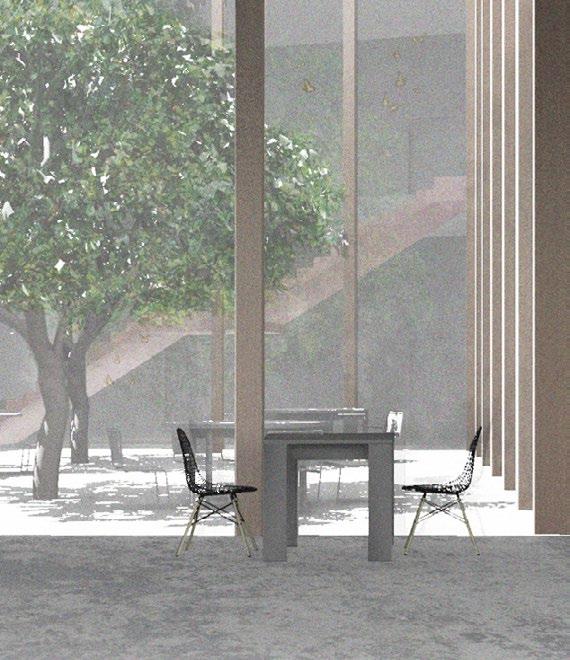
The objective for this studio was to design a centre for craftsmanship with a courtyard as a main gathering and meditation space. This building offers many large multifunctional spaces where natural daylight is the main source of lighting. These spaces are very open and inspire fruitful exchanges among coworkers. The courtyard provides many opportunities to freshen up and clear one’s mind before going back to work.
Winter 2017 | Professor Ricardo L. Castro
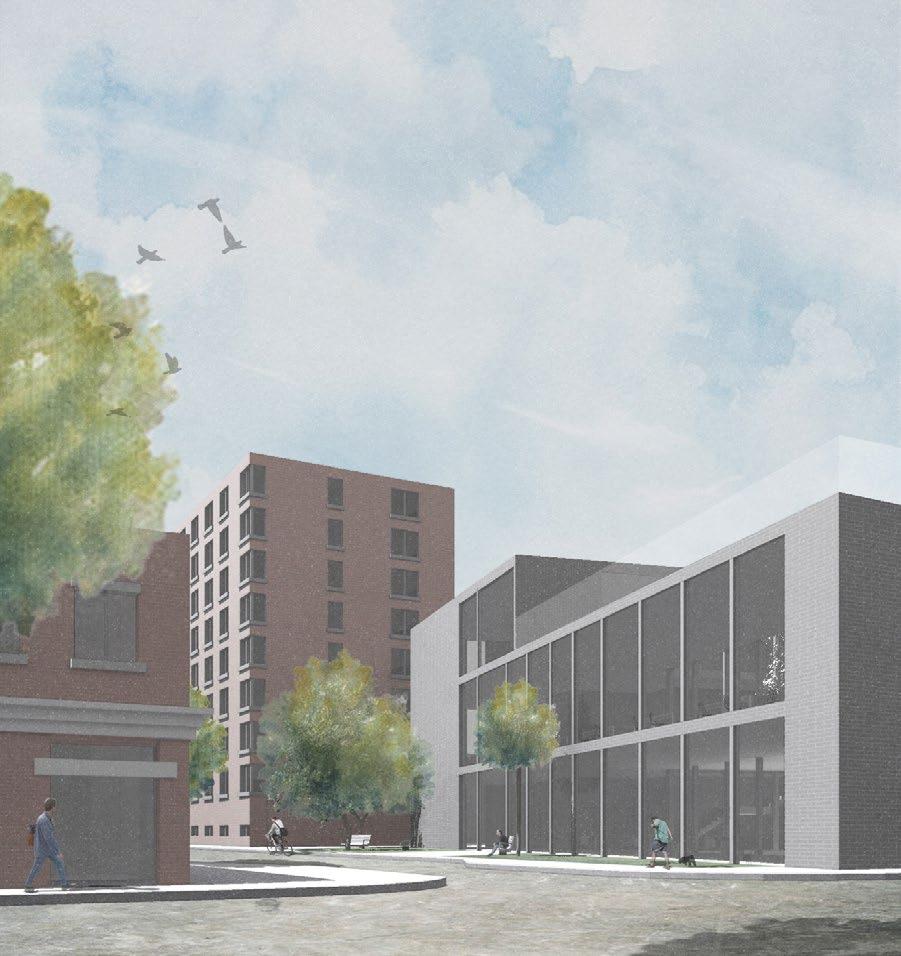 Exterior Perspective | Milton & Park ave
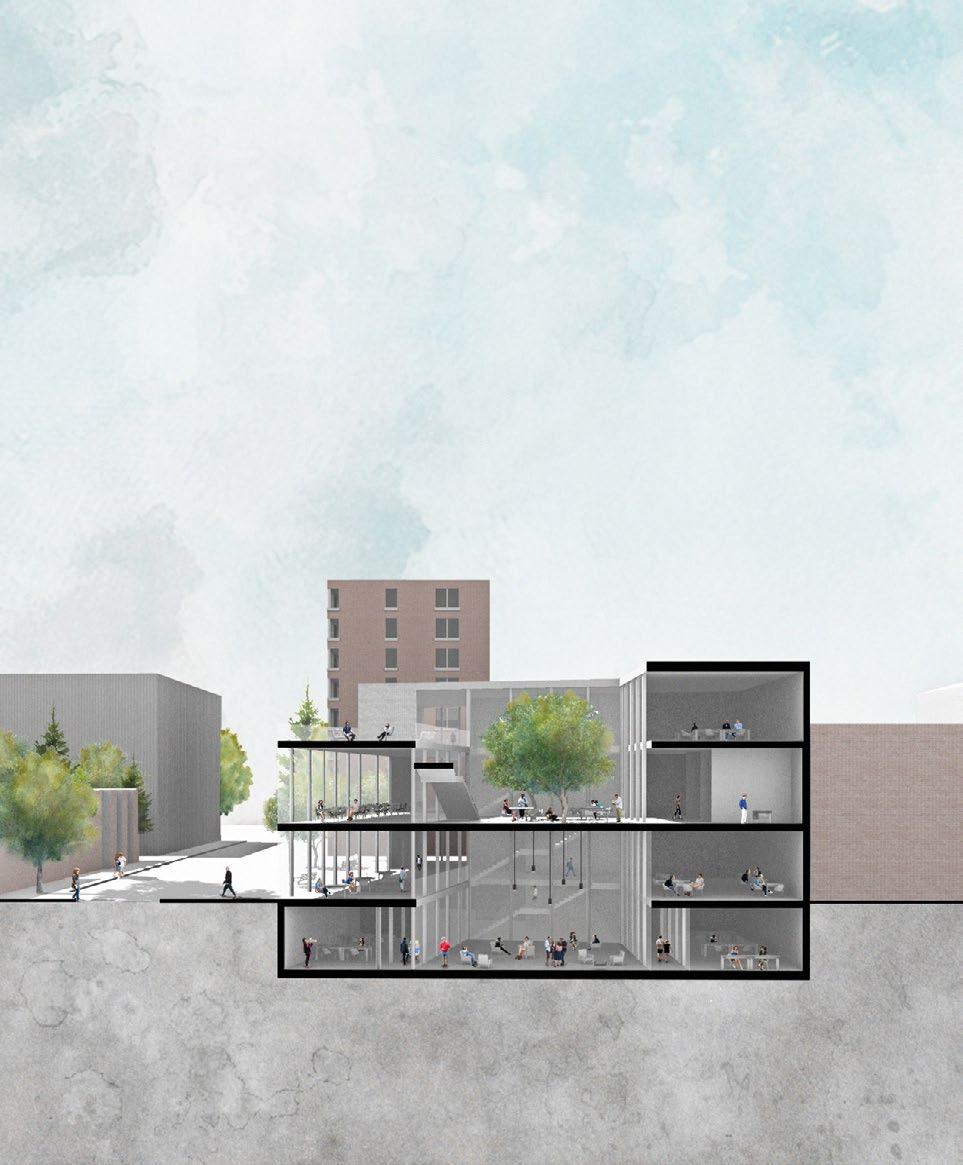
Sectional Perspective | Milton & Park ave
Ground Floor up
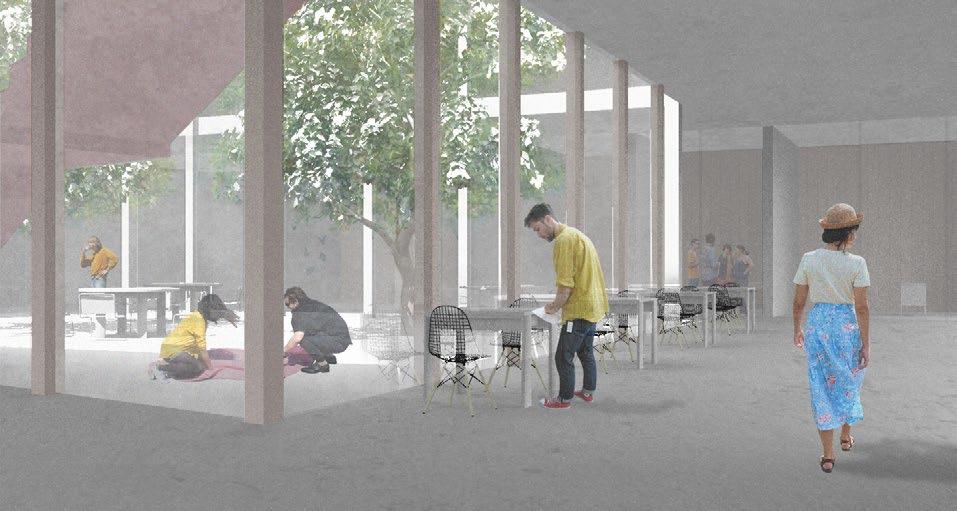 Interior Perspective | Courtyard & Main Hall
Second Floor up up
2_ Place des Arts Hotel

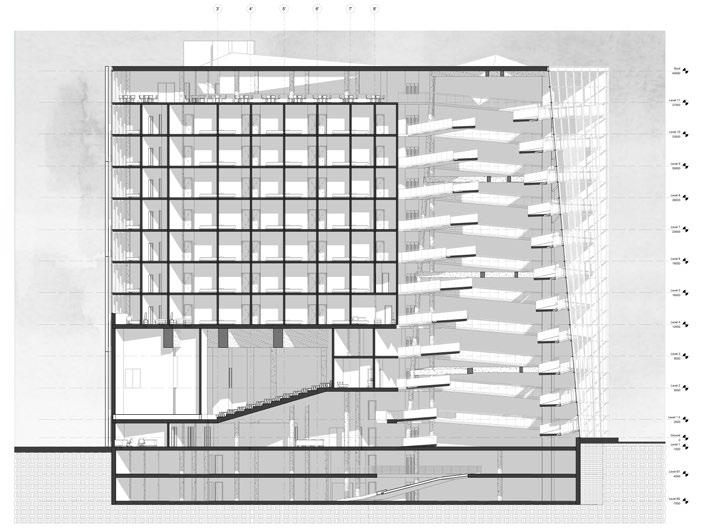
The objective for this studio was to design a hotel with an added specific program. Place des Arts Hotel showcases a sculptural 14-storey gallery space and offers a large auditorium as an extension to all theaters and concert halls in place des arts (Montreal downtown area). The facade is created with an ensemble of modulated fiber-reinforced composite panels. The goal was to achieve a random-looking pattern while only using one panel that would be repeated and mirrored throughout the facade. Views and natural daylight are maximized while still offering privacy for the users. The 14-storey ramp would have exhibition space and would display all sorts of local sculptures throughout the void.
Fall 2017 | Professor Andrew J.King | Project done with collegue Kevin Khoury
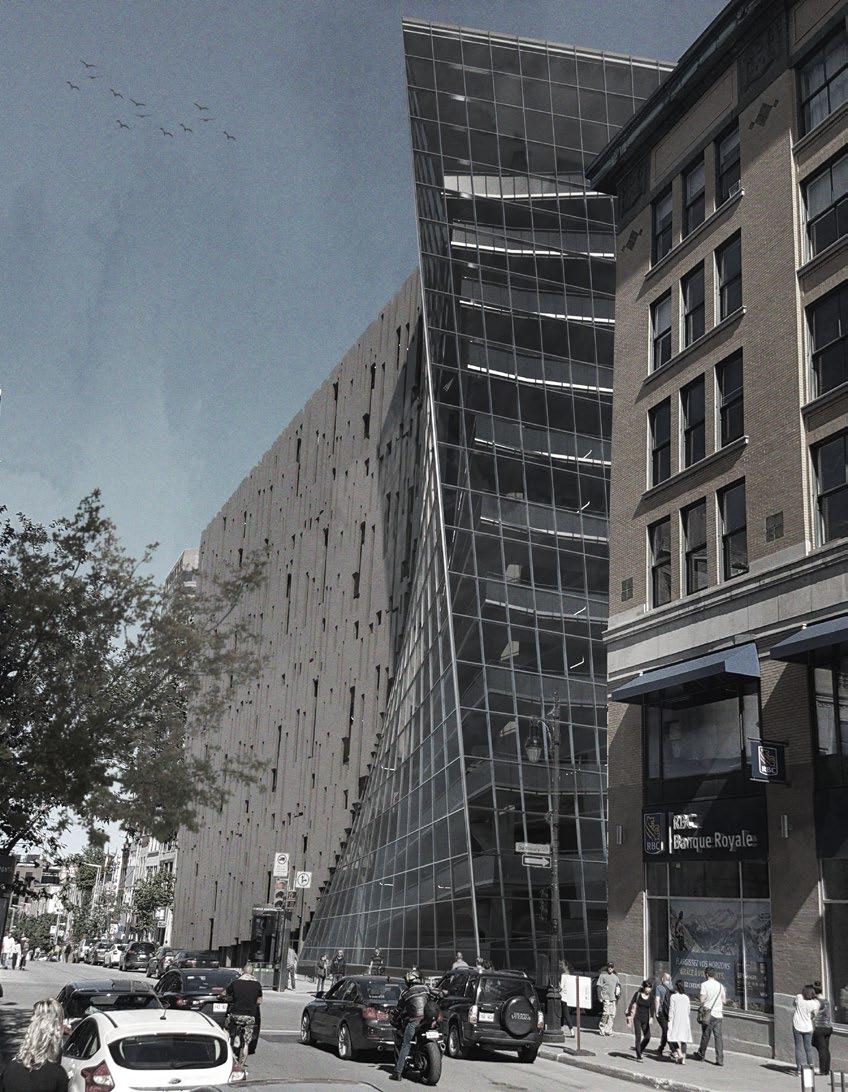 Exterior Perspective | St-Catherine & De Bleury | View on St-Catherine
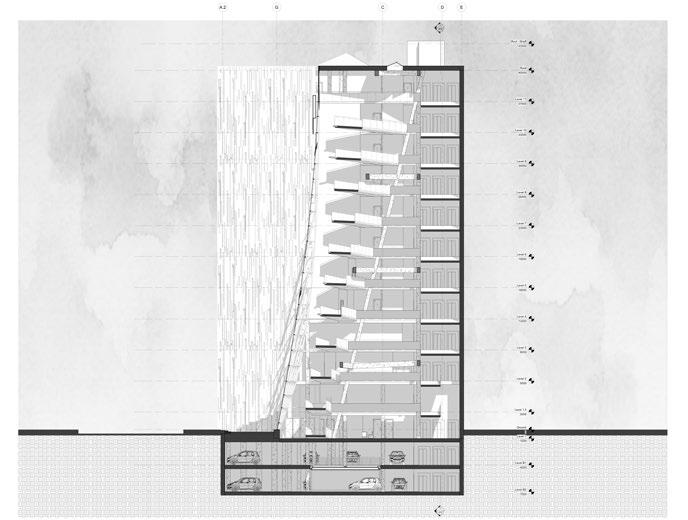
 Cross-section - West
Cross-section - South
Cross-section - West
Cross-section - South
5 10 m 0A B C D E 2 1 7 4 5 3 6 3' 4' 5' 6' 7' 9 8 8' 10.02 F.02 F.03 F.04 10.04 F.01 10.01 10.03 11 G 412B 412 411B 411 413B 413 414 407C 402 403 405 406 407 410 415 408B 416 Bathroom 412B 412 Bathroom 404B Bathroom Bathroom Bathroom 403 Bathroom Bathroom 411B Bathroom 413B Bathroom 407B 409 Room Room 408B 414 414B Room Atrium 402B 402 Suite 407 406 Room 404 Room 411 410B 413 A.2 5863 3397 3517 3517 3517 3517 2575 4420 18981 26 7 6 0 6 7 3 0 6464 11177 6714 2166 20852 4742 4742 emilie.stringer@mail.mcgill.ca 815 Sherbrooke St W, Rm312 ARCHITECT(S): 1 1 65 A03 0001 Design Development Plan - Level 4 -Catherine St W, Montreal, QC H2X 2A1 Kevin Khoury Émilie Stringer City of Montreal Hôtel de la Place des Arts 1 65 Level 4 Room Schedule (Level 4) 4 Atrium129 m² 4MAtrium Museum 401 m² 401Suite21 m² 401BBathroom4 m² 403BBathroom4 m² 404Room17 m² 406Room25 m² 406BBathroom4 m² 407Room22 m² 408Room16 m² 408BBathroom4 m² 409Room16 m² 410BBathroom4 m² 411Room17 m² 411BBathroom4 m² 413Room17 m² 413BBathroom4 m² 414Room21 m² 416Room6 m² 417Room12 m² 5 10 m 0 DN A B C D E 2 1 7 4 5 3 6 3' 4' 5' 6' 7' 9 8 8' 10.10 F.10 10.02 F.02 F.03 F.04 10.04 F.01 10.01 10.03 F.05 10.05 F.06 10.06 F.07 10.07 F.08 10.08 F.09 10.09 11 G 68 3 70 36 0 7 7 6714 2166 A.2 kevin.khoury@mail.mcgill.ca ARCHITECT(S): Notes: 1 Émilie Stringer A02 0001 Design Development Plan - Level 11Kevin Khoury Émilie Stringer City of Montreal Hôtel de la Place des Arts 1 65 Level 11 Level 11 Level 4


BLEURY ELEVATION
Elevation | St-Catherine
Elevation | Bleury
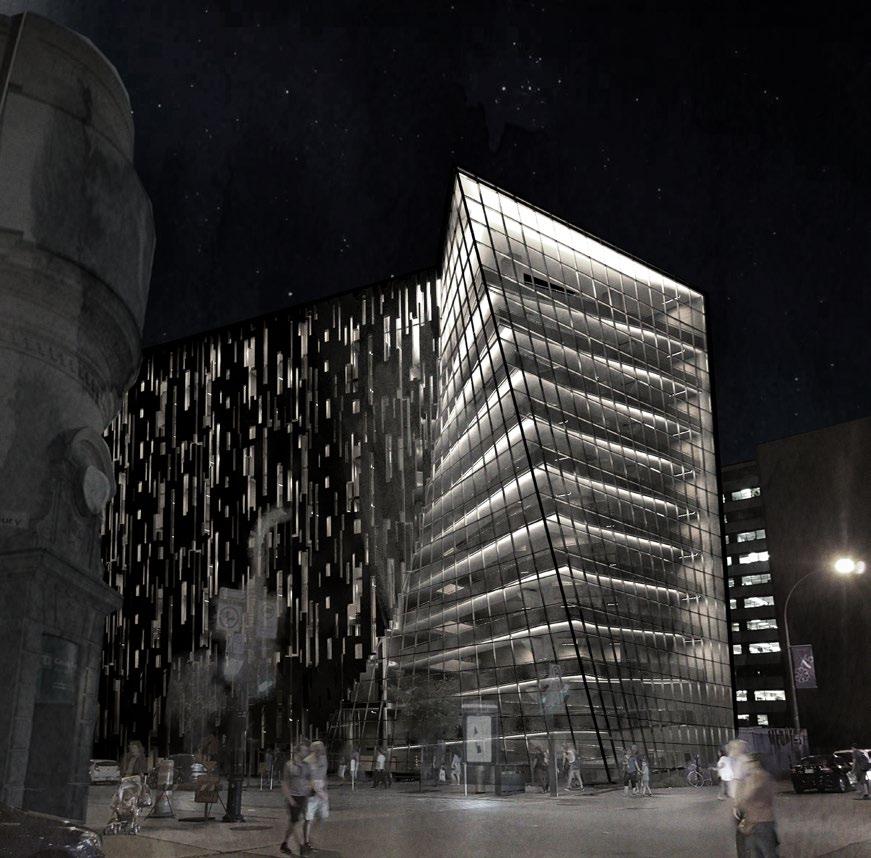 Exterior Perspective | St-Catherine & De Bleury | View on De Bleury
3_ Artificial Intelligence & Arts Centre
Winter 2019 | Professor

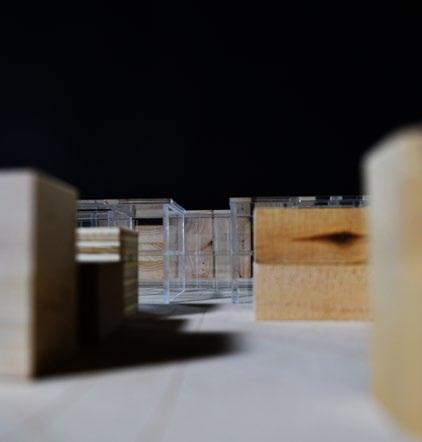
The objective for this studio was to design an Artificial Intelligence Research Laboratory + Gallery for Digital Arts in the Mile-Ex in Montreal. This neighborhood has seen an accelerated evolution around its periphery through the addition of AI research facilities. The aim of this project was to highlight the heart of the neighborhood while infusing it with a new pulse : connecting the Mile-Ex to its new identity. The sutdio required the exploration of the +/notion where the z-axis becomes a main driver. In other words, what is built overground must be equally considered underground. The program is composed of research, laboratories, offices, exhibition spaces, restaurant, and public facilities.
Gilles Saucier
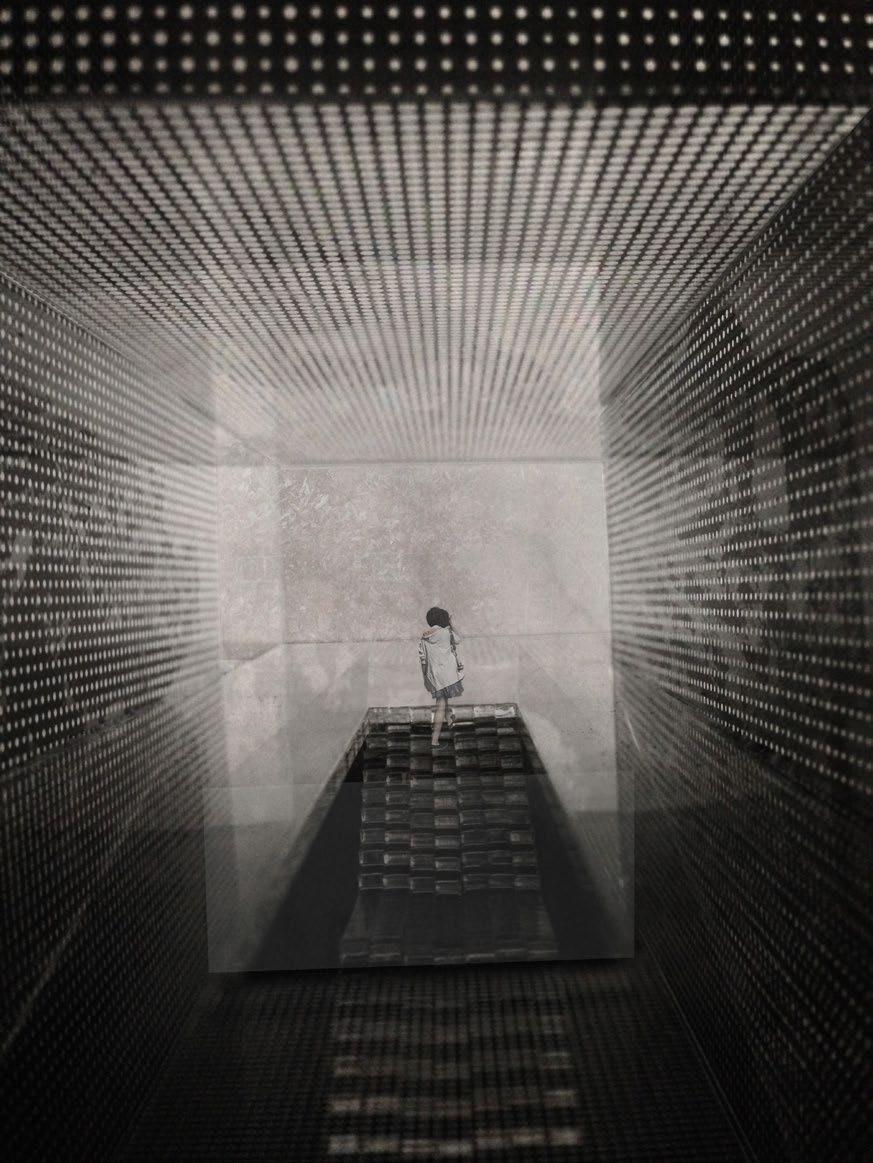 Interior Perspective | Exhibition Hall
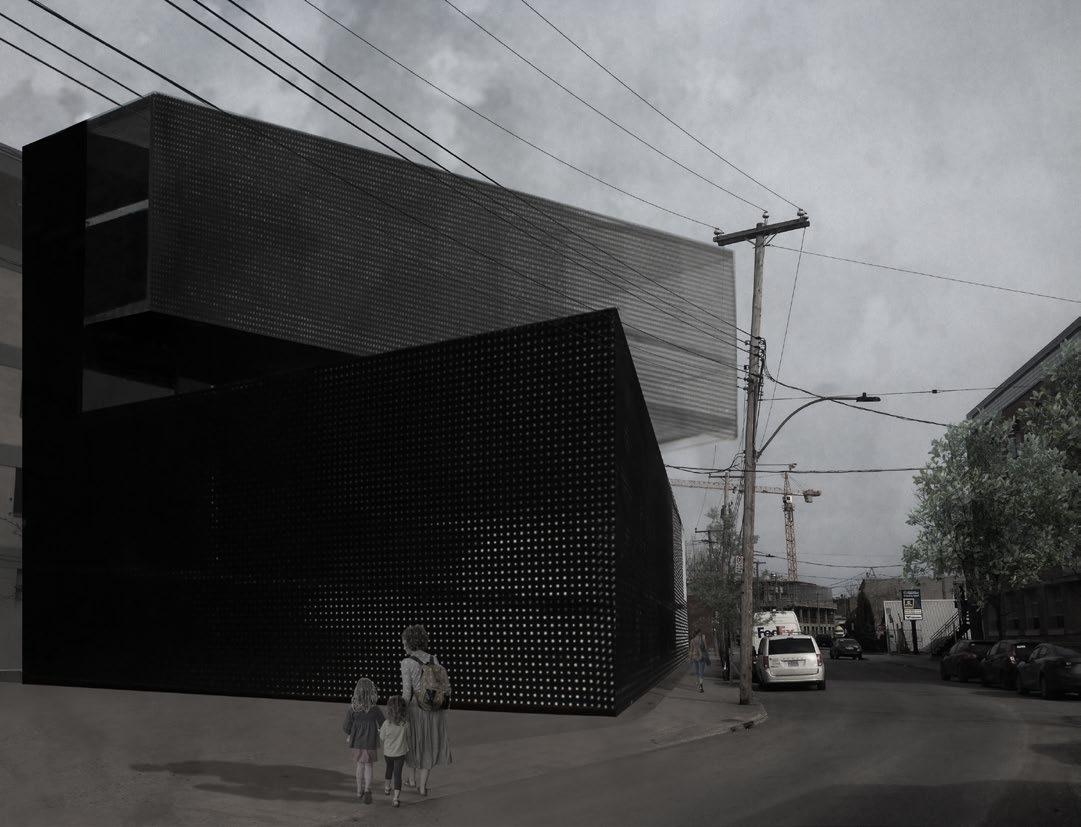 Exterior Perspective | View from Marconi St.
UP Level 4 Level 2 Level 1
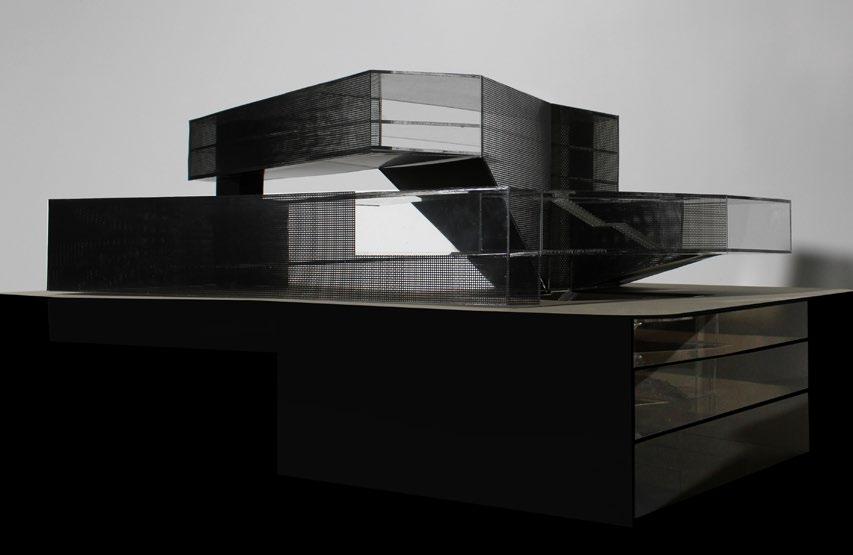 Physical model
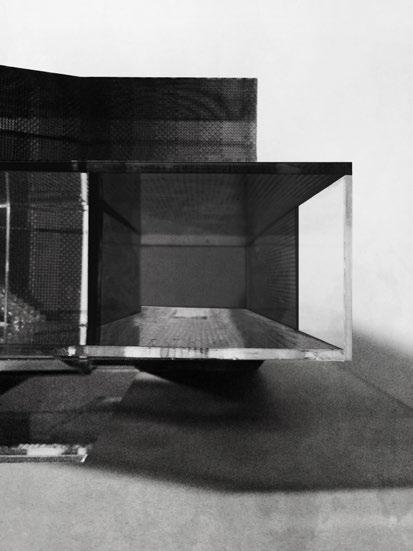
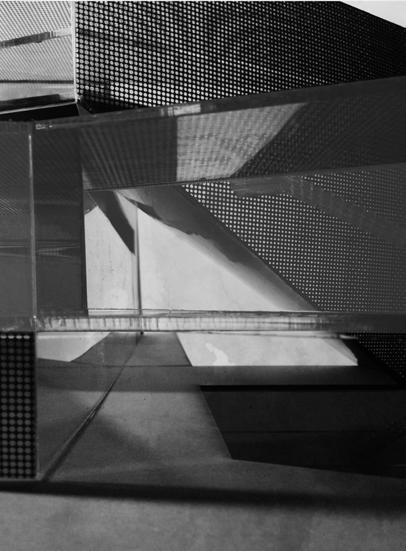 Sectional perspective | picture of physical model
Exterior perspective | picture of physical model
Sectional perspective | picture of physical model
Exterior perspective | picture of physical model
4_ The Empress Market
Fall 2019 | Professors Martin Bressani & Fabrizio Gallanti
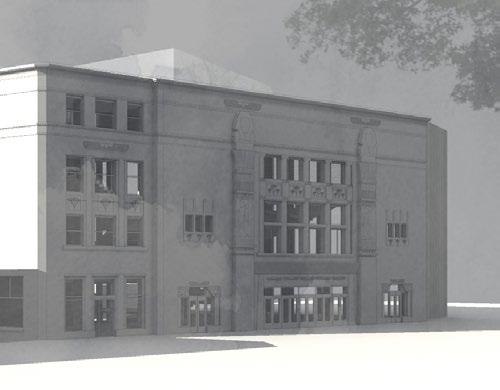
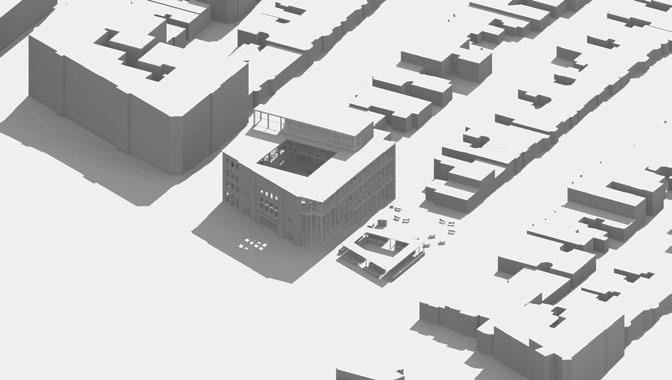
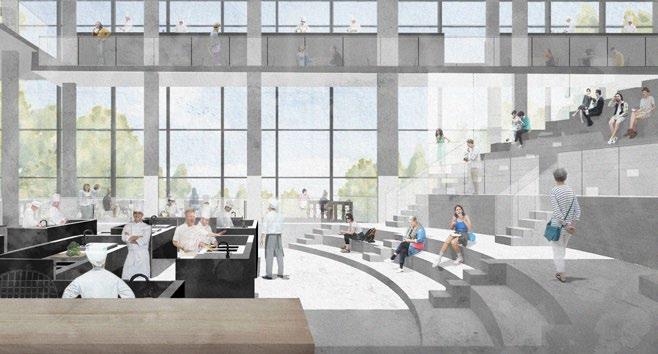
The objective for this studio was to propose a convincing thesis proposal as the final project for the last semester of the Master’s program. I am proposing that the Empress Theatre that sits on Sherbrooke street in the neighborhood Notre-Dame-de-Grâce should become a Market. It would alter itself into a new hub for gastronomical experiences that would include several high end restaurants with fresh produce on site, a functional indoor and outdoor market that caters differently according to the season, rentable multifunction event space, a rooftop terrace and outdoor seating space with programmatic goals linked to the park across the street.
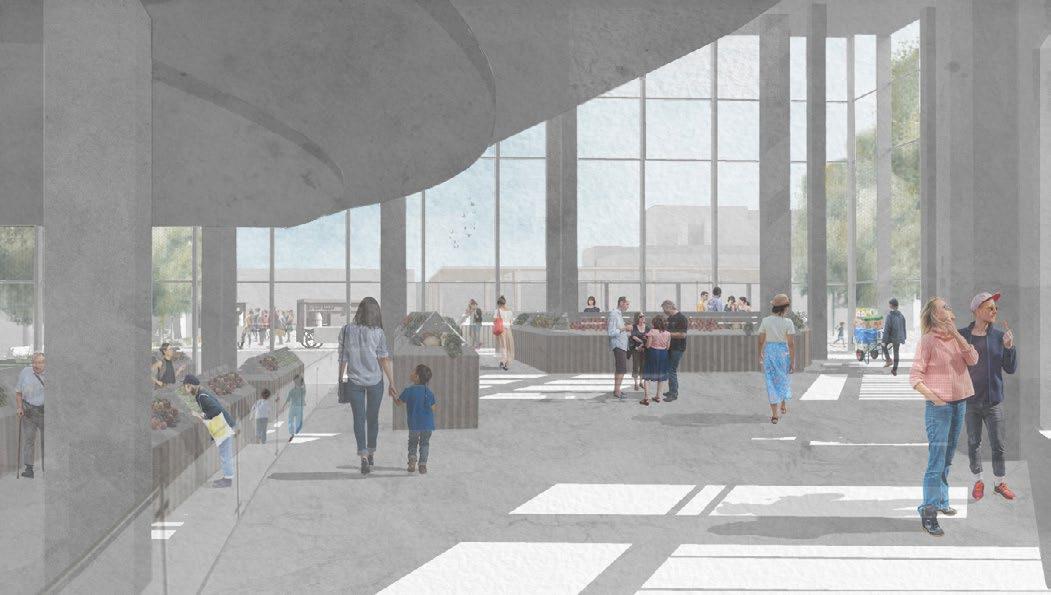 The interior market connects to the outdoor market through a delicate glass curtain wall which disntingues itself strongly from the heavy concrete structure of the auditorium.
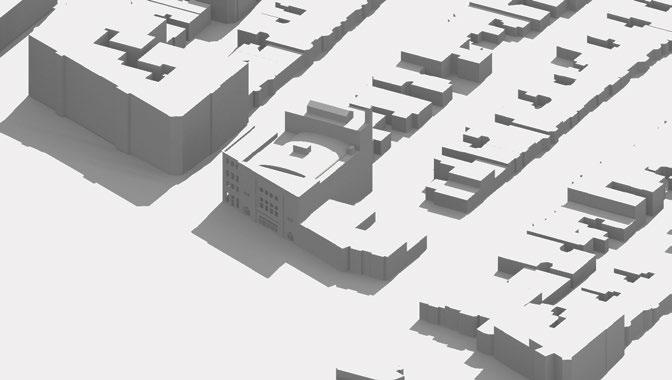
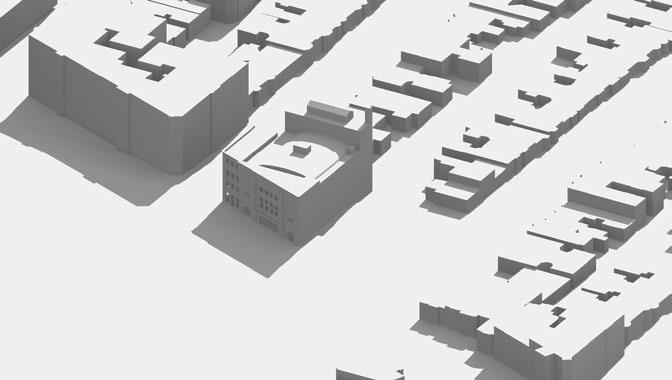
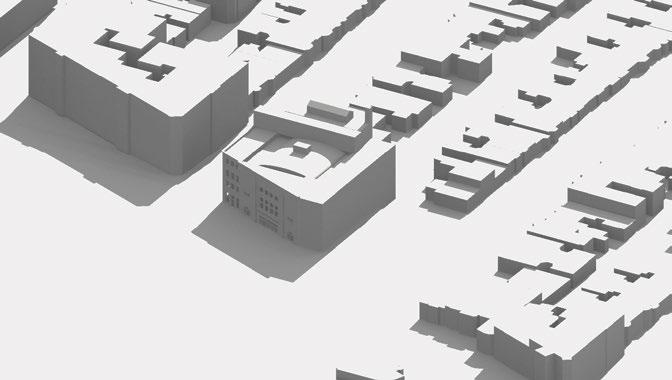
 1_ Existing
2_ Adjacent buildings demolished
Main modifications brought to the existing building
3_ Extensions 1 & 2
4_ Outdoor market place
1_ Existing
2_ Adjacent buildings demolished
Main modifications brought to the existing building
3_ Extensions 1 & 2
4_ Outdoor market place
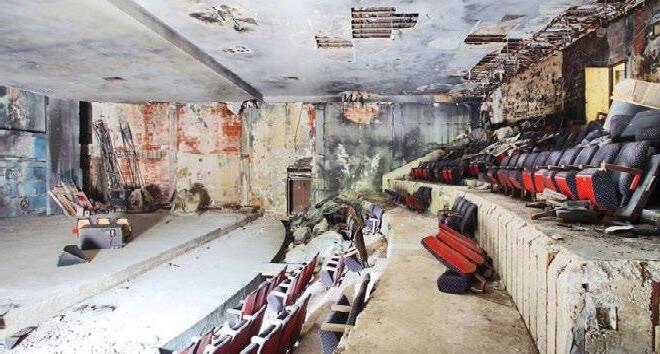
How could we revive what was once a gathering and social space for people of the neighborhood into a building that carries out the same goals but with a different function while preserving its historical and architectural value?
existing building & demolished structure
The Empress Theatre is located across from one of the most important parks in the neighborhood, one that marks the entrance and beginning of NDG and sits on the main circulation axis: Sherbrooke street. Next to it, there is a large permanently empty parking space and a few smallscale commercial buildings that are mostly food oriented.
Old Orchard ave
s t
Park
Sherbrooke
Girouard
Empress Theatre’s Main Hall Below Auditorium
Proposal
Main Hall & Outdoor/Indoor Market Place
As it is considered a Heritage building because of its Egyptian Revival style architecture, the Empress Theatre’s valuable facade would be restored and maintained. The structure would stay intact while added extensions would complement the existing building with a contrasting architectural style. People would experience the market in the main skylit space and enjoy their food in the ruins of the theatre’s concrete auditorium.
up Old Orchard ave Sherbrooke s t Girouard Park
 Demolished | lvl_3
Existing auditorium
Demolished | lvl_3
Existing auditorium

up up up up up up up up
Proposed | lvl_3 Proposed auditorium
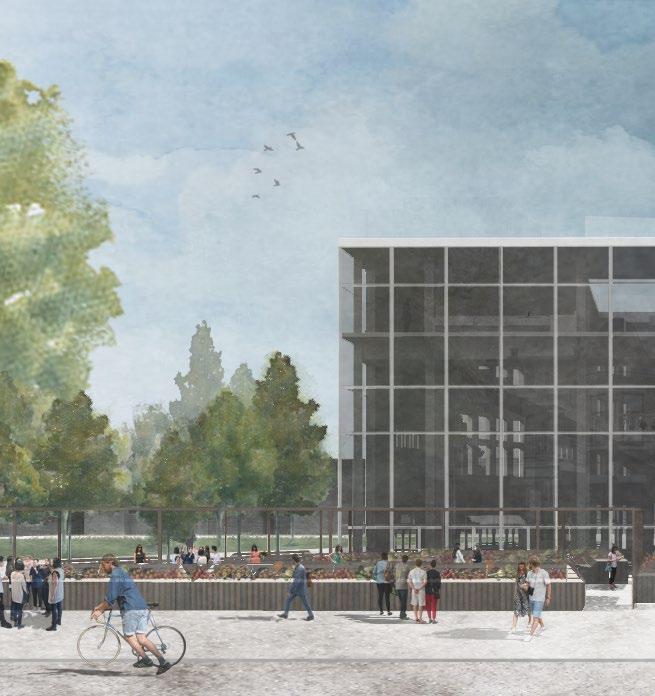
The Empress Market is a way of keeping a gathering space as its main occupation while completely changing its function. Its extensions, complement the existing Egyptian-Revival style architecture while preserving its heritage value. The market would become a symbolic as its location and history is emblematic.
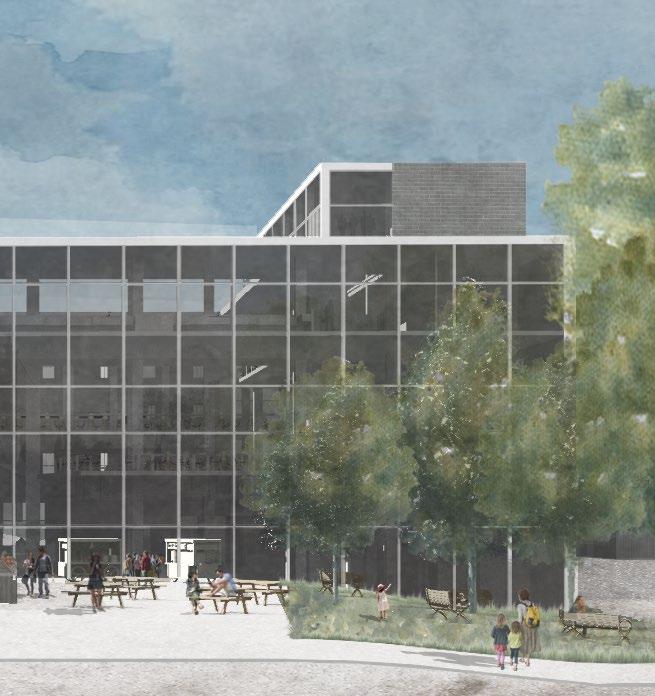
extensions, demolitions and additions symbolic asset to the neighborhood
5_ Jardins de Métis Pavilion
Winter + Summer 2019 | Professors Kiel Moe & Michael Jemtrud
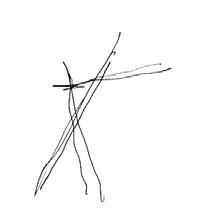
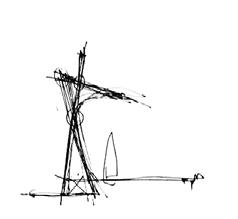
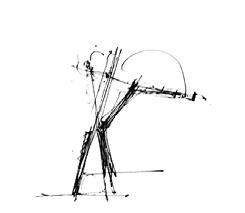
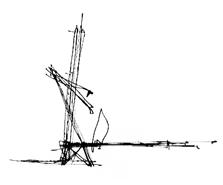
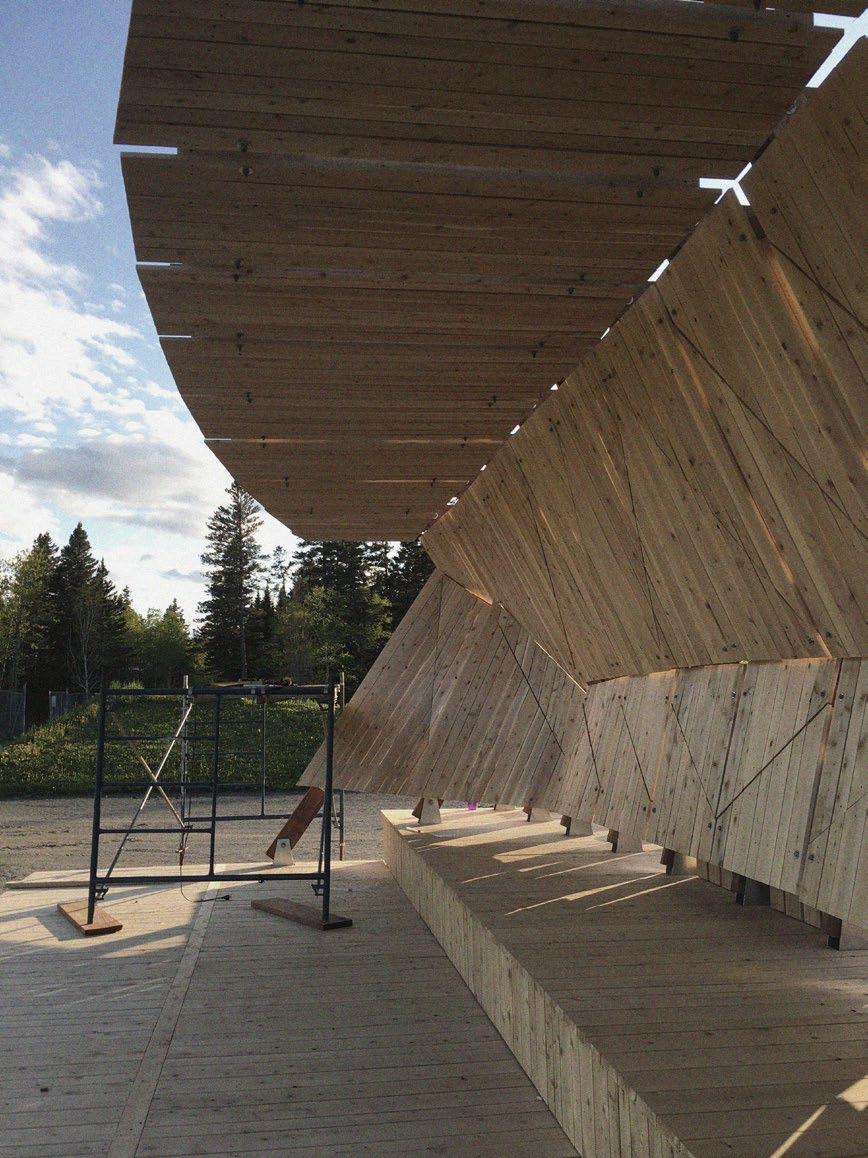
The objective for this workshop was to design and build a sustainable stage that would optimize sound performance. The project resulted in a wooden pavilion composed of a modular system of columns and panels. These columns forming an ‘‘X’’ shape allowed for the structure to place itself in different angles optimizing sound and space. The stage offers two levels and a large backstage area that also serves as an informal seating area. Architecture and sound engineering students worked together on the design of the pavilion for the duration of a full semester and a couple selected students built the final project during the month of May for a period of 3-4 weeks at the site.
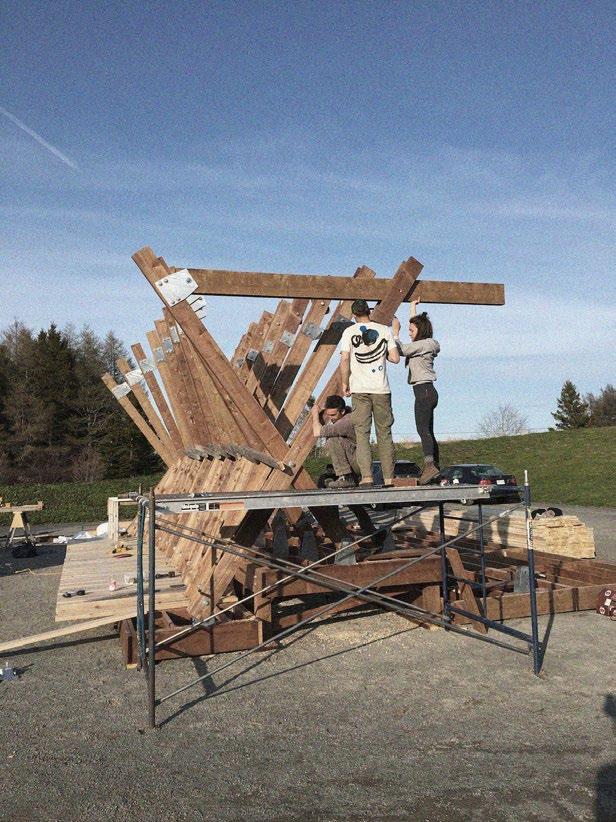 Mounting the ‘‘X’’ Shaped Structure
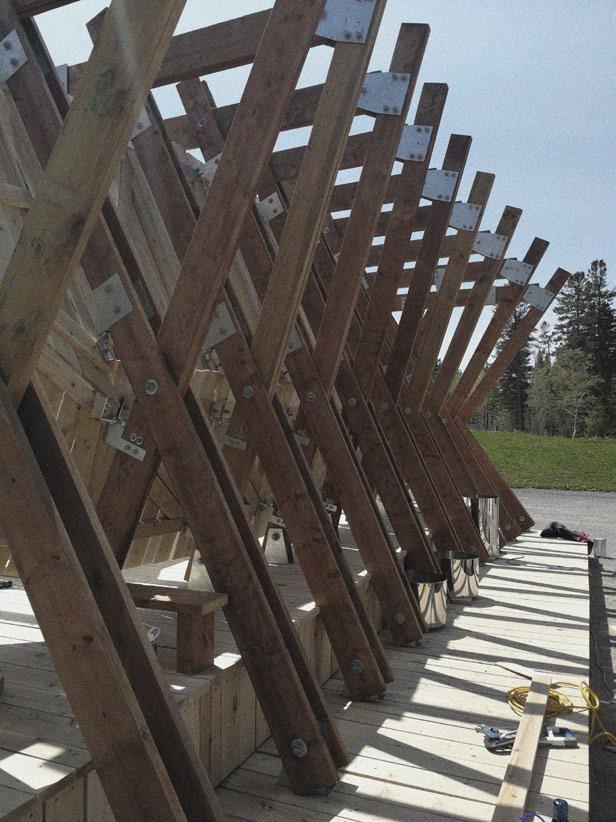 The Mounted ‘‘X’’ Shaped Structures
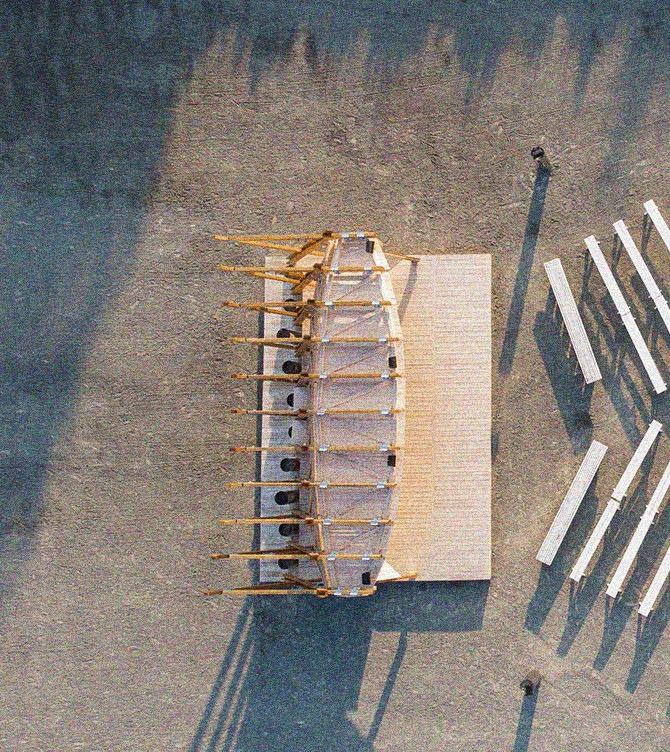 Top View of the Pavilion
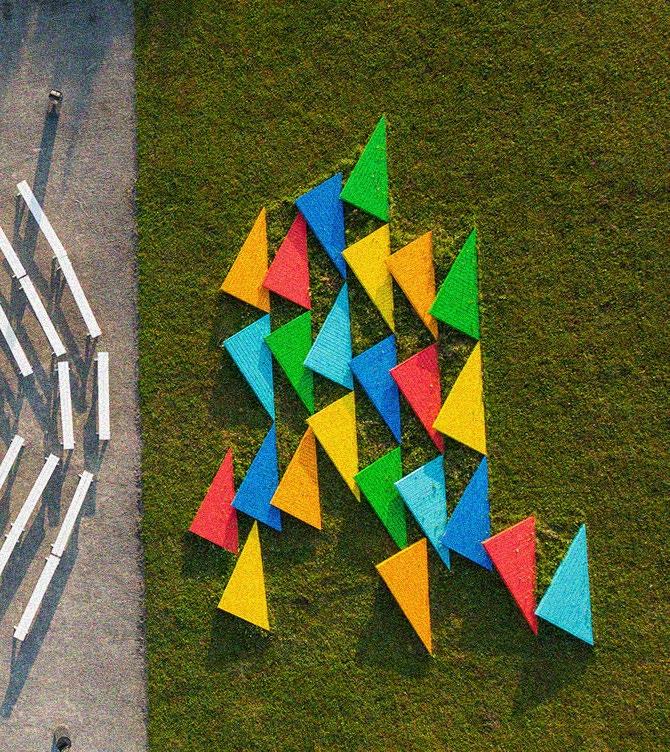
6_ Camp Massawippi Dining Hall
Summer 2020 | Studio Perch - Suresh Perera & Julie Charbonneau
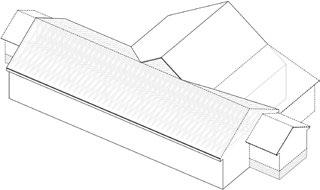
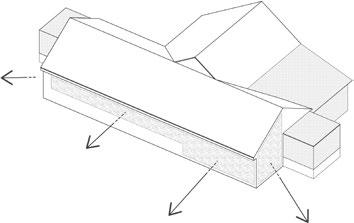
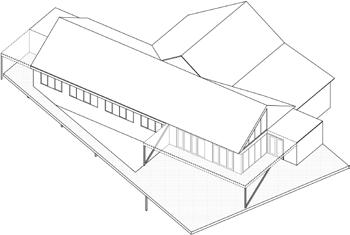
During my four month internship at Studio Perch, I mainly worked on Camp Massawappi’s preliminary design phase. The project consists in the complete reconstruction of a 4000 SF Dining Hall including a kitchen and the addition of a large covered terrace facing the lake. The building is to serve a summer camp that focuses on the specialized needs of children and adults with physical disabilities. Added openings allow for more natural light to enter the building and maximise views to the lake while a large covered terrace serves as a playful outdoor area for games and gatherings.
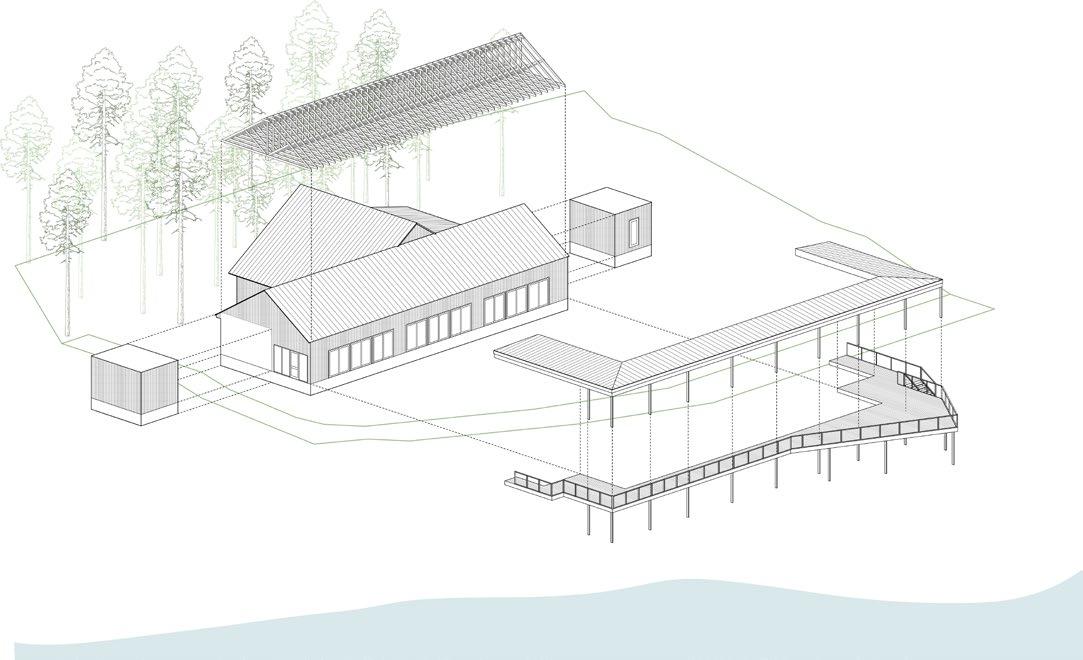 Exploded Axonometric
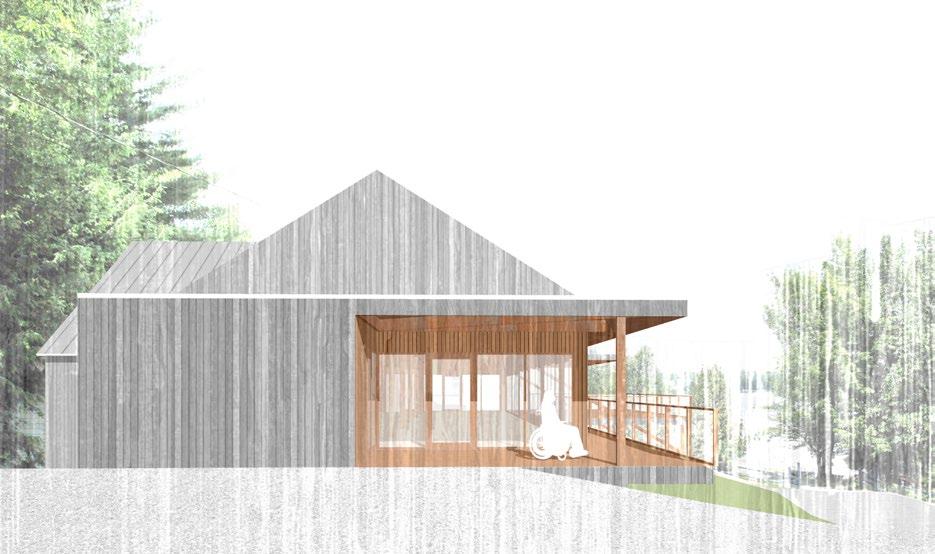 Side Elevation