
bc. Emilie Rážová
4. 1997 Výsluní, Czechia // Berlin, Germany razova.emilie@gmail.com
+420 736 629 583
//education
2022-now
Technische Universität Berlin, Germany
Urban Design, Fakultät VI Planen Bauen Umwelt
Master degree
2016-2021
Technical university of Liberec, Czechia
Architecture, Faculty of arts and architecture
Bachelor degree
2020-2021
Academy of Crafts, Prague, Czechia Carpenter Apprenticeship, unfinished
2020 Estonian Academy of Arts, Tallinn, Estonia Urban Studies Erasmus internship
2019 Academy of Fine Arts, Prague, Czechia Intermedia Internship
//work experience & projects
since 03/2024 a member of TUSCA7, part of LINA community (an association that promotes transdisciplinary collaboration between students, academics, practitioners and activists; the main themes are ecology, infrastructure, spatial empathy, terrestrial phenomena of all kinds, the intersection of science and aesthetics)
Berlin, Germany
08-10/2022 gogolák+grasse s. r. o. urban planning office; junior architect Prague, Czechia
03-07/2022 Land05, s. r. o.
landscape architecture office; junior architect Prague, Czechia
03/2021-08/2022 The chief architect‘s office of the spa town of Karlovy Vary state-funded institution; collaboration Karlovy Vary//Karlsbad, Czechia
09/2021-10/2022
Cultural self-organized space Zahálka co-founder, co-producer Teplice, Czechia
2021
09-12/2019
Public hall and gallery Hraničář collaboration on programme (summer school Landcape of degrowth, debate Light in open spaces)
Ústí nad Labem//Aussig, Czechia
Liberec Regional Gallery Lázně lecturer of art course and educational events for children Liberec, Czechia
09/2019, 09/2018 Student cultural festival SEJF co-producer, architecture and open space section Teplice, Czechia
//publications
2024 Rážová, E. (2024). Imerze každodennosti (review of exhibition Planet Prague). ERA21, 2024 (04), 11-12.
2024 Dittmar, J.; Dogru, Ö.; Knödler, L.; Morgenstern, J.; Rážová, E. (2024). Beyond family: Non-normative housing practices, Technical University Berlin, CUDChair for Urban Design and Urbanization, 92-101.
2021 Chomaničová, V.; Johnová, M.; Mrázek, O.; Palešníková K.; Rážová, E. (2021)
Sluneční město: ústecký architektonický průvodce 1948-1989. Ústí nad
Labem: Veřejný sál Hraničář, spolek.
//workshops
2023 COLLOC 2023 Hybrid Alumniworkshop (10-day workshop)
Collaborative production of transformation knowledge in self-organized occupations Rio de Janeiro, Brazil
2022 Interpretationskurs (twice 3-day workshop)
Cínovec//Zinnwald-Georgenfeld, Czech-German border with Naturschutzstation Osterzgebirge e.V.
2021 Landscape of degrowth (five-day art camp)
Ústí and Most region with Public hall and gallery Hraničář
2020 How to a landscape (Five-day art camp)
Ústí region with Public hall and gallery Hraničář
2019 Basics of carpentry (one-week workshop)
School of Applied Arts, Hradec Králové, Czechia
//languages
czech
leaky pocket
studio Jörg Stollman + Jamie-Scott Baxter
Institut für Architektur, Chair of Urban Design
TU Berlin
WS 2023/24
The last few weeks of 2023 and the first few weeks of 2024 I was working on how to infuse and diffuse myself and with wild plants growing around Berlin.
Based on a book „Bodies of water“ by Astrida Niemanis, we are not indiuviduals, but our bodies are rather transcorporael, wet, spongy and permeable.
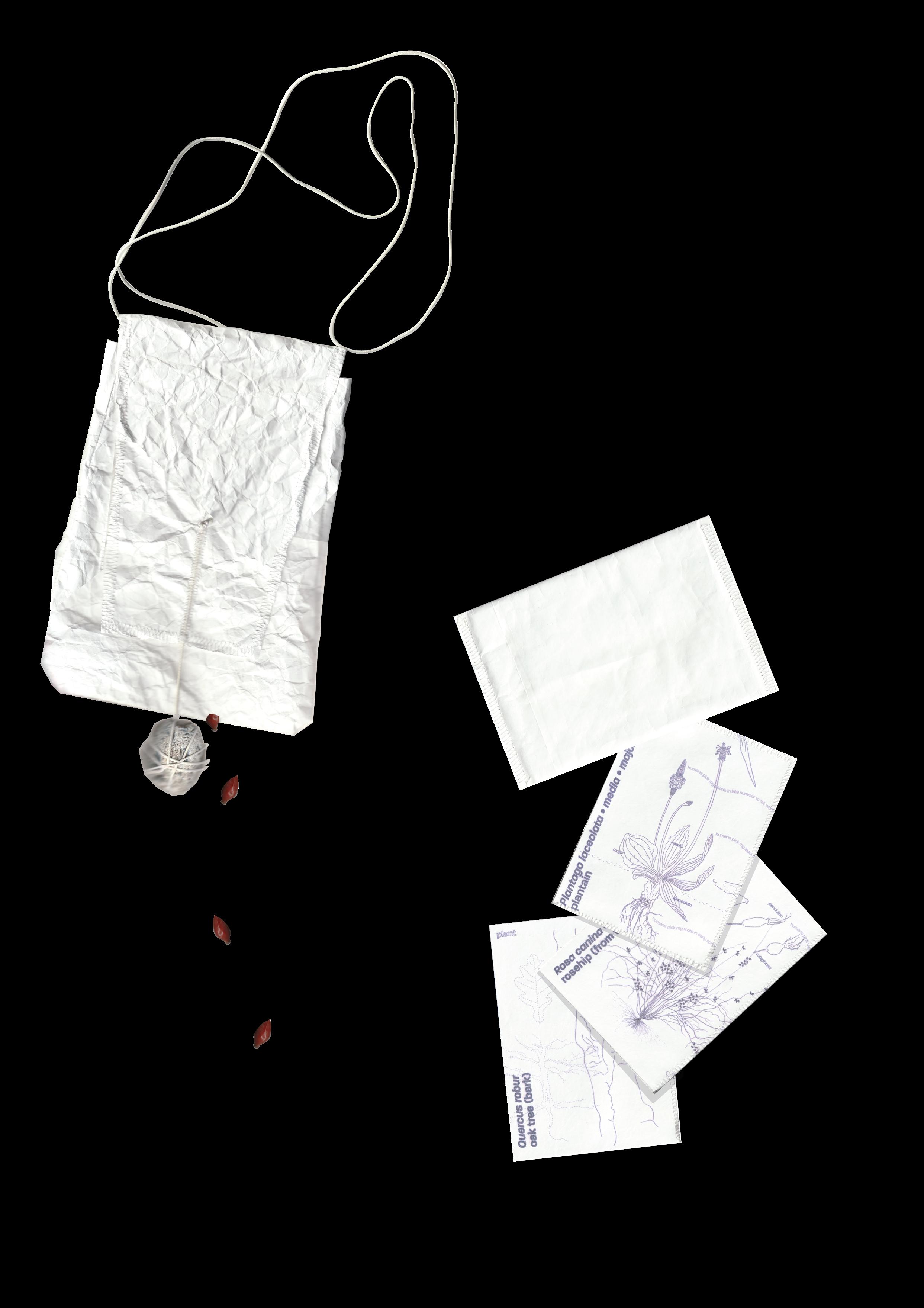
The project „leaky pocket“ consists of a simple kit for foraging - pocket that you would take with you in the field, collect fruit which you would accidentaly share back by unconscious dropping and simple „how to recognize“ cards for several species - their interpretation questoning the common representation of plant species. This leaky pocket is winter edition, for plants which I picked and processed, in winter season, not so common for foraging, around teltowkanal.
the first is leaky pocket, which you would wear during the tour outside, pocket in which you would try to collect some of the fruits.
and a pocketbook of the (mostly) weedy plants, which you can commonly met in city.
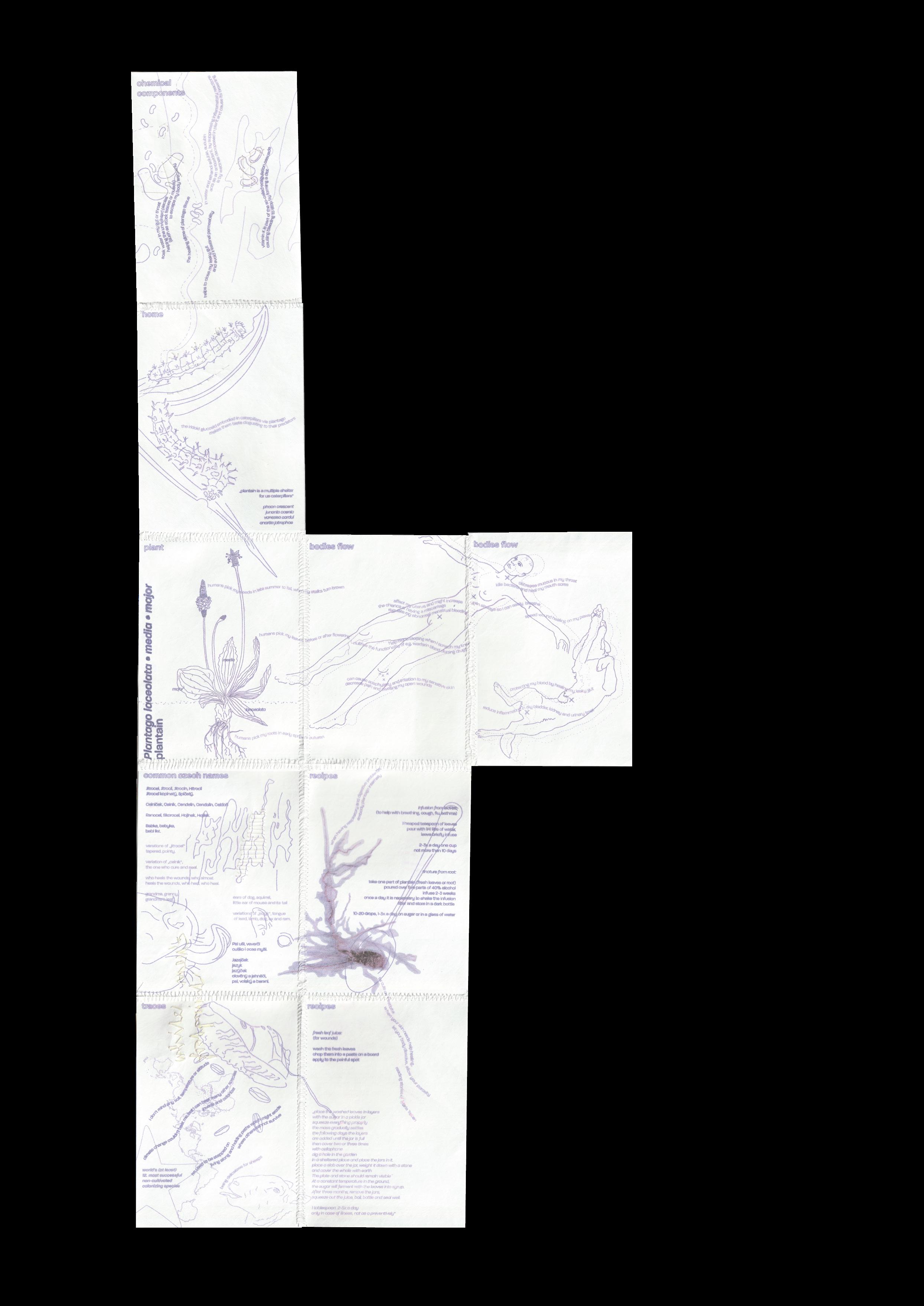
by this example of representation of plant it is questioned the structure of a knowledge presented in common pocket books about medicinal plant or botanical vouchers.
by re-drawing it is proposed to re-oganize the knowledge about the plants. its linkages to and among other bodies through water as a carrier bag. what are the flows in human or dog bodies, who and how it heal and are hurt, for who it means shelter, what is happening on a micro level or what are the historical and political traces of the species. and everything sewed together with loose stitches.
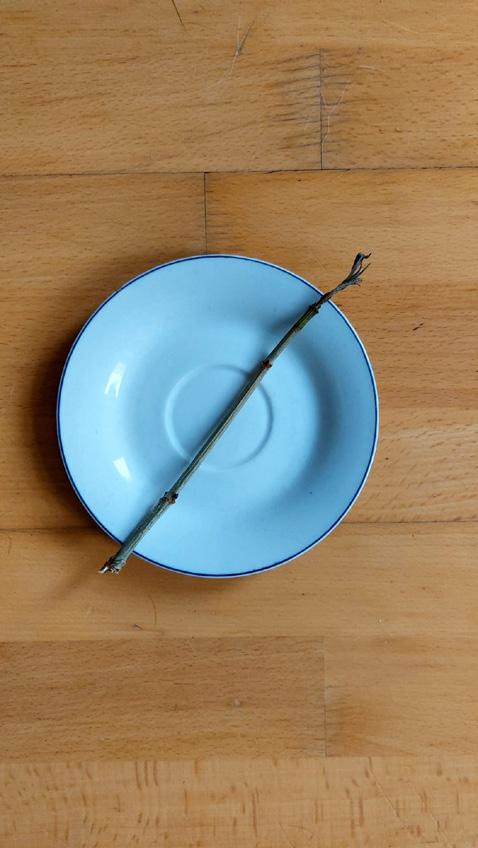
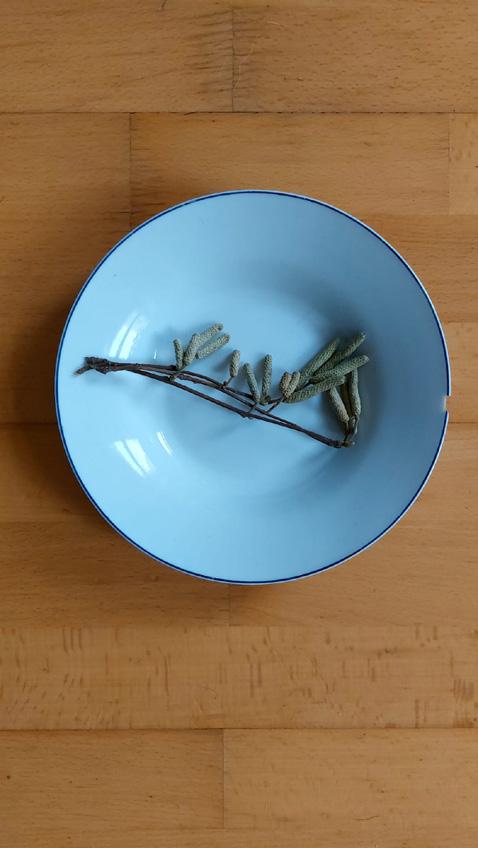
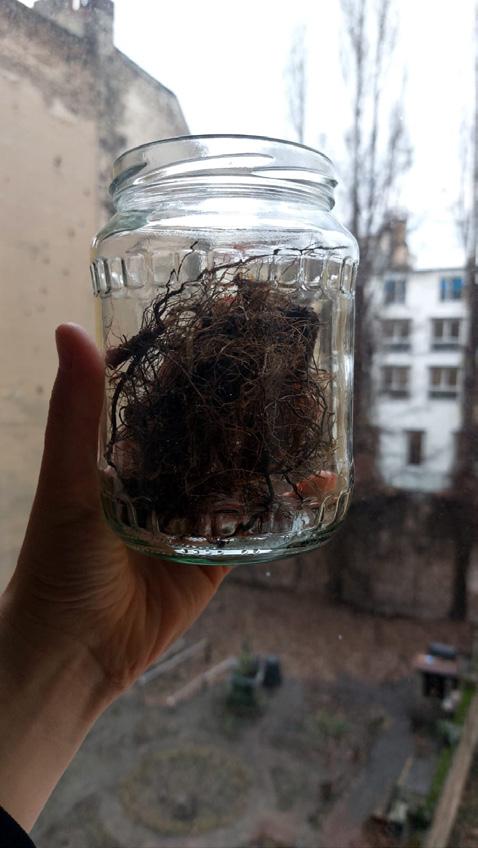
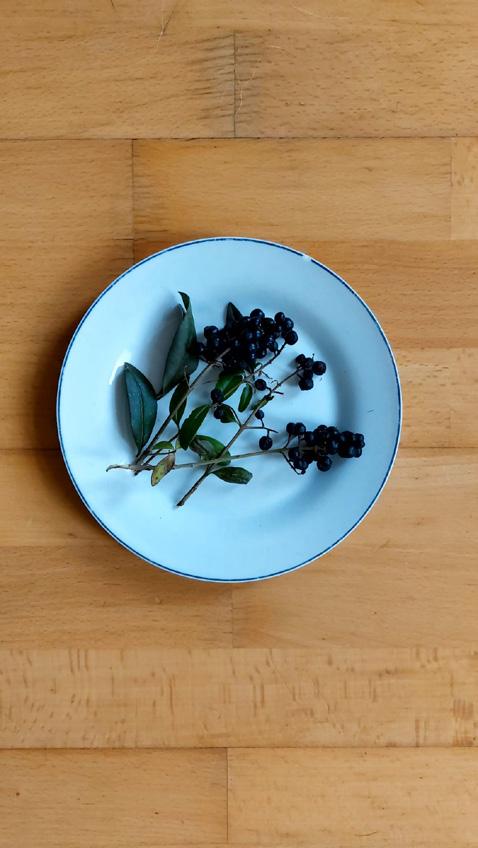
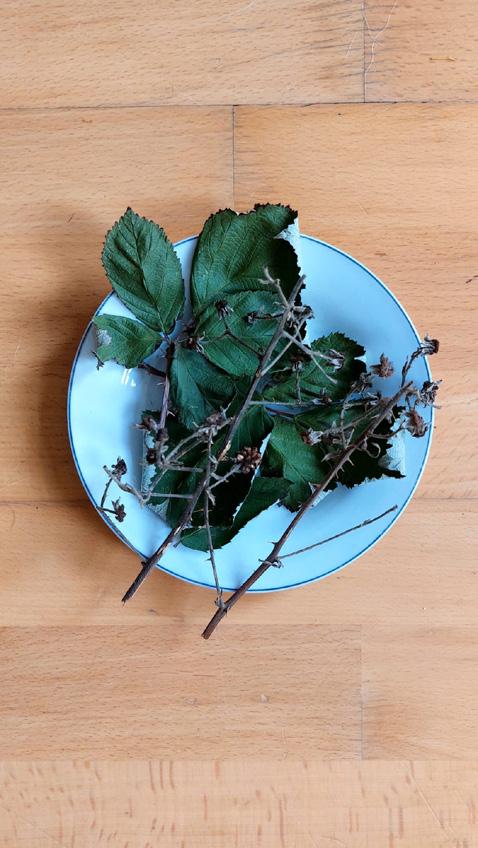
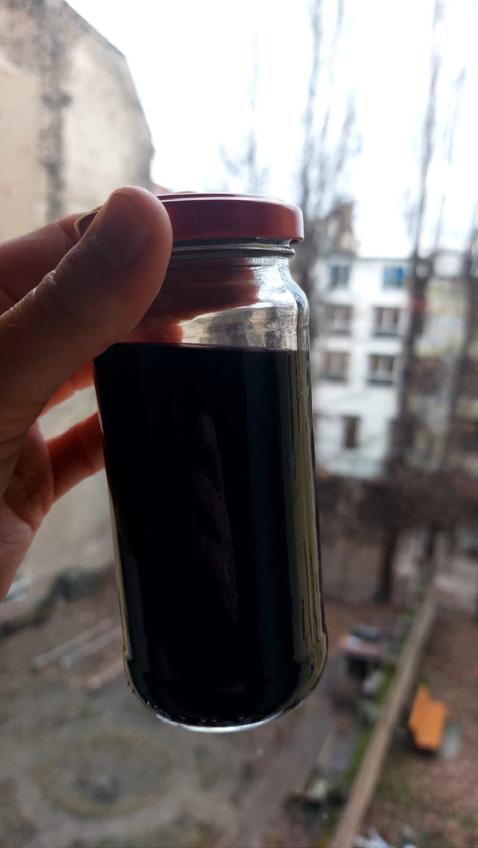
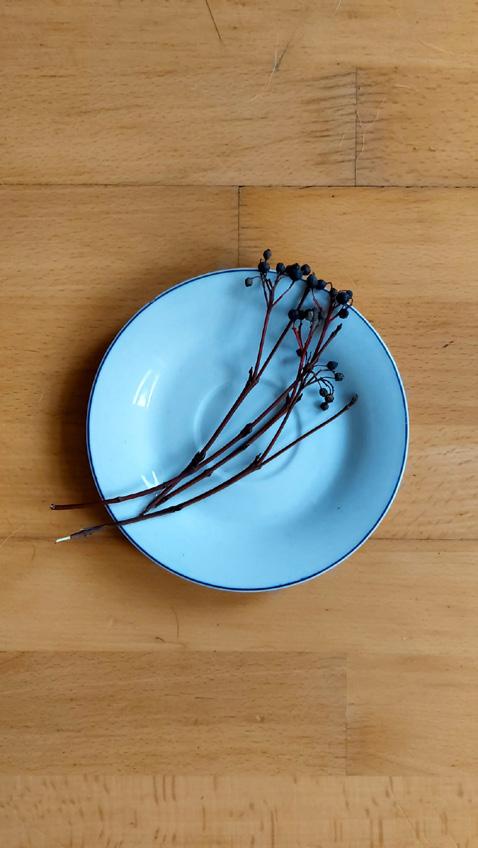
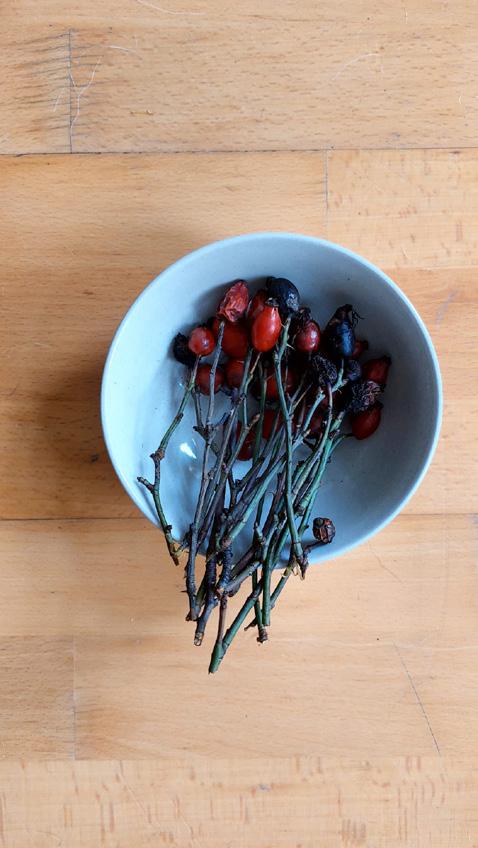
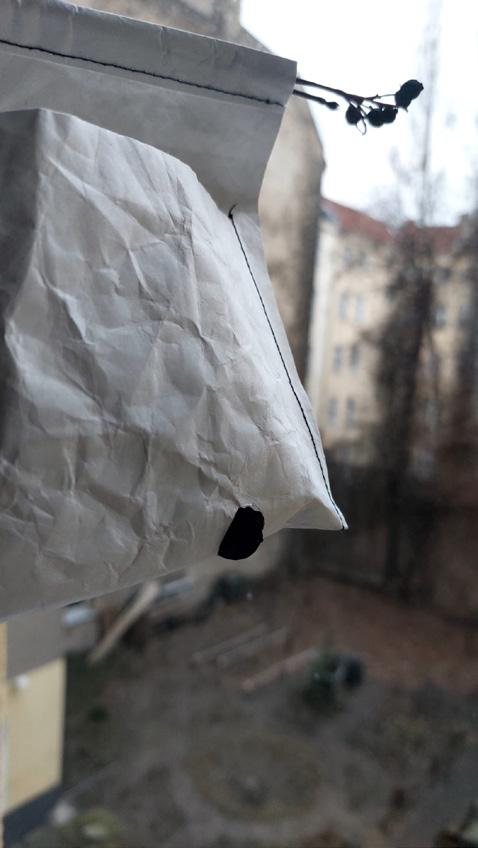
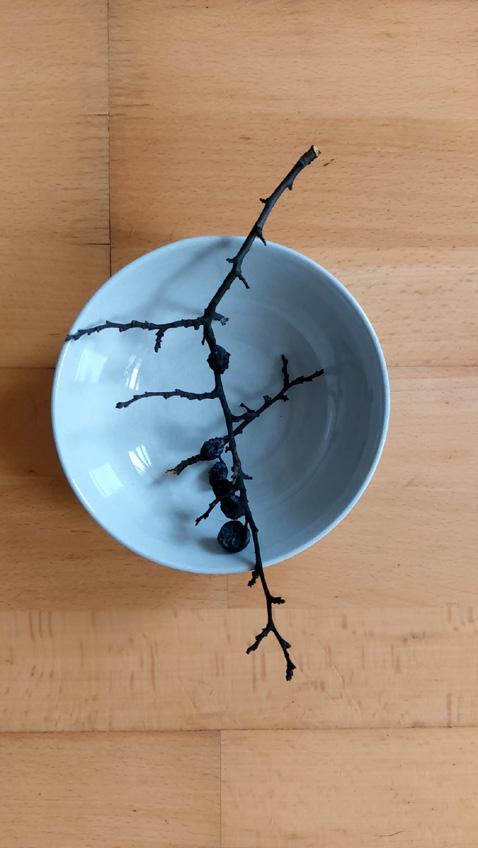
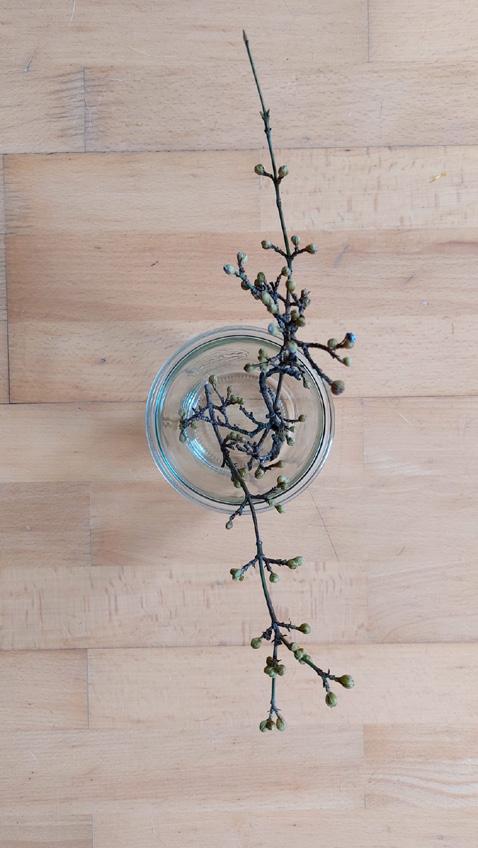
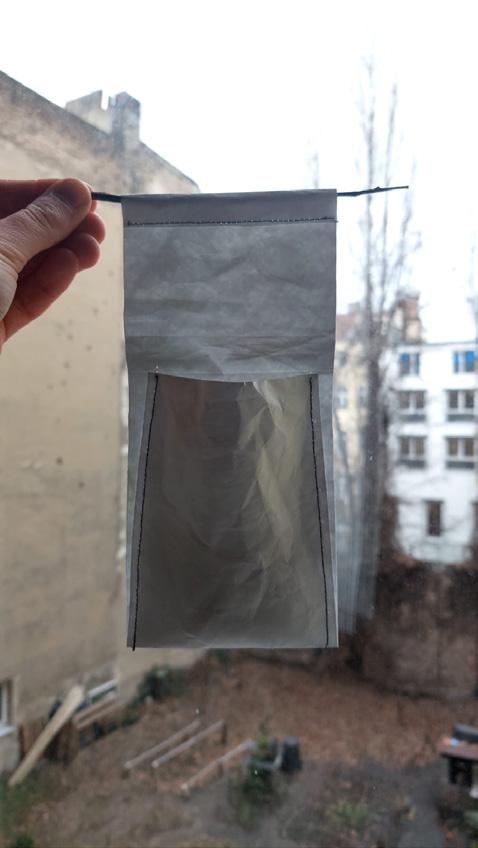
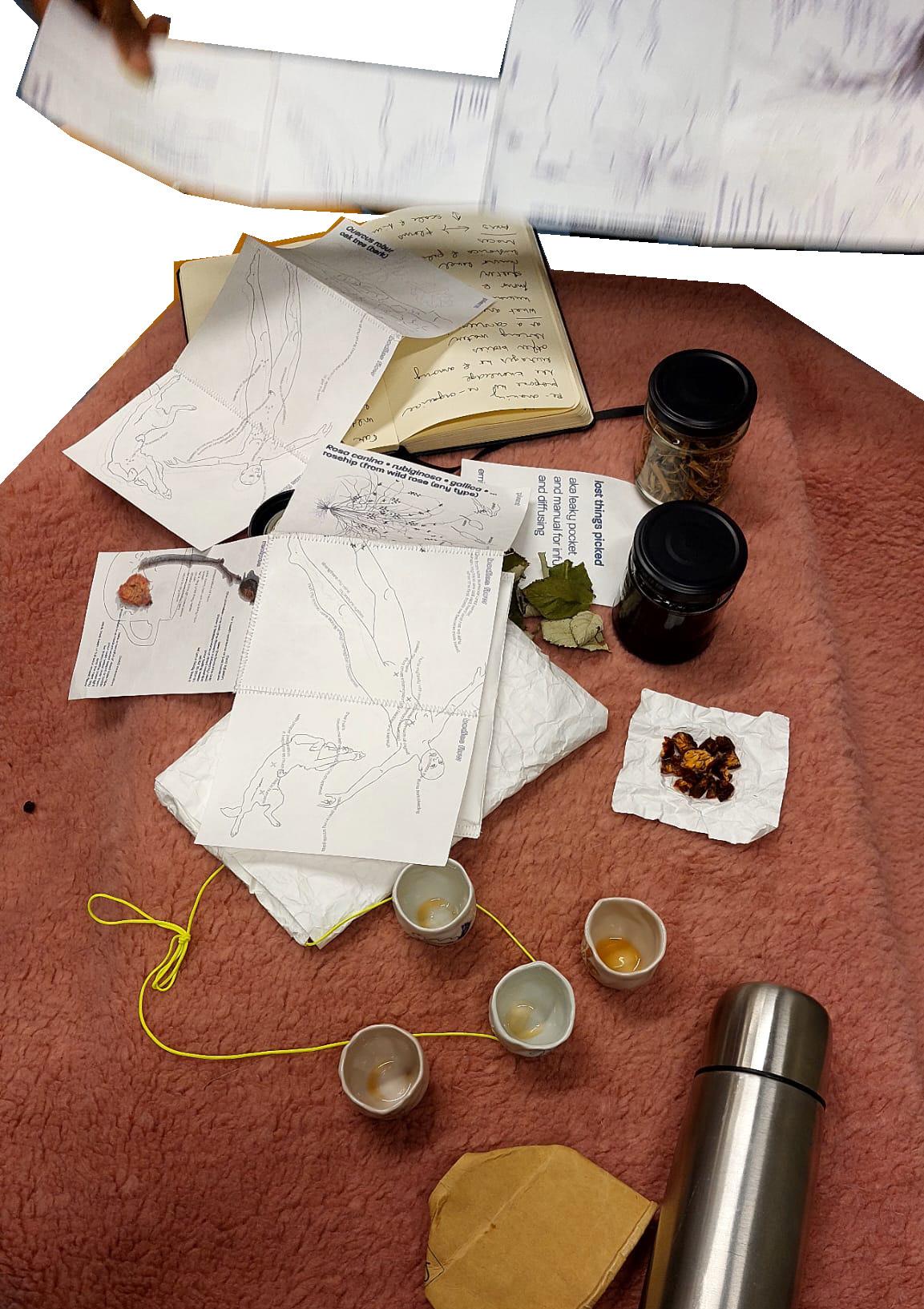
final performance with the act of infusing selected fruits and allowing them to become part of participants‘ bodies
journey to consciousness
with Justin Sante
studio Kathrin Wieck + Pascal Müller
Fachgebiet Landschaftarchitektur Freiramplanung
TU Berlin
SS 2023
New materialism questionizes the anthropocentric and constructivist orientations in nowadays theory and proposes to overcome the centrality of the human being as the only subject. This idea was the guiding principle for the project, located on the site of an old factory occupied by the MNLM Squatters movement in Duque de Caxias, on the northern outskirts of Rio de Janeiro.
Inspired by the theories of Anna Tsing and Donna Haraway and working with the meaning of contamination, collaboration, (embodied) practices, we entered the field of post-anthropocene thinking through the eye of compost in Solano, which stands for a variety of scales - micro, macro, mega (and giga) - dynamic body hosting million entities, practices of Solano dwellers, local and material flows connected to gardening, cooking and composting. To picture the entanglements, materiality, temporality and relations we worked with speculative maps like gaiagraphy.
Journey to concsiousness is further strategy, speculative scenario on how Solano Trindade could evolve, when considered the level of human control and sympoiesis, and understand Solano as a place where you can gain a new human-nature relationship. The process of becoming aware can happen in three phases (contaminating, noticing and (en)counting, collaborating) which can be linked to the participation ladder which we propose to widen also to more than just humans.
The proposal situated on three spots is rather immaterial, encouraging the common ground by opening it to broader group of actors, support mutual learning across species and abandoning human centred the point of view, becoming aware, and only small interventions in collectives spaces stand for its physical manifestation.
Project journey to consciousness was a first patd of investigating and collaborating with Solano Trindade, it is followed by COLLOC workshop taking place in Rio de Janeiro in autumn 2023, where dwellers and students meet in person.
1. Become conscious of the importance of a gathering place for all entities.
2. Open the place for a broader group of more than human actors living on the ground, in the soil, in trees, where everyone notice and is aware of each other.
3. Re-define the trees as a living shelter for a gatherings of more than humans.
4. Add an entrance in to the neighbouring school to children enable encounters
5. Enable soil and sand to play with children.
6. Invite insects to dine together under the trees or inside them.
7. Invite people like children from neighbouring school, other social movement like MTS, student groups or potential dwellers to exchange knowledges.
8. Support the creation of a dynamic visual diary of solano. Grafitti can tell the story of this place and support the local perspectives.
i‘m kind of thirsty but i like the warmth of this human‘s hand. i will let her stay in touch with me.
if i had stood here a few centuries ago, i would probably have become a cello or a violin, but today i stand here as a symbol of brazil.
while being here together i realize how the discussion encourages me to keep on. now i am aware about new human-nature relationships which is really empowering.
gathering spot teasing and bounding two worlds together
so that means i can visit my friends more often now?
The place is in-between: outside and inside, where at least two entities, two worlds meet: some brings new perspectives, some draw attention to local gains and struggles. Some welcome and many are welcomed, in a shared but gated environment, radiating strong statements of direct but also disturbing expression of self-determination, and self-regeneration.
today is your birthday, dear. and also 10 years since we joined solano. this wall will remember it.
phytoremediation block 130
with
Martina Friedrich + Lena Löhnert + Dilara Uçar
studio Anna Heilgemeir + Julia Köpper + Jörg Stollmann Fachgebiet für Städtebau und Urbanisierung
TU Berlin
WS 2022/23
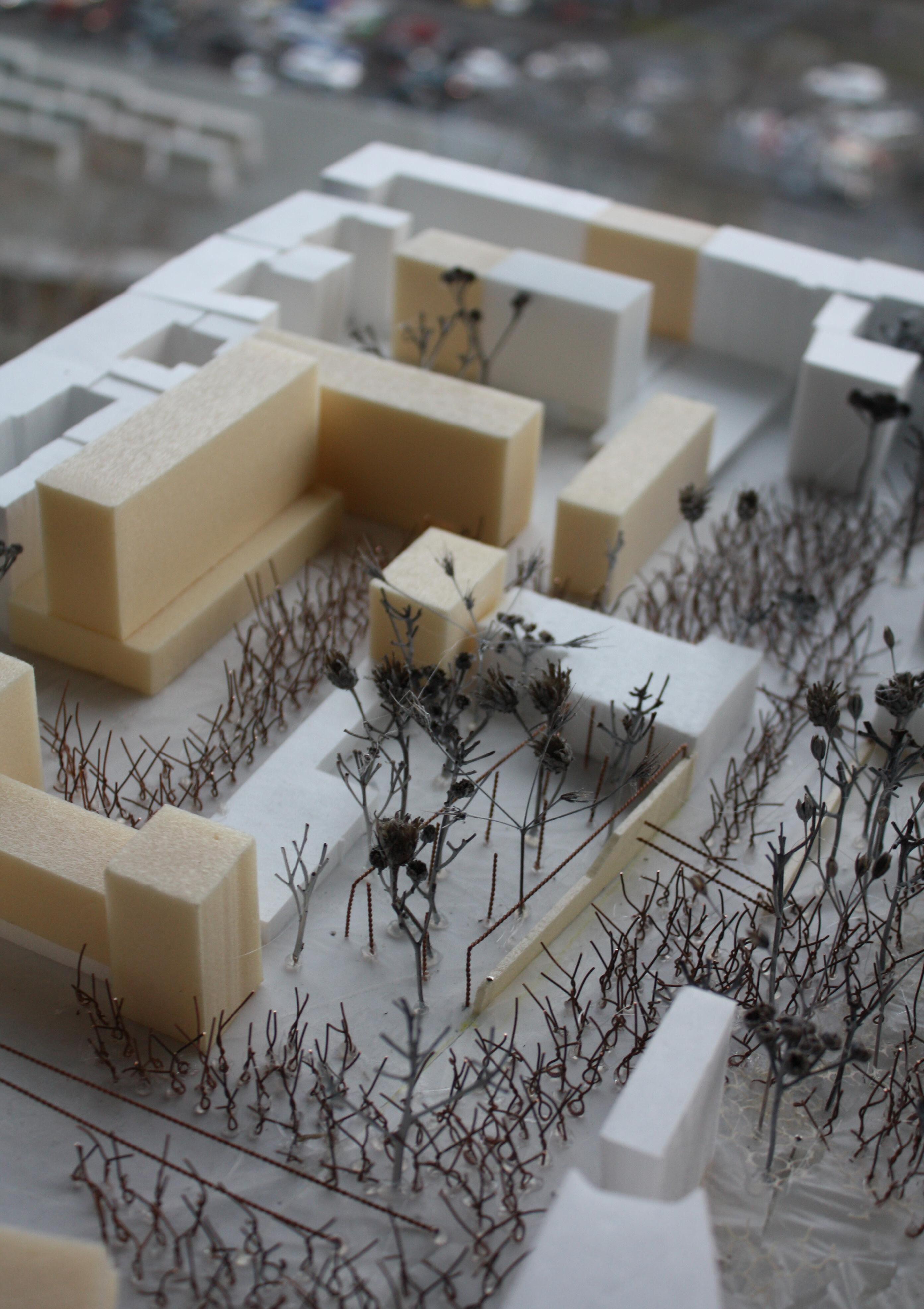
The site of Böttgerblock (Wedding, Berlin) is suspected to be heavily polluted due to its former industrial use but also to the current use - car repair workshops. We are taking the pollution as a chance. We think that Böttgerblock could serve as a prototype for the conversion of Berlin’s former industrial areas, alternative approach to soil sanitation (through claning with help of plants // phytoremediation), which compared to conventional methods, such as stripping and land filling, is non-invasive, not harmful to ecosystems and not costly.
Block 130 is working with the existing - spontaneous and curated (e.g. urban garden) vegetation, community of car repair shops, mostly led by workers of migrant background and the built structures bearing the history of the plot. All of them together create a diverse pool of elements, that shall be preserved and integrated in a new concept for the Block.
In the redevelopment we think in five phases. The whole block is little by little sanitized by planted willows (salix viminalis) capabable of phytoextraction and phytodegradation, the voice of the car repair workers is strengten by newly created association and the housing is implemented at the rim of the block while the centre co-creates the urban biotope and a livable space for a multitude of species. The whole process is accompanied by a mobile research stations, exploring the process of alternative sanitation and inviting people to access and share the knowledges (viewing tower, bridges,..). The functioning of the research project is supported by funds like BMBF or Exwost.
The challenge here lay in reconciling the pressures of an ever higher demand in housing with the necessities of accommodating the needs and requirements of human alongside non-human species. Organically grown and developed structuresbiotopes and sociotopes - are equally respected and developed simultaneously, the aim being to create an environment that allows sustainable housing without estranging current inhabitants. Taking into account financial restrictions of the current public hand as well as the complex ownership structures on site, we sought to design a model site that puts circular development centre stage and can serve as a prototype for economically and environmentally viable projects for generations to come.
Final (fifth) phase of proposal with developed rim and non-human club in the centre
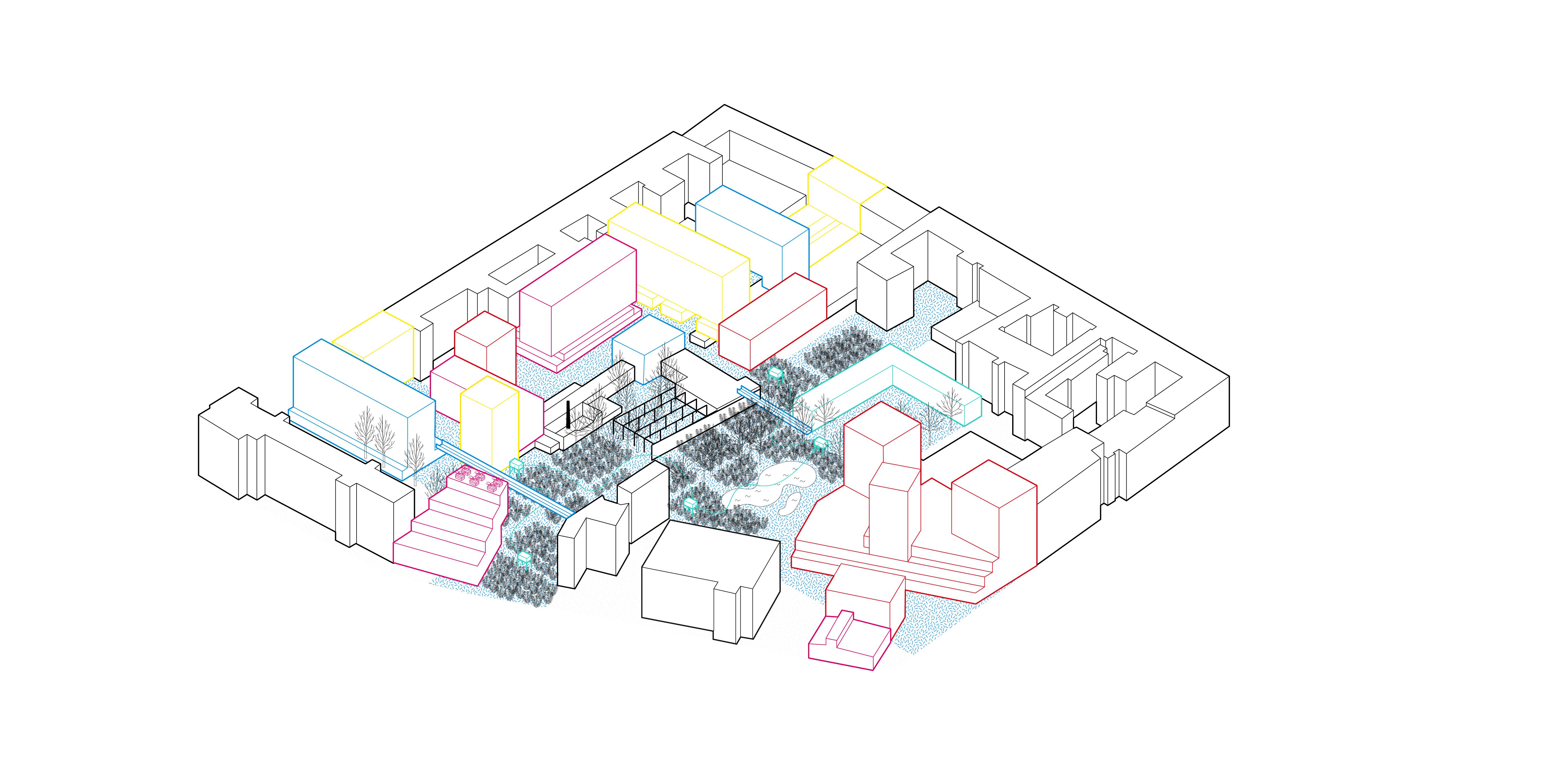
68% sealed surface 32% unsealed surface
HOUSING
The site is fully developed in cooperation of the city, cooperatives and private entities. The buildings provide mainly housing with an active ground floor.
The buildings are subject to the requirements of the Sanierungsgebiete and urban contract. They are climatically adaptable and contain elements such as: greening of facades, greening of roofs, water filtering system.
Phase one: Start phytoremediation, first plot is bought by city and is sanitized with Salix viminalis, research centre is established in old railway building and a community centre in former electricity station to negotiate mutual interests of car repaires, urban gardeners and other stakeholders.
FORMING A WORKSHOP COOPERATIVE AND ORGANIZING THE REPLACEMENT TO FIELD 1 IN THE NEXT PROJECT PHASE CAR REPAIR WORKSHOPS
CULTURAL AND ACTIVIST PRACTISES
WHILE THE PHYTOREMEDIATION TAKES PLACE, TEMPORARY SPATIAL PRACTICES WILL ACCOMPANY THE SCIENTIFIC PRACTICES ON SIDE FOR CREATING A SOCIAL INCUBATOR FOR BLOCK 130
Ground floor and public space proposal on a corner Hochstrasse + Böttgerstrasse
BÖTTGERSTRASSE
HOCHSTRASSE
recycled garden
with Anna Pederzini + Lisa Rohrer
studio Maroš Krivý + Kaija-Luisa Kurik + Sean Tyler
awarded project (competition of Eesti Loodusmuuseumisse // Estonian Museum of Natural History)
Urban Studies
EKA, Tallinn
SS 2020
Recycled Garden acts as an intervention upon the site of the forthcoming Eesti Loodusmuuseum. Over the course of several stages, the installation invites visitors to learn about the cyclical transformation of nature on the site, as well as analyse the cycle through a condensed, timelapse video screening. The screening will be displayed at the site upon which the cyclical process has been implemented during the month leading up to the installation, opening in May.
The process of adapting something for a new use is often lauded under the name of recycling, and reprimanded under the name of reappropriation. According to geographer Cindi Katz, “Restoration ecology … tends to naturalize the produced and produce the natural,”1 emphasizing the power of language and the elusive definition of “nature”.
When considering human’s impact on the natural environment today, one might think of the process as a development cycle, beginning with the evaluation of a piece of land, moving to the decision-making process for how the land will be adapted for a new purpose, implementing the strategies to achieve that purpose, and, finally, witnessing the abandonment or demolition of the former purpose to establish a new one (thus beginning the cycle anew).
This life cycle of land is worth exploring to better understand its complexities, ironies, and the problems it poses to a long-term relationship between man and nature. Recycled Garden questions the “natural-ness” of this cycle by inviting participants to play a part in the processes of both restoration and destruction, invoking themes of power, preservation, and the conversion of nature into a product for man to manipulate.
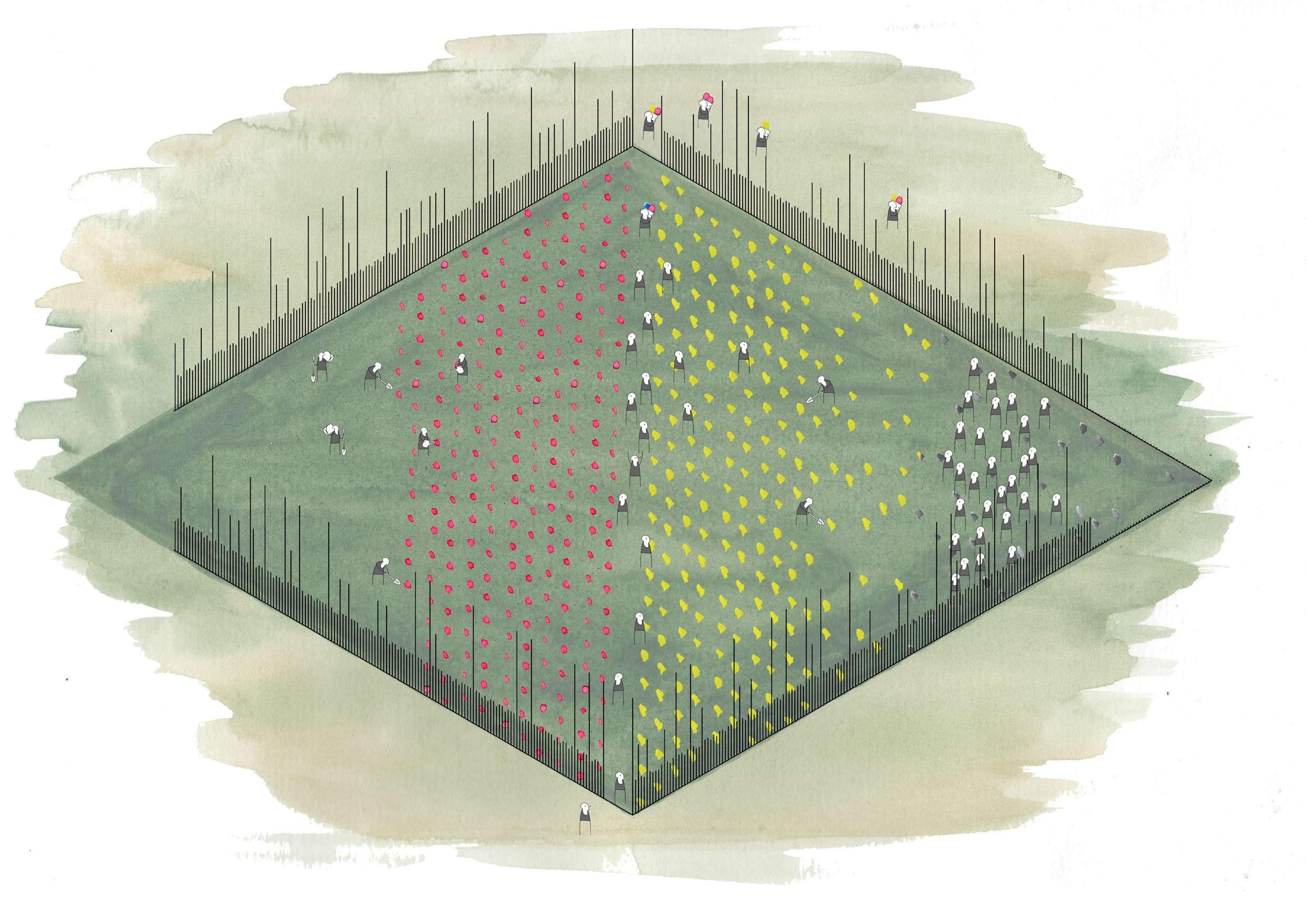
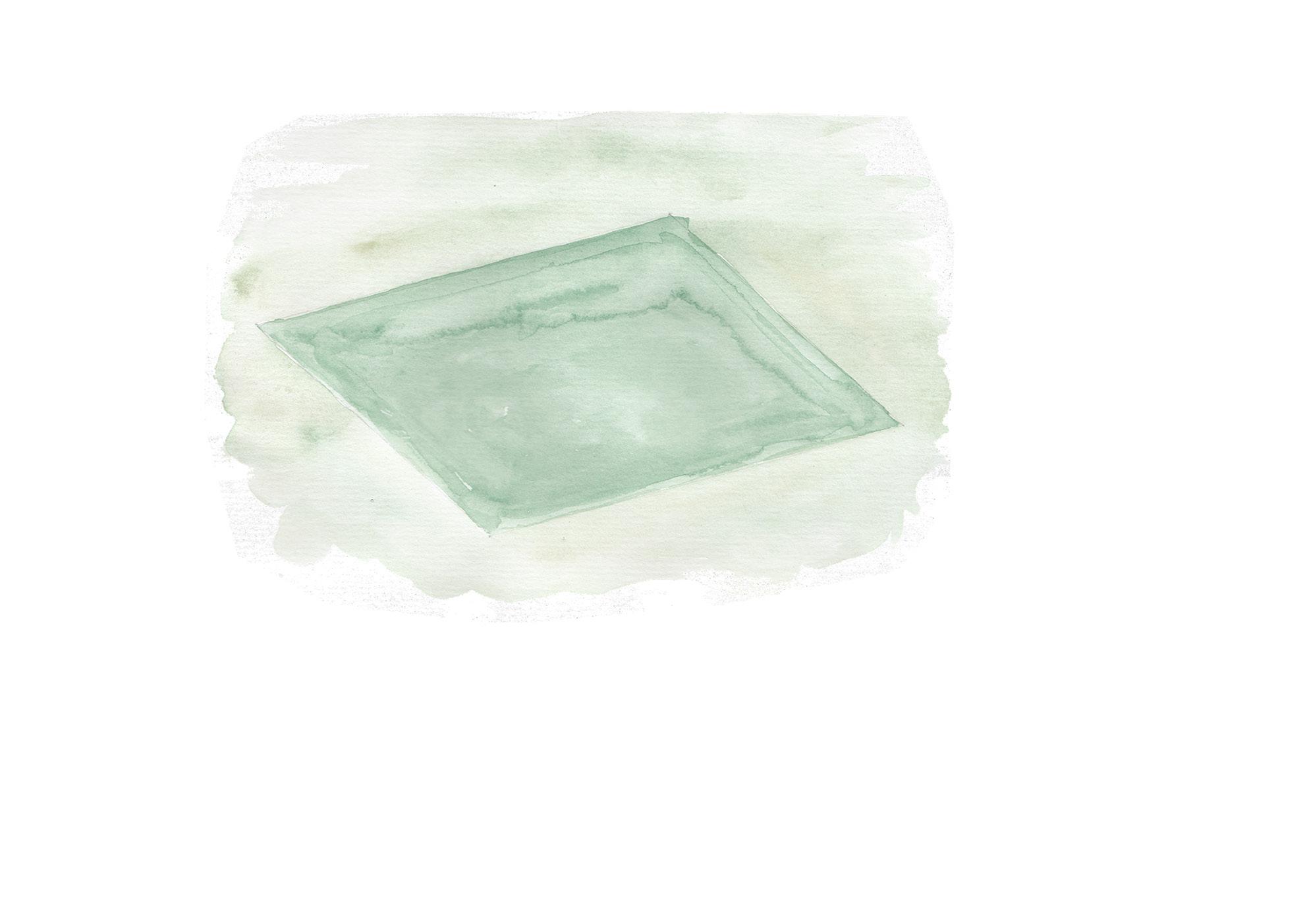
Cycle begins here. Discovery of land, authentic nature, and the site’s history are questioned, and the land sits in the tension between its past history and future potential.
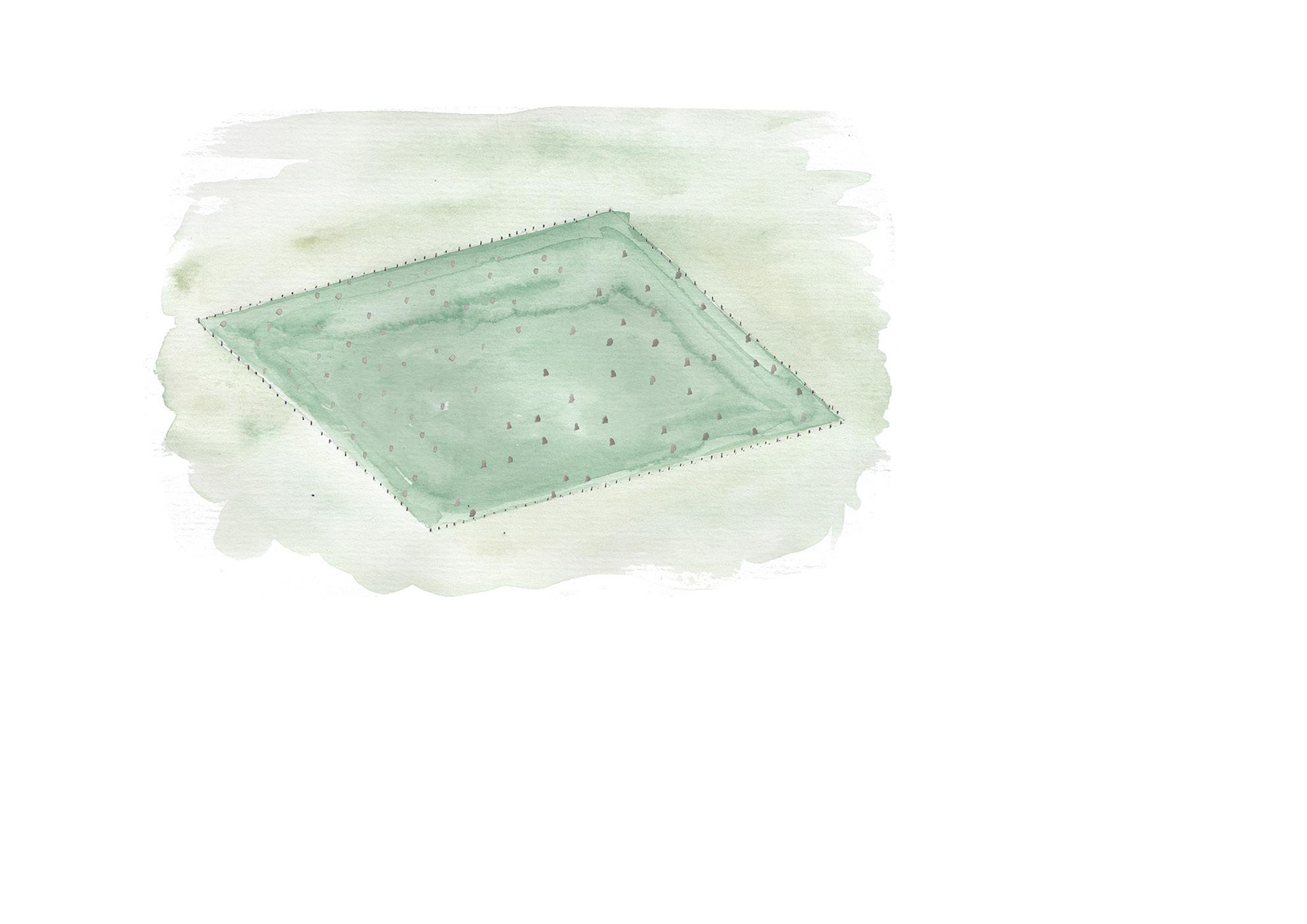
The vacated land (containing remnants of ecowaste from the previous development cycle) is made available for the next iteration of the cycle to begin.
17 May installation happens here. Video-screening of the time-lapsed process is set up in the installation space.
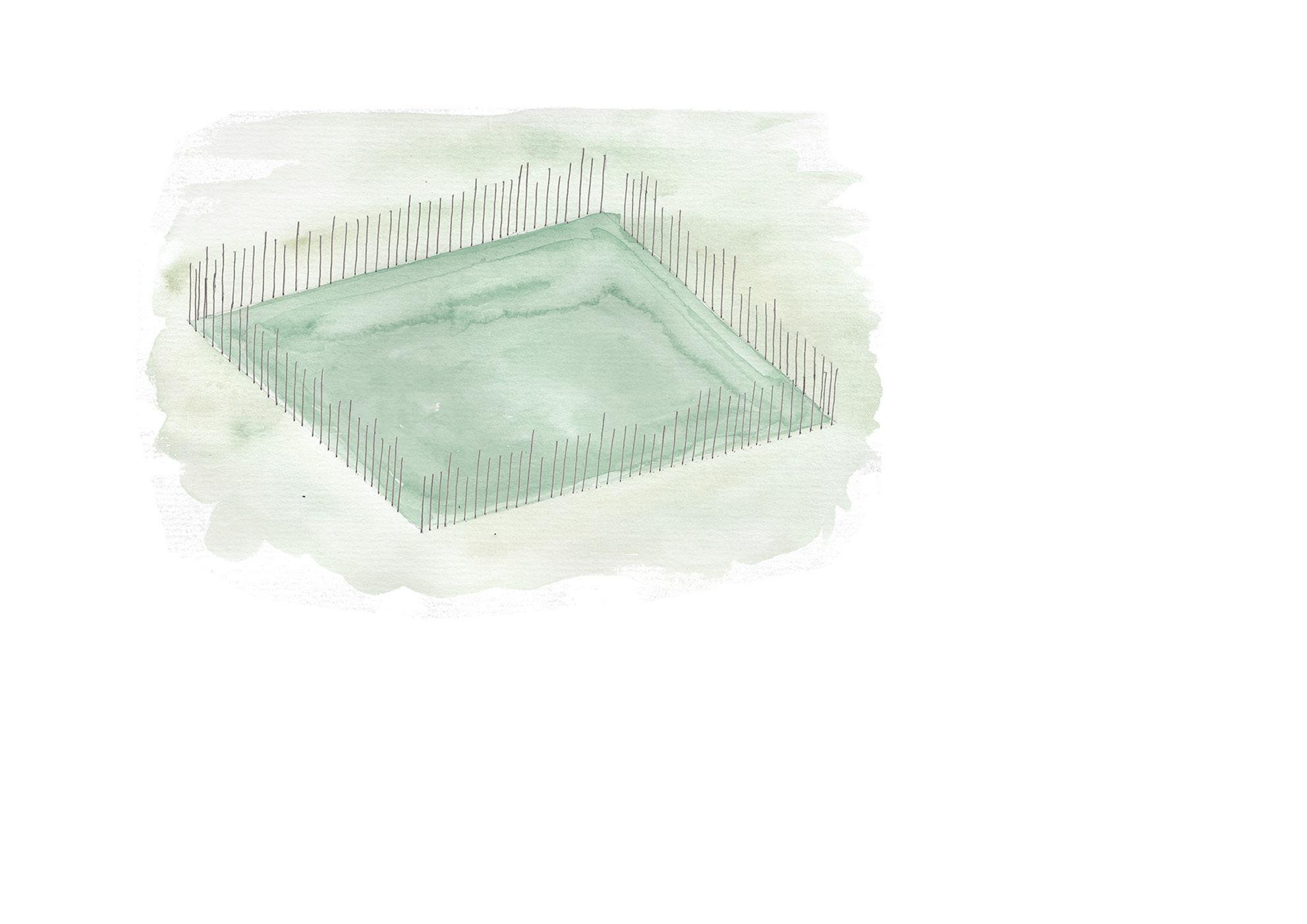
Wooden posts are constructed reparation for future use.
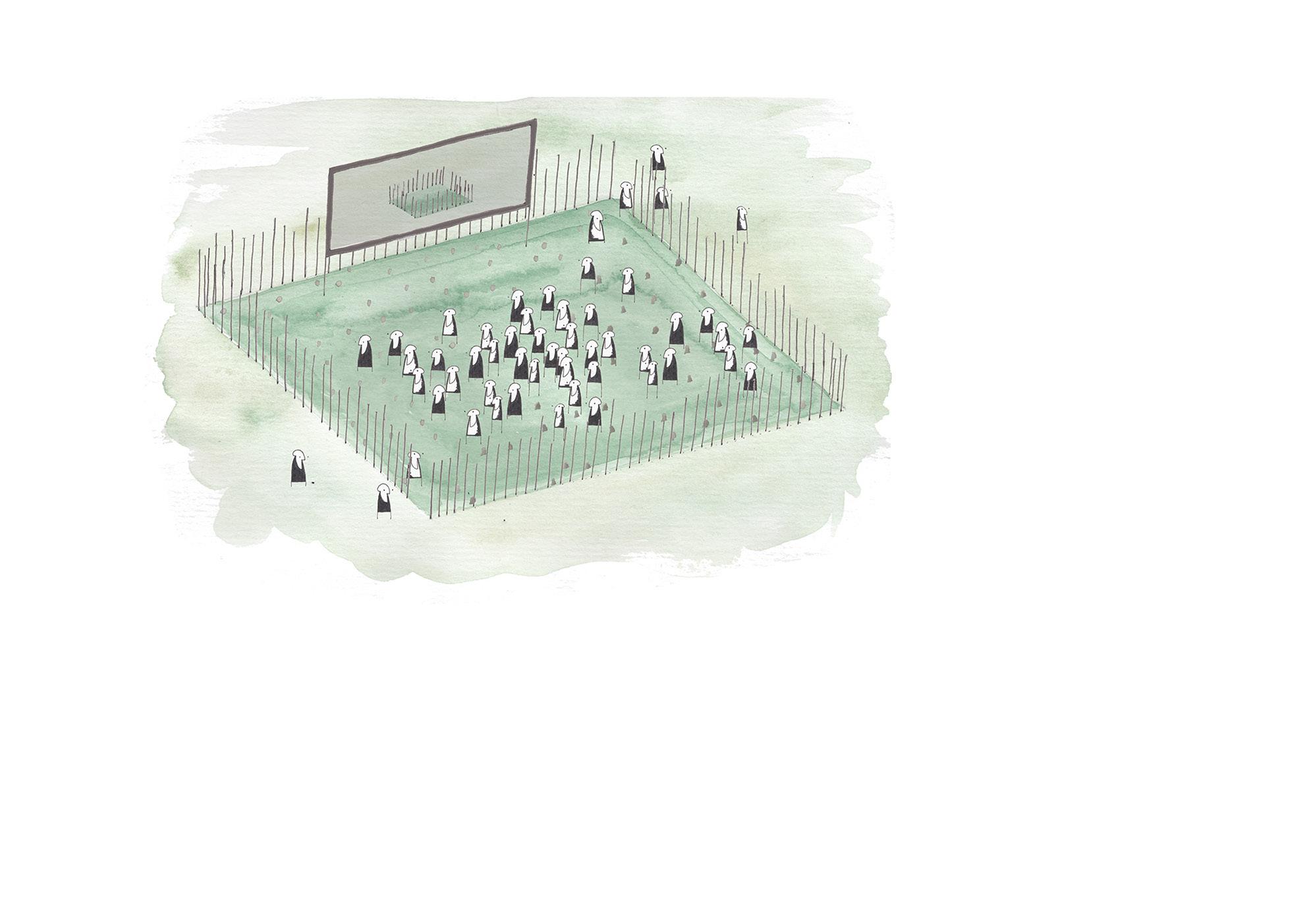
The plot, set aside for restoring fragmented collection of leaves, behind by the public after flowers
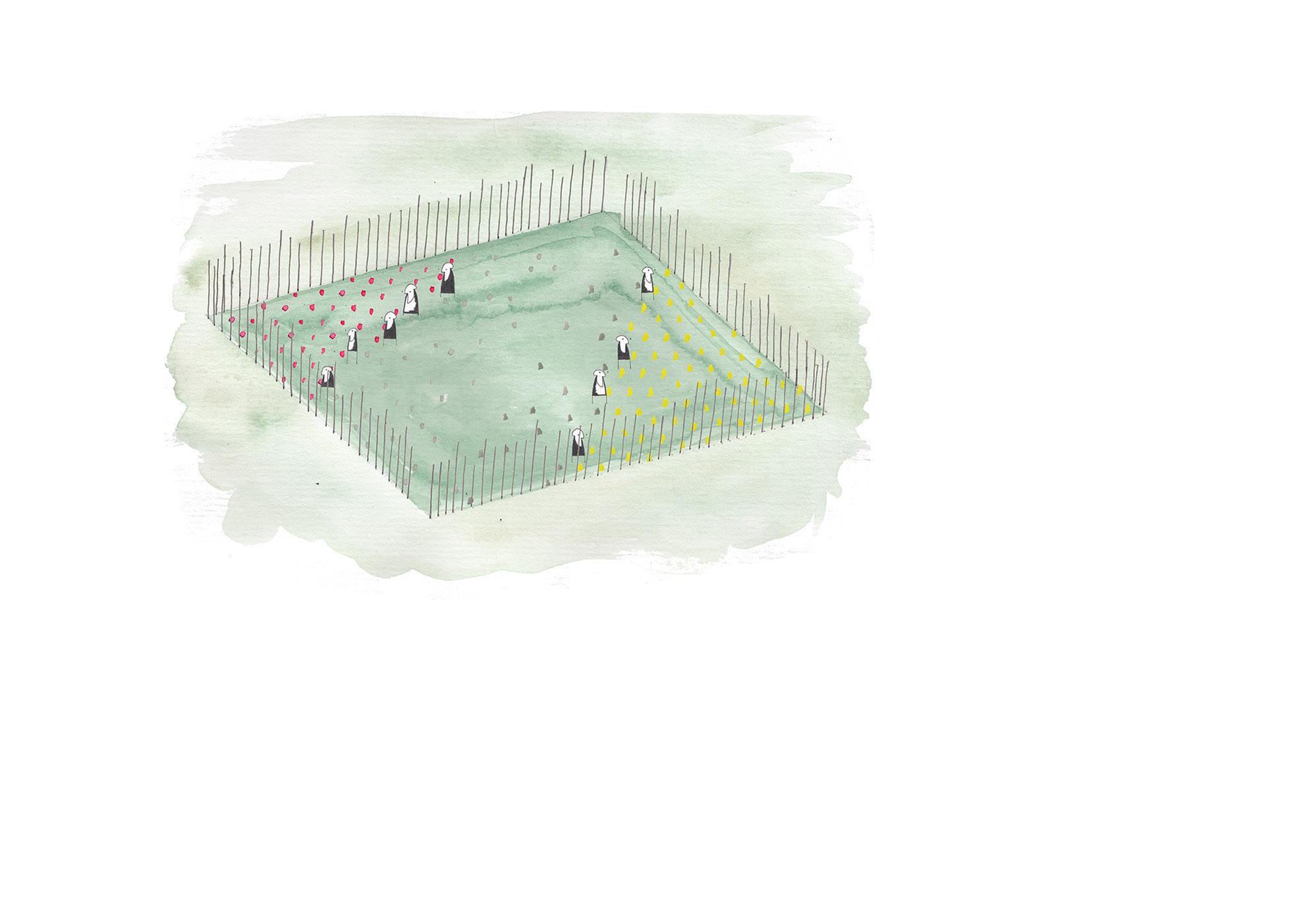
constructed to define land in
development
development
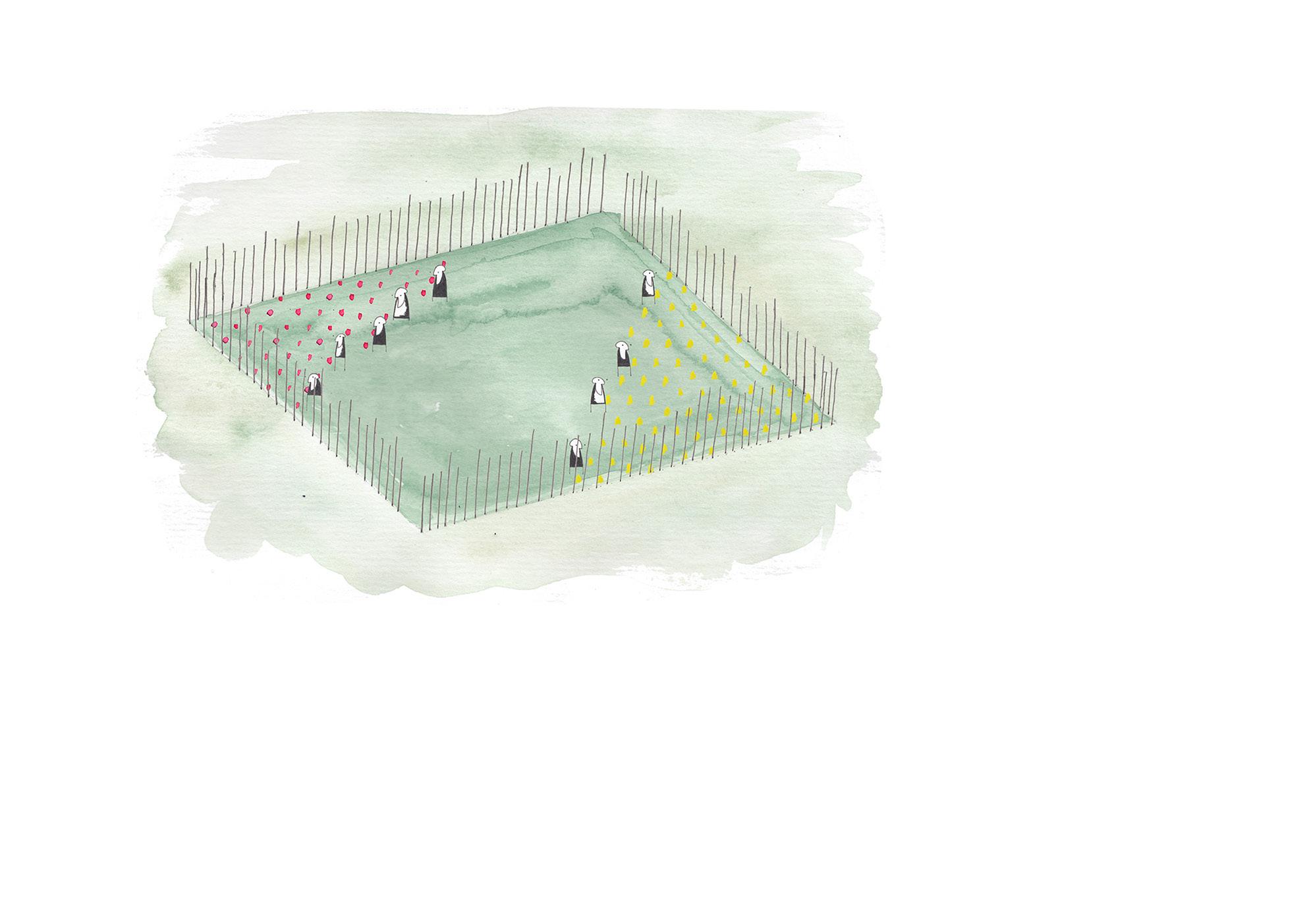
Visitors are invited to garden two types of flowers (cornflowers and carnations alternativelly daffodils and tulips) within the wooden perimeter. Exterior of the plot remains untouched for distinction between restoration within and preservation outside of plot.
maturity
maturity
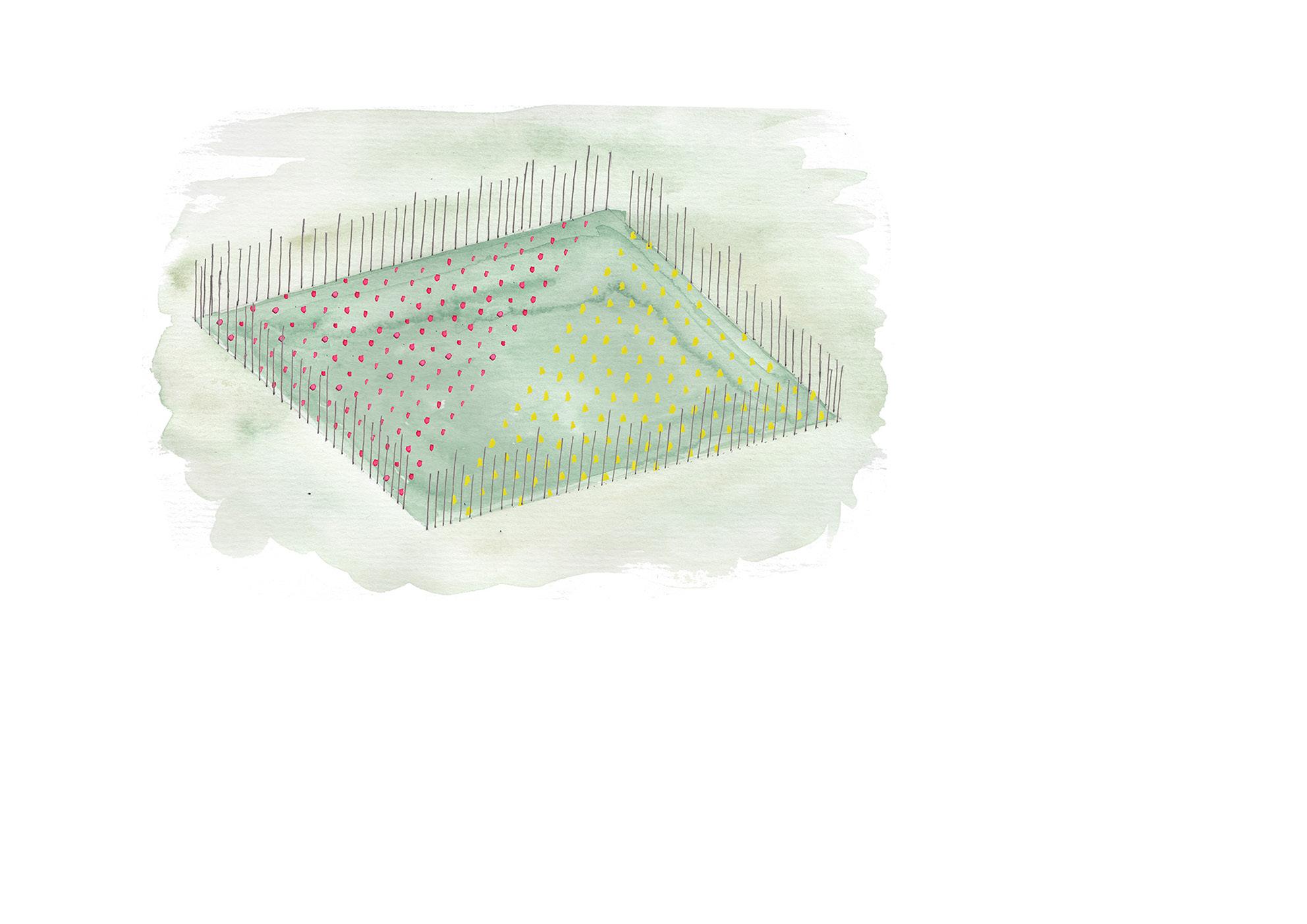
Cycle reaches its climax when the plot is filled with the two species of flowers.
restoring the land, now contains a leaves, stems, and trampled flowers left flowers have been picked.
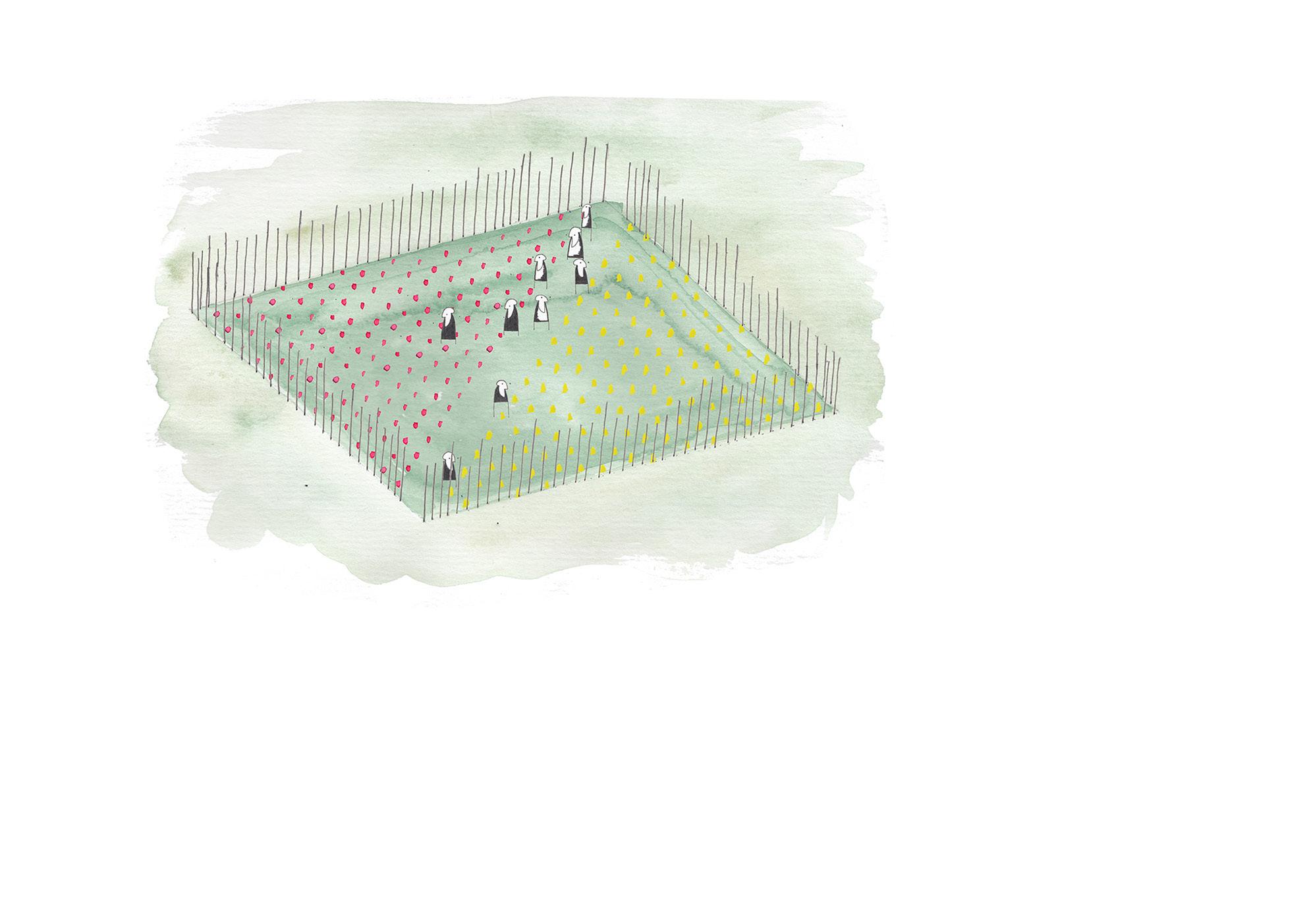
The plot becomes commodified as flowers are marketed for the community to visit the restored land and pick the flowers as they like.
crafting // intervences in public space
Prague + Teplice + Mníšek // Czechia 2018-2020
I love working with my hands. Not only to repair things slowly but through the hands to discover the materiality of the world and thus to interpret places or to reflect on the processes that create a particular place. To illustrate, I present several projects:
„the splendors and miseries of pigeons“
„see, feel, be“
„grille“ and more.
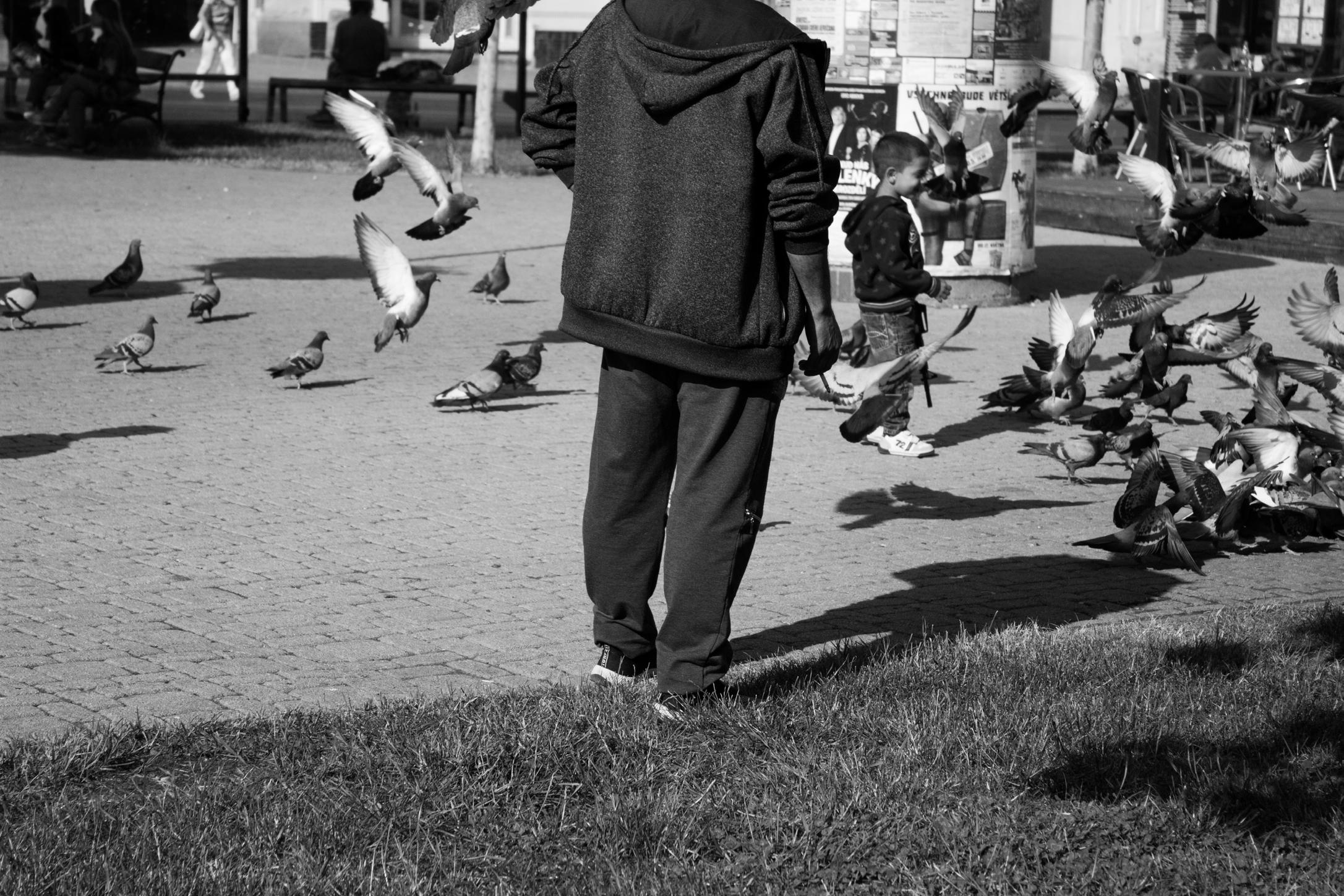
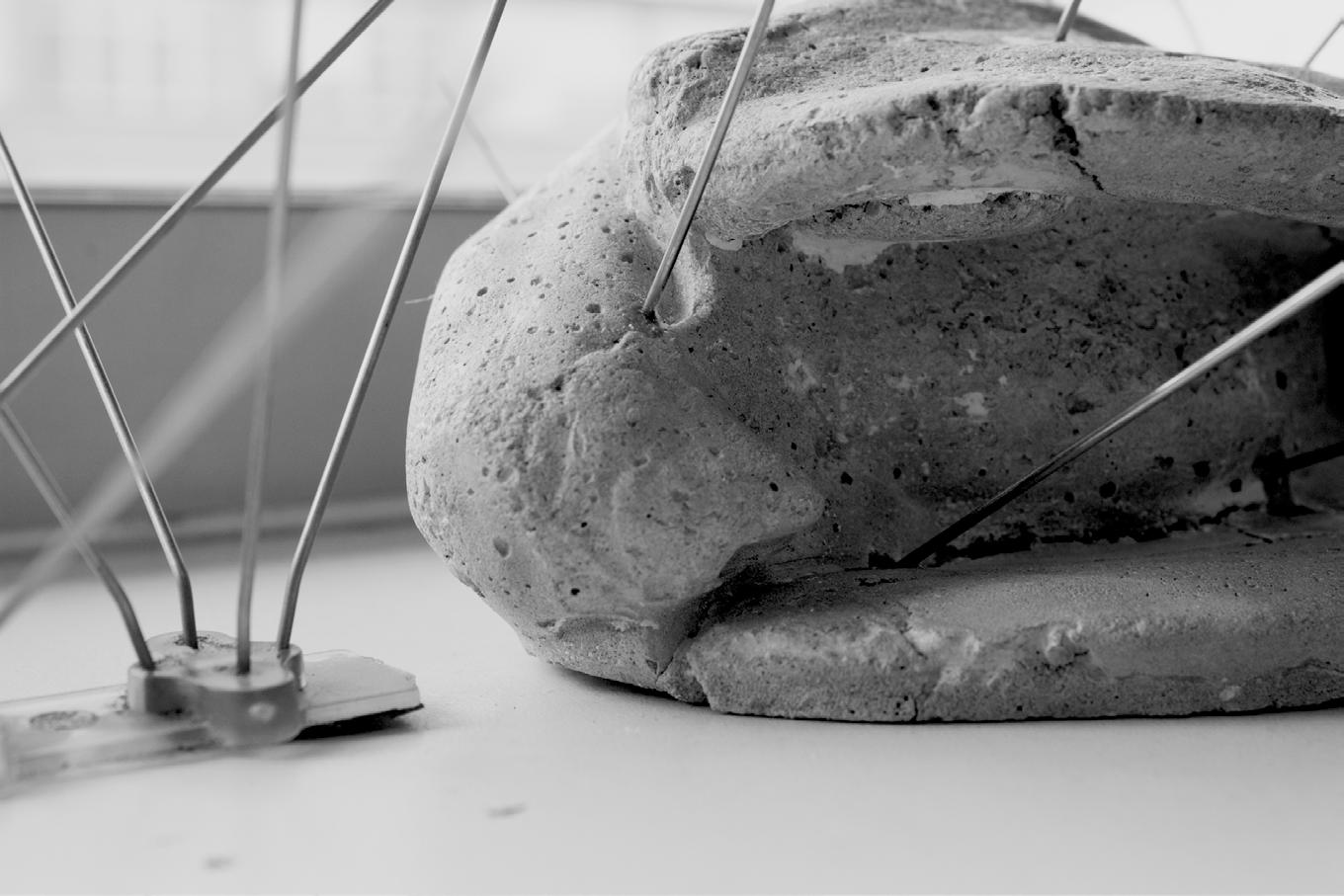
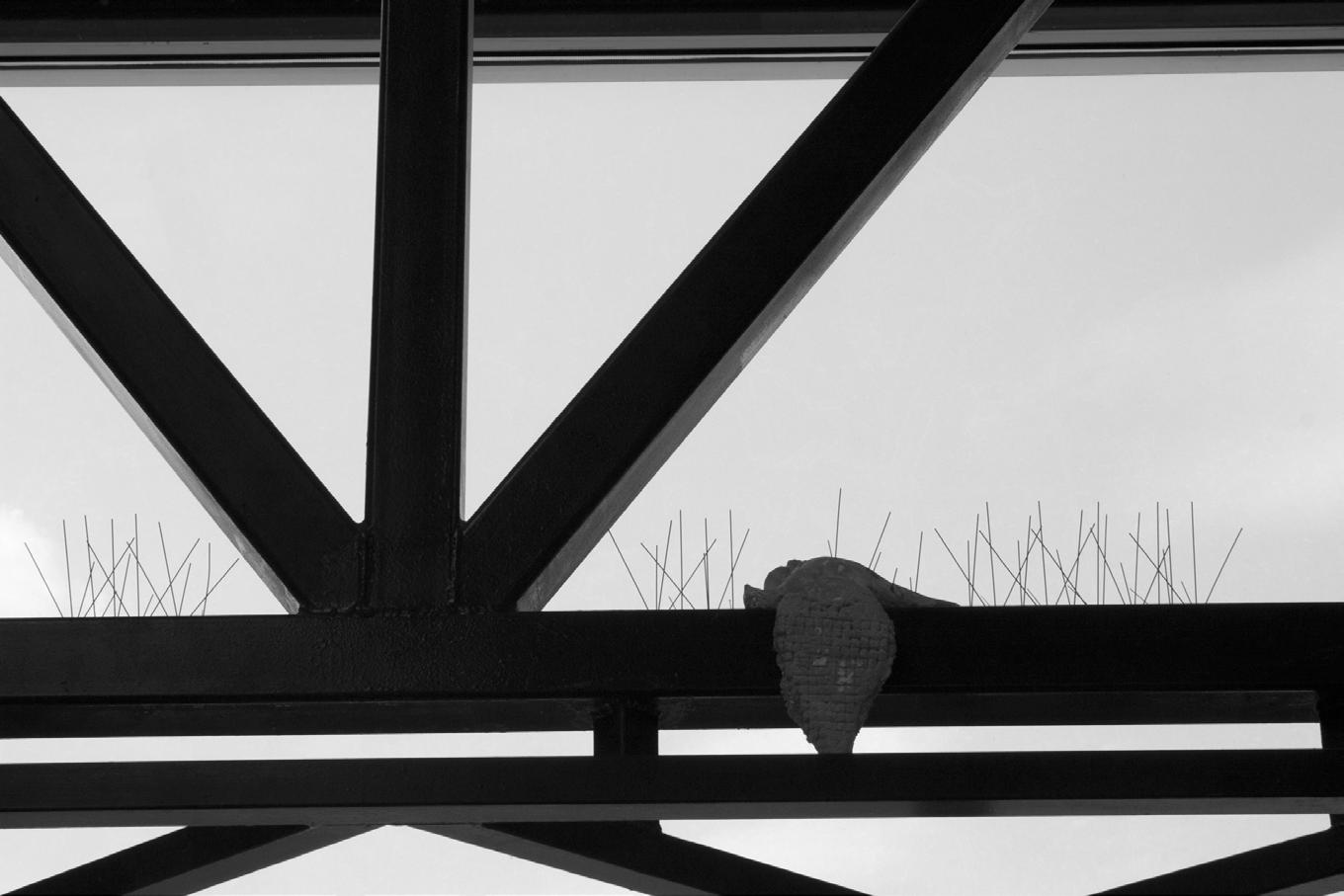
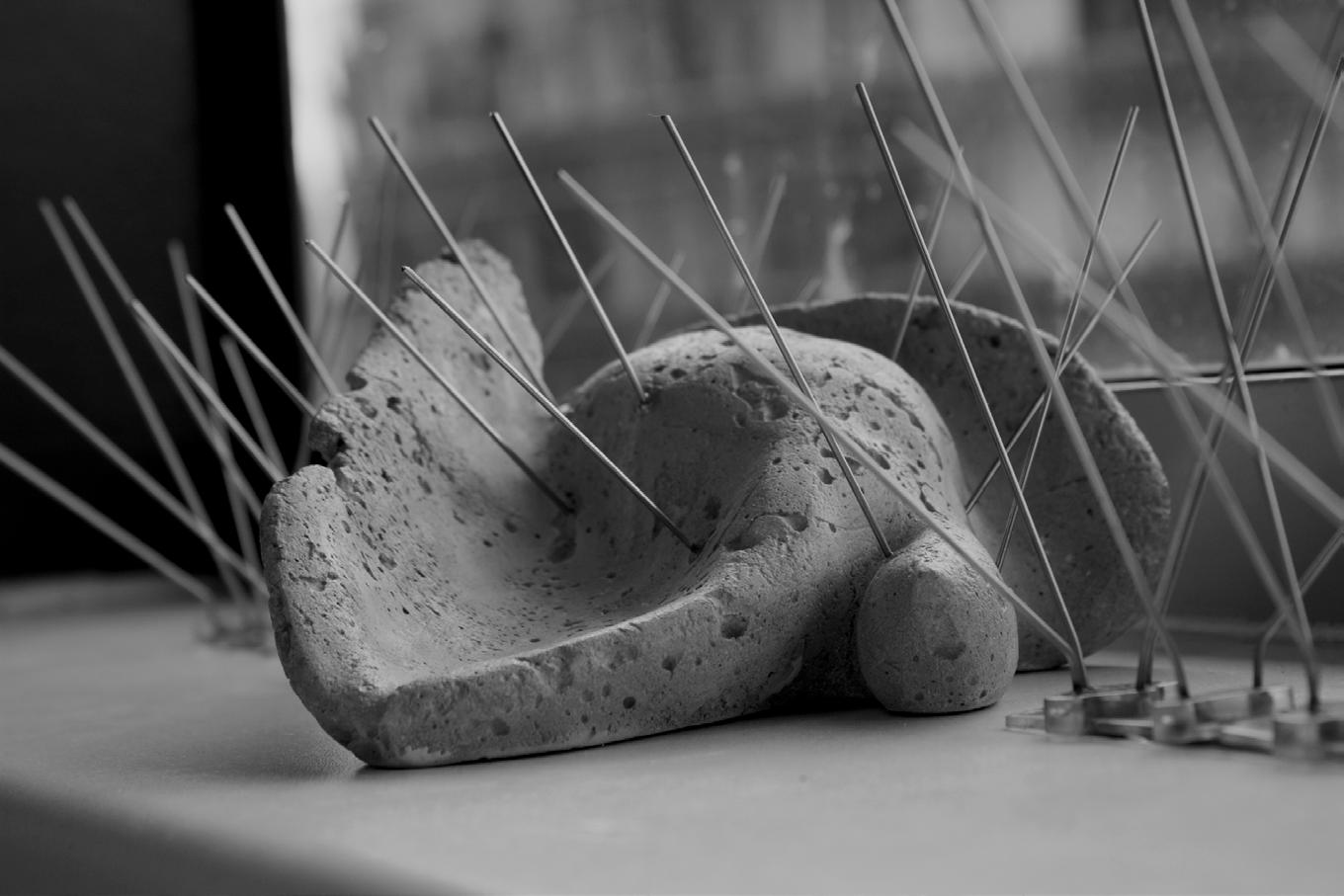
The project „the splendors and miseries of pigeons“ questions our relationship to animals, whose species we often categorize as pets, wildlife, pests, food sources, charismatic megafauna, etc., and according to this categorization we treat them in the idea of our superiority. Using the example of pigeons, whose presence is inseparably linked to the main square in the city of Teplice, I merge the shiny and miserable side of their lives. On the one hand, fattened pets of the city, which on the other hand we prevent from destroying our property and see them as objects to be got rid of. The installations are concrete castings of dead pigeons in metal spikes, commonly seen on bus stop structures or windowsills of houses.
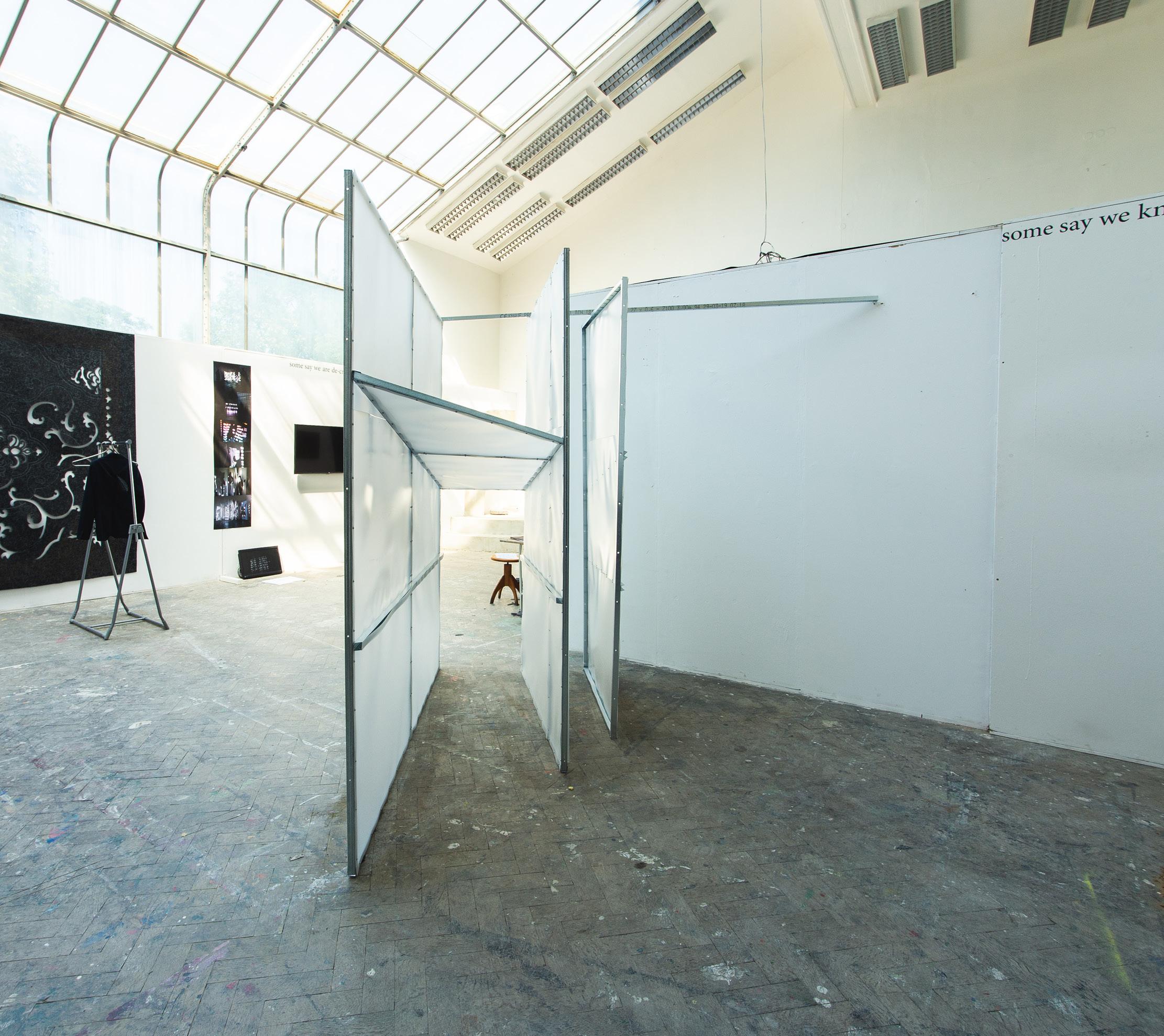
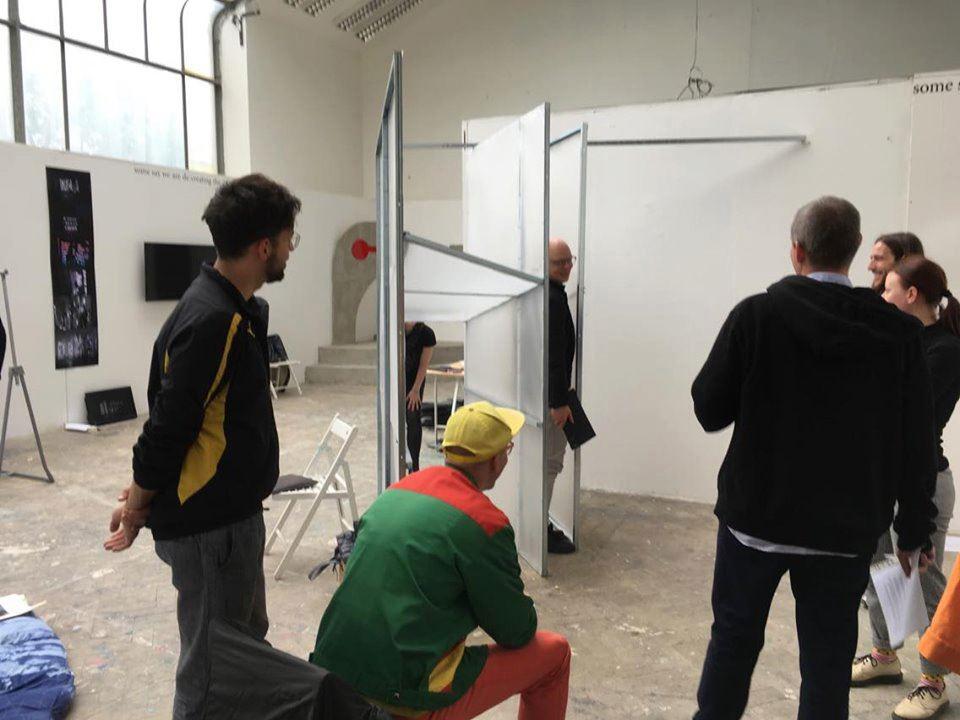
We prioritise sight at the expense of all the other senses, which we only become aware of when they take us out of the norm. The dogmatic linking of the primary sense with unrelated activities is also written into writing and speech. In place of perception, existence, feeling, being - we see. We forget to explore. The physical translation creates an installation whose aim is to induce a split between the eye and the body, whose size at the limit of comfort makes it possible to become aware of the body. Ideal proportions cease to function, matter loses its mass, space is perceived at the borderline of the preferred eye (losing its ability to focus) and the body. The theoretical basis is based on the essays of Juhanni Pallasma.
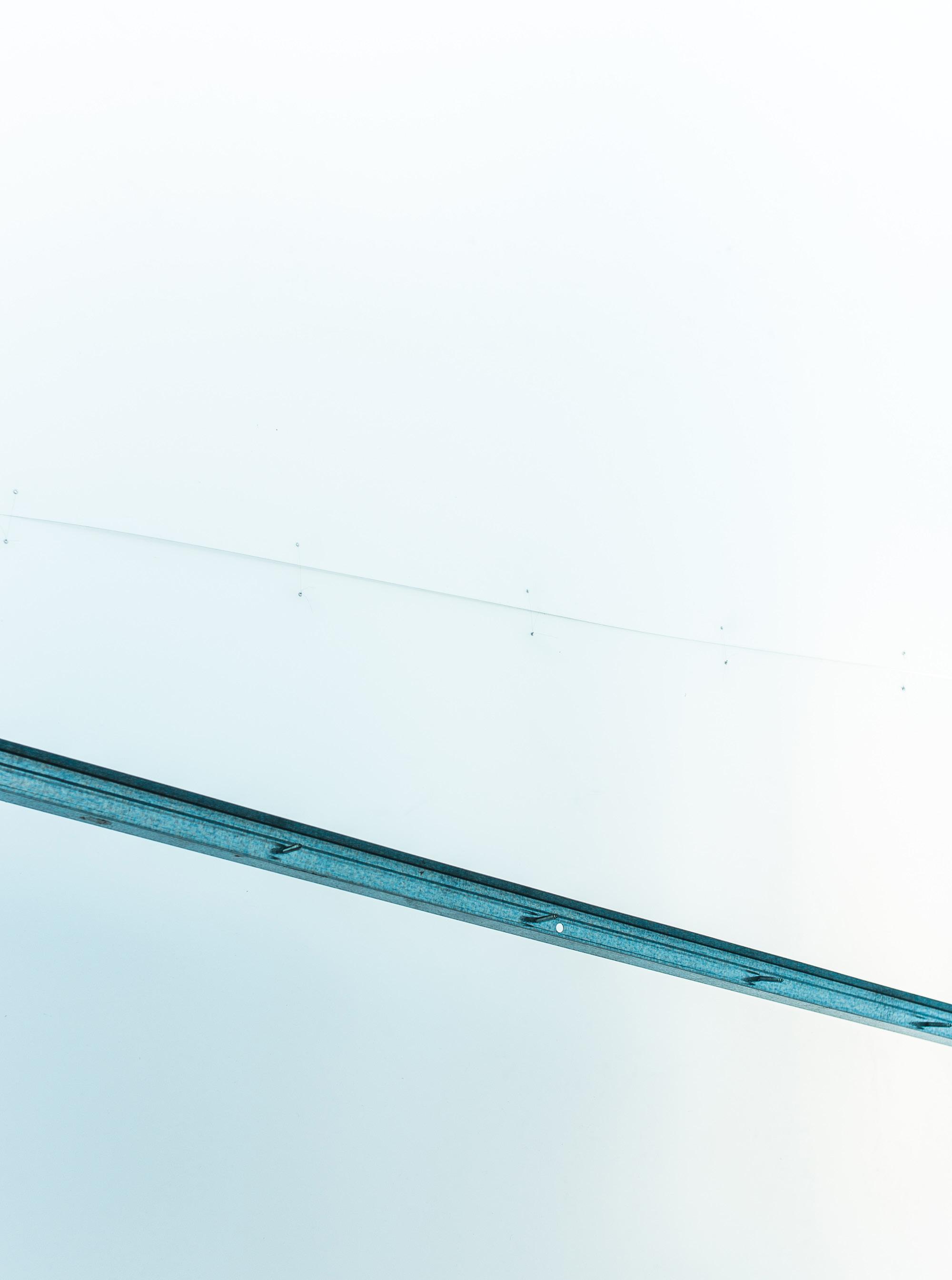
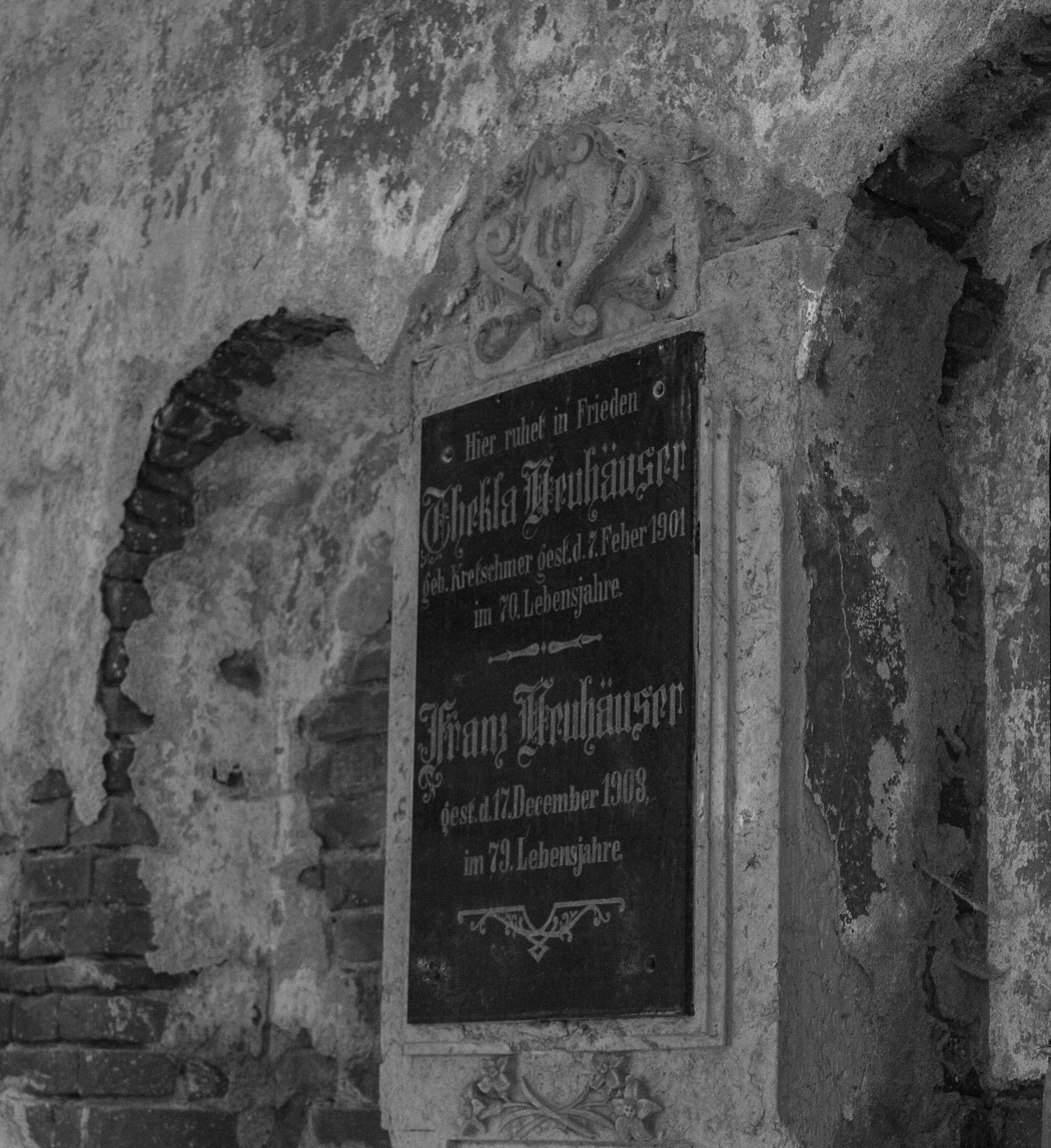
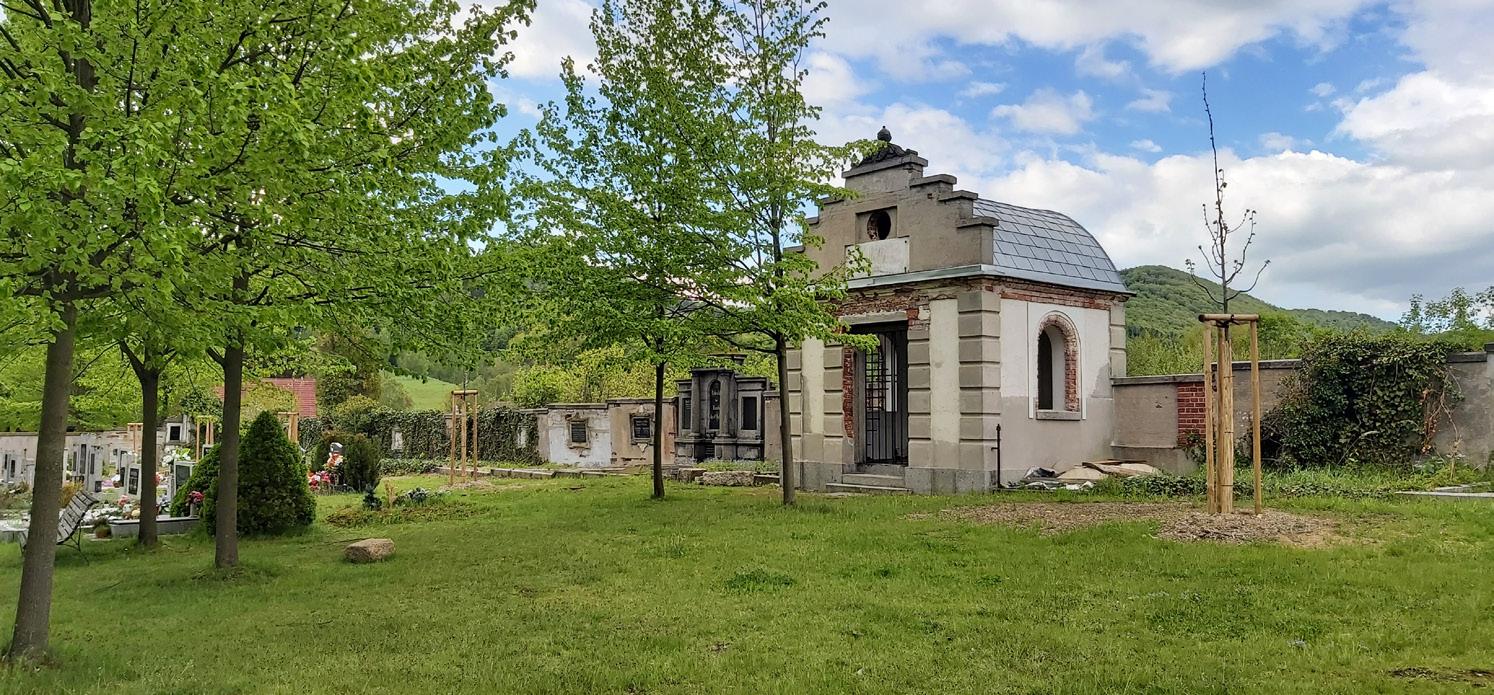
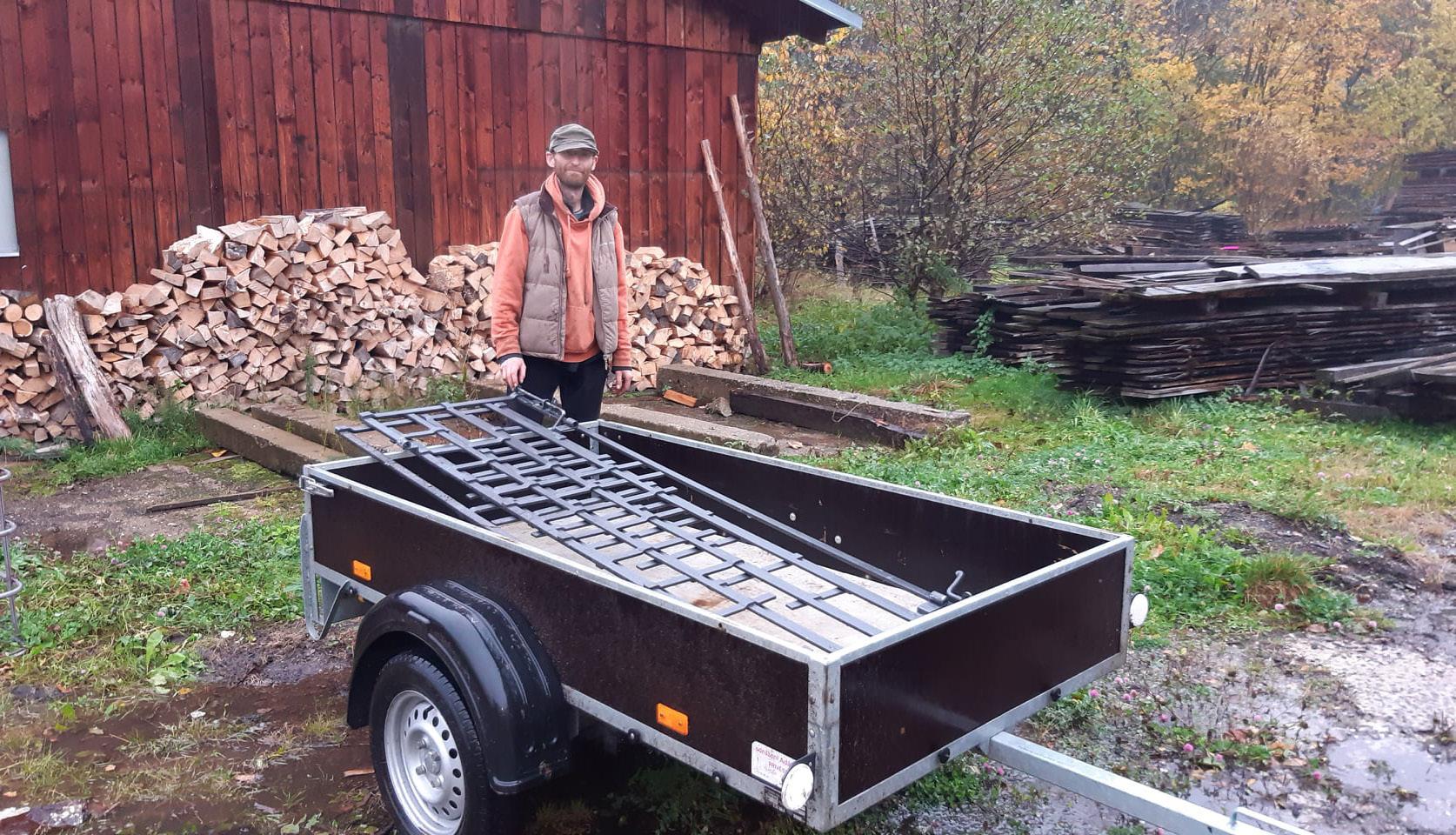
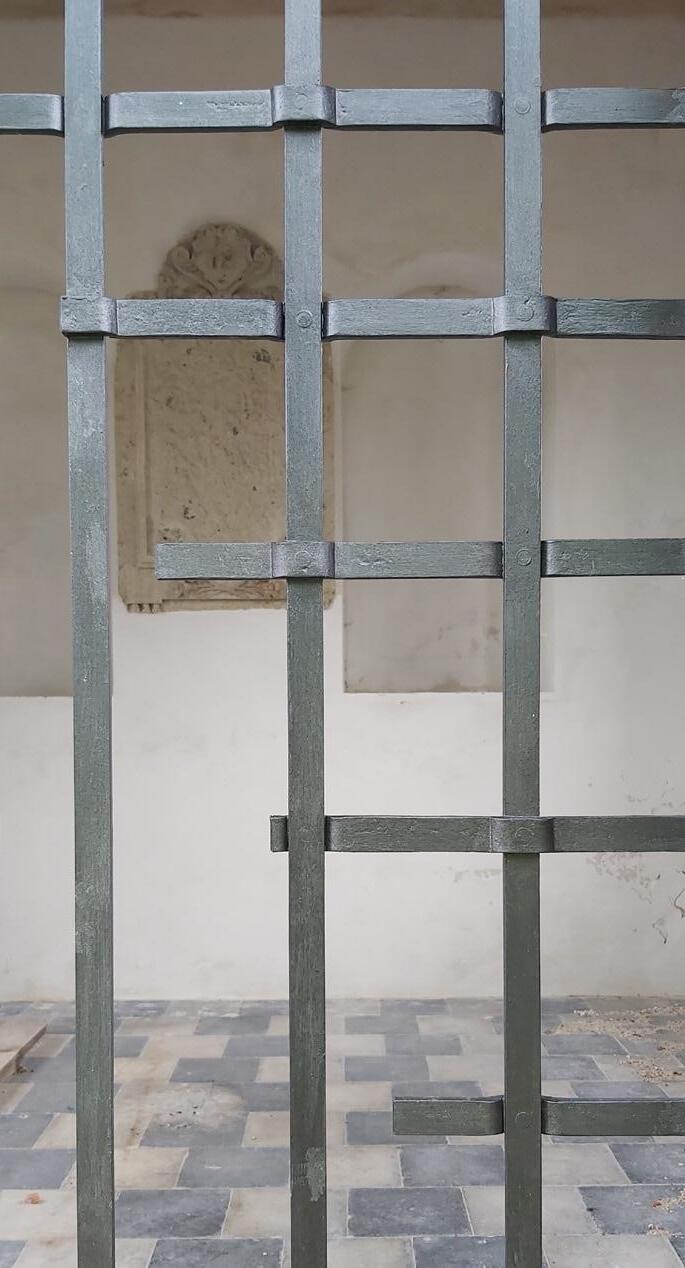
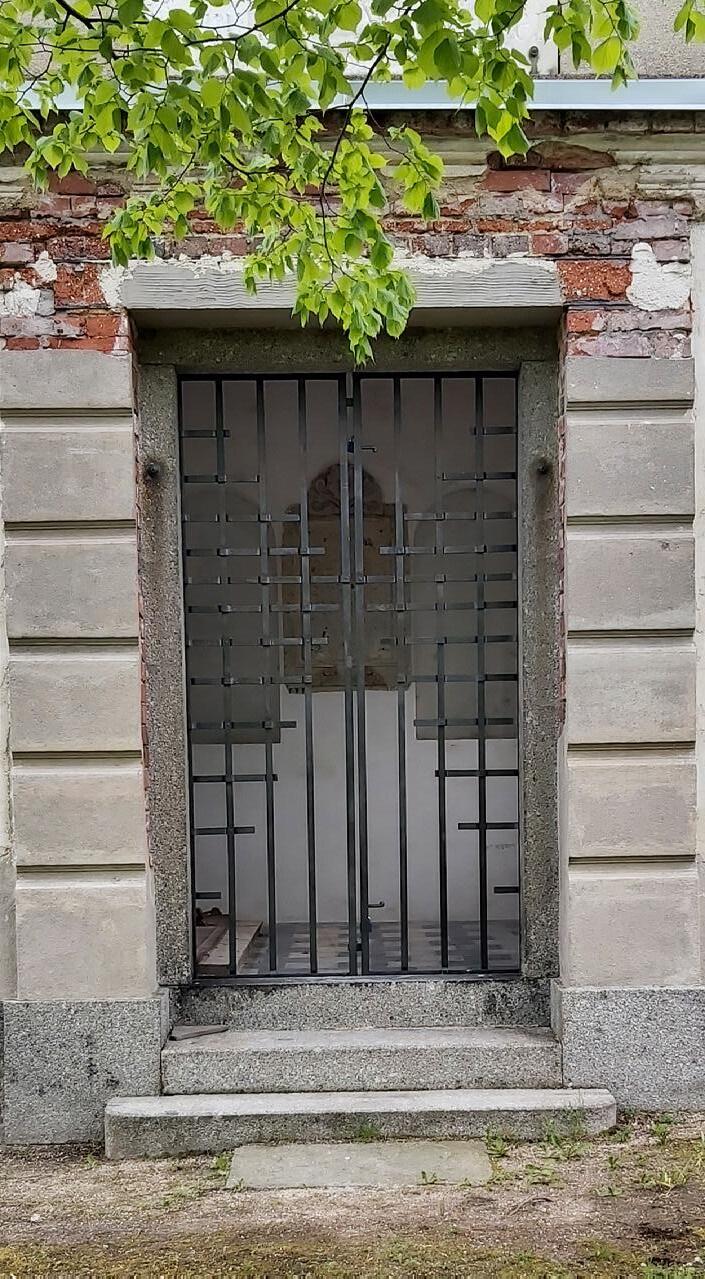
„The grille“ is a small student project, which was realized in collaboration with a local blacksmith and an association „Živo v hajích“ that takes care of a decaying cemetery in the small village of Mníškov near Liberec in the Czech Republic. The relization of the grille is a paraphrase of the most extraordinary grille ever. The simple shape of the grille is arranged to orient our eyes to the tombstone of the Neühauser and Berger families, which will be reinstalled in its original place inside the tomb.
zahálka self-made cultural space
with Maro Kraus Hayrapetjan, Jakub Kraus, Pavel Parachin, Aleš Klíma, Klára Podrápská, Lenka Krautstengelová, Dominik Krautstengel, Natálie Švehlová, Nikola Iljučuková...and more. Teplice and around the city, Czechia personaly active 2018-2022
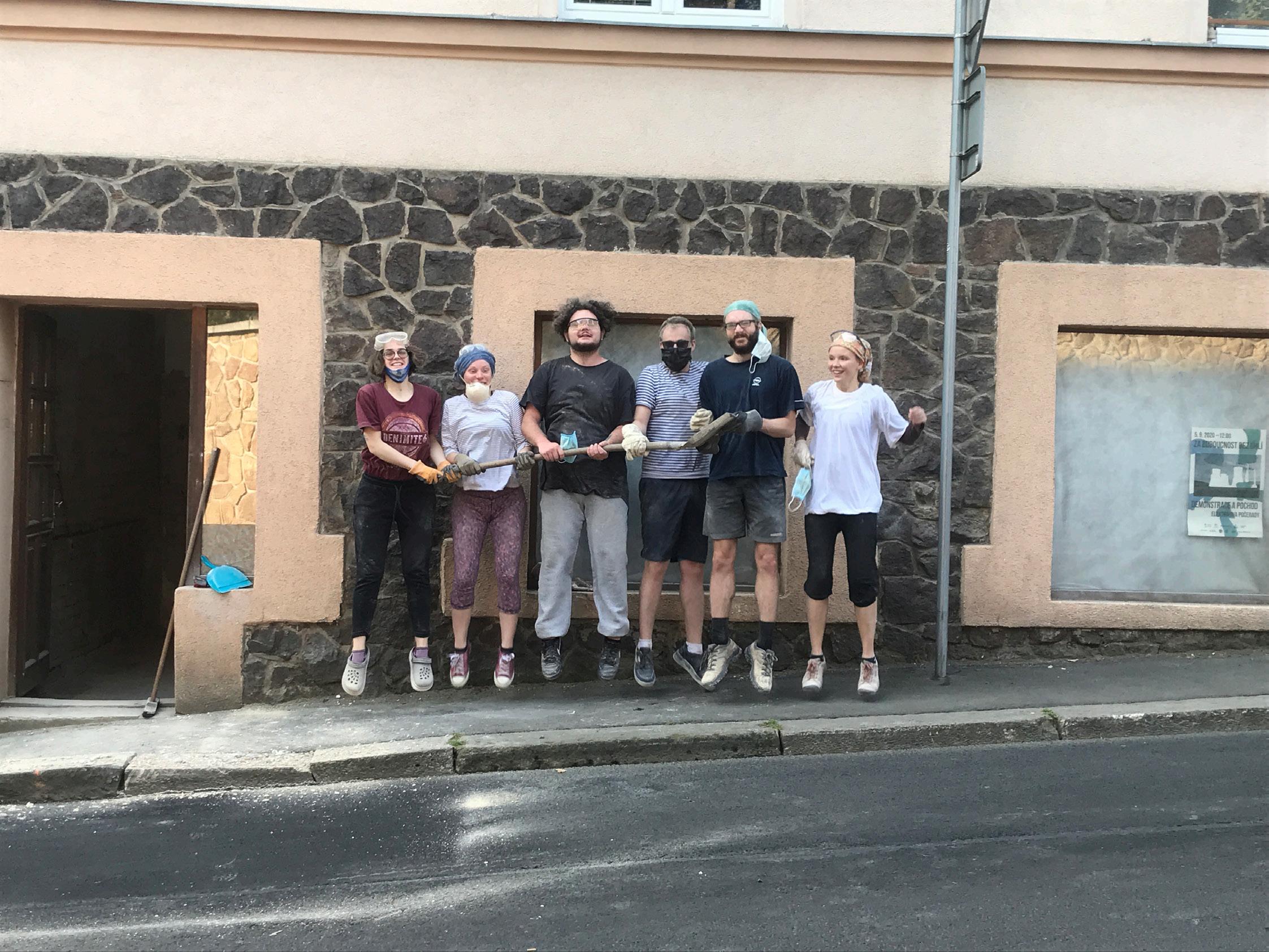
We were hungry for a place where we could work and create, share knowledge, learn from each other, reconnect with the landscape around the city or just watch a movie together. So in the summer of 2020, we rented a then vacant basement space in our hometown Teplice together as a group of students and breathed life into it for almost 3 years. For ourselves and for the public. The reconstruction was carried out on our own with improvised means, various mixes of manual skills and knowledge. In the autumn 2020 we opened the Zahálka (word for resting, doing nothing, regenerating) space to the public, where we organized educational and cultural events for children, workshops with artists and amateurs, gallery in a shop window, open discussions and from the space we went out into the city and the surrounding countryside to see, for example, beetles, rivers, restored alleys or disappeared villages. Most of the events were free of charge or with a voluntary contribution, some of the events were financially supported by the city of Teplice. Nowadays, all the events have moved to a new address in the emptying city centre.
Some of the participants in front of the reconstructed space.
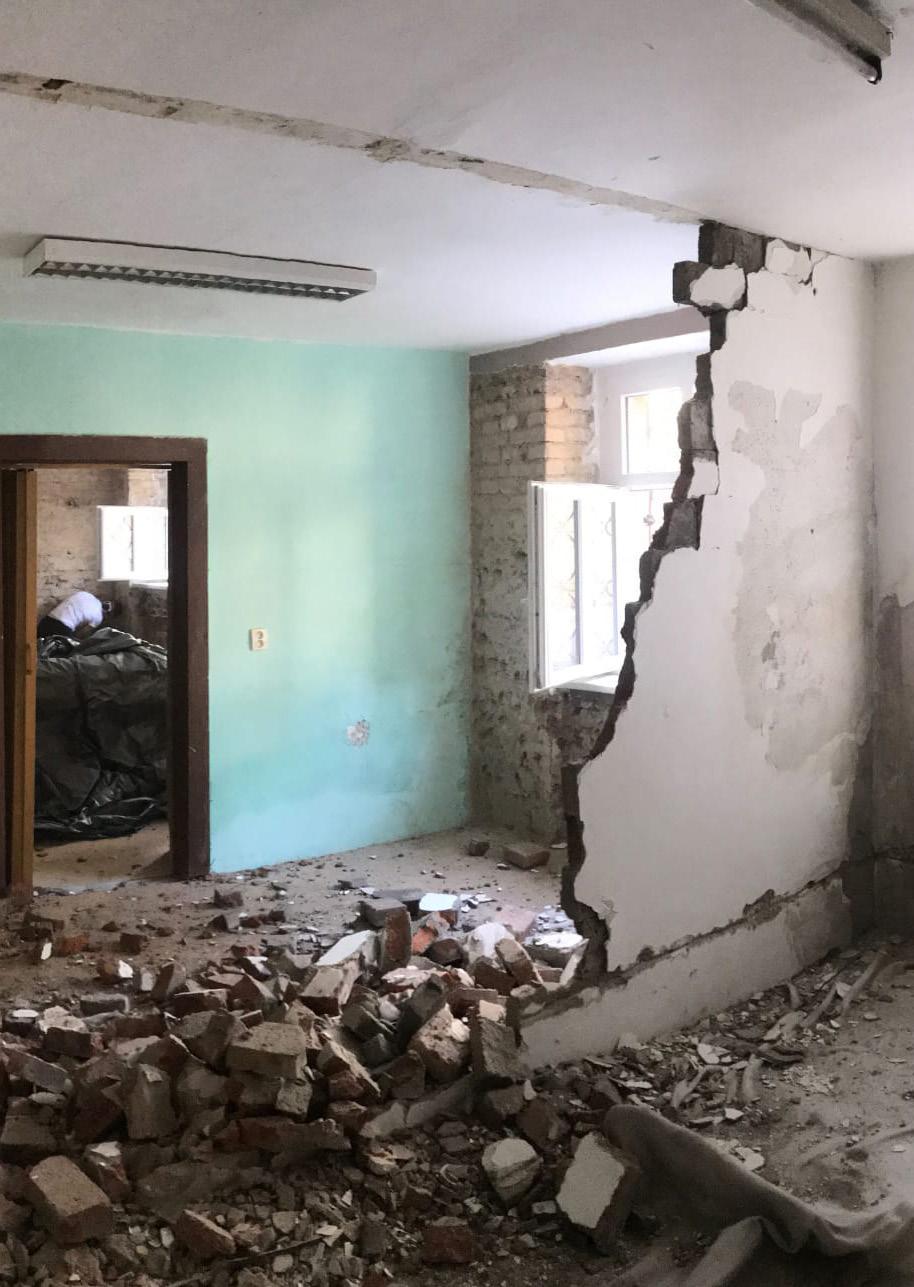
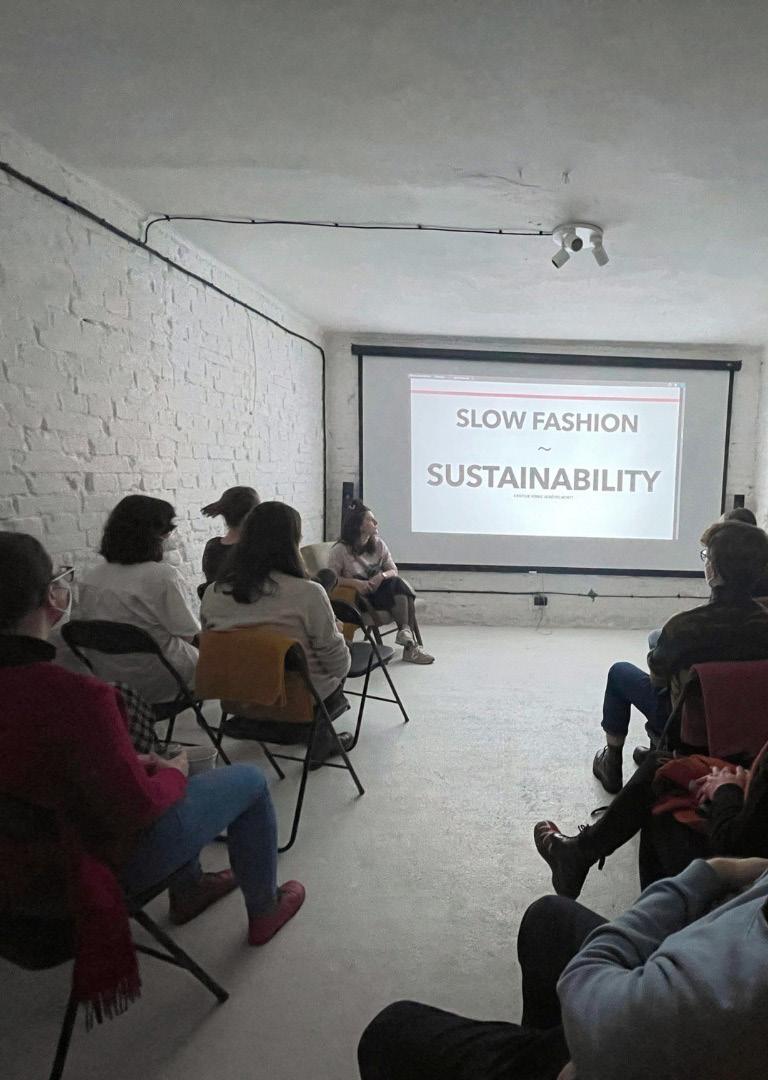
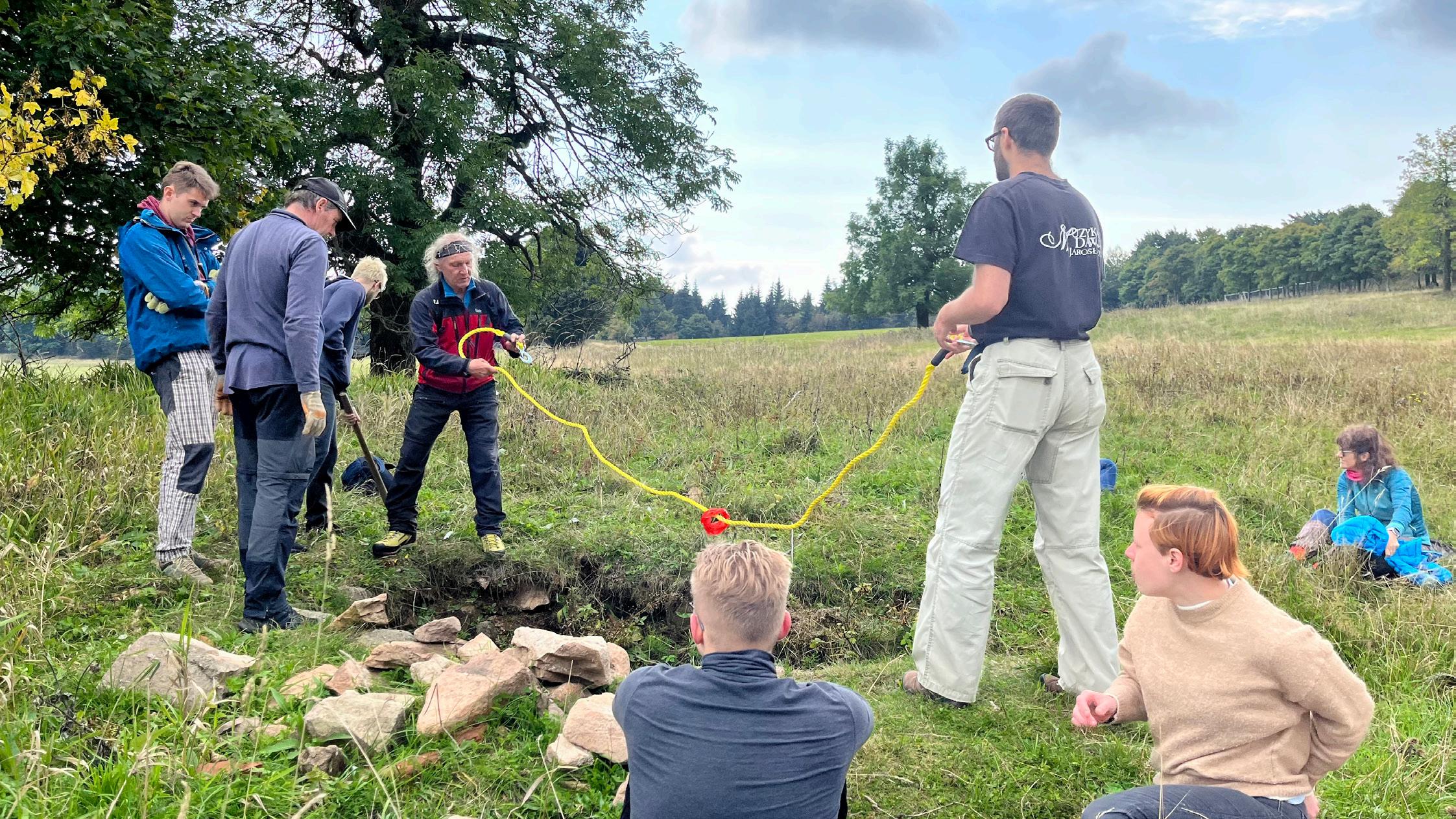
Lecture on slow fashion and how to sew own clothes; walk in Ore Mountains and rescuing old stair.
thank you!