GeorgeRochbergandJohnCorigliano'sMusical Languageasaconnectionbetweenpastandpresent
IwillattempttodemonstratethatGeorgeRochbergandJohn Coriglianomixedtonal,atonalandchromaticismcompositionto createtheirownmusicallanguageandinfluencecontemporary music.Inmostofhismusichelikesthepuritiesoftonalmusic combinedwiththeoppressivechromaticismofatonality,which belongstoadifferentrealmofexpressivepossibilities.Iwill discusshowCoriglianoandRochbergarealikeandhowquotation canbeusedasatoolinordertoenactaconnectionbetweenpast andpresent.Iwillfocusonthequotationasanimportanttoolto makeaconnectionbetweenpastandpresent,whichmakesthe uniquemusicallanguageofJohnCoriglianoandGeorge Rochberg'smusic.
Bothcomposersareinfluencedbysomespecialevents.George RochbergisanAmericancomposer,borninPaterson,Rochberg's motherandfatherimmigratedtoUnitedStatesfromUkraine.He waswell-versedinNeo-romanticism,modernism,serialismand inderterminacy.Rochberg'searlyworksrelatedwithstrong affinitiesfortheidiomsofStravinsky,HindemithandBartok,then intoserialisminthe1950s.HealsolearnedaboutWebernandhe wasinterestedinthehexachordofthetwelve-tonerow."The essentialdifferencebetweenmytwelve-tonemusicandeveryone else'sisthatmineismelodic."Hechangedhismusicalstyleafter his20yearsoldsonPauldied."AfterPauldied,thatabsolutely madeitnecessaryformetowashmyhandsofthewholething (serialism)."Hechangedhismusicalstyletocombineabstract chromaticismwithtonalidioms.
JohnCoriglianosaid"Iwasn'tinterestedinclassicalmusicuntil highschool,andthatwasmainlybecauseoftheadventoftheL
Precord,andmygettingahi-fisetwithafifteen-inchspeaker,and listeningtoBillytheKidwithCoplandconducting).Iplayedthose thingsonthepianothenandfoundthemveryexciting,andfrom theregrewinlovewiththatkindofmusicandwantedtowritein thatlanguage."Thatisthereasonwhyheinterestedinclassical music.Hewantedtogetoutofschoolbecausetheatmospherewas soclosedinandhewantedtogetintothelivingideaofwhat classicalmusicwasintheworld.
HeworkedforLeonardBernstein’sYoungPeoples’Concertfor13 years.InthisperiodhedidalotofworkforCBSincluding television,radio,andrecordingdivisions.Thisexperience influencedhisconceptabouttherelationshipsbetweenaudience, performerandcomposer.Ithinkthisisareally,reallyimportant thingforagoodcomposer.Helikesopposingmoods,emotions, tempi,andmelodicranges,andvariesthelevelofdensity, difficulty,andvirtuosity.
CompositionalApproach
Thearticle
ThemusicofGeorgeRochbergtalksaboutGeorge Rochberg'scompositionaltechniques,whichinclude recomposition,variation,andthereorderingof previouslycomposedmusic.Thesecompositionaltechniquesare associatedwiththe15thcentury,ortheMiddleAges,andthe quodlibettechnique.Thesecontentsillustrate"George Rochbergrepresentthatminorityoftrulycontemporarycomposers whocontinuetobelieveinexpressiveness,indeedold-fashioned passionandcompassion."
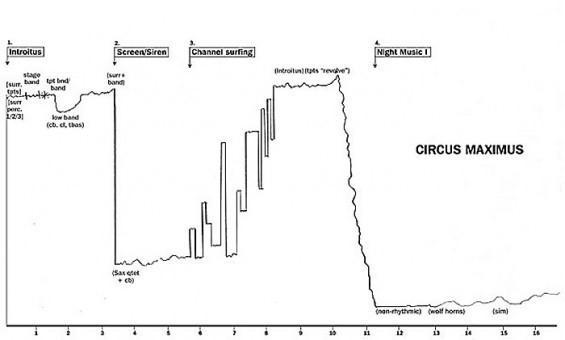
Corigliano’sapproachisspecial.Healwaysspendsmorethanhalf ofhiscompositionaltimeinthestructureofhiswork.Whenhe begantowriteanewpiecehealwaysconceivesawholepiece, whichincludesdiagrams,coloredcharts,andscenarios.Allof themareveryimportantmethodsforhimtocompose.Itcanhelp Coriglianovisualizeapiece’sensemble.Hethenbuildslargescale
architectureanddecideswhichspecificcompositional materials,andhealwaysconsidersstructuralforms,stylistic techniques,notations,andtimbrecolorswillbestdescribehis vision.Thisprocessislikebuildingabuilding.(example1.)
Example1.
Iwillfocusonfourpiecesfromthosetwocomposers.Following Rochberg'sfamouschangeofcompositionalstylefromatonal serialismtoatonallyinformedNeo-Romanticism,George Rochbergbelievethat"allhumangesturesareavailabletoall humanbeingsatanytime."ThischangeledRochberg'sstyleto challengethecommonlyheldnotionamongthecompositionally elitethatstylemustinnovate.
StringQuartetNo.3
GeorgeRochberg'sStringQuartetNo.3isanexampleofthis innovatestylisticshift,ashiftthatwascombiningahighly informedknowledgeofatonalwritingfromhisearliercareerwith arenewedperspectiveonoldertonalidioms.InFantasiaofString
QuartetNo.3,therearesomeoppositionbetweenmotives,which includesthedifferentspeed,therhythm,theusesofsetandthe functionalharmony.Theoppositionhelpstoidentifythedifferent characteristicsofeachmotive.TheThirdStringQuartetdraws heavilyonthemelodic-harmoniclanguageofthenineteenth century.Itisinterestingtowonderathowtheoppositionasan importantelementtoidentifytheelementsthatconflictwitheach other.
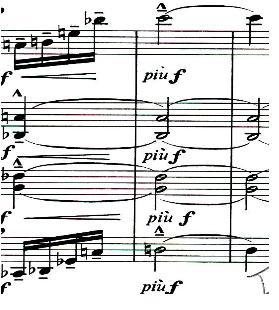
TherearethreemainmotivesintheStringQuartetno.3Fantasia. Rochbergusesmotivicrelationshipsastheprocedureto interconnectthewholepiece.Thefirstmotiveisanintroduction withglissandoandtuttiincludedinm.1.Eachinstrumentplaysthe set(0127).Theintervalbetweenthefirstviolinandthesecond violinis5thsandtherearealso5thsbetweentheviolaandthe cello.Thefirstmotiveisplayedthroughoutthewholemovement. Example2.
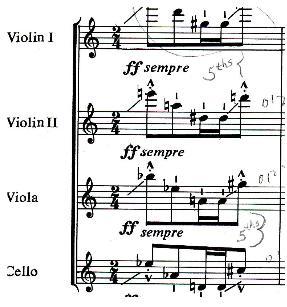
Themotivebreaksuptothelastnoteofmotiveandthesubset(01). Thesecondmotiveinm.27,isnotcompletelyincontrastwiththe firstmotivebecauseRochbergalsofocusesontheset(0127),and
boththefirstviolinandthecellopartisinprimeform(0127)and thechordinthesecondviolinandviolapartisalso(0127). Becausebothofthemareinthesameprimeform,thereis coherenceinthesound.
Example3.
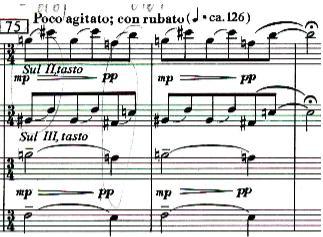
Thethirdmotiveinm.75isa(0167)tetrachordpresentedastwo successivetritones,G-C#andG#-D.Themelodiclinebeginswith thefluenteight-noteandoneperquarternoteintheviolaandcello part.Themotiveisalsonotcompletelyincontrastwiththesecond motivebecausethesefournotesalsoincludetritone,whichisas sameasthesecondmotive.
Example4.
Thesethreemotivesarevariedseveraltimes.Themotivicstructure canbedividedintothefollowingparts:A(1-26),B(27-39),A (mm.40-63),B2(mm64-74),C(mm.75-80),B2(mm.81-102),C (mm.103-105),C1(mm.106-108),C(109-111),C1(mm.112124),A(mm.125-128),B1(mm.128-148),A1,(mm.149-177),B (mm.178-195),andA(mm.196-232).
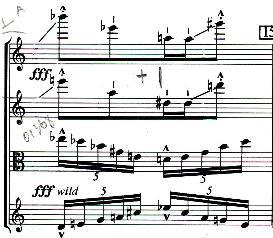
Thisoppositionisthroughoutthelastpart(mm.125totheend), whichidentifiesthedifferentcharacters.Rochbergputthedifferent rhythmicdivisionsatthesametimetocreatedpolyrhythm.Inmm. 149-176,polyrhythmiscomposedofdifferentgroupingswithin equivalentsubdivisionsofthebeats.Theviolaandthecelloshare thesametypeofsubdivisionofthebeats(quintuples).(example5) Thefirstviolinandthesecondviolinareplayingsixteenthnotesor eighthnotes,whichcreatesacross-rhythmwiththeviolaandcello part.Thesoundofthesetworhythmgroupsasindependent rhythmiclayerscreatesapolyrhythm.Thedifferentrhythmictype createsapattern5against4.Theoppositionalsocanbefoundin theviolapartandthecellopart.Bothofthemplaythecontrary motionwiththeset(01368),whichhelpstobuildtensioninthis
part.
Example5.
Theoppositionbetweendissonanceandharmonyalsocanbe foundinthisshortpiece.Inmm.87-95,theviolaandthecelloplay thefunctionalharmonyBmajorandthefirstviolinandthesecond violinplaythesubset(01)(example6).Thesectionisfollowedby achoraleinBmajorwithaharmonicprogression:I-I6-VI-II6VII7/V-V.TheharmonyintheString
QuartetNo.3hasspecialfeatures.Theharmonyinthesecond motiveisatoolthattakesthemusicfromdissonancetoatonal. Example6.
Heuseselaboratetechniquestocreateachromaticismpiece.First, heusestheoppositionbetweenthemaintheme(motiveone), motivetwo,andmotivethreetoidentifythethreespecific charactersandcreatetension.Theconflictbetweenthemincludes differentspeed,rhythm,theuseofsets,atonalharmoniesandtonal harmonies.Second,throughanalysis,thedifferencesbetweeneach sectionandeachmotivecanbeobserved.Theharmonyisan importantelementwiththeopposition,thedifferentcharacteristics, andthedifferentmotives,allofwhichtakethelistenerthroughthis chromaticismpiece.Thedifferentvariationsbetweeneachmotive
playthroughoutthewholemovement.Heusestheconflictbetween atonalharmoniesandtonalharmonies.
SymphonyNo.6
Inthispiece,Iwillfocusonthesecondmovement.InRochberg notes,"ThesixthSymphonyis–thoughintense,especiallyinits firstpart-moreopen,structurallyfreer,andmorepublicinits projection,particularlyinthesecondpart.Theopeningofthe Fantasiagivesusatragicatmosphere.Thetriadicchromatic chordalprogressionineveryinstrumentascendsinastepwise motionthroughoutthefantasiasection.Inm.3,thepitchclassof thefivenotesgroup(G-Db-D-Ab-Gb)is(01267),whichisa chromaticchord.Theorchestrastandsatthepointwithdissonance, whichmakesthesonorityrichandfullofdynamicsandaccentsto createthehighlytragicemotion.
InRochberg'snotes,"CentraltotheFantasiaarevariouskindsof fanfares,evokingnotonlytheancientassociationwithwhatwe nowknowtobethefalsegloriesofwarbutalsothehidden, underlyingtragicimplicationsofmankind'sperennialpassionfor makingwaranditsinabilitytoriditselfofasophisticated barbarismrationalizedasthemilitarysideofnationaldefense.I findnothinggloriousoverlyorcovertlyadvancedintheircause."
Example7.mm.1-3.
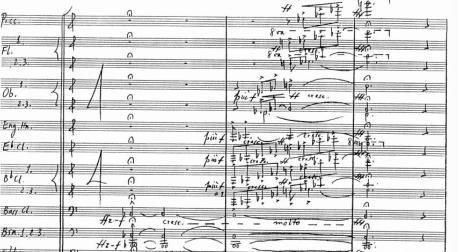
Comparewiththefirstintensepart,thesecondpartismorepublic initsprojection.TherearethreedifferentMarchesinthesecond partofSymphonyNo.6.Thefirstistheover-allframeforthe secondandthird.Inm.52,theorchestraplaystheFmajorchord andthentransposedtoupsteps.Thischromatictransitionmakes theaudiencetorememberthismaintheme.(Example8)Inthe classicaltraditionofcharacterpieces,contrastingpartswerecalled "trios."EachofthesetwootherMarchescanbethoughtofasan extendedtrio.Andfanfaresoccurinthesetrios.Themaintuneof thethirdMarch-allthreeMarcheshaveclearlydefinedtuneof differentcharacterandattitude-wastheprincipaltuneofaparade marchthathewrotein1943forthe65thInfantryDivisionBand. "Theseveraltonalitiesoftheworkactmorelikemagneticpoles thanthetonalitiesofmoretraditionalmusic.E-flatservesasthe Fantasia'sessentialtonalpole.TheMarchesaremagnetizedaround gminor,A-flatmajor,andG-B-flat-Dmajorrespectively."The tonalharmonythroughoutthesecondmovement,whichcontrast thetragicFantasia.Hedescribedtonalitiesoftheworklike magneticpolesinsteadoftonalitiesoftraditionalmusic.
Example8.Themaintheme
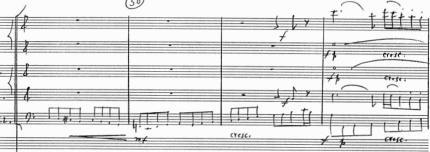
TheChromaticTransposition
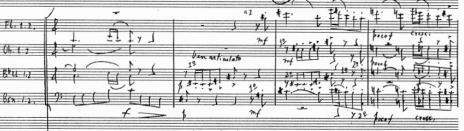
Hechangedhiscompositionalstylefromatonalserialismto atonallyinformedNeo-Romanticism,Inthispiecehealternatethe intensechromaticmovementwithtonalityMarchesmovement.In thispiece,heusedthepuritiesoftonalmusiccombinedwiththe chromaticismofatonality.
TheRedViolin
JohnCoriglianoUsesChaconnelettheaudiencetorememberthe music.Hesaid,"Sometimes,ifIwantsomethingtobememorable inthesensethatIwantpeopletounderstandthatI'mrecapitulating something,IwilltryandfindauniquesonoritythatIcan recapitulate."Wecanfindtheexampleinthesetwopieces.
Hisstyleisveryimportant,duetohistemporaryexperimentation atthattimeashemasteredandassimilatedavarietyof20th-century compositionstyles.Theredviolinisaboutamood-possessed violin.FrancoisGirardisthedirectorofthefilm,andhesaid, “Makingfilmismakingmusic.”thereisnodoubtthatmusicisan importantpartofthefilm.Theredviolinwasthethirdfilmscore ofJohnCorigliano.TheRedViolinnarratesathree-hundred-year
oldviolin.Thefilmenclosestheoriginoftheviolinthroughfive differentcountriesincludingItaly,Europe,English,Chinaand Montreal.Therearefivedifferentlanguagesinthisfilm,sothe filmneedsauniquethemeofmusictoassociatewiththefive differentepisodes.Thestorydealswithawoman,Anna,sheisthe violinmaker’swife,andthethemethroughthewholefilmis emotional.Theviolinmaker’swifetellingiswhattheviolinwilldo. Thethemealwaysfollowsthewifethroughthewholefilm.John Coriglianosaid,“Themovieisaboutthepassionandlovefor musicandthemanywaysmusicisusedandabusedandthought of.”
Themusicinthisfilmneededaverycloseassociationwiththe sevenepisodesforthewholefilm,sohethoughtthatchaconne couldgiveaudiencethesenseofordertomemory.Whenhewrote thistheme,heusuallywantstoknowitisthebestpossibletheme. (example9)Coriglianousedsevenchordstodescribetheseven periods.Themostimportantthingisimportingorder.Atthemere mentionaboutfilmwealwaysassociatedwithmusic.
Example9.theelaboratemelody
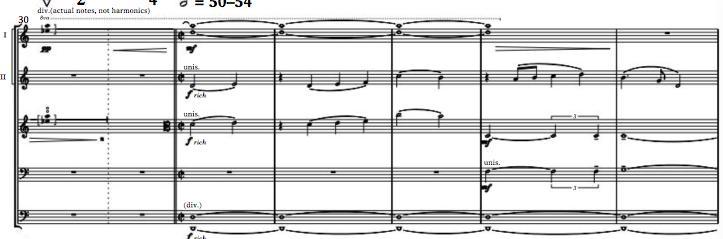
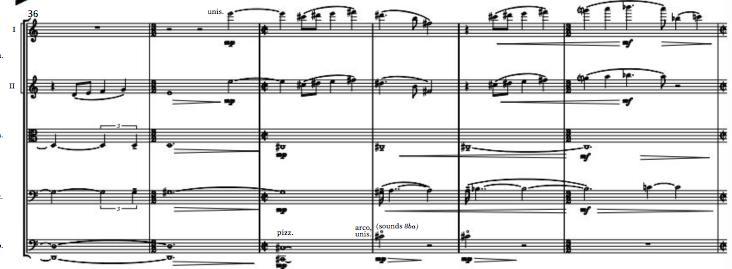
Chaconnewasemphasizedinvariationstopromptaudience thinkingabouteveryepisode.Coriglianoonlyusingstringsforthe backgroundscorebecauseit’sanobsessivemovieaboutaviolin.
Thecomposerandthedirectorhadawonderfulcorporationinthis film,ofcausetheyrespecteachother.
SymphonyNo.1
Thesymphony,wascommissionedbytheChicagoSymphony. wherehewasthecomposerinresidencefrom1987to1990.It receiveditspremiereinMarch1990withDanielBarenboim conducting,andistobeperformedinNewYorkduringthe199192seasonbytheChicagoSymphonyandtheNewYork Philharmonic.
AsCoriglianowriteshisprogramnote,"Iwantedthistobean abstractwork,becauseIthinkthatabstractmusiccantouchthe deepestandmostbasicemotions."DuringthepastdecadeIhave lostmanyfriendsandcolleaguestotheAIDSepidemic,andthe cumulativeeffectofthoselosseshas,naturally,deeplyaffectedme.
MySymphonyno.1wasgeneratedbyfeelingsofloss,anger,and frustration.Idecidedtorelatethefirstthreemovementsofthe
Symphonytothreelifelongmusician-friends.Inthethird movement,stillotherfriendsarerecalledinaquilt-likeinterweavingofmotivicmelodies."(Corigliano)
Thefirstmovement,titled"Apologue:OfRageand Remembrance"isalternatesbetweenthetensionofangerandthe bittersweetnostalgiaofremembering.Thefirstmovementrelates tohisfriendthroughanevocativemu-sicalquotation.As Coriglianohimselfexplainsinanprogramnote,hisanguishinthe faceofhisfriend’simpendingdeathisexpressedintheinitial sonority:asearing,unisonAheldbythestringsfirstontheopen string,andstandbystandwiththesinglenotegrowingeverlouder, thevibratomadlywider,andthebowingmorefrenetic.Itreflects thetensionofanger.Thesecondthemeasacontrastfeaturesa remembranceidea.Coriglianousedthequotation,whichisfrom LeopoldGodowskytranscriptionofIsaacAlbeniz'sTangoto describethememory.Itisobviouslytryingtocommunicate somethingconcrete,alternatingprimalscreamswithmordant stringpassagesandoffstagetonalpianotunes.Theopposition betweendissonanceandharmonyalsocanbefoundinCorigliano's music.Thedissonancemajorsecondemergesinmm.83,theviolin 1playsB,andtheviolin2playsC,whichmadethescreamand againstthebeautifulpianotunes.Itreflectshisdistressovera concert-pianistfriend.
Example10.Theoppositionbetweentangoandorchestra.
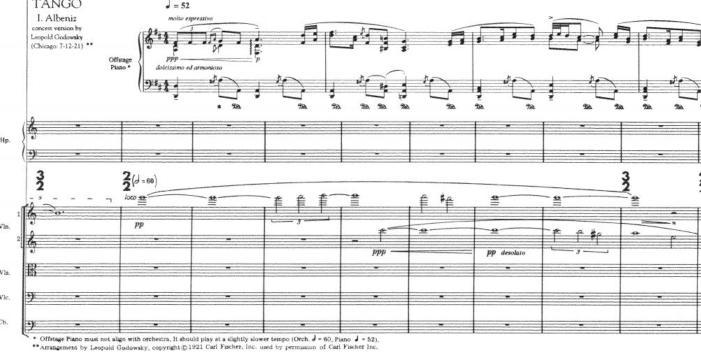
Thereisanoppositionbetweenthetwoforcespianoandorchestra. Theorchestraandoffstagepianoplaytheseparatetempo.In Corigliano'snotes"offstagepianomustnotalignwithorchestra.It shouldplayataslightlyslowertempo(Orch.=60,Piano=52) (Seeexample1).Thepianistisoffstageratherthanthealternating betweensoloistandorchestra,itisfragmentaryandseparate.
Thecomposerusestheoppositionbetweendissonanceand harmony,thedistinctionbetweensymphonyandoffstagepiano, thedifferenttemposbetweensymphonyandquotation,andthe tensionbetweenthepastasthememoryandthepresenttocreate thememoryofhisfriend.
MovementIII:Chaconne:Giulio'ssong
Thestatementofthecellothemeemergesinm.9.Thesolocello playsseparatelywithstringchaconne.Thecellointerducethe ascendingwholetonescalefromCflattoF,thentoA.Inmm.1618,thesolocelloplaysanothermotivewithdissonanceminor
second.Bothtwofragmentsmotiveputtogetherinmm.24-26. Theslowmotion,chaconne,wholetonescale,anddescendinghalf stepprovidesaspecificcharacter:adolefullymemory. Example11.
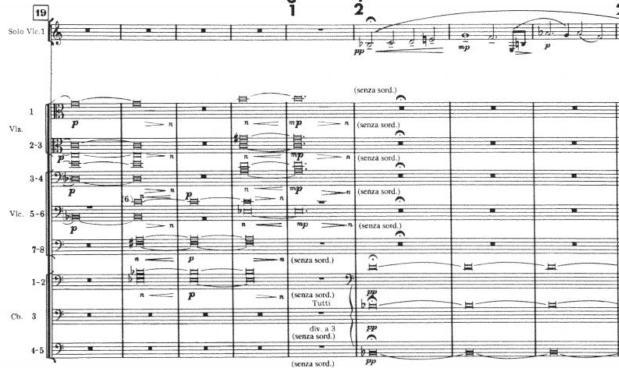
Asecondsolocelloenters:"thefirstofaseriesofmusical remembrancesofotherfriends,"inCorigliano'sprogramnote.
Thethemeisprecededbyachaconne,Chaconneisatypeof musicalcompositionpopularinthebaroqueerawhenitwasmuch usedasavehicleforvariationonarepeatedshortharmonic progression,ofteninvolvingafairlyshortrepetitivebass-line (groundbass)whichofferedacompositionaloutlineforvariation, decoration,figuration,andmelodicinventionbasedon12pitches, whichrunsthroughtheentiremovement.AsCoriglianowriteshis programnote,"Inordertoprovidethemesforthisinterweavingof lostfriends,IaskedWilliamM.Hoffman,thelibrettistofmyopera, TheGhostsofVersailles,toeulogizethemwithshortsentences.I
thensetthoselinesforvarioussoloinstrumentsand,removingthe text,insertedthemintheSymphony.Thesemelodiesareplayed againsttherecurringbackgroundofthechaconne,interspersed withdialoguesbetweenthesolocellos."
Inconclusion,JohnCoriglianoreallyemphasisinwritingmelody. Healwaysuseselaboratetechniquestocreateamemorablepiece. Inhisnotes,"Ifyouwantedmetowriteamelody,Iwouldhaveto ask,"Whatkindofmelody?"TherearemelodiesIcouldwritethat wouldreflectme,buttheywouldcomeoutofmanydifferent worlds.Themoredivergentthesources,theharderitistogetan immediateidea,untilIstarttobuildthepiece."TheSymphony No.1andTheredViolinassociatedwithmemory.Corigliano mixeduniquetechniquestocreatehisownmusicallanguage, whichincludetheelaborateofwritingamelody,variations, opposition,andusesofchaconne.
Throughanalysisofthestringquartetno.3,wecanseewecansee howhecombinedabstractchromaticismwithtonalidioms.This analysisproveswhyGeorgeRochberg'smusicallanguageis differentfromothercomposers'music.TheSymphonyNo.6is alsoimportantbecauseitillustratesthatthetonalityandatonality cancoexist.Thereisanoppositionbetweentwomovements.The firstmovementFantasiarelatewithatonalharmonies,andthetonal harmoniesthatheusedinthesecondmovement.
Throughanalysis,themixtureofmusiccanfoundinRochberg's pieceinmanyways,whichincludesdifferentspeed,rhythm,the useofsets,atonalharmoniesandtonalharmonies,pastwith present,andsoon.InGeorgeRochberg'snotes,"Thehopeof contemporarymusiclies,itseemstome,inlearninghowreconcile allmannerofopposites,contradictions,paradox:thepastwith present;tonalitywithatonality;theimpulsesofWesternmusical traditionswiththoseoftheOrient;pulse-orientedrhythmpatterns withnon-pulsepatterns;andsoon."GeorgeRochbergnotonly
combinedtonalmusicwithchromaticism,butalsoinotheraspects ofmusic.Heusesthoseconflictstocomposemusicinwhichto createanewmusicalworld.
JohnCoriglianothinksthatsonority,asanimportantingredient shouldcombinewithmoretraditionalmusicalmaterials;he considersthattimbreismorepowerfulthanmelody,andheuses sonorityforarchitecturalmaterialandformusicalthemeswhich canbedeveloped.IntheSymphonyNo.1,heusedasearing, unisonAheldbythestringsgrowingeverlouderandbowingmore freneticsonoritytodescribedthedeath.
Thesimilarityanddifference
BothcoriglianoandGeorgeRochberglikecontrast,opposition, andalteringtensionandtonalmusic.Thesimilaritiesalsoinclude variation.Rochbergusesdifferentvariationsbetweeneachmotive playthroughoutthewholemovementofstringquartetno.3.John CoriglianousesChaconneinbothpieces,whichwasalso emphasizedinvariations.
Rochbergchangedhiscompositionalstylefromatonalserialismto atonallyinformedNeo-Romanticism;hebelievedthat“tonality wastheworldfromwhichIneverreallyescaped,theworldthat reclaimedme.”Inhismostmusichelikesthepuritiesoftonal musiccombinedwiththeoppressivechromaticismofatonality, whichbelongstoadifferentrealmofexpressivepossibilities.But JohnCoriglianosaid"mystylehasneverbeenaspureorrefinedor isolatedinitsownlanguageassomeothermoderncomposers,like Reich.Iliketothinkmymusicismuchmorepromiscuous."Itis hardtofindaclearlykeyortonalharmoniesinCorigliano's music.
Bibiliorgpaphy
Dixon,JoanD,andGeorgeRochberg.ABio-BibliographicGuide toHisLifeandWorks.Stuyvesant,NY:PendragonPress,1992.
Bolcom,William,andGeorgeRochberg.TheAestheticsof
Survival:Acomposer'sViewofTwentieth-CenturyMusic.Ann Arbor,MI:UniversityofMichiganPress,1988.
Griscom,Richard,andGeorgeRochberg.Fivelines,FourSpaces: TheWorldofMyMusic.Champaign,IL:UniversityofIllinois Press,2009.
McCutchan,Ann.TheMuseThatSings:ComposersSpeakabout theCreativeProcess.
Oxford,NewYork:OxfordUniversityPress,1999.