DAVID STERN
STUDIO
IN QUEENS, NY
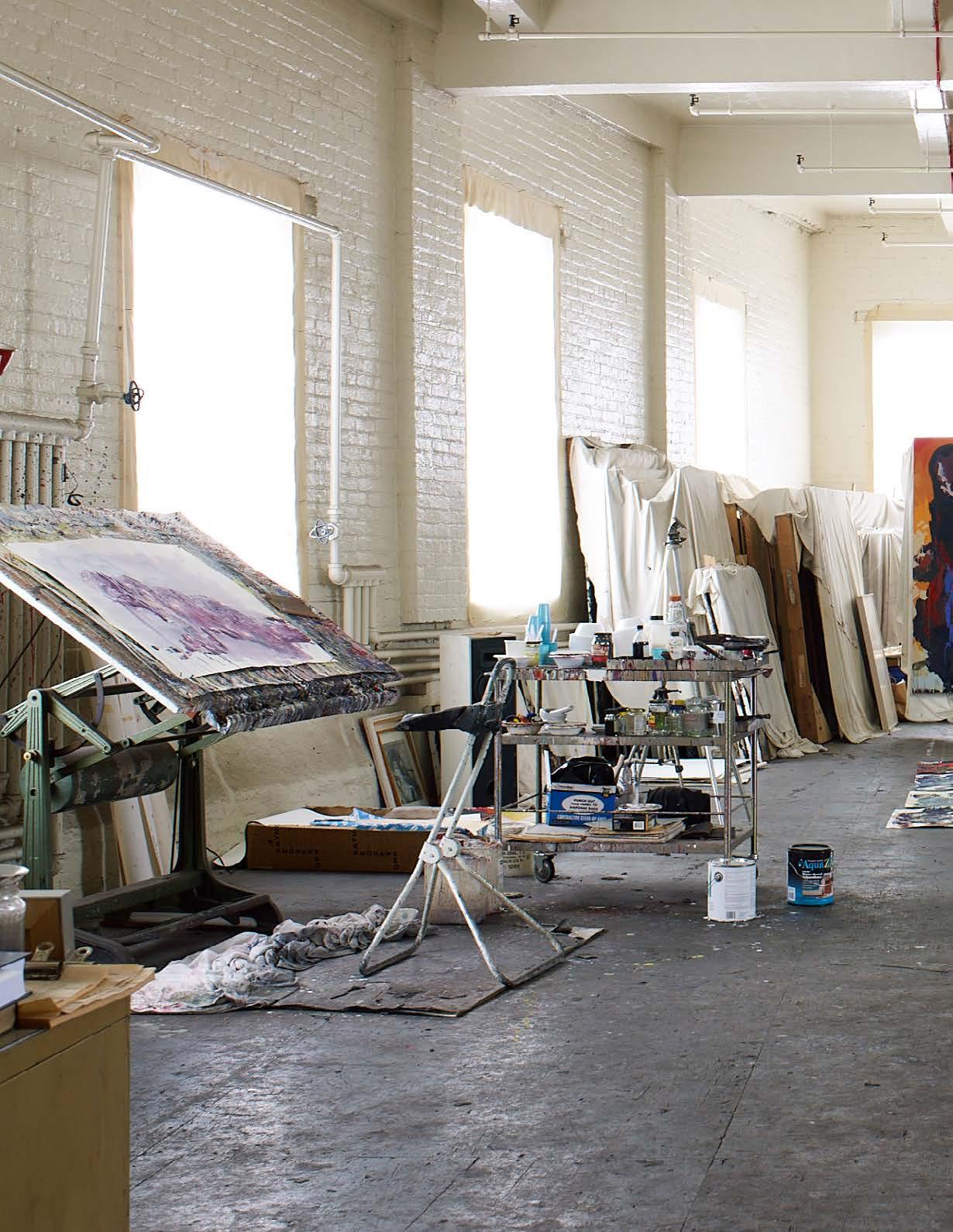
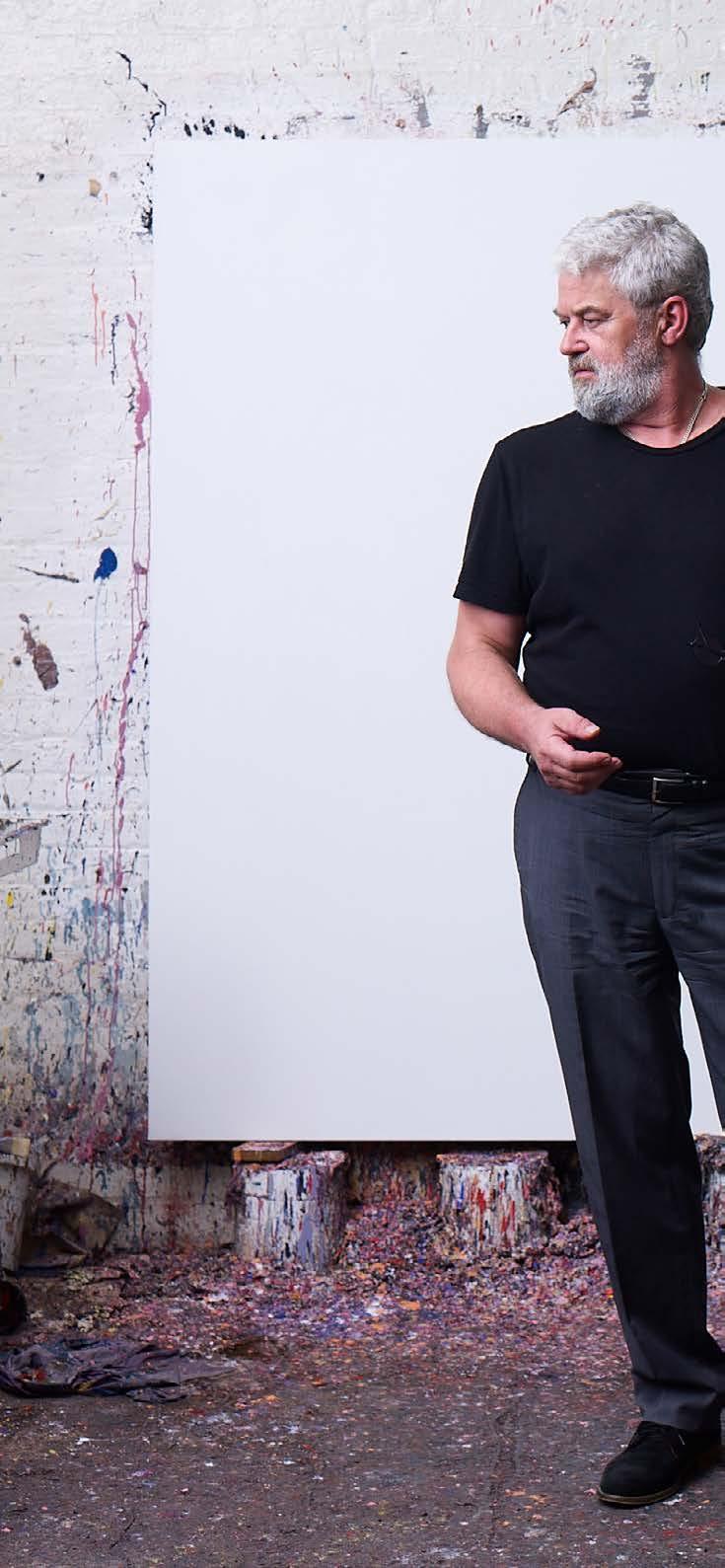
There has always existed the romanticized notion of an artist’s studio as the stage for his or her creative In this version, deeply imprinted on our minds, it is easier to see it as a place filled primarily with high inspiration, continuous achievement, and soaring triumph when the work is complete.
And while it is indeed a true statement, an artist’s studio is also a place of an unabashedly hard, labor-intensive and psychologically-intense work. It is the place where ideas and inspirations gather themselves at a slow, pace and the everyday “showing up” to face a blank canvas, is in itself an act of courage. It is these endless often filled with self-doubt and struggle for inspiration, along with dedication to that inspiration, that in help create the artist’s works.
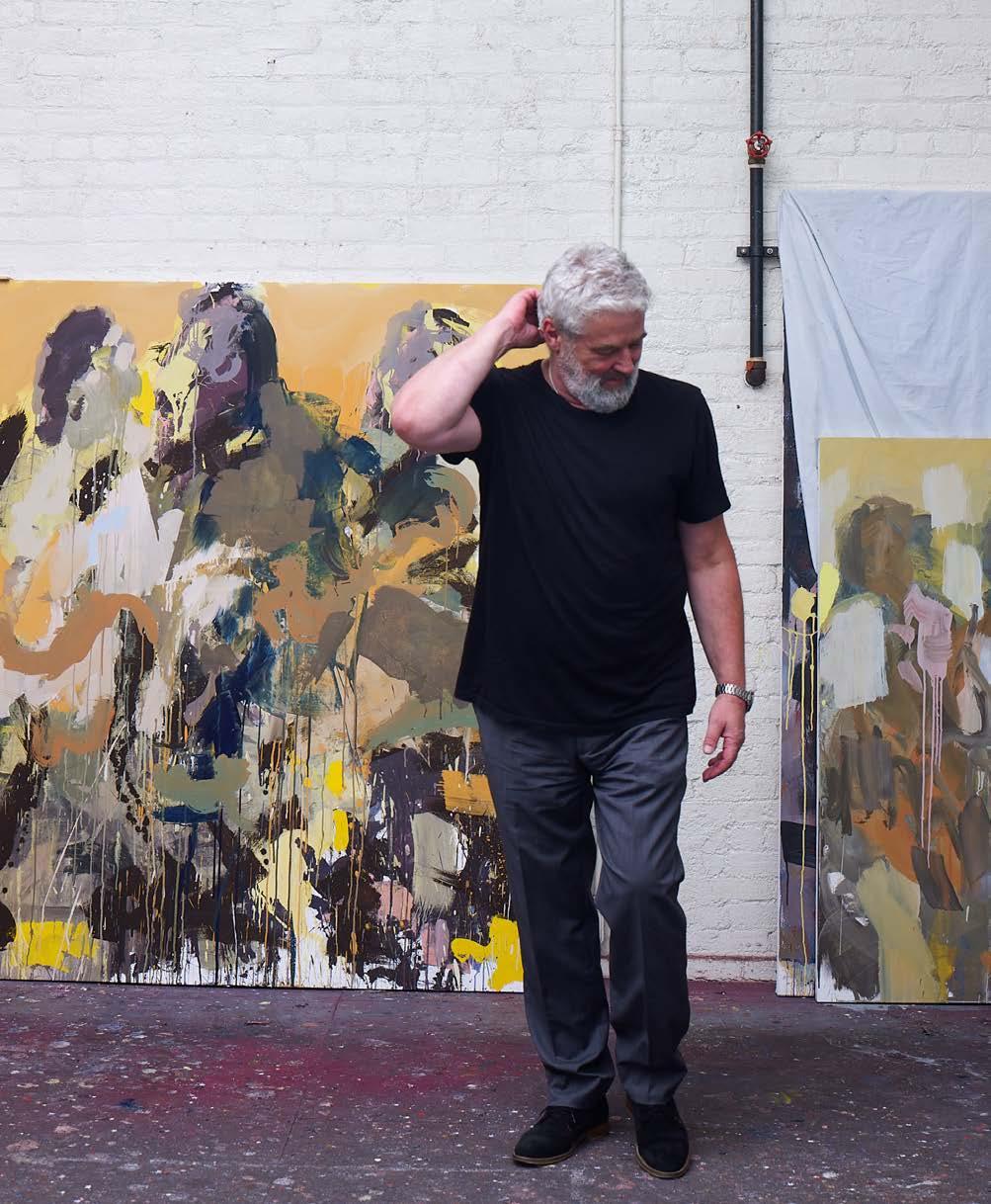
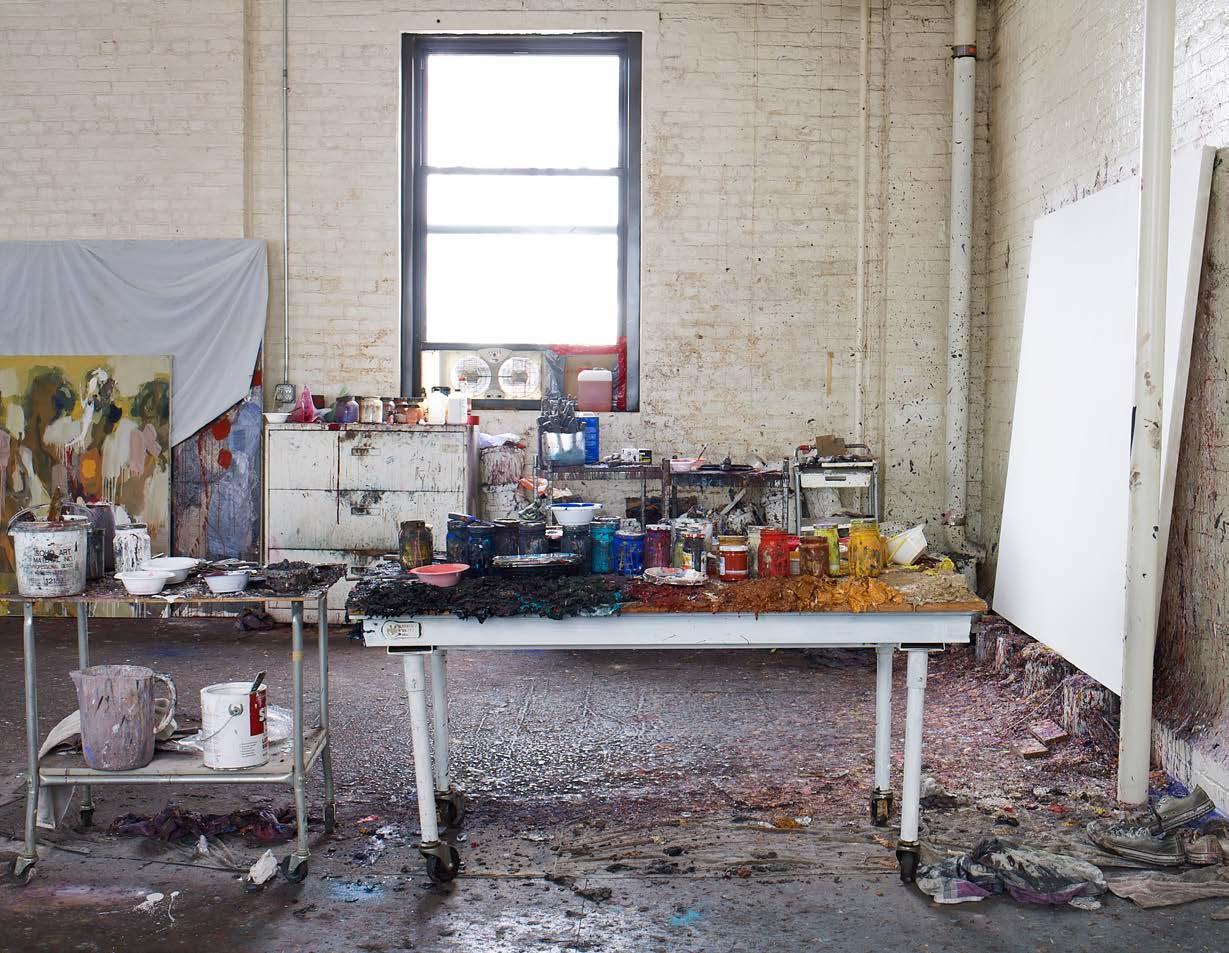
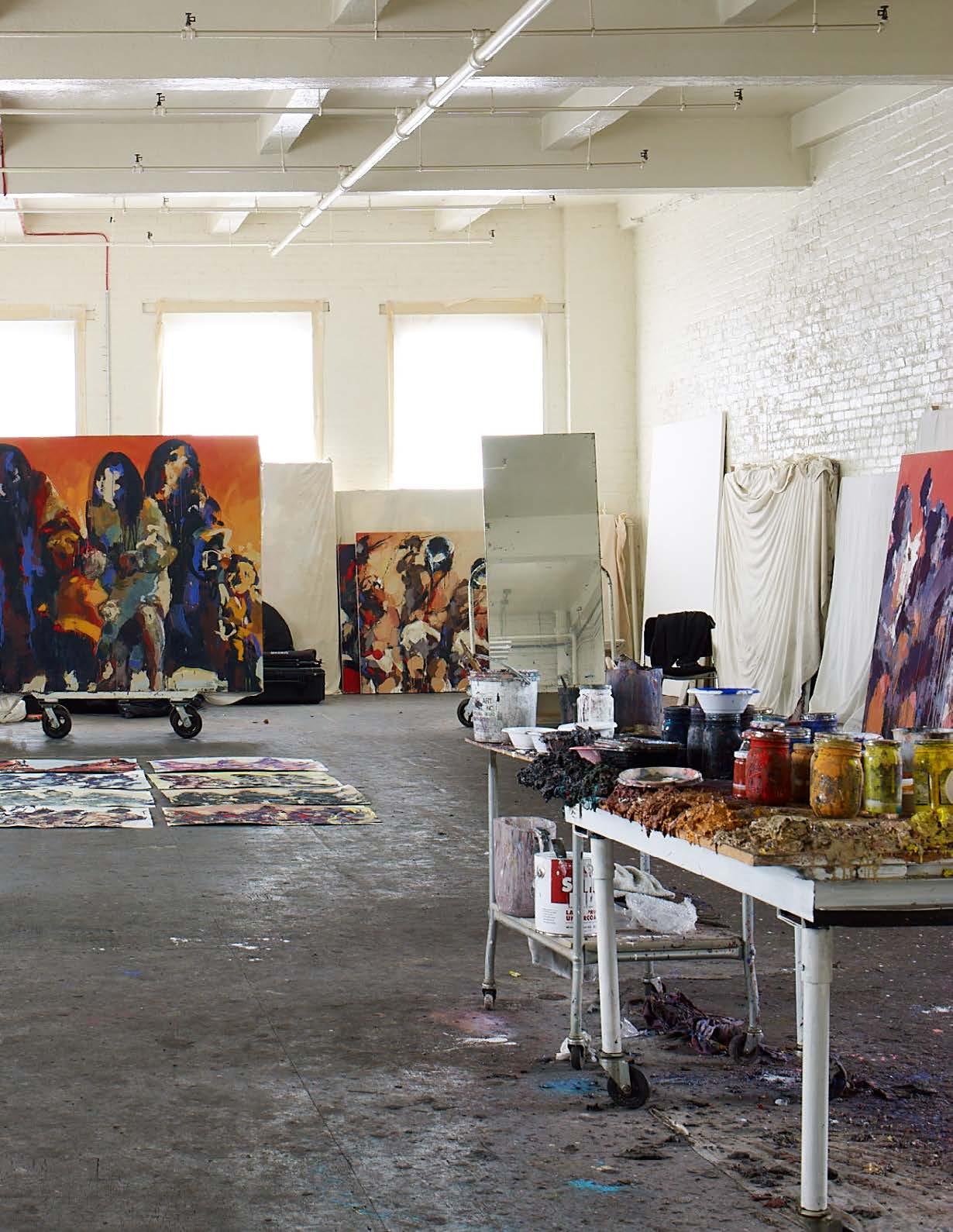
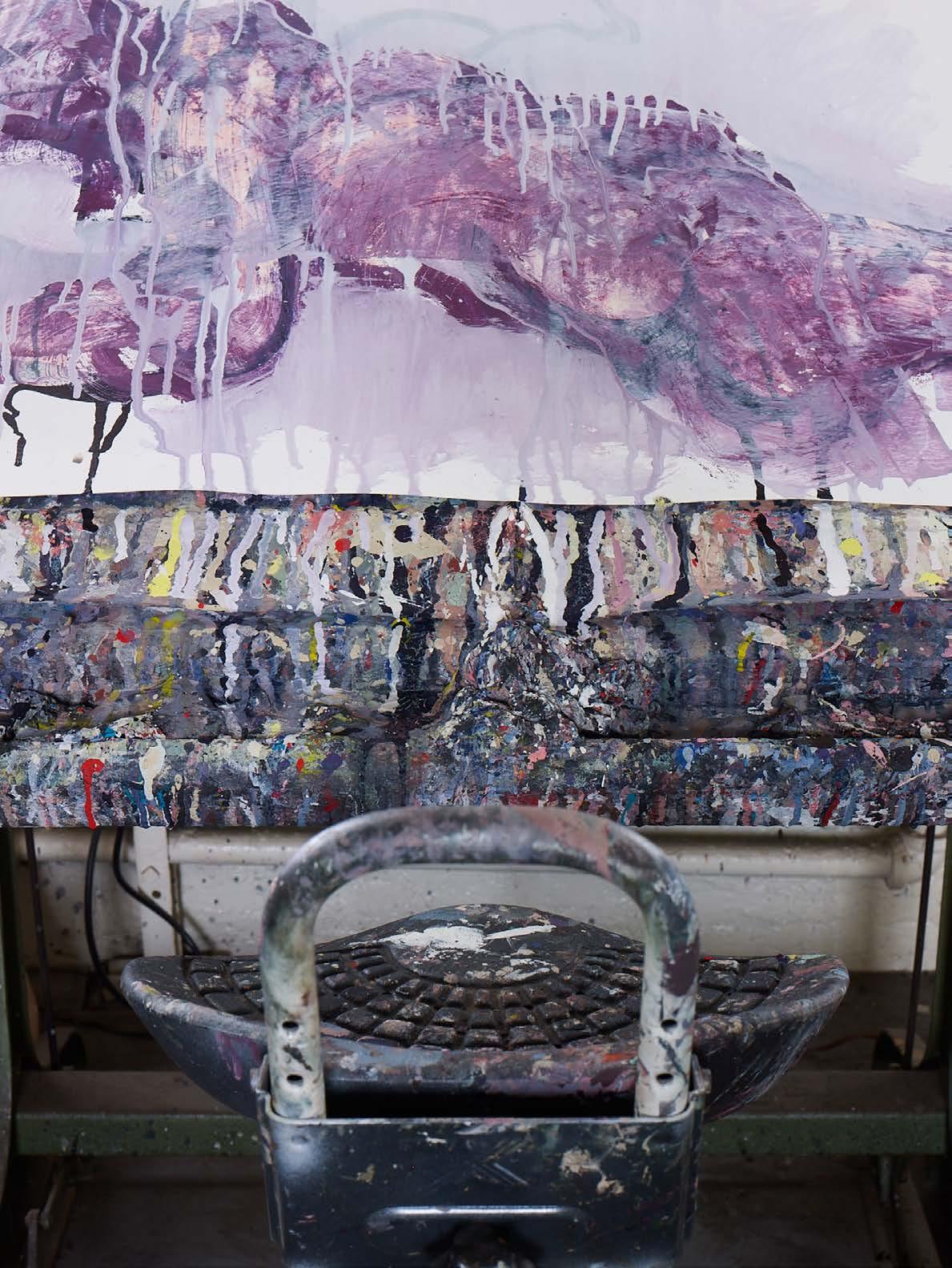
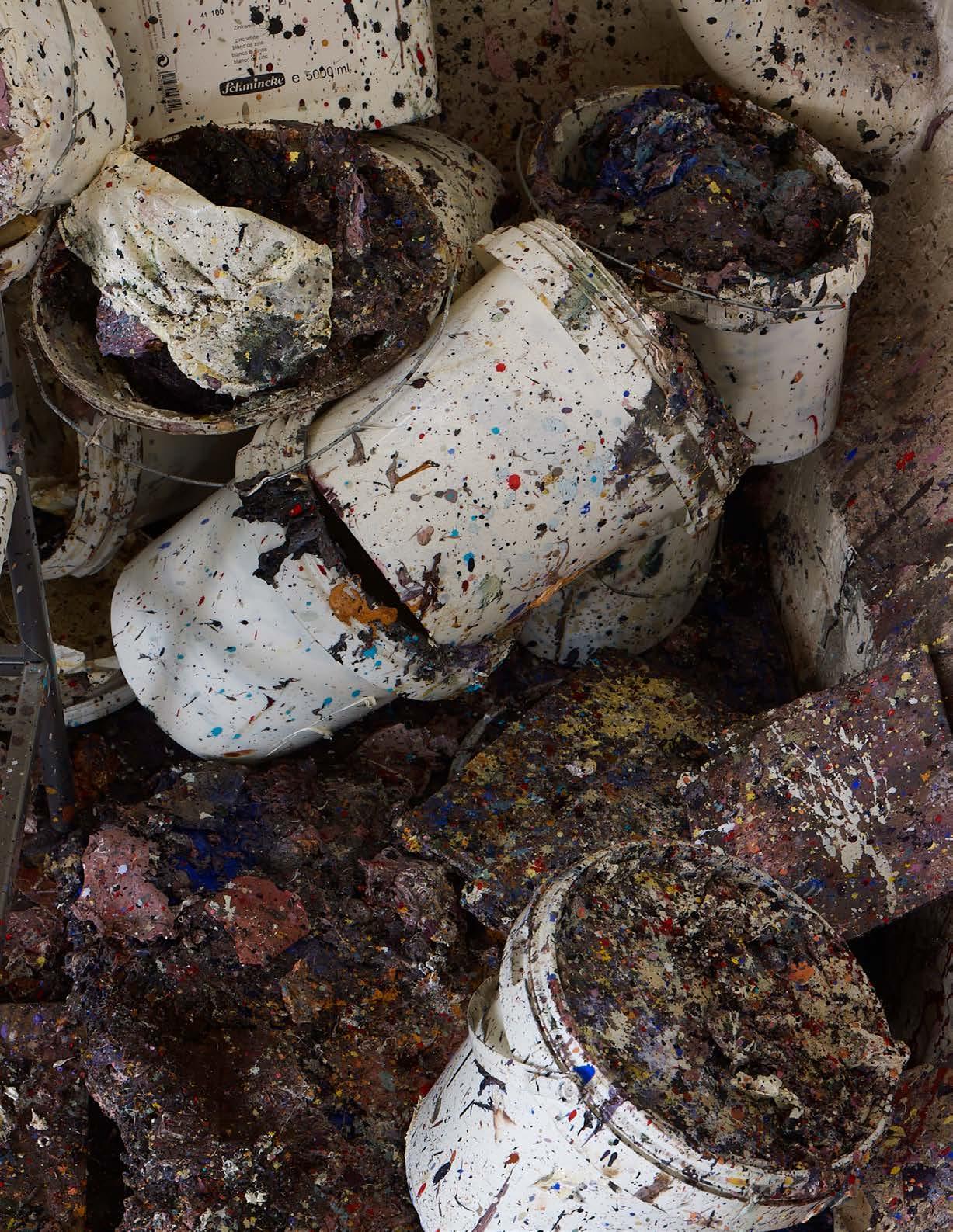
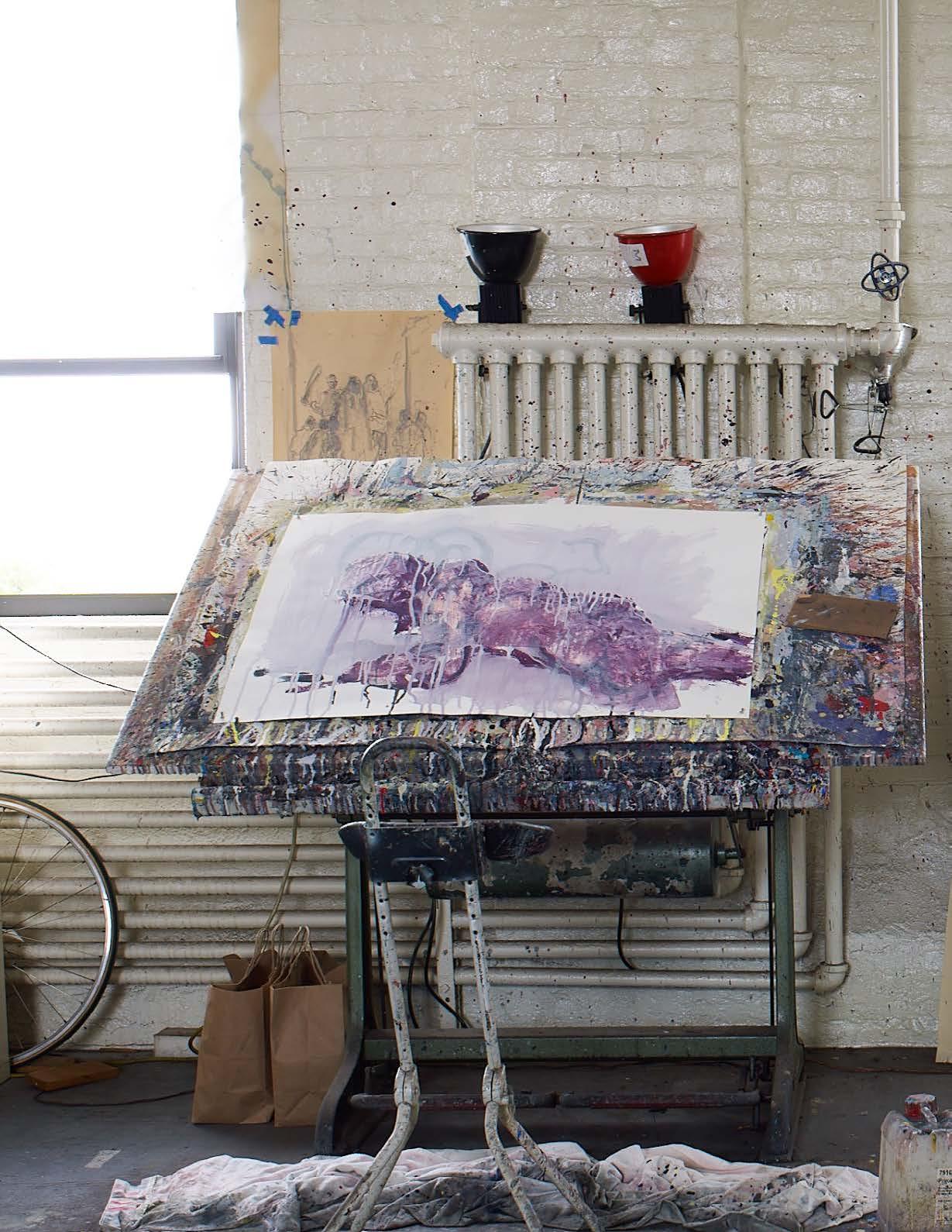
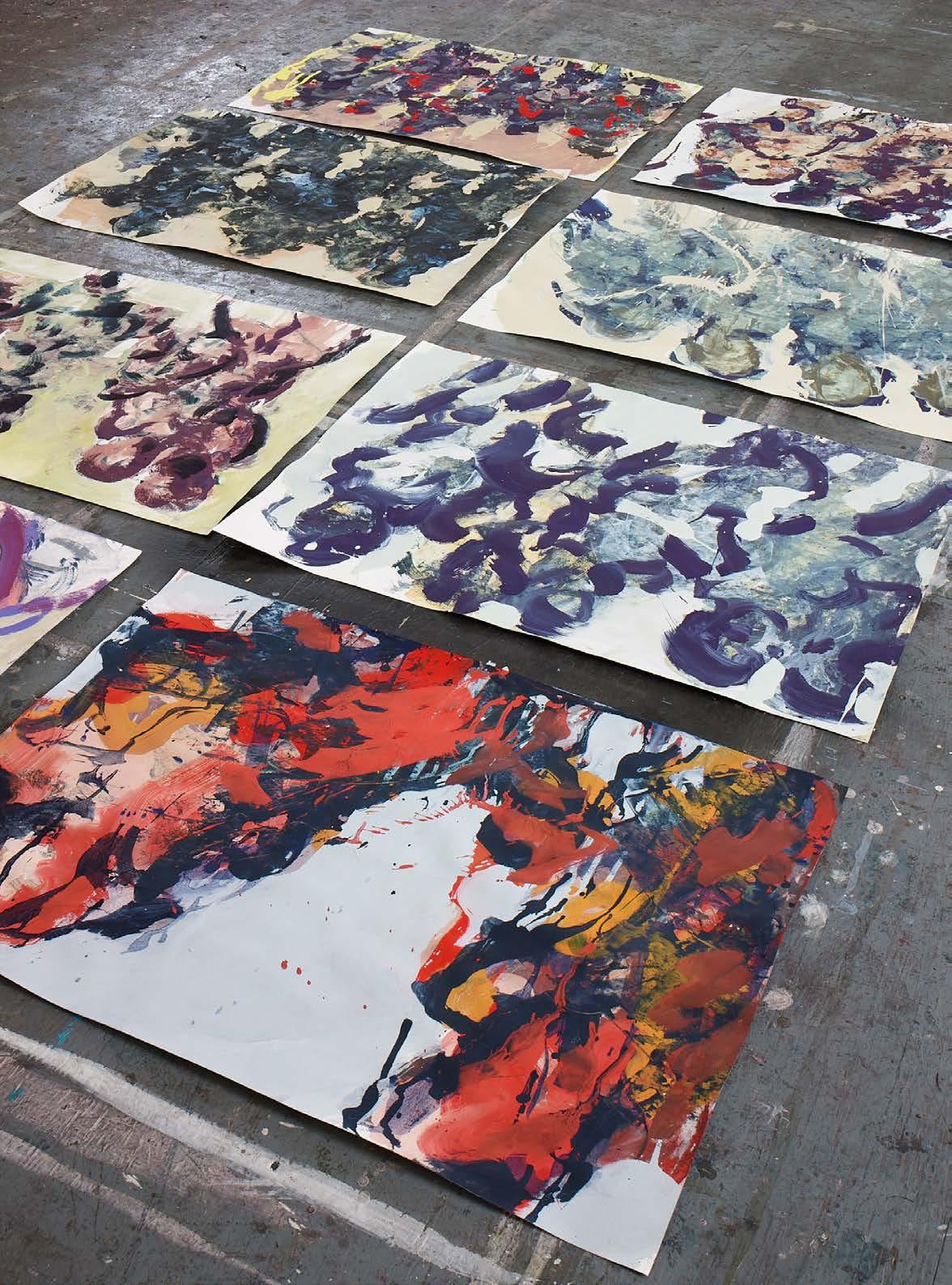
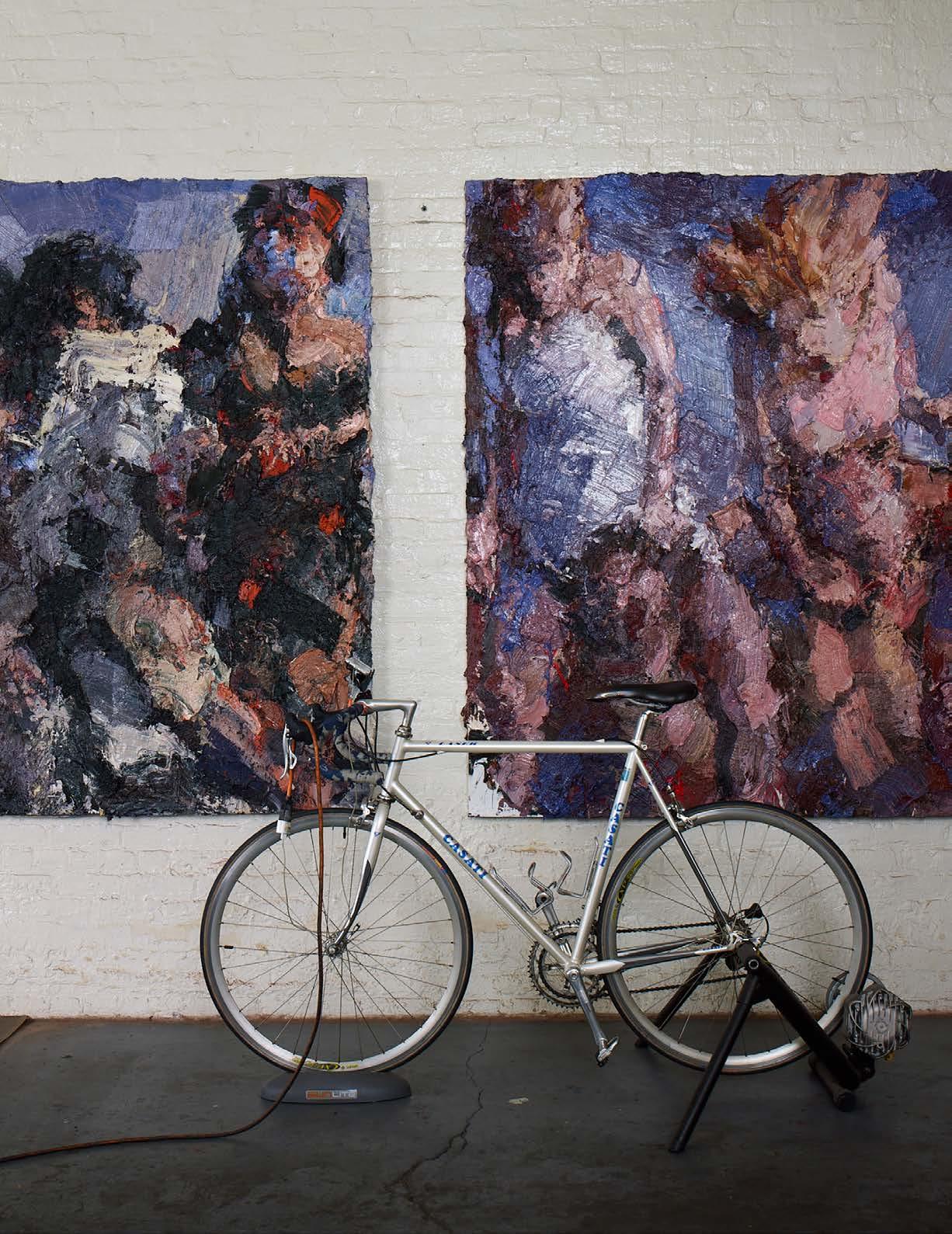
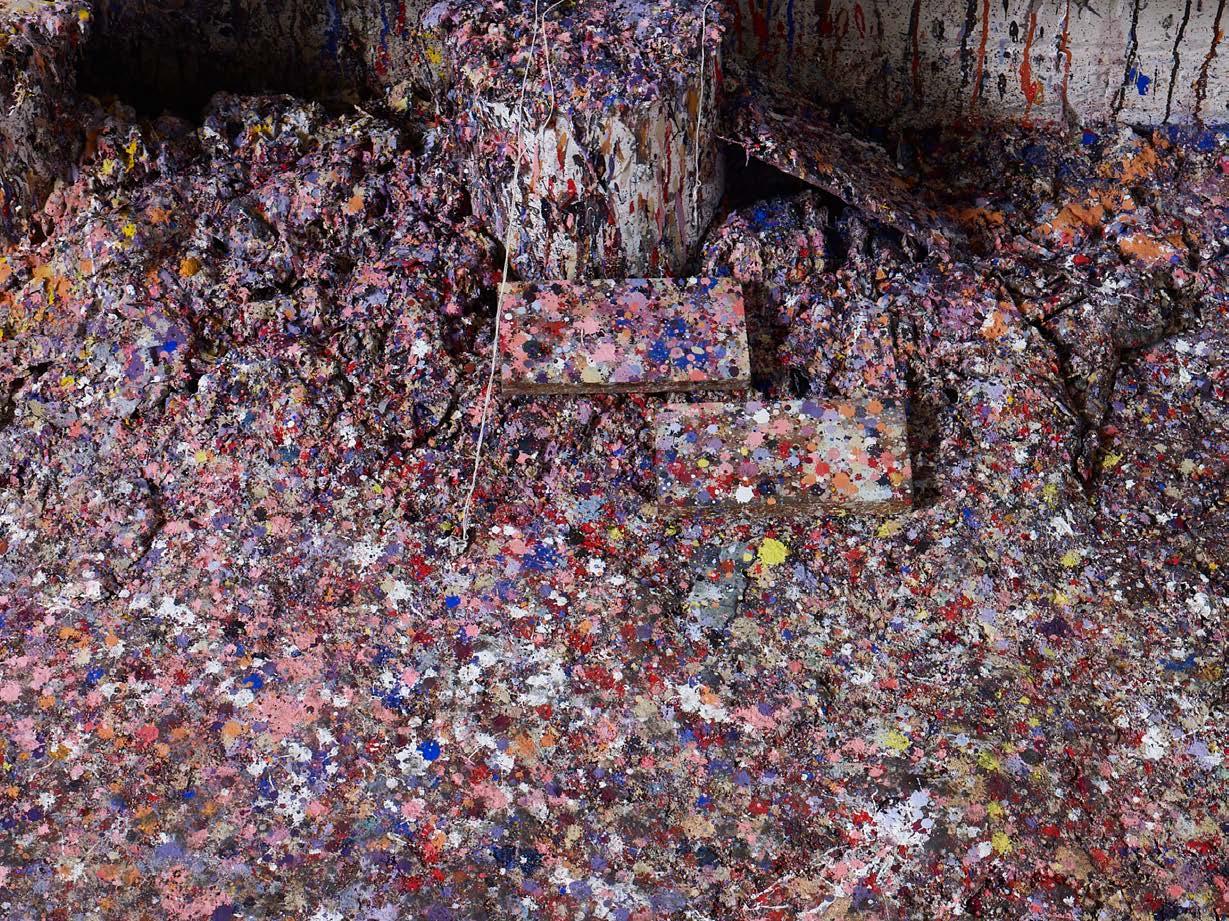
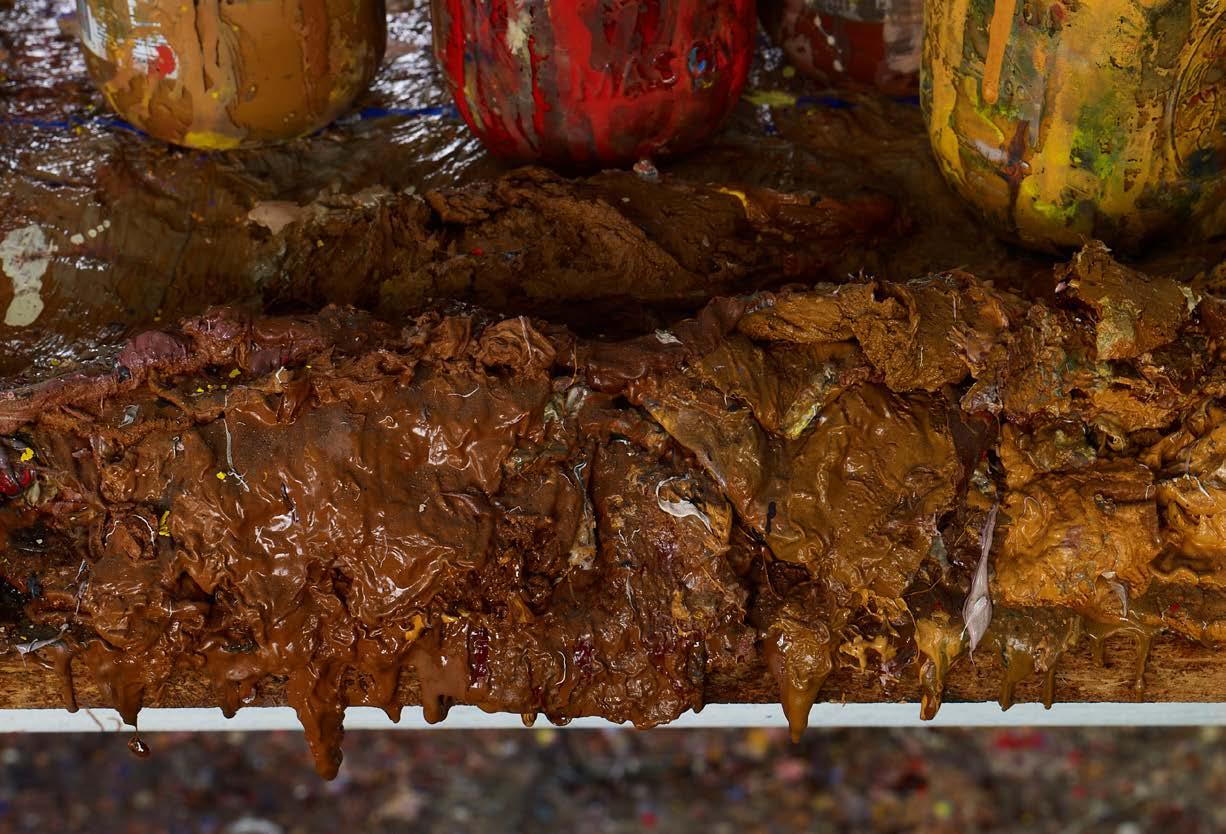
It is these tools of hard work that one sees immediately upon entering the studio of David Stern: the table holds a multitude of paint cans, tightly enveloping the countless myriad of oil drips, holding all those years of use as closely as a mother would a child. The paintbrushes of various sizes and thickness with handles worn, that I’m sure feel like a perfectly-fit glove in his hand. The small bowls where the oil and pigments are with colors so diverse and vibrant, one feels like he entered a Moroccon bazaar, displaying a variety of spices stimulating the senses.
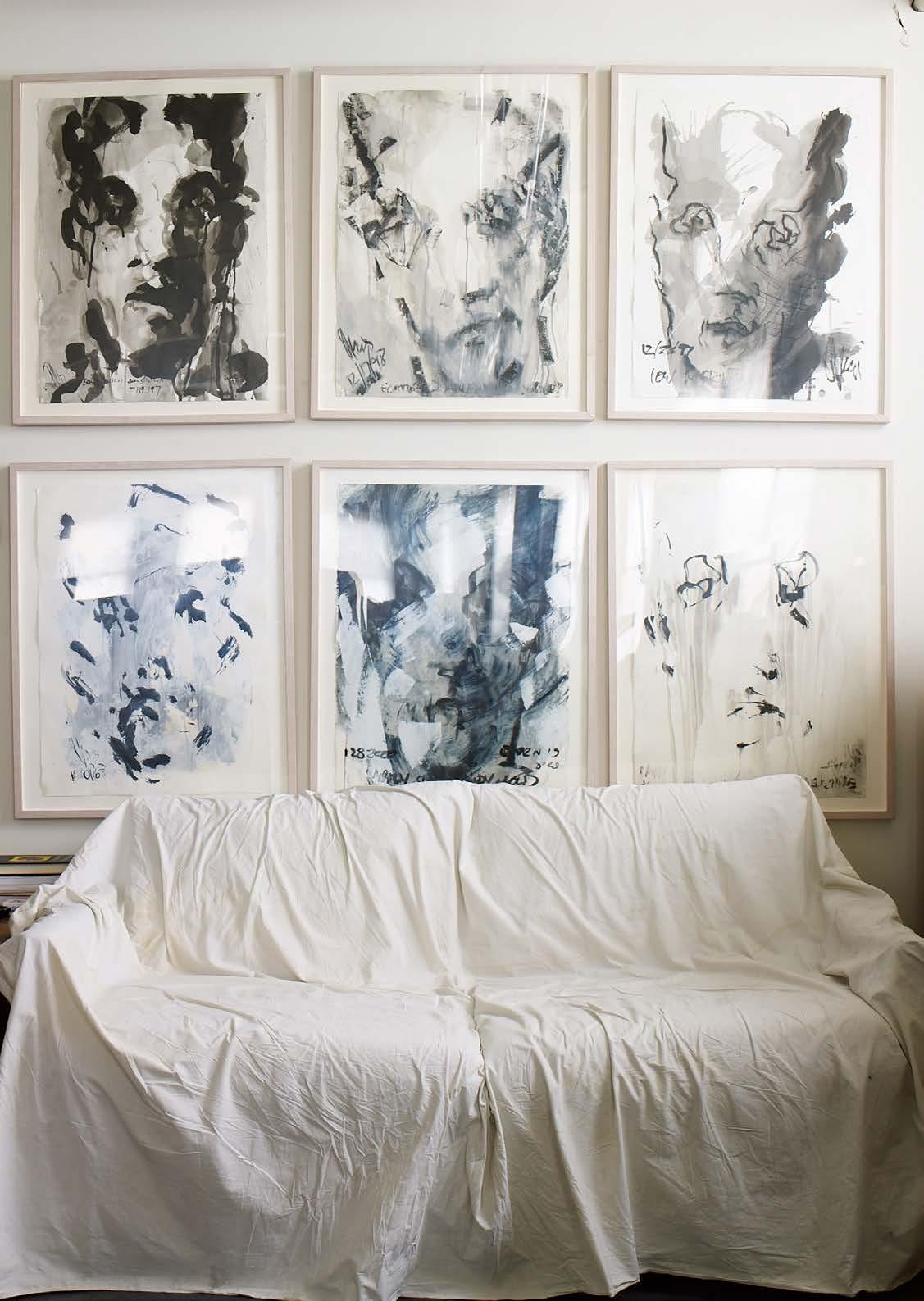
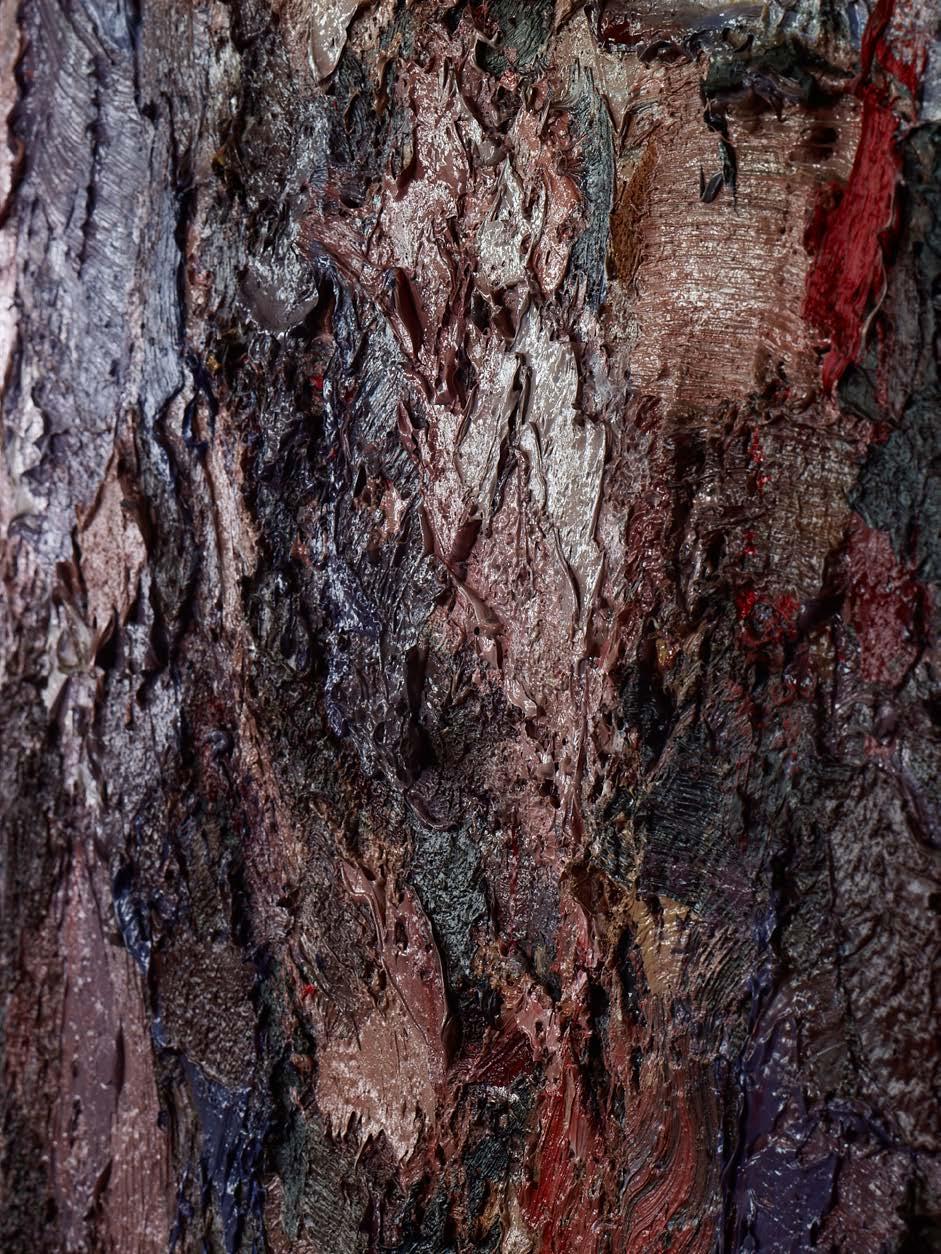
And then it happens… you see the works - delirious vistas of thickly-applied, abstract oil formations that, only stepping back, begin to slowly and carefully reveal figures within them. As mirages on an endless desert defined by gestural expressive black outlines, as if to bring them fully into view, Stern’s figures simultaneously and push against one another, some support each other in unison, while others invade each other’s space. figures, often in multitude of three or more, are depicted in various strained or physical forms, and rendered titude of colors - some in oil on cotton, others in acrylic and pigments on paper.
Some evoke voluptuous yet abstracted flesh, as in “Woman 2” from the series “Heroes and Graces”, with undercurrent physically present. Some offer glimpses of abundant tension, as in “Black, White and Red”, where black and red paint seem in a constant competitive combat with one another, splicing and gesturing to distort space they occupy. The figurative and abstract creating intense ambiguity. As curator, Karen Wilkin, in her sation with David Stern, noted: “That combination of specificity and abstractness is certainly one of the things about your work. It’s like seeing something out of the corner of your eye. The image seems very and yet you haven’t focused on it in a particular way. People seem disconnected from each other, unstable. it has something to do with the way the images seem to have coalesced only for the moment and always to dissolve back into patches of paint.”
They all pose an immediate curious question: Who are these people? Where are they heading? The hints series’ titles - “At the Gates”, “Affections”, “Heroes and Graces” - seem to fuel the imagination further.
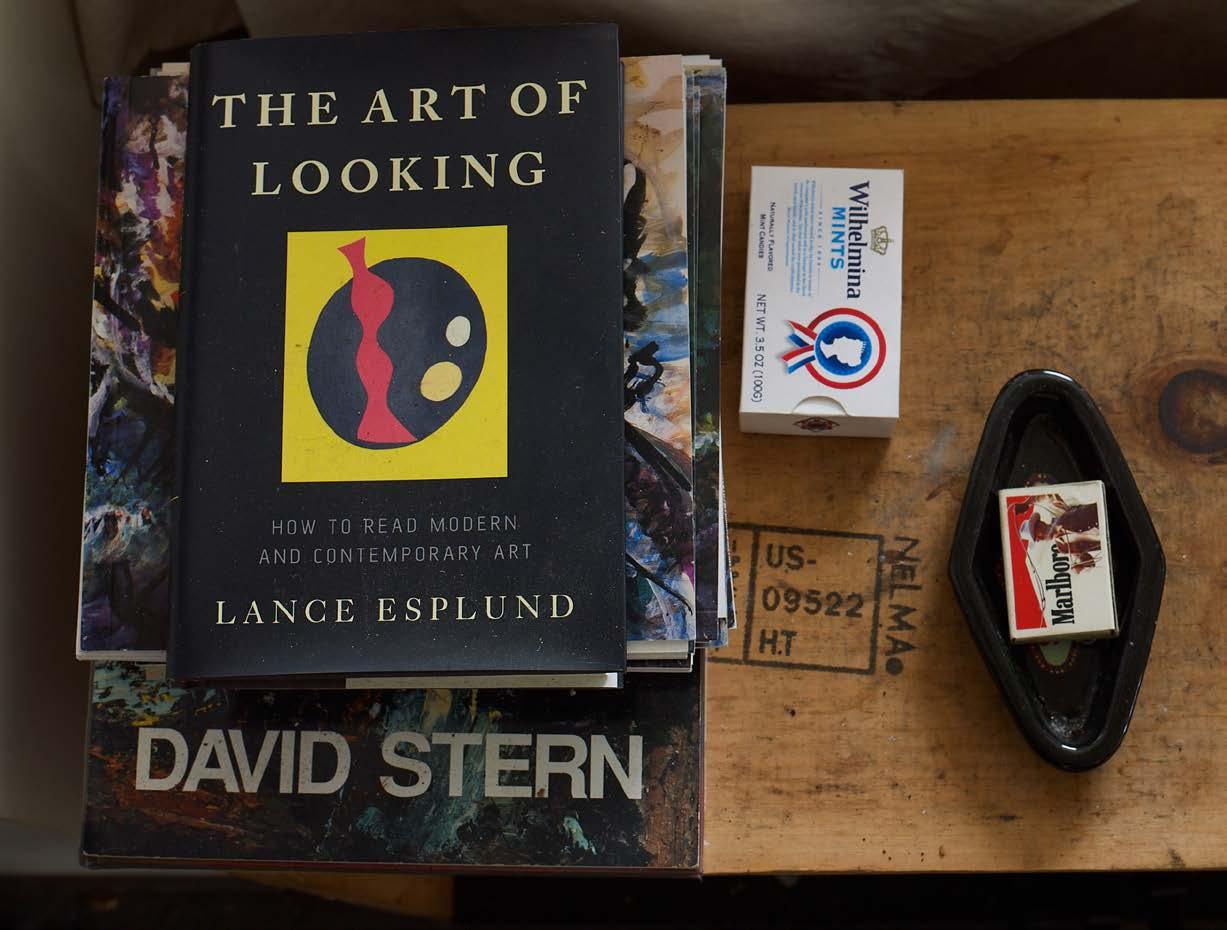
With eloquence and the endlessly curious mind of this German-born Jewish artist, some of these answers come clear. David Stern incorporates his philosophical thoughts on limitations of a human body, the concept the male and female forms - from ancient times to the way we view it today, the Jewish mysticism tradition, mythology, and the human condition overall. It is always fascinating to see some of literary inspirations for as words, philosophy and visual art have always been inexplicably intertwined. Some of his favorite books studio, including “What Painting Is” by James Elkins, are spread around for inspiration. Stern believes that the need for union with another soul outside of ourselves. Whether we are looking at a spiritual or physical the precondition for a successful link, allowing the exchange of the essence of our soul with another, is emphatic emotional state, ‘affection’. Only affection for another being allows us to drop the defense lines in the spiritual and physical sense”.
This magnetic ambiguity of the figurative and the abstract; the storytelling and its depiction; the ancient truths how they translate to our modern lives; is what makes Stern’s works mesmerizing. You want to know more is an almost physical pull to enter these works, to become part of their narrative.
- Angelica Semmelbauer
creative genius. inspiration, labor-intensive slow, resolute endless days, in the end table that days and handles so are mixed, of colorful only when desert horizon, simultaneously lean space. These rendered in mulits sexual where the distort the her converthe striking complete unstable. Maybe always threaten hints from the answers beconcept of tradition, Greek for artists, books in the that “there is physical union, a certain lines of form truths and more - there
DAVID STERN
Born 1956 in Essen, Germany
EDUCATION
1980-82 Art Academy (Kunstakademie), Düsseldorf, Germany
1975-79 University of Applied Sciences and Art, Dortmund, Germany
1973-75 High School for Design (Fachoberschule für Gestaltung), Essen
1971-73 Apprenticeship as Sign Painter at FA Munsteiner, Essen, Germany
COLLECTIONS
The Metropolitan Museum of Art, New York Staatliche Kunstsammlungen, Kupferstich-Kabinett, Dresden, Germany
National Museum, Poznan, Poland
National 9/11 Memorial and Museum, New York
Arkansas Arts Center, Little Rock, Arkansas
Dresdner Bank, Köln, Germany
Jacksonville Museum of Contemporary Art, Jacksonville, Florida
Kingsborough Community College, Brooklyn, New York
Kunstsammlung, Universität Göttingen, Germany
Ringling Museum of Art, Sarasota, Florida
Shor Yoshuv Institute, Lawrence, New York
Skirball Museum, Cincinnati, Ohio
Yeshiva University Museum, New York
US Embassy, Vienna, Austria
Private collections in the United States, Europe and Asia
ELLIPSIS ART FOUNDER
ANGELICA SEMMELBAUER
angelica@ellipsis-art.com
ANGELICA SEMMELBAUER
Angelica is a Private Art Advisor working with a variety of artists and consulting private clients. She is a member of the NYU Alumni Council and ArtTable, the leadership organization for professional women in the visual arts.
2005 - 2014
Director of Mimi Ferzt Gallery in New York City, which specialized in Russian Non-Conformist and Contemporary Art. Organized important curatorial exhibitions of prominent Russian artists, and successfully placed them in important private and public art collections around the world.
2004, NYU Masters Degree, Visual Arts Administration
Published graduate thesis focused on building a sustainable global market for Russian Contemporary Art, tracing Russian art through its various historical movements, from Soviet era to the Russian Non-Conformist Movement, to discussion of today’s contemporary art in Russia.
Catalog Design: Lisa Meta Griff, Metamorfize.com
Photos: Alexandra Rowley