FEBRUARY 2026

FEBRUARY 2026
LANGLEA GARDEN DESIGN AND CONSTRUCTION
INTERSECTING WELCOME

LET'S HEAR IT FROM Luke Hammill Sky High
BNG SPECIAL
Two years into the legislation
EYE OF THE STORM
The aftermath of Storm Goretti

Eljays44 Ltd, BizSpace, Courtwick Lane, Littlehampton, West Sussex, BN17 7TL
Tel: 01903 777 570
Deputy editor – Bethany Vann bethany.vann@eljays44.com
Tel: 01903 959 394
Editorial assistant – Holly Chapman holly.chapman@eljays44.com Tel: 01903 959 407
Senior subeditor – Katrina Roy katrina.roy@eljays44.com Tel: 01903 777 570
Senior designer – Kara Thomas kara.thomas@eljays44.com
Graphic designer – Louise Klose louise.klose@eljays44.com
Sales executive – Ollie Finch ollie.finch@eljays44.com Tel: 01903 777 579
Managing director – Jamie Wilkinson jamie.wilkinson@eljays44.com Tel: 01903 777 589
Divisional director – David Griffiths david.griffiths@eljays44.com Tel: 01903 777 570
Content director – Nina Mason nina.mason@eljays44.com Tel: 01903 959 393
Commercial director – Luke Chaplin luke.chaplin@eljays44.com Tel: 01903 777 582
Marketing executive – Kiri Shaw kiri.shaw@eljays44.com Tel: 01903 959 408
Subscription enquiries – Ollie Finch ollie.finch@eljays44.com Tel: 01903 777 579
Printed by Stephens and George Ltd
Published by ©Eljays44 Ltd – Connecting Horticulture. Pro Landscaper’s content is available for licensing overseas. Contact jamie.wilkinson@eljays44.com
Pro Landscaper is published 12 times per year by Eljays44 Ltd. The 2026 subscription price is £128. Subscription records are maintained at Eljays44 Ltd, BizSpace, Courtwick Lane, Littlehampton, West Sussex, BN17 7TL, UK. Articles and information contained in this publication are the copyright of Eljays44 Ltd and may not be reproduced in any form without the written permission of the publishers. The publishers cannot accept responsibility for loss of, or damage to, uncommissioned photographs or manuscripts.
Whilst every effort has been made to maintain the integrity of our advertisers, we accept no responsibility for any problem, complaints, or subsequent litigation arising from readers’ responses to advertisements in the magazine. We also wish to emphasise that views expressed by editorial contributors are not necessarily those of the publishers. Reproduction of any part of this magazine is strictly forbidden.
Pro Landscaper is proud to be an Accredited Supplier member of BALI
Pro Landscaper is proud to be an associate member of the APL

In the two years since biodiversity net gain was introduced, it has maintained its positioned as one of the loudest topics of discussion throughout our industry – not to mention one of my favourite topics to explore.
With arguably the largest change to the legislation on the horizon, it feels right then that we have a dedicated Biodiversity Net Gain Special in our February issue to mark the occasion.
Introduced into a planning system already under strain, technical director Julia Baker shares how stacking within BNG can be used to gain the advantage (p.66).
Then there’s our wider feature on how the legislation has evolved over time – exploring the latest government announcement to exempt smaller sites, through to how a more nuanced and sophisticated framework could be what its success hinges on (p.59).
Even two years down the line and with so much discourse around it, the original purpose of BNG remains fresh in our minds – safeguard our ecosystems and create better access to nature.
Two objectives that are of vital importance – the former even more so following the recent devastation left behind by Storm Goretti (p.12).
So, while the last 24 months have arguably been a tough battle – for lack of a better word – we all know the price of what is at stake should our country’s biodiversity continue on this downwards slope.
12
Eye of the Storm Businesses across Cornwall recount the havoc caused by Storm Goretti and what they’re doing to come back from the damage
14 The Complete Service
The Landscape Service has expanded to include a full in-house design and build service. Luke Mills shares the inspiration behind this move
19
Let’s Hear It From...Luke Hammill
From team investments to pursuing the latest technology, Luke Hammill reveals the journey behind founding Sky High and what sets it apart
23
Down by the Sea Journey to the coastal town of Shoeburyness to explore Consilium Hortus’ modern redesign of this once military hub
29
Harmonious Reception
Step into this award-winning project from Langlea Garden Design and see how this once disjointed front garden has been transformed
35
Space Reserved for Nature
From dis-used parking to a Mediterranean haven – delve into this award-winning project from Kingston Landscape Group in the heart of Pall Mall
42
In Conversation With Georgia Gilbert
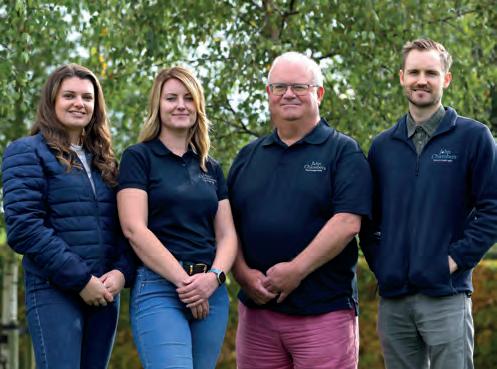
John Chambers’ head of wildflower digs into how the recent rebrand will accelerate the company in the months ahead
59
Making an Exemption
Biodiversity net gain welcomes in its second anniversary with its largest change to date on the horizon
71
Continuing a Legacy
Jamie Butterworth shares how he is honouring Chobham's plant nursery heritage with the acquisition of Jacksons Nursery
41
Earthy Habitats
Tim White is digging into how understanding a habitat's soil requirements and characteristics is essential to ‘scoring’ high on BNG
66
From Ambition to Delivery
Stacking within BNG has always been part of the framework and Julia Baker is exploring how we can be using it to nature's advantage
80
Comeback Kings
Humaira Ikram is back and she’s asking whether Bergenia is overused and overdone or a hard-working stalwart?
47
Tread Carefully
Karl Harrison shares the uncomfortable truths behind cheap composite vs premium boards
75
Surfacing for the Modern Age
Nelson Birch on how resin bound aggregates can tackle present-day environmental challenges – whilst looking good too
79
Weeding out the Trouble
The reputation of landscaping is a collective responsibility that we should be taking seriously, says Gareth Wilson


Helena Pettit, current director of shows at the Royal Horticultural Society (RHS) has announced it is time to explore new adventures.
After being with the RHS for almost eight years, Pettit says “it’s been an amazing journey, and I am so grateful to everyone I have worked with and for the successes we have delivered and shared.”
All About Plants garden designs, alongside Balcony and Container Gardens.

Remaining within her position until 11 May 2026, James Wren, director of fundraising and corporate partnerships, will still oversee the RHS Chelsea Flower Show, for which the charity has released this year's
Ground Control has completed its strategic report for the year ended 31 March 2025, outlining its strategic plan and growth of the business during the time period.
The company reports a boost in turnover from the previous fiscal year by 3.8%; from £184m to £191m.
A “year of strong growth” says the company, 2025 also focussed on strategic initiatives. The director’s statement, written by Simon Morrish,
explains, “we put people at the centre of everything we do and we embrace innovation and technology to be sustainable leaders”.
Morrish also clarifies that Ground Control can continue investing into its Evergreen Fund.
Within the report, the company also reveals its drop in operating project from £16.4m in the fiscal year of 2024 in comparison to £15.2m in 2025. ground-control.co.uk
Plant Heritage will be sponsoring its first-ever Chelsea garden, joined by returning sponsors such as Project Giving Back and the Woodland Trust featuring designers such as Ashleigh Aylett, Sally-Anne Rees, Kate Campbell and William Murray. Balcony and Container Gardens include several sanctuaries, concentrating on biodiversity, nature and natural textures.
Contractors building these gardens includes Landform Consultants, CJ Landscapes, Big Fish Landscapes and Garden Club London. rhs.org.uk
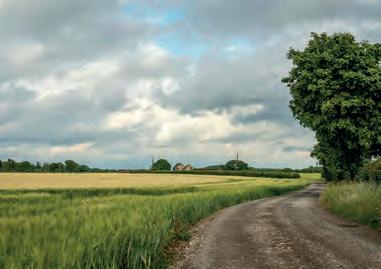
New data from the Office for Environmental Protection (OEP) has revealed the UK Government is “largely off track” for almost half of its environmental and nature recovery targets.
The report, Progress in improving the natural environment in England 2024/2025, shares that out of 43* environmental targets and commitments examined, only five are on track.
A further 16 are labelled as partially on track, and 21 are “largely off track” – an indication that ambitions to restore the UK’s natural environment are falling behind, says the report.
The OEP accredits this, in part, to delays in the delivery of key environmental policies and a lack of transparency around delivery plans.
It also warns that key milestones are fast approaching and continuing to miss targets will impede the UK’s ability to tackle the on-going pressures of climate change.
*One target could not be assessed due to insufficient evidence. theoep.org.uk
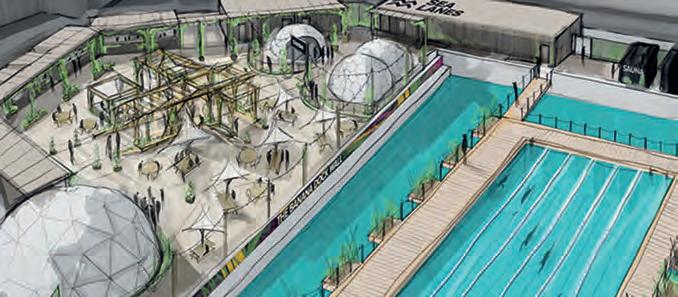
After proposal plans were floated for a natural water lido to open at Eden Dock in Canary Wharf, Sea Lanes planning permission has now been given the green light. Joe McNulty, director at Sea Lanes says the open water swimming centre will “offer Londoners a chance to swim in natural water."
Approved plans feature a 50m six-lane floating swimming pool within the dock
Defra ministers have chosen Sir Andrew Steer as Royal Botanic Gardens, Kew’s new chair of Board of Trustees. Taking over from Dame Amilia Fawcett after two years of service, Steer is “deeply honoured” to head up the Board “to strengthen Kew’s impact for conversational livelihood and a sustainable future.”

Acting as president and chief executive officer of Bezos Earth Fund from 2021 to 2025, Steer led the organisation’s global strategy, grant making and advocacy to tackle climate change and protect nature. kew.org
water, two saunas powered by 100% renewable energy, a community clubhouse and a wetsuit concierge service.
Set to be open 364 days a year for swimmers of all ages, the natural swimming pool will allow locals to connect with nature and the environment from the heart of London. Construction is set to begin in early 2026, with an opening date in summer 2026. group.canarywharf.com
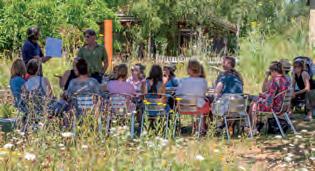
Training organisation Care Not Capital has launched its second year of training sessions taking place at Hilldrop garden in Essex.
In an effort to train gardeners to work in more creative, ecological and biodiverse ways to create inclusive green spaces, owners John Little and Susanna Grant have released five training days during the summer.
Hilldrop will also host two open days this year on Saturday 13 June and Sunday 5 July to raise money for Care Not Capital. Modern Gardener Training workshops will include an ecology and habitat focus, designing decaying vegetation and weaving habitats with willow. carenotcapital.org

INDUSTRY MEMBERS NAMED WITHIN THE KING’S NEW YEAR’S HONOURS LIST

Within the horticultural world, 12 people were recognised for services across the landscaping, environmental and architectural industries in the King’s New Year Honours List for 2026.

WHAT CAN WE EXPECT FROM 2026?

After a year of new legislation, changes in trends and all-new challenges, we asked professionals from across the industry what they predict for the next 12 months as we enter 2026.

WHAT PRO LANDSCAPER’S 30 UNDER 30 WINNERS HAVE BEEN UP TO IN 2025

A year of wins, moves and reintroductions, Pro Landscaper’s 30 Under 30: The Next Generation Award winners had a jam-packed 12 months.
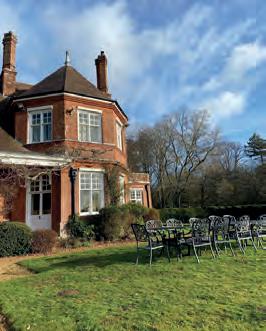


44Group’s 2026 away day brought together the entire company for a day of training, learning, and a highly competitive game of football.
Held in Salisbury, all three offices gathered in an estate house as training commenced with a presentation from director James Williams. Reflecting on what we had achieved in 2025 – from launching the Pro Landscaper International Awards, to taking the brand across the pond in the USA – we looked ahead 2026.

As the day continued, the Littlehampton office met the Cornwall office on the football pitch. A battle between the offices, and perhaps one too many tackles, Littlehampton finished on top ending in a thrilling 5-4 score.


Back at the house, and after transforming the living room into a podcast studio, Inside the Green Room joined us for a live Q&A. Discussions explored AI, soil types, the real cost of a garden, social media and maintaining industry relationships. The four awardwinning members sitting on the coach included Lucy Wilcox of Lucy Wilcox Design, Els Tisserand of Tisserand English Gardens, Will Cooke of Artisan Landscapes and Justin Himpson of JJH Landscapes.
Shortly after, 44Group’s managing director Jamie Wilkinson joined the quartet to film and record the latest podcast episode of Inside the Green Room. As he detailed the beginnings of 44Group as set up by him and his parents, Jim and Lisa Wilkinson, as well as teasing what’s to come with the company.




Rounding off a busy day, Williams handed out six awards spotlighting welldeserved recognition cross the company. Goal of the Football Game was awarded to Pro Landscaper USA sales manager Dan Green, while head of credit control Simon Lyndon picked up the Innovator Award. Editorial assistant Holly Chapman was recognised for Best Community Engagement, as the Top Salesperson was given to event director for FutureScape Jodie Rugg. Finance manager Laura Perkins was announced the Unsung Hero, as client success manager Matt Toms was named the Rising Star. A team-bonding trip, each office returns with fresh motivation and excitement as we begin to navigate 2026.
Keep up to date with the @ProLandscaper team over on Instagram!


In February 2011, 44Group was founded. By September, Pro Landscaper was up and running. As we celebrate out 15th birthday this autumn, help us decide how to celebrate! Email: bethany.vann@eljays44.com








LANDSCAPE
LANDSCAPE



Businesses across Cornwall recount the havoc caused by Storm Goretti and what they’re doing to deal with the damage left in its wake
At the start of January Storm Goretti ripped through the British Isles, bringing with it an onslaught of heavy snowfall, strong winds and significant rainfall. The impact of what the Met Office is calling a multi-hazard event was felt most acutely throughout the southwest, Wales, the Midlands, and parts of northern England.
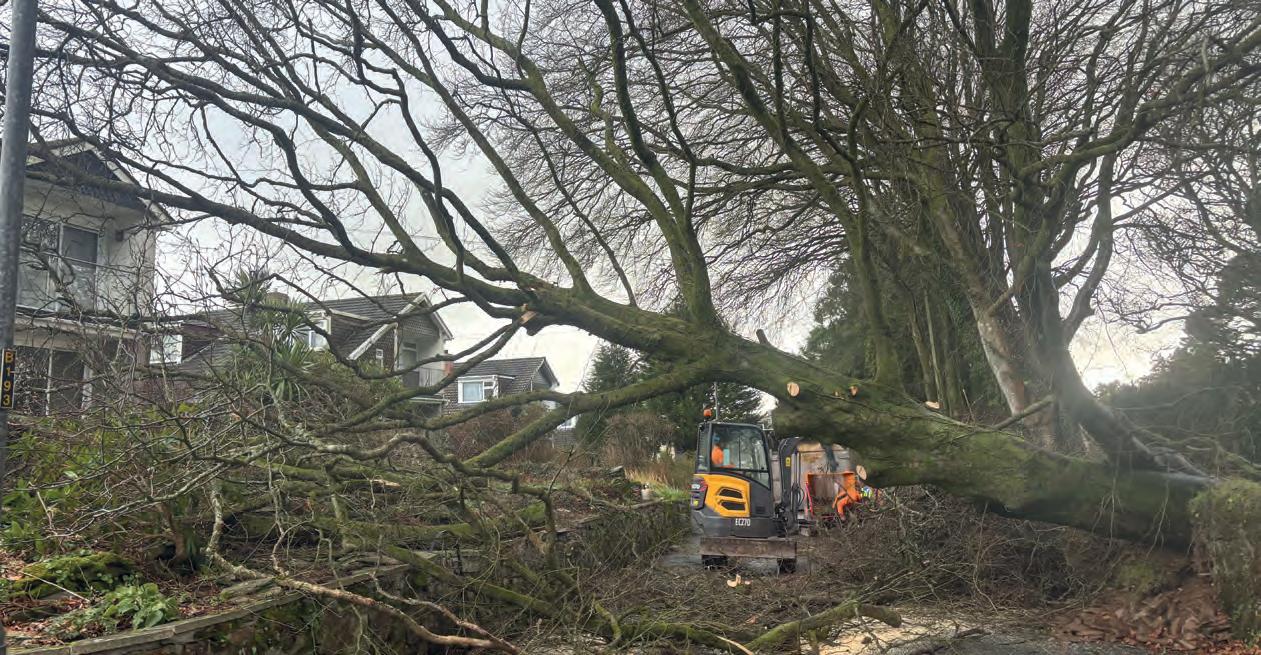
The aftermath of the storm saw many businesses in and around the area's most badly effected left without power, damaged stock, and a great many trees in need of clearing after being brought down by the high winds.
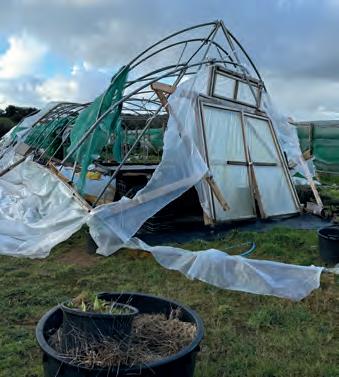
“The result of this storm was close to annihilation,” reveals Mark Lea, owner of Primal Plants nursery.
Based in Townshend, Cornwall, Lea, his family and his business are based in the next town over from St Ives where wind gusts reached up to 111mph. As a result, Lea details that whilst he had a structurally engineered wind break in place, the tunnels could not survive the storm.
The result of this storm was close to annihilation
Mark Lea, owner, Primal Plants
From bent frames, torn plastic coverings and posts that have been torn out of the ground,“it's just come out as a financial loss to the business,” he says.
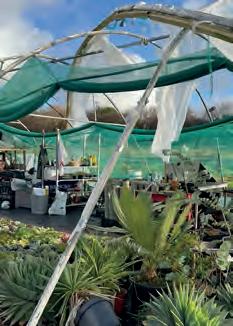
As a nursery that supplies to garden designers competing in horticulture shows, the impact of the storm has left Lea worried, saying: “They’re going to get marked for not looking their best”, which as a result could set the nursery back in terms of sales until as far as next season, further adding to his worries.
After absorbing the impact of Storm Goretti into his business, Lea admits that he wanted to throw in the towel.“They wouldn’t let me,” he says in reference to his team that encouraged him to keep going.“They all said,‘no, there is nothing you can do, and we will believe in you.’ They wanted to just keep going. So, I didn't put any more thought into it as I didn't want to let the team down because it's a brand that I created and really believe in.”
With most houses left without power or water, and the streets adorned with fallen trees swept over by the wind, many landscaping and arborist businesses were committed to remaining open amidst the dangers of the storm to offer aid in the cleanup.
Tom Preddy from Newquay-based tree surgeons T P Tree Services offers his perspective: “It’s a mess down here. I've never seen anything like it.” Dealing with surrounding commercial and private jobs, Preddy and his team were working 15-hour days after the storm hit.
From clearing roads, driveways and working on removing a fallen tree upon a rooftop,“I don't think we'll see the end of this for a long time. People will probably hang around until the main bulk of jobs are finished”, Preddy predicts.

“You have got to feel bad that is happening just after Christmas. Not many people have got the money after Christmas, and this happens.”
Determined to help those affected, Preddy and his team are continuing to work hard across the area.
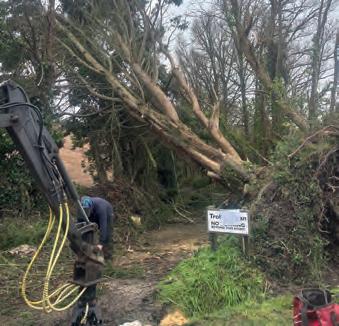
Across the way in Saint Austell, contracts manager David Bird from Mid Cornwall Landscaping also describes the storm’s influence on the company: “It has really slowed us down when trying to get to site. On site, we’ve had some trees fall down, too.” With road closures and stock damages; landscaping projects have seen an impact, too.
Reeking further devastation, Goretti was also responsible for the collapse of nearly 100 trees at St Michael’s Mount. The historic tidal island in Mount's Bay near Penzance, hosts a historic castle and garden terraces looked after by the National Trust. Head gardener Darren Little reveals, “we’ve almost stopped counting now because there are trees under trees – the domino effect – so we don’t know”.
Trewithen Gardens, an estate and garden site located near Grampound Road, has also suffered
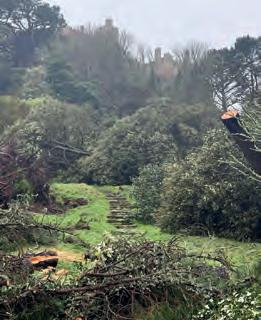
the
Trewithen, meaning house of the trees, saw a quarter of its large mature trees felled, some of which were 250 years old.
Garden design and landscaping company Muddy Wellies Gardens is located down in Falmouth, where the storm also cut through towns and villages.“We've had to prioritise clients who have needed work to free up access,” explains director Helen Fresson.
During a quieter time of year for the company, Fresson says the team have still been cautious when travelling to site as clients request new fences after immense wind speeds.
Horticultural charity Perennial aims to help people across the industry in the face of challenges. Since the storm, the charity urges those suffering to reach out: “At Perennial, we see first-hand how events like this effect people working in horticulture, not just physically, but emotionally too. Supporting those professionals, whatever challenges they face, is at the heart of what we do.”
The charity understands the personal impacts to gardeners, and the urgent and complex work of a tree surgeon in the days that follow a storm of this magnitude. Perennial’s services can be accessed via online or phone.
While the wind has settled and Goretti has passed, the Met Office is warning that more storms of this calibre could be on the horizon as the climate continues to change, prompting the question, what protective measures can be put in place to protect not just our streets and green spaces, but businesses too?

Ives, Cornwall 111mph Culdrose, Cornwall 90mph Altnaharra, Sutherland 27cm snowfall
Vyrnwy,
Back in 2017, The Landscape Service was launched by landscape designer Luke Mills as a means of connecting people with green spaces. Comprising of three full-time qualified designers, the team each studied horticulture, landscape design or landscape architecture at university level. Joined by Mills stands James Smith and Jordan Ling.
Luke Mills of The Landscape Service on expanding his business’s delivery and moving into a new studio in Hampshire
A busy start to 2026, Mills recently announced that The Landscape Service would deliver a full design and build service in-house. “We've always delivered an end-to-end service on a consultant basis, but now we're delivering it as a full in-house design and build service,” details Mills. “We can now work with other landscape contractors and our own internal team to deliver the build phase under our own banner.”
Designing both intimate and lavish domestic gardens across areas such as Poole, Surrey, Bournemouth and Hampshire, the new end-to-end service gives the company space to elevate its already successful record.
We've always delivered an endto-end service on a consultant basis, but now we're delivering it as a full in-house design and build service
The award-winning studio has picked up both Platinum and Best Showcase Garden at BBC Gardener’s World Live Spring Fair 2023 for Beaulieu in the New Forest, Southampton.
After working closely with landscapers OJ Landscapes over the last 12 months, the consistent collaboration between design and build has established a “joint venture” for the two companies, says Mills. “OJ Landscapes uses its skilled labour team whilst we work with them to facilitate all of the delivery logistics, materials and breakdown of costs.”
All employed staff are involved with the build of the project, Mills assures, in the form of project management. From budget and



quality, the company remains involved directly with the client throughout the whole process.
At the moment, Mills and his team have a couple of on-site builds underway. “We’re always facilitating the build, for example we supply and install all of the plants ourselves as the design team always remain involved.” On top of this, the business prides itself in remaining transparent throughout the entire process.
Featured in a very thorough breakdown of cost, the team takes the client through each individual element; from plant to terrace, to ensure they’re also aware of how the money is going to be spent.
“This is more of a premium design and build service because of the amount of information,” Mills says.
Alongside OJ Landscapes, The Landscape Service has well-established relationships with several suppliers. Also based in Hampshire, Forest Stone often supplies hard landscaping materials for several projects, while Mills revisits Folium and Flos for plants.
It’s presentable, it’s smart and it’s nice to be able to exhibit our materials and resources to visiting clients
In order to get into the depths of a client’s needs and opinions, Mills takes them to the plant nursery in the New Forest to physically sign off any planting. Not only will they know what will be planted in the garden, but this helps them understand how it can look throughout the whole year: “Educating the client as you go can give them that full transparency straight away and then let them see everything firsthand.”
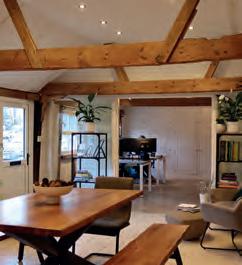
Mills also announced the opening of The Landscape Service’s new design studio. Completed before the end of 2025, the team are settling into the space sat on the Hampshire and Dorset border. Three times bigger than its previous studio, “it gives us room to grow.”
From extra meeting space and independent office space, the new studio also has access from the motorway making it easily accessible for both staff and clients alike. “It’s presentable, it’s smart and it’s nice to be able to exhibit our materials and resources to visiting clients,” Mills explains, as he intends to pursue bigger projects in the future.
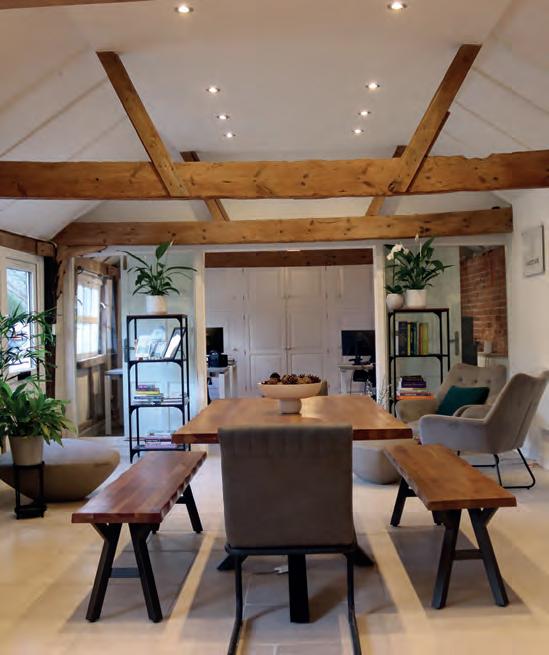
“We want to push ourselves to clients as fully qualified and experienced designers,” explains Mills. As the company grows, he wants to see changes within the garden design industry: “Garden designers should be seen as professional designers and consultants, not hand drawers,” he clarifies.
Presenting itself as a business with an “open door policy”, the new office and expanding of offerings means The Landscape Service can provide both clients and landscapers a full breakdown of a project’s entire process.
With 2026 well underway, Mills, Smith and Ling are looking forward to another year of growth as they continue to settle into the new studio.

CONTACT
The Landscape Service 02381 980022
info@thelandscapeservice.com thelandscapeservice.com
GREEN, SUSTAINABLE VENUE
BETTER NETWORKING SPACES
EASIER BUILD AND BREAKDOWN LOGISTICS
OUTDOOR AREAS FOR MACHINERY AND DEMOS MORE ROOM FOR BIGGER STANDS



Welcome to this regular column, where I share practical, iPad-based digital workflows, tools, and drawing techniques to help make your landscaping and design work easier, faster, and more efficient – whether you’re out on site or back at the desk.
One of the quickest and most effective ways to communicate three-dimensional space is to use a clear, well-drawn elevation, without the need to produce time-consuming three-dimensional models or perspective views. For many stages of the design process, an elevation provides immediate clarity: heights, relationships, proportions and intent are all readable at a glance.
Crucially, it does this while remaining a two-dimensional drawing – which is often exactly why it works so well. When an elevation is derived directly from a top-down plan, the result is especially effective. The plan explains layout and positioning; the elevation explains vertical relationships. Together, they form a complete spatial explanation, avoiding the need to produce a fully rendered three-dimensional view at this stage of the design process and allowing ideas to be communicated quickly, clearly and efficiently.
to one another, heights can be read and drawn accurately without complex construction lines or recalculation.
Another advantage of this workflow is flexibility. Because the elevation remains fully editable
Once a drawing has been correctly scaled in Trace, grids can be applied directly over the plan and elevation. These grids can be set to any increment, allowing designers to work, for example, in 10cm steps. This means heights and vertical relationships can be scaled off the grid itself, rather than measured individually. Because the grid is aligned to the same proportions as the plan, accuracy is maintained while the drawing process remains fast and intuitive.
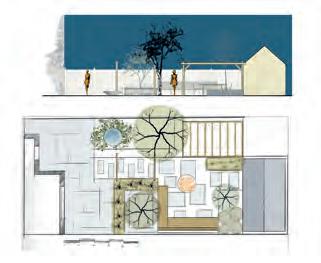
Morpholio Trace is particularly well suited to this approach. One of its strengths is the ability to work fluidly between related drawings on the same canvas. By duplicating or repositioning a scaled plan within the workspace, it is easy to create space directly above it for a corresponding elevation. Because both drawings sit in direct proportion
From here, the process becomes extremely efficient. Vertical elements such as walls, fences, pergolas, steps, seating or planters can be drawn rapidly using Trace’s built-in stencils and drawing tools.
These elements can be dropped in, adjusted and aligned in seconds, allowing a clean, legible elevation to emerge very quickly. What might previously have taken a significant amount of drafting time can now be achieved in minutes.
Another significant advantage of this workflow is the ease with which elevations can be layered in Morpholio Trace. By organising elements onto separate layers, it becomes possible to switch information on and off, allowing multiple drawings or presentation views to be generated from a single elevation. This is particularly useful for isolating structure, planting or construction elements, and is demonstrated clearly in the embedded video accompanying this article.
The resulting drawing is not only fast to produce, but highly communicative. Clients often find elevations easy to read because they
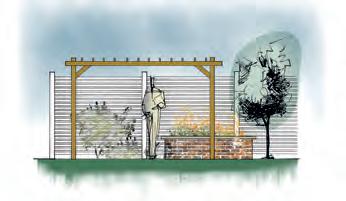
EVEN SMALL GARDEN AREAS CAN BE ILLUSTRATED EASILY, PROVIDING A CLEAR AND EFFECTIVE TOOL
mirror how we naturally perceive space –vertically, from eye level. Contractors, meanwhile, benefit from clear height relationships and visual confirmation of intent, reducing ambiguity on site. Another advantage of this workflow is flexibility. Because the elevation remains fully editable, changes can be made instantly during a meeting or following feedback, without having to redraw from scratch. This makes the elevation a practical design tool rather than a final, fixed illustration.
Scan the QR code to see these tips in action! Also check out Create Visual’s YouTube channel @create_ visual_ipad to learn more about Morpholio Trace.


John Wood runs Create Visual, a CPD training platform for garden and landscape professionals, specialising in digital drawing and 3D modelling workflows using iPad-based tools. He delivers training both independently and for the Society of Garden and Landscape Designers, and also offers a professional visualisation service for designers and landscape architects, transforming 2D plans and sketches into 3D renders and photorealistic fly-throughs. Drawing on over two decades of experience in garden design, he helps professionals work more creatively, efficiently, and with confidence in their presentations. create-visual.co.uk
“WE'RE VERY INNOVATIVE – WE ALWAYS TRY TO FIND THE BEST, MOST
From investing in teams to pursuing the latest technology, Luke Hammill reveals the journey behind founding Sky High – and what truly differentiates it in the market
WORDS: BETHANY VANN
After initially struggling to find employment upon finishing school, Luke Hammill chose to take on a volunteer role as a park ranger, working alongside his uncle. It was there that he discovered his passion for the outdoors and working in and around the natural world.
We
always try and promote in-house. So,
there
Later, while employed at a local factory – a far cry from his ranger days – he realised that the career trajectory he was on wasn’t the right one for him. Instead, he made the spontaneous decision to leave without any concreate plans in place and ultimately marking the beginning of his journey into the industry, as he explains:
is a natural progression of staff from coming in from day one

“I just decided that it wasn't for me, and I walked out with no plan in place on a Friday, and over that weekend I bought a van, all my tools, booked myself on a chainsaw course, and literally set up as a one-man band.
” In the years since, that one-man operation has evolved into what is now Sky High Tree & Ground Maintenance Servies. Established in 2014 and incorporated as a limited company in 2020, Sky High continues today


to go from strength to strength, with a team of 30 strong and around £5m a year in turnover.
Hammill accredits these accomplishments to “diligently striving to retain high standards” across all areas, a mindset that has helped shape the company and one that has been with Hammill since his formative years in the army, as he explains:
“[Being in the army] has helped me organise the company massively. It's allowed me to be very structured in everything I do – that's always come from being in the army. So, I reuse that structure in running the business.”
On top of running the business – and the plethora of tasks and objectives that brings with it – the Sky High CEO recently rejoined the military as an army reservist in a specialist role. At the time of our chat, he was an hour out from leaving for a 16-day training course.
“It's just the right thing to do, and I think there's not enough people doing it. And I'm a bit patriotic, and I like to do stuff that keeps me fit and healthy.”
Being away for an extended period of time, or being faced with a potential prolonged leave of absence at short notice, could frighten some who are leaving behind a business, but as Hammill explains, it's the recent investment in creating a strong team that has allowed him the peace of mind to take that time away to serve.
“Only in probably the last two years I would say, have I been able to really concentrate [on staff investment]. I've got a really strong management team around me now," says Hammill: “I've got around four or five key managers in place that really look after the business day to day, and they've got all their own departments, and we now have some very strong structures in place.”
talent according to in-house standards while reducing the risk of errors.
“I got taught early on that you can do 50 jobs, and while you can be remembered for the 49 good ones, you will always be remembered for the one bad job.”
Sky High prides itself on training its team from entry level – such as apprentices – all the way through to management level, as Hammill explains: “We always try and promote in-house. So, there is a natural progression of staff from coming in from day one. We've just taken one of our tree lads off tools and promoted him, so he is now doing a lot of surveying and meeting clients.”
Every one of Sky High’s managers is trained to SMSTS/SSSTS level, and all staff are NPTC trained and hold minimum CSCS.
[Being in the army] has helped me organise the company massively, it's allowed me to be very structured in everything I do
By keeping a training matrix, the company is able to keep track of when refresher courses are needed, ensuring that training requirements are continually met, with the company funding all staff training both internally and externally.
More companies are now actively choosing to upskill their teams and promote from within – a strategic approach that allows business owners to develop emerging

After seeing increasing success from its apprenticeship programmes, Sky High is now in a fortunate position to invest more of its annual turnover into training and enable the team to offer more apprenticeship courses moving forward.
The tree care and vegetation management company also dedicates three work weeks per year to participating in projects that uplift social value in the community.
In 2024, Sky High actively supported its local community in Rotherham, South Yorkshire, by planting more than 100 trees across the area and delivering a longoverdue improvement project at a nearby school. The project enhanced biodiversity on the school grounds and created new opportunities for students to connect with and learn from nature.
Alongside its investment in training, Luke Hammill notes that the business also prioritises ongoing investment into up-todate equipment, enabling him and his team to continuously enhance their expertise and performance in their fields.
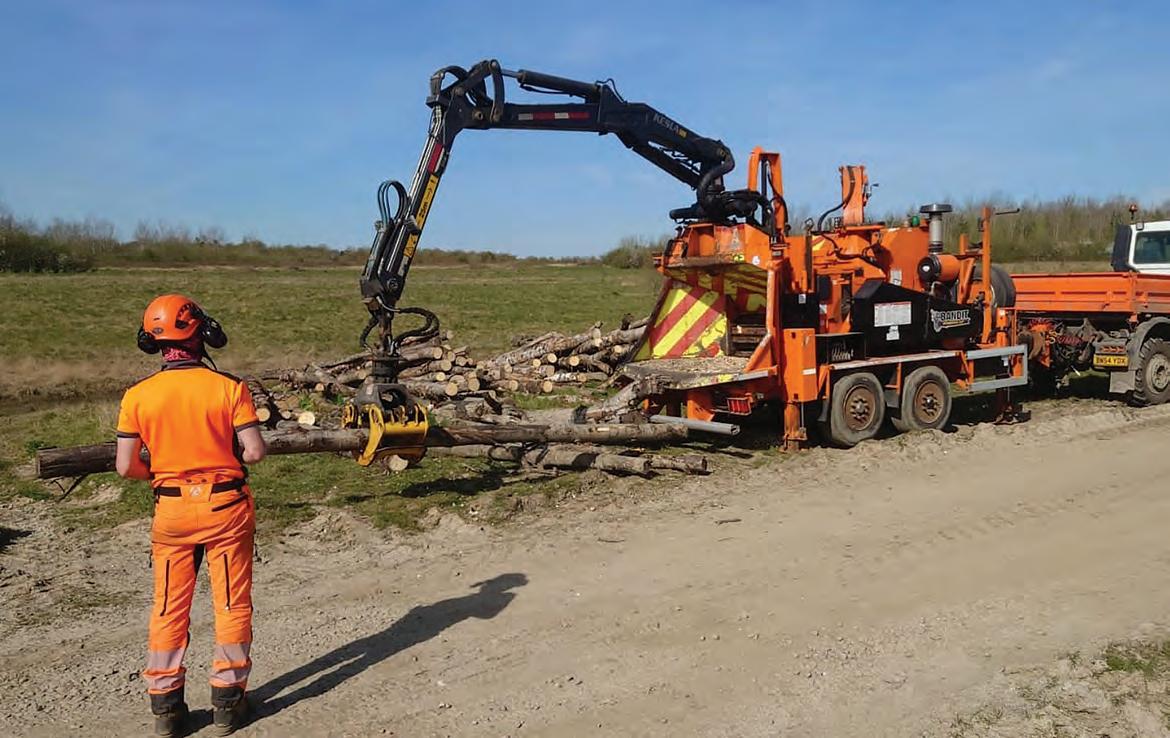
In recent years, the company has branched out with the purchasing and operating of drones for large-scale sites, which it uses to create promotional content, as well as to keep clients up to date with project progress. This has enabled Sky High to reduce its carbon footprint significantly, as well as its impact on wildlife – “we are always looking to see what the best equipment is on market and are always investing in it”, says Hammill.
“We're very innovative – we always try to find the best, most practical, safest and most functional route forward”, he adds that the company is also continually investing in its modern fleet of vehicles as a means to stay up to date – joking that it’s all a far cry from his earlier one-man-band, out-the-back-of-avan days.
“One thing about my business model is that I’ve never financed anything. I have bought everything outright from day one”, adding: “At the end of the month, my business model is: I've literally got wages to pay, gas and electric – and that's it. I've got no hefty finance bills, no rent because I own all my buildings [...] I put everything straight back into the company to get the best of the best.”

Sky High also uses its market position to actively trial new products from recognised brands; allowing the team to stress test new products in real-world conditions before feeding back to the suppliers.
“We're actually going to be trailing some new chainsaw trousers for Arbortech. They're sending us some trousers to basically try and destroy them, and then we’ll give them feedback.”
Hammill explains that by trialling products in a real-world environment, the supplier can assess their performance, safety and usability – ensuring any solutions adopted can genuinely improve the products efficiency and improve safety compliance for the industry as a whole.
As Sky High continues to go from strength to strength – focused on growing sustainably – another major achievement is on the horizon for Hammill and the team as they approach the final stages of their latest projects.
I put everything straight back into the company to get the best of the best
Highwall Park in Waverley, South Yorkshire, will see former Orgreave Colliery completely regenerated into a new public park – the largest public open space Yorkshire has seen in the last 20 years.
Running through the centre of Waverley from Olive Lane to connect with the Waverley Lakes, Highwall Park – its name a nod to the area’s coal mining history – will see the once brownfield site transformed into a multi-million-pound park, designed to engage nearby communities, as well as serving as a safe haven for the local wildlife.
Sky High was appointed as the project's contractor for landscaping back in June last year and in that time, the team has carried out major revitalising works to the area, as Hammill explains:

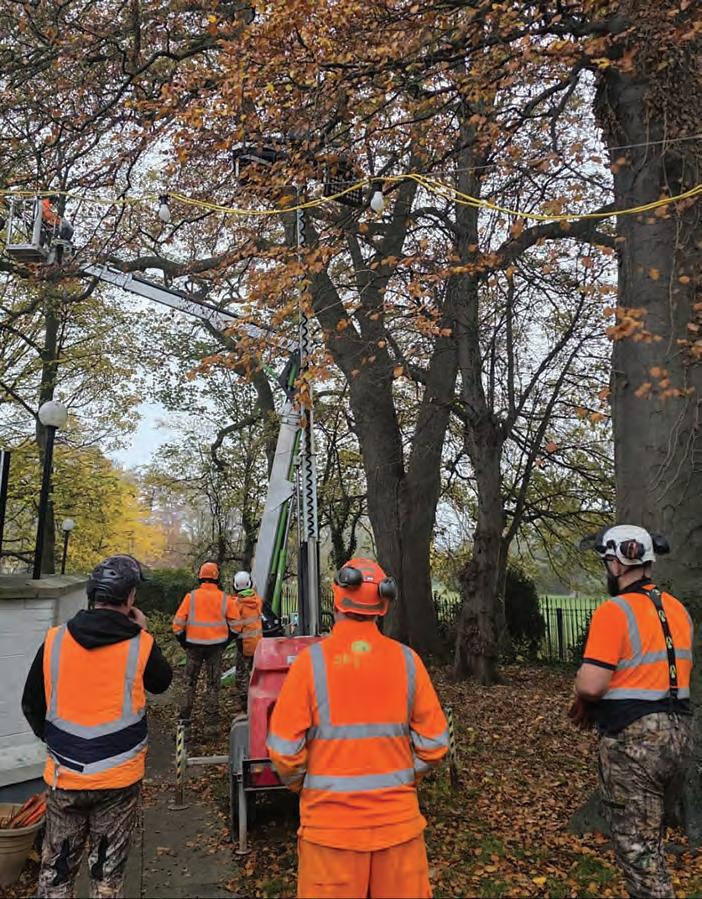

“We've planted probably 400,000 plants and shrubs – it's absolutely astronomical.” He goes on to say that the 20-acre site has been overhauled with a major focus on uplifting the site’s biodiversity and enhancing the existing habitats – as well as one very costly playground slide Hammill quips.
As Sky High brings Highwall Park closer to completion, the scale of the project stands as a powerful reminder of just how far Hammill has come. From walking away from a factory job with no plan beyond belief in himself, to leading a multi-millionpound business while continuing to serve in uniform, Hammill’s journey has been driven by a willingness to take risks when something no longer feels right – a reminder that sometimes the boldest step forward begins with knowing when to walk away.
CONSILIUM HORTUS
THE OFFICER’S GARDEN
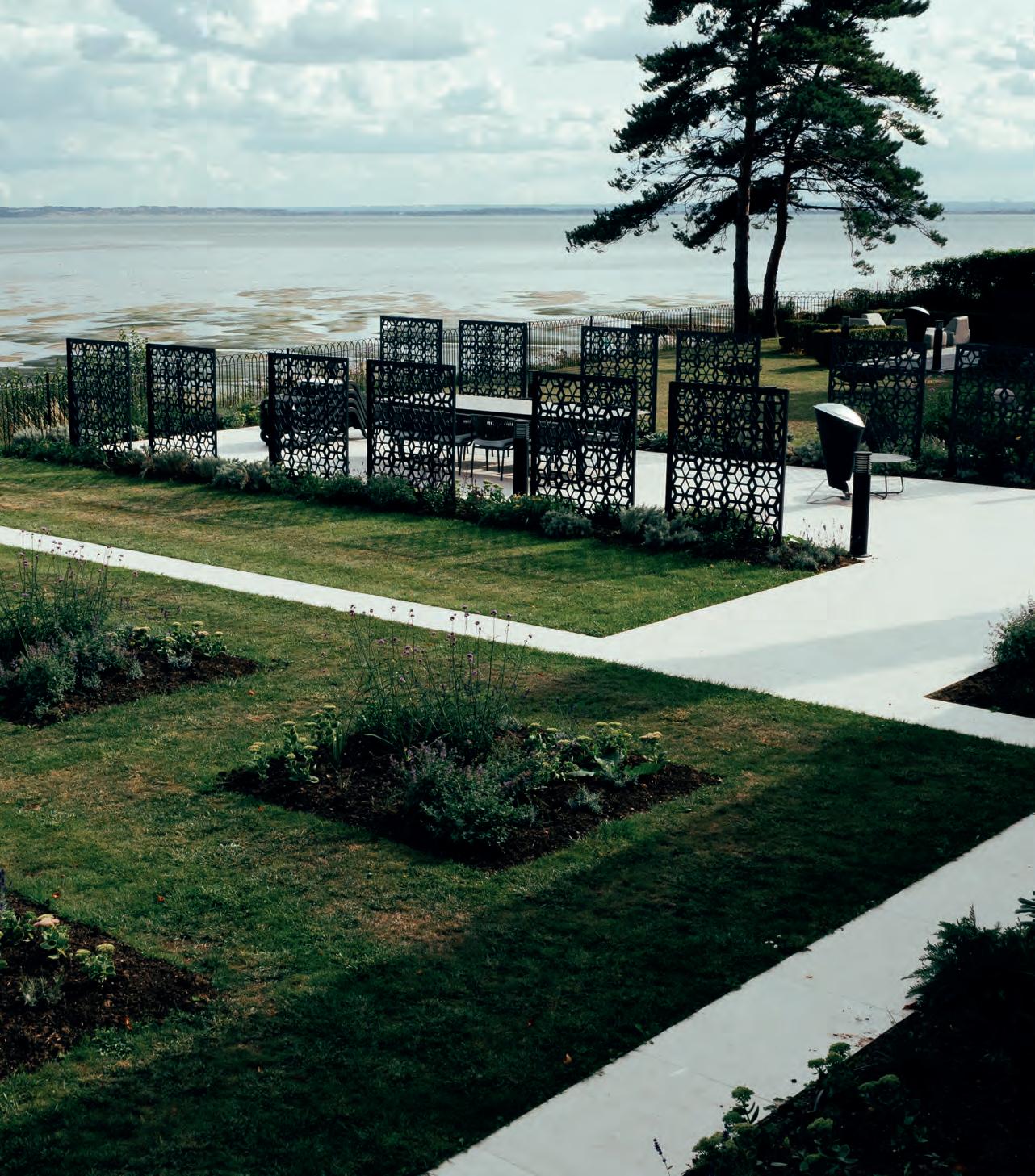
In the coastal town of Shoeburyness, situated at the mouth of the Thames Estuary, this project from Consilium Hortus is steeped in military history dating all the way back to the 19th Century. In its former life, the property served as part of the Shoeburyness Garrison; operating as the ballroom, mess hall, and central hub for social
occasions within the community. While the property has been gracefully restored and adapted to suit the needs of modern living in the years since, the garden has remained relatively
Build time
3 weeks
Size of project circa 250m2
Project value
£50k+
Awards
Pro Landscaper Project Awards 2024 Planting
Design shortlist
understated in comparison to the building’s historic stature.
And so, the Essex-based landscape and garden design studio was tasked with creating an outdoor space that not only complements the buildings long-standing heritage but also re-establishes a sense of time-less elegance, adapted to today’s environmental and outdoor living needs.
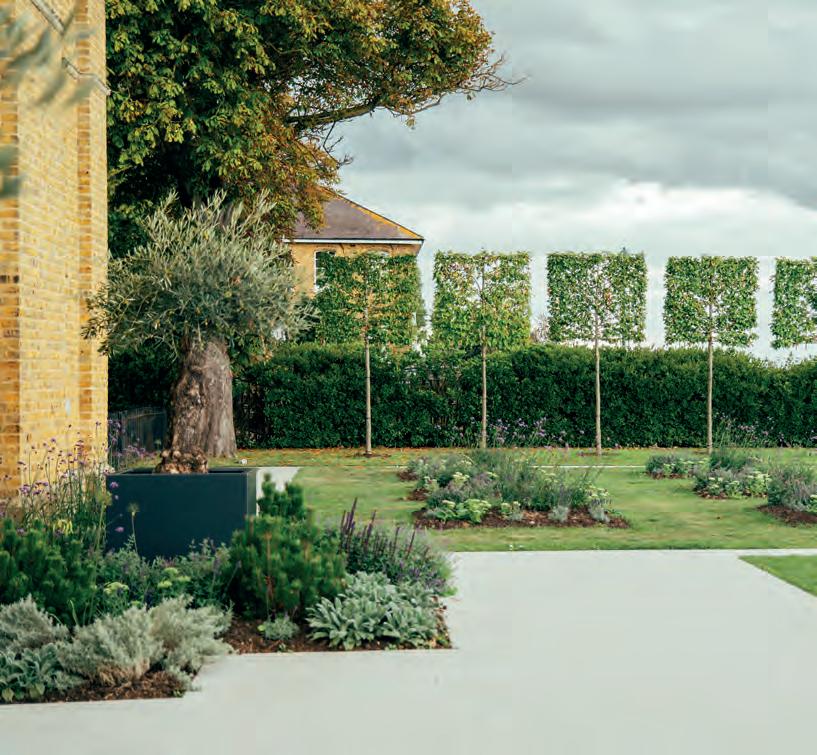
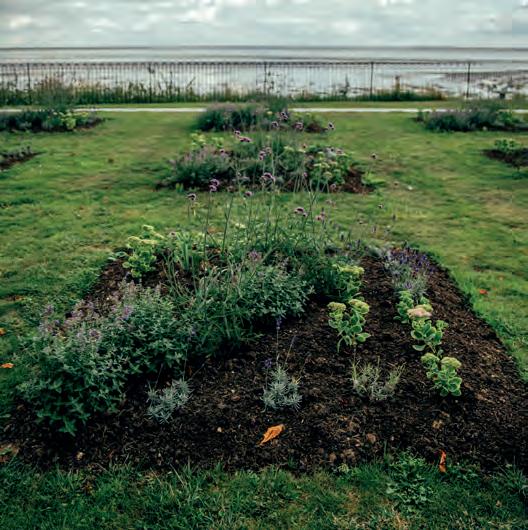
The existing garden – originally comprised of mainly buxus hedging and turf – offered little in the way of ecological value and structural diversity. To remedy this, structured and naturalistic planting was used to transform the space into a warm, inviting and visually balanced space.
Guided by the garden’s proximity to the water’s edge, all materials and planting have been chosen for their coastal-resilient nature, the latter chosen particularly for its ability to thrive in exposed, salt heavy conditions.
Olea europaea – more commonly known as olive trees – were introduced as key focal points throughout, drawing the eye outward to the surrounding seascape, while bringing a sense of Mediterranean enthused calm to the space.
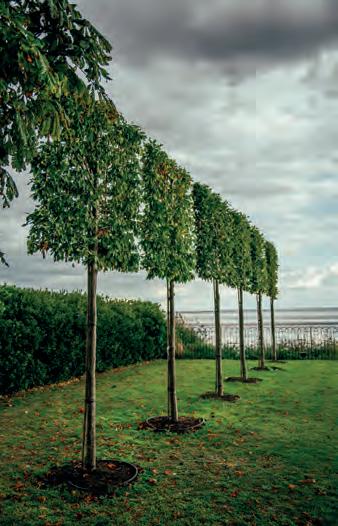
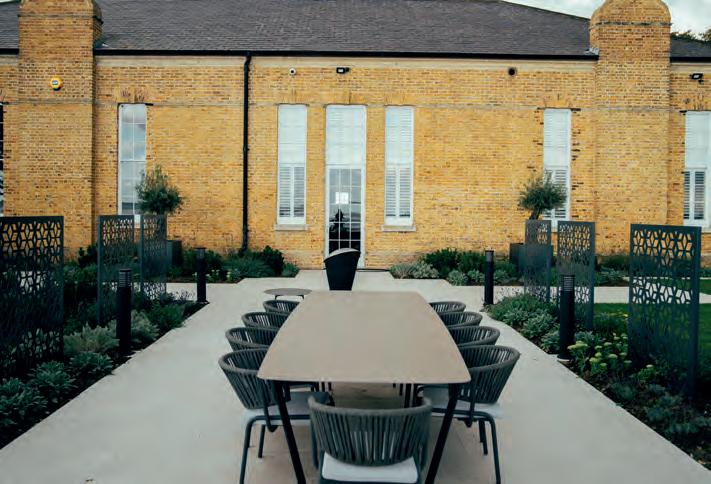
The evergreen screening and multi-stem trees along the boundary lines – particularly those facing the public footpath and neighbouring properties – create a sense of seclusion in the open space, as well as working to reduce coastal wind impact, while maintaining the light and openness afforded by a seaside property.

• Lavandula angustifolia
• Nepeta racemosa 'Walker's Low'
• Pinus mugo
• Olea europaea
• Stachys byzantina
• Stipa gigantea
• Verbena bonariensis
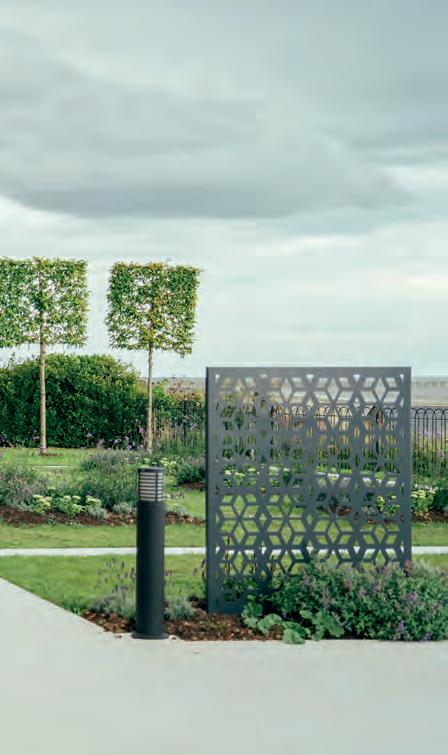
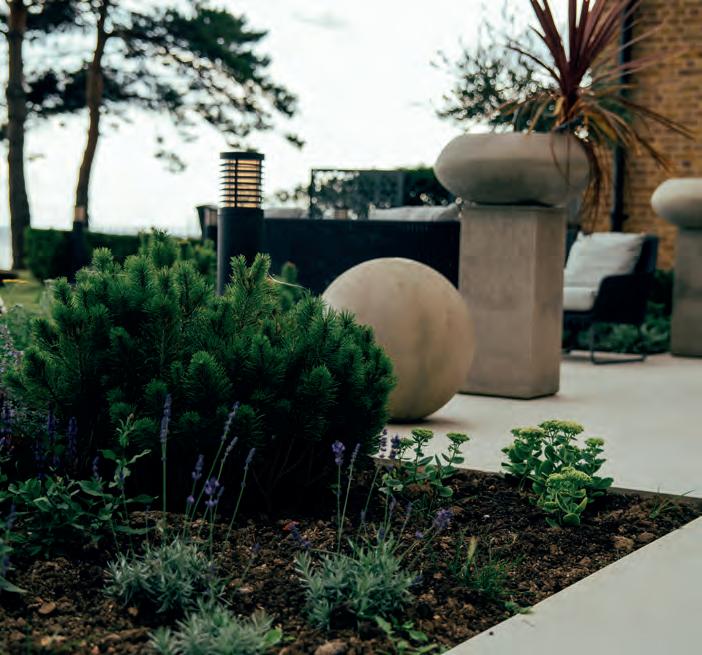
While Pinus mugo – with its spreading needle like foliage – was established to sculpt the garden at a lower level and bring the garden away from the surrounding landscape. The dwarf mountain pine was chosen for its aforementioned resilience and ability to offer year-round interest.
Adding movement to the vast open space – lengthened by the coastline and open water below – grasses such as Stipa gigantea were established throughout.
While flowering perennials such as Lavandula angustifolia, Nepeta racemosa 'Walker's Low', and Verbena bonariensis were all incorporated into the planting palette as a means to introduce seasonal colour, pollinator-friendly value, and a soft texture contrasted with the property’s formal architecture.
Each of the planting beds have been carefully placed to bring visual balance to the garden, while working to frame and soften the hard edges of the space – tying the property and its landscape together as one that naturally draws the eye throughout the site.
Consilium Hortus is an award-winning garden and landscape design studio known for creating refined, lifestyle-led outdoor spaces. Combining innovation, craftsmanship, and sustainability, our work spans private residences, luxury developments, and show gardens – earning recognition from Grand Designs, RHS Hampton Court, and Pro Landscaper for design excellence and contemporary outdoor living.
consiliumhortus.co.uk
“This project really allowed me to push my planting design skills further, exploring how structure and softness can coexist in a coastal setting. The conditions were challenging, but the result feels calm, textural, and beautifully balanced – especially with the olive trees adding those subtle architectural accents.”
Sam Moore, founder and designer, Consilium Hortus
One of the primary sustainability measures taken was the decision to not introduce any new soil to the site; opting instead to add organic matter and soil conditioners to improve the existing soil’s drainage and nutrient content, as well as preserve the natural microbial life already well-suited to the coastal environment planting.
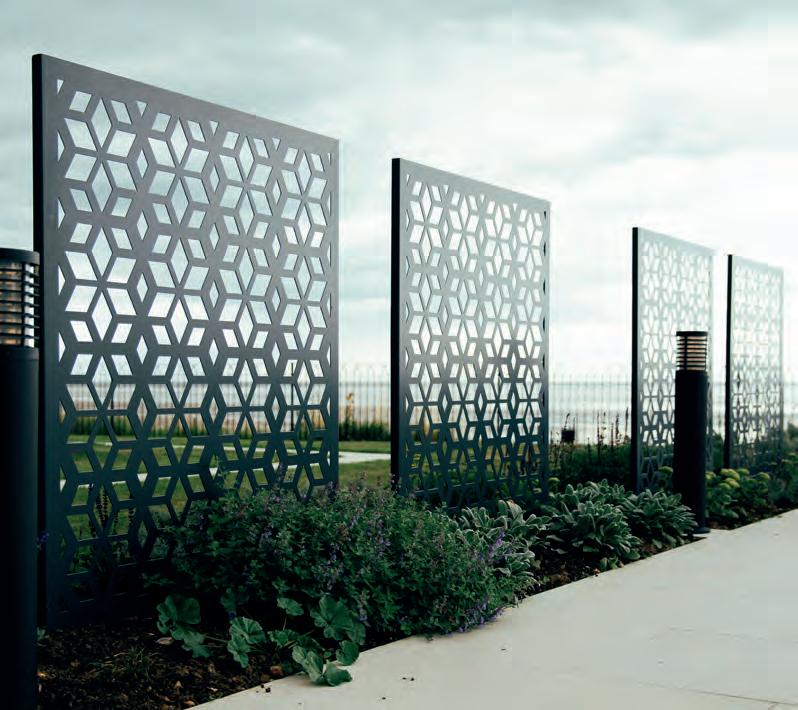
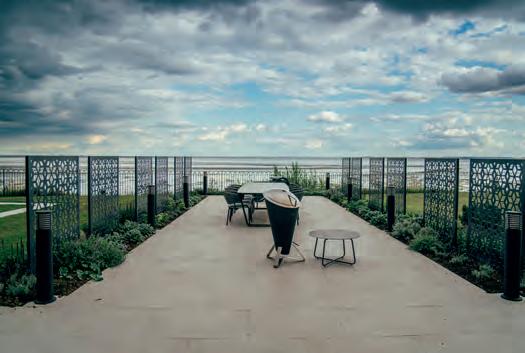
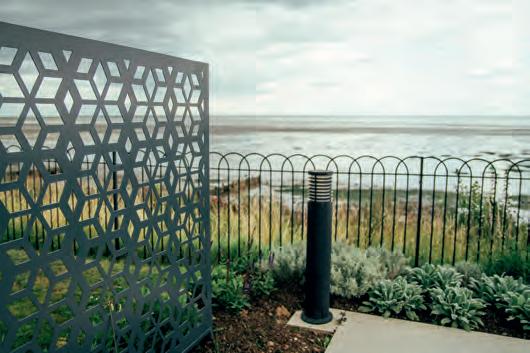
All metalwork elements, including the laser-cut art panels and planters – added to bring a touch of contemporary into the garden – were powder-coated rather than painted, providing a durable, nontoxic finish that offers a longer lifespan, reducing the need for future maintenance or replacement.
No longer trapped in the past, this seaside garden now boasts a feeling of coastal calm and contemporary outdoor living – perfect for those cool summer nights beside the sea.
Art panels
Bespoke made by a local steel fabricator
Plants
Practical Plants practical-plants.co.uk
Trees
Premier Plants premierplantsgroup.co.uk
Powdercoated planters
Bespoke made by a local steel fabricator
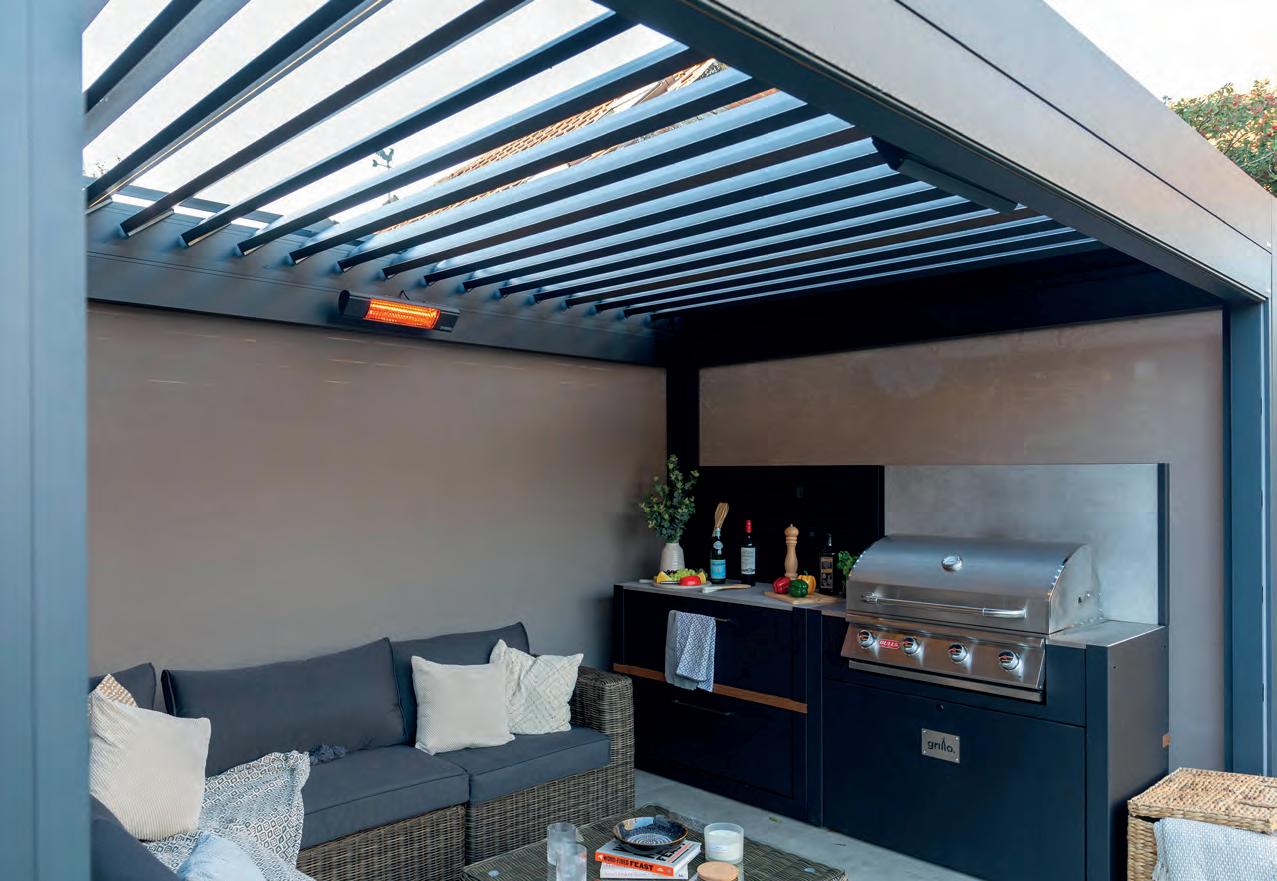


The highest quality set sized louvered pergola on the market, utilising all the same premium materials and features as our bespoke range.
10
Made in Britain Built to Last.
Enjoyed all Seasons.

✔ 6 set sizes optimised to suit the most popular furniture configurations and layouts
✔ Weatherproof roof with 150° rotating, interlocking heavy gauge double walled 23cm wide louvers
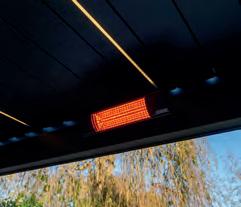
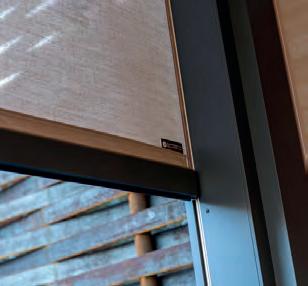
✔ Customisable: windproof side screens, LED louver lighting and infra-red instant heating
✔ Built for the UK weather: storm-proof, re-inforced extruded aluminium construction for longevity
✔ Marine-grade powder coated framework, in a modern Anthracite Grey (RAL 7016) with a textured finish for durability
✔ Somfy® motorised operation from either a handheld remote control or phone app for effortless convenience
✔ Streamline design with concealed drainage and no visible fixings including integrated base plates




Project value
Under £100k
Build time Approx.
2 months Size of project 180m2 Awards
BALI Principal Award 2025

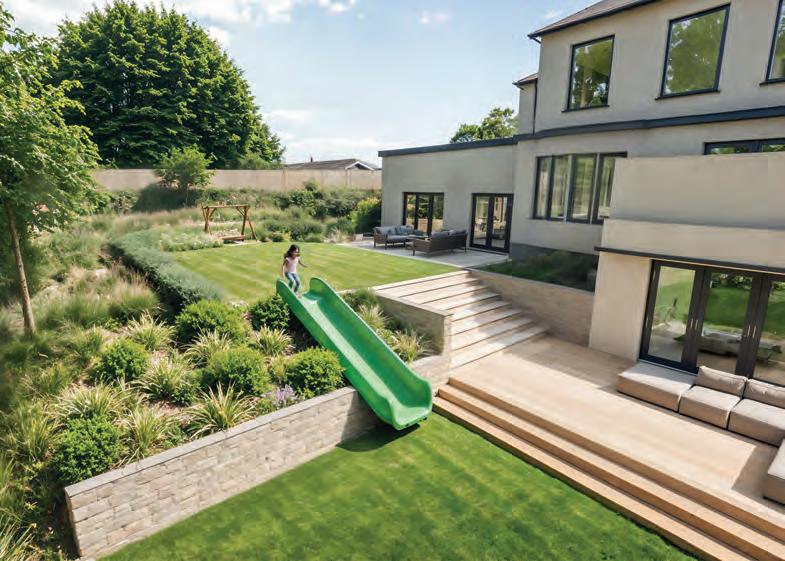
Once a disjointed, poorly laid-out space in Hove, East Sussex, this front garden longed for a transformation to mirror the contemporary architectural design of the family home stood behind it. Langlea Garden Design and Construction was brought in to resolve critical design flaws while elevating the overall quality and finish to stand the test of time.
Langlea not only retained much of existing structure to remain in line with the client’s budget but reestablished multi-terraced space integrating several fresh elements. Working with the site’s levels, the space combines the entrance, focal space, driveway, retaining walls and boundaries to create one cohesive design. A mix of roof terrace, pedestrian access and driveway construction methods were used to achieve this.
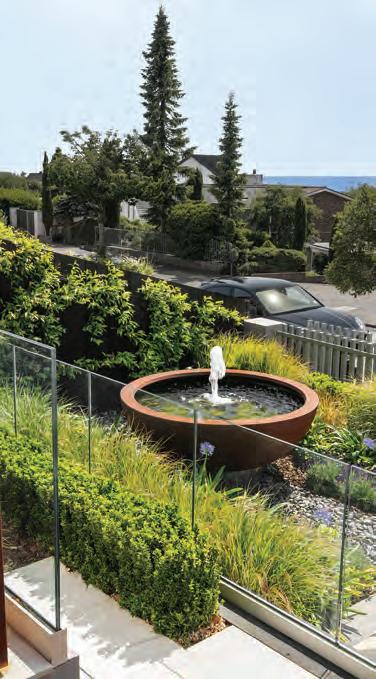
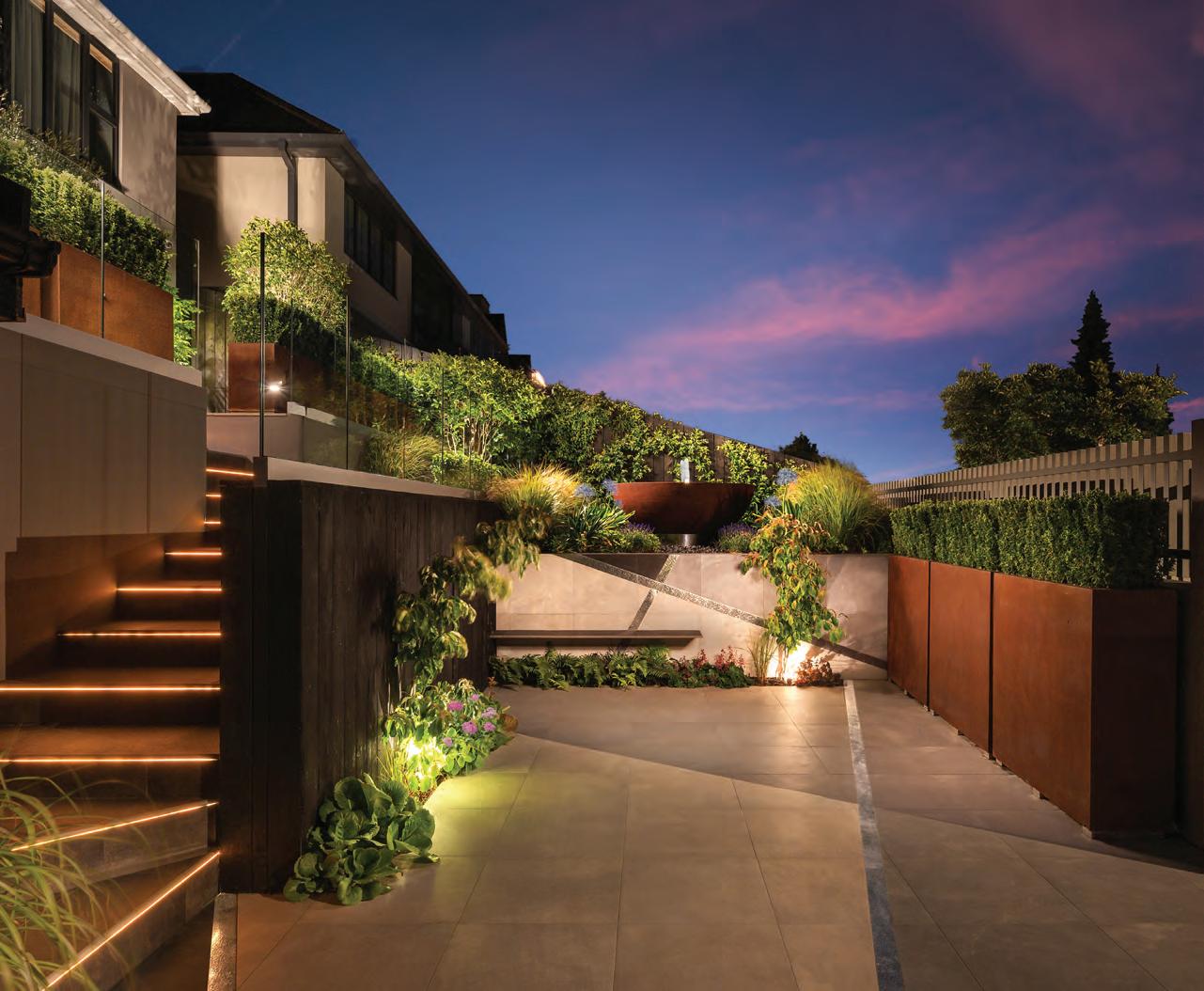
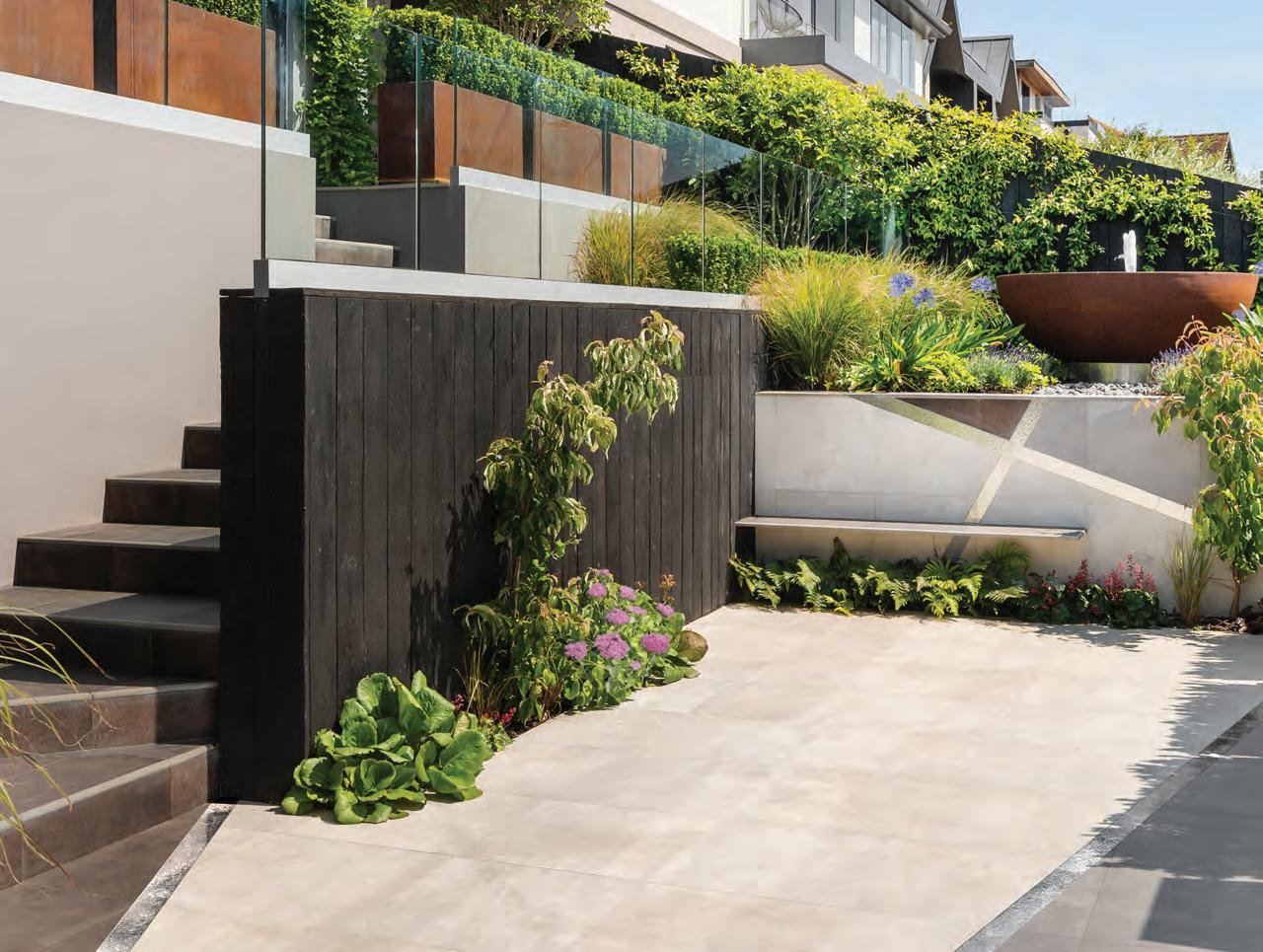
1 View along driveway towards the ‘floating’ bench and rusted waterbowl
2 Aerial shot of entire scheme showing tiered levels and unity of the spaces
“The Langlea team brought a combination of inspirational and creative ideas to me which resulted in my dream garden turning out better than I could imagine. Thanks to Lea, Fran and the whole Langlea team for making our garden dream come true, we made the right choice!”
Matt Pelling, Hove
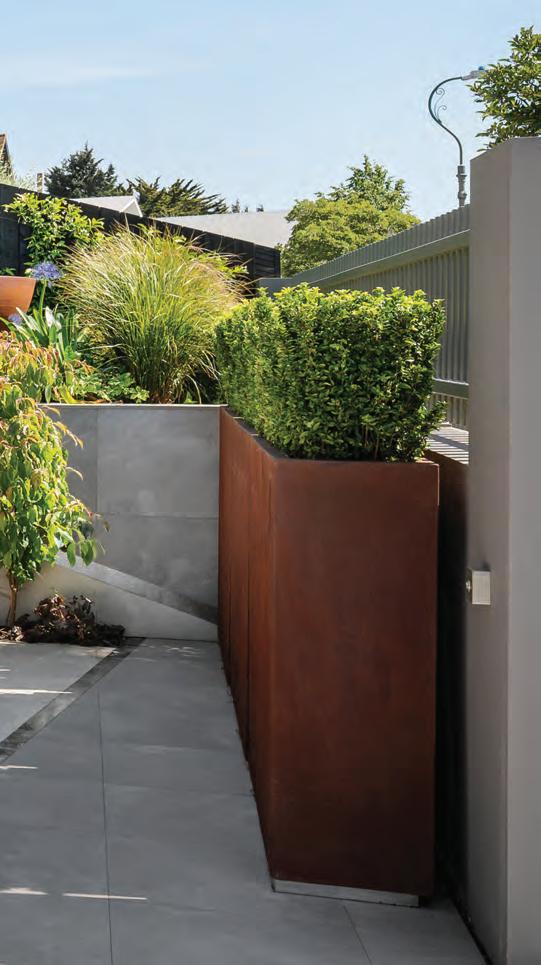
However, an overarching issue the team faced was that when cars were parked, they would completely block access to the entrance stairs. By widening the driveway entrance, it created more space for the cars to park while opening up a pedestrian route to the stairs and front door. In order to create privacy without being completely cut off from the rest of the street, Langlea designed a unified front boundary featuring a sliding gate and railings painted to match the surrounding walls.
In further consideration of the client’s budget, Langlea worked with the site’s existing structures rather than opting to strip the space back. From reusing and adapting all existing walls to repurposing existing glass balustrading, the team utilised what was already on offer.
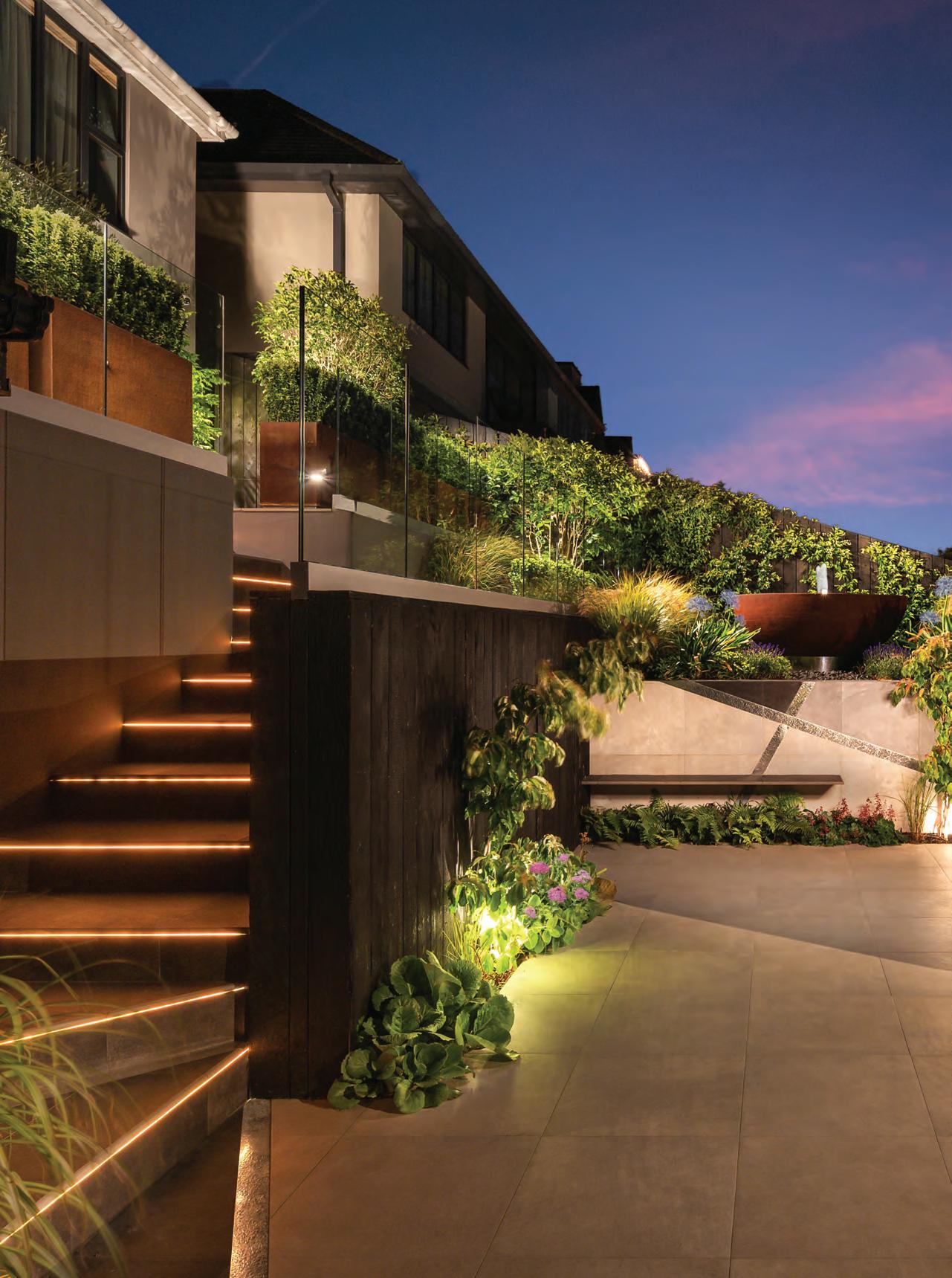
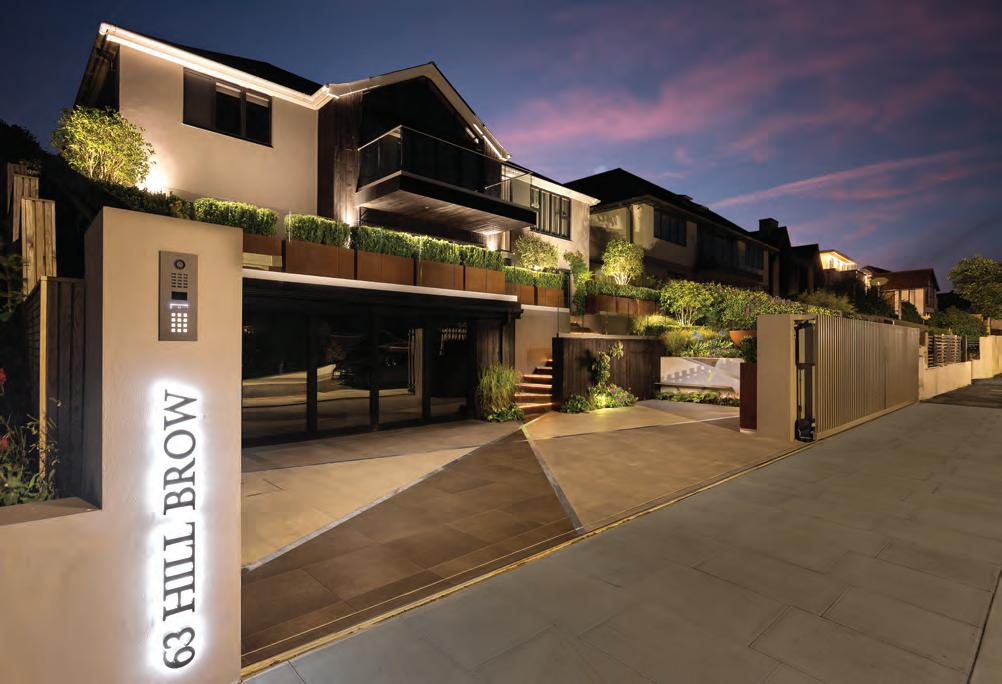
Welcoming guests to the hilltop home is an illuminated house number and letters displayed on the front pier. Upon stepping into the front garden, prominent contrasting porcelain paving is zoned with marine grade textured stainless steel detailing. Featured across the top terraces, steps and the driveway, the detailing design offers both aesthetic and functional roles. Whilst it guides movement toward the front door from the gate’s entrance, it also draws the eye and perfectly frames the contrasting porcelain zones.
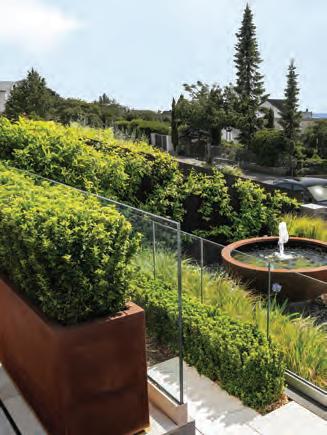
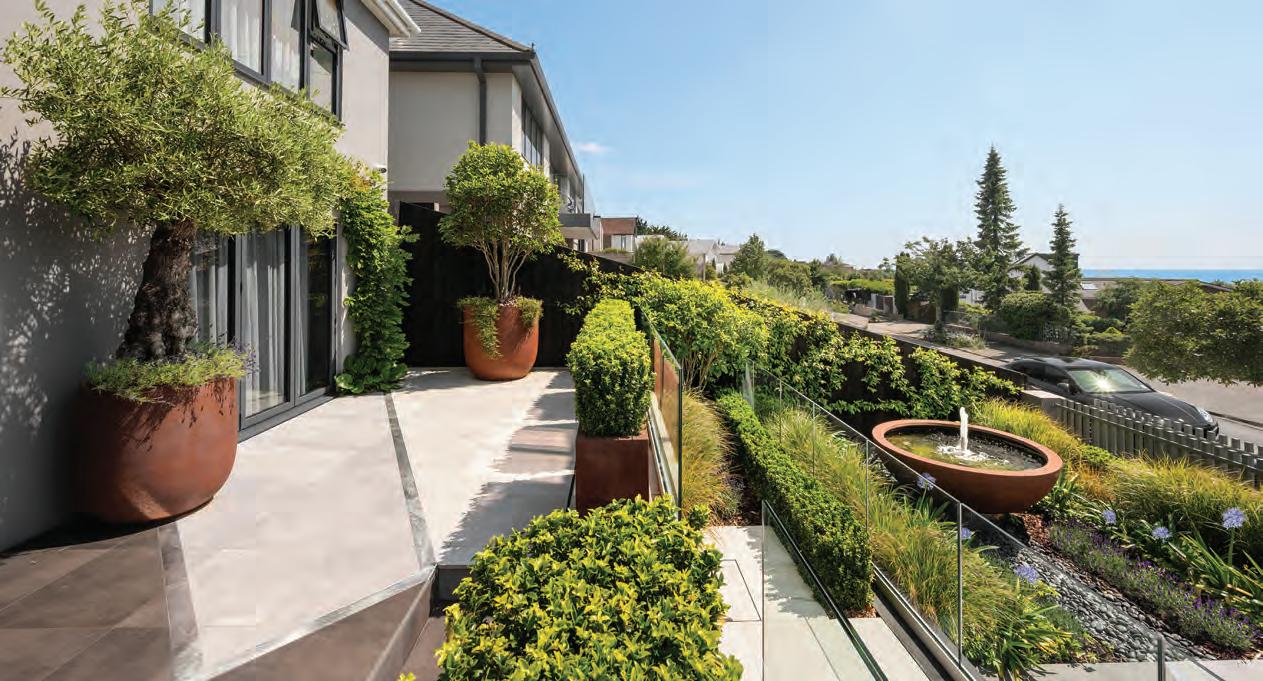
Connecting outdoor elements with the indoor space, bi-folding doors create a bridge between the house and its newly landscaped spaces. The playroom, lounge and office windows open directly onto the social top terraces. Furniture can be arranged on either side of the entrance to enjoy elevated views over the colourful hills of the town of Brighton and the sweeping coastline.
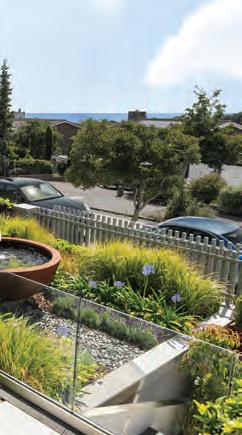
At the centre of the front garden stands a focal point introduced by Langlea. Once a redundant, awkwardly sloped space that was concerning for the client, the mid- level garden area now features bands of planting and a striking central rustic water feature. Visible from street-level, this space creates both a visual and acoustic statement to establish a peaceful ambience, and a sense of arrival and exclusivity. Polished black cobbles are layered between planting areas to ensure easier maintenance of both the plants and the water bowl.
Overlooking the driveway sits a sleek, floating bench which offers the perfect spot to enjoy the afternoon sun. Constructed from a single porcelain slab for a delicate, subtle effect, the bench sits within a newly built section of the wall cantilevered between blockworks. Beneath it lies new planting to create seamless integration between hard and soft landscaping.
Low maintenance and all-year-round planting is positioned on each level of the front garden. Split between bespoke planters on the roof terrace area, the driveway and in-ground, planting choices were made to complement views of the neighbouring streets as well as sea views further afield.
3 Stainless steel detail & contrasting porcelain paving
4 View of Brighton and sealine from top terraces
5 Widened driveway opening with bespoke gate
• Bergenia cordifolia
• Carex morrowii 'Irish Green'
• Carex testacea 'Prairie Fire'
• Heucherella 'Pink Fizz'
• Hosta 'Halcyon'
• Lavandula angustifolia 'Hidcote'
• Liriope muscari 'Moneymaker'
Small pockets of planting are sprinkled around the driveway to provide as much parking space as possible. Further planting also lines charred wood boundary screens that taper from the house down to the front boundary height. The boundary materials were chosen for its low maintenance qualities and rustic texture, which contrasts the sleek contemporary design of the home.
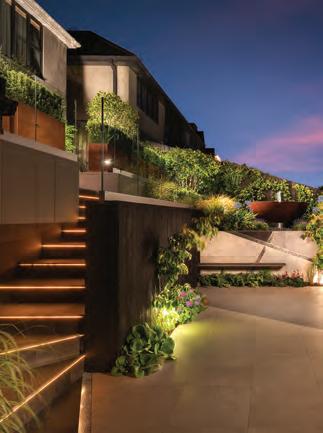
Once the sun sets, the garden is transformed under the stars with a comprehensive lighting scheme featuring submersible water bowl lights, LED strips lining the stairs and spike lights illuminating specimen trees and shrubs. Interchangeable to create mood lighting for different occasions, each light can be controlled by phone or timer.
Other electrics and systems installed include an electric car charger, pump and jet for the water
bowl, video intercom and a two-zone irrigation system for planters and in-ground planting.
After several significant issues with construction, such as driveway access and previously poorly designed areas, Langlea persevered with the design to create “breathtaking results,” says the team. “Our client receives a lot of compliments from passers-by who often stop to admire the space. We have also received many compliments ourselves and enquiries for new projects.”
Contracted to design both the front and rear gardens, Langlea has created a sense of synergy connecting the home with both spaces. A united experience, both gardens seamlessly sandwich the contemporary home.
Langlea Garden Design and Construction are an award – winning, fully integrated garden design and construction company run by a husband-and-wife team. The founders, Leandros and Francesca, are both highly qualified in horticulture, garden design and landscape architecture, and use their shared background to conceptualise and deliver striking and contemporary gardens. langlea.co.uk
6 Tiered planting creates unity between the different levels
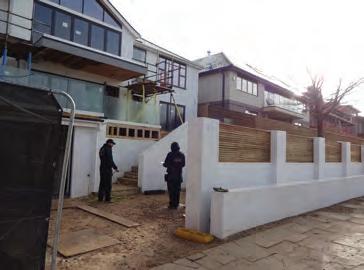
7 The site previously before Langlea set to work on the transformation Photographs ©Simon Callaghan
Timber Carbon by Design carbonbydesign.co.uk
Tiles Mastertiles mastertiles.co.uk
Planters Urbis Design urbisdesign.co.uk
Gate and railings
Regency Ironworks regencyironworks.co.uk
Illuminated house number Lightworth lightworth.co.uk


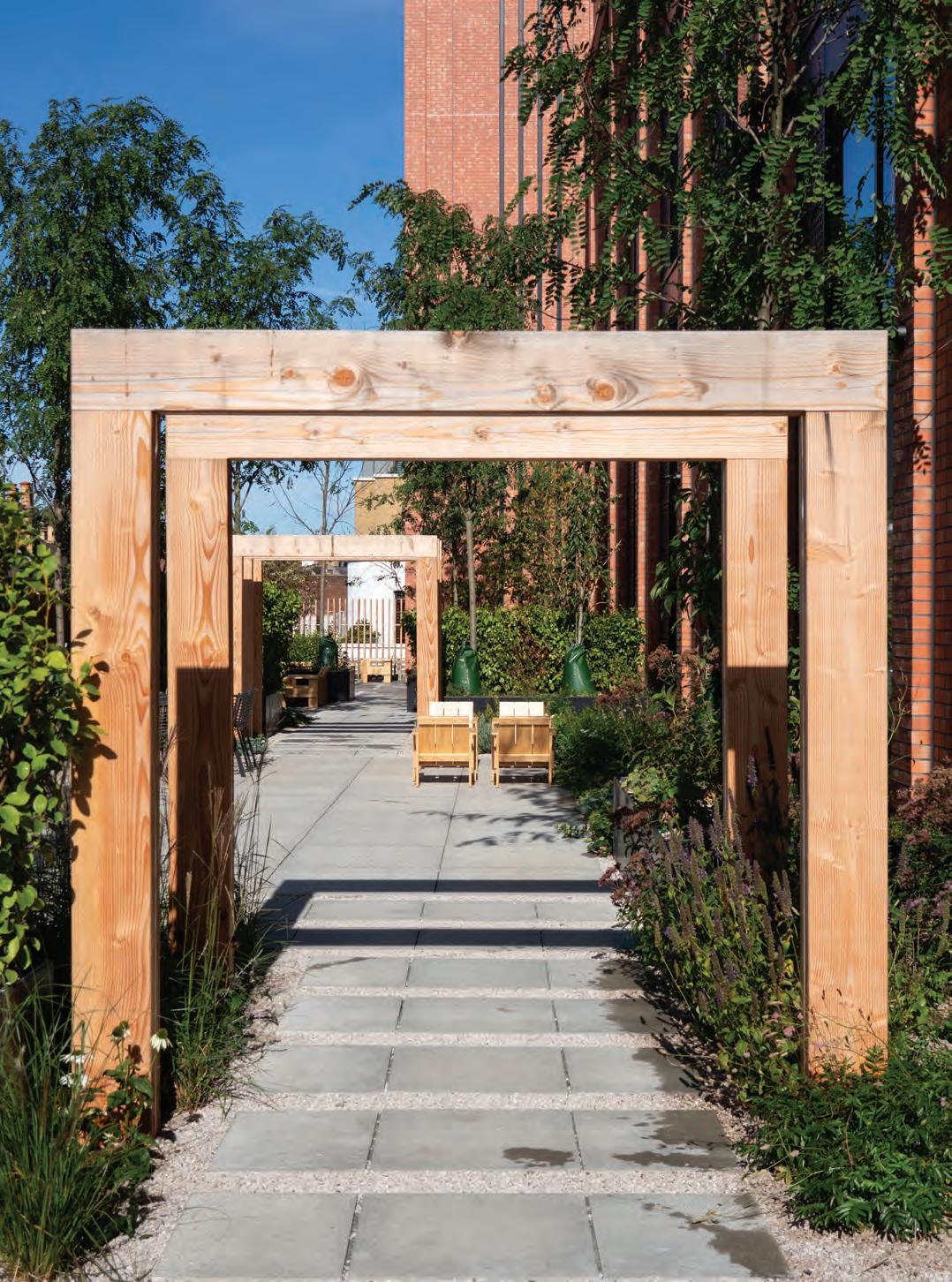
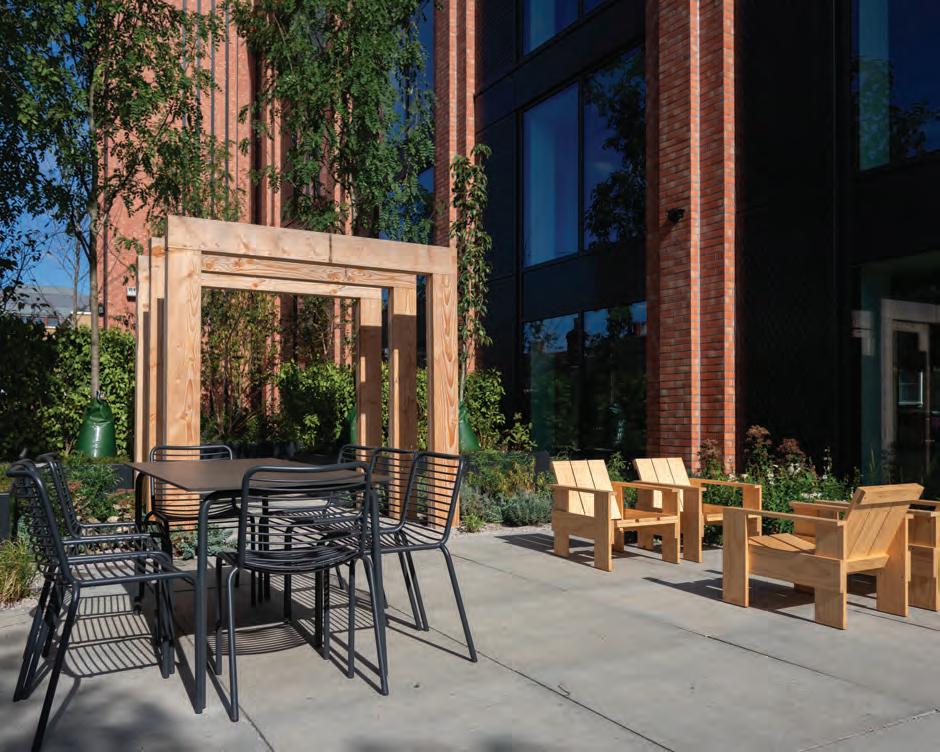
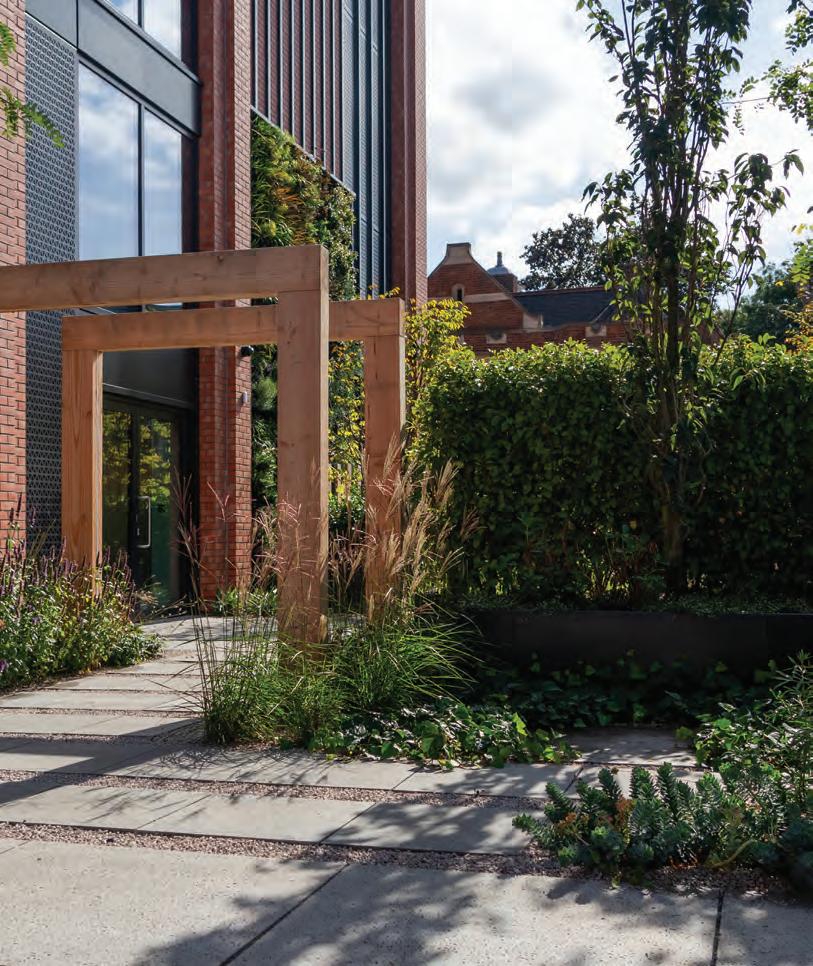
In the heart of the Royal Borough of Richmond Upon Thames, London – where quality office spaces are few and far between –stood Eton House, an old and long vacant office building in major need of significant redevelopment. In September 2022, the green light was given to reposition the building into a more sustainable office space that better reflected the surrounding area's architectural style and quality.
With sustainability at its core, the backto-frame refurbishment – led by RED Construction – saw parts of the building dismantled and cleaned before reinstallation to reduce the already embodied carbon, with an additional top floor of accommodation added, as well as 20 car parking spaces replaced with over 40 new cycle parking spaces, electric vehicle charging points and other amenities.
Dis-used parking space was further reduced, giving way to a new 4,200m2 ground floor office garden, designed to support employee health and wellbeing, as well as improve the site’s biodiversity and enhance local greening – all in line with the project's sustainability ethos.
Taking inspiration from the mature grape vine growing along the site’s boundary line, landscape architect practice, PAD landscapes’ Mediterranean infused gravel garden creates a sense of escapism amongst the bustling streets of London.
Designed to tackle the ongoing effects of climate change and boost resilience in an urban area, while remaining sensitive to the
• Allium sphaerocephalon
• Buddleja alternifolia
• Carex muskingumensis
• Eutrochium maculatum
(Atropurpureum Group)
• Helleborus foetidus
• Miscanthus sinensis
• Stipa gigantea
• Yucca gloriosa
• Cladrastis kentuckea
• Heptacodium miconioides
• Osmanthus × burkwoodii
• Quercus robur (Fastigiata Group) 'Koster'
• Prunus 'Amanogawa'
• Robinia × margaretta
'Pink Cascade'
• Syringa reticulata



“I'm really pleased with how the project turned out. The most rewarding part was seeing the area change so quickly and witness such a transformation in such a short time.”
Jack Vowles, contracts manager, Kingston Landscape Group
site’s historic location, the new garden boasts 1,800 new plants across 92 different species, 35 new trees – including additional street trees – and a new 25m2 bespoke vertical garden to further create a sense of calm.
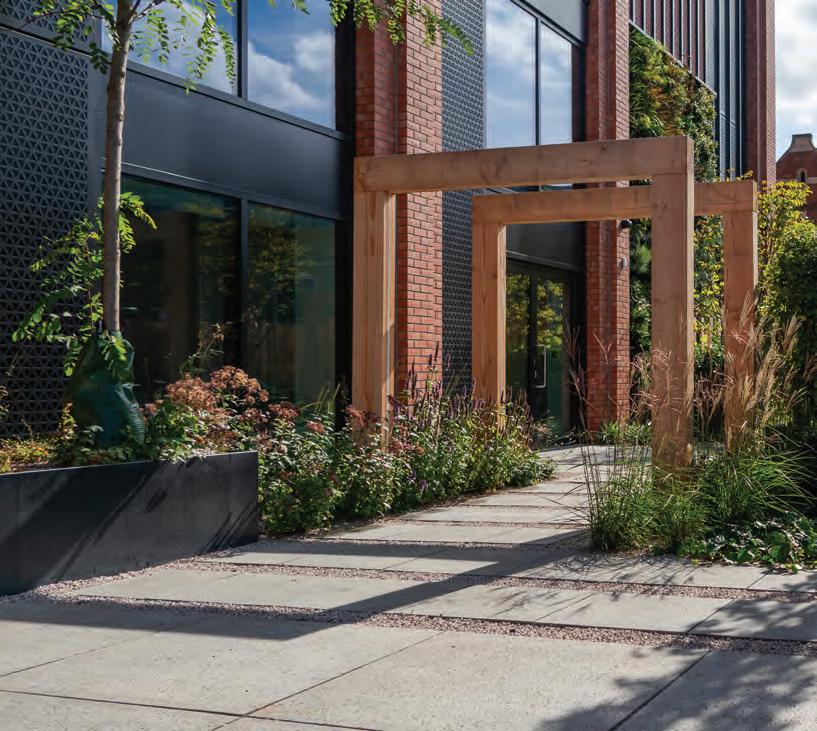
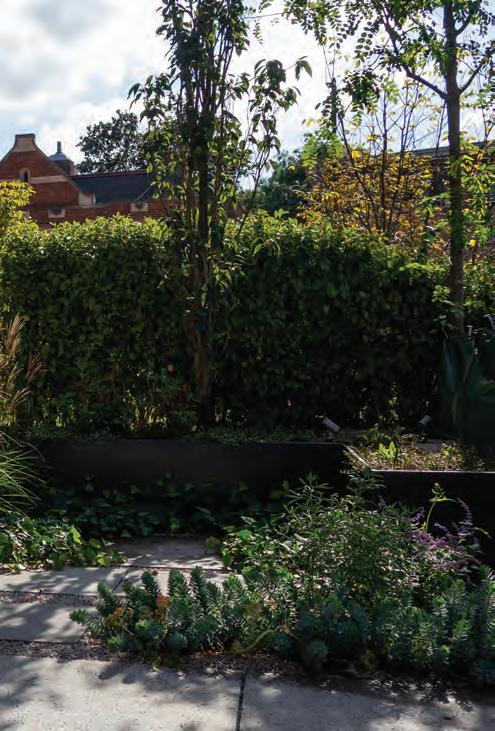
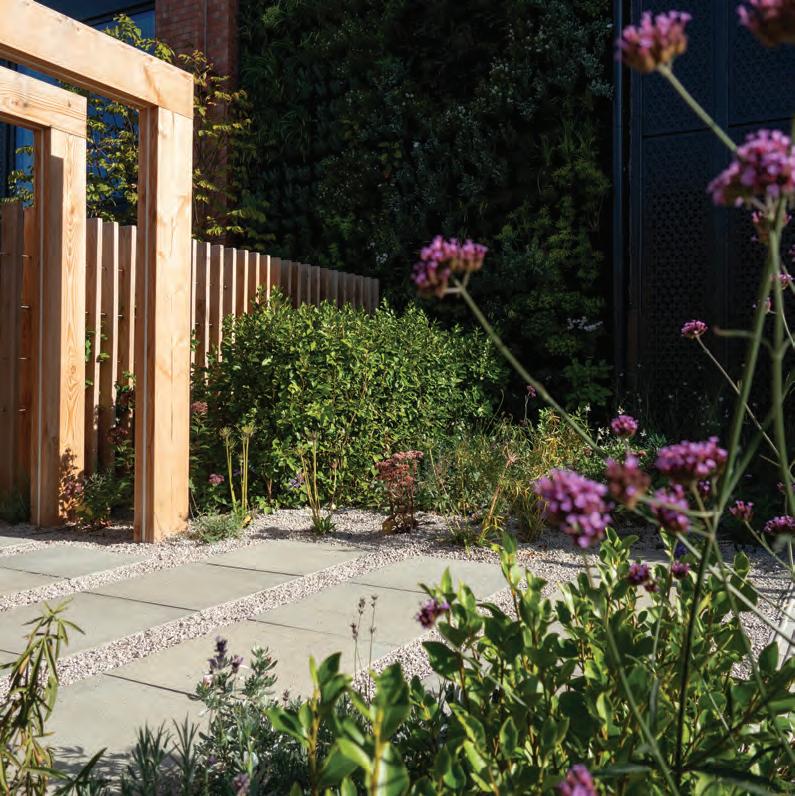
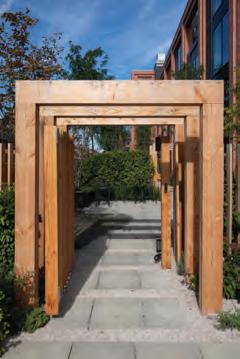
Throughout the garden – which runs the side length of the building – zones have been established using midrise hedging and wooden arbour of arches to create gateways. From garden rooms and a club garden to the main office community spaces, the garden is encased in mature trees with light pops of colour nestled amongst the greenery.
1 Framed entrance with layered planting
2 Outdo or seating for staff to work and relax
3 Arches and hedging form garden rooms
4 Mixed grasses adding colour and movement
5 Ro of terrace with views across Richmond
6 Social seating integrated in planting scheme
Many of the species established throughout the scheme have been chosen to further encourage the presence of pollinators, while others call back to the gardens Mediterranean roots.
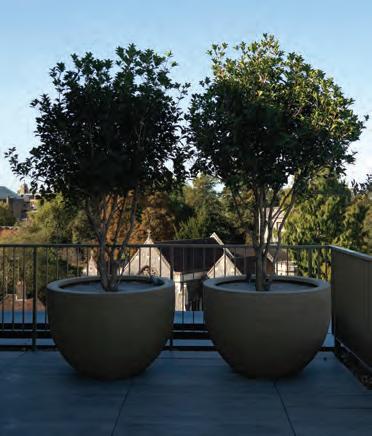
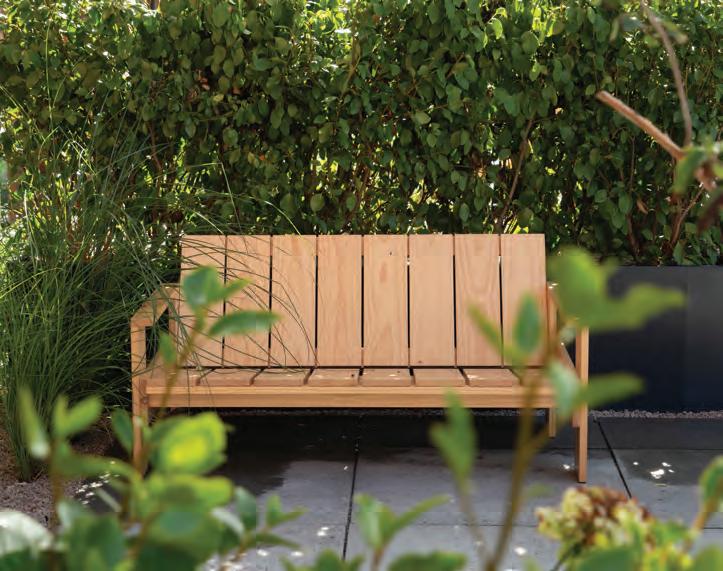
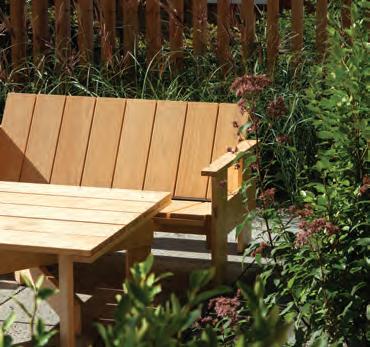
Several outdoor seating zones – including an outdoor dining area – have also been established to encourage and facilitate office workers looking to spend time in the garden. The mixed-use of darker metals and lighter wood tones for the furnishing ties the space in with the new building, while adding a contemporary touch to the garden.
From a vacant building and dis-used car park to a flourishing urban garden designed, Eton House now sits proudly amongst the bustle of Richmond as a pocket of calm and tranquillity for office workers throughout the day.
7 Vertical garden providing greenery and visual impact
8 Timber arched entrance
9 Outdoor workspace and relaxation area Photographs ©Lottie Hodson Instagram: @lottiehodson.photo
For nearly four decades, Kingston Landscape Group has established itself as one of London's premier landscape contractors. This esteemed reputation is built upon our core values of professionalism, quality, and, most notably, reliability. We understand the critical importance of completing projects on time and within budget. By consistently adhering to these standards, we will continue to grow as more organisations recognise the exceptional service we provide. klguk.com
Contractor RED Construction Group redconstruction.co.uk
Designer PAD landscapes padlandscapes.com
Decorative stone CED Stone cedstone.co.uk
Lightweight soils Boughton boughton.co.uk
Paving Schellevis schellevis.nl/en
Planters Designs for City Spaces designs-fcs.co.uk
Plants
Wyevale Nurseries wyevalenurseries.co.uk
Pots Urbis Design urbisdesign.co.uk
Trees Hillier Trees trees.hillier.co.uk Bruns Pflanzen bruns.de
Whether you’re looking to improve drainage or boost biodiversity – dig into this selection

A BS3882:2015 compliant multi-purpose high quality topsoil.
Landscape20 is a re-purposed, natural topsoil with a consistent texture, classification and quality. It is dry stored, available year-round and regularly tested for compliance. Perfect for commercial projects offering flexibility in all weathers with consistent availability.
• Average pH of 8, which suits most commercial projects
• Consistent quality and texture, and free from contaminants
• Average organic content 5.8%, ideal for most landscape applications boughton.co.uk

A purpose-designed soil for bioretention, helping landscapers manage surface water sustainably by balancing infiltration, retention and filtration, and supporting biodiversity. Engineered for high infiltration and healthy plant growth, it filters runoff, reduces flooding risk and supports compliant, attractive rain gardens, swales and SuDS features across commercial and residential projects.
• Total porosity typically 46% and independently tested for 70+ parameters
• Enhances water quality through biofiltration and creates habitats for biodiversity
• Suitable for plant species that prefer free-draining, alkaline conditions rolawn.co.uk



Stockholm Structural Soil is designed for urban tree planting and SuDS applications. It comprises interlocking granite, which provides load-bearing strength and exceptional drainage; PAS100 compost supports nutrient-rich root development and Biochar enhances soil health, aeration and long-term nutrient cycling whilst removing additional carbon from the atmosphere.
• High drainage and SuDS compatible
• Load-bearing structural growing medium and promotes microbial activity
• Supports healthy urban tree root growth and reduces soil compaction under hard surfaces bourneamenity.co.uk



Requiring developers to achieve biodiversity net gain (BNG) is a positive step towards protecting existing wildlife and creating new habitats. But the UK government’s Statutory Biodiversity Metric is not a guide to habitat creation, rather a tool for quantifying a site’s biodiversity based on the distinctiveness and quality of the habitats present. It also factors in the difficulty of creating each habitat type.
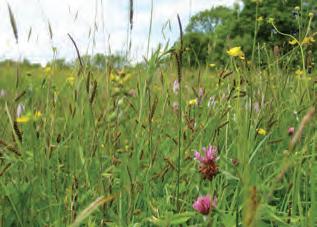
Metric Condition Assessment criteria for many habitats set a high bar to achieve. A new sward, for example, needs to be a good representation as defined under the UK Habitat Classification System (UKHab) – so no more general purpose ‘Heinz 57’ seed mixes.
Other criteria put limits on the presence of suboptimal species, and the complete absence of certain non-native invasives. We have to assume that local authorities will audit BNG systems, with consequences for developers
based on their findings, so new habitats need to be well planned and executed to avoid being rated ‘poor’, a la Ofsted. In this context, the importance of soil fertility status for new and existing species-rich grasslands and the consequences of high fertility soils, whereby nutrients encourage the growth of aggressive plants, are well understood.
Phosphorus seems to act like a growth steroid, boosting many plants to triple or more their normal size. It then becomes impossible to fit more than two or three plants per square metre, rather than the 10 per square metre required for a ‘good’ rating.



Tim
Understanding this limitation at an early stage and moving towards habitats that thrive on fertile soils, such as woodland and scrub, can prevent costly efforts to manage weeds.
Beyond soil fertility, many UKHab habitats have specific soil requirements in terms of drainage, pH, carbonate, and soil thickness. Beech woods prefer shallow, well-drained, alkaline, chalky soils, whilst neutral grasslands are found on heavy, non-calcareous, slightly acid soils with restricted drainage.
Designing a scheme to match the in situ soils will always be easier than trying to change their inherent properties so, for both on site BNG developments and off site BNG mitigation schemes, these wider soil factors should be determined early to inform the design.
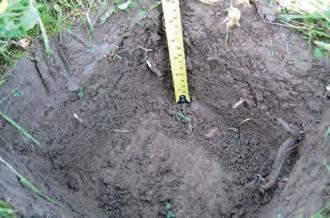
A site-specific soil survey should be undertaken by a soil scientist – this includes digging small trial holes to examine the soil conditions and collecting representative samples for laboratory testing – to provide an interpretative report with the findings,
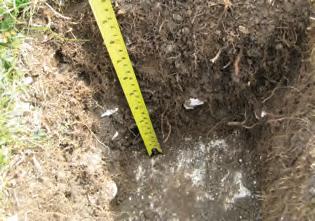
enabling a clear understanding of a site’s soils. Whilst generic soil data is available via on-line mapping services, this can be completely wrong and definitely would not pick up local variations that could, once identified, reveal opportunities to further enhance site biodiversity.
It is possible, in some circumstances, to create distinctive habitats using materials such as crushed brick and/or concrete, sand, and other demolition fines. These opportunities are best explored to create new, rather than replace existing, habitats.
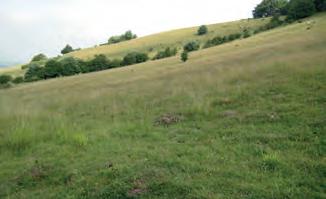
To achieve the desired result – and a ‘high’ BNG score – fully understanding the new habitat’s soil requirements and the characteristics of the available materials is essential. With expert advice it can be possible to successfully manipulate the soils and re-align the habitat to match.

He leads a specialist team providing technical soils input for BNG and has co-authored with nationally recognised Forest Research the Best Practice Guidance (BPG) document on ‘Soil Preparation for the Creation of Species-rich Grassland Habitats’. He has also contributed to several other BPG documents for specific grassland types.

Off the back of a new rebrand, John Chambers’ head of wildflower digs into how the refresh will accelerate the brand in the year ahead

Can you tell us about the John Chambers rebrand, and the inspiration behind that decision?
We were previously called John Chambers Wildflower Seeds, but we sell a wide range of wildflower products, so we made the strategic decision to rebrand as John Chambers Wildflowers to better reflect the brand.
The rebrand is much more than a name change – John Chambers has a strong heritage and credibility, but historically, the brand has been perceived as a traditional wildflower seed supplier. Over the last decade, the market has changed significantly, and we are now seeing sustained demand for specification-led, compliant wildflower solutions linked to biodiversity net gain, SuDS, green roofs, and the wider blue-green infrastructure.
The rebrand reflects the reality of what we do today: advising on habitat creation, supporting decision-making at the design
The team is very experienced, and our role is to reduce risk for specifiers and delivery teams
and pre-planning stages, and developing tailored solutions that perform in the long term.
What sets John Chambers apart in the current market?
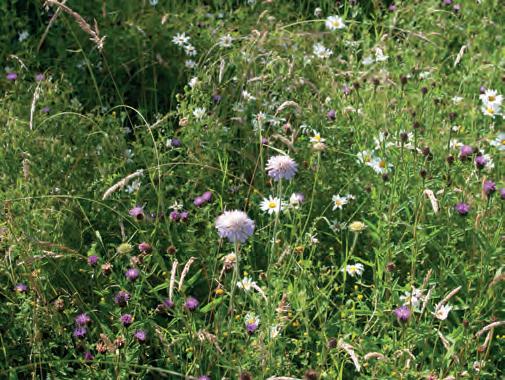
We position ourselves as an ecology-led wildflower specialist built for specification and scale. The team is very experienced, and our role is to reduce risk for specifiers and delivery teams by providing the right seed, the right technical guidance and the confidence that schemes will establish successfully.
About a third of our work involves creating bespoke mixes. That reflects the reality of modern projects, where sites are complex and outcomes must be evidenced. We assess soil profiles, exposure, maintenance requirements, and ecological objectives, then develop appropriate wildflower mixes. Fundamentally, we take an advisory approach rather than a product-driven one.
You have a Master's degree in landscape architecture; do you find this helps you in your role?
It means I have a clearer understanding of how landscape architects approach projects and the complexity of balancing ecology, planning, design and delivery. That insight helps us provide more relevant technical support at the right stage of a scheme.
Understanding the full design process and the importance of site context enables me to translate our advice into specificationfocused language that aligns with performance, compliance and planning requirements. It has also been valuable in bridging the gap between landscape architects and ecologists, particularly around biodiversity net gain, ensuring our wildflower solutions are both ecologically robust and deliverable on site.
As well as bespoke mixtures, what other services does John Chambers offer?
Technical support and knowledge sharing are central to the brand. We deliver CPDs aimed primarily at landscape architects and specifiers, covering preparation, specification, establishment and long-term management. We are also expanding our written technical guidance, with a stronger focus on five and 10-year performance rather than short-term establishment alone.
We have also invested in our own half-acre trial area near our offices...This allows clients to see different habitat mixes performing across varying substrates conditions
We have also invested in our own half-acre trial area near our offices. It includes 10 plots of our wildflower mixtures across different growing media. This allows clients to see different habitat mixes performing across varying substrates and conditions, which is invaluable when discussing specifications and expectations on live projects.
Can you share some of what 2026 has in store for John Chambers?
We will be significantly more visible and engaged. That includes training days with contractors and delivery partners, a programme of webinars timed around key points in the sowing and maintenance calendar, and more direct engagement with clients working in land management and restoration.
Wildflowers play a critical role in delivering biodiversity and climate resilience. You can expect the team to hit the road, visiting existing customers and new contacts, and raising standards across the industry through better specifications and improved long-term outcomes.
For more information, visit: johnchamberswildflowers.co.uk
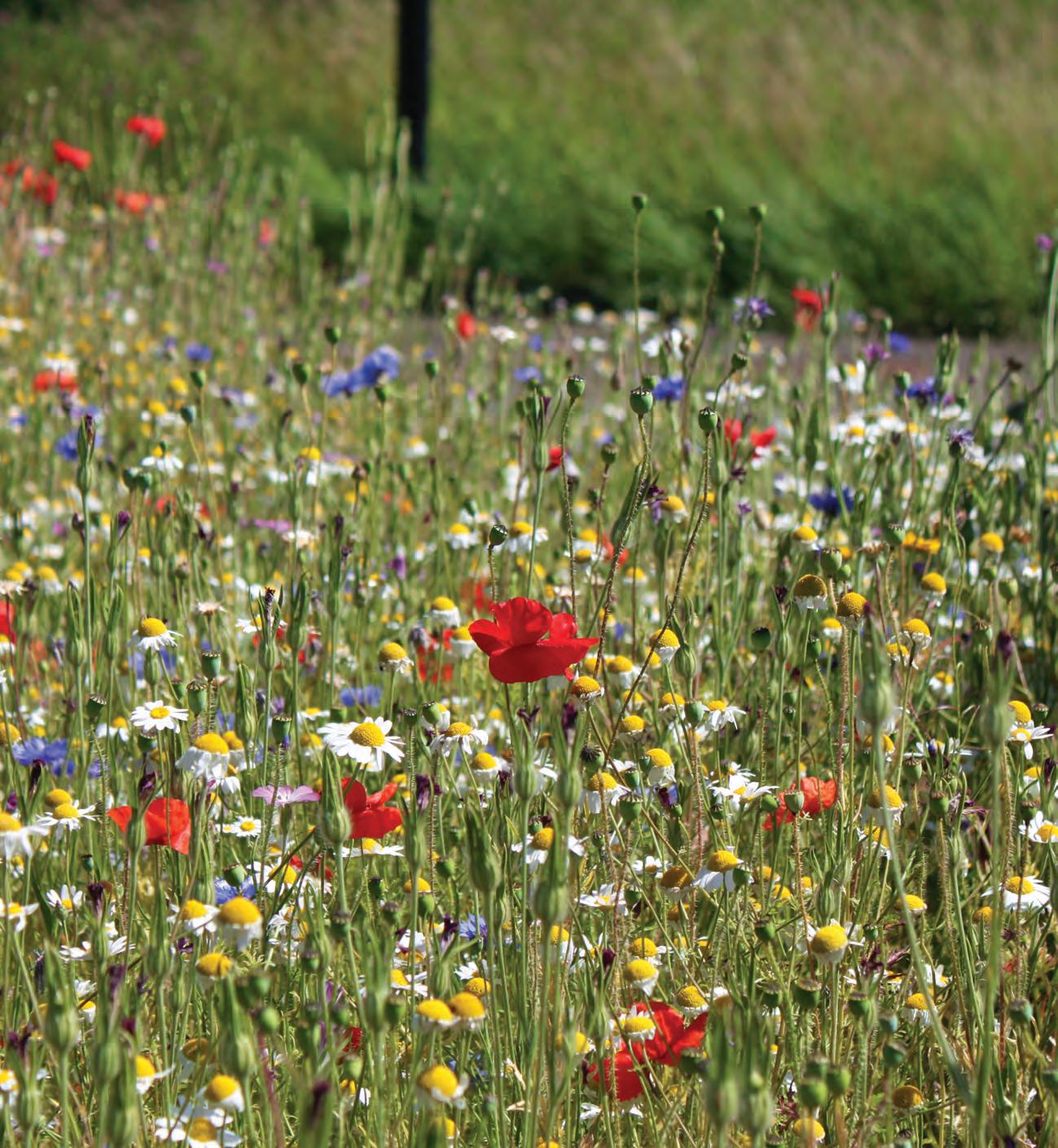
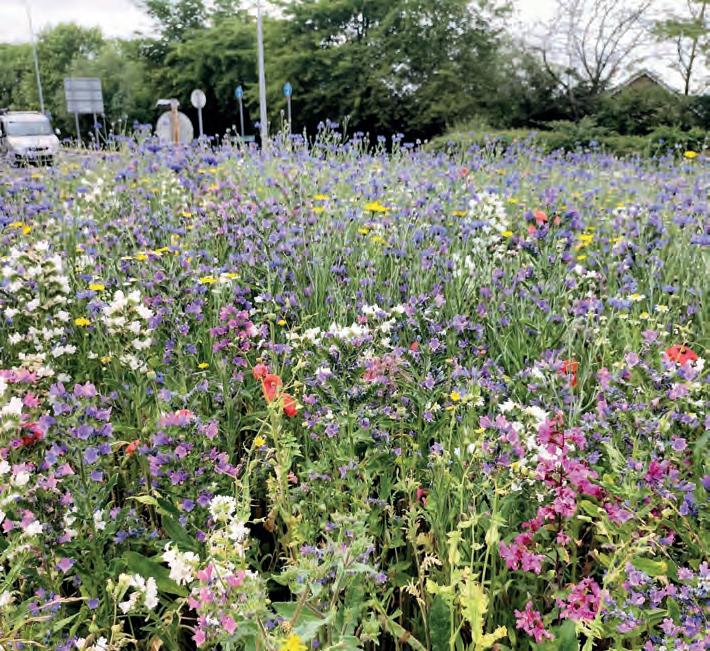
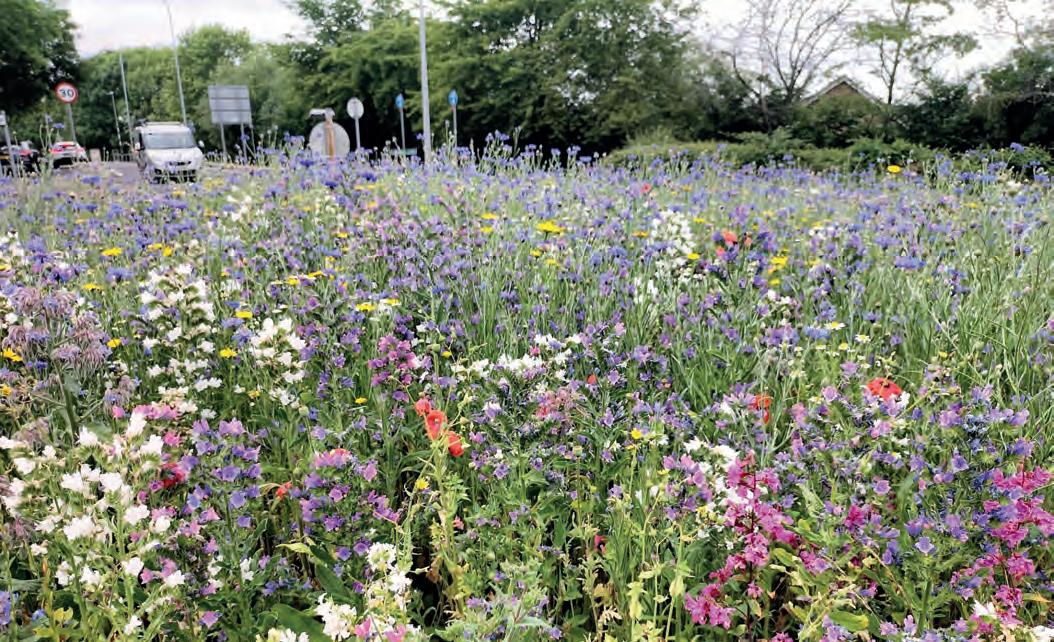
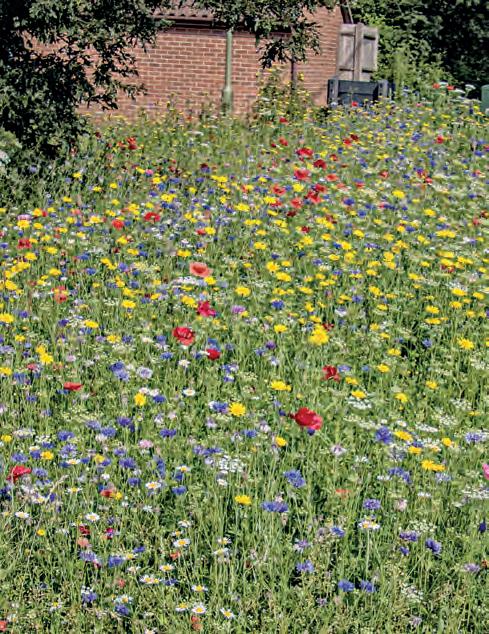
Our wildflower mixes create visually striking, biodiverse landscapes for large-scale and public realm projects. Designed to enhance habitats, support pollinators and improve urban environments, they’re available in bulk with technical guidance for major schemes. From highway verges and roundabouts to parks and SuDS basins, John Chambers
Wildflowers deliver seasonal colour, increased species diversity and lasting impact. They can also support improved air quality while creating nature-led public spaces aligned with modern planning and biodiversity expectations. Order now for spring sowing and keep your projects on schedule.
Whether you’re illuminating your workspace or putting together a high-end lighting design – these products have got you covered
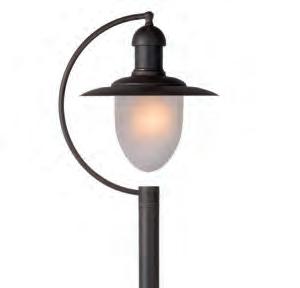
Supplied by KG Electrical Contractors
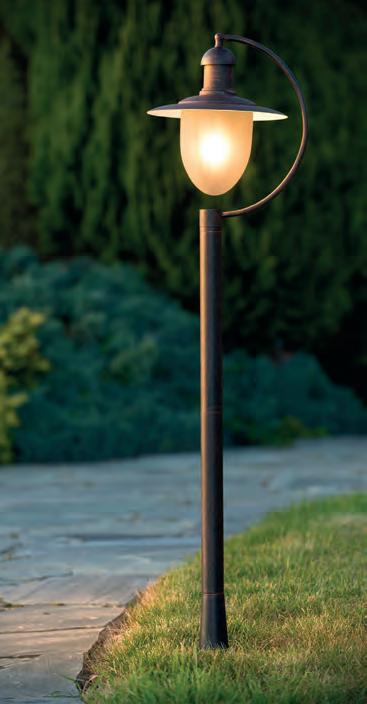
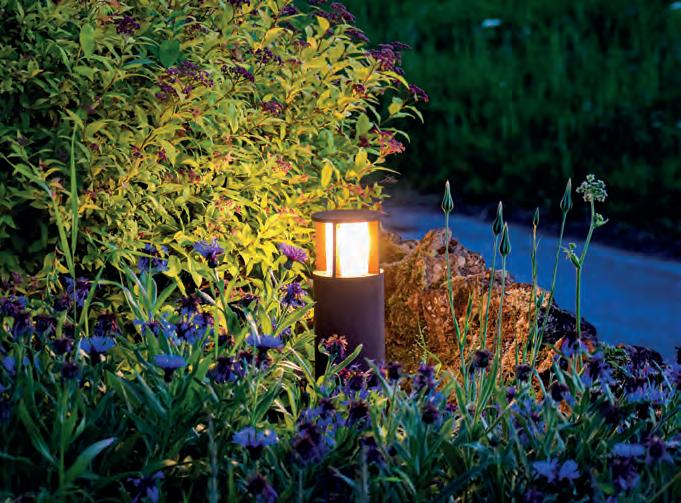
The Aruba combines a traditional coach lantern with a clean contemporary post - ideal for residential pathways, driveways and patio areas. IP44 rated for reliable outdoor performance. Available in Black or Rust Brown finishes to suit different project aesthetics.
• Traditional coach lantern styling suits period and contemporary schemes
• Frosted glass with white interior maximises light output
• Matching wall lights and pendants for cohesive schemes
• 110cm height works without dominating residential landscapes
• Two-year manufacturer warranty included leoralighting.co.uk Price: £112.50
Price: £4,186.80
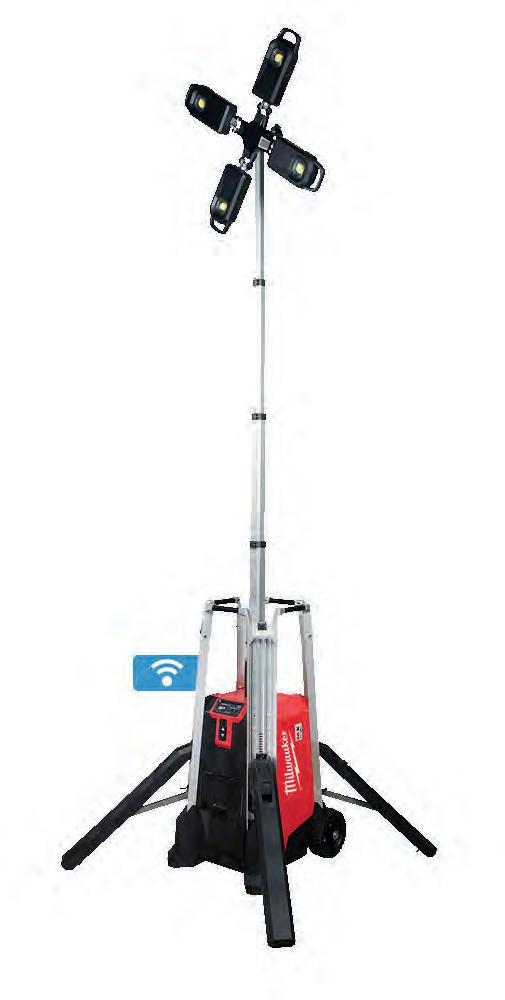
The MX FUEL™ Tower Light provides 27,000 lumens of TRUEVIEW™ high-definition lighting in AC mode with 20,000 lumens in DC mode. Featuring a motorised mast, all-terrain wheels, and durable construction, it is designed for fast setup and reliable performance on demanding job sites.
• High-definition light up to 27,000 lumens for various tasks
• Motorised 3.1m mast sets up quickly; resists 55km/h winds
• Adjustable light heads provide precise, multi-directional area illumination
• All-terrain wheels ensure easy transport over uneven, wet ground
• ONE-KEY ™ offers remote tracking, security, and digital inventory management uk.milwaukeetool.eu
Price: £222
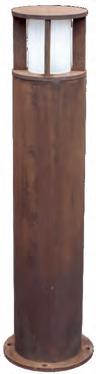
The Ember Rusty Path Light utilises durable Corten weathering steel to create a naturally evolving patina that enhances any scheme. Robust, low-maintenance and striking by design, it combines innovation with an earthy character, delivering lasting ambience and site resilience trusted by landscape professionals across premium residential and commercial projects.
• Architectural Corten steel with a naturally maturing patina
• Engineered for longevity with minimal ongoing maintenance
• 240V mains supply for permanent, specification-grade installations
• Fits all ES/E27 230V/240V LED or Filament bulbs
• Warm white LED recommended for best lighting effect lumenalights.com
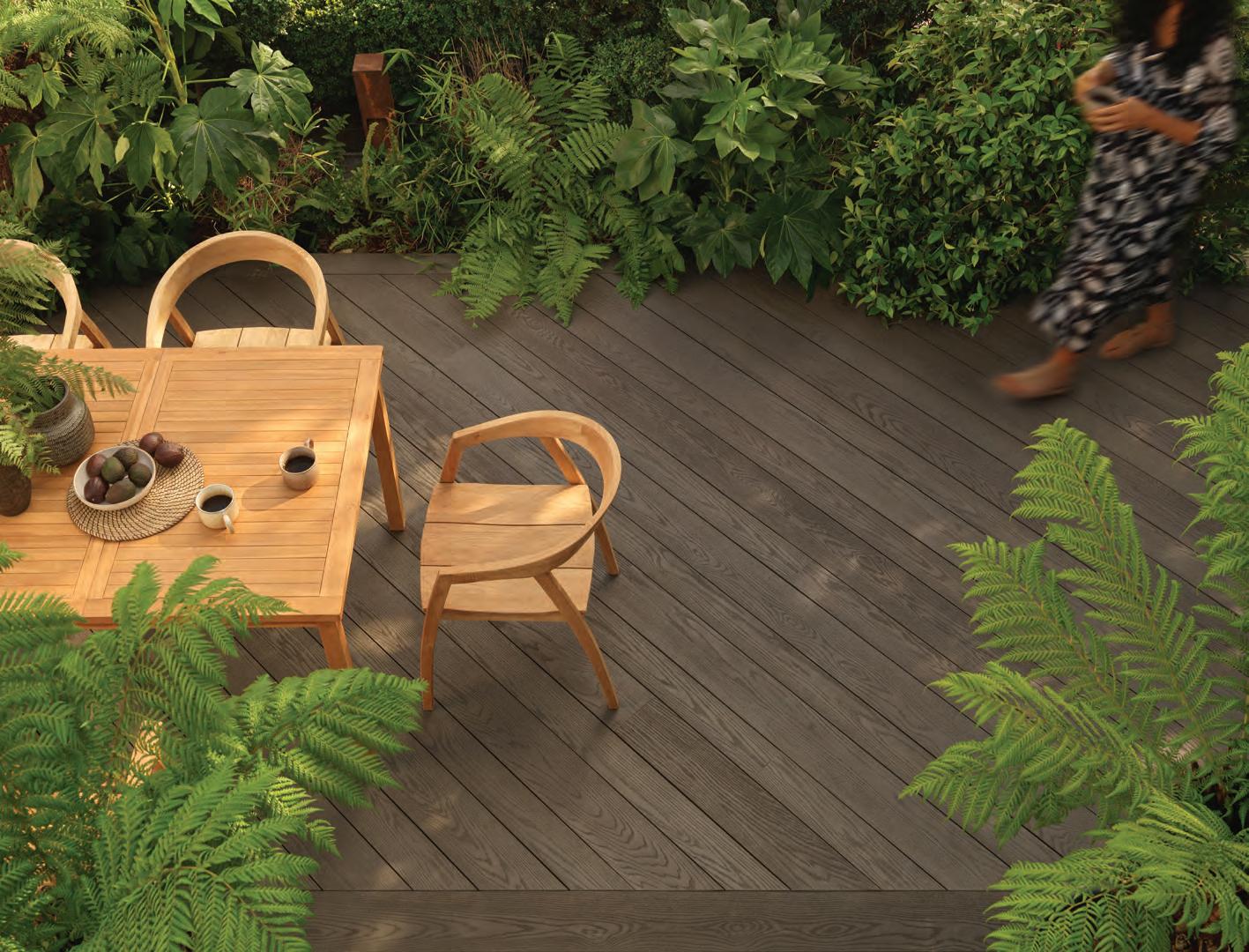
Grande Composite Decking presents a wide-profile board with a premium look made from sustainably sourced material using advanced co-extrusion technology. Its durable, weatherproof design delivers fast installation, low maintenance and a natural-looking finish, with four stylish colours available, including new Noir and Mocha for 2026.
• FSC-certified using 95% recycled materials
• Advanced co-extrusion for durability and weather protection
• Natural-looking board without the drawbacks of timber ecoscape.co.uk
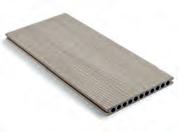

Price: £60.46/board
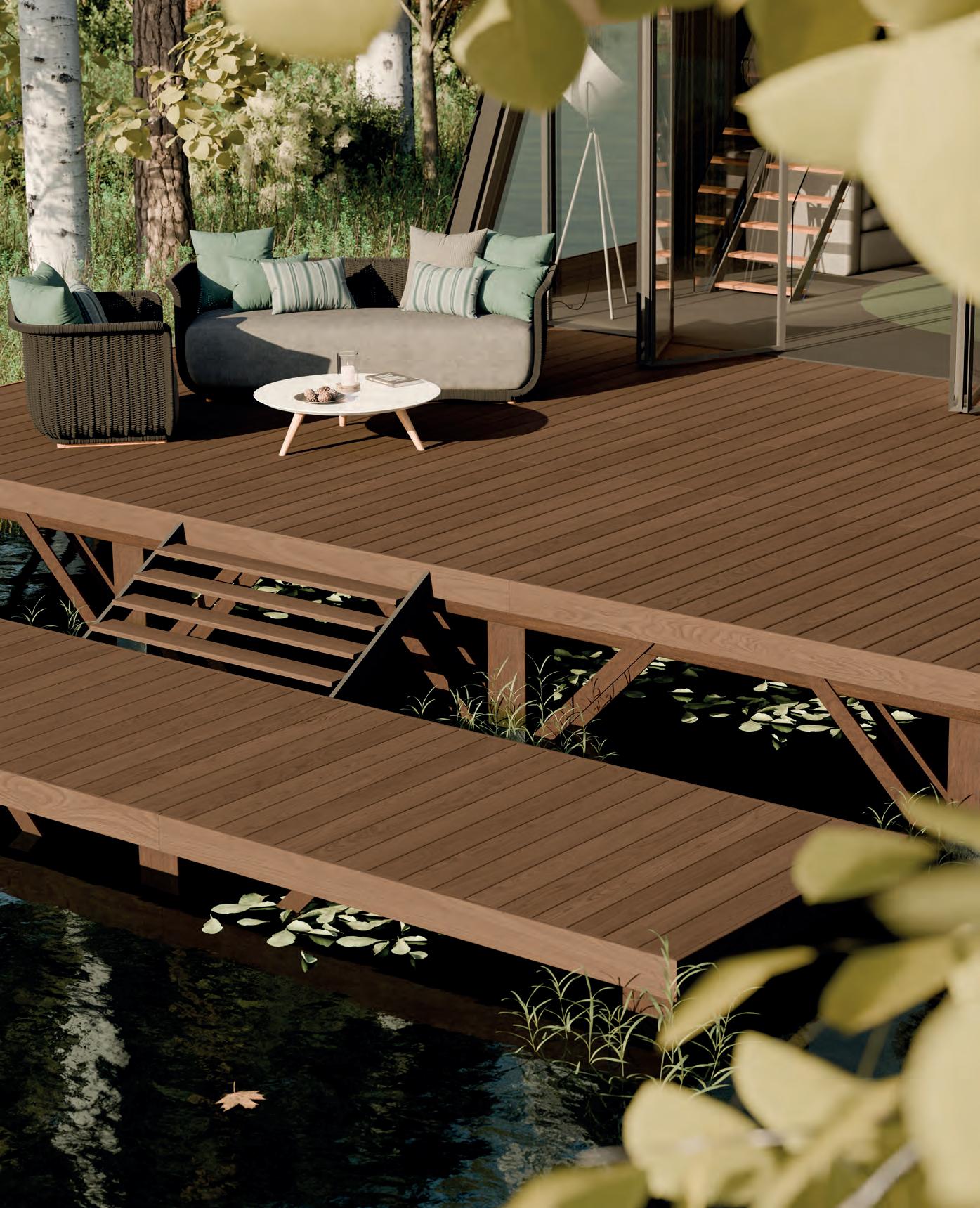
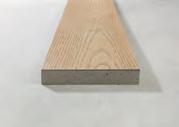
Price: £160 per sqm (176mm boards)

Hand-moulded from the finest oak timbers, Millboard Enhanced Grain decking delivers a refined, contemporary look with delicate grain and a soft-touch finish. Individually hand-coloured boards bring natural tonal variation while maintaining crisp architectural lines. Wood-free and low maintenance, it won’t rot, warp or splinter and is exceptionally slip-resistant, even when wet.
• Moulded from selected oak timbers for realistic wood-grain detail
• Integrated Lastane layer helps prevent weathering, wear and splinters
• Exceptionally slip-resistant surface for safer footing year-round millboard.com

Price: POA
KömaDek provides a perfect decking area throughout the year. It has been engineered with 86% recycled material in the embossed finish and 99% in apremium laminated option. It also has an expected lifespan of over 25 years and does not warp, twist or rot, leaving little maintenance.
• KömaDek is dimensionally stable and does not warp, twist or rot
• Available in four anti-slip, embossed option and five new premium, laminated finishes
• Uses up to 99% recycled materials kommerling.co.uk
Looking for a durable, but low maintenance flooring solution? This range of decking has you covered
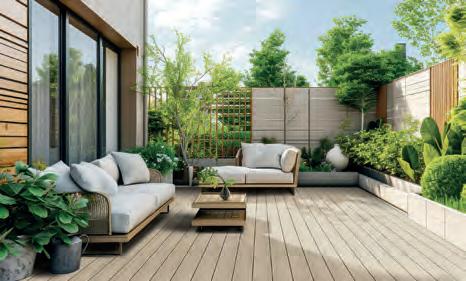
Already a top performer in the US, Carmel is a light oak colour that features toasty brown and grey undertones and a realistic natural grain pattern. In response to high demand from customers, Carmel was selected specifically by TrexPro installers to join the UK range.
• Features Trex’s innovative SunComfortable heat-mitigating technology
• Created from up to 95% recycled materials
• High-performance outer shell for durability, resisting fading and staining uk.trex.com


Price: £155m2
uncomfortable truth behind cheap composite vs premium
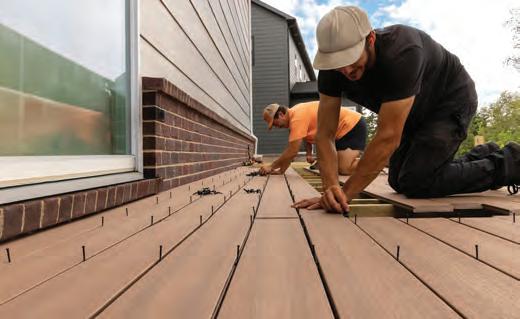
Let’s stop pretending all composite decking is the same. It isn’t. Putting well engineered, premium systems in the same category as the nameless, bargain-basement imports flooding into the UK is like comparing a tested safety harness with a piece of string off my mate Bob.
Tier-one composites are engineered to last High-quality composite boards don’t arrive on site by accident. They come out of years of R&D, lab testing and real-world trials. You get:
• Stable boards with controlled expansion and contraction
• Proven slip resistance and surface durability
• Fixing systems that work well
• Enforceable warranties measured in decades
From an environmental point of view, that longevity is crucial. A deck that lasts 25 to 30 years before it needs major work or replacing, spreads its embodied carbon over a long service life. One well-specified deck is far greener than two or three cheap ones ripped up and replaced.
Budget imports, false economy and real waste
Then there’s the junk; unbranded composites shipped in by the container load, often from the Far East, sold mainly on price and a glossy sample board. My expert inspections across the UK show the same pattern again and again, even where the contractor has followed the installation instructions to the letter:
• Wild movement and excessive thermal expansion
• Boards twisting, cupping and opening joints
Due diligence in not optional Here is the hard bit for our industry. If you, as the contractor, recommend a bargain composite and it fails, that decision is on you and so may be the replacement cost. “The client wanted cheap” is not a defence when boards are moving and splitting, fixings are failing, and the whole structure is heading for the tip long before its time.
This is not a sustainable system. It’s greenwashing with a tracking number
• Choose manufacturers with a track record, not just a catalogue
• Check technical data, testing and environmental credentials
• Understand expansion behaviour, fixing requirements and sub-frame design
• Make sure the warranty is real, written and enforceable in the UK
the bar
It’s about environmental impact, product failure and professional responsibility
• Splitting longitudinally and randomly at the short ends
• Clips failing prematurely
Don’t be surprised folks, but I’ve seen this within 12 months from installation. Once that happens, the ‘fake’ deck is suddenly a skip full of plastic-rich waste, plus the carbon cost of doing the job all over again.
Many of these products are made with unknown fillers, heavy use of virgin polymers, and very little credible environmental data. Some don’t even bother with a real warranty. In a few years, the company name simply disappears – and so does any chance of a claim.
In an ideal world, we’d have an international standard that separates serious composite systems from disposable imposters – minimum performance, durability and environmental criteria that must be met before a product can be sold as decking. Until that happens, we must set that bar ourselves. If a composite board can’t offer proven stability, a meaningful warranty and honest environmental information, it shouldn’t be anywhere near a professional specification.
“Tier-one” deck boards are engineered, tested and supported to a level the cheap imports simply don’t touch. From an environmental perspective, that difference matters. The greenest choice is the one that doesn’t end up in a skip after a few summers.

KARL HARRISON
Karl Harrison is a professional landscaper and that “decking guy in the hat”, designing and building decks across the UK since 2003. Known for his straight-talking approach, he specialises in timber and composite decking, complex details and real-world performance. He also works as an independent expert witness, lifting the lid on poor installations and promoting better standards across the industry. Find the Decking Network at the FutureScape Decking Hub 2026.
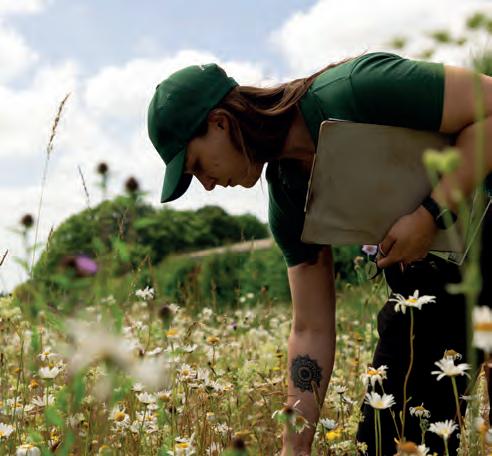
Wildflower Turf has transformed into Wildflower Co. Rooted in two generations of farming and over 20 years of wildflower expertise, we are the perfect biodiversity partner for landscapers like you.
Wildflower Co. brings science and ecological understanding together with real world landscaping know how, shaped by the demands of modern projects. Our recent name change reflects a business that’s grown far beyond turf, evolving to support landscapers and developers with a broader, more practical offer.


From products and services to consultancy and training, everything sits under one clear identity. Trusted across the industry, Wildflower Co. delivers nature led solutions that are straightforward to install, reliable on site, and built to last.
Approved by Landscape Professionals
Every solution is developed to support long term biodiversity whilst also meeting ESG expectations.
From challenging soil conditions to ongoing maintenance pressures. The focus is not just on establishment, but on creating landscapes that succeed year after year.
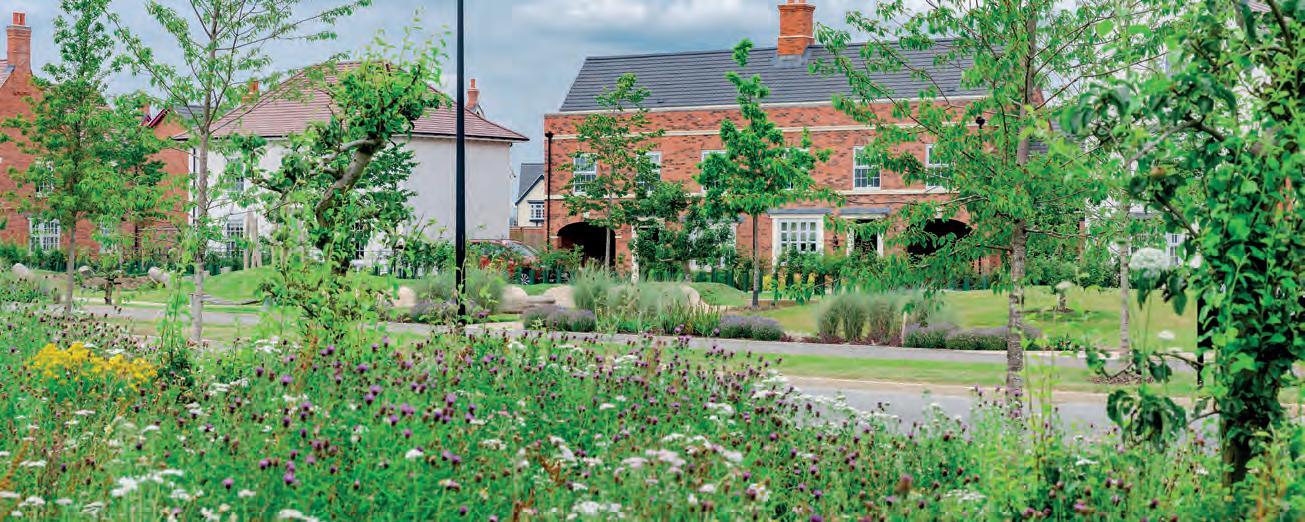

Wildflower Co. works alongside landscapers as a delivery partner, not just a supplier. From early stage advice through to installation guidance and aftercare, the team provides clear, honest support tailored to each project. Products are designed to be robust, straightforward to install and reliable in performance, helping landscapers deliver successful outcomes that their clients love.
Whether supporting public realm schemes, commercial developments or domestic landscaping, Wildflower Co. brings consistency, expertise and clarity to projects that demand biodiversity. The result is landscapes that look great, function well and continue to add ecological value long after handover.
Proven, reliable products at every scale
Simple installation & minimal maintenance
Long-term biodiversity success
Honest advice & expert support
We design biodiverse solutions that work for nature and stand the test
of time.
Straightcurve’s Tony Denn on the advantages of system-based landscaping
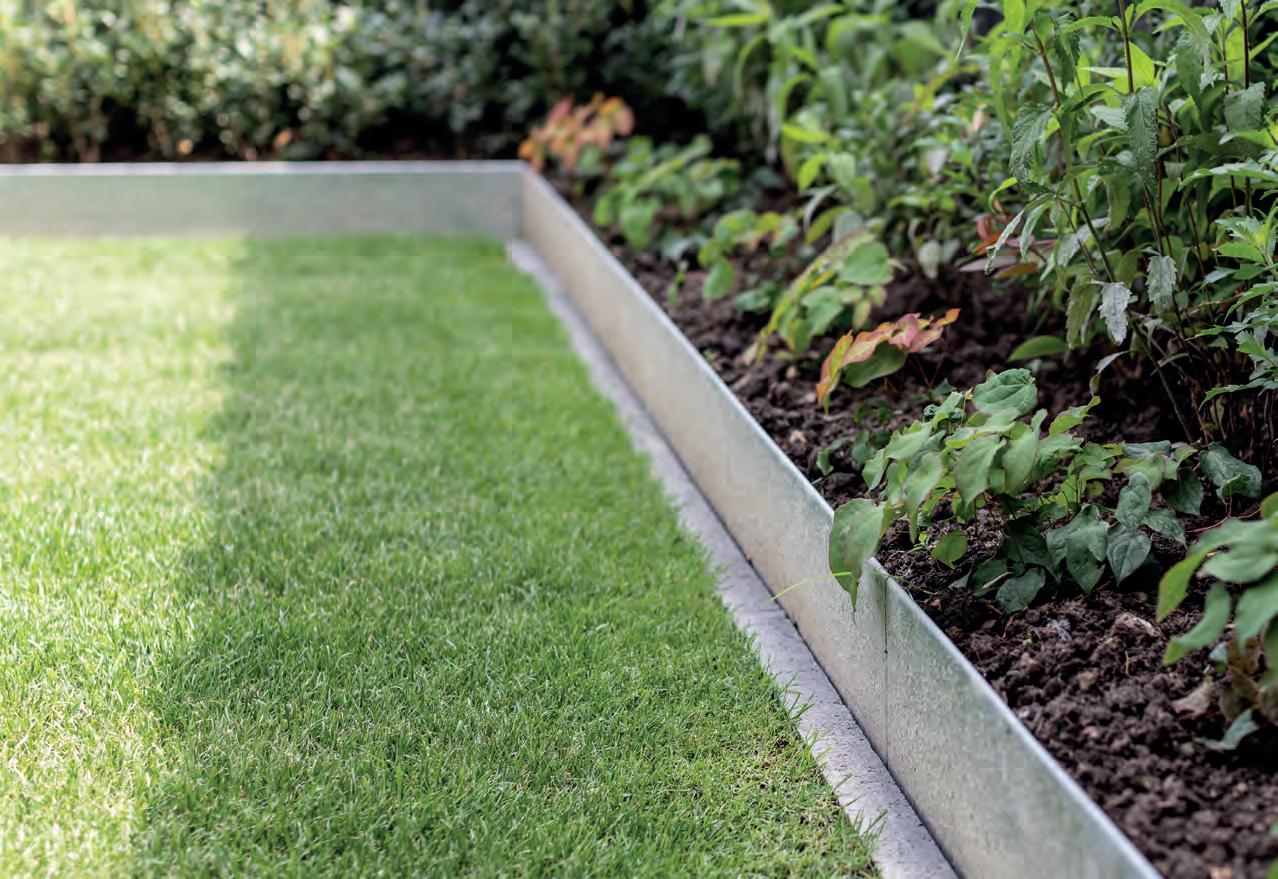
Most landscape projects don’t succeed or fail because of one dramatic decision. More often, the outcome is shaped by dozens of smaller choices made early on – choices that may be a relatively small part of the overall job cost but quietly influence everything that follows.

Weathered steel planters available in a range of pre-packed sizes or individual panels to create bespoke planters to complement Straightcurve edging and raised beds. STRAIGHTCURVE PLANTERS
In recent years, the idea of marginal gains has been widely discussed in other industries: the concept that improving lots of small elements by just a few percent can compound into a significant overall advantage. It’s an approach that feels particularly relevant to professional landscaping, where efficiency, sequencing and buildability matter just as much as design intent.
On site, some decisions have a habit of multiplying their impact. They affect how quickly a job progresses, how often levels need revisiting, how closely the finished result matches the original plan, and how well the project holds up over time. Containment and edging systems sit firmly in that category.
Edging is often treated as a minor line item – a practical necessity rather than a strategic or aesthetic choice. Yet it plays a central role in defining levels, holding curves, separating materials and maintaining structure long
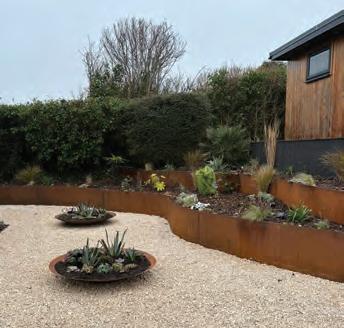
after handover. When that system fights the build process, the knock-on effects are familiar: extra labour, compromises on shape, or time spent making traditional materials do things they were never designed to do easily.
By contrast, system-based edging and raised bed solutions are increasingly being adopted to remove friction from the build altogether. Modular steel systems, like Straightcurve garden edging, for example, arrive preengineered to form consistent lines and smooth, shapeable curves, allowing

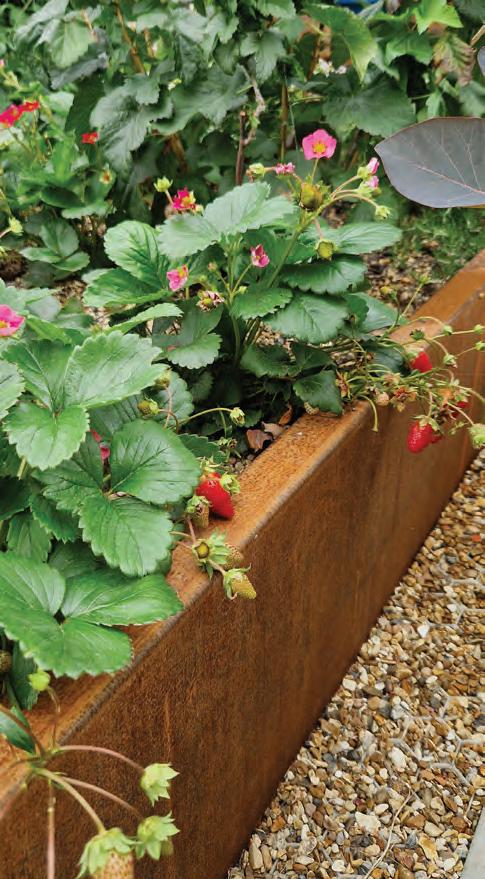
Edging is often treated as a minor line item – a practical necessity rather than a strategic or aesthetic choice
landscapers to set out with confidence and move quickly through installation. The gain here isn’t dramatic in isolation –a few hours saved on setting out, fewer adjustments during fixing – but those savings repeat themselves and compound across the job.
There’s also a long-term dimension to consider. Materials that creep, rot or shift
inevitably require revisiting, whether the contractor or the client bears that cost. Systems designed to retain their shape reduce those risks, protecting both the original design and the installer's reputation.
Aesthetically, the benefits of system-based landscaping materials reveal themselves over time. Clean edges stay clean. Curves remain intentional rather than softening over time. Steel, particularly when allowed to develop a natural patina, sits comfortably alongside planting schemes and hardscape materials, ageing with the landscape rather than fighting against it.
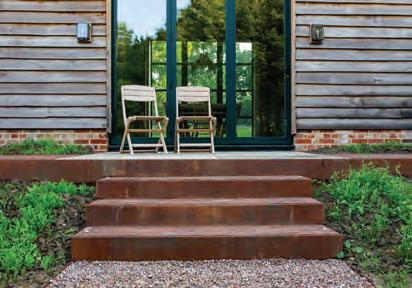
None of this is about chasing novelty or abandoning proven practices for the sake of it. It’s about recognising which early decisions act as multipliers, influencing efficiency, finish,
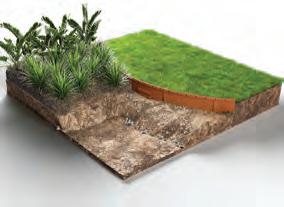
Available in variable depths from 75mm to 150mm, classic weathering steel and galvanised steel (coming spring 2026). Ideal for adding superior curved edges to a garden. STRAIGHTCURVE FLEX EDGING
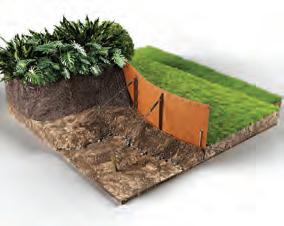
STRAIGHTCURVE FLEX RAISED BEDS
Robust steel raised beds in a range of heights from 240mm to 560mm. Suitable for creating curved, multilevel plant beds and retaining walls. Available in classic weathering steel and galvanised steel (coming spring 2026).
and longevity all at once. In a trade where margins are tight and expectations are high, the most valuable gains often come not from working harder but from choosing systems that quietly do more of the work for you.
Straightcurve is available at Straightcurve.com and from fhbrundle.co.uk

has worked in the landscape industry for 14 years, both on the tools and as a landscaping business owner. He now leads the Straightcurve modular steel garden edging team as the UK’s relationship and market development manager. straightcurve.com

XGT 40V MAX / LXT 18V
EFFICIENTLY CHARGES
MULTIPLE BATTERIES





LXT COMPATIBLE
LXT batteries can be charged using the ADP10 adapter
ROTATABLE HANDLES
Single LED with preglow and afterglow functions.
REMOVABLE LID
Dial for adjusting the nail depth.
THEFT PROTECTION
Hole for padlock to keep batteries secure.
PRICE: £749

The FSA 200 is a powerful battery-powered brush cutter from Stihl. Designed for professionals working in landscaping and grounds maintenance, it’s powerful enough to take on the toughest mowing, clearing and scrub cutting jobs. The FSA 200 is battery powered with low noise emissions, making it ideal for use in noise sensitive areas.
• Fitted with a bike handle for comfort when cutting tall grass and weeds
• Speed-adjustment on the control handle with three different speed levels
• Energy saving mode on the handle when battery is low
• Anti-vibration system for muscle and joint protection
• Air filter ensures that the engine is kept cool during work improving service life stihl.co.uk
With sunny days on the horizon, get your projects looking spic and span
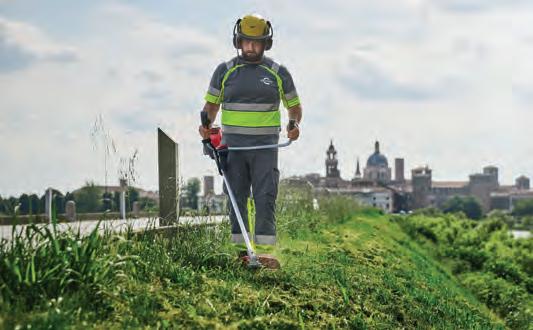
The TB20H is a high-performance professional Brush Cutter for clearing overgrown areas, offering exceptional comfort from the fully adjustable high tower bike handle and ergonomic operator harness. Premium components include a magnesium protection plate for additional durability and an ultra-high-performance 2 kW motor to rival the performance of 45 cc petrol equivalents.
• Variable speed setting up to 8,000 rpm
• High tower adjustable handle system for optimum ergonomics
• Professional high torque gearbox
• With rapid reload trimmer head, tri-blade, and saw blade
• 2kW brushless motor rivalling 45 cc petrol performance
cramertools.com

PRICE: £549.99

PRICE: £1,129 TWINCLIP 950E VR KIT – CORDLESS/BATTERY ROLLER LAWNMOWER
Stiga's Twinclip 950e VR Kit takes self-propelled mowing to the next level. Powered by twin STIGA ePower 48V 7.5Ah batteries and a 2.2kW motor, it delivers outstanding performance and efficiency. A patented double-layered blade maximises cutting and collection, while the rear roller creates perfect lawn stripes at a pace that matches you, thanks to the variable speed function.
• Battery lawn mower with rear roller for a striped lawn effect
• 2.2 kW brushless motor delivers superior cutting performance
• Stiga patented Twinclip blade for more efficient mowing
• Intuitive keypad with Eco-mode for easy energy management
• Works with two STIGA ePower 48 V 7.5 Ah batteries and charger included. stiga.com
Husqvarna Automower®
540 EPOS® is a wire-free robotic mower for commercial turf care. Covering up to 8,000 m², it’s ideal for parks, roundabouts, and municipal areas. Built on a new platform with 30 years of innovation, it delivers high productivity, excellent cutting results, and easy maintenance.
• Husqvarna EPOS® wire-free Technology offers wire-free operation through satellite-based RTK-GNSS technology
• Selectable mowing pattern – improve the visual impression of the turf by changing the mowing pattern
PRICE: £1,099

• Warning lights with pulsating or solid light to create awareness during operation at night
• Husqvarna Fleet Services™ gives you full control of the mower with the possibility to monitor, control and analyse your entire fleet of products from your smartphone, tablet or laptop
• AI-Vision technology – in addition to the on-board radar system, the vision technology accessory incorporates an AI-assisted camera system that enables the robotic mower to visually detect and avoid obstacles on the turf . husqvarna.com HUSQVARNA PRICE: £4,999


TWINCLIP 950E V KIT –CORDLESS/BATTERY LAWNMOWER
Stiga's Twinclip 950e V Kit delivers powerful, effortless mowing with a 2.2kW brushless motor and dual 48V batteries, covering up to 1,600sqm on a single charge. Featuring a flexible four-in-one cutting system, double-layered blade, and one-hand removal 70-litre grass bag for maximum efficiency.

• Powerful battery-powered self-propelled lawn mower
• Ultra-p owerful 2.2kW brushless motor delivers efficient mowing
• Double-layered blade maximises collection efficiency
• Intuitive keypad with eco mode and six speeds
• 2 x STIGA ePower E 475 (7,5Ah) and charger included stiga.com

The HSA 140 R is one of Stihl’s most powerful battery-powered hedge trimmers in the Stihl AP System, comparable in performance to the popular p etrol HS 82. Featuring 38mm tooth spacing, the HSA 140 R is best suited to annual pruning or hedge reduction work.
• Lightweight for balanced operation and user comfort
• Long lasting sharpness for consistent cuts and durability stihl.co.uk HSA 140 R CORDLESS
• Quiet in operation and highly effective anti-vibration system
• Two-step planetary gear for high cutting performance and fast cold start-up
• Anti-blocking system that reverses the motors rotational direction to unblock the blades
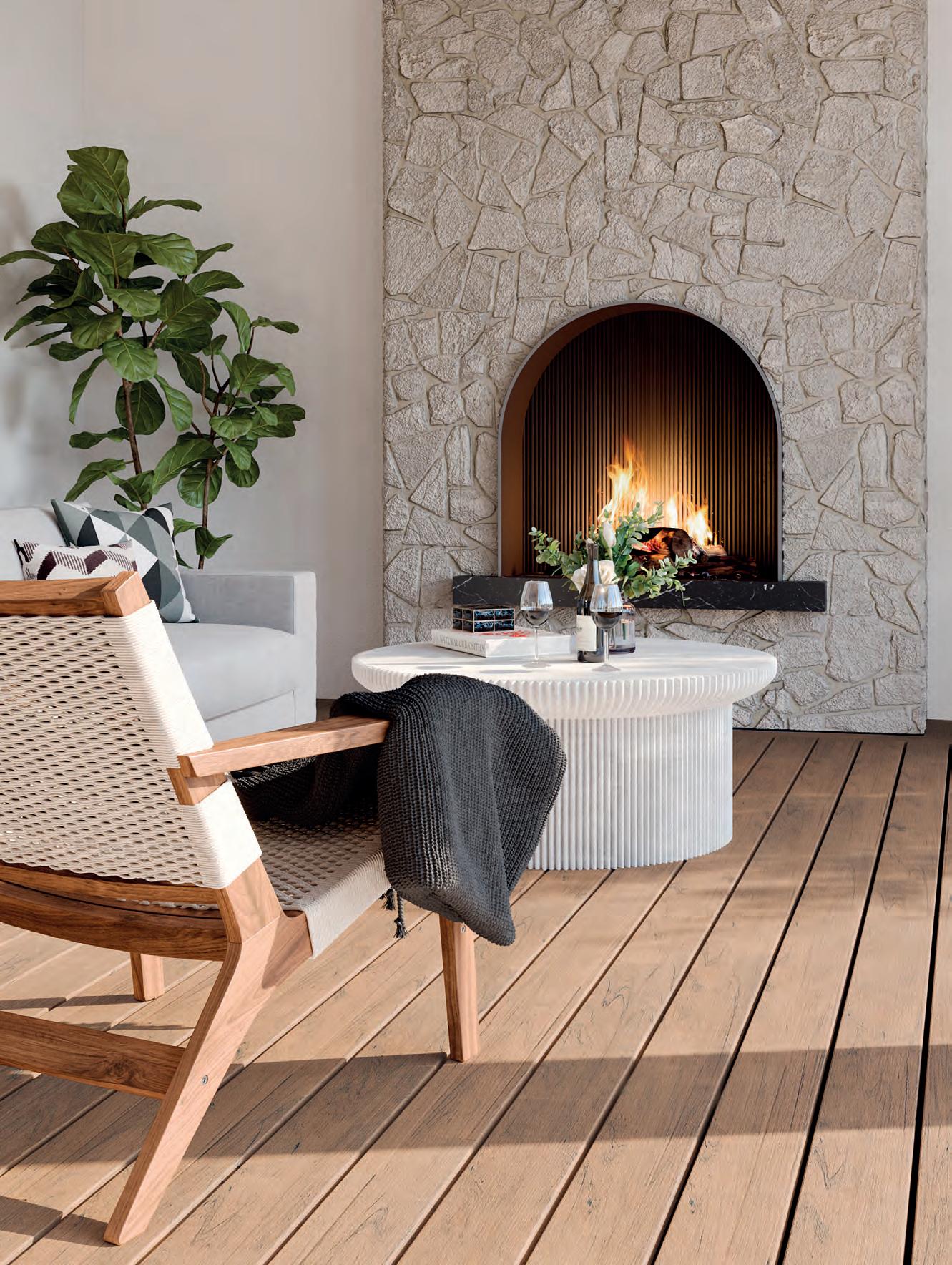
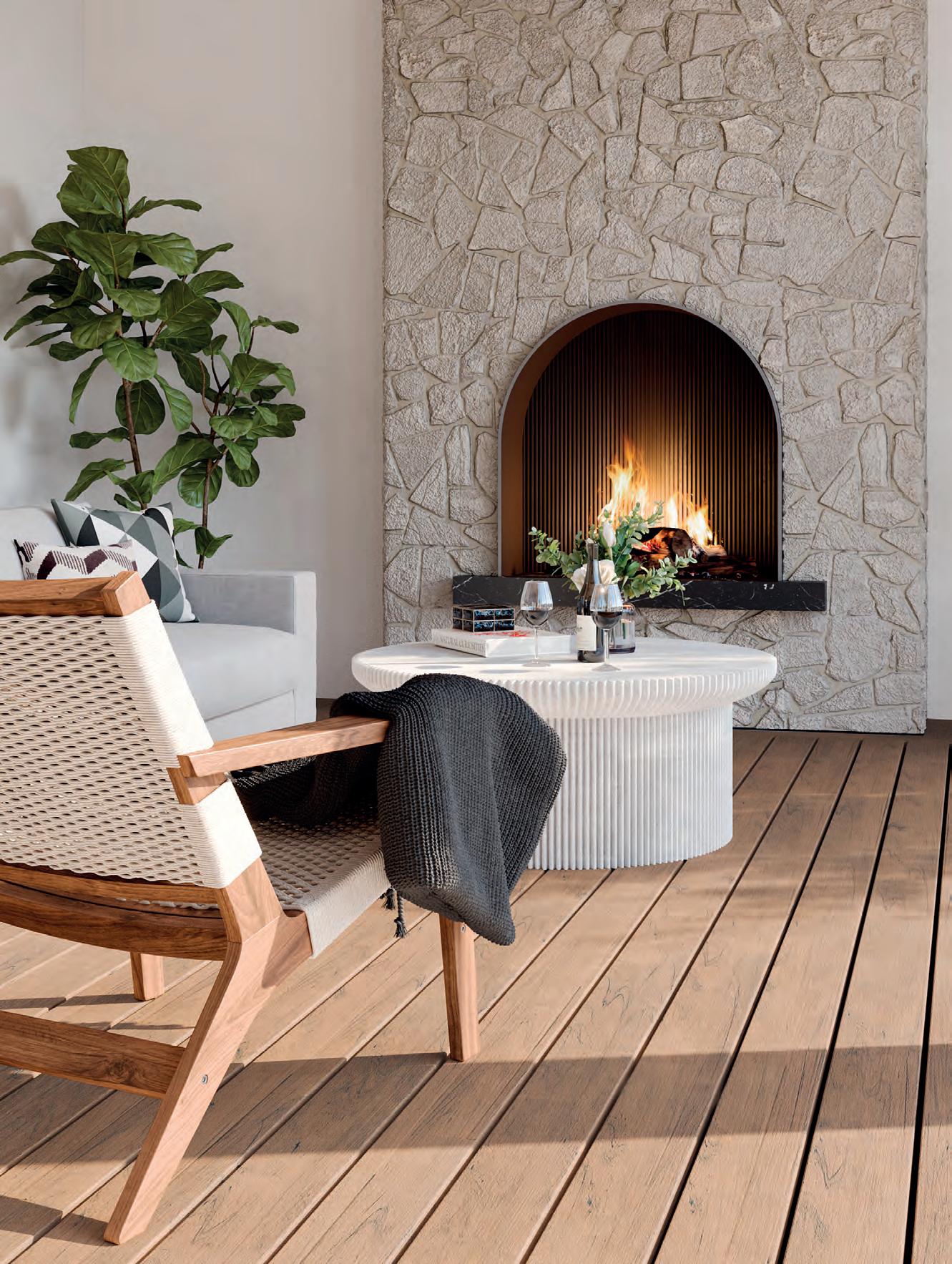
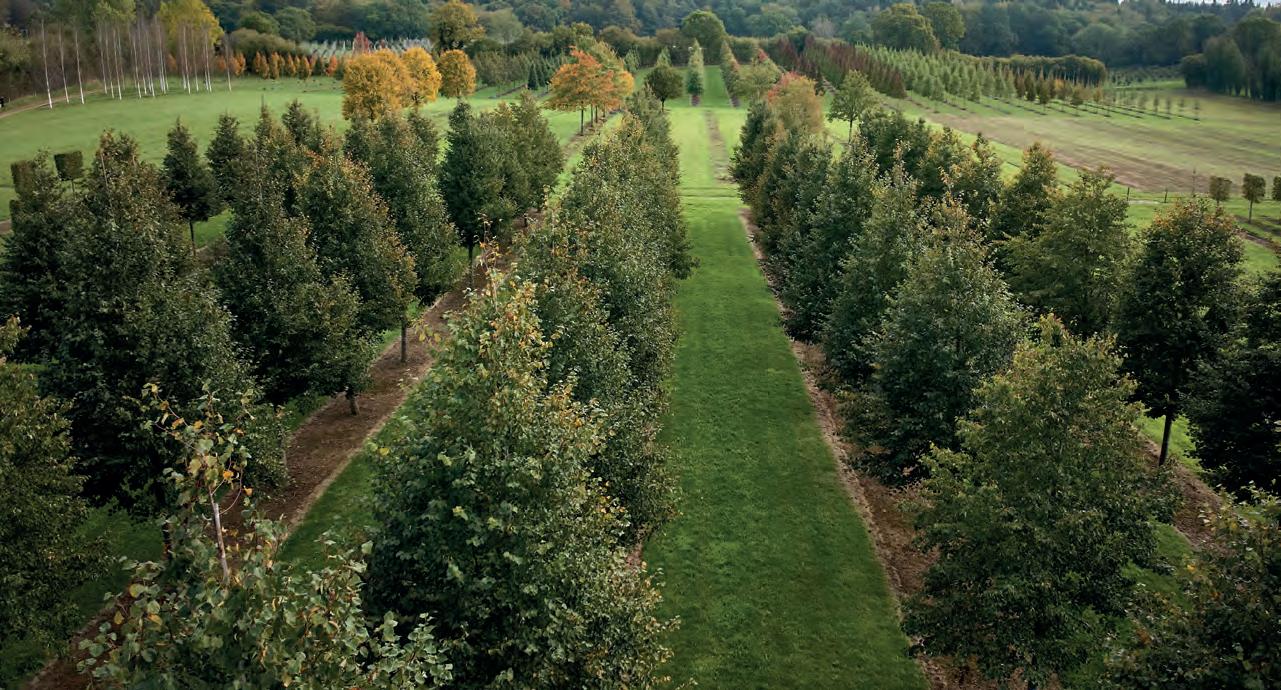
Established 1864
Established 1864
Expertly grown on 700-acres of pristine Hillier land in Hampshire, this is sustainable tree production as it should be.
Expertly grown on 700-acres of pristine Hillier land in Hampshire, this is sustainable tree production as it should be.
Hillier Trees: Growing for England since 1864
Hillier Trees: Growing for England since 1864
Please contact trees@hillier.co.uk



trees.hillier.co.uk
Please contact trees@hillier.co.uk
01794 368 733
trees.hillier.co.uk
Download The Hillier Tree Guide
01794 368 733
Download The Hillier Tree Guide
Your guide to our range of trees. Showing their form and size over 15, 25 and 50 years, plus helpful information on suggested usage for a variety of projects and locations.
Scan this QR code to download your copy today!
Your guide to our range of trees. Showing their form and size over 15, 25 and 50 years, plus helpful information on suggested usage for a variety of projects and locations.


Scan this QR code to download your copy today!
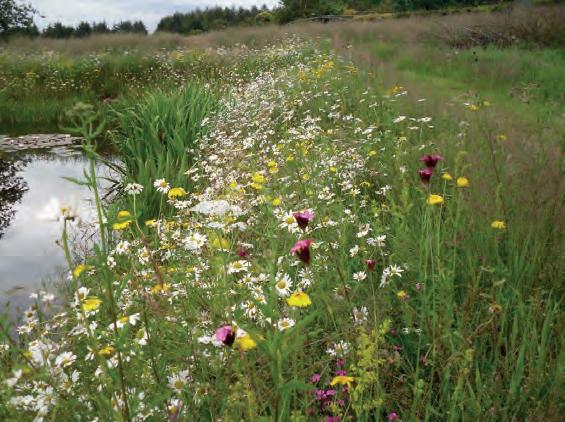


Transform your landscape instantly with our award winning wildflower turf, designed to create a vibrant wildflower meadow or garden area. It features a carefully balanced blend of native wildflowers, herbs, and colourful flowering perennials, all thriving in a moisture-retentive, plastic-free, biodegradable felt. This eco-friendly solution not only enhances the beauty of your outdoor space but also supports local biodiversity. Experience the joy of an instant wildflower area that is both sustainable and visually stunning.
Our Species-Rich Turf is a harmonious blend of wildflowers and grasses, the 80/20 mix is carefully cultivated into a plastic-free, moisture-retentive mat, creating an instant biodiverse haven. This unique turf can be maintained like a traditional lawn with regular mowing, or left to grow naturally to encourage the flourishing of diverse plant species.



Two
years into biodiversity net gain: how is the legislation evolving?
WORDS: BETHANY VANN
In February 2024, the UK government introduced a new set of nature-focused regulations across England, aimed at addressing the rapid decline in wildlife populations and the shortage of accessible green spaces.
As well as a mandatory 10% uplift in a site’s baseline, biodiversity net gain (BNG) ushered in a new era of cross collaboration between industries that would see more consideration given over to nature and the environmental impact of developments – that was the original idea at least.
With a legislation of this magnitude, it is no surprise then that since its roll out, BNG has consistently been under the microscope – be that to ascertain real-world application data or economic forecasts for the off-site market – as a means to evolve it.
It’s worth remembering why BNG
was first introduced. By now, most of us – if not everyone here – will be familiar with the RSPB’s 2023 State of Nature report and its conclusions, but let me briefly set the scene:
Of the more than 10,000 species studied across Great Britain, 16% are currently at risk of extinction. This threat is far more severe for certain groups of wildlife: 26% of land mammals face the risk of being lost, along with a staggering 43% of bird species.
woodlands and 25% of peatlands meet this standard.
More than half (54%) of our native plants are also vanishing from places where they were previously found –a devasting side effect from the decline in several insect groups.
At a high density, a development of 0.2 hectares would equate to about 28 homes and at a low density perhaps two or three large and likely high-end homes, this is not nothing
The rapid decline in biodiversity is not just reserved for wildlife, as the findings also revealed that just one in seven (14%) of the UK’s most important wildlife habitats are classified as being in ‘good condition’; only 7% of
When BNG was first conceived, it was done so upon three main pillars – it's primary purpose, to improve the country’s overall biodiversity value.
Now, as it welcomes in its secondary anniversary, it does so with arguably the legislation's largest change to date on the horizon.
Late last year, the government announced that developments below 0.2 hectares would be exempt from
delivering the mandatory uplift. Though a smaller amount than originally anticipated – 0.5 hectares was the expected size – the change has been met with mixed responses from across the industry.
“From my perspective, that's a reasonably good outcome”, says ecologist and director of Future Nature Consulting, Peter Massini. Going on to say that initially there was concern that the exemptions would undermine the habitat bank market – which is forecasted to reach £3bn by 2035 – as they initially held a large amount of stock in small sites due to the length of time for larger developments to get the green light, Massini shares.
He adds that while this is an indication that the legislation is moving in the right direction, there may well be some “devils in the details” still to come.
Managing director of Helmrig, Dave Gallagher adds that exempting those smaller sites is a sensible move, which in theory should eliminate some of the more unnecessary barriers faced by smaller developers, he says.
“It is right and proper that a major PLC developing a greenfield site to produce 500 houses should have to consider the effect they're having on the habitat”, adds Gallagher: “But there has to be a line drawn somewhere.”
While we’re seeing a higher specification of soft landscaping under the guidance of BNG, so too has their cost, says Gallagher: “When the specs go up, some of their planning figures on what they're expecting to spend on soft landscaping per plot suddenly increase quite dramatically, and that's on top of general labour cost increases and
general inflationary pressures, anyway.” He fears that while many developers are looking to fulfil the BNG requirements correctly, the additional pressures of the legislation – particularly on SME builders – could lead to the sourcing of “unscrupulous contractors who are prepared to cheat.”
Rachael Emous-Austin MSGLD, director of Austin Design Works adds that applications are going into the planning stage “without a fully costed management plan; the cost for a 30-year maintenance contract could come as a shock.”
On top of the additional requirements, concerns have also been raised over the BNG being delivered on smaller sites potentially resulting in fragmented and isolated pockets of nature, as shared in the Comparative Value of On-site vs Offsite Biodiversity Net Gain for Restoring Nature published last year.
But on the other side of that coin is the potential for those smaller sites to equate to a larger, overarching boost to nature, as Austin explains:
“If BNG is not achieved, this is entirely at the expense of nature. 0.2 hectares is not a little amount of land;
collectively, these sites would have a serious impact on nature recovery.”
Austin adds that these exemptions could have a much larger impact when examined beyond face value: “At a high density, a development of 0.2 hectares would equate to about 28 homes and at a low density perhaps two or three large and likely high-end homes, this is not nothing, and I feel that by simply referring to an area, this makes it sound insignificant, which it is not.”
When BNG was launched, it was done so with the knowledge that it would impact developments – any change
in the planning process would – but some now fear the additional steps in the process are being seen as more red tape – creating barriers and rising costs that culminate in the perception that it’s development vs nature.
Austin shares how she has worked with largerscale developers that were prepared ahead of the frameworks launch and were already selecting sites based on how they could implement the net gain, as well as still hit their profit margins through the employment of inhouse ecologists and designers.
with an attitude that [BNG] is just more red tape”, highlighting a potential need for further guidance and support.
Gallagher adds to this, saying: “There’s a perception that [BNG is] a pain, but on the flip side of that is our opportunity to lessen the pain.”
One thing that's been sort of forgotten in the debate is that BNG is not the only policy you have to consider when you're developing sites
BNG offers the opportunity for landbased companies to get involved with planning discussions and development decisions at an earlier stage – it is a chance for nature to become an earlier consideration.
growing increasingly more confident in the legislation, but there are still seemingly grey areas around the legislation, as Massini explains:
“One thing that's been sort of forgotten in the debate is that BNG is not the only policy you have to consider when you're developing sites.”
While local authorities are required to address BNG in the planning process because of legislative requirements, they should also be ensuring their local plan policy is also fit for purpose, says Massini. “You can use other sub policies and urban greening policies like a Tree Preservation Order. I think it was forgotten that the framework is broader than BNG.”
From Green Infrastructure Mandates and Sustainable Drainage Systems to Community Greening Programmes, urban greening policies are a means to integrate nature into cities, which while Massini notes there are often overlaps in these policies within BNG, they can also offer a boost to biodiversity outside of the legislations framework that still ultimately meets the intended end goal of BNG.
Gallagher adds to this by drawing reference to the importance of mosaic habitats – which is made up of diverse, patchwork landscapes featuring a mix of different and often contrasting smaller habitats.
The internal requirement of qualified professionals to achieve the mandatory uplift is also another recognised pain point of the legislation. It’s no secret that land-based sectors are feeling the effects of an on-going labour shortage. With the mounted pressure of BNG, this shortage could be contributing to the break down from planning to delivery.
Austin adds that she has also worked with smaller companies that were, as she says, “underprepared and under educated,
“The most positive thing is that all developers – from the big ones right down to the small developers who had no idea about BNG a year ago – know what it is now”, says Massini. “They all know that they can't cut down trees on a site.”
Adding that –despite its confusing beginning – developers are
Many of these arguably forgotten habitats – like sand piles and dead wood – are what will create a well-rounded and functional ecosystem.
“For me [mosaic habitats] are really interesting, because they're not what the Defra tool is measuring”, says Gallagher. He adds that while BNG is undoubtedly a step in the right direction, genuine habitat creation is more nuanced than the current metric explores, and can arguably lead to people creating habitats for the sole purpose of ticking a box, when in reality much more is achievable with a more sophisticated metric.
to contribute to the protection of our natural capital in a more meaningful way, without alienating developers?
“I think the BNG process should be unified and universal. But recognising that it sits alongside other planning policies – and that's where the local authorities can have a more nuanced approach on how they apply their local plan policies, rather than try to change BNG into multiple different approaches,” says Massini.
People’s perception of how a landscape should look in a development needs to change if we are to happily live side by side with these habitats
If mosaic habitats were to become a part of the metric, one of the toughest nuts to crack as Austin says, could come in the form of public perception:
“Habitats are not recreational landscapes – mown lawns, pretty trees and perfect hedges – they are messy, untidy and definitely not a pictorial meadow; they need to be left to get on with their thing. People’s perception of how a landscape should look in a development needs to change if we are to happily live side by side with these habitats.”
So, where do we go from here? How can we create a legislation that is going
Gallagher adds that alongside genuine habitat creation, improving the framework also comes down to the recognition that it is now a “business critical” consideration on whether a project goes ahead or not, saying:
“The importance of upfront collaboration and getting the contract around the table to help make sure the design that goes into planning suits everybody's needs is massive. As an industry, we've got to shout louder and demand a seat at the table.”
While Austin notes that a more balanced approach to on and off-site BNG
delivery would go towards easing the reservations of developers:
“This, in my view, would make for the best balance of a lush and welcoming recreational landscape setting for developments, with a contribution to the Local or National Nature Recovery Networks, which have been so thoroughly mapped out. This would also help developers manage their budgets avoiding the 30-year tiein to a management plan for all of the habitats.”
While BNG will undoubtedly remain under the microscope for the foreseeable future, the success of its ongoing evolution is going to hinge on clarity, collaboration and a shared understanding that nature recovery and development are not opposing forces.
If BNG can move beyond box-ticking to being applied with a nuanced approach and a wider consideration for corresponding policies, it has the potential to deliver meaningful gains for our country’s biodiversity – as promised.
References
https://www.biodiversityunits.com/newsinsights/revealed-the-bng-industry-reportjuly-2025
BNG isn’t about what you specify, it’s about what establishes
As growers of wildflower turf, Species Rich turf and landscape turf used on thousands of sites across the UK, we see biodiversity net gain (BNG) from a different angle to most.
Long before habitats appear on drawings or plans are submitted, they begin life in soil and it’s there that many BNG ambitions succeed or fail.
BNG has rightly shifted the focus of development towards long-term ecological value, but it has also exposed a disconnect between specification and reality. Too often, schemes are designed around what should exist, rather than what can realistically establish and improve over time.
What grows on paper doesn’t always grow on site
We regularly work with landscapers and contractors tasked with delivering complex BNG schemes under tight programmes and challenging ground conditions. Wildflower and speciesrich areas are specified with the best intentions yet without the right foundations, they struggle to reach their intended condition.
Successful establishment relies on more than species selection alone. Soil structure, nutrient levels, moisture management and aftercare all influence whether a habitat will stabilise or decline in its first two years.
Designing landscapes that last
BNG demands a long-term mindset. Habitats should be judged on condition decades after installation, not on practical completion photographs.
From our experience, the most robust BNG landscapes share common traits:
• Realistic alignment between design ambition and site conditions
• Simplicity where long-term maintenance resources are limited
• Early collaboration between ecologists, designers, growers and contractor
• Clear establishment and aftercare strategies
Over-engineered biodiversity can be just as vulnerable as under-specified landscapes.
Biodiversity isn’t created when it’s specified, it’s created when it grows.
Immediate visual impact should not be mistaken for long-term performance. Landscapes that look strong at handover can quickly decline if the foundations are wrong.
As growers, we know that biodiversity isn’t instant, it needs time, resilience and the right start.
The role of turf in biodiversity
Turf is often overlooked in BNG discussions, yet it plays a vital role in many schemes. Wildflower turf and species rich grassland provide instant ground cover, erosion control and habitat continuity, while allowing ecological value to develop progressively.
They reduce the risk associated with seed establishment and offer greater certainty in early condition scoring.
Equally important, well specified landscape turf supports soil health, water infiltration and invertebrate movement. When turf systems are chosen to suit site conditions rather than budgets alone, they become part of the biodiversity solution, not a compromise.
Why early decisions matter
Many of the challenges we see on site stem from decisions made too late. Planting and turf choices are often finalised after soil profiles, drainage and construction impacts are already fixed.
Engaging growers earlier allows teams to better understand what will establish reliably, reduce risk on site and avoid costly rework later.
BNG isn’t just an ecological exercise; it’s a construction one too.
Lindum’s measure of success
For us, success isn’t measured in pallets delivered. It is measured in landscapes that establish, strengthen and improve year after year.
BNG has given the industry an opportunity to raise the standard of green infrastructure across the UK. But that will only happen if we move beyond box-ticking and start treating landscapes as living assets.
From a grower’s point of view, biodiversity isn’t created when it’s specified, it’s created when it grows.
Data published by Joe’s Blooms found that a majority of people opposed to the Government’s 1.5m housing target think all new developments should look to actively improve nature.
The introduction of mandatory BNG for Nationally Significant Infrastructure Projects in England was delayed from November 2025 to May 2026.
The government put forward its plans to streamline small site planning processes in an effort to ‘modernise’ planning committees and support SME housebuilders.
Proposals were also made to introduce a new Medium Site category (10 – 49 homes), which would also be exempt from the Building Safety Levy, and have its own set of BNG rules.
Data from Eftec revealed that 86% of approved planning applications had already claimed exemptions from the legislation.
Biodiversity Units UK published its July 2025 report; drawing on statistics from 33 Habitat Banks across England, it was estimated that the retail market value of BNG could exceed £3bn by the year 2035.
A new report on BNG found that off-site uplift was performing better than its on-site counterpart. Data from the Comparative Value of On-site vs Off-site Biodiversity Net Gain for Restoring Nature report suggested that the on-site uplifts being delivered were creating in ‘small’, ‘fragmented’, and ‘disturbed’ areas.
The British Standards Institution published new guidance around the implementation of biodiversity net gain for projects of any size or type.
Refresh your memory on the history of BNG from 2011 to 2025 here:

The Housing Secretary announced plans to introduce an area-based exemption for smaller sites (up to 0.2 hectares) and measures to streamline off-site BNG delivery.
Results from the government consultations held in 2025 are expected to be announced.
“Stacking within BNG has always been part of the mandatory framework. It’s time to use it and gain the advantages of doing so,” says Julia Baker
In 2016, good practice principles for a little known and voluntary initiative called biodiversity net gain (BNG) were published by CIEEM, CIRIA and IEMA (now ISEP). Back then, the ambition was for development to leave biodiversity in a measurably better state than before. Fast-forward and 2026 marks the 10-year anniversary of these principles.
It also marks two years from when BNG became a legal requirement in 2024, requiring most developments seeking planning permission to deliver a minimum 10% net gain in ‘biodiversity units’, measured using the Statutory Biodiversity Metric and secured for at least 30 years. This year will see changes to that mandatory regime and will be the first year of mandatory BNG for Nationally Significant Infrastructure Projects (NSIPs).
BNG landed within a planning system already under strain. Implementing a significant new regime involving baseline habitat mapping, metric calculations, legal agreements and long-term management has demanded new capacity and skills. Developers, ecological and landscape consultants, local planning authorities and BNG providers, to name a few, have all had to adapt. While these demands and BNG in itself are opportunities, concerns about practical implementation of this new regime have come to the fore.
How ‘stacking’
Stacking within BNG is not stacking of different ecosystem services. Rather, it is the sequential enhancements of the same habitats on the same land over time, with each generating biodiversity units for BNG. Think master-planning for nature over 30, 60, 90-plus years. For example:
Stacking within BNG is not stacking of different ecosystem services. Rather, it is the sequential enhancements of the same habitats on the same land over time
The UK is one of the most nature depleted countries globally, with the State of Nature 2023 partnership reporting a 19% average decline in UK species abundance since 1970. The ‘Dasgupta Review: the economics of biodiversity’ clearly showed how dependent our communities, society and economies are on biodiversity.
BNG can enable development to support nature’s recovery and benefit from doing so. With the foundations in place from the last two years, now is the time to move forward and for BNG to work for both development and nature. An approach called ‘stacking within BNG’ can help.
• The baseline is modified grassland in poor condition.
• The first ‘BNG stack’ is to create other neutral grassland in moderate condition, and this generates biodiversity units under a 30-year legal agreement.
• When this other neutral grassland reaches moderate condition, say in year five, it can become the baseline for the second stack. This second stack is to enhance the condition from moderate to good, which generates biodiversity units for BNG.
Government guidance states that a new or updated legal agreement would be required to cover the remaining time on the initial agreement, plus at least 30 years for the new habitat enhancement.
With other neutral grassland in good condition, a further stack could be to create lowland meadow. Under a single-stack approach, creating lowland meadow from modified grassland would incur high multipliers in the biodiversity metric which reflect the associated ecological risks and effectively reduce the biodiversity units generated.
With stacking, enhancement stages are achieved incrementally, each one generating biodiversity units to sell on local BNG markets. Also, with the second-stack habitat being ecologically closer to lowland meadow, the third stack has lower metric multipliers, meaning lowland meadow is ecologically and financially viable.
The stacking advantage
Done well, a stacking approach follows the natural enhancement and successional stages of habitats over time, with each generating biodiversity units for BNG. It reduces ecological risk, supporting nature’s recovery and enhancement for the long-term.
For BNG providers, stacking can provide regular income over time for their Biodiversity Gain Sites. This does depend on the future of BNG markets, for example, how much biodiversity units sell for in five or 10 years time. This is where policy certainty is essential, as well as the continued rise of blended green finance options.
For developers, especially those with master-plans, phased developments or NSIPs, stacking combined with ‘early‘ BNG –when BNG interventions start before habitats are cleared for the development – is a powerful combination.
By investing in the first BNG stack, develpers demostrate BNG deliverability to planning authorities and regulators. They also reduce their BNG requirement if this first stack is before habitat clearance. Then, they invest in the second or third stack to fulfil their BNG requirement, having confidence given the first stack has been secured.
For BNG providers, stacking can provide regular income over time for their Biodiversity Gain Sites
Stacking also helps with these frequently asked questions about BNG:
What happens to a Biodiversity Gain Site after the 30-year legal agreement for BNG?
• With stacking and a long-term BNG markets, sites can continue to sell biodiversity units and extend their legal agreements for BNG for 60, 90-plus years.
Does the biodiversity metric unfairly penalise the creation of high-value habitats?
• The bio diversity metric actually incentivises long-term creation and enhancement of highly valuable habitats through a stacking approach.
With mandatory BNG being introduced for NSIPs, is there enough land for BNG?
• Stacking enables maximum biodversity units to be generated with minimum land-take.
The ask
There is no doubt that 2026 will be a year of change for BNG. However, as these changes come into force, the test is not whether we comply but whether we can make BNG work for nature, communities and development. Stacking within BNG has always been part of the mandatory framework. It’s time to use it and gain the advantages of doing so.

Julia Baker is technical director for nature services at Mott MacDonald, where she leads the integration of nature into infrastructure planning and delivery. With over 20 years’ experience, Baker authored the UK’s Biodiversity Net Gain (BNG) Good Practice Principles, led CIEEM’s BNG training and was involved with England’s biodiversity metric development. She helps clients to develop and implement corporate policies to support the global Nature Positive goal and she was named CIEEM’s Member of the Year, and featured on the ENDS Power List of influential environmental professionals.
When people think of Millboard, they often think of the boards first, and rightly so. Millboard’s wood-free decking has earned its reputation because it delivers what premium projects demand: standout aesthetics, exceptional durability, and confidence underfoot in real British weather.
Hand-moulded from real oak timbers and formed from a unique resin mineral composition, each board captures the depth, texture and character of natural wood, without the drawbacks that can come with it. The result is a deck that holds its looks and performance over time, highly resistant to fading, warping, rotting and algae, and offering exceptionally high fade and slip resistance for yearround reassurance.
Made in Britain, Millboard decking is designed around the realities of UK landscapes and UK installation. It is also backed by customer service that is genuinely hands-on, supporting customers from early-stage product selection to technical guidance on site.
For landscape professionals working to tight schedules and exacting briefs, that combination of product and people makes a tangible difference.
From the rustic warmth of Weathered Oak to the refined
detail of Enhanced Grain, the range offers design flexibility without compromising on quality, whether you’re building a contemporary terrace, a raised entertaining space, or a pathway that guides you through the garden.
Millboard’s boards do the heavy lifting on performance and appearance, but a seamless deck is never just about the surface. It’s also about what happens underneath and around every edge.
This is where Millboard decking stands apart, not as a boards-only supplier, but as a complete, integrated solution. Sub-frames, fixings, edging, fascia and support systems are designed to work together,
reducing the friction that comes from mixing components across different suppliers. Less second-guessing means faster specification, smoother installation, and a finish that looks cohesive from every angle.
Durafix® stainless steel fixings are a key part of that efficiency. Engineered specifically for the unique composition of Millboard decking, they install quickly with no pre-drilling, and the screws virtually disappear through the Lastane surface for a clean look. It is a small detail that delivers a big visual payoff.
Perimeter details are equally important. Matching edging and

fascia options help ensure the deck looks professionally installed, not simply finished. Bullnose boards create confident step edges and neat borders, square edging supports crisp modern lines, and flexible edging enables curves and creative layouts. Add fascia to conceal joists and sub-frames, and the whole build reads as one considered design.
Under the surface, Millboard provides strong sub-frame options that suit different site conditions. Plas-Pro is made from 100% recycled plastic, so it is resistant to water, rot and insects, and will not swell or split like timber.
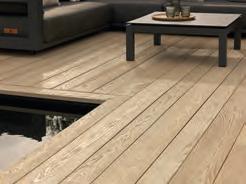
For more complex projects, or those that call for increased strength, DuoSpan provides an aluminium hybrid sub-frame that integrates seamlessly with Millboard boards and fixings. Designed for exceptional ease of installation, it delivers impressive strength and durability, enabling striking decks and structures that can be difficult to achieve with conventional sub-frames.
Adjustable support pedestals further support efficient builds on uneven ground or terraces, with straightforward height adjustment and slope correction.
Made in Britain, Millboard decking is designed around the realities of UK landscapes and UK installation
Choosing the complete Millboard system brings clear benefits: fewer variables, simpler ordering, reliable compatibility, and a deck that looks seamless because every component was designed to belong. These premium boards are made in Britain, backed by exceptional customer service, and supported by an integrated system that helps professionals deliver outstanding results efficiently. millboard.com
Lindum wildflower turf is a vibrant, low-maintenance mix of native species, grown into a plastic-free, biodegradable mat. Bursting with colour and biodiversity, it instantly transforms spaces, supporting pollinators and wildlife while offering a sustainable, eco-friendly solution for stunning landscapes and green roofs, that thrive naturally with minimal effort. turf.co.uk
Price: £13.14
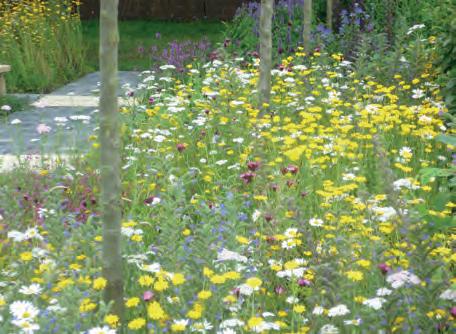
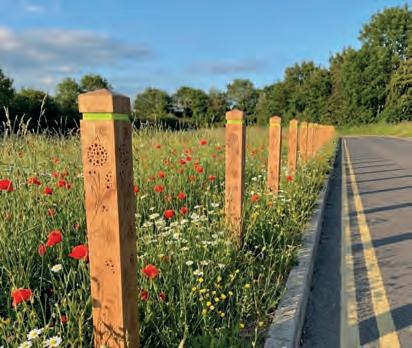
Price: £12.60

Our Species Rich Turf is an 80/20 blend of both wildflowers and grasses, grown into a plastic free, moisture retentive mat, to provide an instant biodiverse area.
It can either be mown regularly like a standard lawn or maintained less frequently to allow the different species to flourish. Instantly transforms spaces, supporting pollinators and wildlife while offering a sustainable, eco-friendly solution for stunning landscapes that thrive naturally with minimal effort. turf.co.uk
Give space back over to nature with these biodiversity boosting products
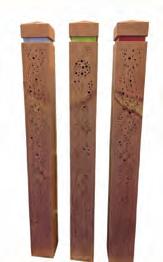
Price: £425
Transform verges into vital pollinator corridors with Bee Bollard™. Merging robust timber infrastructure with solitary bee nesting cavities, they connect fragmented habitats while providing durable, nature-positive demarcation.
• 120mm square douglas fir posts with pyramid top
• Variety of holes sizes for different species
• Single groove recess with reflective strip niche-environmental.co.uk
An affordable, sustainable option enabling landscapers to deliver measurable biodiversity gains, this species-rich, biodiverse turf blends fine fescue grasses with UK-native wildflowers. It supports pollinators and improves soil health and structure, while creating resilient, low-maintenance landscapes that enhance ecological value without compromising visual quality across residential and commercial projects.
• Typically contains 80% grass fescues, 20% UK-native species wildflower mix
• Improves soil health with deep roots
• Provides food sources and habitats for bees, butterflies and other insects rolawn.co.uk
Price: POA

Talasey, one of the UK’s leading independent suppliers of landscaping solutions, has unveiled Finishing Touches –a new collection of architectural features designed to add a true “wow factor” to landscaped and outdoor living spaces.
Created to complement Talasey’s flagship ranges including Natural Paving, Vitripiazza porcelain paving
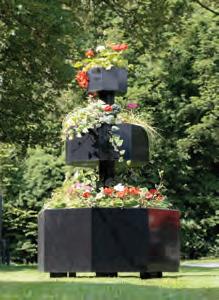
and Pioneer composite decking, Finishing Touches enables garden designers, landscape architects and homeowners to elevate high-quality outdoor spaces into striking showpieces.

Talasey launches new collection to create standout outdoor spaces
drainage, fire pits and lighting. It also offers extensive bespoke fabrication, allowing designers and homeowners to create personalised pieces to suit individual projects, all manufactured at Talasey’s North Lincolnshire facility.
The collection includes British-made architectural planters, screens, edging and sculptural features, alongside pergolas, decorative
Described in the new 108-page brochure as an invitation to “imagine the impossible”, Finishing Touches encourages higher standards in both residential and public realm landscaping. Talasey works closely with clients from concept through to installation, ensuring bespoke designs are delivered to exact specifications. Standout elements of the collection include customfabricated sculptures in powdercoated, stainless or corten steel finishes; decorative screens and wall art for zoning and visual impact; aluminium pergolas for year-round use; contemporary

planter ranges; and the Dellaora plug-and-play lighting system for paths, decks, walls and driveways.
With Finishing Touches, Talasey expands its landscaping offer while reinforcing its commitment to innovation, ethical sourcing and British manufacturing –providing the tools and inspiration to transform ordinary outdoor spaces into extraordinary ones.



The Finishing Touches brochure is available to download at talasey.co.uk/brochures or scan the QR code to request your hard copy:


After being met with resistance from other growers while working as a plant specialist maintaining gardens, Jamie Butterworth identified a need for a means to source his own plants, leading him to grow his own and ultimately to him establishing his own nursery in 2021.
Butterworth explains, “Form Plants was created to provide the best tree specimens and plants to the industry, as I felt I knew what people really wanted, and understood the need for fast, reliable service, at a reasonable price point.”
Today, the nursery works alongside garden designers, landscape architects and landscapers throughout the UK.
Jamie Butterworth on growing Form Plants to honour Chobham’s plant nursery heritage with the acquisition of Jacksons Nursery
the Form Plants team not only expands its stock for clients, but Butterworth is able to explore his devotion to perennials.
“Perennials are my passion, and so I've always been trying to make it work. Before we bought Jacksons, we couldn't grow that many of our own plants. We could stock maybe 10,000 perennials at any one time across the nursery. It meant we didn't have enough space to be able to grow much of our own. Growing and nurturing perennials is a specific skill that takes specialist time and effort. We were forever buying plants to top up orders.”
I love the idea of rebuilding these cooperatives in and around Chobham.
I hope to see more nurseries thrive
Butterworth – a plant expert who has been working in plant nurseries since the age of 14 – admits he has an addictive personality: “If I like it, then we’ll grow it,” he jokes.
Formally a nursery that could hand-pot just 400 plants a day, the itch for more is what inspired the recent acquisition of Jacksons Nurseries in Chobham, Surrey. Now able to pot over 4,000 plants daily,
One of Jacksons top customers over the last five years, Butterworth details that a buying agreement was a long time in the making.
“A few years ago, I said to Peter Tilbury, who owned Jacksons, ‘I’d love to take over this nursery. I love the heritage, I love the history, I love the quality, the team, and the location.’” Tilbury
eventually approached Butterworth in July 2025 with an offer.
“From the relationship we already had with the team and how Jacksons operated and the quality it produces – it was a no brainer in every sense.”
Now retired, Tilbury and his family’s line grew Jacksons for almost 90 years. Ready to hand his company over to Butterworth, the pair worked together, across several months, to streamline the process, both internally and for both companies existing customers.
Operating in both Addlestone and Chobham in Surrey, Form Plants remains at its Row Town site where its office, showroom, specimen trees, multi-stems,
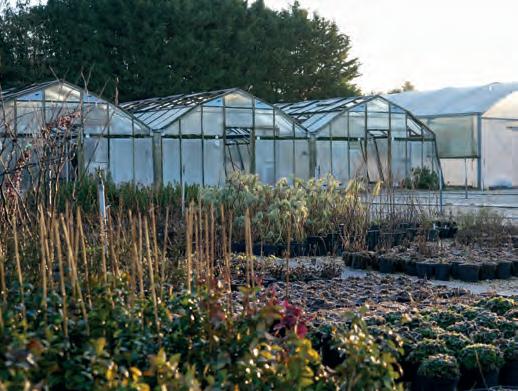
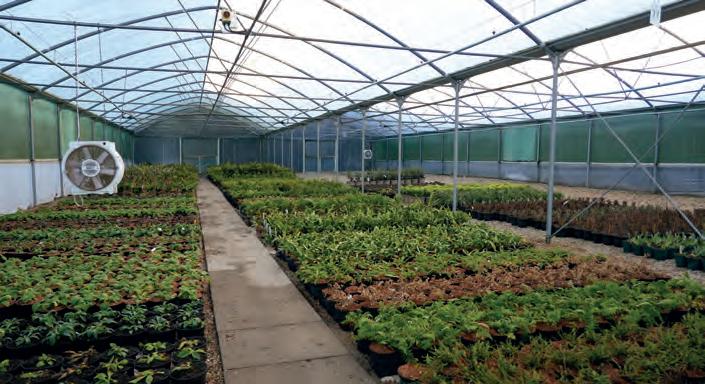
shrubs and hedging are growing. Located at the original Jacksons site, now known as ‘Burrow Hill’, Form Plants holds herbaceous perennials, ferns, ornamental grasses and climbers.
When deciding to take on Jacksons, Butterworth describes his disappointment after Chobham had been transformed from the epicentre of plant nurseries in the UK to leaving behind just a few. “At its peak there was around 58 nurseries all based in and around Chobham. It had such heritage. They all used to act as a cooperative and work together,” he reminisces.
Rebuilding a generation
industry: from weather implications, the economy and the on-going climate crisis – “the passion needs to be there,” adding: “I love the idea of rebuilding these cooperatives in and around Chobham. I hope to see more nurseries thrive.”
From the relationship we already had with the team and how Jacksons operated and the quality it produces – it was a no brainer in every sense
Intent on rebuilding Chobham’s historic legacy, Butterworth says he has always encouraged the very best people to come in and work for Form Plants, he admits “We have always paid our staff above the industry standard, because people have to afford to live.”
these plants, and this is what our product is worth,” he explains. “Yes, you can buy plants cheaper than from Form Plants, but we’re proud of our quality and service.”
As a larger business, Form Plants can now offer an expanded range to its customers, as Butterworth prepares to work with designers across multiple layers of a scheme – from perennials through to larger specimens. As well as allowing him and his team to focus on going completely peat free across the new site. Whilst Form Plants has been peat free since the very beginning, it’s time to make the change at the new site.
“I understand the environmental importance of peat bogs and the lasting damage of ripping these out doesn't just leave a scar on the landscape, but it's the emissions that it produces.” The company has saved 300,000L of compost to date, that would have otherwise been peat.
A big year for Butterworth, not only did he celebrate getting married, but after creating a RHS Chelsea Flower Show Garden with Monty Don, he finished 2025 with more land, a bigger business and most importantly, more perennials.
1 Jamie Butterworth
2,3,4 Burrow Hill (Jacksons)
5 Form Plants Row Town Nursery
“We talk about this generational skills crisis in general. There are so many nurseries across the country who have been going forever, but they aren’t lasting into the next generation. Kids aren’t interested,” says Butterworth. A tough
In turn, Form Plants has, “not been afraid to be at the upper end of the market so that we can guarantee the quality, whilst paying the team properly. We’ve spent a long time growing

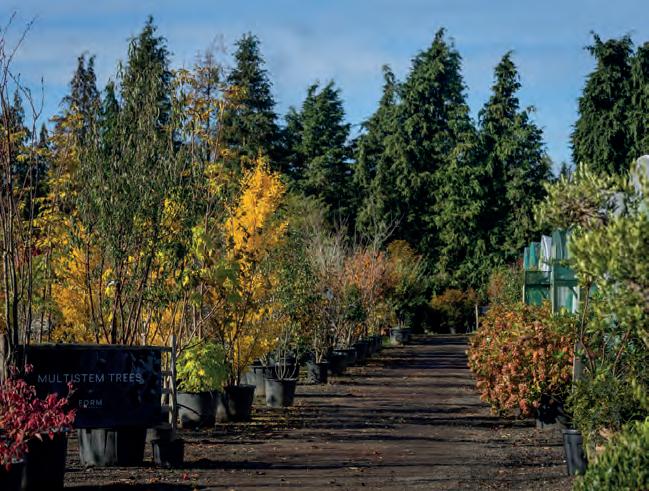

11th - 12th March 2026
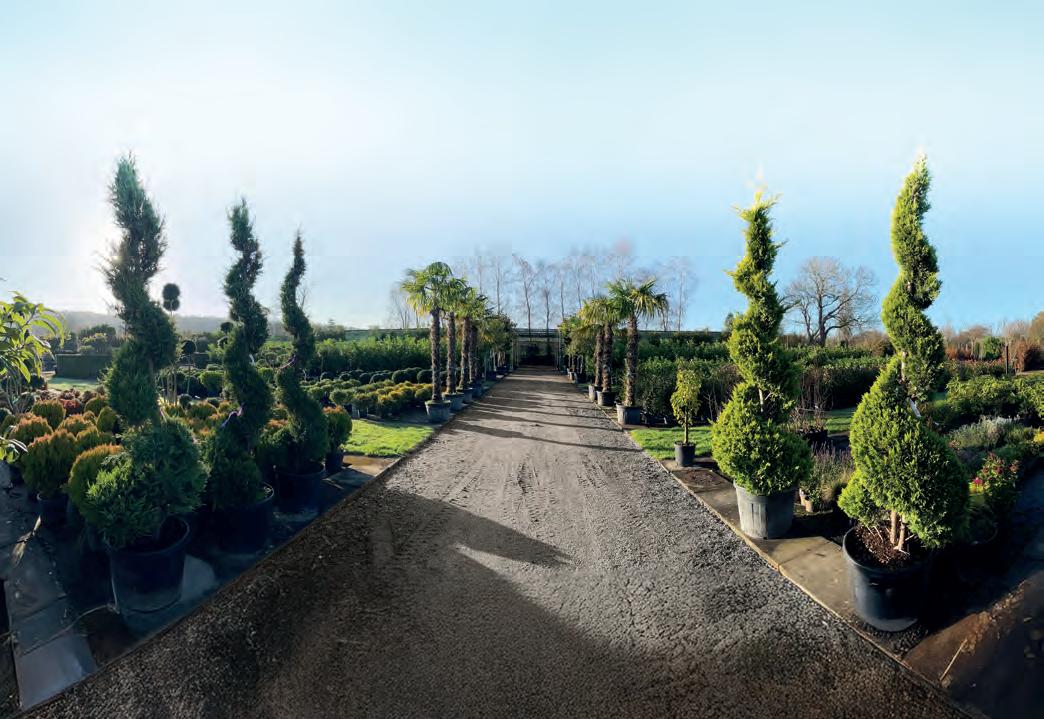

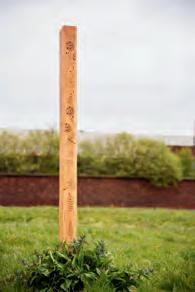
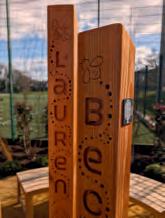
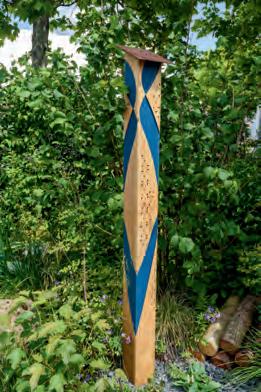

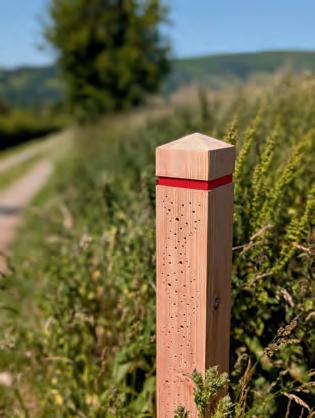
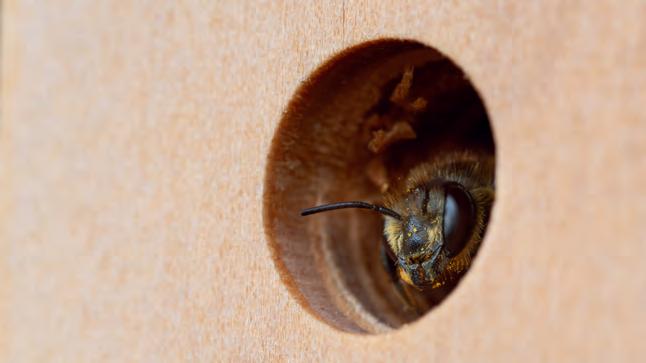



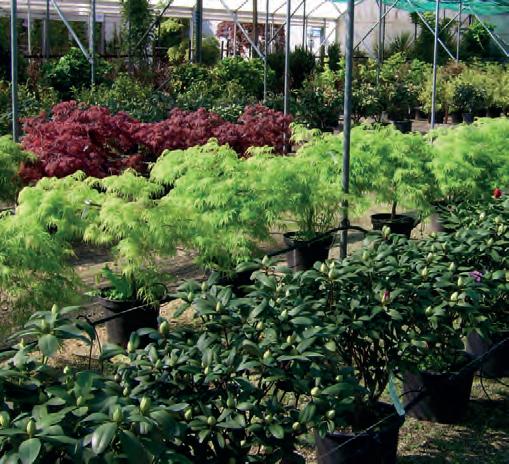
We’ll help you select your plants.
We’ll source and deliver your order.
We offer planting and installation options. We’ll support you with our warranty and our follow-up care.
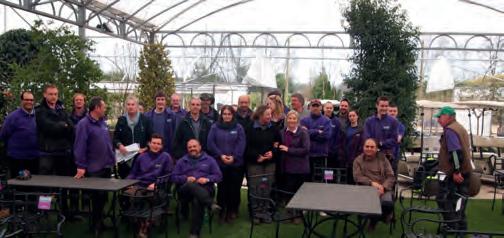
“Tendercare has been one of our key suppliers for nearly 15 years, providing an exceptional range of over-sized and unique material for many of our projects. Across the nursery the team are knowledgable, friendly and a pleasure to work with.”
- Will Allerton, Director, Allerton Landscape Design

Resin bound aggregate is a relatively new addition to the external surfacing industry. Its origins can be traced back to epoxy stone carpet overlays that gained popularity in the US during the late 1980s.
While those early epoxy systems were typically thin overlays applied to existing concrete, modern resin bound aggregate has evolved into a complete surfacing solution. Today’s systems offer exceptional permeability – surpassing all other external surfacing options – while delivering the seamless, flowing aesthetic demanded by contemporary architecture.
So why is resin bound aggregate such a strong fit for the 21st century?
The answer lies in three key areas: permeability, sustainability, and aesthetics
Permeability
Sustainable Drainage Systems (SuDS) legislation has been in place in the UK
since 2012. It requires new hard surfaces –such as driveways, paths, and patios – to manage their own drainage in order to reduce surface water runoff and help prevent flash flooding.
With traditional surfacing materials such as paving, concrete, and asphalt, this usually means installing channel drains connected to soakaway crate systems or, less commonly, linking into existing surface water networks.
While this approach may seem straightforward, it often introduces several challenges.
Soakaway systems must be installed at least five metres from buildings and 2.5m from boundaries. For many UK properties, this makes installation in the front of the property – where the driveway typically sits – impractical or impossible.
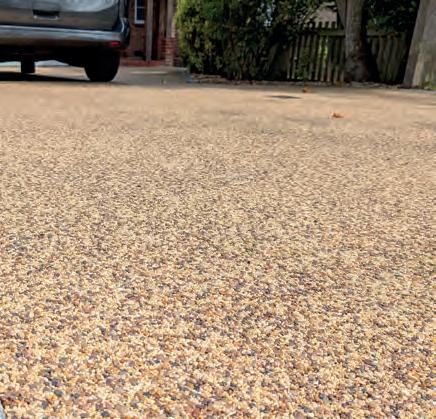
cannot absorb water at the required rate. This is where a truly permeable surface, such as resin bound aggregate, provides a clear advantage.
A resin bound surface effectively turns the entire area into a soakaway, much like a lawn or natural ground. Water is dispersed evenly across the surface, meaning each square metre of sub-base only has to absorb a small amount of water.
In over 20 years of installing permeable systems, I have never seen a properly installed resin bound surface overwhelmed
When you factor in poor ground percolation and high-water tables, suitable locations for effective soakaways become even more limited.
Although most contractors are experienced in installing soakaway systems correctly – using geotextiles, clean aggregate backfill, and appropriate crate sizing – it is surprisingly rare to see proper ground percolation testing carried out.
Without this, even a perfectly installed system can fail if the surrounding ground
In over 20 years of installing permeable systems, I have never seen a properly installed resin bound surface overwhelmed – even during extreme rainfall. In the instance of extremely poor ground percolation, a permeable surface can still be viable. To mitigate slow draining ground, contactors can increase the depth of the sub-base which will increase its capacity to hold water until the sub strate can absorb it.
Independent testing by the Flood Innovation Centre confirmed that Vuba Surfaces’ resin bound system is the most flood-resistant paving solution in the world, with water percolation up to 19 times greater than permeable block paving.
Vuba’s system combines two resin-based layers – VubaMac and the resin bound surface – reinforced with structural reinforcement mesh (SRM). Together, they form a durable, flexible, monolithic surface that is both highly permeable and exceptionally robust.
With extreme weather events becoming more frequent in the UK, and with more of our natural soakaway capacity being built on, sustainable drainage solutions have never been more important.

Traditional surfacing materials such as concrete and asphalt carry a significant carbon footprint.
Asphalt relies on bitumen, a fossil fuel derivative, and must be heated to around 160°C during installation – using yet more fossil fuels. Concrete products share similar environmental challenges.
So how does resin bound aggregate compare?
The sustainability of a resin bound system largely depends on the manufacturer. Most two-component polyurethane binders are produced using predominantly sustainable raw materials.
The polyol component, for example, is commonly derived from plant-based oils that can be grown and farmed sustainably.
Some manufacturers take this further, and Vuba leads the way in this regard. Its resin base incorporates recycled aggregates, requires less excavation, and delivers more than double the strength at less than half the depth of many traditional bound bases.
Compared with open-grade asphalt, VubaMac is stronger, more sustainable, and requires significantly less volume of material to create a stable foundation.
and further reducing environmental impact.
Appearance remains one of the most important factors when choosing a surface for your home.
Another benefit is in dealing with the issues that arise in winter. Because surface water is no longer present, puddles, ice and the associated slip risks are greatly reduced.
Beyond permeability, sustainability, and aesthetics, resin bound aggregate continues to evolve.
Modern systems can incorporate integrated lighting solutions, including uplighters and flexible LED strip lighting. Heated resin bound surfaces are also emerging, offering snow and ice protection – or even the ability to capture ground heat and reuse it for domestic heating.

Resin bound aggregate delivers a seamless, consistent, and highly bespoke finish that looks as good as it feels underfoot – even barefoot. So not only is it a great driveway surface but is also a desirable and practical alternative to traditional paving for pathways, patios and pool surrounds.
With a wide range of natural colours and textures available, there is a blend to suit every style of property.
Resin bound systems can also be integrated into water recapture schemes, allowing surface water to be collected, stored, and reused for irrigation and other purposes.
Lastly, resin bound isn’t just for floors. Vertical surface resin systems are now available; most suppliers' vertical products are mixed on site using multiple components.
Resin bound aggregate offers exceptional design flexibility
Importantly, sustainability doesn’t end at installation. A well-installed and properly maintained resin bound surface can last indefinitely. Even poorly maintained surfaces can often be restored to “as new” condition through professional cleaning and resealing, eliminating the need for replacement
From warm caramel and soft pink quartz blends that complement period homes, to contemporary greys and creams that suit modern architectural designs, resin bound aggregate offers exceptional design flexibility. Borders, patterns, multiple colours, and integration with other paving materials allow homeowners to create a truly individual finish. Crucially, practicality is not compromised. Because resin bound surfaces are fully permeable, there is no need for visible drains, channels, or gratings that disrupt the clean aesthetic. Traditional drainage solutions not only detract visually but also require ongoing maintenance, as debris and silt naturally accumulate at drainage points.
With resin bound aggregate, water drains evenly across the entire surface, eliminating these issues entirely.
But again, Vuba offer a simpler, and in my view, better product in its Vuba rend premix. It's a premixed resin render that is ready to lay out of the packet and removed all of the guesswork on how much additive you need to get the right consistency.
Also, being porous, these vertical systems can give a new lease of life to damp garden retaining walls that can’t be rendered because of water ingress.
Resin bound aggregate offers an exceptional balance of form and function. It is permeable, durable, sustainable, low maintenance, and visually striking. In every sense, it is a surfacing solution designed for the modern age.

and product development projects to the sectors leading manufacturers. devondriveways.co.uk


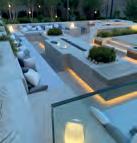
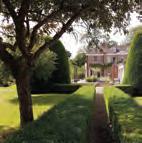
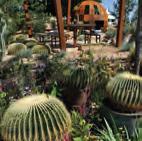


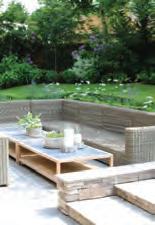
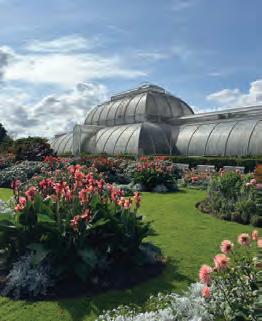
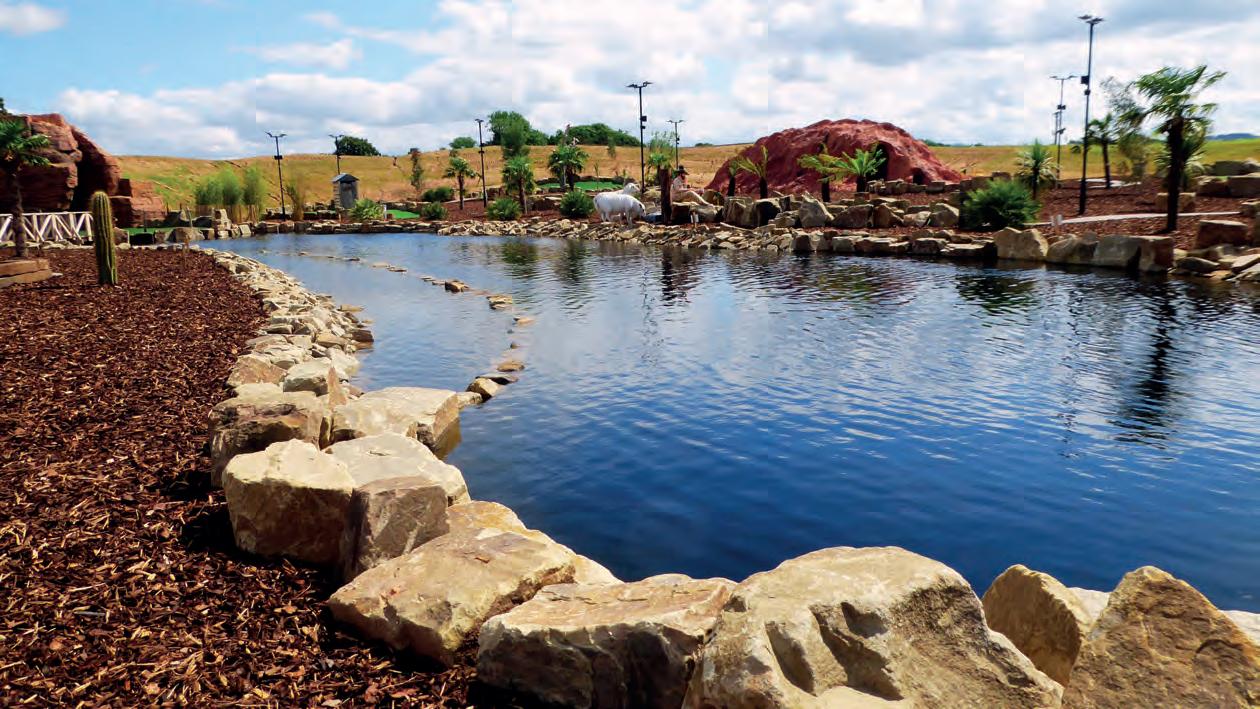




The UK Government has a commitment to deliver 1.5 million homes in the next 5 years, which is an integral part of the “Plan for Change” growth plan. With developments expected across brownfield, the grey belt and planning reform set out to support this a huge opportunity beckons for the landscaping sector. Landscape must be at the heart of the placemaking ambition that is being set out, if the vision is to be realised and what is created has the societal benefit intended. So how can the sector get ahead and understand how it can support this ambition and those within it position themselves to take advantage of the opportunity?
Landscaping contractors, architects, designers, investors, developers or industry consultants
Local authority, NGO, academia, public body or registered charity
Supplier or solution provider
£295 + vat
£245 + vat
£395 + vat
01903 959390 TO BOOK YOUR TICKET, CONTACT
Understanding the revolution
• Policy and planning – how is the revolution being enabled? - Navigating and understanding policy impact
• What do developers want?
Realising the long-term value of the sector – nailing the business opportunity
• Setting yourself up to win work from developers
• Looking beyond delivery –enabling the longer-term opportunities
Phil Mayall, Managing director, Muse
Andrew Taylor, Group planning director, Vistry Group
Lee Webster, Managing director, Wrights Landscape
Meg Carter, Regional director local government, AtkinsRealis
Simone Wilding, Chief planner, Bristol City Council
Joel Wildgoose, Principal design manager, Domis Construction
Prof Samer Bagaeen, Vice President (Elect), Royal Town Planning Institute
Paul Lynch, Managing director, Elmtree Landscapes Ltd
Andy Roberts, Urban design director, Planit-ie










Wayne Grills, Chief executive, British Association of Landscape Industries
Simeon Shtebunaev, Senior researcher, Social Life
Gareth Dillon, Managing director, NT Killingley
Sue Riddlestone, Chief executive and co-founder, Bioregional
Chris Blaisdale, Business Development Director, Wrights Landscapes
Brian Hawtin, Associate landscape architect, Huskisson Brown
Liz Nicholson, Managing Director, Nicholsons
Kersten Catella, Sales & Marketing Director, Wyevale







The reputation of landscaping is a collective responsibility says Gareth Wilson
Ihave been holding back in writing this article for a long time, not out of fear of upsetting any product or tool suppliers, but to gather more information and control my frustration from boiling over. However, after seeing a recent social media post, I couldn't wait any longer.
A young lad with a big social media following posted a reel of himself on a Facebook forum I moderate, in which he was relaying a paving slab that was so utterly wrong in every way, I had to message him to ask why.
The reason I decided to message him is that this wasn't his first rodeo in posting a poor-quality installation and, as he had asked for help in the past, I thought I'd check in. I note he also got some online backlash the last time he did it. I felt I had to hop in and save him by turning off all comments on the post and eventually delete it from the forum.
Upholding the good reputation of the industry is on all of us
The reply came back that he did it for views, likes and comments –ultimately to keep his sponsors happy with his social media analytics. Now, this caused me to mutter expletives to myself on a par with Dick Dastardly's Muttley, if any of you are old enough to remember Wacky Races. Surely tool and product manufacturers have a responsibility to ensure the people they employ are working to standards and not associating products with incapable and incompetent landscapers, who lower standards and client expectations, and undercut real professionals.
Upholding the good reputation of the industry is on all of us – and to the benefit of us all and our clients – with responsible
suppliers, contractors and organisations pulling together. My advice to all landscapers out there is not rise to clickbait, or comment, share, or like these reels; in fact, block them from your feed.
My advice to all suppliers is not to be surprised in the future if you're sponsoring these cowboys and you get called out; you also have a responsibility to uphold industry standards and professionalism, not dimmish it for cheap clickbait.
Now, as I like to end on a positive note, my top tip for a young man to watch in the future is young Jacob Brockhurst at Brockstone: he's absolutely flying and definitely worth a follow!

GARETH WILSON
Gareth Wilson is a leading paving installation expert in the UK. He has won 14 RHS Gold medals and five Best in Show & six Best Construction Awards, and he is a member of multiple professional bodies. He provides technical advice to large companies, and he mentors and trains contractors and garden designers in landscape construction and on show garden logistics. He also provides on-site training, expert witness reports and mediation services. He is a B/507 modular paving committee member, BS7533:102 panellist, and an industry awards judge. gkwilsonlandscaping.co.uk paving.site

Bergenia: Overused and overdone OR a hard-working stalwart of the garden? That’s the question Humaira Ikram is considering
Ihad some lovely clients who once said to me, “I like all plants apart from those large elephant-ear things outside Tesco. I don’t want them.” Until that moment, I’d never really considered Bergenias either.
But this comment made me feel a bit sad for the Bergenia and I decided to see what they brought to the party. Yes, they cope with dry, awkward areas, but what else did they offer, and are they one of the resilient, climate-ready plants we keep saying we need?
It was surprising to me, but in the wild Bergenias are mountain plants. They come from the Himalayas, Mongolia, Siberia and the rockier provinces of western China—not the lush woodlands I had imagined, but cool slopes with thin soils over rock and open edges flushed by snowmelt in spring.

Perfectly suited to this, they have a fibrous and shallow root structure, which is dense without being aggressive to neighbours. Those conditions translate neatly to many UK gardens.
They like open soil, improved with leaf mould or grit and good drainage beneath, yet with enough retained moisture that the roots aren’t too dry by July. In the north and west of the UK, you can give them almost full sun and, in the southeast, they prefer light shade or the filtered canopy of a multi-stem shrub or tree.
In the binomial system, the name Bergenia was given to honour the 18th-century German botanist Karl August von Bergen. Before that, the plants had various local Asian names, none of which travelled or translated easily with the plant hunters.
The early, single flowers, particularly in the species forms, are a lifeline for queen bees and early pollinators on cold March mornings. Their evergreen canopy, while capable of smothering if not gardened and controlled, does provide winter cover for invertebrates.
A few cultivars are genuinely worth seeking out if you design with pollinators in mind. Bergenia ciliata, with its enormous, softly hairy leaves and wide, pale pink single flowers that open when the garden (and I) need them most.
Bergenia emeiensis, unexpectedly graceful and one of my favourites, produces clean white blooms with a faint blush in colder spells, and there is a pink form too.

Are they one of the resilient, climateready plants we keep saying we need?
The reliable Bergenia ‘Bressingham White’ earns its place for glowing white spring flowers, and Bergenia purpurascens, best in its straight species form, offers dusky pink flowers and excellent red autumn foliage.
For companions, I treat Bergenias as structural punctuation rather than colour blocks. Under Amelanchier or Cornus mas, they sit quietly through winter before playing off snowdrops, wood anemones, Primulas and miniature Narcissi
In shade, they pair beautifully with Epimediums, Hellebores, Corydalis and ferns; in sun, with Sesleria autumnalis, Festuca or Carex, Stachys byzantina, Iris reticulata and Pulmonarias. Both of these combinations mimic the wild plant communities, but use available varieties in the UK.
Used thoughtfully, and placed naturally, as they’d choose for themselves, Bergenias stop feeling like municipal relics and show themselves to be architectural evergreens of real value.

HUMAIRA IKRAM
Humaira Ikram is a professional garden designer with over 10 years’ experience at Studio Ikram. She runs the Garden Design Diploma at the KLC School of Design, advises RHS Hyde Hall, and serves as a judge and panel member for the RHS. She is co-curator of thehub. earth and an award-winning broadcaster who has contributed to BBC Radio 4’s Gardeners’ Question Time and various gardening publications. studioikram.com thehub.earth

For all your golf, sportsturf and landscape irrigation needs. Buy online at www.lws.uk.com

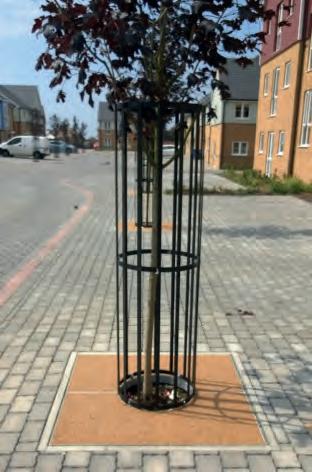
CIS Street Furniture offer a diverse range of street furniture which will complement any location.
As a result of the built environment compaction can inhibit or prevent natural root growth of trees. CIS SUDs compliant resin bound tree grilles are a great way of enhancing the sustainability of your project for future generations. Find out more at our website below.
Tel: 01483 203388 www.cis-streetfurniture.co.uk
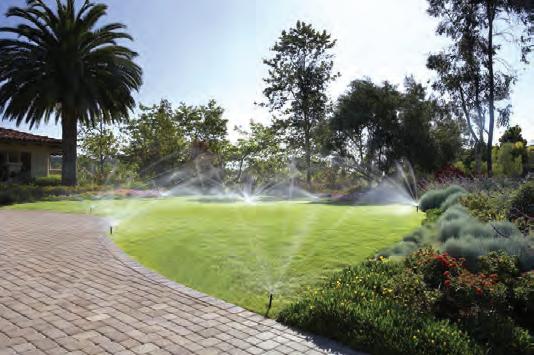





















A complete sub-structure, paving or decking and terrace planter & seating system for rooftop spaces. Wallbarn’s high performance Class A fire-rated sub-structure and Bespoke Metal Planters’ solutions creates the perfect one-stop shop for hard & soft landscaping projects. Tel: 020 8916 2222 www.wallbarn.com
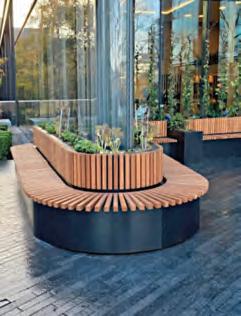

Gadd Brothers’ newest recruit and project manager Pete Jones details his decision to jump back into the world of landscaping after a three-year interlude
What was your career like in landscaping before you left the industry?
I started working in the industry in 1997 in the commercial landscaping sector. I was based in Essex after moving down from the northeast, having left horticultural college with a national diploma. I went from working on the tools initially, moving into the office and then up to management level. After seven years, I relocated to Kent to explore more private construction and domestic projects, that was a welcome change. Seventeen years later, I ended up leaving there as managing director, moving on to a large commercial landscaping firm who wanted to set up a new capability to build high-end private gardens for landscape architects and garden designers across London and the southeast. We started from scratch building a management team and strong crews on the ground with great skillsets. That led us to RHS Chelsea main avenue in our first year, winning gold.
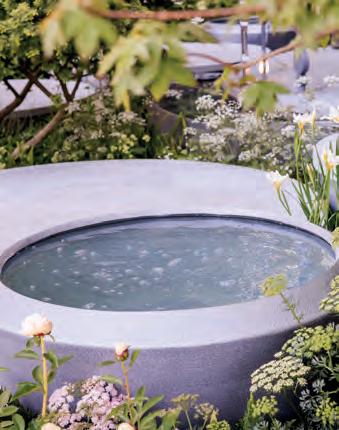
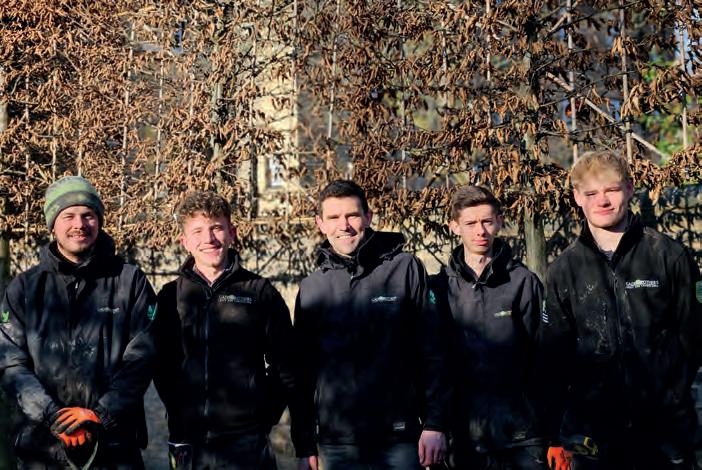
Why did you leave the industry?
I left the industry for three years and worked with Lotus Cars. It was only supposed to be a short break of six months or so.
The reason I left initially is because of a business collapse. After setting up the private construction team, the commercial side of the business struggled and sadly brought our endeavours to a premature end. It was time to begin a new chapter.
What made you want to come back?
It was fascinating to have an insight into another industry because it made me realise how great our landscaping industry is. We are so warm and welcoming and full of appreciation for each other and those we work with.
It was fascinating to have an insight into another industry because it made me realise how great our landscaping industry is
Returning to our great industry in some capacity was always the intention, but I wanted to return into a position with a business who are not only operating at the pinnacle of the industry from a quality point of view, but also with a forward-thinking approach, an eye for constant improvement and ongoing business growth.
I always thought that I would come back, but I didn't want to come back to just any opportunity. I kept an eye out for the right position as the months went by and asked a good friend, Jennie, in the industry to let me know if she heard of anything suitable. She put me in touch with Will from Gadd Brothers Trees and Landscapes, and within about five minutes of asking – and when the
time was right for the business – we started a conversation.
Gadd Brothers offered me everything I was looking for and more. It came with the overriding feeling that the business cares wholeheartedly about its people which can be difficult to find.
Now that you’re back, what do you hope to achieve?
I’m now back to leading a team, building relationships with new and existing clients and designers. It’s been fantastic to start the process of reconnecting with people. We are currently working on multiple sites across East Anglia, and the year ahead looks very busy and incredibly exciting. I’ve always been one to try and get my teams to understand the quality of their work and just how much they are achieving when compared to the competition.
as a collaboration is paramount. I am looking forward to meeting existing clients and designers; reconnecting with those I have known a long time; and searching out new and promising connections to work closely together with in the coming years.
Gadd Brothers offered me everything I was looking for and more. It came with the overriding feeling that the business cares wholeheartedly about its people which can be difficult to find
I am very much looking forward to working alongside the current team to keep achieving the very highest standard of award-winning work and help develop the business as we grow. Awards ceremonies are great to attend for several reasons, but mostly to appreciate just how much we have achieved as a team – we’ll be at the APL Awards in a few months’ time.
I’m also looking forward to RHS Chelsea in 2026 as Gadd Brothers build yet again for garden designer Catherine MacDonald of Landform. The team won Gold last year, so the pressure is on!

Building relationships in the industry has always been a priority for me. Cultivating those relationships and building momentum
1,2 Boodles Raindance Garden, RHS Chelsea Flower Show 2025
Gadd Brothers Tel 01284 788794
Email info@gaddbrothers.co.uk gaddbrothers.co.uk