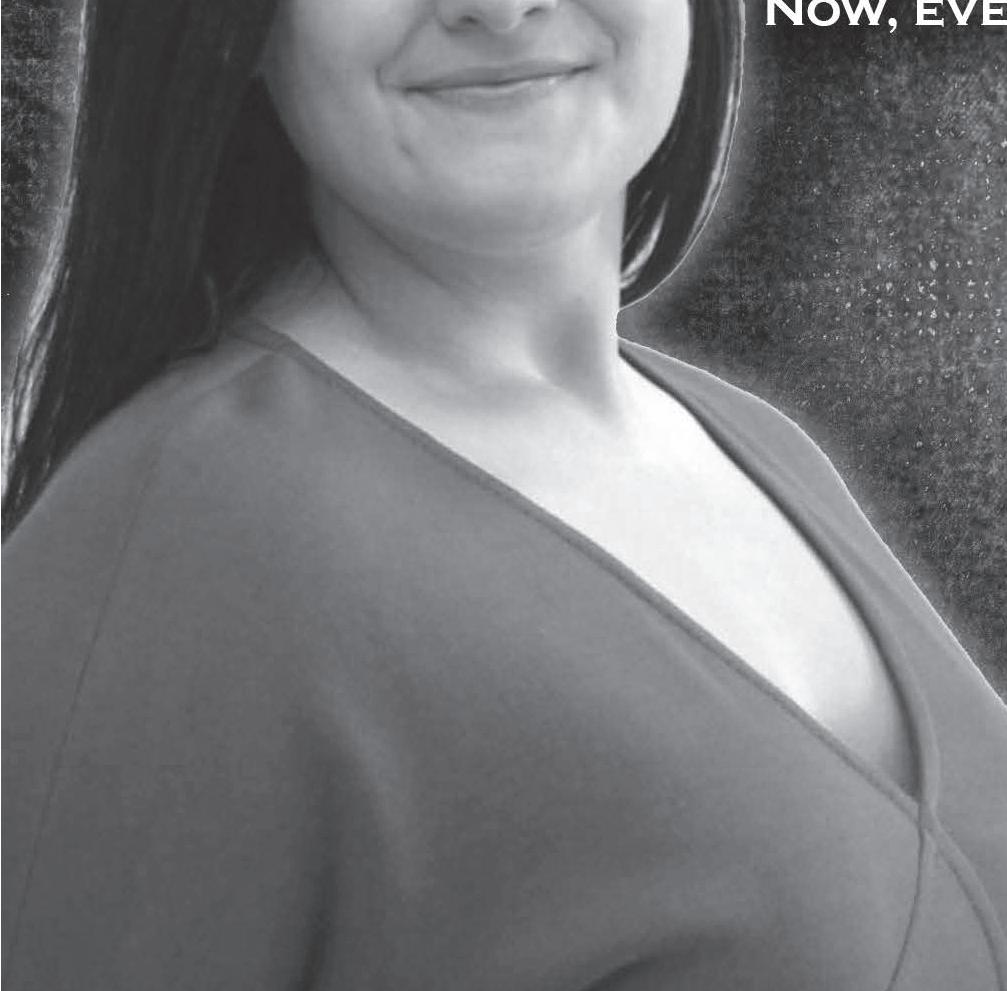
ELIZABETH RAYMOND
ARCHITECTURE & SELECTED WORK 2025
GRADUATE SELECTED WORKS
URBAN FILTER
ARCH 7410 Advanced Architectural Design I
Collaborative Project: University Housing
Graduate Year Two
Professor Erik Hermann & Karen Lewis
MOVERE
ARCH 6410 Accelerated Architectural Design I
Educational & Office Spaces
Graduate Year One
Professor Marta Nowak
UNDERGRADUATE ARCHITECTURAL BOARDS
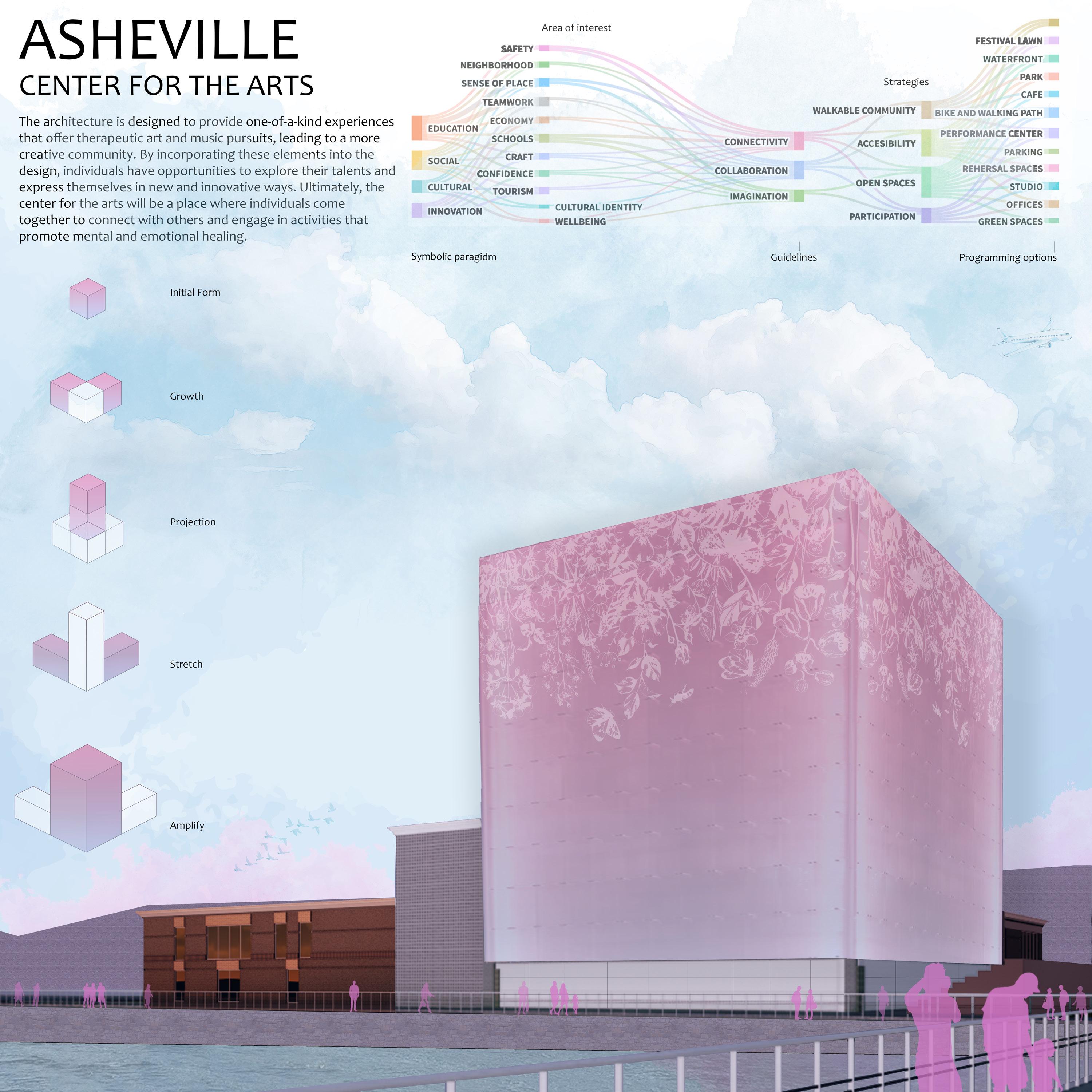
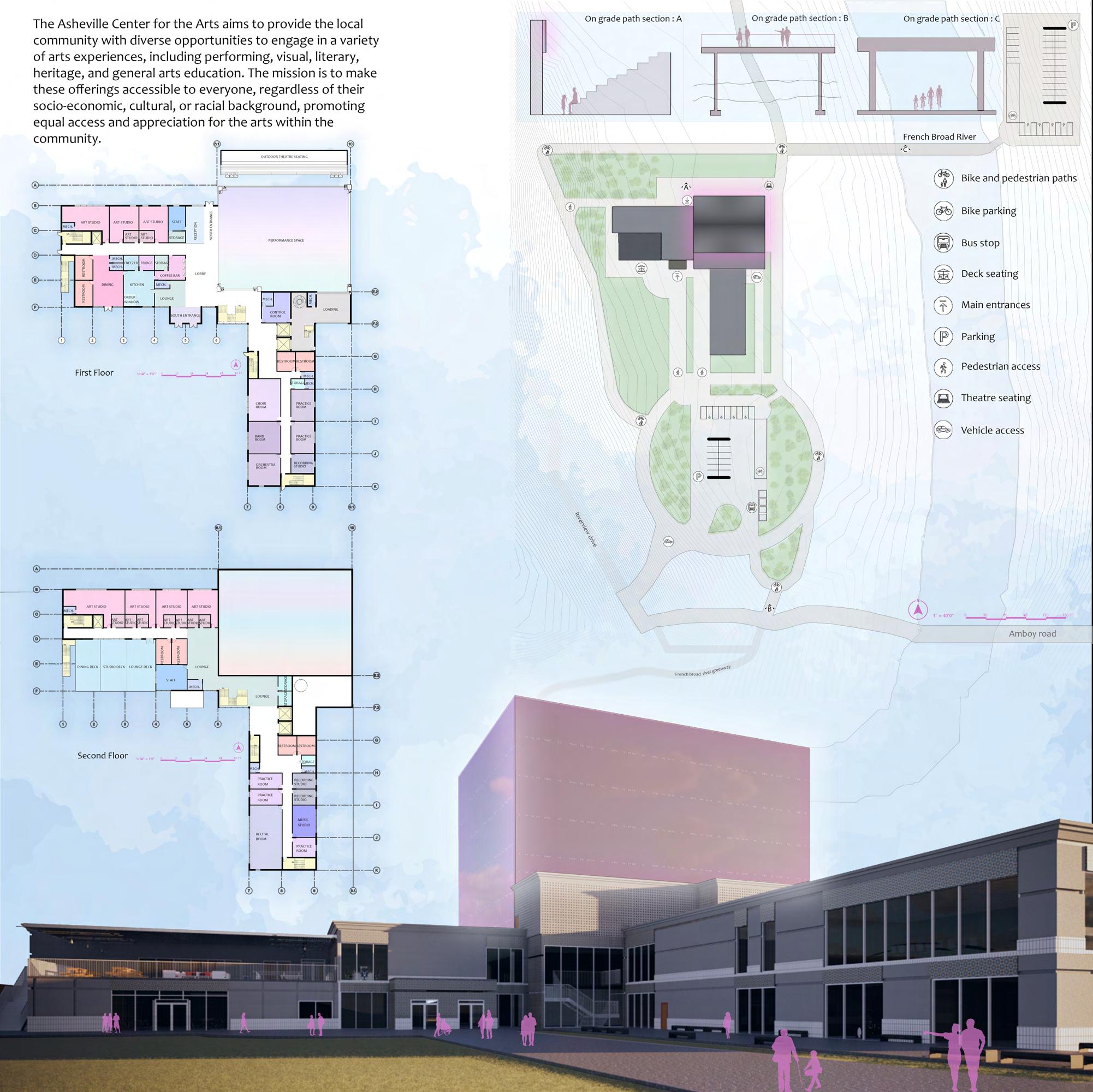
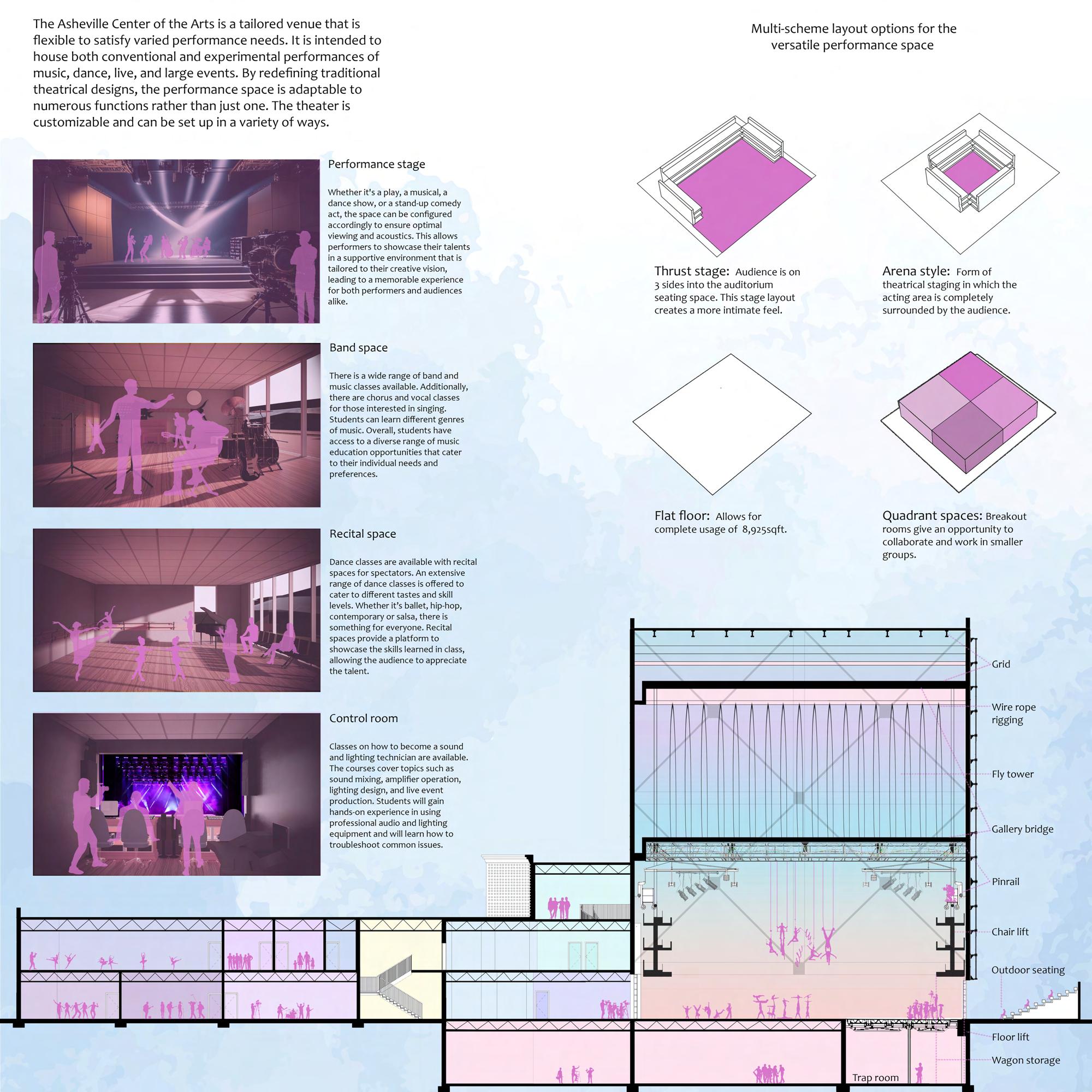
ASHEVILLE’S CENTER FOR THE ARTS
ARCH 405 Architecture Design Studio V: Research and Schematic Design
ARCH 406 Architecture Design Studio VI: Comprehensive Design Development
Mixed-Use Community Space and Perfomance Center
Senior Year Capstone Project
Professor Daniel Brown
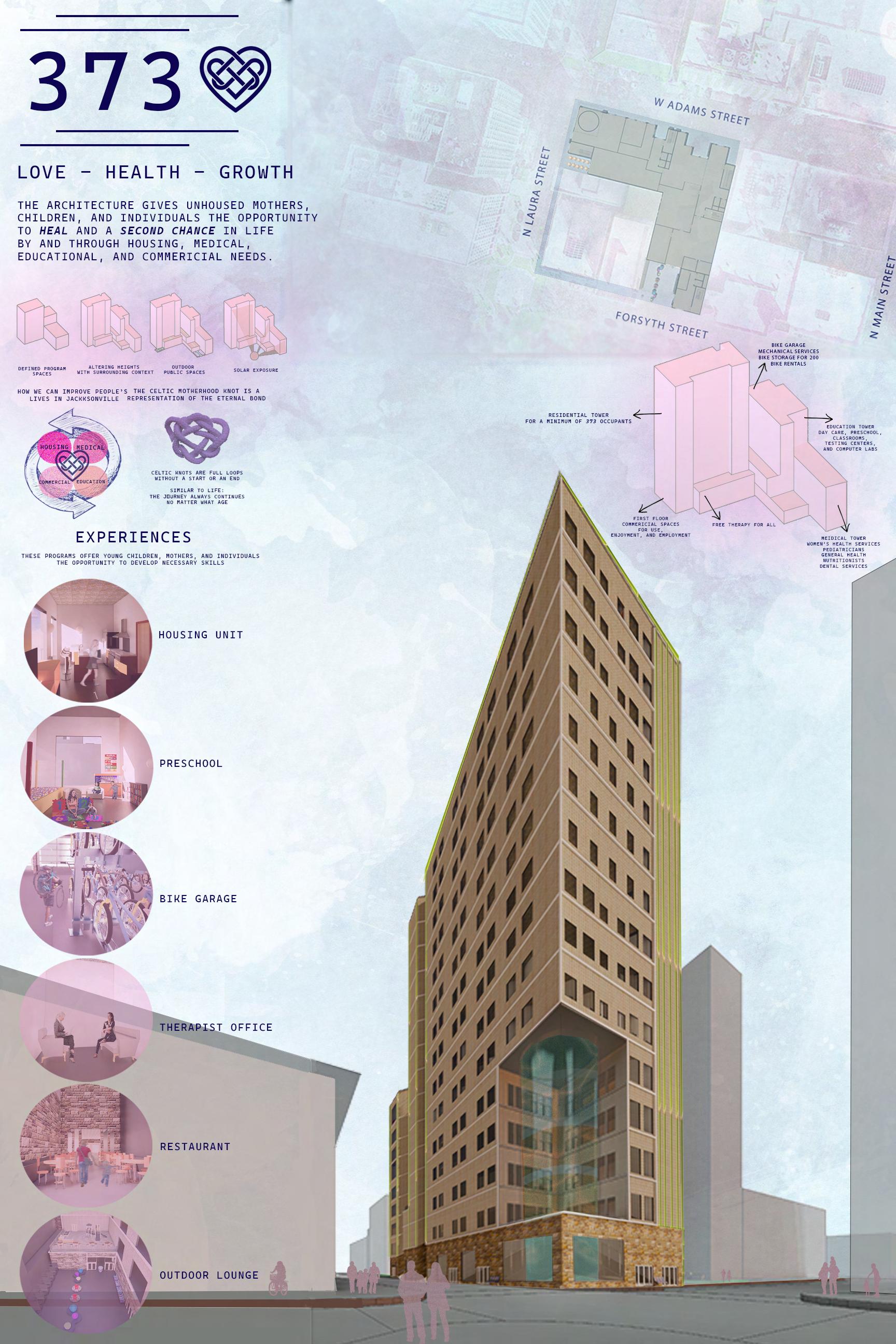
373
ARCH 404 Architecture Design Studio IV: Urban Context
Mixed Use High Rise
Senior Year Fall Quarter
Professor Daniel Brown
NOMA 2022 50TH ANNUAL CONFERENCE + EXPO: STUDENT DESIGN COMPETITION
NASHVILLE’S RE-OPENING ACT
Collaborative Project: Memorial Bridge & Cultural Center (Team Captain)
Junior Year Summer & Senior Fall Quarter
Professor Brent White & Professor Maggie McManus
THEMED ENTERTAINMENT DESIGN
AWE - REIMAGINING THE CONCERT
THED 305 Designing for Interactive Entertainment
Senior Year Winter Quarter
Professor Christopher Stapleton
EXPERIENCE
URBAN FILTER
ARCH 7410 Advanced Architectural Design I Collaborative Project: University Housing Graduate Year Two Professor Erik Hermann & Karen Lewis
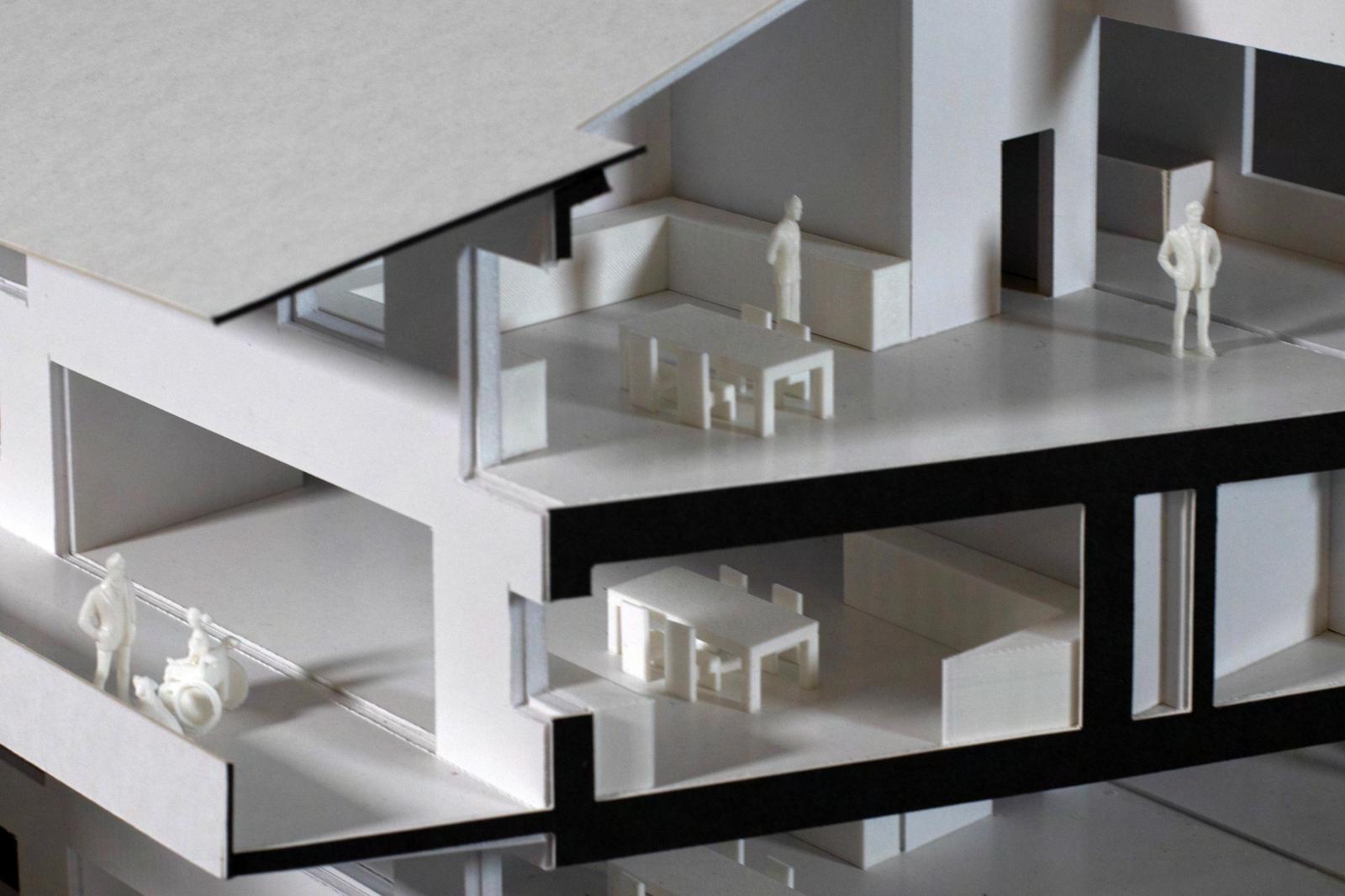
Urban Filter is designed specifically for students with physical or learning disabilities who require additional living space and flexibility in their accommodations. It offers two different unit sizes, either single or double. This innovative university housing not only provides for students with disabilities but also their service dogs. Through careful spatial planning, adaptive technologies, and nurturing environments, Urban Filter aims to build a supportive community that promotes independence, enhances the educational journey, and strengthens the bond between humans and animals. The facility includes various communal spaces such as social areas, kitchens, study rooms, physical therapy zones, student services, and designated play and bathing areas for dogs, ensuring that all needs are met.
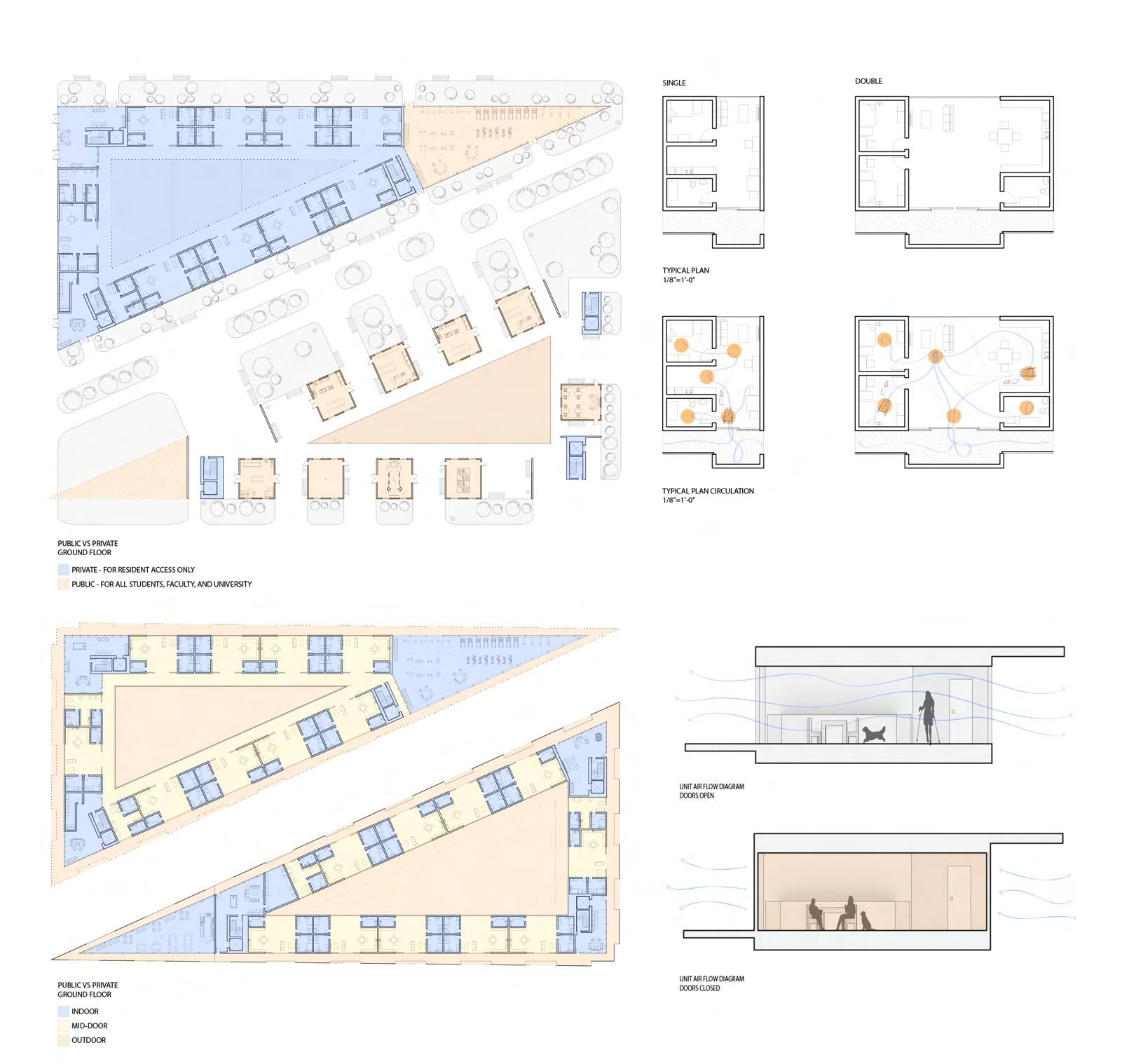




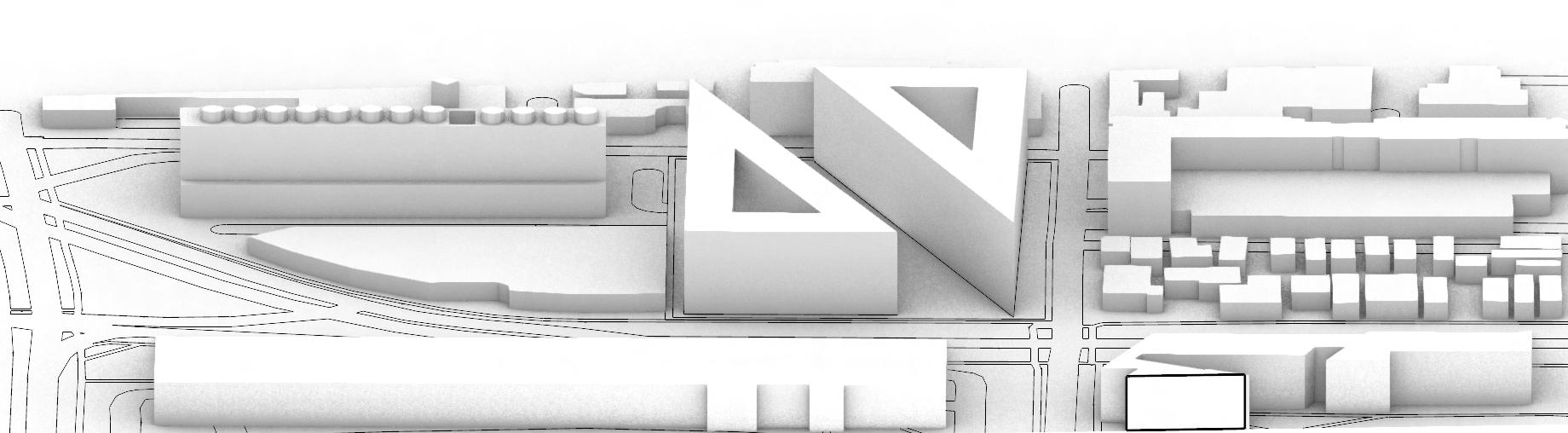
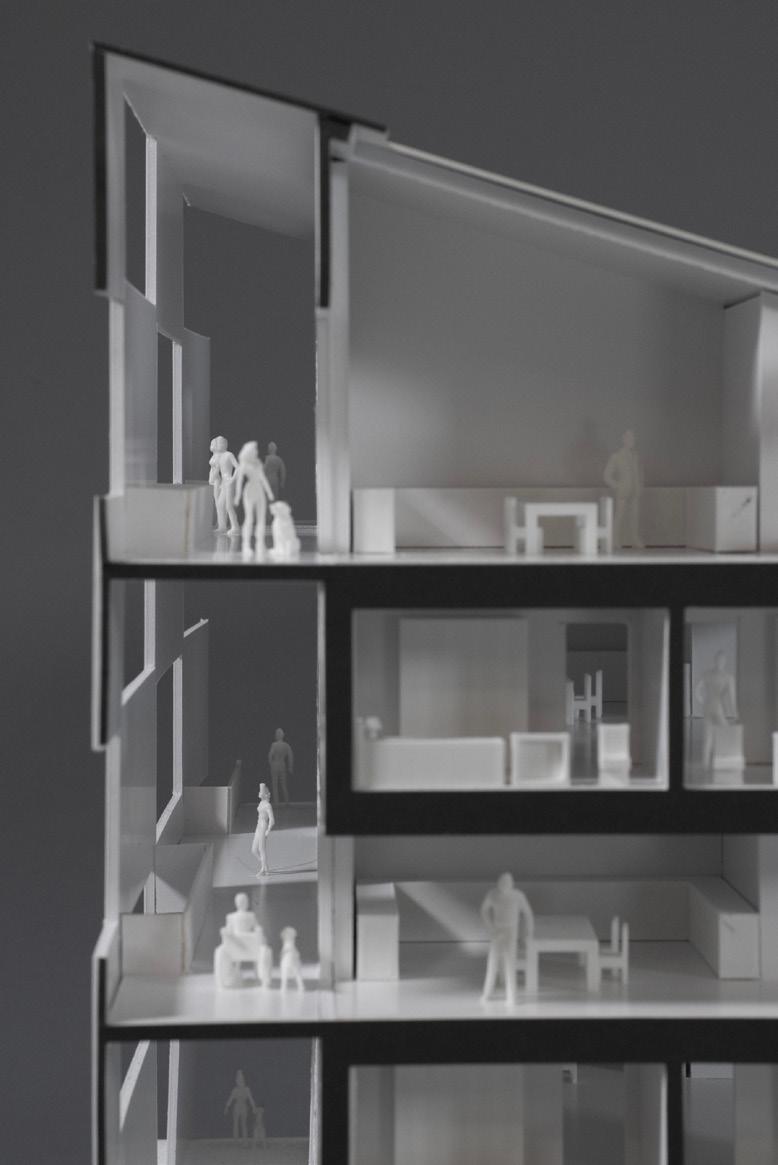
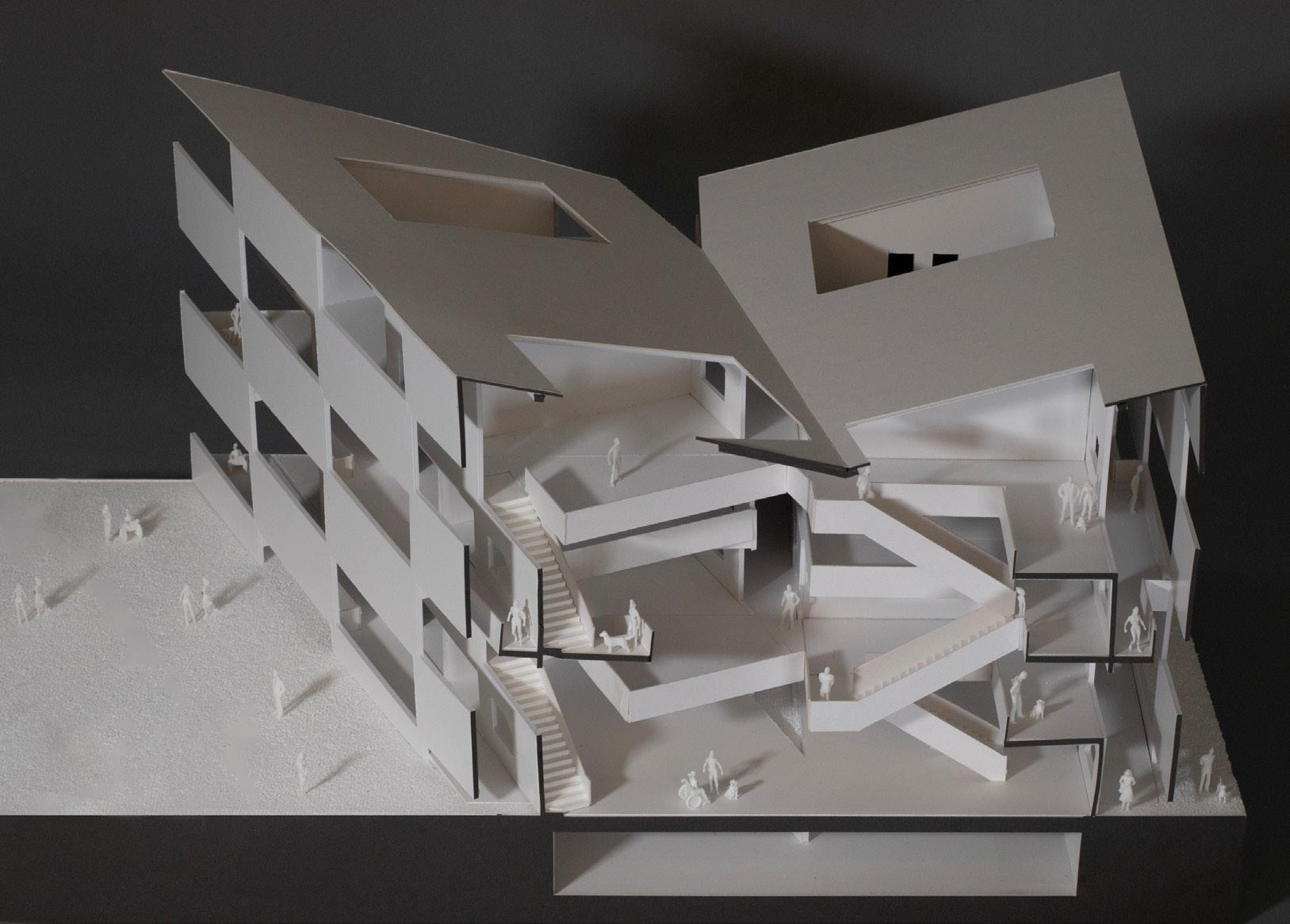
The student housing consists of two distinct buildings designed to facilitate movement and interaction throughout the site, fostering a sense of community. While they maintain a symmetrical overall aesthetic, there are notable differences that challenge traditional ideas of indoor and outdoor spaces, as well as transitional areas. The north building functions as a conventional dormitory at ground level, designed with accessibility in mind for individuals with physical disabilities, allowing for a convenient entrance to their suite-style units. This building also features a private interior courtyard where service dogs can be exercised, along with areas designated for study or relaxation outdoors. Additionally, the north building includes a spacious gym located on the east side, available to all university students and providing a convenient setting for those needing to meet with their physical therapists on site.
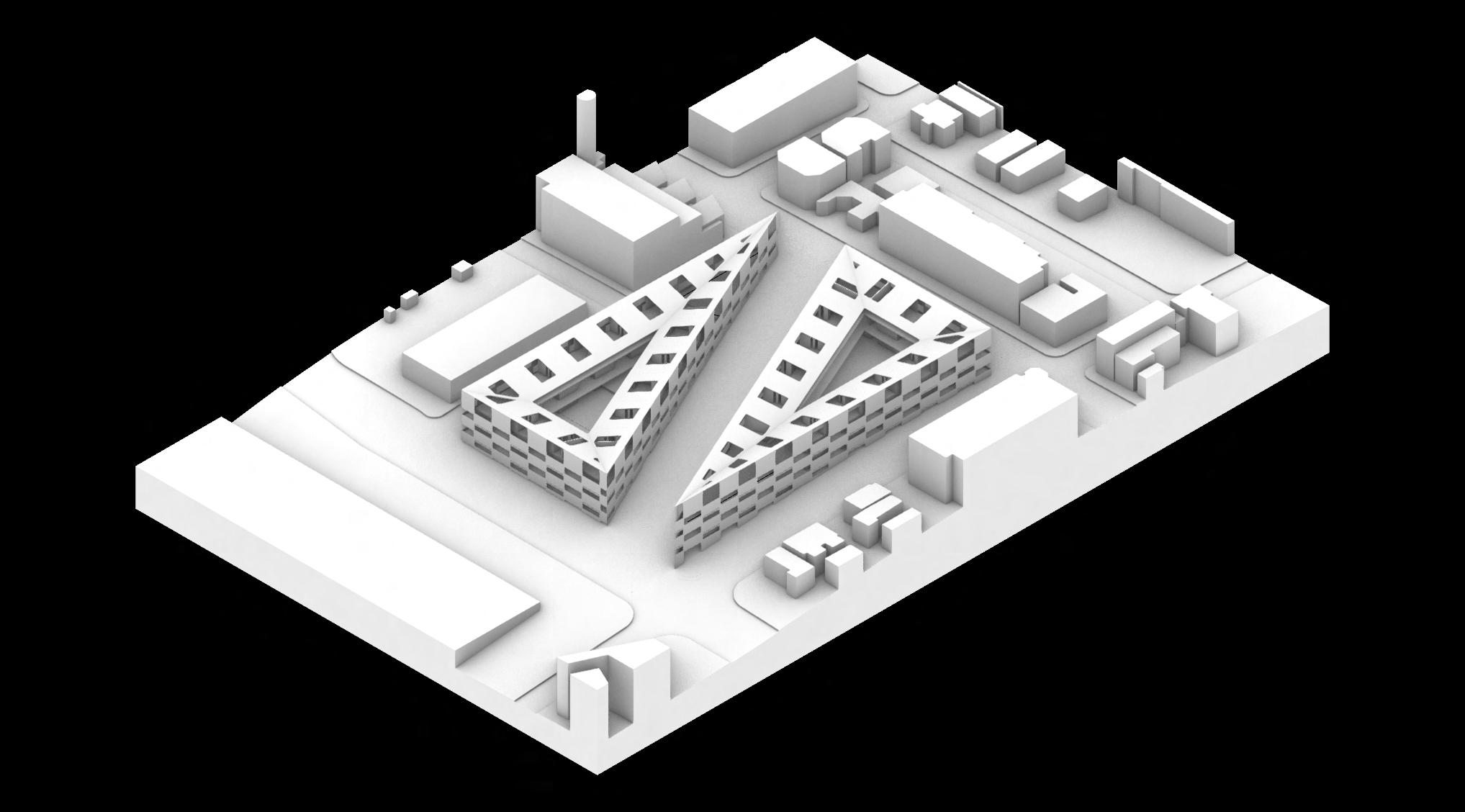
The elevated south building creates more outdoor space for students and their dogs while benefiting the community. It eatures a cafeteria on the west side that connects to the campus, providing another dining option. Ground-level communal spaces include kitchens for cooking with friends, meeting areas for therapists and services, and facilities for service dogs. Additionally, there’s a shaded, gated dog park, an indoor play and training room, and large bathing sinks for service dog breeds.
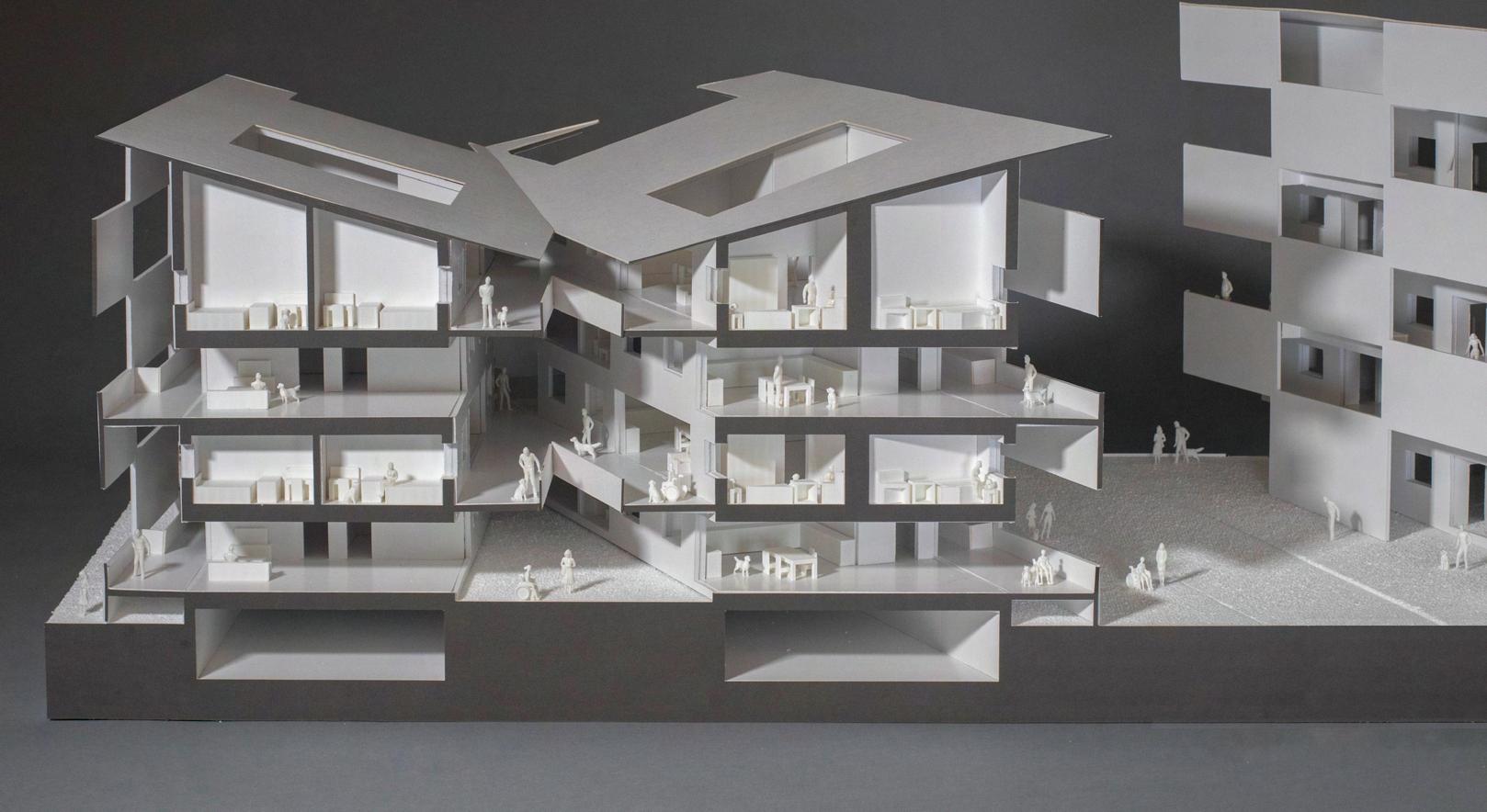

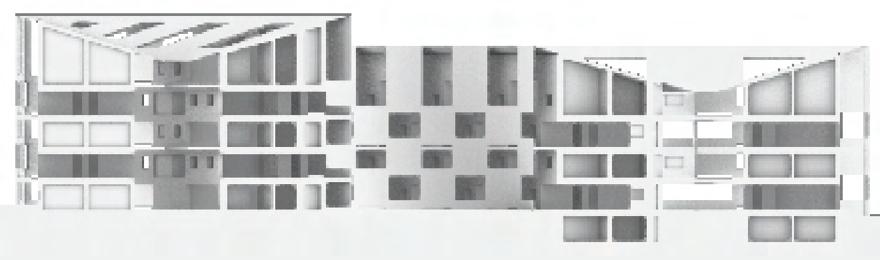

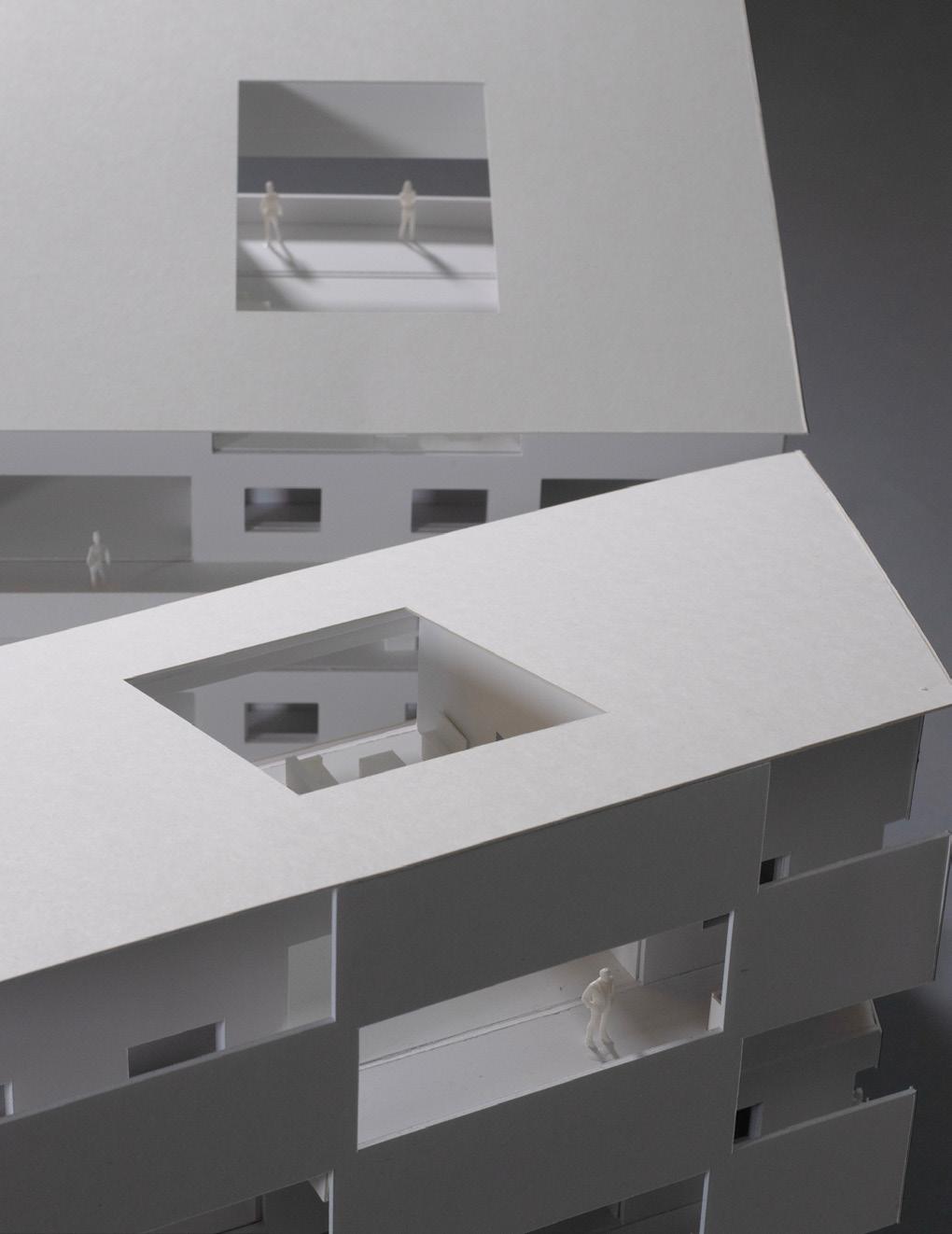
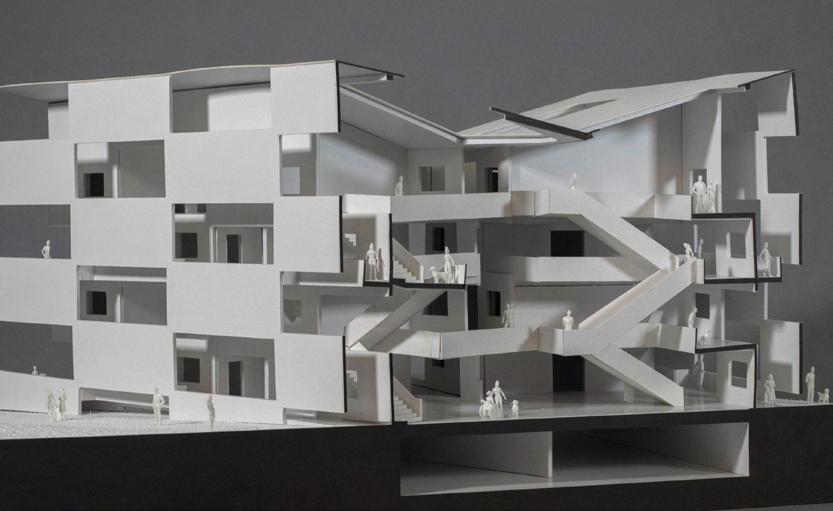
The client type foregrounded the way we adapted the environments and their experience. Urban Filter exemplifies a transformative approach to student housing by prioritizing inclusivity and community. The design not only meets the diverse needs of students with disabilities but also promotes the valuable role of service dogs in their lives. With spacious, adaptable environments and communal areas, we foster connections that enhance both personal and academic growth. By redefining what student living can be, we empower residents to thrive independently while developing meaningful relationships.
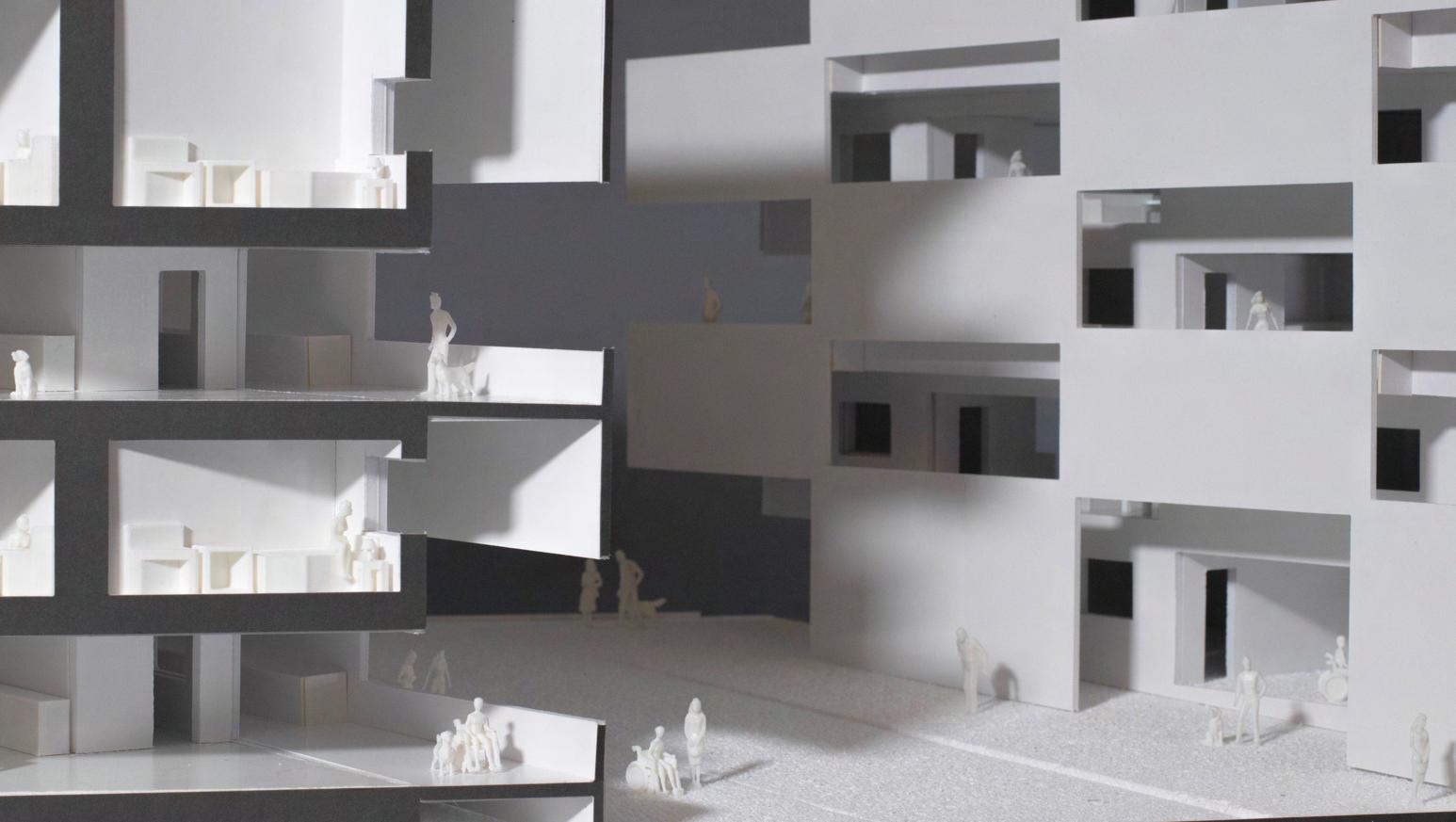
This initiative seeks to transform traditional dormitory spaces by creating more open units. By doing so, residents gain additional space for essential items such as medical devices, learning tools, and supplies for service dogs, empowering young adults with disabilities to lead more independent lives. The increased airflow resulting from this design promotes both mental and physical well-being, while also benefiting the health of service animals through improved ventilation. Open spaces enhance air quality, which contributes positively to overall health. Additionally, modifying the building’s exterior allows for a balance between openness and privacy, protecting occupants from environmental elements. This approach fosters a welcoming atmosphere that supports both community and individual needs.
MOVERE
ARCH 6410 Accelerated Architectural Design I Educational & Office Spaces
Graduate Year One
Professor Marta Nowak
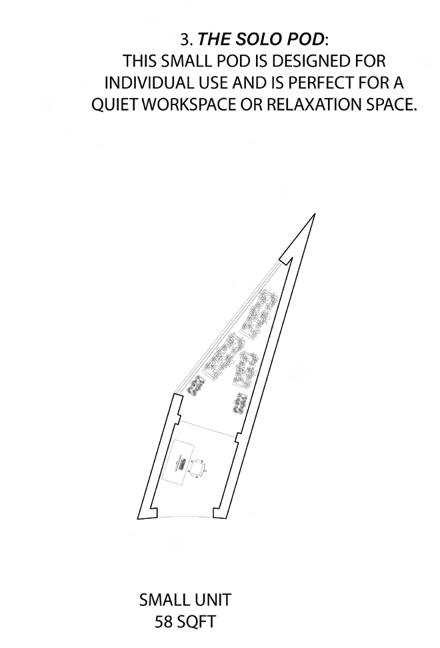
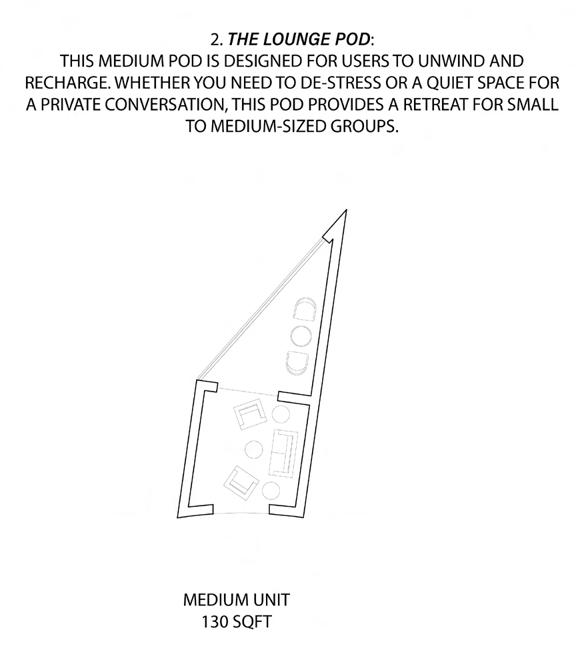
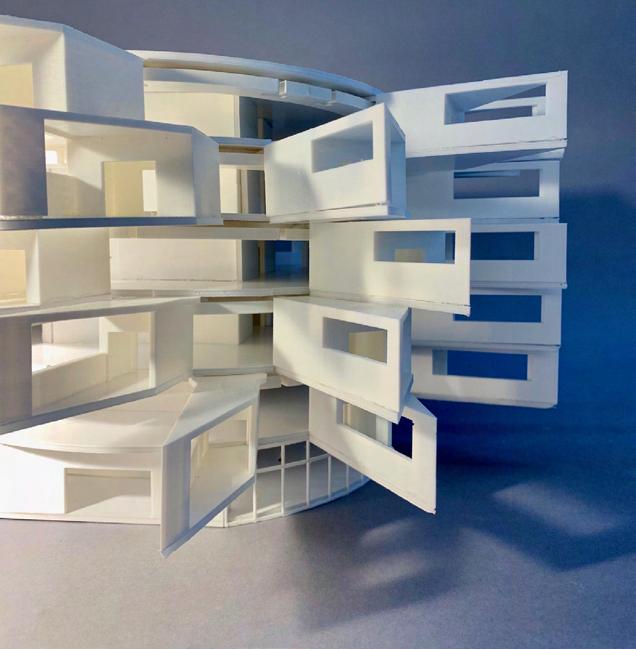
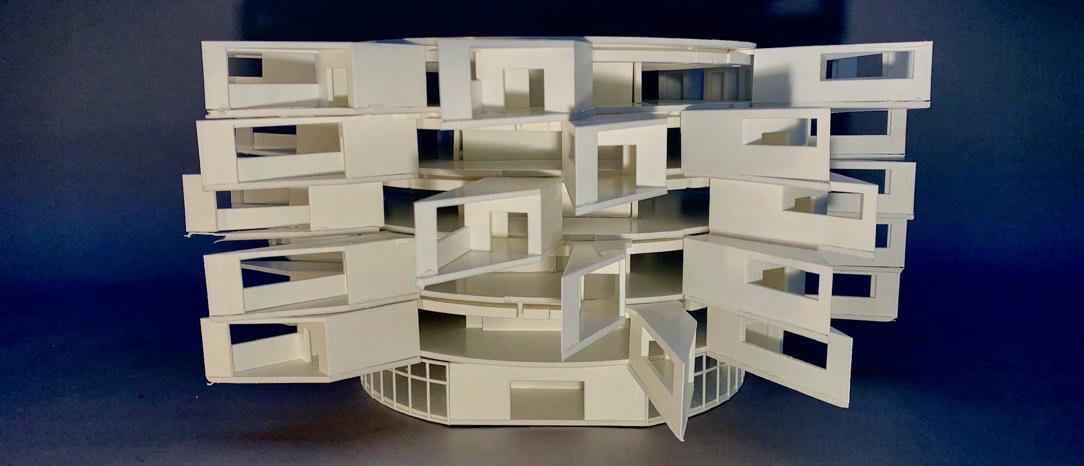
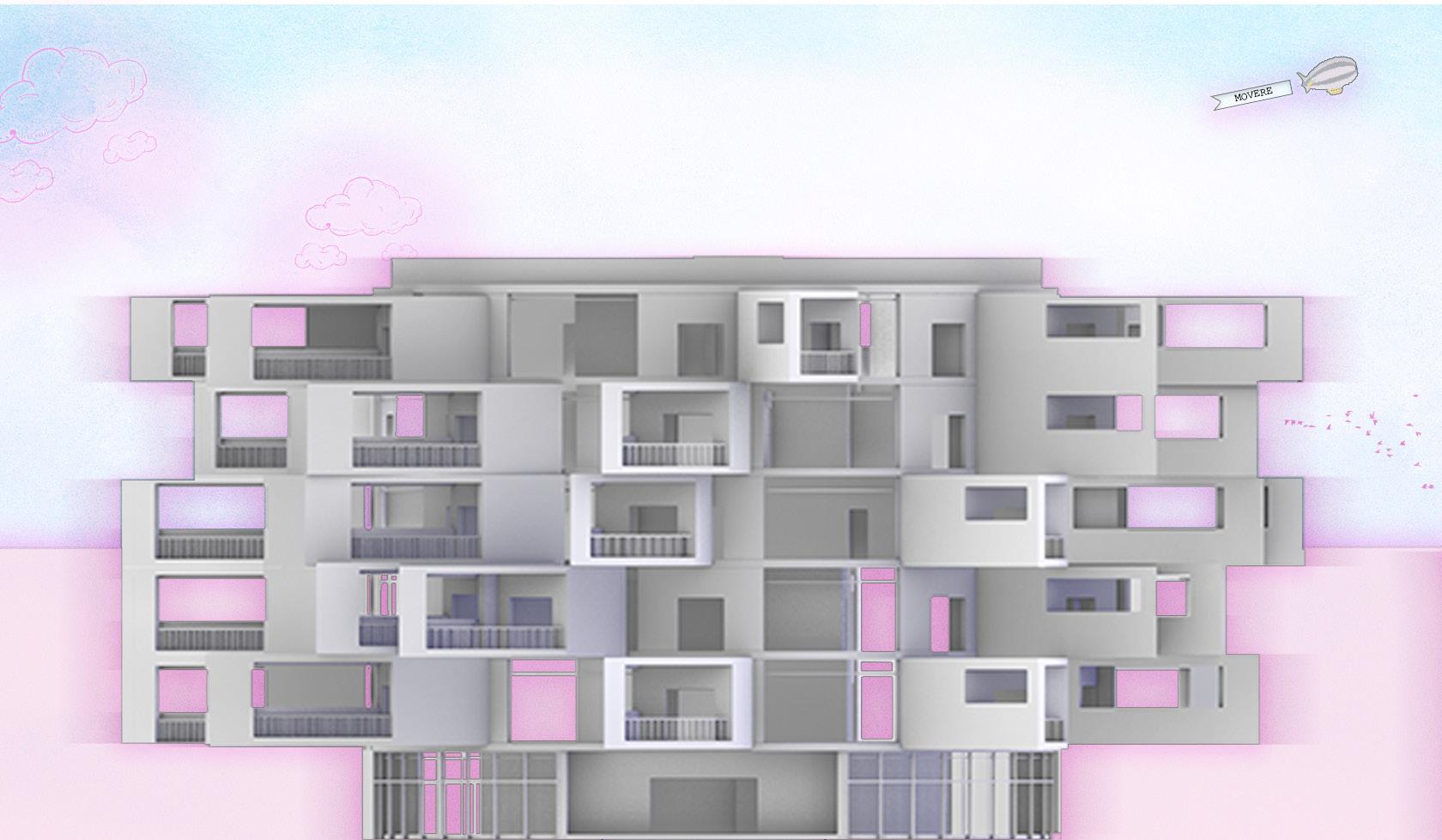
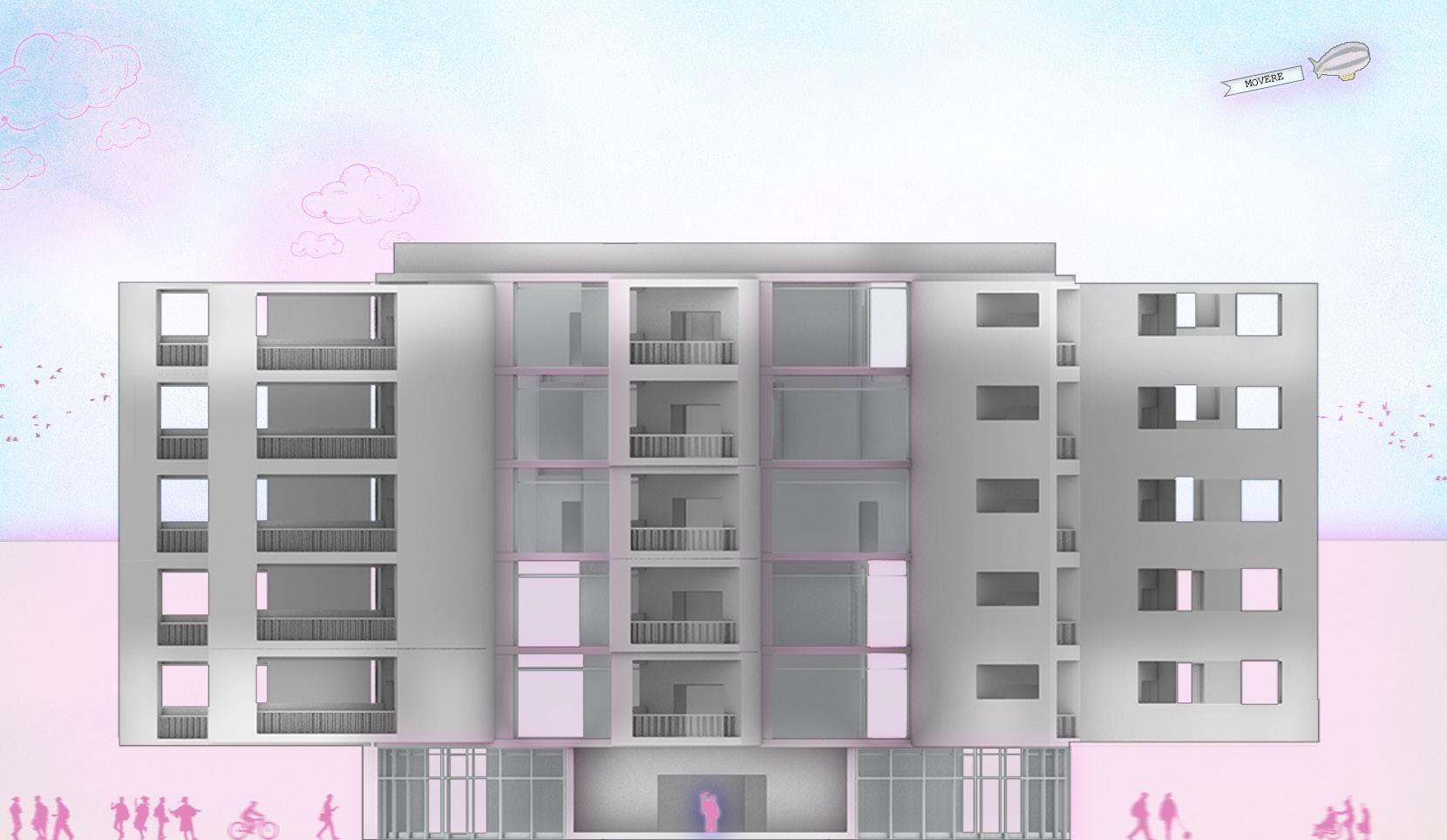
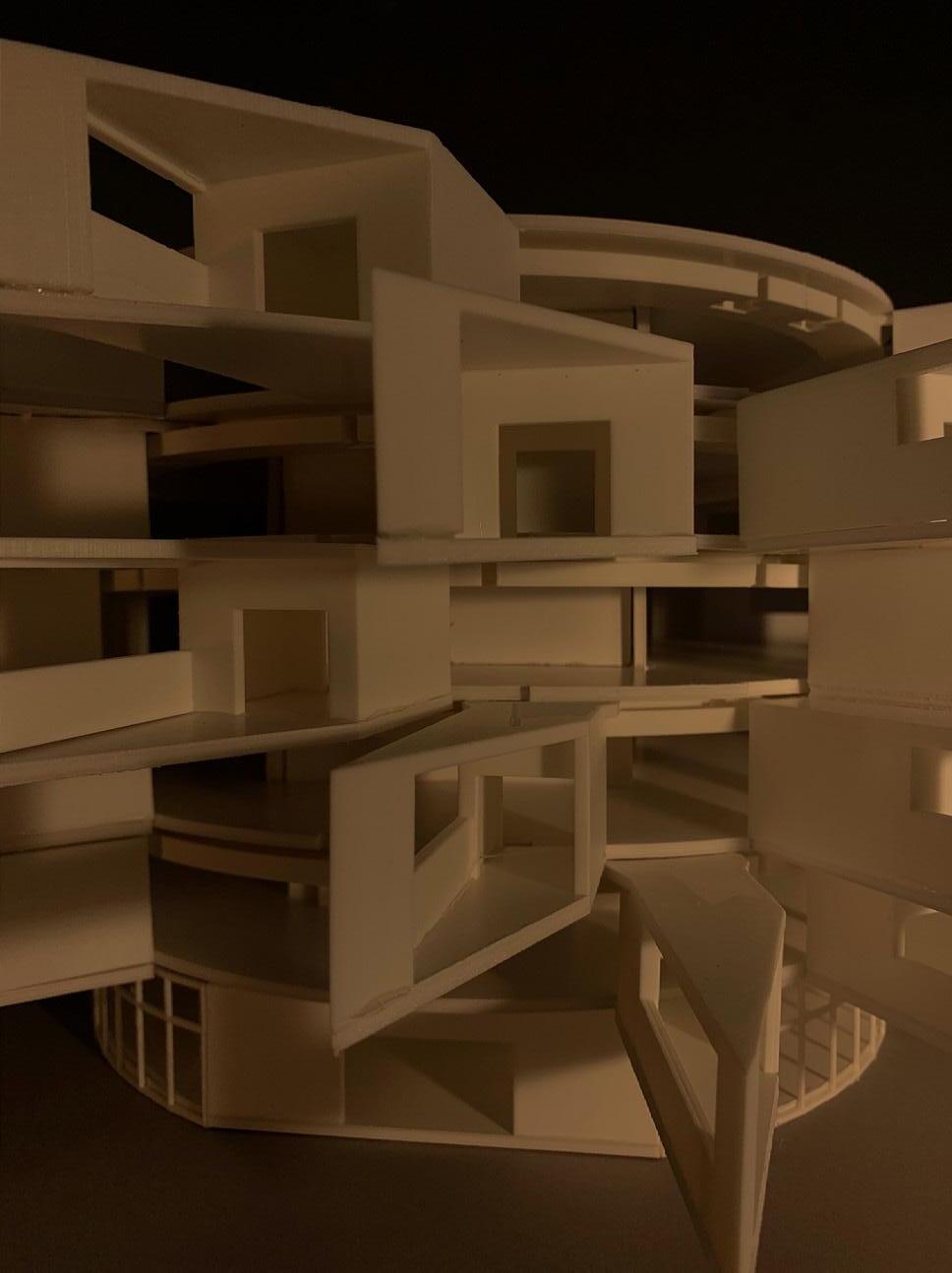
The design of the office space is guided by the principle of adaptability, where the architecture responds and caters to the programmatic needs and environmental conditions through orthogonal movement. By incorporating a combination of collaborative and individual workspaces, the design allows for a dynamic and flexible interior that can be reconfigured to meet the changing needs of the occupants. The project starts by analyzing and defining human scale and small groups. There are 40 units in total attached to the structure.
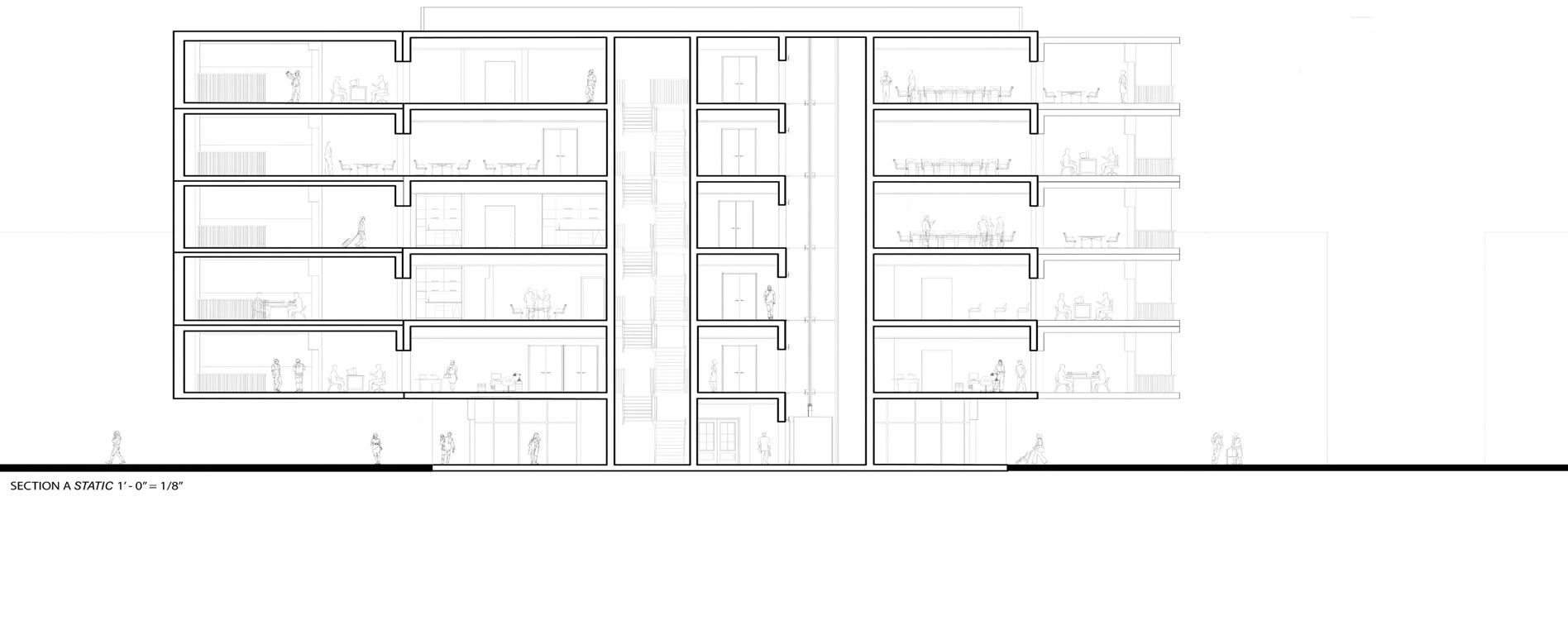
The static section demonstrates the structure in its fixed state which users would expect to see when arriving at the office and school in the morning before the units are put into use.
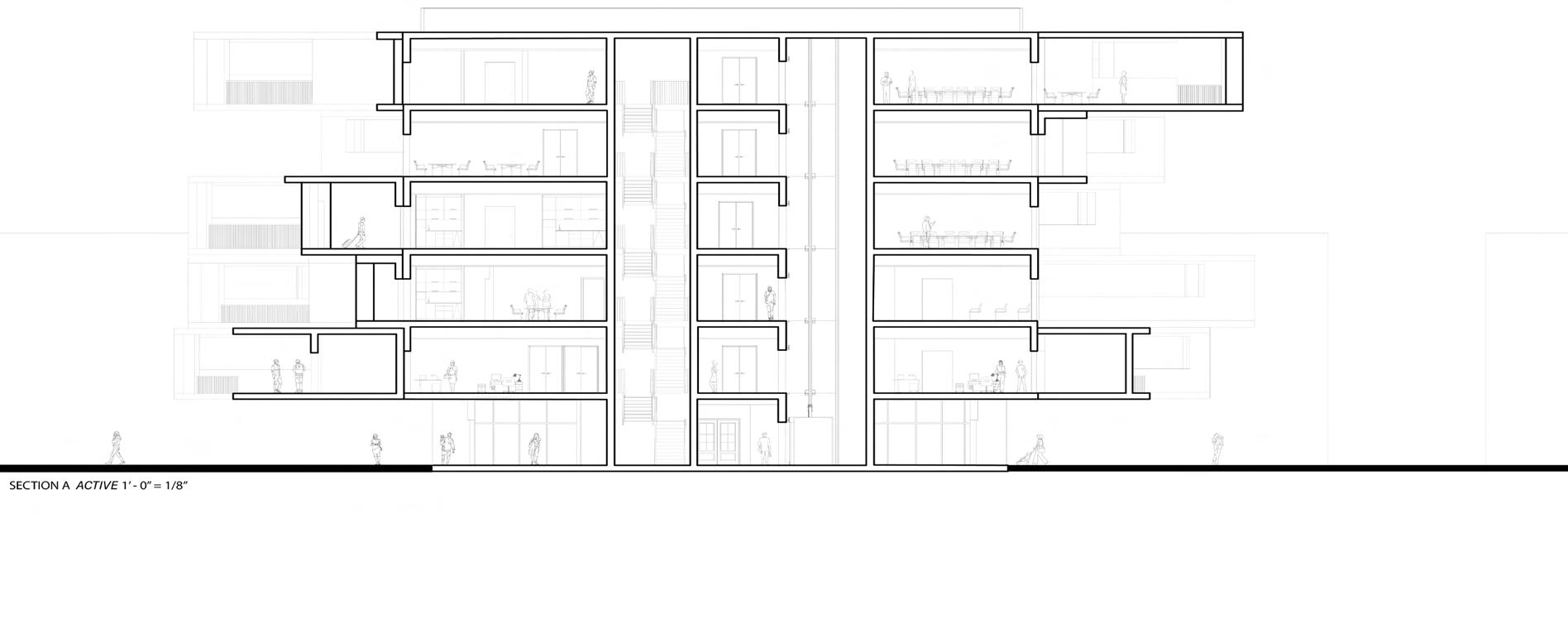
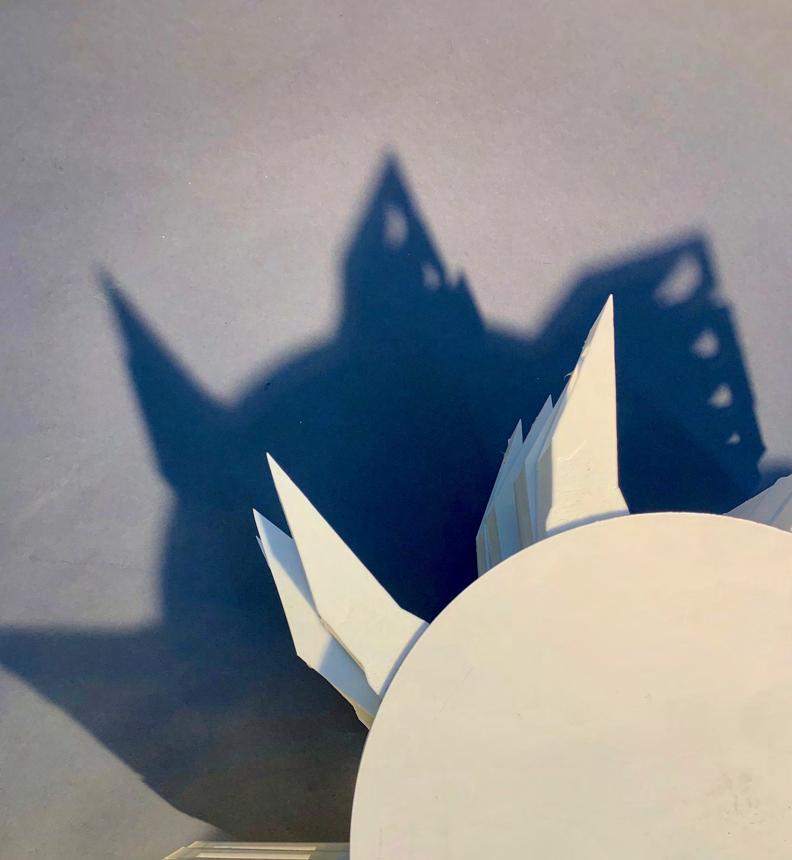
The core principle of modern office design is flexibility, which is exemplified in this six-story structure with individual units of varying sizes arranged on the floor plates that extrude out. These units can move along the building’s façade to improve access to views and daylight, as well as connect programmatic needs to communal spaces. The structure can adapt to the specific needs and environmental conditions of a workplace throughout the day and seasons, which includes factors such as natural light, air quality, and temperature control. By designing the units to have the ability to be both static and active it creates spaces that maximize natural light and airflow, and users can enjoy a healthier and more productive working environment depending on the unpredictable seasons in Ohio.
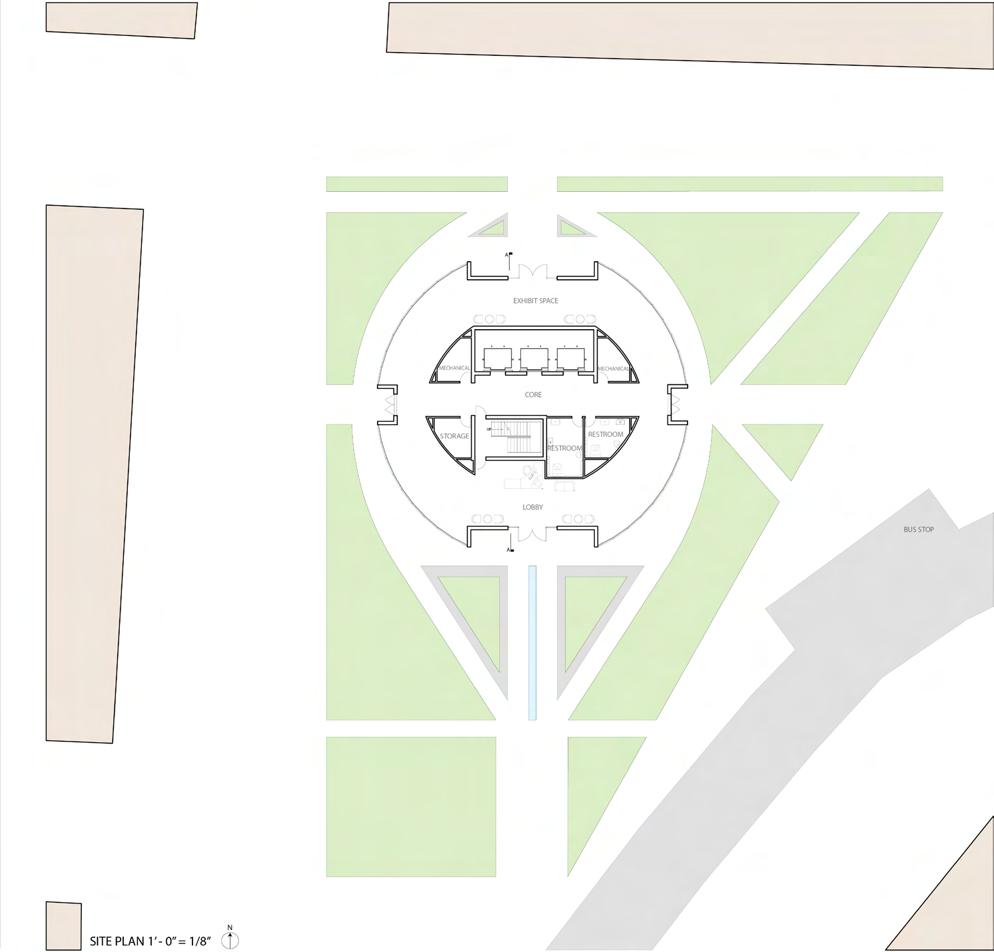
The structure is located on the west side of campus surrounded by other proposed institution buildings for the university. The first floor provides an exhibit space and access to a bus stop on site.
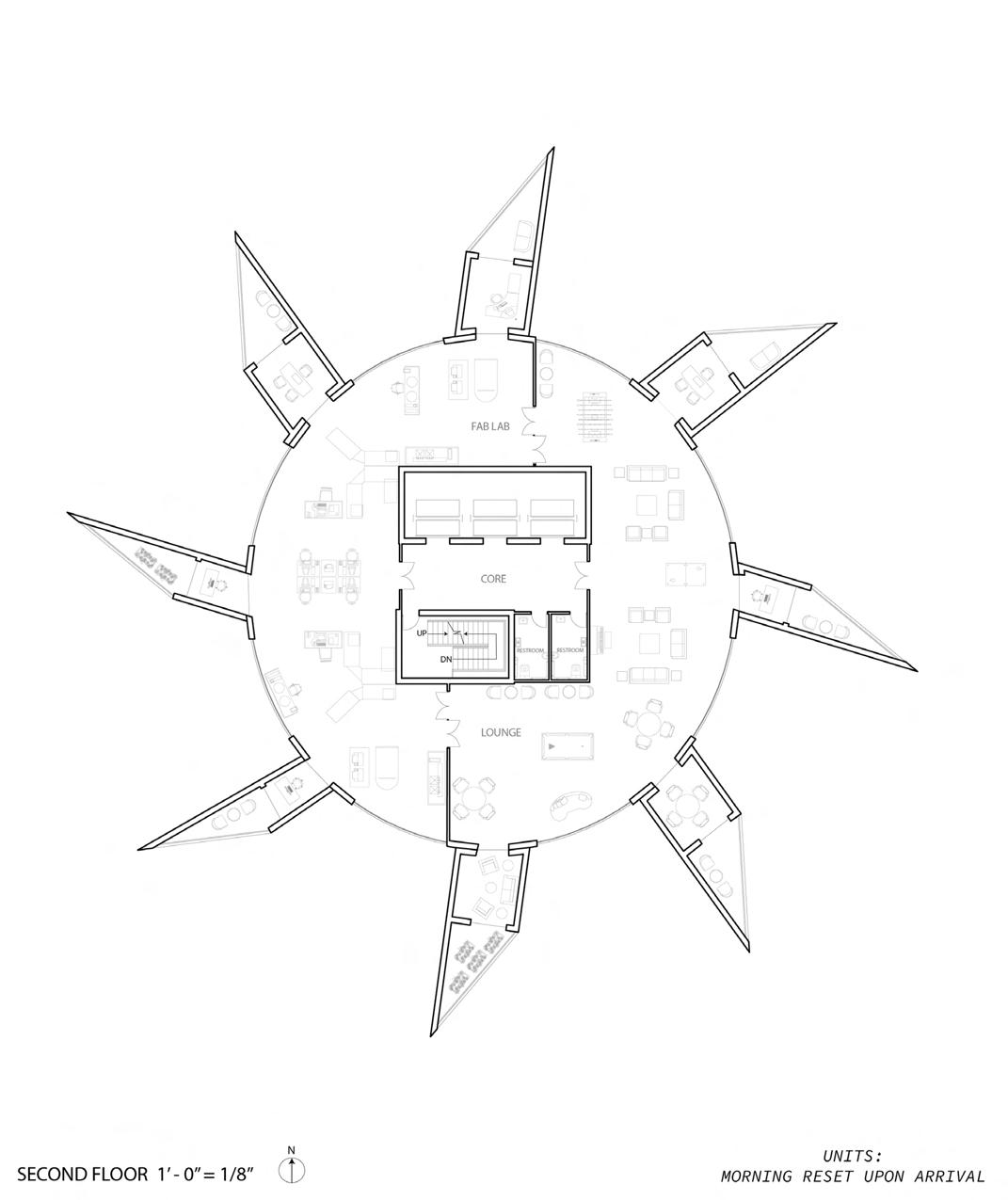
The second floor on the right houses the fab lab and lounge areas. The units are being displayed in static mode aligned with their 8 designated openings.
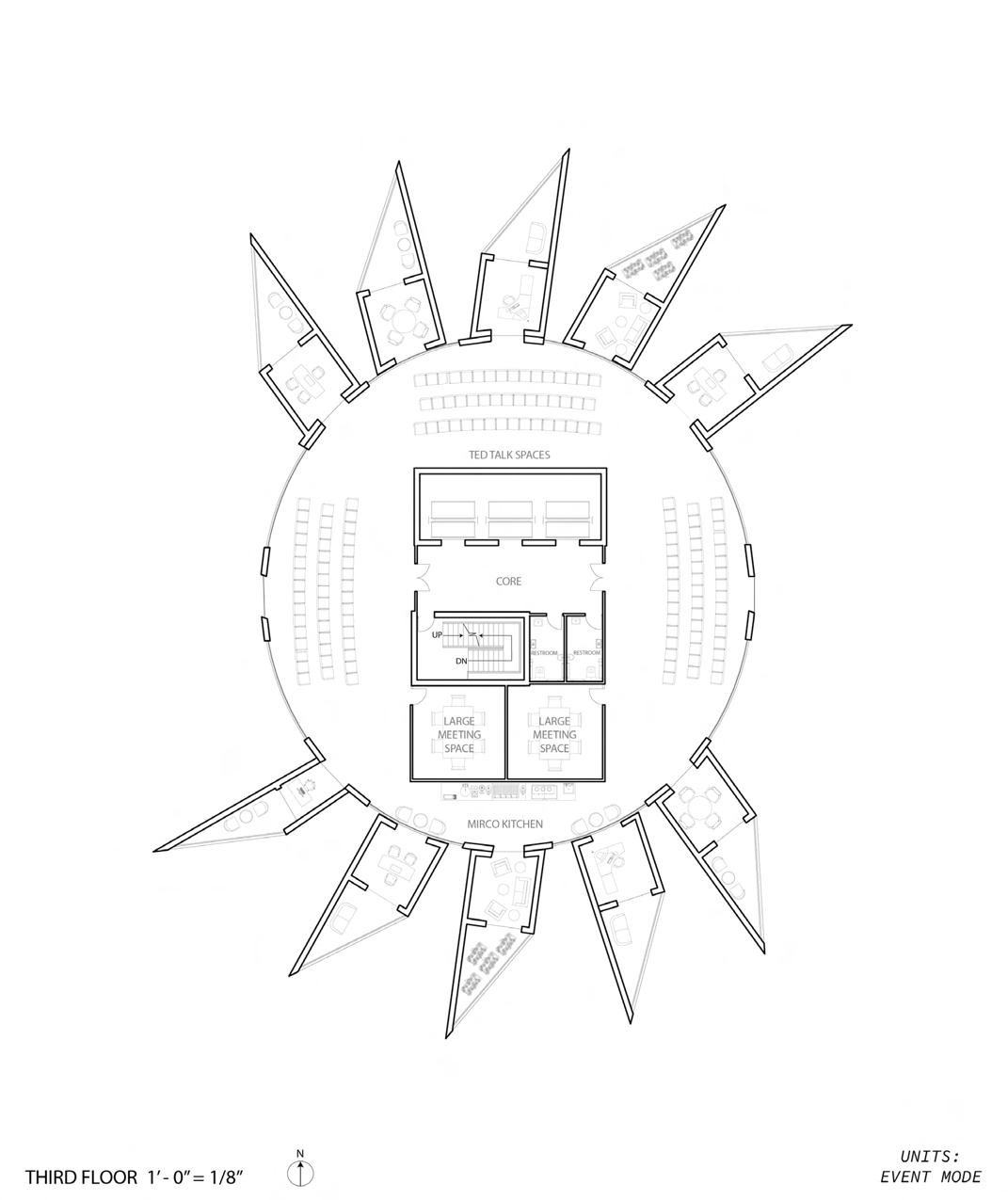
The third floor is an open space for three areas to have TED talks or even an event, the units are placed in event mode reflected on both sides of the structure accessible to the ted talk spaces and micro kitchen.
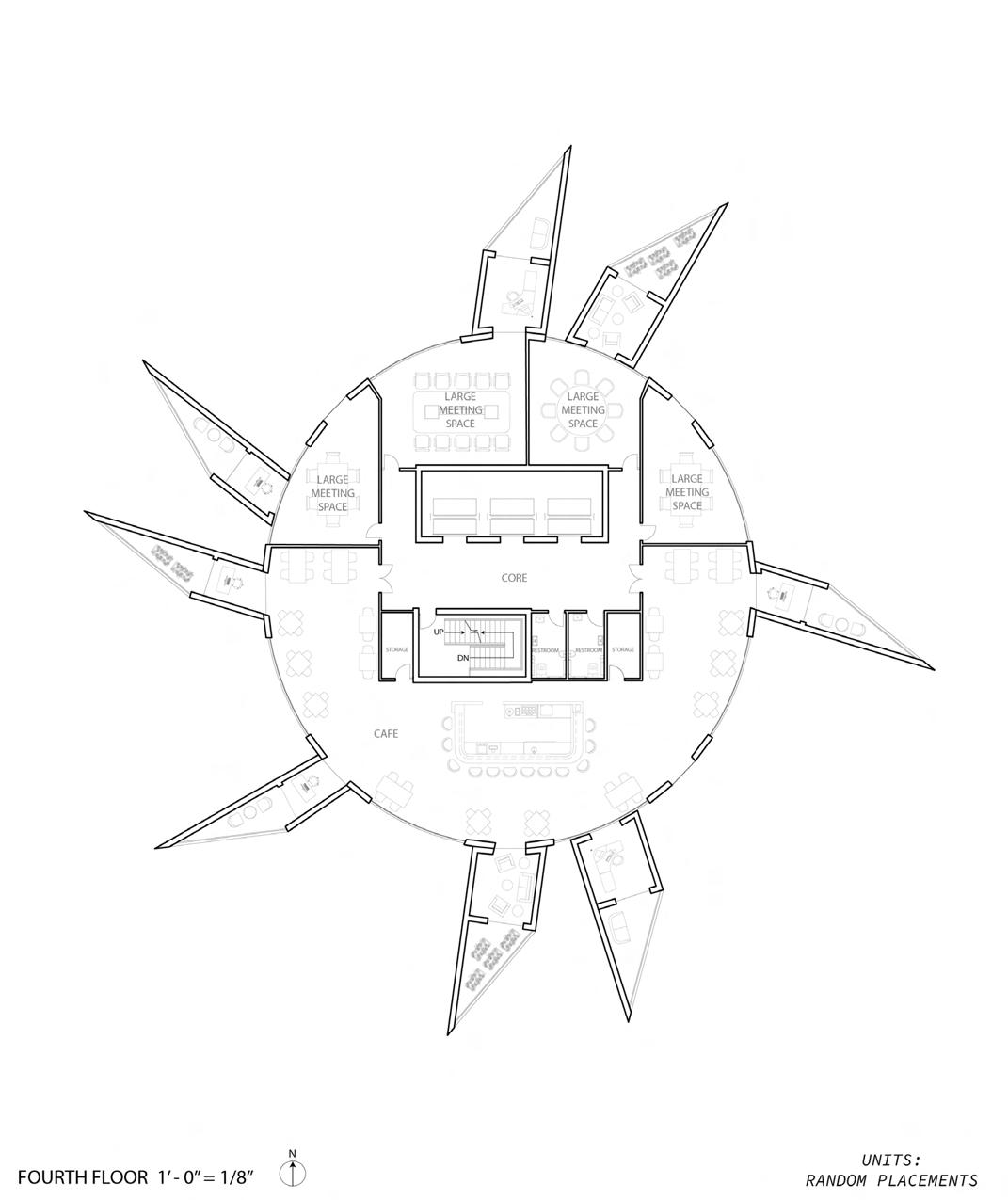
The fourth floor on the right exemplifies the units placed in a random assortment which would be the typical case each day. The fourth floor houses a cafeteria and multiple meeting spaces.
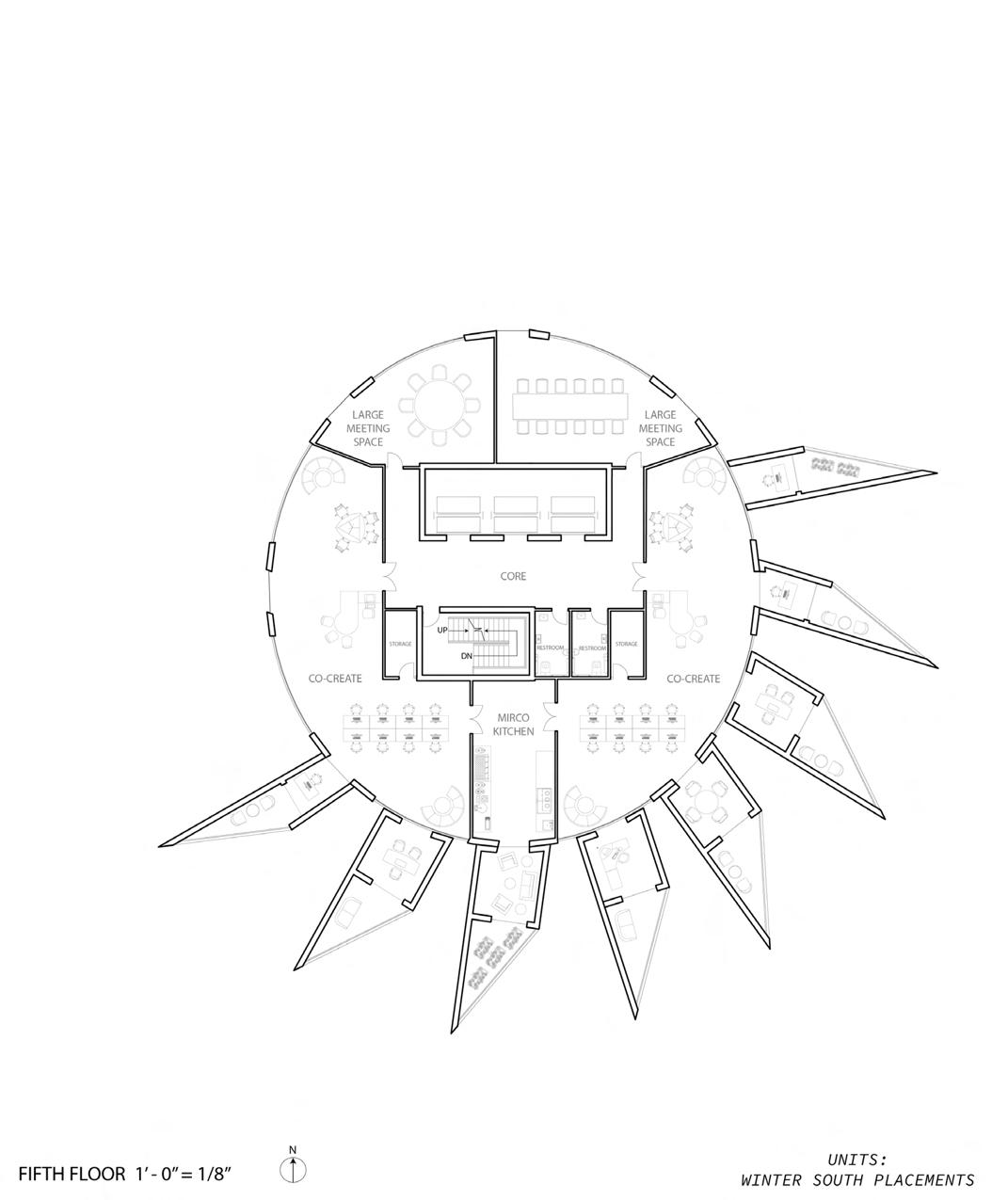
The fifth floor is demonstrating the units placed on the south side for winter daylighting conditions. The fifth floor has two co-creating spaces and large meeting spaces promoting open and collaborative work spaces.
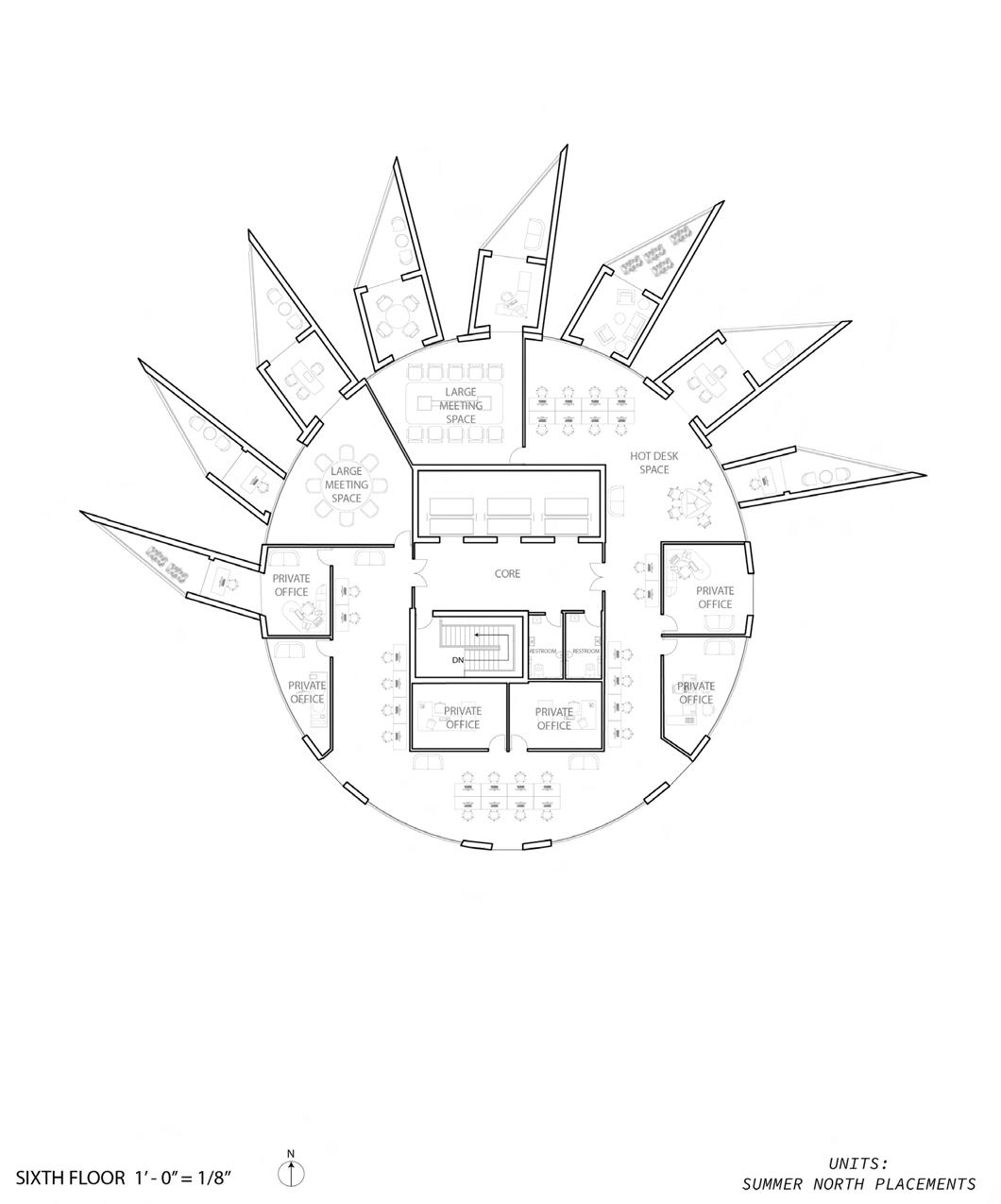
The sixth floor is demonstrating the units placed on the north for summer daylighting conditions. The sixth floor has areas designed for moments and spaces of working privately or independently as well as temporary hot desk spaces.
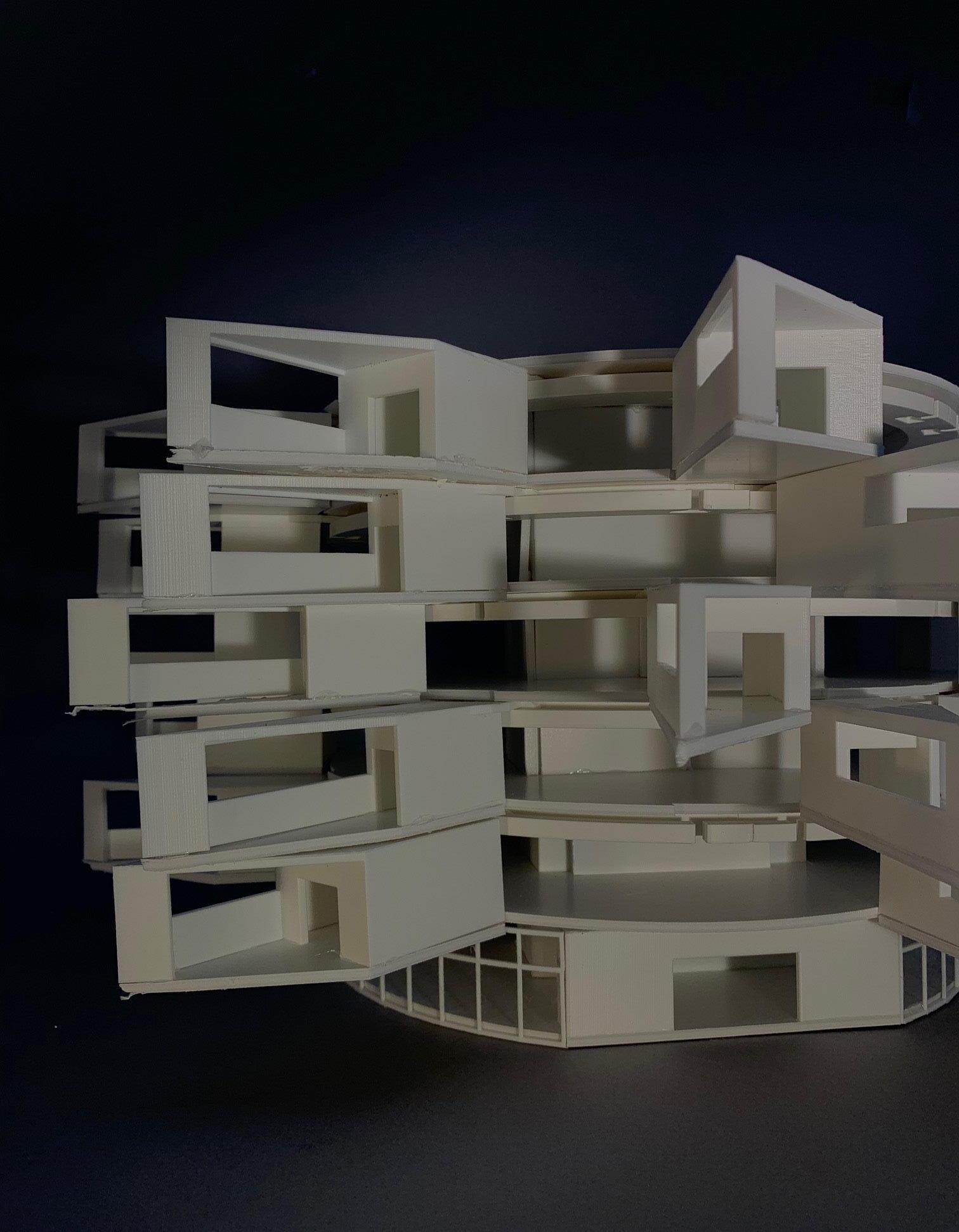
Universities need adaptable spaces like the Movere Institute to foster innovation and collaboration among students and faculty, accommodating a variety of work styles and programs. By offering a mix of individual and communal workspaces, these environments promote flexibility and responsiveness to the diverse needs of occupants, including opportunities for both private reflection and collaborative interaction. The ability to reconfigure spaces based on environmental conditions, such as access to natural light and airflow, enhances user comfort and productivity, making for a healthier academic environment. Ultimately, such thoughtfully designed spaces can enrich the educational experience by supporting diverse activities and encouraging a sense of community within the campus.
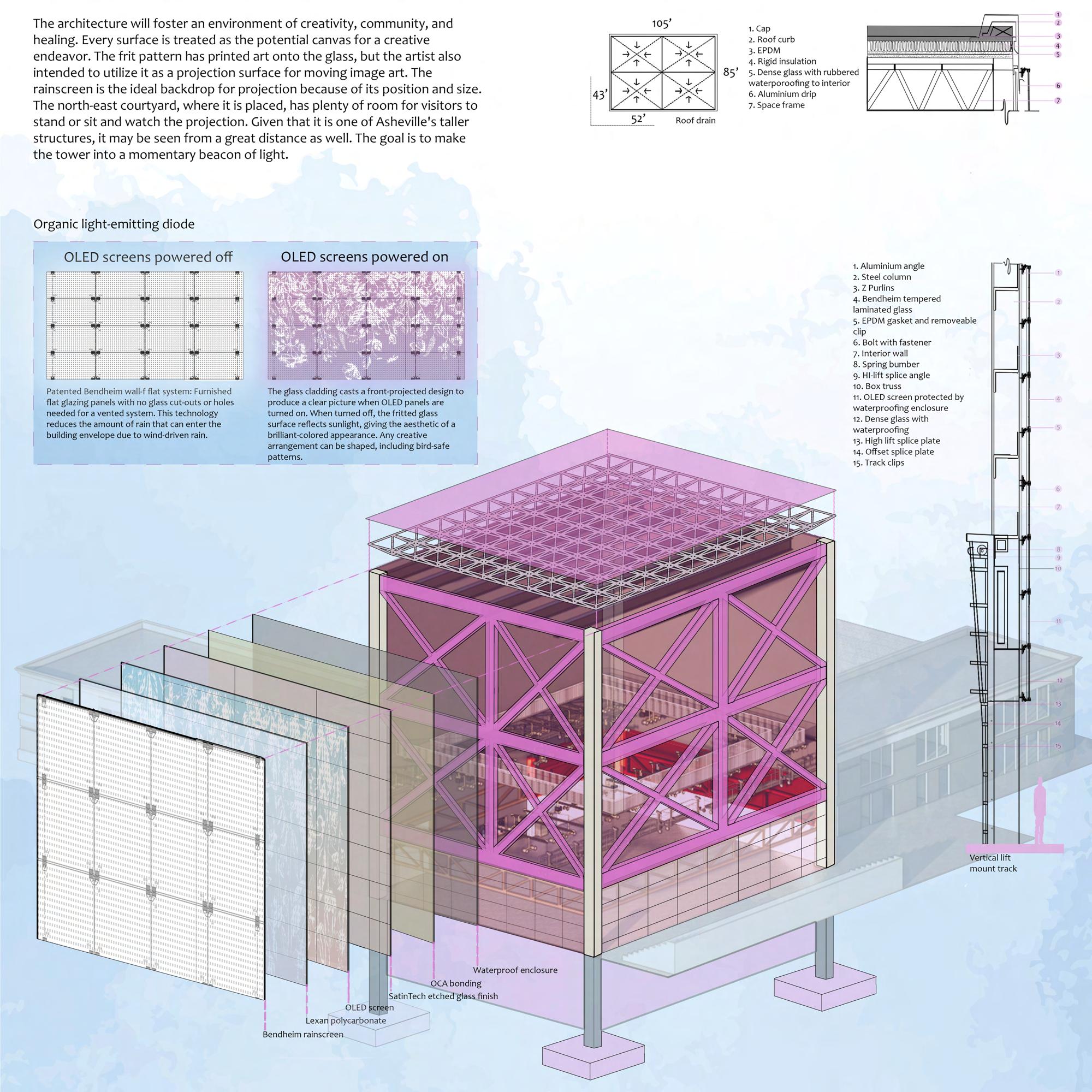
ASHEVILLE’S CENTER FOR THE ARTS
ARCH 405 Architecture Design Studio V: Research and Schematic Design
ARCH 406 Architecture Design Studio VI: Comprehensive Design Development
Mixed-Use Community Space and Perfomance Center
Senior Year Capstone Project
Professor Daniel Brown
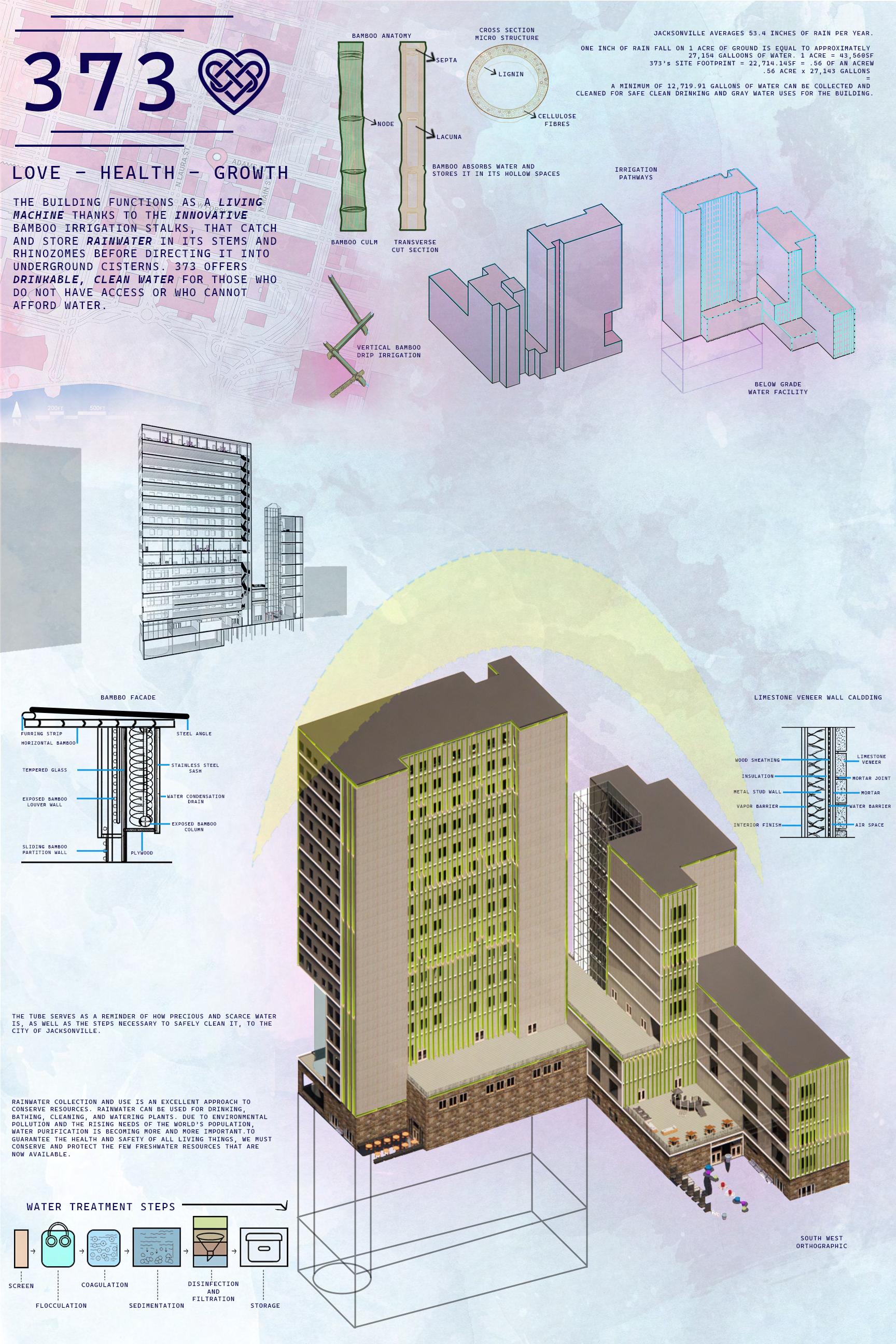
ARCH 404 Architecture Design Studio IV: Urban Context
Mixed Use High Rise
Senior Year Fall Quarter
Professor Daniel Brown
NASHVILLE’S RE-OPENING ACT
Collaborative Project: Memorial Bridge & Cultural Center (Team Captain)
Junior Year Summer & Senior Fall Quarter
Professor Brent White & Professor Maggie McManus
A small role in a production still has a big impact.
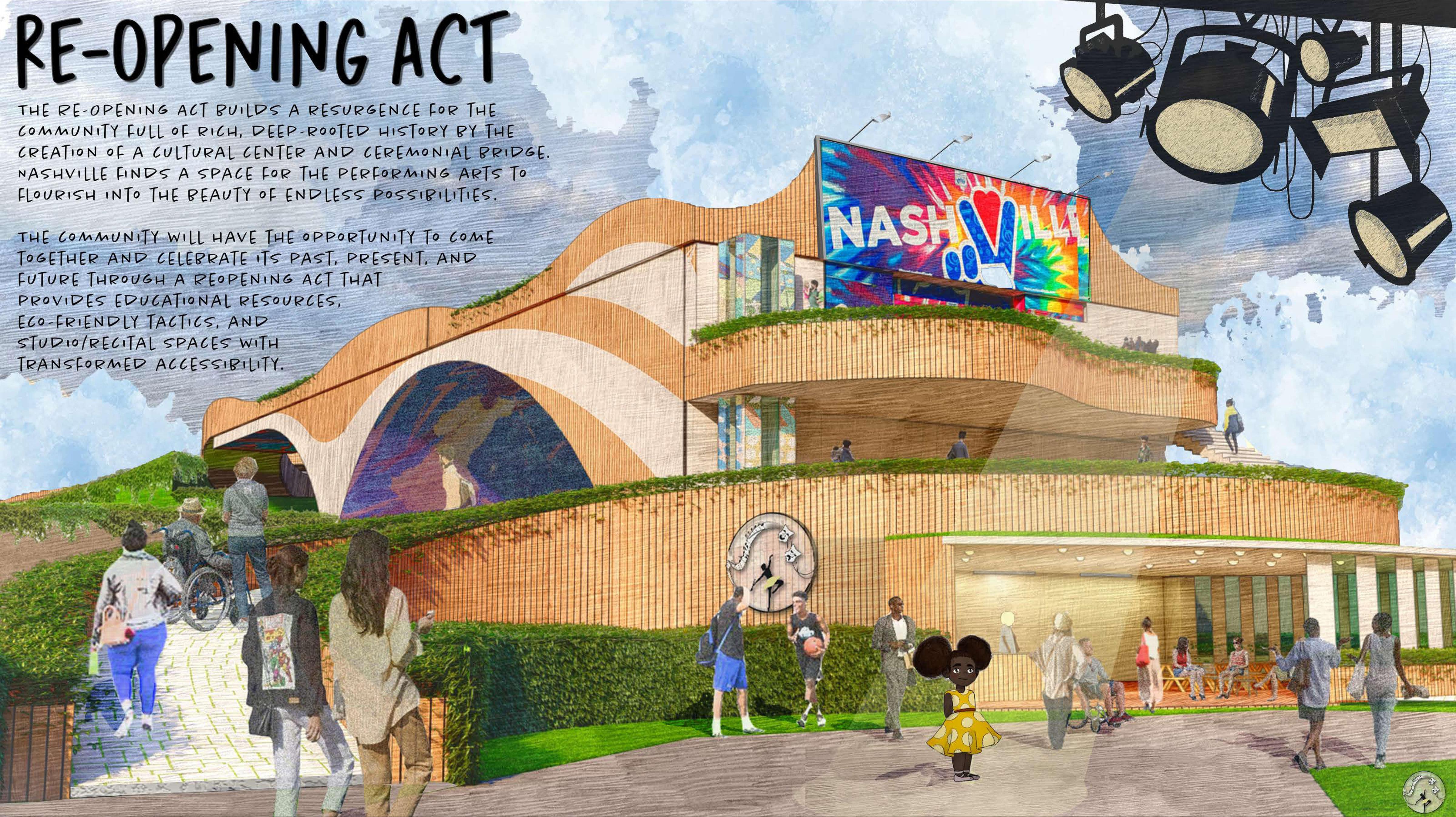
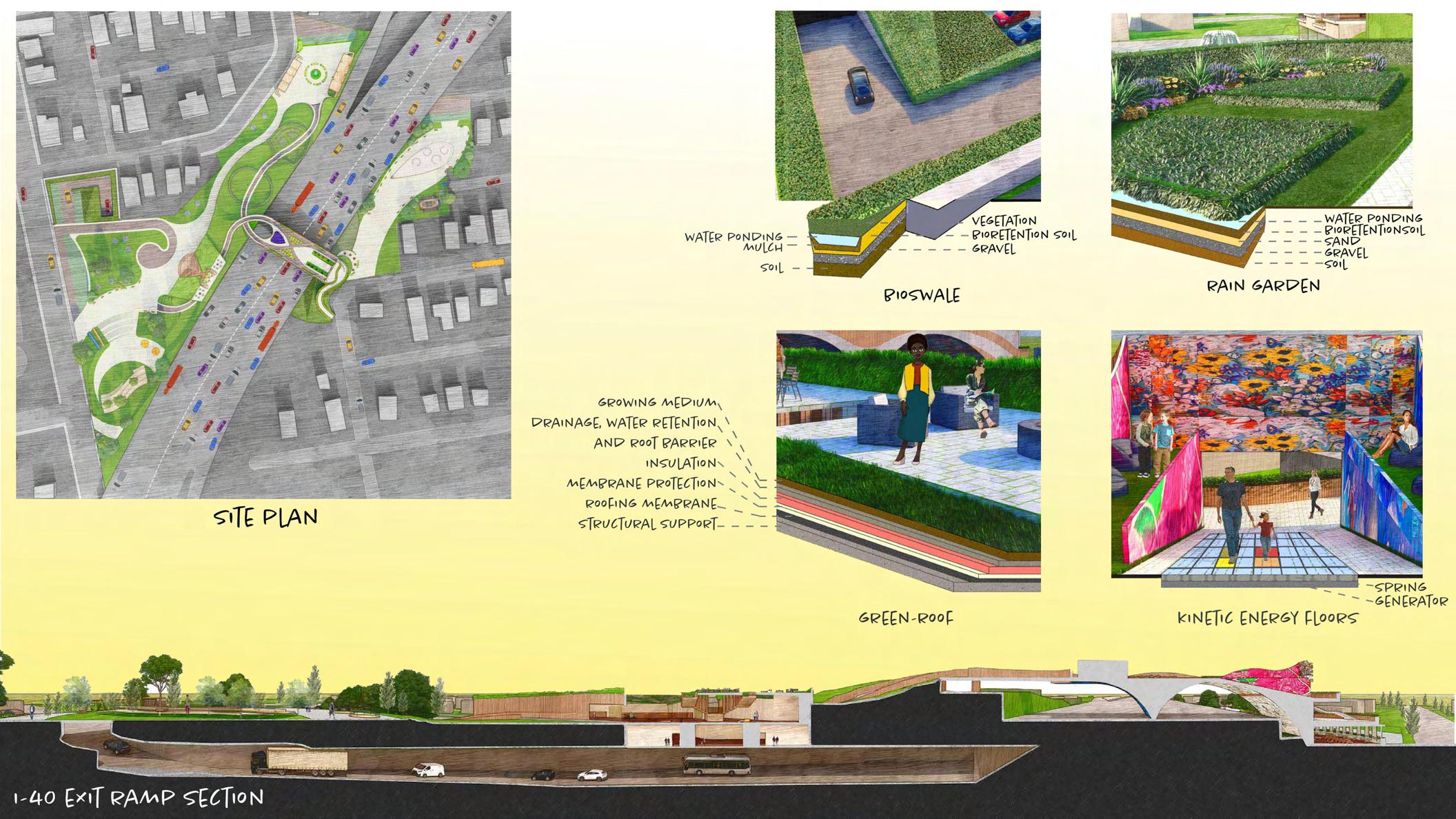
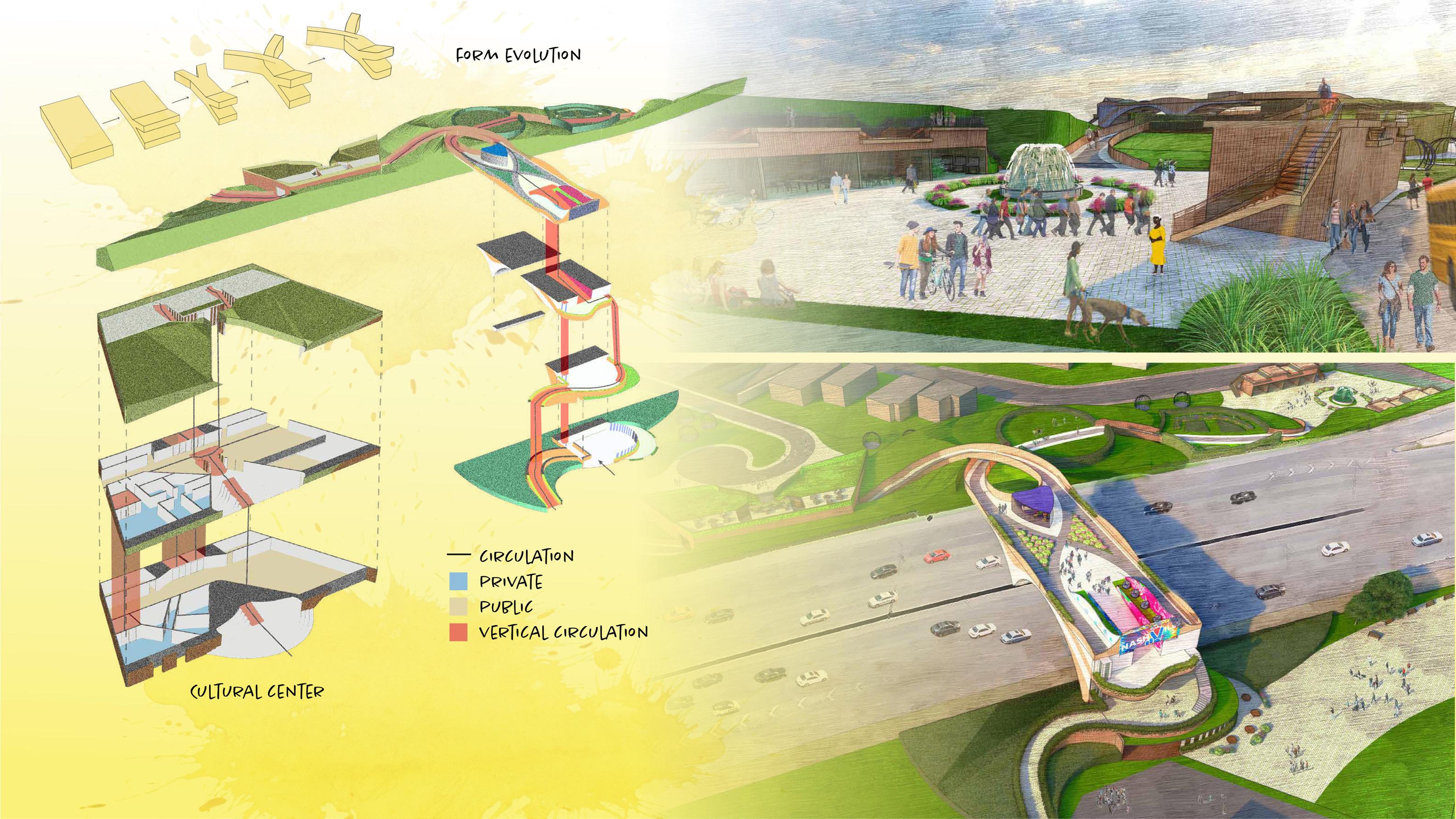
The re-opening act fosters an attitude towards the resurgence of performing arts and its act of healing the wounds of North Nashville. The creation of artistic expressions and formations to bring the community together for moments of happiness and remembrance. The design proposal is a solution to environmental injustice, land use limitations, and gentrification that many other cities face with growing populations. Gentrification can be avoided by passing new residential zoning laws or creating affordable housing. This process will help low-income families to establish their roots in a comfortable environment that feels welcoming. The cultural center creates a sense of space that has been lost in the community and has a positive impact on the health and social sustainability of the city.
Morphology and Erosion
Architectural erosion relates to structural issues and effects run-time qualities, maintenance, and evolution. Morphology in the built environment explores the evolution of the form and its relationship to people. The design concept is to rebuild the eroded connections and paths of the neighborhood and morph them into a built form. The evolution of people caused an erosion that tore through the community and transformed them into a built form; reintegrating and restoring the urban fabric and connecting people. The community center would embrace the originality of the neighborhood by creating a morphed building layout with an underlay of the site before I-40.
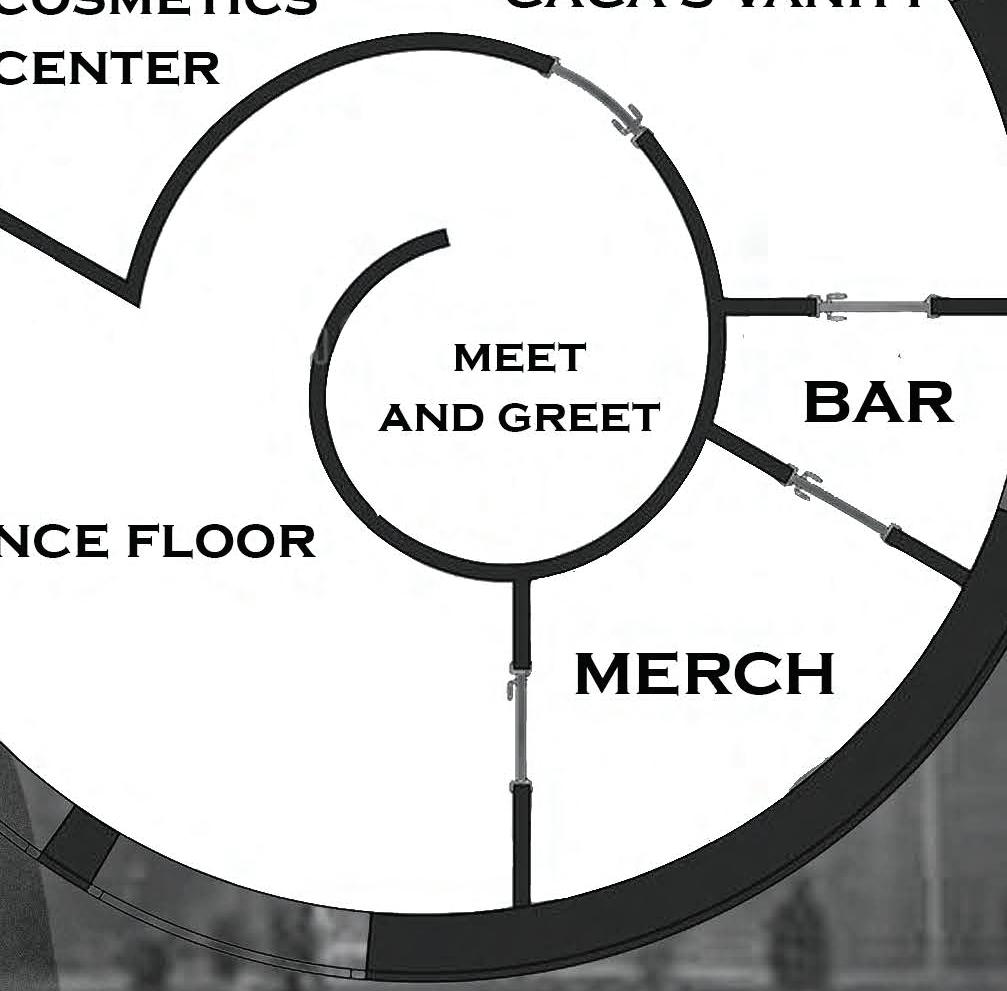
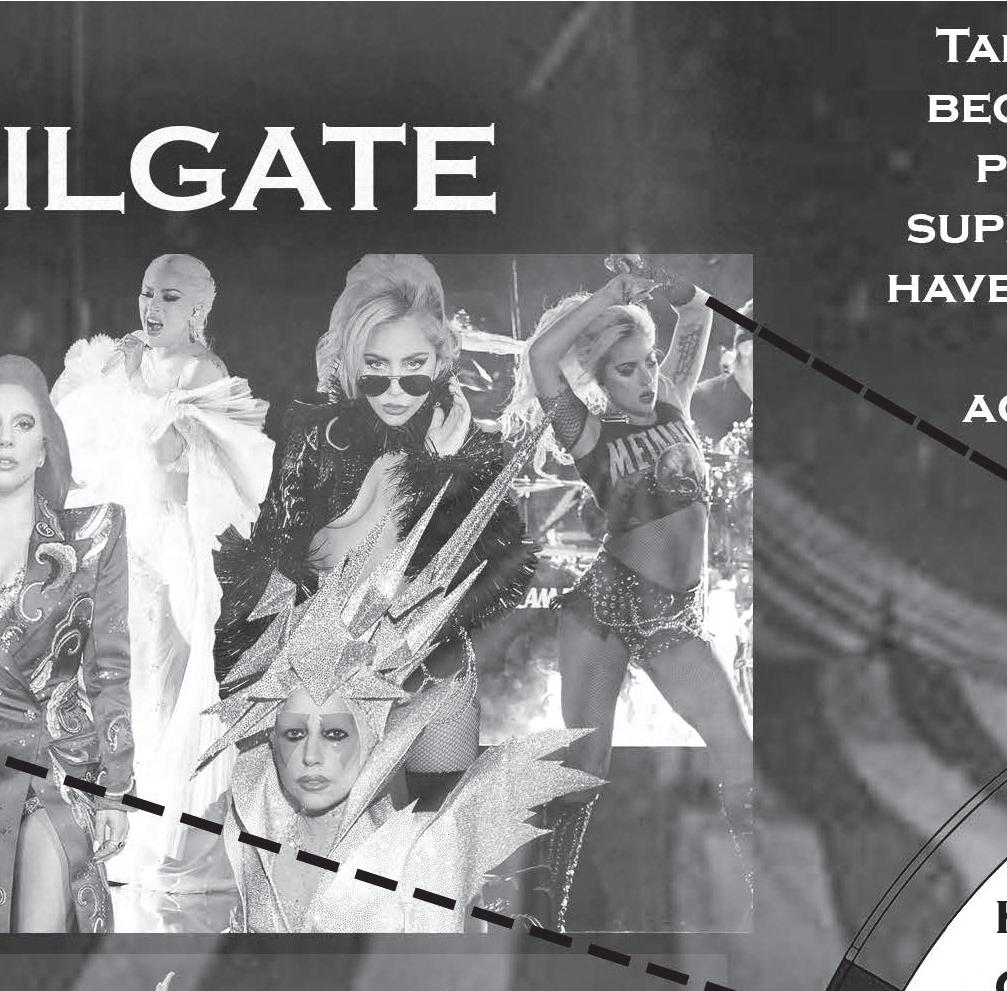
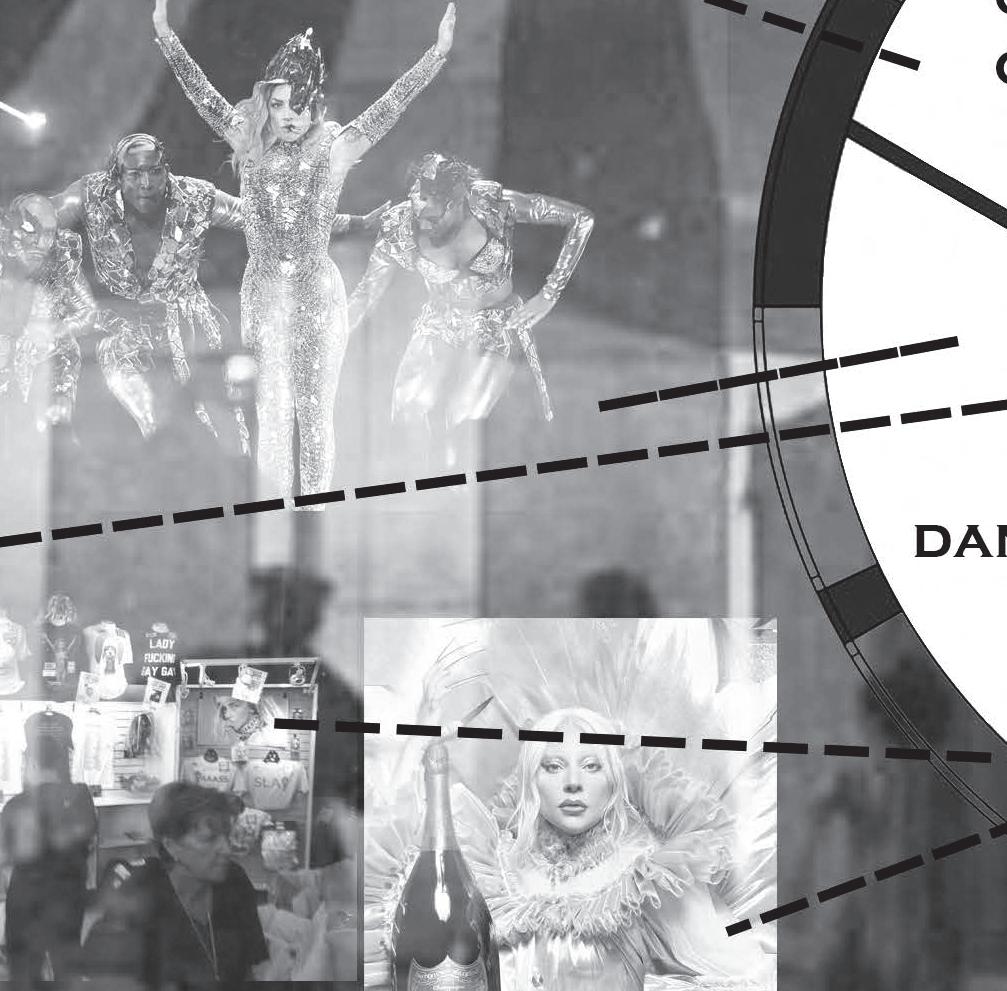
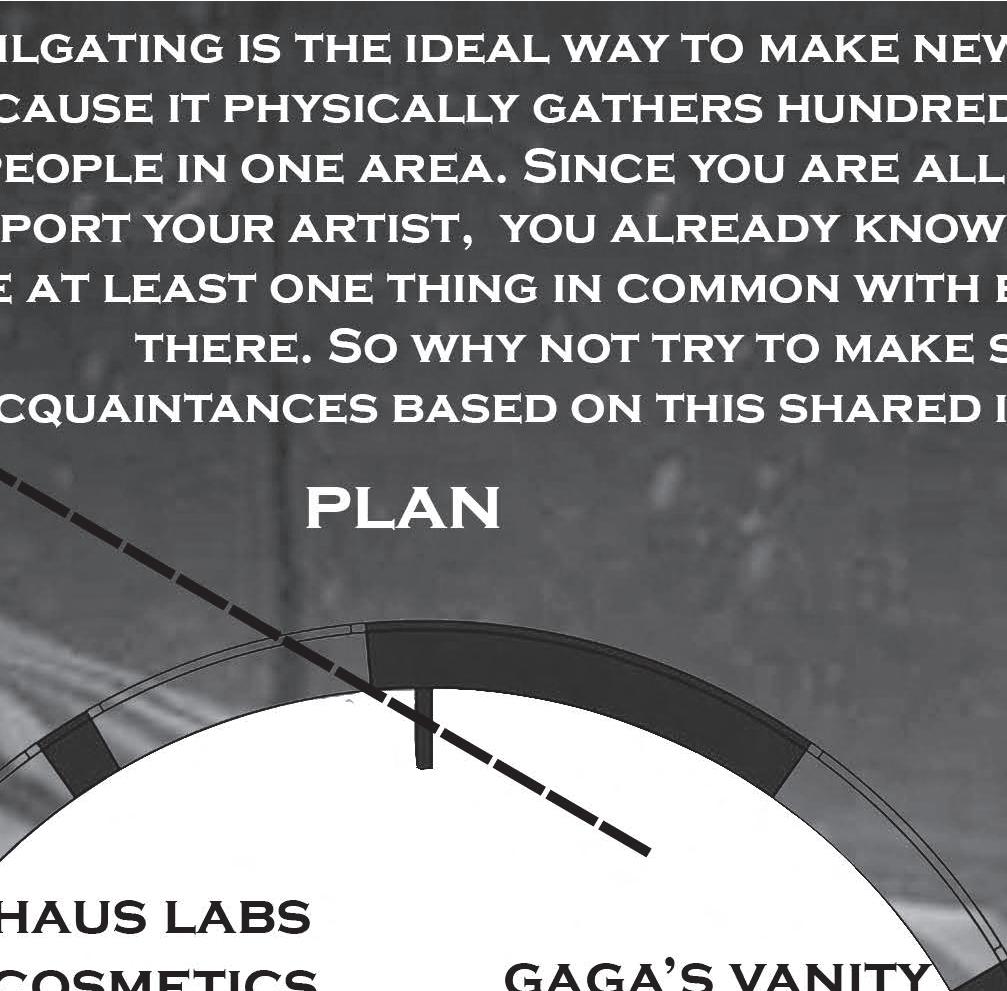
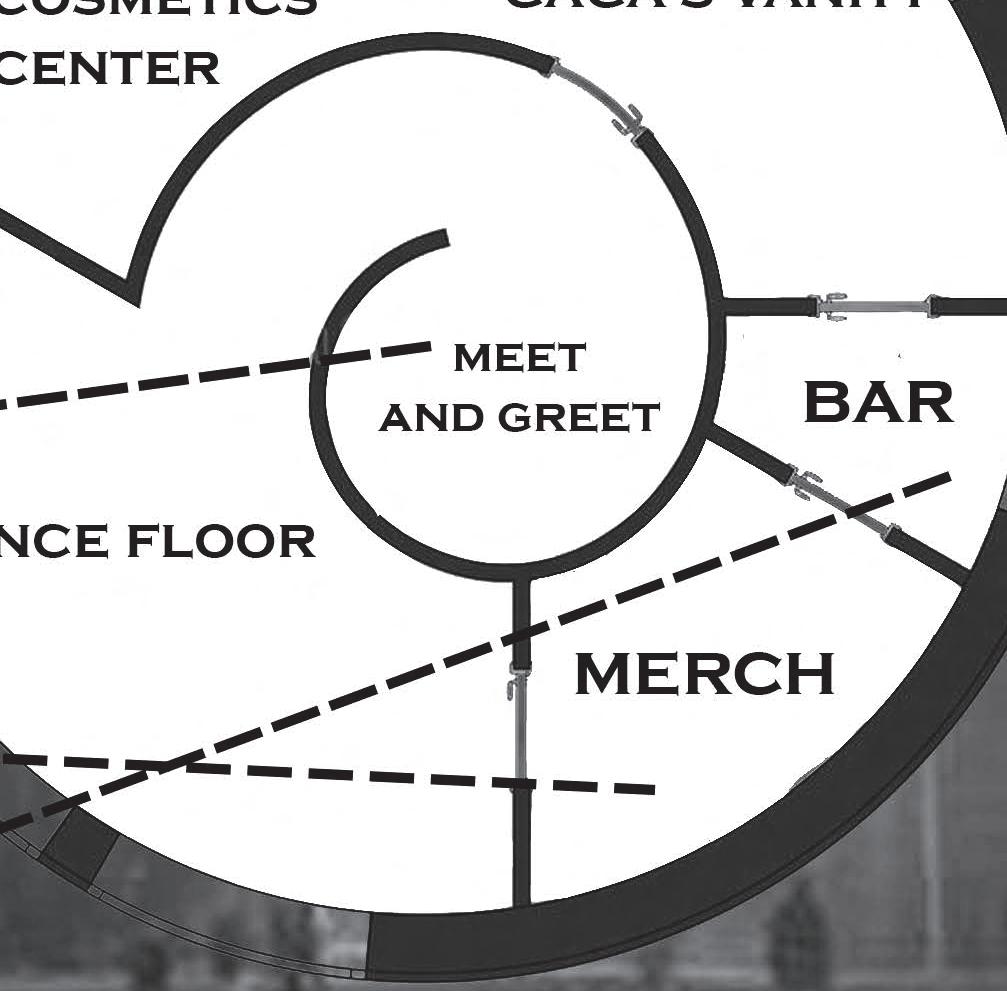
AWE - REIMAGINING THE CONCERT EXPERIENCE
THED 305 Designing for Interactive Entertainment
Senior Year Winter Quarter
Professor Christopher Stapleton