Yale University School of Architecture Master of Architecture I, 2020 - 2023 Elizabeth Cornfeld
Elizabeth Cornfeld
CONTENTS Harlem, New York Spring 2022 The Harlem Collective 32 New Haven, Connecticut Fall 2021 Next STEP 52 New Haven, Connecticut Spring 2021 Material Utopia: Above, Below 70 82 Cupertino, California Fall 2020 Plan, Unplanned 20 Santa Fe, New Mexico Fall 2022 Land Matters 2 Boston, Massachusetts Spring 2023 Symphony Hall Renewal and Development
Symphony Hall Renewal and Development
ARCH 1119 | Critic: Ann Beha and George Knight
Boston, Massachusetts
Spring 2023
Elizabeth Cornfeld
Project Objective: Boston’s landmark Symphony Hall, designed by McKim Mead and White in 1901, is recognizing the urgencies of greater engagement with the community, expanded audiences, and the integration of new media, technology, to support innovation in musical performance. The 2000 seat Hall, and its facilities for musicians and patrons, and two contiguous properties provide exceptional opportunities for cultural reimagination. Design interventions at Symphony Hall can reimagine its resources, expand its relevance, and strengthen its mission. The adjacent full block site provides exceptional opportunities for cultural, community, educational, and residential uses. The project develops an architectural program, new construction and renovation strategy, site massing options, and interior and exterior design expression for Symphony Hall.
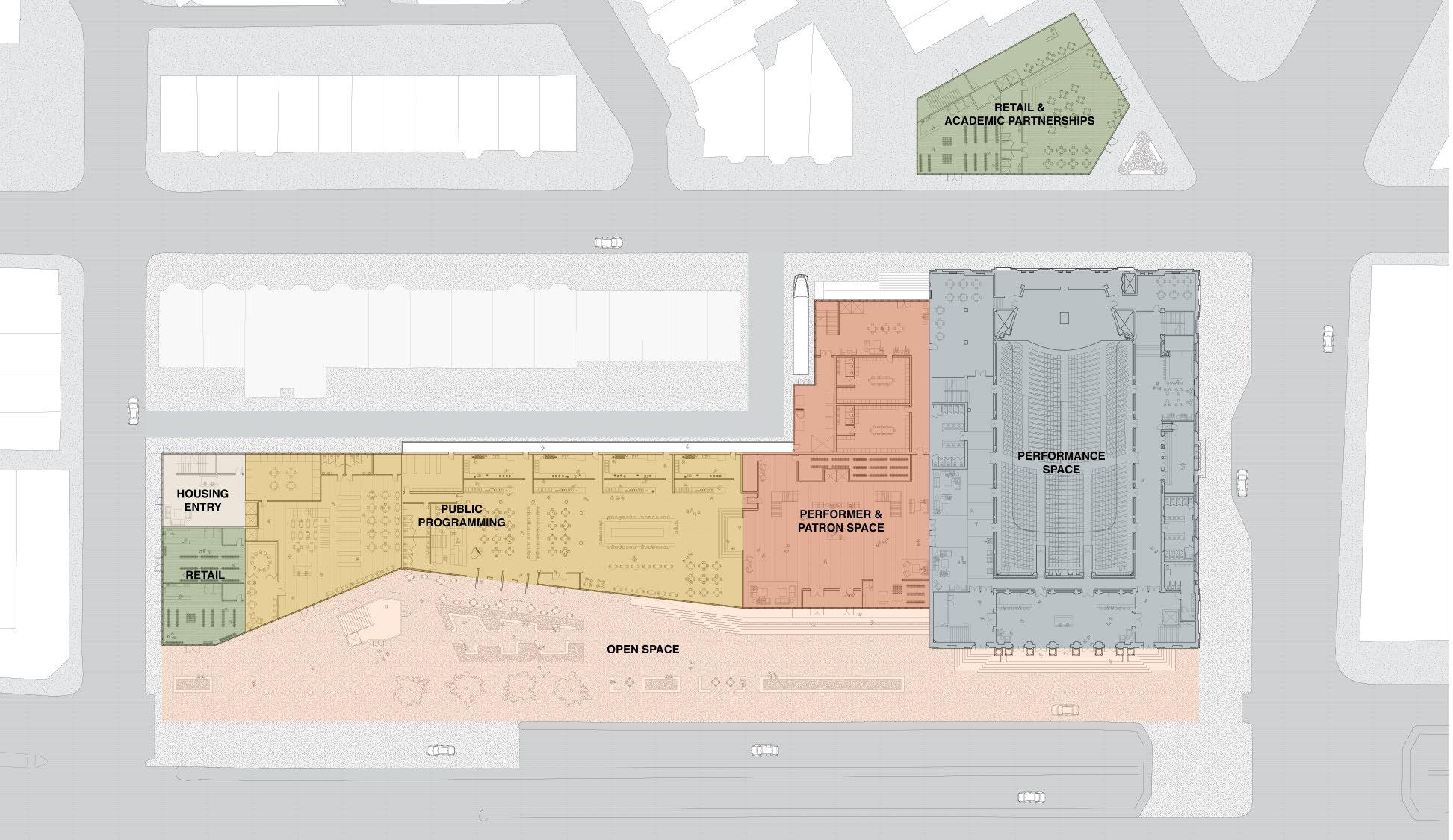
This 240,000 SF addition to Symphony Hall seeks to activate the street, introduce new programs to the city, and better serve the Boston Symphony Orchestra’s patrons and performers. From visiting Symphony Hall we discovered the challenges faced by the overall site, such as the need for expanded sidewalks, rethinking the T station, better utilizing the concert hall, and the creation of new patron and performer spaces. As a result, my projects aims to turn these issues into opportunities for the Boston Symphony Orchestra and the city by reimagining the street, hospitality, transportation, outdoor spaces, public programs, and the patron and performer experience.
2
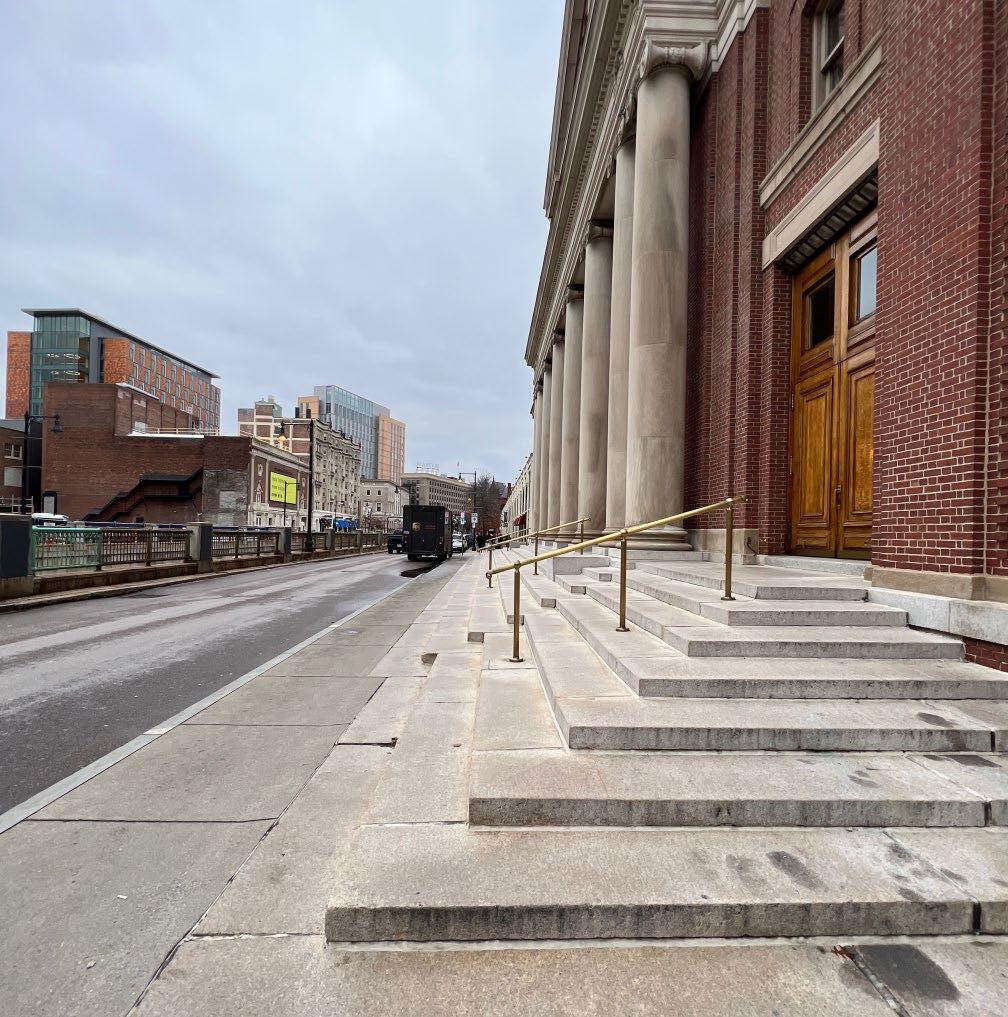
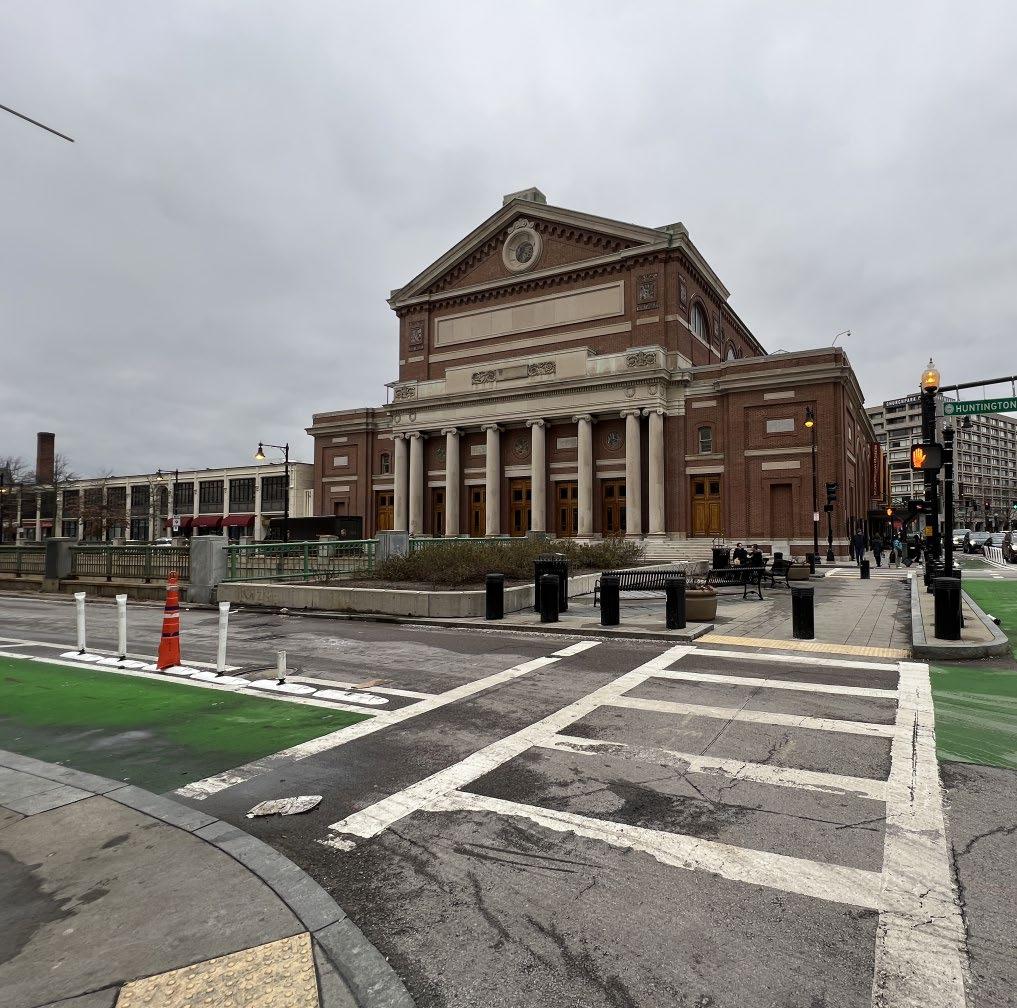
Symphony Hall Site Photos
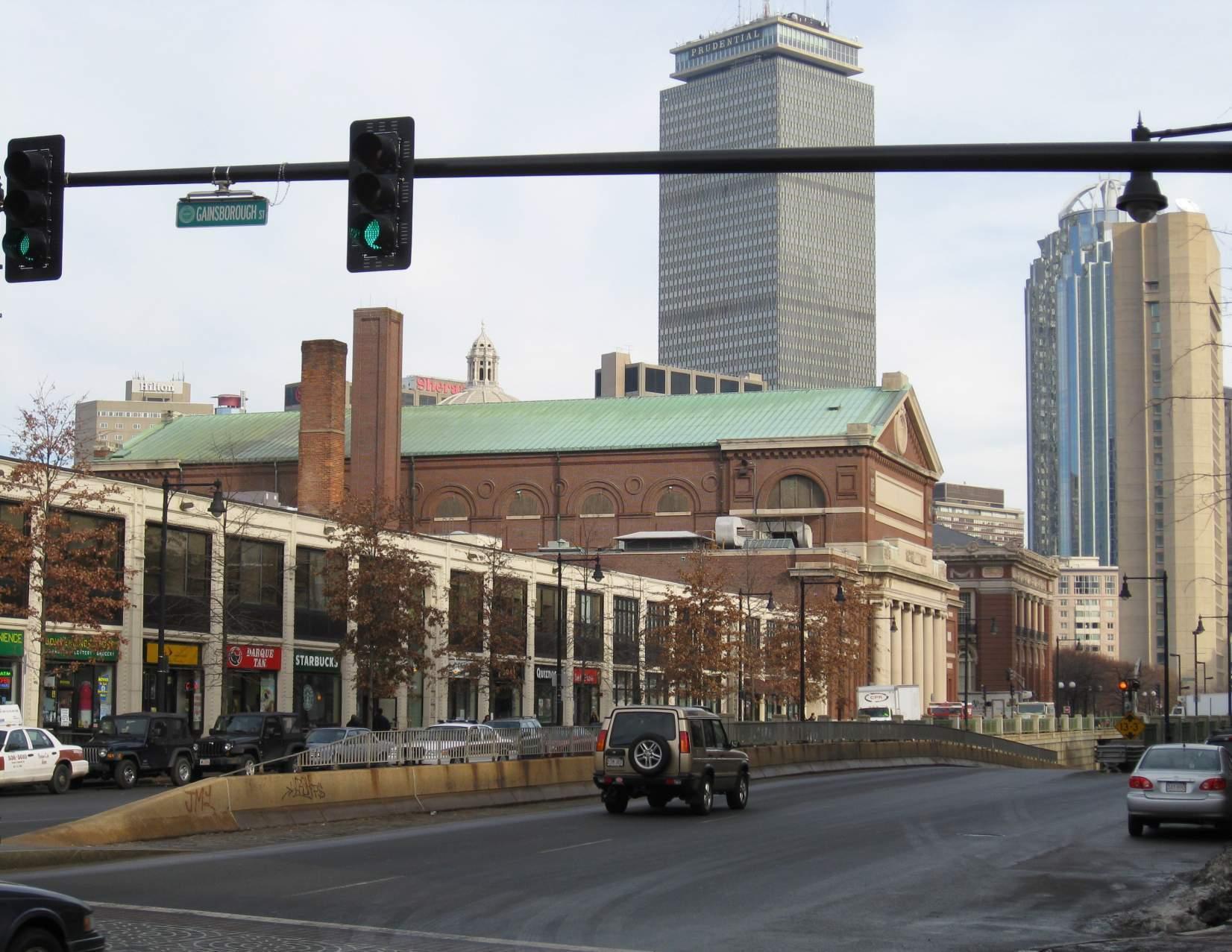
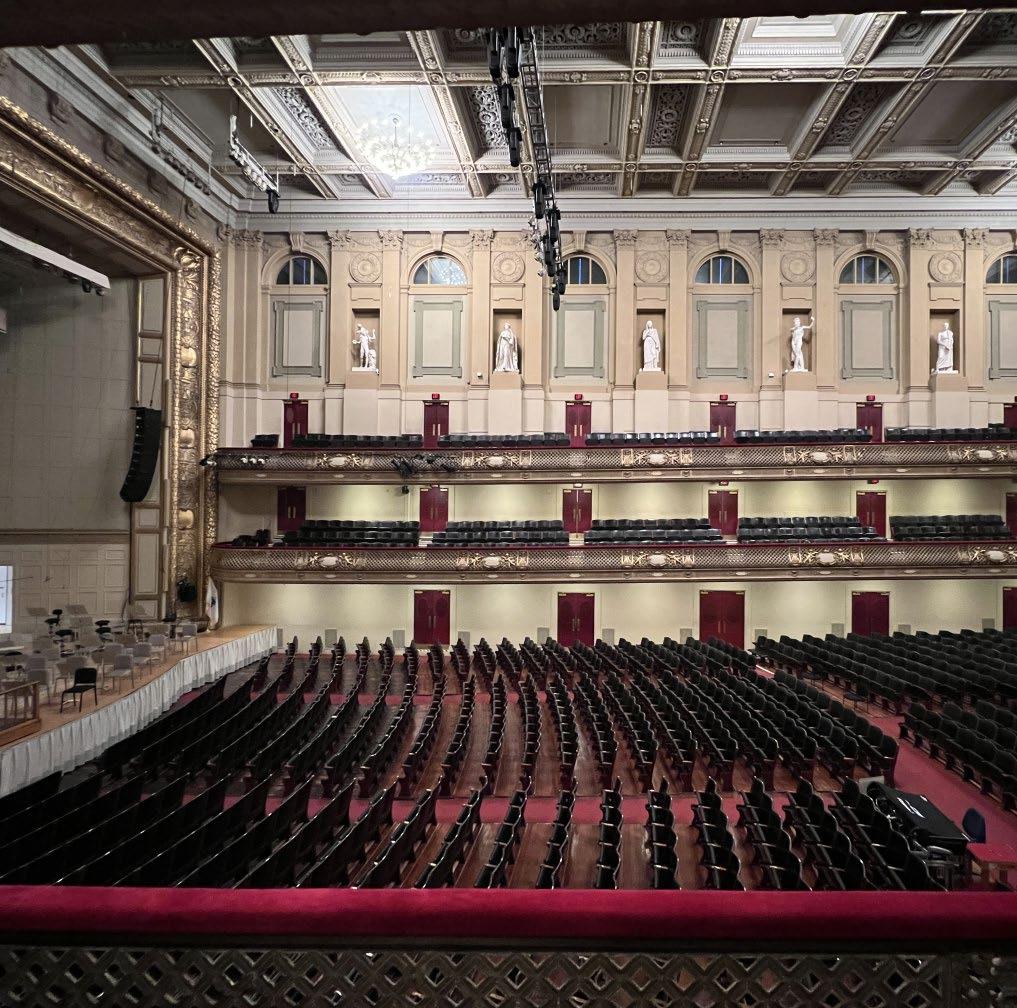
Challenges faced by the overall site include the need for expanded sidewalks, rethinking the T station, better utilizing the concert hall, and the creation of new patron and performer spaces.
 Elizabeth Cornfeld
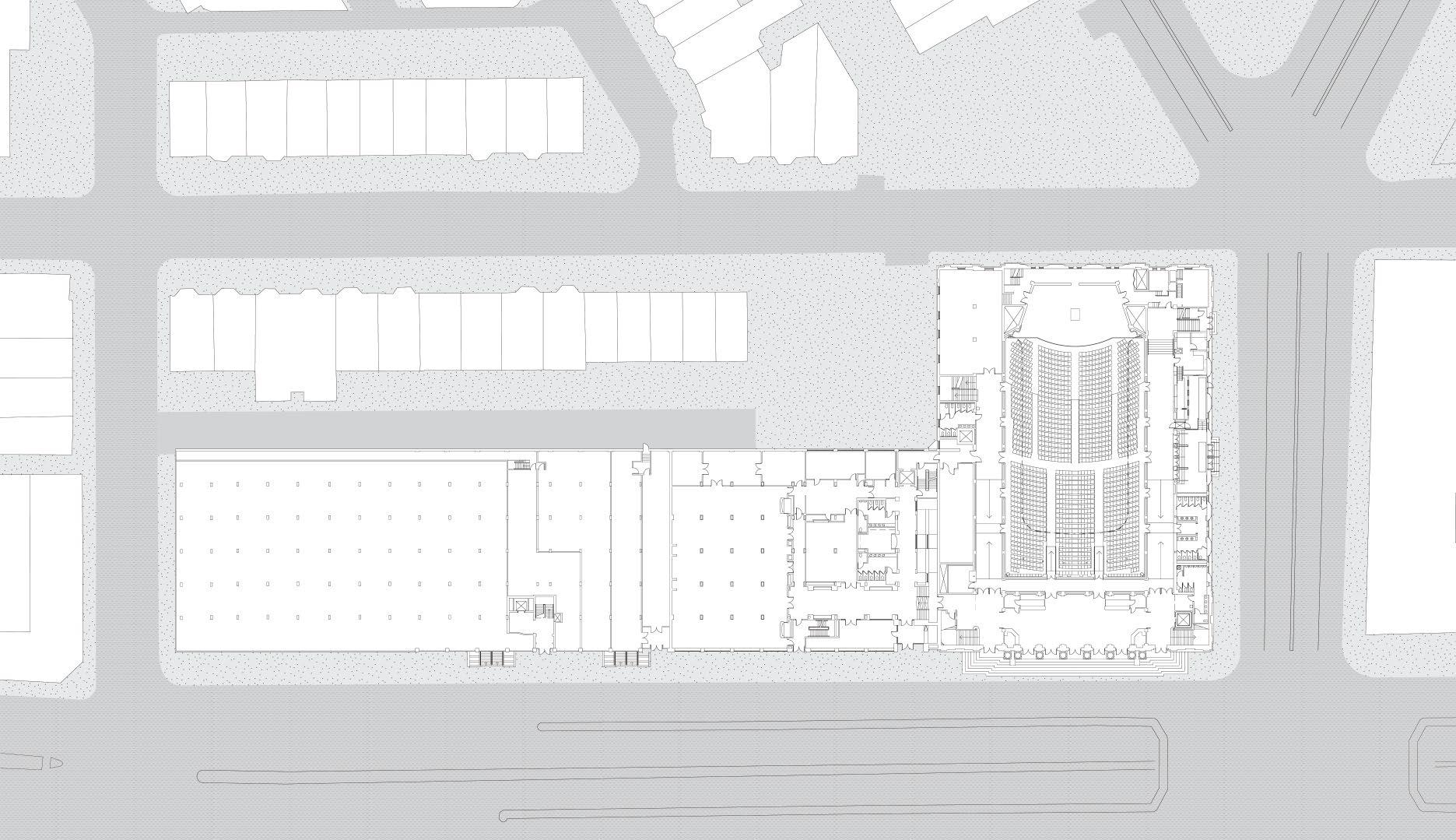
Existing Conditions - Site Plan
St. Stephen St.
Huntington Ave.
To optimize the site, the sidewalk is enlarged on Huntington Ave. through the tapered building footprint. This allows for programs to better connect to the outside. The expanded Mass Ave. sidewalk includes a drop-off area. Huntington Ave has been converted into a shared car/pedestrian street with additional greenery and seating, and a new T-station to draw in a larger crowd.
Massachusetts Ave.
Symphony Hall Renewal and Development 4
Gainsborough St.
Elizabeth Cornfeld
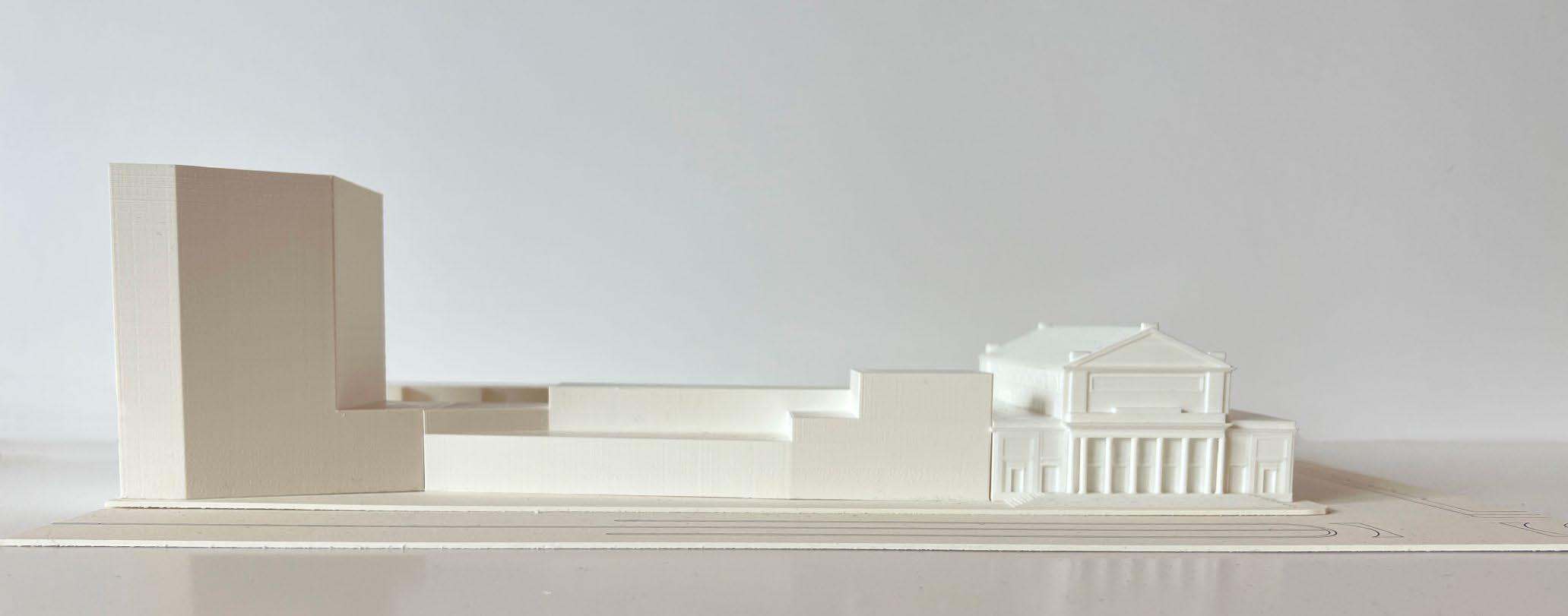
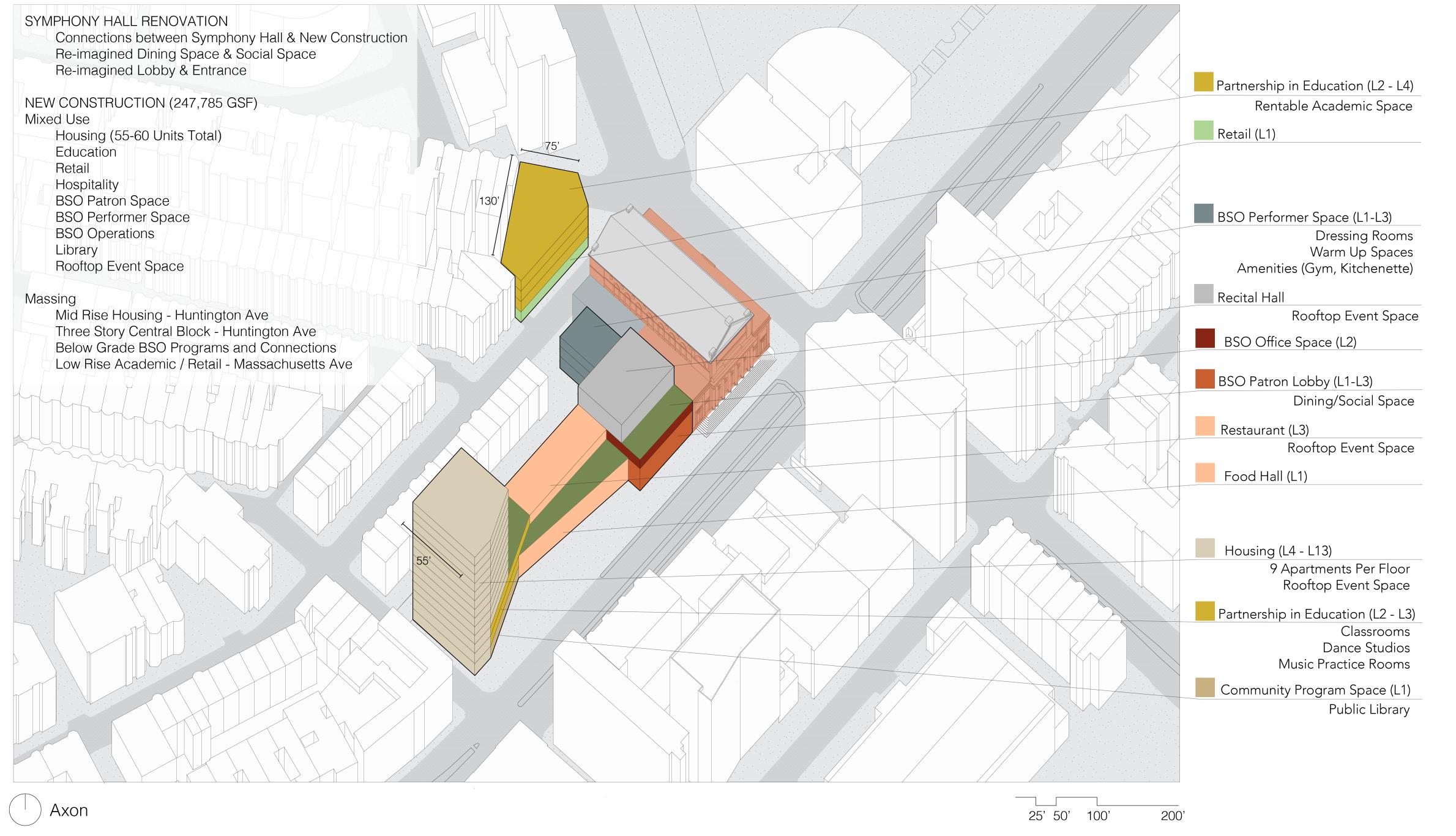 The inital massing includes mid-rise housing, a three story central block with a rooftop recital hall, and a low-rise academic / retail space.
Axon
The inital massing includes mid-rise housing, a three story central block with a rooftop recital hall, and a low-rise academic / retail space.
Axon
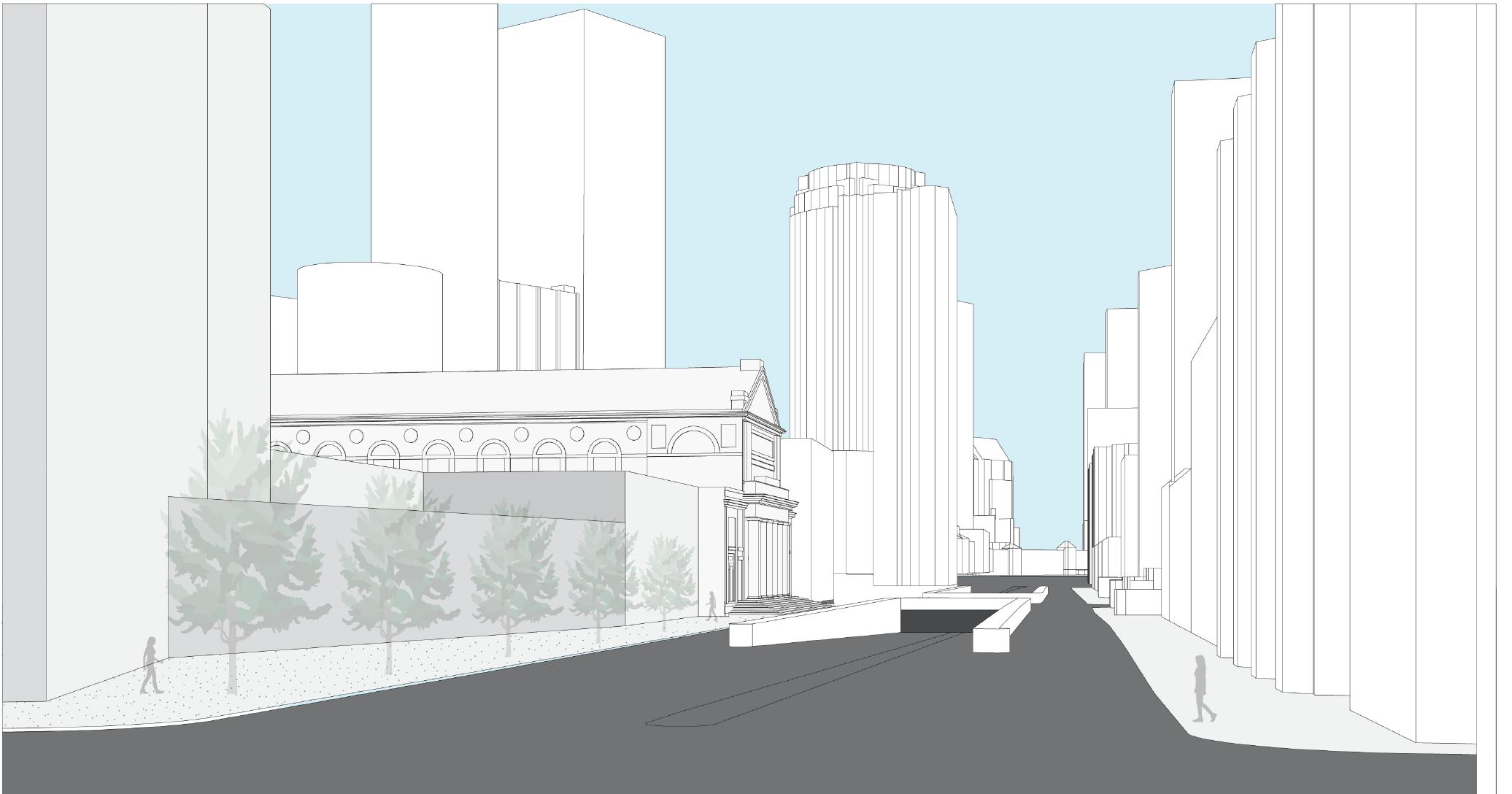
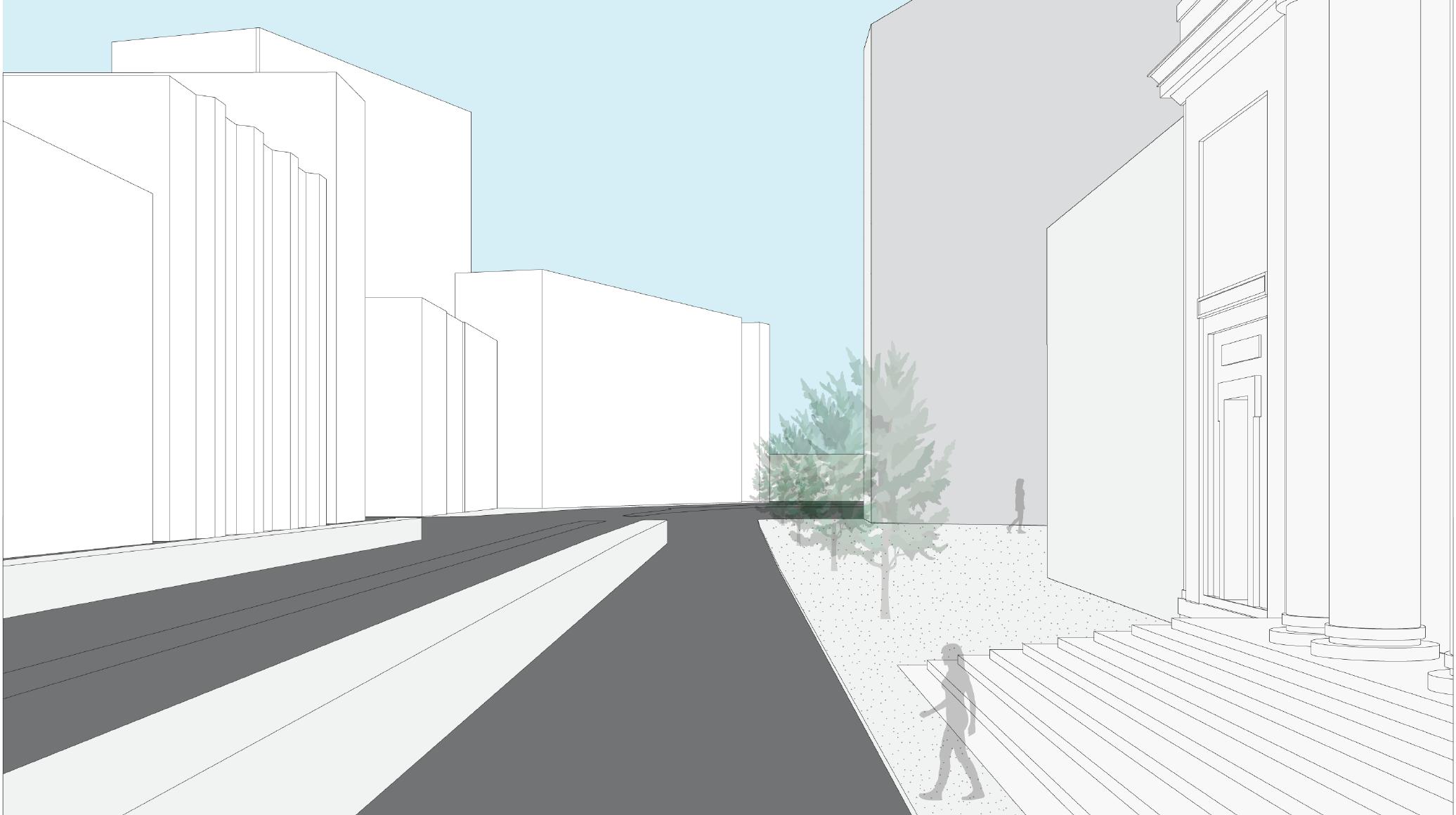
Massing Model Perspective Views - West and East Symphony Hall Renewal and Development 6
8
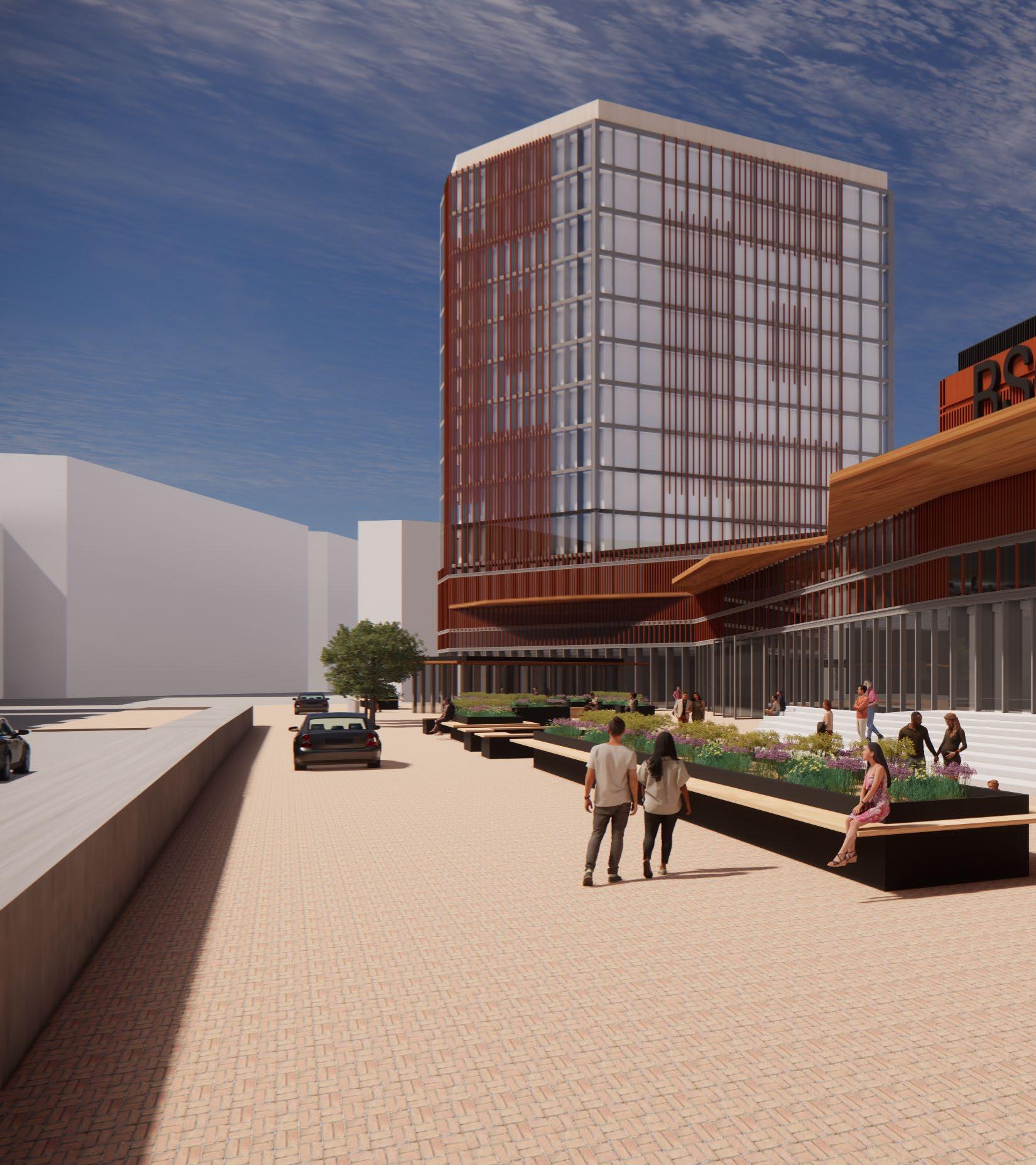
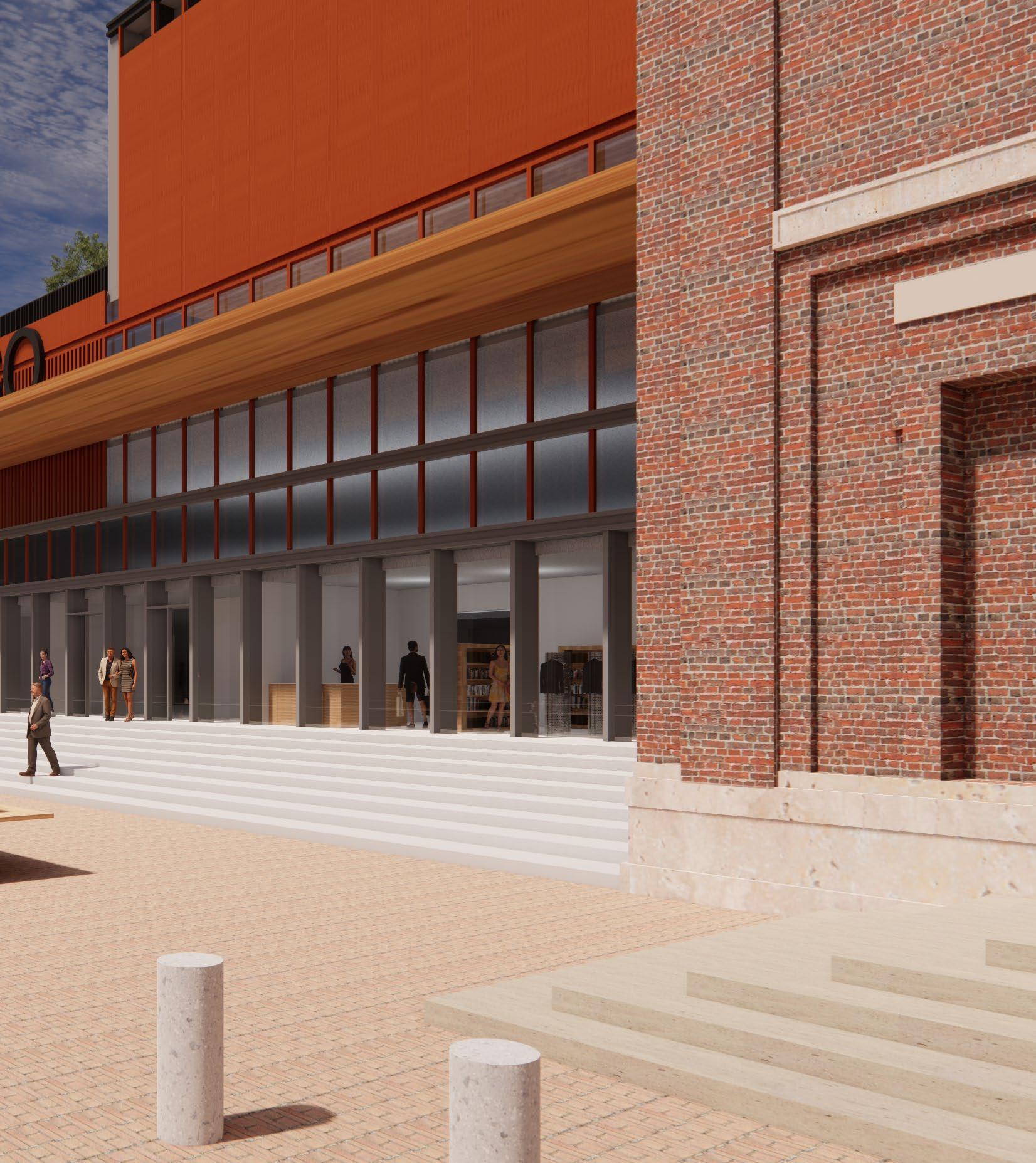
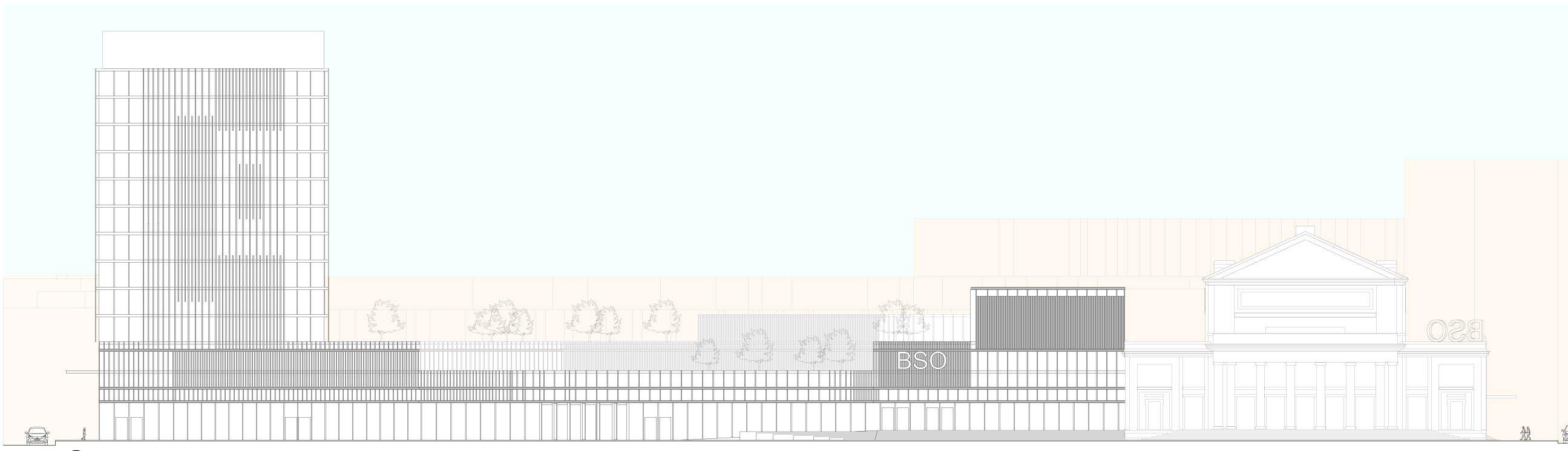
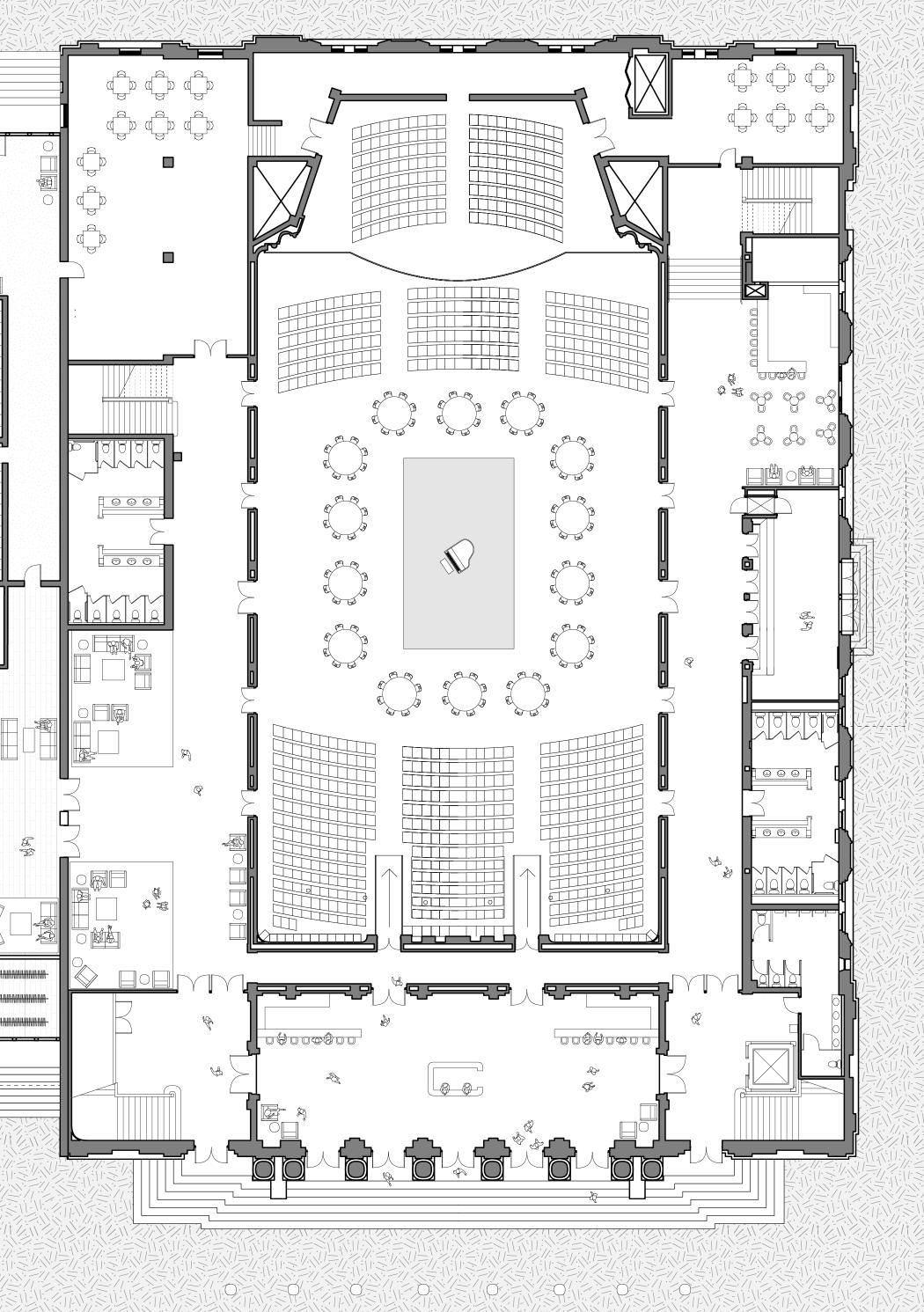
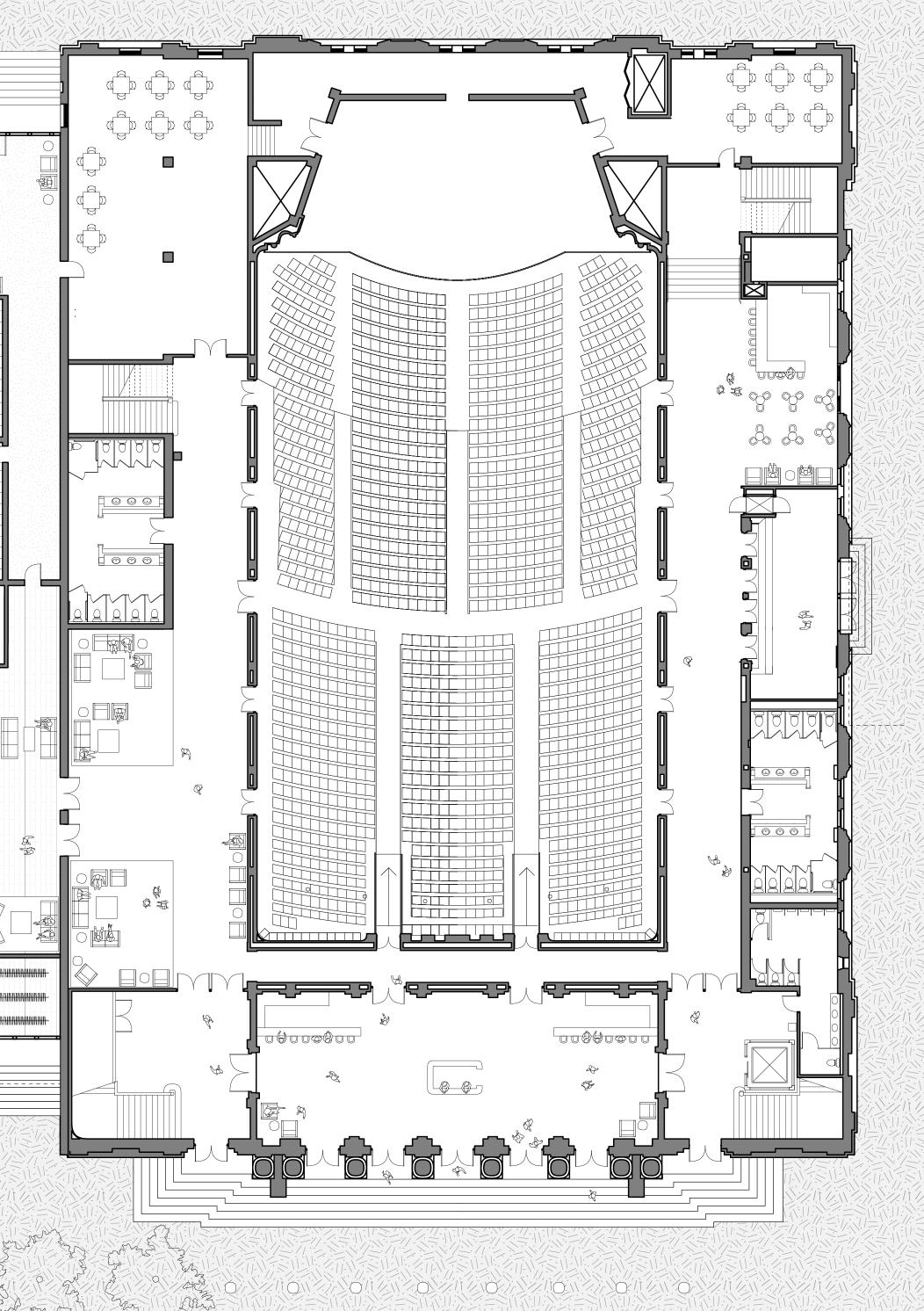
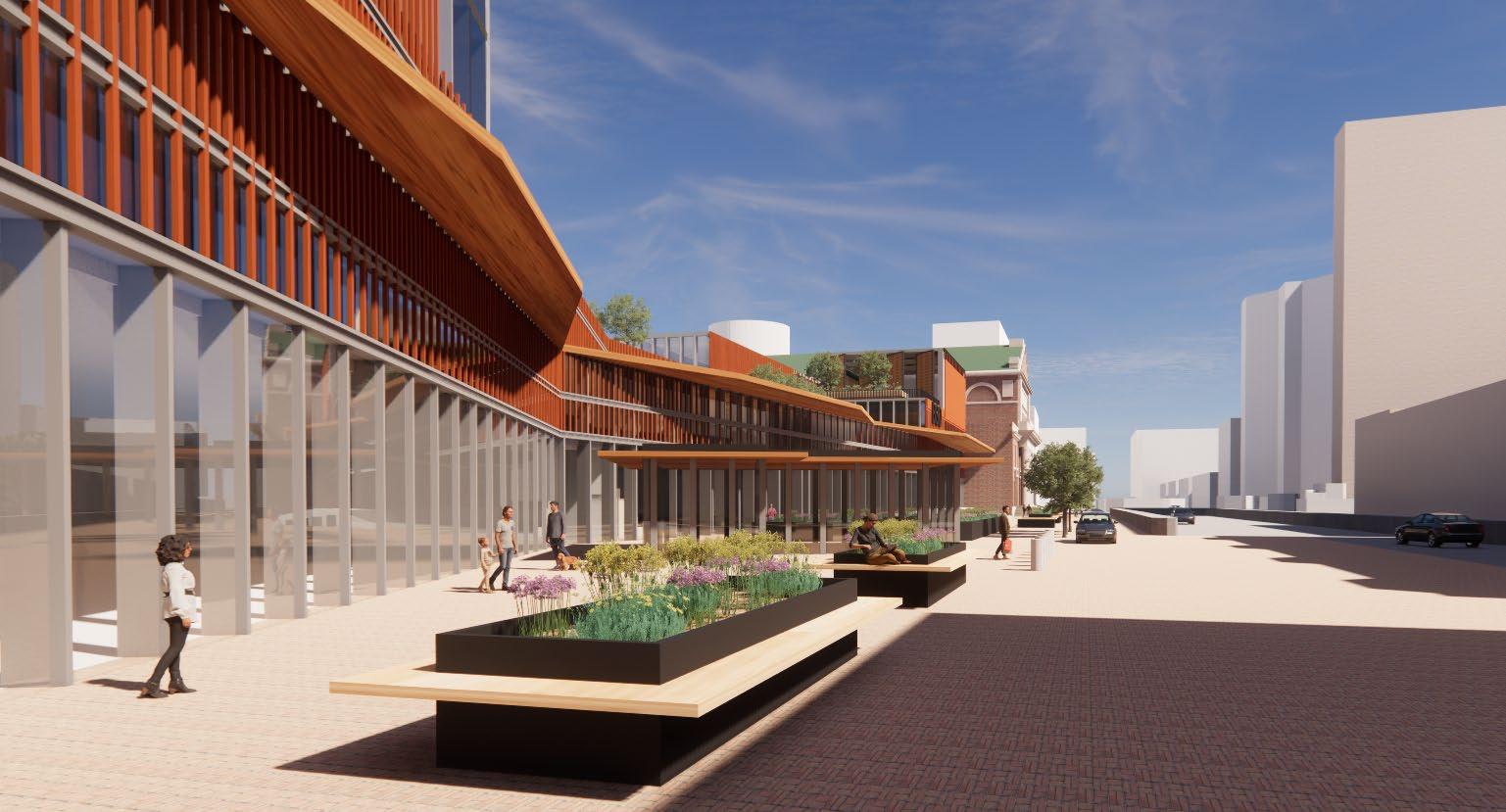
The new building façade is made up of a terracotta baguettes to break up sunlight while the curtain wall behind the terracotta allow for views out. The placement of the baguettes vary to create movement on the façade. Patron and performer spaces connect Symphony Hall to new public programs. Stepped rooftop spaces are integrated throughout the building to allow for programs to take place outside but away from the street. Opposite of Symphony Hall is the 10 story housing block that takes advantages of northern views out to the city.
 Elizabeth Cornfeld
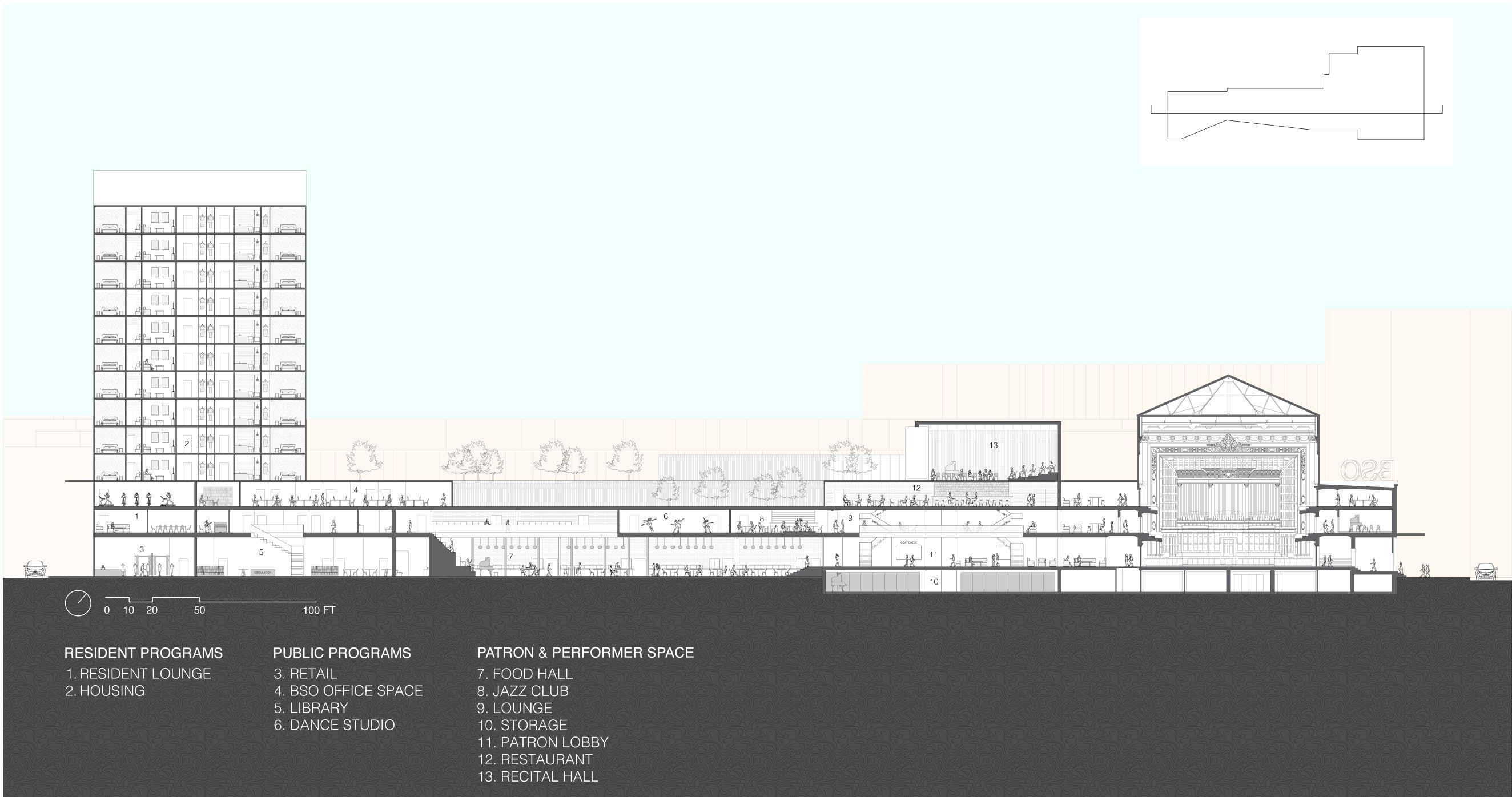
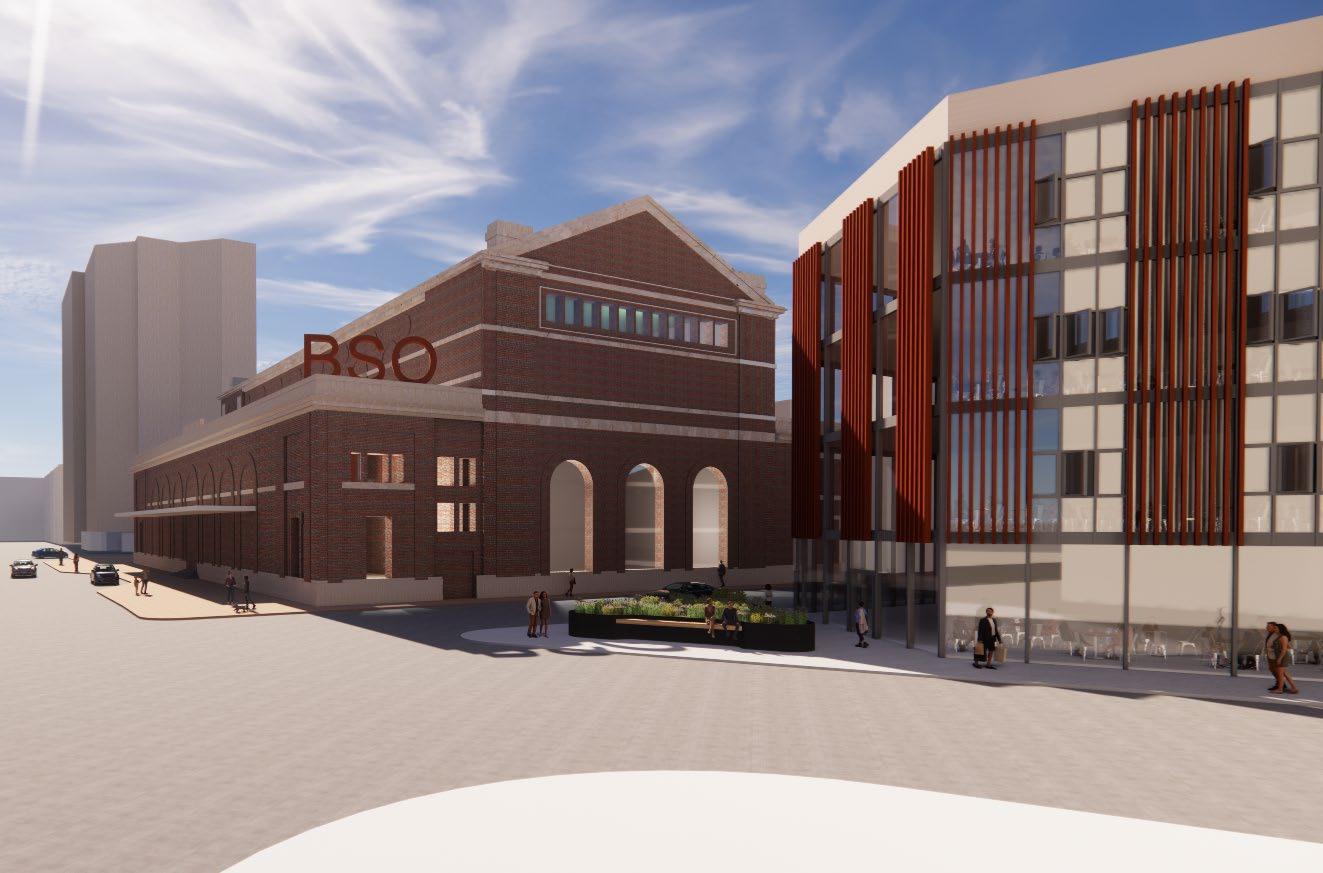
There are new connections between Symphony Hall and the new addition, an expanded backstage area for performers, and re-imagined dining and social spaces for patrons. There’s also a seasonal performance setting since the concert hall is not used year round. New windows are placed in the arches of Symphony Hall to allow for more transparency when programs are taking place inside.
Symphony Hall Renewal and Development 10
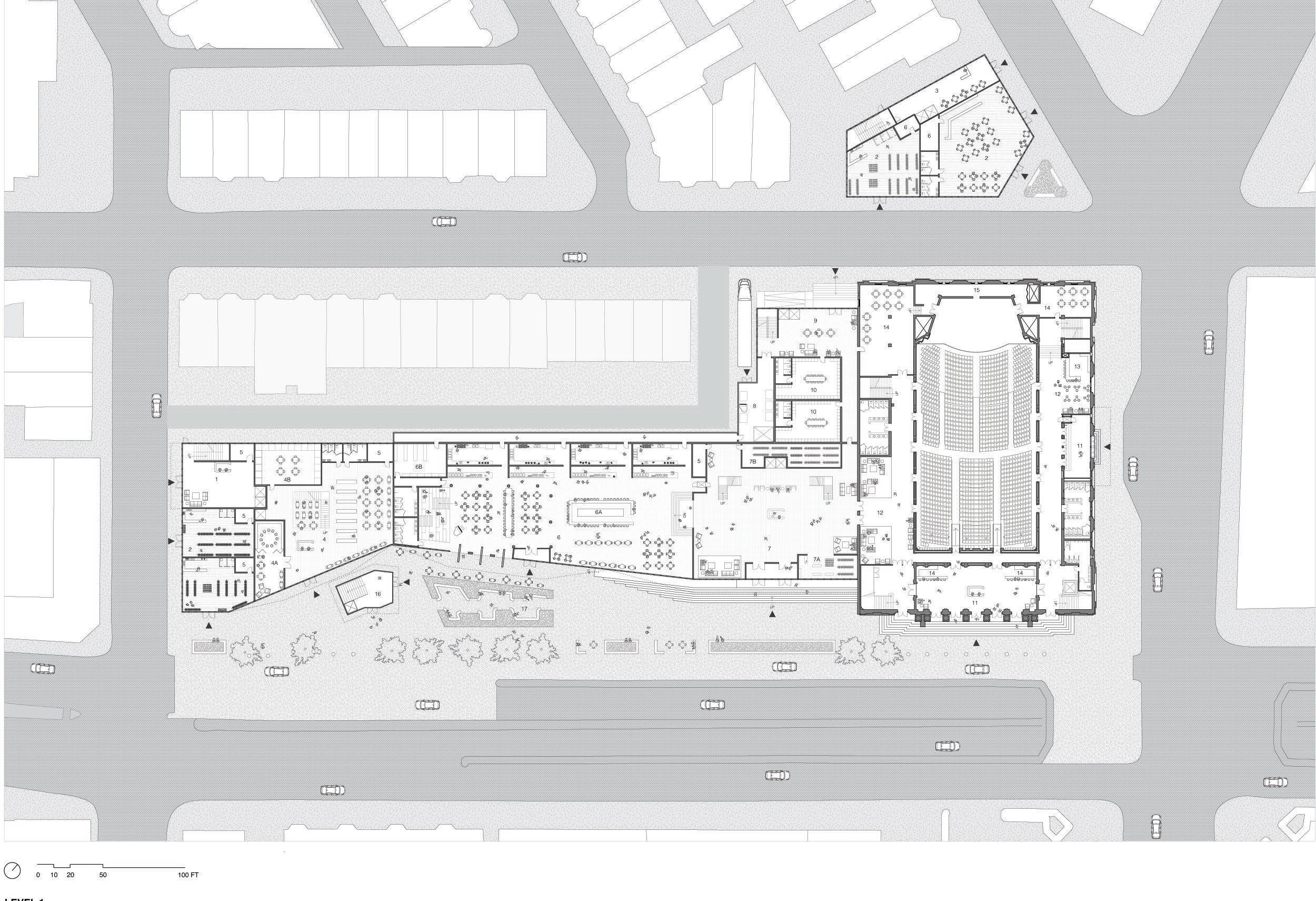
RESIDENT PROGRAMS 1. RESIDENTIAL LOBBY PUBLIC PROGRAMS 2. RETAIL 3. ACADEMIC SPACE LOBBY 4. LIBRARY A. READING ROOM B. INSTRUMENT CHECK OUT 5. STORAGE 6. FOOD HALL A. BAR B. SERVICE PATRON & PERFORMER SPACE 7. PATRON LOBBY A. SHOP B. COAT CHECK 8. UNLOADING / STORAGE 9. PERFORMERS LOBBY 10. LOCKERS SYMPHONY HALL 11. LOBBY 12. SOCIAL SPACE 13. BAR 14. TUNING ROOM 15. BACKSTAGE PASSAGE/STORAGE EXTERIOR SPACE 16. T STATION 17. DINING / SOCIAL SPACE LEVEL 1
Elizabeth Cornfeld
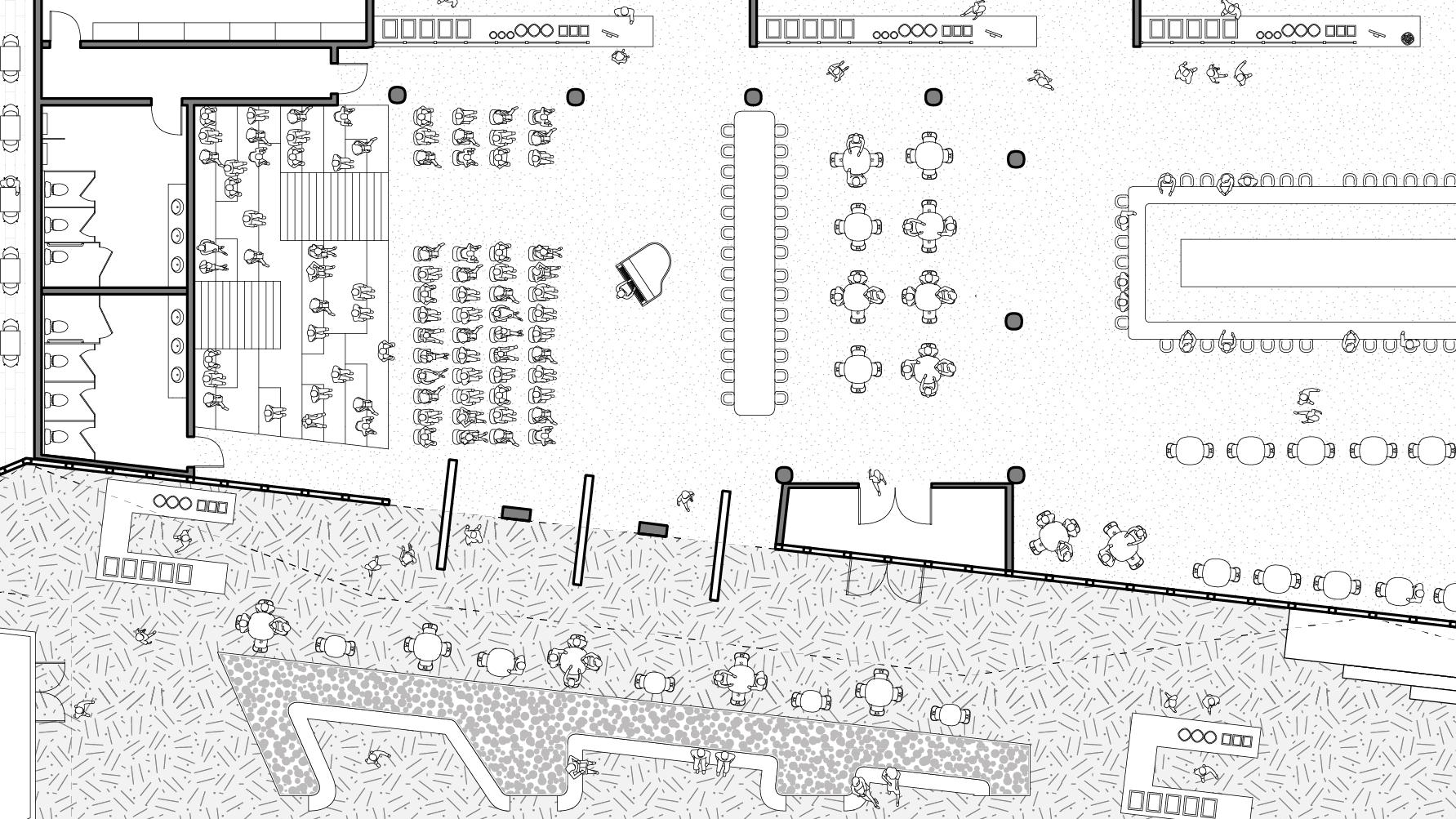
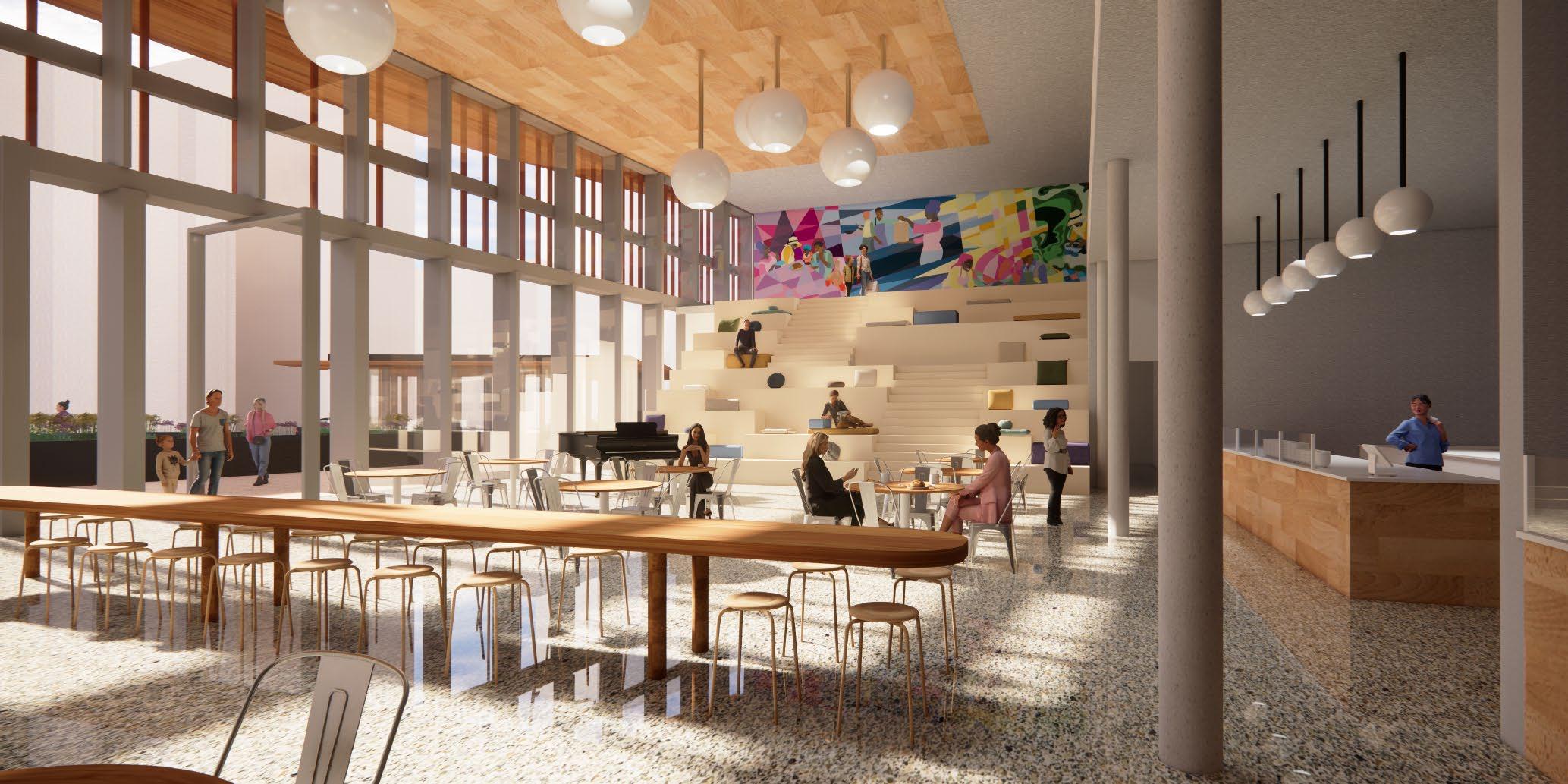
The food hall is a fexible space that accommodates various programs, such as a performance space. The steps can then be used as stadium seating. Moveable panel doors allow for seamless indoor-outdoor use during the spring and summer months.
Symphony Hall Renewal and Development 12
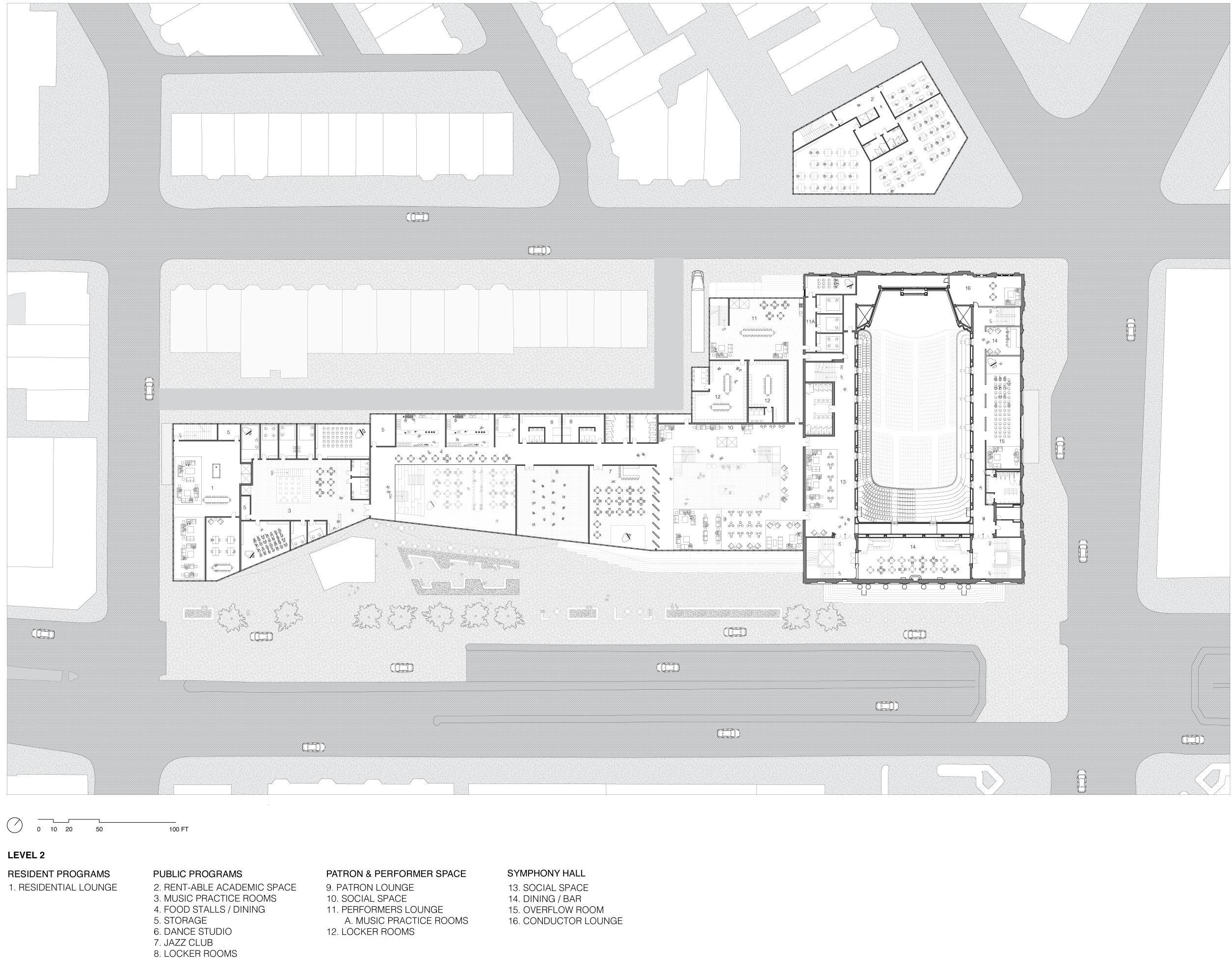
RESIDENT PROGRAMS 1. RESIDENT LOUNGE PUBLIC PROGRAMS 2. RENT-ABLE ACADEMIC SPACE 3. MUSIC PRACTICE ROOMS 4. FOOD STALLS / DINING 5. STORAGE 6. DANCE STUDIO 7. JAZZ CLUB 8. LOCKER ROOMS PATRON & PERFORMER SPACE 9. PATRON LOUNGE 10. SOCIAL SPACE 11. PERFORMERS LOUNGE A. MUSIC PRACTICE ROOMS 12. LOCKER ROOMS SYMPHONY HALL 13. SOCIAL SPACE 14. DINING / BAR 15. OVERFLOW ROOM 16. CONDUCTOR LOUNGE LEVEL 2
Elizabeth Cornfeld
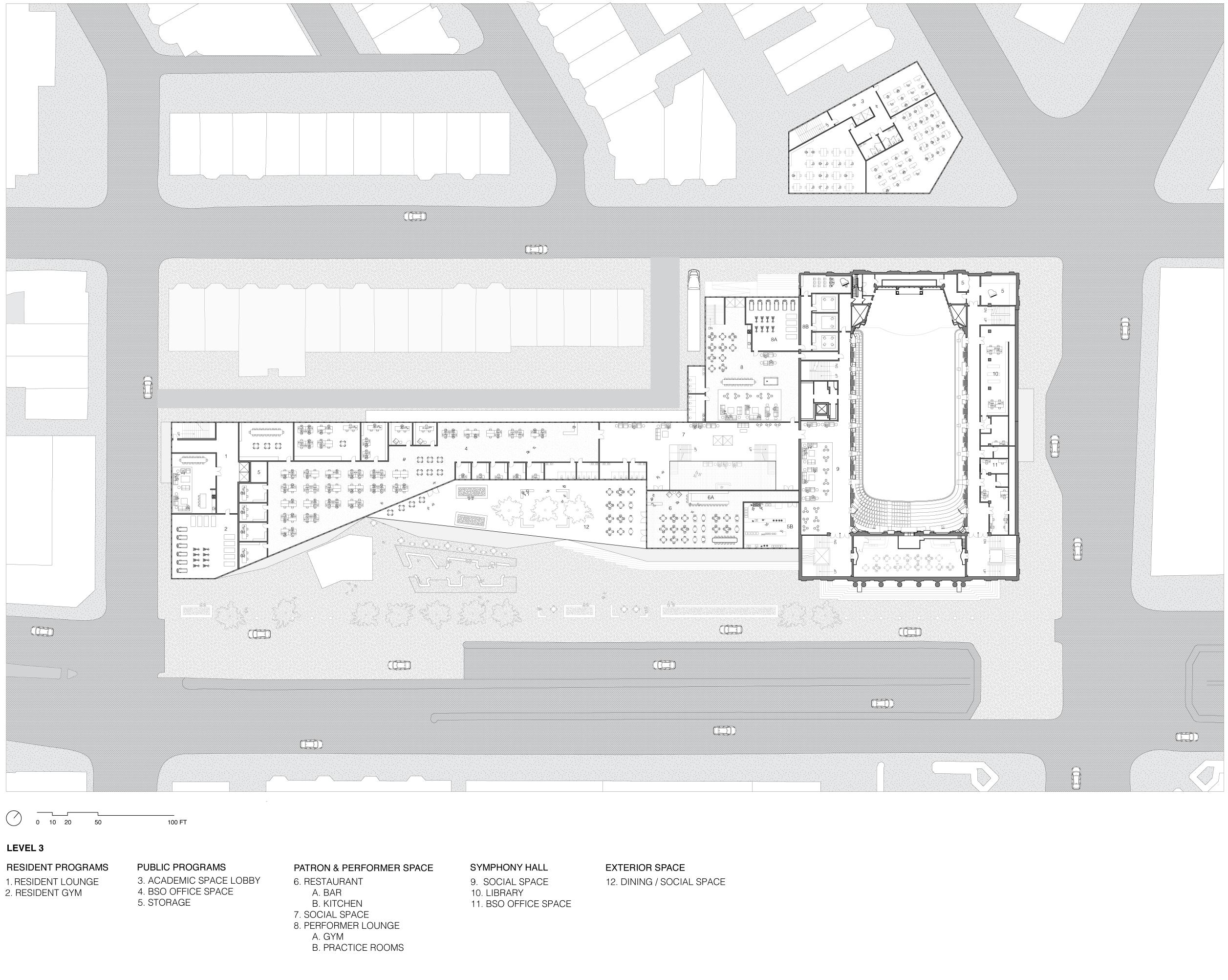
RESIDENT PROGRAMS 1. RESIDENT LOUNGE 2. RESIDENT GYM PUBLIC PROGRAMS 3. ACADEMIC SPACE LOBBY 4. BSO OFFICE SPACE 5. STORAGE PATRON & PERFORMER SPACE 6. RESTAURANT A. BAR B. KITCHE 7. SOCIAL SPACE 8. PERFORMER LOUNGE A. GYM B. PRACTICE ROOMS SYMPHONY HALL 9. SOCIAL SPACE 10. LIBRARY 11. BSO OFFICE SPACE EXTERIOR SPACE 12. DINING / SOCIAL SPACE LEVEL 3 Symphony Hall Renewal and Development 14
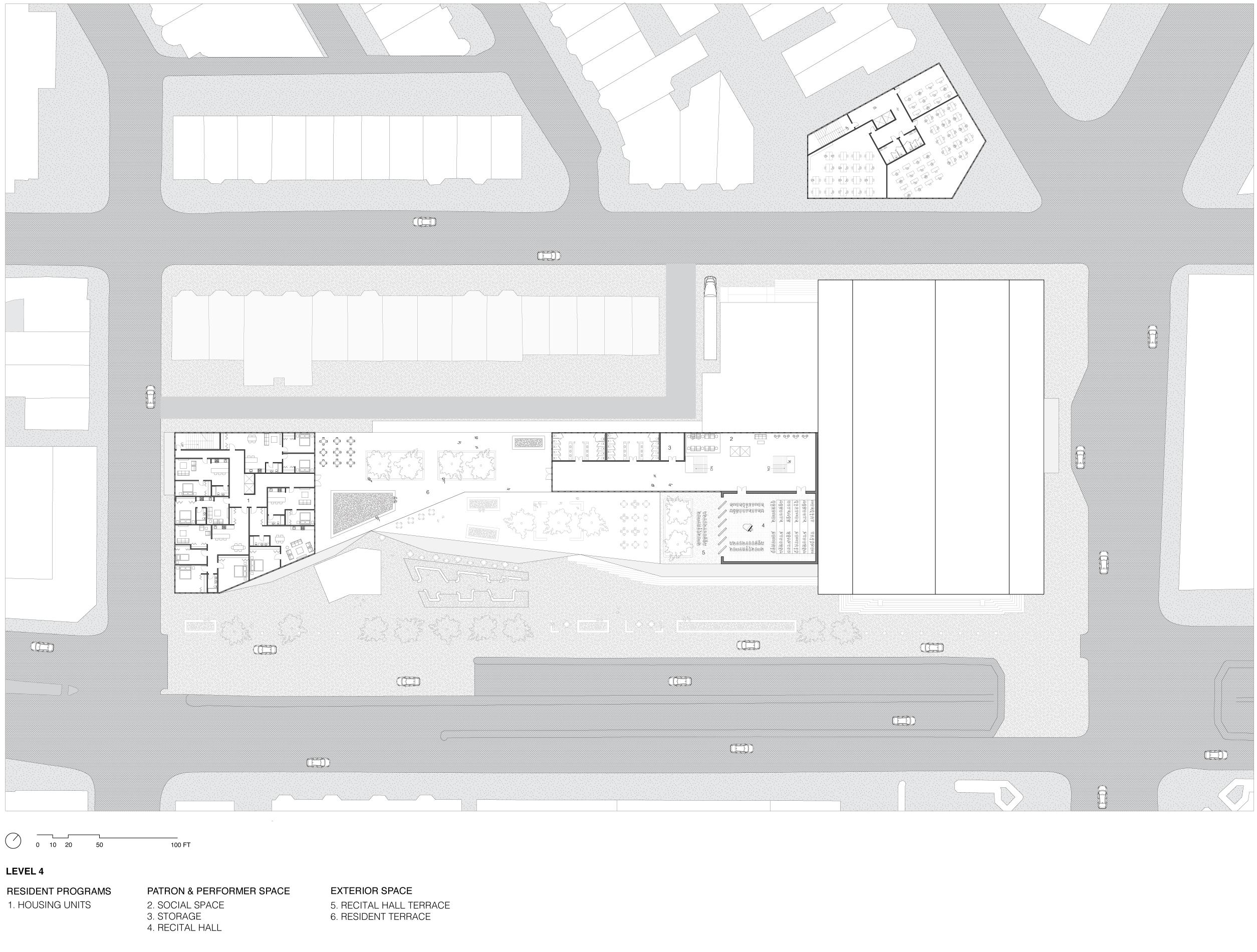
RESIDENT PROGRAMS 1. HOUSING UNITS PATRON & PERFORMER SPACE 2. SOCIAL SPACE 3. STORAGE 4. RECITAL HALL EXTERIOR SPACE 5. RECITAL HALL TERRACE 6. RESIDENT TERRACE LEVEL 4
Elizabeth Cornfeld
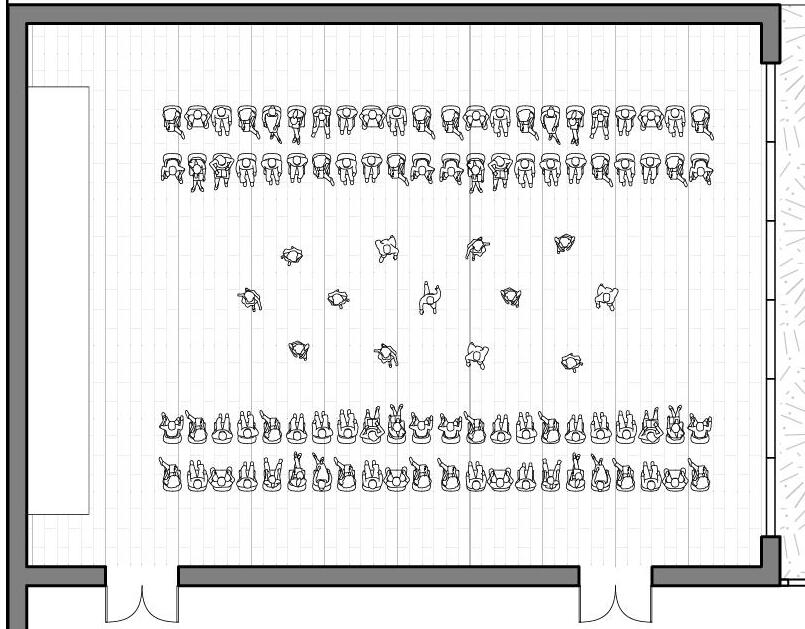
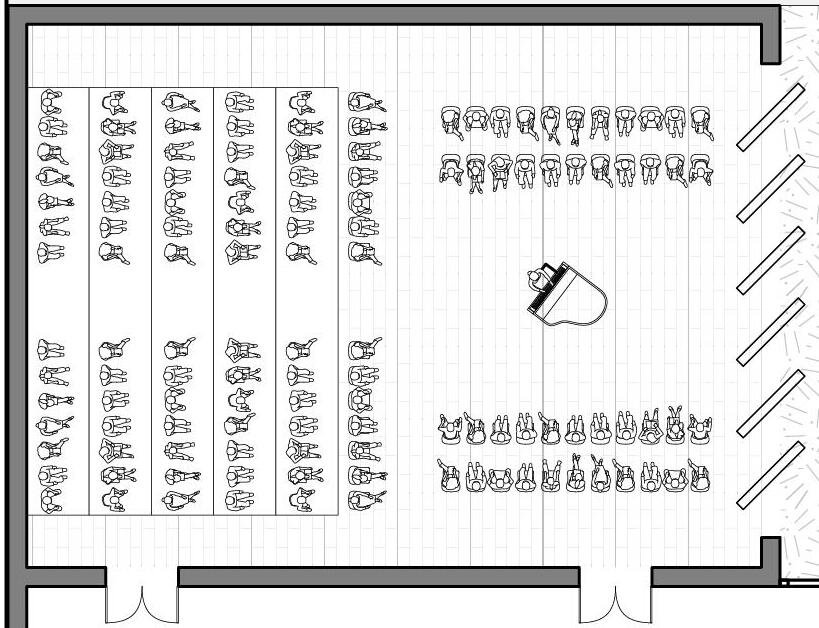
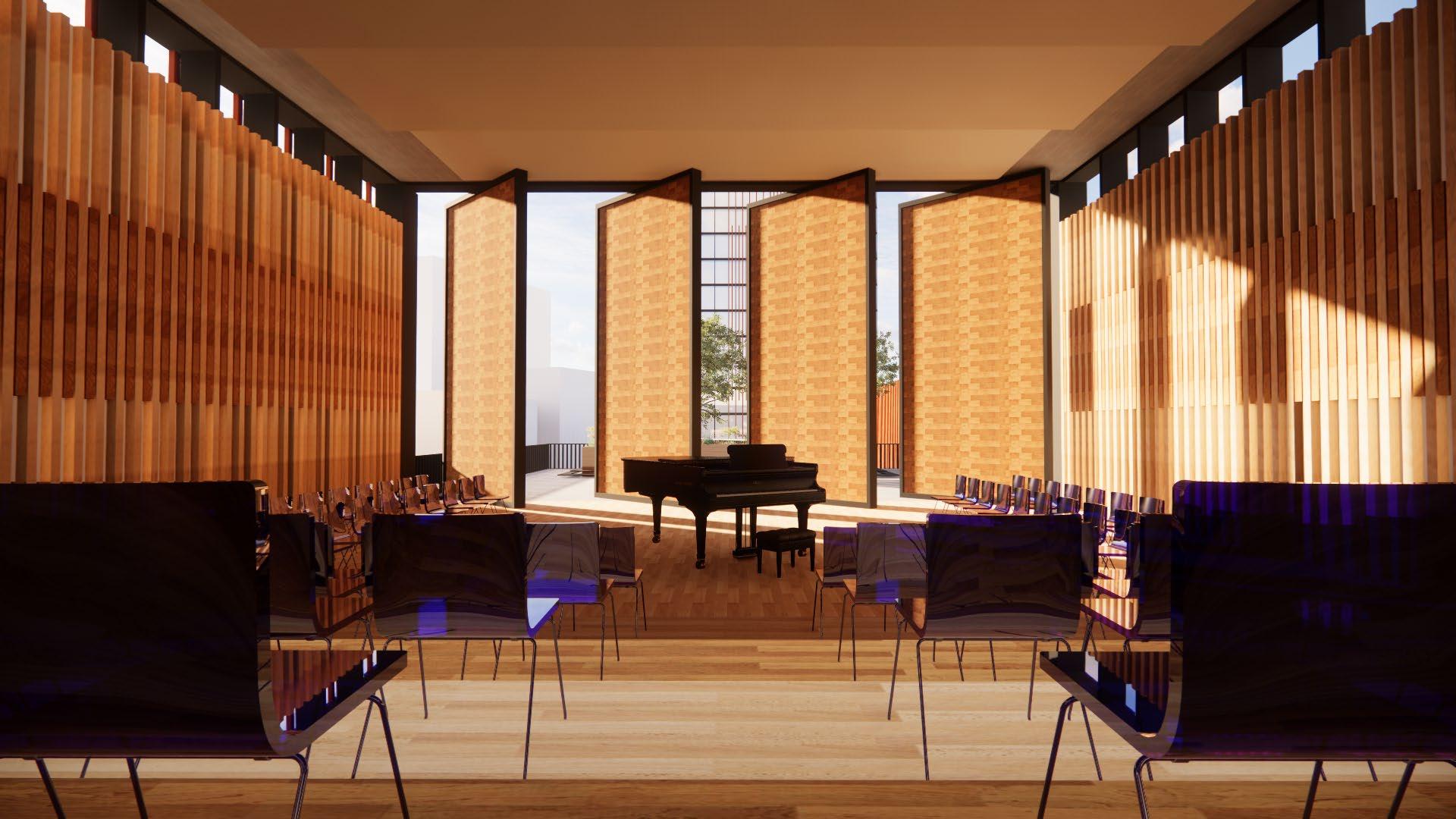
The recital hall has retractable seating platforms and moveable wall panels, allowing for customizable seating arrangements and a seamless fow from inside to outside. From the audience you can look out and see the greenery from the private terrace and get natural light into the performance space.
Symphony Hall Renewal and Development 16
Recital Hall Layout Options
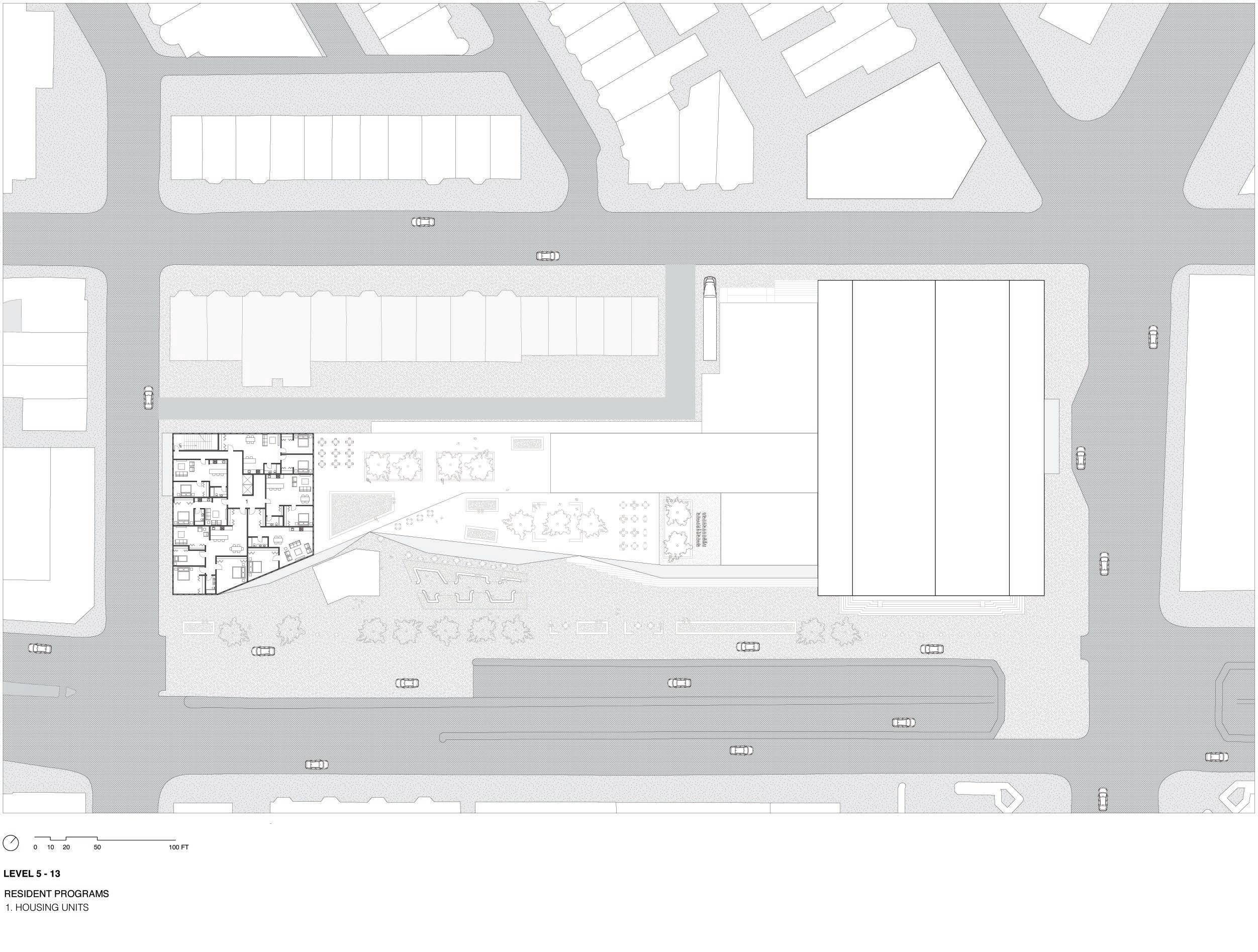
RESIDENT PROGRAMS 1. HOUSING UNITS LEVEL 5 - 13
Elizabeth Cornfeld
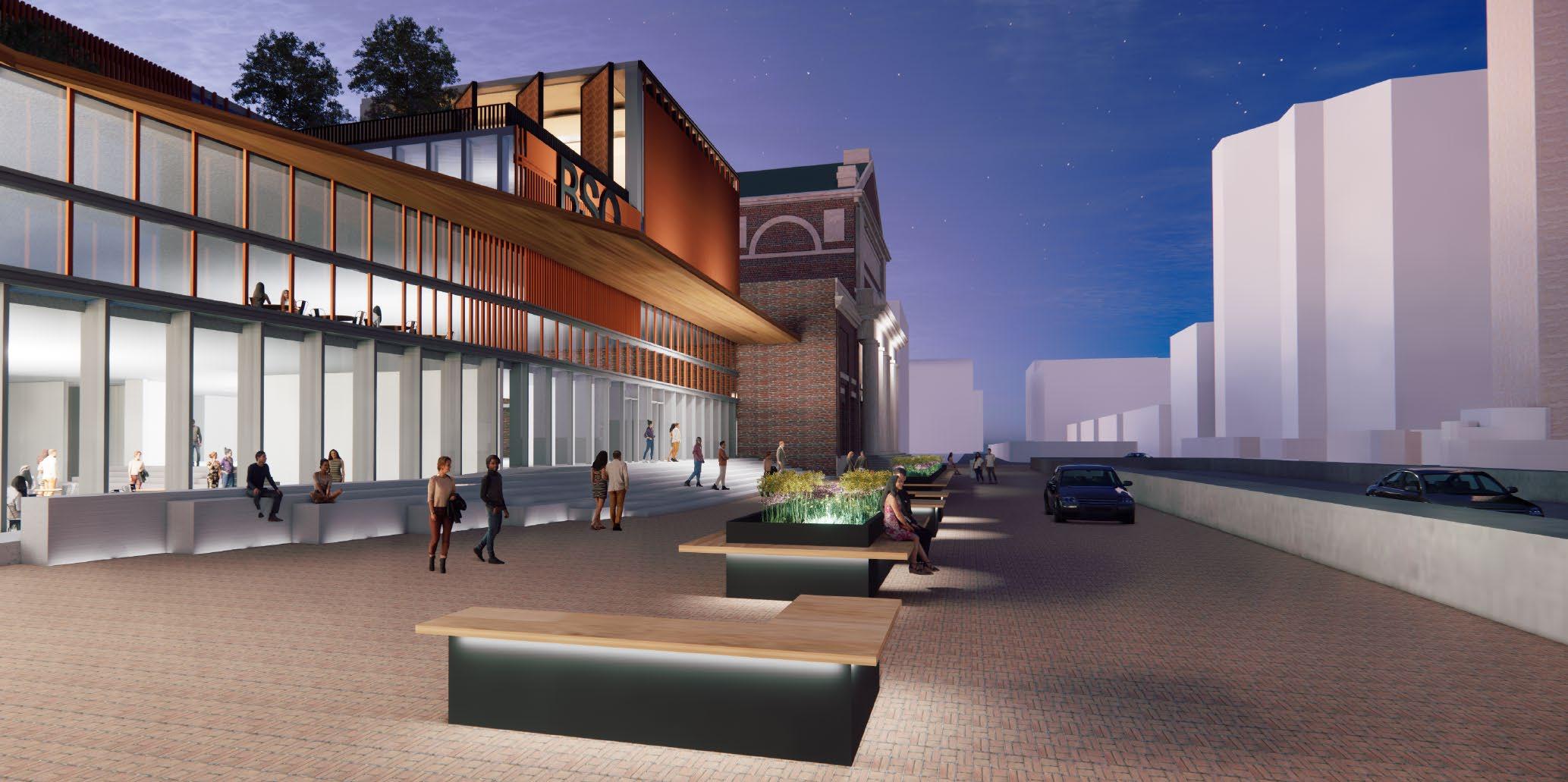
The new addition activates the site during the day and night. At night, the continuous curtain wall allows for programs to be illuminated. The rooftop recital hall lights up and can easily be seen from down the street, guiding people to the site.
Renewal and Development 18
Symphony Hall
Land Matters
ARCH 1101 | Critic: Alan Plattus and Liz Galvez
Santa Fe, New Mexico
Fall 2022
Elizabeth Cornfeld
Project Objective: This studio builds on the work begun by the Santa Fe Art Institute in the redevelopment of a 64 acre plot of abandoned land in the Midtown area of Santa Fe, New Mexico. We will add our ideas to the dialogue about the potential of turning a crucial but chaotic superblock in the midst of diverse neighborhoods in the Midtown area into a new kind of shared space that centers issues of land tenure, climate and environmental justice, story-telling, indigenous culture and knowledge, housing, and the role of arts in building community. Through a focus on material, climate and infrastructure, architectural proposals will experiment with new cultures, lifestyles and building technologies that grapple with the precise ecologies of desert environments engaging both their ancestral and contemporary cultures to materialize alternative futures.
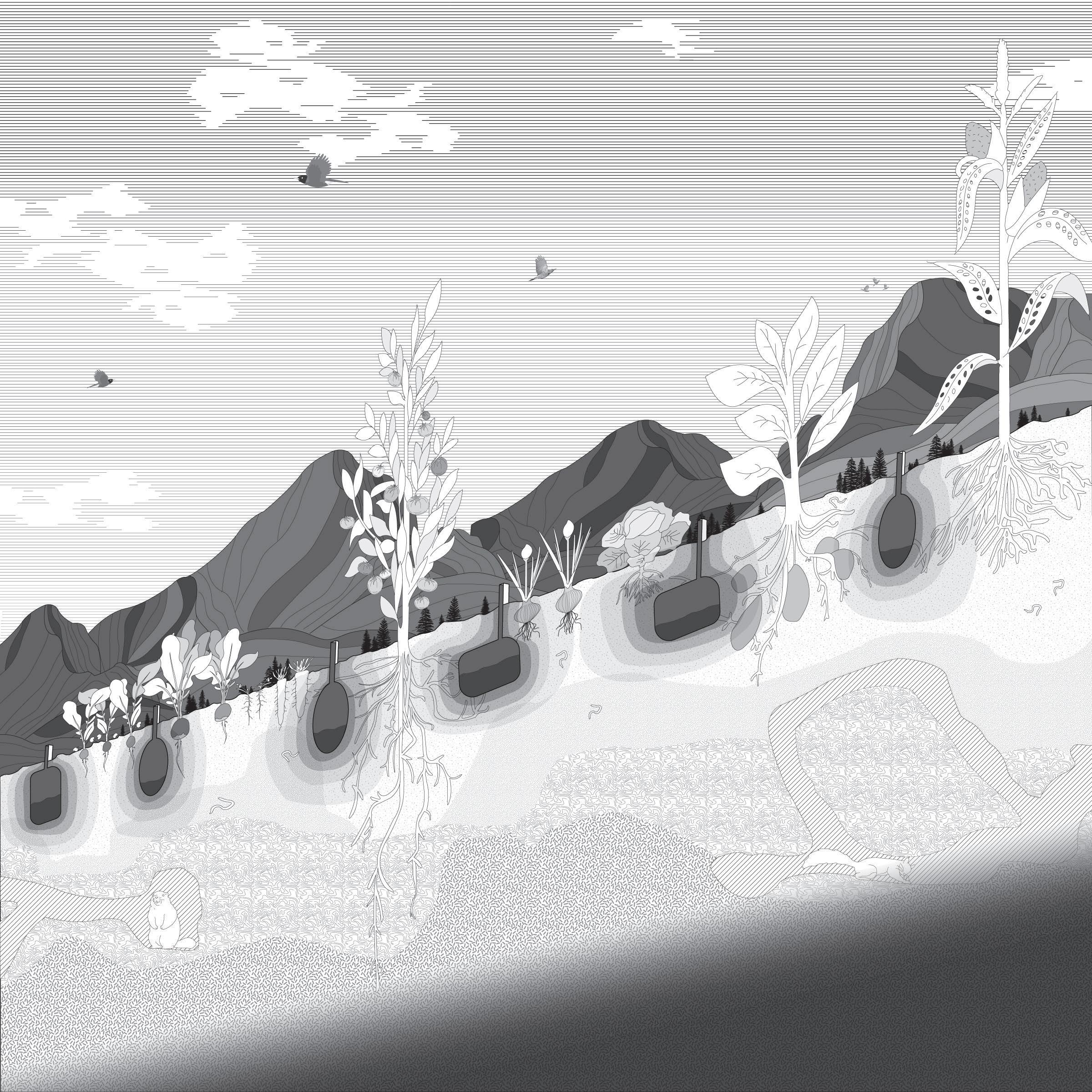
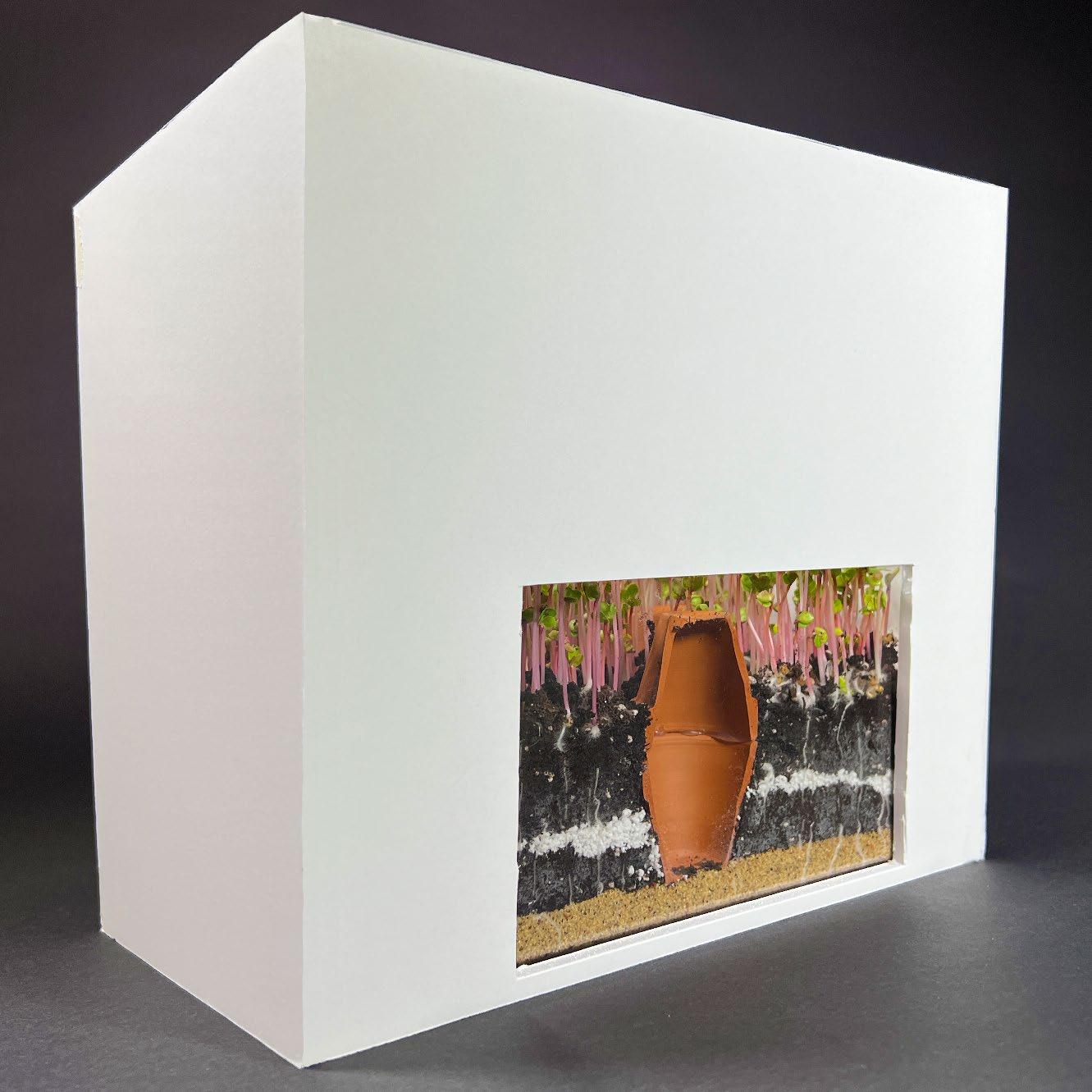
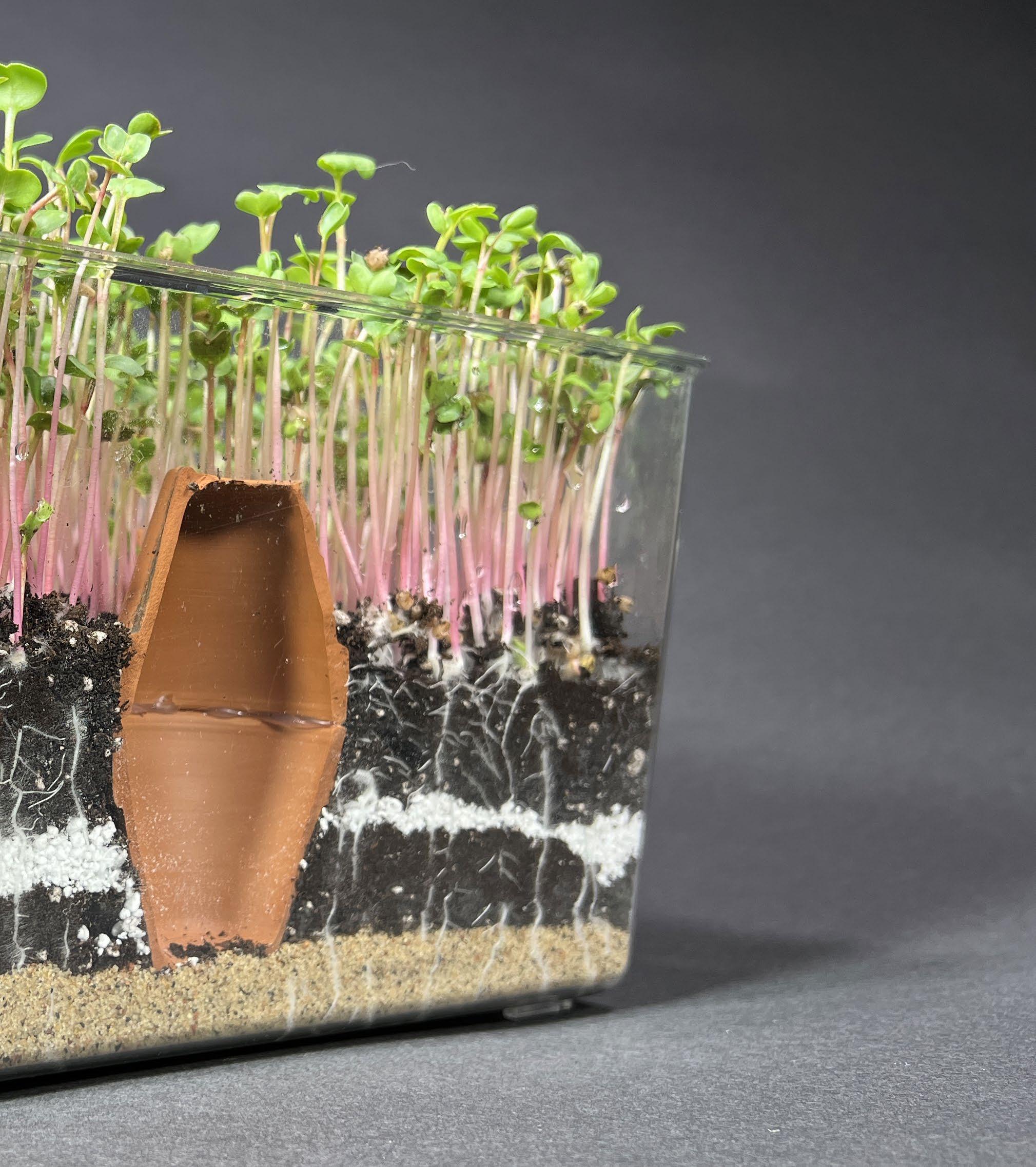
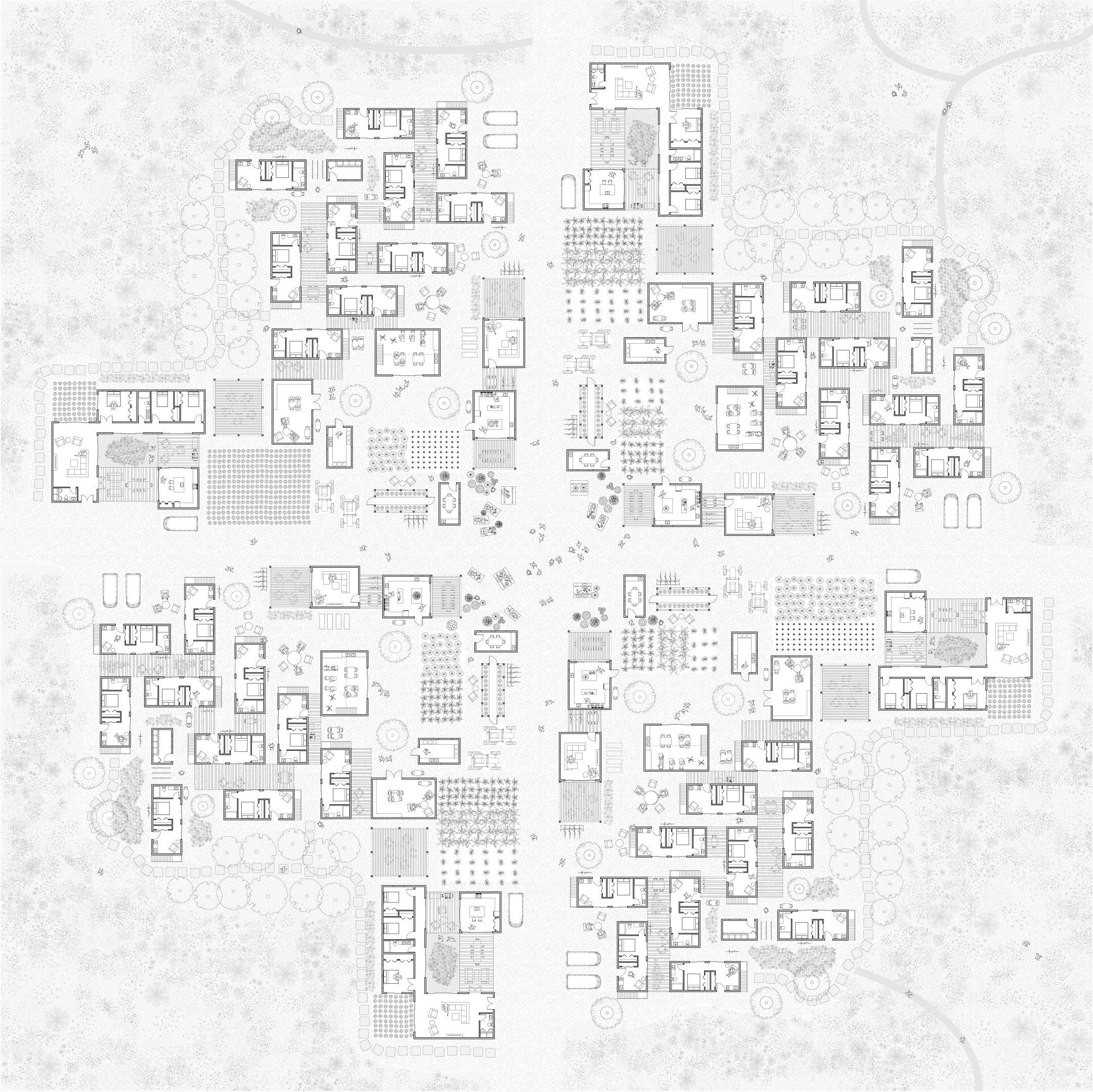
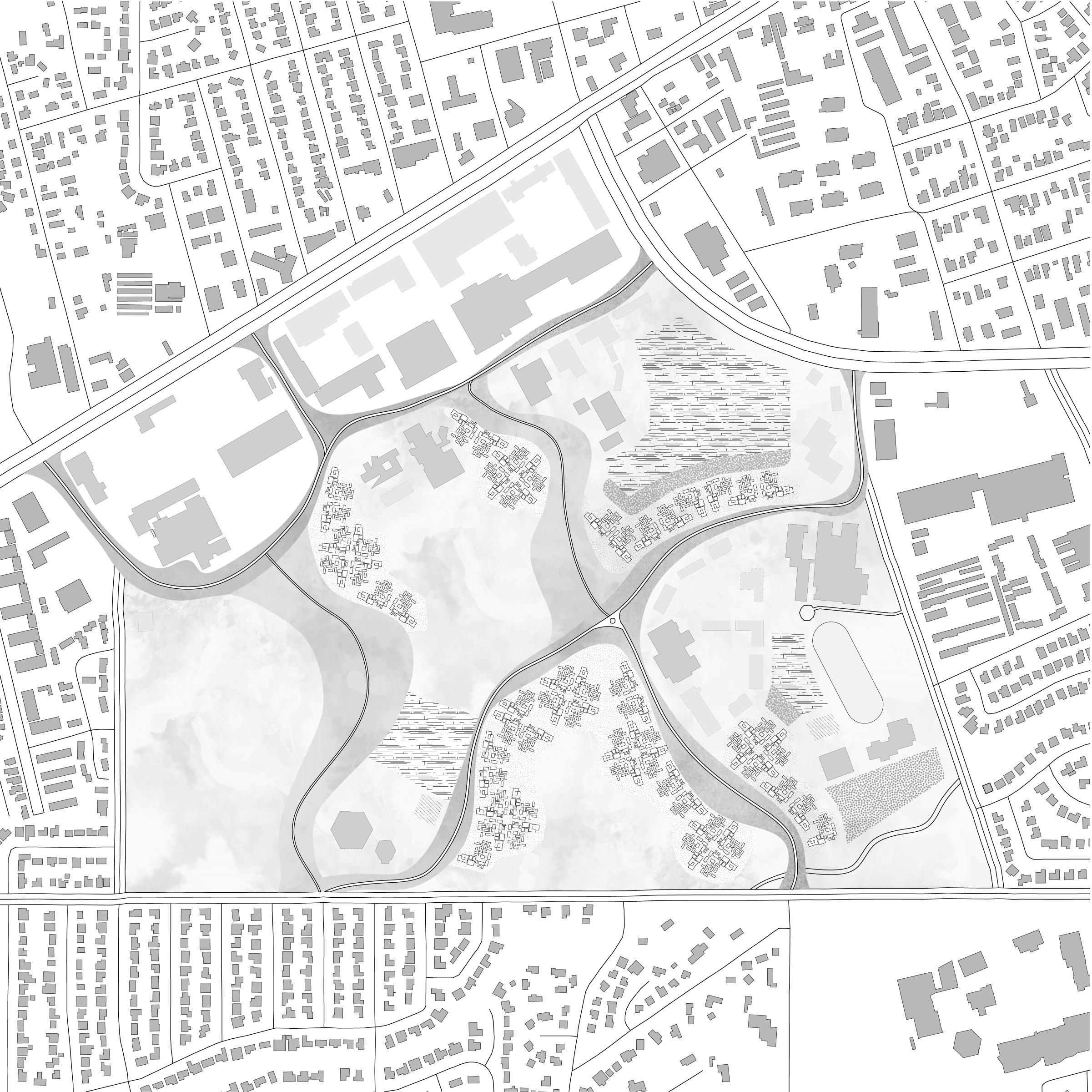
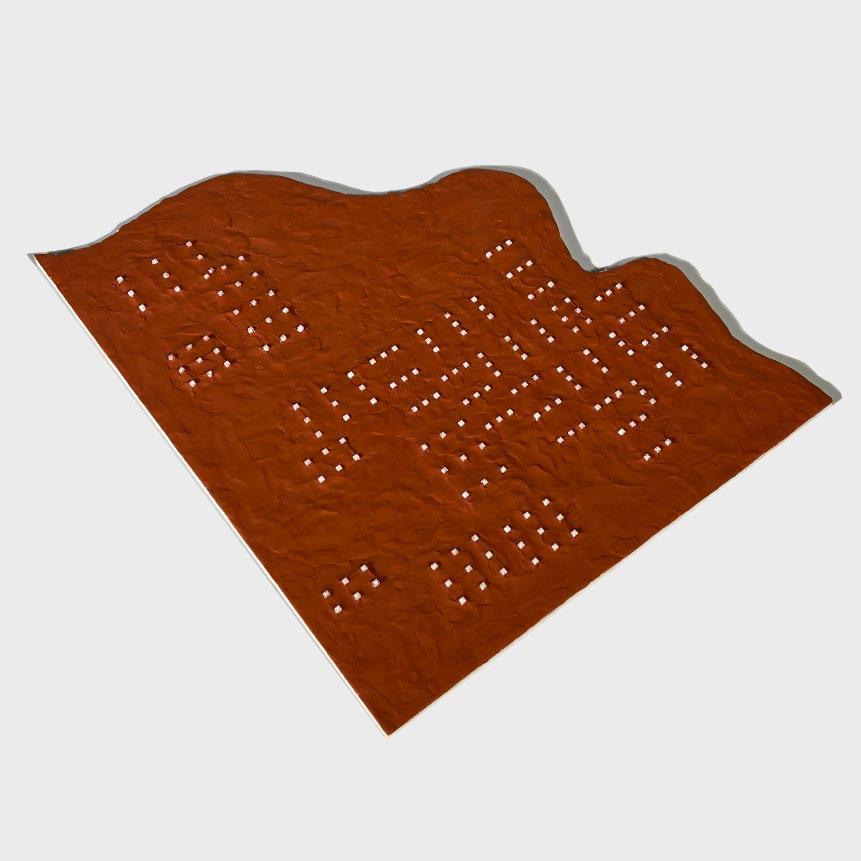
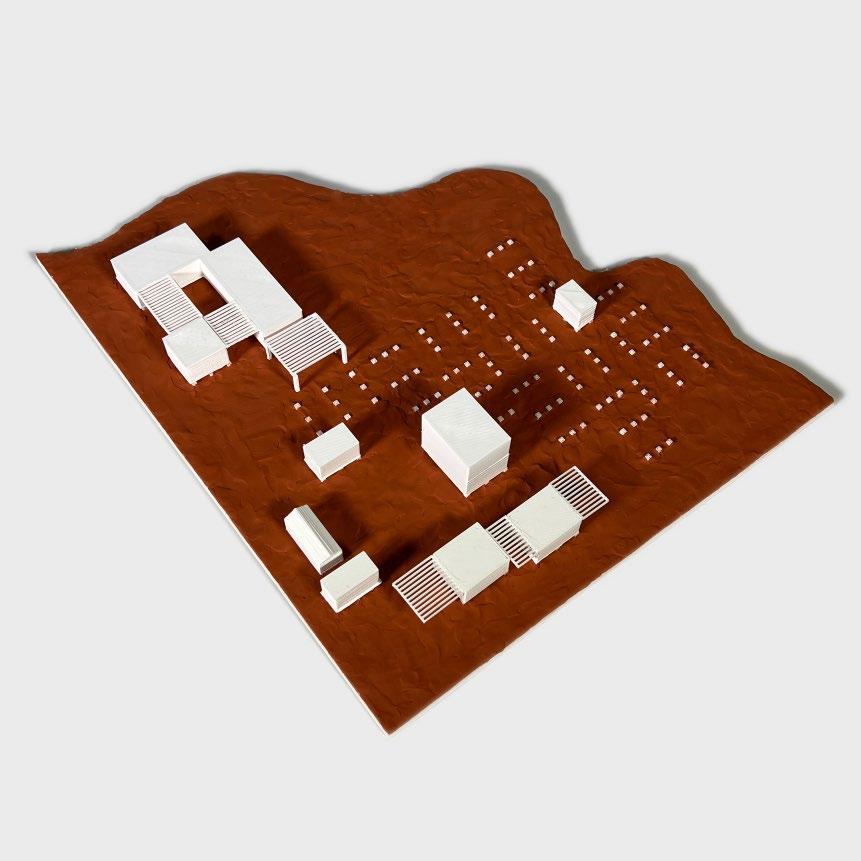
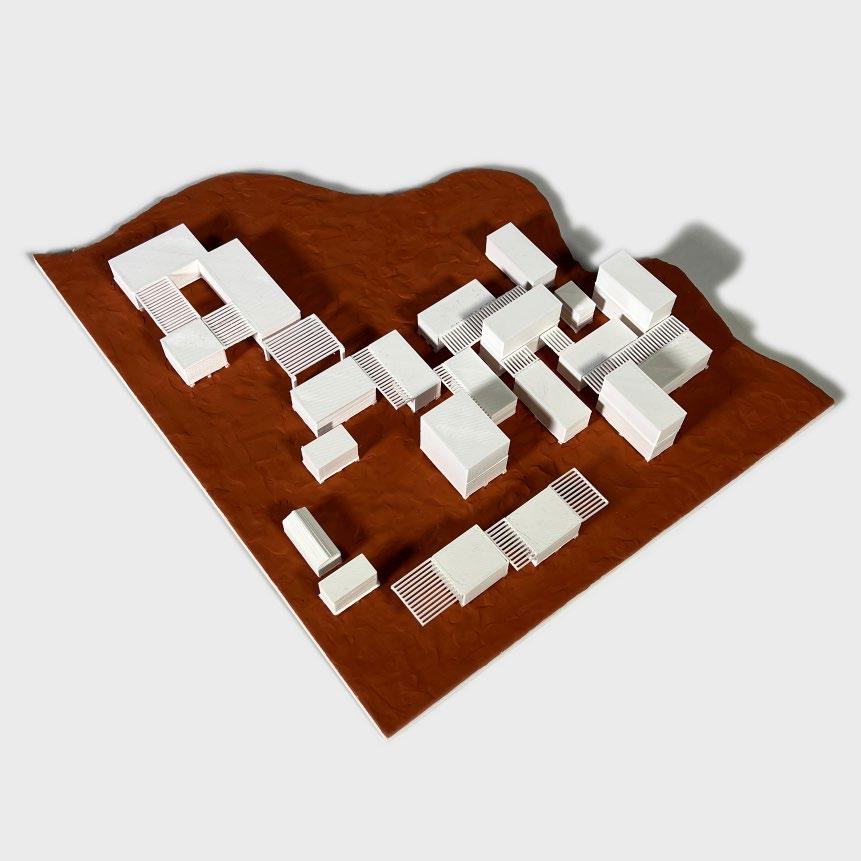
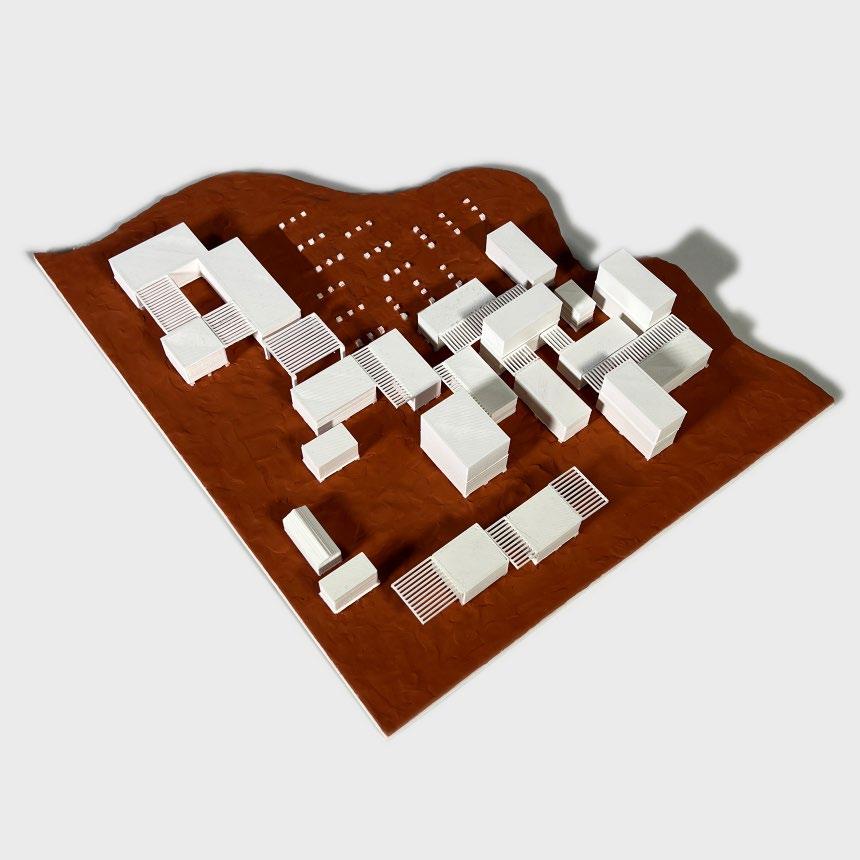
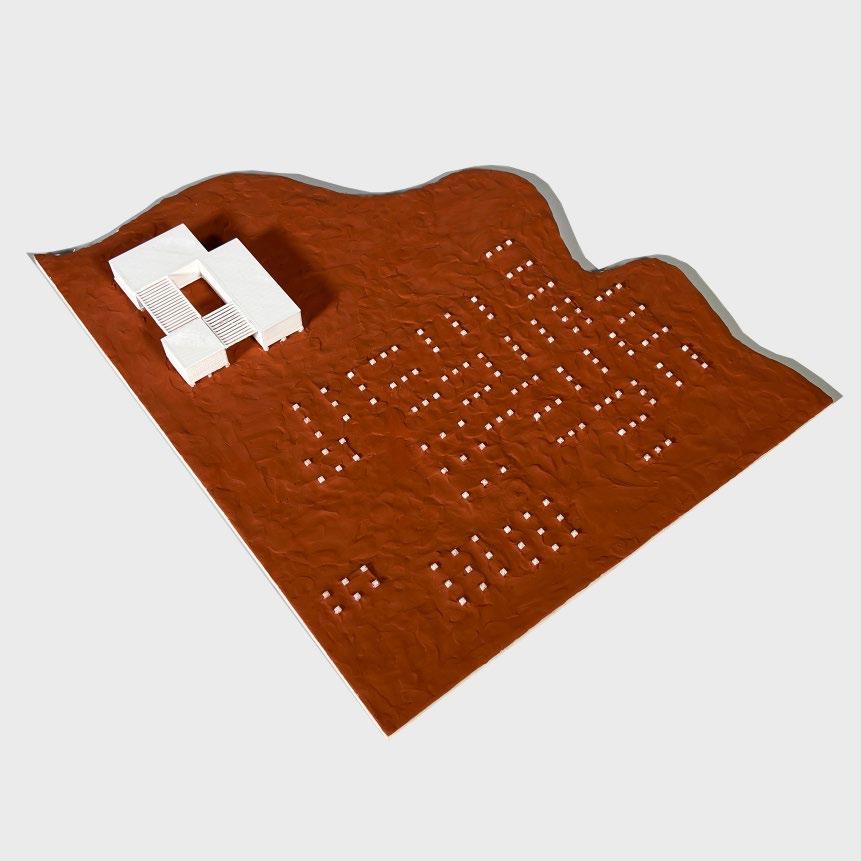
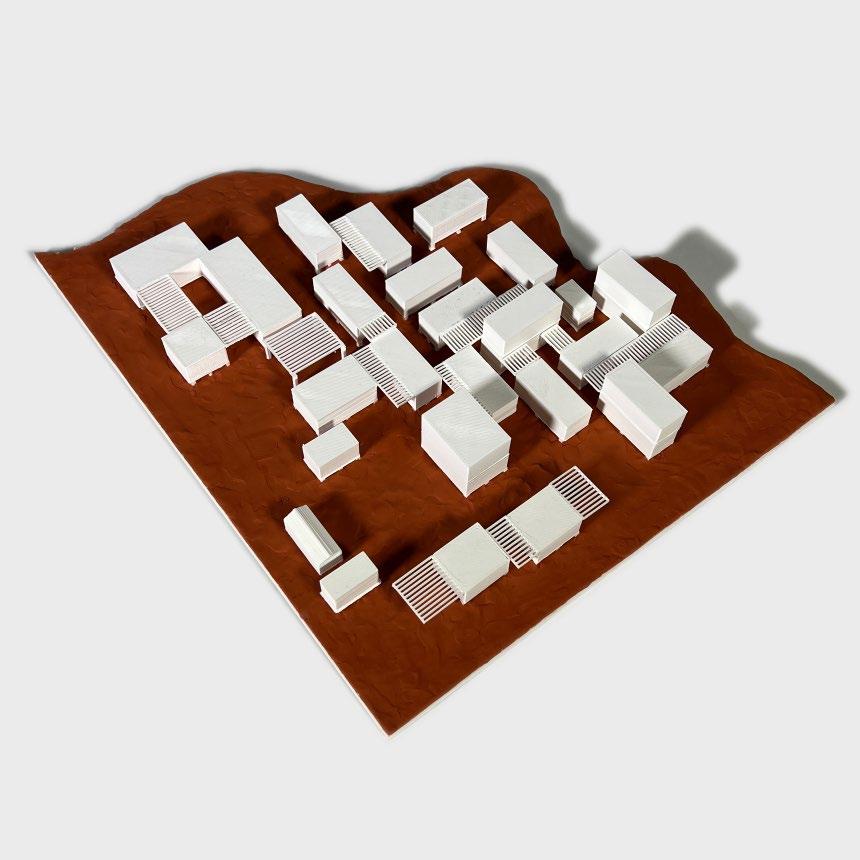
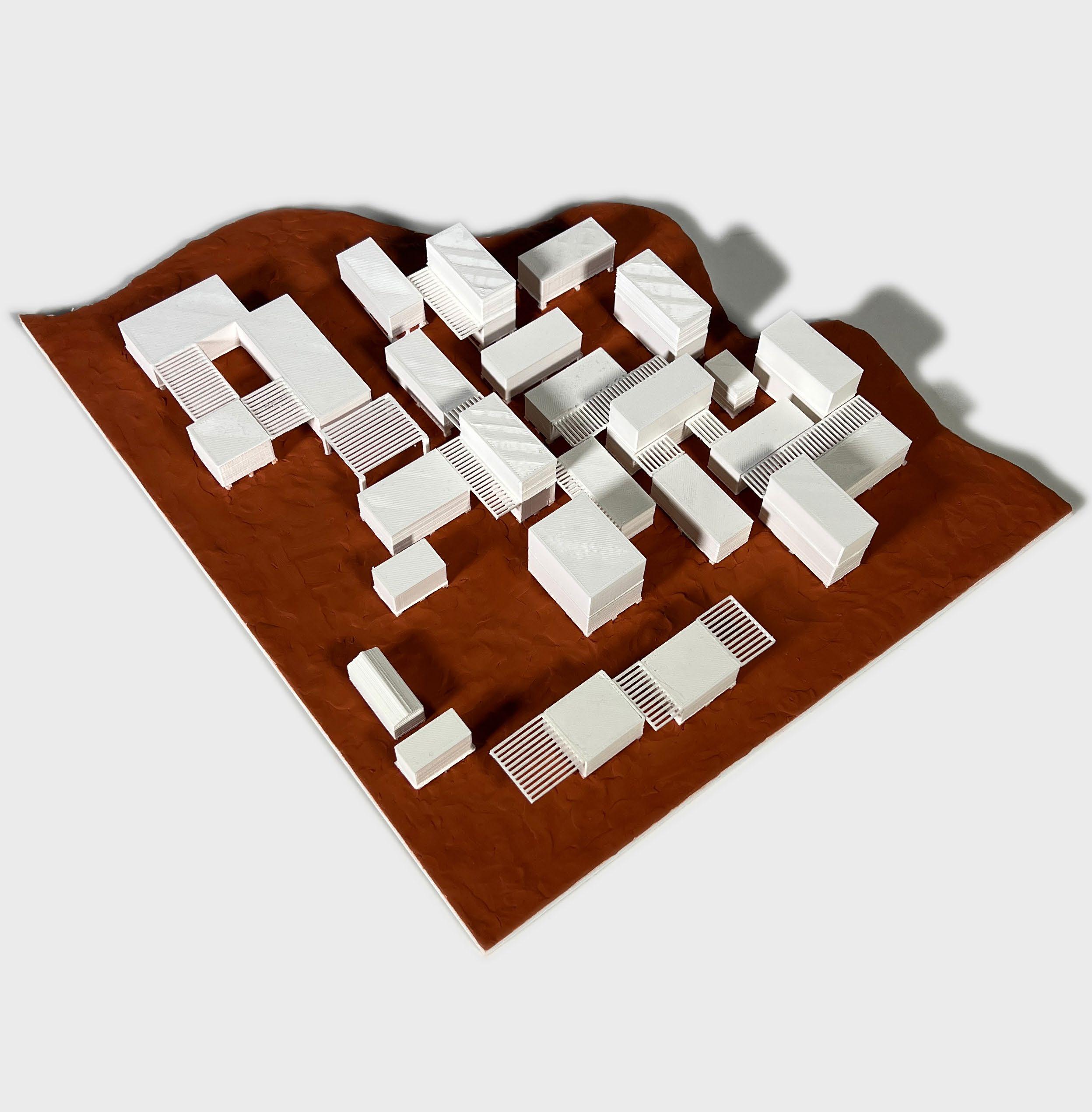
Beginning with research on olla irrigation, I started to look at moments of plant, people, and architectures relationship with the ground. Through the arrangement of separate but adjacent individual units, my project proposes a mode of communal living, building a new sociality between its inhabitants and connecting the inside and outside. My design breaks the overall structure of a house into “units”. These separate parts serve as a single function, such as a living room, kitchen, and dining room but are used communally by the neighborhood. These programs can take place inside of a single building or outside in one of the plaza spaces. These micro-neighborhoods are made up of a series of quadrants and using a method of copying and mirroring, these quadrants can be duplicated to expand the neighborhood.
20
 Elizabeth Cornfeld
Olla Unseen Cycles Perspective Drawing
Elizabeth Cornfeld
Olla Unseen Cycles Perspective Drawing
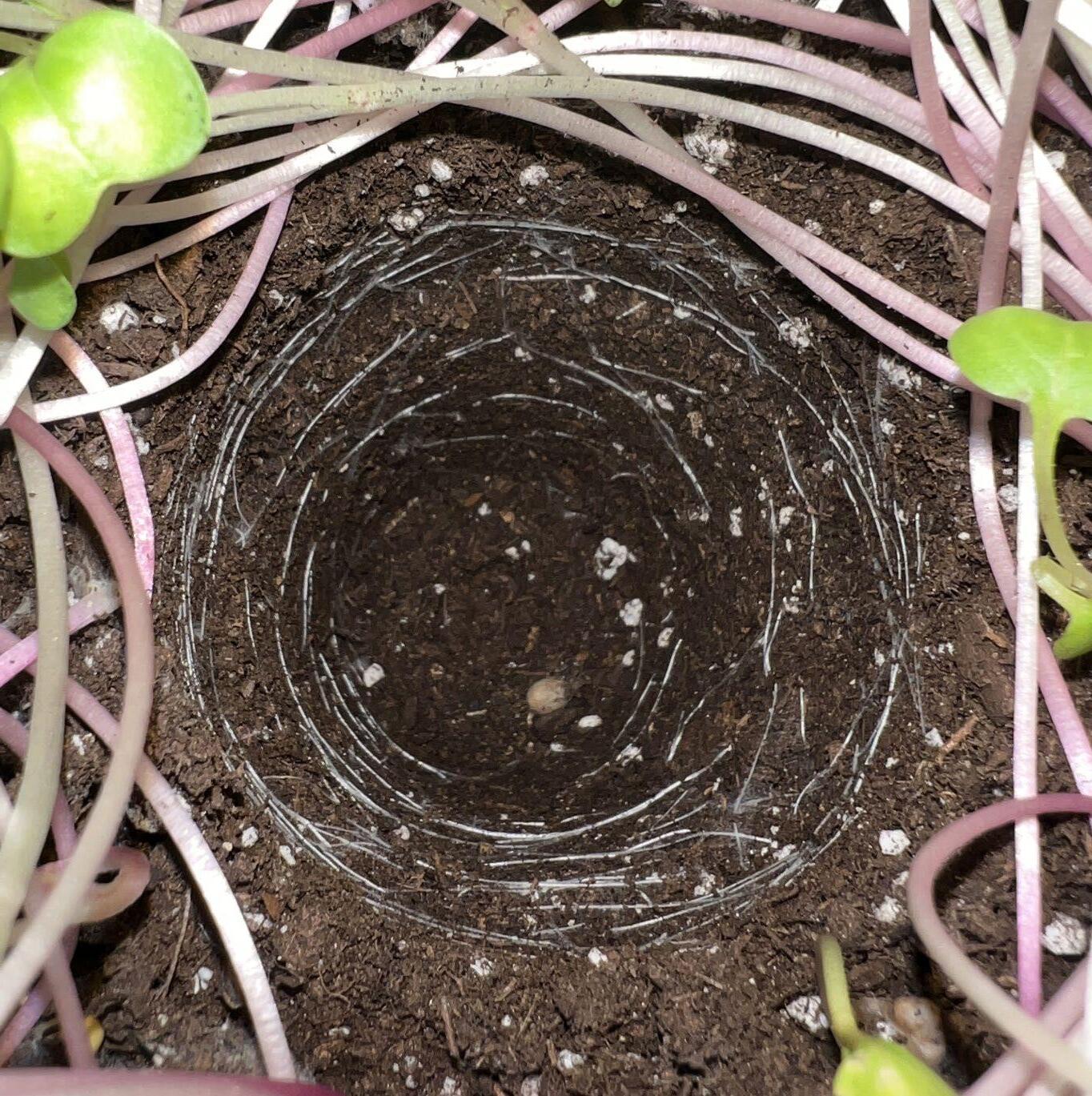
Ollas are a traditional water irrigation technique used by indigenous tribes in New Mexico. Research began by focusing on key moments of plants relationships with the ground and zooming in on unseen cycles, such as the root structure, that aren’t typically depicted in architectural representations or seen with your eye.
Land Matters 22

24
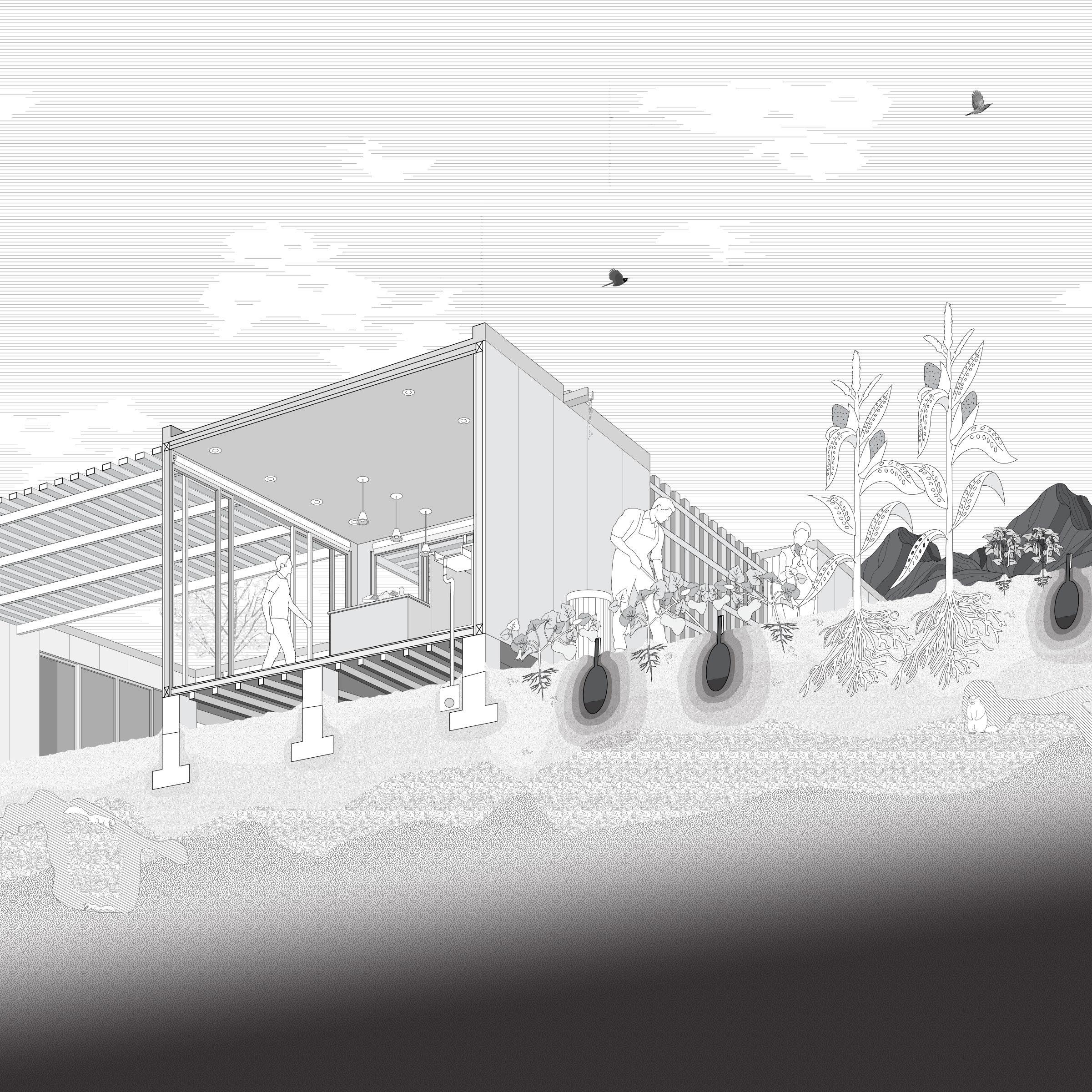
As opposed to ollas relationship with the ground, housing tried to touch the ground as lightly as possible and be non-invasive. Typically unseen cycles, such as water, structure, and plumbing are highlighted that exist in and around the building, people, and agriculture.
 Elizabeth Cornfeld
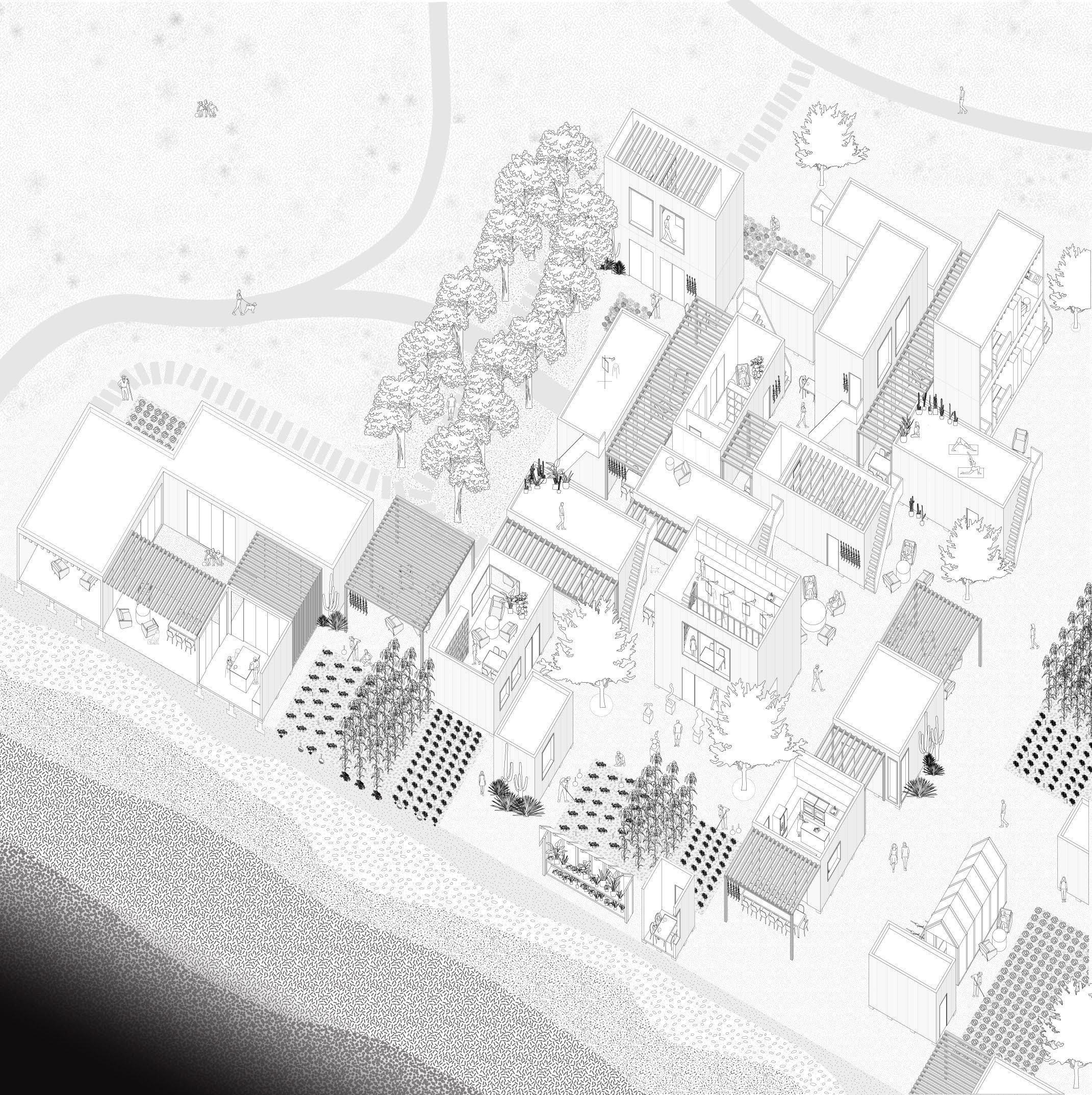
Architecture and these unseen cycles work at a larger scale. Nature is not only present on the exterior through roof gardens and agricultural felds, but it’s also present on the interior through greenhouses and houseplants. This layout of space allows for interactions between different communities.
Land Matters
26
The in between spacing and misalignment of buildings allows for public and private moments to occur between residents. There is a gradient of plaza spaces ranging from public to private. The most public spaces, defned by larger plazas, in the center and most private spaces, defned by smaller plazas, at the edges.
 Elizabeth Cornfeld
1. CARETAKER HOME
2. KITCHEN
3. DINING
4. LIVING ROOM
5. ART STUDIO
6. MICRO HOMES
7. FARMING
Elizabeth Cornfeld
1. CARETAKER HOME
2. KITCHEN
3. DINING
4. LIVING ROOM
5. ART STUDIO
6. MICRO HOMES
7. FARMING
1 2 2 3 4 4 5 6 7 7 8
8. GREENHOUSE
Land Matters 28
Site Plan: Midtown, Santa Fe
 Elizabeth Cornfeld
Land Matters 30
Neighborhood Quadrant Modular Assembly
The Harlem Collective
ARCH 1022 | Critic: Caitlin Taylor
Harlem, New York
Spring 2022 | Partner: Katherine Salata
Elizabeth Cornfeld
Project Objective: Based off of HPD’s “Big Ideas for Small Lots NYC” design competition, select small lots, under 1000 SF, around the city and defne how these lots create a system to strengthen the surrounding neighborhoods. Create a relationship between the architectural and the urban.
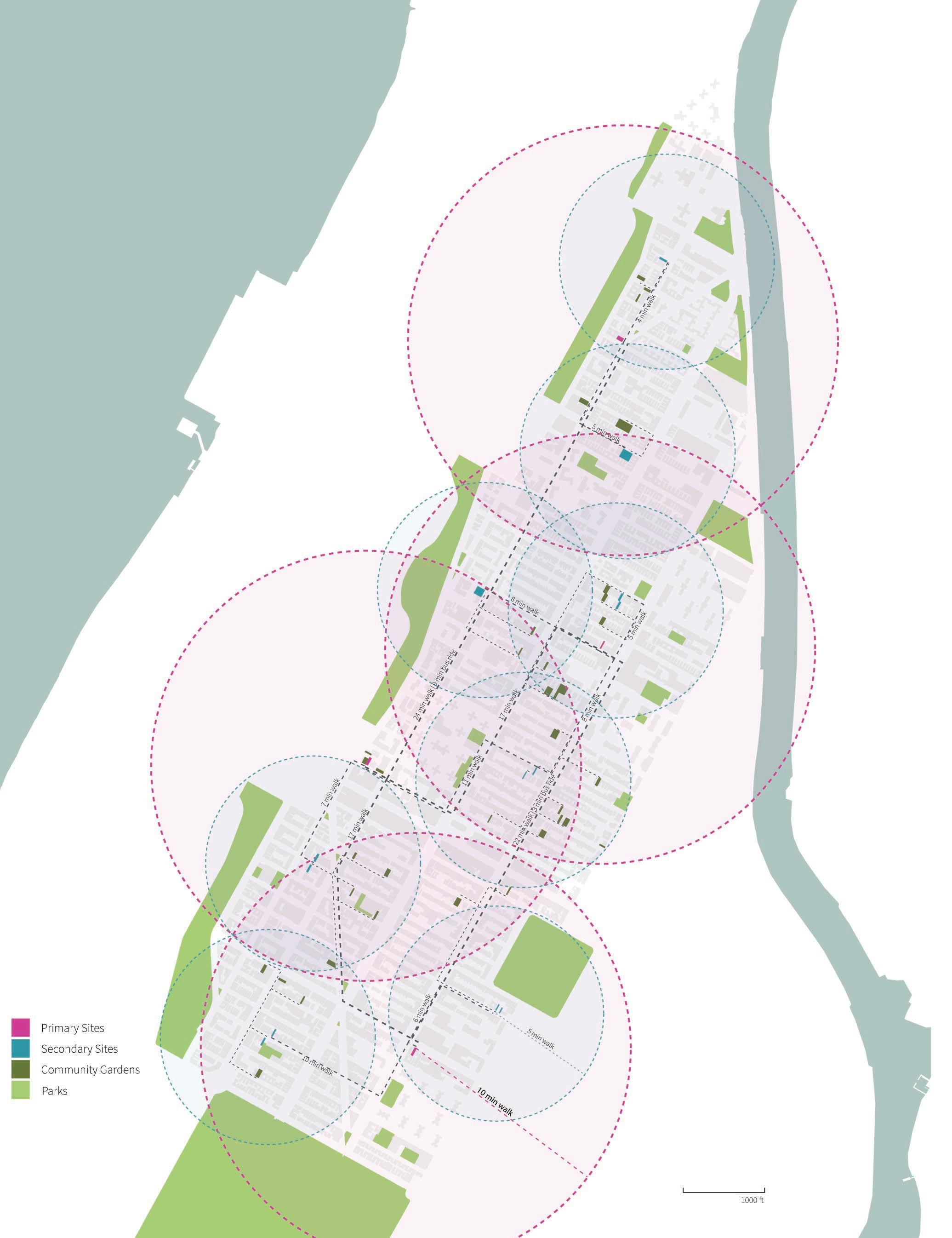
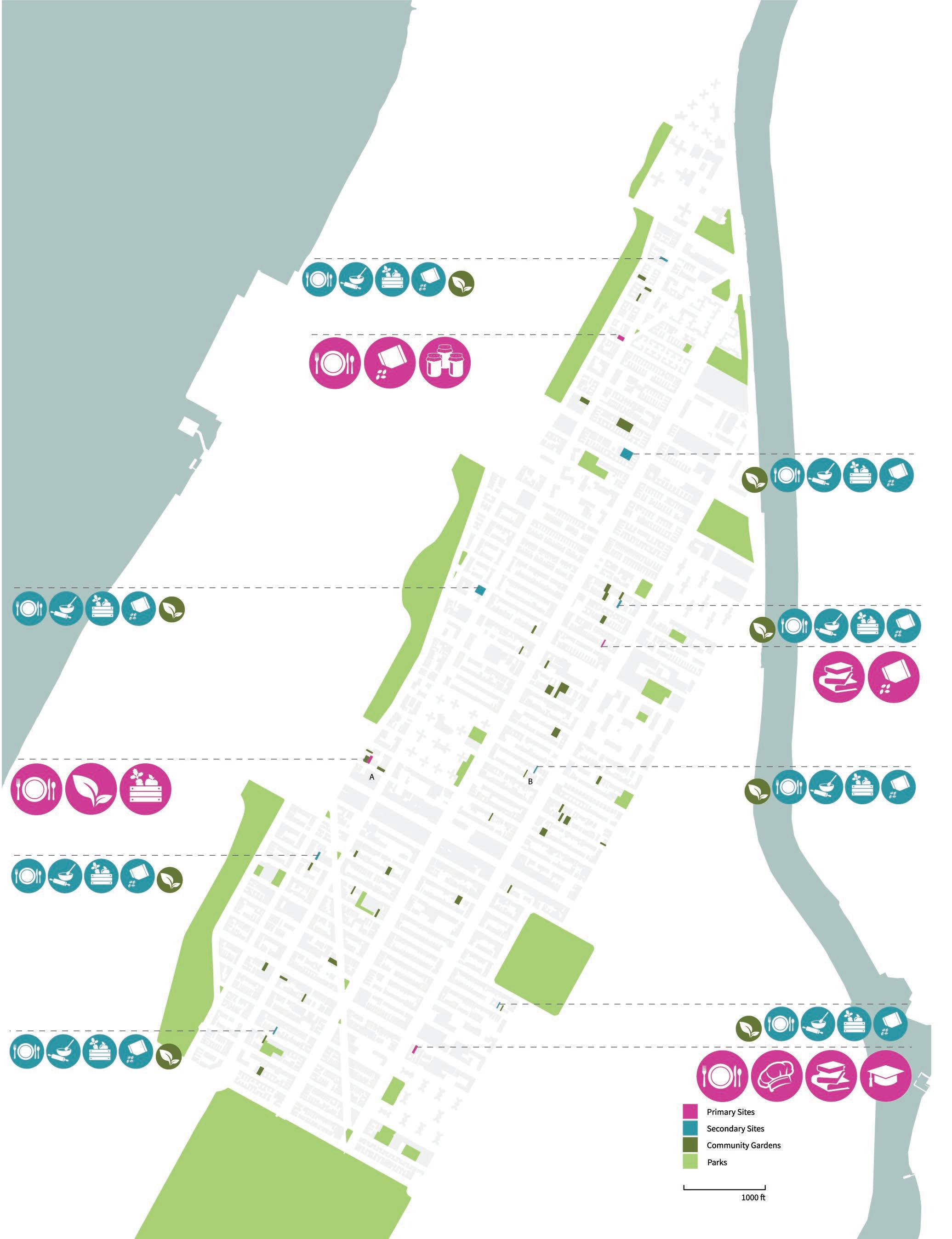
In our project, we questioned how stabilization and nourishment of the unique food culture within the Harlem neighborhood can act as a form of future facing preservation. Using the premise that food preparation is a tradition that gets passed down across all cultures and communities, we are proposing a network of kitchen, community, and education spaces. Food preparation and artwork allow for remembrance of the community’s historic culture while still enabling adaptation, exploration and growth. The Harlem Collective system would engage with the local community by integrating into the existing network of community gardens and small lots, while providing the support spaces to allow the community to share their food knowledge and traditions. Our project proposed that architecture is simply the canvas for local neighborhood artwork, whether that be physical painting or digital projection. This idea is explored through two building designs located at two sites in Harlem.
32
We are ultimately designing for the rejuvenation of Sunday brunch, the site’s peak activation, as a place for community engagement and interaction. This space of activation will allow for the cross collaboration of culinary knowledge, ideas, and experiences, allowing Harlem to grow while simultaneously staying rooted in its cultural history and community.
 Elizabeth Cornfeld

The Harlem Collective 34
Elizabeth Cornfeld
Primary Sites
Secondary Sites
Community Gardens
Parks
Site Selection
Primary Sites
Secondary Sites
Community Gardens
Parks
Site Programmatic Typology
The Harlem Collective 36
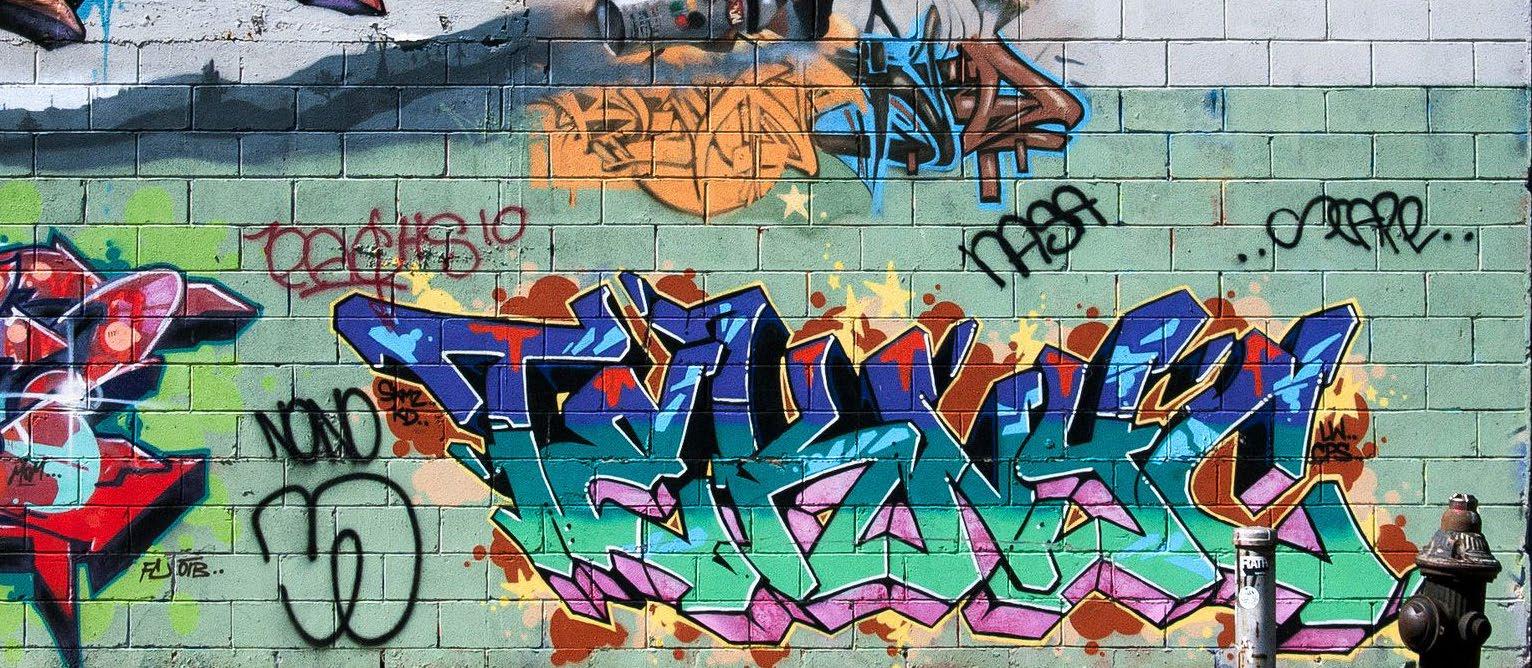
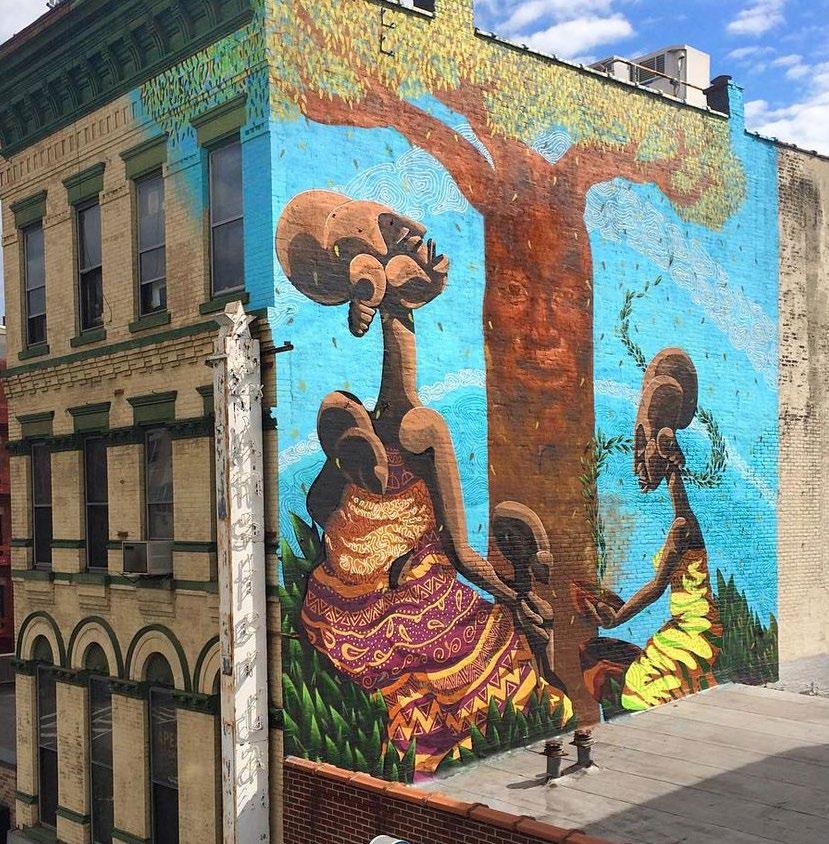
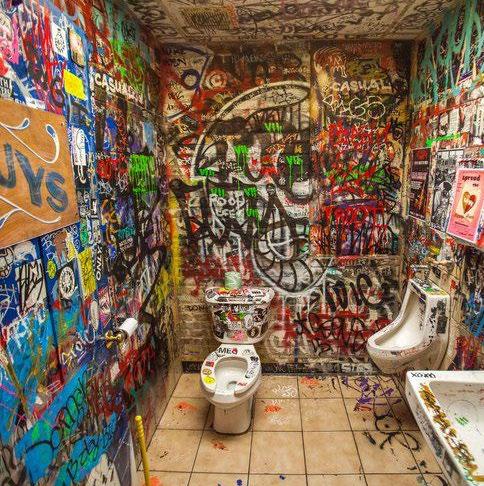
Our project proposed that architecture is simply the canvas for local neighborhood artwork, whether that be physical painting or digital projection. The buildings are the framework onto which layers of culture, history, and meaning get applied over time, becoming a part of this new era of preservation in Harlem.
 Elizabeth Cornfeld
Harlem Street Art
Elizabeth Cornfeld
Harlem Street Art
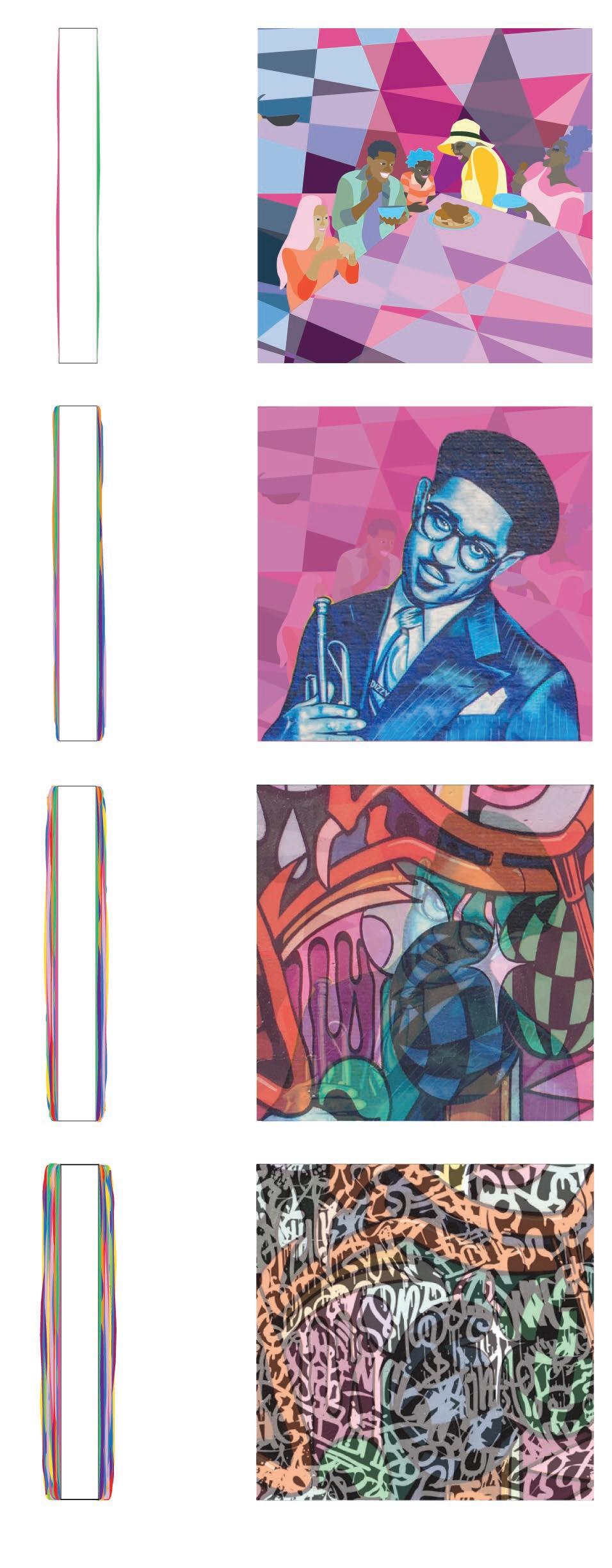
A community is actively involved in art production from a commissioned wall mural, moments of activism through graffti, and playful messages. Layers of painted artwork build up over time on our architecture proposals.
38 The Harlem Collective
YEAR 1 YEAR 2 YEAR 5 YEAR 10
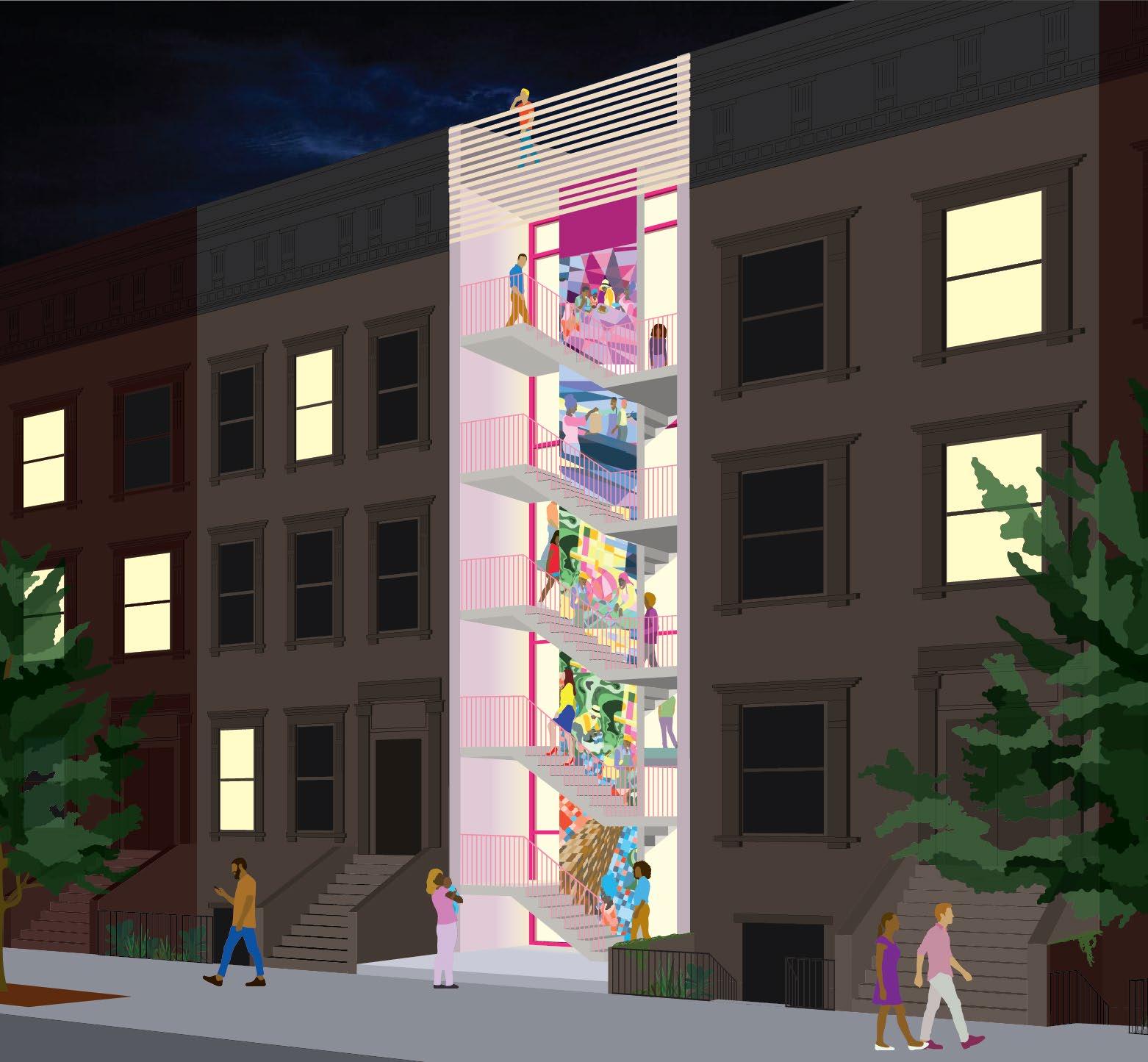
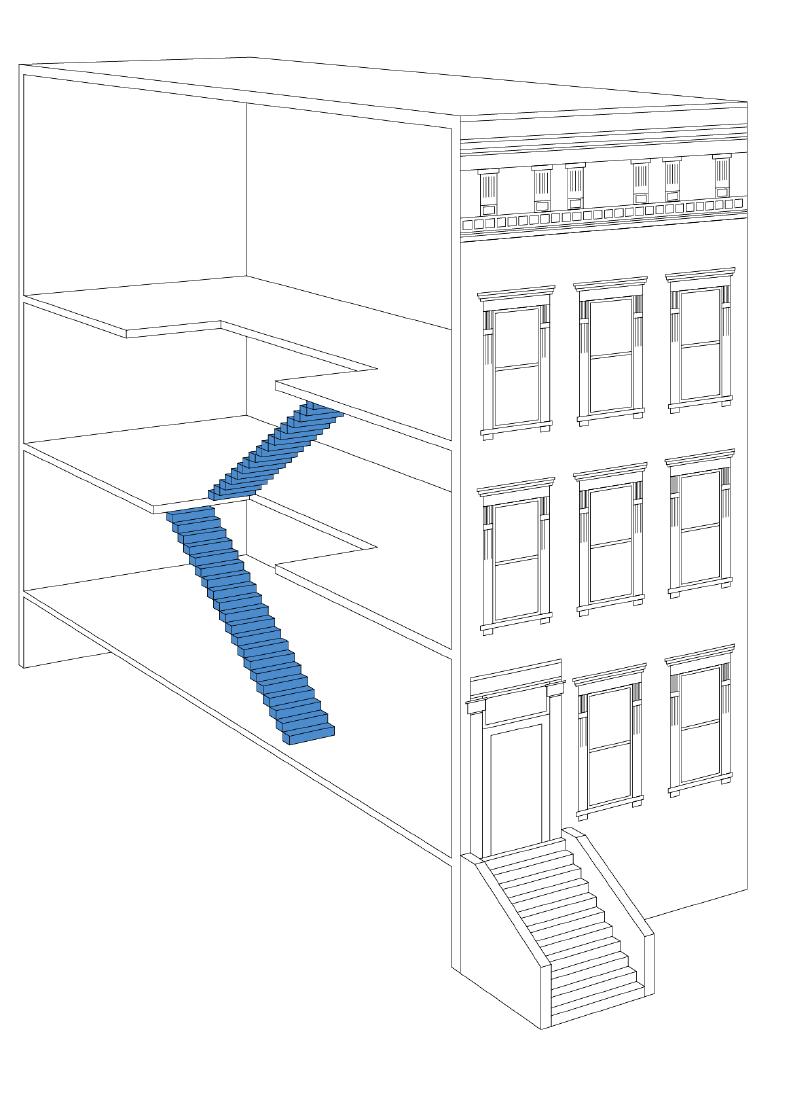
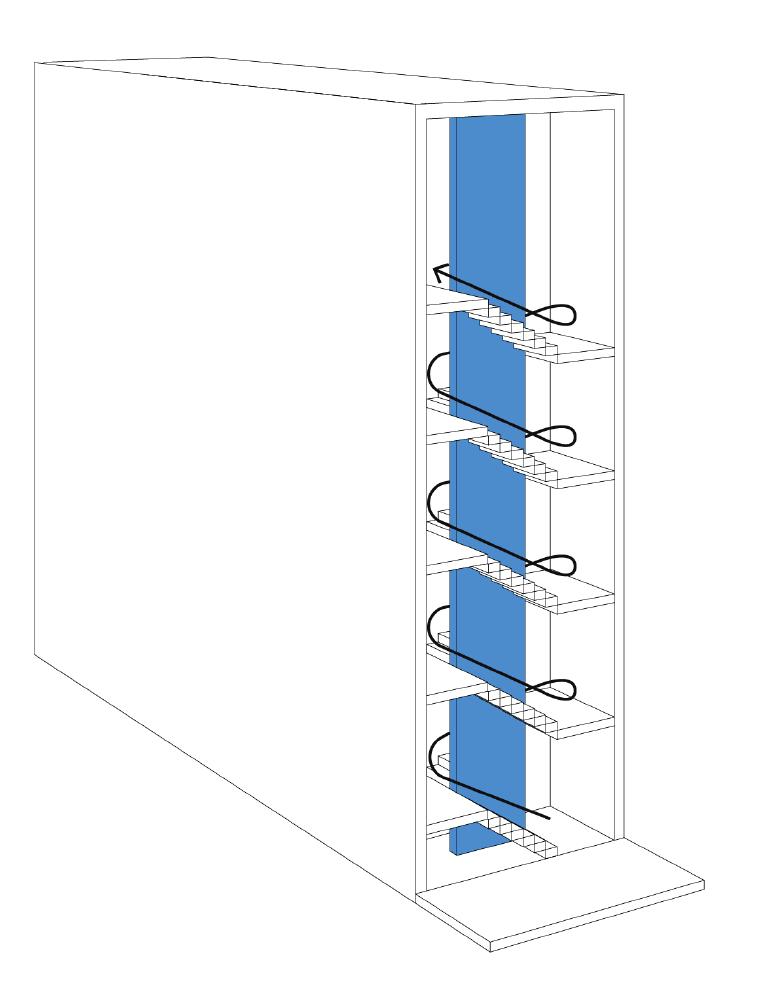
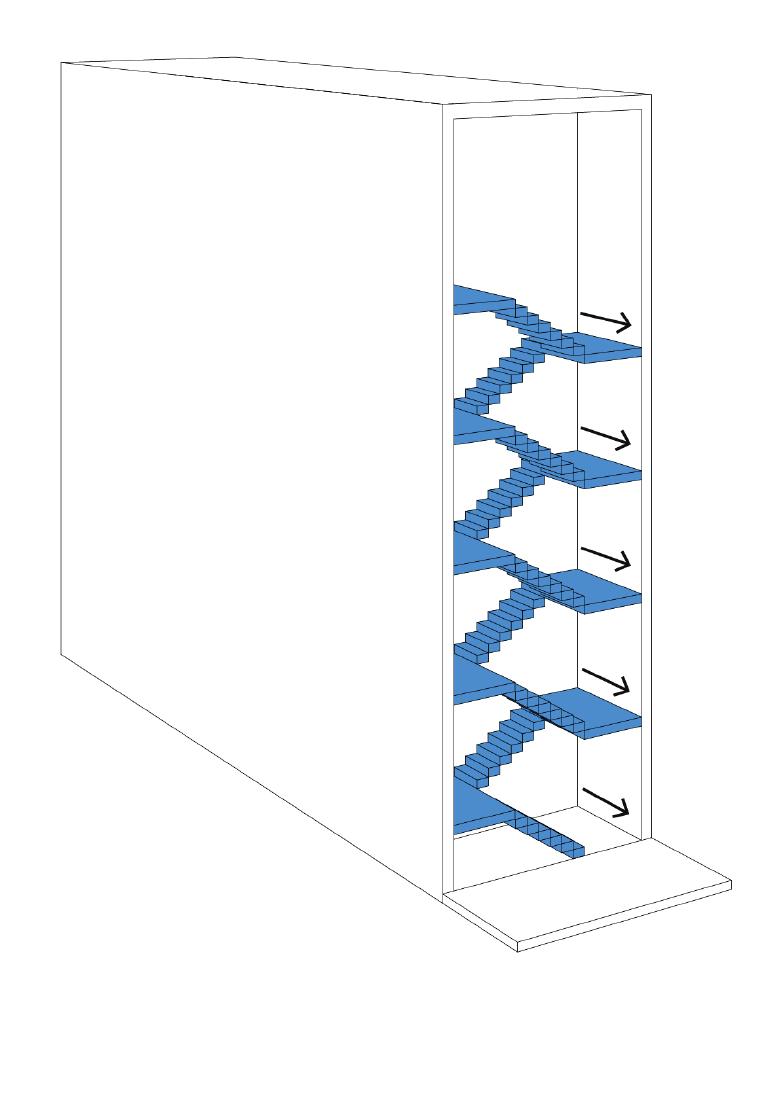
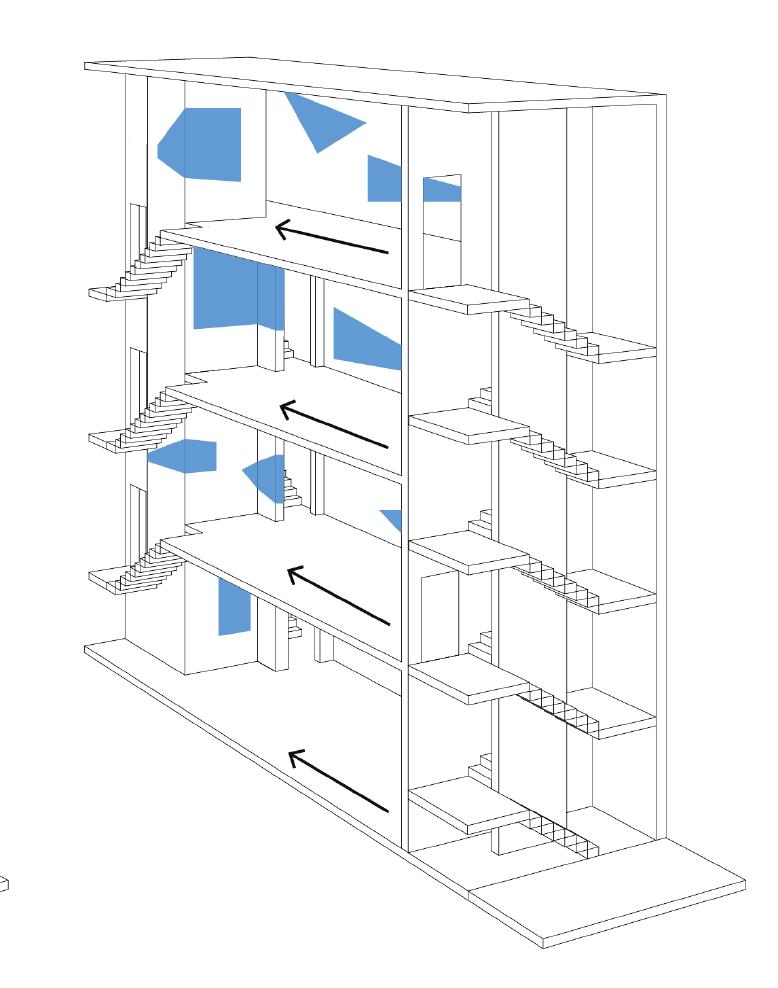
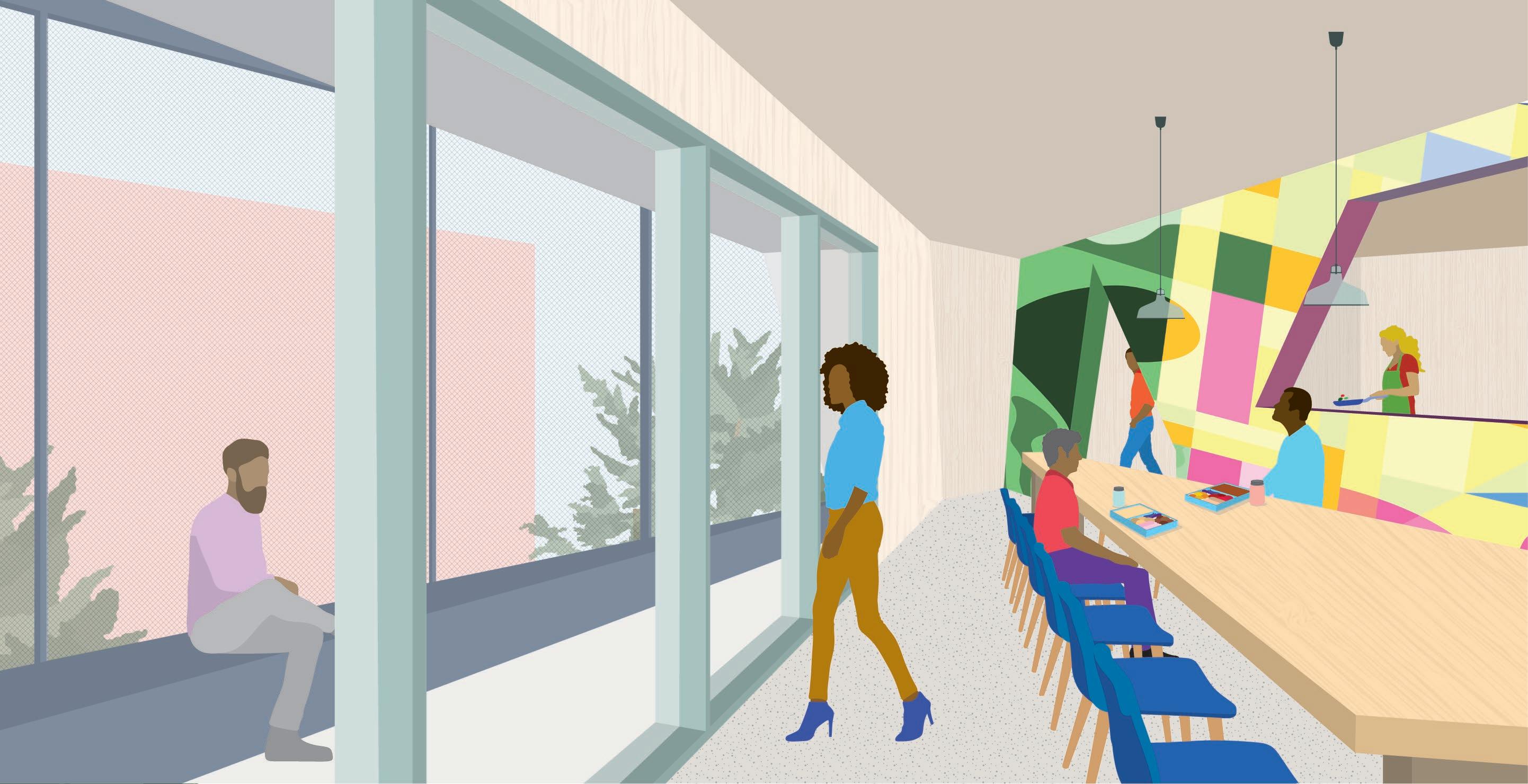
Circulation is pushed to the front of the building, to celebrate vertical movement, and wraps around a mural wall. This invites the community to contribute their artwork and add their own piece of history to the building. Forced perspective wall murals continue through the interior of the space again inviting people to enter and explore how the art changes throughout the building.
 Elizabeth Cornfeld
Site A: W 130th St.
Elizabeth Cornfeld
Site A: W 130th St.
40
Manipulation of typical NYC brownstone to allow for circulation around the mural wall. The Harlem Collective
Section Drawing: Site A
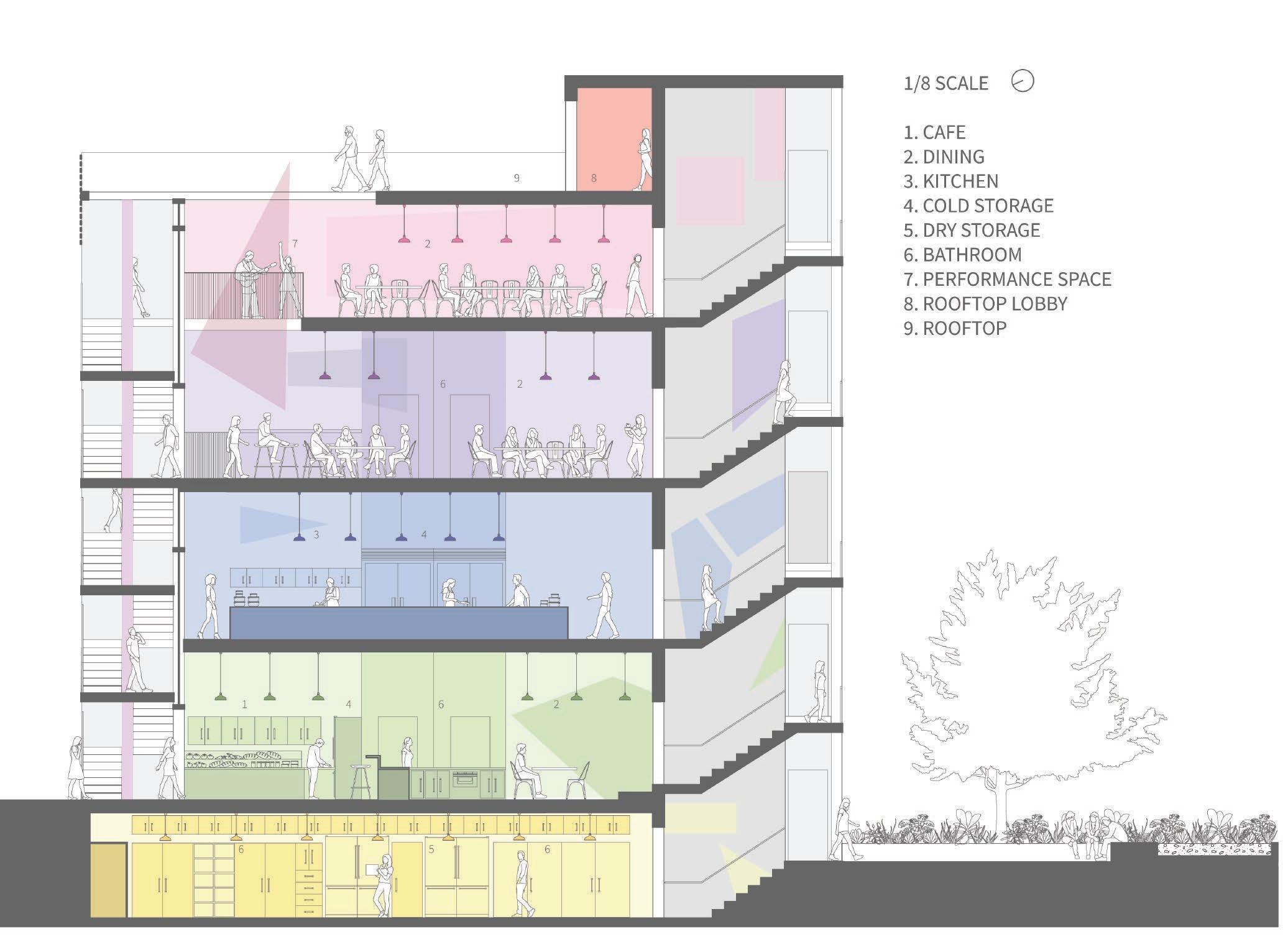
The “back of house” of a cafe that is typically hidden from customers is fully exposed and celebrated on the frst foor. The open concept kitchen allows for people to pass by and watch meals get made or pick up ready made meals.
1. CAFE
2. DINING
3. KITCHEN
4. COLD STORAGE
5. DRY STORAGE
6. BATHROOM
7. PERFORMANCE SPACE
8. ROOFTOP LOBBY
9. ACCESSIBLE ROOFTOP
 Elizabeth Cornfeld
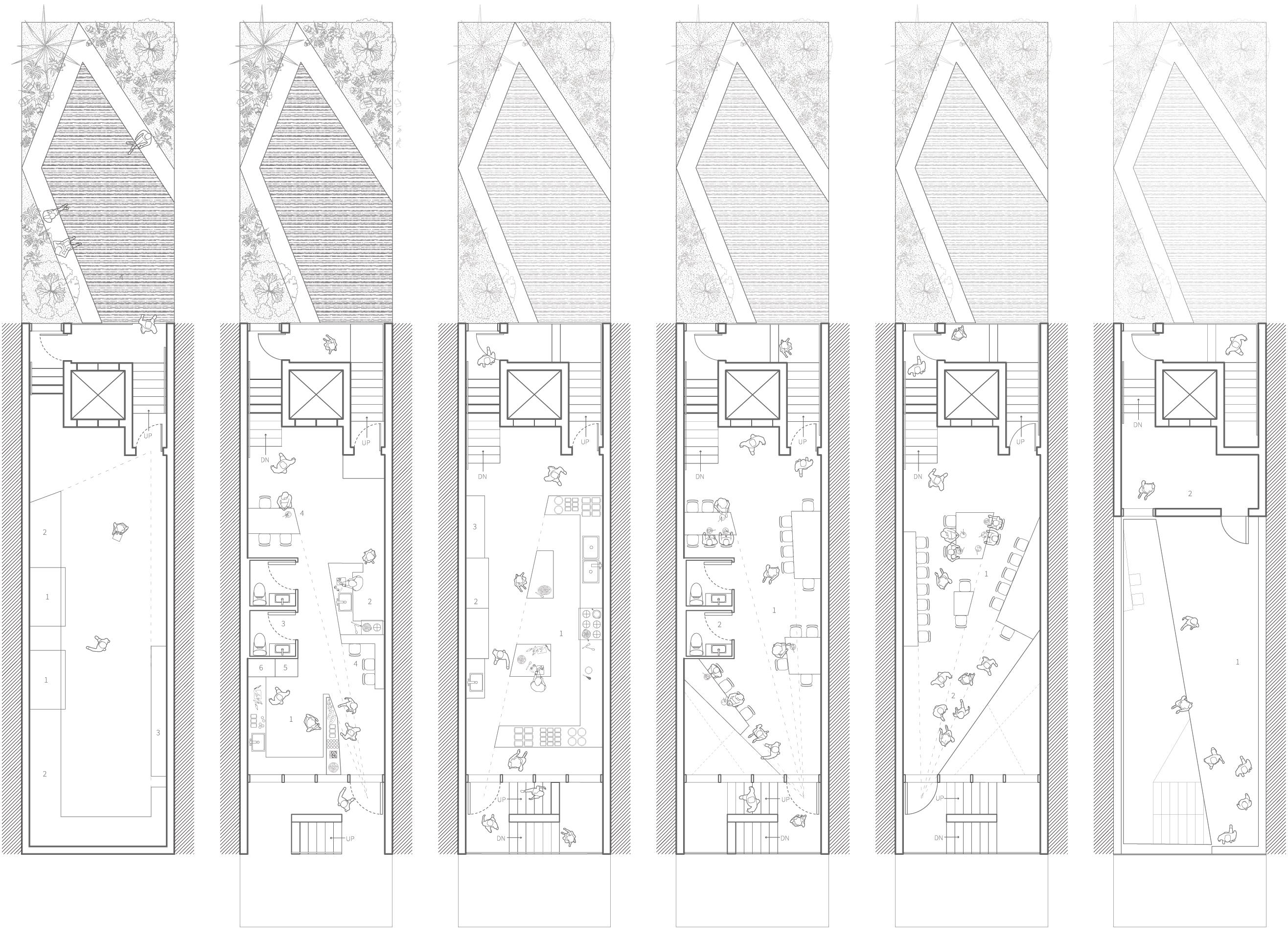
42 BASEMENT FLOOR
COLD STORAGE
STORAGE
STORAGE
GARDEN FIRST FLOOR 1. CAFE 2. KITCHEN
BATHROOM 4. DINING
COLD STORAGE
SECOND FLOOR 1. KITCHEN 2. COLD STORAGE 3.
STORAGE THIRD FLOOR 1. DINING 2. BATHROOM FOURTH FLOOR 1. DINING 2. PERFORMANCE SPACE FIFTH FLOOR 1. ROOFTOP 2. ROOFTOP LOBBY The Harlem Collective
1.
2. DRY
3. SEED
4.
3.
5.
6. DRY STORAGE
DRY
 Elizabeth Cornfeld
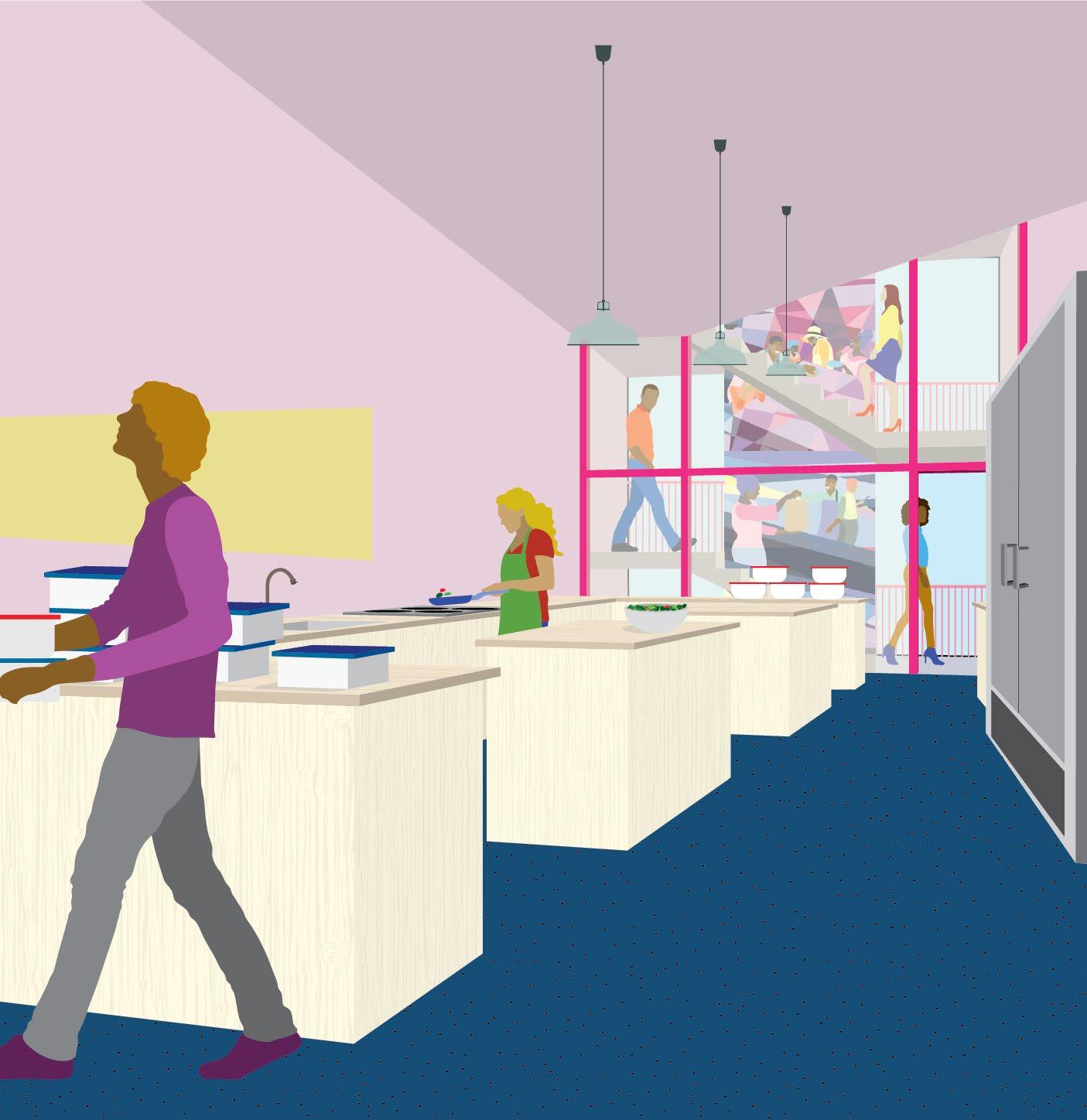
Artwork continues into the interior space through forced perspective wall murals, inviting the viewer to go further into the space to explore the full extent of the mural.
Elizabeth Cornfeld
Artwork continues into the interior space through forced perspective wall murals, inviting the viewer to go further into the space to explore the full extent of the mural.
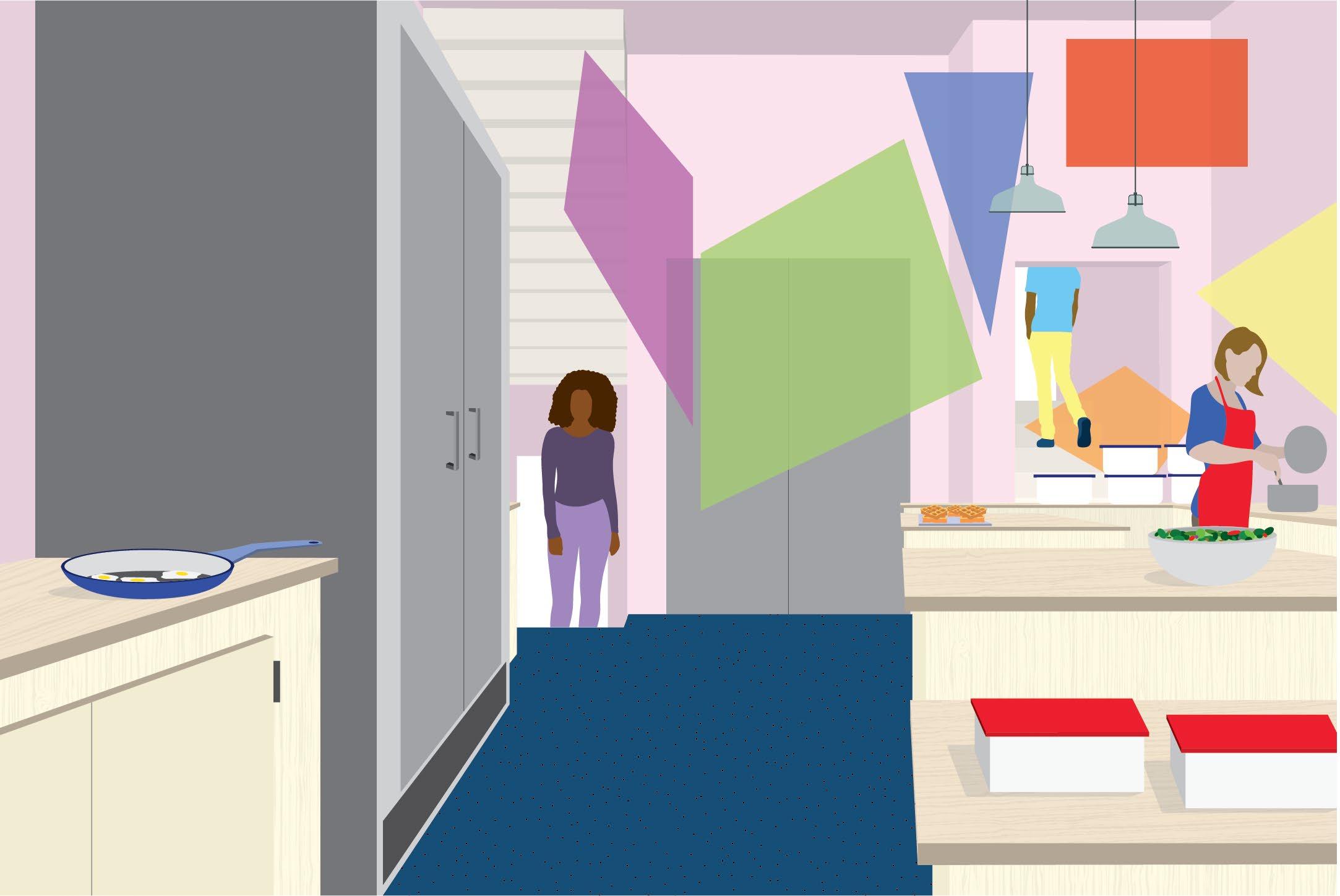
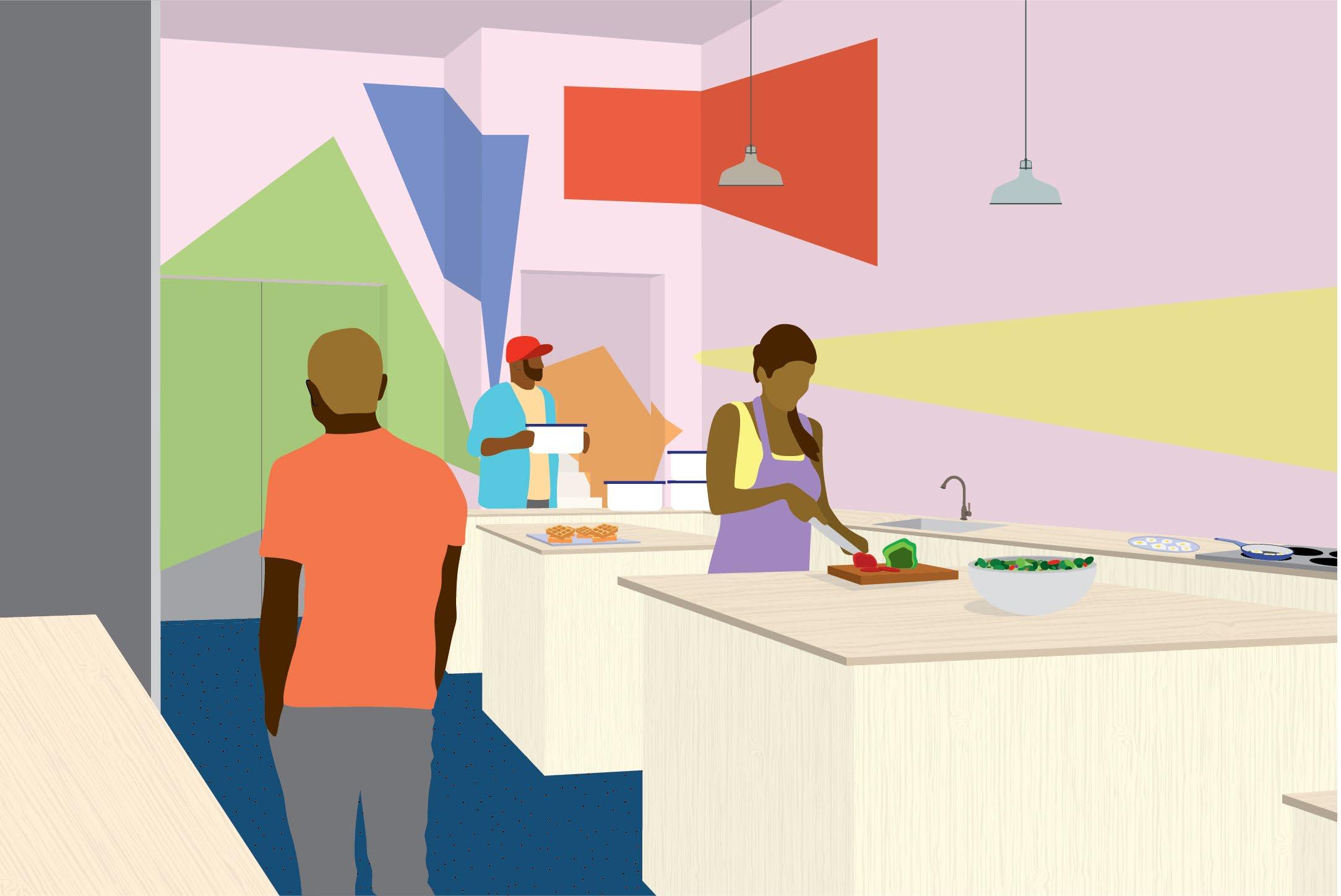
44 The Harlem Collective
Interior Kitchen Perspectives
B: W 126th St.
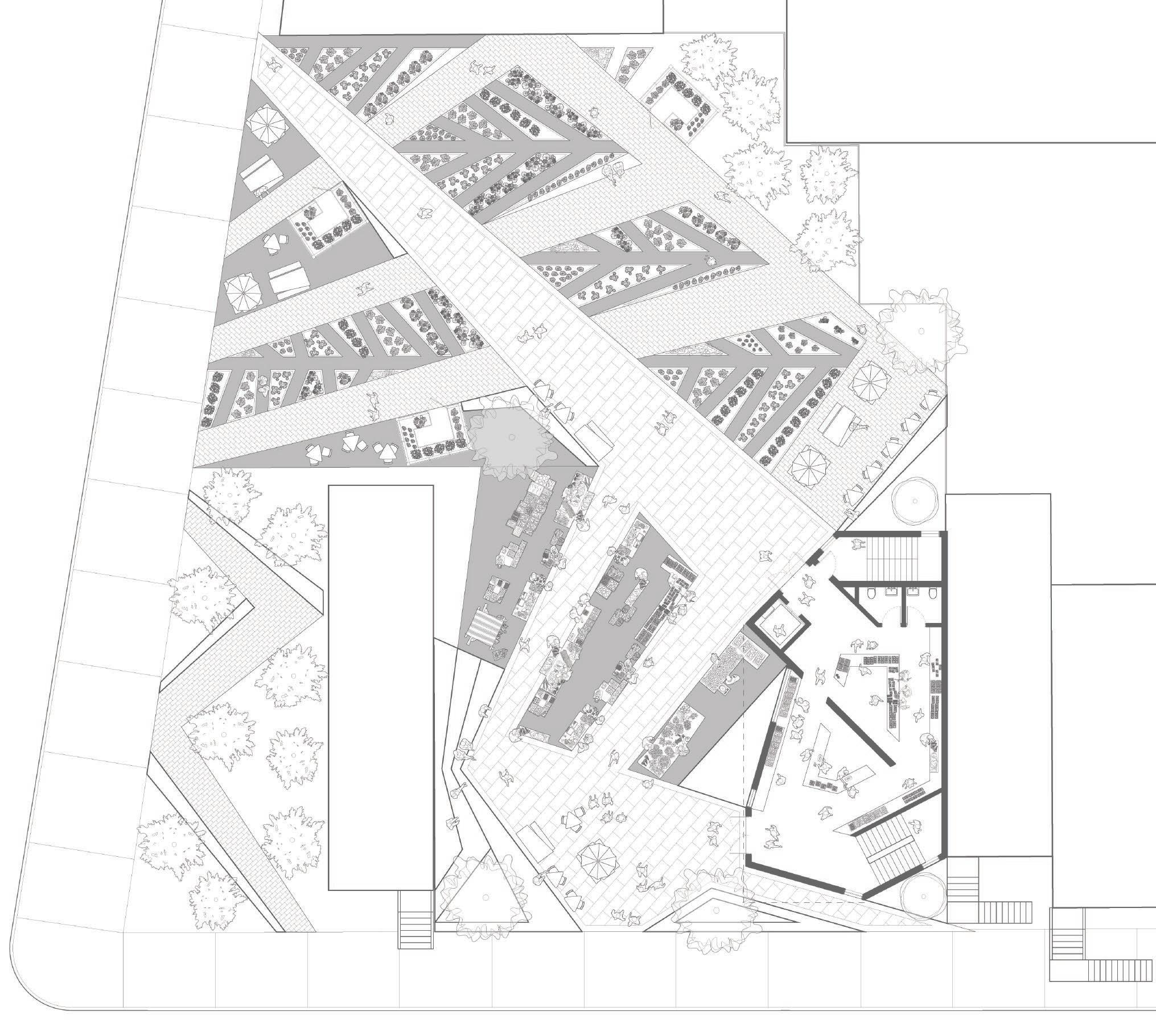
Much like forced perspective projection of art of the previous building invites visitors into the space, the exterior of this design begins to blur the threshold between site and building. Using the vantage points of pedestrians as they round the corner onto our block, site lines begin to carve away at this buildings footprint, leaving a faceted facade.
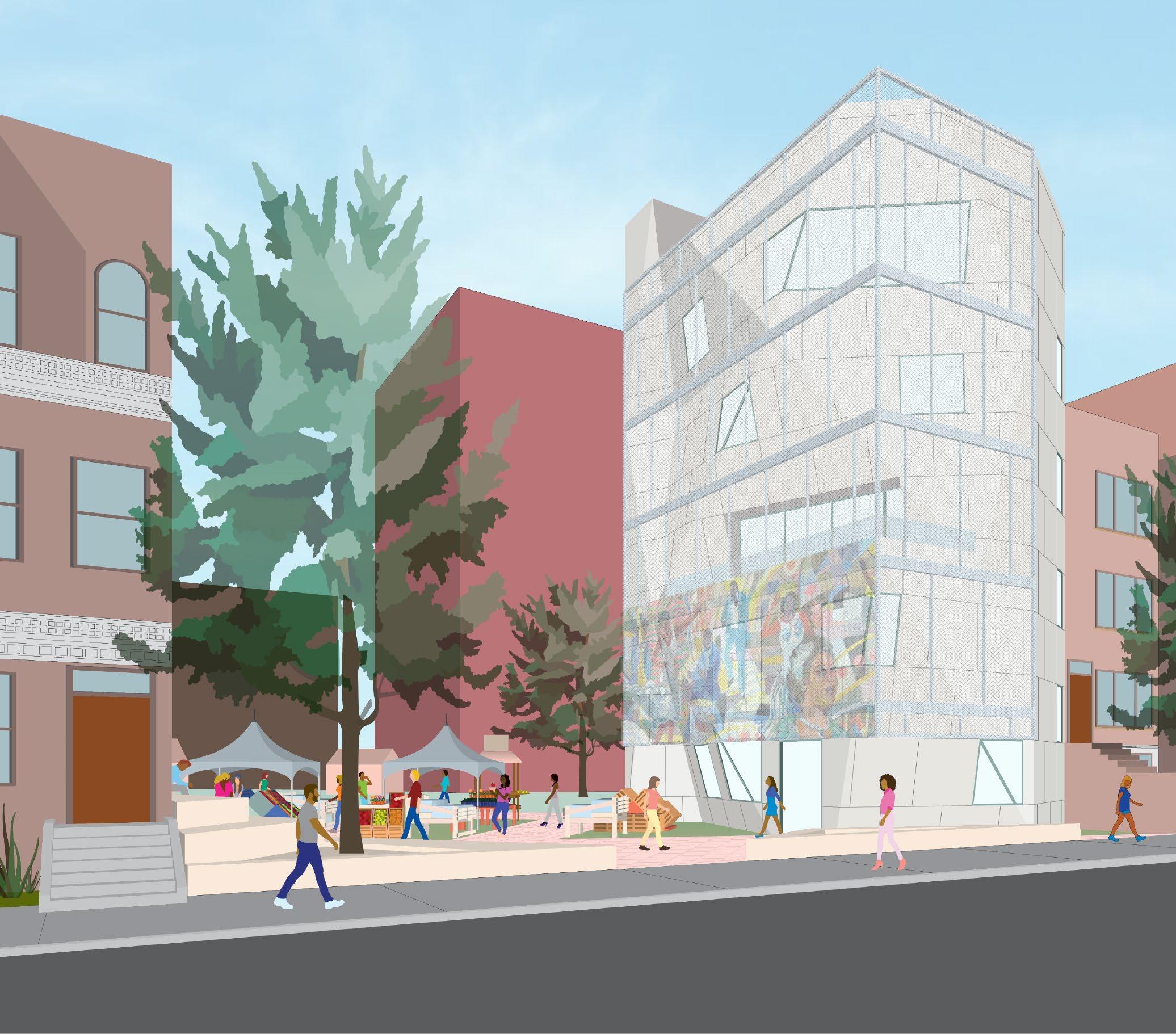 Elizabeth Cornfeld
Site
Elizabeth Cornfeld
Site
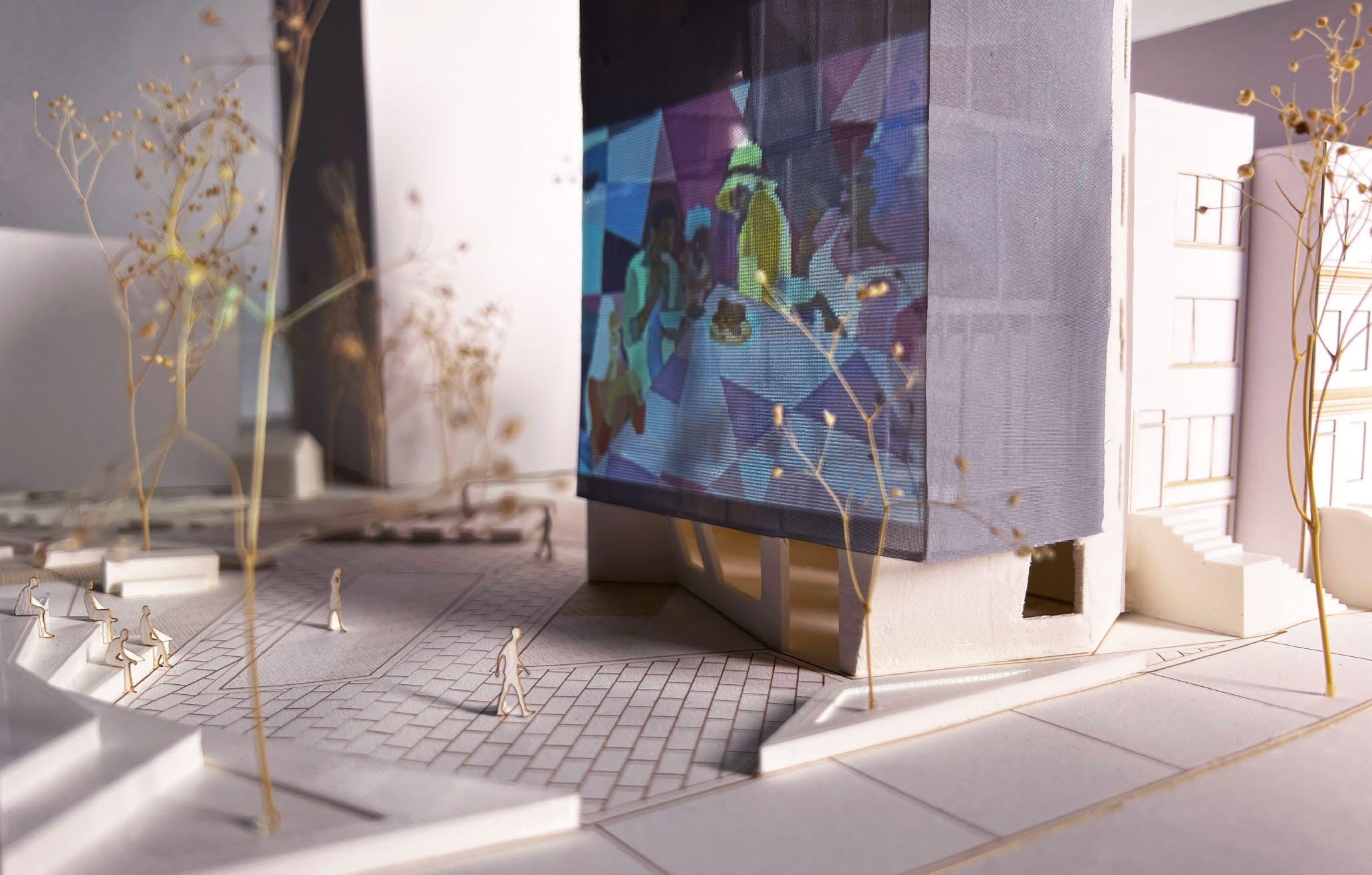
A rectangular translucent screen covers this faceted exterior. This screen, as well as an interior wall which runs consistently up each foor, acts as the canvases onto which art can either be painted or digitally projected.
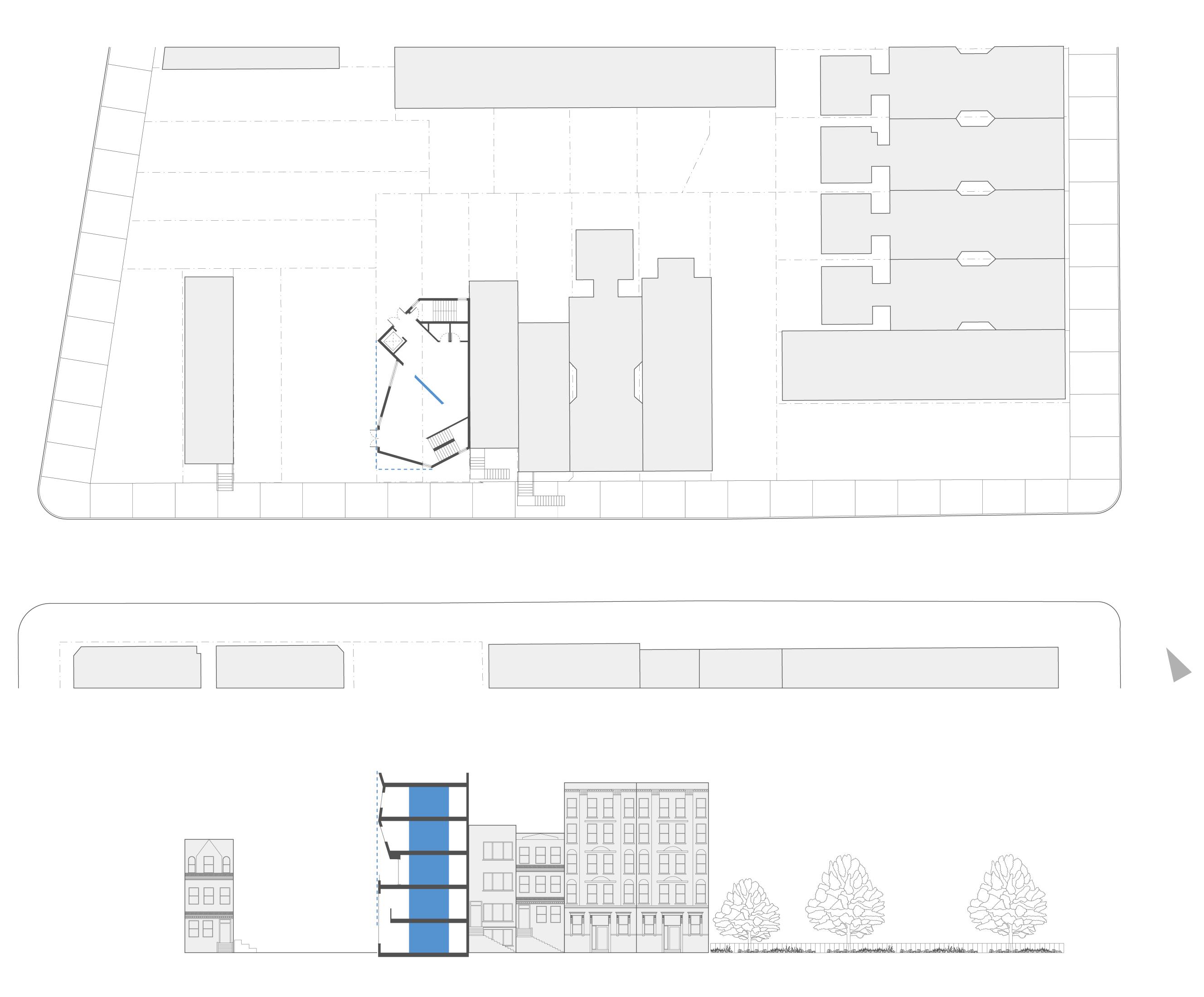
46
The Harlem Collective
 Elizabeth Cornfeld
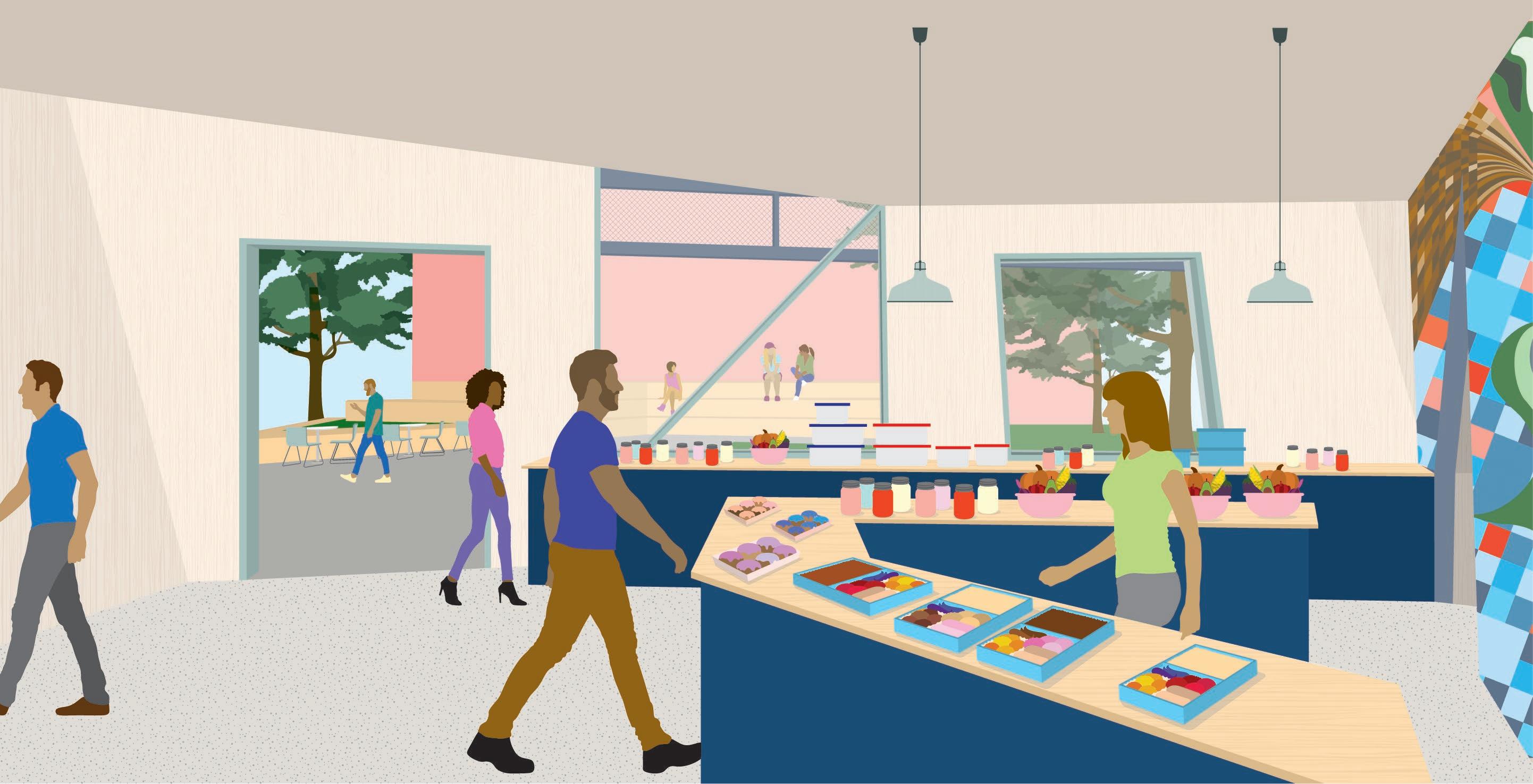
The ground foor continues as an extension of the redesigned community garden and farmers market.
Elizabeth Cornfeld
The ground foor continues as an extension of the redesigned community garden and farmers market.
48 The
Harlem Collective
Ground Floor Farmers Market Community Table and Mural Wall
 Elizabeth Cornfeld
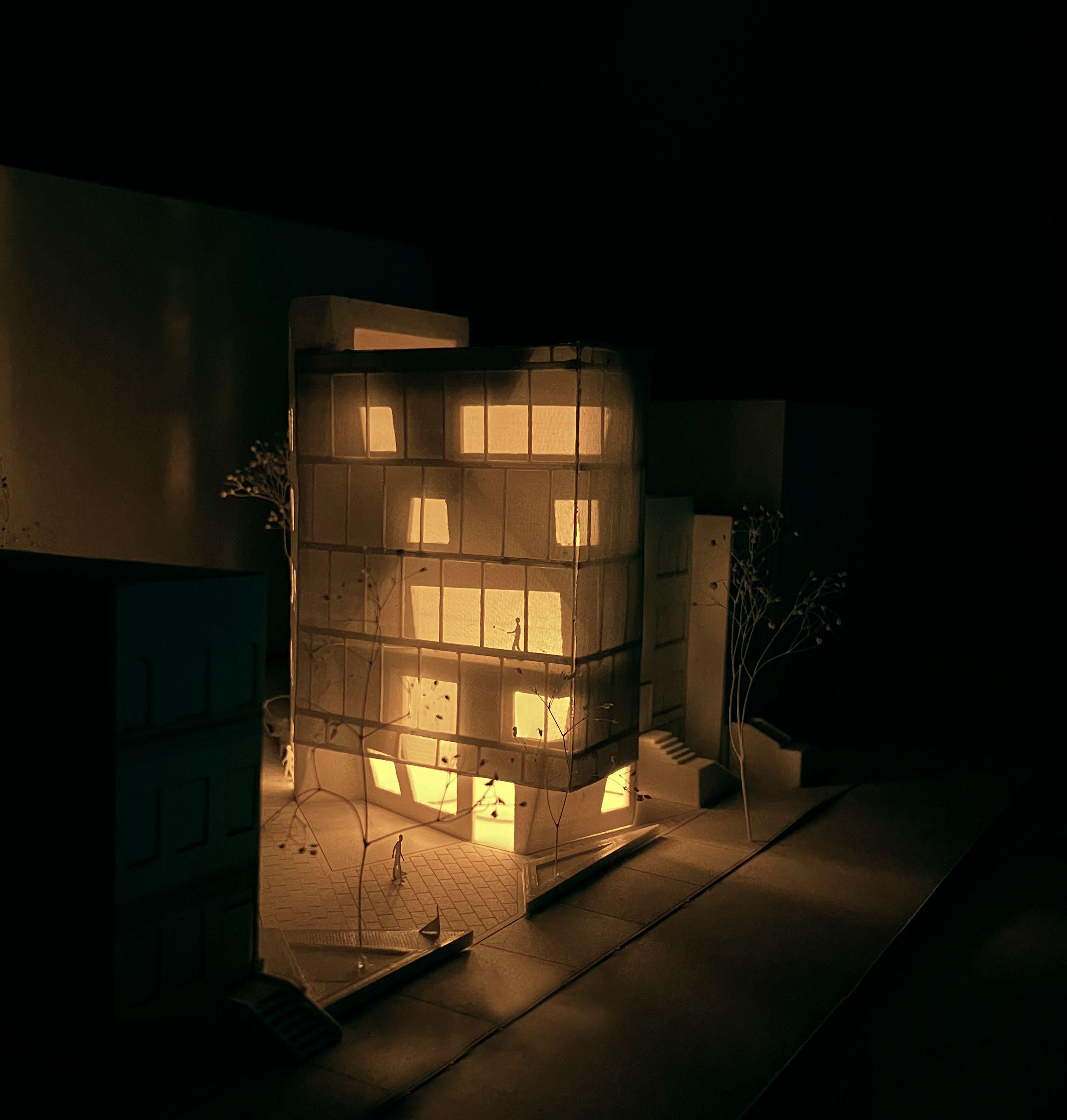
Digital projection onto the facade creates a dynamic visual and circulatory experience for visitors of both the community garden and building.
Elizabeth Cornfeld
Digital projection onto the facade creates a dynamic visual and circulatory experience for visitors of both the community garden and building.
At night, people are projected out into the surrounding site.
50
The Harlem Collective
NEXT STEP
ARCH 1021 | Critic: Emily Abruzzo
New Haven, Connecticut
Fall 2021
Elizabeth Cornfeld
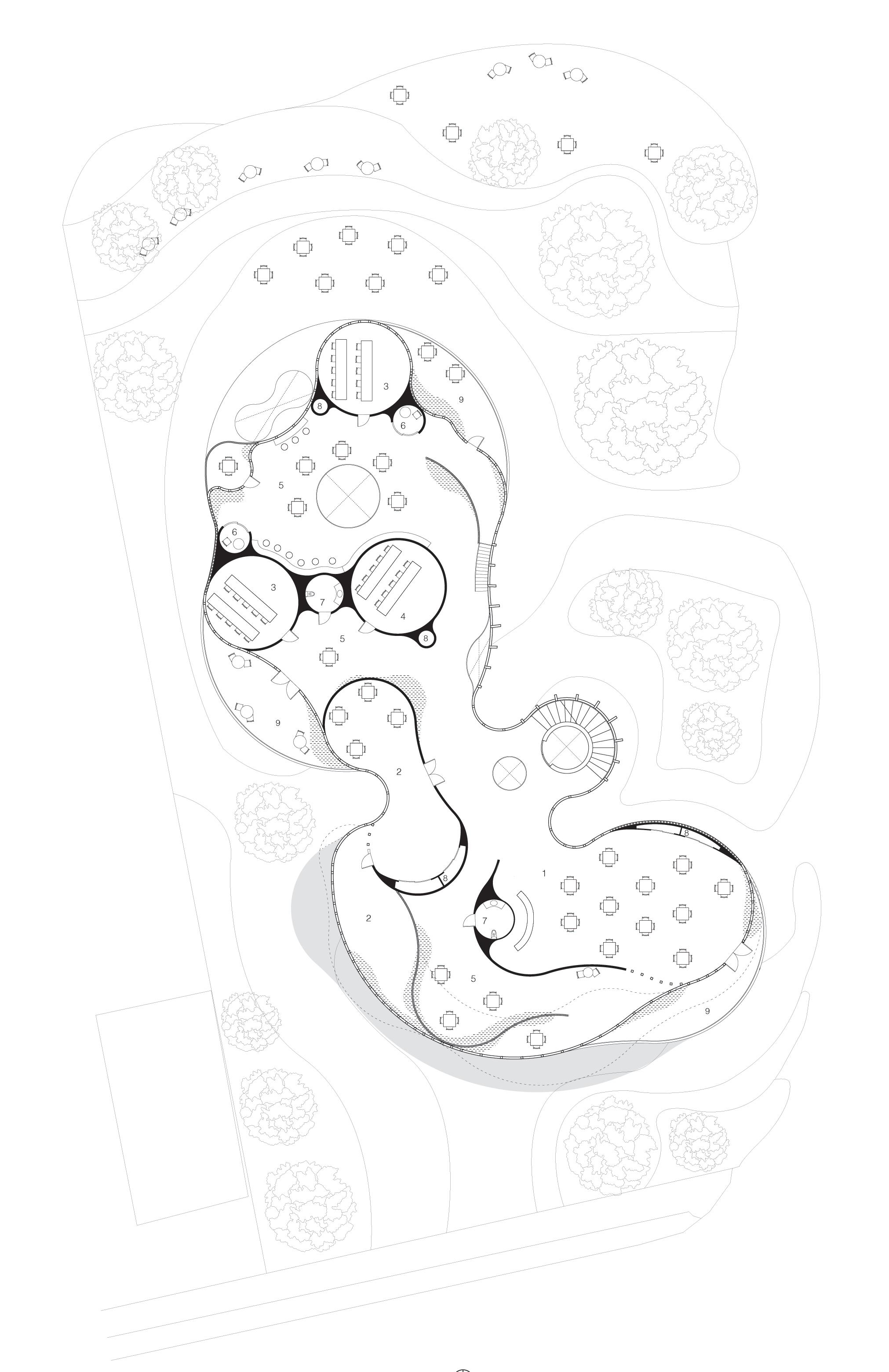
Project Objective: Design a new type of mental health center, specifcally for the services provided by the Program for Specialized Treatment Early in Psychosis (STEP), which serves young adults in the State of Connecticut.
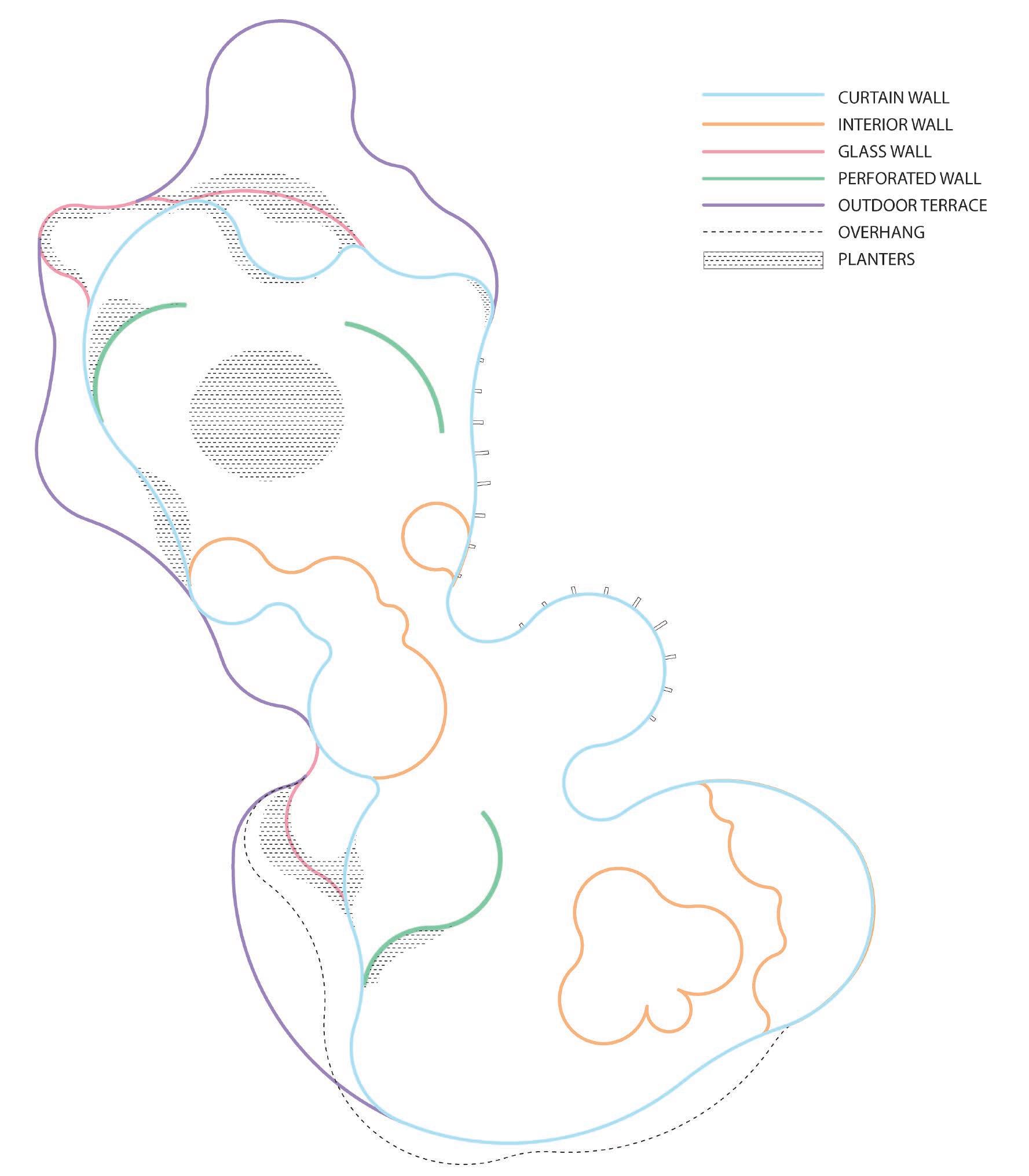
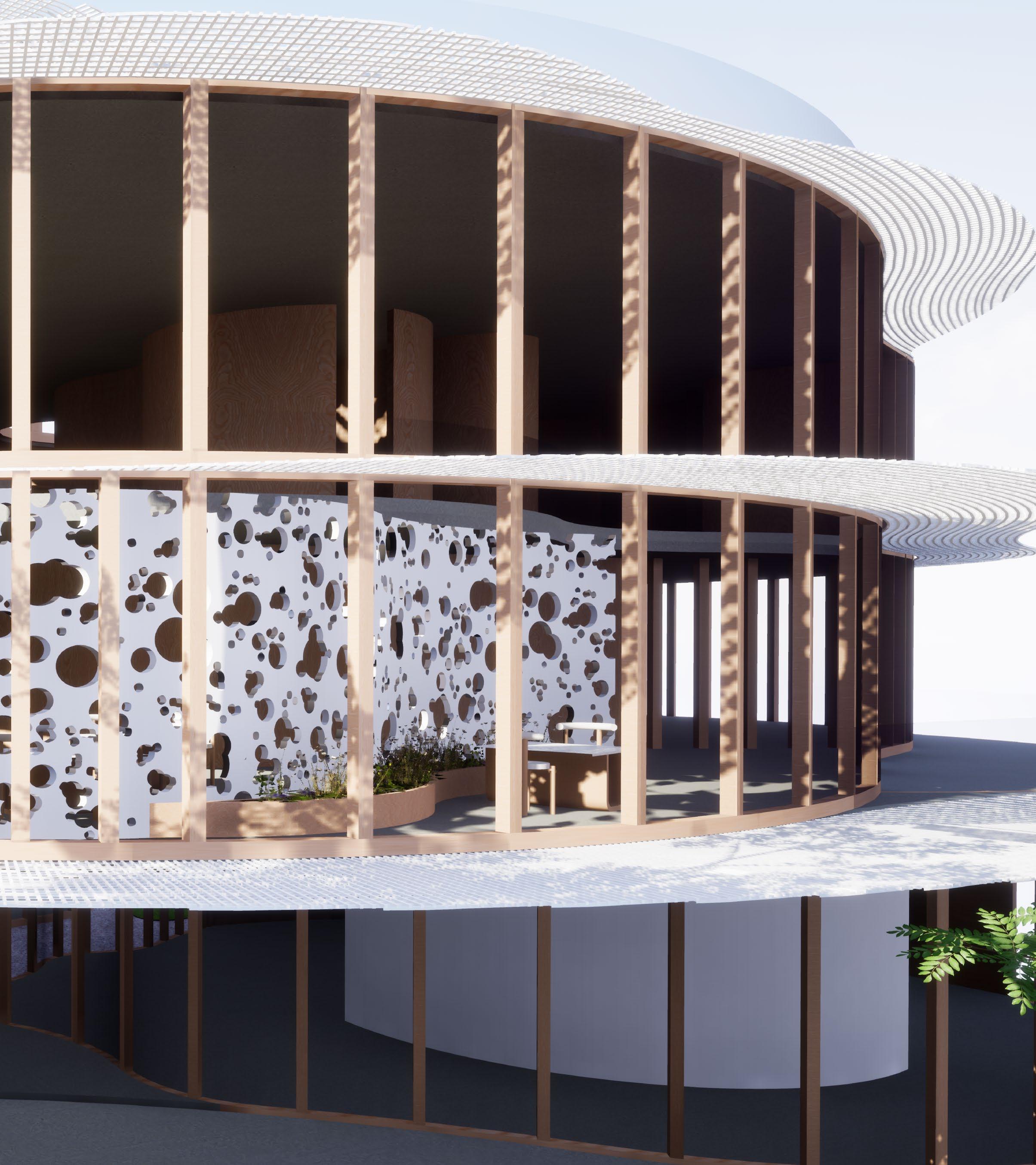
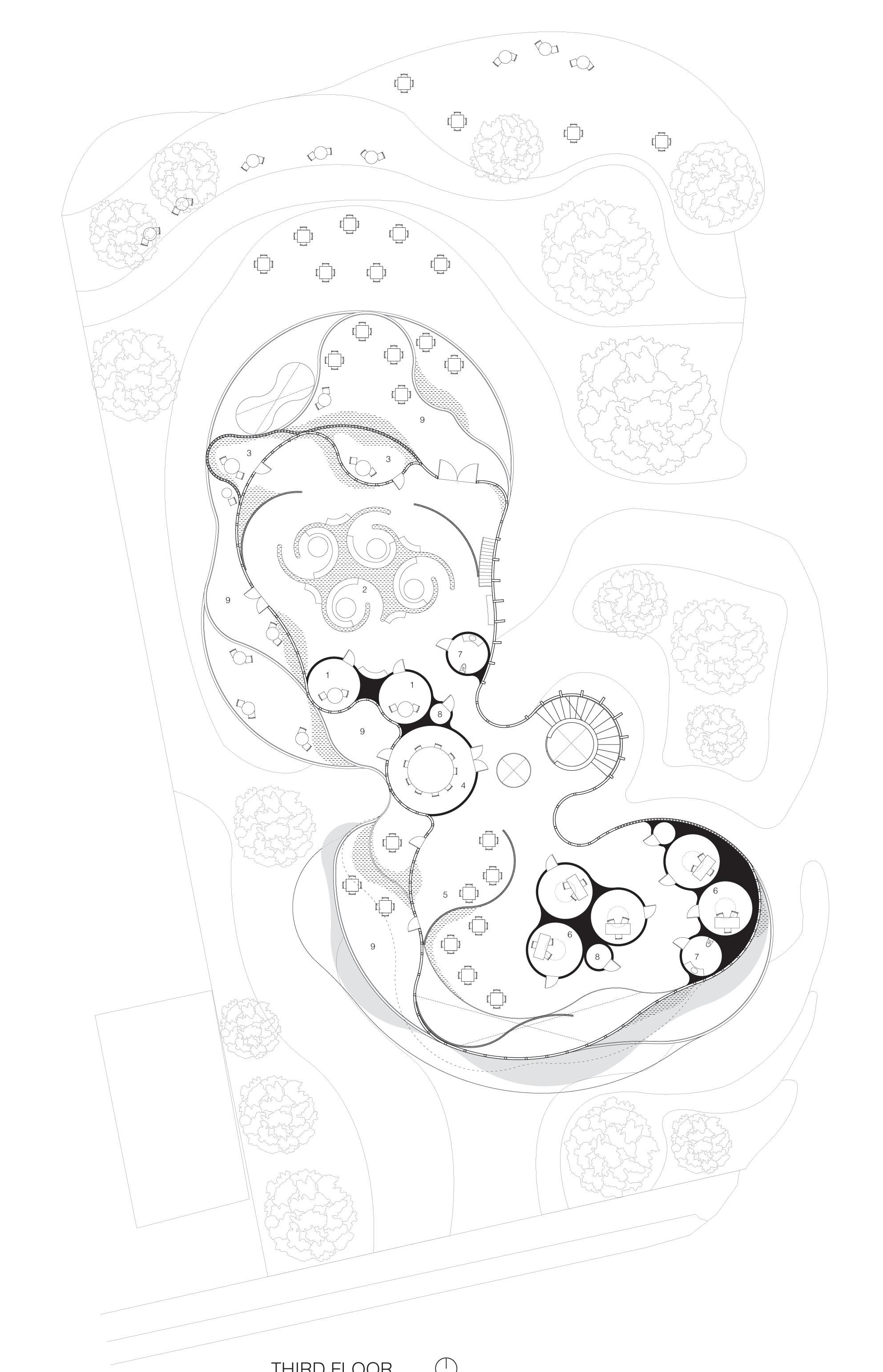
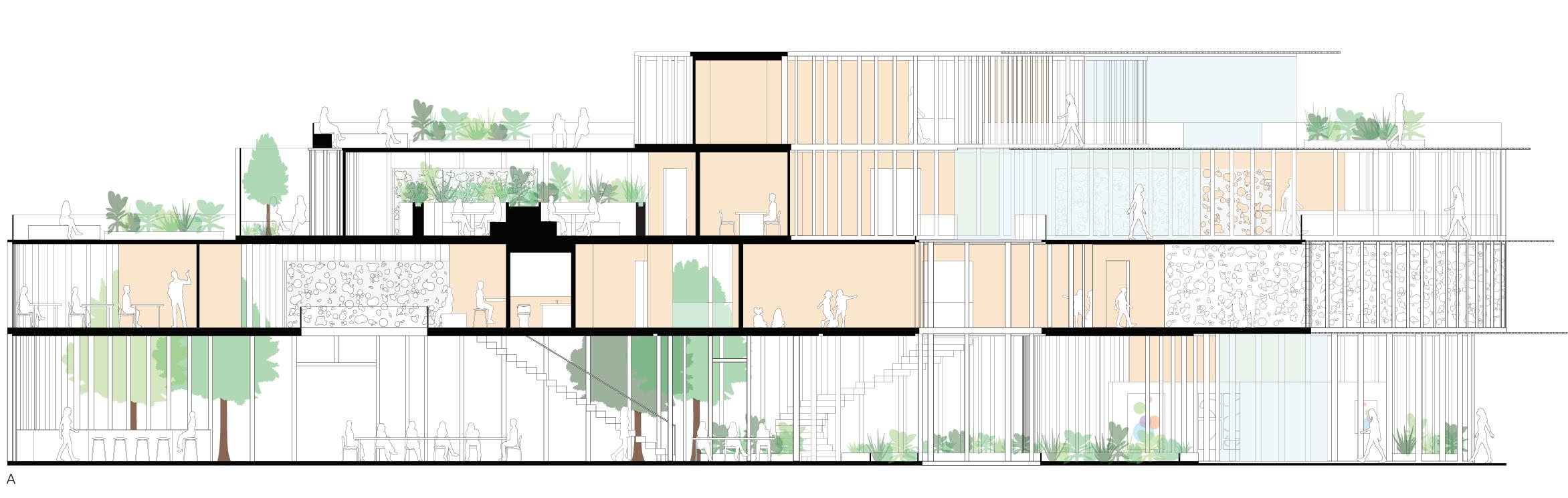
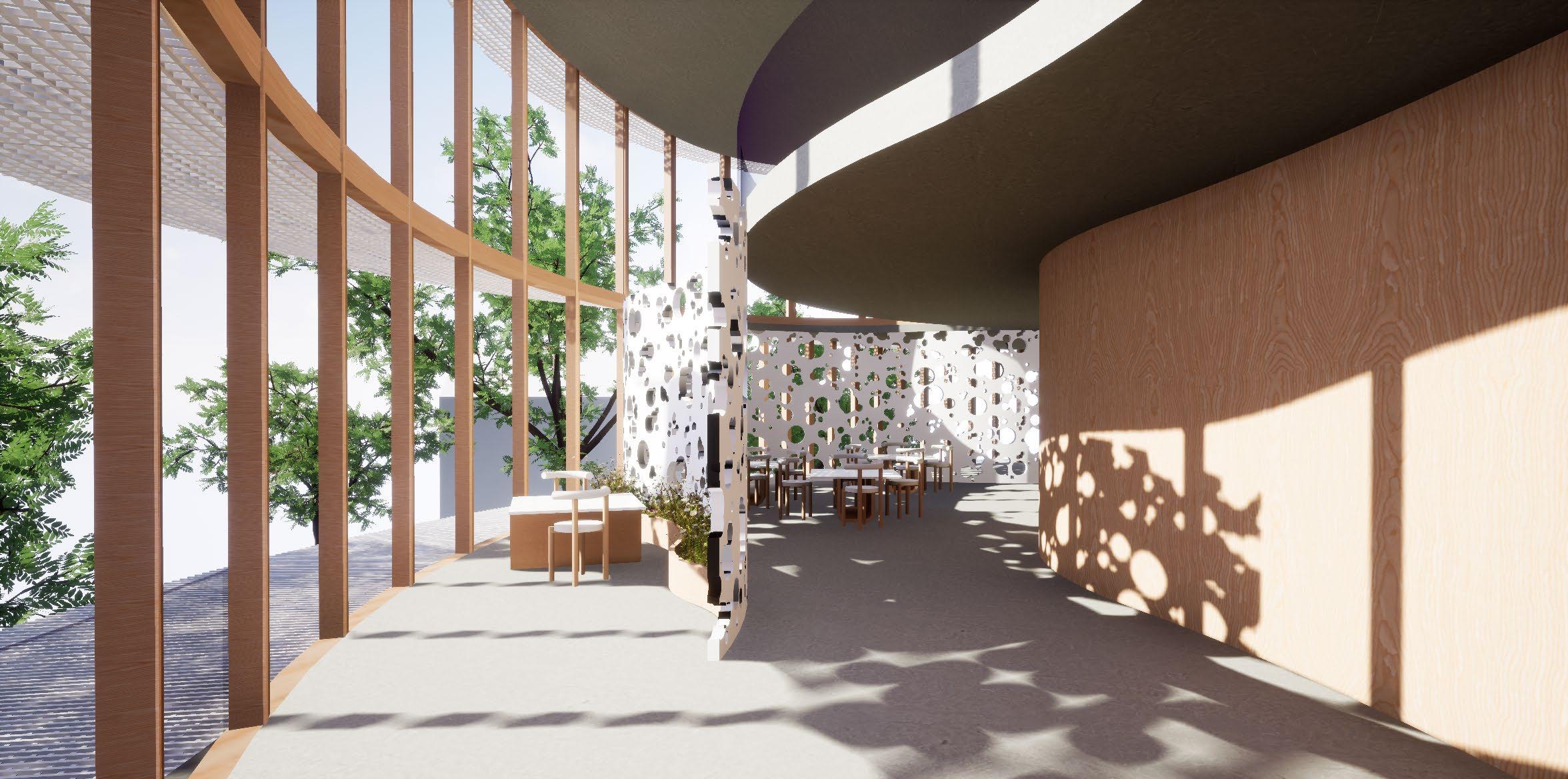
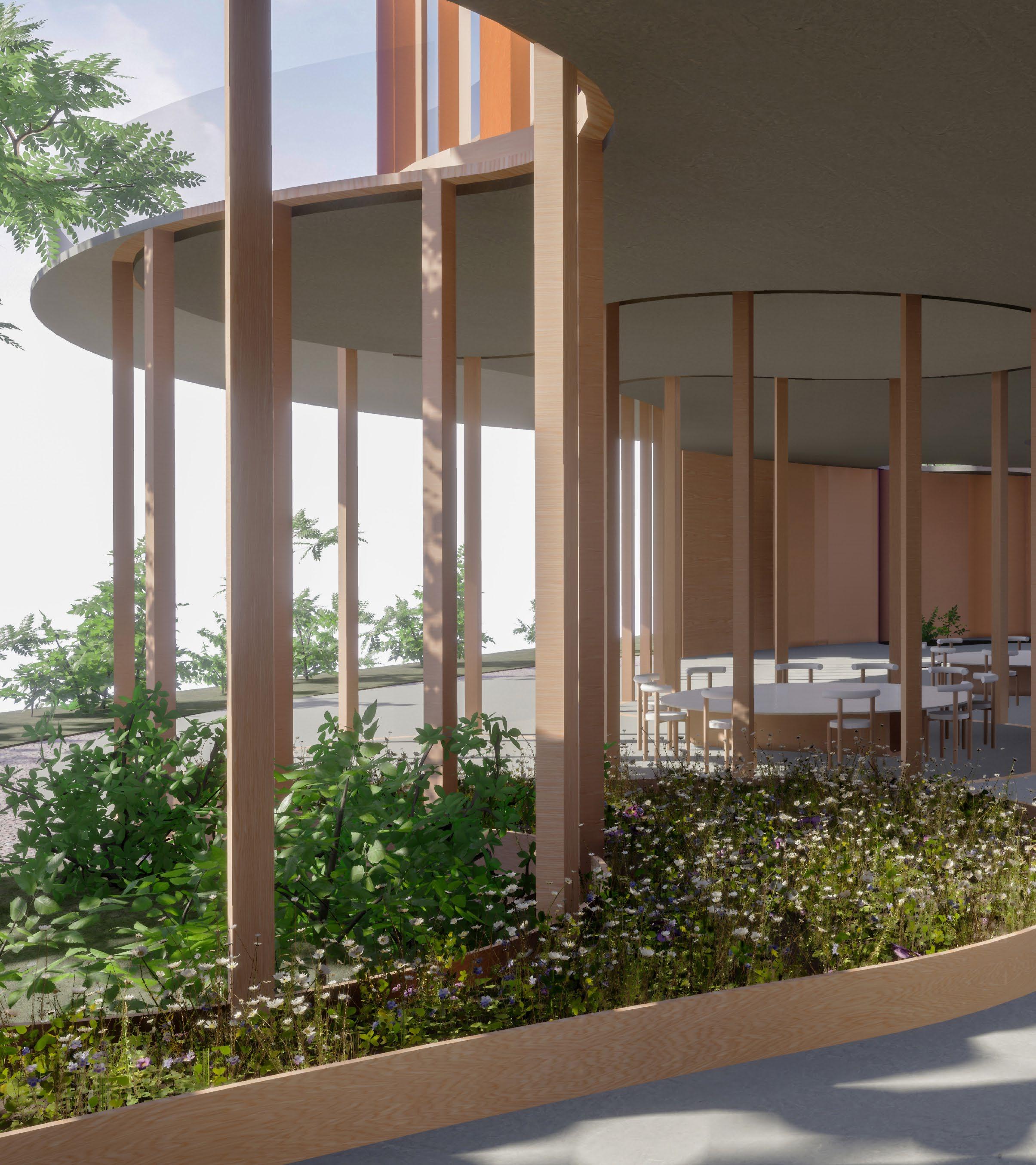
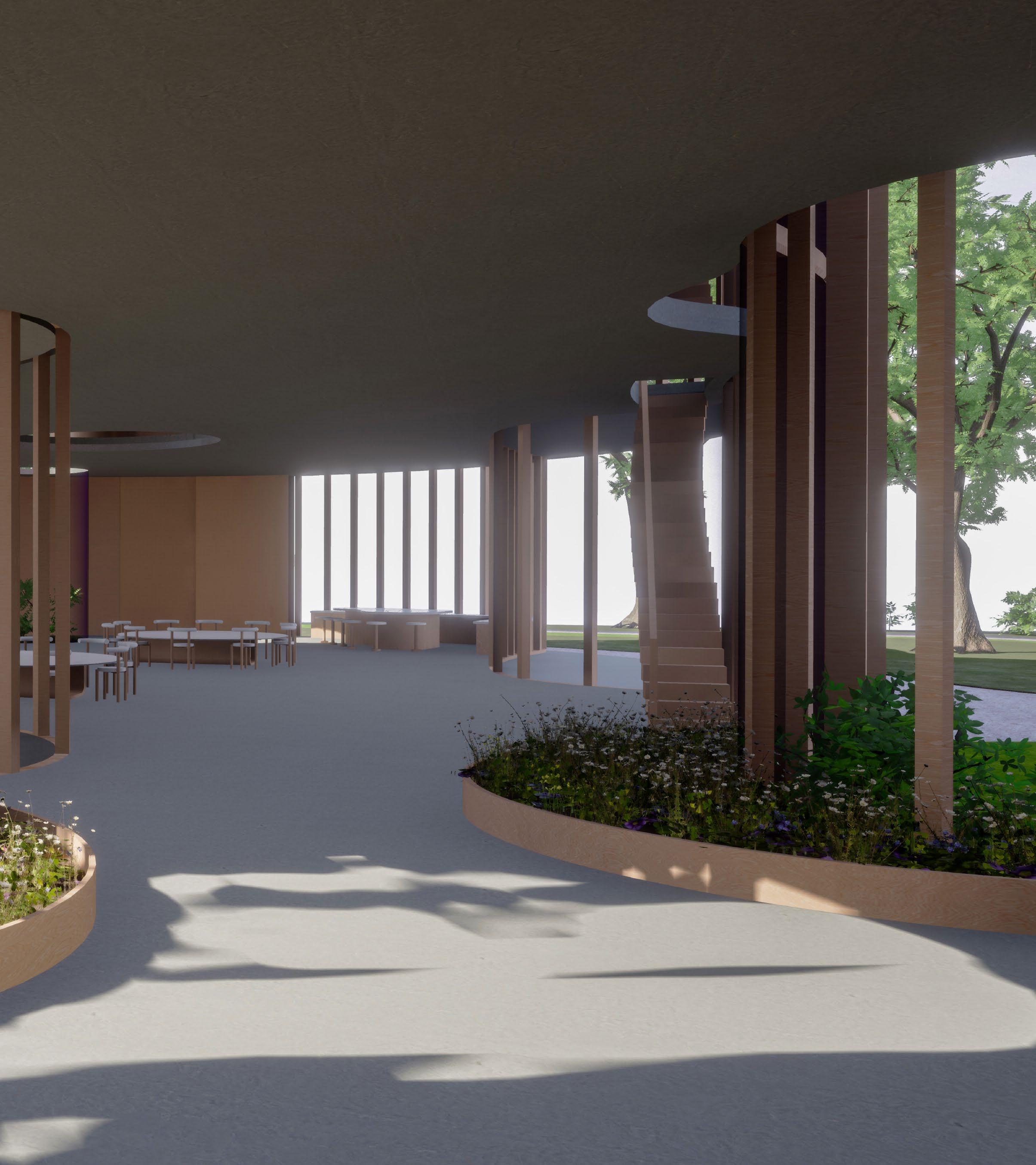
This 30,000 square foot STEP Center explores the buildings connection to the surrounding landscape in relation to its ability to provide healing and wellness. The building consists of spaces made up of a series of layers where patients and community members can come together for community building while still having private space for quiet contemplation. Varied sized green spaces are integrated throughout the building and natural light is let inside as a part of the healing process.
52
CURTAIN WALL INTERIOR WALL
GLASS WALL PERFORATED WALL
OUTDOOR TERRACE OVERHANG
PLANTERS
 Elizabeth Cornfeld
Building Layers Concept Drawing
Elizabeth Cornfeld
Building Layers Concept Drawing
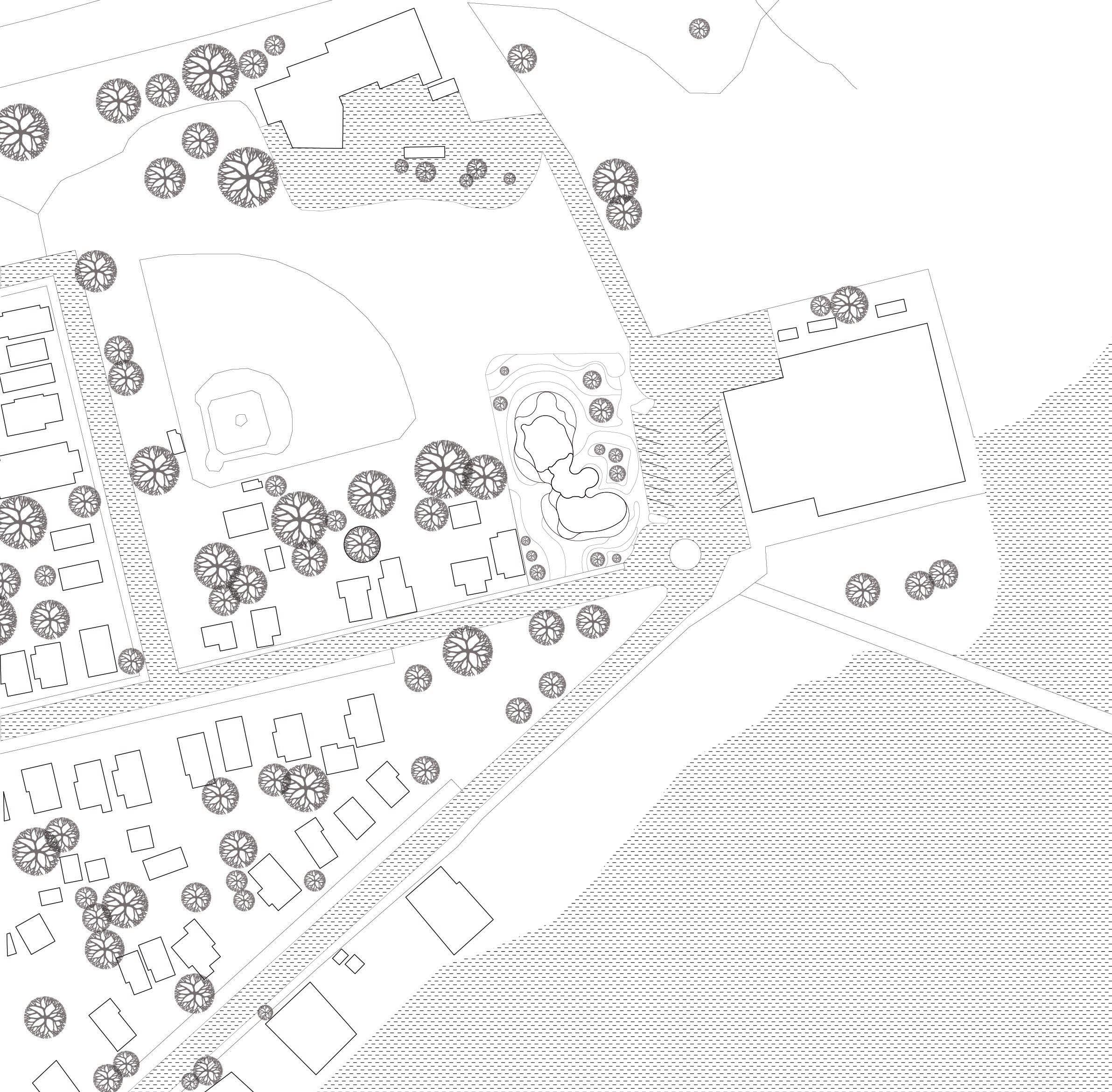
Site Plan: 21 Sea St, New Haven
NEXT STEP 54
 Elizabeth Cornfeld
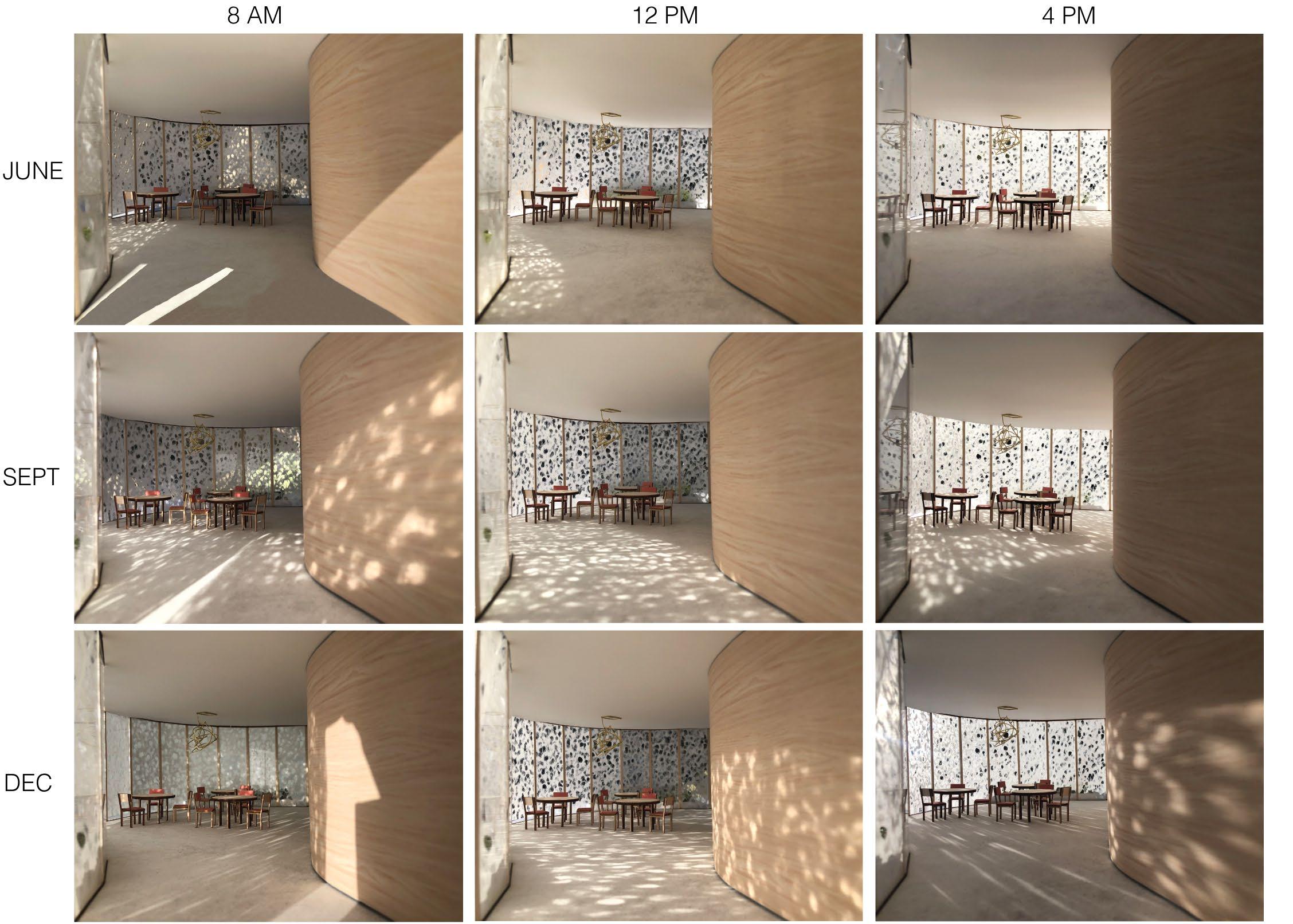
JUNE SEPT DEC 8 AM 12 PM 4 PM
Daylighting Model Lighting Study
NEXT STEP 58
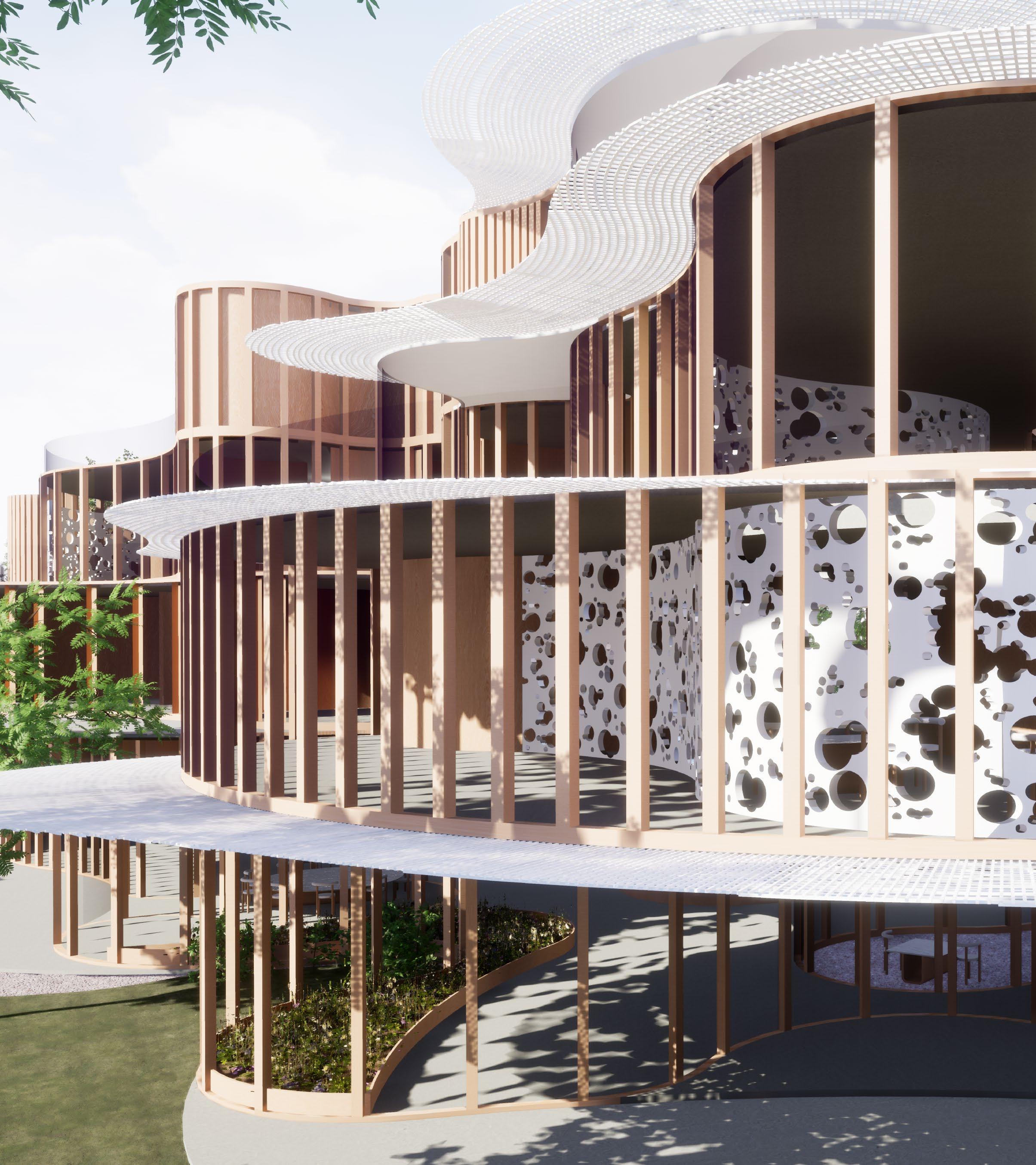
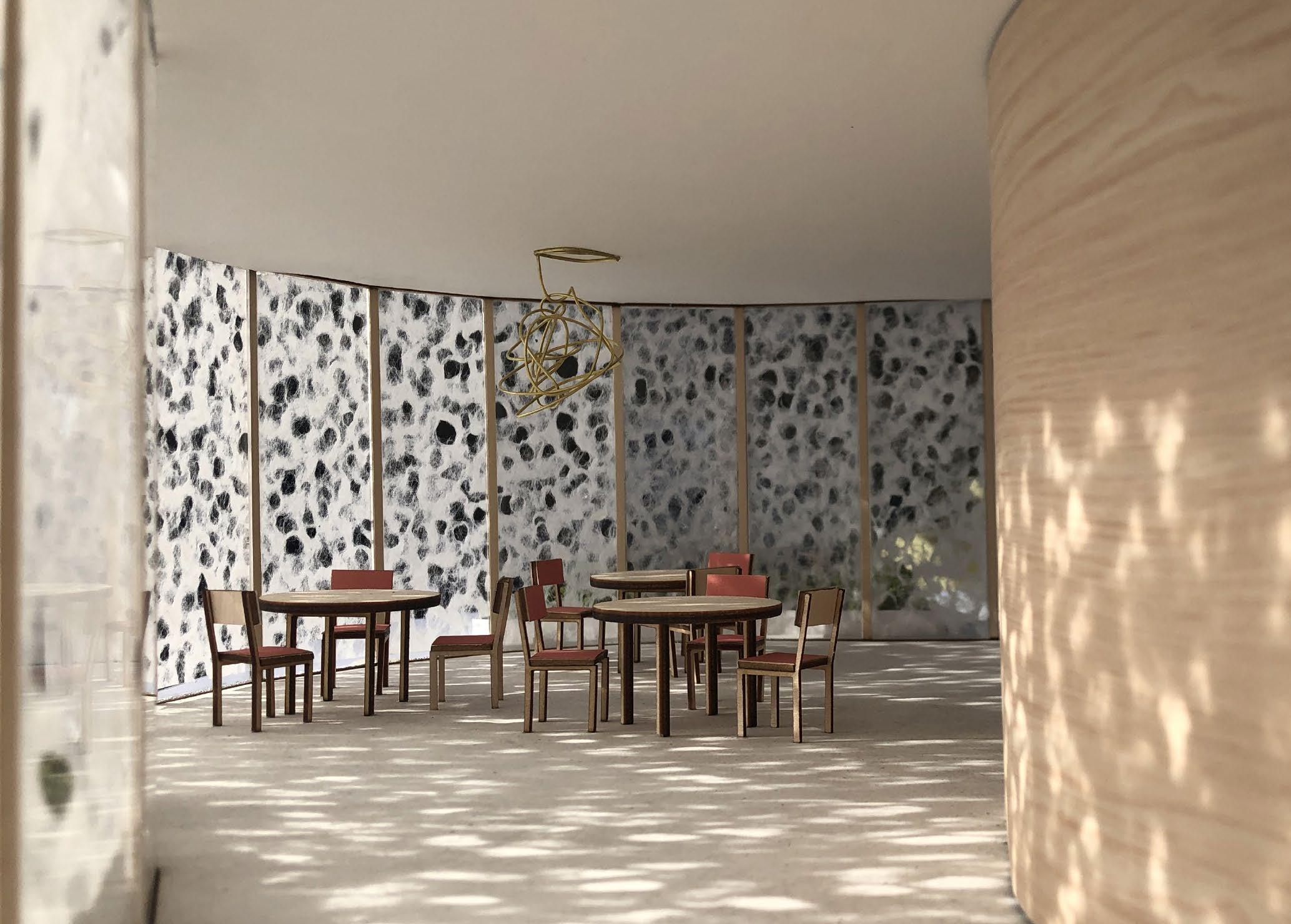
Shadows from the perforated facade mimic the shadows of trees to bring in an additional element of nature.
GROUND FLOOR
1. GALLERY
2. ENTRY
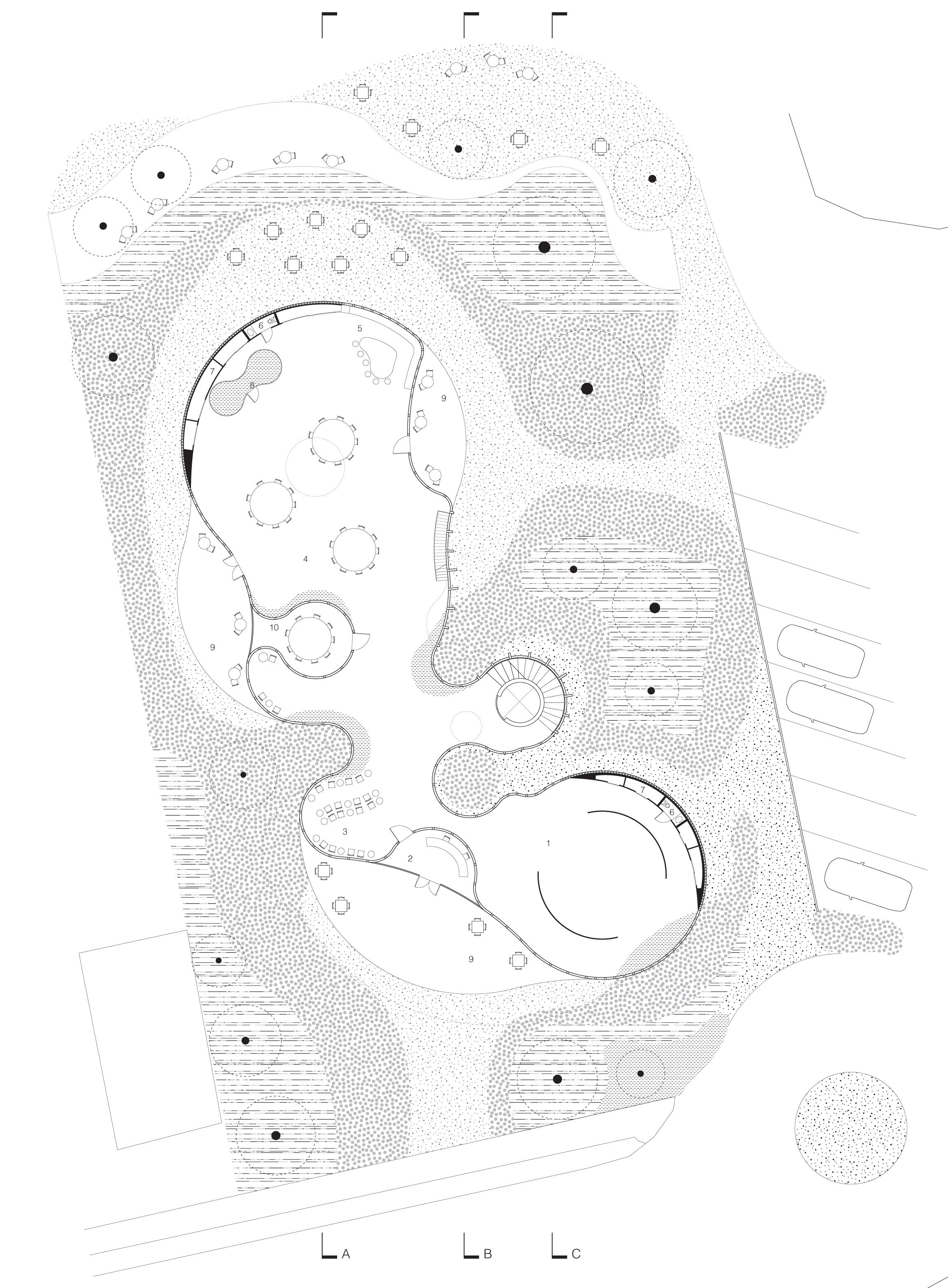
3. WAITING AREA
4. AUDITORIUM
5. COMMUNAL KITCHEN
6. BATHROOM
7. STORAGE
8. INTERIOR GARDEN
9. OUTDOOR SPACE
10. MEETING ROOM
Elizabeth Cornfeld
SECOND FLOOR 1. MULTIPURPOSE SPACE 2. CHILDCARE ROOM 3. CLASSROOM 4. COMPUTER LAB 5. COMMON SPACE 6. ISOLATION SPACE 7. BATHROOM 8. STORAGE 9. OUTDOOR TERRACE NEXT STEP 60
THIRD FLOOR
 Elizabeth Cornfeld
1. SMALL PATIENT ROOMS
2. PLANTER PATIENT ROOMS
3. GARDEN PATIENT ROOMS
4. COMMUNAL PATIENT ROOM
5. SHARED OFFICE SPACE
6. PRIVATE OFFICES
7. BATHROOM
8. STORAGE
9. OUTDOOR TERRACE
Elizabeth Cornfeld
1. SMALL PATIENT ROOMS
2. PLANTER PATIENT ROOMS
3. GARDEN PATIENT ROOMS
4. COMMUNAL PATIENT ROOM
5. SHARED OFFICE SPACE
6. PRIVATE OFFICES
7. BATHROOM
8. STORAGE
9. OUTDOOR TERRACE
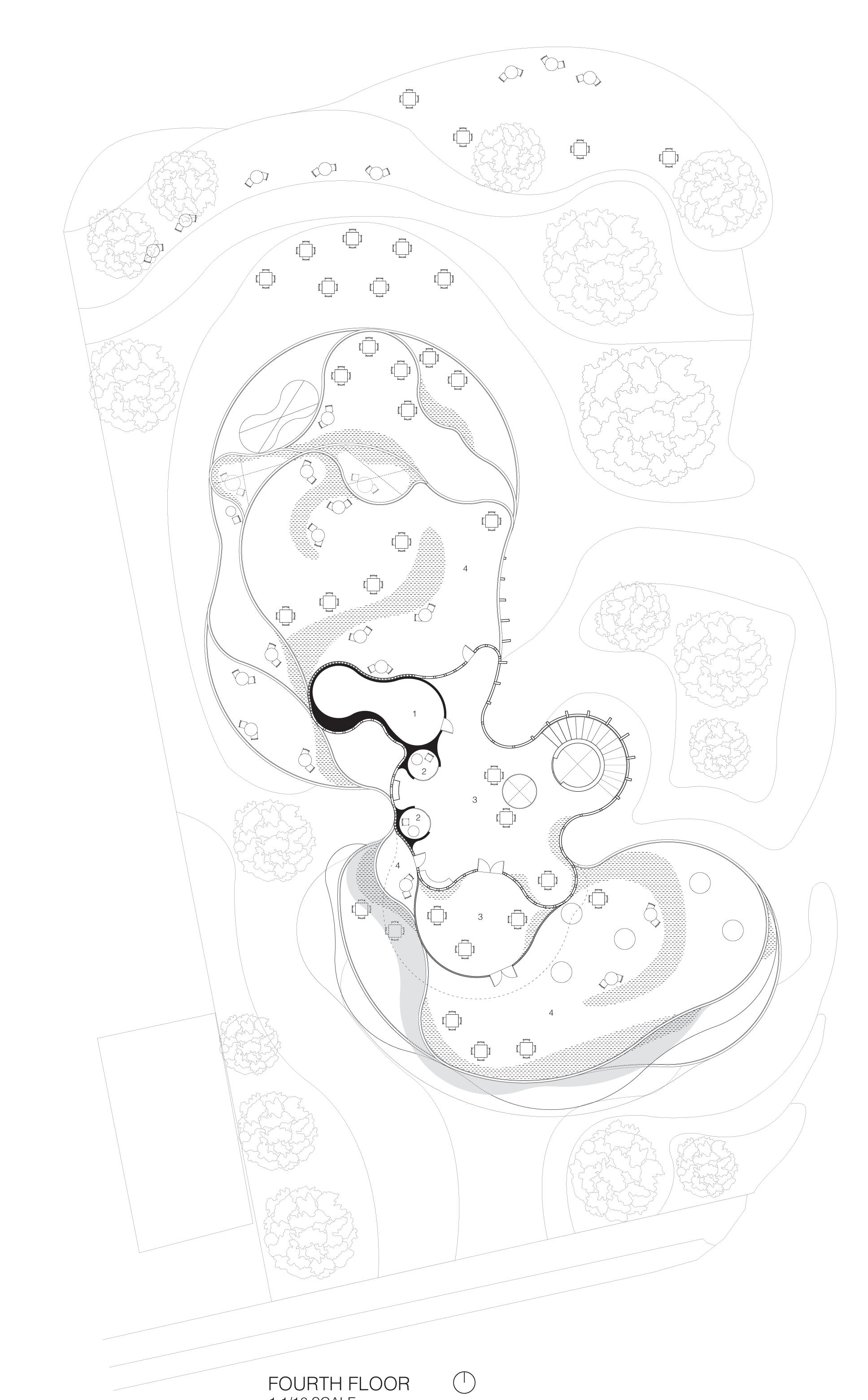 FOURTH FLOOR
1. MECHANICAL SPACE
2. ISOLATION SPACE
3. COMMON SPACE
FOURTH FLOOR
1. MECHANICAL SPACE
2. ISOLATION SPACE
3. COMMON SPACE
NEXT STEP 62
4. OUTDOOR TERRACE
 Elizabeth Cornfeld
Section Drawing
Elizabeth Cornfeld
Section Drawing
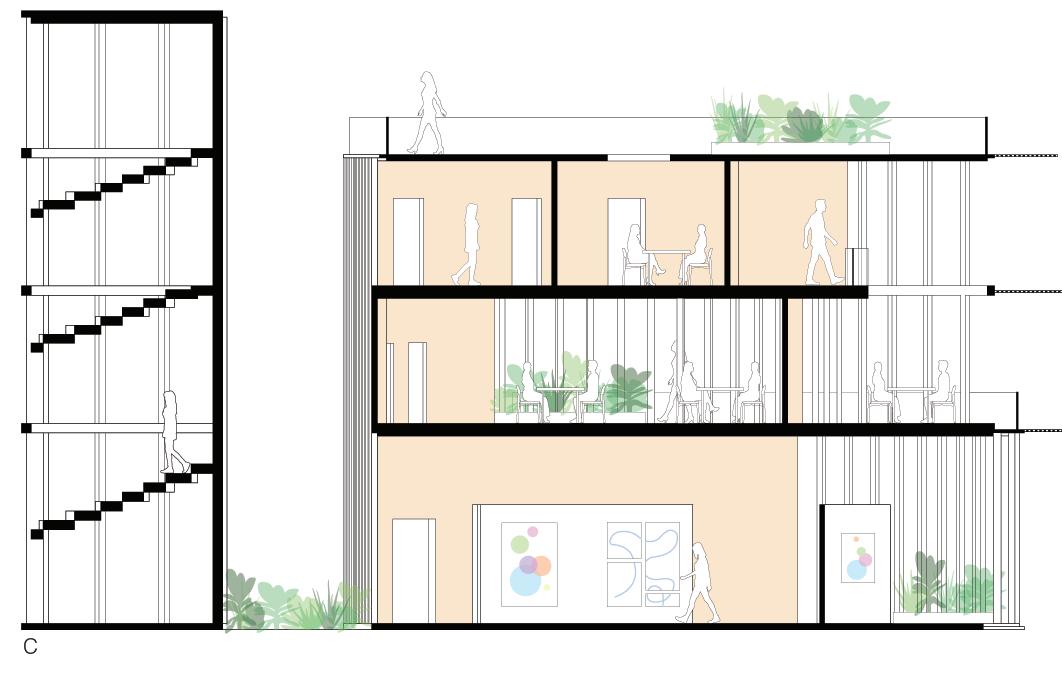
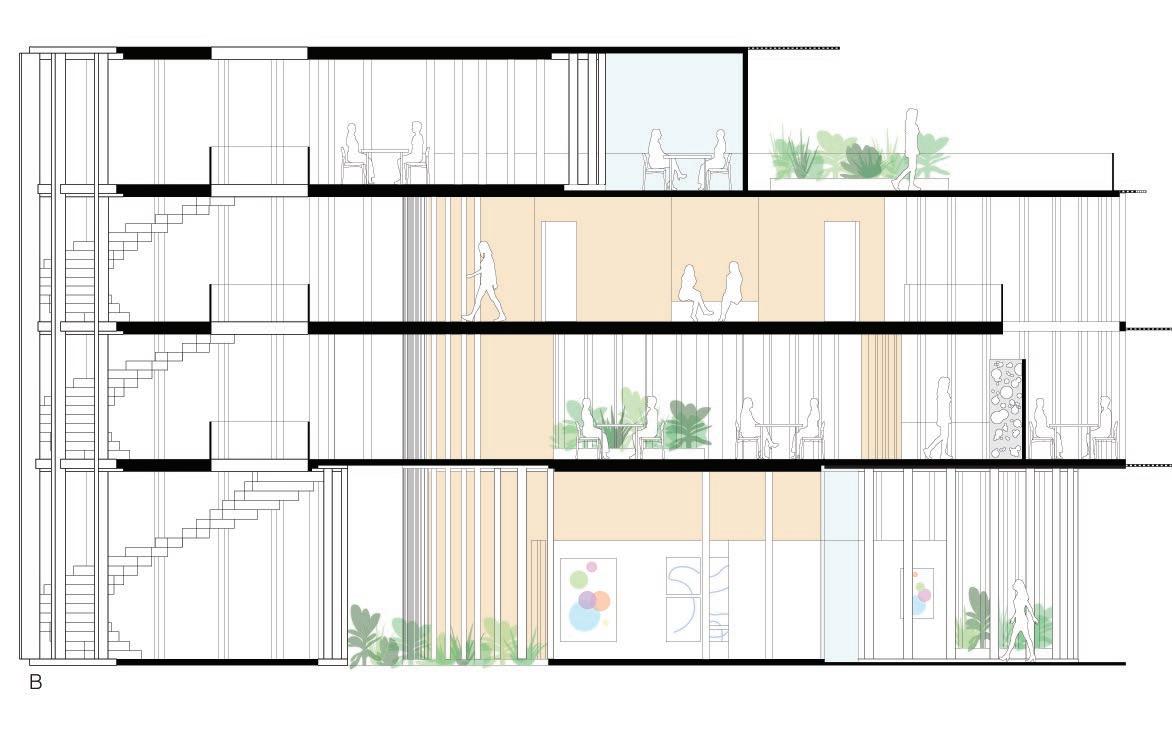
NEXT STEP 64
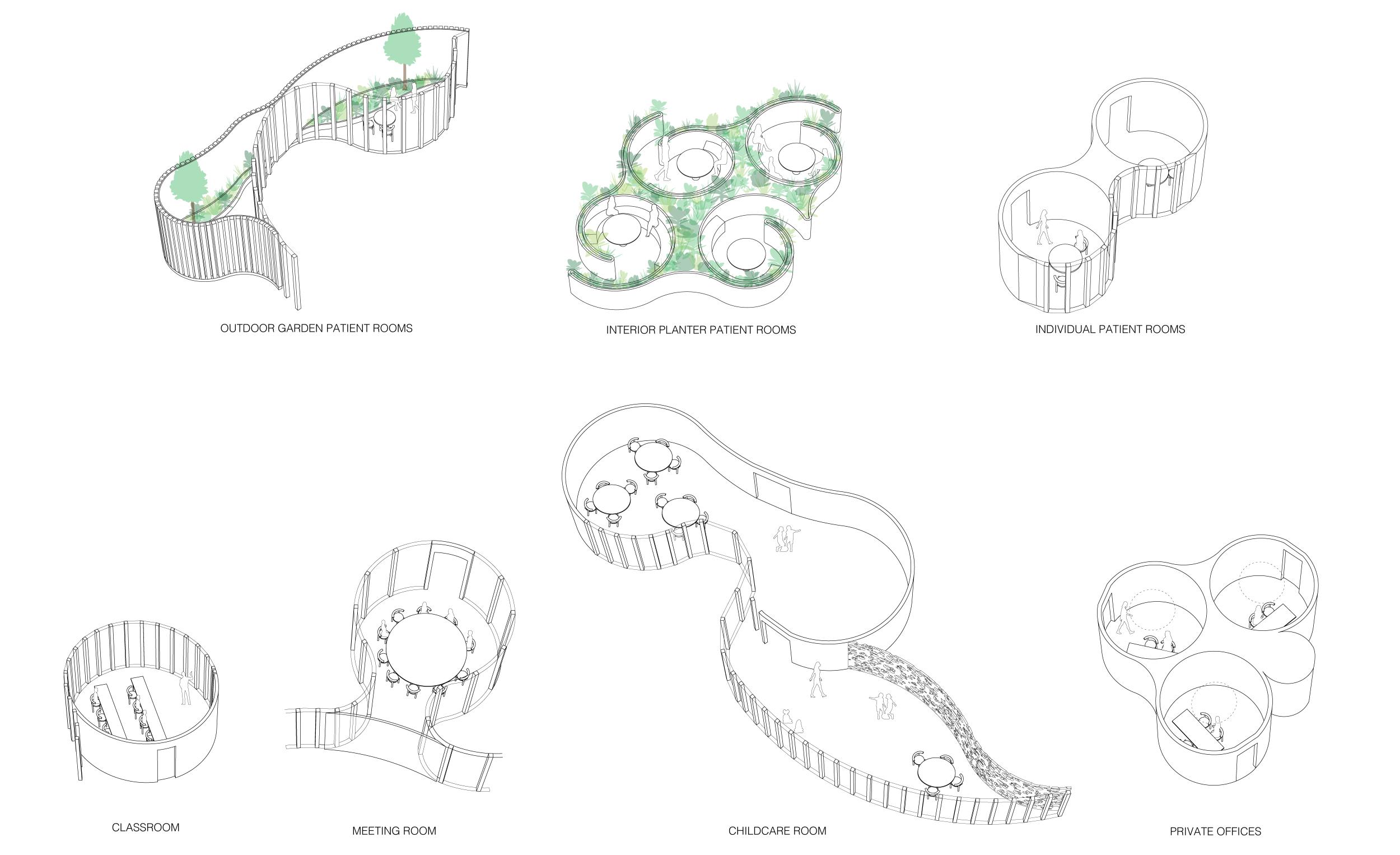
Different layers of the building, such as the perforated walls, mullions, plants, and solid interior walls, come together to form different types of rooms depending on the program and amount of light and privacy needed.
 Elizabeth Cornfeld
OUTDOOR PATIENT ROOMS INTERIOR PLANTER PATIENT ROOMS INDIVIDUAL PATIENT ROOMS
CLASSROOM MEETING ROOM CHILDCARE ROOM PRIVATE OFFICES
Elizabeth Cornfeld
OUTDOOR PATIENT ROOMS INTERIOR PLANTER PATIENT ROOMS INDIVIDUAL PATIENT ROOMS
CLASSROOM MEETING ROOM CHILDCARE ROOM PRIVATE OFFICES
NEXT STEP 66
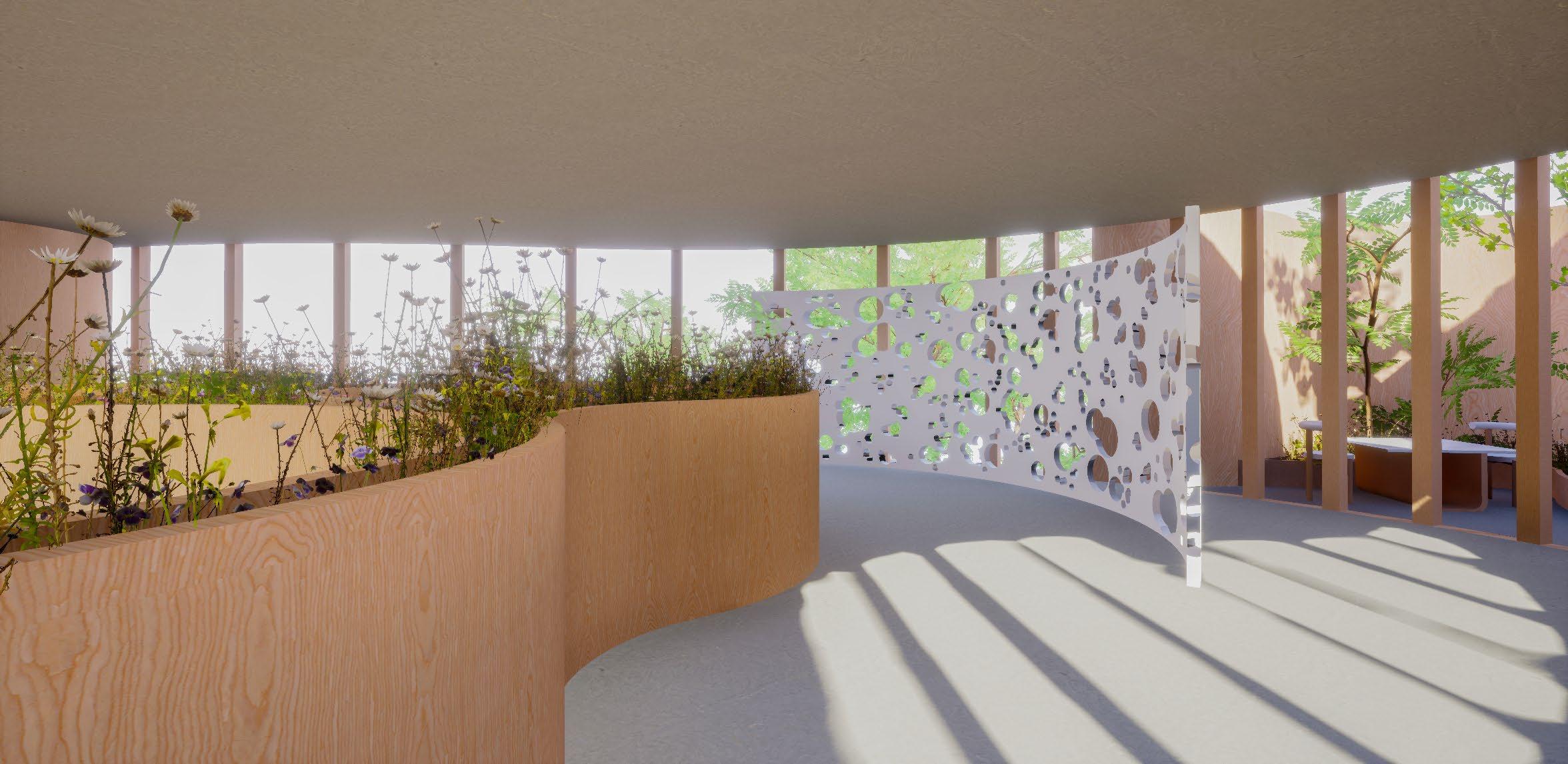
Interior Planter Patient Rooms
Communal Meeting Space
68
Material Utopia: Above, Below
ARCH 1012 | Critic: Katherine Davies
New Haven, Connecticut
Spring 2021
Elizabeth Cornfeld
Project Objective: Identify a relevant conception of utopia and explore possible architectural outcomes integrating change, evolution, and time into foundational thinking. Considering the past, present and future over an expanded period of time.
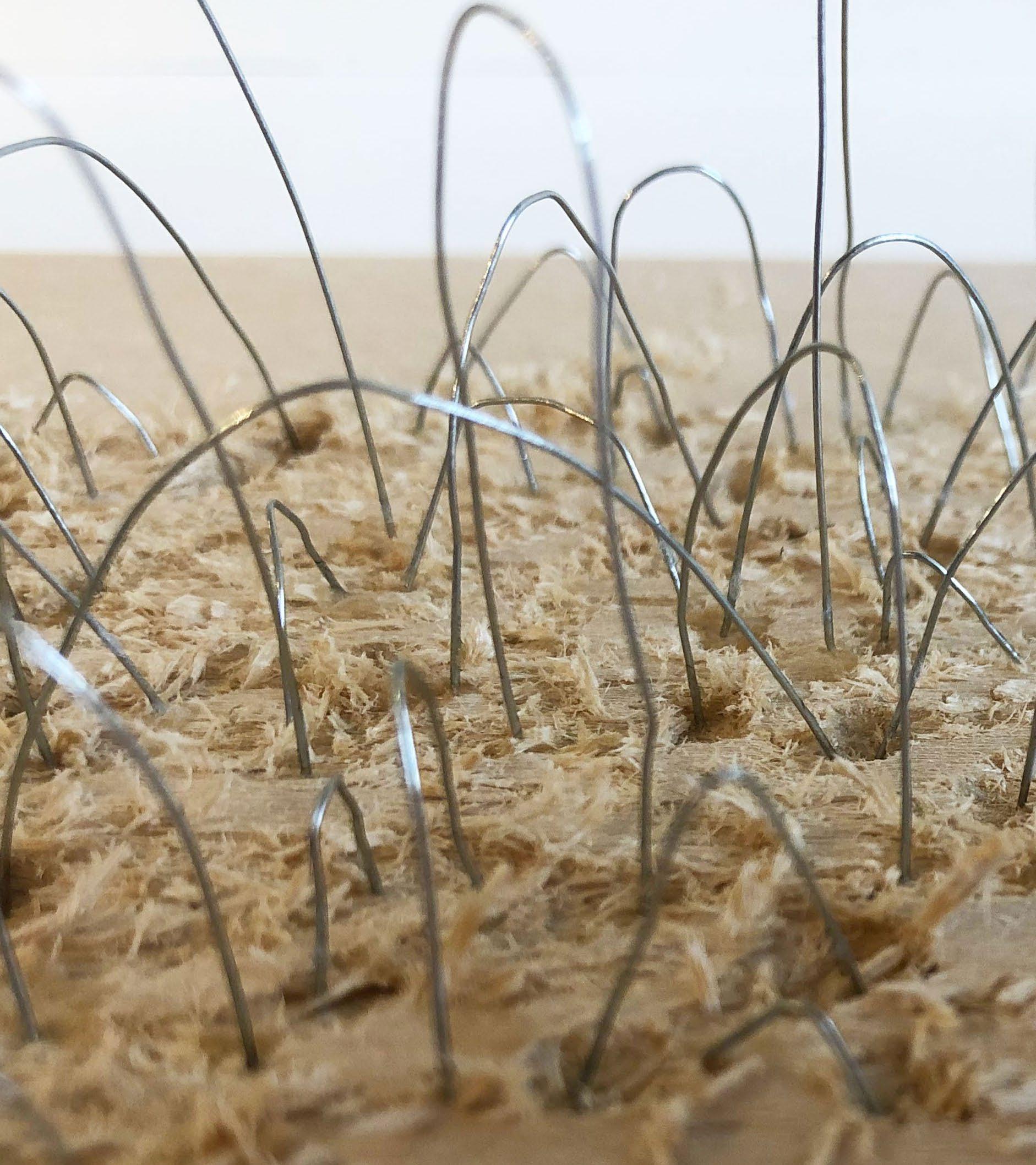
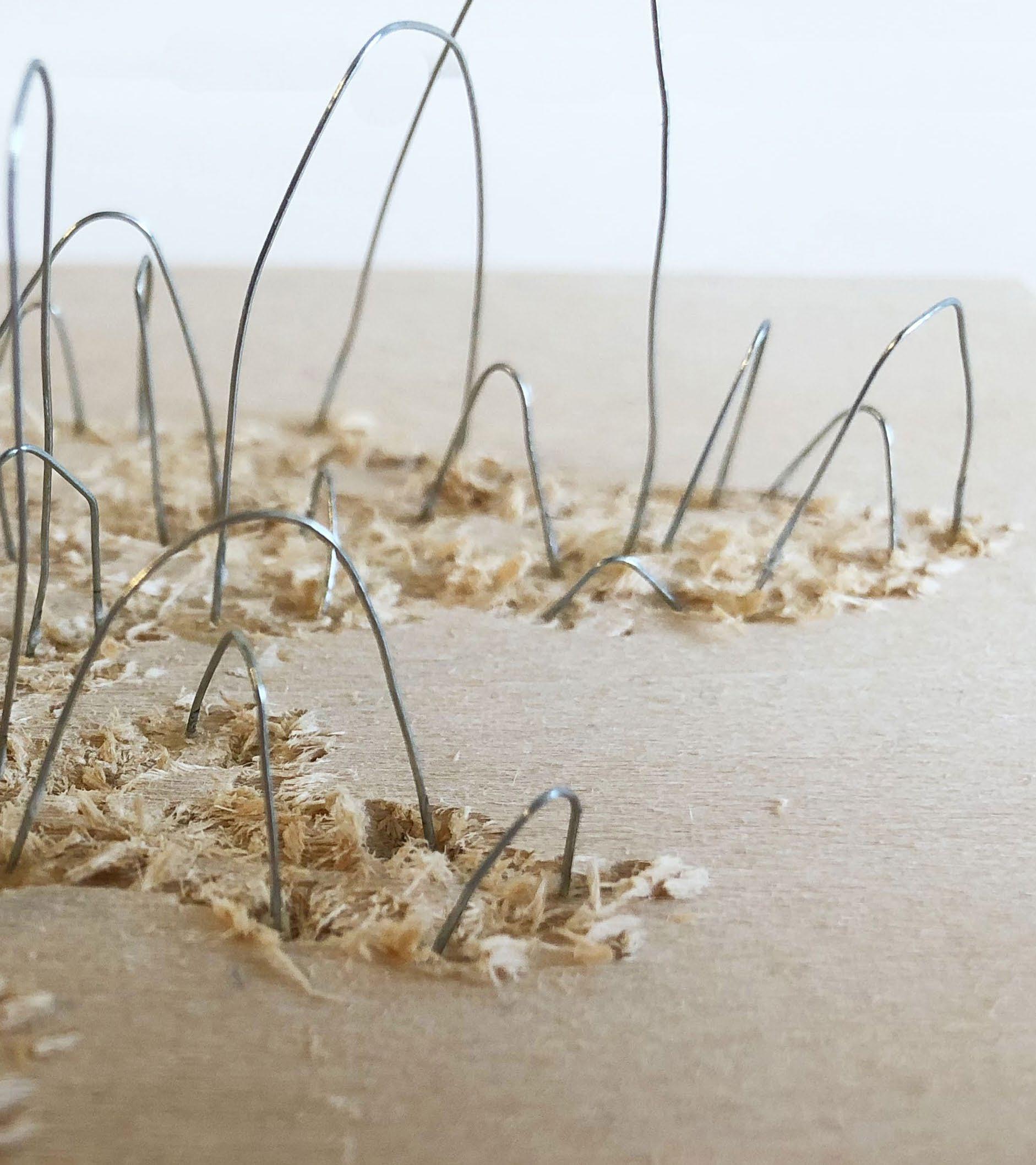
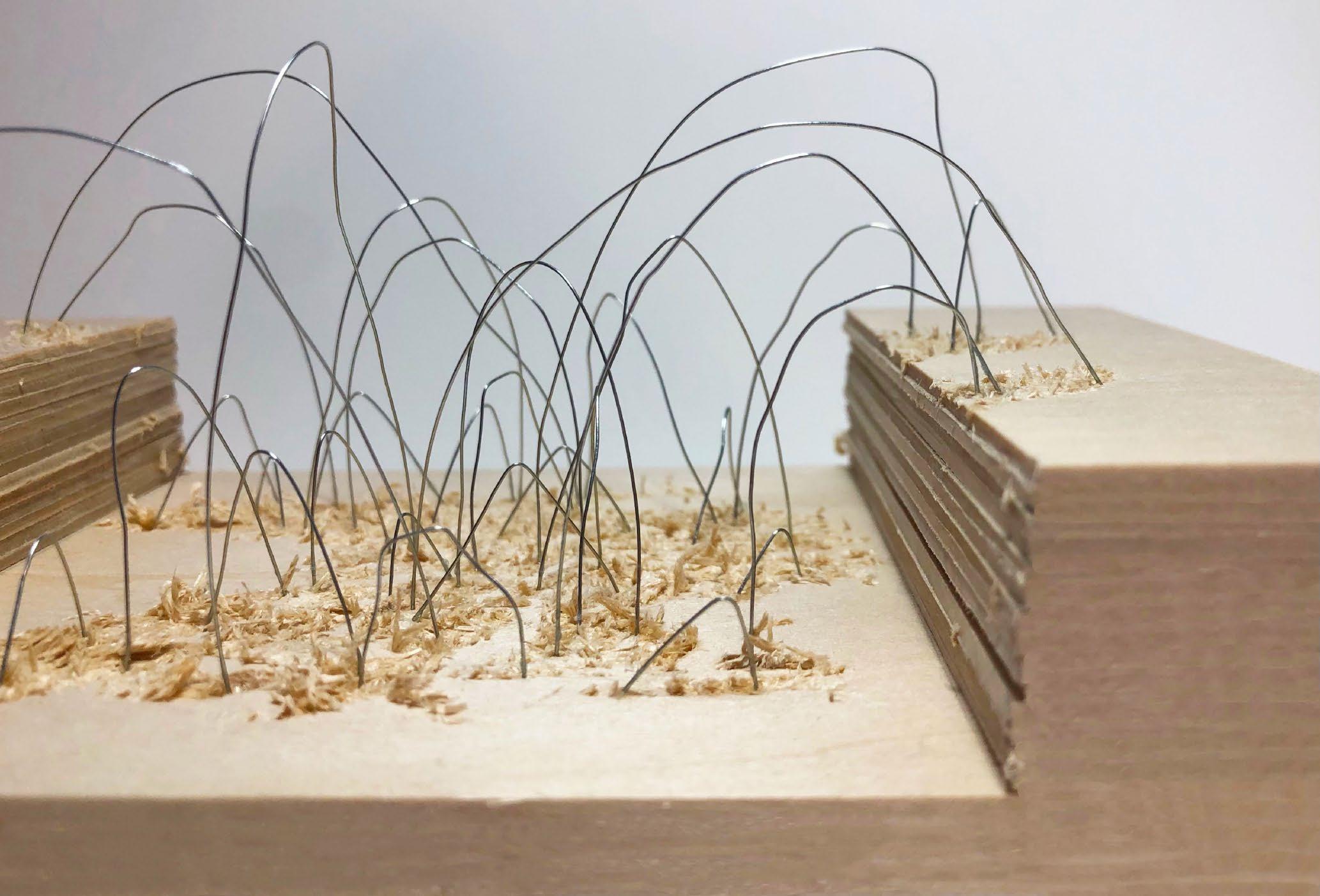
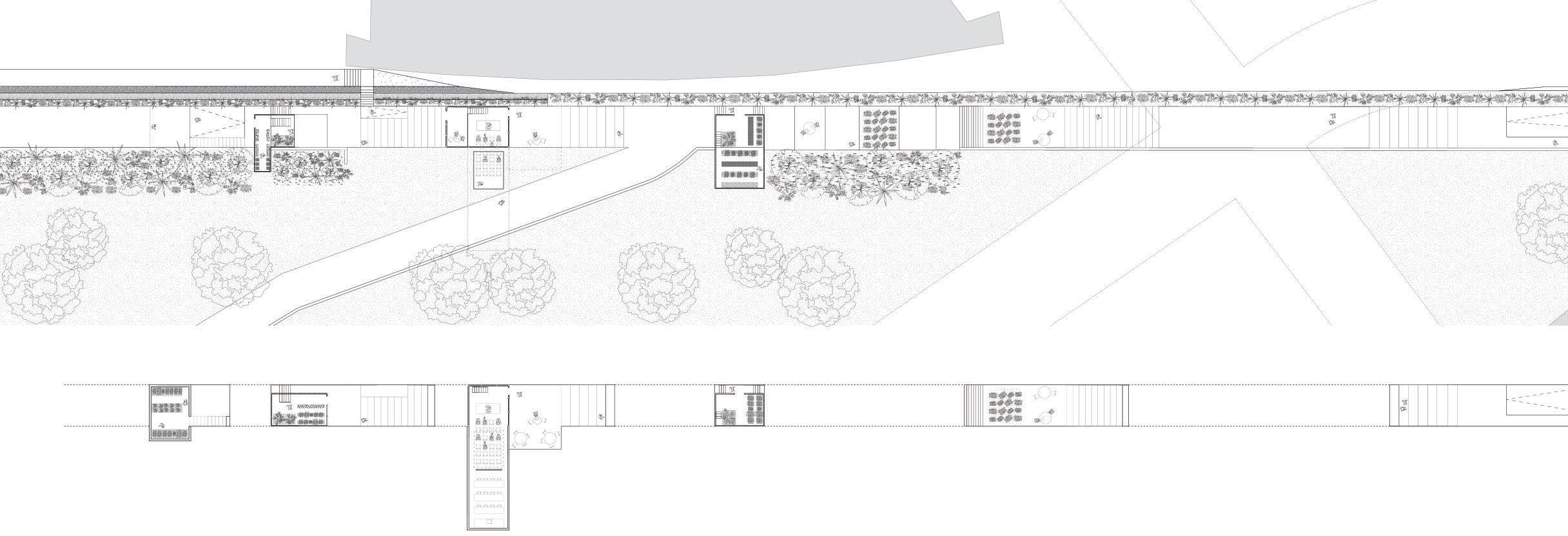
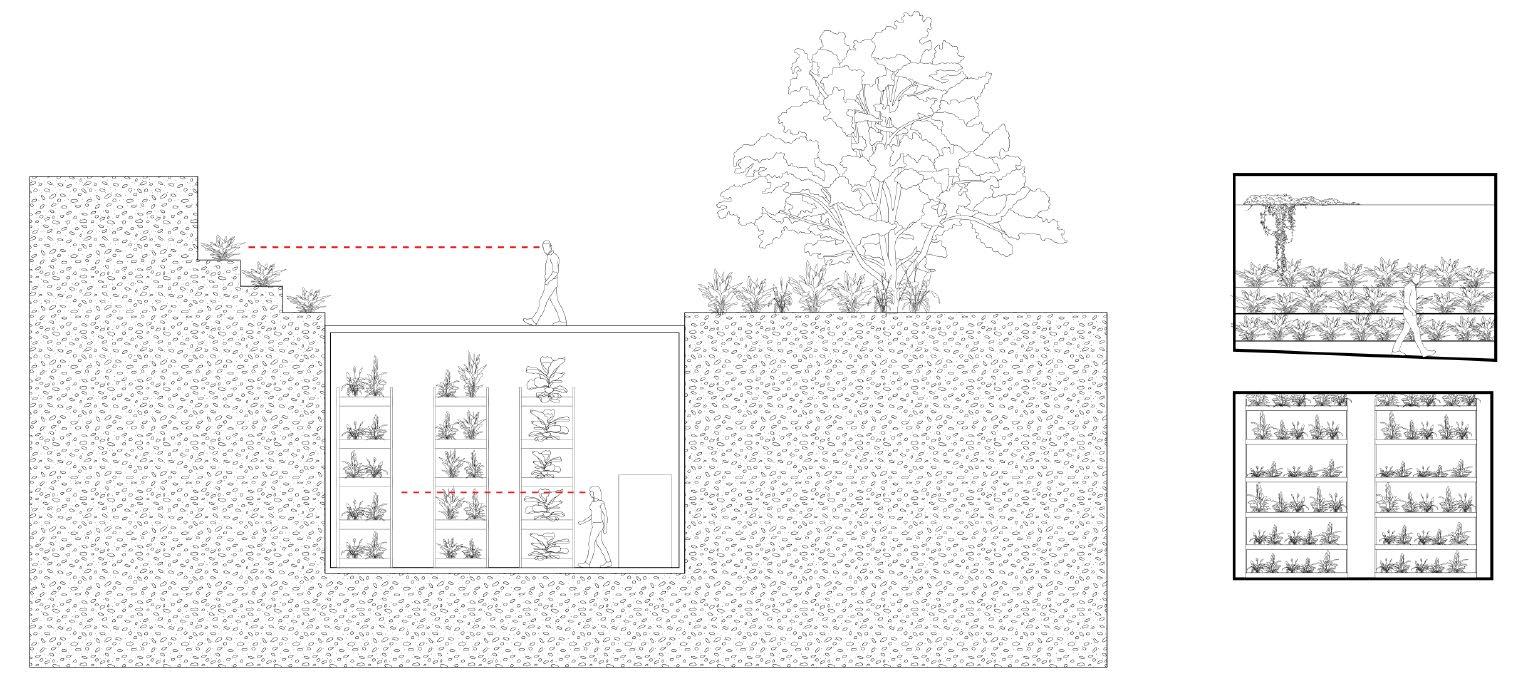
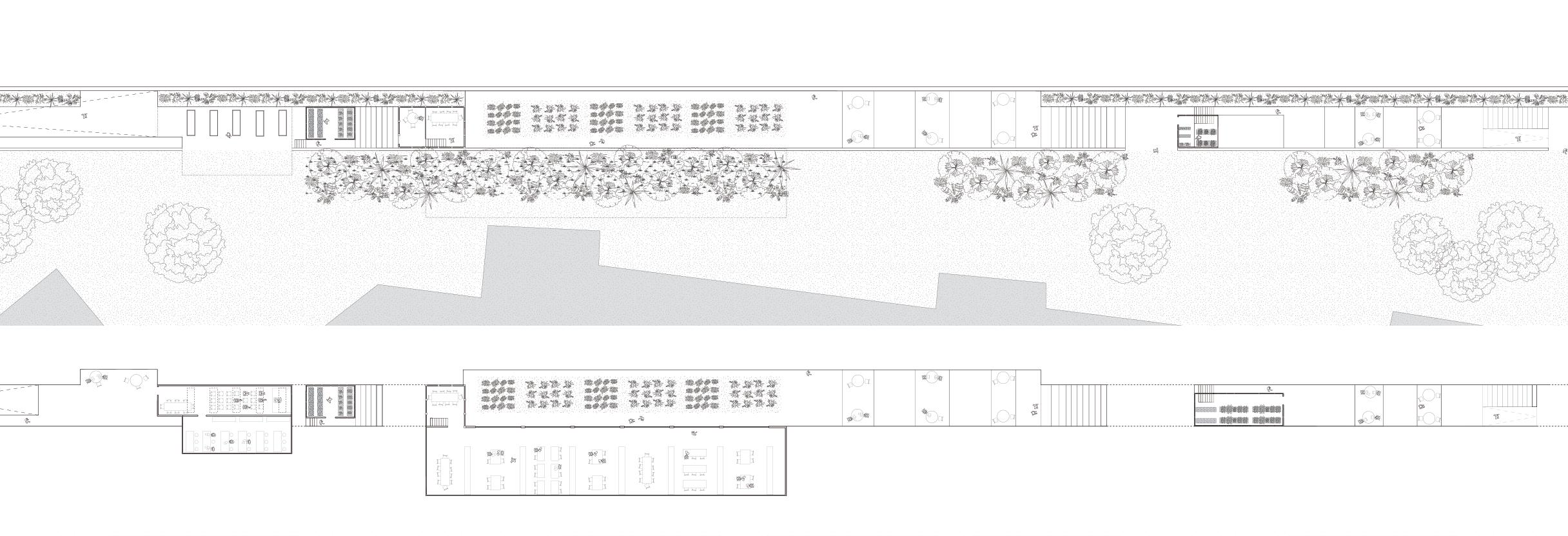
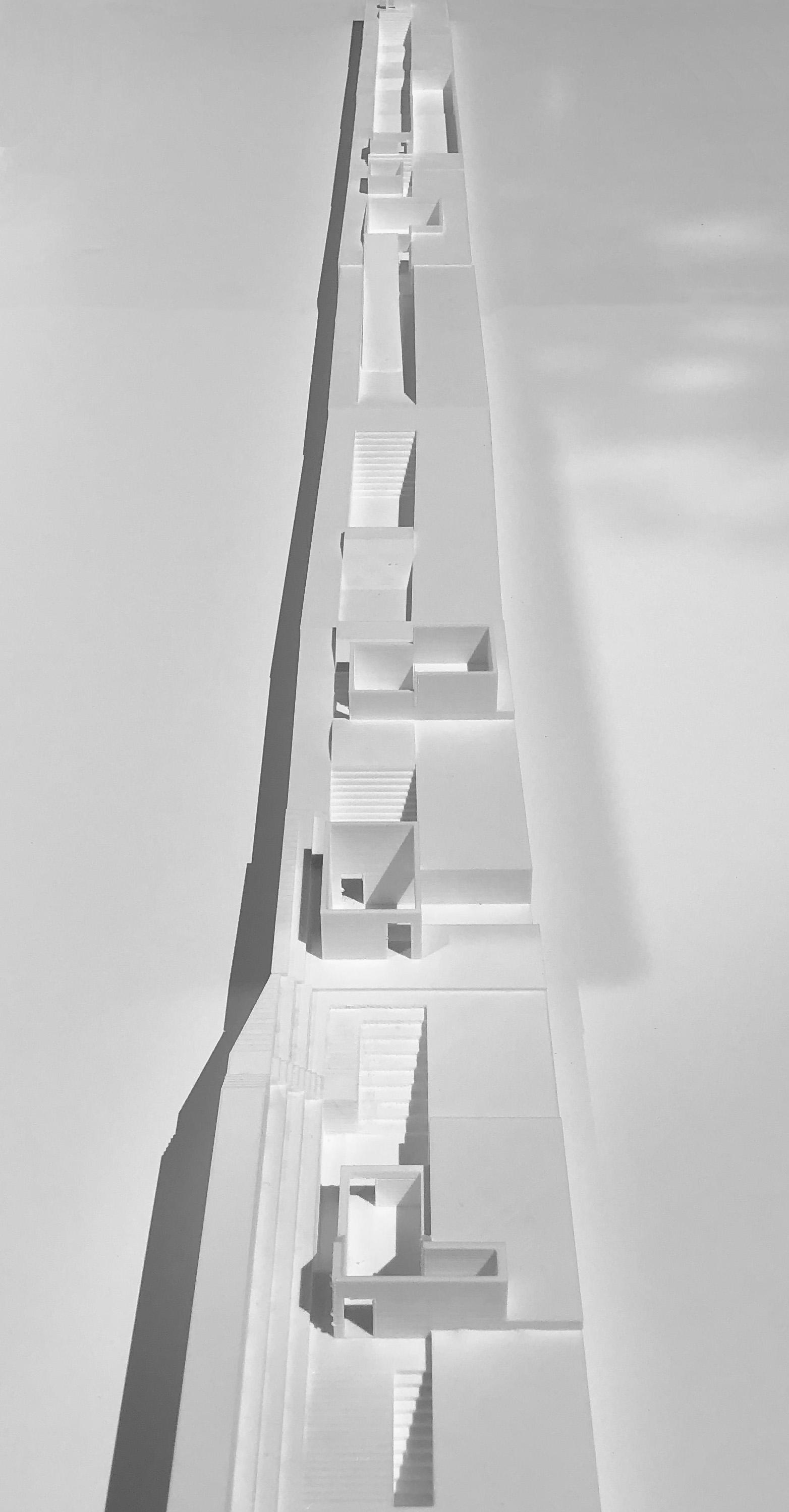
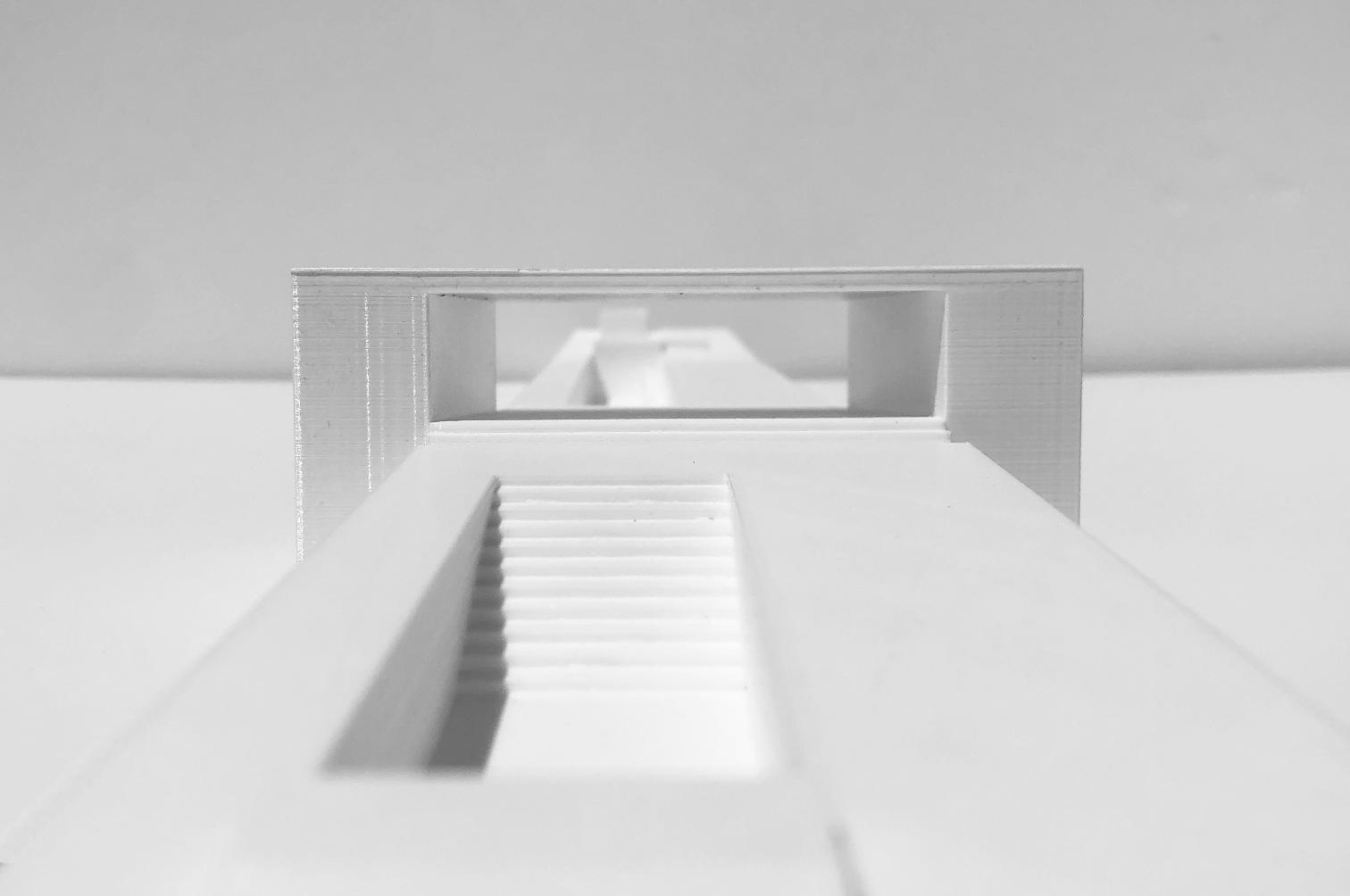
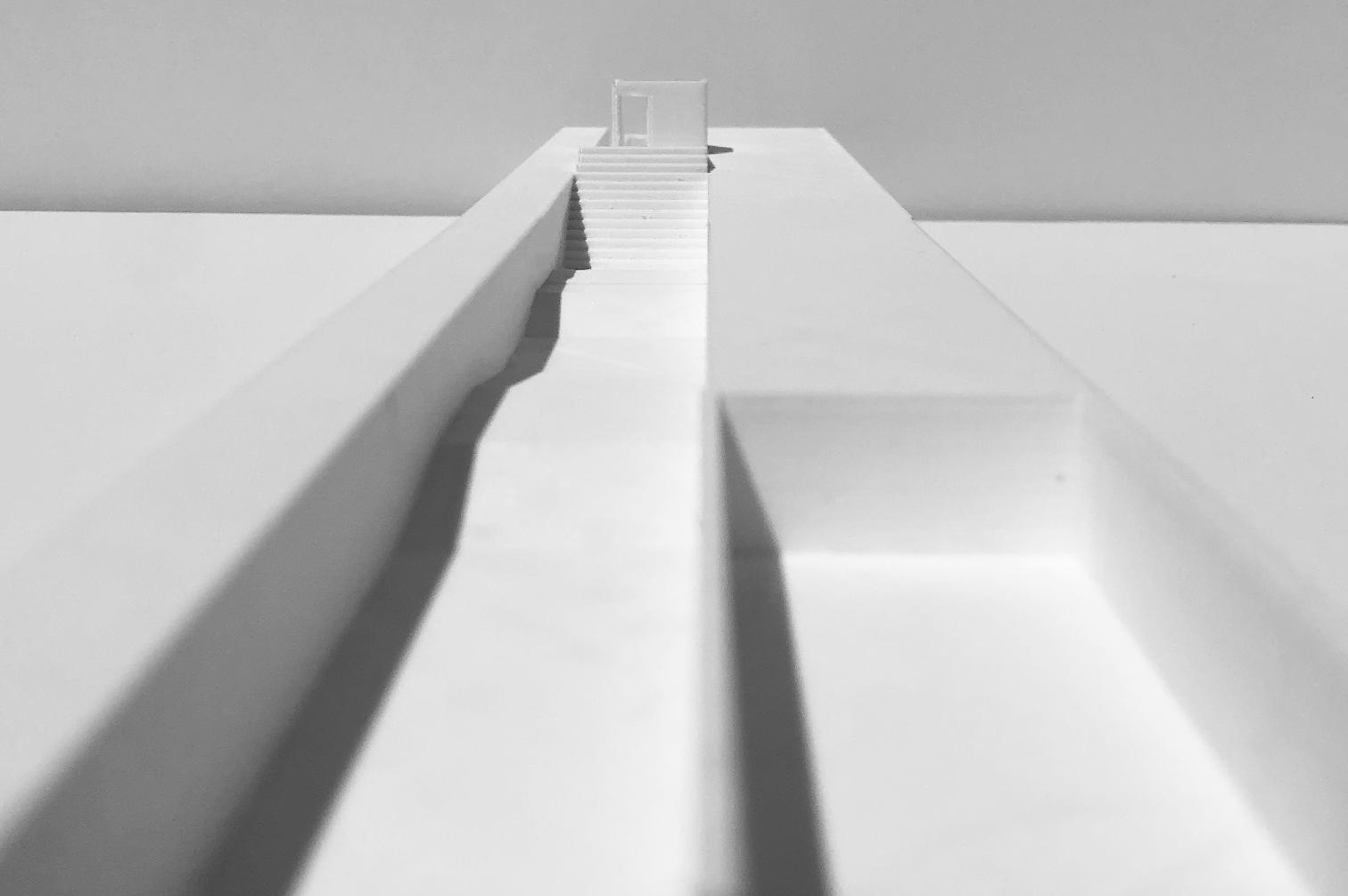
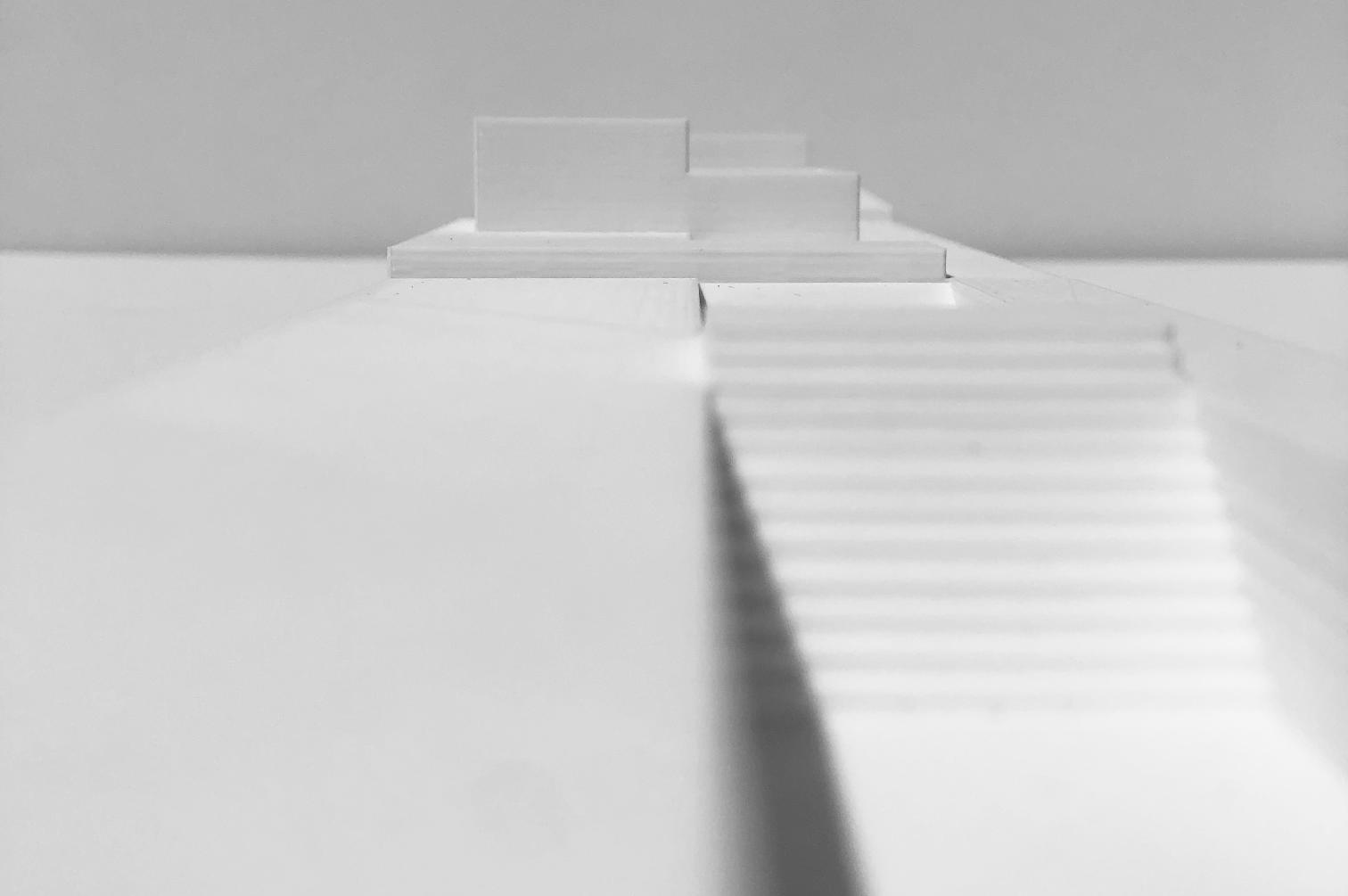
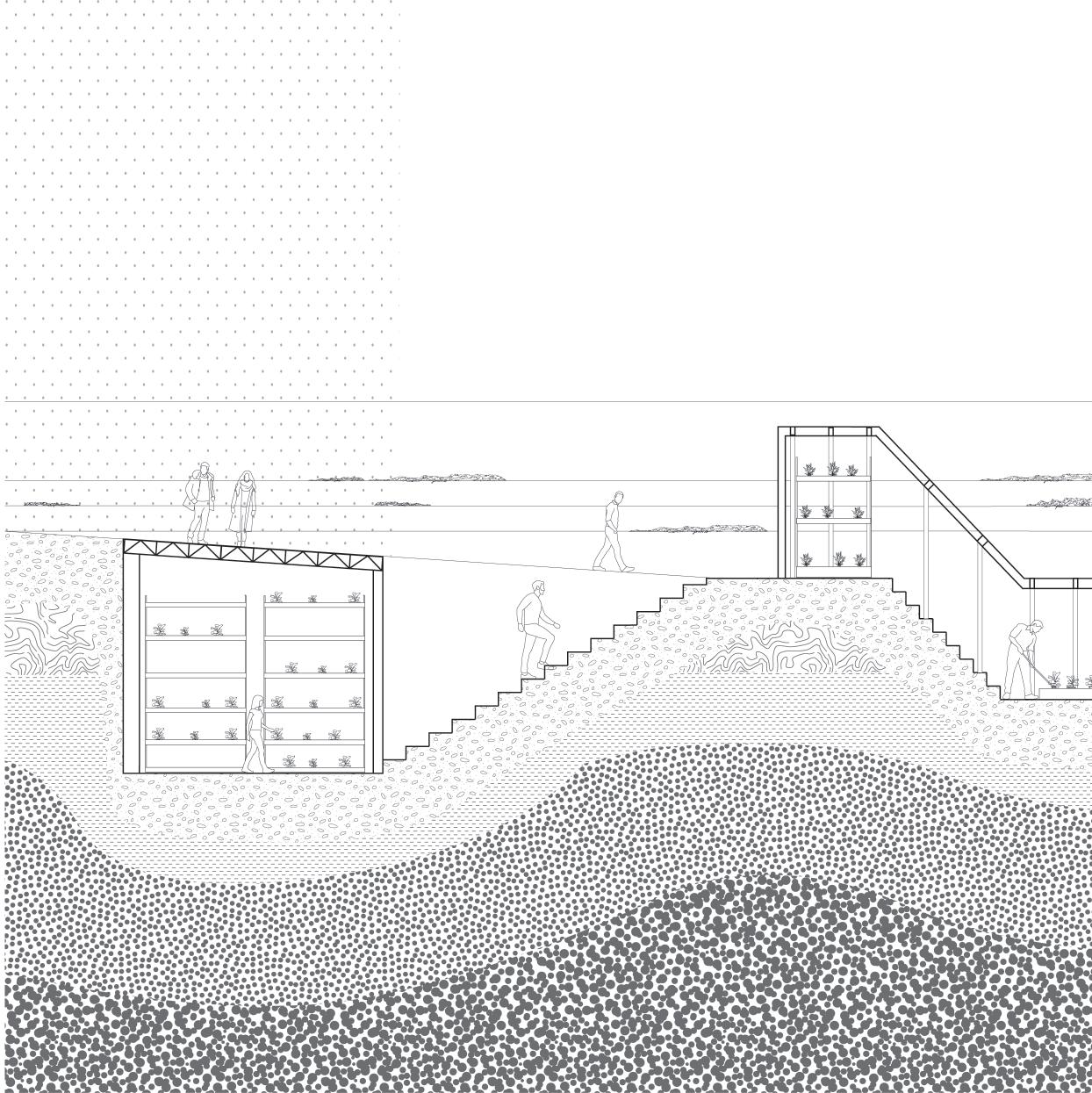
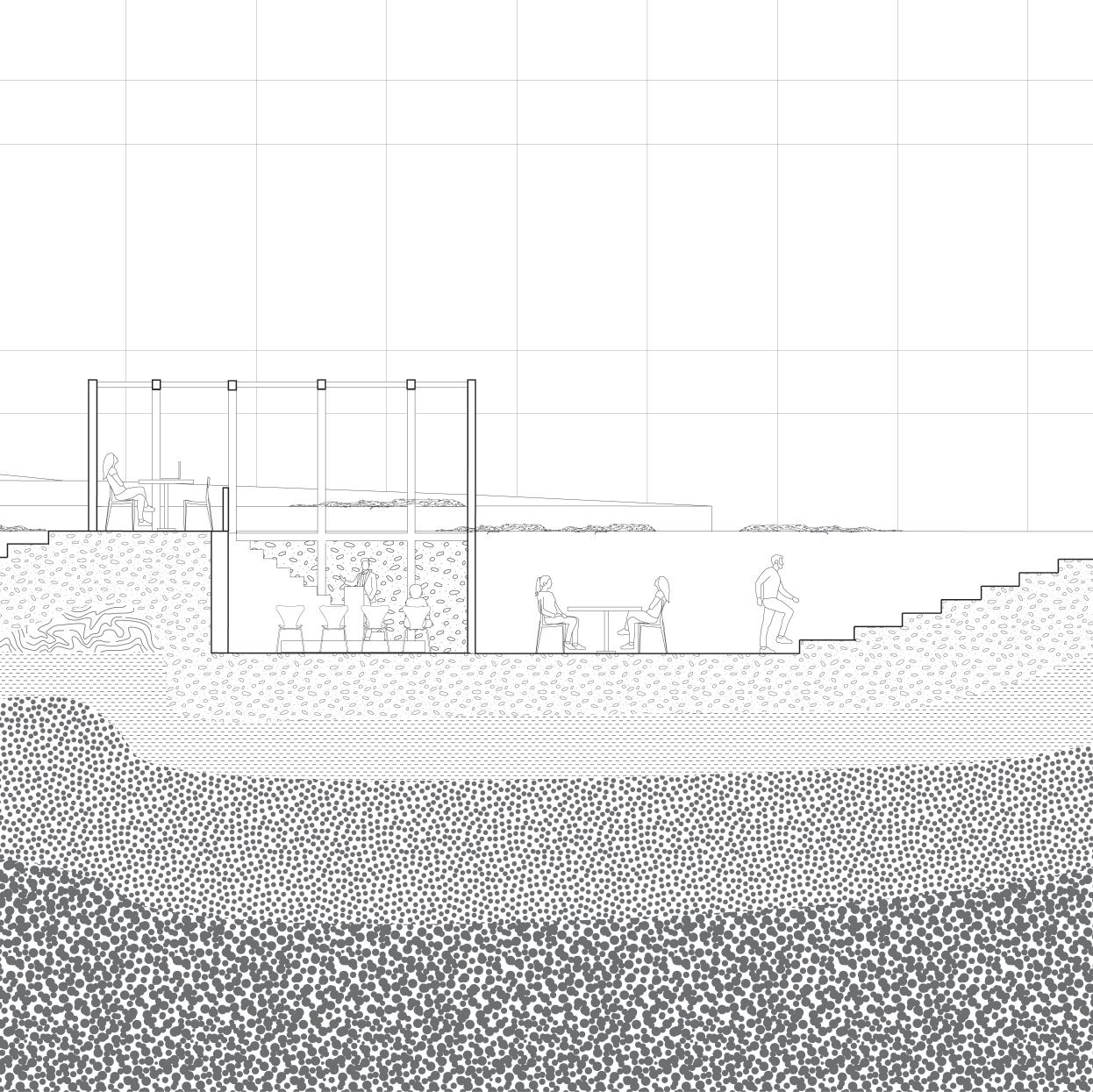
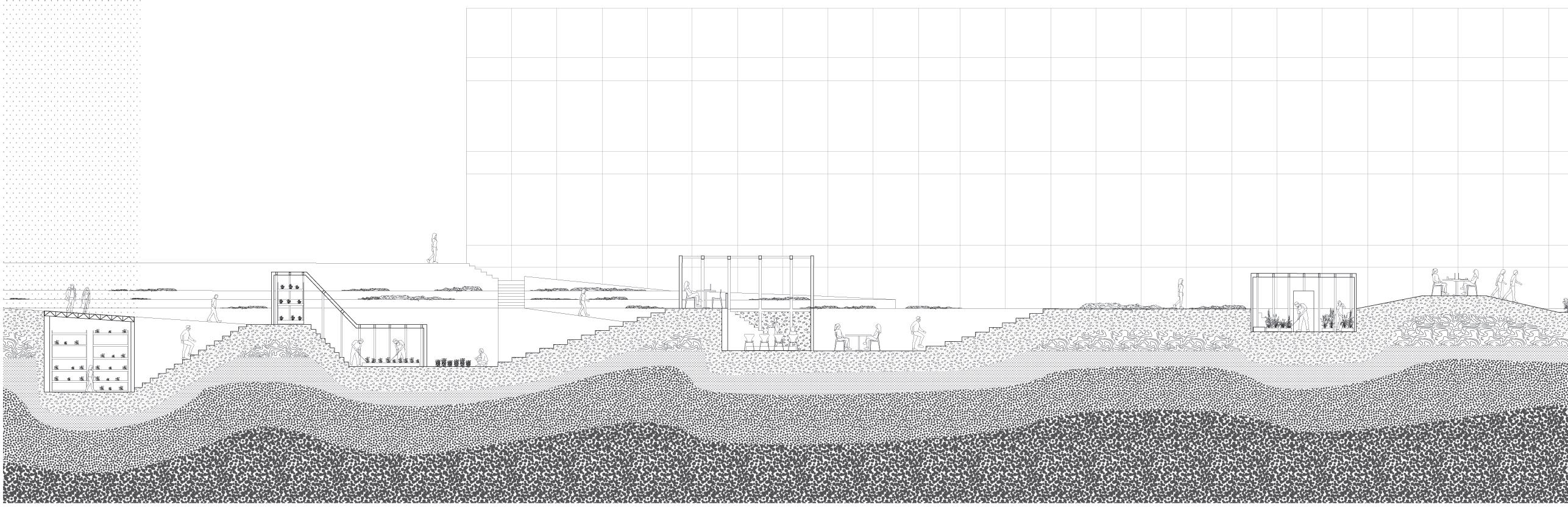
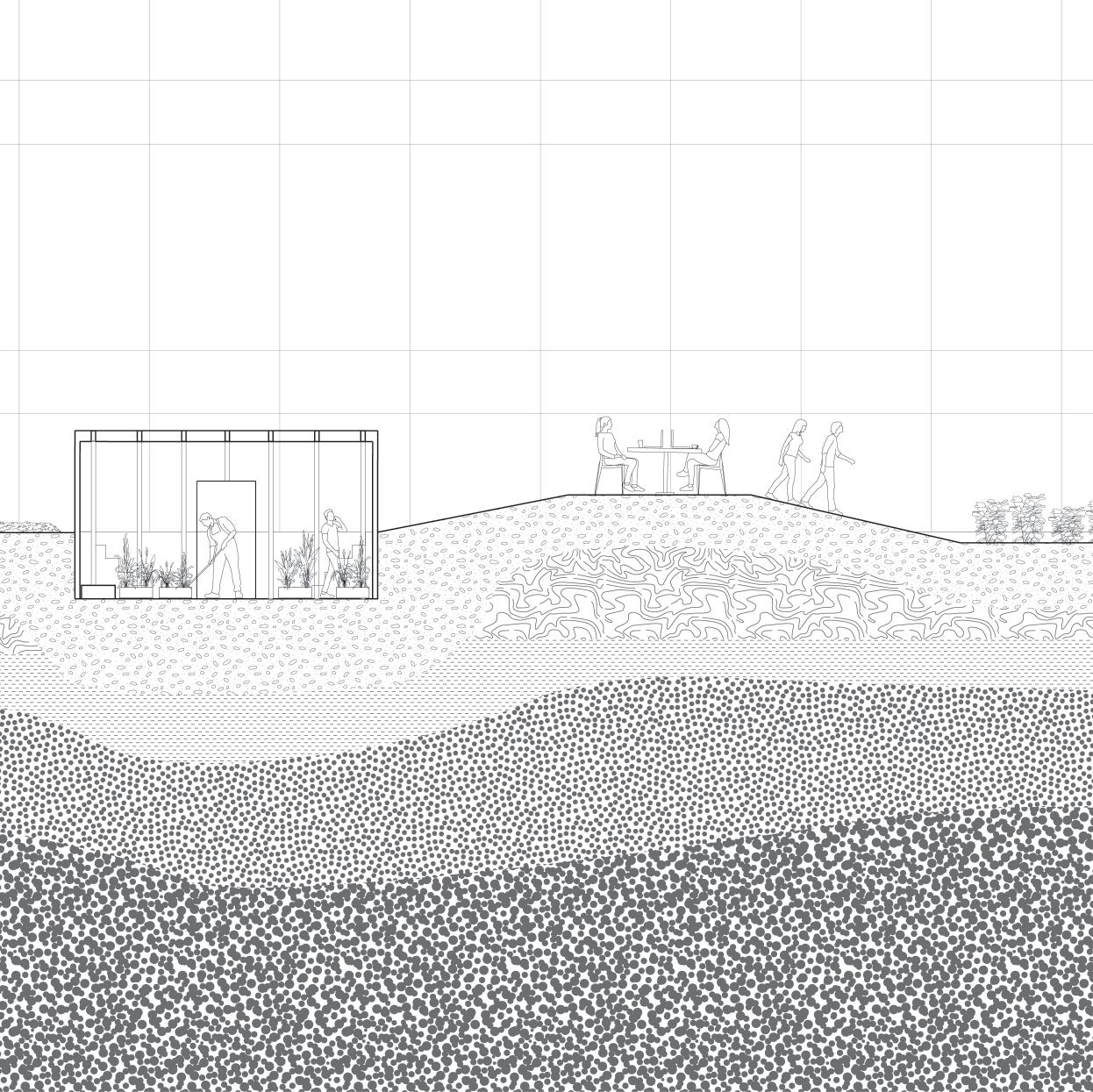
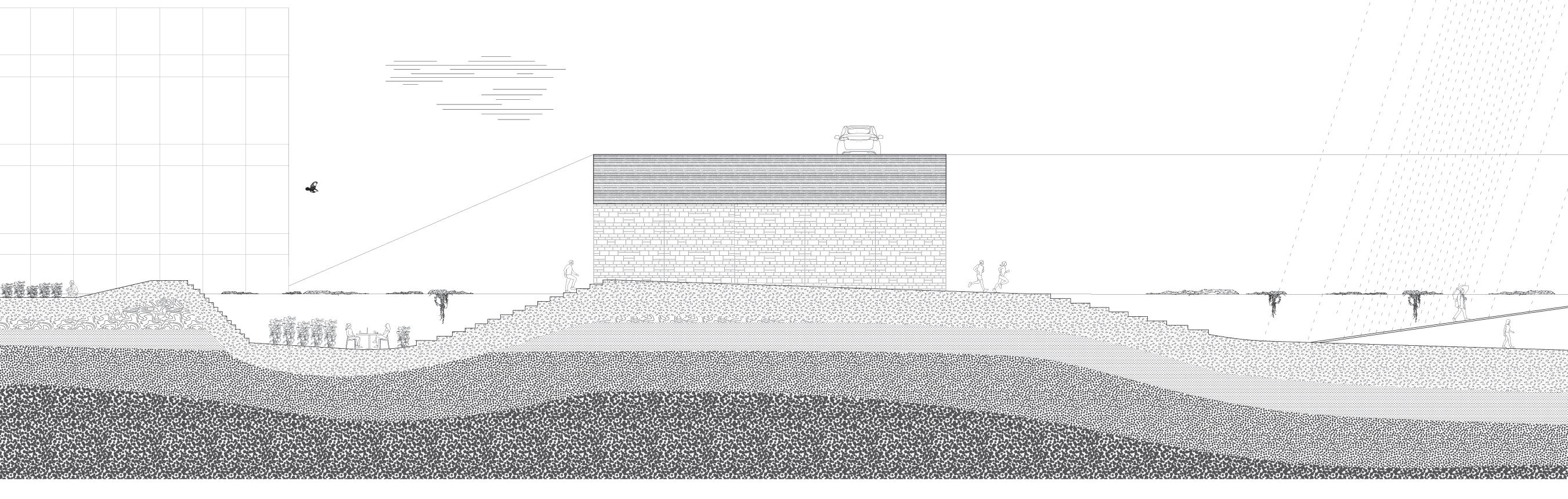
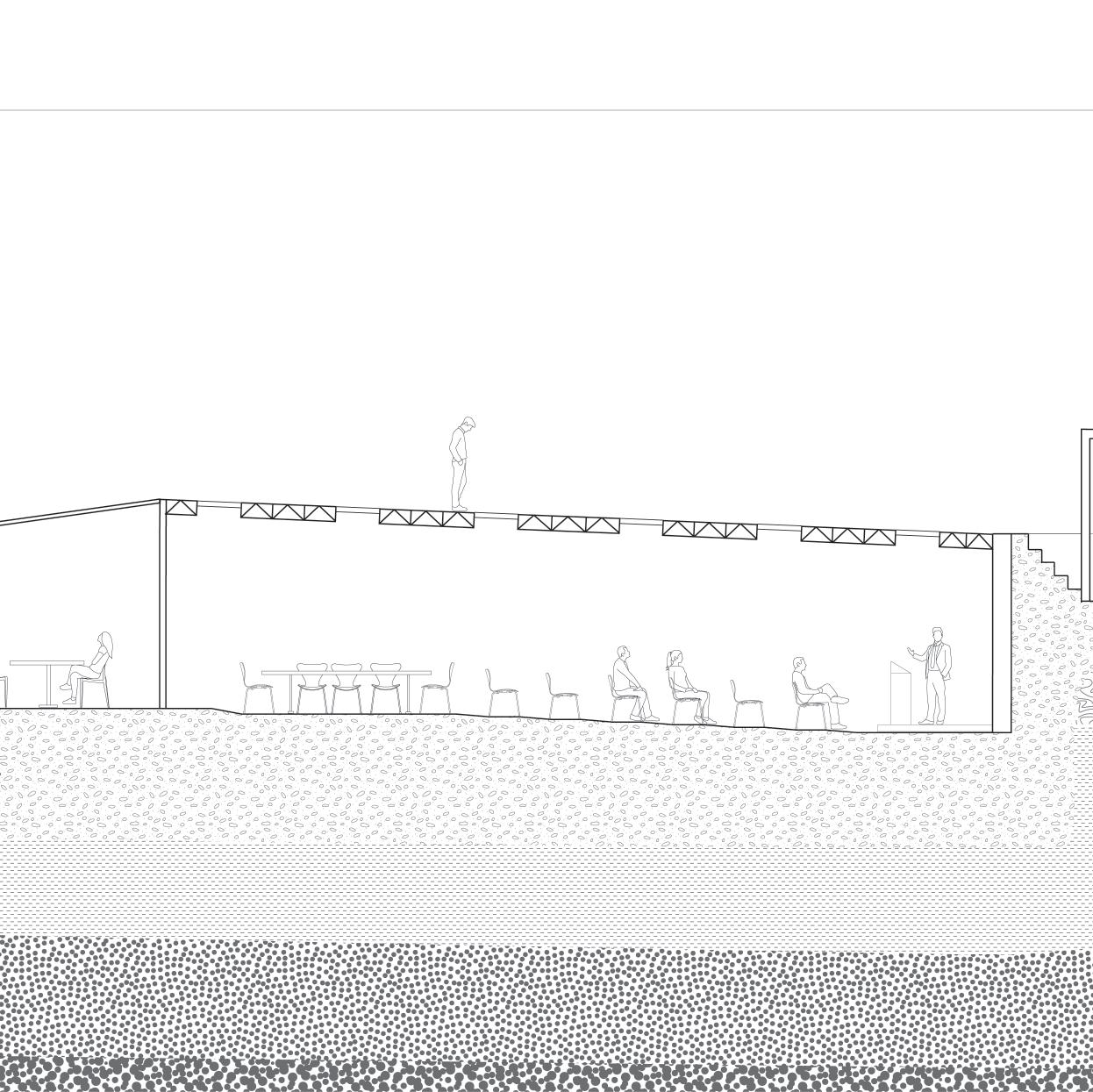
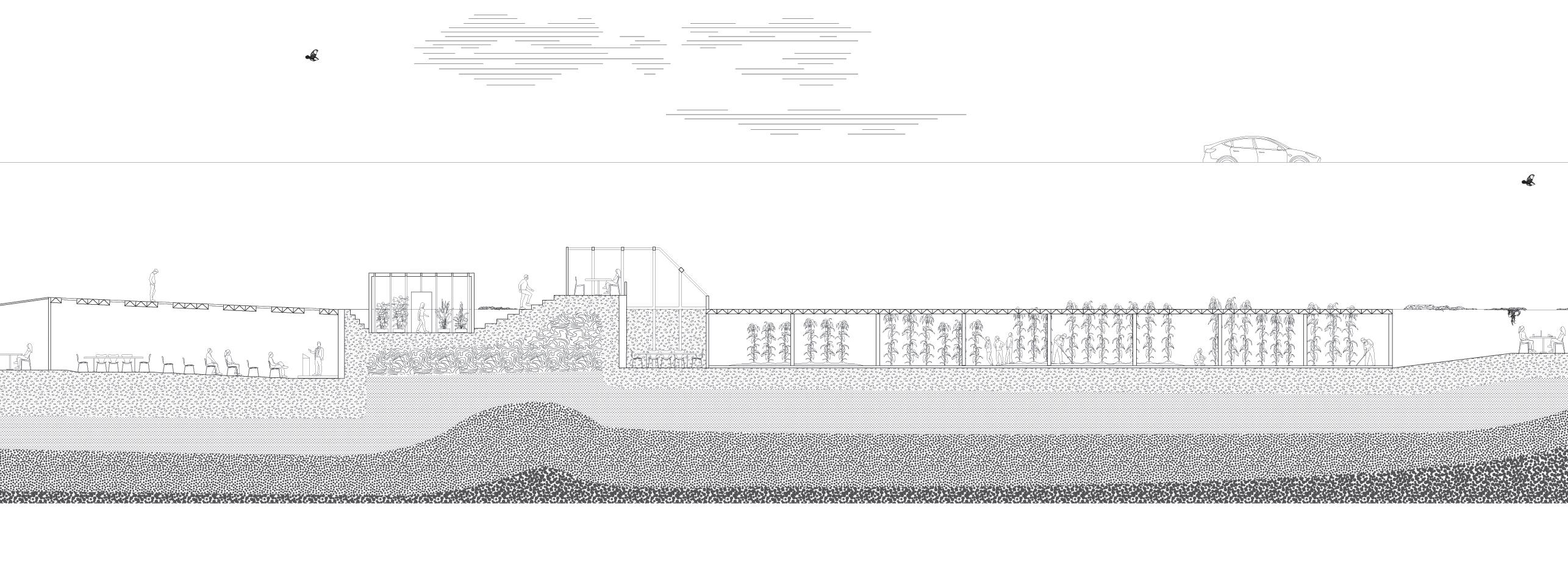
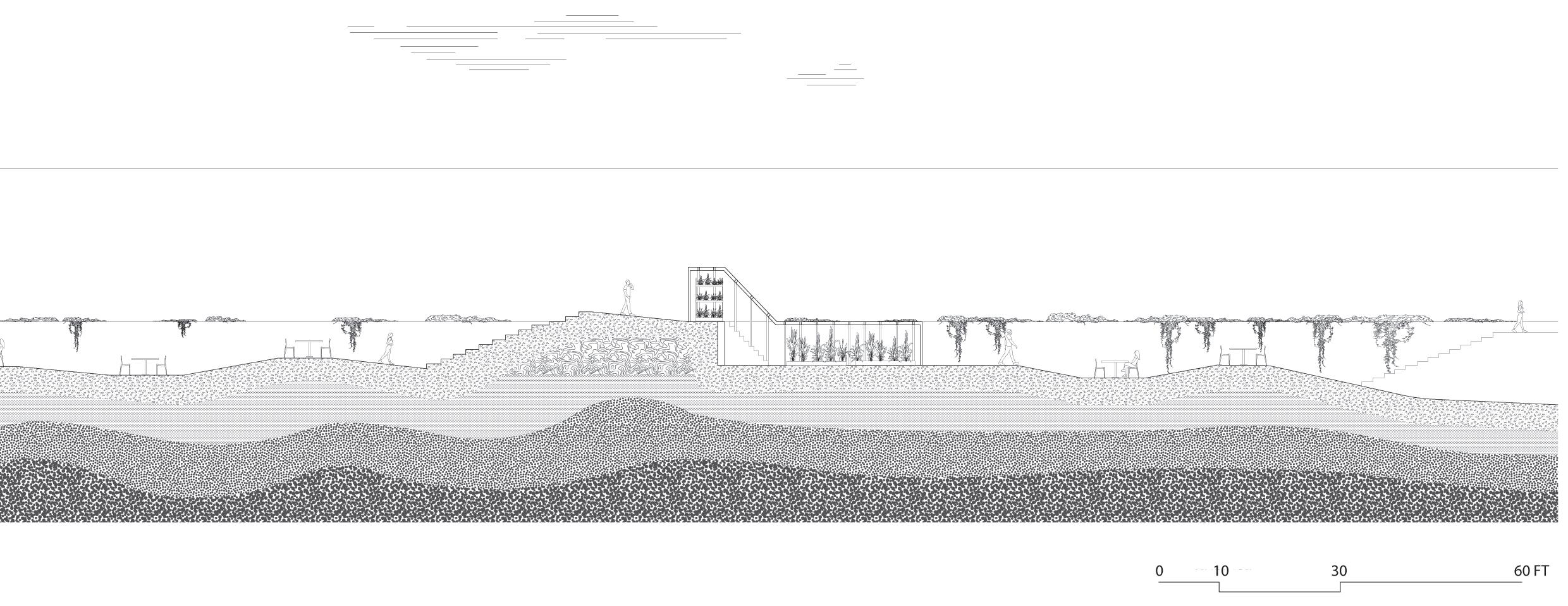
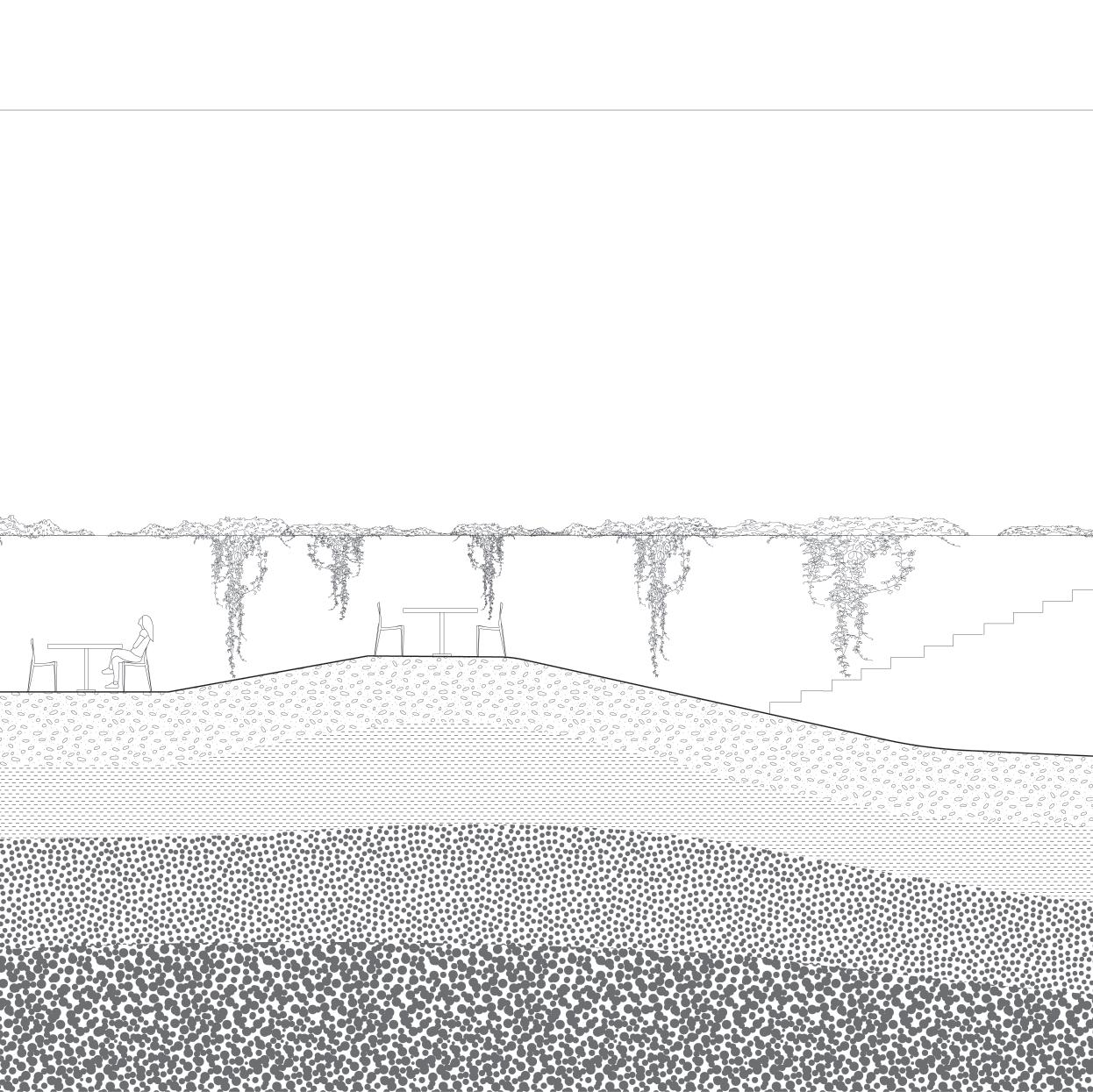
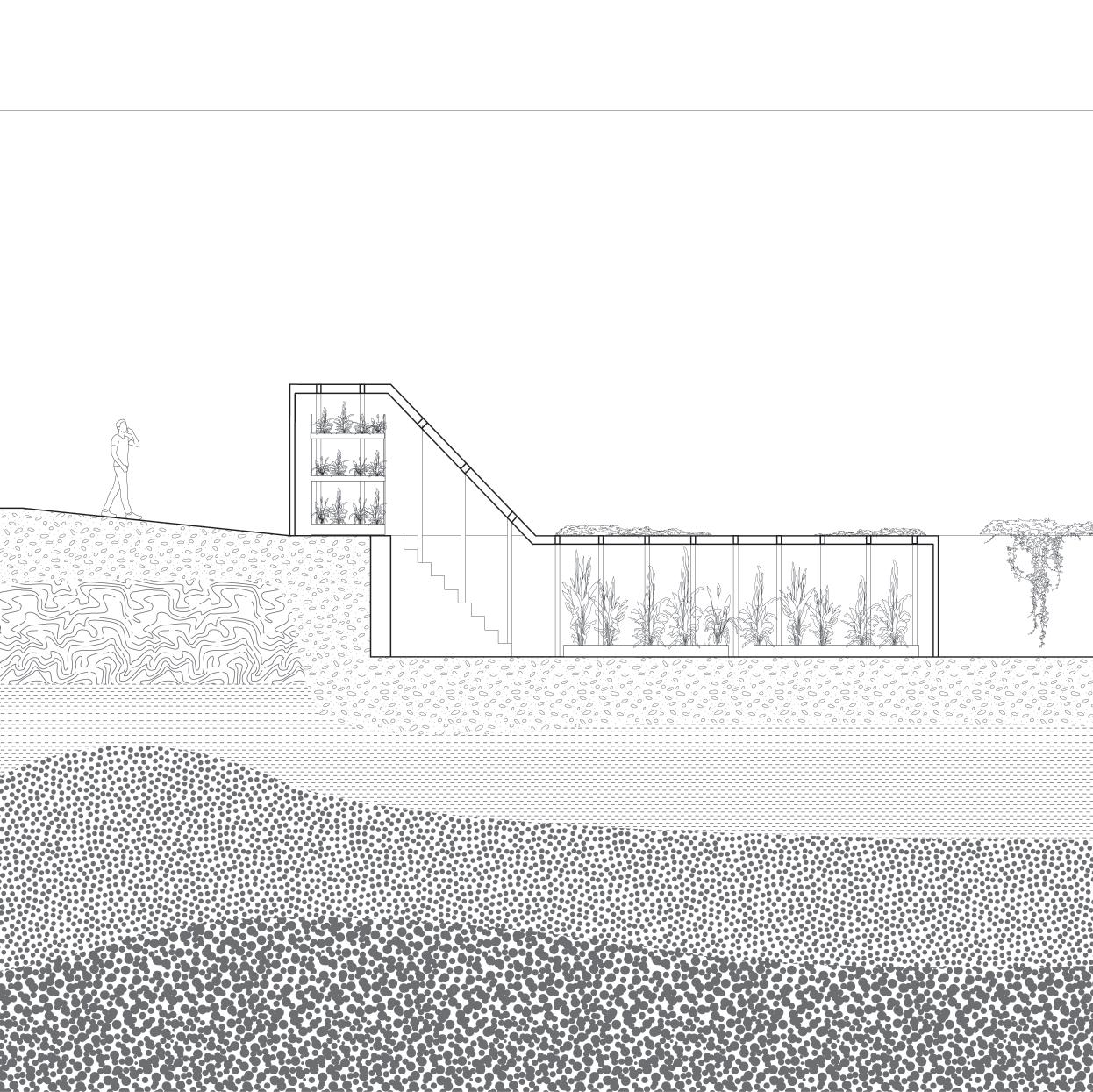
This material utopia focuses on the productive relationship between scars and growth in the Farmington Canal. The buildings placed along the Farmington Canal function as a farming school. The utopia is a concealed space where the Yale community can utilize a scarred site for its growth. This can be growth of the physical site, plant growth, and educational growth. This utopia also has a non-linear horizon with growth happening in the air and below its surface with a network connecting everything. The utopia is designed to easily carve, fll, and mend the Farmington Canal and continually grow in either direction.
70
72
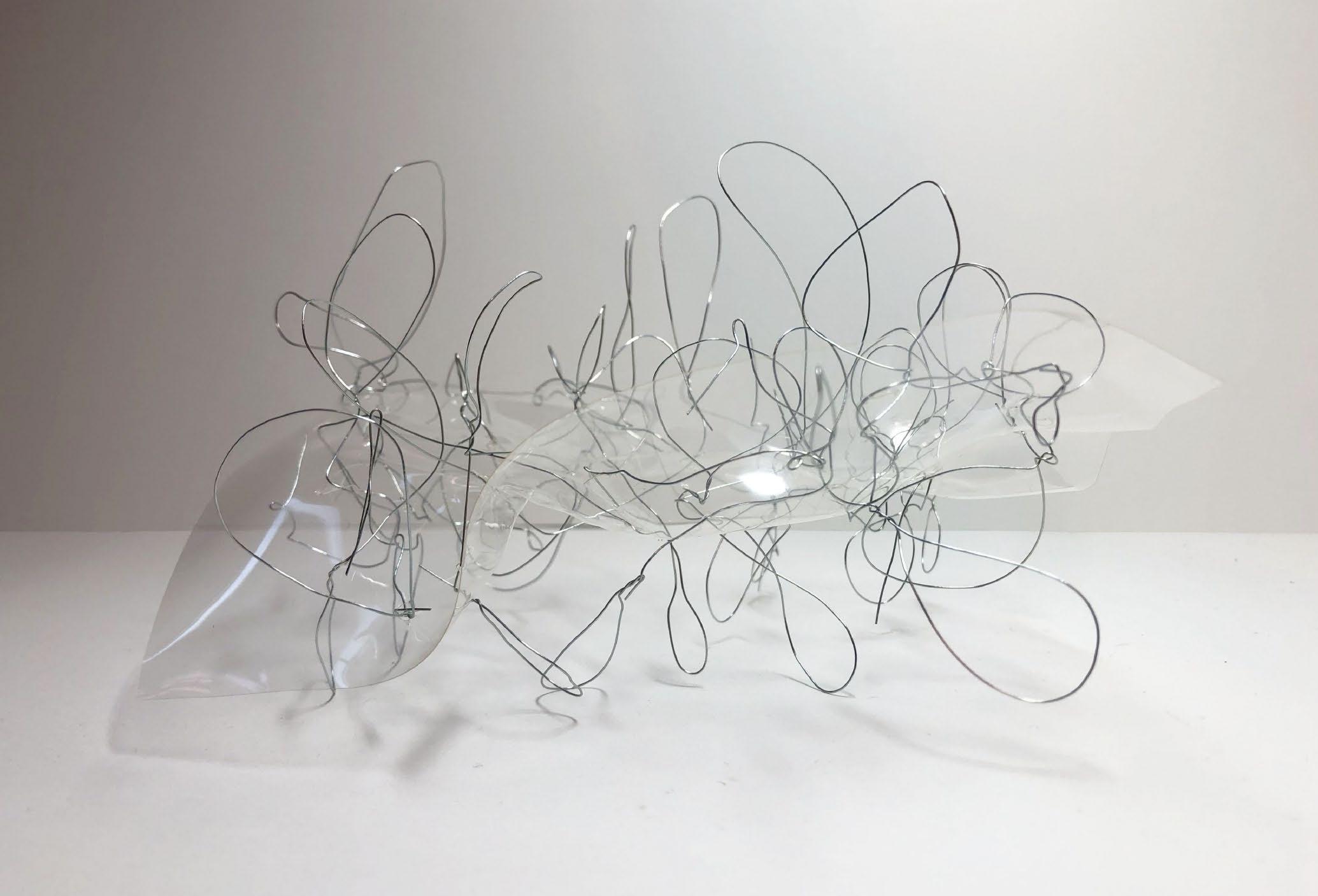
Concept models show how a new community can utilize a concealed space for its own growth. This material utopia has a non-linear horizon with growth happening in the air and below its surface with a network connecting everything.
 Elizabeth Cornfeld
Material Utopia 74
A B A
Elizabeth Cornfeld
B
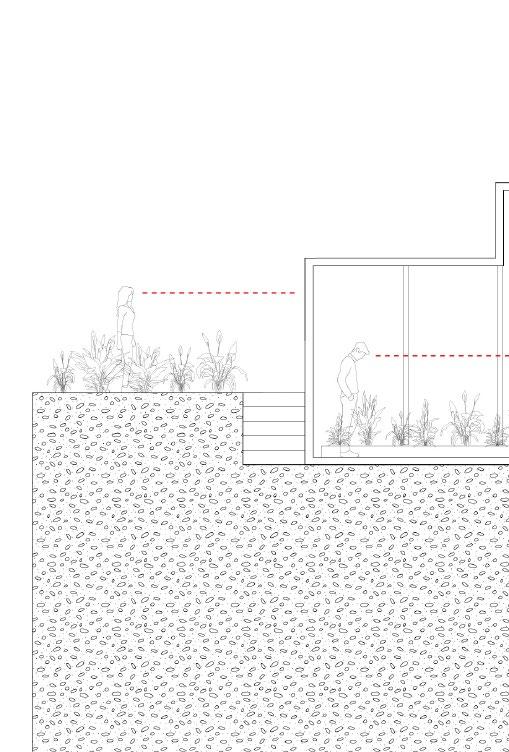
Above-Below Sight-line Section Drawings
Above-Below Plan Drawings
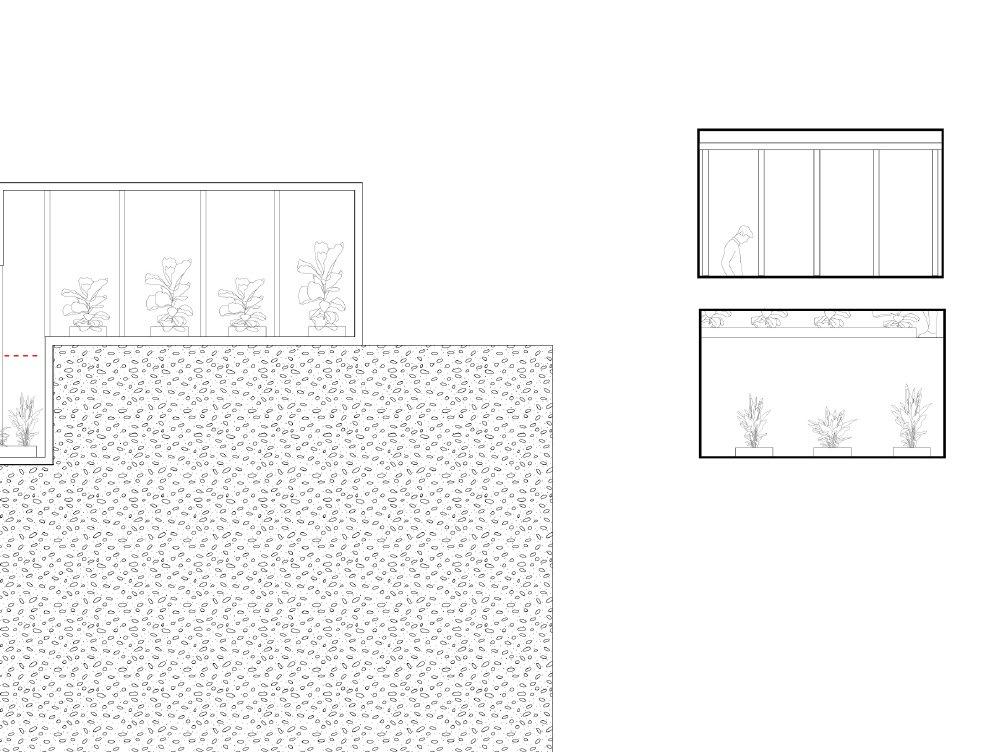
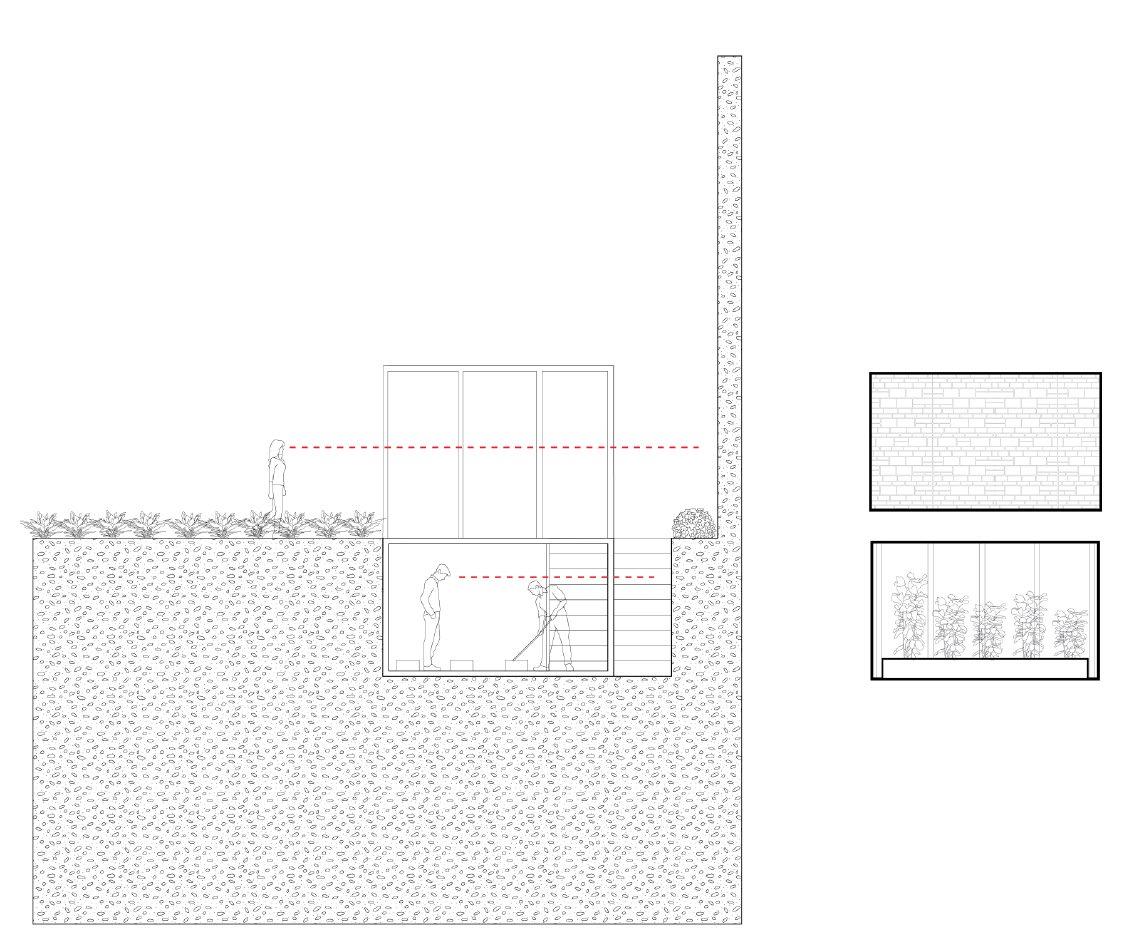
C C Material Utopia 76
 Elizabeth Cornfeld
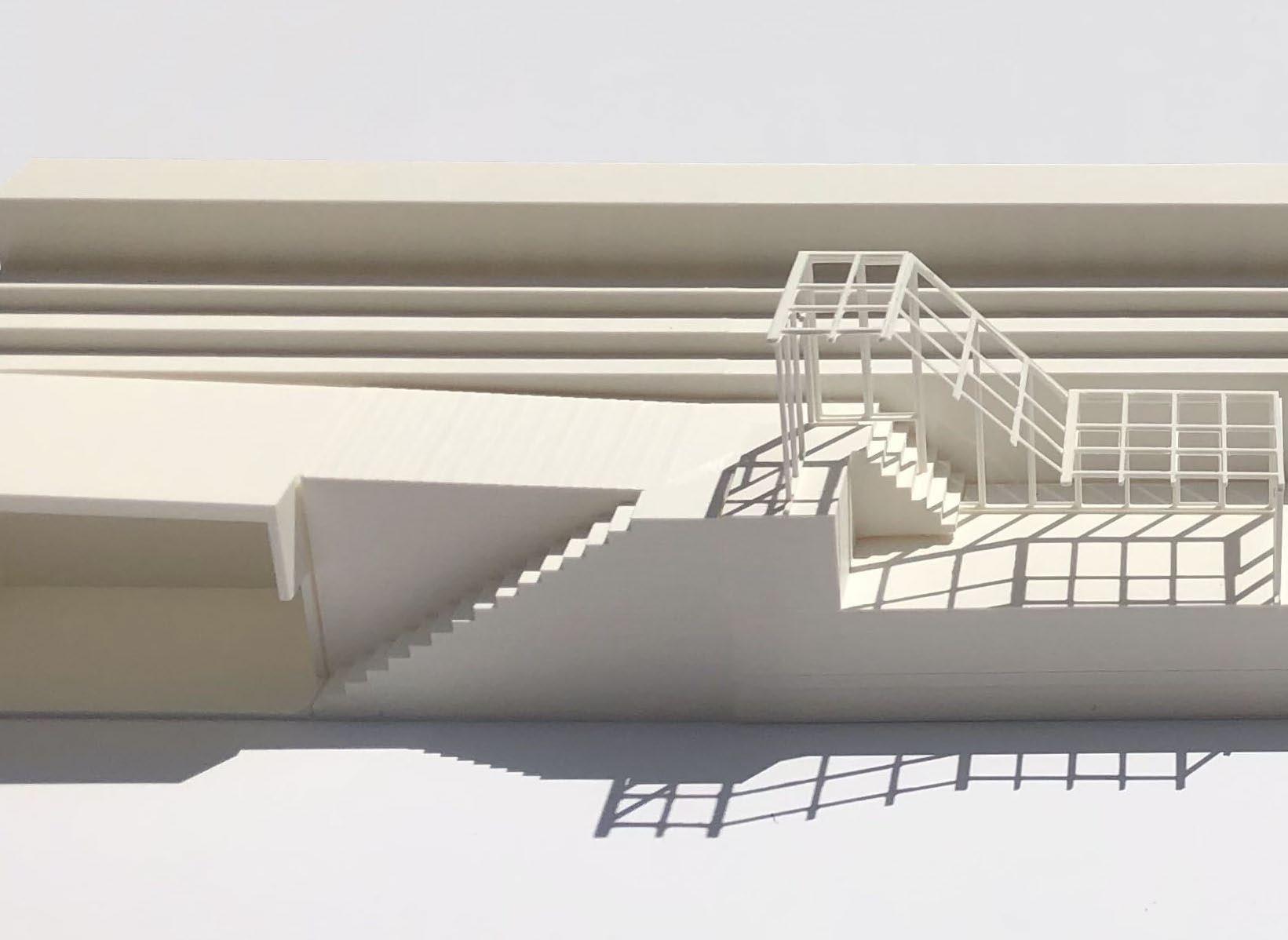
Shadow Study
Elizabeth Cornfeld
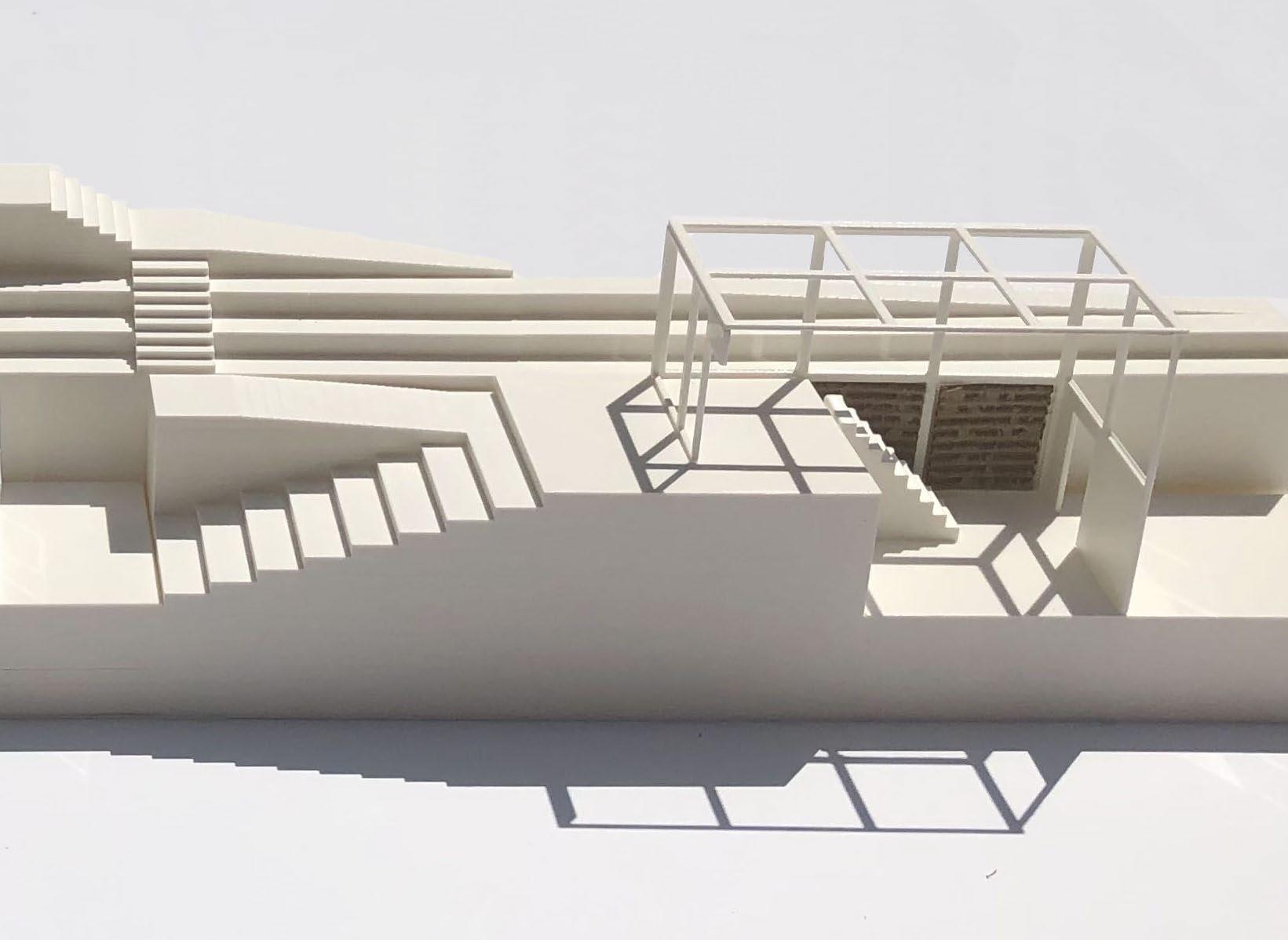
Shadow Study
Material Utopia 78
 Elizabeth Cornfeld
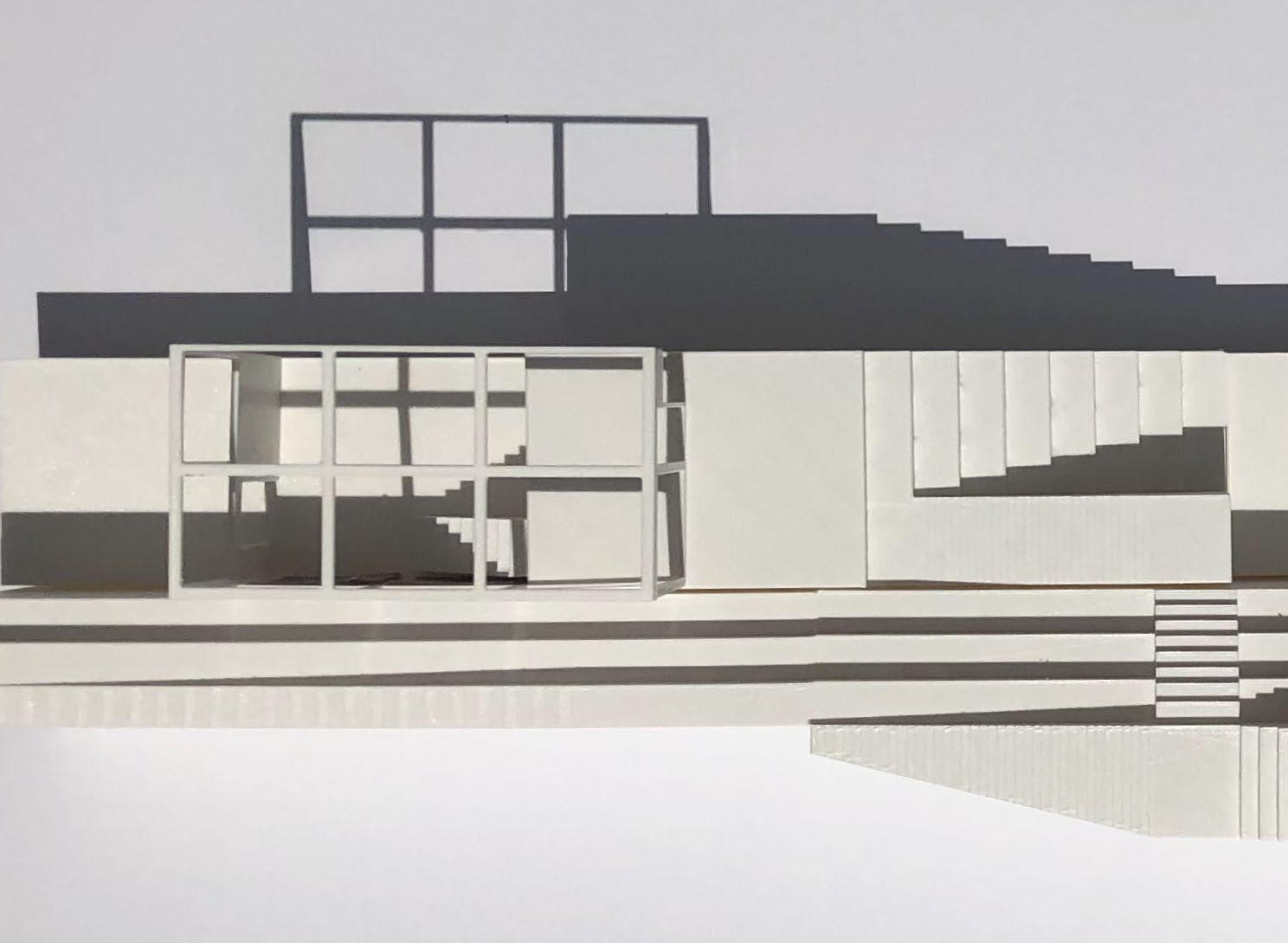
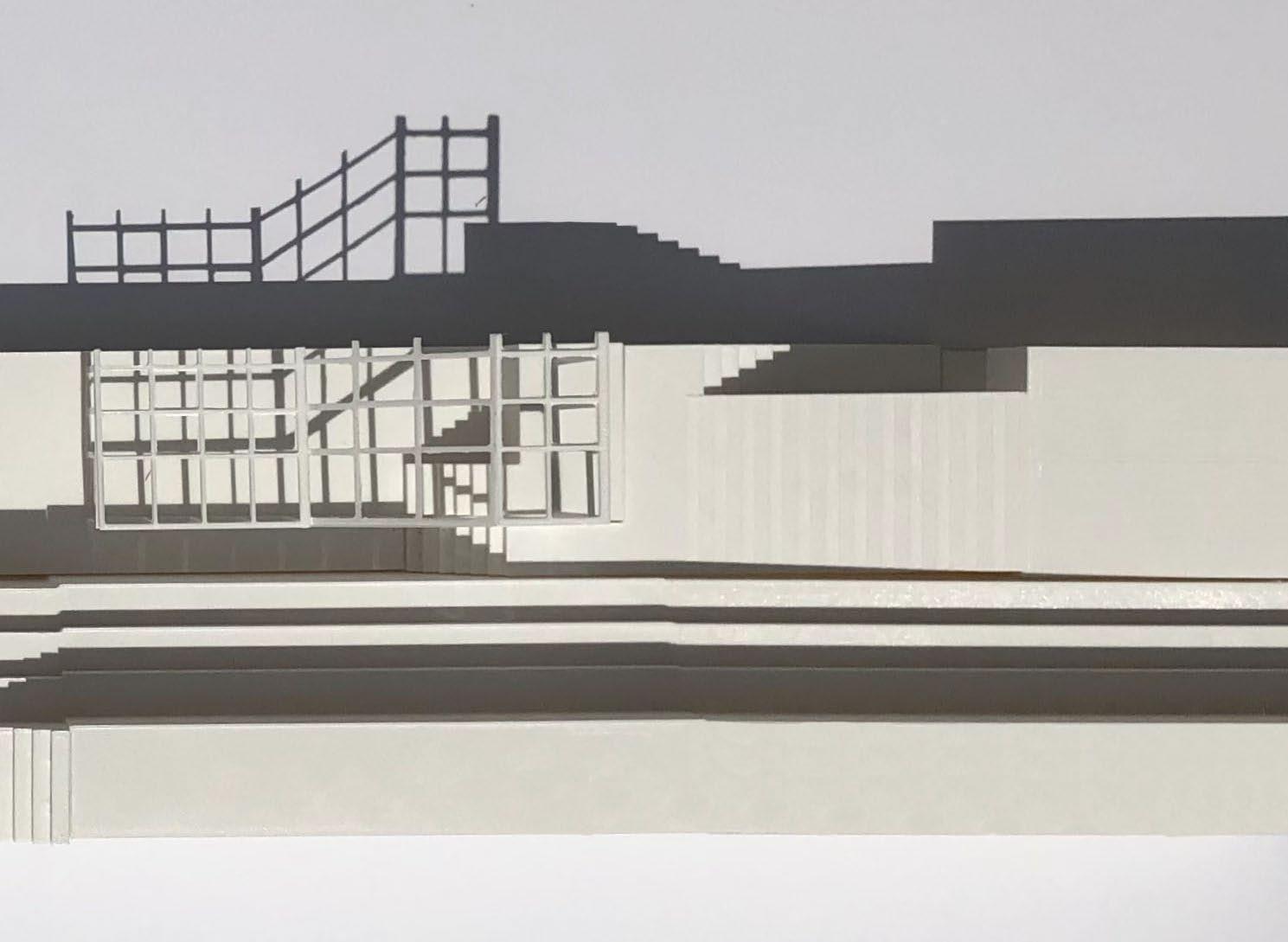
The site is situated along a straight path, but the path itself can move up and down at any point.
Material Utopia 80
 Elizabeth Cornfeld
Vertical Garden Classroom and Lecture Hall
Elizabeth Cornfeld
Vertical Garden Classroom and Lecture Hall
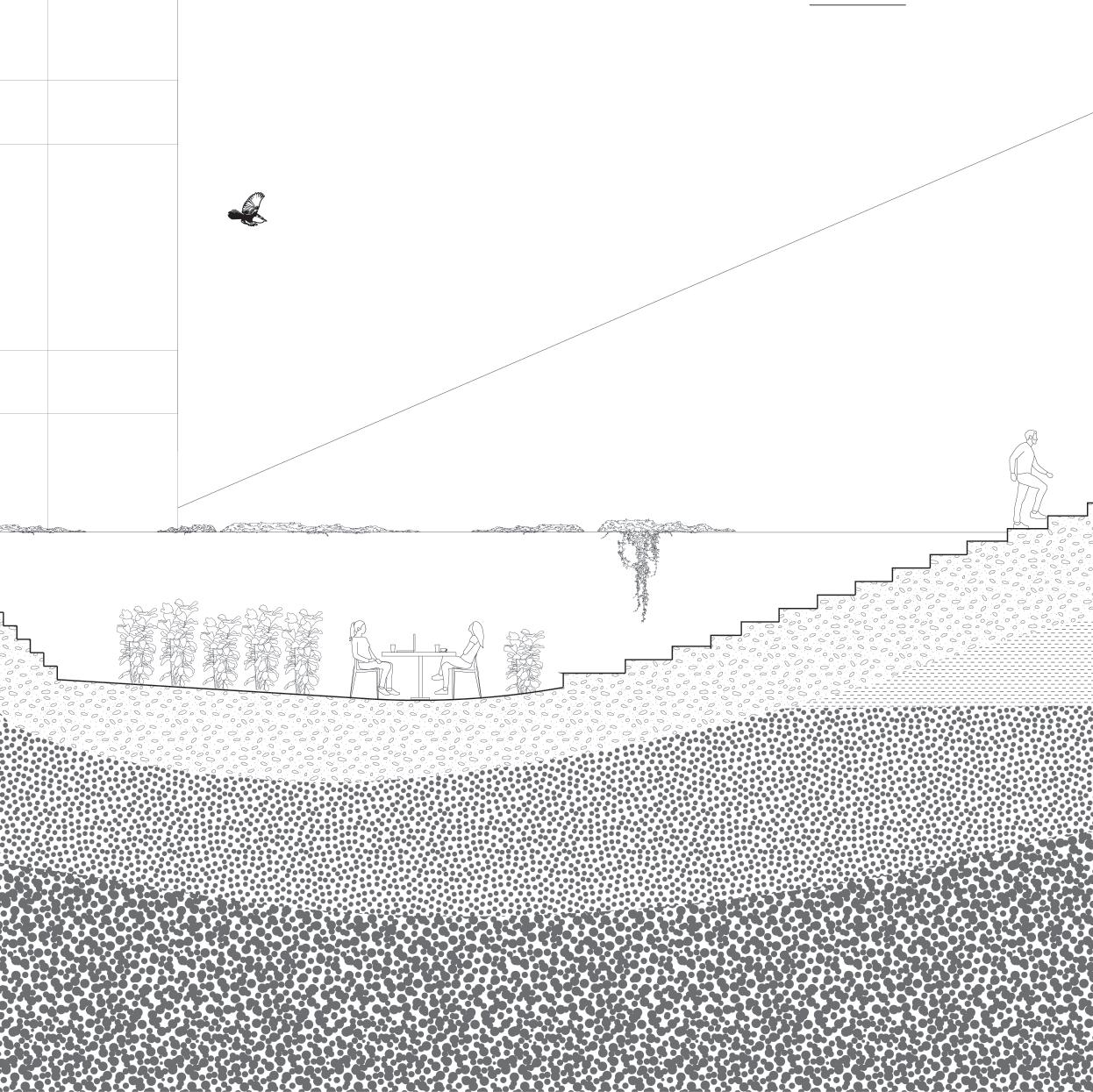
Material Utopia 82
Outdoor Gathering and Farming Space
Greenhouse
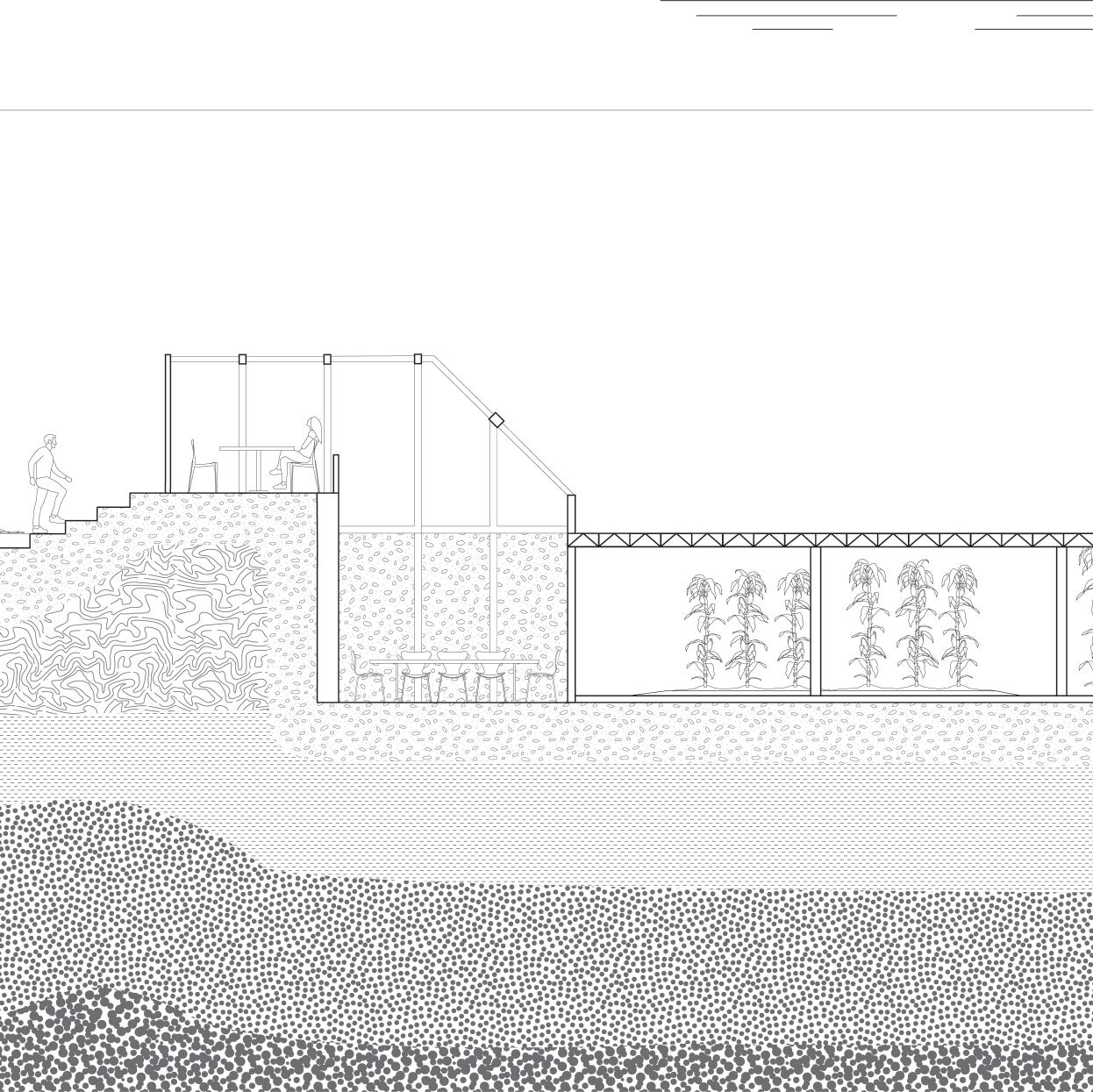
 Elizabeth Cornfeld
Classroom and Lecture Hall
Library and Farming Space
Elizabeth Cornfeld
Classroom and Lecture Hall
Library and Farming Space
Material Utopia 84
Outdoor Gathering Space
Greenhouse
 Elizabeth Cornfeld
Shadow Study
Elizabeth Cornfeld
Shadow Study
Material Utopia 86
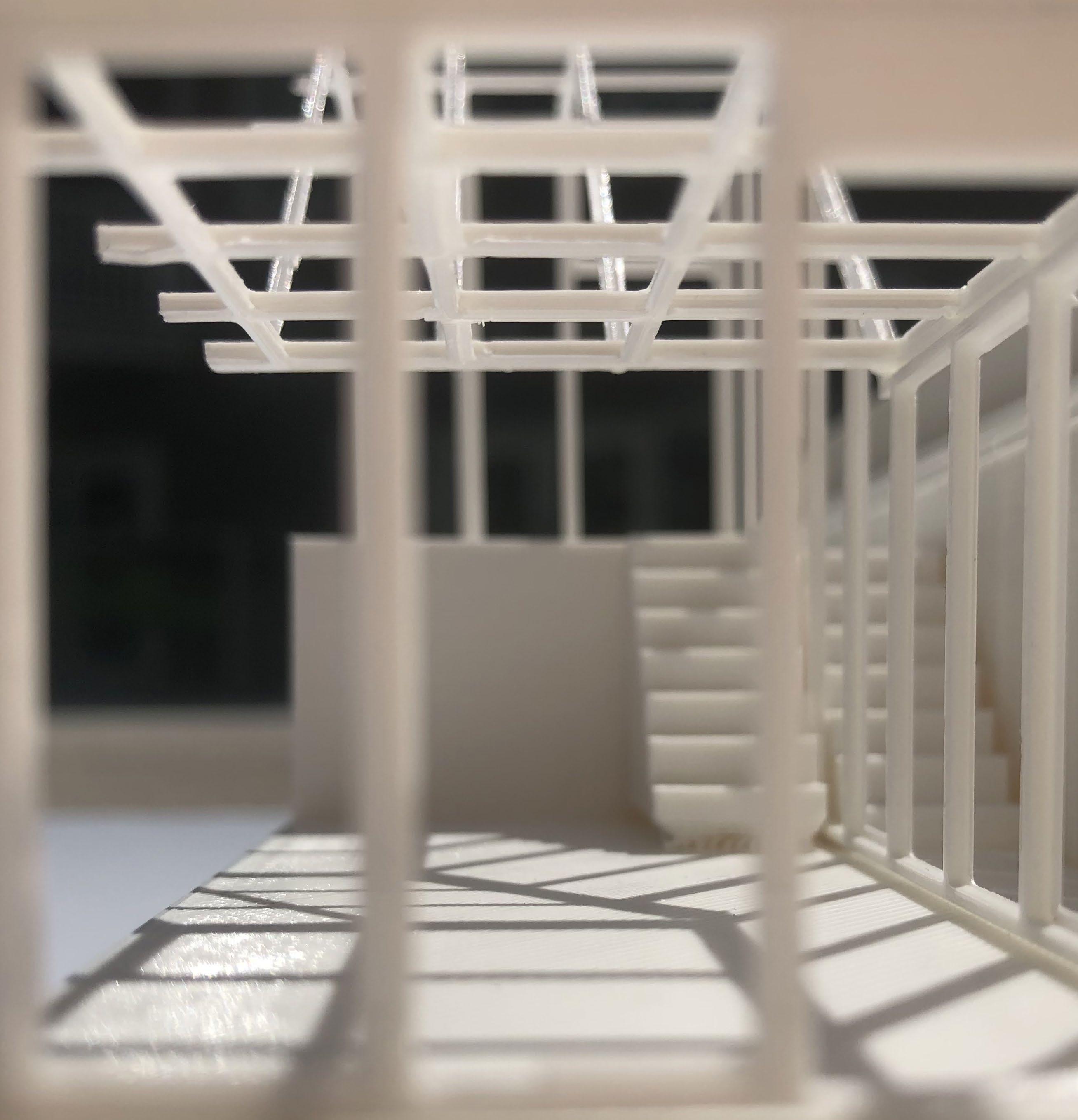
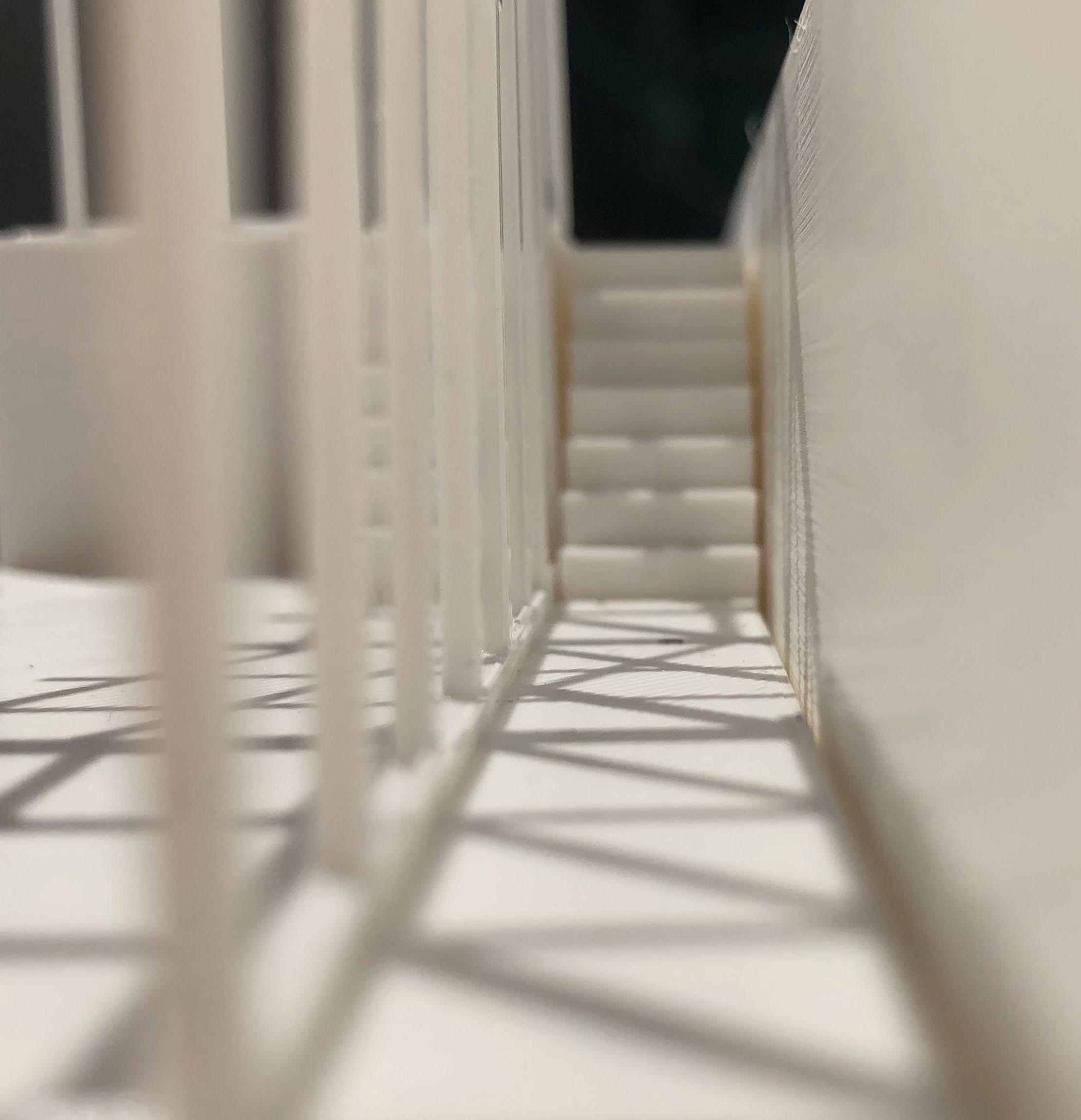
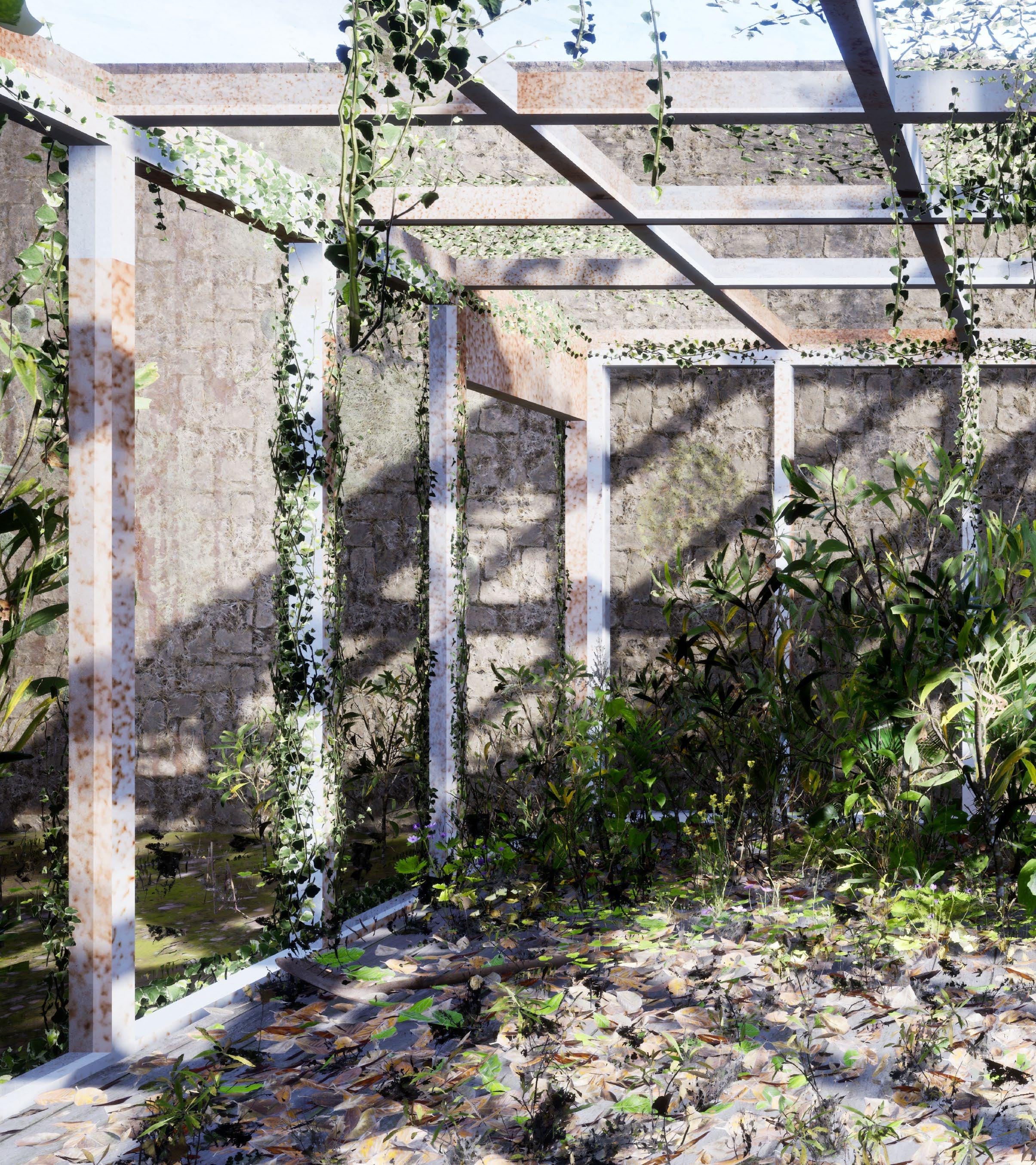
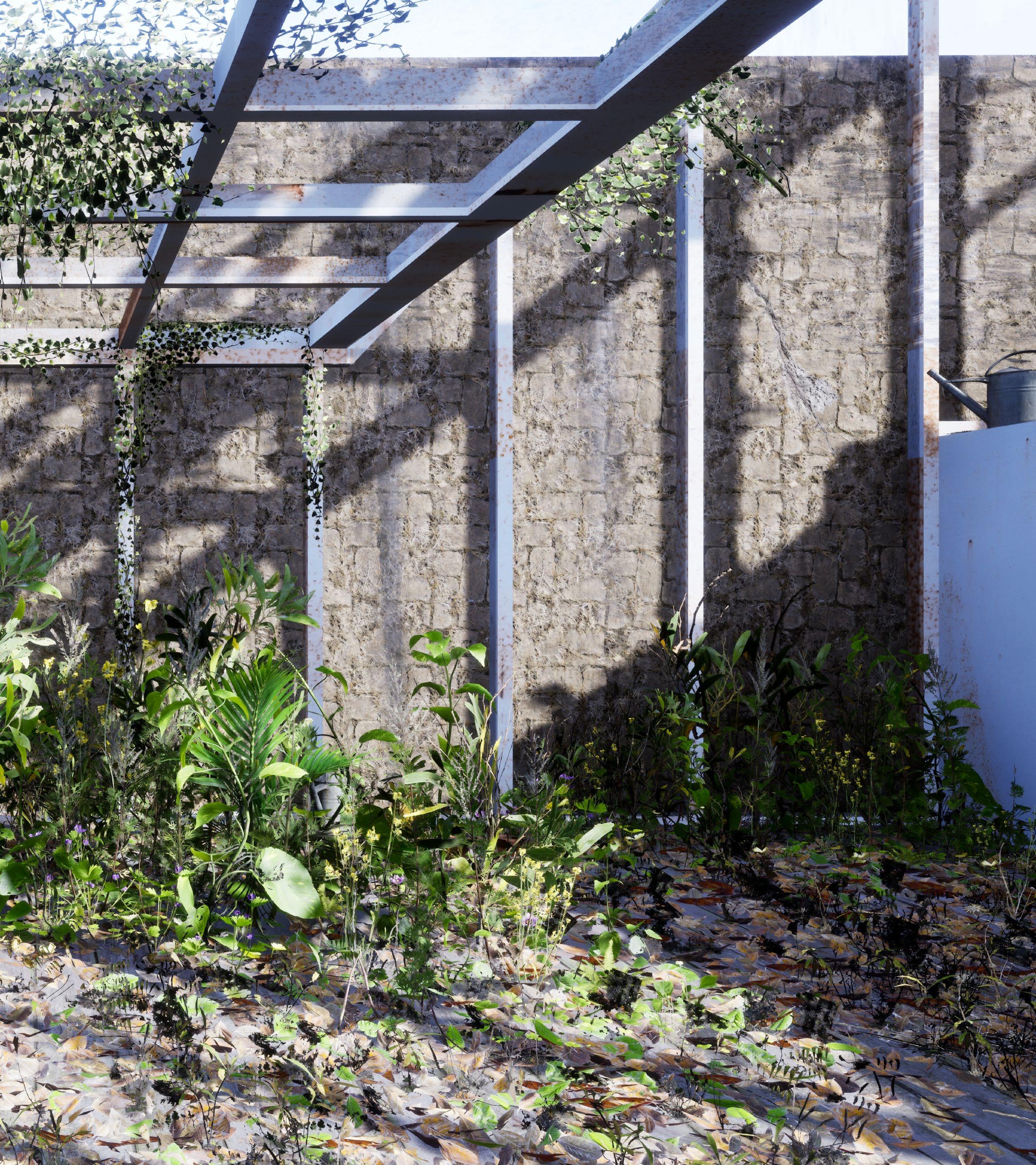
The buildings cast beautiful shadows that continue to articulate the non-linear horizon line of the overall design. Through the cast shadows, inhabitant’s still feel like they are within and apart of the building without having to physically go inside.
 Elizabeth Cornfeld
Material Utopia 88
Change Over Time
Plan, Unplanned
ARCH 1011 | Critic: Miroslava Brooks
Cupertino, California
Fall 2020
Elizabeth Cornfeld
Project Objective: Begin with a pattern and read it organizationally, as confgurations of volumes and objects and potential activities and relationships. Speculate on the spatial and organizational potential of the plan while given an assigned program.
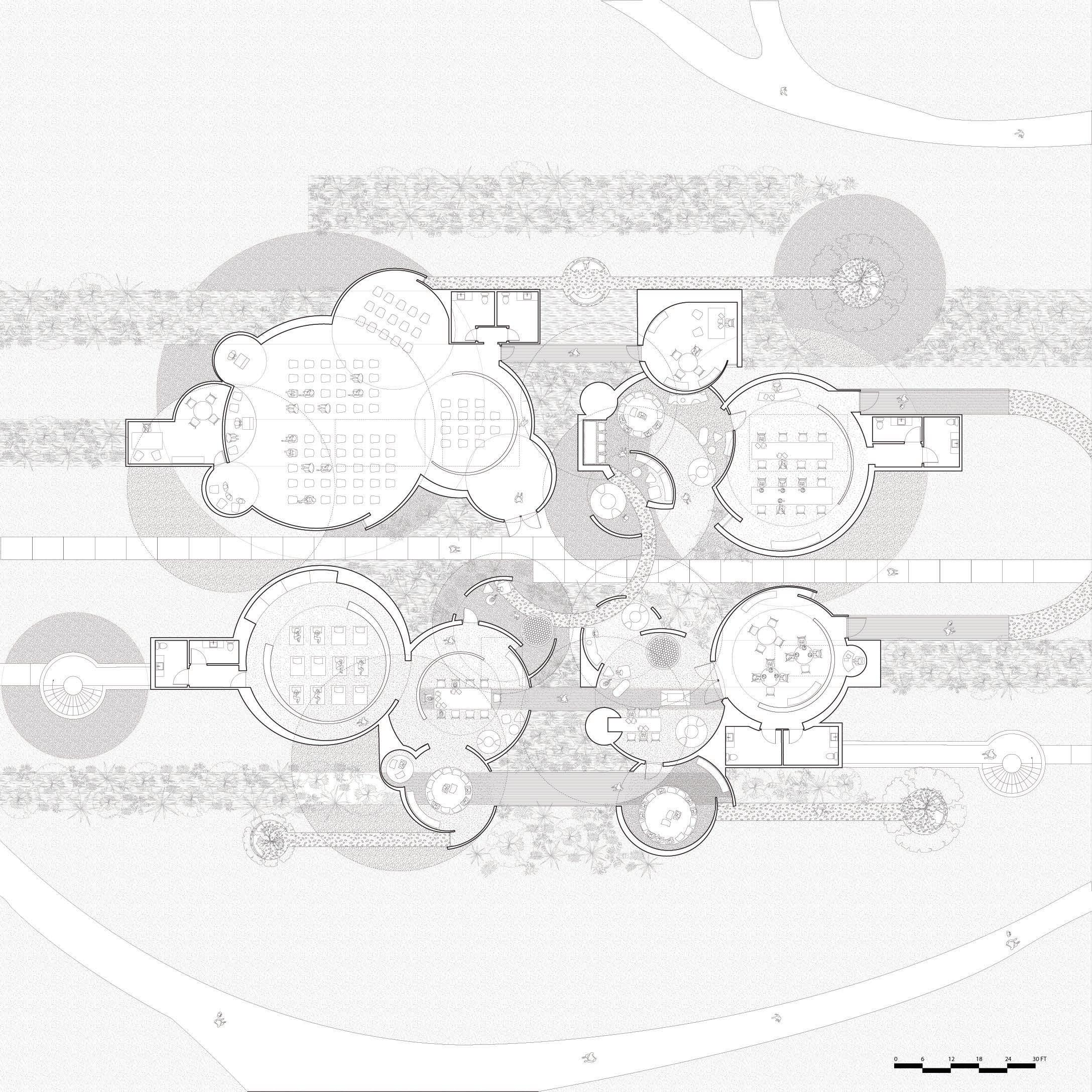
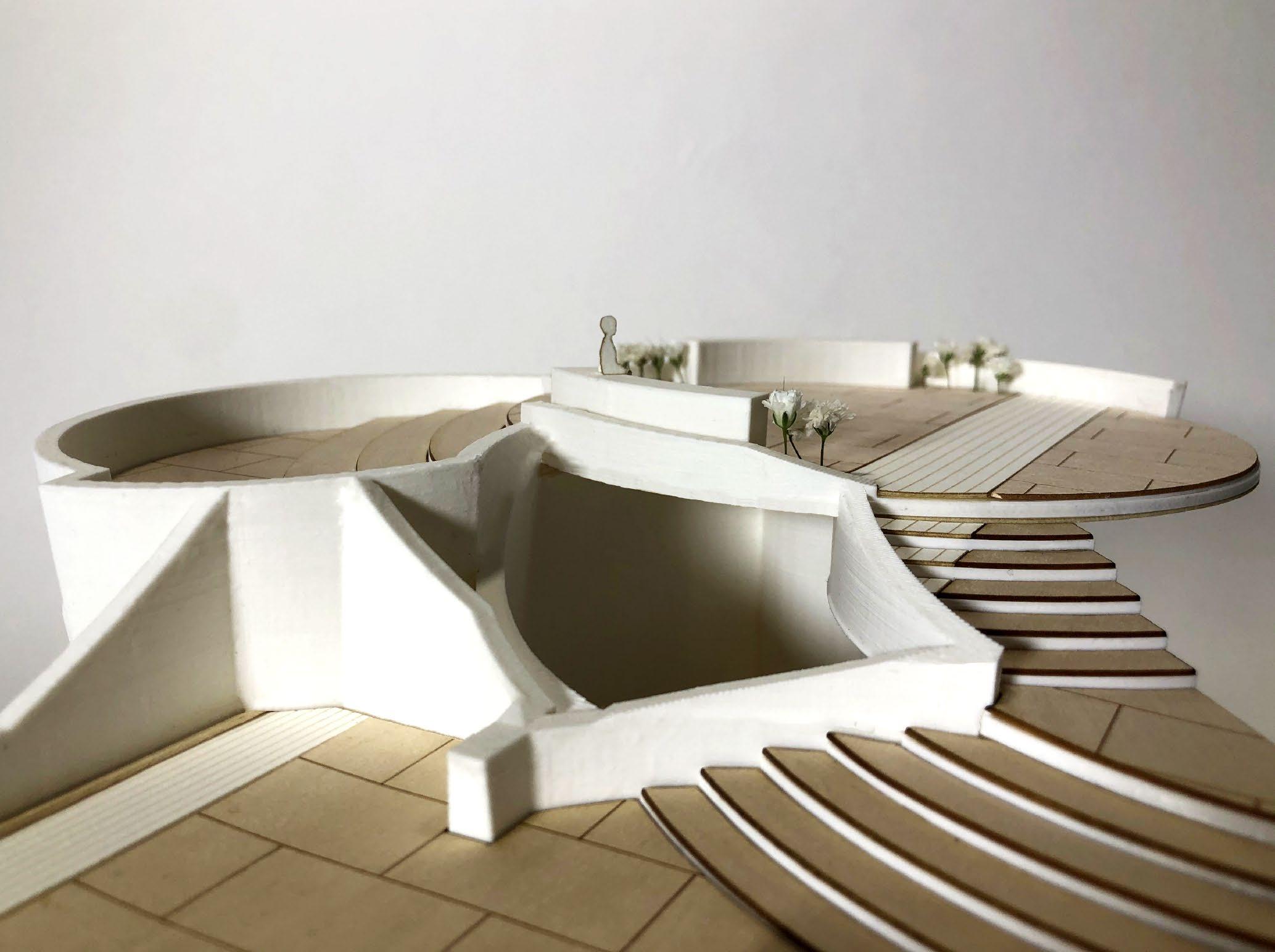
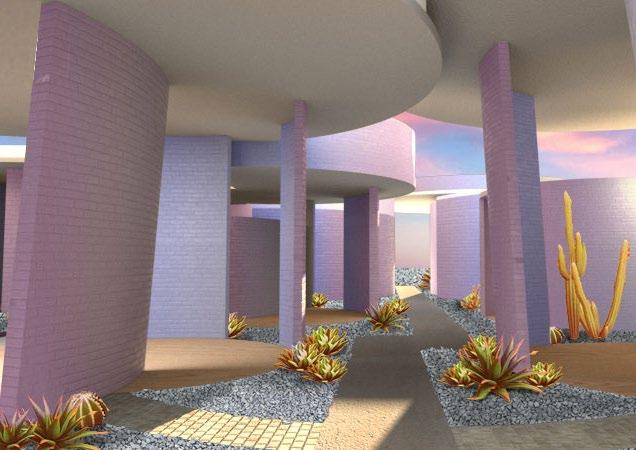
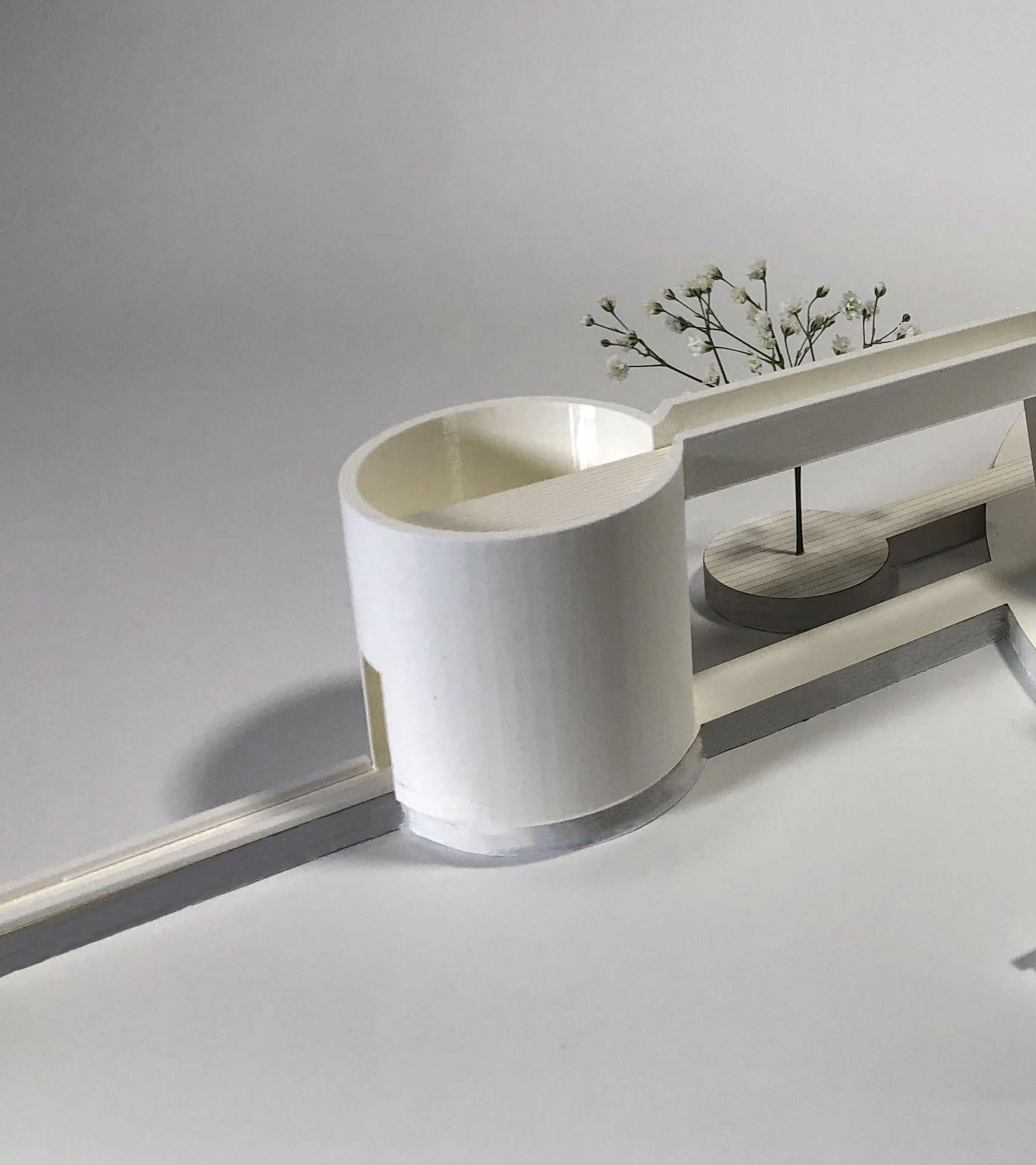
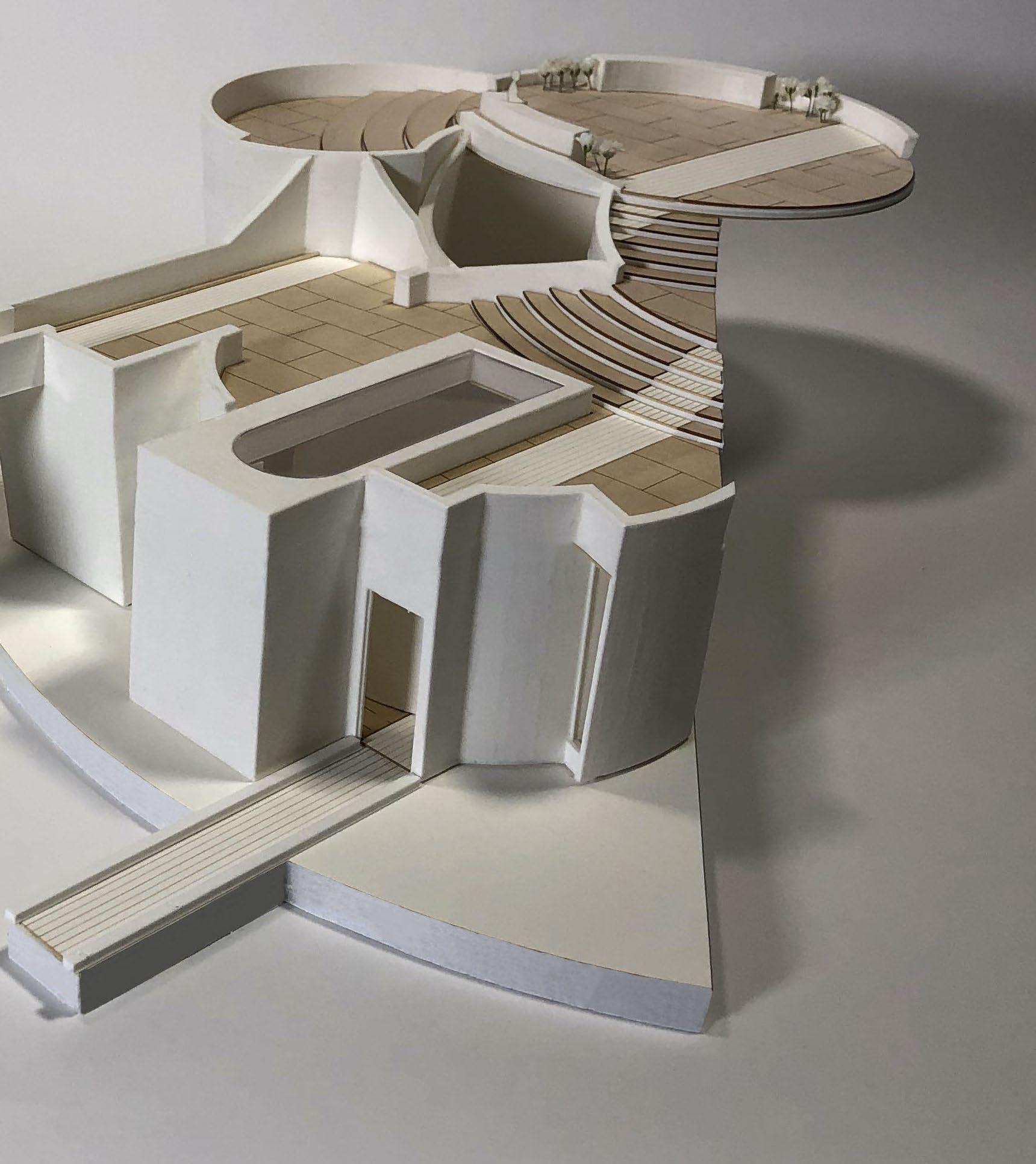
This 10,000 SF daycare and synagogue proposal, located in California, takes its inspiration from overlapping circles and strong horizontality. Four buildings are created around a center point to make a defned exterior space that can be utilized for a specifed program. The roof creates a unique relationship to the space by offering shade and protection from the elements. While the pathways act as a connection between the buildings, the roofscape also acts as the connection between all four buildings.
92
 Elizabeth Cornfeld
The design is inspired by the use of overlapping circles and strong horizontality in “Mariorola” by Beatriz Milhazes
Elizabeth Cornfeld
The design is inspired by the use of overlapping circles and strong horizontality in “Mariorola” by Beatriz Milhazes
Plan, Unplanned
94
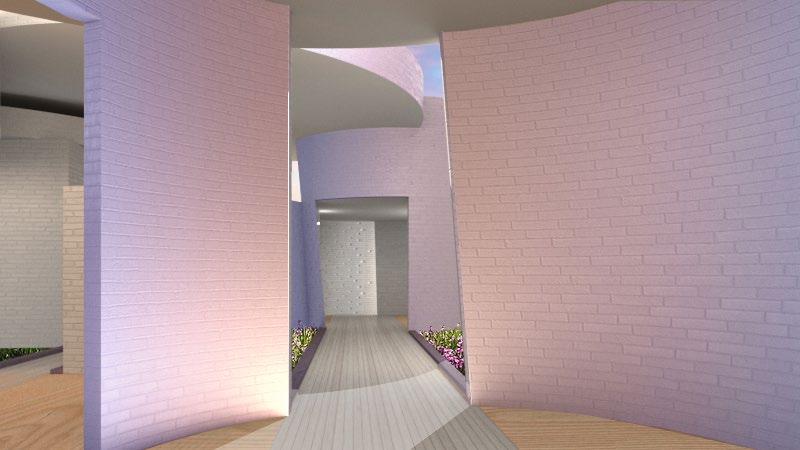
The synagogue is occupied within the upper left building of the plan while the daycare facility is occupied within the other three buildings. The programs remain connected through a series of paths that run throughout the space.
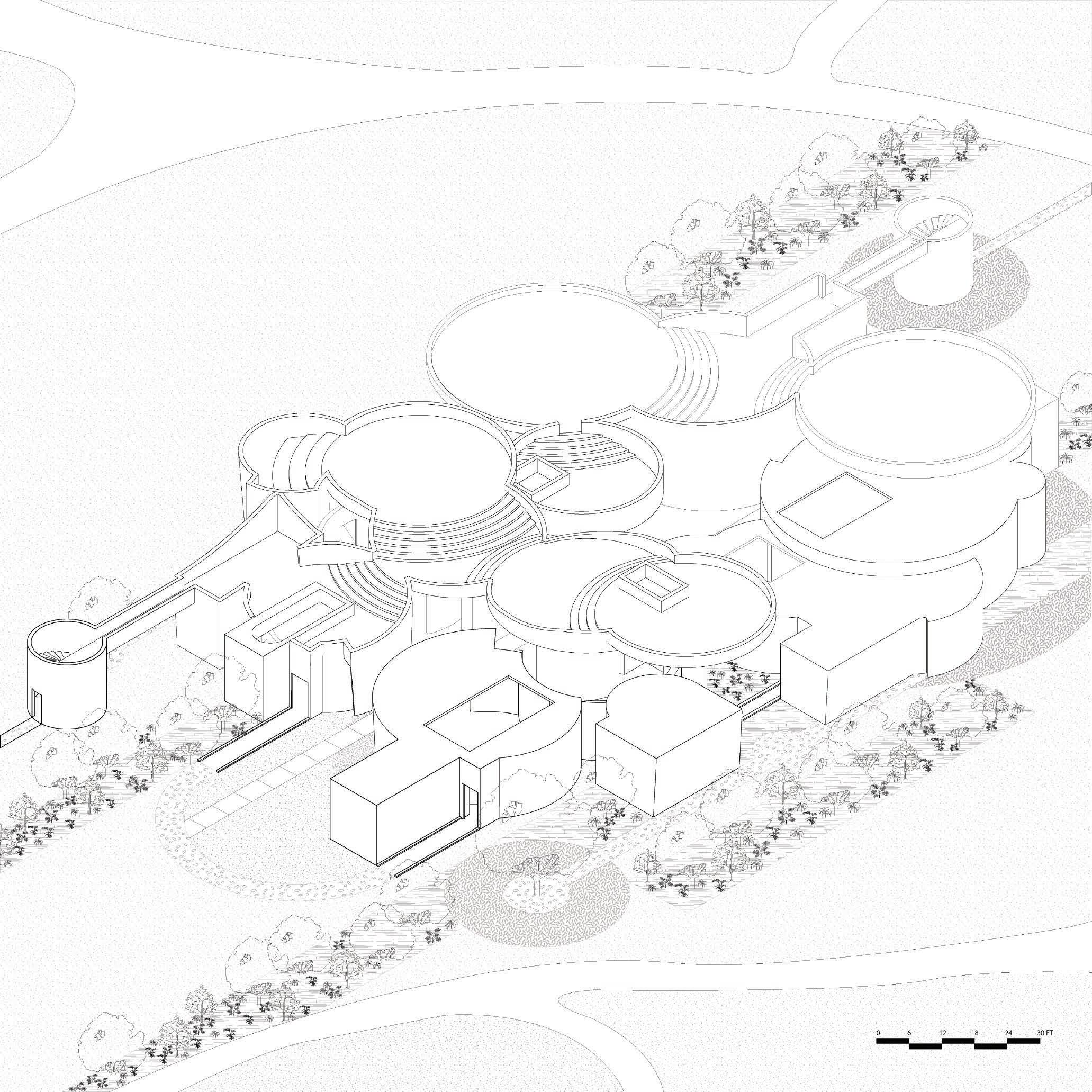
The roof creates a unique relationship to the space by offering shade and protection from the elements. While some portions of the roof match the shape of the foor plan below it, other parts of the roof are circular and expand outward over neighboring spaces.
 Elizabeth Cornfeld
Plan, Unplanned 96
The roofscape also acts as the connection between all four buildings. The circular form of the roof is offset to create a series of steps to connect some of the roofs together.
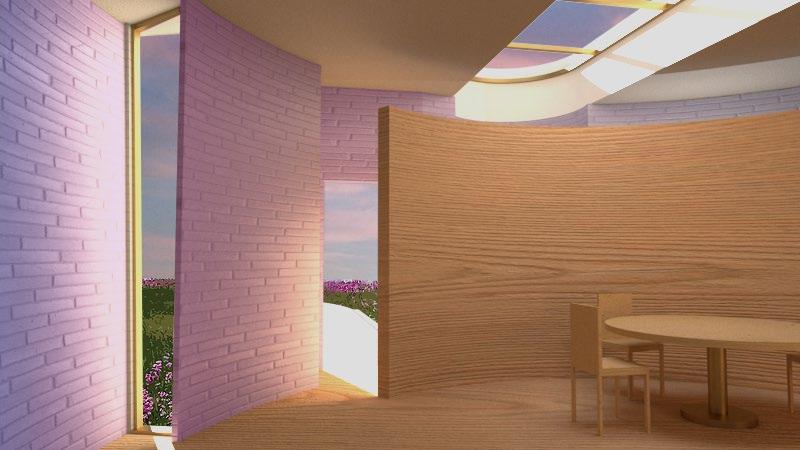
Light is fooded into the space through skylights and open passages. Floor to ceiling windows are also nested in between the wall, forcing the wall to peel back its circular form.
 Elizabeth Cornfeld
Plan, Unplanned 98
100