Silvia Ballabio
Voices
Focus on Oracy Skills

Gruppo Editoriale
ELi
Il piacere di apprendere
PROPOSTE DI RIPASSO PER L’ESAME DI MATURITÀ
BRANI ANTOLOGICI SELEZIONATI COLLEGATI AL TEMA PRINCIPALE
EDUCAZIONE CIVICA E AGENDA 2030
COSTITUZIONE DELLA REPUBBLICA ITALIANA
ORACY LABS DEBATE
eliGreenwich readers
www.eligreenwich.it
Pensati appositamente per la Scuola secondaria di secondo grado, gli eliGreenwich readers offrono:
• dossier sull’autore e sul periodo storico di ambientazione del romanzo
• doppia pagina di presentazione dei personaggi, con breve descrizione allegata
• testo con glossario per le parole più difficili
• spiegazioni di riferimenti culturali o storici direttamente in pagina
• brevi riassunti accanto ai paragrafi per aiutare nella comprensione della storia
• didascalie di spiegazione per le immagini
• ricchissimo assortimento di attività
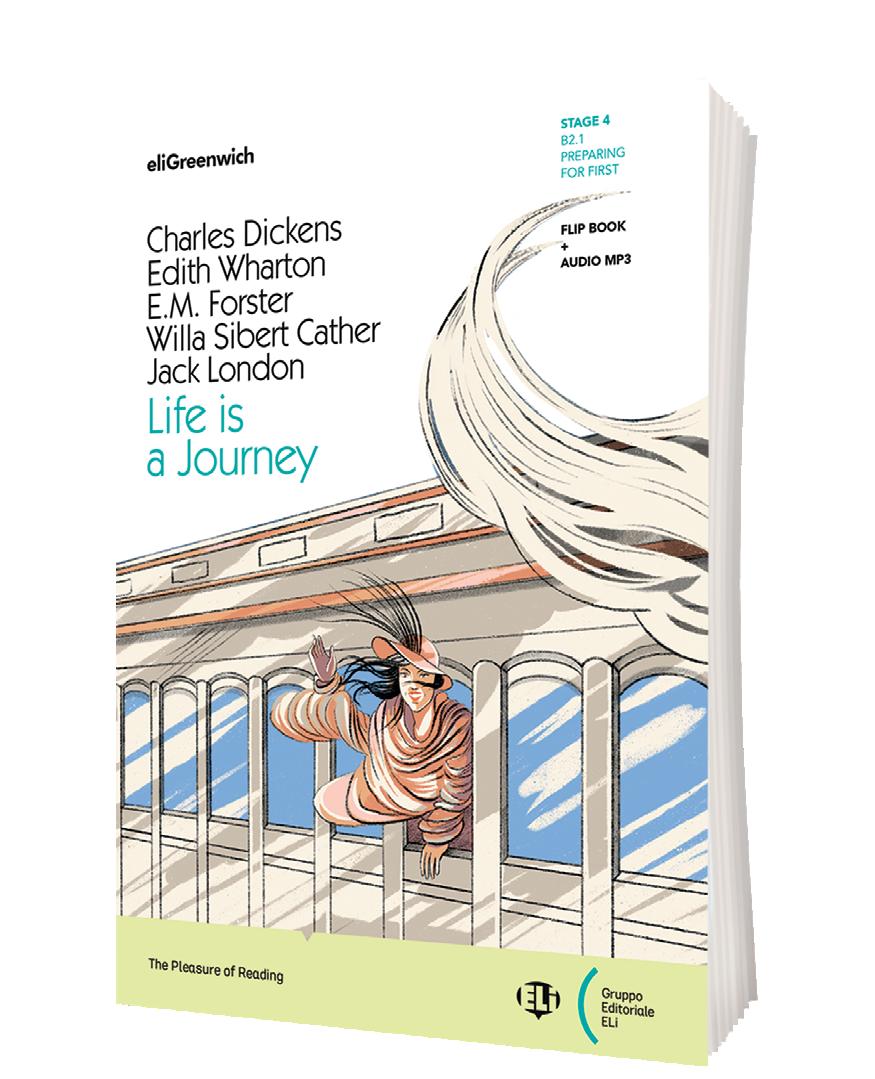
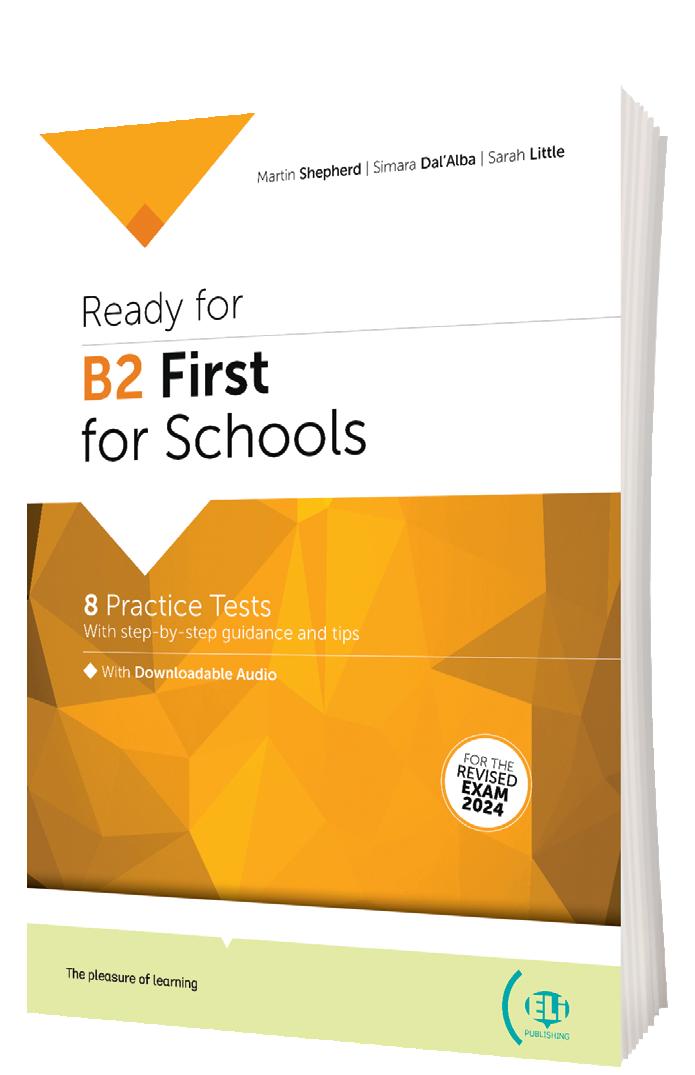
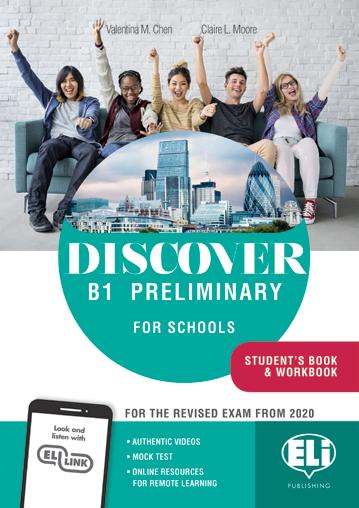
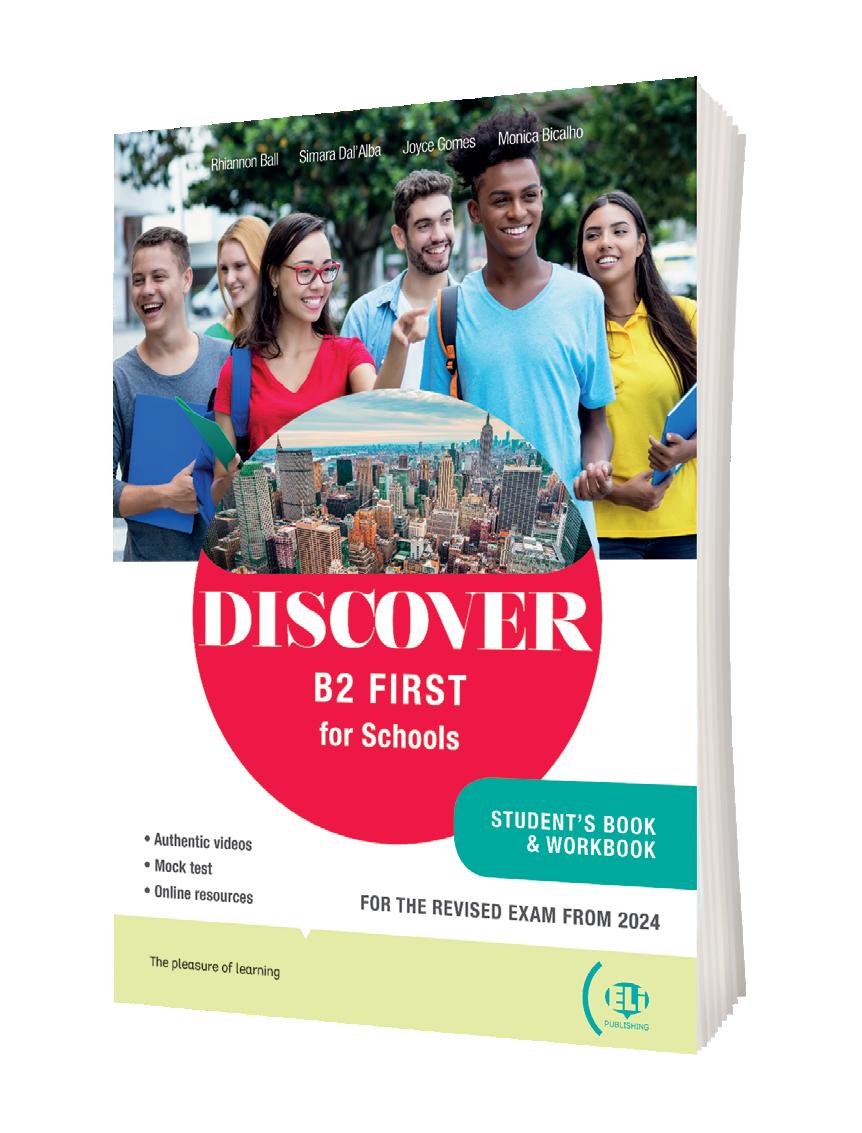
Certificazioni internazionali
Volumi con 8 prove complete e guidate per allenarsi alle certificazioni Cambridge B1 Preliminary for Schools e B2 First for Schools.


I corsi della serie Discover offrono una preparazione completa e dettagliata alle certificazioni dei livelli B1 e B2.


Silvia Ballabio
Voices Focus on Oracy Skills
Contents
THE ROMANTIC AGE
1 W. WORDSWORTH AND S.T. COLERIDGE - Nature, loved or feared
SDG 13 Cli-fi and climate change pp. 2-3
2 M. Shelley and J. Austen - Great women grow
SDG 5 Glass ceilings and cliffs
THE VICTORIAN AGE
3 C. DICKENS - The Haves and the Have-nots
4-5
SDG 1-2 The 2025 SDGs report: is 2030 too close to become true? pp. 6-7
4 R. L. Stevenson and O. Wilde - Living in hypocrisy
SDG 8 Does generation Z really care for SDGs? pp. 8-9
THE MODERN AGE
5 V. WOOLF AND T.S. ELIOT - Experimentation
SDG 8 Innovation for all pp. 10-11
6 War poets - Give peace a chance
SDG 16 A cry for peace pp. 12-13
7 J. Steinbeck - The dispossessed
SDG 11 Finding your home pp. 14-15
THE COLD WAR AGE
8 A. WALKER AND J. COEETZE - The best defence against racism
SDG 10 Fighting discrimination pp. 16-17
9 J. Kerouac and G. Lord Byron - Rebels of all times
SDG 17 Individualism vs cooperation pp. 18-19 THE NEW MILLENIUM
10 D. DELILLO AND G. ORWELL - How can we tell what is true?
SDG 4 A school for all pp. 20-21
11 C. McCarthy and M. Atwood - Hope for the future
SDG 11 What is our future like? pp. 22-23
Nature, loved or feared
ORACY LAB 1
The authors
1 Revise the mind maps about W. Wordsworth and S.T. Coleridge in your Coursebook. Ask your partner questions about their lives, themes, language and style. Make a note of what your partner says.
2 Share your notes and practise presenting the key points in turns. Ask your partner to tell you where you did your best.
3 Record your best presentation at home for future revision.
Low and rustic life was generally chosen because in that situation the essential passions of the heart find a better soil in which they can attain their maturity, are less under restraint, and speak a plainer and more emphatic language; because in that situation our elementary feelings exist in a state of greater simplicity and consequently may be more accurately contemplated and more forcibly communicated; because the manners of rural life germinate from those elementary feelings; and from the necessary character of rural occupations are more easily comprehended; and are more durable; and lastly, because in that situation the passions of men are incorporated with the beautiful and permanent forms of nature.
(from ‘The Preface’)
It was agreed, that my endeavours should be directed to persons and characters supernatural, or at least romantic; yet so as to transfer from our inward nature a human interest and a semblance of truth sufficient to procure for these shadows of imagination that willing suspension of disbelief for the moment, which constitutes poetic faith. Mr. Wordsworth, on the other hand, was to propose to himself as his object, to give the charm of novelty to things of every day, and to excite a feeling analogous to the supernatural, by awakening the mind's attention to the lethargy of custom, and directing it to the loveliness and the wonders of the world before us.
(from Biographia Literaria)
THINK OUT LOUD
• What do know about Wordsworth and Coleridge’s friendship and its relevance to the birth of Romantic poetry?
• How much do I think the text(s) reflect(s) Wordsworth’s perception of nature as a beautiful living entity? Do I find his view appealing or outdated?
• How effective do I think Coleridge is in representing the sublime in nature? Do I find his view disturbing or appealing?
• Who do I think best experiences nature and shows respect for it?
• COMPARE Which author(s) of foreign literature have I studied that develop(s) similar themes, or whose sensibility I find similar to either Wordsworth’s or Coleridge’s?
Cli-fi and climate change

La Repubblica promuove lo sviluppo della cultura e la ricerca scientifica e tecnica. Tutela il paesaggio e il patrimonio storico e artistico della Nazione. Tutela l’ambiente, la biodiversità e gli ecosistemi, anche nell’interesse delle future generazioni. La legge dello Stato disciplina i modi e le forme di tutela degli animali.

To achieve a climate-neutral world by midcentury and to limit global warming to well below 2° C – with an aim of 1.5° C – compared with pre-industrial times.
ORACY LAB 2
The works
Read the two short extracts above, one from ‘The Preface’ to Lyrical Ballads by Wordsworth, and one from Biographia Literaria by Coleridge. Notice how the two poets present their view of poetry and nature, which they made into the collection Lyrical Ballads
INTERPRET
1 Why should poetry focus on life and nature according to Wordsworth?
2 What is the matter of poetry in Lyrical Ballads in Coleridge’s words?
3 What evidence can I find in the texts about the importance of nature in Romanticism?
4 Do I find this view of nature realistic? Attractive? Why? / Why not?
ORACY LAB 3
The themes
Look at the mind maps in your Coursebook again, and focus on the text(s) you have read. Speak for one minute for each 'Think out loud' question. Ask a classmate to listen to you and to suggest what can be improved (pronunciation, vocabulary, content, organisation, fluency…).
ASSESS Agree with a partner about the top three measures that nations should adopt to fight climate change. Choose from among boosting energy efficiency, regulating and/or reducing greenhouse gas emissions, investing in green infrastructure, phasing out coal, supporting R&D (research and development), saving energy and diversifying energy supplies.
DISCUSS Work in pairs. Which measure is not taken seriously enough in our country?
ORACY LAB 4
Today’s matters
Read the text and answer the questions below.
James Bradley (1967), an Australian novelist and critic, has written novels dealing with both the past and the future and exploring the risks of climate change. In Clade (2015), the story of three generations of a family enables him to explore how climate change affects people’s lives and sensibility over the 21st century.
In an interview, James Bradley, a writer of climate change novels himself, talks about how Cli-fi (climate fiction) can persuasively show that climate change is altering the whole planet and life on it.
It seemed to me that if I could give readers a way of imagining what it might be like to live in a climate-changed world it might help them think about the problem more effectively. (…) Novels do not have to approach the subject directly or explicitly to be engaged with it. (…) Climate change is only the most significant of a host of environmental pressures that range from overpopulation to pollution, falling biodiversity and habitat loss, that are altering the Earth’s climate and environment in entirely unprecedented ways. The familiar is being erased, as landscapes are razed and burned or alienated to human use, birds and animals disappear, supplanted by new and unfamiliar species, rivers die and the oceans empty out.
THINK OUT LOUD
• Which environmental pressure do I find most urgent?
• What examples of landscape ‘alienated to human use’ can I think of on a small or global scale?
ENGLISH IN ACTION
Match each word to the correct definition.
1 green infrastructure
2 phasing out coal
3 supporting R&D
4 overpopulation
5 habitat loss
a stopping burning coal for energy
b natural environment lost to human use
c natural and semi-natural areas that improve quality of life
d analysis and technical expertise that accelerate the innovation process
e the presence of too many people in an area
Art. 9 Costituzione della Repubblica Italiana
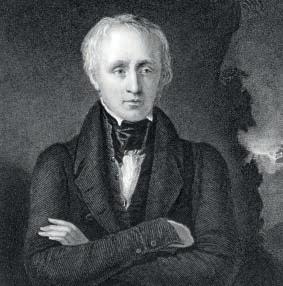
▲ William Wordsworth
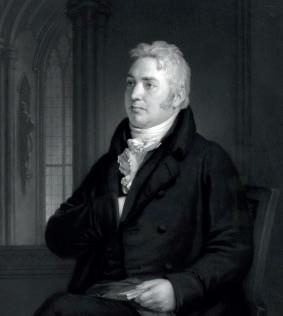
▲ Samuel Taylor Coleridge
Great women grow
Learn, collaborate, share
ORACY LAB 1
The authors
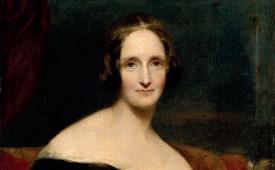
1 Revise the mind maps about Mary Shelley and Jane Austen in your Coursebook. Ask your partner questions about their lives, themes, language and style, and about their works Frankenstein and Pride and Prejudice (the plot, the genre and the themes). You may consider other works if you have studied them. Make a note of what your partner says.
2 Exchange your notes and practise presenting the key points in turns. Ask your partner to tell you where you did best.
3 Record your best presentation at home for future revision.
Glass ceilings and cliffs
Art. 3 e 29 Costituzione della Repubblica Italiana
You must create a female for me with whom I can live in the interchange of those sympathies necessary for my being. This you alone can do, and I demand it of you as a right which you must not refuse to concede. (…) If I have no ties and no affections, hatred and vice must be my portion; the love of another will destroy the cause of my crimes, and I shall become a thing of whose existence everyone will be ignorant. My vices are the children of a forced solitude that I abhor, and my virtues will necessarily arise when I live in communion with an equal. I shall feel the affections of a sensitive being and become linked to the chain of existence and events from which I am now excluded.
Charlotte Lucas
‘I am not romantic, you know; I never was. I ask only a comfortable home; and considering Mr. Collins' character, connection, and situation in life, I am convinced that my chance of happiness with him is as fair as most people can boast on entering the marriage state.’
Elizabeth Bennet
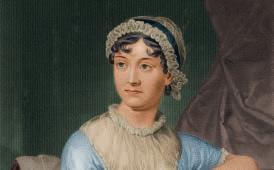
▲ Jane Austen
‘I am determined that only the deepest love will induce me into matrimony. So, I shall end an old maid, and teach your ten children to embroider cushions and play their instruments very ill.’
from Pride and Prejudice, Chapter 22
ORACY LAB 2
The works
Read the two short extracts above. In the first, from Frankenstein by M. Shelley, the monster asks the doctor to make him a female companion who gives him peace. The second, from Pride and Prejudice by J. Austen, presents Charlotte Lucas’ and Elizabeth Bennet’s views of marriage. Charlotte has just accepted the marriage proposal of Mr Collins, which Elizabeth had instead rejected. Read for the similarities and differences in their ideas of companionship and marriage.
INTERPRET
1 What does the monster want a female companion for?
2 Do Charlotte and Elizabeth have the same view of marriage and love?
3 Who from among these three characters best reflects my view of love and my need for a partner in life?
ORACY LAB 3
The themes
Look at the mind maps in your Coursebook again, and focus on the text(s) you have read. Speak for at least one minute for each 'Think out loud' question. Ask a classmate to listen to you and to suggest what can be improved (pronunciation, vocabulary, contents, organisation, fluency…).
THINK OUT LOUD
• Whose life do I find most revolutionary, Mary Shelley's or Jane Austen's?
• Which appeals to me the most: the Gothic novel or the novel of manners? How can I justify my preference?
• How much do I think the text(s) reflect(s) Mary Shelley’s and Jane Austen’s views of humanity?
• COMPARE Which author(s) of foreign literature have I studied that develop(s) similar themes, or whose sensibility find similar to either Mary Shelley’s or Jane Austen’s?
Tutti i cittadini hanno pari dignità sociale e sono eguali davanti alla legge, senza distinzione di sesso, di razza, di lingua, di religione di opinioni politiche, di condizioni personali e sociali.
Il matrimonio è ordinato sull'uguaglianza morale e giuridica dei coniugi, con i limiti stabiliti dalla legge a garanzia dell'unità familiare.

ASSESS Agree with a partner about the two main indicators that can measure the gender gap in your country. Choose from among shared parental leave, shared childcare, flexible working arrangements, salary transparency for women and men, and political representation for women and men.
ANALYSING DATA Read the data concerning the gender gap. Is the trend negative or positive enough?
In 1975, 70% of girls and young women aged between 15 and 24 were literate (compared to 84% of boys and young men). This rose to 79% in 1990 (87% for boys and young men) and to 93% in 2023 (94% for boys and young men).
In 2023, 2.3% of employed women and 5% of men were company managers. 2% of employed women and 4% of men were company managers.
33% of businesses are owned by women worldwide.
Birth rates for adolescent girls aged 15-19 have fallen from 74 births per 1000 girls in 1990 to 39 per 1000 in 2022.
Source: https://focus2030.org/en/overview-of-data-resources-on-gender-equality-across-the-world/
ORACY LAB 4
Today’s matters
Read the text. What does the expression ‘glass cliff’ mean metaphorically?
The glass cliff refers to a phenomenon wherein women tend to be promoted to positions of power in times of crisis when failure is more likely. This could occur in fields as diverse as finance, politics, technology, and academia.
While the more common glass ceiling presents a barrier to reaching the highest executive levels within their respective organisations, the glass cliff addresses the tendency to place women who have broken through it into precarious positions, making it likely that their performance will falter, as if they are at risk of falling off a cliff.
WEB QUEST Search the web to find examples of glass cliffs in recent years, and prepare a presentation to discuss gender equality critically.
ORACY LAB 5
Let’s debate
In the family, women should have roles distinct from those of men.
Here are some ideas in favour of and against the argument. You can add yours to expand the debate.
IN FAVOUR AGAINST
Women give birth and so they take care of the children.
Men have specific skills not suitable in family care.
To achieve gender equality and empower all women and girls.

Parental skills are learned, not innate.
Children enjoy the company and support of either parent with no difference.
Women have specific skills that are more suitable in family care. Babies need physical contact, love and care from both parents.
falter vacillare staggered working time orario di
ENGLISH IN ACTION
Match each word to the correct description.
1 shared parental leave
2 shared childcare
3 flexible working arrangements
4 salary transparency
a when employees have control over how they work (though part-time, compressed, or staggered working time)
b taking time off work for both parents when a child is born or adopted
c making information about salaries and bonuses accessible to all d post-separation arrangements where parents spend equal time with their children
From Frankenstein, Chapter 17
lavoro scaglionato
The Haves and the Have-Nots
ORACY LAB 1
The author
1 Revise the mind maps in your Coursebook. Ask your partner questions about Charles Dickens (life, themes, style, genre of his works) and Oliver Twist (the plot and the themes); you may consider other Dickens’ works if you have studied them. Make a note of what your partner says.
2 Share your notes and practise presenting the key points in turns. Ask your partner to tell you where you did your best.
3 Record your best presentation at home for future revision.
Bill Sikes and Toby Crackit, two of Mr Fagin’s accomplices, take Oliver on a burglary expedition to Chertsey, a town in Surrey. He is the victim of brutal violence in two ways, physical and moral/ psychological. He is wounded, and he is forced to do something, commit a crime, that he loathes.
And now, for the first time, Oliver, well-nigh mad with grief and terror, saw that housebreaking and robbery, if not murder, were the objects of the expedition. He clasped his hands together, and involuntarily uttered a subdued exclamation of horror. A mist came before his eyes; the cold sweat stood upon his ashy face; his limbs failed him; and he sank upon his knees.
‘Get up!’ murmured Sikes, trembling with rage, and drawing the pistol from his pocket; ‘Get up, or I’ll strew your brains upon the grass.’
‘Oh! for God’s sake let me go!’ cried Oliver; ‘let me run away and die in the fields. I will never come near London; never, never! Oh! pray have mercy on me, and do not make me steal. For the love of all the bright Angels that rest in Heaven, have mercy upon me!’
The man to whom this appeal was made, swore a dreadful oath, and had cocked the pistol, when Toby, striking it from his grasp, placed his hand upon the boy’s mouth, and dragged him to the house. […]
In the short time he had had to collect his senses, the boy had firmly resolved that, whether he died in the attempt or not, he would make one effort to dart upstairs from the hall, and alarm the family. Filled with this idea, he advanced at once, but stealthily.
‘Come back!’ suddenly cried Sikes aloud. ‘Back! back!’
Scared by the sudden breaking of the dead stillness of the place, and by a loud cry which followed it, Oliver let his lantern fall, and knew not whether to advance or fly.
The cry was repeated – a light appeared – a vision of two terrified half-dressed men at the top of the stairs swam before his eyes – a flash – a loud noise – a smoke – a crash somewhere, but where he knew not, – and he staggered back.
Sikes had disappeared for an instant; but he was up again, and had him by the collar before the smoke had cleared away. He fired his own pistol after the men, who were already retreating; and dragged the boy up.
‘Clasp your arm tighter,’ said Sikes, as he drew him through the window. ‘Give me a shawl here. They’ve hit him. Quick! How the boy bleeds!’
(Abridged from Chapter 22)
ORACY LAB 2
The works
Read the extract above from Oliver Twist. If crime is rather in the will than in the act, can we consider Oliver a criminal in this scene?
INTERPRET
1 What evidence can I find in the text about the violence Oliver is the victim of?
2 Do I find Oliver a good role model? Why? Why not?
ORACY LAB 3
The themes
Focus on the texts you have read from the novel, and answer the questions. Speak for at least one minute for each 'Think out loud' question. Ask a classmate to listen to you and to suggest what can be improved (vocabulary, pronunciation, contents, organisation, fluency…).
THINK OUT LOUD
• What do I know about Oliver’s condition as an orphan, his difficult childhood and how adults treat him?
• How much do I think the texts reflects Dickens’ own difficult childhood and the trauma he suffered?
• How effective do I think Dickens is in condemning the evils of Victorian society? Which one(s) do I find most disturbing?
• What rights and opportunities did I have as a child which Oliver hasn’t? Is he poor only because he has no money?
• COMPARE Which author(s) of foreign literature have I studied that develop(s) similar themes, or whose sensibility I find similar to Dickens’?
The 2025 SDGs report: is 2030 too close to become true?

È compito della Repubblica rimuovere gli ostacoli di ordine economico e sociale, che, limitando di fatto la libertà e l’eguaglianza dei cittadini, impediscono il pieno sviluppo della persona umana e l’effettiva partecipazione di tutti i lavoratori all’organizzazione politica, economica e sociale del Paese.
ASSESS Agree with a partner about the top three social protection benefits that the state should grant all citizens, from among unemployment, disability, and retirement benefits, aid for housing, food assistance, and educational support.
CRITICAL THINKING Work in pairs. Which social benefit is most inadequately provided in our country? What could be done to grant access to this benefit to as many people as possible?
ORACY LAB 4
Today's matters
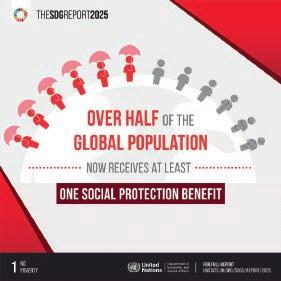
Look at the infographic, which shows the results for Goals 1 in 2024. Discuss it in small groups. Are the results positive or negative, considering that the goals were established in 2015? Which opinion prevails?
ORACY LAB 5
Let’s debate
CRITICAL THINKING Debate the statement in two groups.
Here are some ideas in favour and against the argument. You can add yours to expand the debate.
IN FAVOUR AGAINST
Social benefits help prevent crimes.
Social benefits are a relatively small cost for the state.
Social benefits discourage citizens from being proactive and look for a job.
Social benefits are a burden on the state’s economy.
The state applies its own laws by granting social benefits to those who are disadvantaged. The state should not interfere with people’s lives.

No poverty – By 2030, to eradicate extreme poverty – (living on less than $3.00 per day as per 2025 data).
ENGLISH IN ACTION
Match the words to the correct definition.
1 unemployment benefit
2 disability benefit
3 retirement 4 aid for housing
5 food assistance
6 educational support
a in-kind donations of food
b any form of financial assistance that helps a person to live in a decent house
c any form of economic and/or academic assistance offered to students
d payment made by the state or other body/organisation to a person out of work
e funds provided by the state or other to people who have any physical and/or mental condition that limits their life f the fact of leaving your job and stopping work
Art. 3 Costituzione della Repubblica Italiana
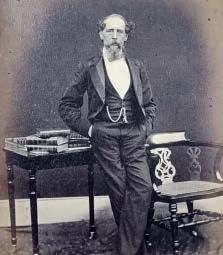
▲ Charles Dickens
The government should provide social benefits for citizens in a state of poverty.
in-kind donations donazioni in natura
Living in hypocrisy
ORACY LAB 1
The authors
1 Revise the mind maps about R. L. Stevenson and O. Wilde in your Coursebook. Ask your partner questions about their lives, themes, language and style, and about their works The Strange Case of Dr Jekyll and Mr Hyde and The Picture of Dorian Gray (the plot, the genre and the themes). You may consider other works if you have studied them. Make a note of what your partner says.
2 Share your notes and practise presenting the key points in turns. Ask your partner to tell you where you did best.
3 Record your best presentation at home for future revision.
I was the first (man) that could thus plod in the public eye with a load of genial respectability, and in a moment, like a schoolboy, strip off these lendings and spring headlong into the sea of liberty. (…) Let me but escape into my laboratory door, give me but a second or two to mix and swallow the draught that I had always standing ready; and whatever he had done, Edward Hyde would pass away like the stain of breath upon a mirror; and there in his stead, quietly at home, trimming the midnight lamp in his study, a man who could afford to laugh at suspicion, would be Henry Jekyll.
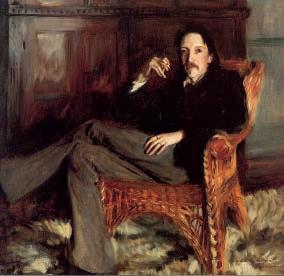
From The Strange Case of Dr Jekyll and Mr Hyde, Chapter 10
I know how people chatter in England. The middle classes air their moral prejudices over their gross dinner-tables, and whisper about what they call the profligacies of their betters in order to try and pretend that they are in smart society and on intimate terms with the people they slander. In this country, it is enough for a man to have distinction and brains for every common tongue to wag against him. And what sort of lives do these people, who pose as being moral, lead themselves?
My dear fellow, you forget that we are in the native land of the hypocrite.
from The Picture of Dorian Gray, Chapter 22
THINK OUT LOUD
• Whose life do I find most shocking and transgressive, Stevenson’s or Wilde’s?
• Who do I find most attractive as a character? How can I justify my preference?
• How much do I think the text(s) reflect(s) Stevenson’s and Wilde’s views of hypocrisy in human relationships?
• COMPARE Which author(s) of foreign literature have I studied that develop(s) similar themes, or whose sensibility I find similar to either Stevenson’s or Wilde’s?
Does generation Z really care about SDGs?
Art.

L'iniziativa economica privata è libera. Non può svolgersi in contrasto con l'utilità sociale o in modo da recare danno alla salute, all’ambiente, alla sicurezza, alla libertà, alla dignità umana.
ASSESS Agree with a partner about the main behaviour that Generation Z should adopt to really foster sustainable economic growth. Choose from among reducing spending on ‘wants’ rather than ‘needs’, reducing waste, embracing true minimalism, and buying locally.
ORACY LAB 4
Today’s matters
Read the text and answer the questions below.
Gen Z has branded itself as the climate-conscious generation but recent consumer data expose a troubling hypocrisy: their spending on sustainable products is declining. While 56% of Gen Z claim they are willing to pay more for sustainable fashion, their limited spending power doesn't align with these declarations. Meanwhile, fast fashion – a known environmental disaster –continues to thrive, driven largely by Gen Z demand. In emerging markets like Thailand, 75% of Gen Z individuals prefer saving for the future over spending on sustainability.
To promote sustained, inclusive and sustainable economic growth.

ORACY LAB 2
The works
Read the two short extracts above. In the first, from The Strange Case of Dr Jekyll and Mr Hyde by Stevenson, Jekyll reveals that he fully enjoyed the life of transgression that Hyde enabled him to live while keeping up his façade of respectability. The second, from The Picture of Dorian Gray by Wilde, presents Dorian talking with the painter Basil Hallward, who wants to know if all the bad rumours about Dorian’s immoral life are true. How do they feel about having to live according to the moral rules of the society they belong to?
INTERPRET
1 How does Jekyll feel about his becoming Hyde?
2 What is the reality of moral life in England according to Dorian?
3 Who do I think best describes hypocrisy in social life? Why?
ORACY LAB 3
The themes
Look at the mind maps in your Coursebook again, and focus on the text(s) you have read. Speak for at least one minute for each 'Think out loud' question. Ask a classmate to listen to you and to suggest what can be improved (pronunciation, vocabulary, contents, organisation, fluency…).
THINK OUT LOUD
• Am I really credible in my consumer behaviour concerning fashion and high-tech?
• What sacrifices should my generation make to bring about a real change in world economy?
ORACY LAB 5
Let’s debate
CRITICAL THINKING Debate the statement in two groups.
Caring about the environment is unprofitable.
Here are some ideas in favour of and against the argument. You can add yours to expand the debate.
IN FAVOUR AGAINST
Solar energy is uneconomic in most areas. New technology is making the production of solar energy highly profitable in many areas. Fossil fuels are cheap and still available in great quantities. Fossil fuels are doomed to end relatively soon.
Recycling increases the costs of production. Efficient recycling limits the costs of production.
ENGLISH IN ACTION
Match each behaviour to the actions that describe it best.
1 reducing spending on 'wants' rather than 'needs'
2 reducing waste
3 embracing true minimalism
4 buying locally
a removing excess possessions
b cutting back on dining out, entertainment, premium subscriptions, and designer clothes
c purchasing from businesses, artisans, and farmers near your home
d repairing what is broken and recycling materials
41 Costituzione della Repubblica Italiana
Finding a new path
ORACY LAB 1
The authors
1 Revise the mind maps about Virginia Woolf and T. S. Eliot in your Coursebook. Ask your partner questions about their lives, themes, language and style, and about their works, Mrs Dalloway and To the Lighthouse and The Waste Land (the style, the plot, the characters, the genre and the themes). You may consider other works if you have studied them. Make a note of what your partner says.
2 Share your notes and practise presenting the key points in turns. Ask your partner to tell you where you did best.
3 Record your best presentation at home for future revision.
Quickly, as if she were recalled by something over there, she turned to her canvas. There it was – her picture. Yes, with all its greens and blues, its lines running up and across, its attempt at something. It would be hung in the attics, she thought; it would be destroyed. But what did that matter? She asked herself, taking up her brush again. She looked at the steps; they were empty; she looked at her canvas; it was blurred. With a sudden intensity, as if she saw it clear for a second, she drew a line there, in the centre. It was done; it was finished. Yes, she thought, laying down her brush in extreme fatigue, I have had my vision.
from To the Lighthouse, part 3, Chapter 14
5 10 If there were rock
And also water
And water
A spring
A pool among the rock
If there were the sound of water only
Not the cicada
And dry grass singing
But sound of water over a rock
Where the hermit-thrush sings in the pine trees
Drip drop drip drop drop drop drop
But there is no water
from The Waste Land, Part 4 - What the Thunder Said
ORACY LAB 2
The works
THINK OUT LOUD
• Both Woolf and Eliot went through a crisis of depression; do I find this visible or masked in their art and sensibility?
• Which technique do I appreciate most, Woolf’s moments of thoughts or Eliot’s objective correlative? Why?
• Which themes do appreciate most in their works?
• Who do I find most emotional and convincing?
• COMPARE Which author(s) of foreign literature have I studied that develop(s) similar themes, or whose sensibility I find similar to either Woolf’s or Eliot’s?
Innovation for all

ORACY LAB 4
Today’s matters
Read the text and answer the questions below.
The snowball effect of innovation
Construction is a sector that represents 3% of the world’s GDP and employs 7% of the world's salaried workforce. It is continuously developing innovations and looking for new solutions, which generally focus on reducing its environmental impact, productivity improvement, and cost reduction. China and India, some of the fastest-growing countries, are investing 20% and 6% of their respective GDP in infrastructures. The progress level of the construction sector is a good development indicator in any country since its snowball effect impacts on the rest of the industries and generates new jobs. One example is the need to build a good infrastructure network (harbours, railways, roads, etc.) to prevent an increase in the logistic costs of the retail sector. Both modular construction and integrated manufacturing play an increasingly important role. In Sweden, for instance, 84% of the single-family houses use prefab elements.
THINK OUT LOUD
Read the two extracts above, one from To the Lighthouse by V. Woolf and one from The Waste Land by T. S. Eliot. The first presents the boat as it reaches the lighthouse and Lily Briscoe’s thoughts as she completes her picture; the second focuses on the sterility of the waste land and the speaker’s desire of water to revitalise it. Focus on the experimentation of the authors’ techniques. What is the purpose of using these new writing techniques?
INTERPRET
1 Is there any attempt at a moral in Lily Briscoe’s thoughts, which end the novel?
2 What is the innovation that the author introduces here? What detail is central, but normally would be considered unimportant in a narration?
3 Which line reproduces the sound that the speaker wishes he could hear in Eliot’s text, and how?
Why is this sound important?
4 Does the author use conventional similes or rhyme schemes or meters?
5 How innovative are these texts to me?
ORACY LAB 3
The themes
Look at the mind maps in your Coursebook again, and focus on the text(s) you have read. Speak for at least one minute for each 'Think out loud' question. Ask a classmate to listen to you and to suggest what can be improved (pronunciation, vocabulary, organisation, contents, fluency…).
• What examples are there in my area or country of innovative projects concerning infrastructures?
• Are there any prefabricated buildings in my area? In which sector (private housing, public buildings, factories…)?
ORACY LAB 5
Let’s debate
CRITICAL THINKING Debate the statement in two groups.
Scientific research is useless and may be even dangerous.
Here are some ideas in favour of and against the argument. You can add yours to expand the debate.
IN FAVOUR AGAINST
Huge capitals are spent on research while people’s basic needs are ignored.
Research creates new wealth in many sectors. Innovations are not made available to all people. Innovations are made available to people in due time.
AI-assisted machinery can be dangerous. AI-assisted machinery is neither positive nor negative, it depends on how you use it.
To promote sustained, inclusive and sustainable economic growth.

ENGLISH IN ACTION
Match each expression to its description.
1 infrastructures
2 snowball effect
3 logistic cost
4 modular construction
5 integrated manufacturing
a when initial growth leads to further faster growth
b three-dimensional modules assembled on the construction site
c all the expenses associated with moving goods
d automated, datadriven unification of all manufacturing processes
e the physical and organisational structures and facilities needed for the operation of society
La Repubblica promuove lo sviluppo della cultura e la ricerca scientifica e tecnica.
Art. 9 Costituzione della Repubblica Italiana
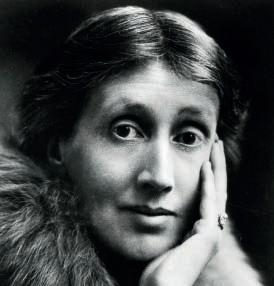
▲ Virginia Woolf
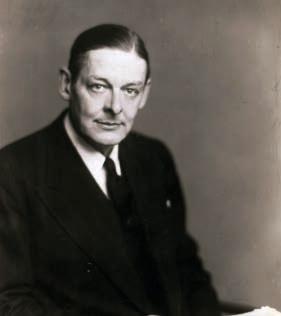
▲ T. S. Eliot
Give peace a chance
Learn, collaborate, share
ORACY
LAB 1
The authors
1 Revise the mind maps about the war poets Wilfred Owen and Isaac Rosenberg in your Coursebook. Ask your partner questions about their lives, themes, language and style, and about their poems, Dulce et Decorum est and Break of Day in the Trenches (the style and the themes). You may consider other poems if you have studied them. Make a note of what your partner says.
2 Share your notes and practise presenting the key points in turns. Ask your partner to tell you where you did best.
3 Record your best presentation at home for future revision.
What passing-bells for these who die as cattle?
— Only the monstrous anger of the guns.
Only the stuttering rifles' rapid rattle
Can patter out their hasty orisons.
No mockeries now for them; no prayers nor bells;
Nor any voice of mourning save the choirs, —
The shrill, demented choirs of wailing shells;
And bugles calling for them from sad shires.
From Anthem for Doomed Youth, 1917
ORACY LAB 2
The works
Read the extract above from Anthem for Doomed Youth by Wilfred Owen. Written in 1917 when Owen was in hospital recovering from shell shock, the sonnet mirrors his bitterness at the meaningless death of his companions. What animals are soldiers compared to, in the first line? What does the word make you think about, in this context?
INTERPRET
1 What mourning ceremony is there for the soldiers dying in battle?
2 Which adjectives underline the horror of young men being butchered in a meaningless war?
3 Which conflicts in today’s world does this text make me think of? Are my feelings the same of the poet’s? Why / Why not?
ORACY LAB 3
The themes
Look at the mind maps in your Coursebook again, and focus on the text(s) you have read. Speak for at least one minute for each 'Think out loud' question. Ask a classmate to listen and to suggest what can be improved (pronunciation, vocabulary, contents, organisation, fluency…).
THINK OUT LOUD
• What tragic experience did Owen and Rosenberg share?
• Who sounds most desperate to me between the two?
• Do I find the reality of war familiar or somehow alien to me?
• COMPARE Which author(s) of foreign literature have I studied that develop(s) similar themes, or whose sensibility I find similar to Owen's?
A cry for peace

To promote peaceful and inclusive societies, providing access to justice for all and building effective, accountable and inclusive institutions.
WEB QUEST Search the web for information concerning international organisations promoting peace in today’s world such the UN, the EU and the NATO (year of foundation, statute, members etc.). Prepare a presentation that also includes the most successful initiative of one of these organisations in preventing or stopping a war in the last 50 years.
ASSESS Is diplomacy still powerful enough to grant peace?
ORACY LAB 4
Today’s matters
So far, nine women have won the Nobel prize for peace; they were not only of different nationalities and different classes, but of different faiths. You are going to read a short extract from the Nobel Prize acceptance speech of Mother Teresa, an Albanian-Indian Catholic nun. The other extract is taken from M. L. King's speech.

One evening a gentleman came to our house and said, there is a Hindu family and the eight children have not eaten for a long time. Do something for them. And I took rice and I went immediately, and there was this mother, those little ones’ faces, shining eyes from sheer hunger. She took the rice from my hand, she divided into two and she went out. When she came back, I asked her, where did you go? What did you do? And one answer she gave me: They are hungry also. She knew that the next-door neighbour, a Muslim family, was hungry. What surprised me most, not that she gave the rice, but what surprised me most, that in her suffering, in her hunger, she knew that somebody else was hungry, and she had the courage to share, share the love.
L'Italia ripudia la guerra come strumento di offesa alla libertà degli altri popoli e come mezzo di risoluzione delle controversie internazionali; consente, in condizioni di parità con gli altri Stati, alle limitazioni di sovranità necessarie ad un ordinamento che assicuri la pace e la giustizia fra le Nazioni; promuove e favorisce le organizzazioni internazionali rivolte a tale scopo.
Civilization and violence are antithetical concepts. (…) Sooner or later all the people of the world will have to discover a way to live together in peace, and thereby transform this pending cosmic elegy into a creative psalm of brotherhood. If this is to be achieved, man must evolve for all human conflict a method which rejects revenge, aggression and retaliation. The foundation of such a method is love.
THINK OUT LOUD
CRITICAL THINKING Read the two short extracts above from the Nobel Prize winners' speeches and answer the questions.
• What strikes me most in the words of both Nobel peace winners?
• Whose words do I find most convincing in their plea for peace?
• What do I think I can do as an individual to build peace?
ORACY LAB 5
Let’s debate
CRITICAL THINKING Debate the statement in two groups.
Peace is easy to make after war and terrible crimes against humanity.
Here are some ideas in favour of and against the argument. You can add yours to expand the debate.
IN FAVOUR AGAINST
Crimes against humanity demand justice and all countries agree on this point.
Peoples can learn to live together again with time and good will.
Terrible crimes won't be forgotten and peace won't be reached easily.
After terrible crimes it's impossible for peoples to live together in peace again.
Diplomacy and cooperation are reached easily after a terrible conflict. It's impossibile to cooperate if terrible crimes have been perpetrated.
Mother Teresa, Nobel Peace Prize 1979
Martin Luther King Jr., Nobel Peace Prize 1964
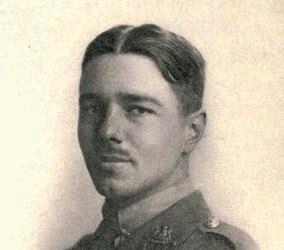
Wilfred Owen
The dispossessed
The squatting men looked down again. What do you want us to do?
ORACY
LAB 1
The author
1 Revise the mind map about John Steinbeck in your Coursebook. Ask your partner questions about his life, themes, language and style, and about his work The Grapes of Wrath (the plot, the style and the themes). Make a note of what your partner says.
2 Share your notes and practise presenting the key points in turns. Ask your partner to tell you where you did best.
3 Record your best presentation at home for future revision.
We can’t take less share of the crop – we’re half starved now. The kids are hungry all the time. We got no clothes, torn an’ ragged. If all the neighbours weren’t the same, we’d be ashamed to go to meeting. And at last, the owner men came to the point. The tenant system won’t work anymore. One man on a tractor can take the place of twelve or fourteen families. Pay him a wage and take all the crop. We have to do it. We don’t like to do it. But the monster’s sick. Something’s happened to the monster.
But you’ll kill the land with cotton.
We know. We’ve got to take cotton quick before the land dies. Then we’ll sell the land. Lots of families in the East would like to own a piece of land.
The tenant men looked up alarmed. But what’ll happen to us? How’ll we eat?
You’ll have to get off the land. The plows’ll go through the dooryard.
And now the squatting men stood up angrily. Grampa took up the land, and he had to kill the Indians and drive them away. And Pa was born here, and he killed weeds and snakes. Then a bad year came and he had to borrow a little money. An’ we was born here. There in the door – our children born here. And Pa had to borrow money. The bank owned the land then, but we stayed and we got a little bit of what we raised.
We know that – all that. It’s not us, it’s the bank. A bank isn’t like a man. Or an owner with fifty thousand acres, he isn’t like a man either. That’s the monster.
from The Grapes of Wrath, Chapter 5
Finding your home
‘To find his home again,’ she said. Learn, collaborate, share
ORACY LAB 2
The work
Read the extract above from The Grapes of Wrath by John Steinbeck. The landowners talk to the tenant farmers to announce that they will lose the land because the monster (the bank) will grow cotton, exploit the land and then sell it. The families will become homeless. How will all this affect their lives?
INTERPRET
1 What effect will the crisis have on the farmers in the near future?
2 Why does the bank prefer the new system with one man driving a tractor instead of large groups of farmers?
3 How do the men react when they realise they are being sent away from the land they have been working on for generations?
4 Do I find the tenant men’s reaction and claim legitimate and reasonable? Why / Why not?
ORACY LAB 3
The themes
Look at the mind map in your Coursebook again, and focus on the text(s) you have read. Speak for at least one minute for each 'Think out loud' question. Ask a classmate to listen to you and to suggest what can be improved (pronunciation, vocabulary, contents, organisation, fluency…).
THINK OUT LOUD
• How influential were real historical events in depicting the protagonists' condition?
• Do I know anyone who had to flee their country against their will? How do they feel?
• How would I react if I suddenly lost my home and everything that am familiar with?
• COMPARE Which author(s) of foreign literature have I studied that develop(s) similar themes, or whose sensibility I find similar to Steinbeck’s?
Art. 47 Costituzione della Repubblica Italiana

La Repubblica incoraggia e tutela il risparmio in tutte le sue forme; disciplina, coordina e controlla l'esercizio del credito. Favorisce l'accesso del risparmio popolare alla proprietà dell'abitazione, alla proprietà diretta coltivatrice e al diretto e indiretto investimento azionario nei grandi complessi produttivi del Paese.
ORACY LAB 4
Today’s
matters
Read the text and answer the questions below.
The Beekeper of Aleppo by Christy Lefteri (2017) is one of the many novels exploring the theme of homelessness being inevitably linked with the loss of identity and the search for a new one.
The protagonists, Nuri and Afra, husband and wife, escaped Syria, transformed by the civil war from a beautiful place into a ruin of empty buildings and terrible violence. The choice to leave was not easy to make, though they try to find their new ‘home’ in England, as Angeliki, a Somalian refugee and Afra’s friend, says any time she speaks of Odysseus:
‘[Odysseus] went from Ithaca to Calypso to god knows where – all of this journey, to find what?’ There was an intensity to her – the way she leaned into me, the way she pushed my leg if I took my eyes off her.
‘I don’t know,’ I said to her.
THINK OUT LOUD
• What does Odysseus’ travelling mean to Angeliki?
• Do I see Odysseus’ wandering as she does?
• How do feel about having my own home?
• How would I react if I were forced to leave it?
ORACY LAB 5
Let’s debate CRITICAL THINKING Debate the statement below.
Refugees should always be welcomed.
Here are some ideas in favour of and against the argument. You can add yours to expand the debate.
IN
FAVOUR AGAINST
Refugees escape from wars or disasters and have a right to finding a new home.
Not all refugees should be offered a home, it depends on their attitude to the values of their new country.
A home helps them to find a new identity. Identity is more than a home; they can find themselves even without a home.
They may find it difficult to adjust to a new world but should be supported. It is normal to have difficulties adapting, and support is not always necessary.
The economy greatly benefits from the presence of immigrant workers.
Immigrant workers take the jobs away from native citizens.

Ensuring safe, affordable, and adequate housing for all, along with basic services and slum upgrade.
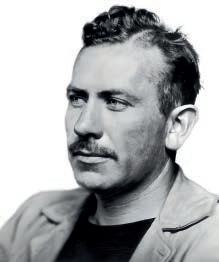
▲ John Steinbeck
The best defence against racism
This my husband Samuel, she say, pointing up. These our children Olivia and Adam and this Adam's wife Tashi, she say.
ORACY LAB 1
The authors
1 Revise the mind maps about Alice Walker and John Coetzee in your Coursebook. Ask your partner questions about their lives, themes, language and style, and about their works, The Color Purple and Waiting for the Barbarians (the genre, the plot, the style and the themes). Make a note of what your partner says.
2 Share your notes and practise presenting the key points in turns. Ask your partner to tell you where you did best.
3 Record your best presentation at home for future revision.
I point up at my peoples. This Shug and Albert, I say.
Everybody say Pleased to Meetcha. Then Shug and Albert start to hug everybody one after the other. Me and Nettie finally git up off the porch and I hug my children. And I hug Tashi. Then I hug Samuel. Why us always have family reunion on July 4th, say Henrietta, mouth poke out, full of complaint.
It so hot. White people busy celebrating they independence from England July 4th, say Harpo, so most black folks don't have to work. Us can spend the day celebrating each other.
from The Color Purple, Letter 80
It always pained me in the old days to see these people fall victim to the guile of shopkeepers, exchanging their goods for trinkets, lying drunk in the gutter, and confirming thereby the settlers’ litany of prejudice: that barbarians are lazy, immoral, filthy, stupid. Where civilization entailed the corruption of barbarian virtues and the creation of a dependent people, I decided, I was opposed to civilization; and upon this resolution I based the conduct of my administration. (I say this who now keeps a barbarian girl for my bed!).
THINK OUT LOUD
• What different perspectives do Walker and Coetzee have on the reality of racial prejudices?
• Is their view of racism and prejudices still valid in today’s world?
• What do believe is the best way to eradicate prejudices of any sort?
• COMPARE Which author(s) of foreign literature have I studied that develop(s) similar themes, or whose sensibility I find similar to either Walker’s or Coetzee’s?
Fighting discrimination
Art. 3 Costituzione della Repubblica Italiana

Tutti i cittadini hanno pari dignità sociale e sono eguali davanti alla legge, senza distinzione di sesso, di razza, di lingua, di religione, di opinioni politiche, di condizioni personali e sociali.
ORACY LAB 4
Today’s matters
Answer the questions below.
THINK OUT LOUD
• Do I know anyone who is being discriminated? What can I do to help them?
• How important is the awareness of past errors to fight off the injustice of the present?
• What do I think institutions can do to fight discrimination? New laws? More severe punishment?
WORK CREATIVE Work in groups. In Australia, the Racial Discrimination Act 1975 (RDA) makes it unlawful to discriminate against a person because of his or her race, colour, descent, national origin or ethnic origin, or immigrant status. Read the following example of racial discrimination solved by the Commission, and imagine a similar case in your area, together with a possible solution.
A case of discrimination
ORACY LAB 2
The works
Read the two extracts above, one from The Color Purple by A. Walker and one from Waiting for the Barbarians by J. Coetzee. In the first, the protagonist, Celie, is finally reunited with Nettie and her family, as well as her own children. The second presents some considerations by the Magistrate, who critically considers the Empire's attitude to indigenous people and his own relationship with the barbarian girl. What common theme do I expect to find in both extracts?
INTERPRET
1 How different is the 4th July for the white and the black people in Celie's words?
2 Are her words full of pride or submission?
3 Why does the Magistrate refuse the civilisation of the settlers?
4 Is the Magistrate’s behaviour consistent with his views?
5 Which attitude do I find most stimulating, Celie’s pride or the Magistrate’s condemnation?
ORACY LAB 3
The themes
Look at the mind maps in your Coursebook again, and focus on the text(s) you have read. Speak for at least one minute for each 'Think out loud' question. Ask a classmate to listen to you and to suggest what can be improved (pronunciation, vocabulary, contents, organisation, fluency…).

To ensure equal opportunity and reduce inequalities of outcome, including by eliminating discriminatory laws, policies and practices.
A Greek woman employed by a large company as a travel consultant asked her team leader for leave on a particular Friday for religious and cultural reasons, as Greek Orthodox Good Friday did not coincide with the Easter weekend public holidays. She alleged that her team leader laughed at her request, said ‘You are in Australia and should celebrate Australian Easter', told her that if she was unhappy about this she should ‘go back to her own country' and made fun of her surname by calling it 'the alphabet'. The solution:
The complaint was resolved through conciliation with the company agreeing to provide the woman with financial compensation, a statement of regret and a statement of service.
ORACY LAB 5
Let’s debate CRITICAL THINKING Debate the statement below.
Discrimination is best fought through empathy and knowledge.
Here are some ideas in favour of and against the argument. You can add yours to expand the debate.
IN FAVOUR AGAINST
There is no discrimination if you know people well.
All people are naturally different: we just need to educate the others to be tolerant.
If you feel empathy, you do not discriminate people so easily.
Knowing people is no defence against discrimination.
Discrimination is inevitable because we are afraid of differences.
Not all people are empathic in the same way.
from Waiting for the Barbarians Part 1, Chapter 1
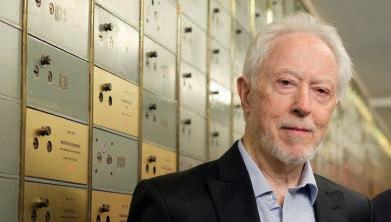
▲ John Coetzee
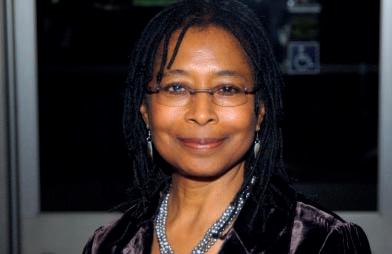
▲ Alice Walker
Rebels of all times
Learn, collaborate, share
ORACY LAB 1
The authors
1 Revise the mind maps about Jack Kerouac and George Lord Byron in your Coursebook. Ask your partner questions about their lives, themes, language and style, and about their works, On the Road and Oriental Tales (the style and the themes). You may consider other works if you have studied them. Make a note of what your partner says.
2 Share your notes and practise presenting the key points in turns. Ask your partner to tell you where you did best.
3 Record your best presentation at home for future revision.
Suddenly I had a vision of Dean, a burning shuddering frightful Angel, palpitating toward me across the road, approaching like a cloud, with enormous speed, pursuing me like the Shrouded Traveler on the plain, bearing down on me. I saw his huge face over the plains with the mad, bony purpose and the gleaming eyes; I saw his wings; I saw his old jalopy chariot with thousands of sparking flames shooting out from it; I saw the path it burned over the road; it even made its own road and went over the corn, through cities, destroying bridges, drying rivers. It came like wrath to the West. I knew Dean had gone mad again.
He knew himself a villain – but he deem’d
The rest no better than the thing he seem’d; And scorn’d the best as hypocrites who hid
Those deeds the bolder spirits plainly did. He knew himself detested, but he knew
The hearts that loath’d him, crouch’d and dreaded too.
from On the Road, Chapter 2
from Canto I, 11
Individualism vs cooperation
Art. 45 Costituzione della Repubblica Italiana
Some first principles
“Innovation is seeing what everybody has seen and thinking what nobody has
La Repubblica riconosce la funzione sociale della cooperazione a carattere di mutualità e senza fini di speculazione privata. La legge ne promuove e favorisce l'incremento con i mezzi più idonei e ne assicura, con gli opportuni controlli, il carattere e le finalità.

too bad.
ORACY LAB 4
Today’s matters
To revitalise the global partnership for sustainable development.

ORACY LAB 2
The works
Read the two extracts above, one from On the Road by Kerouac and the other from Oriental Tales –The Corsair by Lord Byron. The first presents Dean Moriarty as a fallen angel setting metaphorically fire to the whole world, the second focuses on the Corsair as a Byronic hero who scorns all those who hypocritically condemn his ‘unconventional’ spirit and lifestyle. Notice the way in which both protagonists are rebels.
INTERPRET
1 What is common to both characters?
2 What do I think Dean’s ‘fire’ (his ‘madness’) stands for?
3 What does the Byronic hero think of ordinary people?
4 Would the individualism of these characters be an obstacle to cooperation if they were real?
ORACY LAB 3
The themes
Look at the mind maps in your Coursebook again, and focus on the text(s) you have read. Speak for at least one minute for each 'Think out loud' question. Ask a classmate to listen to you and to suggest what can be improved (pronunciation, vocabulary, contents, organisation, fluency…).
THINK OUT LOUD
• Whose life do I find more transgressive, Kerouac’s or Byron’s?
• Whose travels do I find more fascinating, Byron’s Grand Tour or Kerouac’s tour of the USA?
• Do I consider individualism a moral value in itself?
• Would I sacrifice my individual views, values, choices, and preferences in the name of cooperation?
• COMPARE Which author(s) of foreign literature have I studied that develop(s) similar themes, or whose sensibility I find similar to either Kerouac’s or Byron’s?
The SDG Partnership Guidebook provides clear guidance on how to build the most effective collaborations among countries, in order to achieve extraordinary results. Read an excerpt and answer the questions below.
This is a way of thinking that can have some merit in certain arenas – for example, when it comes to highly competitive industry sectors whose survival depends on keeping costs down. But for the most part it is a reductive way of thinking, because it limits the scope of what can be achieved together. It makes collaborative working difficult, especially if we have been told to work in partnership as a way to help an organisation to compete with others for funding opportunities.
Joining the dots
Rather than starting from an assumption of competition and scarcity, what happens if we start with a different assumption:
All of the ideas, people, technologies, institutions and resources that are required to achieve the SDGs are already available, and the task is how do we engage them and combine them in new and transformational ways?
This cardinal premise – of sufficiency rather than scarcity of resources – runs through this guidebook, and through TPI’s ‘value maximisation’ approach to partnering. It is a very liberating thought to join the dots between resources in new ways – including thinking differently about what the word ‘resource’ even means – and this requires creative capacities which most of us have in abundance but rarely draw upon.
But what if we gave ourselves the permission to completely redraw the connections between the ‘resources’ available to meet the SDGs? What if we approached every single one of our encounters as opportunities to create new ideas, and what if the best and most interesting ideas emerged from the most unlikely sources? What new connections might emerge then?
Context is everything
Most of us work in operating environments that encourage a sense of competition and separation, rather than collaboration and cooperation. (…) For the most part it is a reductive way of thinking, because it limits the scope of what can be achieved together. Rather than starting from an assumption of competition and scarcity, what happens if we start with a different assumption: All of the ideas, people, technologies, institutions and resources that are required to achieve the SDGs are already available, and the task is how do we engage them and combine them in new and transformational ways? (…) In the pictures below, the dots represent all of the resources that are potentially available to achieve the SDGs. For most of us, for most of the time, these dots are separate. (Sometimes, however, these connections are made, and we draw some tentative lines between seemingly disparate fields and areas.) This begins to move us beyond our silos and comfort zones – we are heading in the right direction: But what if we gave ourselves the permission to completely redraw the connections between the ‘resources’ available to meet the SDGs?
In the pictures below, the dots represent all of the resources that are potentially available to achieve the SDGs. For most of us, for most of the time, these dots are separate. It rarely occurs to us to even think about the possible connections between, say, an industrial development strategy and infant nutrition, or between a musical composition and algae farming.
THINK OUT LOUD
• Do I live in a competitive or cooperative environment?
Source: Fabio Moioli
The central design challenge with any guidebook of this nature is to be sufficiently generic to cover a wide range of collaboration, while still remaining sufficiently applicable to any specific context. We have gone as far as we can to be accessible in our approach but, ultimately, there is always a leap between the Guidebook and your personal experience. To put this another way, context is everything. There will be all kinds of reasons why the material will need to be adapted to your particular situation: your own personal educational and professional background, ways of learning, experience and interests; your personal and professional relationships and communities of practice; the strategic focus of your organisation; and the society that you live in, with its national political and cultural contexts. And not only is this context specific to you (and to your partners), it is dynamic and constantly changing. An effective partnering practitioner is highly attuned to their context in the broadest sense.
From The SDG partnership guidebook
• What can I do to ‘join the dots’ (at school, with friends, in the family, in my area…)?
5 Do I find these figures grand or dangerous, or both? 8
ORACY LAB 5
Let’s debate
CRITICAL THINKING Debate the statement in two groups.
Cooperation is the key to positive results in all fields.
Here are some ideas in favour of and against the argument. You can add yours to expand the debate.
IN FAVOUR AGAINST
Learning to cooperate builds people’s soft and life skills.
Cooperation creates a friendly and more efficient working environment.
Giving up one’s view is necessary to reach agreement.
Soft skills can be best improved if success is granted.
Competition enhances individual skills and competences.
Agreement is reached despite real differences in points of view.
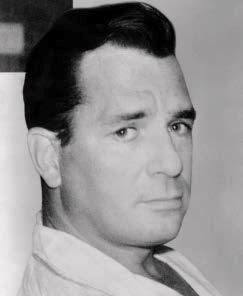
▲ Jack Kerouac
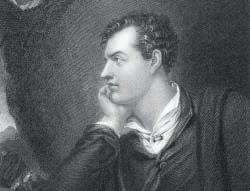
▲ Lord Byron
How can we tell what is true?
Learn, collaborate, share
ORACY LAB 1
The authors
1 Revise the mind maps about Don DeLillo and George Orwell in your Coursebook. Ask your partner questions about their lives, themes, language and style, and about their works, Underworld and Nineteen Eighty-Four (the plot, the style and the themes). You may consider other works if you have studied them. Make a note of what your partner says.
2 Share your notes and practise presenting the key points in turns. Ask your partner to tell you where you did best.
3 Record your best presentation at home for future revision.
In the endless estuarial mingling of paranoia and control, the dossier was an essential device. Edgar had many enemies-for-life, and the way to deal with such people was to compile massive dossiers. Photographs, surveillance reports, detailed allegations, linked names, transcribed tapes – wiretaps, bugs, break-ins. The dossier was a deeper form of truth, transcending facts and actuality. The second you placed an item in the file, a fuzzy photograph, an unfounded rumor, it became promiscuously true. It was a truth without authority and therefore incontestable. Factoids seeped out of the file and crept across the horizon, consuming bodies and minds. The file was everything, the life nothing.
from Underworld, The Prologue
We’re destroying words – scores of them, hundreds of them, every day. We’re cutting the language down to the bone. […] ‘Don’t you see that the whole aim of Newspeak is to narrow the range of thought? In the end we shall make thoughtcrime literally impossible, because there will be no words in which to express it. Every concept that can ever be needed, will be expressed by exactly one word, with its meaning rigidly defined and all its subsidiary meanings rubbed out and forgotten. […] ‘By 2050 – earlier, probably – all real knowledge of Oldspeak will have disappeared. The whole literature of the past will have been destroyed. Chaucer, Shakespeare, Milton, Byron – they’ll exist only in Newspeak versions, not merely changed into something different, but actually changed into something contradictory of what they used to be.
from Nineteen Eighty-Four Part 1, Chapter 5
ORACY LAB 2
The works
Read the two extracts above, one from Underworld and one from Nineteen Eight-Four The first claims the superiority of ‘file’ (made up truth) over ‘life’ (facts) in the consideration of John Edgar Hoover, the director of the FBI. The second presents some considerations by Syme, who works on the creation of a Dictionary of ‘Newspeak’ to eliminate ‘Oldspeak’ (English) and with it freedom of speech and expression. Notice the words used to express the superiority of ‘file’ and those used to underline the risks of eliminating ‘Oldspeak’.
INTERPRET
1 What happens to facts when they are put in a file?
2 Which short sentence summarises the vision of truth as something made up, with no need to be evident in life?
3 What is the destiny of thought if language is severely limited?
4 Do I find it convincing that what exists in a file is true by itself, a priori?
5 How do I feel about the idea of losing the great authors of literature?
6 How do I feel about the idea of language, the first and most important form of human communication, trapping my thoughts and making me incapable of critical thinking?
ORACY LAB 3
The themes
Look at the mind maps in your Coursebook again, and focus on the text(s) you have read. Speak for at least one minute for each 'Think out loud' question. Ask a classmate to listen to you and to suggest what can be improved (pronunciation, vocabulary, contents, organisation, fluency…).
THINK OUT LOUD
• What common concern do I see in Don DeLillo’s and Orwell’s works?
• Do I find their view exaggerated or frighteningly real?
• Do I know how to unmask and fight online manipulation?
• COMPARE Which author(s) of foreign literature have I studied that develop(s) similar themes, or whose sensibility I find similar to either Delillo's or Orwell's?
A school for all
Art. 34 Costituzione della Repubblica Italiana

La scuola è aperta a tutti. L'istruzione inferiore, impartita per almeno otto anni, è obbligatoria e gratuita. I capaci e meritevoli, anche se privi di mezzi, hanno diritto di raggiungere i gradi più alti degli studi. La Repubblica rende effettivo questo diritto con borse di studio, assegni alle famiglie ed altre provvidenze, che devono essere attribuite per concorso.
THINK OUT LOUD
CRITICAL THINKING Answer the questions.
• Is my school community really inclusive?
• What could we do to make quality education accessible to all in my area?
ORACY LAB 4
Today’s matters
CRITICAL THINKING Work in groups. Read the infographic below and agree on the two most important measures to be taken to ensure inclusive education.
HOW TO ENSURE EQUITY AND INCLUSION IN EDUCATION

Laws, Regulations, Policies, Finance
To design legal frameworks and financing mechanisms that explicitly include marginalised groups.

Education Management Information Systems (EMIS)
To optimise data and information systems for decision-making.
ORACY LAB 5
Let’s debate

Training/Professional Development
To equip all teachers, school leaders and education personnel with relevant skills and knowledge.


To strenghten education systems and capacities, foster partenships with communities and leverage cross-sectoral collaboration.

To ensure inclusive and equitable quality education and promote lifelong learning opportunities for all.

To make all teaching and learning materials, including educational technologies, nondiscriminatory and accessible to all.
Curriculum and Assessment Construction and Renovation
To design accessible and flexible curricula and student assessment tools and systems.

To ensure all educational facilities are accessible, safe and protect students from hazards and harm.

CRITICAL THINKING Debate the statement in two groups.
Education is the key to success and happiness in life.
Here are some ideas in favour of and against the argument. You can add yours to expand the debate.
IN FAVOUR AGAINST
Children who get no or poor education are often the victims of exploitation.
Raising
To foster unterstanding and support for social inclusion by shifting minds or combating stigma/discrimination.
ENGLISH IN ACTION
Match each expression to its description.
1 legal framework
2 marginalised group
3 curriculum
4 stigma
a people who experience social, economic, and/ or political exclusion or discrimination
b a mark of disgrace
Only people with poor means should have access to free education.
Education by itself cannot prevent exploitation. College and university should be free for all people.
With no formal education a person has no chance to make a career.
A person’s career is the result of their skills and hard work.
c a set of documents (the constitution, legislation, regulations, and contracts)
d the subjects in a school or college
Hope for the future
ORACY LAB 1
The authors
1 Revise the mind maps about Cormac McCarthy and Margaret Atwood in your Coursebook. Ask your partner questions about their lives, themes, language and style, and about their works, The Road and The Handmaid’s Tale (the plot, the style and the themes). You may consider other works if you have studied them. Make a note of what your partner says.
2 Share your notes and practise presenting the key points in turns. Ask your partner to tell you where you did best.
3 Record your best presentation at home for future revision.
By the time they got there it was dark of night. He held the boy's hand and kicked up limbs and brush and got a fire going. The wood was damp but he shaved the dead bark off with his knife and he stacked brush sticks all about to dry in the heat. Then he spread the sheet of plastic on the ground and got the coats and blankets from the cart and he took off their damp and muddy shoes and they sat there in silence with their hands outheld to the flames. He tried to think of something to say but he could not. He'd had this feeling before, beyond the numbness and the dull despair. The world shrinking down about a raw core of possible entities. The names of things slowly following those things into oblivion. Colors. The names of birds. Things to eat. Finally, the names of things one believed to be true. More fragile than he would have thought. How much was gone already?
THINK OUT LOUD
• Are dystopian novels a product of today’s troubled world?
• Do I find their view exaggerated or frighteningly real?
• What do hope for when I think of my future and the future of mankind?
• COMPARE Which author(s) of foreign literature have I studied that develop(s) similar themes, or whose sensibility I find similar to either McCarthy’s or Atwood’s?
What is our future like?
from The Road

I remember that yearning, for something that was always about to happen and was never the same as the hands that were on us there and then, in the small of the back, or out back, in the parking lot, or in the television room with the sound turned down and only the pictures flickering over lifting flesh. We yearned for the future. How did we learn it, that talent for insatiability? It was in the air; and it was still in the air, an afterthought, as we tried to sleep, in the army cots that had been set up in rows, with spaces between so we could not talk. We had flannelette sheets, like children’s, and army-issue blankets, old ones that still said U.S. We folded our clothes neatly and laid them on the stools at the ends of our beds. Aunt Sara and Aunt Elizabeth patrolled; they had electric cattle prods slung on thongs from their leather belts.
from The Handmaid’s Tale, Chapter 1
ORACY LAB 2
The works
Read the two extracts above, one from The Road and one from The Handmaid’s Tale. In the first, the father feels that the world is fading before his eyes, with no colour and no names for lost things of the past. The second presents some considerations by Offred, who lives a life of sex slavery like the other handmaids but still desires a future. Look for evidence of hope and despair in both texts.
INTERPRET
1 What does the father feel he is losing?
2 Is there hope for the future in the father’s world?
3 Do Offred and the other handmaids hope for the future?
4 Which attitude to the future do I find closer to mine, McCarthy’s or Atwood’s? Why?
ORACY LAB 3
The themes
La Repubblica promuove lo sviluppo della cultura e la ricerca scientifica e tecnica. Tutela il paesaggio e il patrimonio storico e artistico della Nazione. Tutela l’ambiente, la biodiversità e gli ecosistemi, anche nell’interesse delle future generazioni. La legge dello Stato disciplina i modi e le forme di tutela degli animali.

ORACY LAB 4
Today’s matters
THINK OUT LOUD CRITICAL THINKING Answer the questions.
• What helps me to hope in a positive future?
• What makes me despair about it?
• Do I feel responsible for the generations to come?
To make cities and human settlements inclusive, safe, resilient and sustainable.
▲ Margaret Atwood IN FAVOUR AGAINST
Look at the mind maps in your Coursebook again, and focus on the text(s) you have read. Speak for at least one minute for each 'Think out loud' question. Ask a classmate to listen to you and to suggest what can be improved (pronunciation, vocabulary, contents, organisation, fluency…).
WEB QUEST Search the web for information about Gattaca, a 1997 film of a future when almost all children are lab-created and so perfect. A naturally conceived man, Vincent, is ‘In-valid’ but his desire to live a better life makes him conquer the stars. His condition makes it impossible to leave for the but cannot but be desired, a represented by Vincent’s ‘ascent’ to Saturn's moon Titan. Watch some clips from the film and prepare a presentation that highlights the aspirations of humanity in a future.
ORACY LAB 5
Let’s debate
CRITICAL THINKING Debate the statement in two groups.
Hoping for a better future is unrealistic.
Here are some ideas in favour of and against the argument. You can add yours to expand the debate.
War and injustice rule today’s world. The world is more at peace today than it used to be.
People do not want to cooperate to build a common future. There are many organisations for international cooperation.
Politics is not at the service of the good of society. Politics may fail sometimes, but it is still at the service of the good of society.

Art. 9 Costituzione della Repubblica Italiana
▲ Cormac McCarthy
copertina
Responsabile editoriale
Simona Franzoni
Responsabile di progetto e coordinamento
Simona Pisauri
Revisione linguistica
Sushil Penuti
Redazione
a cura di C. E. Moms. Literary voices è a cura di Silvia
Simona Pisauri
a cura di A. Smith.
Coordinamento redazionale
Marco Mauri
Art director
Enrica Bologni
ringrazia: Arnolieri per la preziosa e costante ha accompagnato ogni fase di progetto.
Progetto grafico
Enrica Bologni
Impaginazione
Diletta Brutti
Roberto Di Scala e le Prof.sse Simona Arianna Orlandi per il loro prezioso utili consigli. infine per la loro consulenza i
Copertina
Enrica Bologni
Pamela Gallio, Silvia Mignanelli
Maria Volatile.
Immagine di copertina Shutterstock
iconografiche
40 (Chizuko Ueno), 42 (Max (William Golding), 135 (poster), 167 (bottom), 197, 204 (middle), 234
(bottom), 174, 175, 176 (bottom left), 177, 178, 179, 180, 181, 182, 183, 184 (left), 185, 186, 187, 188, 189, 190, 191, 192, 193, 194, 196 (up), 198, 199, 200, 201, 202, 203, 204 (top, bottom), 205, 206, 208, 209, 210, 211 (top), 212 (top), 214, 215, 216, 217, 218, 219, 220, 221, 222 (top), 223, 224, 225, 226, 227, 228, 229, 230 (left), 231 (Santa Gilla lagoon), 232 (bottom), 234 (top left, bottom right), 236, 237 (statue, job centre, J. Stiglitz, Houses of Parliament, Parlamento Subalpino), 238 (We the People, G. Zagrebelsky, Italian Constitution, together, painting kid, Hitler and Mussolini, employee in wheelchair), 239 (Wordsworth Daffodil Garden, statues, Lucio Battisti, “The Starry Night”, emotional intelligence, M. L. King, stamp); © UNESCO/Michel Ravassard: p. 15. Sitography: behance.net (right): p. 85; conservatives.com: p.168 (logo); england.nhs. uk (logo): pp. 53; environment.ec.europa.eu: p. 231 (logo); erasmusplus.it: p. 222 (logo); eso.it: p. 231 (logo); karlspreis.de: p. 222 (logo); labour. org.uk: p. 168 (logo); mef.gov.it: 221 (top); sdgs. un.org (logos): pp. 53, 171, 193, 211, 230, 231; unwomen.org (left): p. 85; weforum.org: p. 171; youth.europa.eu: p. 222.
Video Acknowledgements
ELI Archives (pp. 25, 31, 54, 59, 83, 107, 108, 135, 144, 151, 153, 157, 173, 175, 192, 195, 198, 200, 202, 203, 205, 207, 208, 210, 211, 213, 216, 220, 230, 233); DLA videos (pp. 9, 35, 63, 87, 113, 188); Siroko (Lost in connection, 2024, Siroko Cycling Asturias, Spain, p. 131).
L’Editore ringrazia per la consulenza i docenti: Valentina Chen, Giovanna Da Villa, Pamela Gallio.
Referenze iconografiche
ELI Archives
pp, 26 (maps), 31, 58, 59, 67 (right, (left), 83, 91, 93 (top), 108, 109, 111 144 (left), 154 (left), 162, 163, middle), 172, 173, 184 (right), 195, 196 213, 221 (bottom), 230 (right), (“L’autunno caldo”, book covers), frame, “Rosso Malpelo”, Dipartimento Opportunità), 239 (“Se questo è un
Per le riproduzioni di testi e immagini appartenenti a terzi, inserite in quest’opera, l’editore è a disposizione degli aventi diritto non potuti reperire, nonché per eventuali non volute omissioni e/o errori di attribuzione nei riferimenti.
Prima edizione: 2026
Printed in Italy
Per le riproduzioni di testi e immagini appartenenti a terzi, inserite in quest’opera, l’editore è a disposizione degli aventi diritto non potuti reperire, nonché per eventuali non volute omissioni e/o errori di attribuzione nei riferimenti.
Prima edizione: 2025
fornisce – per il tramite dei testi scolastici da esso pubblicati e attraverso i relativi supporti o nel sito www.gruppoeli.it – materiali e link a siti di terze parti esclusivamente per fini didattici o perché indicati e consigliati da altri siti istituzionali. Pertanto l’editore non è responsabile, neppure indirettamente, del contenuto e delle immagini riprodotte su tali siti in data successiva a quella della pubblicazione, dopo aver controllato la correttezza degli indirizzi web ai quali si rimanda.
Casa Editrice G. Principato Viale Jenner, 17 20159 Milano sito web: http://www.gruppoeli.it e-mail: info@gruppoeli.it
© 2026 – Proprietà letteraria riservata. È vietata la riproduzione, anche parziale, con qualsiasi mezzo effettuata, compresa la fotocopia, anche ad uso interno o didattico, non autorizzata. Le fotocopie per uso personale del lettore possono essere effettuate nei limiti del 15% di ciascun volume dietro pagamento alla SIAE del compenso previsto dall’art. 68, commi 4 e 5, della legge 22 aprile 1941 n. 633. Le riproduzioni per finalità di carattere professionale, economico o commerciale o comunque per uso diverso da quello personale, possono essere effettuate a seguito di specifica autorizzazione rilasciata da CLEARedi (Centro licenze e autorizzazioni per le riproduzioni editoriali), corso di Porta Romana 108, 20122 Milano, e-mail autorizzazioni@clearedi.org e sito web www.clearedi. org. L’editore fornisce – per il tramite dei testi scolastici da esso pubblicati e attraverso i relativi supporti o nel sito www.gruppoeli.it – materiali e link a siti di terze parti esclusivamente per fini didattici o perché indicati e consigliati da altri siti istituzionali. Pertanto l’editore non è responsabile, neppure indirettamente, del contenuto e delle immagini riprodotte su tali siti in data successiva a quella della pubblicazione, dopo aver controllato la correttezza degli indirizzi web ai quali si rimanda.
Segnalazioni di errori
Casa Editrice
G. Principato
Viale Jenner, 17 20159 Milano sito web: www.gruppoeli.it e-mail: info@gruppoeli.it
Segnalazioni di errori
La casa editrice attua procedure idonee ad assicurare la qualità nel processo di progettazione, realizzazione e distribuzione dei prodotti editoriali. La realizzazione di un libro scolastico è infatti un’attività complessa che comporta controlli di varia natura. È pertanto possibile che, dopo la pubblicazione, siano riscontrabili errori e imprecisioni. La casa editrice ringrazia fin da ora chi vorrà segnalarli a: Servizio clienti Principato –email: info@gruppoeli.it
La casa editrice attua procedure idonee ad assicurare la qualità nel processo di progettazione, realizzazione e distribuzione dei prodotti editoriali. La realizzazione di un libro scolastico è infatti un’attività complessa che comporta controlli di varia natura. È pertanto possibile che, dopo la pubblicazione, siano riscontrabili errori e imprecisioni. La casa editrice ringrazia fin da ora chi vorrà segnalarli a: Servizio clienti Principato – email: info@gruppoeli.it
Stampa: Tecnostampa – Pigini Group Printing Division – Loreto – Trevi 24.85.120.0
Stampa: Tecnostampa – Pigini Group Printing Division – Loreto – Trevi 26.85.104.0