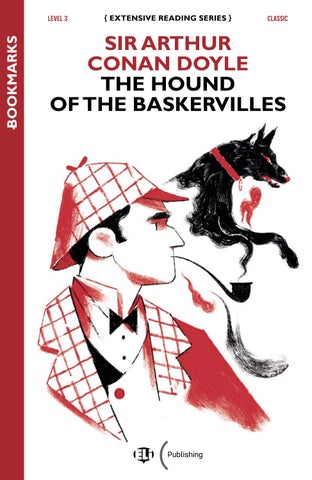

SIR ARTHUR CONAN DOYLE
THE HOUND OF THE BASKERVILLES

About the Book


1 The Hound of the Baskervilles is one of Sir Arthur Conan Doyle’s best-known novels about the fictional detective Sherlock Holmes.
2 The story is written in the first person because Sherlock’s friend, Dr Watson, is telling the story.
3 The novel has the elements of a Gothic novel, very common in the Victorian era: the mystery of the supernatural hound, and the dark and mysterious setting on the moor with both real and supernatural dangers.
4 Before being published as a novel, the story was published in parts in The Strand Magazine, like Conan Doyle’s other Sherlock Holmes stories.
5 Readers complained when Conan Doyle killed off Sherlock in a previous book, so he brought him back in The Hound of the Baskervilles, a story that takes place in the past, before Sherlock’s death.
About the Author
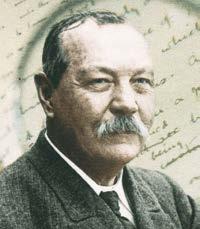
Sir Arthur Conan Doyle (1859-1930) was a Scottish writer, best known for his books about Sherlock Holmes, one of the most famous fictional detectives. A doctor, writer and believer in the supernatural, Conan Doyle's great imagination made his books famous all over the world.
His Early Life
Conan Doyle loved adventure and travel. While he was studying medicine, he worked as a ship’s doctor on short trips to Antarctica and Africa. Based on these experiences and the stories he loved as a child, he began to write short stories. He graduated from Edinburgh University with a medical degree at the age of 22.
Conan Doyle: Spiritualism and Fairies
In 1916, Conan Doyle publicly declared he was a spiritualist. He believed that communication with spirits was possible and wrote books articles and made speeches about it. He also believed in fairies, and in 1922, he wrote a book called
The Coming of the Fairies, about two young girls who said they had photos of themselves playing with real fairies. A long time after Conan Doyle's death, they finally said it was all false.
First Novels
In 1886, Conan Doyle finished the first Sherlock Holmes story, A Study in Scarlet. His second book with Sherlock Holmes and Dr Watson was Sign of the Four. While writing the early Holmes stories, Doyle also wrote novels about British history, which he thought were more important. However, none of these novels had the success of the Sherlock Holmes short stories that appeared in The Strand Magazine, starting in 1891.
After writing three series of Holmes stories, which earned him a lot of money, Conan Doyle was tired of the popular detective and killed him off in the 1893 story, The Final Problem. His readers wrote letters to him, asking him to bring Holmes back. In 1902, he decided to write his third Holmes story, The Hound of the Baskervilles, which appeared in nine parts in The Strand Magazine. He continued, reluctantly, to write Holmes stories until 1927.
An Important Figure
Conan Doyle was an important public and political figure. He was knighted for his volunteer work during the Boer War, and during the First World War, he worked for the Foreign Office. He even solved real-life mysteries to free two unjustly imprisoned men.
OOKMARKS
Bookmarks is an innovative series of graded readers for curious students who want to enjoy reading in English. It is divided into six levels from beginner to advanced.
Don’t miss Bookmarks Readers, the series where every reader finds their place.
The Hound of the Baskervilles by Sir Arthur Conan Doyle
Adaptation and activities by Pauline Russo Illustrated by Giacomo Agnello Modica
Bookmarks
Founder and Series Editors
Grazia Ancillani, Daniele Garbuglia (Art Director)
Graphic Design and Layout: Emilia Coari
Production Manager: Francesco Capitano
Photo credits: Shutterstock
© 2026 ELI s.r.l.
P.O. Box 6 62019 Recanati MC Italy support@elipublishing.com www.elipublishing.com
Typeset in 12 / 15 pt Monotype Dante
Printed in Italy by Tecnostampa Recanati – EBM301.01
ISBN 978-88-536-4859-4 First edition: February 2026
Sir Arthur Conan Doyle
The Hound of the Baskervilles
Retold by Pauline Russo
Illustrated by Giacomo Agnello Modica
About the Story
The story starts at Sherlock Holmes’ house at 221B Baker Street in London, but most of it takes place on Dartmoor, in the county of Devon, in England.
Holmes is asked to investigate the legend of a supernatural hound that the local people say is responsible for the deaths of some of the Baskerville family.
The new Baskerville heir, Sir Henry, thinks that the legend of the hound could be true, so Holmes sends Dr Watson to Baskerville Hall to protect him while he investigates.
Holmes doesn’t believe in the legend and believes that Sir Henry’s life is in danger, not from a supernatural creature but from a real person.
Main Characters
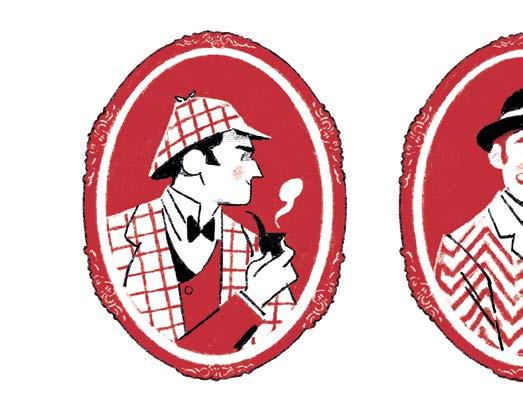
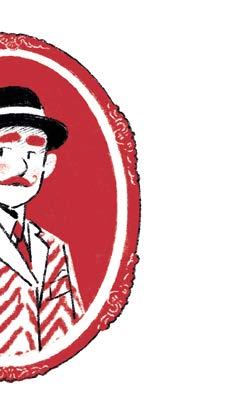
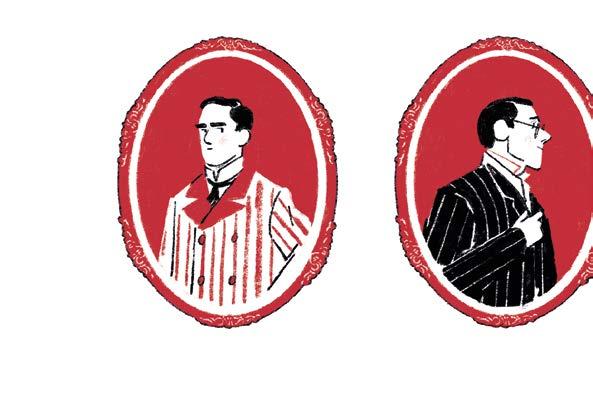


Dr Watson
Dr Mortimer
Sir Henry
Sherlock Holmes
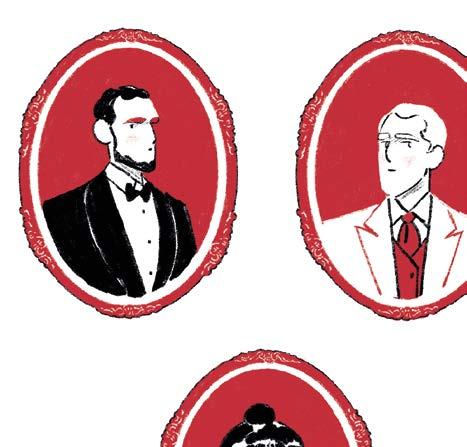
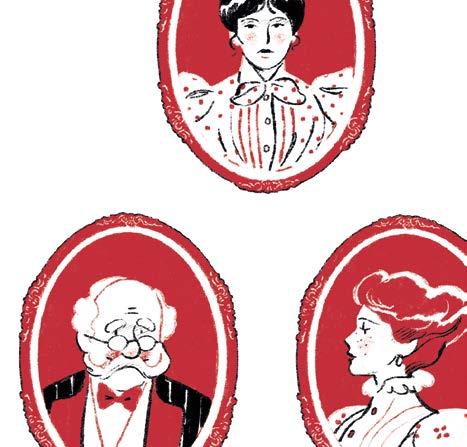

Mr Stapleton
Laura Lyons
Mr Frankland
Beryl Stapleton
Barrymore, the butler
Chapter 1
The Curse of the Baskervilles

Sherlock Holmes was sitting at a table having breakfast. I was standing behind him, looking at a walking stick left by a stranger the evening before while Holmes and I were out. Some writing on it said, “To James Mortimer, M.R.C.S., from his friends of the C.C.H.”
‘So, what do you think, Watson?’ Holmes asked me.
‘How did you know what I was looking at?’ I asked him in surprise.
‘I can see your reflection* in the silver teapot in front of me,’ replied Holmes. ‘What do you think about our mysterious visitor’s stick?’
‘I think that it belongs to a successful elderly doctor who is greatly appreciated* by the people who know him,’ I said.
‘Excellent, Watson.’
‘The letters M.R.C.S. tell me he’s a doctor - probably a country doctor, as I can see the stick is well-worn*. He probably walks a lot to visit his patients.’
‘Very good,’ said Holmes.
‘The writing also says, “from his friends of C.C.H.”, so the “H” could mean the stick is a gift from the members of a local hunt*.’
‘Well done, Watson!’
I was pleased to hear his words of praise*. I asked him what else I could say about the mysterious visitor. Sherlock took the stick and examined it.
‘I’m sorry, dear Watson, but I have to say that most of what you said is wrong. You’re right that he’s a country doctor and he walks a lot, but that’s all. I think that C.C.H. stands for Charing Cross Hospital. A senior doctor wouldn’t leave such an important hospital. So, I think he’s a young man under 30 who left the hospital to go and work in the country, and this stick was a present from his friends. He owns a small dog that sometimes carries it in its mouth.’
I laughed and checked my medical directory*.
‘You’re right, Holmes. Here’s his name: Mortimer, James, M.R.C.S., 1882, Grimpen, Dartmoor, Devon. Doctor, from 1882 to 1884, at Charing Cross Hospital. But what about the dog?’
Holmes was now standing at the window. He pointed to the bite marks on the wood in the middle of the stick.
‘These show that the dog is neither too small nor too big. In fact, it may be… a curly-haired spaniel.’
I looked at him, amazed.
‘But Holmes, how can you be so sure of that?’
‘Because I can see it at our door with its owner,’ answered Holmes, looking out of the window.
Our visitor came into the study and was pleased to see his walking stick. He was very tall and thin, and he wore a pair of gold-rimmed* glasses on his long nose.
‘I’m so pleased to see you have my walking stick,’ he said. ‘It was given to me when I got married and left Charing Cross Hospital to open my own business in the country. Are you Mr Sherlock Holmes?’
‘Yes, I am. And this is my friend Dr Watson.’
‘Pleased to meet you. You have an interesting dolichocephalic skull*. May I touch it?’
Sherlock smiled and said,
‘You clearly love your work, but I’m sure you didn’t come here to examine my skull. Please sit down and tell me why you have come to see me.’
‘Mr Holmes, I have a very serious and strange problem. I have a document in my pocket.’
‘Yes, I saw it when you entered the room,’ said Holmes. I see it’s old and, as an expert in these things, I can say that it’s probably from about 1730.’
‘The exact date is 1742,’ said Mortimer, as he took it out of his top pocket and handed it to Sherlock.
‘Sir Charles Baskerville, my patient and friend, gave me this paper before he died tragically three months ago. His father wrote it to him and his brothers, before he died.’
Holmes put the document on his knee to read it.
I looked at it over his shoulder. At the top of the page was written, “Baskerville Hall”, with the year “1742” below it.
‘It’s a document about a legend in the Baskerville family. May I read it to you?’ said Mortimer.
Sherlock gave the document to Dr Mortimer and listened as he started to read:
“There have been many stories told about the Hound* of the Baskervilles, but I am a direct descendant* of Hugo Baskerville. I heard the story from my father, who heard it from his. I believe that what I write here is the truth. From this story, my sons, you will learn not to be afraid of the past, and you must not repeat the same mistakes in the future.
At the time of the English Civil War, Baskerville Hall was owned by Hugo Baskerville, a wild and cruel man. He fell in love with the good, kind daughter of a local farmer, but she knew Hugo was evil* and didn’t want to know him. One evening, when her father and brothers were away from home, Hugo and his friends went to the farm and carried her to the Hall. They locked her upstairs in a room, while they sat downstairs, drinking wine and singing and shouting. The girl was very frightened. She climbed out of the window and ran across the moor* towards her father’s farm. When Hugo found out that she was gone, he followed her on his black horse with his hunting dogs. His friends, thirteen of them, followed behind him on their horses. The moonlight
was shining on the moor. After a mile or two, they saw a night shepherd* and asked him about Hugo Baskerville. He pointed across the moor, and they rode on until they saw his horse without a rider. Then they saw Hugo’s dogs barking* at the edge of a valley on the moor. At the bottom, the men saw the body of the young girl, with Hugo beside her. A great black hound was beside him, with blood on its face!
My sons, this is the legend of the hound that has cursed* our family since that day. Many of my family have died suddenly and mysteriously, but we must hope that the innocent will not be punished after all these years.”
‘Do you not think it’s an interesting story, Mr Holmes?’ he asked.
‘It seems like a fairy tale to me,’ said Holmes. Dr Mortimer took a newspaper out of his pocket.
‘Now I’ll give you more recent news. This is a newspaper article from May 14th this year about the death of Sir Charles Baskerville, which happened a few days before that date. Mortimer started to read:
“We are sad to report the recent sudden death of Sir Charles Baskerville, who lived at Baskerville Hall for only two years, after making his fortune in South Africa. Although he came from an old county family with a history of evil ways, Sir Charles was a kind man, respected by everyone. He was a widower* with no children, so he gave a lot of money to charities*.
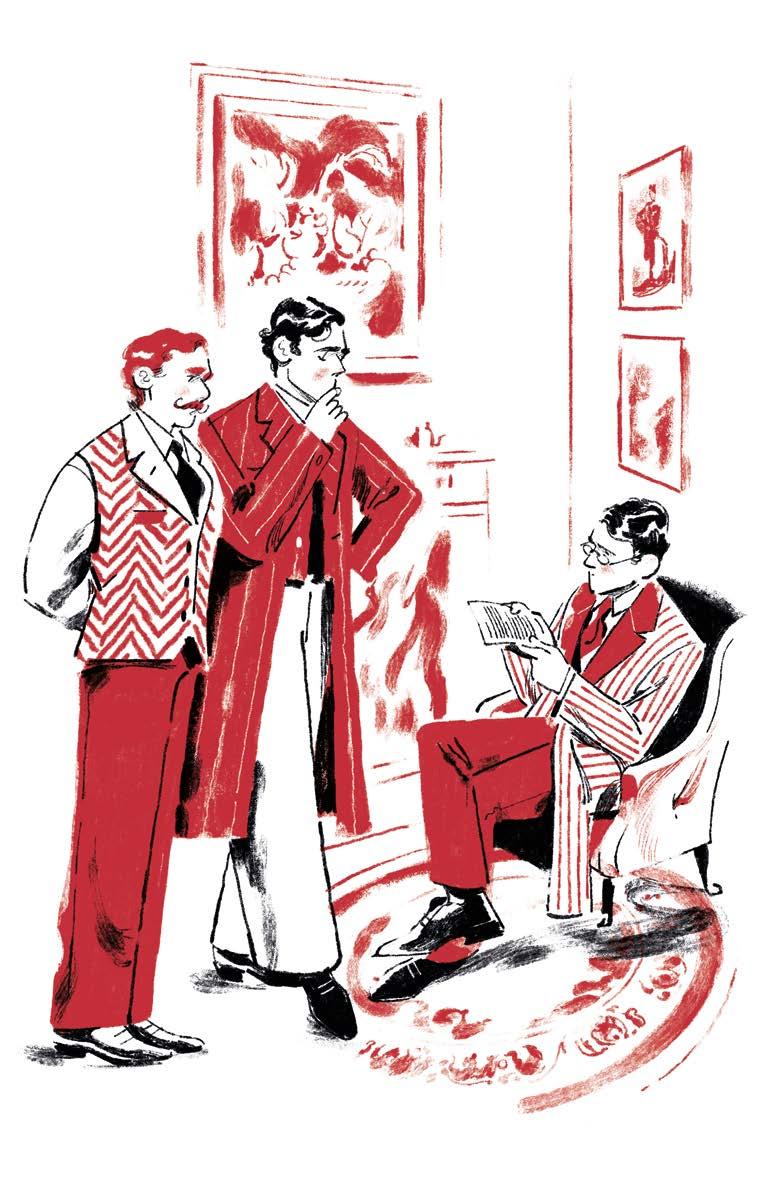
Dr Mortimer reads the document to Holmes and Watson.
The reason for his death is not clear, but the police don’t think it is suspicious. There is no reason to believe in local superstitions. His doctor, Dr James Mortimer, has said that he had some problems with his heart.
The facts of the case are simple. Sir Charles Baskerville was going to travel to London on 5th May. The night before he left, he took his usual walk down Yew Alley* of Baskerville Hall but never returned. At midnight, the butler, Barrymore, found the door was still open and went to look for Sir Charles. He saw his footprints* on the wet path and followed them. Halfway down the alley, the footprints stopped at a gate that leads to the moor. The footprints then continued but seemed different. When he followed them, the butler found Sir Charles’ body. Someone on the moor, at the time, said they heard screams, but Sir Charles wasn’t attacked. The only strange thing was a distortion* on his face. His doctor said this was normal after a heart attack. Sir Charles Baskerville’s nearest relation is his nephew, Mr Henry Baskerville, from Canada. People hope he’ll come and live at Baskerville Hall and continue with his uncle’s generous deeds*.”
Dr Mortimer put the newspaper back in his pocket.
‘So, these are the public facts,’ said Holmes. ‘Now, tell me the private ones.’
‘I am going to tell you something that I haven’t told anyone, not even the police,’ said Dr Mortimer. ‘As a doctor, I don’t want to say publicly that I believe in local superstitions. Also, it may mean that nobody will want
to live at Baskerville Hall, which will be bad for the local community. However, I think that I can be honest with you, Mr Holmes. Very few people live on the moor. There’s Mr Frankland of Lafter Hall and Mr Stapleton of Merripit House. I knew Sir Charles quite well. We were both interested in science, and his illness brought us together. Recently, Sir Charles was more nervous. He thought the legend was true so, at night, he only walked in the garden and never on the moor. He often asked me about the sound of a hound on the moor. When I went to the Hall, three weeks before he died, he met me at the door. Then, he looked behind me with a frightened look on his face. I turned round quickly, just in time to see a large black creature* at the end of the driveway*. From that moment, Sir Charles was worse than before. I stayed that evening, and he told me about the legend of the Baskervilles. However, at the time I didn’t believe it. I told him to go to London. I thought he’d feel better if he went away for a short time. Our neighbour, Mr Stapleton, agreed with me. On the night of Sir Charles’ death, Barrymore, the butler*, called me to Baskerville Hall when he found the body. Before the police arrived, I followed Sir Charles’ footprints down Yew Alley to the gate where they stopped. I noticed that they changed and they continued to the end of the path. I examined the body. There were no marks on it, but Sir Charles was lying face down on the path. His face looked very different. On the ground near the body, there were some clear, fresh marks.’
‘Footprints?’ I asked.
‘A man’s or a woman’s?’ asked Holmes. Dr Mortimer looked at us strangely and then whispered, ‘Mr Holmes, they were the footprints of an enormous hound!’
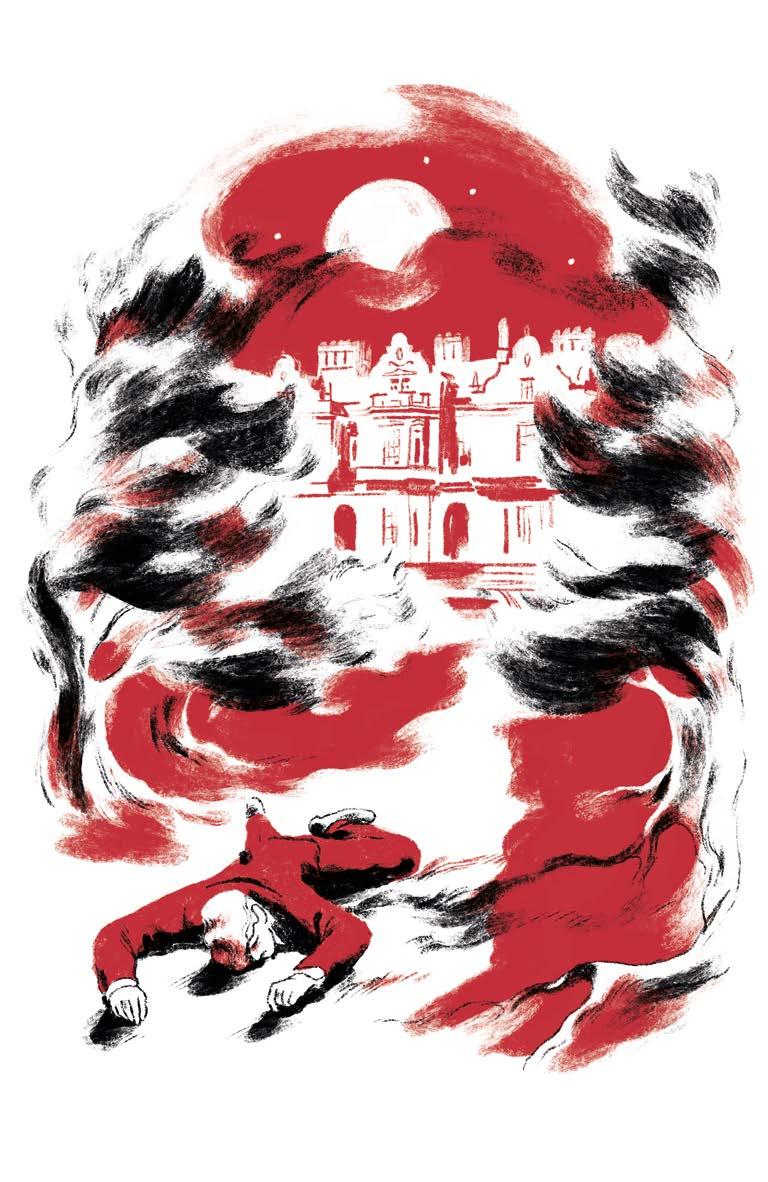
Sir Charles was found dead on the path
GLOSSARY
Chapter 1
reflection what you see in a mirror appreciate to admire, respect well-worn used a lot hunt a group of people that chases animals praise to say someone has been good directory a list of names and facts gold-rimmed with gold-coloured edges dolichocephalic skull a long and narrow head shape hound
descendant a successor, heir evil very bad
moor a large area of land with grass and rocks shepherd a person who looks after sheep bark to make a noise like a dog cursed affected by bad things widower a man whose wife has died charity an organisation that helps poor/sick people alley a path, small road footprint
distortion being twisted or deformed deeds actions
creature an animal, beast driveway a road going up to a house butler a head servant in a house
Chapter 2
shiver to shake with fear or cold yard a unit of measure equal to 3 feet or almost 1 metre ash powder left after something is burnt
supernatural not of this world demon a devil, evil creature heir a person who inherits money
Chapter 3
tweed rough woollen cloth shocked upset, amazed will a legal document with instructions after death suspect a person who may be guilty of a crime estate (here) property and money left after death clergyman a Christian minister or priest
Chapter 4 revolver
ancestor a relation born in the past cheerful happy staff workers roar a loud noise, a sound like a lion
Chapter 5
remote lonely, far from other people telescope
footsteps (here) the sound of someone walking signal a sign used to send a message howling a long, sad sound like a wolf
Chapter 6 penniless without any money bundle a cloth with things inside hut a small house blanket a woollen bed cover
Chapter 7
ridge a long, narrow hilltop, like a cliff scent smell, odour evidence something that shows a person is guilty portrait picture of a person glow to shine in the dark mine a place underground where coal is found
ACTIVITIES
Reading Comprehension
1 Find the correct answers A, B or C in the text.
1 Dr Mortimer was a…
A vet.
B hunter. C doctor.
2 The document that Dr Mortimer showed Sherlock Holmes talked about…
A a fairy tale.
B a family legend. C Sir Charles’ life.
3 The footprints found near Sir Charles’ body belonged to…
A a man.
B a woman. C a hound.
4 On the night of his death, Sir Charles stopped at the gate on the Yew Alley…
A to lock it.
B to meet a woman.
C to look for the hound.
5 Holmes and Watson had lunch with Sir Henry and Dr Mortimer…
A at Sir Henry’s hotel. B near the train station.
C at Sherlock Holmes’ house.
6 Barrymore held the candle up to the window to…
A signal to his brother-in-law.
B look out of the window.
C see marks on the glass.
7 Laura Lyons was related to…
A Sir Charles.
8 Mr Frankland was…
B Mr Frankland. C Mr Stapleton.
A an astrologist. B an astronomist. C a doctor.
9 When Mr Frankland and Dr Watson looked through the telescope, they saw…
A the escaped criminal.
B a black hound. C a young boy.
10 When Dr Watson went to the abandoned hut, he found…
A the escaped criminal.
B Sherlock Holmes. C a black hound.
11 The hound didn’t manage to attack Sir Henry because…
A it fell over the stone ridge.
B Sir Henry escaped. C Holmes shot it.
12 Sir Henry was shocked when he heard that Beryl was Stapleton’s…
A sister. B wife. C niece.
2 For each question, choose the correct answer A, B or C.
Mr Stapleton’s Evil Plan.
Mr Stapleton, who was really Sir Charles Baskerville’s (1) , wanted to inherit Sir Charles’ money. When Sir Charles told him about the (2) ___________ , of the Hound of the Baskervilles, it gave him an idea. He knew that Sir Charles had problems with his (3) , so he decided to frighten him to death with a huge hound that he kept on the (4) . However, Sir Charles believed in the legend of the hound and was (5) ___________. He didn’t go out on the moor at night. This made it difficult for Mr Stapleton. He knew that Laura Lyons wanted to ask Sir Charles for help, so he became friendly with her and told her to meet with Sir Charles in his (6) late at night. But she didn’t go to Baskerville Hall, because Mr Stapleton told her he could give her money, and so it wasn’t necessary to meet Sir Charles.
1 A brother B nephew C son
2 A history B fairytale C legend
3 A heart B leg C memory
4 A farm B estate C moor
5 A sad B afraid C happy
6 A house B carriage C garden
3 Are the following sentences True (T) or False (F)?
1 Dr Mortimer lived in London.
2 Sir Charles came to England from America.
3 Sir Charles died of a heart attack.
4 Sir Henry was Sir Charles’ son.
5 Sir Henry knew who sent the letter to the hotel.
6 Sir Henry wanted to go to Baskerville Hall.
7 Sir Charles was a generous man.
8 Dr Watson heard Barrymore crying at night.
9 Mr Stapleton didn’t believe the legend.
10 Selden was Mrs Barrymore’s brother.
11 Laura Lyons lived with her husband.
12 Selden fell from the rocks and died.
Creative Writing
4 Create Your Own Legend
Invent and write a short legend (6-10 sentences). Here are some ideas you can use, or you can use your own.
• A mysterious or haunted place
• A dangerous creature or spirit
• A warning or curse
• What people believe
Evaluate the Importance of Clues
5 Look at the list of clues below. Rank each one in order of importance from 1=most important to 5=least important, and explain how you think they helped Sherlock Holmes solve the mystery of the Hound of the Baskervilles.
The anonymous letter sent to Sir Henry at his hotel.
The stranger with the beard following Sir Henry in London.
The theft of Sir Henry’s boot.
The hound’s attack on the convict, Selden.
The portrait of Hugo Baskerville at Baskerville House.
Vocabulary
6 Match the pictures (1-6) with the words (A-F).


map
candle
walking stick
telescope
boot






7 Write the opposite of the adjectives 1-
What do you remember about the following characters?
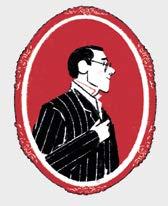
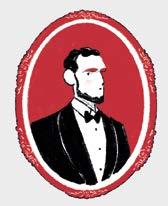
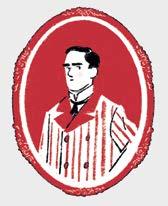
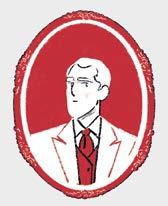
Dr Mortimer
Sir Henry
Barrymore
Mr Stapleton
9 Have you read other Sherlock Holmes books, or seen any Sherlock Holmes films? If so, which ones? Write a short paragraph about Conan Doyle’s famous detective.
Character Voice Notes
10 Choose one character from the story and write a short inner monologue (6-8 lines) that explains what they are thinking. Here are some ideas you may use:
• What the character thinks about the mystery of the hound
• What they plan to do
• What they are afraid of
• What they hope will happen
• What they don’t tell the others
Example:
Dr Mortimer: I have just arrived in London. I have a problem. I think that… Should I tell Holmes… ? Should I tell Sir Henry… ?
OOKMARKS
• Level 1
Oscar Wilde, Lord Arthur Savile’s Crime
• Level 2
Frances H. Burnett, A Little Princess
• Level 3
Sir Arthur Conan Doyle, The Hound of the Baskervilles
• Level 4
Kate Chopin, The Awakening
Sherlock Holmes, with the help of his friend Dr Watson, investigates the legend of a mysterious hound. The local people believe in the superstition and think it has caused the death of Sir Charles Baskerville, but is the story true? When Sir Henry, the new heir, arrives at Baskerville Hall on Dartmoor, he asks Holmes to find out if this mysterious hound is real or a supernatural creature.
EXTENSIVE READING SERIES
LEVEL 1 BEGINNER (400 HEADWORDS) A1
LEVEL 2 ELEMENTARY (700 HEADWORDS) A2
LEVEL 3 PRE-INTERMEDIATE (100 HEADWORDS) A2/B1
LEVEL 4 INTERMEDIATE (1400 HEADWORDS) B1
LEVEL 5 UPPER INTERMEDIATE (1800 HEADWORDS) B2
LEVEL 6 ADVANCED (2500 HEADWORDS) C1
Classic
To download audio tracks
• Scan the QR code inside your book with your mobile phone or tablet and listen to the recordings.
• With PC or Mac download audio tracks from www.eligradedreaders.com