

KATE CHOPIN THE AWAKENING



About the Book


1 This powerful story, by American writer Kate Chopin, will take you to a world that is very different from today’s.
2 You will enjoy finding out about the beautiful Louisiana Gulf coast and the city of New Orleans during the 1890s, and the people who lived there.
3 The characters come from a very particular time and place—a southern US culture called Creole.
4 Their decisions and behavior will give you lots to think about and, perhaps, to question.
5 It will be interesting to compare your experience of life with that of Chopin’s characters.
About the Author
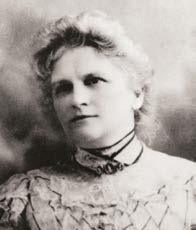
Kate Chopin (born Katherine O’Flaherty) was born on February 8, 1850, in St. Louis, Missouri into a rich family that was part Irish, and part French-Creole from the southern US. These two very different traditions—Irish and FrenchCreole—became the subject of her later writing.
Strong Women
When she was five, her father died in a railroad accident, then her half-brother died in the American Civil War (1861–1865). As a result, Kate grew up in the care of three strong women: her mother, grandmother, and her greatgrandmother, Victoire Charleville. Her great-grandmother, in particular, taught her French and music, and above all, to become a confident, well-educated woman.
Marriage and New Orleans
At her Catholic school Kate studied in French and English. She read many European and American writers, including philosopher and poet, Ralph Waldo Emerson (1803–1882).
In 1870, aged 20, she married Oscar Chopin, a FrenchCreole businessman, and moved with him to New Orleans. The couple had six children in nine years. However, Oscar’s business failed and then, in 1882, only twelve years after they were married, he died of malaria—a disease carried by insects called mosquitoes.
Writing to Make Money
Kate was suddenly alone. She needed to pay back money that her husband had borrowed to save his business and had six young children to look after. She moved back to her family in St Louis, and began to write to earn money. She wrote stories and essays for magazines such as Vogue, Atlantic Monthly, and Century. She and her writing became well-known. Her first collection of short stories, Bayou Folk (1894), was well received by the public.
The Public is Shocked
Chopin’s next work, The Awakening (1899), changed everything. Using her own experiences, it told the story of a woman who wanted to be more than just a mother and a wife, who wanted to make her own decisions about her life, and her body. Readers were shocked by how open Chopin was about the needs and choices of her main character, Edna Pontellier. People stopped reading her work, and Chopin herself found that she was no longer welcome in society. After this, she wrote very little and she died five years later, on August 22, 1904.
Re-Discovery
Chopin’s work was forgotten until the 1950s, when it was discovered by a new generation of readers.
OOKMARKS
Bookmarks is an innovative series of graded readers for curious students who want to enjoy reading in English. It is divided into six levels from beginner to advanced.
Don’t miss Bookmarks Readers, the series where every reader finds their place.
The Awakening by Kate Chopin
Adaptation and activities by Elizabeth Ferretti
Illustrated by Isabella Grott
In this novel you will see to-morrow, to-night, good-night written with a hyphen. This was correct in 1899 when The Awakening was published. In modern English we write tomorrow, tonight and good night.
Bookmarks
Founder and Series Editors
Grazia Ancillani, Daniele Garbuglia (Art Director)
Graphic Design and Layout: Emilia Coari
Production Manager: Francesco Capitano
Photo credits: Shutterstock
© 2026 ELI s.r.l. P.O. Box 6 62019 Recanati MC Italy support@elipublishing.com www.elipublishing.com
Typeset in 12 / 15 pt Monotype Dante
Printed in Italy by Tecnostampa Recanati – EBM401.01
ISBN 978-88-536-4860-0 First edition: February 2026
Kate Chopin
The Awakening
Retold by Elizabeth Ferretti
Illustrated by Isabella Grott
About the Story
Kate Chopin’s The Awakening (1899) takes place in New Orleans and Grand Isle, in the southern U.S. state of Louisiana. This state has a special way of life called Creole, shaped by the French and Spanish people who lived there before it became part of the United States.
The story begins on Grand Isle, in the Gulf of Mexico/ America, where rich families from New Orleans go to escape the summer heat. On Grand Isle, life is relaxed. People swim, hold parties, and enjoy the sea. For Edna Pontellier, the main character, this new freedom is exciting. She begins to think about who she really is—and who she might become.
In New Orleans in the late 1800s, men make most of the decisions and women have few freedoms. But Edna isn’t Creole —she’s from an English farming family from Kentucky, 1200 km to the northeast. She doesn’t speak French or Spanish, and does not always feel comfortable with their ways of behaving.
As the story goes on, Edna finds it harder and harder to live the life others expect of her. She starts to dream of a life where she can be herself—something more than just a wife or mother.
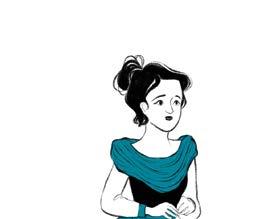


Mrs. Edna Pontellier
Young and beautiful, she has everything— a generous husband, two young sons, and a beautiful home in New Orleans. But is this enough? Could she hope for more?
Main Characters
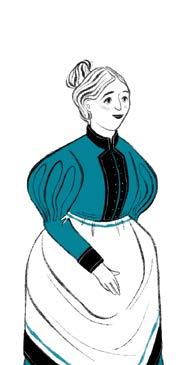

Madame Adèle Ratignolle
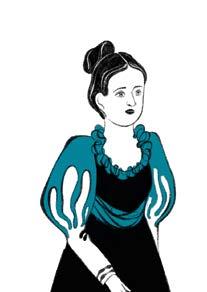

A small, unfashionable woman who is on holiday at Grand Isle. She can be difficult, but is thoughtful and a wonderful musician.
When she plays the piano, everyone listens.
Adèle is happily married to Monsieur Alphonse Ratignolle. She loves her husband and children, they are everything to her. She is a good friend to Edna, and understands her better than she realizes.
Mademoiselle Reisz
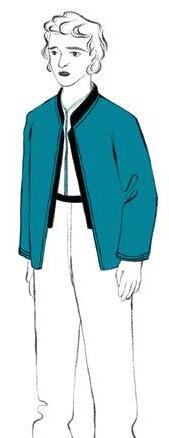

Robert Lebrun
Every summer at Grand Isle, handsome, romantic Robert chooses a girl or woman to be friends with. However, this summer, everything is going to change.
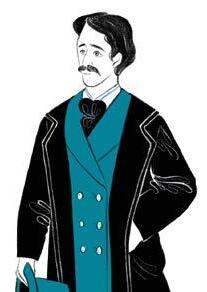

Mr. Léonce Pontellier
A traditional husband and father, he loves his wife and his boys. He has a successful business, but feels the eyes of his Creole society on him.

Alcée Arobin
Handsome and fun to be with, Alcée likes to spend his time with beautiful women. He knows how to get what he wants, but doesn’t feel anything very deeply.
The Awakening
Chapter 1
First Summer at Grand Isle

Mr. Pontellier was reading yesterday’s newspaper on the porch*. He raised his eyes and looked about him. Pontellier’s two children were there—strong young boys of four and five. A white parasol* was coming slowly up from the beach. Beneath it were his wife, Mrs. Pontellier, and young Robert Lebrun. When they arrived, they sat on the steps below him.
“It was silly to go swimming in such heat! You are quite burnt,” Mr. Pontellier said, looking at his wife as if she were an expensive object that was damaged. She looked at the back of her hands and remembered she’d taken her rings off before going to the beach. Her husband took them from his pocket and gave them to her. She put them on; then she looked at Robert and began to laugh.
“What is it?” asked Pontellier. It was some silly story, an adventure out on the water that did not seem as funny when they told him.
“Come to Klein’s hotel with me for a game of billiards*, Lebrun,” he said, standing up.
Robert said he would rather stay.
“Well, send him away when he bores you, Edna,” her husband said.
The two boys followed their father when they saw him leaving. He kissed them and promised to bring them back candy and peanuts.
Robert told Mrs. Pontellier he planned to go Mexico in the autumn, to make money. He was always planning to go, but never seemed to get there.
It was late and his wife was asleep when Mr. Pontellier returned from Klein’s in an excellent mood. He woke his wife, went to check his sons and came back saying Raoul had a high temperature. Mrs. Pontellier, still sleepy, was sure Raoul was not ill. Mr. Pontellier told his wife she did not look after her children. If it was not a mother’s job to look after children, whose was it? He could not be in two places at once; at work and at home to see they were safe. He went to bed, and in half a minute he was asleep.
Mrs. Pontellier went out on the porch and began to cry. The only sounds were a night bird and the neverending voice of the sea. She could not have said why she was crying. Her husband was kind, she was the center of his life, but suddenly she was unhappy. The feeling filled her whole being like a shadow.
Next day Mr. Pontellier returned to New Orleans for business. A few days later a box arrived from the city for Mrs. Pontellier, filled with candy and expensive fruits. She took the box to the dining-room at the house*. The ladies, choosing candies with greedy* fingers, all said
The Awakening
Mr. Pontellier was the best husband in the world. Mrs. Pontellier had to admit she knew of none better.
Mr. Pontellier felt that Mrs. Pontellier was not the best mother. If one of the boys fell, he would not run to his mother’s arms; he would pick himself up, wipe the tears from his eyes, and go on playing. In short, Mrs. Pontellier was not a ‘mother-woman’—a woman who lived only for her children.
The beautiful Adèle Ratignolle was a ‘motherwoman’. She often took her sewing* to sit with Mrs. Pontellier. That afternoon Robert was there when she arrived. Robert had lived in Mrs. Pontellier’s shadow during the past month. No one thought anything of it. Since the age of fifteen, eleven years before, each summer at Grand Isle he had chosen a girl or woman to give his attention to. For two summers he lived in the sunlight of Mademoiselle Duvign. But she died; so he went to Madame Ratignolle.
“Madame let me adore* her,” Robert said, smiling at Madame Ratignolle. “It was ‘Robert, come; go; do this; do that; see if the baby sleeps; read to me.”
“I never had to ask. You were always under my feet, like an annoying cat,” replied Madame Ratignolle.
“And when Monsieur Ratignolle arrived you sent me off.”
“Perhaps I was worried Alphonse would be jealous,” she said. That made them all laugh. The Creole husband is never jealous.
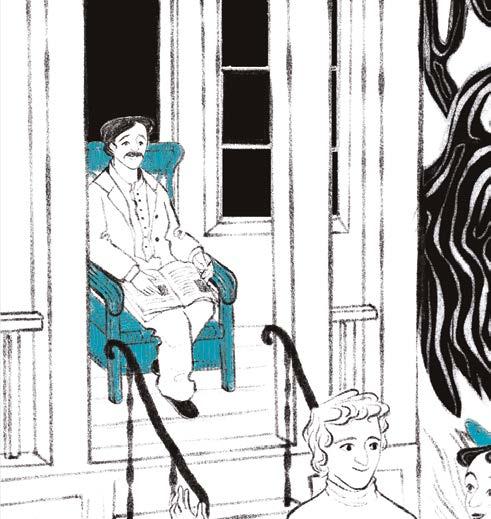



Mrs. Pontellier arrived with young Robert Lebrun.
The Awakening
Robert never joked when alone with Mrs. Pontellier. She liked it that way. She would have found his jokes annoying.
Mrs. Pontellier loved to paint and started a painting of Madame Ratignolle. Robert sat near and followed her work closely. He rested his head against her arm. She pushed him away. He did it again. She quietly pushed him away again but he did not say sorry for his rude behavior.
The picture did not look like Madame Ratignolle. Mrs. Pontellier drew a thick line of paint across it, then threw the paper away. The children were starting their games under the oaks*. Madame Ratignolle put her sewing away and left, saying she felt unwell.
“Are you going swimming?” Robert reminded Mrs. Pontellier.
“Oh, no,” she answered. “I’m tired; I think not.”
She looked toward the Gulf*. The waves were like an invitation.
“Come!” he said. “You mustn’t miss your swim.”
He got her hat and put it on her head and they walked together to the beach. The sun was low in the west, the wind was soft and warm. Edna Pontellier wanted to go with Robert so could not say why she had said no. She could not think clearly. She was in a dream world, felt again that shadow of sadness from that night when she had sat alone on the porch and cried.
The voice of the sea calls to you, inviting the soul* to walk in the deepest parts of itself, to lose itself in
thought. The voice of the sea speaks to the soul. The touch of the sea holds the body soft and close.
Mrs. Pontellier did not like to open her heart to others. Even as a child she understood there are two lives—the public one that does what it is told to, and the world inside, which questions. She felt embarrassed at how openly the Creoles spoke to each other, but she was starting to become a little more like them. One morning Madame Ratignolle and Edna went to the beach, arm in arm, under her big white parasol. In some way, too, they were escaping from Robert.
They sat in the shade of Edna’s bath-house*. Edna rested her eyes on the sea. A boat was sailing to Cat Island.
“Who or what are you thinking of?” asked Adèle.
“Of a summer day and a little girl walking through a sea of grass in her home in Kentucky.”
“Where were you going that day through the grass?”
“I don’t remember. Sometimes I feel this summer as if I were walking through that grass again; free, unthinking.”
“Pauvre chérie*,” Madame Ratignolle said.
At a very early age—perhaps when Edna had walked through that tall sea of grass—she fell in love with a soldier who visited her father. After that, it was another young man, but the child saw she was nothing to him. She next fell in love as a young woman. This time it was an actor. She had a picture of him. Sometimes she picked it up and kissed the cold glass.
The Awakening
Then Léonce Pontellier asked her to marry him. He pleased her, and her father and sister did not want her to marry a Creole*. That was enough to make her say yes. Edna grew to love her husband, but not in any deep way. She loved her children too, but not always strongly. The year before, they had spent part of the summer with their grandmother Pontellier in the countryside. Knowing they were happy, Edna did not miss them.
Edna said much, although not all, of this to Madame Ratignolle that summer day. She put her head on Madame Ratignolle’s shoulder. Opening her heart made her excited, as if she had been drinking wine.
Robert arrived with a group of children. The two little Pontelliers were with him. Mrs. Pontellier went to join them and Madame Ratignolle asked Robert to walk her back to the house.
“Do something for me, Robert,” the pretty woman said, as they walked. “Leave Mrs. Pontellier alone.”
“Oh!” he said, with a laugh. “You are jealous!”
“I’m serious. She is not one of us; she is not like us. She might make the mistake of taking you seriously.”
He took off his hat and hit it angrily against his leg. “Why shouldn’t she take me seriously?” he asked. “Am I always to be seen as a joke?”
“Oh, enough, Robert!” she said. “You speak without thinking. You know we all trust you because you are not serious.”
“It isn’t pleasant to hear you talk about me like that. Now, if I were like Arobin—you remember the story
of Alcée Arobin and the wife of that important man?” He told her that story and others, serious and silly, until Mrs. Pontellier was forgotten. But when they reached Madame Ratignolle’s cottage, Robert asked Adèle to forgive him for getting angry.
“You made a mistake, Adèle,” he said, with a smile, “there is no possibility that Mrs. Pontellier would take me seriously. You should have warned me not to take myself seriously. I might have listened to you.”
His mother, Madame Lebrun, was sewing when he got back to the house. Robert sat by the window and took a book from his pocket.
“Where is Mrs. Pontellier?” his mother asked, “I promised to lend her a book by Goncourt. Take it to her when you go; it’s on the bookshelf.”
“What do you hear from Montel?” Robert asked. Montel was a middle-aged man who for the past twenty years had wanted to fill the space left by Robert’s father, who died when Robert was very young.
“I have a letter,” his mother said. “He says to tell you he will be in Mexico, in Vera Cruz, at the beginning of next month.”
“Why didn’t you tell me before, Mother? You know I wanted—”
“Do you see Mrs. Pontellier coming back with the children? She will be late to lunch again. Where are you going?”
“Where did you say the Goncourt was?”
Chapter
2
“Ah! Si Tu Savais*”—If Only You Knew

There was a party at the house one Saturday, a few weeks after the conversation between Robert and Madame Ratignolle. Mrs. Pontellier danced twice with her husband, once with Robert, and once with Monsieur Ratignolle, then went out on the porch. The moon was coming up, shining a million lights across the distant, moving water.
Robert went to find Mademoiselle Reisz—a small unfashionable and unfriendly woman, but a wonderful musician—to play the piano for them.
At the first notes of the piano, Mrs. Pontellier fell into a sea of emotion. She shook, and tears came into her eyes. When Mademoiselle finished playing she left the room and went to the porch to find Edna.
“Well, how did you like my music?” she asked. Seeing the young woman’s tears, she took her hand. “You are the only one worth playing for. Those others in there? Bah!”, and she went along the porch back toward her room.
But she was wrong about “those others in there”. They thought her playing wonderful. “What passion*!”
“Ah! Si Tu Savais”—If Only You Knew
“What an artist!” “I have always said no one could play Chopin* like Mademoiselle Reisz!”
It was late, but someone, perhaps it was Robert, thought of a swim at that magical hour, under that magical moon.
The people walked toward the beach, talking and laughing. The white light of the moon fell on the world like a soft sleep. Edna had tried all summer to swim but had not learned. She was afraid in the water. But that night she shouted with happiness as she lifted her body and swam.
She looked across the great wide sea, shining with the moonlight in the huge night sky. As she swam she seemed to be reaching out for the unlimited* in which to lose herself.
“How easy it is!” she thought. She wanted to swim far out, where no woman had swum before, then she turned and looked back to the shore. She was not so far away but was terrified, saw her own death come near. Somehow she swam back, then she got changed and walked home alone, until Robert arrived.
“I am so exhausted*. I have felt a thousand emotions* tonight. I wonder* if any night on earth will ever again be like this one,” she said.
He said nothing except to offer her his arm. At the cottage, he sat by her on the porch in silence. Neither did Mrs. Pontellier speak. The silence had more meaning than any words. It was filled with the first feelings* of desire*.
The Awakening
When they heard the voices of the others, Robert said good-night. She watched him walk away, his body moving in and out of the moonlight.
“Are you asleep?” her husband asked, when he arrived.
“No.” Her eyes were bright, with no sleepy shadows.
“Do you know it is past one o’clock? Come on,” and he went into their room. “Edna! Come in!” he said a moment later. Another time she would have gone in when he told her to, would have accepted* his desire for her, like accepting an invitation to go on a walk, or any other ordinary part of daily life.
“Edna, dear, are you not coming in soon?” he asked again, more gently.
“No; I am going to stay out here.”
“This is crazy,” he said, angrily. “You can’t stay out there all night. You must come in the house now.”
“Léonce, go to bed. I don’t wish to go in. Don’t speak to me like that again; I shall not answer you.”
Mr. Pontellier came out to sit with her, bringing a glass of wine which she refused. Edna began to feel like one who wakes slowly out of a dream, a delicious, strange, impossible dream, to feel the uncomfortable truth of her life pressing into her soul. The quiet hour of the night had come, the hour before the sun comes up, when the world seems to hold its breath. The moon hung low in the sleeping sky. Edna stood.
“Are you coming in, Léonce?” she asked, turning her face to her husband.
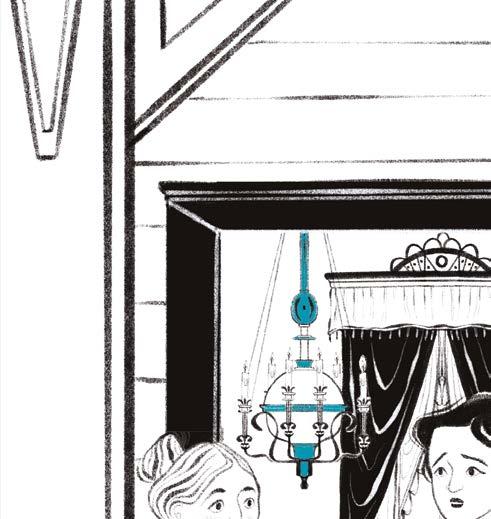
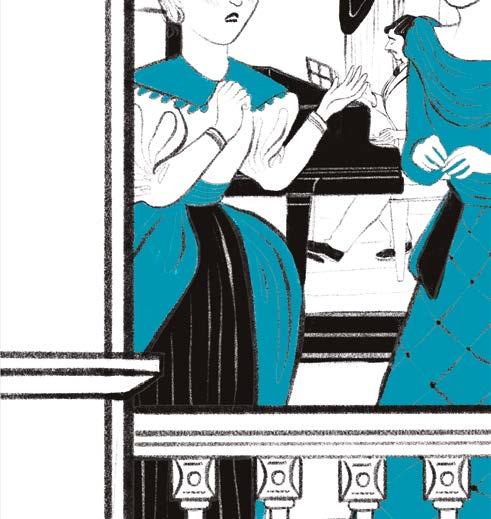

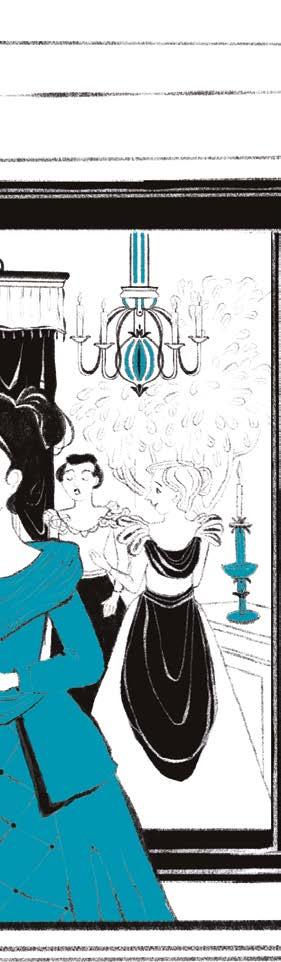
You are the only one worth playing for.

The Awakening
“Yes, dear,” he answered.
She slept a few hours, but not well, and woke early. A few people were up, getting ready to sail to Chênière* for mass*. Edna sent one of the girls to get Robert. She had never sent for him before. She had never seemed to want him before. She did not seem to understand how extraordinary this was, and neither did he. But his face was filled with a warm light when he arrived.
With the others on the boat sailing across to Chênière, Edna felt as if she were leaving behind the chains that had held her, that had broken the night before under a magical moon.
“Let us go to Grande Terre* to-morrow?” said Robert. “We can climb to the old fort*, watch the little gold snakes warm themselves in the sun.”
She looked toward Grande Terre. She would like to be alone there with Robert, in the sun, listening to the ocean from the old fort.
“Then I’ll take you some night in the pirogue* when the moon shines. Maybe the magic spirits will show you on which of these islands pirate gold is hidden.”
“And in a day we would be rich!” she laughed. “I’d give it all to you. Pirate gold is something to throw to the four winds, for the fun of it.”
“We’d share it, and spend it together,” he said, his face full of emotion.
At Chênière, they all left the boat and went up to the sweet little church of Our Lady of Lourdes*, that shone brown and yellow in the hot sun.
“Ah! Si Tu Savais”—If Only You Knew
During mass Edna’s head began to ache. She had to leave the hot church, and reach the open air. Robert was worried and followed her out.
“Come over to Madame Antoine’s, you can rest there,” he said.
As they walked through the orange trees, the quiet voice of the sea was the only sound. Madame Antoine welcomed them warmly and showed Edna into a small room. Left alone, Edna took off many of her clothes, washed her face and lay down in the middle of the big, white bed. She slept lightly at first. She heard Madame Antoine walking across the floor, the chickens under her window. Later she heard the voices of Robert and Madame Antoine’s son Tonie.
When Edna woke she felt it was late, everywhere was quiet. She dressed, went into the main room, took some bread and wine. Robert was outside, sitting against a boat, reading a book. She picked an orange as she went out and threw it at him.
His face lit up when he saw her.
“How many years have I slept?” she asked.
“One hundred years. I was left here to keep you safe.”
“I wonder if Léonce is worried!”
“Of course not; he knows you are with me,” Robert replied.
They sat under the orange trees while the sun dropped, turning the western sky to red and gold.
Edna’s youngest boy, Etienne, had been very difficult, Madame Ratignolle said, when she and Robert
The Awakening
arrived back. He did not want to go to bed. Edna took Etienne in her arms.
Léonce had been very worried at first, Madame Ratignolle said as she got ready to leave, but Monsieur Farival, who had been at mass, told him his wife was only tired, that Tonie would bring her safely back later. Léonce had gone to Klein’s. Etienne soon fell asleep.
“We have been together the whole day, Robert,” she said, after they had put Etienne to bed.
“All but the hundred years when you were sleeping! Good-night.”
He left and walked alone toward the Gulf. Edna had no desire to sleep; nor did she want to join the others whose voices reached her from the house. She thought back over these weeks at Grand Isle, tried to understand what had been different about this from any and every other summer of her life, and saw it was she that was in some way different.
She wondered why Robert had left. She did not think he was tired of her company. She was sorry that he had gone. He usually stayed when he did not absolutely have to leave her. As Edna waited for her husband she sang a song Robert had sung as they sailed to Chênière. It began with “Ah! si tu savais,”-if only you knew.
When Edna entered the dining-room some days later everyone was talking at the same time. Robert was going to Mexico. How could this be? He had been with her all morning, and had said nothing about Mexico. Robert looked embarrassed.
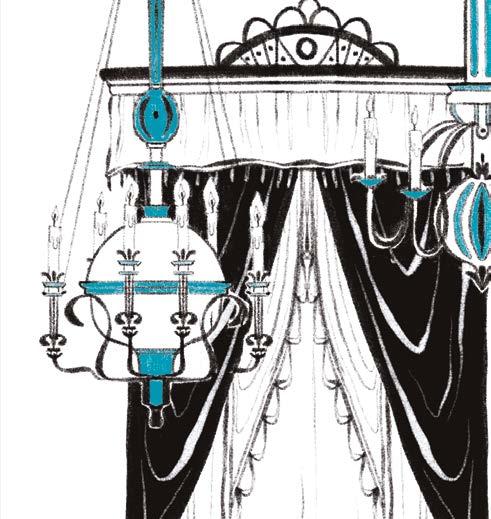
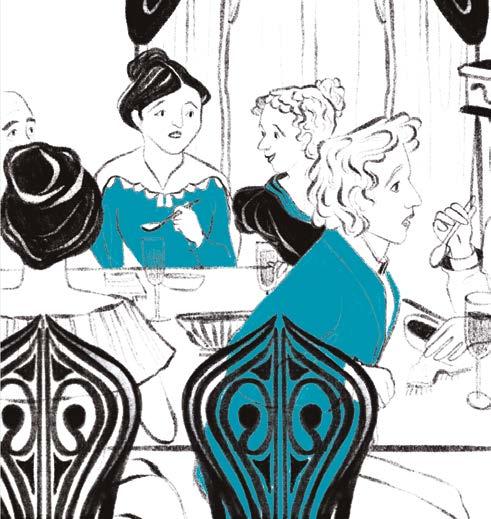
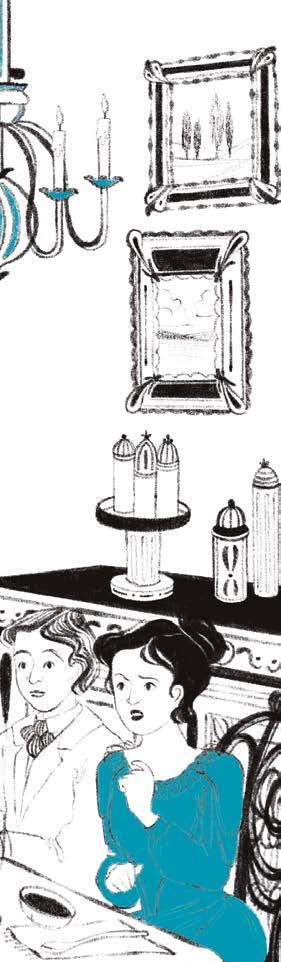
Robert was going to Mexico.

The Awakening
“When is he going?” she asked everybody, as if he were not there.
“To-night!” “This very evening!” “Can you believe it!” were some of the replies in French and English. He turned to answer a question from his mother. Edna finished her black coffee, and left. Later, when the children were in bed, Robert arrived with his bag.
“How long will you be gone?” she asked.
“Forever, perhaps. I don’t know.”
“Why didn’t you tell me? I was thinking how nice it would be to see you in the city this winter.”
“So was I,” he said. “Perhaps that’s the—” He stood up and held out his hand. “Good-by*, Mrs. Pontellier; I hope you won’t forget me.” She held on to his hand, trying to keep him from going.
“Write to me when you get there, won’t you, Robert?”
“I will. Good-by.” And he left.
Edna tried to hide her emotions from herself, but her eyes filled with tears. She understood that she was in love, and had lost that which she had held.
Edna once told Madame Ratignolle she would never sacrifice* herself for her children, or for anyone. The two women did not seem to understand each other or to be talking the same language. Edna tried to explain.
“I would give up my money, I would give my life for my children; but I wouldn’t give myself. I can’t make it more clear; it’s something which I am only beginning to understand.”
“Ah! Si Tu Savais”—If Only You Knew
“A woman who would give her life for her children could do no more than that,” said Madame Ratignolle.
“Oh, yes she could!” laughed Edna, but her friend did not understand.
Robert’s going took the color out of everything. Everyone seemed to understand that Edna missed him. Even her husband.
“How do you get on without him, Edna?” he asked when he arrived from New Orleans the Saturday after Robert had gone. Mr. Pontellier had seen him in the city, he had been excited about going to Mexico.
“Do you miss your friend very much?” asked Mademoiselle Reisz one morning as she came walking up behind Edna on her way to the beach.
“Oh, good morning, Mademoiselle. Why, of course I miss Robert. Are you going to swim?”
“Why should I swim at the end of the season when I haven’t been in the water all summer?” replied the woman, annoyed.
Mademoiselle Reisz was such a difficult person. Edna changed into her bathing suit. She felt a new energy in the water and swam for a long time and Mademoiselle waited. On the walk back together she was friendly, hoped Edna would visit her when they got back to the city, wrote her address on a piece of card she found in her pocket.
GLOSSARY
Chapter 1
porch open space with a roof at the front of a house
parasol large umbrella that protects from the sun
billiards table game where you move colored balls into pockets house the Lebrun ‘hotel’ where the Pontelliers are staying greedy strong need to eat (but not because you are hungry)
sewing making clothes by hand
adore love someone very much
oak type of tree
Gulf (at this time) Gulf of Mexico
soul spirit; part of a person some people believe never dies bath-house small building by a beach, to keep towels, etc.
pauvre chérie (French) poor darling
Creole people with French and Spanish origins
Chapter 2
Si tu savais if only you knew (words from a popular 1859 song) passion strong feeling of love / excitement for someone / something
Chopin Frédéric Chopin (1810 –1849) Polish composer and pianist unlimited without end exhausted extremely tired emotions happiness, sadness, fear = emotions wonder think about something in a questioning way feelings emotions felt for a longer time, e.g. feeling happy / annoyed desire strong need / want for something / someone accepted (here) agreed to
Chênière (full name Chênière Caminada) island west of Grand Isle
mass regular meeting of people in a Catholic church
Grande Terre island to the north-east of Grand Isle fort = Fort Livingston, Grande Terre
pirogue (Central America, the Caribbean) long, thin canoe
Our Lady of Lourdes (Catholic) church on Chênière
good-by (formal, US, 19th century) goodbye sacrifice give up something important
Chapter 3
maid person paid to do work in your house for you club (here) private place for men to meet upon (19th century) on (in modern English) ma’am madam (polite way to speak to a woman) salon (from French) living room self knowledge, beliefs, behaviors, etc. that make a person warmth (noun) being/feeling warm Southern (here) traditions, beliefs, geography, etc. of the south United States dined (formal, 19th century English) had dinner Emerson Ralph Waldo Emerson (1803 –1882) American writer on nature and freedom
Chapter 4
grand large and important bet ‘put money on’ a horse you think will win awakened (formal; adj.) describes someone who is now awake mind part of you which feels, thinks, remembers, etc. fool silly / stupid person shoulder blades triangle-shaped bones at the top of the back prejudice negative ideas about someone that are not true sane with a healthy mind; not crazy apologies (here, formal) when you say you are sorry architect person who designs buildings
Chapter 5 hoofs horses ‘feet’ sweat salty ‘water’ made by body when hot, feeling strong pain, etc. chloroform sweet-smelling liquid without color, (in the past) put a patient into a deep sleep during an operation naked with no clothes on strength (noun) being strong barking loud sound made by dogs, to show excitement, fear
ACTIVITIES
Reading Comprehension
1 Choose the best answer, A, B or C.
1 In Chapter 1, when we first meet Edna Pontellier, she has been to the beach with Robert. Her husband, Léonce, is unhappy. Why?
A She is back late and hadn’t looked after their children properly.
B He is worried about her spending so much time with Robert Lebrun.
C
She has been out in the hot sun and will be less lovely if she burns her skin.
2 Later that day, Mrs. Pontellier goes out on to the porch and cries. Why?
A Because her husband told her she was not doing her job as a mother.
B She is tired. She had been asleep when her husband got back from Klein’s.
C Because one of her children is ill and she hadn’t realized.
3 At the end of Chapter 2, Robert suddenly decides to leave for Mexico. Why?
A He was tired of life at Grand Isle, and wanted a new adventure abroad.
B
C
His mother’s friend, Montel, offered him a good job.
He was falling in love with Mrs. Pontellier, and needed to get away from her.
4 In Chapter 3, Doctor Mandelet learns that Léonce is worried about his wife.
A He tells Léonce to take Edna to a psychotherapist.
B The Doctor believes Edna may have become interested in another man.
C He tells Léonce to take her with him when he goes to New York.
5 In Chapter 4, Edna begins a relationship with Alcée Arobin. Why?
A It’s not love—she is learning to understand her true desires.
B Robert has not written to her, so she doesn’t love him anymore.
C She has fallen in love with him and wants to forget Robert.
6 In Chapter 5, Robert does not wait for Edna. Why?
A Because she went away even though he asked her to stay.
B Because he does not believe they can be together— she is married.
C Because he had crazy, impossible dreams.
2 There is a scene in Chapter 2 where the main characters are on Chênière then back at Grand Isle. Are the statements true (T) or false (F)?
1 Edna left the church because she was feeling unwell.
2 Robert sends her to Madame Antoine’s.
3 Madame Antoine is not pleased when Edna arrives.
4 Robert says Léonce won’t be worried because she is with him.
5 Raoul and Etienne had been asleep for two hours when they returned.
6 Robert leaves and Edna waits for her husband to come back home.
Thinking, Writing and Speaking
3a Fill in the table with your own ideas.
What is the same and what is different about the time of the novel and now?
What I liked about the story. What I didn’t like so much. What surprised / shocked me about this novel.
3b Discuss your ideas in pairs.
Creative Writing
4 Write Your Own Scene
Write a short scene (6 –10 sentences) describing Edna walking alone on Grand Isle, and then meeting someone. Here are some ideas you can use, or you can use your own:
• describe where she is walking
• she meets someone, e.g. Mademoiselle Reisz, Adèle Ratignolle, Robert Lebrun or Léonce Pontellier. Describe how they behave with Edna
• include a short dialogue between Edna and this other person
Writing and Speaking
5a Write the character or characters next to the phrase you think describes them.
Edna Pontellier (EP)
Léonce Pontellier (LP)
Robert Lebrun (RL)
Adèle Ratignolle (AR)
Mademoiselle Reisz (MR)
Alcée Arobin (AA)
1 thinks people belong to him/her ______
2 has strong ideas about mothers
3 generous
4 has deep feelings
5 cries easily
6 worries what other people think
7 does not care what other people think ______
8 is an artist / musical
9 shows their feelings in their eyes
10 expects people to do what he/she says
11 is not a jealous person
12 knows how to get what he/she wants
13 puts others before him/herself ______
14 is free to choose what he/she does in the evenings
15 is not always serious
16 gets annoyed easily
17 has hopes and dreams
18 understands people well
19 is fun to be with ______
20 is not always honest with others/his/herself
5b Choose a character, then write a short description of the type of person they are. Use the list above to help you and add your own ideas.
5c Discuss your chosen characters in pairs. Do you agree with each other?
Reading Between the Lines
6a Look at the sentences below from the conversation between Edna and Doctor Mandelet. Then decide what Edna and the Doctor mean.
1 Doctor Mandelet: I would understand. And I tell you, there are not many who would—not many, my dear.
2 Edna: I want to do things my own way. That is wanting a lot of course, when it means stepping so heavily on the lives, the hearts, of others.
3 Edna: Don’t blame me for anything.
4 Doctor Mandelet: I don’t want you to blame yourself, whatever comes.
6b Now write your ideas about Doctor Mandelet as a person.
Listening
7 Listen to the description of Edna’s dinner, then put the events in the right order.
A Edna’s feelings grow dark. It is as if they have come from somewhere outside of her.
B Edna is so upset when Victor sings that she breaks a glass.
C At half-past eight, Arobin and Monsieur Ratignolle sit down next to Edna.
D The first to leave are Monsieur Ratignolle and Mademoiselle Reisz.
E Edna tells a guest about an expensive gift her husband has sent her that day.
F Everyone is talking and laughing, but Edna feels bored.
G Victor sings a song Edna had heard from Robert on Grand Isle.
H Edna tells everyone it is her birthday, and that she is twenty-nine.
Speaking
8 When The Awakening was first published, readers were shocked by its main character. Edna was a woman who did not see herself as a mother or as a wife, but as a person with her own desires and needs. Do you think The Awakening still has the power to shock us today? Why? Why not? Discuss in pairs.
Writing your Opinion and Speaking
9a Answer these questions in full sentences. Give reasons for your answers.
1 Which scene from the book do you remember the most? Why?
2 Which character/s do you feel most sorry for? Why?
3 Do you think Robert was right or wrong to leave Edna in the end? Why?
4 Do you understand Edna? Why? Why not?
9b Discuss your answers in pairs.
Understanding the Characters
10 Imagine you are Robert Lebrun as he decides to leave for Mexico. Write a short letter (6 – 8 lines) that explains what he is thinking. Here are some ideas to help you. Write:
• what they plan to do and why
• what they are afraid of
• what they hope will happen
• what they don’t tell anyone
Example: Robert Lebrun: I have decided to leave Grand Isle and go… I have a problem. I think that… Will I be able to… ?
Should I tell Edna… ?
OOKMARKS
• Level 1
Oscar Wilde, Lord Arthur Savile’s Crime
• Level 2
Frances H. Burnett, A Little Princess
• Level 3
Sir Arthur Conan Doyle, The Hound of the Baskervilles
• Level 4
Kate Chopin, The Awakening
In 1890s Louisiana, Edna finds it hard to be the perfect wife to her rich husband, and perfect mother to her two small children. At a time when women’s needs were rarely discussed and their behavior closely controlled, she wants more. But as she looks for a way out, she realizes that she is in a world that does not understand her. The Awakening is the extraordinary story of a young American woman coming to understand herself and her life. First published in 1899, it shocked readers at the time – it still has the power to shock today.
EXTENSIVE READING SERIES
LEVEL 1 BEGINNER (400 HEADWORDS) A1
LEVEL 2 ELEMENTARY (700 HEADWORDS) A2
LEVEL 3 PRE-INTERMEDIATE (100 HEADWORDS) A2/B1
LEVEL 4 INTERMEDIATE (1400 HEADWORDS) B1
LEVEL 5 UPPER INTERMEDIATE (1800 HEADWORDS) B2
LEVEL 6 ADVANCED (2500 HEADWORDS) C1
Classic — American English
To download audio tracks
• Scan the QR code inside your book with your mobile phone or tablet and listen to the recordings.
• With PC or Mac download audio tracks from www.eligradedreaders.com