Personal subject pronouns




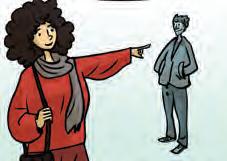
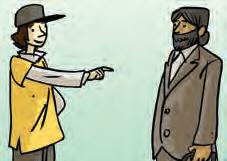
I am
You are He is She is It is We are You are They are
I’m
You’re He’s She’s It’s We’re
You’re They’re
We use the verb to be:
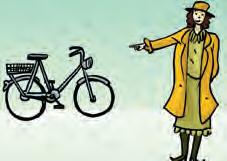
• to identify people or objects I’m Oliver This is Matilda.
I am not You are not He is not She is not It is not We are not You are not They are not
I’m not
You’re not / You aren’t
He’s not / He isn’t
She’s not / She isn’t
It’s not / It isn’t
We’re not / We aren’t
You’re not / You aren’t
They’re not / They aren’t
Am I? Are you? Is he? Is she? Is it?
Are we?
Are you? Are they?
• to ask and talk about permanent states
Where is Patrick from?
He’s from Ireland.
• to describe people, places, things and feelings
Karen’s nice. She’s always happy.
1 Underline the correct form of the verb to be.
1 We am / is / are happy.
2 Mary am / is / are busy.
3 I am / is / are hungry.
4 The students am / is / are in class.
5 You am / is / are from Spain.
6 Mr Brown and Mrs Dee am / is / are from South America.
7 You and I am / is / are friends.
2 Complete the conversation with the correct form of the verb to be.
Mary Hello. My name (1) Mary. What (2) your name?
Peter Peter. How (3) you?
Mary I (4) fine. And you?
Peter I (5) OK. Where (6) you from?
Mary I (7) from Ireland. My parents (8) Irish.
Peter Where (9) that girl from?
Mary She (10) from Japan.
Peter How old (11) she?
Mary She (12) fifteen.
3 2 Put the words into the correct order to make sentences. Then listen and check.
1 a / reporter / Powell / is / Miss
2 New York / Victoria / are / from / Owen / and
3 friends / José / Manuel / and / aren’t
4 beautiful / weather / is / today / the
8 are / the / heavy / books is Miss Powell is a reporter.
5 sister / she / my / is
6 Mrs / and / lawyers / Mr / are / Bailey
7 the / the / classroom / in / chairs / are
4 Insert the correct form of to be. Then make the sentences negative and interrogative.
You and Paul happy.
are They are not teachers.Are they teachers? She’s thirsty.
5 Rewrite the sentences using the correct subject pronouns and the contracted form of to be. 1 Ann is thirsty. 2 The magazine is on the table.
That man is from Germany.
The grammar books are on the shelf.
Tom, my cat, is not in the garden.
6 Complete the email with the correct form of the verb to be. Hi! My name’s Orla.


Today (1) my birthday. I (2) 18. Bob and Sheila (3) my friends. They (4) at my party. Bob (5) a student here in London. His girlfriend, Sheila, (6) a shop assistant. I (7) happy that my friends (8) here. My sister’s name (9) Olivia. She (10) also 18 today. We twins! Write soon, Orla is 7 Write 8 sentences containing the personal pronouns I, you, he / she / it, we, you, they.
3 to be (2): short answers
aFFirMaTiVE nEgaTiVE
Am I English?
Are you tired?
Is he hungry?
Is she American?
Is it cold?
Are we thirsty?
Are you Italian?
Are they afraid?
Yes, I am. Yes, you are.
Yes, he is. Yes, she is. Yes, it is. Yes, we are. Yes, you are. Yes, they are.
No, I’m not. No, you aren’t. No, he isn’t. No, she isn’t. No, it isn’t. No, we aren’t. No, you aren’t. No, they aren’t.
We use short answers because we do not need to repeat words that were in the question. We also use short answers because it is more polite than just saying Yes or No. To form the short answer we repeat the subject pronoun and the verb, after Yes or No.
A Are you hungry?
B Yes, I am. / No, I’m not.
A Is she a teacher?
B Yes, she is. / No, she isn’t.
We always use the full form in affirmative short answers.
A Are you tired?
B Yes, I am.
1 3 Answer the questions using the short form. Then listen and check.
2 Look at the information about Amanda. Use short answers to complete the questions.
IDENTITY CARD
Name Amanda Curtis
Country Canada
Address
Age
Job

3 Put the words in the correct order to make questions, then answer them.
4 Put the sentences in the correct order. Then listen and check.
I’m from Chicago, in the USA. Where are you from? Are you from Spain? I’m Carlos. Hi! What’s your name? My name’s Kathy. Yes, I am. Hi Carlos. Are you a student? No, I’m not. I’m from Argentina. And you?
Kathy Hello. (1) (2)
Carlos (3)
Kathy (4)
Carlos (5)
Kathy (6)
Carlos (7)
Kathy (8) Is your hair long? No, it isn’t. My name’s Kathy.
aFFirMaTiVE
There is a table. There is an apple. There are four desks.
inTErrOgaTiVE
Is there a table?
Are there two books on the table?
nEgaTiVE
There isn’t a table. There isn’t an apple. There aren’t four desks.
sHOrT ansWErs
Yes, there is. / No, there isn’t. Yes, there are. / No, there aren’t.
We use there is and there are to show the existence of people or objects.
We use there is with singular nouns and there are with plural nouns. There is / There’s a book on the table. There are two cats in the garden.
In a list, we use there is when the first noun is singular. There’s a table and four chairs.
We use there are when the first noun is plural. There are four chairs and a table.
1 Underline the correct option.
1 There isn’t / There aren’t a guitar in the bedroom.
2 There are / There is two cinemas in the town centre.
3 There is / There are a new bookshop in South Street.
4 This restaurant is very quiet. There isn’t / There aren’t many people here.
5 A Are there a lot of museums in London? B Yes, there are. / there is.
6 There aren’t / There isn’t an apple tree in the garden.
7 There isn’t / There aren’t thirty days in October.
8 There is / There aren’t a Greek student in my class.
2 Look at the picture of a shop window and write sentences with There is / There are and the objects you can see. You can use the words in the box to help you.
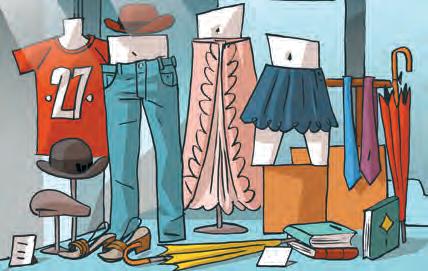
There are two ties in the shop window. There is / There are
3 Complete the sentences with There is, There are, It’s or They’re.
a chair in the corner.
nice people.
time to go.
an apple and some oranges in the fruit bowl.
lots of clothes shops in town.
5 Complete the sentences with There’s, There are, It’s / He’s / She’s or They’re. Then listen and check.
a fox in the park.
two pairs of socks and a T-shirt on the floor.
an excellent teacher and she’s pretty too.
several boys playing football outside.
an adorable dog.
many good restaurants in my town but all expensive.
my grandmother.
great film on TV tonight.
a delicious cake in the kitchen.
5 Put these sentences into the negative form. Then use your imagination to finish them. 1 There’s a cat on the roof.
isn’t a cat on the roof. There’s a dog on the roof. Are there many theatres in your town? Yes, there are. / No, there aren’t.
There is a university in Stratford-upon-Avon.
There are four children in the photo.
Write questions using the prompts. Then answer for yourself using short answers.
Idiomatic uses of to be 5
In English there are many expressions which use the verb to be + adjective. The most common are used to talk about feelings, interests and the weather.
be cold / be hot → be hungry / be thirsty → be right / be wrong
be angry / be afraid of
be interested in
be lucky
be sleepy
be tired
be late
be in a hurry
It’s very cold today. / It’s very hot here in summer. He’s always hungry! / I’m very thirsty. Yes, you’re right! / Sorry, you’re wrong.
The teacher is very angry. / Are you afraid of snakes?
Paul is interested in history.
You are always so lucky!
Are you always so sleepy?
The children are very tired.
Oh no, I’m late!
Quick! We’re in a hurry.
We also use the the verb to be to ask for information about:
• health
A How are you?
B I’m fine, thanks.
• price
A How much is this book?
B It’s £6.99.
• age
A How old are you?
B I’m 25 years old.
• jobs
A What’s your job?
B I’m a doctor.
1 6 Use the correct form of to be and one of the adjectives below to complete the sentences. Then listen and check.
interested wrong thirsty sleepy hungry dirty cold tired happy hot afraid right
1 A Why are you going to bed?
B Because I
2 A Why are you eating?
B Because I
3 A Why is she going to bed?
B Because she .
4 Wash your hands! They !
5 May I open the window? I .
6 A Madrid is in Argentina.
B No, you .
B Yes, you ! am tired.
7 My feet always in winter.
8 They in history.
9 We because we passed our exam.
10 He because it is very hot outside.
11 Helen of spiders.
12 A 5 plus 5 is 10.






Plural of nouns
Regular plurals
To form the plural of most nouns we add -s to the singular noun. cat → cats book → books
Pay attention to the following spelling rules:
• for nouns ending in -s, -ss, -sh, -ch, -x, -o we add -es bus → buses dish → dishes fox → foxes glass → glasses church → churches potato → potatoes
• for some foreign nouns ending in -o we add only -s photo → photos disco → discos piano → pianos kilo → kilos
• for nouns ending in vowel + -y we add -s boy → boys key → keys
• for nouns ending with a consonant + -y, we change the -y to -i and add -es city → cities family → families
• for some nouns ending in -f or -fe, we change the f to v and add -es shelf → shelves knife → knives
Note!
Other nouns ending in -f or -fe use the regular -s ending to form the plural roof → roofs cliff → cliffs
Irregular plurals
Some nouns have irregular plural forms. man → men woman → women firewoman → firewomen child → children mouse → mice tooth → teeth person → people goose → geese foot → feet
Some nouns have the same form in the singular and the plural. fish → fish sheep → sheep
Note!
Police has a plural verb. A The police are here. B Why? What do they want?
1 Write
2 Write the singular form
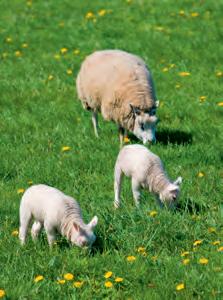
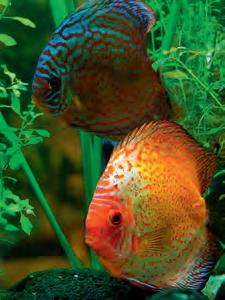






Olivia cleans her twice a day.
a / an, the
a / an
The indefinite article a / an is used before singular nouns. We use the indefinite article when we talk about something for the first time and when we refer to a single thing or person.
We use a before words that begin with a consonant or a consonant sound such as u and eu, when they sound like ‘you’. a boy a tree a house a university a European city a year
We use an before words that begin with a vowel (a, e, i, o, u) or a vowel sound. an elephant an egg an idea an MP3 player
We also use an before words starting with a ‘silent h’. an hour an heir an honour
Note!
We use a / an with jobs and some illnesses. Paul is an engineer. Are you a student? I’ve got a headache. I’ve got a cold. the
We use the definite article the before singular and plural nouns. We use the when we talk about something specific; something you or others know about already.
The hotel is very nice The film starts at 8 p.m.
Note!
We do not use an article when we talk about things in general. I like tea. Gold is expensive.
The definite article the is the same for all persons in the singular and plural. the boy / the boys the girl / the girls the cat / the cats the computer / the computers
We use the before:
• rooms in the house Dad’s in the kitchen.
• shops Carly is at the baker’s.
• places in town Mum’s at the post office.
• the words sun, moon, sky, country, mountains, seaside The sun is in the sky.
• names of oceans, seas and rivers The Thames is a river in London.
• family names in the plural The Smiths live in Chicago.
We do not use the before:
• names of singular countries, regions, mountains, islands and lakes France is beautiful. Lake Ontario is in Canada.
• names of languages, school subjects, sports, colours, meals Italian is a wonderful language. I like maths. Football is a popular sport. Pink is my favourite colour. Breakfast is ready!
• titles or singular names
President Obama Mr Clark
• days, months, festivals, time Christmas is in December. The party is on Monday at 8 p.m.
Note!
We say the USA, the United Kingdom, the British Isles, the Caribbean.
2 Complete the sentences with a or an. 1 The Mini is English car. 2 She’s Iranian student. 3 A pear is fruit. 4 Paul is honest man. 5 Emily is architect.
Australia isn’t European country.
4 Write the where necessary or where you do not need the definite article.