Portfolio.
2018-2023

2018-2023

elina.newlinarch@gmail.com
The past 6 years I have experienced great fulfifilment in fifinding my path in the architectural world and now I have graduated summa cum laude from KSUAE - Kazan State University of Architecture and Engineering BSc Architecture programme. During process of education I had a great experience with creating projects, including personal and group works. Also the required part of my education was taking the internships that was really crucial time for me I used to work in Denmark. Now I am going to study Architecture and Urbanism at Politecnico di Milano.
+7(987)224-36-09 Kazan city, RussiaKazan State University of Architecture and Engineering
Bachelor of Architecture
Politecnico di Milano
Master of Architecture and Urban design \ 1st year
STRELKA KB, Moscow
WERK Arkitekter , Denmark
NOVAYA ZEMLYA , Moscow
PROJECT GROUP 8, Kazan
MASTER’S PLAN, Moscow
OpenGap Inspiratiom Hotel
Stuttgart Mobility Hub
during the internship at WERK Arkitekten
Ideas transforming cities
XXXI International Review-Competition of Graduate Qualification Works in Architecture, Design and Art
Revit + Dynamo
Rhino + Grasshopper
Google SketchUp
3dsMax + Corona
Autocad
Microsoft Office
Stefano Boeri Urban Design studio
Internship
Architect Architect Architect
Internship Participant
April - May, 2020
Sep 2020- Jan, 2021
March - July 2021
July 2021 - August 2022
July 2023 - Present
November 2018
2nd prize
1st prize
1st prize
November, 2020
June, 2022
September, 2022
Adobe Creative Cloude
QGis
Lumion
Enscape
VRay
Russian: native
English: C1 / advanced
Italian: A1 / basic
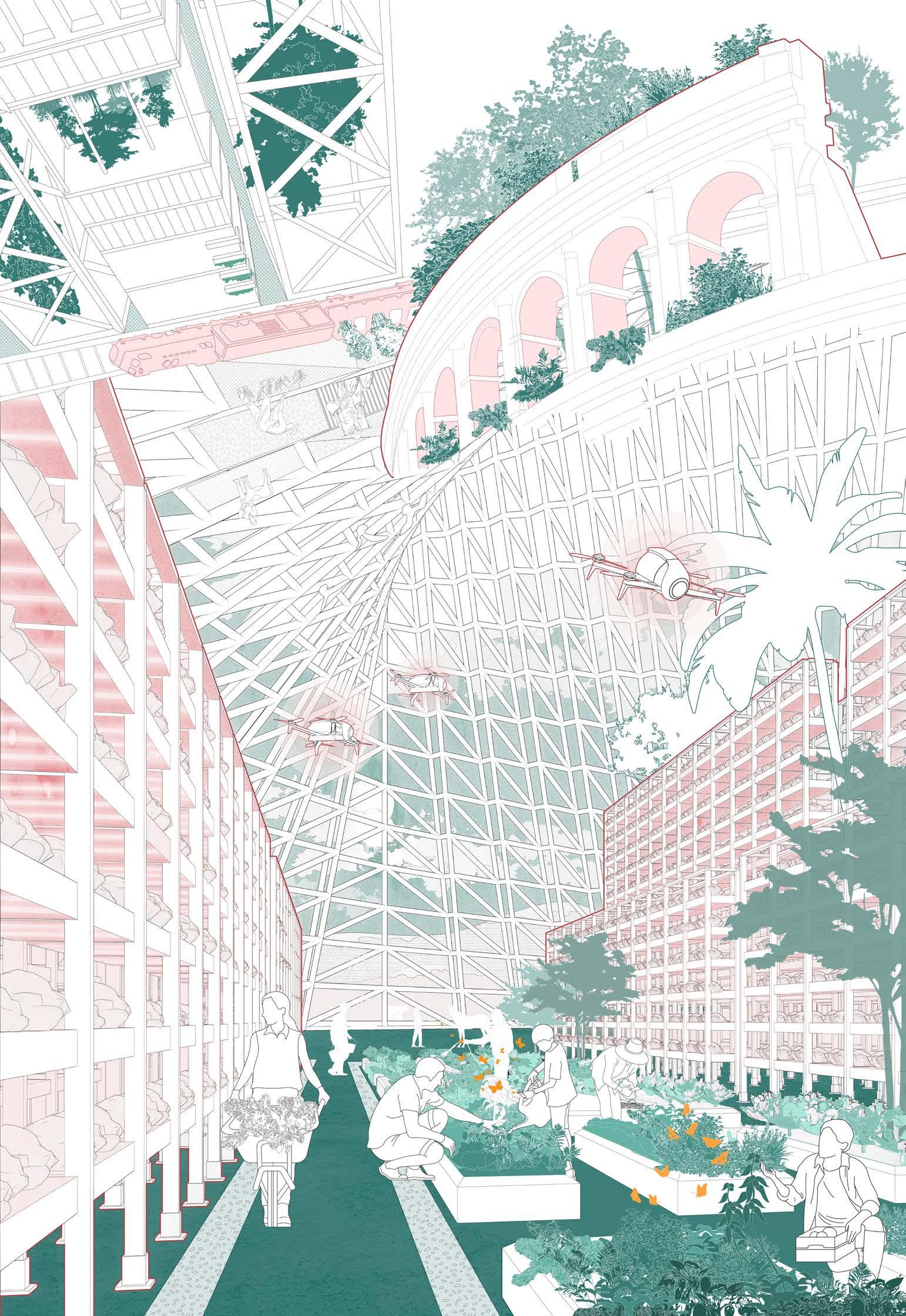
As the planet’s population continues to grow and change its way of living, providing enough food for humans is becoming a global challenge. The United Nations predicts that 68 percent of the world’s population will live in cities by 2050, and this process happens at the expense of natural resources and green spaces, increasing the vulnerability of urban communities to the effects of climate change.
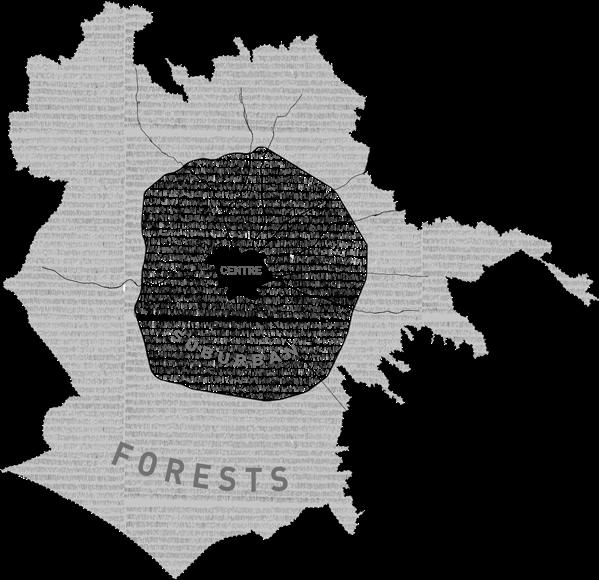
This project aims to establish a new presence of agriculture in Rome in 2050, by dictating different strategies that differ between the zones of Rome, which are divided into the following: a - the urban area, b - preurban (within the GRA), c - rural area (Agro Romano), and the zones in between every two layers.
a. The urban area and education:
Speaking about the urban area, the strategies are dictated mostly by the educational function.
b. The preurban area and communities:
In the preurban area, our masterplan focus on enhancement of community cohesion, knowledge sharing, production and creativity by introducing a series of small-scale interventions, that can be applied to multiple locations.
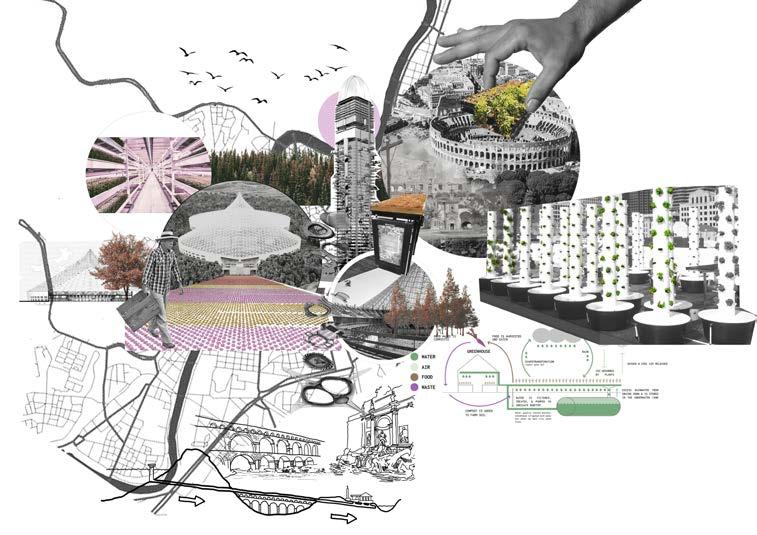
c. The rural area and environment:
In the rural areas, the proposal aims to balance the farmland and the forests in order to achieve agroforestry, while ensuring a stable food supply and the emphasis on the closer link between agriculture and the environment.
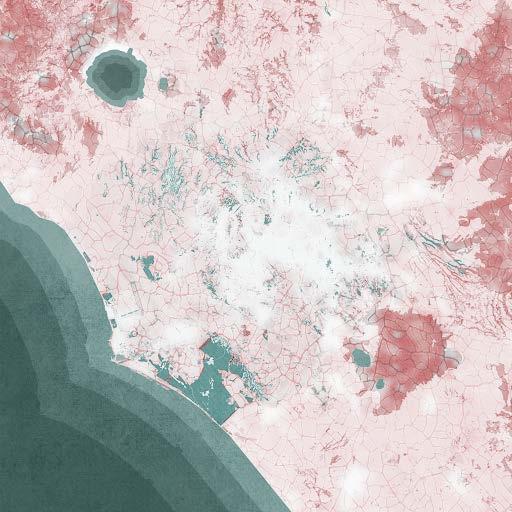
1949
2008
In resent decades many rural areas with high quality soil have been lost due to rapid urbanization
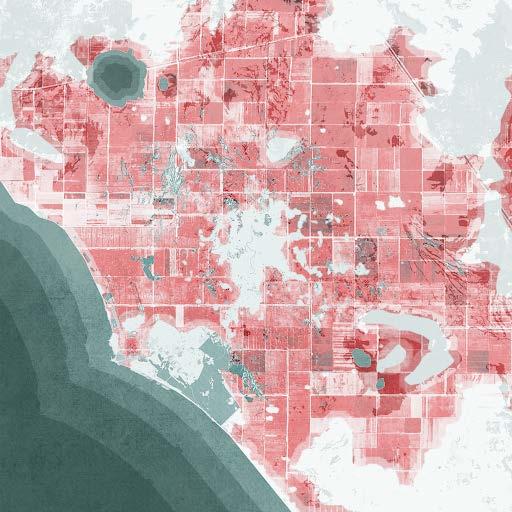
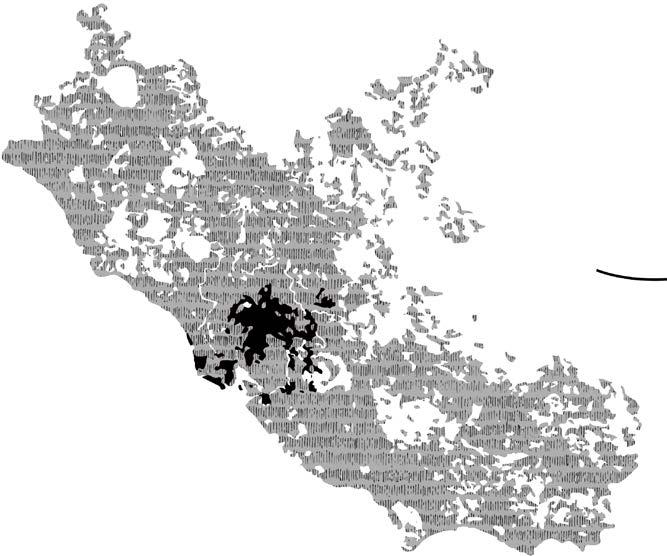
Agriculture Area
The agricultural land around Rome takes up a huge amount of space
This enormous monoculture of rural production on an industrial scale contributes to land degradation
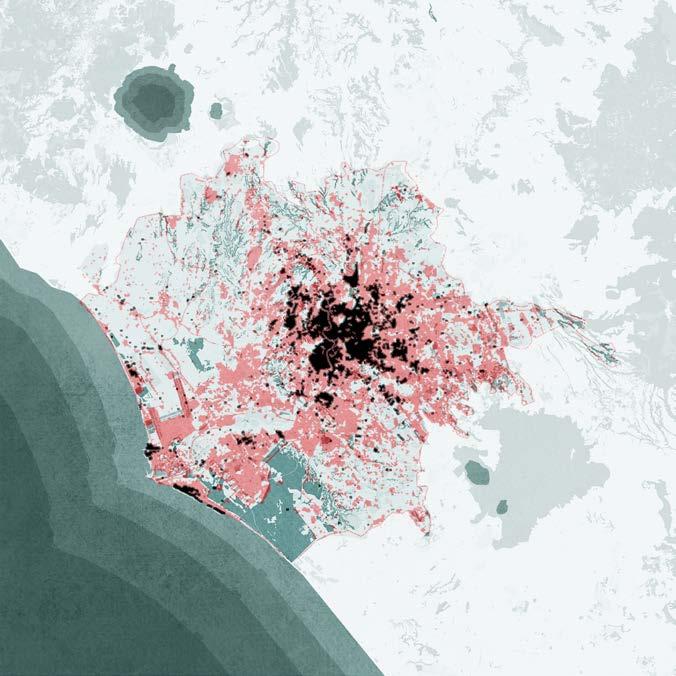
Leaf Area Index
The increased nimber of trees will help with creating a sustainable ecosystem that will improve such indicators as air quality
1950
MONOCULTURE
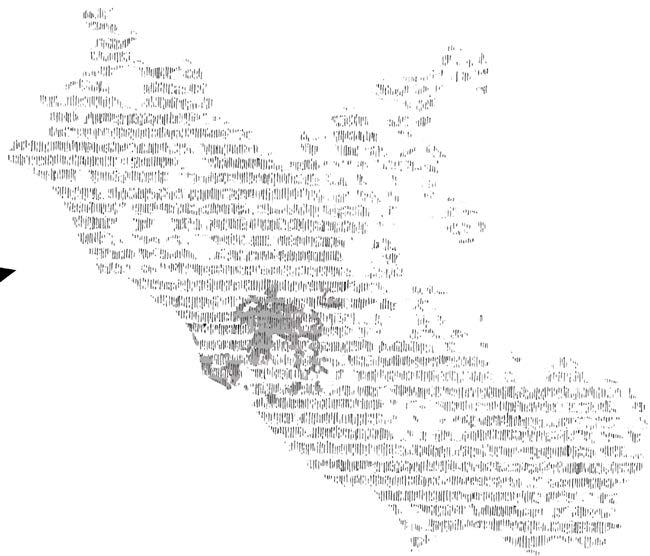
Dominant role of industrial scale infrastructure
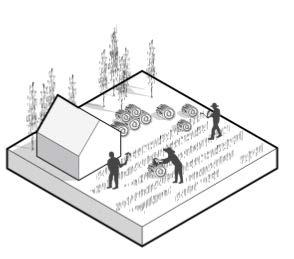
2000
CHAOS
Degraded land, chaotic urbanism
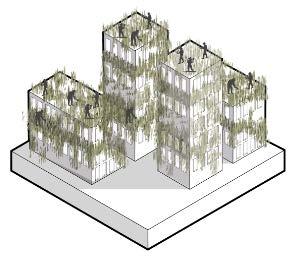
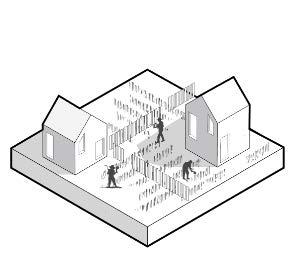
2050
PERMACULTURE
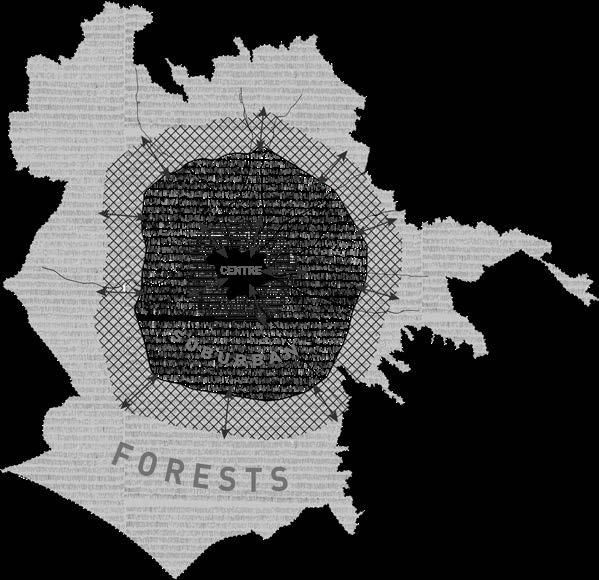
Environmemt full of mutually beneficial sinergies
RELOCATION
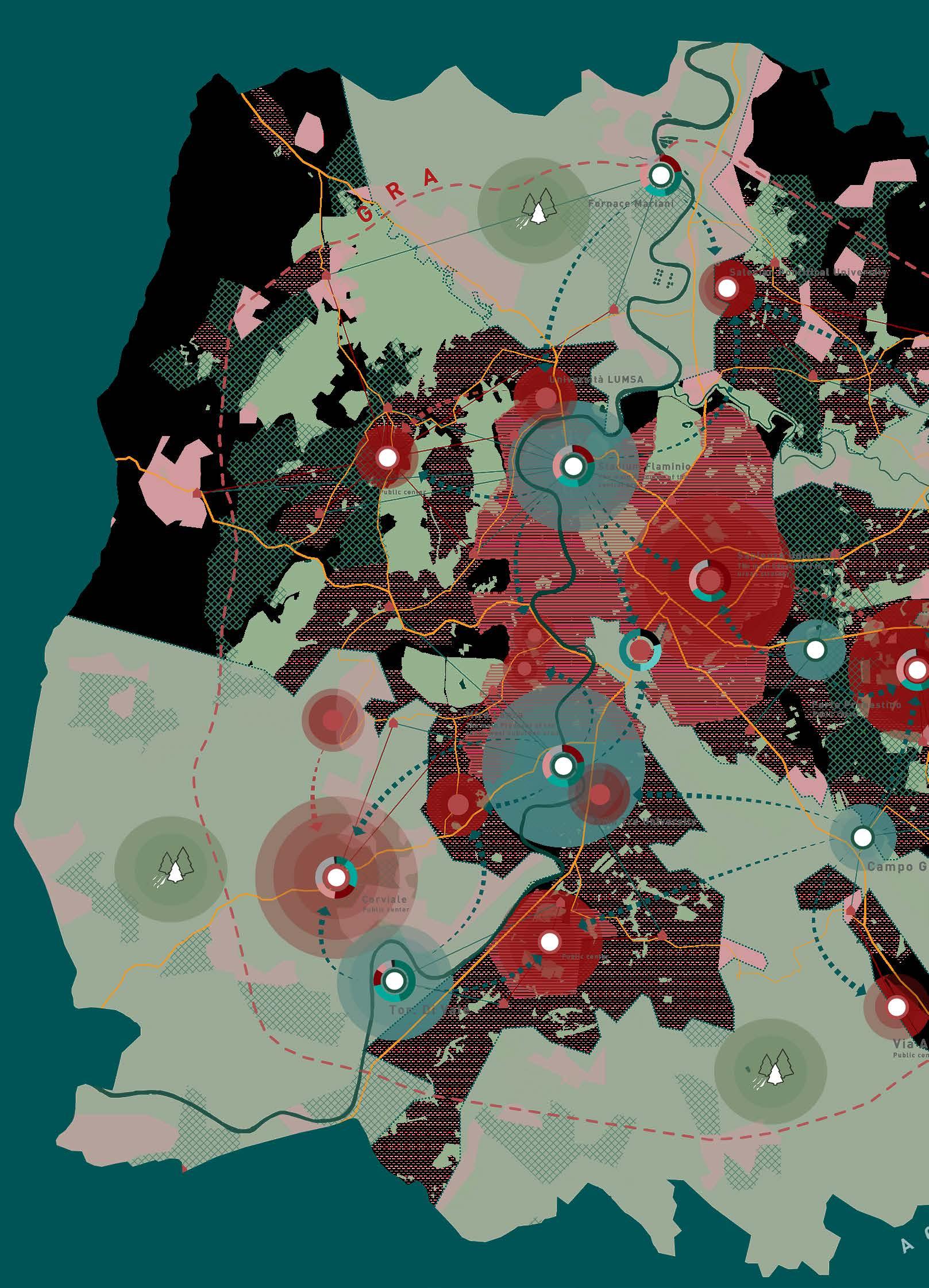
The map demonstrates the location of the main actors in the strategy, such as producers (farms), educators (universities), and consumers (public centers), and the exchange of energy and resources between them.
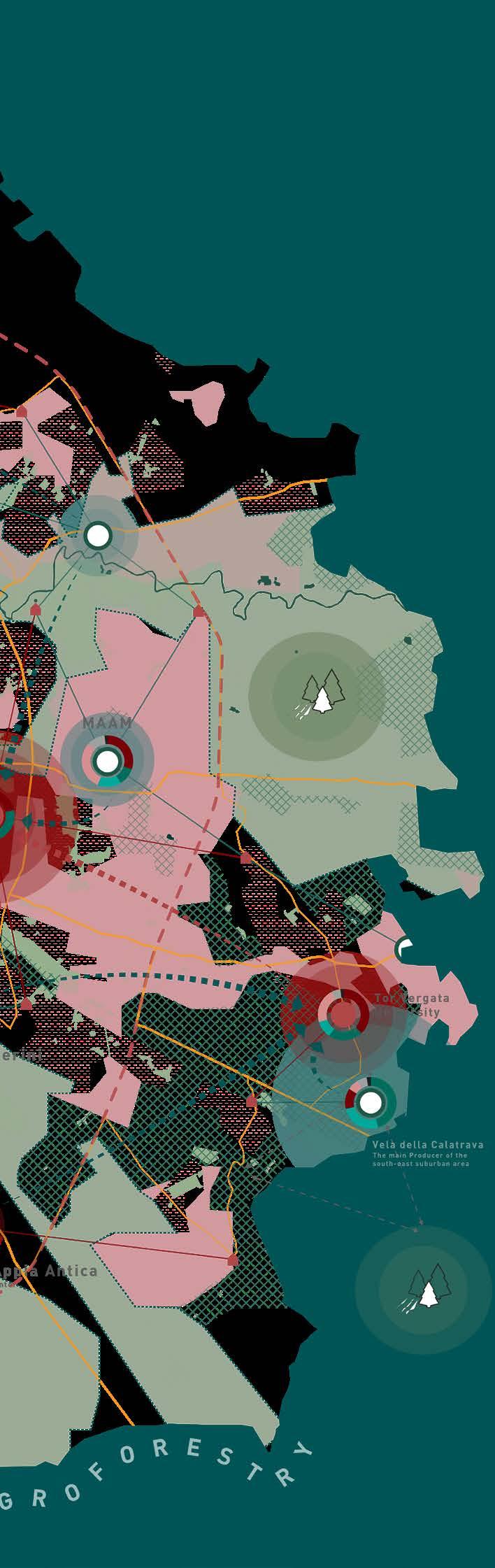
Meanwhile, all around the city few local centers are being created to finish the system of food distribution.
Public center
Educator
Local center
Food production
Energy collection
Education (workshops)
Public facilities (restaurants)
Food markets
Storage
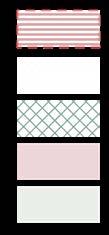

Educational center
Multi-functional district
Eco-district
Horticulture center
Eco - parks
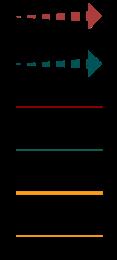
Educational products flows
Food production flows
Connection with the public center
Connection with the farm
Main way of distribution
Distribution rings



Regarding the goal of the strategy, new forests instead of agricultural fields are becoming the main product of the project


LINKS
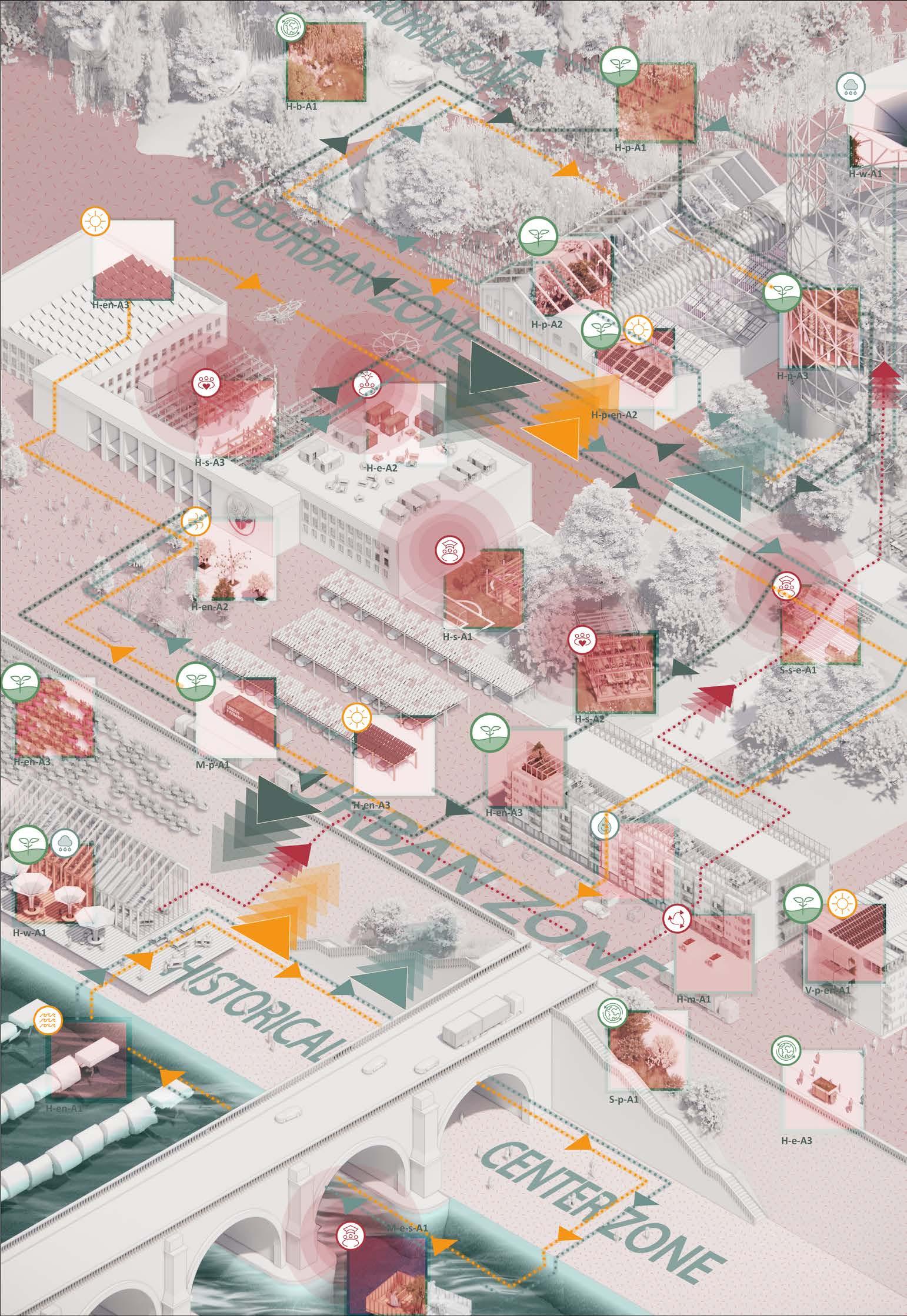
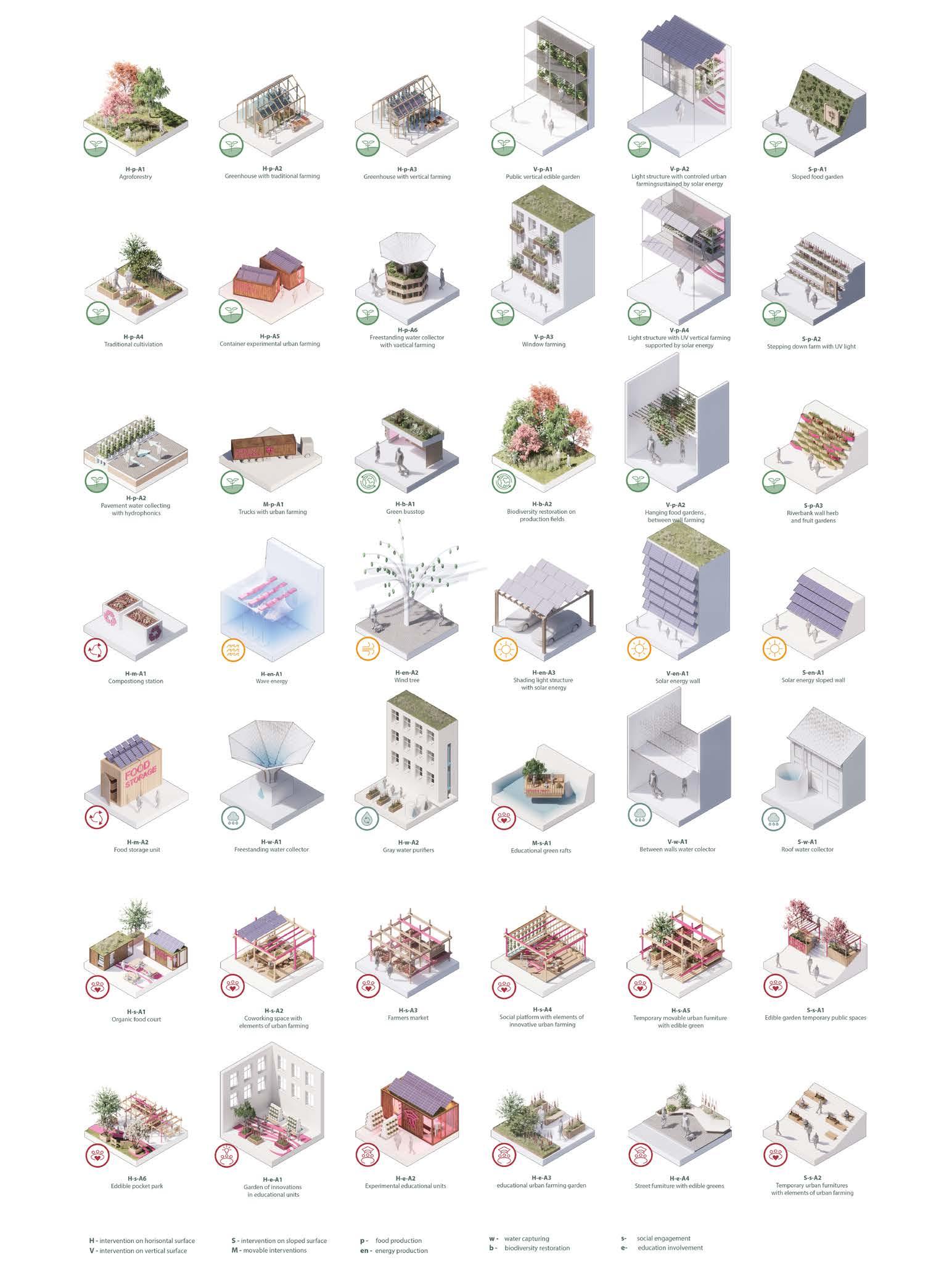
The proposed strategy is based on a system containing a series of interventions that together form a network that will allow for the widest possible transformation of Roman agriculture. The basic design unit is formed by “letters” - a set of various approaches and interventions that can be used in different scenarios. Due to their specificity, they have been divided into two main categories: capital letters, indicating the method of application, and small letters, denoting their functions. Together with another unique symbol for each considered intervention, they form “words” - the main content of the Alphabet of Solutions.
Urban agriculture is seen as one of the ways to feed the city with a large influx of people and it does bring many benefits, “But you want to be careful not to overstate things. If urban agriculture gets sold as something that will create all these jobs or feed entire cities — and then it doesn’t — it could quickly lose support.”5 Although there are possible problems that need to be considered in practice, we believe that this proposal will give individuals a better appreciation of how the food system works. In addition, cities are constantly being shaped by emerging technologies. technological advancements can improve the quality of living environments and promote governments and companies to provide better services to residents. Therefore, all the data collected throughout this project will use for promoting the communication of urban farming approaches in different cities. Evoking a rethink about the environment, agriculture, and nature by participating in this practice, at the same time, put forward new prospects about the sustainable development model of urban food.
“We have neglected the truth that a good farmer is a craftman of the highest order, a kind of artist”, - Wendell Berry.
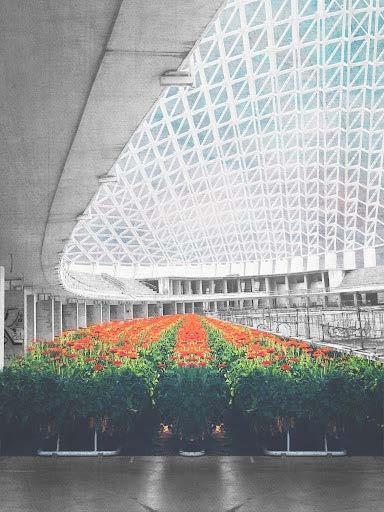
“I would rather be on my farm than be emperior of the world”, - George Washington.La Vela di Calatrava Urban farming
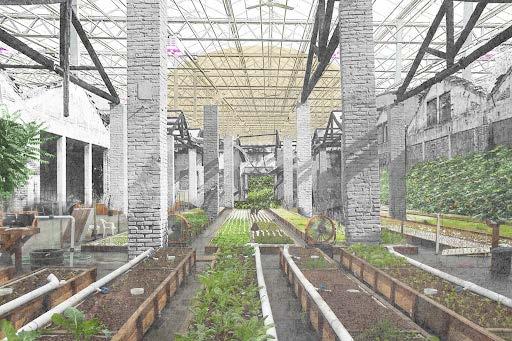 Mira Lanza Urban farming
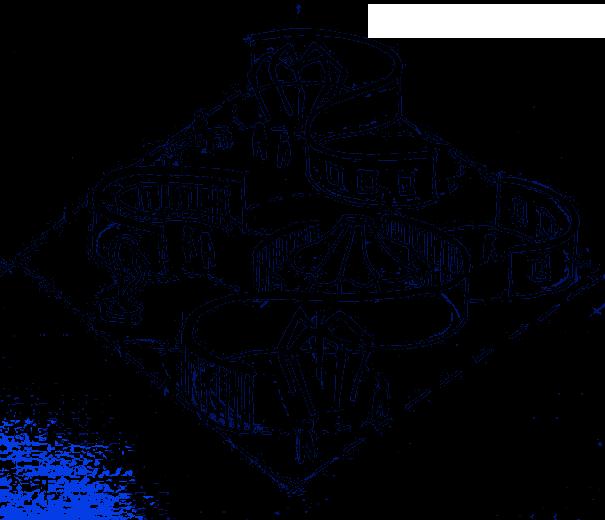
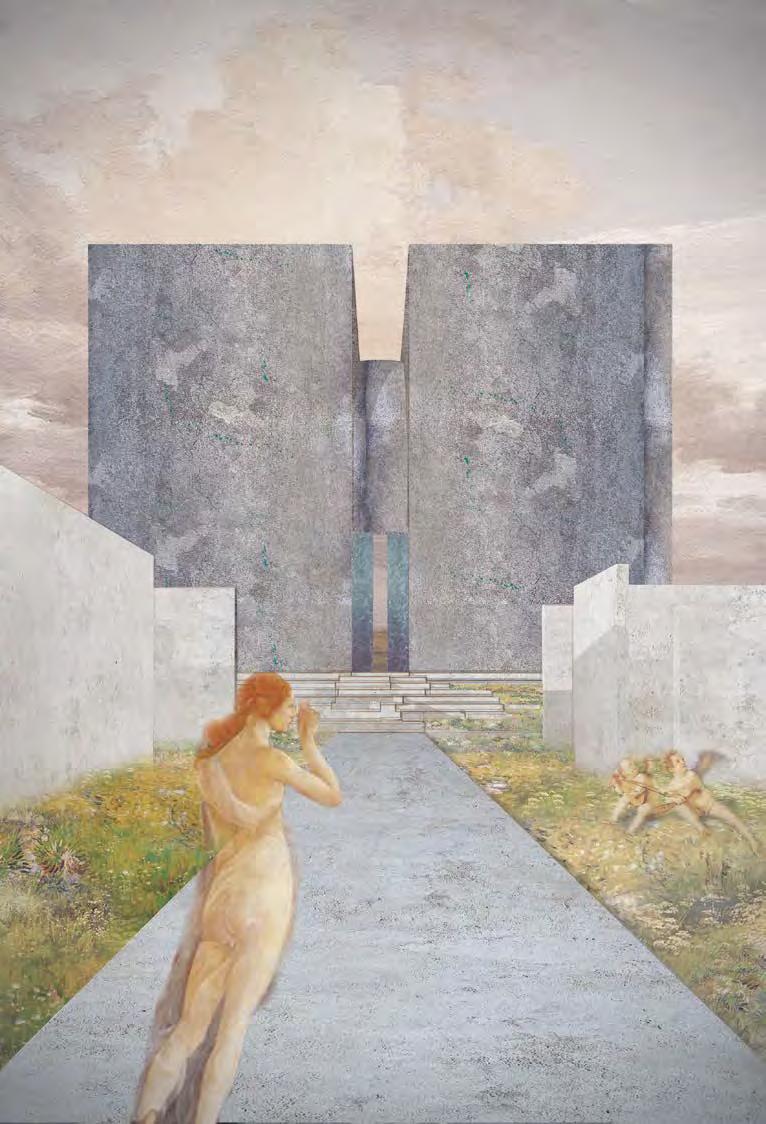
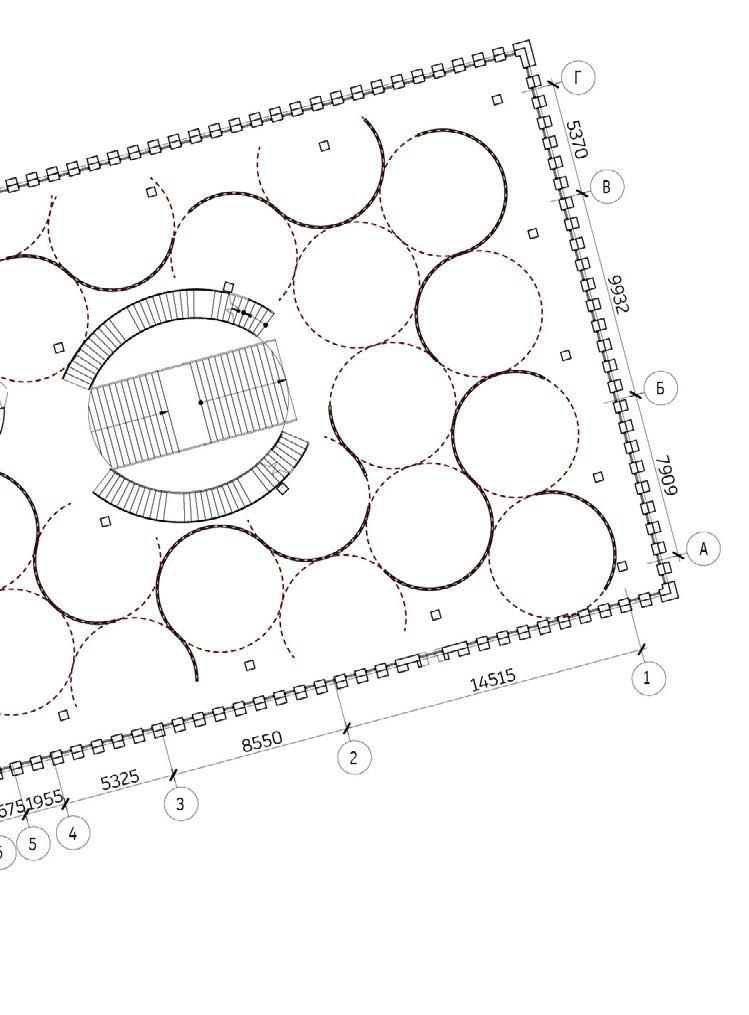
Art labyrinth is a space where you want to get lost. It is a platform for the exhibition of various objects of art and culture, and each time it can be completely different. Its main feature is the transformable walls of the gallery, which can be rearranged to organize halls of various shapes and sizes.
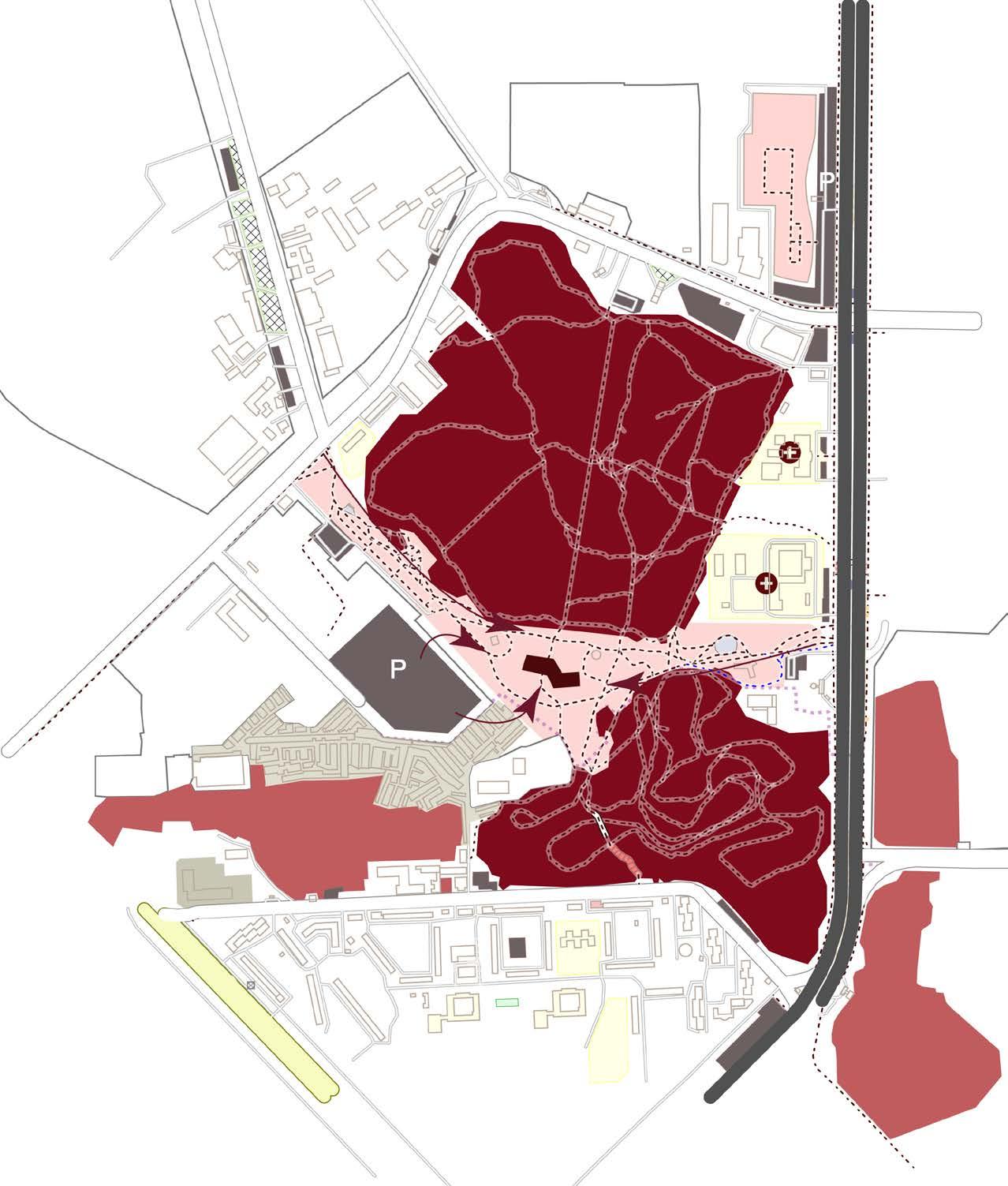
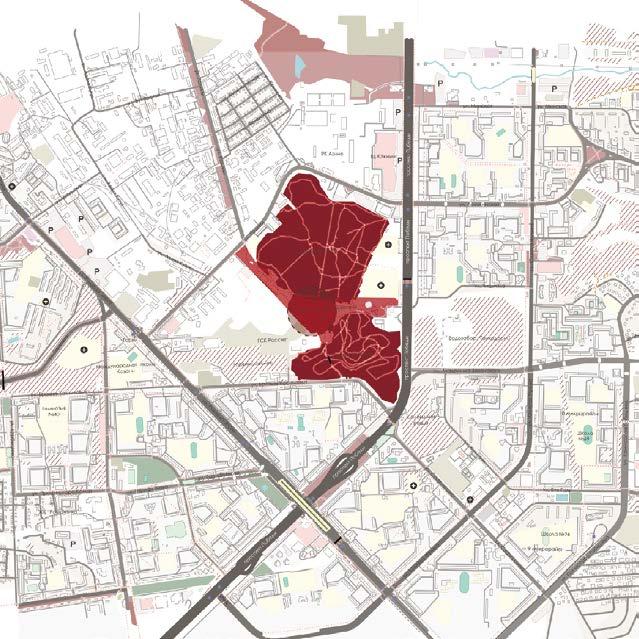
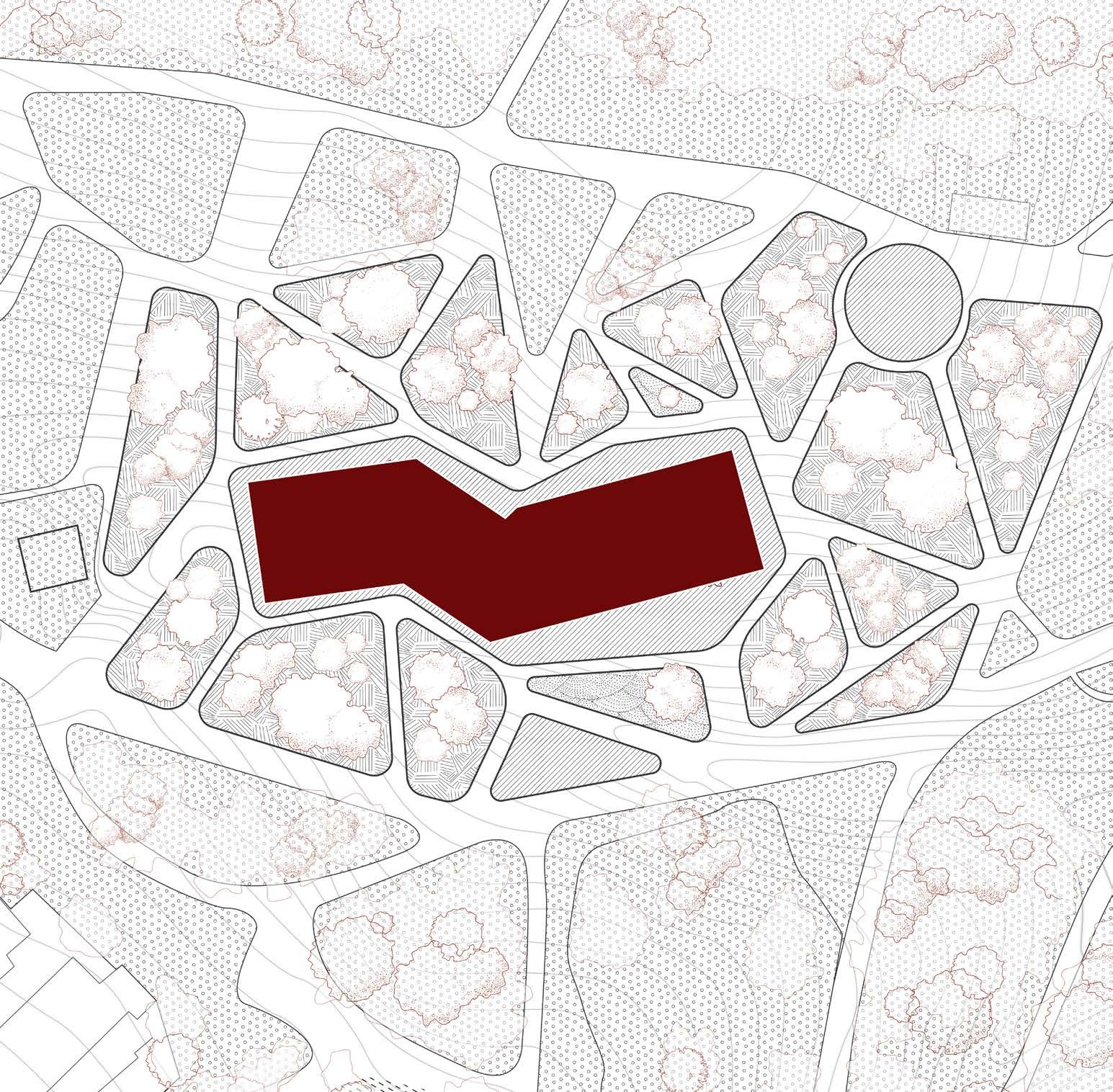
The city forest park in the south-east of the city of Kazan was chosen as the location of the object, where there is already a favorable environment for residents, and where there is just not enough iconic object of attraction.
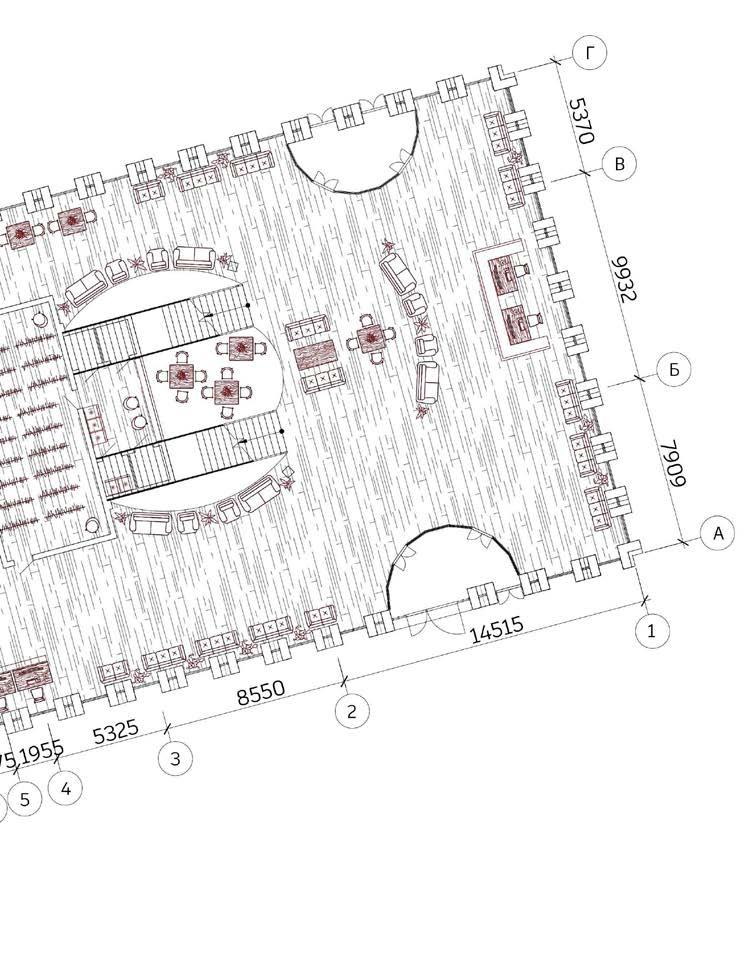
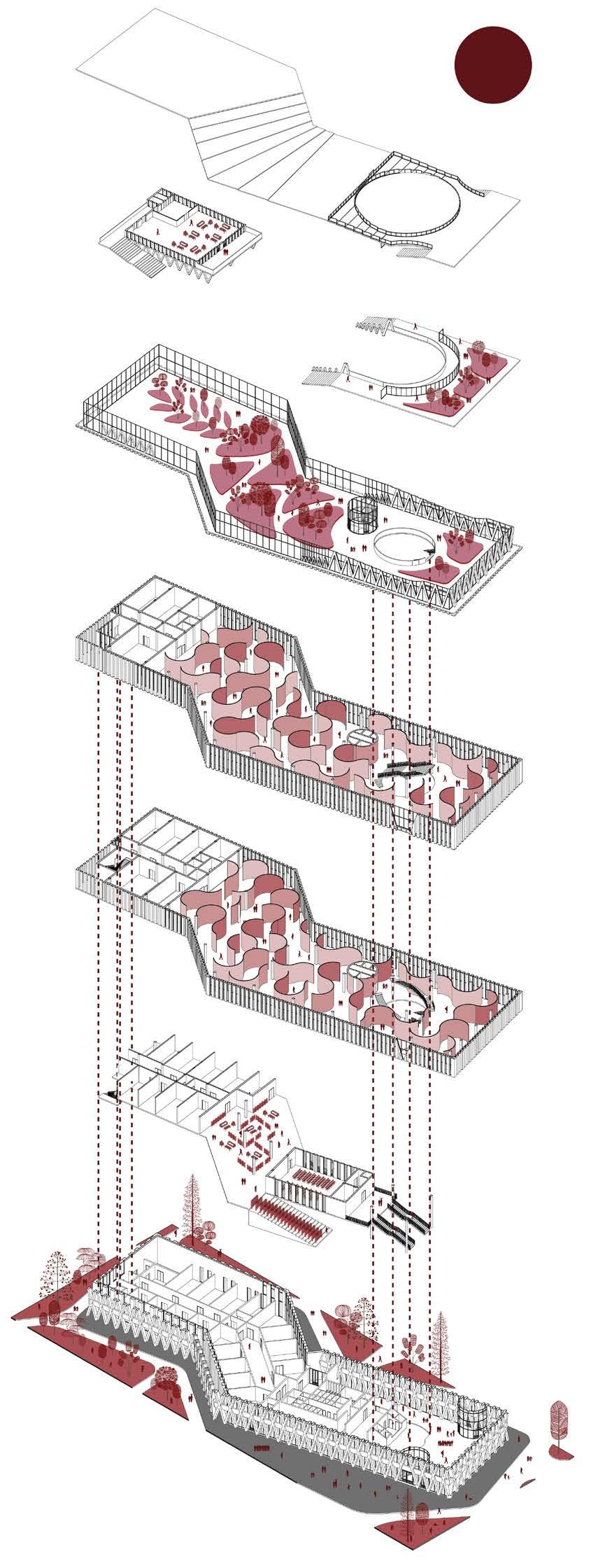
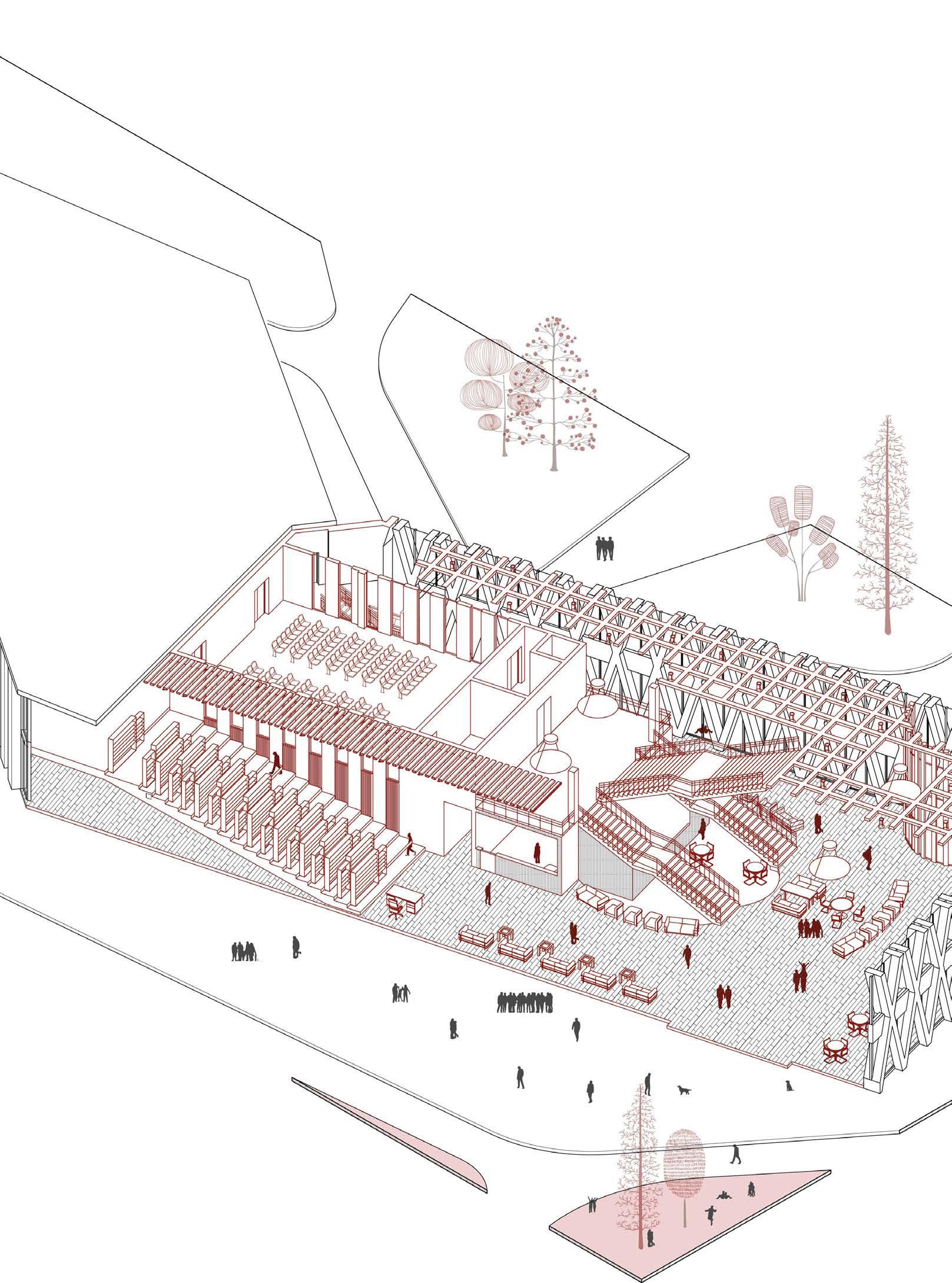
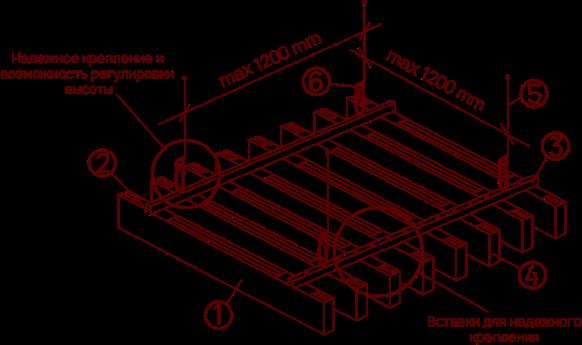
The project of the Art Labyrinth is a four-story building with a conservatory and a rooftop restaurant. On the first two floors there is a public and administrative zone. Also, exhibits are received and processed here. The lower floors of the building are surrounded by a textured grid of beams, playing an analogue of fixtures on which mock-ups and installations are suspended or placed.
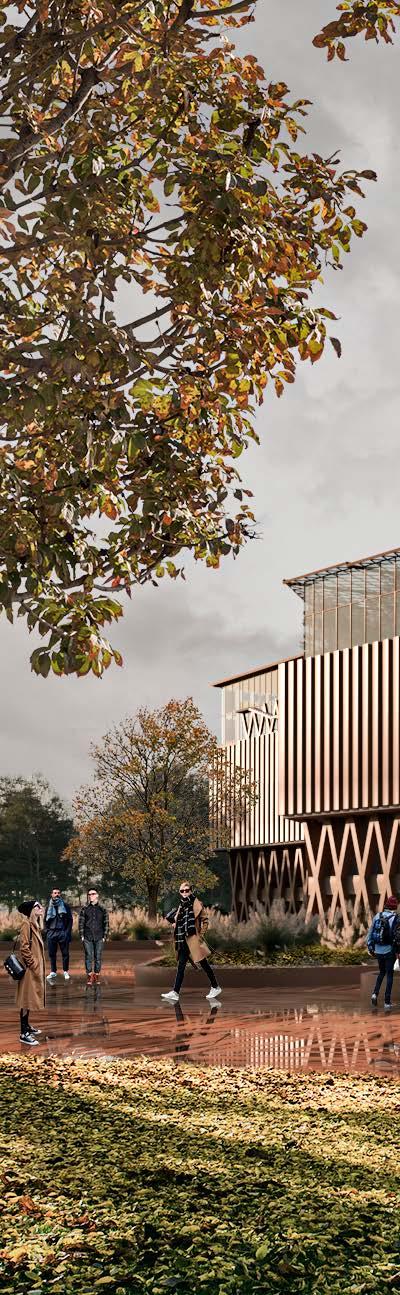
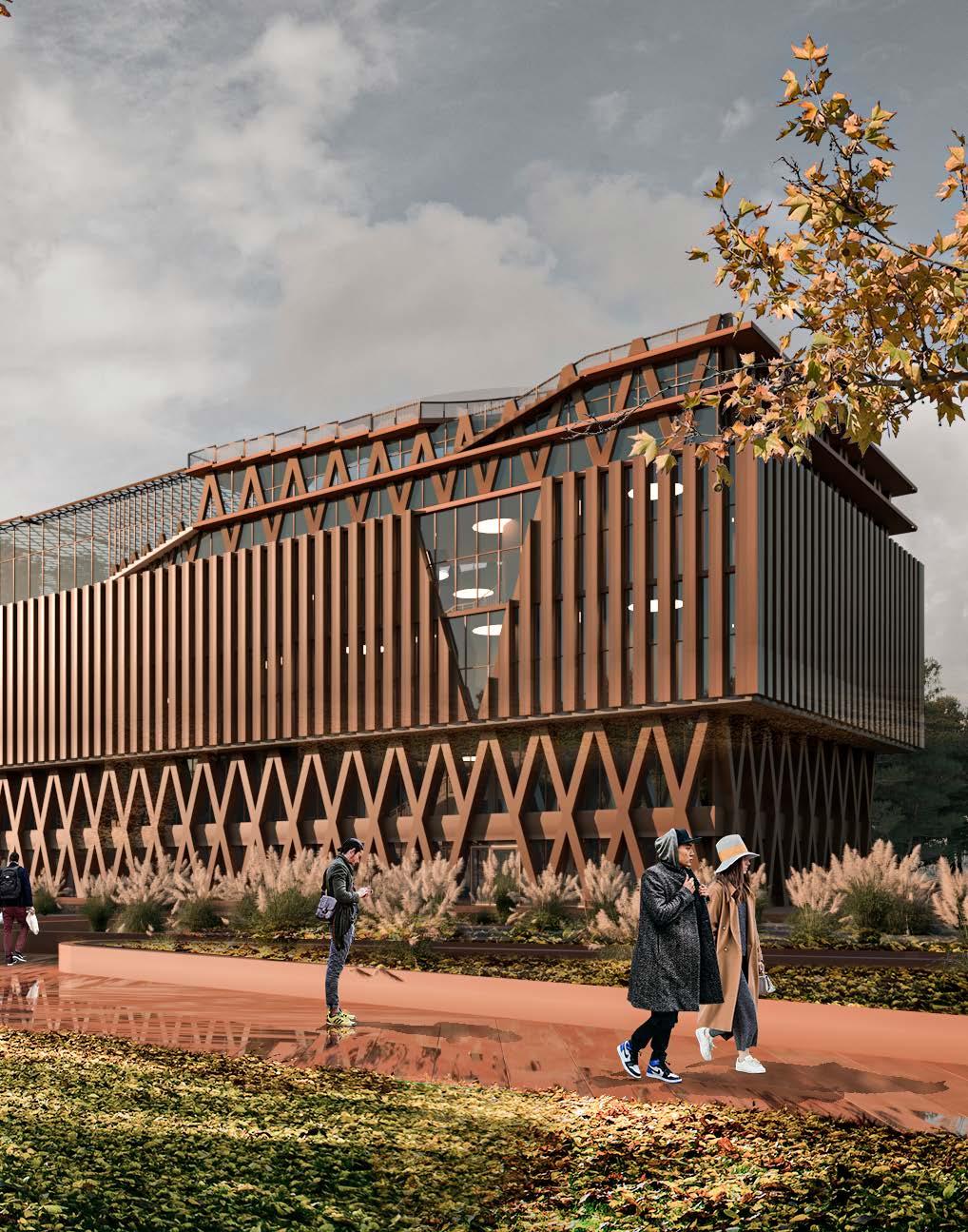
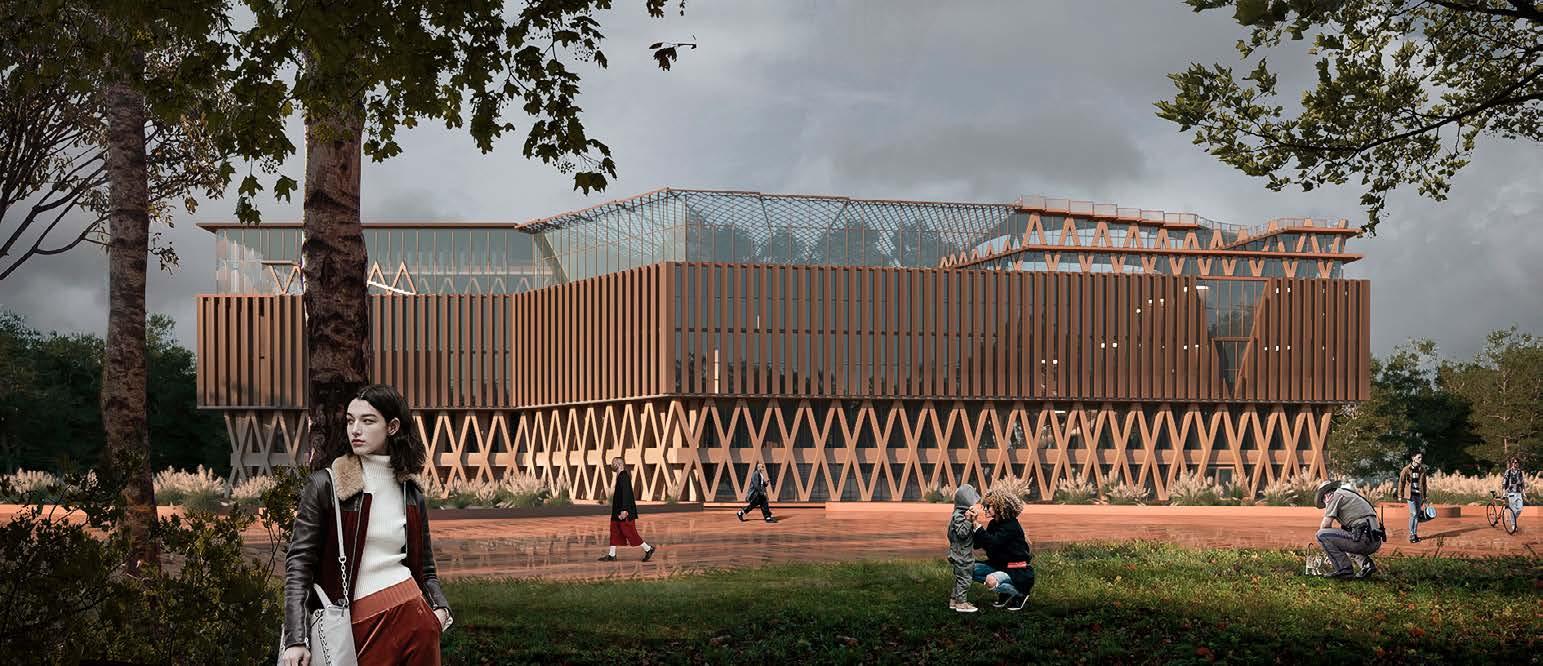
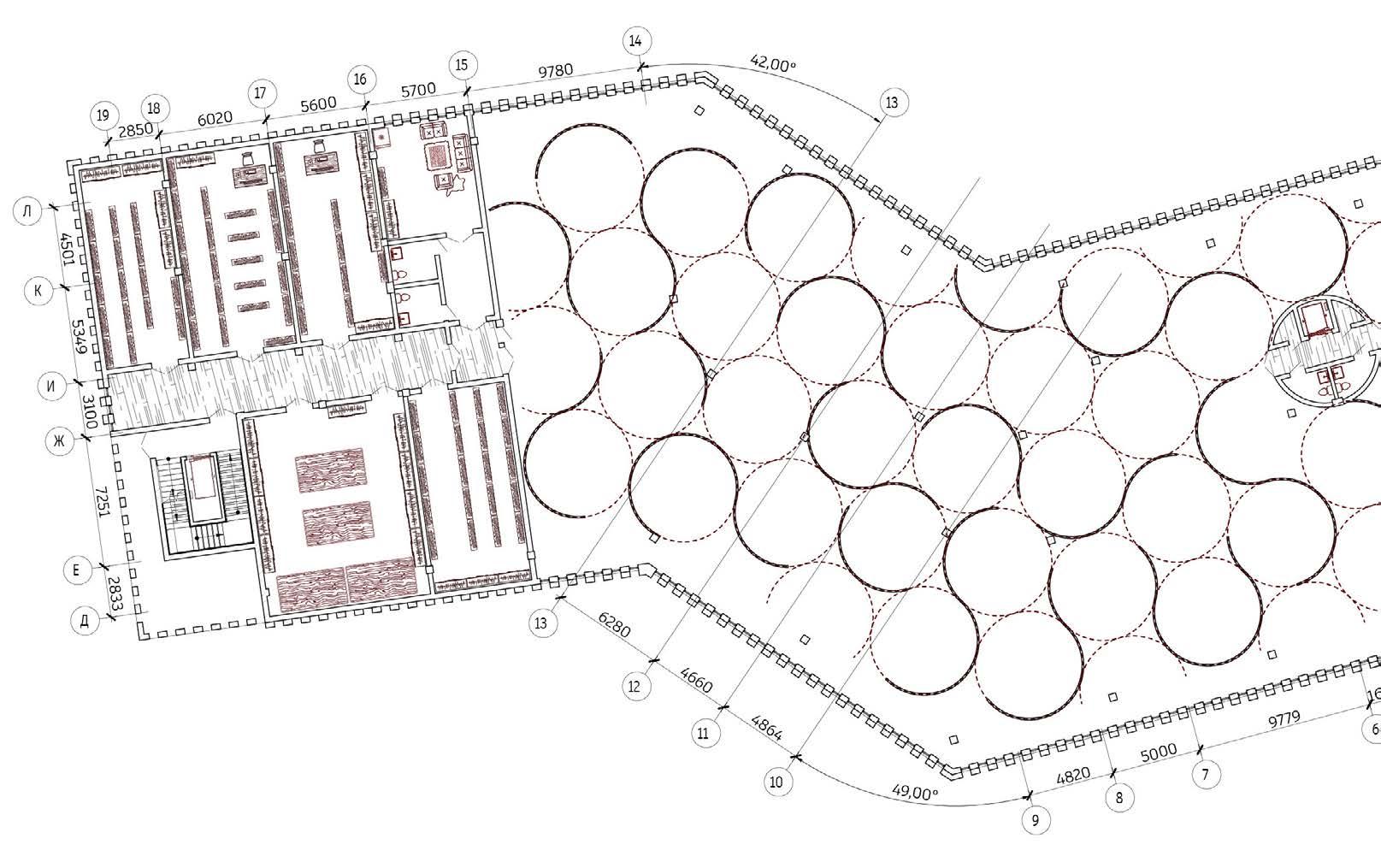
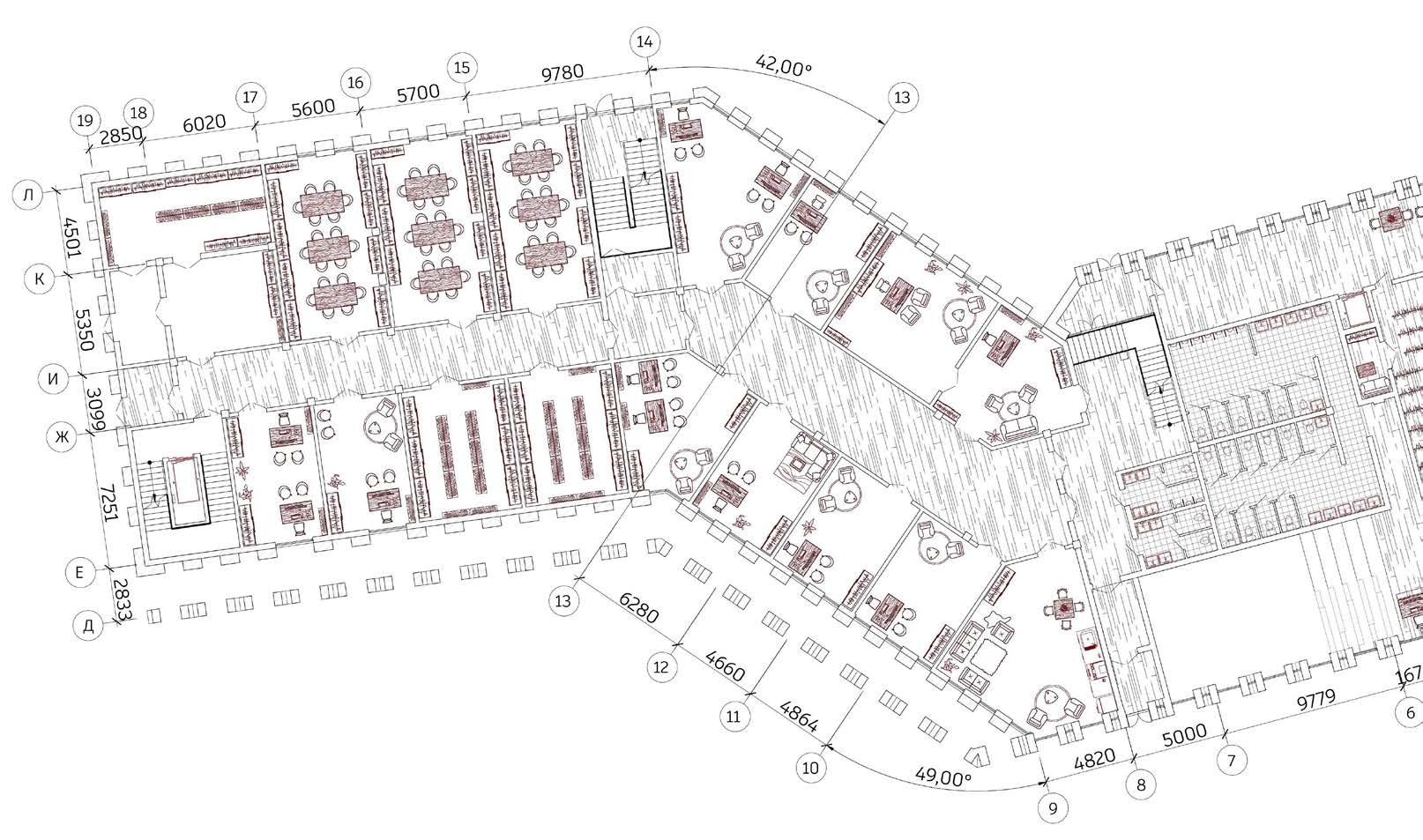
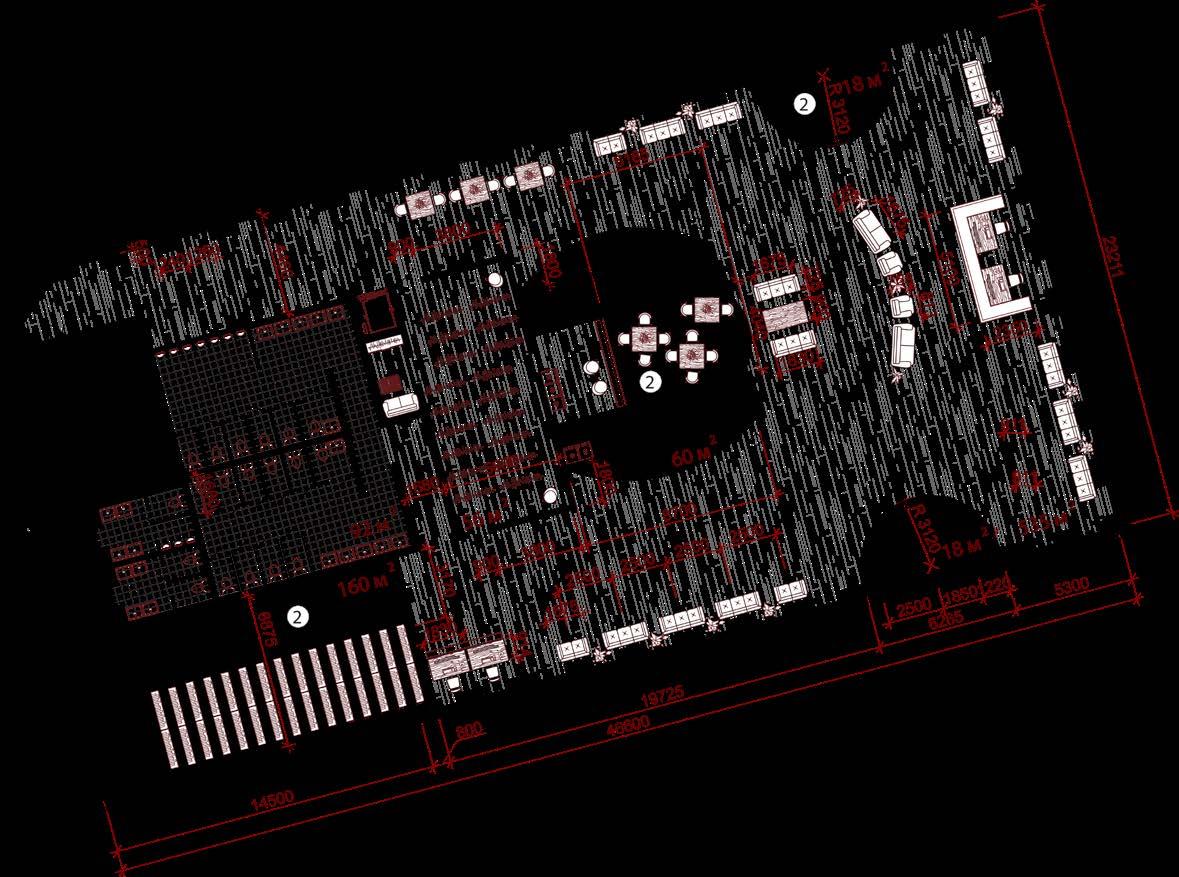
On the first floor of the museum there is a number of educational, coworking and workshops spaces. In the big hall the caffe, souvenir store and storage are located
The exhibition plan is showing us a flexible approach to organize the museum space. It is necessary not only to change the pieces of exhibition themself but also change the space they are placed in to make it some kind of adventure for everytime visiting users
 Ground floor
First floor
Second floor
Third floor
The rooftop: lev.1
The rooftop: lev.3
The rooftop: lev.2
The rooftop: lev.4
Ground floor
First floor
Second floor
Third floor
The rooftop: lev.1
The rooftop: lev.3
The rooftop: lev.2
The rooftop: lev.4
The main task was to create a variety object. On the first public floor, and amphitheaters, but the exhibition from the hall and makes one get wandering in the forest of art, rooftop park, which becomes
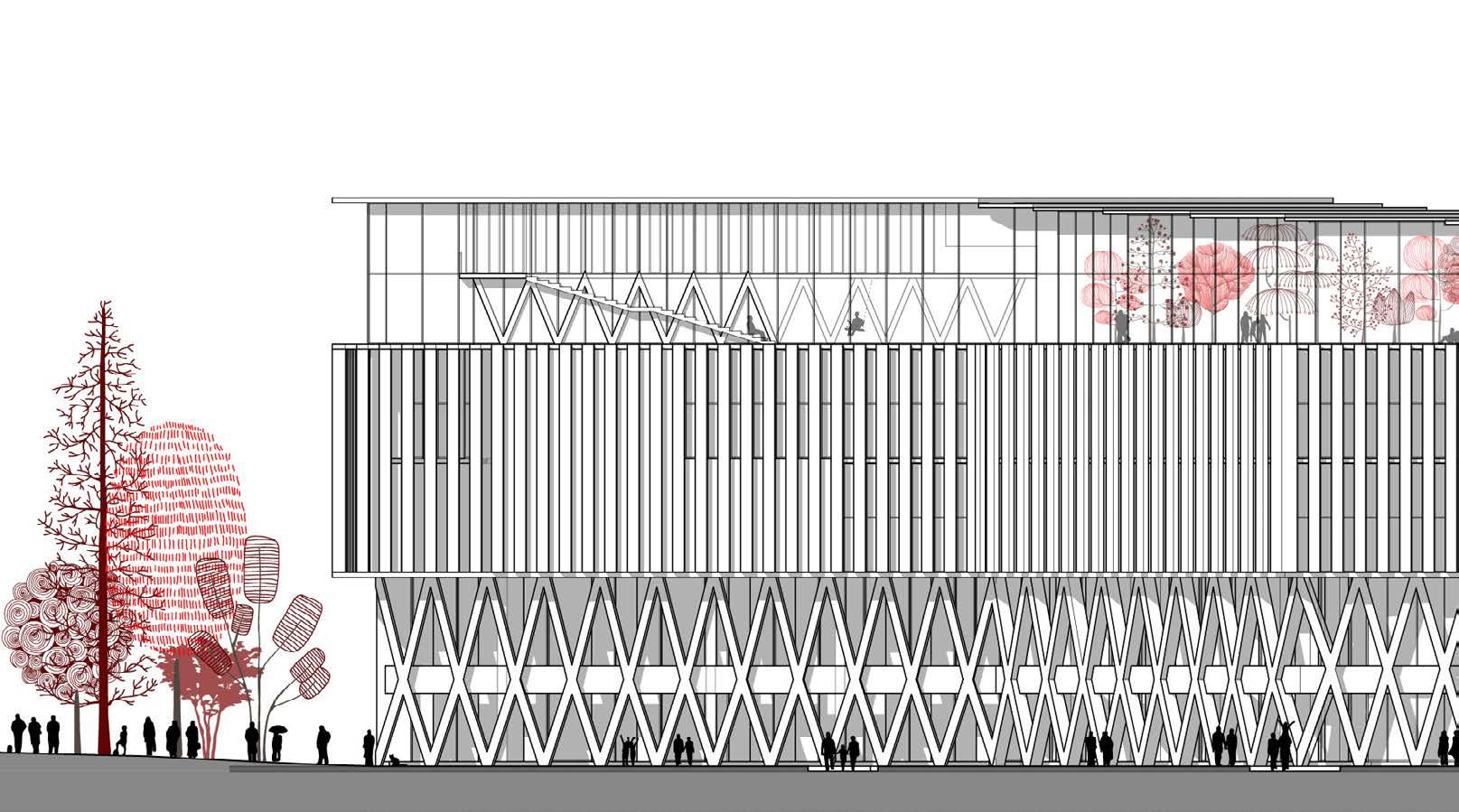
The exposition is surrounded volume. It is also decorated with which can be opened and closed ing on what level of lighting is most The last level is a winter garden summer atmosphere and
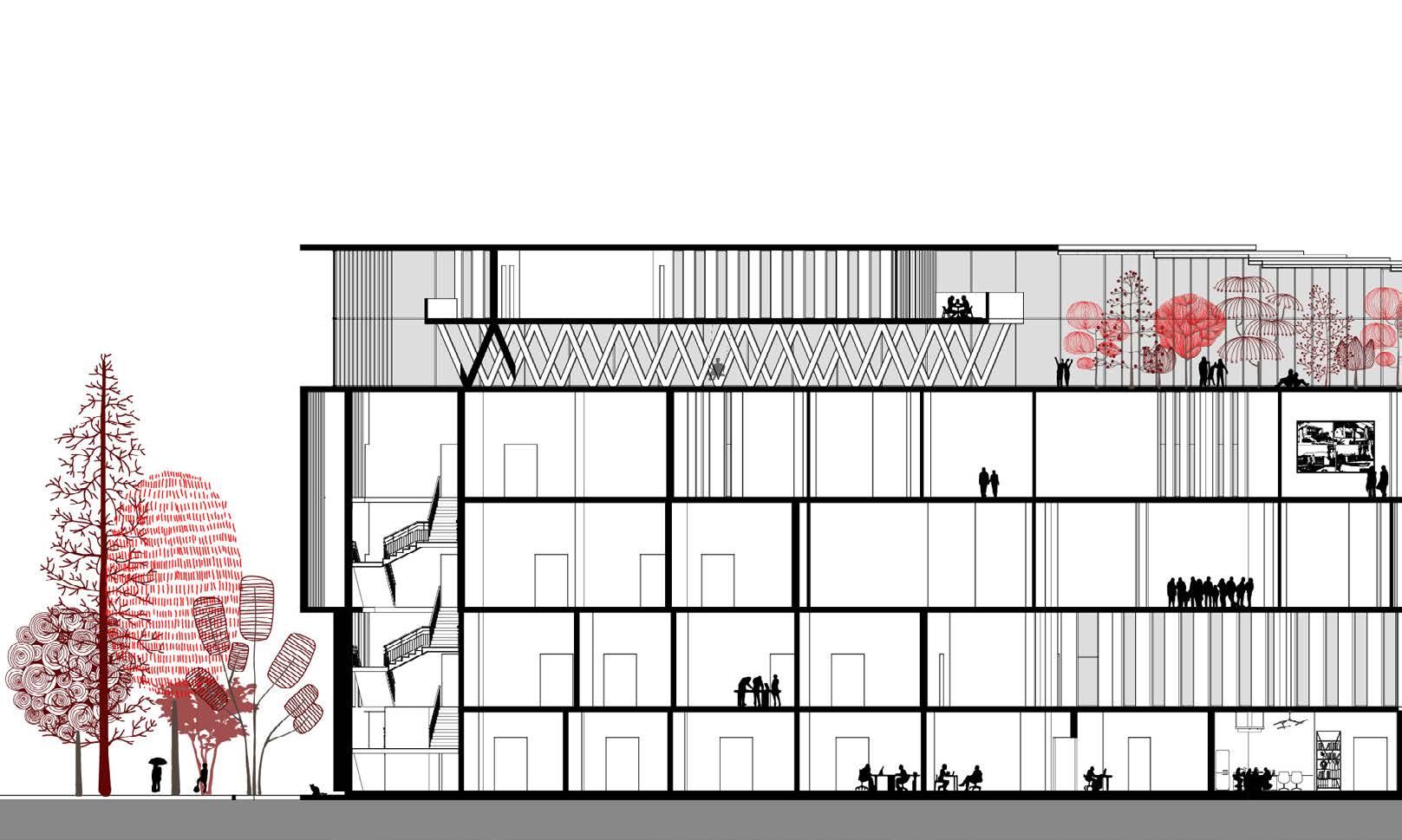
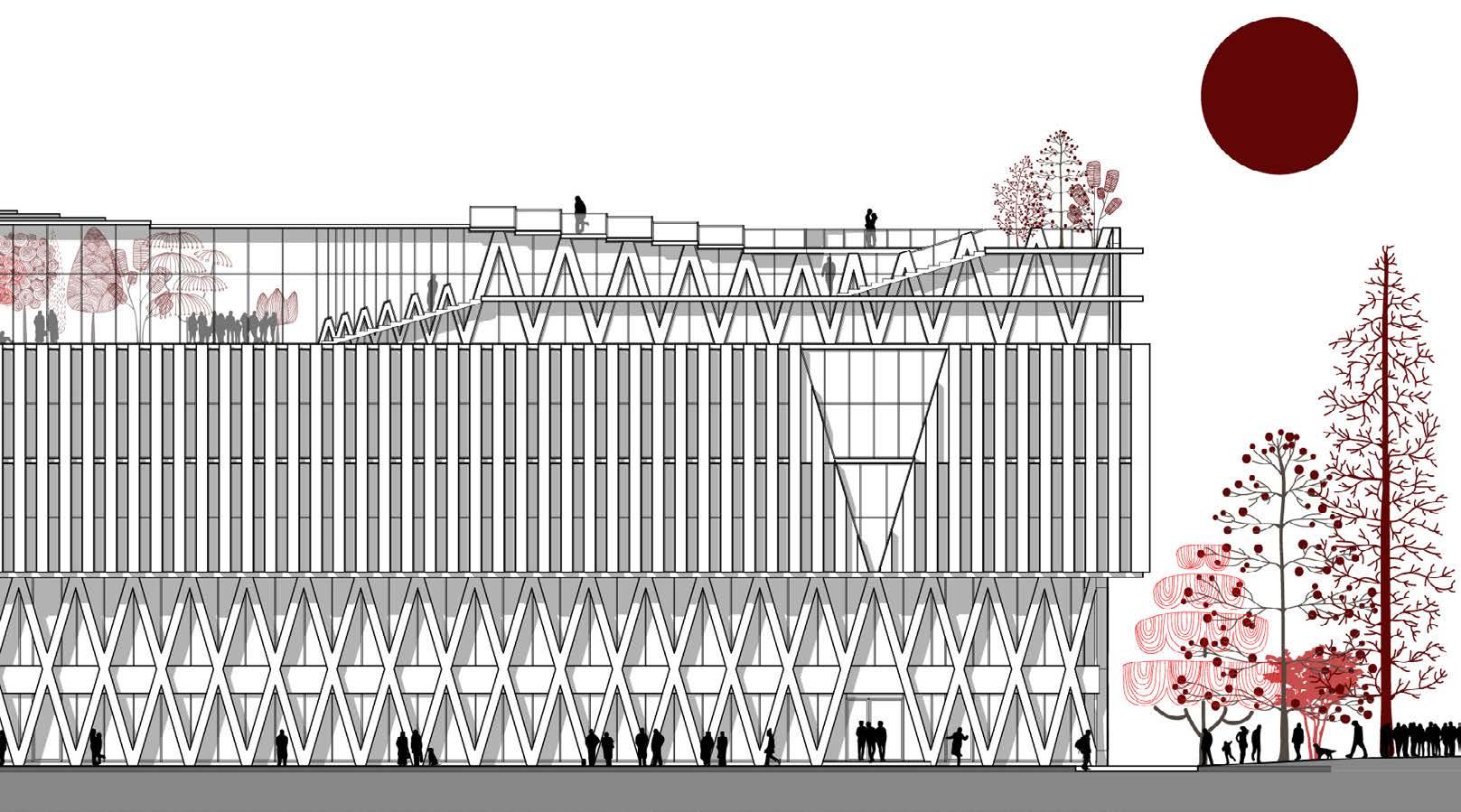
variety of spaces within a single we are greeted by open spaces exhibition is completely different get lost in himself. However, after it leads us to a green and free becomes a symbol of enlightenment.
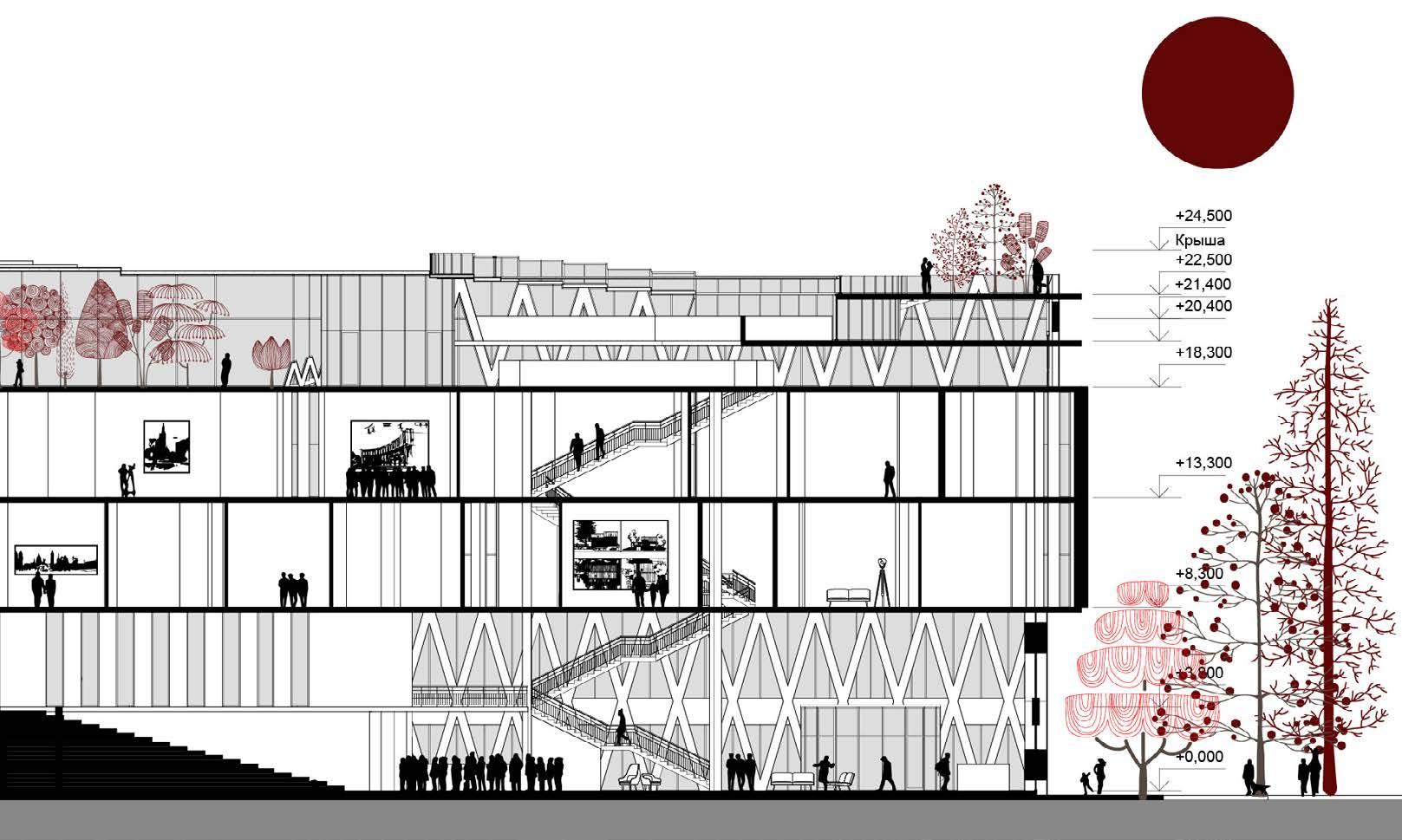 by walls representing a single with beams and window openings, closed with wooden panels, dependmost suitable for the exhibition. garden where people can enjoy the and comfort all year round.

Milan, Italy 2023
Study project“A sustainable building is not one that must last forever, but one that can easily adapt to change,”
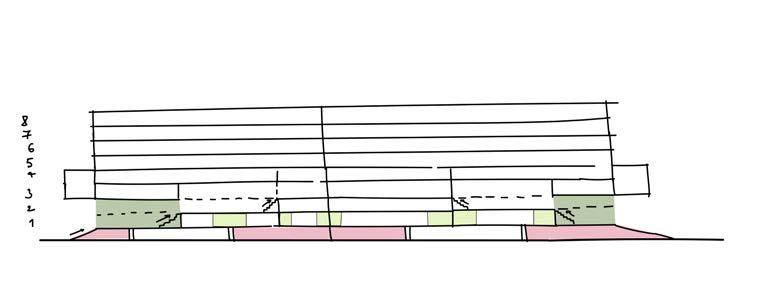
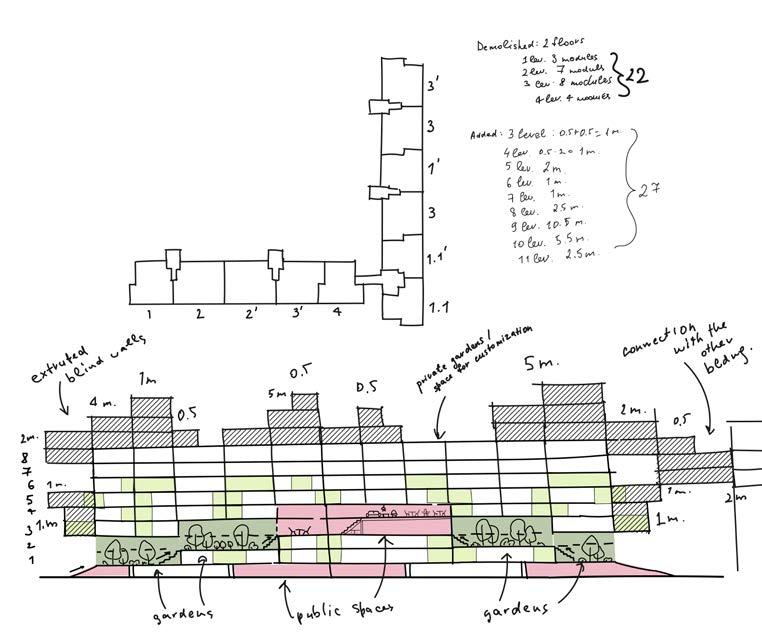
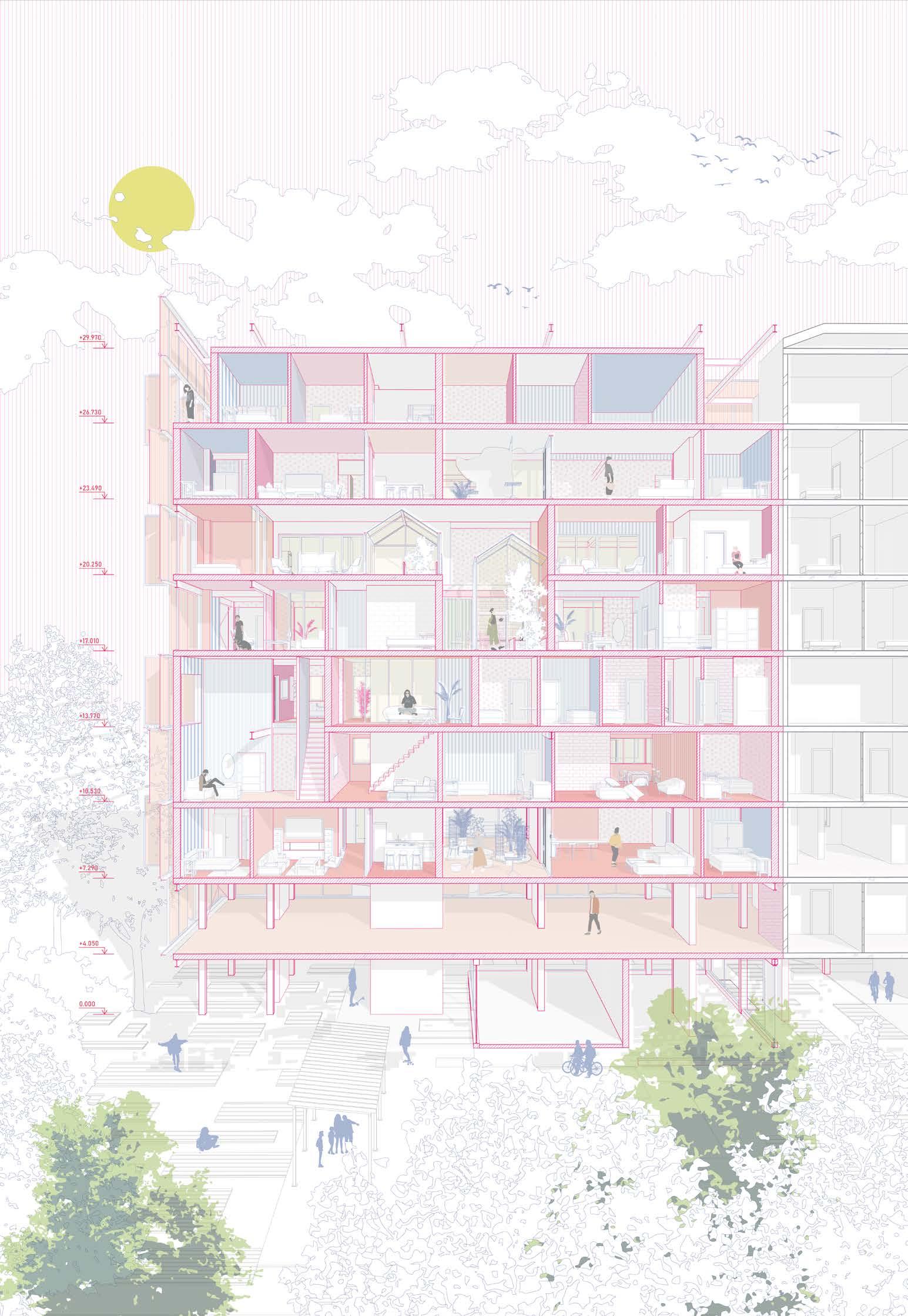
- Graham, P.The Quarto Cagnino project is a unique opportunity to explore the potential of existing volume in redefining the quality of life for locals and new users. The current condition of the building presents a modular and repetitive structure, with no discernible differences between the various apartment typologies. Diversity is an essential aspect of modern living and this project seeks to address this concern while preserving the cultural and traditional values of the area.
To achieve this objective, our team has proposed restructuring the existing building footprint to create new shared spaces between apartments. This approach enhances the quality of space, opening up new possibilities for residents to interact, work, and play. To achieve this objective, our professional architects and designers have analyzed various factors to determine the optimal location and size of the shared spaces for seamless integration with the existing building. The proposed design seeks to adapt and extend the existing space, creating new opportunities for residents to enjoy their home.
We understand that every culture and tradition has unique expectations for space utilization and organization. Our team has thoroughly researched these requirements and integrated the insights into the design to create different quality living spaces. The proposed design considers factors such as natural lighting, spatial quality, and accessibility to create a conducive environment for residents.
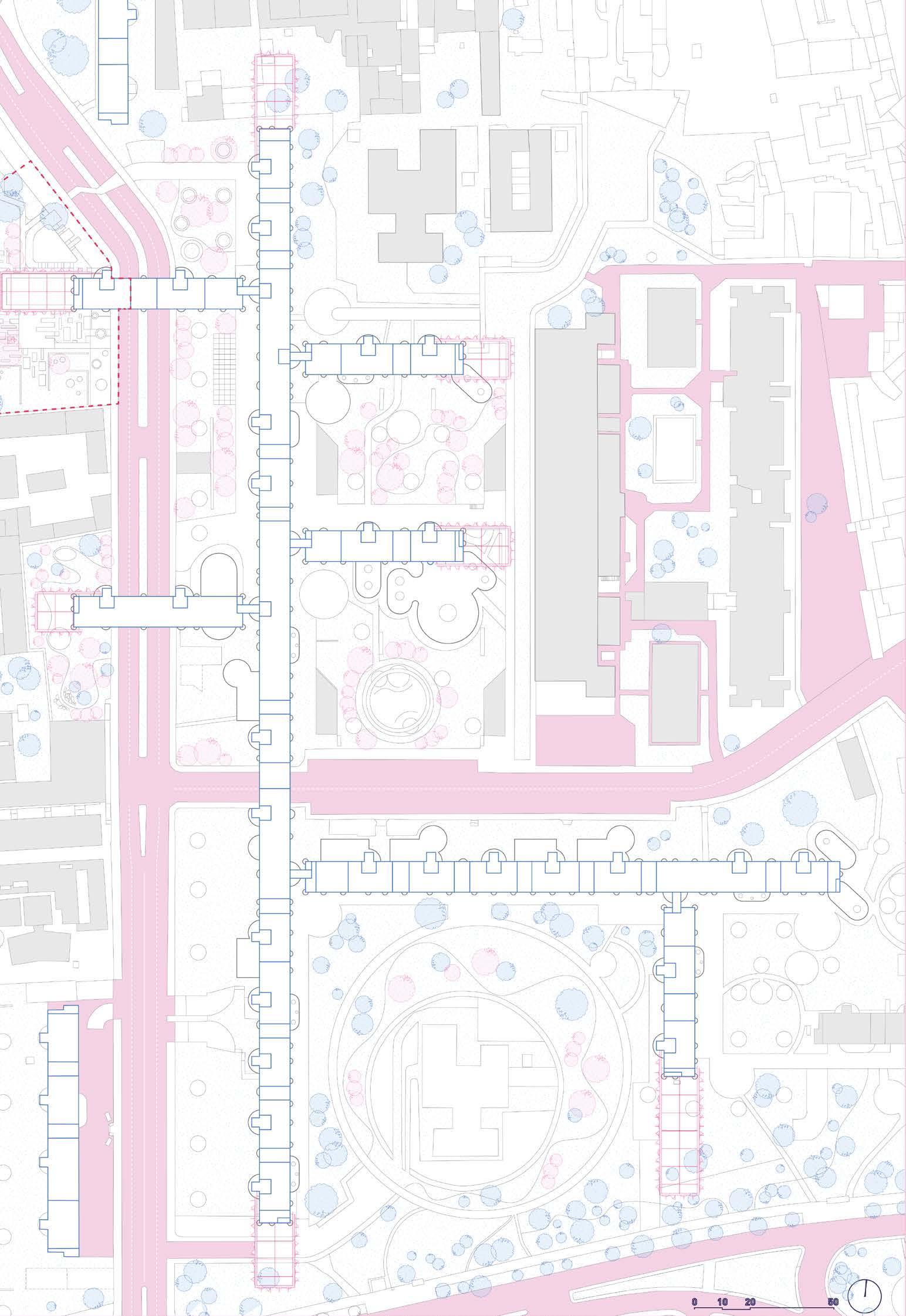
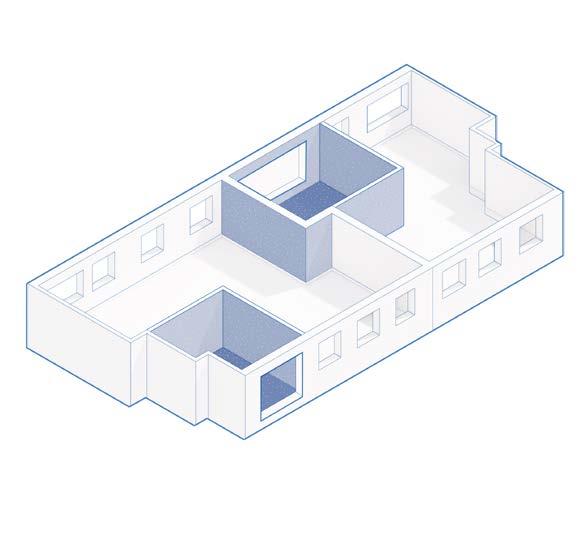
The large apartments in the existing building can be adapted to accommodate changing family sizes by selling or renting out unused rooms. The strategy focuses on maintaining the bathroom and kitchen core for the original owners while allowing for the attachment of additional facilities for the new occupants. Separate entrances are provided for both the original and newly created spaces, considering only the rooms easily accessible from the staircase.
Another option for utilizing the extra rooms is to share them with the neighboring apartment. They can be converted into a common terrace or sold to the other apartment to expand and modify the space of both units. This approach allows for increased flexibility and freedom in sharing and altering the available space.
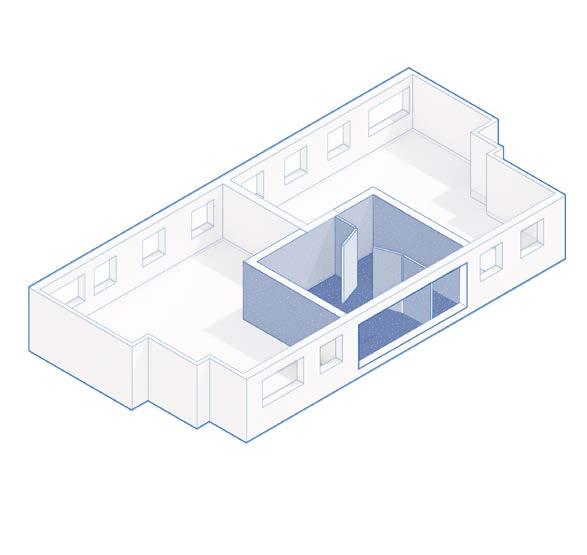
The third option is to utilize the extra room as a new private terrace. This space can be used for leisure activities, such as relaxation or gardening. Alternatively, it can be transformed into a completely new function, such as a workshop, library, or study. The addition of a new facade provides transparency and ample natural light, enhancing the overall atmosphere of the apartment.
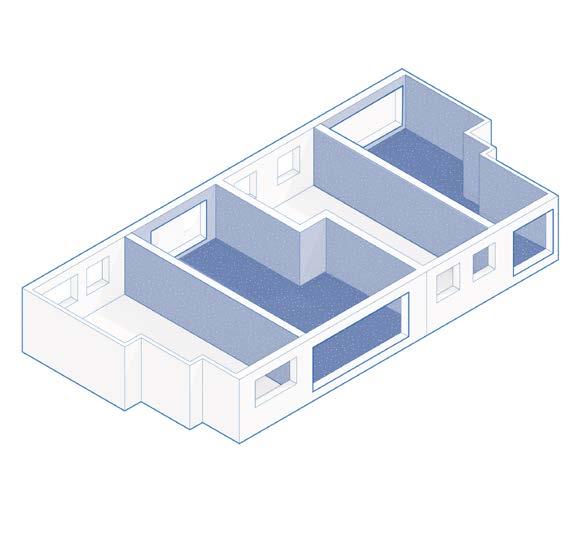
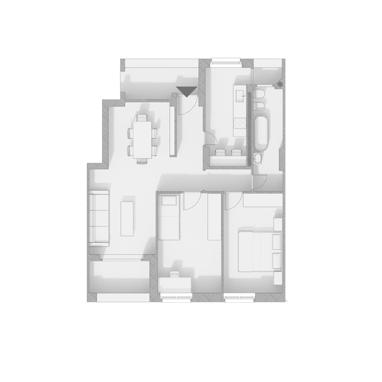
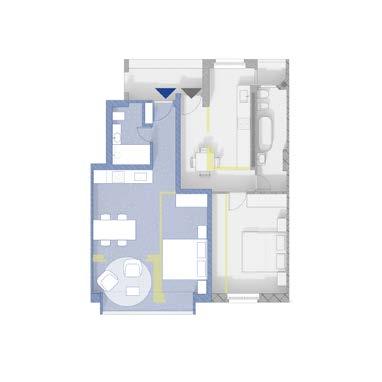
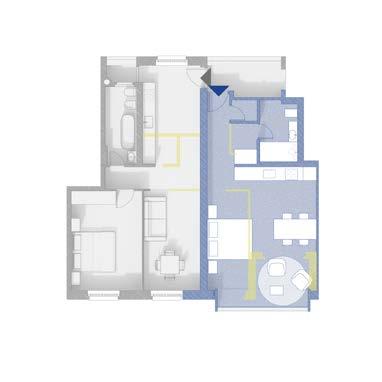
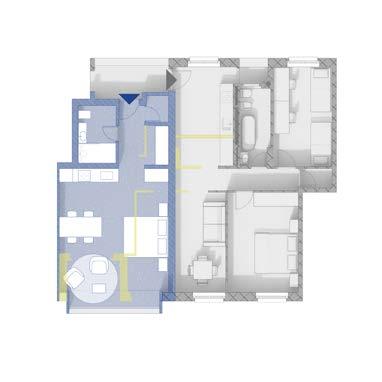
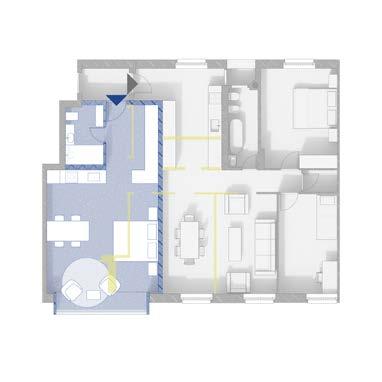
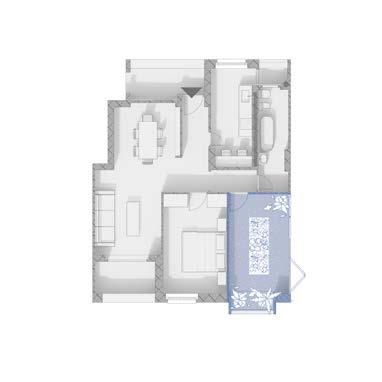
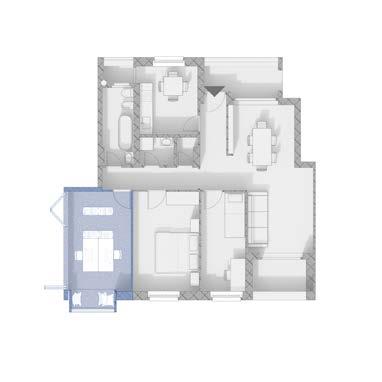
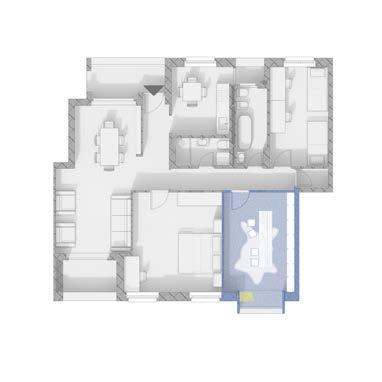
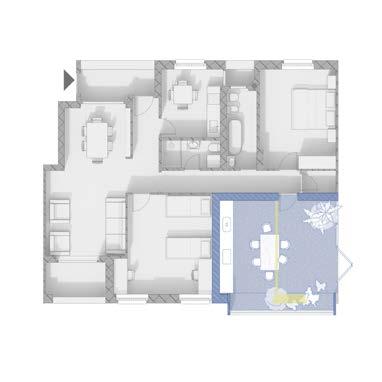
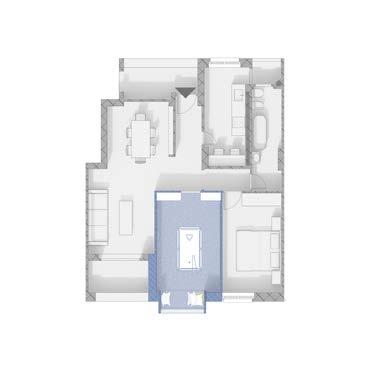
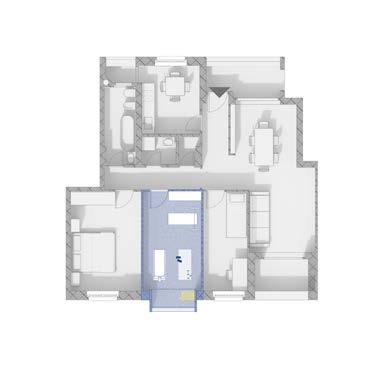
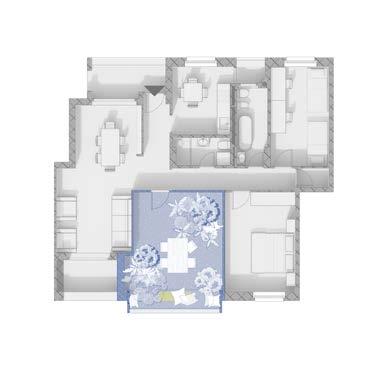
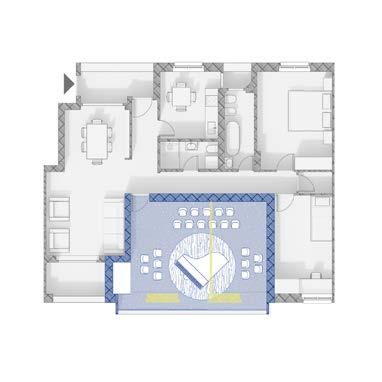
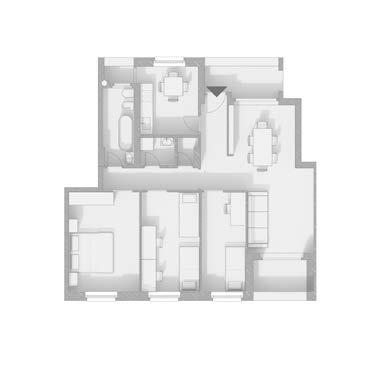
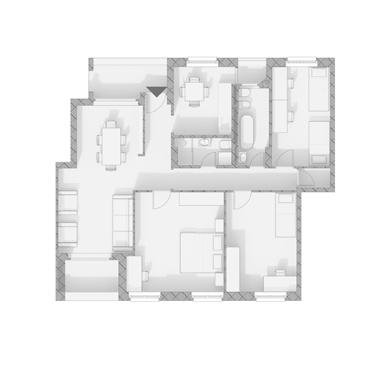
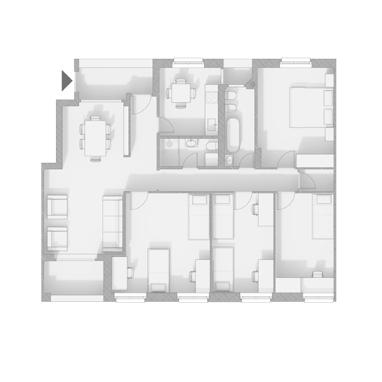
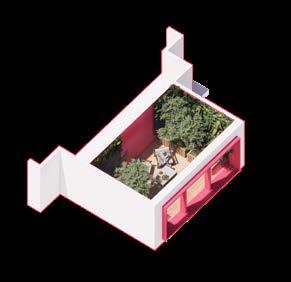
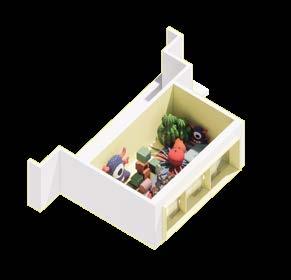
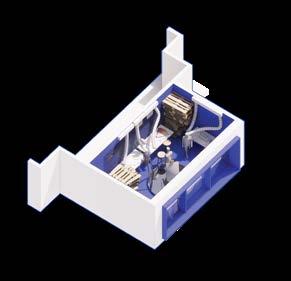
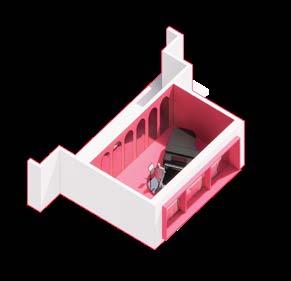
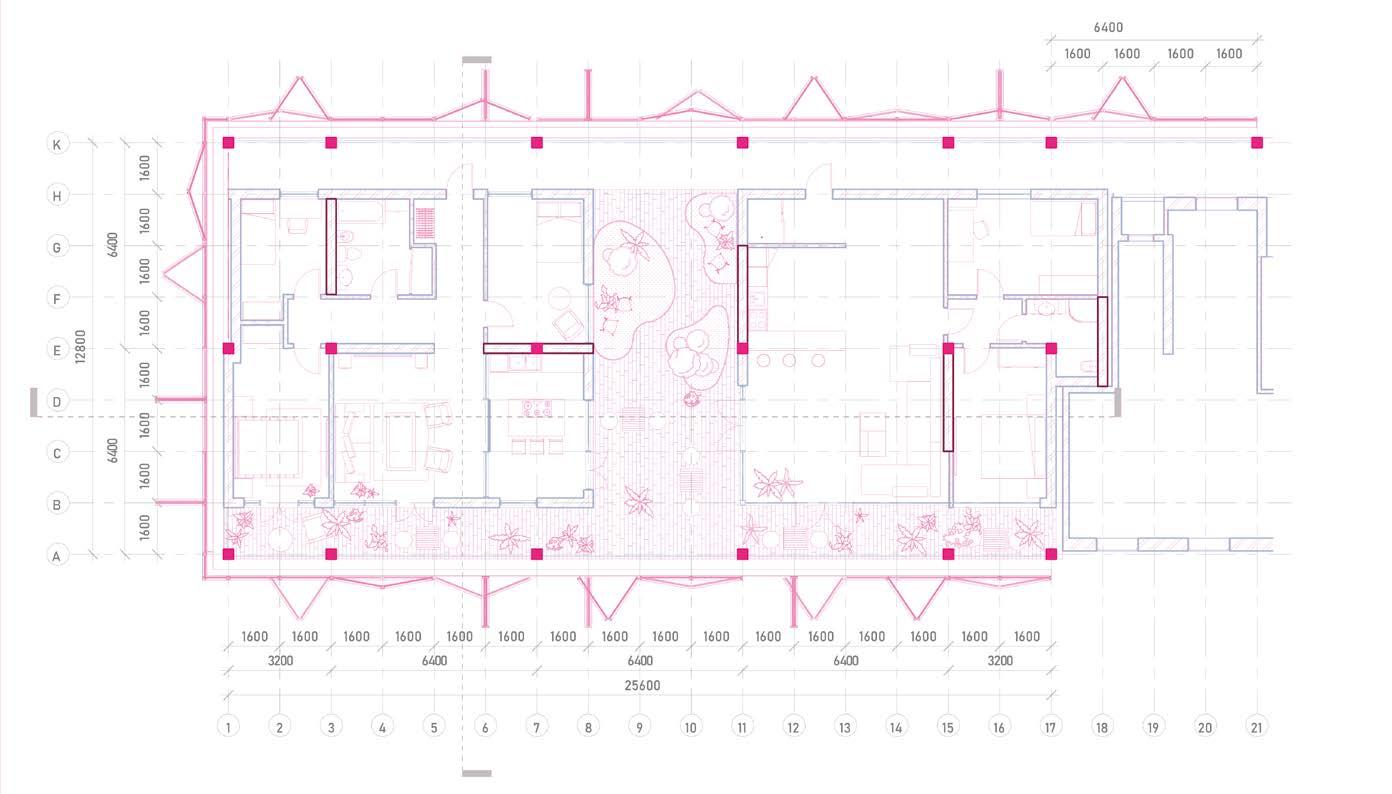
With a grid spacing of 1.6 meters, the modular system and structural design of the building enable the seamless adjustment and movement of walls, serving as a catalyst for spatial reconfiguration in alignment with changing requirements. This design ethos embraces the notion of the life cycle and its diverse phases, while empowering residents to actively participate in the creation of their personal living spaces
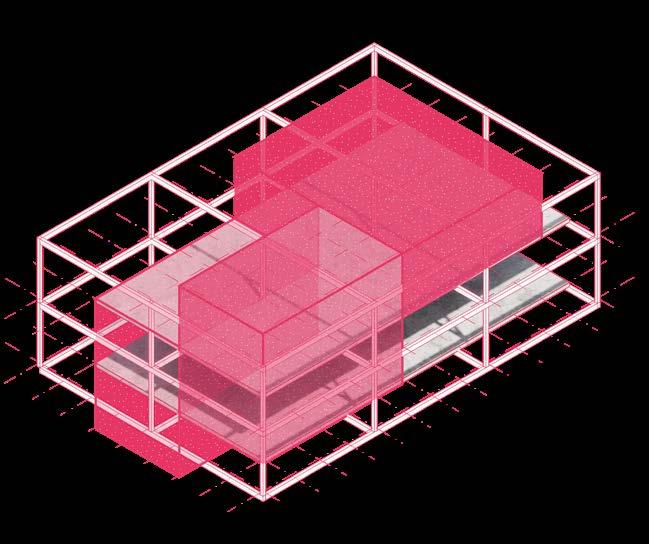
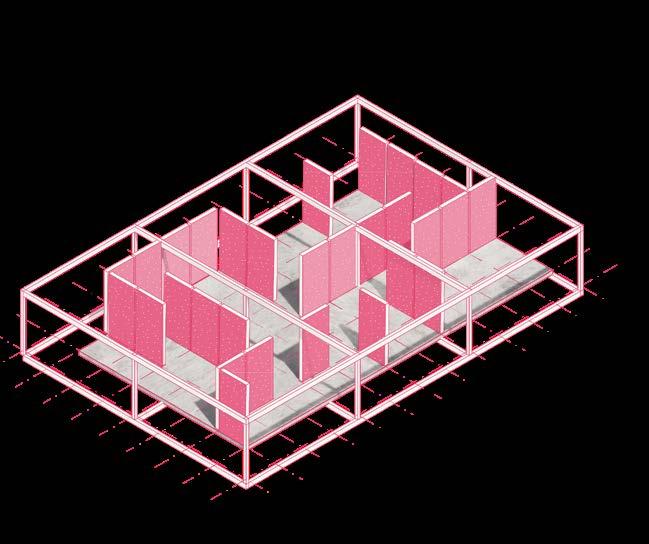
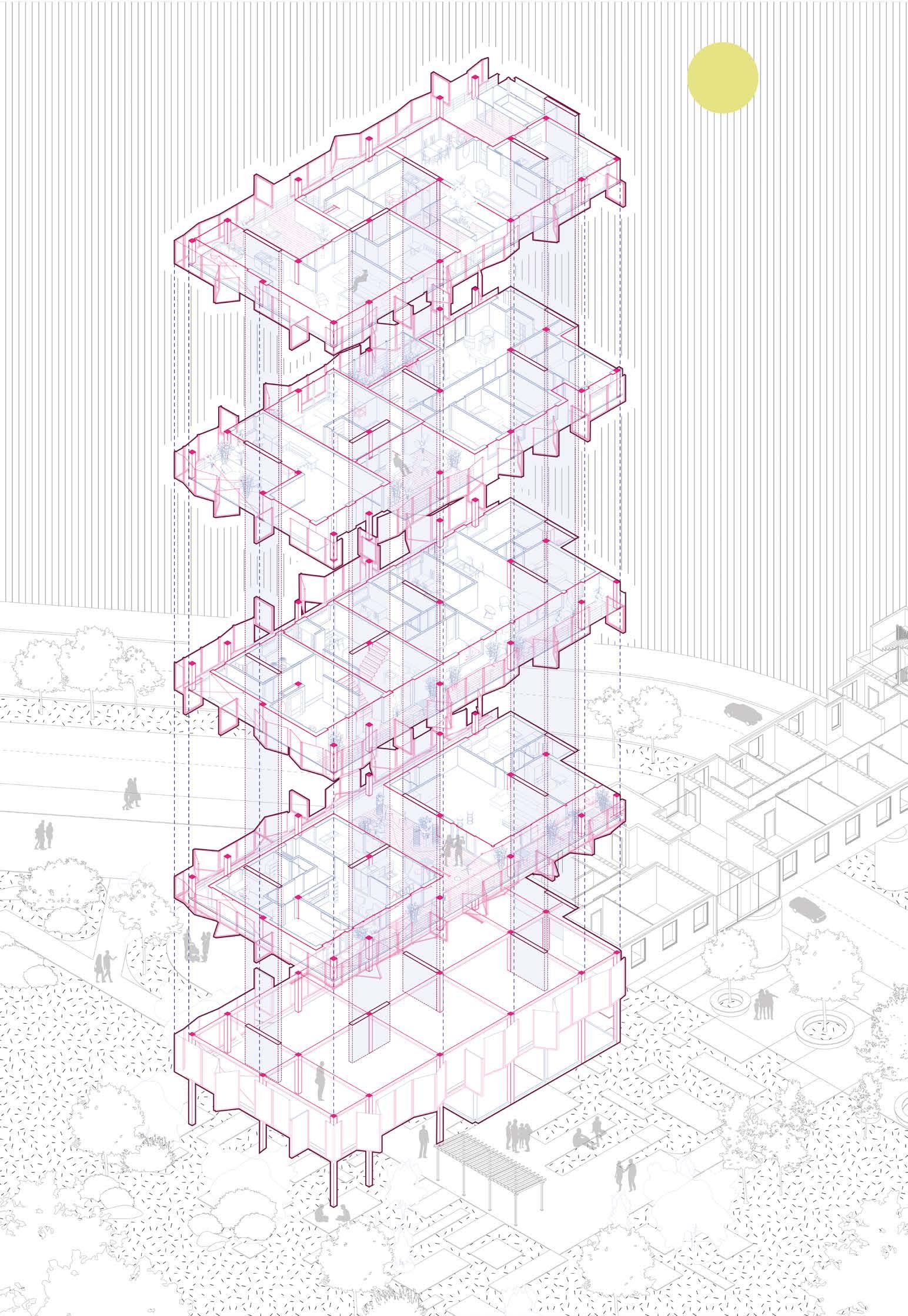
The cores and slabs system can be also vertically flexible what gives an opportunity to create multi-levels apartments with different function on the floors. For that reason the slabs are designed to be easily removable in every spot of the structure.
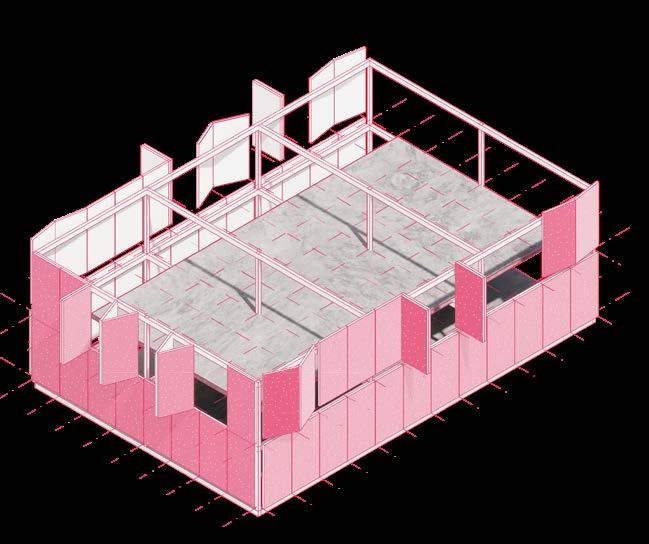
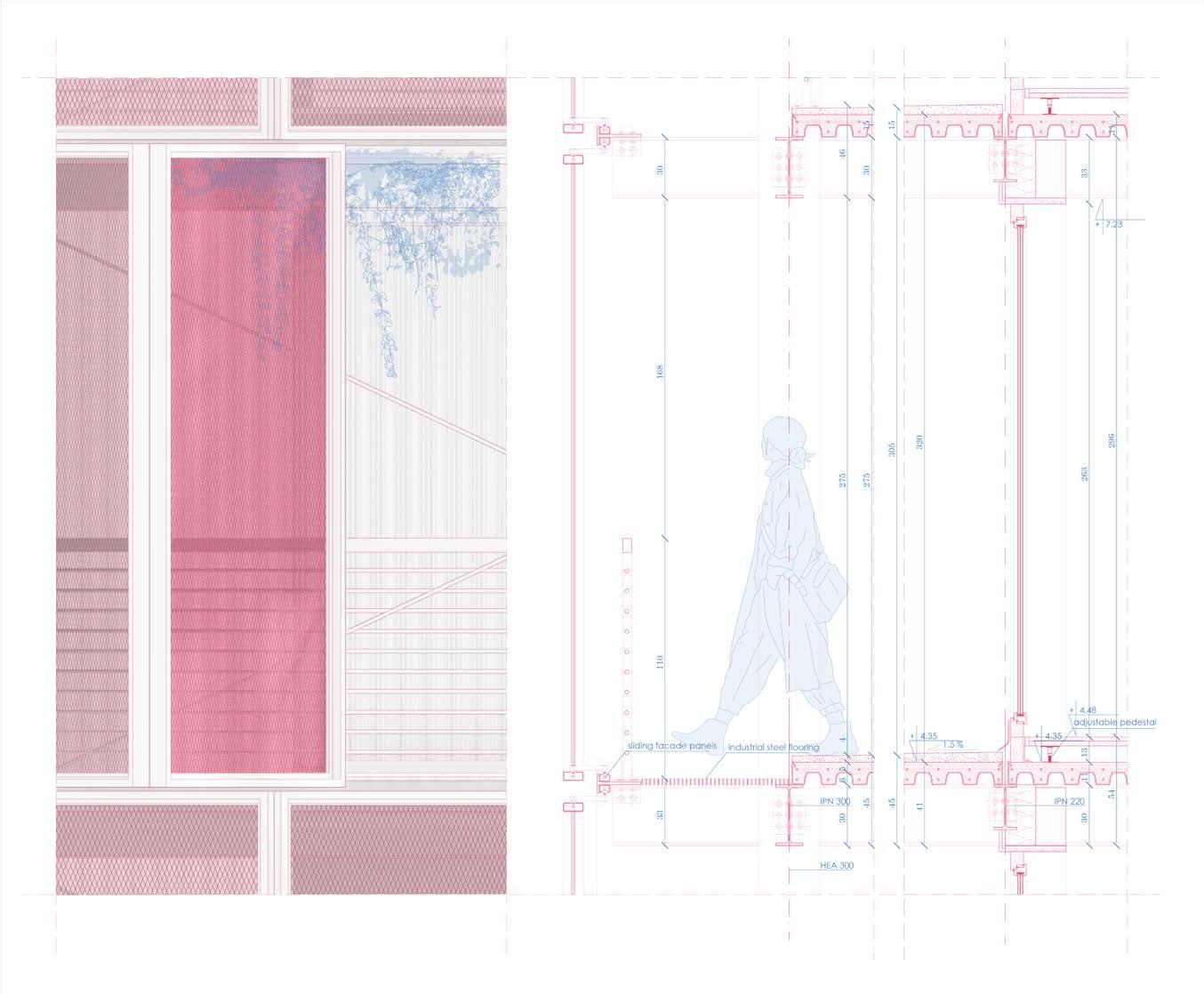
Outer layer of the building is covered with shutters, which afford precise control over opacity, ventilation, and the penetration of sunlight into the interior space. Simultaneously, these shutters introduce an additional layer of visual and tactile variation, enhancing the architectural composition
By prioritizing adaptability, the aim was to create spaces that could easily be adjusted, modified, and evolved over time. This approach offers the advantage of affordability, allowing owners to expand or enhance the quality of their interiors when financially feasible. Simultaneously, the inherent flexibility of the design generates intriguing variations and perceptions from the exterior, as the building undergoes a continuous evolution, revealing different layers over time.
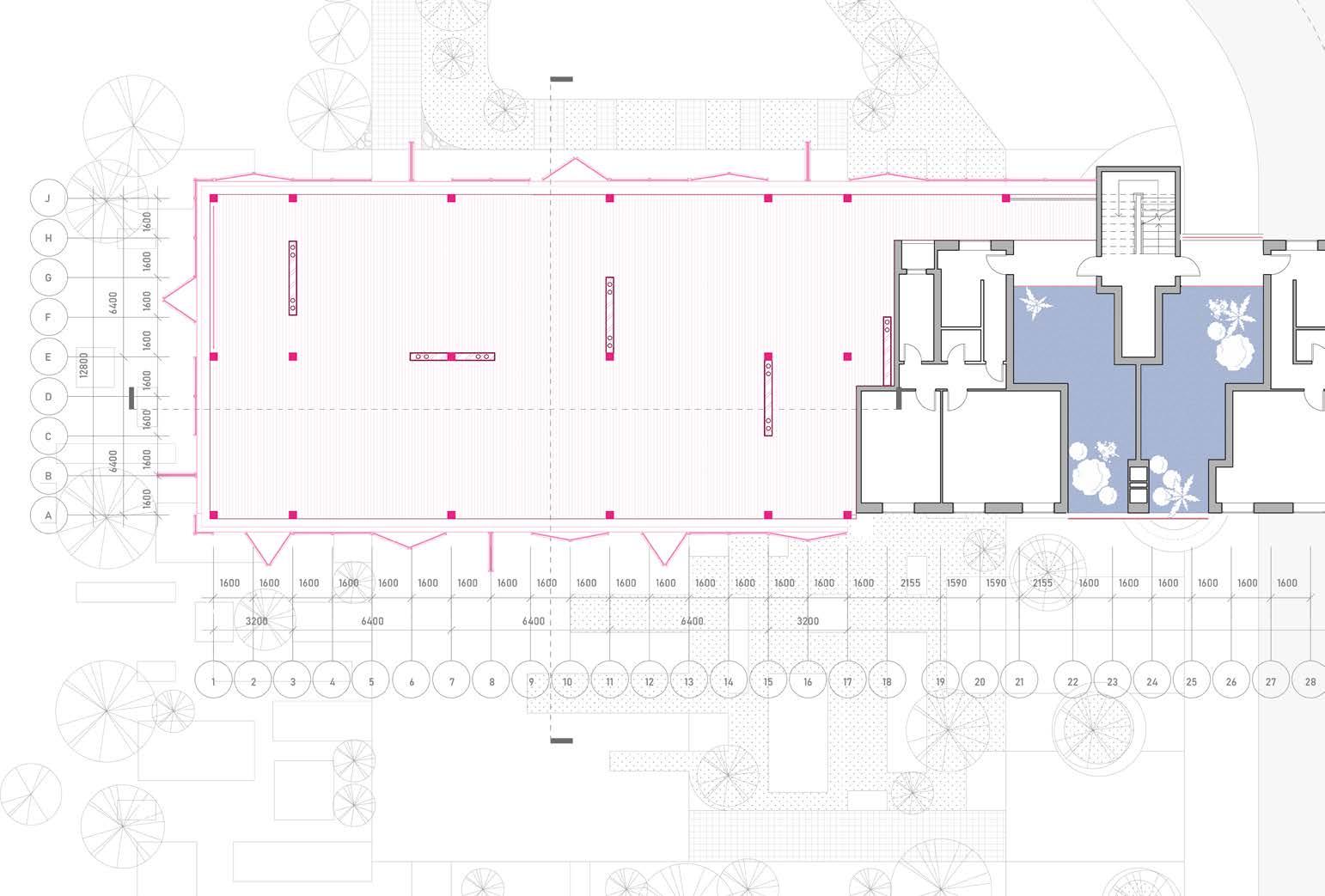
Option 4
The fourth option is generated according to the idea to give a private elevated garden to each apartment on the floor
Option 3
The second type of a shared apartmnet is placed on the third option: 3 rooms with shared bathroom amd 1 room with private bathroom are connected to a big shared space and the terrace with a
Option 2
Second duplex has a big terrace on the second level with an opportunity to have a place for rest or create a small garden
Option 2
The shared apartment is the third type placed on this level: 4 rooms are connected to a big living room with kitchen and coworking area
Option 2
The floor contains two duplexes with very small width One of them has a two-heght living room and a balcony on the second level
Option 1
The floor contains two traditionally organized apartments with shared open space between them
Base floor
The floor contains the cores, slab and the envelope
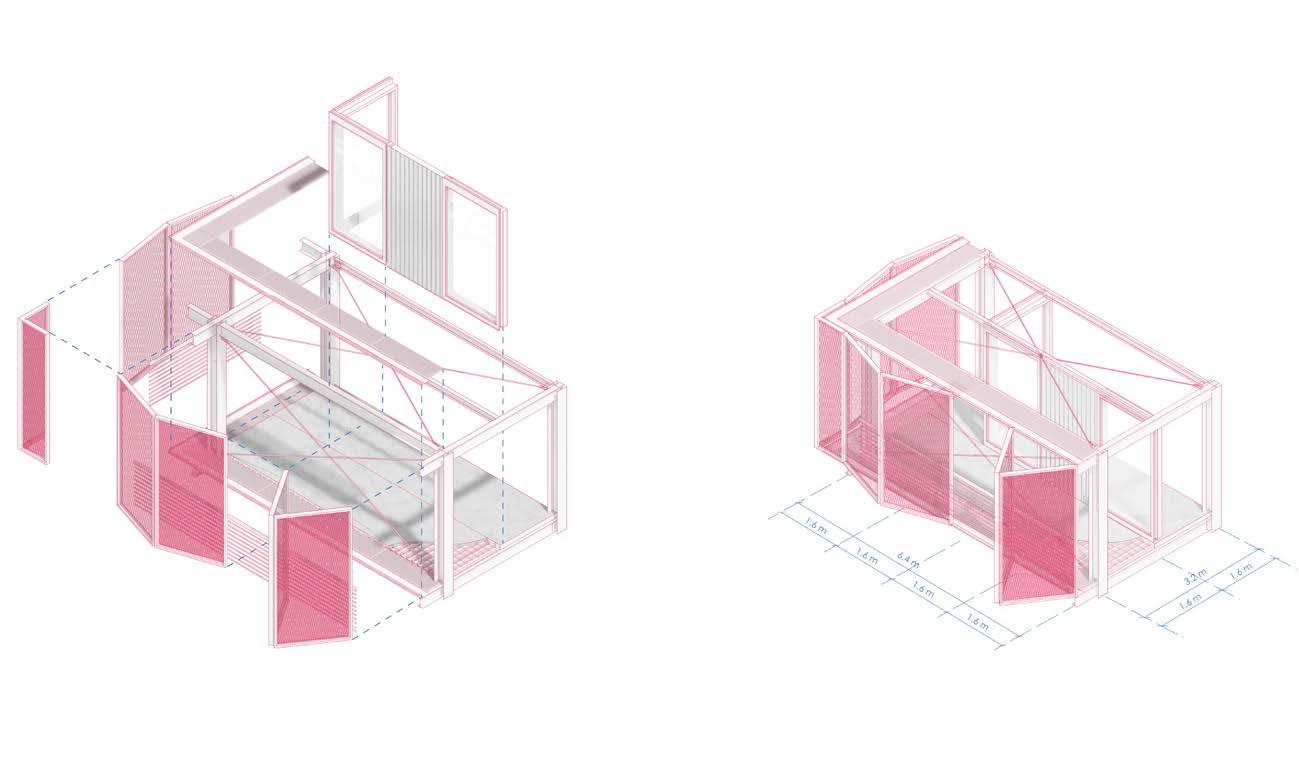
The main objective of the project is to prioritize individuality and personal expression. Instead of conforming to pre-designed spaces, potential owners will have the opportunity to directly influence the floorplan according to their specific needs. This approach allows for a diverse range of facade designs, enabling each apartment to have a unique appearance.
To establish harmony and coherence within the overall structure, an apprentice building will be introduced with a modular sliding facade. This facade will serve as a second skin, allowing the existing building and the new addition to coexist and engage in a dialogue with each other. By incorporating this architectural element, the design aims to unify the buildings while maintaining their distinct identities.
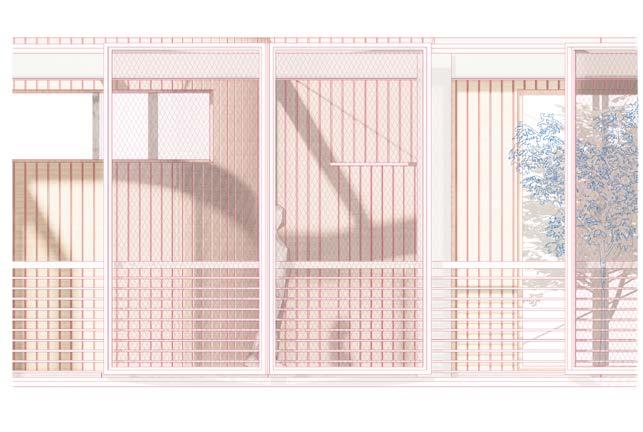
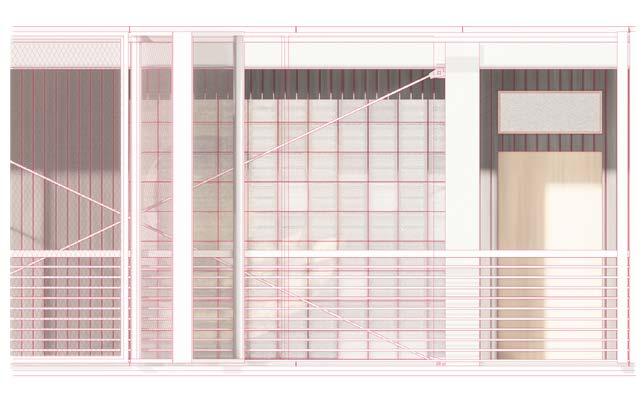
By prioritizing adaptability, the aim was to create spaces that could easily be adjusted, modified, and evolved over time. This approach offers the advantage of affordability, allowing owners to expand or enhance the quality of their interiors when financially feasible. Simultaneously, the inherent flexibility of the design generates intriguing variations and perceptions from the exterior, as the building undergoes a continuous evolution, revealing different layers over time.
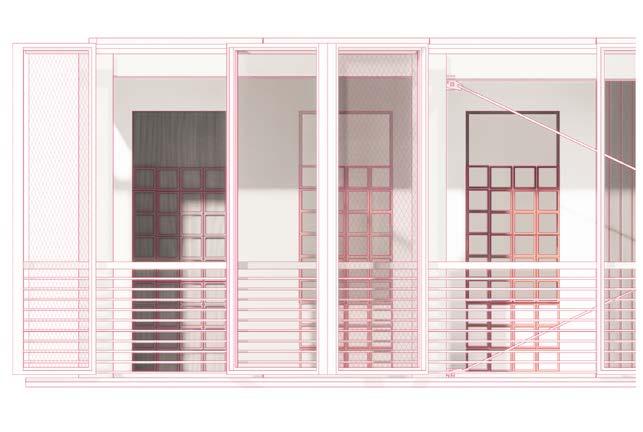
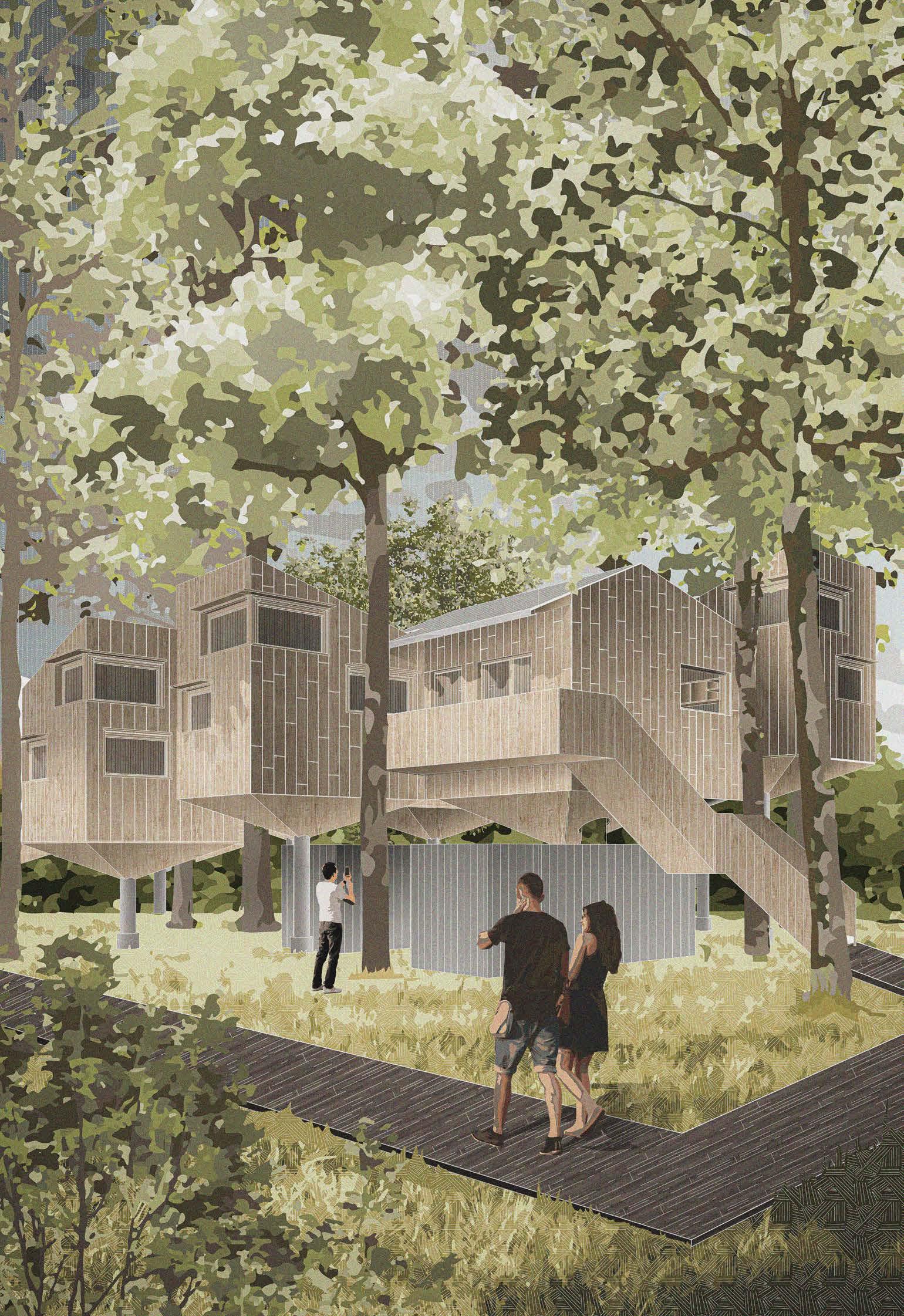
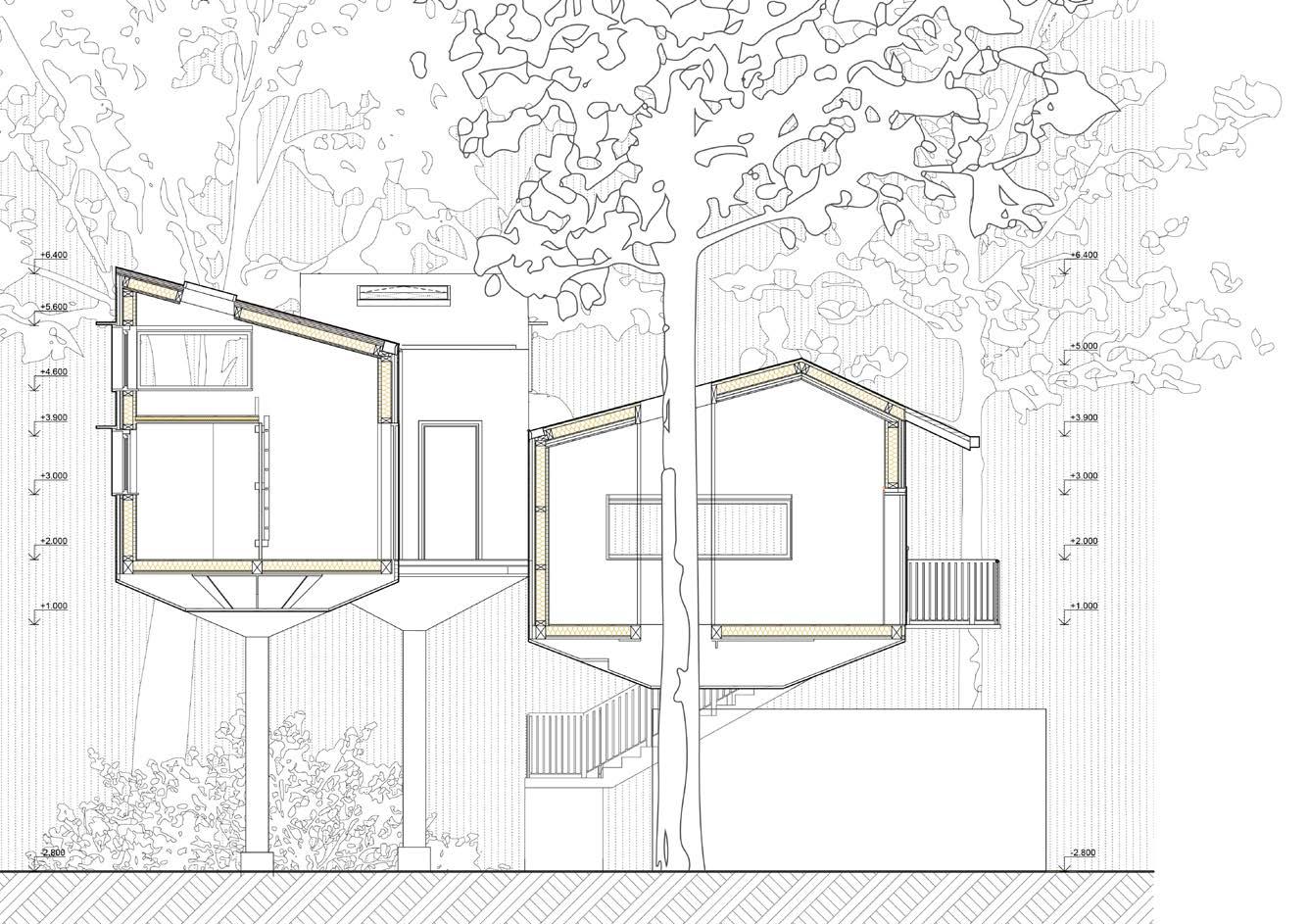
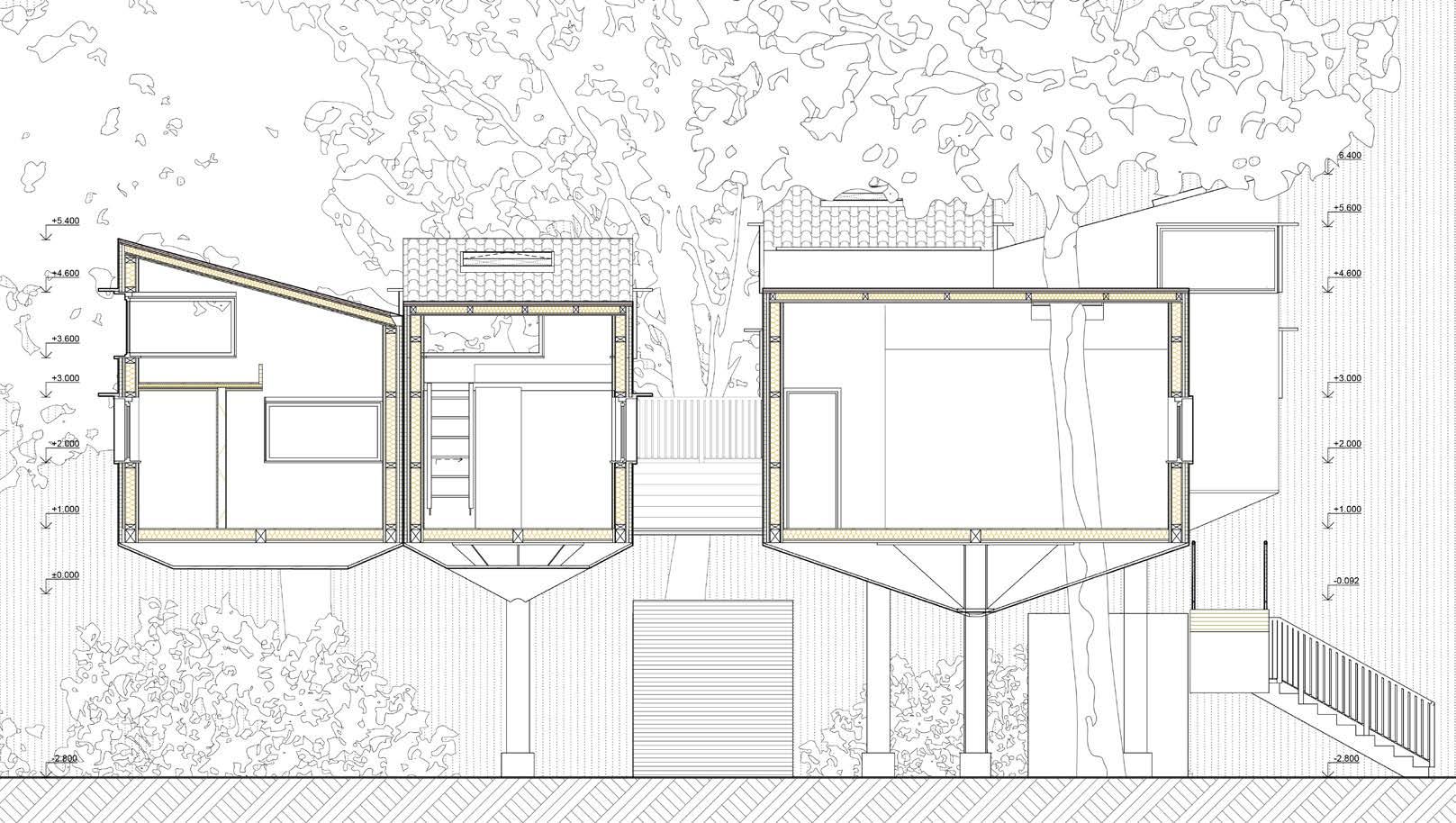
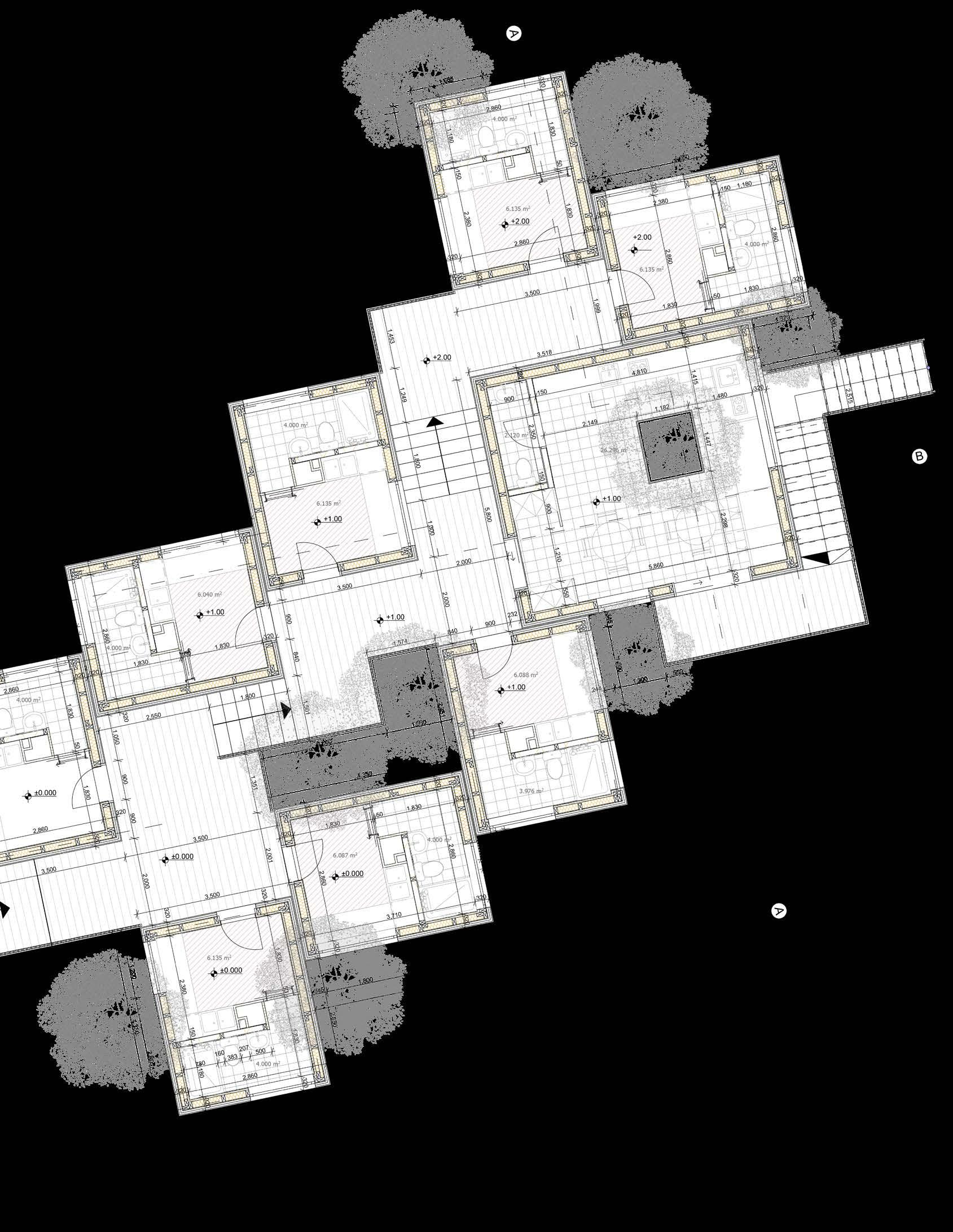
The concept of the Student treehousing is based on the advantages of the design area, using them to create the most optimal solution in terms of architecture and use of natural energy. The task was to place the student housing on the side while also providing the space for educational workshop gatherings for bread makers, including some public lectures. Our project’s main idea is to elevate almost all the covered spaces (including living units) above the ground to let the existing space work as a big park and public events space. In addition, we placed the student living units between (and mostly behind) the deciduous trees to protect them from the aggressive sun rays during the summer and let the sunlight in during the winter.
My part in the project was the work with the masterplan and units’ concept together with the group, creation of the model of the area including units, development of the kitchen unit in details, creation of such drawings as the masterplan of the territory, energy scheme on the elevation of the territory, scheme of the unit composition and the elevation of the units, and an axonometric sketch of the side.
The project developed by: Timergalieva Elina, Sabine Chaaya, Josephine Maria Katharina Kitz, Narek Petrosyan.
The goal of the idea is to make every object on the site to be a part of the energy circle of the sources such as a sunlight, water and food.
As it was mentioned before the roof of the existing building provides an extra space for the gardening on the area. According to the strategy of Building Integrated Agriculture, the solution for the rooftop usage was to place there the greenhouse with the planting tubes (to avoid the building of the new structure holding the layers of the earth).
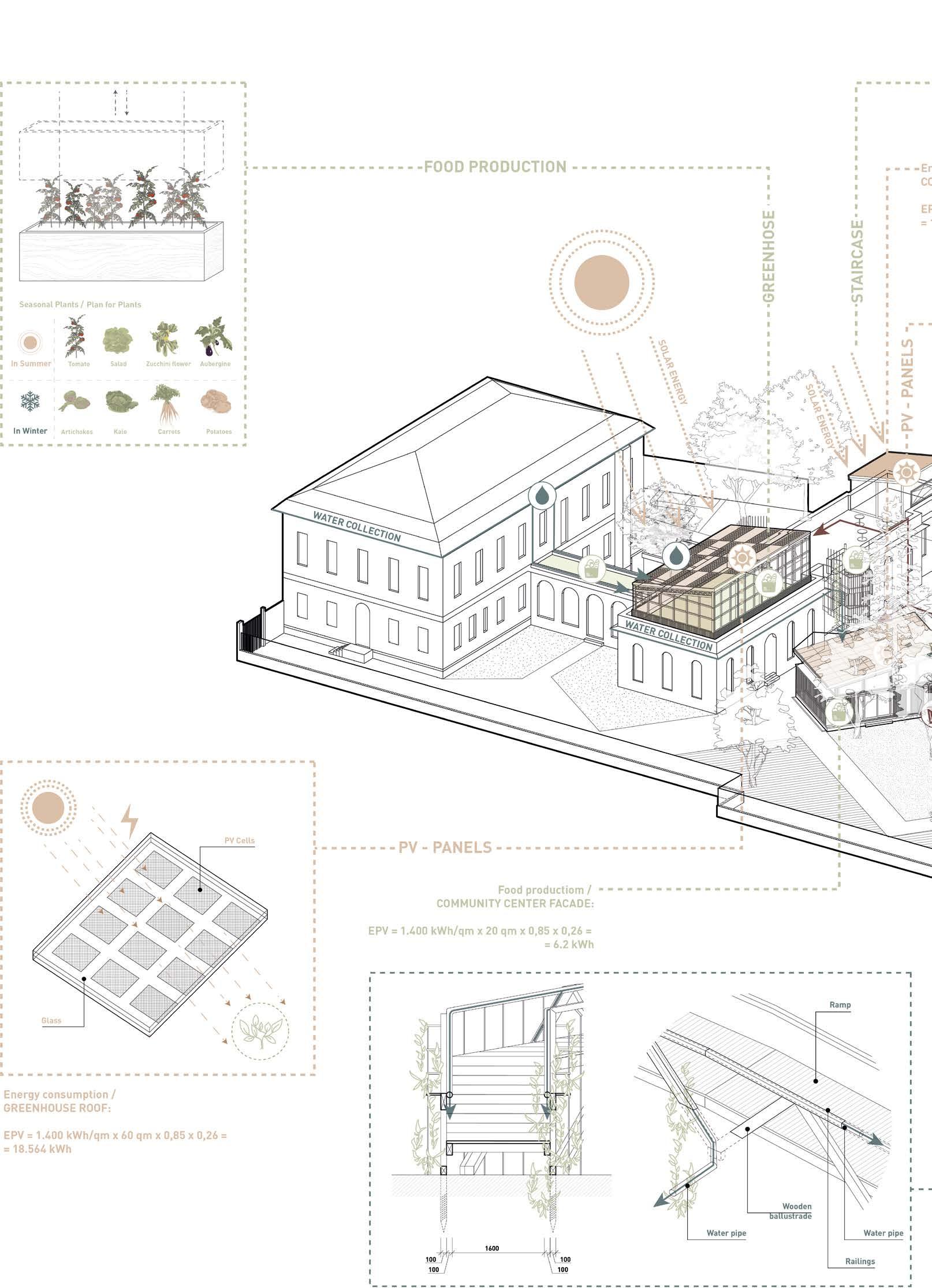
The greenhouse offers the possibility to grow fruits and vegetables troughout the year and allows the School of bread to demonstrate a system of self-su ciency to the students and the community. According to a seasonal planting plan di erent plants grow in the greenhouse, that correspond to di erent weather conditions and seasons and are planted at the appropriate time period. Fertilizer for the soil is produced from the Communtiy .
In order to collect the solar energy and at the same time provide the sunlight inside the greenhouse, a mixed system of PV panels was used to cover this object. The greenhouse has the biggest area of PV panels, which makes it the main producer of energy for the buildings on the site. The solar energy collected here is being distributed between the units of the projects to support living and working activities.
Composting process on the site and connects the neighborhood directly to the School of Bread, as neighbors can participate in sustainable cultivation in this way.
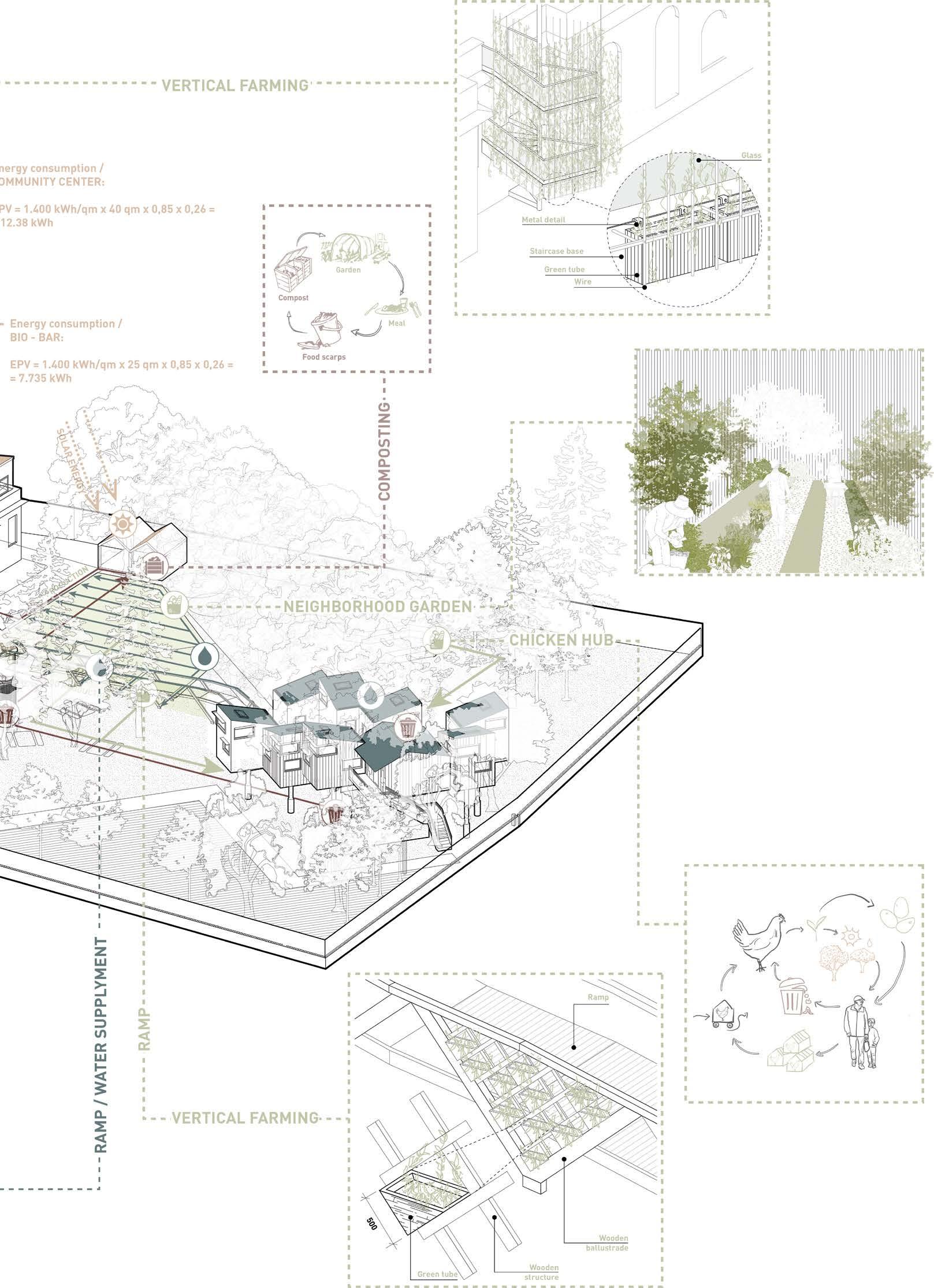
The site has a certain amount of space well-lighted up by the sun. These areas could too overhited for the housing function, but they are good for placing the gardens on them and involving the community to the circle of food production and reuse of the sources.
The ramp leading to the Treehousing is also used for food production in terms of energy efficiency of the project. It is organized by creating of the grid system on the structure of the ranmp and placing the planting tubes inside it. This system of green facade is very-well managed in the worldwide architectural projects so it could be easily applied in the situation of the Treehousing.
The chicken coop is a good addition to the structure of a self-sufficient community. Working together with the community garden, greenhouse, and community composting, it creates a healthy, easily manageable environment for the local dwellings. They are placed in the more shaded zone of the site to protect birds from the sun during the summer (the same strategy as for the treehouses). During the winter, chicken hubs could be moved to a more sunny place and changed to the other configuration.
The living units are located in the more green area of the project site. This configuration offers numerous advantages, including the use of the trees’ shadows, the expansion of the territory, and the structural support provided by the trees.
The amount of solar radiation obstructed or filtered by a tree depends on its:
Orientation to the sun
Proximity to a building or outdoor space

Shape, spread, and height
Density of foliage and branch structure
BIOCLIMATIC SECTION / SUMMER NIGHT
M 1 : 100
M
M 1 : 100
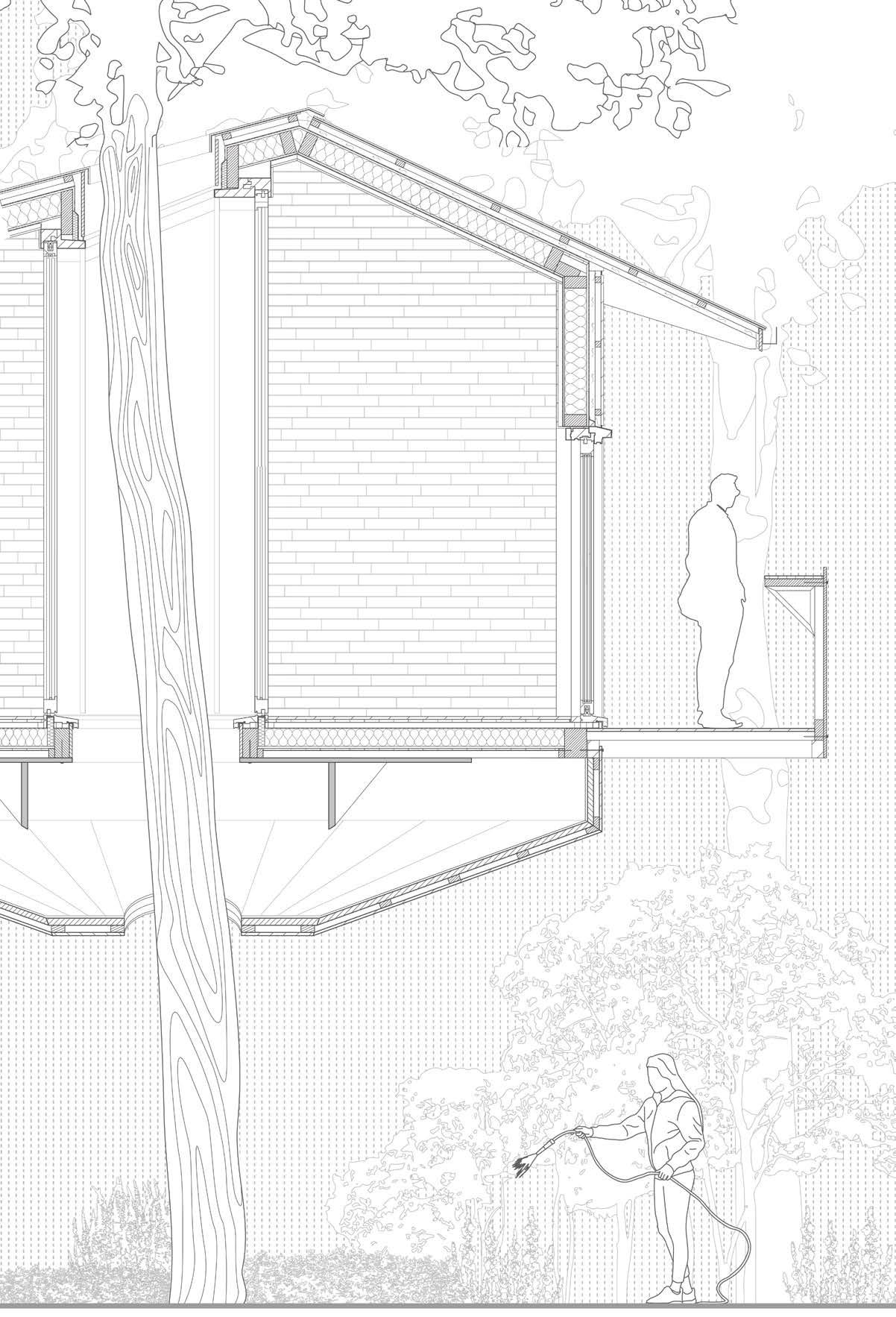
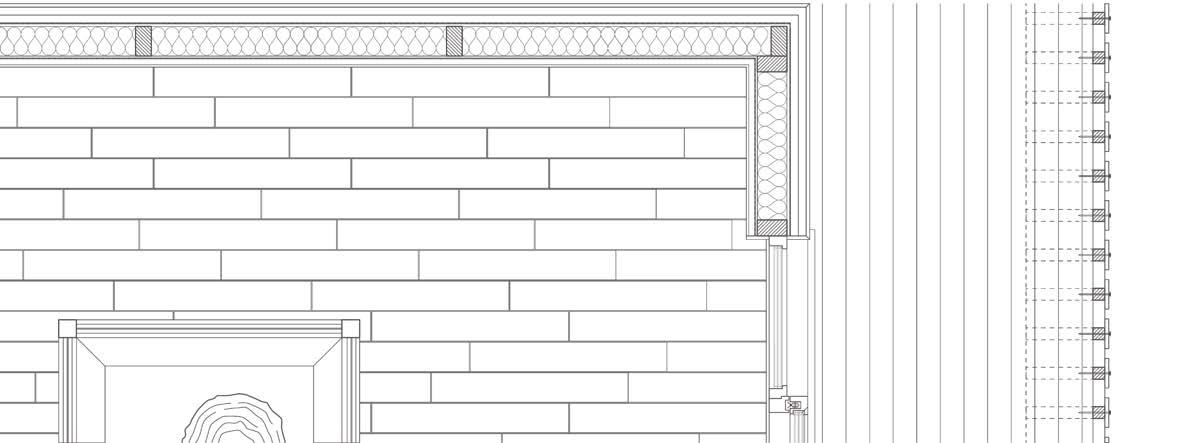
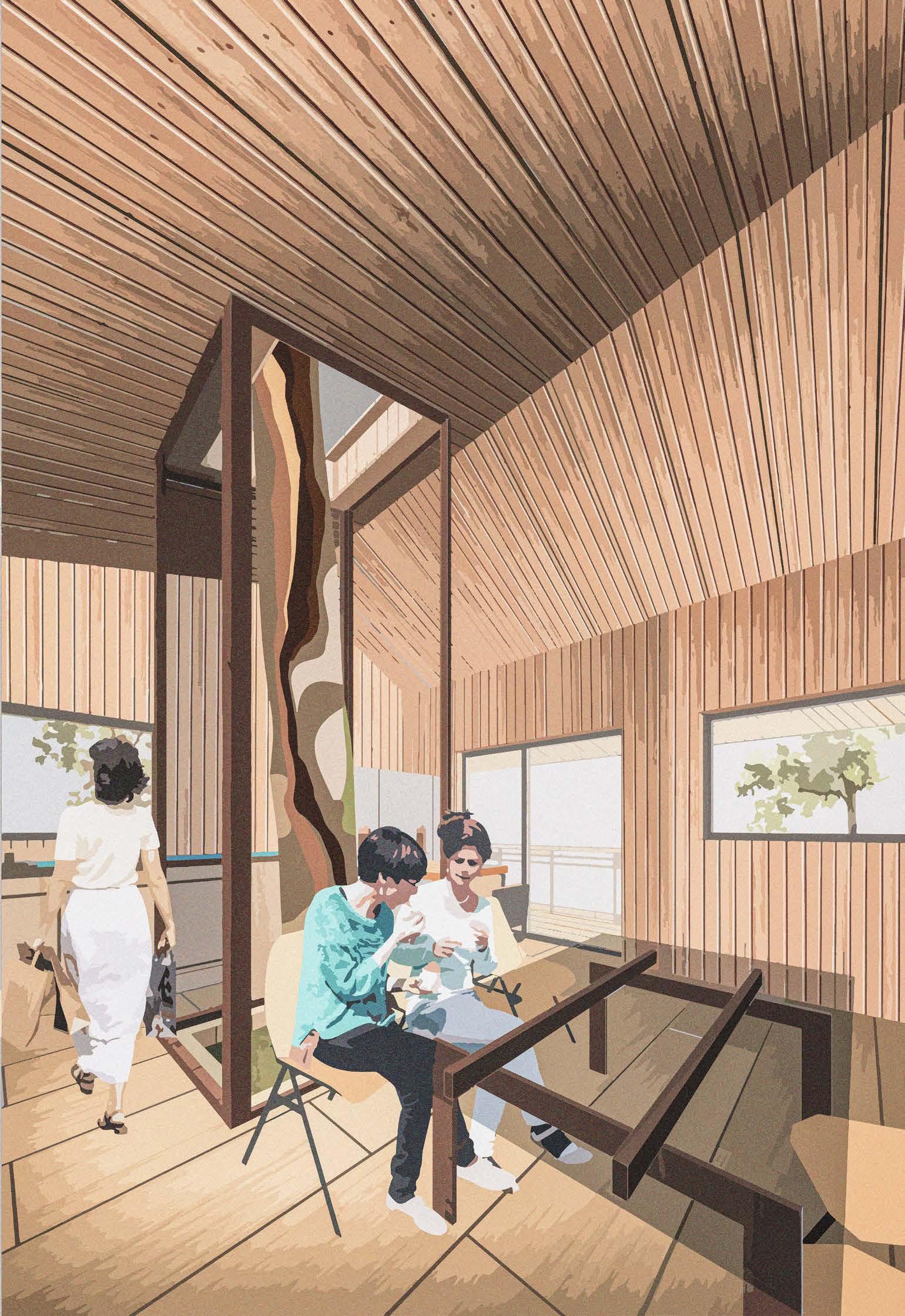
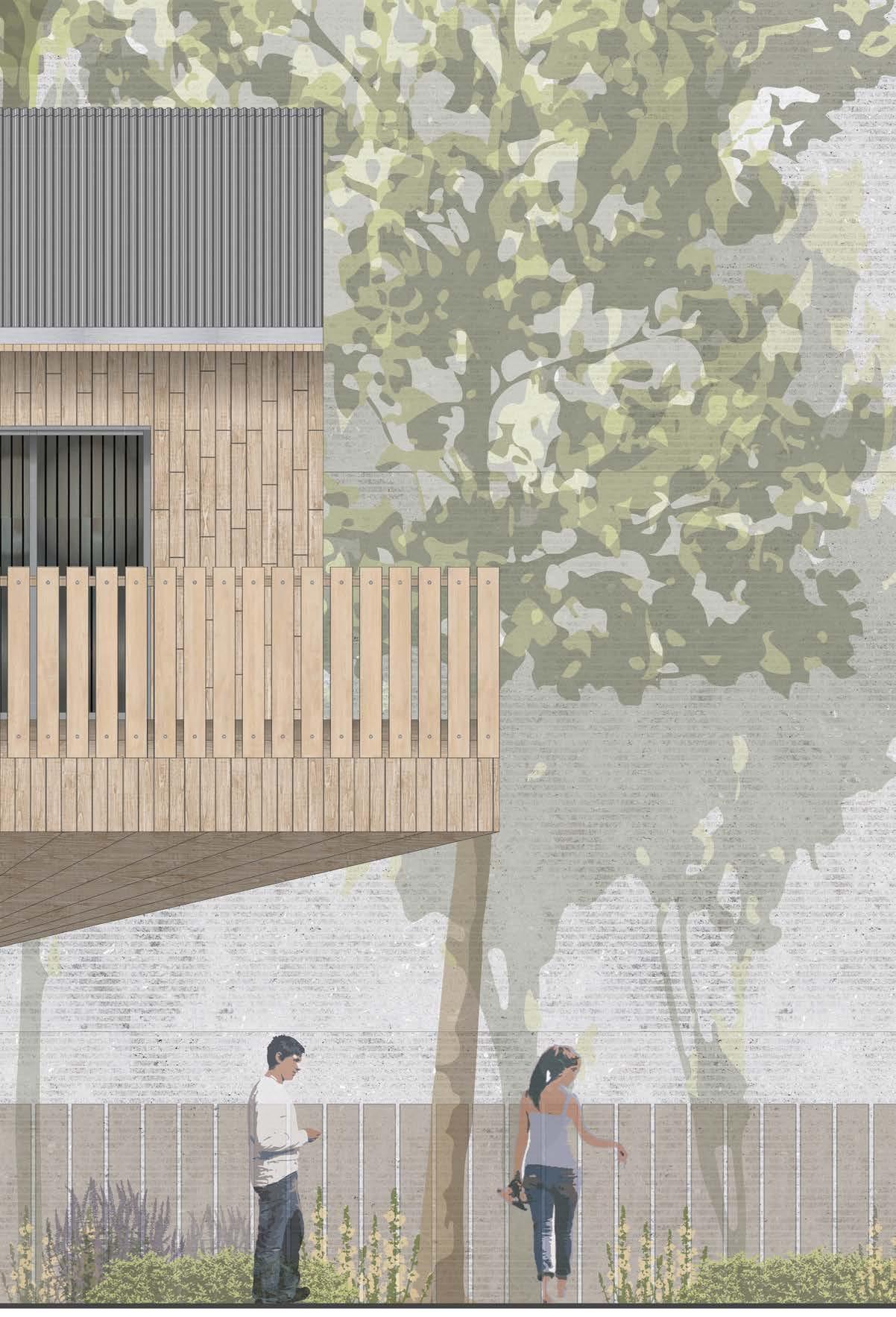
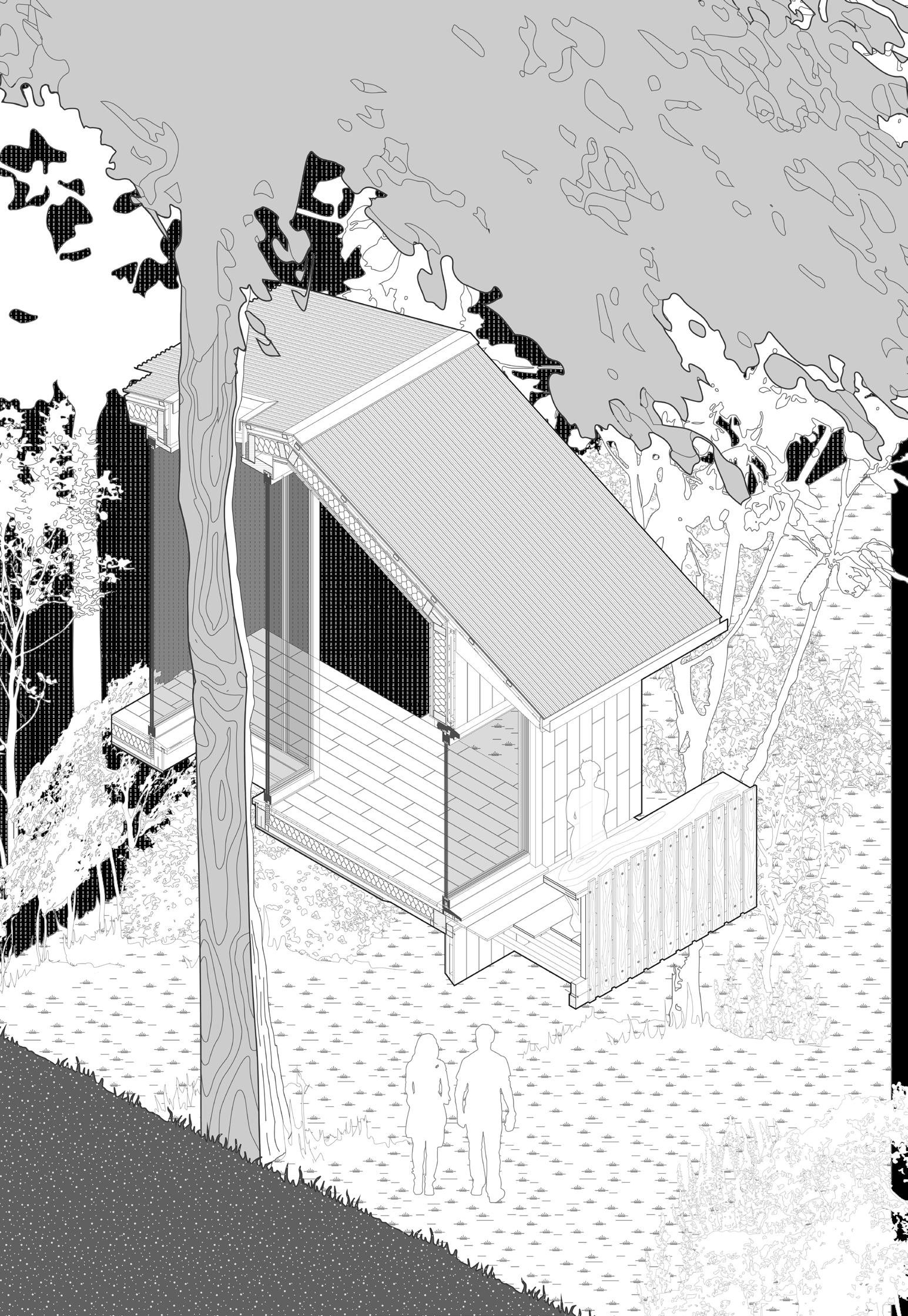
The kitchen unit has mainly the same structural system as the living unit of the Treehousing. This is a lightweight structure based on a steel column and a piece that connects it to the wooden frame of the unit. The elevation is made of vertical larch timber planks. To protect the roof and the walls from the water, the metal sheats were used.
The main feature of this unit is the inclusion of the existing tree inside the interior space to preserve and enhance the local natural resources. From the constructional point of view that was developed by glassed atrium inside the unit.
 Metal sheets protecting the sctructure from the water
Metal gatter collecting the rain water Larch timber vertical planks formating the facade
Larch timber vertical planks formating the facade
Metal sheets protecting the sctructure from the water
Metal gatter collecting the rain water Larch timber vertical planks formating the facade
Larch timber vertical planks formating the facade
Structural timber slud,
Fixing batten
Internal lining board (finish),
Aluminium detail
Structural timber slud
Hardwood timber
Reed insulation,
Steel plate connections,
Aluminium detail
Timber window sill
Larch timber board,
Fixing batten, 40 x 50 mm
Reed insulation, 136 mm
Fixing batten, 40 x 50 mm
OSB sheating board, 20 mm
Flooring, 20 mm
The materials have been chosen according to the site’s features and existing environment. The main goal was to reduce the amount concrete and metal details and structures to construct the unit and increase by utilizing various types of wood. So all the cladding and flooring are made of timber cladding, also to enhance the quality of the unit’s s internal and external pace.
Steel detail connecting the metal sheats
Metal sheats protecting the structure from water
Gutter channel, metal sheats, 4 mm
Vertical larch timber cladding, 18 x 120 mm
Wooden board formating the bar
Glass Timber vertical cladding formating the fence
Wooden column, 50 mm
Wooden beam, 50 mm
Wooden suportive beam, 100 mm
Wooden bearing structure
Flooring, wooden board, 40 mm
Vertical larch timber cladding, 18 x 120 mm
Steel spike