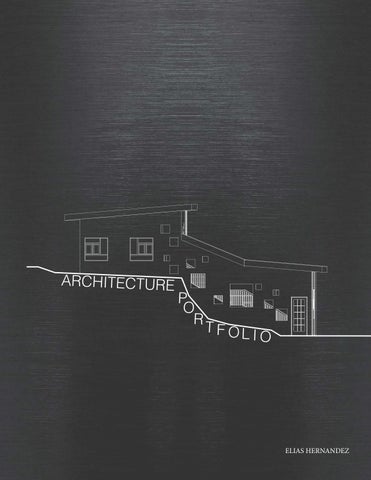
ARCHITECTURE

PO R T F O L I O
ELIAS HERNANDEZ





WOOD SIDING 8’ 15’ 24’ - 8 - 5 - 7 8’ 15’ 24’ - 8 - "5 - 7 WOOD SIDING STANDING SEAM METAL STANDING SEAM METAL TENT 1 TENT 2 40’ - 0” 40’ - 0” 40’ - 0” 40’ - 0” TENT 4 HIGHPOINT 588’ TENT 3 HIGHPOINT 588’ TENT 2 HIGHPOINT 588’ TENT 1 HIGHPOINT 584’ TABLE OF CONTENTS 02 01 COASTAL MUTANTS 04 07 10 20 28 36 03 MIXED INCOME HOUSING 05 HOUSE + ADU 02 URBAN PARASITES 04 MIXED USE BUILDING 06 HOUSE + FARMING
Elias Hernandez GRADUATE ARCHITECTURE STUDENT
(469)
655 - 2942
Elias.hernandez1017@gmail.com
https://www.linkedin.com/in/eliashernandez-25b077197/
https://issuu.com/elias.hernandez1
017/docs/portfolio.pa
SKILLS
Revit
AutoCAD


Adobe Software
Verbal & written Communication
Bilingual
Multi-family Architecture
EDUCATION
Master of Architecture & Business Administration
- Urban and Community Design Certificate
Texas Tech University
2021 - 2023
Bachelor of Science in Architecture
- Architectural History Minor
- Business Administration Minor
University of Texas at Arlington
2017 - 2021
Associate of Science & High School Diploma
Richland Colligate High School of Math Science Engineering
2015 - 2017


ABOUT ME
A detail-oriented graduate architecture student with experience in working on multi-family projects. Offering extensive knowledge of multiple architectural software’s, and great teamwork abilities.
EXPERIENCE
Architectural Intern
O’Brien Architects / Dallas – Plano / May 2022 - Current
I worked and saw projects from start to finish assisting in design and production, producing quality and accurate drawings
• Focused on Multi-family projects, performed site visits, and detailed architectural drawings for construction
• Communicated closely with professional architects
• Sat in client meetings & meet consultants
Graduate Assistant
Texas Tech University / Lubbock / Jan 2022 – May 2022
I was the teaching assistant for two studios, giving feedback and delegated the class when the professor instructed
• Assisting the professor with studio tasks
• Working and instructing a second-year studio
• Answering questions regarding design & software
Designer
Complete Fire Protection / Sunnyvale / May 2021 – Aug 2021
I learned code regarding fire safety and reflected the research in all the drawings
• Designing sprinkler layout following code
• In communication with Architects & GC
• Analyzing plans, sections, elevations for proper water pipe layout
8’ 15’ 24’ - 8 - 5 - 7 WOOD SIDING STONE STANDING SCALE 3/16” = 1’0” WEST ELEVATION TENT 5 TENT 4 TENT 3 TENT 5 HIGHPOINT 590’
03
E H
COASTAL MUTANT
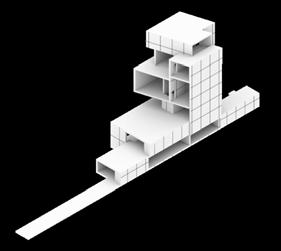
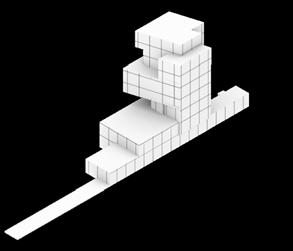
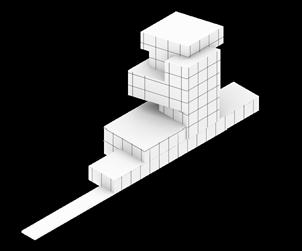
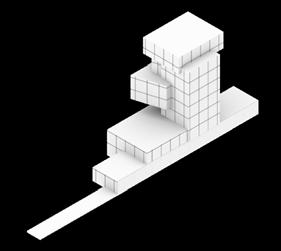
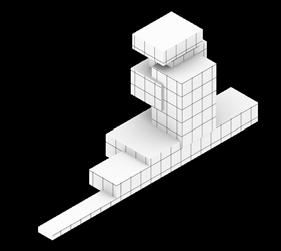
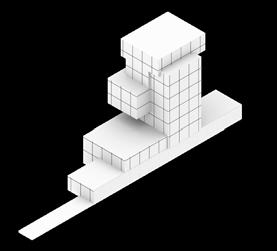
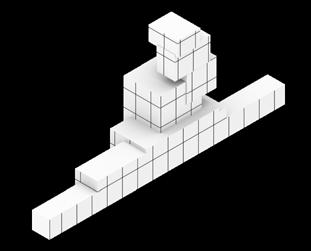
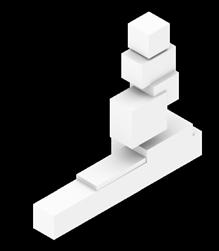
COASTAL MUTANT // SPATIAL INTERLOCK
Partners: Jason Escobedo & Jasmine Ramirez
Mutant: Permanent Harmful or Helpful Alteration
Method: Additive Transformation

Condition: Freestanding
Elevated Territory: Gulf Coast, Texas
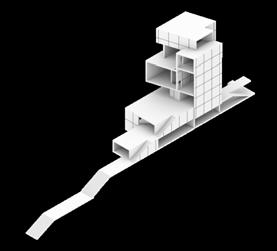
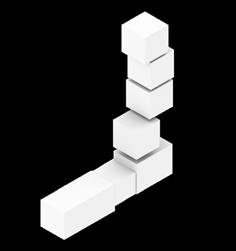
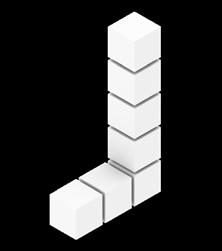
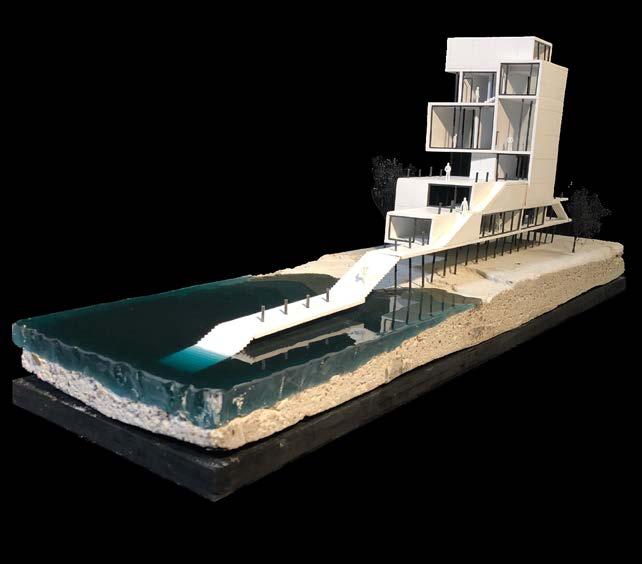
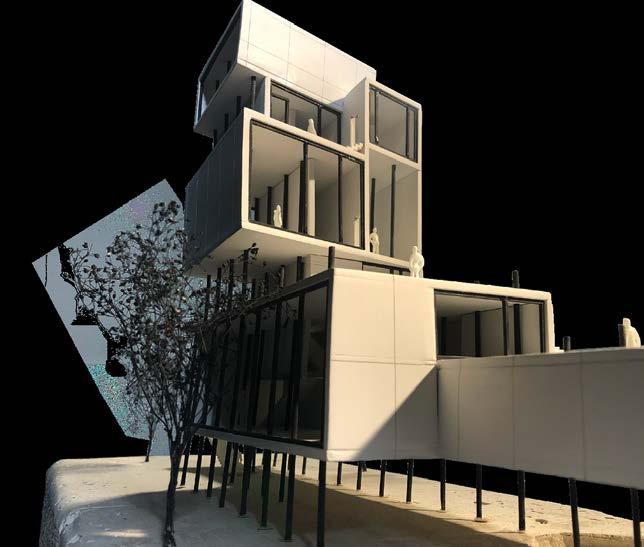
We define architectural mutants as harmful or helpful, but permanent alteration of an original type. Nine cubes were given to be modified. These basic geometries were modified as a continuous process of mutation. While shape, appearance and spatial qualities were changed, Åwere created with variations in how each cube is modified in length, height and width. There is a variation in the interlocking of volumes and in the incorporation of angular cuts. These conditions must begin with the structure of a columnar grid, which defines the order of the site and structure. The design is given as a research facility. Thus, functionality follows accordingly, ultimately constructing a tower through transformative spaces.

ELEVATION AXONOMETRIC PRODUCED BY AN AUTODESK STUDENT VERSION PRODUCED BY AN AUTODESK STUDENT VERSION 04 01
PRODUCED BY AN AUTODESK STUDENT VERSION
PRODUCED BY AN AUTODESK STUDENT VERSION
FLOOR PLANS


PRODUCED BY AN AUTODESK STUDENT VERSION
PRODUCED BY AN AUTODESK STUDENT VERSION
PRODUCED BY AN AUTODESK STUDENT VERSION
PRODUCED BY AN AUTODESK
PRODUCED BY AN AUTODESK STUDENT VERSION
PRODUCED BY AN AUTODESK STUDENT VERSION
PRODUCED BY AN AUTODESK STUDENT VERSION
PRODUCED BY AN AUTODESK STUDENT VERSION
PRODUCED BY AN AUTODESK
PRODUCED BY AN AUTODESK STUDENT VERSION
PRODUCED BY AN AUTODESK STUDENT VERSION
PRODUCED BY AN AUTODESK STUDENT VERSION
PRODUCED BY AN AUTODESK STUDENT VERSION
PRODUCED BY AN AUTODESK STUDENT VERSION
PRODUCED BY AN AUTODESK STUDENT VERSION
PRODUCED BY AN AUTODESK STUDENT VERSION
PRODUCED BY AN AUTODESK STUDENT VERSION
PRODUCED BY AN AUTODESK
Level 00 +00' 00"
Level 01 + 12' 6.25"
Level 02 +23' 10.25"
SECTION Level 03
9.5"
+32'
Level 04 +42' 8.5"
Level 05 +43' 11"
Level 06 +59' 7.25"
STUDENT VERSION
0 1 5 10
STUDENT VERSION
05 TRANSFORMATIONS

PHYSICAL MODEL 06
URBAN PARASITES
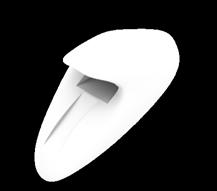
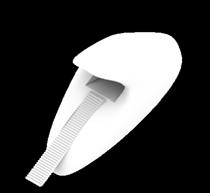
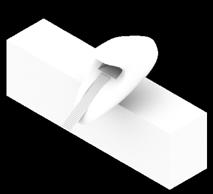
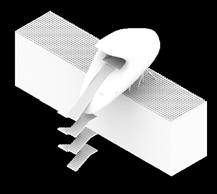
URBAN PARASITE // FORMAL INTERACTION
Partners: Jason Escobedo & Jasmine Ramirez
Parasite: Non-mutual relationship to the host
Method: Digital Morphogenesis

Condition: Attach, Cantilever
Territory: Dallas, Texas
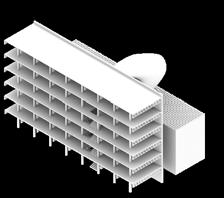
We define architectural parasites as additive objects attached to host structures that couldn’t survive without benefiting from the host. The parasite represents a type clearly different to the host structure it is attached to. The host and parasite need to interact formally and functionally. The interaction between the host and parasite is shown through the attachment on both buildings. Being an invader to a unknown landscape, the parasite distinguishes itself as an outsider to the city, yet it hides within the context of the urban setting.
07 SITE PLAN AXONOMETRIC
02

Level 01 +14' 00" Level 02 +26' 00" Level 03 +38' 00" Level 04 +50' 00" Level 05 +62' 00" Level 06 +74' 00" FLOOR PLANS SECTION Level 00 +00' 00" Level 03 +42' 00" Level 04 +54' 00" Level 05 +66' 00" 0 1 5 10 PRODUCED BY AN AUTODESK STUDENT VERSION 08







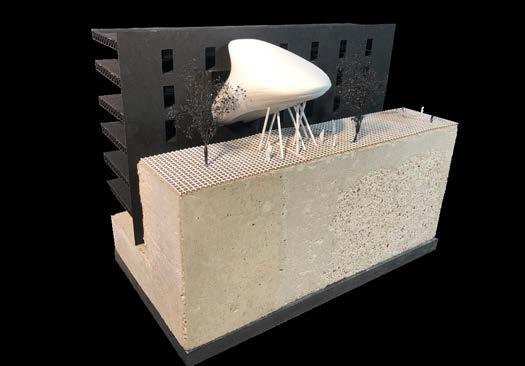
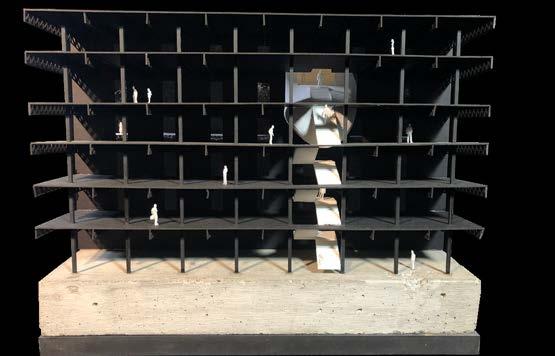
TRANSFORMATIONS PHYSICAL MODEL 09
MIXED INCOME HOUSING
MIXED INCOME HOUSING
Partners: Jason Escobedo & Francisco Vasquez
Method: Structure, Construction, and Materiality Condition: Existing + New Merge Territory: Fort Worth, Texas
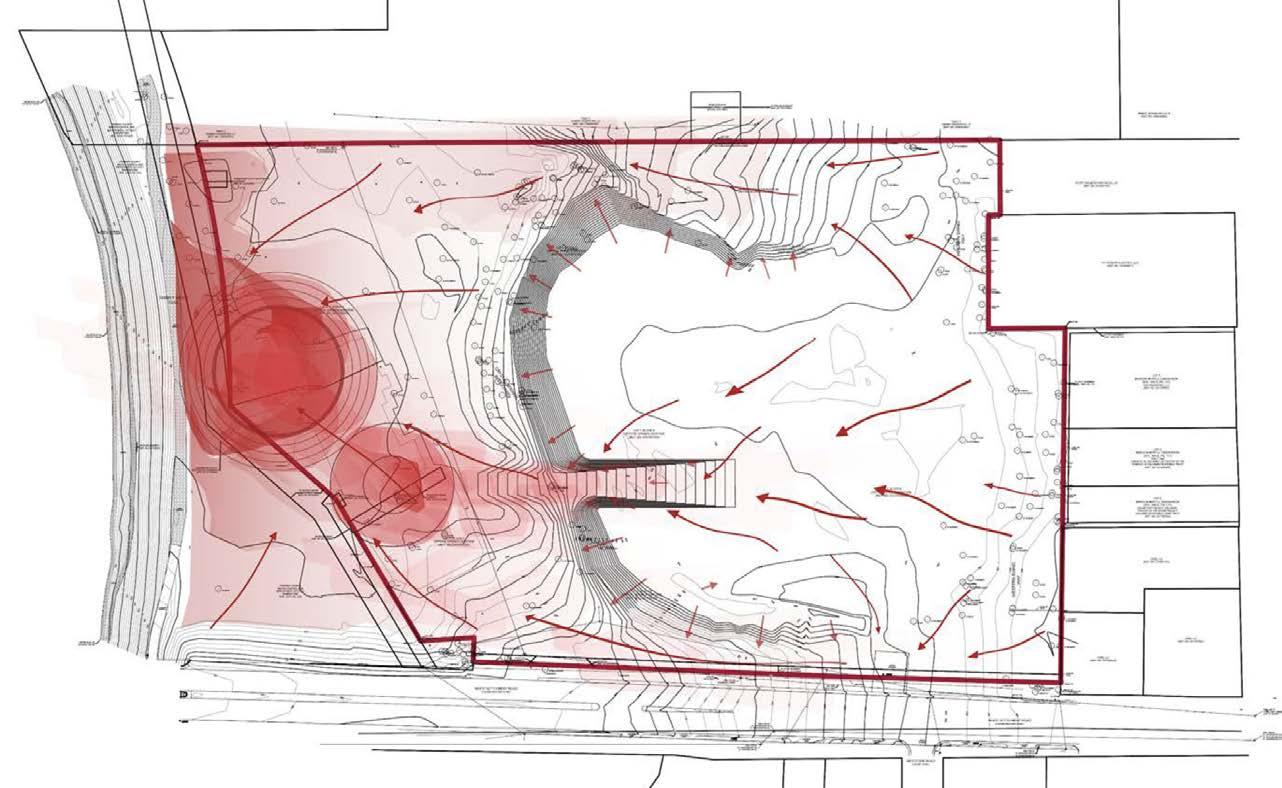
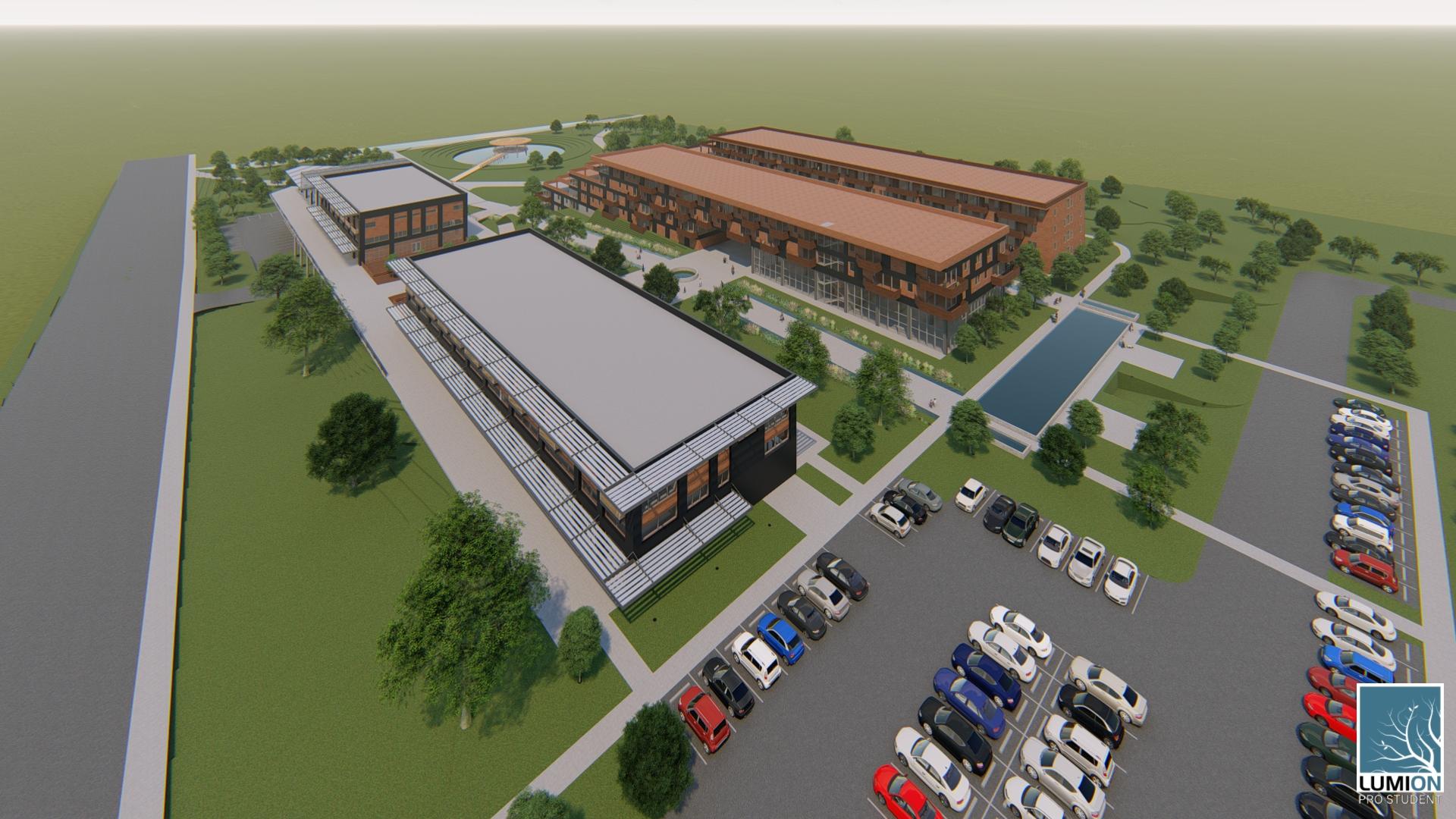
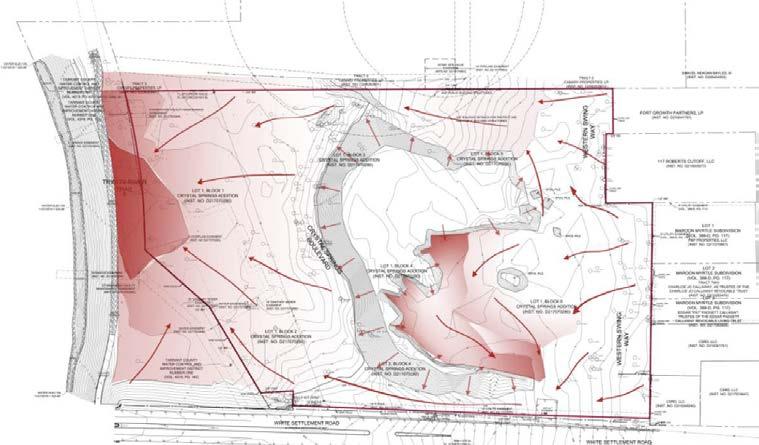
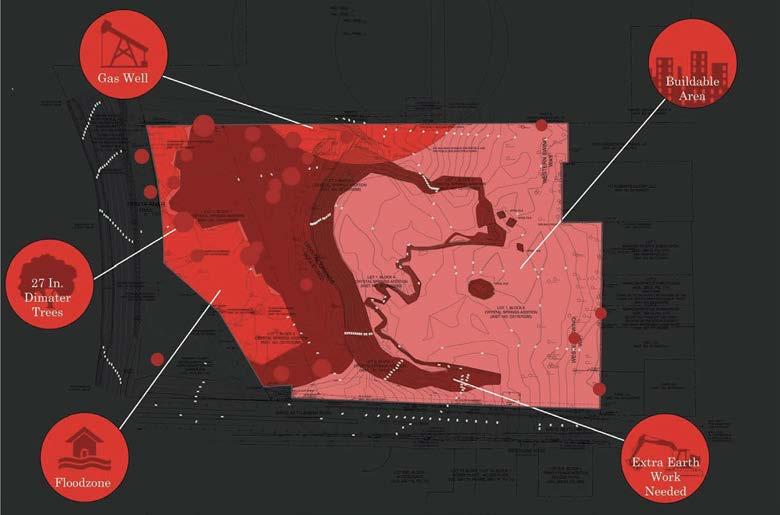
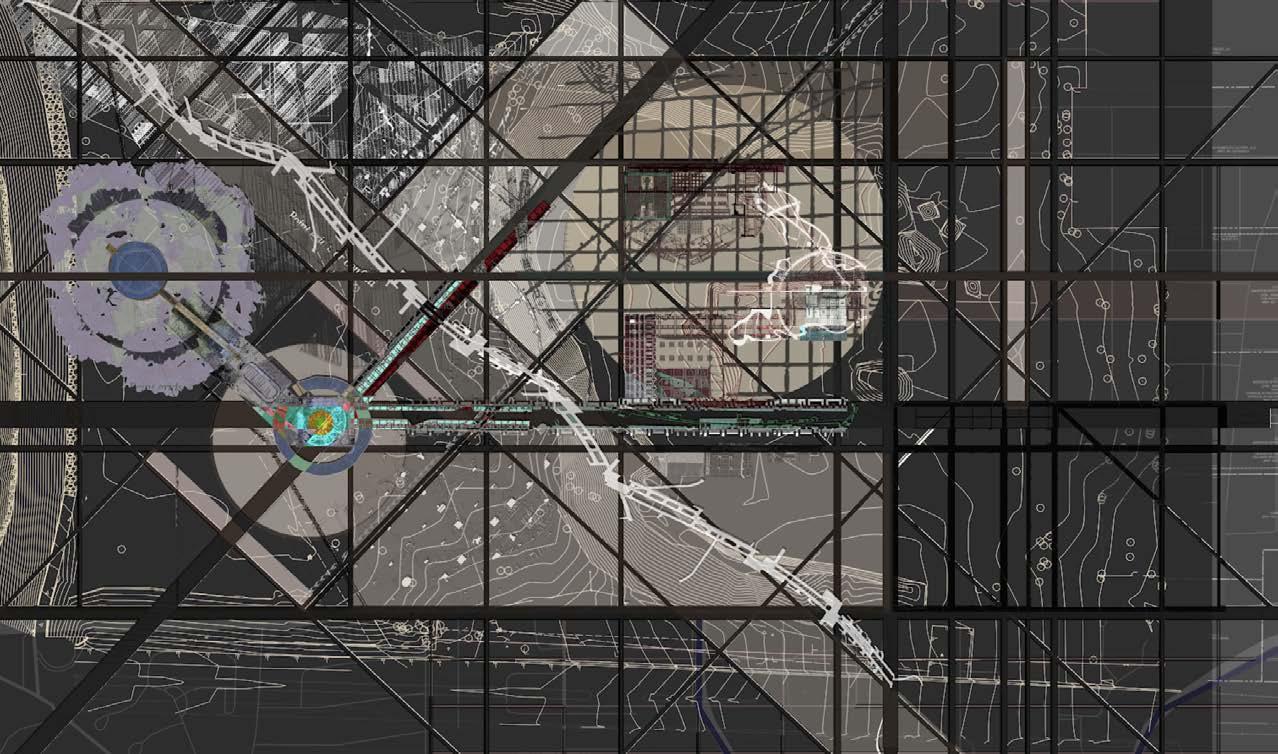
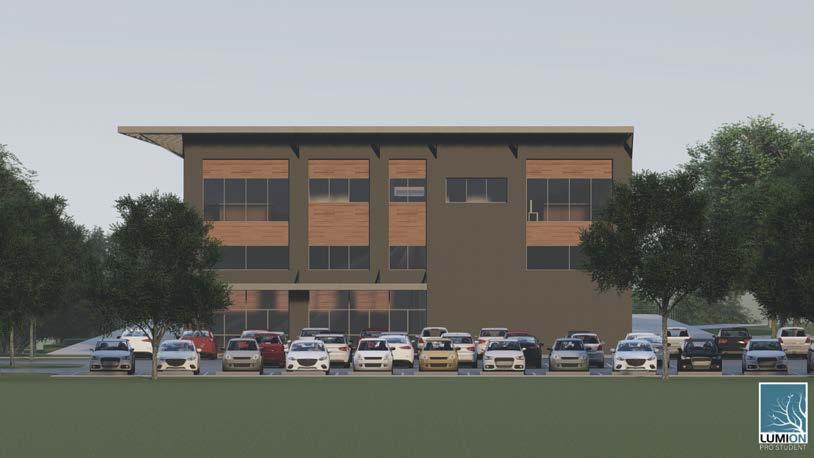
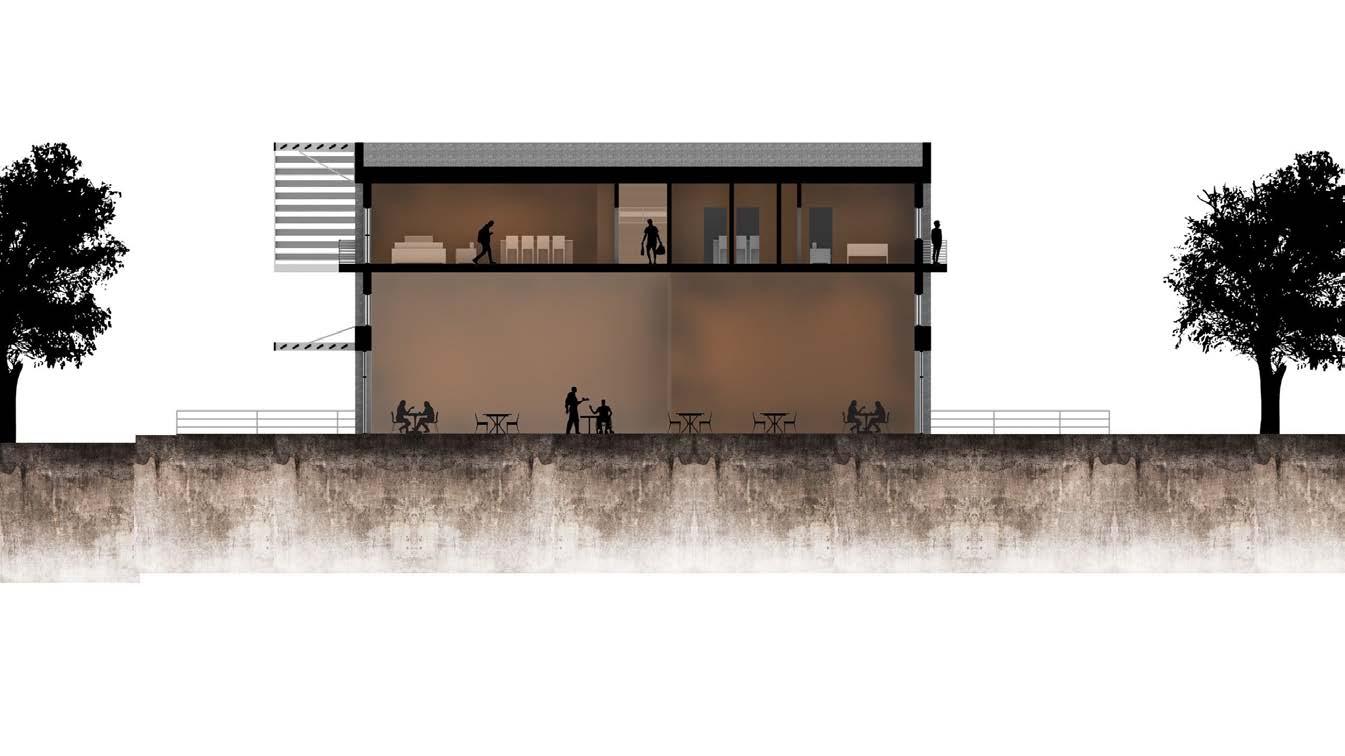
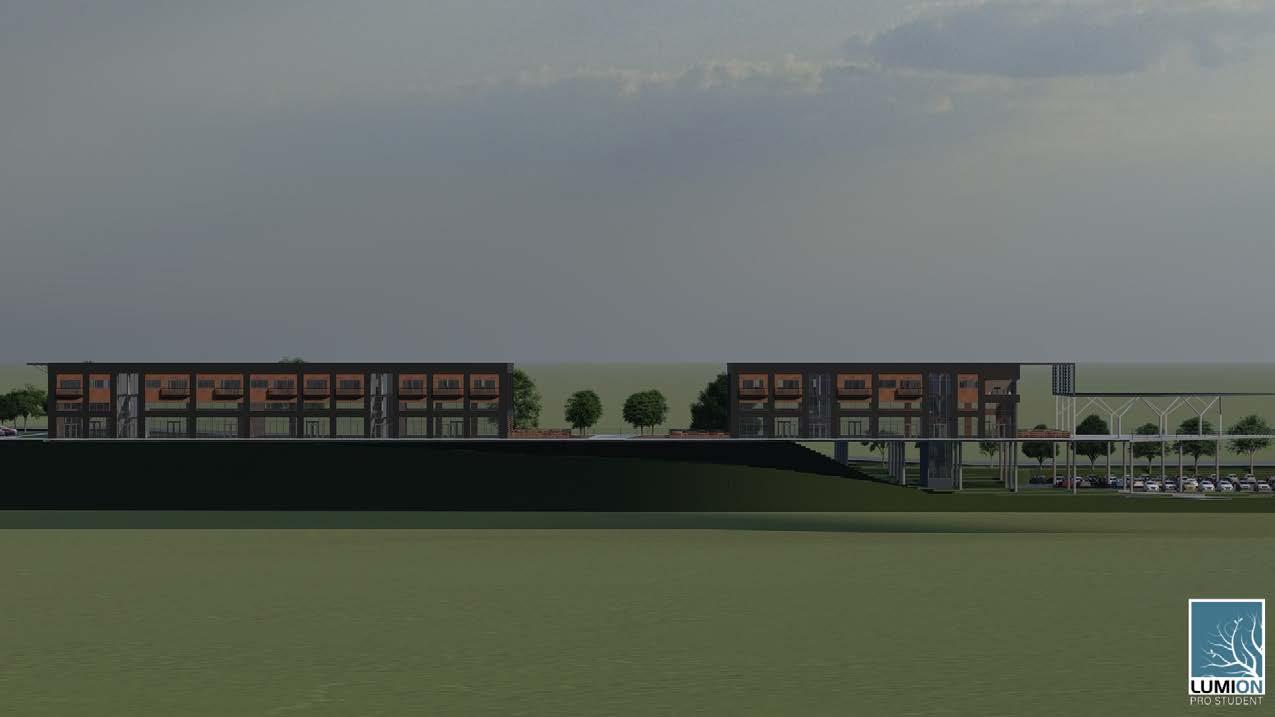
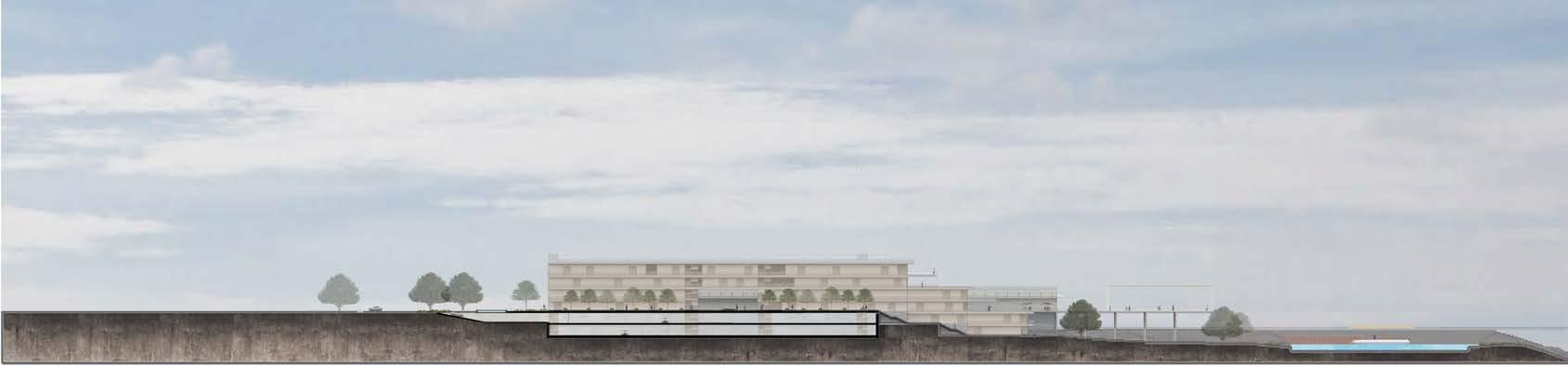
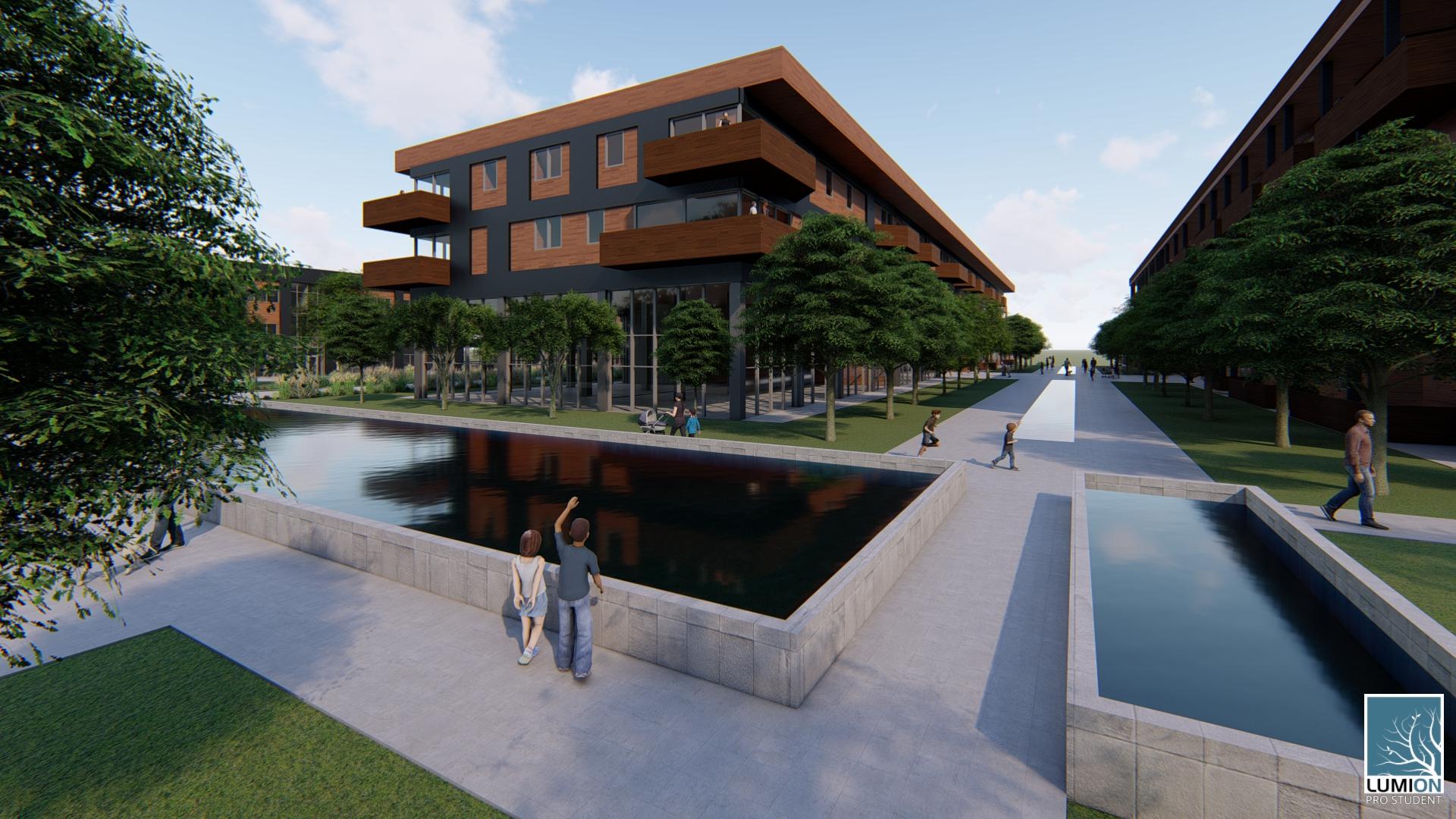
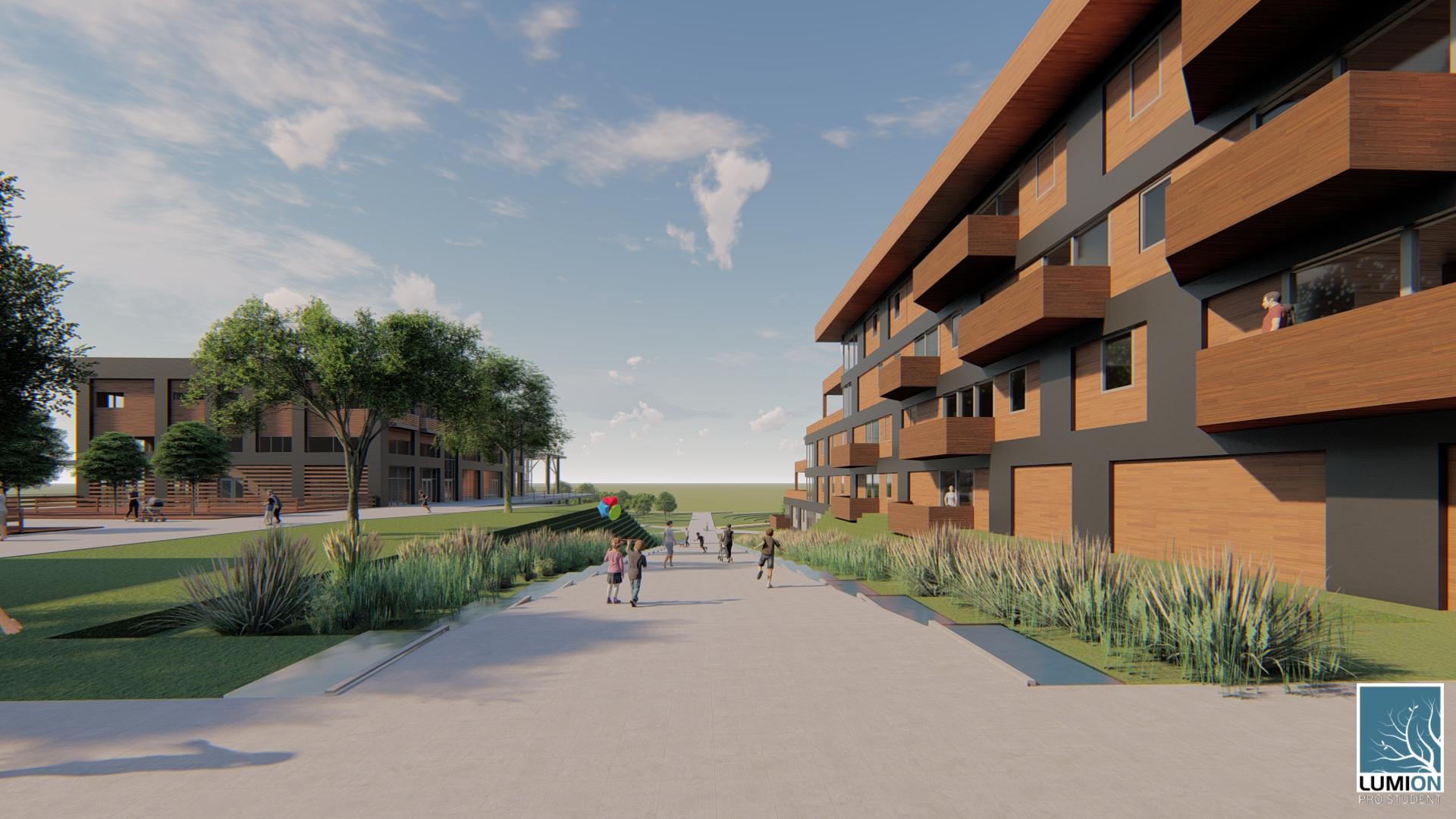
Working within the existing neighborhood, the River Oaks District in Fort Worth Texas; the objective is to create a program that would benefit the existing neighborhood with the addition of housing units. The focus is on Mixed Income families creating a semi-permanent location for these families. Taking into account the current development in this specific region, this enabled the focus group of the overall design along with public and private amenities. Additionally, the building components depended on various aspects including, building materials, water management, site design, and nearby resources.
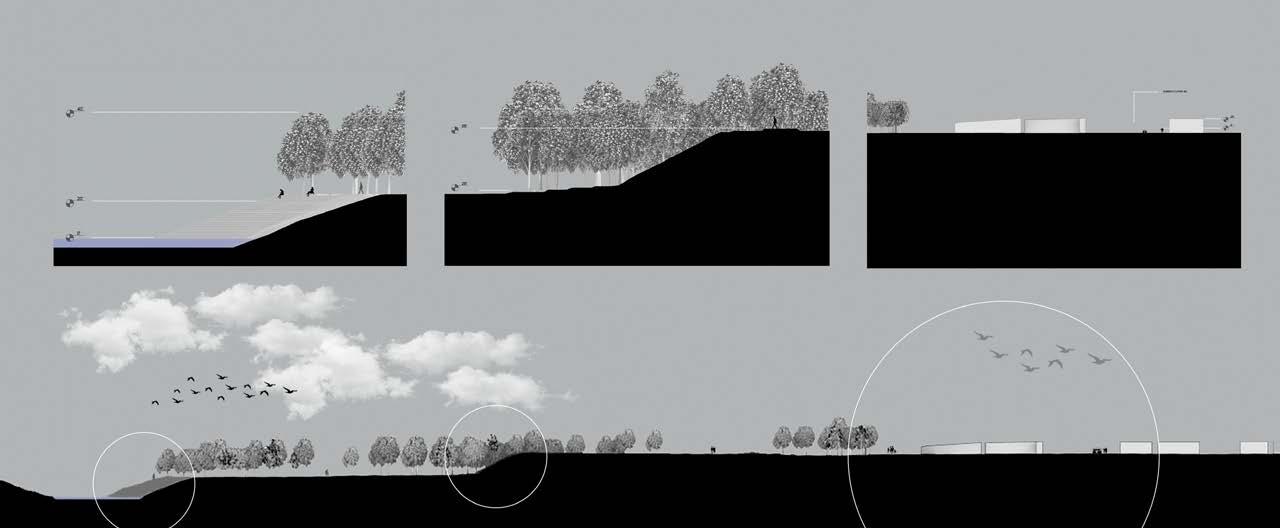
Also, the initial design process began with conceptual drawings that resulted into the final site plan. Another main factor of the design was the water management and filtration system our design would incorporate. Hence the River Oaks District being along the Trinity River, there is the need of water management and filtration due to the excess water from our site running off into the Trinity River. The design includes a wetland system to maintain the water filtration and a pavilion along the wetland so there can be an interaction between the pedestrians, wetland, and the Trinity River.
EXISTING TOPOGRAPHY
PROPOSED TOPOGRAPHY MANIPULATION
10 03

PRE - EXISTING SITE CONDITIONS 11

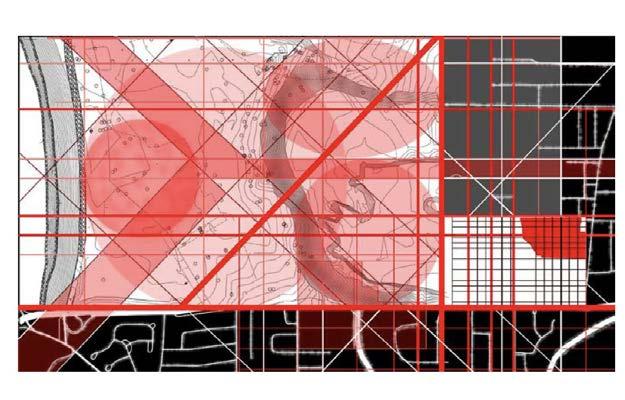
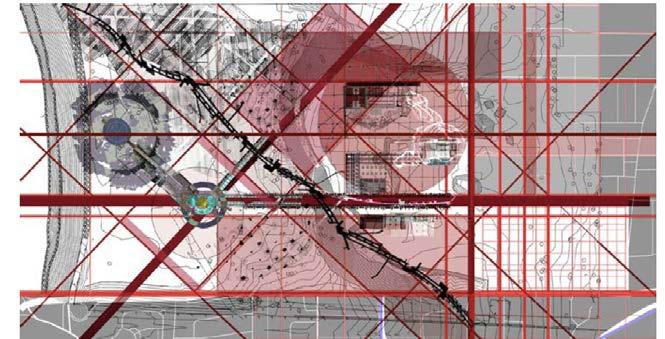
CONCEPTUAL SITE DESIGN 12
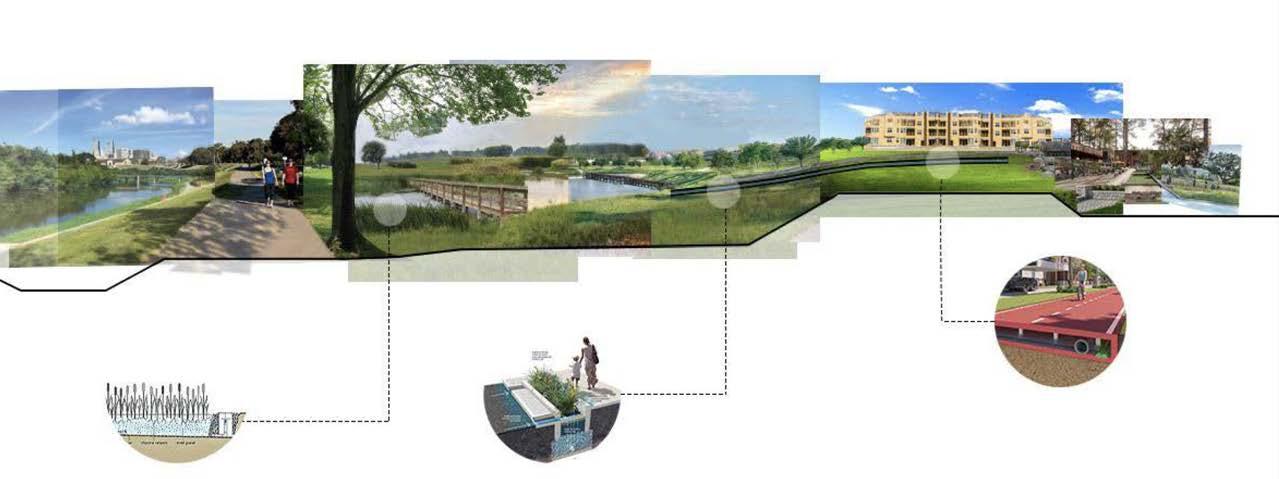
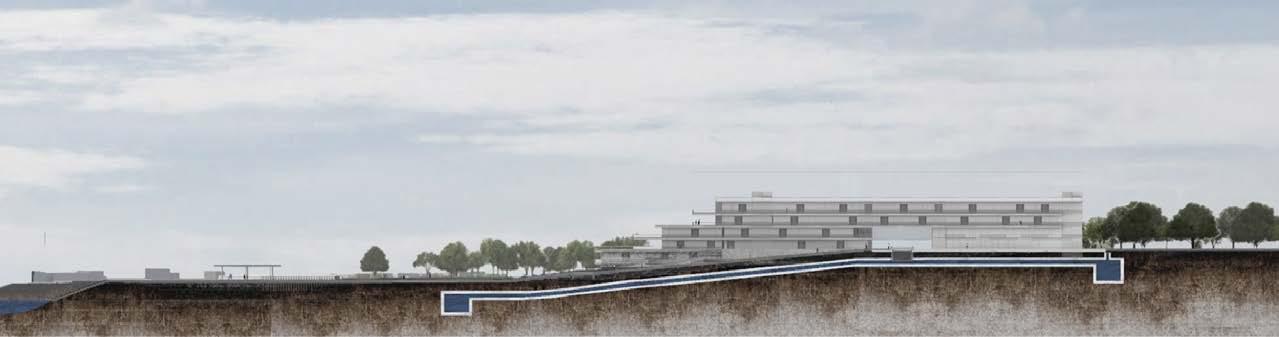
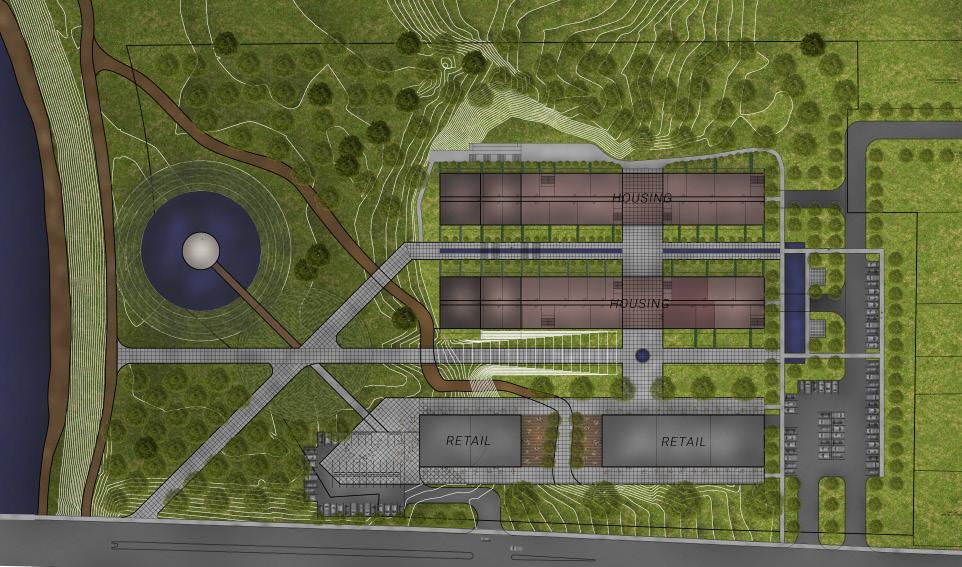
CONCEPTUAL WATER MANAGEMENT SITE PLAN 13
Second Floor Plan: Housing Units
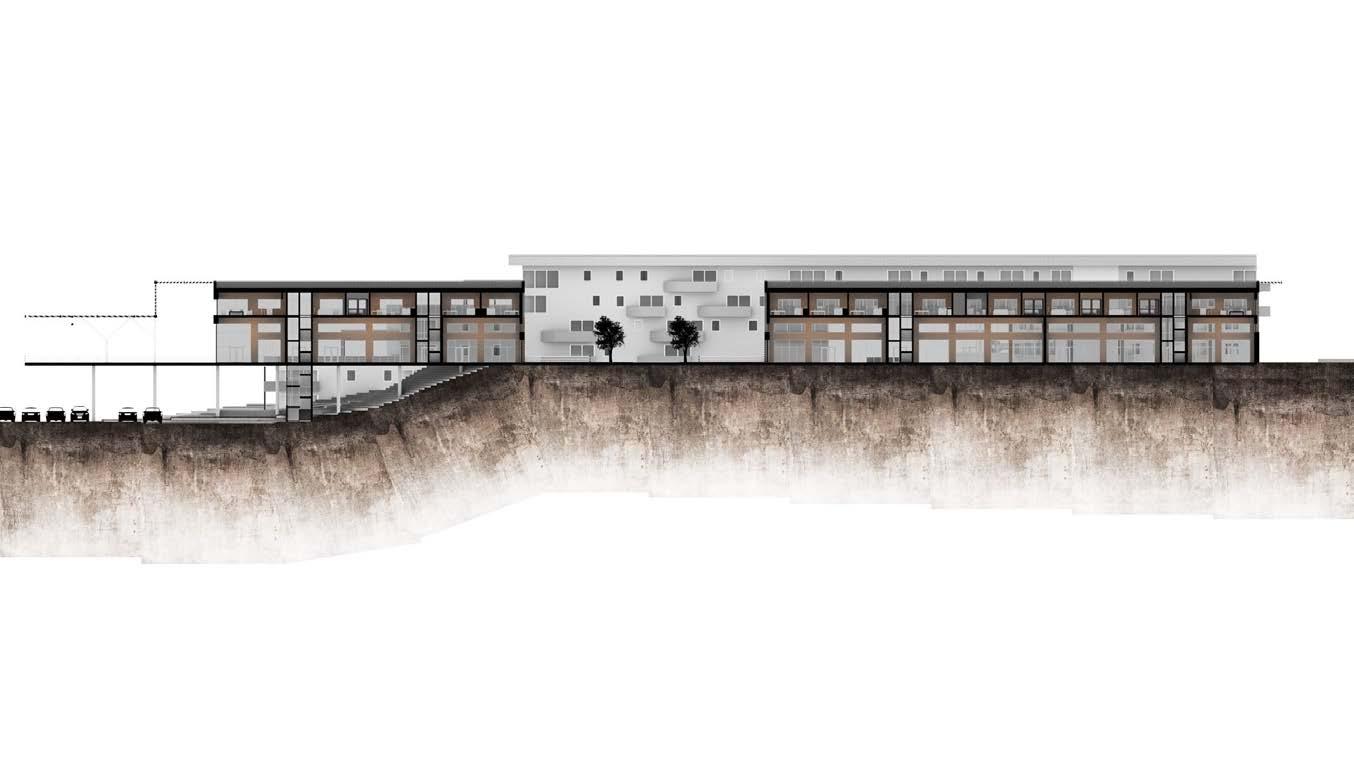
OVERALL BUILDING PLAN: ONE BEDROOM UNITS
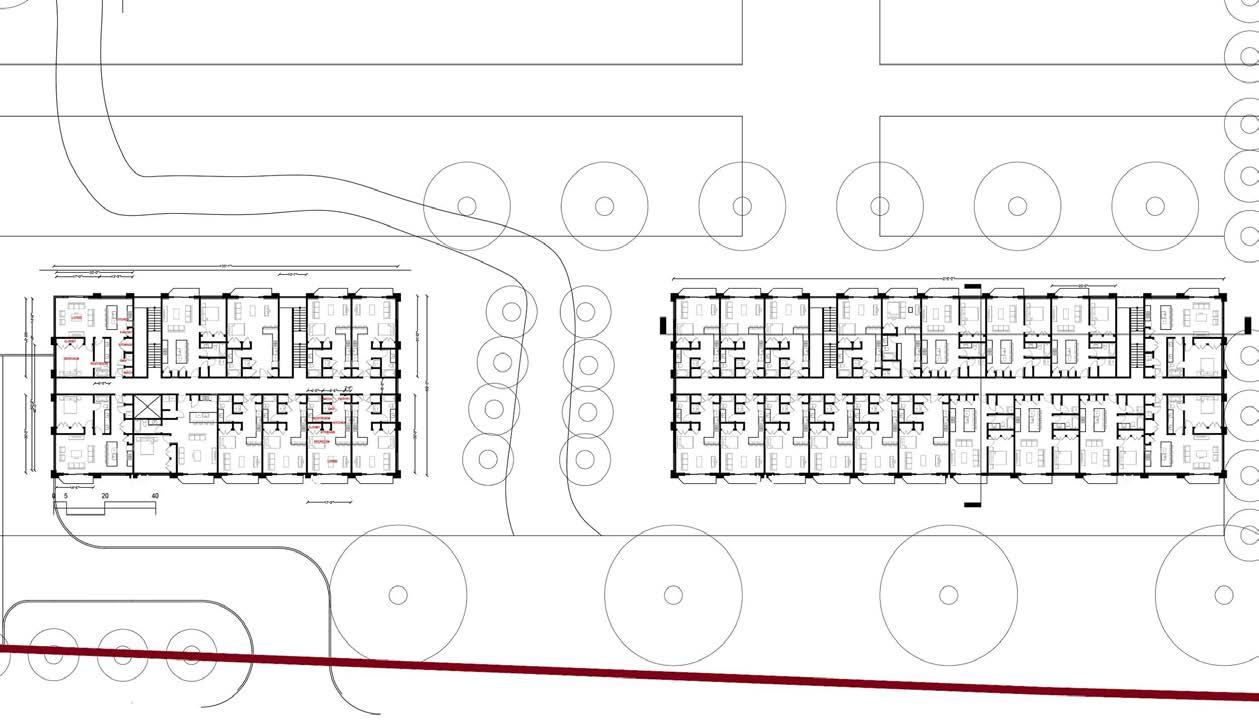
AXONOMETRIC
FLOOR PLAN 14
TRANSVERSE SECTION
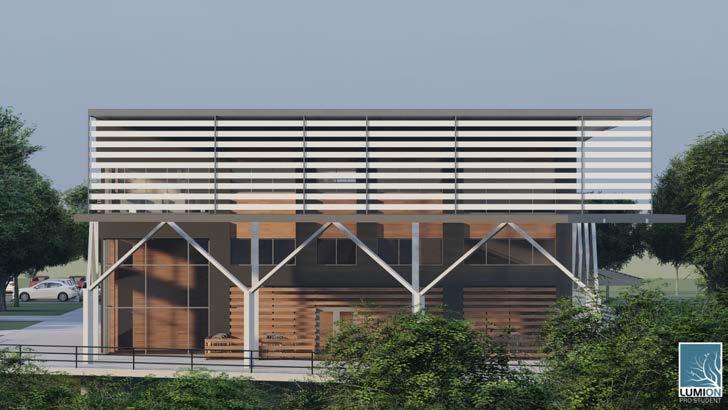
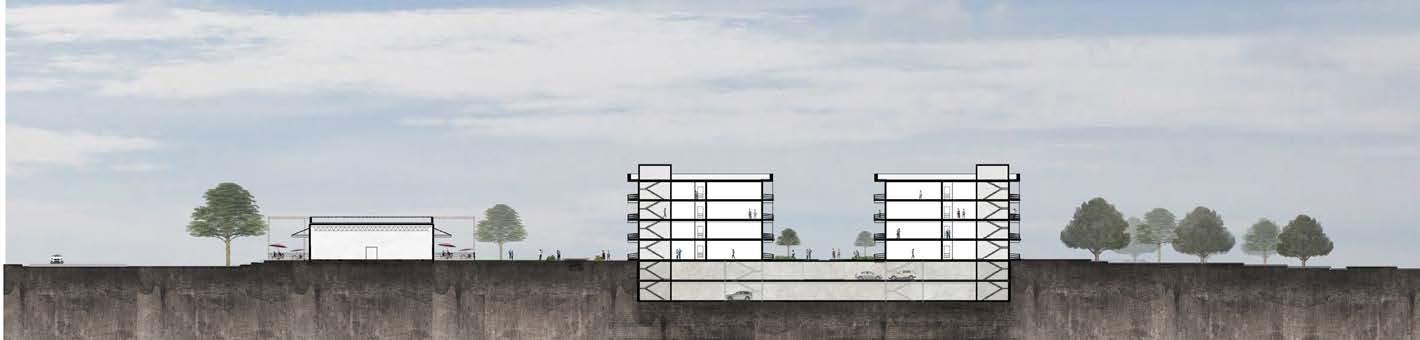
SECTION NORTH
ELEVATION
WETLAND
ELEVATION WEST ELEVATION WEST ELEVATION EAST ELEVATION SOUTH ELEVATION 15
TRANSVERSE SECTION COURTYARD /
SECTION transverse section
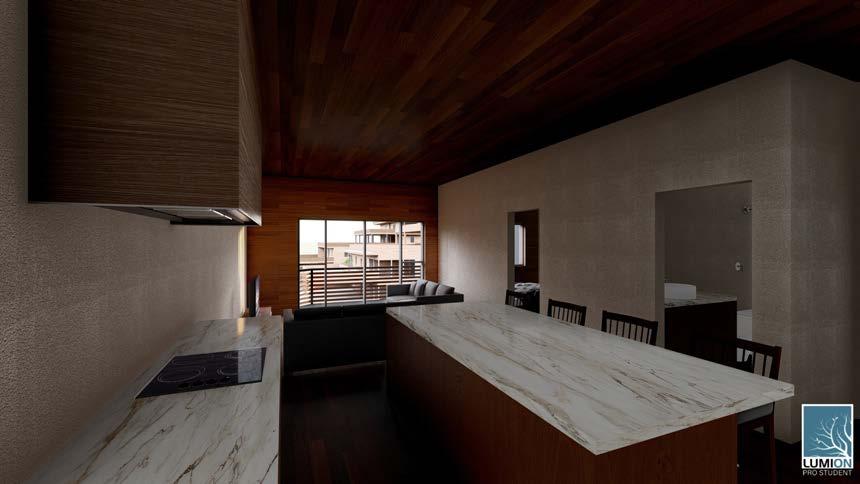
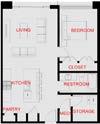
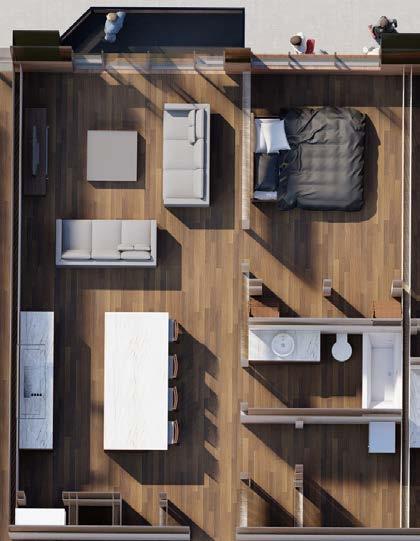
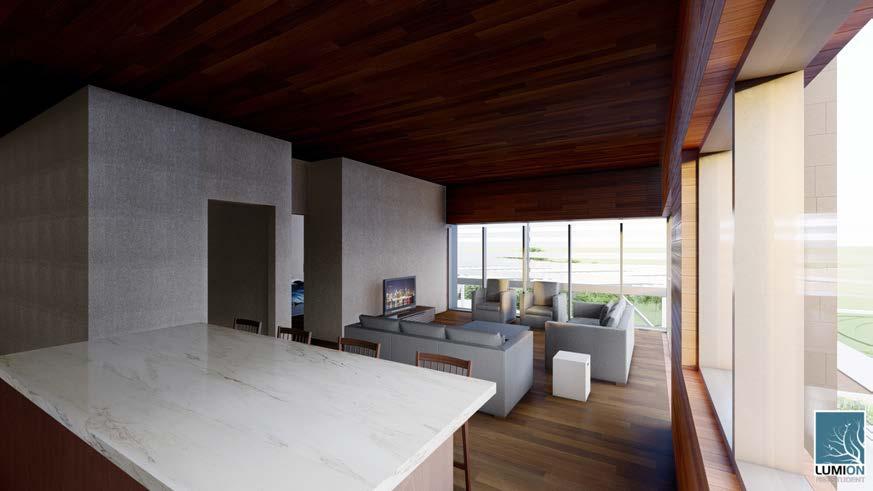
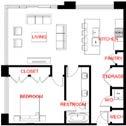
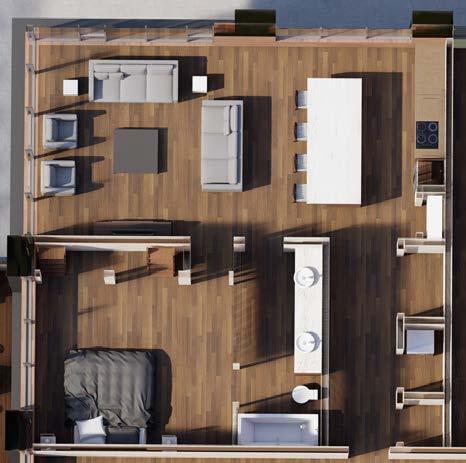
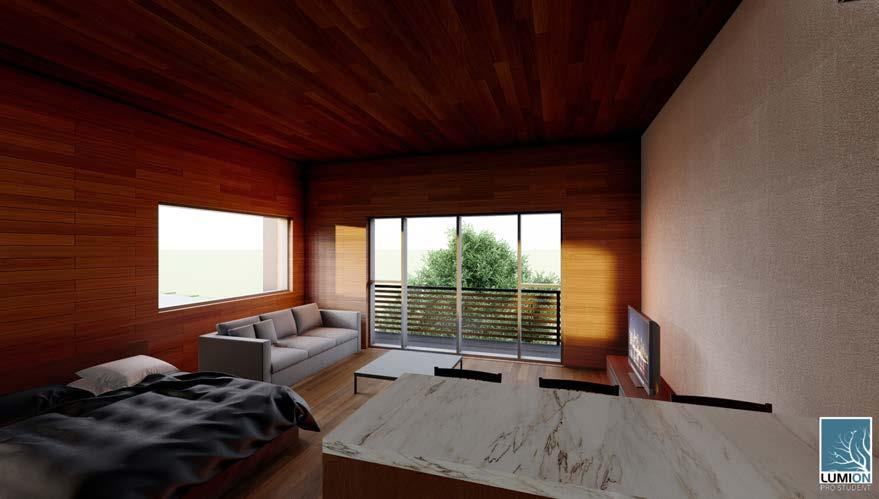
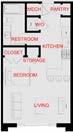
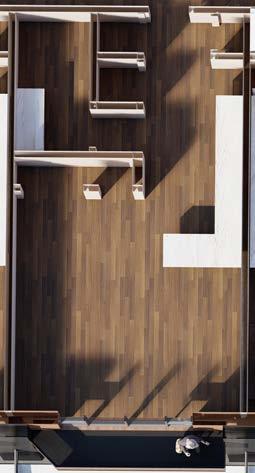
STANDARD ONE BEDROOM CORNER UNIT EFFICIENCY UNIT 3 UNIT
16
TYPES
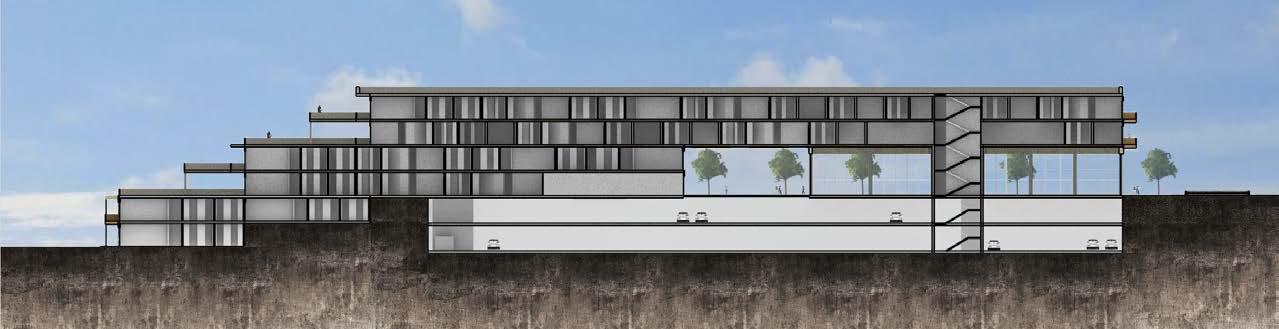
LONGITUDINAL SECTION
17
SOUTH ELEVATION
ONE BEDROOM
TWO BEDROOM
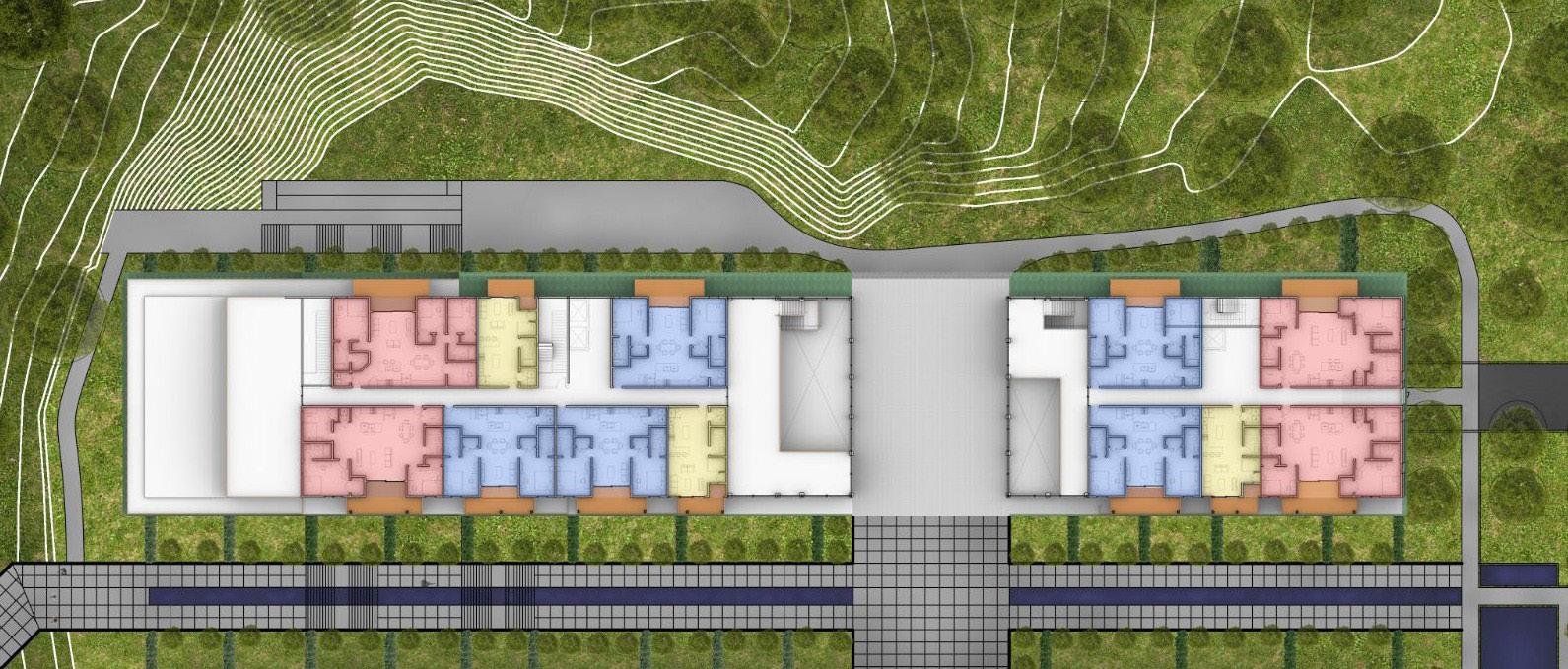
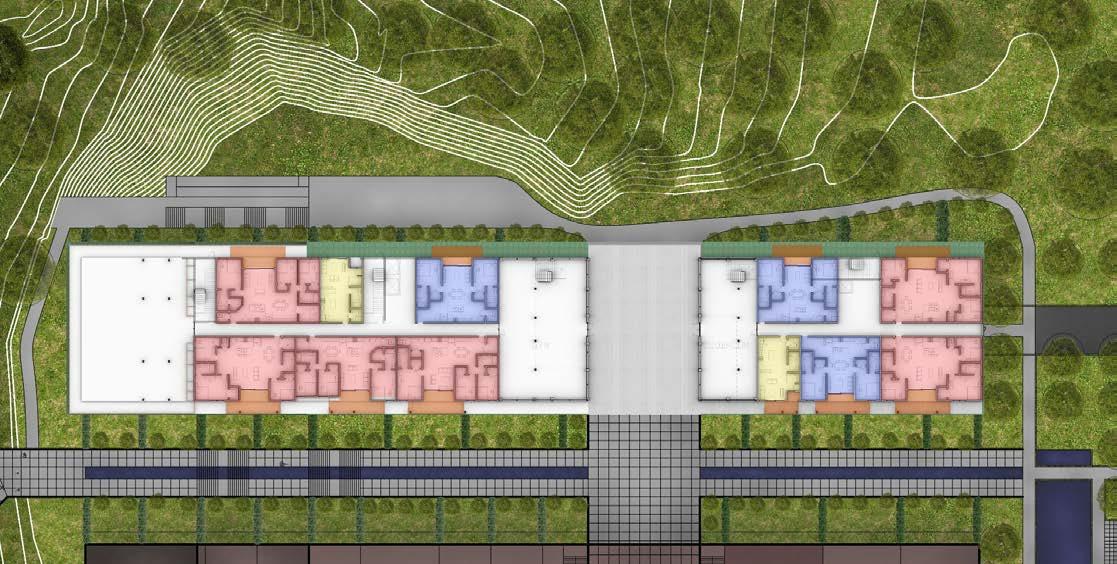
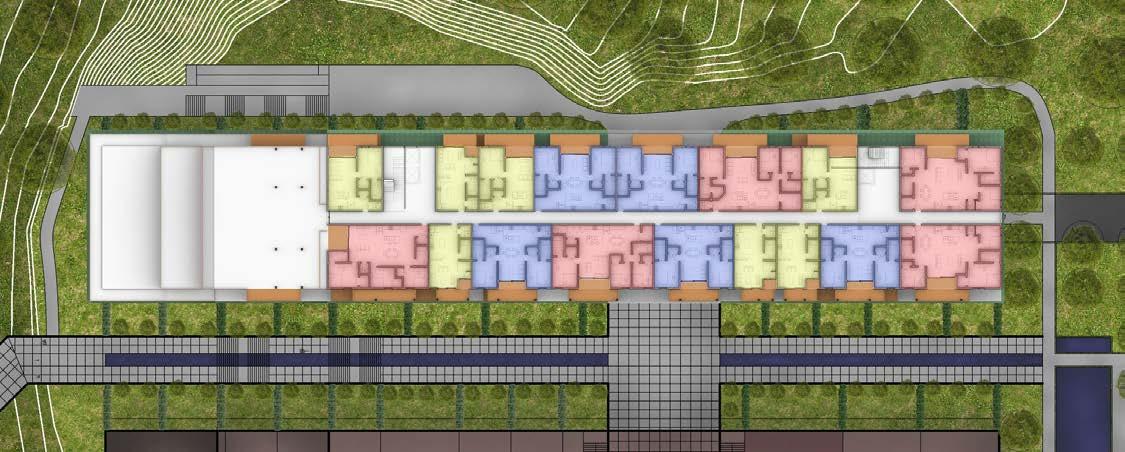
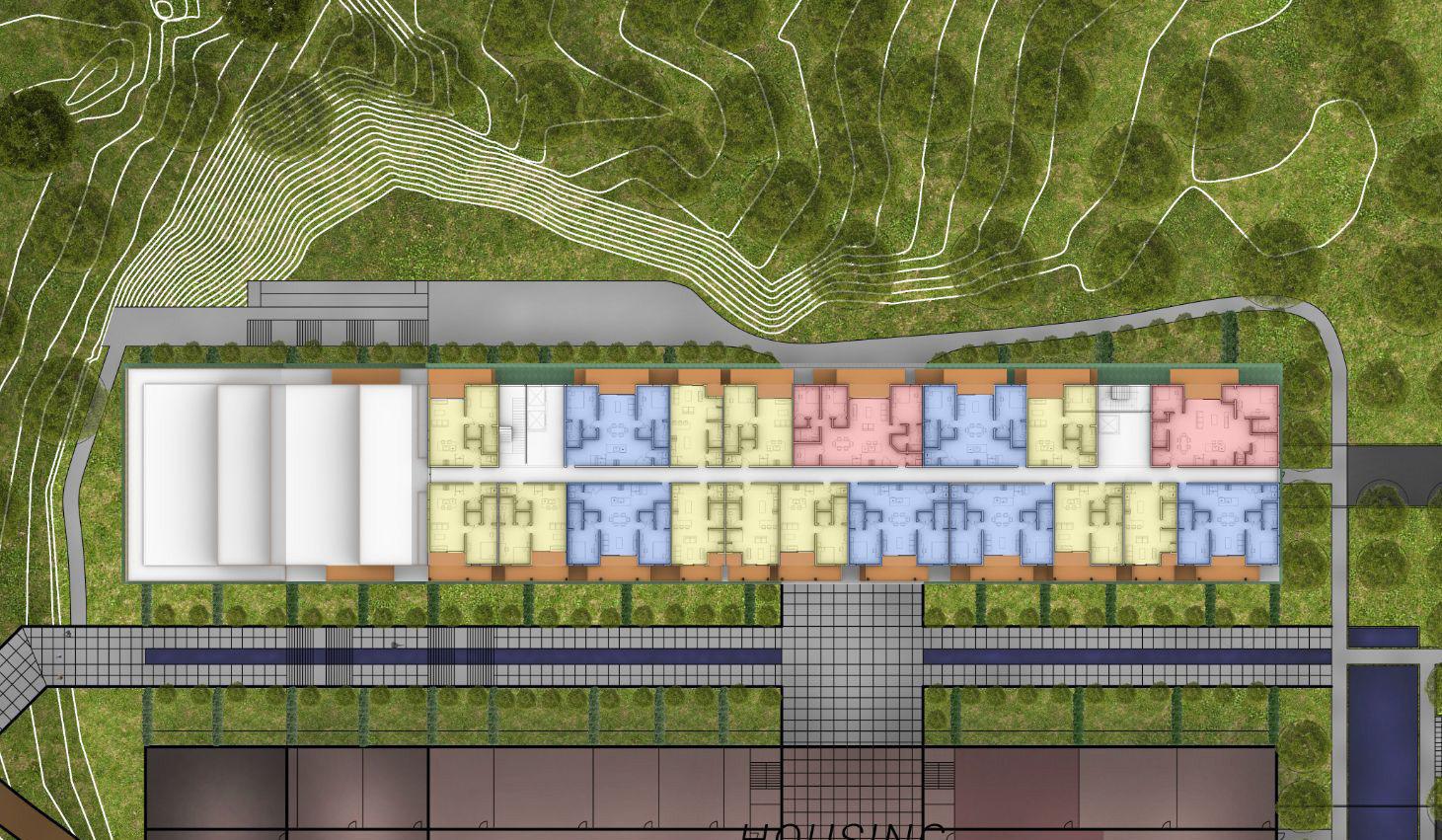
THREE BEDROOM
THIRD FLOOR PLAN
FOURTH FLOOR PLAN
FIRST FLOOR PLAN
18
SECOND FLOOR PLAN
19
MIXED - USE BUILDING
MIXED USED BUILDING
Partners: Chantal Rivas & Megan Reynolds

Method: Structure, Construction, and Materiality


Condition: New


Merge Territory: Lubbock, Texas


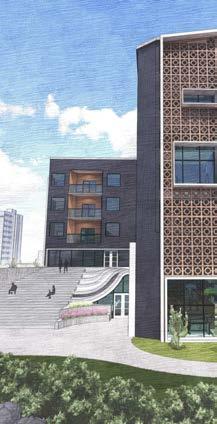
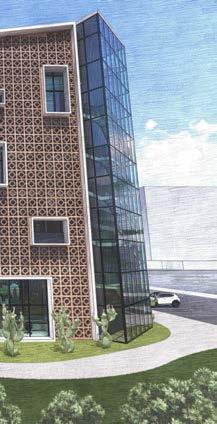
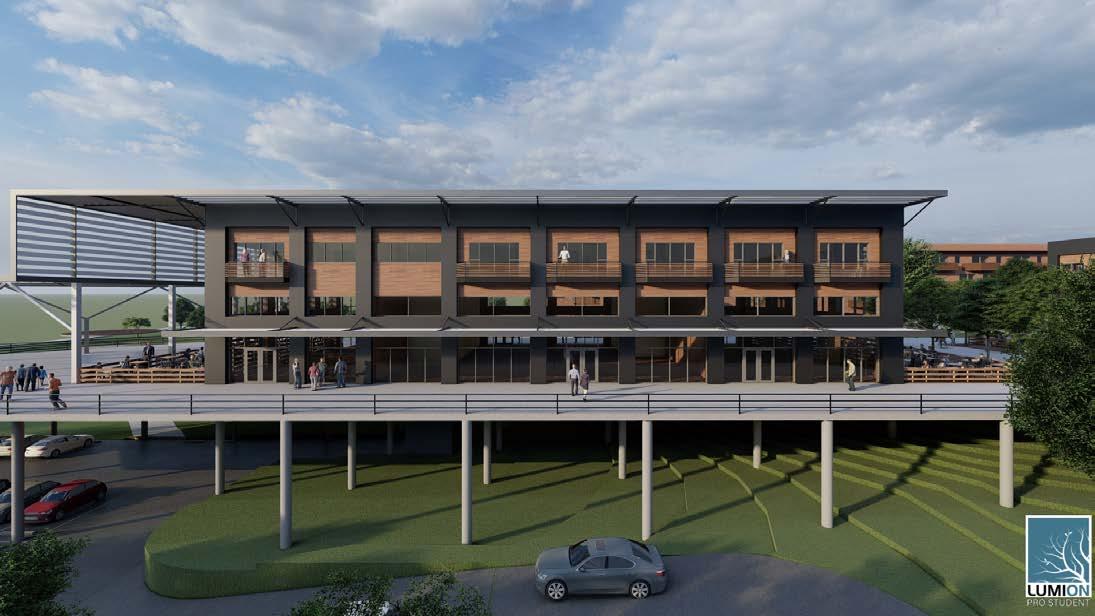
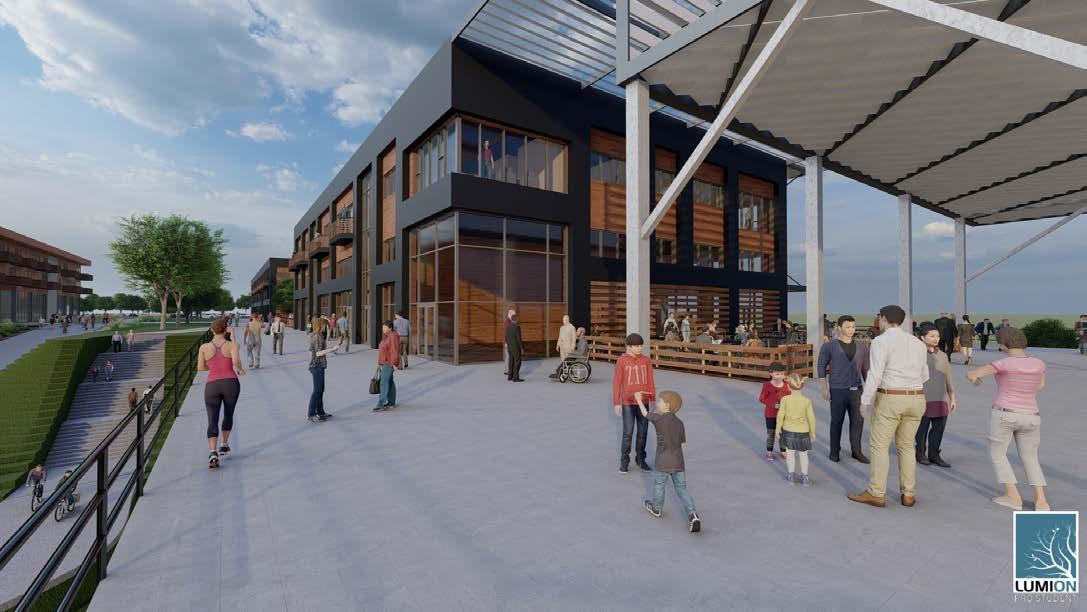
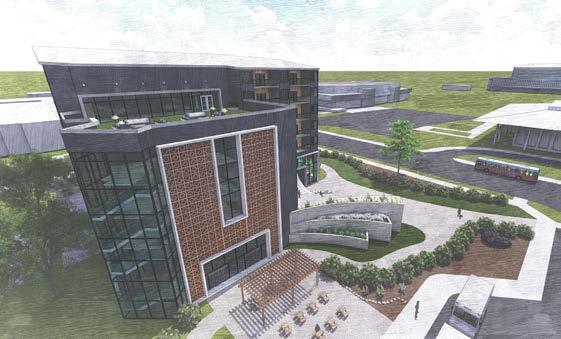
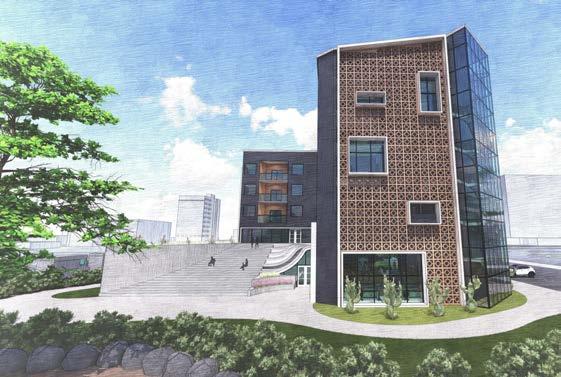
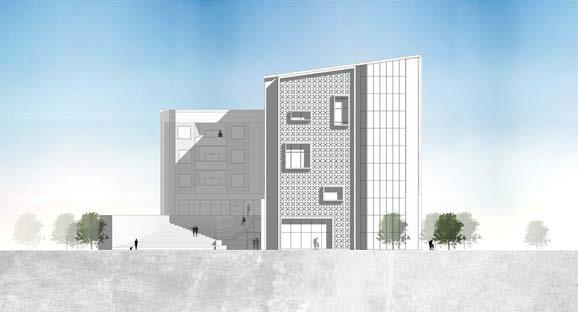
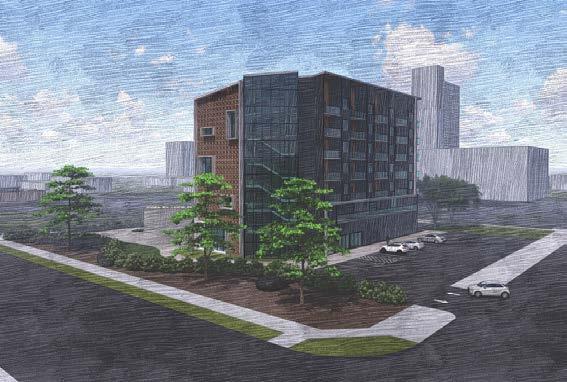
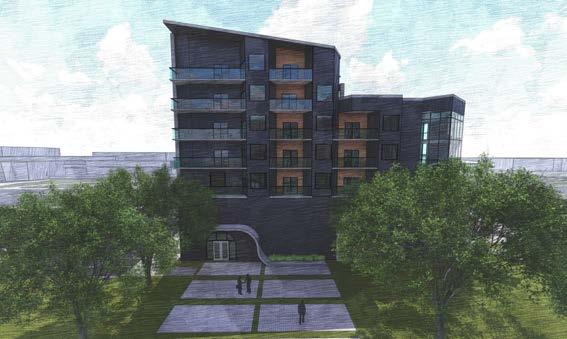
The project was focused on the development of downtown Lubbock Texas. With a rich history of downtown Lubbock, and the reasoning behind a major abandonment of the downtown area, we focused on developing a design that would enhance residents and the community to reconnect with the area. The object of the project was to create a multipurpose building to accommodate residents, as well as amenities to bring people to the site. Furthermore, we also focused on the main weather elements that affect the city of Lubbock, wind patterns, and flood areas ensuring our design would be successful.
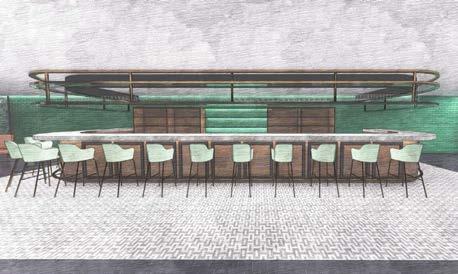
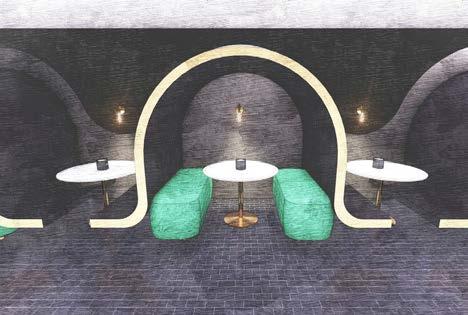
The design process began with the history of Lubbock, taking into consideration that Lubbock was the largest dry city in the United States, meaning businesses were unable to sell packaged liquor inside of the county line. To allude to this historical element, we wanted to incorporate a modern “speakeasy” into the design proposal. Following, the ground floor consist of amenities that people would need and want in a neighborhood, as well as connecting to the first Friday art trail that the city holds for the community.
US84 nevA u Q e nevA u Q e eunevA Q Bu d H o lly Av e nue duB d H y lo ly d ylloH Ave n BroadBroadwayStreet wayStreetBroadway saxeT A unev e Tex a eunevA s T a s A eunev Texa evA n u e L A v enue L eunevA L e unevA evA n K A v u eK e unevA GlennaGoodacreBoulevard MMacDavisLane acDavisLane MMainStreet ainStreet Avenue O A v e nue O O eunevA unevA e M M eunevA M eunevA stekcirC eunevA 15th15thStree Street 14thStreet14thStreet14thStree 13thStreet13th 13thStreet 110thStreet10th0thStreet Street10thStreet 9th9thStreet9thStreet9thStreet Street9thStreet 8thStreet8thStreet t7thStreet7thStreet7th 5th5thStreet Street evA n S unevA e S eunevA RA ve n N A eunevA e unevA G eunevA G eunevA Pecos Avenue R eunevA A v enuailway Buddy Holly Performing ArtsCenter c Cotton Court Hotel Lubbock Civic Center US84 nevA u Q e nevA u Q e eunevA Q u Q e Bu d H o lly Av e nue duB d H y o ly A ven u d ylloH Ave n BroadBroadwayStreet wayStreetBroadwayStreet saxeT A unev e Tex a eunevA s T a s A eunev Texas Aven evA n u e L A v enue L eunevA L enue L evA n K A v u eK GlennaGoodacreBoulevard MMacDavisLane acDavisLane MMainStreet ainStreet Avenue O A v e nue O unevA e M M eunevA stekcirC eunevA 15thStreet 14thStreet14thStreet14thStreet 13thStreet13thStreet 13thStreet 110thStreet10th0thStreet Street10thStreet 9th9thStreet9thStreet9thStreet Street9thStreet 8thStreet8thStreet t7thStreet7thStreet7thStre 5th5thStreet Street 5thStreet evA n S unevA e S eunevA RA ve n N eunevA G eunevA G eunevA nevA u e F Pecos Avenue R eunevA A v enu e R A v e nue AtandSfRailway Buddy Holly Performing ArtsCenter c Cotton Court Hotel Lubbock Civic Center solar 04 SITE PLAN SITE ANALYSIS 20
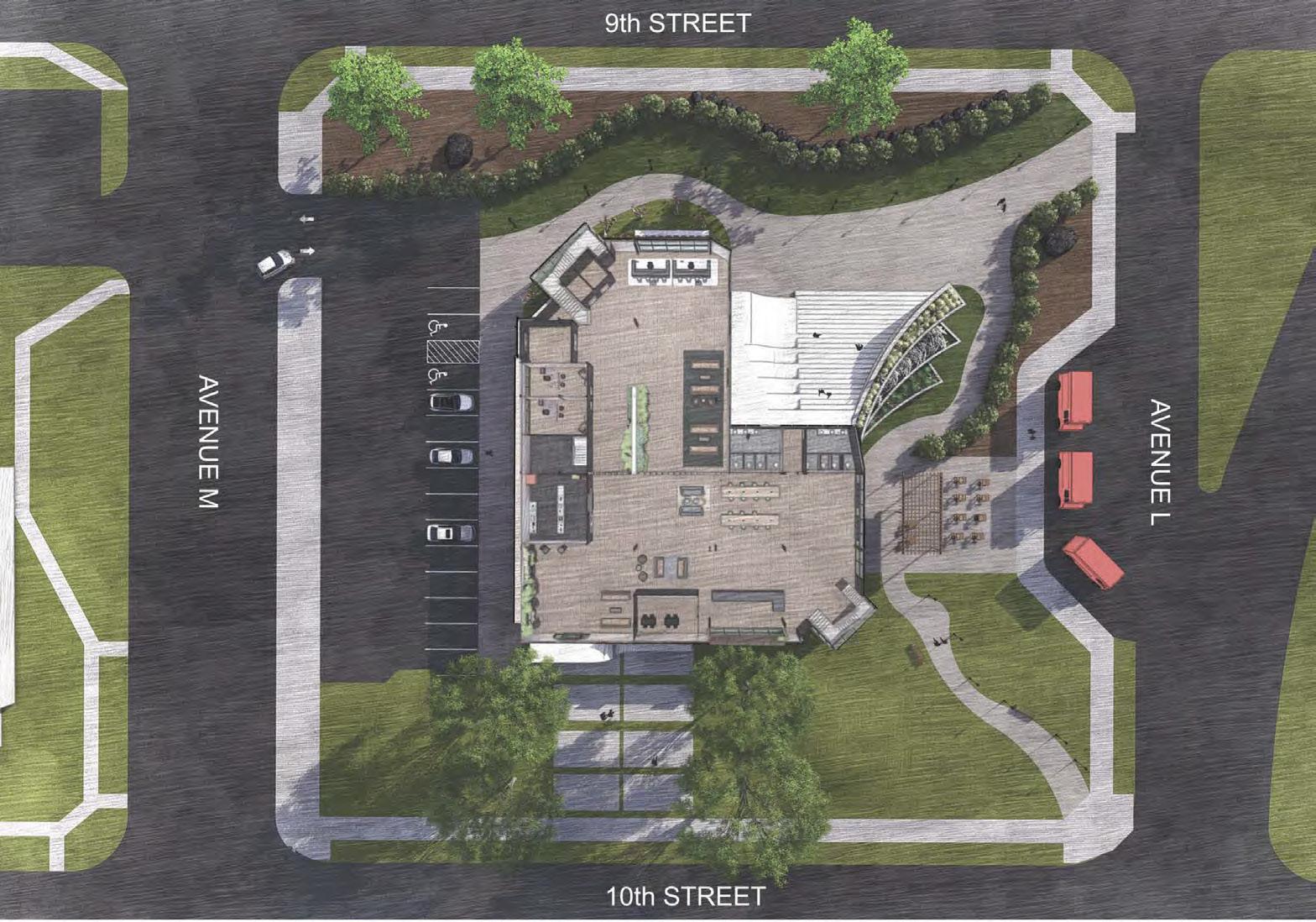
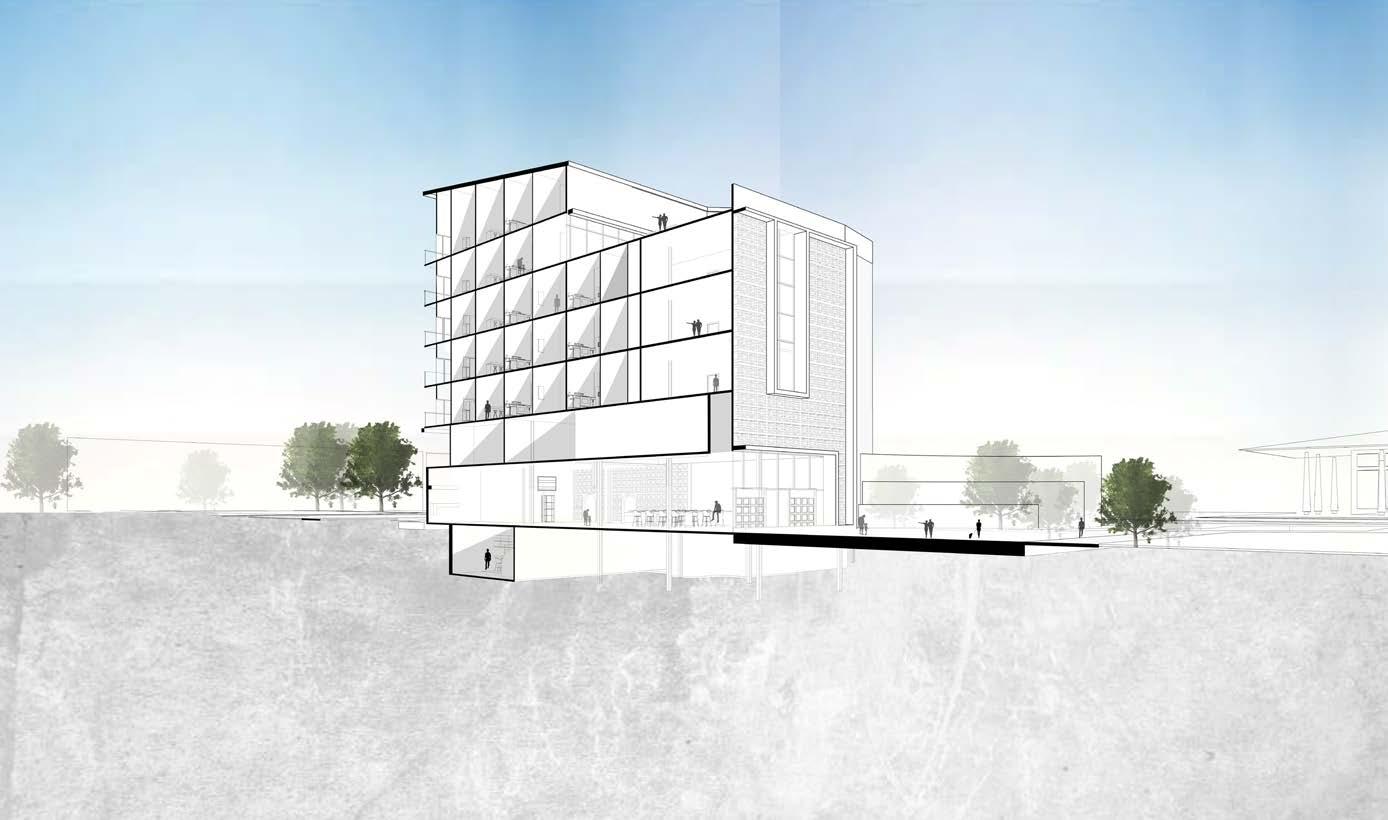
PERSPECTIVE SECTION
FIRST FLOOR 21
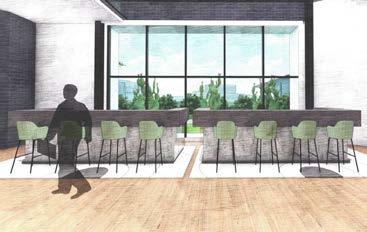
RENDERED



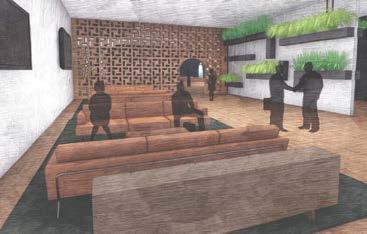
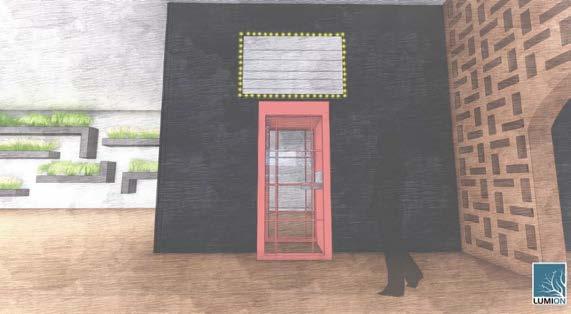

basement plan scale 1/16” = 1’-0” UP 115’ 132’ basment floor plan A B 1 2 3 4 5 6 C D A first floor scale 1/16” = 1’-0” UP UP DN 115’ 20‘ 57’ 70’ 132’ 25’ 25’ 12’ first floor plan A B 1 2 3 4 5 6 C D E reception speakeasy entrance FLOOR PLANS 22

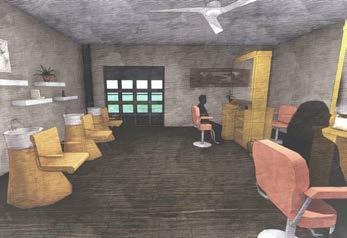

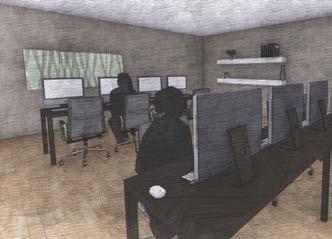
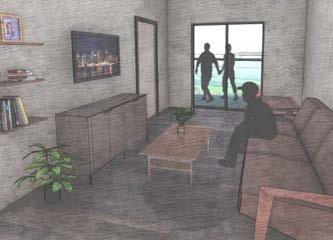
second floor plan scale 1/16” = 1’-0” UP DN plan spaces 115’ 13’ 25’ 20‘ 57’ 56’ 14’ 70’ 132’ 126’ 6’ 25’ 25’ 25’ 12’ A B 1 2 3 4 5 6 C D E salon entrance third floor plan scale 1/16” = 1’-0” UP DN 115’ 115’ 90’ 25’ 31’ 8’ 31’ 45’ 132’ 90’ 10’ 32’ plan A B 1 2 3 4 5 6 C D E computer lab livng area 23
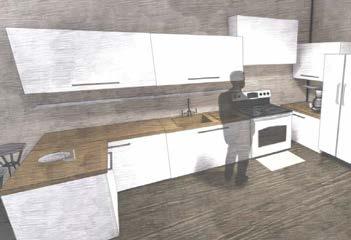
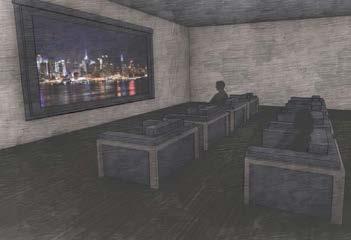
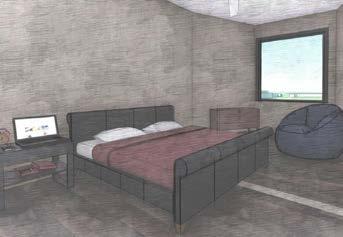
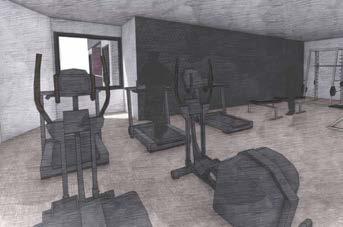
fourth floor plan scale 1/16” = 1’-0” UP DN 115’ 115’ 90’ 25’ 31’ 8’ 31’ 45’ 132’ 90’ 10’ 32’ A B 1 2 3 4 5 6 C D E kitchen media room fifth floor plan scale 1/16” = 1’-0” UP DN 115’ 115’ 90’ 25’ 31’ 8’ 31’ 45’ 132’ 90’ 10’ 32’ A B 1 2 3 4 5 6 C D E bedroom gym 24
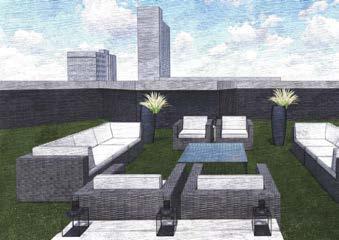
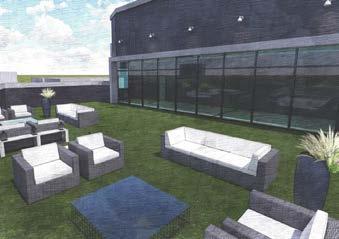
sixth floor plan scale 1/16” = 1’-0” UP 115’ 115’ 64’ 51’ 31’ 8’ 70’ 31’ 45’ 132’ 51’ 13’ 36’ 31’ plan A B 1 2 3 4 5 6 C D E courtyard courtyard seventh floor plan scale 1/16” = 1’-0” DN outdoor terrace seventh floor plan 64’ 31’ 8’ 70’ 31’ 132’ 100’ 32’ A B 1 2 3 4 5 6 C D E 25
Seventh Floor
Seventh Floor
Sixth Floor
Sixth Floor
Fifth Floor
Fifth Floor

Fourth Floor
Fourth Floor
Third Floor
Third Floor
Second Floor
Second Floor
Ground Floor
Ground Floor

Basement
Basement
CIRCULATION 26


Basement Ground Floor Second Floor Third Floor Fourth Floor Fifth Floor Seventh Floor Sixth Floor PROGRAM Basement Roof Garden Public Amenities Speakeasy Residential Units Ground Floor Second Floor Third Floor Fourth Floor Fifth Floor 27
HOUSE + ADU
HOUSE + ADU


Method: Structure, Construction, and Materiality










Condition: New




Merge Territory: Austin, Texas

Working in the city of Austin, the objective of the project is to dive into code studies. The project focused on IBC, McMansion Ordinances, Setbacks, Materiality, Critical Root Zone, Zoning, Impervious Cover, Floor Area Ratio, Height Restrictions, Design Restrictions, and Parking Requirements. Through the research we designed a house and an ADU in a 12,588-sf site. We had a client that gave us requirements / desire for the design.
The design first began with the house, and the placement. Allowing the house to be pushed toward the back to maximize privacy and placing the ADU near the front of the property. The ADU could not exceed 1,100 sf, following code, from finish to finish. The site was manipulated to adjust to the house, so the home would be designed on the same level. On the other hand, the ADU, took the opposite approach. I designed it to accommodate to the site. The first level is at the same FFE, while the second level continues a higher level.
10’SETBACK 5’ SETBACK 3” / 12” 5’SETBACK 25’SETBACK 5’SETBACK 3” / 12” 1” / 12” 1” / 12” 1” / 12” 3” / 12” 2” / 12” 2” / 12” 576' - 0" FFE 584' 0" FFE 576' - 0" FFE
05 SITE PLAN dale Road Springdale Road ManorRoad NortheastDrive NortheastDrive yolaLane RoggeLane Wal n ut Hi l ls Driv e WalnutHills Drive Walnut HillsDrive Betty Cook Drive ackCookDrive GloucesterLane Darling ton Lane CarolAnnDrive Woodbriar Preswyck Drive LakesideDrive EdgedaleDrive Chadw wseAm ood Drive Vioitha Drive VernonAvenue RexfordDrive ReicherDriveHycreekDrive BristolDrive Ad a lee Ave n Whelesseu Cove weeneyLaneHysideDriv e HylawnDrive oC r d e l L ane Auburn Drive Arnold Drive TampaCove EmoryLane BreezeWay Little Walnut Creek Greenbelt Academy Pecan Springs Elementary School LittleWalnut eCre k 28
HOUSE FLOOR PLANS 9 8 7 6 5 4 3 2 1 18 17 16 15 14 13 12 11 10 57 5'0 " 2 '5 " 20 '4 " 10' - 2" 3' - 10" 27' - 7" 4' - 3" 10' - 0" 15 - 00 15 - 0 1/4" 12 '1 " 23'0" 16' 11 " 16'10 1/ 32 " 5'0" 17'0" HOUSE LEVEL 1 SCALE 1/8” = 1’0” 9 8 7 6 5 4 3 2 1 18 17 16 15 14 13 12 11 10 17' - 1" 12 '2 " 10 '7 " 3' - 0" 122 " 7 - 2" 5' -3"31 '7 " HOUSE LEVEL 2 29
UP 14' - 4 1/2" 12' - 5 1/2" 7' - 10 1/2" 17'7" 18'3" 4'0" 26' - 2" 22'3" 11'6" 17'8" 13' 3'6" 17'8" 16' - 2" 30' - 3" 13' - 1"14 - 4 1/2" 12' - 5 1/2" 7' - 10 1/2" 17'7" 18'3" 4'0" 22'3" 11'6" 5'0" 17'8" 29' - 7" 9' - 7" 5' - 0" 3' - 2" 11' - 0" 13'0" 3'6" 17'8" 16' - 2" 30' - 3" 13' - 1"30 ADU FLOOR PLANS
VISITABILITY
The city of Austin requires a visitabilty code within new homes that are constructed. The requirements cover the dwelling units must be designed and constructed with a minimum of a bathroom on the first floor. The bathroom must include a minimum clear opening of 30”, 2x6 & 2x4 studs must be flush with stud edges of walls, the center line must be 34” from the interior first level, and light switches / environmental controls cannot exceed 48”.
VISITABLE ENTRANCE 3’ - 0” X 6’ 8” Door Min No step entry VISITABLE BATHROOM 3’ - 0” X 6’ 8” Door Min No step entry 32” CLEAR ROUTE VISITABLE ENTRANCE 3’ - 0” X 6’ 8” Door Min No step entry VISITABLE BATHROOM 3’ - 0” X 6’ 8” Door Min No step ent`ry 32” CLEAR ROUTE
VISITABILITY SCALE 1/8” = 1’0” UP 14' - 4 1/2" 12 - 5 1/2" 7' - 10 1/2" 17'7" 18'3" 4' 0" 26' - 2" 22'3" VISITABLE ENTRANCE 3’ - 0” X 6’ 8” Door Min No step entry VISITABLE BATHROOM 3’ - 0” X 6’ 8” Door Min No step entry 32” CLEAR ROUTE VISITABLE ENTRANCE 3’ - 0” X 6’ 8” Door Min No step entry VISITABLE BATHROOM 3’ - 0” X 6’ 8” Door Min No step ent`ry 32” CLEAR ROUTE
VISITABILITY SCALE 1/8” = 1’0” UP 14 - 4 1/2" 12' - 5 1/2" 7' - 10 1/2" 17'7" 18'3" 4'0" 26' - 2" 22'3"
VISITABILITY
VISITABILITY
31
VISITABILITY FLOOR PLANS
McMansion Ordinance
The McMansion Ordinance regulations were incorporated in the design to help minimize the impact of new construction, remodels, and / or additions to existing buildings. This is for the residential neighborhoods by Austin defining an acceptable building area for each lot within new development may occur.
This is achieved by the placement of setback planes. The side planes are at 40’ apart with a 15’ height that are at a 15 degree angle. The side and rear setbacks planes form a “tent” over the lot. The tent is a representation of the build able area for the home, including maximum height, and following the setback requirements.
SCALE 1/8” = 1’0” 40’ - 0” 40’ - 0” 40’ - 0” TENT 5 TENT
TENT
TENT 1 TENT
40’ - 0” 40’ - 0” 40’ - 0” 40’ - 0”
4
3
2
TENT 5 HIGHPOINT 590’
TENT 4 HIGHPOINT 588’
TENT 3 HIGHPOINT 588’
TENT 2 HIGHPOINT 588’
TENT 1 HIGHPOINT 584’
32 McMANSION TENTS
WEST ELEVATION
NORTH ELEVATION
SOUTH ELEVATION
SOUTH ELEVATION
WEST ELEVATION
SCALE 1/8” = 1’0”
EAST
ELEVATION
SCALE 1/8” = 1’0”
33
ELEVATION TENTS
McMANSION

WEST ELEVATION 34 WEST ELEVATION NORTH ELEVATION
ELEVATION EAST 35 EAST ELEVATION SOUTH ELEVATION
HOUSE + FARMING
HOUSE + FARMING
Method: Structure, Construction, and Materiality
Condition: New
Merge Territory: Idalou , Texas
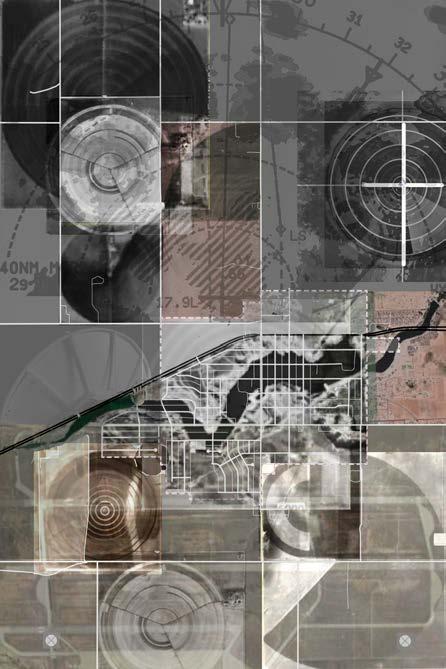
This project is a development from the HOUSE + ADU project. We began with code research in the city of Idalou, TX, and compared it to the codes of Austin. Since our new site is in east Texas, there is fewer code restrictions and more liberty for design. With this idea, we were challenged to pull our best architectural feature from our Austin home/ ADU and incorporate that idea into the Idalou home. I further explored the double volume height space in the living area and carried it across both projects.
The initial design process began with the study of a collage to pull the best elements from the site. Also, within the house, a farming focused room was added for personal interest. After visiting the site, the first aspect I came across were the crop circles and openness of the area. Following that, farming is typical within this area, and dedicated the space behind the garage for farming equipment and/or studies.
9TH STREET 2 / 12” 7 / 12” 5 / 12” 7 / 12” 5 / 12” SETBACK PROPERTY LINE
6 36 COLLAGE SITE PLAN
3100 Berrylawn Circle, Austin TX 78723
TOTAL - 12, 588.84 SF
5’
25’
3100 Berrylawn Circle, Austin TX 78723 TOTAL - 12, 588.84 SF
ZONING - SF - 3
SETBACKS - 10’ FROM BACK, 5’ FROM SIDES, & 25’ FROM FRONT
ZONING - SF - 3
10’ 5’ SETBACK 37
SETBACKS - 10’ FROM BACK, 5’ FROM SIDES, & 25’ FROM FRONT
IMPERVIOUS COVER - 45% OF TOTAL SITE5,665 SF
FAR - 40% OF THE SQFT
IMPERVIOUS COVER - 45% OF TOTAL SITE5,665 SF
HEIGHT RESTRICTIONS - 35’ HEIGHT
DESIGN RESTRICTIONS -
FAR - 40% OF THE SQFT
HEIGHT RESTRICTIONS - 35’ HEIGHT
PARKING REQUIREMENTS - 1 SPOT PER HOUSE & ADU
127.5’
DESIGN RESTRICTIONS -
PARKING REQUIREMENTS - 1 SPOT PER HOUSE & ADU
VISITABILTY - CLEAR ENTRY OF 30” SQUARE TO RESTROOM & PUBLIC SPACES
VISITABILTY - CLEAR ENTRY OF 30” SQUARE TO RESTROOM & PUBLIC SPACES
‘McMANSION’ ORDINANCE - ONLY REQUIRED IN AUSTIN. 40’ APART WITH 35’ HEIGHT @ 45 ANGLE
‘McMANSION’ ORDINANCE - ONLY REQUIRED IN AUSTIN. 40’ APART WITH 35’ HEIGHT @ 45 ANGLE
TREE PROTECTION - CRZ - AT 20’ CAN BUILD IN A MAX PF 50% OF THE CIRCLE, AT 10’ CAN ONLY GO 4” DEEP, & NOTHING AT 5’
TREE PROTECTION - CRZ - AT 20’ CAN BUILD IN A MAX PF 50% OF THE CIRCLE, AT 10’ CAN ONLY GO 4” DEEP, & NOTHING AT 5’
2002 16TH STREET TOTAL - 6,375 SF
ZONING - R-1 SINGLE FAMILY
2002 16TH STREET TOTAL - 6,375 SF
ZONING - R-1 SINGLE FAMILY
SETBACKS - 15’ FROM BACK, 5’ FROM SIDES, & 25’ FROM FRONT
IMPERVIOUS COVER - 45% OF TOTAL SITE
SETBACKS - 15’ FROM BACK, 5’ FROM SIDES, & 25’ FROM FRONT
FAR - NONE
HEIGHT RESTRICTIONS - 32’ HEIGHT
IMPERVIOUS COVER - 45% OF TOTAL SITE
DESIGN RESTRICTIONS - NONE
FAR - NONE
HEIGHT RESTRICTIONS - 32’ HEIGHT
PARKING REQUIREMENTS - 1 SPOT PER HOUSE
DESIGN RESTRICTIONS - NONE
PARKING REQUIREMENTS - 1 SPOT PER HOUSE
VISITABILTY - CLEAR ENTRY OF 30” SQUARE TO RESTROOM & PUBLIC SPACES
VISITABILTY - CLEAR ENTRY OF 30” SQUARE TO RESTROOM & PUBLIC SPACES
‘McMANSION’ ORDINANCE - ONLY REQUIRED IN AUSTIN.
TREE PROTECTION - NONE
‘McMANSION’ ORDINANCE - ONLY REQUIRED IN AUSTIN.
5’ MASSING DIAGRAMS CODE
50’ 127.5’
10’ SETBACK 5’ SETBACK 5’ SETBACK 25’ SETBACK 5’ SETBACK 2002 16TH STREET TOTAL - 6,375 SF 2002 16TH STREET TOTAL - 6,375 SF
50’
SETBACK
SETBACK
SETBACK
TREE PROTECTION - NONE SETBACK
P BEDROOM P CLOSET P BATHROOM PATIO KITCHEN MUDROOM POWDER G BEDROOM G BATHROOM G CLOSET ROOM STRUCTURE SAFE ROOM GARAGE LIVING DINING ENTRY SLIDER SLIDER SLIDER SLIDER CORRIDOR REF DW HOUSE LEVEL 1 38 FLOOR PLAN





SECTION 01 SECTION 02 SECTION 01 SECTION 02 SCALE 3/16” = 1’0” 39 02 SECTION 01 SECTION







8’ 15’ -8" -5" -7" 8’ 15’ - 8 - 5" WOOD SIDING STANDING SEAM METAL WOOD SIDING WOOD SIDING STONE STANDING SEAM METAL NORTH ELEVATION WEST ELEVATION 8’ 15’ 24’ - 8" - 5 - 7 8’ 15’ 24’ -8" -5" -7" WOOD SIDING STANDING SEAM METAL WOOD SIDING WOOD SIDING STONE STANDING SEAM METAL NORTH ELEVATION WEST ELEVATION 40 NORTH ELEVATION WEST ELEVATION










8’ - 8" 8’ -8" WOOD SIDING STANDING SEAM METAL WOOD SIDING WOOD SIDING SOUTH ELEVATION
ELEVATION 8’ 15’ 24’ -8" -5" -7" 8’ 16’ 25’ - 8" - 0" - 9" WOOD SIDING STONE STANDING SEAM METAL STANDING SEAM METAL WOOD SIDING WOOD SIDING STONE SOUTH ELEVATION
ELEVATION 41 SOUTH ELEVATION EAST ELEVATION
EAST
EAST