Meghna Dixit, Sana Karkhanis, Vaishnavi Katukam, Kate Yang
Sports Editors:
Leah Desai, Ananda Singh, Ethan Yang
Copy Editors:
Emmy Harimoto, Lora Lee, Ellie Wang
Staff Writers:
Shreejay Arja, Fiona Chen, Maahi Dev, Rafaella Fantine Vargas Machuca Vento, Nylah Gehani, Suryansh Gupta, Emmy Harimoto, Grishma Jain, Aletheia Ju, Rachel Kim, Anish Khinvasara, Lora Lee, Leo Lee, Juju Ling, Owen Liu, Lucas Liu, Emma Ma, Srinikaa Naveenraj, Sania Nadkarni, Alexandra Perrault, Alexandra Qiu, Divina Pandita-Raina, Ritik Shenoy, Raj Thapliyal, Kai Tsuchida, Leo Wei, Elizabeth Yang, Olivia Zhang Advisers:
Vennessa Nava, Julia Satterthwaite, MJE
Mission Statement:
El Estoque will accurately inform our community through well-researched, unbiased and in-depth accounts of stories of the student body and staff, local news and developments and taboo topics prevalent in and near the MVHS realm. By investigating a variety of voices and credible perspectives, we hope to foster active discussion, effect positive change and spread awareness of timely and relevant content. As a trustworthy, consistent and reliable source of information, we strive to be accountable, adaptable and ready to correct and address our mistakes. Constantly striving for improvement, we will uphold integrity and ethics to be respectful and empathetic to one another, our sources and our readers. We will exercise our press freedoms guaranteed by the First Amendment and California Ed Code 48907 while maintaining a community of reporters with a strong passion for our work and journalism as a whole.
COVER | BENJAMIN ZHANG
LETTER FROM THE
EDITORS
PHOTO | MELODY LIN
It’s the new year — a time for new hopes, resolutions and looking ahead at what the year might hold. As journalists, our skill is covering the present, not predicting the future. But if this month’s issue is a sign of anything, it’s that the future is bright.
In our Features package, we reconnect with successful alumni. Their diverse stories and unique pathways to fulfillment show us that no matter where this year takes us — from college, friendships and unforgettable adventures — coming from this campus, we’ll make it.
Also coming soon is Valentine’s Day! In our Opinion section, we explore the way love flourishes in MVHS’ halls. This is the very love that matters most right now: as we discover in the News section, our community remains a last stronghold against a nationwide attack on medical freedom. Even as this political situation feels dire, our community comes together to support one another.
In the face of such broad conflicts, it can be easy to feel powerless. Our Arts & Entertainment stories remind us that through political participation on social media, we can do our parts as citizens. And we’re already on our way to embodying this — our Sports section shows us how MVHS teams are supporting each other through losses and wins alike.
Our resolution for this year is to continue spreading that love — the love that lets us defy hospital funding cuts, support our sports teams and, no matter what cards we’re dealt, unite as a community.
Liz Liu
Jillian Ju
GRAPHIC | ELLIE WANG AND ASHA WOJCIECHOWSKI
PHOTO COURTESY OF ALLIE RUMMELHOFF
PHOTO
CHOPPING SHOP OFF
Woodshop will be officially phased out of the MVHS course offerings starting the 2026-27 school year
BY SIH YU (MELODY) LIN
SStarting the upcoming 202627 school year, MVHS will no longer be offering Introduction to Woodworking and Advanced Woodworking due to scheduled construction for the F buildings on the MVHS campus. Since MVHS is currently the only school in FUHSD that offers Woodshop courses, the district will not offer any woodworking classes after this shift. The change was discussed among the various FUHSD and MVHS administrators in charge of the modernization project, including MVHS Principal Ben Clausnitzer. While the construction for the Woodshop buildings was initially scheduled before the re-construction of the Art room in June 2022 and the Choir room in June 2023, it was ultimately pushed back to align with the retirement of the current Woodshop and Engineering teacher, Ted Shinta.
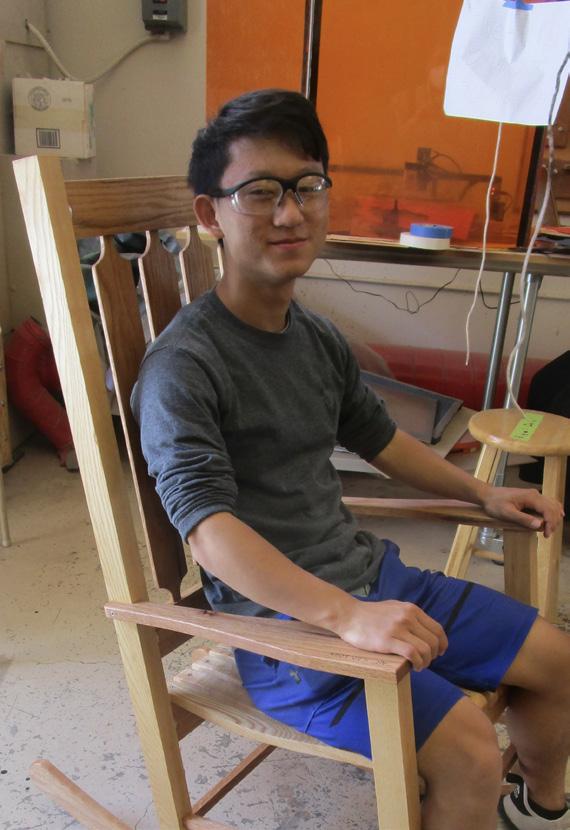
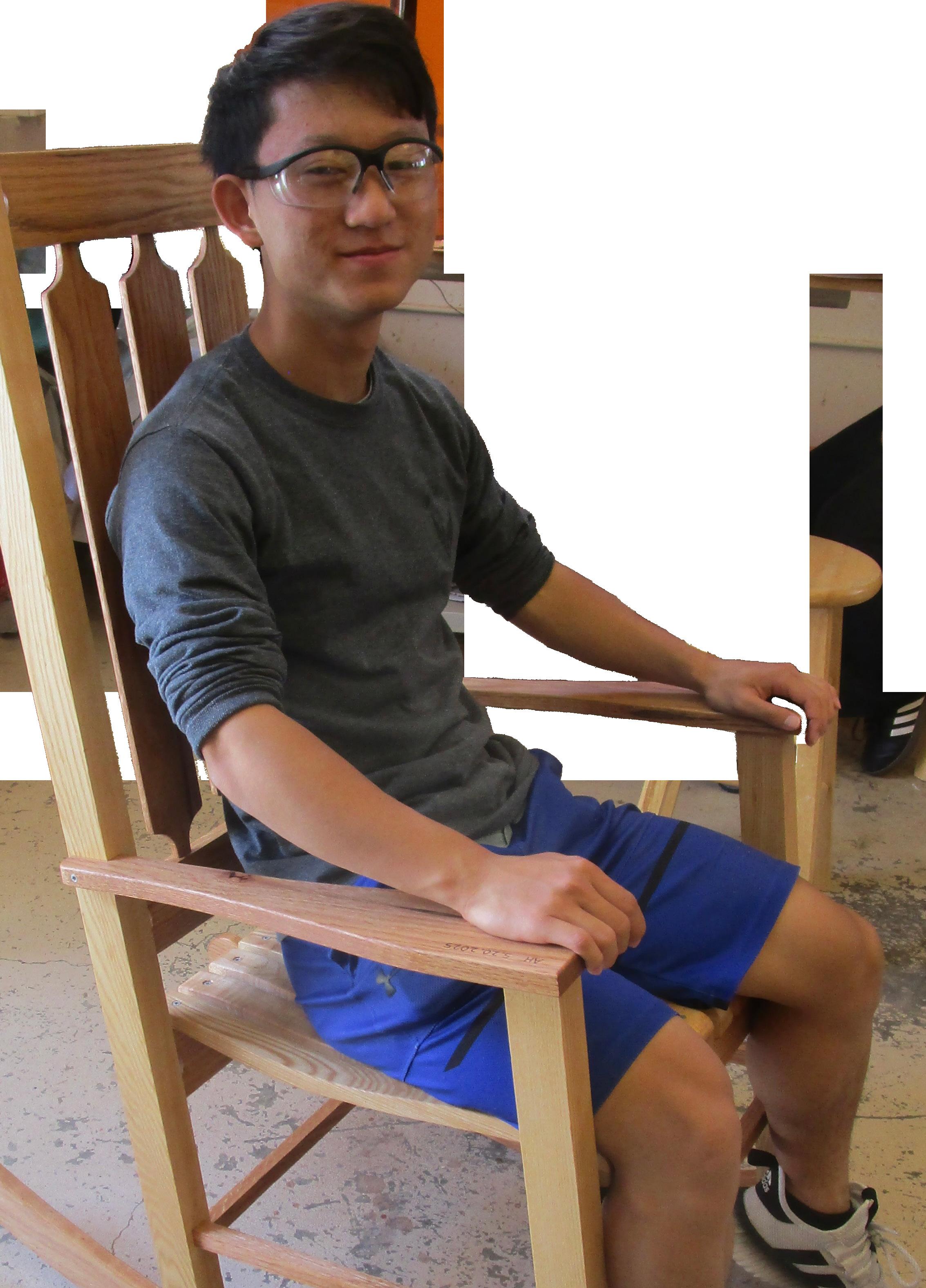
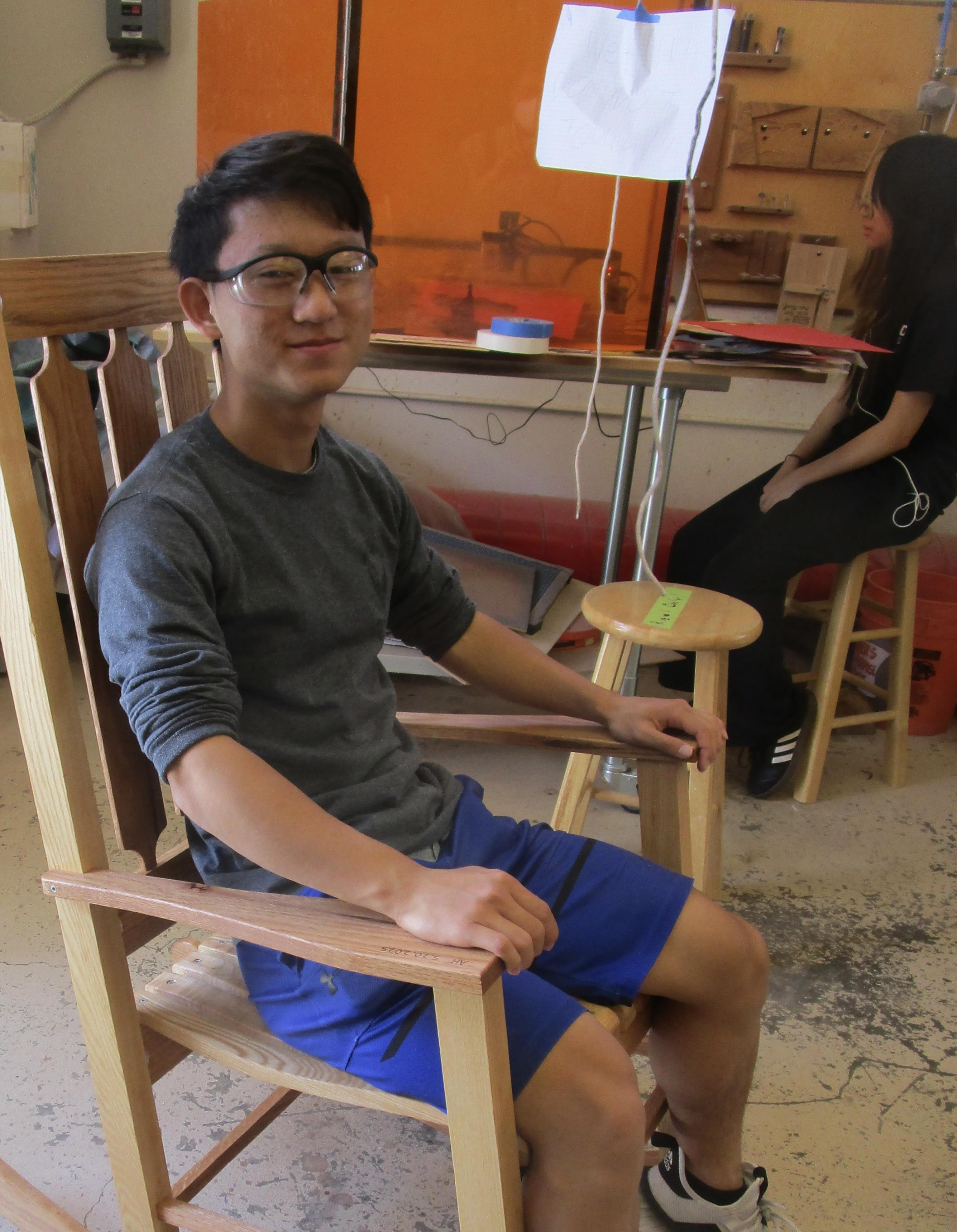
MVHS alum ‘25 Aaron Hung sits on the rocking chair that he has worked on for over two and a half years in Woodshop.
The modernization of the MVHS campus will primarily focus on the F building for the upcoming school year, starting in June shortly after the Class of 2026’s graduation. According to Clausnitzer, the construction will begin in a similar style to the remodeling of the art, choir and instrumental music rooms. The spaces for Drama and Woodshop will be joined together to provide the Stagecraft Tech class — a class that teaches students the basics of stage management, backstage operations and prop construction — a wider space for instructional activity, and students will continue to have access to various Woodworking tools in the rooms once construction is completed.
“When I spent my first year here at MVHS in 1999, all the schools in FUHSD had Woodshop, but some schools had gradually phased the classes out during the 1980s when they had massive cutbacks on electives due to revenue shortfalls,” Shinta said. “But they never got rid of the one at MVHS. There was always a push to increase these opportunities for more hands-on types of classes, and although there were some conversations about getting rid of the woodshop during the series of renovations and construction during 2001, they kept Woodshop going in a portable building in the staff parking lot all those years.”
MVHS has offered two main Woodshop courses over the past few years: Introduction to Woodworking and Advanced Woodworking, both of which aligned with the Career Technical Education (CTE) pathway — a curriculum that aims to introduce students to hands-on problem solving and prepare students with technical skills in various careers such as Engineering, Hospitality and Tourism.
currently takes Introduction to Woodworking, says that the class provides him a chance to learn the technical aspects of Woodworking tools. He also believes that the class itself is structured relatively freely where students are able to make
projects they want, with Kuo himself creating various
pens during his free time in the class.
Although Kuo has previously taken Woodshop classes in middle school and summer camps, he still feels that the Woodshop class at MVHS offers him a valuable experience. From carving wooden fish and pens to cutting boards, Kuo views
“Freshman Nathan Kuo, who
the class as a welcoming space to try out different projects while learning skills that can apply to students in academic fields.
“Apart from helping students learn to follow instructions, I think it’s also taught me the value of doing something to the best of your ability, where you really want to do or make something for yourself, not for other people,” Kuo said. “Woodshop is also a very social class because of all the time you have to do the projects, so while you make those projects, you create your own memories as well.”
SCAN FOR MORE COVERAGE
Similar to Kuo, Shinta views the Woodshop class as a chance for students to create a product of their own. He believes that Woodshop serves as an important opportunity for students to explore art, while also as a chance for students to dedicate time and energy to building technical skills while producing something that makes them proud of their work.
“ WOODSHOP HAS TAUGHT ME THE VALUE OF DOING SOMETHING TO THE BEST OF YOUR ABILITY.
“The value of something like Woodshop is hard to quantify, because it’s not like we have a program to go into carpentry since it’s an elective for us,” Shinta said. “But I do think that without classes like these, students will have no practical experience of constructing or designing, which is going to leave a hole in their education, and as a result, if they want to go in that direction, they’ll have to pick it up some other way.”
NATHAN KUO FRESHMAN
As MVHS phases out Woodshop for the upcoming school year, Stagecraft Tech is set to become an option for students who might still be interested in exploring the field of woodworking. Although the construction is planned to last until the second semester of the 2026-27 school year, Clausnitzer hopes that students will take advantage of the opportunity to engage in the different applications of Woodshop through theater.
“Of course there are always courses that students take for graduation or for A-G credit for colleges,” Clausnitzer said. “However, I do also appreciate when we have courses that students are simply taking for the fun and joy of learning. It’s part of the philosophy we want in terms of a comprehensive high school experience: it doesn’t always have to be about resume building — or for graduation or college — but just for the experience. Woodshop might fall into that kind of category, because someone might take the class, find their passion for it, and it could end up helping them in the future, and I want there to be room for students to do that here at MVHS.”
TAKING THE PULSE OF MVHS
Survey data shows improvements in MVHS student mental health and a shift in wellness culture BY YIXUAN (JOYCE) LI AND RITIK SHENOY
Over the past three years, MVHS has reported measurable improvement in student mental health and wellness, with trends reflected in both districtwide and school-level survey data. These advancements can be seen through two primary surveys that FUHSD administers to measure student wellbeing: the California Healthy Kids Survey and MVHS’ End-ofYear Student Survey.
every single year, using it both as a comparison tool and as part of the district’s accountability process, with the off-year focusing more on mental health related questions.
85% of MVHS students
“A lot of districts use the CHKS because you can look at trends across the state,” Gross said. “If you’re seeing certain things in your district, you can look at districts around you and get a sense of how your kids are doing in comparison to other places.”
believe the two annual wellness surveys are somewhat or mostly representatative of MVHS
The CHKS is a statewide, anonymous, modular survey that collects data on key indicators, including school climate and safety, connectedness to adults, engagement, substance use and mental health. According to the California Department of Education, more than 1.3 million students participated statewide from 2021 to 2023, with nearly half of California districts administering the survey annually.
*According to a survey of 39 people
As a district that is currently part of the Tobacco-Use Prevention Education program, FUHSD is required to administer the CHKS at least every other year. According to Associate Superintendent Trudy Gross, FUHSD chooses to administer the CHKS
According to data from the End-of-Year Survey, which collects campusspecific data on how students feel about their experience at school, the percentage of students who said they feel comfortable asking a counselor for help “often” or “always” rose from 28% in 2018-19 to 58% in 202425. Studentreported comfort in seeking help from teachers increased from 56% to 71% over the same period, while willingness to approach school-based therapists rose from 31% to 43%. MVHS Principal Ben Clausnitzer emphasizes that the significance of the data lies not just in higher percentages, but in what they suggest about student attitudes toward support, signifying a change in culture where students feel more
“That’s just incredible movement,” Clausnitzer said. “In terms of students feeling more comfortable approaching our school counselors for help — that maybe speaks a little more to things like stigma. This data actually spans my entire time as principal, so it’s kind of fun to see what’s happened over time.”
According to Clausnitzer and Gross, the analysis of these surveys are action-oriented. Results are reviewed by the District Wellness Council, a group of students, staff, parents and administrators. Clausnitzer added that the data also feeds directly into MVHS’ Western Association of Schools and Colleges six-year school goals, which include a specific focus on student wellness.
SCAN FOR MORE COVERAGE
One way that MVHS has been working to support student mental health is through wellness spaces. MVHS has been operating a wellness room for the past three years, managed by Wellness Space Support Specialist Doreen Bonde. According to data collected at the MVHS wellness room, from a scale of one to 10, on average, students selfreport a 2-point increase in mood when leaving compared to when they arrive.
“Some of our classrooms have what we call calming corners,” Clausnitzer said. “They work with our wellness room to get some materials such as soft seating, mood meters and fidgets. The idea of a calming corner would be like, ‘I’m feeling a little dysregulated, but not so much
that I need to leave the classroom and go to the wellness room. But instead, I can go to that corner, and I’ll be good.’”
To further improve mental health support on campus, MVHS employs full-time school-based therapist Akiko Chung, who is supplemented by interns and part-time therapists such as Kristi Iwami and Leila Lurie. Clausnitzer emphasizes that even while budgets can be tight sometimes, the school keeps mental health access as a priority in terms of resource allocation.
Aside from just wellness areas around campus, MVHS teachers have also been incorporating wellness practices into their class routines. Physiology and biology teacher Lora Lerner embeds wellness into her curriculum and dedicates Mondays to wellness activities where students eventually teach each other wellness practices such as yoga, art or journaling.
“I think it’s super important to be explicit about wellness and to talk about it as an important thing,” Lerner said. “In physiology, a lot of the curriculum itself is built around that. We do have a pretty strong health component in biology as well, where we get into why it actually matters that we do all these things that we call wellness.”
Despite these
improvements, Lerner, Chung and Gross still see students continuing to face obstacles like academic pressure that affect their mental health. Moreover, according to Lerner and Chung, one of the most significant barriers that blocks progress is the family stigma around mental health. They have both also witnessed multiple instances where students were either not permitted by their families to seek mental health support or were too afraid to request permission from them.
“At times, students don’t want to share with their parents that they’re seeking mental health support because their parents are against it,” Chung said. “So then, the support ends right there. When we talk about mental health on campus, I think it’s really important to also reach out to the parents and help them really understand that when students seek support, it doesn’t go on the college apps. You’ll be surprised how many times I hear
‘Does college know?’ or ‘Is it gonna be on the file?’”
Moving forward, Lerner believes sustaining these improvements requires an ongoing effort from MVHS staff, students and their families. She and Chung both echo the same idea of exposure being a key way to improve wellness, with Chung noting that freshmen who had prior exposure to wellness resources in middle school are more aware of campus support at MVHS.
“ WE ARE ALL SUFFERING UNDER THE HIGHACHIEVING NOTION THAT WELLNESS IS A THING TO BE SACRIFICED.
SCIENCE TEACHER LORA LERNER
“What you want over time is that by being exposed to this, you will really internalize it and it becomes a part of the way you think,” Lerner said. “The second aspect is to actually have the tools to do it and I think that’s where other teachers taking a little time to teach about deep breathing, meditation or whatever strategy is helpful.”
Considered suicide rates at MVHS dropped from 2023 to 2025 by 5% 65%
of MVHS students often or always feel a sense of belonging at school
*According to the California Healthy Kids and MVHS’ End-of-Year Student surveys
MVHS was below the 2023 CA state average for rates of chronic sadness by
15%
“The Rise” in FUHSD
Multiple factors in “The Rise” apartment complex restrict enrollment
growth within FUHSD
BY KAI TSUCHIDA
A visualization of one of the apartments planned to be built at “The Rise.”
GRAPHIC | AMBERLY SUN
“The Rise,” a development project near the former Vallco shopping center that has been at the center of community debate for eight years, is being reconstructed into housing, office space and recreational areas.
“The Rise California” will deliver 2,669 housing units, including 356 units designated as affordable for lower-income households. However,
“The Rise,” which is in Cupertino High School’s geographical boundary, is unlikely to lead to increased enrollment for FUHSD.
Director of Administrative Services
Jason Crutchfield says that FUHSD has seen a loss in enrollment of around 2,000 students throughout all district schools since 2017 when enrollment peaked at 11,000 students. Crutchfield also explains that there
are a number of issues that come with declining enrollment, such as course conflicts that occur when the school attempts to allow students to take all the classes they request. He says that as declining enrollment continues, students sometimes have to choose between two singleton courses that will run the same period.
“ WE GET A LOT OF PEOPLE MOVING INTO THESE TYPES OF PLACES, BUT NOT A LOT OF FAMILIES WITH HIGH SCHOOL KIDS.
“MVHS has certainly seen a decline in their number of courses, but so far, it hasn’t gone as far as eliminating a course,”
Crutchfield said. “It’s going from having five sections of a class to three sections. So now, when we’re making the master schedule, we’re trying to get every kid to take all the classes they want, but we start to have more course conflicts.”
DIRECTOR OF ADMINISTRATIVE SERVICES
JASON CRUTCHFIELD
According to Assistant Principal in charge of scheduling Brian Dong, another contributing factor to course conflicts is staffing the teachers on campus. Dong states that teachers
are owed a certain number of classes, five for a teacher who is full time employed, which cannot be completed with classes they aren’t qualified to teach.
“We can’t force a Spanish teacher to teach Java when they don’t have a Java teaching credential,” Dong said. “So it’s not necessarily just based on what the kids want to do, it’s also based on how we can provide the right number of courses to our teachers.”
This declining enrollment led the district to move to not offer four languages at all five sites, and Japanese is in the process of being phased out at MVHS starting two years ago with Japanese 1, Japanese 2 this year and Japanese 3 next year. When courses are facing cuts like this, it leads some community members to feel hopeful about new housing developments, but according to Chief Demographer for Enrollment Projection Consultants Tom Williams, “The Rise” will not boost overall enrollment.
“It won’t turn things around — the numbers are just too steep,” Williams said. “Again, we have thousands and thousands of housing units, and we have thousands and thousands of families, but relatively speaking, we have far fewer families now than we did
2669
Total housing units at “The Rise”
10 years ago, let alone 15 or 20 years ago.”
Crutchfield says that older families with grown kids are not moving out of housing that could be used for younger families, and that, paired with rising housing costs of over $2 million for a single family home, leads to fewer families being able to afford to move to the area. While “The Rise” might yield a small increase, Crutchfield says it’s more so lessening the decline.
“
We get a lot of people moving into these types of places, but not a lot of families with high school kids.”
Williams also mentions that apartment complexes near tech companies like “The Rise” aren’t attracting the demographic that they want for increasing enrollment in the school district because they aren’t suitable for multi kid family homes, which are the prime contributors for the student population.
WE HAVE FAR FEWER FAMILIES NOW THAN WE DID 10 YEARS AGO, LET ALONE 15 OR 20 YEARS AGO.
“Do we get a couple hundred students out of it?” Crutchfield said. “That could happen, but we don’t think it’s going to happen quickly, and we think because in comparable projects, student generation rates have been very low.
DISTRICT
DEMOGRAPHER TOM WILLIAMS
*According to The Rise California GRAPHIC | GRISHMA JAIN
500,000 sq ft.
“Unfortunately, apartments being built nowadays are being targeted more towards hightech singles and childless couples and good tech friends,” Williams said. ‘They’re generally not being designed for families anymore. The apartments they were going to build as of three months ago, some of them were only 600 square feet, and you’re not going to fit too many families into 600 square foot apartments.”
Added housing space in revised plan of “The Rise” 356
Affordable housing units in planned in “The Rise”
AID
a I K
Federal officials threaten to restrict Medicaid funding tied to gender affirming care for minors, prompting hospitals and families to face uncertainty over access to care
BY GRISHMA JAIN AND STELLA PETZOVA
A student source is anonymous due to their gender identity and will be referred to as Student A.
Secretary of Health and Human Services Robert F. Kennedy Jr. announced plans to both remove Medicaid funding from hospitals that provide gendera rming care to minors and also remove Medicaid coverage for those services altogether on Dec. 18, 2025. The decision was made in conjunction with Medicare and Medicaid Administrator Dr. Mehmet Oz. It was accompanied by a declaration signed by Kennedy stating that gendera rming care, which he termed “sex-rejecting” procedures, does not meet government standards of health and can cause lasting physical and psychological damage.
In response, Santa Clara County Executive James Williams plans to allocate $1.27 million in local reserve funds to continue supporting Santa Clara County’s Gender Health Center and Gender Clinic, alongside other resources that may experience federal cuts. In an interview with the Mercury News, Williams describes the county’s role “as the safety net for those families who have nowhere else to turn.”
Michigan high school English teacher Natalie Popadich, who
identifies as a trans woman, shares that with the bill’s enactment, the government is overcomplicating this process for teens. Her child had previously received gender-a rming care at the University of Michigan before choosing to stop. However, in August of 2025, the university ceased all gendera rming care for minors, citing fears of losing valuable federal funding.
To her, Kennedy’s decision diminished the amount of consideration families devote to their children’s medical transition.
“
prescribes and their patient.”
“It is heartbreaking because I know firsthand how responsible gender-a rming care is,” Popadich said. “It isn’t something that happens overnight. It is a process with social workers, counselors and sometimes endocrinologists who work together to provide care that families are asking for for their children. Families should get to choose. The government should not come between what a doctor
THEY’RE TRYING TO PUT FUNDING TOWARDS SOMETHING ELSE, BUT THEY DON’T CARE IF KIDS ARE TRYING TO KILL THEMSELVES.
STUDENT A
For senior Student A, who began hormone replacement therapy at 16, the announcement has added a layer of uncertainty to the lengthy medical process. They share that accessing gender-a rming healthcare requires years of evaluation and medical oversight before treatment even begins — in their case, five years of psychological and physiological testing.The senior describes their experience with hormone replacement therapy (HRT) as largely positive, noting they are misgendered less frequently and no longer feel the need to explain their identity in everyday interactions.
“I got all the results that I wanted,” they said. “I’s very a rming to like the way I see myself. It matches what I feel on the inside and what I see on the outside.”
However, the proposed Medicaid restrictions have caused anxiety about the continuity of their care. Student A shares that they have begun planning
GRAPHIC |
GRISHMAJAIN
Student A’s doctor still permits them to do so as a temporary precaution. Their scheduled gender-a rming top surgery was cancelled due to new age restrictions, making the youngest age for such surgeries 19.
“That means I have to wait two more years, and that was very stressful for me to find out,” Student A said. “They’re taking away these resources from people who have been evaluated for the need to have access to those resources. There’s a lot of concerns about ‘Do I need to find another way to do this? Or do I just have to feel bad about myself until I can get access to this care?’ I’m hoping I can make it to 18 without anything changing, but it’s stressful to even have to think about that.”
Student A also expressed concern about how funding cuts could a ect other transgender teens who may not have access to stable medical sources. They say many young trans teens they know are searching for ways to obtain access to medical care, even when it may be from unreputable and potentially unsafe sources.
“It’s not going to stop people from
getting on hormones because they’re just going to find unsafe ways to do it,” Student A said. “There are already who are doing do-ityourself HRT, or finding sketchy stu online. I know multiple people who are doing that now because they don’t have access to that care. This decision is really just going to make things more dangerous, especially since the government also cut o the LGBTQ+ suicide hotline. There’s quite literally no benefit in that. They’re trying to put funding towards something else, but they just don’t care if kids are trying to kill
themselves. It’s horrible.”
Popadich warns that disruptions in access to gender-a rming care and support could have consequences beyond physical treatment, particularly for transgender youth who rely on this care as a part of their own emotional well-being. According to researchers at the Trevor Project, there was a 72% increase in transgender teens considering suicide with an increase in antitransgender laws.
“They might experience increased dysphoria, depression and anxiety as they are no longer able to navigate their lives on their
own terms,” Popadich said. “I know that attacks on the most vulnerable eventually lead to everyone. I could see this administration taking away all citizens’ rights to hormone replacement therapy, something that many people, even those not in the LGBTQ community, have used successfully for decades.”
Popadich emphasizes the importance of community support for transgender youth navigating these issues, pointing at the broader social climate.
“There definitely is a microscope on trans people and an e ort to defame and delegitimize us,” Popadich said. “My hope for trans teens is that they find their community. My world opened up like crazy after I came out. I’m a part of numerous local LGBTQ events, I go to prides and I have an expanded chosen family in the community. I hope they can find their people. I hope their schools have a GSA, and that they know they are not alone.”
WE WANT TO BE CLEAR AND REMIND CALIFORNIA’S HEALTH PLANS AND PROVIDERS, AS WELL AS TRANSGENDER YOUTH AND THEIR FAMILIES CONCERNED BY THIS ACTION, THAT PROPOSED RULES ARE NOT FINAL AND DO NOT CARRY THE FORCE OF LAW.
CALIFORNIA LAWS PROTECTING HEALTH CARE FOR TRANSGENDER INDIVIDUALS REMAIN IN FULL EFFECT, AND PROVIDERS AND HEALTH PLANS MUST CONTINUE TO COMPLY WITH THEM.
JOINT STATEMENT FROM CALIFORNIA HEALTH & HUMAN SERVICES LEADERS
FREEDOM and CAPTURE
The MVHS community reacts to the U.S. capturing Venezuela’s president and threatening to annex other countries
BY STELLA PETZOVA
Freshman Mateo Otero typically spends his Christmas and New Year’s celebrations in his family’s hometown of Cali, Colombia. This winter break, however, was unique — on Jan. 3, thousands of Venezuelans living in Cali poured into the streets, celebrating the news of the capture of Venezuela’s president, Nicolás Maduro, by the U.S. government. Maduro and his wife, Cilia Flores, were captured at 2 a.m. local time by U.S. forces, following months of U.S. bombings of ships from Venezuela that started in September of 2025. According to Venezuela’s Ministry of Defense, 83 people — Cuban and Venezuelan soldiers protecting Maduro — were killed during the invasion. Since Maduro’s succession of Hugo Chavez as President of Venezuela in 2013, he has been criticized for authoritarianism and a ruling period marked by economic collapse, human rights abuses, censorship and social crises.
“ THE REGIME IS STILL THERE. WE STILL CANNOT SPEAK FREELY. AND MOST OF ALL, WE ARE ALSO FILLED WITH ANXIETY ABOUT WHAT IS GOING TO HAPPEN NEXT.
freshman Keya Chakravarty says many Venezuelans, such as her relatives, have been killed or jailed by Maduro’s administration for speaking out against him. She says Maduro’s capture is a cause for celebration for Venezuelans around the world — including her parents, who grew up in Venezuela but left to escape Chavez’s regime, which was similar to Maduro’s. However, she says Venezuelans remain anxious about what this means for their country’s future.
MVHS
ALUM ‘25
KEYA CHAKRAVARTY
MVHS alum ‘25 and UC Santa Cruz
“You can see Venezuelan people celebrating out on the streets in Miami, New York, the Dominican Republic, Colombia and Chile, but you will not see the same for the people inside of Venezuela,” Chakravarty said. “The regime is still there. We still cannot speak freely. And most of all, we are also filled with anxiety about what is going to happen next. Nothing good has come out of the U.S. possessing another country or having a puppet regime in another country. It is something we need to be wary of, as much as we are celebrating it. This situation is not something that can be defined as a binary. It’s way more intricate, and there’s a grayscale between both sides.”
Social studies teacher Ben Recktenwald is similarly wary of President Donald Trump’s motives. He points out that the attack came at a time of increased scrutiny of the White House, with pressure for the release of the Epstein files and the fifth anniversary of the Jan. 6, 2021 insurrection approaching. He believes that, while the intervention warrants impeachment, the Senate will not convict him. He says U.S. presidents have done similar things in the past without repercussions.
“How come we’re not going after North Korea?” Recktenwald said. “Why don’t we go and kidnap Vladimir Putin? There are tons of people in the world who are illegitimate leaders and are doing horrible things and engaging in behavior that’s threatening to American interests, but we don’t go for them.”
Trump has stated that a major reason for the intervention was access to Venezuela’s crude oil supply — the most plentiful of any nation. However, to Chakravarty, most Venezuelans “do not really care,” because most oil has already been exported to other countries since the beginning of Chavez’s rule in 1999. To her, more Venezuelans are concerned with the leadership of the country. Delcy Rodriguez, Maduro’s vice president, has been sworn in as acting president. Like Maduro, she is not recognized as a legitimate ruler by much of the international community. To Chakravarty, the ideal path forward is with Edmundo Gonzalez and Maria Corina Machado, the winners of the 2024 Venezuelan presidential election.
“After winning the election, Gonzalez and Machado were chased out by the regime,” Chakravarty said.
figures that the U.S. can control. They are political figures and symbols of peace in Venezuela.”
To Otero, the U.S. having access to Venezuela’s oil is a potential positive. To him, this action could help remove drugs from international trade and save lives.
“If other communist countries got ahold of this money, it could be dangerous,” Otero said.
“A communist government like Venezuela’s government having this oil has given them a lot of dirty money, and there have been millions and millions of tons of drugs from Venezuela. Teens in our country have been dying because of this. Trump doesn’t make himself likable, but if you read between the lines, this action might be a protection for us.”
And that’s what Putin wants.”
According to Otero, both Maduro and Colombia’s president, Gustavo Petro, are allegedly involved in narcotics trafficking to the U.S., and are disliked by many in their country. However, he says Petro was elected by the people and is internationally recognized by major Latin American countries like Brazil, giving him more legitimacy than Maduro, making it harder to justify an attack on Colombia.
65% of MVHS students
are against the U.S. operation in Venezuela
*According to a survey of 72 people
Since his second inauguration in January of 2025, Trump has been discussing annexing Greenland. With the success of the Venezuelan intervention, he has also begun talking about capturing Cuba, Mexico and Colombia. To Recktenwald, all of these possible annexations, especially Greenland, mark a dire turn for overall international relations.
SCAN FOR MORE
COVERAGE
“A lot of people would like for them to come back, to be in Venezuela and continue with the presidency as it was supposed to be. I think that a big reason why they can’t come back is because they aren’t
“Even though I wildly disagree with what happened in Venezuela, I could see the argument that what happened in Venezuela might have been necessary,” Recktenwald said. “But there’s no way to argue that we need Greenland. There’s nothing we get that we’re not already getting, and Denmark is our ally. It’s part of the North Atlantic Treaty Organization. Some of the NATO countries are saying that if we use force on Greenland, NATO is done.
When reading international responses to the intervention in Venezuela, Chakravarty says she encountered many anti-Trump social media users outraged at the capture of Maduro, calling for his reinstatement and explaining the situation in Venezuela to Venezuelans. She encourages Americans to ask Venezuelans to explain the nuanced situation, rather than relying on a simplistic view of the attack.
“Nicolás Maduro is not a saint,” Chakravarty said. “He is a horrible person. And I would very much like to make clear that this is not a black or white situation. You can hate Trump with all of your heart, and you could also feel happy for Venezuelan people who have finally seen a flicker of hope that their dictator is gone and that something can change. We are also filled with anxiety and worry, just like anyone else would be. But it is not right to try to explain the situation to us or try to make it about yourselves. This is not a U.S. issue. This is something that is happening in Venezuela, and for people inside of the U.S. to make it about themselves and their livelihood is very unfair to those who live in Venezuela.”
PHOTO | ERIC ZHOU
PHOTO | ERIC ZHOU
PHOTO |
PHOTO | MELODY LIN
PHOTO | APRAMEYA RUPANAGUNTA
WHERE ARE
THEY NOW?
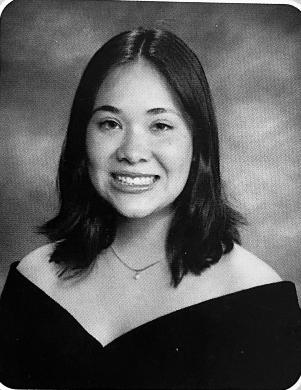
MELISSA JONES
CLASS OF ‘98
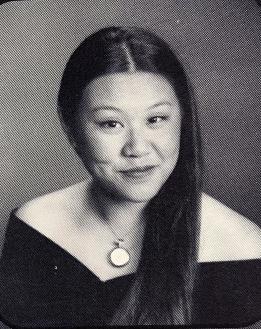
MABEL YEUNG
CLASS OF ‘09
KELLY LOY GILBERT
CLASS OF ‘03
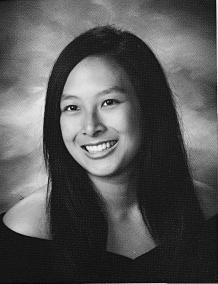
DIANE KENG
CLASS OF ‘10
Featuring MVHS alum and their post-high school ventures
BY
SOPHIA D’SA, CORINNA KUO, LORA LEE, ALEXANDRA PERRAULT, ANGELA POON AND BENJAMIN ZHANG
PAGE BY PAGE
s author and MVHS alum ‘03 Kelly Loy Gilbert researches for her next book, she recalls a story from one of her great aunts about growing up in Chinatown. Her great aunt used to follow the ice vendor around her neighborhood as he chipped off ice for his customers just so she could pick up the ice shards that accidentally fell to the ground in the process. This is just the kind of moment Gilbert seeks to capture as she plans her latest book, a multigenerational story of Chinese Americans that spans from the construction of the Transcontinental Railroad through the present day.
Gilbert recalls that when she was an aspiring writer at MVHS, the school culture was extremely STEMfocused. However, despite constant questions from family members about the practicality of a career as an author, she felt supported in her passion for writing fiction. Her freshman literature teacher, Barbara Edgeworth, especially impacted her, taking the time to give feedback on fiction pieces she wrote outside of school. As an adult, she channeled her experiences into writing young adult novels, including “When We Were Infinite,” “Conviction” and “Picture Us in the Light,” the last of which is set in Cupertino. With each novel, she grapples with how to craft stories that will continue to connect with readers despite changes in technology and social attitudes.
“Writing something that will still speak to where people are going to be five years from now is really challenging,” Gilbert said. “That has always been something that I feel like I spend a lot of mental energy ruminating about. A big part of it is focusing on the characters so much that they feel true — so even if their circumstances don’t map perfectly to the future, at least they feel authentic and their reactions feel authentic.”
BY SOPHIA D’SA
English teacher Sara Borelli believes Gilbert has achieved a form of this timelessness in “Picture Us in the Light.” Several years ago, Borelli and English teacher Jireh Tanabe piloted
Author and MVHS alum ‘03 Kelly Loy Gilbert strives for authenticity and relatability in her writing
PHOTO | SOPHIA D’SA
Gilbert’s book “Picture Us in the Light” — which follows an Asian American teenager as he navigates academic pressures, friendship, queerness and immigrant family dynamics — for
freshman Literature and Writing. The book was part of a unit introducing students to narrative storytelling and diverse experiences. Borelli found it a valuable addition to the curriculum, both stylistically and for its plot.
having to put the project on hold and eventually published it as her third book in 2021.
“That was part of why, for my first book, I was like, ‘Fine, I’m going to
“ HER WRITING JUST SEEMED UNINHIBITED, BUT IT WAS ALSO GOOD STORYTELLING.
“Her writing just seemed uninhibited, but also it was good storytelling,” Borelli said. “I could relate to a lot of what the kids were going through in regards to what was happening here at Monta Vista. It was a good book for what we were using it for: storytelling and connecting to community, people of color and people that look like you and act like you and talk like you.”
ENGLISH TEACHER SARA BORELLI
write from the perspective of a white guy,’” Gilbert said. “And that one sold right away. I definitely write from various perspectives, and how the market looks is what breaks through.”
Even after this hurdle, she says, turning a spark of an idea — like the ice chips in Chinatown — into a book takes perseverance. Her process includes research like reading old documents and interviewing various people, as well as plenty of iteration on her own ideas.
the U.S., particularly Asian Americanspecific events like the Chinese Exclusion Act. She says that while the book made her curious about what it means to be an undocumented immigrant, she hopes to reread it with the context she has learned over the course of high school.
“By the time you get to junior or sophomore year, you know more of what’s going on in the world,” Varanasi said. “Some people don’t know what a green card is. Knowing about that and knowing basic parts of history, you can see where the characters are coming from.”
Junior Ruchika Varanasi feels that the characters in “Picture Us in the Light,” although dramatized, were relatable to her, particularly in terms of the academic pressures they face. She points out that as a child, she didn’t read many books with Asian main characters, since they lacked the publicity of the majority of books with white main characters. After she read “Picture Us in the Light” in middle school, however, she began actively seeking out books with Asian characters to diversify her perspective.
As an Asian American herself, Gilbert believes this lack of representation comes partly from which books publishers choose to accept. She recalls the process of trying to publish the first book she wrote, “When We Were Infinite,” a novel from the perspective of a biracial girl reflecting on her senior year of high school. For years, publishers told her it was “too quiet” and they “didn’t know who it was for.” She ended up
“A lot of writing is about discovery and surprise for me,” Gilbert said. “I have a lot of friends and colleagues who will have an idea, outline it really carefully, and once they sit down to write, it really follows the outline. I’ve never been able to do that. I’ll chase an idea wherever it goes, and it’ll be this really circuitous path, and it’ll go over the place, and eventually I’ll settle on what it actually wants to be.”
In Varanasi’s opinion, this process pays off in the form of a novel that explores multiple
Borelli enjoys seeing students engage with literature in this manner — in fact, she structures her classes to encourage active discussion and show her appreciation of the literary techniques in order to foster this recognition in students. She hopes that students will connect deeply with the texts and come to love them through analysis. In terms of “Picture Us in the Light,” Gilbert often hears from MVHS students and people who were closeted growing up,
something she says is particularly moving because it’s important to her to craft stories that are not just relatable, but explore complex identities.
“ I’LL CHASE AN IDEA WHEREVER IT GOES, AND IT’LL BE THIS REALLY CIRCUITOUS PATH, AND EVENTUALLY I’LL SETTLE ON WHAT IT ACTUALLY WANTS TO BE.
AUTHOR & MVHS ALUM ‘03 KELLY LOY GILBERT
topics in mature and complex ways. With “Picture Us in the Light,” she recommends readers go in with context on the history of immigration in
“Now that I have a lot more access to other perspectives and opinions and lived experiences, I think that’s something I’ve always really wanted to explore through stories,” Gilbert said. “That sense of seeking connection is still true. Getting characters into places where they’re really deeply connecting with another person, and the reader gets to see that happen, is something I always strive for.”
3 UNDER THIRTY
The 2021 Forbes 30 under 30 honoree speaks about the highs and lows of her journey and gives advice about starting a business
BY LORA LEE AND BENJAMIN ZHANG
Every few months while she was in high school, MVHS alum ‘10 Diane Keng received a copy of Inc. Magazine, a print magazine focused on entrepreneurial news. The year was 2009: Steve Jobs’ iPhone was revolutionizing the tech world, Google had just announced the development of Chrome OS and TechCrunch Disrupt was one of the biggest events worldwide. In this frenzy of new technology and the boom of Silicon Valley, Keng envisioned a place for herself. Now, she’s the co-founder and CEO of AI company Breinify, an AI company dedicated to making machine learning easier for users and recently raised 10 million dollars in the latest seed round.
“I remember thinking, ‘What if I could one day get on the cover or get into a story of Inc. Magazine? How amazing would that be?’” Keng said. “But I had no idea how to run a business, so DECA became my first stepping stone into it. I met a few other students, and I thought the way they presented themselves was really strong — they were really great in-themoment speakers. They were able to think on the spot, which I found was a really unique skill.”
Keng’s close friend and MVHS alum ‘08 Arnav Guleria recounts many memorable experiences working with Keng through DECA. He believes
their time together gave him a glimpse into life outside the Cupertino bubble, including one situation in which a DECA advisor from another school physically trashed Keng’s display board at a conference and another in which a significant portion of Keng’s display was stolen. Keng and Guleria learned to astutely stand up for themselves, convincing the hotel staff to share the security footage.
“That kind of behavior by the adults gave the students a bit of a license to dramatize their own role,” Guleria said.
“ YOU WON’T REALLY KNOW UNTIL YOU ACTUALLY TRY BUILDING YOUR OWN BUSINESS.
MVHS ALUM ‘10 DIANE KENG
entrepreneurial person. As a result, Schmidt took her to venture capitalists and investors. Keng would go on to become the president of Silicon Valley and California DECA and a student board member of the Cupertino Chamber of Commerce. “She can actually sit and talk with someone and know exactly what that person wants or is thinking about before the person themself knows,” Schmidt said. “She knows how to sell it.
“So we were kind of fighting a fight without rules. That situation was the first time where we got a sense of an environment where you didn’t have to follow the rules, compared to a very cloistered Monta Vista. These circumstances gave us a sense that our strict Monta Vista gloves could come off.”
Carl Schmidt, business department lead and DECA adviser, says that Keng immediately set herself apart from her competition as a very outgoing and
That’s a talent not everybody has. She also had the motivation to be an entrepreneur. You can’t study that at school.”
During her time at MVHS, Keng started her first company, and Schmidt helped her file the Limited Liability Company form for it. Realizing that many MVHS clubs gave free T-shirts, she created a business in which clubs could buy T-shirts from her. The special business model was
that she imported the T-shirts in bulk from overseas at a lower price. Even though she didn’t make much profit due to hidden costs, such as import taxes, Keng believed that this was an important experience that solidified her choice to go down the path of entrepreneurship.
“Over time, you start to figure out whether you want to be on this path or not,” Keng said. “Either the moments that scare you give you a lot of exhilaration after, or they scare you, and you realize this is not for you, but you won’t really know until you actually try building your own business.”
After graduating from MVHS, Keng attended Santa Clara University, where she continued starting her own businesses while studying math and computer engineering on a full-ride scholarship. Over the next few years, Keng worked at Apple, and then moved to Symantec to focus on data science research. Attending events such as the Institute of Electrical and Electronics Engineers conference, she met her eventual co-founder, Philipp Meisen, who specialized in timeinterval data. With strong backgrounds in engineering and data science, they began brainstorming solutions to make traditional machine learning more applicable to anticipating user behavior and consumer preferences.
With a well-thought-out solution and a solid foundation for their product, Keng and Meisen received fundraising, quit their jobs and began building Breinify as a company in 2015, specializing in AI-powered personalization for brand marketing. More than
a decade later, Keng talks about the expansion of their company in today’s data science industry.
“Now, we’re entering a new phase where data science is kind of everywhere, and everyone’s able to use it,” Keng said. “So how do we actually make sure that it’s leveraged in the right way when it comes to retailers and consumer businesses, without the marketers having to be so technical? Obviously, all these things
‘Wow, I’ve come a long way.’ To be an entrepreneur, you have to be not afraid to take risks, and you have to be willing to be scared, because you are going to experience a lot of things that you have never experienced before, but I think that’s part of the exhilaration. If you like repetitiveness and you like consistency, then this is probably not the right path for you. But if you like trying a lot of new things and like being surprised, then
PHOTO COURTESY OF ALEXANDER RIVERA | USED WITH PERMISSION
correct way, and then we get it out to customers. So I feel like they have the same flow and that nature, and that’s something I really appreciate about them.”
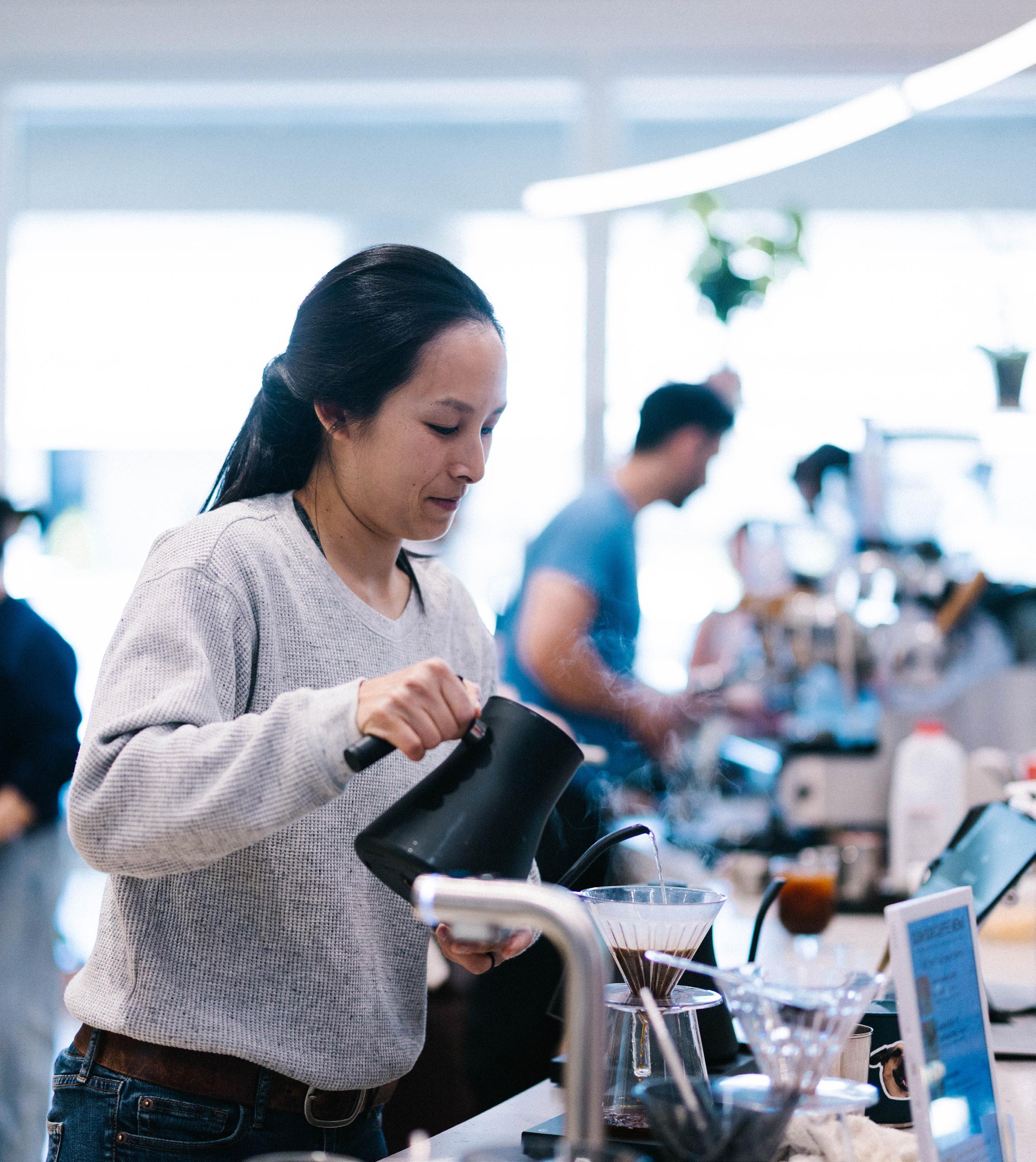
Moonwake Coffee Roasters operates in two parts: the in-person cafe and the online store, which sells coffee to both consumers and wholesalers. Sourcing the coffee requires sampling from farmers to decide which ones best suit each flavor profile. Yeung says the most challenging part of roasting coffee is finding the right profile that brings out the best in a coffee, a process Wood and Yeung refine through continual product adjustment based on customer feedback while staying true to their goal.
In November of 2025, they hosted the Peru Cup of Excellence Auction Cupping and won the number three coffee, something Wood believes the Moonwake customer base liked. Hearing feedback made an impact, guiding them towards the most
positively received roasts, which they purchased for the cafe. Ultimately, their goal is to boost community engagement, which also helps grow their team.
“We’re always trying to think of different ways to present coffee in a really excellent way to celebrate the coffee itself and also the experience that a customer can enjoy,” Yeung said. “More tactically, the big challenge is building up a team and finding enough people to help you realize your vision because you can’t do it with just two people, since you’re limited in terms of how much reach you can have. To expand that, you have to bring in more people, and trying to find the right people that you know can share that vision and work ethic is quite a challenge.”
Beyond expanding the business’s visibility, these experiences deepened their love for their craft. For Wood, he finds a great sense of fulfillment in transforming the raw coffee beans into a final product. He compares it
to cooking: good ingredients alone aren’t enough — you only see the community they create when you cook and share the food. He believes the most rewarding part of running a business is the impact he makes, as well-made coffee can bring joy and even change lives. Cassidy reinforces this, attributing his loyalty to the business to their ability to make his day better.
“They could be having one of the
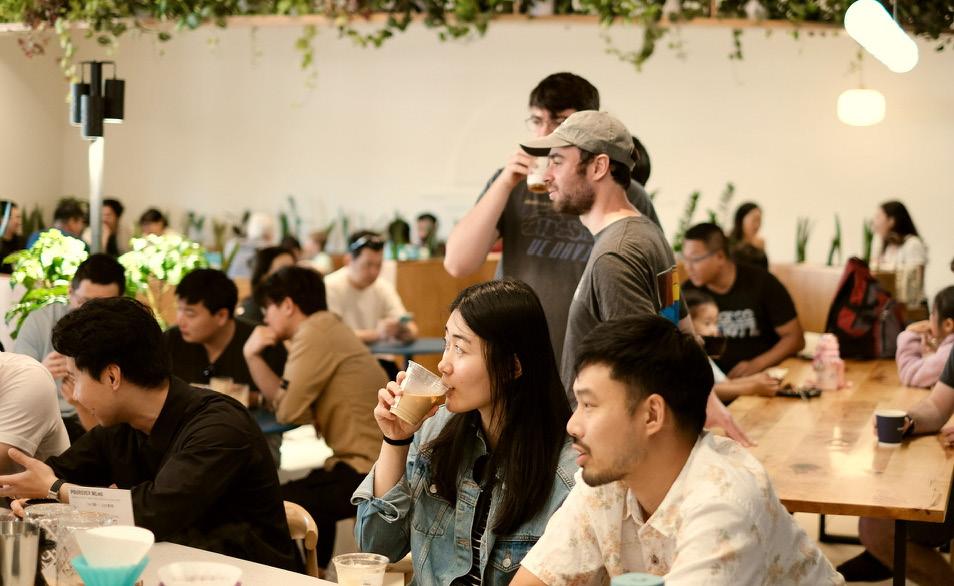
During the cafe’s soft opening in September of 2024, the sound of laughter and conversation filled the room as people bonded over their love for coffee. Since opening, the cafe has gained a regular customer base.
PHOTO BY JANESH CHHABRA
MVHS alum ‘98 Melissa Jones reflects on her journey in local theater
BY CORINNA KUO AND ALEXANDRA PERRAULT
Melissa Jones, MVHS alum ‘98 and development director of Silicon Valley Shakespeare, a local theater company, is no stranger to the stage — throughout her career in community theater, she has acted in numerous productions, worked as a hair and makeup designer, directed productions and taught workshops and classes to local students. It was when she started high school that Jones found her love for theater.
Originally, Jones says her passion for performance stemmed from her love of music. As a high school freshman, she auditioned for the school musical because of her singing experience from taking choir in both middle and high school. Though she didn’t receive a part in the musical, she volunteered to work backstage and became hooked.
Jones says she wanted to pursue theater in college, but she and her parents believed the career seemed too unstable. However, when she realized that studying theater would give her numerous other skills like collaboration, coordination and teamwork that could translate to other pathways, she decided to continue
her passion.
After Jones graduated from San Jose State University with a bachelor’s degree in theater, she found herself at a corporate marketing job, performing in community theater in the evenings, but feeling dissatisfied.
In 2006, she started working at SVS as both an actor and a hair and makeup designer, then joined part-time as the education director in 2009. In 2018, she began working full-time as the development director where she organized the company’s fundraising.
Jones (far left) performs as Edmund in an allfemale and nonbinary production of “King Lear,” along with MVHS alum ‘02 Sara Renée Morris (far right) as the Duke of Cornwall.
Jones set her production of “The Comedy of Errors” in 1912 San Francisco’s Chinatown, primarily casting AAPI actors.
SVS executive director Annalisa Tkacheff, who joined SVS in 2019 as a managing director, is the only fulltime staff member at the company along with Jones. As a result, Tkacheff says she works very closely with Jones and has experienced Jones’ commitment to her job firsthand.
“We’ve gotten closer over the years, and it’s really impressed upon me how passionate she is about the
arts,” Tkacheff said. “She does such a good job of speaking directly to the people that she’s writing about and writing to and getting to the heart of an issue. She’s such a lovely person, and she’s so great at what she does. I don’t know what I would do without her.” According to Jones, one of the ways she connects with the community is through her deep commitment to inclusivity in theater. Her MVHS drama teacher believed that certain roles in shows could be played by actors of different ethnicities, even if the role called for a different ethnicity than the actor. However, when she left high school, she says she was unsure if there would be any roles for Asian actors like herself.
As a result, one personal requirement she has adopted is not performing in productions with fewer than 30% BIPOC actors, and she says SVS has a commitment to casting a minimum of 50% BIPOC actors and 50% female or nonbinary actors across each season. SVS education associate Kunal Prasad agrees, saying that his and Jones’ shared experience as Asian actors and Jones’ commitment to diversity were factors he especially connected with when he interviewed for his position.
“She’s been such an advocate for being inclusive because she understands the frustration and hurt
SCENE TO
that comes with being excluded,” Prasad said. “Theater can be pretty intimate, so having theater that reflects its own audience makes sense and is understandable, but it’s funny to me that there often has to be an Asianspecific theater in order for there to be any kind of Asian representation on stage.”
Working in entertainment, Tkacheff notes that many people outside of the theater world believe their job is fun and easy. However, she says the invisible challenges of running a theater company, like finding funding, can make the job feel unrewarding. As support for the arts declines and federal funding for live theater is pulled, Jones’ fundraising position becomes increasingly important.
“I would say that her superpower is being able to reframe a situation,” Tkacheff said. “We’ve lost a lot of funding this year, but instead of just saying, ‘Oh well,’ we sat down together, and she completely redid what our strategy was going to be for bringing money in in 2026. She has such an innate ability to pivot and say, ‘OK, what can we do next?’ instead of feeling bogged down or really stressed about things not going well.”
Rather than focusing all of her attention on fundraising, however, Jones has been expanding her range of skills, making her directorial debut in 2024 with her interpretation of Shakespeare’s “The Comedy of Errors.” Seeing the parallels between the play, which follows a family separated by immigration and experiences of Chinese immigrants during the Chinese Exclusion Act of 1912, Jones set the play in San Francisco’s Chinatown and primarily cast AAPI actors, not only reflecting
the community they were performing to, but also her Chinese heritage.
Tkacheff notes that Jones was nervous about the experience, due to the many responsibilities that come with being a director, like creating the whole vision of the performance themselves. However, Tkacheff says Jones clearly conveyed her vision to both the actors and the audience, leading to its success.
“She stepped up into the role and she knocked it out of the park,” Tkacheff said. “It was one of the most successful shows at Sanborn Park that we have ever had. Her passion just showed through, her vision was absolutely beautiful and she did a great job facing her fears.”
When Jones reflects on how different her life would be if she never discovered her love for theater she knows that she made the right decision deciding to pursue theater in high school. Ultimately, through her work in SVS, especially her former role as an education director, she hopes to create a space where actors and students with an interest in theater can thrive creatively.
SCAN FOR MORE COVERAGE
to give that back to everybody. I wanted to create spaces like that for other people.”
“I think every middle and high schooler understands what it is like to struggle as your social structures start to shift,” Jones said. “Sometimes your friend groups, your expectations or your family’s expectations of you shift, and it can be hard to navigate that. I was really lucky that I had a number of arts teachers who who said, ‘Let’s make a place where you can feel like you can be yourself and bring all of yourself to this space.’ I wanted
SCENE
PHOTO | ERIC ZHOU PHOTO | ERIC ZHOU
PHOTO | ERIC ZHOU
PHOTO | LIZ LIU
PHOTO | BENJAMIN ZHANG
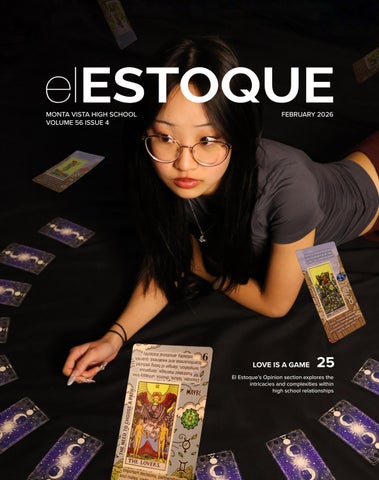
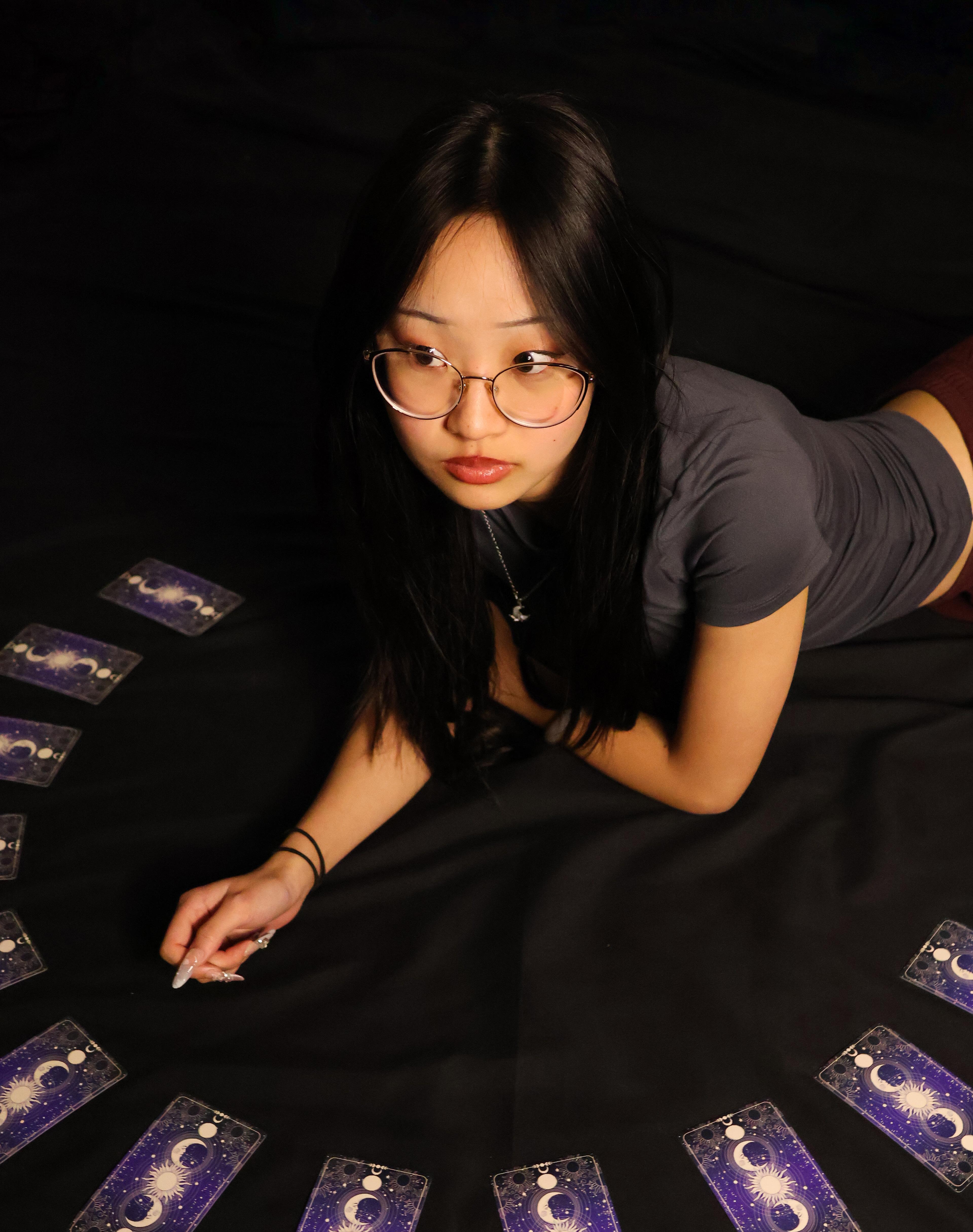
LOVE IS A GAME
El Estoque’s Opinion section explores the intricacies and complexities within high school relationships
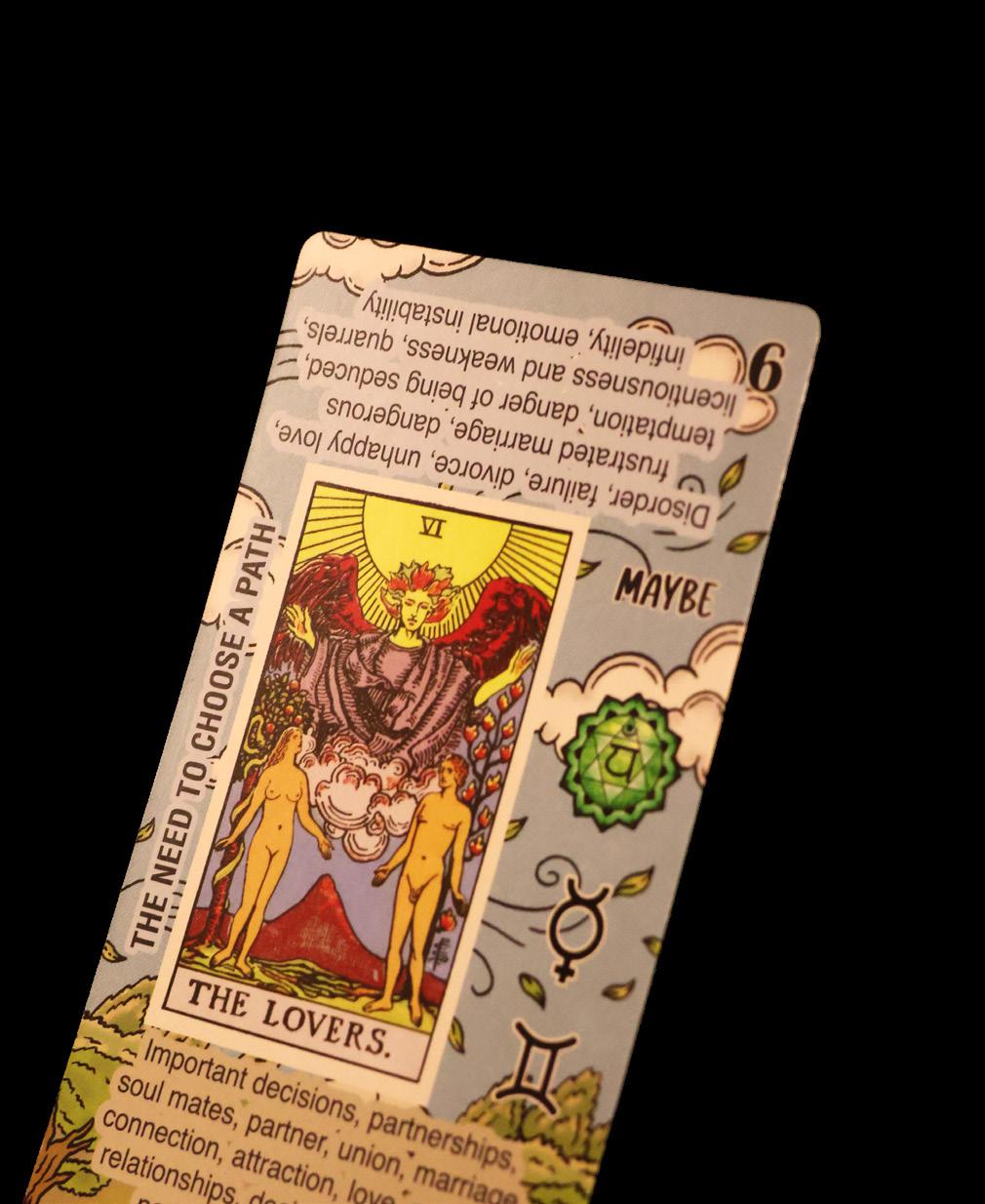
THE LOVERS: Harmony, perfection, choices and challenges within a romantic relationship
SO PLAY YOUR CARDS RIGHT
BY LIZ LIU, SUHANA MAHABAL, SANIA NADKARNI, RAFAELLA VENTO, ELLIE WANG AND ASHA WOJCIECHOWSKI
JUDGMENT:
Fulfillment and wholeness comes from self acceptance and denial of societal expectations
“
YOUR FRIENDS CAN REALLY GIVE YOU A REALITY CHECK, THAT’S WHY YOU SHOULD KEEP YOUR FRIENDS SO YOU CAN KEEP YOUR IDENTITY.
SCHOOL BASED THERAPIST AKIKO CHUNG
“ THINGS CHANGE, AND PEOPLE IN RELATIONSHIPS OFTEN FORGET ABOUT FRIENDSHIPS.
SCHOOL THERAPIST
AKIKO
CHUNG
that they should maintain their friendships as a source of support during difficult times, as they will always be there for you when you
“Things change, and people in relationships often forget about friendship,” Chung said. “I’ve seen that, but I don’t want them to cut off their friendships, because friends are support for when they go through hardship. It’s not black and white. I hope you guys keep the friendship as a support to overcome this hurdle.”
Knowing balance and moderation. Finding a need for compromise between romantic partners.TEMPERANCE
CLASSES>CUPID
Teachers share their perspective on how MVHS’ culture influences high school dating
BY ELLIE WANG AND ASHA WOJCIECHOWSKI
Popular American media such as “High School Musical” or “Mean Girls” often portrays high school as a place for budding and passionate romance. However, reality — and MVHS in particular — doesn’t quite meet those expectations.
“ I FEEL THE DATING CULTURE SOMEHOW SHIFTED ALL OF A SUDDEN AFTER THE PANDEMIC.
MVHS’s highly academic culture influences nearly every aspect of student life — so much so that even teachers have begun to notice its impact on high school romantic relationships. They observe that between the academic pressure in the school environment and social impacts from the pandemic and social media, romance is not as pervasive at MVHS compared to other high schools, according to observations from MVHS teachers.
Chinese teacher I-Chu Chang says that through classroom surveys and activities, she has seen a declining amount of students participating in romantic relationships in recent years. As someone who implements dating culture into her curriculum, with her Chinese 3 class having a “dating” unit and taking a survey about their own relationship status, she believes that getting into a romantic relationship in high school can be beneficial to students’ personal growth, and that students shouldn’t be hesitant to develop one in high school.
“During the COVID-19 pandemic, there was social distancing, and for a couple years after, it has affected people’s behavior,” Chang said. “When we came back from the pandemic, I felt that students were different. All of a sudden it’s hard for them to talk without a mask. Everyone is
hiding who they are. To some people, if they aren’t wearing a mask, they feel like they are not putting on clothes. Right now, it’s getting better, but I still feel the culture somehow shifted all of a sudden after the pandemic.”
CHINESE TEACHER I-CHU CHANG
Although math teacher Josh Kuo also recognizes the pros of a romantic relationship, he believes that it takes more than just high school for students to truly understand themselves before committing to dating emotionally and physically. He highlights how deciding who and when to date requires careful consideration.
“I think a romantic relationship is a very exciting thing to have, no matter what age you are,” Kuo said. “Being in a relationship does help you if you can look at it in a healthy way. It can help with your selfdevelopment, self-exploration and what you’re looking for in a future relationship. So I don’t discourage it, but I also don’t think you need a romantic relationship in high school. My blanket statement is always, ‘I don’t recommend it, but it wouldn’t hurt to try.’” Kuo notes how maturity is a key
factor in determining when to begin a relationship. In MVHS, where academic pressure is high, he believes many students lack a clear understanding of their wants, needs and level of commitment. He believes ages 17 or 18 are a more appropriate time to start dating, as students are better equipped to handle the emotions that come with dating. However, he added that certain students may benefit from dating earlier and applying those lessons later in life.
“A relationship makes you understand yourself more than the other person,” Kuo said. “A lot of times, it makes you understand what makes you happy and what makes you not happy, what triggers you and what you want in future relationships. You understand yourself more than ever because you didn’t realize you could be so mad, you could be so sad or you could be so happy. All these things are amplified because you put more effort into this kind of closer relationship.”
62% of MVHS students
think MVHS’s academic culture negatively affects student dating
*According to a survey of 95 people
When Kuo started out student teaching at Independence High School in San Jose, he says it was more diverse than MVHS in terms of ethnicity and socioeconomic status, yet that usually didn’t factor into student relationships. He says that he’s observed a different expression of choosing a romantic partner at MVHS.
“It’s almost like picking a partner is part of your career,” Kuo said. “It determines your status and if
you are in the right place, whereas in a lot of other high schools I’ve been in, I’ve seen relationships that are more passion-based. If people like each other, they’re just together — it doesn’t really matter if the guy is a bum. But I feel like in this school, for two people to be together, there is more consideration put into being an even matchup, where you need to be worthy of being together.”
“
and relationships in general.
“I think it’s very natural,” Barron said. “High school adolescence is a time to explore and when our body is telling us to procreate. Society has changed from the huntergatherer days when that procreation was happening very young, but now
IN THIS SCHOOL, FOR TWO PEOPLE TO BE TOGETHER, THERE IS MORE CONSIDERATION PUT INTO BEING AN EVEN MATCH-UP.
Social studies teacher Hilary Barron agrees with Chang, attesting to how the lockdown negatively impacted social learning. She also believes it is clear how MVHS students prioritize academics over personal relationships. She adds that with the rising prominence of social media, she has seen people becoming more accustomed to interacting via devices rather than in person.
“With the rise of cell phone culture, I’ve been hearing nationwide news about fewer students engaging with drugs, alcohol and unsafe sex — which is a good thing,” Barron said. “But we’re also seeing the rise of this loneliness culture, where students and young people are just staying indoors and are on social media or are on their phones instead of engaging with each other face to face.”
Barron, saying that students are naturally inclined to seek romantic connections. She believes high school provides an appropriate environment for exploring relationships and learning from those experiences.
“High school is a very cute time in our life to start learning to socialize or how to date someone,” Chang said. “Because people break up often while parents are still around, parents can offer some pretty good advice to the students — especially if it’s the first boyfriend or girlfriend — to get past
Barron stresses the potential long-term psychological impact of this behavior in future romantic relationships. Especially in the context of her own high school experience, she says she formed lasting connections and believes that high school is a pivotal time for
THE LAST THREE DAYS
I’m learning to embrace the unknown rather than fear it
BY RADHIKA DHARMAPURIKAR
There is nothing worse than the dread that fills my heart and the way my stomach drops when the last three days of the year come around. December 29th, 30th and 31st always give me paralyzing anxiety, the kind that comes only when my future is brought up, and uncertainty infiltrates my mind.
The 29th is the day before my birthday, when all I can do is think about the fact that tomorrow, I’m turning a year older. The 30th is my birthday, a day that should be spent celebrating but is instead consumed by the reminder that I’m officially older. And the 31st is when I’m forced to confront the fact that the years are slipping away. These days only remind me that with the passage of time, graduation, college and leaving my family and friends are looming closer, as if I’m inching towards the edge of a bottomless cliff. The unfortunate placement of my “special day” means three days spent spiraling rather than celebrating.
plan until reality snuck its way into my mind. Questions like, “What if I don’t get in? What if I never get a job? Do I even want those things anymore?” plagued my consciousness. I’d subjected myself to such a specific vision of my future that anything else caused me to panic and feel like I was “failing.”
Anxious and desperate, I looked for something to focus on, another plan to outline, another list to make, but I was stuck — how do you plan for something you know nothing about?
SINCERELY, RADHIKA
was entirely internal, and that the future is only as serious as I make it. I can’t stop being afraid of the future, but I can acknowledge that not knowing what will happen is not a bad thing. Instead of thinking about all the ways in which I might “fail,” I can think about all the people I’m yet to meet and places I’m yet to go.
On the 30th, I was surrounded by people I loved with good conversation. But a small part of my mind kept reminding me that I was 17 now. “You’re wasting time, you only have a year left, have you even amounted to anything in these 17
I’ve always been someone who needs to know exactly what is happening, and that I have things under control. As the future inches closer, I plan to the best of my ability, so much so that a few summers ago, I created “Radhika’s Future Plan.” A glittering display of exactly how my future would progress, using magazine cutouts to aesthetically map out who I wanted to be for the rest of my life: what schools I wanted to attend, where I wanted to work, even when I wanted to get married. I pinned it on the wall, and it stared at me as if to say, “If all goes well, this is exactly what will happen. This is what you want.”
The night of the 29th, I sat anxiously thinking about what turning 17 would entail. I couldn’t help but stare at that
So, dear reader, It’s completely normal to fear the future. We’re trying to cherish our high school years, all while being nostalgic for the past and worrying about what’s to come. But no matter how much that fear consumes you, remind yourself that you will end up exactly where you belong. Take it from me.
Sincerely, Radhika
notes from albert, ep. 4
BY GRACE LIN
Crossing the Line
President Trump’s social media posts have incited mixed opinions throughout the MVHS community
BY SHREEJAY ARJA AND KATE YANG
Government and AP Macroeconomics teacher
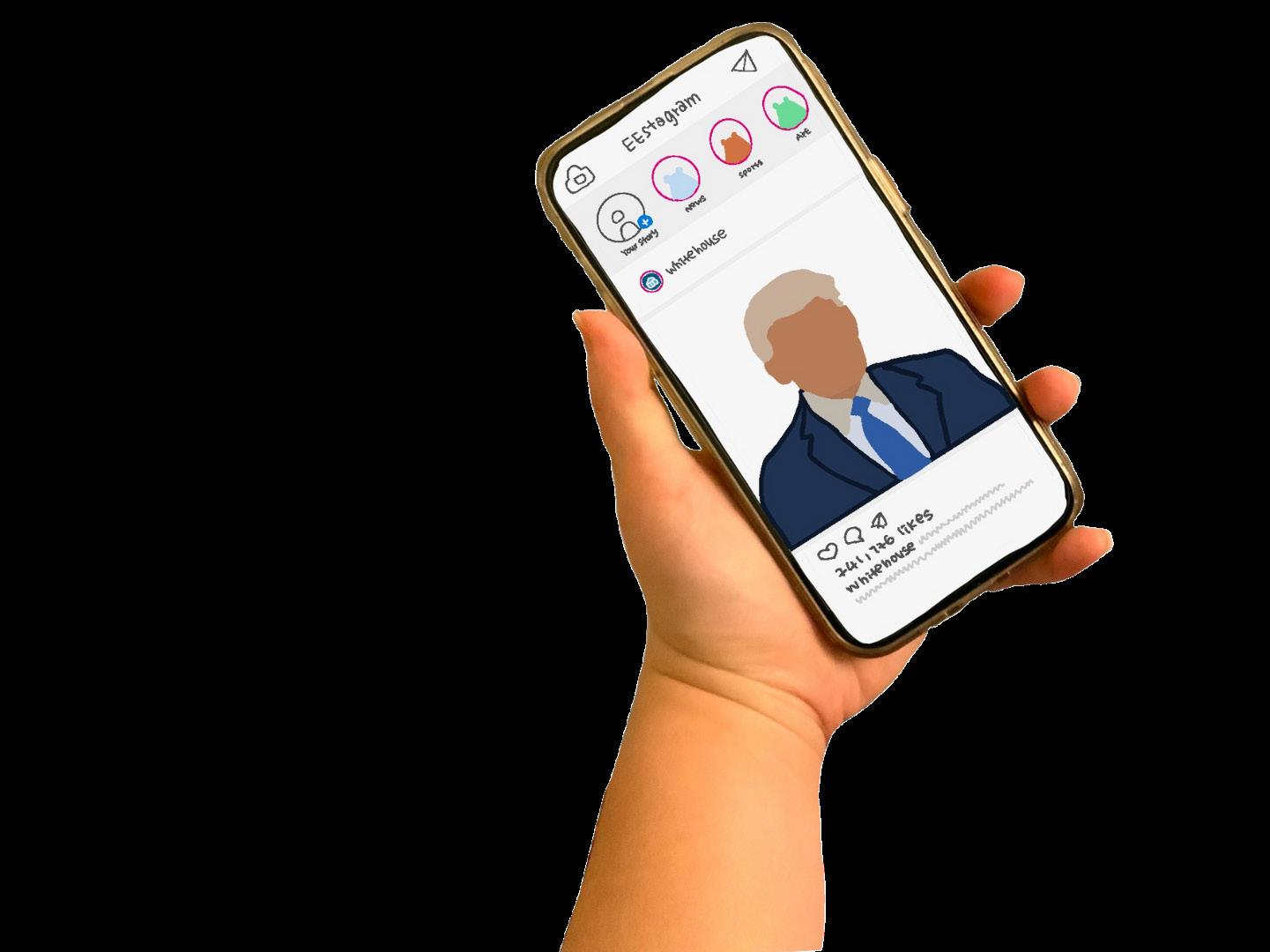
Pete Pelkey prides himself on keeping up with his political feeds on channels like Fox News and YouTube, tuning in to both left and right-wing news feeds to gather information to teach students. Since President Trump’s first term, Pelkey has noticed what he believes to be derogatory and divisive content published by the White House, especially in recent months.
“White House official accounts should just be for the policy of the government — it’s not supposed to be the promotion of a president, and what they’re doing on it is probably illegal,” Pelkey said. “Donald Trump is the president of the most powerful country in the world. He says something stupid, and this whole thing blows up, causing a war. He just posts the most random, ridiculous points of view.”
Before beginning his presidential bid, Trump was a reality star and real estate businessman known for his often sensational and attentioncatching social media posts on X, then known as Twitter. This became a central part of his identity as a politician during his first presidential term in 2017. After Trump’s “Stop the Steal” campaign ended due to the U.S. Capitol riot on Jan. 6, 2021, he was banned from social media platforms like Instagram and X.
Since then, Trump has moved to primarily posting his content on Truth Social. After winning the 2024 presidential election against Democratic nominee and then-Vice President Kamala Harris, Trump translated his “unfiltered” personality
from social media to official White House accounts, with posts like AIgenerated images of Pope Trump and “WOKE = BROKE” going viral.
Trump pushed back on Biden-era regulations for the immobilization of Immigrations and Customs Enforcement after his inauguration in order to deliver on his promise of removing “criminal aliens” from the United States. Trump and his social media team began posting video edits and photos of deported individuals, capitalizing on popular trends at the time. For example, they used Sabrina Carpenter’s song “Juno” and Olivia Rodrigo’s “all american b---” for videos promoting immigration enforcement. Both singers made public statements that condemned the White House from using their songs, with Rodrigo commenting, “don’t ever use my songs to promote your racist, hateful propaganda” on Instagram.
69%
As an independent voter aligned with neither the Republican or Democratic parties, Pelkey believes that Trump’s posts promote disunity at the cost of civility and go against what he believes is at the core of what the president’s role should be. Pelkey asserts that the American people should embrace their differences and focus on larger societal issues.
of MVHS students
think the White House should have formal social media
*According to a survey of 89 people
“If I were the Secret Service, I would say, ‘Mr. President, give me your phone,’ and then I’d break it,” Pelkey said. “Americans have different philosophical ideas, and that’s OK. We should be able to speak those philosophical ideas without somebody trying to shout us down. We can only come together if we drop the rhetoric and say, ‘OK, how are we going to make this a better country for us, our posterity and our children?’”
Sophomore Krish Kumar has encountered these posts from the White House on X, which he describes as being disrespectful to immigrants and unprofessional. Kumar agrees with Pelkey’s belief that they cross the boundary between being made to inform and being created to incite discord, adding that the posts are not made in the best interest of the American people.
Trump’s political and nonpolitical outreach on social media has received both praise and criticism from constituents on both sides of the political aisle and from global leaders. In response to Trump’s post about the deaths of filmmakers Rob and Michele Reiner on Truth Social, Rep. Don Bacon (R-NE) asked if the president could be “presidential.” In contrast, conservative political advocate Joey Mannarino commended Trump’s White House’s social media efforts, saying that he had “never seen a
better social media team than this one.”
Sophomore Steven Chi disagrees with Pelkey and Kumar, and argues that the issue doesn’t lie within the White House’s views on key issues — according to Chi, the core issue is the content’s lack of utility. Unlike
“ IF I WERE THE SECRET SERVICE, I WOULD SAY, ‘MR.
Kumar believes that Trump and his media team freely posting his online content conditions the American people to become increasingly unbothered by what he posts and says online, even with the responsibilities that come with being president. He fears that as
believes that there will be new legislation put in place in order to regulate social media posts from officials and to reform the government. From Kumar’s perspective, Trump’s social media may create a “ripple effect” as future generations begin to see political discourse through a more unserious lens. Chi argues that Trump and his administration’s social media posts will play a miniscule role in the political atmosphere of the
FEED POLITICS
79% of MVHS students have encountered content from politicians on social media
*According to a survey of 91 students
Community members reflect on the growing role of social media in political communication
BY JILLIAN JU
Senior Ishaan Deshpande recalls coming across a video from politician Saikat Chakrabarti, who captured his attention with a video explaining his intention to run for Nancy Pelosi’s current seat in Congress. Though Deshpande often sees content from political commentators and news outlets, he appreciates how algorithm-friendly videos directly from politicians can engage digital audiences, especially young voters. However, Deshpande notes that the appeal comes at a cost, particularly when social media platforms promote catchy content over information about policy.
“They were very quick clips, and it was easy to understand what he was trying to say,” Deshpande said. “But I think it also meant that, from the nature of the algorithm, the kinds of clips being pushed the most were like, ‘Get rid of Nancy Pelosi, get Saikat for San Francisco’ instead of more of his policy views. So I think that lessened my understanding of what he actually wanted to do.”
Deshpande has seen an uptick in this style of messaging, characterized by politicians speaking candidly about their campaign in short-form videos made exclusively for platforms like TikTok and Instagram. In addition to Chakrabarti, he remembers seeing similar videos from politician Zohran Mamdani during his 2025 bid for New York City Mayor.
“He was using a very direct platform,” Deshpande said. “It was on a platform that I use every day, TikTok, and it kind of felt like he was speaking directly to me. The thing about Mamdani’s TikToks was that they were very to the point about what his ideas were, so I think that left a positive impression in terms of how he’s messaging and communicating.”
U.S. History teacher Robbie Hoffman has also noticed a change in politicians’ communication. Although he doesn’t use social media himself, he says that politicians are utilizing the speed of social media communication to their advantage and hiring people to create their content.
“It’s information that’s really fast, and it’s almost daily,” Hoffman said. “It used to be like, if I’m going to give a speech, you have to wait, or it’d be the newspaper. Now, the communication can be constant. Obviously, I think they have a team of people making content, so the availability of providing information about certain things is revolutionary. I think that’s what these newer politicians are doing — they’re finding ways to get information out, get their ideas out there to people.”
Hoffman compares the onset of social media campaigning to other historic inventions, such as the radio during the 1932 presidential election and television in the 1960 election. According to Hoffman, politicians aren’t necessarily doing anything new — they’re just adapting to a new platform.
Deshpande observes that though his own social media feed is leftleaning, the content he sees is an indirect response to conservative content.
entertainment with information, which can be difficult considering the size and volatility of a politician’s social media audience.
“Culture always changes, trends always change and technology has changed,” Naderzad said. “I know people use social media for socializing, but I know a big reason why people use social media is for entertainment, so now you have to cater to that. It’s not like you have to be an influencer, but you have to produce something that people want to see, people want to watch, whereas before maybe you didn’t have the opportunity to have millions of people watch what you’re producing.”
“ THAT’S WHAT THESE NEWER POLITICIANS ARE DOING — THEY’RE FINDING WAYS TO GET INFORMATION OUT.
“Younger voters are a pretty key voting bloc for all politicians,” Deshpande said. “With the 2024 election, a lot of people saw that a lot of young males tended to vote for Donald Trump or conservative politicians because they were seeing conservative media a lot more on TikTok or Instagram Reels. I think we might be seeing more of these progressive candidates trying to do messaging on social media to counterbalance this, and they’re trying to push their views as far out as possible, too.”
U.S. HISTORY TEACHER
ROBBIE HOFFMAN
In AP U.S. History, Hoffman had students analyze tweets from President Donald Trump and California Governor Gavin Newsom about redistricting. Students found the exercise entertaining, but it also prompted them to think more critically about the information they get from politicians. While he appreciates that students can see the humor in the situation, he also hopes that they can think critically about politicians’ messaging.
De Anza College Journalism professor Newsha Naderzad agrees, as she has also seen an increase in politicians’ emphasis on social media and attributes it to a desire to connect with younger voters. She emphasizes the importance of balancing
“Whenever you look at a primary source, a cartoon or a speech, you need some context,” Hoffman said. “Most students had come across these two guys recently, so they had the context. So it was really just to give them an understanding of what to look for in a source when analyzing it. The content can be from any political party, any side, but you always have to do your homework. It makes you more knowledgeable. If you’re a person that’s like, ‘I’m gonna check this out, and I’m going to study this a little bit more,’ that can help you as a constituent, as someone who’s trying to vote in the United States.”
MVHS students and staff discuss AI’s growing role in science education
BY EMMY HARIMOTO
As AI models become more sophisticated and widely accessible, schools nationwide are seeing a significant increase in the use of AI tools, with up to 85% of teachers and students in U.S. classrooms reporting that they’ve used AI as a study tool. In classrooms, AI typically refers to large language models such as ChatGPT, designed
commonly used to assist students with a wide range of prompts.
However, senior Megan Liu believes that student reliance on AI reflects deeper issues within academic culture.
SCAN FOR MORE COVERAGE
According to Liu, AI usage in science classrooms is not simply
different concepts.”
Senior Anya Deshpande agrees with Liu and believes that AI works best in science classes when it is used as a review tool. She emphasizes that its effectiveness relies on how it’s used, because it should support learning rather than replace it.
“The problem is that people are trusting AI too much,” Deshpande said. “Using AI should always come after you cross-check information with teachers and credible sources. AI is helpful where it speeds up tasks for all of us, but we need to check ourselves when we use AI — what are we feeding it? What tasks are we using it for? It’s an expanding spectrum, and you have to stop yourself at a certain point.”
Biology teacher Pooya Hajjarian shares similar concerns about accuracy and reliability through his past experiences with AI usage in the classroom. But ultimately, Hajjarian believes the crux of the issue is not removing or implementing more AI into the science curriculum, but adapting to its challenges.
“Human connection is something I really value,” Hajjarian said. “In order to learn well in my class and look forward to studying, the connection piece is incredibly important for starting anything. We have to connect as humans first — and that’s something AI lacks.”
year in review 2025
Reviewing four of 2025’s most influential albums which have broken records and topped the Billboard charts
BY VAISHNAVI KATUKAM
As one of the biggest artists in the world, Bad Bunny resists diminishing himself for white American audiences, and this shows through his music. In “DeBÍ TiRAR MáS FOToS” he calls out colonialism, gentrification and political corruption while also celebrating his culture. Every single aspect of this album feels intentional, and the depth in his commitment to authenticity makes his music addicting.
For the seven years following her Grammy winning rap record “Invasion of Privacy,” Cardi B had been consistently releasing hit singles, while fans awaited a complete and cohesive project. Cardi B’s bold and fun energy along with her commitment to staying true to her identity are what make both “Am I The Drama?” and her so intriguing.
From the repetitive lyrics to the lack of a narrative arc, there is nothing of interest or depth in Morgan Wallen’s “I’m the Problem” that would warrant listening to the same song 37 times. Instead, he features the generic topics people make fun of country music for — girls, alcohol, trucks and guns.
SCAN FOR MORE COVERAGE
In 12 songs, Taylor Swift attempts to transform into a new persona, the showgirl, who is openly and freely in love. “The Life of a Showgirl” doesn’t completely commit to flashy glittery pop tracks, nor does it reflect on the nuance of being a performer whose image must be perfectly curated and is under constant criticism.
PHOTO
MERT ALAS AND MARCUS PIGGOTT
PHOTO
PHOTO | BRIAN ZIFF
ILLUSTRATION | CLARE KIRWAN
FROM THE GROUND UP
Differences in texture and playability from turf replacements prompt mixed responses from sports teams
BY ISABELLE KOK AND ETHAN YANG
SPORTS VOLUME 56
Turf replacement and renovations in the MVHS lower and upper fields, which began on June 7, 2025 and concluded in early October, led to the temporary displacement of field sports’ practices and games in the fall season. Although the renovated turf has enabled field sports like soccer and baseball to resume their practices, athletes and coaches have been working to adjust to changes in texture and playability on the new fields.
According to Head Baseball Coach Shawn Voigt, the completion of the turf renovation marked a shift from anticipation to adjustment. Even though Voigt acknowledges the longterm benefits of a newer surface, he states that the immediate experience was less about excitement and more about adapting to a field that played differently from what players were accustomed to.
“It was frustrating when it was built during our season, but I understand that it’s for the future program,” Voigt said. “I’m really looking forward to playing on a brand new surface, but there are going to be adjustments to how the ball plays off the turf and how we’re able to gain traction and be athletic on the turf.”
According to junior, soccer and flag football player Isobel Schweigert, the noticeable changes to the turf went beyond the new appearance. She says that because the sports she plays rely heavily on sprinting and quick changes in direction, the differences in traction let her experience the turf in a more tactile way and shape her equipment and movement choices on the field.
“The new turf is shorter, so it’s harder to wear cleats,” Schweigert said. “Our athletic trainer was advising that everyone buy turf shoes because it’s more suitable. On a newer turf, your passes are easier because the ball moves faster and you don’t have to take as many touches to get across the field.”
According to senior and soccer player Vedant Agarwal, the harder turf affected the team’s game and practice by decreasing confidence in gameplay. This textural change can be attributed to the new organic fill of the renovated turf, which uses olive pits instead of the previous black crumb rubber.
“I feel like the turf is more slippery, so people are less confident to change directions,” Agarwal said. “Our playing is less agile during games, and practices are also less intense because people are scared of slipping. I think it’s gotten a lot better now, because we got used to the turf, so people know how to use it to their advantage to change directions or pass the ball or plant their foot.”
These gameplay changes extend to sports like baseball, where the turf’s friction can have a major impact on gameplay. In response, Voigt says that the baseball program returned to more foundational skills, in order to revise habits developed under previous field conditions.
“Because it’s newer and spongier, there’s more friction when the ball touches the ground, and that makes it bounce less,” Voigt said.
can be a preventative measure that reduces impact strain on joints and lowers risk of injuries and chronic conditions like osteoarthritis as the seasons progress.
Despite the renovation, Schweigert believes that the change doesn’t fully address the needs of every sport. She notes that while the surface itself improved, the lack of field markings and sport-specific considerations for the relatively new flag football team — despite superintendent Graham Clark citing flag football fields as part of the original renovation plan — remained a source of frustration.
“We were expecting that they would paint an actual field for flag football because it was a new sport,” Schweigert said. “They were supposed to make a field and have hash marks since you need hash marks to play football, so it was a little irritating.”
44% of MVHS students
believe the renovated turf is an improvement
Overall, Voigt says that the renovation represents an ongoing process of gaining familiarity with the field. He says that learning how to read and respond to the new turf is now part of the competitive aspect of baseball.
*According to a survey of 43 people
“We are focusing on techniques like staying down to field the ball and not lifting our bodies up too soon, which we tended to do, based on the turf from the last few years. Practicing the most fundamental parts of fielding is important to really make it second nature. The first few practices, players were sliding past the base, so we need to make that adjustment as well.”
Voigt framed the turf upgrade as a long-term investment in athlete health. He says that the new surface
“Baseball has always been about adjustments,” Voigt said. “Every field is going to be different, so we always have to pay attention and make adjustments. They need to appreciate every rep and reflect how the ball played and be mindful of that. Considering how the ball is playing off the turf is part of your development to be a better player and help the team be better.”
BY LEAH DESAI AND GRACE LIN
ollowing its performance at a Universal Cheerleaders Association home camp in the summer, the Varsity Cheer team got the opportunity to join Varsity, an organization which led them, and
each team member was required to gain All-American status, which is achieved by an assessment of dance routines and stunts. Once the AllAmerican status is granted, athletes can choose a performance to be a part of. Events range from halftime at the Citrus Bowl in Orlando to the New Years Day parade in Rome. Ultimately, the team members decided to go to Honolulu.
Junior and captain Rita Bondar said that despite potential difficulties in planning the logistics, the team agreed that the trip to the Pearl Harbor parade was a oncein-a-lifetime opportunity. Head Coach Kendal Houck, who spent countless hours coordinating hotels,
flights, transportation and dinner reservations, agrees with Bondar on the additional time commitment required for the parade.
“It’s just like you go on a family vacation and you’re trying to coordinate it,” Houck said. “If you have a family of six, it’s the same kind of thing — making sure that restaurants were going to be available, so we were showing up with 12 people to dinner.”
Though the trip required a lengthy planning process, the team was proud to perform in the parade. Houck was happy that the squad was able to connect with other teams and see familiar faces, specifically spotters, who act as safety personnel during competition stunts.
“I would say my biggest
accomplishment was the team performing in the parade itself,” Houck said. “Feeling that connectivity and then being able to meet other cheerleaders from across the nation was really cool. The team loved seeing the Varsity reps because most of the people that were at the parade are usually ones that are spotters during competitions, so they’ll probably run into them again at Nationals, which is really cool to think about.”
Both Bondar and senior Pari Goel say the parade performance was successful and the team created many fun memories together, including getting shave ice, meeting other teams and visiting beaches. With the team lineup consisting of half freshmen and half upperclassmen, Goel says the trip was filled with unique experiences due to the team dynamic.
“The freshmen were full of spirit, happy and energetic and we were just tired because we’re juniors and seniors,” Goel said. “We had to split up, but it was funny when we went to get gelato one night, and we were tired from the parade. The seniors just wanted to go home and go to bed. The freshmen were jumping around and yelling the parade dances and the chants, and everyone was looking at them like it was crazy.”
Aside from participating in the parade, the team also spent a few days in Hawaii to fully enjoy the trip. The team toured UH Manoa, walked around the city, visited the Polynesian Cultural Center and went to the beach. Specifically, Bondar recalls their love for acai bowls and shave ice, with the team often getting sweet treats multiple times a day. Bondar also notes how the Hawaii trip allowed the team to build connections
with each other.
“My favorite memory was our beach day, because we had a whole day dedicated to the beach, and it was really, really fun,” Bondar
where we got to see all the islands in Hawaii. It was really pretty, and just spending time with everyone was really nice. It was a really good team bonding experience, and I feel like we
POLITICs PITCH ON THE
Amid rising excitement for the Cup being hosted at Levi’s Stadium, concerns about political influence over the organization surface
BY FIONA CHEN AND EMMA MA
Six matches of the 2026 FIFA World Cup, an international soccer competition between 48 men’s national teams, will be hosted at the Levi’s Stadium in Santa Clara from June 13 to July 1, marking the first time since 1994 that the event has been played in the Bay Area.
For many students and families near MVHS, the World Cup’s local presence represents a rare opportunity to engage with soccer at its highest level. Junior Kaiyu Zhang, who grew up in a family of avid soccer fans, believes that hosting the tournament in Santa Clara will positively impact the community by raising local interest in soccer.
“It’s so hard to watch an international soccer match in person, because it’s not as popular of a sport in America,” Zhang said. “I think it’s going to be really beneficial to the local community, especially because the games they’ve arranged to be hosted here are some pretty strong selections.”
Beyond fan excitement, history and economics teacher Scott Victorine notes that major international events like the World Cup typically bring a
surge of tourism and revenue to host cities. However, with FIFA’s president Gianni Infantino’s decision to award the first-ever FIFA Peace Prize to Donald Trump in December of2025, Victorine also acknowledges that it’s difficult to separate the excitement of the upcoming World Cup from the broader impact of political divisiveness surrounding FIFA.
In particular, the organization has long faced criticism for instances of alleged corruption and bribery.
“With the general climate in the U.S. right now, it’s hard to ignore the impact
of politics in any area of American sports,” Victorine said. “If you look at FIFA’s history, this kind of thing isn’t surprising. These relationships are often transactional — people try to stay in favor with those in power because they believe it will help them get what they want. It all
This sentiment has shaped how some fans experienced recent FIFA events. Biology teacher Pooya Hajjarian describes feeling
disappointment when watching the World Cup draw, in which the 48 teams were placed into four groups of 12. When FIFA presented Donald Trump with his Peace Prize, he feels the draw strayed from the sport itself.
“It felt like they were putting on a show,” Hajjarian said. “There wasn’t a whole lot that was authentic about the draw. I was so excited about watching it, and after about 20 or 30 minutes, it felt fake to me. I wanted it to be about soccer, but it just wasn’t.”
Hajjarian’s reaction points to a deeper frustration among longtime fans who feel that political messaging is increasingly overshadowing the sport itself at major international events.
said. “That World Cup draw was the first one I’ve watched that left a yucky taste in my mouth, and it’s usually not like that. Usually, I’ll be texting my brothers and my family and friends about what team is in which group, whereas this time, everyone was just saying, ‘Yeah, that was not fun to watch.’”
Zhang also recognizes how political involvement in major sporting events can influence public perception. She points out that association with a global cultural event like the World Cup can benefit political figures.
“ THAT DRAW WAS THE FIRST ONE I’VE WATCHED THAT LEFT A YUCKY TASTE IN MY MOUTH.
“I do wish that we could keep politics and sports separate,” Hajjarian
“To have any political figure be so involved in this event will be pretty helpful to their public image because it makes them seem like someone in touch with culture,” Zhang said. “It’s going to be a
good opportunity for them to distract from other controversies they may be surrounded by.”
Even at MVHS, where Zhang participates in Fantasy Premier League with friends and classmates, conversations about the World Cup have shifted towards FIFA’s decisions rather than matchups and players.
“We’re all pretty annoyed about what’s going on between Trump and FIFA,” Zhang said. “It’s taking away attention from the World Cup itself and shifting it to focus on American politics on an international stage.”
As Levi’s Stadium prepares to welcome fans from all around the world, the Bay Area stands at the intersection of global influence, local impact and international politics, raising the question of whether the World Cup can still just be about the game. Nonetheless, for Hajjarian, these political issues go away once the ball is on the field.
“Regardless of the situation at the moment, I’m sure soccer fans are going to watch it no matter what,” Hajjarian said. “Once the tournament starts, it’s going to get exciting for everybody.”
Earn it LOUD
MVHS sports teams compete with each other for a pizza party in the Student Athletic Senate Point System
BY LEO WEI
Aiming to increase attendance at sports games, the MVHS Student Athletic Senate created a point system to encourage friendly competition among teams. Teams earn points when they go to
other MVHS teams’ games and take a photo to post on their Instagram Stories. Once they tag the MVHS Athletics account, the senate records the points on a master spreadsheet. At the end of the season, the team
with the most points earns a pizza party hosted by the SAS.
According to Athletic Director and SAS Adviser Nick Bonacorsi, the point system was first introduced several years ago, with the intention
The Girls Flag Football team poses for a photo while supporting the Boys Water polo team.
of boosting game attendance, but the system was put on pause during COVID. This year, the system was reintroduced by SAS, which is run by students who come up with ideas to help improve sports and spirit at MVHS.
“We were talking as the senate and trying to theorize different ways to get more fans at games, and the target area was other athletes,” Bonacorsi said. “If you play volleyball, and you’re upset that not a lot of students come to volleyball games, one way to help boost that is by taking initiative and going and supporting other teams, then hope that they come and support you on the back end.”
“
and SAS member Allie Rummelhoff, who participated in the challenge with her team, believes it brought more spirit to the athletics community at MVHS. She remembers a time from last year when student attendance greatly benefited the Varsity Boys Volleyball team in a NorCal playoff game.
WE WANT TO CREATE SPIRIT AND UNITY HERE IN MVHS AND I THINK SPORTS IS A GOOD WAY TO DO THAT
“They were up against a higher ranked team, and they were bound to lose just by the record,” Rummelhoff said. “We had a huge crowd out and there was a lot of excitement and spirit, and I think that’s part of the reason they did so well in that
JUNIOR ALLIE RUMMELHOFF
Bonacorsi believes that it’s important to make sure that the point system is run solely by students in the senate.
“The way the SAS is set up is that it’s student athlete driven,” Bonacorsi said. “I’m just an adviser. I’ll help out where I can, but it’s more meaningful if it’s coming from students and it’s coming from athletes directly, and that’s the approach I’m taking to it.”
Senior and SAS president Jenna Bergendahl has been a part of the SAS for three years. During her time in the organization, she has been trying to find ways to increase attendance at MVHS sports games. This year, it was her idea to re-pitch the point system.
“It was pretty slow-going,” Bergendahl said. “Our goal was more of keeping people informed on the point system and trying to see improvement in turnout at games.”
The SAS encourages teams to participate in challenges through a meeting with sports captains toward the beginning of the year, trying to keep them informed and giving updates of the points scored throughout the season.
Junior, Varsity Flag Football captain
your friends. We want to create spirit and unity here in MVHS, and I think sports is a good way to do that.”
Rummelhoff emphasizes the importance of student involvement, noting that attending games helps strengthen the sense of community at MVHS.
Bonacorsi echoes Rummelhoff’s message, stating that in the end, the SAS just wants to see improvement in school spirit across the board. He hopes that, eventually, the motivation to attend sports games will span across the whole student body.
“I’m excited to see where this goes in the future, though I’m graduating this year,” Bergendahl said. “I’m excited to see where the lower classes will go with this, and to see the creative ideas they come up with to improve our athletics culture.”
CROSSWORD @elestoque
ACROSS
____-com (lighthearted movie genre)
From the capital of Tibet
Alaskan native
Gorgon who turns people to stone, in Greek myth
___-one: long odds
The Cheer team might say these on its trip (pg. 42-43)
Elective whose teacher will retire next year (pg. 4-5)
Dramatic confession
Engineered crop, for short
Row you might shop at Reneé who played Regina George in “Mean Girls” (2024)
Christmas decoration with lights
Profession for MVHS alum
Melissa Jones (pg. 22-23)
Dental care deg.
Weather phenomenon with a masculine Spanish name
Meet unexpectedly
What you might feed a carnival elephant
Consumed, biblically Man, in Spain
Oozes
Walt Disney has more of these than anyone else
Pre-CIA spy org.
Makes obsolete
Landmark also known as Kissavos
Texter’s response to a hilarious joke
What a writing tutor may offer for your essay
“Much ___ About Nothing”
NFL defensive end Ndamukong Sharp ___
“Old
BY SOPHIA D’SA
Gymnastics attire named for a trapeze artist
You might need one to solve this puzzle (sorry!)
Countertop stones
Early shows with lower-priced seats, usually
Feature of many double-decker tour buses
“I’m speaking!”
Geometry class exercises
Texan city that anagrams to ASLOPE
___ basket (pg. 26-27)
Members of a Utah native tribe Vietnamese soup
Lip balm brand named after the goddess of the dawn
Movie 26A chain with a red logo
org.
THANK YOU SPONSORS
PLATINUM SPONSORS: Syed Askari
Raza Baqar, Avik Basu, Yan Cen, Lili Chen, Jake Dutton, Bhaskar Katukam, Anoushka Nadkarni, Dinesh Nettar, Purneet Thapliyal, Sandy Wang, Jie Yao