ELELETA B elay January, 2022
LOCAL SHOP MEETS MODERN BUILDING
It is apparent that the methods of shopping have differentiated quite a bit in the last decade. While shopping mall constructions increase rapidly, shopping itself has plummeted. The Western system of shopping is so foreign to our way of life that it doesn’t function when attempted to integrate into our daily routine.

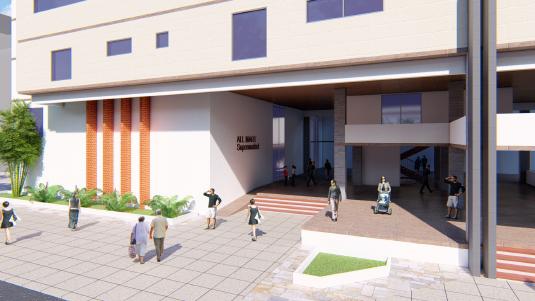
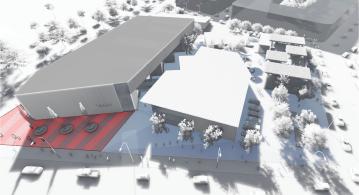
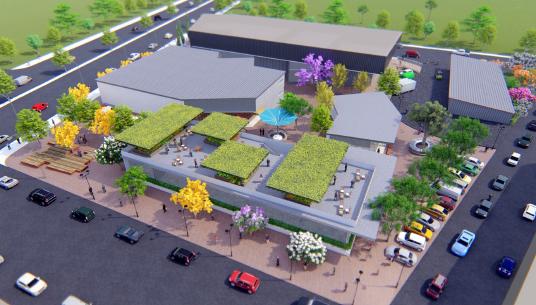
The given site is at Jemo Condominium, the area never sleeps and is alive well through the night. It reaches peak activity 5pm through to 8pm. There are street vendors that come out during that specific window hoping to catch shoppers coming home from work.
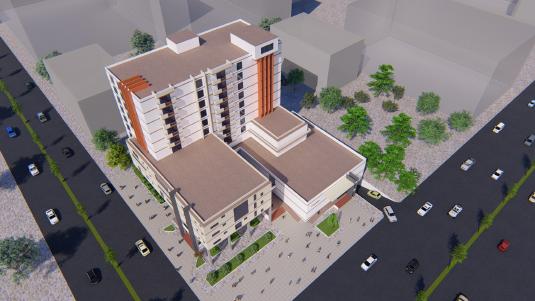
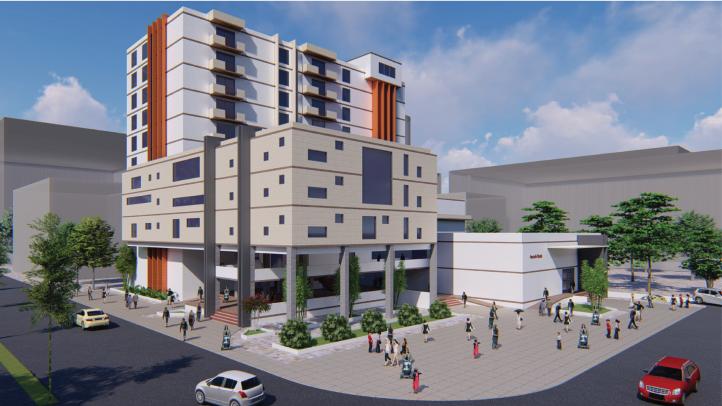

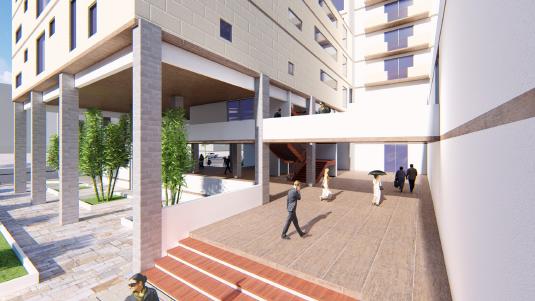
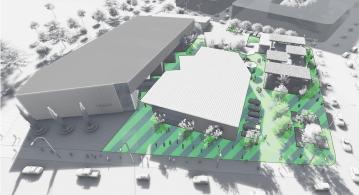
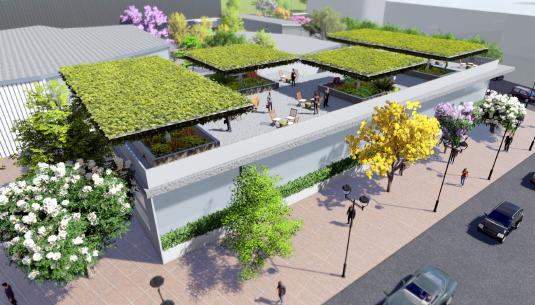
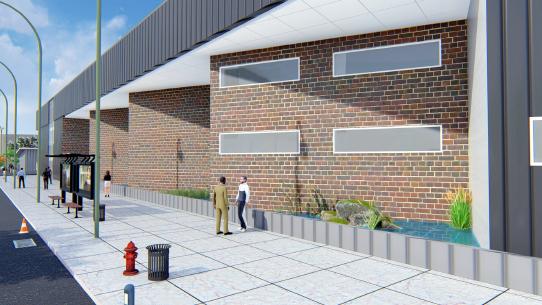
The ground floor takes into aspect this time frame and shopping method. The ground floor is manly an open space that is flexible according to time of day. Besides the structural elements that keep the building standing, there are green areas and seating spaces. The area has no walls separating it from the streets surrounding it but has greenery marking its boundaries.
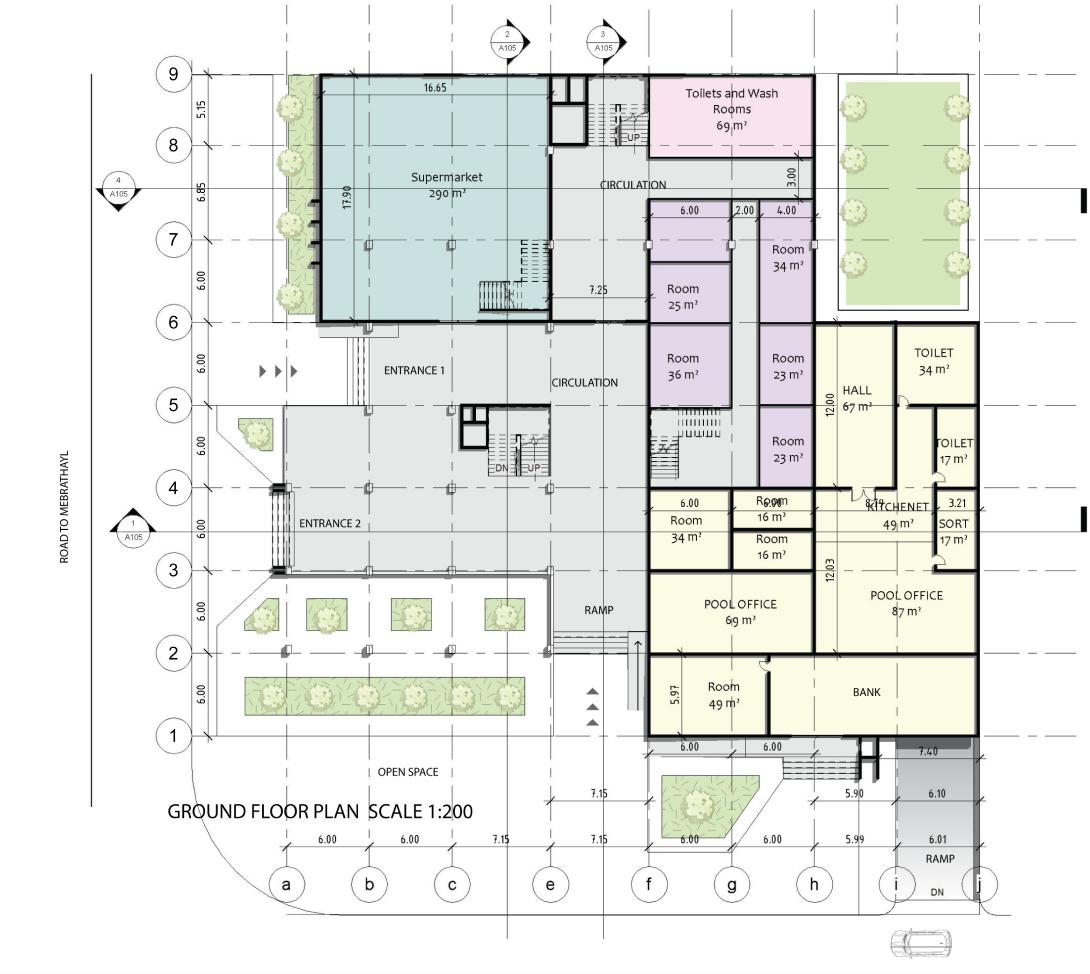
Mixed Use Building ARCHITECTURE CIRCULATION SPACE LEGEND PEDESTRIAN ENTRANCE VEHICULAR ENTRANCE OPEN VIEW Circulation Apartments O ces Supermarket Insurance Bank CONNECTING ELEMENTS WHEELCHAIR ACCESS CUL TION FOR THE DISABLED
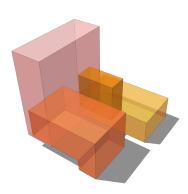
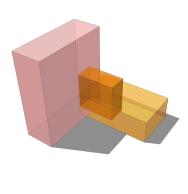
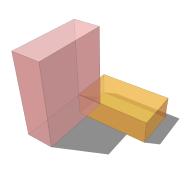
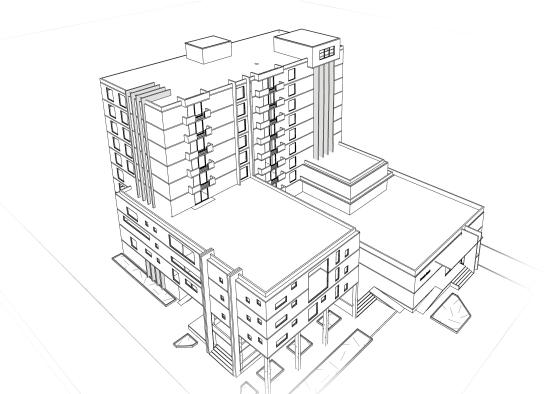
The major mass became a base point for the two blocks that emerge from east and west. The created blocks are connected to eachother by series of routes within the massing. Major access and circulation is set by taking the existing context and site layout. The site is extruded by pulling up all the site exept the front bu er and the central courtyard.
WARPED PLAY
The project is named warped play because of it’s essence of design - the concept. The core value of the child’s education should incorporate play as play is such an important part of a child’s development. This design encompasses play to give the child multiple “falling grounds” so as to learn in some safe space (the child’s mind easily scares and hides when put in the contemporary educational bubble) without the fear of making mistakes; as one would on the playground. In a matter of speaking, its a design where the child discovers education in an absorbent manner stead of provided-taken one.
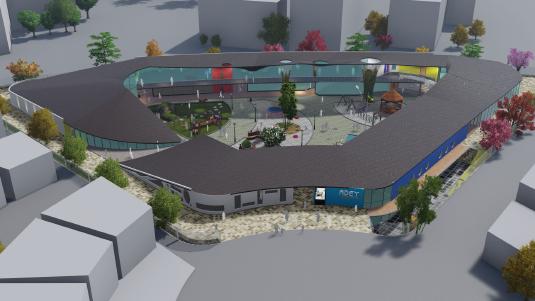
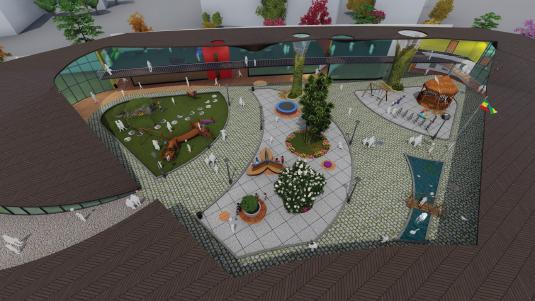
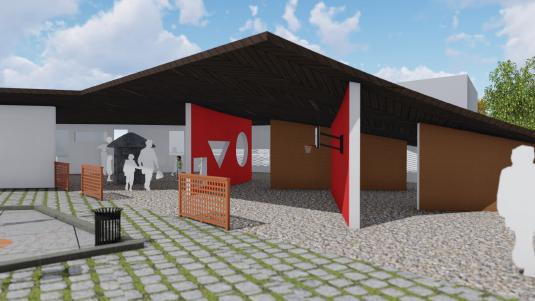



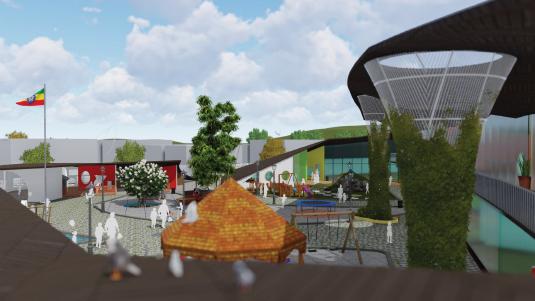
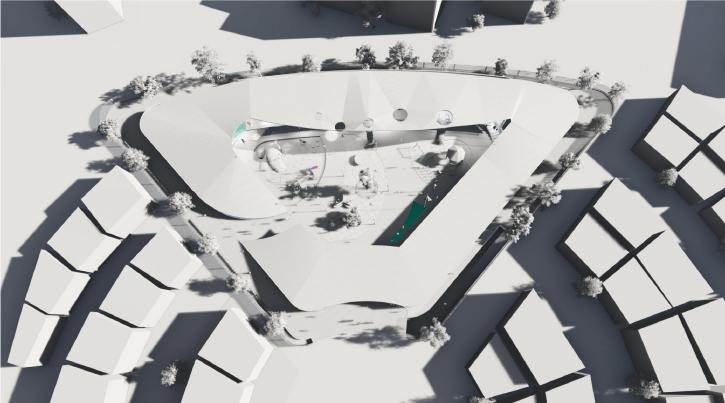
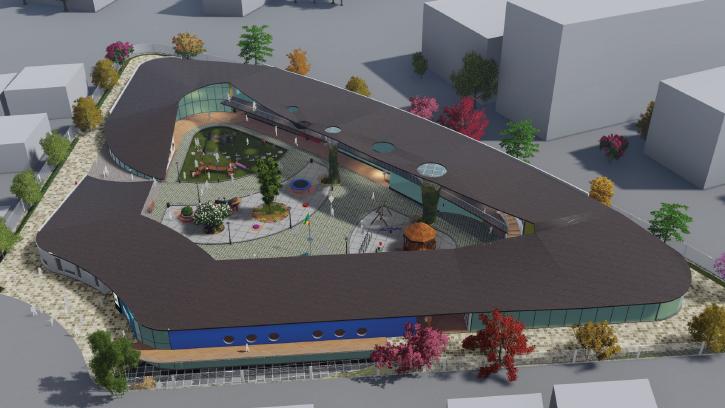
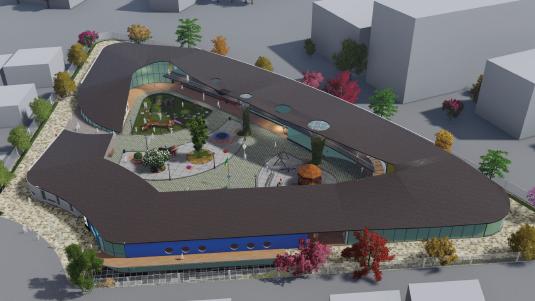
The design approach for this design is unique. It asks the question of the user’s needs as the client. In this project, the users - the children - are so flamboyant that there are no questions asked (least not ones with credible answers) but rather activity can be observed. This is what I did when designing a kindergarten; observed kids at play.
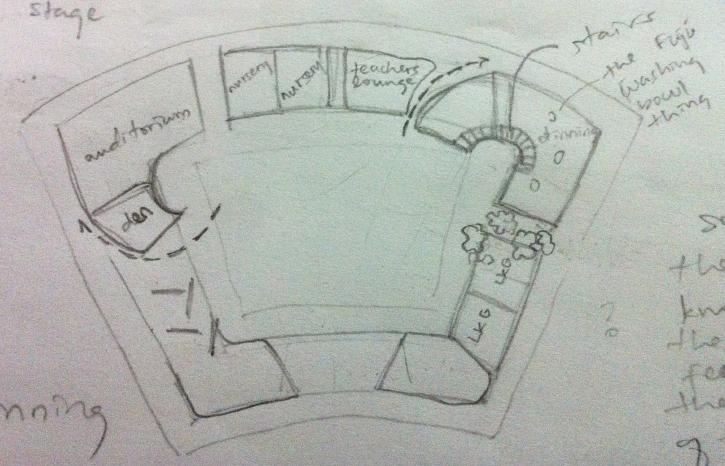
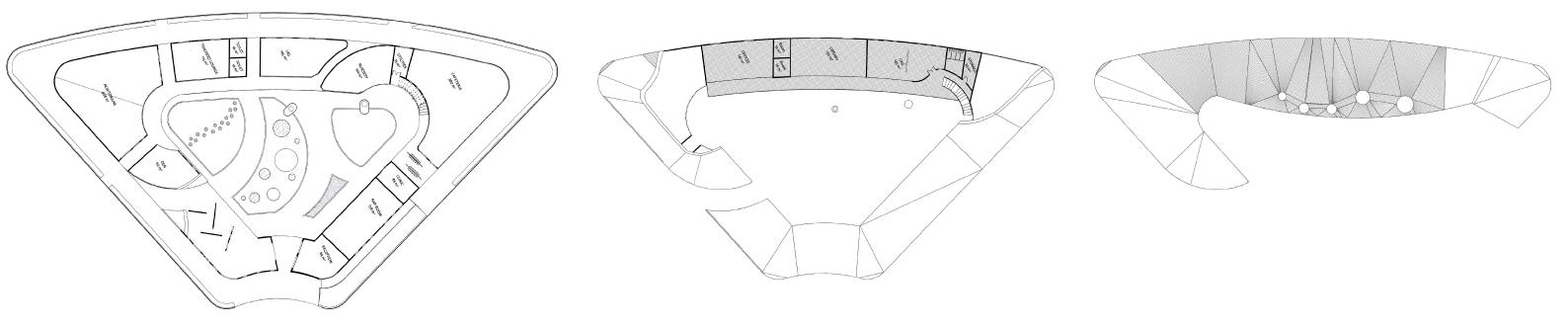
Warped Play (Kindergarten Design) | ARCHITECTURE
Plan First Floor Plan Roof Plan
Ground Floor
CULTIVATING THE VERTICAL
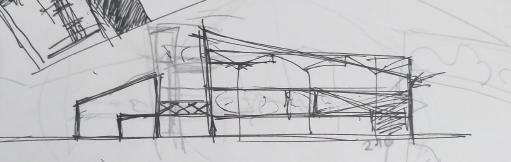
The “URBAN VERTICAL FARM” is a new urban and social vision at an architecture scale in response to these global problems. Situating food production within a building in the city suggests a different worldview and a new urban life style, which challenges the norms of modern life today. It geos beyond simply producing food vertically: rather vertical farm suggests a more holistic approach including the creation of a new civic space, as an urban epicenter.
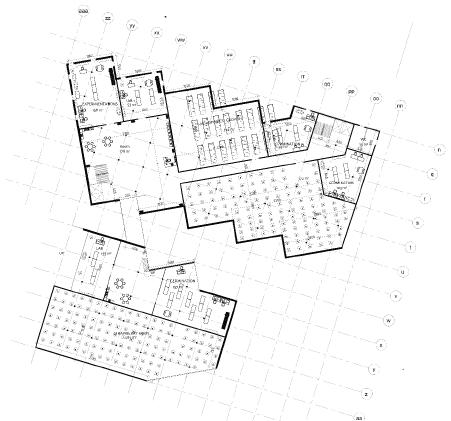
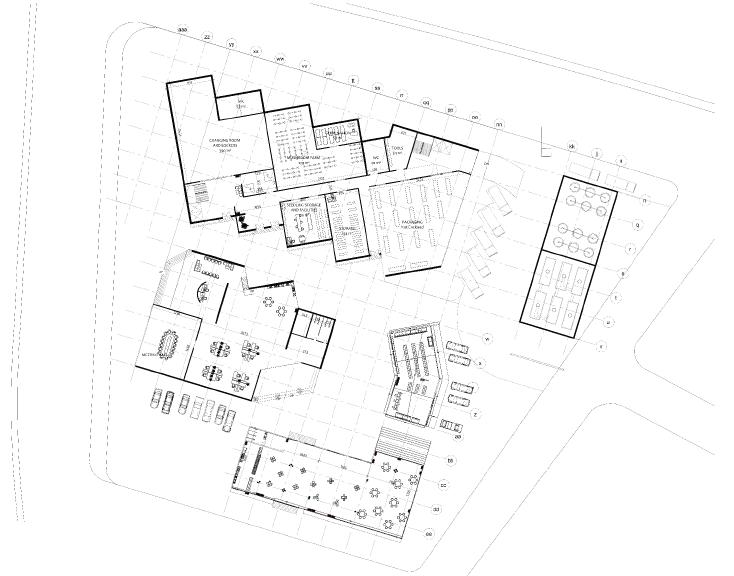
According to a UN report, by the year 2050, the human population will reach about 9..2 billion people. Nearly 80% (7.2 billion people) of this population will reside in cities. The exponentially increasing population will continue to raise the issue of human environmental impact, including the question of food availability. And available land for agriculture continues to decrease due to population growth and urban expansion, food consumption already exceeds production, by a significant amount in Ethiopia. The huge migration from rural areas to urban megalopolises will include a dramatic cultural and social crisis. Massive urbanization will deplete natural resources, and exhaust urban infrastructures and transportation systems, increasing air and soil pollution.
The cost of vertical farming I dependent on numerous numbers of factors that are the size of building, machineries, technology being used, lighting, nutrients, labor and many other factors. The yield of vertical farming is significantly better than field farming. The result of even 5 times the production that traditional farming has been achieved by vertical farming; As we talk about potatoes, the yield in case of vertical farming per hectare was found to be 150tonnes while in case of field farming yield was just 28 tons per hectare. Talking about the case of tomatoes, the yield in vertical farming was 155 tons per hectare while in field market the yield was just 45 tons per hectare. In the case of carrots, vertical farming has a yield of 58 tons per hectare whereas in field farming it is 30 tons per hectare. So, clearly, vertical farming has far better yield and efficiency that traditional field farming.
Vertical Farm ARCHITECTURE
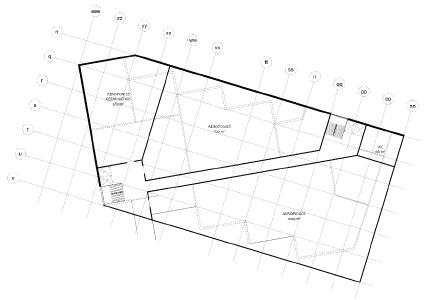
Ground Floor Plan First Floor Plan Second Floor Plan
ADMINISTRATION PRODUCTION
KONSO REFORMED
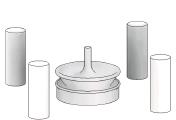
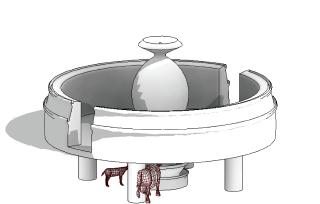
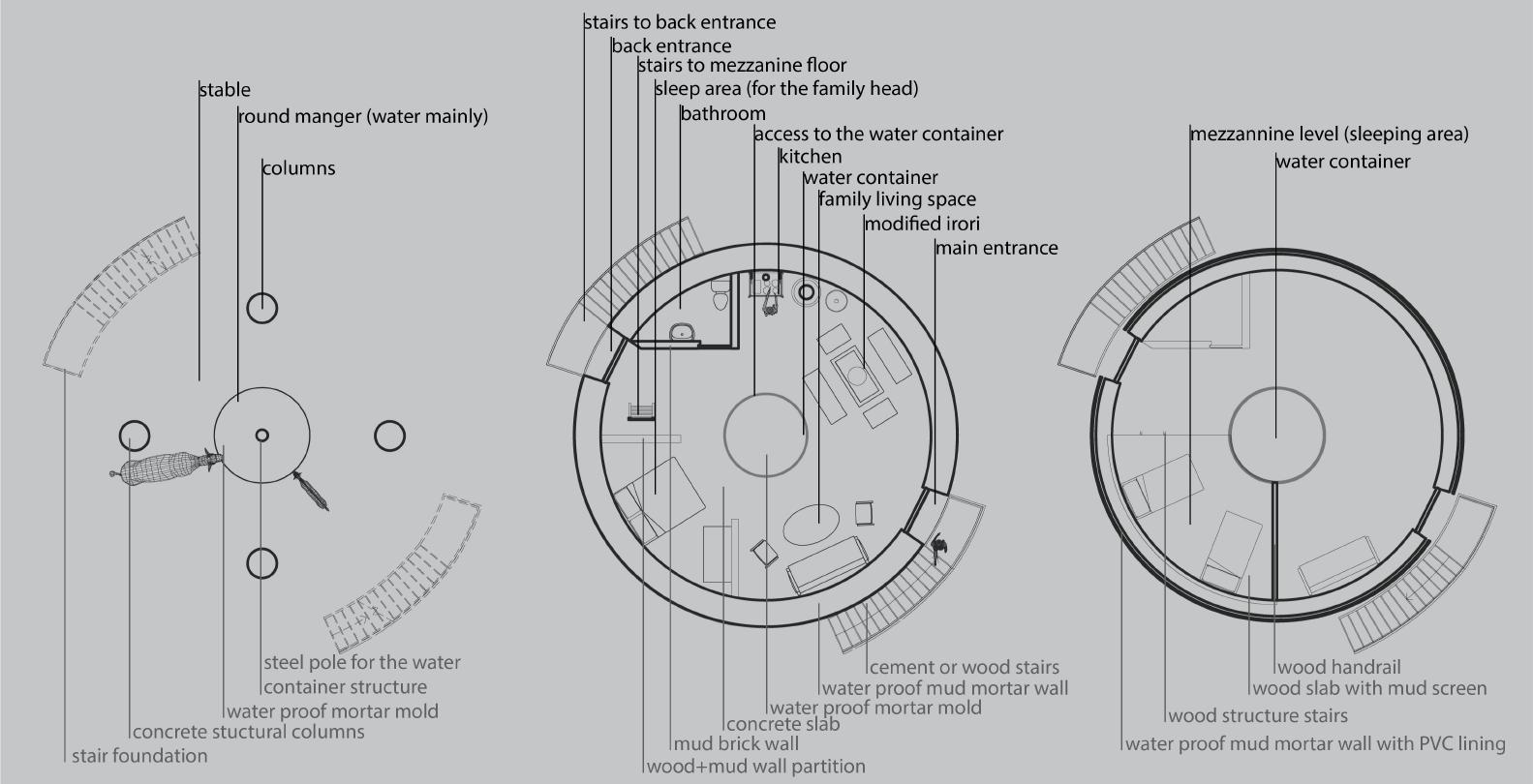
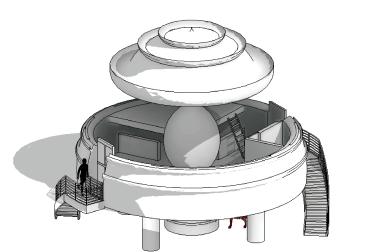
Storage is essential in the Konso culture. So much so that half of the Konso construction is in one way or another associated with storage. Every nuke and cranny counts. Following this, each element in the design has integrated storage. The most praised system of the Konso is the terracing system that allows them to produce crops and keep the soil from erosion. As water is scarce in the area, it is logical to space every droplet possible. The roofing system does just that, collect every droplet of water.
Roofs serve as collectors, walls as paths for collected water, columns and walls as a storage space for food, the fountain like feature as water reservoir for cattle, the cattle space as health generator; extract every element for its use. Each household has their own compound with an even further divided set of buildings; each program means a new structure (house). Solving this means one building per compound leaves more space in the individual compound; ergo, more space for everyone in the large community.
PHASE THREE PHASE FIVE PHASE SIX PHASE FOUR PHASE TWO PHASE ONE
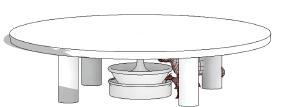
- foundation and column construction
- manjor mold (cattle fountain)
- reinforced concrete slab - basis for the walls
- Ensula water tank mold
- Shaping and molding the walls in place
- lay the pipes for water pipes
- mold and set in place the roof tank
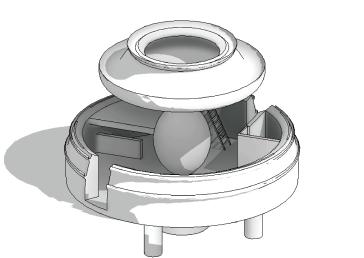
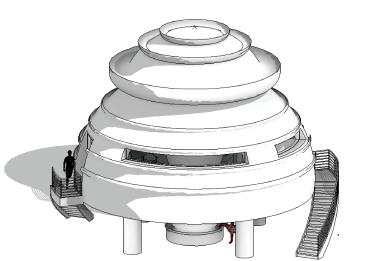
- mezzanine floor construction
- constructions of the internal walls
- construction of stairs and railing
- complete the roof - construct the stairs
- finish the roof mold with the opening at the connection point of the roof
- install appliances on the respective openings
- paint and work on the interior for a living area
Konso House ARCHITECTURE
HOUSE COPIES FURNITURE
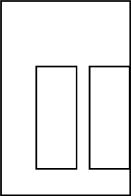
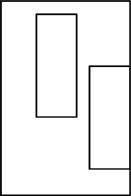
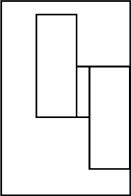
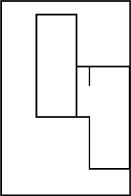
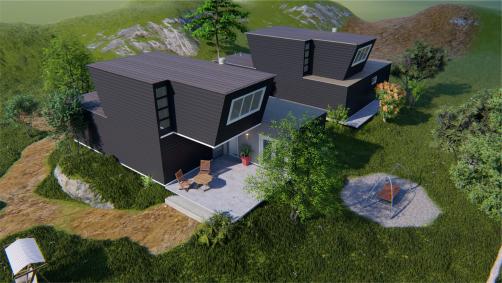
A residential house on 150m� land with an extra(plus) program. The program chosen is the workshop as a plus program because I wanted the challenge of creating a workable space of a workshop on a residential design.
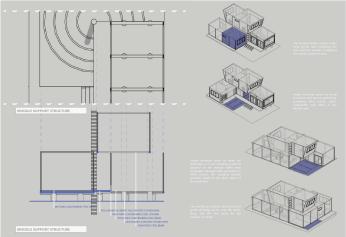
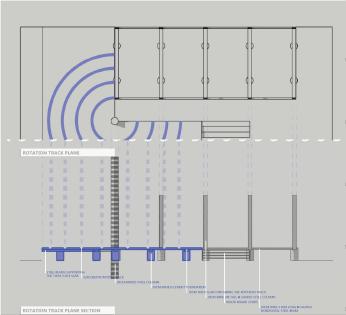
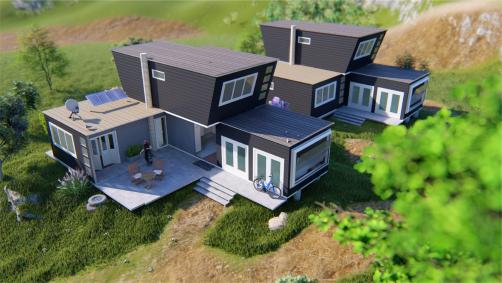
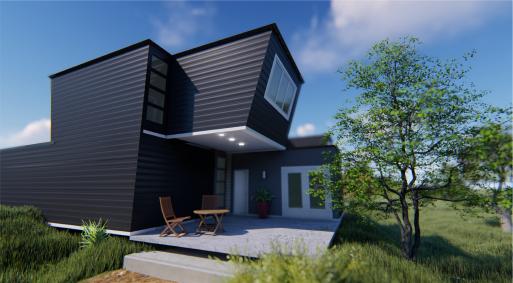
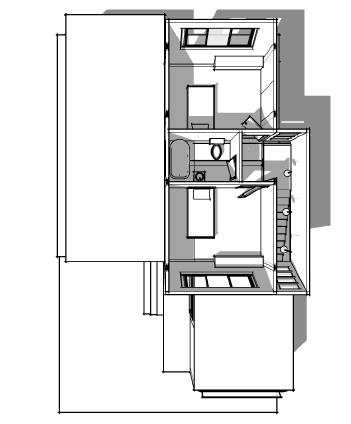
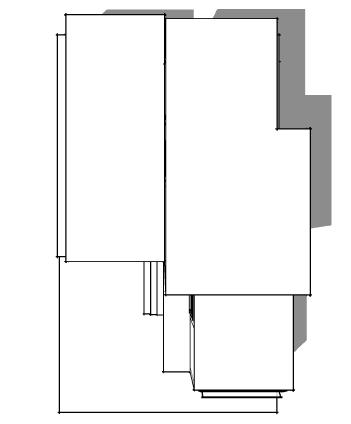
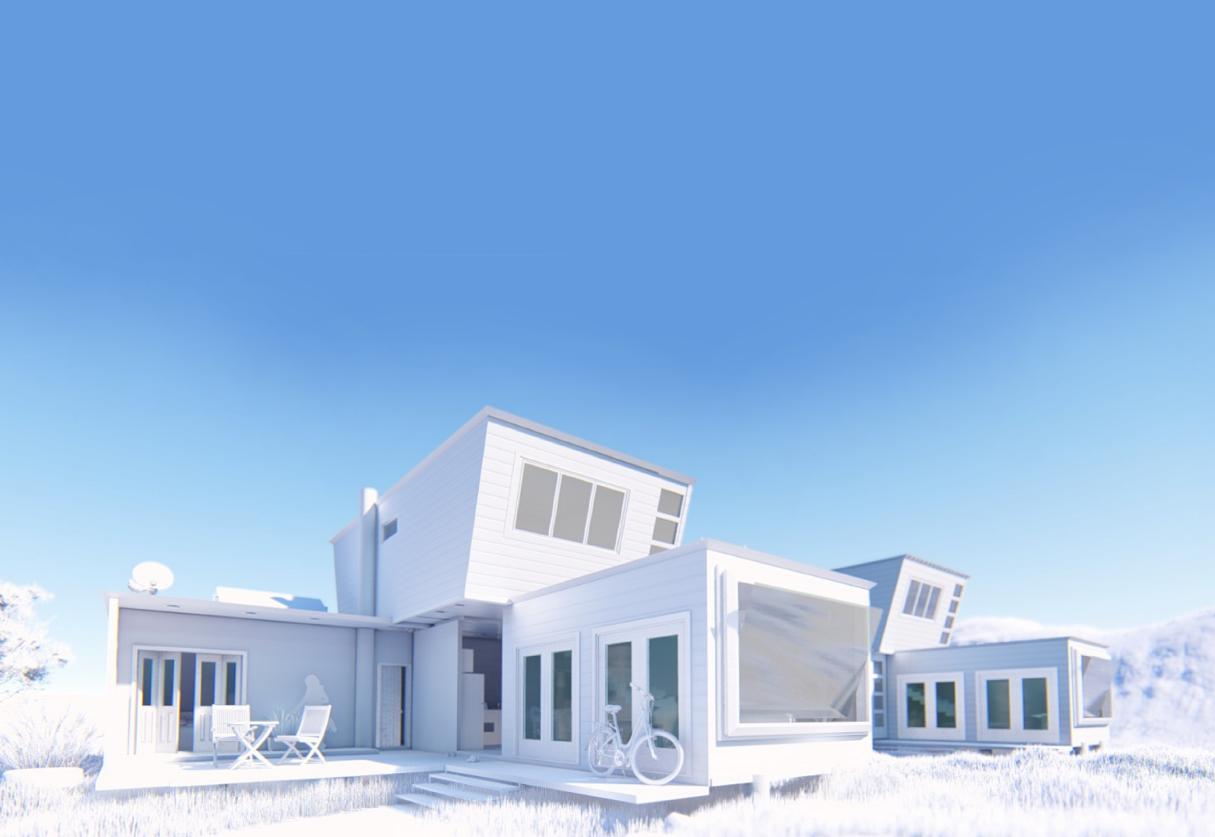
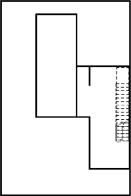
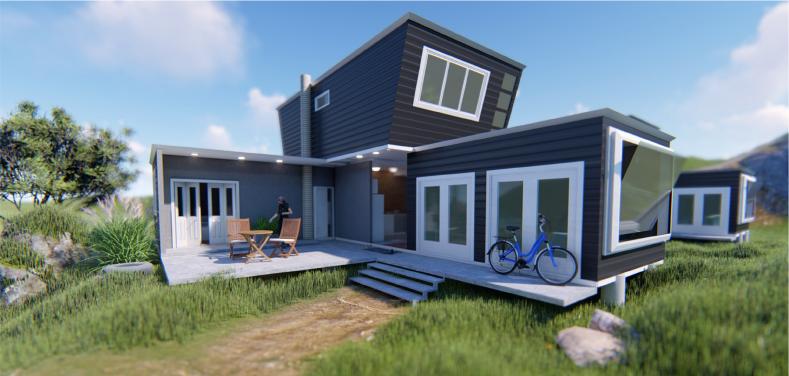
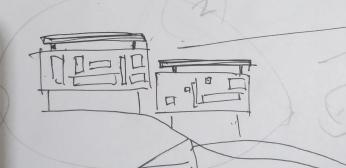
The immediate problem is lack of space. There is not enough space for the residence let alone the workshop. The solution presented is a modular house that is easy to assemble and fast to build: a moving house (More so a moveable module). Of course, the inconvenience is significant when creating a moving residential house (that is not on wheels). The reasonable solution would be a rotating house. Why pick up the house and move it around when the aim is to simply get it out of the way? Such solution minimizes involvement of electronics.
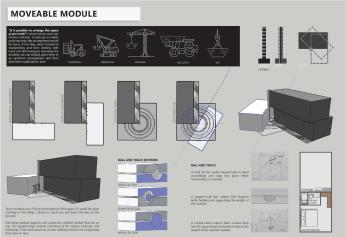
With new solutions came new problems. The movability took up much of the ground space as the landing area of the module has to be considered in both settings moving the module by human force is proving to be near impossible. The mechanical movability is a major issue to consider. This was later solved through the roller ball wheel.
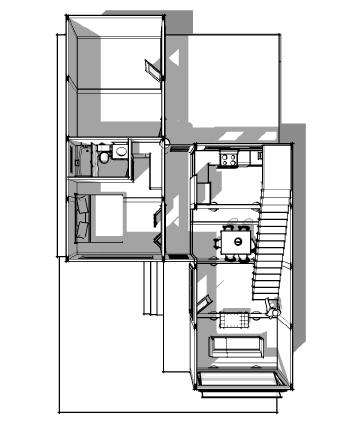
Residential Plus ARCHITECTURE
Arch
Separate moodules Shifted placement Corridor connection Open floor plan Verical circulation core
RESOURCES
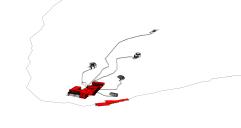
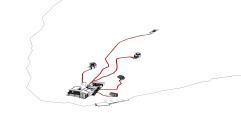
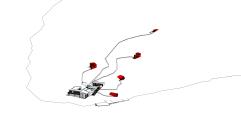





Ever since the collective living of people, the demand for goods and products has been high taking the production of waste along with it. Waste had not been an issue during an all-organic-matter era but with the exponential growth of highly engineered waste, such as plastics, the handling of such materials has been poor. These days, the word plastic has been so heavily tainted with negative criticism that it’s easy to forget the strengths of the material. It’s highly durable, lightweight, inert, hygienic and affordable.

Simply put, it is a huge leap in evolution.
The problem is, we have a produced a significant amount of 8.3 billion metric tons of plastic we no longer use while the mining of conventional building materials marches on assuring that we run through resources faster than nature can produce them. An example of this is steel. It is estimated that the production of steel will deplete in as little time as 65 years. Some estimators say even less. The math is simple and straight forward; use the output from one industry (plastic production) and put it in as a raw material for the other (building and construction).
SITE
Wenchi is a highland area (malaria free), situated in Oromia Regional state in South West Shewa Zone, 155 km west of Addis Ababa, 31km south of Ambo. The area is famed for its beautiful mountainous landscape, used partly as farmland and partly covered by natural forest. The scenery, a patchwork of cultivation run through with the occasional stand of natural forest, is a tonic for the city-weary soul. If you want a quick taste of the highlands within easy reach of Addis, this is absolutely the place to come.
- in Christianity : the event told about in the Bible in which dead people will be brought back to life before the day of final judgement - the act of causing something that had ended or been forgotten or lost to exist again, ot be used again, etc.
reanimation, rebirth, regeneration, rejuvenation, juvenescence, renewal, resurgence, revival, revitalization
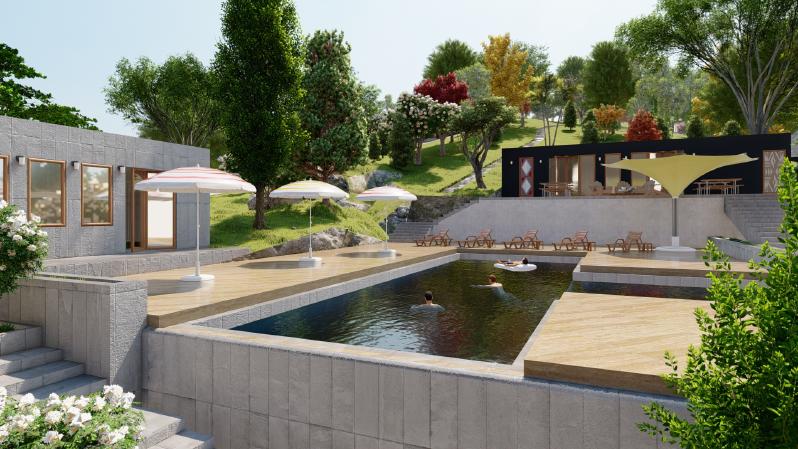
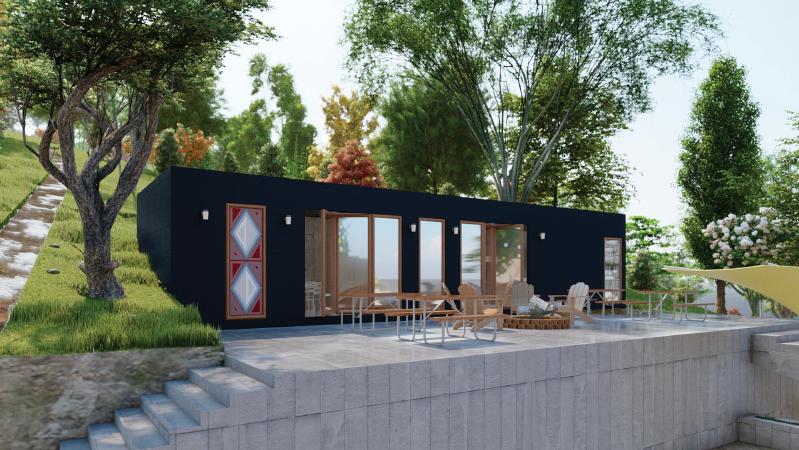
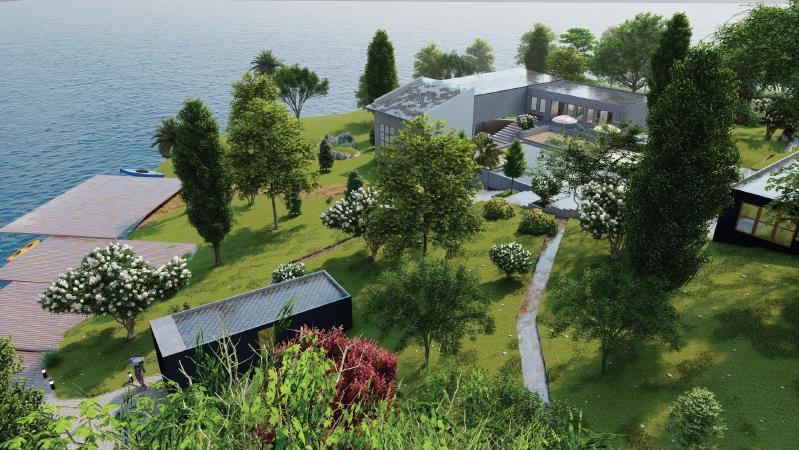
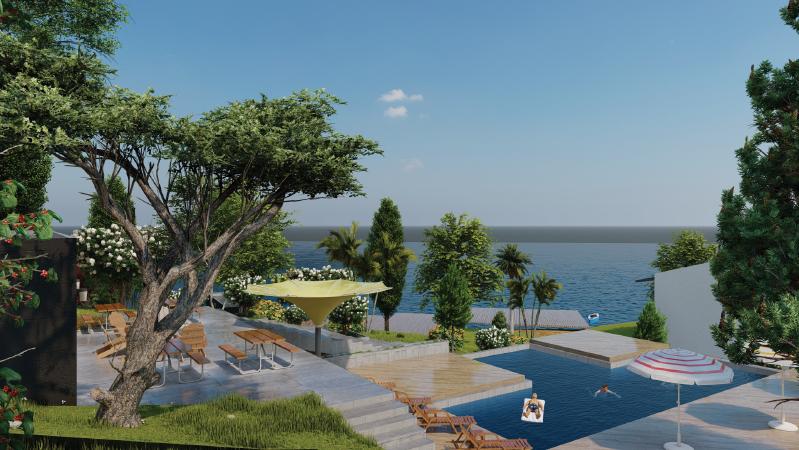
There are three ways to interpret the concept: material, site and the architecture. The material is interpretation is pretty literal. The plastic bottles used in packaging of goods and products are collected after being discarded. These bottles are then upcycled and reprocessed to make plastic bricks. The site, Wenchi, is a place that is revived through nature. It was once a beautiful site before the volcanic eruption and then an even more beautiful site after the crater lake was created. The architecture implements the concept through three steps; the communal programs are the initial lives lived before death, the path taken is a representation of death as the travel is tiresome and somewhat challenging, lastly the individual cabins are of the essence bred out to form the second life.
Thesis | ARCHITECTURE
user Program Unit
per person Total
CLEAR 28MM KG) BLUE 30MM KG 1 4 - - - - 3 G/PC 2016 PCS/BAG 70 BAGS 1 834 56 1 2 22 G /PC 1440 PCS BAG 2 0 BAGS 6 652 8 8 G/PC 1440 PCS/BAG 210 BAGS 5 443 2 1 30 G/PC 1008 PCS/BAG 70 BAGS 5 140 8 28 G PC 840 PCS BAG 20 BAGS 2 822 4 2 44 G/PC 672 PCS BAG 300 BAGS 8 870 4 40 G/PC 672 PCS/BAG 672 BAGS 3 897 6 JAR - - 700 G/PC 1 00 PCS 770 TOTAL - 20 664 TOTAL - 4 767 76 TOTAL - 35 431 76 KG PER 24HRS 38 TONS OF PLASTIC A DAY | EXCLUDING THE CAPS 40.6 TONS OF PLASTIC A DAY IN TOTAL 30 MM 1 7 G 6200 PCS/ BAG 120 BAGS 264 8 KG 28 MM 2 7 G 6200 PCS/ BAG 80 BAGS 339 2 KG 2 604 KG 93.15% 6.85% Non-recyclable- PET Resin is 35,431.76kg which amounts to 93.15%. Recyclable HDPE caps is 2,604kg which amounts to 6.85%. Non-Recyc ab e Recyc ab e
Number of end
area
Area Dimensions LOGISTICIAN ADVENTURER PROTAGONIST LOGICIAN ENTERTAINER
LD, LDPE PP PP&A FIBERS HDPE PET PS PUT PVC OTHER POLYMER TYPE 0 tons 10 million tons 30 million tons 50 million tons
Resurrection | CONCEPT
primary plastic waste generation by polymer, 2015
NEW BUILDING BLOCK | Process
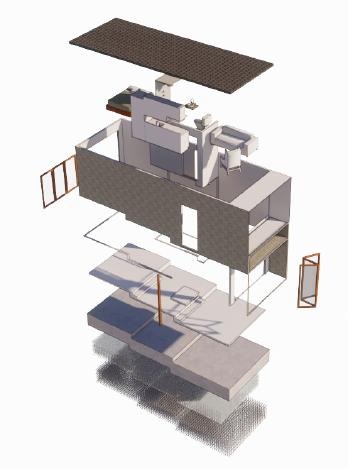
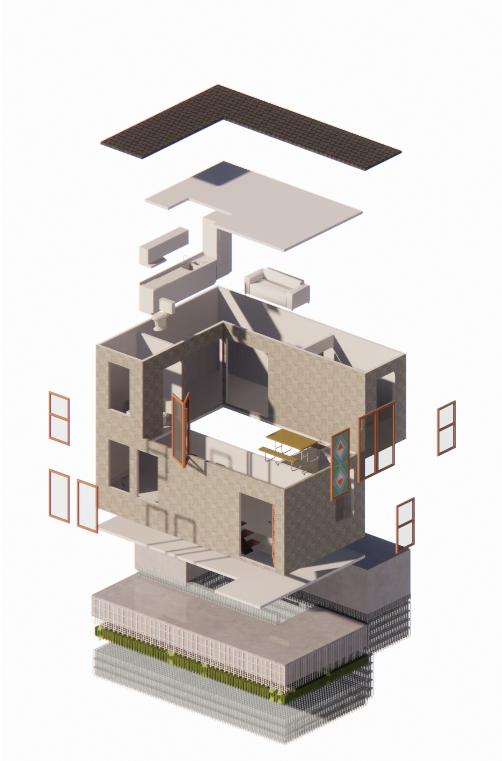
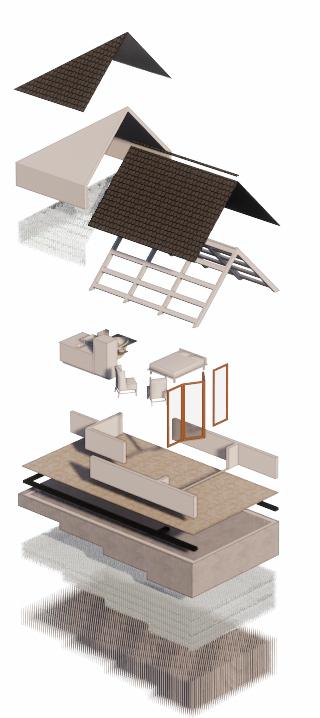
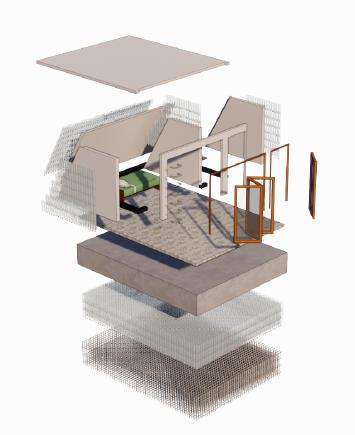
There two ways to construct using plastic bottles. One is using an unprocessed bottle and burry it with concrete along with the structure. And the other is using PET bottles, shredding the pieces, melting them and molding them into shape mixed with either sand or concrete. This process yields a strong building block that can be used and reused multiple times and even reshaped into other pieces as fit.
End Result of New Building Material

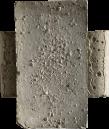
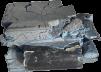
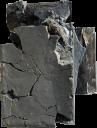
One block of PET needs 5kg of PET plastic
A single 2ltr PET bottle weighs 60 grams
One block requires 83 bottles of 2ltr bottle
One sq meter takes 36 blocks (in the size I managed to mold out)
One sq meter area will require 2,988 bottles
On the other hand:
One 2ltr bottle has a height of 40cm and a diameter of 11cm
One sq meter takes 18 bottles that are unprocessed
Thesis | ARCHITECTURE
The Adventurer’s House
The Adventurer’s House
The Entertainer’s House
The Logician’s House
Concrete Mold Plastic + Aggregate Mold