Feminine Visions: Friendship, expression and social dynamics.
BY ELEANOR DUFFIELD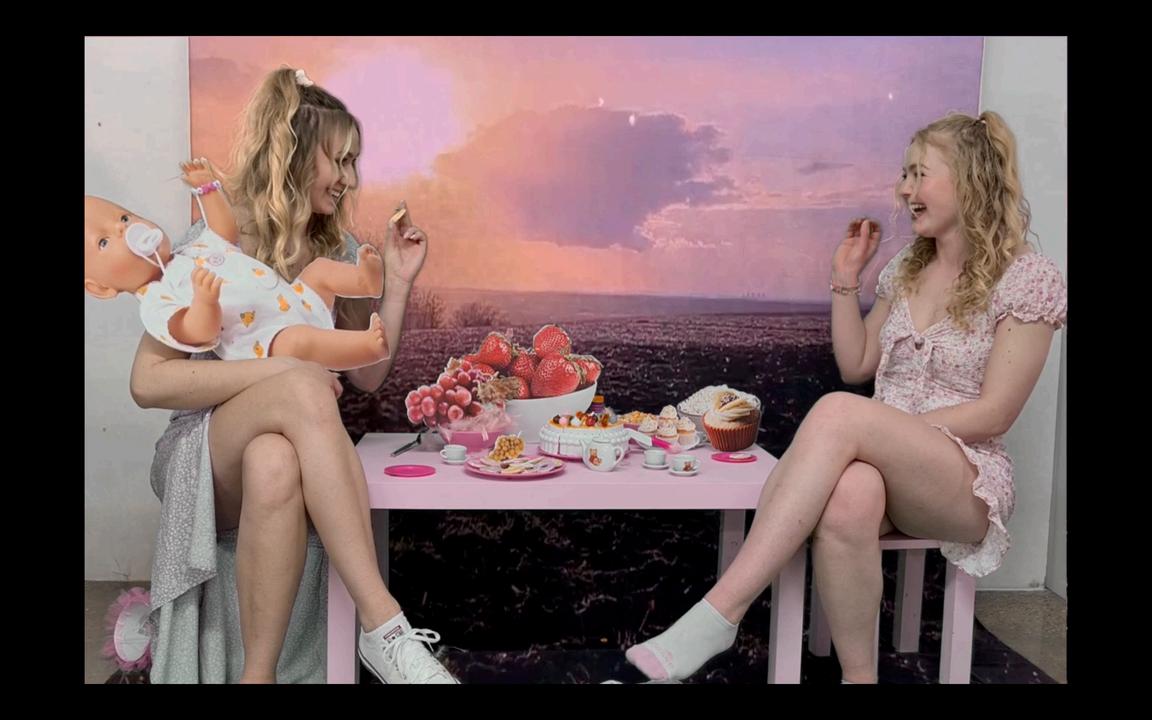
22 MAY 2024
supporting women, with self reflection on Duffields artwork and place as an artist.
Art has always been a reflection of the human experience, with an evergrowing concern for understanding identity and its representation in the art world The relationship between femininity and shaping identity has particularly sparked interest. Does this make it feminist art just because it has a female agenda? Does it make you a supporter of Marxist or radical feminism in expressing fondness towards the idea of the independent woman? Does putting 'sisters before misters' silently scream at destroying the patriarchy in a Marxist-feminist manner? Today, contemporary artists look through the feminine lens to explore the depths of the female experience, reflecting on how much
art serves as a mirror to society and uncovering somewhat hidden meanings behind artworks.
This article delves into the transformative power of feminine art, exploring how contemporary female artists revolutionised artistic expression while challenging societal norms Examining the influence of female friendship, societal attitudes towards women and their relationships, and personal encounters reveals how femininity has shaped and continues to impact the art world while addressing the persistent challenges that female artists face. Embark on this artistic journey focusing on the world of feminine expression in art, capturing
what it means to be female in a complex, ever-evolving society
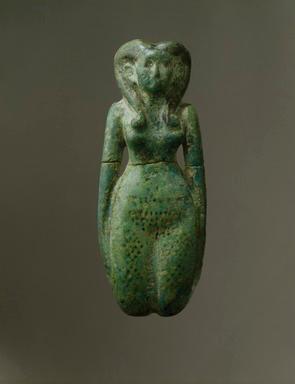
The progression of women's roles and representations in art history has been a complex journey, with many challenges accompanying the advancements In ancient civilisations, such as ancient Egypt, women were often shown in maternal roles, representing motherhood and fertility. Fertility symbols such as “Female Figurine (ca 1938-1630 B C E)” held by the Brooklyn Museum, were used to ‘enhance a wife’s fruitfulness and a husband’s potency by invoking Hathor, the goddess of sexual love’ (Brooklyn Museum, n d ) However, ancient Egypt is not representative of all ancient societies, as women in Ancient Egypt had a high degree of equal opportunity and freedom (Nardo, 2004). Women in the arts remained limited in most societies, with male artists often overshadowing them For example In Ancient Greek societies women were represented in line with the patriarchal society, depicting women as homekeepers, with signs of nudity representing prostitution
For centuries, art was predominantly created by men, for men The result of this meant that any representation of women was idealised or eroticised, including female friendships and exhibiting women in domestic roles, reinforcing the societal norms of the time For example, “The Rape of the Sabine Women (Pietra de Cortona, 1627-1629)” paints the abduction and rape of the Sabine women in an erotic style, highlighting their naked bodies rather than the violence behind the act Similarly, “The Three Graces (Raphael, 1517-1518)” exhibits women through the lens of the male gaze, emphasising physical beauty and suggesting erotic appeal This typical portrayal of women as a sexual, fertile object was common throughout history until women's rights began to be questioned and protested for.
The visibility of women in arts emerged in the 19th century, with increased activism for women's rights, but the artwork created was limited due to societal expectations restricting access to education and professional opportunities in art It was not until the early 20th century that patriarchal norms were really challenged, promoting women's artistic expression in the rise of feminist art movements The feminist art movement began in the early 1970s, with artists consciously responding to developments in feminist art theory. Groundbreaking studies such as Linda Nochlin’s (1931-2017) essay “Why Have There Been No Great Women Artists? (1971)” Influenced the creation of artworks responding to social and economic factors preventing female artists from achieving the same status as their male counterparts (Tate, 2022) This has led to a surge in artworks created by women, celebrating and embracing everything about ‘the woman’. However, there is increasing concern for ‘artworld feminism’, using feminism as a label to
promote work without serious attention to feminism politics (Deepwell, 2023), with some arguing that personal reflections should not be the voice of feminist politics as it may be too niche.
Whilst history may have seen women as oppressed figures, the modern-day liberal feminist movement is trying to change that; with feminists having a long history of challenging the status quo (see Mackinnon, 1979; Yoder et al , 2011) feminist activism focuses on equal rights for men and women (Russell, Oswald and Cotter, 2024). Despite feminism coming a long way, contemporary universities have been openly hostile to feminism, arguing that it is no longer necessary, as women have equality in the West (Deepwell, 2023), indicating that societal opinions still challenge equality for men and women This contradicts recent warnings of a dramatic deterioration of women’s rights worldwide (Amnesty International, 2022), indicating that despite an absence of support from institutions, there are still issues that must be addressed
Despite questionable representations of women in art throughout history, they do mirror the constraints and perceptions of their times With a shift in artistic representation reflecting societal changes, the complexity of women and their relationships gained recognition, reflected within the art world Modernist artists began to explore these themes in their work, showcasing genuine representations, thus leading to a departure of eroticised depictions and an arrival of unfiltered truths and experiences that women wanted to share.
Female friendships are now represented by female artists, who can portray to the reader their personal
experiences and reflections on what female friendship means to them One artist who explores this is Mary Cassatt (1844-1926), who captures moments of women's lives and quietly paints these for the audience to reflect on. One such painting, “The Tea (1880)”, resonates with artist Eleanor Duffield as it offers a glimpse into the friendship between two girls, sharing an experience together of drinking tea.
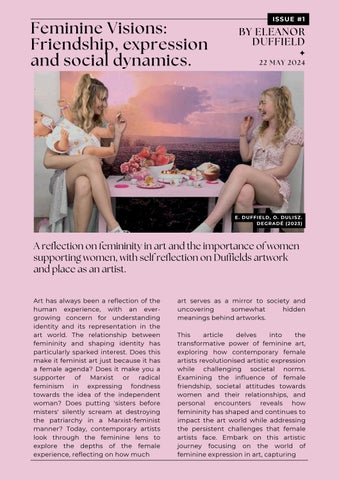
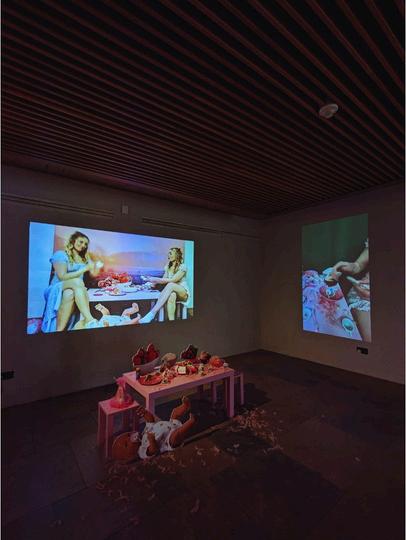
It also unravels deeper societal issues from its time The painting reflects societal changes in the importance of female networks, acknowledging social engagement, where women would come together to discuss their disagreement with social norms and laws, actively participating in social causes, such as the suffrage movement. This piece particularly stands out in reflection on her collaborative work, as similarly “Degradé(2023)”, a collaboration piece between Duffield and fellow artist and female friend Oliwia Dulisz, contemplated naming their work ‘spilling the tea’, when creating their tea-party based installation Despite being centuries apart, this shared common ground of bonding over tea creates a connection to the work, upon relating to the idea of women’s social bonds “The Tea (1880)” shows two girls sitting together, with a cup of tea each, plus the tea set in front of them. Similarly, in “Degradé (2023)”, Dulisz and Duffield sit opposite one another, playing with the tea set in front of them, giggling over their interpretation of playing grown-ups, slipping in and out of character between the world of make belief as children versus talking about their own genuine issues as adults, gossiping over boy dramas and general life stresses, reflecting on their life in the 21st century. This supports the idea of female alliances offering love to one another through their friendship, which is both the case today and over a
century ago. Society has changed massively in the 150 years between the artworks, but the importance of female friendship and shared activities has remained.
Reflecting on “Degradé (2023)” and its historical response to the 18th and 19th century embroidery samplers, there is a common theme of women as the homemaker, as well as deeper meanings woven in of how women communicate to each other in hidden ways “Degradé (2023)” works to unpick the political and religious threads of the archived textiles, exploring social rituals and their influence on female subservience Societal values within the time period, in which the embroidery samplers “were expected to be chastity, modesty, compassion, and piety” (Emsley et al. n.d), compared with our experience of childhood in the modern day and how “During the last halfcentury, women have been working out of the home, yet women have never stopped being the primary caregivers and homemakers” (Dyson and Woodruff, 2017) is shaped from childhood experiences In being treated as second-class citizens, whose voices were censored, women developed a language of silent communication within embroidery through the use of flowers For example, water lilies represent a purity of heart, compared to marigolds, which symbolise grief (Ericsson and Brooks, 2008). This not only reflects on women's lack of freedom in expressing themselves at the time but also in the modern day Only today, we communicate through voice notes to quickly communicate a long message, emojis to signal our emotions, or a quick snap of facial expressions of hand gestures to check on one another, all coming down to safety. So despite now having laws in place, such as the Equal Pay Act (1970) and the Equality Act (2010), there is still a divide within society, especially
concerning women's safety A recent discussion trending online asking a man if he would rather his girlfriend cross paths with random man or a bear whilst alone in the woods highlights societies complacency towards women still feeling unsafe around men, and for valid reason. For example, one study stated that the acceptance of rape myths functions to normalise and minimise the perception of harm resulting from sexual violence, further perpetuating sexual violence against women (Payne et al., 1999). This shows how trivialising sexual violence silences voices that need to be heard, preventing others from speaking up over fears of being doubted Secret communication results from this, allowing women throughout history to be heard without fear of ridicule from those who don't wish to hear them
The subtle yet impactful shifts in societal attitudes towards women's roles and relationships seen in 19thcentury art led to huge transformations in the centuries following Foundational changes within the art world and the impact of activist work made way for significant advancements in the representation of women, both as the subject of art and as the artists themselves. By the 1970s, the feminist movement had gained a significant voice, challenging cultural norms and gaining authentic representation
DEGRADE (2023) E DUFFIELD; O DULISZ INSTALLATION. LINCOLN MUSEUM. PHOTO CREDIT: MELODY PHELAN-CLARKE.In the 1970s, female artists continued pushing boundaries and addressing women's portrayal in society Arguably, one of the most influential artists of this time was Cindy Sherman (1954-), with works such as “Untitled Film Stills (19771980)”, “Centrefolds (1981)”, and more recently, “Society Portraits (2008)”, exploring issues such as identity and gender alongside the portrayal of women’s role in society (Gaylord, 2016). Her imaginative use of self-portraiture offered a complex view of femininity and pioneered the way for other artists to use similar techniques, such as Gillian Wearing. Sherman's “Untitled Film Stills (1977-1980)” portrays herself as many characters, from the working girl to the lonely housewife, capturing stereotypical portrayals of women in the media. This series challenges traditional views and the male gaze: the state in which the world is viewed as a heterosexual man would view it (Given, 2020, p 221)
Similarly, in Centrefolds (1981), Sherman brings attention to the objectification of women, mimicking the layout of
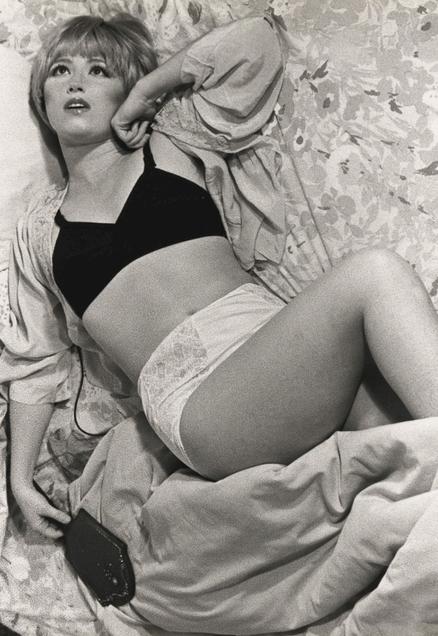
centrefolds in male magazines, where women are portrayed in a sexualised manner Sherman's shots, contrastingly, show the women in vulnerable, distressed states, making the audience consider consent, reflecting on the dehumanisation of women in the interest of male sexual satisfaction The photographs became a lightning rod for political debates Some critics read them as a feminist parody of soft-core porn; others criticised them for depicting women as victims (Allen, 2021) This is revolutionary for female representation as it also seeks to shift the view to the female gaze, allowing men to experience the feeling of being "othered" by media, with the hope of encouraging male viewers to feel empathy for women's experiences (The Female Gaze, 2022).
Later, in 1985, the anonymous group Guerrilla Girls formed, with the aim of fighting sexism and racism within the art world. Their iconic piece that changed it all: “Do Women Have To Be Naked To Get Into The Met Museum? (1989)”, which targeted the Museum of Modern Art in New York This poster shed light on the high underrepresentation of women artists in MOMA's collection, bringing attention to systemic bias: less than 5% of artists in the Modern Art sections are women, but 85% of the nudes are women. So, does the institute exist to reflect the male gaze? Guerrilla Girls use humour and anonymity to make their message engaging, aiming to reach a wider audience with focus on the issue rather than the individual. They also highlight the importance of female solidarity by collaborating with other feminist artists and groups, creating a solid unified front against discrimination, and being adamant about keeping the issue in the public eye. The result of their persistence has pressured art institutions to reflect on their own practice, introducing policies
FIGURE 2: CINDY SHERMAN. UNTITLED FILM STILL #6. 1977. GELATIN SILVER PRINT. THE MUSEUM OF MODERN ARTallowing for greater representation of women and minority artists For example, the Tate Modern in London launched the "Artist Rooms" series, which includes solo exhibitions of contemporary artists from underrepresented backgrounds. However, almost 40 years onwards, there are still gender disparities affecting the careers of artists; one study found that only 28.9% of artists within London's major commercial galleries were female With every gallery identifying parenthood as a significant obstacle for women artists (Judah, 2022, pp.60–61). This signifies how, despite significant changes in societal attitudes as well as the introduction of equality acts, childcare and domestic duties still fall largely on women, reinforcing traditional stereotypes. Perhaps that is why there is continued emphasis on women supporting women, for example, by creating environments in which women can take up space, they can thrive in being able to be themselves and use their voice (Perez, 2020, p.164169)
Duffield's installation “I can see your nipples (2022)” involved a guerrilla-style promotion of sticking nipples around campus, with no identity to associate with it, drawn from Guerrilla Girls' guerrilla tactics With great inspiration from the Guerrilla Girls' goal of equal representation, her sculpture placed 200 life-casted silicone nipples to create a stage for two pairs of nipplecontaining goggles above them Reclaiming an embarrassing situation to empower women and share awareness of the simple fact that everyone has nipples, so why is it highlighted when a woman’s are visible but not a mans? Pressing attention away from the victim and asking for answers on why a stranger thought it appropriate to attempt to humiliate her in public for the sake of nipples For
centuries, blame has shifted back onto the victim, asking women what they were wearing when they recount experiences of sexual harassment or assault (Given, 2020, p. 190); the more voices protest victim blaming, the quicker societal attitude will change to stop pinning any blame on to the victim Angela Yee expresses this in her article Braless White Women (Yee, 2020, pp. 154-163).
“I hear conversations frequently from women of all ages who have had to deal with sexism, sexual assault, coercion and rape. And alongside those conversations I hear people question her validity, who question why she took so long to speak, and who question her motives. They wonder if she put herself in the situation, or if she sent out the wrong signals. They accuse her of wanting a quick payout. They bring up her sexual history, the way she dresses, who she has dated, and anything else that may discredit her. And they wonder why it’s so difficult to come forward with the truth about men or women abusing their power.”
-(Yee, 2020, pp. 154-163).
It has proved so important for women to come together and support one another, sharing the experience of existing as women in a male-dominated world
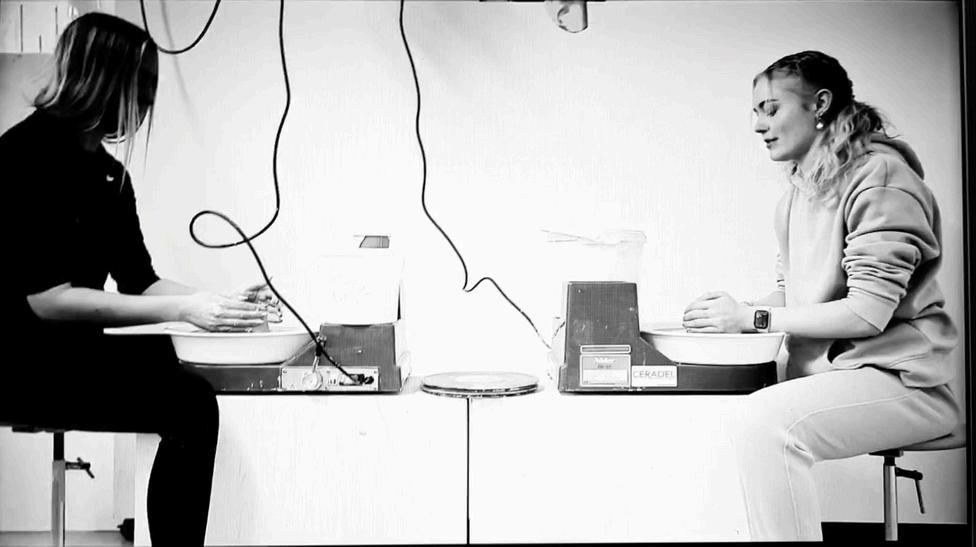
SALSA DANCING POTTERY (2022). E. DUFFIELD; O. DULISZ. PROJECT SPACE PLUS, UNIVERSITY OF LINCOLN
This is shown in another collaborative piece between Duffield and Dulisz, “Salsa Dancing Pottery (2022)”, which embraced female friendship, supporting one another through different life stages With girly chats sharing their successes, hardships, gossip, and comparisons of healthy relationships vs breakups, embracing being in different life stages with one another’s support The development of this work was just as important as the final piece, supporting one another to leave their comfort zones and explore performance art, giggling their way through hiccups along the way as they salsa danced in “Tearing (Alice and White, 2022)” Revisiting the importance of communication, Duffield and Dulisz worked to uncover the communication of a male-led dance, rewriting the choreography as two females Exploring the importance of respecting boundaries set within our bodies framework. By taking the significance of a male lead in the dance, we could reclaim independence from the male gender typically required here
Reflecting on the influence of femininity in the art world in the
Reflecting on the influence of femininity in the art world in the modern day, artists continue to build on the legacy of the founding feminist artists. The digital age allows for new opportunities in connecting and collaborating, working together in challenging societal norms, creating an inclusive space on a global scale. Social media platforms allow this to be even more readily available, reaching people all over the world, despite the issues in censorship online, such as Instagram's censorship of the female nipple covered under the Adult Nudity and Sexual Activity guidelines(Instagram, 2021). There have been many advances in promoting minority, marginalised, and oppressed artists' work by creating an 'online studio'.
Tracey Emin (1963-) uses her Instagram account to share her artworks and her political views on feminism alongside documentation of her everyday life. She shares her articles published in the Evening Standard, one such article being “When you just can’t say no (Emin, 2023 p 12)”, addressing themes of sexual assault and rape. Emin recalls traumatic, non-consensual events from her childhood, alongside her reflection
on it as an adult, displayed against images of her artwork Not only does this reach a wide audience worldwide, it educates the younger audience on the inappropriateness of situations whilst normalising the female body, fluids and lifestyle to all of her followers. Emin has always been open in discussing her life and challenges that she has encountered “They Held me down while he Fucked me (Emin, 1976)”, is a particularly vulnerable piece exposing her childhood trauma, depicting sexual aggression Despite this piece being almost 50 years old, in circulating an article related to the artwork, Emin educates her audience on the same societal issues, advocating for women’s rights She also frequently participates in interviews, artist talks, and public discussions. This shows how, throughout the decades, Emin has continued to challenge and inspire audiences worldwide
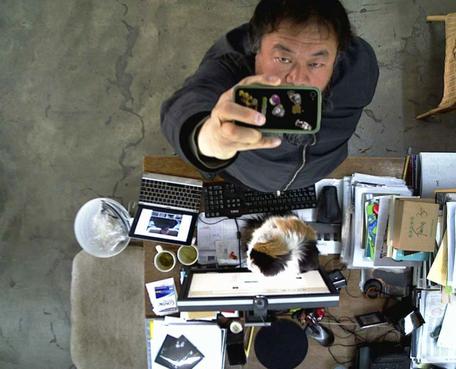
Online presence is becoming more influential by the day. So, it’s no surprise that Ai Weiwei (1957-) also makes his voice heard through online platforms He is a Chinese Activist artist, documenting the Chinese government zero tolerance attitude towards any challenge of political norms (Ai Weiwei, 2021 P 163) He documents the abuse of human rights and protests for political change, incorporating the use of social media into this. His use of digital platforms in promoting activism highlights the potential of social media platforms in facilitating change in societal attitudes Artwork such as “WeiweiCam (2012)” offered the audience an inside look at Weiwei’s life in his home, mirroring the cameras set up by Chinese authorities, as a symbolic way of increasing transparency in the Chinese government. This was then taken down 46 hours after it went live, highlighting the censorship from the government So, despite not being an activist solely
advocating women’s rights, it is fair to say he's an influential artist who educationally uses his platform for societal changes However, Weiwei has recently voiced his concern regarding the lack of transparency on social media platforms, arguing that it appears a fertile ground for freedom of speech, but the companies who own the platforms simply allow what they like and don't allow what they don't like (Perry, 2021). This, of course, takes away the authenticity of the message shared, so whilst Weiwei uses his platform to educate, he's also vocal about the distortion that may occur depending on the platform used.
Exploring the expression of femininity, female friendship and personal encounters by considering the societal attitudes of the time, reveals a rich history of narratives that reflect and challenge such attitudes. From the vulnerable confessions seen in Tracey Emin’s "They Held me down while he Fucked me (Emin, 1976)", to the captivating photographs of Cindy Shermans “Centrefolds (1981)” , these artists express their identities with a shared goal of educating on inequalities
In Duffields and Dulisz collaborative work, influenced by artists named throughout the article, the emphasis on female friendship shows the impact of feminist art Highlighting the influence
FIGURE 3 WEIWEICAM (2013) AI WEIWEI IMAGE COUTESY OF ARTSY.of female support and reassurance to test comfort zones and become a more confident individual and artist
Throughout history, it has been evident that the art produced reflects the societal attitudes of the time. The representation of women in various lights shows the shift from them as the delicate subject matter to being recognised at the artist themselves. Artists such as Cindy Sherman and Guerrilla Girls paved the way for female representation in art through the likes of feminist conversation Their platforms shone light to gender inequalities with the aim of promoting a society closer to equality From this, generations have been inspired to voice their own identities and demand the changes they require to be seen within society, by challenging institutional biases
Overall, the expression of femininity, friendship, and social dynamics within the art world highlights the power artists hold to challenge and transform, calling attention to the ongoing struggle for equality and representation By examining the contributions of female artists, both contemporary and historically, society can gain a deeper understanding surrounding the evolution of feminist art and its contribution in shaping societal attitudes towards women’s relationships and experiences.
About the writer:
Eleanor Duffield is a student at the University of Lincoln, studying a Masters of Fine Art. She works predominantly in sculpture, video and installation. Sociological research is a key influence of her work, producing responses to societal norms and opinions
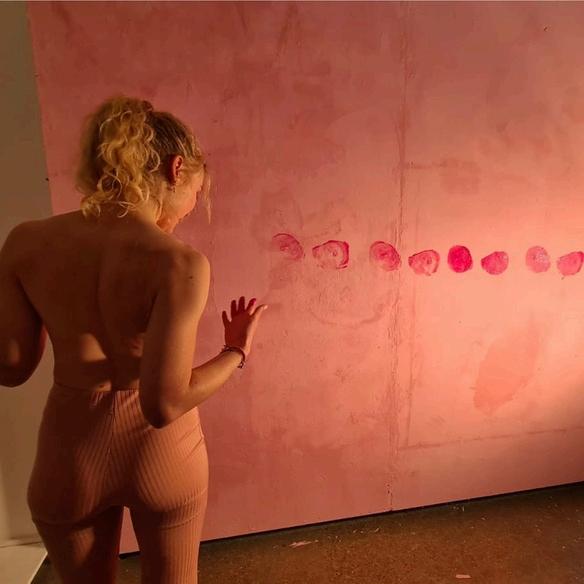
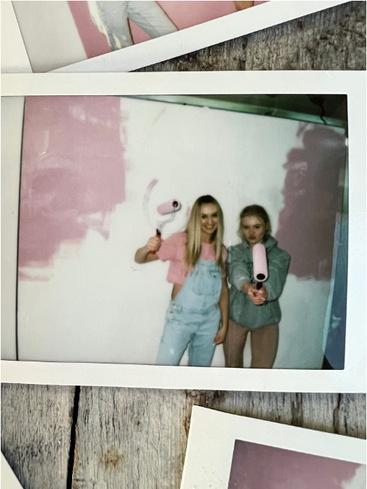
Duffield started working collaboratively with artist Oliwia Dulisz in 2022, particularly focusing on their idea of friendship and embracing femininity themselves
Duffield can be contacted on instagram @erduffield art Dulisz can be contacted on instagram
Reference List
@jw3837 (2015) WeiweiCam [online] Actipedia Available at: https://actipedia org/project/weiweicam [Accessed 21 May 2024]
Abraham, A. (2024). Is Feminism in Its ‘Flop Era’? [online] artreview.com. Available at: https://artreview.com/is-feminism-in-its-flop-era-alice-cappelle-collapse-feminismreview/#:~:text=Ending%20optimistically%2C%20then%2C%20the%20author [Accessed 20 May 2024]
Agarwal, P (2024) Letters and embroidery allowed medieval women to express their ‘forbidden’ emotions. [online] The Conversation. Available at: https://theconversation.com/letters-and-embroidery-allowed-medieval-women-toexpress-their-forbidden-emotions-223114 [Accessed 20 May 2024]
Ai Weiwei, A (2021) 1000 Years of Joys and Sorrows : A Memoir New York: The Bodley Head
Allen, G. (2021). Opening up Cindy Sherman’s Centerfold (Untitled #96) | Magazine | MoMA [online] The Museum of Modern Art Available at: https://www moma org/magazine/articles/607 [Accessed 21 May 2024]
Ambrose, I (2023) THE ART OF FRIENDSHIP [online] ARTS o’ MAGAZINE Available at: https://medium.com/arts-o-magazine/the-art-of-friendship-cc0019b1d861 [Accessed 21 May 2024].
Amnesty International (2022a) International Women’s Day: Dramatic deterioration in respect for women’s rights and gender equality must be decisively reversed [online] Amnesty International. Available at: https://www.amnesty.org/en/latest/news/2022/03/international-womens-day-dramaticdeterioration-in-respect-for-womens-rights-and-gender-equality-must-be-decisivelyreversed/#:~:text=March%207%2C%202022- [Accessed 20 May 2024]
Amnesty International (2022b) Women’s Rights [online] www amnesty org Available at: https://www amnesty org/en/what-we-do/discrimination/womens-rights/ [Accessed 21 May 2024].
Ausha (2020) [Feminist Art] Boundary-breaking artist Tracey Emin on her very personal return to painting [online] Dior Talks Available at: https://podcasts dior com/traceyemin [Accessed 21 May 2024]
Bellafante, G. (2018). Before #MeToo, There Was Catharine A. MacKinnon and Her Book ‘Sexual Harassment of Working Women’. The New York Times. [online] 19 Mar. Available at: https://www nytimes com/2018/03/19/books/review/metoo-workplace-sexualharassment-catharine-mackinnon html [Accessed 21 May 2024]
Brooklyn Museum (n.d.). Brooklyn Museum. [online] www.brooklynmuseum.org. Available at: https://www.brooklynmuseum.org/opencollection/objects/3481. [Accessed 21 May 2024]
Brooklyn Museum (n d ) Female Figurine [Faience] Brooklyn Museum Available at: https://www.brooklynmuseum.org/opencollection/objects/3481. [Accessed 21 May 2024]. Figure 1.
Reference List
Curtis, S , Yes, A and Perez, O (2020) Feminists don’t wear pink (and other lies) : amazing women on what the F word means to them London: Penguin Books
Dazed (2019). The best, worst, and weirdest parts of Warhol and Basquiat’s friendship. [online] Dazed. Available at: https://www.dazeddigital.com/artphotography/article/44600/1/never-before-seen-photos-diary-andy-warhol-jeanmichel-basquiat-friendship [Accessed 21 May 2024]
Deepwell, K. (2023). The Politics and Aesthetic Choices of Feminist Art Criticism. Arts, 12(2), p.63. doi:https://doi.org/10.3390/arts12020063. [Accessed 21 May 2024].
Emin, T (n d ) Tracey Emin ARTIST (@traceyeminstudio) • Instagram photos and videos [online] www instagram com Available at: https://www.instagram.com/traceyeminstudio/. [Accessed 21 May 2024].
Emin, T (8AD) When you just can’t say no Evening Standard, Sep , p 12
Ericsson, C and Brooks, M (2008) Silent Needles, Speaking Flowers: The Language of Flowers as a Silent Needles, Speaking Flowers: The Language of Flowers as a Tool for Communication in Women’s Embroidery in Victorian Tool for Communication in Women’s Embroidery in Victorian Britain Britain [online] Available at: https://digitalcommons unl edu/cgi/viewcontent cgi? article=1093&context=tsaconf#:~:text=so%2C%20for%20some%2C%20embroidery%20co uld. [Accessed 21 May 2024].
Gallery, J.A. (2020). Art & Society: Ai Weiwei. [online] Artsy. Available at: https://www artsy net/article/joanne-artman-gallery-art-society-ai-weiwei [Accessed 21 May 2024]
Given, F. (2020). Women Don’t Owe You Pretty. S.L.: Cassell Illustrated, pp.119, 150–163, 190, 221.
Goodpasture, E (2024) ‘A wild cocktail of emotion, politics and desire’: the history of breasts in art The Guardian [online] 6 May Available at: https://www.theguardian.com/artanddesign/article/2024/may/06/breasts-iconographyart-venice-madonna. [Accessed 21 May 2024].
Guerrilla Girls (2010) Guerrilla Girls [online] Guerrilla Girls Available at: https://www guerrillagirls com/our-story [Accessed 21 May 2024]
Hessel, K. (2023). Why do we still define female artists as wives, friends and muses? The Guardian [online] 20 Feb Available at: https://www theguardian com/artanddesign/2023/feb/20/why-do-we-still-definefemale-artists-as-wives-friends-and-muses [Accessed 21 May 2024]
Jones, R. (2012). Ai Weiwei’s Life & Art – On- and Offline. [online] Frieze. Available at: https://www.frieze.com/article/ai-weiweis-life-art-andoffline#:~:text=When%20he%20could%20deploy%20social [Accessed 21 May 2024]
Judah, H (2022) How Not to Exclude Artist Mothers (and Other Parents) Hot Topics in the Art World, pp 60–61
Khalil, R., Moustafa, A.A., Moftah, M.Z. and Karim, A.A. (2017). How Knowledge of Ancient Egyptian Women Can Influence Today’s Gender Role: Does History Matter in Gender Psychology? Frontiers in Psychology, 07 doi:https://doi org/10 3389/fpsyg 2016 02053 [Accessed 21 May 2024]
Kings College London (2019). New report reveals stark gender disparity in the visual arts. [online] King’s College London. Available at: https://www.kcl.ac.uk/news/newreport-reveals-stark-gender-disparity-in-the-visual-arts [Accessed 21 May 2024]
Kristen Gaylord (2016) Cindy Sherman [online] The Museum of Modern Art Available at: https://www.moma.org/artists/5392. [Accessed 21 May 2024].
Lloyd-Smith, H (2019) Tracey Emin lays bare her own traumas in piercing new show [online] Wallpaper* Available at: https://www wallpaper com/art/tracey-emin-afortnight-of-tears-white-cube-bermondsey [Accessed 21 May 2024]
Metal, S. (2013). So You Want to Write For an Art Magazine? Here’s How! [online] EmptyEasel com Available at: https://emptyeasel com/2013/10/29/so-you-want-to-writefor-an-art-magazine-heres-how/ [Accessed 21 May 2024]
Nardo, D. ed., 2004. Living in ancient Egypt. Greenhaven Press, Incorporated. Perry, K.E.G. (2021). Ai Weiwei says he’s changed his mind about social media: ‘They will not allow what they don’t like’. The Independent. [online] 15 May. Available at: https://www independent co uk/arts-entertainment/art/news/ai-weiwei-social-mediafree-speech-b1847780 html [Accessed 21 May 2024]
Russell, B., Oswald, D. and Cotter, M. (2024). What makes a liberal feminist? Identifying predictors of heterosexual women and men’s liberal feminist ideology. Analyses of Social Issues and Public Policy, 24(1) doi:https://doi org/10 1111/asap 12383 [Accessed 21 May 2024]
Santa Clara University (n.d.). The Gender Role of Women Depicted by Ancient Greek Statues · Santa Clara University Digital Exhibits. [online] dh.scu.edu. Available at: https://dh scu edu/exhibits/neatline/show/alexas-research-excursion-onantigone#:~:text=Statues%20depicting%20unclothed%20women%20were [Accessed 21 May 2024]
Serpentine Galleries (n.d.). Barbara Kruger: Thinking of You. I Mean Me. I Mean You. [online] Serpentine Galleries Available at: https://www serpentinegalleries org/whatson/barbara-kruger-thinking-of-you-i-mean-me-i-mean-you/ [Accessed 21 May 2024]
Shapiro, E. (2024). How artists are fighting Instagram’s nipple censorship - 1854 Photography. [online] www.1854.photography. Available at: https://www.1854.photography/2024/01/how-artists-are-fighting-instagrams-nipplecensorship/ [Accessed 21 May 2024]
Sherman, C (1977) Untitled Film Still #6 MOMA Available at: https://www moma org/magazine/articles/607 Figure 2
Sherman, C. (2019). Untitled #96. [online] The Museum of Modern Art. Available at: https://www.moma.org/collection/works/46055. [Accessed 21 May 2024].
Smith, G (2020) Like a natural woman: how the female gaze is finally bringing real life to the screen The Guardian [online] 22 Feb Available at: https://www.theguardian.com/culture/2020/feb/22/the-female-gaze-brings-a-welcometouch-of-reality-to-art. [Accessed 21 May 2024].
Somers, T (2019) Tracey Emin – A Fortnight of Tears [online] 200percentmag Available at: https://200-percent com/tracey-emin-a-fortnight-of-tears/ [Accessed 21 May 2024]
Sprague, J. (2001). Comment on Walby’s ‘Against Epistemological Chasms: The Science Question in Feminism Revisited’: Structured Knowledge and Strategic Methodology Signs, [online] 26(2), pp 527–536 Available at: https://www jstor org/stable/3175452 [Accessed 21 May 2024]
TATE (2022). Feminist art. Tate. [online] 30 Apr. Available at: https://www tate org uk/art/art-terms/feminist-art [Accessed 21 May 2024]
Tate (n d ) ARTIST ROOMS [online] Tate Available at: https://www tate org uk/artistrooms#:~:text=ARTIST%20ROOMS%20is%20a%20collection [Accessed 21 May 2024].
The Female Gaze (2022). What Is The Female Gaze? [online] The Female Gaze. Available at: https://www thefemalegaze com/what-is-the-female-gaze/ [Accessed 21 May 2024]
The White Pube (2019) Are White Girls Capable of Making Art That’s Not About Themselves? [online] The White Pube. Available at: https://www.thewhitepube.co.uk/art-thoughts/white-girl-art/ [Accessed 21 May 2024].
The White Pube (2021) Love Letter to the Art World [online] The White Pube Available at: https://www thewhitepube co uk/art-thoughts/love-letter-to-the-art-world/ [Accessed 21 May 2024].
Web Gallery of Art (n d ) The Rape of the Sabine Women by CORTONA, Pietro da [online] www wga hu Available at: https://www wga hu/html m/c/cortona/4/04sabine html [Accessed 21 May 2024]
Weiwei, A. (2013). WeiweiCam. Artsy. Available at: https://www.artsy.net/artwork/aiweiwei-stills-from-weiweicam-now-offline [Accessed 22 May 2024] Figure 3.
Weiwei, A (2018a) Ai Weiwei [online] Instagram com Available at: https://www.instagram.com/aiww/. [Accessed 21 May 2024].
Weiwei, A (2018b) Ai Weiwei: the Artwork That Made Me the Most Dangerous Person in China [online] The Guardian Available at: https://www.theguardian.com/artanddesign/2018/feb/15/ai-weiwei-rememberingsichuan-earthquake. [Accessed 21 May 2024].
Yoder, J , Tobias, A and Snell, A (2011) When Declaring ‘I am a Feminist’ Matters: Labelling is Linked to Activism Sex Roles, [online] 64, pp 9–18 doi:https://doi org/10 1007/s11199-010-9890-3 [Accessed 21 May 2024]