A lifelong interest in the nature and a deep love for art led me to pursue a career in Landscape Architecture. I am driven by a passion for sustainable development and am excited to provide bold, creative solutions that unite landscape and architecture to positively transform our environment.
EDUCATION
Lincoln University
Postgraduate Certificate in Environmental Management 2025-2026
Lincoln University
Master’s in Landscape Architecture 2024-2026
PROFESSIONAL EXPERIENCE
SELWYN DISTRICT COUNCIL
April 2024 - Present
Full-time Summer Landscape Architect Intern
• Created technical planting plans with place-based planting palette and schedule for tender
• Produced conceptual and development plans for notable sports park extension
• Participated in site visits to assess site conditions and discuss design concepts
• Peer reviewed design documents produced by third parties to provide constructive feedback
MORGAN + POLLARD LANDSCAPES LTD
April 2024 - Present
Part-time Landscape Architect Intern
• specialisation in creating realistic digital renders and digital models
• Assisting in producing drawing sets and plans for review
• Creating conceptual designs based off client requirements
EKAI CHIU LANDSCAPE DESIGN
2023
Freelance Landscape Architect
• Collaborated with clients to create realistic and in-budget designs for residential development projects
• Produced professional plans and relevant documentation for resource consent approval
• Professional client handling and communication to secure jobs and make connections
Auckland University of Technology
Postgraduate Diploma in Architecture 2023 - 2024
Bachelor’s in Landscape Architecture
Victoria University of Wellington
2020 - 2022
NCEA Level 3
Saint Kentigern College
2013 - 2019
ACHIEVEMENTS
University Representative at Public Event
2023 Uptown Festival
Selected to represent AUT at the 2023 Uptown Futures Festival to showcase University project on sustainable and innovative design.
• 3D Modeling
• 3D Visualisation
• 2D Drawing Documentation
• Desktop and Site Analysis
• Report Writing
• Urban and Landscape Design
• Construction Detailing
01
RESTORING: WAITAKERE
BRINGING LIFE BACK TO AN ISOLATED SETTLEMENT
SITE: Waitakere | West Auckland
TYPE: Landscape | Urban design
DATE: 2023
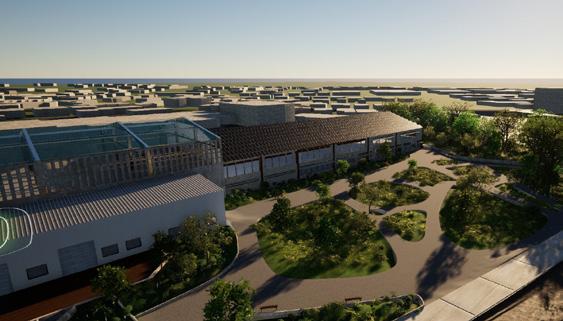
Restoring Waitakere is a project that uses sustainable design principles to redevelop a rural township into a modern urban center. The project covers environmental, social, cultural and historical issues, as well as exploring innovation in sustainable and climate resilient Architecture and Urban Design.
The project includes Urban Planning and Design for the introduction of:
- The Residential Sector
- The Urban City Center
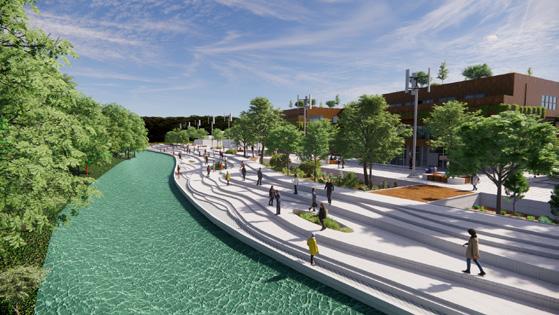
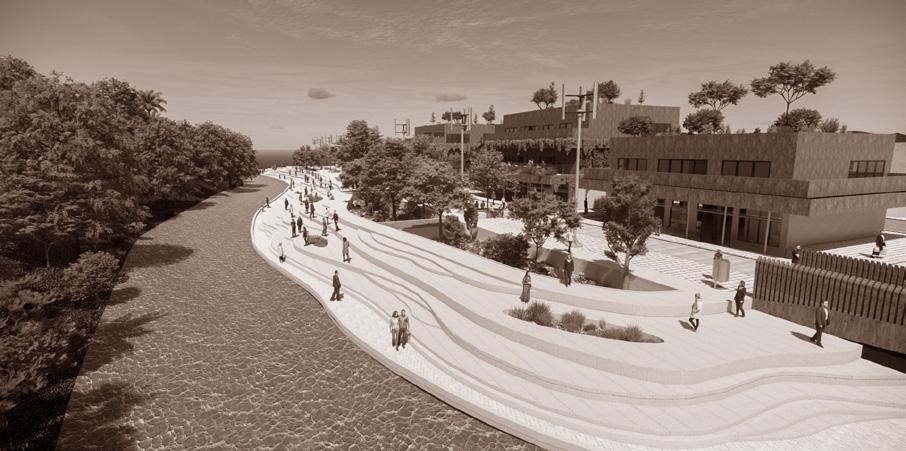
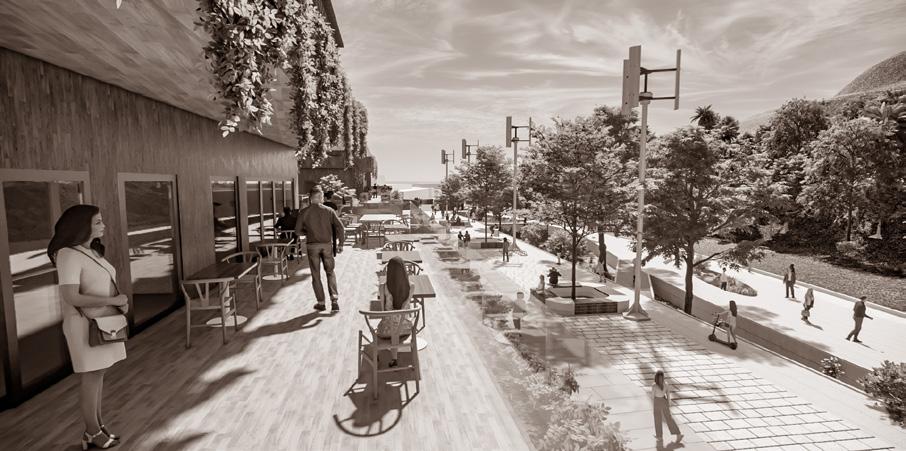
- Urban greenspaces and Riverside Esplanade
- Highlighting Local Waterbodies
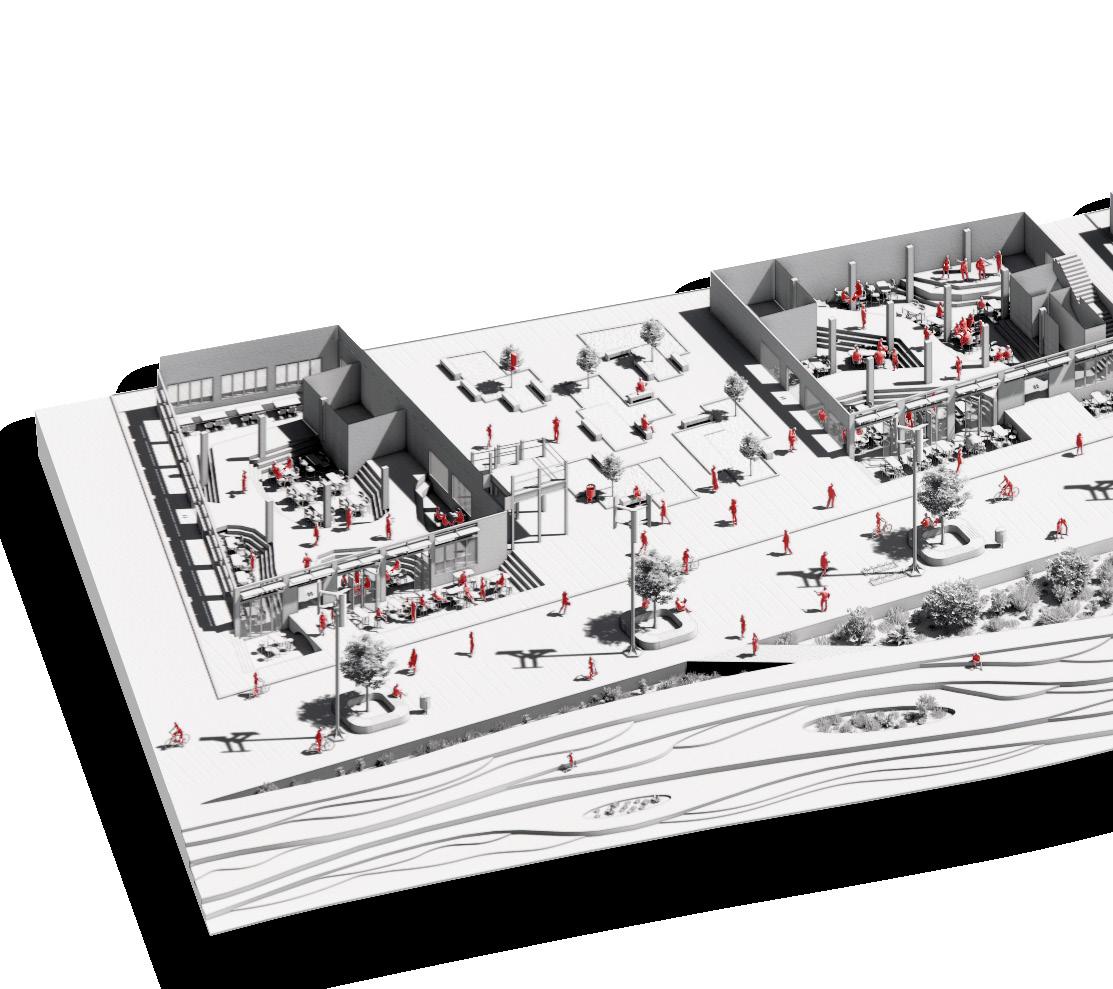
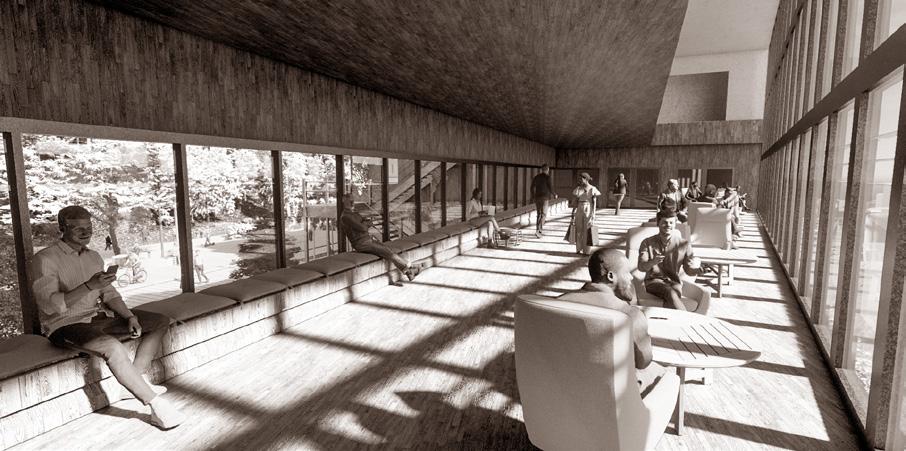
Restoring: Waitakere is centered around the development of a single building designed as an exemplar for developing structures in the area to be as sustainable and climate resilient as possible.
Floodable Floors Concept
October 2023
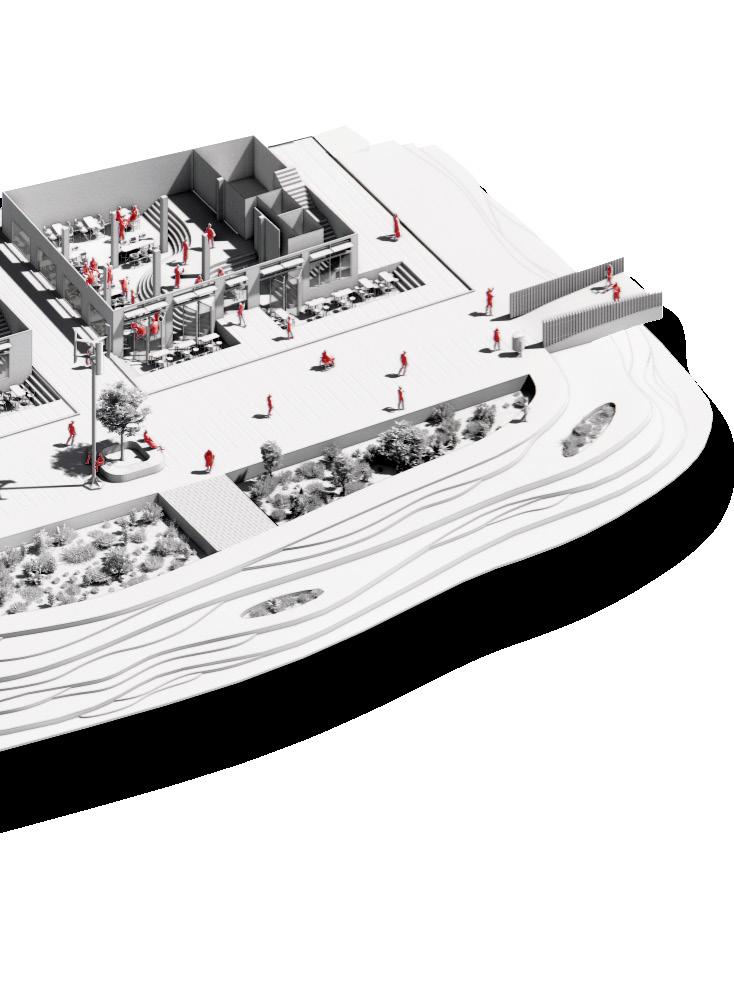
The building employs a ‘floodable first floor concept’ as a flood resilient incentive, protecting the buildings and the urban areas behind it from potential flood damages. The idea is to have designated raised platforms for access, and convex areas lowered in the ground as basins. Drainage systems are installed along the edges that outlets the collected water into aquacomb detention tanks built into the slab foundation as pods. Collected water is re-used for non-potable uses
02 THE URBAN RETROFIT
SITE: Spreydon | Christchurch
TYPE: Landscape | Urban design
DATE: 2024
The urbanization of landscapes is an already abundant issue globally that comes with various side-effects that negatively impact the well-being of our urban and natural environments from a human to a regional scale. This project aims to tackle 3 key issues that arises with intensification and urban sprawl by integrating proven design strategies with innovative ideas to increase the value of our urban cityscape by enhancing ecological services and climate resiliency.
REINTRODUCING THE NATURE TO THE BUILT ENVIRONMENT
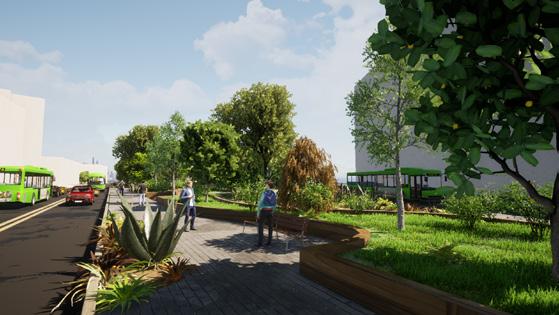
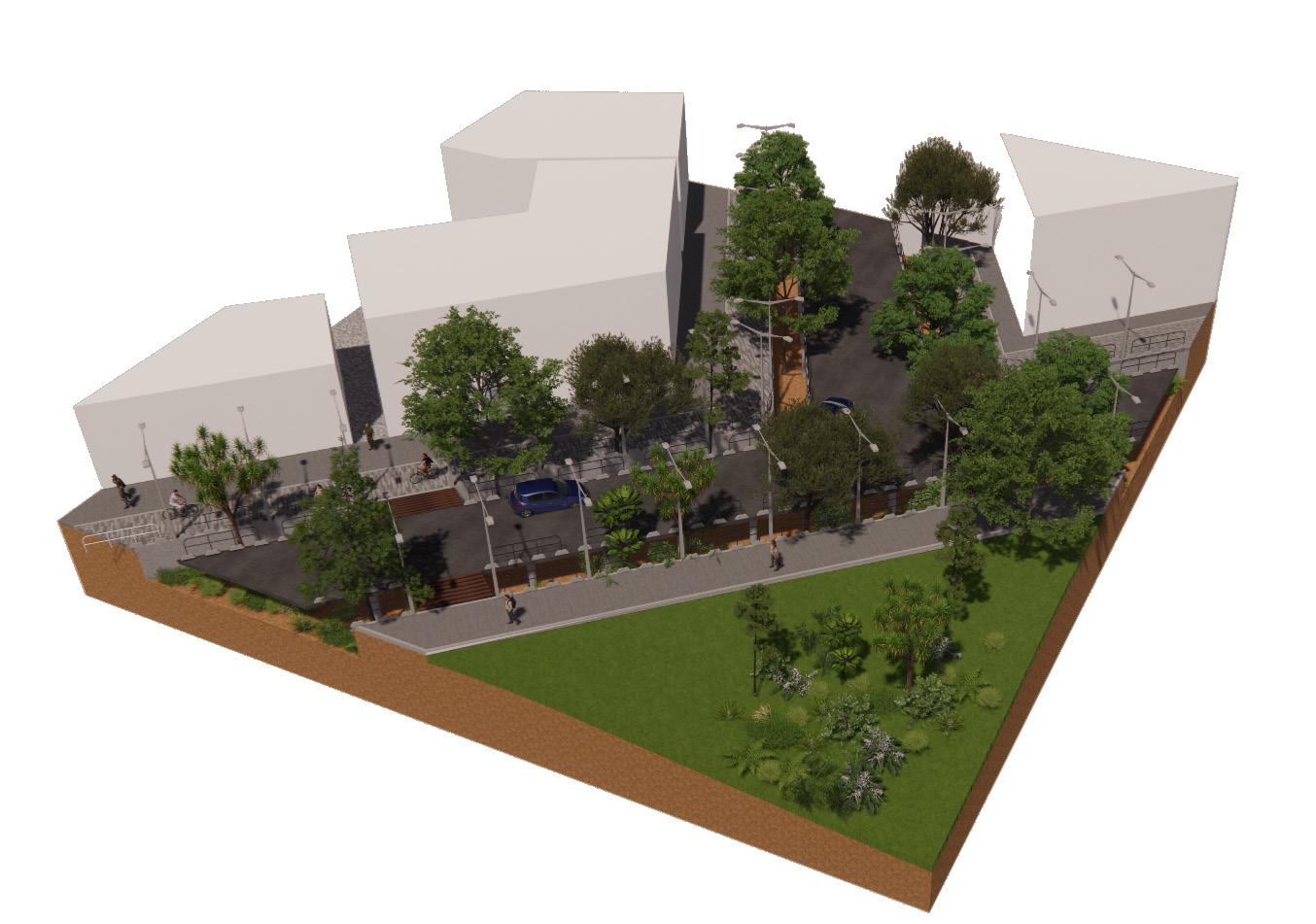
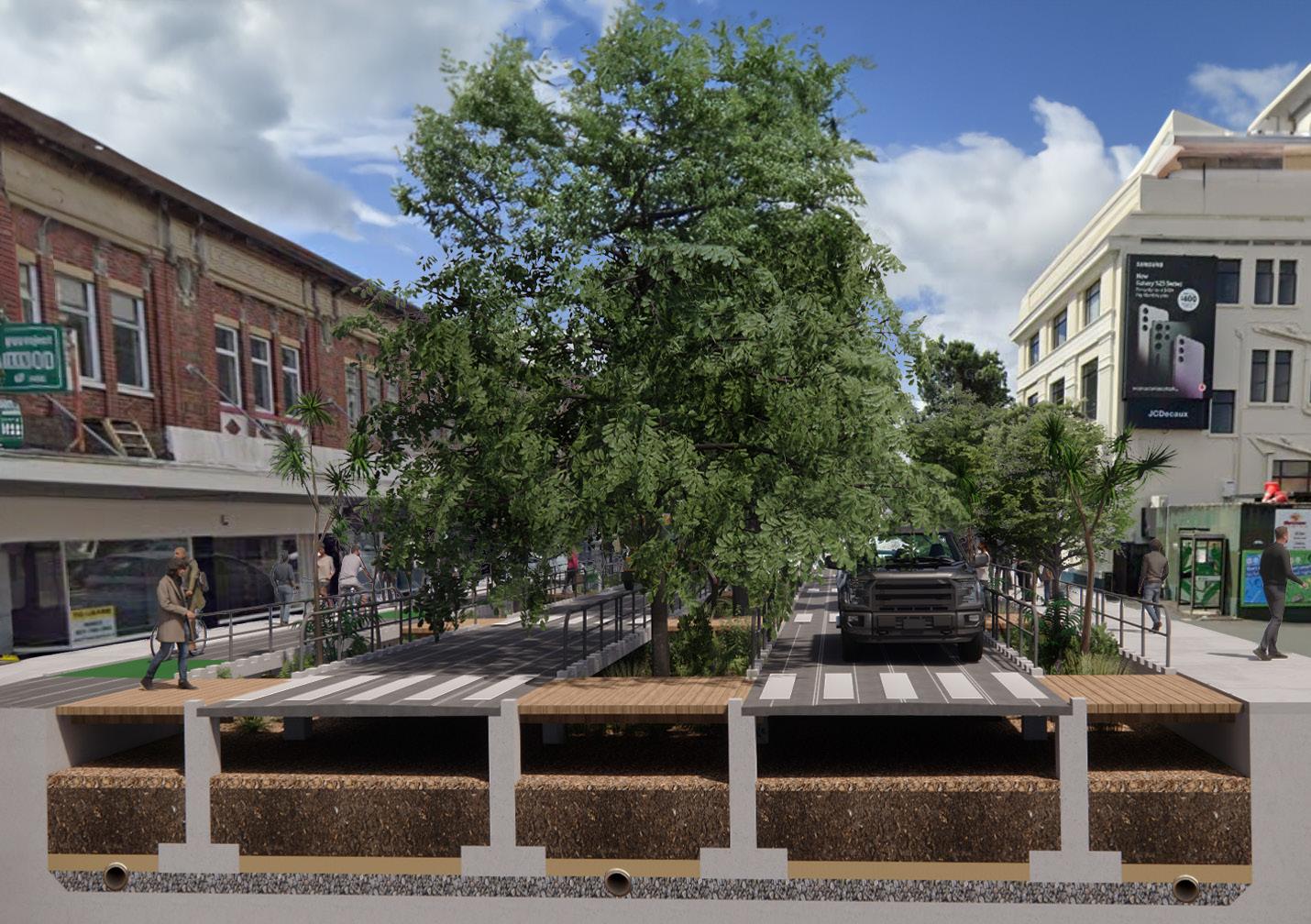
The proposed streetscape features a sub-surface wetland network running throughout the entire city, successively implemented suburb by suburb until the Christchurch regains its name as the ‘Garden City’. The goal is to increase canopy cover on streets to a minimum of 60% by 2055 to resolve the following issues.
THE ISSUE
Design Process May 2024
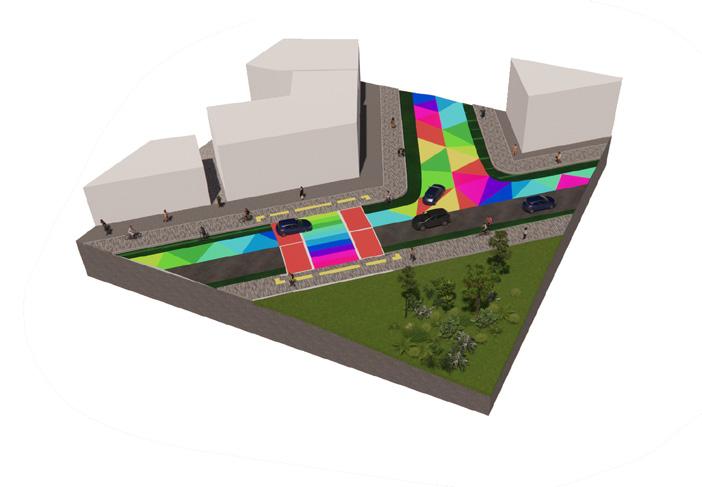
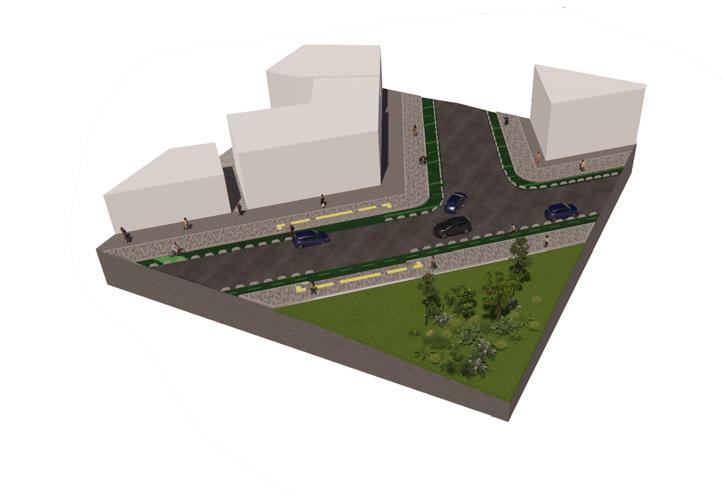
The implementation strategy starts with minute incremental changes leading to larger and larger changes over time. By slowly transforming the streets away from vehicle reliance, we are able to reduce climate impact from carbon emissions as well as increasing mitigation through carbon sequestration while cooling down the urban environment.
The steps throughout this design process is as follows
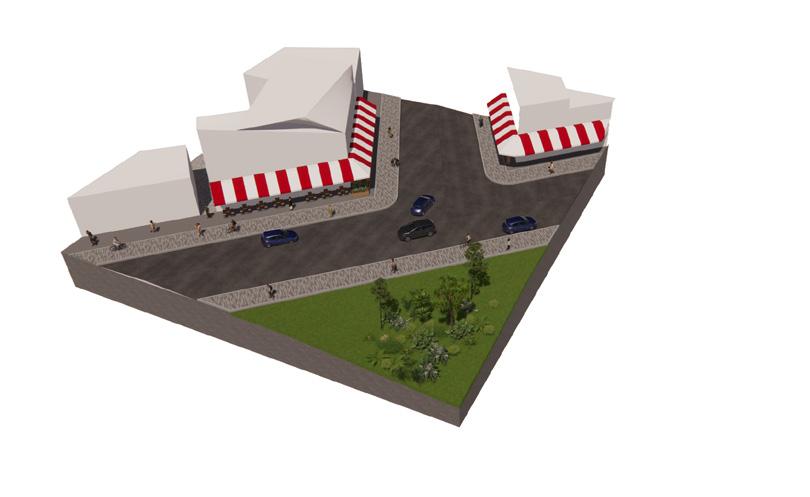
01. Active Frontage
02. Street Zoning
03. Tactical Urbanism
04. Sub-surface Streetscape
Multi-functional Basin Concept
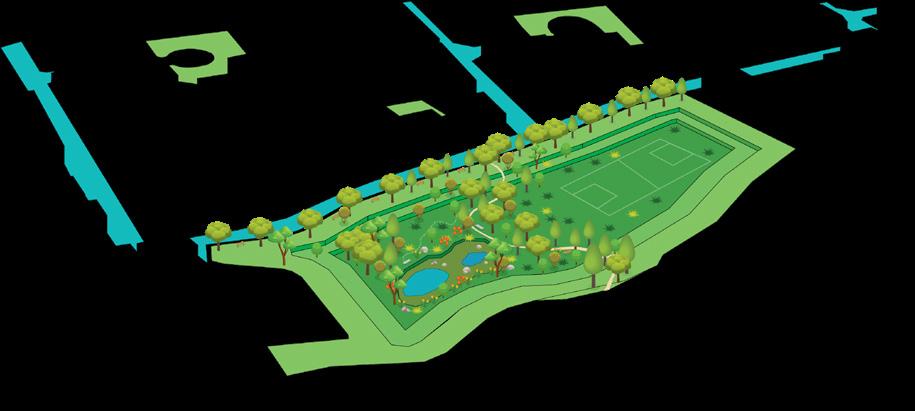
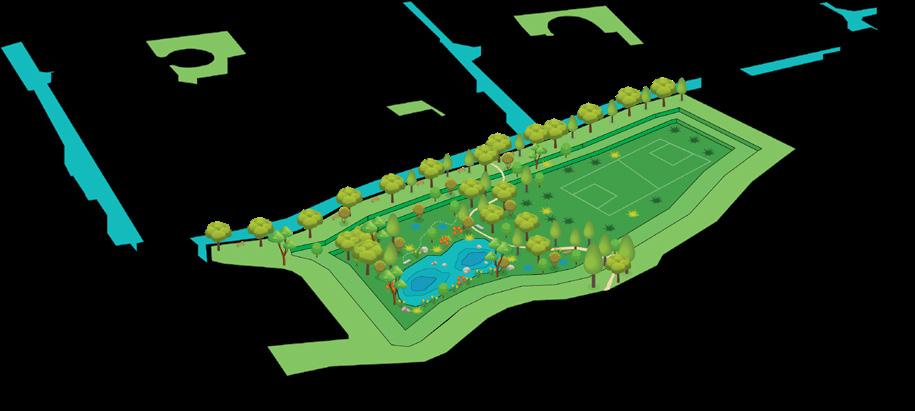
The Multi-functional Basin is a concept focusing on alleviating the three major issues of urbanization, while still retaining the functions of an urban green space.
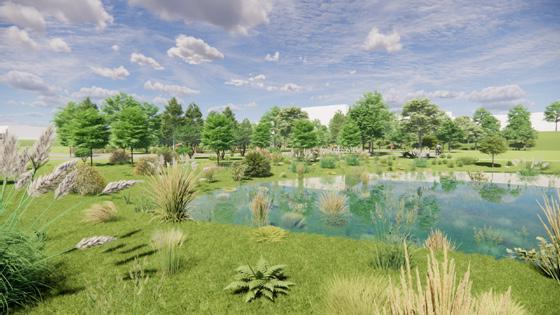
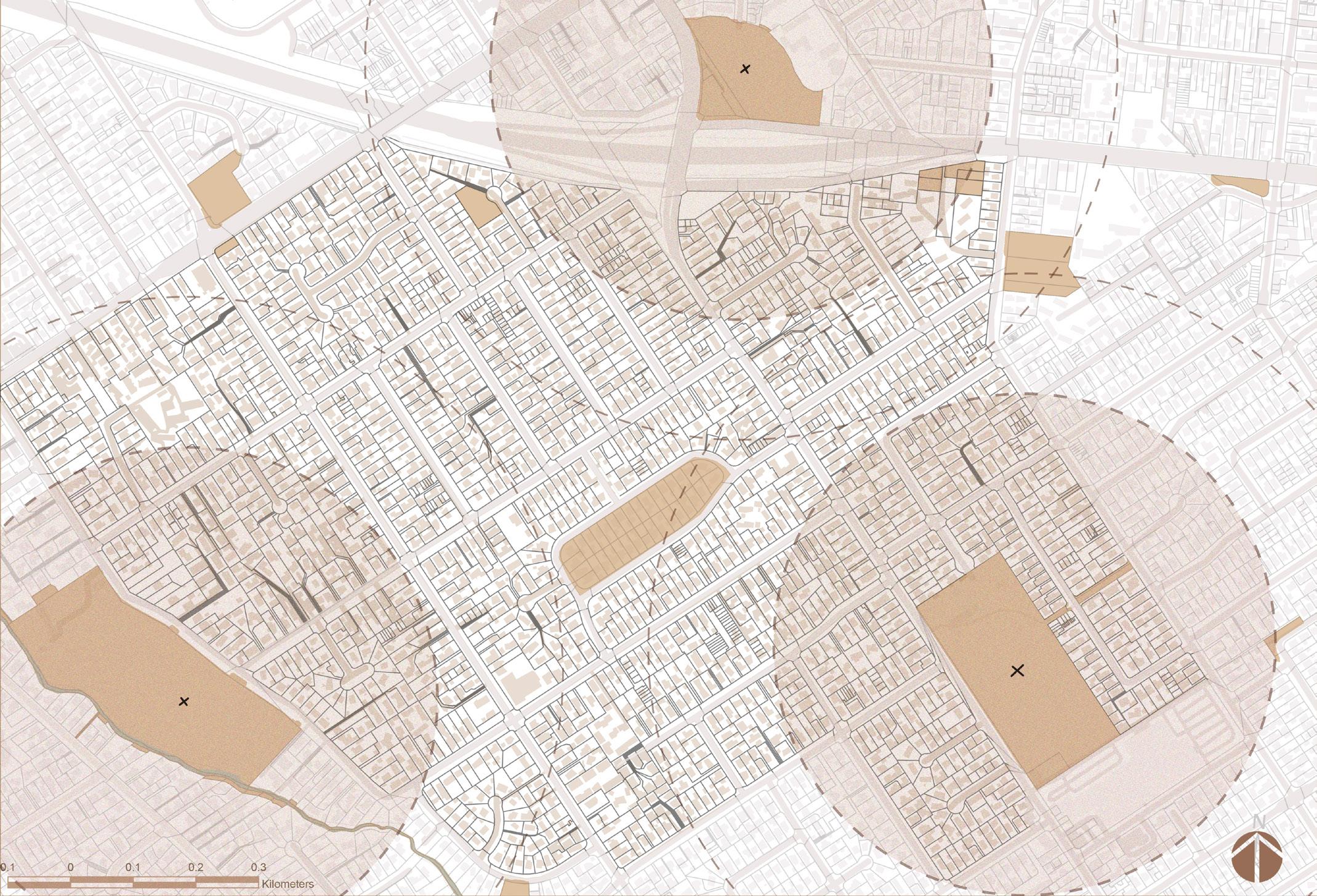
The multi-functional basin concept located in Spreydon Domain, Christchurch features a 7 ha public reserve that acts as a neighbourhood scale drainage basin, receiving the bulk of water run-off within the catchment and filtering it before releasing into the adjacent Heathcote River.
While dry, the basin retains the function of a native garden park, as well as sports field.
In small to medium rainfall events, the detention pond within the basin fills with water and slowly infiltrates into the ground, replenishing groundwater aquifers.
In heavy rainfall events, the basin is able to hold 1.5x the capacity of the neighbourhood catchment area before slowly releasing filtered water into the river.
03 URBAN OASIS ON WAKEFIELD
MULTI-FUNCTIONAL PROTECTIVE BUFFERS AGAINST CLIMATE CHANGE
SITE: Wakefield St | Wellington
TYPE: Landscape | Urban design
DATE: 2022
Urban Oasis on Wakefield is a mitigation project featuring the redevelopment of drainage systems along the flood prone Wakefield Street in Wellington
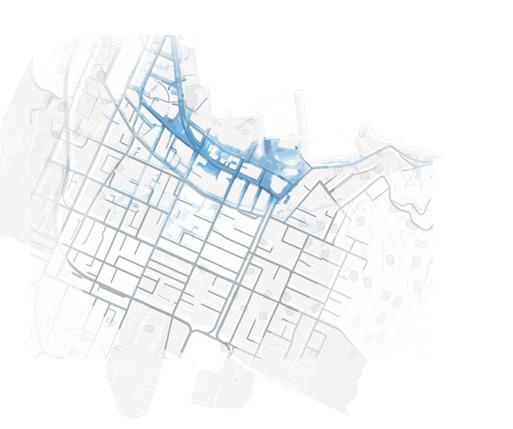
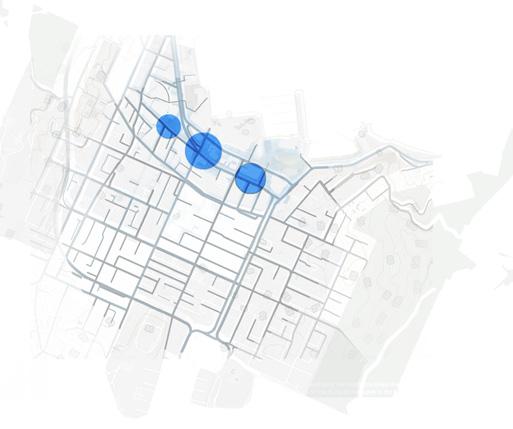
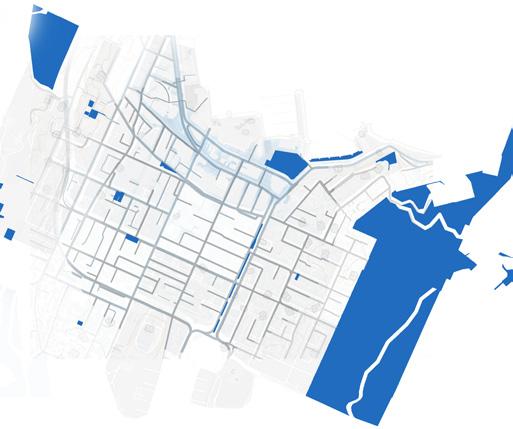
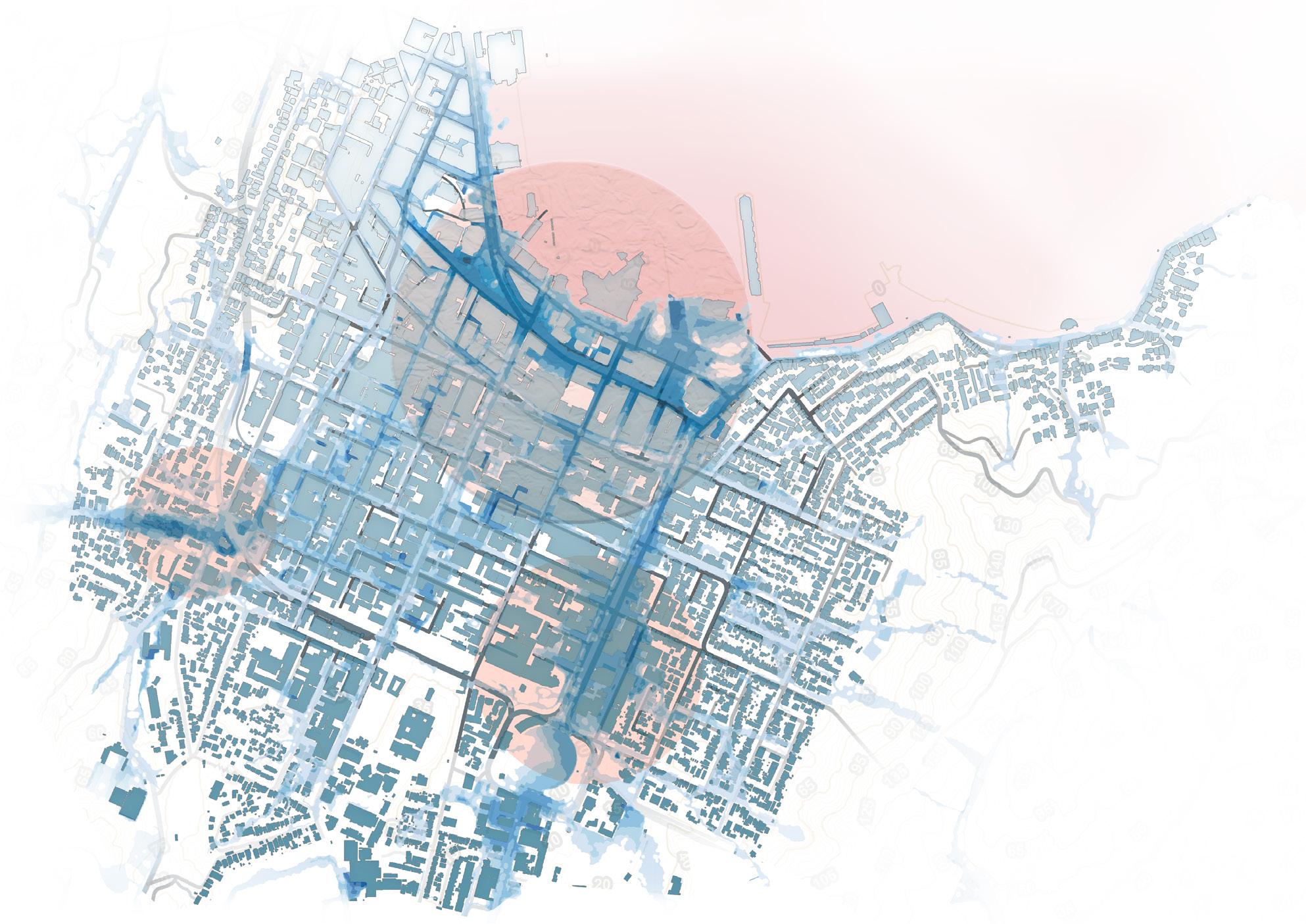
The project uses GIS Data to identify flood prone areas in which heavy rainfall events would cause significant damage. It creates a protective buffer that acts as a drainage line, preventing water and flood damages to the inner CBD.
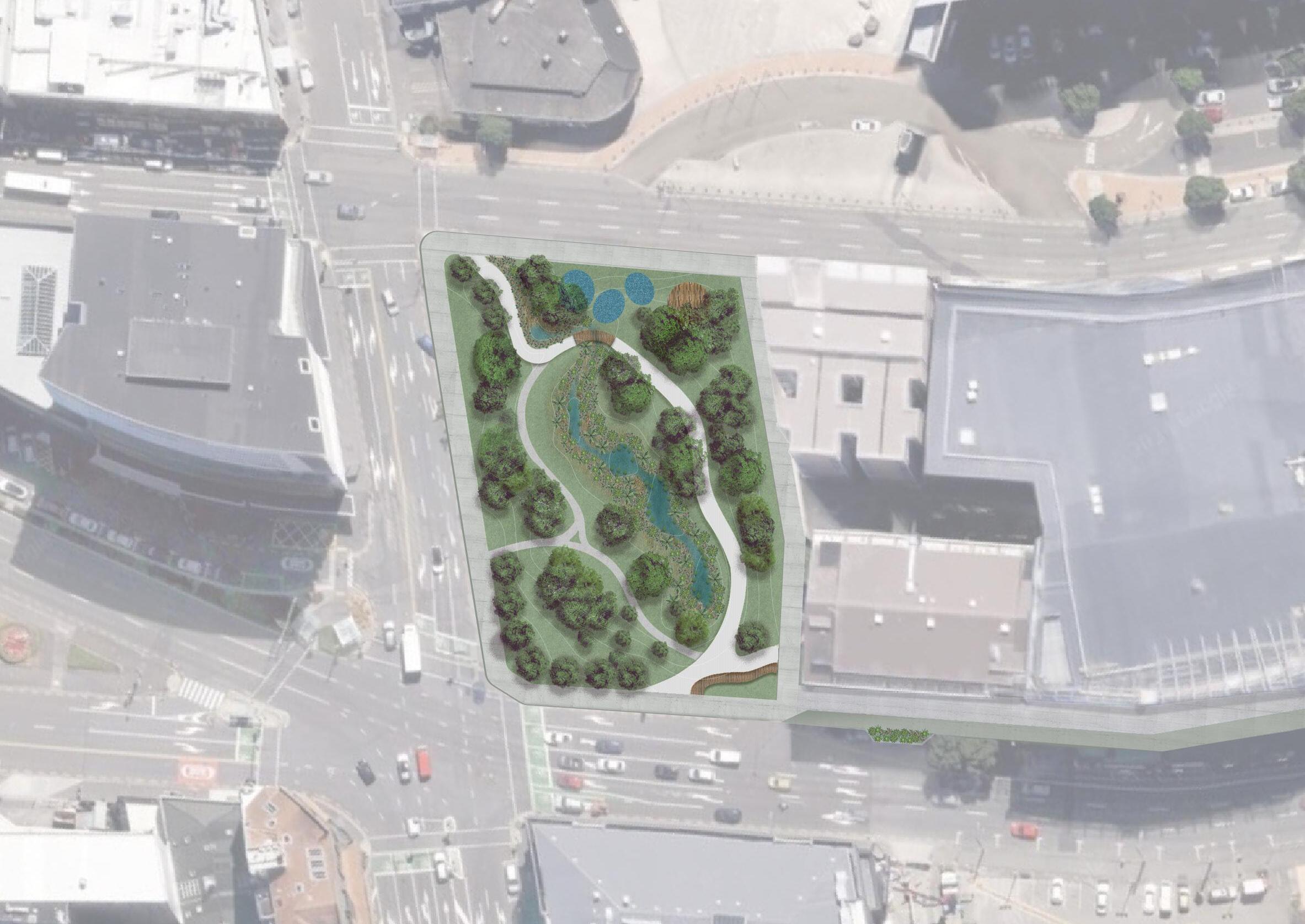
The locations of interest are underused brownfield sites identified through detailed inventory and analysis. The most feasible and flood prone location was chosen to be redeveloped into an urban oasis.
The lack of surrounding greenspaces revealed a need for extensive greenspace development throughout urban Wellington.
The project’s aim is to bolster community health through fostering social interactions by incorporating an urban oasis acting as a sanctuary away from the bustling city center.
PROTECTIVE BUFFER
LOCATIONS OF INTEREST
Wakefield Street
The first ‘Line of Defence’, Wakefield Street will be reimagined to integrate blue infrastructure throughout the entire street as an innovative way to sustainably and functionally protect inner Wellington CBD from potential climate disasters, future-proofing the city and improving urban resiliency.
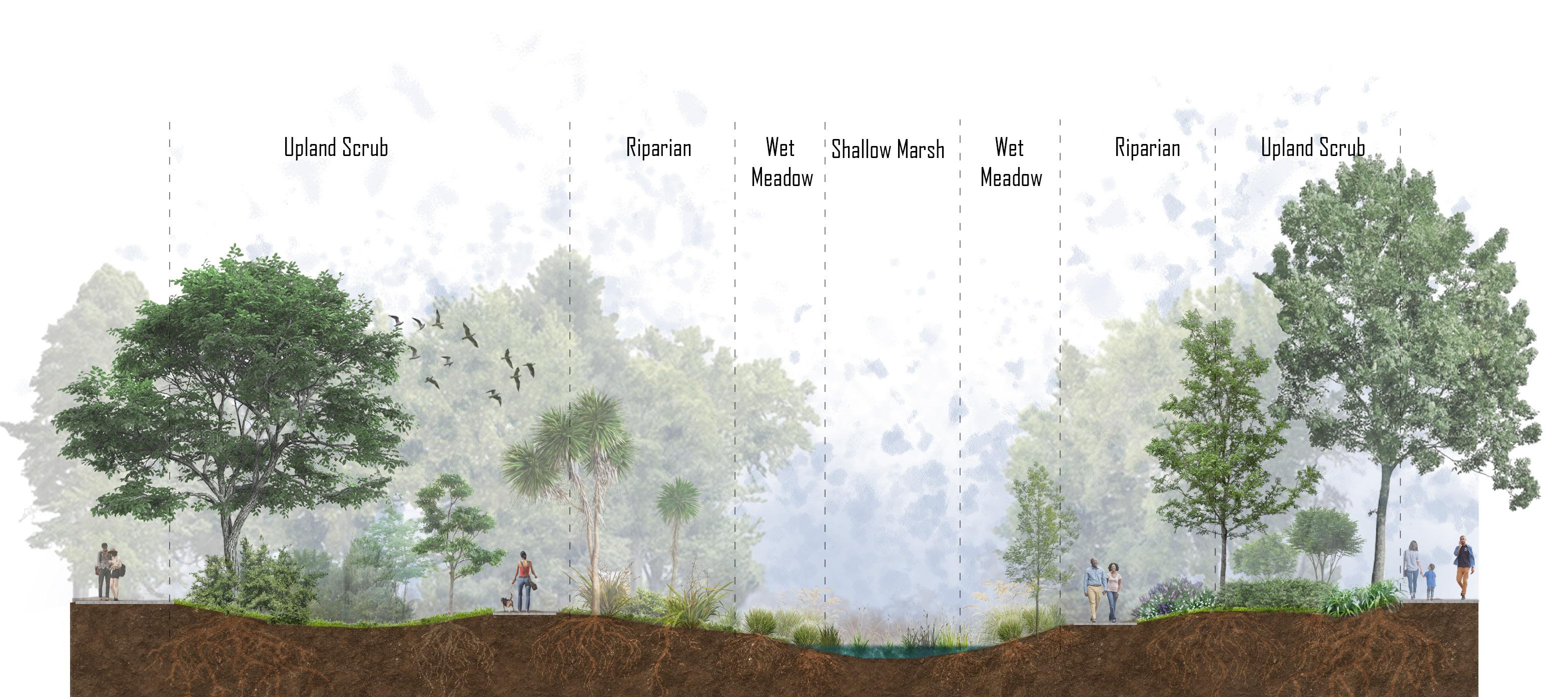
The urban oasis draws upon the raw minimalistic requirements of a ‘public greenspace’. An extensive use of exotic and native plant species from trees to flaxes to grasses find their place within the various hydrological zones. Each offering a different sensory experience as well as habitat provision for potential native wildlife.
The park offers an enclosed retreat from the overwhelming audio and optical sensory experiences of the city. Within this space lies a small trickling stream which overshadows and draws your attention away from the external grey.
NATURE ACCESS SOCIAL WATER
Wakefield Street Urban Oasis
AA
AA
04 FARM TO FOODIERY
URBAN AGRICULTURE & CLIMATE RESILIENCY IN A CLOSED LOOP SYSTEM
SITE: Uptown | Auckland
TYPE: Landscape | Architecture
DATE: 2023
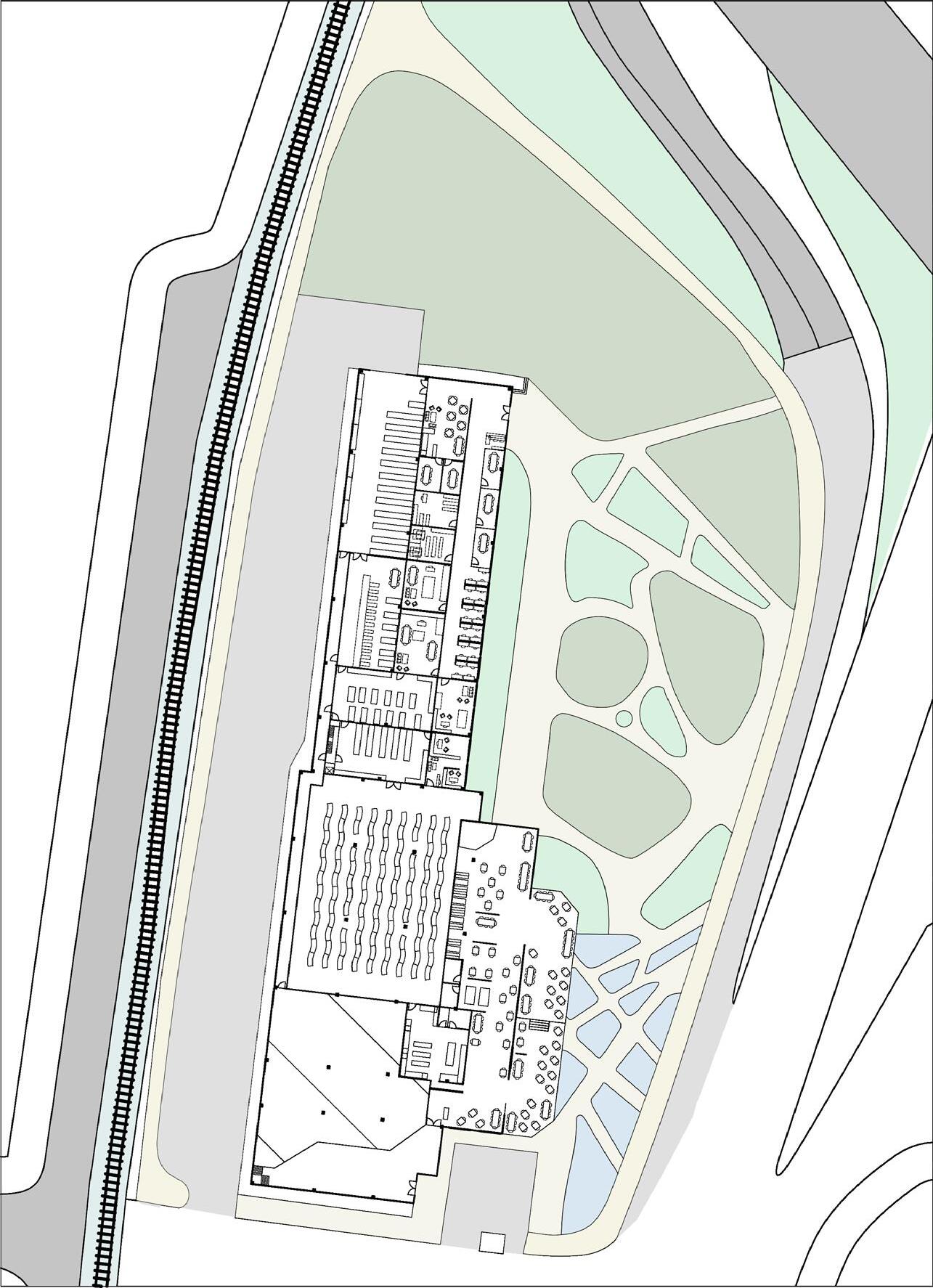
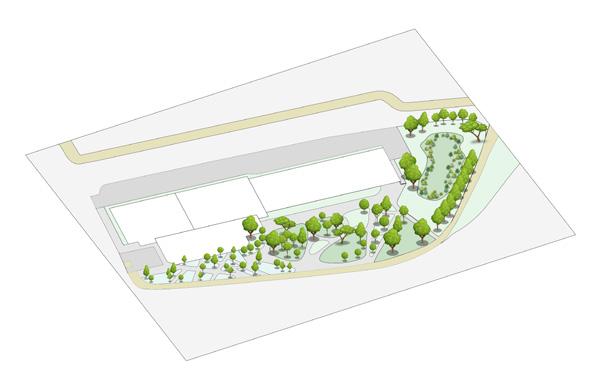
Farm to Foodiery is an all inclusive landscape and architecture project that incorporates aspects of education, food provision, agriculture, climate resiliency, and sustainability.
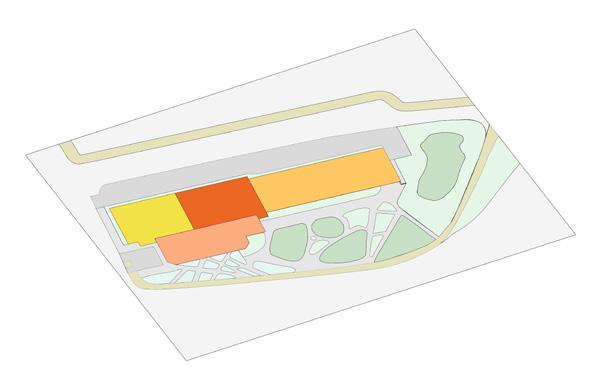
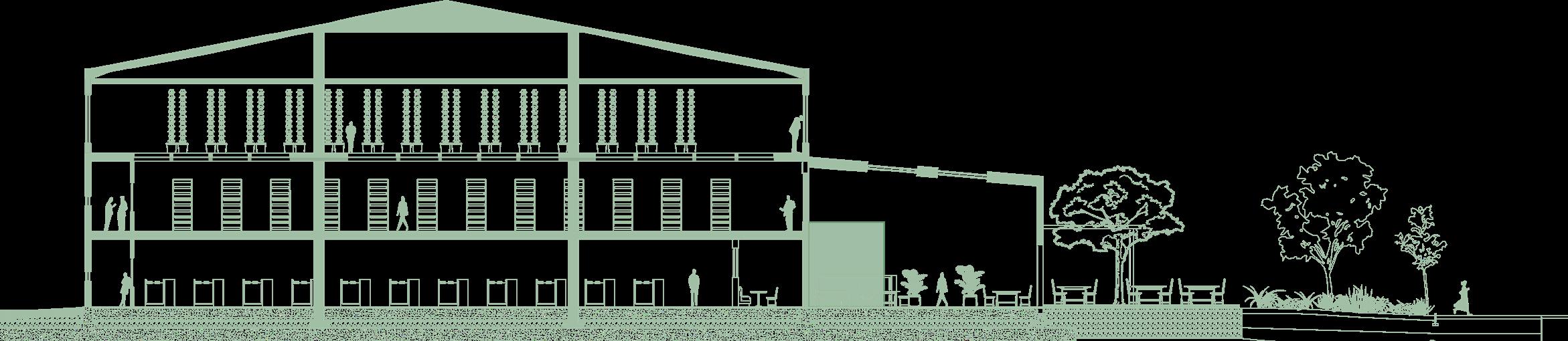
The project repurposes an old warehouse, retrofitted with recycled materials to reduce climate impact. It serves as a farm testing innovative agricultural methods such as aquaponics, hydroponics, and aeroponics. The produce is transported directly to an on-site diner for farm to table freshness and local markets.
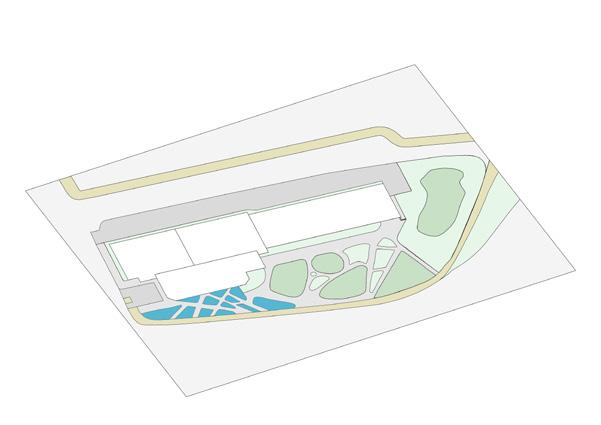
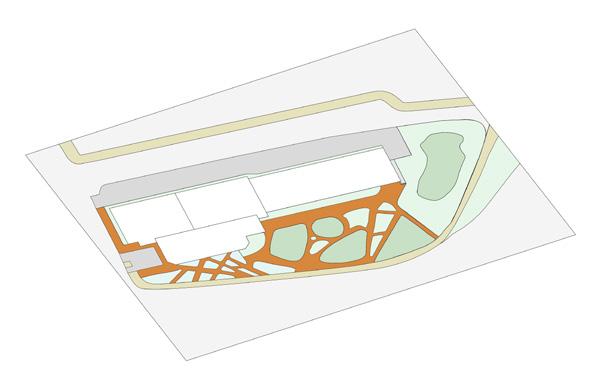
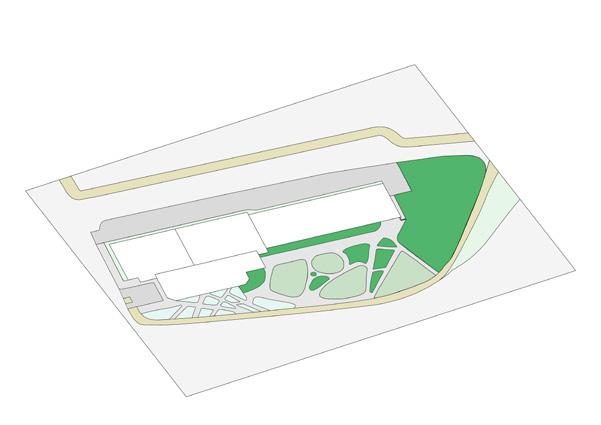
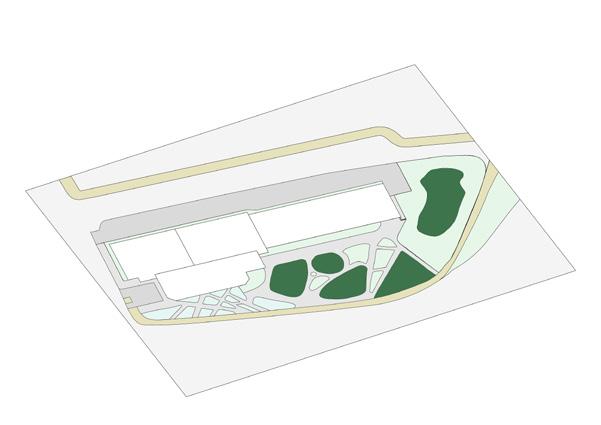
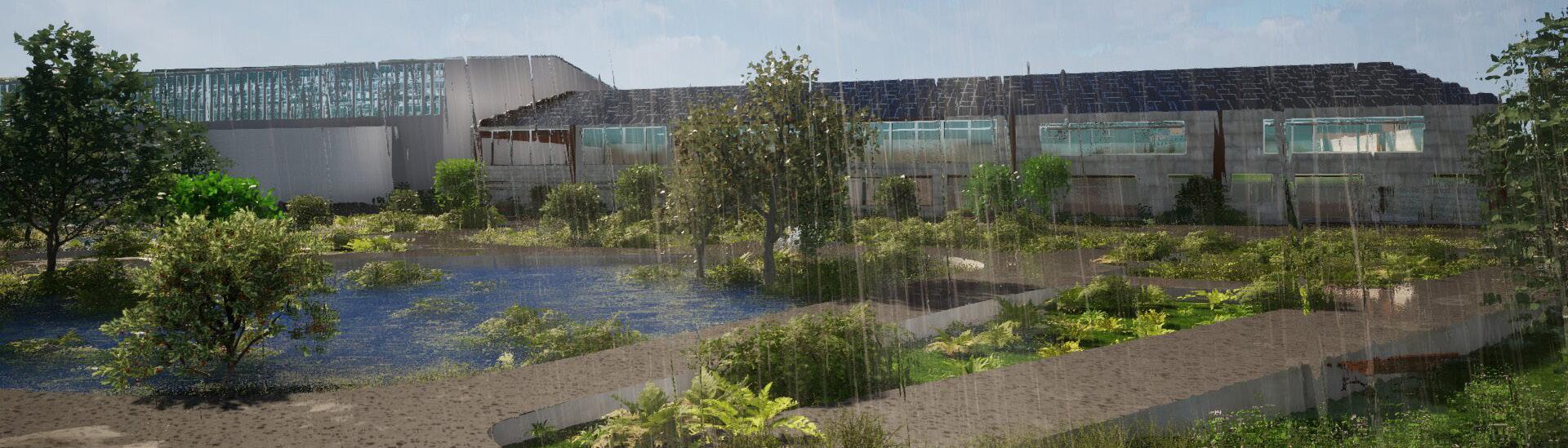
Water management and upcycling is an integral part of the design. the building collects, treats, and purifies water for cooking, cleaning, irrigation, and plumbing. The exterior landscape features a basin network that filters rainwater into artificial aquifers, which are treated and reused through filtration systems.
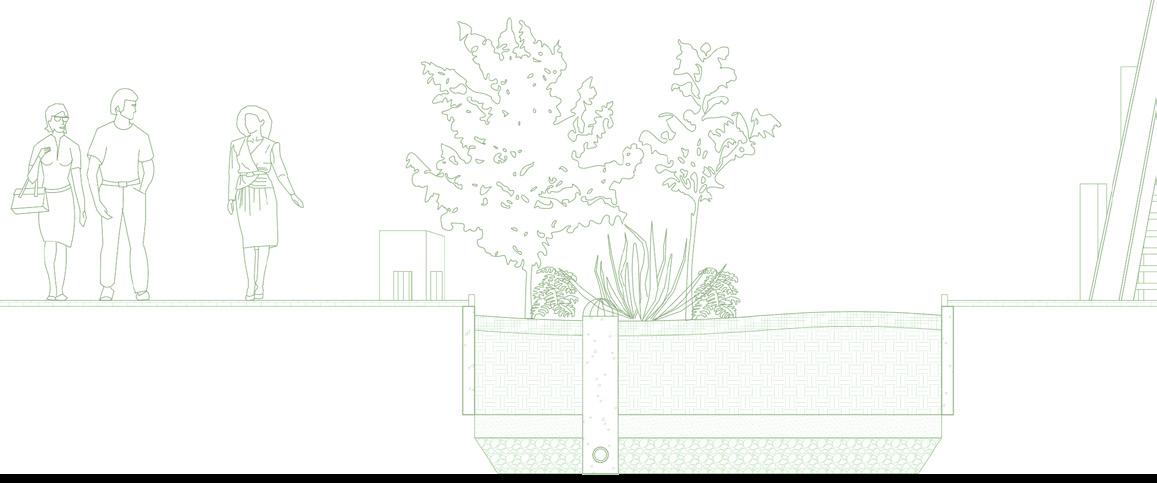
Watertanks built into the structural foundation as a means of collecting and storing rainwater in a way that promotes efficient use of space as well as innovation in design. Exterior rain gardens and detention basins collect and filters water run-off to be reused within the water upcycling system.
LIGHT RAIN MOVEMENT
THREADS
ISLANDS
MAPS
MEDIUM RAIN
HEAVY RAIN
TECHNICAL DRAWINGS
RAINGARDEN DETAILS
Rain gardens and detention pockets in the exterior parklet of the building slow the intake of water to prevent structural damages. Collected water is transported into aquacomb water tanks.